
Victorian rooms often have enough detail in their moldings, fireplaces, and trim to make decorating feel like a balancing act.
These Victorian Living Room Ideas show how to work with that character, from pairing botanical wallpaper with fireplace tile to carrying teal across a wall and mantel.
You’ll also find ways to mix floral upholstery and decorative textiles, add colorful modern artwork, or make a reading corner beside the fireplace.
The key is to let a few thoughtful colors and patterns stand out while giving ornate features room to breathe.
1. Frame a Tiled Fireplace with Botanical Wallpaper
Credits: Instagram
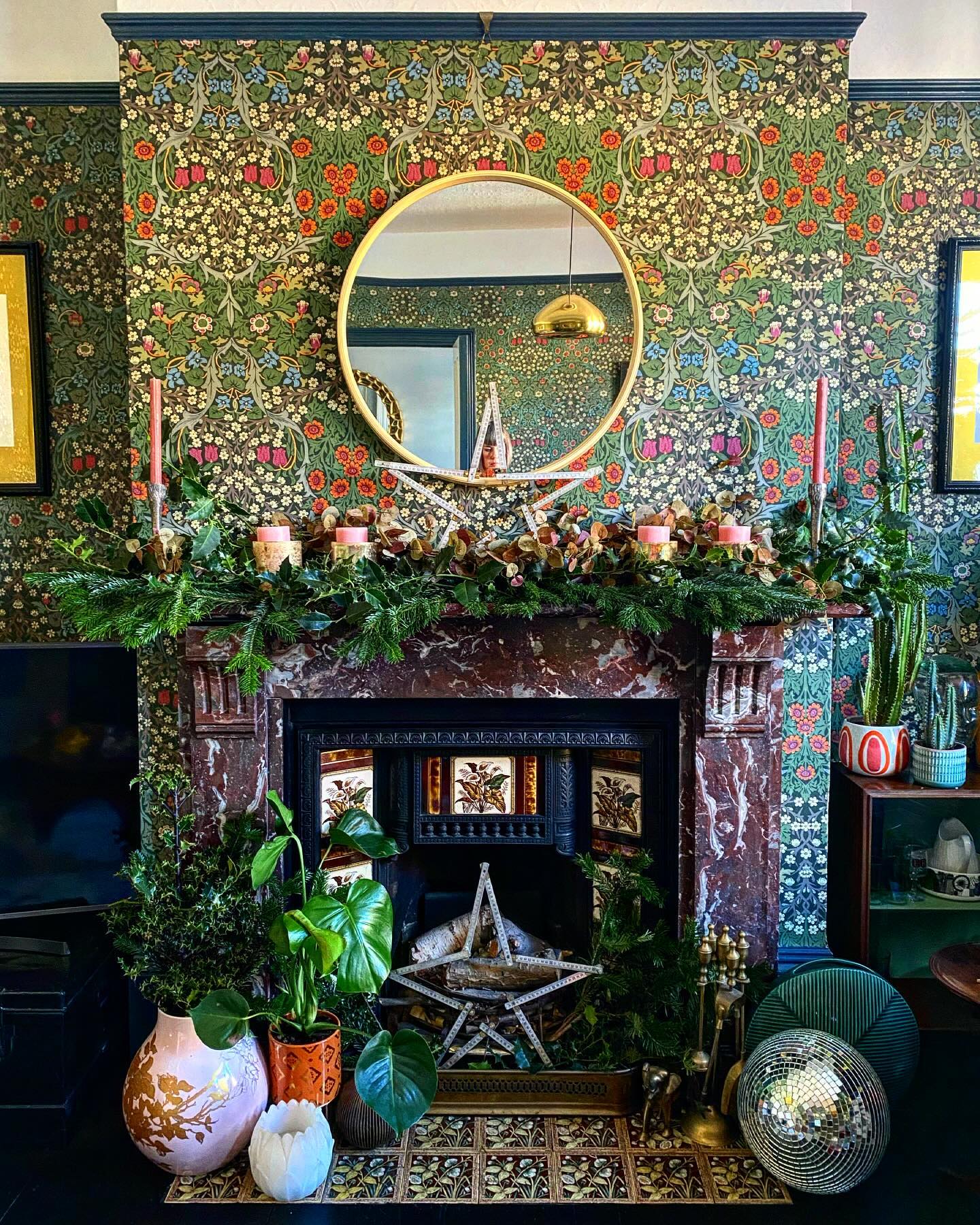
Dense botanical wallpaper brings the garden indoors around this beautifully detailed fireplace. Its green background, small flowers, and winding stems connect with the illustrated tiles inside the black insert.
A richly veined mantel adds another layer of color, while the round gold mirror gives the busy wall a simple center. This is a useful Victorian approach when you enjoy pattern: repeat a natural theme across different materials.
Choose wallpaper that shares one or two colors with existing fireplace tiles, then keep the mirror shape uncomplicated. Plants can extend the leafy effect at floor level.
Seasonal greenery works as an optional finishing touch, but the permanent combination of patterned paper, decorative tile, and dark metal already gives the room substantial character.
2. Carry Teal Across the Walls and Mantel
Credits: Instagram
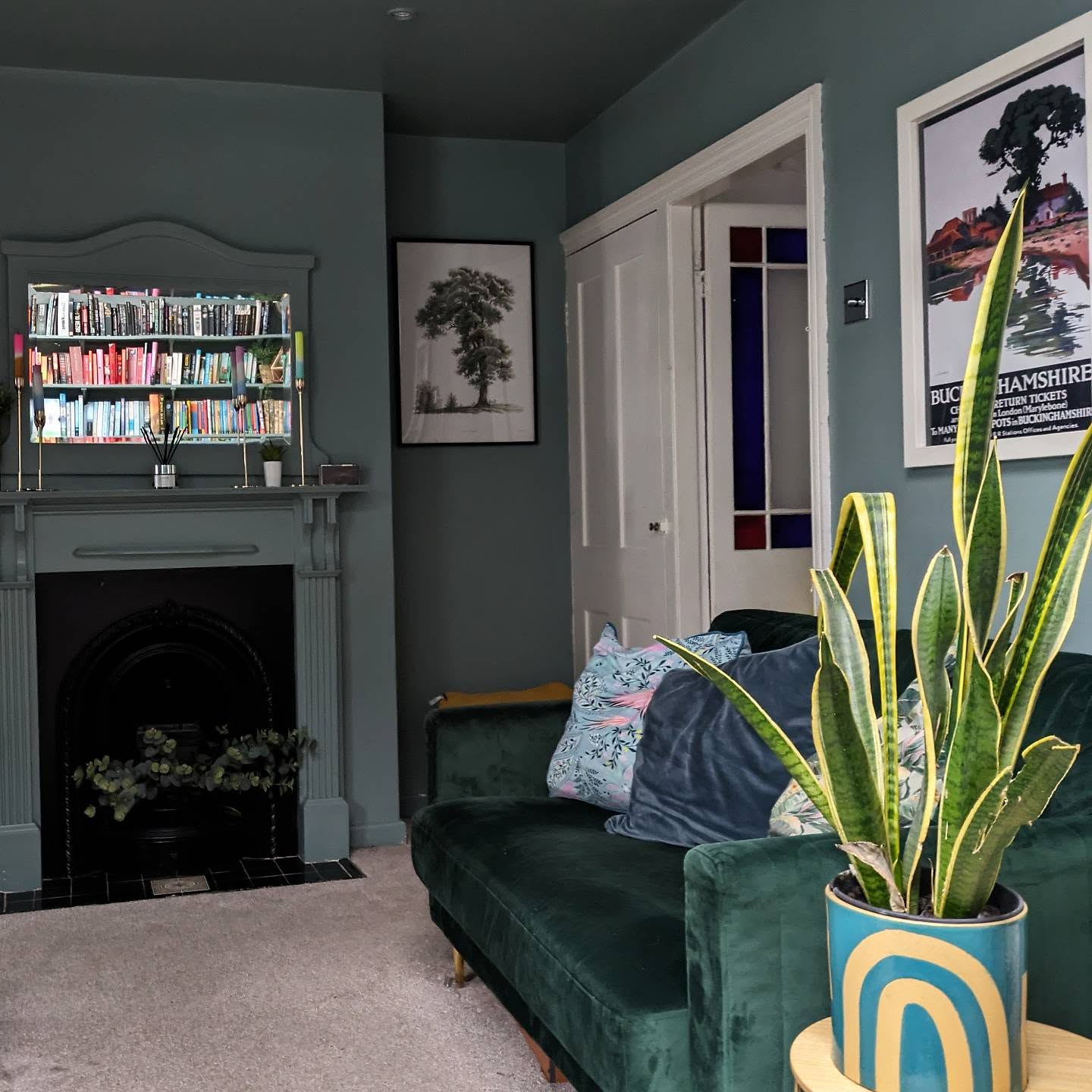
Teal paint wraps this small sitting room in a continuous background. The mantel and mirror frame share the wall color, allowing the black arched fireplace to stand out without a sharp outline around every detail.
A deep green velvet sofa reinforces the rich palette, while white door trim and stained glass keep the corner lively. Try this approach when an older room contains several competing architectural features.
Matching the mantel to the walls can simplify the view while preserving its carved shape. Add depth through upholstery rather than introducing many unrelated paint colors.
A few botanical pillows, framed pictures, and a tall plant are enough to make the room personal. Keep the hearth visible so its period detailing remains appreciated.
3. Layer Floral Upholstery with a Decorative Wall Hanging
Credits: Instagram
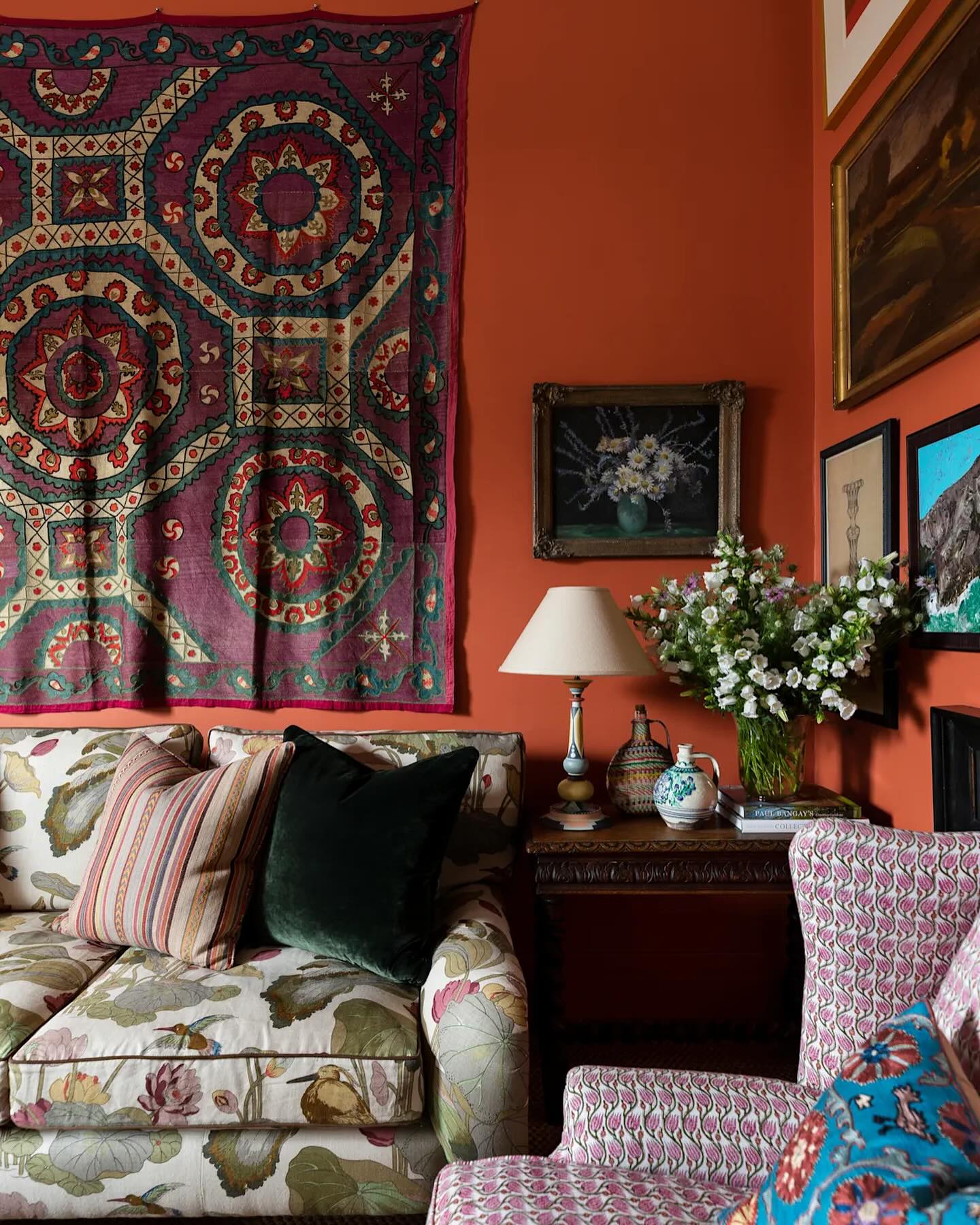
A vivid orange wall supports a layered mix of textiles in this Victorian house project. The sofa wears a large floral pattern, the neighboring chair carries a smaller repeating motif, and a decorative wall hanging introduces generous circular forms.
Striped and solid pillows provide useful pauses between those patterns. The carved wooden table and framed paintings add depth without requiring another dominant color.
To recreate the balance, vary the size of your prints instead of choosing several equally busy fabrics. Repeat a few colors across the upholstery and wall hanging, then include one plain pillow to settle the arrangement.
A shaded lamp keeps the corner comfortable after dark. Let favorite objects accumulate gradually so the result feels collected and welcoming.
4. Set Deep Blue Against Detailed White Moldings
Credits: Instagram
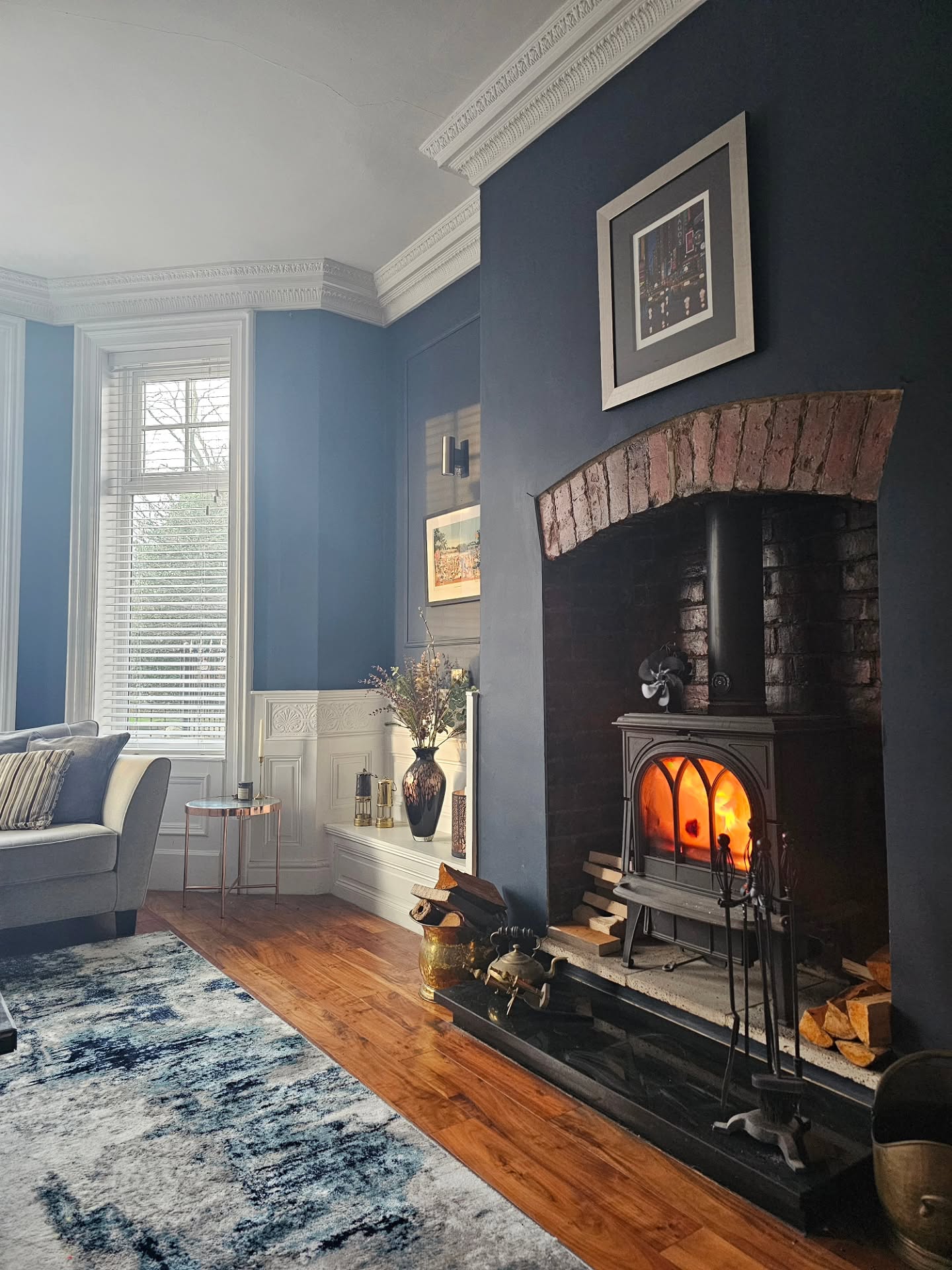
Deep blue walls make the white architectural details in this living room clear. Decorative crown molding follows the ceiling, while patterned lower panels brighten the window corner.
The exposed brick arch and black stove introduce warmer, rougher materials beside those crisp painted surfaces. A gray chair and blue rug connect the seating area with the surrounding palette.
Borrow the contrast by keeping elaborate trim lighter than the walls, especially where daylight reaches its raised details. Use wood furniture or flooring to prevent a cool blue scheme from feeling flat.
A compact side table beside the chair creates a practical place for a drink. Preserve generous space around heating equipment and follow its required clearances when arranging furniture and decorative objects.
5. Soften a Formal Room with Ruffles and Fringe
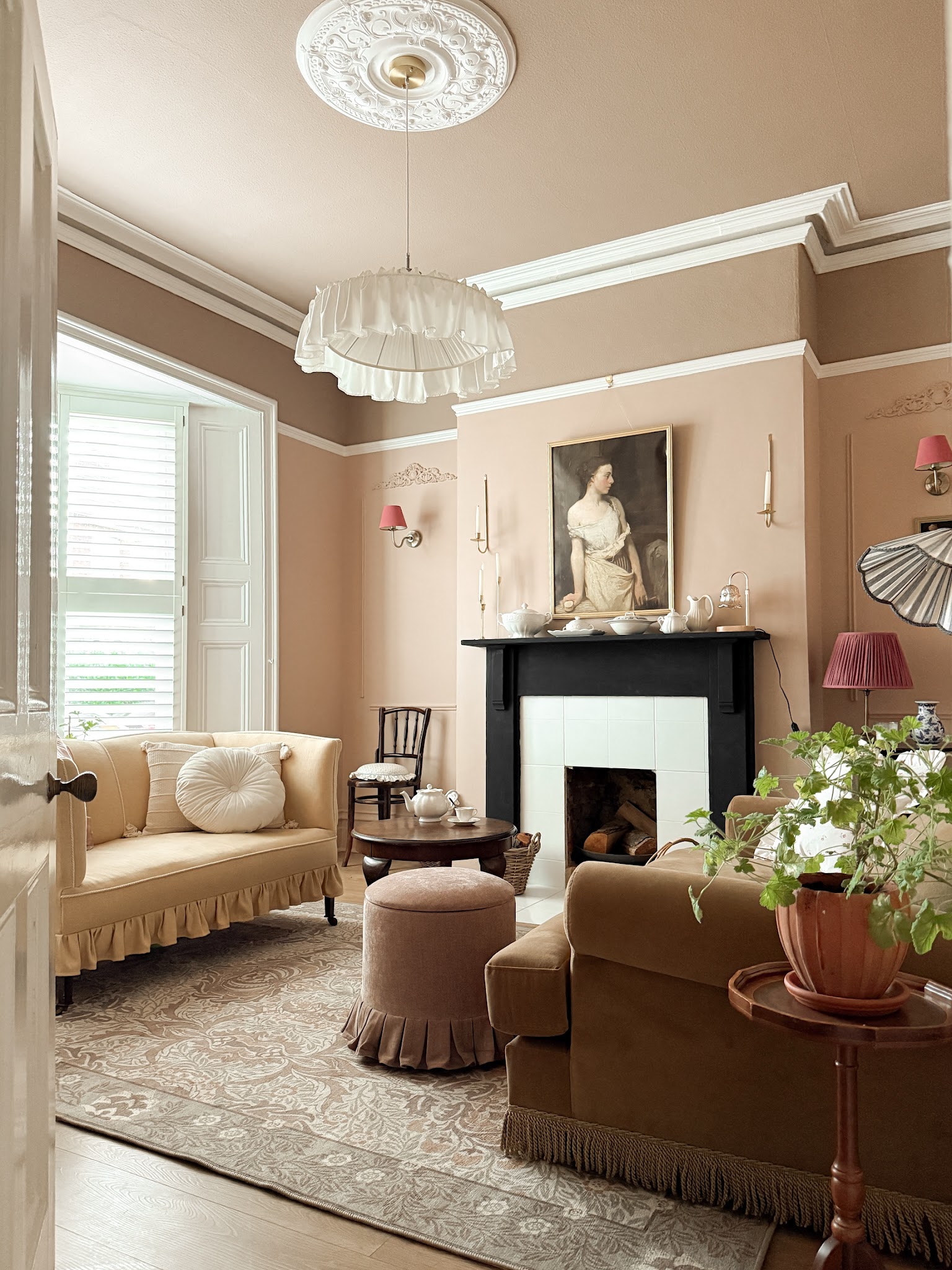
Credits: Instagram
Ruffled upholstery gives this traditional sitting room a romantic character. A pale sofa, round footstool, and shaded pendant repeat soft gathered edges, while the brown armchair adds a fringe detail along its base.
Above them, white crown molding and an ornate ceiling medallion remain crisp against warm pinkish walls. The black mantel supplies a strong anchor beneath a portrait.
This combination works because the fabric details echo one another without covering every surface. Start with a single skirted chair or ottoman, then repeat the softness in a lampshade or pillow.
Keep at least one dark, simple element nearby to give the palette definition. A small wooden table and useful seating arrangement help the room feel inviting enough for everyday use.
6. Refresh Period Trim with Colorful Modern Artwork
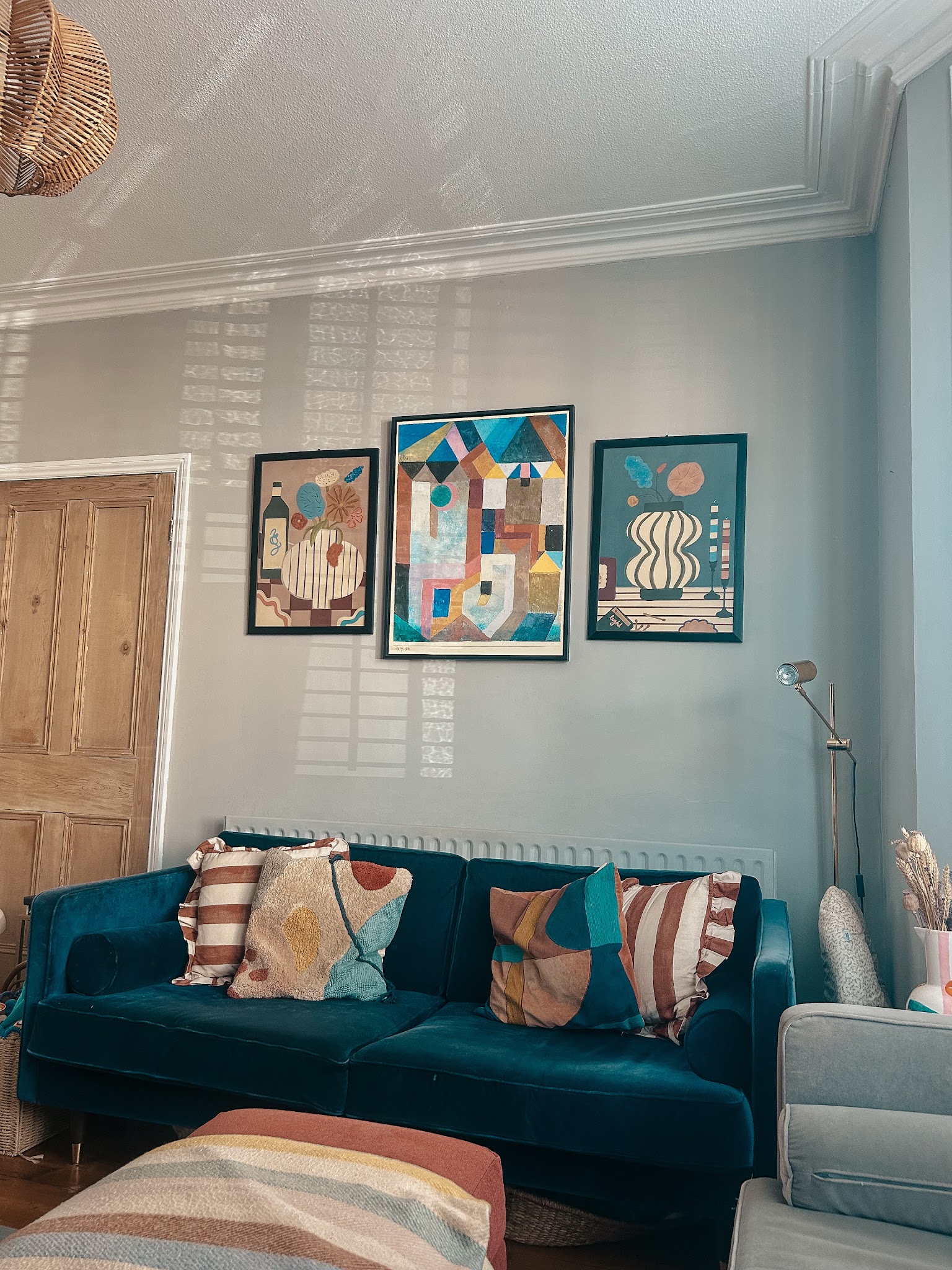
Credits: Instagram
A teal velvet sofa and three prints bring fresh energy to this room's traditional shell. White molding outlines the ceiling, and a stripped wooden door adds natural warmth beside the pale blue walls.
The artwork repeats colors found in the pillows and upholstered footstool, making the modern pieces feel connected. For a Victorian room that needs a lighter mood, use its existing trim as the framework for a more playful arrangement.
Choose one strong upholstery color, then draw smaller accents from a few favorite prints. Vary pillow patterns while keeping their colors related.
Hang the pictures as a single group above the sofa, leaving visible wall around them. A woven pendant adds texture without competing with the decorative ceiling edges.
7. Balance a Ceiling Medallion with Simple Furniture
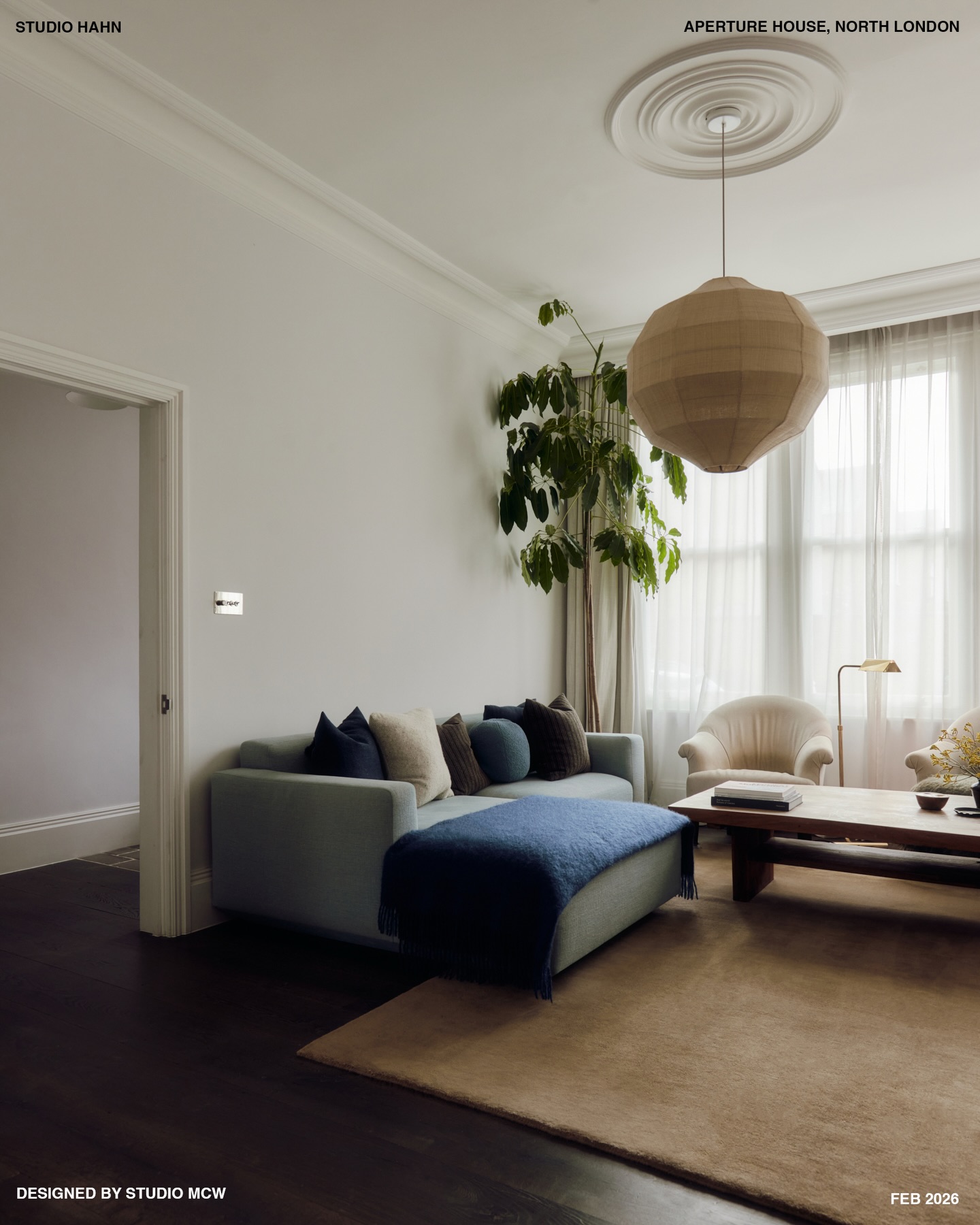
Credits: Instagram
A large ceiling medallion gives this living room an architectural focal point. The hanging paper shade echoes its circular shape, while a low sofa and straightforward wooden table keep the lower half of the room quiet.
Pale walls connect the crown molding, door trim, and tall window surround. This balance offers a useful approach to Victorian inspired decorating when you prefer fewer objects.
Let an existing decorative ceiling feature carry the sense of history, then choose comfortable furniture with simple outlines. Soft curtains can diffuse daylight without hiding the height of the windows.
Introduce a deeper accent through a throw or pillows, as the blue textiles do here. Leave open wall space so the room's proportions remain easy to appreciate.
8. Build a Reading Corner Beside the Fireplace
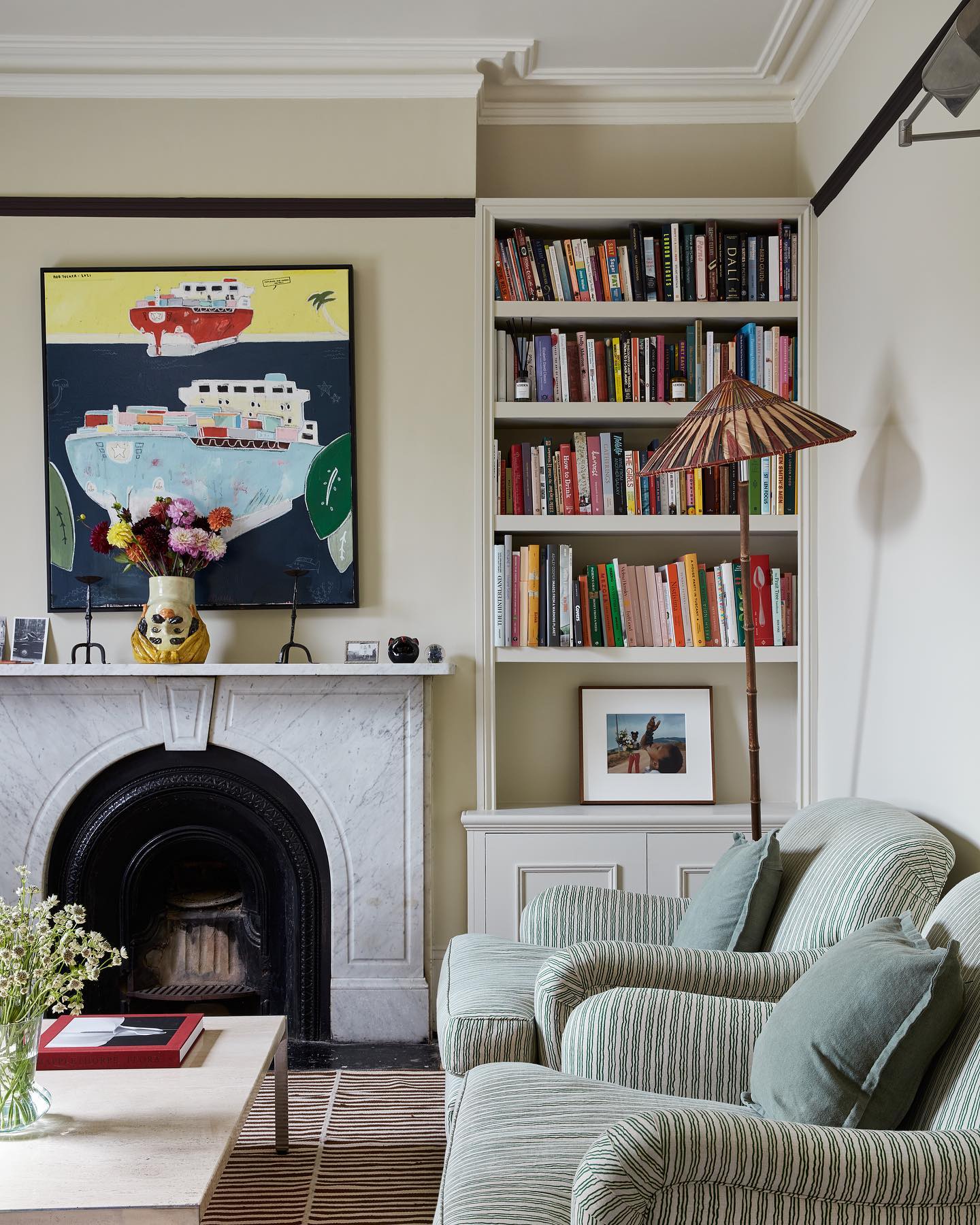
Credits: Instagram
Two striped armchairs turn the space beside this marble fireplace into an inviting reading corner. An alcove bookcase fills the wall above a small cabinet, keeping titles close to the seats.
The dark picture rail outlines the room, while a colorful painting adds a personal note over the mantel. This arrangement uses familiar Victorian features without making the room feel overly formal.
Position comfortable chairs near the hearth, allowing enough space to move between them and the table. A floor lamp can provide focused light without taking up shelf space.
Paint the bookcase to relate to the surrounding trim, then let the books supply varied color. Simple stripes on the upholstery provide a steady rhythm beside the lively book spines.
9. Pair an Ornate Fireplace with a Simple Wood Cabinet
Credits: Instagram
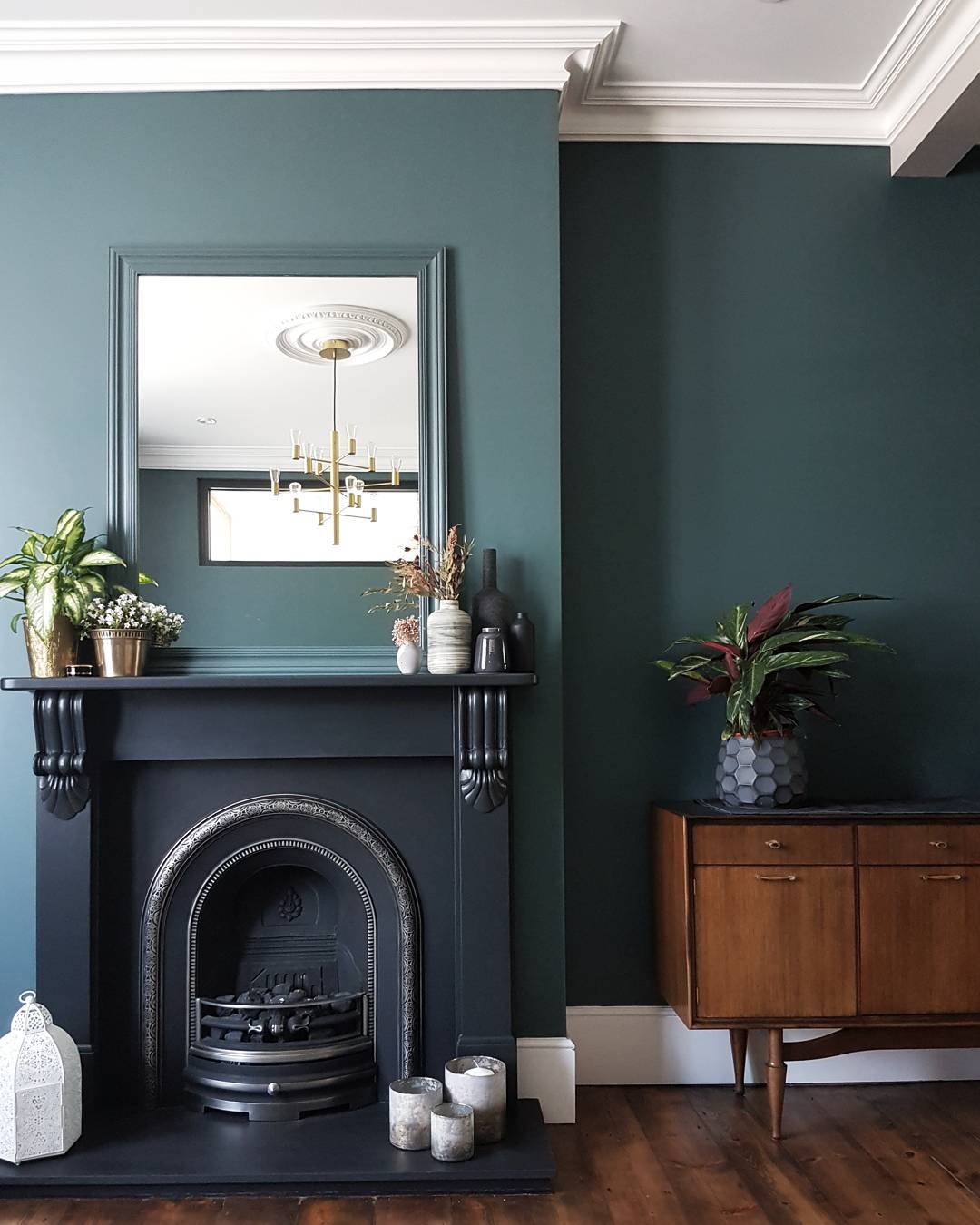
The black fireplace in this corner has enough decorative detail to lead the arrangement. Its arched insert and carved supports stand against deep green walls, while a plain rectangular mirror reflects the bright ceiling.
Beside it, a wooden cabinet introduces a simpler silhouette and a warmer material. This is an approachable way to mix Victorian character with later furniture.
Give the most elaborate piece room to breathe, then choose a neighboring cabinet with clean lines and useful storage. Matching the mirror frame to the walls reduces visual clutter without removing the reflection.
A few plants soften the dark background and connect the mantel with the cabinet. Keep small accessories grouped so the fireplace's shape remains the first thing you notice.
10. Combine Red Walls with Green Seating and Vintage Pictures
Credits: Instagram
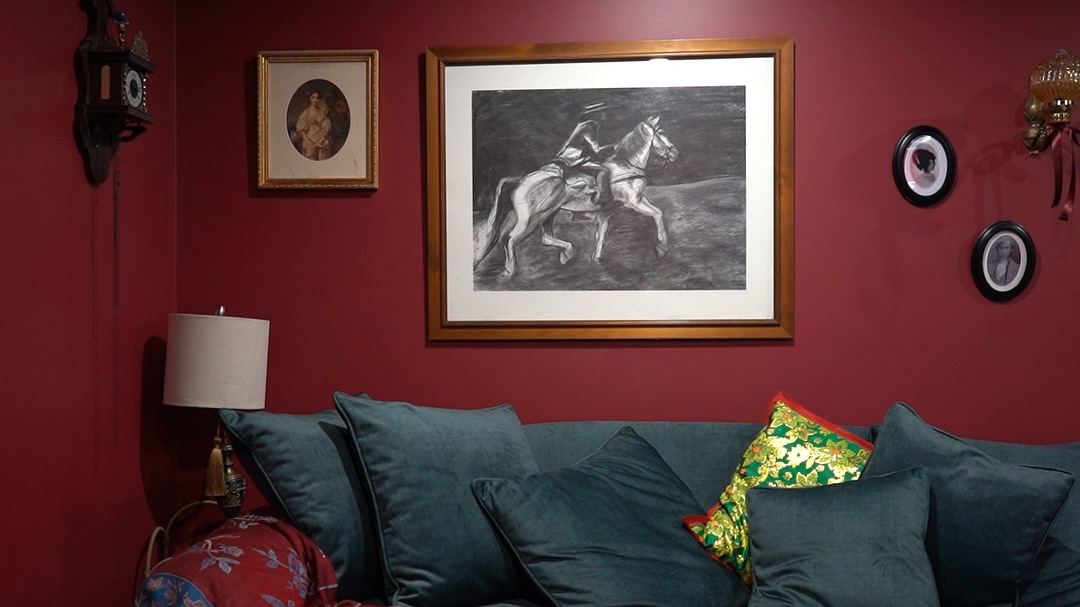
Red walls and deep green upholstery create a backdrop for the vintage pictures in this living room.
A large gold framed print anchors the display, while smaller portraits, a dark wall clock, and a decorative sconce give the arrangement its collected character.
The plain sofa cushions help the pieces remain prominent. For a Victorian inspired color scheme, begin with one saturated wall color and a contrasting fabric that feels equally substantial.
Test both together in daylight and under your lamps before committing. Mix frame sizes, but allow the largest picture to establish the center of the group.
A patterned pillow can introduce another color in a small dose. Warm lamplight will help the strong palette feel comfortable in the evening.
11. Refresh a Marble Mantel with Colorful Stripes
Credits: Instagram
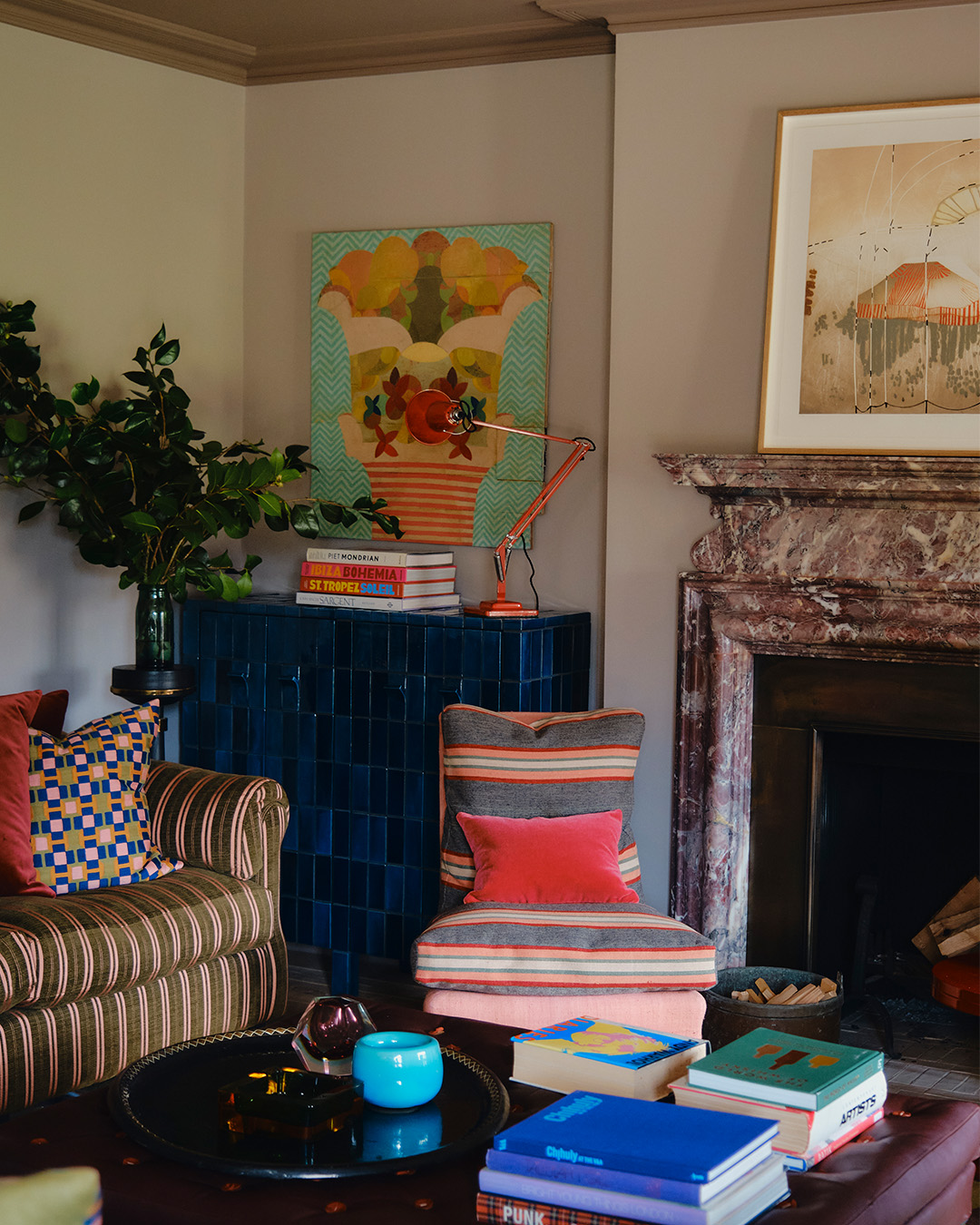
A veined marble fireplace gives this sitting area its traditional foundation. Around it, striped upholstery, a bright blue cabinet, and lively artwork create a more playful mood.
The smaller striped chair repeats pink and gray tones that appear in the stone, helping the newer pieces belong beside the elaborate mantel. When updating a Victorian room, begin with colors already present in its permanent features.
Pull one subtle shade into a chair or pillow, then introduce a stronger accent through a cabinet or lamp. Different stripe directions can add movement without requiring another floral pattern.
Keep the fireplace's carved outline visible, and arrange accessories in small groups. A tray on the upholstered ottoman provides a stable surface for books and drinks.
12. Mix Antique Seating Around a Patterned Rug
Credits: Instagram
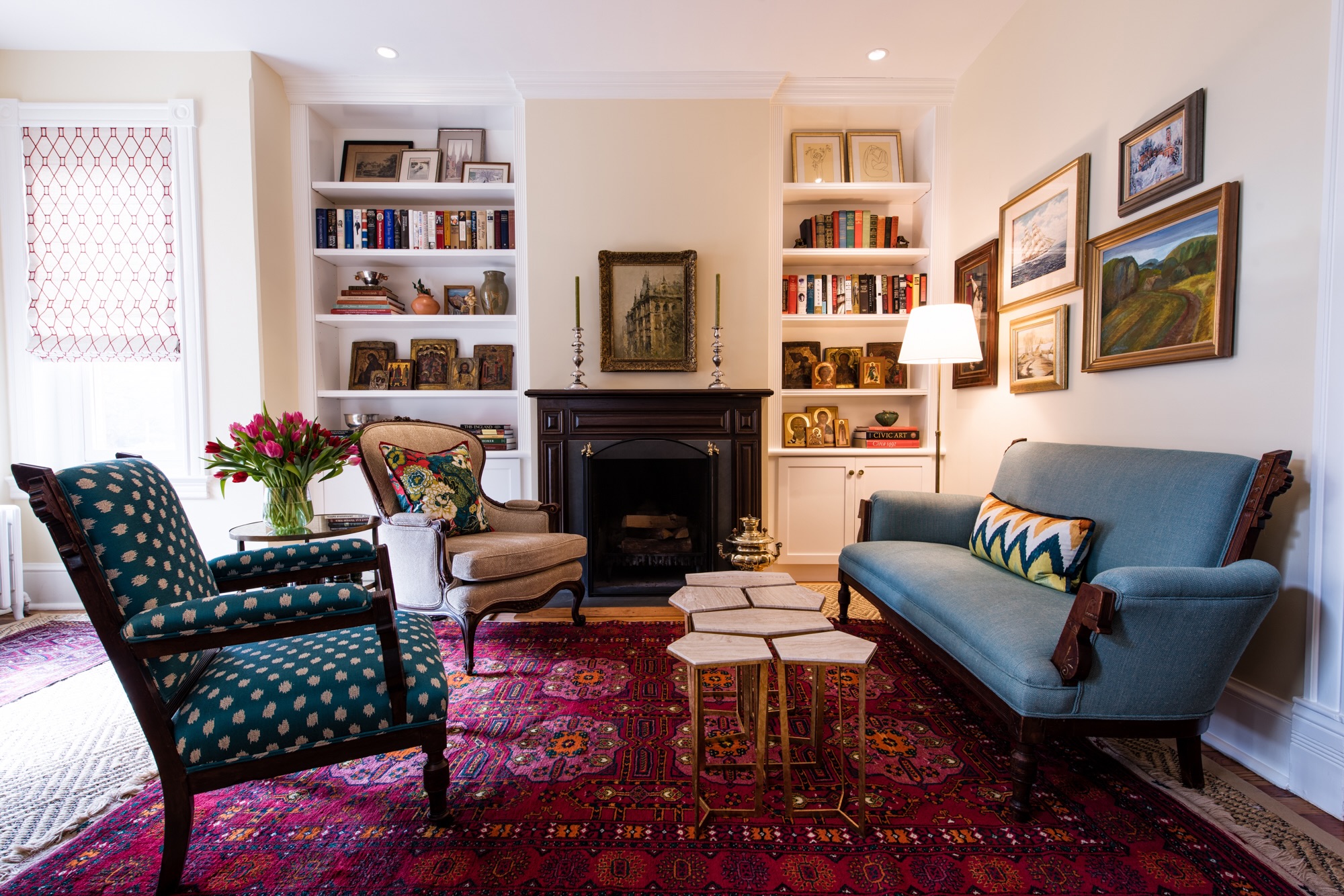
A blue wooden framed sofa, a patterned armchair, and a pale carved chair bring different shapes to this seating group. Their shared dark wood details connect them with the mantel, while the vivid rug pulls the furniture together.
White shelving makes a collection of small gilded icons easy to see. This room shows how Victorian inspired decorating can accommodate individual pieces instead of a matching suite.
Look for compatible seat heights and a common wood tone when mixing chairs and sofas. Reupholstery can introduce fresh color while preserving an appealing frame.
Keep the main walking route open, and choose smaller tables if the room is compact. A few brighter pillows can connect the seating with colors already in the rug.
13. Let Stained Glass Lead the Seating Arrangement
Credits: Instagram
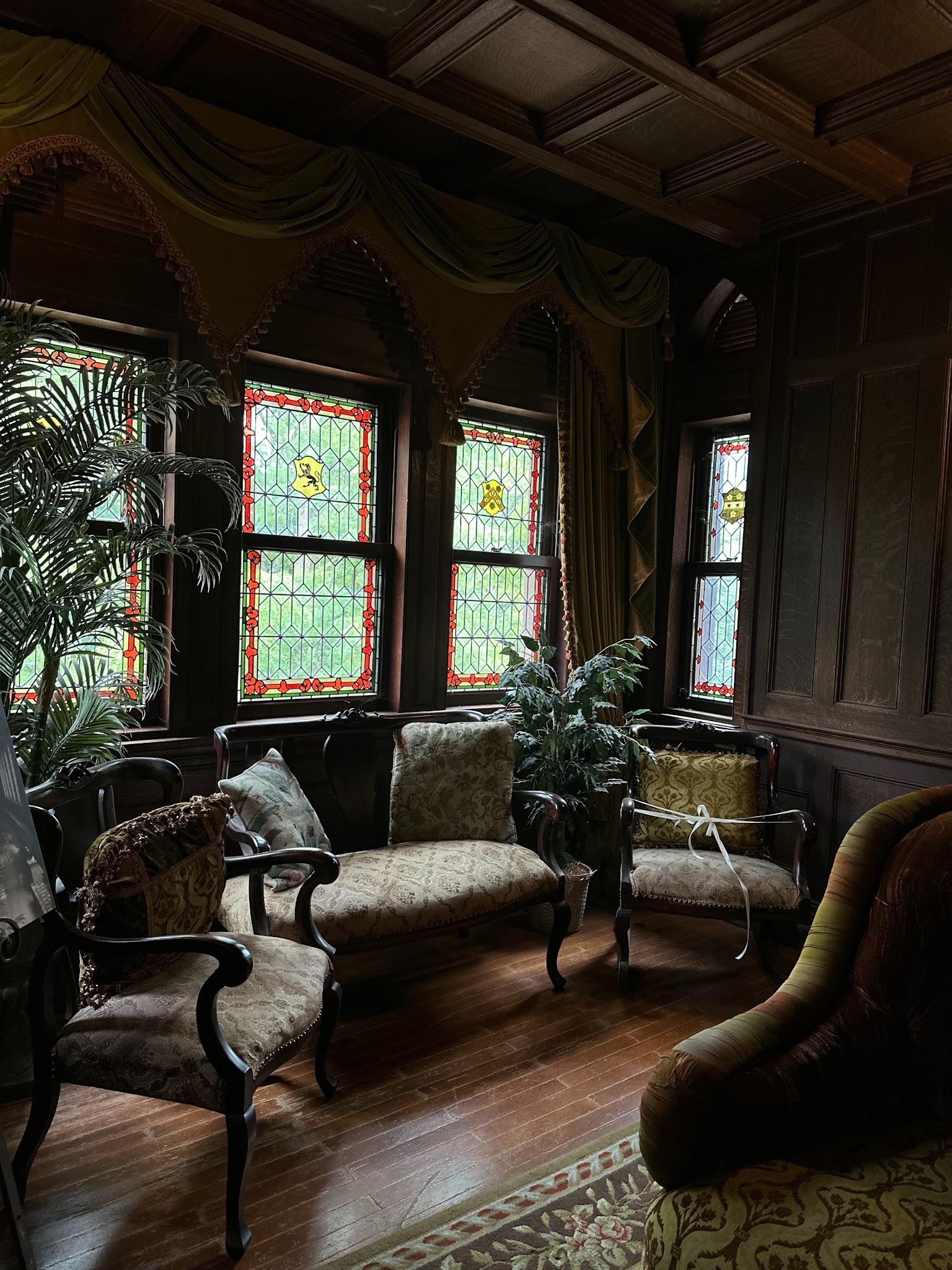
Stained glass windows give this historic parlor a colored backdrop. Red borders and yellow motifs stand out against the dark wooden paneling, while patterned seats and draped valances reinforce the room's Victorian character.
The furniture remains low enough for the glass to stay visible. You can borrow that principle without recreating every historic detail.
Treat decorative windows as the main artwork, and place seating where it frames rather than blocks them. Choose upholstery that repeats a muted color from the glass.
A large plant can soften the woodwork, provided it does not cover the best details. In a smaller living room, simpler curtains will provide the same sense of framing while allowing more daylight to reach the seats and floor.
14. Use a Tufted Ottoman as the Centerpiece
Credits: Instagram
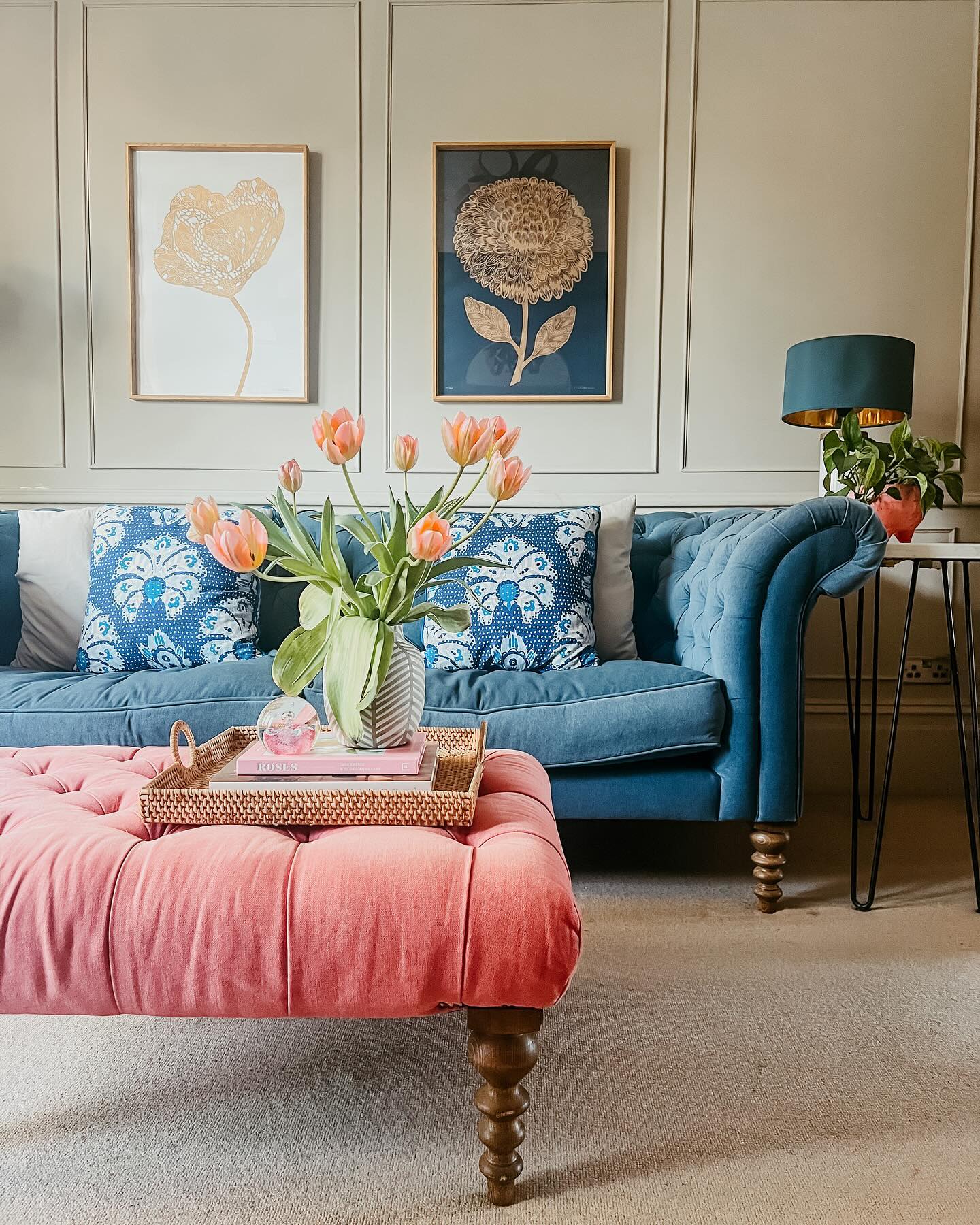
A pink tufted ottoman provides a soft centerpiece in front of this blue velvet sofa. Turned wooden legs, a rolled sofa arm, and wall moldings give the arrangement a traditional framework.
Floral pillows and botanical prints repeat the room's decorative theme without introducing many competing colors. An upholstered ottoman is useful when you want Victorian inspired texture and a comfortable place to rest your feet.
Choose a size that leaves an easy route around the seating. Add a sturdy tray when you need a surface for a drink, vase, or stack of books.
The tray can be lifted away when the ottoman is needed for lounging. A quiet wall color gives the pink and blue upholstery space to stand out.
15. Give a Decorative Fireplace a Finished Hearth
Credits: Instagram
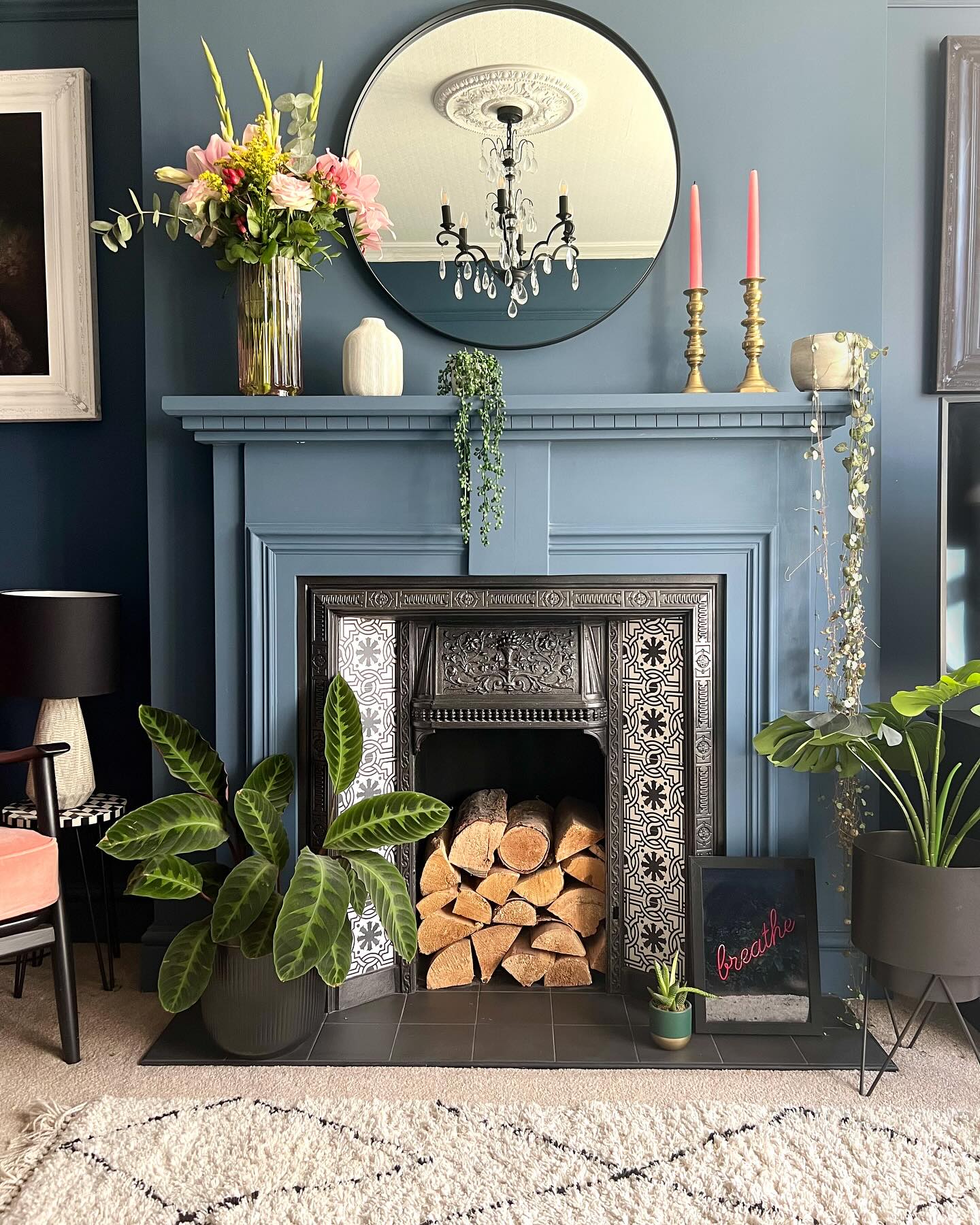
This blue fireplace creates a focal point even though the homeowner identifies it as a decorative, nonworking feature. A reclaimed iron insert, patterned tile effect, and neatly tiled hearth supply the period detail, while stacked logs fill the opening.
Painting the surround to match the wall makes its molding feel integrated. If an unused fireplace is part of your living room, think about the entire composition from floor to mirror.
A defined hearth makes the arrangement look intentional, and a simple round mirror can balance an ornate insert. Plants soften the edges and add another natural texture beside the wood.
Keep the display removable so the opening remains accessible. Any future working fire would require suitable materials and professional assessment.
16. Frame the Fireplace with Matching Illuminated Shelves
Credits: Instagram
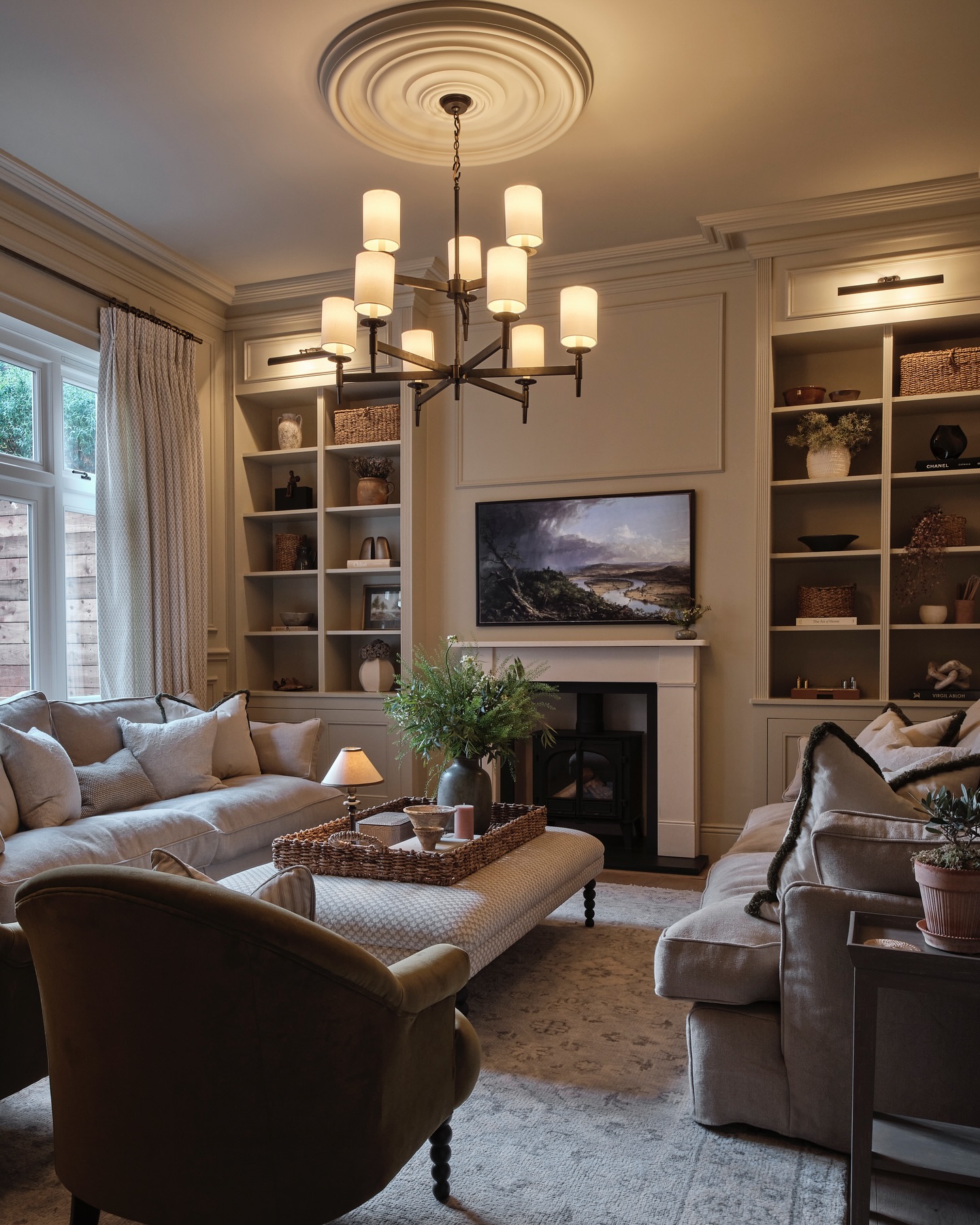
Matching bookcases give this living room a welcoming structure. Their tall dividers lead the eye toward the crown molding, while picture lights above the shelves create a warm evening glow.
A ceiling medallion connects the chandelier with the room's traditional detailing. The sofas face one another across an upholstered ottoman, keeping conversation central to the layout.
To adapt the idea, design alcove storage around what you need to hold. Mix closed cupboards with open shelves so everyday items have somewhere to disappear.
Repeat the wall color across the cabinetry for a calm background. Then use baskets, books, and a few objects to add texture.
Layer shelf lighting with a table lamp so the overhead fixture never carries the whole room.
17. Create a Collected Parlor with Small Antiques
Credits: Instagram
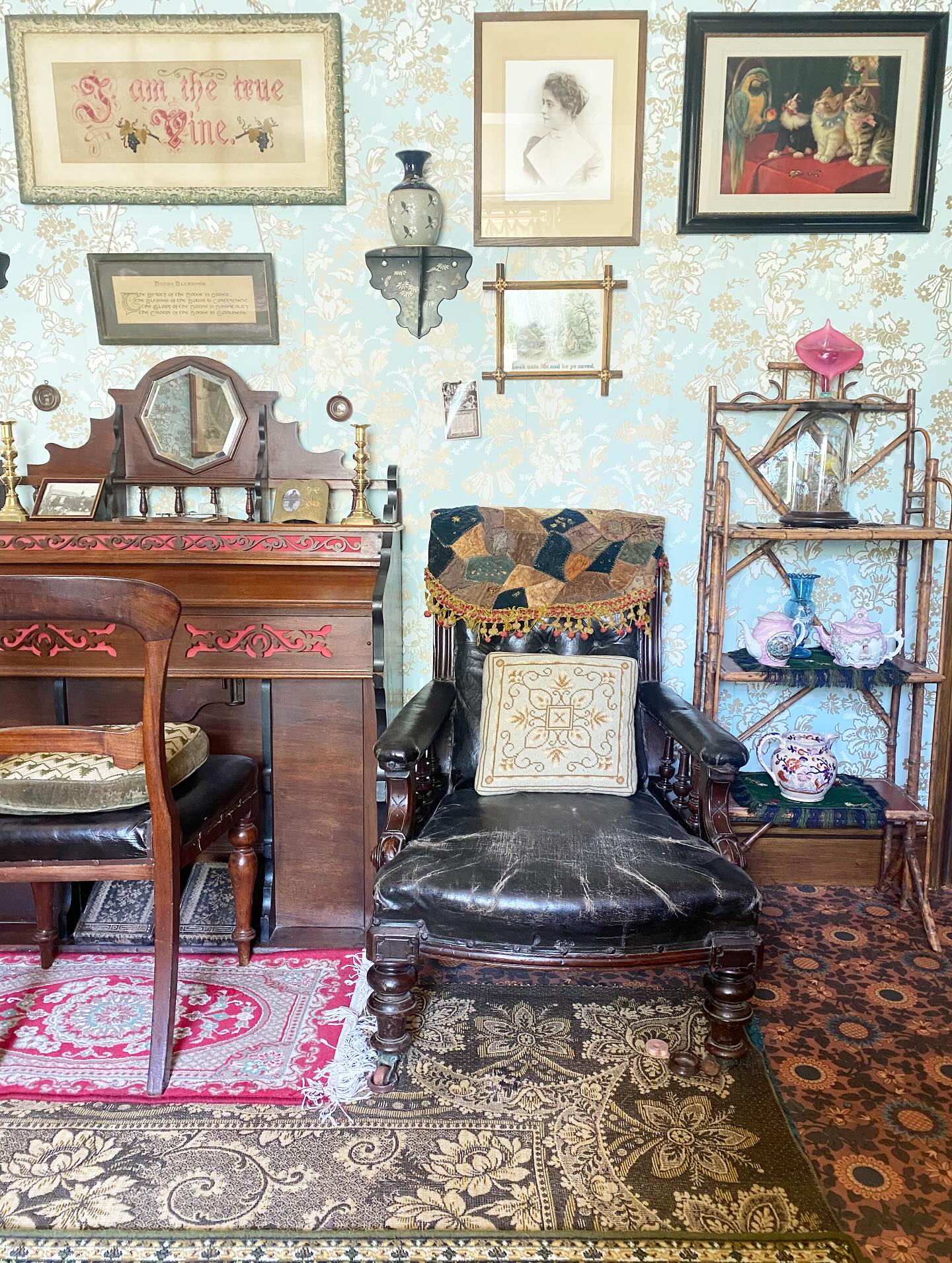
Patterned wallpaper, framed pictures, and compact antiques give this parlor a Victorian sense of abundance. A worn leather chair sits between a harmonium and a slender display shelf, with patterned textiles adding softer layers.
The pale wallpaper keeps the dark furniture from disappearing into the background. This collected approach works best when the objects mean something to you.
Start with one useful seat and a substantial wooden piece, then build smaller displays around them. Vary the heights of pictures and shelves while leaving enough room to use the furniture comfortably.
A few related metal or wood finishes can connect a varied collection. Keep fragile objects away from busy routes, and let visible age contribute to the room's character over time.
18. Add One Bold Animal Print to a Dark Room
Credits: Instagram
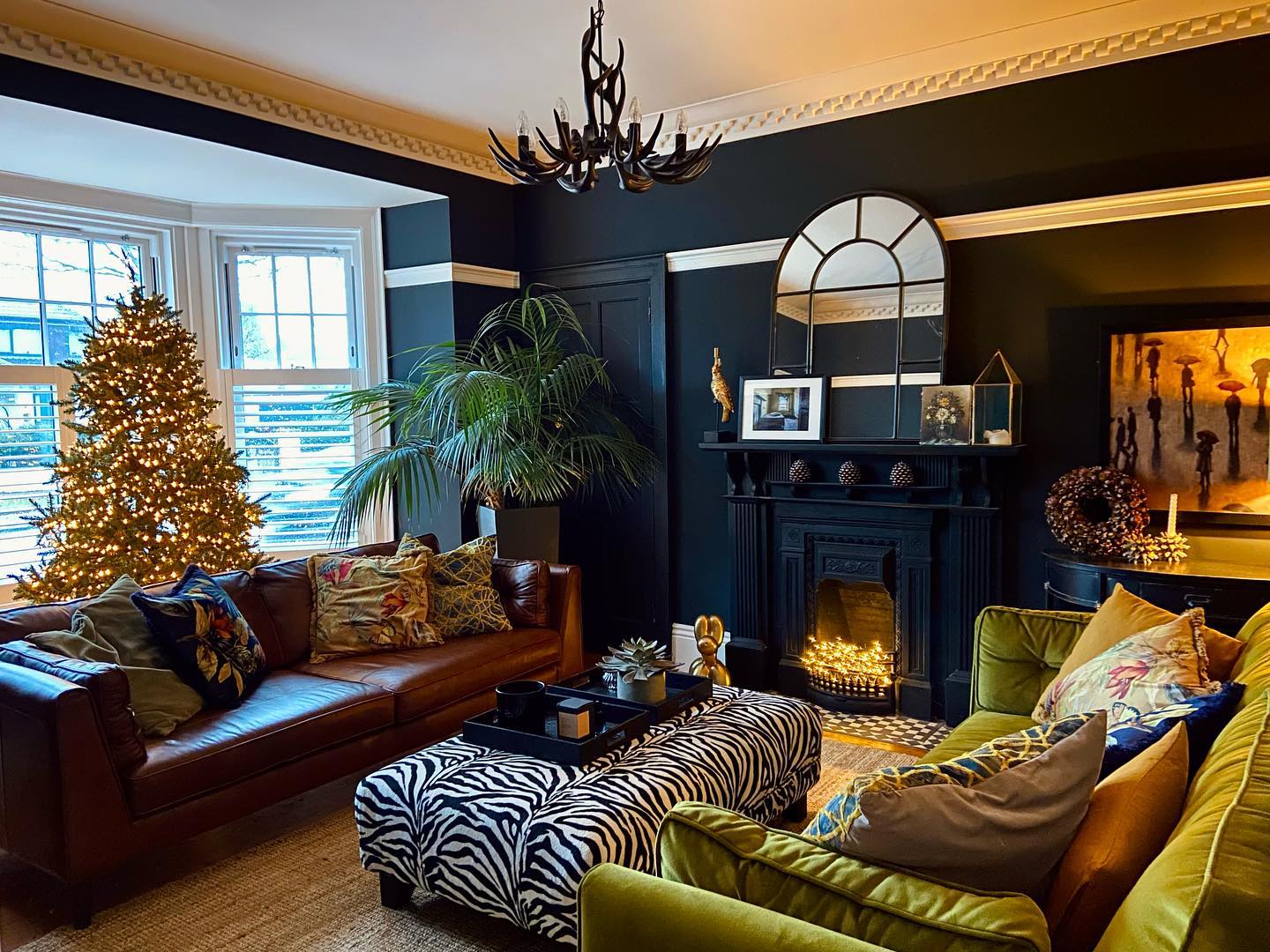
A zebra patterned ottoman gives this dark living room a lively center. Brown leather and green velvet seating provide rich surrounding textures, while pale crown molding and a picture rail outline the walls.
The black mantel and arched mirror keep the fireplace prominent within the deep palette. This is a useful way to introduce a daring print into a Victorian inspired room without changing every piece.
Choose one patterned item and surround it with mostly solid upholstery. Repeat black or cream in a smaller detail so the print feels connected.
A tray makes the ottoman practical for everyday use. Warm lamps and a few reflective objects help lift dark corners, while the architectural trim preserves a clear sense of proportion.
19. Soften a Tall Window with Sheer Curtains
Credits: Instagram
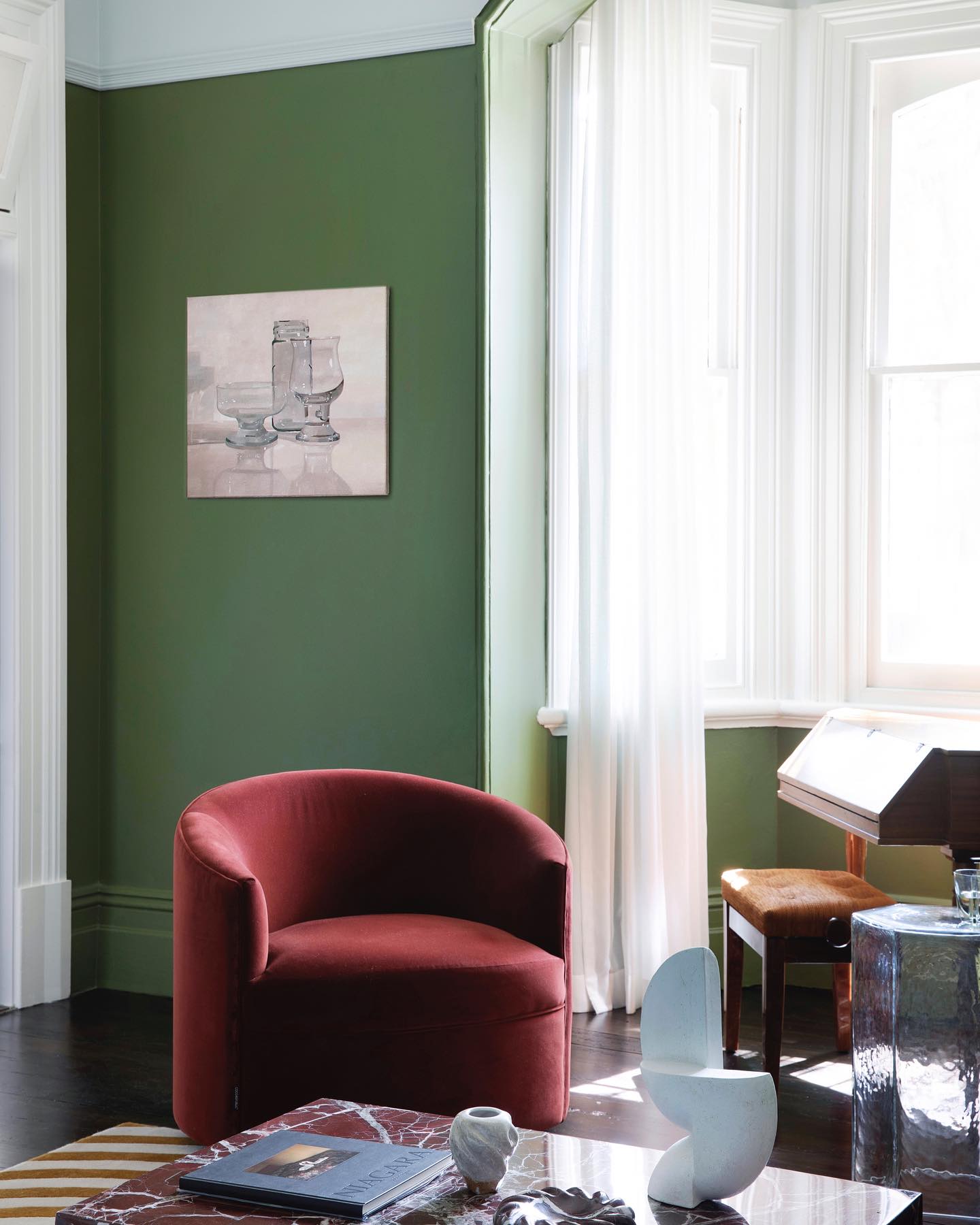
Sheer curtains soften the bright window in this green sitting corner while leaving its traditional trim visible. A curved red chair adds a contrast to the walls, and the wooden writing desk gives the window area a useful second purpose.
Dark flooring grounds the pale fabric and white moldings. In a Victorian living room, lightweight curtains can be especially helpful when you want daylight and a little privacy together.
Hang them so they fall neatly beside the frame, and check that the fabric moves freely around nearby furniture. A compact chair is often enough to make an overlooked corner inviting.
Keep artwork modest in scale here, allowing the tall window and its light to remain the focus throughout the day.
20. Introduce Color Through Graduated Curtains
Credits: Instagram
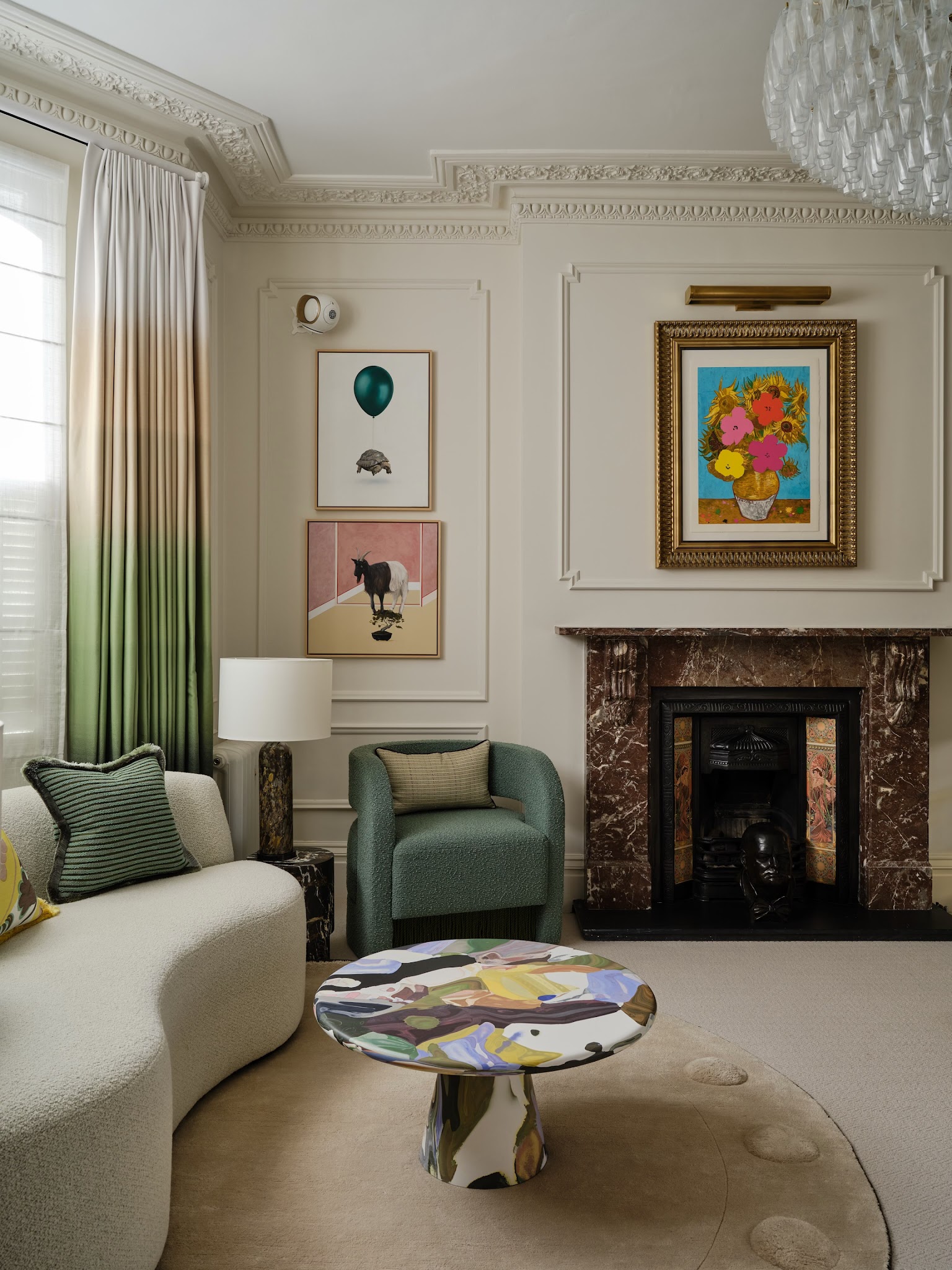
Curtains that shift from pale cream to green add color without interrupting this room's elaborate plasterwork. Their darker lower section relates to the armchair and pillows, while the lighter fabric meets the white ceiling and cornice gently.
A marble fireplace, patterned tiles, and framed artwork provide the traditional detail. This approach suits a Victorian living room where you want contemporary color alongside an existing architectural framework.
Choose a curtain palette that repeats an upholstery shade, and consider how the color changes will look when the fabric is open or closed. Keep nearby wall colors quiet so the transition remains clear.
A rounded table and curved seating can soften the straight lines of the panels without obscuring the fireplace or molding.