
A bookcase can hold a lot without making a living room feel crowded when display and hidden storage work together.
Living Room Bookshelves can fit a range of needs, from slim shelves beside a fireplace to a full wall built around a small sofa.
Try hiding everyday clutter behind cabinet doors, turning favorite book covers outward like artwork, or mixing books with a few sculptural objects.
The ideas also show how ladders, contrasting shelf interiors, and lighting can make storage feel like a considered part of the room. Keep the display useful by leaving space to reach and enjoy the books you own.
1. Give Bookshelves a Quiet Cabinet Base
Credits: Instagram
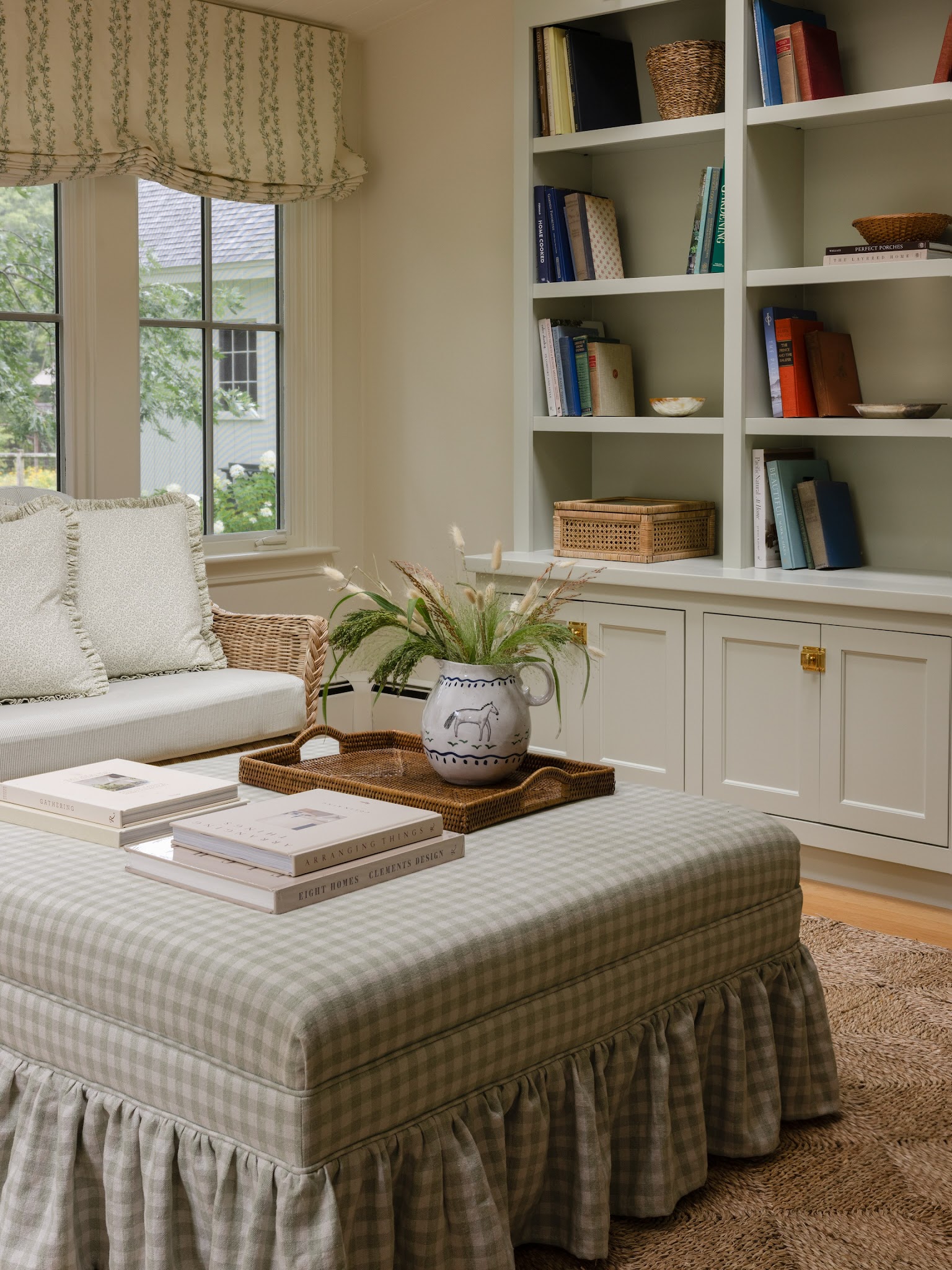
Pale bookshelves bring order to this soft, patterned sitting room without competing with the window. Open compartments hold upright books, small baskets, and a few carefully spaced objects, while paneled doors hide less decorative belongings below.
The shelving color stays close to the surrounding walls, letting the collection provide gentle contrast. A nearby woven seat and checked ottoman make the storage feel connected to a comfortable place to read.
Borrow this balance by keeping everyday clutter behind doors and reserving the open shelves for items you enjoy seeing. Vary the height of book groups rather than filling every opening equally.
A little empty space around a basket or bowl helps the whole wall feel much calmer and easier to use.
2. Display Favorite Book Covers Like Artwork
Credits: Instagram
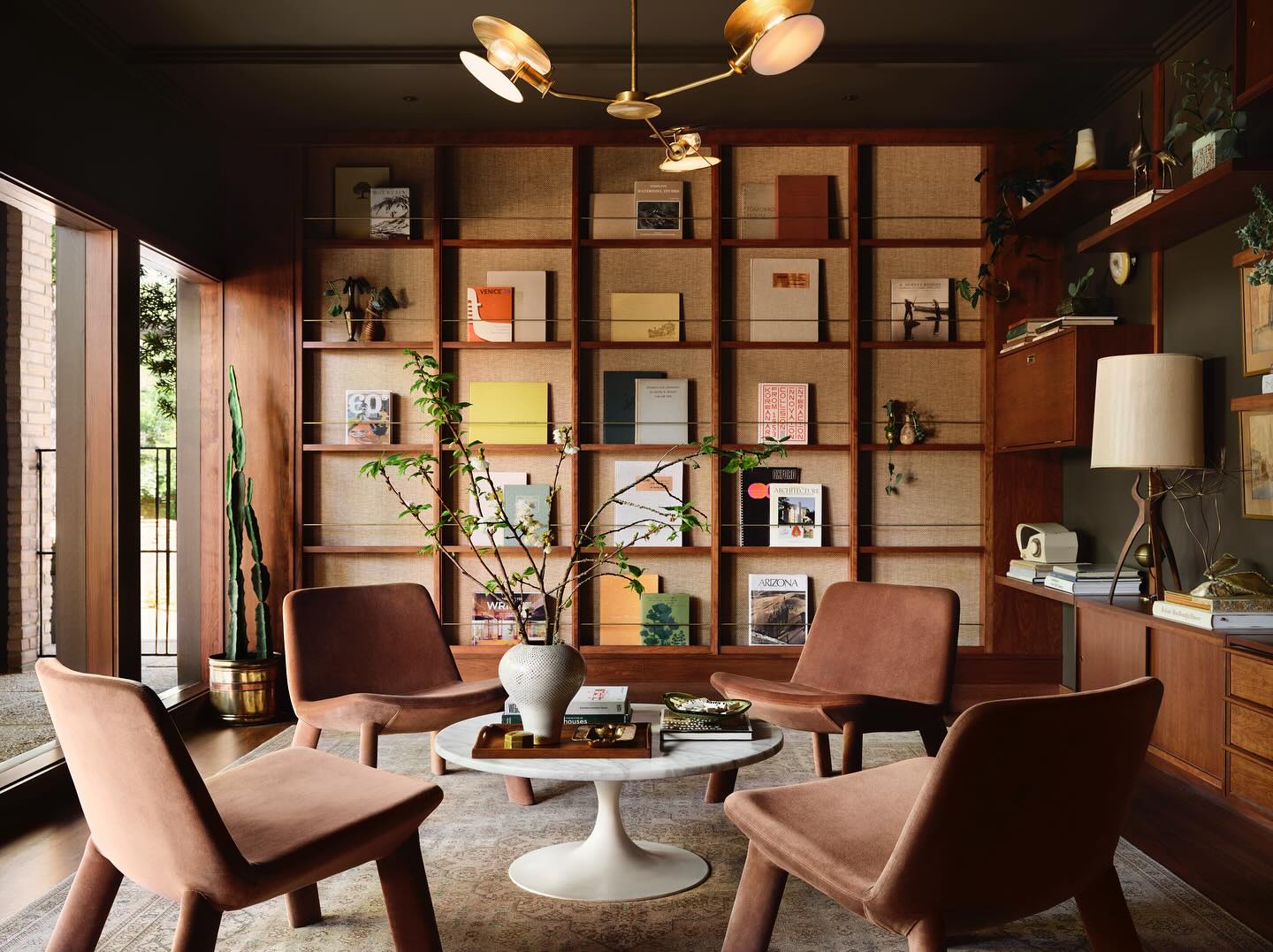
Books become part of the artwork in this warm library sitting area. Shallow wooden shelves hold volumes facing forward, with slim rails running across the fronts to keep the display visually orderly.
The grid creates a strong backdrop for four lounge chairs arranged around a round table. A few plants and small objects soften the repeated rectangles without hiding the covers.
Try this approach for art books, travel collections, or editions with distinctive jackets that deserve more attention than their spines receive. Keep some conventional storage nearby for the rest of your collection.
Changing a handful of displayed books can refresh the room without replacing furniture. Warm shelf finishes and comfortable seating make the arrangement inviting rather than overly formal.
3. Add a Ladder to Tall Library Shelves
Credits: Instagram
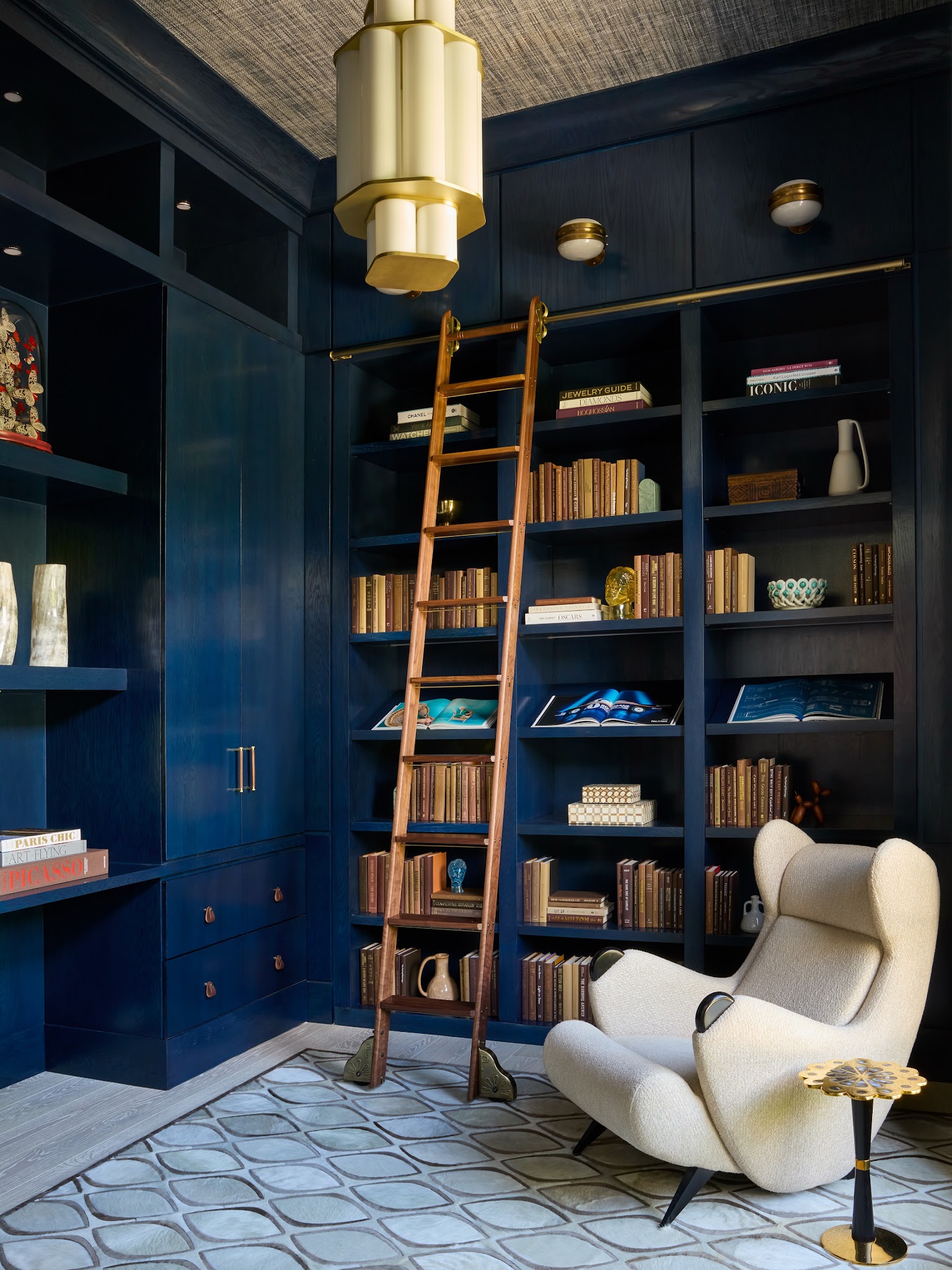
Deep blue shelving turns this reading corner into a richly defined space. The bookcases reach high above a pale lounge chair, and a wooden ladder gives the tall wall a practical, distinctive feature.
Closed cupboards and drawers sit alongside open shelves, allowing the room to hold more than the objects on display. Brass colored hardware and lighting introduce warmth against the dark finish.
If you plan a similar arrangement, design access to the upper shelves from the beginning and choose a ladder system suited to the installation. Keep the chair and side table clear of its working path.
Mix upright books with horizontal stacks, then leave a few openings for larger objects so the storage retains a comfortable visual rhythm.
4. Mix Books With Collected Sculptural Objects
Credits: Instagram
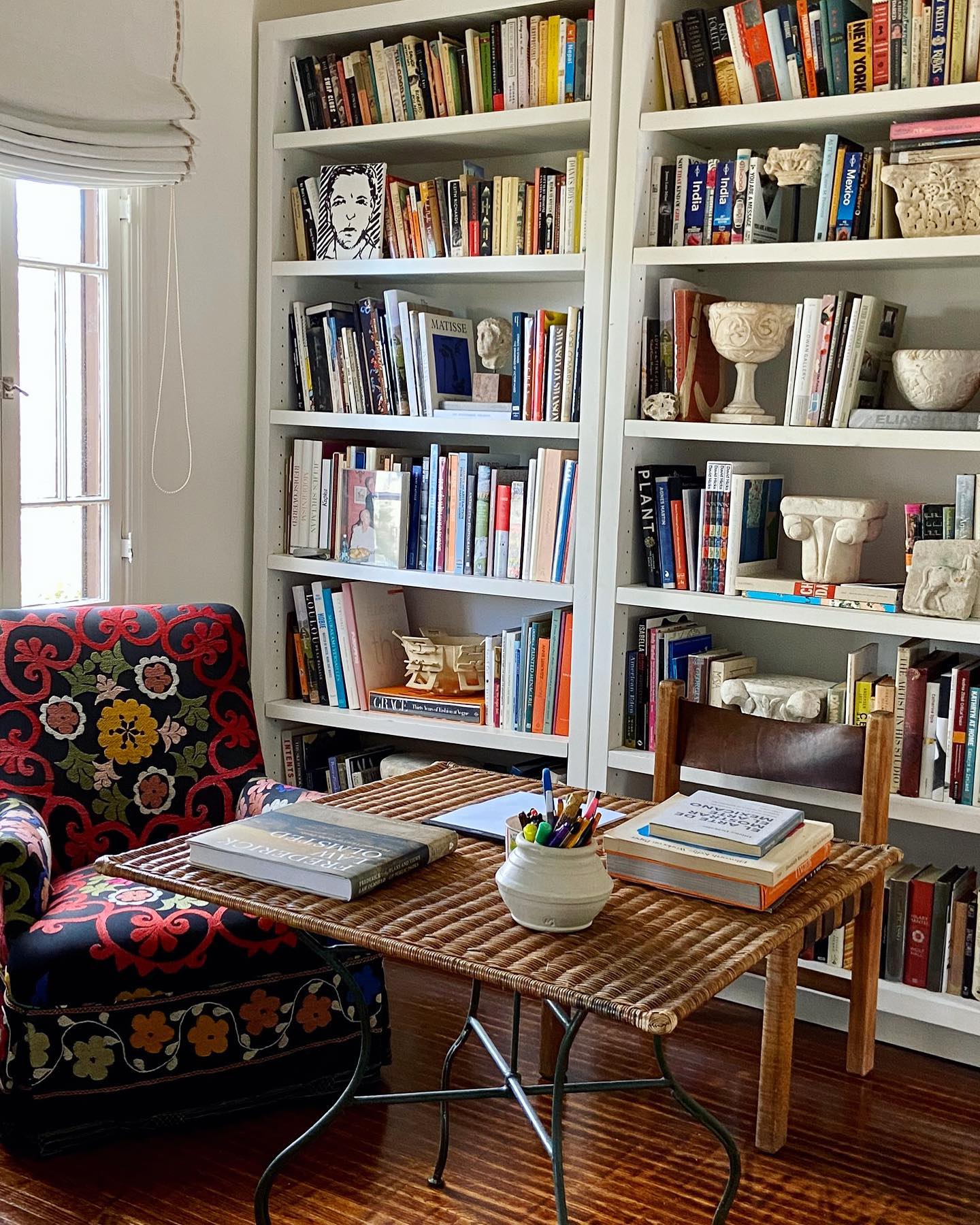
This bookcase feels personal because books share the shelves with carved objects, framed images, and small sculptures. White uprights keep the busy collection legible, while a patterned armchair brings another layer of color to the corner.
A compact table provides somewhere to open a book or make notes beside the shelves. You can adapt the idea without arranging every object symmetrically.
Start with the books you use most, then place a few larger pieces where they can be seen clearly. Let horizontal stacks support smaller objects, and leave enough room to remove a volume easily.
The aim is a useful collection that reflects your interests. Nearby seating turns the display into part of daily life instead of a distant backdrop.
5. Build a Full Wall Around a Small Sofa
Credits: Instagram
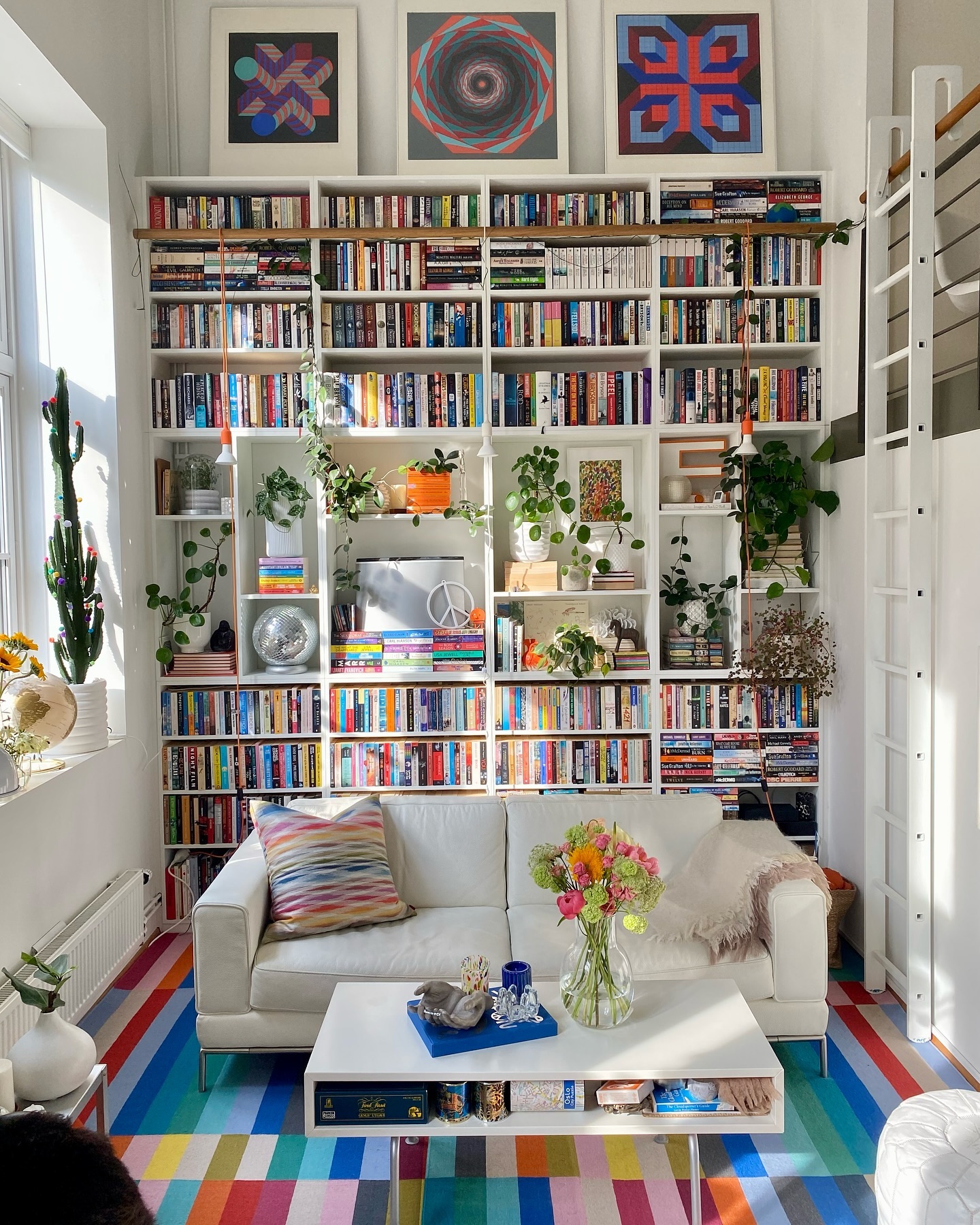
A small white sofa sits beneath an expansive wall of books, making this tall room feel both intimate and full of personality.
The shelving changes scale across the wall: narrow rows hold volumes, while larger central compartments make space for plants and artwork. Hanging lights bring illumination down toward the seating rather than leaving it all at ceiling level.
The colorful rug echoes the variety of book spines without requiring matching accessories. Use this idea when storage needs are substantial but the seating footprint is modest.
Keep frequently used books within comfortable reach, and plan safe access to the highest rows. A restrained sofa color gives the collection room to become the dominant feature while preserving a welcoming reading spot.
6. Tuck Slim Shelves Beside the Fireplace
Credits: Instagram
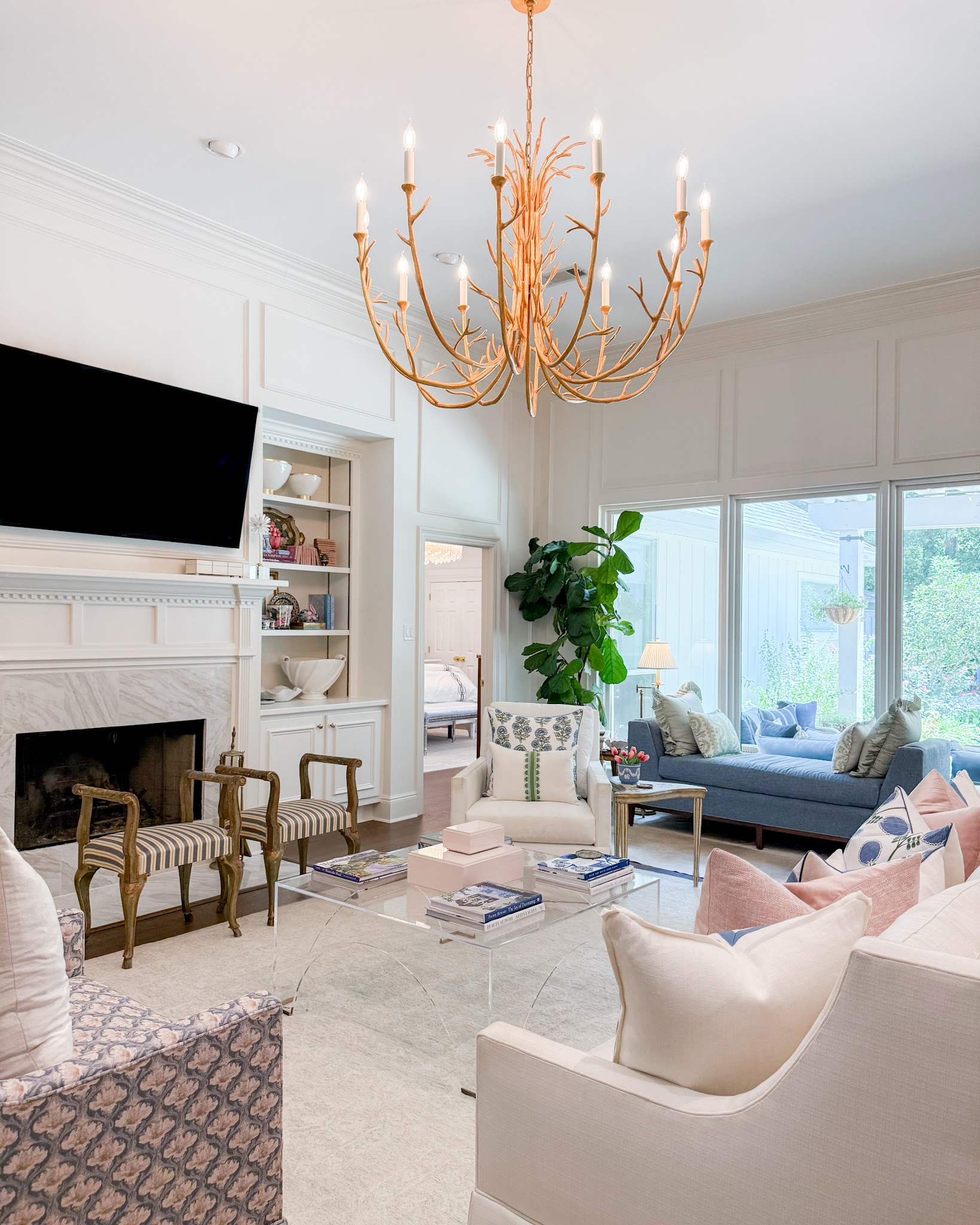
A narrow built-in bookcase beside the fireplace adds storage without taking over this bright living room. Its white finish connects with the mantel and wall trim, while a few colored books and decorative pieces keep the recess from disappearing completely.
Closed storage at the bottom gives the arrangement a tidy foundation. The surrounding seating stays light, allowing the shelving to support the room rather than dominate it.
This is a useful approach when a wide bookcase would compete with windows or circulation space. Measure the available recess carefully and choose shelf spacing around the objects you actually own.
Mix books with a small number of larger pieces, keeping the overall display simple enough to read from across the seating area.
7. Combine Books, Television, and a Compact Desk
Credits: Instagram
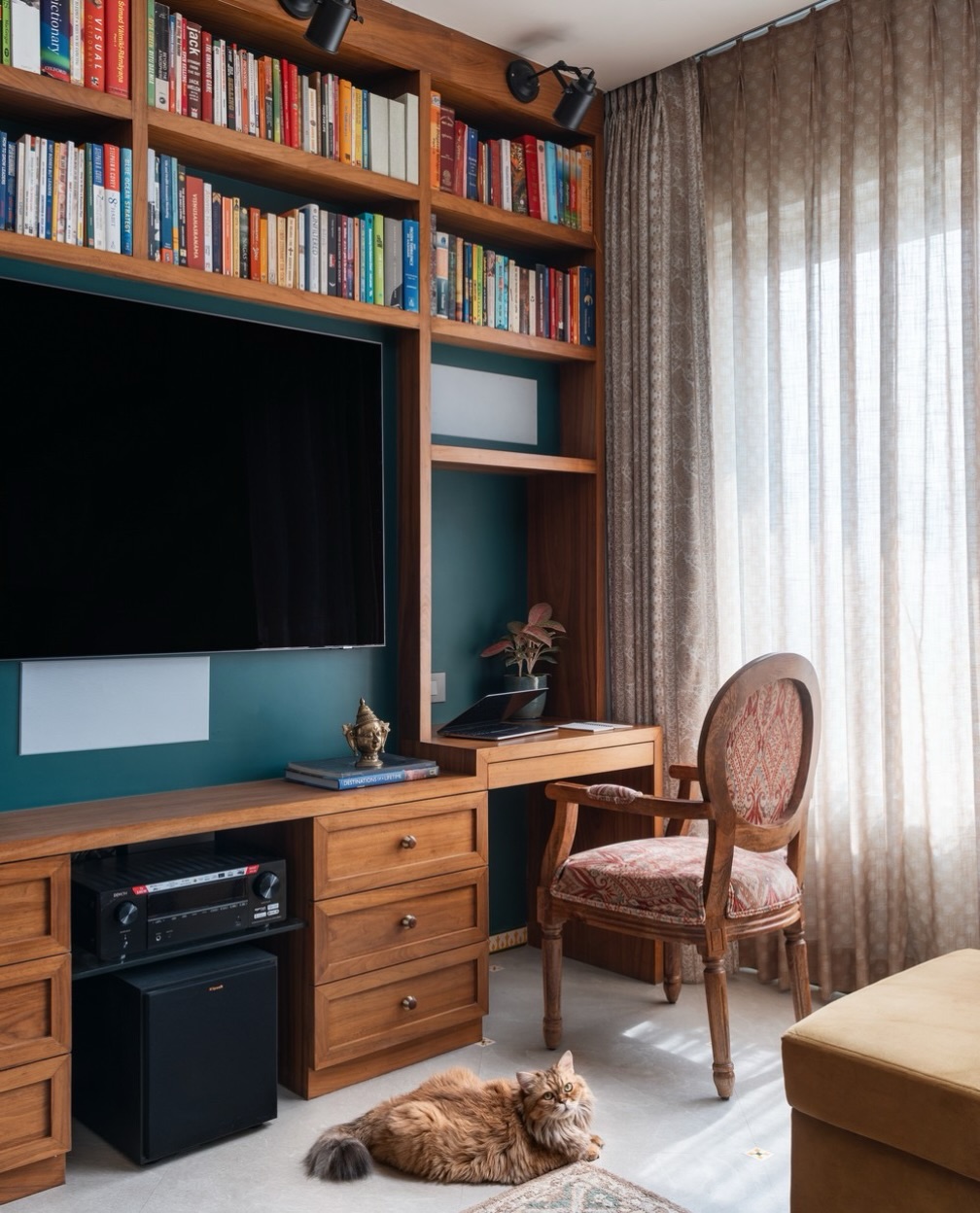
Walnut shelving gives this family room a place for books, entertainment equipment, and a small work surface. Books fill the upper rows, while the television sits against a deep teal background below.
A desk fits neatly into the right side of the unit, where an upholstered chair and sheer curtains keep the corner feeling comfortable. Drawers provide useful storage without crowding the open shelves.
Consider this arrangement when several activities need to share one room. Plan the screen height, cable routes, and desk dimensions together so each function has enough space.
Keep books used most often within easy reach and reserve higher rows for occasional reading. Repeating the same wood across the whole wall helps the different elements feel connected.
8. Use Low Shelves to Define a Seating Area
Credits: Instagram
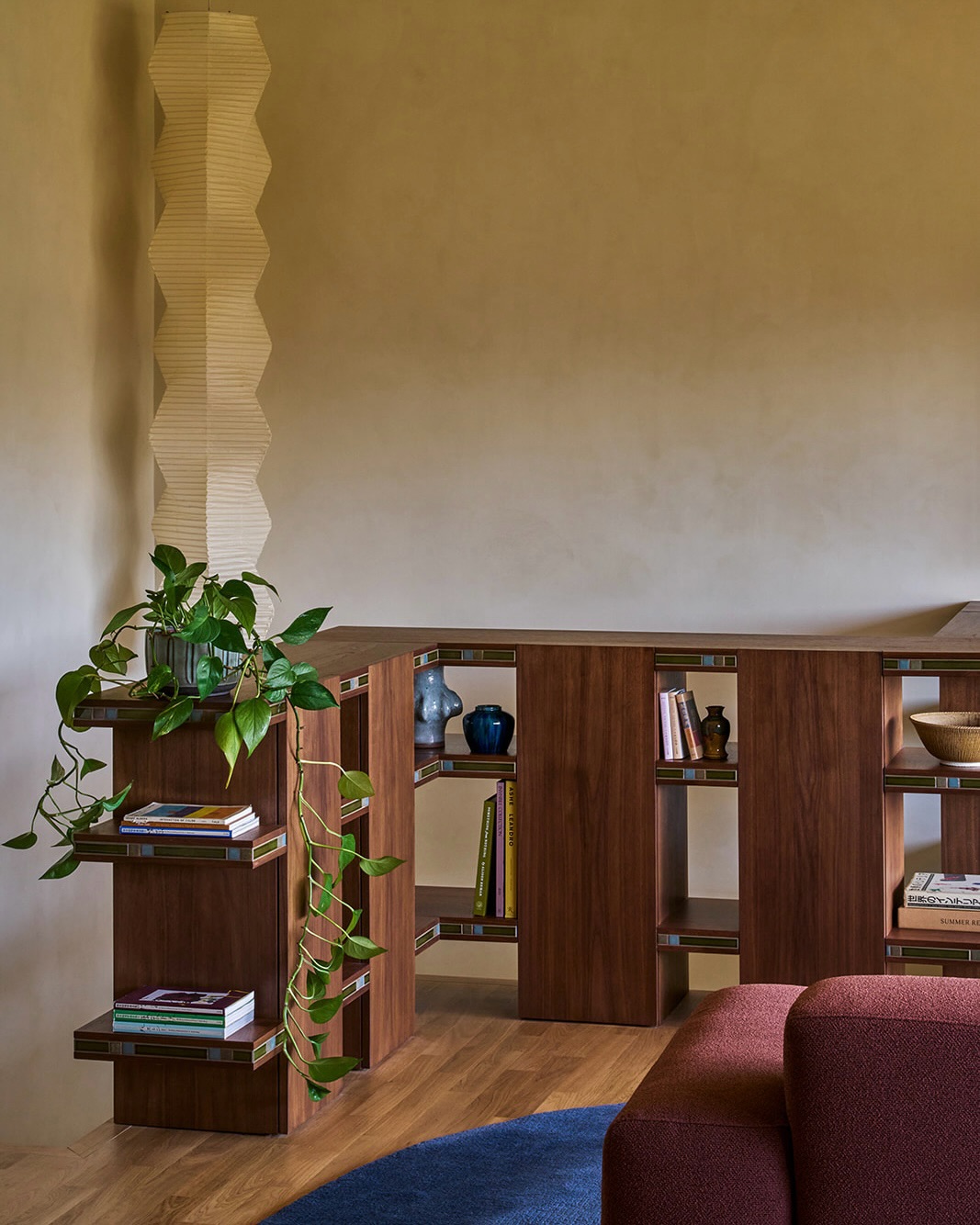
This low walnut bookcase follows the edge of a stair opening, giving the living area storage while preserving its open character. Small colored tiles trace the shelf edges, adding a subtle pattern to the warm wood.
Books, ceramics, and a trailing plant occupy different compartments, while the curved sofa nearby makes the shelving part of the seating arrangement. A low unit can be useful where a tall bookcase would block views or overwhelm a compact room.
If storage also forms a stair barrier, have its construction and dimensions checked for that purpose. Keep the top relatively clear so the shape remains visible.
A few contrasting objects are enough to bring variety without hiding the carefully detailed edges of the shelves.
9. Paint Shelf Interiors a Contrasting Color
Credits: Instagram
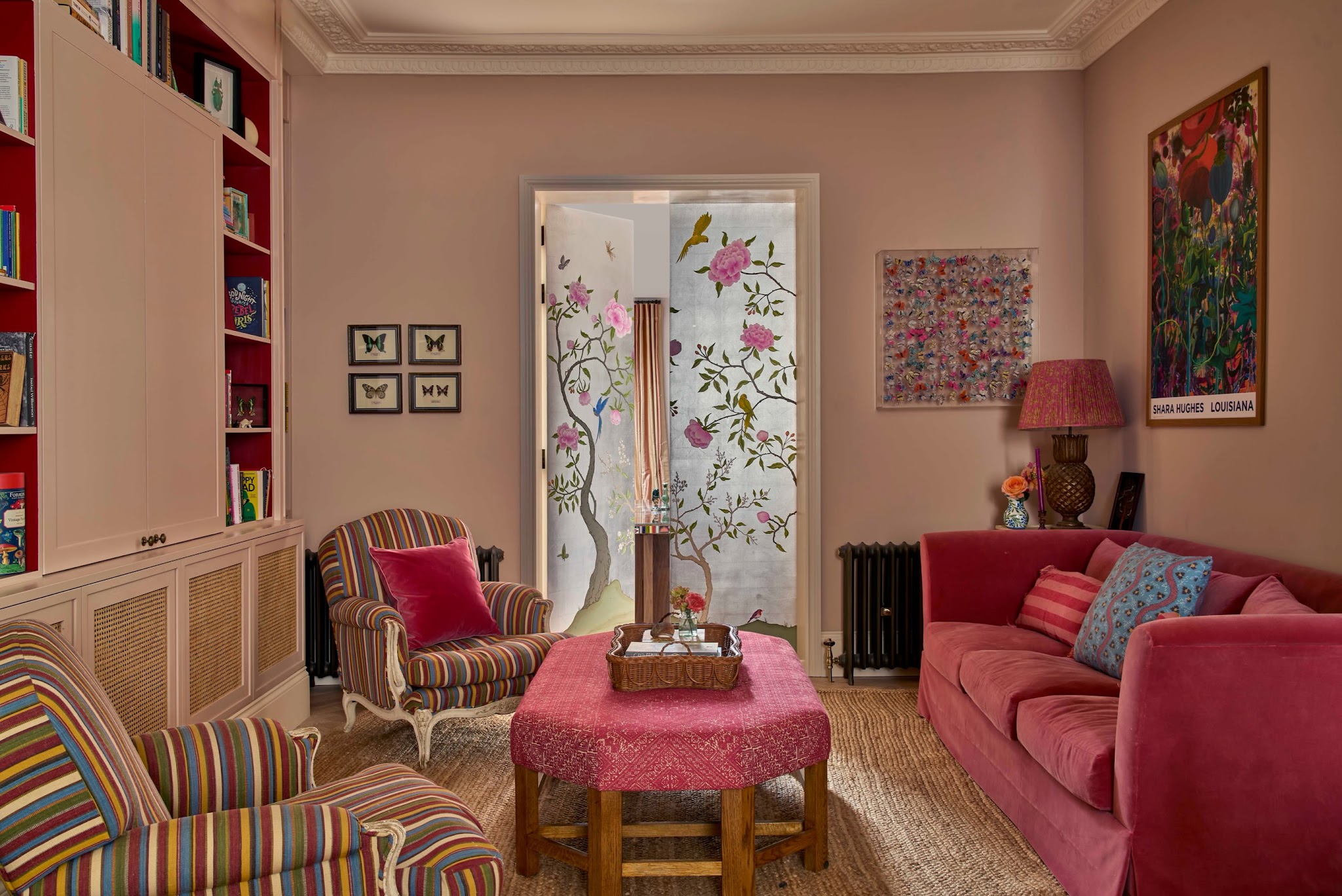
Red shelf interiors give this pink sitting room a lively detail that connects with the sofa and patterned ottoman. The outer cabinetry stays close to the wall color, while the recessed openings introduce stronger contrast around the books.
Woven door panels add texture to the lower cupboards, helping a large storage unit feel like furniture. Striped chairs and colorful artwork continue the collected mood across the room.
Try this idea when you want a bolder bookcase without painting the entire wall a saturated shade. Test the interior color behind your actual books before committing.
Use closed cupboards for less attractive items, then let a few upright volumes and small objects interrupt the bright background. Matching every accessory is unnecessary here.
10. Fit a Bookcase Between Two Windows
Credits: Instagram
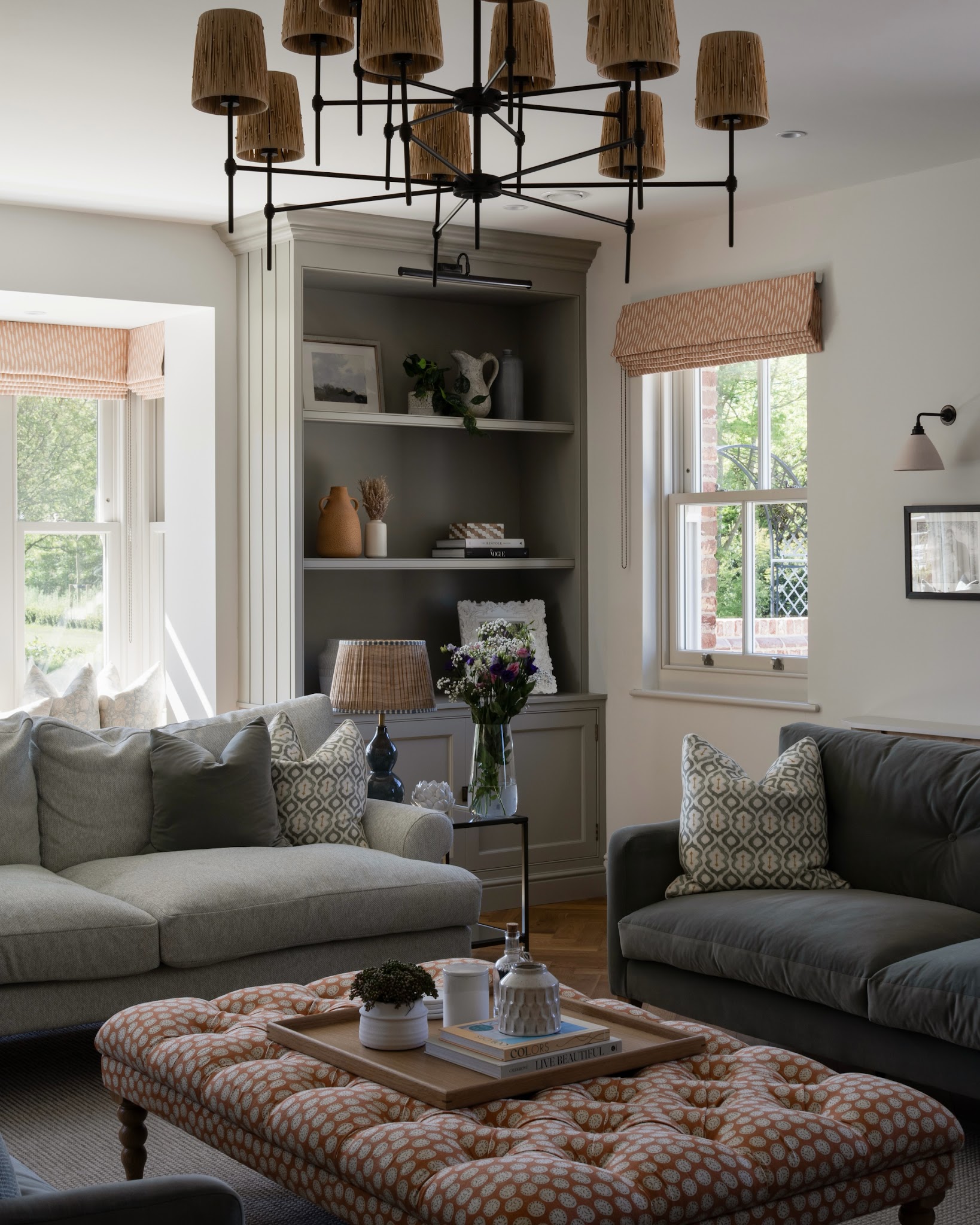
A tall gray bookcase makes useful storage out of the wall between two bright windows. Its substantial trim connects the shelves to the architecture, while cupboard doors create a quiet base below.
Books share the open compartments with pottery, framed artwork, and greenery. A slim picture light above the unit gives the storage its own focal point within the seating area.
The nearby sofas and patterned ottoman keep the room relaxed rather than overly formal. When planning a similar built-in, check the window trim and curtain or blind clearance before setting its width.
Leave room around larger objects so their shapes remain readable. A restrained cabinet color allows the fabrics and natural light to carry much of the room's character.
11. Layer Light Wood Shelves Against Dark Paneling
Credits: Instagram
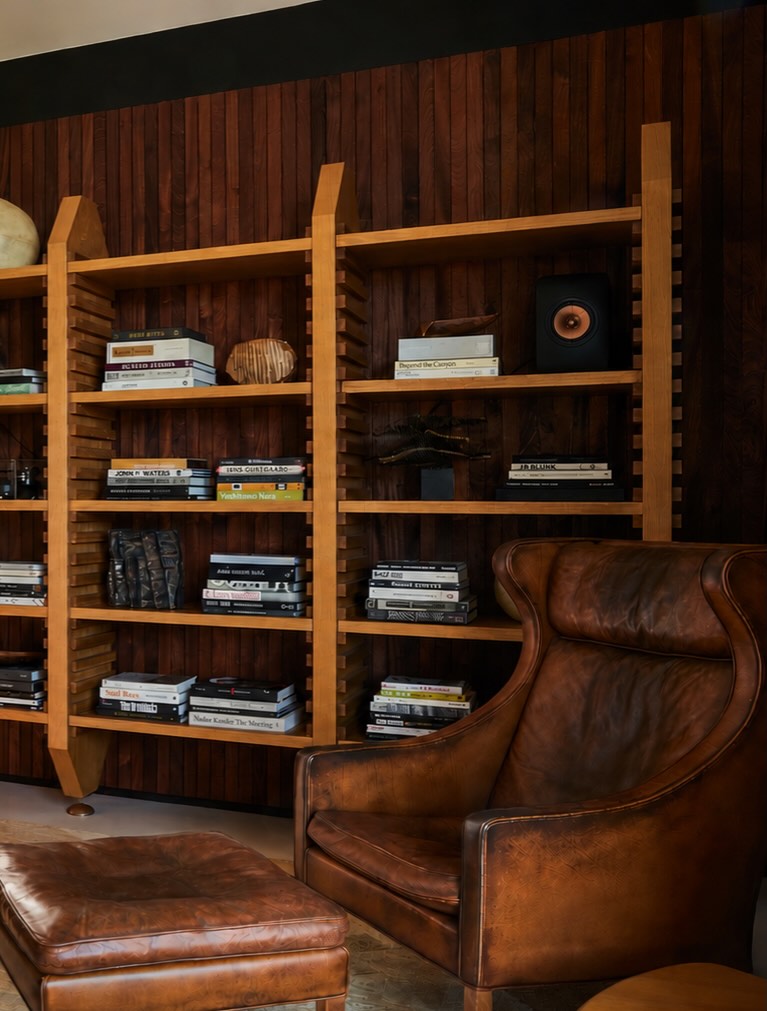
Light wooden shelves stand out against the darker vertical paneling in this inviting library corner. Their pronounced uprights and exposed shelf supports give the piece a strong furniture quality, while horizontal book stacks establish a relaxed rhythm.
A worn leather chair and matching footstool provide a comfortable place to read within arm's reach of the collection. Small sculptures and a speaker fit among the books without filling every available space.
Borrow the contrast by choosing shelving that is clearly lighter or darker than the wall behind it. Keep the overall palette restrained so the wood grain and book covers remain visible.
Vary stack heights, but avoid piles so tall that taking out a favorite volume becomes awkward during everyday use.
12. Keep a Bookcase Light With Slender Supports
Credits: Instagram
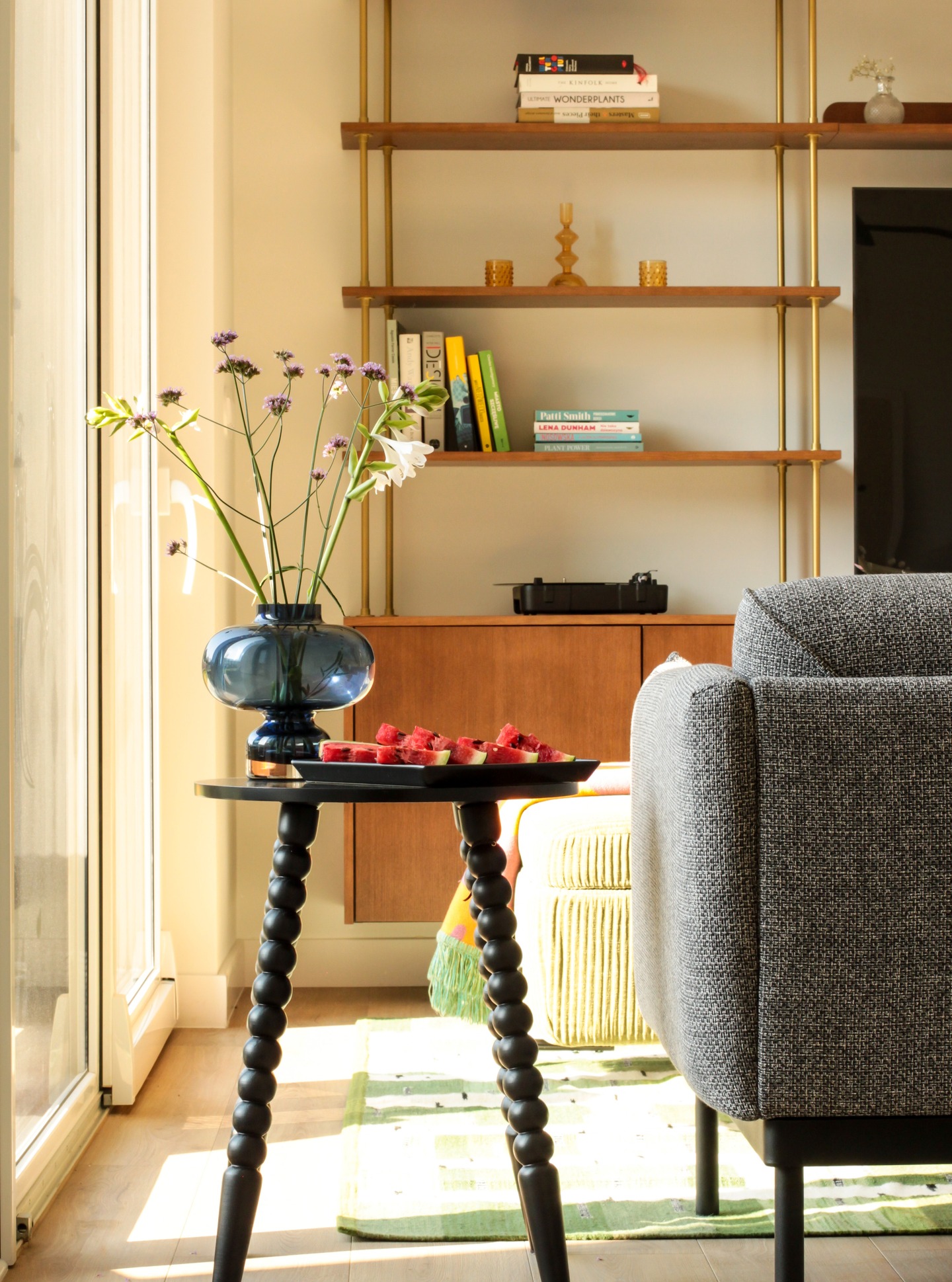
Slender brass colored uprights allow these wooden shelves to look light beside a large television. The pale wall remains visible between small book groups, a few decorative objects, and a turntable on the cabinet below.
Sunlight from the nearby window emphasizes the warm wood without requiring a dense display. A gray armchair and compact side table establish the shelving as part of a comfortable living area.
This approach suits a modest collection that needs an attractive home rather than a full library wall. Choose shelf spacing around the tallest books and equipment you intend to keep.
Let some shelves hold only one small group, and use the lower cabinet for additional belongings. The open wall space helps the arrangement breathe.
13. Carry a Rich Wall Color Across the Shelves
Credits: Instagram
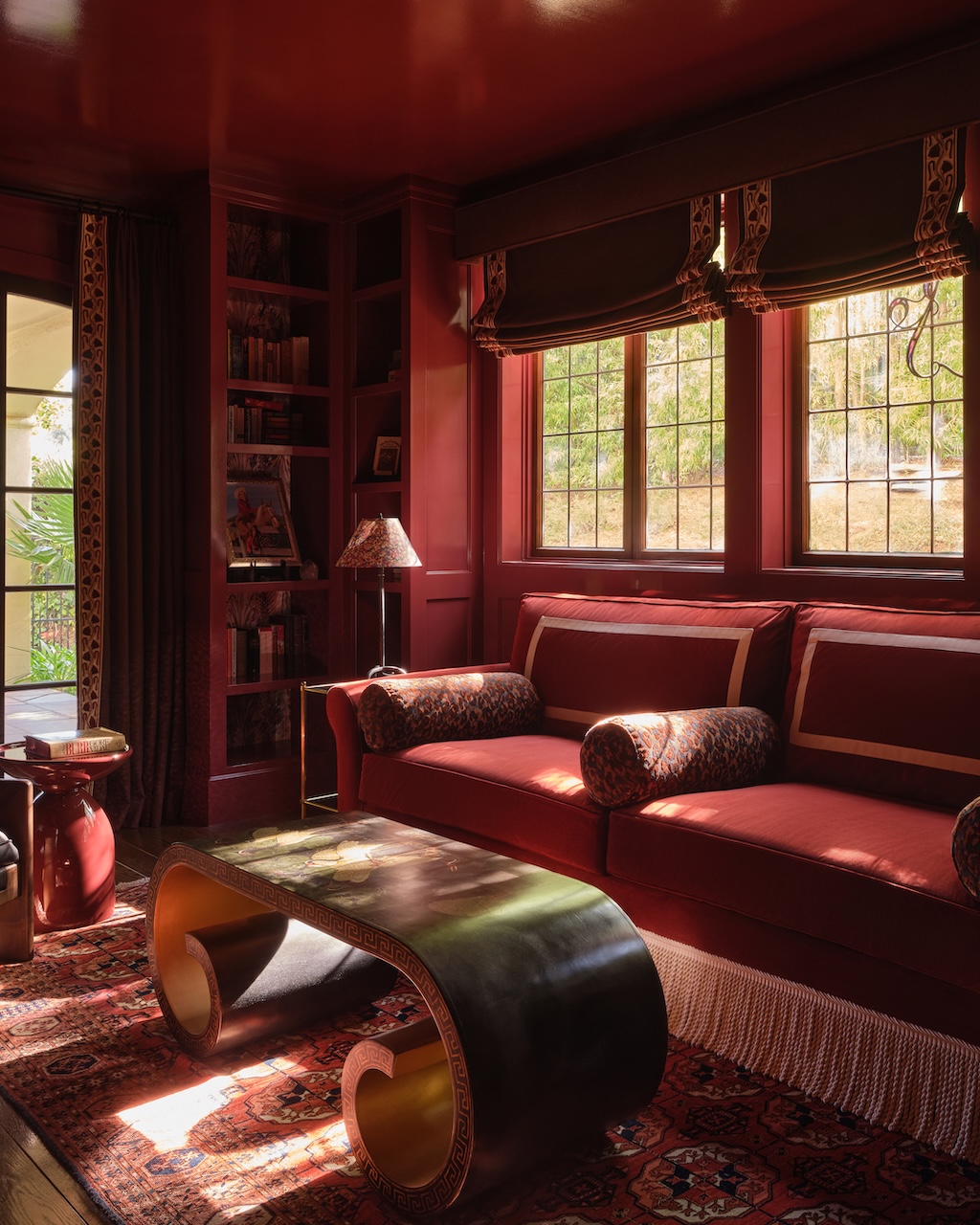
Deep red paint connects the shelving, walls, and ceiling in this compact library sitting room. The bookcase occupies a narrow corner beside the windows, while a red sofa and patterned bolsters extend the warm palette into the seating.
Sunlight picks out the upholstery and curved coffee table, giving the darker surfaces a sense of depth. Use a continuous color when you want built-in storage to feel embedded in the room.
Test the shade in daylight and lamplight, since a saturated finish can change noticeably across the day. Keep reading light close to the chair or sofa, and organize the darker shelves so favorite titles remain easy to find.
A patterned rug introduces variation without interrupting the room's enveloping overall color.
14. Protect a Large Collection Behind Glass Doors
Credits: Instagram
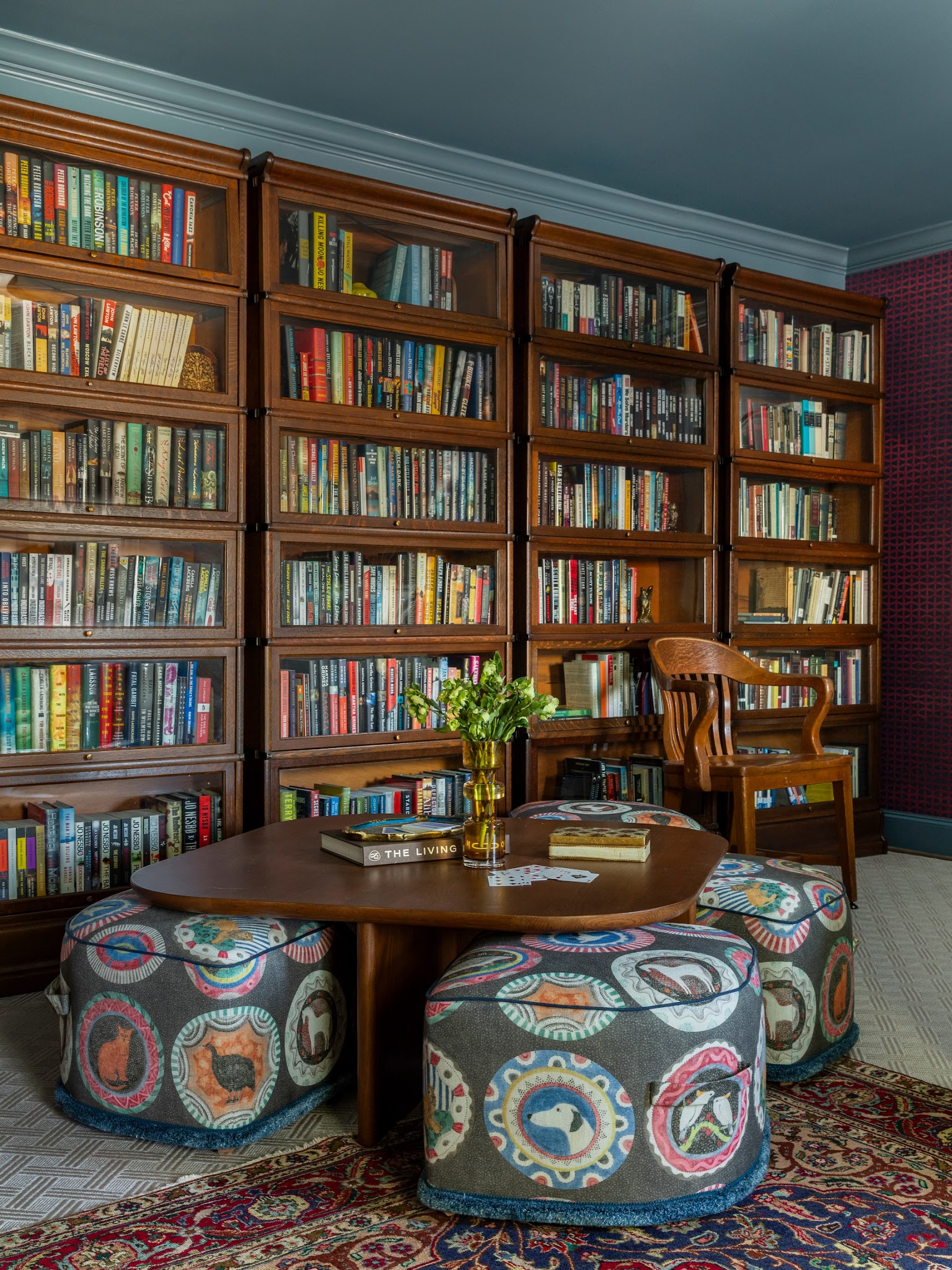
Rows of glass-fronted wooden bookcases give this library sitting area the feeling of a collection built over time. The repeated frames create order around books of different sizes and colors, while a blue ceiling adds a quieter surface above.
A low table and patterned stools make room for reading or a casual card game directly in front of the shelves. Glass doors are useful when you want to see your books while limiting how much dust settles on them.
Check opening clearance before placing seating nearby, and choose shelves deep enough for larger volumes. Group books in a way that makes sense for your reading habits.
The display feels welcoming because comfortable furniture sits close enough to use the collection.
15. Light the Shelves From Within

Credits: Instagram
Warm lighting turns this pale wooden bookcase into a gentle focal point beside the dark stone fireplace. Books and sculptural objects occupy separate groups, with enough empty space for the illuminated shelf edges to remain visible.
Flush cupboard doors below keep the lower section calm, while nearby sofa cushions soften the precise cabinetry. Built-in shelf lighting can help a storage wall contribute to the room's evening atmosphere.
Plan the wiring and accessible controls before the joinery is finished, and choose lighting that does not glare into nearby seats. Keep the display simple enough that the light highlights a few shapes instead of many competing objects.
Mixing upright volumes with modest stacks gives the shelves useful variety within their orderly frame.
16. Vary Shelf Heights Around a Television
Credits: Instagram
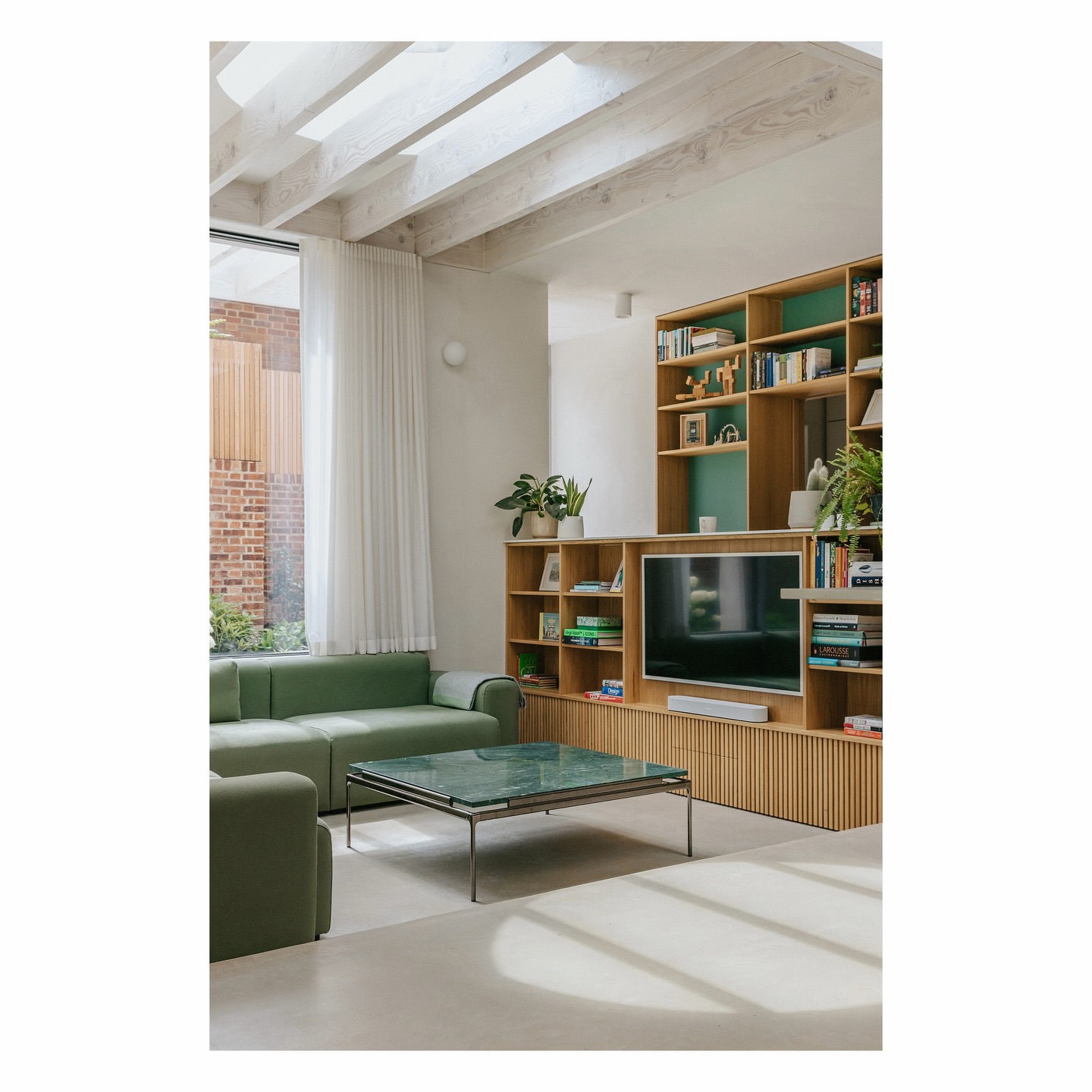
Oak shelving rises in changing heights around the television in this bright sunken living area. Smaller compartments hold books close to the seating, while taller sections above make space for plants and decorative objects.
Green backing panels relate to the nearby sofa, linking the storage wall with the room's softer furnishings. A ribbed cabinet base supplies a continuous visual foundation beneath the varied openings.
This arrangement works when a screen and a substantial book collection need to share one wall. Plan the screen position first, then size the surrounding compartments to suit your books.
Keep the shelves beside windows from interrupting daylight. Repeating a limited set of materials helps the changing heights feel deliberate and comfortably connected to the room.
17. Float Long Shelves Above Closed Storage
Credits: Instagram
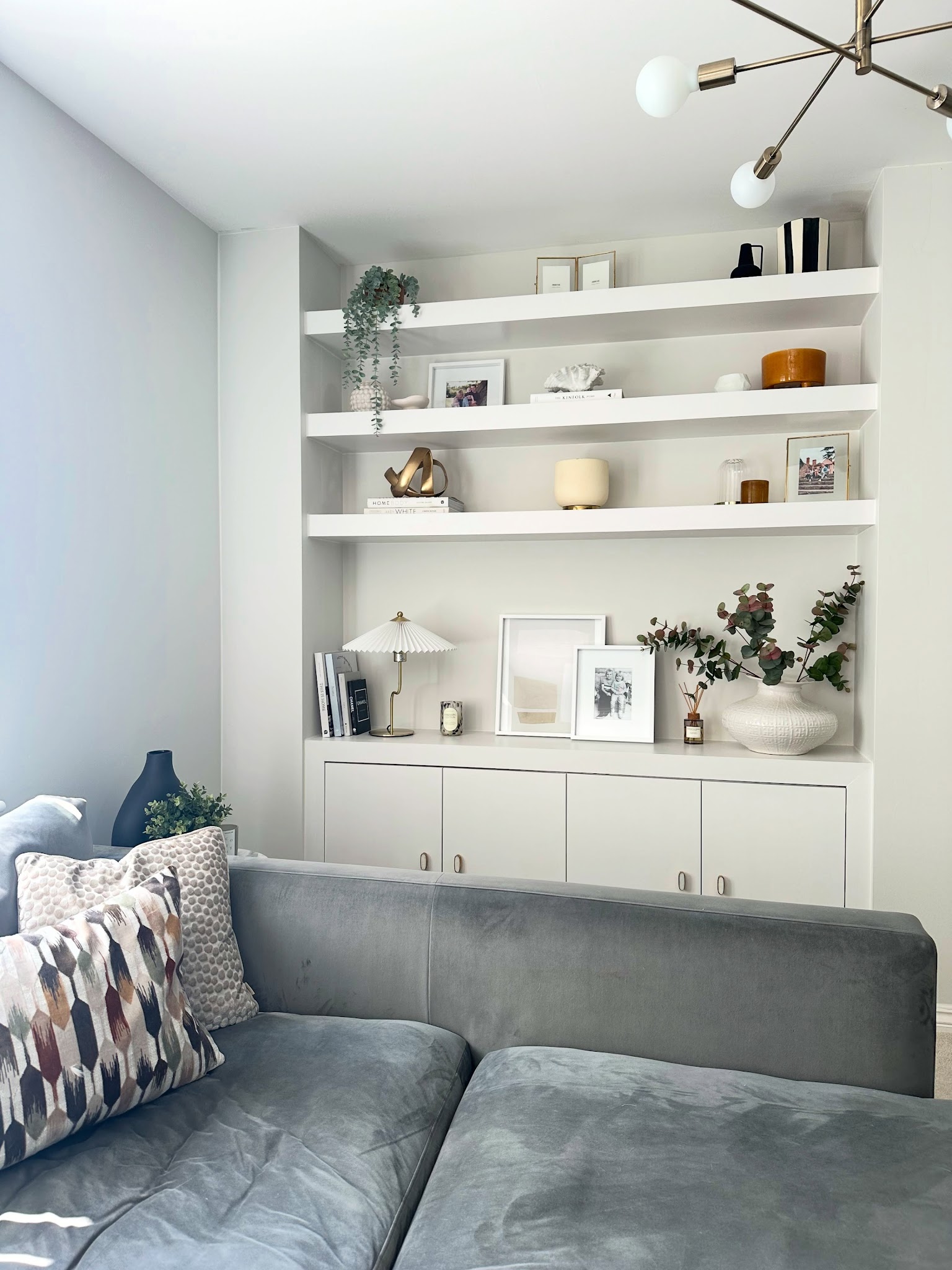
Three long white shelves stretch across an alcove behind the sofa, creating a light display above a row of cupboards. Their substantial edges give books and small objects a clear horizontal framework.
The pale finish blends with the walls, while a trailing plant, amber glass, framed photographs, and a few dark accents provide contrast. A larger open surface below the shelves leaves room for a lamp and taller arrangements.
This is a useful option when you prefer a calm backdrop to a busy grid of compartments. Keep the shelf supports suitable for the weight of books, and avoid overloading long spans.
Vary the spacing between groups so the display remains relaxed. Closed storage below makes that uncluttered approach easier daily.
18. Make a Personal Library Playful With Pastel Shelves
Credits: Instagram
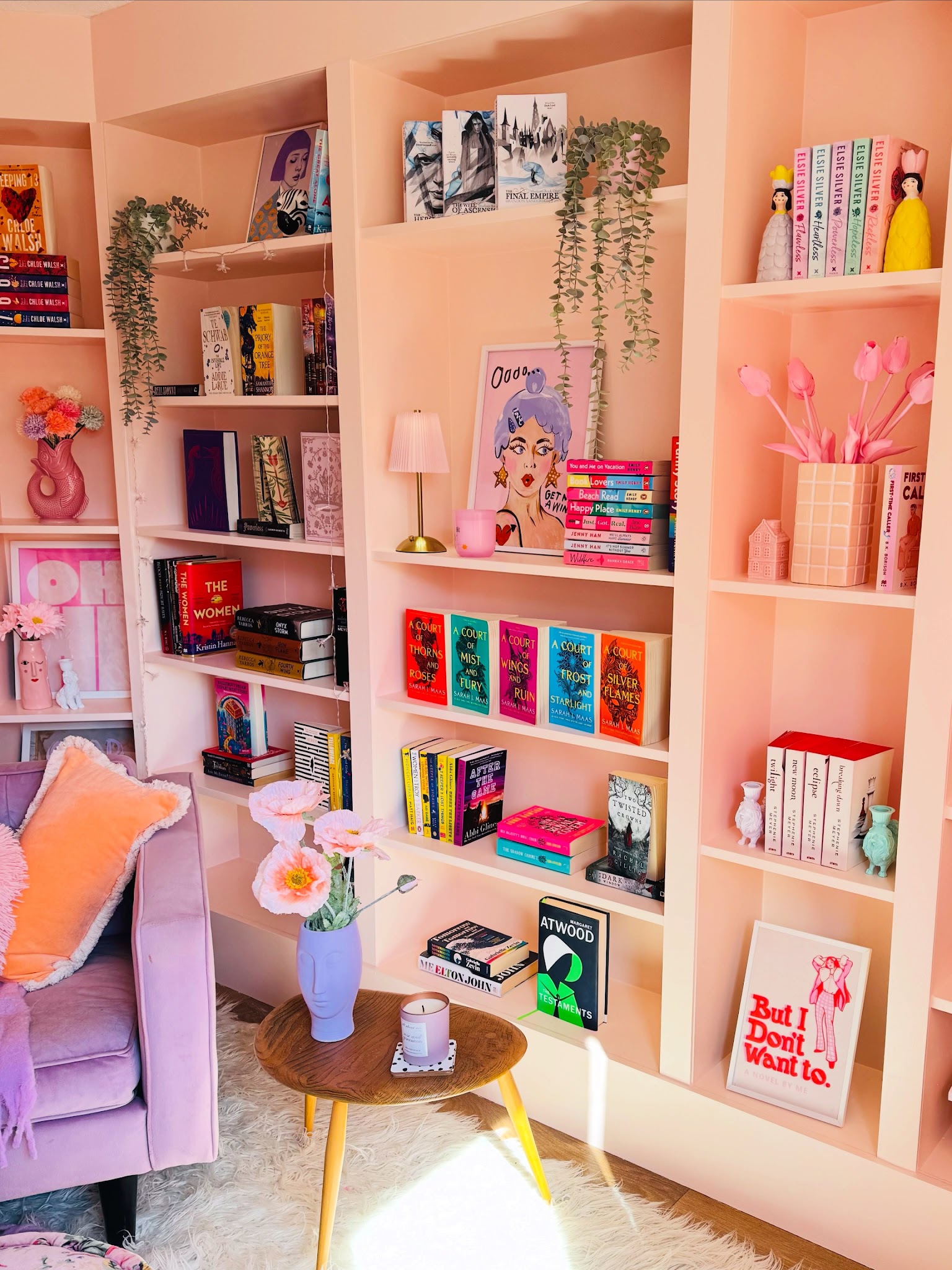
Peach shelving creates a cheerful home for this colorful book collection. Some novels face forward, others sit in tidy stacks, and small artworks share the shelves with trailing greenery and playful vases.
A lavender chair and a compact wooden table turn the storage wall into a comfortable reading corner. The varied displays feel connected because the cabinet color stays consistent across the entire arrangement.
Try a soft, warm shade when you want a large bookcase to feel welcoming rather than imposing. Keep series together if that helps you find favorite titles, then reserve a few openings for special covers.
Balance the brighter objects with clear patches of shelf so the collection remains easy to browse and enjoy from the chair.
19. Wrap Bookshelves Around a Glazed Doorway
Credits: Instagram
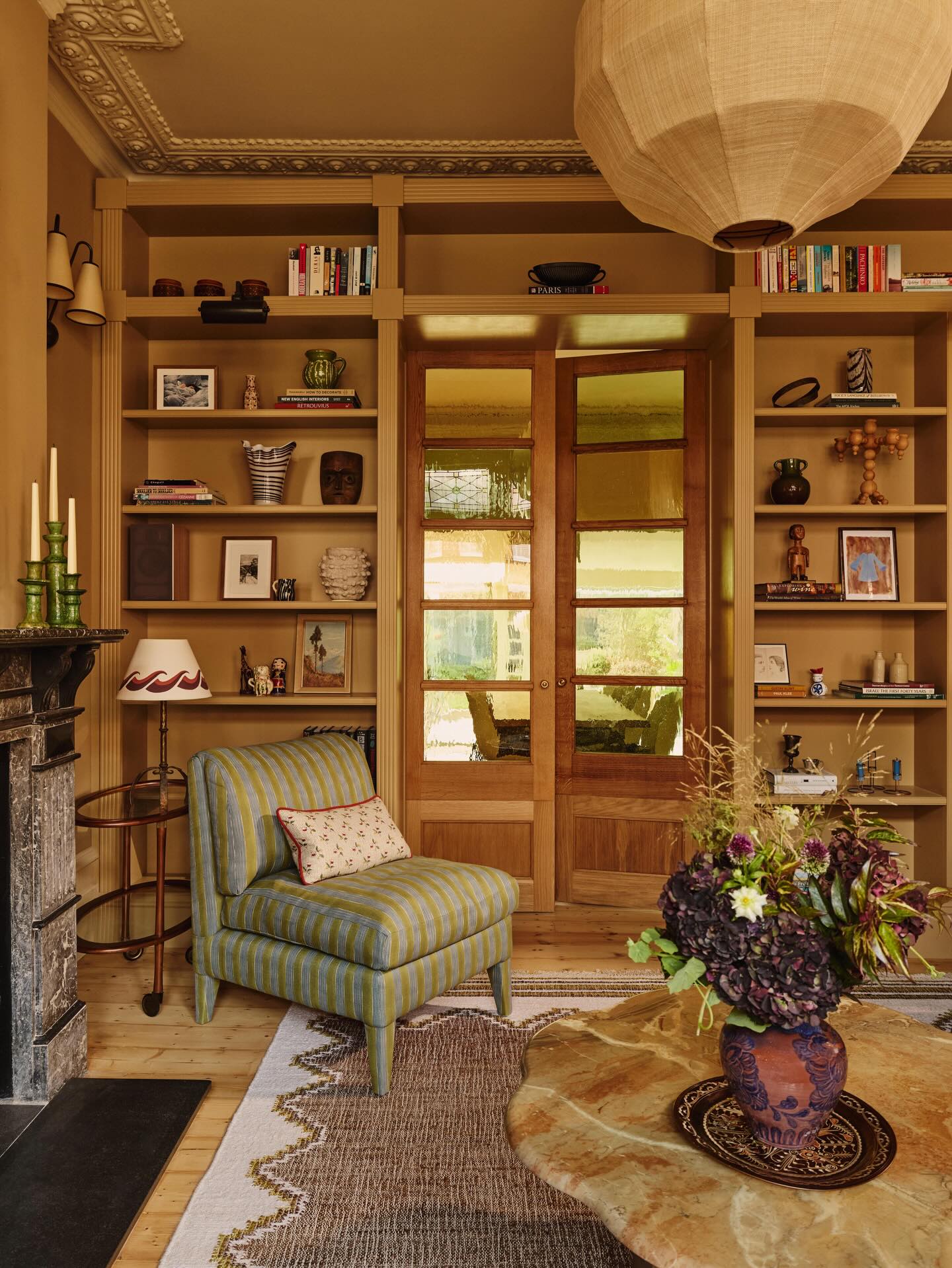
Bookshelves flank a pair of glazed timber doors in this warm sitting room, turning a passage into part of the display. A shelf above the opening completes the frame, while the ochre finish connects the joinery with the surrounding walls.
Books mix with pottery, framed pictures, and collected objects at different heights. A striped chair nearby keeps the storage connected to a comfortable place to sit.
This approach can make good use of wall space that might otherwise remain empty beside a doorway. Check the door swing and trim dimensions before planning the shelves, and keep the passage generous.
Repeating the same finish across both sides gives varied objects a calm setting without requiring a perfectly symmetrical arrangement of books.
20. Set Simple Wooden Shelves Inside a Recess
Credits: Instagram
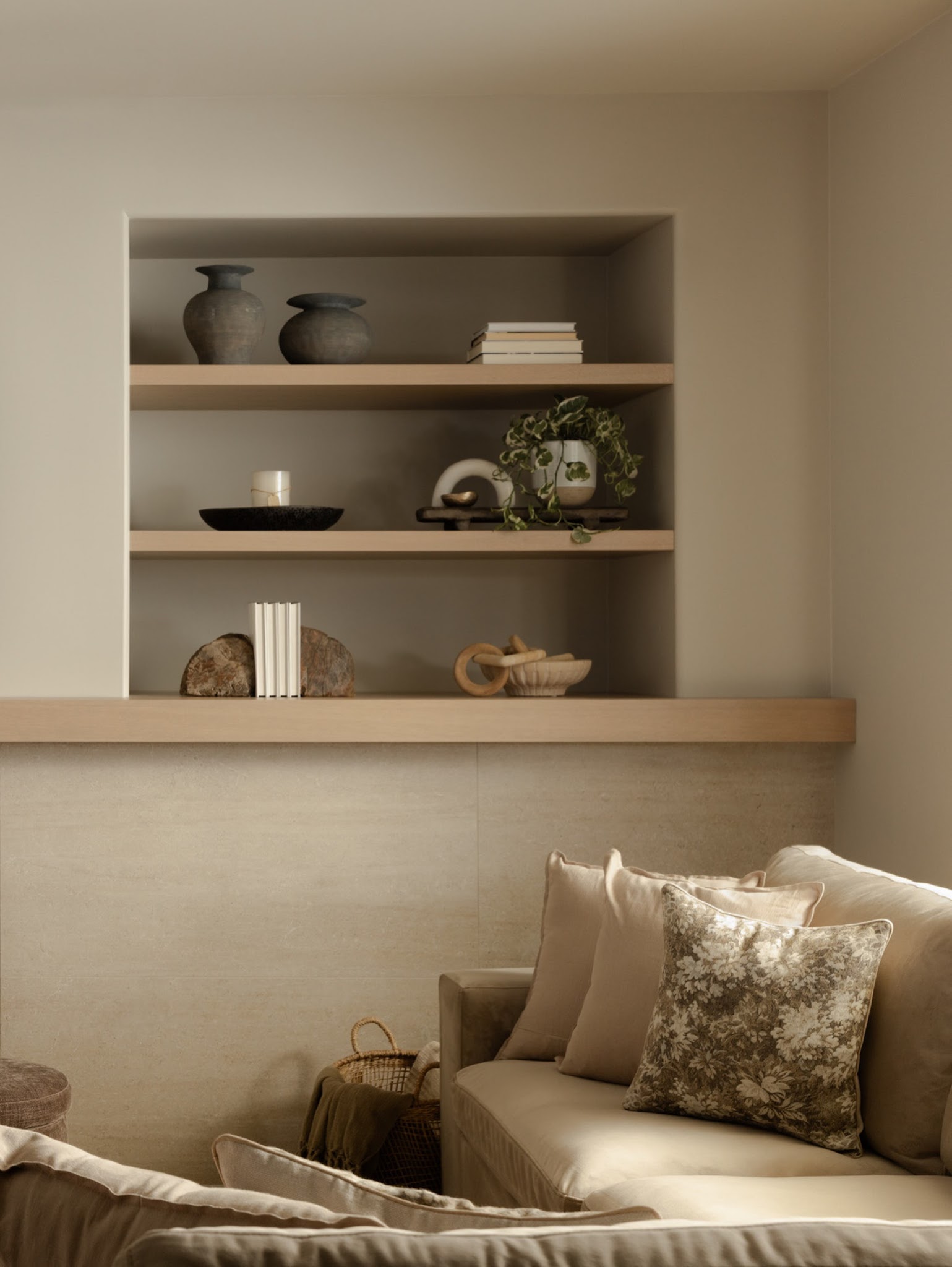
A shallow recess gives these wooden shelves a defined place within the living room wall. Their warm finish relates to the broad ledge below, while pale books, dark pottery, and a trailing plant supply a restrained mix of shapes.
The beige sofa and textured cushions continue the soft palette close to the display. A recessed arrangement can provide storage without projecting far into a smaller seating area.
Measure the depth of your books before choosing shelf dimensions, especially if larger volumes will share the space. Keep heavier objects on supports designed for their weight, and leave a little clear surface around each group.
Simple shelves work best when the room's materials and the objects themselves provide most of the detail.