
An empty stretch of living room wall can feel unfinished, but filling it with too many small pieces may make the space feel busy.
Living Room Wall Decor Ideas can help you find a focal point that suits the room, from a tall mirror between windows to a large painting layered over patterned wallpaper.
The article also shows ways to arrange family photos on staggered picture ledges and group varied frames beneath picture lights. Each approach offers a practical starting point for making a wall feel considered without losing its character.
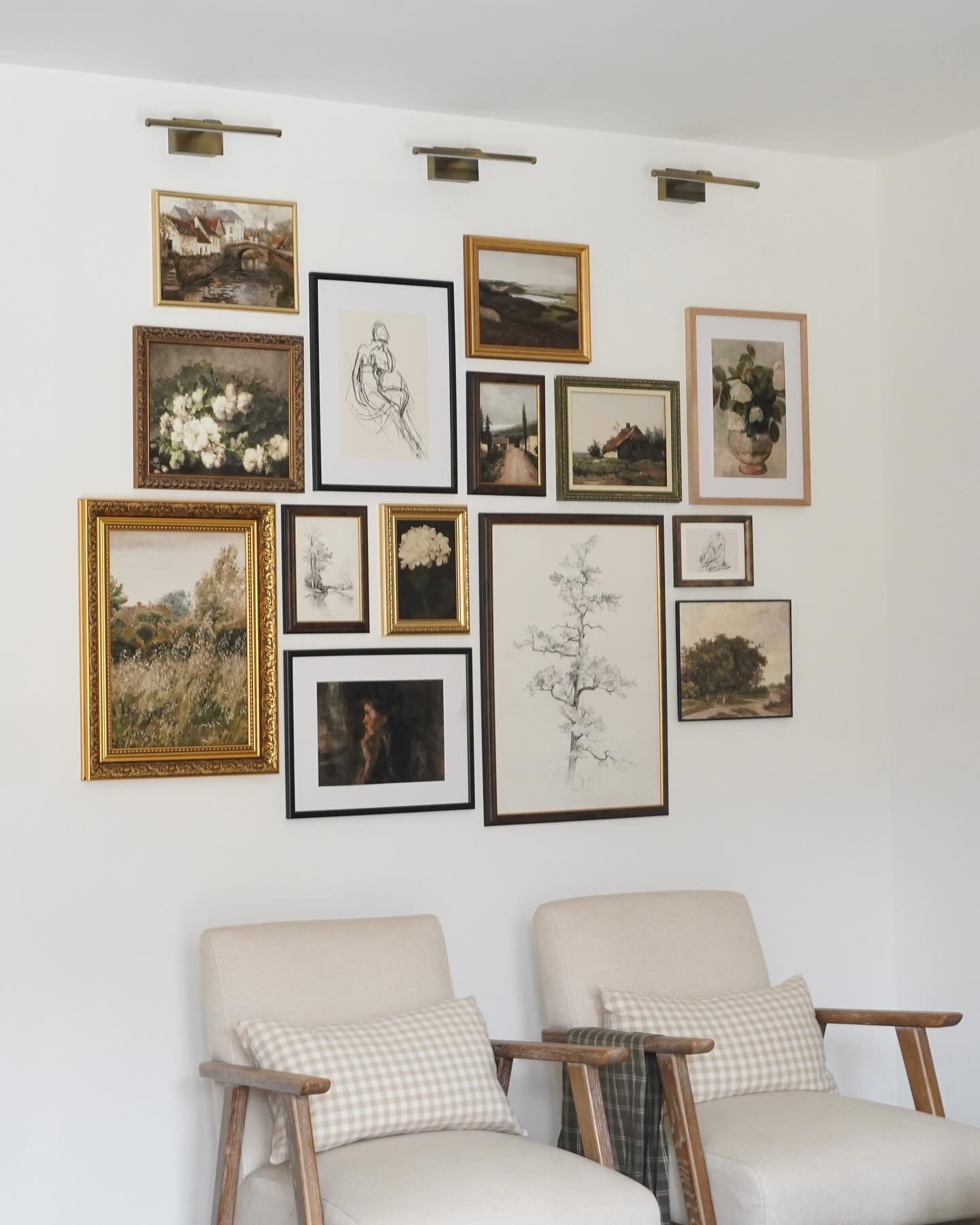
1. Mix Frame Styles Under Picture Lights
Credits: Instagram
A collection of landscapes, botanical studies, and figure drawings gives this seating corner a layered focal point. Gold, wood, and black frames vary in size, yet the muted artwork keeps the arrangement calm.
Three slim picture lights form a steady line above the display, balancing its irregular outline. The pale armchairs below leave the wall plenty of attention.
To try this idea, gather pieces with a related mood before worrying about matching every frame. Arrange them on the floor, keeping the spaces between neighboring pictures fairly consistent.
Place larger works near the center and use smaller ones to complete the edges. Simple seating and a quiet wall color will help a varied collection feel intentional without losing its personal character.
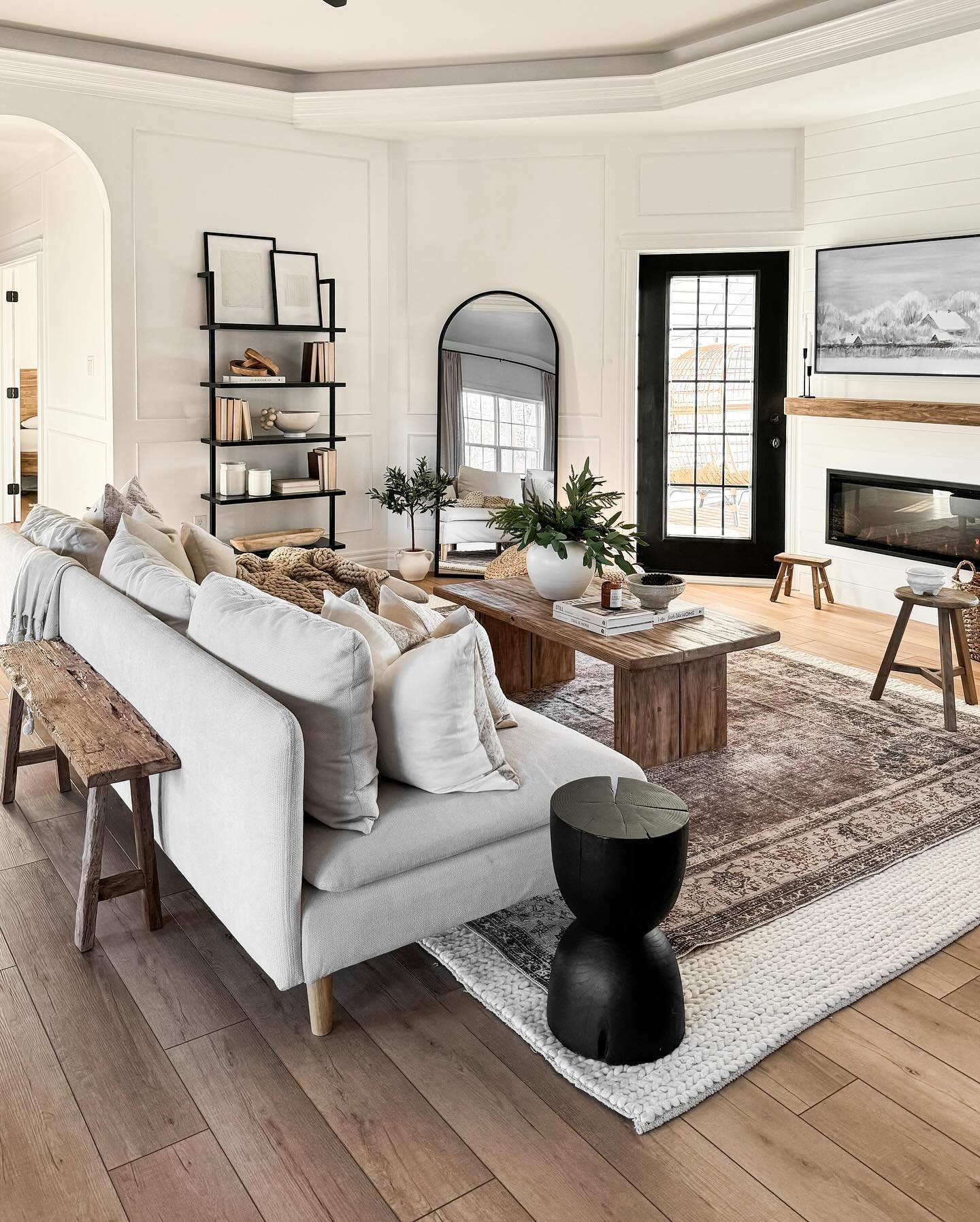
2. Soften Wall Paneling with an Arched Mirror
Credits: Instagram
An arched mirror interrupts the straight lines of the painted wall paneling in this bright living room. Its thin black frame connects with the nearby shelving and glass door, while the curved top softens the arrangement.
Reflected windows bring another view of daylight into the seating area. Pale upholstery, textured rugs, and wooden tables keep the contrast relaxed.
Try a tall mirror when a narrow stretch of wall feels unfinished but does not need another picture. Check the reflection from your usual seat before deciding on its position.
Secure the mirror according to its mounting instructions, even when it rests on the floor. Repeating its frame color in a few nearby details will make the addition feel comfortably at home.
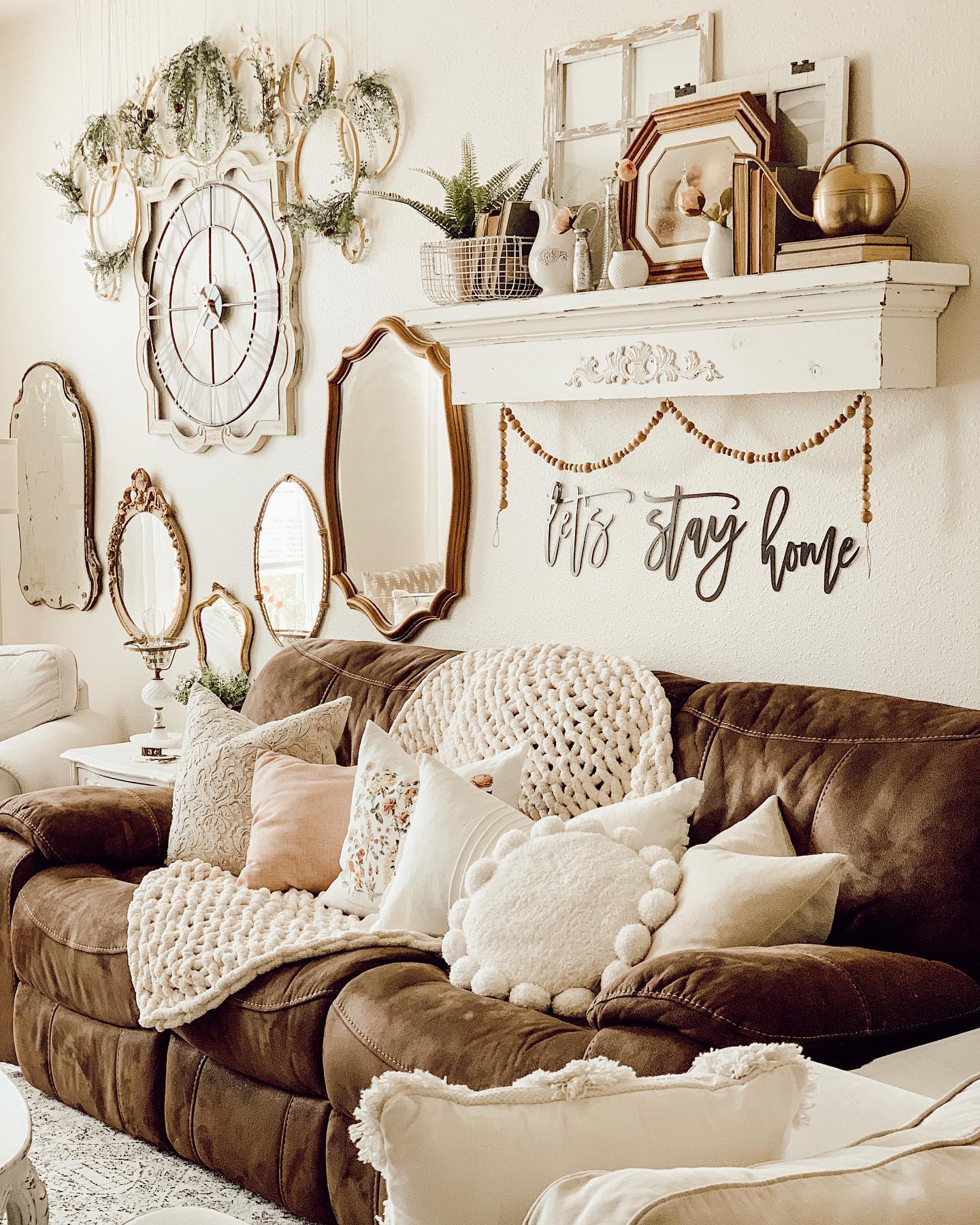
3. Collect Vintage Mirrors Around a Wall Shelf
Credits: Instagram
Different mirror shapes give this cozy sofa wall a collected feel. Oval, curved, and rectangular frames sit beside a large clock, while a substantial white shelf holds more frames and small decorative objects.
Warm metal finishes connect the mirrors with the brass colored watering can above. Cream pillows and a chunky throw repeat the lighter wall tones against the brown sofa.
Borrow the idea by collecting a few mirrors with related finishes and varying their silhouettes. Plan their positions together so the group reads as one arrangement.
A shelf can add depth and provide a place for smaller finds. Keep heavier objects securely supported, and leave enough space above the sofa for the display to feel comfortable when people sit.
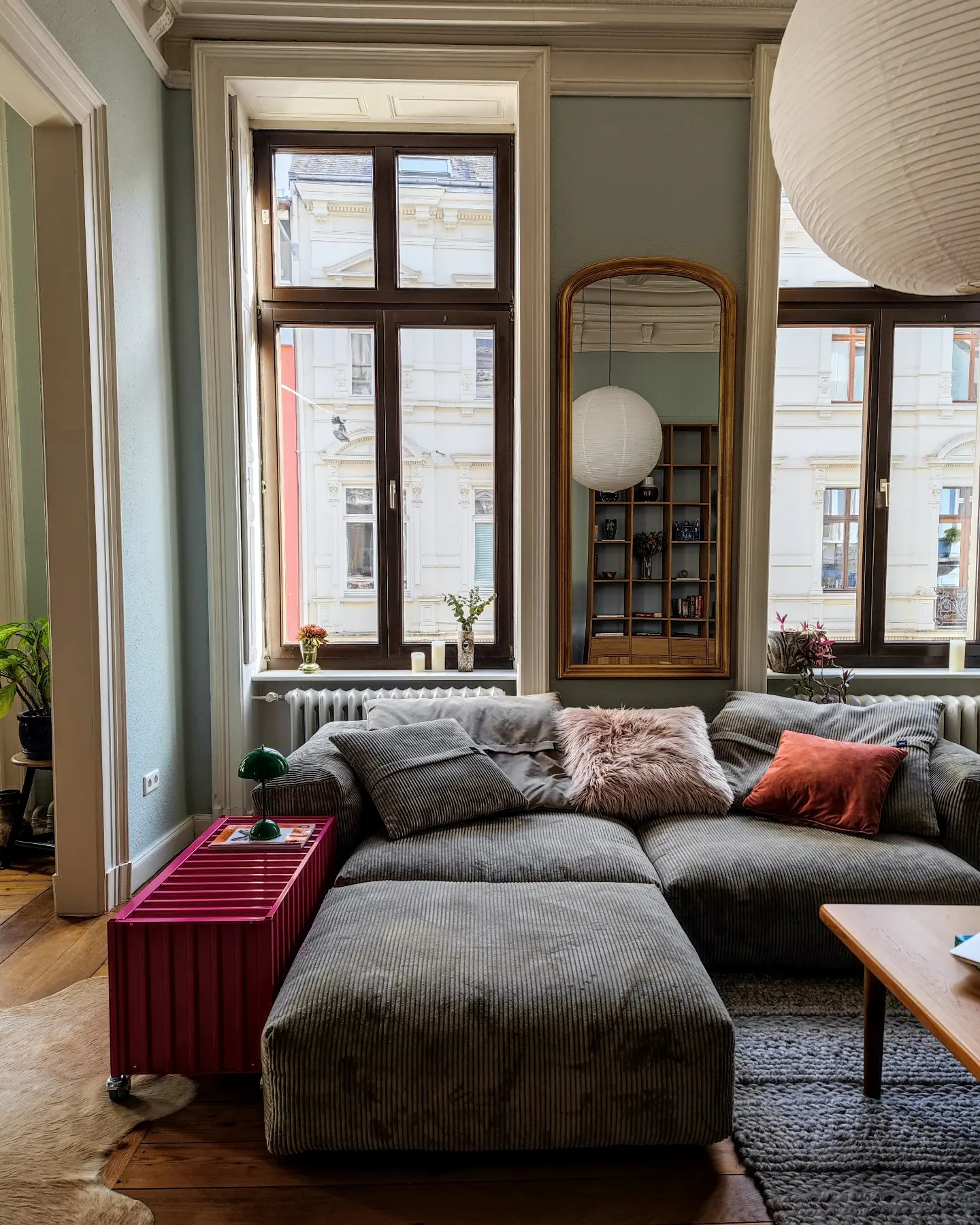
4. Fit a Tall Mirror Between Living Room Windows
Credits: Instagram
A tall gold framed mirror makes the narrow wall between these windows feel purposeful. Its rounded upper corners echo the softer shapes of the paper pendant and generous sectional below.
The reflection shows the opposite bookcase, adding another layer to the view without filling the wall with small objects. Muted green paint links the window wall with the rest of the room.
For a similar result, choose a mirror whose proportions suit the available strip of wall. Leave a visible border around the frame so it does not look squeezed between the trim.
Consider what the mirror will reflect in daylight and after dark. A single substantial piece can give an awkward gap a clear role in the seating arrangement.
5. Layer a Large Painting Over Patterned Wallpaper
Credits: Instagram
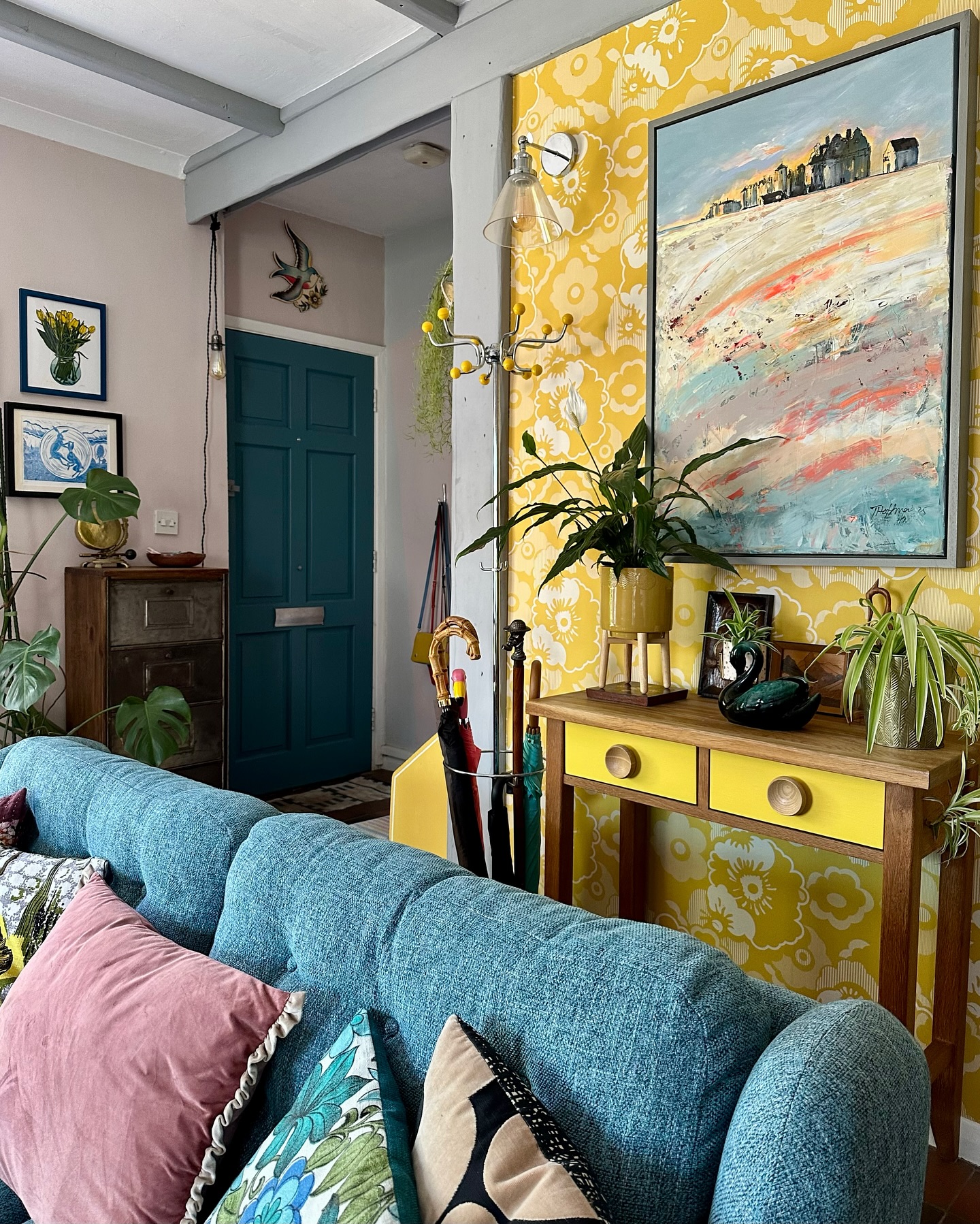
A beach painting holds its own against cheerful yellow floral wallpaper in this colorful living room. The artwork's broad areas of pale blue, cream, and pink contrast with the smaller repeating flowers behind it.
A narrow frame gives the painting a clear edge, while the yellow console below repeats the wall color. The blue sofa connects with the cooler tones on the canvas.
This approach works best when the artwork and wallpaper differ in scale. Choose one larger image instead of several small pieces that could disappear into the pattern.
Let nearby furniture repeat a color from the painting, then keep accessories modest. A few plants add natural shapes without distracting from the lively conversation between the wall and artwork.
6. Center Artwork Inside Decorative Wall Molding
Credits: Instagram
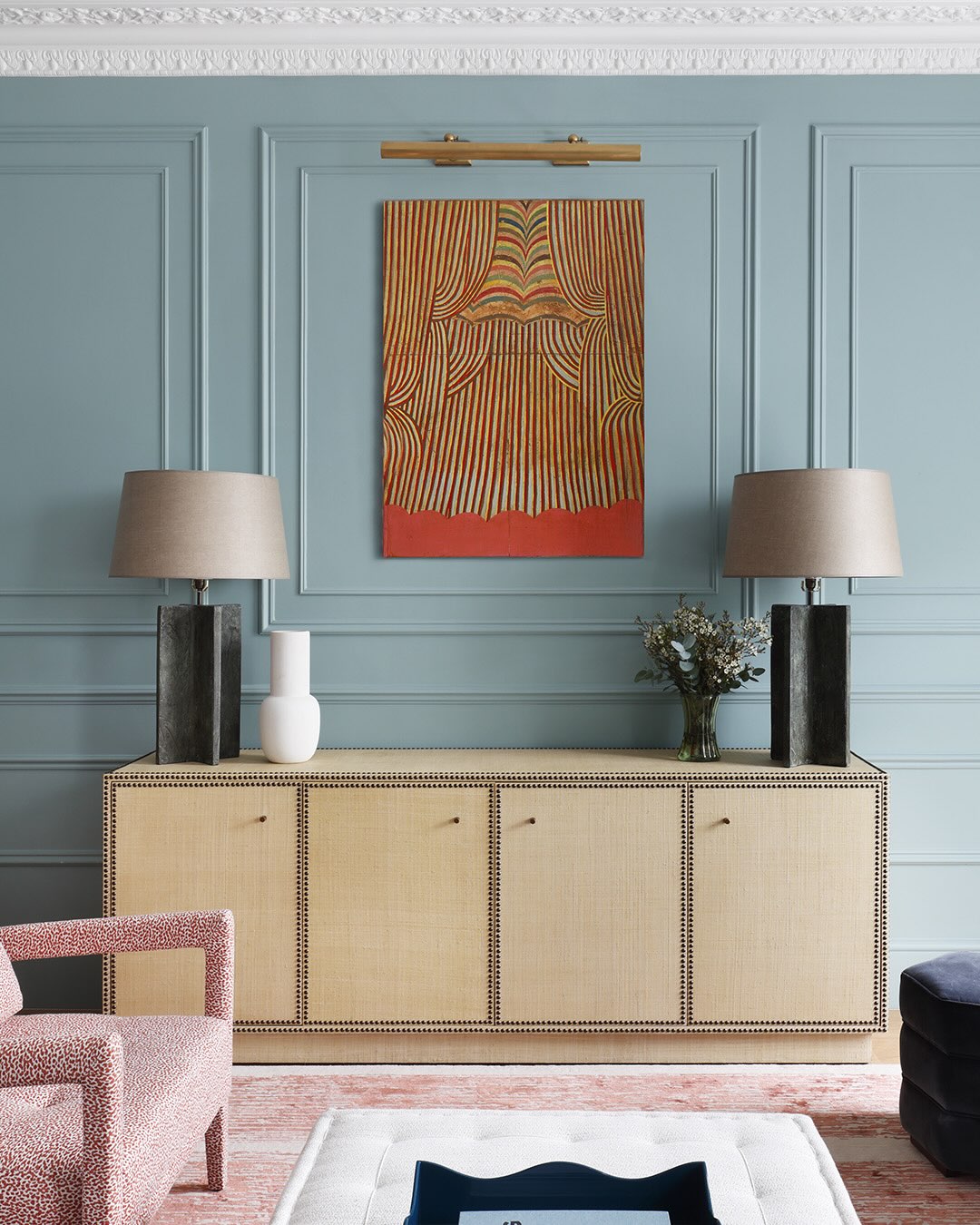
Blue wall molding creates a ready made frame for the bold artwork in this sitting room. The painting sits inside the central panel, with a slim picture light above and matching lamps below.
A pale textured sideboard provides a quieter base for the red, gold, and dark lines on the canvas. The arrangement feels balanced without filling every panel with decoration.
You can borrow this structure by measuring the molding before choosing the artwork. Leave a comfortable margin between the frame and the trim, and align the main piece with the furniture beneath it.
Matching lamps add symmetry, while a vase or flowers can soften the center. Keeping adjacent panels empty gives the featured artwork more space to be appreciated.
7. Use Staggered Picture Ledges for Family Photos
Credits: Instagram
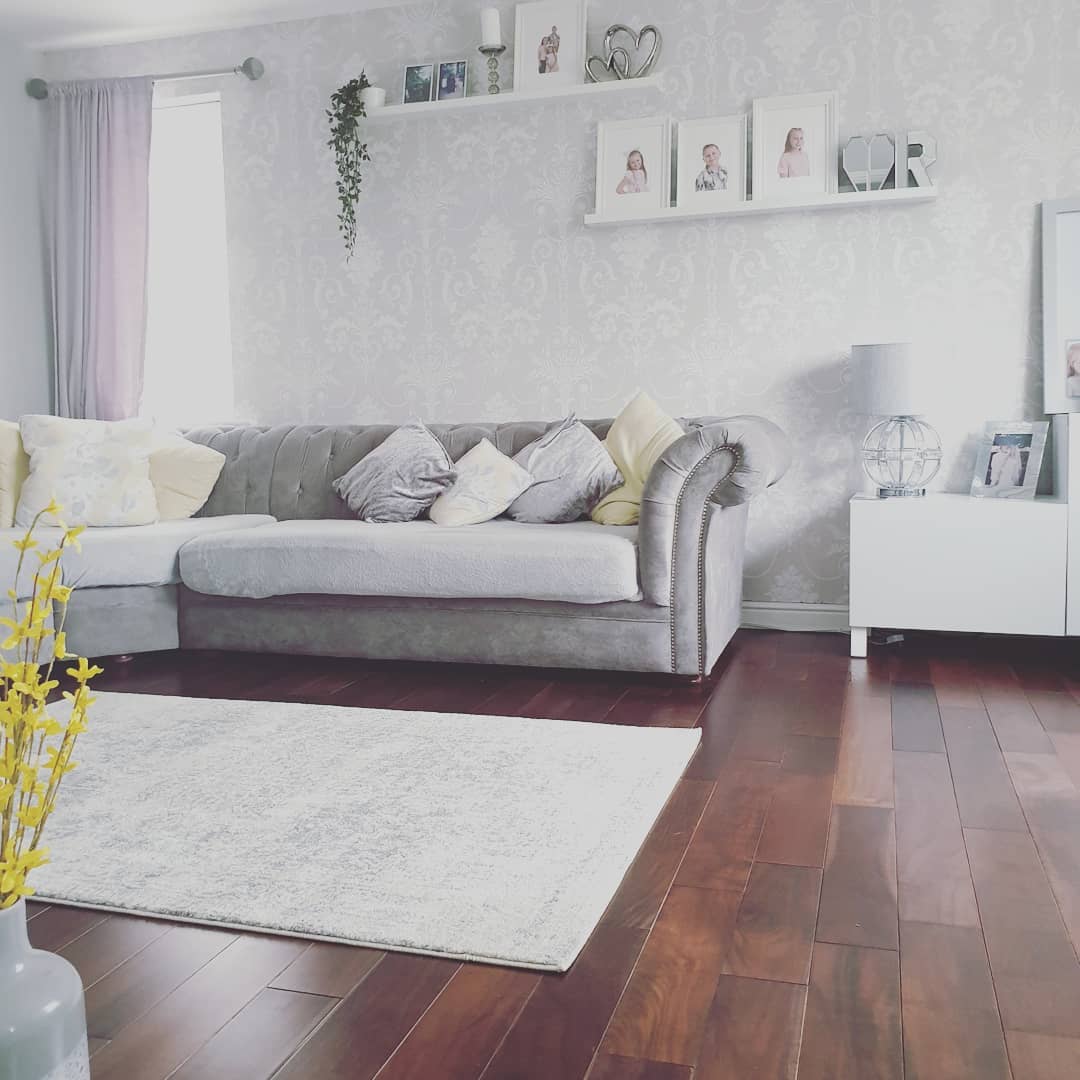
Two white picture ledges give family photographs a clear place above this gray sofa. Their staggered positions create movement across the patterned wall, while pale frames keep the display soft and coordinated.
A trailing plant breaks up the straight shelf edge and adds a little greenery. The photographs stay grouped together instead of spreading across every surface in the room.
Try this arrangement when you want to update pictures without rehanging the entire display. Choose ledges deep enough for the frames and install them securely at a comfortable height above the seating.
Mix a few frame sizes, leaving breathing room between objects. Repeating the wall or trim color helps the shelves blend in so the photographs remain the main focus.
8. Flank a Colorful Mantel Painting with Simple Sconces
Credits: Instagram
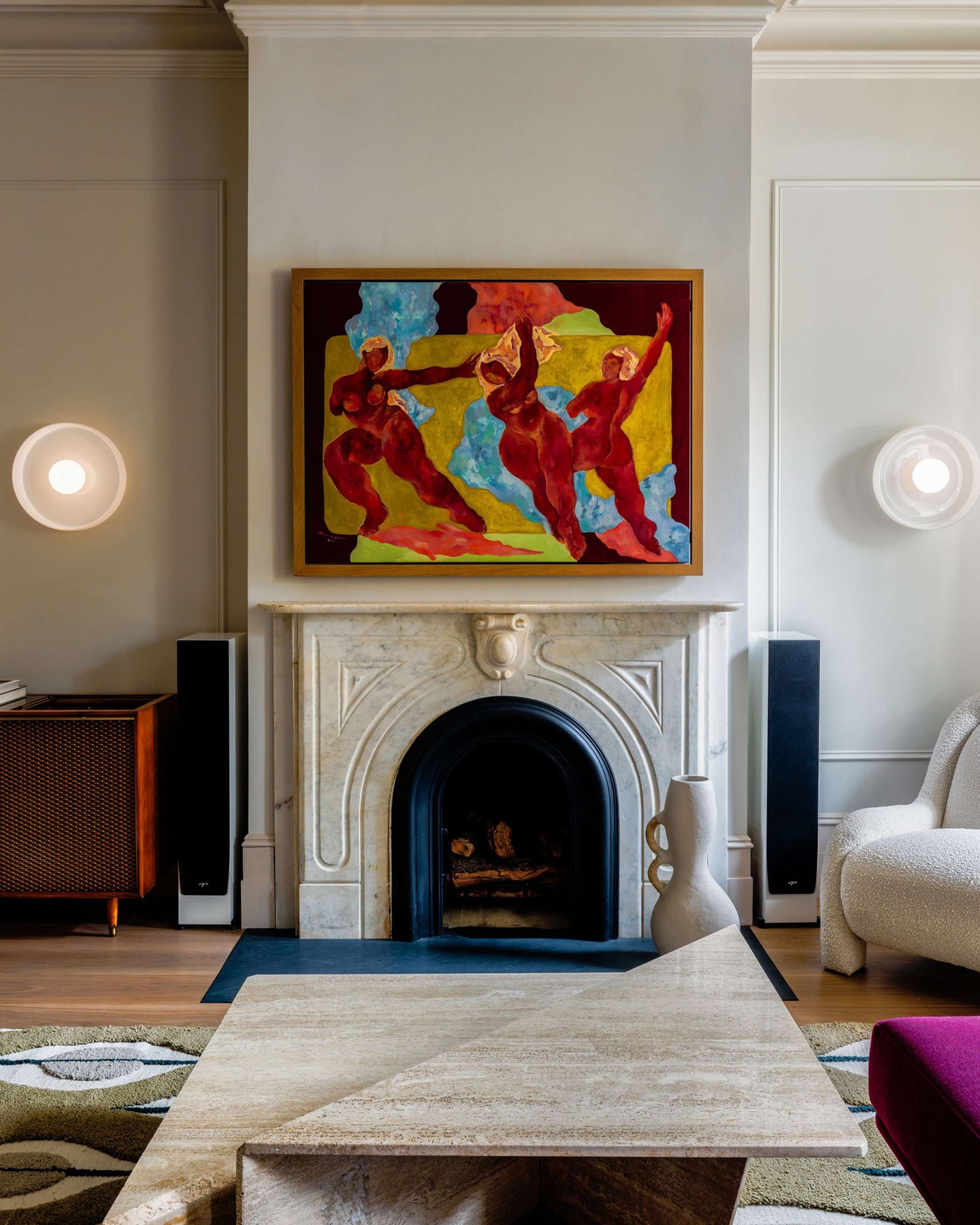
A vivid painting brings red, yellow, and blue into this otherwise restrained fireplace wall. The carved stone mantel gives the artwork a traditional base, while two round white sconces add a simpler shape on either side.
Their placement makes the composition feel balanced without competing with the figures in the painting. Pale seating and a low stone table leave the strongest color on the wall.
To use this idea, choose one artwork with enough presence to anchor the fireplace. Keep its width proportionate to the mantel and consider the surrounding lighting as part of the arrangement.
Simple fixtures can support a lively painting. A limited number of nearby objects lets the artwork and the fireplace detailing remain easy to see.
9. Balance a Window with Two Framed Prints
Credits: Instagram
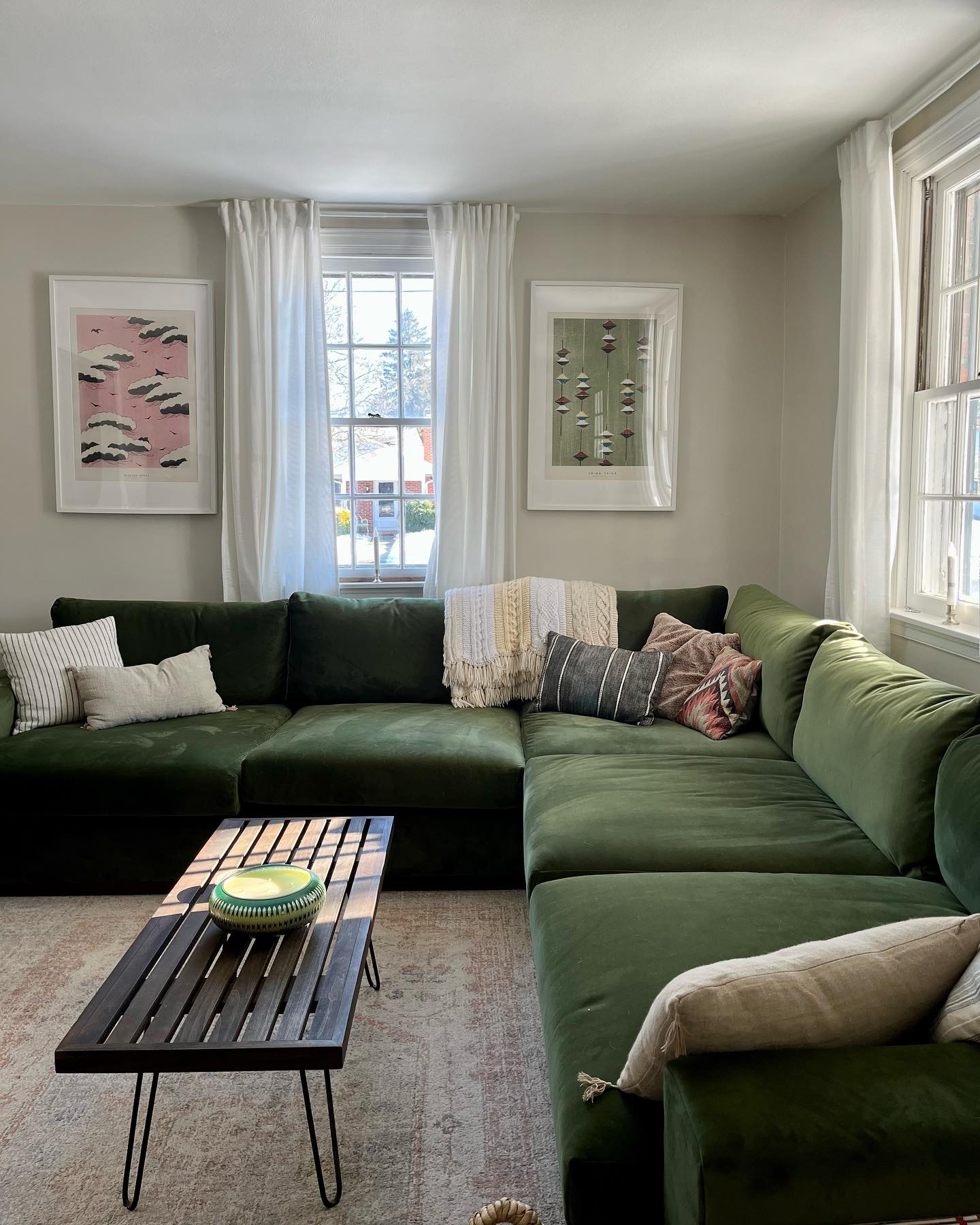
Matching white frames give the two prints beside this living room window a sense of connection. The images are different, but their similar size and generous white borders create an orderly pair above the green sectional.
Pale curtains continue the light framing around the window, keeping the wall calm despite the large sofa below. This is a useful solution when a window divides the space where you might otherwise hang one large artwork.
Choose pieces with compatible colors or a shared subject, then align their top edges. Measure each side separately so the frames sit comfortably within the available wall area.
Keeping the frames consistent allows the pictures to differ, adding personality while preserving the room's relaxed and balanced appearance.
10. Repeat an Artwork Color in Small Room Accents
Credits: Instagram
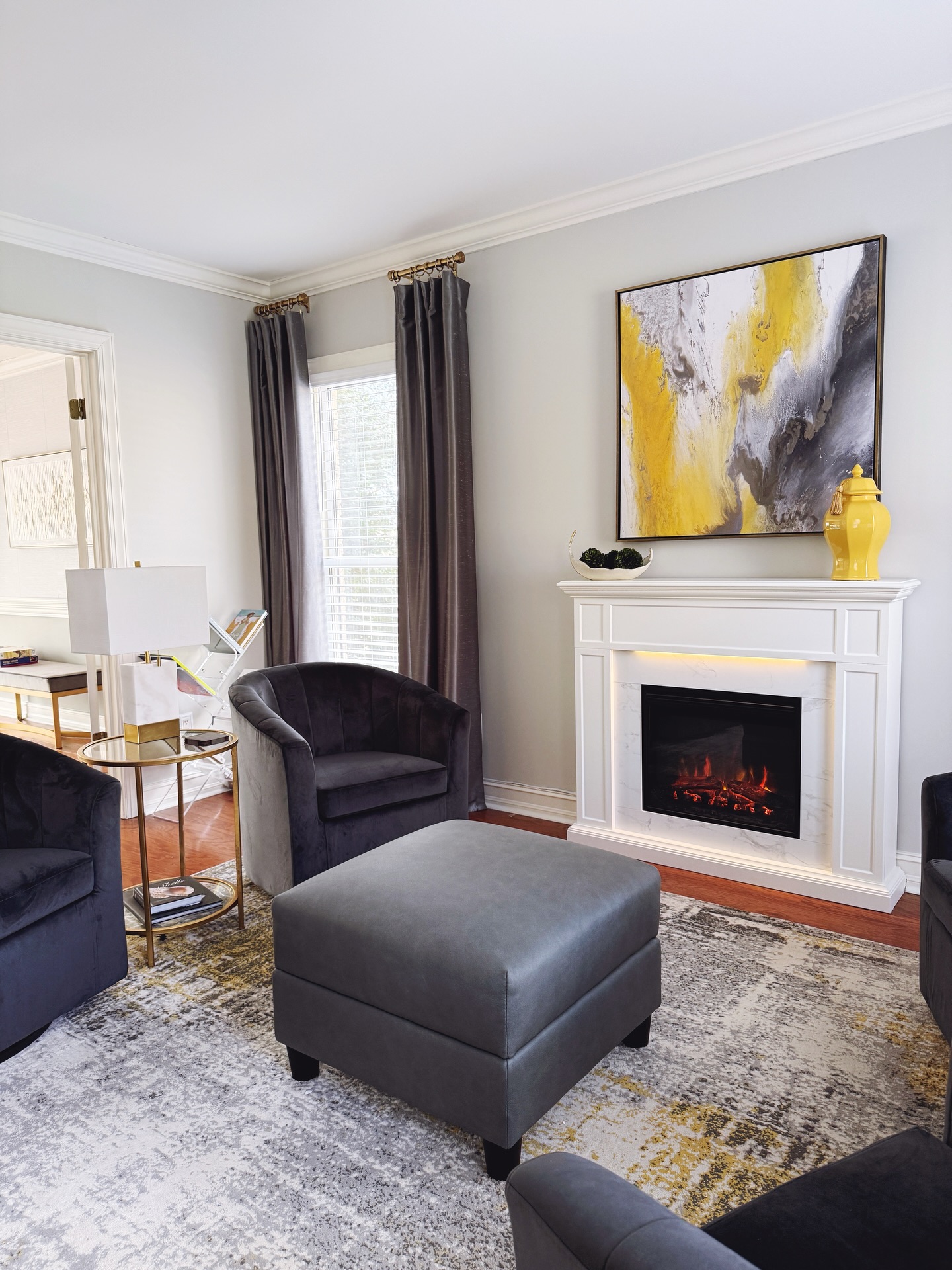
Yellow passages in the large abstract painting brighten this gray living room. A matching lidded jar on the mantel repeats the color, and smaller yellow notes appear in the rug beneath the dark chairs.
The white fireplace surround gives the artwork a crisp base, while charcoal curtains connect with its darker brushwork. Use this approach when you want a neutral room to feel more animated without replacing the main furniture.
Start with artwork you enjoy, then select one of its colors for a few modest accents. Keep the repetitions spaced around the seating area rather than gathered in one spot.
A simple frame and restrained mantel styling will help the painting remain the strongest feature in this comfortable living space.
11. Group Small Pictures Around One Large Print
Credits: Instagram
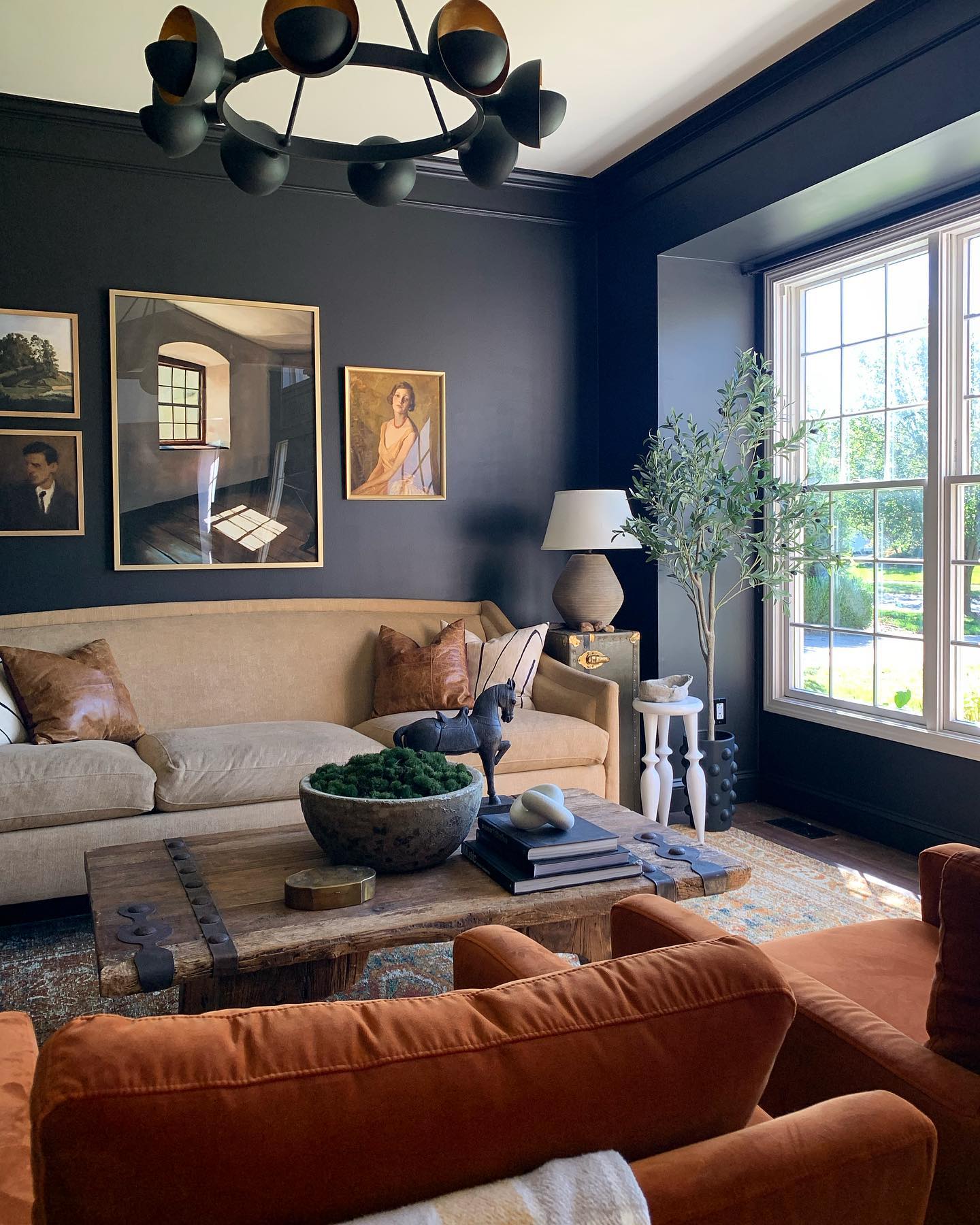
One large print gives this dark living room wall a clear center, while smaller pictures fill the spaces around it. Slim gold frames connect the different subjects and stand out against the deep paint.
The pale sofa below keeps the display from feeling heavy, and warm brown cushions relate to the pictures' muted colors. Try this arrangement when you own one artwork and several smaller favorites.
Position the largest piece first, then balance the surrounding images by their visual weight rather than making every side identical. Keep the gaps fairly consistent, and step back to see the group from across the room.
A shared frame finish can bring order to different sizes while allowing each picture to retain its character.
12. Run One Long Display Shelf Above the Sofa
Credits: Instagram
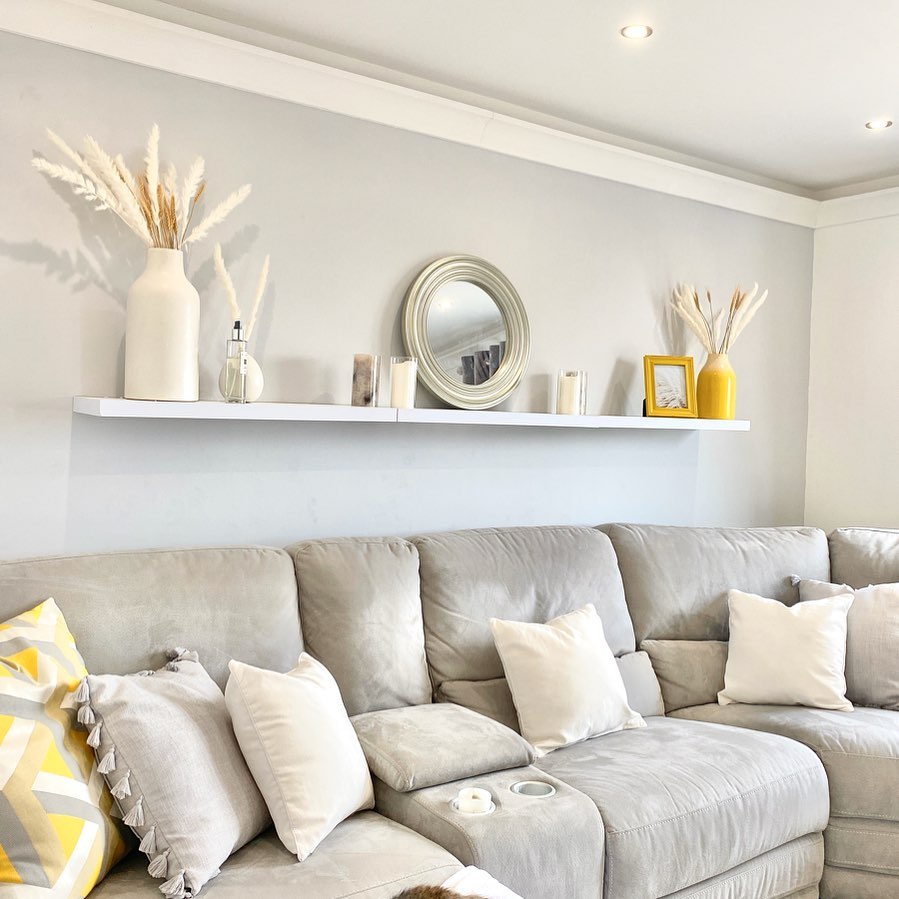
A long white shelf creates a simple decorating line above this gray sofa. Tall vases anchor the ends, a small round mirror sits near the middle, and candles and a yellow frame fill the spaces between.
The shelf keeps the objects together, giving an otherwise plain wall a clear focus. Its light finish blends with the room's trim and pillows.
To adapt the idea, choose a shelf that suits the sofa's width and install it securely with enough clearance for seated guests. Vary the height of your objects so the display has a rhythm instead of one crowded row.
Repeat one accent color sparingly. Leaving visible gaps will help everyday favorites look considered and easy to enjoy across the room.
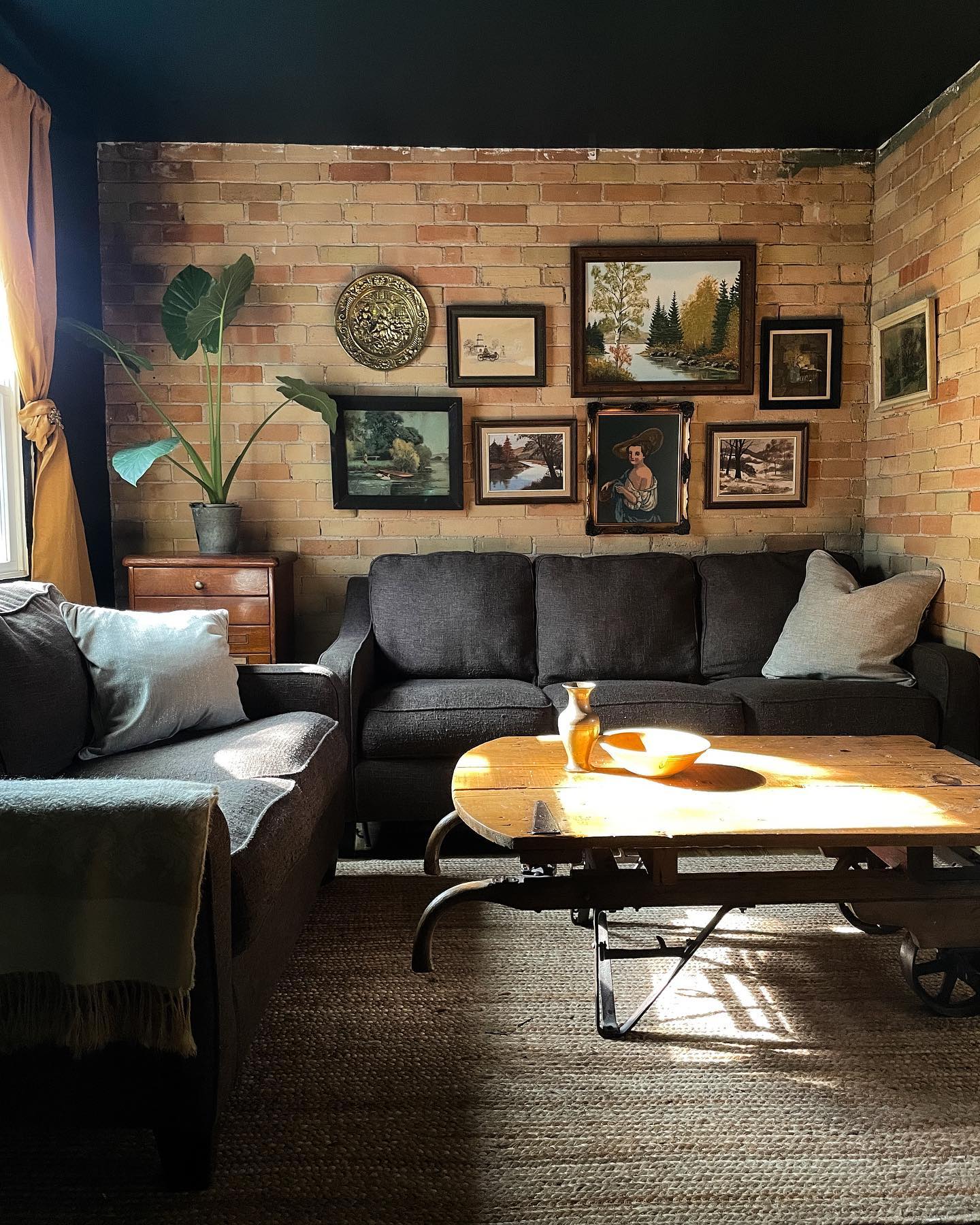
13. Hang Family Artwork Against Exposed Brick
Credits: Instagram
A collection of framed paintings gives this exposed brick wall a personal layer. Landscapes, a portrait, and a round decorative plate sit above the dark sofa, their warm frames relating to the brick and wooden furniture.
The varied sizes make the display feel gathered over time rather than bought as one set. Daylight brings out the wall's uneven color and texture.
Use this idea to show meaningful artwork, including pieces made by relatives or collected during different stages of life. Plan the grouping before choosing fixings suited to the masonry.
Leave enough brick visible around each piece for the material to remain part of the design. Quiet upholstery allows the artwork and the wall's natural pattern to share attention comfortably.
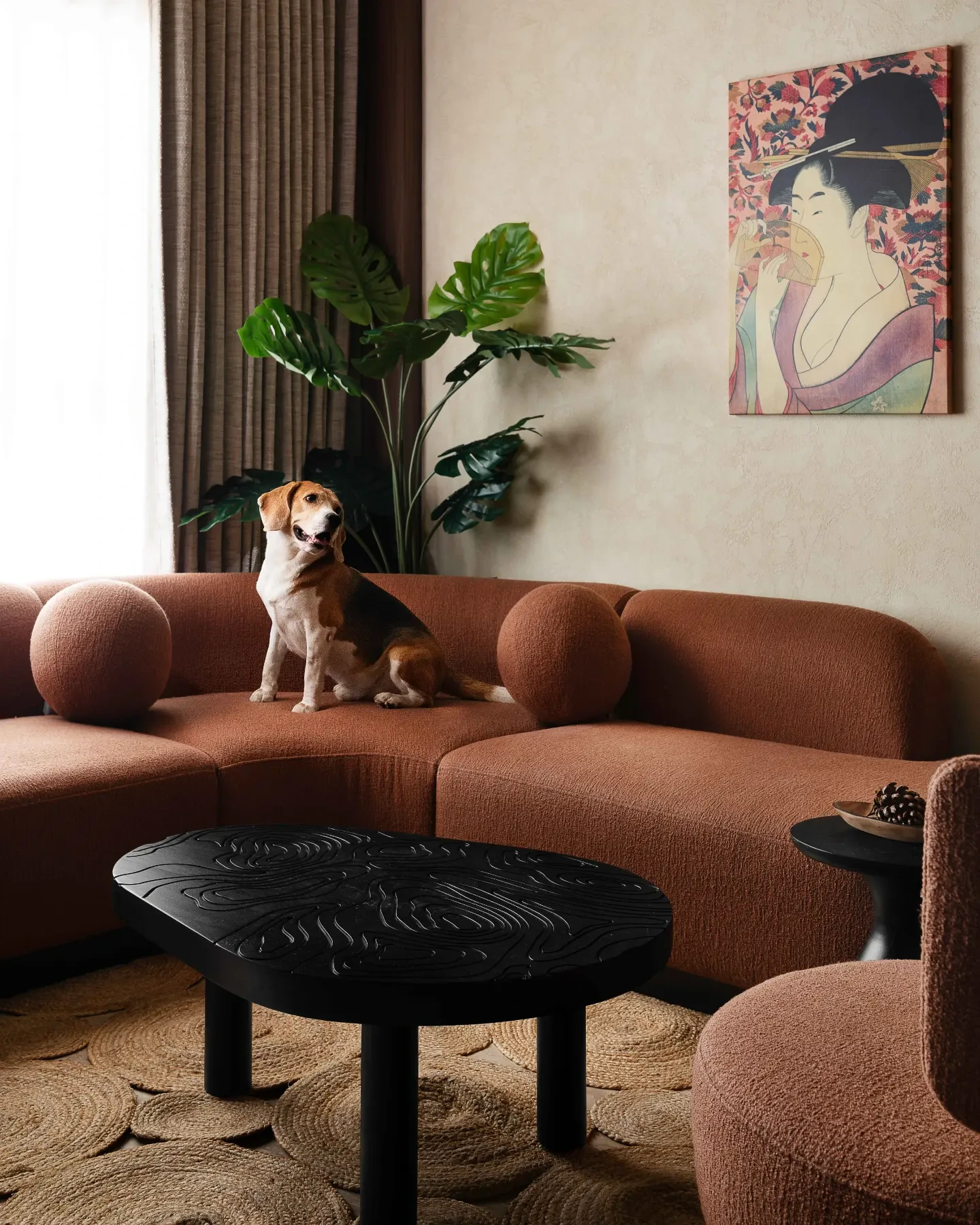
14. Let a Textured Wall Give Simple Art More Depth
Credits: Instagram
A portrait brings pattern and personality to the softly textured wall above this rust colored sofa. The artwork's pink, cream, and dark details relate to the warm upholstery without matching it exactly.
A leafy plant fills the corner beside the curtains, leaving open wall around the picture. Rounded cushions and a dark sculptural table add interest at lower levels.
This approach suits a living room where the wall finish already has subtle variation. Choose one image with a clear outline, then allow the texture to remain visible around it.
Avoid crowding the area with several competing pieces. Repeating a few colors through upholstery or accessories will connect the artwork to the seating while preserving the room's calm and welcoming feeling.
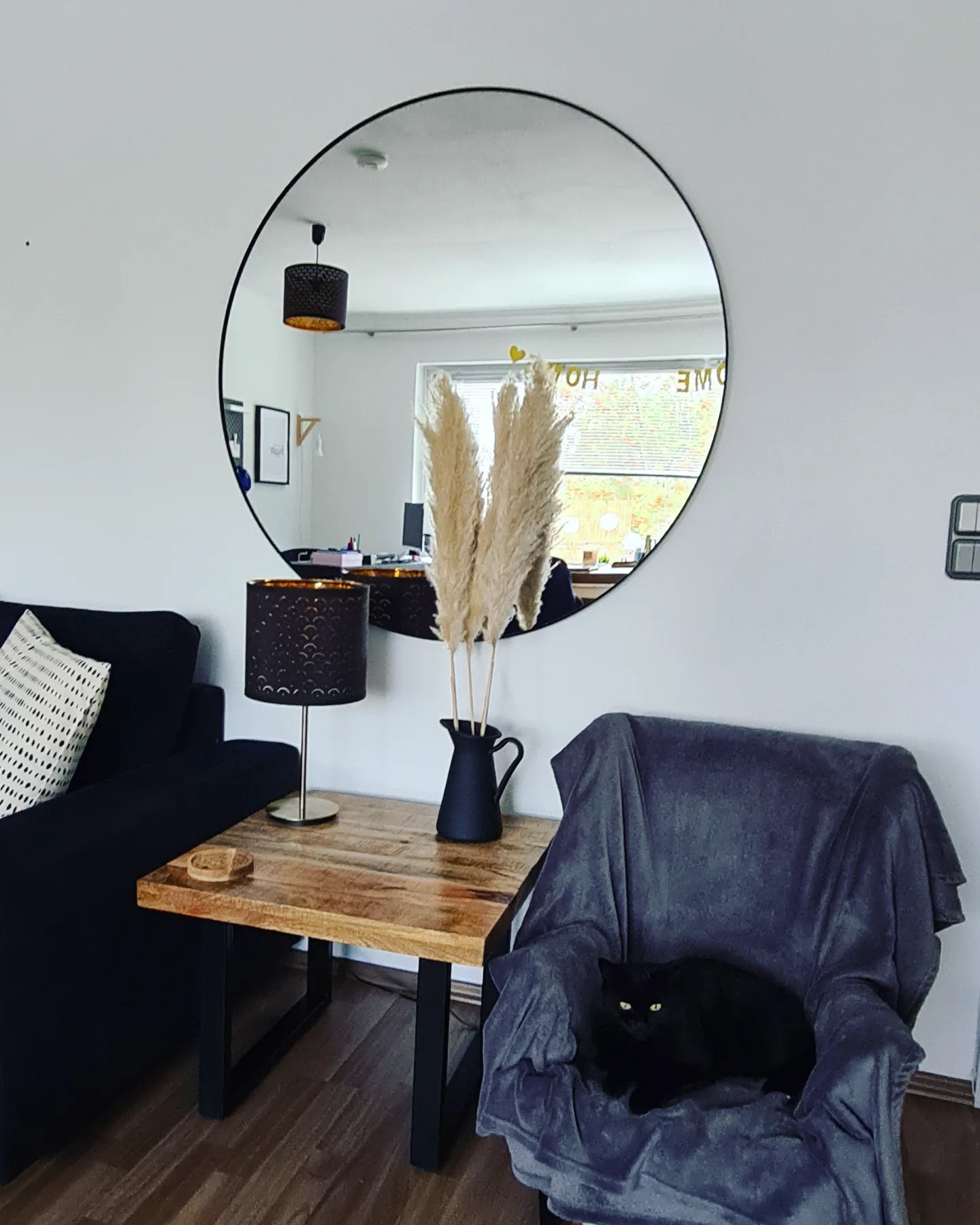
15. Give a Seating Corner One Oversized Round Mirror
Credits: Instagram
One large round mirror makes this modest seating corner feel more complete. Its fine dark outline connects with the sofa, table legs, and black vase below.
The mirror reflects a bright window and the opposite wall, while the wooden side table introduces warmth between the dark seats. Tall dried stems overlap the lower edge, adding a softer shape.
Try a single circular mirror when several small decorations would make a corner feel cluttered. Position it in relation to the seating group, then check the reflection from different places in the room.
Keep nearby accessories simple enough for the shape to remain clear. A useful side table and a reading lamp will make the decorated corner feel comfortable and visually finished.
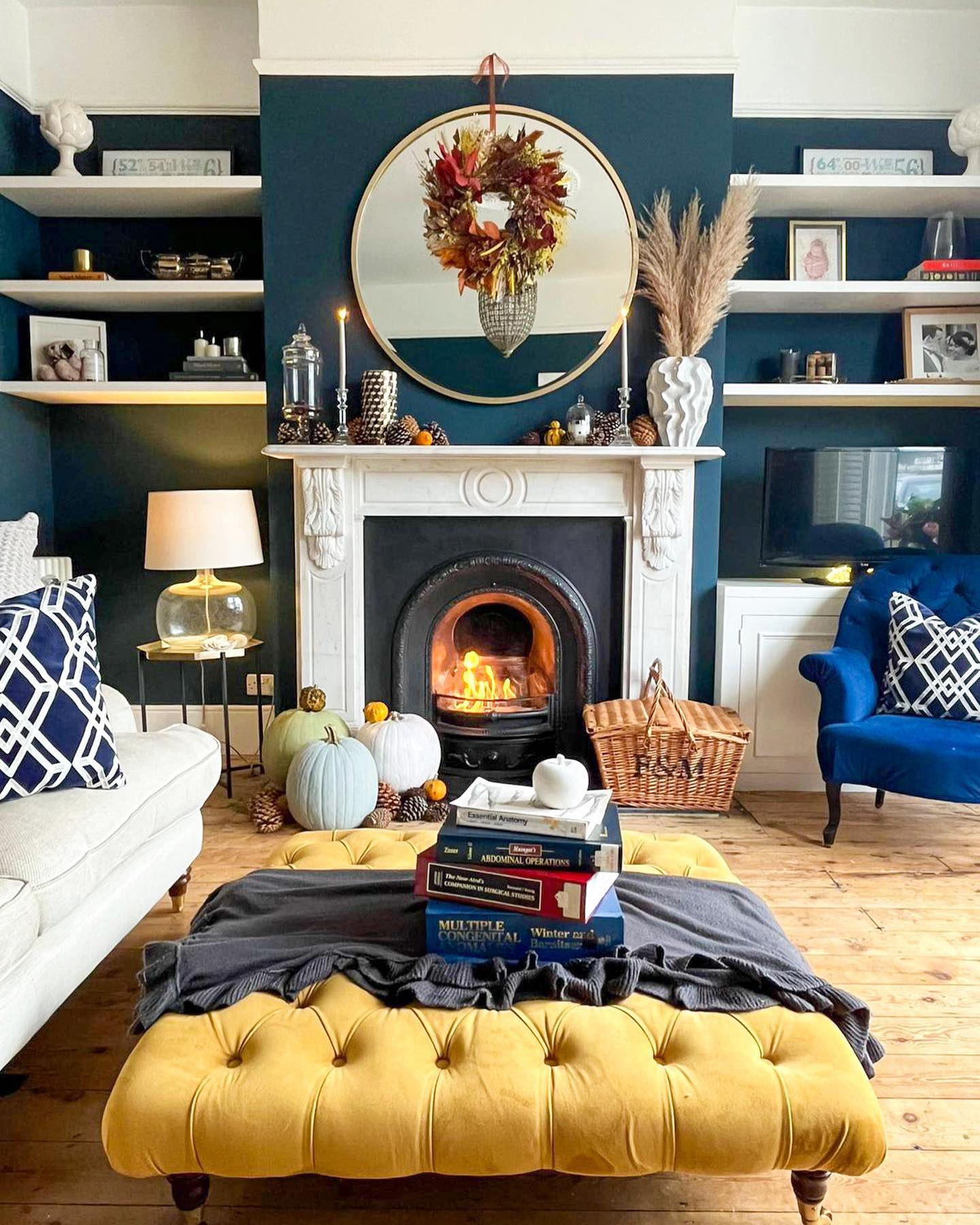
16. Layer a Seasonal Wreath Over a Mantel Mirror
Credits: Instagram
A fall wreath gives the round mantel mirror a seasonal update in this blue living room. Its warm leaves stand out against the reflected white ceiling, while pumpkins and pinecones continue the theme around the fireplace.
The mirror remains the centerpiece, so the room does not need a new wall arrangement for each season. White shelves and a pale mantel keep the darker wall balanced.
Borrow the idea by hanging a lightweight wreath in front of an existing mirror with an appropriate removable support. Choose a size that leaves plenty of reflective glass visible around it.
Keep seasonal additions away from heat and flame. A few coordinated objects on nearby surfaces can complete the change without taking over the room.
17. Choose One Large Botanical Painting for an Open Wall
Credits: Instagram
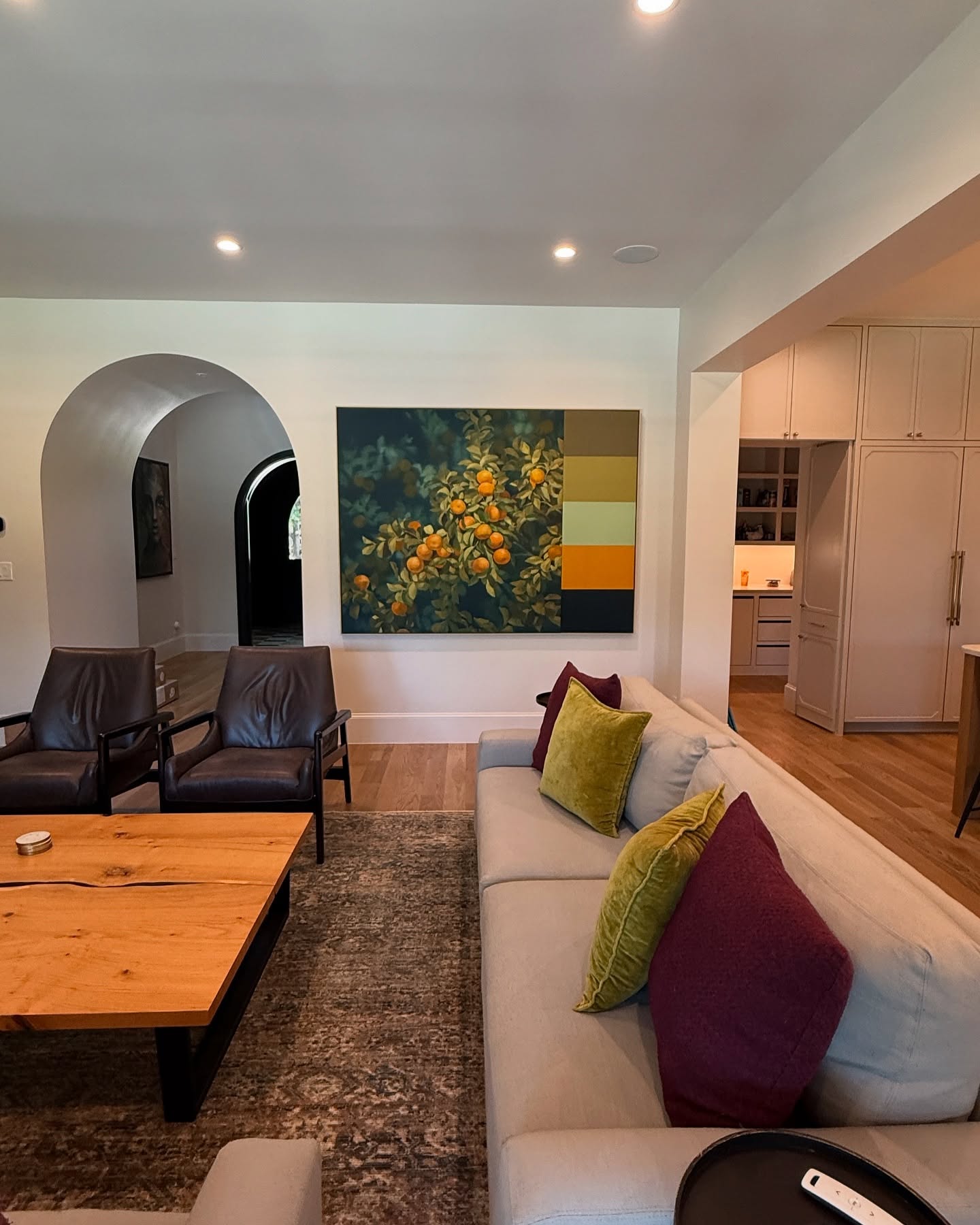
A large painting of fruit and foliage gives the open wall in this living room a strong identity. Its deep green background and blocks of yellow, olive, and orange bring color between an arched doorway and the kitchen opening.
Green pillows on the pale sofa repeat part of the palette, while the wooden coffee table adds another warm tone. This arrangement shows how one substantial artwork can finish a wall without a cluster of smaller decorations.
Measure the available space and allow a clear border around the canvas. Consider nearby doorways as part of its visual setting.
Repeating one or two colors in soft furnishings helps the artwork connect with the seating while keeping the rest of the room simple.
18. Turn a Tall Fireplace Wall into a Display
Credits: Instagram
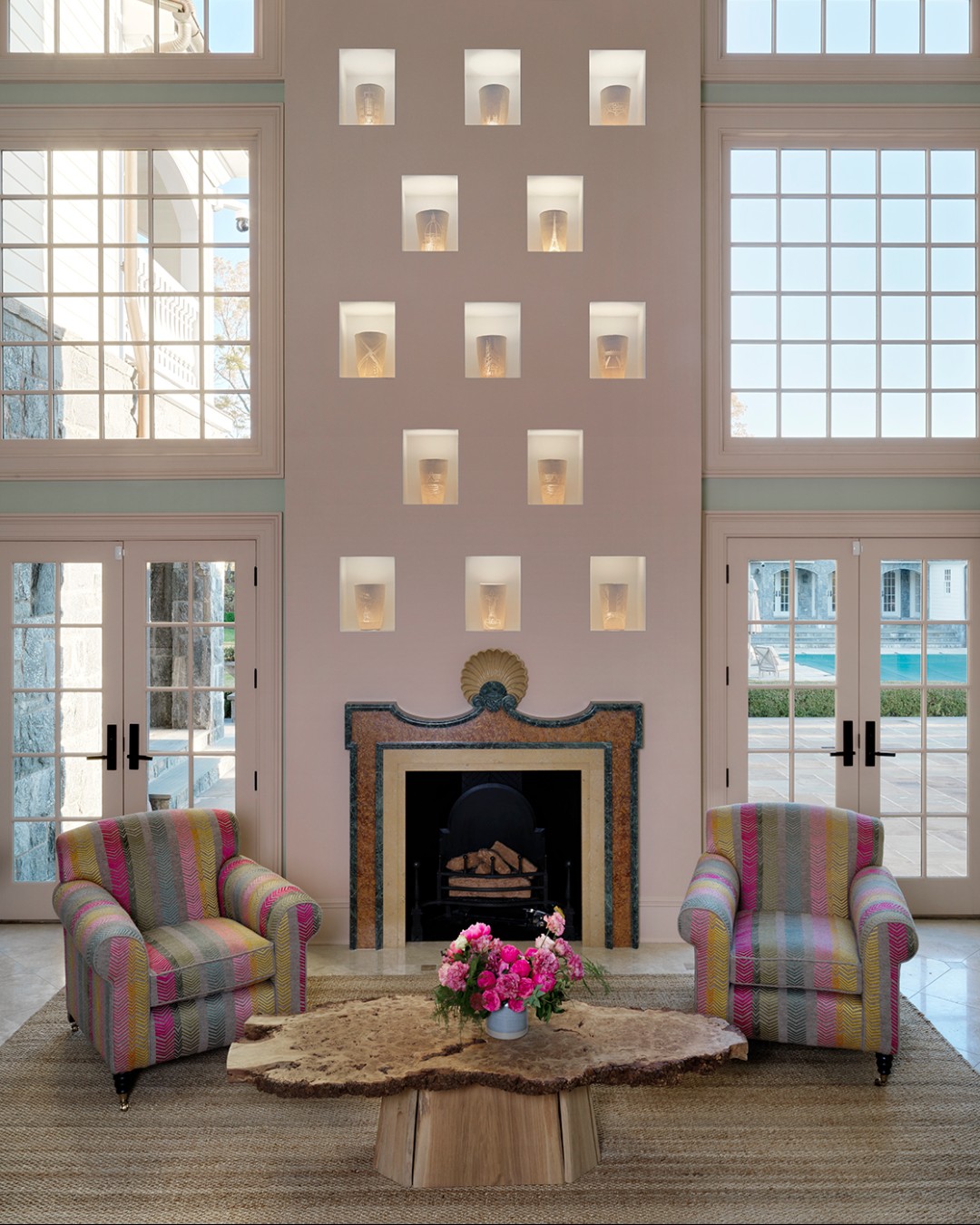
Illuminated niches turn this tall fireplace wall into a decorative collection. Each opening holds a pale vessel, and the alternating rows give the display a measured rhythm between the large windows.
The objects remain understated, allowing the unusual fireplace surround and striped chairs to add stronger color below. This idea makes use of height without relying on one oversized painting.
For a similar project, plan the niches, lighting, and access with the wall construction from the beginning. Choose objects that fit comfortably inside each opening and share a material, color, or shape.
Repetition gives the arrangement its impact. A smaller version could work above a console or along a living room wall, bringing depth and gentle illumination to everyday objects.
19. Use Sculptural Wall Panels Above Patterned Seating
Credits: Instagram
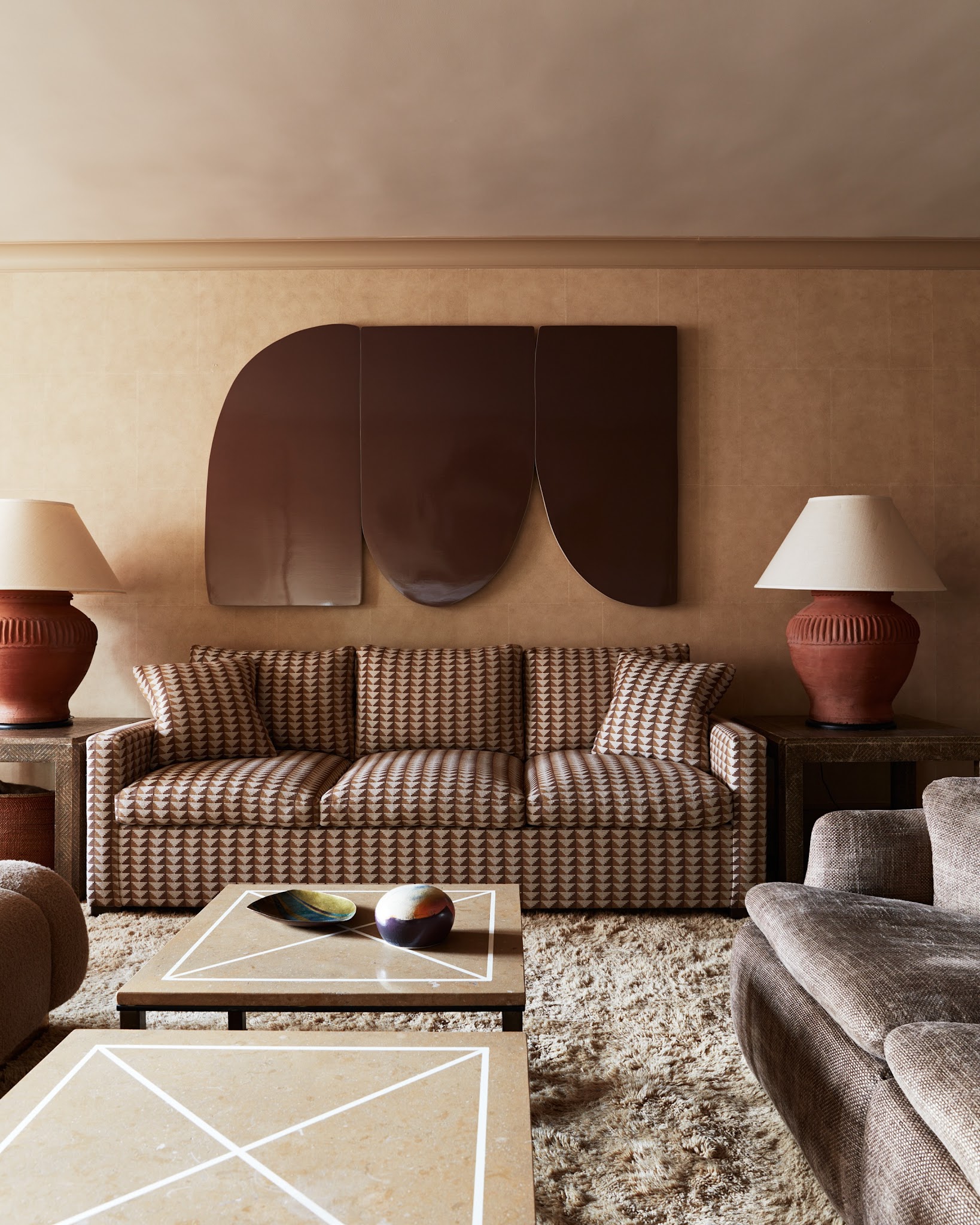
Curved panels give this living room a sculptural focal point above the patterned sofa. Their dark brown surfaces stand slightly away from the wall, creating shadows that change the composition as light moves across it.
The simple forms contrast with the sofa's repeated triangles, while oversized terracotta colored lamps bring another rounded shape to each side. Consider dimensional artwork when you want texture and form without adding another busy pattern.
Choose a piece with enough width to relate to the seating, then leave open wall around its outline. A restrained palette can help different materials sit together.
Lighting from the side will reveal the relief, making the wall decoration feel present even when its color stays close to surrounding furnishings.
20. Repeat Floral Wallpaper in a Few Sofa Pillows
Credits: Instagram
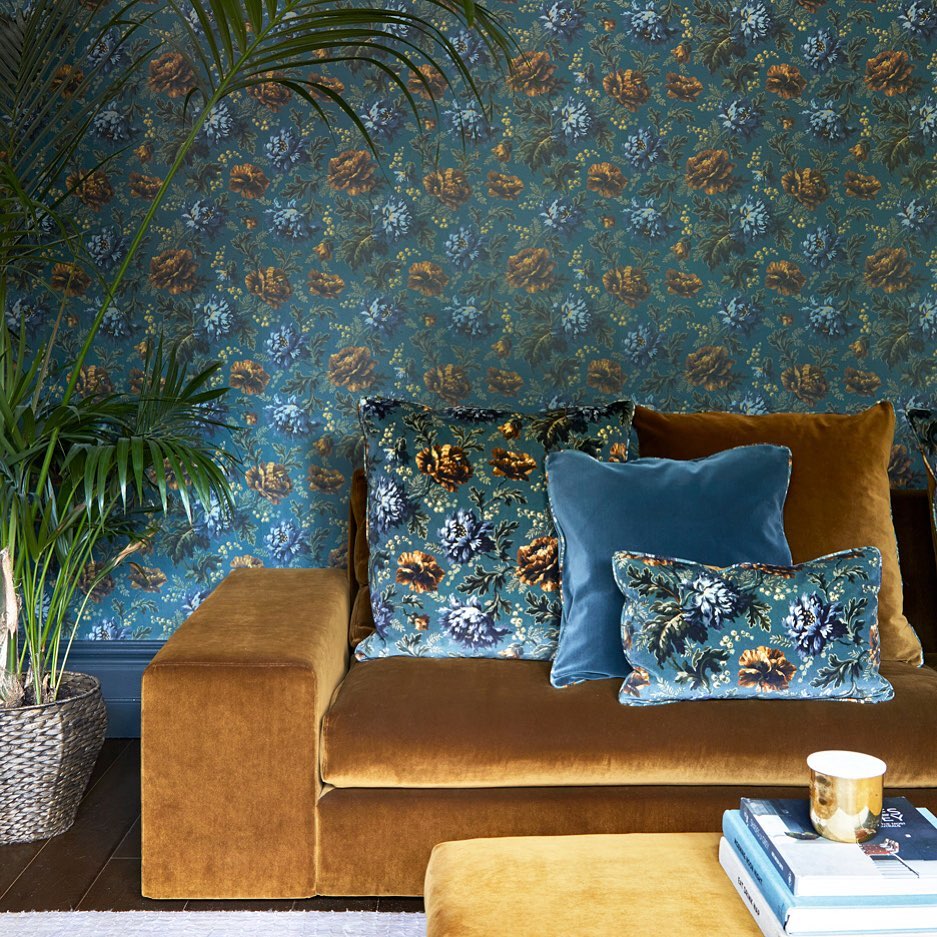
Floral wallpaper becomes the main decoration behind this mustard velvet sofa. Two patterned pillows repeat the flowers, connecting the wall with the seating, while plain blue and gold cushions keep the arrangement from feeling uniform.
A leafy palm introduces a larger natural shape beside the printed pattern. The blue baseboard continues the wall color down to the floor.
Try this idea when you love a wallpaper enough to let it lead the room. Repeat its motif in only a few soft furnishings, then choose solid fabrics for the largest upholstered pieces.
Pull their colors from the paper to keep the palette connected. A simple table and restrained accessories give the flowers enough space to be enjoyed without adding visual clutter.