
A dark backdrop can make familiar neutrals feel richer, especially when lighter upholstery keeps the room from feeling too heavy.
Moody Neutral Living Room Ideas show how to create that contrast with charcoal walls behind a light fireplace, taupe carried across walls and built-ins, or chocolate upholstery against pale walls.
Texture matters just as much as color: exposed timber, a concrete fireplace, and soft fabrics add depth without crowding the palette.
These approaches offer practical ways to give a living room a more intimate feel while keeping it comfortable and balanced.
1. Layer Warm Browns Behind a Fabric Sofa
Credits: Instagram
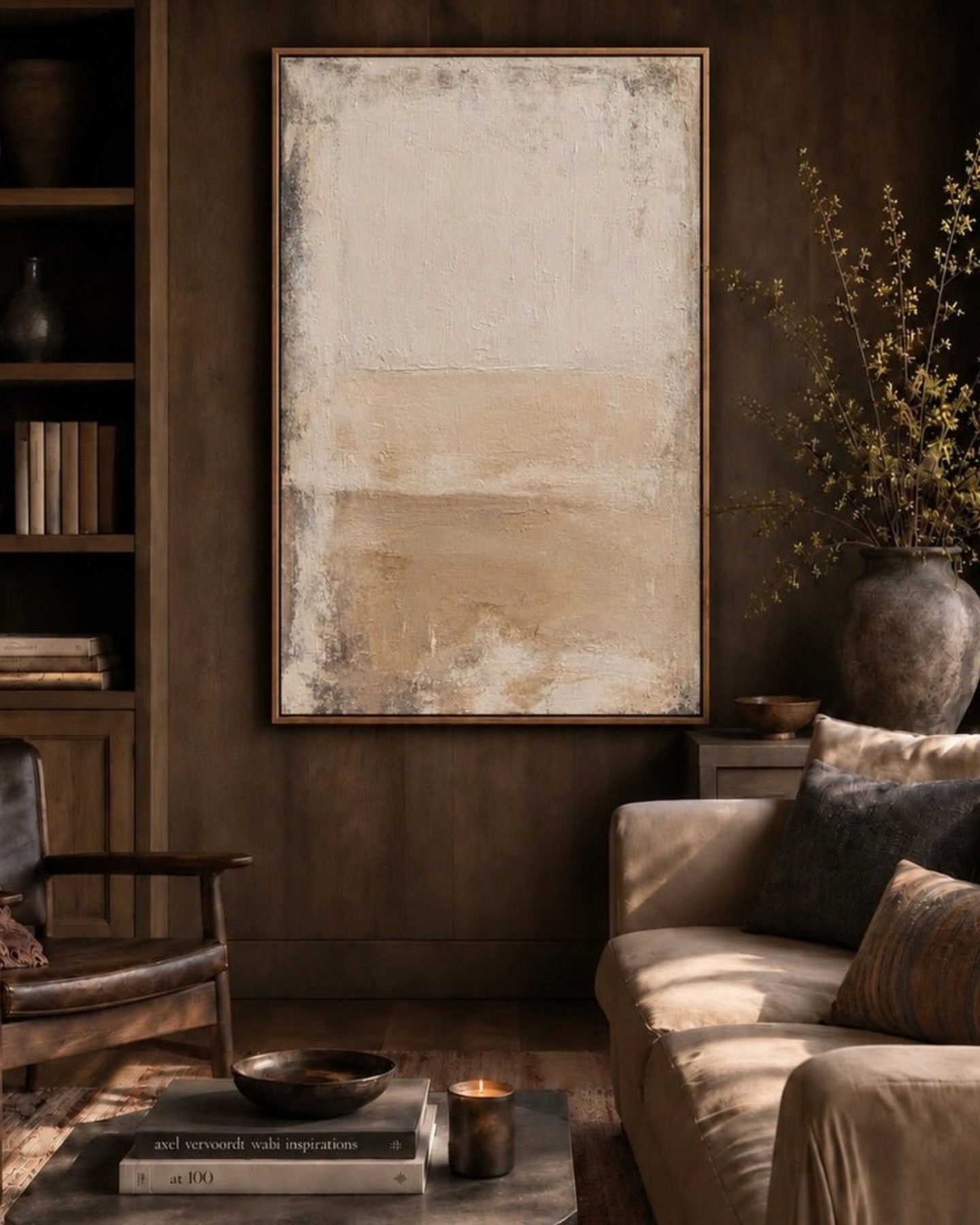
Deep brown paneling gives this sitting area its enveloping mood, while an oversized pale fabric sofa with loose cushions keeps the palette comfortable. The large abstract artwork repeats cream, sand, and weathered taupe instead of introducing another strong color.
Notice how the leather chair, dark coffee table, and earthy vase add different surfaces within the same family.
Try this approach when a neutral room feels flat: deepen the backdrop first, then vary the texture of each piece in front of it. A few books and a low bowl are enough for the table.
Leave breathing room around the artwork so its rough surface becomes a focal point. Soft natural daylight and a small candle make the dark materials feel welcoming.
2. Carry Taupe Across the Walls and Built-Ins
Credits: Instagram
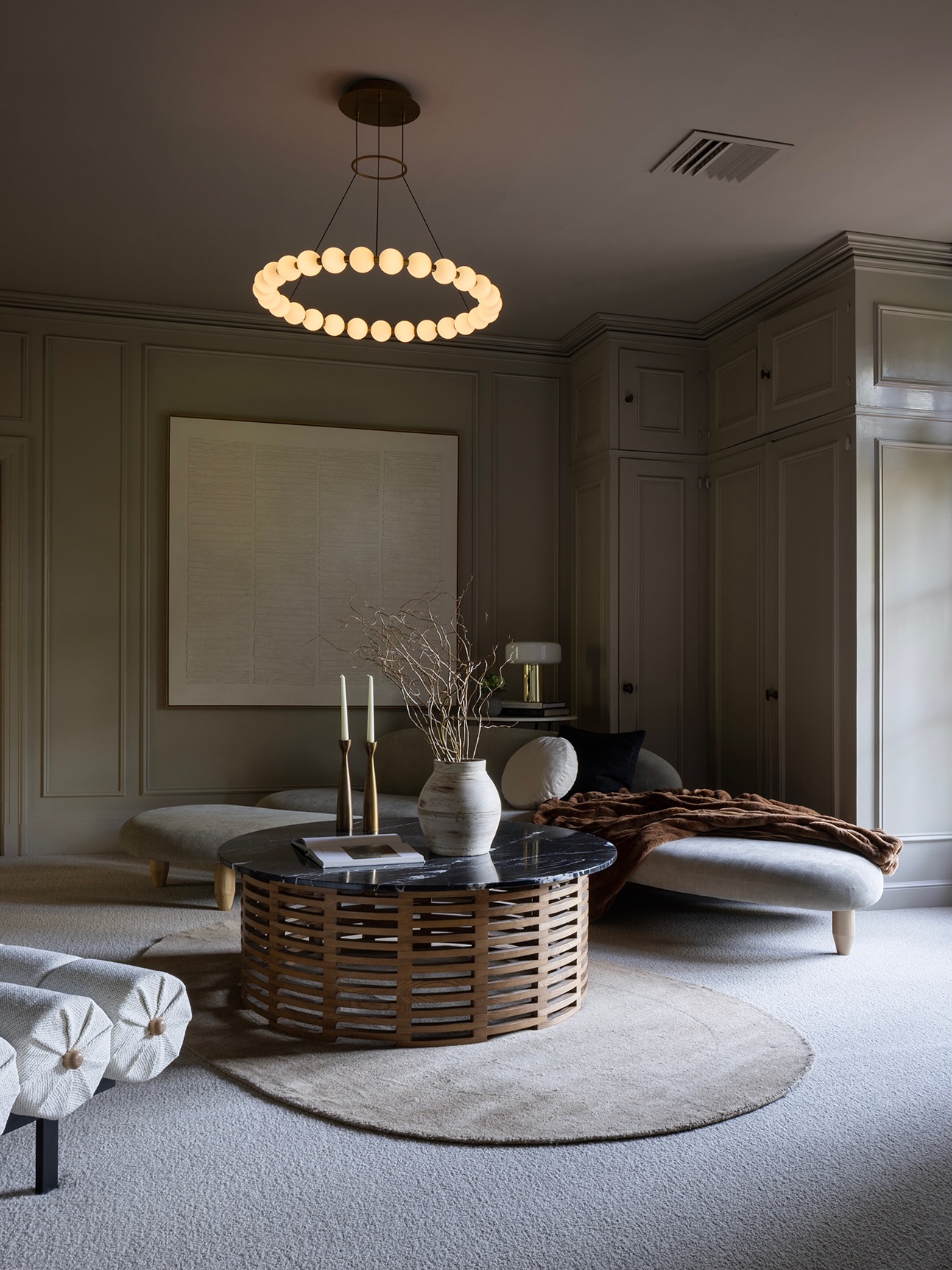
Painting paneled walls and built-in cabinets in the same taupe creates a quiet backdrop for sculptural furniture. Here, low, gently rounded gray upholstered seating and a simple circular rug soften the room's formal moldings.
A dark stone tabletop supplies contrast, while its open wood base adds warmth without making the center feel solid and heavy.
This is a useful formula for a living room with plenty of architectural detail: keep the paint consistent and let furniture shapes provide variety. Choose a warm pendant that casts an inviting glow after sunset.
A brown throw, slender candlesticks, and bare branches add enough texture to finish the arrangement. Keep the artwork understated so the eye can appreciate the paneling and generous curves together.
3. Frame a Light Fireplace With Charcoal Walls
Credits: Instagram
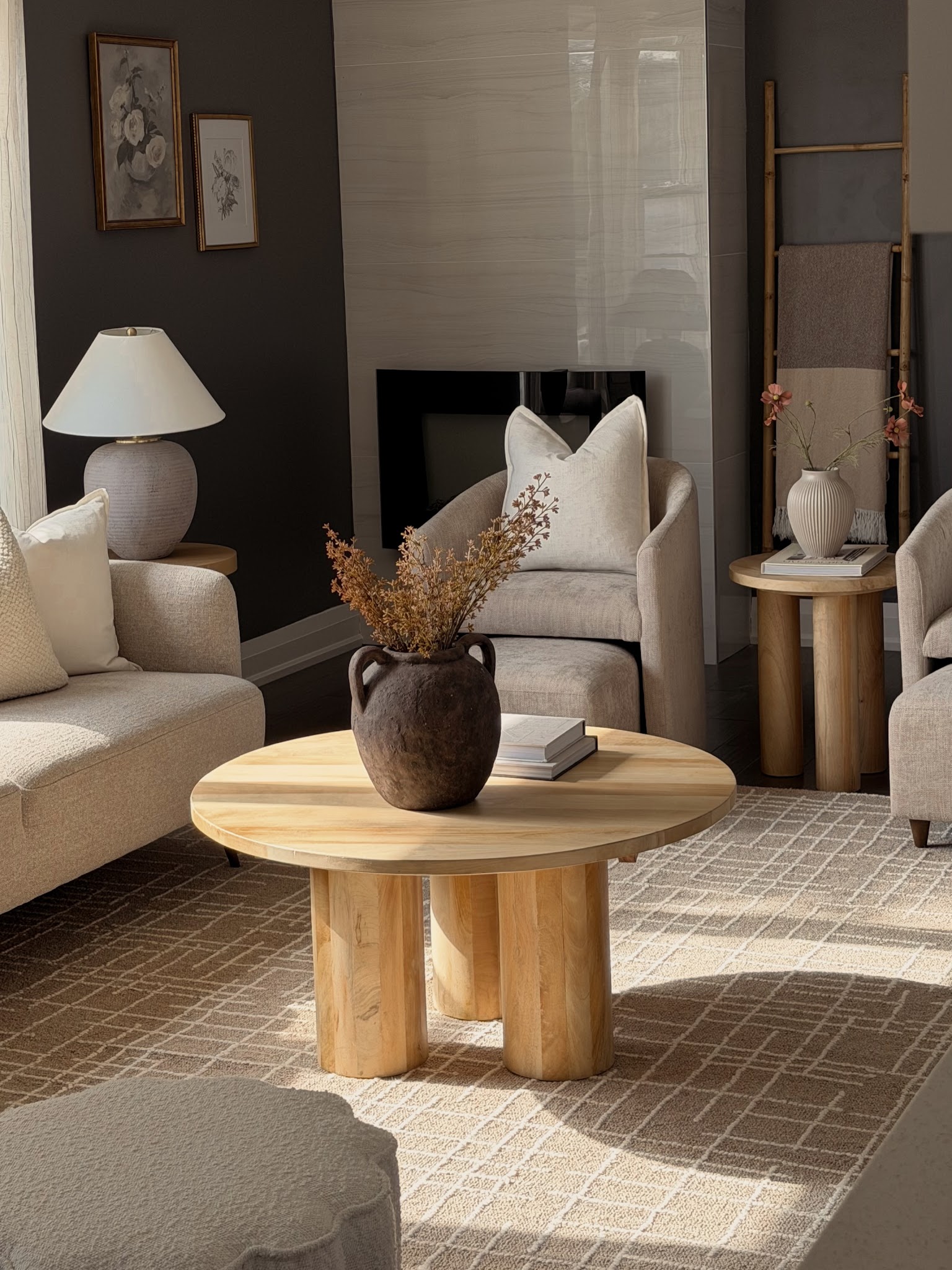
A pale fireplace stands out beautifully when the surrounding walls are charcoal. The contrast gives this compact seating area depth, while soft cream upholstery and a round light wood coffee table keep it relaxed.
Rounded chair backs, a textured lamp, and a simple wood ladder prevent the strong wall color from feeling severe. To borrow the look, repeat a few warm neutral tones across larger pieces before adding accessories.
The rug's fine pattern is especially effective because it brings movement without introducing another color family. Choose small framed prints for the dark wall and keep tabletop styling low enough for conversation.
A weathered brown vase connects the pale furniture to the deeper backdrop, giving the room a comfortably collected finish.
4. Let Chocolate Upholstery Create the Mood
Credits: Instagram
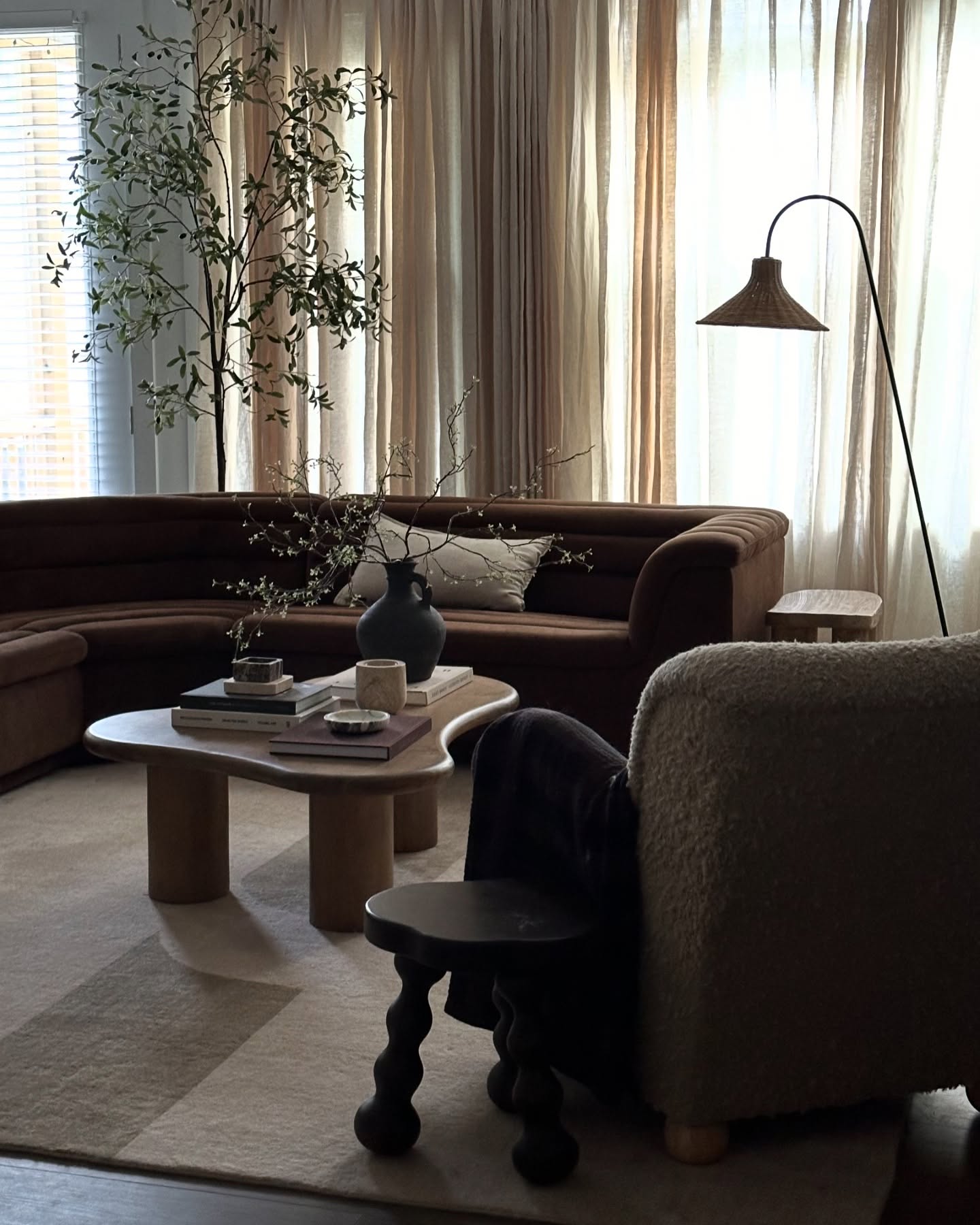
You can build a moody living room around furniture instead of dark paint. This chocolate sectional brings richness to a space with pale walls and softly filtered daylight.
The smooth, rounded coffee table, softly textured cream armchair, and sculptural black stool introduce different silhouettes while staying within a restrained neutral palette.
Full curtains are important here: they soften the windows and make the seating arrangement feel enclosed without hiding the light. Try pairing a deep brown sofa with a rug that mixes cream and muted taupe.
Keep the largest accessories simple, such as one branching arrangement and a tall leafy tree. Small stacks of books add personality, while a slim curved floor lamp supplies useful light without crowding the corner.
5. Turn a Dark Wall Into a Framed Landscape
Credits: Instagram
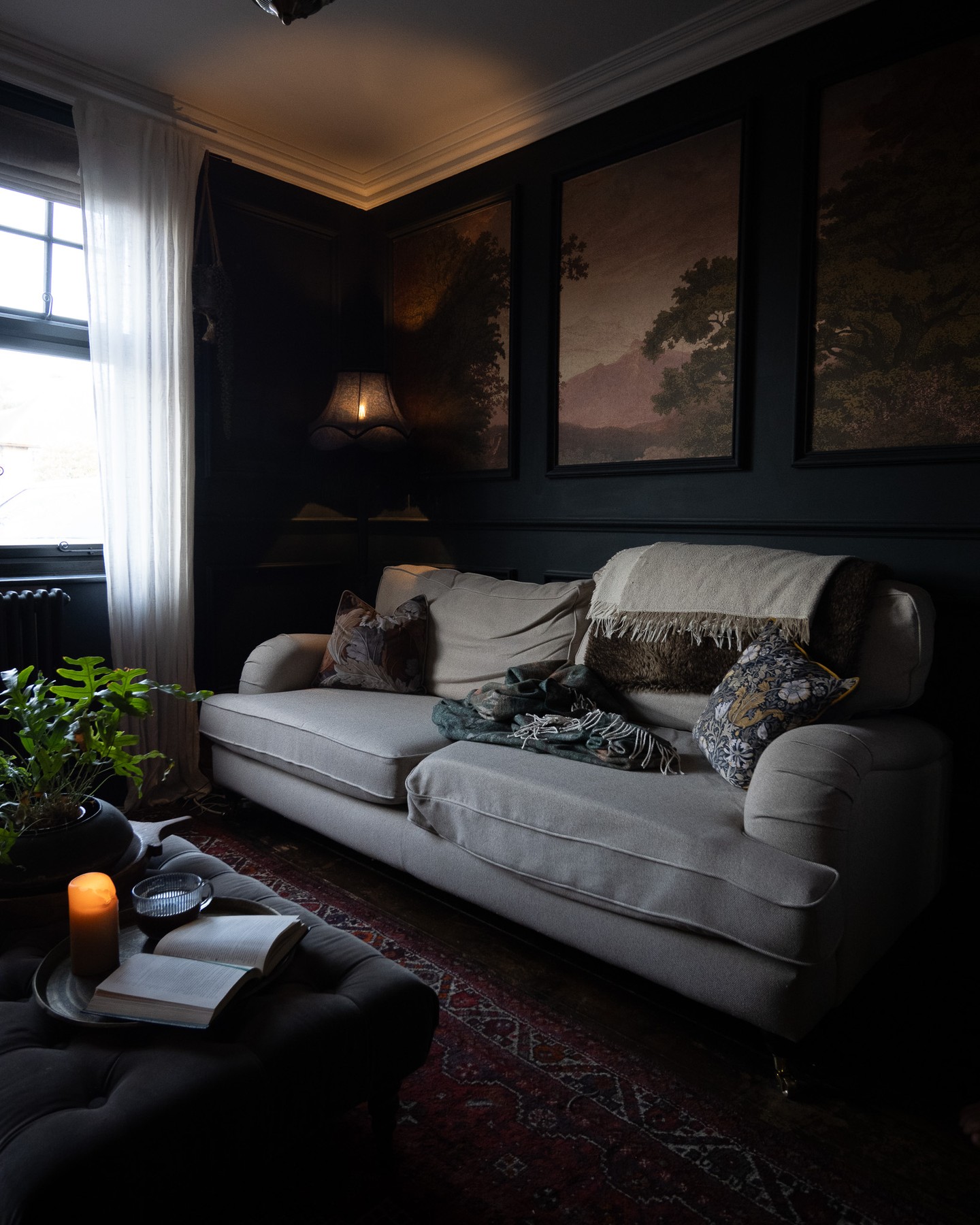
Charcoal walls become especially atmospheric when they hold a softly colored, richly detailed landscape mural. In this room, molding divides the scene into three panels, making the artwork feel connected to the architecture.
A light gray sofa keeps the seating visible against the deep backdrop, and layered throws make the arrangement inviting. This idea works best when the mural shares its browns and grays with the furniture.
Let those subdued tones lead, then add a small amount of pattern through cushions or a worn rug. A softly glowing shaded lamp creates a gentle pool of light beside the sofa.
Preserve some empty wall around the framed panels so the room feels restful, even with several textures and decorative details nearby.
6. Use a Textured Concrete Fireplace as the Backdrop
Credits: Instagram
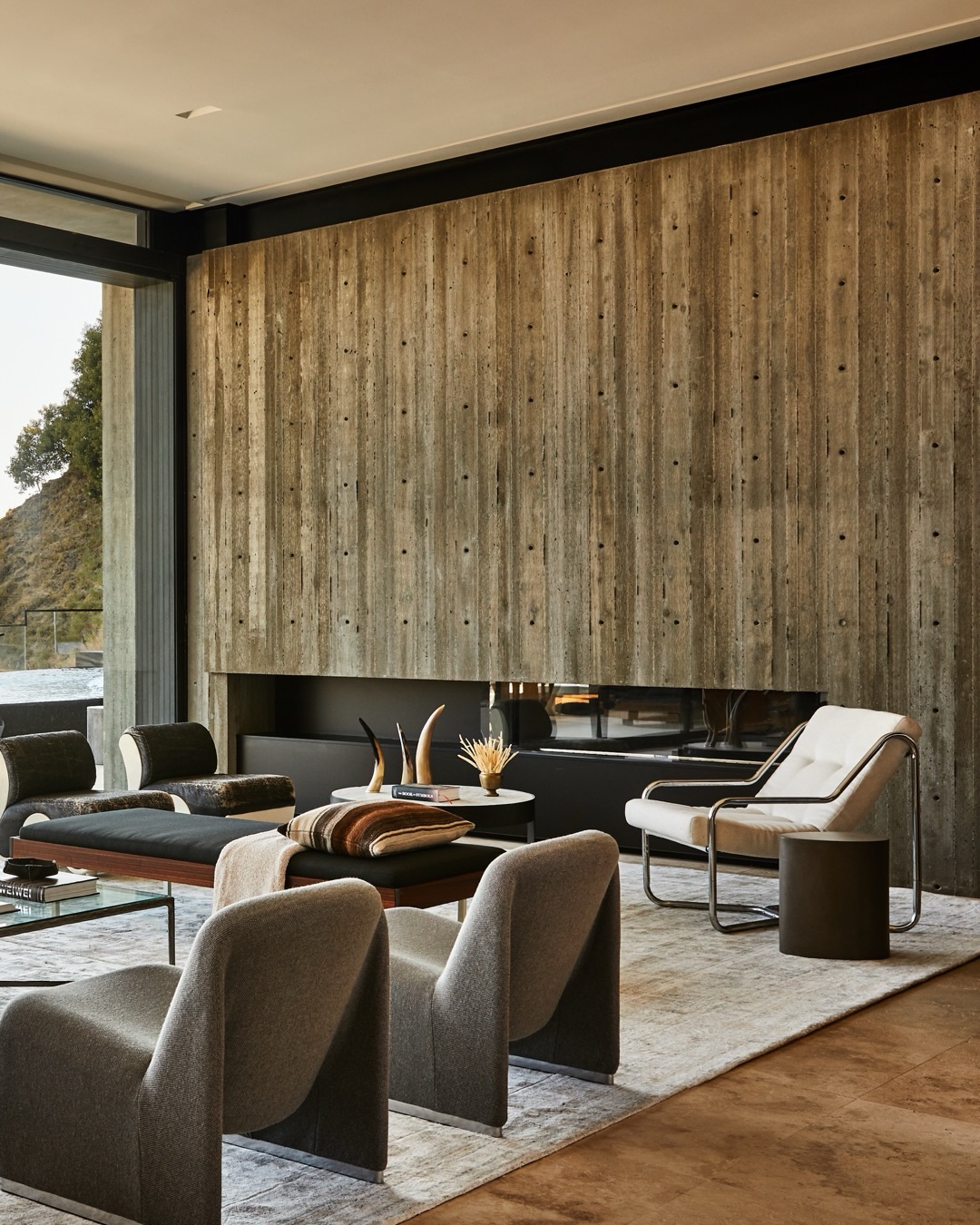
A broad concrete fireplace wall gives this living room its quiet drama. Its vertical grain and small irregular surface marks supply interest without needing a strong paint color.
In front, curved gray chairs, a dark upholstered bench, and a pale metal-framed seat create a layered conversation area. The generously sized light rug is a useful counterweight to the heavier wall and warm brown floor.
For a similar balance, choose one substantial architectural surface and keep the surrounding furniture relatively low. Mix smooth metal with woven upholstery so the neutrals remain varied.
Simple objects on the small table echo the room's earthy materials. Generous glazing brings daylight across the textured wall, revealing depth that would disappear under flat, evenly distributed lighting.
7. Build a Warm Palette Around Exposed Timber
Credits: Instagram
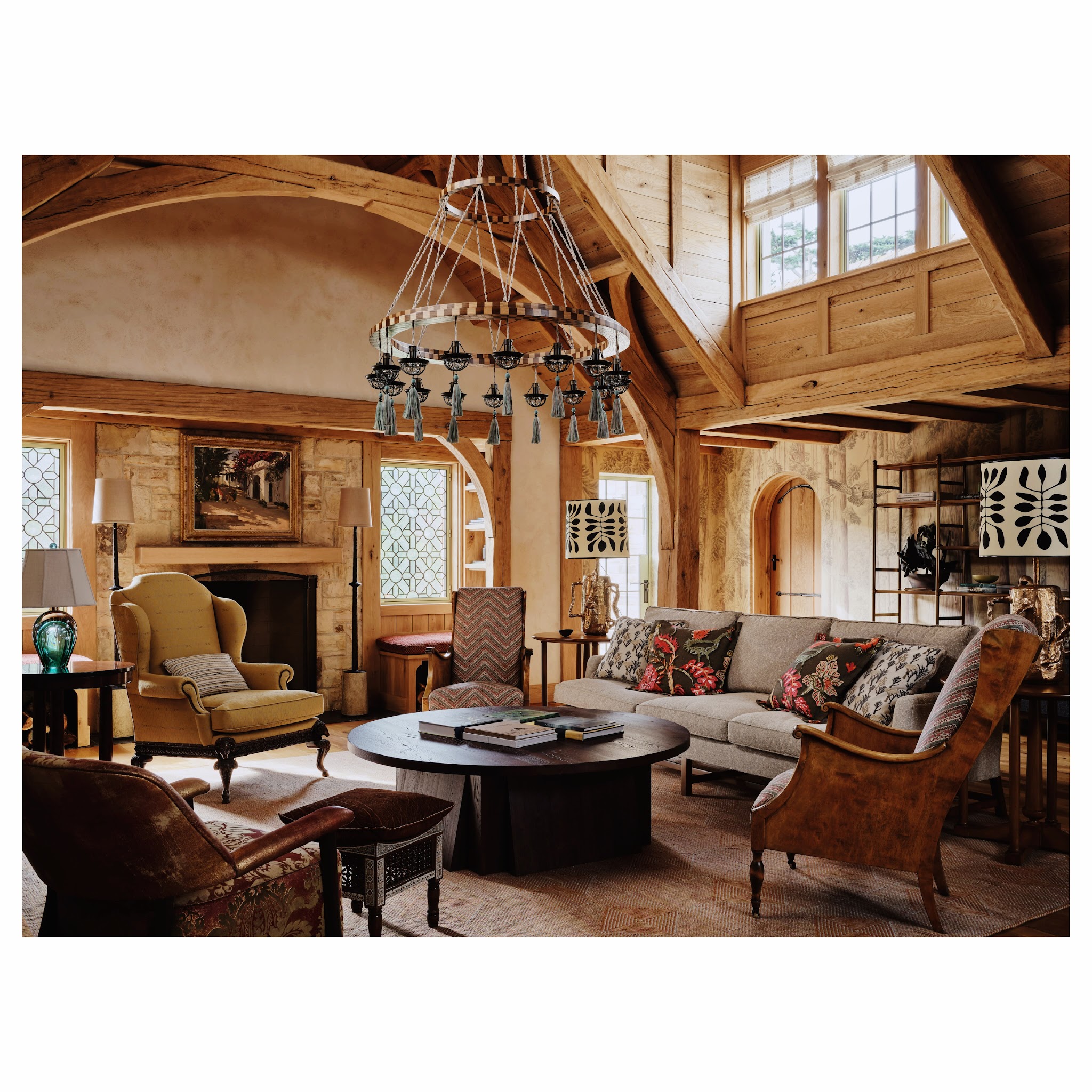
Moody neutrals can feel warm and traditional when wood carries the palette. This living room layers timber framing, stone, worn leather, and a substantial dark circular coffee table around a simple, softly upholstered gray sofa.
The varied browns create depth, while pale cushions and patterned lampshades keep the room lively. You do not need this much architecture to borrow the idea.
Start with a wood table and a leather chair, then repeat their warm tones in frames, woven fabrics, or lighting. Keep the largest upholstery piece quiet so the collection feels connected.
A circular table helps several different chairs work together, giving the arrangement an easy conversational center. Smaller decorative patterns can then add character without taking over the room.
8. Give a Gray Sectional a Charcoal Backdrop
Credits: Instagram
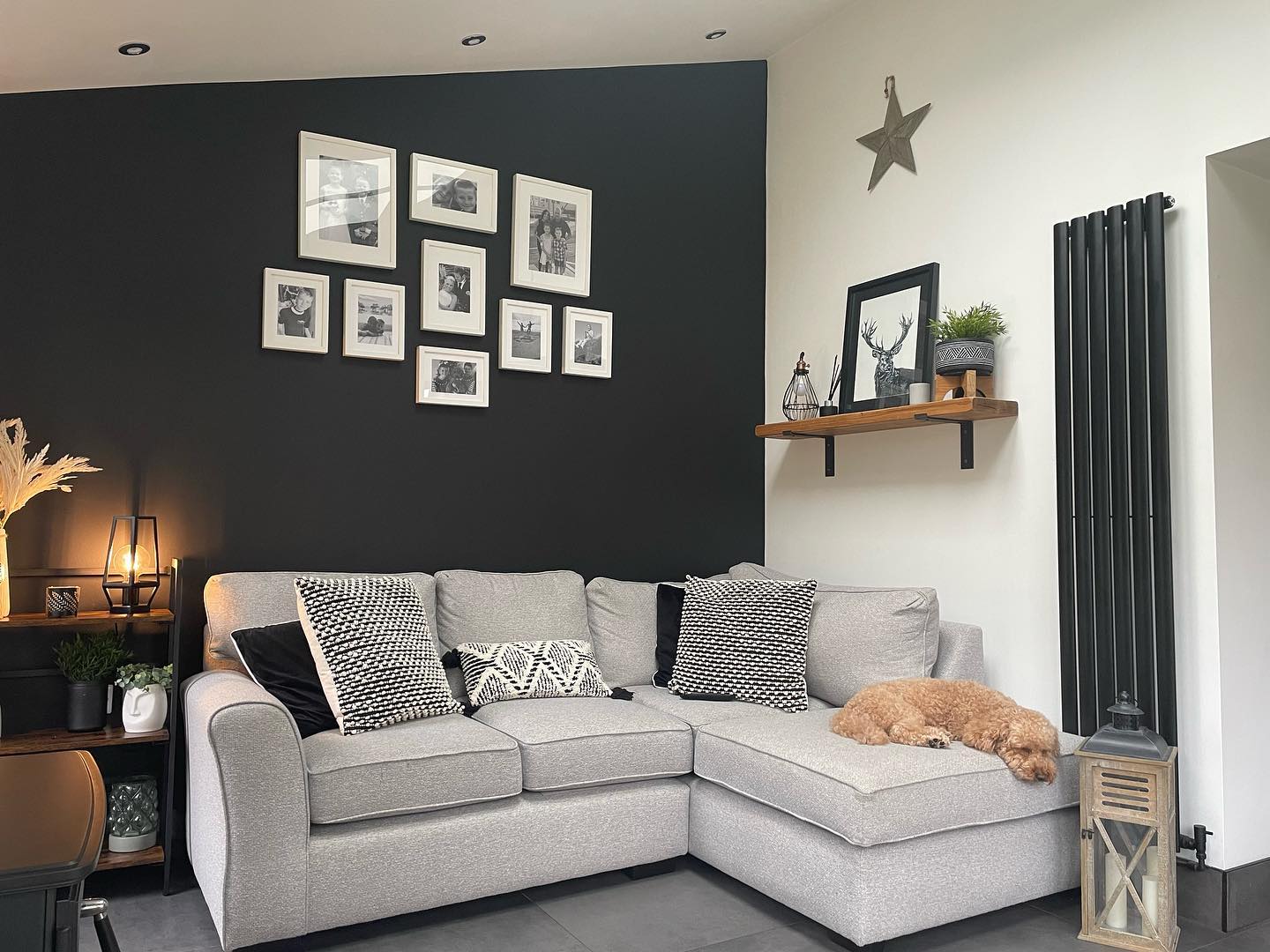
A single charcoal wall can change the atmosphere of a living room without requiring a full renovation. Here, it gives a light gray sectional a stronger outline and turns family photographs into a focal point.
White frames keep the display clear, while black and white pillows connect the sofa to the wall. The nearby natural wood shelf and small, warmly glowing lamp prevent the simple palette from feeling cold.
Try grouping your photographs within one compact area rather than spreading them across the entire wall. Repeat black in a few practical pieces so the accent color feels deliberate.
Soft cushions and a comfortable chaise preserve the room's everyday appeal, proving that a moody look can still feel personal and relaxed.
9. Layer Dark Vintage Pieces Against Pale Walls
Credits: Instagram
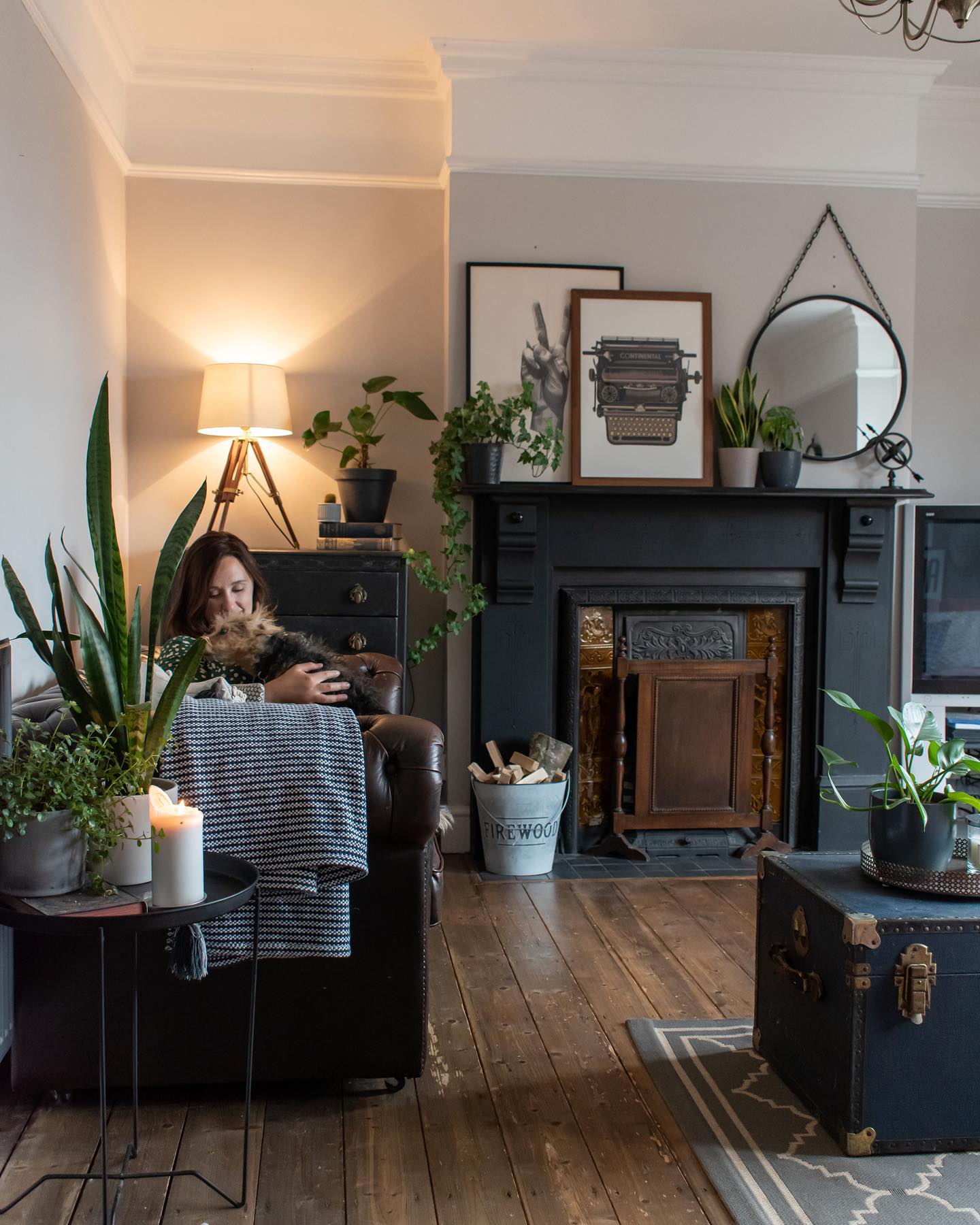
Dark furniture can bring depth to a living room with pale walls. A charcoal mantel, worn leather armchair, and old brass-trimmed storage chest give this space its cozy character, while warm floorboards keep the palette grounded.
The arrangement feels personal because the objects look gathered over time: layered artwork, a hanging mirror, leafy plants, and a small, useful round side table.
Try placing a shaded lamp beside your favorite chair to create a comfortable reading corner after dark. Keep the surrounding wall color soft so the darker pieces remain clearly defined.
A patterned throw introduces texture without disturbing the quiet colors. Finish with a few practical baskets or containers, letting everyday storage become part of the room's relaxed, lived-in atmosphere.
10. Soften a Dark Sunroom With Draped Shades
Credits: Instagram
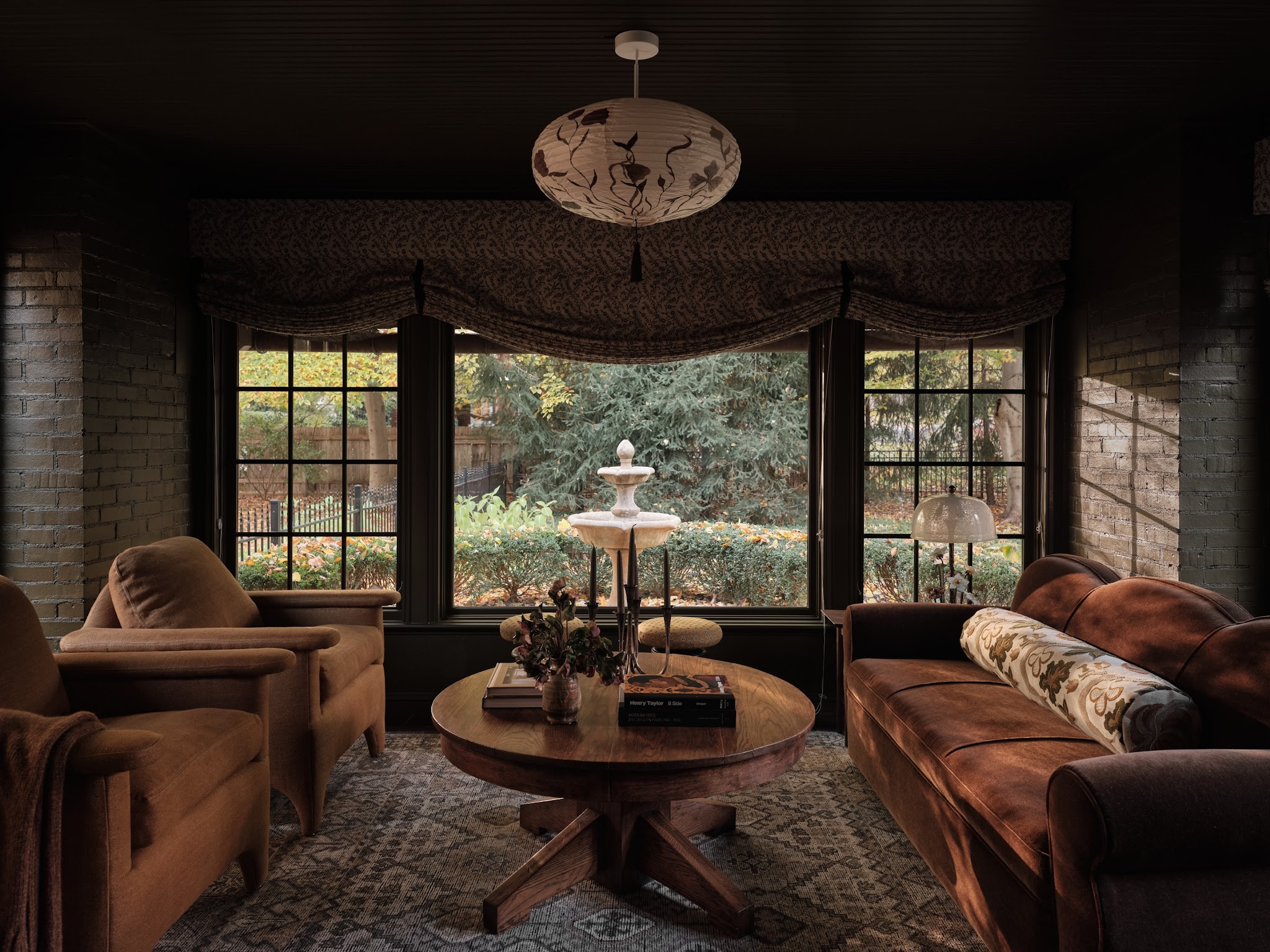
Soft window treatments can make a dark room feel enveloping without hiding its best view. Here, gathered patterned shades run above black window frames, connecting the glazed wall to the deep ceiling.
Brown seating and a round wood coffee table continue the warm neutral palette, while a patterned rug softens the brick surroundings. Borrow the idea by choosing fabric with a subtle pattern that remains quiet from across the room.
Mount shades high enough to preserve daylight and the outdoor view when raised. Repeat one shade from the fabric in a pillow or rug to make the arrangement feel intentional.
A pale pendant provides a gentle contrast overhead, helping the darker surfaces feel layered rather than visually heavy or flat.
11. Build a Chocolate Seating Group Around Warm Light
Credits: Instagram
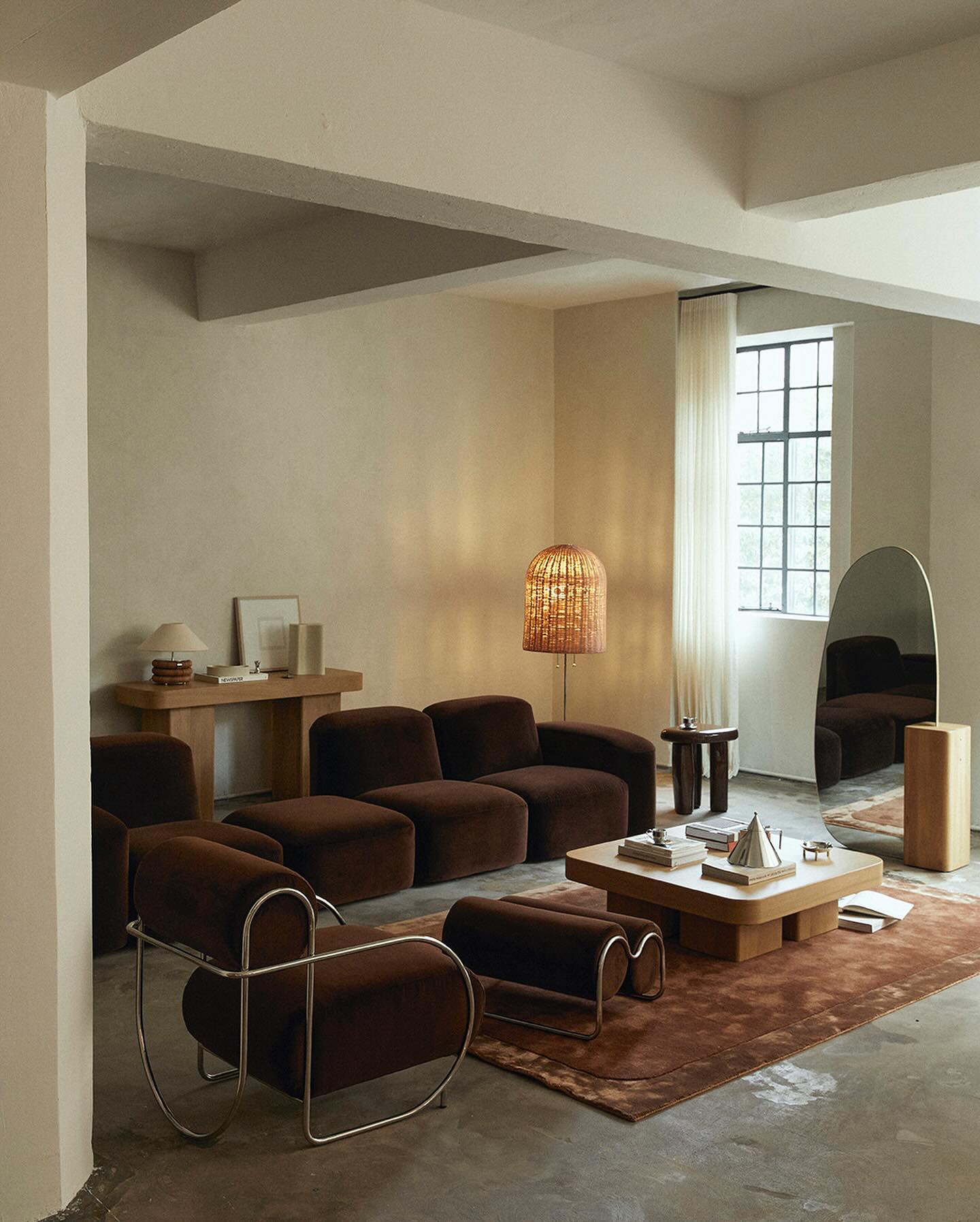
Chocolate upholstery gives this open sitting area a rich center without requiring dark paint on every wall. The modular sofa, rounded chair, and matching footrest repeat the same brown, while a warm rug makes the grouping feel deliberate.
A glowing woven floor lamp brings another layer of brown into the composition and throws a gentle wash onto the cream wall.
For a similar effect, choose one deep neutral for the largest furniture pieces, then repeat it in different shapes. Let chrome frames and a curved mirror provide small reflective breaks.
The pale wood coffee table offers enough contrast to remain visible against the rug. Keeping accessories low allows the soft furniture outlines and changing natural light to hold your attention.
12. Give a Warm Neutral Sofa a Dark Textile Backdrop
Credits: Instagram
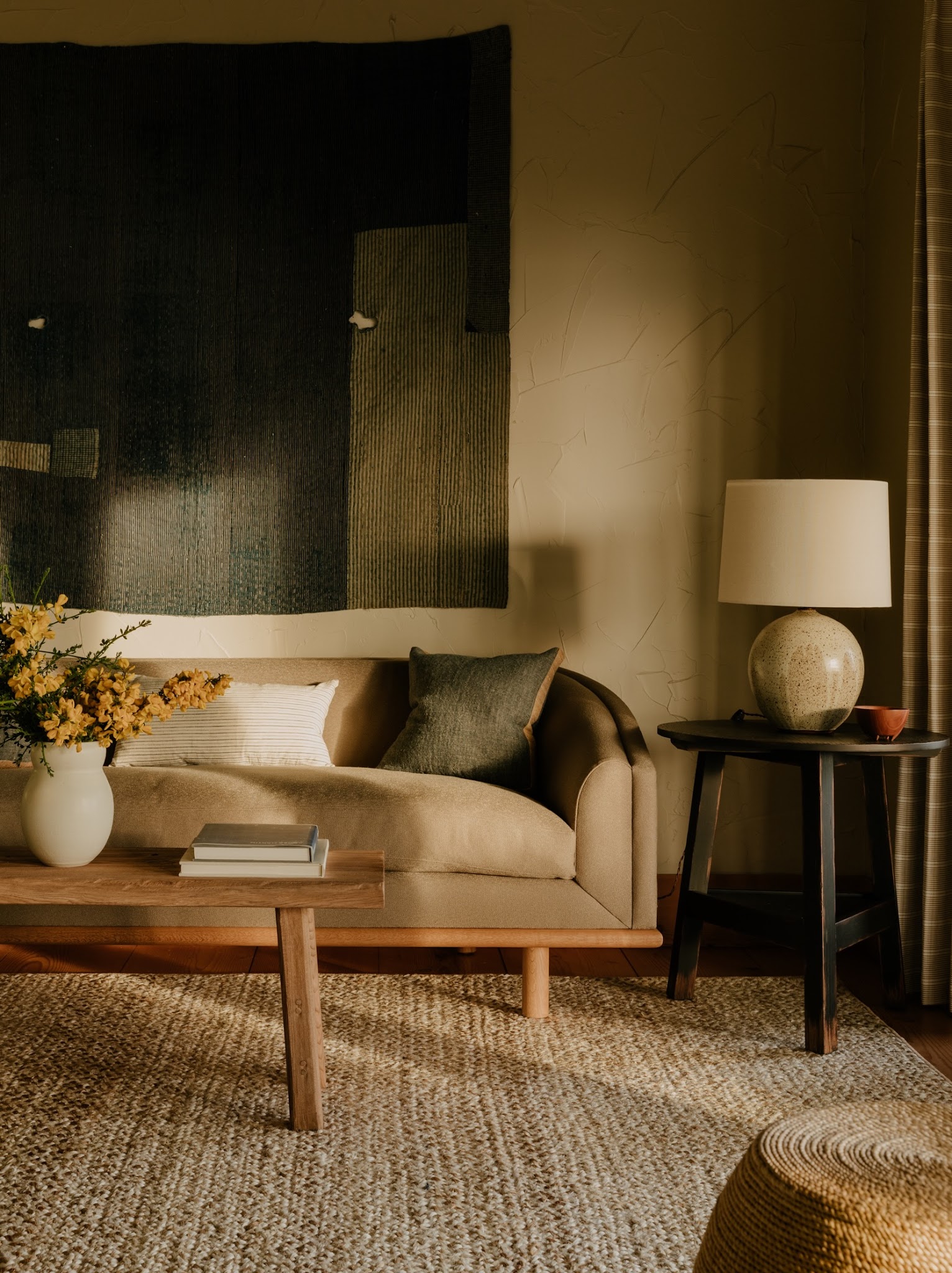
A large dark wall hanging adds weight behind this warm beige sofa, turning a modest seating arrangement into a layered focal point.
Its irregular surface echoes the textured plaster wall, while the wood coffee table and woven rug keep the setting grounded. The rounded ceramic lamp introduces a pale highlight beside a dark side table.
Borrow this balance by choosing one artwork or textile that extends beyond the visual width of a single cushion. Pair it with simpler furniture and a restrained mix of cream, brown, and charcoal.
Small differences in texture will do more than extra accessories. Here, flowers and stacked books bring life to the room, while the soft shadows preserve its quiet, intimate character throughout the composition.
13. Create an Intimate Conversation Corner With Black Chairs
Credits: Instagram
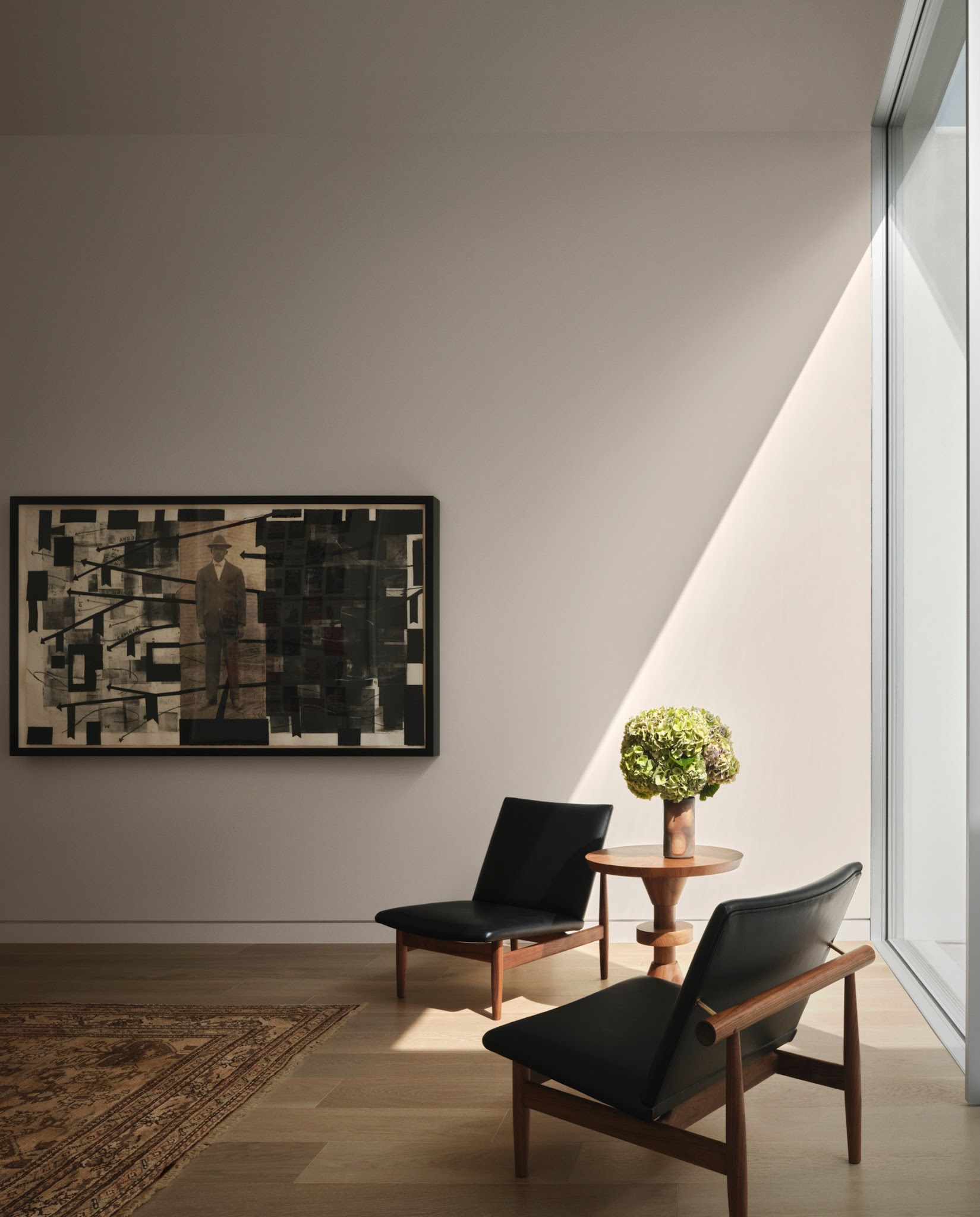
Two low black chairs can establish a moody corner even when the surrounding walls remain pale. In this room, their dark upholstery and warm wood frames echo the tones of the large artwork, giving the arrangement a clear visual connection.
A small sculptural table sits between them, keeping the setting useful without crowding the floor. The angled daylight creates a dramatic division between brightness and shadow.
Try a similar grouping beside a generous window, leaving enough space for each chair to turn toward the other. A patterned rug can soften the meeting of wood furniture and flooring.
Keep the wall decoration concentrated in one substantial piece so the seating area feels settled, thoughtful, and separate from the wider living space.
14. Wrap a Deep Sectional in Charcoal Layers
Credits: Instagram
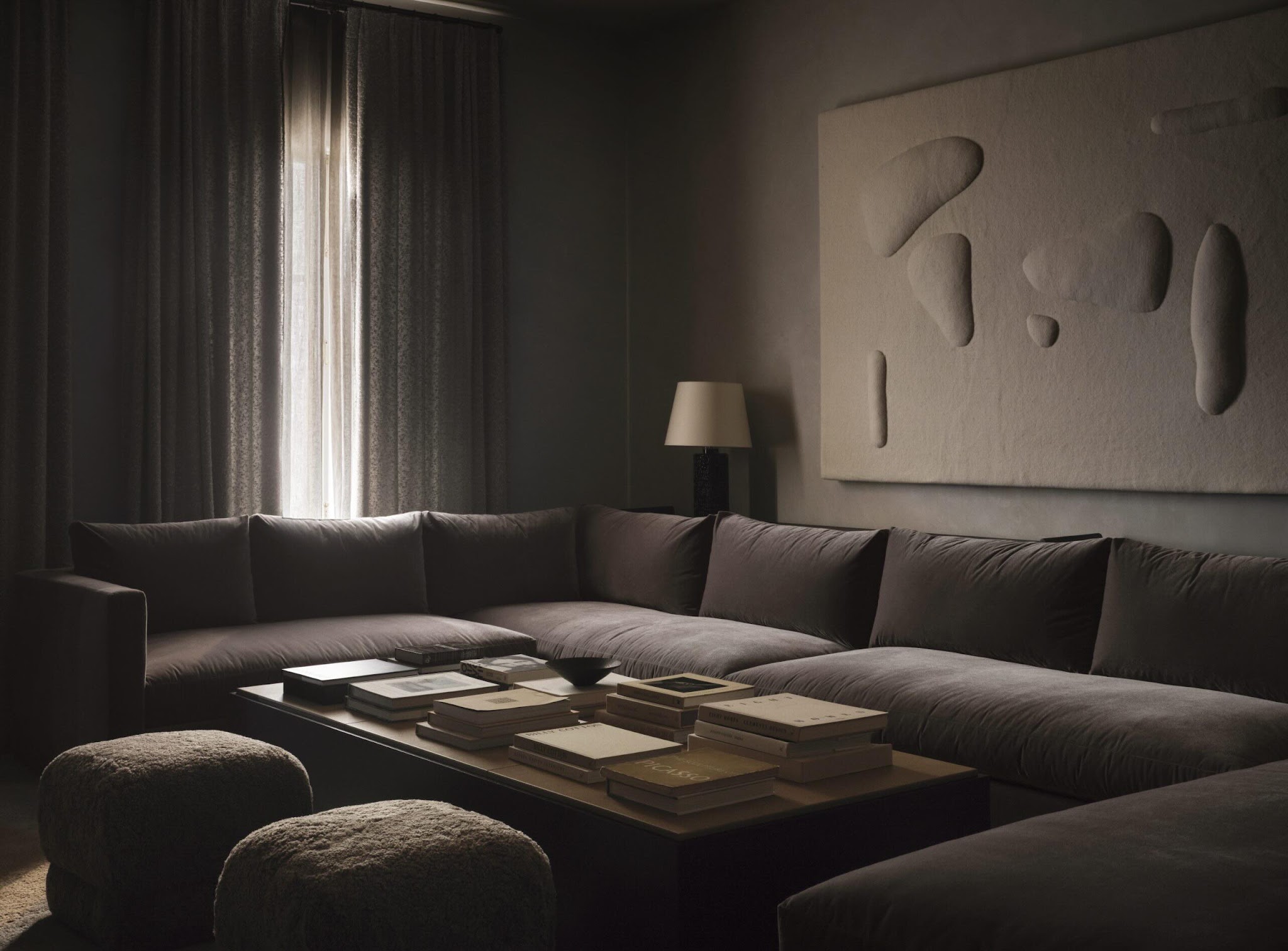
This living room draws its atmosphere from closely related shades of gray. The sectional, curtains, walls, and ceiling create an enveloping background, while a pale relief artwork catches enough light to remain the focal point.
Rounded textured stools soften the large rectangular coffee table and the long lines of the seating. To reproduce the effect, compare your paint and upholstery samples together before committing; slightly different tones can create depth without breaking the palette.
Use one lighter surface above the sofa to prevent the room from feeling visually closed. A shaded lamp adds another point of contrast.
Arrange books in low stacks across the table, leaving room for everyday use, and let filtered daylight reveal the textures at different hours.
15. Balance Rustic Timber With a Nearly Black Sofa
Credits: Instagram
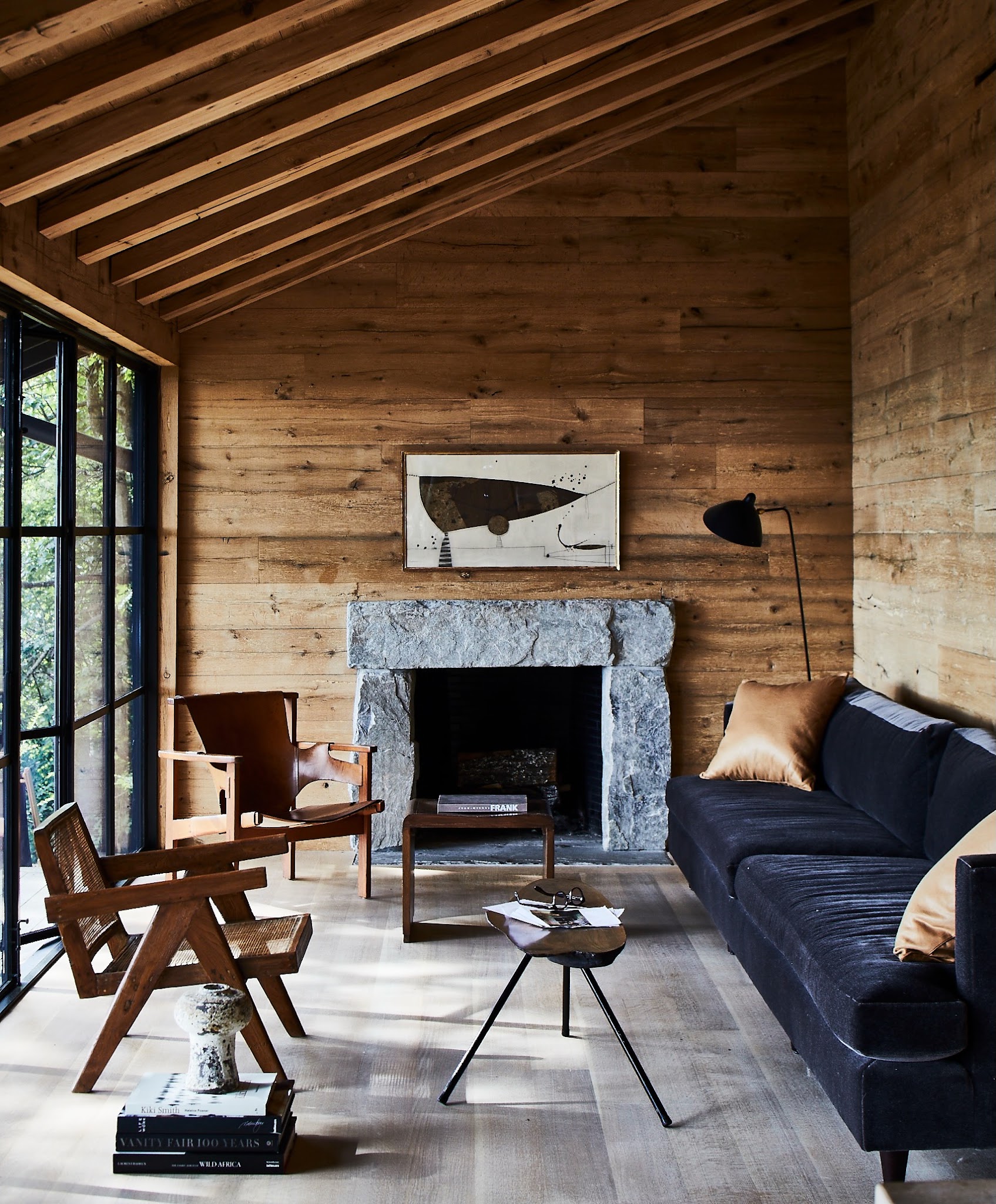
Timber across the walls and sloping ceiling makes this compact living room feel sheltered, while the nearly black sofa supplies a counterweight to the warm grain.
A rough gray stone fireplace breaks up the wood without introducing a bright color. The simple chairs and small tables keep the floor open, making the arrangement feel easy to use.
Consider this combination when a wood room seems overwhelmingly golden: add a deep upholstered piece and a cooler stone or gray surface. Repeat black sparingly through window frames or a reading lamp.
Pale flooring and a restrained rug help the furniture stand apart. The result depends on texture and proportion, with just enough contrast to make each material's character clear across the room.
16. Soften a Tall Room With Taupe and Filtered Daylight
Credits: Instagram
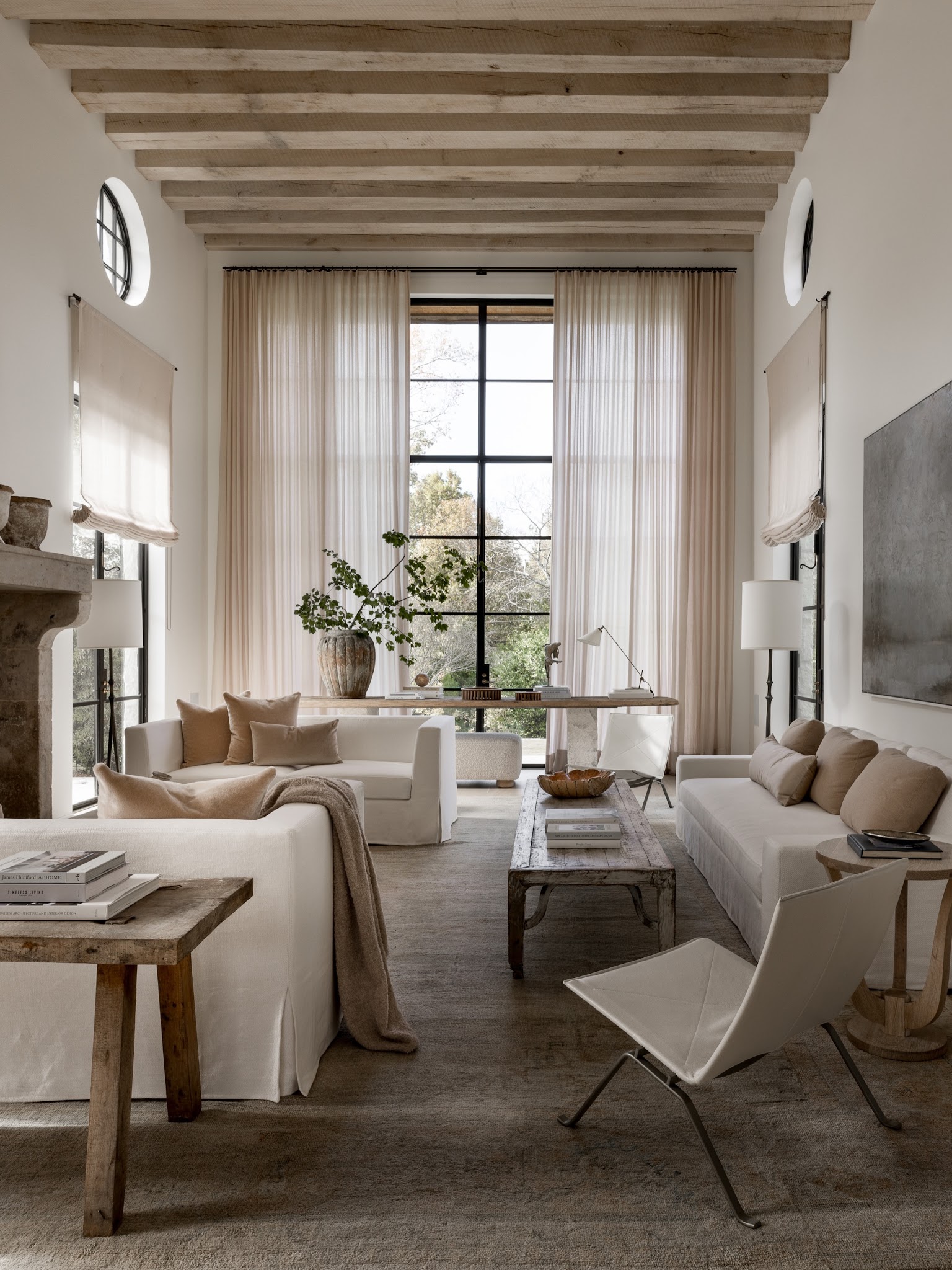
A tall living room can still feel intimate when its brightest surfaces sit within a restrained, layered palette.
Here, long curtains filter the windows, while taupe pillows, a gray rug, and weathered wood tables give the pale seating a quieter tone. Overhead beams and dark window frames bring structure to the height.
Instead of adding many small accents, choose a few substantial pieces that relate to the room's scale. A large muted artwork and an oversized vessel make the walls and tables feel considered.
Keep the upholstery simple so the grain, folds, and shadows remain visible. This approach creates a softer interpretation of moody neutrals, using depth and subdued materials to make abundant daylight feel gentle rather than stark indoors.
17. Pair Cognac Leather With a Concrete Fireplace Wall
Credits: Instagram
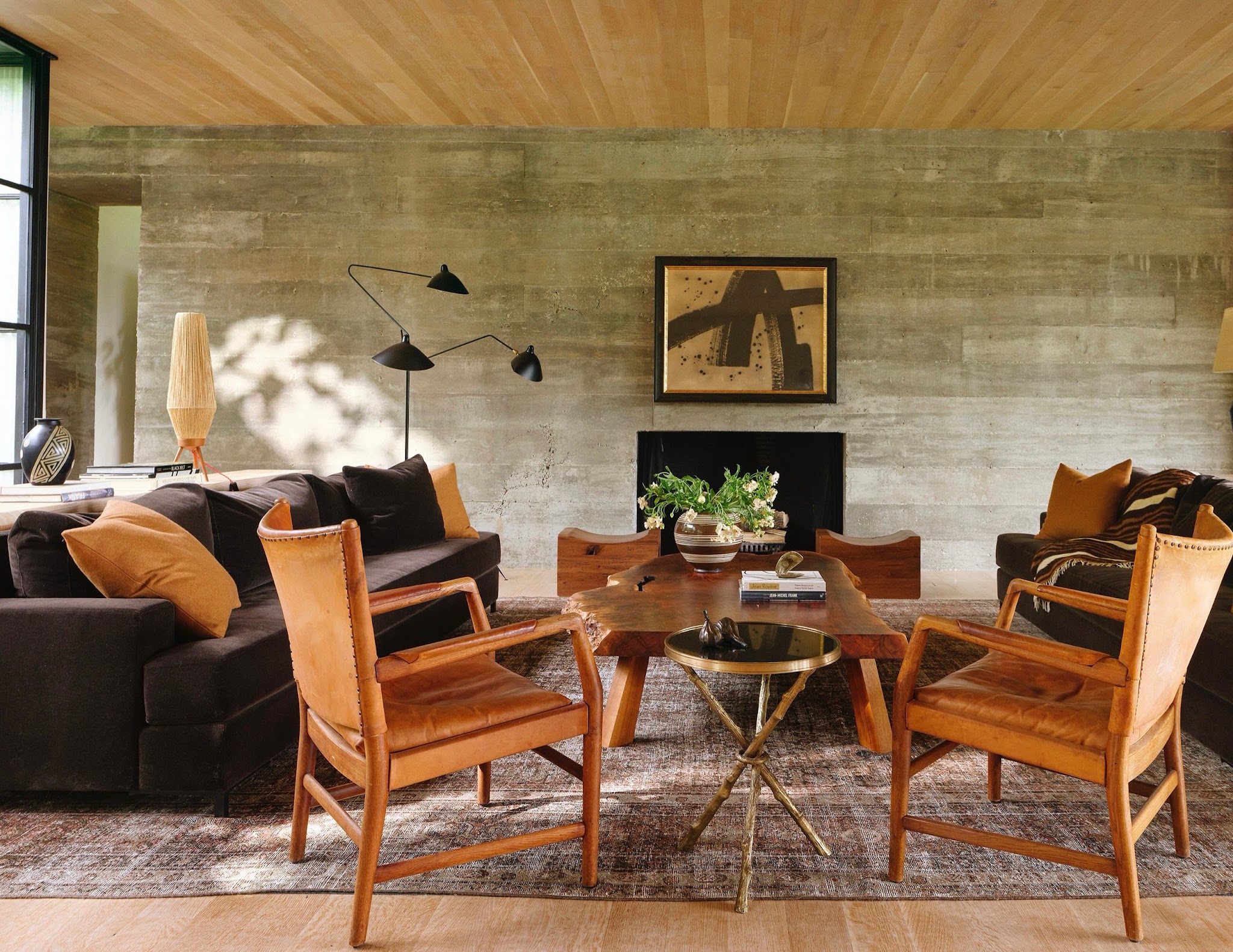
Warm leather chairs bring a mellow glow to this living room's brown and gray palette. Behind them, dark sofas flank a wood coffee table, while the concrete fireplace wall introduces a cooler, textured backdrop.
The arrangement feels rich because the materials vary even though the colors remain closely related. Try balancing your darkest upholstery with medium wood and leather instead of adding bright white everywhere.
A simple framed artwork can repeat the room's darkest tones above the fire. Notice how the slender black lamp and small brass table add definition without becoming visually heavy.
Use a rug large enough to connect the seats, then keep the tabletop styling contained so the sculptural furniture and fireplace remain the room's main features.
18. Use Black Glazing to Define Cream Seating
Credits: Instagram
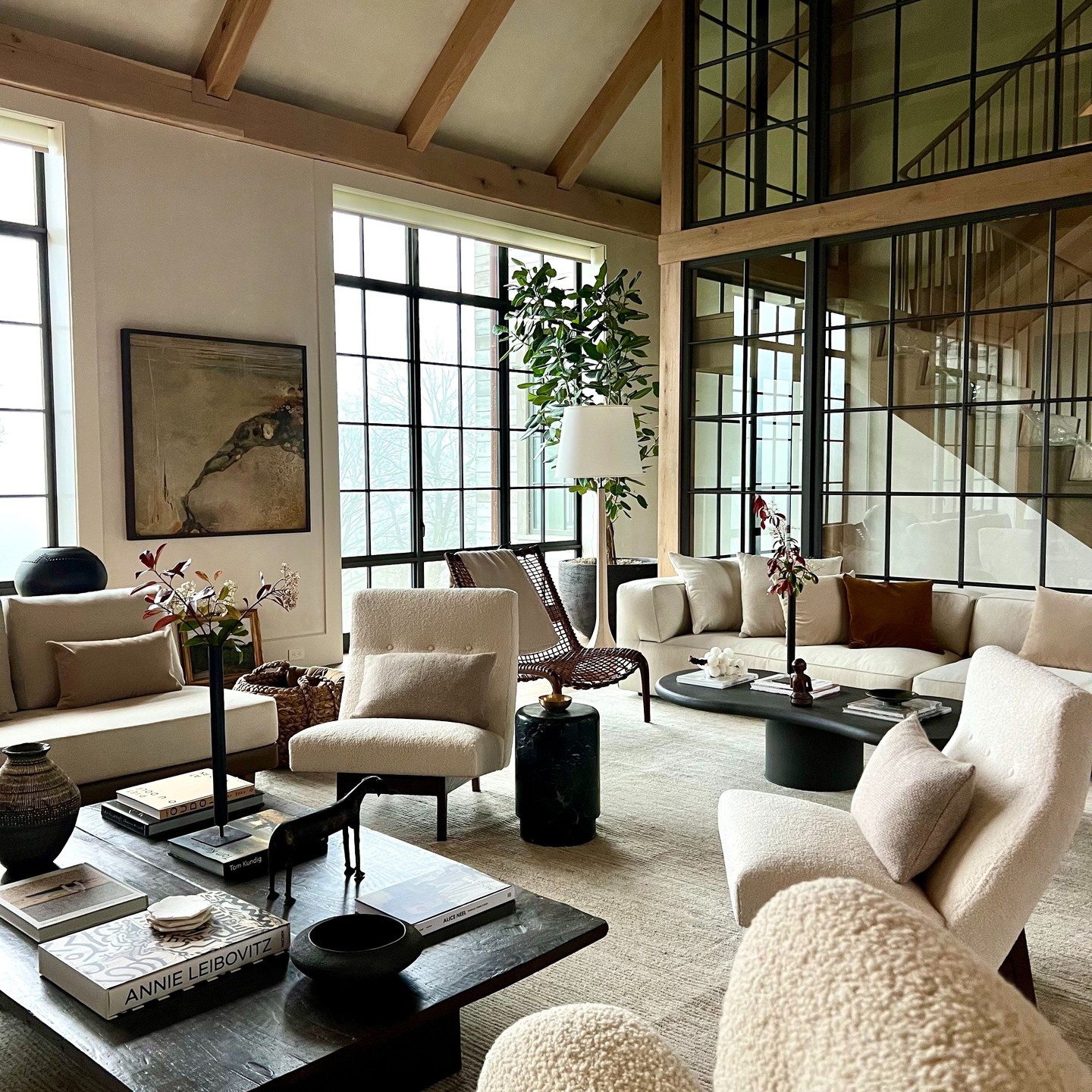
Black window grids and an interior glass partition give this neutral living room a strong framework. Cream sofas and chairs soften those lines, while dark tables repeat the glazing's weight nearer the floor.
Wood beams and a woven chair bridge the contrast between pale upholstery and black metal.
You can adapt the idea without changing your architecture by repeating dark accents at several heights: a window treatment, a lamp stem, and a coffee table can provide similar rhythm.
Keep the larger seating pieces within a narrow cream and oatmeal range. A few books, sculptural objects, and branches provide personality without competing with the room's geometry.
The shadows around the partition add depth while allowing the adjoining spaces to remain connected.
19. Paint Built-Ins a Deep Gray Beside a Pale Fireplace
Credits: Instagram
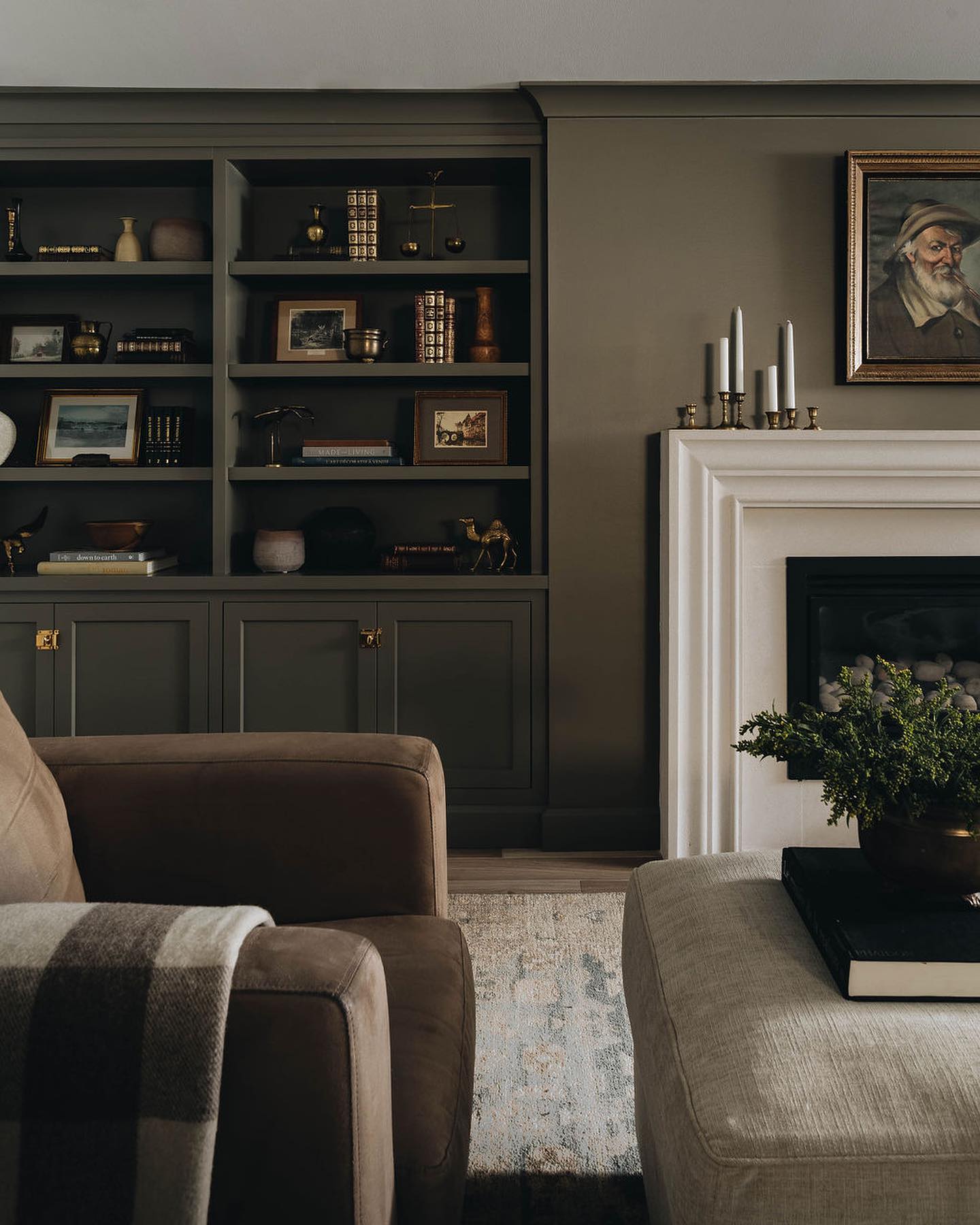
Deep gray built-ins make books and collected objects feel part of the room's architecture. In this living area, the cabinetry continues beside a pale fireplace surround, creating a clear contrast without overwhelming the brown chair and upholstered ottoman.
Brass details and small framed pictures warm the shelves, while open spaces keep the display readable. Try using the same dark paint on shelves, backs, and lower doors so individual objects stand forward naturally.
Keep larger pieces on lower shelves and vary the height of smaller arrangements. A portrait above the mantel repeats the room's earthy tones.
The striped throw and muted rug add pattern quietly, giving the seating area enough texture to feel comfortable within its tailored, deeply shaded architectural setting.
20. Gather Rounded Chairs Around a Geometric Coffee Table
Credits: Instagram
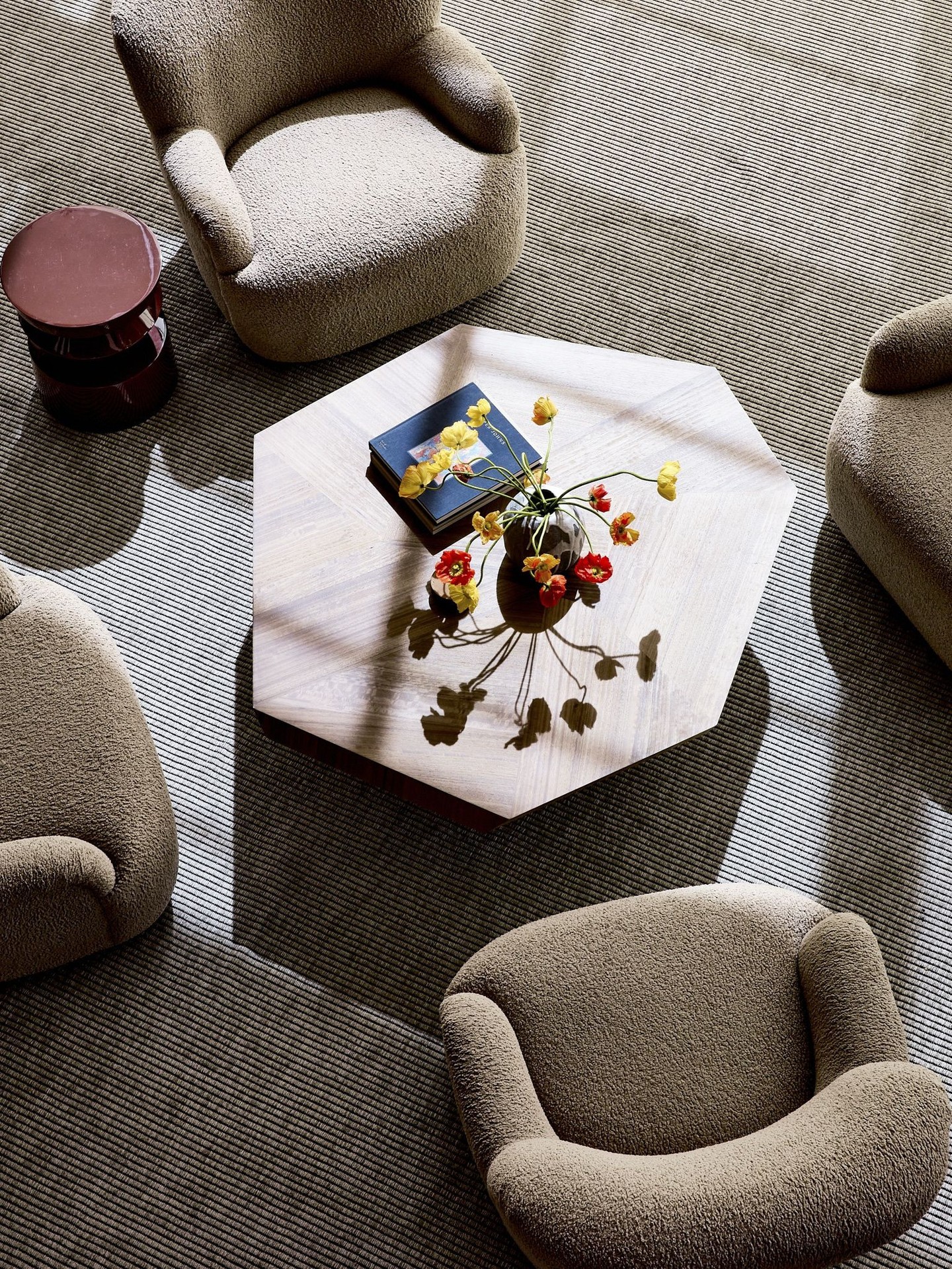
Four rounded chairs make this seating group feel conversational, while a faceted pale coffee table creates a crisp center.
The taupe upholstery and finely striped rug stay within a quiet neutral range, allowing sunlight and shadow to supply most of the drama. A small dark side table adds a deeper note beside the soft chair shapes.
Consider this layout when your living room needs a place for conversation separate from the main sofa. Choose chairs with similar visual weight, and leave comfortable passages between them.
A flower arrangement and a stack of books are enough to bring the table to life. Repeating the upholstery texture keeps the arrangement cohesive, while the angular tabletop prevents the curves from feeling overly sweet.