
We need 80-100 words exactly one paragraph. Include keyword exact capitalization. 3-6 sentences conflict 80-100, satisfy 4 sentences ~90.
Supported ideas from headings/context. Need hook specific.
A calm living room often comes down to choosing a few materials and shapes that feel good together, then leaving them room to breathe.
Japandi Living Room Ideas show how rounded sofas, sculptural wood tables, and earthy upholstery can bring warmth without making a space feel busy.
You’ll also find ways to use natural wood on a media wall, balance rich timber with a pale sofa, and keep a long coffee table visually light.
These arrangements pair simple forms with tactile details, offering practical inspiration for a seating area that feels comfortable, considered, and easy to live in.
1. Balance a Rounded Sofa With a Sculptural Wood Table
Credits: Instagram
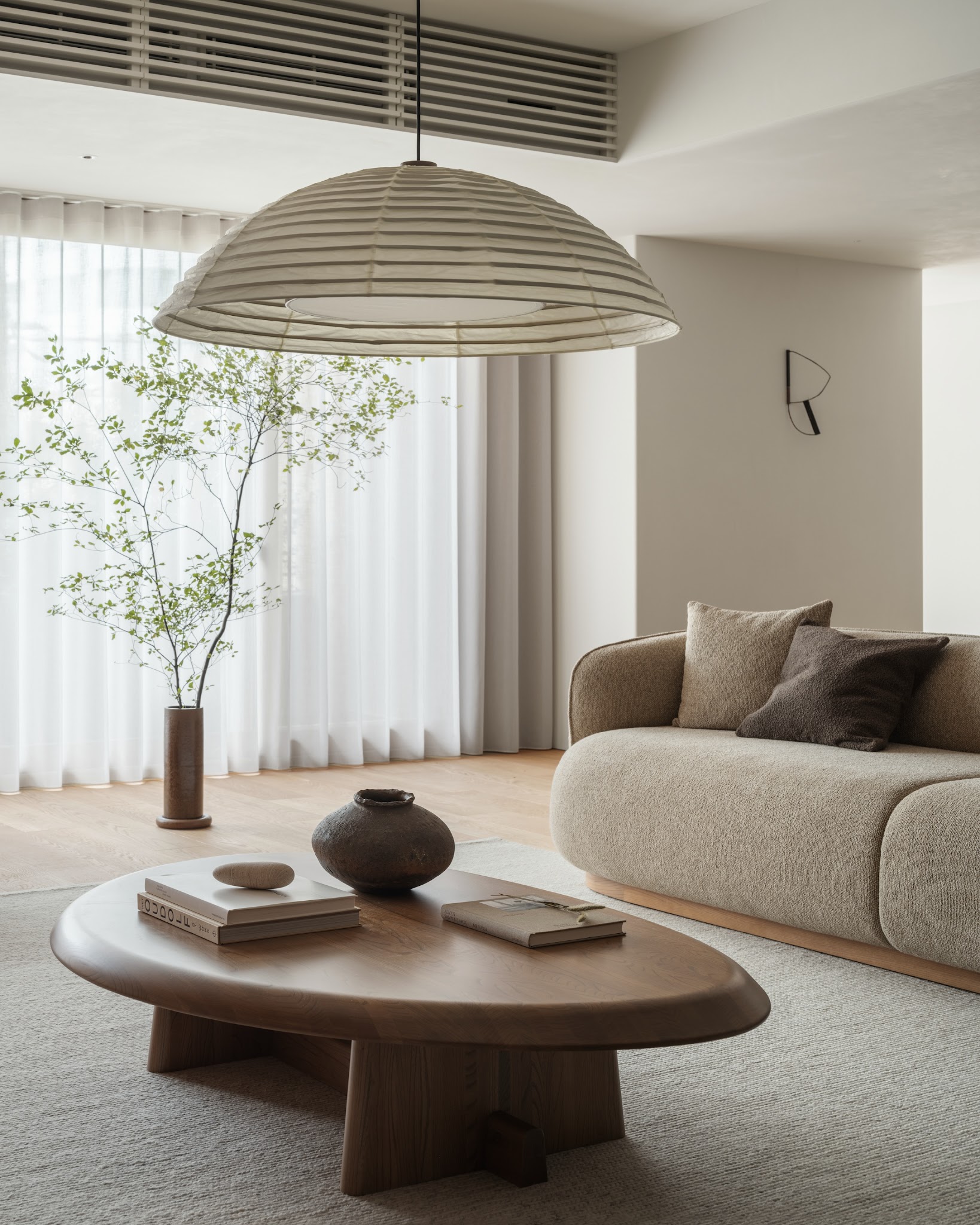
A rounded sofa and a broad wooden coffee table give this living room its gentle visual rhythm. Their curved outlines echo the paper pendant overhead, while the pale rug keeps the seating group grounded without adding a strong pattern.
Notice how the darker vessel and single brown pillow provide just enough contrast against the cream upholstery. You can borrow this balance by choosing one substantial wood piece, then surrounding it with softer textures and generous breathing room.
Keep tabletop objects low so the furniture shapes remain easy to appreciate. A tall branch arrangement adds movement near the curtains without crowding the floor.
This combination brings Japanese material sensitivity and Scandinavian comfort into a room that still feels relaxed and usable.
2. Frame the Landscape With a Quiet Seating Group
Credits: Instagram
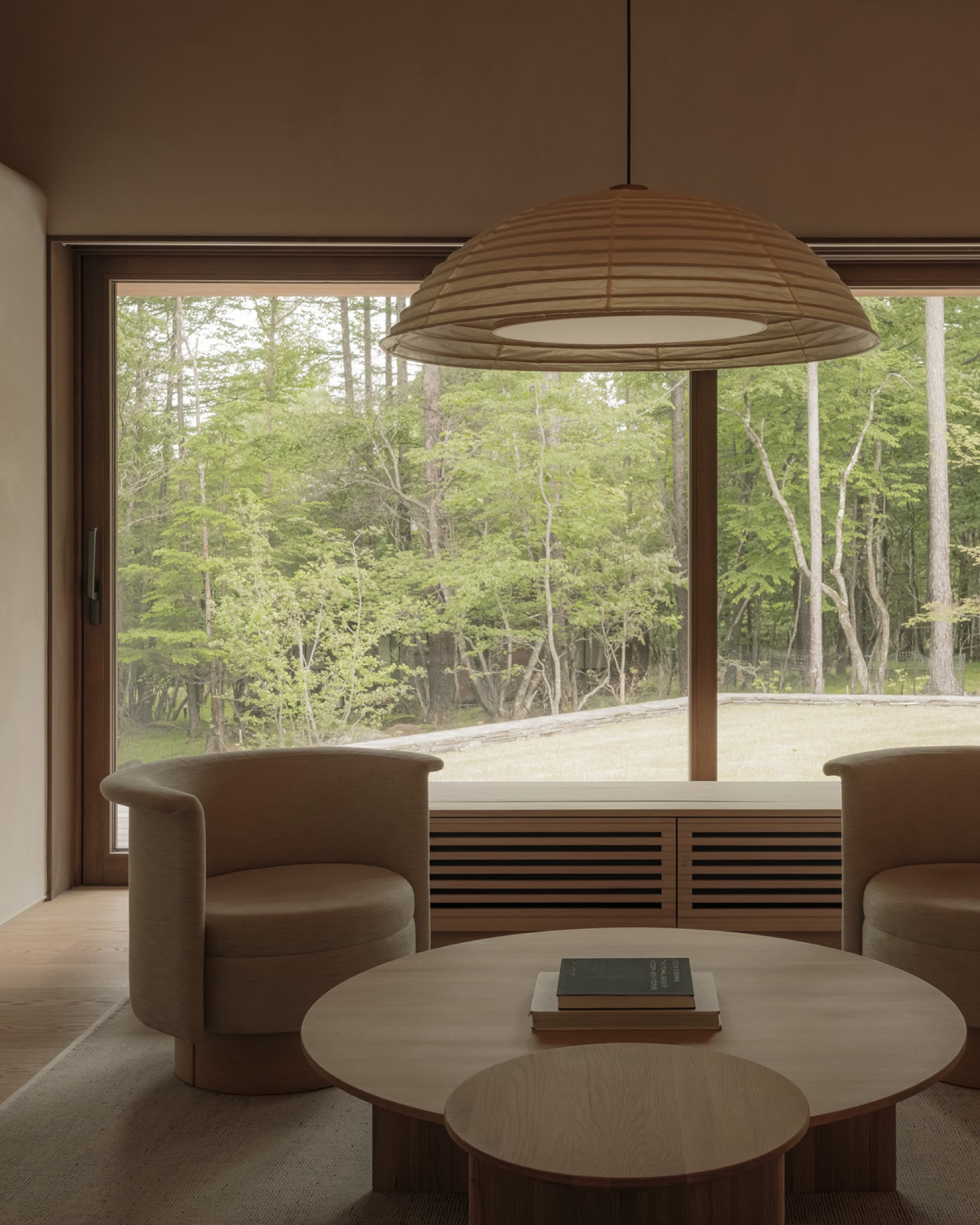
The forest outside becomes the main decoration in this calm sitting area. Two rounded chairs sit beneath a wide window, facing overlapping wood tables and a broad paper pendant.
Because the upholstery, rug, and timber stay close in tone, your attention naturally moves toward the trees. Try this approach wherever a window offers an appealing view, even if yours overlooks a small courtyard.
Choose low furniture that leaves the glass visible and keep the sill free of competing accessories. A pair of books can provide enough detail on the table.
The built-in horizontal lines reinforce the restful arrangement. Japandi rooms benefit from this kind of restraint, where a familiar daily view supplies changing color, texture, and interest throughout the year.
3. Warm Pale Wood With Earthy Upholstery
Credits: Instagram
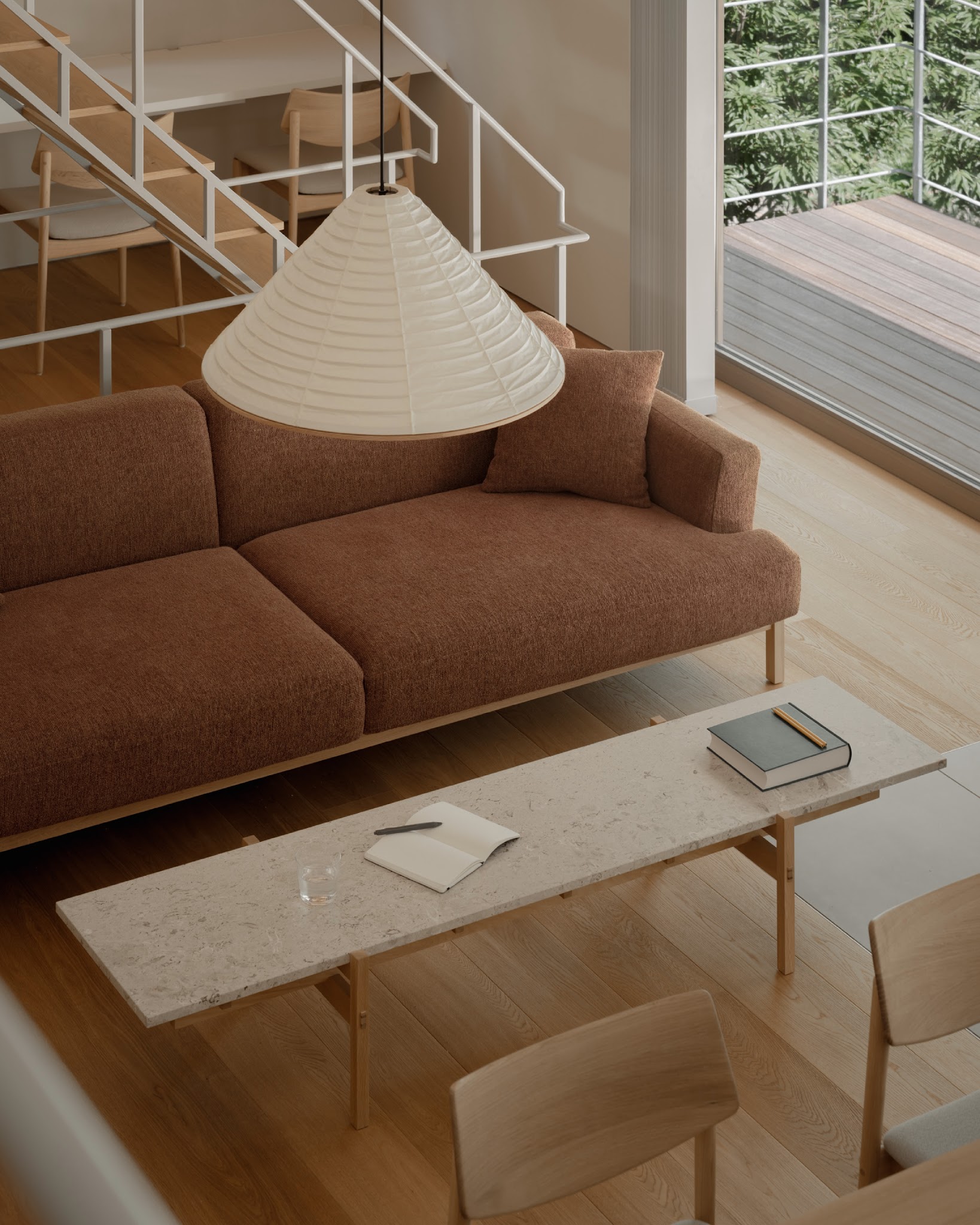
A rust brown sofa brings welcome depth to this light timber living space. Its straight wood frame relates to the nearby chairs, floorboards, and slim coffee table, creating continuity without making every piece identical.
Above it, a paper pendant softens the crisp stair railing and the angular furniture. This is a useful formula when an all-neutral room starts to feel flat: introduce one warm earthy upholstery color while keeping the surrounding finishes simple.
Let the fabric texture carry some of the interest, rather than adding several patterned pillows. A narrow table also preserves floor space around the sofa.
With only a notebook, a glass, and a few books in view, the room feels ready for ordinary life and unhurried conversation.
4. Wrap a Media Wall in Natural Wood
Credits: Instagram
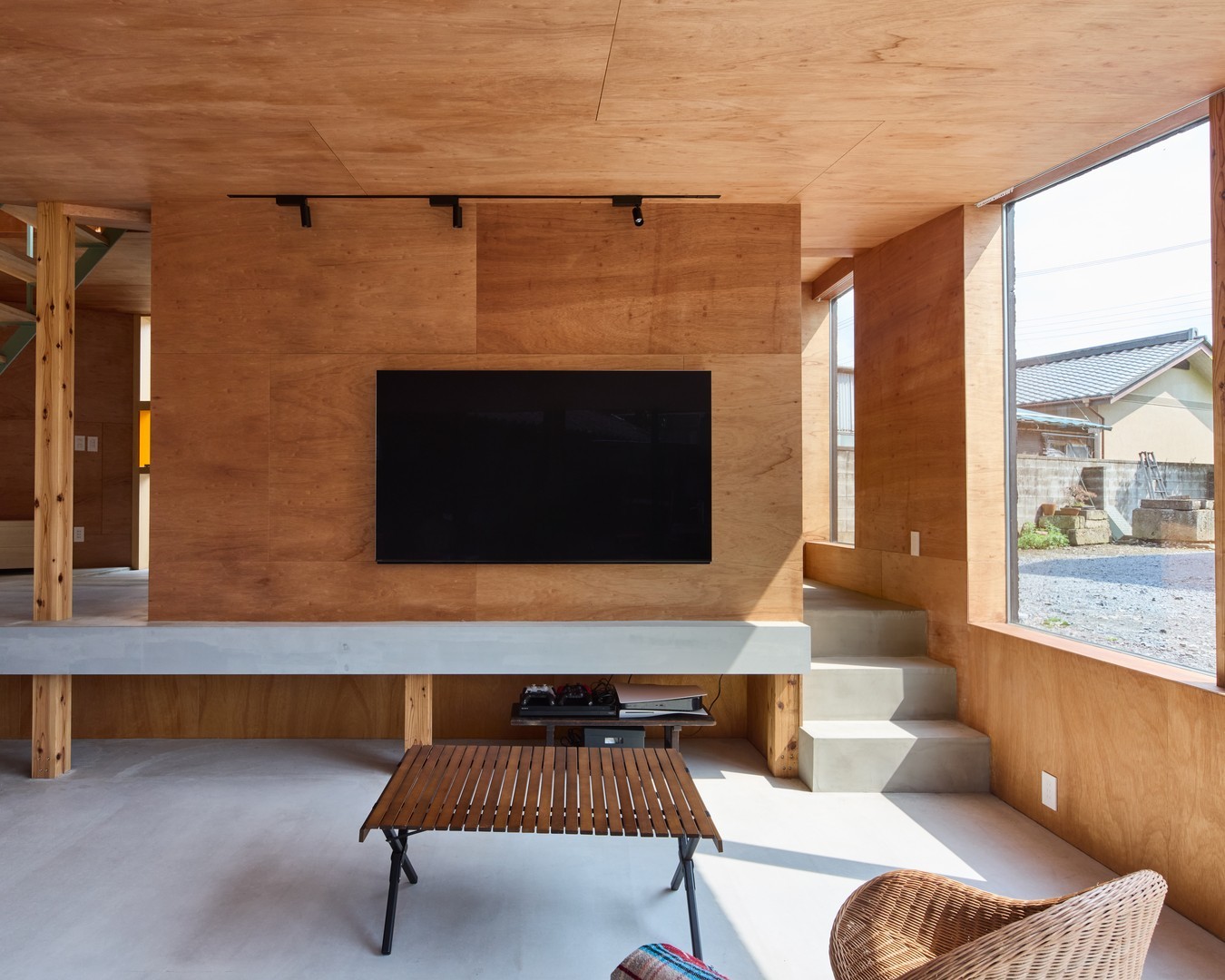
Wood covers the walls and ceiling of this living area, giving the television a warm architectural setting. The grain remains visible across broad panels, while a long pale ledge provides a clean horizontal line below the screen.
A slatted coffee table and woven chair introduce different textures without competing with the room's simple geometry. To adapt the idea, start with one wood feature wall and repeat its tone in a small piece of furniture.
Keep the television surround spare, and plan a discreet place for everyday media equipment. The black screen can then feel like part of the composition.
Generous daylight balances the rich timber, showing how a Japandi palette can feel welcoming even when wood occupies most visible surfaces.
5. Pair Rich Wood Walls With a Pale Sofa
Credits: Instagram
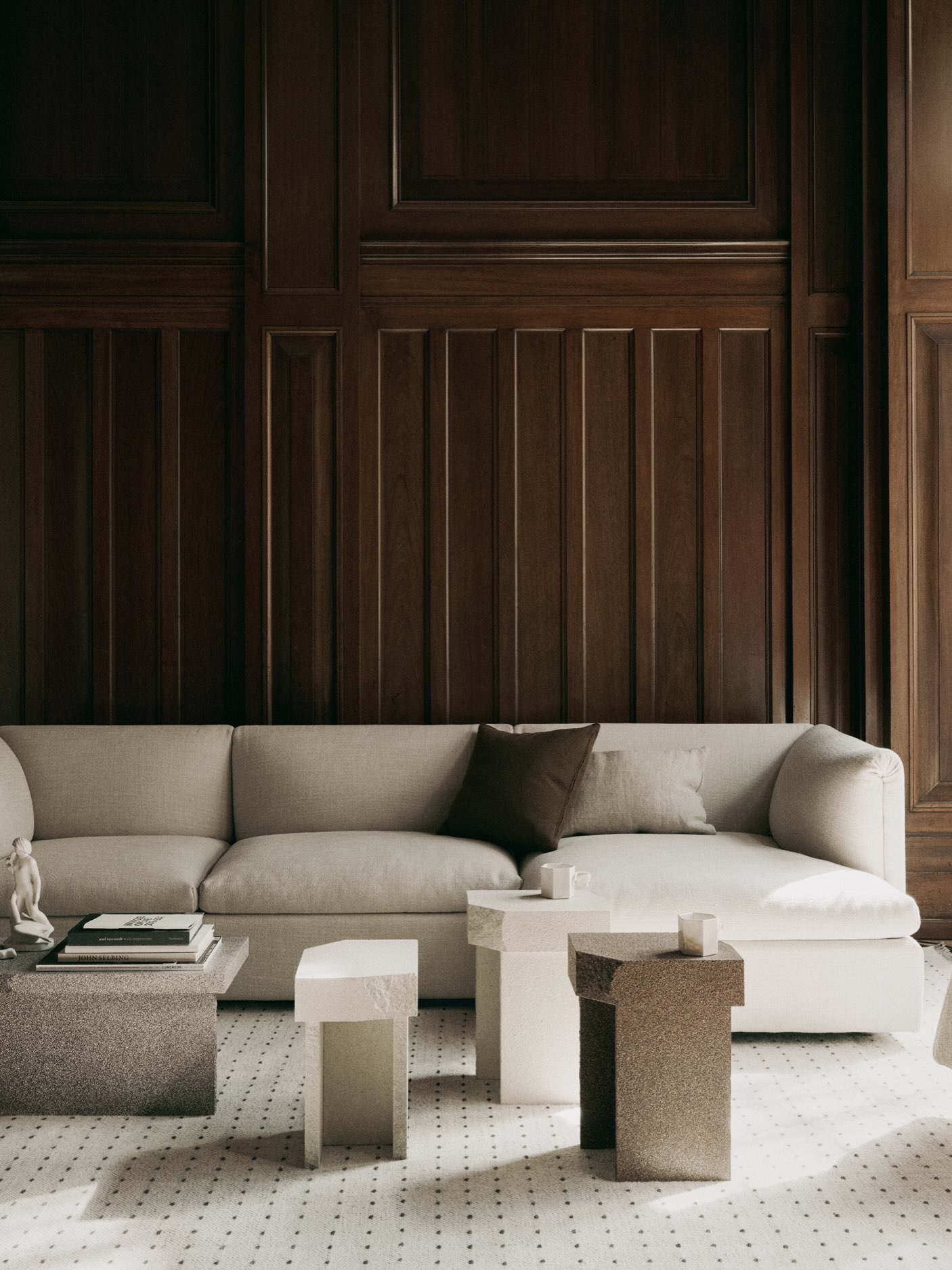
A pale sofa stands out against the richly paneled wood walls in this sitting area. Its rounded cushions and low outline introduce Scandinavian softness, while a restrained group of light tables keeps the arrangement simple.
The patterned woven rug anchors the seating group without adding another strong color or contrast. This approach can bring a Japandi sensibility to a room with existing architectural detail.
Let the wood remain the dominant material, then choose quiet upholstery and furniture with clear, uncomplicated shapes. Keep decorative objects sparse so the wall texture has room to breathe.
A room does not need plain surfaces to feel restful. Careful editing and a limited palette can make traditional timber detailing work beautifully with comfortable contemporary seating.
6. Keep a Long Coffee Table Light and Simple
Credits: Instagram
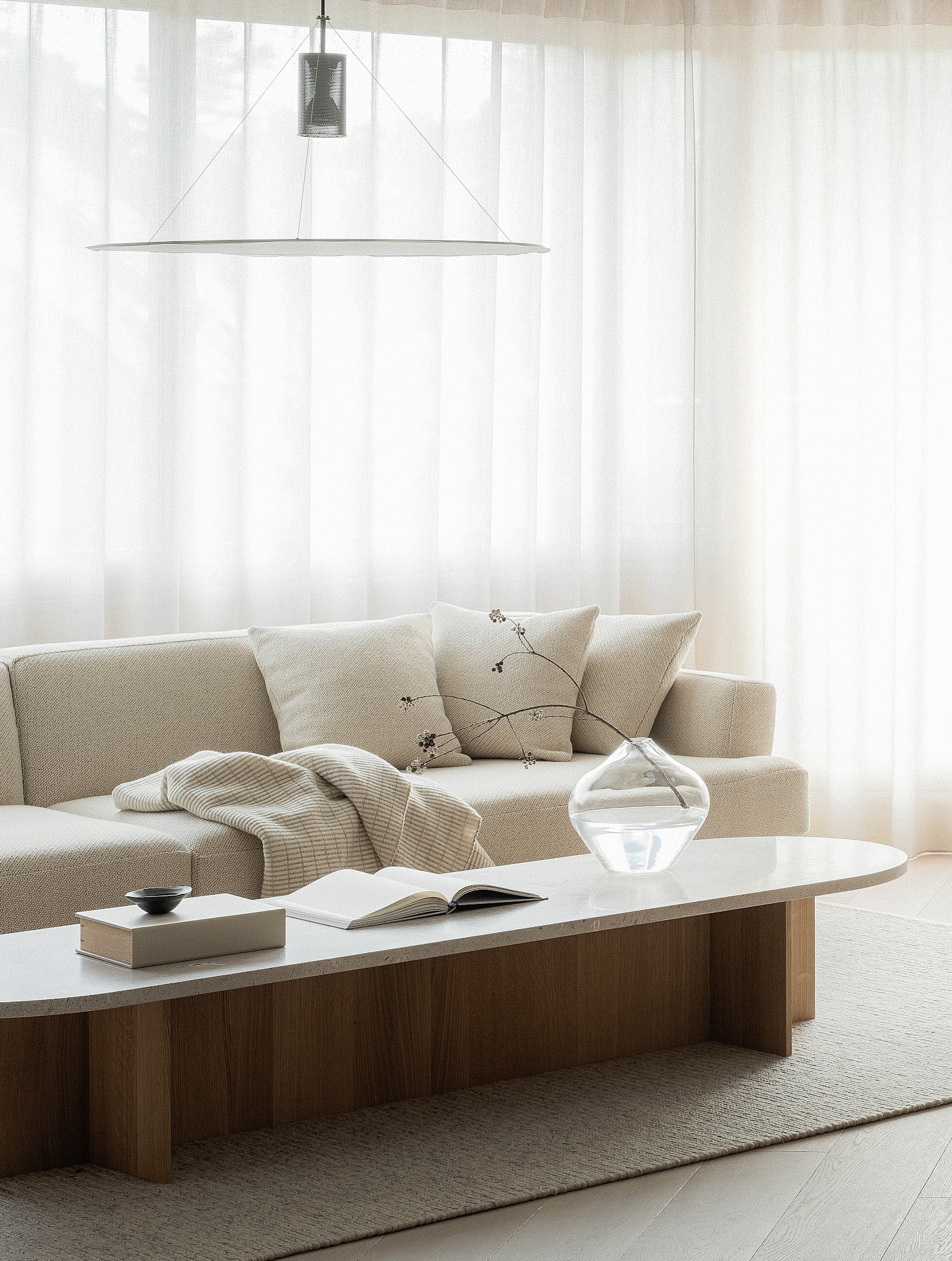
A long coffee table anchors this seating area without overwhelming the light sofa behind it. The pale top has gently rounded ends, while a warm wood base ties the piece to the surrounding floor.
Sheer curtains spread daylight across the room, making the cream upholstery and quiet rug feel especially soft. When choosing a substantial table for a Japandi room, consider its outline as carefully as its size.
Rounded corners can make a large piece feel more approachable, and a restrained finish helps it sit comfortably among other materials. Keep the styling practical: an open book, a small bowl, and one clear vase leave generous usable space.
A delicate branch adds character while preserving the room's calm, uncluttered overall impression.
7. Give One Beautiful Chair a Window Seat
Credits: Instagram
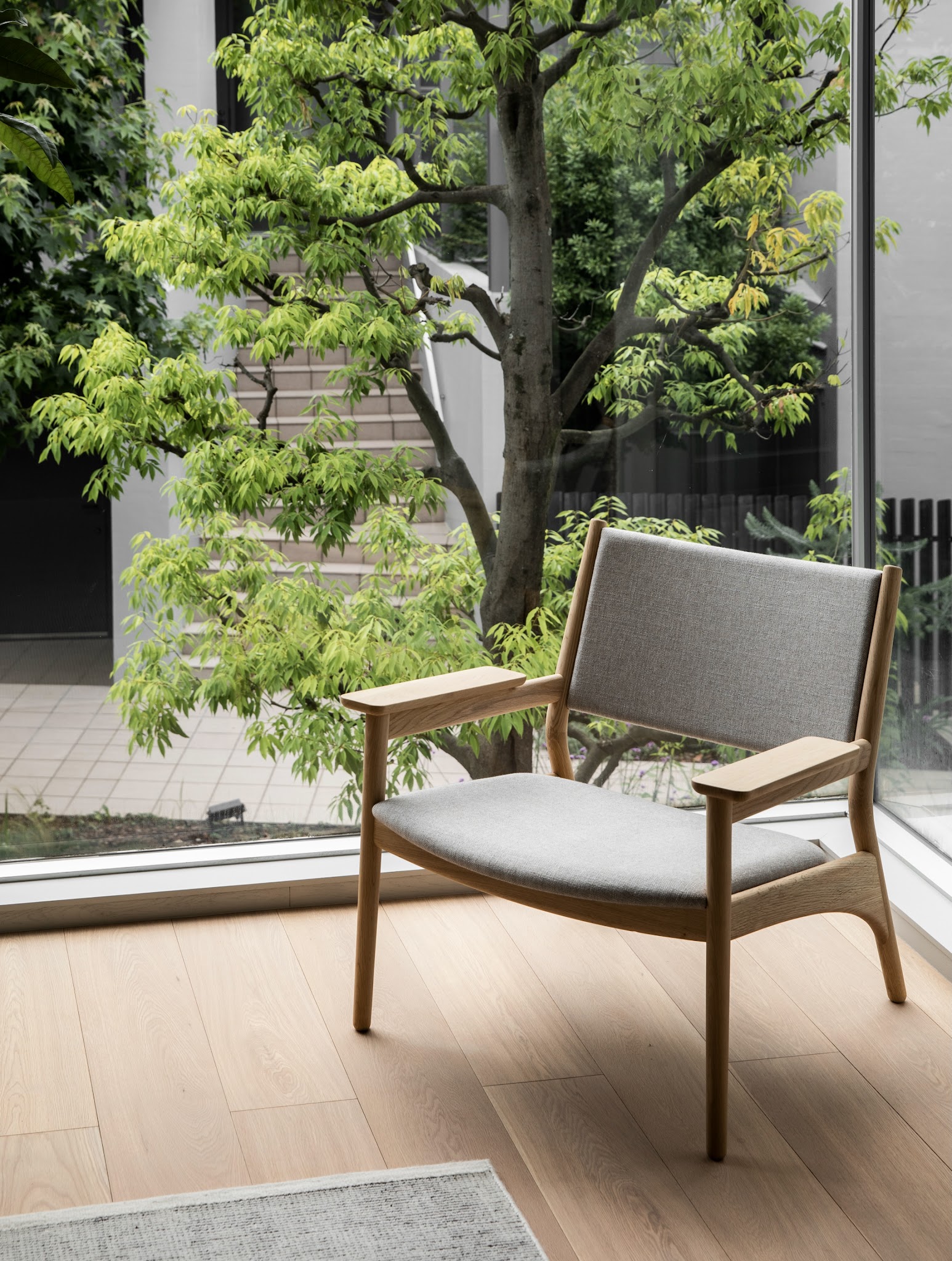
A simple wood chair becomes a complete sitting spot when it has a generous view. Here, its open arms and slender frame leave the surrounding garden visible, while gray upholstery offers a soft contrast to the pale timber floor.
The arrangement shows how little a Japandi corner needs when the proportions and materials feel considered. Place a comfortable chair beside your best window and leave enough space around it to appreciate its shape.
A nearby rug can define the edge of the larger seating area without crowding the chair. If the view is modest, a well-positioned plant can create a similar connection to nature.
The goal is a useful place to pause that feels integrated into the room's everyday life.
8. Add a Woven Chair and a Simple Tea Tray
Credits: Instagram
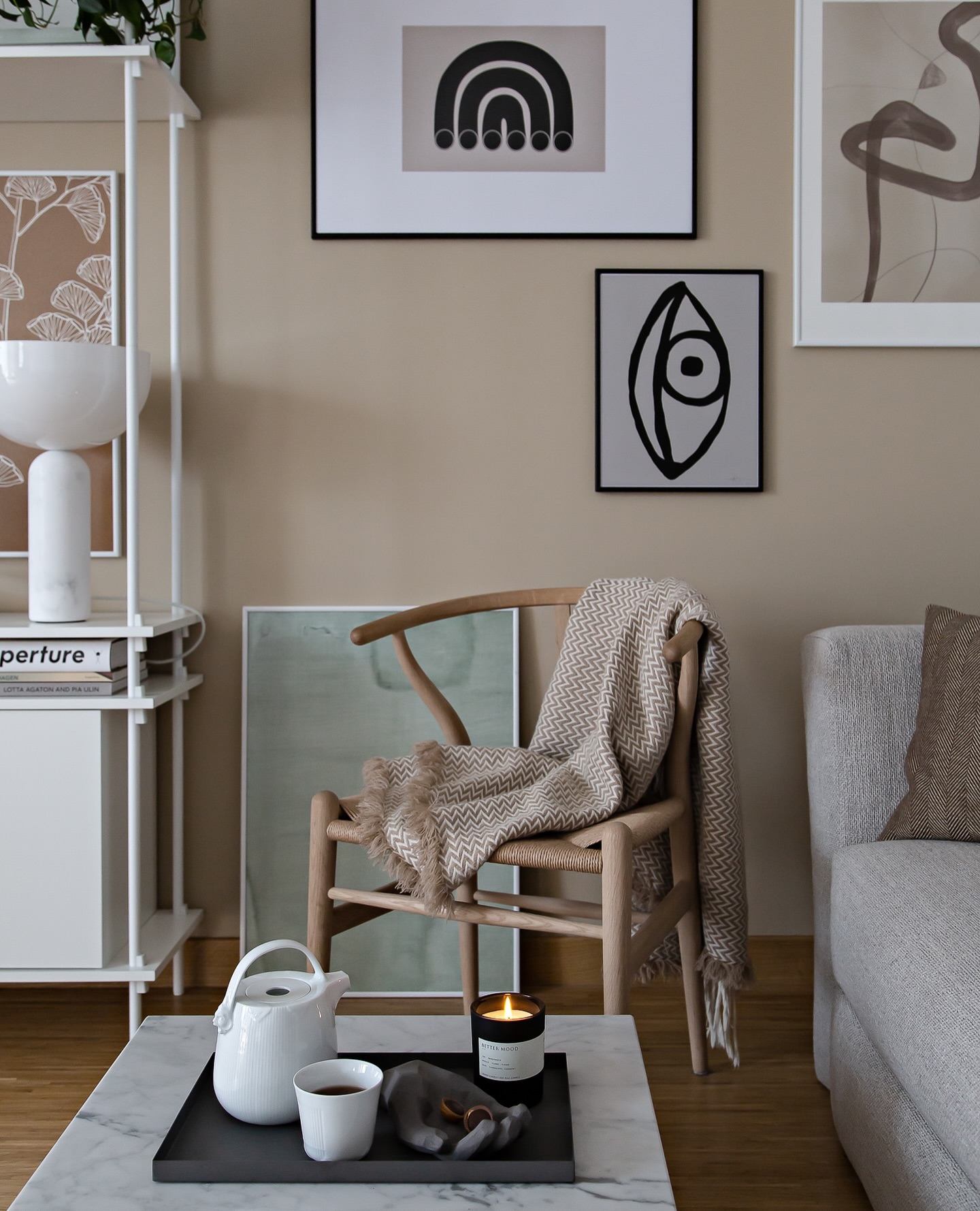
A curved wood chair gives this living room a lighter seat beside the upholstered sofa. Its woven seat and textured throw bring warmth to the arrangement, while the small tea tray makes the coffee table feel useful and welcoming.
The graphic art adds personality without introducing a large range of colors. To adapt this idea, mix one visibly crafted chair with your existing sofa and keep nearby accessories in a restrained palette.
A tray can gather a teapot, cup, and small object so the table stays easy to use. Choose a throw that repeats the room's softer neutrals.
This combination shows how Japandi ideas can work in an everyday home, with comfortable furniture, familiar rituals, and a few personal touches.
9. Layer Cream Textiles for Everyday Comfort
Credits: Instagram
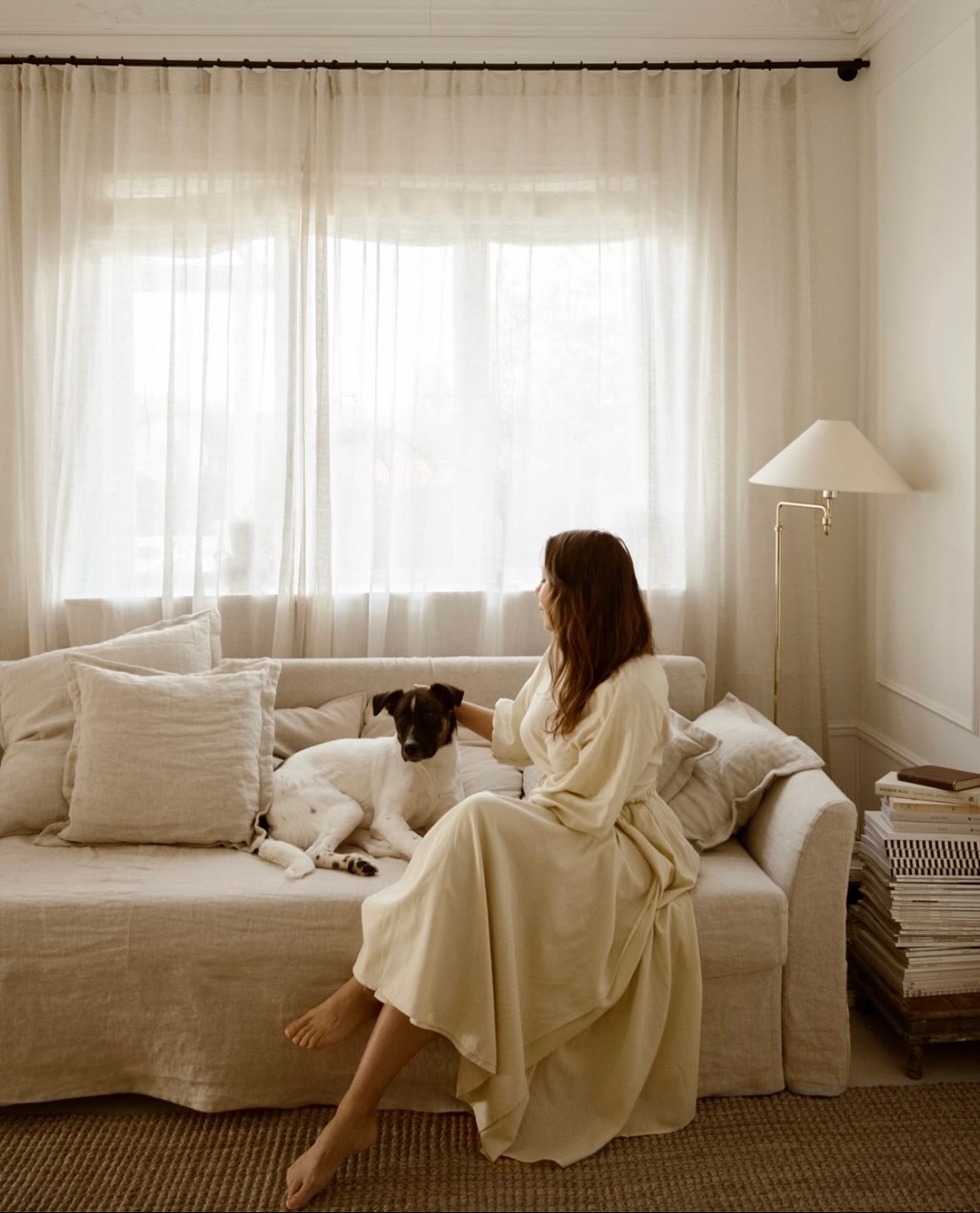
This relaxed sitting room builds warmth through several shades of cream. Loose sofa covers, textured pillows, and softly gathered curtains create depth even though the color palette remains restrained.
A woven floor covering and a stack of books introduce the natural, everyday details that keep the space from feeling overly formal.
To bring this approach home, vary the weight and texture of your fabrics instead of relying on multiple accent colors. Mix a smoother curtain with a visibly woven pillow or a softly rumpled throw.
Leave enough space on the sofa for comfortable sitting, and choose a lamp with a simple outline. The Japandi lesson is straightforward: a limited palette can still feel generous, personal, and easy to live with.
10. Connect the Seating Area to a Planted Courtyard
Credits: Instagram
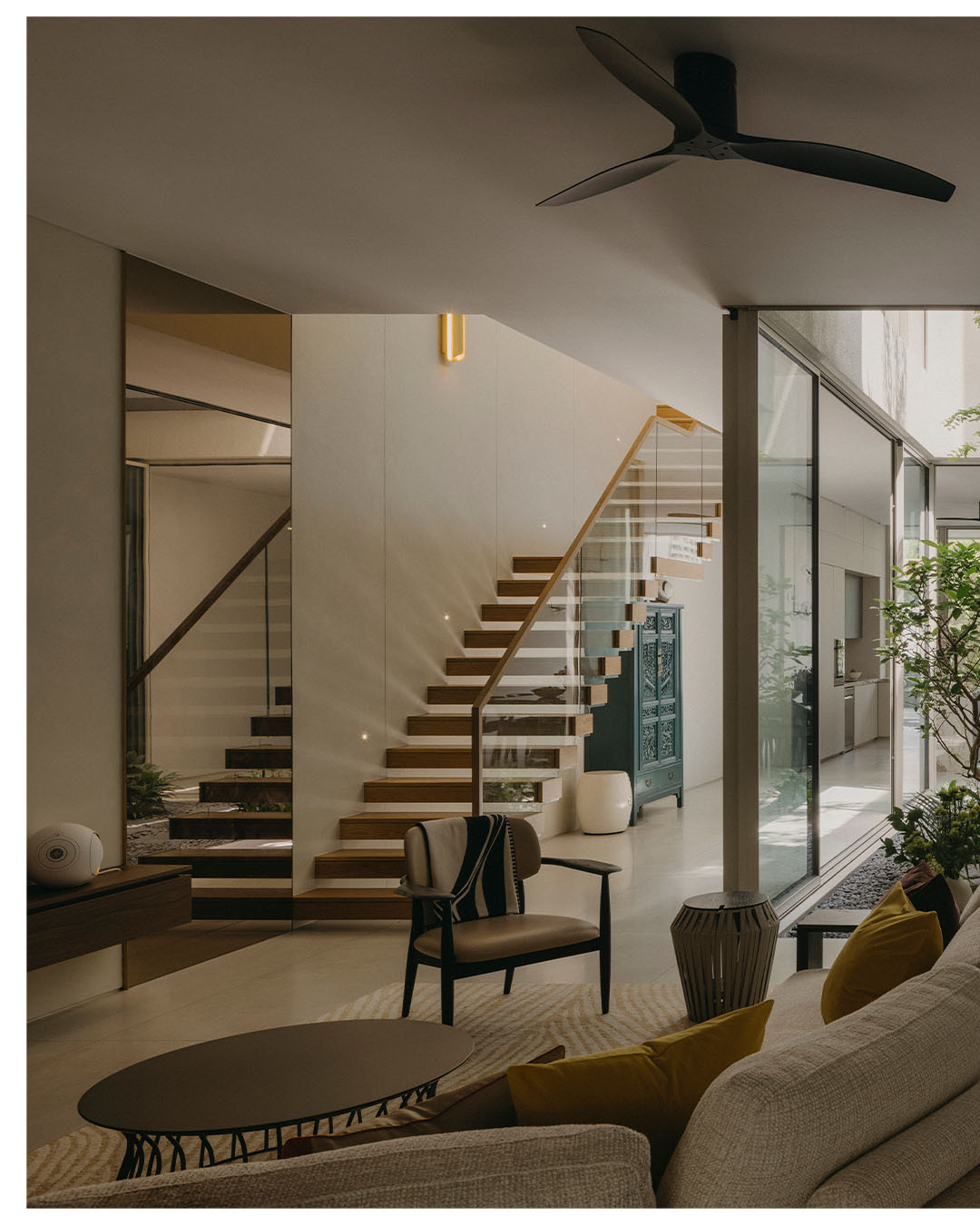
A planted courtyard brings a refreshing outdoor presence into this living room. The sofa and low tables sit beside large openings, while a wood stair and a simple accent chair add warmth to the restrained interior.
The greenery supplies color without requiring a busy collection of decorative objects. Even without a courtyard, you can use the same principle by organizing seating near a garden-facing window or a carefully placed indoor plant.
Keep furniture profiles modest so the relationship between the room and the greenery remains clear. Repeat one wood tone across a few pieces to help the space feel connected.
This arrangement combines the openness associated with Scandinavian interiors and the attention to nature that makes Japandi spaces especially calming.
11. Bring Warmth With Woven Leather Chairs
Credits: Instagram
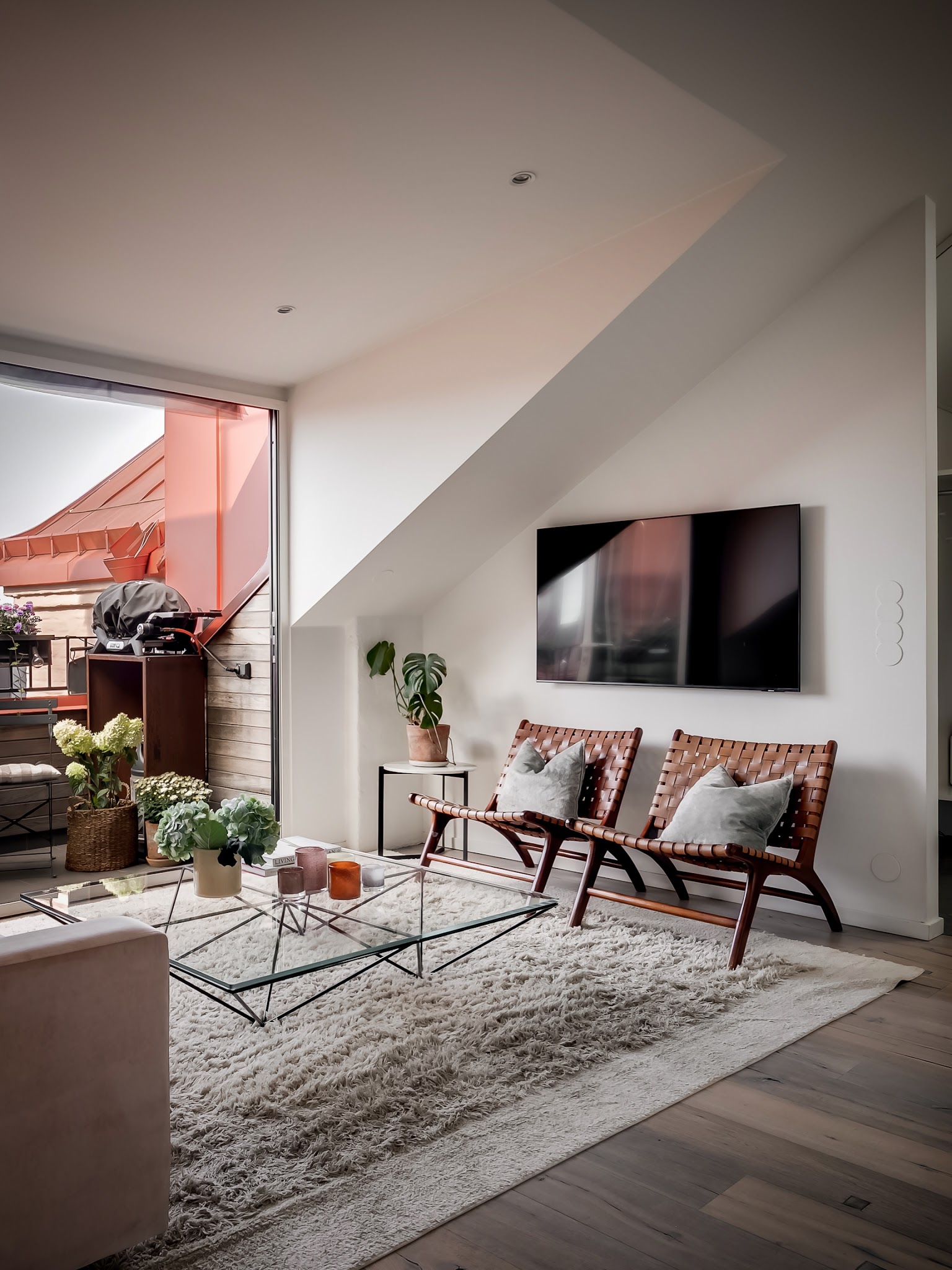
Two woven leather chairs add rich texture to this bright attic living room. Their open wood frames keep the seating visually light, while a pale rug softens the floor beneath them.
The glass coffee table allows the rug and chair silhouettes to remain visible, helping the compact arrangement feel open. To borrow the idea, introduce one or two chairs with an obvious natural material and pair them with simpler upholstery.
Let their construction provide the pattern instead of surrounding them with busy fabrics. A few plants can soften the straight lines and connect the interior with a nearby terrace or window.
The combination brings a crafted Scandinavian character that works well with the restrained surfaces and thoughtful spacing of Japandi.
12. Use a Soft Ottoman in a Small Seating Area
Credits: Instagram
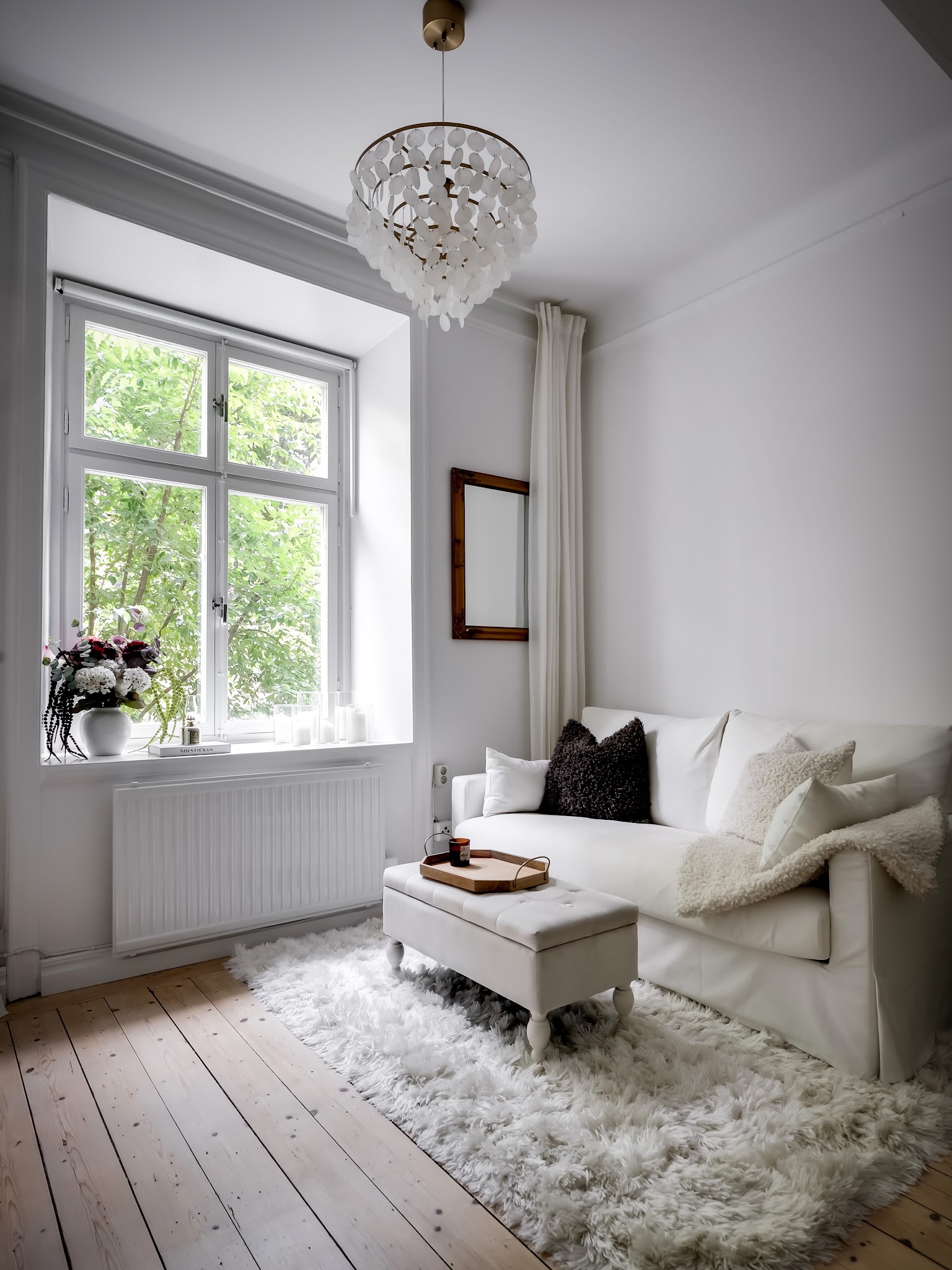
A compact ottoman gives this small white sitting room a flexible center. It can hold a tray when needed and become a comfortable footrest when the room is used for relaxing.
Pale upholstery, long curtains, and a soft rug make the little seating area feel generous, while the exposed wood floor adds natural warmth.
For a Japandi-inspired approach in a small apartment, begin with these simple relationships: limited colors, useful furniture, and a clear route through the room. Choose an ottoman that fits comfortably within the rug rather than filling the entire floor.
Add a small tray for everyday essentials and keep extra objects nearby but contained. A few contrasting pillows can provide definition without disturbing the room's quiet mood.
13. Build a Window Bench Into the Architecture
Credits: Instagram
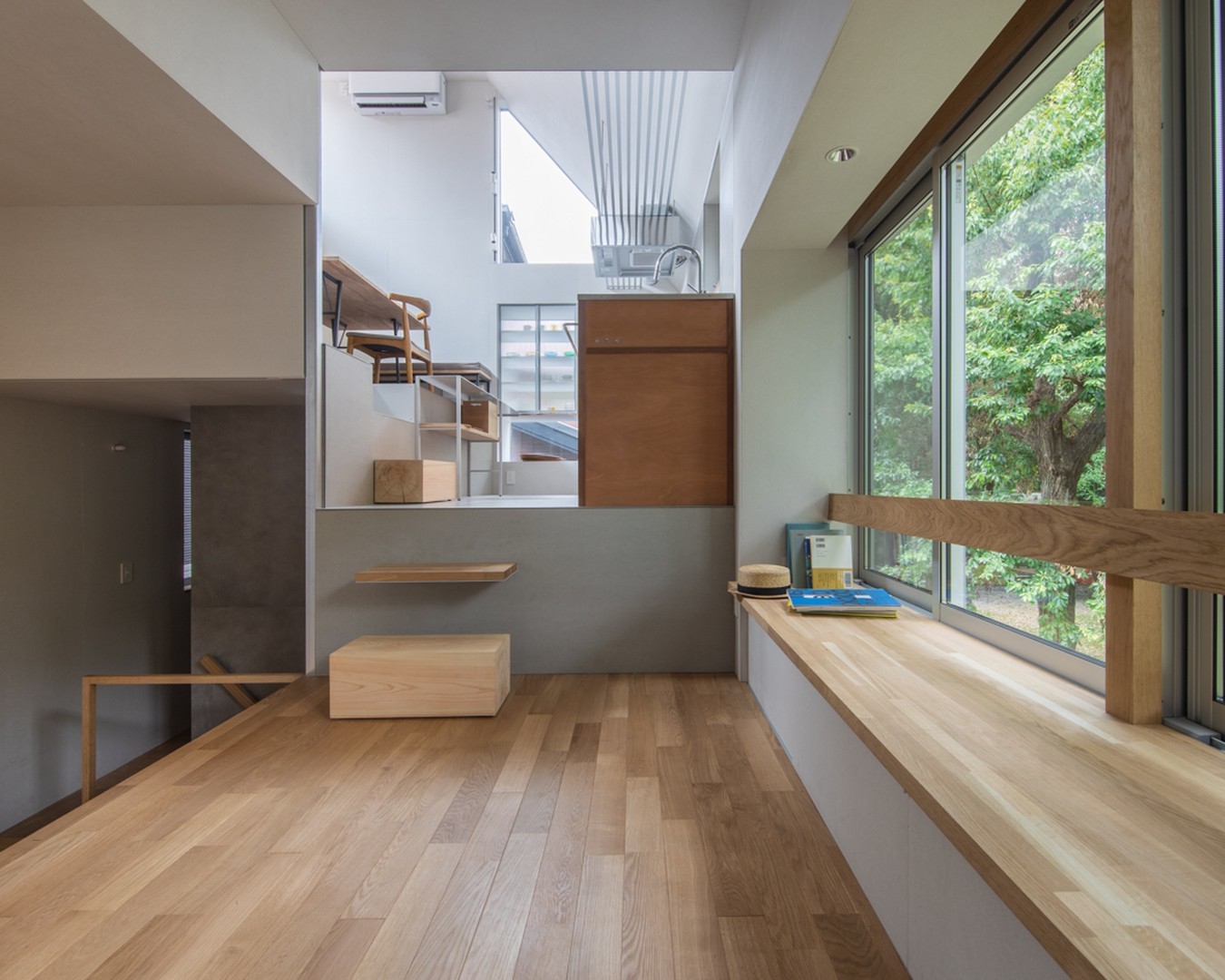
A long wood bench turns the edge of this living space into a place to sit, read, or simply enjoy the trees outside.
The bench uses the same warm timber language as the floor, so it feels like part of the architecture rather than another piece of furniture.
Its simple surface keeps the window open and the room easy to understand. If you are planning built-in seating, consider how its height, depth, and finish will relate to nearby floors and openings.
A few books or one seat cushion may be all the styling it needs. The larger lesson is useful even without renovation: let a practical seating choice strengthen your connection to daylight and preserve the room's sense of openness.
14. Let Pale Paneling Set a Warm Background
Credits: Instagram
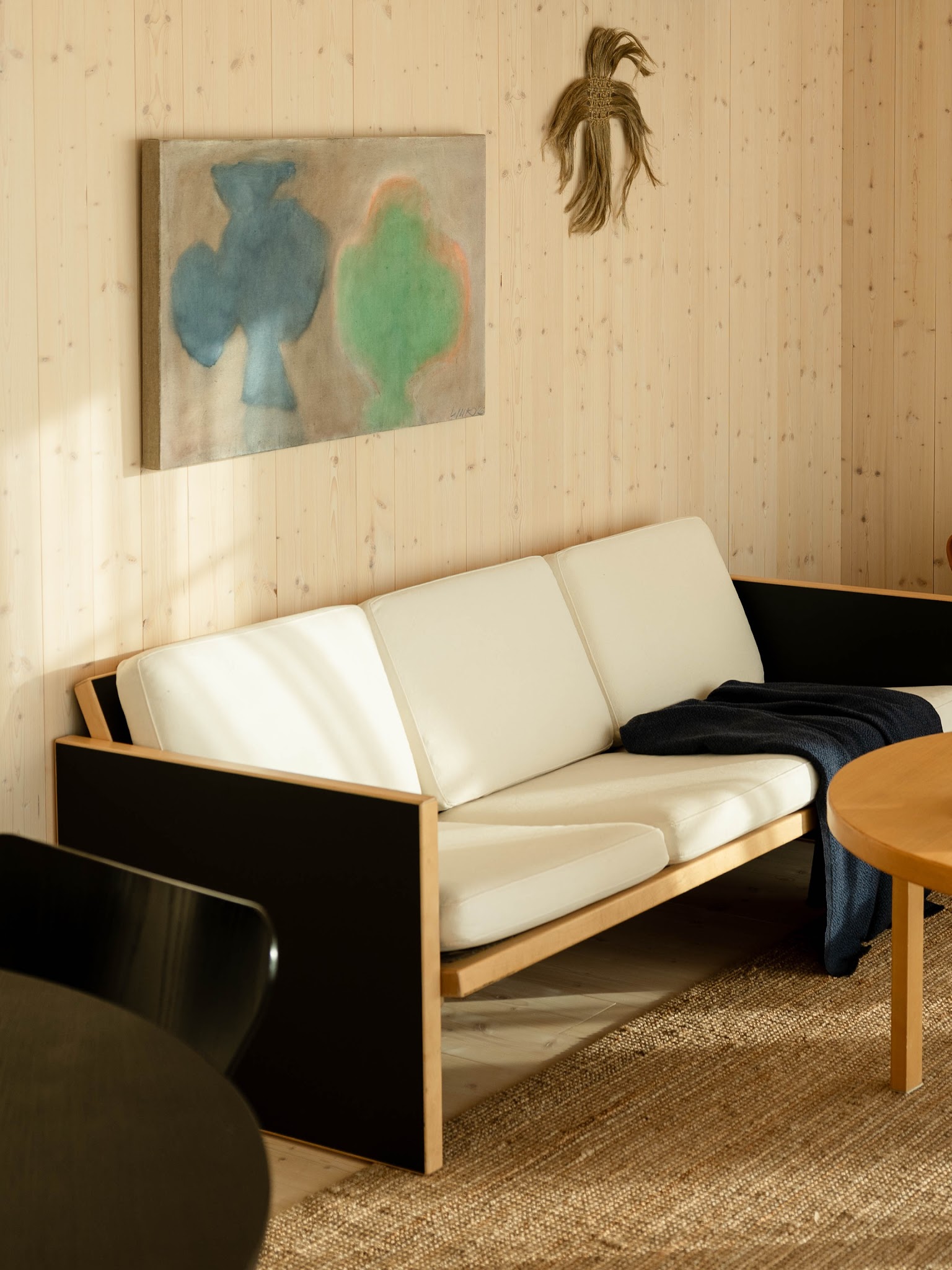
Pale wood paneling gives this sitting room warmth before any accessories are added. The visible knots and narrow vertical boards create a gentle pattern behind a simple cream sofa.
Black side panels and a dark throw add definition, while the woven rug keeps the seating area soft and grounded. This is a helpful Japandi combination for a cabin, apartment, or room that needs more natural texture.
Let the wall finish do much of the decorative work, then choose furniture with clear outlines and restrained colors. A small piece of art can introduce muted blue or green without changing the overall mood.
Leave some wall space empty so the grain, natural daylight, and carefully chosen objects each have room to register.
15. Balance a Wood Ceiling With Low Seating
Credits: Instagram
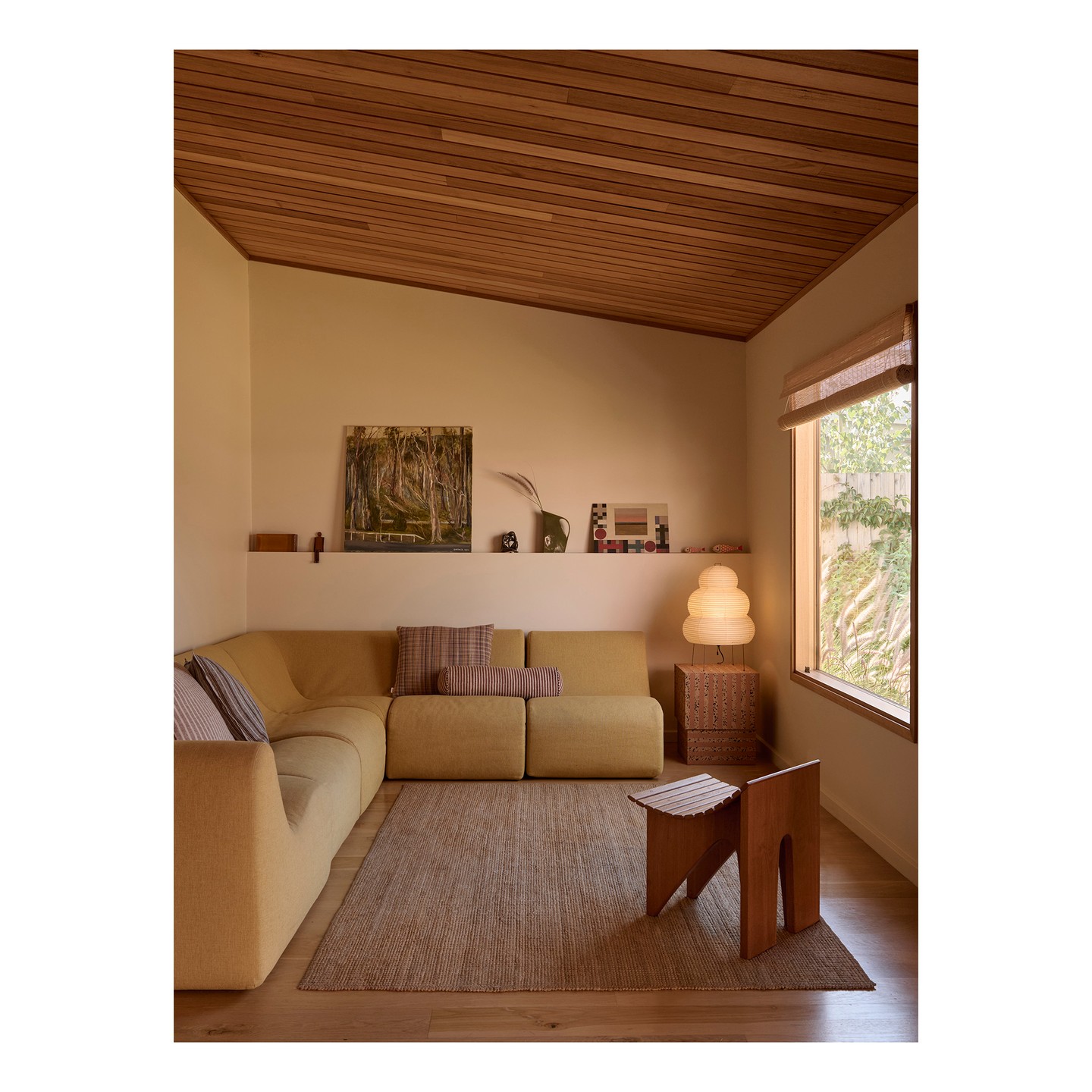
The wood ceiling gives this living room a warm canopy, while the low sectional keeps the space feeling open.
A woven rug and sculptural timber chair continue the natural material palette, and the glowing paper lamp adds a softer shape beside the window.
Notice how the long display ledge holds art and a few small objects without requiring a bulky cabinet. To adapt the idea, balance a visually strong ceiling or wall with quieter furniture below.
Keep the main seating low and comfortable, then choose one lamp or chair with a distinctive outline. Muted upholstery allows the wood grain to remain prominent.
This room shows how Japandi warmth can come from a few well-chosen materials rather than layers of accessories.
16. Make Room for Comfortable Floor Seating
Credits: Instagram
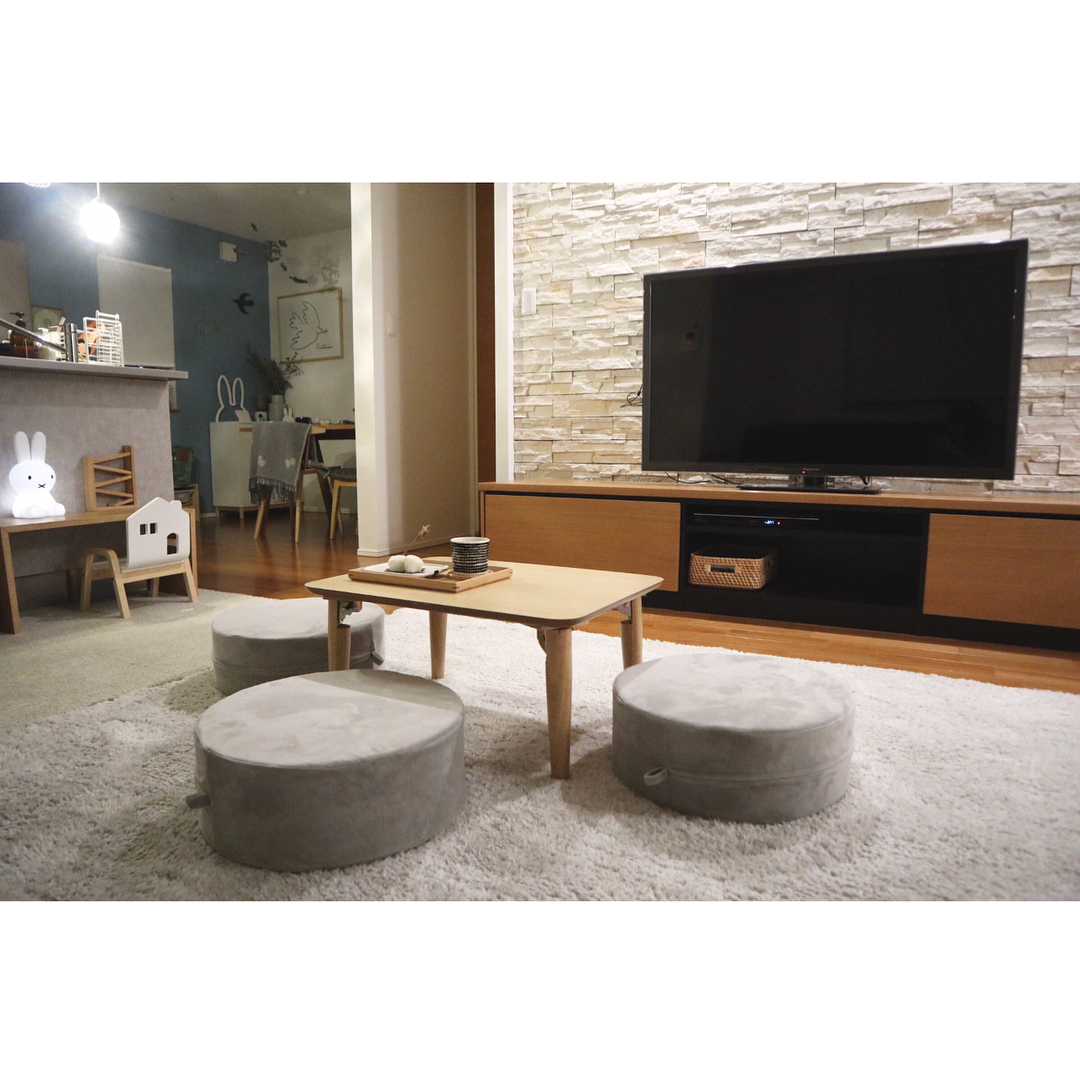
Round floor cushions gather around a low wood table in this relaxed living area. Their gray covers connect with the soft rug, while the long media console gives the television a simple, grounded base.
The arrangement offers an approachable way to bring Japanese floor living into a contemporary home. Start with cushions that suit the people using the room and a table at a comfortable height for sitting nearby.
Keep enough clear floor space to move the cushions as needed. A tray can make the table useful for tea, reading, or a quiet activity.
Natural wood and a restrained palette help the practical pieces feel connected. This flexible approach works especially well when a living room serves several everyday purposes.
17. Use Greenery to Soften a Low Table Arrangement
Credits: Instagram
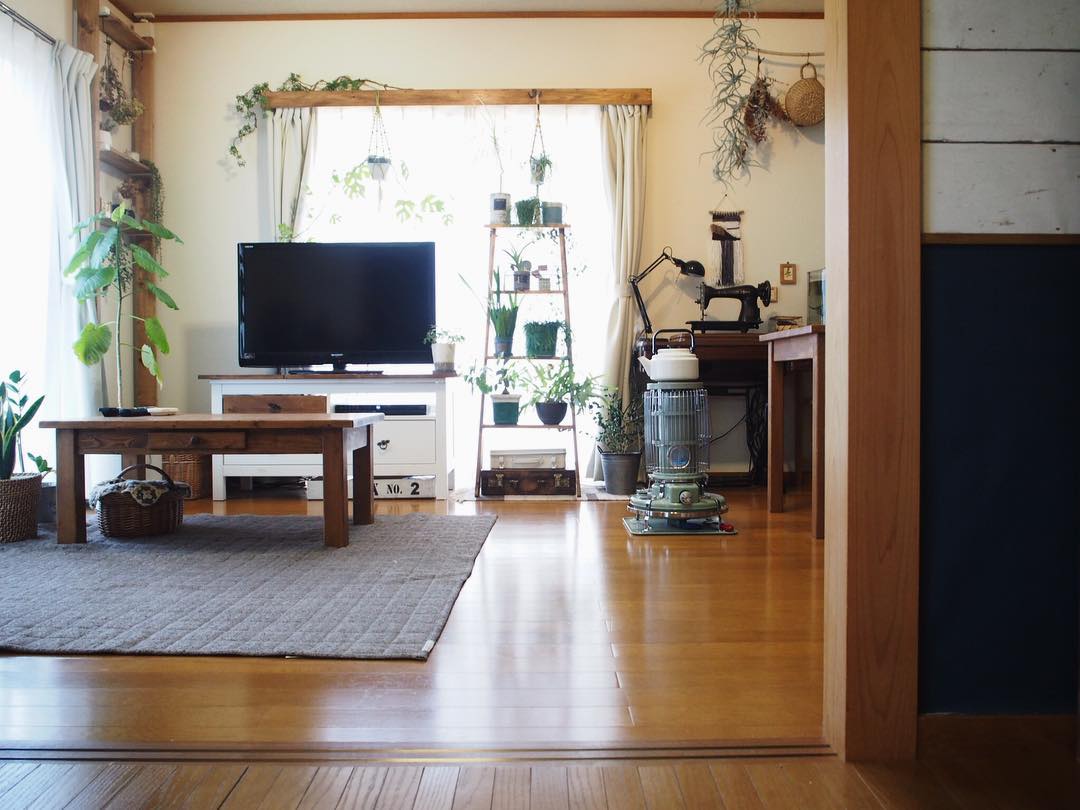
Plants bring life to this sitting room without taking over its open floor. A low wood table rests on a gray rug, while the white media cabinet keeps the area around the television light.
The warm trim and wood flooring give the room a consistent natural foundation. For a similar Japandi direction, begin with a useful low table and leave a comfortable amount of space around it.
Group plants near the windows where their shapes can frame the light, using shelves or hanging planters when floor space is limited. Keep smaller accessories gathered rather than scattered across every surface.
The room feels personal because everyday objects remain visible, yet its simple layout and related materials keep the overall impression calm.
18. Choose a Sculptural Wood Floor Lamp
Credits: Instagram
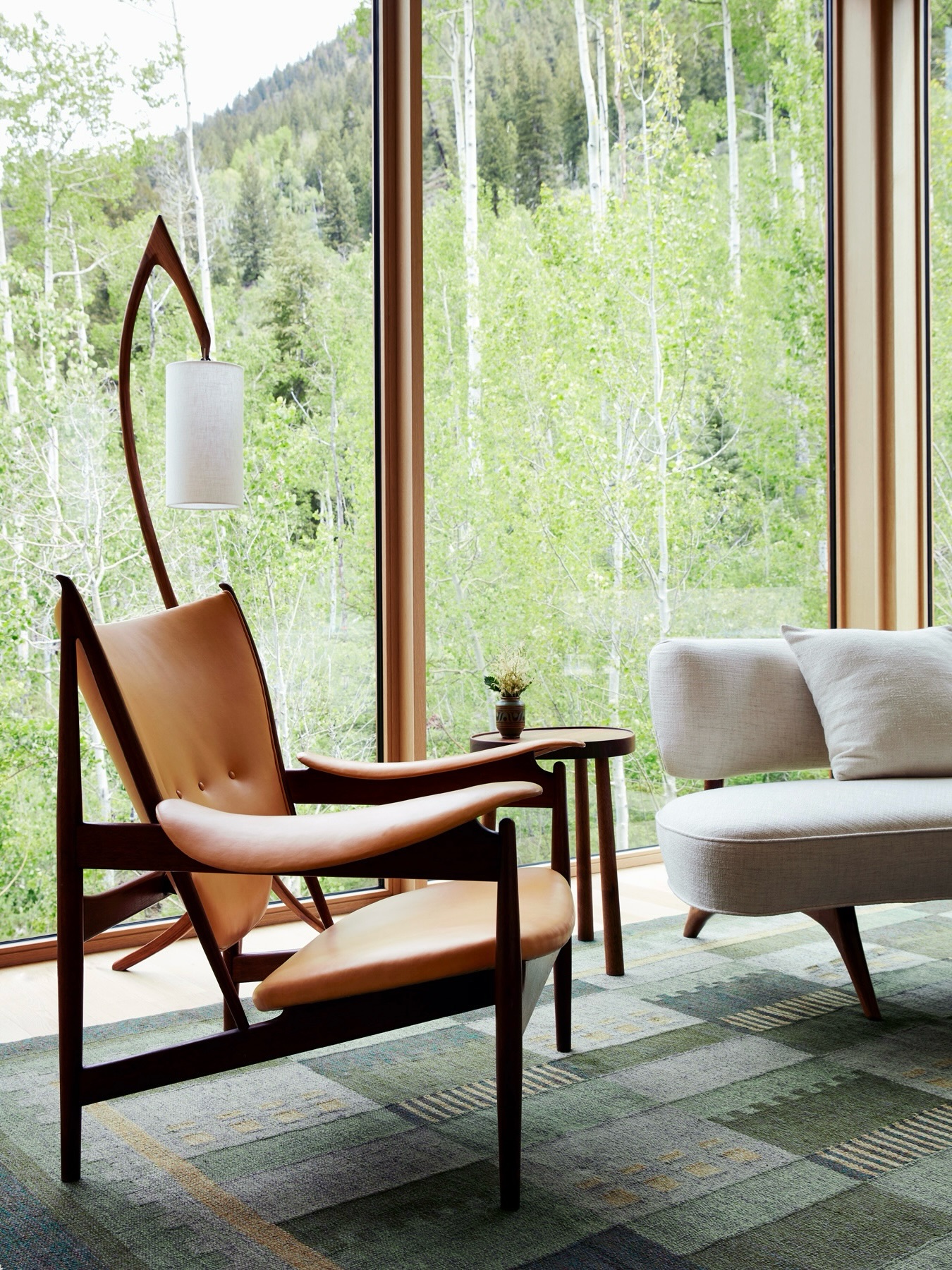
A curved wood floor lamp adds a graceful vertical line beside this living room's leather chair. Its pale shade keeps the light fitting quiet, while the warm timber relates to the chair frame and window surrounds.
The green patterned rug draws color from the trees outside, connecting the seating area with the landscape. For a similar Japandi approach, look for lighting that combines a useful shape with an appealing natural material.
Give the lamp enough room to stand clearly beside the furniture, and keep smaller accessories restrained. A simple side table can provide space for a cup or a small vase.
The mix of leather, wood, soft upholstery, and greenery creates warmth without relying on a large collection of objects.
19. Mix Rounded Upholstery With Stone Surfaces
Credits: Instagram
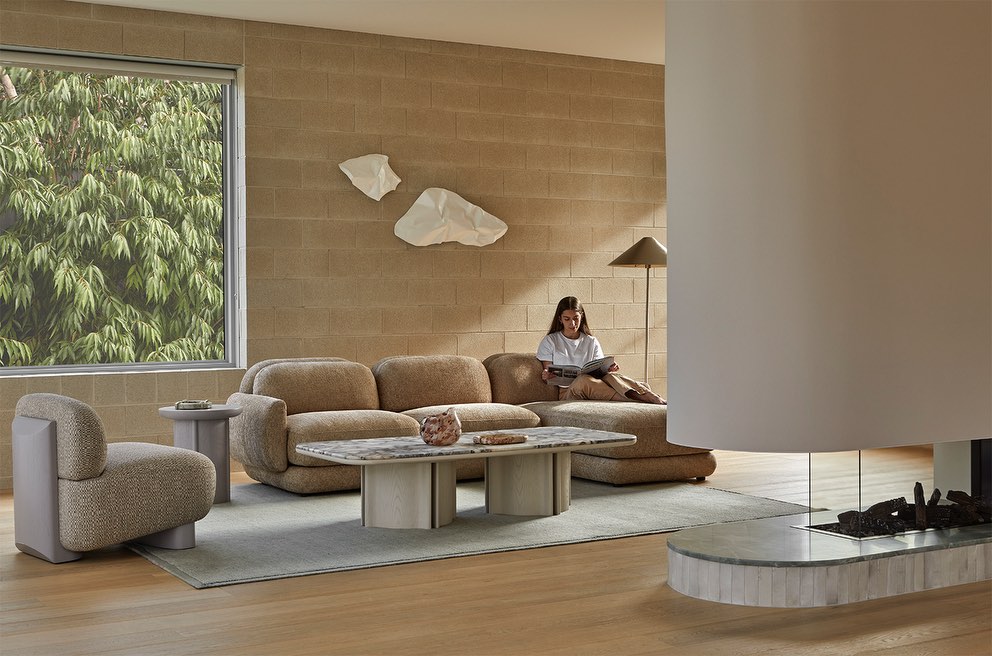
Rounded upholstery softens the substantial surfaces in this living room. The low sectional and matching armchair share a warm, textured fabric, while the pale coffee table introduces a smooth stone pattern.
A quiet rug holds the group together and separates it from the wood floor. You can use the same balance by pairing comfortable, curved seating with one table or architectural feature that feels more solid.
Keep the finishes close in color so their different textures become the focus. A small number of sculptural objects will provide interest without crowding the room.
The nearby greenery adds another natural layer. This combination creates a Japandi-inspired room that feels grounded and tactile, with enough softness to invite reading, conversation, and everyday relaxation.
20. Choose One Sculptural Side Table
Credits: Instagram
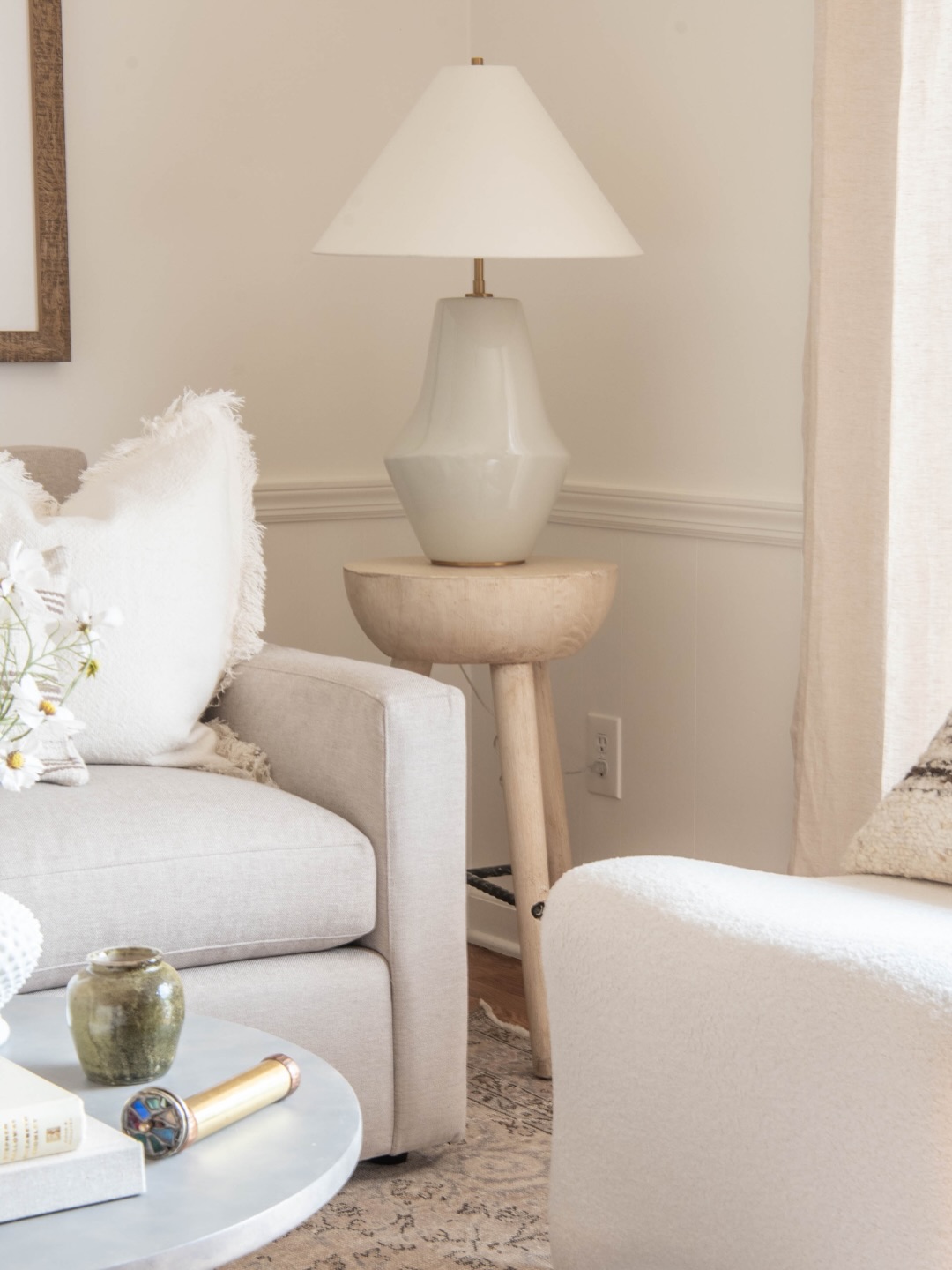
A sculptural wood side table gives this quiet seating corner a memorable detail. Its rounded top and tapered legs bring a crafted quality beside the pale sofa and softly upholstered chair.
The ceramic lamp repeats the gentle curves, while the curtains and pillows add subtle changes in texture. To borrow this idea, let one small piece carry the visual interest instead of adding several competing accessories.
Choose a table that is useful beside the seat and a lamp that provides comfortable light. Keep the surrounding colors closely related so the shapes remain easy to appreciate.
A little variation in wood, ceramic, and fabric can make a restrained Japandi palette feel personal, inviting, and complete without filling every inch of space.