
A living room wall has to do more than hold books: it may also frame a fireplace, work around a doorway, or keep everyday clutter out of sight.
Built-In Shelves Ideas For Living Room can help you balance display and storage while making cabinetry feel connected to the room.
Consider warm white shelves paired with wood, a shared color for shelving and the fireplace, or adjustable bays that accommodate oversized books. Other approaches include hiding the television behind cabinet doors and leaving open space for plants or larger objects. These details make built-ins useful without filling every shelf.
1. Drench the Shelves in Glossy Red
Credits: Instagram
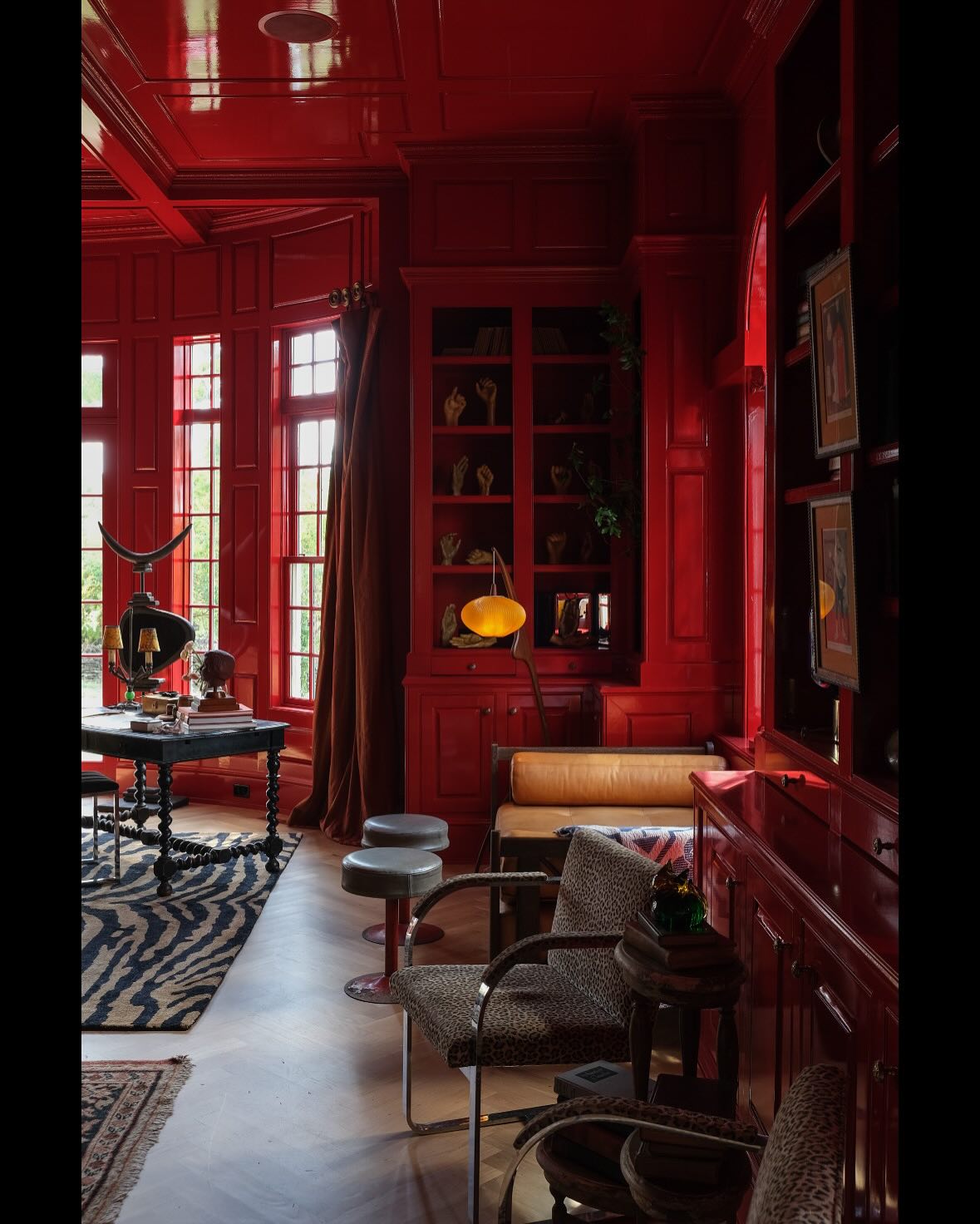
Red built-ins become part of the architecture when their color continues across the walls, trim, and ceiling. This library sitting area shows how a saturated finish can connect separate shelving bays without flattening their paneled details.
Dark shelf interiors give small sculptures a dramatic background, while closed cabinets below keep practical storage out of sight. To adapt the idea, choose one confident paint color and repeat it across every visible cabinet edge.
Mix books with a few substantial objects so the shelves remain readable from the sofa. Warm lamps and comfortable upholstery soften the polished surfaces.
Test the finish under daylight and evening lighting before committing, because reflected light will strongly influence how the color feels throughout your living room.
2. Warm White Built-Ins With Wood Shelves
Credits: Instagram
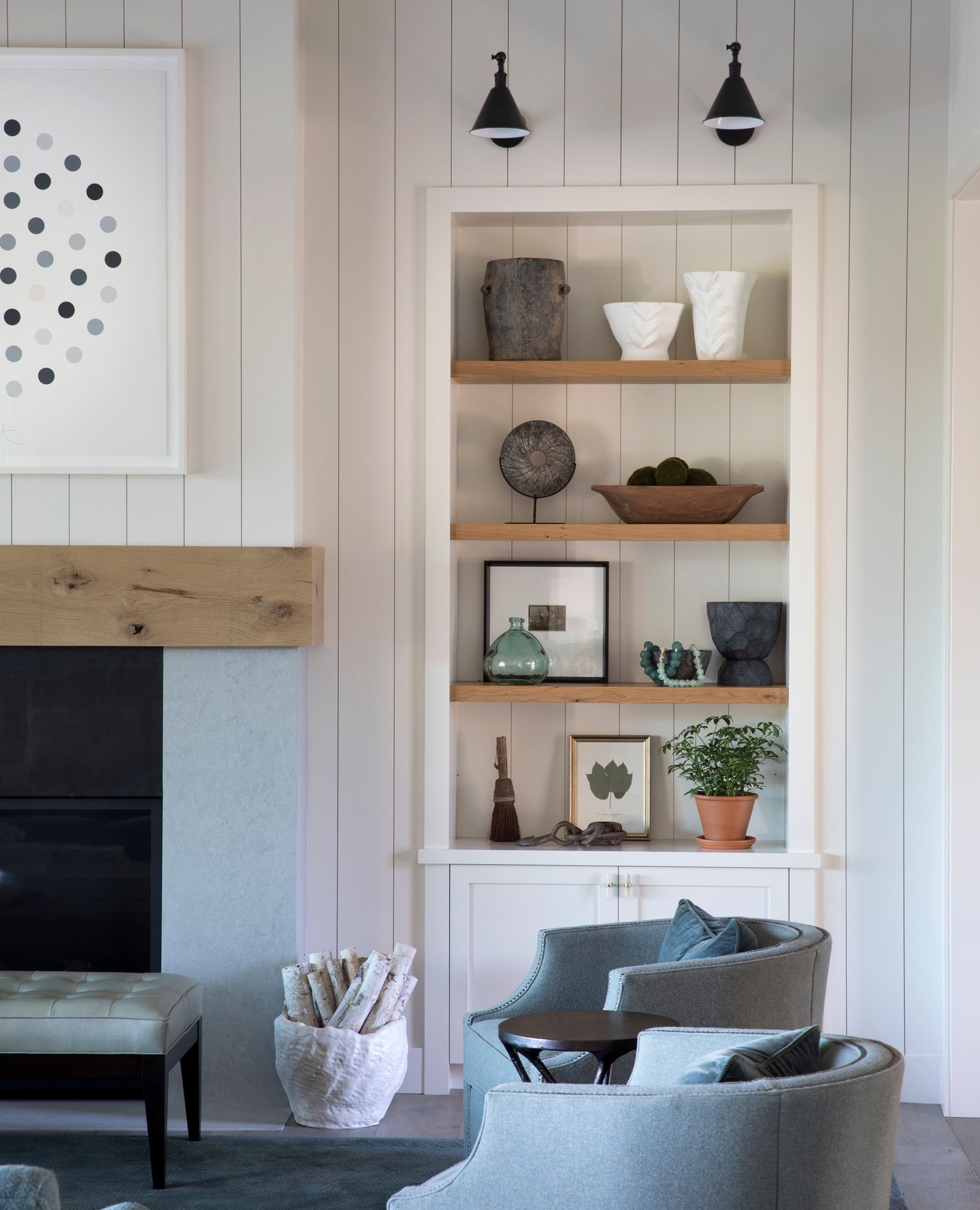
Natural wood shelves bring warmth to a white built-in without requiring an entire wall of stained cabinetry. Here, their slim edges repeat the color of the fireplace mantel, while vertical paneling continues behind the display.
That combination makes the shelving feel connected to the room's architecture and keeps the backdrop calm. Use a similar wood tone for nearby architectural details, then choose a restrained mix of pottery, framed art, and greenery.
The closed cabinet below provides somewhere to hide games or everyday supplies. Leave enough clear space around taller vessels to show their shapes.
Small lights above the opening can emphasize the display after dark, giving this living room corner a useful role beyond simply holding decorative objects and books.
3. Keep a Tall Room’s Shelves at Human Scale
Credits: Instagram
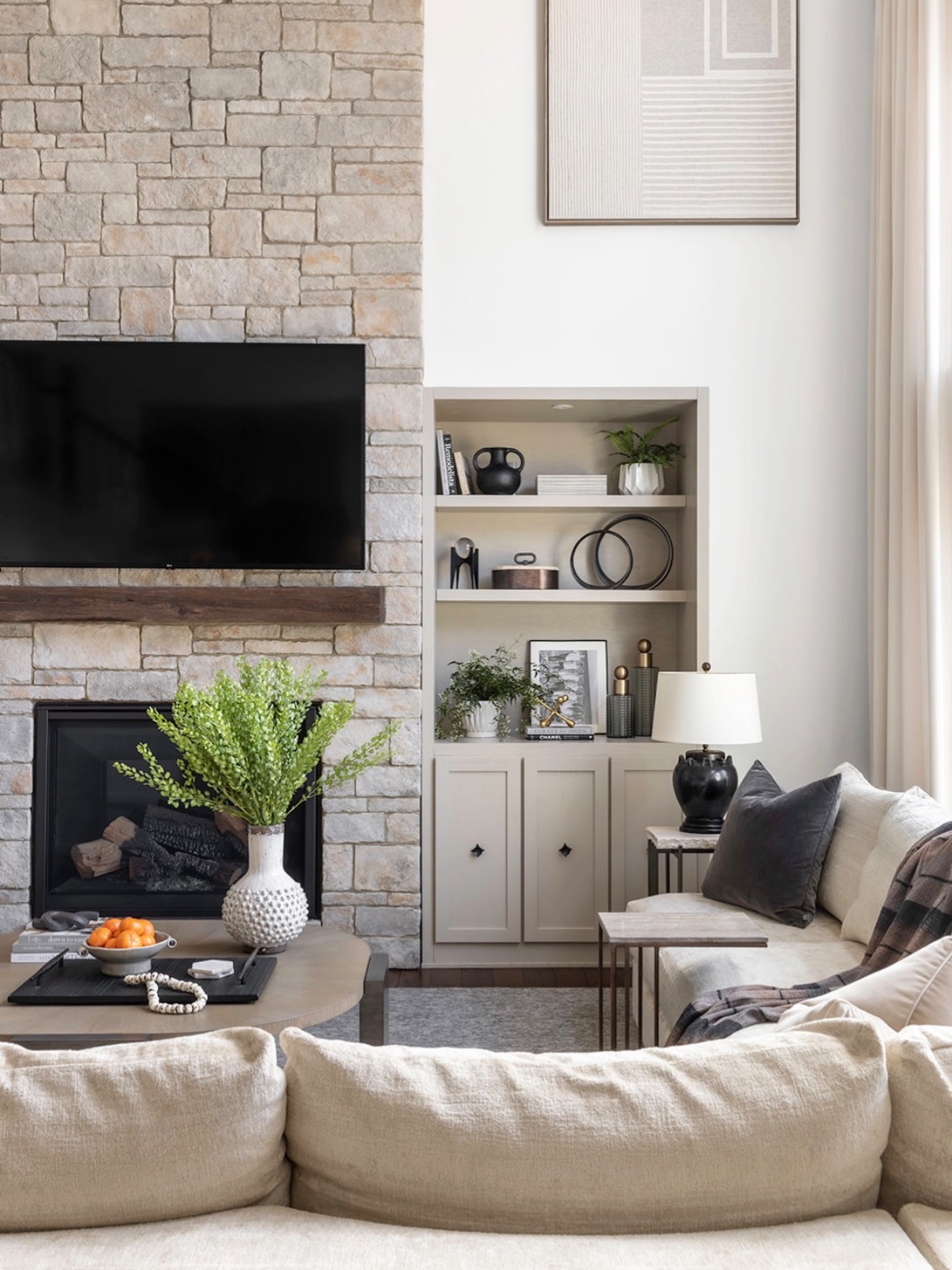
Built-in shelving does not have to reach the ceiling to feel substantial. In this tall living room, a recessed cabinet stops well below the upper wall, leaving space for a large framed print.
Its quieter height balances the towering stone fireplace and keeps everyday objects within comfortable reach. Consider this approach when full-height cabinetry would dominate a room or compete with dramatic masonry.
Align the shelf opening with nearby architectural lines, then use substantial base doors to anchor it visually. A limited palette of black, cream, and greenery lets the stone remain prominent.
Arrange smaller pieces in groups rather than scattering them across every shelf. The result gives a generous room practical storage while preserving a relaxed, approachable seating area.
4. Unify Shelves and Fireplace With One Color
Credits: Instagram
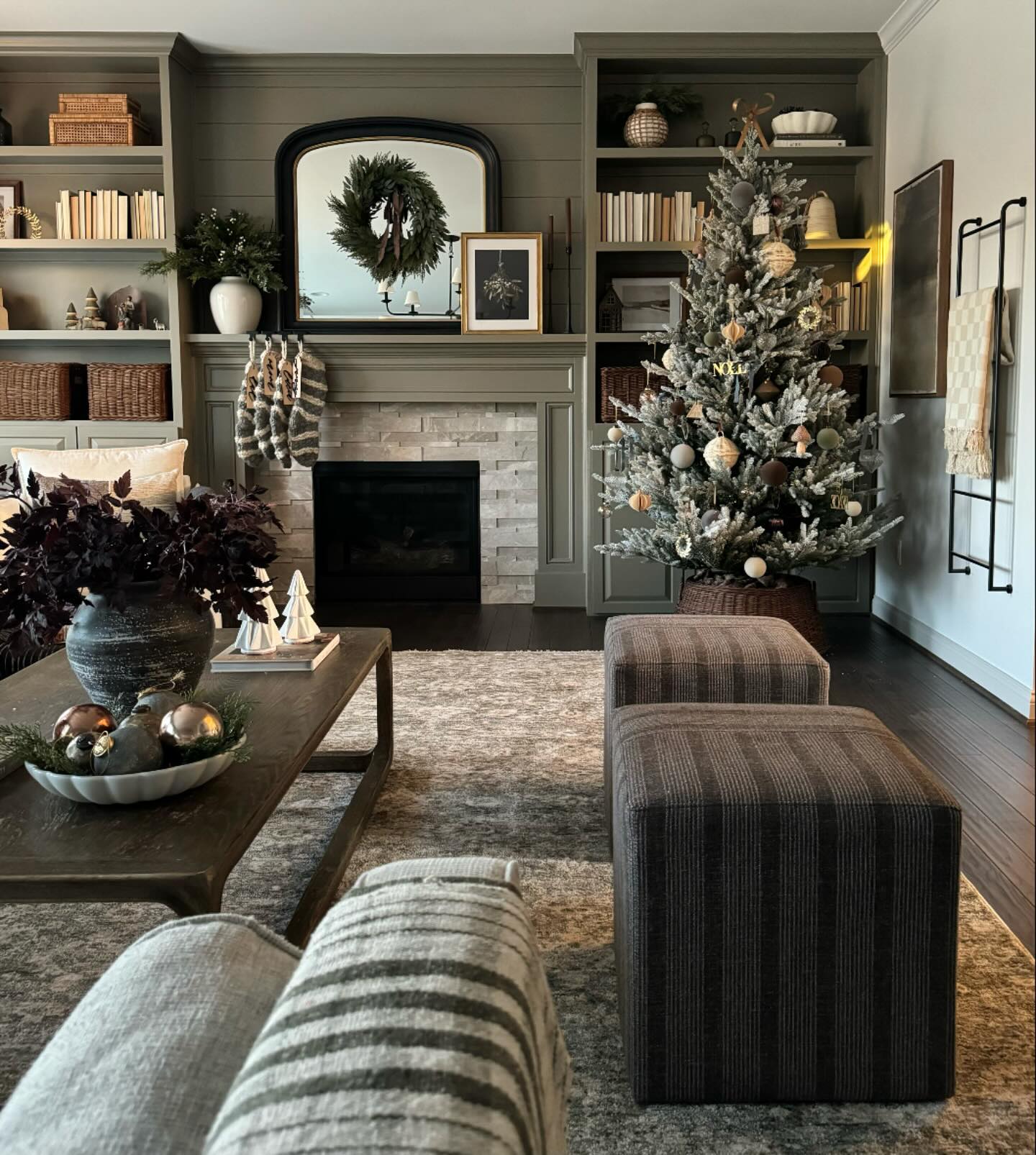
Painting the built-ins and fireplace surround the same muted color turns several individual elements into one coherent feature wall. The shelving in this living room reads as a continuous frame around the hearth, even with different objects filling each side.
Crown molding across the tops strengthens that connection. For a similar effect, carry the cabinet color onto the mantel and any paneling between the shelves.
Keep adjacent walls lighter if you want the composition to stand out. Baskets, pale books, and pottery provide gentle contrast against the darker finish.
Seasonal decorations can change without altering the underlying scheme. Plan closed storage at the bottom so useful household items have a place alongside the display, keeping the seating area comfortably organized.
5. Treat Bookcases as Architectural Millwork
Credits: Instagram
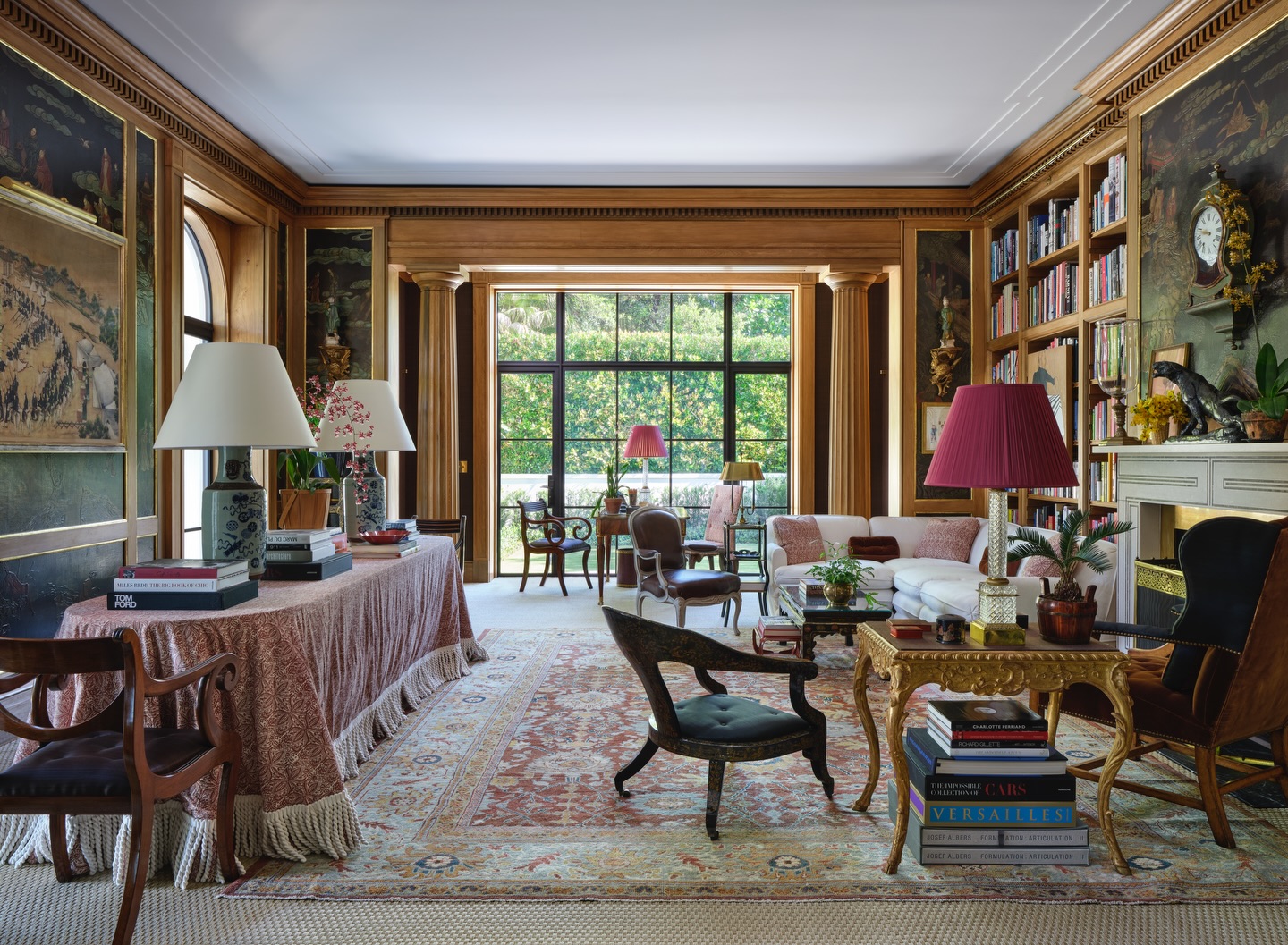
A wall of books can feel fully integrated when its woodwork shares the room's architectural details. These built-in shelves sit beside a fireplace beneath substantial crown molding, with warm timber connecting them to the surrounding panels and columns.
The books add color and texture without becoming a separate visual theme. When planning a traditional living room, coordinate shelf widths, trim profiles, and base heights with existing doors or mantel details.
Reserve the deepest or lowest compartments for larger volumes. Comfortable seating nearby makes the collection part of everyday life rather than a distant backdrop.
Lamps at different heights create a welcoming reading atmosphere. Even a small installation can feel thoughtfully connected by repeating its wood finish on nearby architectural details.
6. Build Storage Around a Doorway
Credits: Instagram
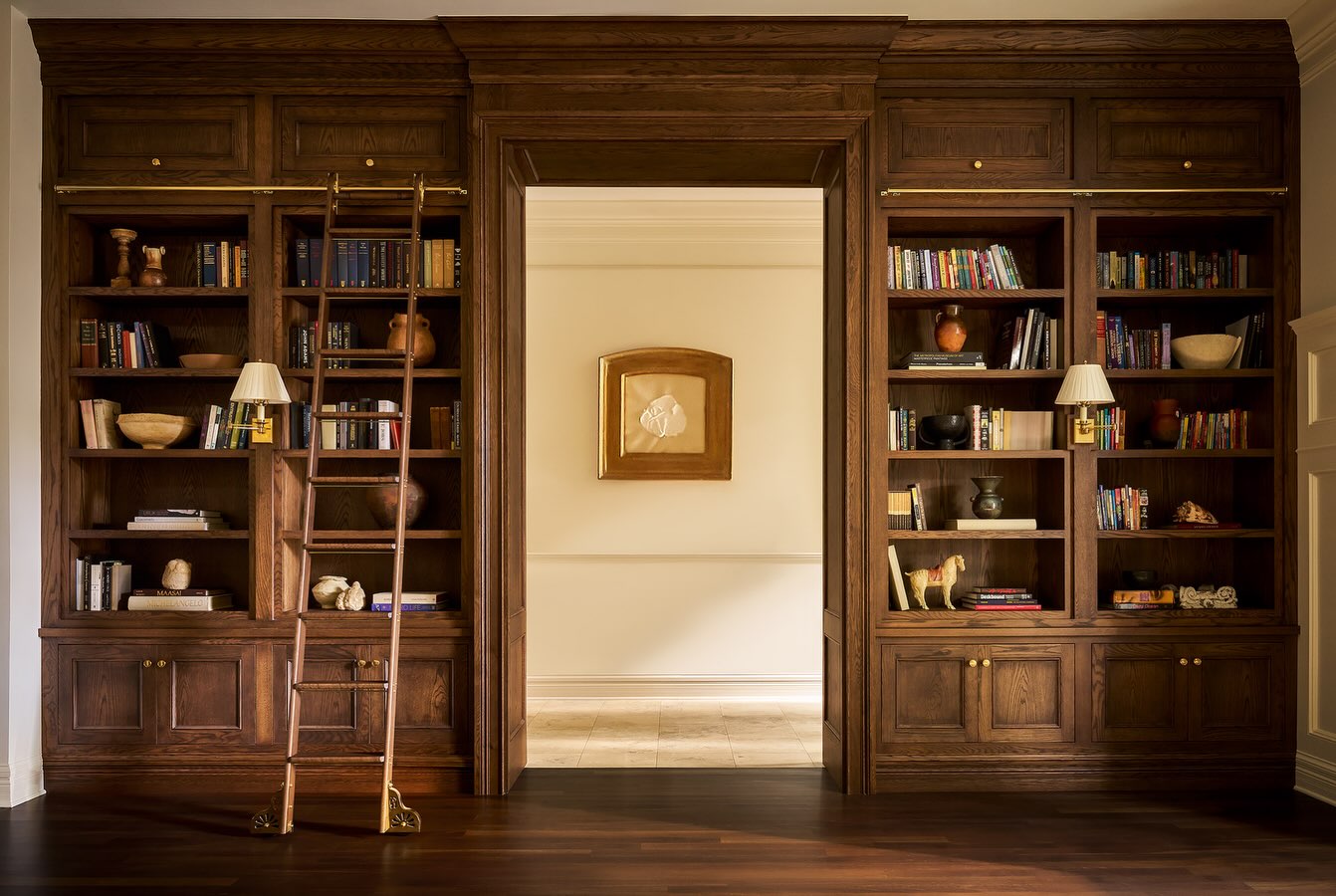
A doorway can become the center of a useful shelving composition instead of interrupting it. This installation frames the opening with matching bookcases, closed base cabinets, and additional cupboards above.
Continuous wood trim makes the doorway feel deliberately included in the design. A rolling ladder adds access to the highest storage while reinforcing the library character.
Before copying this layout, measure the clear passage and allow room for cabinet doors, lighting, and the ladder's working position. Keep frequently used books on reachable shelves and reserve upper cupboards for occasional items.
Small lamps mounted on the cabinet fronts bring light directly to the collection. The approach works especially well along a living room wall that otherwise offers little uninterrupted storage space.
7. Hide the Television Behind Cabinet Doors
Credits: Instagram
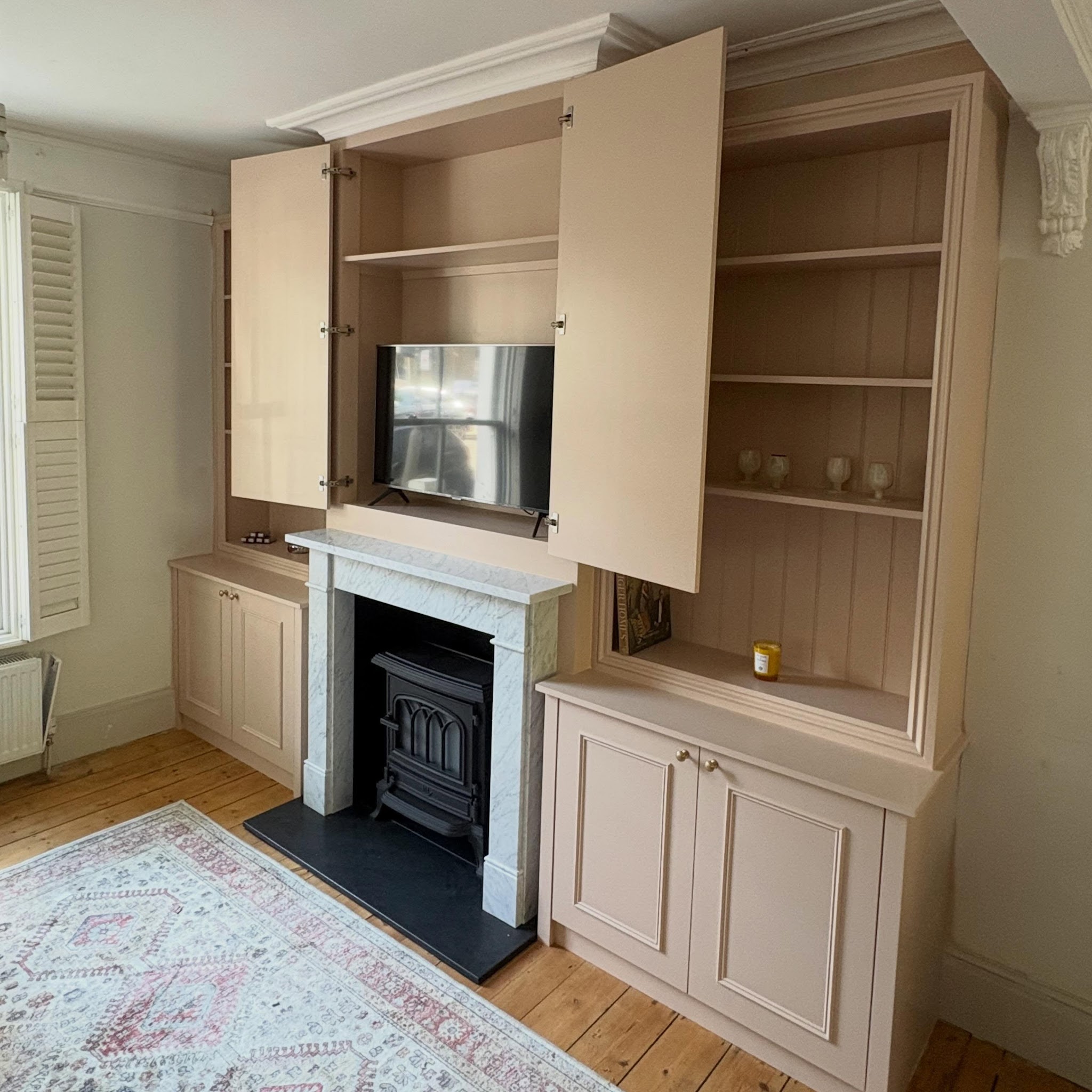
Cabinet doors above the fireplace let a television disappear into the same millwork as the surrounding shelves. This blush installation combines open bookcases, paneled lower storage, and a central enclosure, giving the whole wall a consistent architectural presence.
Plan the doors around the actual screen dimensions and their swing so they open without blocking nearby shelves. Leave room for cables and the ventilation your equipment requires.
A carpenter can coordinate the panel profiles and cornice across all three sections. Follow the fireplace manufacturer’s clearance requirements when locating electronics nearby.
Finish the shelving and doors in one gentle color, then add a few books and glass pieces. The result makes everyday entertainment part of a thoughtful, visually calm living room arrangement.
8. Include an Open Log Compartment
Credits: Instagram
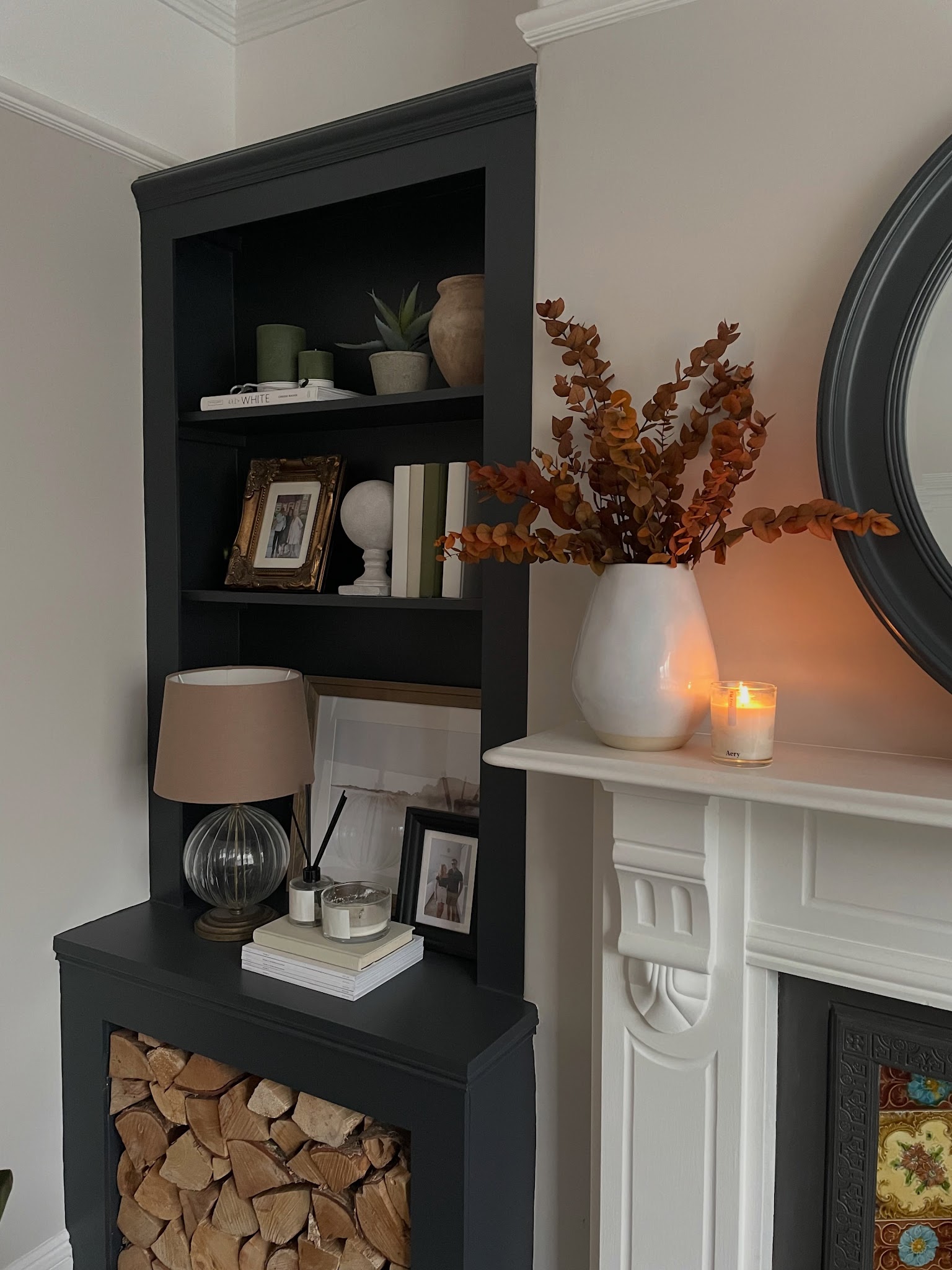
An alcove built-in can support the fireplace as well as display your favorite objects. This dark shelving unit includes an open compartment filled with logs beneath a wider surface for a lamp and framed pictures.
The contrast between rough wood and smooth painted cabinetry adds texture without introducing another piece of furniture.
For a similar arrangement, keep the log area separate from delicate books and accessories, and choose a durable interior finish that is easy to clean.
Check the fireplace manufacturer's required clearances before planning nearby joinery. Upper shelves can hold a few larger pieces rather than many small ornaments.
Matching the cabinet color to a mirror or other nearby detail helps the practical storage feel connected to the room.
9. Design Adjustable Bays for Oversized Books
Credits: Instagram
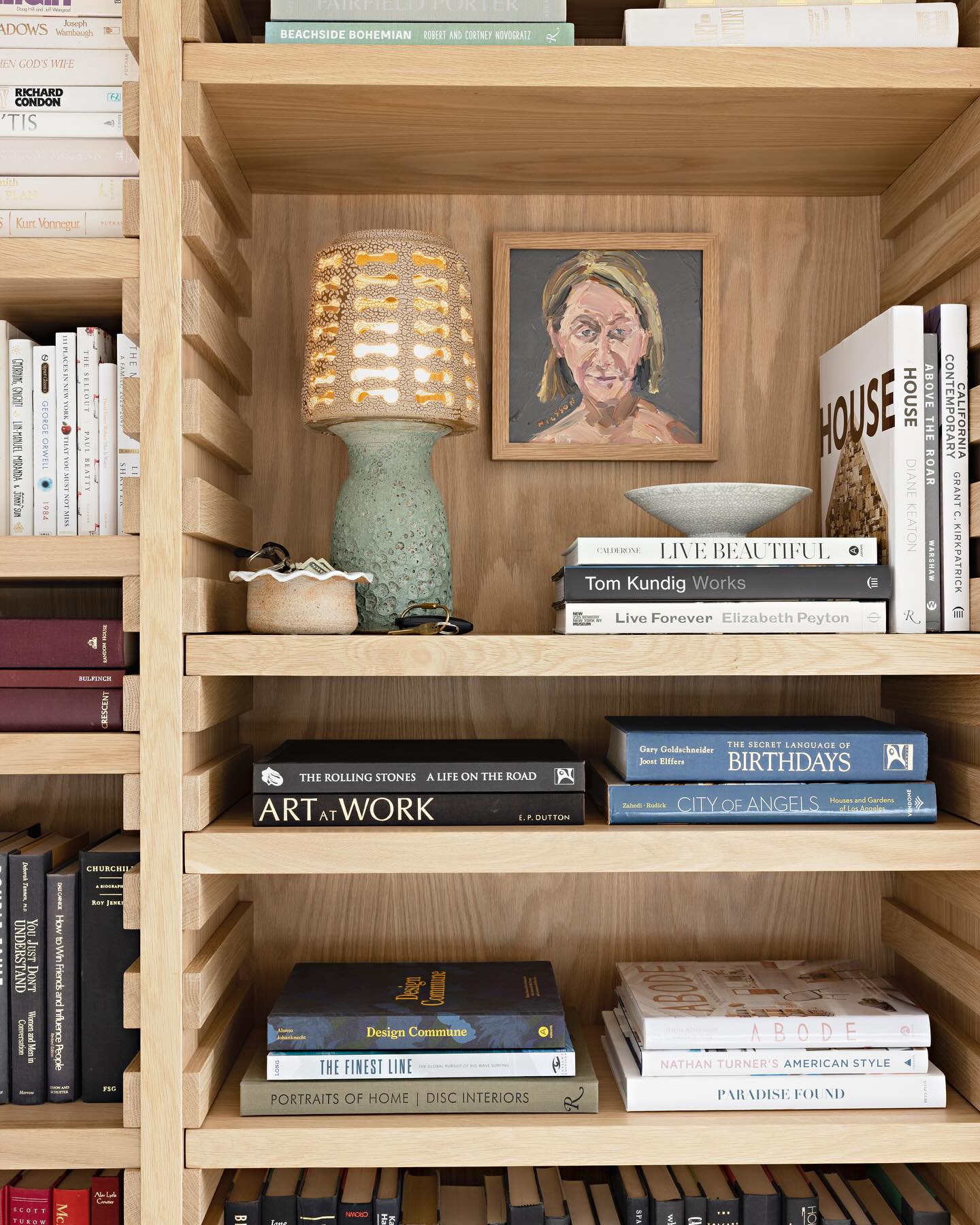
A substantial book collection benefits from shelving that responds to different formats. This wood built-in combines closely spaced shelves for horizontal stacks with a taller opening for a lamp, portrait, and upright volumes.
Visible supports make the construction part of the design, while the consistent timber finish keeps the many objects visually connected. Start by measuring your largest books and deciding which pieces deserve extra display height.
Adjustable shelves make it easier to accommodate future additions. Arrange a few stacks horizontally to create small platforms for pottery, but leave enough clearance to remove a book comfortably.
A table lamp brings warmth directly into the shelving. In a living room, that thoughtful mix makes storage useful, personal, and inviting at night.
10. Run Shelves Across a Wide Fireplace Wall
Credits: Instagram
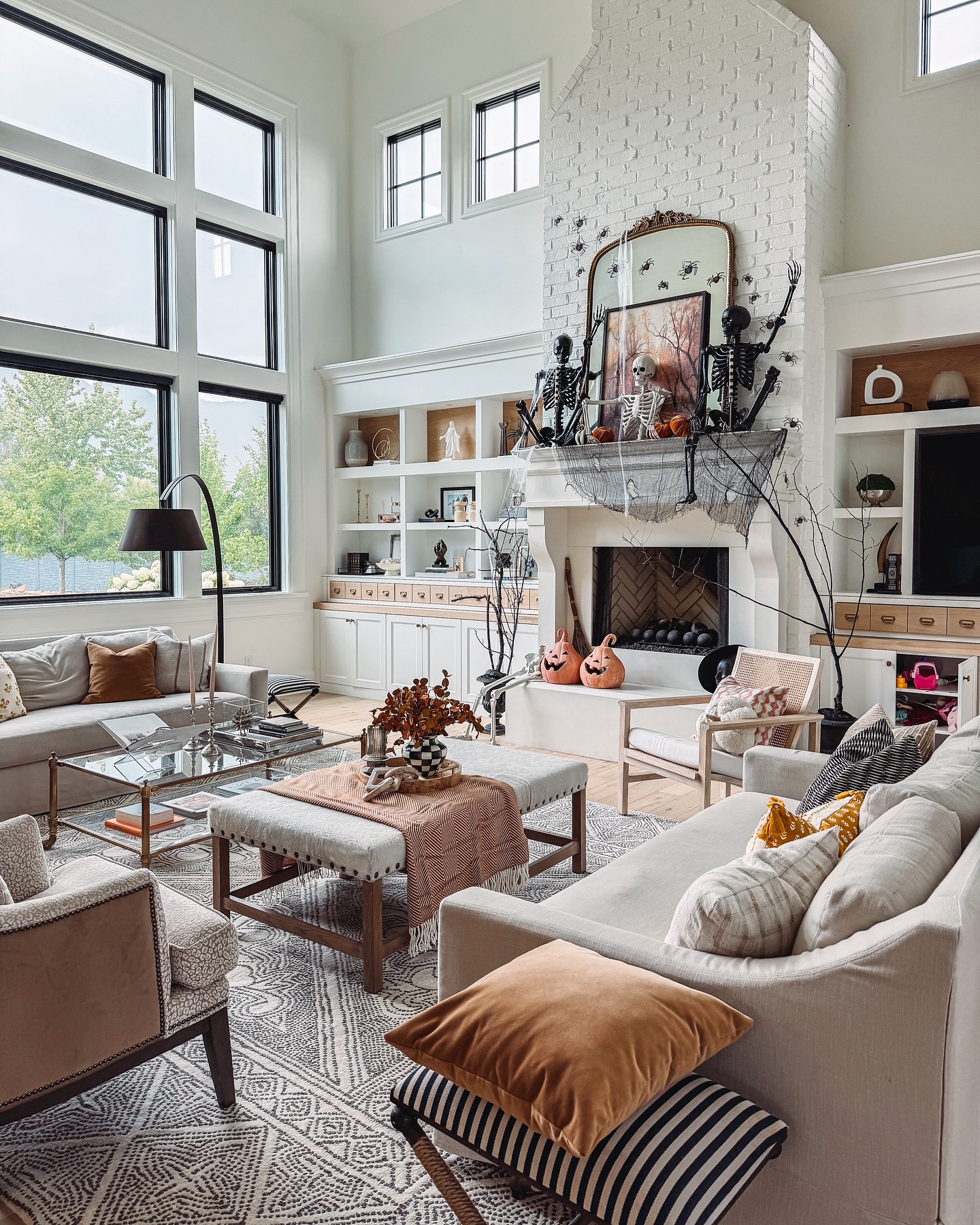
Broad built-ins can bring structure to a living room with very high ceilings. Here, open shelves and closed cabinets extend across the fireplace wall at a consistent height, creating a strong horizontal line beneath the upper windows.
The arrangement gives everyday storage a comfortable scale while the chimney rises above it. Plan a mix of shelf widths to accommodate books, baskets, and larger vessels.
A dedicated television opening can sit within the same composition so the screen does not require separate furniture. Keep the uppermost surfaces lightly styled to preserve the sense of height.
Repeating cabinet hardware and wood accents across both sides helps the entire wall feel coordinated, even when the displays and seasonal decorations change throughout the year.
11. Leave Breathing Room Below Floating Shelves
Credits: Instagram
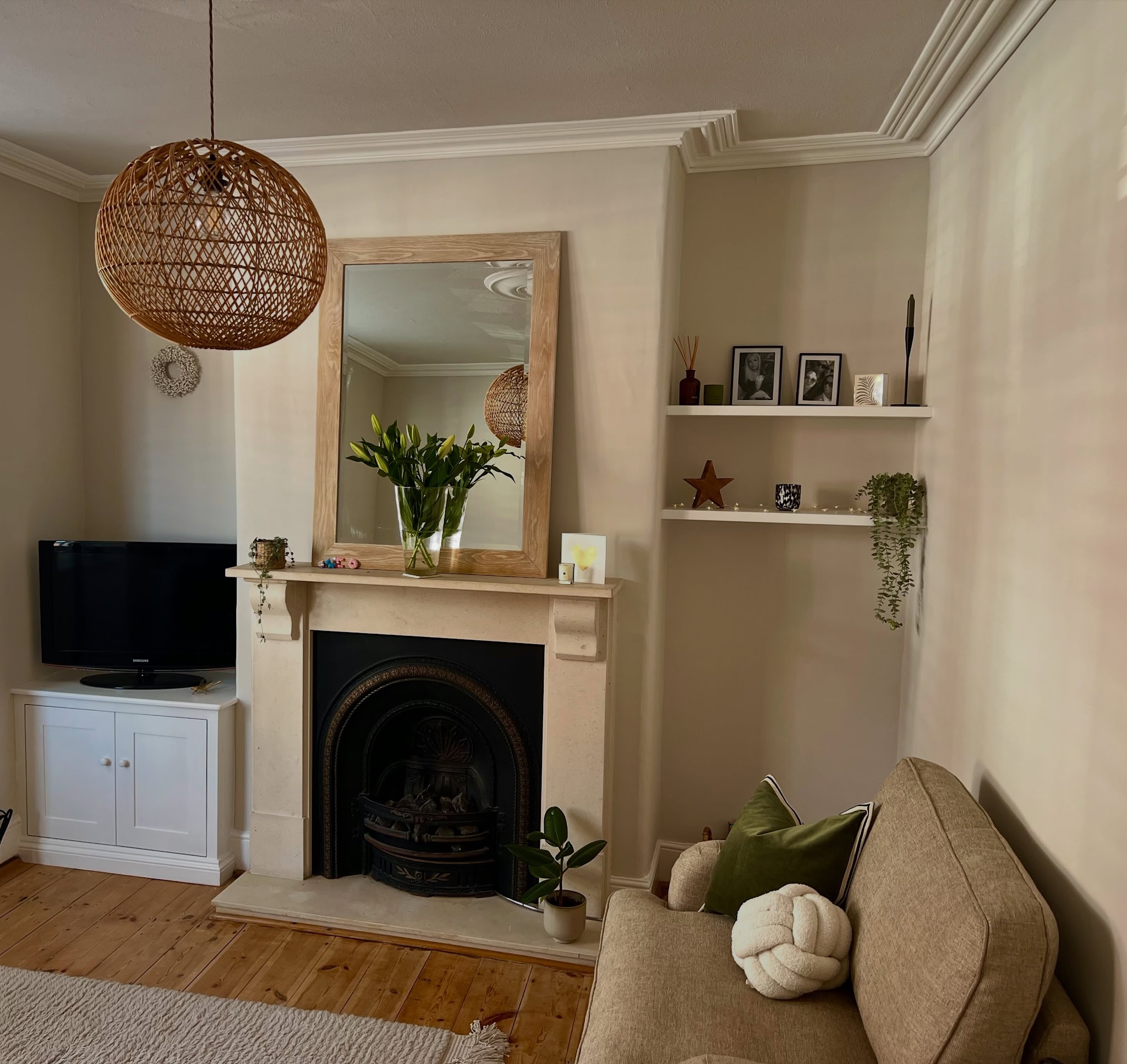
Built-in shelves do not have to fill an entire alcove. Two slim shelves fitted into this living room’s right recess provide space for photographs and a trailing plant while leaving the wall below pleasantly open.
The opposite alcove carries the television on a small cabinet, so each side responds to a different need. Keep the shelf edges aligned and let the chimney breast define their depth.
This approach works especially well when a sofa sits close to the recess and deeper furniture would feel crowded. Choose a wall color that continues behind the shelves to maintain a quiet background.
A few personal objects are enough; generous empty space makes the fireplace, mirror, and comfortable seating feel like the main event.
12. Give Plants Generous Space Between Shelves
Credits: Instagram
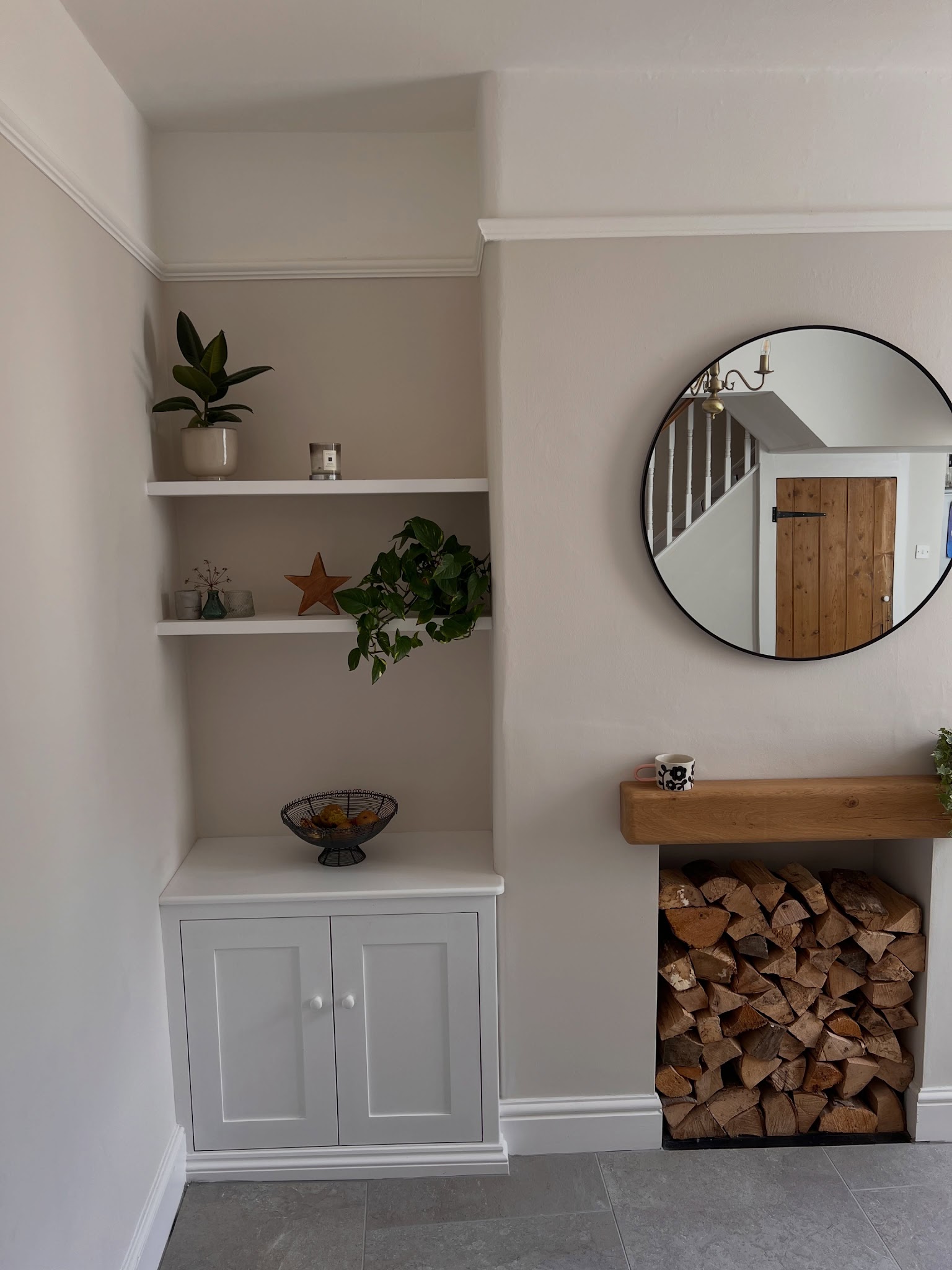
Generous shelf spacing can make a compact alcove feel relaxed instead of packed. Here, two white shelves sit above a matching cabinet, leaving room for an upright plant, small vessels, and a trailing vine.
The restrained arrangement complements the round mirror and natural wood mantel nearby. Before ordering fixed shelves, measure the objects you genuinely want to display, including the height a plant may reach.
Put trailing greenery near an edge where it can fall freely without covering a door handle. Keep a waterproof tray beneath every pot to protect the finish.
Closed storage below handles the less attractive essentials. Matching the shelves to the cabinet creates a simple outline that is easy to live with as your collection changes.
13. Let Each Alcove Do a Different Job
Credits: Instagram
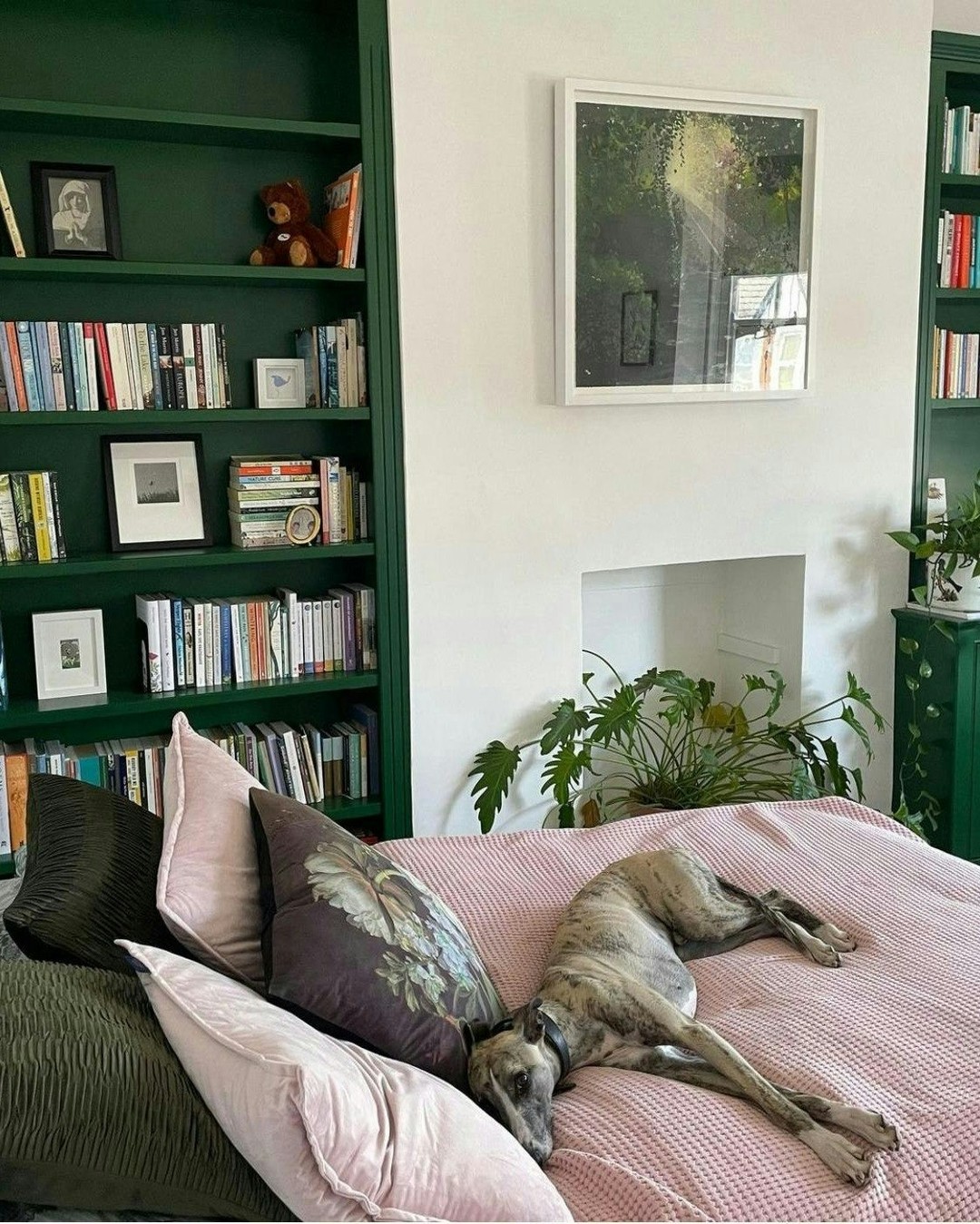
Matching paint can unite built-ins even when their layouts differ. In this green living room, one alcove holds books down toward the floor while the other combines shelving with a lower cabinet.
The asymmetry serves the room’s actual storage needs and still feels balanced because the color and trim remain consistent. Start by dividing your belongings into things worth displaying and things better kept behind doors.
Then assign each alcove the arrangement that suits its width and location. A sofa can sit comfortably in front of the lower book collection if everyday titles remain accessible elsewhere.
Leave occasional gaps for framed pictures or favorite objects. Repeating one deep green across the joinery makes mixed storage look purposeful and visually coherent.
14. Echo the Room’s Existing Trim
Credits: Instagram
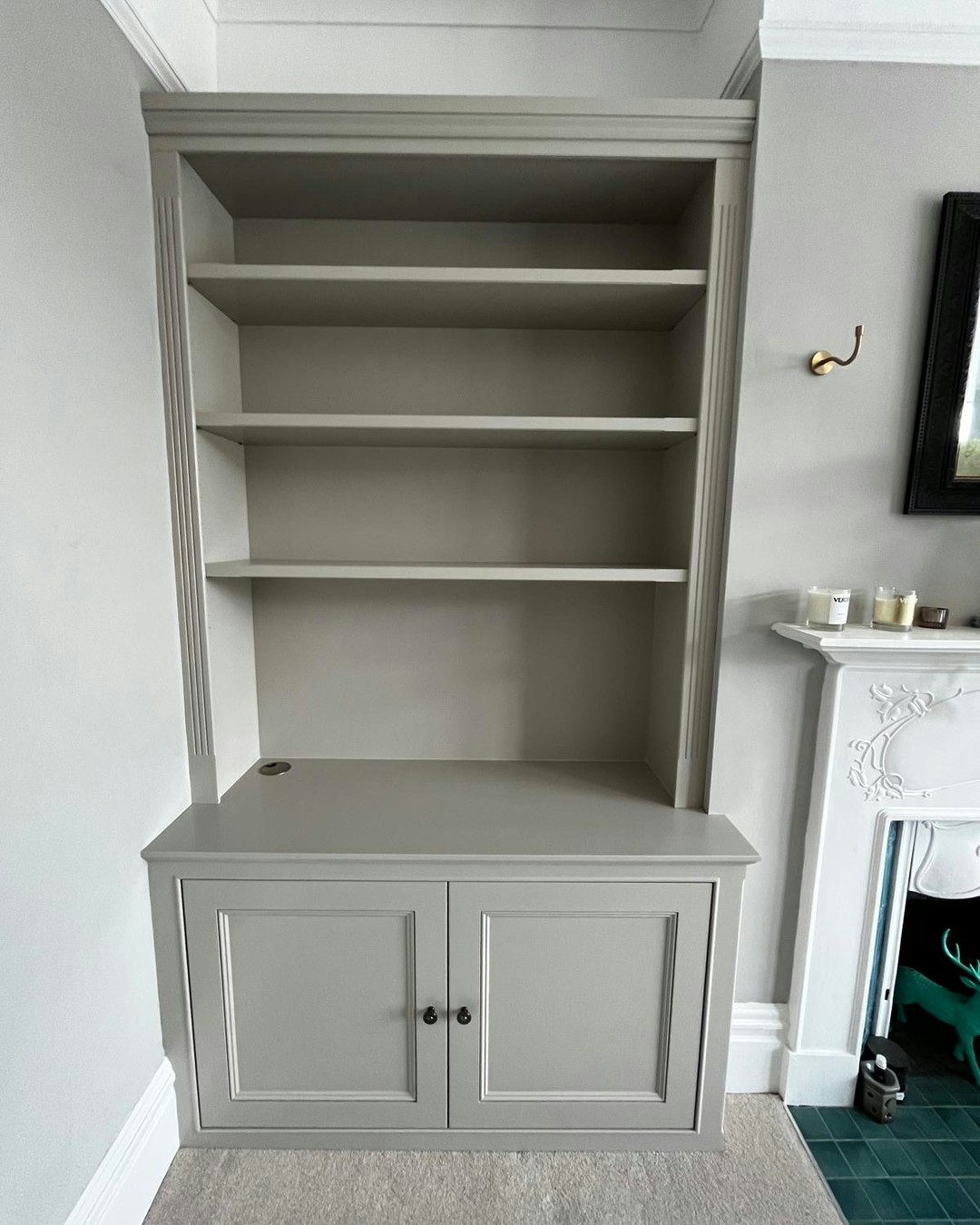
Built-ins feel settled when their details relate to the room around them. This gray alcove cabinet uses paneled doors, slender vertical grooves, and a projecting cornice beside an ornate white fireplace.
The profiles add character without overwhelming the relatively narrow recess. Look at existing baseboards, door casings, and ceiling molding before selecting new trim.
You can borrow their proportions or repeat a simple line rather than copying every decorative element. A slightly deeper cabinet below creates useful concealed storage, while shallower shelves keep displayed books within easy reach.
Small knobs leave the door panels visible. Painting the entire installation one muted shade lets its craftsmanship carry the design and helps the fireplace remain a distinctive feature of the living room.
15. Repeat the Mantel’s Wood on the Shelves
Credits: Instagram
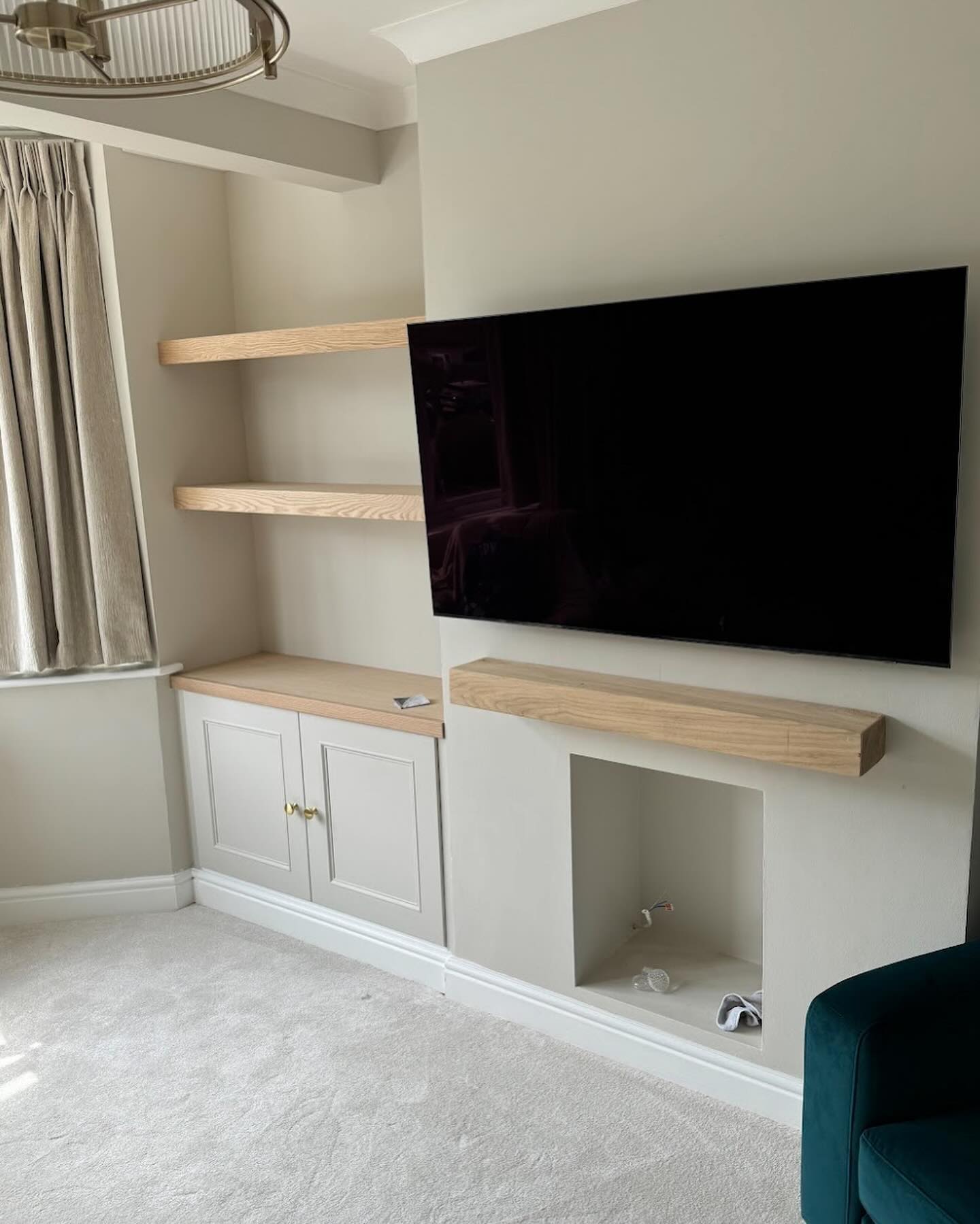
A shared wood finish can connect separate parts of a living room wall. These floating shelves and the cabinet top echo the simple timber mantel, bringing warmth to otherwise pale joinery.
The effect is especially useful when a television occupies the chimney breast and needs a softer visual setting.
Select the wood or veneer together so the undertones feel compatible, then decide whether you want subtle grain or a more expressive pattern. Keep shelf thickness consistent with the scale of the mantel.
Painted cabinet doors below provide a quiet contrast and conceal electronics or everyday clutter. Leave a clear route for cables before installation.
With the main materials coordinated, a few books and pottery pieces will make the shelves inviting.
16. Divide a Wide Base Into Three Doors
Credits: Instagram
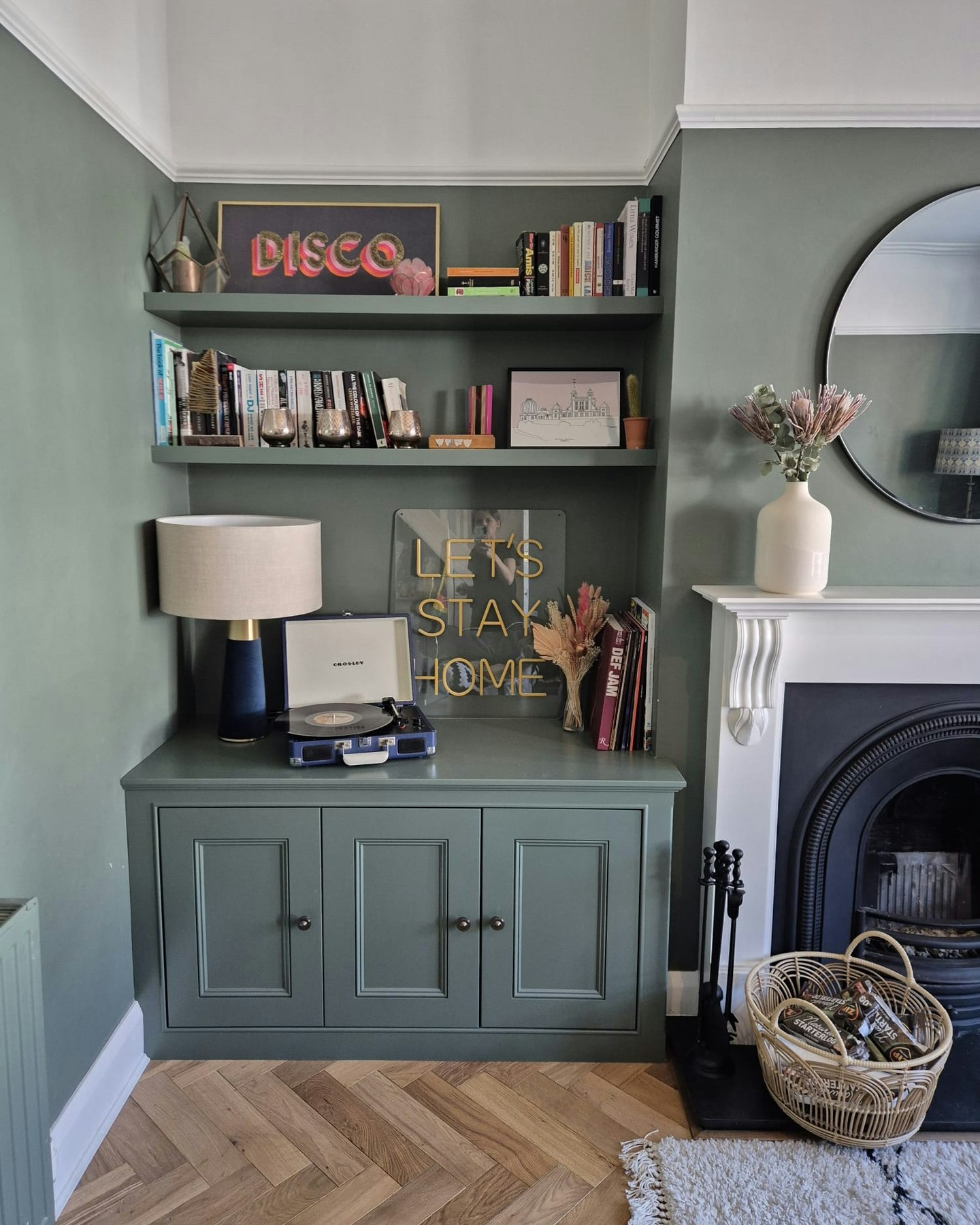
A wide alcove can look more balanced when its base cabinet has three doors instead of two oversized panels.
This green installation uses that approach beneath a pair of floating shelves, creating a generous surface for a record player and table lamp. The repeated door proportions give the lower cabinet a steady rhythm while keeping each opening manageable.
Measure the equipment and belongings you plan to store before deciding where internal dividers belong. Leave enough clear space above a turntable to raise its lid comfortably.
Continue the wall color across the shelves and cabinet so the whole recess feels integrated. Books and personal artwork then supply the variety, making the storage useful without losing the welcoming character of the room.
17. Frame Books With Broad Arches
Credits: Instagram
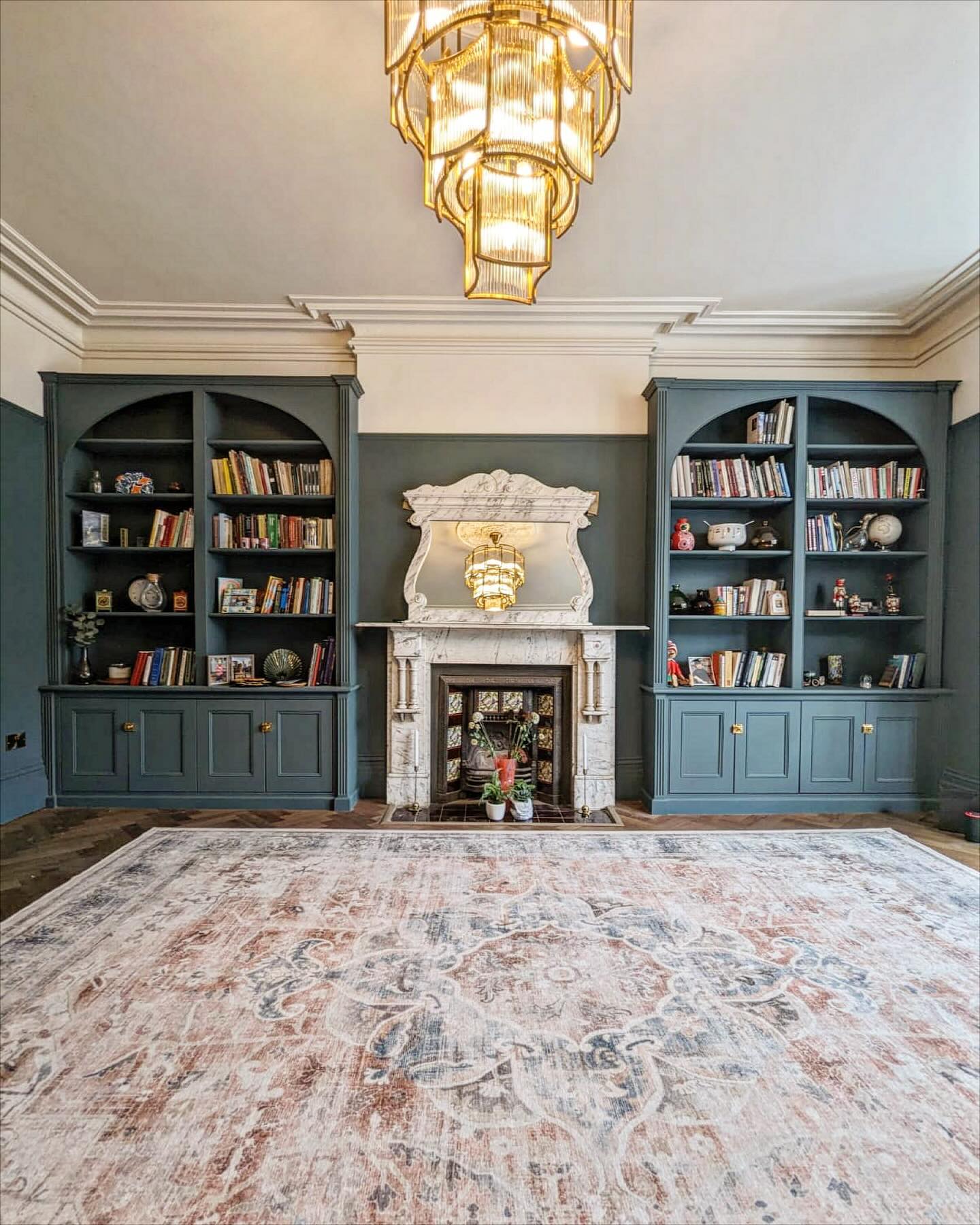
Broad arches can soften the top of substantial built-in bookcases while giving them a distinctive architectural outline. These blue units flank a marble fireplace, with each curved opening divided into two narrow shelving bays.
Fluted side trim and paneled lower doors reinforce the traditional setting. Keep the arch generous enough that the upper shelves remain useful, and plan their spacing around the books or objects you want to display.
A central divider supports the visual rhythm and breaks a wide span into easier sections to arrange. Repeating the same design on both sides makes the fireplace feel intentionally framed.
Carry the blue onto nearby wall paneling for continuity, then let a pale ceiling and patterned rug lighten the overall composition.
18. Bring a Warm Color Into the Bookcases
Credits: Instagram
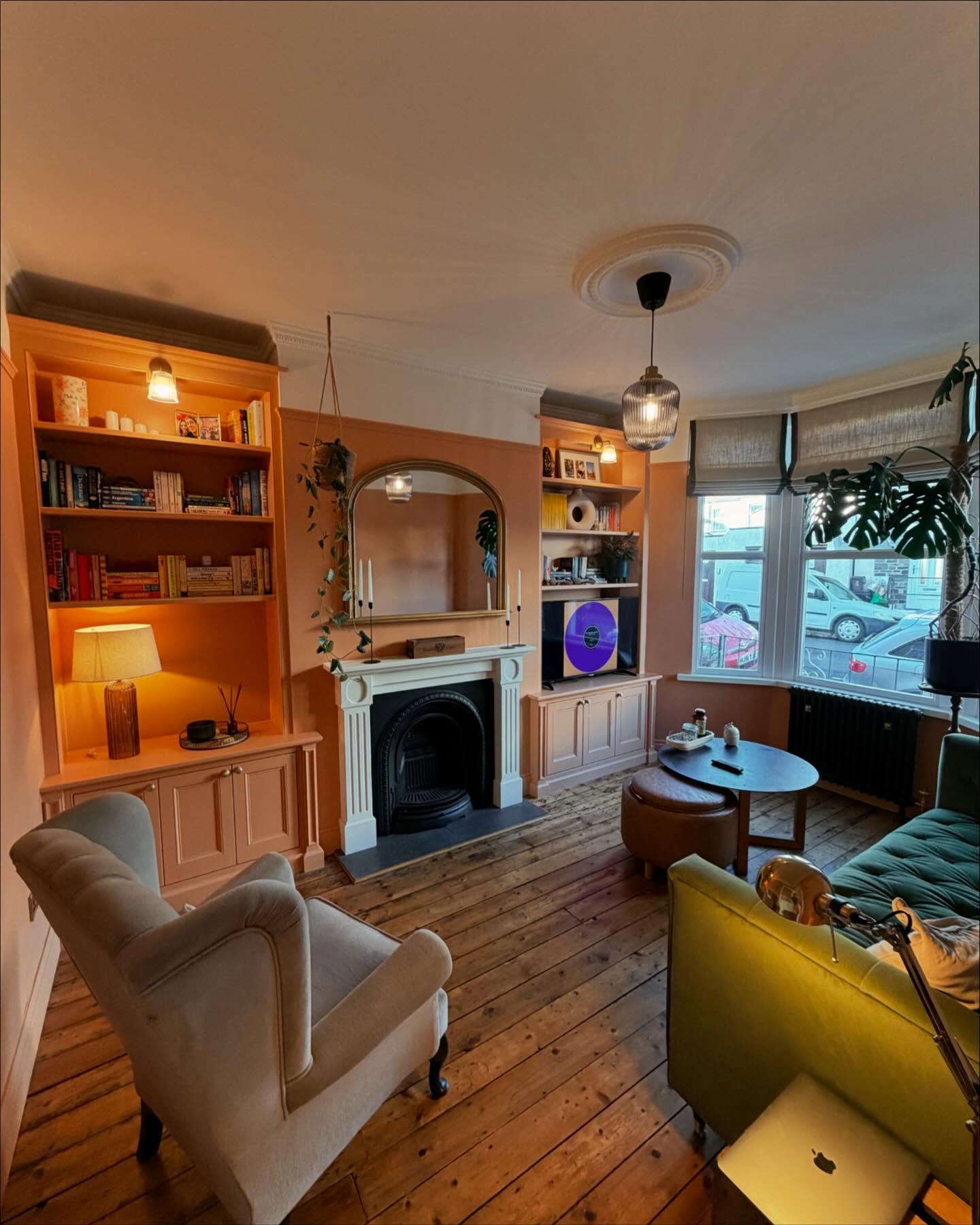
A warm paint color can turn practical shelving into the feature that gives a living room its personality. Here, orange walls and alcove bookcases surround a pale fireplace, while books, plants, and shaded lamps make the color feel comfortable.
Carrying the finish across the shelving backs prevents the objects from looking scattered against several competing surfaces. Try paint samples inside the recess as well as on the main wall, because the same shade can appear deeper between shelves.
Keep the ceiling or fireplace lighter if you want a clear visual pause. Use a restrained mix of book stacks and upright rows, then leave space for lamps.
The shelving becomes an inviting extension of the room’s overall palette after sunset too.
19. Add Picture Lights Above Each Shelving Bay
Credits: Instagram
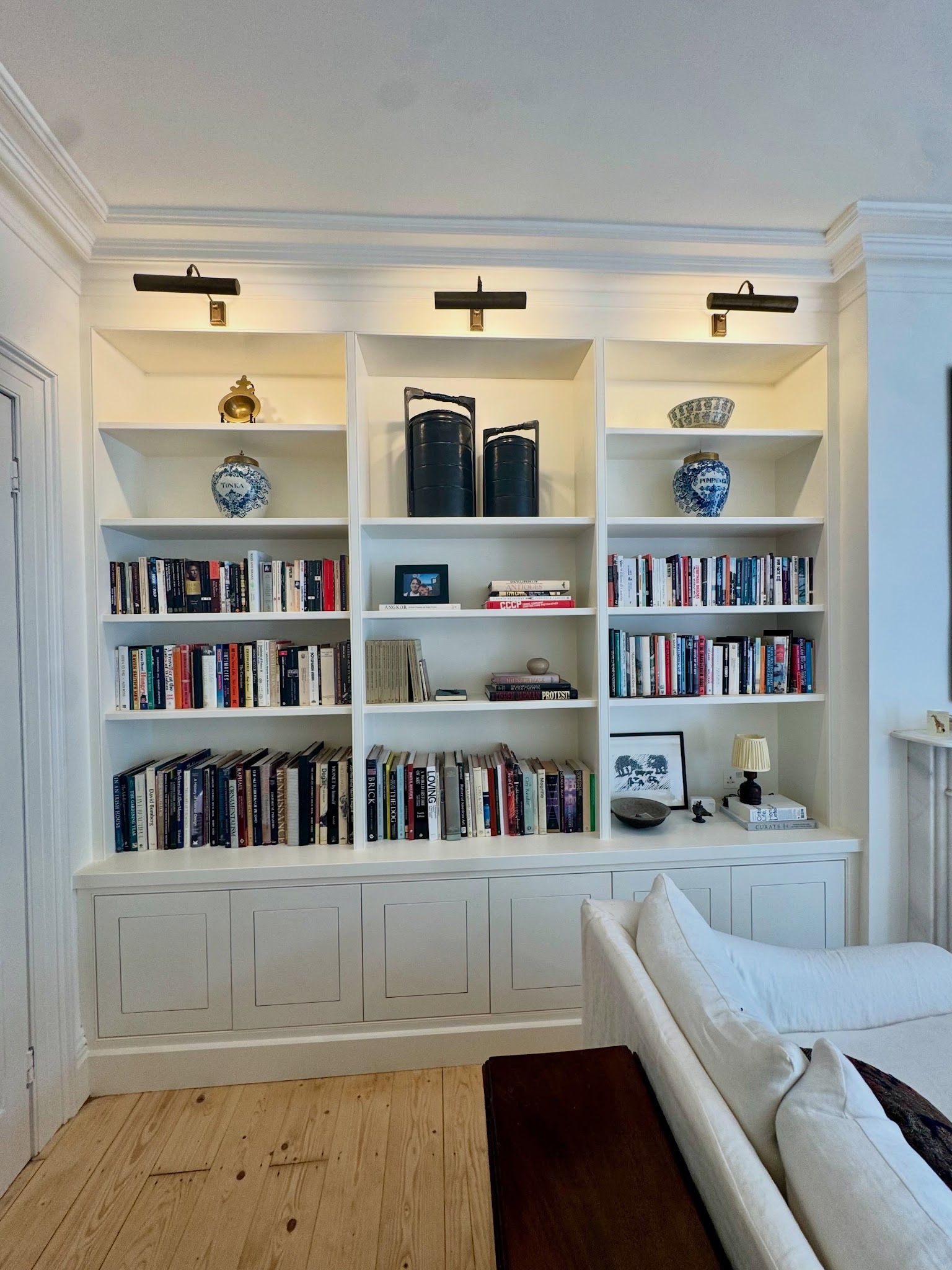
Picture lights can make a wall of books feel as considered as a gallery. This white living room bookcase has three bays, each topped with a slim dark fixture that draws attention to the shelves below.
The repeated lights establish a tidy rhythm, while a continuous cabinet base keeps the installation grounded. Plan wiring before the joinery goes in, and consider dimming so the illumination can soften during evenings.
Leave taller openings near the top for larger decorative pieces, with closer spacing where most books will live. Keep the light finishes consistent with nearby hardware or other dark accents.
Even with a substantial collection, the repeated bays and focused lighting help the bookcase read as one cohesive, welcoming architectural feature.
20. Illuminate Open Cubbies in a Low Built-In
Credits: Instagram
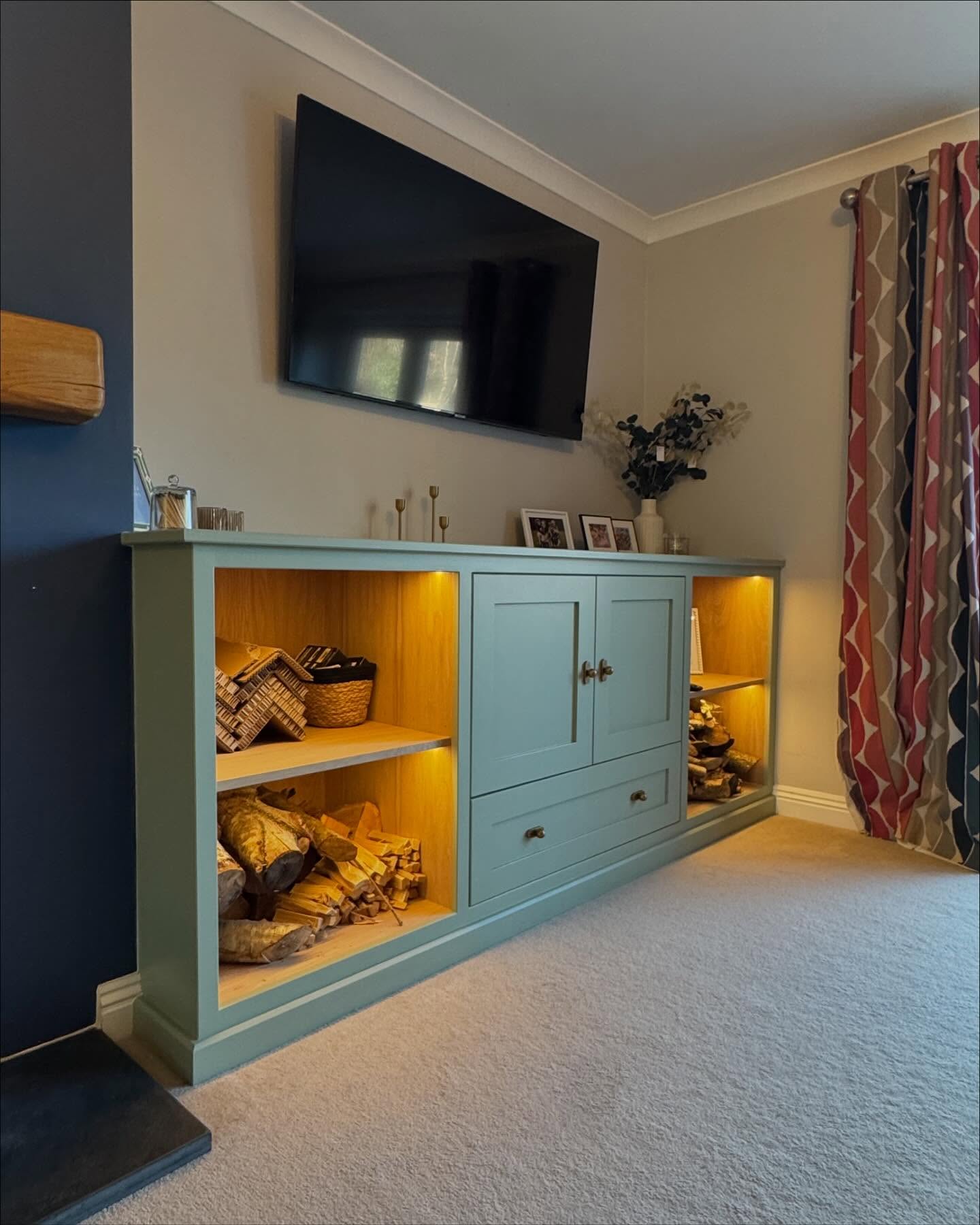
Shelving can stay below eye level and still make a living room wall feel complete. This fitted teal cabinet places open wood cubbies on both sides of concealed central storage, with warm lighting emphasizing the grain.
The low arrangement leaves the upper wall available for a television and keeps the room from feeling enclosed. Use the open sections for baskets, books, or neatly stacked fireplace logs, depending on what you need nearby.
Plan shelf heights around those belongings, and keep electrical components accessible for maintenance. A continuous top provides room for framed photographs and a vase.
Matching the cabinet’s outer finish to another accent in the room creates continuity, while the wood interiors give the storage an inviting layered appearance.