
Dark colors can make a bedroom feel close and cocooning, but they need a little contrast to keep the space from feeling flat.
These Moody Bedroom Ideas show how to balance rich walls and furnishings with lighter bedding, pale trim, woven texture, or warm wood.
You’ll also find ways to shape the mood through details, from a quiet sitting corner in a teal room to dark sheer curtains that frame daylight.
The common thread is thoughtful contrast: a few well-chosen lighter or softer elements let deep color feel layered and livable.
1. Wrap Brown Walls Into a Paneled Ceiling
Credits: Chris Loves Julia
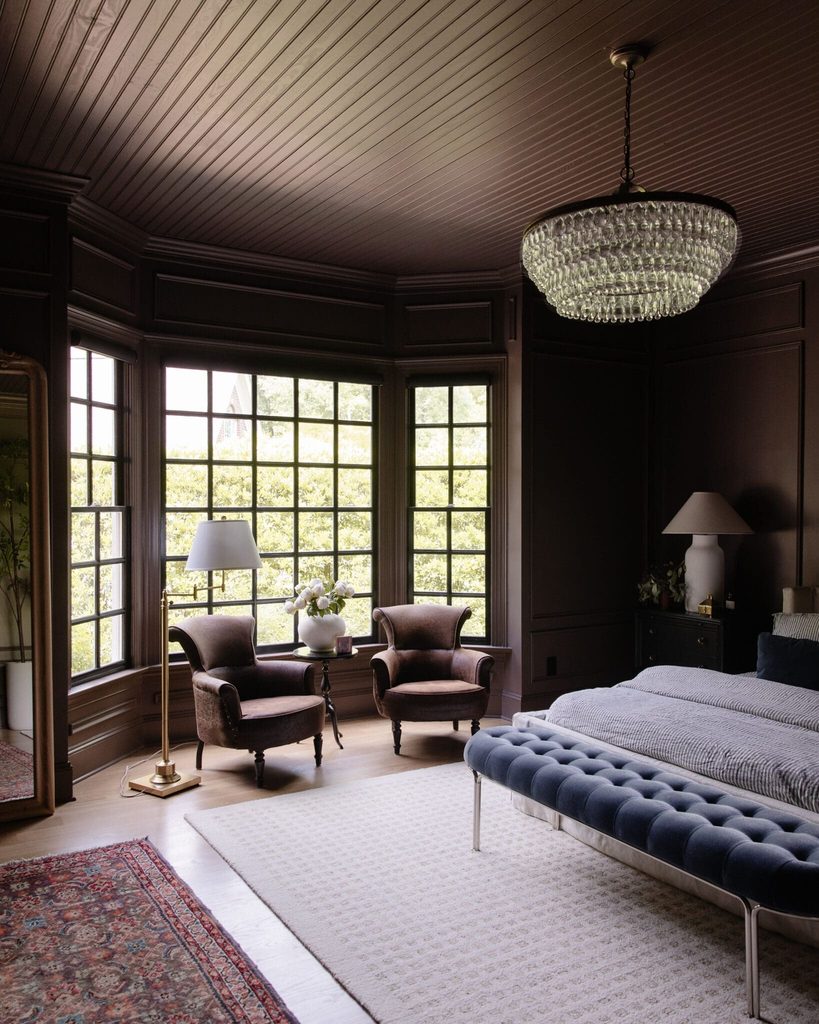
Moody color feels especially immersive when it continues above your head. Here, brown wall panels meet a similarly colored beadboard ceiling, creating a continuous frame around the lighter bed and windows.
Fine ceiling grooves catch daylight without introducing another color. You can borrow that relationship even without elaborate molding by testing the same paint on both planes.
Watch the sample in morning light and under your bedside lamps before committing. Keep at least one generous pale surface, such as bedding or a rug, so the room retains definition.
A reflective chandelier supplies a delicate highlight against the deep background. Consider the ceiling finish carefully, since strong sheen can emphasize uneven surfaces more than you expect once the room is furnished.
2. Build a Moody Palette Around Purple Upholstery
Credits: Cordelia / Phyrra
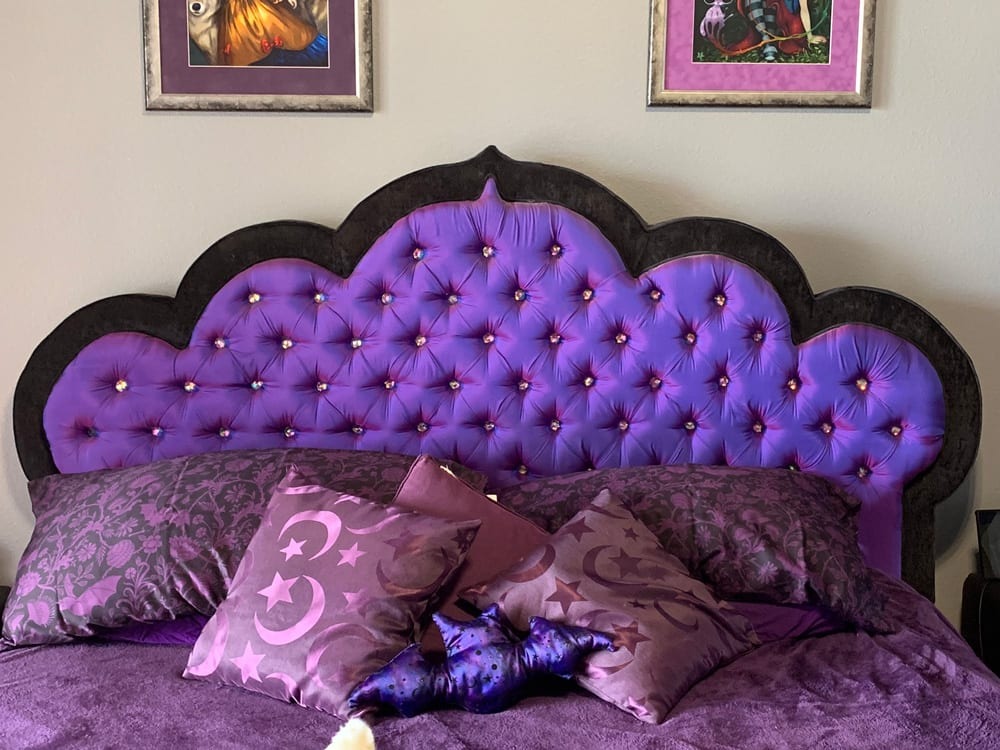
A richly colored bed can establish the atmosphere before any wall paint changes. This scalloped purple headboard combines deep upholstery, dark edging, and small reflective tufts, with deep plum pillows carrying its color across the mattress.
The lighter wall gives that elaborate outline room to show. Start with the upholstered piece you genuinely love, then choose bedding within the same color family rather than adding several unrelated jewel tones.
Different textures will keep a closely matched palette from feeling flat. A plain blanket also provides a resting place among patterned cushions.
Test fabric samples in your actual bedroom, because shiny textiles change noticeably with light. Leave enough practical pillow storage nearby to make this layered arrangement manageable every single night.
3. Give a Teal Bedroom a Quiet Sitting Corner
Credits: Annette / A Vintage Splendor
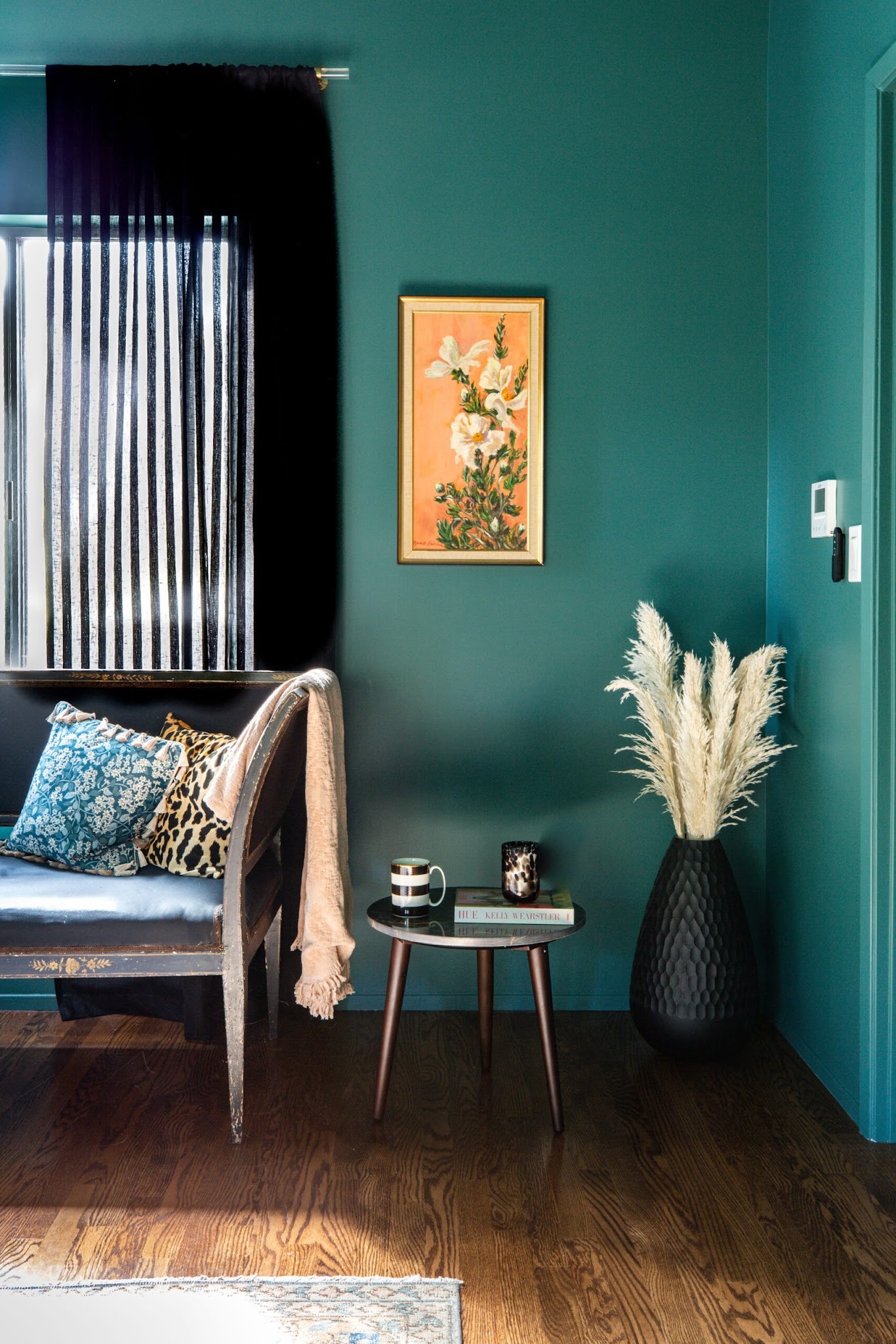
Deep teal extends into this bedroom corner, where a dark antique settee creates a place to pause away from the mattress. A small round side table, pale dried stems, and warm framed flowers make the surrounding color feel considered.
The arrangement stays useful because the objects have distinct places rather than covering every surface. If your bedroom has an unused corner, measure the route around a chair before choosing its size.
One comfortable seat can achieve the same effect as a larger bench. Repeat a bedroom textile on the cushion to connect the two zones.
Keep a reachable surface for a book or drink, and add suitable reading light if daylight will not cover the times you usually sit here.
4. Add Pale Woven Texture to a Black Wall
Credits: Colleen Pastoor / Lemon Thistle
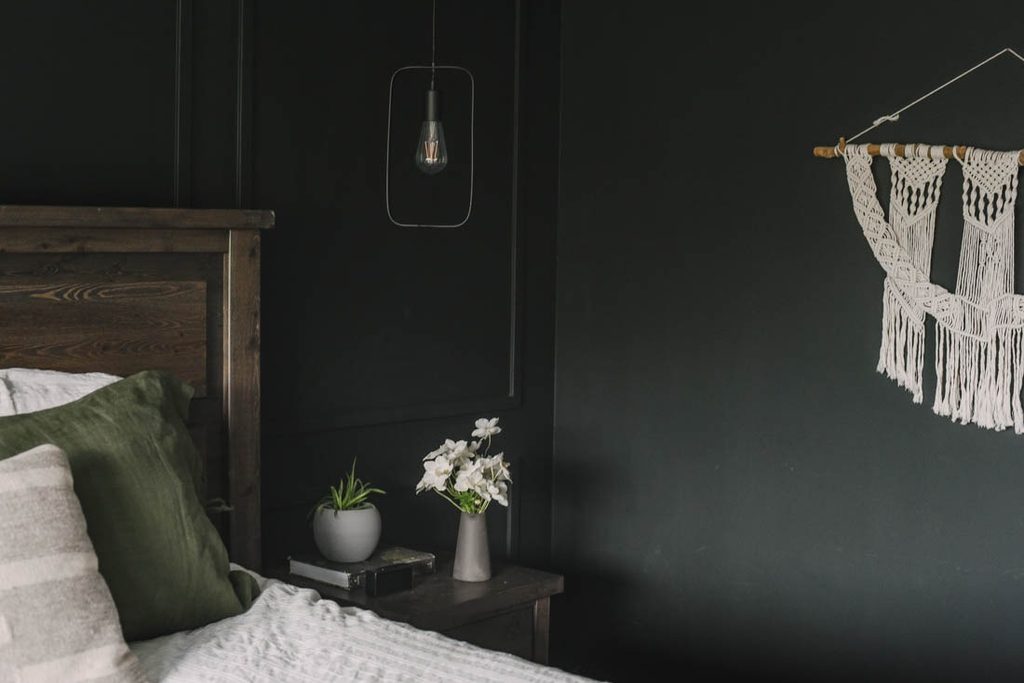
Cream macrame brings a soft edge to this almost black bedroom without diluting its atmosphere. The open knots reveal the wall behind them, while a dark wooden headboard and olive pillow keep the palette grounded.
A slim hanging light occupies very little visual space beside the bed. Try one tactile wall piece before filling a dark room with framed art.
Its irregular outline can balance straight paneling or heavy furniture, especially when the rest of the accessories stay restrained. Choose a size that leaves clear space around nearby lighting and switches.
Pale bedding makes the woven fibers feel connected to the sleeping area. Dust the textile gently according to its care instructions so its light surface continues to look fresh.
5. Keep White Trim Around Deep Green Walls
Credits: Jordan Jean
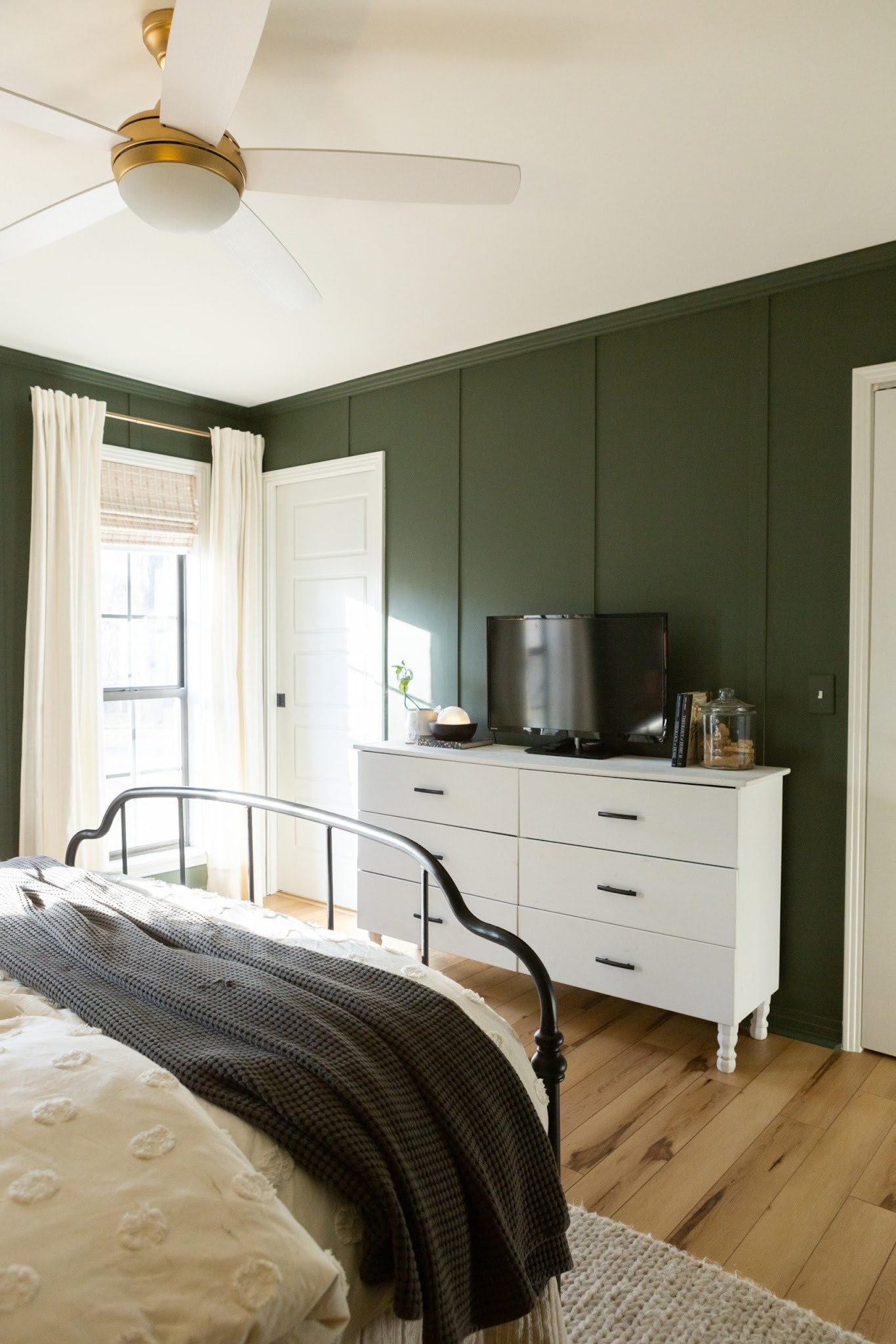
A moody bedroom does not require every architectural surface to disappear into darkness. These green walls and narrow battens surround a white dresser, while pale doors, curtains, and ceiling give the room a clear outline.
The dark metal bed connects the deeper details without adding visual bulk. This balance works well when your existing furniture is light and you want an atmosphere through paint.
Compare green samples beside the pieces you plan to keep, particularly any wood with a noticeable orange or yellow cast. Decide which trim should blend in and which should remain distinct before painting.
Simple curtains leave the wall treatment legible. The result can feel richly colored throughout the day while still making good use of daylight.
6. Set a Curved Light Bed Against Charcoal Panels
Credits: Lauren / Bless’er House
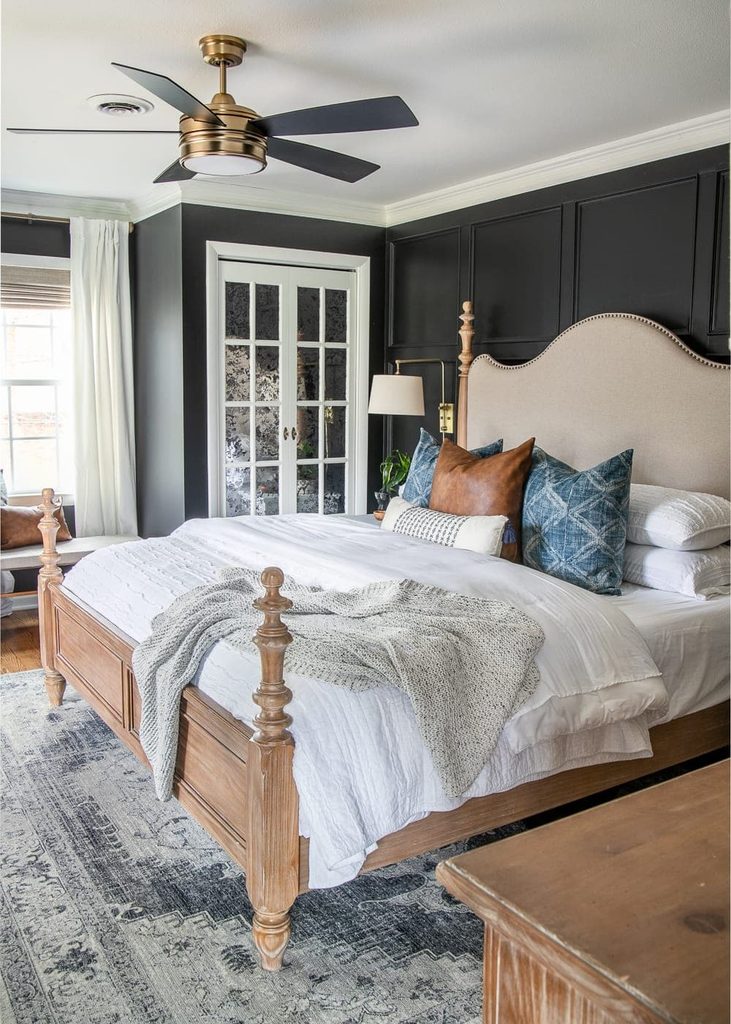
Curves become more noticeable when their background is dark and orderly. The pale upholstered headboard here rises against charcoal rectangular molding, giving the bed a clear silhouette without relying on bold printed bedding.
Warm wood repeats across its frame and the nearby furniture, while blue pillows introduce a restrained accent. If you already own a traditional bed, consider changing the wall around it before replacing the furniture.
Measure the panel layout with the bed in its final position so important lines remain visible. A light rug can connect the bedding to the floor and prevent the dark wall from feeling isolated.
Keep smaller decorative objects selective; the contrast between the curved headboard and straight molding already supplies plenty of detail.
7. Stretch Dark Horizontal Planks Behind the Bed
Credits: Emma Shoemaker / Shoe Makes New
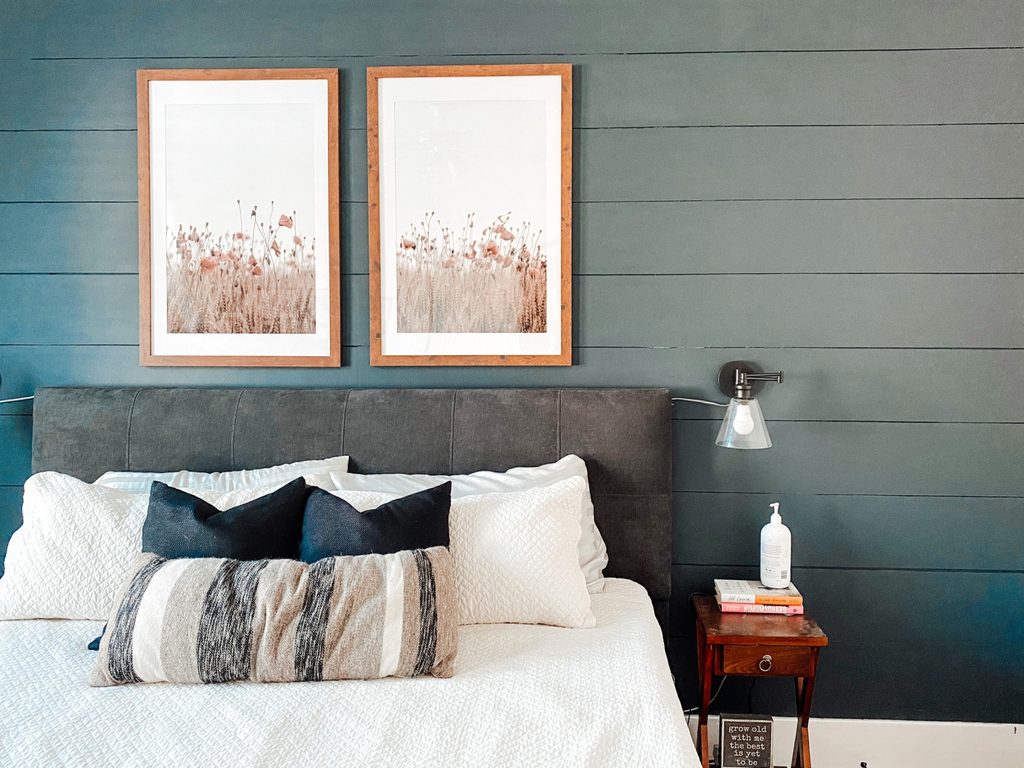
Broad planks give this blue gray bedroom wall a calm horizontal rhythm. Their dark finish relates to the upholstered headboard, while white bedding and two lightly framed prints stop the sleeping area from blending into the background.
Narrow gaps provide enough shadow to show the construction without making the surface overly busy. When adapting the idea, plan the board spacing across the complete wall rather than starting behind the pillows alone.
Account for switches, outlets, and existing trim before choosing materials. A muted dark color lets wood texture and bedding remain the main details.
Keep the artwork simple enough to read against the repeated lines. Side lighting can reveal the plank pattern as the natural light changes through the afternoon.
8. Frame Bedroom Daylight With Dark Sheer Curtains
Credits: Annette / A Vintage Splendor
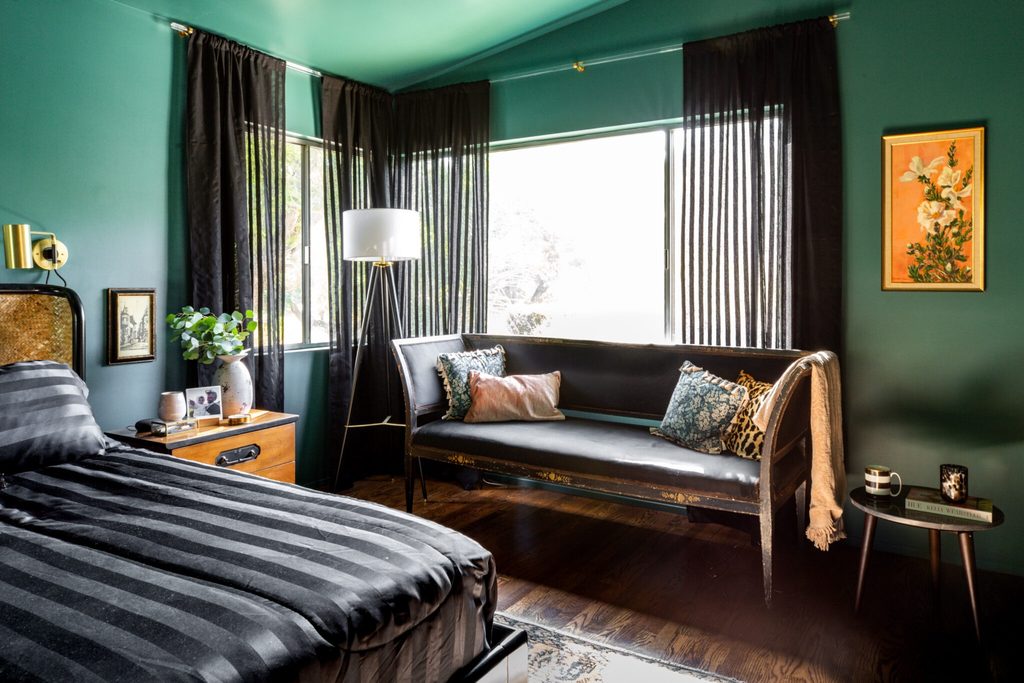
Dark curtains can contribute atmosphere without sealing a bedroom away from its windows. These transparent striped panels filter the bright corner around a settee, repeating the dark bedspread while keeping the teal walls visible.
Their long vertical folds balance the low furniture and wide stretch of glazing. Choose the light level you need before choosing a curtain solely for its color.
Sheer fabric can soften a view during the day, but it usually needs another layer when nighttime privacy matters. Allow the panels to move clear of nearby furniture and lamps.
A simple rod keeps attention on the fabric rather than the hardware. Carry one warm accent into the seating area so the window corner feels connected to the bed.
9. Give Dark Bedding a Subtle Tonal Pattern
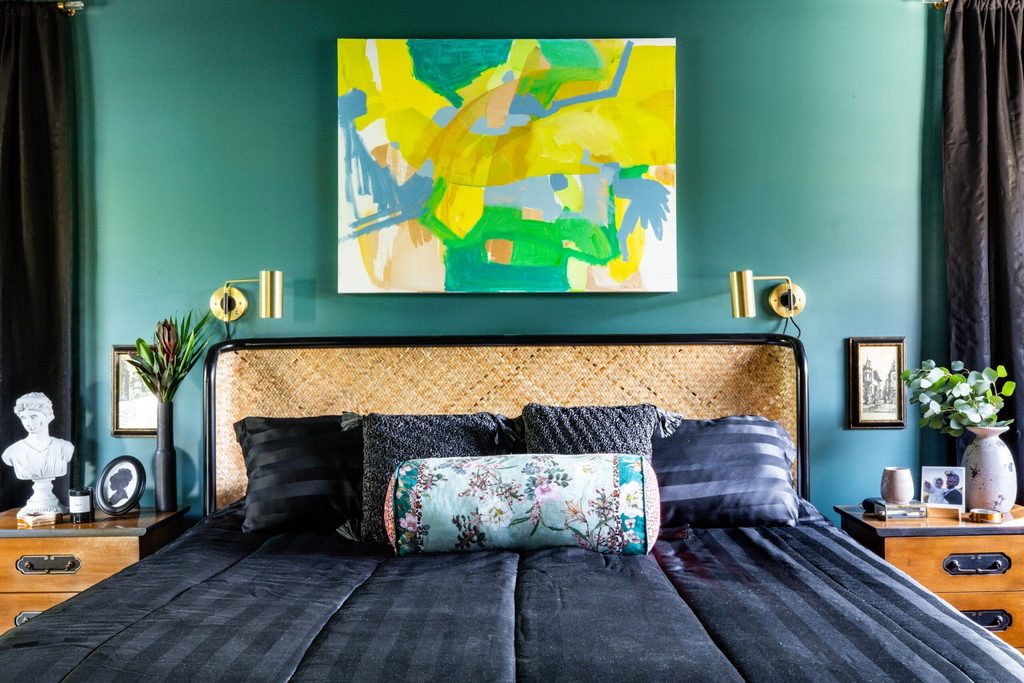
Credits: Annette / A Vintage Splendor
The bed in this room feels dramatic because several dark layers work together. Broad satinlike stripes cross the duvet and pillows, while a patterned bolster adds a smaller decorative note against the woven headboard.
Teal walls and warm bedside chests supply color outside the bedding itself. To create a similar effect, vary the weave or sheen within one dark color rather than relying on a strongly contrasting print.
Examine the fabric from across the room, where subtle differences can become more apparent. A lighter accent cushion will help separate the layers when the lamps are low.
Keep the number of pillows practical for use. The arrangement should still look intentional after the decorative pieces have been put away each evening.
10. Let a Shaded Lamp Warm a Green Bedside
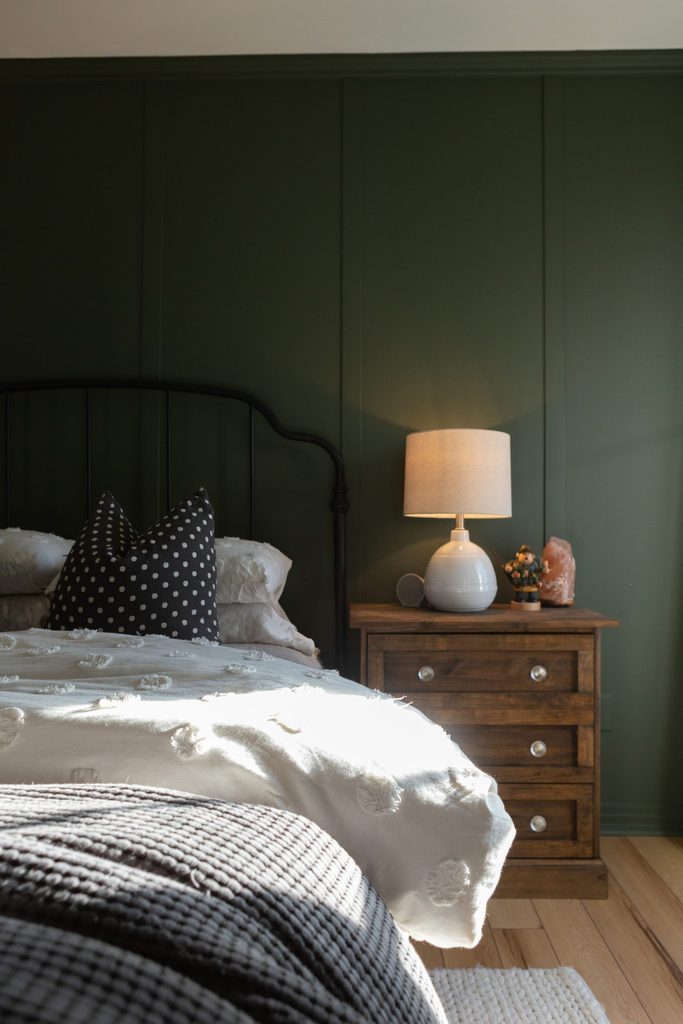
Credits: Jordan Jean
A small pool of light gives this green bedroom its inviting bedside focus. The cream shade glows against the wall panels, and the wooden chest adds warmth beneath the lamp without competing with its shape.
White bedding remains bright while the black metal headboard recedes. Think about where light lands when planning a moody bedroom, not just how decorative a fixture looks.
A shaded lamp can soften the wall and furniture around it, while a separate reading light may suit tasks better. Place the switch where you can reach it from bed.
Check that the shade sits comfortably below your sightline when seated. Keeping part of the tabletop clear makes the warmly lit corner useful as well as visually restful.
11. Use a Bright Bay as a Brown Reading Nook
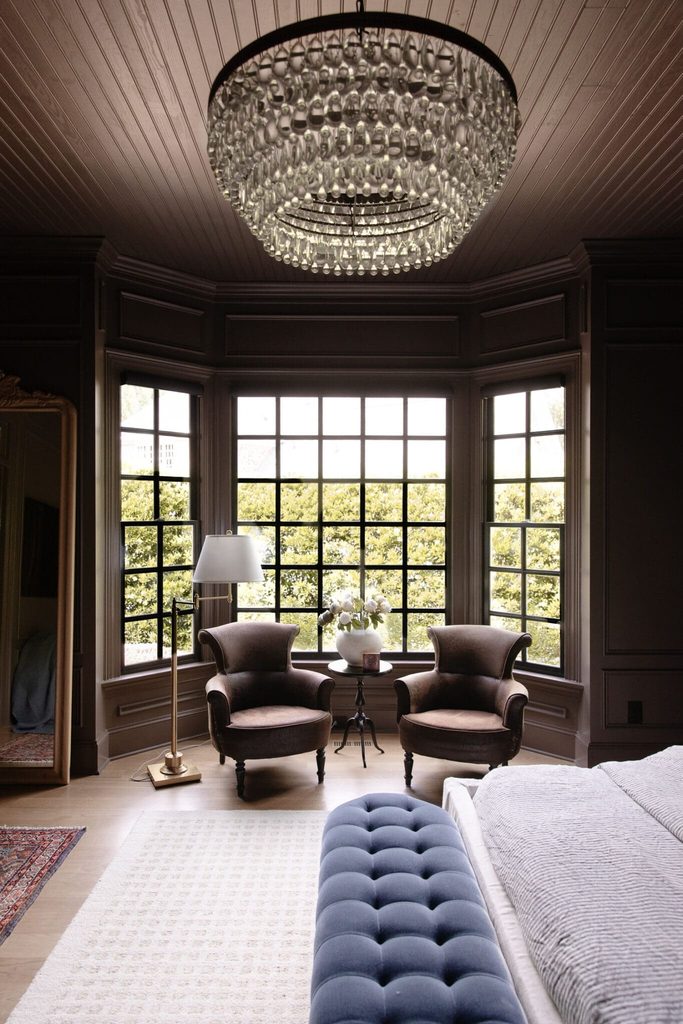
Credits: Chris Loves Julia
Two compact chairs turn this bedroom bay into a natural stopping point. Brown upholstery echoes the surrounding walls, while the windows, pale floor lamp, and small floral arrangement provide lighter interruptions.
Because the chairs sit within the architecture, the sleeping area still feels open. A moody room benefits from using its brightest corner rather than filling every window with tall furniture.
Test a chair arrangement with floor templates before buying, and leave enough space to draw curtains or reach shades. One seat may be the better choice in a narrower bay.
A small table should remain easy to reach without crowding the path. Repeating the wall color in upholstery can make this extra furniture feel settled rather than visually separate.
12. Break Up Black Walls With Antique Mirror Doors
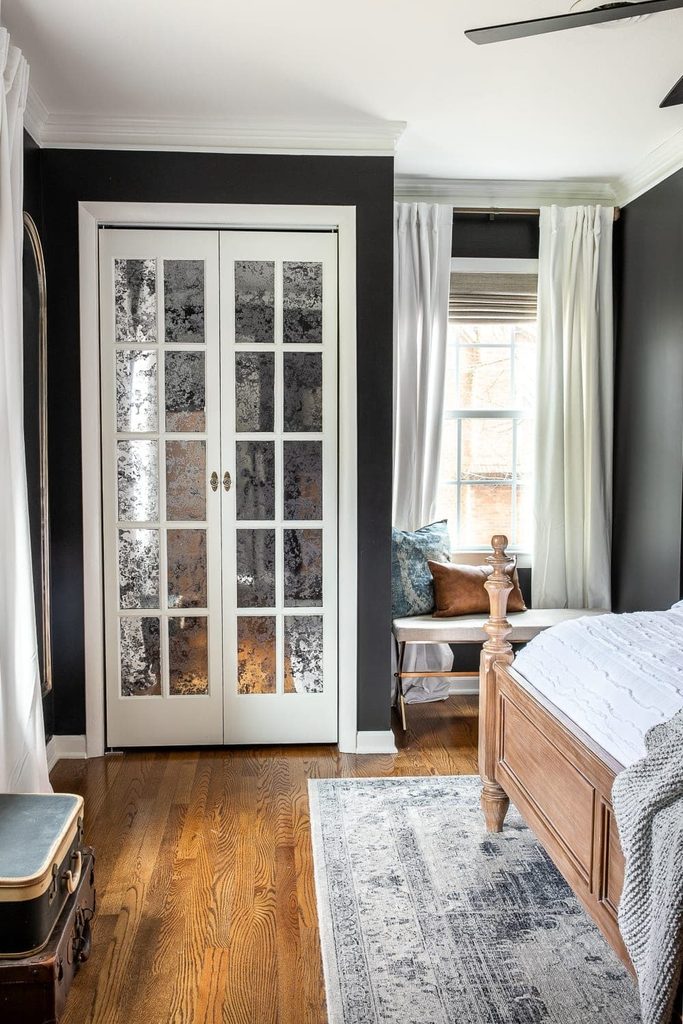
Credits: Lauren / Bless’er House
Reflective closet panels add a layer to this dark bedroom. Their mottled finish scatters highlights rather than producing one crisp reflection, while white door frames give the black wall a strong architectural boundary.
Warm flooring and the wooden bed keep the effect from feeling cold. Consider how mirrored doors will look from both the doorway and the pillow position before choosing a finish.
They should reflect something you enjoy seeing, not simply a crowded storage corner. An aged surface can suit a collected room, although its pattern deserves a full sample rather than a tiny swatch.
Leave the surrounding wall relatively quiet. The door treatment already combines contrast, texture, and reflection within an element the bedroom needs for everyday use.
13. Lift a Dark Dresser Wall With Pale Artwork
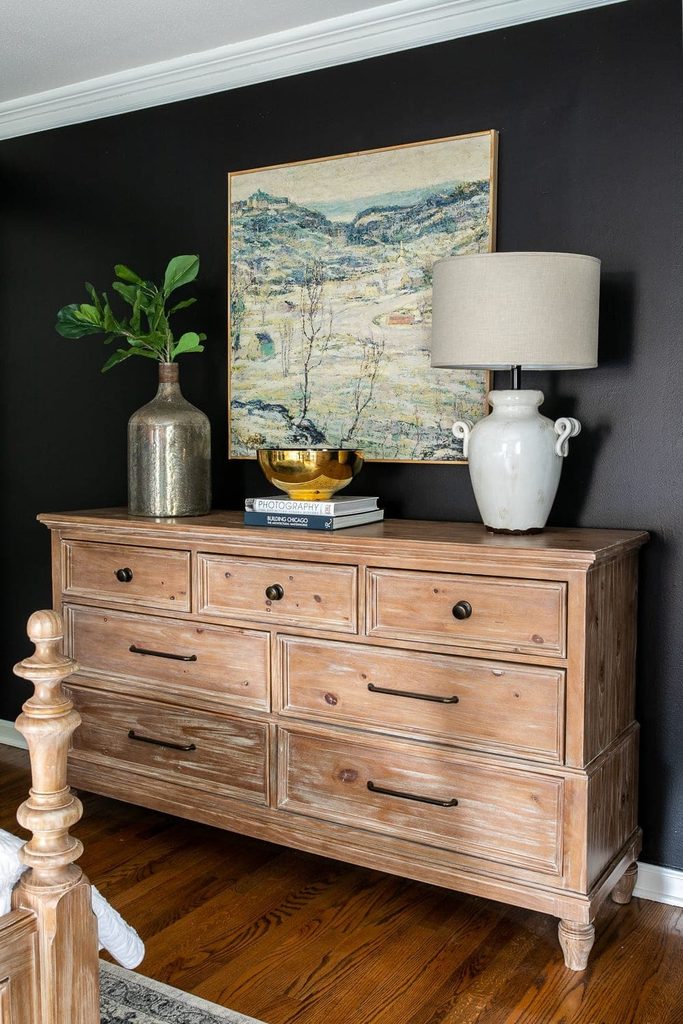
Credits: Lauren / Bless’er House
A pale landscape creates a clear focal point above this wooden dresser. Its light background stands apart from the black wall, with a cream lamp and reflective bowl carrying smaller highlights across the furniture.
The arrangement feels layered because the objects differ in height and material. Begin with one artwork sized for the dresser, then add only the pieces that help it feel balanced.
You do not need to fill the full tabletop to make a dark wall interesting. Leave a practical landing spot for everyday items and keep drawers easy to access.
A warm wood finish will soften the contrast. Check the artwork under evening lighting so its quieter details remain visible when the rest of the room darkens.
14. Pair Plum Walls With a Gently Patterned Ceiling
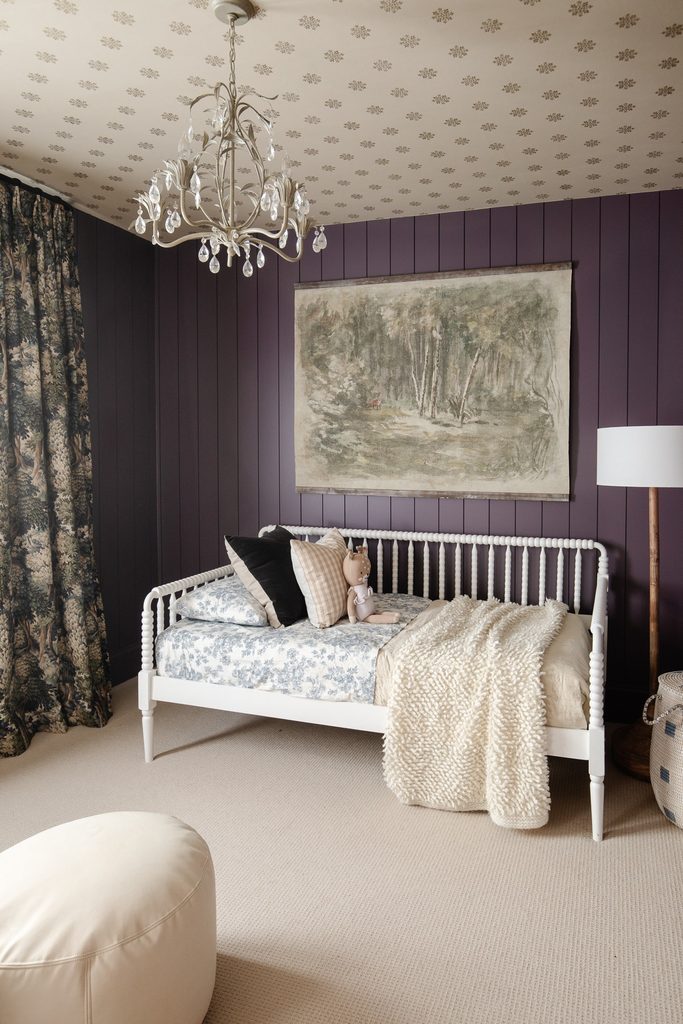
Credits: Chris Loves Julia
Plum wall boards give this bedroom its depth, while a pale patterned ceiling adds interest overhead. The white spindle bed and soft blanket provide lighter shapes beneath a woodland wall hanging.
This is a useful way to introduce a moody palette without making every surface intense. Choose the darker wall color first, then look for a ceiling pattern with enough quiet background to keep the room comfortable.
View both samples together before deciding on curtains or bedding. Simple vertical boards can help separate several decorative patterns by giving the eye an orderly rhythm.
Keep large furniture light if you want that contrast to remain prominent. A small room can support rich color when each additional pattern has a distinct scale.
15. Warm a Saturated Bedside With Honey Colored Wood
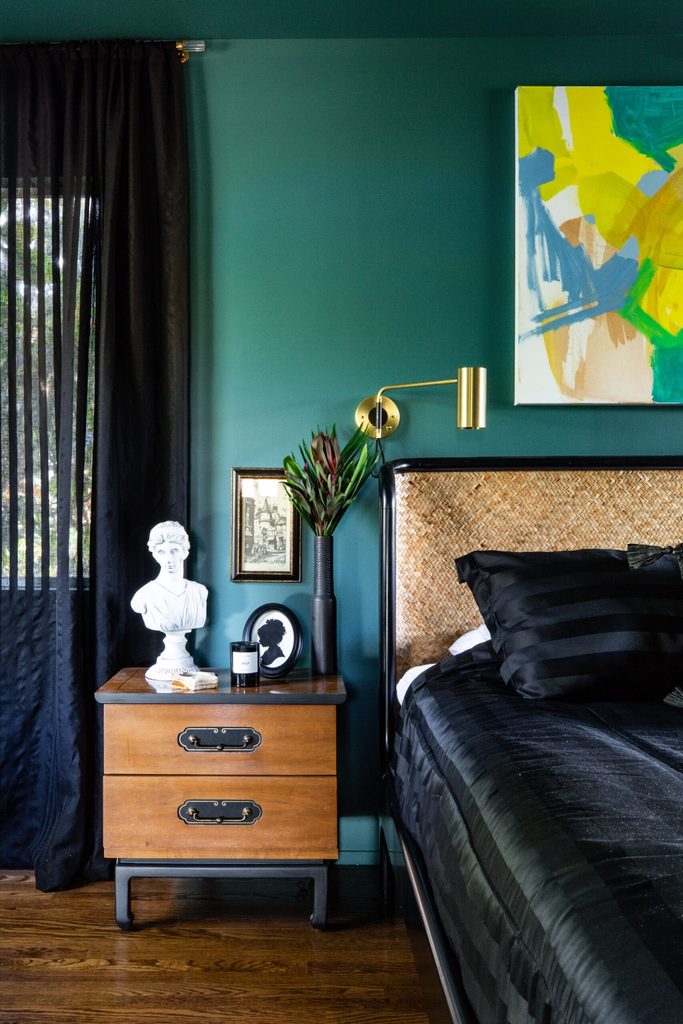
Credits: Annette / A Vintage Splendor
A warm wooden chest stands out between teal walls and dark striped bedding. Its simple drawer fronts offer a calmer surface beneath the sculptural white bust, slim vase, and brass reading light.
The woven headboard repeats the wood’s warmth without matching its finish exactly. This approach can help a deeply colored bedroom feel collected rather than severe.
Start with a bedside piece that has useful storage, then choose a small number of objects in contrasting materials. A pale ceramic or stone accent will remain readable against saturated paint.
Keep taller decorations outside the reach of pillows and moving curtains. Let the furniture show some empty surface so the bedside remains easy to use when you are settling down for sleep.
16. Carry Olive Paint Around an Awkward Bedroom Corner
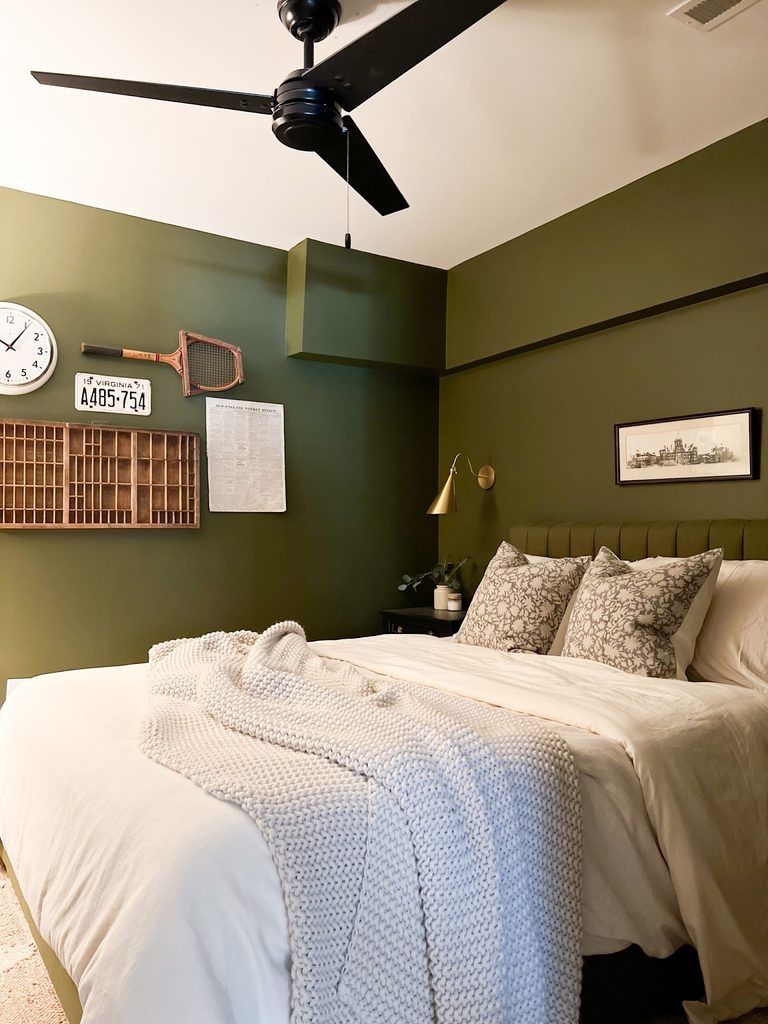
Credits: Cass / Cass Makes Home
Olive paint unifies the walls and projecting structure in this bedroom, allowing an unusual corner to become part of the room’s character.
The similarly colored headboard feels settled beneath a narrow framed print, while pale bedding keeps the mattress clearly defined. A brass light adds one bright point without dominating the wall.
When your bedroom has bulkheads or uneven wall planes, test whether continuous color makes them feel calmer. There is no need to emphasize every change in depth with contrasting trim.
Keep used furniture where standing and walking remain comfortable. A limited grouping of meaningful objects can then add personality to an adjacent wall.
Choose bedding with visible texture so the pale layers remain interesting against the deeper paint.
17. Surround a Framed Bedroom Screen With Dark Molding
Credits: Chris Loves Julia
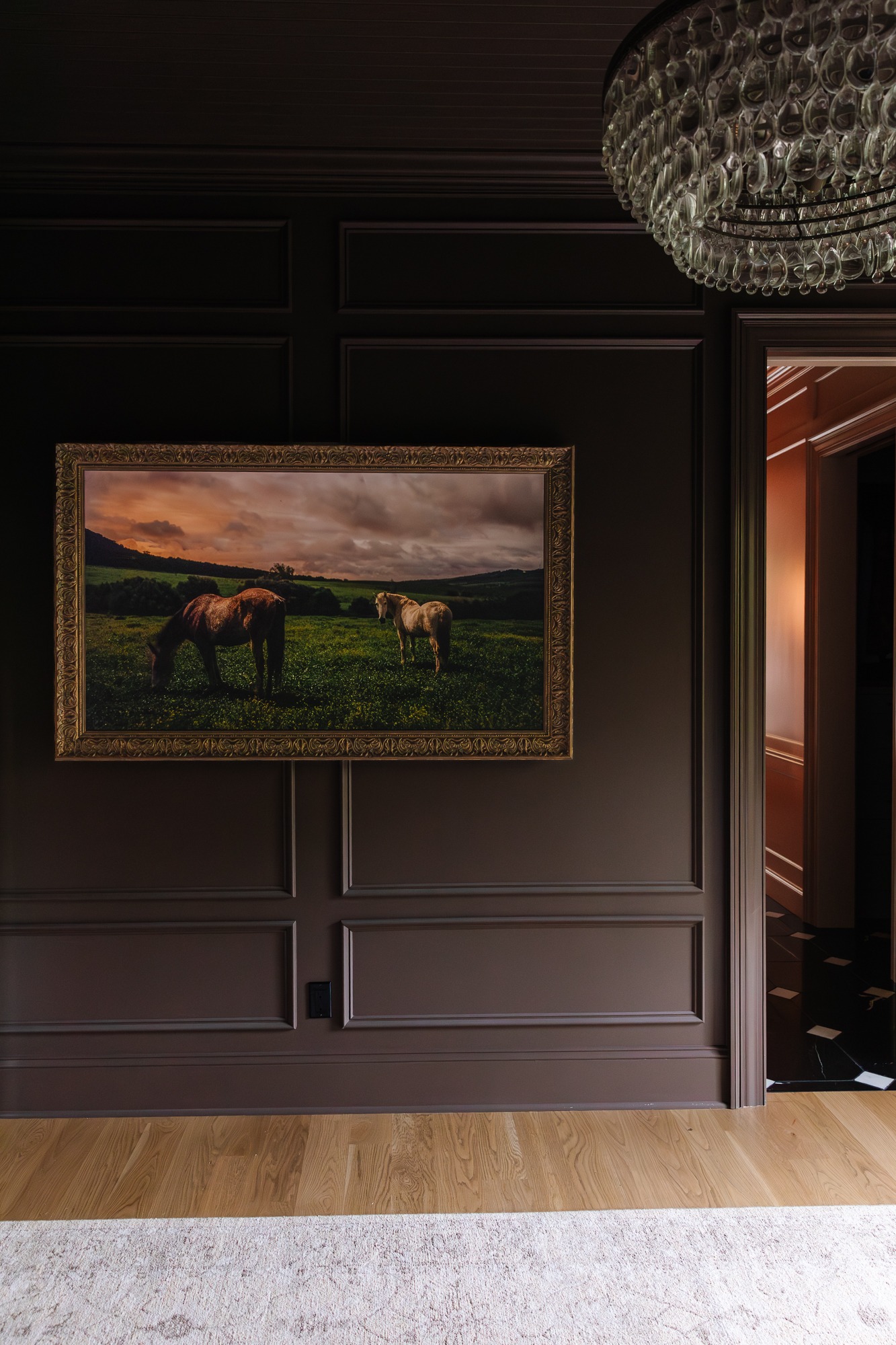
Dark molding gives this bedroom television wall a finished presence even when the screen shows artwork. The ornate frame brings a warm edge to the image, while brown paint continues across the panels and nearby trim.
The wall feels deliberate because the screen occupies a defined place within the architecture. If a television belongs in your bedroom, consider its position alongside the room’s decorative elements instead of treating it as an afterthought.
Check comfortable viewing height from the bed before planning molding or a surrounding frame. Keep ventilation and controls accessible, and follow the device manufacturer’s mounting guidance.
A cable route will preserve the clean effect. Choose displayed artwork with colors that remain comfortable beside the paint and surrounding furnishings.
18. Soften Black Walls With Olive Linen and Leather
Credits: Ashley Mayes / Bigger Than the Three of Us
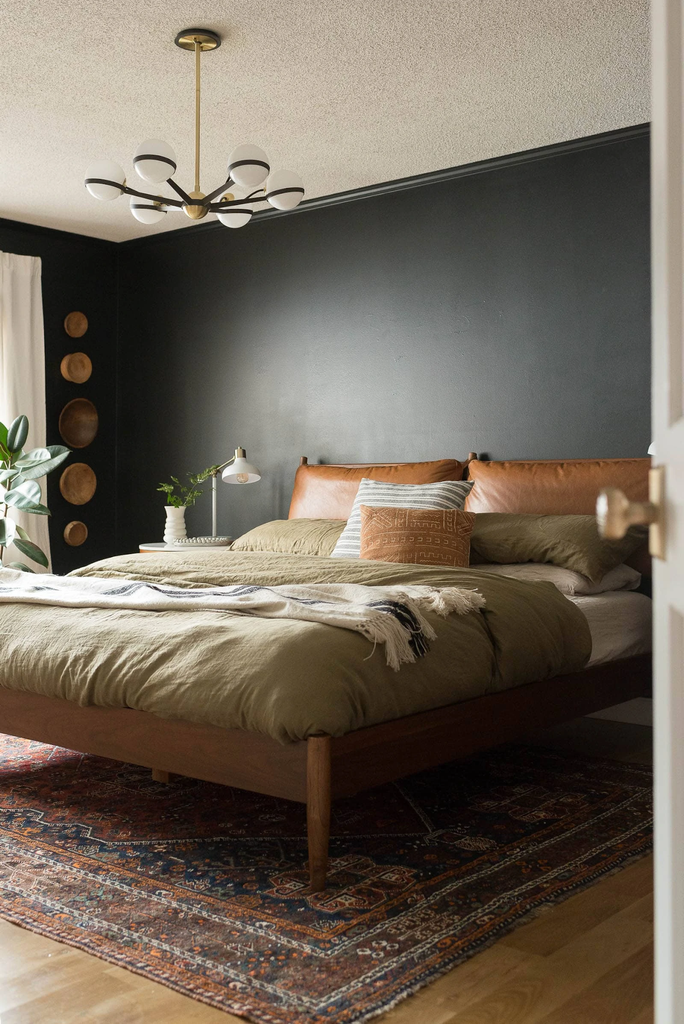
Olive bedding and warm leather give this black bedroom an earthy mood. The wooden bed frame and patterned rug add further warmth, while white curtains and a pale ceiling preserve a sense of daylight.
The empty space above the headboard lets the materials carry the arrangement. Try this direction if you prefer rich color with little decoration.
Choose bedding that feels comfortable against your skin, then compare its undertones with the leather or wood you already own. Slightly different shades can look natural together when their warmth is similar.
A low bed frame helps leave more wall visible. Keep bedside lighting useful and restrained.
You can add personal objects gradually without needing to fill every dark surface at the beginning.
19. Reveal Dark Wood Grain With a Herringbone Wall
Credits: Kristi Murphy
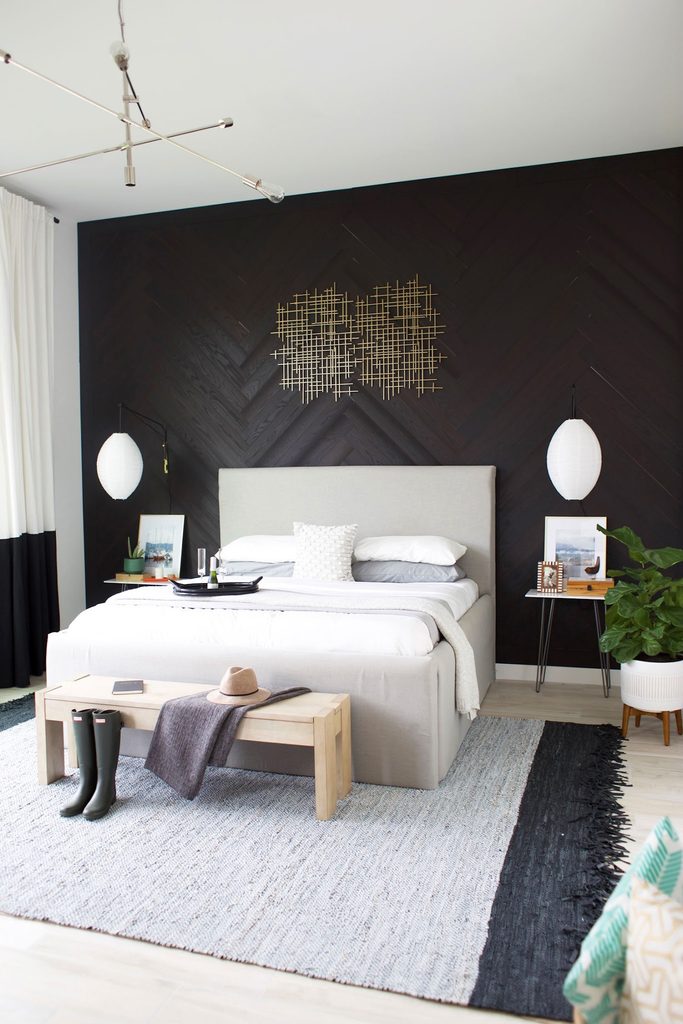
A charcoal herringbone wall brings movement behind this light upholstered bed. The diagonal wood pieces catch illumination differently, so the surface has depth even though its color stays close to black.
White hanging shades and pale bedding create clear shapes in front of the pattern. For a similar treatment, look at several boards together before choosing the finish; grain and color variation become more noticeable across an entire wall.
Plan the central arrangement around the bed rather than the empty room alone. Keep artwork restrained so the angled texture remains visible.
A simple bench and rug can support the composition without adding another strong motif. This idea works best when careful installation leaves the wood pattern looking continuous and intentional.
20. Enclose a Canopy Bed in Dark Floral Pattern
Credits: Brooke Christen / Nesting With Grace
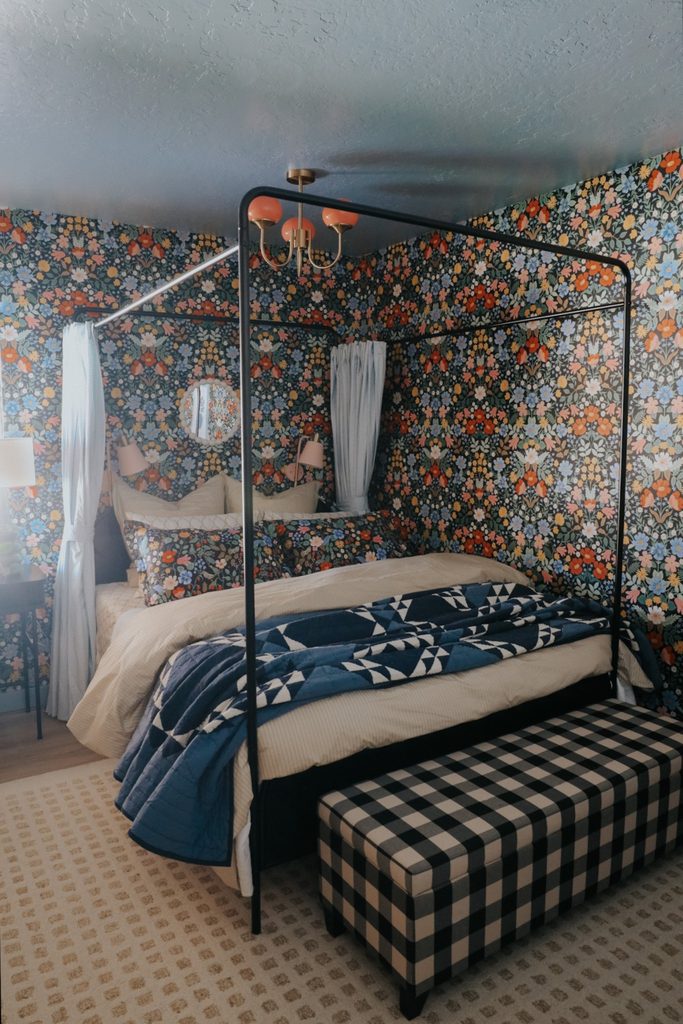
Dark floral walls and a blue ceiling make this canopy bed feel tucked into its own enclosure. Slim black posts give the busy pattern a clear frame, while pale curtains and cream bedding create breathing room inside it.
The checked bench adds a larger geometric repeat below the smaller flowers. When mixing patterns in a moody bedroom, vary their scale and repeat a few colors instead of matching every piece.
Start with the wall covering, then introduce simpler textiles gradually. Check canopy dimensions against ceiling lights and leave comfortable clearance around the bed.
Fabric should stay away from hot fixtures and moving parts. Keeping the curtains tied back can preserve the cozy effect while making the bed easier to use.