
A bedroom window can feel awkward when it sits off-center, crowds the bed, or spans an entire wall. Bedroom Window Ideas can help you work with those quirks while making the glass feel connected to the rest of the room.
The approaches here range from hanging separate curtain panels between wide windows to adding color to the sash or fitting bedside lighting below a high window.
You’ll also find ways to make a deep bay feel like a sitting nook and to handle tricky corners, dormers, and sloped ceilings. Each idea starts with the window’s shape and the room around it.
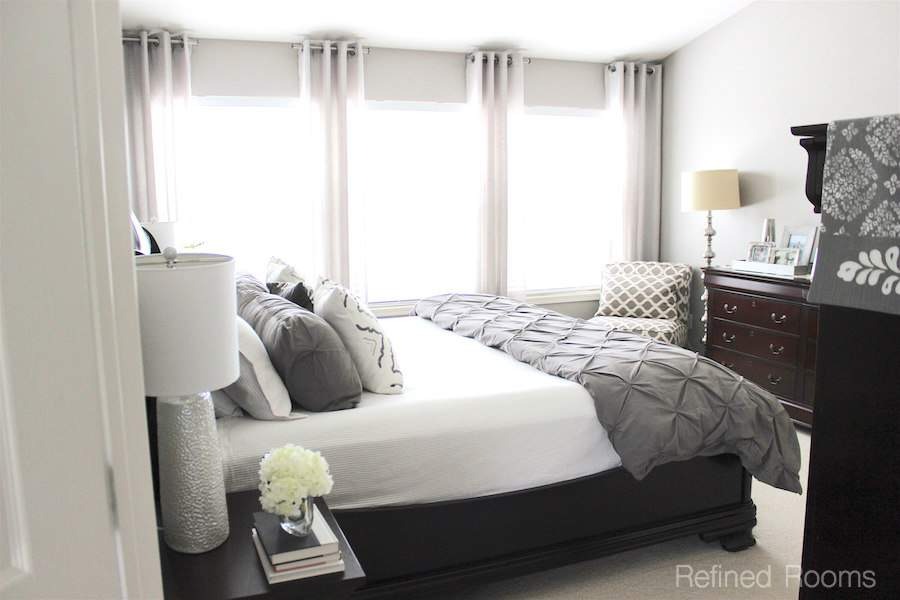
1. Break a Wide Window Wall Into Soft Vertical Sections
Credits: Natalie Gallagher / Refined Rooms
Several tall windows can feel like one oversized blank wall unless their divisions receive a little attention. Here, silver gray curtains fall between the bright openings, creating a steady rhythm behind the bed and reading chair.
Short rods near the ceiling support each gathered section rather than drawing one heavy line across the entire wall. The pale fabric works with the bedding while leaving the dark furniture clearly outlined.
Try this arrangement when individual shades already handle light control and you mainly want decorative softness. Check the spacing between windows before choosing panel widths, since bulky folds can cover narrow areas of glass.
Keeping the hems consistent makes separate curtains feel like parts of a single carefully planned bedroom treatment.
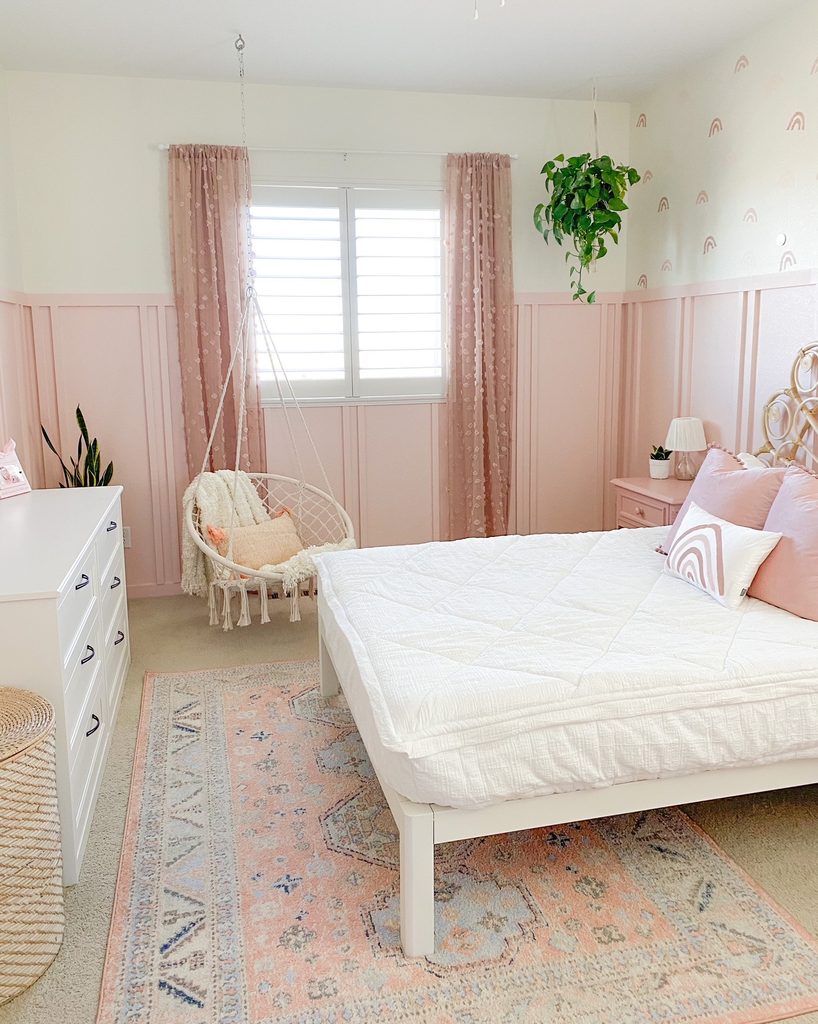
2. Soften White Shutters With Textured Pink Curtains
Credits: Kaylee / Sprucing Up Mamahood
White shutters give this bedroom window a clean center, while pink curtains introduce softer edges on either side. Their raised texture adds detail without competing with the painted wall boards or the small rainbow motifs above them.
Because the shutters remain visible, the layered treatment reads as two useful elements rather than one crowded bundle of fabric.
Match the curtain color loosely to the surrounding paint for a gentle effect, or repeat it in a pillow to connect the window with the bed.
When measuring, allow the shutter panels to swing without catching the curtains. Nearby furniture should also leave a clear approach for everyday adjustments.
A slim white rod keeps the hardware quiet against the pale upper wall here.
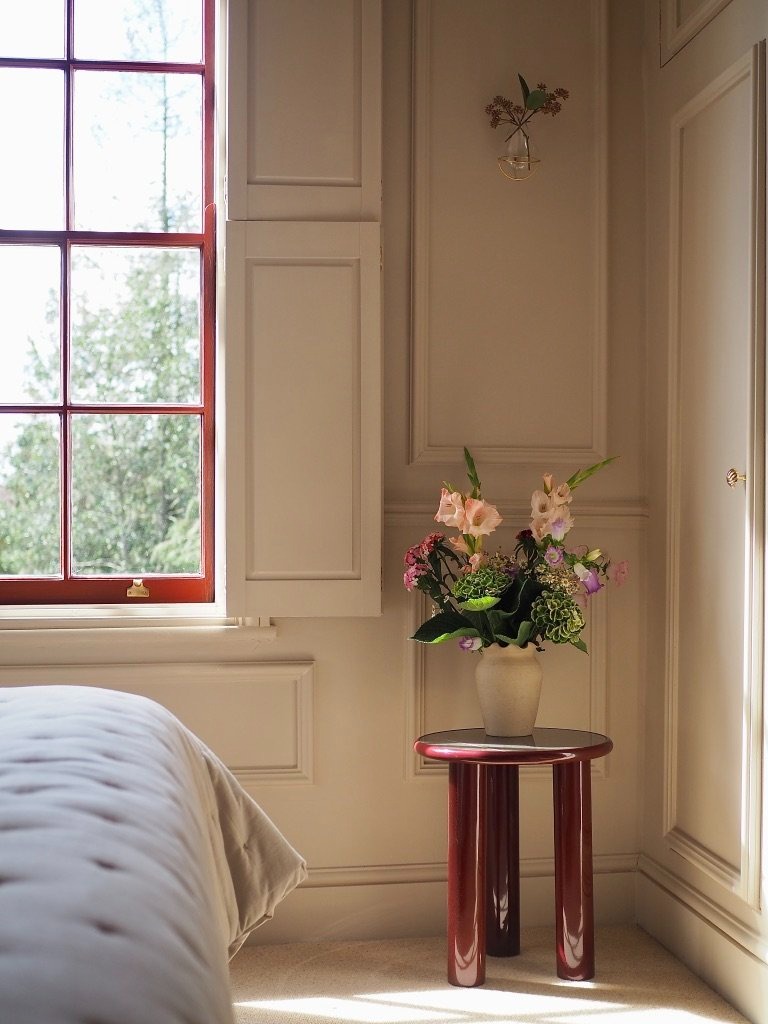
3. Give the Window Sash a Rich Accent Color
Credits: Melanie Lissack Interiors
A deep red window sash creates a precise accent inside this softly painted bedroom. The surrounding molding and folding interior panels stay pale, so the colored grid draws attention to the daylight without making the whole wall feel busy.
A glossy burgundy side table repeats the tone below, giving the window an obvious connection to the furniture. This is a useful alternative when you want architectural detail to carry more of the room’s personality.
Study the existing frame closely before planning a finish, especially around moving parts and seals. Test your chosen color beside both the wall paint and outdoor greenery.
Keep the sill relatively clear so the fine lines of the sash remain the main feature in the composition.
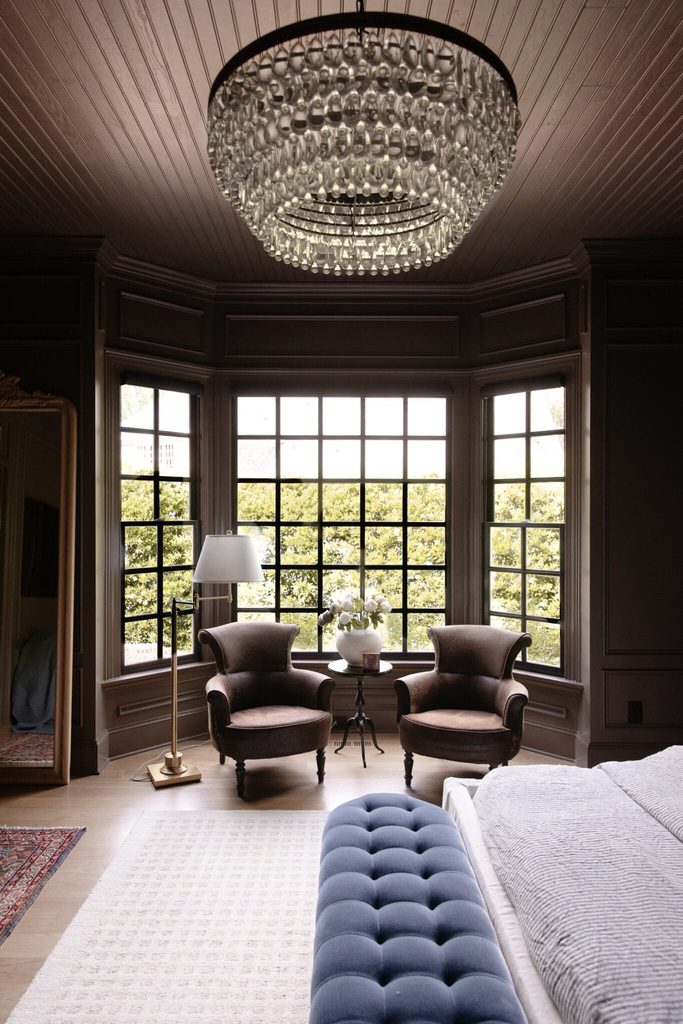
4. Let a Dark Window Bay Become a Bedroom Sitting Area
Credits: Chris Loves Julia
This deep window bay feels like a small room within the bedroom. Brown walls, ceiling boards, and trim wrap around the three glazed sides, while two compact upholstered chairs sit below the view.
The dark frames make the outdoor greenery especially noticeable and give the seating area a calm, enclosed character. A small round table fits between the chairs without filling the center with a large piece of furniture.
If you have a similar bay, measure its angled sides before deciding whether one chair or a pair will fit comfortably. Preserve room to reach every window and any shade controls.
Repeating the surrounding wall color on the trim can unify complicated geometry while allowing the glass to remain visually distinct.
5. Continue Dark Sheers Around Corner Windows
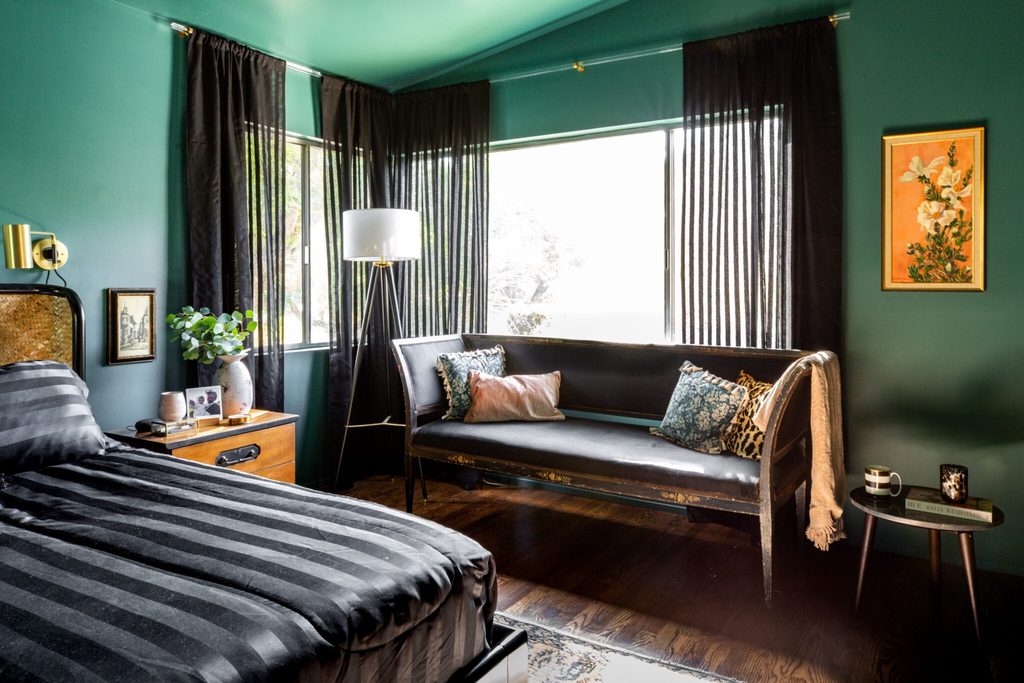
Credits: Annette / A Vintage Splendor
Corner windows can look disconnected when each side receives a different treatment. In this bedroom, dark sheer curtains continue around the meeting walls, linking the narrow side opening with the broad window behind the settee.
The translucent fabric keeps the view of daylight visible through its folds, while the deep green paint provides a consistent background. Slender rods and small brass brackets avoid overwhelming the corner with hardware.
Plan the turning point carefully so adjacent panels can gather without trapping one another. Leave a little space behind seating for the cloth to hang freely.
Because sheer fabric offers limited screening after dark, consider a separate privacy layer where needed. The photograph’s strongest lesson is continuity across an awkward architectural junction.
6. Line a Deep Window Recess With White Planks
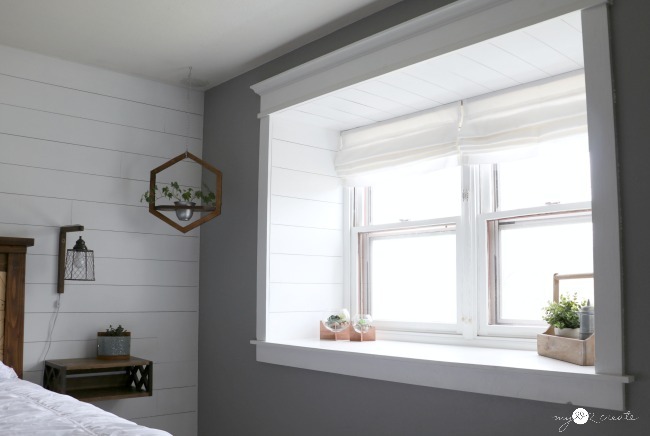
Credits: Mindi Carwin / My Love 2 Create
A deep bedroom window becomes an architectural feature when its sides and ceiling receive the same white plank treatment as the neighboring wall.
Here, the generous sill holds a few plants, and two pale Roman shades sit neatly above the paired windows. Gray paint outside the recess strengthens the bright outline without adding bulky curtains.
This approach suits a room where the depth around the glass is worth celebrating. Before adding any cladding, account for window operation, existing trim, and the finished depth available for the shade hardware.
Keep plant containers on protective trays and leave the handles accessible. Repeating the plank spacing carefully around the recess helps the window feel intentionally built into the room instead of separately decorated.
7. Keep a Low Bed Beneath Decorative Glazing
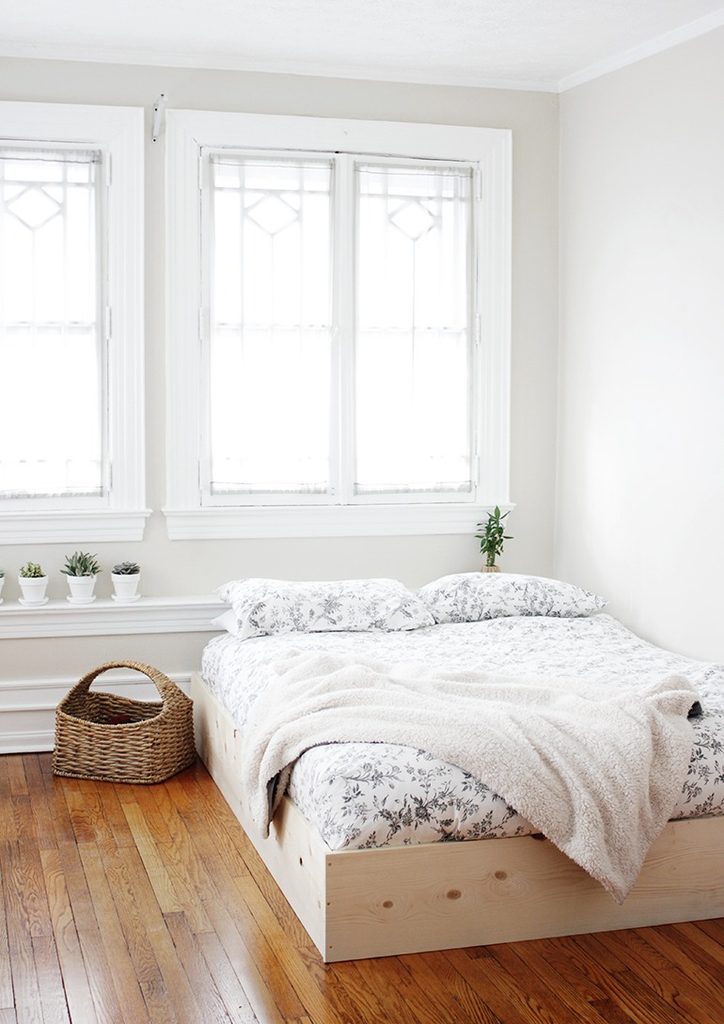
Credits: Caitlin McGrath / The Merrythought
Decorative window panes can supply the pattern that a bedroom needs from artwork or textiles. In this bright room, geometric glass details remain visible above a low wooden bed, with slim translucent coverings softening the light.
The lack of a tall headboard gives the window wall room to breathe. Pale bedding and small pots on the ledge keep the arrangement understated rather than competing with the glazing.
Consider this relationship when existing windows have character you want to retain. Compare the mattress height with the sill and make sure pillows will not obstruct handles or ventilation.
Any window needed for emergency access must remain usable. A low profile bed works best when the surrounding floor also stays easy to navigate.
8. Fit Bedside Lighting Below a High Window
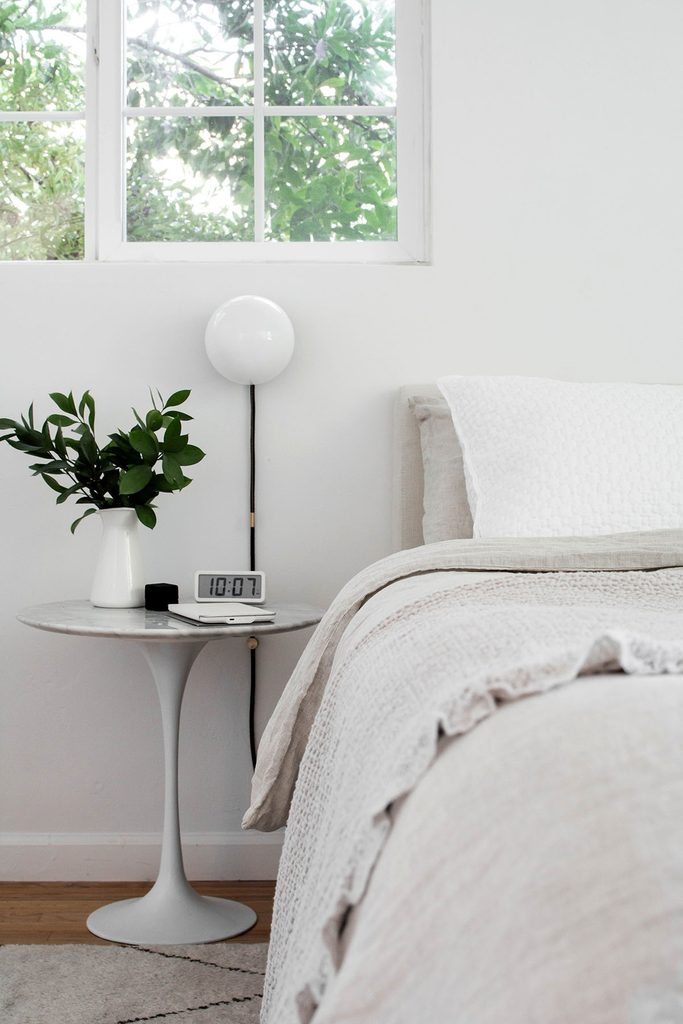
Credits: Amy / Homey Oh My
A high window beside the bed leaves a useful strip of wall underneath for compact lighting. This white globe sconce occupies that space without rising into the glass, allowing the leafy outdoor view to stay open.
A small pedestal table provides a landing spot below, while the light’s slim dark cord adds a restrained vertical line. The arrangement shows how window placement can guide bedside planning instead of becoming an obstacle.
Measure from the sill to the mattress before choosing a fixture, and check its reach from a reading position. Keep the light clear of any future curtain or shade.
A modest plant arrangement echoes the greenery outside without filling the whole tabletop or competing with the bright window above.
9. Emphasize Clerestory Windows With Vertical Wood Slats
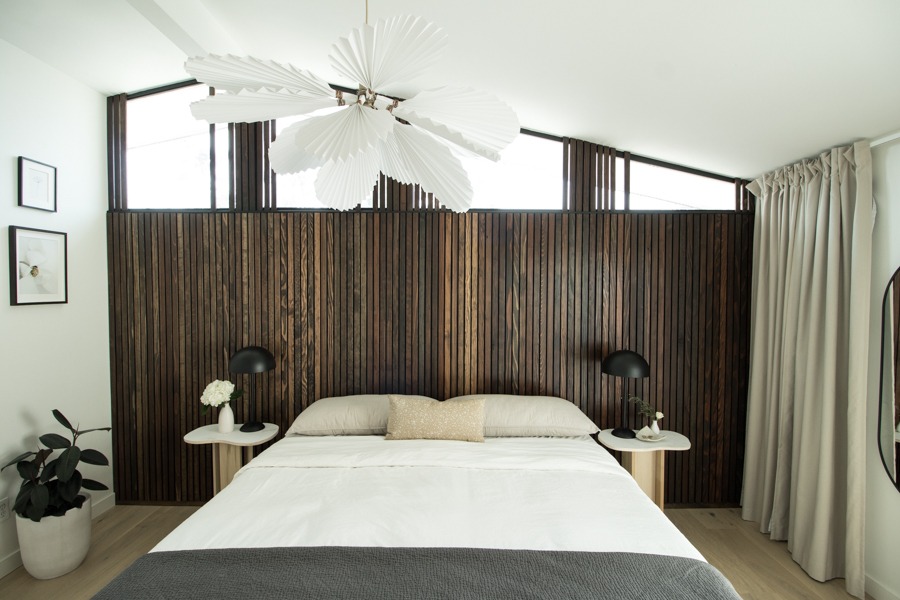
Credits: Jennie Sullins / Jennifer J Sullins
High windows following a sloped ceiling create a band of light above this bed. Dark wooden slats rise toward the glazing and continue between the panes, connecting the wall treatment with the window divisions.
The pale bed and ceiling keep that strong backdrop from dominating the entire room. Rather than covering unusual upper windows automatically, first consider how they contribute to the room’s proportions and daylight.
Check the actual privacy and sleeping conditions before deciding whether they need dedicated shades. Any added treatment must suit the angled openings and remain practical to operate.
Keeping taller furniture away from this wall allows the full roofline to remain visible. The result makes existing architecture feel deliberate through a simple repeated material choice.
10. Raise Curtain Rods Beneath a Sloped Bedroom Ceiling
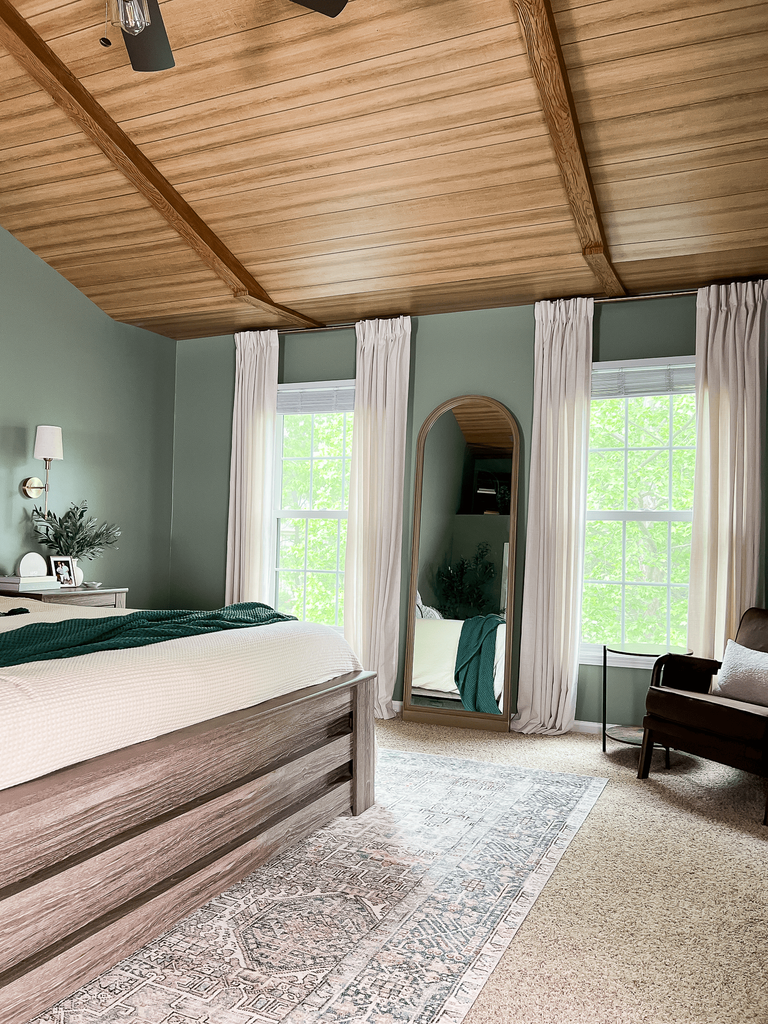
Credits: Christin Cieslarski / My Homier Home
Two tall windows gain extra presence when their curtains begin well above the white trim. In this sage bedroom, pale panels descend from rods close to the wood look ceiling, drawing the eye upward while softening the lower wall.
An arched mirror between the openings repeats daylight and provides a curved pause among the straight lines. The arrangement works because the treatments share a consistent height and fullness.
Measure the ceiling slope and available mounting surface before copying the placement. Panels that gather slightly at the floor need enough space beside chairs and walking routes to remain manageable.
Match their color to a textile, such as the bedding, so the window wall feels connected to the rest of the room.
11. Balance an Off Center Window With a Matching Shelf
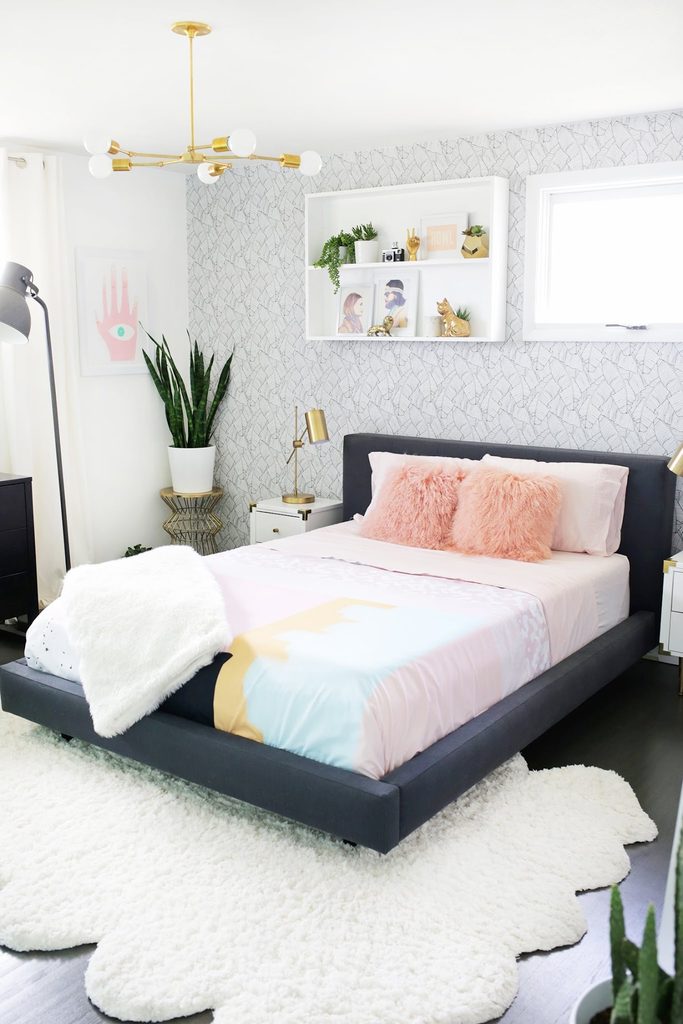
Credits: Laura Gummerman and Elsie Larson / A Beautiful Mess
An awkwardly placed window does not always require moving the bed. This bedroom balances a high rectangular opening with a white display shelf of similar dimensions beside it.
Together, the two forms make a broader composition above the headboard, helping the sleeping area feel centered on the patterned wall. The shelf’s open compartments add depth while the window contributes light.
Use this idea only when a mounted shelf can sit safely away from anyone’s head and remain within its rated load. Compare the outside measurements of the window trim with the proposed shelf rather than matching only the glass.
Keep displayed objects restrained and stable. Repeating white around both rectangles gives them a clear relationship without disguising the actual window.
12. Introduce Coastal Color Through a Single Curtain Layer
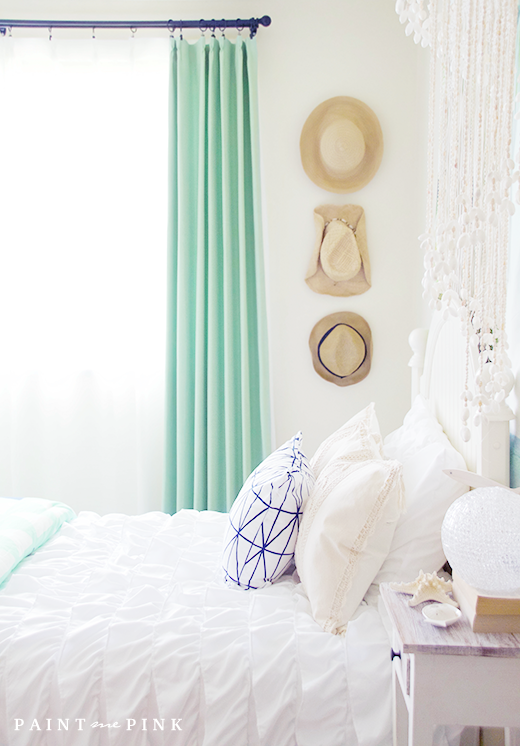
Credits: Norma / Paint Me Pink
Seafoam curtains give this otherwise white bedroom a fresh area of color beside the bed. Their long vertical folds stand out against a light inner covering, while the dark rod and rings provide a crisp top edge.
Woven hats nearby bring another natural texture into the same small section of wall. This is a straightforward way to make the window part of a coastal palette without adding themed objects everywhere.
Choose a shade that relates to one other textile, then let most of the bedding remain pale. Compare the fabric in daylight before ordering because a luminous window can change its apparent color.
Leave enough wall space for the gathered panel so it does not cover more glass than necessary.
13. Use Opening Shutters Inside a Dormer Nook
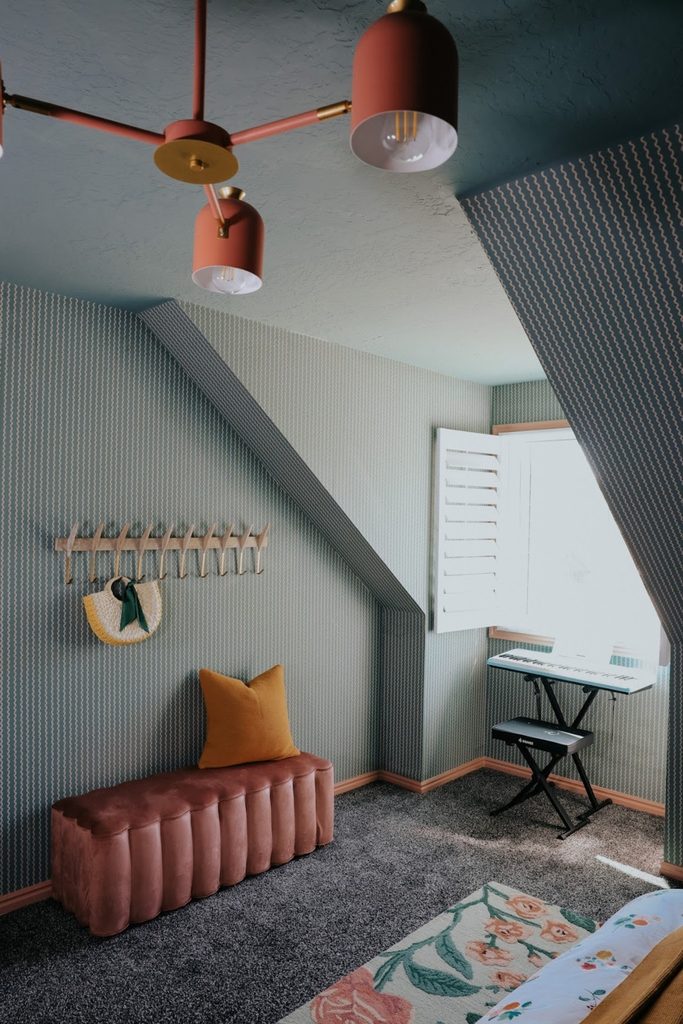
Credits: Brooke Christen / Nesting With Grace
A dormer window often has little spare wall space for sweeping curtains. Here, white shutter panels fit the opening and swing into the narrow nook, leaving the sloping wallpapered sides visible.
A compact keyboard sits below the sill, turning the bright recess into a useful bedroom activity area. The contrast between plain shutters and tiny repeating wall pattern keeps the opening easy to identify.
Before placing furniture in a dormer, map the full movement of the shutters and window sash. Equipment below should remain easy to move when you need access.
Check the light on screens or instruments at different times of day. A treatment contained within the recess helps the angled architecture remain the defining feature of this space.
14. Center a Low Dresser Between Paired Windows
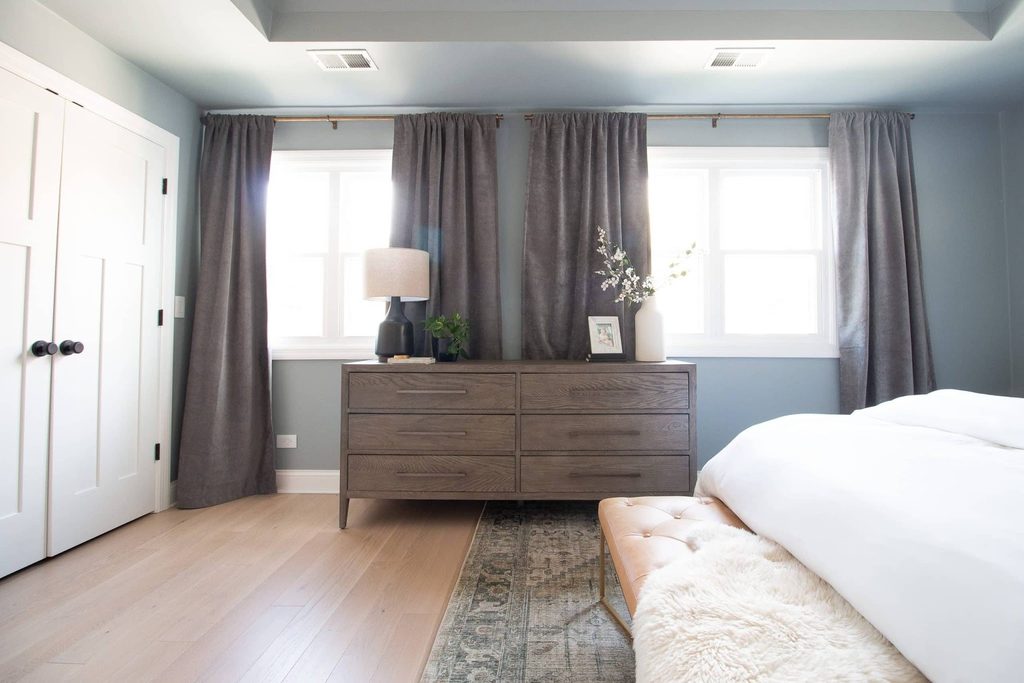
Credits: Casey Finn / The DIY Playbook
Two bedroom windows can provide a natural framework for a dresser. In this blue gray room, the low wooden piece sits below the central space, with matching curtains framing both openings.
Their inner panels form a soft backdrop above the storage, while the outer panels balance the composition across the wall. A lamp and a simple vase add height without replacing the windows as its main structure.
Measure the sill height before choosing a dresser, and allow space behind it for curtains to move freely. Avoid packing the top with tall objects that block handles or daylight.
Keeping both rods level matters more than forcing every accessory into perfect symmetry. The furniture then feels naturally anchored by the window arrangement.
15. Pair a Woven Shade With Pale Full Length Curtains
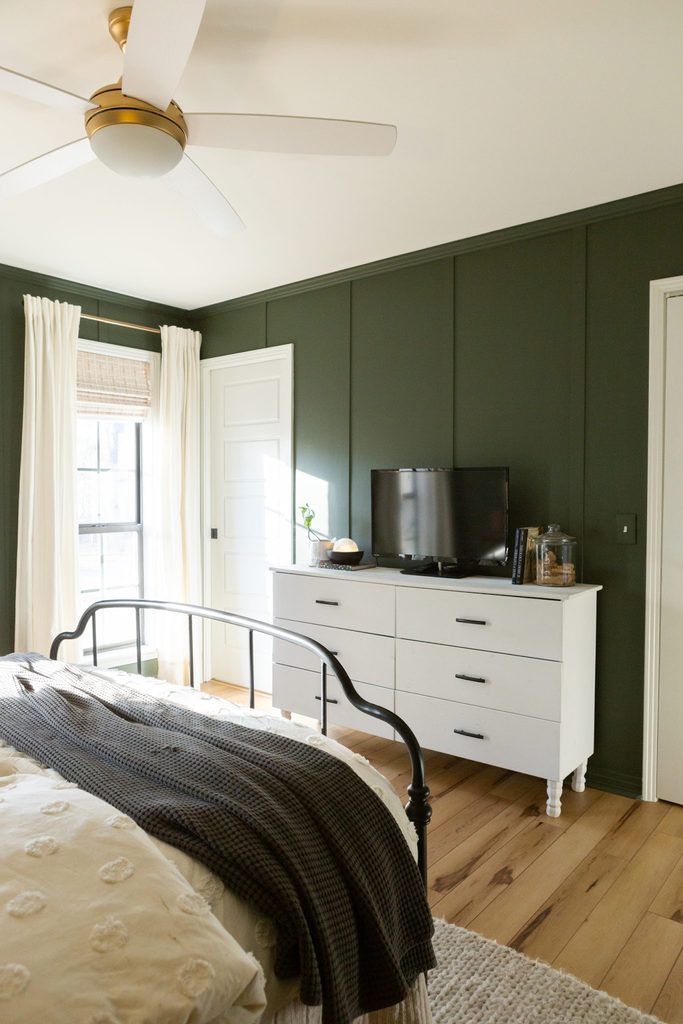
Credits: Jordan Jean
A woven shade brings a natural band to the top of this tall bedroom window. Pale curtains soften its sides and connect with the white dresser nearby, while the surrounding deep green paneling makes both layers stand out.
The shade supplies a different texture from the smooth wall and gathered fabric, keeping the treatment interesting without adding a busy print.
When combining layers, check that each can move independently and that the rod projects far enough beyond the shade hardware. Look through a material sample with light behind it before judging privacy.
An additional lining may be needed for your circumstances. Leaving the window’s lower portion visually open preserves its tall proportions and keeps the darker room from feeling enclosed.
16. Light Filtering Linen for a Dark Bedroom
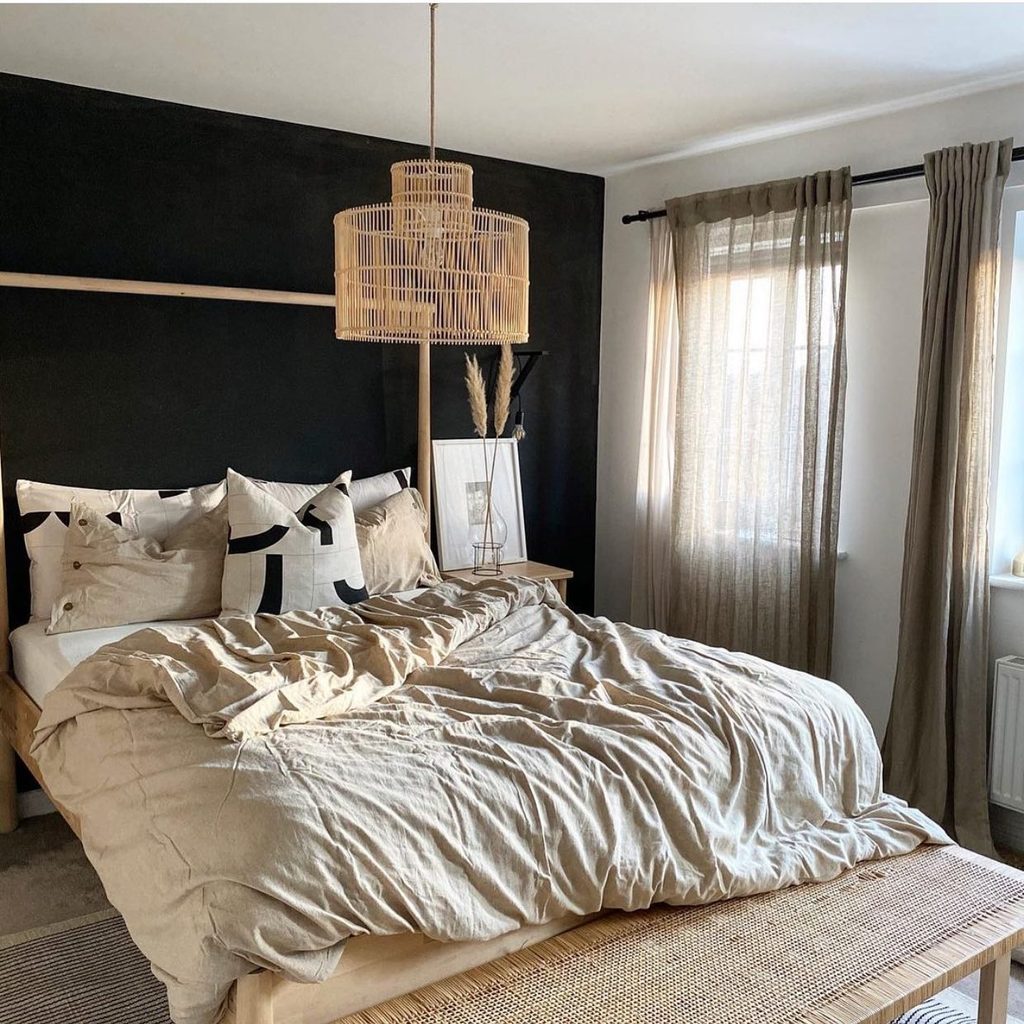
Credits: Instagram
Translucent curtains soften the contrast between a dark bedroom wall and bright windows. Here, loosely textured fabric allows daylight to remain visible through the panels, echoing the relaxed bedding and woven pendant.
The creator’s caption identifies linen curtains among the room’s details. This is a good visual reference for anyone who wants an informal finish instead of tightly tailored drapery.
Pay attention to how the fabric looks both gathered and spread across the glass; its color will change with the light behind it. Sheer or loosely woven cloth should not be assumed to provide nighttime privacy.
Where that matters, pair the decorative layer with an appropriate separate covering, and keep the two treatments easy to operate without tangling or bunching.
17. Repeat Black Window Grids in the Bed Frame
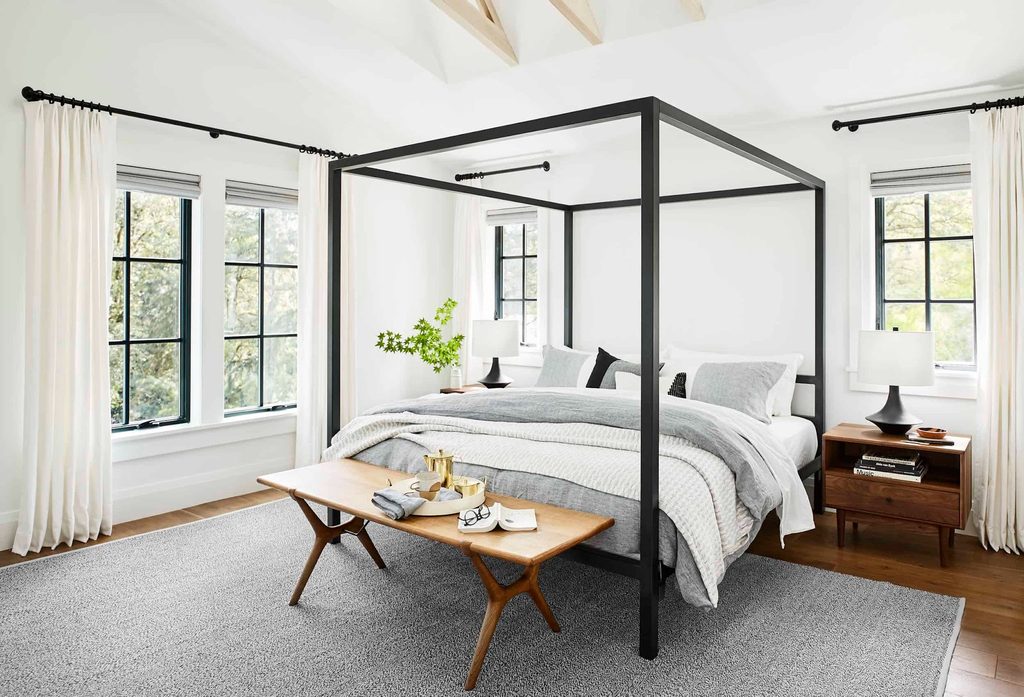
Credits: Sara Tramp / Emily Henderson
Black window grids become part of the bedroom’s larger design when their lines repeat in the furniture. Here, a simple canopy bed echoes the dark frames, while white curtains soften the perimeter and gray shades sit close to the glass.
The repeated contrast gives several windows a shared identity without making their treatments heavy. Use the same hardware finish around the room, but leave enough variation in wood and fabric to prevent a rigid effect.
Before positioning a canopy, check that its posts will not interfere with opening curtains or reaching the shades. Keep nearby lamps below the most important sightlines where possible.
The room’s success comes from relating the window architecture to the bed while preserving generous open space.
18. Stack One Curtain Panel Away From a Tight Corner
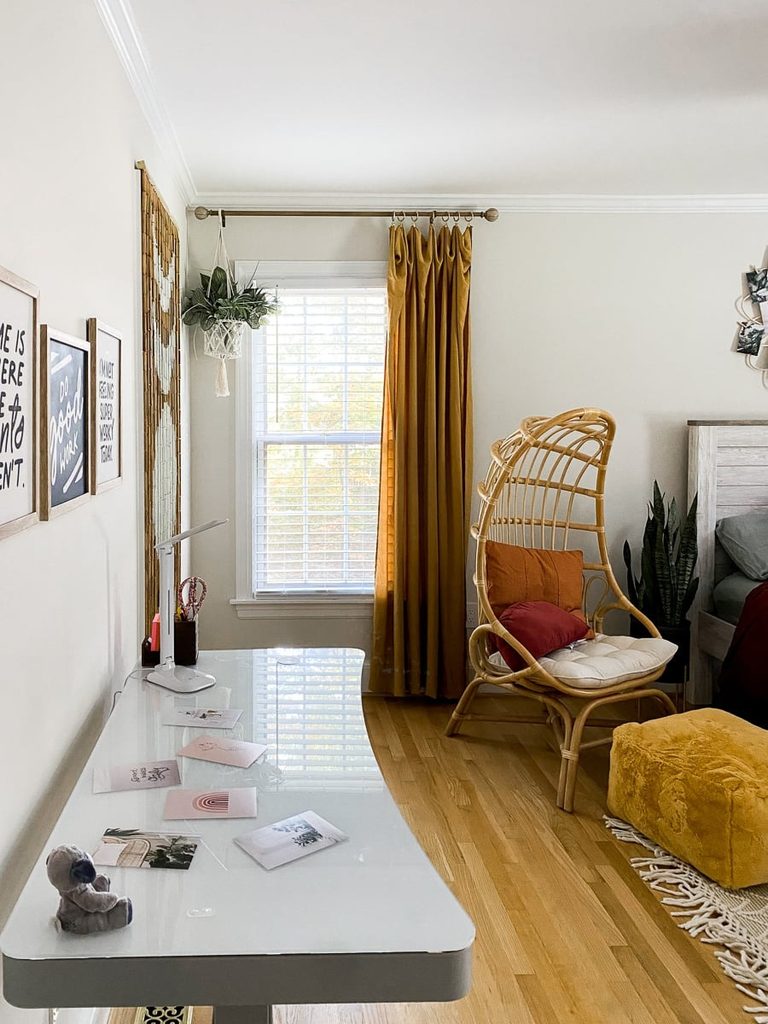
Credits: Aniko / Place of My Taste
A window tucked beside a bedroom corner may work better with fabric gathered to one side. In this room, a mustard panel hangs to the right of the opening, leaving the narrow left edge available beside the desk.
White blinds manage the glass itself, while the curtain supplies warmth next to a curved rattan chair. This asymmetrical arrangement feels intentional because the golden color repeats in the cushion and ottoman.
Measure the clear wall on the open side before deciding how much fabric it can hold. Make sure the panel can still cover the intended area if it needs to close.
A rod extending beyond the trim helps preserve daylight and gives the gathered fabric a comfortable place to rest.
19. Set a Plain Dark Roman Shade Against Floral Wallpaper
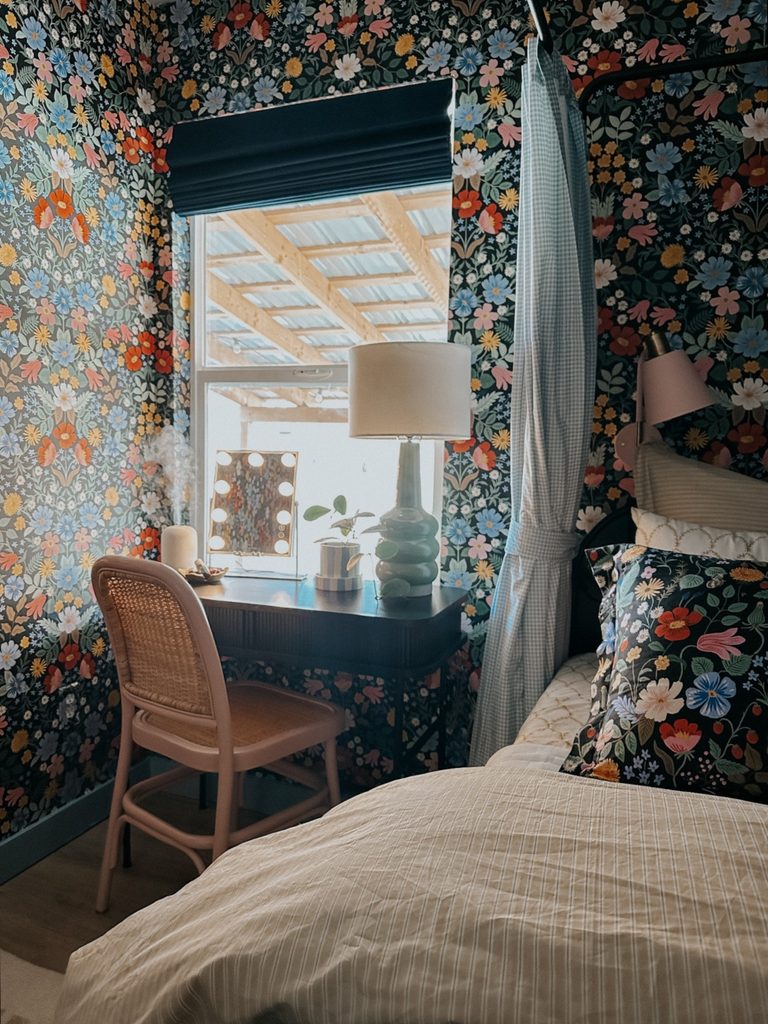
Credits: Brooke Christen / Nesting With Grace
A plain dark shade gives the eye a resting place in this patterned bedroom. Its broad folds sit above the window, matching the deep background of the floral wallpaper rather than introducing another print.
Below, a small dressing desk uses the available daylight while remaining close enough to serve the bed. The adjacent checked canopy curtain belongs to the bed, so keeping the window treatment simple prevents the two fabric elements from competing.
Choose a shade color from the wallpaper’s quieter background and review a sample beside the trim. Leave enough clearance above desktop accessories to operate the window and covering comfortably.
The combination shows how one solid textile can make a busy bedroom corner feel more organized and usable.
20. Keep an Arched Transom Visually Separate From the Lower Window
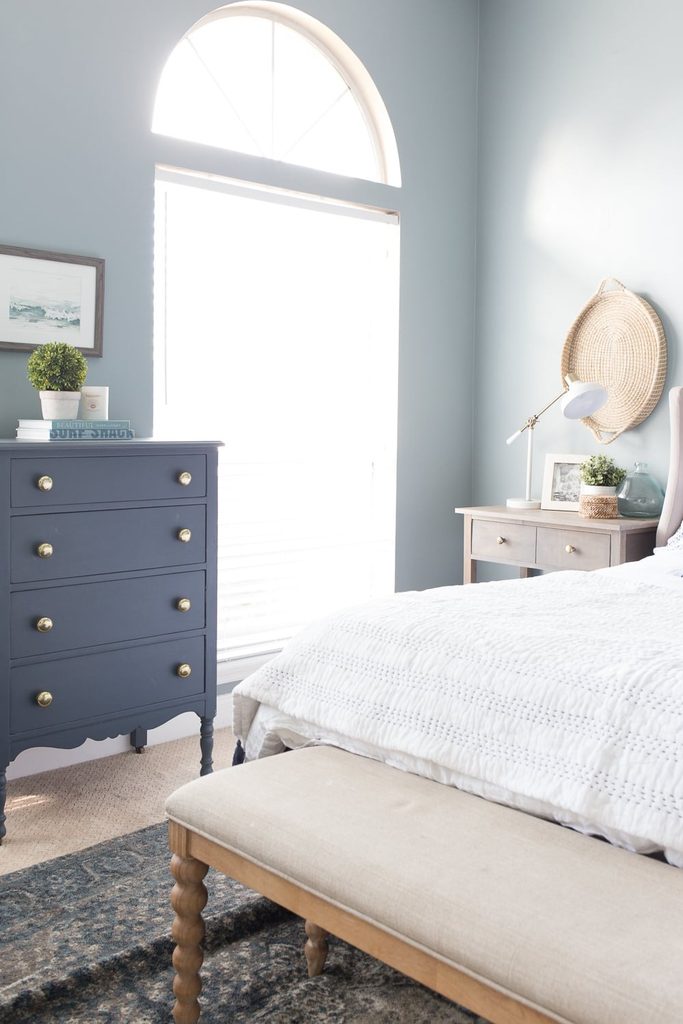
Credits: Chelsea / Making Home Base
An arched transom can remain the star of a bedroom wall when the covering stops below its curve. This blue room uses a pale blind on the rectangular lower window, leaving the upper semicircle exposed.
The clean separation makes the opening feel tall and lets the curved outline soften the nearby dresser and bed. It is an appealing arrangement when that upper glass does not create unwanted glare or privacy concerns.
Evaluate those conditions before choosing to leave any portion uncovered, especially if morning light reaches the pillow. A separate fitted treatment may be needed for better darkness.
Keep furniture far enough from the opening for easy operation. Restrained trim and simple bedding allow the window’s shape to provide decoration.