
A calm living room doesn’t have to feel bare; the difference often comes down to giving each detail a clear role. Modern Minimalist Living Room Ideas can help you make a room feel considered while keeping its open, uncluttered character.
Let a beautiful view take the place of wall art, use one dark wall to give pale seating a focal point, or keep a compact room visually open with a glass coffee table.
Other approaches show how to bring in personality through a narrow color range, a single patterned surface, or a small seasonal accent. The result is a practical mix of restraint, texture, and warmth.
1. Let the View Replace Wall Decor
Credits: Instagram
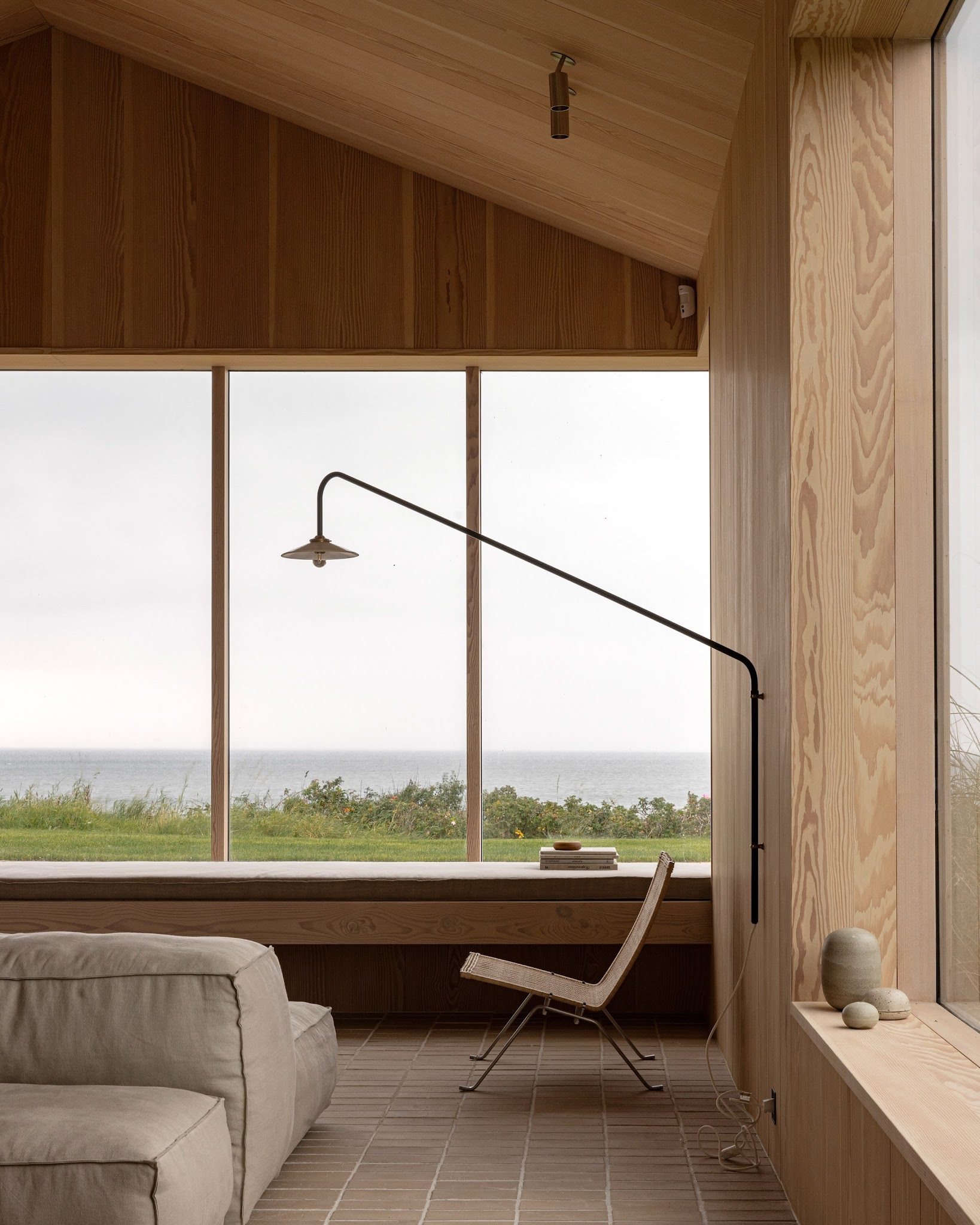
A wide window becomes the artwork in this wood-lined living room.
The pale sofa, slim lounge chair, and long window bench stay low enough to preserve the coastal view, while an extended wall lamp reaches into the seating area without adding another base on the floor.
Follow that hierarchy when a room has an appealing outlook: position the largest seat first, then add only the pieces needed for reading and conversation.
Carry a similar warm color across walls, ceiling, and furniture to keep the architecture calm. A few rounded objects on the side ledge soften the strong vertical lines.
Leaving the window bench mostly clear gives the landscape room to change throughout the day, becoming the room's most dynamic feature.
2. Anchor Pale Seating With One Dark Wall
Credits: Instagram
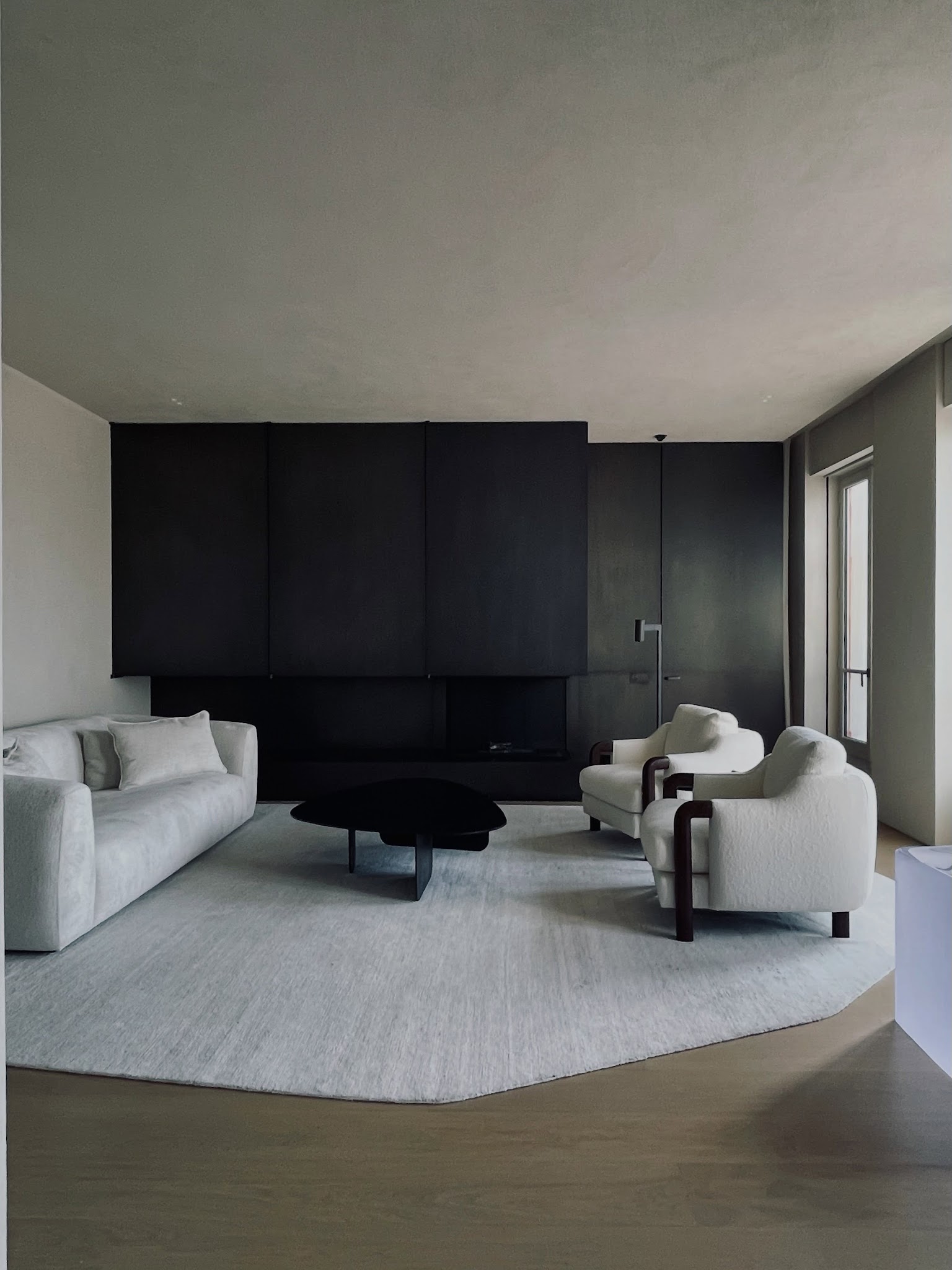
The nearly black fireplace wall gives this pale living room a clear center without requiring a collection of decorative objects.
Its broad panels contrast with a white sofa, two rounded armchairs, and a light rug whose curved edge softens the arrangement. A low black coffee table repeats the wall color, connecting the foreground and background.
Try this balance when an all-light room feels unfinished: choose one substantial dark surface, then echo it in a single functional piece. Keep the other large elements close in value so the contrast feels deliberate.
The table is completely clear, allowing its irregular outline to register. Generous floor space around the rug makes the compact conversation group feel comfortably contained within a larger, quieter room.
3. Give a Small Room One Oversized Pendant
Credits: Instagram
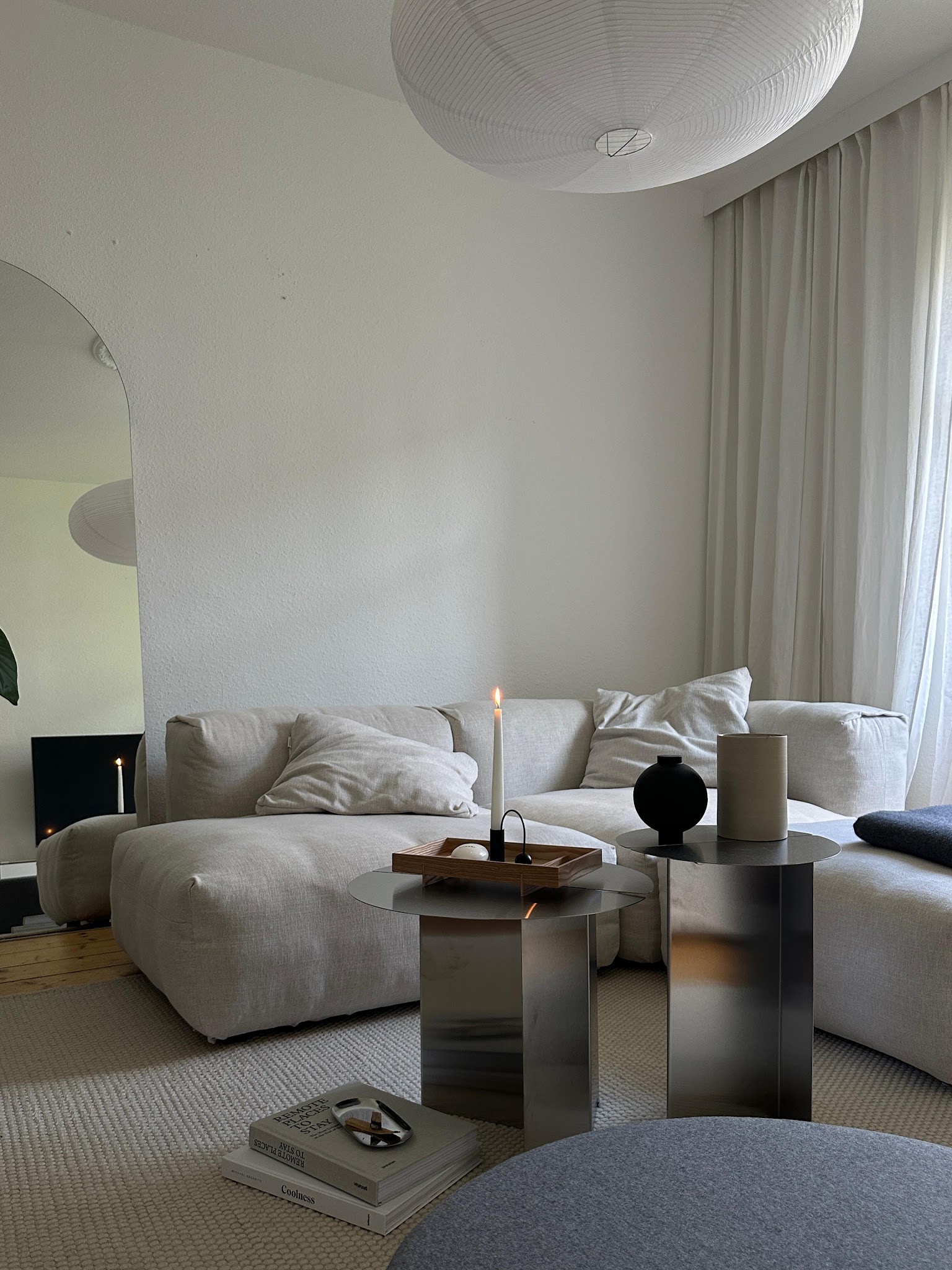
An oversized white pendant creates a focal point above this compact seating arrangement without making the room feel crowded.
Its rounded profile echoes the low sectional, while two small metallic tables provide separate landing spots without the footprint of one large coffee table.
The white wall above the sofa remains bare, allowing the pendant and its fine horizontal texture to stand out. Use the same approach by choosing one generous light fixture and keeping nearby wall decoration minimal.
Hang curtains high to create a continuous vertical backdrop, and select upholstery close to the wall color. A tall mirror brings another view of the room into the composition.
Restrained black accessories add definition without interrupting the soft, mostly pale color scheme.
4. Let One Patterned Surface Do the Work
Credits: Instagram
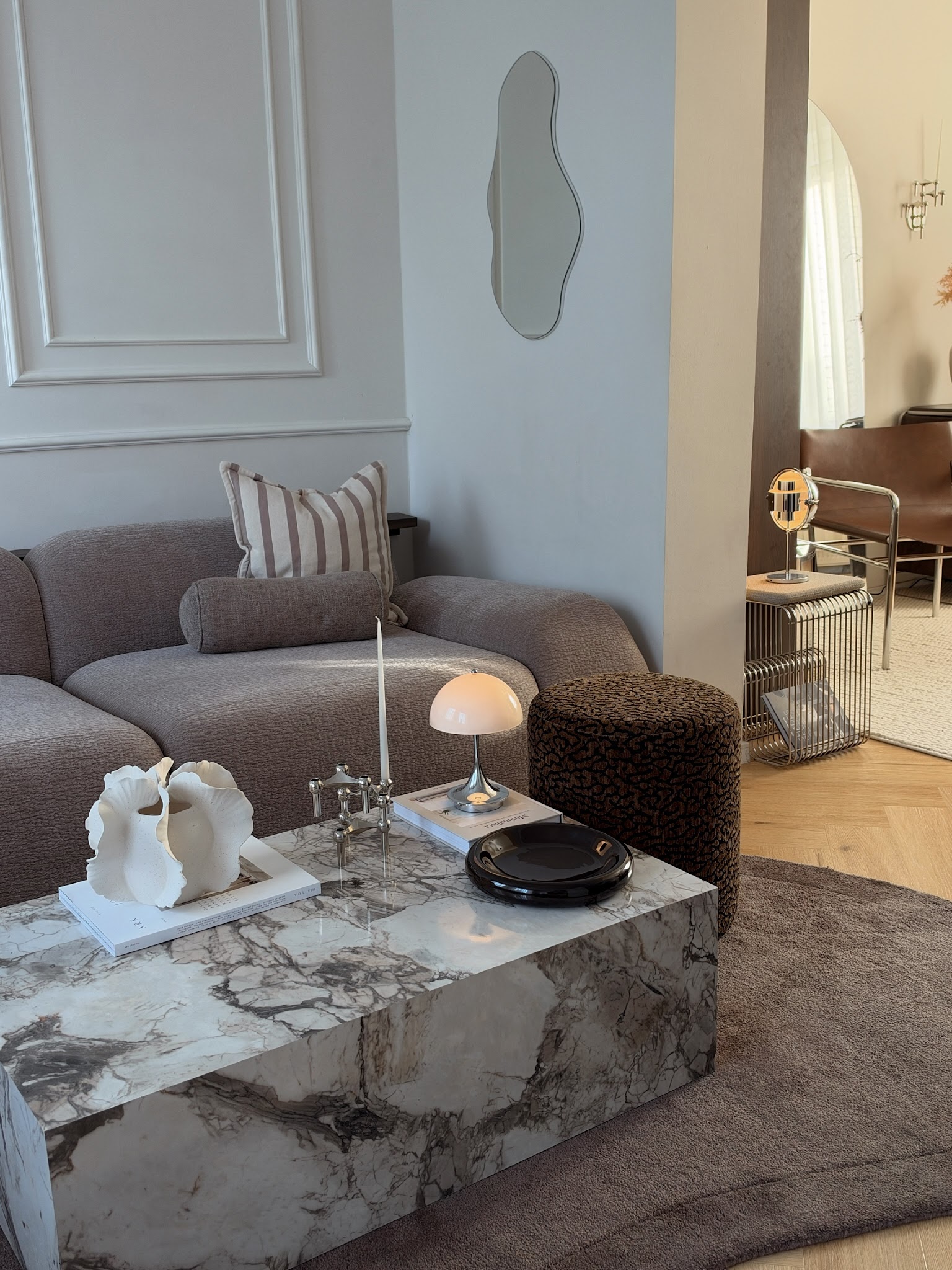
The strongly veined coffee table supplies most of the visual movement in this living room, so the surrounding pieces can stay quiet. A rounded gray sofa, plain rug, and pale paneled wall create a calm setting for its branching pattern.
The small irregular mirror introduces another soft outline without filling the wall. If you enjoy expressive finishes, give one surface that role and repeat its colors in simpler forms nearby.
Keep the tabletop arrangement compact rather than spreading objects across every available inch. Here, a dark bowl, light sculptural piece, and small lamp connect with the room's existing palette.
A patterned ottoman stays within those same tones, showing how a little extra detail can coexist with generous blank wall space.
5. Display a Collection in a Narrow Color Range
Credits: Instagram
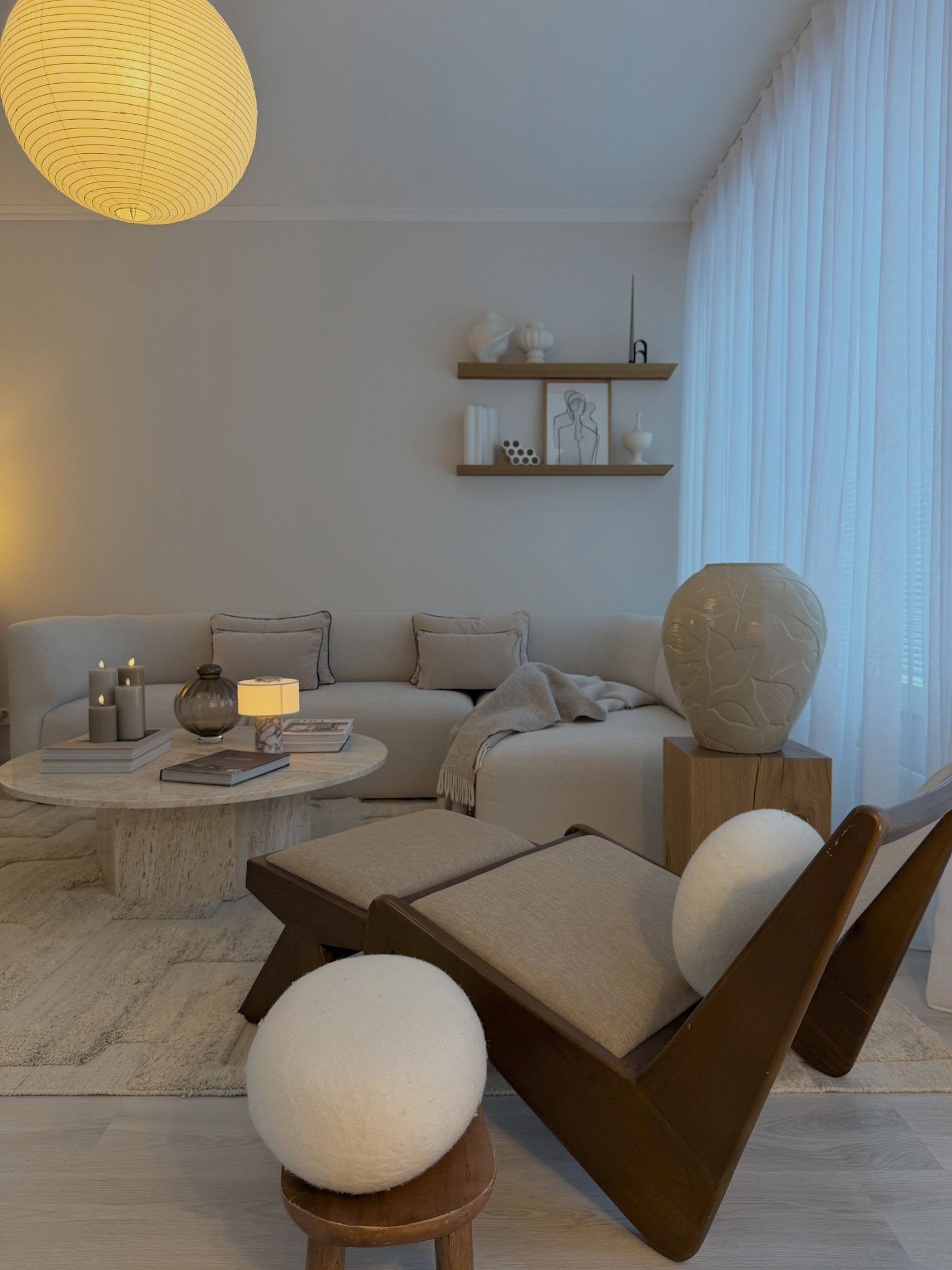
Two slim shelves keep the display in this living room concentrated above the sofa. Pale sculptural objects and a simple line drawing share a restrained palette, leaving their shapes to provide interest.
The surrounding wall remains open, and a large rounded vessel on the side table adds a second focal point at a lower height.
To borrow the idea, choose a few objects that relate through color, then vary their outlines and spacing. Leave visible gaps between groups so each piece can be seen clearly.
Soft curtains, a loose throw, and gently creased cushions prevent the edited arrangement from feeling rigid. The room shows how minimalism can accommodate personal objects when their placement feels intentional and the background stays quiet.
6. Use a Glass Table to Keep the Floor Visible
Credits: Instagram
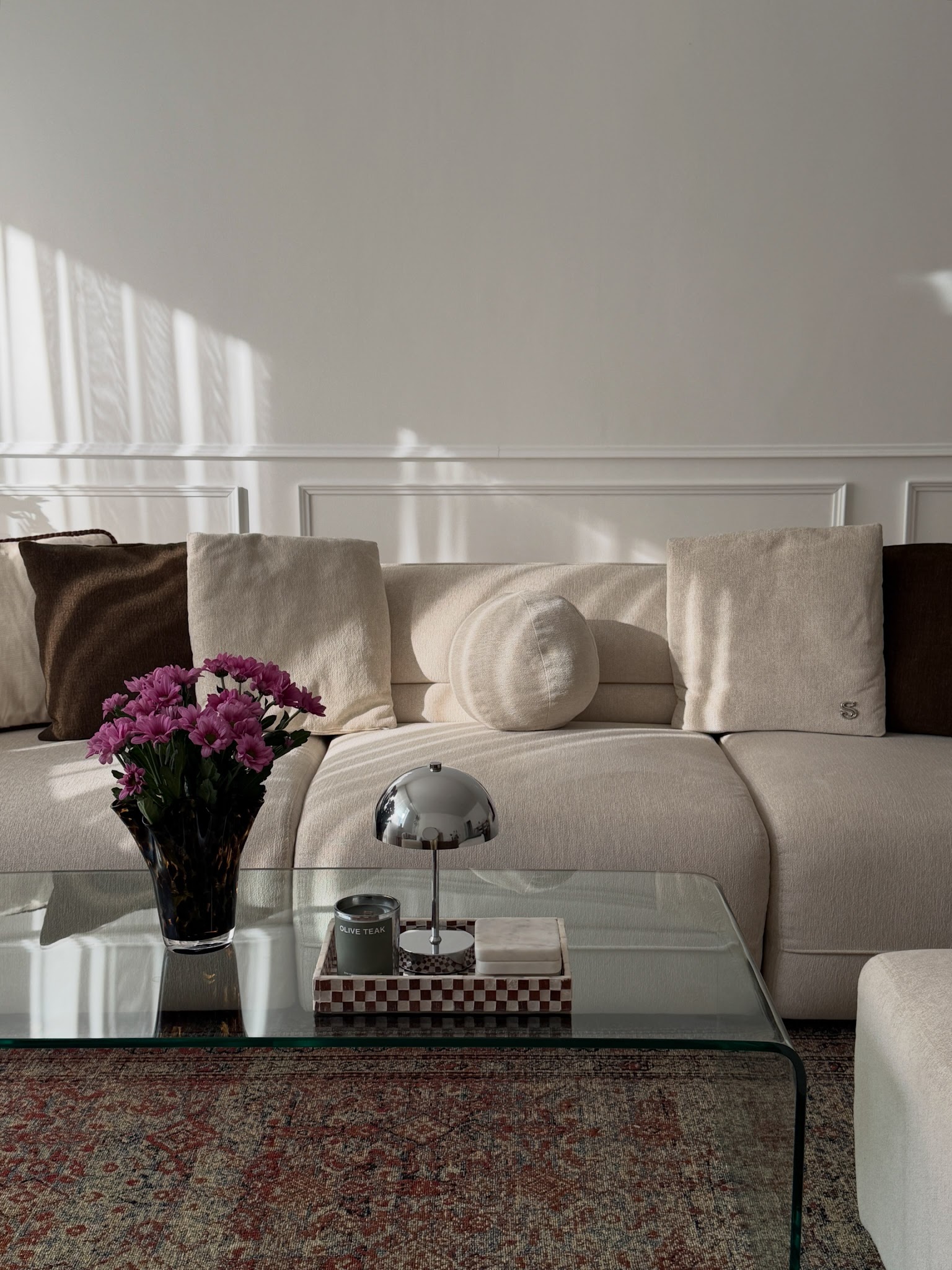
A transparent coffee table keeps this seating area visually open, allowing the rug pattern to continue beneath it.
The cream sofa sits against a largely bare wall with low molding, creating a simple background for a few brown cushions and one round pillow.
Bright flowers provide a small, changeable dose of color. Try a clear table when a compact living room already has substantial upholstered seating.
Keep its contents grouped so the transparency remains useful: a shallow tray can gather a lamp, candle, and small accessories into one arrangement. Repeat the room's darker accents in just a few places.
Here, the vase and cushions give the pale composition enough definition while sunlight supplies another layer of pattern across the wall.
7. Reserve One Small Spot for Seasonal Color
Credits: Instagram
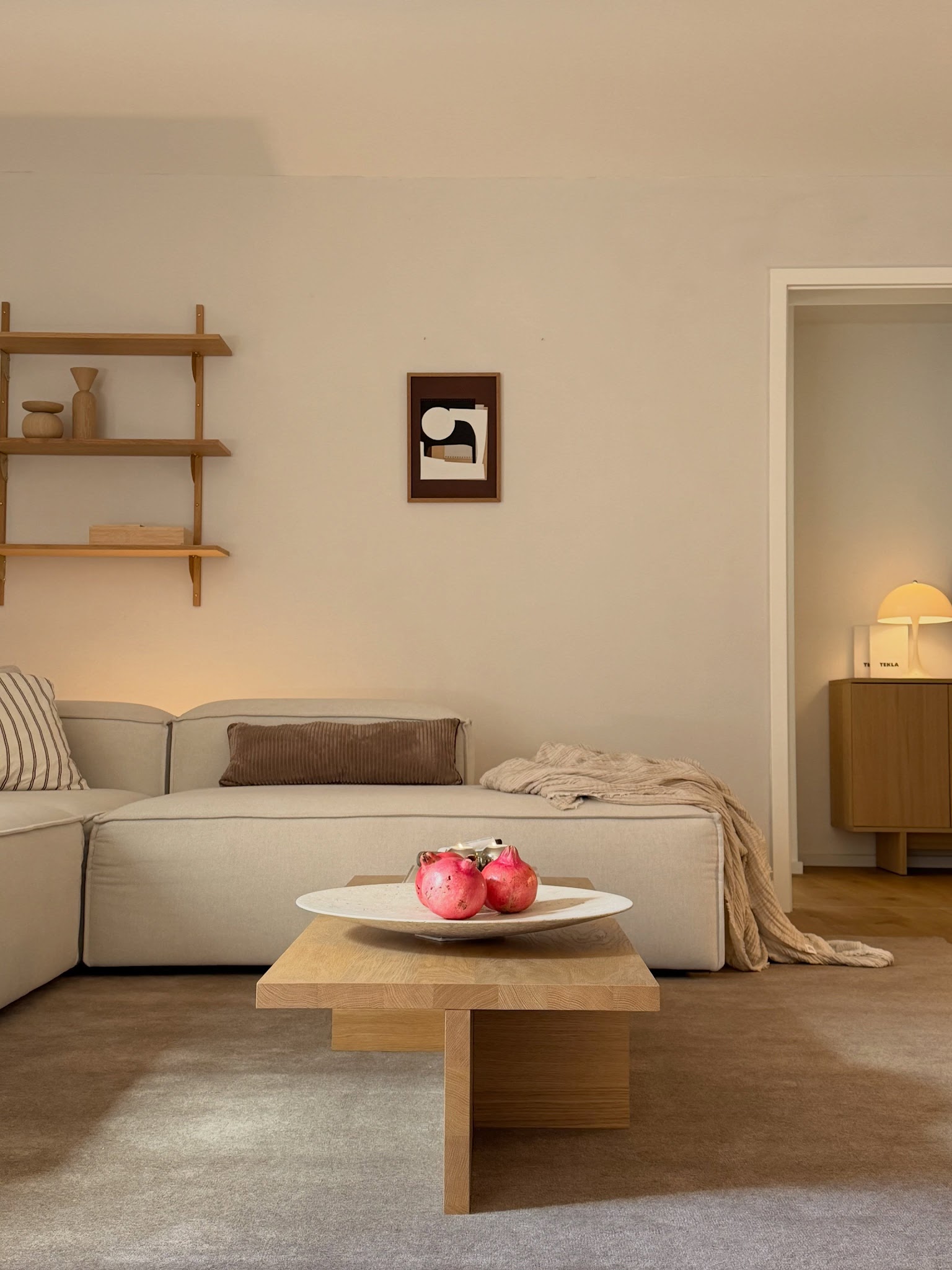
A few red accents become the brightest detail in this quiet living room. Everything around them stays close to a warm neutral palette: a pale sectional, simple wood coffee table, soft rug, and sparsely arranged shelves.
The small framed print leaves plenty of wall visible instead of competing with the shelf display. Use this as a guide for seasonal decorating in a minimalist room.
Choose one shallow dish or tray for the changeable accent, then let the permanent furnishings remain visually settled. A single throw and a few cushions are enough to make the sofa inviting.
The open doorway continues the same wood and cream colors into the next space, helping both rooms feel connected without adding more decorative pieces.
8. Balance Ornate Architecture With Simple Furniture
Credits: Instagram
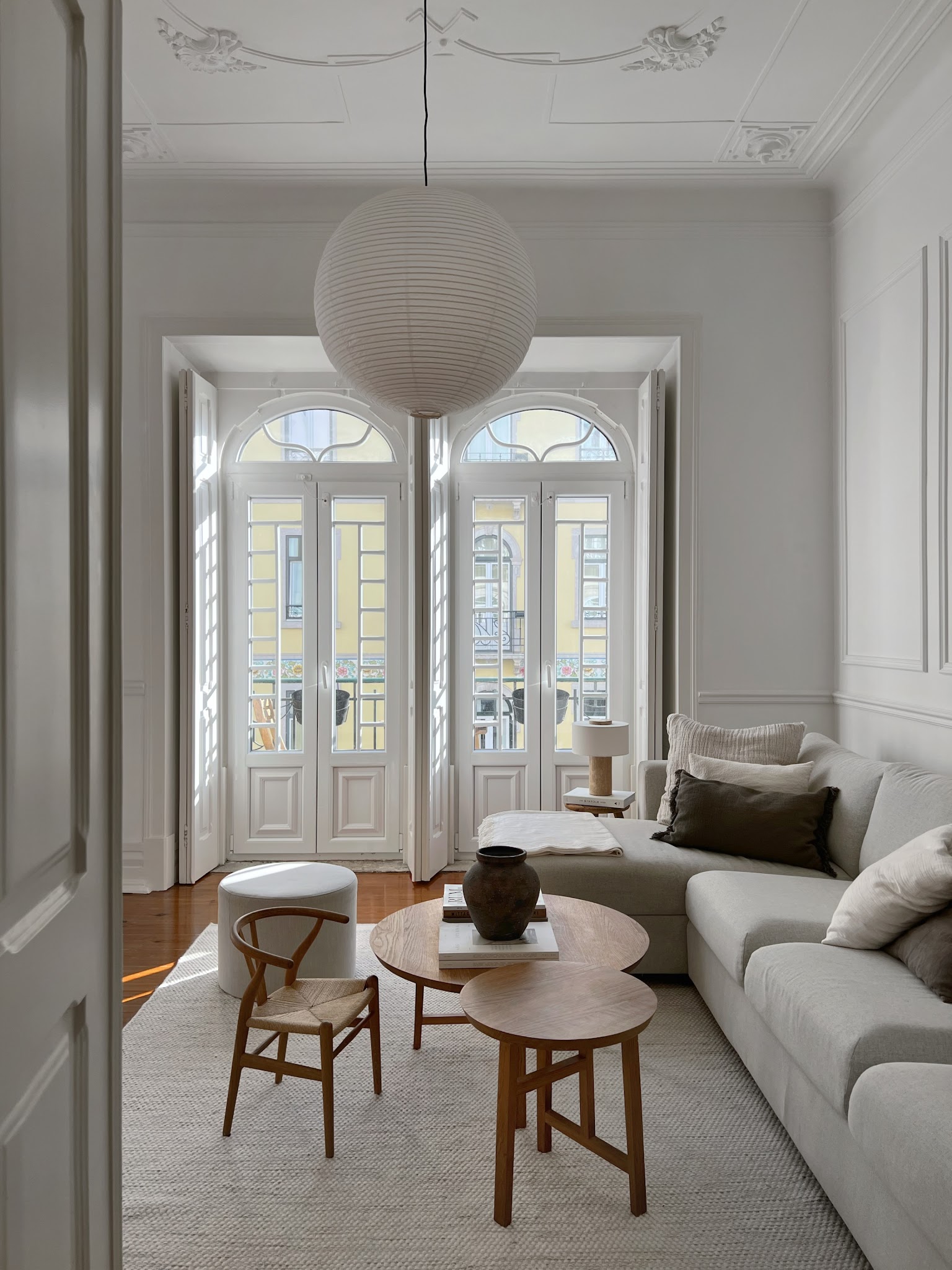
Decorative ceiling plasterwork and tall arched doors give this living room plenty of character before any furniture arrives. The furnishings respond with straightforward shapes: a pale sectional, round wood tables, a small chair, and a cylindrical ottoman.
A large paper-style pendant feels light against the detailed ceiling. When your room already has strong architectural features, allow those details to carry the decoration.
Choose a limited furniture palette and avoid covering every wall with art. The sofa follows one side of the room, leaving the doors readable and maintaining a clear sense of direction.
Nested tables offer useful surfaces without a heavy central block. One dark vase and a few deeper cushions provide contrast within the otherwise bright, softly textured arrangement.
9. Turn an Awkward Recess Into Quiet Display Space
Credits: Instagram
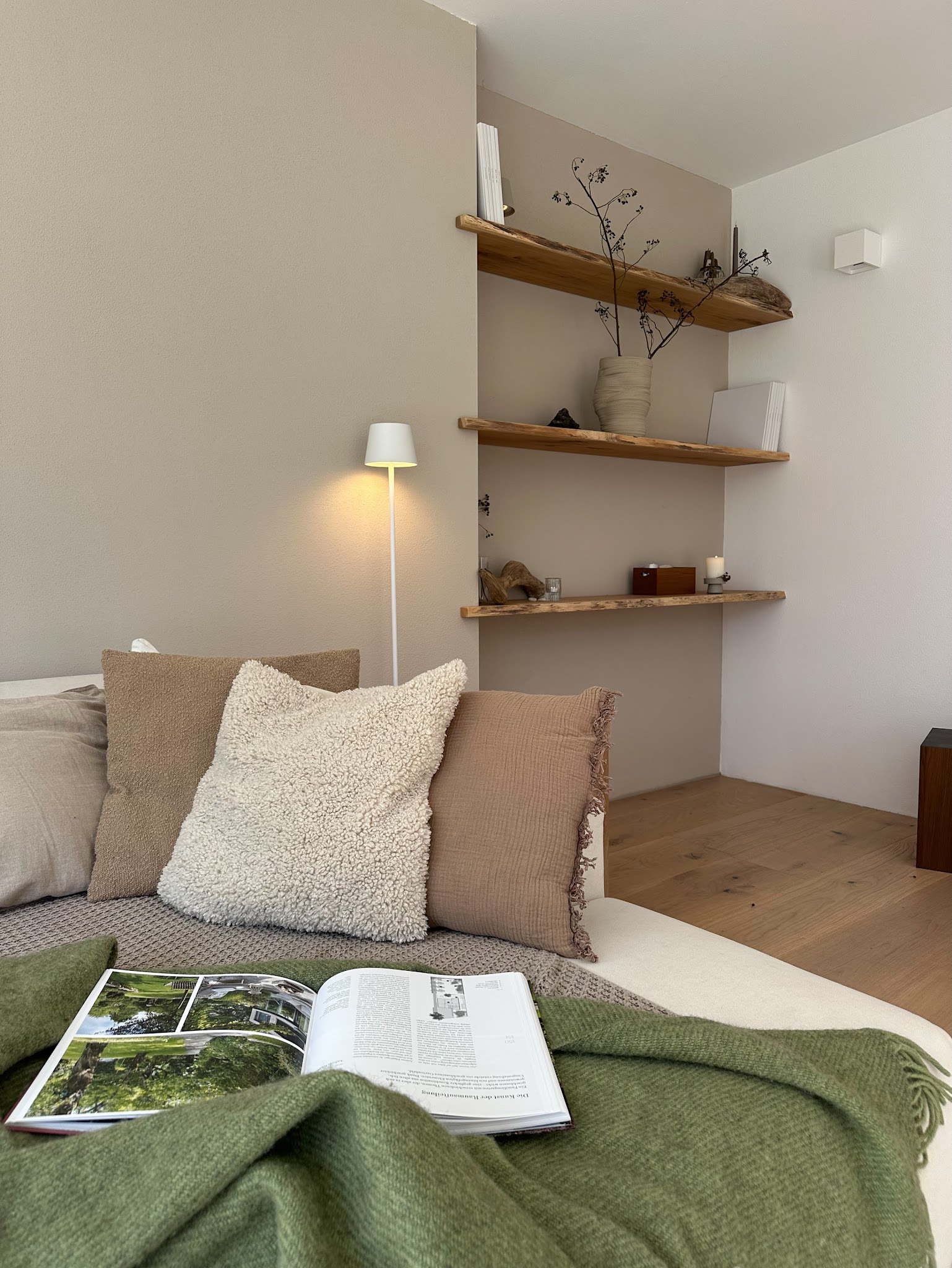
Three wood shelves make the shallow recess beside this sofa useful without adding a freestanding cabinet. The shelves follow the width of the niche, while the wall behind them is slightly deeper in color than the adjacent surface.
This subtle shift gives the display definition without a strong border. Use a similar recess for a limited mix of books, vessels, and objects you enjoy seeing.
Leave stretches of each shelf empty, and vary the height of the pieces so the arrangement feels relaxed. A slender reading lamp fits beside the sofa without taking much visual space.
The green throw supplies a gentle accent, while textured cushions and an open book keep the seating corner approachable within its carefully edited setting.
10. Choose Textured Art That Blends Into the Wall
Credits: Instagram
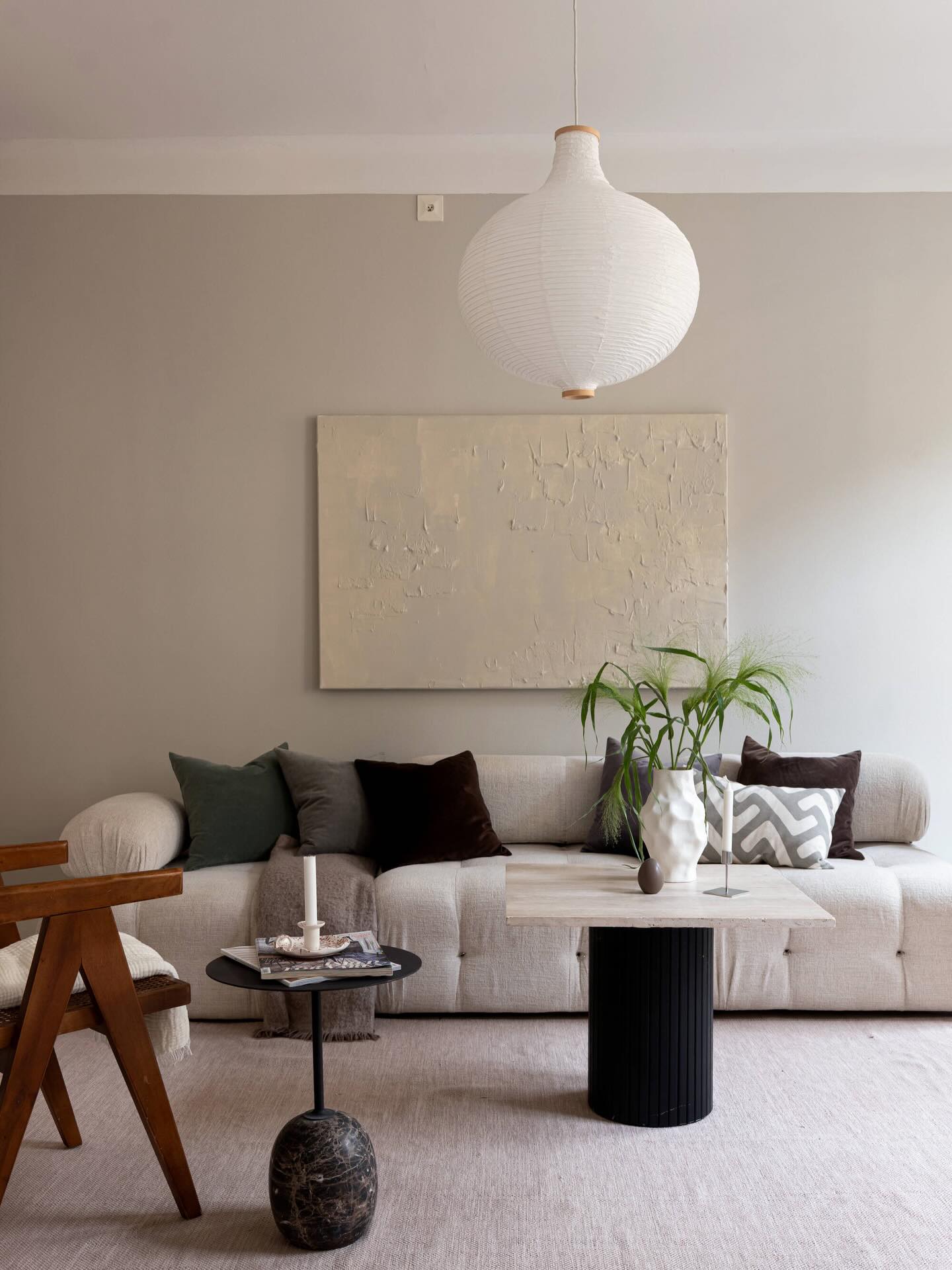
The large pale artwork above this sofa adds texture while staying close to the wall color. It creates a focal point through surface and scale, giving the room interest without introducing another strong pattern.
A white pendant continues the light upper half of the composition, while dark cushions and table bases anchor the seating below. Try tonal art when you want a minimalist room to feel finished but still restful.
Choose a size that relates to the sofa, and leave clear wall around it. Keep the coffee table arrangement simple enough that the artwork remains visible.
The wood chair at the edge adds warmth and an open frame, balancing the upholstered sofa without making the small conversation area feel heavy.
11. Leave a Clear View Through the Doorway
Credits: Instagram
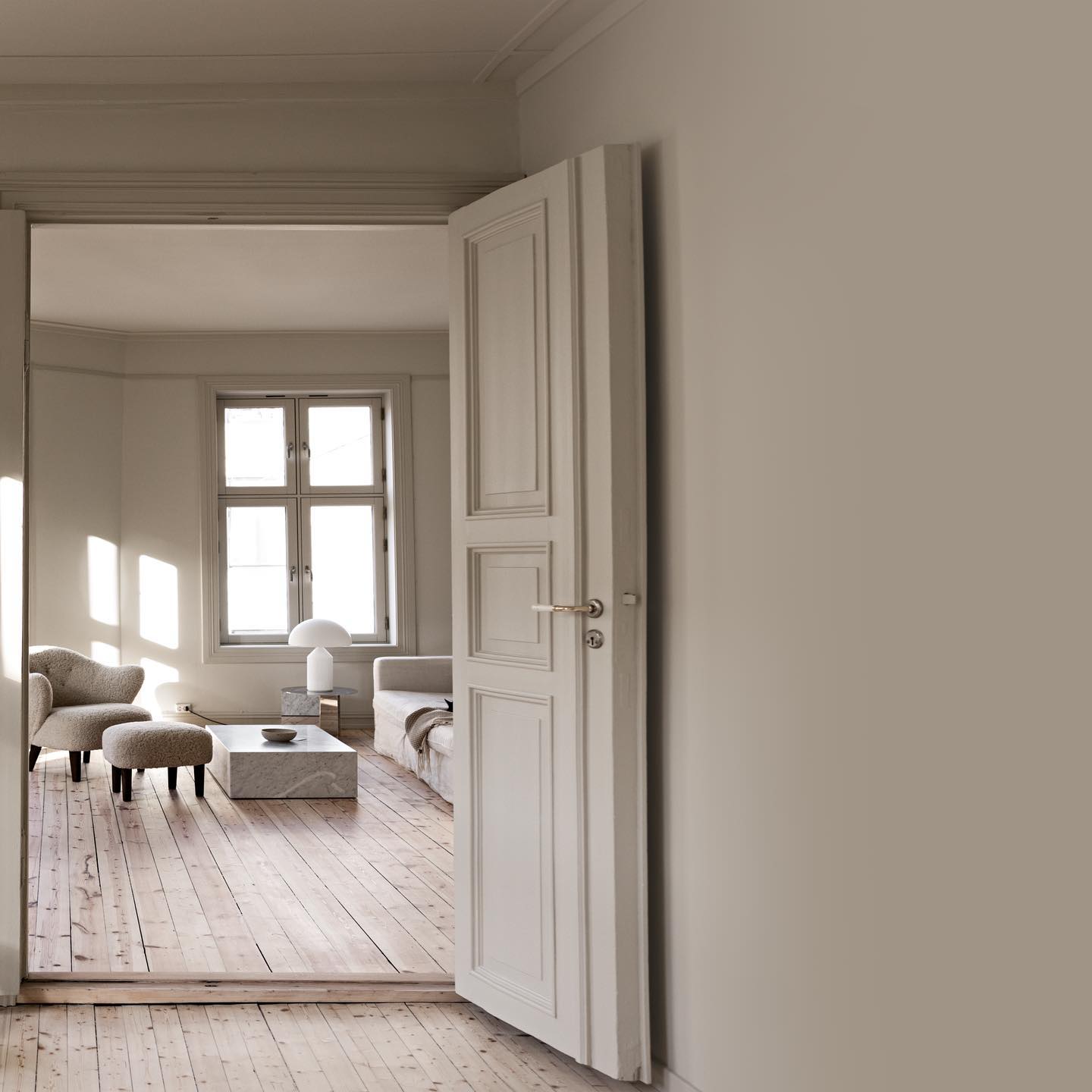
A wide doorway reveals a small sitting area while long, bare floorboards connect the two rooms. The sofa and rounded chair stay beyond the threshold, preserving a generous strip of open floor.
Try arranging your largest seats around the edges of the living zone before adding anything to its entrance. Keep the first view simple: a low table, one bowl, and a lamp are enough to establish the room.
Here, pale walls and upholstery let the dark furniture legs provide definition without dominating. A rug is optional when the floor already brings warmth and texture.
Carry a similar wall color into adjoining spaces, and check the arrangement from the hallway so the living room feels inviting before you even enter.
12. Repeat Thin Black Lines Across the Room
Credits: Instagram
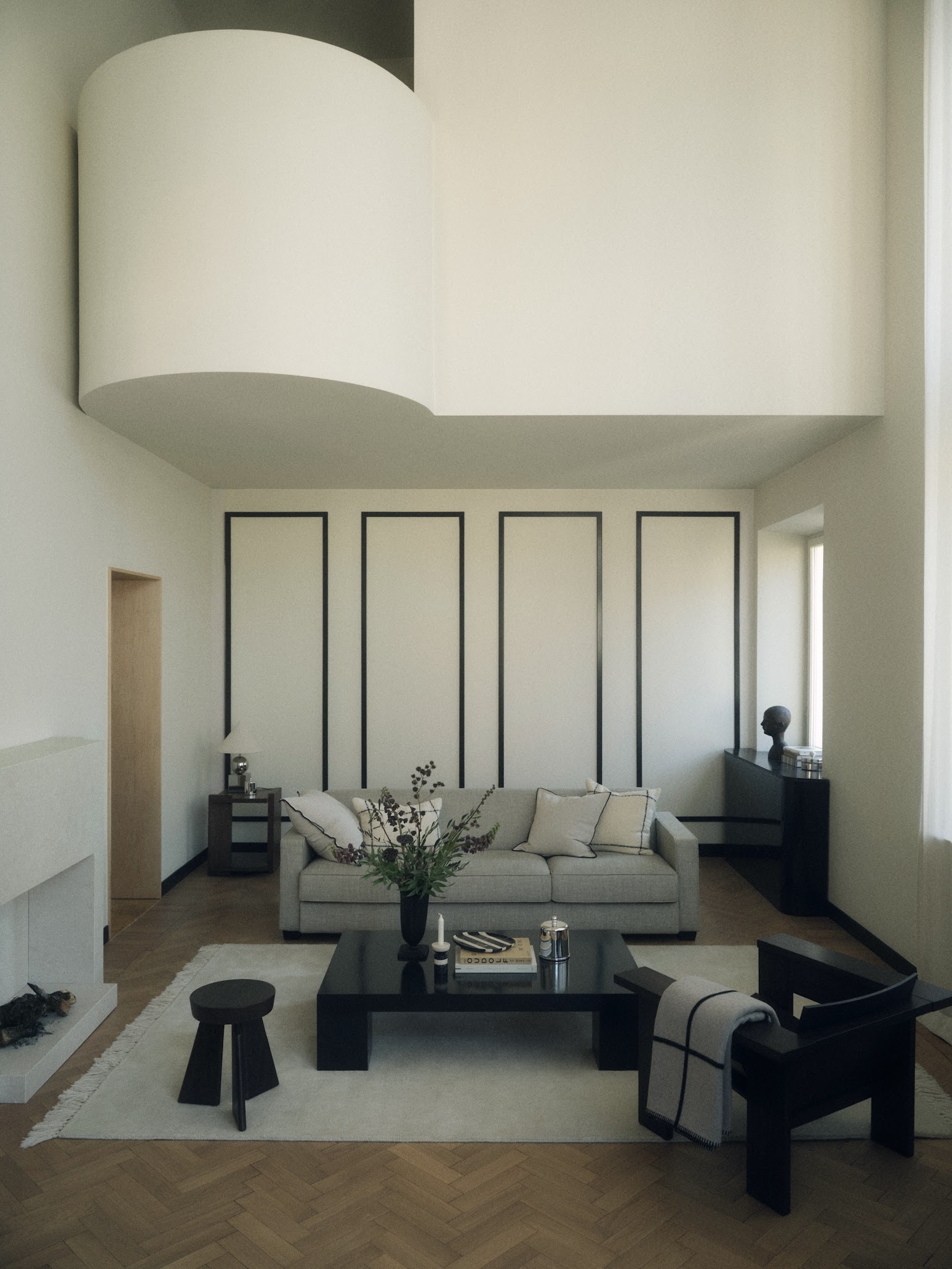
Four narrow black outlines rise behind the sofa, making the tall wall feel deliberate without filling it with pictures. Their crisp edges repeat in the chair, table, cabinet, and cushion piping.
This is a useful way to introduce contrast when a pale living room seems unfinished. Choose one dark finish and repeat it in several different widths, from slim trim to a substantial coffee table.
Keep the surrounding surfaces quiet so those lines remain easy to read. The soft rug and light sofa balance the heavier pieces at floor level.
Leave space between the chair and table, and resist adding more wall decorations. Repetition supplies the visual rhythm, while the generous blank area overhead preserves the room's sense of calm.
13. Zone an Open Room With Restrained Color
Credits: Instagram
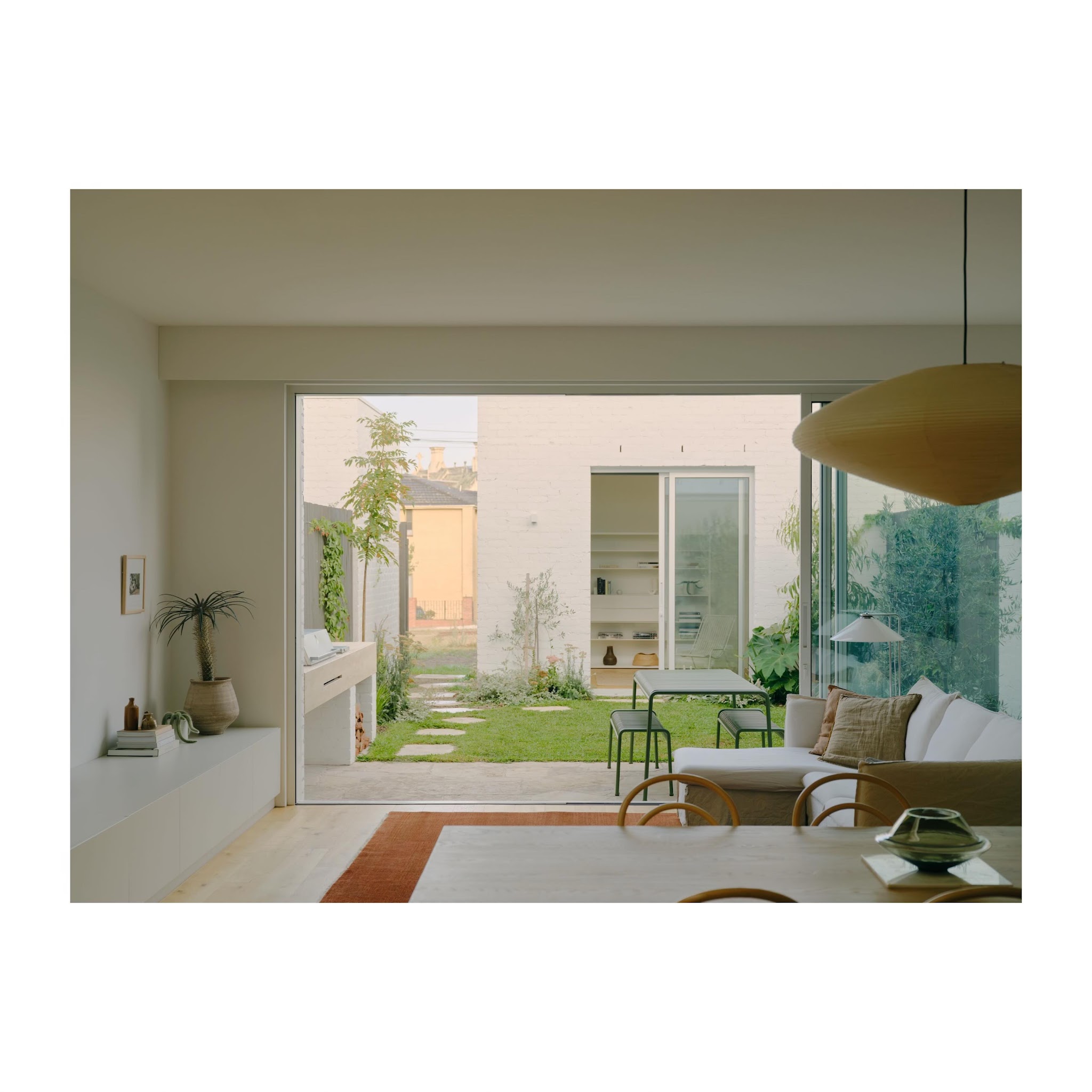
A rust colored rug sets the living area apart from its courtyard, while a yellow pendant and green accents connect the adjoining spaces. Most surfaces remain pale, giving each color a specific place in the composition.
Try choosing one warm shade for the seating zone and repeating a cooler accent near the garden. Keep both colors muted so they work with the planting beyond the glass.
The rug here provides definition without surrounding the sofa with additional furniture. Its straight border also contrasts with the softer outlines of chairs and foliage.
Leave the route outside clear, and use simple, low furnishings to maintain that connection. A few colored elements can organize an open room while keeping its overall atmosphere calm.
14. Let a Textured Wall Replace Extra Decor
Credits: Instagram
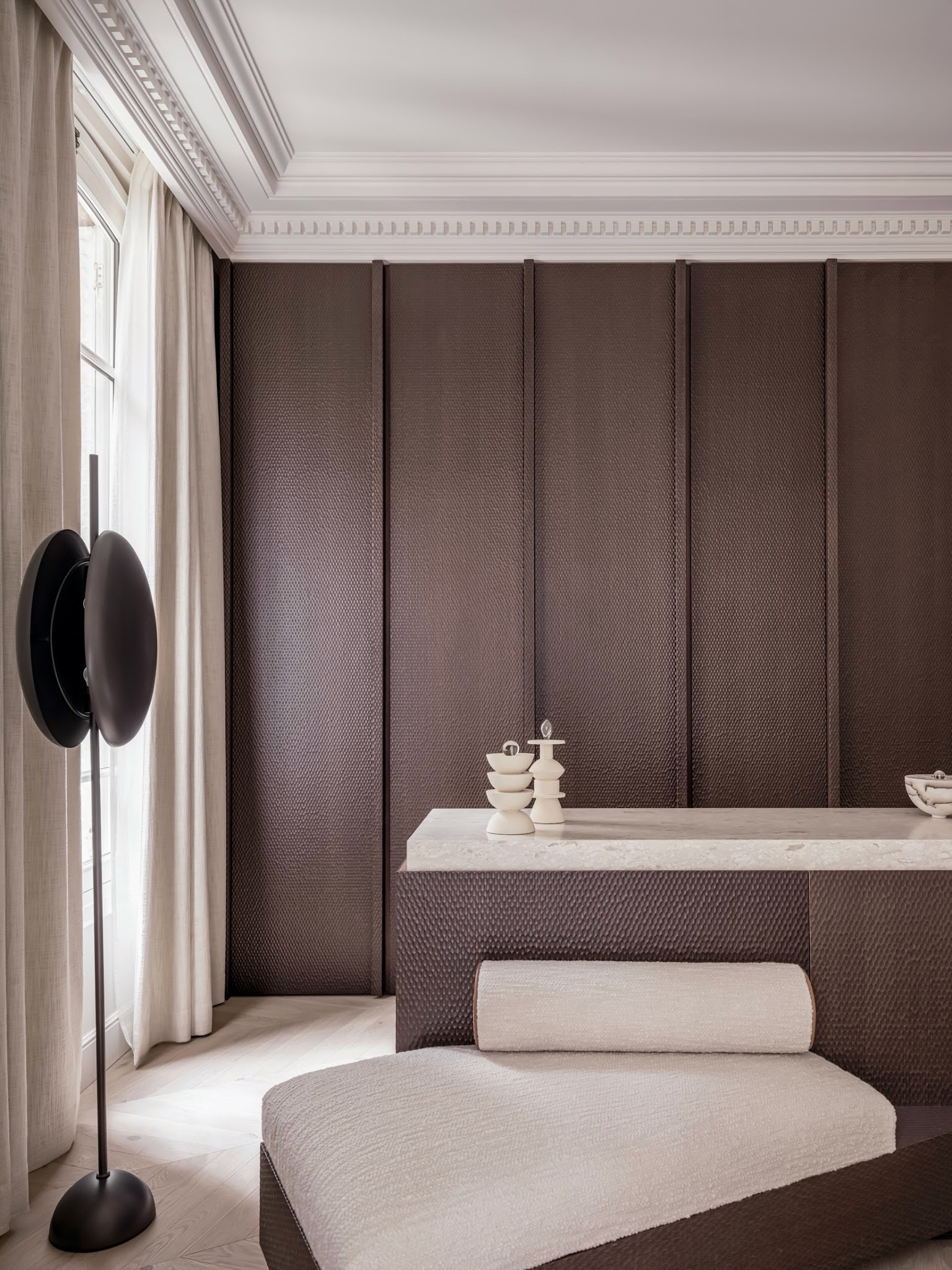
Deep brown panels give this quiet sitting corner its character, with a fine repeating texture that becomes clearer up close. The low seat, pale curtain, and simple display ledge leave most of the wall exposed.
Consider concentrating texture on one broad surface when you want warmth without adding shelves full of objects. Keep the color consistent across adjoining panels, and use narrow vertical divisions to make the treatment feel orderly.
A small grouping of pale sculptural pieces is enough against this background. The black floor lamp adds one strong silhouette beside the window.
Choose seating with a low back to preserve the wall's proportions, and leave the surrounding floor open so the corner remains comfortable to approach and use daily.
15. Pair Rounded Tables of Different Shapes
Credits: Instagram
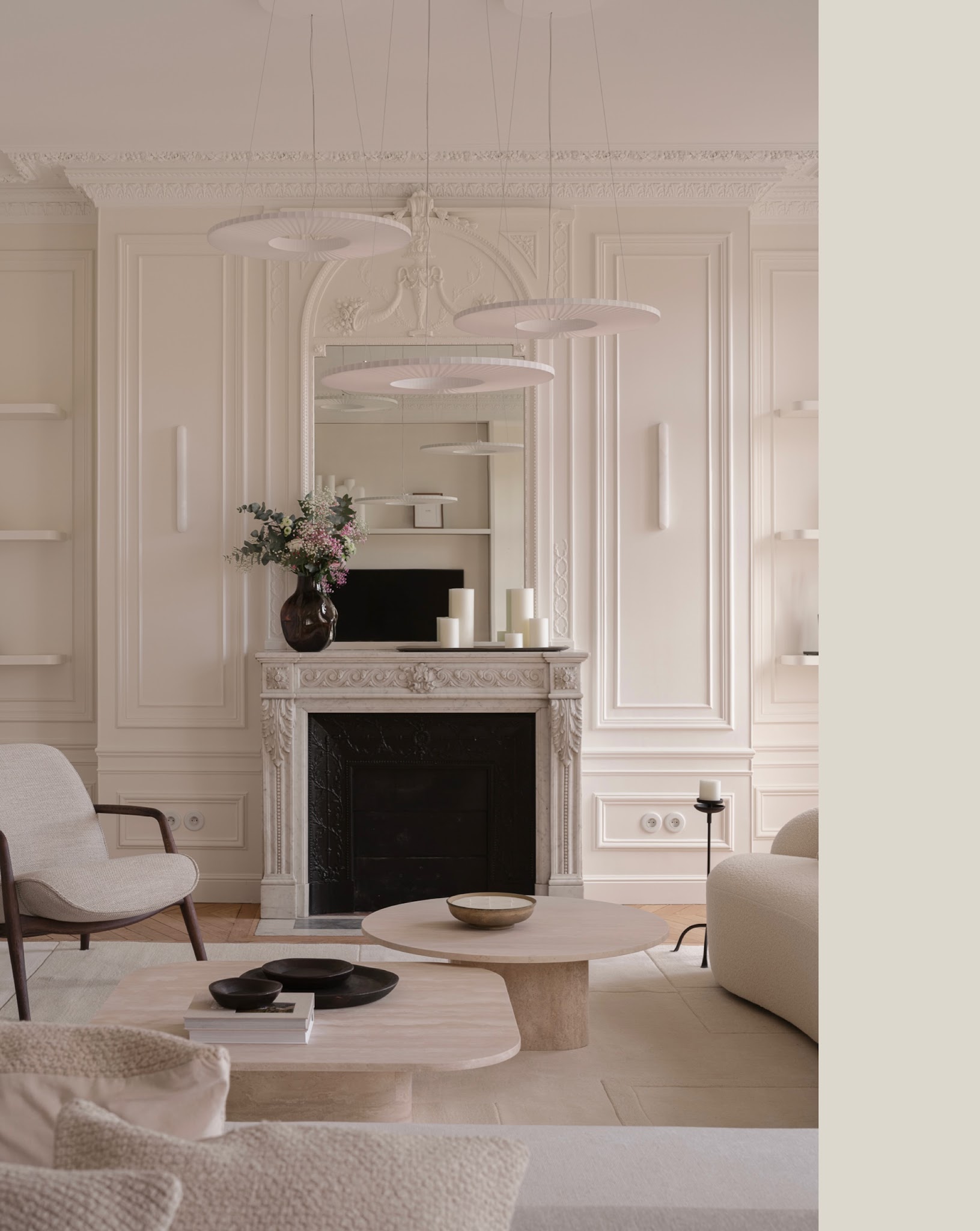
Two pale coffee tables stand in front of the fireplace, creating a generous surface without the weight of one large rectangle. Their rounded edges echo the curved seating while allowing several easy routes through the group.
Try a pair of tables in similar colors but different heights, placing the smaller one slightly behind its companion. Leave enough separation for their shapes to remain legible.
A shallow bowl and a short stack of books provide practical styling without covering both tops. Here, the pale rug unites the tables and seats, and dark accents remain small.
Test the arrangement from every chair before settling it. Each seat should reach a useful surface while leaving a path toward the rest of the room.
16. Balance Open Shelves With Sliding Cabinet Doors
Credits: Instagram
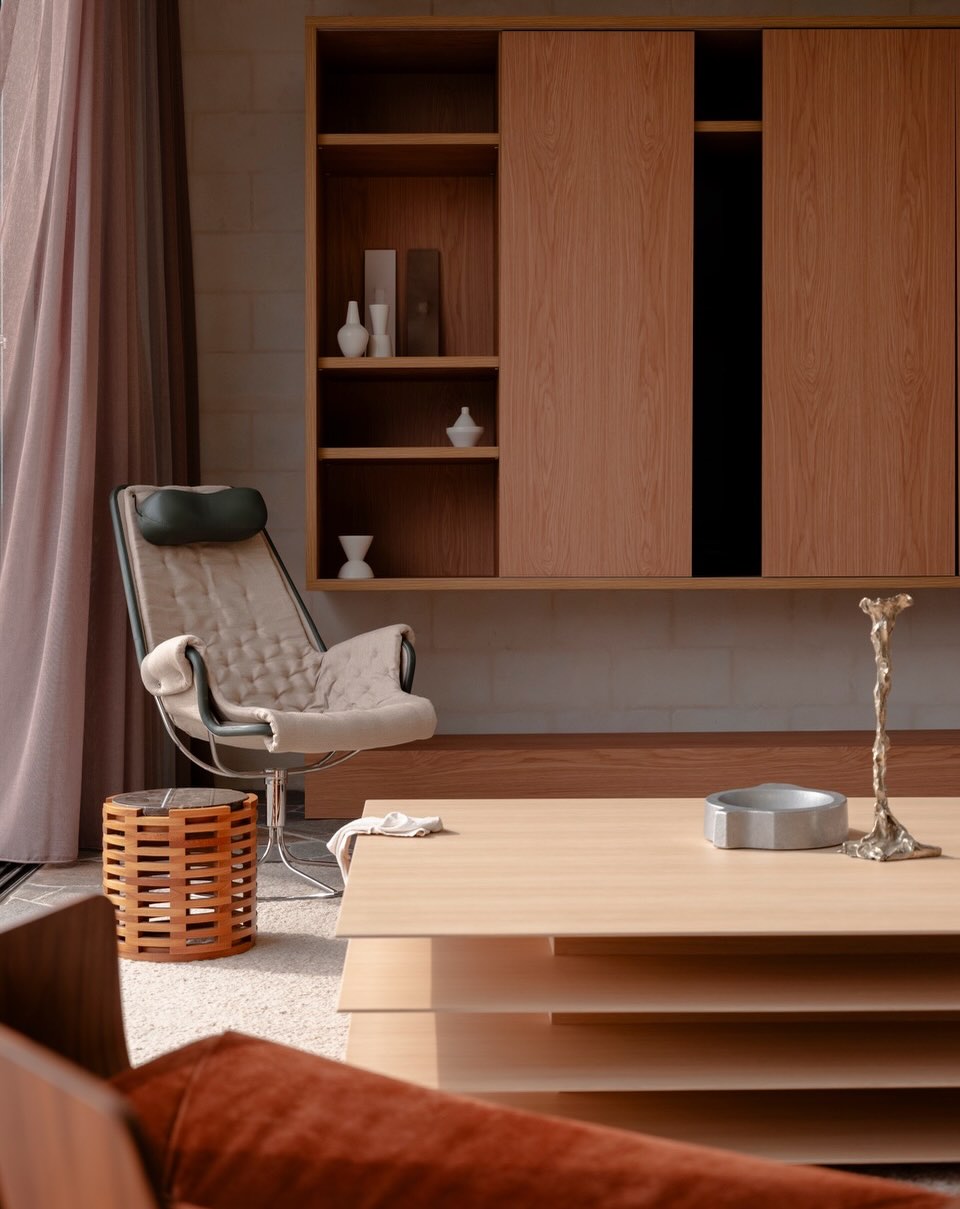
Broad wooden doors conceal much of the wall cabinet, leaving a narrow column of shelves for a few pale vessels. That balance makes storage part of the room's architecture while limiting how many objects stay visible.
Use closed compartments for everyday clutter and reserve open sections for pieces with clearly different shapes. The low bench beneath this cabinet stretches the horizontal line, connecting it visually with the layered coffee table.
A muted pink curtain and rust colored upholstery bring warmth around the wood. Keep the tabletop mostly free so the storage wall remains the main feature.
If you already have open shelving, try covering a portion with simple doors and editing the exposed section until each object has breathing space.
17. Soften a Window Wall With Continuous Sheers
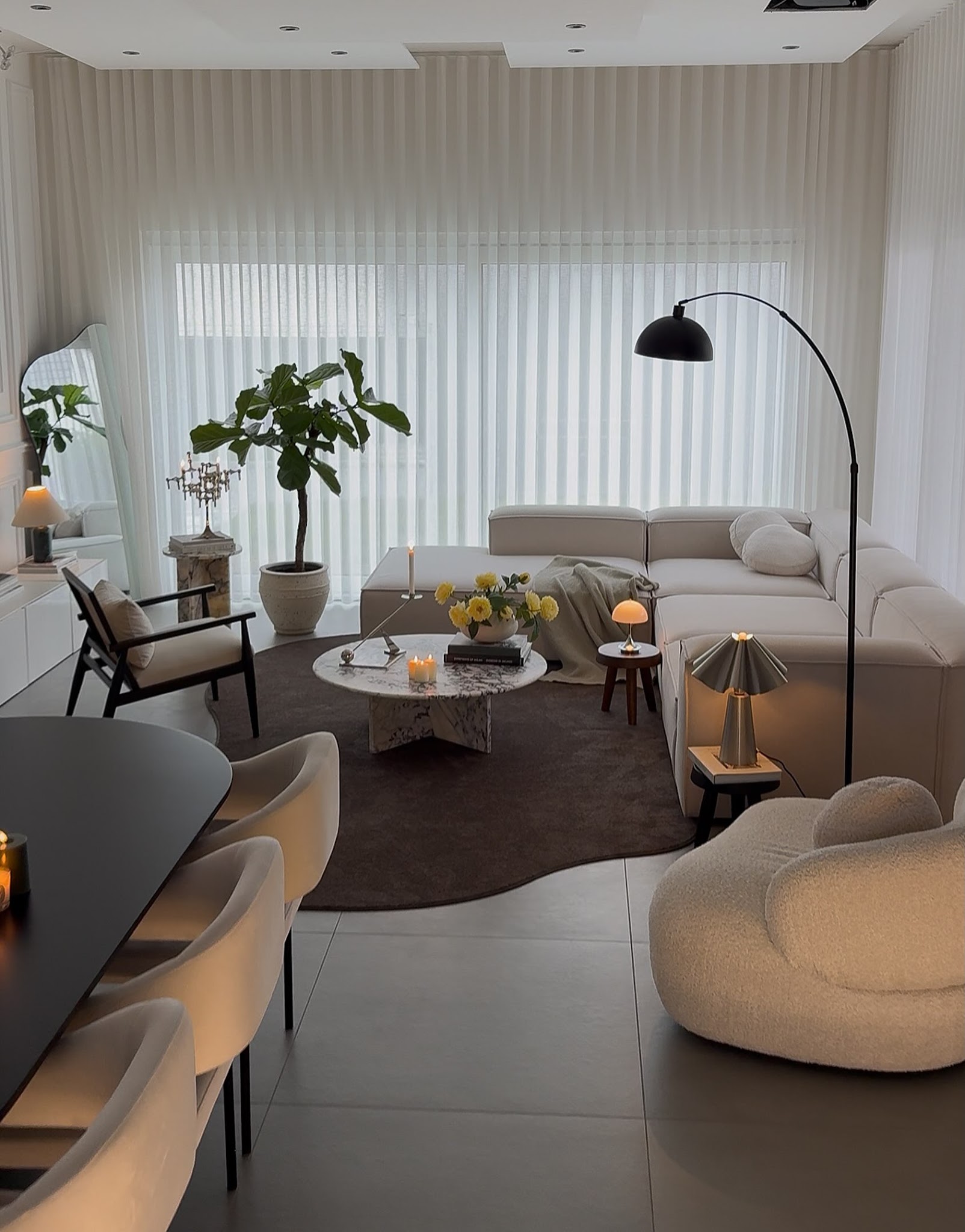
Credits: Instagram
A continuous run of sheer curtains gives this living room a calm background, smoothing the transitions between windows and adjoining walls. Their vertical folds contrast with the low sectional and the irregular outline of the brown rug.
Use a consistent curtain fabric across neighboring windows when several openings make a small room feel fragmented. Hang the panels high and let them reach the floor, keeping the lower edge tidy.
Pale upholstery can then sit against the curtains without creating another strong block of color. Here, a dark arched lamp and green tree stand out clearly against the light fabric.
Keep furniture a little forward of the panels so they move freely, and leave the route between dining and seating unobstructed.
18. Build a Conversation Group With Rounded Chairs
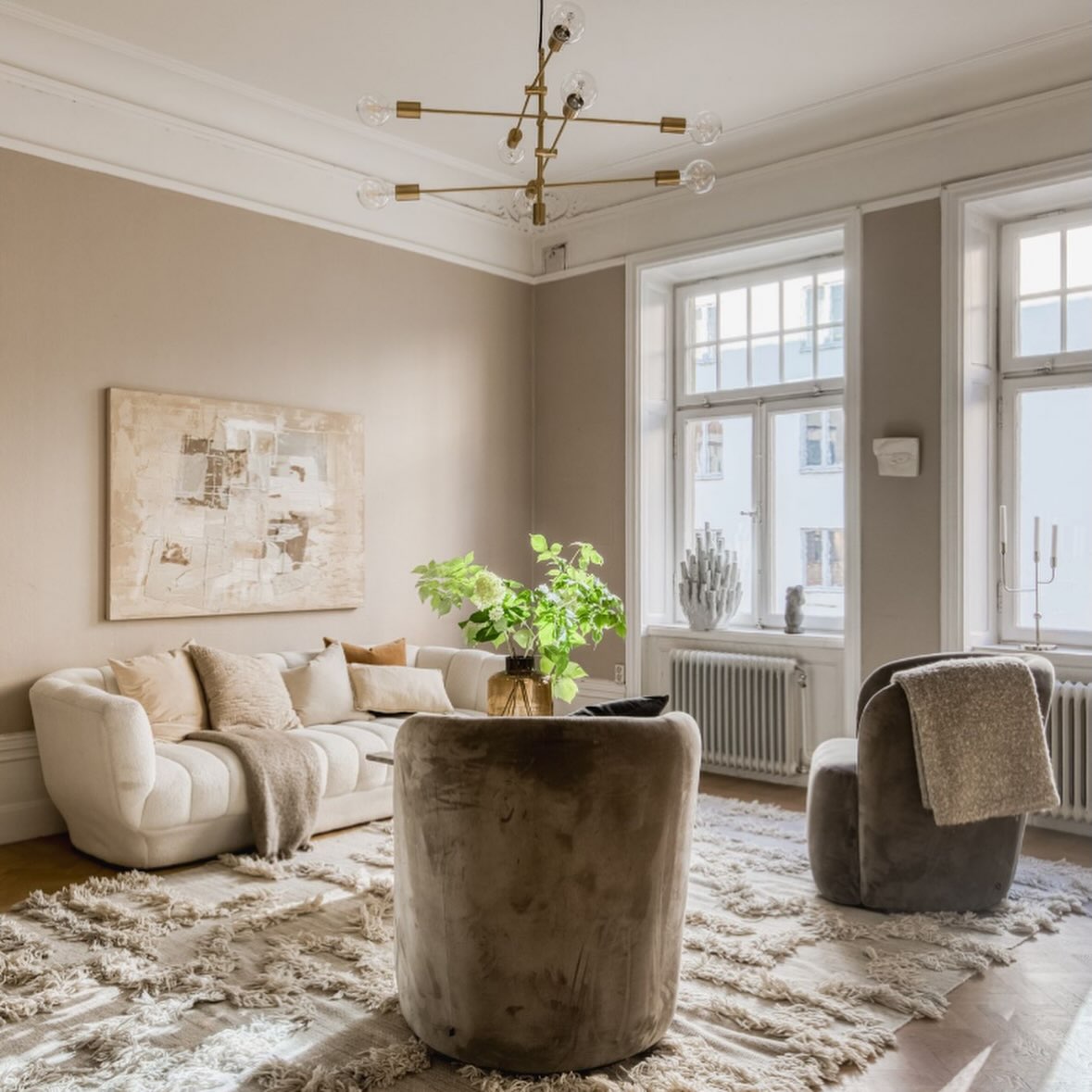
Credits: Instagram
Two rounded chairs face a pale sofa, establishing a clear place to sit and talk without enclosing the whole room. Their darker upholstery anchors the arrangement, while the broad rug connects all three seats.
Try using separate chairs instead of another large sofa when you want the layout to remain flexible. Turn them slightly toward the center and leave an easy passage between their backs and the rest of the room.
Here, the repeated curves make mixed seating feel related without requiring identical pieces. A single leafy arrangement provides height near the center.
Keep additional floor accessories minimal, especially with a richly textured rug. Before buying, mark each chair's footprint so the group feels spacious from every approach and angle.
19. Lift the Media Cabinet Off the Floor
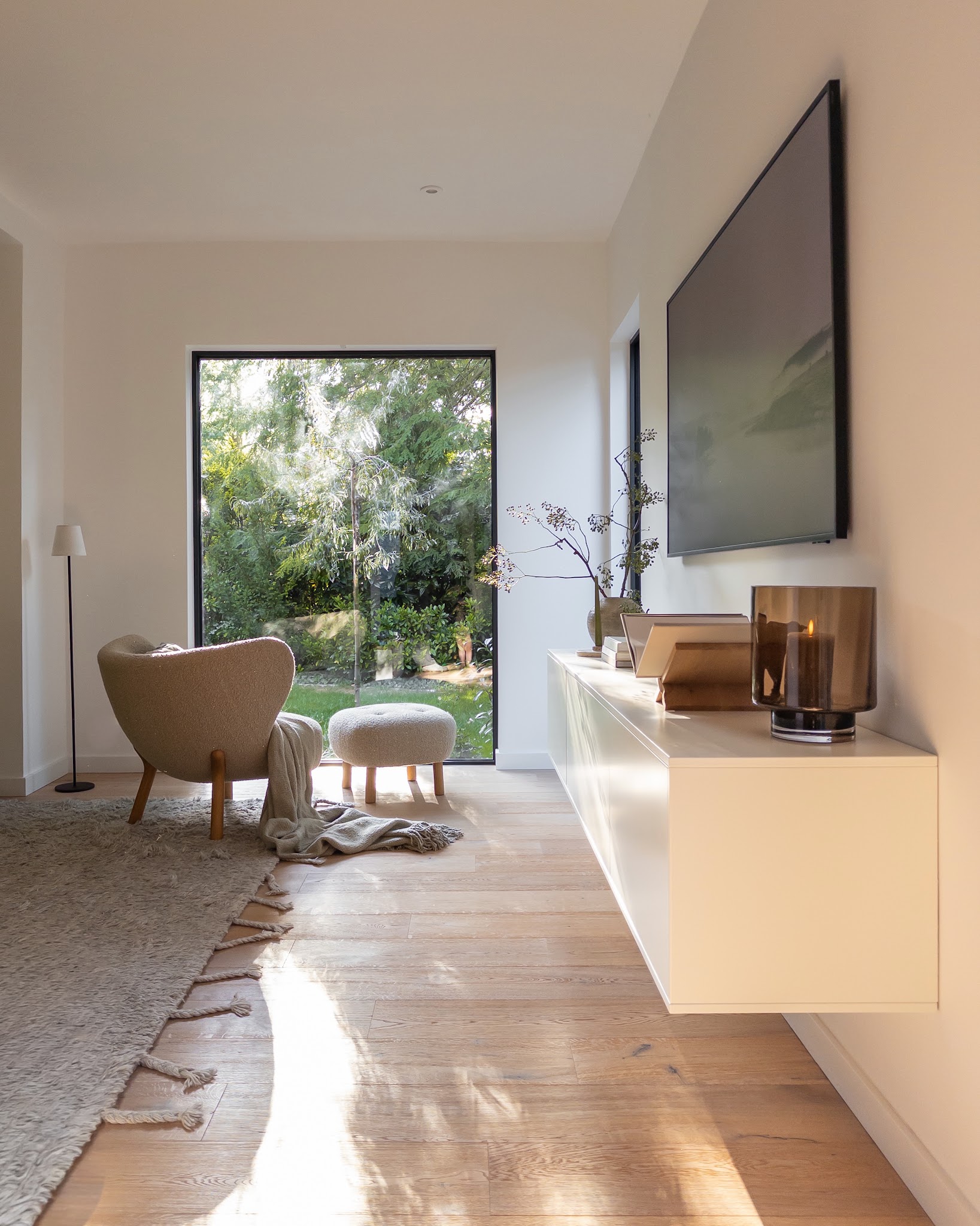
Credits: Instagram
The long white cabinet appears to float beneath the television, leaving an uninterrupted strip of floor visible along the wall.
Its simple front keeps the media area quiet, while a chair and footstool form a separate place to relax beside the window. Consider a wall mounted cabinet when a narrow living room needs storage without extra furniture legs.
Choose a finish close to the wall color and keep its top loosely arranged rather than filled from end to end. In this room, a few books, branches, and one large candleholder provide enough interest.
Allow the rug to stop short of the cabinet so the open floor remains legible. Plan concealed cable routes before installation for a similarly uncluttered final result.
20. Use a Small Ottoman for Flexible Seating
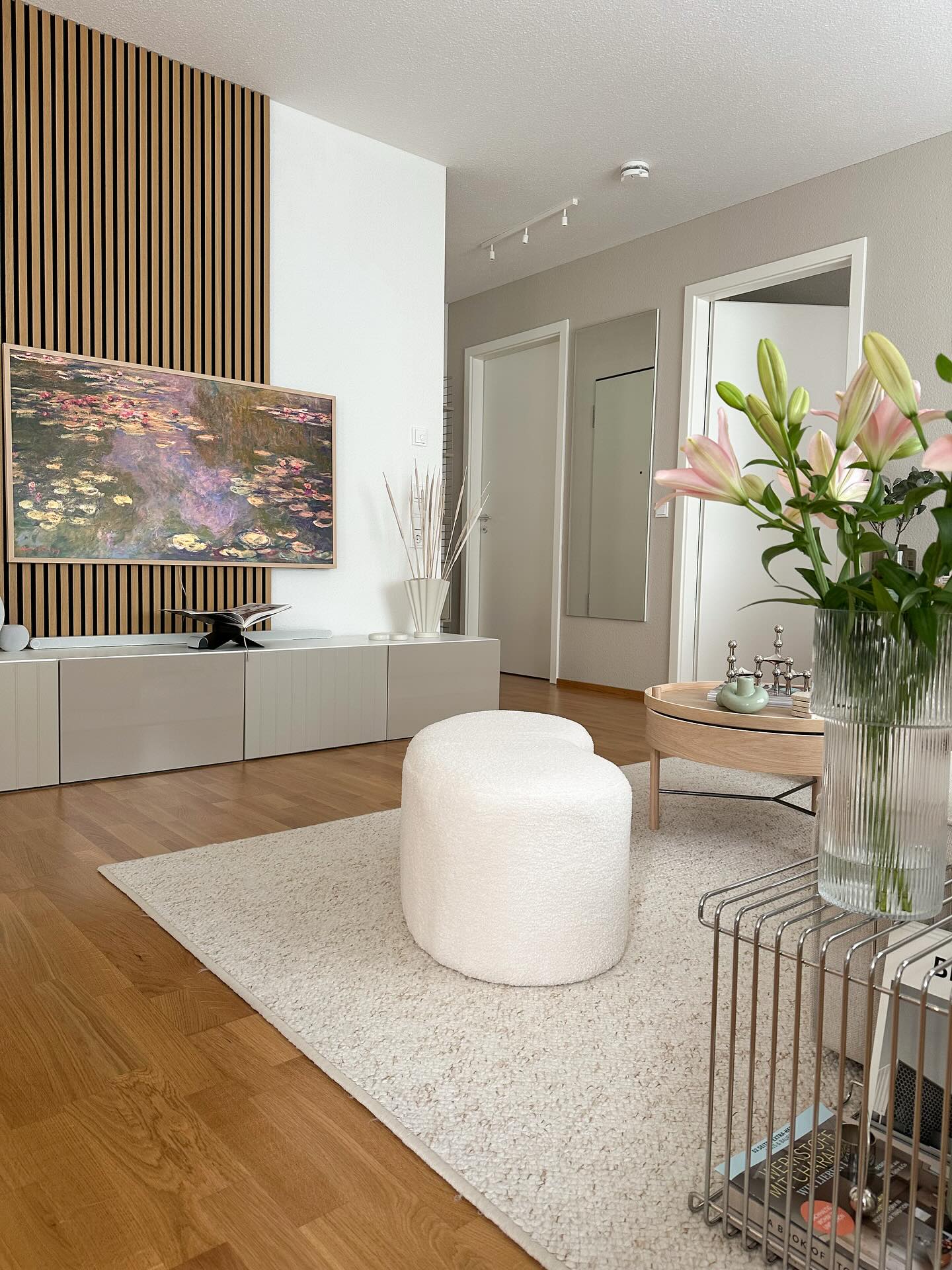
Credits: Instagram
A small pale ottoman occupies the center of this living area without creating a tall barrier in front of the television.
Its rounded shape softens the straight cabinet and vertical wall slats, while the light rug gives it a clear place to land. Consider a compact ottoman when an extra armchair would crowd the room.
Choose one that is easy to move beside the sofa or out of the main walkway when needed. Keep nearby pieces visually light, as the open wire table does here.
The broad cabinet handles storage, allowing the additional seat to stay simple. Limit decorative objects around the ottoman so it remains useful.
Measure the walking route around it before committing to a size or shape.