
Blue and green can feel either crisp and airy or rich and dramatic, depending on where you place each color.
Blue And Green Living Room Ideas show how to build that palette with choices ranging from sky-blue walls and fresh green pillows to deep blue walls paired with an emerald sofa.
You can also connect the colors through patterned rugs, botanical fabrics, artwork, and small decorative accents.
If the combination starts to feel too busy, cream offers a quiet counterpoint, while repeating one shade in several spots helps the room feel cohesive without matching every piece.
1. Sky Blue Walls with Fresh Green Pillows
Credits: Instagram
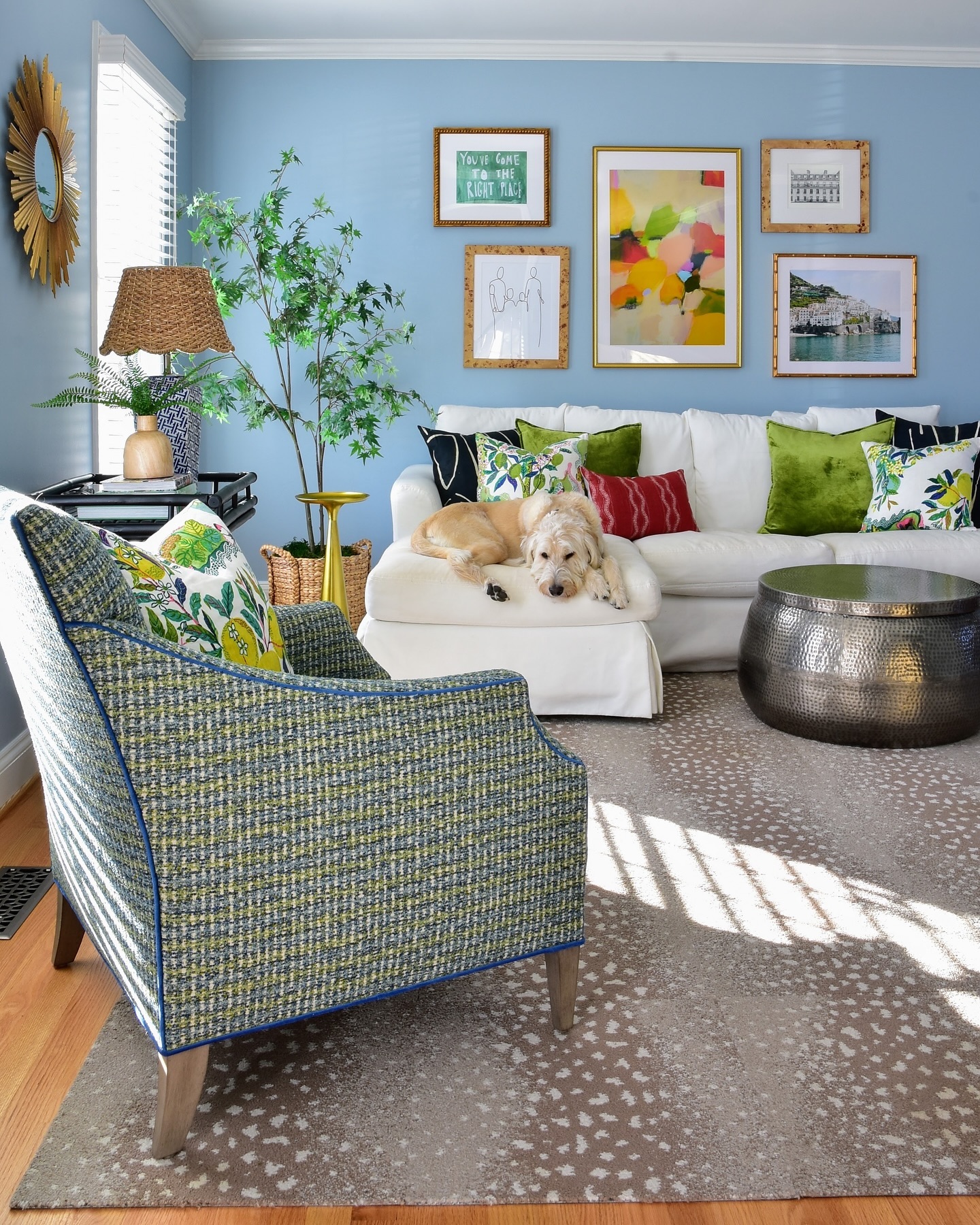
Sky blue walls give this living room a clear starting point, while bright green pillows pull the eye toward the white sectional. The patterned armchair connects both colors, making the combination feel considered without requiring matching furniture.
Notice how white window trim, pale upholstery, and a spotted neutral rug leave breathing room around the stronger accents. To borrow the idea, choose one blue for the walls and repeat green at several heights through pillows, artwork, and foliage.
Keep the largest sofa light if you want the color to feel easy to change later.
A rounded coffee table adds contrast to the sectional’s straight edges, while the mixed gallery wall introduces smaller touches of red and yellow without dominating the palette.
2. Deep Blue Walls Around an Emerald Sofa
Credits: Instagram
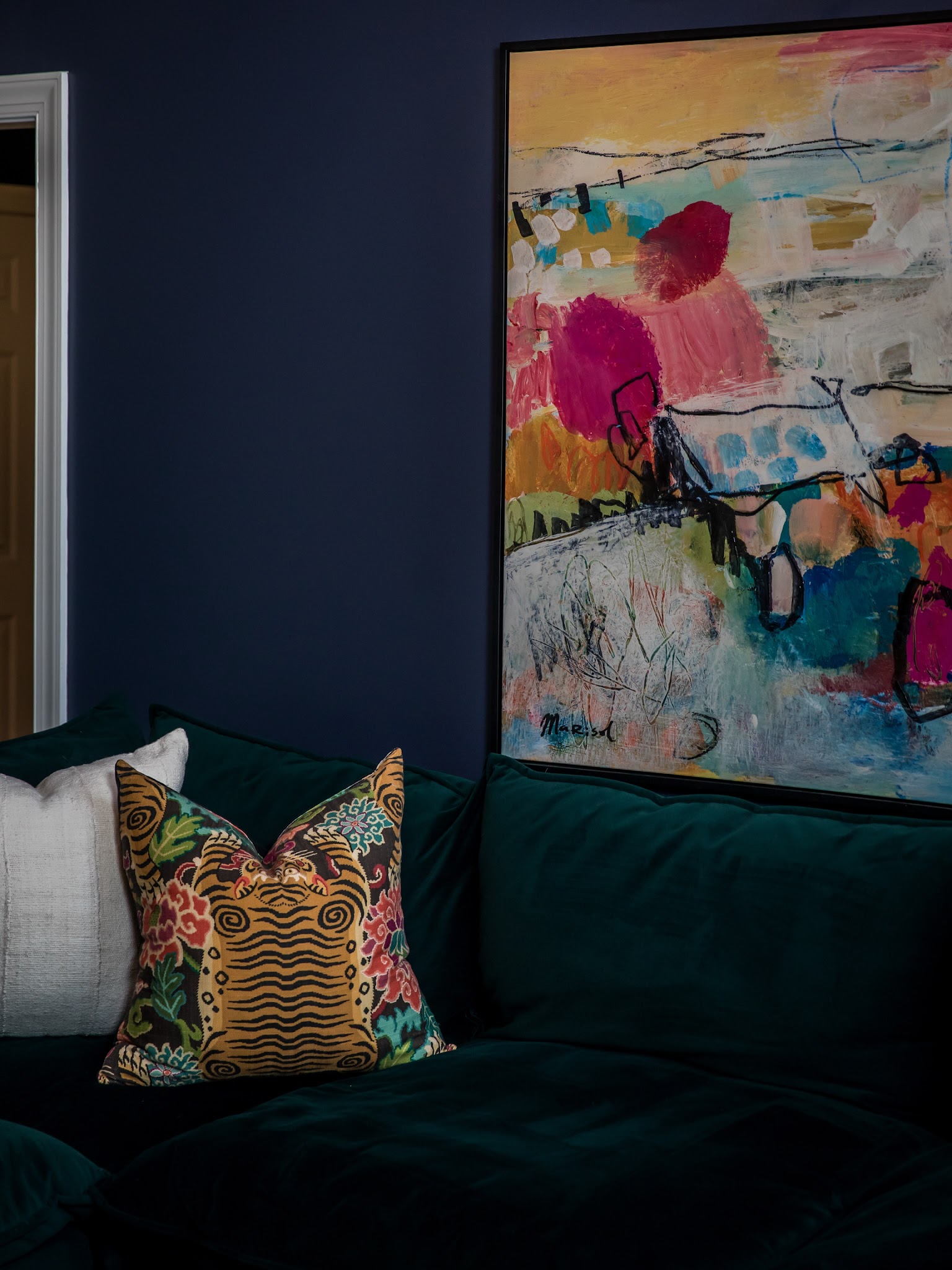
A dark blue wall and deep green sofa create a concentrated pocket of color in this living room. Their similar depth lets the patterned pillow and large abstract painting become the brighter points of interest.
The artwork also introduces cream, pink, yellow, and lighter blue, showing how a tight foundation can support a more varied accent palette.
Try this approach when you want a dramatic seating area: select two saturated colors, then connect them with a single artwork containing both. Keep neighboring trim lighter to outline the arrangement.
A pale pillow adds definition against the dark upholstery. Before choosing paint, compare samples beside your sofa in daylight and evening light so the blue and green remain distinct in your room.
3. Pale Blue Seating with Green Art Accents
Credits: Instagram
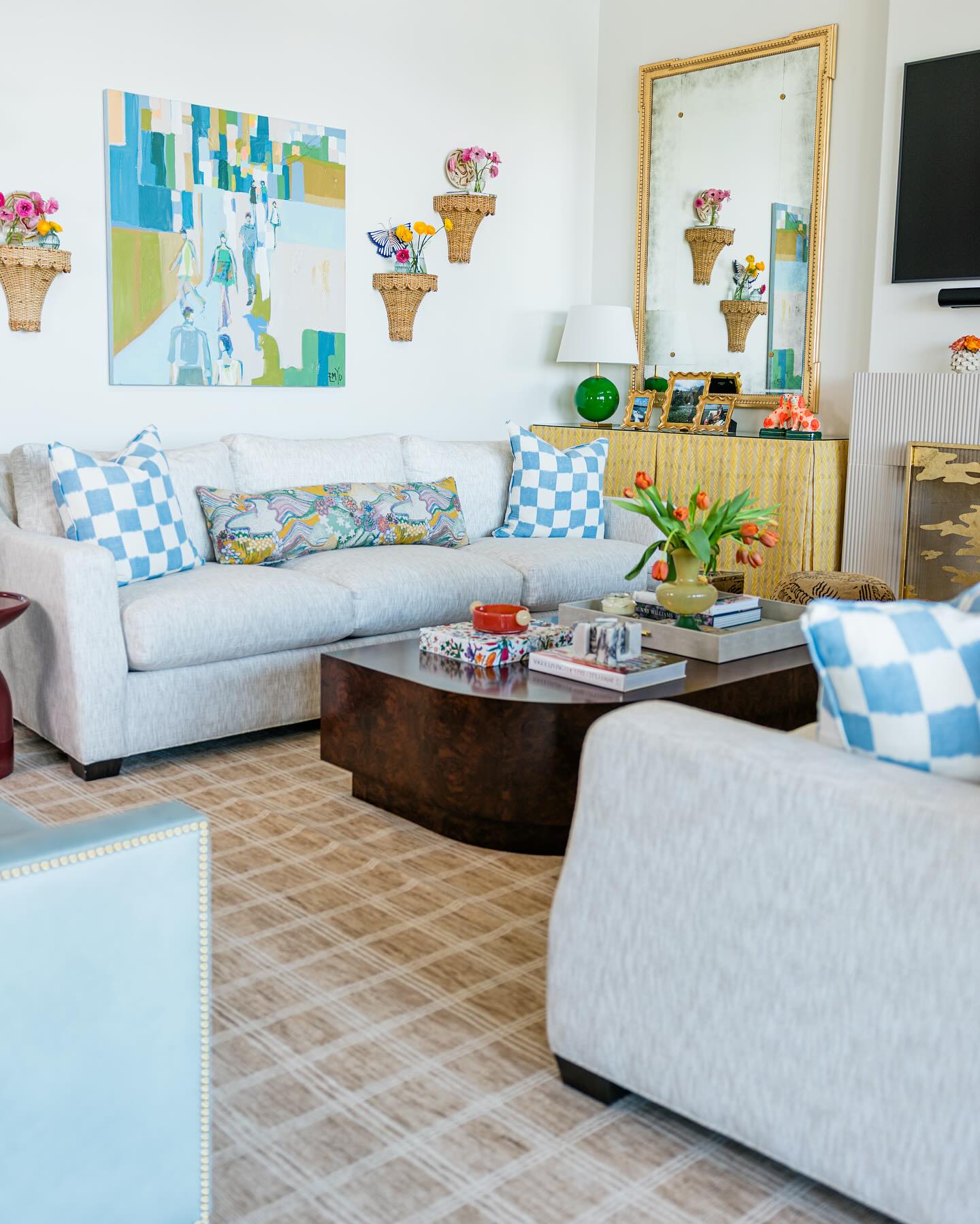
Pale blue seating gives this bright living room a gentle foundation, while green arrives through the abstract painting, a round decorative object, and the flowers on the coffee table.
The blue checked pillows add a stronger pattern without overwhelming the light upholstery. Yellow furnishings and small orange details warm the composition, making the cool colors feel lively.
For a similar balance, begin with a pale sofa and choose artwork that includes several shades of blue and green. Repeat just a few of those colors in objects you can move around.
Keep the walls simple so the painting stays visible from across the room. A darker coffee table anchors the center, giving the lighter furniture a clear point to gather around.
4. Striped Blue Rugs Beneath Green Floral Seating
Credits: Instagram
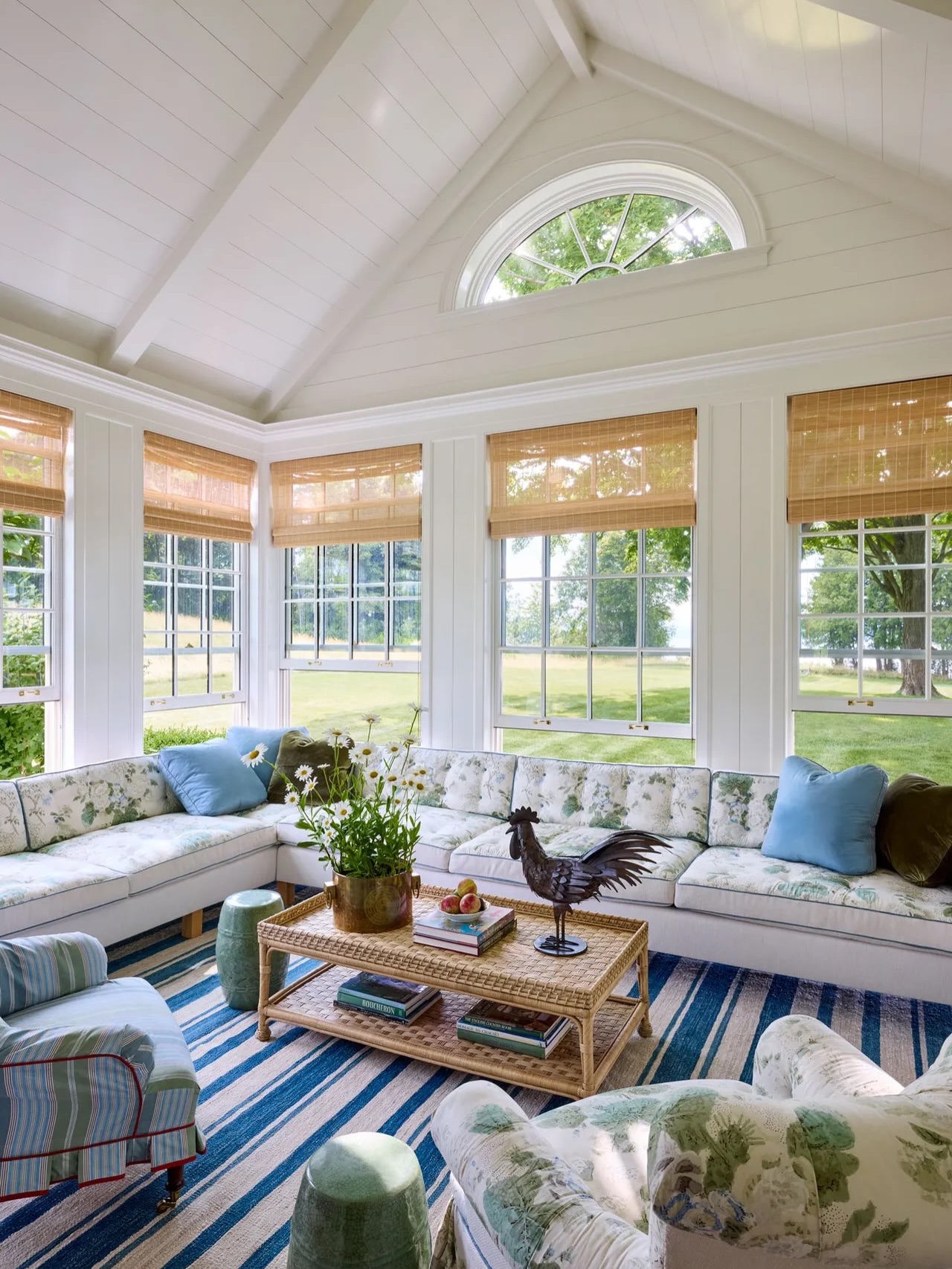
This windowed living room brings blue and green together through textiles while leaving the architecture white. Blue stripes stretch across the rug, pale blue pillows sit along the sofas, and green foliage appears throughout the upholstery pattern.
The repetition makes a generous seating arrangement feel connected, even though the patterns differ. Take the same approach by pairing one clear stripe with one softer botanical print.
Repeat the rug’s blue in solid pillows, then let the green appear in the floral fabric and a small central arrangement. The warm brown coffee table and woven window shades keep the palette from feeling overly crisp.
With windows on several sides, simple shades also let the changing outdoor greenery become part of the room.
5. Blue Plaid with Green Botanical Details
Credits: Instagram
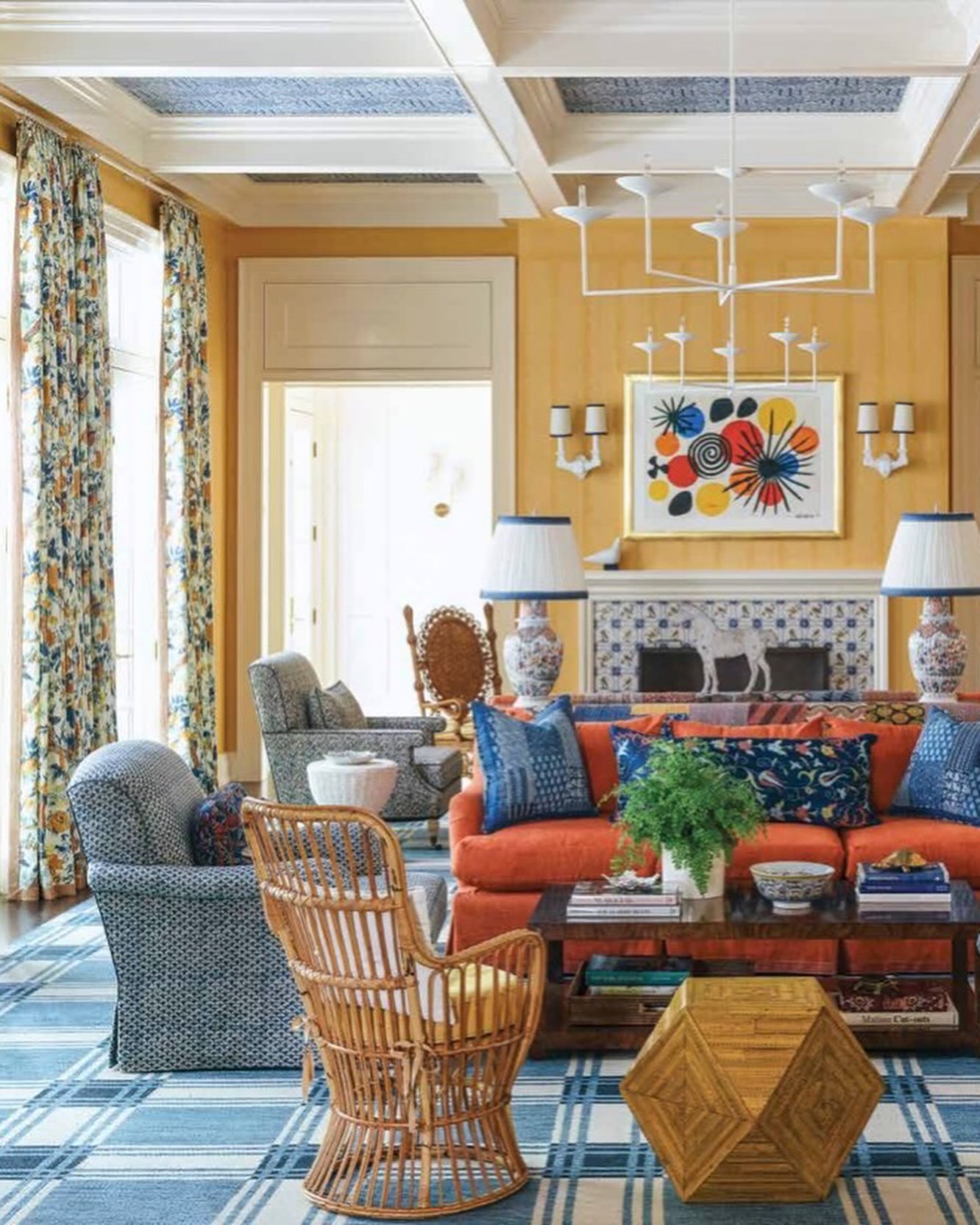
A broad blue plaid rug gives this colorful living room its strongest organizing pattern.
Blue chairs and pillows repeat that color above floor level, while leafy curtains and the green arrangement on the coffee table introduce the second half of the palette.
The orange sofa and warm yellow walls make the scheme lively. To adapt this mix, choose blue as the recurring thread, then use green in a botanical pattern that can include other accent colors.
Vary the pattern sizes so the rug, curtains, and pillows remain easy to distinguish. White ceiling beams, lampshades, and trim add visual pauses around the busier details.
Keep a few furniture surfaces visible rather than filling every tabletop, allowing the layered textiles to lead.
6. Green Floral Chairs Facing Blue Sofas
Credits: Instagram
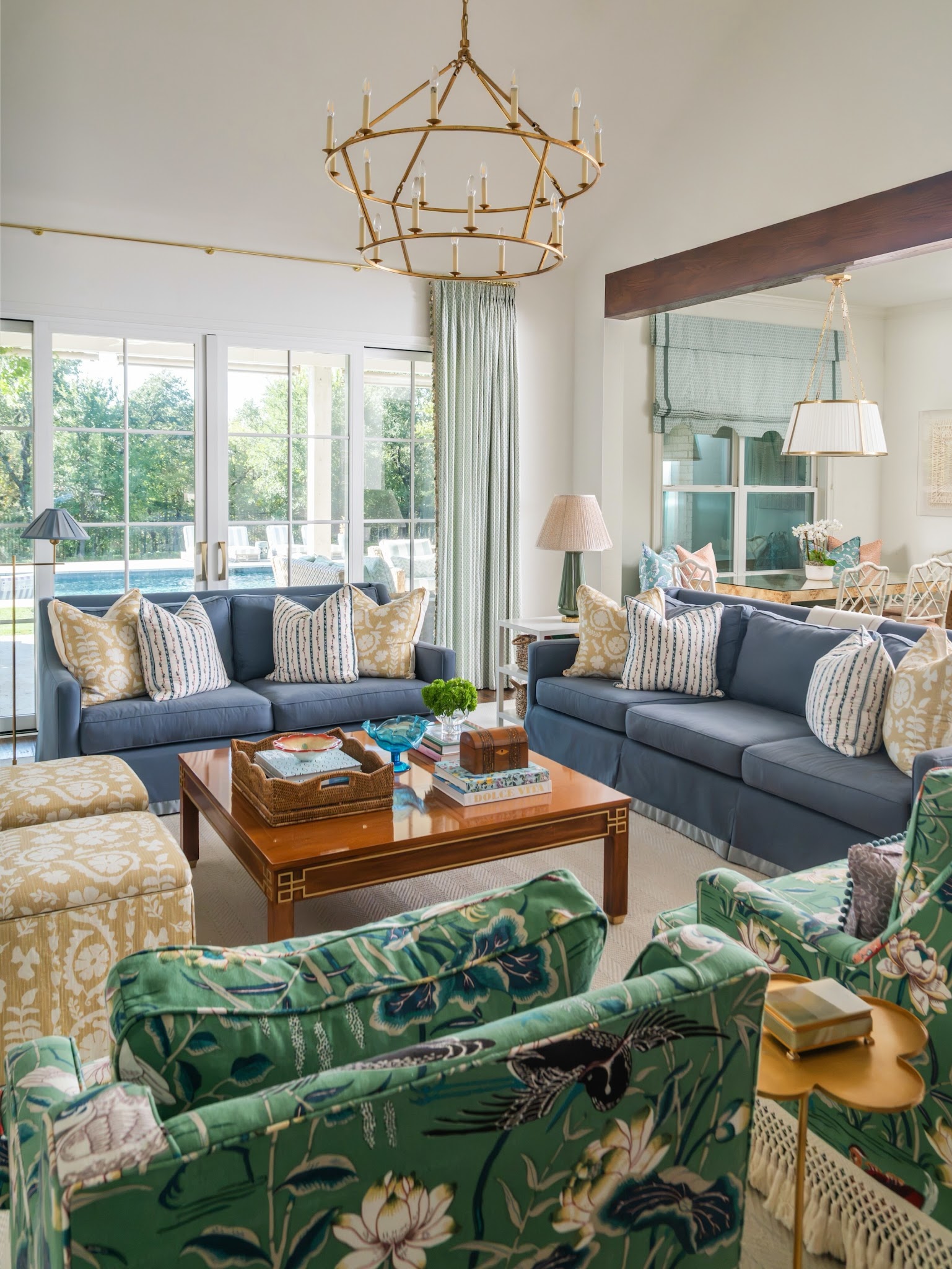
Green floral chairs and two blue sofas establish a balanced conversation area in this living room.
The large floral pattern stands out against the sofas’ solid upholstery, while smaller stripes and warm yellow prints add variety through the pillows and ottomans.
The photograph shows how repeating colors matters more than repeating the same fabric everywhere. Start with a favorite green print, select a blue from its details, and use that blue on a larger piece of seating.
Pale walls and a quiet rug keep the furniture grouping readable. Green also returns in the curtains, lamp, and small flower arrangement, carrying the palette around the room.
A central rectangular table helps organize the multiple seats into one inviting place to gather.
7. A Navy Coffee Table Among Olive Seating
Credits: Instagram
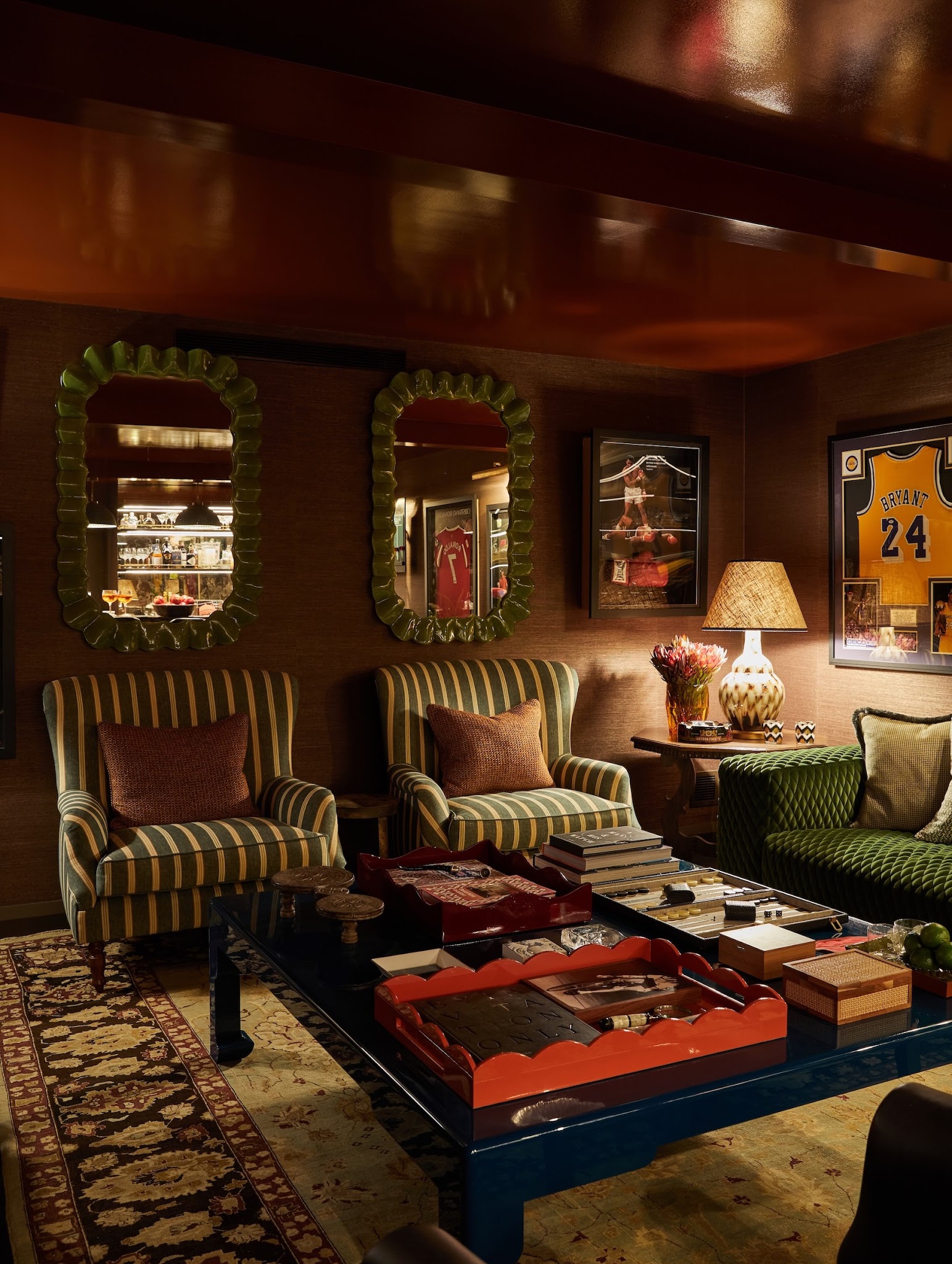
An oversized navy coffee table gives this intimate lounge a strong blue anchor. Olive seating, green framed mirrors, and striped armchairs surround it, while warm brown walls create a rich backdrop.
The blue is concentrated in one substantial piece, so it remains noticeable among the many collected objects. This is a useful approach if your living room already contains green furniture: introduce blue through a table, cabinet, or clear shape.
Keep decorative trays lower than the surrounding seat backs so the arrangement stays visually connected. Here, orange and red trays bring contrast, while books and a board game make the table part of everyday life.
Repeating green above the chairs through the mirrors ties the furniture to the wall display.
8. A Blue Sofa Against a Green Gallery Wall
Credits: Instagram
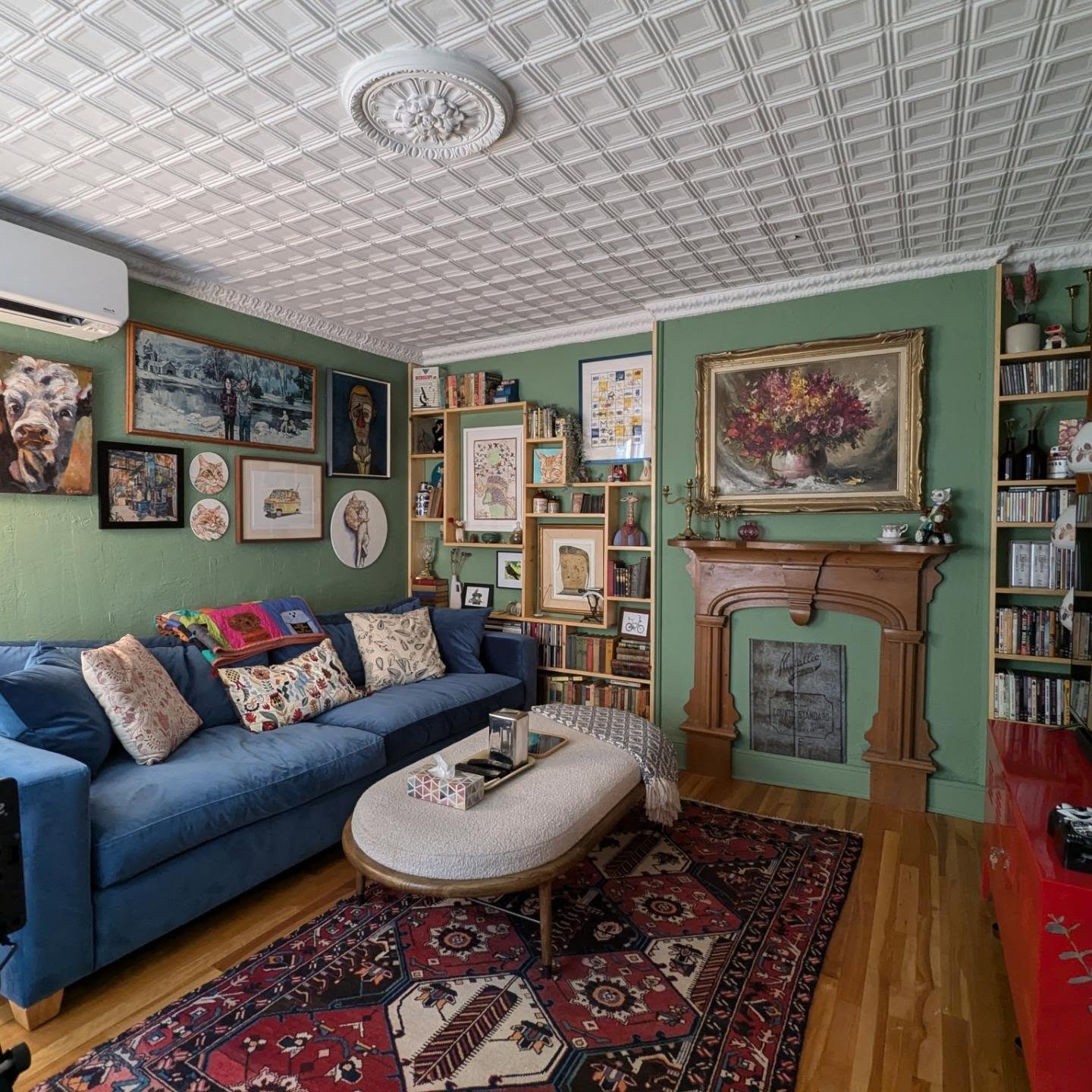
A long blue sofa sits against green walls in this collected living room. The two colors form a steady background for framed artwork, open bookshelves, and a richly patterned rug.
The pale oval ottoman offers a visual break at the center, while the detailed white ceiling keeps the upper portion of the room light.
If you enjoy displaying collections, use blue and green as the larger continuous surfaces, then vary the artwork and accessories within that framework. Group frames around the sofa and fireplace so the arrangement responds to the furniture below.
Repeat a little blue or green in cushions, but allow other colors to appear. The room works through consistent background colors and personal objects arranged at several heights.
9. Pale Blue Chairs with a Green Companion
Credits: Instagram
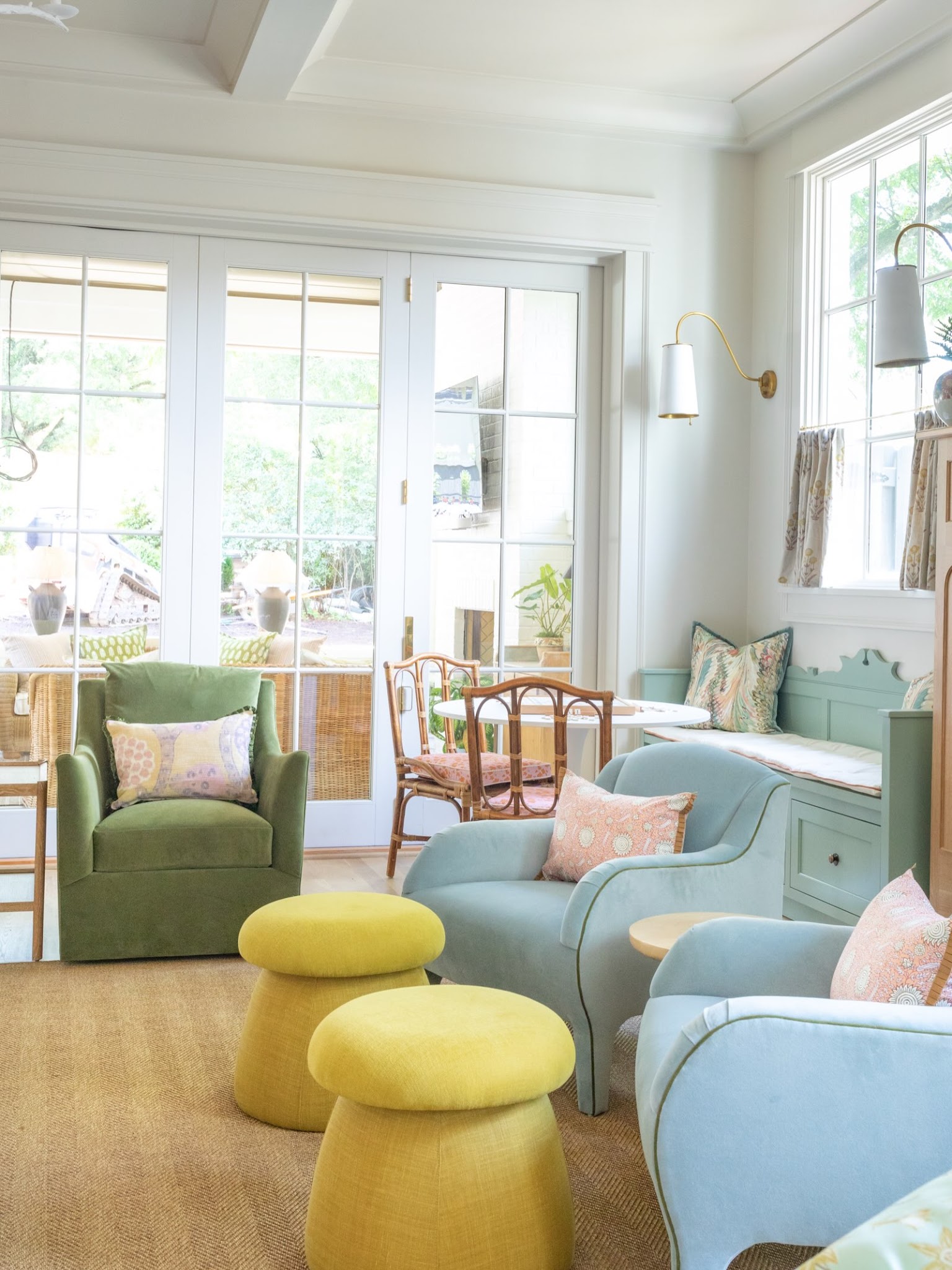
Two pale blue chairs and a green armchair create a relaxed seating group in this sunny room. The green piping on the blue upholstery links the pieces, while yellow stools add a brighter accent at the center.
A pale green built-in bench carries the palette into the neighboring table area. The useful lesson is to repeat a color through small details as well as large surfaces.
Try green edging, a patterned pillow, or a painted bench beside blue seating. Keep the walls and window trim light when you want those furniture colors to remain the focus.
Warm brown chair frames and a simple neutral rug add balance. The mixture of chair shapes also gives the arrangement a collected, personal feel.
10. Blue Upholstery with Olive Window Curtains
Credits: Instagram
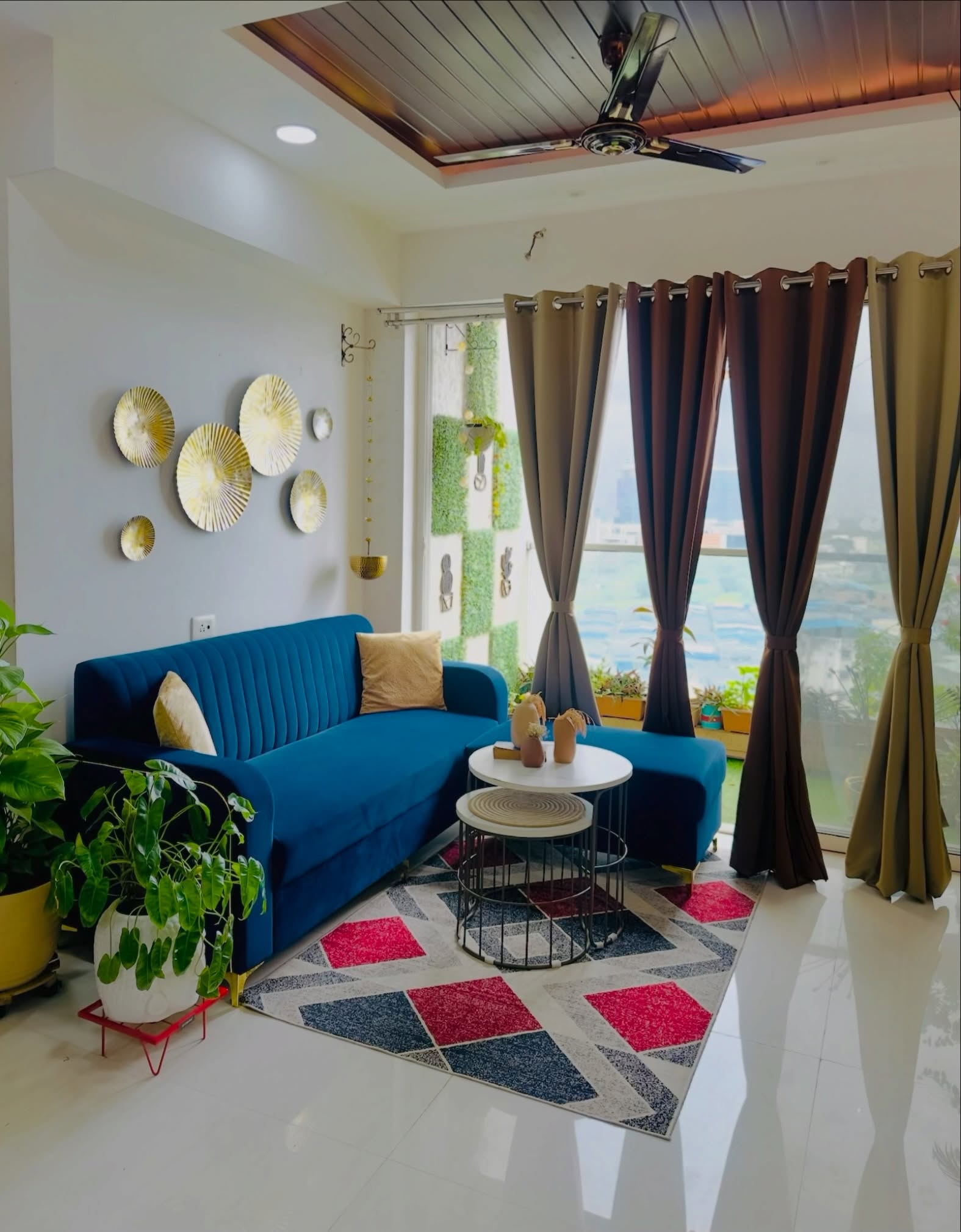
A bright blue sofa and olive curtains give this compact living room a clear color pairing. The curtains rise nearly to the ceiling, bringing green above the furniture, while leafy plants repeat it at floor level.
A geometric rug introduces pink, gray, and white without competing with the solid upholstery. To use this idea, choose a blue sofa and keep the surrounding wall color light.
Add green with curtains that can frame the window even when open. The small round tables suit the scale of the seating area and leave more of the rug visible.
A grouping of circular wall decorations echoes their shape. Keep accents limited so the blue seating and green window treatment remain the main visual features.
11. Olive Seating with Blue Art and Ceramics
Credits: Instagram
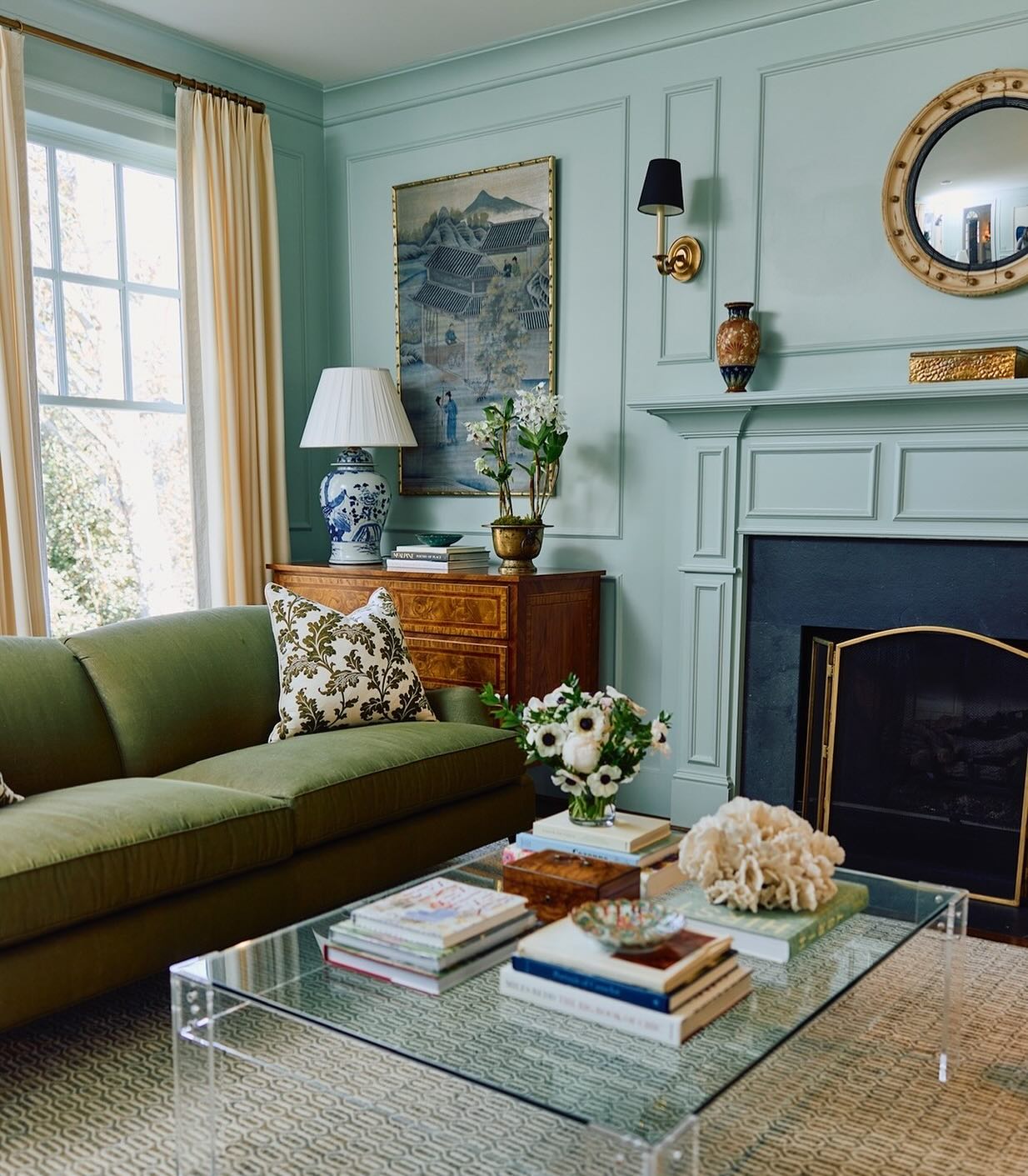
An olive sofa brings warmth to the cool, pale paneling in this living room. Blue appears in the artwork, the patterned lamp, and the books on the transparent coffee table, creating a restrained version of the pairing.
Because the wall color sits between blue and green, these smaller accents help define the two ends of the palette. Try this method when you want color that feels layered rather than sharply divided.
Give the sofa a deeper green tone, then repeat blue in objects around it. Cream curtains and a neutral patterned rug soften the contrast.
The brown chest and golden accents bring warmer tones, while the clear table keeps the rug and sofa visible through the center of the arrangement.
12. Use Cream to Balance Blue and Green
Credits: Instagram
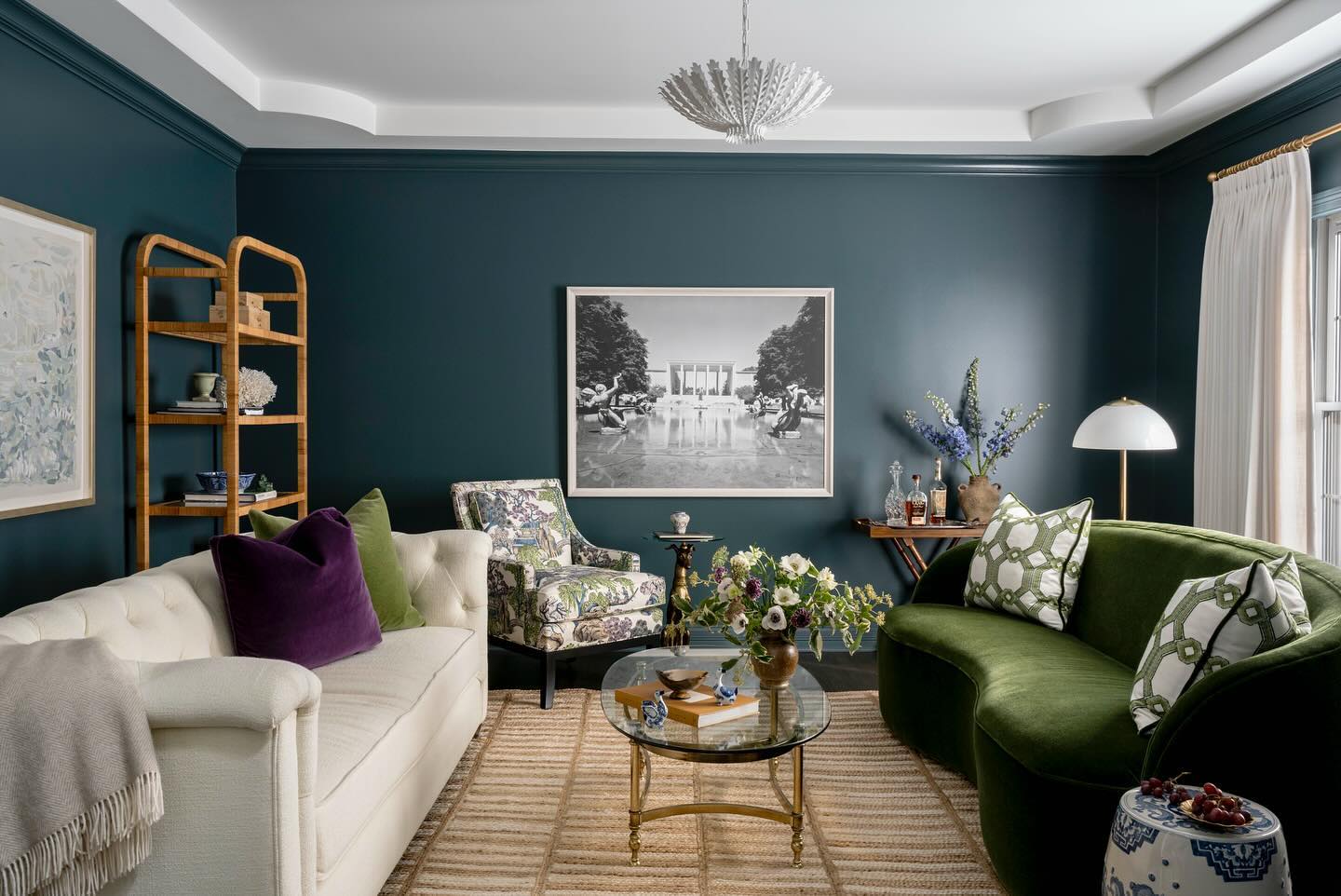
A cream sofa breaks up the deep blue walls and green sofa in this room. The light upholstery gives the eye a resting place while preserving the rich color around it.
Green returns in a pillow on the cream sofa, and a patterned accent chair connects the stronger shades in smaller details. To recreate the balance, choose one pale piece instead of making every upholstered surface equally dark.
Keep curtains and ceiling light for a similar contrast around the room’s edges. The transparent oval table adds little visual weight, allowing the patterned rug to remain visible.
Blue and white ceramics repeat the palette close to the seating, while a purple pillow introduces a small, deliberate departure from the main colors.
13. Repeat Blue from the Ottoman to the Trim
Credits: Instagram
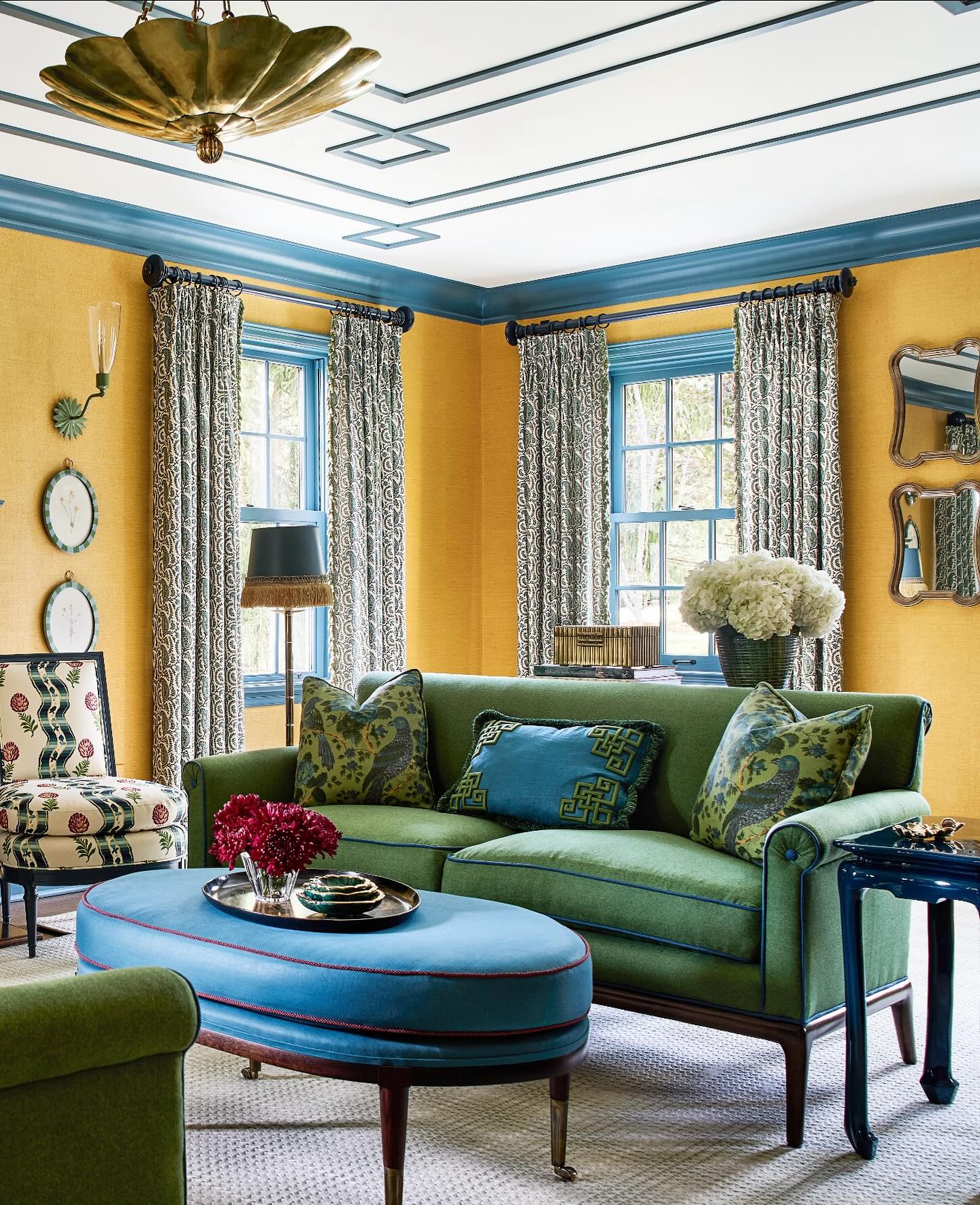
This living room uses blue at several scales: the oval ottoman, window frames, crown molding, and narrow ceiling details. A green sofa anchors the seating, with blue piping drawing a connection between the upholstery and surrounding architecture.
Warm yellow walls create a third color, so the repeated blue helps the arrangement feel organized. If you want to borrow the idea, start with one blue upholstered piece and carry its color into a smaller architectural detail.
Keep the green sofa largely solid, then add patterned pillows that contain both hues. A neutral rug leaves room for the stronger colors above.
The paired curtain panels introduce another pattern, but their restrained palette keeps them from overpowering the furniture’s clear blocks of color.
14. Connect Turquoise and Lime with Decorative Bands
Credits: Instagram
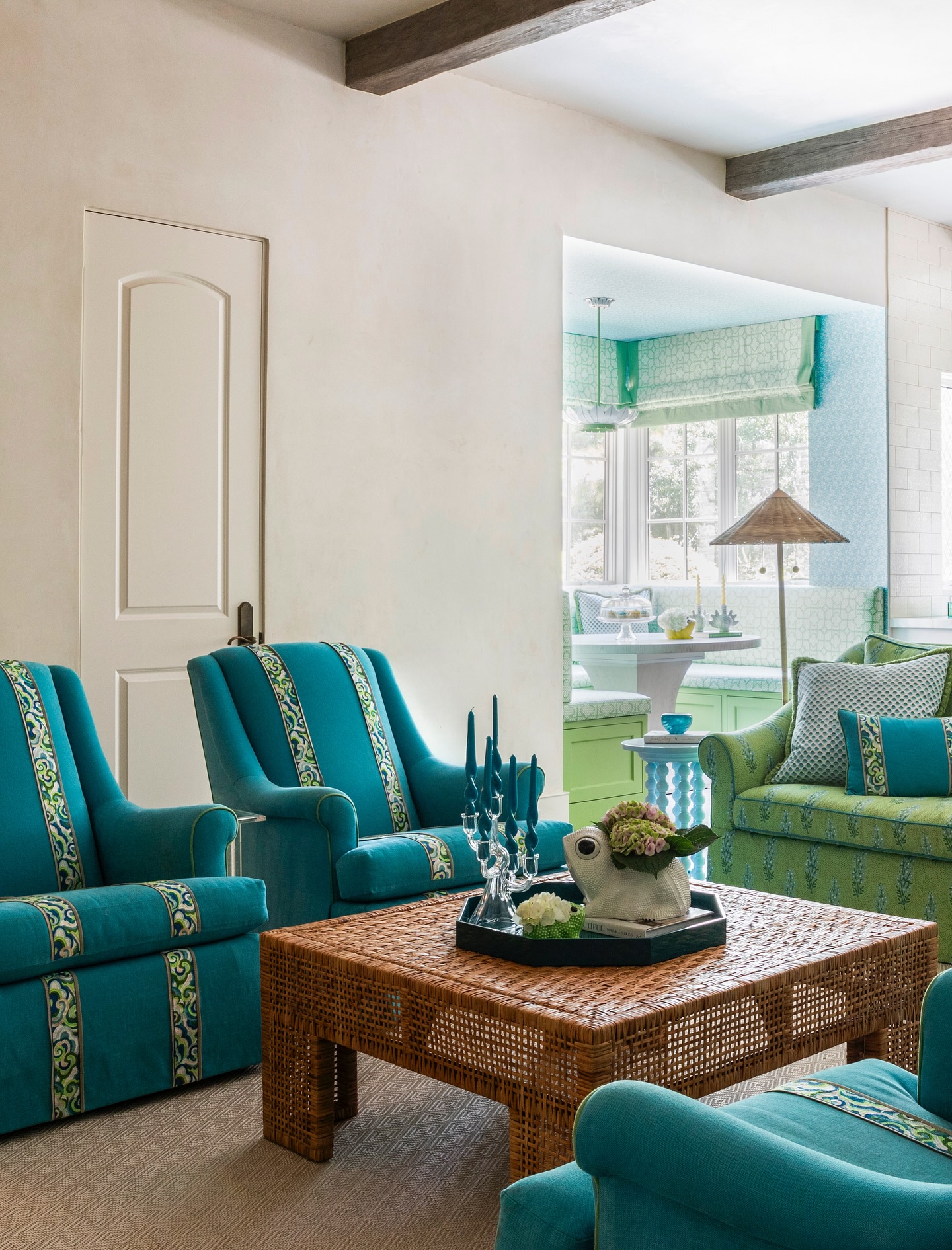
Turquoise armchairs and a lime green sofa introduce a vivid pairing within this living area. The decorative bands running over the chairs contain green, blue, and cream, providing a connection to the sofa beside them.
Matching trim on a small pillow reinforces that link without repeating an entire piece of furniture.
This is a useful detail to copy when your preferred shades feel slightly disconnected: find a narrow pattern that includes both colors and use it sparingly.
The broad woven coffee table introduces a warm brown surface at the center. Pale walls and an understated rug keep the saturated upholstery prominent.
In the background, lighter green cabinetry and window fabric extend the palette into the adjoining nook without overwhelming it.
15. Pair a Bright Blue Sofa with Lime Ottomans
Credits: Instagram
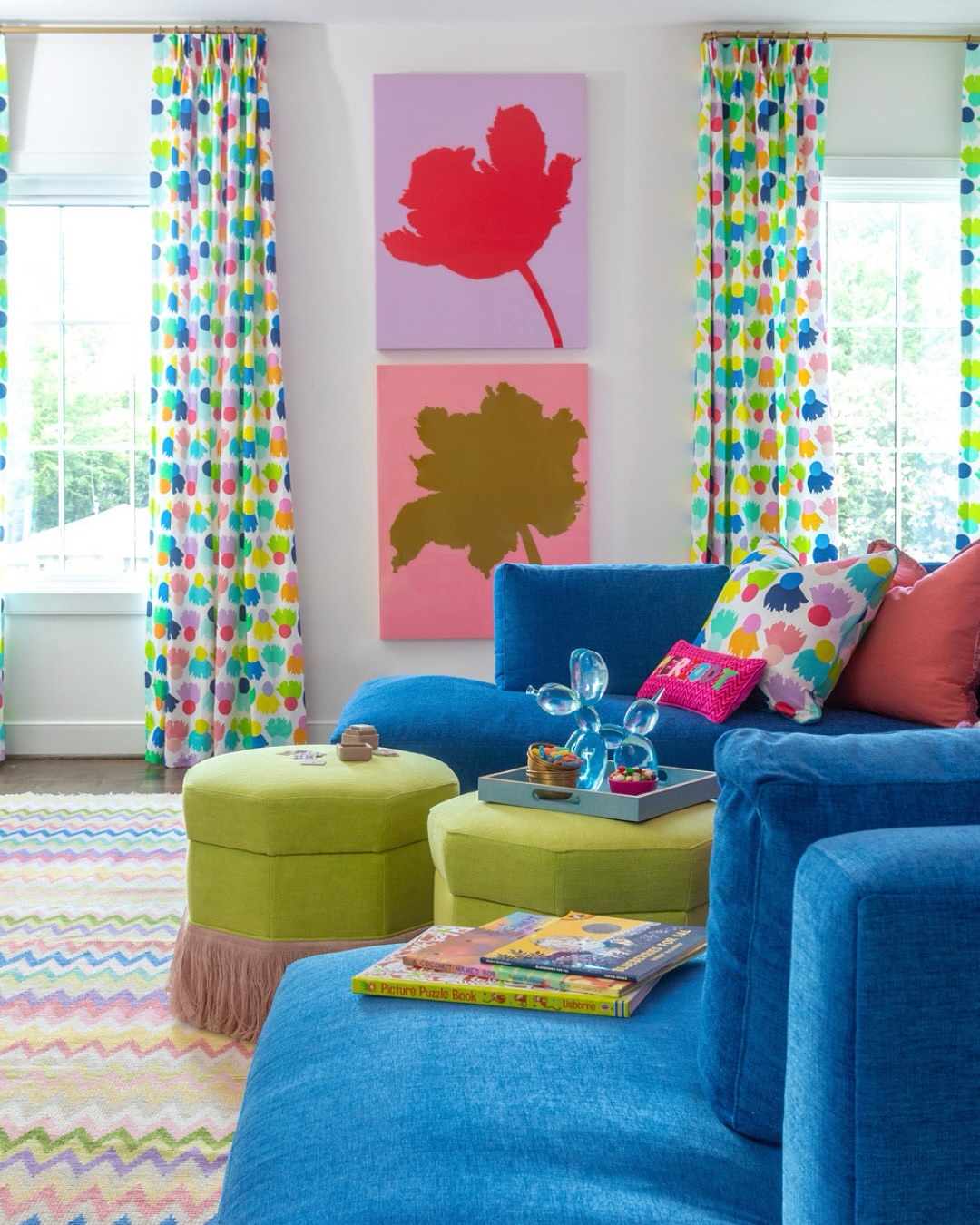
A bright blue sofa and lime green ottomans give this seating area a playful palette. The multicolored curtains repeat both shades, while the zigzag rug carries softer versions across the floor.
Pink artwork, pillows, and fringe introduce a warm accent that keeps the cool colors lively. For a similar result, let the largest seating piece carry blue and use green on smaller movable pieces.
Choose one patterned fabric that includes the whole palette, then repeat it in a pillow to make the curtains feel connected. White walls and window shades provide a calm background.
A tray on an ottoman creates a convenient landing spot, while leaving the surrounding upholstery visible enough to preserve the color contrast at the room’s center.
16. Layer Blue Stripes Around a Muted Green Sofa
Credits: Instagram
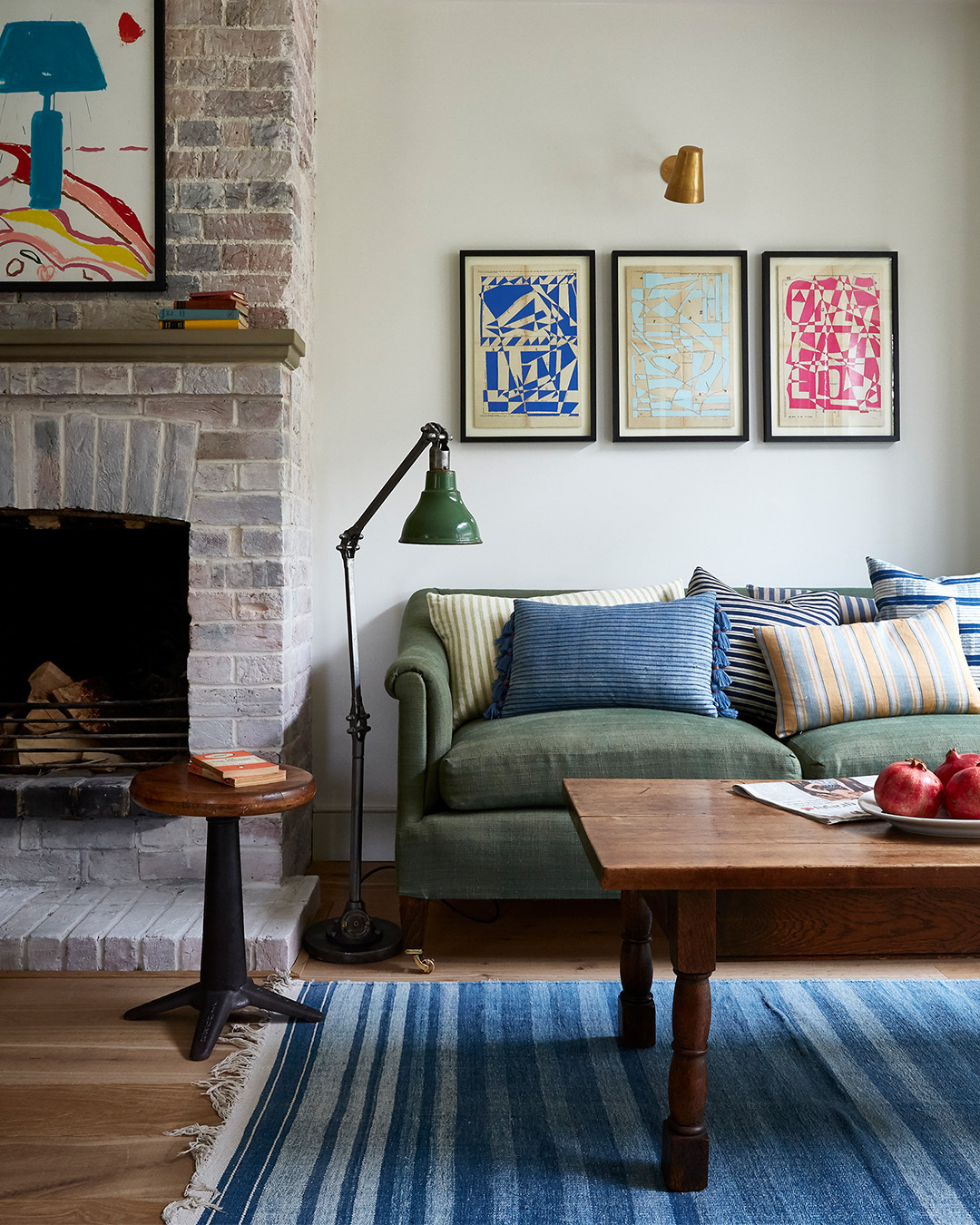
A muted green sofa and striped blue rug establish a palette beside the brick fireplace. The pillows repeat blue in several stripe widths, with touches of cream and warm yellow preventing the arrangement from feeling uniform.
A green task lamp brings the sofa’s color upward, while framed prints add blue and pink accents above. This is an approachable way to combine the colors through everyday textiles.
Begin with a solid green sofa, then choose a blue rug with a simple linear pattern. Mix pillow stripes by scale rather than matching them exactly.
The brown coffee table and pale brick provide quieter surfaces between the patterns. Keep the artwork in similar frames so the wall remains organized above the layered seating.
17. Deep Green Walls Behind a Navy Sofa
Credits: Instagram
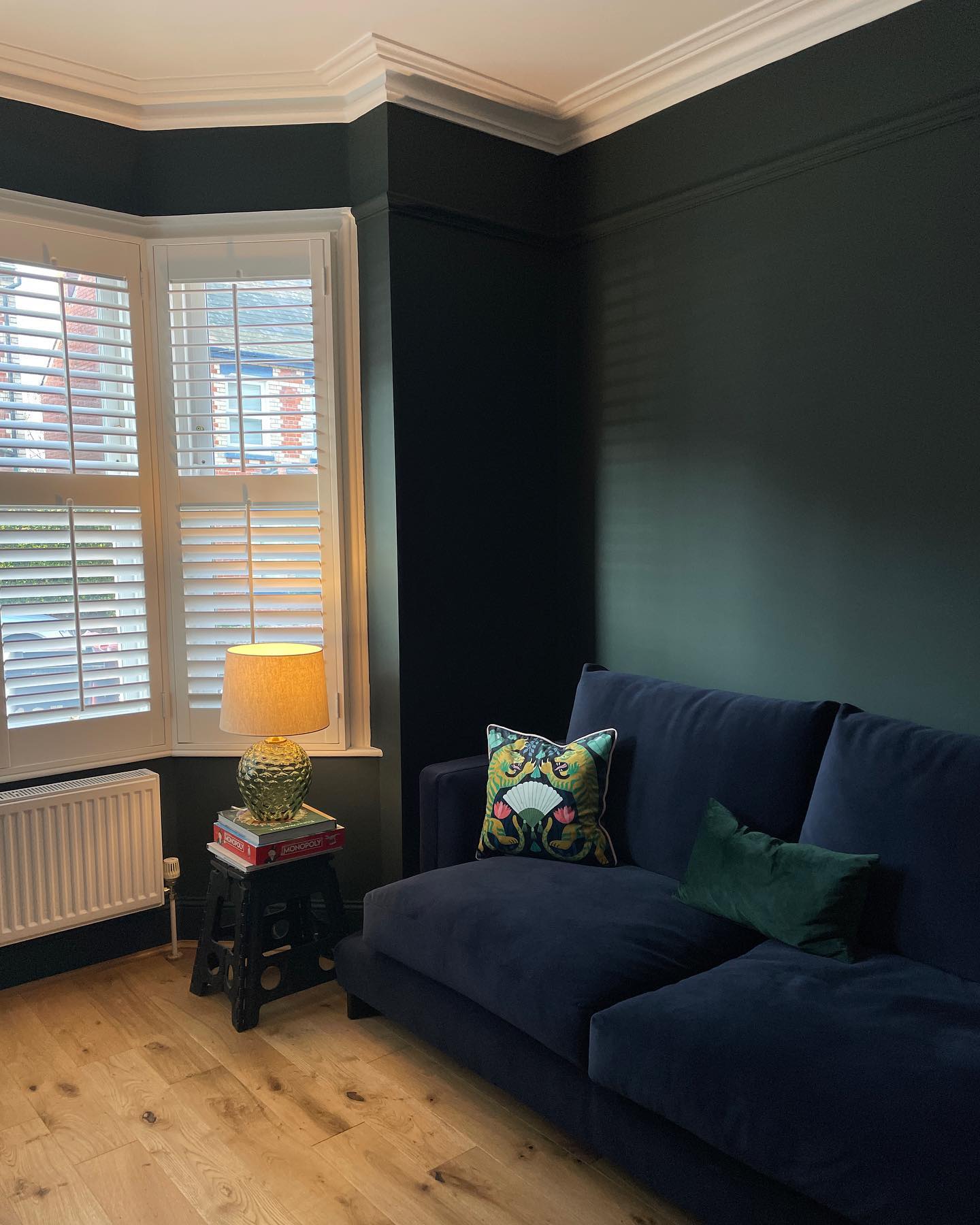
Deep green walls wrap around a navy sofa in this living room corner. White shutters, ceiling trim, and the light wood floor provide enough contrast to make the two dark colors readable.
A warm glowing lamp becomes the small focal point beside the sofa, while green pillows connect the upholstery to the wall. To try this look, compare your paint sample directly with the blue fabric before committing.
Similar dark values can work together when the colors remain distinct in your light. Keep some lighter architectural surfaces visible, as this room does around the bay window.
One patterned pillow adds variety without covering the navy seating. The result is a concentrated palette with clear boundaries and a welcoming evening atmosphere.
18. Let a Large Painting Supply the Green
Credits: Instagram
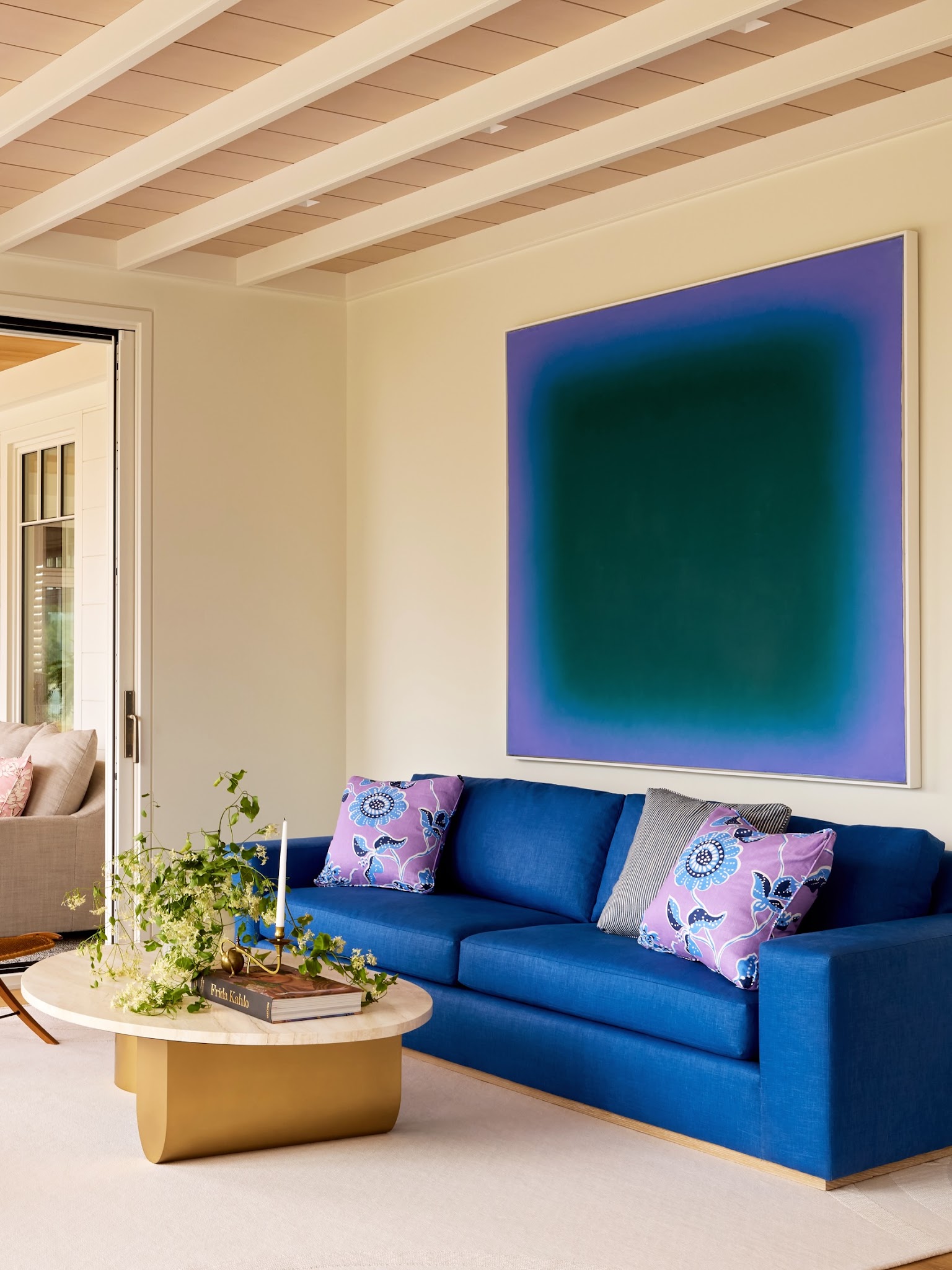
A blue sofa sits beneath a large painting with a deep green center and a blue to violet border. The artwork brings the two main colors together on one surface, allowing the remaining room to stay light.
Purple patterned pillows repeat the painting’s outer tones, while a green arrangement on the coffee table carries its center color forward. Use this approach when you already own a blue sofa and want a meaningful green addition.
Choose art with enough scale to hold its own above the upholstery, then keep nearby accessories selective. The pale walls, light rug, and warm ceiling panels provide breathing room.
An oval table softens the sofa’s straight outline and leaves the painting as the primary focal point.
19. Set Blue and Green Seating Against Brick
Credits: Instagram
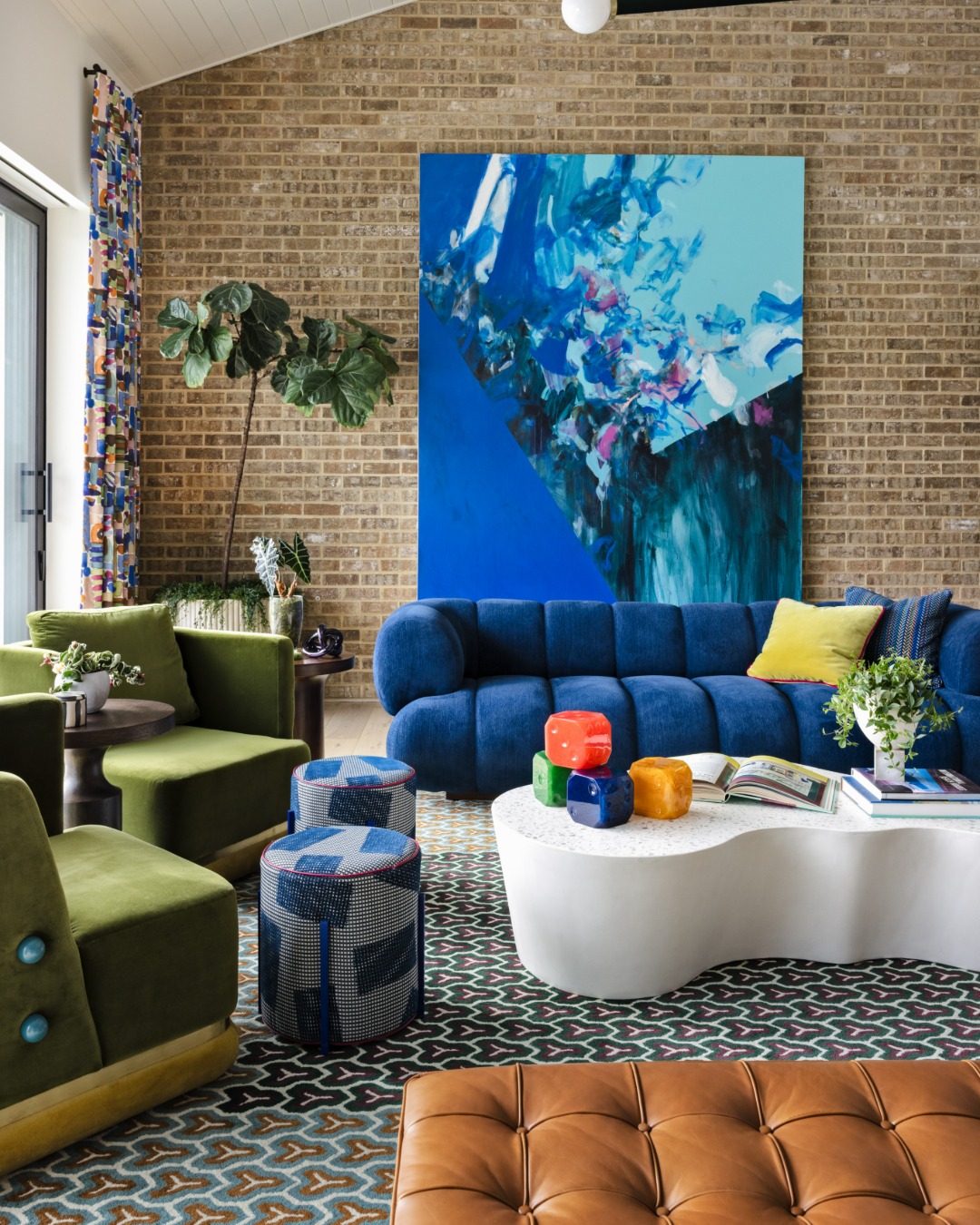
A blue sofa and moss green chairs bring color to this living room’s brick backdrop. The blue painting reinforces the sofa, while plants repeat the green at different heights.
Patterned stools and a multicolored rug connect the separate seats without making every fabric identical. The contrast in shapes matters too: the sofa has rounded sections, the chairs look more angular, and the white coffee table has a flowing outline.
To adapt this mix, repeat each major color in at least one other element, then allow furniture shapes to vary. Keep a substantial pale surface near the center so the patterns remain easy to read.
The warm brick and brown bench add grounding tones around the brighter upholstery and colorful accessories.
20. Anchor Green Built-Ins with a Blue Rug
Credits: Instagram
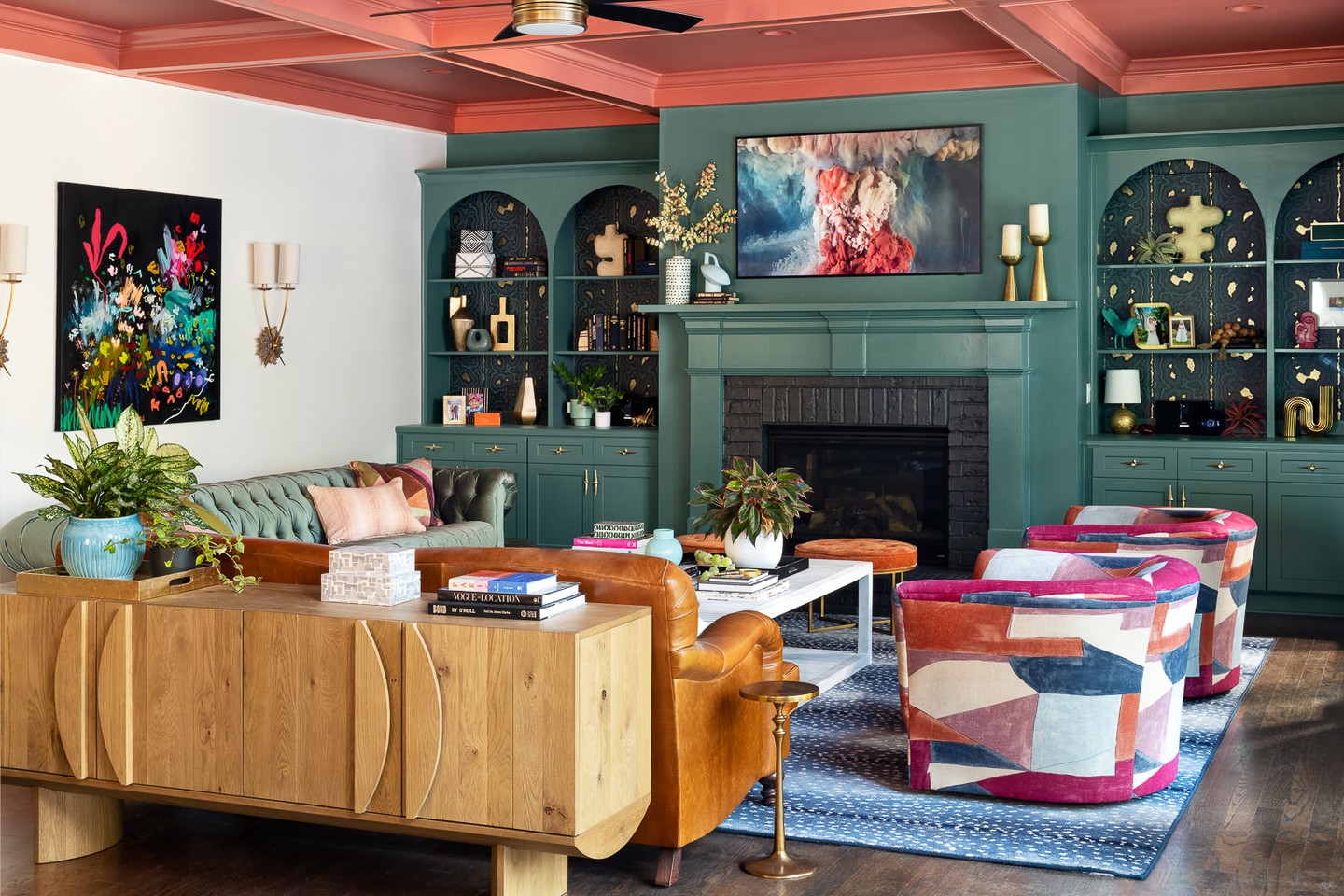
Green built-ins and a matching fireplace surround establish the backdrop in this living room. A blue rug defines the seating area below, while the patterned chairs repeat blue alongside pink, cream, and orange.
The green sofa strengthens the connection between the cabinetry and the furniture. For a similar scheme, choose one color for an architectural feature, then introduce the companion color across the floor.
Let a patterned chair or pillow join the two. Here, the coral ceiling and warm brown seating add another layer of contrast, balanced by the pale side wall and white coffee table.
Keep shelf displays varied in height but spaced apart so the green background remains visible. That restraint gives the surrounding colors room to register.