
A bedroom can feel unmistakably midcentury without filling it with bulky vintage furniture.
Mid Century Modern Bedroom Ideas in this roundup focus on recognizable shapes and useful details, from a light wood bed with simple rails to a cane headboard paired with an adjustable reading lamp.
You’ll also find ways to bring in the style gradually, such as choosing a white nightstand with splayed legs or combining open and closed bedside storage.
Warm wood, woven texture, and thoughtful lighting offer plenty of character while keeping the room practical and uncluttered.
1. Start With a Light Wood Bed and Simple Rails
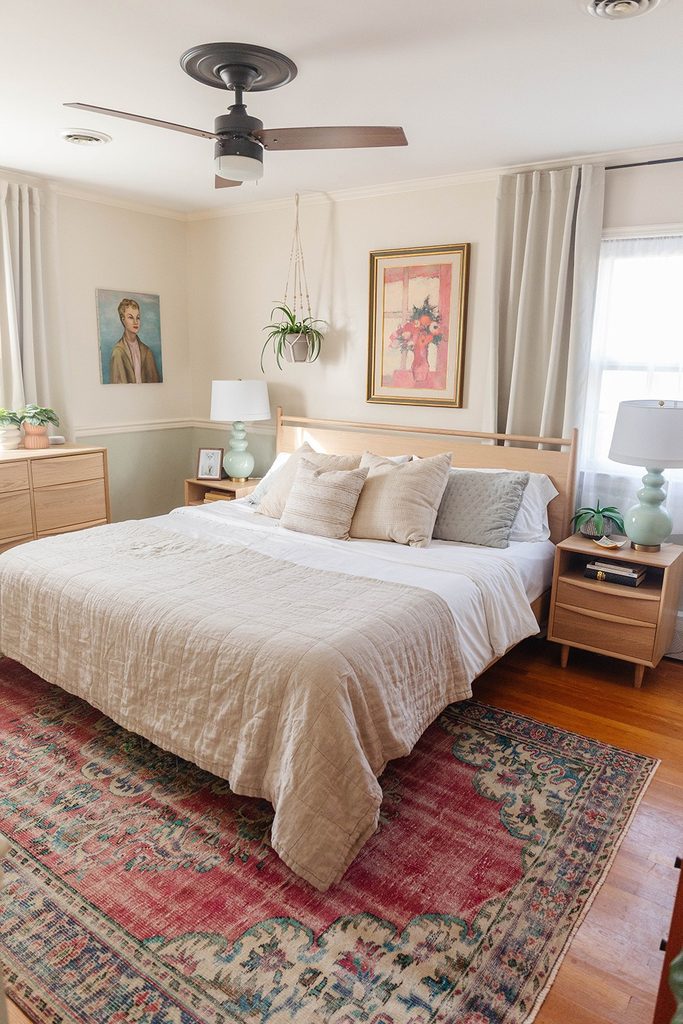
Credits: Carrie Waller / Dream Green DIY
A narrow rail above the headboard gives this pale wooden bed a recognizable outline without making it look imposing. Matching bedside cabinets continue the light finish, while their short tapered legs preserve a little visible floor.
Cream bedding keeps attention on those furniture shapes rather than adding another competing feature. This is an approachable direction for a bedroom that needs midcentury character but cannot accommodate bulky vintage pieces.
Compare the complete width of the bed and both tables before committing to a coordinated arrangement. Leave the upper rail visible above your pillows so its detail remains useful.
A patterned rug, pastel lamps, and collected paintings can then supply personality around the simple wooden foundation, making the room feel lived in.
2. Set Cognac Leather and Olive Bedding Against Black
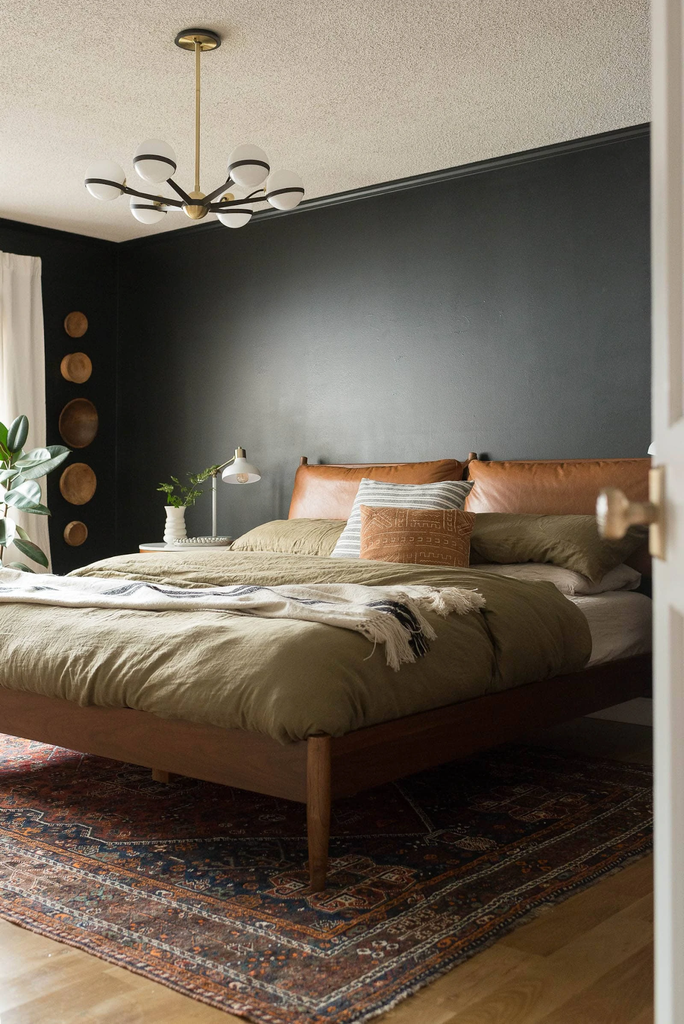
Credits: Ashley Mayes / Bigger Than the Three of Us
Cognac leather cushions give the low wooden bed a warm focal point against these black walls. Olive bedding extends that earthy palette, while the pale throw and small reading lamp prevent the composition from becoming uniformly dark.
The bed’s exposed legs and restrained frame provide the midcentury shape; color makes that shape more noticeable. Try this combination with your existing wood furniture before deciding that every piece needs replacing.
Sample the dark paint beside the leather or upholstery in both daylight and evening light. Keep a lighter surface near the bedside for useful contrast.
The photograph also shows why a patterned rug helps: its worn red and blue tones connect the warm furniture to the deeper background throughout the bedroom.
3. Pair a Cane Headboard With an Articulated Reading Lamp
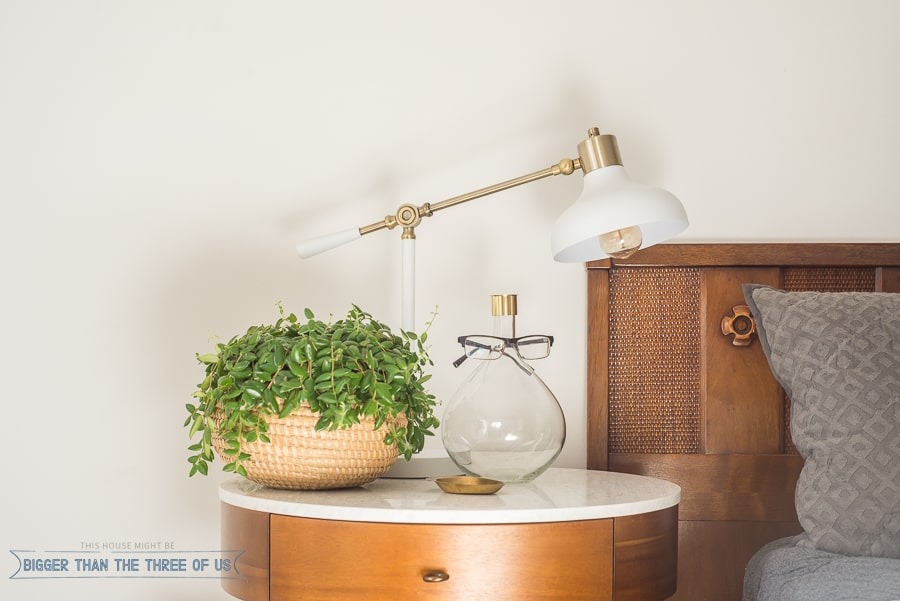
Credits: Ashley Mayes / Bigger Than the Three of Us
Woven panels make this vintage wooden headboard interesting even where the bedding leaves only a small section exposed. Beside it, a white shade and jointed brass arm introduce a more mechanical shape without overwhelming the warm materials.
The rounded nightstand softens the meeting point between bed and wall. Consider an adjustable reading lamp when you want its practical function to contribute to the design.
Check the shade’s reach from your usual sitting position, and keep the switch easy to find. A lamp with a slender stem leaves more room for everyday objects than a bulky ceramic base.
Restrained wall color allows the cane, brass, and wood grain to remain distinct, creating a bedside arrangement that feels detailed rather than crowded.
4. Use Splayed Wooden Legs Beneath a White Nightstand
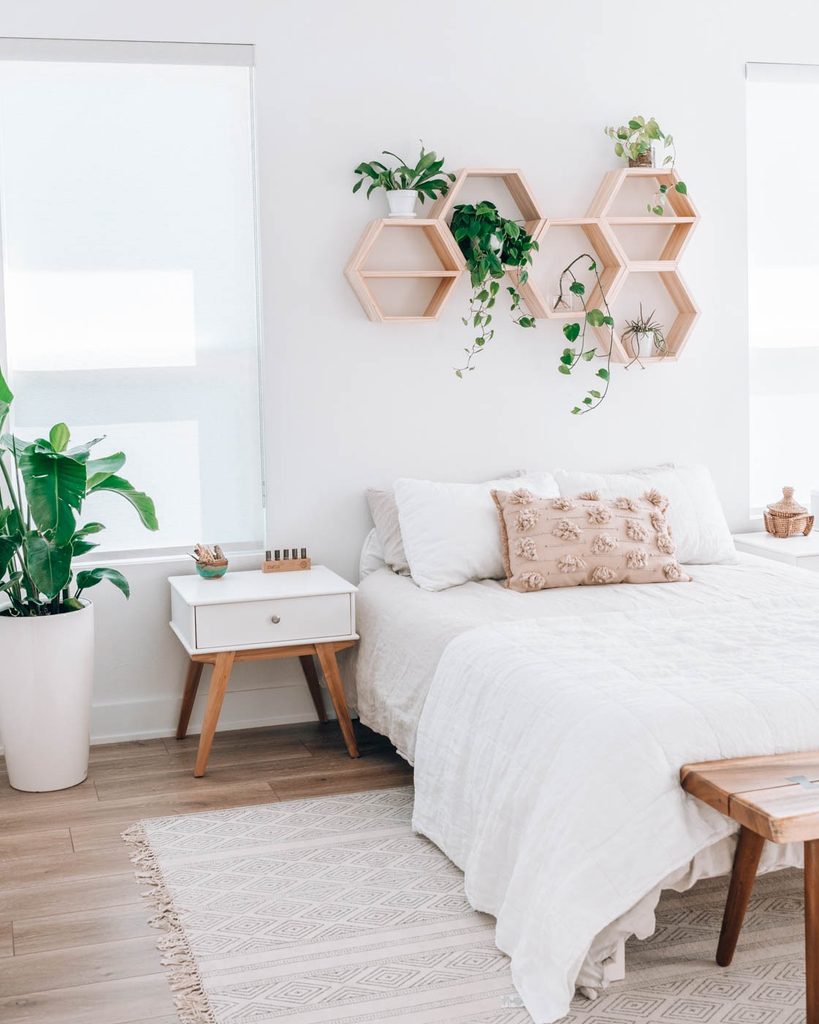
Credits: Jules Acree
Angled wooden legs give this compact white nightstand much of its character. They lift the drawer box away from the floor and create a clear contrast with its straight edges.
Because the bedding and walls are also white, the warmer base becomes especially easy to notice. You can introduce this kind of midcentury reference through one useful piece instead of furnishing the entire room at once.
Check that the tabletop sits comfortably beside your mattress and that the drawer clears the bed frame. Keep the surface simple enough for its outline to show.
A nearby wooden bench and geometric shelves repeat the natural material, while leafy plants soften the angles and bring variation to an otherwise quiet, pale bedroom scheme.
5. Combine Open and Closed Bedside Storage
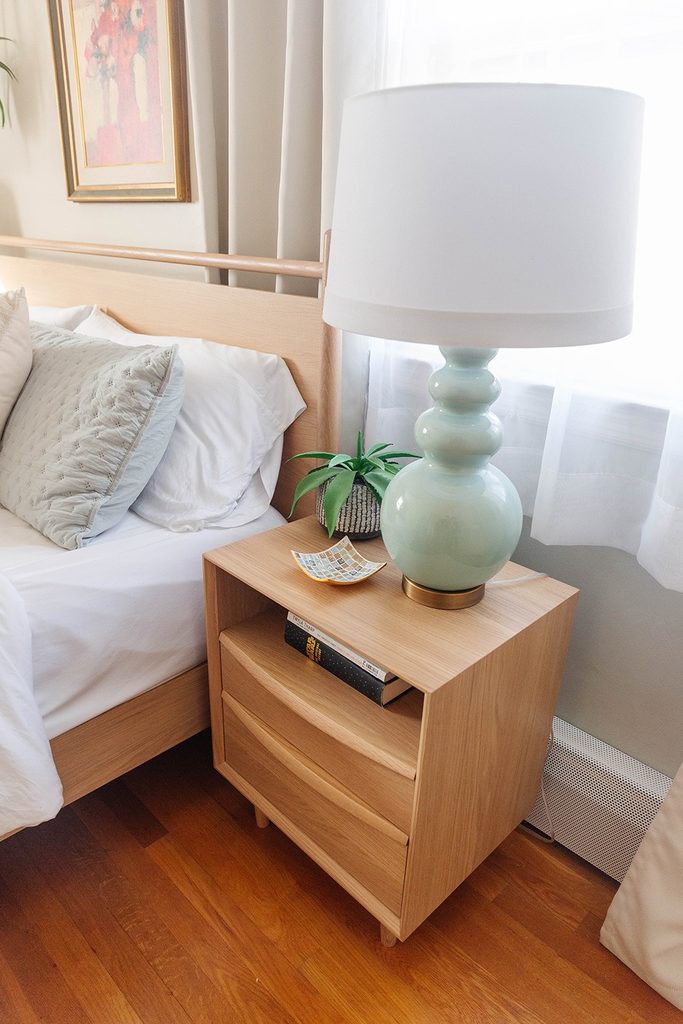
Credits: Carrie Waller / Dream Green DIY
An open shelf above two drawers gives this wooden nightstand a useful division of storage. Books remain close to hand, while smaller belongings can disappear behind the curved drawer fronts.
The tapered feet and plain outer box keep the furniture visually light beside the bed. Borrow the arrangement by deciding what you genuinely reach for at night before choosing a cabinet.
An open compartment works best when it holds a small, intentional collection rather than loose cables and receipts. Check drawer clearance and leave sufficient space around any nearby heating vent.
The sculptural pale green lamp adds a rounded accent, but the cabinet remains the practical foundation of the corner, balancing familiar midcentury lines with everyday bedroom needs and order.
6. Give the Ceiling a Branching Globe Fixture
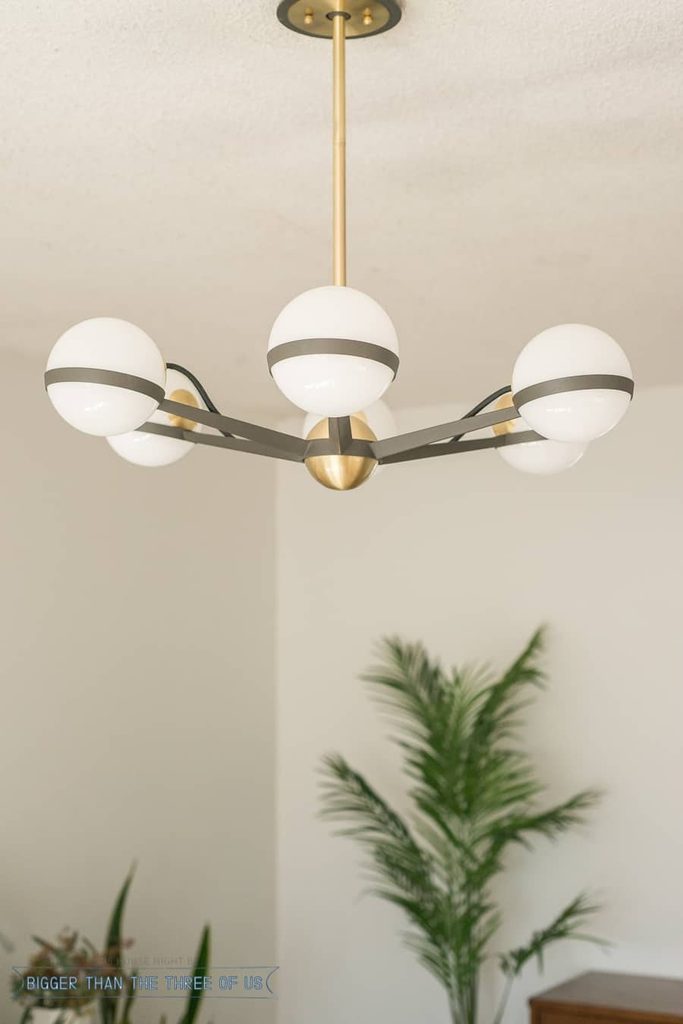
Credits: Ashley Mayes / Bigger Than the Three of Us
Five white globes spread outward from the center of this bedroom light, creating a sculptural shape that remains open between its arms. Dark bands sharpen each sphere, while brass details introduce warmth that relates to the wooden furniture below.
A fixture like this can establish a midcentury direction even when the surrounding ceiling and walls are plain. Measure its overall diameter as carefully as its hanging height; wide arms can crowd a small room despite a short drop.
Choose compatible bulbs and controls so the light can suit both dressing and winding down. Keep competing ceiling decorations restrained.
The photograph demonstrates how repeated circles and slender connecting lines can provide a design feature without relying on bright color or pattern.
7. Mix a Pale Bed With a Richer Wooden Chest
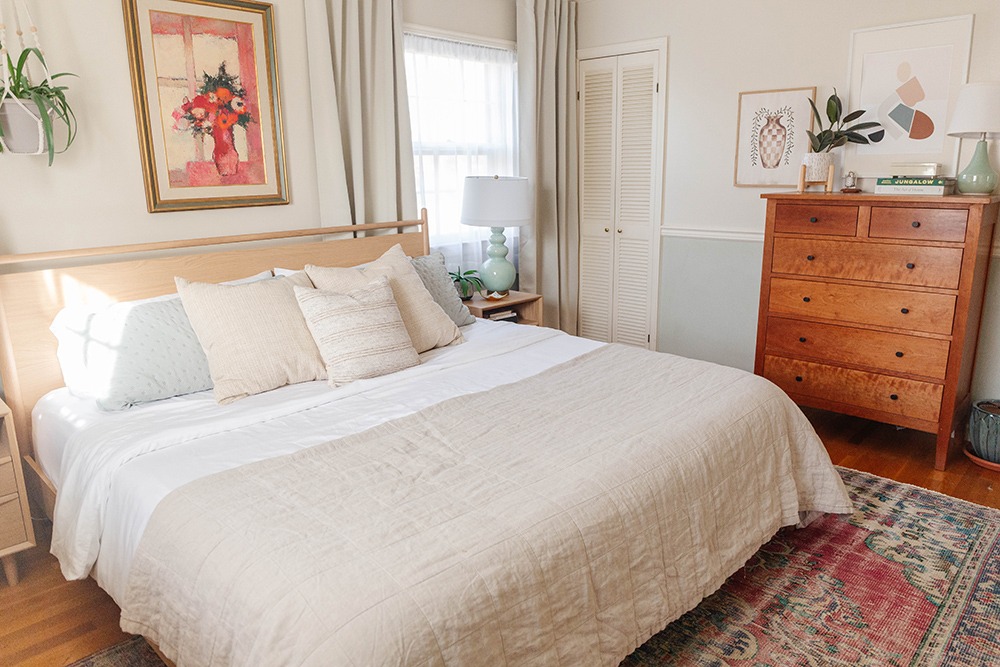
Credits: Carrie Waller / Dream Green DIY
The tall chest has a deeper reddish finish than the bed and bedside table, yet the furniture sits comfortably together. Simple outlines provide the connection, and the pale bedding gives each wood tone enough space to read clearly.
This is a helpful approach when a meaningful older piece needs to join newer midcentury inspired furniture. Look for compatible proportions rather than an exact stain match.
Repeating warm wood in the floor or a small accessory can make the difference feel deliberate. Keep artwork above the chest relatively light so the taller piece does not dominate the room.
Here, the combination feels collected because the chest contributes useful height and storage while the lower bed keeps the main sleeping area calm.
8. Place a Long Low Dresser Beneath the Window
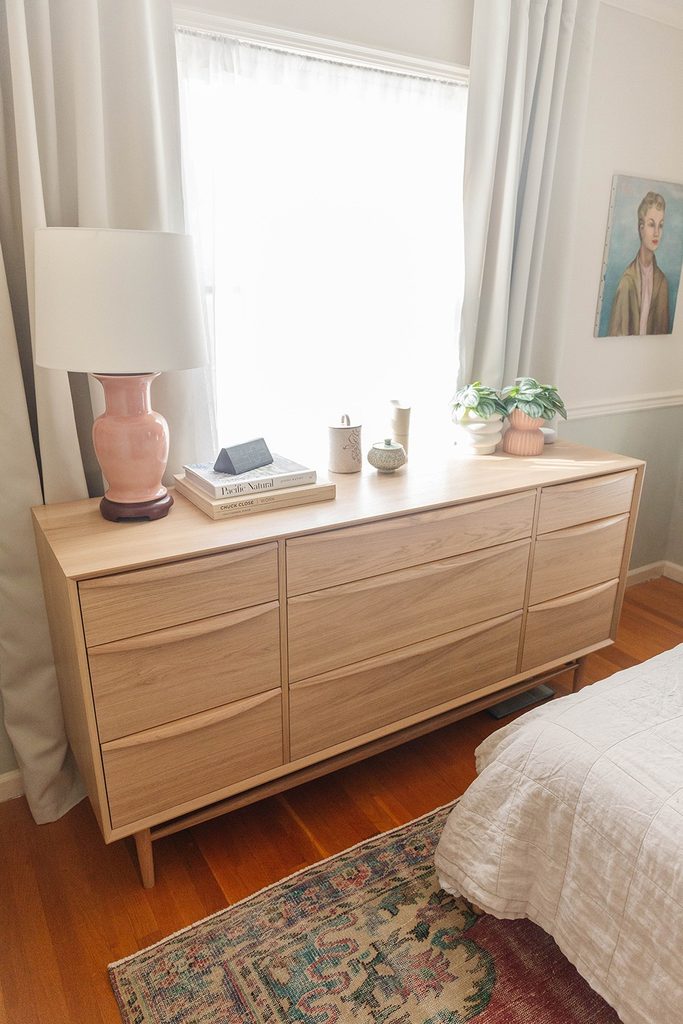
Credits: Carrie Waller / Dream Green DIY
A broad dresser fits below the window while leaving its glass and curtain panels visible.
Its low horizontal shape and tapered legs bring a strong midcentury reference to the room, and the pale wood keeps that substantial storage from feeling heavy.
Before copying the placement, measure sill height, drawer depth, curtain clearance, and access to any required window opening. Keep tall objects toward the ends so the center remains visually open.
The pink lamp and small ceramics supply enough variety without hiding the grain or clean drawer arrangement. A low dresser can also balance the bed across a narrow room.
Here, the furniture turns an ordinary window wall into a useful storage area while preserving its strongest asset: natural daylight.
9. Balance a Rectangular Dresser With a Round Mirror
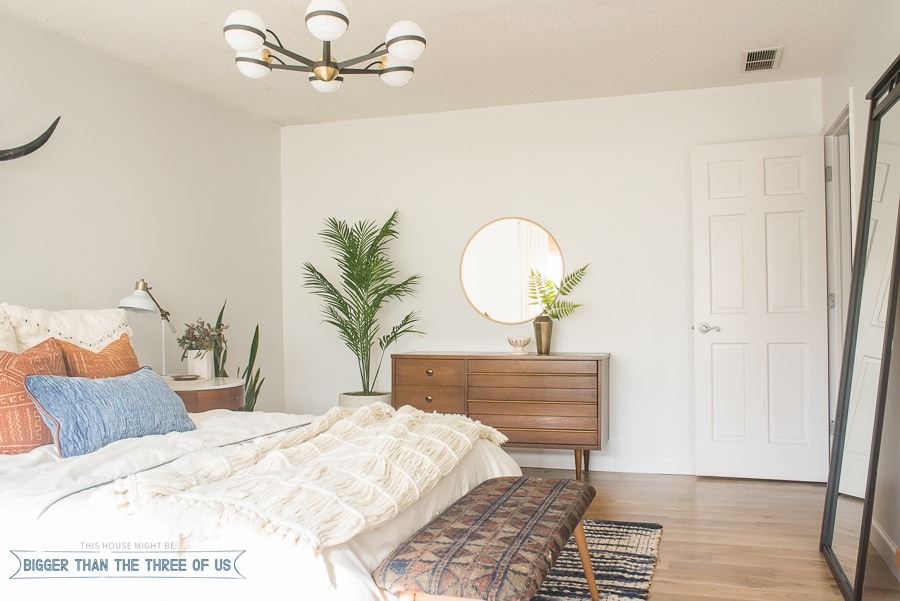
Credits: Ashley Mayes / Bigger Than the Three of Us
A round mirror interrupts the straight lines of this vintage dresser without obscuring its compact proportions. The thin warm frame relates to the furniture, while the empty wall around the circle makes the contrast easy to appreciate.
This combination offers an uncomplicated way to soften a bedroom filled with rectangular beds, doors, and storage. Size the mirror in relation to the dresser rather than the entire wall, and test the reflection from the doorway before hanging it.
A few objects at different heights can connect the two pieces without filling every inch of the surface.
The nearby branching ceiling light repeats the circular motif, allowing shape to tie the room together while the wood remains its strongest material accent below.
10. Let Dark Paint Quiet the Bedroom Television
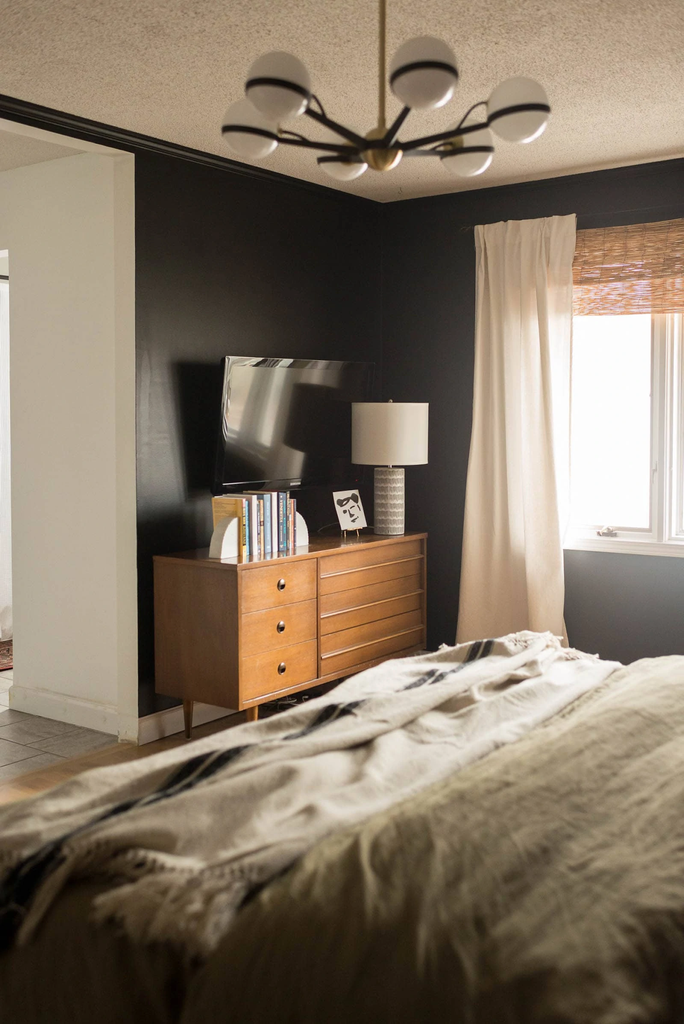
Credits: Ashley Mayes / Bigger Than the Three of Us
The television blends into its black background, allowing the warm vintage dresser underneath to remain a noticeable piece of furniture. A pale lampshade, books, and a small graphic print break up the dark area without surrounding the screen with clutter.
This arrangement is useful if a television belongs in your bedroom but you still want the storage to carry midcentury character. Check viewing height from bed before fixing the screen in place, and route cables neatly away from drawers.
Keep enough open surface for the dresser’s long outline to register. The bright curtain at the side supplies a lighter boundary.
Together, these decisions make practical electronics feel integrated with the furniture instead of becoming the thing the room is about.
11. Add Pattern to a Bench With Tapered Legs
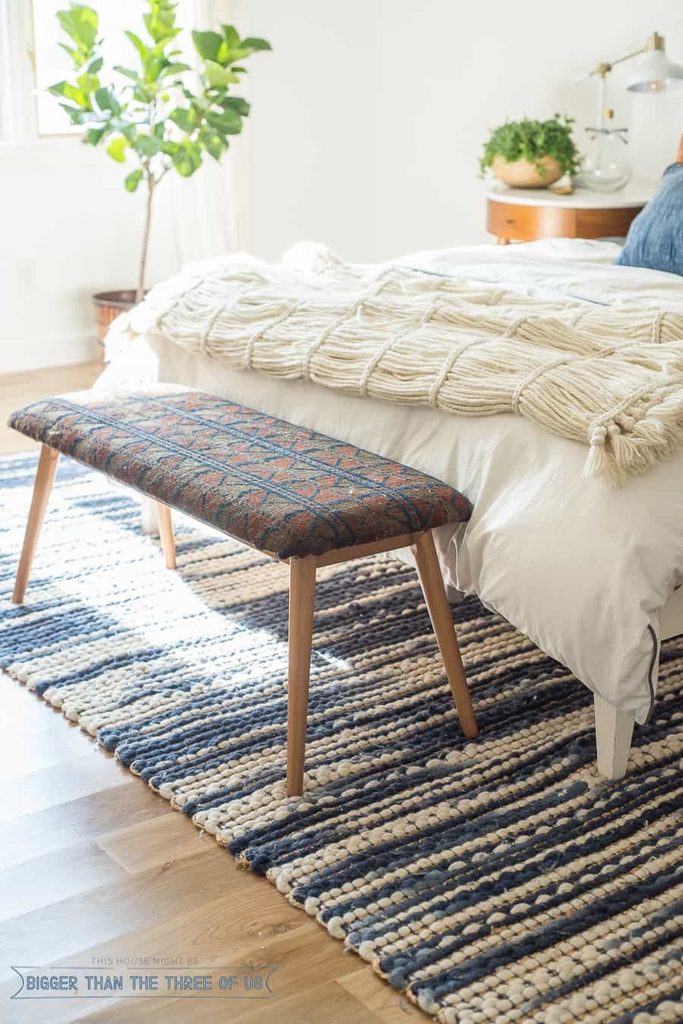
Credits: Ashley Mayes / Bigger Than the Three of Us
A narrow upholstered bench introduces pattern at the foot of this bed while its tapered wooden legs keep the floor visible.
The dark geometric fabric relates to the blue rug, and the slim seat contrasts with the generous white bedding behind it. This is a useful way to bring midcentury proportions into a room that already has a comfortable bed.
Choose a bench shorter than the mattress width and leave enough passage space beyond its front edge. If reupholstering an existing piece, check the frame and padding before selecting fabric.
A durable woven textile can add color without changing the larger furniture. The legs are important: they let the patterned seat feel like a light accent rather than a block.
12. Favor Sculpted Drawer Edges Over Prominent Hardware
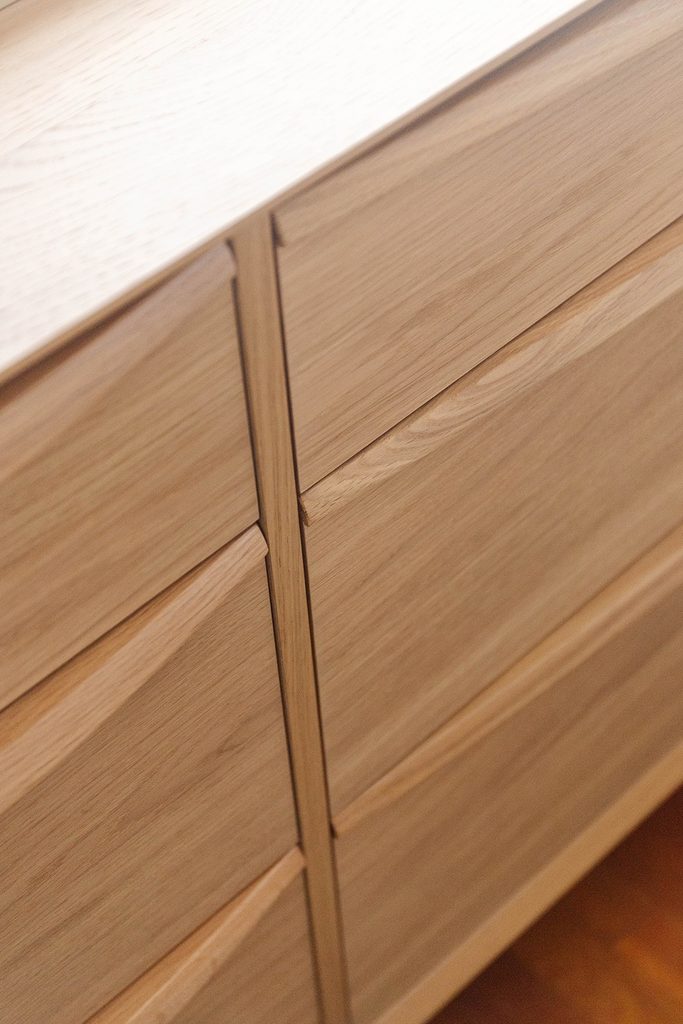
Credits: Carrie Waller / Dream Green DIY
This close view reveals how the drawer fronts form their own shallow pulls. The curved upper edges provide a place for fingers while leaving most of the wood grain uninterrupted.
Such details are worth examining when shopping for midcentury inspired storage, because they can give a plain dresser character without decorative hardware. Open each drawer to check that the grip feels comfortable and the movement is smooth.
On a vintage piece, inspect those exposed edges for chips and wear that could affect daily use. A quiet finish makes the shaping easier to appreciate.
The lesson is to judge furniture at two distances: enjoy the overall silhouette across the bedroom, then make sure its smaller working details are satisfying up close.
13. Bring Open Woven Texture Beside a Streamlined Dresser
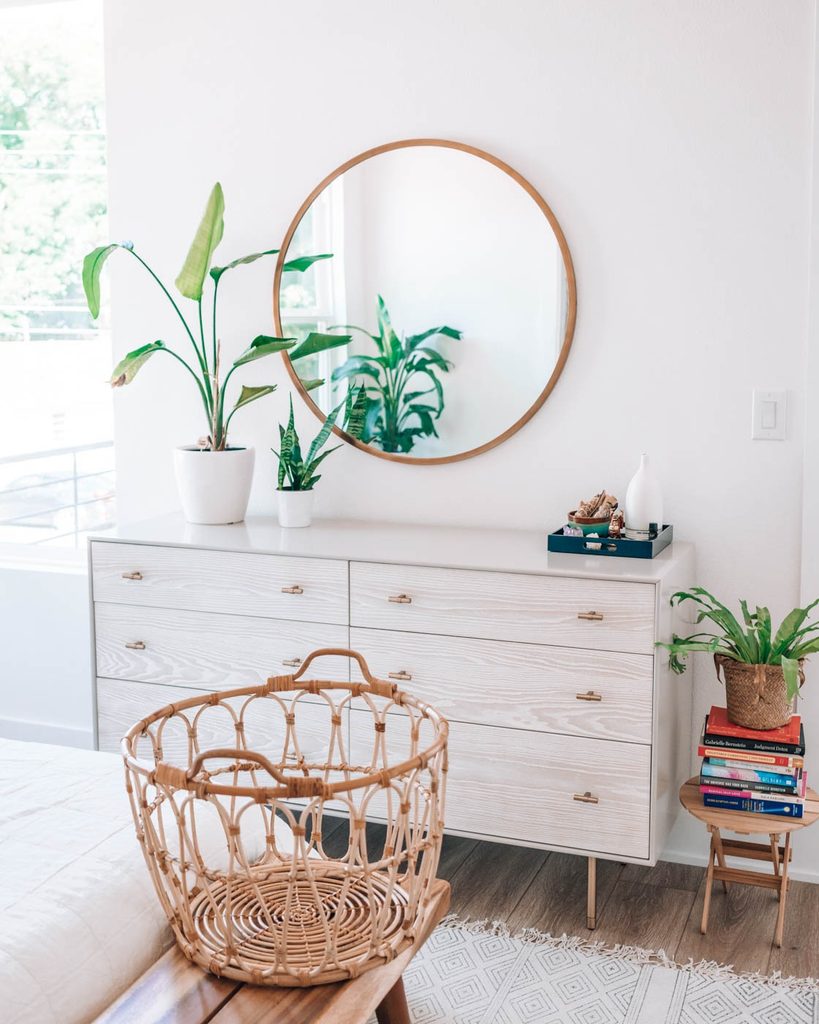
Credits: Jules Acree
An open woven basket on the wooden bench introduces rounded lines in front of this long, pale dresser. Its airy structure contrasts with the closed drawers, while the circular mirror continues the softer shape on the wall.
This combination shows how midcentury inspired storage can sit comfortably beside more relaxed natural materials. Add a basket where it has a real job, such as holding a folded throw, instead of treating every surface as a display.
Keep it proportionate to the bench and clear of the route around the bed. Small brass pulls and slim dresser legs preserve the cleaner furniture language.
The different textures make the neutral palette feel layered without requiring another strong color or a patterned wall treatment.
14. Frame a Wooden Nightstand With Long Plain Curtains
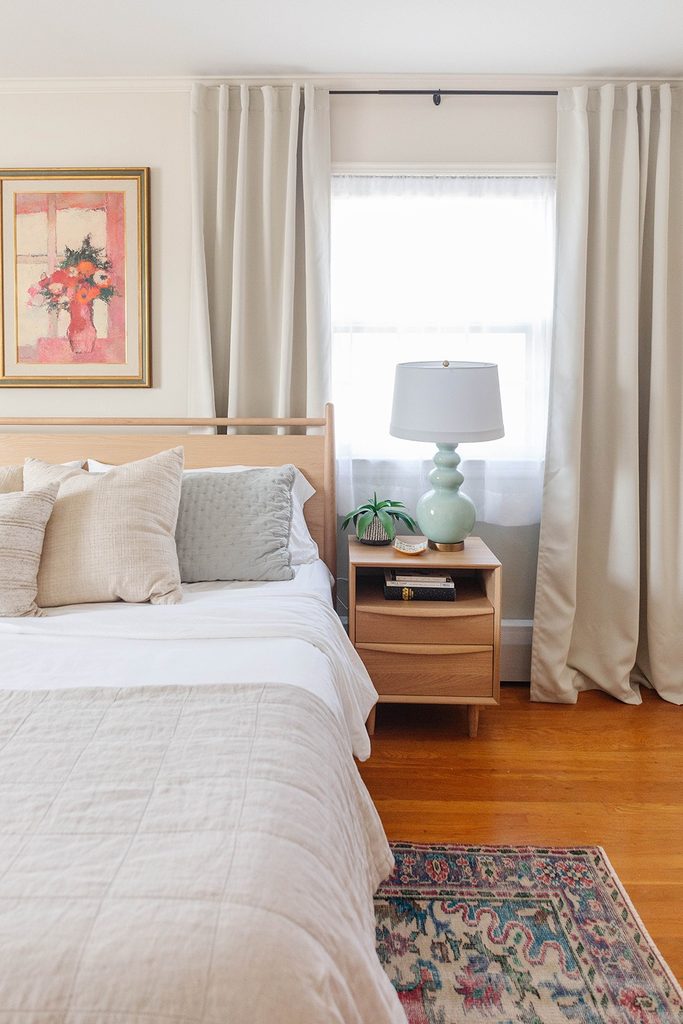
Credits: Carrie Waller / Dream Green DIY
Long cream curtains give the small wooden nightstand a tall, soft backdrop. Their vertical folds contrast with the cabinet’s horizontal drawers and short legs, making the furniture look deliberate even though it sits below a window.
A sheer inner layer filters the bright daylight while the heavier panels frame the whole corner. Consider this combination when a midcentury styled bedroom needs softness without more upholstery.
Mount the rod securely and choose a length that works with cleaning, pets, and nearby vents. Keep the panels able to move freely behind the table.
The lamp’s rounded green base provides a gentle accent, but the repeated cream fabric keeps attention on the wood and helps the bedside corner feel connected to the bedding.
15. Combine Rust and Blue in a Small Pillow Group
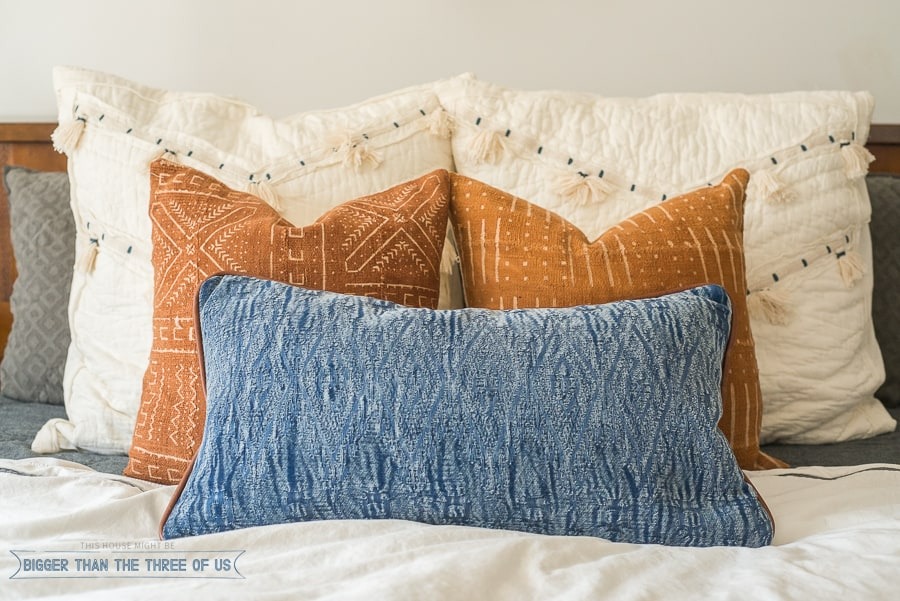
Credits: Ashley Mayes / Bigger Than the Three of Us
Rust pillows sit behind a blue lumbar cushion, creating a warm and cool color pairing against the pale bedding. Fine geometric markings add interest without becoming the largest shapes in the room.
This palette works especially well with the brown wooden headboard visible behind the cushions, giving a midcentury bedroom color through easily changed textiles. Start with two related warm pillows and one contrasting accent rather than collecting unrelated shades.
Vary their proportions so each layer stays visible. The larger cream pillows provide a quieter boundary between the patterned fronts and the wall.
Choose covers that suit how you actually use the bed, and leave room to store decorative pillows at night. A small group can carry plenty of energy.
16. Repeat the Bedroom’s Simple Shapes in a Tall Mirror
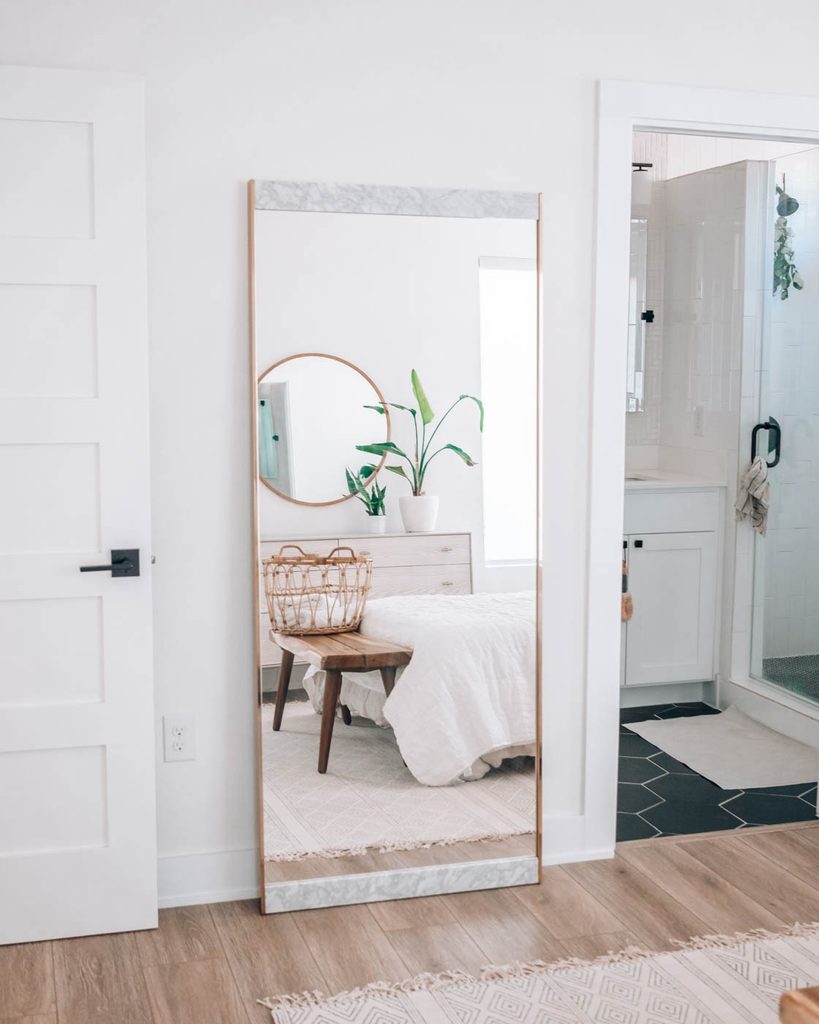
Credits: Jules Acree
The tall mirror reflects the pale dresser, circular wall mirror, and low wooden bench, gathering several simple furniture shapes into one view. Its narrow warm edges keep it from becoming a heavy addition beside the doorway.
In a light midcentury inspired bedroom, that restrained frame can extend the existing material palette while providing a practical dressing mirror. Check the reflected view before choosing its final position, and secure the mirror according to its mounting instructions.
Keep door swings and walking routes unobstructed. The photograph also shows the benefit of an uncluttered opposite wall: the reflection repeats a composed scene rather than doubling miscellaneous storage.
A full height mirror earns its place when both its function and composition have been considered.
17. Let One Colorful Painting Animate Pale Furniture
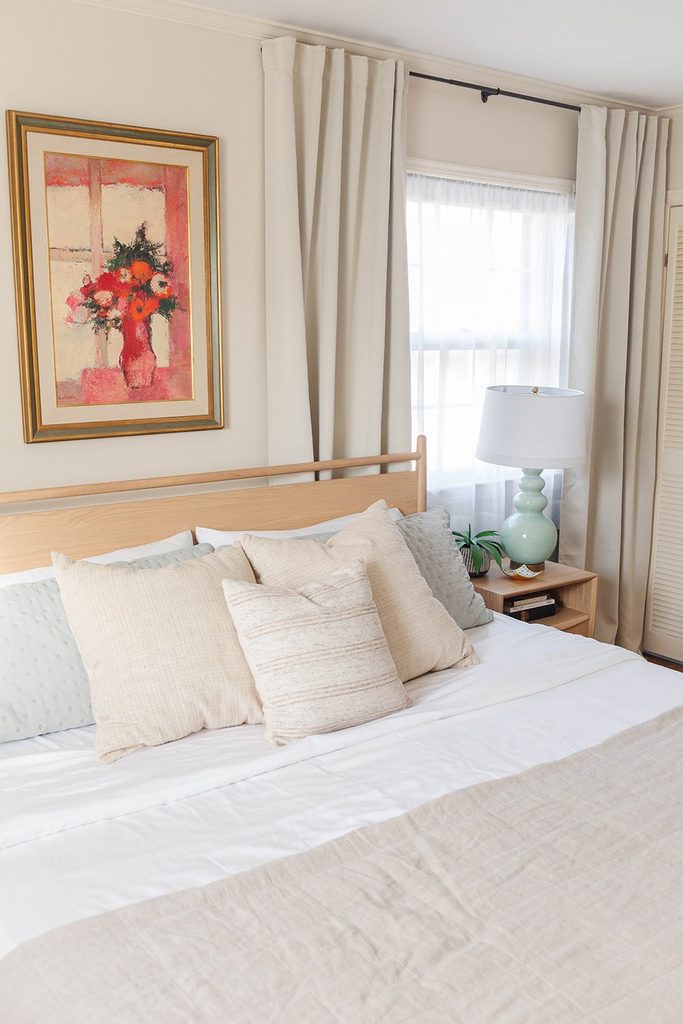
Credits: Carrie Waller / Dream Green DIY
A floral painting supplies most of the saturated color above this otherwise quiet wooden bed. Its red and pink shapes stand out against cream walls, while the green lamp offers a softer companion color beside the pillows.
The simple headboard allows the artwork to hold attention without making the composition feel busy. Try this approach when you prefer midcentury furniture but do not want a room filled with period accessories.
Choose art you enjoy, then borrow one quieter color for a lamp or cushion. Hang the piece where its scale feels comfortable above the headboard, keeping its lower edge clear of anyone sitting up.
Neutral bedding gives the colors breathing room and makes a single collected picture feel especially purposeful.
18. Soften Clean Drawer Lines With Sculptural Plant Pots
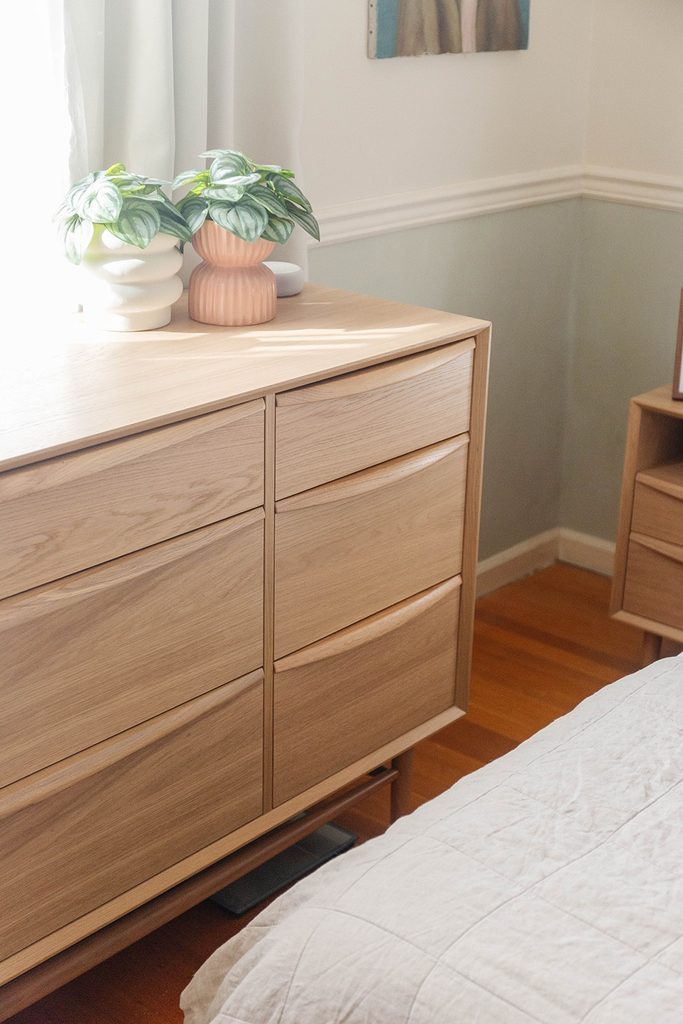
Credits: Carrie Waller / Dream Green DIY
Two rounded plant pots interrupt the dresser’s straight edges without hiding its pale grain or integrated drawer pulls. Their cream and pink surfaces add gentle color, while the patterned leaves bring another kind of detail above the orderly storage.
This small arrangement is useful when midcentury inspired furniture feels too rigid on its own. Choose a limited number of pots with noticeably different silhouettes, then leave part of the dresser surface empty.
Protect the wood from moisture and select plants suited to the light near your window. Keep foliage away from drawer movement and nearby lamps.
Here, the pots are concentrated at one end, letting the long cabinet retain its clear horizontal emphasis while a living accent occupies the corner.
19. Introduce Geometry With Open Wooden Wall Shelves
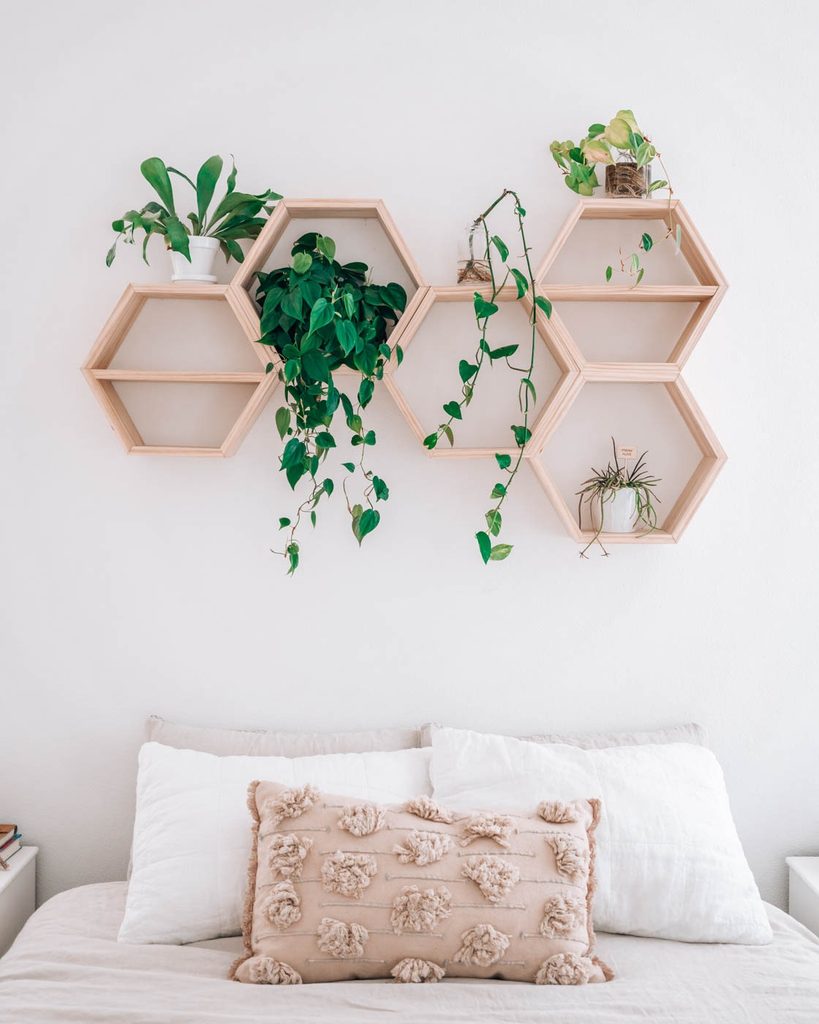
Credits: Jules Acree
Hexagonal wooden shelves create a light geometric arrangement above this pale bed. Some compartments remain empty, allowing the white wall to show through and keeping the repeated outlines readable.
Trailing plants soften the corners without completely covering them. This offers a small scale way to echo the geometry often associated with midcentury interiors, especially when large furniture changes are impractical.
Plan the complete arrangement on paper before mounting anything, and use suitable fixings for the wall and expected weight. Avoid heavy or unstable objects directly over the sleeping area.
A similar grouping can sit on a nearby wall if that is safer for your layout. Keeping the display restrained lets the wooden forms contribute structure while the bedding remains soft.
20. Raise a Sculptural Planter Beside Vintage Storage
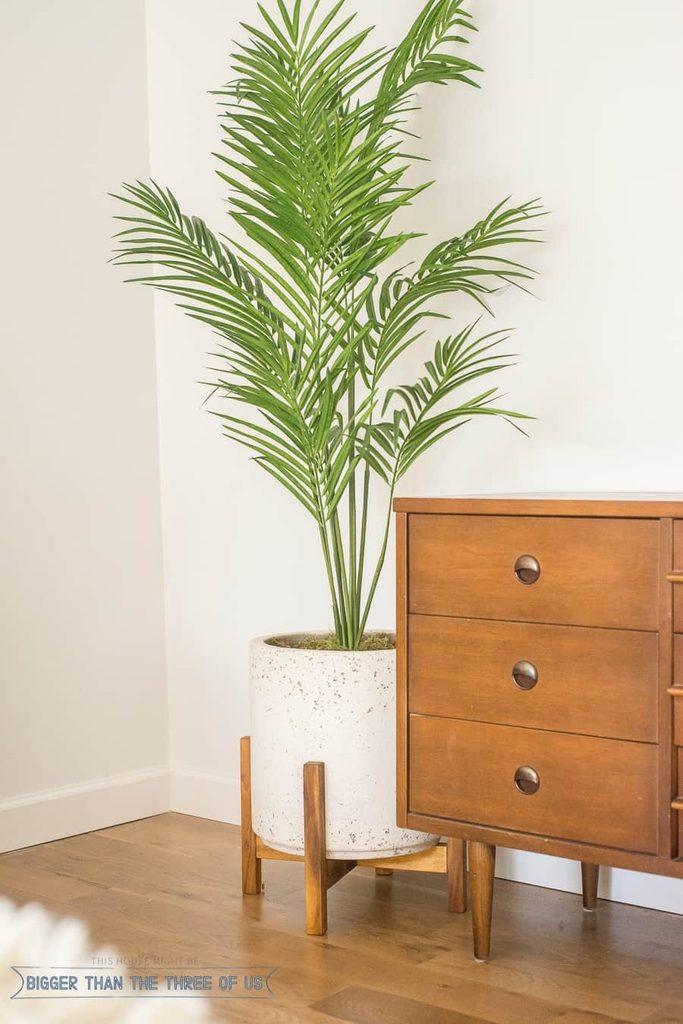
Credits: Ashley Mayes / Bigger Than the Three of Us
A speckled cylindrical planter sits on a simple wooden stand beside the vintage dresser, repeating its lifted base at a different scale. The upright foliage brings height to the corner while the cabinet supplies a strong horizontal line.
The creator identifies this particular plant as artificial, making the photograph useful for rooms where a large living specimen would struggle. If choosing a faux plant, prioritize a convincing silhouette and an easy cleaning routine.
For a living alternative, match the species to your actual light and protect the floor from water. Keep the stand stable and outside the drawer path.
The combination shows how one tall accent can balance low midcentury furniture without adding another substantial storage piece to the bedroom.