
Shared bedrooms work best when both people have equal access to the things they use, even if their habits and tastes differ.
Bedroom Ideas For Couples can balance practical needs with a cohesive look, without requiring matching furniture on both sides of the bed. Consider bedside shelves or drawers for everyday essentials, then use coordinated lamps to tie different nightstands together.
White bedding with one agreed-on accent offers another simple way to bring individual preferences into a shared palette. These ideas also make room for useful details such as underbed storage and window coverings suited to different sleep schedules.
1. Give Both Sleepers an Integrated Bedside Shelf
Credits: Mike Montgomery / Modern Builds
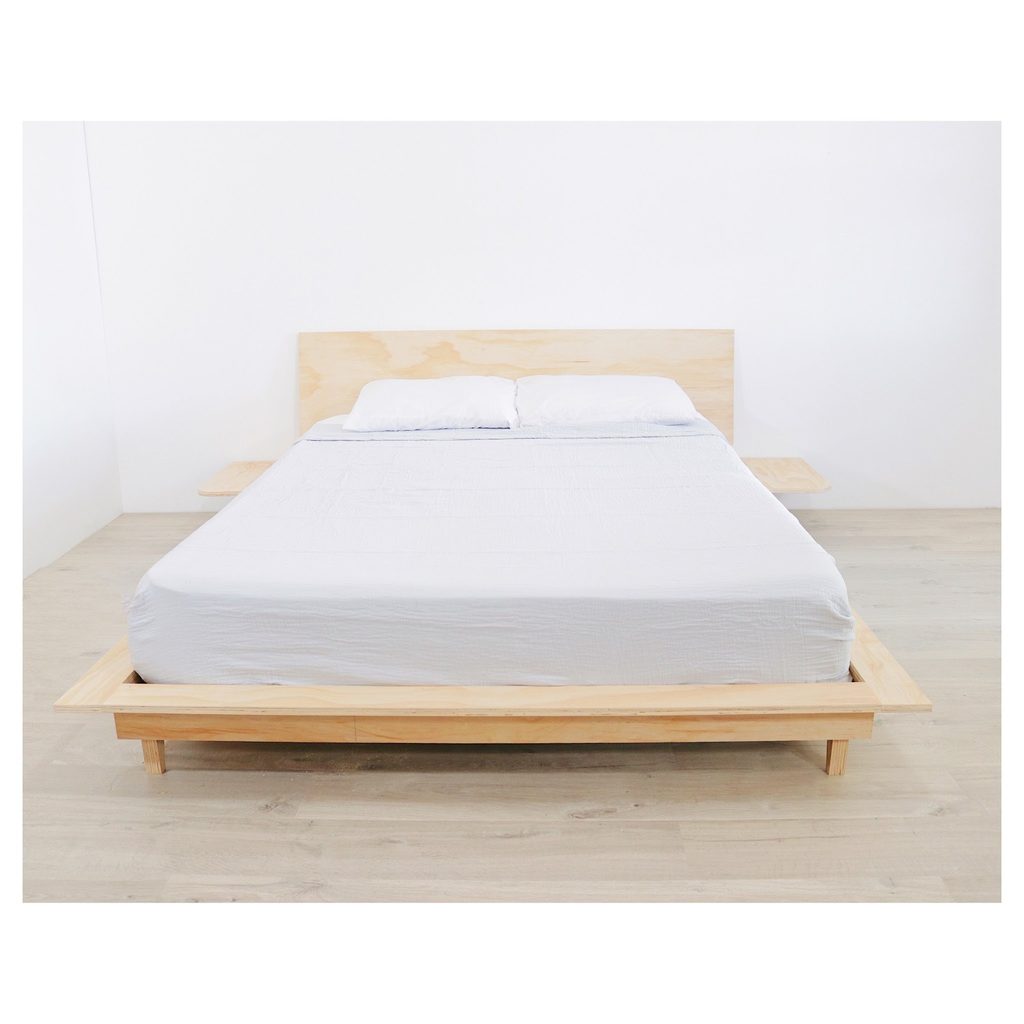
A bed with integrated wooden bedside shelves gives two people an equally convenient place for the small things they reach for at night.
This plywood design connects the shelves, headboard, and platform through one pale wood finish, making the arrangement look settled without extra furniture. Its plain white bedding leaves the construction easy to read.
For your version, compare both shelf positions with the mattress height before committing. Each person should be able to reach a glass or phone without an awkward stretch.
The projecting platform also needs enough clearance around its corners. Add lighting separately according to your routines.
A shared framework can keep the room visually consistent while leaving each shelf available for its owner’s own everyday essentials.
2. Start With White Bedding and Agree on One Accent
Credits: Brooke Christen / Nesting With Grace
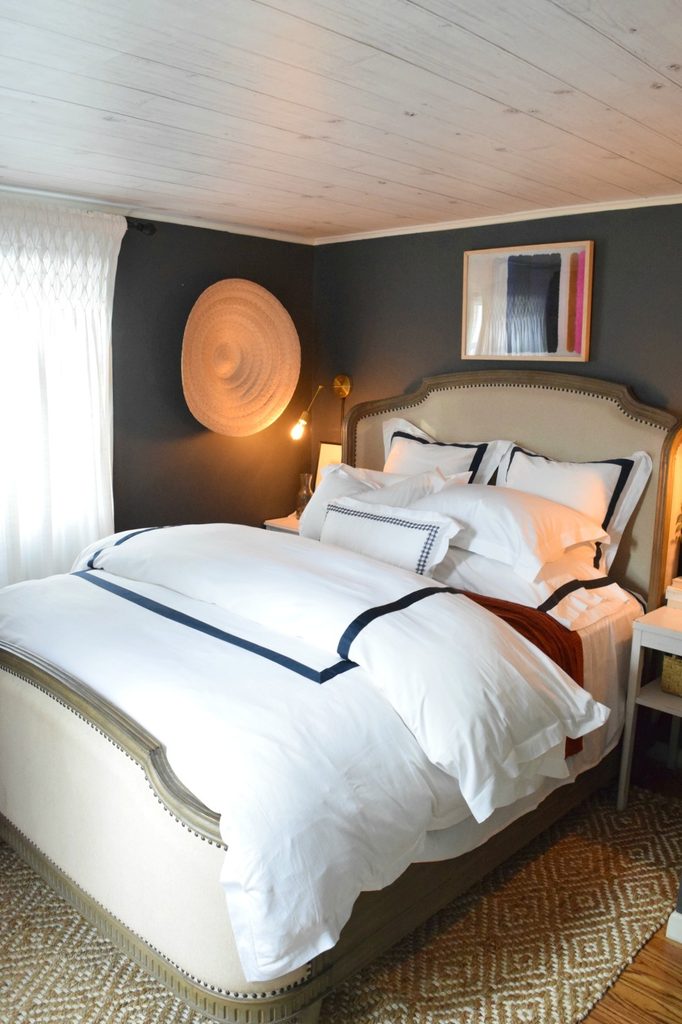
White bedding can give a shared bedroom a flexible starting point when favorite colors differ. Here, narrow navy borders define the pillows and comforter, while a rust colored layer introduces warmth beneath them.
The upholstered frame and dark walls create contrast without demanding a complicated mix of patterns. Begin with the bedding that feels comfortable to both people, then choose one small accent you can change easily.
A throw or pillow cover offers a smaller commitment than replacing the entire room. Keep decorative cushions manageable so making the bed remains a simple daily job.
This photograph also shows how pale curtains and a light ceiling prevent deeper walls from taking over. The overall balance comes from repeating light fabrics generously.
3. Match the Lights While Letting Nightstands Differ
Credits: Lizzie Ravn / Emmerson and Fifteenth
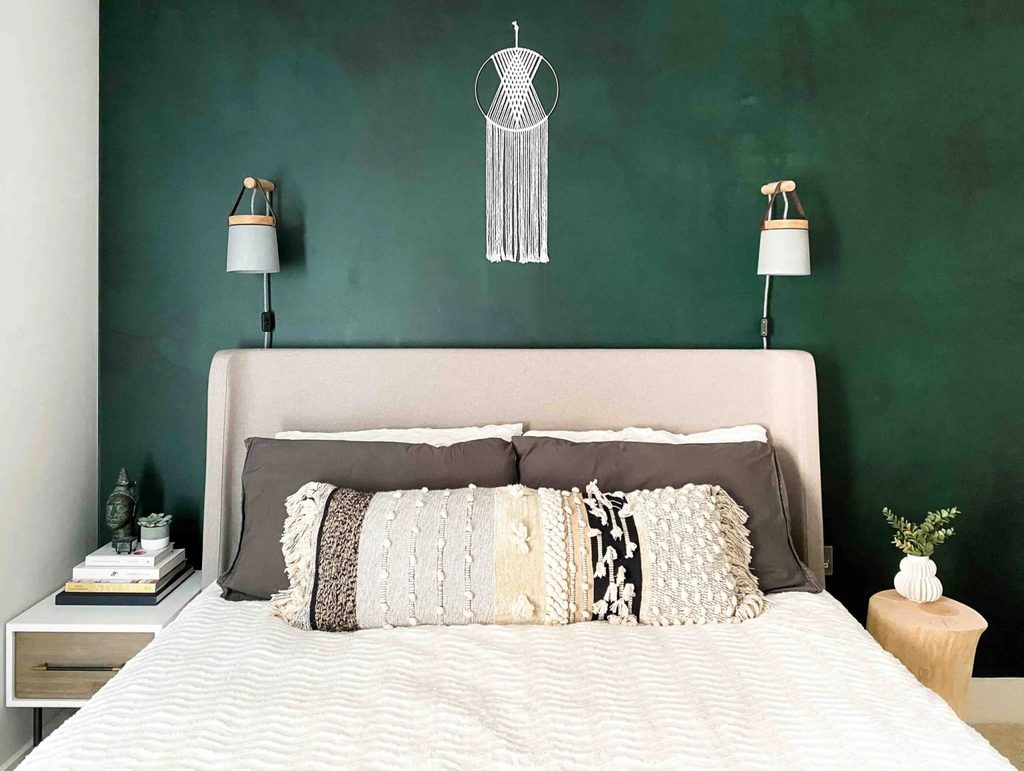
Two bedside tables do not need identical shapes to feel equally considered. This bedroom pairs a white drawer unit with a small wood stump, then repeats the same hanging light above each side.
That repeated detail connects furniture chosen for different amounts of space. The green wall and wide pale headboard provide another shared backdrop.
For couples, start by listing what each person actually keeps beside the bed. One may need a drawer, while the other prefers a compact surface.
Aim for useful reach and adequate walking room rather than perfect duplication. Place matching fixtures at positions that work when seated against pillows.
A coordinated pair of lights can provide visual balance while the furniture responds to individual practical needs.
4. Build Balanced Bedside Stations Around Matching Lamps
Credits: Sara Ligorria-Tramp / Emily Henderson
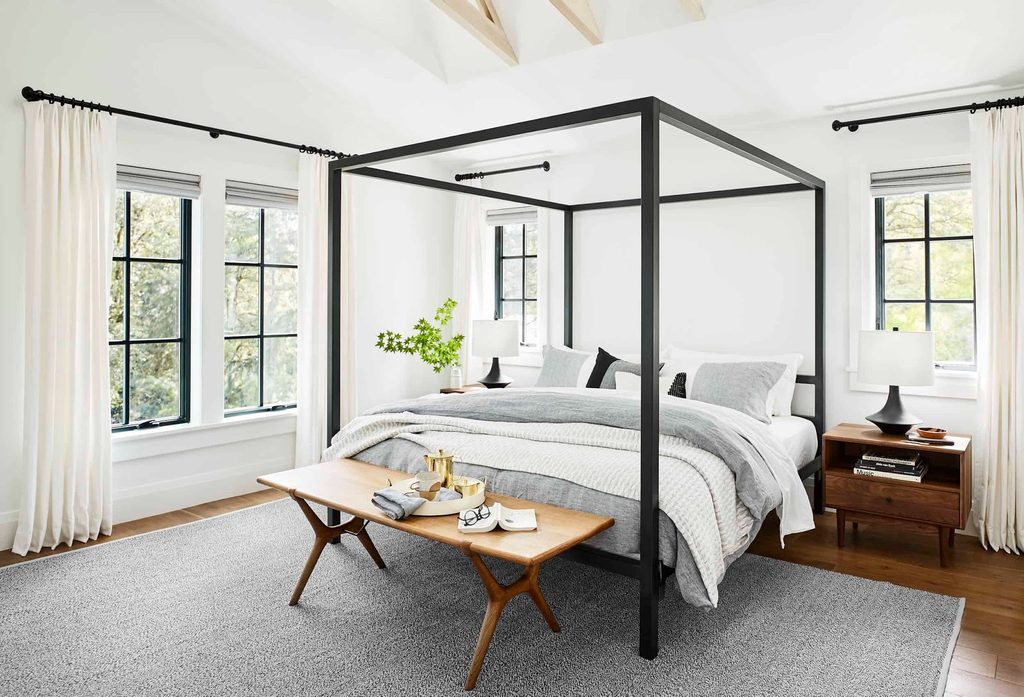
Matching lamps give this broad bed a calm rhythm, with a wood nightstand on each side and an open black canopy above.
The furniture establishes symmetry, but the tabletops hold different objects, showing how a unified arrangement can accommodate personal habits. Couples can borrow that balance without treating their bedside spaces as identical displays.
Choose lamps that leave room for necessities, and check switch access from each pillow. Drawers provide somewhere to put small belongings when a clear surface matters.
Keep the area between bed and curtains easy to walk through. The leather bench repeats the warm wood tones while introducing another texture.
Start with equal access to the essentials, then allow books, trays, or other details to vary naturally.
5. Divide Spare Bedding Between Underbed Drawers
Credits: Shara / Woodshop Diaries
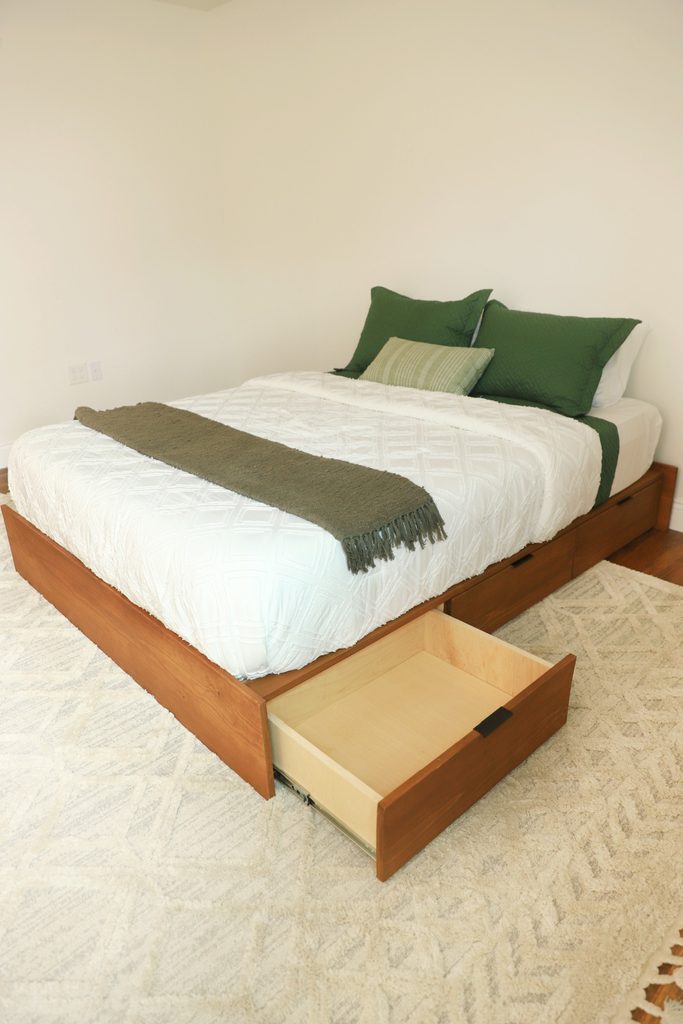
Storage built into the bed can help two people keep extra layers close without adding another cabinet. The open drawer in this photograph shows how useful space can sit beneath a simple wooden platform.
Closed fronts blend into the frame, so the room still has a straightforward outline. Before choosing this approach, measure the space needed to pull individual drawers completely outward.
Nearby nightstands, rugs, or a narrow passage can make otherwise generous storage difficult to use. Decide together what belongs in each compartment, such as spare pillowcases or a preferred seasonal blanket.
Avoid relying on underbed storage for items that need frequent access if the route is tight. A practical division makes shared storage easier to maintain over time.
6. Give Everyday Bedside Clutter a Drawer
Credits: Casey Finn / The DIY Playbook
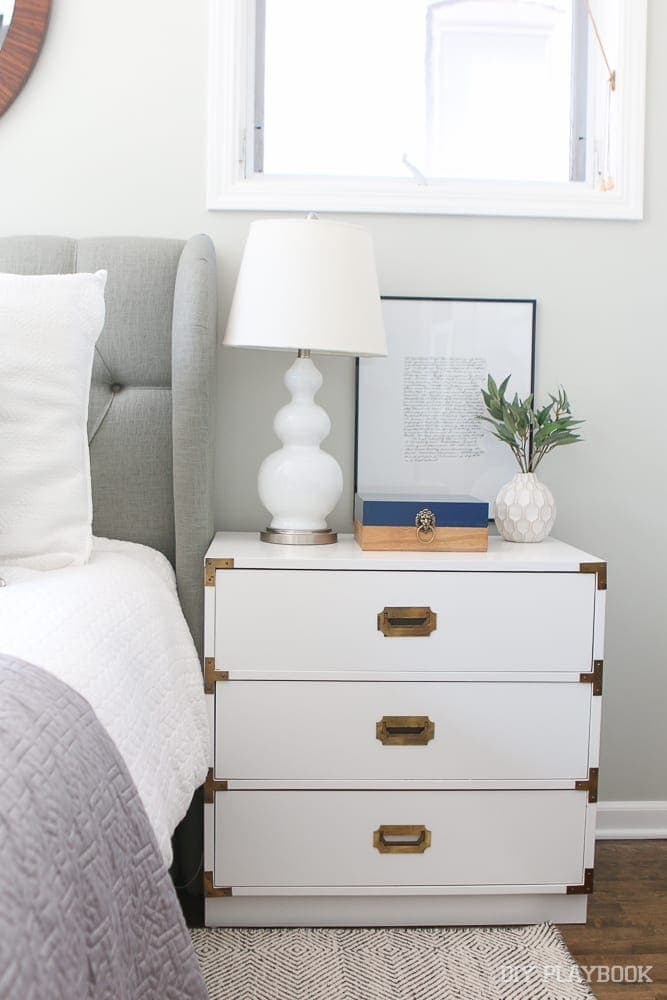
A small chest offers more useful bedside storage than its modest footprint might suggest. Beside this padded headboard, three white drawers provide a place to put belongings below a lamp and personal framed piece.
Brass details add interest without filling the surface with accessories. In a shared bedroom, this arrangement can keep one person’s reading materials, charging cords, or other small items from spreading into common areas.
Choose the number of drawers around actual habits rather than buying matching storage automatically. Check that handles and open drawers will not catch on bedding.
Leave some tabletop space unclaimed from the beginning. A meaningful photograph or letter can stay visible while less attractive necessities have a clear place to return each morning.
7. Suspend a Bedside Light Above Usable Storage
Credits: Cass / Cass Makes Home
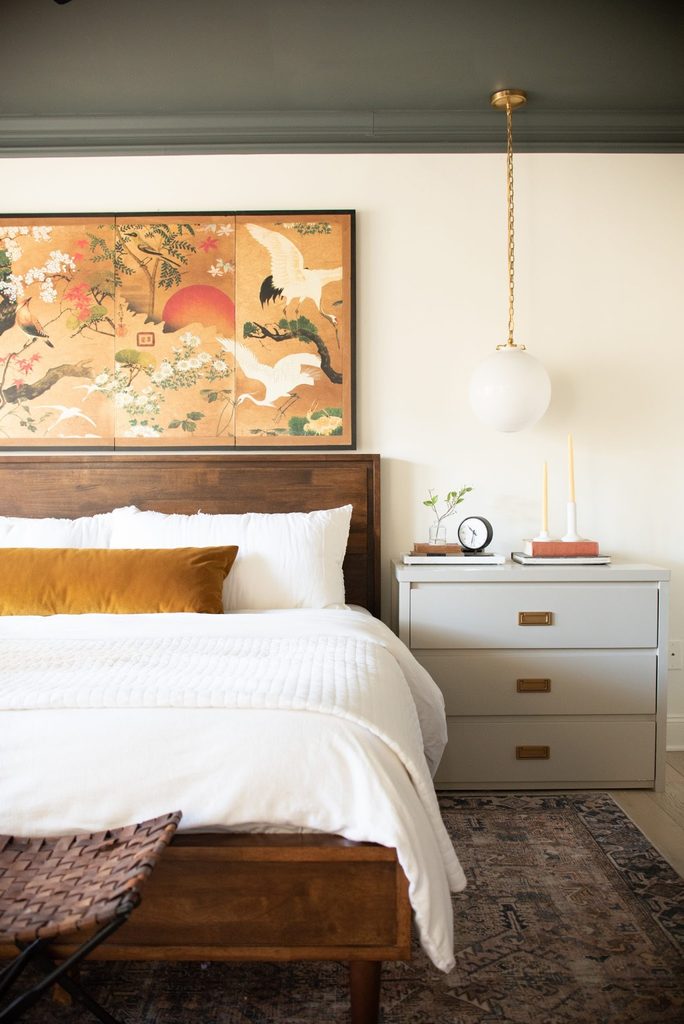
Moving a lamp overhead can make a bedside chest work harder. A white globe pendant hangs above the drawers in this room, leaving their top available for a clock, books, and a small arrangement.
Its brass chain echoes the drawer hardware, connecting practical lighting with the rest of the design. For two people sharing a bedroom, consider separate controls and placement that suits each side’s routine.
The photograph establishes the fixture’s position, not how its switch operates. Check the light from sitting and lying positions before installation, and use appropriate professional help for wiring.
Keep decorative objects well below the fixture. The useful idea is to preserve a generous landing surface while supplying light where each sleeper needs it most.
8. Keep Each Bedside Display Small and Personal
Credits: Sara Ligorria-Tramp / Emily Bowser for Emily Henderson
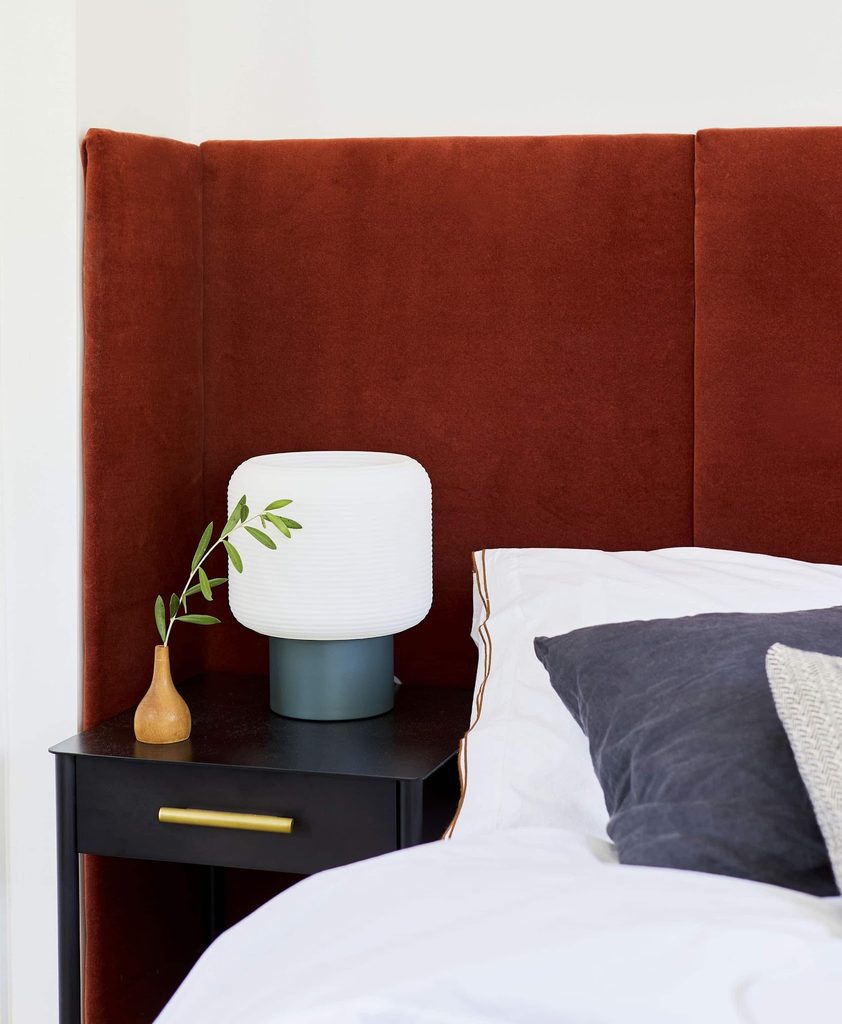
A colorful bedroom does not require a crowded nightstand. This close view shows a rounded lamp and a tiny vase against a rust colored upholstered headboard, with most of the dark table still readable.
The larger surfaces carry the color, leaving accessories to add a personal touch. Couples could use this approach to give each side its own small arrangement while agreeing on the main furnishings.
Begin with the items needed every night, then add one decorative object if space remains. Check that the lamp is stable and easy to reach around.
The drawer can hold things that would otherwise compete for space. A restrained display makes daily cleaning easier and keeps the bedside useful as well as visually inviting.
9. Create a Window Nook With a Seat for Each Person
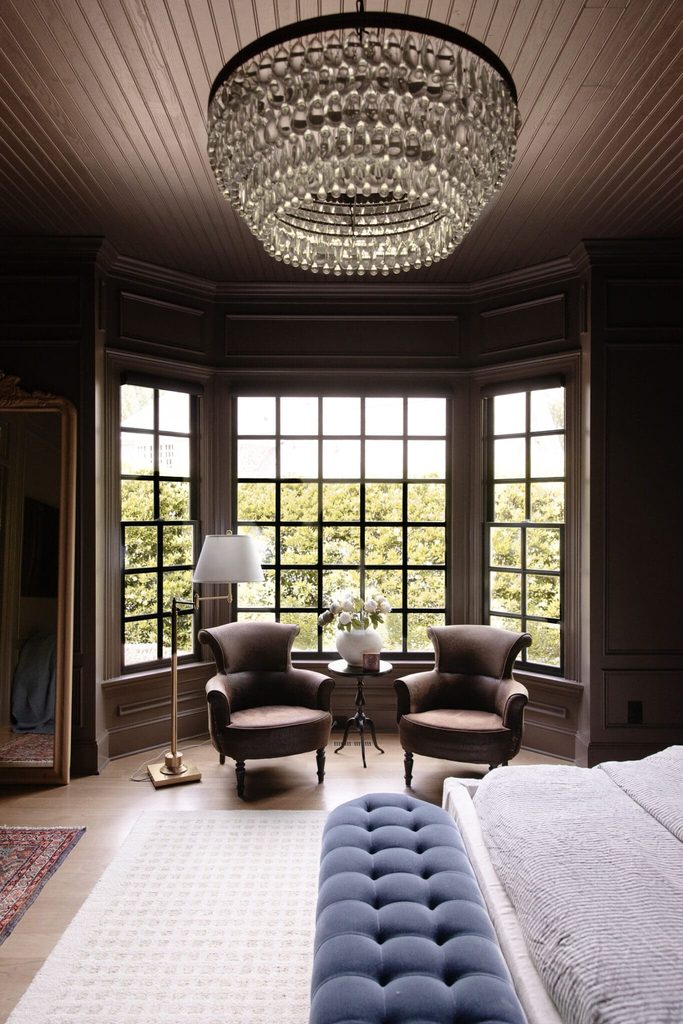
Credits: Chris Loves Julia
Two chairs in a bedroom offer a place to spend time together without sitting on the mattress. In this window bay, compact brown chairs face into the room with a little table between them.
Their color relates to the paneled walls, while daylight and a pale floor keep the nook distinct. Consider this arrangement when a bedroom has an unused recess large enough for comfortable seating.
Measure space for knees and the route around both chairs, not just their footprints. A shared table only works if each person can reach it easily.
Add reading light where needed and keep window operation accessible. The result is a separate place for conversation, a quiet evening drink, or getting ready at different times.
10. Contain a Shared Pattern Choice on the Bed Wall
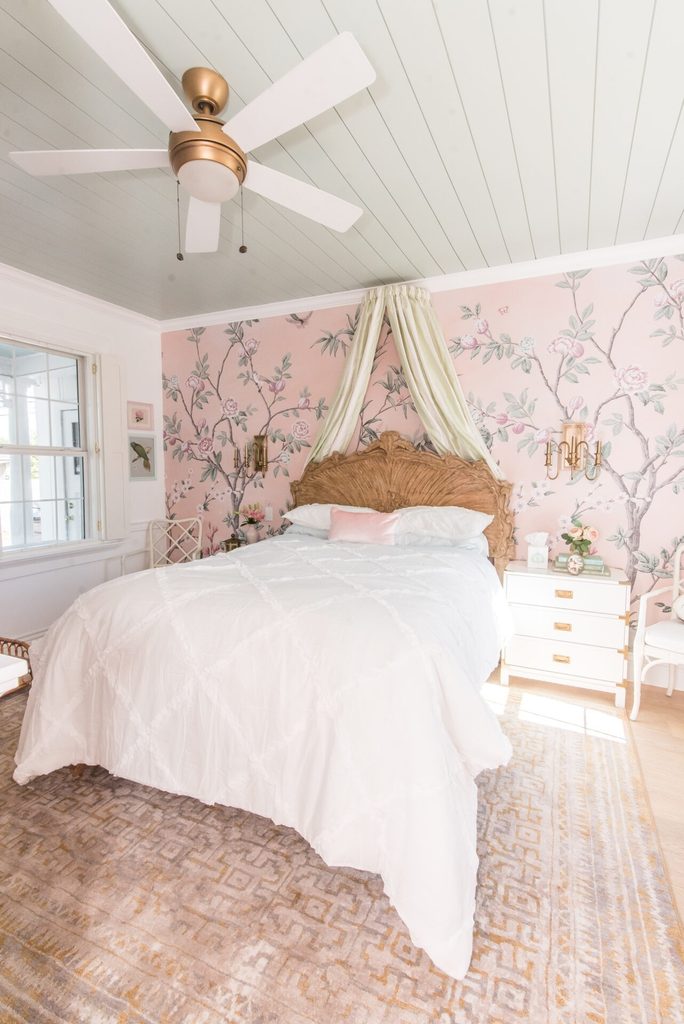
Credits: Ashley Wilson / At Home with Ashley
A single patterned wall can be a manageable way to bring romance into a shared bedroom. This floral backdrop frames a carved wood headboard, with pale bedding keeping the center of the room relatively quiet.
Repeated pink and green details connect the wall with the surrounding furnishings. Before choosing a prominent pattern together, look at a large sample beside the bed and existing furniture.
Both people should be comfortable seeing it every day, including under evening lighting. Keep some broad surfaces plain so the room does not depend on constant coordination.
The photograph also shows bedside storage and lighting within the decorative arrangement. Practical access deserves as much attention as the pattern, especially when two people use the room daily.
11. Organize Shared Clothing in a Double Dresser
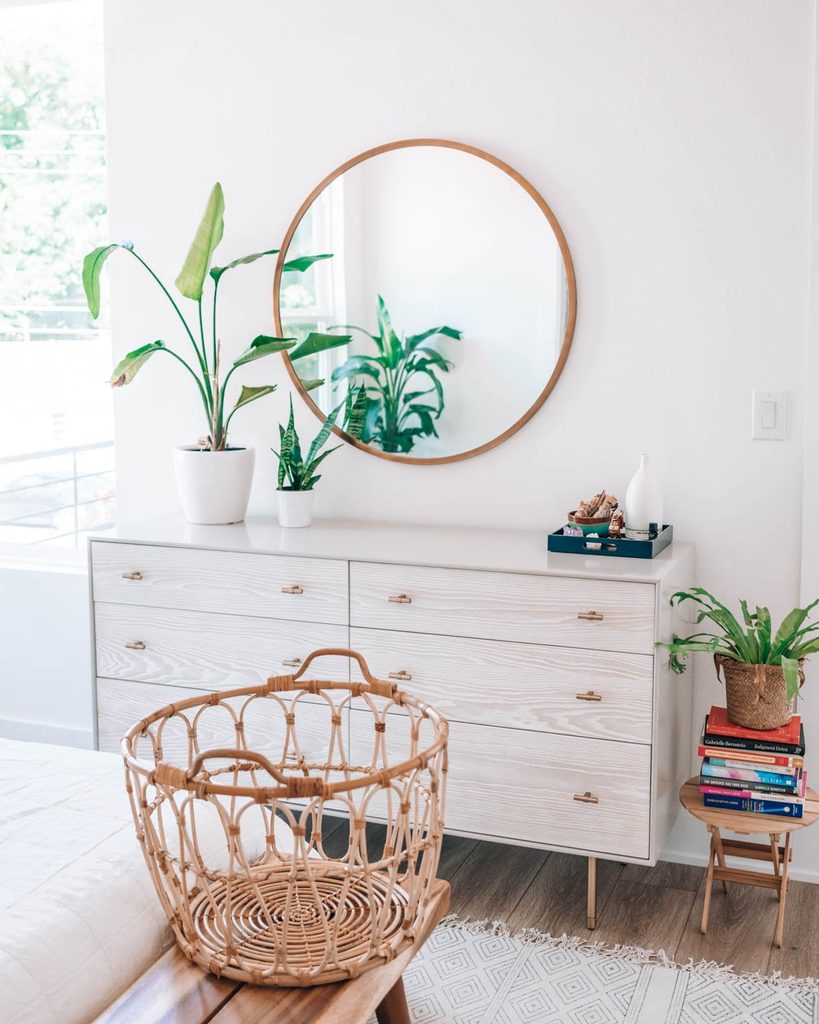
Credits: Jules Acree
A wide dresser can give a couple substantial enclosed storage without scattering several smaller pieces around the room.
This pale six drawer unit creates a simple horizontal line beneath a round mirror, with plants and a tray placed at opposite ends.
Its paired drawer columns suggest an easy starting point for organizing belongings, although the interior arrangement is not visible. Divide space according to what each person owns rather than insisting on an exact half.
Keep frequently used items in the most convenient drawers, and reserve the top for a limited number of essentials. Check that both people can stand nearby without blocking the bed.
The light finish keeps a useful storage piece from becoming the room’s heaviest visual feature.
12. Reclaim Floor Space With a Dresser Inside the Closet
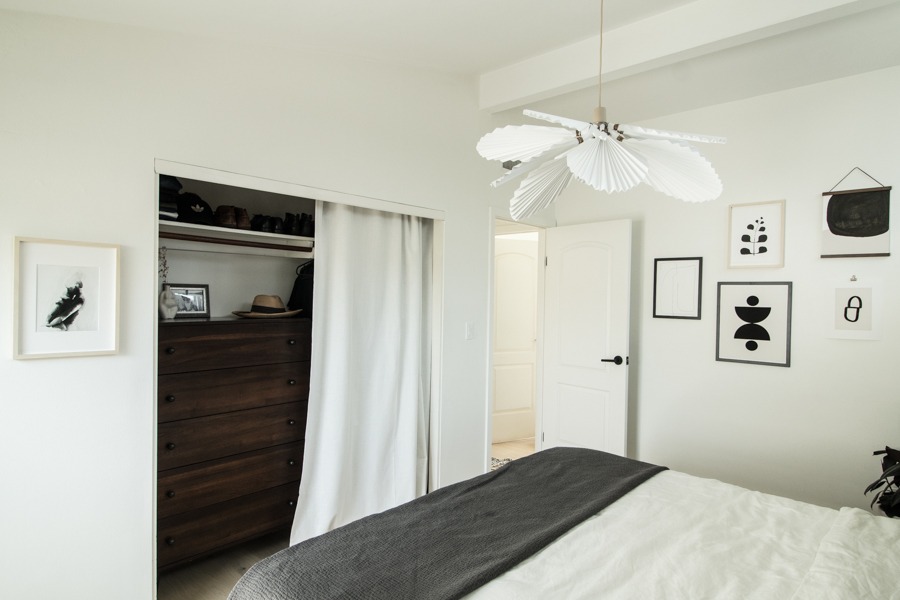
Credits: Jennie Sullins / Jennifer J Sullins
A dresser tucked inside a closet leaves more bedroom floor open for two people to move around. Here, a tall wood chest sits beneath a shelf, while a pale curtain can draw across the opening.
The arrangement combines different storage types within one footprint instead of adding another large piece beside the bed. Measure carefully before trying it, including drawer extension and the clearance needed for hanging clothes.
Confirm that both people can retrieve their belongings without repeatedly moving other items. A curtain also needs enough room to stack clear of the drawers.
This solution will not suit every wardrobe, but it offers a useful question to consider together: could better use of existing storage make the sleeping area easier?
13. Choose One Landscape You Both Enjoy
Credits: Caitlin / The Merrythought
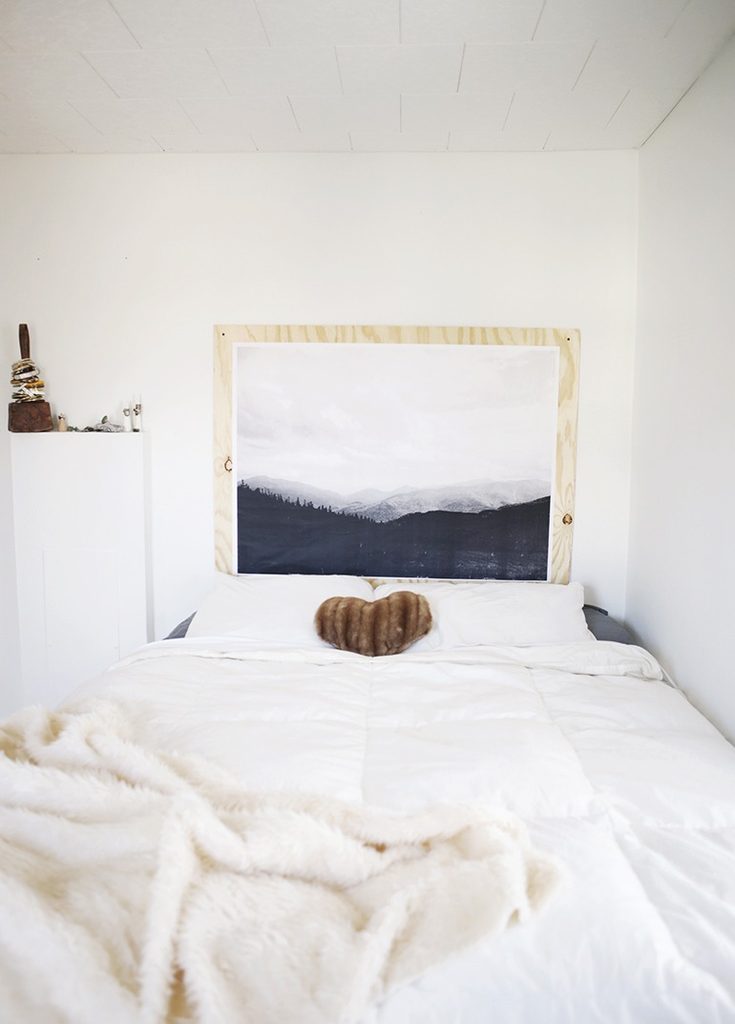
One oversized landscape gives this plain bedroom a clear point of interest without building a busy gallery. The dark mountain silhouettes sit against white bedding, and a pale plywood border adds warmth around the image.
For couples decorating together, a single shared artwork can be a useful place to begin. Consider scenery, colors, or a subject you both enjoy rather than assuming every wall needs separate contributions.
The photograph demonstrates scale and simplicity, not a particular emotional meaning for its owner. Measure the wall and headboard before choosing a print, and secure anything near the bed appropriately.
Keep nearby objects modest so the image remains prominent. Personal touches can then arrive through smaller, easily changed pieces elsewhere in the room.
14. Add a Small Bench for the Morning Routine
Credits: Brittany Stager
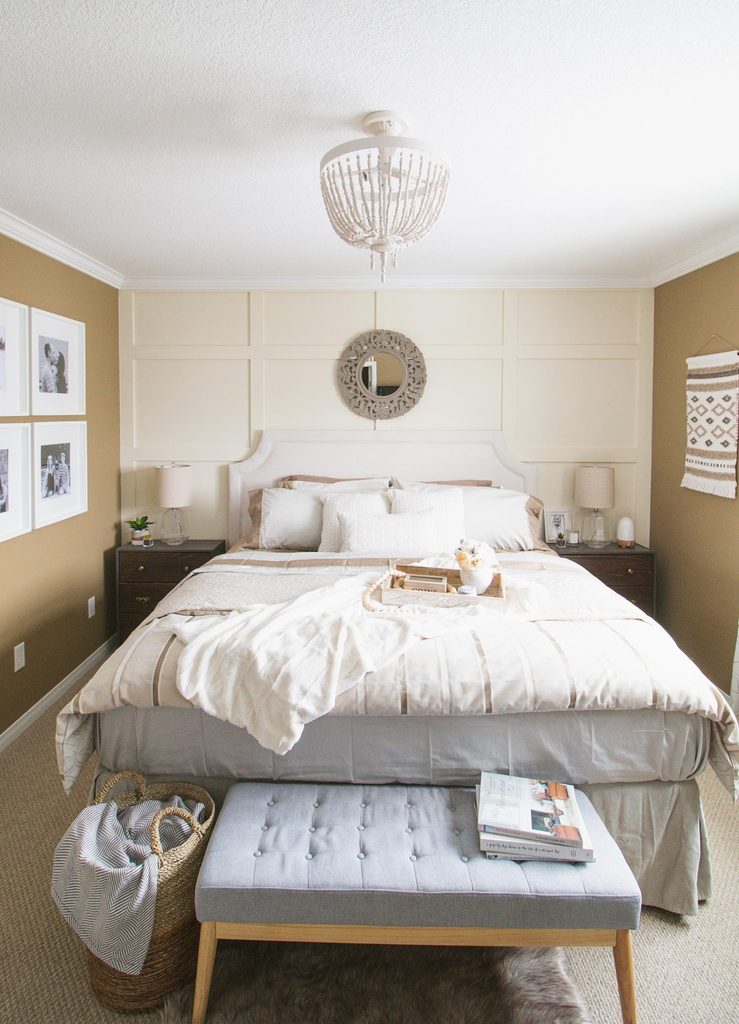
A shallow bench can make a shared bedroom more convenient without turning it into a sitting room. This upholstered seat rests at the foot of the bed, providing a place to pause while dressing or set down a folded layer.
Its slim wood legs keep the shape visually light against the generous bedding. Before adding one, check the walking route between the bench and opposite furniture.
Two people getting ready may need more passing room than a photograph suggests. Choose a seat height that feels comfortable and a surface suited to everyday use.
Keep the bench available instead of letting it become permanent clothing storage. The nearby basket offers a separate place for a throw, helping the seat remain useful.
15. Layer Window Coverings Around Different Sleep Schedules
Credits: Jordan Jean
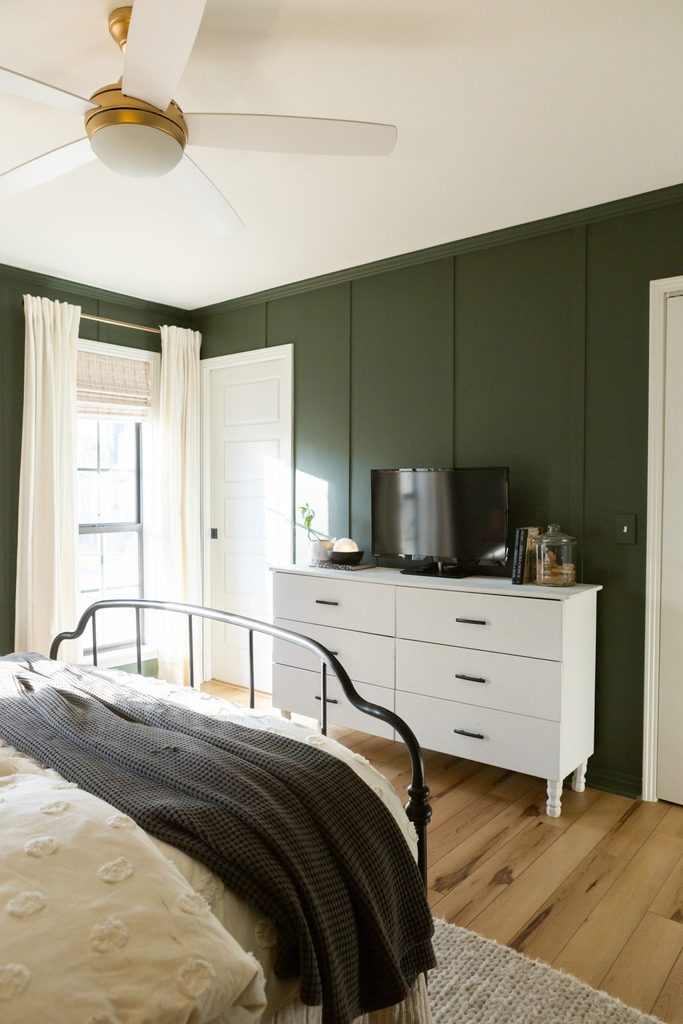
Couples with different routines may need more flexibility at the window than one decorative curtain provides. In this green bedroom, pale curtains sit outside a fitted woven shade, creating two distinct layers against the dark walls.
The combination softens the opening while leaving the dresser and bed clearly defined. Discuss morning light, evening privacy, and easy access to controls before choosing your own treatments.
The photograph does not prove blackout performance, so review the actual fabric and lining specifications. Check that panels can move without brushing nearby furniture or blocking an opening window.
A coordinated finish can keep the arrangement calm even when the layers serve different purposes. Plan around both sleepers’ preferences before selecting the final color and texture.
16. Blend Different Texture Preferences in a Quiet Palette
Credits: Manda / The Merrythought
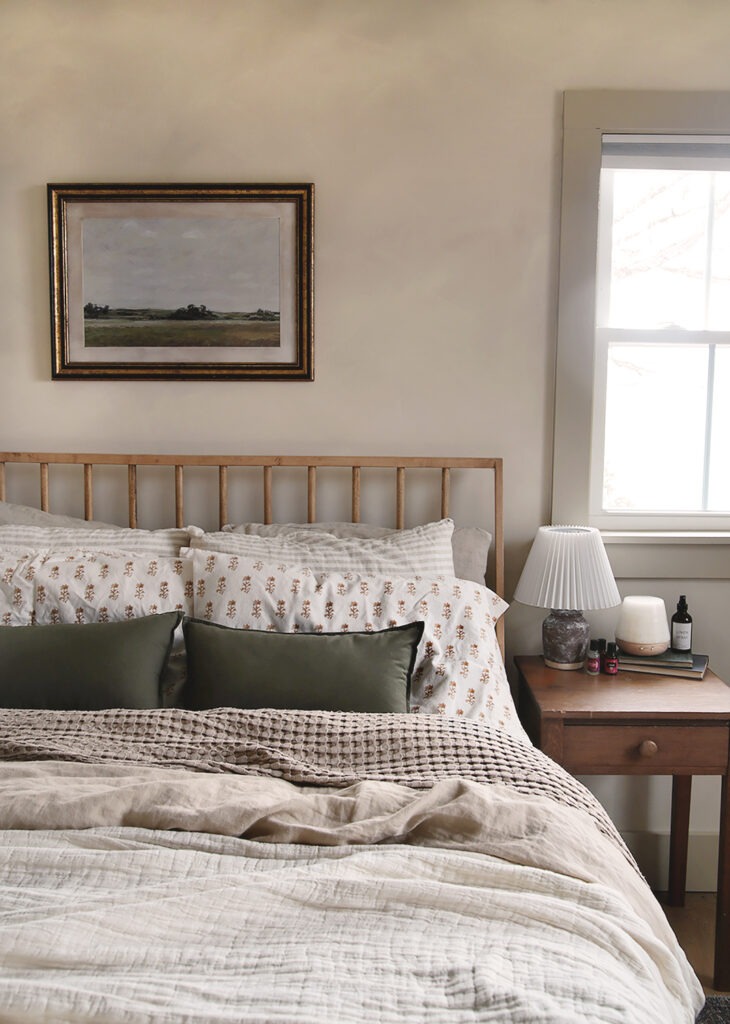
A shared bed can include several textures without looking divided into competing styles. Here, small floral prints, subtle stripes, waffle texture, and olive pillows sit within a restrained earthy palette.
The wooden headboard and softly varied wall finish support those layers without introducing another strong pattern. Couples can begin with a few colors they both enjoy, then choose textiles that feel comfortable to each person.
Touch and washability matter as much as appearance when bedding is used every night. Keep extra layers easy to remove so comfort can change with the season.
The photograph offers an example of visual coordination, not proof that one bedding combination suits everyone. Repeating related tones allows individual preferences to contribute without overwhelming the room.
17. Size the Rug for Both Sides of the Bed
Credits: Amy / Homey Oh My
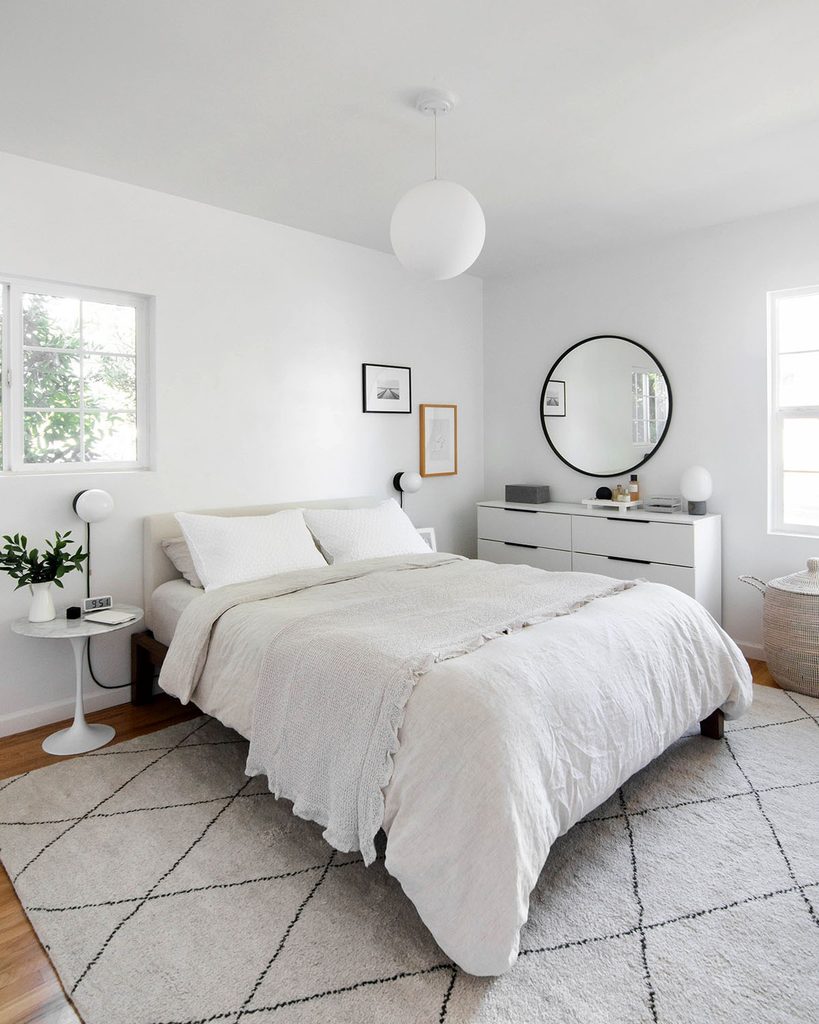
The best rug position in a shared bedroom starts with where both people step down. This pale geometric rug extends beyond the bed, connecting its two bedside areas and adding a clear pattern to otherwise simple furnishings.
The dark lines relate to the small lights and mirror without making the room feel crowded. When planning your layout, measure the exposed rug area on each sleeping side and at the foot.
Check how nearby drawers and doors move before deciding on a size. A suitable rug pad can help keep edges stable.
Choose a texture that both people find comfortable underfoot and practical to maintain. The room gains a common foundation while leaving the individual bedside arrangements free to differ slightly.
18. Make Closet Access Part of the Bedroom Plan
Credits: Lauren / Bless’er House
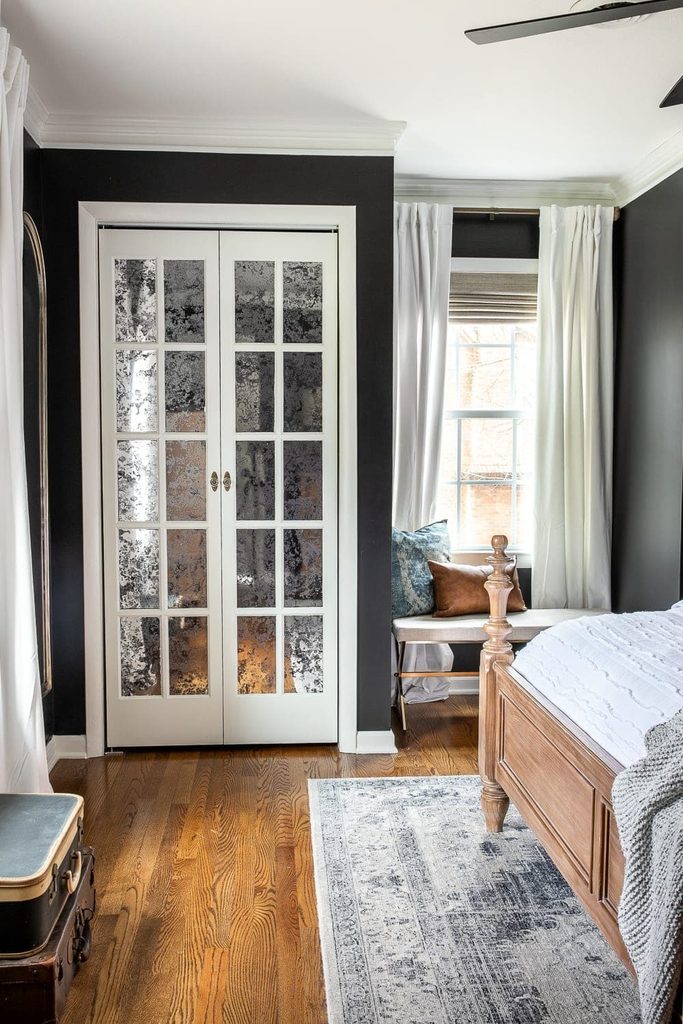
Storage doors deserve attention when two people move through the same bedroom. These pale bifold doors use antique mirror effects to add interest beside a dark wall, while a small bench fits near the window.
The source explains that the folding design responds to the room’s limited clearance. For your own layout, open every door and drawer before finalizing the bed position.
Both people should be able to reach clothing without moving furniture or squeezing around sharp corners. Decorative finishes can help storage feel intentional, but they cannot solve an unsuitable opening.
The mottled panels here are a styling treatment rather than clear dressing mirrors. Keep a place for checking an outfit elsewhere if that is part of your routine.
19. Create a Shared Focal Point With an Electric Fireplace
Credits: Instagram
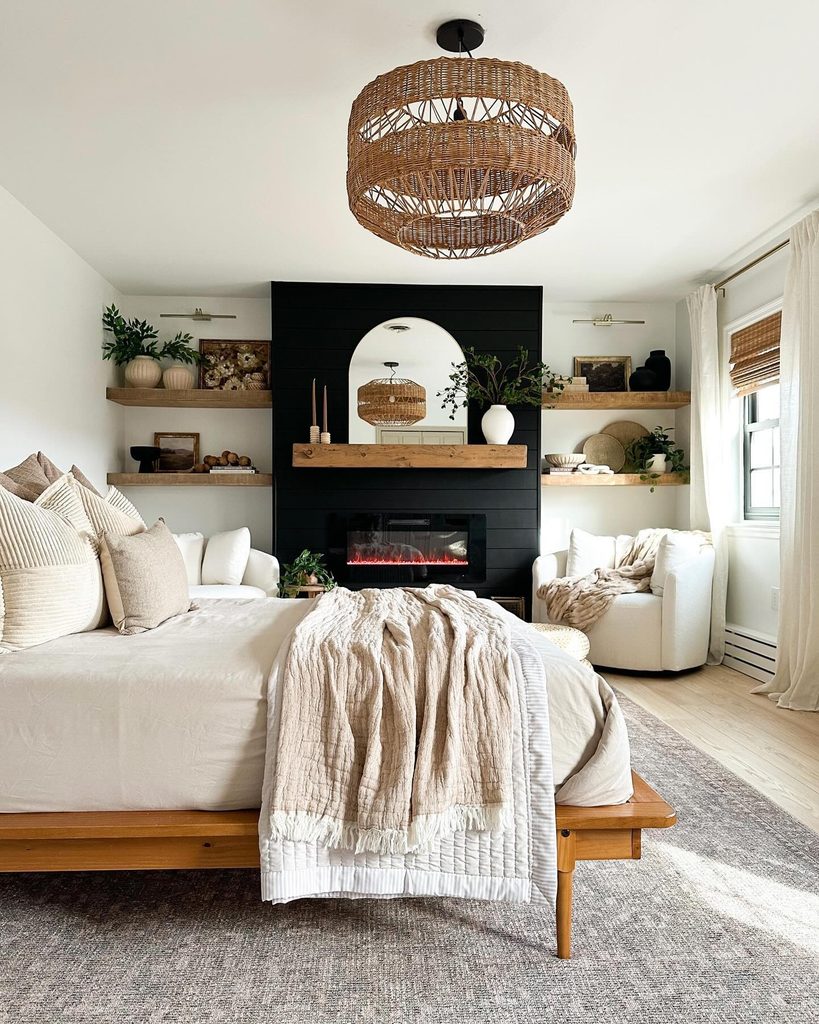
Electric fireplaces can organize the view from a bed when the room has space for a dedicated feature wall. This guest room places one beneath an arched mirror, with shelves on either side and a chair near the window.
Warm wood ties those elements back to the bed frame. Couples could borrow the arrangement as a shared place to unwind, but installation must follow the appliance’s requirements rather than the photograph alone.
Check clearances, electrical provision, and whether heating can be controlled independently from the flame effect. Avoid crowding the surrounding shelves with objects that impede access.
The creator identifies the room as part of her own renovation and documents the project, giving the image context beyond a product promotion.
20. Make Room for Different Patterns on a Shared Settee
Credits: Annette / A Vintage Splendor
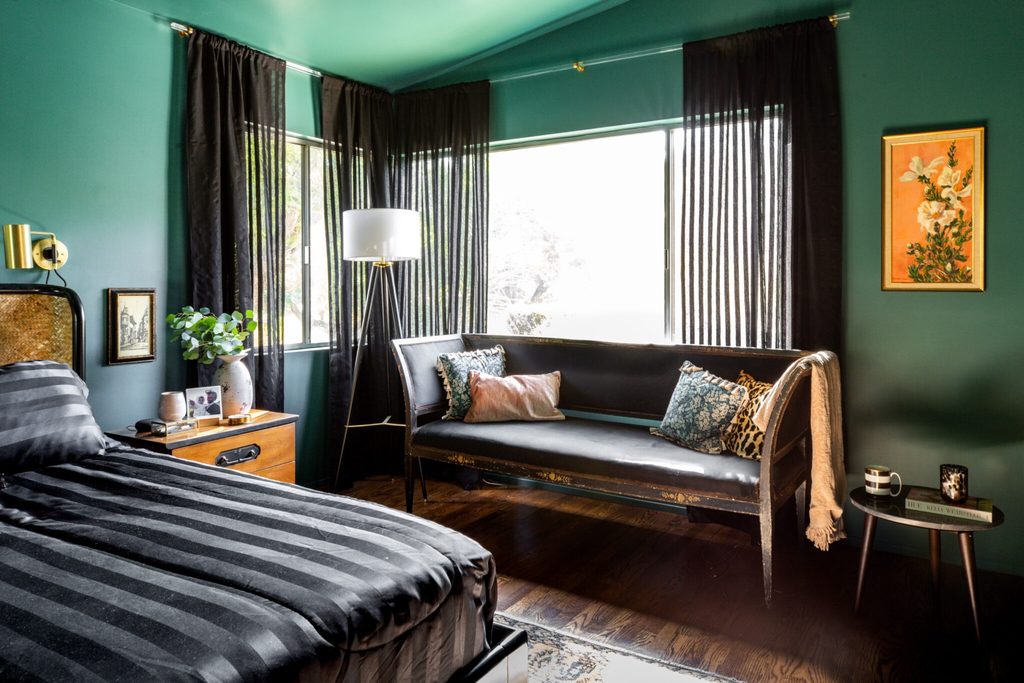
A bedroom settee can hold several touches while giving the bed a simpler role. This dark seat sits below corner windows with a mix of patterned pillows, a pale cushion, and a soft throw.
The surrounding green walls and dark curtains connect the varied pieces through a consistent backdrop. Couples could each choose a favorite textile, then use one repeated color to bring their selections together.
Check that the seat leaves enough space to pass between the window area and bed. Keep part of the cushion clear so sitting down does not require rearranging everything.
The nearby table supplies a convenient landing spot. A seating area can become a shared place to unwind without requiring matching tastes in every detail.