
Dark green can make a living room feel grounded, but too much of the same shade can leave the space looking flat.
Forest Green Living Room Ideas work best when the color has contrast and a clear role, whether it comes from walls, upholstery, or both.
Pale seating can soften deep green walls, while a reading spot beside a window makes use of natural light without crowding the main conversation area.
You can also carry green over a sloped ceiling for a more enclosed feel or use solid trim to give patterned wallpaper a calmer frame.
1. Layer Pale Seating Against Deep Green Walls
Credits: Instagram
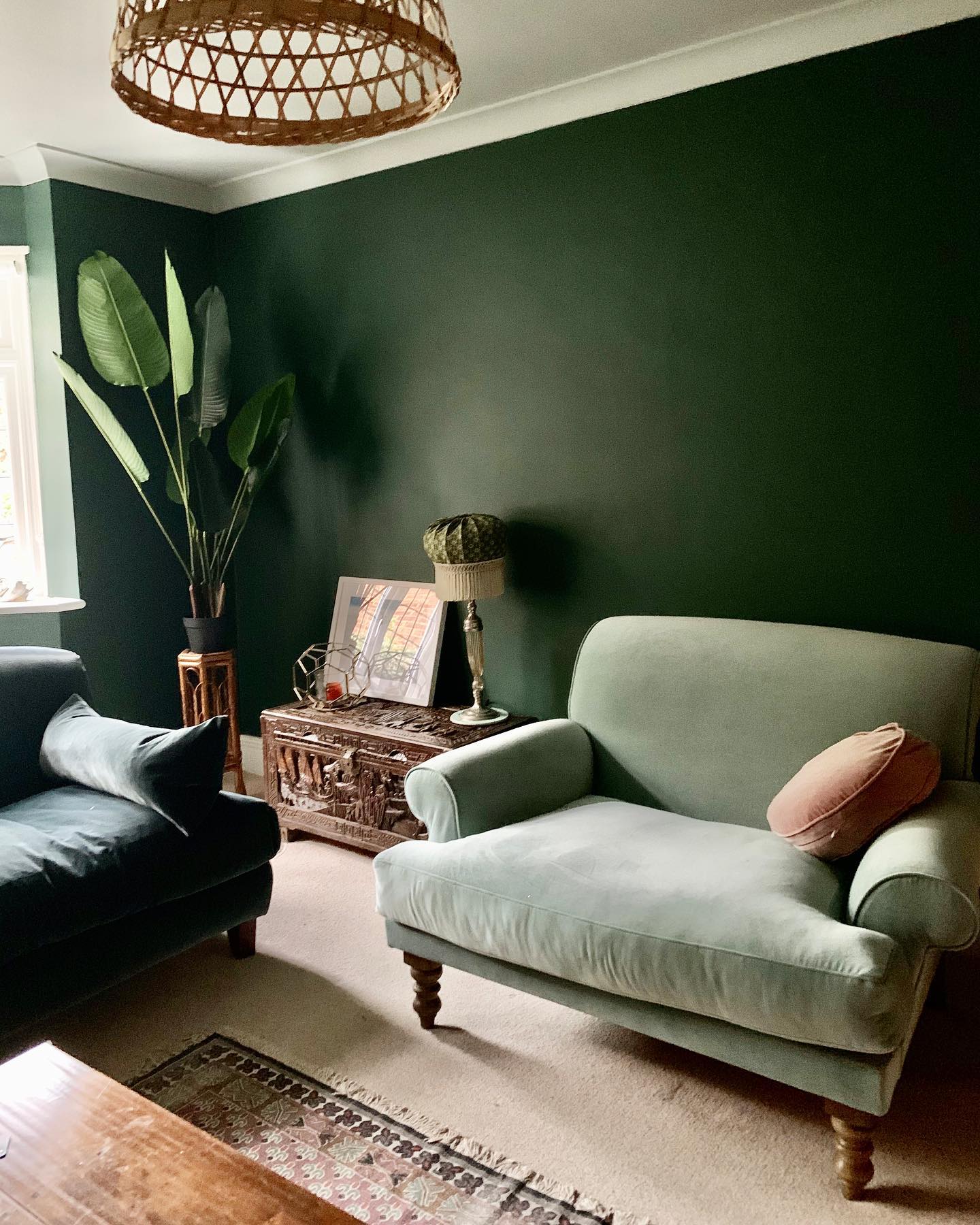
A pale green armchair gives this dark living room a gentle point of contrast. Its curved arms and peach pillow stand out against the forest green wall, while the deeper green seat opposite keeps the palette connected.
Try this approach when you want several green pieces without making every surface match. Choose one substantially lighter upholstery shade, then repeat a darker green elsewhere.
The carved chest, woven pendant, and plant stand add warm brown accents at different heights throughout the room. Leave some wall space bare so those varied shapes have room to breathe.
A tall leafy plant beside the window extends the green upward, balancing the low seating without introducing another large piece of furniture into the conversation area.
2. Make Room for a Window Reading Spot
Credits: Instagram
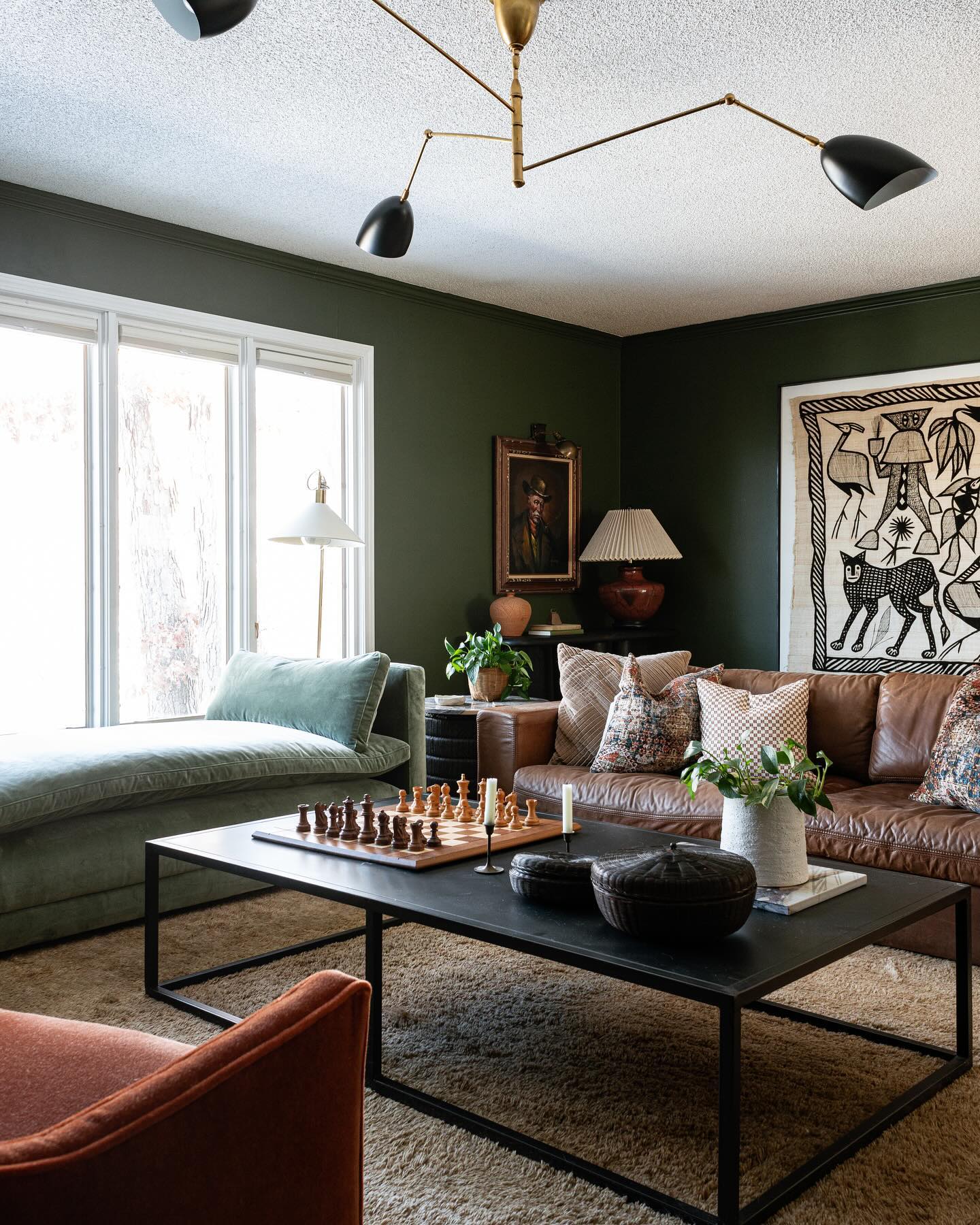
A low daybed beside the windows creates a reading spot within this green living room. Its open profile lets the tall white window frames remain prominent, while the brown sofa faces the central coffee table.
Borrow the layout by placing a chaise or daybed where someone can stretch out without interrupting conversation. Check its footprint against the main seating before buying, and keep the table within comfortable reach.
Here, a slender floor lamp supplies a dedicated light beside the daybed. The large pale artwork and white ceiling break up the dark walls, while black table frames repeat the overhead fixture's dark shades.
Mix these clear outlines with patterned pillows to give a comfortable room structure without making it feel rigid.
3. Carry Green Over a Sloped Ceiling
Credits: Instagram
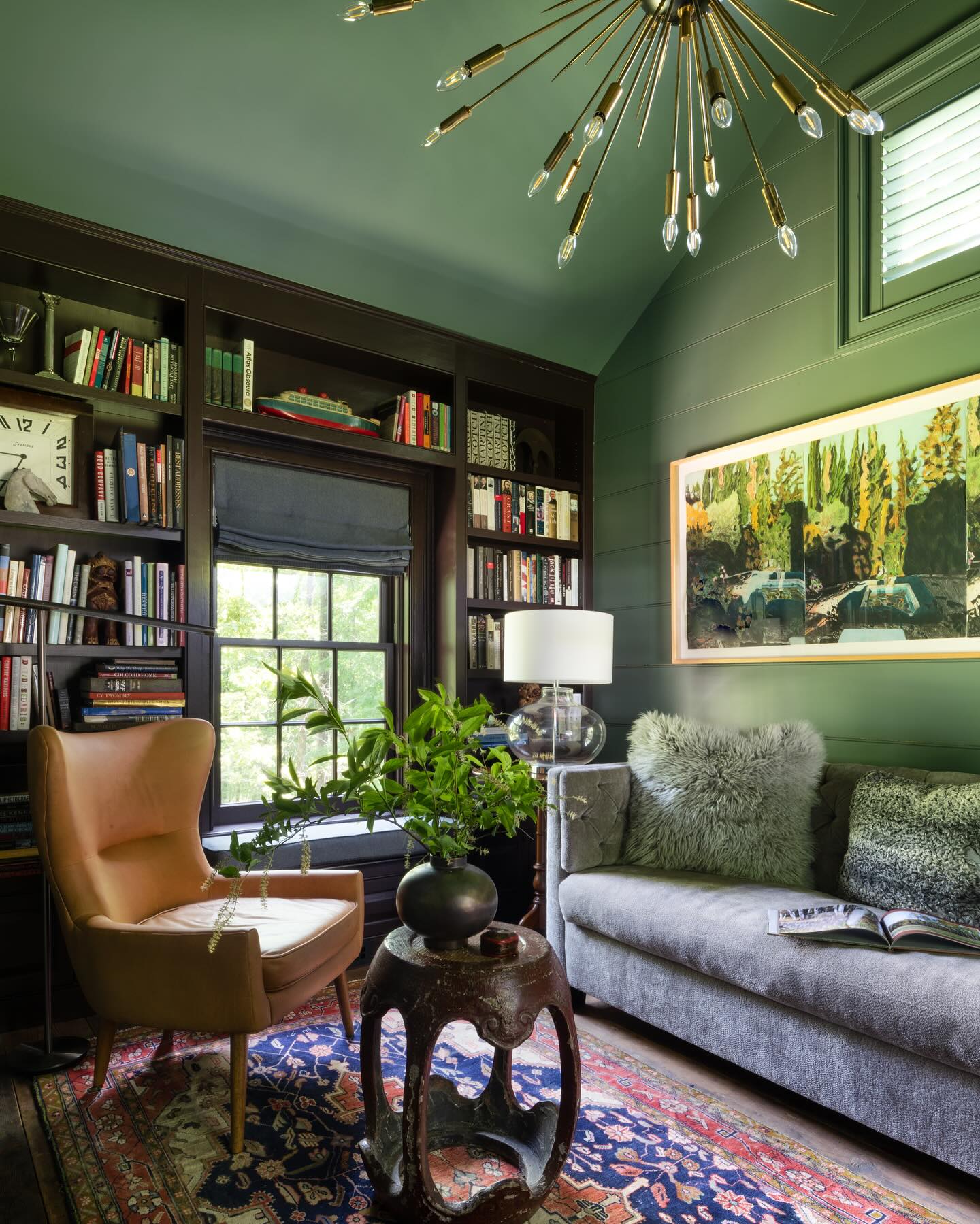
Green continues from the paneled wall onto the sloped ceiling in this intimate sitting area, giving the unusual roofline a cohesive finish.
Dark bookcases frame the window and provide a second deep tone, while the gray sofa and tan chair stay clearly visible against them.
Consider extending your wall color overhead when you want a small library or reading room to feel enclosed and restful. Keep the seating lighter, and include a pale lampshade to punctuate the surrounding darkness.
The colorful rug supplies red and blue accents without demanding more objects on the shelves.
A small round table fits between the seats, leaving the room's compact arrangement focused on reading, conversation, and the books that make the space feel personal.
4. Give Green Wallpaper a Solid Frame
Credits: Instagram
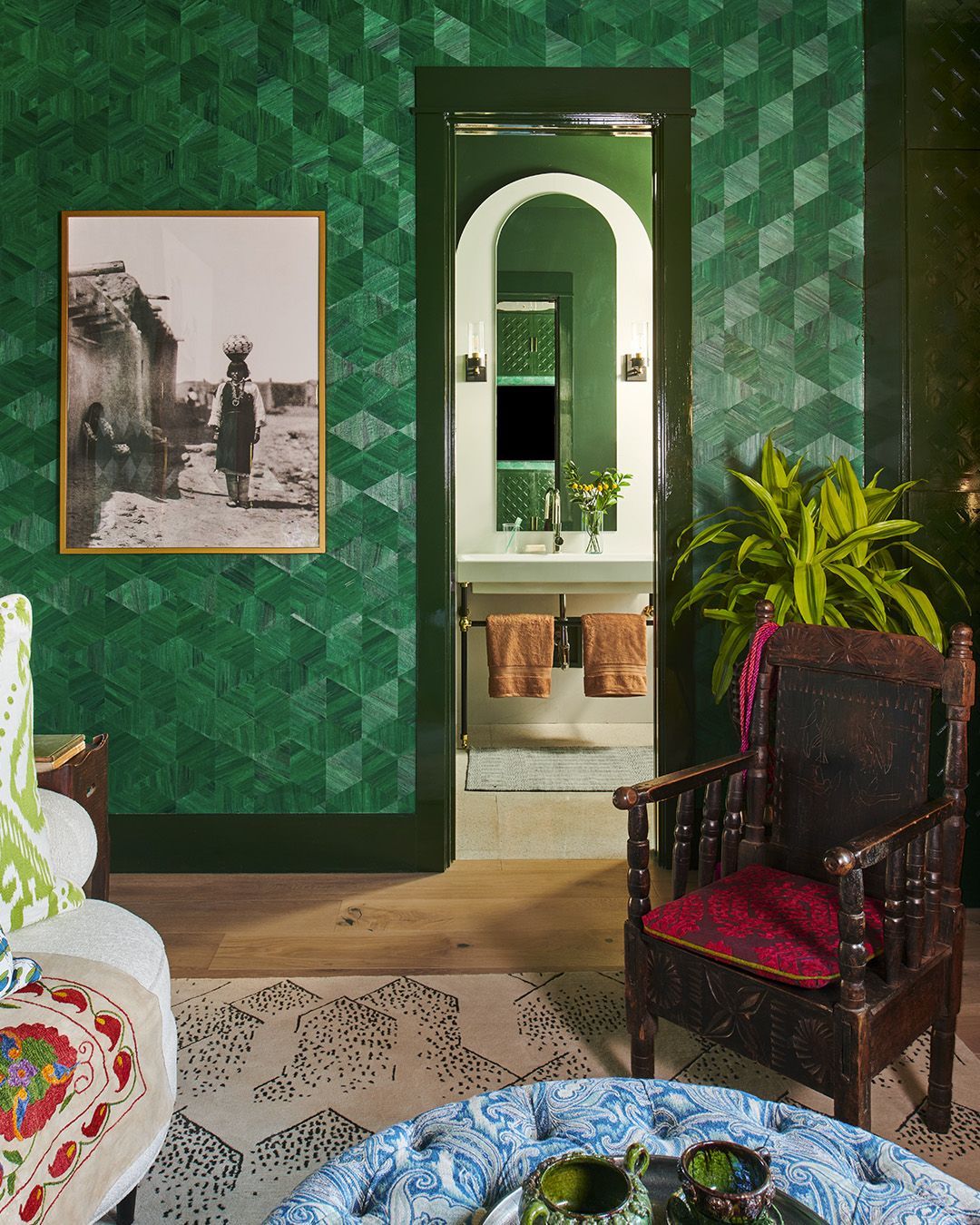
Geometric green wallpaper brings movement to this sitting area, but its dark green door casing and baseboard keep the pattern neatly contained. A large black and white photograph offers a quieter shape against the shifting green blocks.
Use that balance when choosing a strong wall pattern: pair it with solid trim and artwork that has enough open space to remain readable.
The pale sofa and light rug provide relief below, while a red chair cushion and blue patterned ottoman introduce contrasting colors in smaller amounts. Let those accent fabrics vary in scale instead of repeating the wallpaper's geometry everywhere.
A leafy plant softens the straight edges beside the doorway and connects the patterned wall to an unmistakably natural green element.
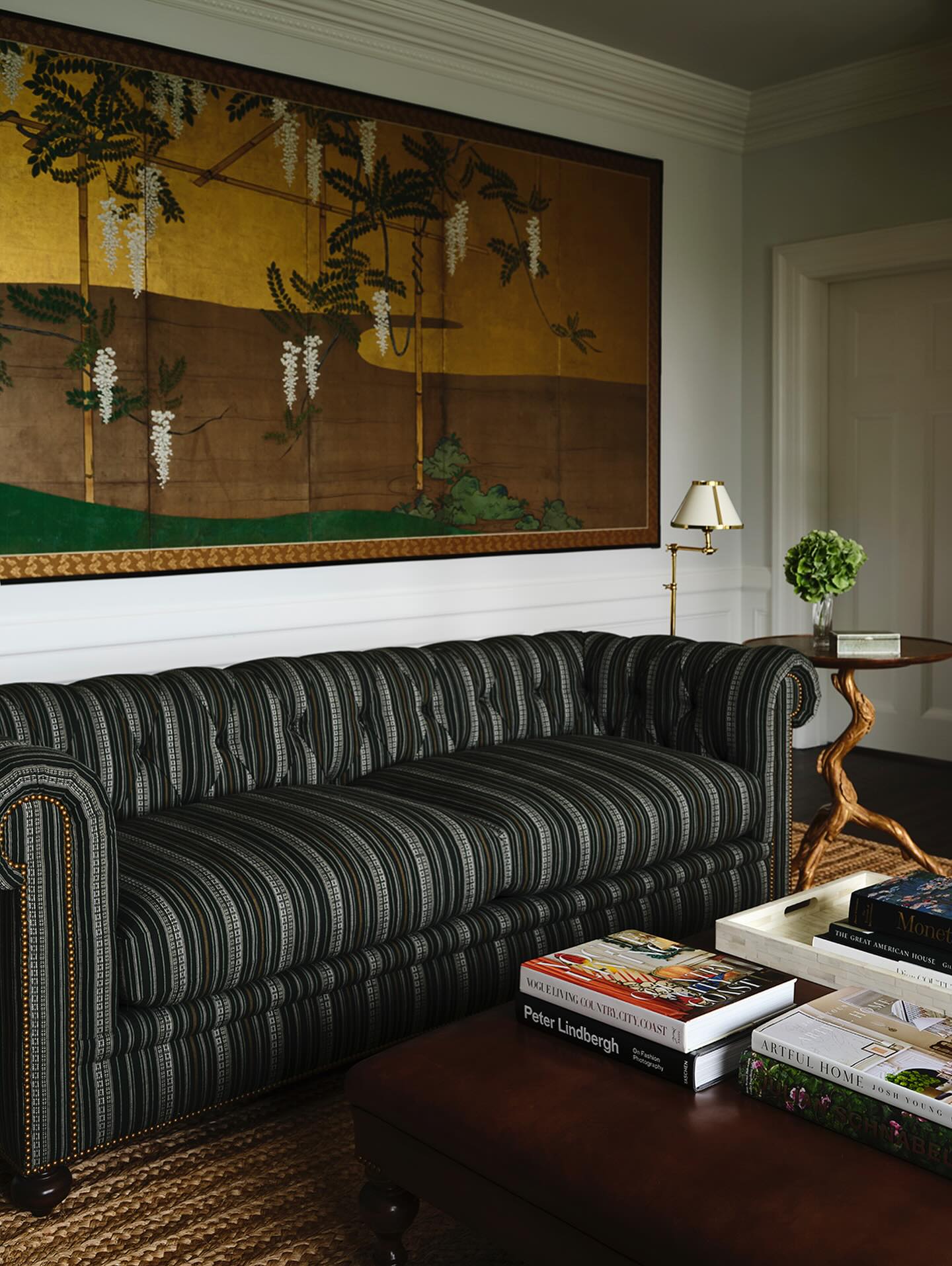
5. Choose a Dark Green Striped Sofa
Credits: Instagram
A striped sofa introduces deep green through upholstery while the surrounding walls stay pale. Narrow light lines give its substantial rolled arms and tufted back definition, so the piece feels detailed even without a pile of pillows.
Above it, oversized botanical artwork repeats green against a warm golden background. Start with one patterned seat if you want this effect, then choose wall art that shares a color without copying the stripe.
The brown coffee table, woven rug, and sculptural side table add warmth through their visible textures and shapes. Keep nearby accessories restrained: a small shaded lamp and single flower arrangement are enough here.
The result gives dark green a strong presence while preserving the brightness of the room's trim.
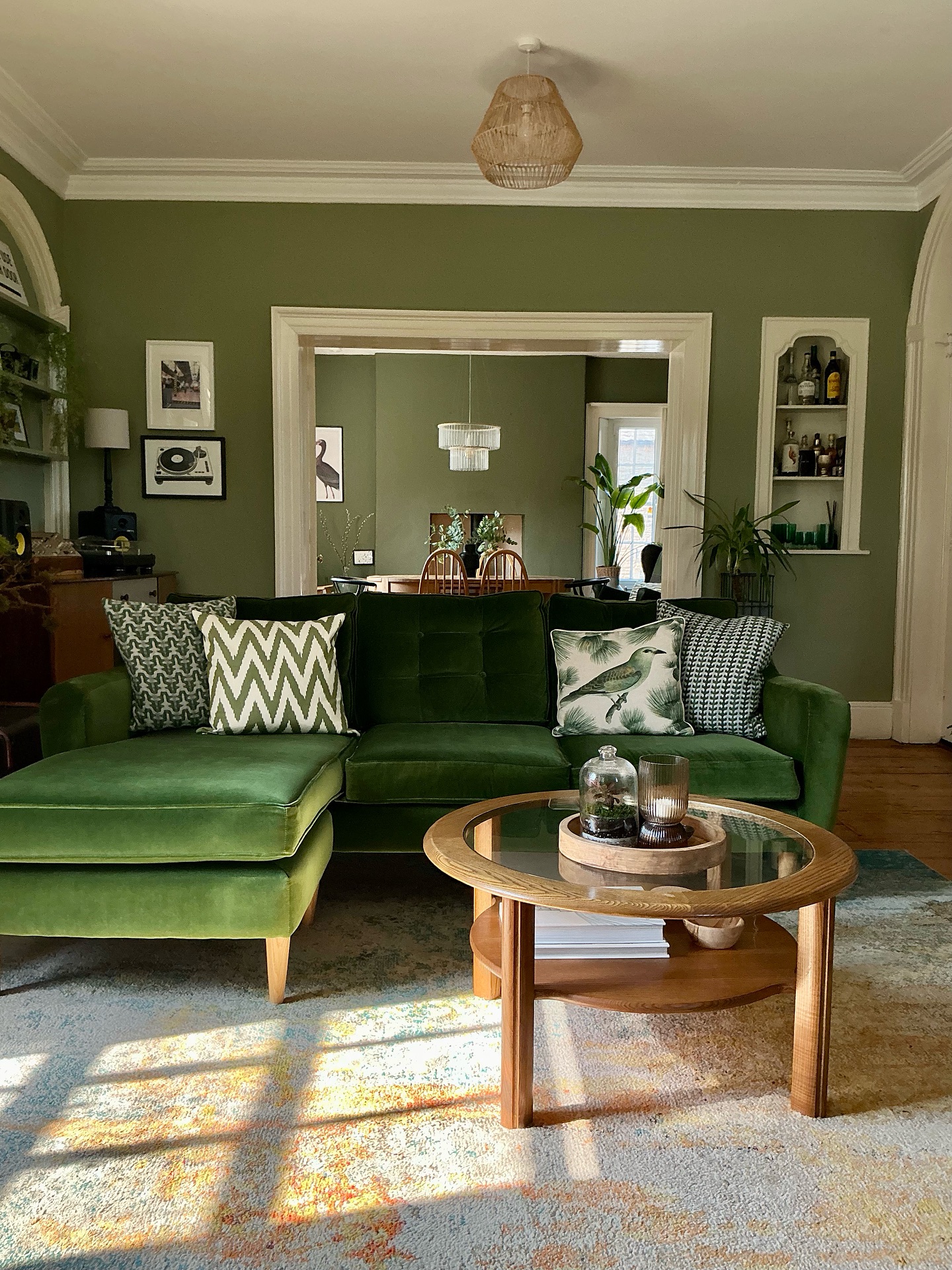
6. Connect Adjoining Rooms With Related Greens
Credits: Instagram
A deep green sectional anchors the foreground, while warmer moss green walls continue through the broad opening behind it. That related green palette helps the living and dining spaces feel connected, even though white trim clearly outlines the doorway.
Try related greens across adjoining rooms when you want continuity without buying matching furniture. The sectional sits in front of the opening, creating a boundary while leaving the view above its back unobstructed.
An oval coffee table softens the seating arrangement, and its glass top reveals the shelf below. Patterned pillows bring pale accents onto the dark cushions, linking them to the surrounding trim.
Warm wood tones recur in the table, floor, and dining chairs, carrying another familiar element between spaces.
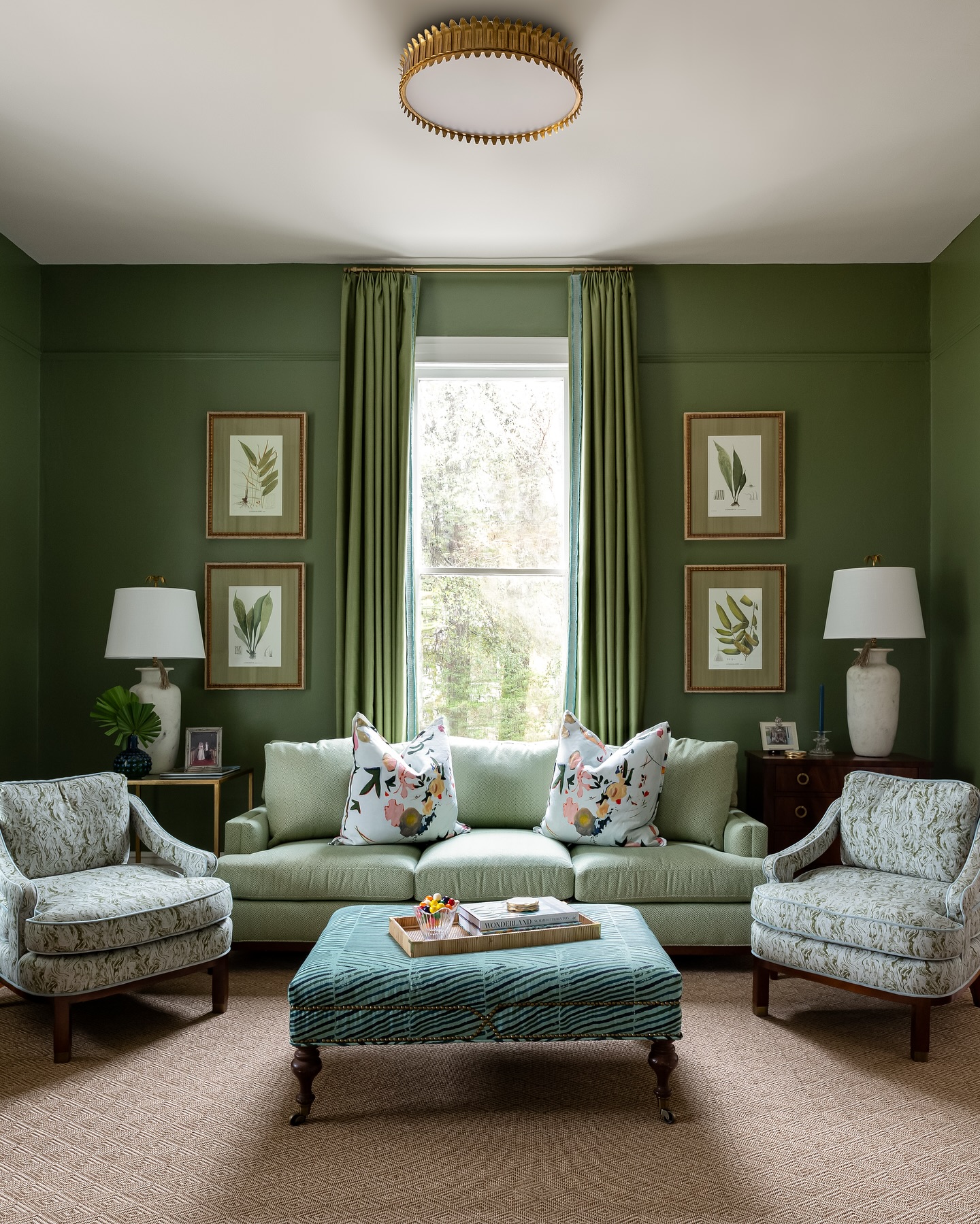
7. Use Symmetry to Organize a Green Room
Credits: Instagram
The centered window sets the rhythm for this living room: botanical prints hang in pairs, matching lamps flank the sofa, and two patterned chairs face inward.
Warm moss green walls and curtains form a consistent background, allowing the pale green sofa to stand out. Borrow the symmetry when a richly colored room needs a calmer arrangement.
Begin with the largest central feature, then balance objects by height and visual weight on either side. The side tables differ, showing that the furniture does not need to be identical.
Large floral pillows and a blue-green patterned ottoman add variety within the orderly layout. A tray makes the large upholstered ottoman useful for books and small items while keeping its patterned surface visible.
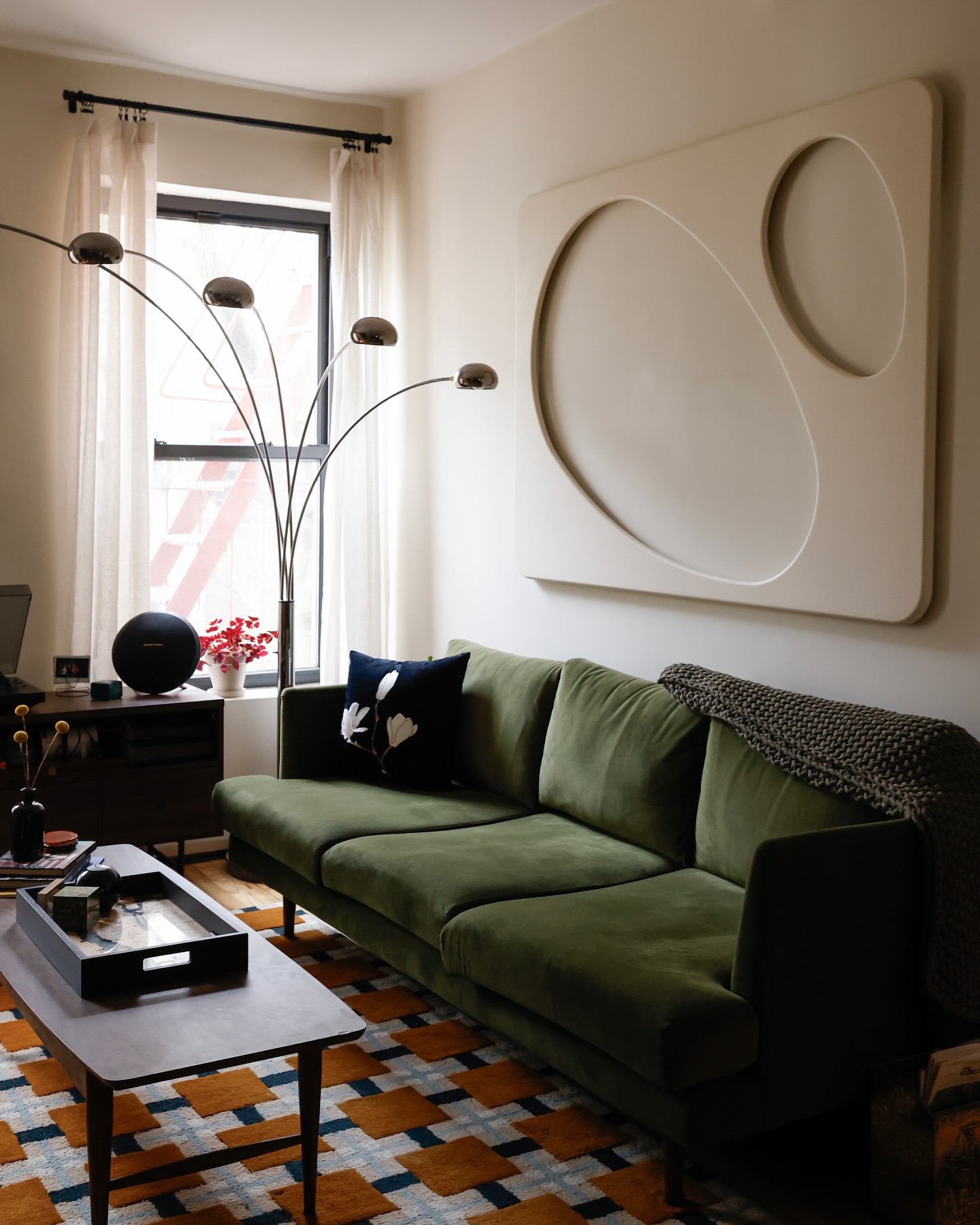
8. Let a Green Sofa Lead a Neutral Room
Credits: Instagram
A green sofa gives this pale living room its main block of color, leaving the walls available for sculptural detail.
The large cream wall piece echoes the room's neutral background, so its curved relief adds interest without competing with the upholstery. Use a similar approach if painting the walls is not part of your plan.
Choose one substantial green seat, then build around shape and texture. Here, an arcing floor lamp brings height beside the window, while a chunky throw softens the sofa's straight back.
The rug introduces warm orange and cool blue in a geometric pattern. Repeating those darker notes in the pillow, tray, and low furniture ties the colorful floor and green seating together without adding more accessories.
9. Highlight a White Fireplace With Deep Green Seating
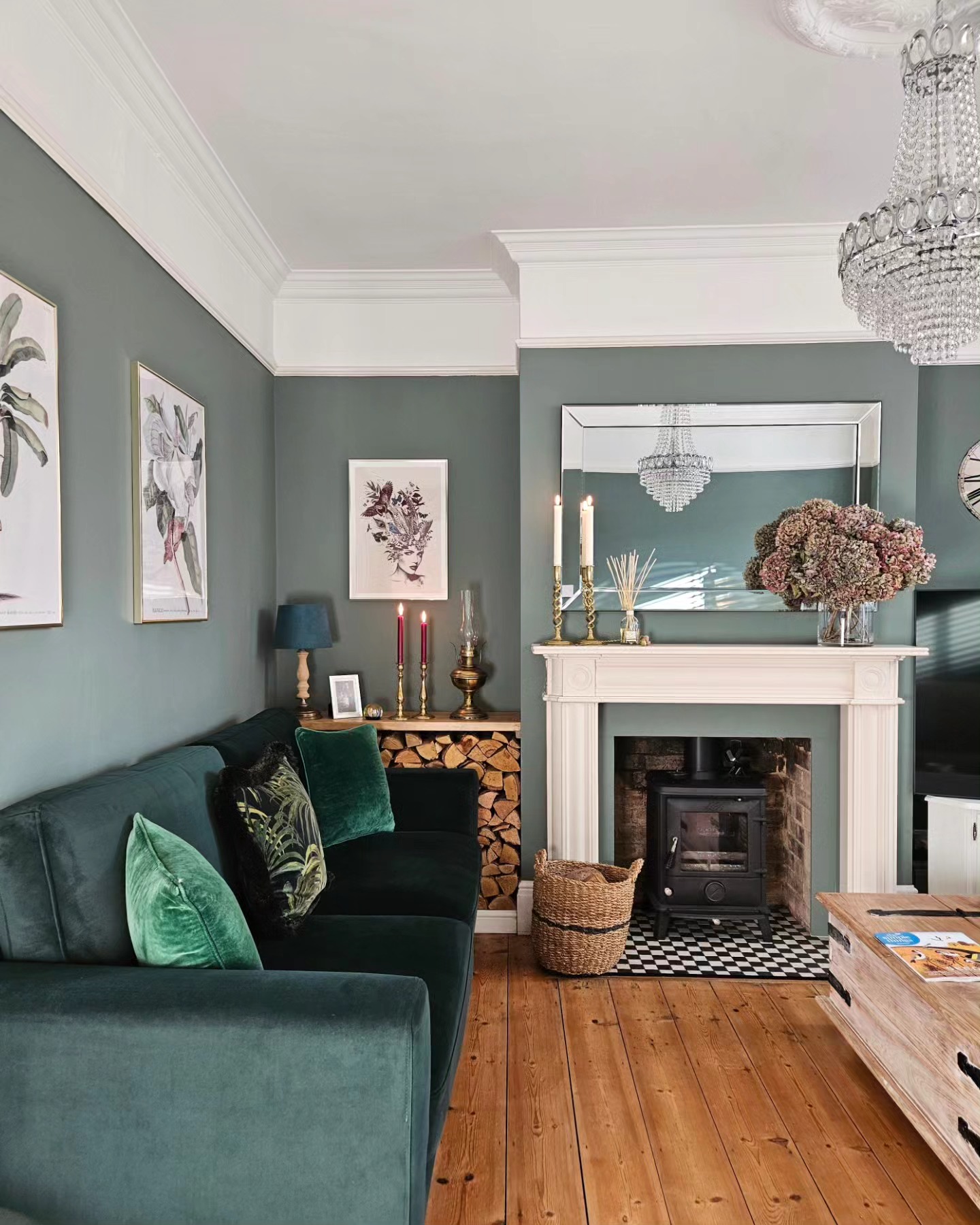
Credits: Instagram
The dark green sofa gives this room depth, while a white fireplace surround remains its brightest architectural feature. Muted green walls bridge the contrast, and the broad white cornice carries that light border around the ceiling.
This is a useful combination when you want deep green furniture to complement traditional details. Keep the fireplace and upper trim visually connected, then repeat a few green tones through pillows and artwork.
The exposed floorboards, wooden chest, and stacked logs bring warm brown into the cooler palette. A rectangular mirror above the mantel reflects the chandelier and expands the visible light surfaces.
Leave the floor between the sofa and fireplace relatively open so the room's individual features remain easy to appreciate at once.
10. Use Dark Green to Frame Seasonal Foliage
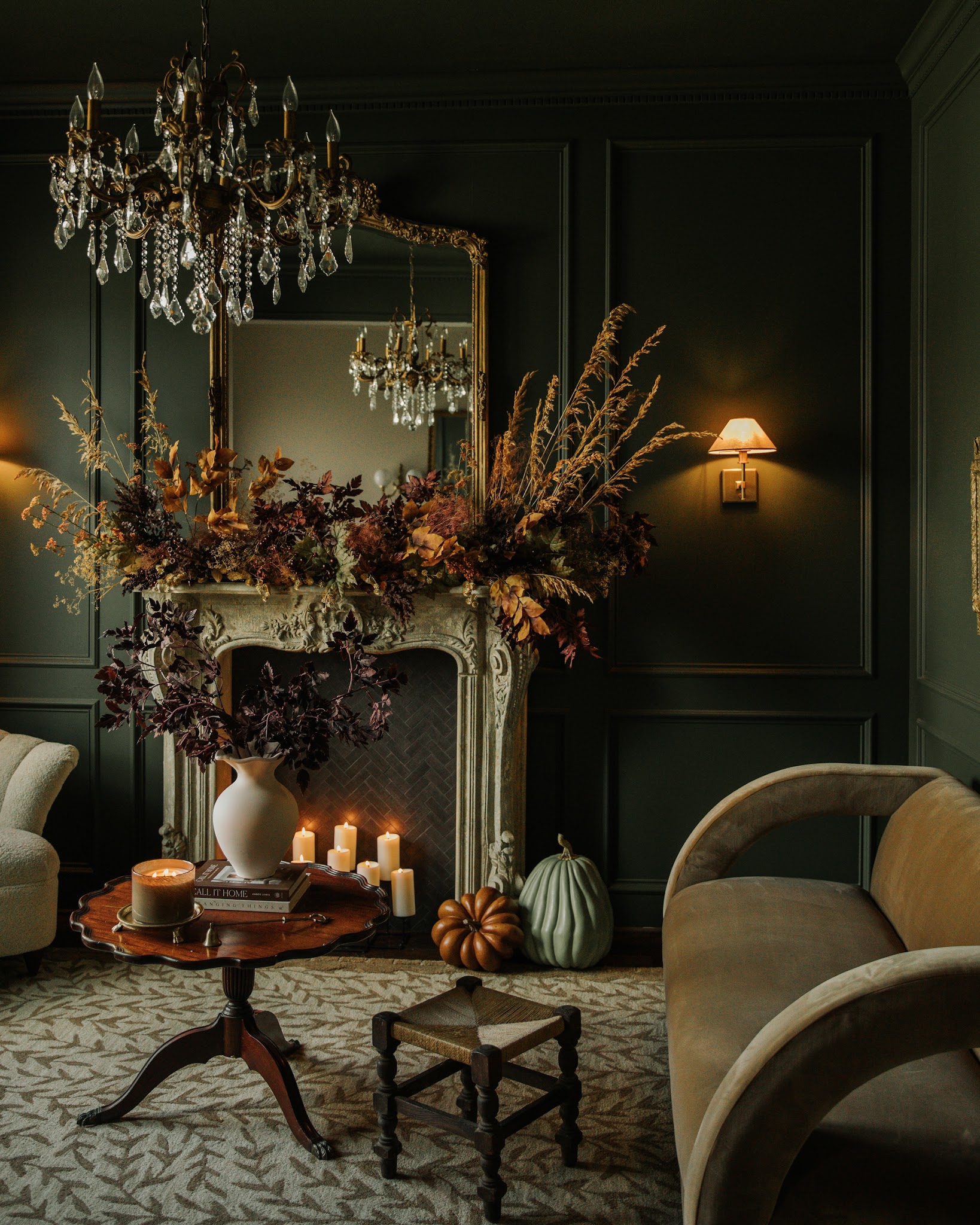
Credits: Instagram
Dark green walls make the golden and burgundy foliage across this mantel look especially rich. The painted molding stays within the same deep palette, letting the pale carved fireplace and ornate mirror establish the focal point.
Borrow the idea by concentrating seasonal decorations in one generous arrangement instead of spreading small pieces across every surface. Vary the stems' heights and let some branches extend sideways to soften the mantel's symmetry.
Warm wall lights pick out the greenery and decorative trim, while pale seating keeps the room from becoming uniformly dark. A pair of sculptural pumpkins repeats the autumn colors at floor level.
The leafy rug echoes the arrangement overhead, adding a subtle botanical pattern that works beyond the fall season.
11. Draw Berry Accents From Fireplace Tiles
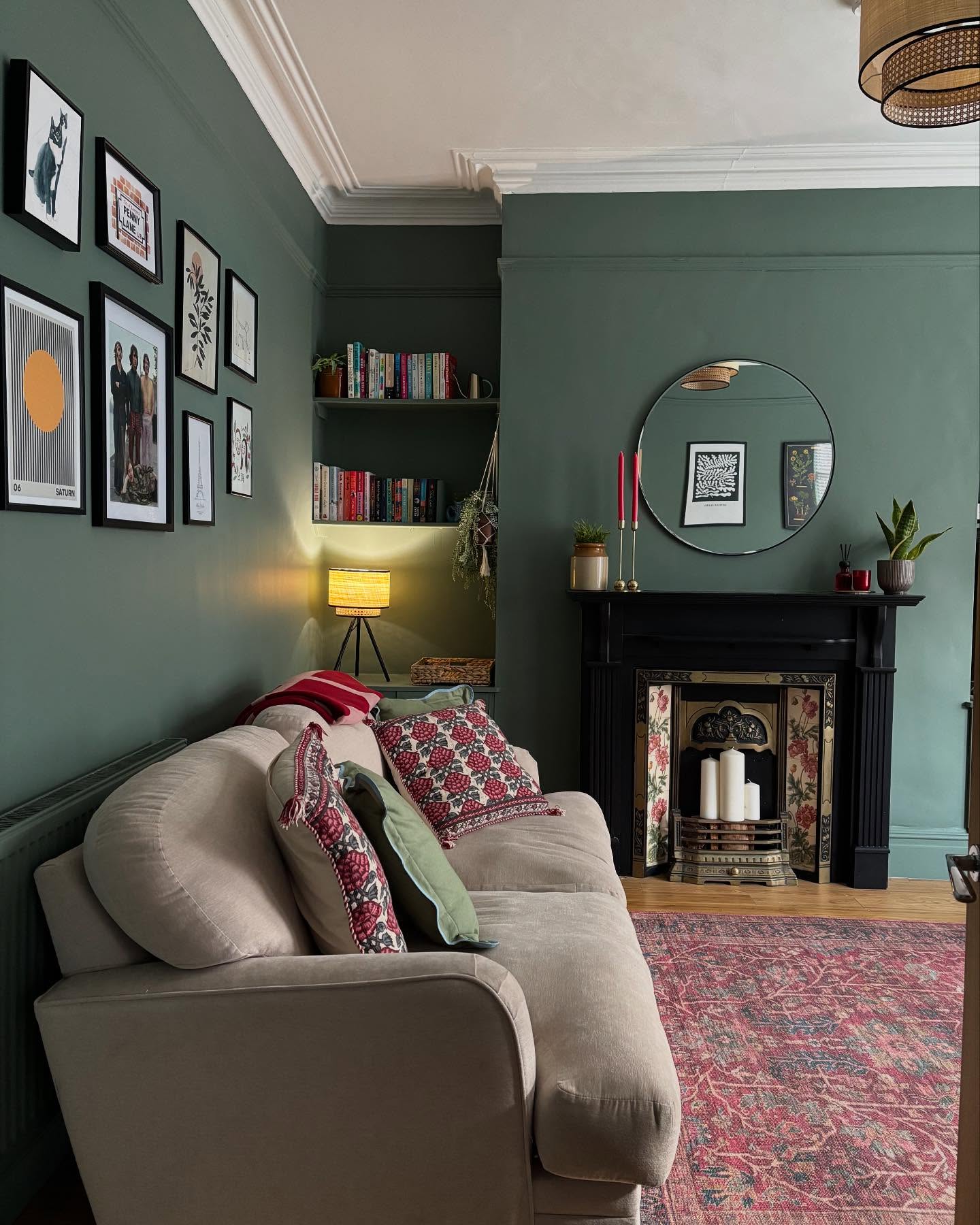
Credits: Instagram
The floral tiles around this black fireplace offer a starting point for the room's berry accents. Their pink and red details reappear in the patterned pillows, striped throw, candles, and rug, creating a warm counterpoint to muted green walls.
Look for an existing detail like this before choosing new accessories. Pull out one color, then repeat it in different sizes and patterns rather than buying a matching set.
Here, the pale sofa gives the richer fabrics a quiet background. Black picture frames echo the fireplace, while the round mirror softens its straight outline.
A small shaded lamp tucked beneath the alcove shelves lights the corner, making the green paint and colorful book spines part of the room's inviting evening atmosphere.
12. Brighten Matching Greens With Bold Pillows
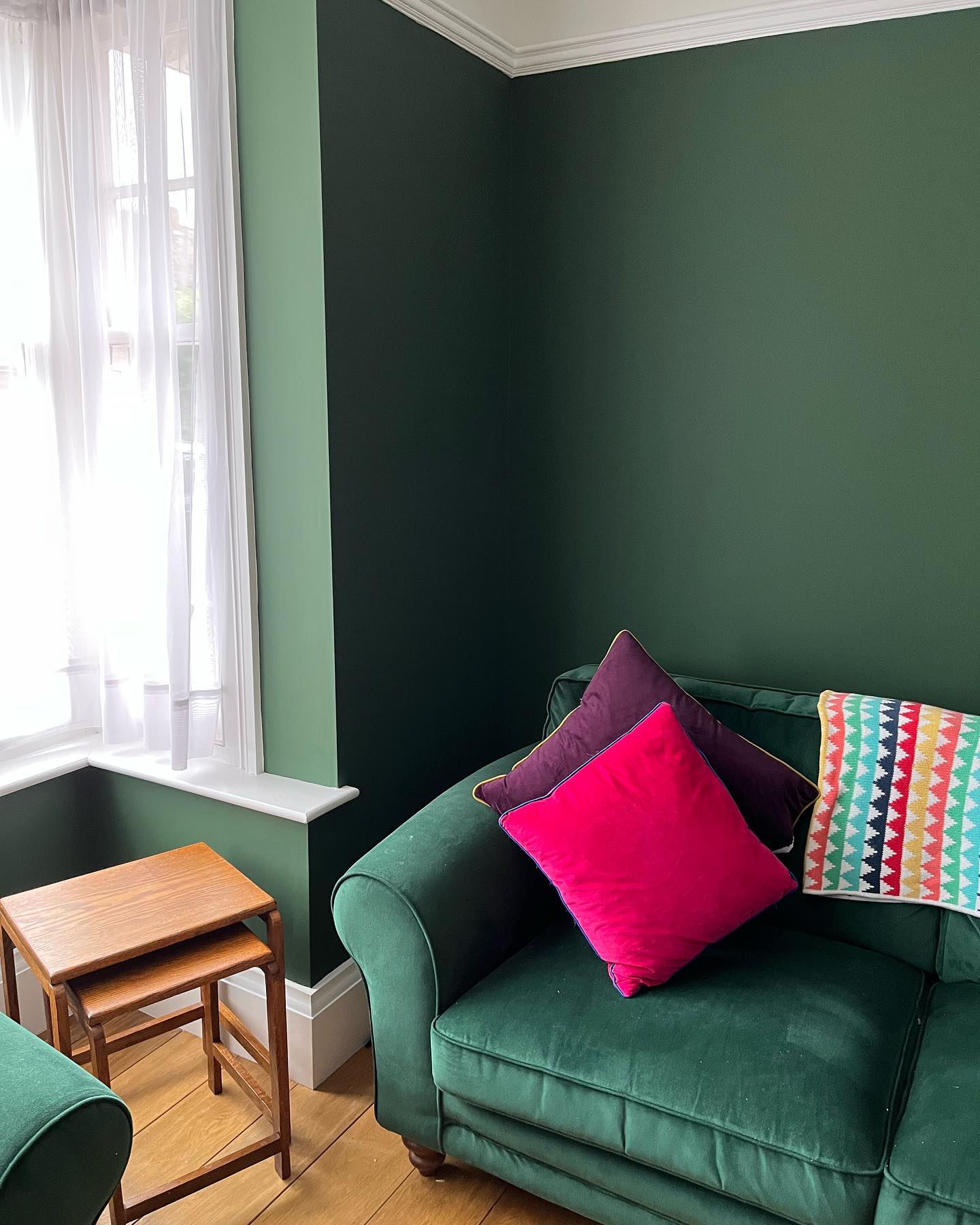
Credits: Instagram
A vivid pink pillow gives this green corner an immediate lift. Behind it, a deep plum pillow adds another saturated shade, while a multicolored geometric cushion connects the brighter colors to the green sofa.
Keeping the wall and upholstery close in color makes these smaller pieces especially noticeable. Try the combination with two solid pillows and one patterned design that includes both warm and cool tones.
The white window frame, sheer curtain, and ceiling trim introduce crisp edges around the dark green surfaces. Nesting tables offer a useful spot for a drink without filling the corner with bulky furniture.
Their warm brown finish also connects the seating to the floor, giving the strong pink and green pairing a grounded companion.
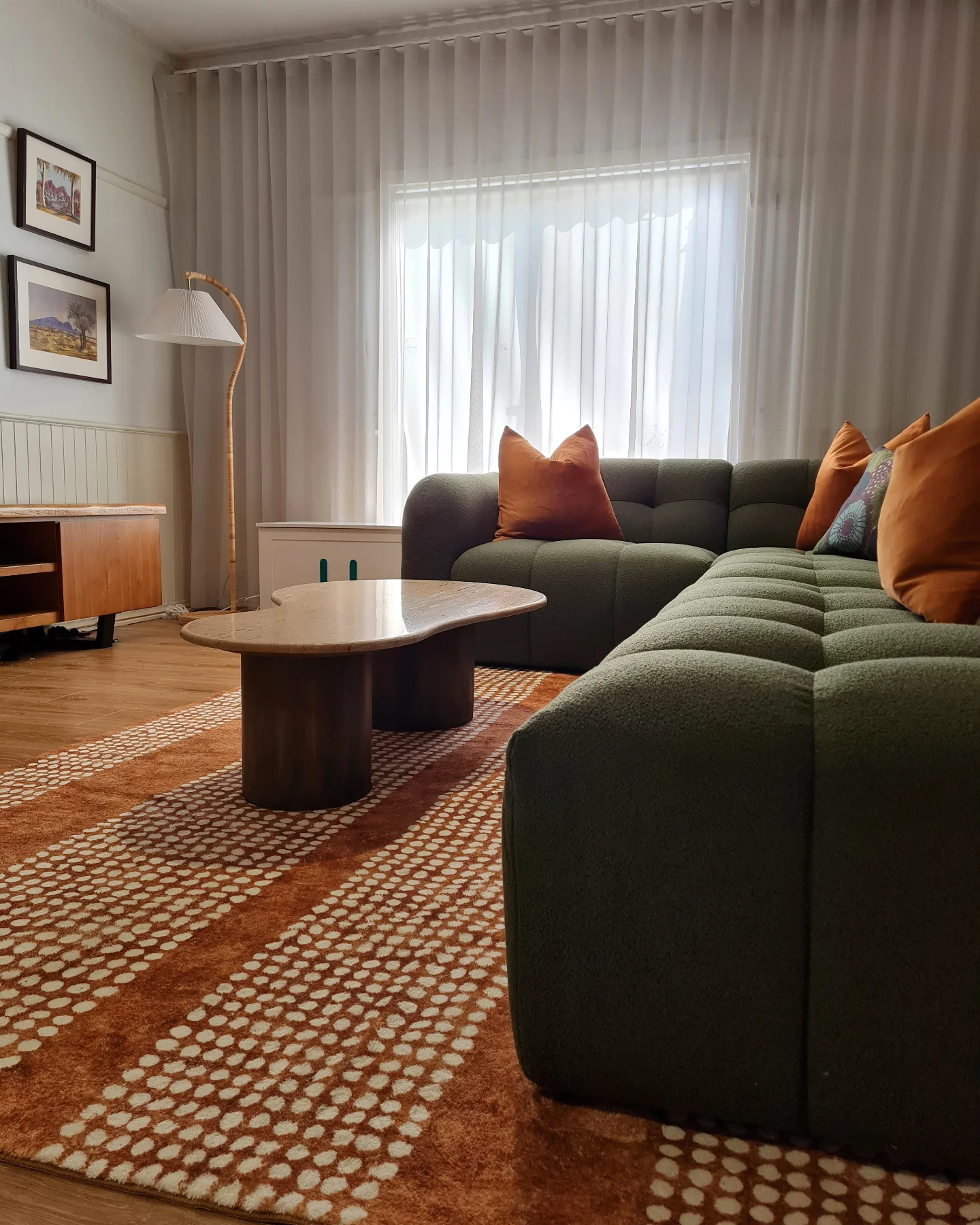
13. Pair a Moss Green Sectional With Orange
Credits: Instagram
Burnt orange pillows and a patterned orange rug warm up this rounded moss green sectional. Repeating the accent color above and below the seating makes the arrangement feel connected, even with pale walls and curtains surrounding it.
Choose your rug and pillows together so their orange tones feel related without requiring an exact match. The rug's rows of small pale dots bring movement beneath the broad, solid upholstery.
An irregularly curved coffee table picks up the sofa's rounded edges, while its light top offers contrast against the darker base. Leave enough space around a substantial sectional for comfortable access to each seat.
Simple artwork and a slender floor lamp keep the surrounding walls from competing with the furniture's sculptural shapes.
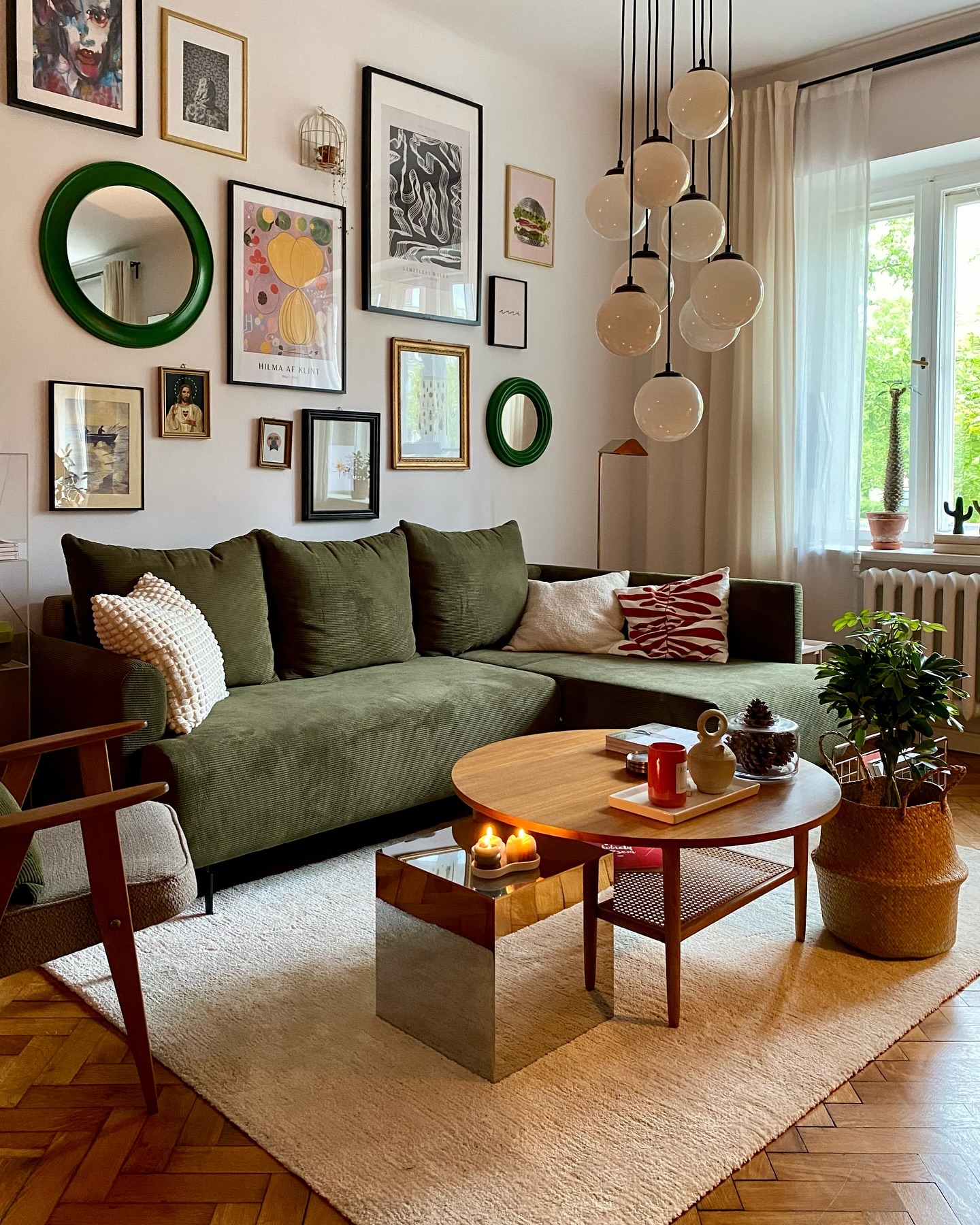
14. Echo Green Seating in a Gallery Wall
Credits: Instagram
Two round green mirrors connect this lively gallery wall to the olive green sectional below. Their repeated color gives the mixture of photographs, prints, and assorted frames a clear relationship to the furniture.
This is an approachable way to add green higher in the room without painting the walls. Begin with a few larger pictures, then fill around them with smaller pieces and one or two mirrors.
Leave visible wall between the frames so each item remains distinct. The mirrors also introduce curves among the rectangular artwork, a shape repeated by the coffee table and hanging globe lights.
Pale pillows and a large cream rug keep the seating area bright, while plants extend the green palette toward the sunny window.
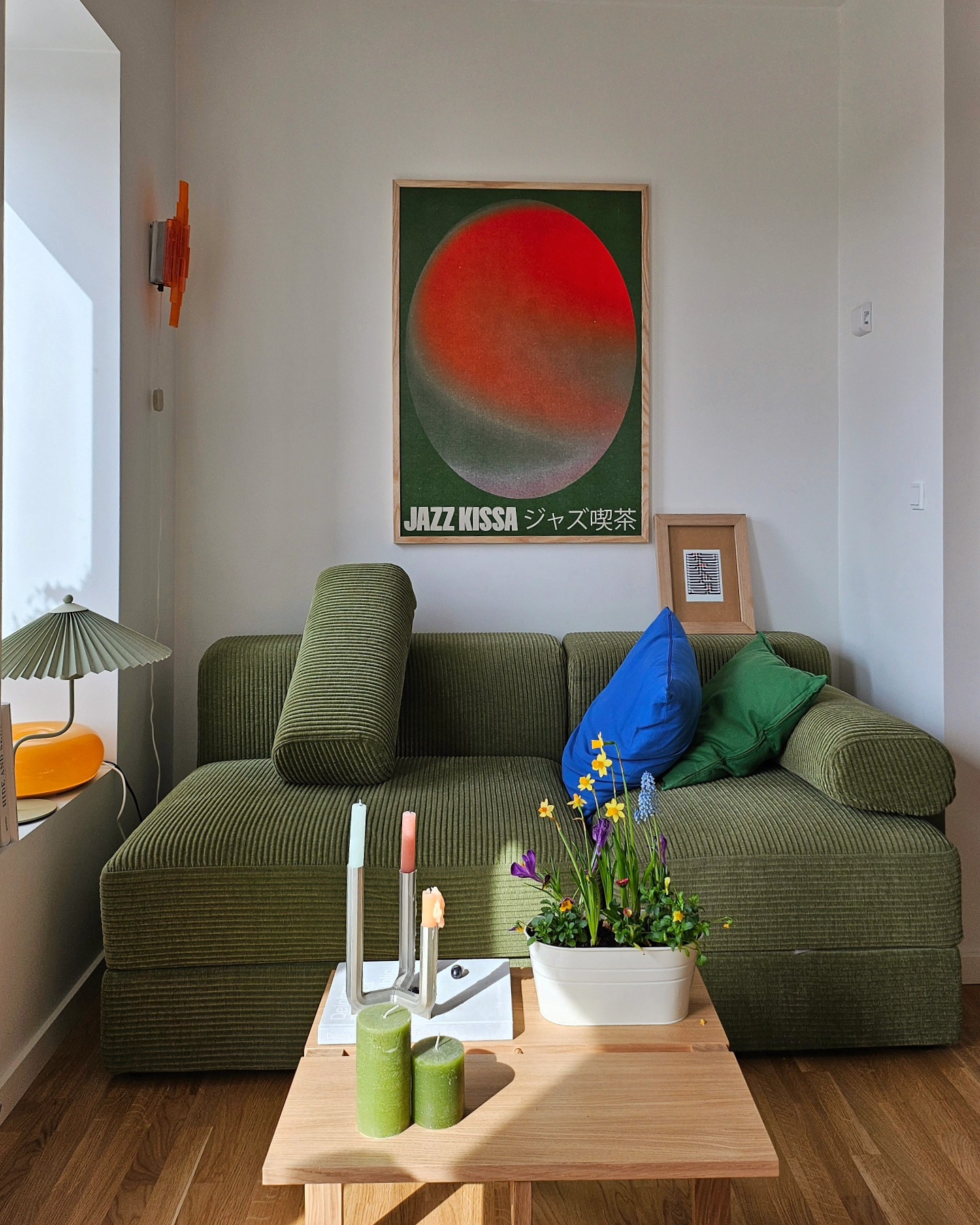
15. Wake Up Olive Green With Cobalt Blue
Credits: Instagram
One cobalt blue pillow brings a sharp burst of color to this olive green sofa. A second pillow in brighter green keeps the combination connected to the upholstery, while orange lighting details and the graphic print introduce warmth.
For a similar effect, start with one vivid blue accent and let the larger pieces stay quieter. The sofa's pronounced ribbing supplies plenty of texture, so the solid pillows have enough interest without additional pattern.
Above, the large print repeats green in its background and adds a red oval that balances the blue below. A simple coffee table holds flowers and candles in smaller color notes.
Keep some tabletop clear to let these cheerful details stand out against the room's pale walls.
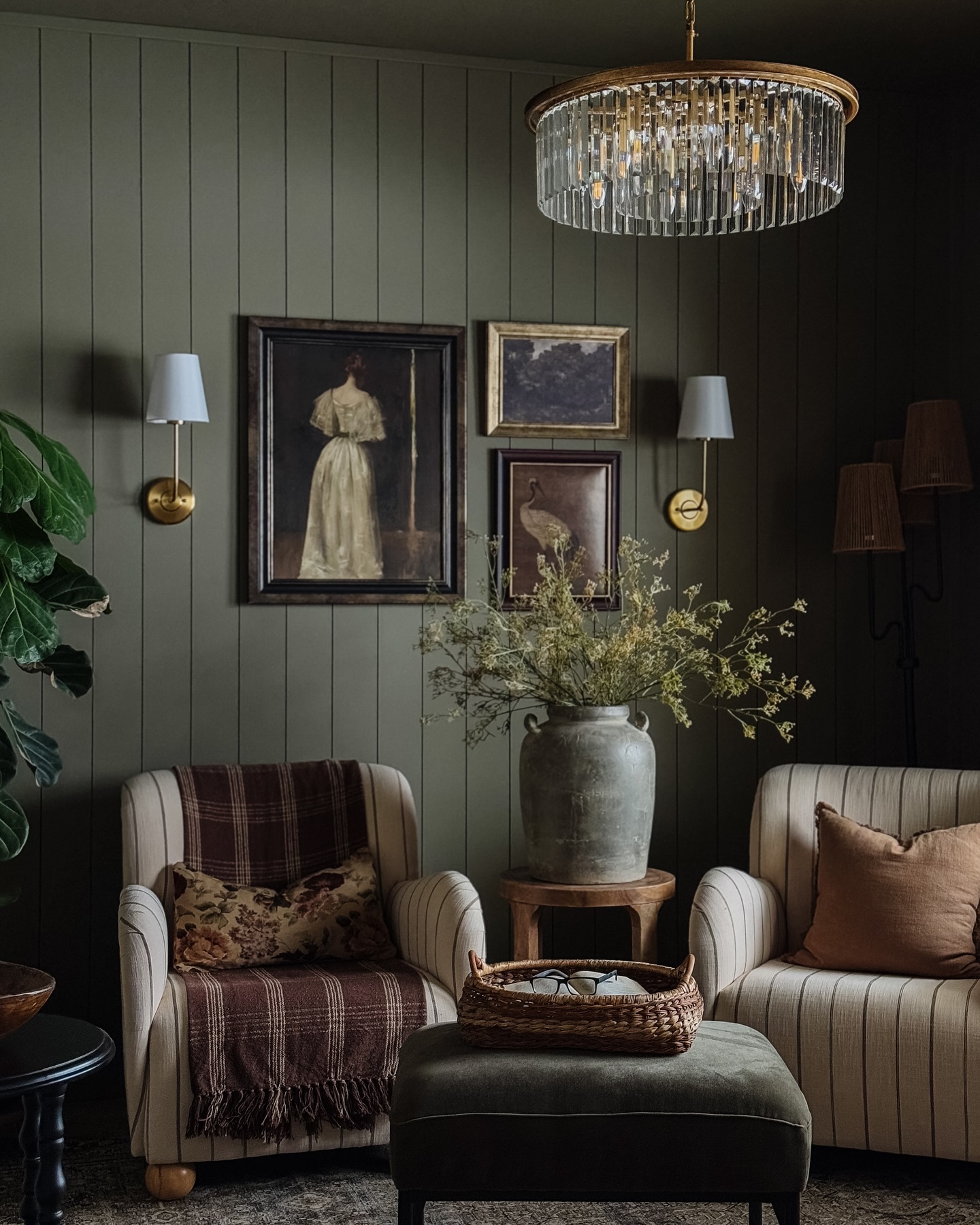
16. Layer Quiet Patterns Around Gray-Green Walls
Credits: Instagram
Narrow stripes, a brown plaid throw, and a floral pillow bring gentle variety to this gray-green sitting area. The patterns share pale and earthy colors, allowing them to sit comfortably together against the vertical wall paneling.
Build a similar mix by choosing one noticeable pattern, then surrounding it with quieter lines and solids. Here, the floral pillow gets support from the restrained chair stripes and broad plaid.
The green ottoman provides a plain surface at the center, with a woven tray resting on top. Dark framed pictures reinforce the room's subdued palette, while small white lampshades provide lighter punctuation.
An oversized vase of branching stems introduces a loose, natural outline among the straight panel grooves and neatly arranged wall art.
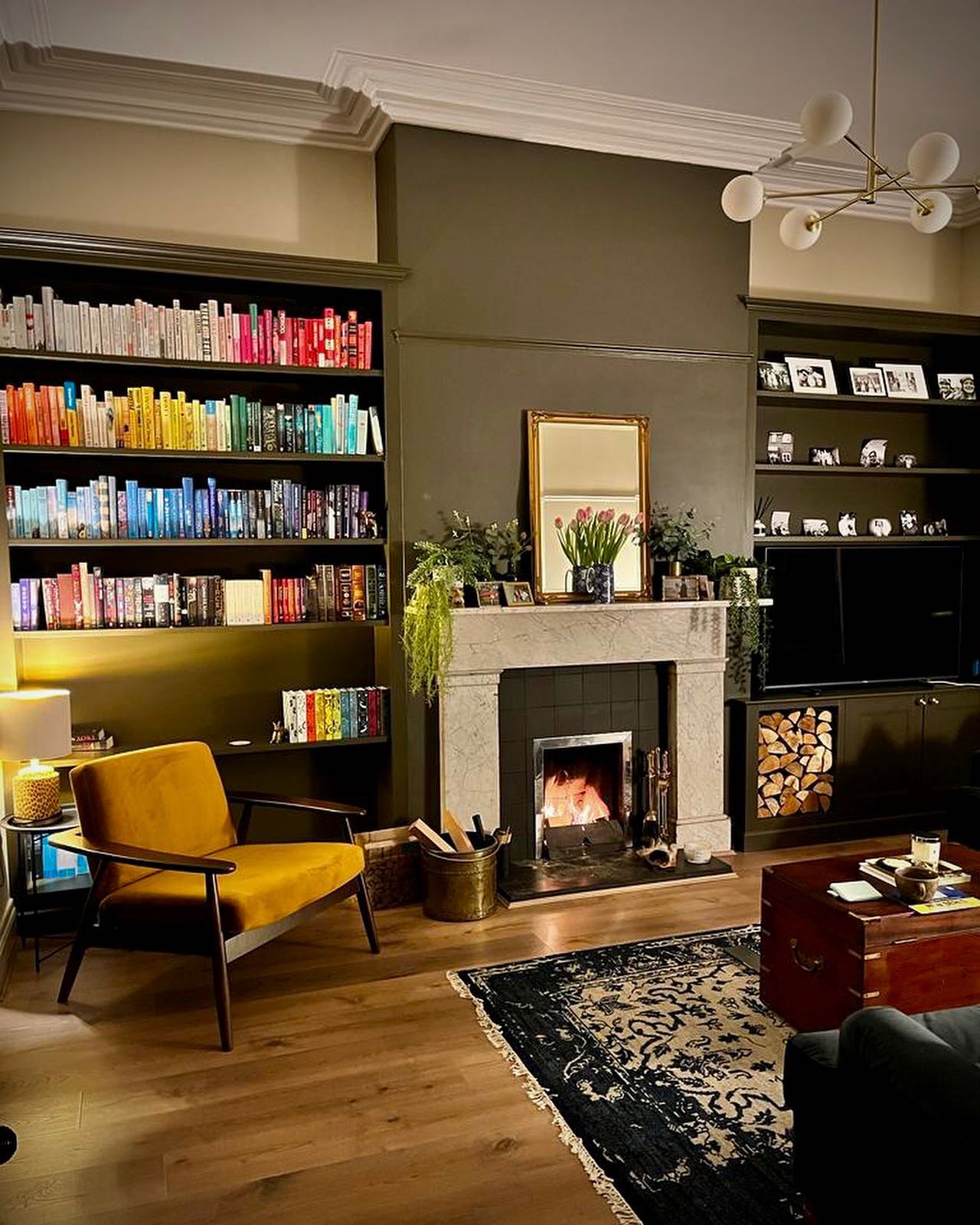
17. Make Books the Color in Green Built-Ins
Credits: Instagram
Rows of books turn the shelving beside this fireplace into a colorful feature. Their spines progress through pale shades, reds, yellows, greens, and blues, standing clearly against the deep olive background.
If your shelves already hold a substantial collection, try arranging a section by color to see whether you like the effect. Keep frequently used titles easy to locate, and leave room for future additions.
Across the fireplace, more sparsely arranged photographs give the opposite shelving a calmer rhythm. A mustard chair picks up the warmer book colors and creates a comfortable place to read nearby.
Painting the shelves and surrounding structure in related green tones helps the collection feel integrated, while the light fireplace provides a central visual break.
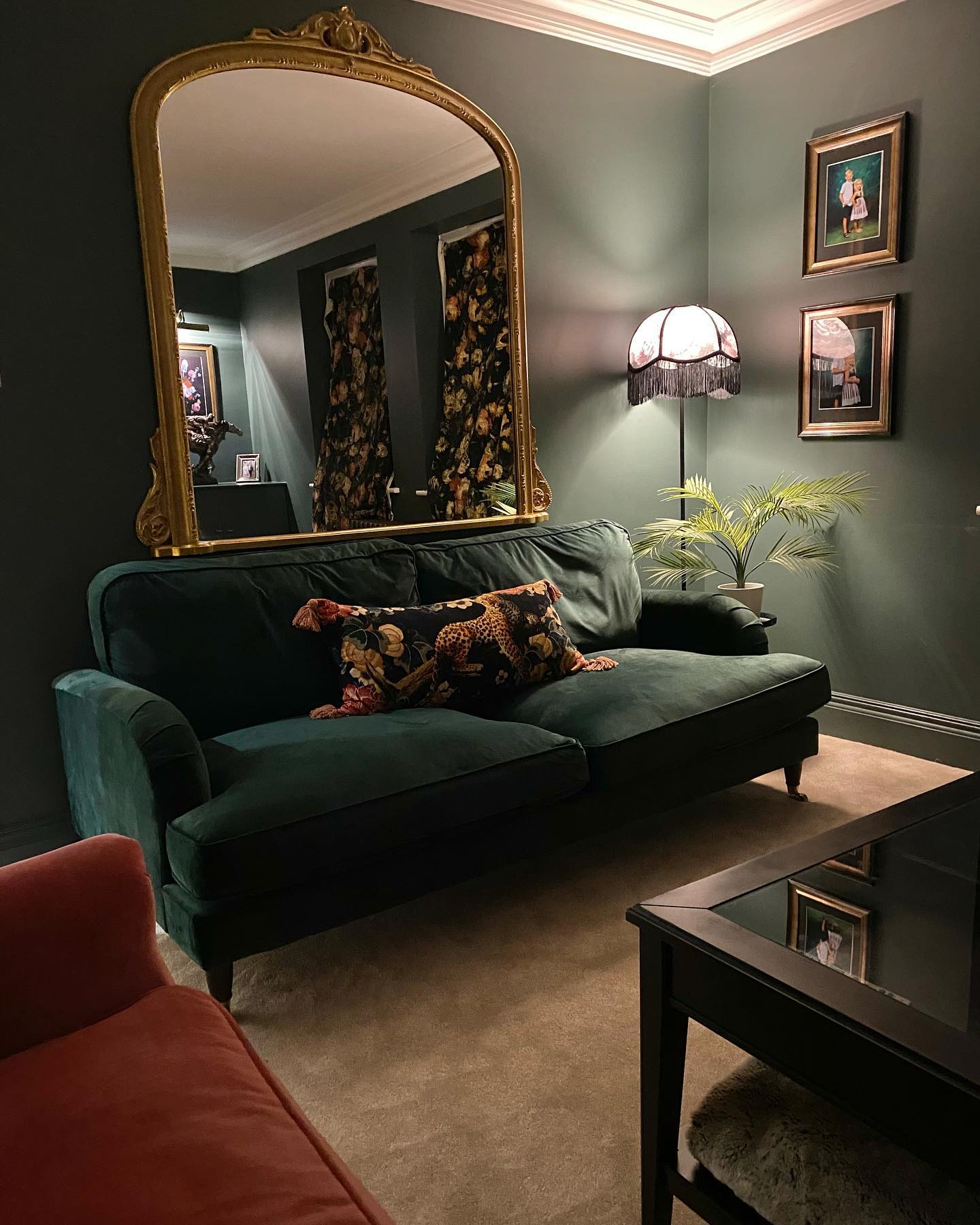
18. Hang an Oversized Mirror Above Green Seating
Credits: Instagram
An oversized arched mirror gives this dark green sofa a dramatic backdrop. Its golden frame outlines a reflection of the opposite wall, where floral patterns add detail without crowding the seating itself.
Consider a large mirror when the wall above your sofa needs one strong focal point. Check its proportions against the furniture and use appropriate mounting hardware for its weight and your wall.
Here, a single patterned pillow echoes the flowers visible in the reflection. Small portraits and a fringed floor lamp continue the decorative mood at one side, while a leafy plant adds a lighter green.
The plain carpet gives the richly colored furniture and ornate frame space to stand out, keeping the compact arrangement easy to read.
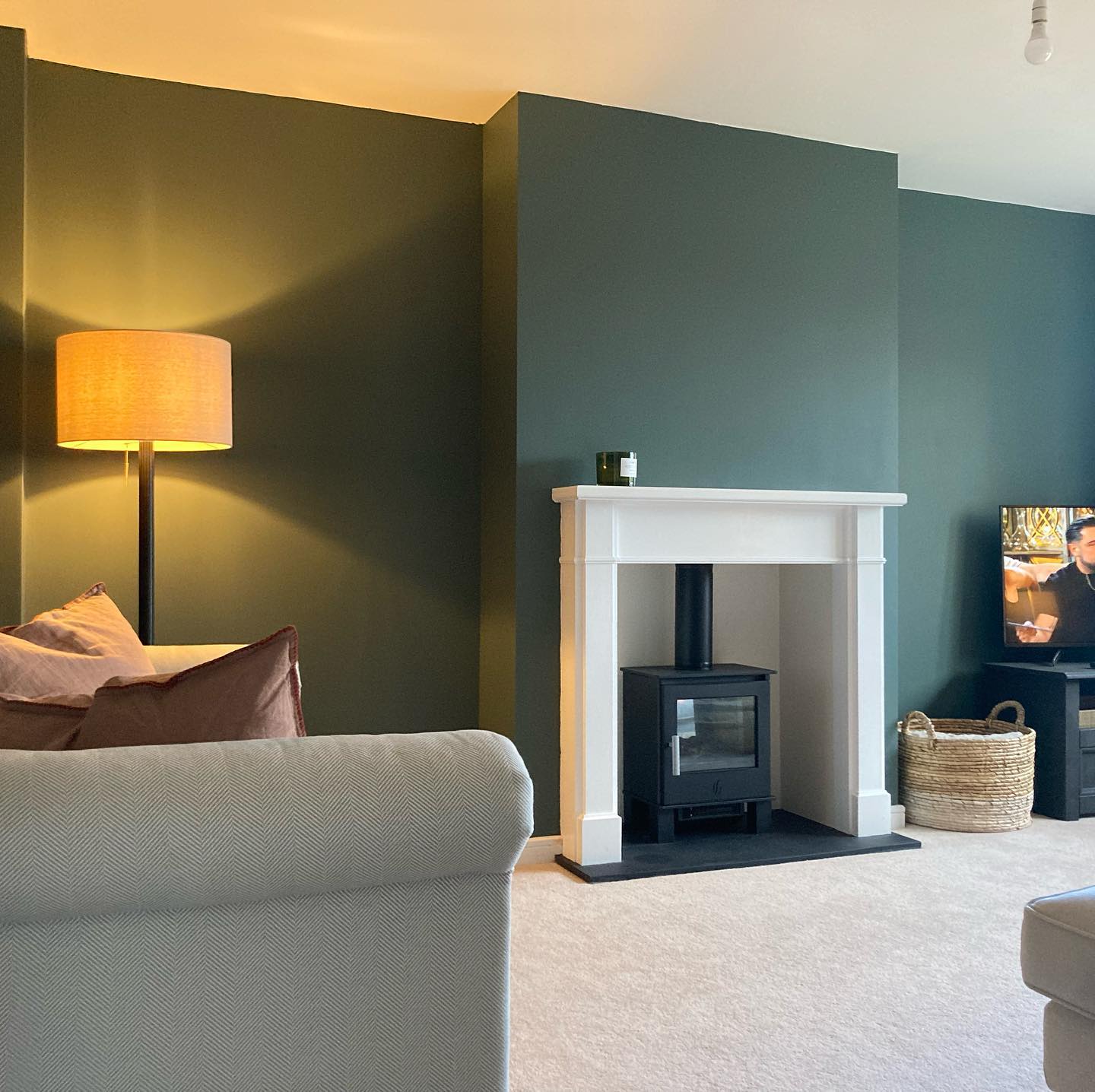
19. See How Green Changes Beside Warm Lighting
Credits: Instagram
The warm floor lamp makes the green wall in this alcove appear more golden than the cooler green above the fireplace. That visible shift is a helpful reminder to test paint where it will actually live.
Place large samples near your seating and on another wall, then look at them in daylight and with your usual lamps switched on. A color you love beside the window may feel quite different in an evening corner.
In this room, the cream seating and carpet provide a consistent light base around the changing green tones. The white fireplace surround draws a clear outline around the black stove.
A woven basket adds texture, while the simple arrangement leaves plenty of painted wall to appreciate.
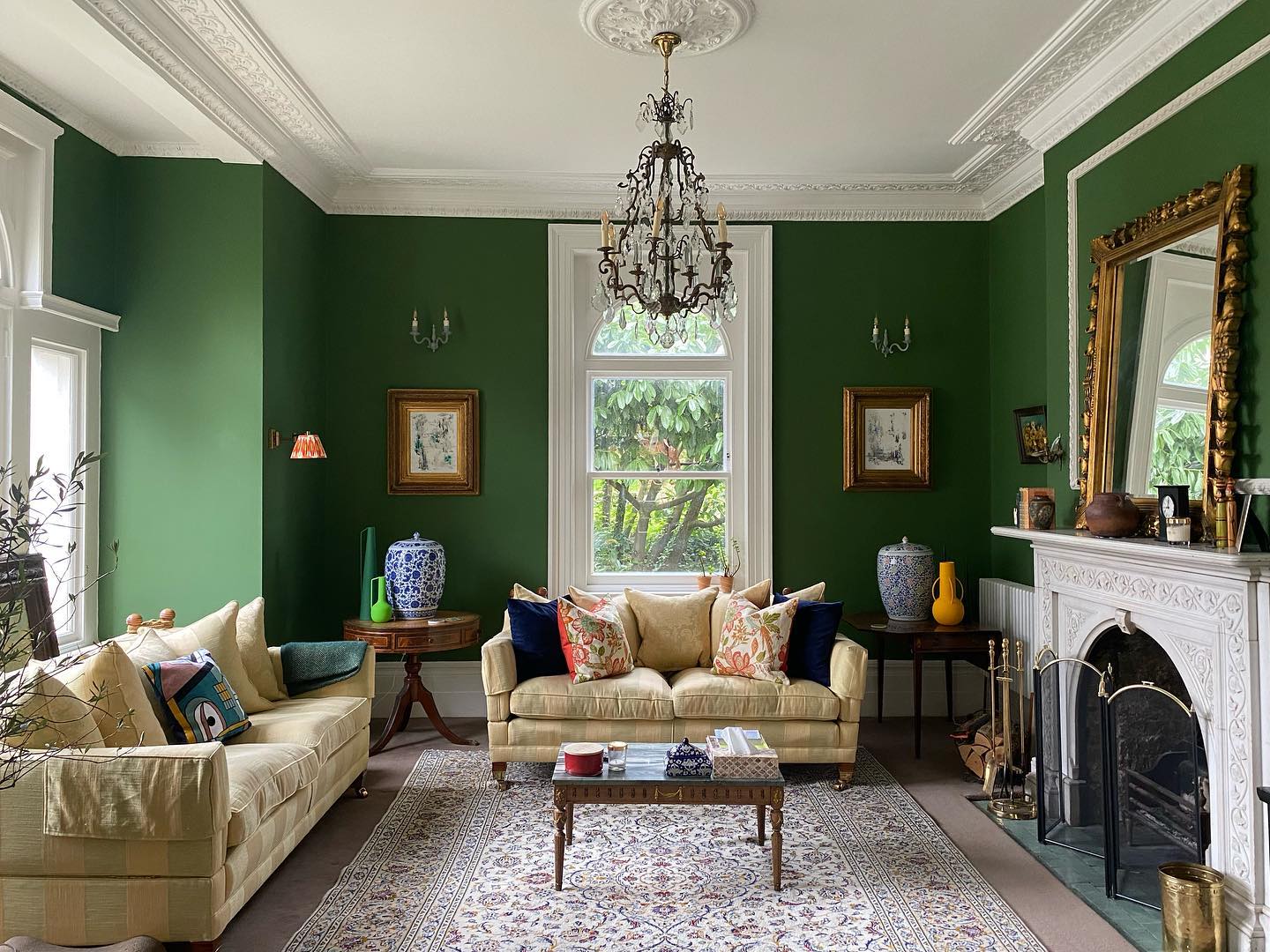
20. Add Playful Vases to a Traditional Green Room
Credits: Instagram
Bright sculptural vases bring a playful note to this traditional green living room. A vivid green vessel and a yellow one sit beside blue and white patterned jars, adding clean shapes among the ornate frames and detailed ceiling trim.
Borrow this combination by introducing one or two colorful accessories to an established classic scheme. Their simpler outlines can keep the room feeling fresh without requiring new furniture.
Here, cream sofas leave the green walls prominent, while dark blue pillows repeat the deeper color in the jars. Floral pillows and a finely patterned rug add softer detail across the seating area.
Keep the new accent pieces separated enough to register individually, and choose colors that remain visible against your particular green.