
A blue room can feel bold or restful depending on where the color lands and what balances it.
These Blue Living Room Ideas show how a navy sofa can anchor white architecture, deep teal can wrap a fireplace wall, and pale blue paneling can soften a traditional space.
You’ll also find ways to warm darker shades with candlelight, woven seating, and cream curtains, plus ideas for adding pattern through botanical prints or checked fabrics.
The examples offer practical starting points for choosing a focal point and building a palette that feels connected.
1. Wrap a Fireplace Wall in Deep Teal Blue
Credits: Instagram
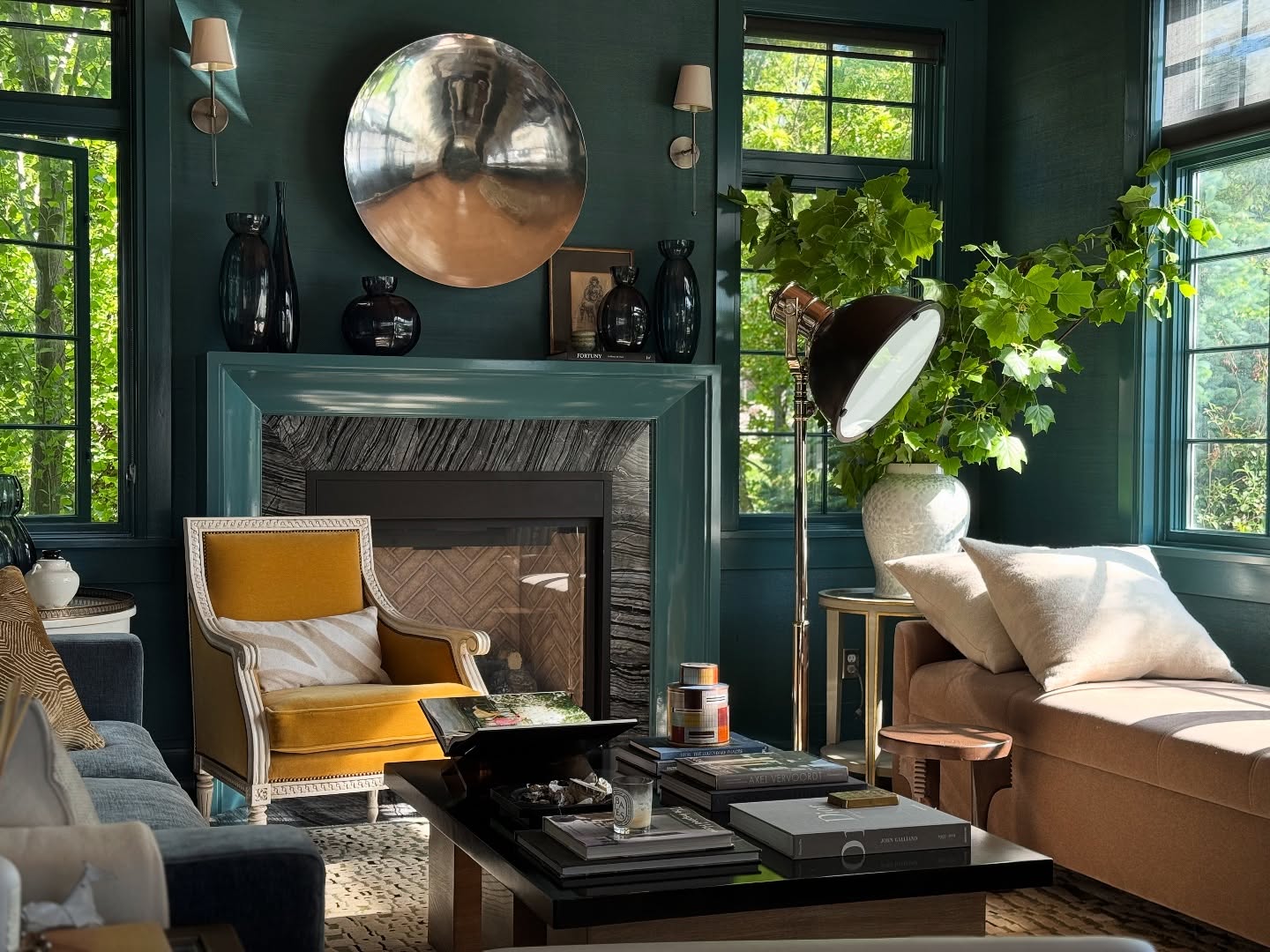
Deep teal blue connects the walls, window frames, and mantel in this layered living room. Keeping those surfaces together lets the black fireplace surround and large round mirror stand out without breaking the room into competing outlines.
The mustard chair, pale cushions, and leafy branches bring brighter notes into the dark setting. Try this approach where windows provide enough daylight to reveal the color's green undertones.
Sample the paint beside your existing upholstery before extending it onto trim. A low rectangular coffee table keeps the seating group grounded, while tall branches draw the eye upward.
Mix reflective accessories with quieter textures so the room retains depth, and give a favorite chair space beside the hearth to become a focal point.
2. Anchor White Architecture with a Navy Sofa
Credits: Instagram
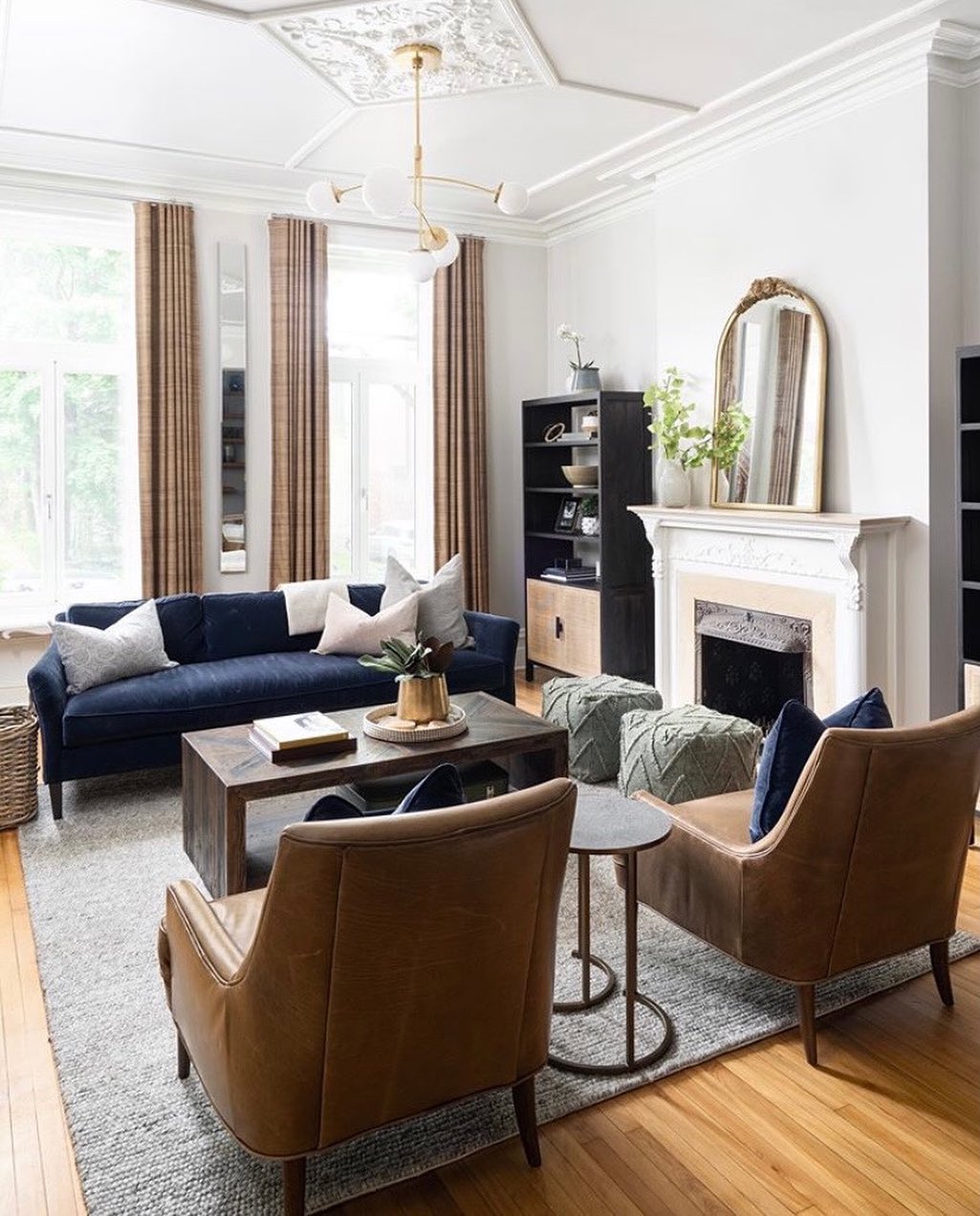
A navy sofa gives this white living room a strong center without hiding its ornate ceiling and fireplace. The dark upholstery is repeated in cushions on the two brown chairs, connecting seats that have different shapes and materials.
Warm wood flooring and long neutral curtains prevent the crisp walls from feeling stark. Start with one substantial blue piece if you want a similar balance.
Choose a rug large enough to gather the sofa, chairs, and coffee table into one arrangement. Smaller upholstered stools can provide flexible seating near the hearth.
Keep the mantel styling restrained when the architecture already has detail, and use a mirror to return light from the windows. The result feels layered while preserving ample breathing room.
3. Match Blue Paneling to a Soft Blue Sofa
Credits: Instagram
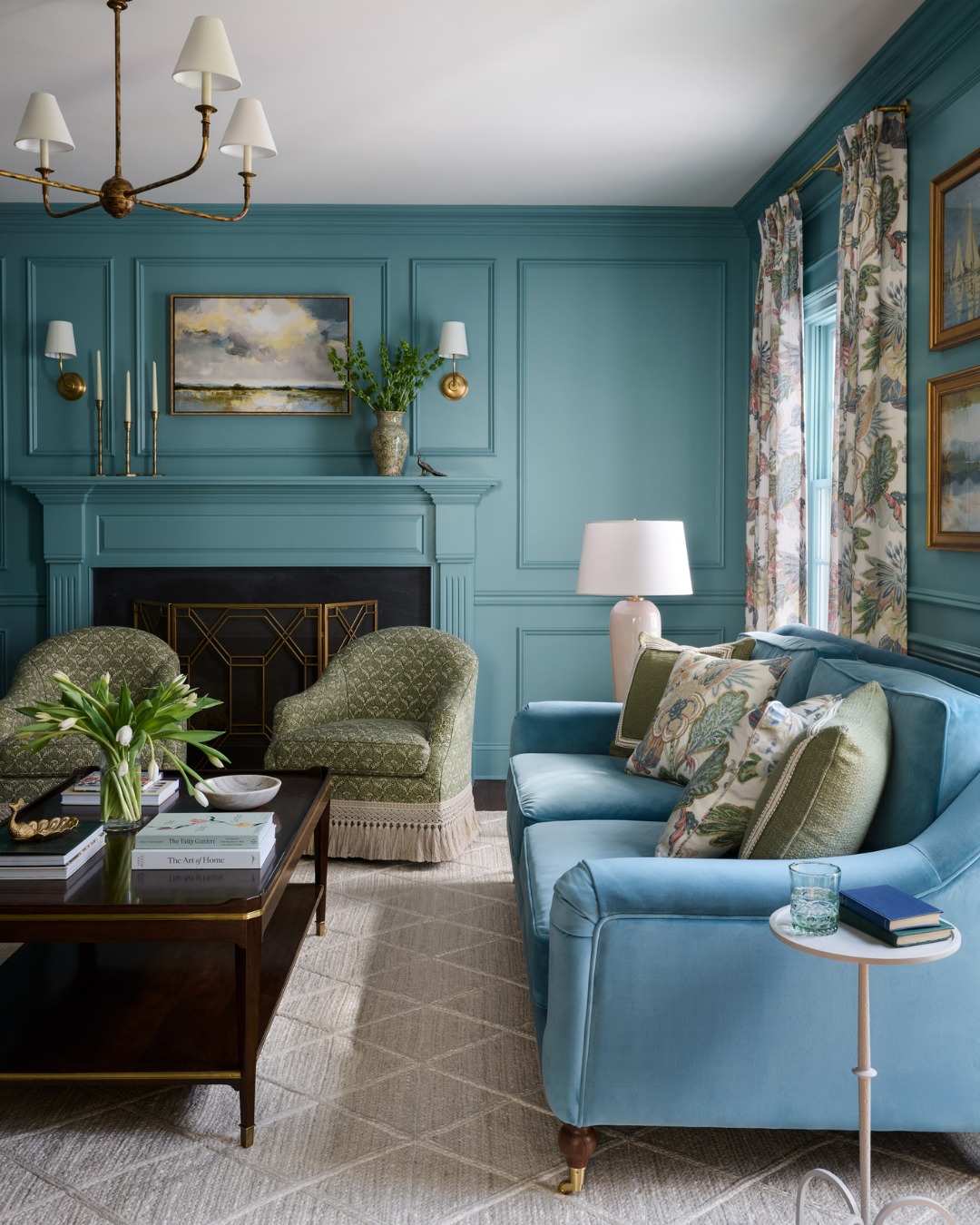
Blue paneling and a closely related sofa shade make this traditional room feel enveloping. The white ceiling supplies a clear boundary overhead, while green patterned chairs and botanical curtains introduce softer variations within the palette.
Brass details on the lighting and fireplace screen add warmth without needing another large color block. When coordinating walls and upholstery, aim for a relationship rather than an exact match.
View both samples in daylight and under the lamps you use at night. Repeating a curtain pattern in a few cushions can tie the room together.
Leave plain pillows between the prints so each remains readable. A neutral rug and dark wooden coffee table give the decorative fabrics a foundation and keep the arrangement comfortable.
4. Give a Navy Accent Wall a Warm Evening Glow
Credits: Instagram
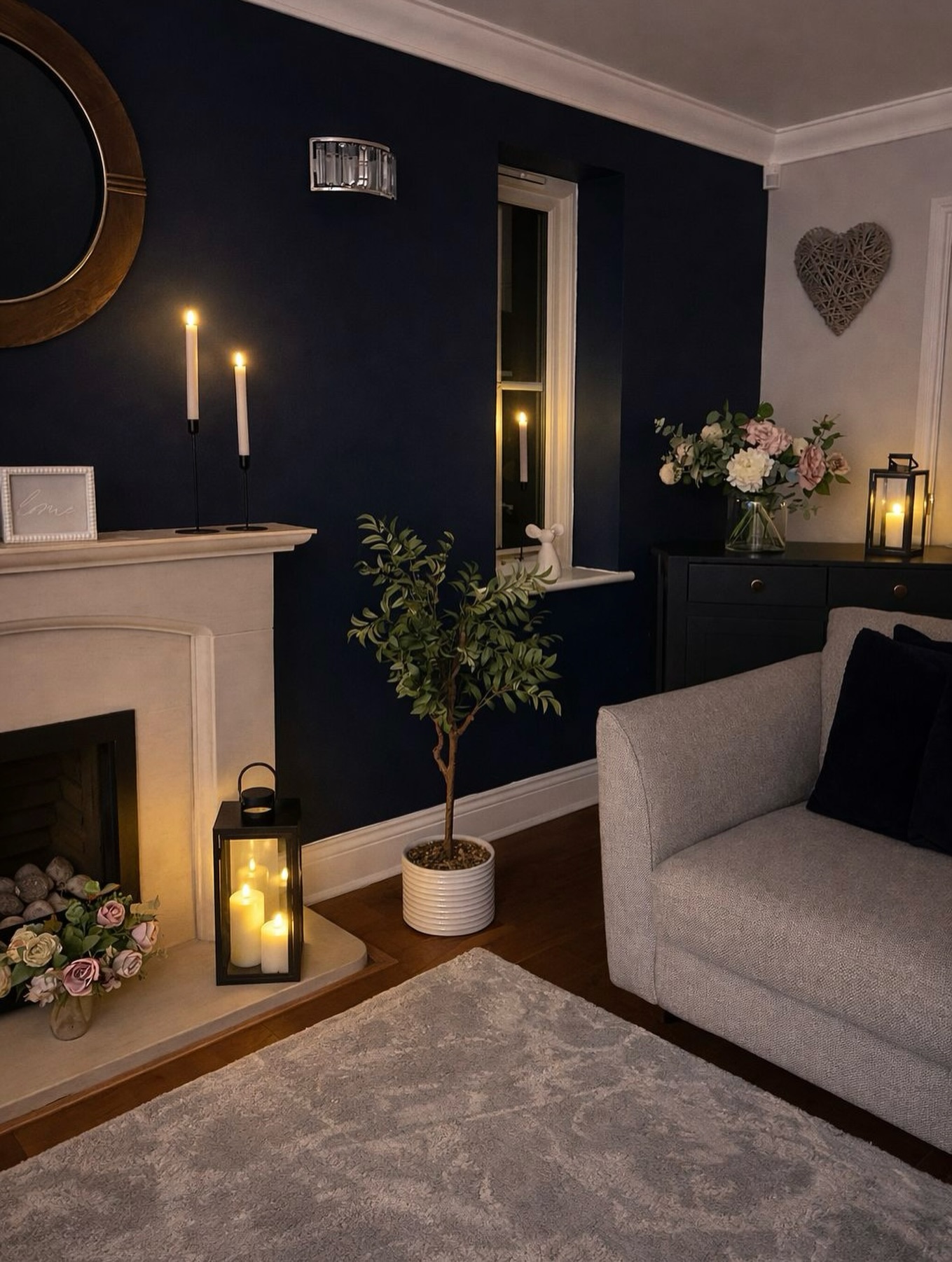
Navy paint makes the pale fireplace and narrow window frame especially clear in this cozy corner. The gray sofa and light rug soften the contrast, while candlelight brings small warm points across the darker wall.
A round mirror supplies a curve among the rectangular architectural details. You can borrow this palette without painting every surface.
Choose the wall that already contains a fireplace or another meaningful focal point, then repeat its blue in a cushion or cabinet. Keep nearby trim lighter if you want the room's outlines to remain visible after sunset.
Layer lighting at different heights rather than relying on one overhead fixture. A plant beside the hearth adds height and an organic shape without crowding the seating area.
5. Carry Navy Across the Ceiling and Cabinetry
Credits: Instagram
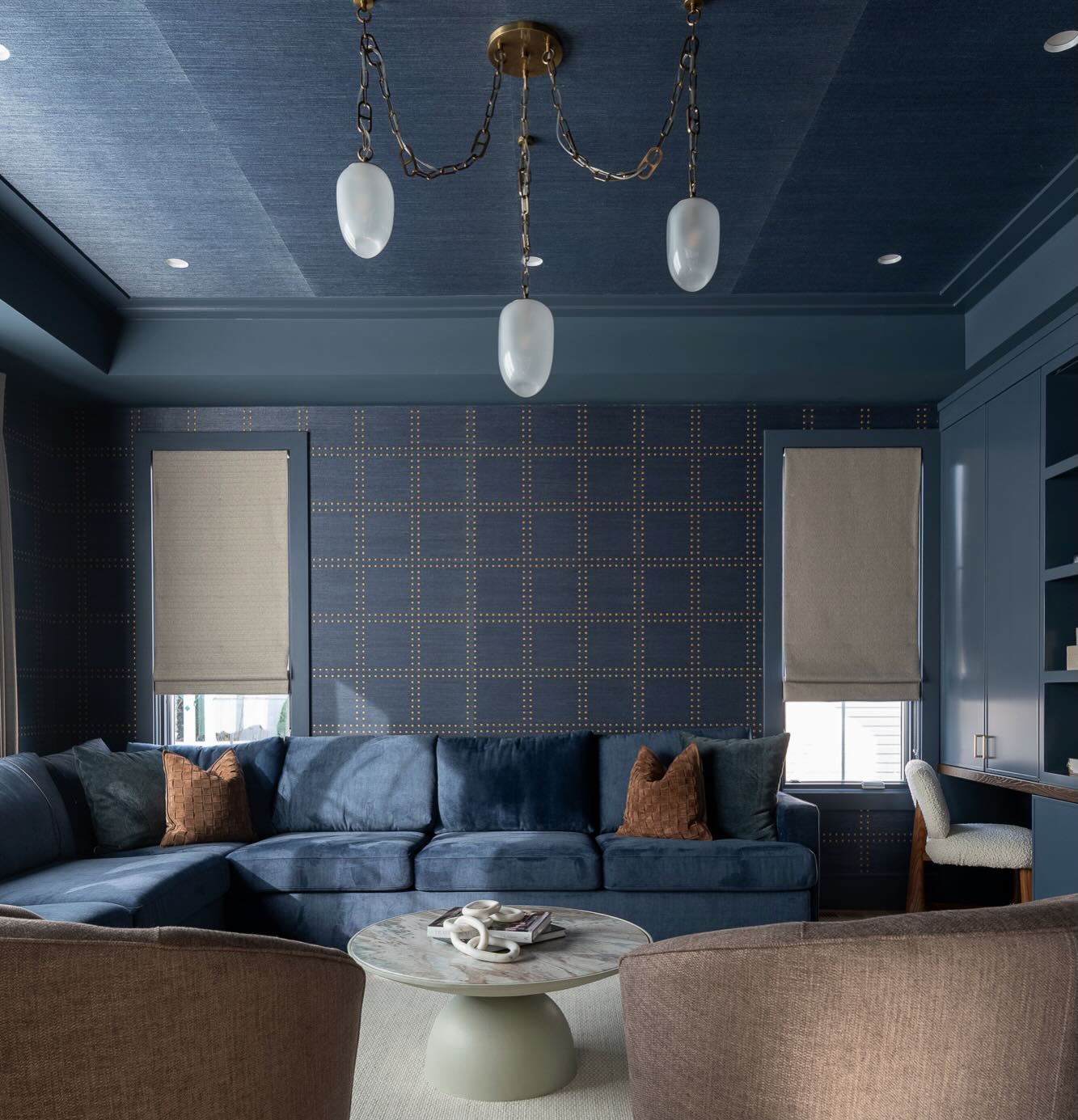
This family room extends navy from the sectional to the cabinets, trim, and textured ceiling panels. The repeated color creates a sheltered feeling, while the dotted wall pattern introduces movement behind the seating.
Brown cushions and chairs warm the scheme, and pale window shades provide relief on either side. A light round coffee table breaks up the room's substantial upholstered shapes.
If you want a similarly immersive palette, vary the surfaces and their finishes. Combine smooth painted wood with woven wallpaper or fabric so the blue does not flatten into one block.
Choose lighting with a lighter element that remains visible against the ceiling. Leave the table simply styled to preserve a useful landing place within the close conversation group.
6. Let a Royal Blue Sofa Lead a Playful Palette
Credits: Instagram
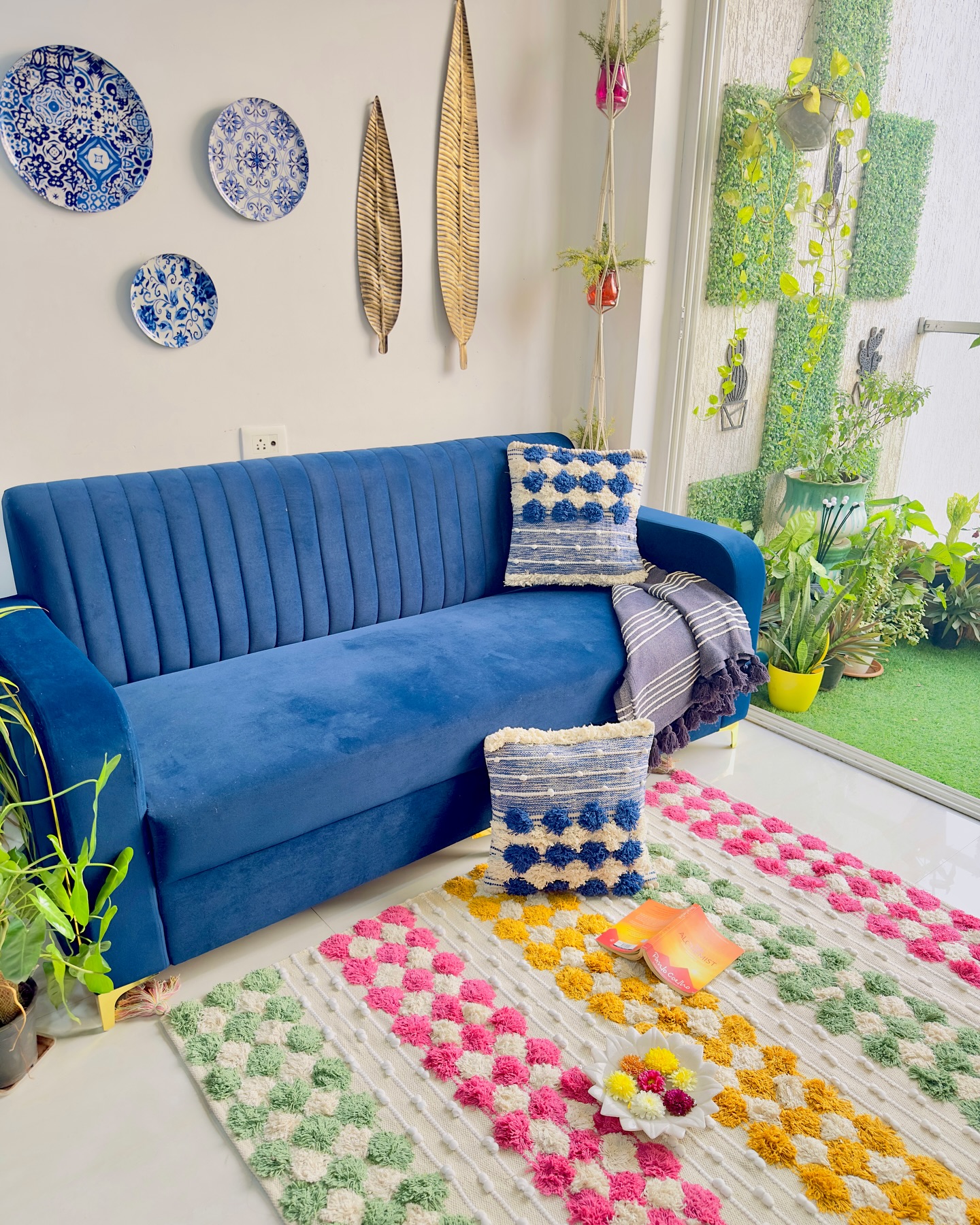
A royal blue sofa gives this bright room its strongest color, while the multicolored rug spreads smaller accents across the floor.
Blue and white plates repeat the upholstery higher on the wall, making the sofa feel connected to the whole corner. Plants beside the balcony add another layer without competing with the textiles.
This works well when you want color in a room with pale walls and flooring. Pick one furniture shade, then let a patterned rug introduce supporting colors in smaller doses.
Textured cushions can repeat the main blue while changing its scale and finish. Keep the wall arrangement compact above the sofa, and leave the route to the balcony clear so the cheerful corner stays easy to use.
7. Pair a Blue Sofa with Botanical Prints
Credits: Instagram
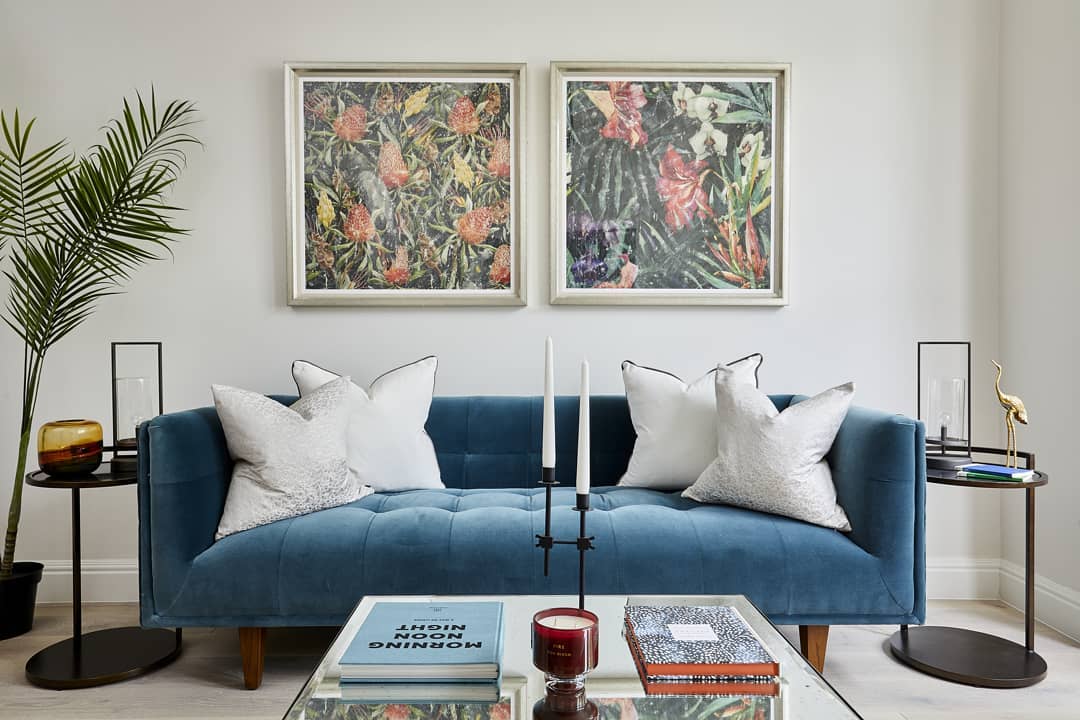
Two botanical pictures frame the blue sofa as the focus of this pale living room. Their dark leafy backgrounds relate to the upholstery, while warmer flowers introduce gentle contrast.
Matching round side tables give the arrangement balance without making every accessory identical. A glass coffee table preserves a sense of space in front of the seating.
To adapt this idea, choose artwork that includes both your sofa color and a few tones you would like to add later. Hang the pictures as one composition, with a consistent gap and height.
Plain light cushions keep the sofa from looking visually heavy beneath the detailed prints. A plant at one end adds movement and echoes the artwork without requiring another busy pattern.
8. Build a Blue Seating Nook Beside Stone
Credits: Instagram
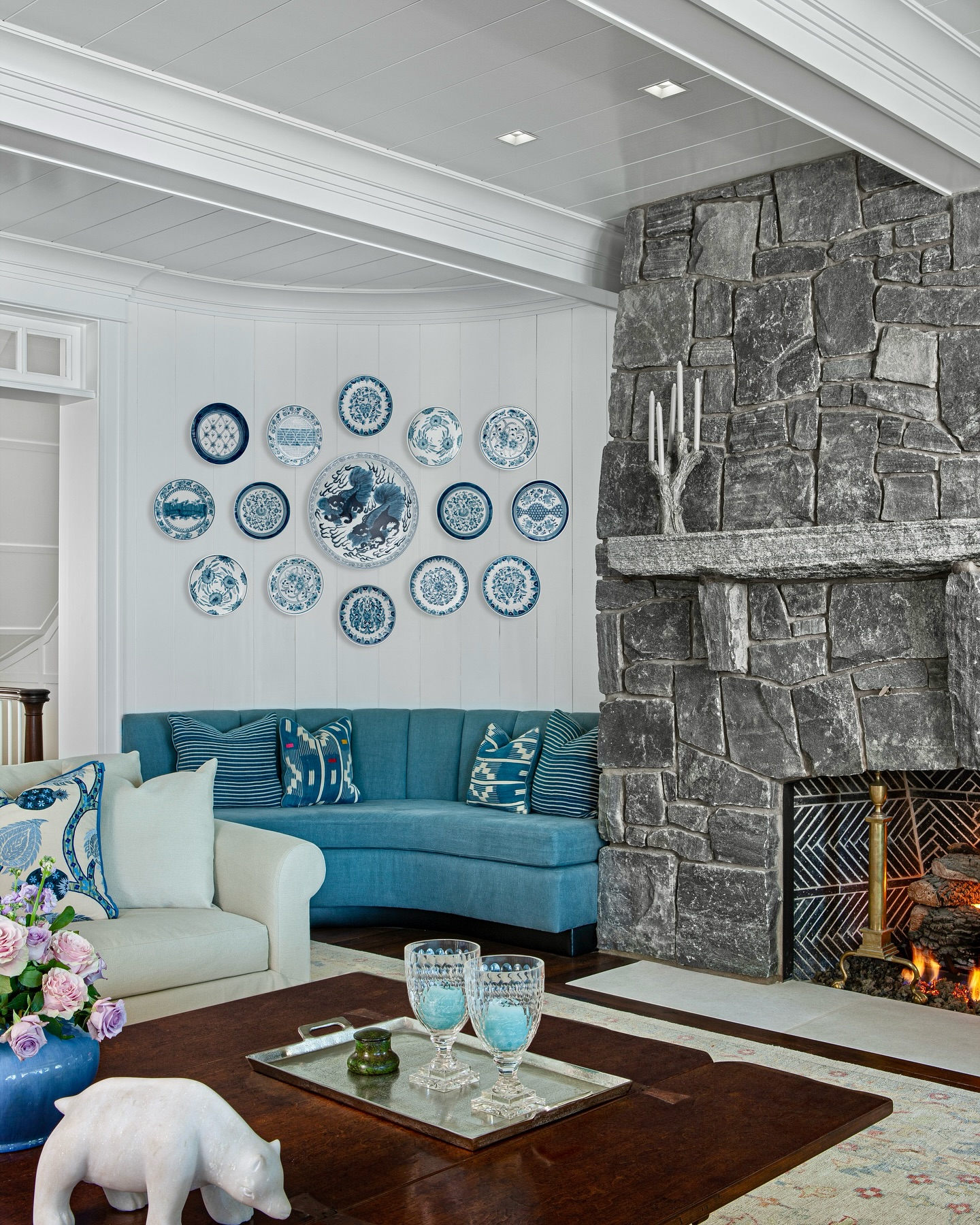
The curved blue banquette turns a corner beside the stone fireplace into a welcoming seat. A collection of blue and white plates carries the palette across the white paneled wall, giving the nook character without filling it with furniture.
Striped and patterned cushions make the single upholstery color feel varied. The fireplace's rough surface provides useful contrast to the smoother seating.
When borrowing this idea, measure the corner and consider how people will approach and leave the bench. Group wall pieces around a larger central plate to make the display feel intentional.
A pale chair and dark wooden table can bridge the blue upholstery and gray stone. Keep accessories low enough that the seating remains visually connected to the hearth.
9. Soften Navy Walls with Woven Seating
Credits: Instagram
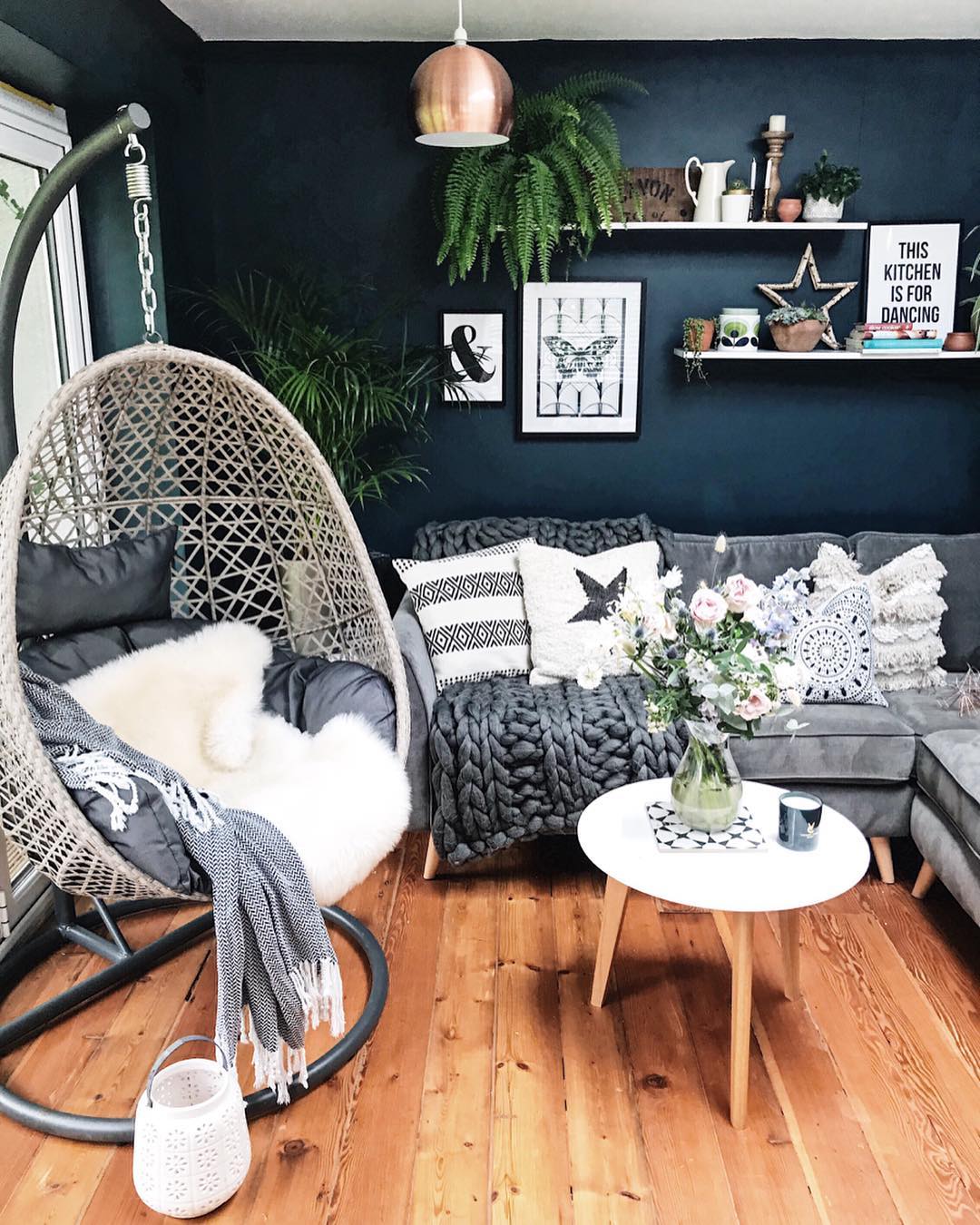
A woven hanging chair brings an airy outline to this room with deep blue walls. The gray sectional, chunky throw, and pale patterned cushions create a comfortable layer below shelves filled with plants and small objects.
Warm floorboards and the copper colored pendant stop the cool palette from feeling chilly. For a similar effect, introduce an open woven shape beside a substantial sofa.
Check the chair's full footprint and movement before placing it near a walkway. Repeat white in the table, cushions, and shelf edges to give the dark wall clear points of contrast.
Keep greenery at different heights, including one trailing plant. A small round table leaves more maneuvering space between the seats while providing a place for flowers.
10. Frame Blue Walls with Long Cream Curtains
Credits: Instagram
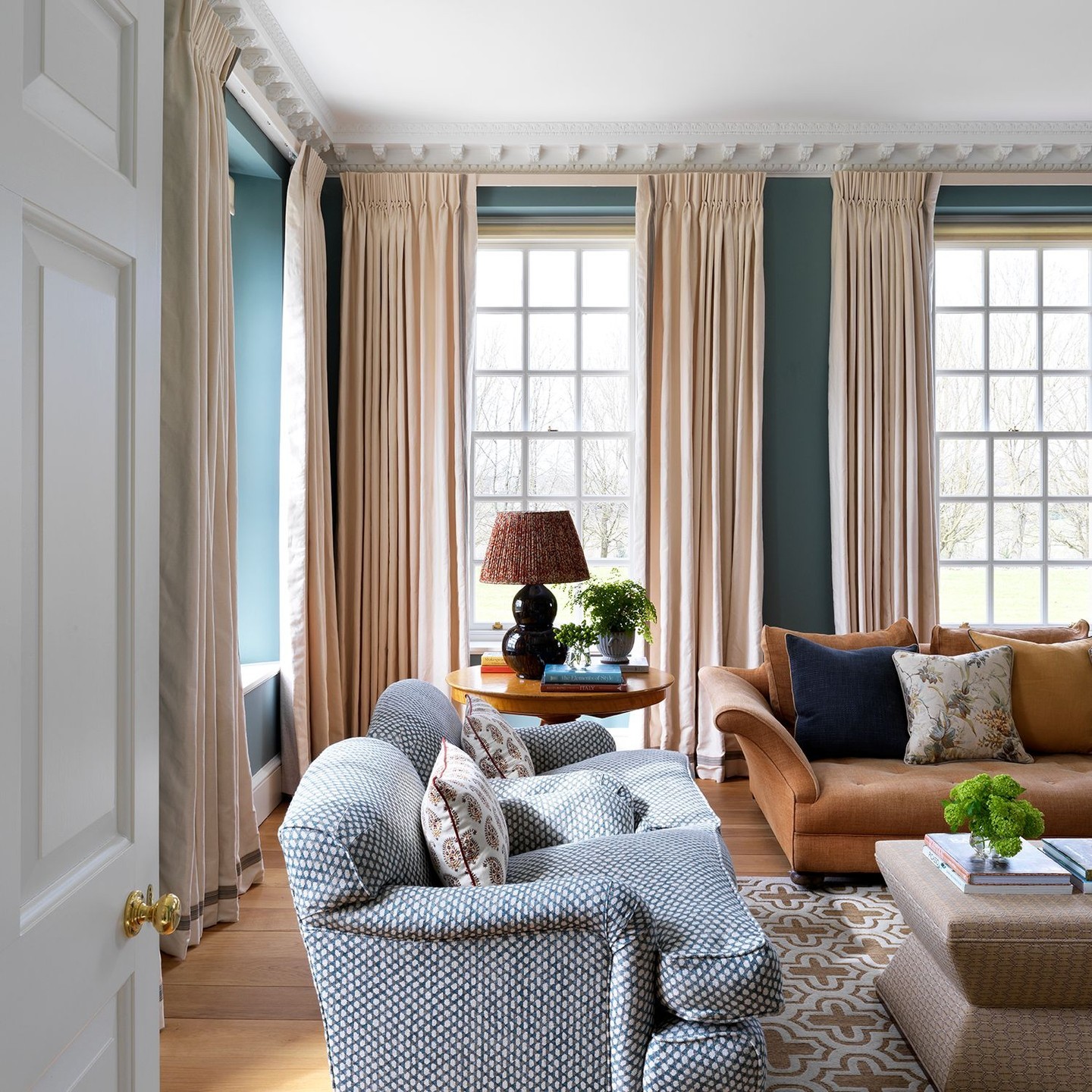
Cream curtains soften the blue walls of this tall sitting room and emphasize its generous windows. Patterned blue armchairs repeat the wall color at smaller scale, while the caramel sofa brings a different tone into the seating group.
The pale ceiling and detailed cornice keep the upper room bright. If your windows are similarly prominent, let the curtains form long uninterrupted lines and choose their color alongside your paint sample.
A subtle pattern on the chairs adds interest without making the whole room busy. Pull one deeper blue into a sofa cushion to connect the different seats.
An upholstered ottoman can take the place of a harder coffee table, adding another soft surface while supporting a tray for everyday essentials.
11. Keep a Powder Blue Wall Calm and Uncluttered
Credits: Instagram
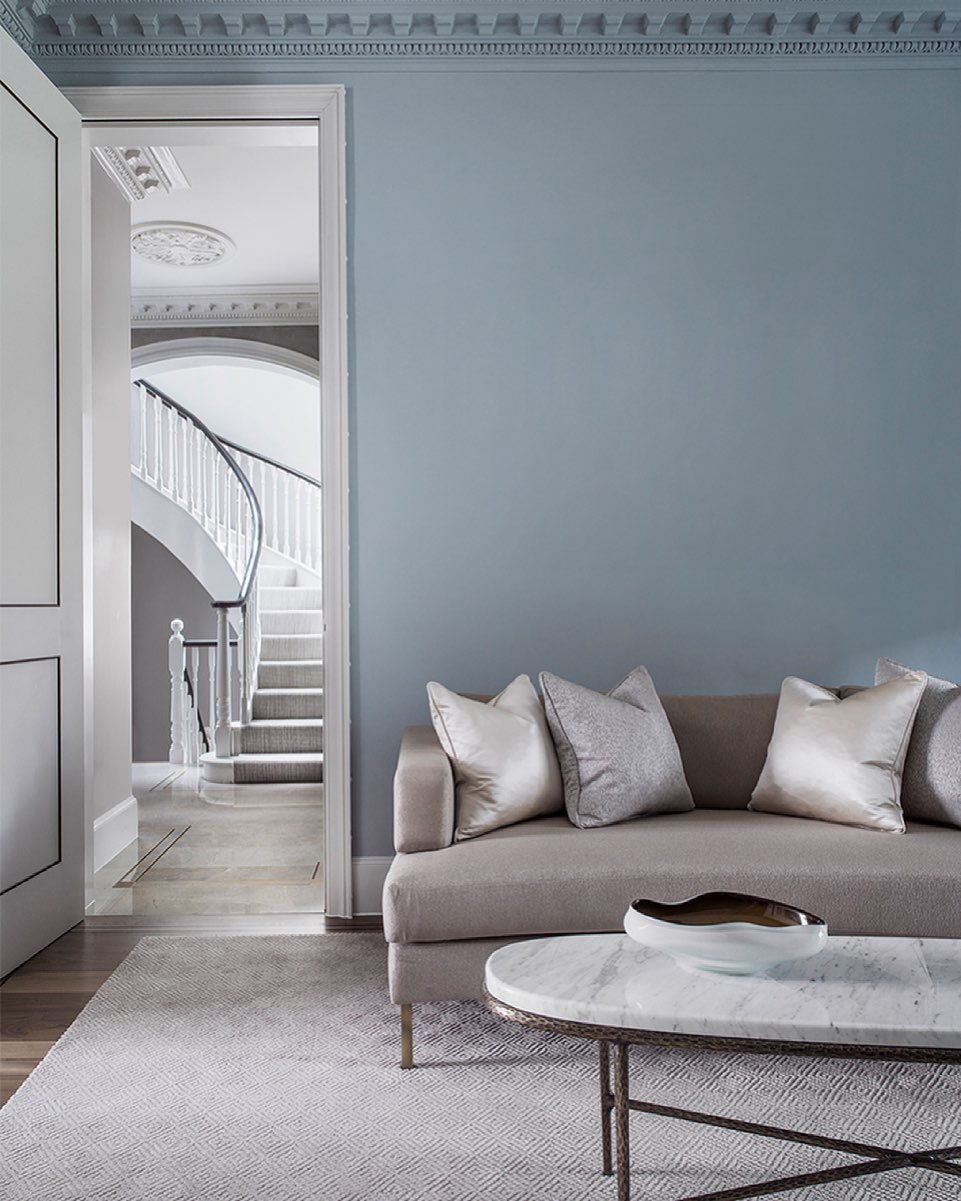
A powder blue wall sets a quiet tone behind this simple taupe sofa. Painting the ornate cornice in the same shade emphasizes its relief through light and shadow instead of sharp contrast.
White doorway trim leads the eye toward the curved staircase beyond. The pale rug, rounded marble table, and softly reflective cushions keep the sitting area composed.
Consider this approach when you want a blue room with very little visual clutter. Let one wall remain largely open so the color itself becomes part of the decoration.
Choose a sofa with a restrained silhouette and leave a visible margin around it. A low bowl is enough for the table, preserving the clean lines and the view into the neighboring space.
12. Use Pale Blue Paneling with Blush Seating
Credits: Instagram
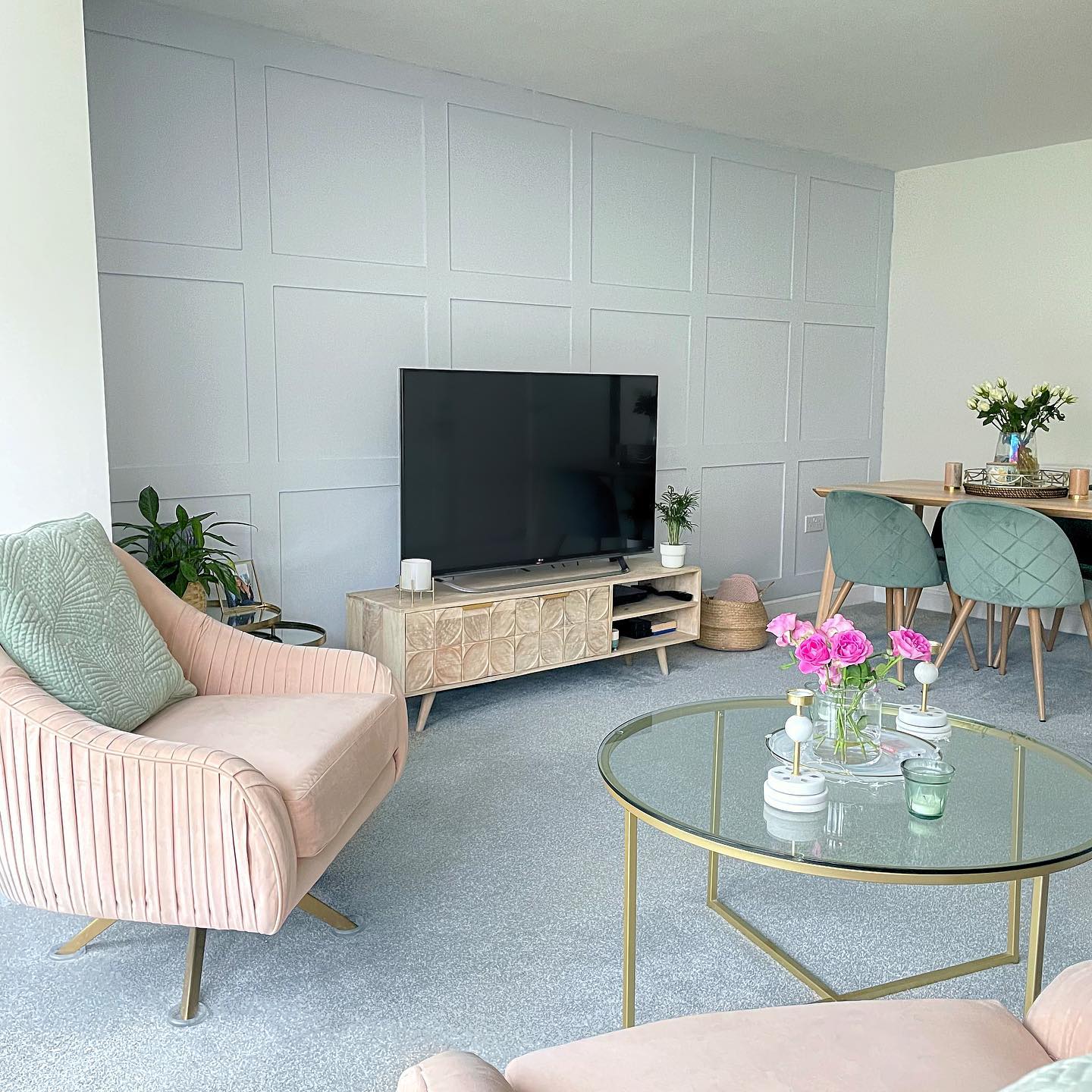
Pale blue gray paneling adds depth behind the television without overwhelming this pastel living room. Blush seating softens the straight wall divisions, while mint cushions and dining chairs link the sitting area to the adjacent table.
A round glass coffee table keeps the carpet visible beneath it and gives the arrangement a lighter center. Before adding decorative molding, mark its layout on the wall and check how it relates to the television and console.
Paint the panels and background together for a subtle effect. Repeat just a few pastel tones across the furniture so the room feels connected.
Warm metallic details and natural wood bring contrast through finish, allowing the colors to remain the main feature throughout the open space.
13. Combine Blue Shelves with Checks and White Pottery
Credits: Instagram
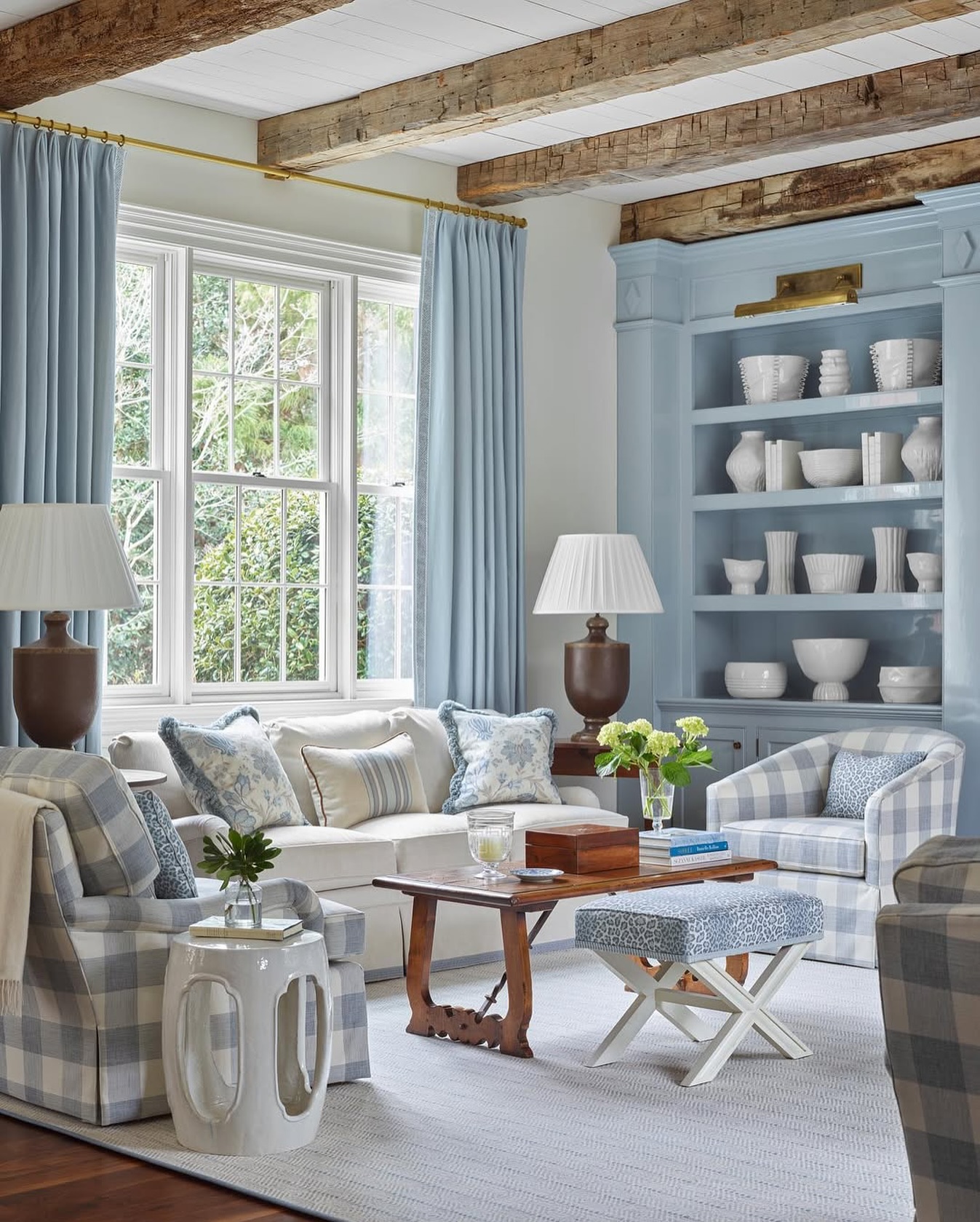
Pale blue shelving gives the white pottery a clear backdrop in this family room. Matching curtains carry the color toward the window, while checked chairs and patterned cushions introduce several scales of blue and white.
Exposed wooden beams, brown lamps, and the coffee table provide warmth among the cool fabrics. To create a similar display, group ceramics by shape and leave gaps between them.
Their shared color will make different sizes feel related. Choose one large textile pattern, such as the checks here, then balance it with smaller prints and plain upholstery.
A pale rug ties the seating together without obscuring the wood flooring around its edges. Keep useful tables beside the chairs so the decorative arrangement supports family gatherings.
14. Set Blue Patterned Chairs Against Natural Texture
Credits: Instagram
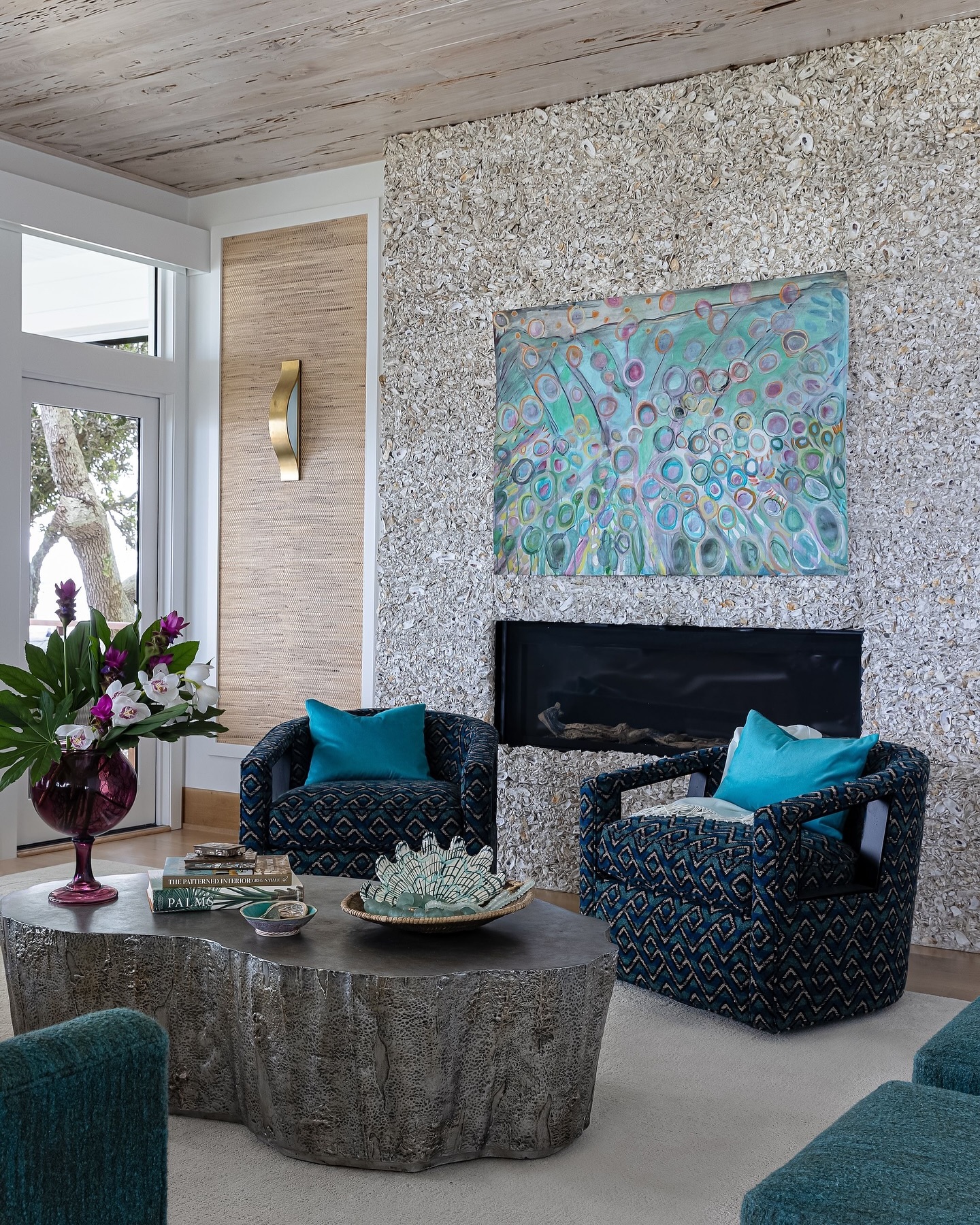
Dark blue patterned chairs and bright turquoise cushions give this coastal room a focal point near the fireplace. The surrounding shell surface, woven wall panels, and weathered looking ceiling bring texture into the neutral background.
An abstract painting echoes the upholstery while adding softer blues and smaller touches of pink. This is a useful approach when you want blue furnishings to feel integrated with natural materials.
Choose patterns that remain readable beside a textured wall, and use plain cushions to give the eye a resting place. A low sculptural coffee table reinforces the organic shapes without copying the chairs.
Repeat the cooler colors in one artwork, then let wood, metal, and woven accents provide warmth through their surfaces and finishes.
15. Make a Blue Media Cabinet the Main Accent
Credits: Instagram
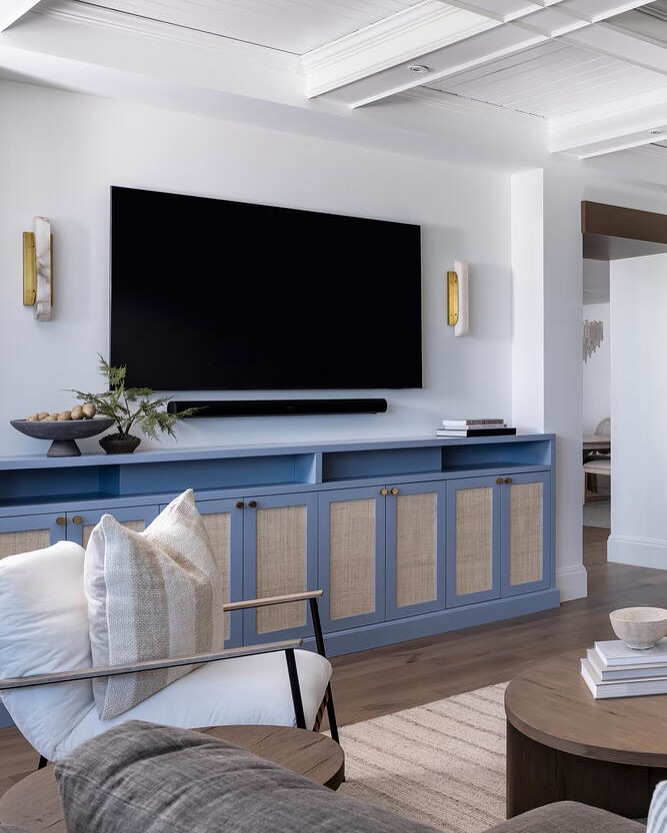
A long blue media cabinet introduces color across this white living room without requiring a painted feature wall. Woven door panels soften the cabinetry and connect it to the pale rug, timber floor, and relaxed seating.
Small brass colored handles and matching wall lights add a warmer finish around the black television. This idea works especially well when your room needs both storage and a clear focal point.
Size the cabinet to feel substantial beneath the screen, leaving enough surface for practical objects. Keep open compartments tidy so they do not compete with the woven fronts.
Repeat blue sparingly elsewhere, perhaps in a cushion, while allowing white upholstery and natural textures to maintain the room's bright atmosphere throughout the day.
16. Choose a Blue Swing as a Statement Seat
Credits: Instagram
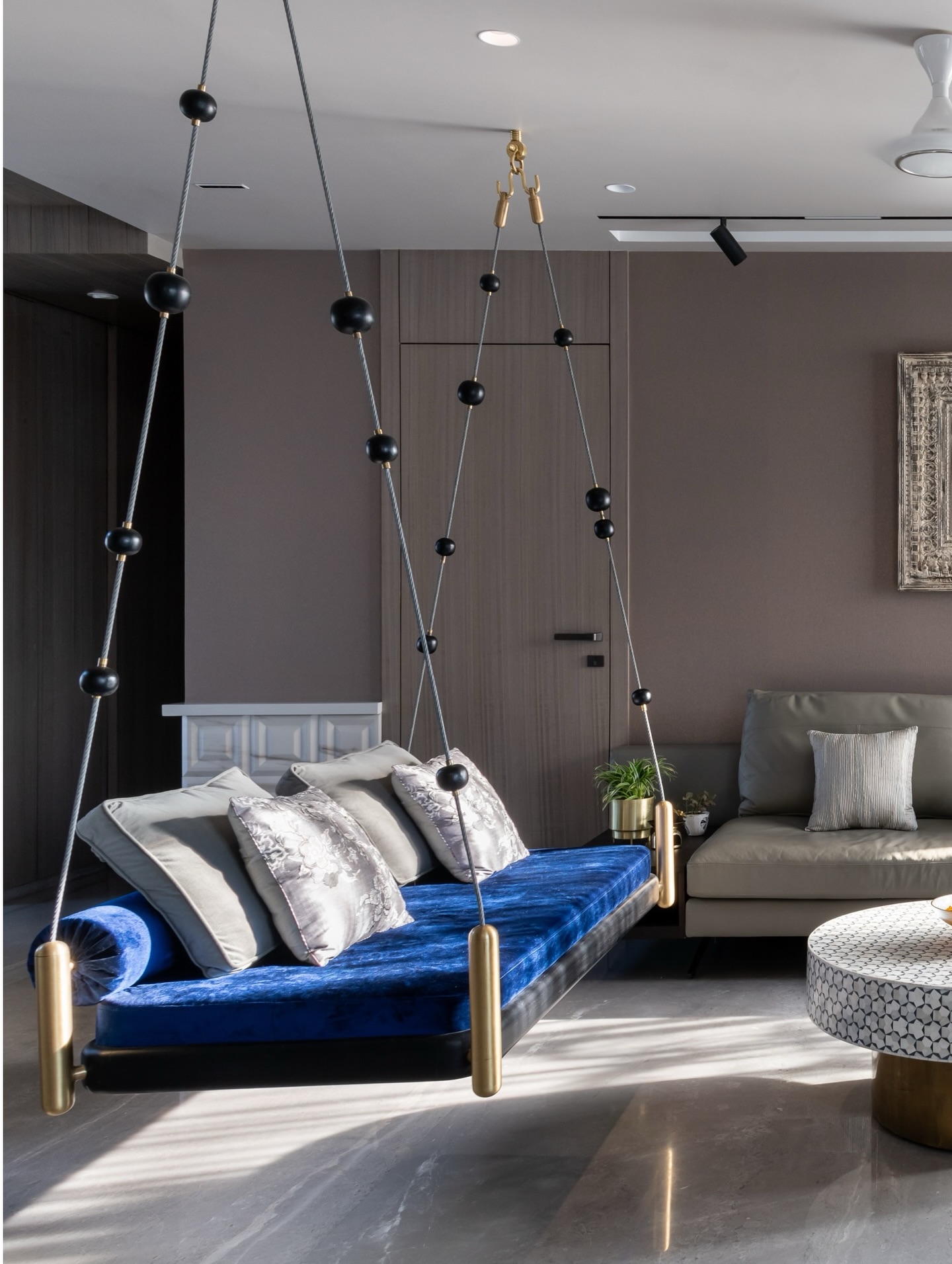
A blue upholstered swing supplies the main burst of color in this otherwise neutral living room.
Its slim suspension cables and gold colored details make the seat feel lighter than a conventional sofa, while pale cushions connect it to the surrounding furniture.
Daylight reveals the upholstery's changing texture across the cushion. If this idea suits your home, plan the structure and clearance before choosing the fabric.
A qualified installer should assess the supporting ceiling and specify hardware. Leave enough room for movement on every side and keep nearby tables beyond the swing's path.
The palette can remain simple: blue for the special seat, warm gray for the background, and a few metallic accents to repeat the suspension details with restraint.
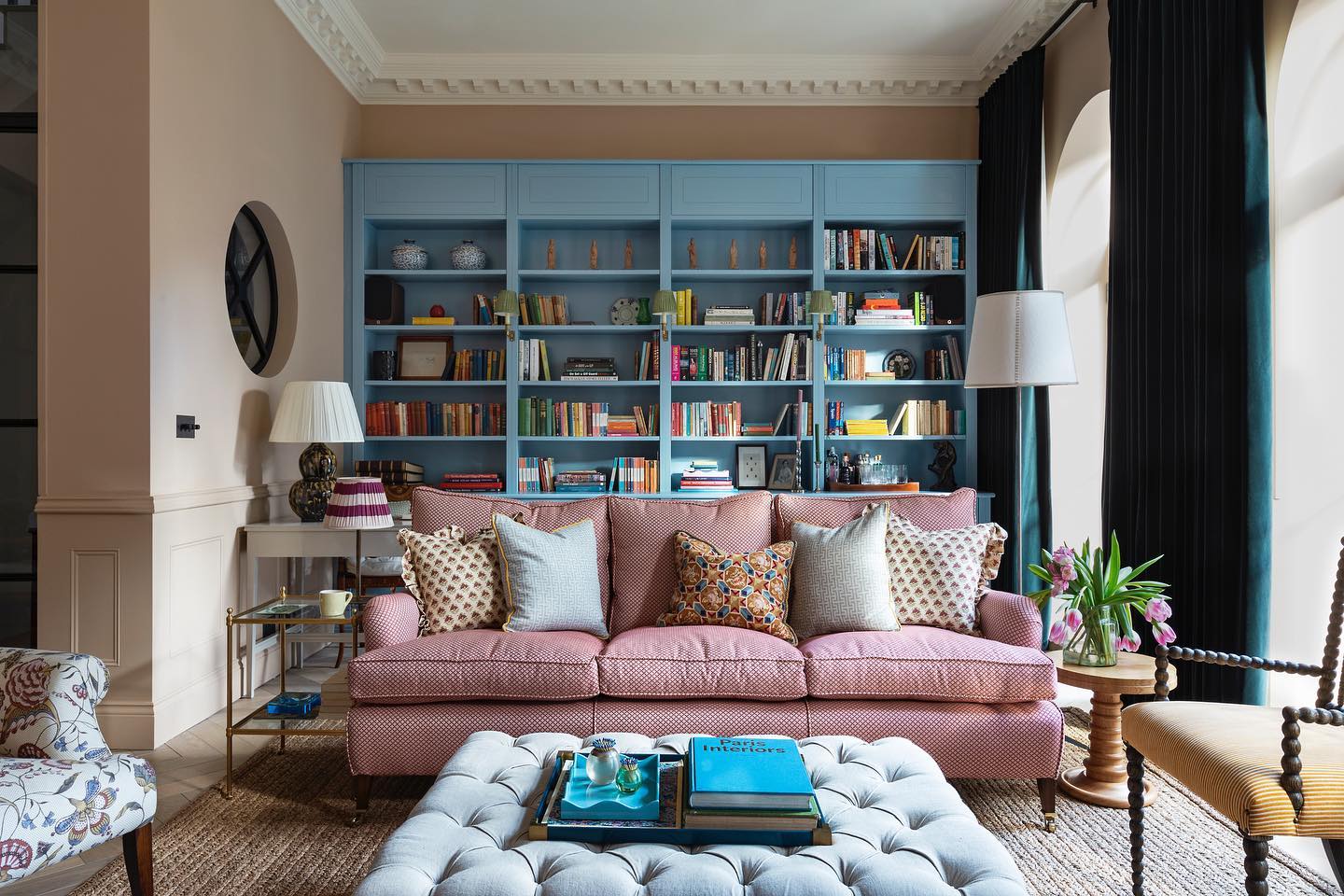
17. Turn Blue Bookcases into a Living Room Backdrop
Credits: Instagram
Blue bookcases make a background for the pink sofa in this layered sitting room. The pale blue tufted ottoman brings the same family of color forward, while deeper curtains frame the window at the side.
Books and small objects create variety within the shelving's grid. You can borrow this arrangement by selecting a blue that works with both your upholstery and the daylight in the room.
Carry it onto the shelf backs for a unified finish. Mix upright books with occasional horizontal stacks, leaving space for pieces you use or enjoy.
A tray makes the upholstered ottoman more practical for drinks. Repeat blue in just a few cushions so the sofa and shelving feel connected without becoming a matching set.
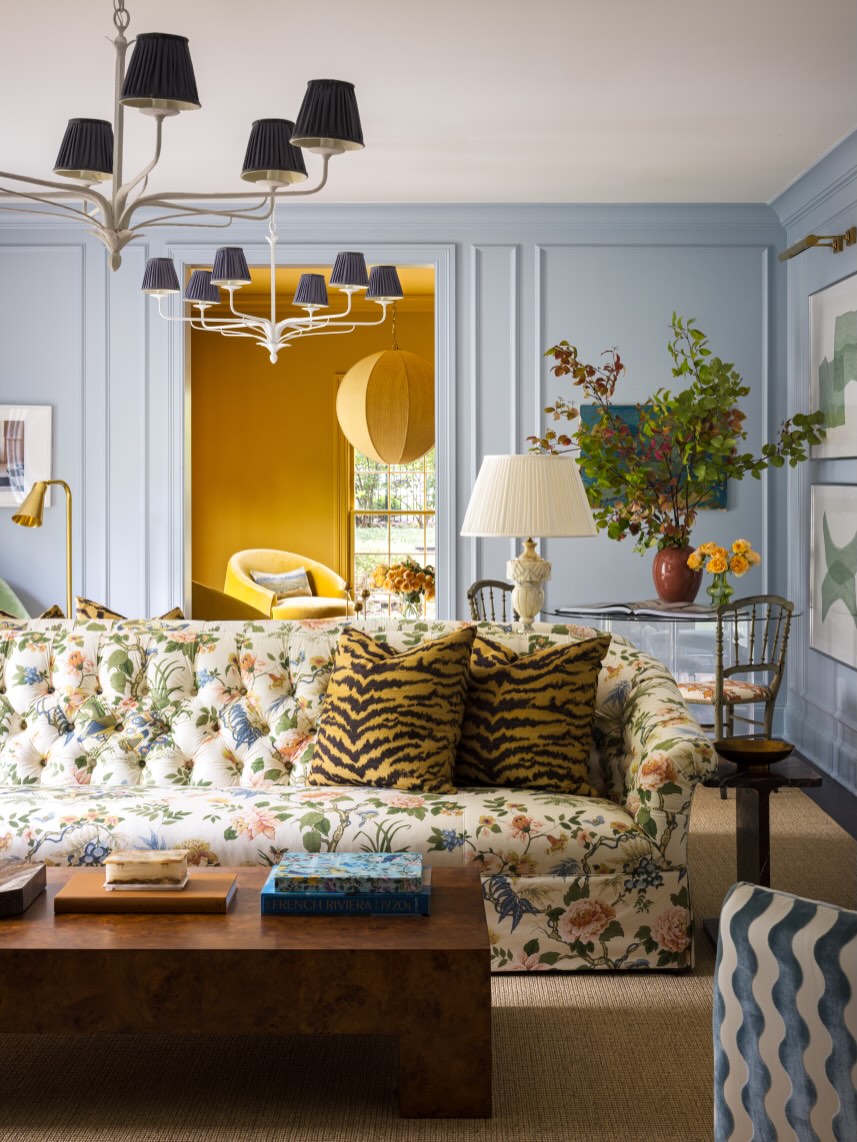
18. Use Soft Blue Walls Behind a Floral Sofa
Credits: Instagram
Soft blue paneled walls give this floral sofa a setting. The upholstery carries many colors, but the wall shade allows those details to remain distinct.
Dark patterned cushions add a stronger note, while the neighboring yellow room brings warmth through the doorway. A wooden coffee table and woven floor covering keep the arrangement grounded.
When working with a lively floral fabric, pull a quieter color from its pattern for the walls. Test it beside the sofa in several parts of the room before committing.
Keep the ceiling lighter if you want to preserve a clear sense of height. Repeating blue in a smaller chair or book stack can connect the seating without adding another area of the same busy print.
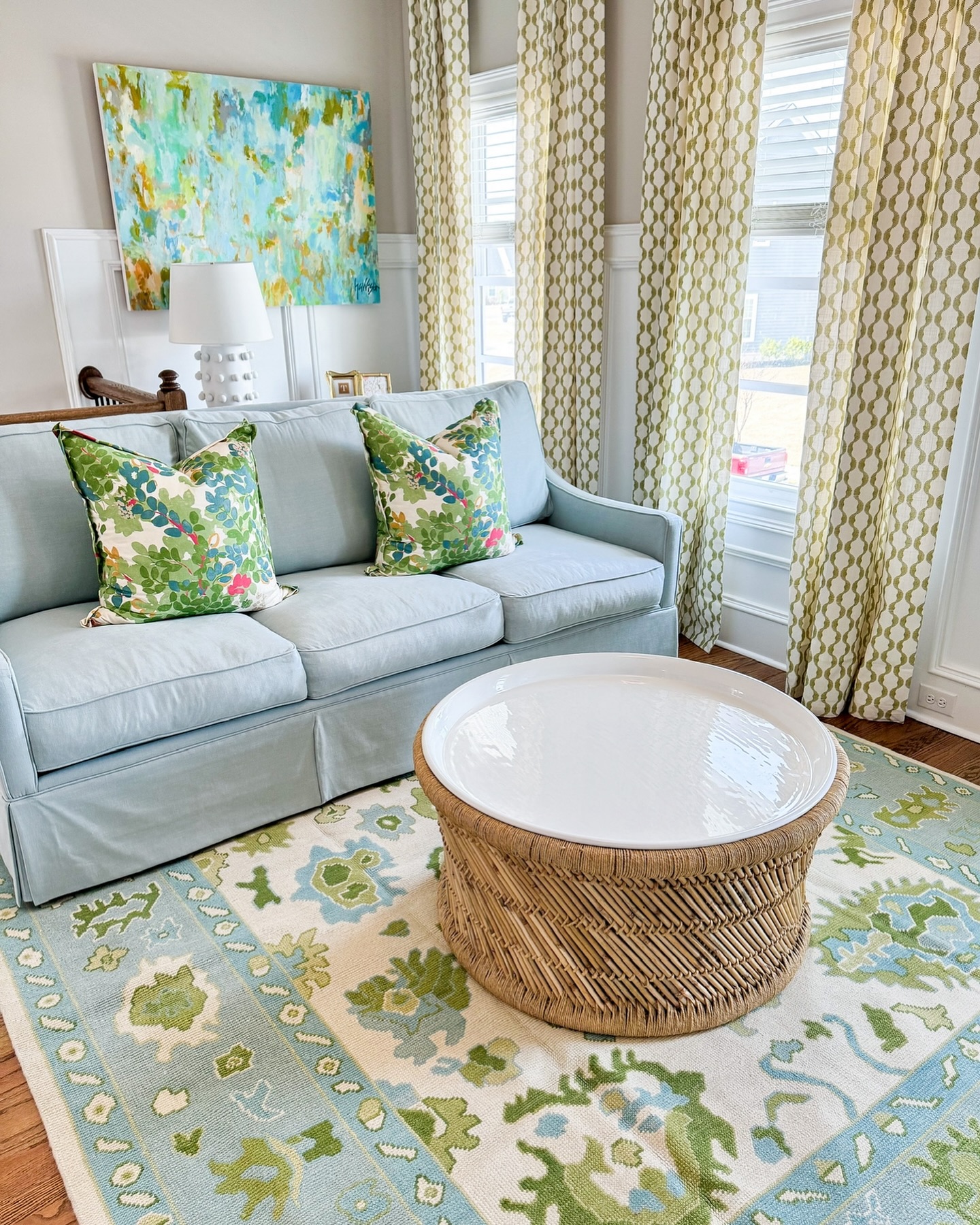
19. Refresh a Pale Blue Sofa with Green Prints
Credits: Instagram
A pale blue sofa sits among green patterned curtains, floral cushions, and a rug that brings both colors together. The abstract artwork repeats the palette in looser marks, giving the room a different kind of pattern above the seating.
A woven round coffee table adds warmth and a natural texture at the center. To borrow this combination, let the sofa remain mostly plain and place the strongest prints around it.
Vary their scale so the curtains, pillows, and rug do not compete equally. White trim and the table's pale top provide useful pauses between patterns.
Choose one natural material, such as wicker or wood, to keep the cool colors from feeling too uniform and give the room an approachable finish.
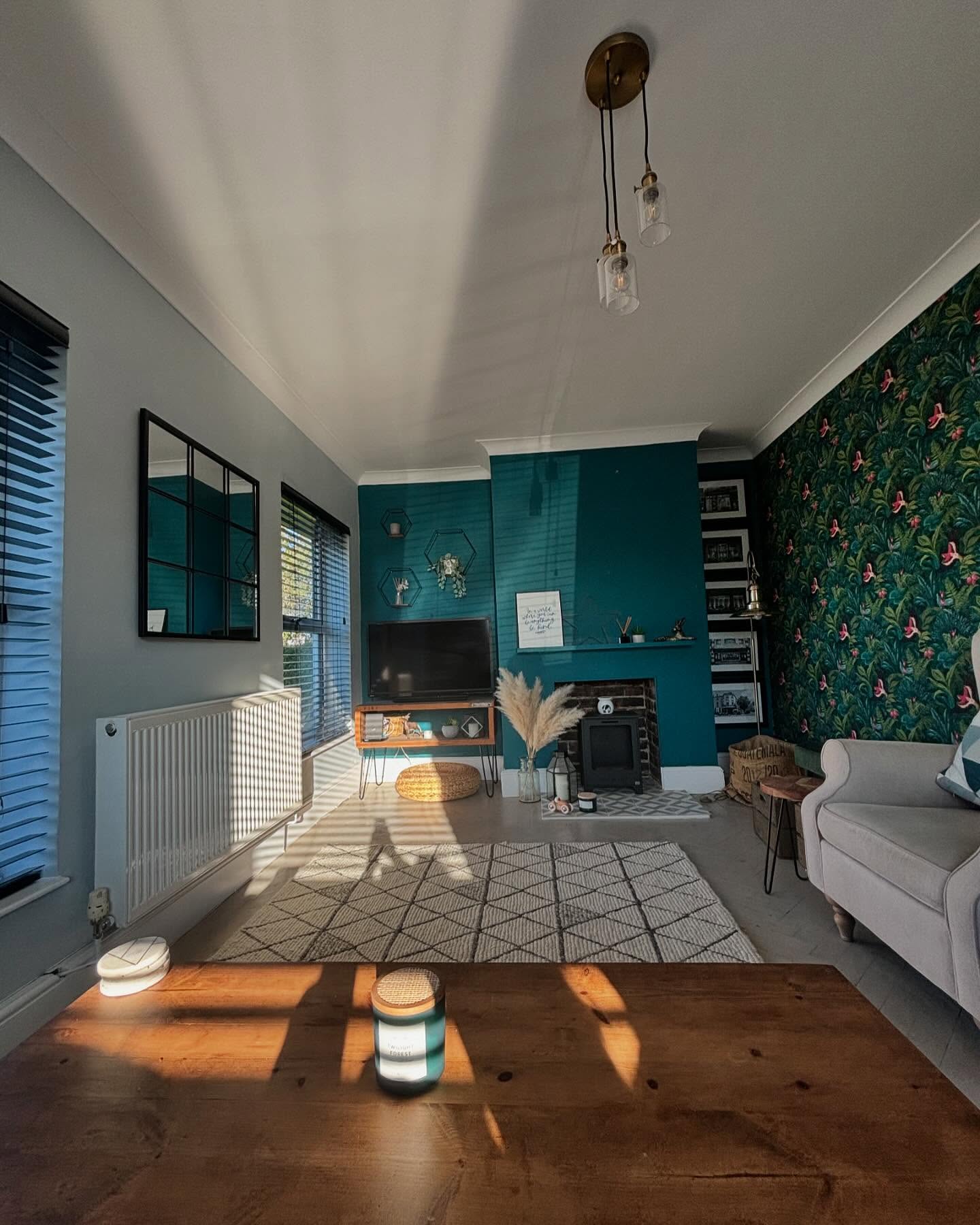
20. Connect a Teal Fireplace Wall to Botanical Wallpaper
Credits: Instagram
A teal blue fireplace wall anchors the far end of this living room. Botanical wallpaper carries the deeper color along the adjoining wall, while a pale sofa and geometric rug keep the seating area lighter.
Daylight through the blinds adds stripes across the floor and painted surfaces. This arrangement shows how plain paint can connect to a busy pattern without repeating it everywhere.
Choose a wall color from the wallpaper's background, then compare samples together in the room. Keep large furniture simple so the architecture and pattern remain readable.
A mirror on the opposite wall reflects the teal and balances the room. Smaller wooden tables and woven accessories add warmth without introducing another strong color into the main seating area.