
A room full of dark shelves can feel inviting rather than heavy when warm light, wood, and comfortable seating balance the deeper colors.
Dark Academia Living Room Ideas show how to build that collected library mood with practical details, from lighting a bookcase at several levels to framing a sofa with freestanding cabinets.
Small-scale patterns around a reading chair add character, while colorful book spines and curiosities keep dark shelving personal. These approaches help connect books, furnishings, and display pieces into a living room that feels thoughtful and easy to settle into.
1. Light a Bookcase From Several Levels
Credits: Instagram
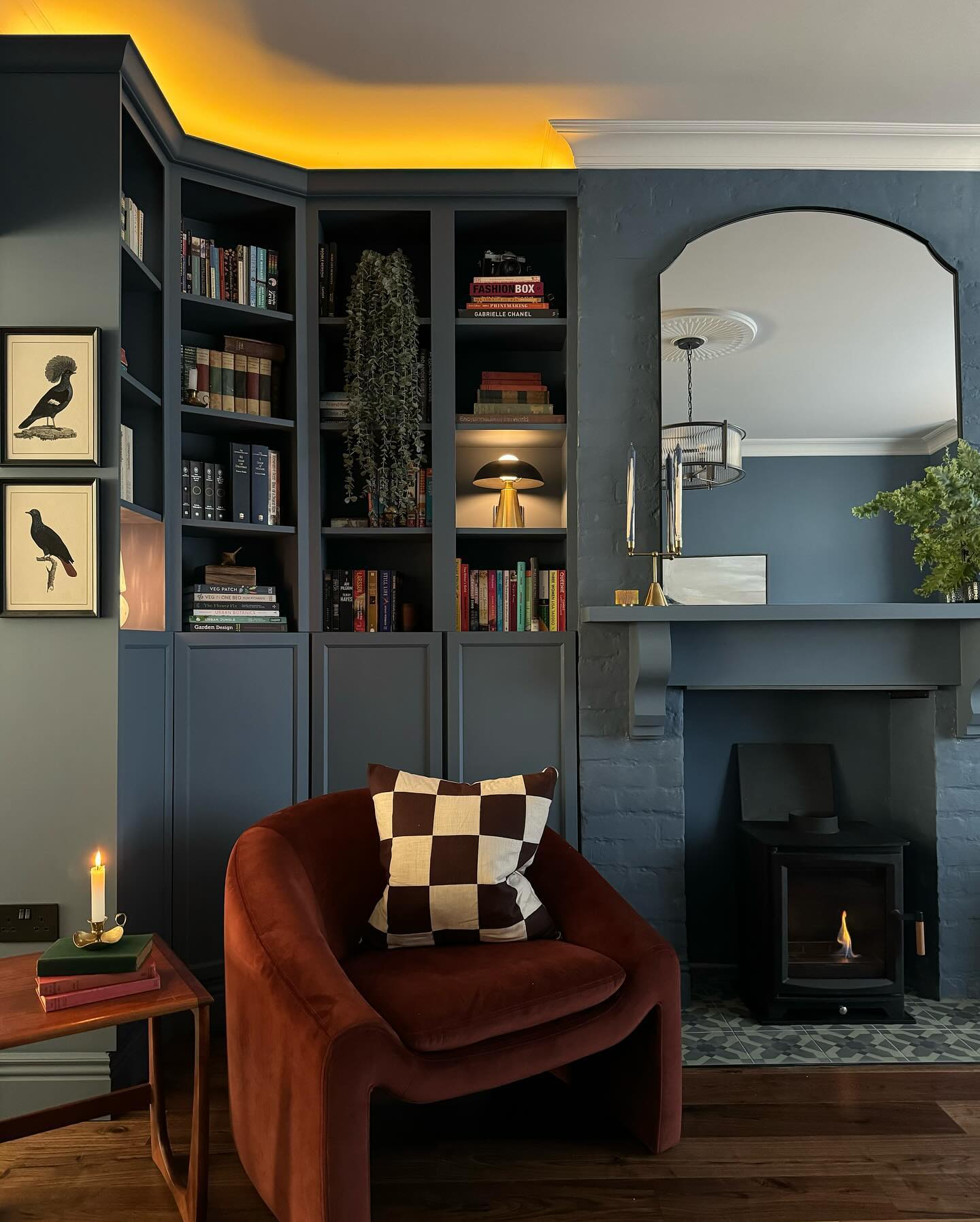
A deep blue bookcase turns this fireplace corner into a small library, while warm lighting keeps the dark finish welcoming. The glow above the shelves draws attention to their height, and a tiny shaded lamp illuminates one compartment.
Below, a rust velvet chair offers a comfortable place to pause with a book. This layered approach works especially well when your living room lacks space for a separate reading area.
Paint the shelving and mantel related shades so the two elements feel connected. Mix upright books with a few horizontal stacks, leaving room for a lamp or trailing plant.
An arched mirror and simple bird illustrations bring quieter shapes beside the busy shelves, while the checked cushion adds a playful note.
2. Mix Small Patterns Around a Tufted Reading Chair
Credits: Instagram
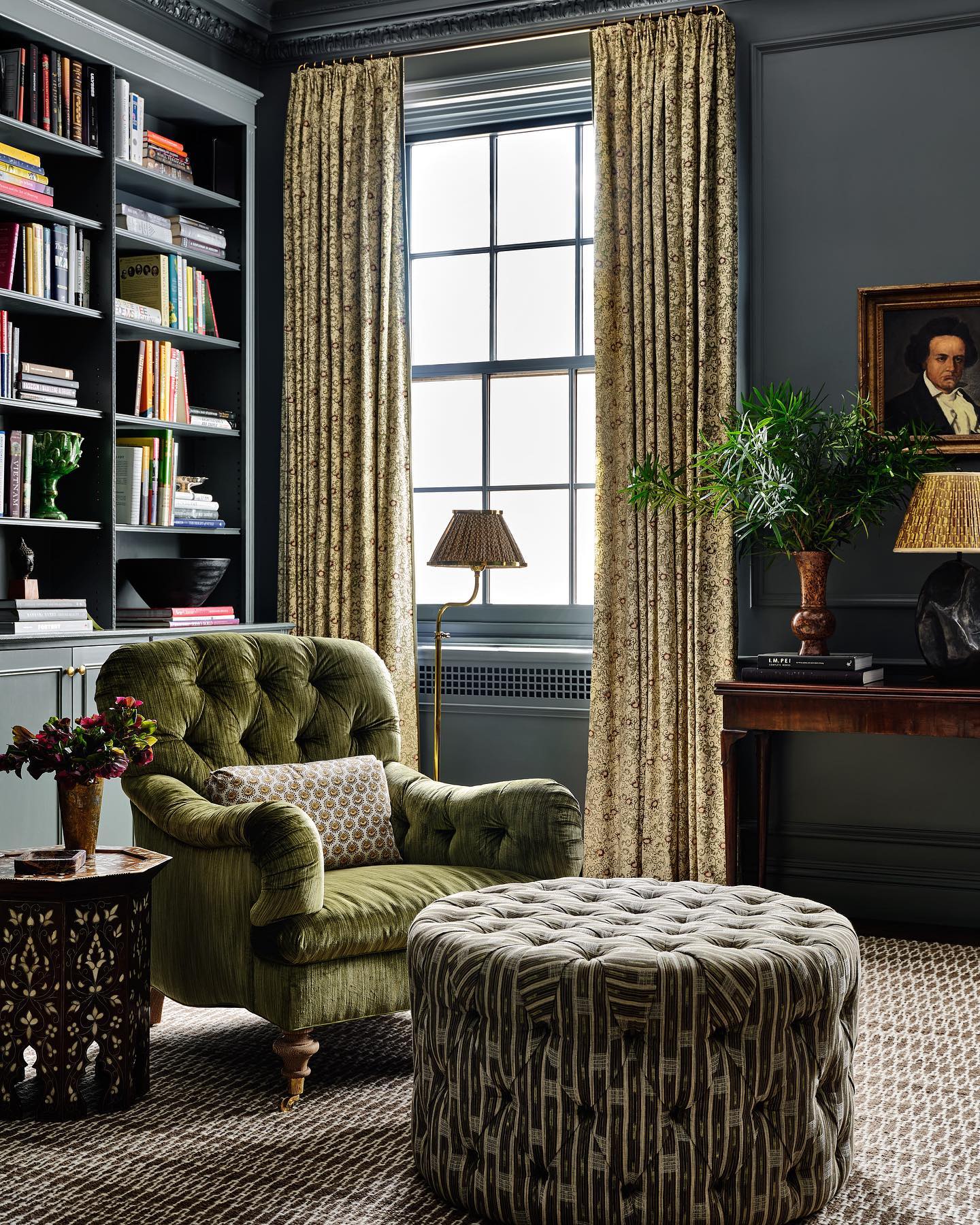
This green reading chair looks especially inviting because its deep tufting contrasts with the finer patterns surrounding it. Slender stripes cover the round ottoman, a small repeating motif fills the curtains, and the carpet adds another subtle rhythm.
Dark painted bookshelves and wall molding hold everything together. To use several patterns without creating visual noise, keep their colors closely related and vary their scale.
Let one comfortable chair remain the main attraction, then choose an ottoman that can support your feet without blocking access to nearby books. A brass floor lamp supplies focused light beside the window.
The wooden console, portrait, and leafy arrangement add the collected character that makes a dark academia corner feel personal and worth lingering in.
3. Keep Warm Wood Visible Beside Dark Shelving
Credits: Instagram
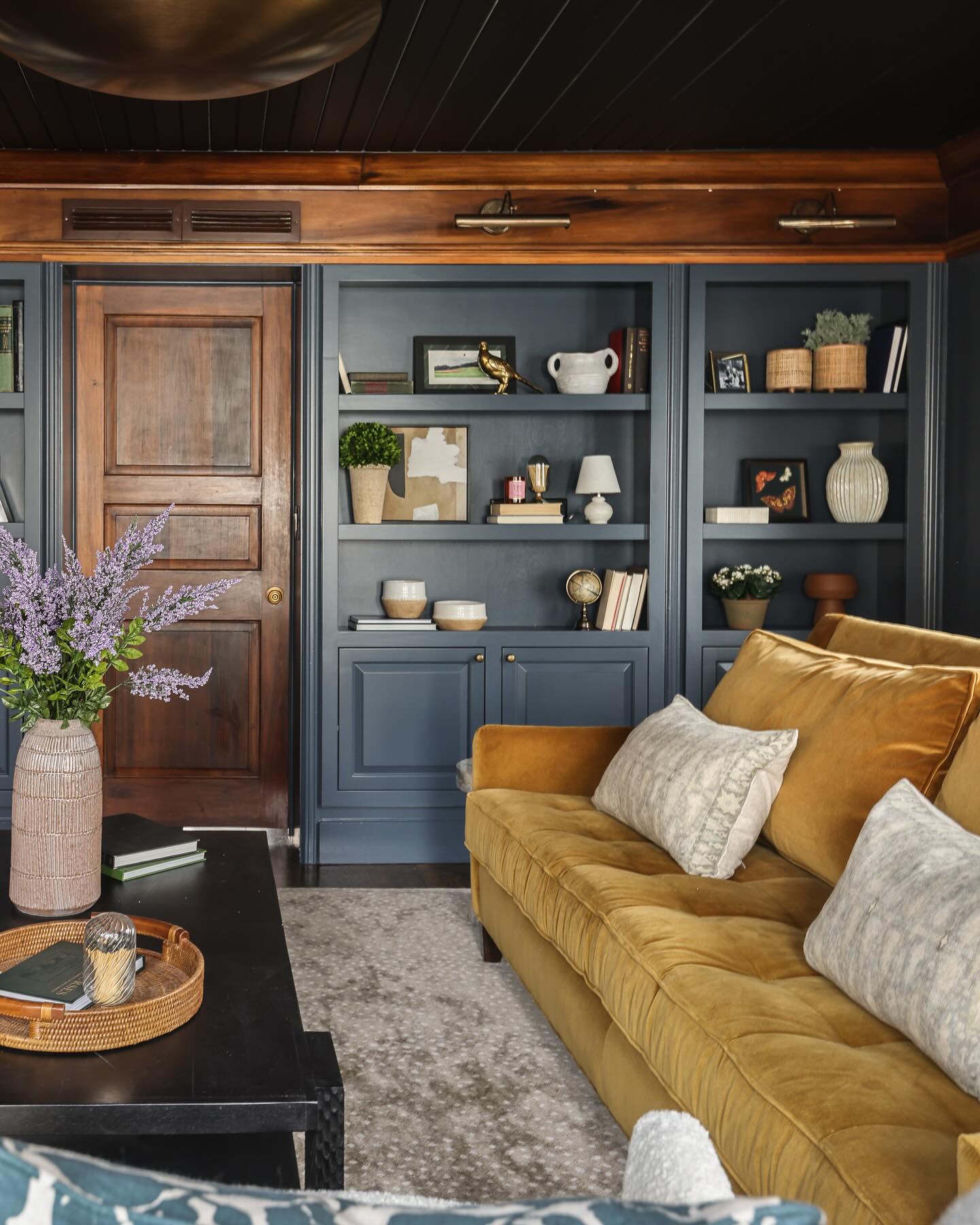
A wooden door and timber trim bring warmth to this dark blue sitting room. Their natural grain stands apart from the painted bookcases, while a mustard velvet sofa repeats the golden tones at seating height.
The dark planked ceiling makes the room feel especially enclosed and comfortable. To borrow this balance, keep an existing wood feature visible when painting nearby cabinetry.
You do not need every surface to match. Choose upholstery that connects with the wood, then soften it with pale patterned cushions.
Books, a small globe, framed pictures, and pottery give the shelves a collected character. Leave some open space between those objects so the architectural contrast remains clear, and use warm metal details to connect the different finishes.
4. Make the Television Part of an Artful Mantel
Credits: Instagram
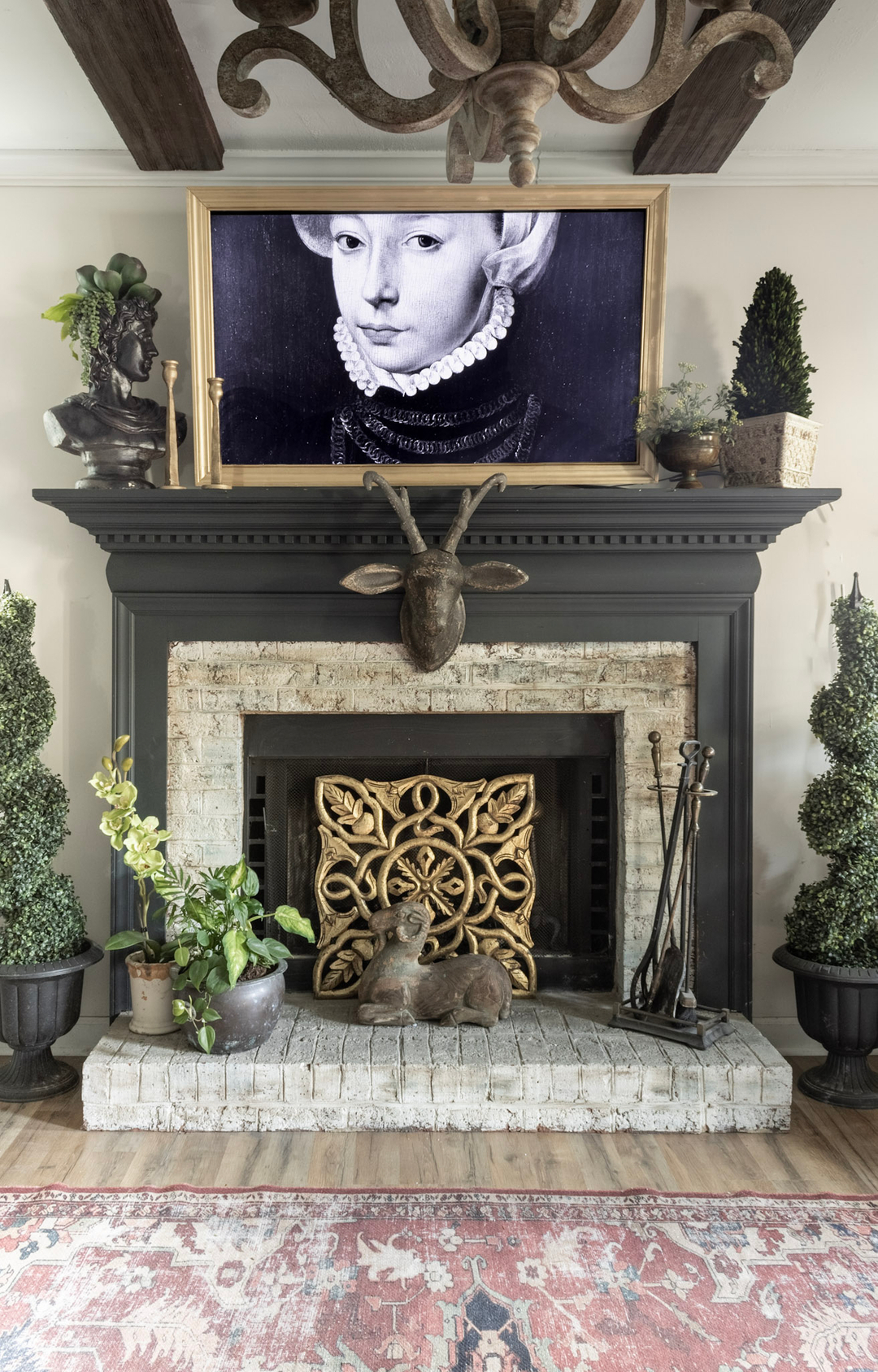
A gold frame and historical portrait help the television join this living room's traditional mantel arrangement. The dark surround gives the screen a substantial base, while pale brick, ceiling beams, and a weathered chandelier add contrasting texture.
A sculptural bust, clipped greenery, and an ornate gold panel continue the collected mood below. If your living room needs a television, consider its frame, surrounding colors, and displayed artwork together.
Choose a picture that suits the room's palette, then leave enough space around the screen for it to read clearly. A dark mantel can visually connect the electronics to older furnishings.
Keep everyday controls accessible, and follow the manufacturer's placement guidance when installing any screen above a fireplace or another heat source.
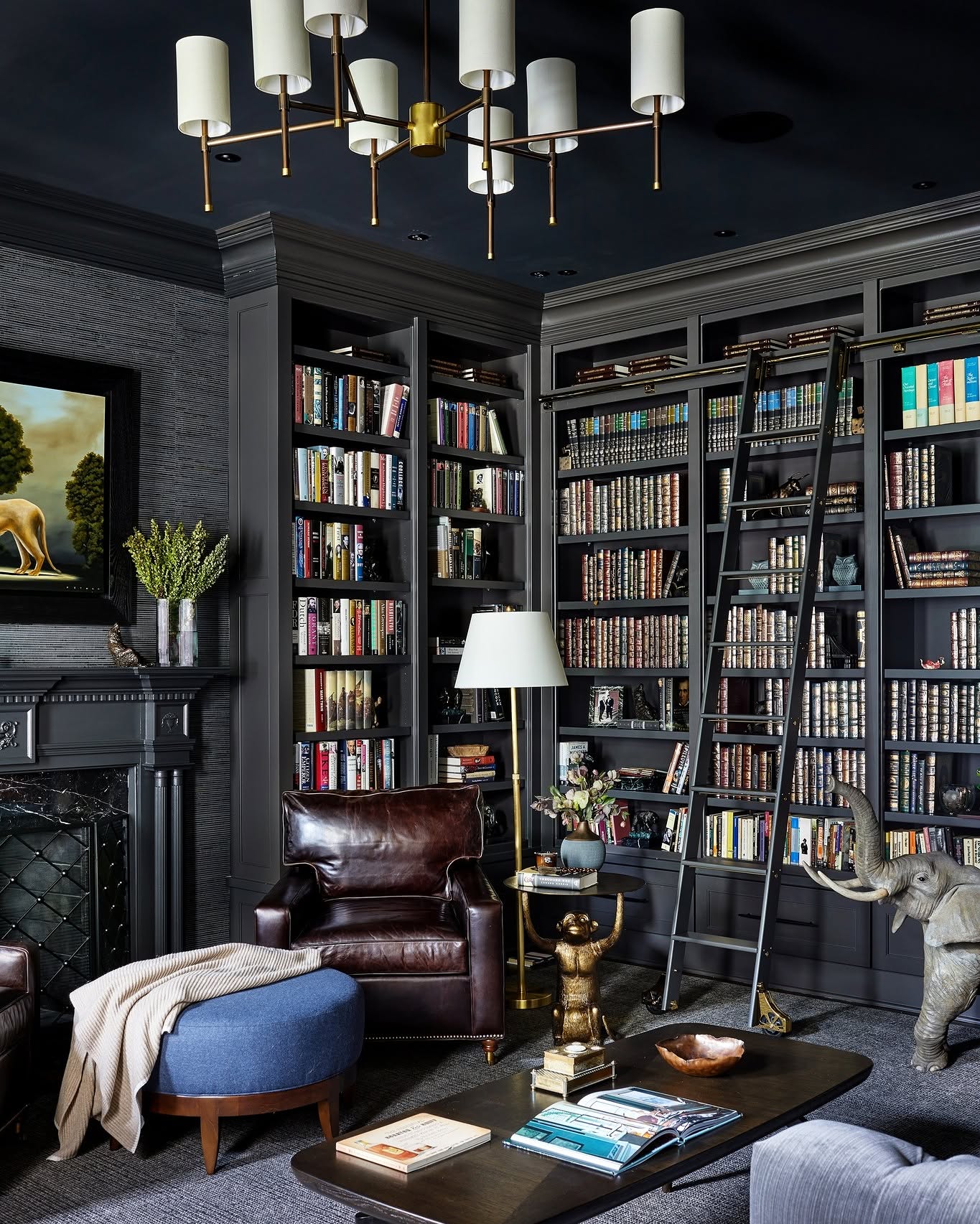
5. Let a Library Ladder Emphasize Tall Shelves
Credits: Instagram
Tall charcoal shelving and a matching ladder give this living room the presence of a private library. The books remain the main decoration, with small sculptures and framed photographs interrupting their steady rows.
A worn leather chair, blue ottoman, and pale throw soften the formal architecture. The lesson is to make storage feel like part of the room rather than an isolated furniture purchase.
Carry the shelving color onto nearby trim and use a restrained palette around it. If a working ladder suits your space, choose a installed system and preserve room for it to move.
Otherwise, the tall proportions alone create the effect. A reading lamp beside the chair keeps the corner useful after the overhead light is dimmed.
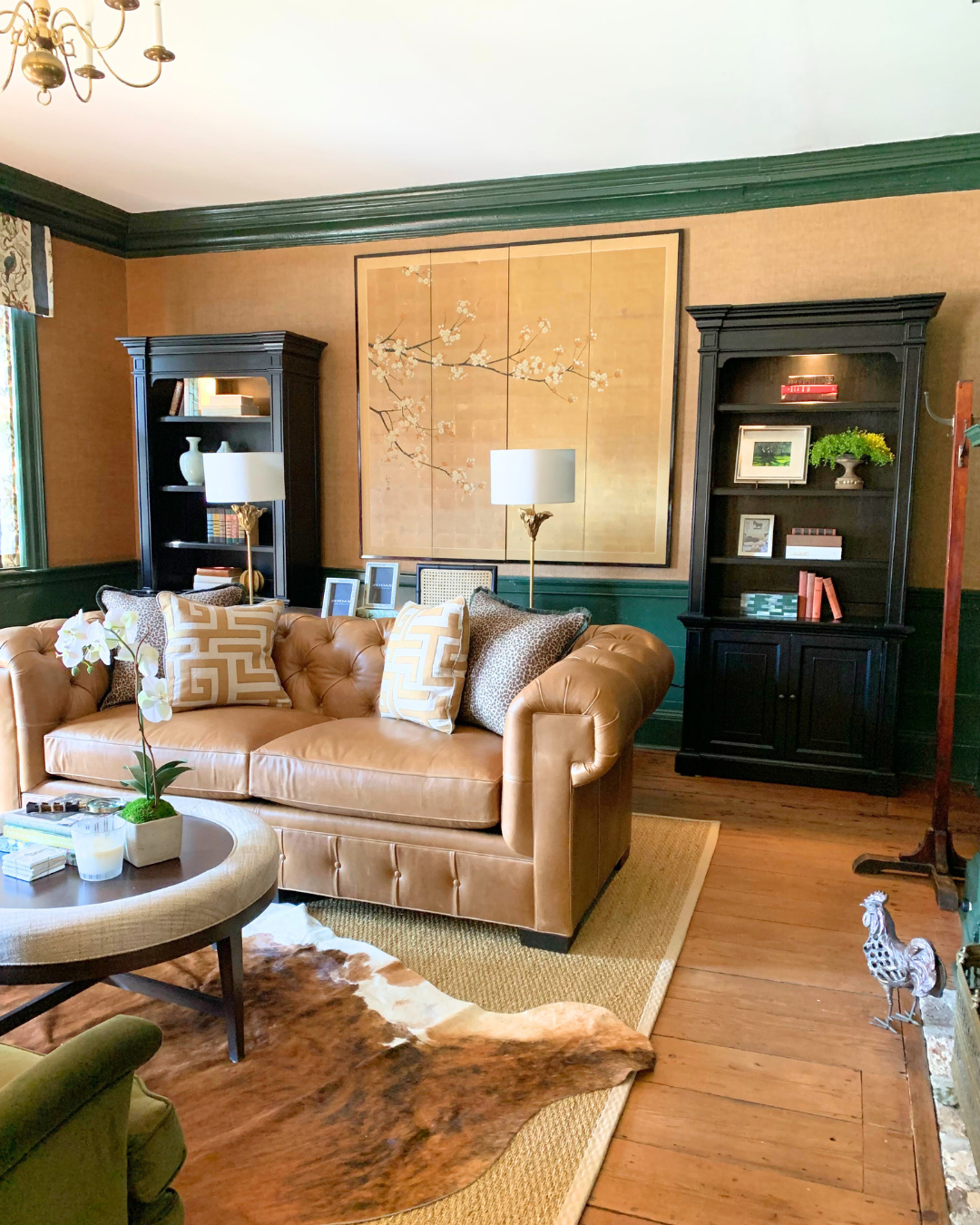
6. Frame a Sofa With Freestanding Book Cabinets
Credits: Instagram
Two dark book cabinets create a library backdrop without filling the entire wall. Their matching height and traditional cornices frame a botanical picture, while the caramel leather sofa gives the arrangement a comfortable center.
Green trim, warm ochre walls, and patterned cushions enrich the scholarly palette. This is a useful approach when built-in shelving would overwhelm your living room or exceed your budget.
Position a pair of substantial cabinets behind the seating, leaving enough clearance to reach the lower cupboards. Place a larger artwork between them so the separate pieces read as one composition.
Lamps behind the sofa add another vertical layer, and the natural rug quiets the mix of leather, wood, patterned textiles, and warm metallic details around it.
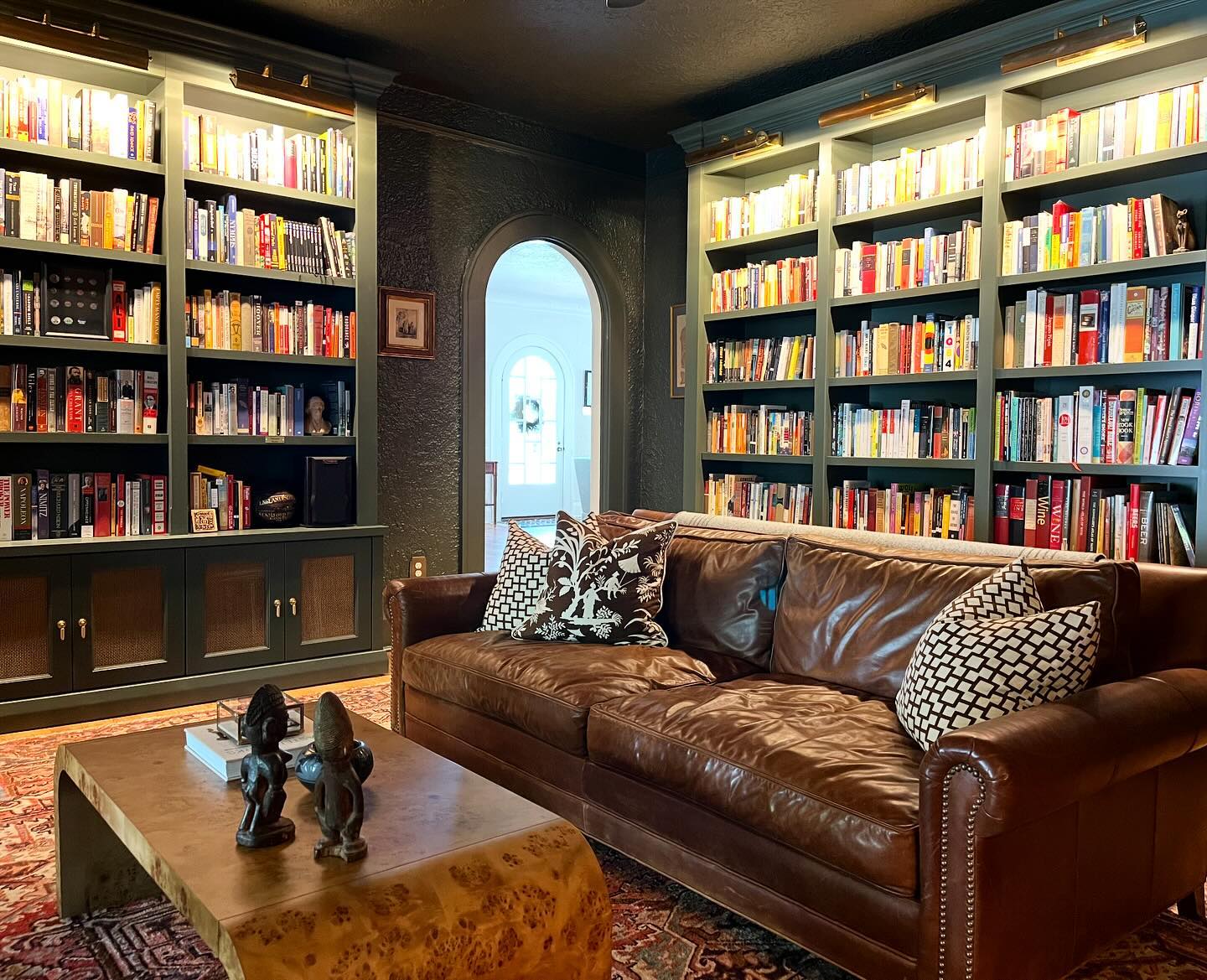
7. Keep Colorful Book Spines in a Dark Library
Credits: Instagram
Colorful books bring energy to these deep green shelves, showing that a dark academia room can feel lively as well as atmospheric.
Brass picture lights brighten the upper rows, while a brown leather sofa and patterned rug provide comfortable textures below. The burl wood coffee table introduces a lighter surface at the center.
Instead of hiding every bright jacket, let your actual reading collection shape the room. Use a consistent shelving color and repeat warm metals to keep the varied spines cohesive.
Balance crowded shelves with simpler furniture silhouettes, then add a few patterned cushions for softness. The arched doorway leaves a bright opening between bookcases, giving the eye a place to rest amid the richly layered walls and furnishings.
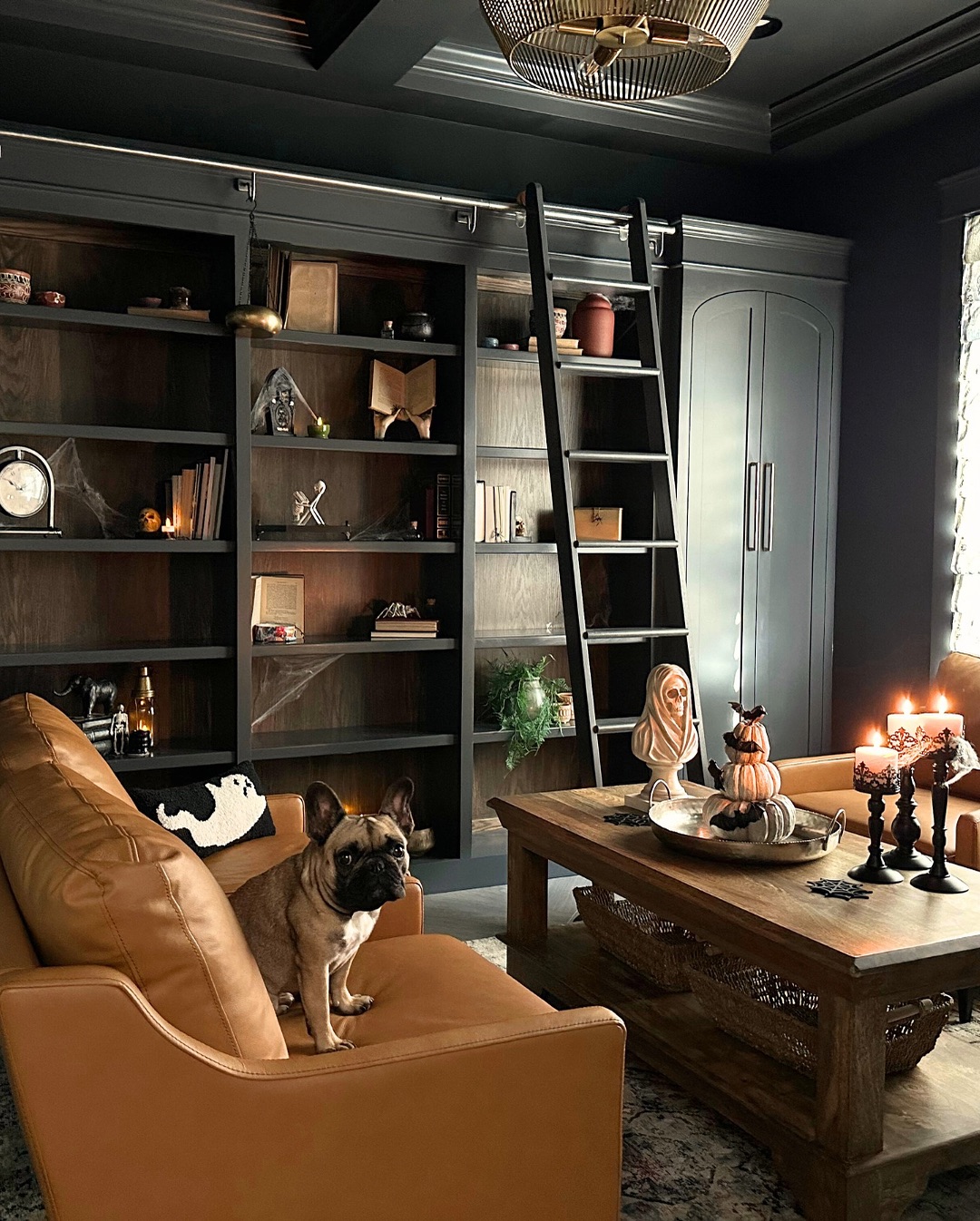
8. Give Curiosities Space on Dark Display Shelves
Credits: Instagram
Sparse arrangements make these dark shelves feel like a cabinet of curiosities. Books, pottery, a clock, and small sculptural objects occupy separate compartments, while the wood backing adds warmth behind them.
Leather chairs and a substantial wooden coffee table carry that warmth into the seating area. Seasonal decorations give this room a playful gothic mood, but the underlying idea works throughout the year.
Display pieces you enjoy looking at, and leave enough empty space for each silhouette to register. Vary their height with short book stacks rather than filling every opening equally.
Closed cupboards can hold less decorative essentials. A basket beneath the table offers another useful layer of storage, keeping the central seating area comfortable for everyday living too.
9. Use a Dark Botanical Wall Behind Warm Velvet
Credits: Instagram
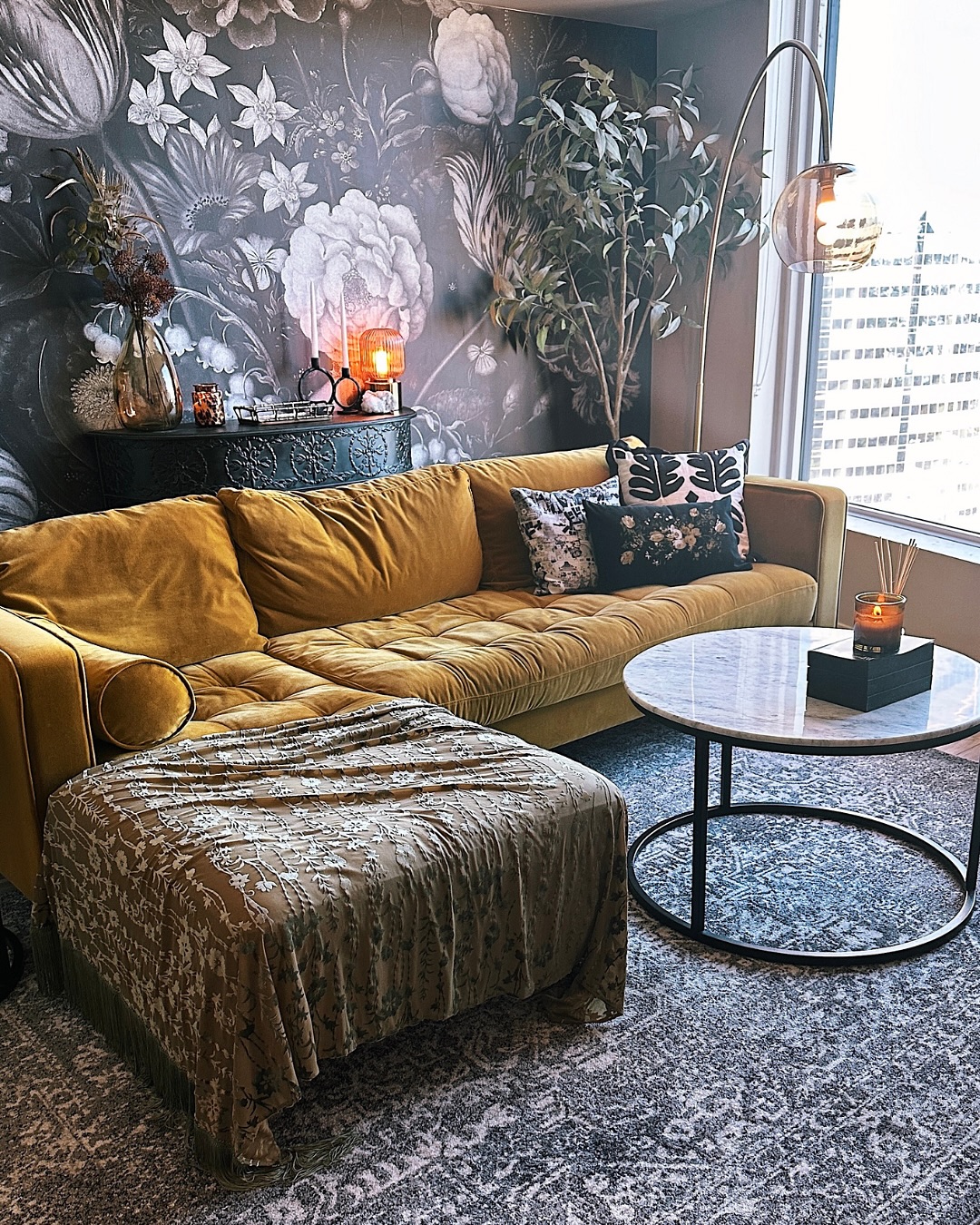
Oversized pale flowers spread across a dark background behind this mustard velvet sofa, creating a romantic focal point without requiring dark paint on every wall.
The botanical theme continues through the cushions, trailing foliage, and embroidered ottoman cover. A slim round table keeps the seating area from feeling crowded.
For a similar effect, start with one wall pattern and pull a warm upholstery color from its undertones. Repeat the floral idea at a smaller scale in a cushion or textile, then let simpler furniture shapes provide balance.
The large window keeps the room bright during the day, while the glass floor lamp and small glowing accent light bring warmth after sunset. A muted rug helps the layered patterns sit comfortably.
10. Build a Portrait Gallery Above a Wooden Chest
Credits: Instagram
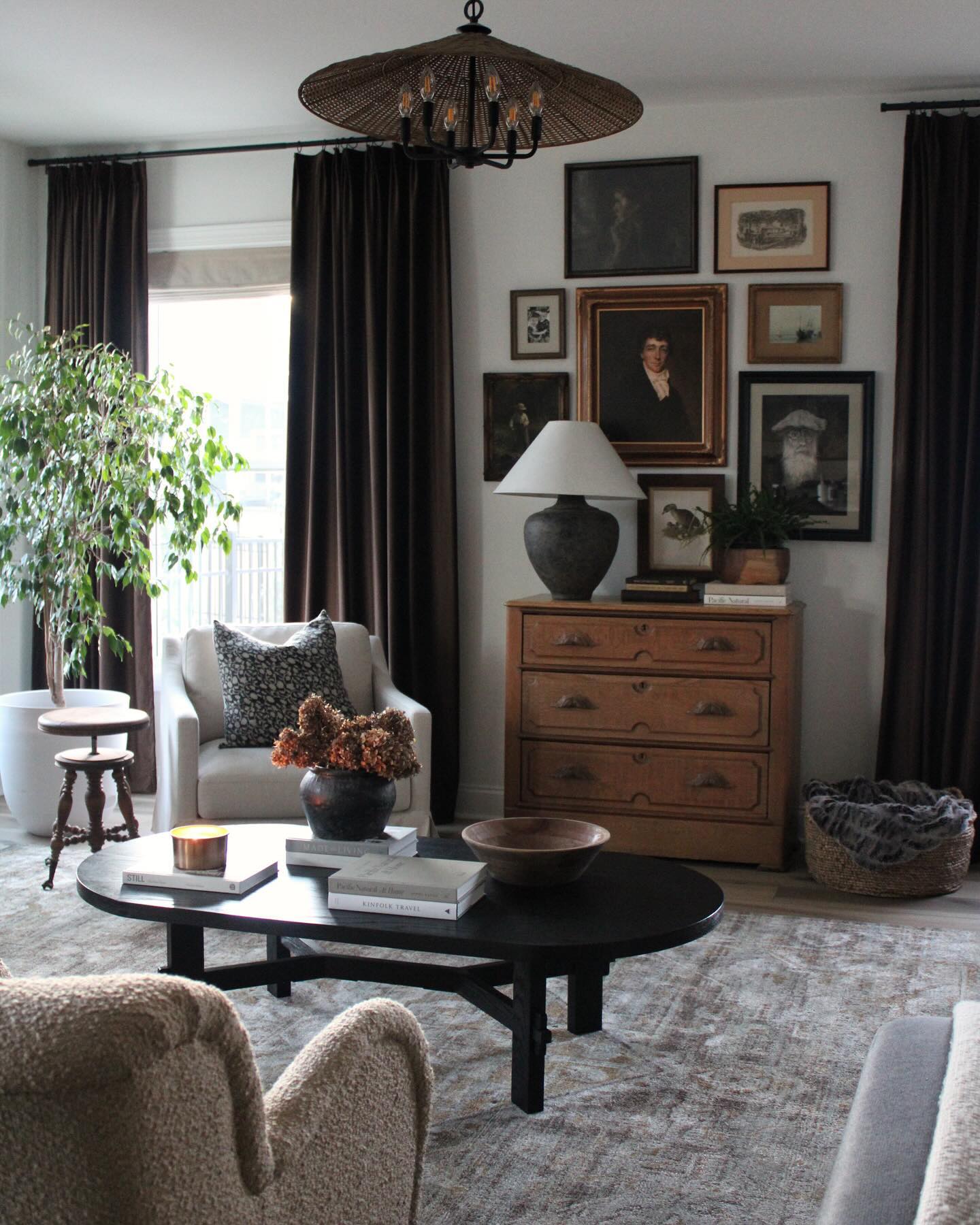
A cluster of portraits, landscapes, and smaller prints gives this pale living room its thoughtful, collected atmosphere. The warm wooden chest grounds the gallery, while dark curtains frame it on both sides.
Books, a table lamp, and an earthy pot connect the artwork to everyday life below. You can borrow this dark academia detail without repainting the whole room.
Start with one larger portrait, then arrange smaller pictures around it using varied frames with related tones. Keep the overall group narrower than the furniture beneath it so the composition feels supported.
Repeating dark brown through curtains, a coffee table, and accessories supplies depth, while light upholstered chairs and a softly patterned rug preserve an easy balance around the seating area.
11. Put the Pattern on a Lighter Ceiling
Credits: Instagram
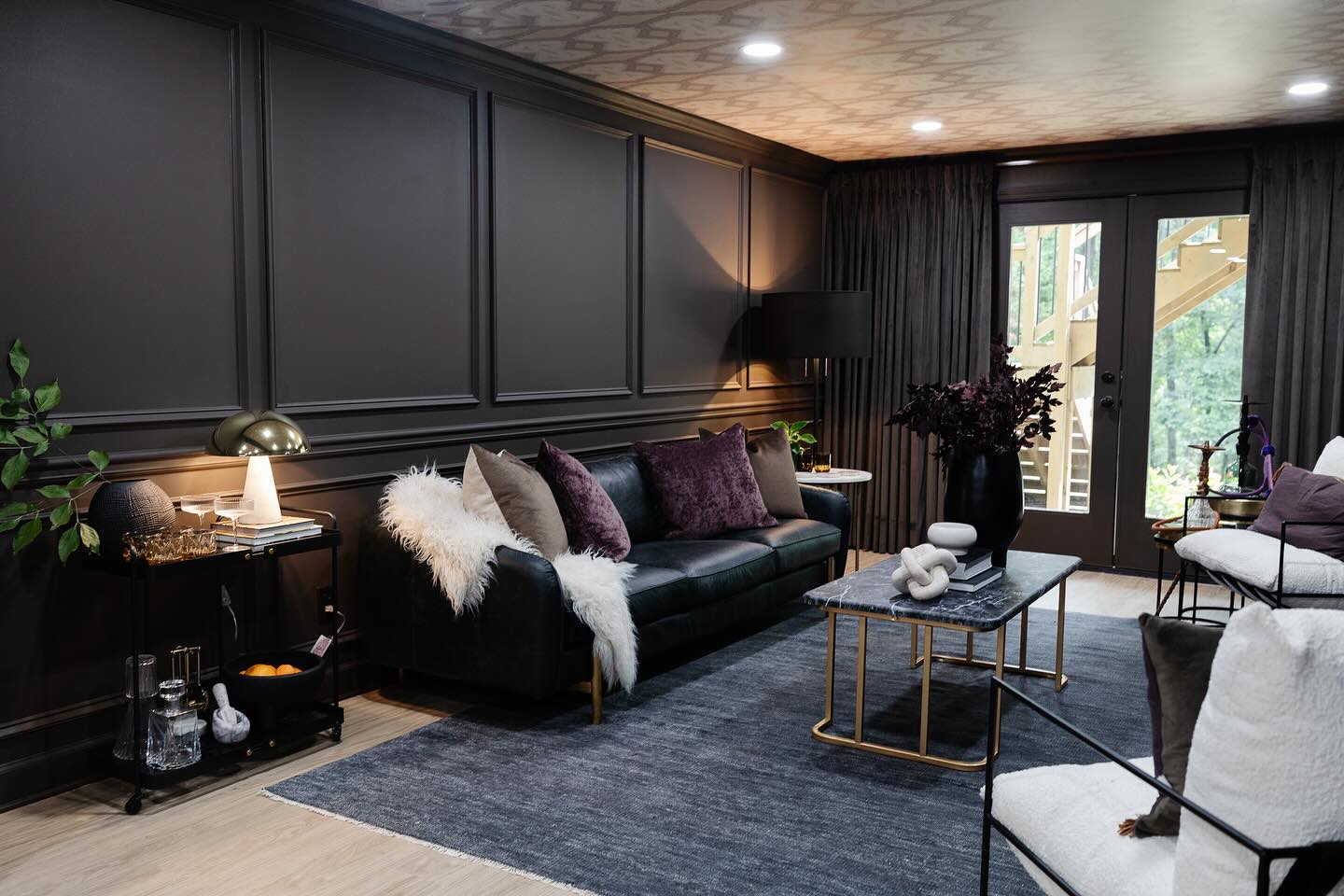
The patterned ceiling gives this dark paneled lounge an decorative layer. Its pale background keeps the upper surface lighter than the walls, while plum cushions and a black leather sofa maintain the rich mood below.
Brass details and a shaggy white throw supply smaller contrasts. This approach suits a room where you want atmosphere without filling every wall with art.
Keep the panel molding simple and let the ceiling pattern do the ornamental work. Choose a rug with subtle texture so the two broad surfaces do not compete.
Light chairs help balance the darker sofa, and slim tables preserve an open conversation area. Small lamps near the seating make the room feel welcoming when the brighter ceiling lights are lowered.
12. Pair Brown Walls With Golden Green Velvet
Credits: Instagram
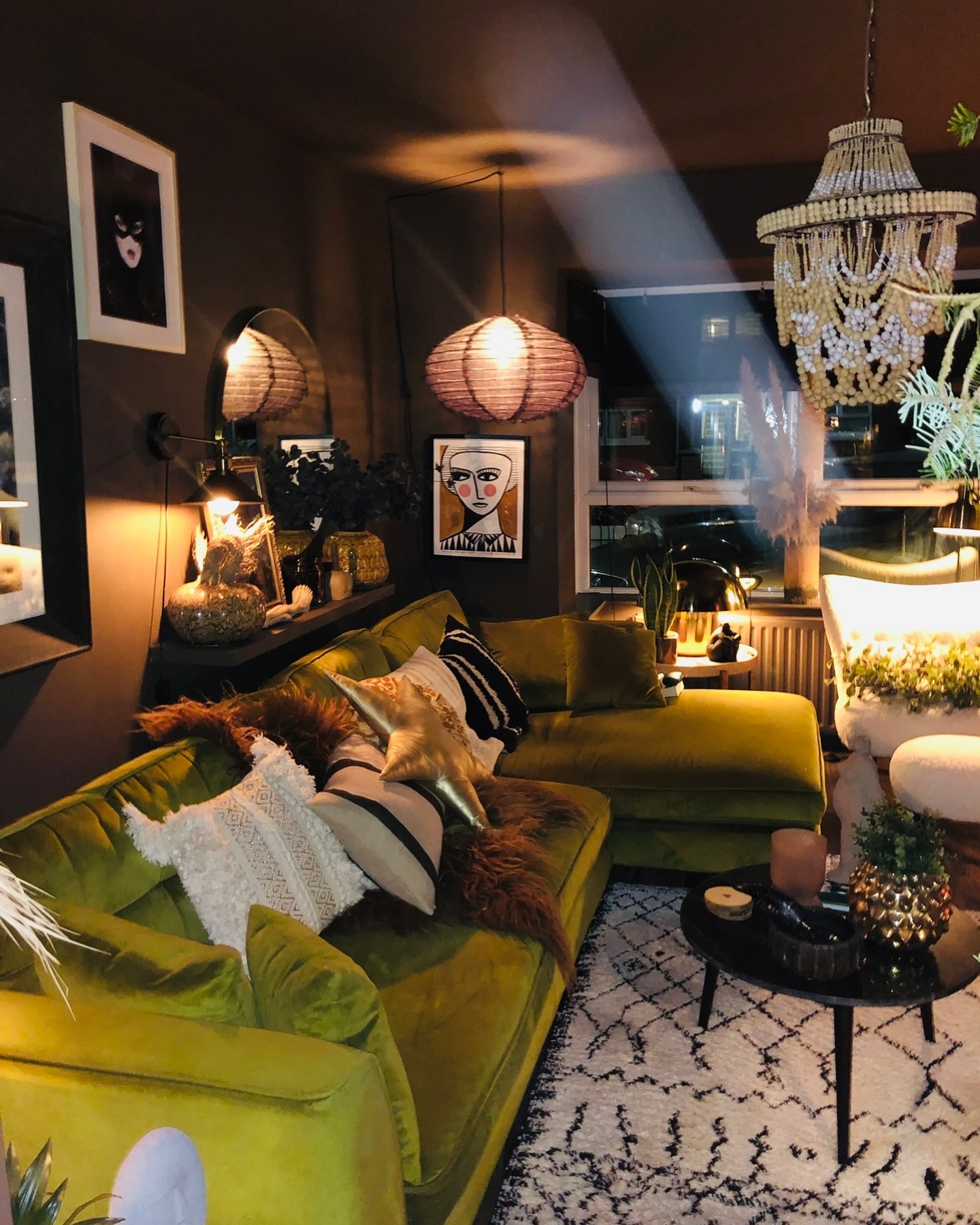
Golden green velvet gives this brown living room a lively center. The color appears across the sofa and chaise, while creamy cushions, striped fabric, and shaggy throws keep the seating from reading as one solid block.
A dark ceiling continues the enveloping background. For a warmer variation on dark academia, look beyond navy and charcoal toward earthy brown.
Test the wall color beside your upholstery, particularly under the lamps you use in the evening. The art and decorative objects here feel collected because they vary in shape while repeating dark, cream, and metallic tones.
Keep a small table within reach of the seats. A light patterned rug can separate the furniture from the floor without losing the room's cozy depth.
13. Add a Library Table for Reading and Games
Credits: Instagram
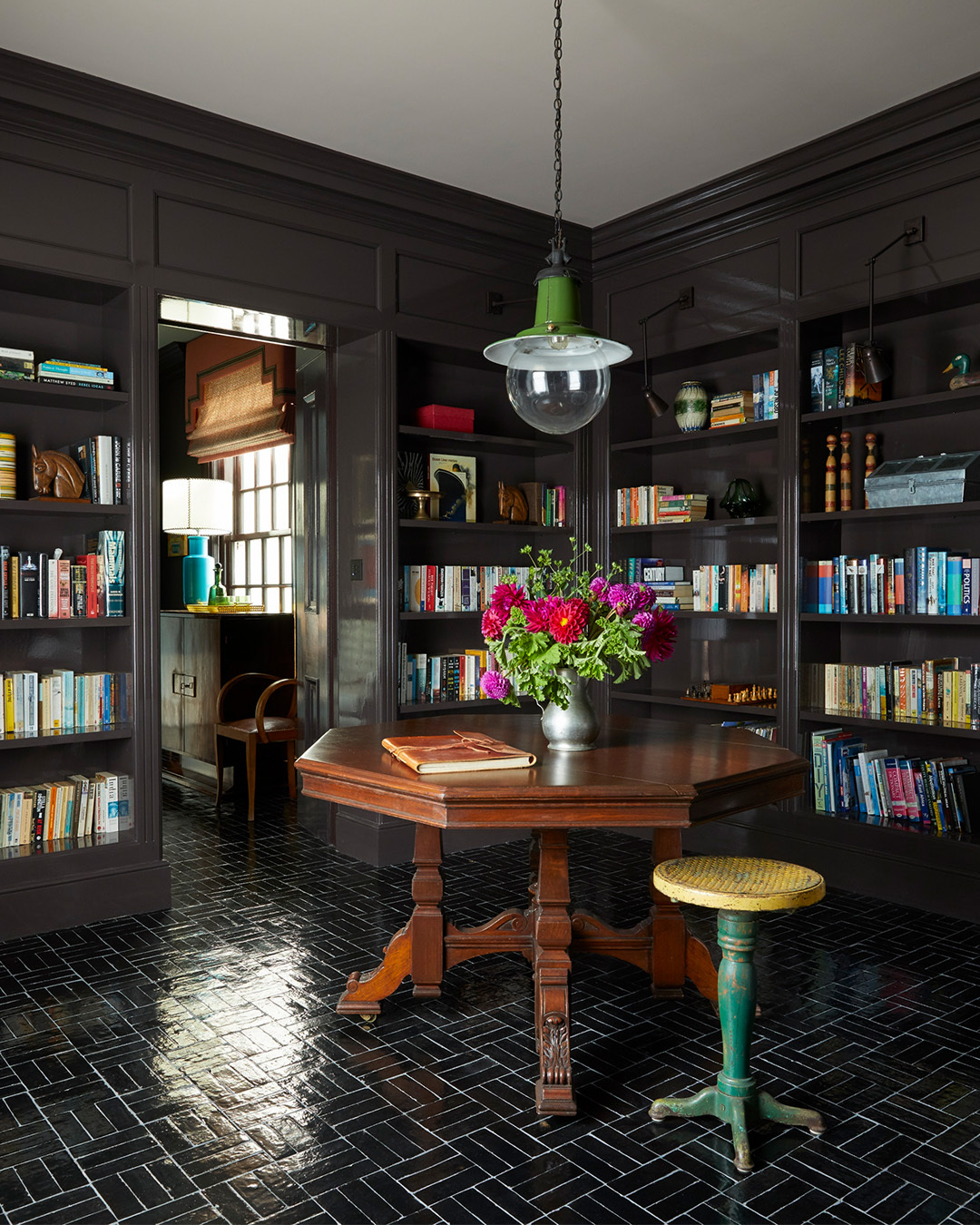
An octagonal wooden table gives this booklined room a practical center. Its carved base and warm finish stand out against dark shelves and glossy black flooring, while a green pendant and worn painted stool add character.
A chess set tucked onto a shelf suggests another reason to linger.
This is a useful idea for a living room that also serves as a reading room: include a table large enough for an open book, puzzle, or quiet game.
Choose a pedestal base if you want flexible seating around it. Keep surrounding routes clear so people can browse the shelves easily.
A vase of flowers provides softness, and adjustable wall lights help the shelving remain useful as daylight changes throughout the day.
14. Layer a Leather Sofa With Literary Details
Credits: Instagram
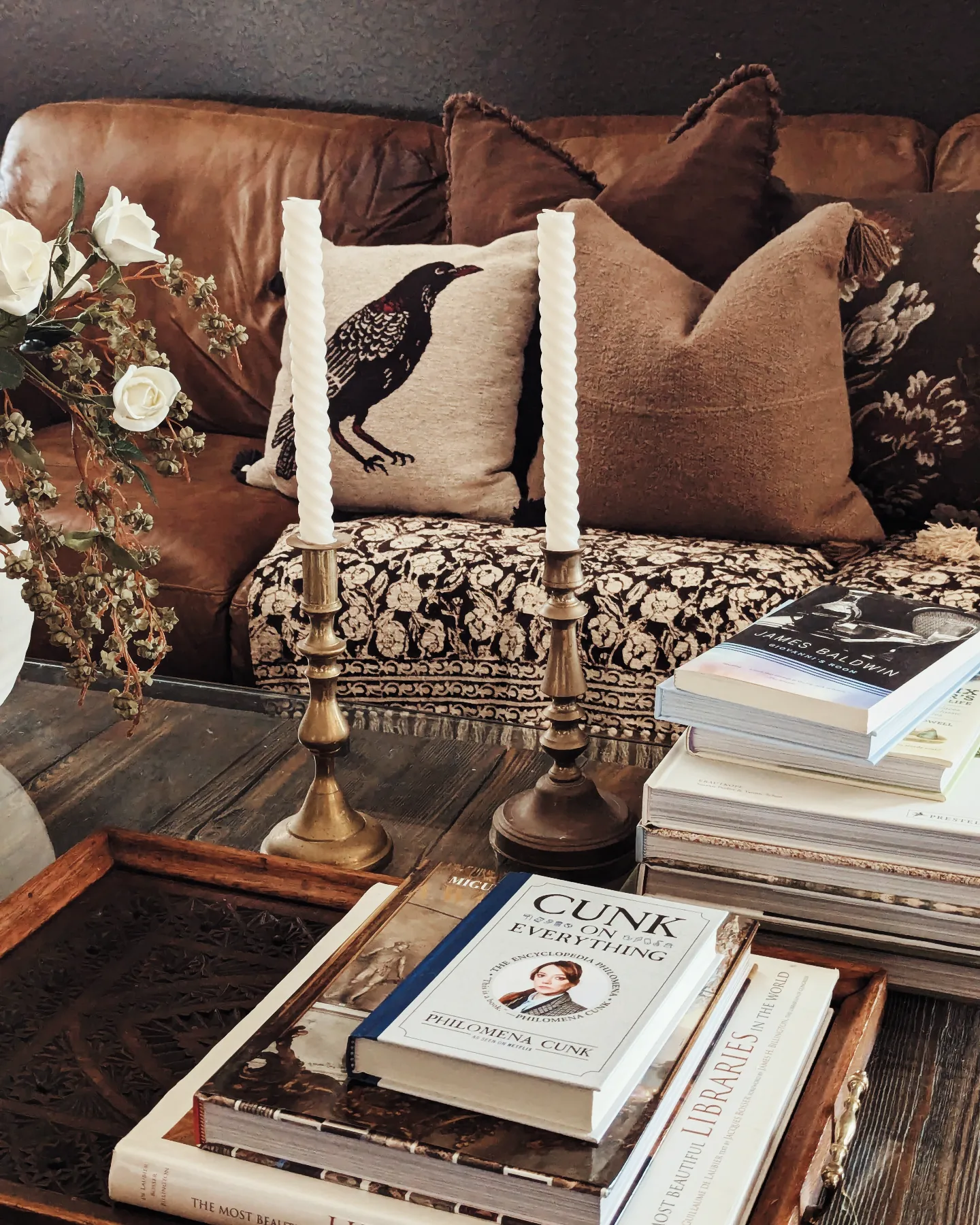
A bird cushion, floral textile, and warm brown pillows give this leather sofa a distinctly bookish personality. On the wooden coffee table, brass candlesticks rise between readable stacks of books, while a carved tray collects another arrangement.
The palette stays close to the colors of worn leather and old paper. To borrow the idea, begin with textiles that share those warm undertones, then vary their surfaces and patterns.
One illustrated cushion can supply the decorative focus; the others can remain simpler. Keep a selection of books you actually enjoy within reach instead of treating them only as props.
Leave some clear table space for daily use, allowing the layers to feel comfortable and personal rather than arranged for display alone.
15. Style a Small Console With Vintage Glass
Credits: Instagram
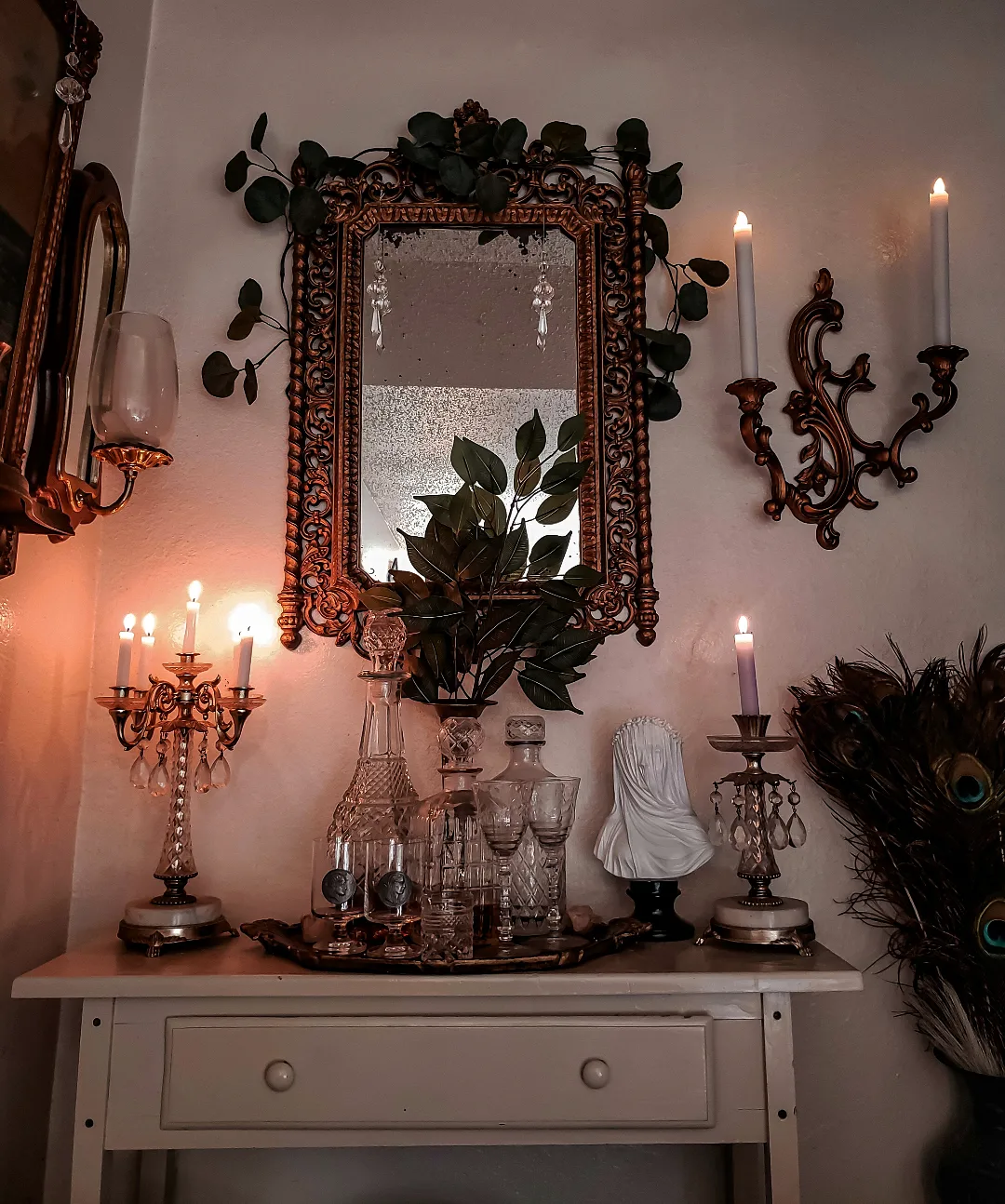
Cut glass bottles and stemware catch the candlelight on this small console, creating a romantic display beneath an ornate mirror. A pale sculptural bust, leafy stems, and dark feathers add contrasting shapes without introducing many colors.
The arrangement shows how a modest piece of furniture can bring old world character to a living room corner. Group glass objects on a tray so the collection feels contained and remains easy to move.
Vary their heights, then place one larger mirror or artwork above them to anchor the composition. Repeat a warm metal through candleholders or wall decorations.
For everyday use, battery candles can provide a similar glow, while a drawer beneath the display keeps practical items close but out of sight.
16. Carry Olive Paint Across a Fireplace Wall
Credits: Instagram
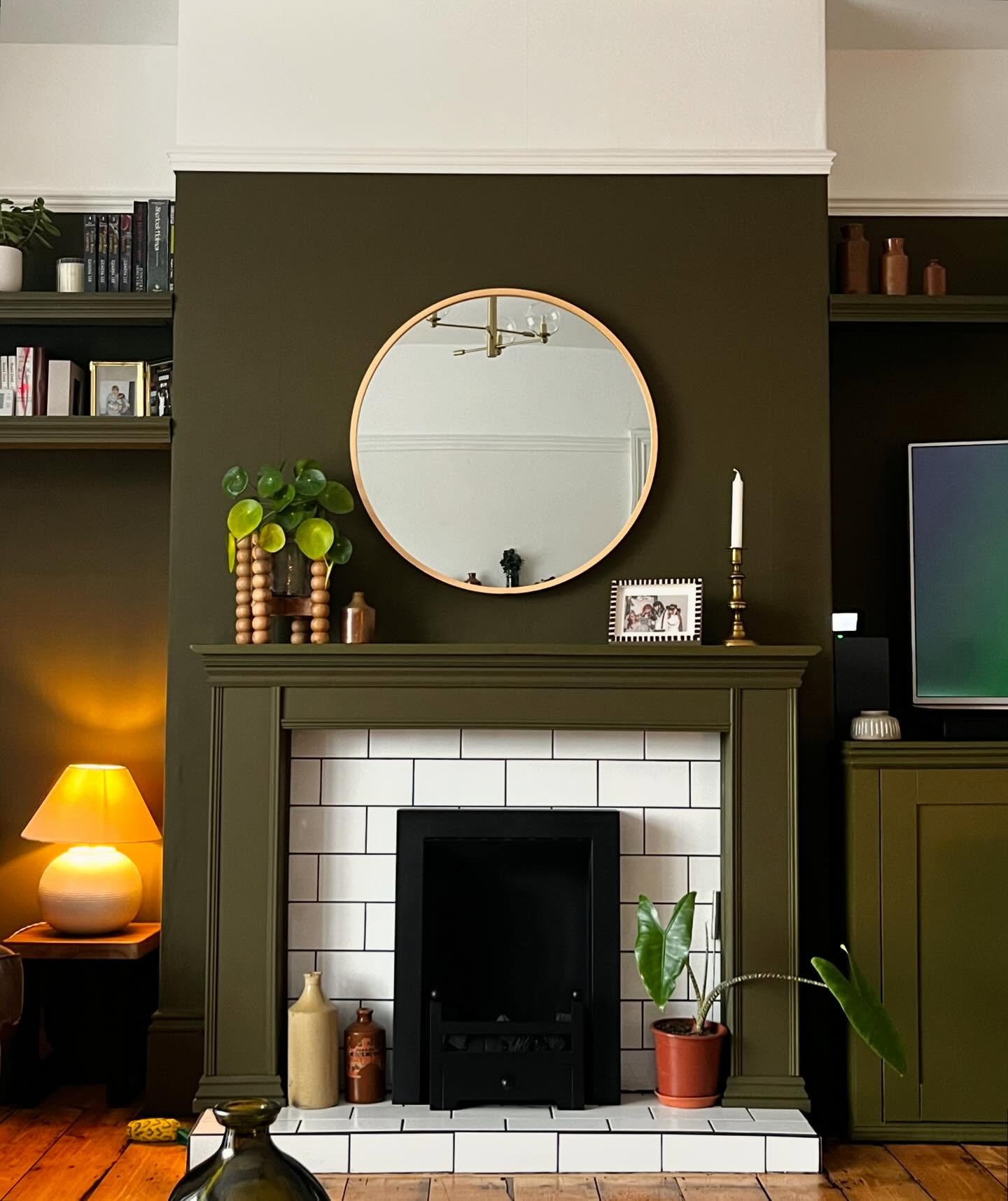
Olive paint connects the mantel, chimney breast, shelves, and lower cupboard into one continuous living room feature. White tile around the fire creates a central opening, while the upper wall remains pale above a horizontal molding.
A round mirror softens the straight lines. This approach can make mismatched architectural pieces feel more deliberate without replacing them.
Choose one rich color for the elements you want to unite, and decide where it should stop before painting. The lighter strip above keeps the room from feeling completely enclosed.
Books and pottery add interest to the alcoves, while a lamp creates warmth at a lower level. A few simple mantel objects leave the mirror and the newly unified architecture room to stand out.
17. Pair Dark Wood and Tile With a Plaid Reading Chair
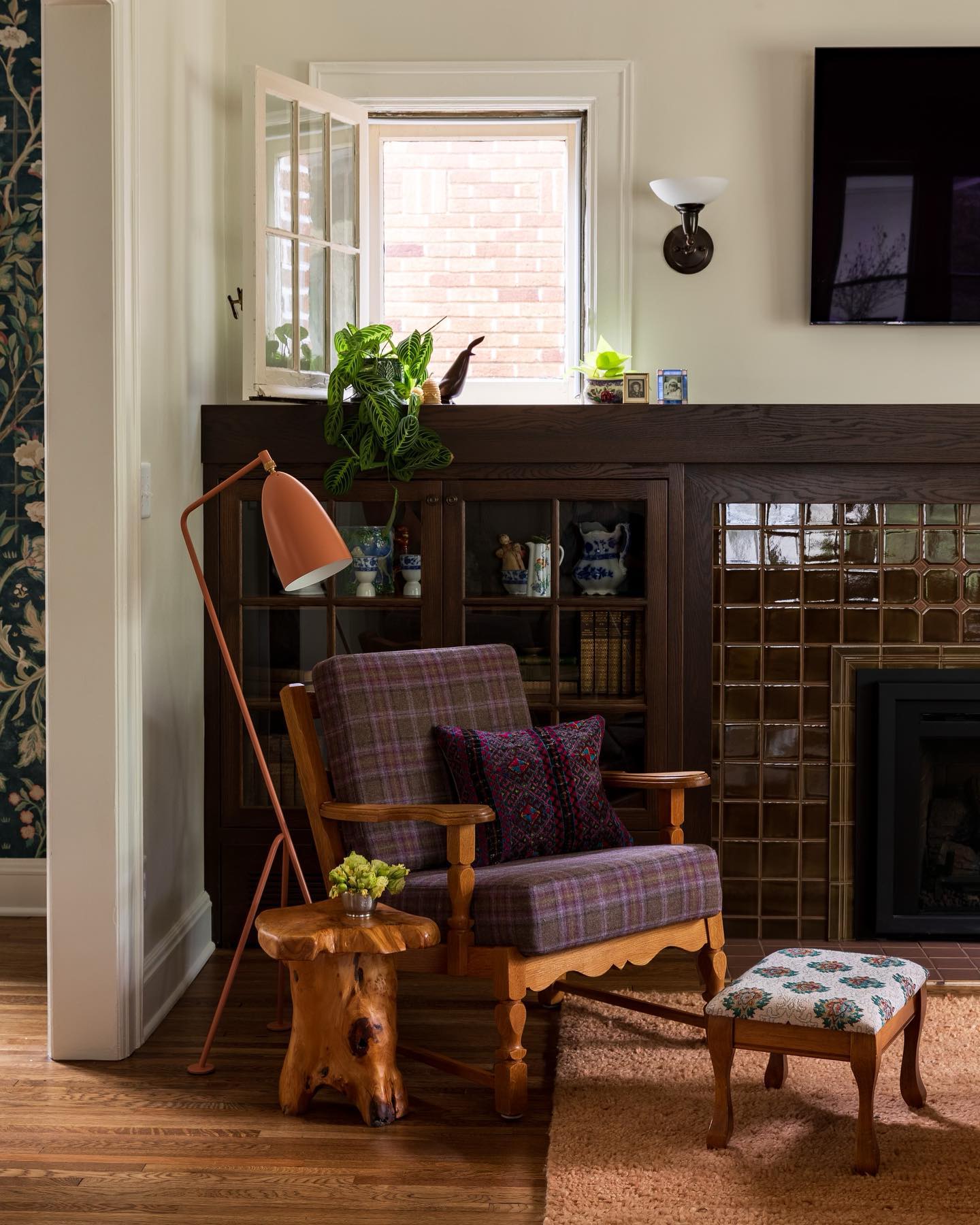
Credits: Instagram
Dark wood cabinetry and glossy brown fireplace tiles give this bright reading corner a grounded, bookish character. Behind the plaid armchair, glass doors reveal books and collected ceramics, adding detail without an open wall of shelves.
The pale upper wall and daylight keep the room airy, while the darker materials concentrate warmth around the seat. Try pairing a wood framed chair with a small patterned footstool, then repeat one upholstery color in a cushion.
A compact wooden side table leaves room for the chair's arms and the nearby floor lamp. Keep favorite books accessible rather than treating every shelf as display space.
A trailing plant softens the cabinet's straight lines and connects the reading area with the window above it.
18. Combine Books and Music Beside a Dark Hearth
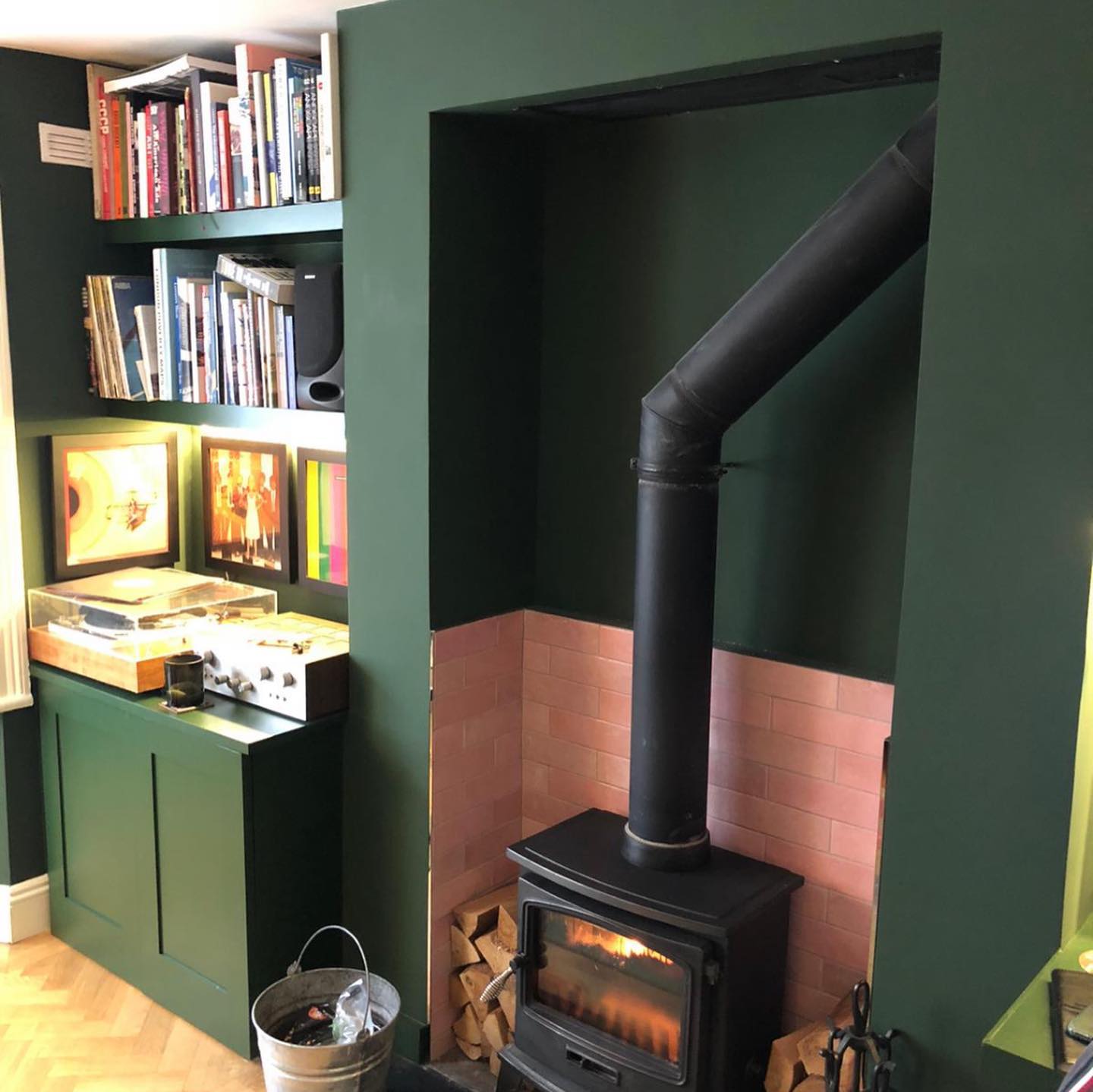
Credits: Instagram
Books, framed pictures, a turntable, and an amplifier share the alcove beside this compact stove. Deep green paint links the storage to the chimney breast, while muted pink tiles bring a warmer color inside the recess.
The result feels like a living room designed around pastimes. Borrow the functional pairing by giving both reading and listening a place within your main seating area.
Keep records, books, and controls easy to reach, and use closed cupboards for cables or less attractive accessories. A little integrated light can help the collection stand out against dark paint.
If working around a stove, maintain the required clearances and suitable materials. The color contrast can still be echoed elsewhere through ceramics, cushions, or framed artwork.
19. Carry Antique Character Into Seasonal Decorating
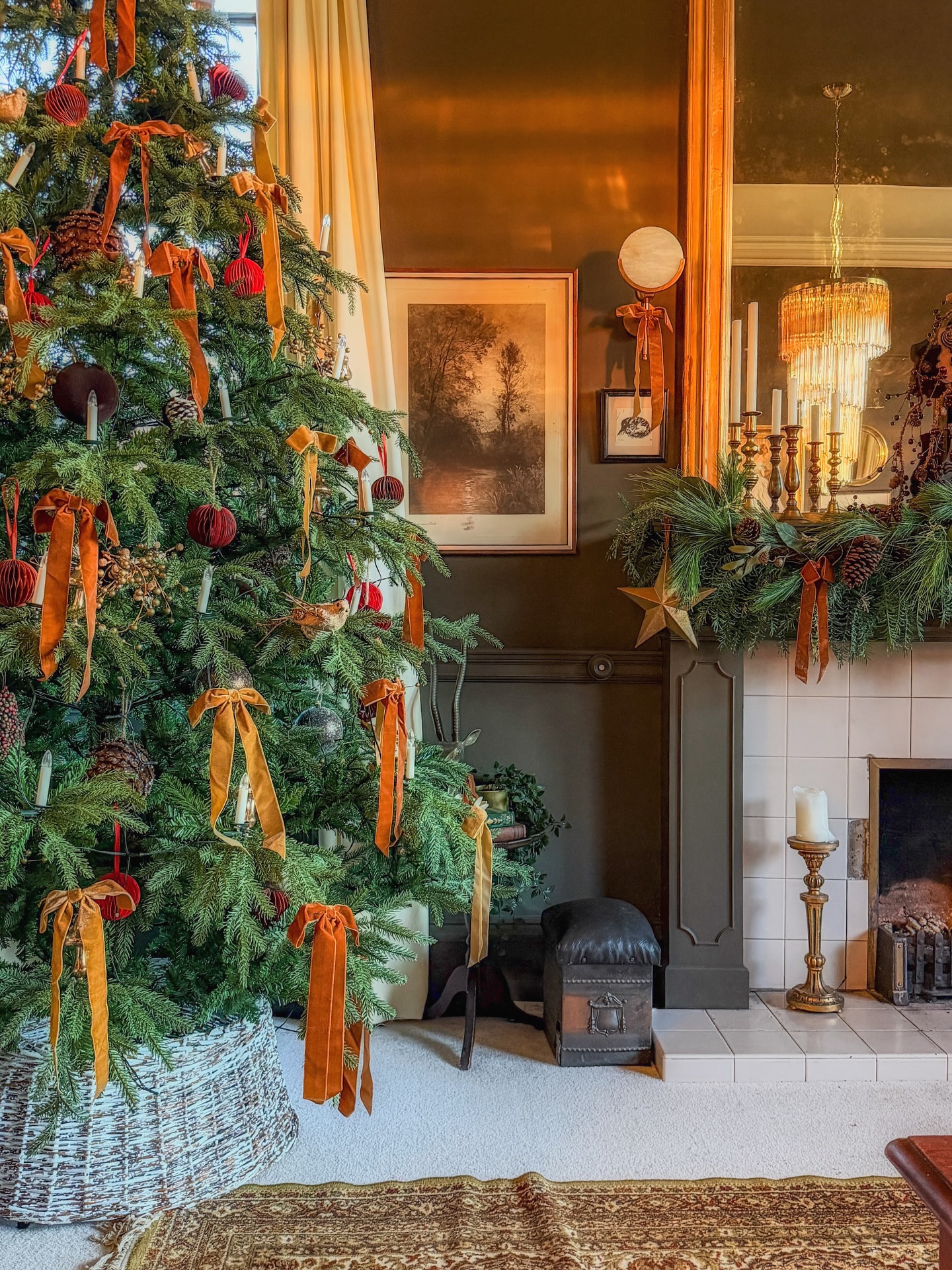
Credits: Instagram
Velvet ribbons and paper ornaments give this Christmas tree a warm, restrained palette beside the antique looking fireplace.
The same ribbon color appears in the mantel greenery, linking seasonal additions to the gold mirror, brass candlesticks, and framed landscape already in the room.
This is a helpful approach when you want festive decorations to belong within a dark academia scheme. Repeat a few existing tones instead of introducing a separate holiday palette.
Natural greenery, textured ribbon, and simple ornaments can work around cherished artwork and older furnishings. Keep the main architectural details visible, and allow a worn rug or leather box to retain its everyday role.
The room gains seasonal atmosphere while still reflecting the character of its usual furnishings.
20. Build a Writing Spot Into Living Room Shelves
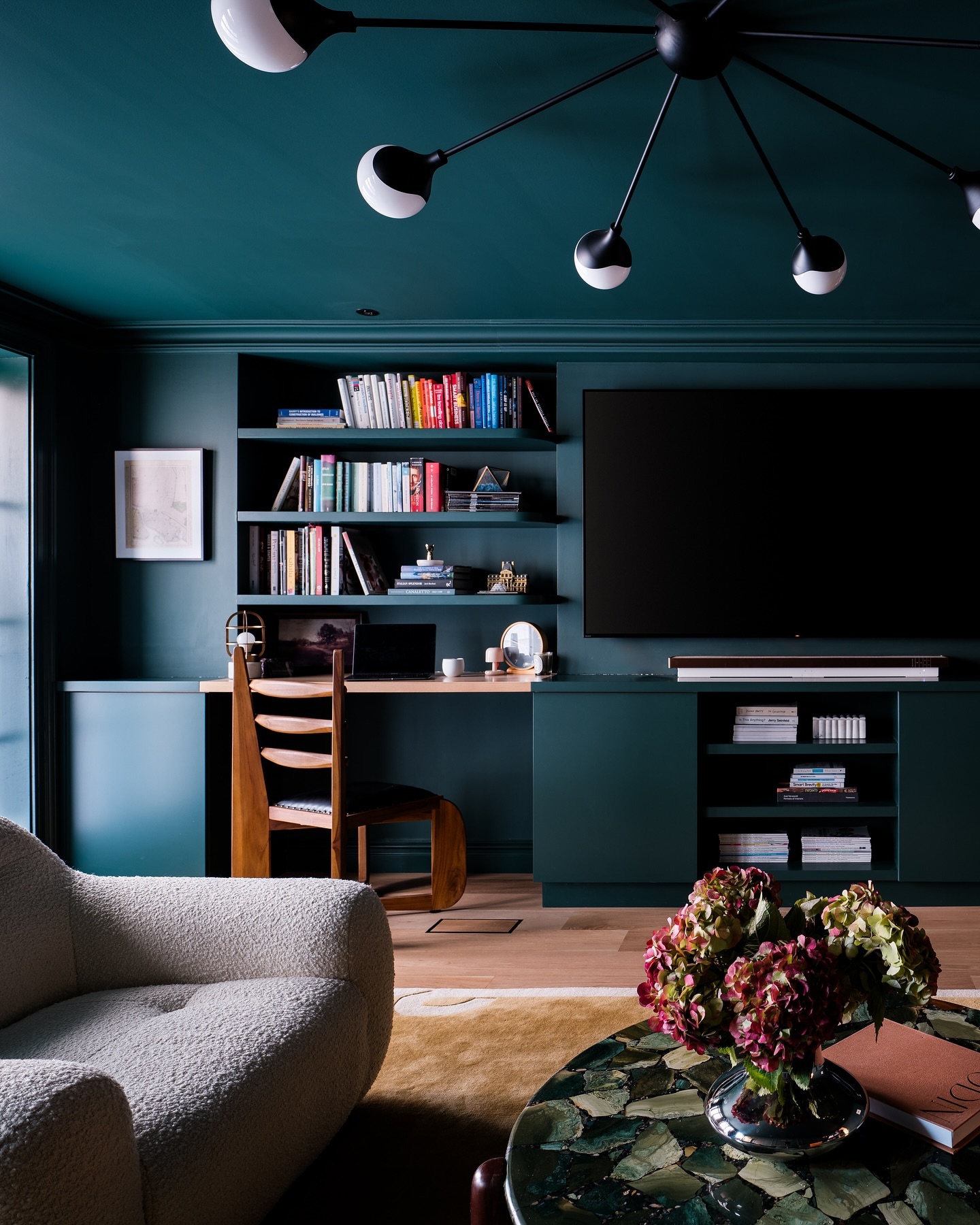
Credits: Instagram
A desk sits beneath the book shelves in this deeply colored living room, bringing reading and writing into the same space as everyday lounging.
The wooden chair and desktop warm the blue green cabinetry, while the matching ceiling strengthens the enclosed mood. Open shelves balance the large television with visible books and small objects.
For a modern interpretation of dark academia, focus on the room's habits as well as its decoration. Reserve a comfortable work surface near your reading collection and provide a chair that supports regular use.
Keep supplies in the cupboards below, leaving the desktop usable. A framed picture, lamp, and favorite books add personality without crowding the workspace or making the whole room feel like an office.