
A farmhouse bedroom can feel collected and comfortable without filling every surface with rustic décor. Farmhouse Bedroom Ideas range from simple wall treatments and blue-striped pillows to practical furniture that adds storage without losing character.
A carved wooden headboard against pale brick offers a way to make an older bed stand out, while a shallow shelf beside the bed can provide useful space in a smaller room.
For bedrooms with room to spare, a small upholstered sofa at the foot of the bed creates a separate place to sit. These ideas balance texture, warmth, and everyday function.
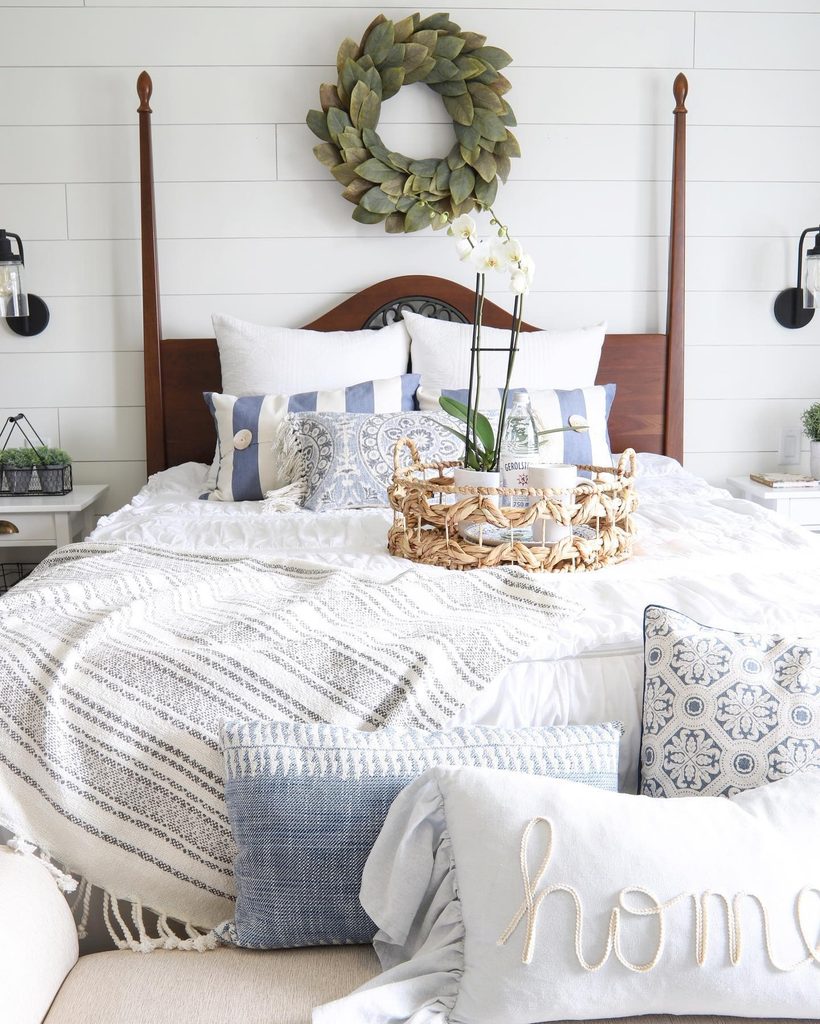
1. Frame a Wooden Bed With Shiplap and Blue Stripes
Credits: Instagram
Horizontal wall lines give the tall wooden bed a simple background, letting its curved headboard and slender posts remain visible. A leafy wreath fills the central space without turning the wall into a crowded gallery.
Blue striped pillows add a fresh farmhouse accent among the white bedding, while black wall lights provide darker punctuation at either side. Borrow the color balance rather than buying every decorative piece shown.
Two patterned pillows can be enough to connect a neutral bed to a favorite blue textile. Keep the wreath securely mounted and scaled to the headboard below.
The tray is useful for styling, but remove glasses, water, and decorative objects before sleeping so the bed remains comfortable and practical for everyday use.
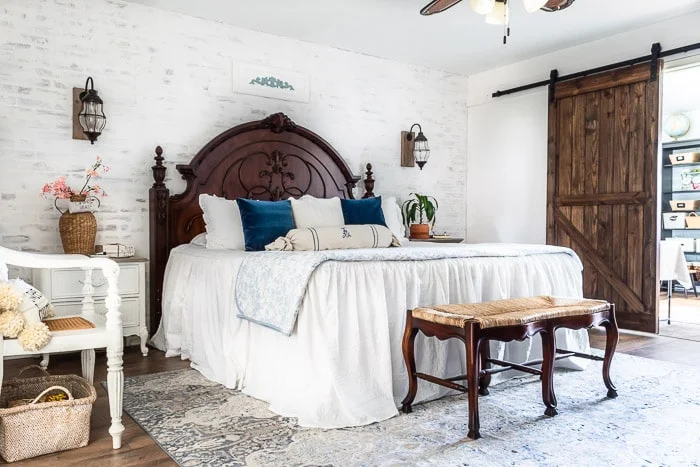
2. Set a Carved Wooden Headboard Against Pale Brick
Credits: Cindy / DIY Beautify
A dark carved headboard becomes the centerpiece when the wall behind it stays pale and textured. This bedroom pairs its substantial curves with a whitewashed brick look, creating a farmhouse setting that still feels light.
The small woven bench repeats the bed’s darker wood without matching its elaborate outline. White bedding leaves plenty of contrast around the carving, while two blue pillows supply a contained accent.
Try this balance before painting an older wooden bed that you already like. Its original finish may look entirely different against a lighter background.
Use a wall sample to judge texture and color together. Keep furniture simple enough that the headboard remains easy to appreciate, and choose bedside lighting that suits your evening routine.
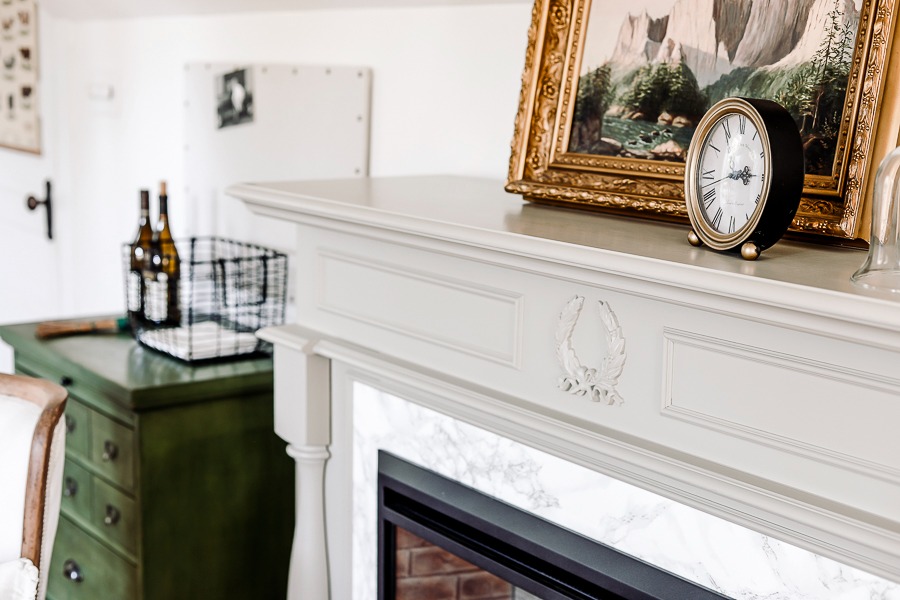
3. Give a Bedroom Mantel a Quiet Traditional Display
Credits: Sarah / She Holds Dearly
A pale mantel brings architectural character to this bedroom without needing a crowded display. Its shallow paneling and small central ornament offer enough detail beneath the framed landscape and round clock.
The painting’s gold frame adds warmth, while the green cabinet nearby makes the pale finish feel less uniform. Start with one picture whose size leaves some mantel surface visible, then choose a useful smaller object beside it.
Secure artwork rather than relying on a casual lean. This photographed surround includes an electric fireplace, so any similar arrangement should respect the appliance’s specified clearances and ventilation.
You can also borrow the color combination for a decorative surround. A restrained display makes the furniture’s shape and the artwork easier to enjoy.
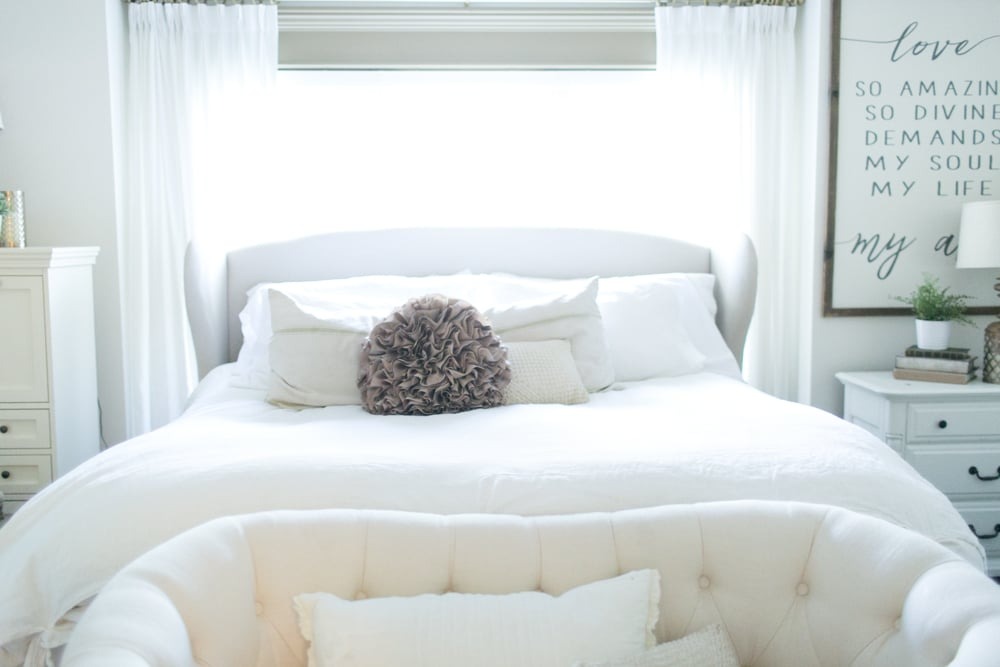
4. Place a Small Upholstered Sofa at the Bed’s Foot
Credits: Seng Nickerson / Sengerson
A pale upholstered sofa creates a separate sitting spot at the foot of this farmhouse bed. Its rounded arms and buttoned back echo the headboard’s soft outline, keeping the furniture pieces visually connected.
White bedding and curtains make the arrangement feel light, while one textured accent pillow gives the bed a defined center. This layout works best when the bedroom has enough depth for seating and a comfortable path around it.
Measure the sofa with its full arm width included, and check that it will not block drawers or a doorway. A shorter bench may suit a tighter room.
Choosing similar upholstery tones helps the seating feel integrated, especially when you want a quiet backdrop for patterned cushions or blankets.
5. Add Freestanding Storage With a Curved Armoire
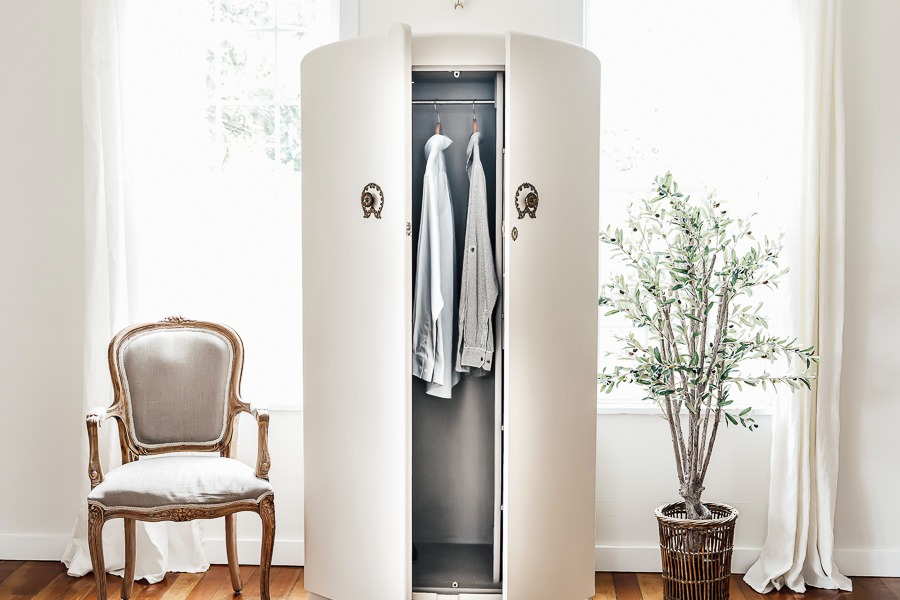
Credits: Sarah / She Holds Dearly
Curved doors make this freestanding armoire feel gentler than a large rectangular wardrobe. Its pale exterior sits comfortably between bright windows, while the darker inside becomes visible only when the doors open.
An upholstered wooden chair and a leafy topiary soften the storage area without hiding the cabinet’s outline. This is a useful farmhouse approach when an older bedroom needs hanging space but built in storage would be difficult.
Measure the cabinet’s depth and full door swing before committing to its position. Check that nearby windows remain accessible and that clothing can hang without bunching.
Follow appropriate anchoring guidance for tall furniture. A simple interior and restrained surroundings let an inherited or secondhand armoire feel like an intentional room feature.
6. Build Bedroom Storage Into a Substantial Wooden Bed
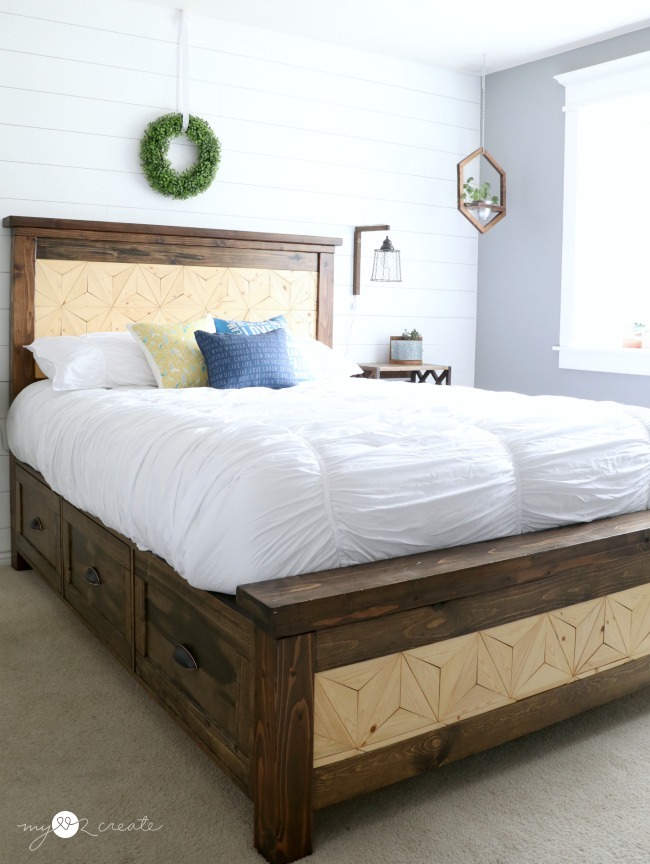
Credits: Mindi Carwin / My Love 2 Create
Drawers turn the base of this wooden bed into useful storage, while its patterned headboard and footboard make the furniture feel decorative. Dark framing surrounds lighter geometric panels, giving the large piece definition against white wall planks.
The bedding stays mostly white so the joinery and contrasting wood remain visible. A storage bed can reduce the need for a separate dresser, but its drawers need clear space along the sides.
Measure that space with neighboring furniture in place before choosing a frame or following building plans. Keep heavy contents manageable and use the drawers for items you can easily retrieve.
Small floating bedside shelves leave the lower area open, helping the storage work without sacrificing a convenient place for essentials.
7. Hang an Accordion Rack Below Small Landscape Prints
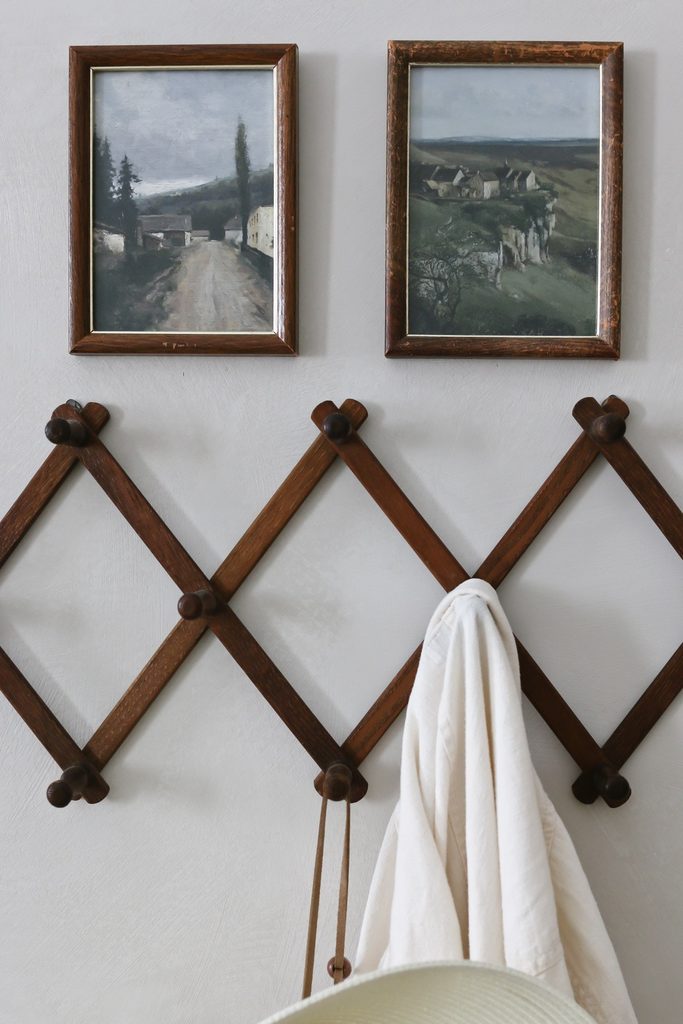
Credits: Cami Graham / The Keeper of the Home
An expanding wooden rack gives this farmhouse bedroom a practical place for a robe or bag. Its diagonal slats add a lively shape below two quiet landscape prints, and all three pieces share a warm brown finish.
The arrangement feels collected without needing a large gallery. Choose a rack with sound joints and mount it securely for the weight you expect to hang.
Position the pegs where clothing will not brush against furniture or interfere with an opening door. Leave some space below the artwork so the frames and hanging items stay visually separate.
Similar frames can unite prints with different subjects. Keeping most pegs empty makes the rack easy to use and allows its wooden shape to remain visible.
8. Use a Shallow Wooden Shelf Beside the Bed
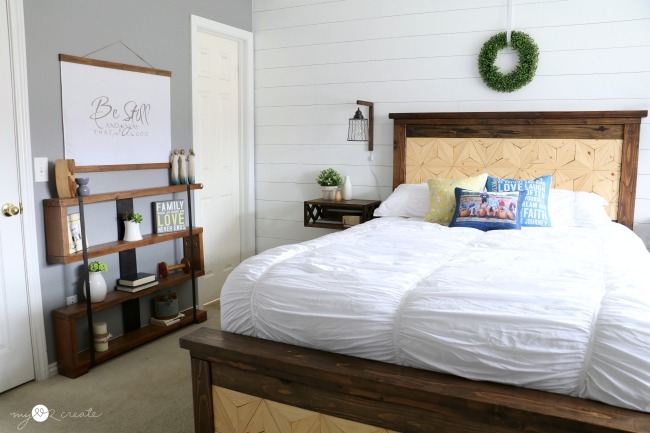
Credits: Mindi Carwin / My Love 2 Create
A narrow shelving unit turns a small stretch of bedroom wall into useful display space. Warm wooden shelves and dark supports relate to the substantial bed frame, while the open construction keeps the corner from feeling boxed in.
A fabric wall hanging above extends the arrangement without adding another deep piece of furniture. Measure the shelf’s projection before placing it along your route around the bed.
Shallow shelves work well for a few books, a small planter, and objects that do not overhang the edges. Group pieces loosely rather than filling every level.
Secure the unit appropriately and keep switches reachable. Repeating a wood tone from the bed gives an inexpensive storage addition a clear connection to the larger room.
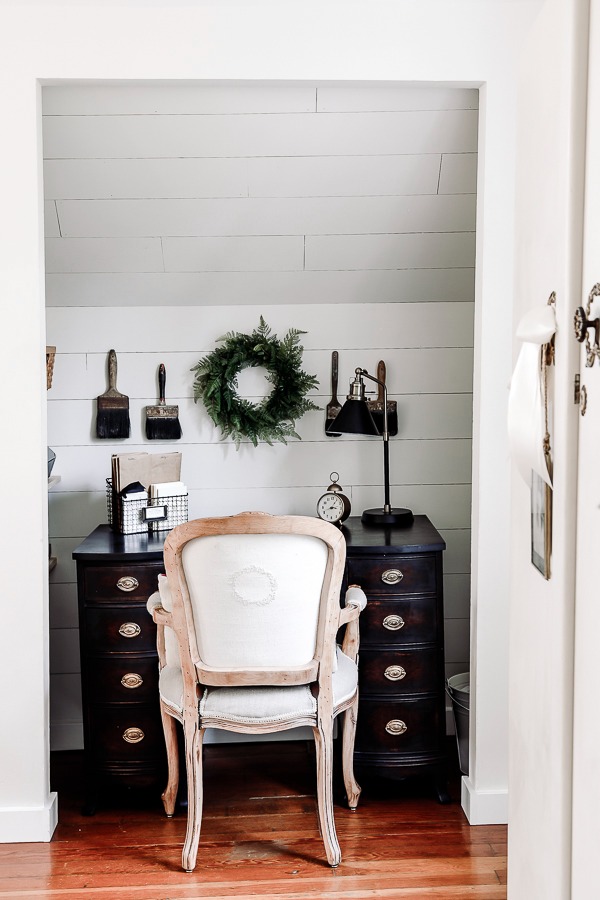
9. Tuck a Traditional Desk Into a Bedroom Alcove
Credits: Sarah / She Holds Dearly
A dark wooden desk fits neatly inside this paneled alcove, giving the bedroom a defined work area. Its drawers keep supplies contained, and a pale upholstered chair brings softness to the narrow opening.
White horizontal boards connect the recess to farmhouse architecture, while the small black lamp provides a focused light source. Before turning a closet or alcove into a desk space, check its depth with a chair pulled out and someone seated.
Preserve the storage you still need elsewhere in the room. A compact desktop arrangement is easier to maintain than several decorative collections.
Here, the wreath and old paintbrush display provide character above the work surface, leaving room below for everyday tasks and a comfortable place to write.
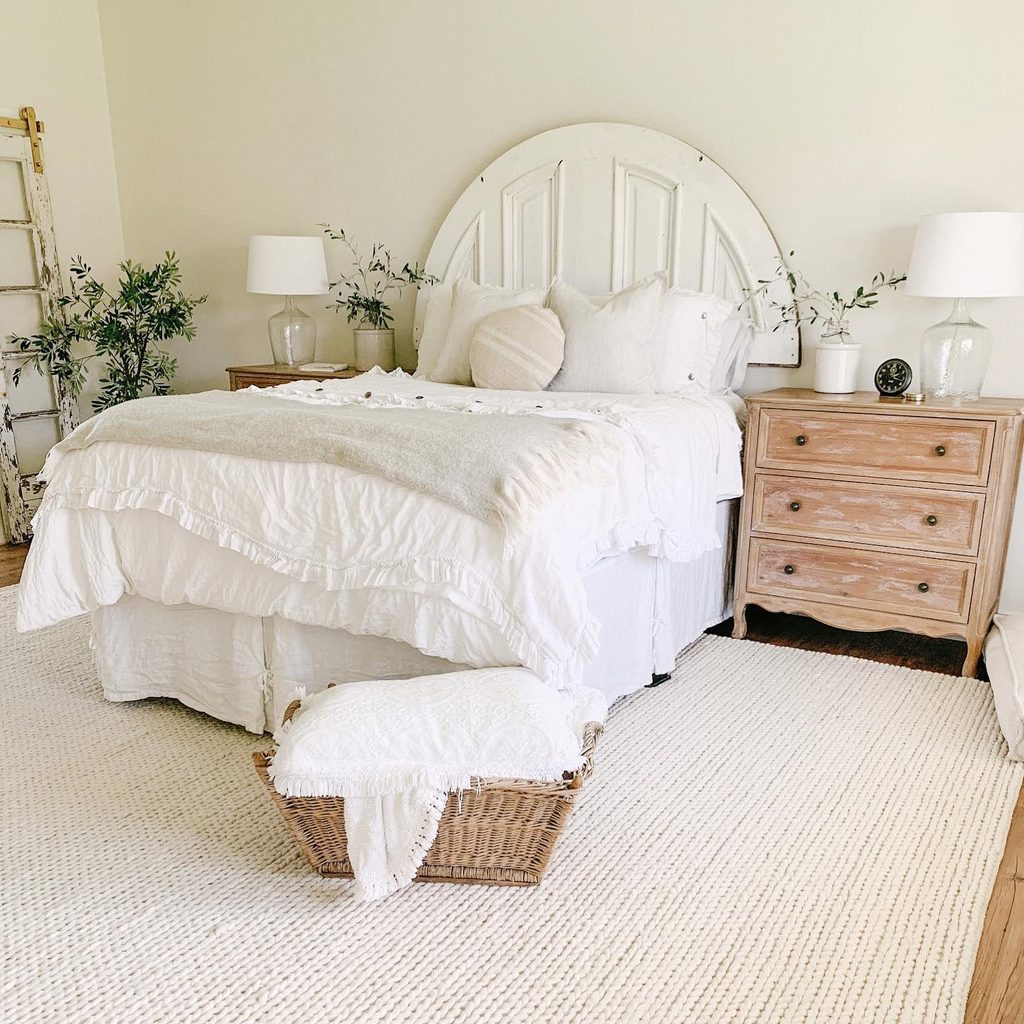
10. Balance an Arched Painted Headboard With Wooden Chests
Credits: Instagram
Curves give this pale bedroom its character, especially the arched paneled headboard behind layers of white bedding. The wooden bedside chests add warmth without introducing another bold color, and simple lamps maintain an orderly rhythm on both sides.
A textured cream rug spreads that softness across the floor. This combination is useful when you enjoy farmhouse furniture but want to avoid an entirely matching painted set.
Let one substantial piece carry the pale finish and retain visible wood elsewhere. Compare chest heights with your mattress before purchasing, since appearance matters less than reaching a book or glass comfortably.
Keep the headboard’s outline exposed above the pillows so its shape remains the feature instead of disappearing behind an oversized cushion collection.
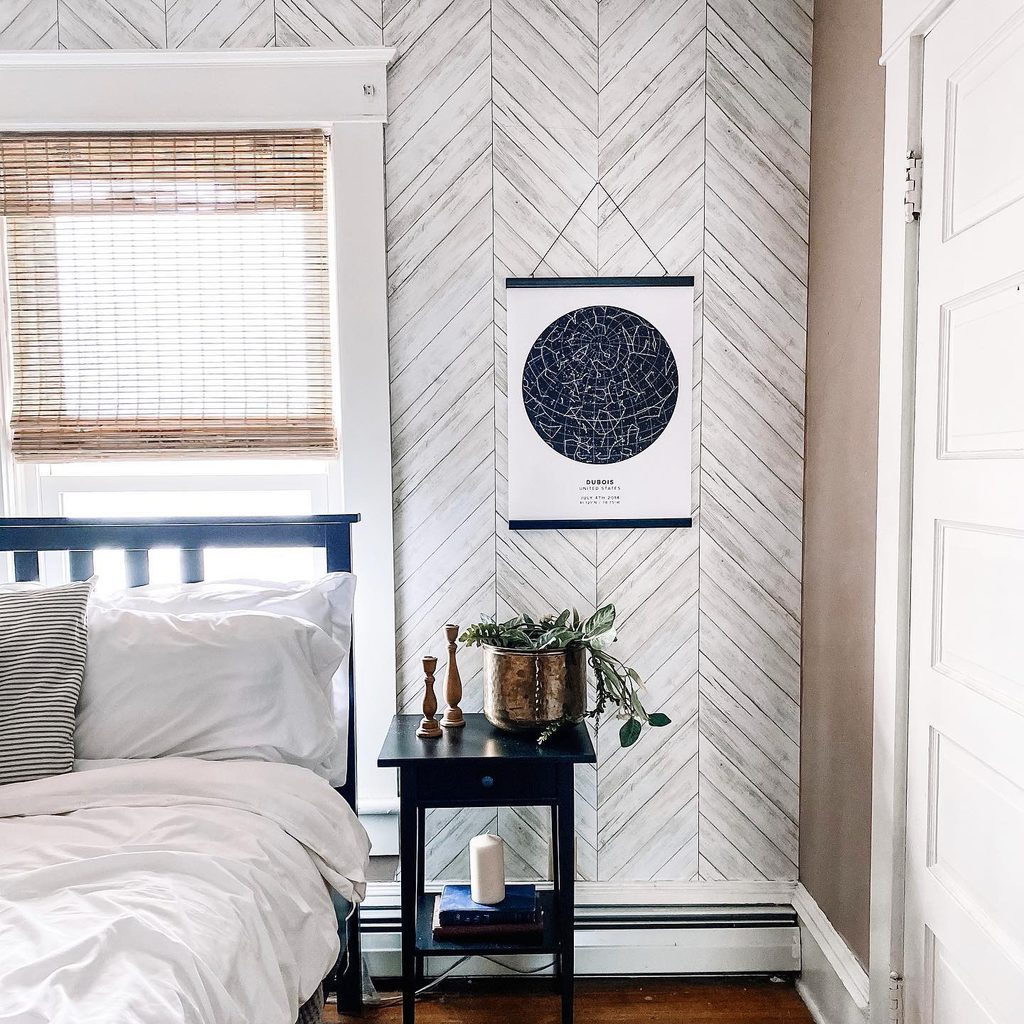
11. Try a Whitewashed Chevron Wall Beside the Bed
Credits: Instagram
Diagonal lines add movement to a narrow bedside corner that could otherwise feel plain. The weathered chevron pattern contrasts with the dark bed and nightstand, while a personal star map gives the wall a meaningful focal point.
A woven window shade provides a warmer texture beside all the white trim. You can use a wood-look wall treatment to borrow this effect without claiming it is real timber.
Check pattern repeats and alignment around windows before installing anything. The quieter the bedding, the easier it is to appreciate the wall’s direction.
Keep furniture clear of any heating unit beneath it and follow the manufacturer’s clearance guidance. A smaller framed print will usually leave more of the chevron pattern visible around it.
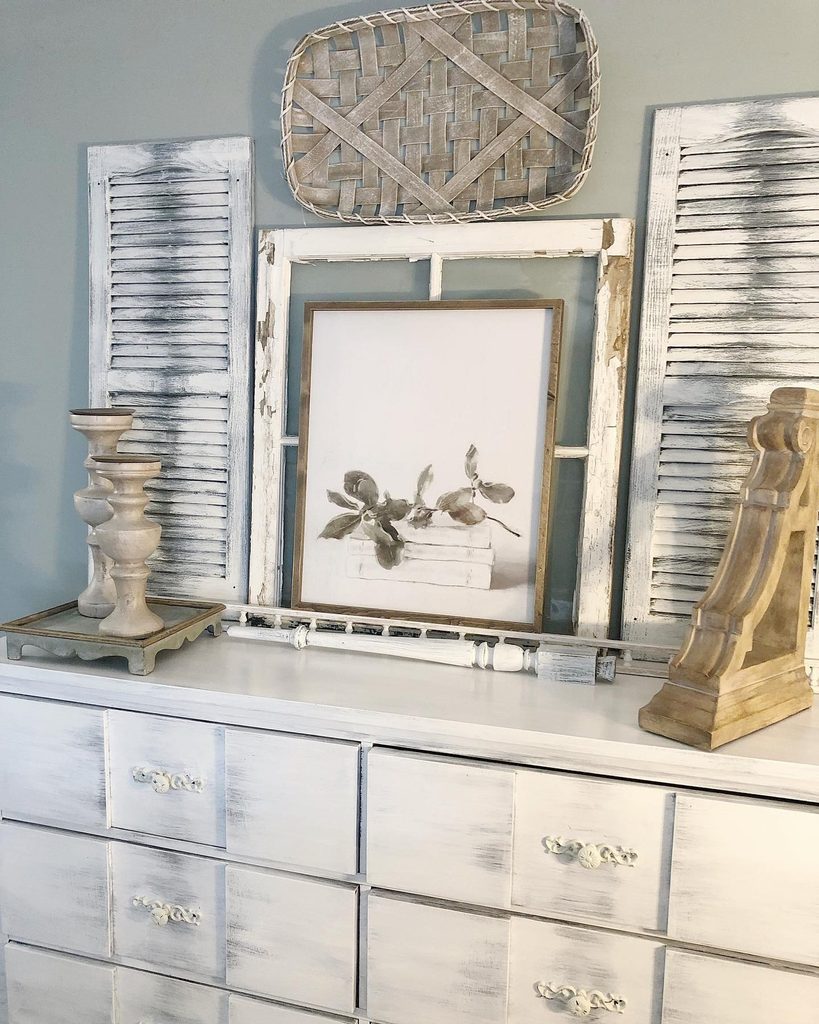
12. Style a Bedroom Dresser With Salvaged Architectural Pieces
Credits: Instagram
Furniture tops offer room for farmhouse character even when the bed wall is already finished. This dresser detail layers a weathered window frame, pale shutters, and botanical artwork against a muted background.
A woven basket above introduces a different shape, while substantial decorative pieces balance the lower arrangement. Treat the photograph as inspiration for a bedroom vignette rather than a view of the room.
Choose one architectural element to anchor the display, then add a smaller picture instead of stacking pieces indiscriminately. Old painted objects may need specialist assessment before handling or refinishing.
Secure taller items against tipping, and reserve usable dresser space for your routine. The most successful display should allow drawers to open and surfaces to be cleaned.
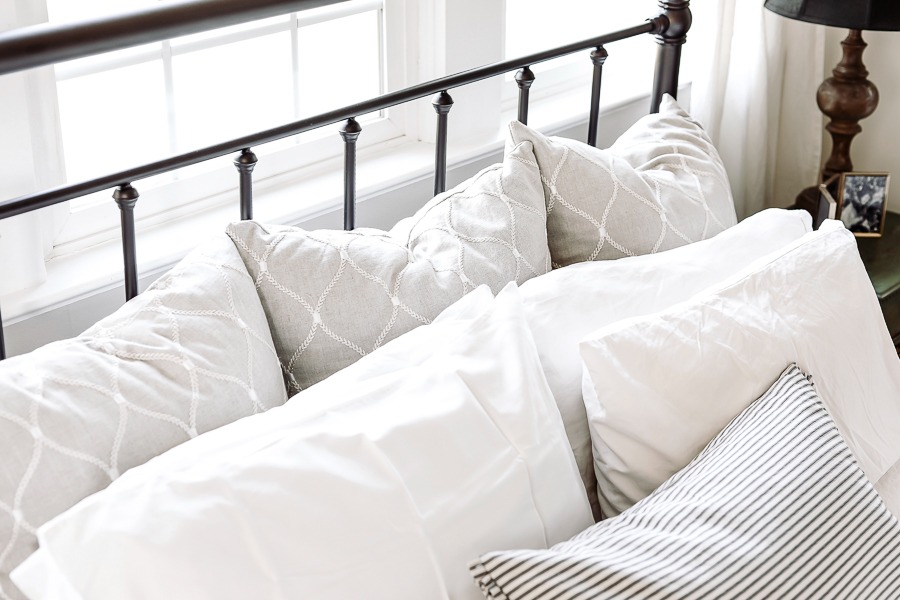
13. Layer Embroidered Pillows Against an Open Iron Headboard
Credits: Sarah / She Holds Dearly
Embroidery gives these neutral pillows enough detail to stand out against white linens. Their looping pattern softens the iron headboard’s straight rails, and the pale fabric allows the dark frame to remain visible.
A narrow striped pillow adds another scale of pattern at the front without introducing a color. This combination suits a farmhouse bedroom that already has strong furniture shapes.
Choose textured covers in closely related shades, then use one simpler print to break up the repetition. Arrange the back pillows below the top rail if you want the frame to remain part of the composition.
Check that covers are practical to clean. Leaving the surrounding window trim uncluttered keeps the layered bedding from making the room feel crowded.
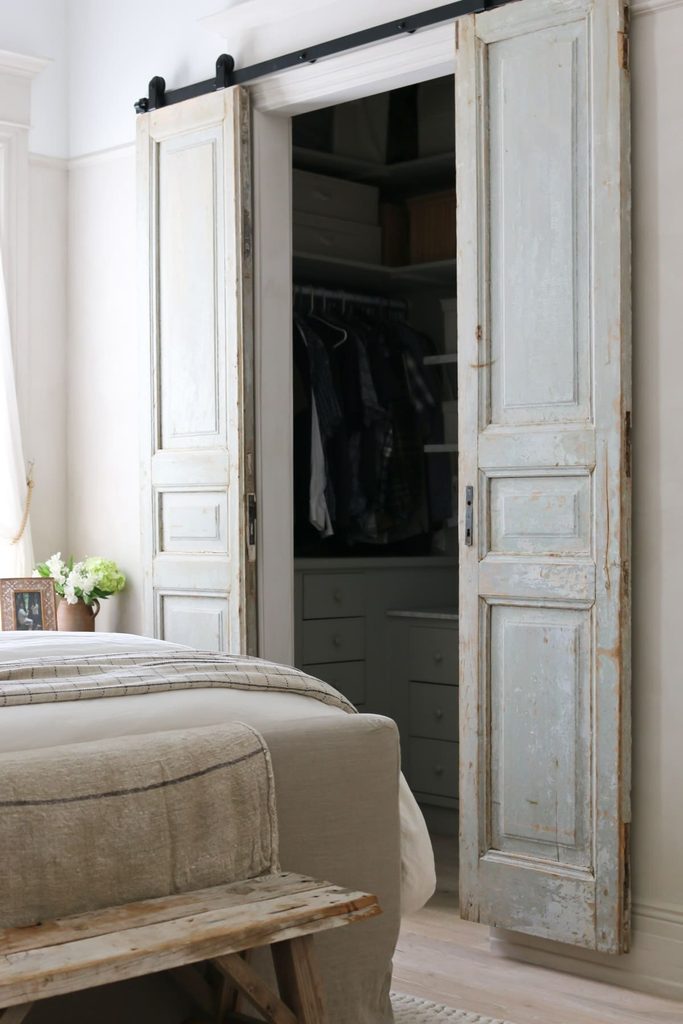
14. Frame a Closet With Tall Salvaged Sliding Doors
Credits: Cami Graham / The Keeper of the Home
Tall paneled doors bring an aged architectural layer to this otherwise pale bedroom. Their worn finish contrasts with the smooth upholstered bed, while the black overhead track supplies a clean horizontal line.
Opening the pair reveals practical closet drawers and hanging space behind the decorative surface. A similar installation needs careful measurements for door travel, overlap, wall support, and clearance beside the bed.
Have older painted doors assessed before sanding or refinishing them, and use hardware rated for their weight. Sliding doors should move safely without catching nearby furniture or fabric.
Keep the adjacent wall quiet so the panels remain noticeable. Even with a simple bed and neutral linens, these substantial doors give the room a farmhouse presence and character.
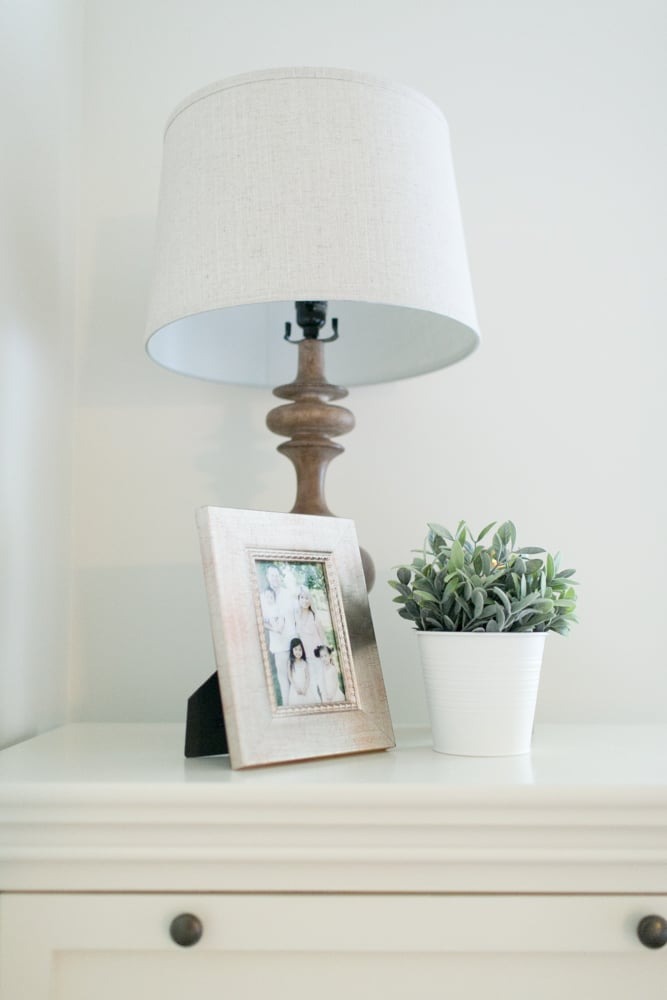
15. Warm a Painted Bedside Chest With a Wooden Lamp
Credits: Seng Nickerson / Sengerson
A turned wooden lamp introduces a natural tone above this cream painted bedside chest. Its broad fabric shade feels substantial without adding strong color, and the small plant beside it repeats the room’s softer palette.
A personal photograph fills the remaining space without turning the top into a large display. When pairing a lamp with painted furniture, compare the base and shade together rather than choosing by finish alone.
The shade needs enough room to sit comfortably away from the wall and curtains. Keep the switch reachable from bed and leave space for a glass or book.
Simple dark drawer knobs give the pale chest definition. This small combination brings farmhouse warmth to furniture that might otherwise feel quite plain.
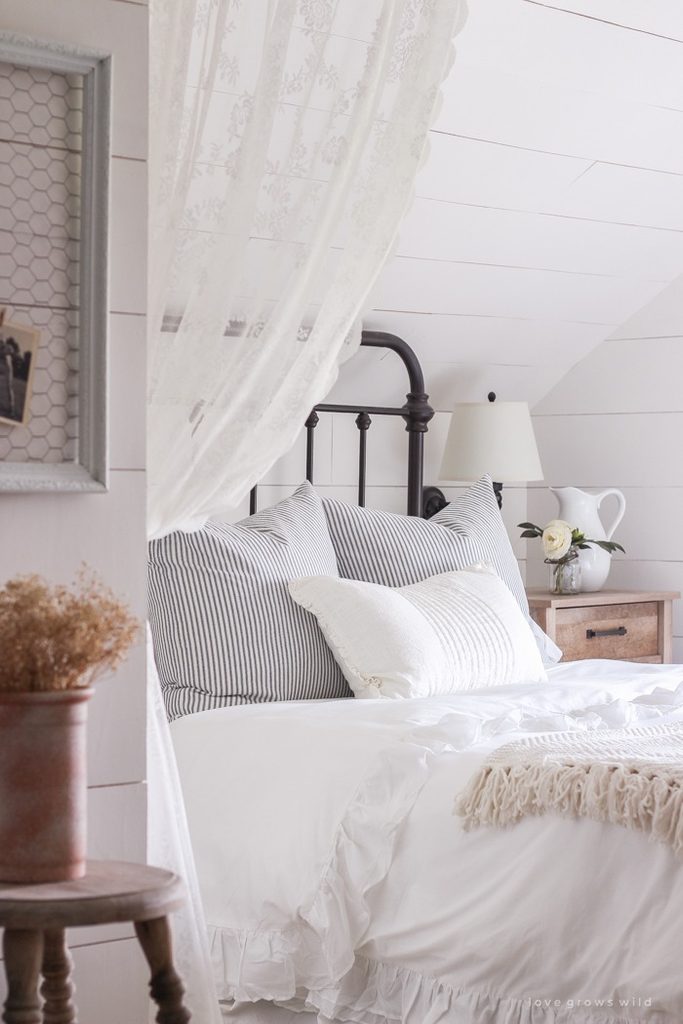
16. Soften a Sleeping Alcove With a Lace Curtain
Credits: Liz Fourez / Love Grows Wild
A lace curtain gives this sleeping alcove a gentle edge while leaving the iron bed and white wall boards visible. The fabric’s floral pattern contrasts with narrow striped pillows, bringing two familiar farmhouse textures into the same small area.
Ruffled bedding extends the softness below, and a plain wooden nightstand keeps the corner grounded. If your bedroom has an alcove, test a light fabric panel before committing to a heavier enclosure.
The curtain should hang clear of lamps, heaters, and the route into bed. Secure the support appropriately and make sure the panel can be moved for cleaning.
Keep nearby decorations restrained so the lace remains noticeable. This approach can make an existing recess feel inviting without changing its structure.
17. Line a Deep Bedroom Window With White Boards
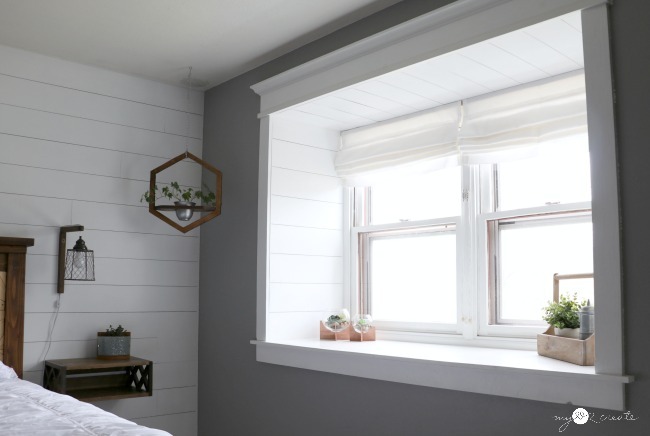
Credits: Mindi Carwin / My Love 2 Create
White boards wrap the deep window recess in this bedroom, turning its depth into a farmhouse feature. Substantial trim outlines the opening against the gray wall, while pale shades sit inside the frame.
The broad sill provides room for a few small plants without requiring a separate stand. Look at your own window’s depth and condition before planning a similar treatment.
Any added boards should preserve the window’s operation and access for cleaning. Keep plants in containers that protect the sill from moisture, and leave enough space to reach the hardware.
The nearby wooden hanging planter repeats the room’s warmer tones. Limiting the display to a few pieces lets the bright window and its crisp architectural edges remain the focus.
18. Bring Muted Green to a Slender Bedside Table
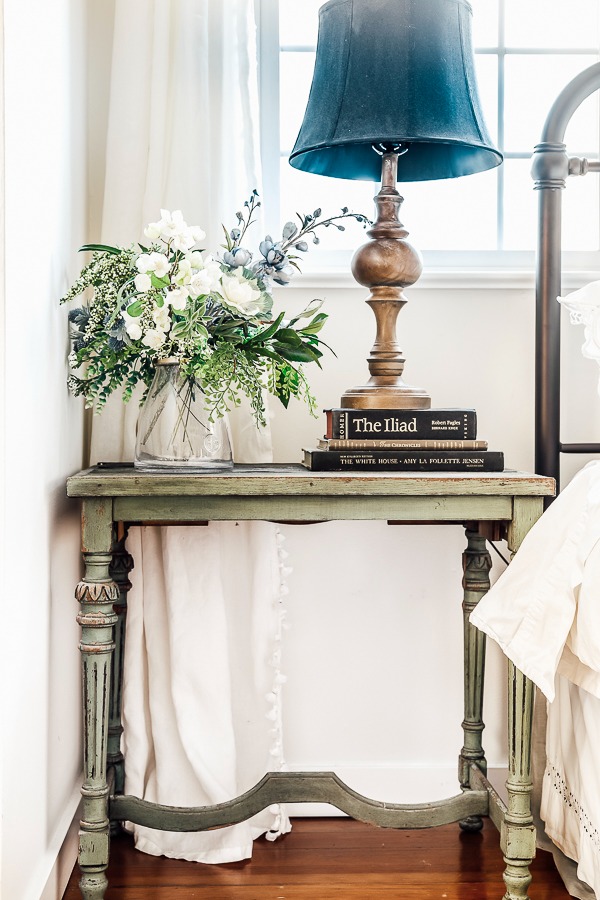
Credits: Sarah / She Holds Dearly
A narrow green table gives this bedside corner color while preserving an open view beneath it. Turned legs and a curved lower stretcher provide the farmhouse detail, and the worn looking finish keeps the piece relaxed.
Above it, a substantial lamp with a dark shade creates a strong vertical shape beside the pale bedding. Choose a table deep enough for your lamp’s base and anything you need overnight.
If you use books beneath a lamp, keep the stack stable and the switch easy to reach. Flowers can add a softer outline, but leave surface space as well.
Repeating the green elsewhere is optional; one painted furniture piece can supply enough color in a bedroom built around white linens and wood.
19. Share a Wooden Dresser Between Farmhouse Twin Beds
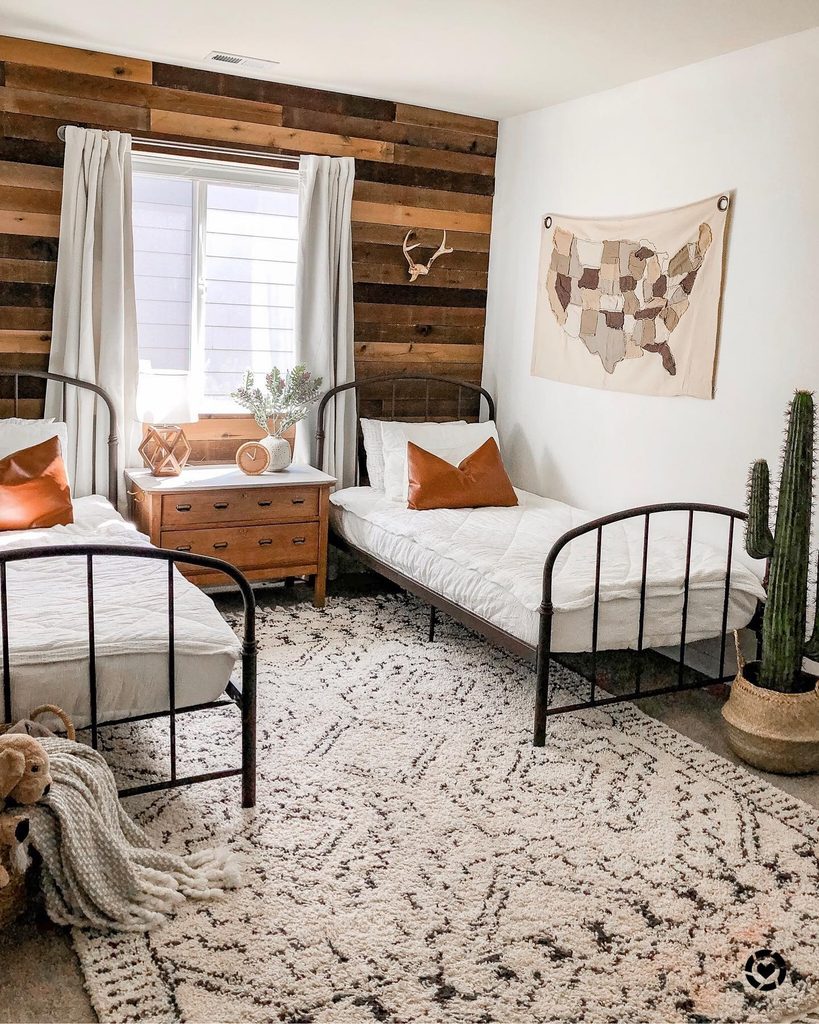
Credits: Instagram
Separate beds can still feel like a coordinated arrangement when they share a substantial central dresser. The dark metal frames in this room repeat one another, while varied brown wall boards give the window a rustic setting.
White bedding keeps the wood from becoming overwhelming, and caramel cushions connect the sleeping areas to the dresser. This layout offers a useful alternative to two tiny nightstands in a shared room.
Check that both sleepers can reach a light and have somewhere for everyday essentials. Secure furniture appropriately and leave enough space for drawers to open without colliding with the beds.
A similar arrangement can suit a guest room, with simpler wall art if the map and animal accents feel too youthful.
20. Add Bedside Texture With a Woven Vase
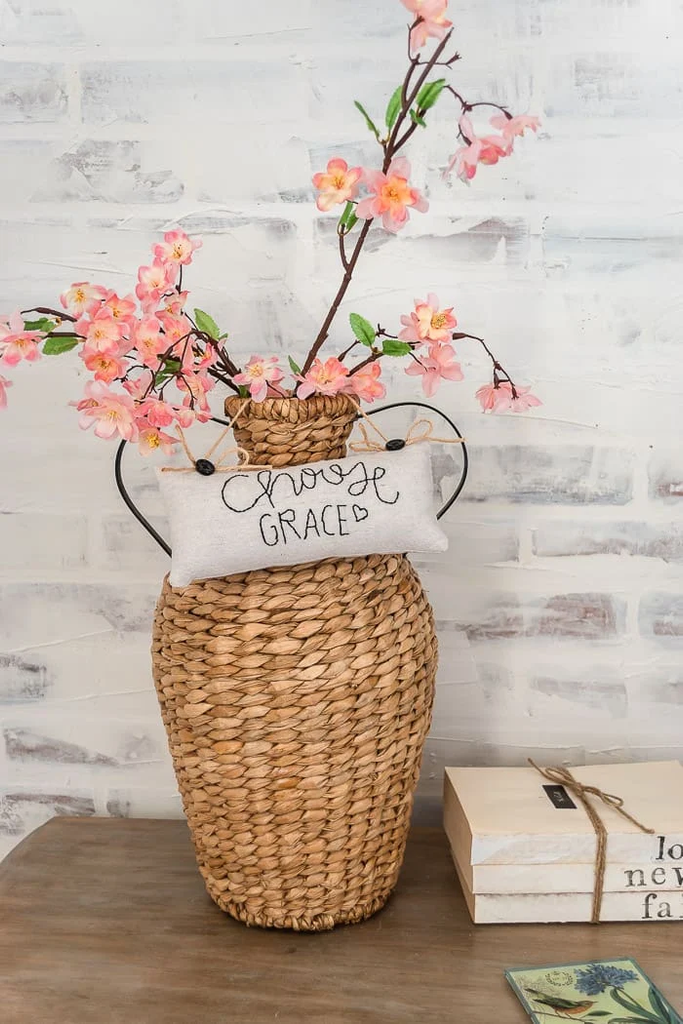
Credits: Cindy / DIY Beautify
A woven vase adds a substantial texture to this pale bedside arrangement. Its rounded body stands out against the whitewashed brick look, while pink flowering branches bring height without requiring more furniture.
A small fabric tag supplies a personal detail, and the nearby stack stays low enough to let the vase remain the main feature.
Choose the vessel’s size around the usable depth of your nightstand rather than the height of the branches alone. Tall arrangements should sit securely away from the bed edge and your route to a lamp switch.
Faux stems offer a simple option if watering would be awkward. Keep the remaining accessories limited so the woven surface and the delicate flowers each have room to show.