
A bedroom can feel grounded without turning dark or rustic; a few warm materials and muted colors often do the work.
Earthy Bedroom Ideas in this roundup show how olive, sage, rust, and cognac can bring character to a calm base of pale walls and bedding.
You’ll also see how visible wood grain, sculptural bedside tables, and open shelves add natural texture without relying on matching furniture.
For a deeper mood, brown paint around a window bay offers another approach, while woven baskets and a rattan chair bring warmth in practical ways.
1. Combine Sandy Walls With Olive and Small Floral Prints
Credits: Manda / The Merrythought
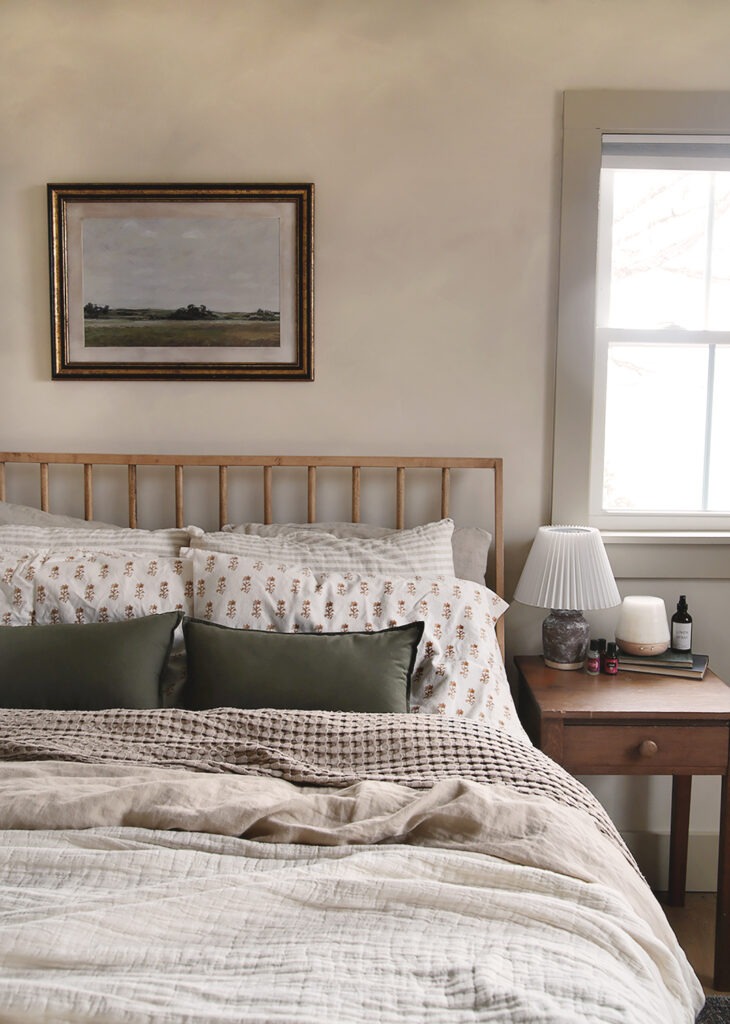
Sandy walls become more interesting when their color shifts gently across the surface. In this bedroom, a faux limewash finish sits behind an open wooden headboard and a modest landscape painting.
Olive pillows deepen the otherwise pale bedding, while tiny rust flowers introduce a second earthy color without dominating. The combination works because the broad surfaces remain quiet and the patterns stay small.
Try arranging existing neutral blankets with one green cushion before choosing paint. A cream lampshade and brown nightstand can reinforce the palette through objects you already own.
Keep enough of the headboard uncovered to reveal its slender shape. The rumpled layers give the room an everyday quality that does not depend on perfectly matched furniture or accessories.
2. Let Strong Wood Grain Anchor a Bright Bedroom
Credits: Henry / Plank and Pillow
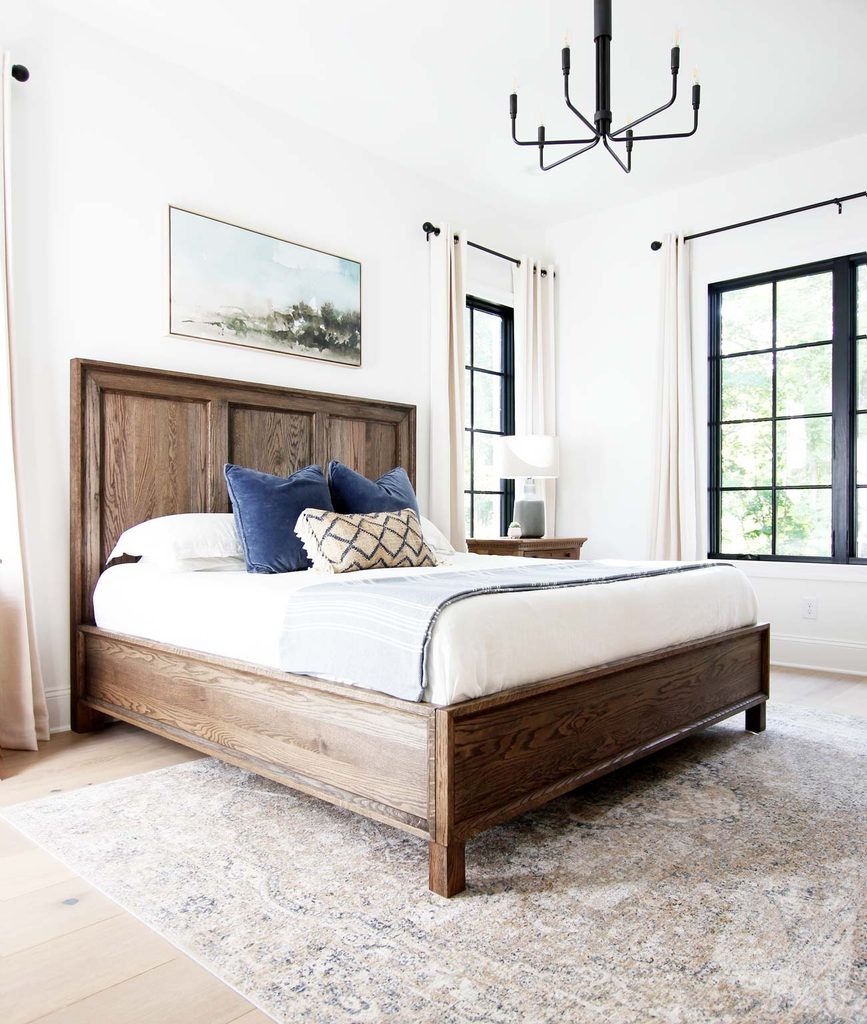
A substantial wooden bed can supply nearly all the warmth a bright room needs. The paneled headboard and footboard here expose sweeping grain, set against white walls, light bedding, and pale curtains.
Dark window frames sharpen the outline without turning the room into a heavy brown scheme. Blue cushions offer a restrained cool accent that balances the timber.
When choosing a similar frame, look at the visible grain and finish rather than relying only on a wood species name. Bring a sample beside your flooring if possible.
Leave a clear margin around the footboard so its construction remains visible and walking space stays comfortable. A quiet landscape above the bed continues the natural mood without adding another strongly competing pattern.
3. Wrap a Window Bay in Deep Brown Paint
Credits: Chris Loves Julia
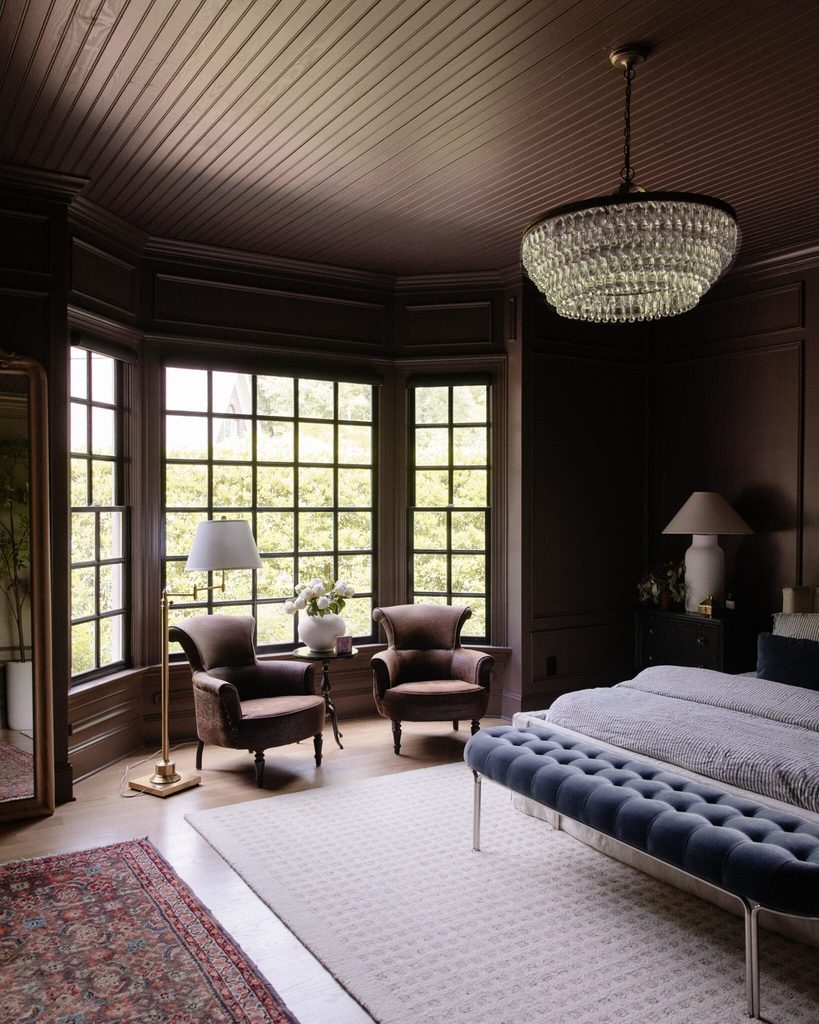
Rich brown travels from the paneled walls onto the grooved ceiling in this bedroom, creating an enveloping background for the bright window bay.
Two compact upholstered chairs echo that warm tone, while the pale floor and rug prevent the lower half from becoming visually solid. The bed’s blue bench provides a cooler counterpoint.
This photograph demonstrates how earth colors can feel formal as well as rustic. Test a brown paint sample vertically and overhead before committing, since each surface receives different light.
Keep useful lighting near the chairs rather than depending entirely on the chandelier. If your room has a smaller window, try the color on one wall first and assess how it feels during both morning and evening routines.
4. Bring Honey Colored Timber Against a Sage Wall
Credits: Wendy Duffy / At Lane and High
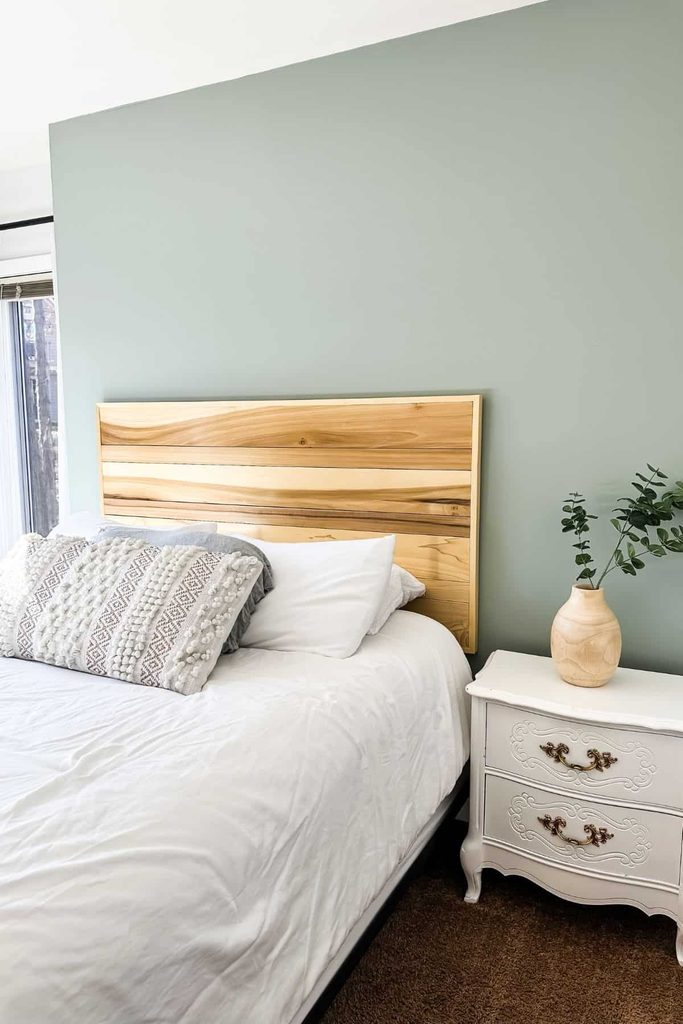
The warm grain of this simple wooden headboard is especially noticeable against the muted sage wall.
White bedding and an ornate painted nightstand keep the arrangement light, while a small wooden vase repeats the headboard’s honey color at a different height.
You do not need matching furniture to borrow the relationship. An existing white chest can sit comfortably beside a straightforward timber bed when the surrounding palette stays restrained.
Choose greenery with an open outline so it does not hide the small bedside surface. Before painting, compare the green with your actual wood finish in daylight; yellow and reddish woods respond differently.
A pair of textured pillows adds softness without obscuring the broad horizontal boards that make this combination distinctive.
5. Build a Rust and Sage Palette Through Bedding

Credits: Aniko / Place of My Taste
Rust, sage, and mustard give this pale bedroom a lively connection to natural colors. The rust bedcover forms the deepest layer, sage fabric crosses it, and a cream knitted throw creates a soft pause between the two.
A yellow ottoman adds brightness near the rattan chair without requiring another painted surface. Start with one generously sized textile in the color you want to emphasize.
Smaller pillows can then connect that layer to an existing rug or seat. The whitewashed bed frame keeps the stronger shades contained, making this a useful approach for rooms with light furniture.
Avoid covering every inch with pattern. Visible areas of plain fabric help the woven pendant, wood floor, and textured rug contribute their own character.
6. Trade a Boxy Nightstand for a Sculptural Wood Table
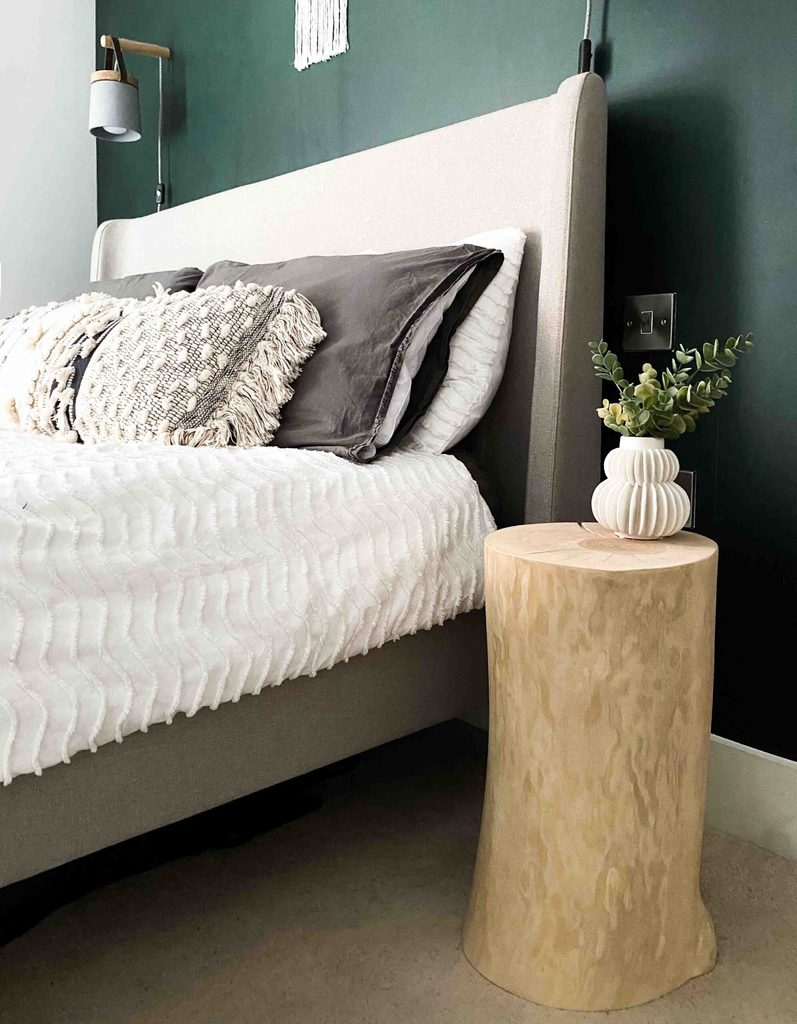
Credits: Lizzie Ravn / Emmerson and Fifteenth
A rounded wooden side table brings an organic shape to this otherwise tailored bedside arrangement. Its pale grain stands apart from the emerald wall and dark upholstery, while the small fluted vase repeats its curved outline.
Raised texture in the white bedspread adds softness without introducing another strong color. Consider this bedside solution whenever you would prefer a natural material beside the bed but do not need drawer storage there.
Compare the table’s top with your mattress height and check that it can hold your usual nighttime essentials. A separate wall light leaves more usable surface.
Keep the tabletop display modest so the wood remains visible, and choose a stable piece with a smooth finish that suits regular daily use.
7. Arrange Earthy Objects on Open Wooden Shelves
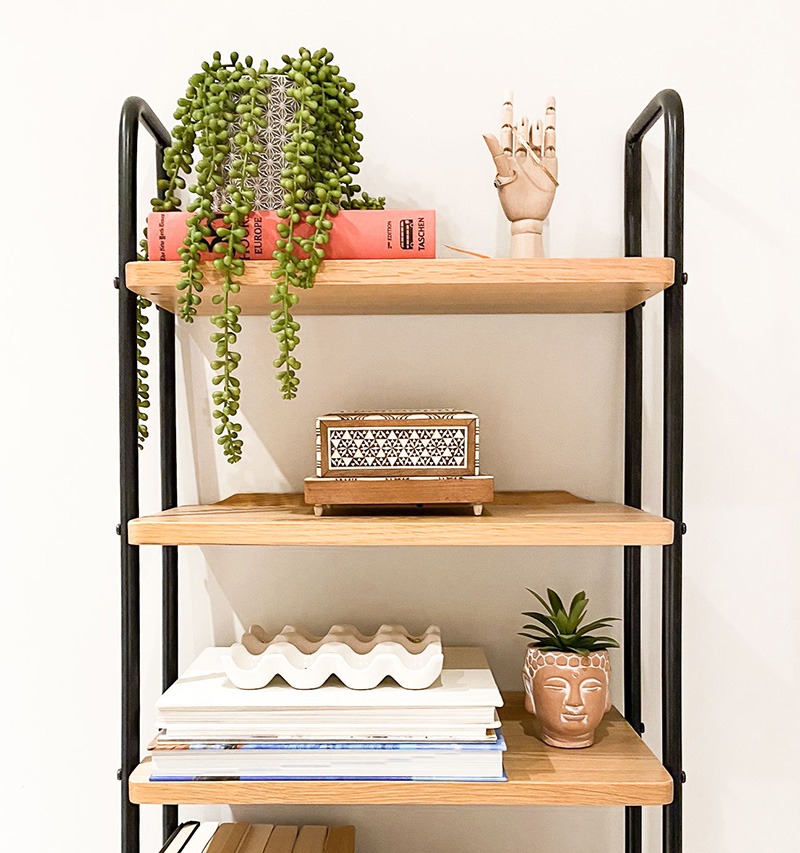
Credits: Lizzie Ravn / Emmerson and Fifteenth
A small shelving unit can carry an earthy theme beyond the bed itself. These pale wooden shelves hold a trailing green plant, a patterned box, stacked books, and sculptural ceramics, all separated by useful pockets of empty space.
Thin black supports give the display definition against the white wall. Rather than buying an entire matching collection, group a few objects with related warm tones and different outlines.
The terracotta colored planter and wooden hand create variety without overwhelming the shelf. Keep heavier objects low and follow the furniture’s anchoring instructions.
If using a real trailing plant, consider its light and watering needs before placing it above books. A compact arrangement is easier to maintain than filling every available level completely.
8. Use Lidded Woven Baskets as Practical Bedroom Texture
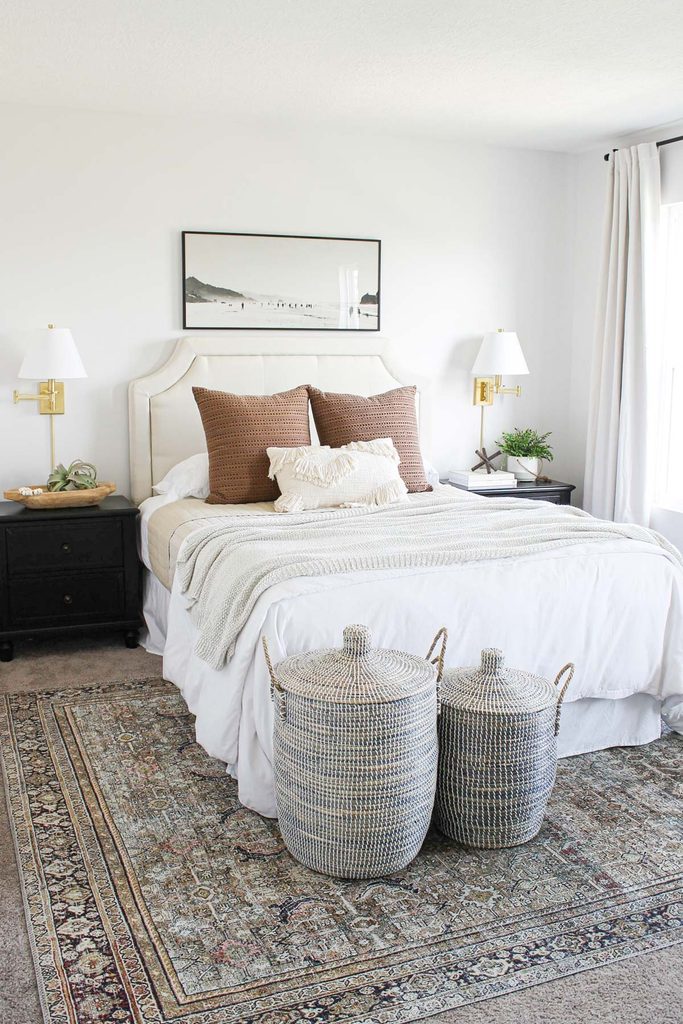
Credits: Caitlin / Caitlin Marie Design
Two lidded baskets bring substantial woven texture to the foot of this pale bed. Their rounded sides contrast with the rectangular rug and dark bedside chests, while their restrained colors connect to the white bedding.
Brown pillows supply warmth higher in the room, creating a clear relationship between the textiles and storage. Baskets work best when they have a real purpose, such as holding spare throws or clean linens.
Measure the open lid as well as the basket itself before placing one near a walkway. A single larger basket may be more useful than a decorative pair in a compact room.
Leave the surrounding rug visible so its muted pattern provides another earthy layer without making the floor feel crowded.
9. Add Warmth With Broad Plywood Wall Panels
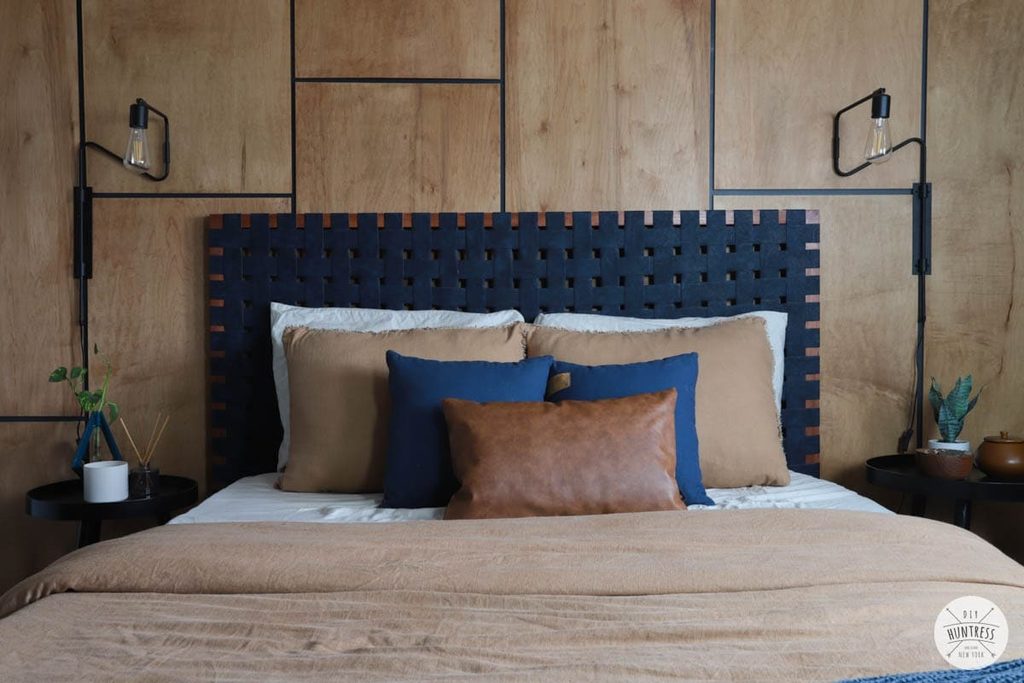
Credits: Sam Raimondi / DIY Huntress
Large plywood rectangles make the bed wall feel warm without relying on small rustic accessories. Narrow dark gaps outline each panel, relating to the woven black headboard and simple bedside lights.
Tan bedding carries the wood’s color forward, while blue pillows prevent the scheme from becoming entirely brown. The result feels contemporary because the geometry is clear and the other surfaces stay uncomplicated.
For a similar project, plan panel joints around the bed and visible outlets before cutting material. Consider the actual grain direction and how adjacent sheets will look together.
A smaller panel behind the headboard can suggest the same idea when a full wall is impractical. Keep decorative objects limited so the timber remains the room’s main texture.
10. Warm Gray Bedding With Cognac Pillows and Fringe
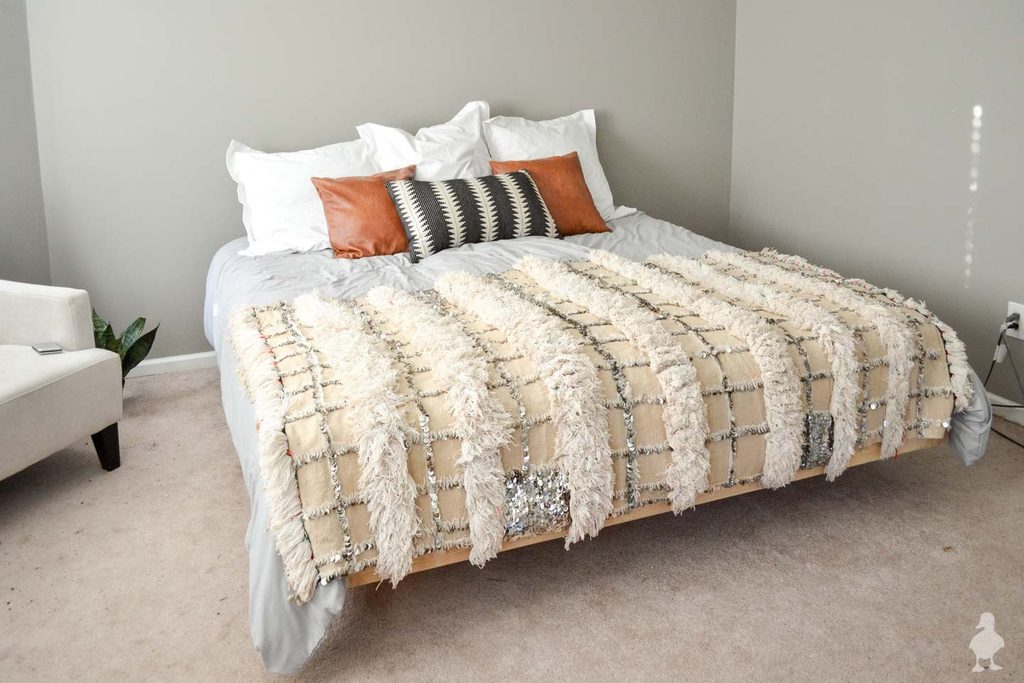
Credits: Sarah / Ugly Duckling House
Gray walls and bedding can take on an earthy character through a few warmer layers. Here, cognac colored pillows sit in front of white cushions, while a cream fringed blanket spreads across the low platform bed.
The exposed wooden edge adds a narrow natural line beneath all that fabric. This approach suits a bedroom whose larger pieces already feel neutral but slightly cool.
Try two warm brown pillow covers before replacing your main bedding. Choose one textured blanket that is comfortable to handle and easy to care for.
Leave part of the gray cover visible so the colors remain distinct. A simple upholstered chair nearby repeats the pale tones, allowing the bed’s tactile layers to provide most of the interest.
11. Pair Olive Linen With Cognac Leather
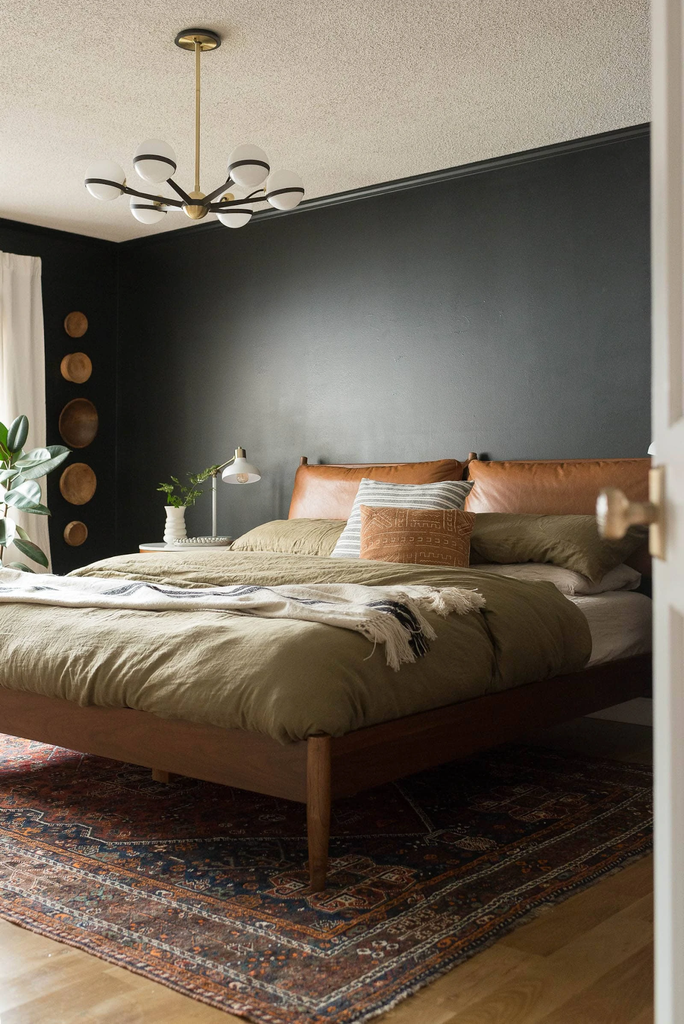
Credits: Ashley Mayes / Bigger Than the Three of Us
Olive bedding and cognac leather make a convincing earthy pairing even with black walls behind them. The broad leather cushions bring warmth to the headboard, while relaxed green fabric softens the wooden bed frame.
A patterned rug introduces muted red and blue near the floor. Notice how the white ceiling and curtain still create lighter boundaries around the darker room.
You can borrow the central color combination without repainting every wall. Compare an olive coverlet with one brown leather or similar toned fabric accent first.
Keep the bedside lighting practical and comfortably bright for reading. The basket arrangement near the window adds another natural texture, but the bed remains the main focus because its colors occupy the largest uninterrupted area.
12. Set a Pale Woven Headboard Against Dark Battens
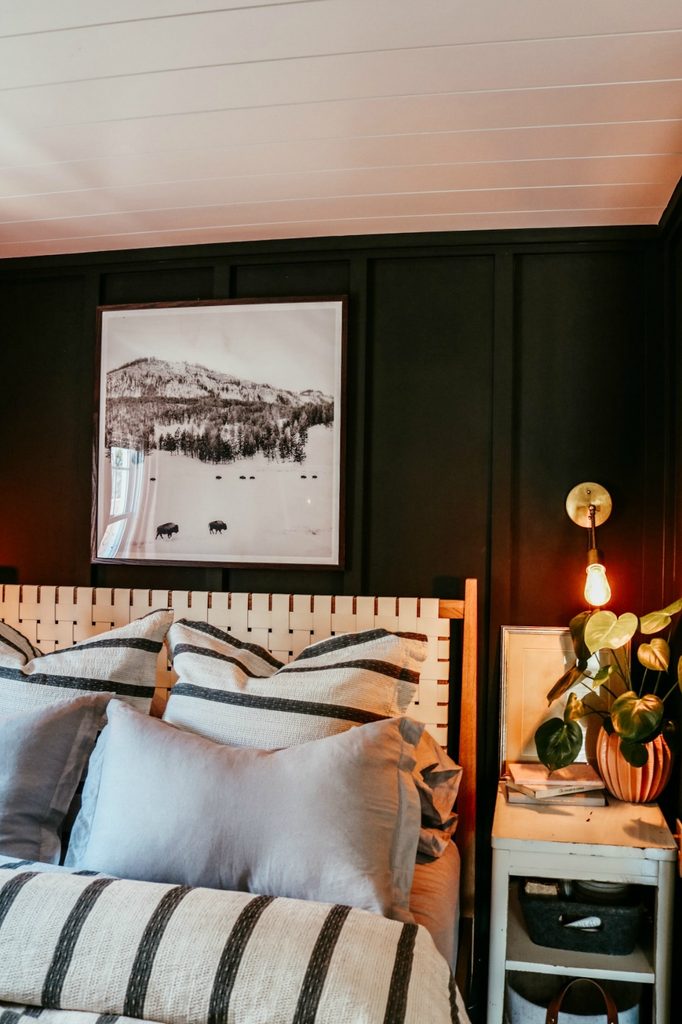
Credits: Brooke Christen / Nesting With Grace
Pale woven strips stand out clearly against the dark vertical battens behind this bed. The wooden frame gives the headboard a warm border, echoed by the framed winter landscape above it.
Gray cushions and striped bedding keep the palette quiet while a leafy plant and glowing wall bulb bring life to the bedside. This works by placing an airy, textured surface directly in front of a deep background.
You could try a woven headboard with one dark accent wall rather than redesigning the entire room. Check the material’s cleaning instructions and the frame’s sturdiness before choosing.
Leave a little breathing room around the artwork so its frame remains distinct from the headboard, and keep the bedside surface functional beneath accessories.
13. Balance Olive Paneling With a Pale Storage Chest
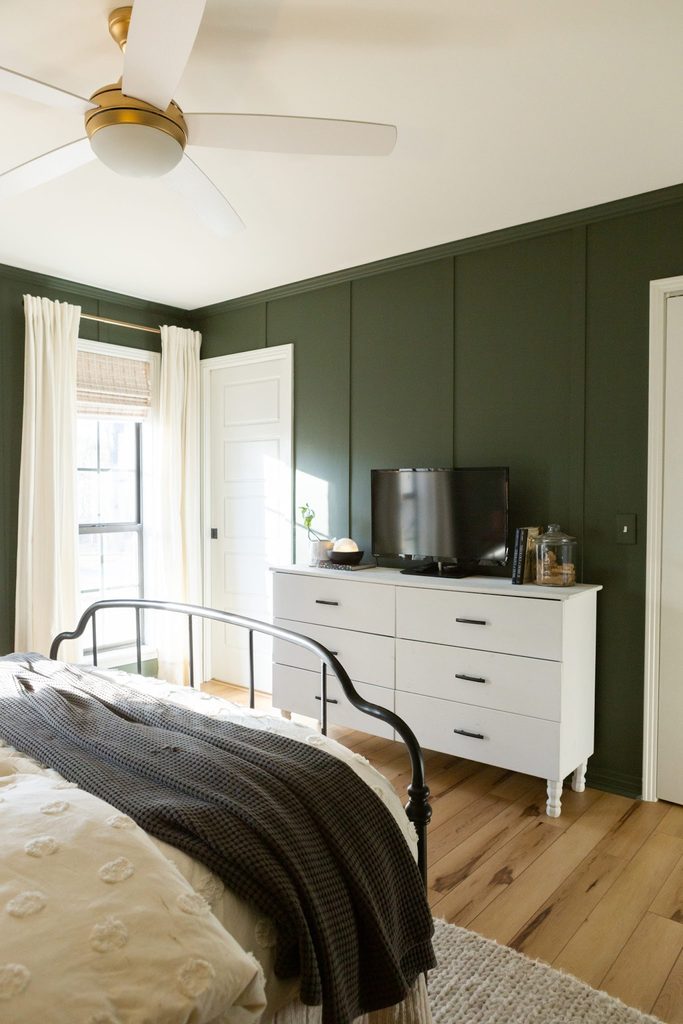
Credits: Jordan Jean
Olive paneling makes this bedroom’s white dresser feel deliberately connected to the room rather than simply left over from another scheme. Tall narrow wall sections provide rhythm, while the dresser’s broad horizontal drawers create a quieter counterbalance.
Warm floorboards and a woven window shade strengthen the natural palette. The black bed frame and small hardware add definition without introducing another large color block.
This arrangement is useful when storage matters as much as atmosphere. Keep an existing pale chest and test a muted green behind it before shopping for replacement furniture.
Allow room for drawers to open fully and leave some of the top clear. A small plant or wooden bowl can repeat the earthy details without overwhelming everyday storage.
14. Keep Gentle Sage Below a Narrow Wood Ledge
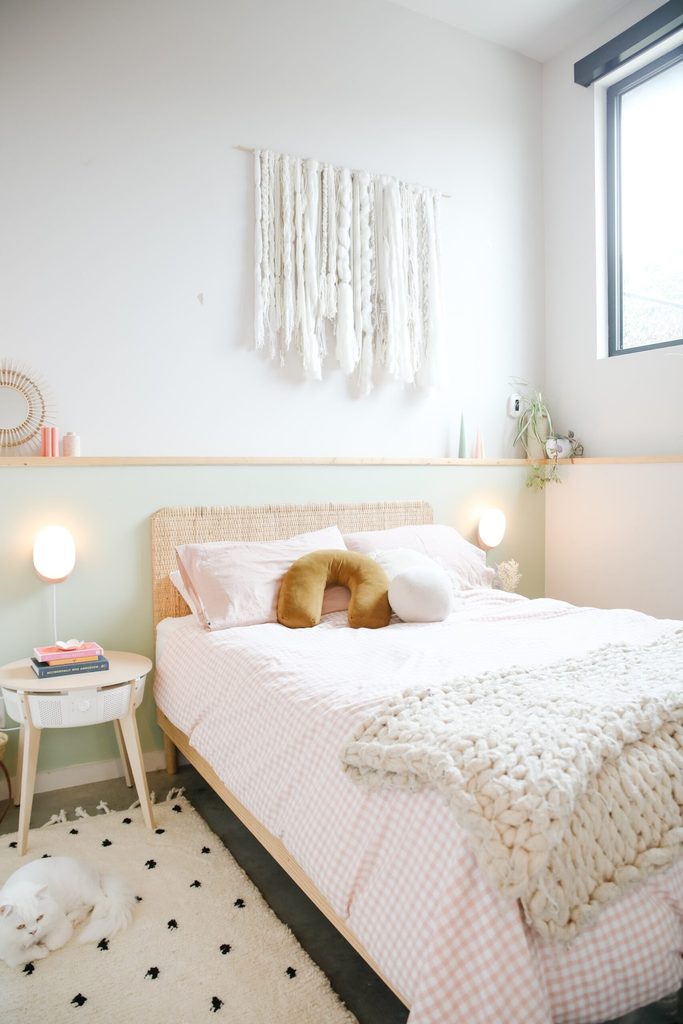
Credits: Hey Maca
A low band of gentle sage gives this bedroom color while leaving most of the tall wall white. The slim wooden ledge marks the boundary and relates to the woven headboard and pale bed frame.
Pink checks, cream texture, and a mustard cushion add warmth in small amounts. This softer version of an earthy palette works well when dark greens would feel too heavy.
Set the paint height in relation to your own headboard rather than copying the photograph’s proportions. A ledge should be firmly secured and kept lightly loaded, especially above a sleeping area.
Let one or two objects provide height instead of filling its entire length. The generous white space above preserves the room’s open and sunny feeling.
15. Make a Rattan Reading Chair Feel Part of the Bedroom
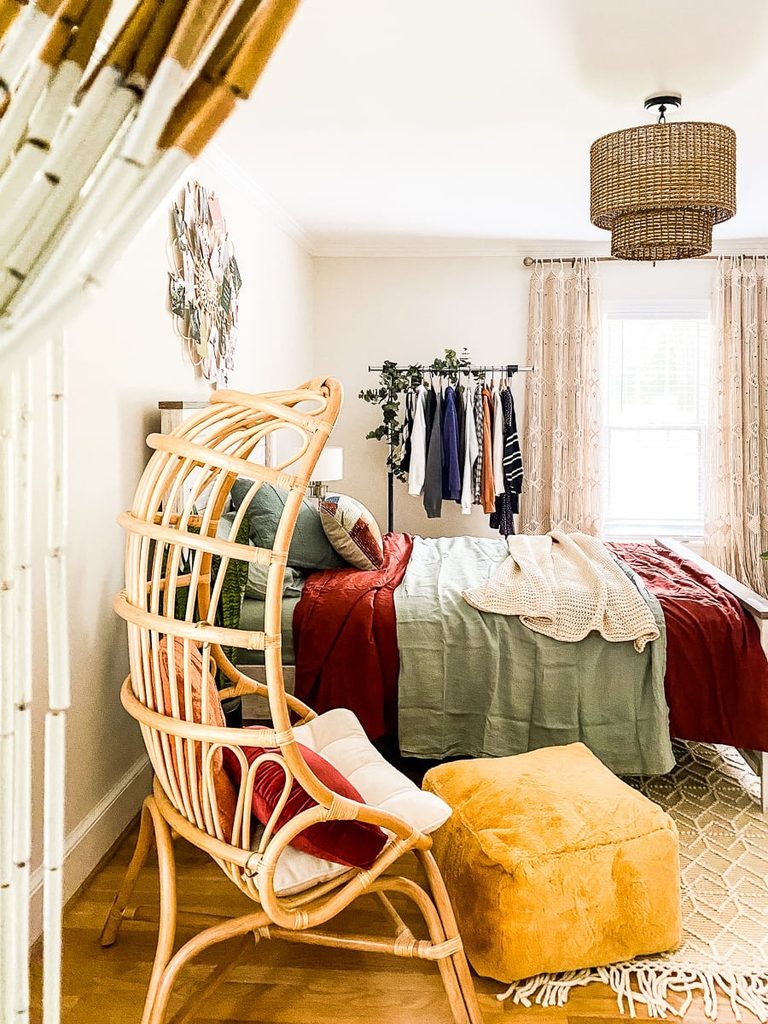
Credits: Aniko / Place of My Taste
The tall rattan chair here earns its place beside the bed through repeated color and texture. Its honey colored frame relates to the woven ceiling shade, while a rust cushion connects with the bedding.
The mustard ottoman adds a comfortable looking footrest and another warm accent close to the floor. This creates a small sitting area without introducing a separate decorating scheme.
Measure the chair’s full depth and allow enough space to reach the bed and nearby clothing storage. A compact upholstered stool may be easier to move than a broad ottoman.
Keep the seat usable instead of piling it with spare pillows. The open frame allows glimpses of the room beyond, helping a substantial chair feel visually less heavy.
16. Ground Light Bedding With a Brown Tufted Bench
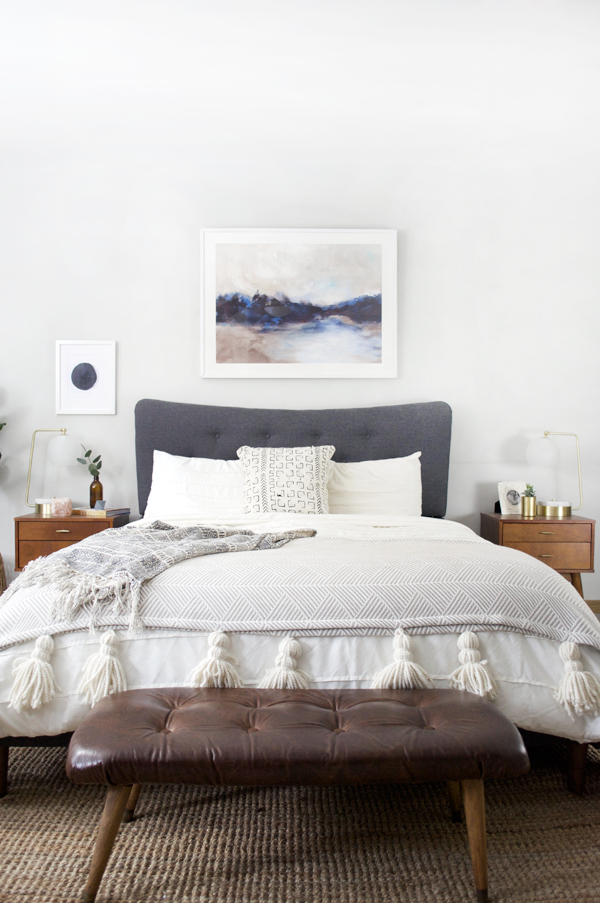
Credits: Bre / Brepurposed
A brown tufted bench gives this pale bedroom a grounded lower edge. Its smooth upholstery contrasts with the coarse woven rug and long cream tassels hanging from the bedding.
Wooden nightstands carry the warmth to either side, while a gray headboard and soft abstract artwork keep the overall palette calm.
The bench is especially useful if you need a place for dressing, but its proportions should suit the bed and walking route. Check its intended seating capacity before treating it as a practical perch.
You can achieve a similar color balance with a smaller wooden stool when floor space is limited. Keep bedding clear of the seat so the contrast between soft fabric, brown upholstery, and woven texture stays visible.
17. Contrast Taupe Linen With a Dark Bed Wall
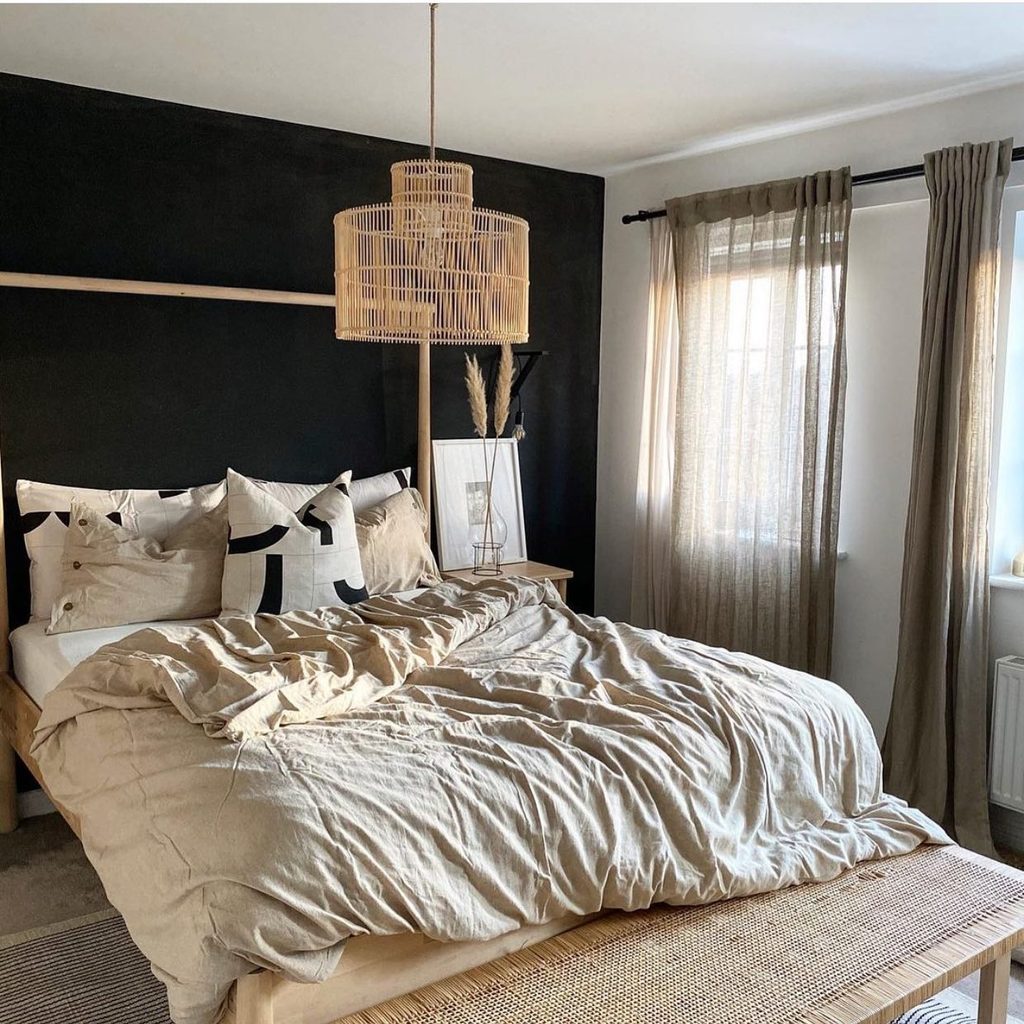
Credits: Instagram
Loose folds soften the straight wooden canopy frame in this bedroom. Taupe bedding and curtains stand out against the dark wall, while an open woven pendant repeats the lighter wood tones.
The room shows how black can define an earthy scheme when most surrounding surfaces remain warm and tactile. Choose fabrics for their feel and care needs, not just their photographed texture.
A small sample will help you compare taupe with the wood and paint already present. Keep the canopy clear if adding drapes would make the room feel crowded.
The creator mentions plans for new paint, so this photograph represents the room before that change. Borrow the visible color balance without assuming the existing wall has a limewash finish.
18. Bring Wood Look Texture to a Vaulted Ceiling
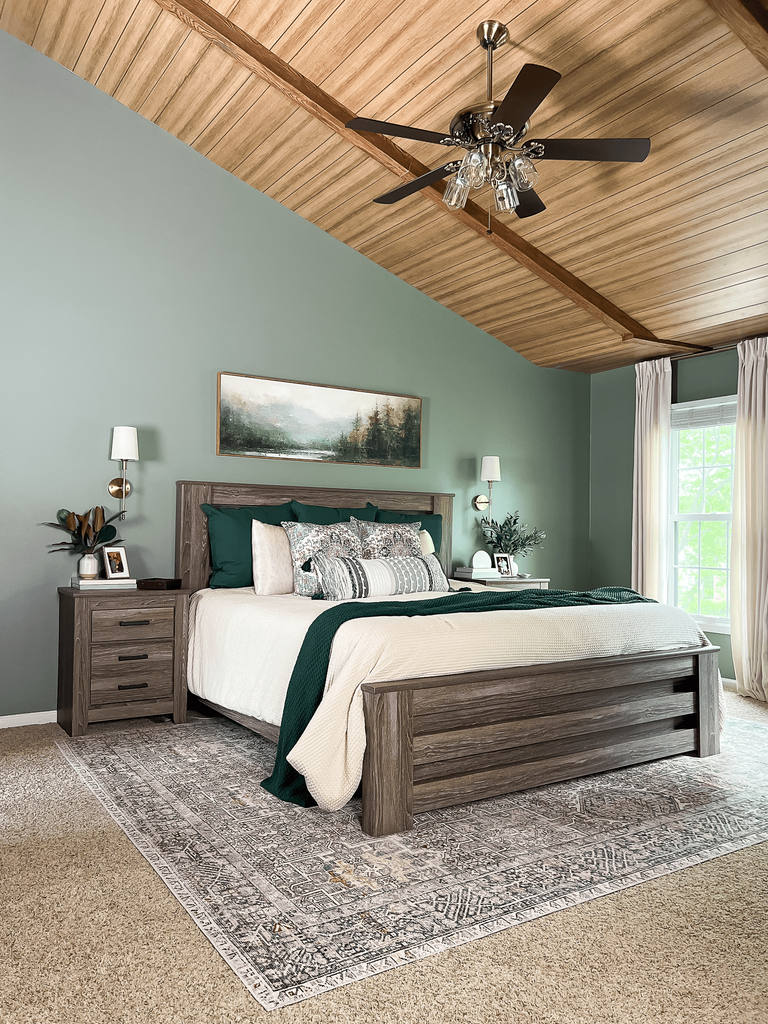
Credits: Christin Cieslarski / My Homier Home
Wood look boards turn this vaulted ceiling into the bedroom’s strongest natural element. Their warm pattern contrasts with sage walls and deeper green bedding, while the broad landscape artwork repeats the same quiet outdoor colors.
Darker beams outline the ceiling’s shape instead of letting its large surface feel featureless. Because the overhead treatment already has substantial presence, the room uses restrained furniture forms and pale curtains below.
Start by considering the ceiling height, fixtures, and the direction of the boards. Suitable installation methods depend on the material and structure, so follow product guidance rather than improvising overhead attachments.
A smaller wall treatment can provide similar warmth in a room where ceiling work is impractical or would make it feel crowded.
19. Reflect Greenery in a Simple Round Mirror
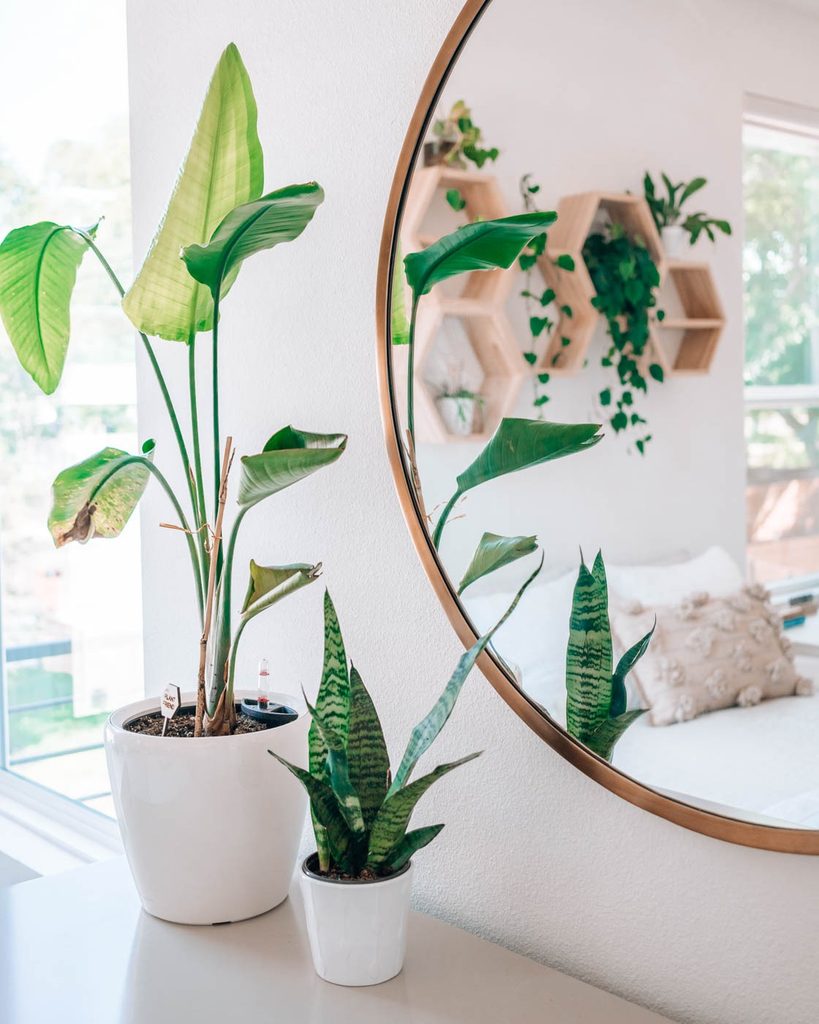
Credits: Jules Acree
A round mirror helps this bright bedroom’s plants contribute from more than one direction. Broad leaves stand beside the glass, while its reflection catches smaller trailing plants arranged in wooden hexagon shelves.
Plain white pots allow the varied leaf shapes to remain noticeable. The warm mirror rim supplies just enough contrast against the pale wall and dresser.
Choose plants for the window conditions rather than for their appearance alone, and protect furniture from moisture with appropriate liners or saucers. Leave enough space between pots to water and inspect them easily.
A mirror can spread the visual effect of an existing plant collection, making it unnecessary to fill every corner. The reflected shelves also connect the bedside area to the dresser.
20. Layer Oatmeal Textiles Beside Painted Brick
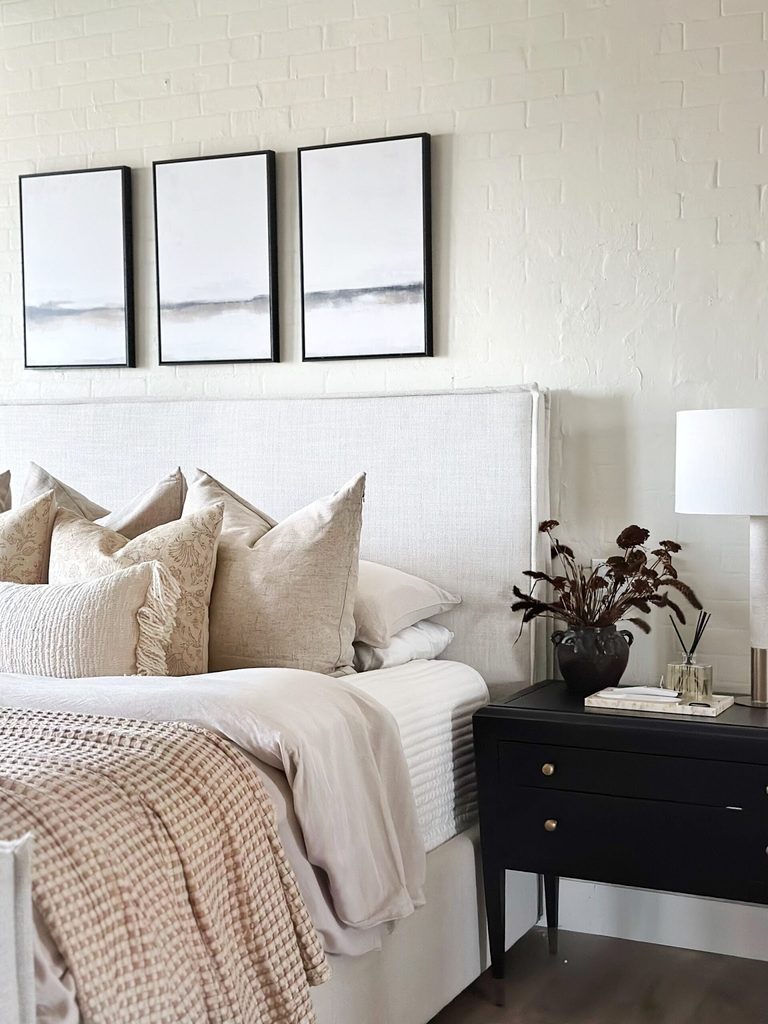
Credits: Jordyn / Our PNW Home
White painted brick gives this bedroom texture before any accessories are added. Oatmeal pillows and a chunky blanket bring warmer tones against the pale upholstered headboard, while a dark bedside chest provides a firm outline.
The three quiet pictures overhead echo one another without competing with the brickwork. A small arrangement of dark dried stems adds another earthy detail near the lamp.
This combination shows how a natural feeling can come from subtle surfaces rather than saturated color. Try mixing two neutral fabrics with different weaves, keeping their undertones compatible with the wall.
If your room has existing masonry, investigate suitable preparation and finishes before painting. A restrained bedding update may provide enough warmth without altering the brick at all.