
A bedroom can feel crowded even when it holds only the essentials if every piece has its own visual outline.
Minimalist Bedroom Ideas can help bring more order to the room by combining furniture, simplifying the wall above the bed, and giving everyday storage a defined place.
The examples include an integrated plywood bed and nightstands, a single broad landscape, and drawers built into the bed base.
Small choices matter, too: a restrained color palette or one sculptural wall light can add character while keeping the overall look calm and uncluttered.
1. Combine the Bed and Nightstands in One Plywood Form
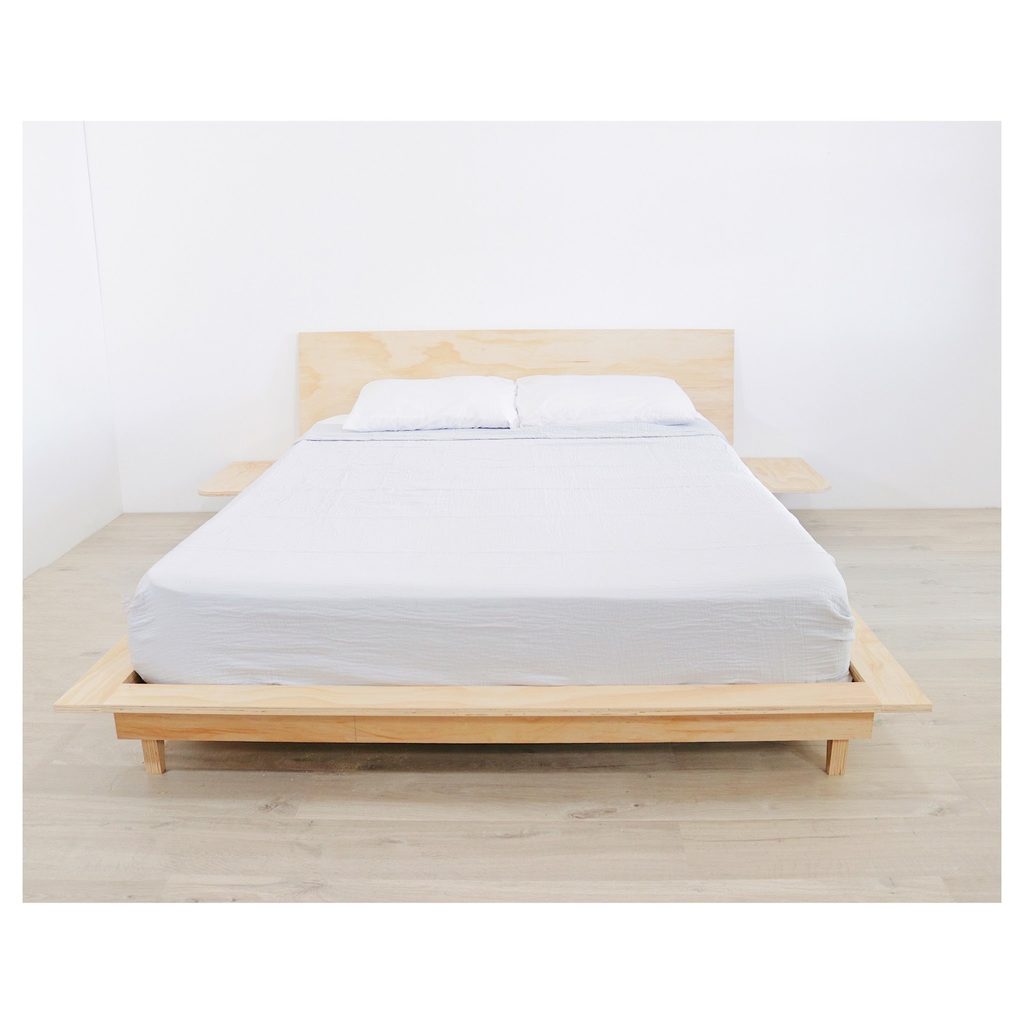
Credits: Mike Montgomery / Modern Builds
A single pale wood structure can do the work of several separate pieces. This plywood bed joins a low platform, rectangular headboard, and two projecting bedside shelves into one straightforward outline.
Plain white bedding allows the wood grain and exposed edges to supply the detail. The arrangement is especially useful when mismatched nightstands make a small room feel disjointed.
Before choosing an integrated design, compare the shelf height with your actual mattress and check how far the platform extends into the walking route. Those broad corners need room around them.
A carefully planned bedside outlet will also keep charging cords from trailing across the floor. Leave the shelves lightly occupied so their connection to the bed remains easy to see.
2. Keep the Bed Below Decorative Windows
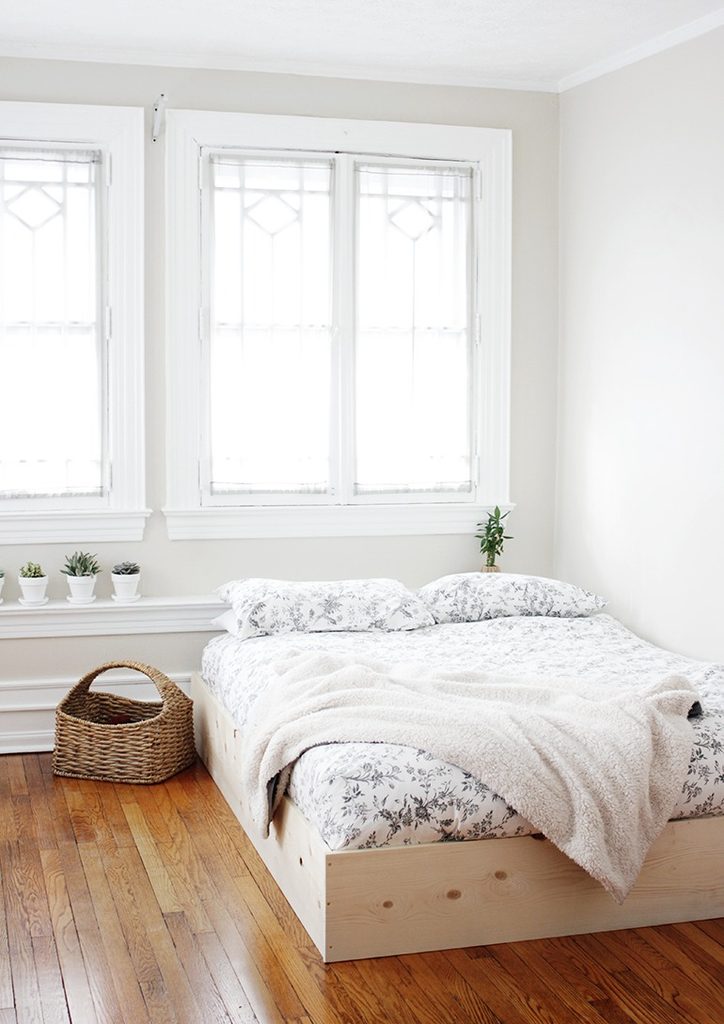
Credits: Caitlin McGrath / The Merrythought
The windows provide most of the visual interest in this bright bedroom, leaving the bed free to stay exceptionally simple.
A pale wooden surround conceals the box spring, while the absence of a headboard preserves the decorative glazing behind the pillows.
This particular project is a cover around an existing base, so its appearance should not be confused with independent mattress support. You can borrow the low outline using a properly supported commercial frame, too.
Keep bedding loose but contained within the bed area, and reserve nearby flooring for a basket rather than several small pieces. Check that window handles remain reachable.
Warm floorboards, soft cream layers, and a few modest green plants prevent the pared-down arrangement from feeling unfinished.
3. Give Quiet Walls a Softly Varied Finish
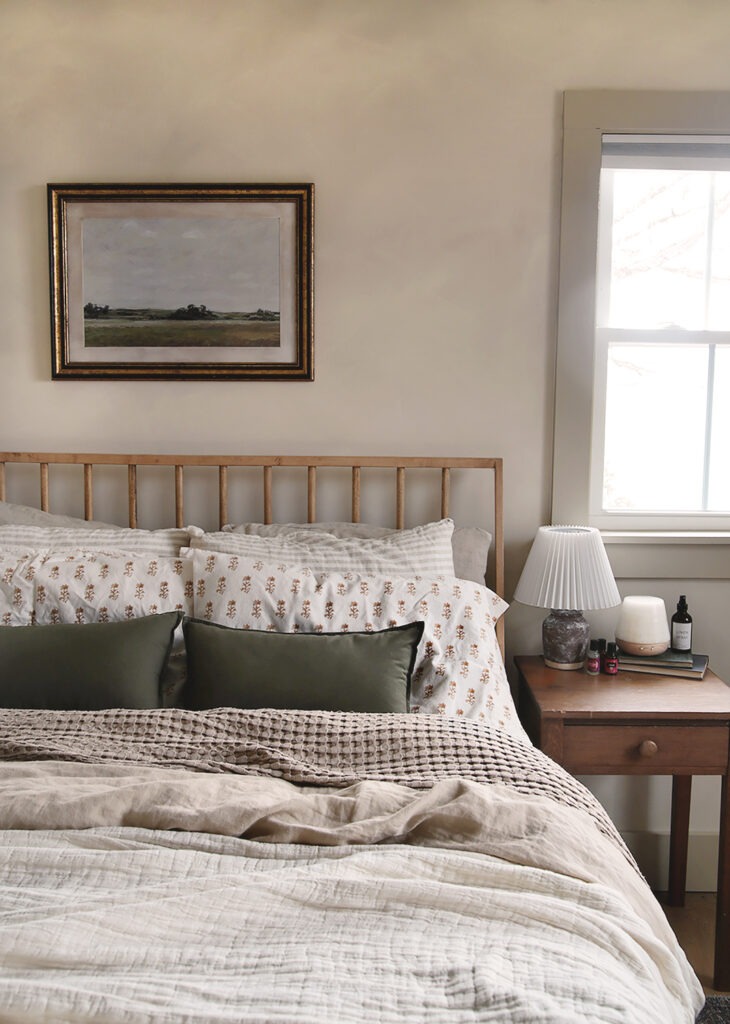
Credits: Manda / The Merrythought
Minimalism can leave room for gentle variation. These beige walls have a softly mottled finish that creates interest without adding shelves, patterned wallpaper, or another collection of objects.
The creator identifies the treatment as faux limewash, which is worth distinguishing from a traditional mineral coating when researching your own version. Sample the effect on a movable board and view it beside your bedding throughout the day.
A finish that looks subtle in bright daylight can become much stronger under a bedside lamp. Here, a simple wood spindle headboard and small landscape let the wall remain visible.
Limit the palette to related neutrals with one muted accent, then let changes in weave, grain, and paint carry the room’s quieter decorative work.
4. Choose One Broad Landscape Above the Bed
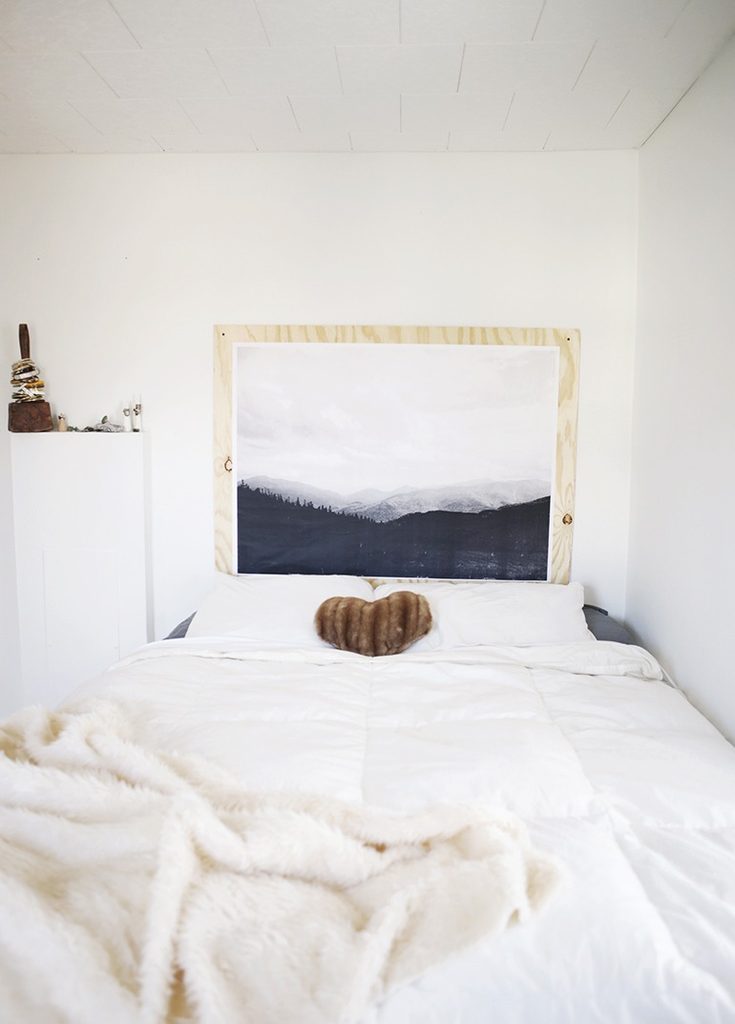
Credits: Caitlin / The Merrythought
One large landscape gives this narrow bedroom a clear point of focus. The mountain photograph sits against a simple plywood backing, bringing dark ridgelines and pale sky into an otherwise white sleeping area.
Its width helps connect the pillows below without requiring several separate frames. Look for an image with generous quiet areas if you want artwork that feels restful rather than visually crowded.
The surrounding wall stays mostly bare, and the bedding repeats the photograph’s light background. Measure the complete panel before selecting a print, including any visible border.
Secure a heavy backing appropriately and position it clear of your seated head. A single textured cushion provides a small warm accent without distracting from the larger picture behind it.
5. Repeat One Pale Color Across Upholstery and Bedding
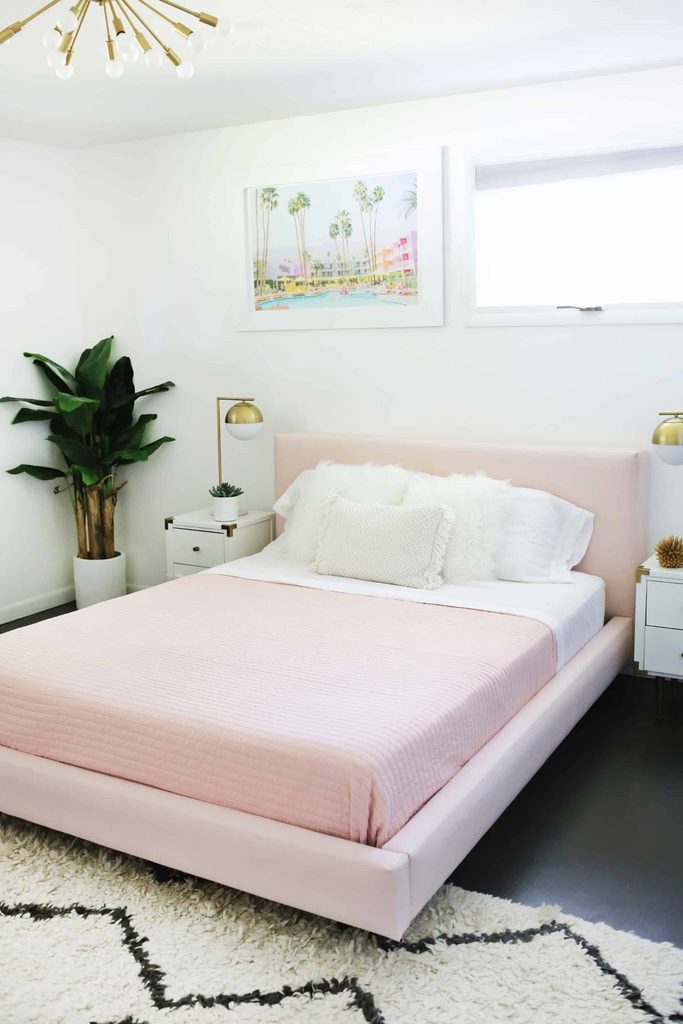
Credits: Laura Gummerman / A Beautiful Mess
A restrained bedroom does not have to exclude pink. Here, soft blush upholstery wraps the headboard and frame, while a matching coverlet extends that color across the mattress.
Because the two surfaces stay close in tone, the bed reads as one calm shape against the white walls. Consider this limited palette if you enjoy soft color without adding multiple competing accents.
Test fabric and bedding samples together rather than assuming similar product names mean identical shades. The creator refreshed an existing upholstered bed, showing that a sound frame can sometimes be kept and recovered.
White pillows maintain a bright center, and compact bedside furniture supports the simple silhouette. Keep additional patterns small enough that the pink remains the main impression.
6. Put Extra Storage Inside the Bed Base
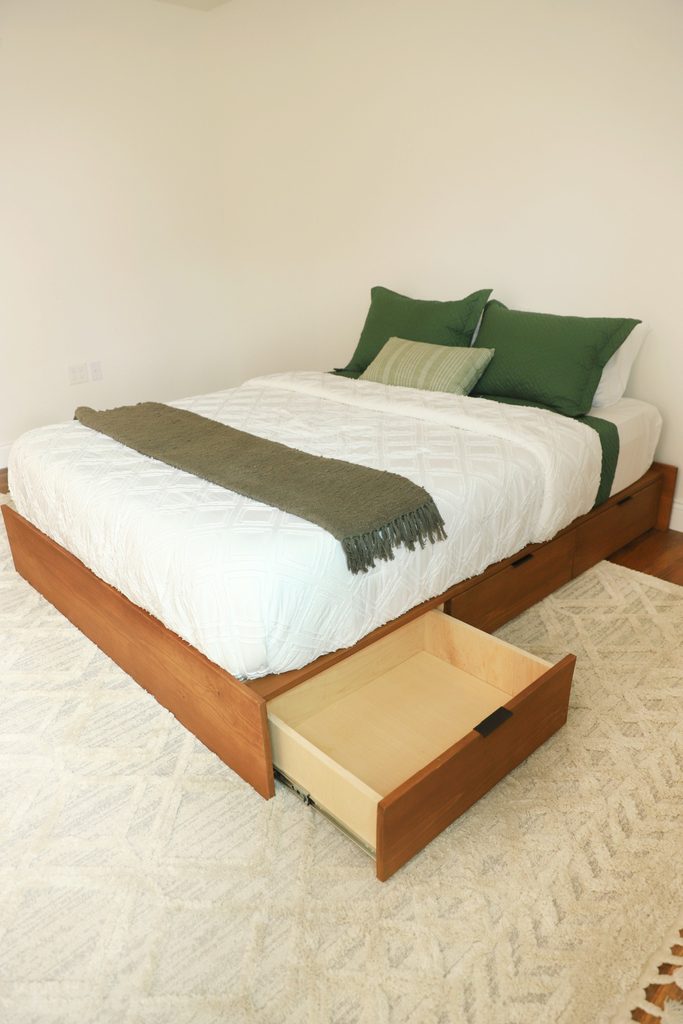
Credits: Shara / Woodshop Diaries
Storage becomes less visually demanding when it shares the bed’s existing footprint. This wooden platform contains wide drawers, with one open to show how much useful space can sit below the mattress.
Smooth fronts and small dark pulls keep the closed frame looking uncomplicated. Consider what you would store here before choosing drawer dimensions: spare bedding needs different space than folded shirts or shoes.
You also need enough clearance beside the bed for each drawer to extend fully. A rug should not interfere with the mechanism, and bedside furniture should not trap the upper drawers.
The plain wall and restrained green bedding keep attention on the useful design. Hidden capacity can help reduce the need for another freestanding storage piece.
7. Let Wood Panels Supply the Main Wall Pattern
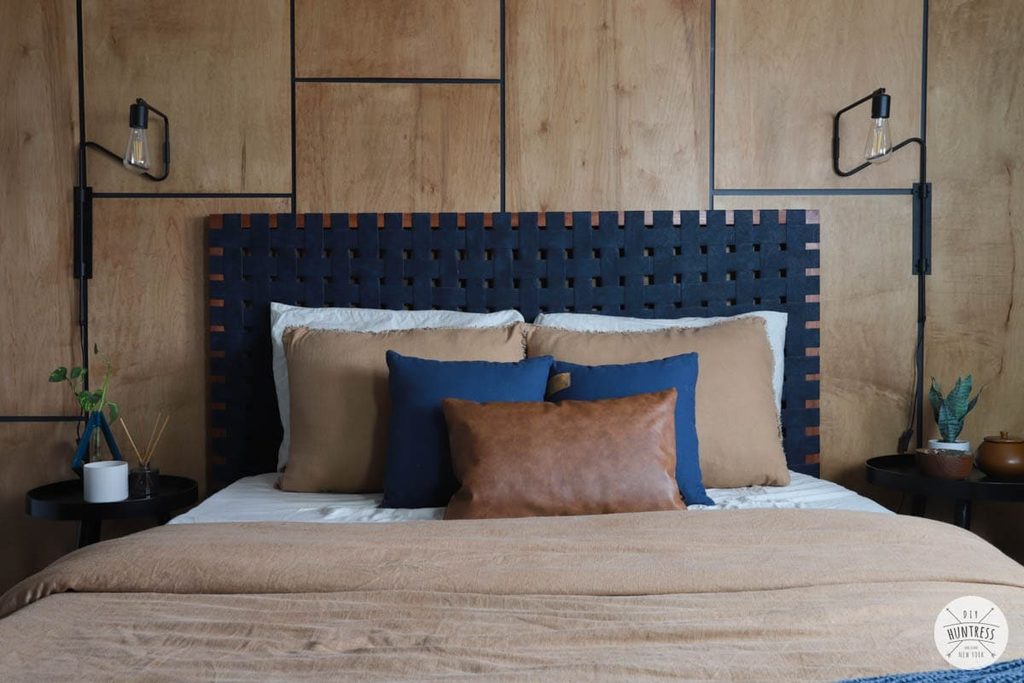
Credits: Sam Raimondi / DIY Huntress
Large plywood rectangles give this bedroom warmth while keeping the decoration concentrated on one surface. Narrow dark gaps outline the panels, making an irregular grid that relates to the black wall lights and bedside tables.
The woven headboard adds texture, but its deep color helps it stay connected to those outlines. If you like this approach, sketch the panel arrangement around outlets, switches, and the bed before cutting material.
Broad sections will generally look quieter than a dense patchwork of small pieces. Choose a finish after testing it on the actual plywood, since grain and stain can vary.
Plain bedding gives the eye a place to rest below the wall, while a limited blue accent keeps the composition from spreading.
8. Use a Sculptural Wall Light as Decoration
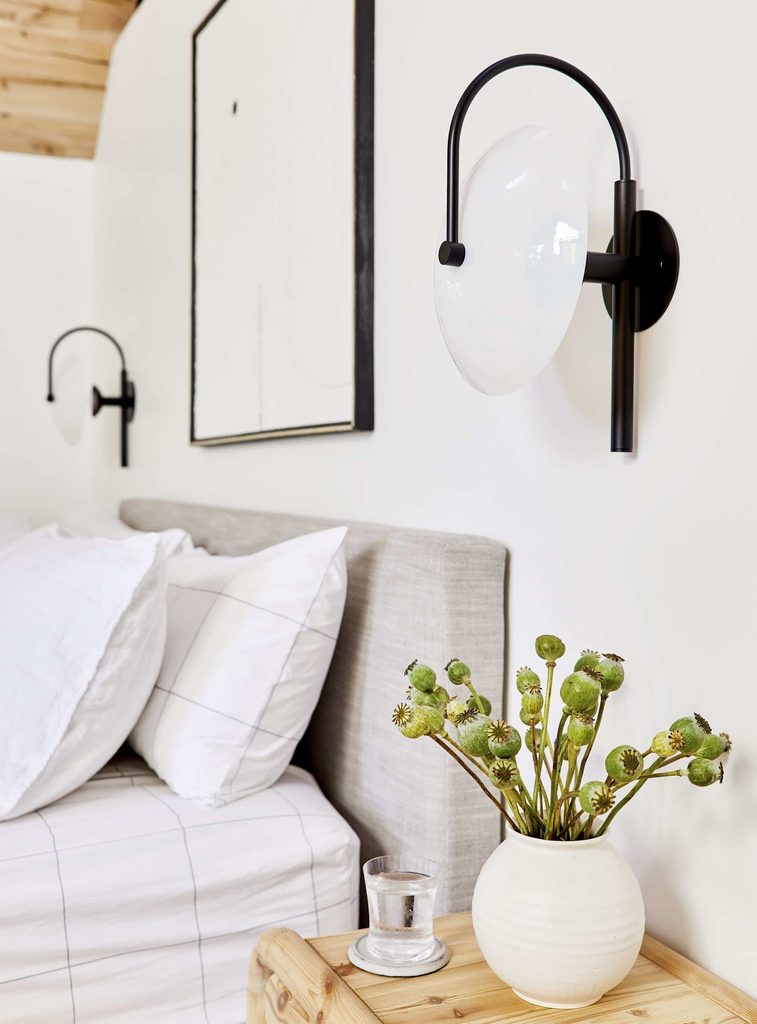
Credits: Sara Ligorria-Tramp / Emily Henderson
A useful fixture can provide the decorative shape that a minimalist bedroom needs. The black arch and pale circular shade of this wall light create a strong outline above an understated wood nightstand.
Moving the fixture off the tabletop also leaves room for everyday necessities. Notice how the slim picture frame repeats the dark finish without adding another heavy object.
When selecting a sconce, consider its projection from the wall and how the light falls from your reading position. The mounting height should work with your mattress and pillows, not simply match an inspiration photograph.
Keep the rest of the bedside arrangement limited and easy to move for cleaning. A modest vessel or glass can then feel intentional beside it.
9. Keep a Colorful Bedside Arrangement Small
Credits: Amy / Homey Oh My
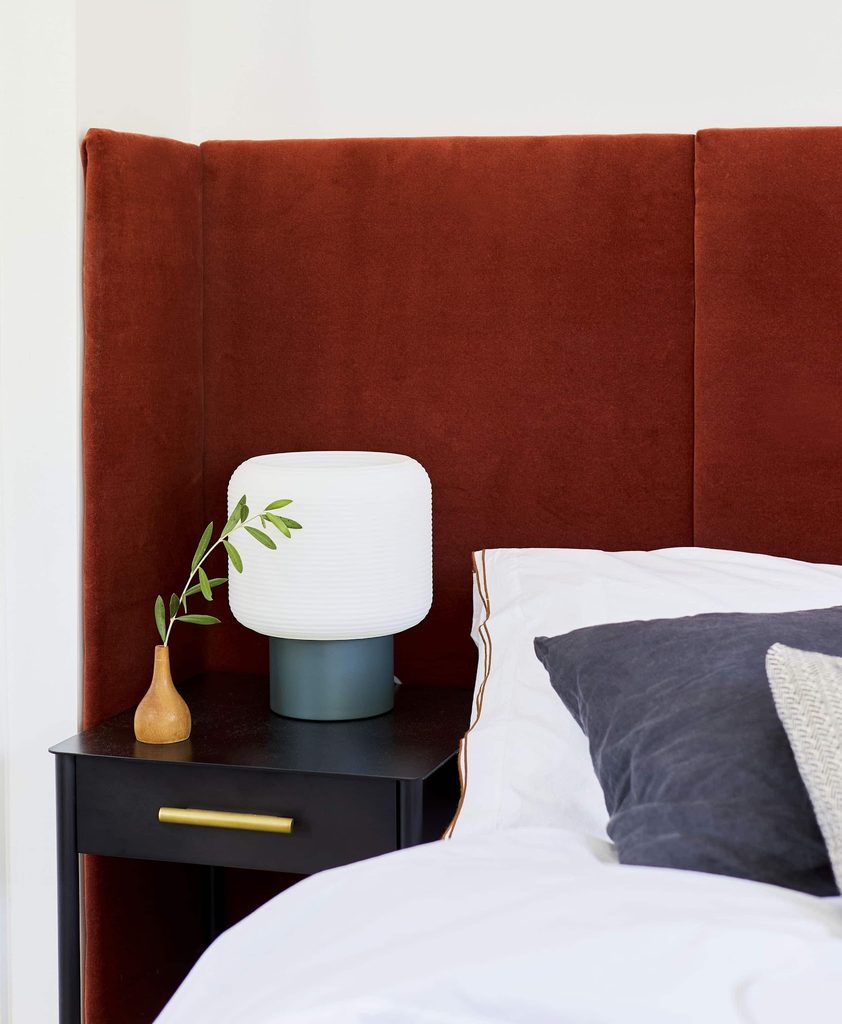
This bedside vignette uses a compact lamp and one slender branch to balance a substantial rust-colored headboard. The dark nightstand provides a quiet base, while its single brass handle adds a small point of contrast.
Nothing on the top competes with the upholstered surface behind it. You can use the same principle with a colorful bed you already own: choose a few useful objects instead of layering unrelated decorations around it.
Check that the lamp leaves enough clear space for water, glasses, or whatever you reach for at night. A drawer can hold the less attractive essentials.
The plant stem adds movement without filling the tabletop, and the white bedding connects naturally with the lamp’s simple rounded shade above it.
10. Anchor Plain Bedding With One Geometric Rug
Credits: Amy / Homey Oh My
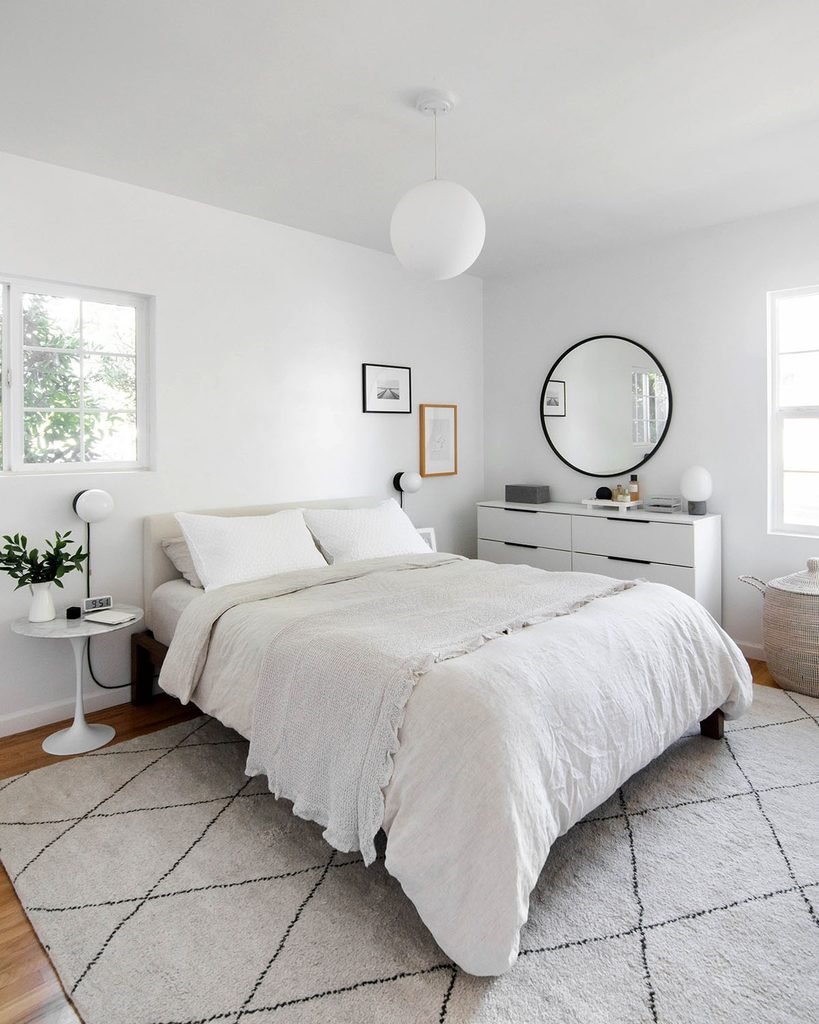
The broad rug gives this mostly white room an organized foundation. Its fine dark diamond lines introduce a pattern at floor level, leaving the bedding, dresser, and walls free to remain quiet.
The result feels furnished without relying on a large number of accessories. Choose the rug size from the room’s measurements and furniture positions before becoming attached to a design.
You want a comfortable landing beside the bed and a clear relationship to nearby storage. In this room, the rug also connects the different bedside tables through one continuous surface.
Soft cream linens prevent the whites from feeling too uniform. Repeating the rug’s dark lines in a thin mirror frame and small fixtures gives the restrained palette enough definition.
11. Fit a Globe Sconce Beneath a Window
Credits: Amy / Homey Oh My
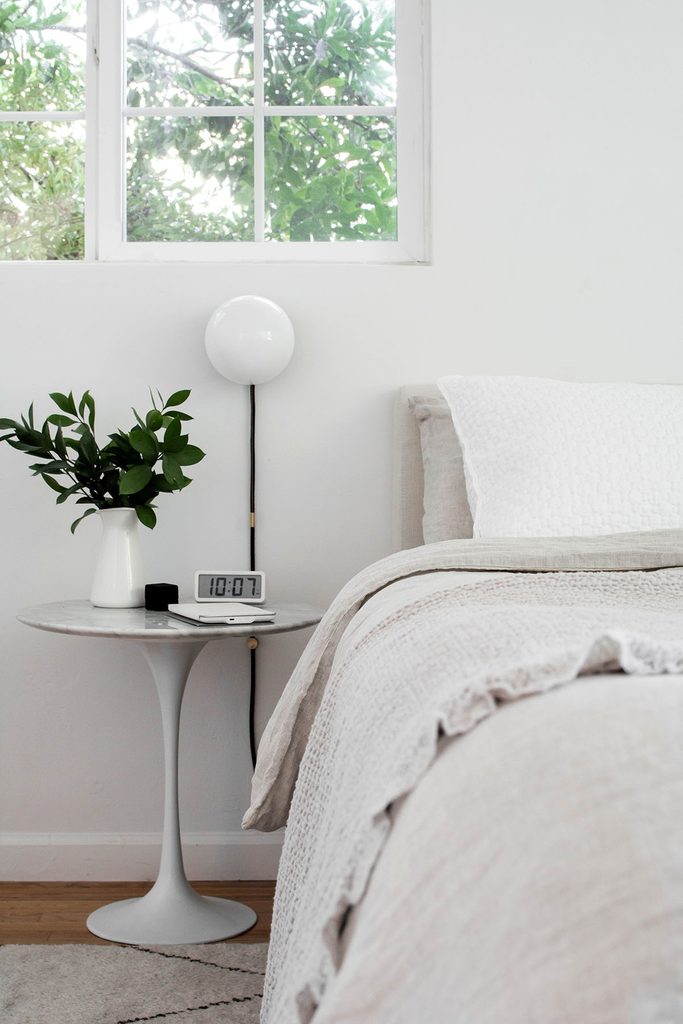
A globe light fits neatly between the window and bedside surface in this bedroom. Its short projection avoids the broad sweep of an adjustable arm, allowing the glazing to remain visually open.
The dark cord becomes one controlled vertical line rather than a tangle behind a table lamp. This arrangement is useful when your bed shares a wall with an awkwardly placed window.
Measure the available strip of wall and test the light’s location while sitting in bed. Keep the fixture and cord clear of moving window parts.
A round pedestal table continues the gentle shape below, with enough room for a clock and book. The few pale finishes help the compact bedside setup feel lighter than its practical contents.
12. Balance an Uneven Bed Wall With Two Small Pictures
Credits: Amy / Homey Oh My
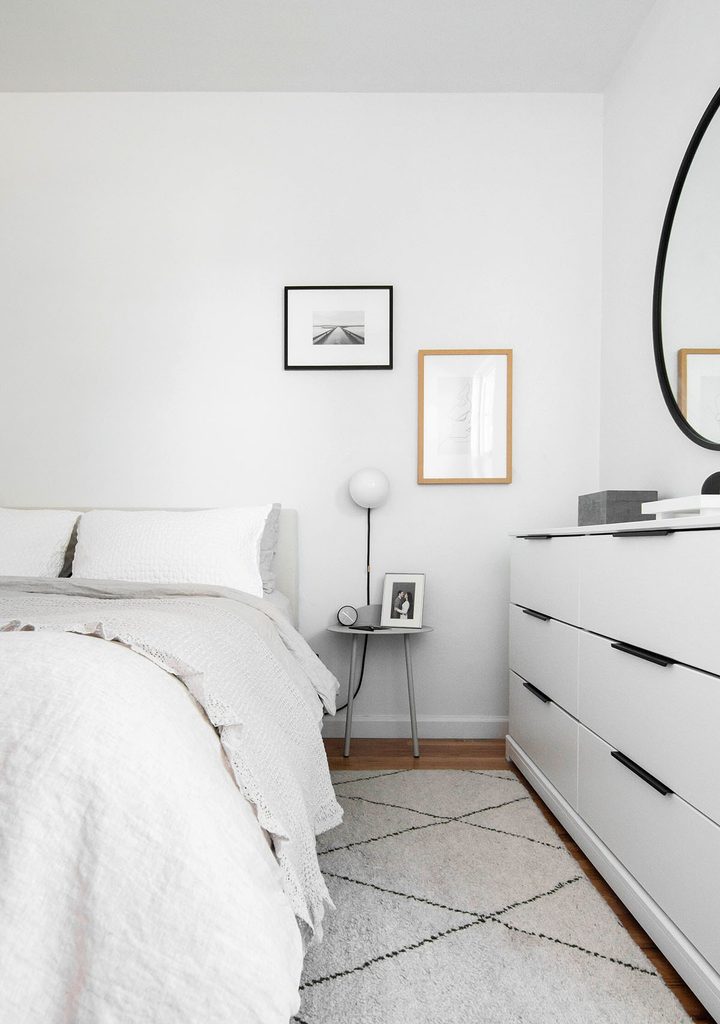
An orderly bedroom does not always need a perfectly symmetrical layout. In this arrangement, two framed pictures occupy the wall beside the pillows, leaving the central area above the bed clear.
Their different proportions and finishes feel connected because both images have generous light backgrounds. The narrow bedside table and wall light fit below without crowding the dresser.
This approach can help when a window or door makes a centered arrangement look awkward. Lay out paper templates first and judge the grouping from the doorway as well as the bed.
Keep the total arrangement compact rather than filling every spare patch of wall. A few deliberate offsets can make an irregular room feel considered while preserving plenty of blank space.
13. Give Laundry and Spare Blankets One Defined Corner
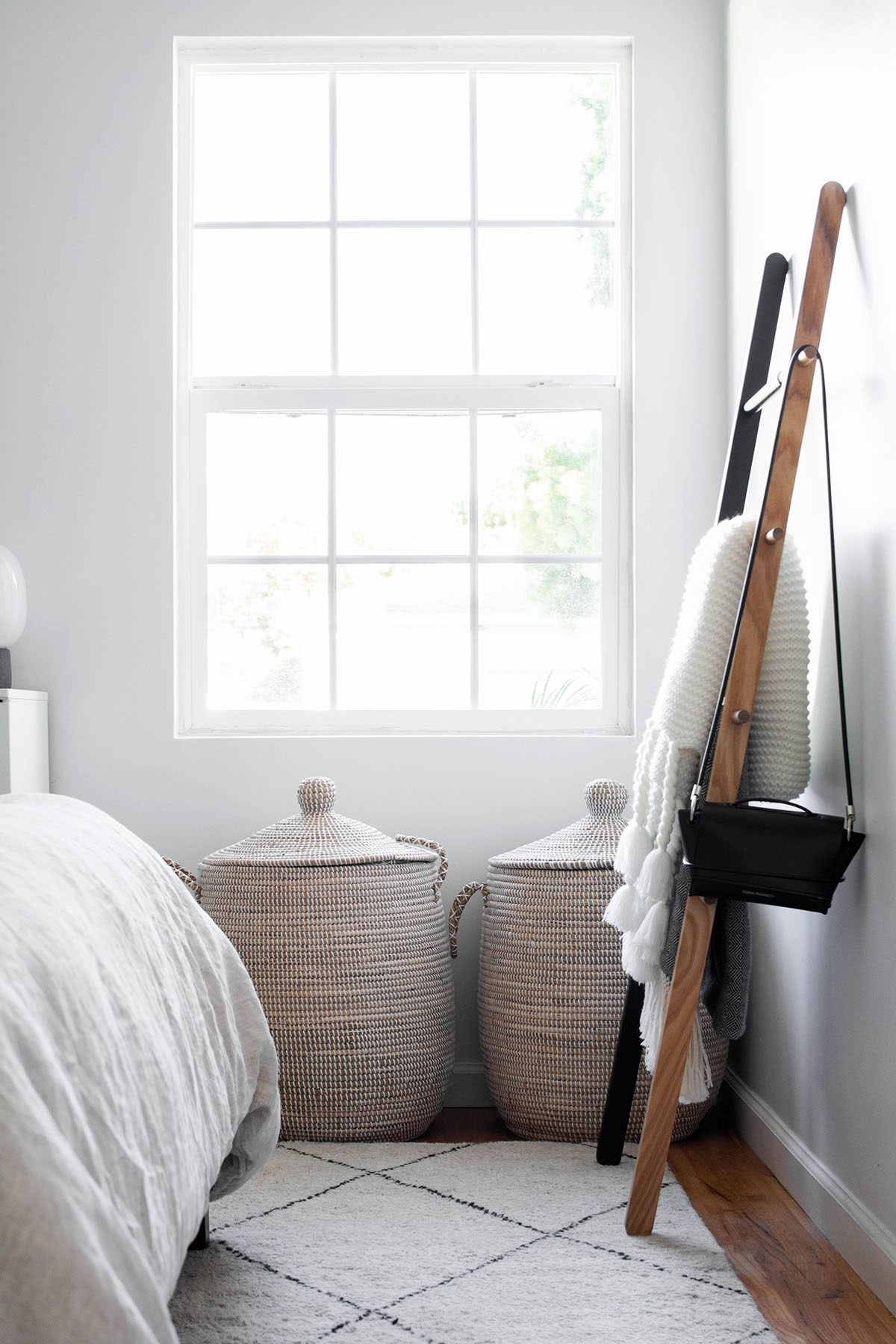
Credits: Amy / Homey Oh My
A pair of lidded baskets and a simple ladder give everyday bedroom clutter a destination. The baskets conceal laundry beneath the window, while the ladder holds blankets vertically beside them.
Grouping these functions in one corner keeps them from spreading across chairs, floors, and the foot of the bed. Choose basket sizes that suit your laundry routine and allow their lids to lift without catching nearby furniture.
A decorative ladder should be stable and secured according to its instructions, especially where children or pets could disturb it. Keep only a few textiles on the rungs so the slim outline remains visible.
The woven surfaces add texture to the white room without introducing another strong color or a bulky storage cabinet.
14. Frame High Windows With a Dark Slat Wall
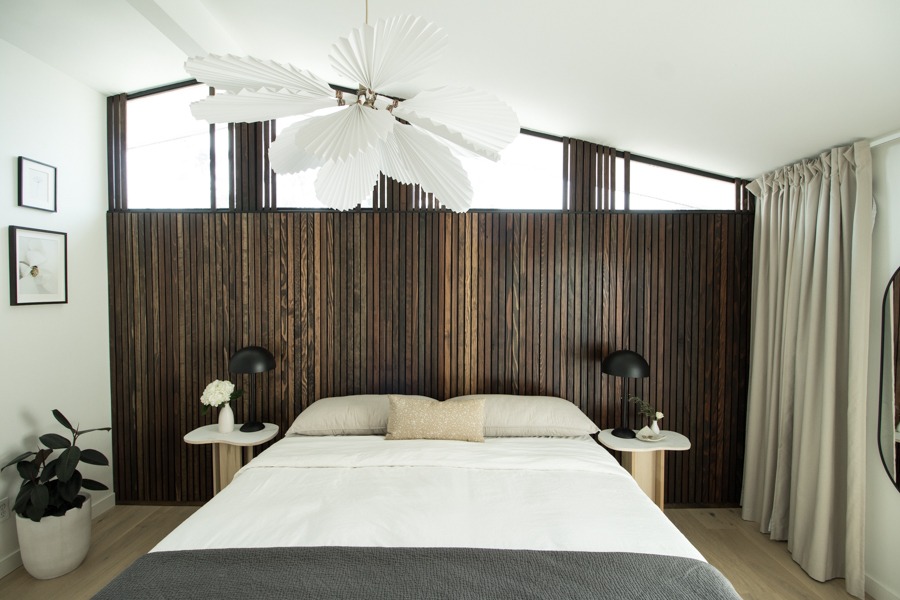
Credits: Jennie Sullins / Jennifer J Sullins
Vertical wood slats turn the bed wall into a single substantial backdrop. Their dark finish gives the room depth, while high windows preserve a band of daylight along the ceiling.
The matching lamps and small pale tables create a straightforward arrangement below. This is a useful example of concentrating texture instead of distributing it across every surface.
If you plan a similar wall, decide how the slats will meet windows, corners, and electrical fittings before installation. Consistent spacing matters more than adding extra decorative pieces afterward.
Keep bedding largely plain so the strong vertical rhythm remains readable. The light ceiling and curtains provide relief around the dark wall, allowing the room to feel enclosed and comfortable without becoming visually overloaded.
15. Move a Dresser Into a Curtained Closet
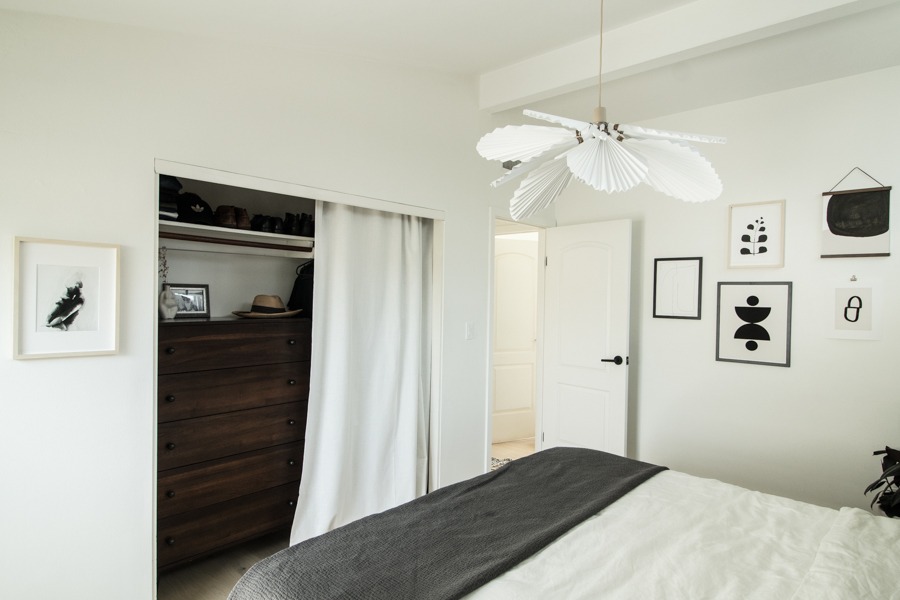
Credits: Jennie Sullins / Jennifer J Sullins
Placing a dresser inside an existing closet can free a surprising amount of bedroom floor space. Here, the dark chest sits beneath the closet shelf, and a plain pale curtain can screen the storage when needed.
The fabric brings a softer edge to the opening without requiring swinging doors beside the bed. Before trying this, measure both the opening and the depth needed to pull the drawers out comfortably.
Check that hanging clothes, ventilation, and access to everyday belongings will still work. A properly installed track should let the curtain move smoothly without catching the furniture.
The photograph shows how a room can gain order through rearrangement, leaving the surrounding walls available for a small, consistent collection of simple artwork.
16. Choose Raised Nightstands With Quiet White Fronts
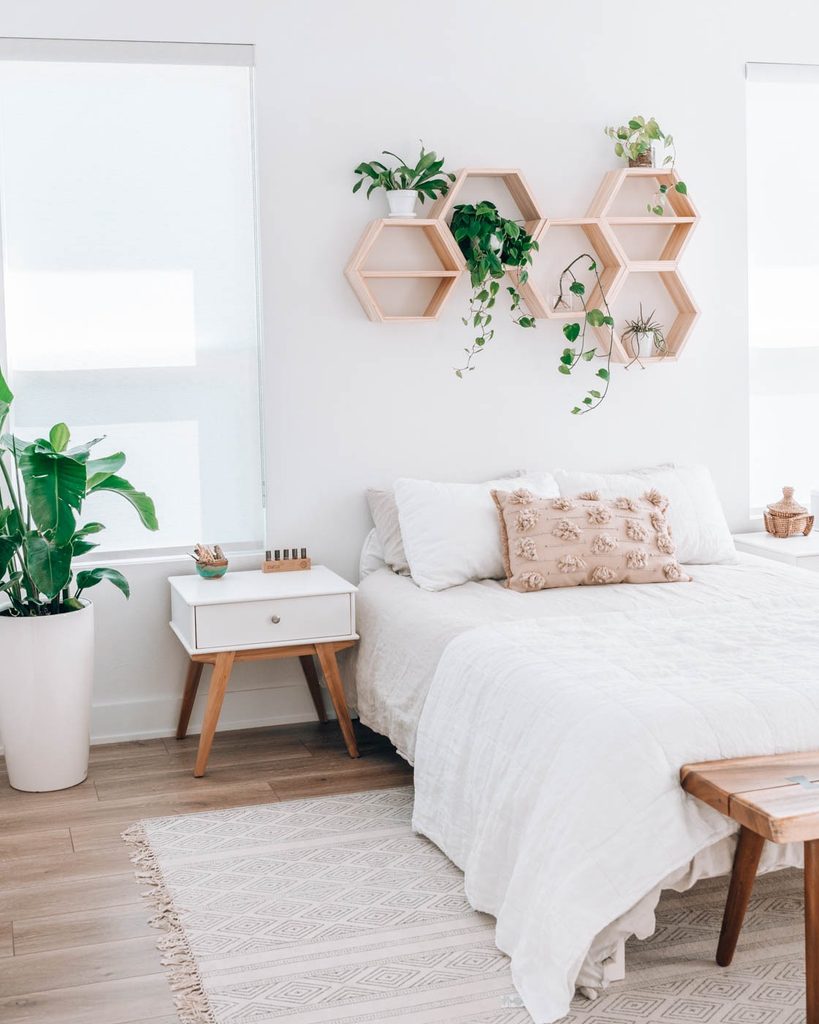
Credits: Jules Acree
White drawer fronts and tapered wood legs keep this bedside furniture light. The raised base leaves flooring visible below, while the drawer provides a place for small necessities that might otherwise collect beside the pillows.
Matching the front to the bedding and wall helps the nightstand belong without disappearing. This balance is useful when you need real storage but dislike the weight of a large chest.
Check the tabletop height against the mattress and make sure the drawer opens without rubbing the bedspread. Keep the visible surface limited to items you use regularly.
The warm legs relate to the floor and nearby bench, showing how a restrained room can combine white furniture with natural wood without needing a matching set.
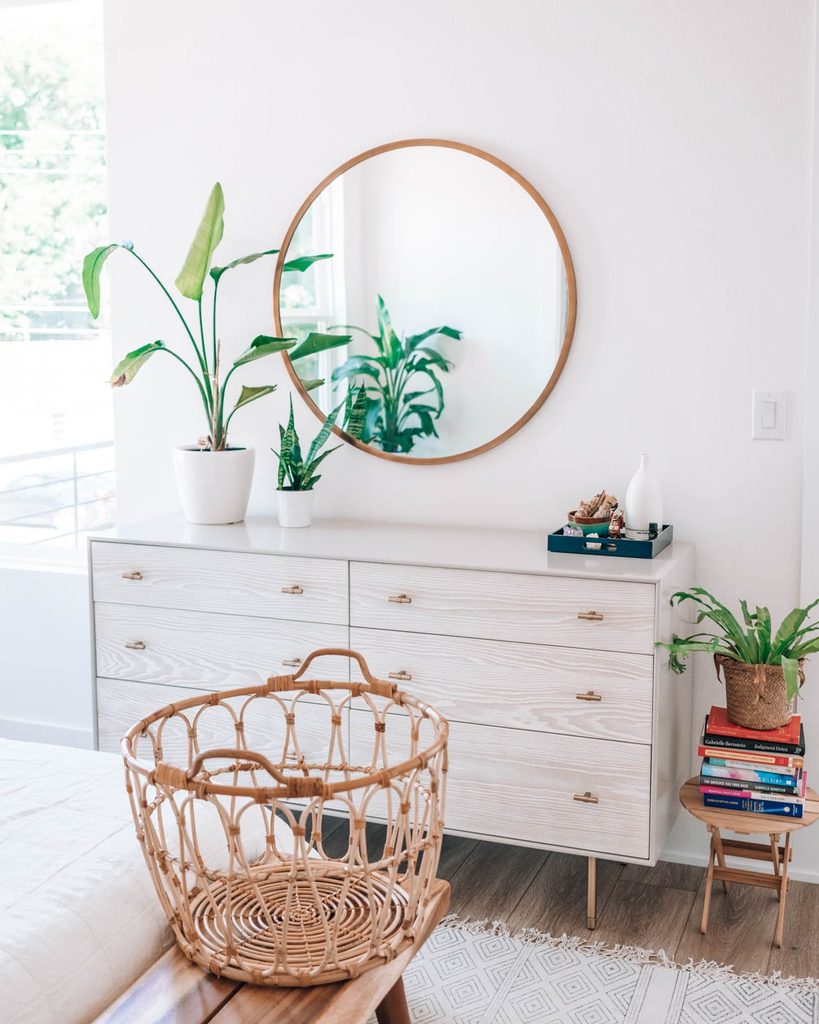
17. Let a Low Dresser Create a Calm Horizontal Line
Credits: Jules Acree
The long pale dresser provides storage without breaking the room into several furniture shapes. Its six simple drawer fronts stretch below a round mirror, and slim legs keep the floor visible underneath.
A mostly clear top makes the horizontal line easy to read. If a wide dresser fits your room, compare its capacity with the smaller pieces it could replace before buying.
Leave enough room to open drawers and move past the bed comfortably. Grouping little objects on one tray helps maintain a useful surface for getting ready.
In this photograph, plants occupy one end while the mirror adds a single large curve above. The pale wood grain brings detail without requiring extra color across the rest of the wall.
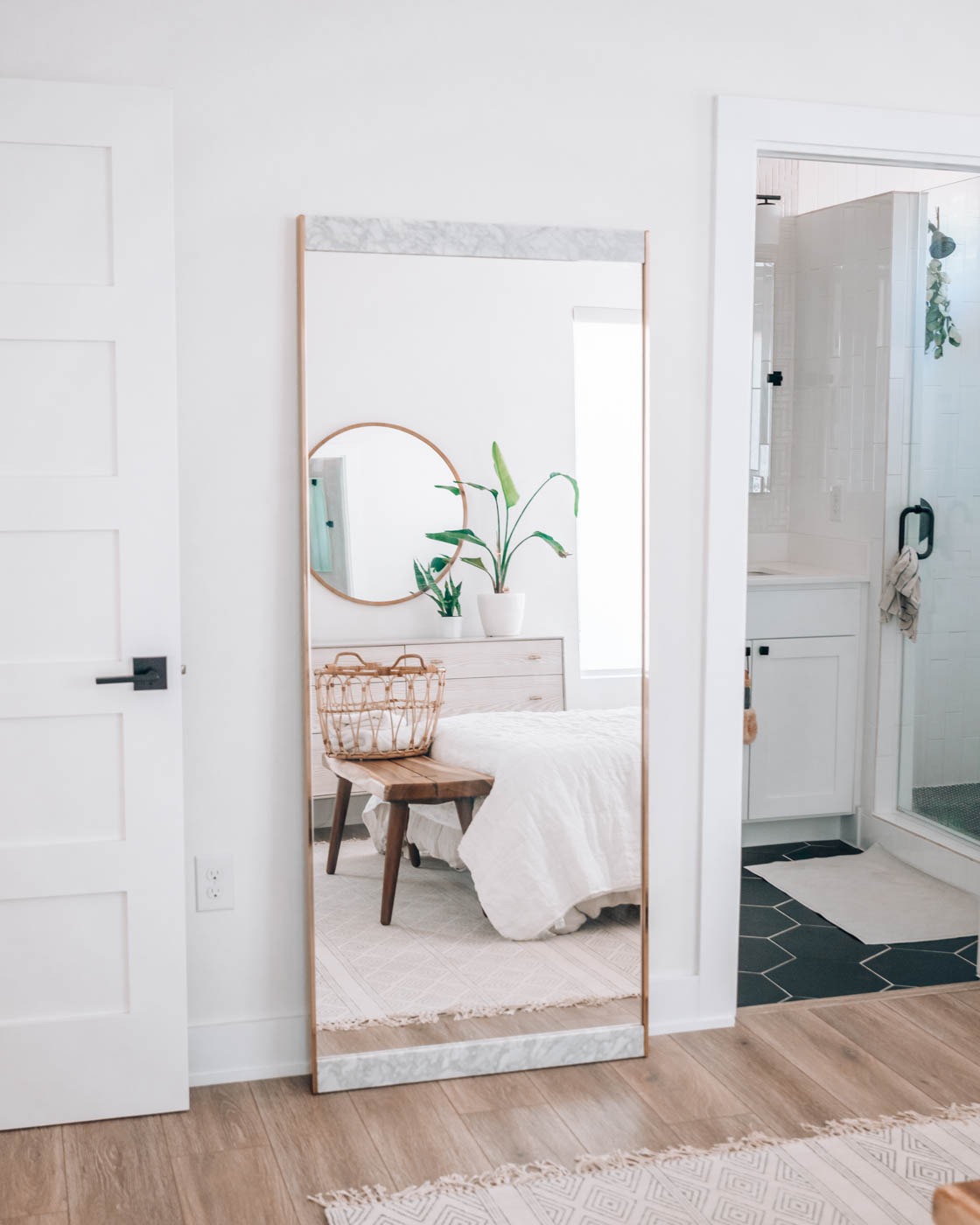
18. Use a Full Length Mirror to Connect Two Views
Credits: Jules Acree
A tall mirror brings the bed, dresser, and greenery into the view from the doorway. Its narrow frame keeps that reflection from feeling like another heavy furniture piece, while the light wall around it remains visible.
This can be a way to finish a small stretch of wall between doors. Study the reflected view from different positions before choosing its location; a clear corner usually feels calmer than a crowded storage area.
Make sure nearby doors can open fully and secure the mirror according to the manufacturer’s mounting requirements, even when it appears to lean casually. The photograph’s restrained frame relates to the wood floor.
Its simple shape supplies function and a broader sightline without needing a separate decorative arrangement.
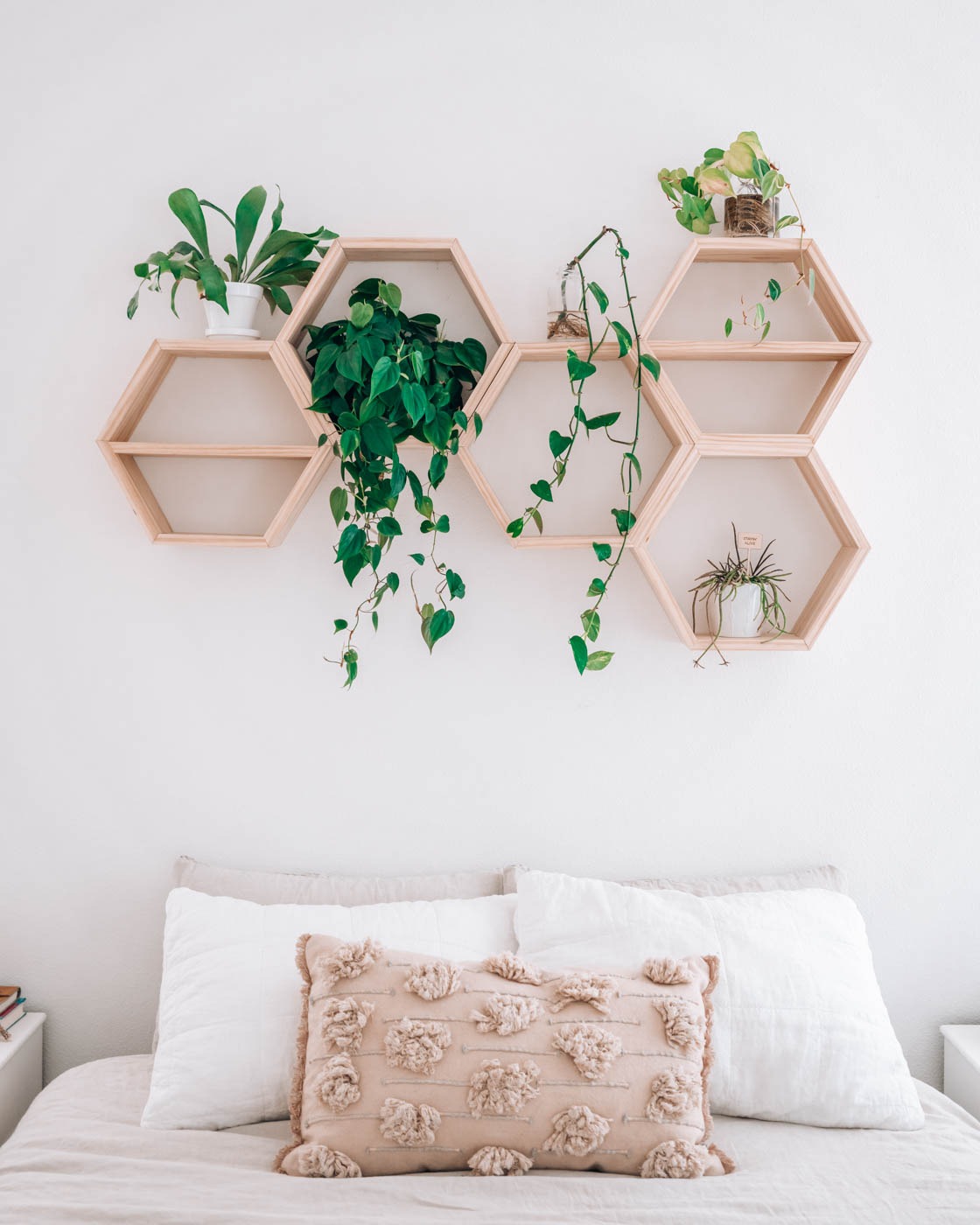
19. Leave Empty Space Within a Geometric Shelf Display
Credits: Jules Acree
The hexagonal shelves form one connected wall feature, but several compartments remain empty. That restraint lets the pale wood outlines stay visible around the trailing plants.
It also keeps the display from becoming a row of unrelated ornaments above the pillows. If you borrow the idea, start with fewer shelves and plan the complete arrangement on paper before making holes.
Plants need suitable light, accessible watering, and containers that protect the wood. Because this example hangs near the bed, consider placing your version beside the sleeping area instead, especially if pots could fall or vines would reach the pillows.
Secure every shelf for its expected load. Repeating one shape gives greenery an organized setting while leaving the surrounding wall quiet.
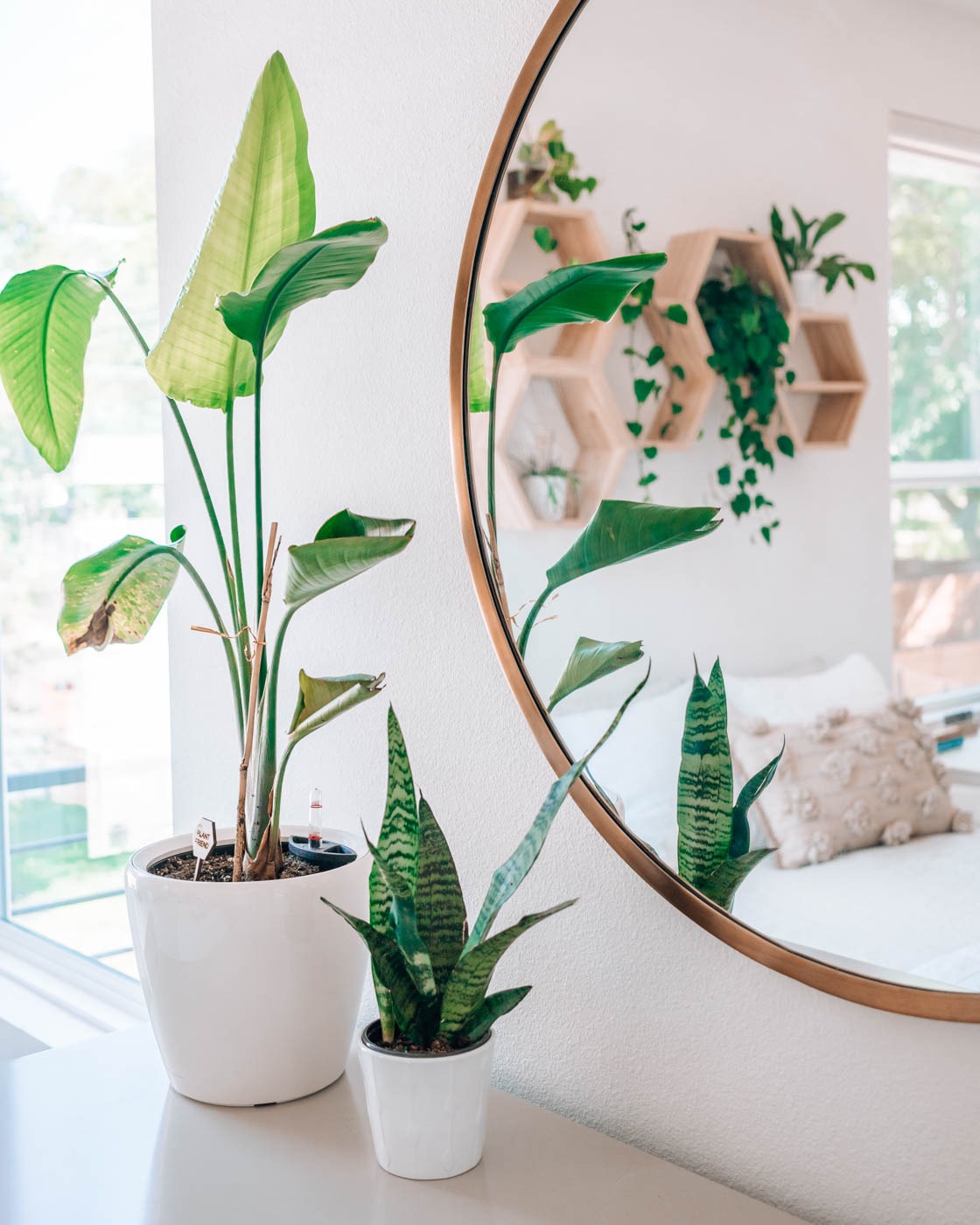
20. Group Plants in Simple Matching Pots
Credits: Jules Acree
Two white pots make a small plant grouping feel cohesive even though the leaves have different shapes and heights. The taller plant reaches into the window light, while the shorter upright leaves occupy the space below.
A nearby mirror repeats the greenery without adding another container to the dresser. This is an easy detail to borrow when a bedroom feels bare but you want to avoid accumulating decorative objects.
Choose plants for the light and care you can provide, rather than selecting only by appearance. Protect the furniture from moisture and leave enough room to move each pot for maintenance.
Keeping the containers close in color lets the natural variation in the foliage become the feature of this quiet corner.