
Sage can feel calm on its own, but pairing it with cream keeps a bedroom from looking flat or overly cool.
A Cozy Sage Green and Cream Bedroom can come together through simple contrasts: pale bedding against warm wood, a patterned cream rug beneath a sage palette, or textured pillows layered in front of deeper green.
The ideas also show how a cream sconce, natural wood headboard, or chunky throw can add warmth without crowding the room. Use the combinations as starting points, then choose textures and accents that suit your space.
1. Balance Cream Bedding With a Warm Wood Look Ceiling
Credits: Christin Cieslarski / My Homier Home
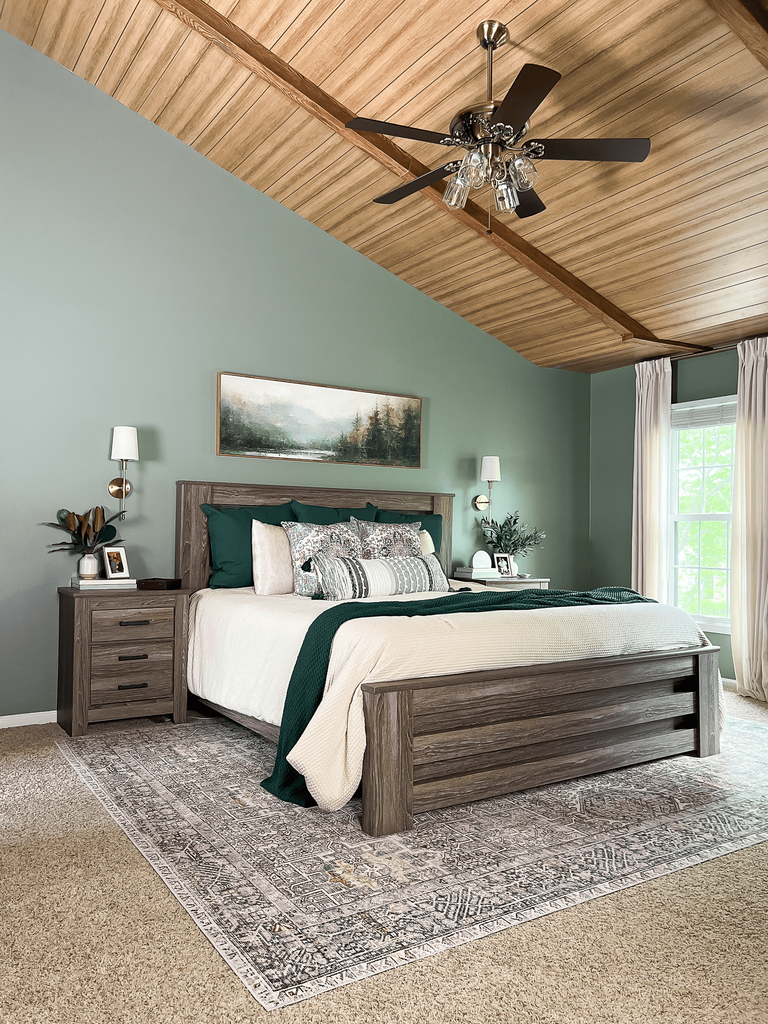
Cream textiles can make a tall sage bedroom feel welcoming even when its architecture is substantial. Here, the pale quilt and curtains offset a wooden bed and a ceiling covered in warm wood look panels.
The ceiling adds texture overhead, while the uninterrupted green wall gives the eye somewhere quieter to settle. Consider this balance before adding more pattern to a room with exposed beams or prominent paneling.
A simple cream bedspread can support those existing features without competing for attention. The green throw provides a darker accent across the mattress, connecting the bed to the surrounding color.
Choose its weight for your actual climate and sleeping habits, and leave enough pale fabric visible to preserve the room’s gentle contrast.
2. Ground a Sage Room With a Cream Patterned Rug
Credits: Instagram
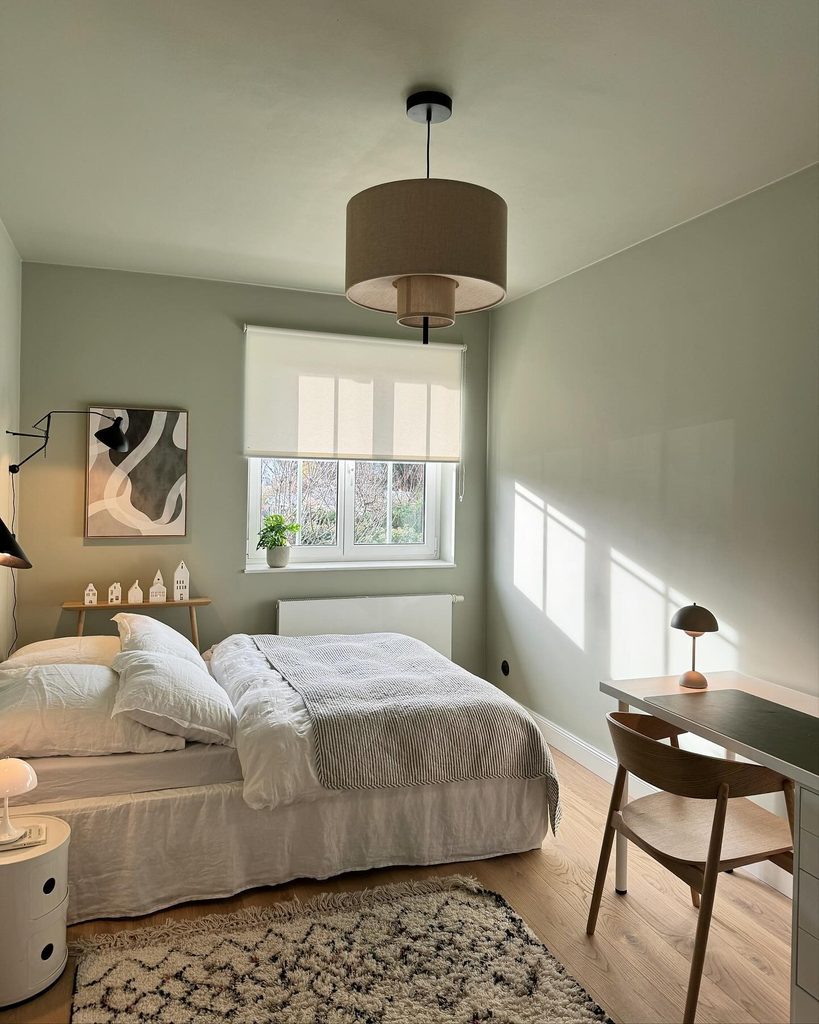
Underfoot texture becomes especially important when green covers both walls and ceiling. Here, a cream rug with dark irregular lines brings a lighter, tactile surface into the sage envelope.
Its pattern also separates the floor from the plain bed skirt, so the pale elements remain easy to distinguish.
You can borrow this approach without replacing every textile: select a rug that repeats the warmth of an existing cream coverlet or curtain. Consider how much of its design will remain visible beside the bed before deciding on placement.
Deep pile may catch dust or make some doors harder to open, so check clearance and care requirements. The surrounding timber and understated furniture let the rug supply the room’s strongest graphic detail.
3. Mix Cream Pillow Textures in Front of Deep Green
Credits: Christin Cieslarski / My Homier Home
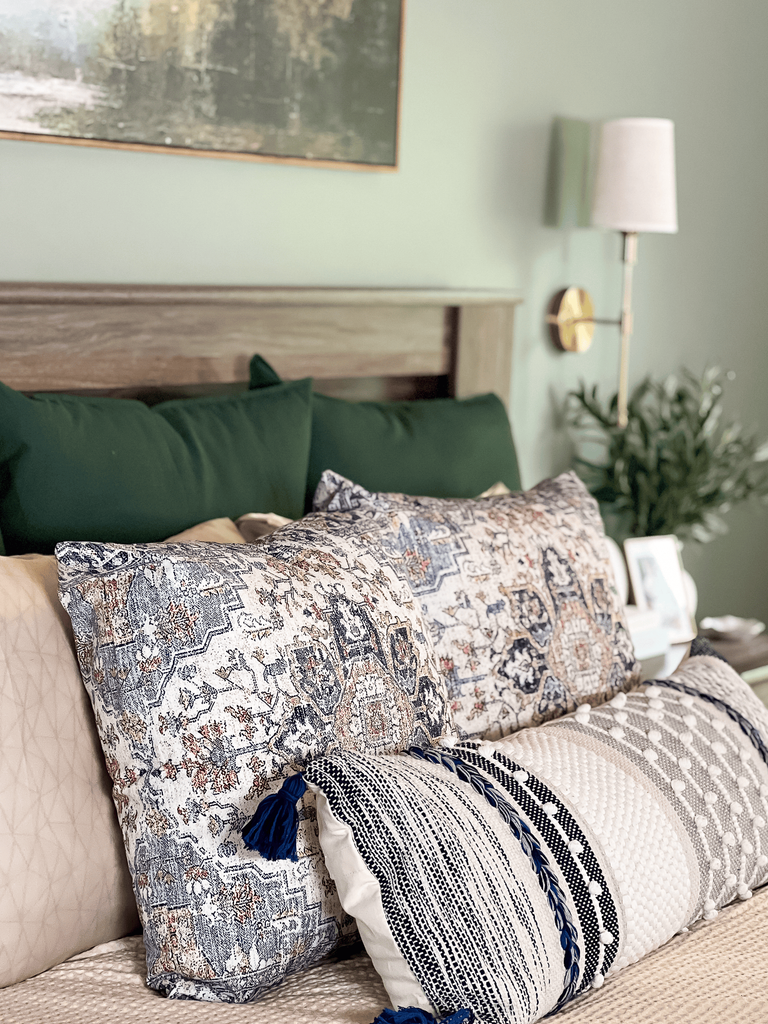
This close view shows how a cream pillow arrangement gains depth through several different surfaces. Smooth pale cushions sit behind printed squares, while a woven lumbar pillow brings raised bands and tassels to the front.
Dark green pillows create a clear backdrop between those lighter fabrics and the sage wall. You can use that layering principle with fewer pieces if a large stack would make bedtime inconvenient.
Start with the pillows you sleep on, then add one patterned pair or a single textured accent. Keep their cream undertones related so the arrangement feels deliberate.
A wooden headboard supplies another natural surface without requiring extra color. Give decorative pillows a designated overnight home instead of letting them take over the floor.
4. Let a Natural Wood Headboard Warm Sage and Cream
Credits: Wendy Duffy / At Lane and High
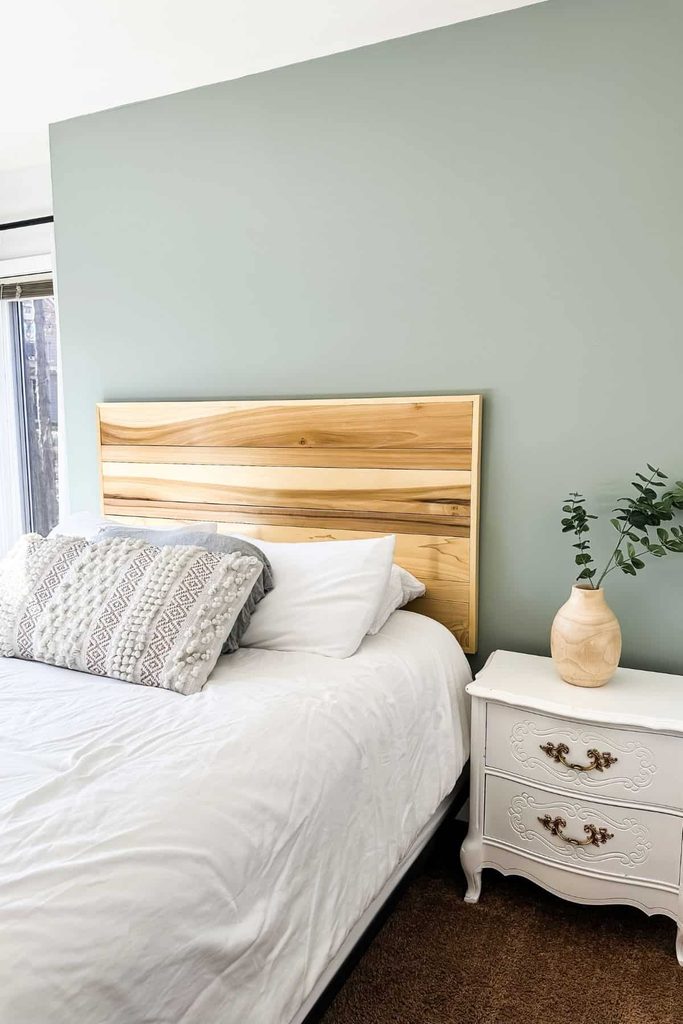
Wide wooden boards bring honey tones to this otherwise restrained bedroom. Their grain stands out clearly against the smooth sage wall, giving the bed a focal point without a printed backdrop.
Cream accents and pale bedding keep the warmer wood from making the composition feel heavy. When choosing a similar headboard, look at an actual finish sample beside your wall color and textiles; photographs can disguise strong orange or gray undertones.
The horizontal boards also provide a quiet counterpoint to the ornate bedside cabinet. Mixing those shapes works because the rest of the room remains simple.
Leave some headboard visible above your pillows so its material can do the decorative work, and keep any surrounding accessories modest in scale too.
5. Hang Cream Fiber Art Above a Sage Color Boundary
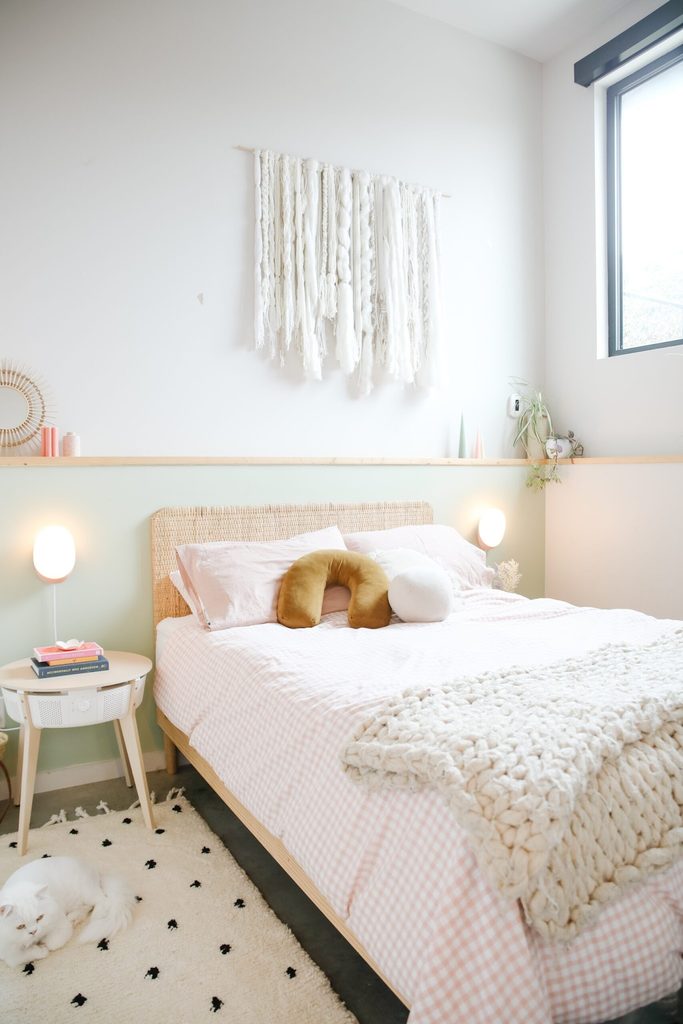
Credits: Hey Maca
A loose cream wall hanging adds softness high above this woven headboard. Its irregular strands contrast with the straight wooden ledge that marks the top of the sage paint.
The pale upper wall provides enough contrast for the texture to register without introducing a strong new color. This is a useful approach when framed artwork would feel too formal for a relaxed bedroom.
Compare the width of your hanging with the bed, and position it where the pillow arrangement will not hide its lowest strands. Secure the support appropriately above the sleeping area.
Cream bedding layers and a chunky throw repeat the fibers below, while the room’s small pink accents show how an optional secondary color can remain gentle overall.
6. Pair a Cream Sconce Shade With a Sage Bedside Wall
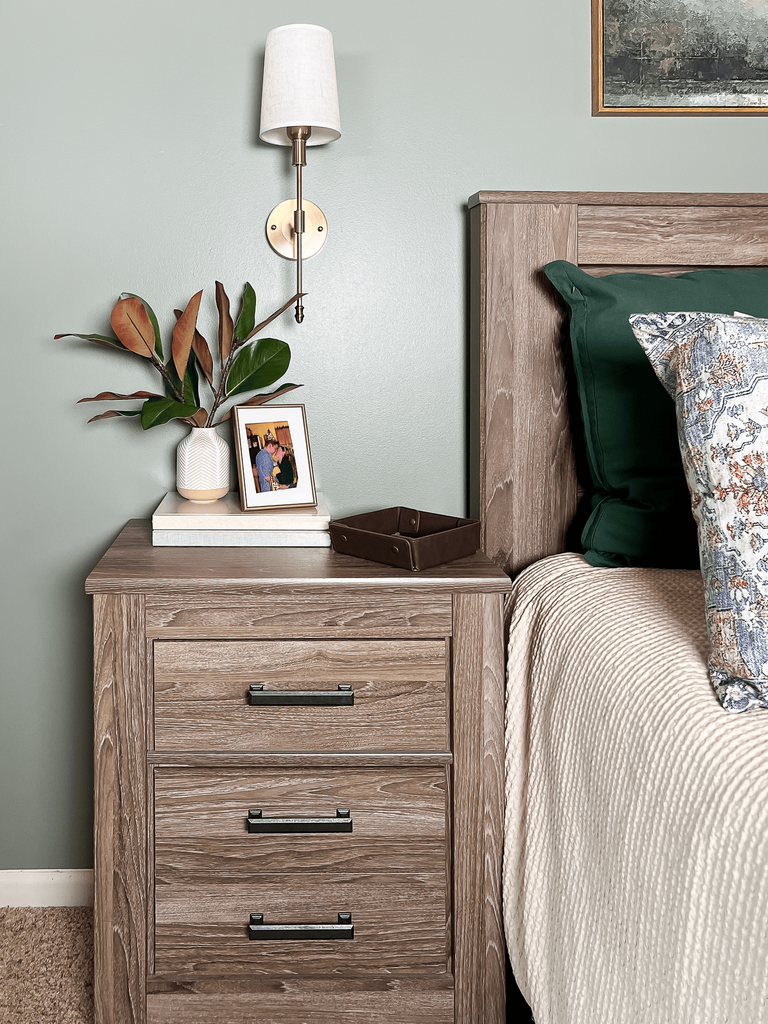
Credits: Christin Cieslarski / My Homier Home
A narrow cream shade makes this brass wall light feel at home beside pale bedding. Mounted above the wooden nightstand, it leaves the tabletop available for a small tray, books, and a personal photograph.
The sage wall becomes a quiet background for those practical layers rather than another surface that needs decoration. When planning bedside sconces, check the light from your normal reading position before settling on placement.
The bulb should not glare directly into your eyes, and the switch should remain easy to reach. Follow the fixture’s installation instructions and use qualified help where electrical work requires it.
Repeating cream in a modest vase connects the elevated shade to the furniture without filling the whole table with matching accessories.
7. Give a Light Sage Bedroom a Chunky Cream Throw
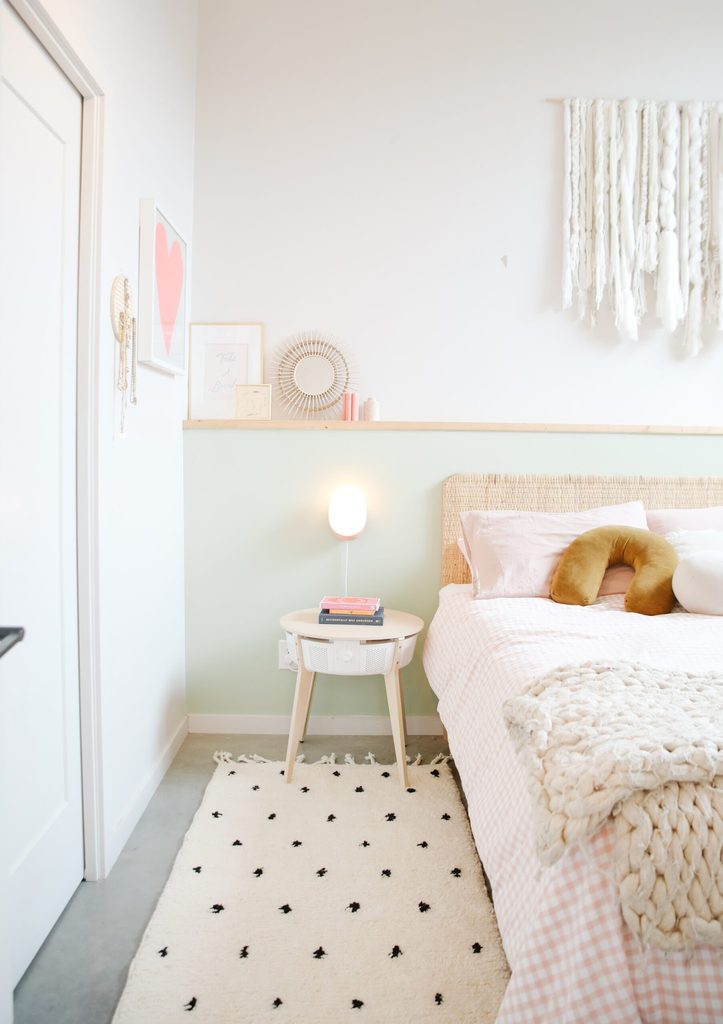
Credits: Hey Maca
Large loops and a loose drape give the cream throw a strong presence in this airy bedroom. Its texture stands apart from the small gingham checks underneath, creating a cozy layer without making the pale sage wall look busier.
The cream rug and fiber artwork repeat that softness in different parts of the scene. To borrow the idea, choose a throw for its feel and care requirements as well as its appearance.
Very open weaves can snag, particularly around pets or jewelry. Drape it across part of the bed rather than hiding all the bedding you already enjoy.
Keep the hanging edge clear of the walking route, and store heavier seasonal blankets elsewhere when the room no longer needs them.
8. Keep an Ornate Cream Nightstand Beside a Simple Bed
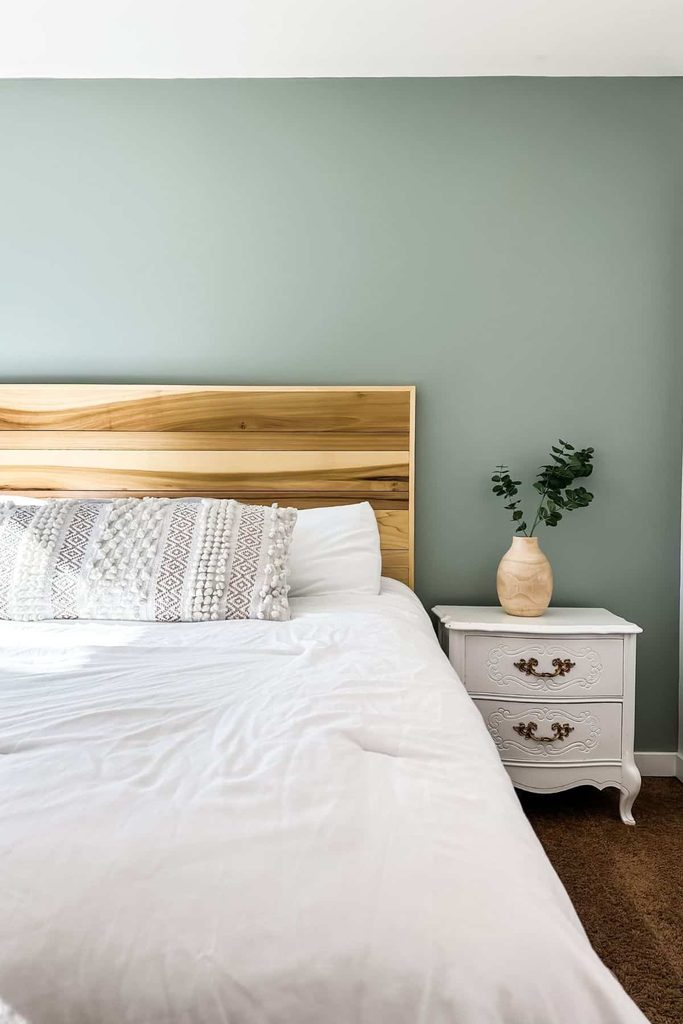
Credits: Wendy Duffy / At Lane and High
Decorative drawer fronts and curved legs give this cream nightstand character against a plain sage wall. The wooden headboard uses simpler lines, so the two pieces contribute different kinds of detail instead of competing with matching ornament.
A small natural wood vase connects their finishes, while the mostly pale bedding keeps the overall scene light. This combination is useful when you want to keep an older bedside cabinet while updating the rest of a bedroom.
Assess its height beside the mattress and check that the drawers open comfortably before deciding where it belongs. You do not need to repeat its curved shape everywhere.
One distinctive cabinet can supply enough character when the surrounding color scheme already creates a cohesive setting.
9. Frame Tall Windows With Full Length Cream Curtains
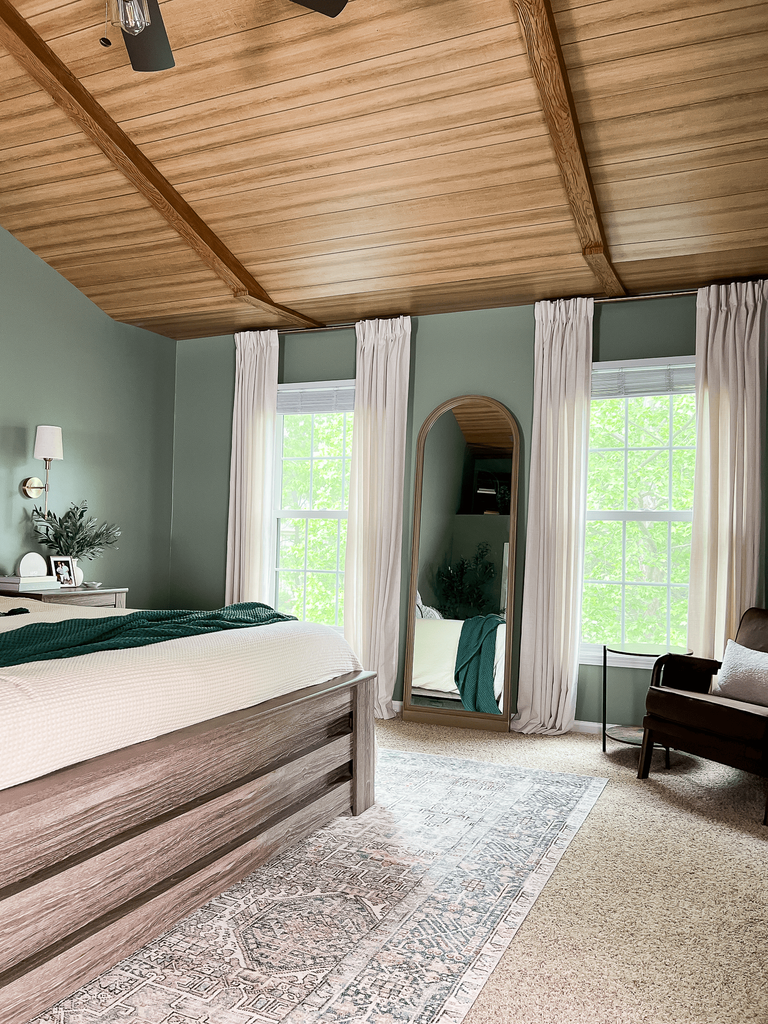
Credits: Christin Cieslarski / My Homier Home
Cream curtains create tall, soft columns along this sage bedroom wall. Hung close to the ceiling, their fabric connects the high architecture to the pale bedding below and gives the windows a more generous presence.
The arched mirror between them repeats the warm wood elsewhere in the room without interrupting the curtain rhythm. For a similar effect, measure the full drop and the space needed for gathered panels before choosing hardware.
Curtains should still open far enough to make the windows useful. Select lining according to your privacy and light control needs, then check the cream fabric beside your bedding in daylight.
Keeping both textiles close in warmth helps the room feel connected even when their materials and textures differ.
10. Give a Small Guest Bed Tactile Cream Cushions
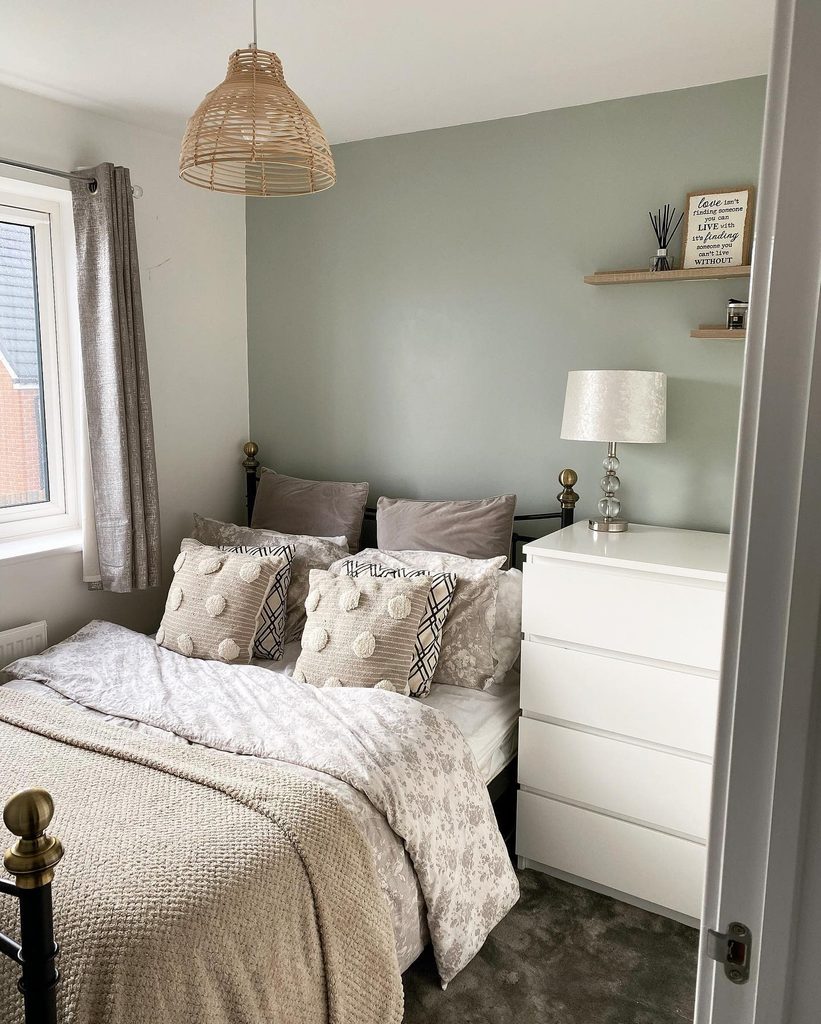
Credits: Instagram
Raised tufts and pompom details make the cream cushions stand out against this room’s quieter sage wall. Their texture provides interest close to the pillows, where additional furniture would be difficult to fit.
A knitted throw repeats the warm neutral lower on the bed, while gray curtains and a simple metal frame keep the surrounding palette restrained.
For a compact guest room, two decorative cushions may be enough; leave visitors somewhere convenient to put them at night. Check removable covers and washing instructions before buying pale textiles intended for regular use.
The look depends more on contrasting surfaces than a large cushion collection. Choose one pronounced texture and let the remaining bedding stay smoother, especially if its print supplies detail.
11. Combine Cream Texture With Black Graphic Accents
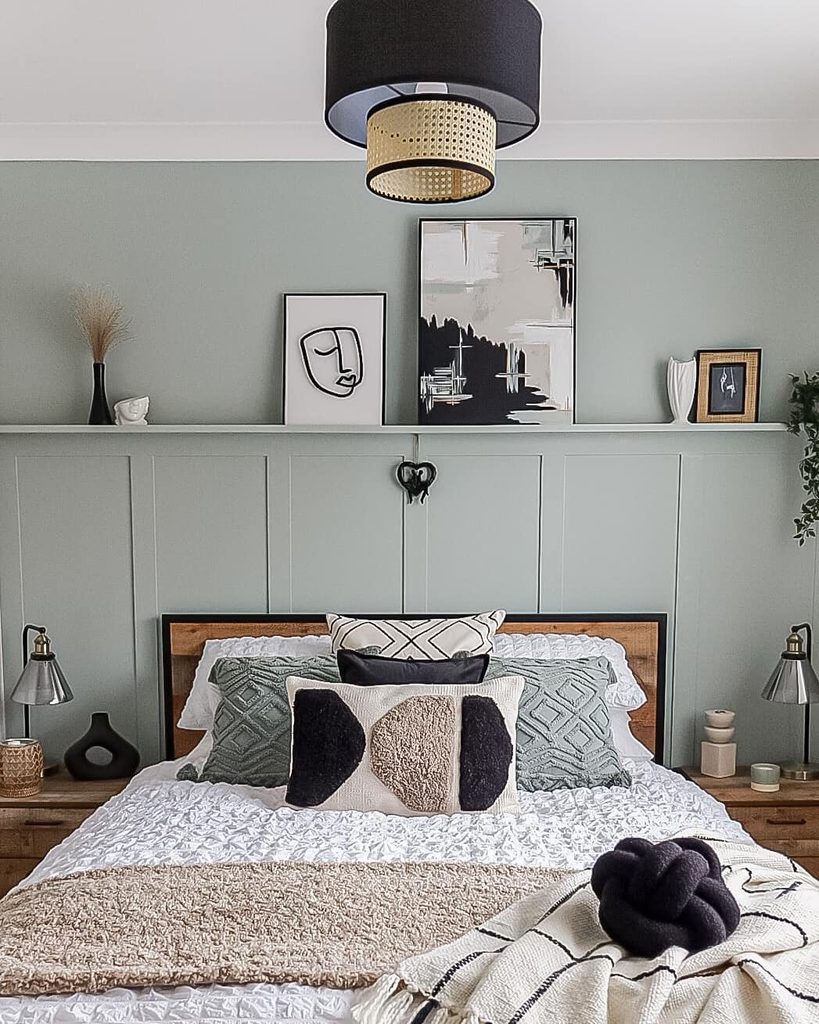
Credits: Instagram
Different surfaces give this bed its layered appearance: a shaggy cream throw, a pale blanket with dark lines, and a cushion with a raised abstract pattern.
Behind them, sage paneling supplies a calm block of color. Black artwork and the dark pendant repeat the textile accents higher in the composition, preventing those small marks from feeling isolated.
This is a good option when a purely pale scheme seems too delicate for your taste. Limit the dark accents to a few clear shapes, then vary the cream textures rather than introducing more colors.
Consider which layers you would actually use before recreating the whole stack. One textured throw and one graphic cushion can suggest the same balance with less daily rearranging.
12. Keep the Vault Cream Above Sage Paneling
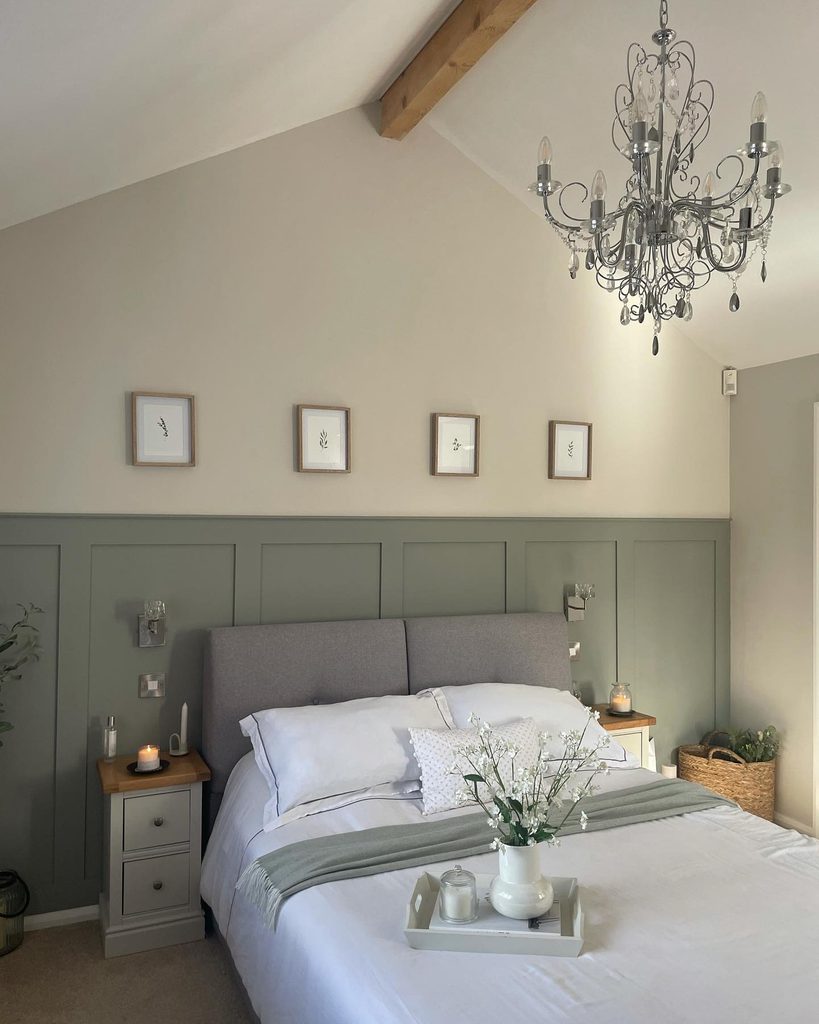
Credits: Instagram
The tall roofline remains the feature here because most of its surface stays cream. Sage paneling anchors the bed below, creating a lower zone beneath the expansive upper walls.
An exposed timber beam and chandelier draw attention upward without requiring another paint color. Where a bedroom has similar height, judge the painted division from the entrance as well as from the mattress.
It should relate to the furniture instead of cutting awkwardly through a headboard. Repeating green in a narrow throw helps connect the lower wall to the bedding.
You do not need the same ceiling structure to use that principle: a pale upper wall can keep attention on existing architectural details while a quieter green band frames sleeping space.
13. Carry Sage Onto a Rustic Bench at the Foot of the Bed
Credits: Instagram
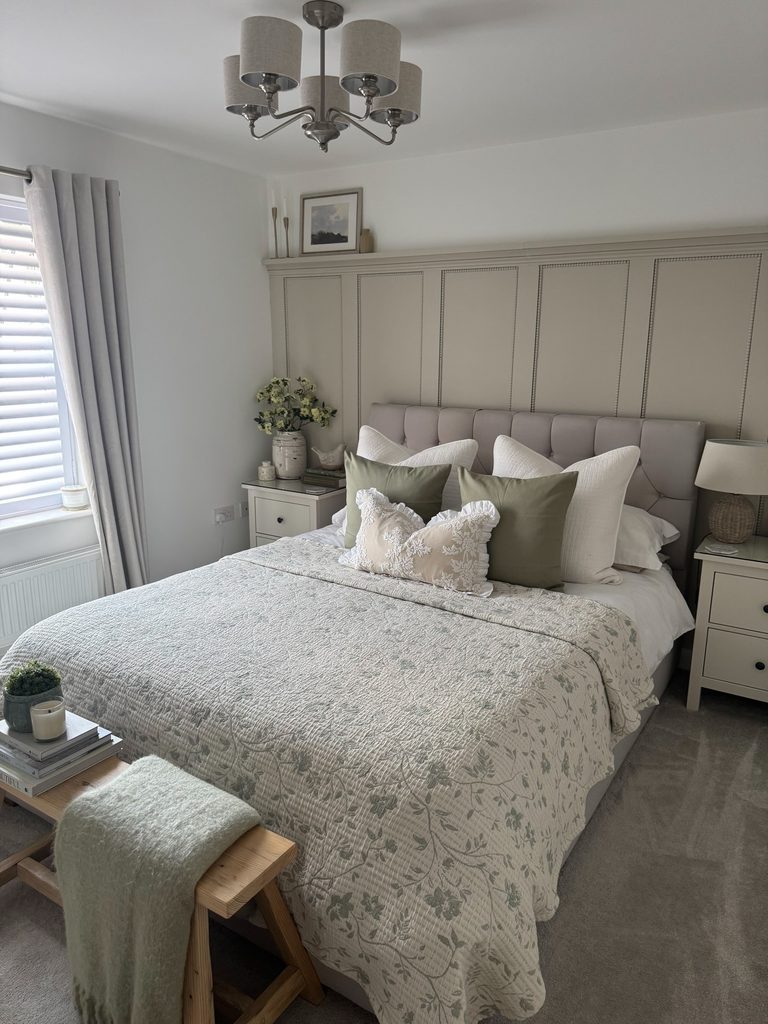
At the foot of this bed, a folded green throw softens the timber bench and extends the palette beyond the mattress. The cream botanical bedspread supplies the pattern, while the solid throw gives the eye a quieter place to rest.
This small move is useful when your bedroom already has pale walls and furniture but the green feels concentrated in the pillows. Let some of the bench remain uncovered so its shape and wood tone still contribute.
In a narrow room, check that the seat leaves an easy path around the bed before copying the placement. A blanket can be stored elsewhere at night if it slips onto the floor. Keep stacks modest if the bench also serves as seating.
14. Set Cream Channel Upholstery Against Soft Sage
Credits: Instagram
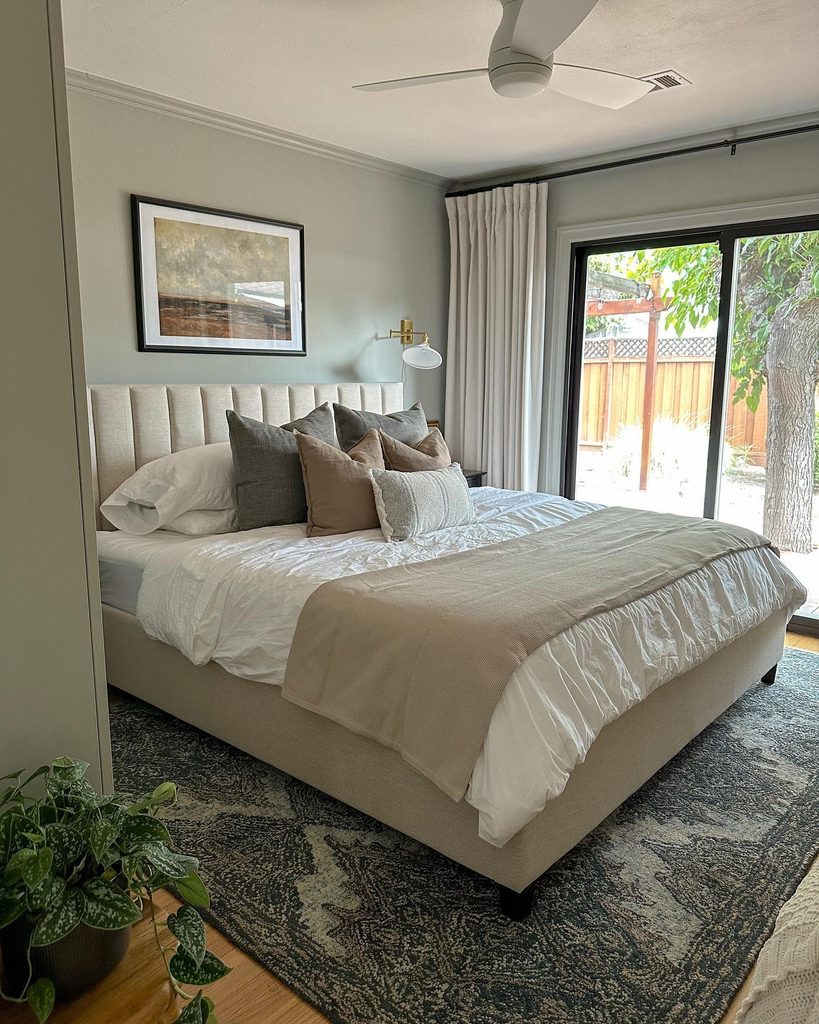
Vertical seams give the upholstered headboard definition without adding another printed fabric. The cream bed frame continues the lighter color toward the floor, providing a substantial counterpoint to the soft sage walls.
Earthy cushions and a neutral throw keep the arrangement relaxed rather than stark. If you are choosing a similar bed, compare the channel spacing with the scale of the room; very broad sections can look quite different from fine fluting.
The photographed headboard sits below the framed artwork, allowing both to remain legible. Check that relationship before hanging a picture above new furniture.
Pale upholstery deserves a practical assessment of cleaning guidance and everyday wear. A removable cream cover or smaller upholstered headboard may be easier to maintain.
15. Paint One Sage Backdrop Behind an Existing Cream Bed
Credits: Instagram
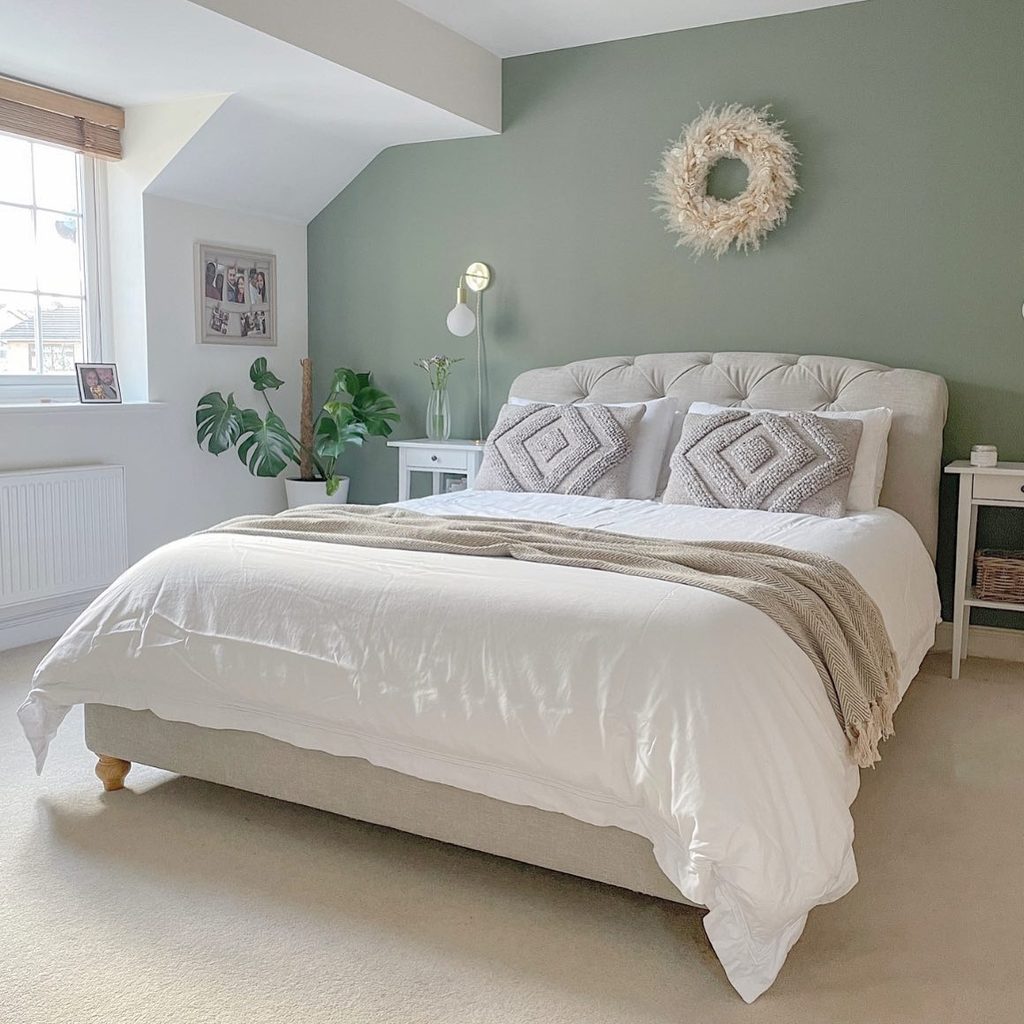
Changing the wall behind a pale bed can be enough to establish a new color scheme. In this bedroom, muted sage surrounds the cream headboard, while the adjacent wall and ceiling stay light.
A dried wreath provides a simple focal point above the pillows, and one off-center wall light gives the arrangement an informal balance. Treat the paint as the main change if your bed and carpet suit a cream palette.
Try a generous sample beside both surfaces before committing, particularly where sloping ceilings alter the available light. You can adapt the styling with artwork or a lightweight decorative piece you already own.
Leave open wall around it so the green remains a clear backdrop rather than a crowded display.
16. Add a Low Cream Seat at the Foot of the Bed
Credits: Instagram
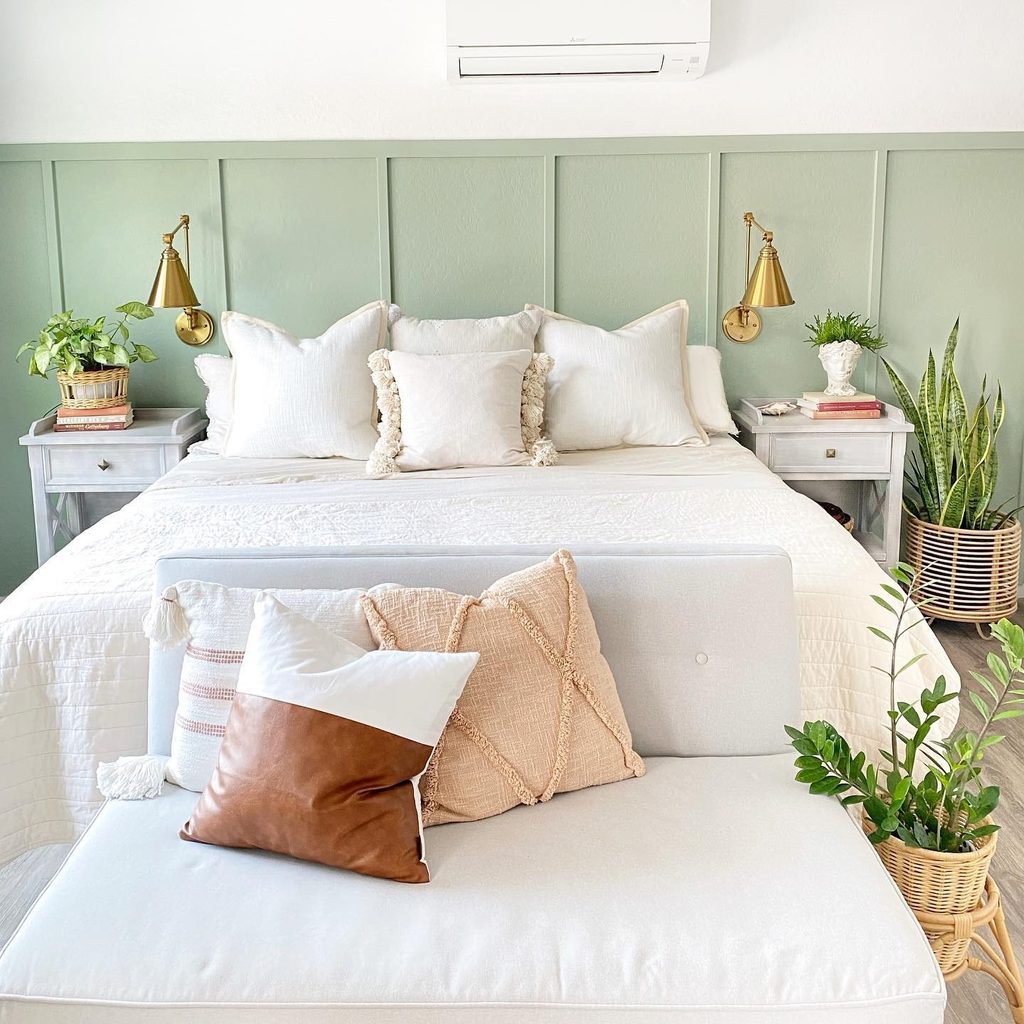
A pale upholstered seat creates a second place to pause in front of this sage paneled wall. Because its back stays low, the bed, pillows, and paired gold lights remain visible beyond it.
Cream bedding ties the two furniture pieces together, while warmer accent cushions prevent the foreground from appearing empty. This arrangement needs more floor space than a stool, so check the route between the seat and surrounding furniture before purchasing.
Choose seating for the way you use the room, whether that means putting on shoes or setting down a folded blanket. The photograph demonstrates the visual relationship rather than a universal layout.
In a smaller bedroom, a narrower cream bench could provide a similar connection with less bulk.
17. Reflect a Sage Daybed Room in a Rounded Floor Mirror
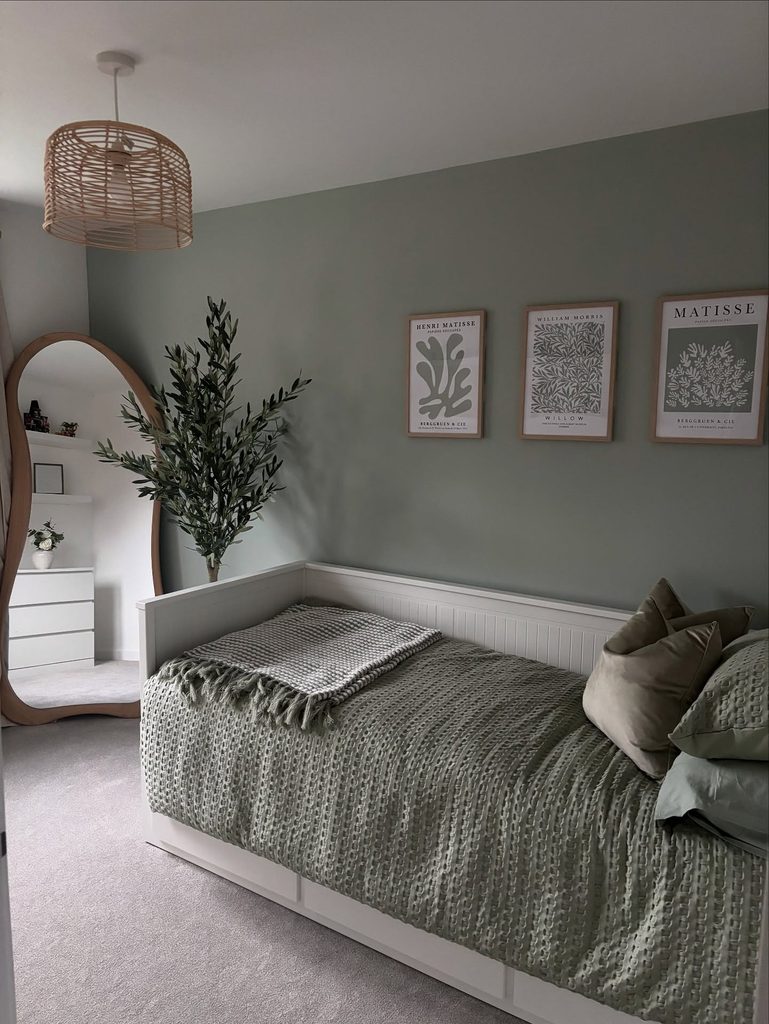
Credits: Instagram
A mirror with a curved timber frame adds a second view of this compact bedroom without introducing another large painted surface.
Its reflection picks up pale storage and soft light, while the sage wall and green bedding keep the main view calm. The rounded outline contrasts with the straight daybed frame and rectangular prints.
Before choosing a mirror, check what it will reflect from the doorway and from the bed. A tidy wall or daylight often gives a more useful result than a crowded corner.
Secure a large mirror according to its mounting instructions, even when it is styled as leaning. Leave enough floor space to approach nearby furniture. Cream textiles can keep the reflected arrangement feeling light and comfortable.
18. Put Basket Storage Beneath a Pale Window Bench
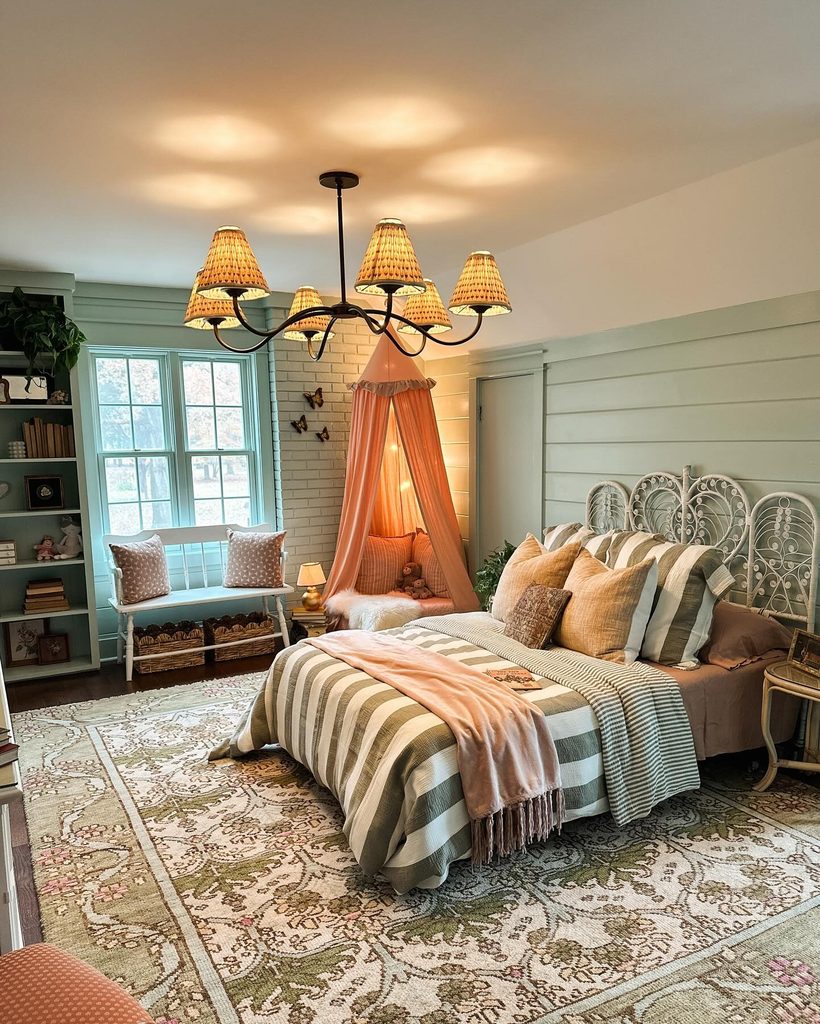
Credits: Instagram
A small bench beneath the window supplies both a perch and a place for baskets in this green bedroom. Pale paint keeps its outline quiet against the sage trim, while cushions make the top look inviting.
The baskets underneath give smaller belongings a contained home without filling the nearby shelves. Measure the available width and the route beside the bed before copying the placement.
Window handles, heating, and ventilation should remain accessible, and any seat must be suitable for the way it will be used. Choose baskets that slide out easily without catching the bench legs.
The room includes several decorative layers, but this practical detail can stand alone in a simpler cream bedroom with a few muted green accents.
19. Add Subtle Texture to a Muted Green Accent Wall
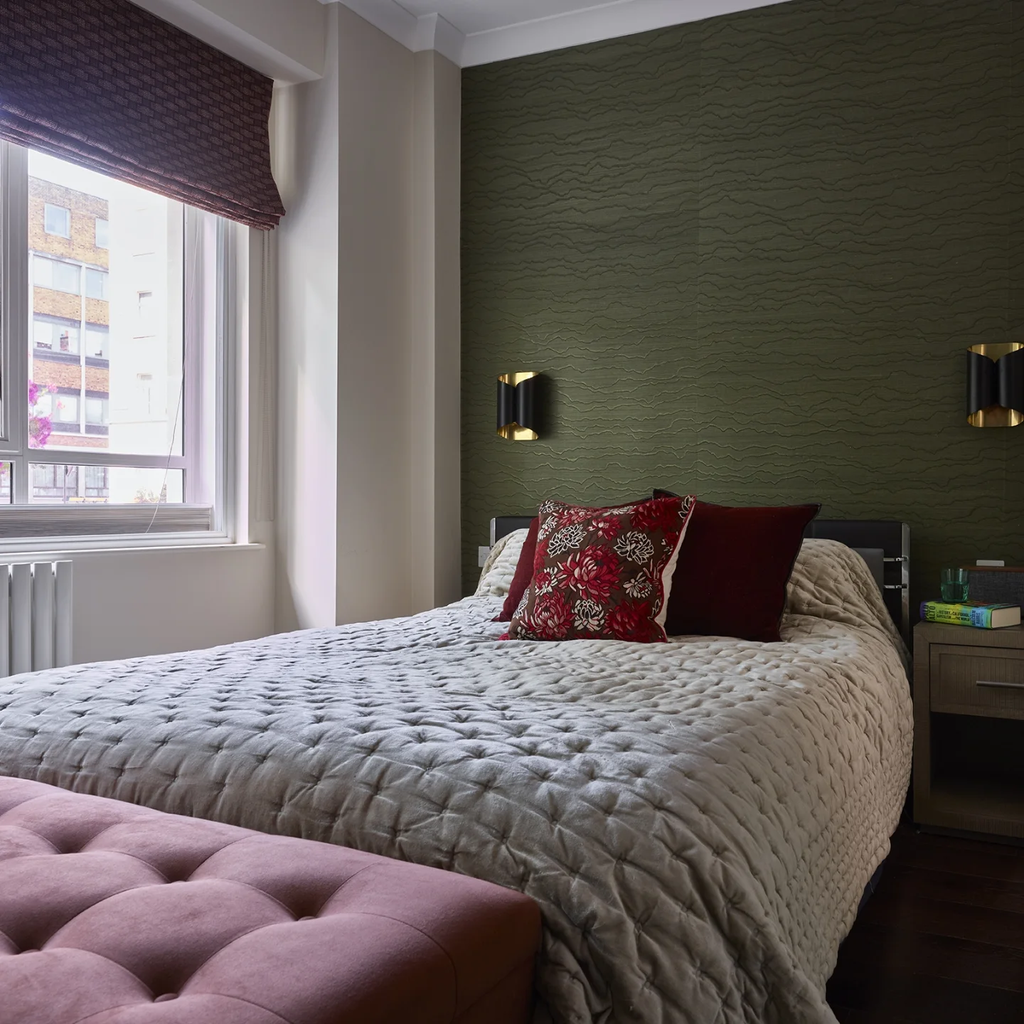
Credits: Instagram
Fine irregular lines give the green wall a textured appearance without introducing a bold repeated motif. Pale quilted bedding provides a softer surface below, so the wall and bed remain distinct even within a restrained palette.
This is an option when plain paint feels flat but large botanical wallpaper would dominate the room. Look at a generous sample beside your cream fabrics, checking both daylight and the light used after dark.
Texture can cast small shadows that change how a color reads. The photograph includes darker red cushions and a pink bench; those are optional accents rather than necessary parts of the wall treatment.
Keep other patterns limited if you want the quiet surface detail to remain the main feature.
20. Give Cream Bedding a Warm Woven Bedside Light
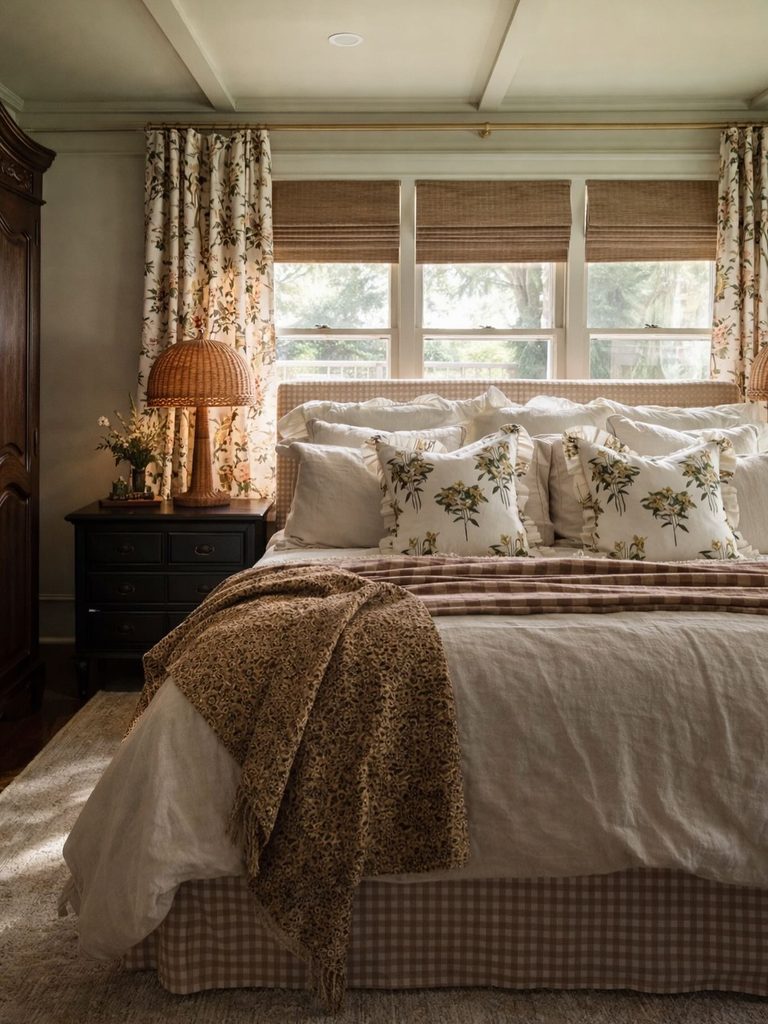
Credits: Instagram
A woven bedside lampshade brings a warm natural surface into this softly layered bedroom. Its rounded form contrasts with the rectangular window frames and dark nightstand, while cream bedding and botanical cushions keep the surrounding palette gentle.
The shade becomes a useful focal point without requiring more objects across the tabletop. Choose a lamp whose proportions suit the bedside furniture and whose light is comfortable from the pillow.
A decorative weave may cast patterns, so assess whether a separate reading light would be useful. Follow the lamp manufacturer’s guidance for bulbs and clearance.
The photograph pairs the lamp with several textiles, but a simpler sage and cream bed can borrow the same warmth from just one carefully chosen woven piece.