
A forest bedroom can feel restful rather than dark when the strongest woodland details have room to breathe.
A Forest Themed Bedroom For Adults can take shape through a misty mural balanced with bright bedding, leaf-green paint carried across the ceiling, or warm wood slats that make storage feel part of the design.
Smaller touches, such as forest animal knobs or a trailing plant beside the bed, can bring in the theme without covering every surface.
These ideas show how to mix woodland patterns, color, and natural textures while keeping the room comfortable and composed.
1. Place a Forest Mural Beside a Window Wall
Credits: Amanda Perna
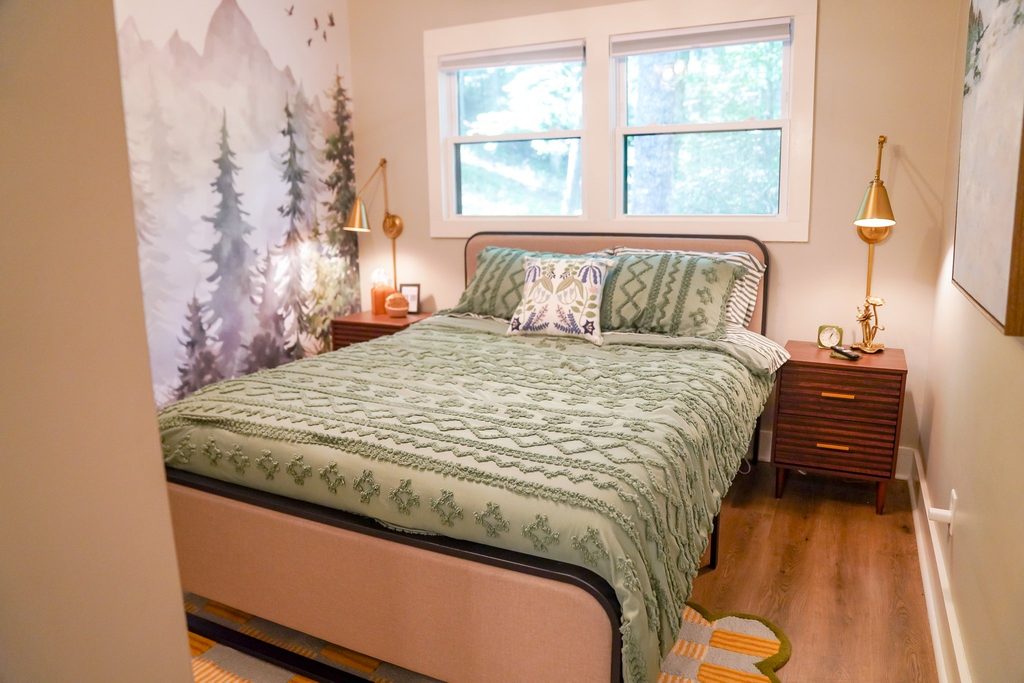
Windows directly above the headboard do not have to rule out a forest mural. This bedroom moves its mountain and evergreen scene onto the neighboring wall, where the tall trees remain visible beside the bed.
Sage bedding carries the woodland color across the sleeping area, while warm wood nightstands give the pale walls some weight. Brass sconces introduce a gentle glow without taking over either tabletop.
For a similar layout, measure the open sidewall before choosing your mural proportions. Keep the headboard low enough to leave window trim clear, and repeat only a few colors from the landscape.
A textured quilt adds interest at close range, so the room feels layered even when the mural is outside your immediate view.
2. Balance a Misty Forest Wall With Bright Bedding
Credits: Krista / The Happy Housie
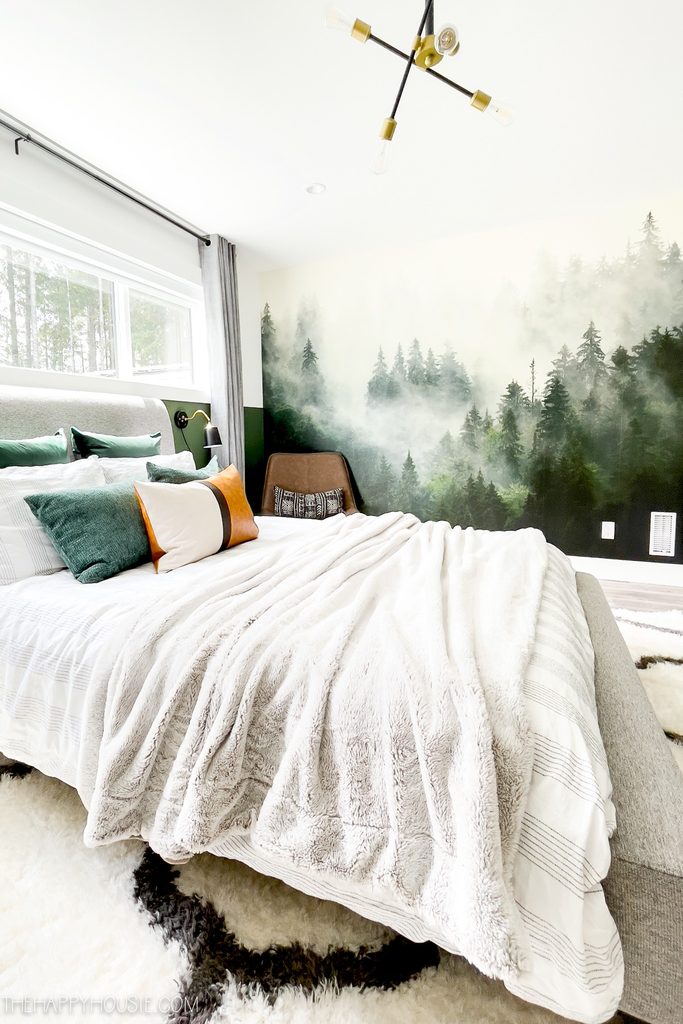
A misty evergreen mural gives this bedroom depth without needing dark paint on every surface. The tallest trees sit at the edges, while a pale opening near the middle keeps the wall from feeling solid.
Soft white bedding visually echoes that clearing, and green pillows connect the bed to the landscape. This is a useful approach for an adult room that needs a strong theme and plenty of light.
Choose a mural with generous fog or sky rather than uniformly dense foliage. Keep the largest textiles pale, then introduce one warm brown accent through a cushion or chair.
Simple gray curtains provide a quiet border beside the scene, leaving the photographed forest as the most detailed element in the space.
3. Let White Linens Brighten a Birch Grove
Credits: Lisa Silfwerbrand / Recreated Designs
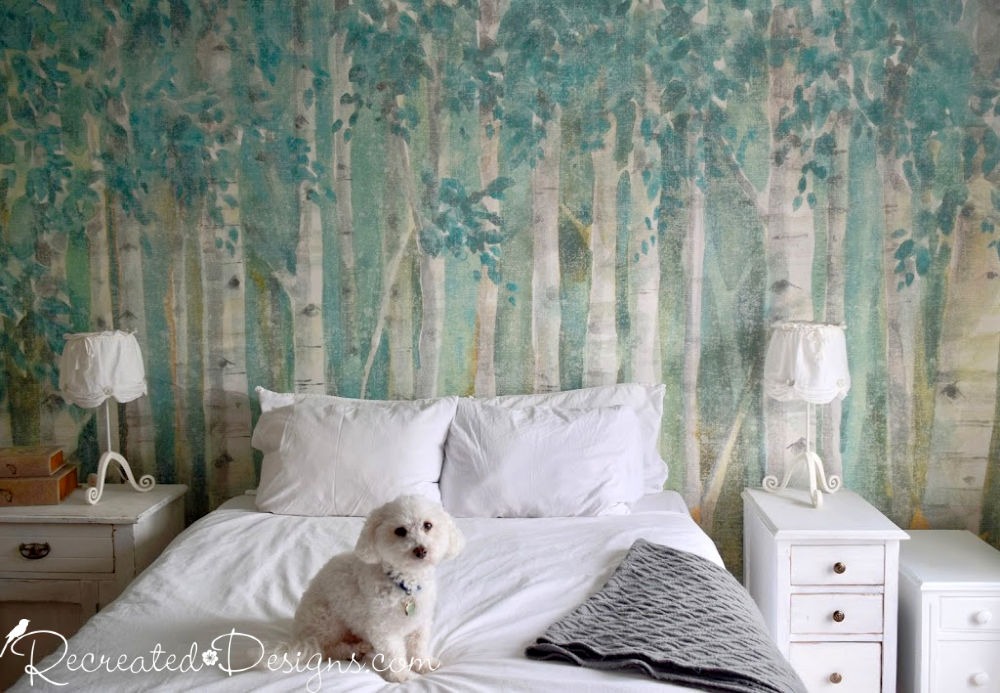
White birch trunks and teal leaves make this mural feel airy, even though it covers the entire wall behind the bed. Plain white bedding picks up the pale bark, allowing the woodland pattern to remain easy to read.
The little white dog and loosely folded gray blanket make the room feel comfortably lived in. To use this idea, choose a forest print with a light background and give it an equally light bed covering.
Avoid stacking patterned pillows in front of the most attractive trees. Matching white lamps help connect the different nightstands without requiring identical furniture.
A single darker throw can provide enough contrast. The result is a relaxed forest bedroom with texture, character, and a clear focal point.
4. Pair an Etched Woodland Mural With a Black Metal Bed
Credits: Rebecca Brittain / Every Piece Fits
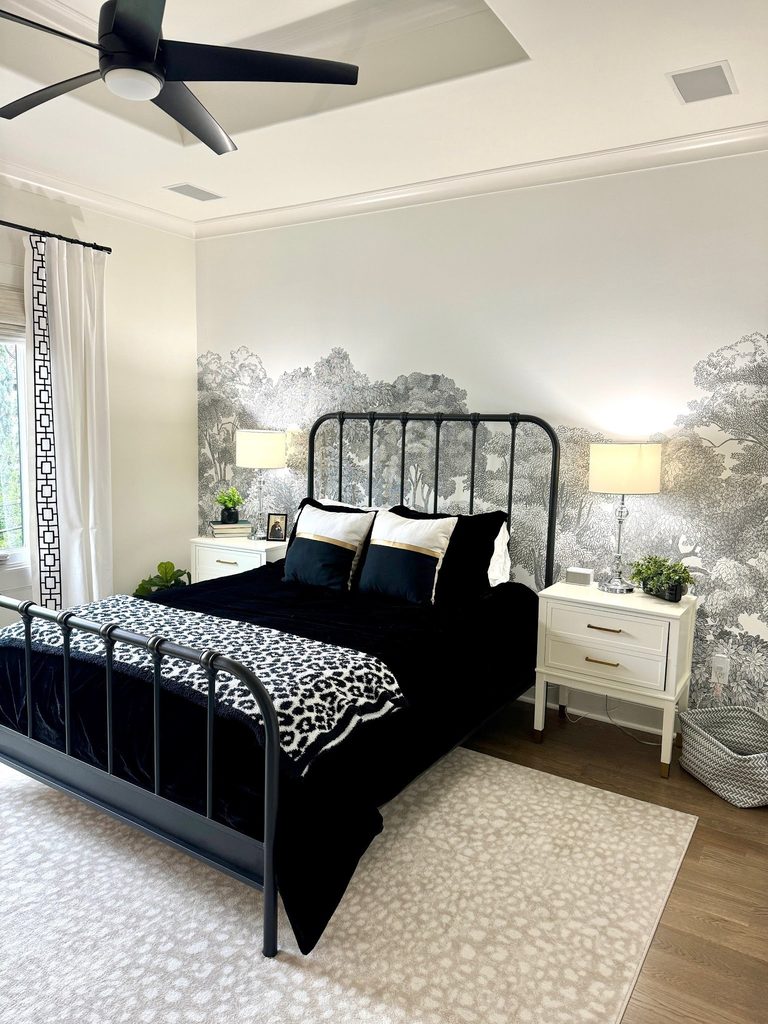
Fine gray branches create a beautifully delicate backdrop for this strong black bed frame. Because the metal rails are open, the woodland drawing remains visible through the headboard and does not become a narrow strip above it.
Black bedding adds a richer block of color, while white nightstands and clear lamp bases keep the sides bright. This combination works when you want a forest theme with a tailored, grownup appearance.
Look for a mural whose trees rise gradually rather than filling every inch with equal detail. Choose an open headboard that lets the picture continue behind it.
A small amount of metallic trim can warm the monochrome scheme, and a pale rug keeps the dark bed from dominating the floor.
5. Carry Leaf Green Paint Across the Ceiling
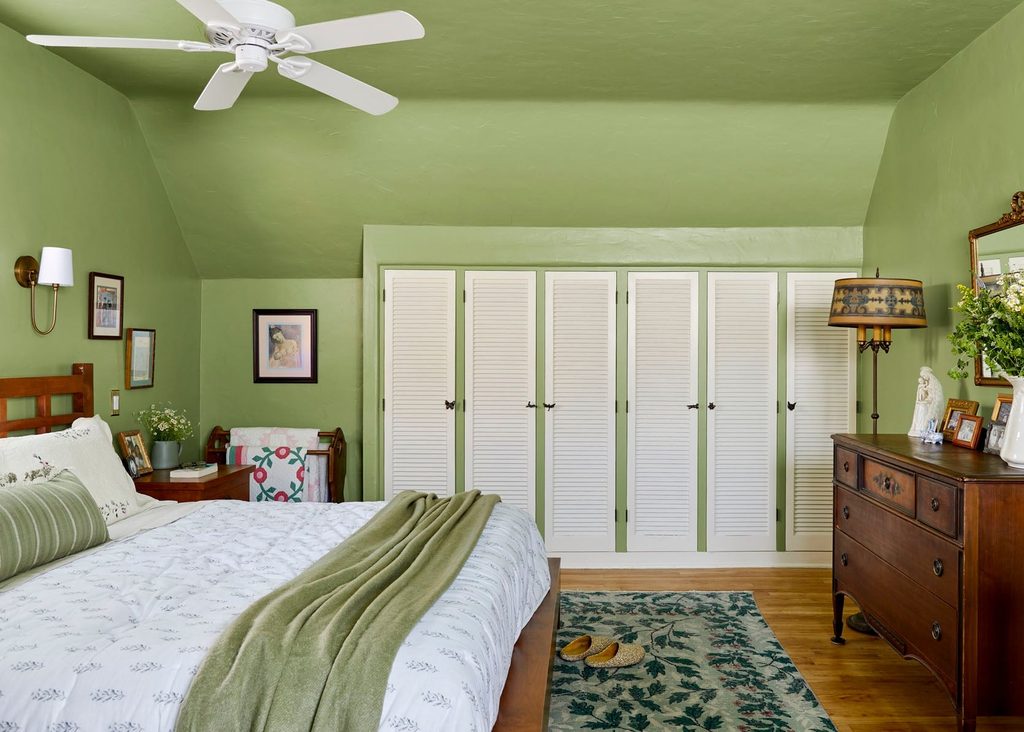
Credits: Sara Ligorria-Tramp / Emily Henderson
Green walls become much more visually immersive when the same color continues overhead. In this bedroom, the sloped ceiling and surrounding walls form one leafy envelope, while creamy closet doors provide a lighter pause.
Warm wood furniture and the branching pattern in the rug reinforce the woodland feeling without a mural. Try this approach in an attic room or any space with several ceiling angles.
Paint samples on different planes before committing, because shadows can make the same green look noticeably deeper. Keep bedding lighter than the walls to preserve a clear resting place for the eye.
Repeating botanical motifs in small doses helps the theme feel connected, especially when the room includes older furniture and personal objects you love.
6. Hide Storage Behind Warm Vertical Wood Slats
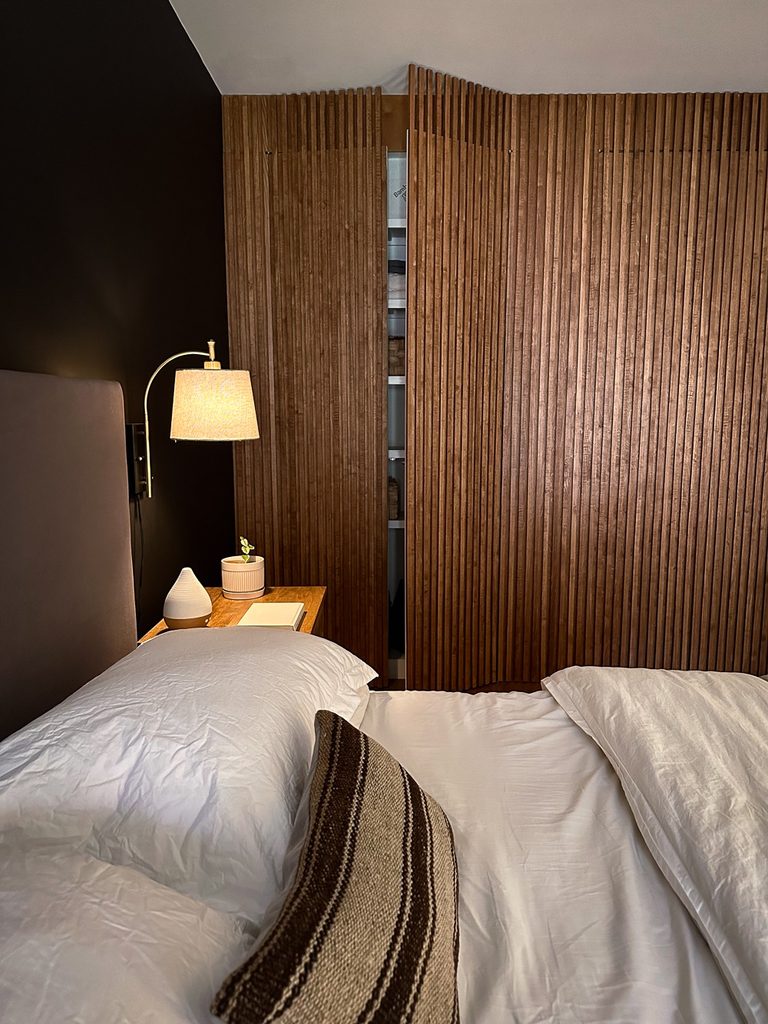
Credits: Dani Koch
Closet doors can contribute to a forest bedroom instead of interrupting it. This room uses closely spaced vertical wood slats across the storage wall, creating a rhythm that recalls a stand of straight tree trunks.
One open panel reveals the practical shelving behind the finish. The nearby dark wall makes the wood grain look warmer, and a shaded bedside light highlights its texture.
Consider this idea when ordinary closet doors occupy a large part of the room. Keep the slat spacing consistent across moving panels and fixed sections for a unified appearance.
Check door clearance before placing a nightstand nearby. Soft white bedding and a simple upholstered headboard balance the hard lines, keeping the room comfortable rather than visually busy.
7. Build a Painted Forest From a Misty Background
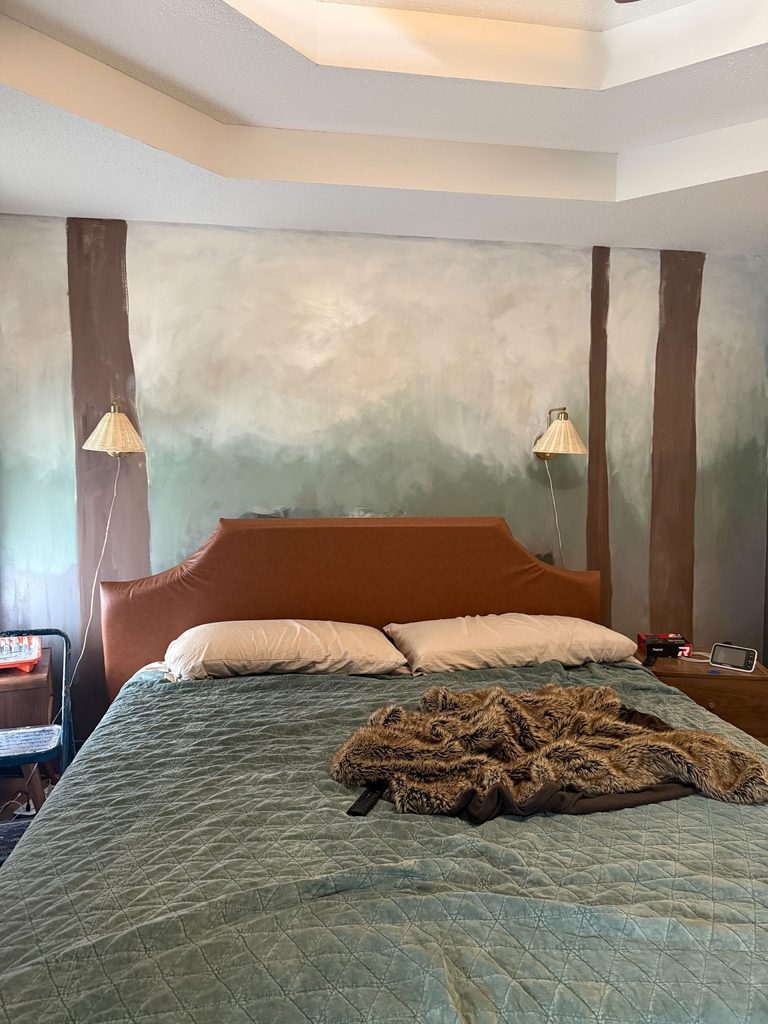
Credits: Samm / The Midnight Mustard Seed
This in progress bedroom photograph shows how a painted forest can begin with atmosphere before smaller details arrive. A pale, cloudlike background fades toward muted green behind the bed, with broad brown trunks establishing the main vertical shapes.
The bedding already repeats the green, and the warm headboard makes the unfinished scene feel connected to the furniture. If you want to paint your own woodland wall, start by testing the overall light and dark balance on paper.
Leave breathing room around the headboard instead of placing every trunk at equal intervals. Protect the bed and nearby surfaces while working.
The final leaves can come later; this early stage demonstrates how much depth a restrained background and a few trunks provide.
8. Use Forest Animal Knobs as a Small Woodland Detail
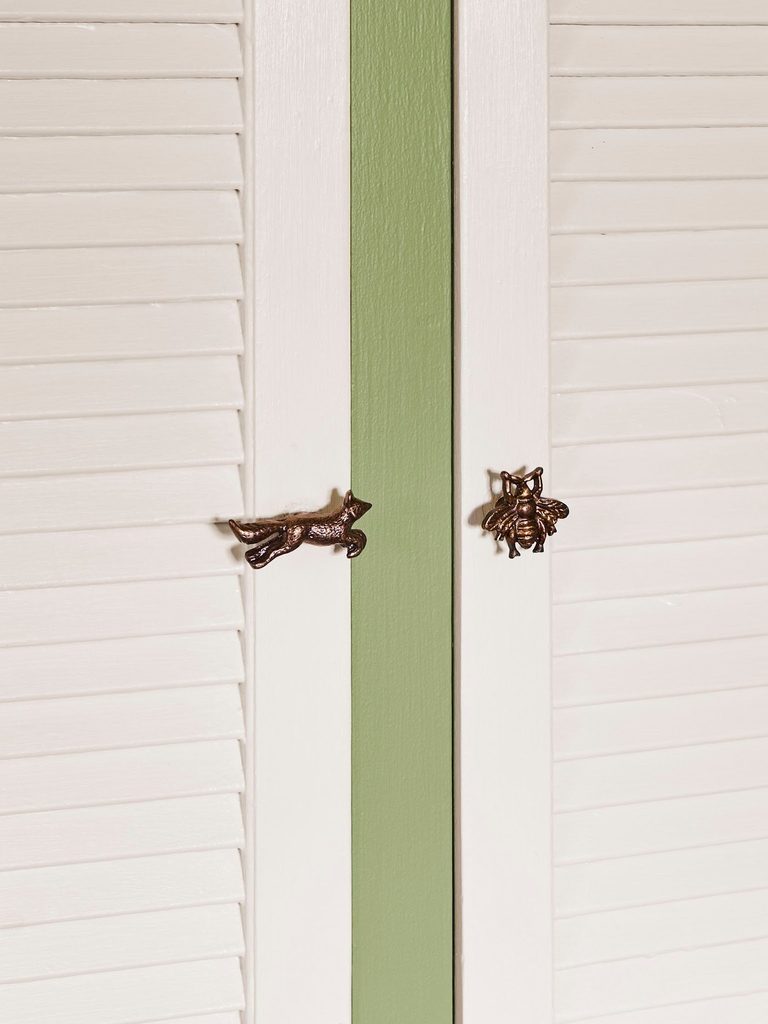
Credits: Sara Ligorria-Tramp / Emily Henderson
A fox and a bee turn plain closet doors into a woodland moment. Their warm metallic finish stands out against the creamy louvers, while the green strip between the doors links them to the surrounding bedroom.
This closeup shows an approachable way to add personality without covering another wall in pattern. Choose sculptural hardware that feels good in your hand and has smooth edges around the grip.
A few different creatures can work together when their finish and scale are similar. Before ordering, check the screw length and existing hole placement on your doors.
Keep the rest of the hardware simple so these details remain special. The forest reference becomes something you notice during an ordinary part of your routine.
9. Create a Reading Corner Against a Forest Clearing
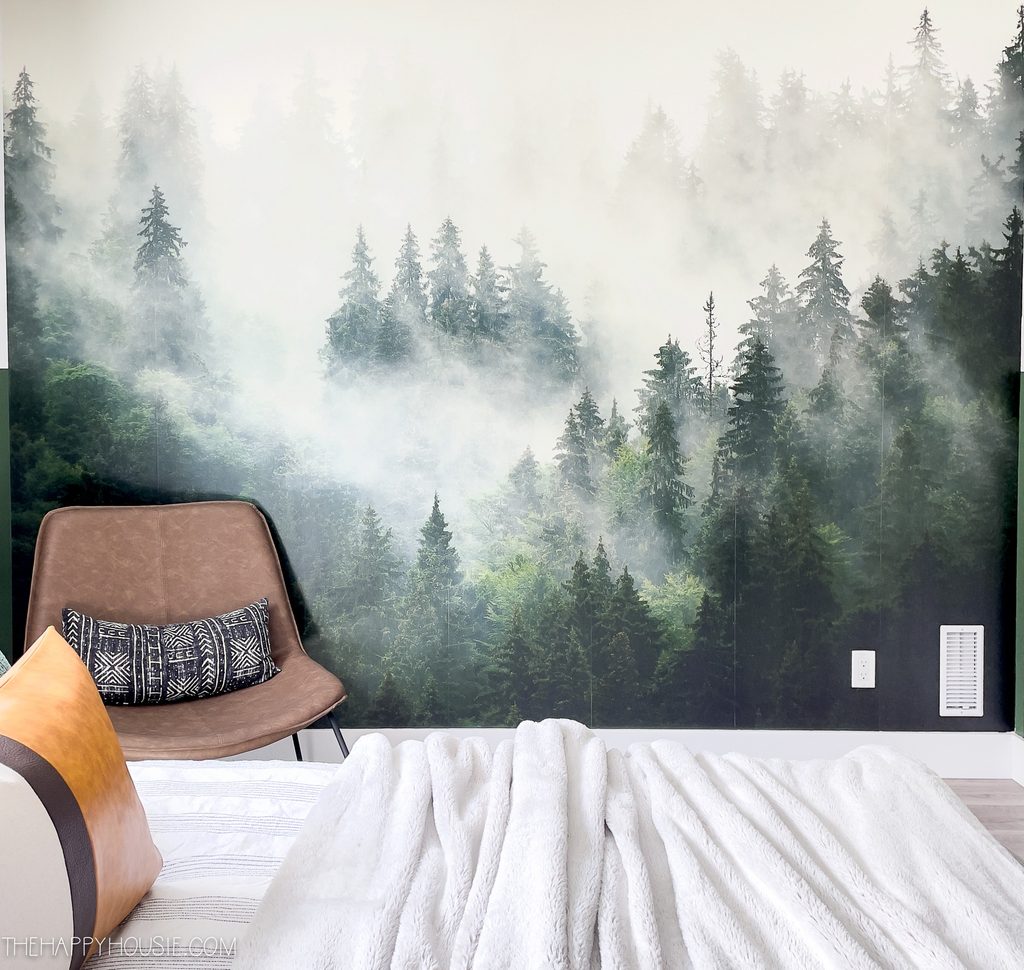
Credits: Krista / The Happy Housie
A low brown accent chair sits in front of the darkest part of this evergreen mural, leaving the pale mist above it open. From the bed, the chair becomes part of the landscape rather than a bulky interruption.
Its warm upholstery also breaks up the cool greens and whites. Use this idea to make a small bedroom corner feel like a quiet woodland retreat.
Choose a chair with a modest back and open legs so the mural stays visible around it. A compact patterned cushion can add comfort without covering the entire seat.
Keep walking space beside the bed clear, and place reading light where it serves the chair without casting distracting shadows across the forest scene on the wall.
10. Bring a Weathered Nightstand Into a Birch Bedroom
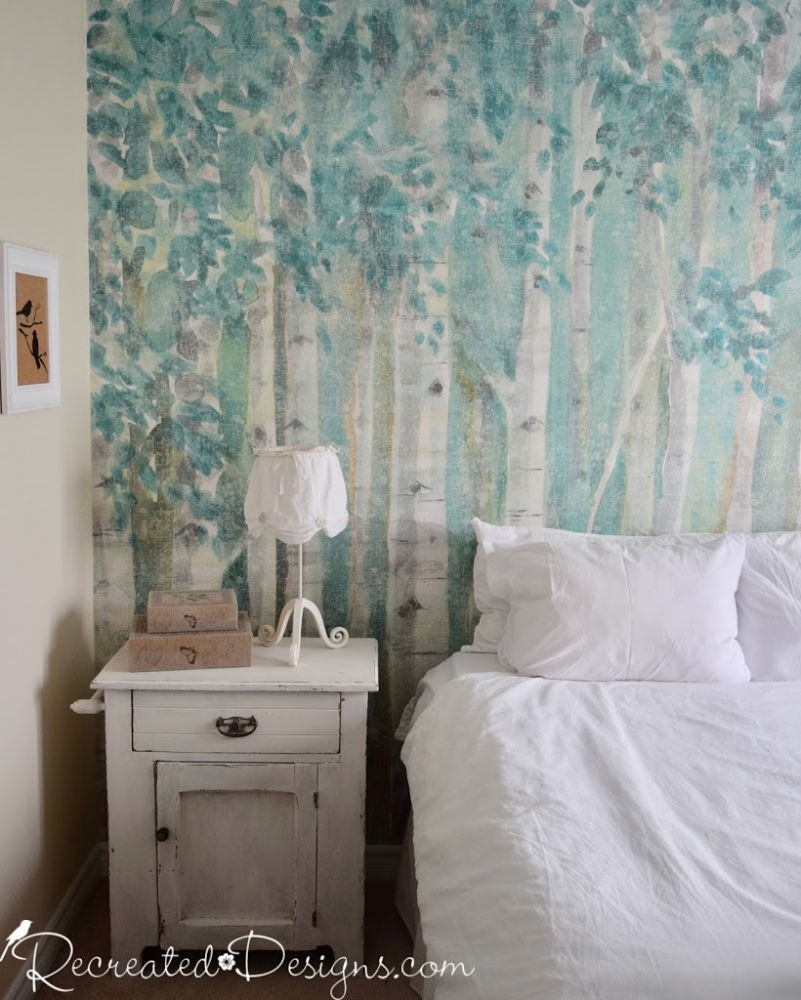
Credits: Lisa Silfwerbrand / Recreated Designs
The gently worn white finish on this bedside cabinet feels at home beneath the pale trunks of a birch mural.
Dark metal hardware adds a little contrast, and the cabinet offers enclosed storage that keeps everyday objects from crowding the forest scene. A slender white lamp and two small boxes leave much of the tabletop open.
For a similar look, use a sturdy vintage nightstand with proportions that suit your mattress height. Its imperfections can provide texture alongside smooth wallpaper and simple bedding.
Avoid distressing every piece in the room; one weathered cabinet is enough to introduce age. A small bird picture on the adjacent wall extends the nature theme gently, making the corner feel personal rather than overly coordinated.
11. Reflect the Woodland Wall From the Opposite Corner
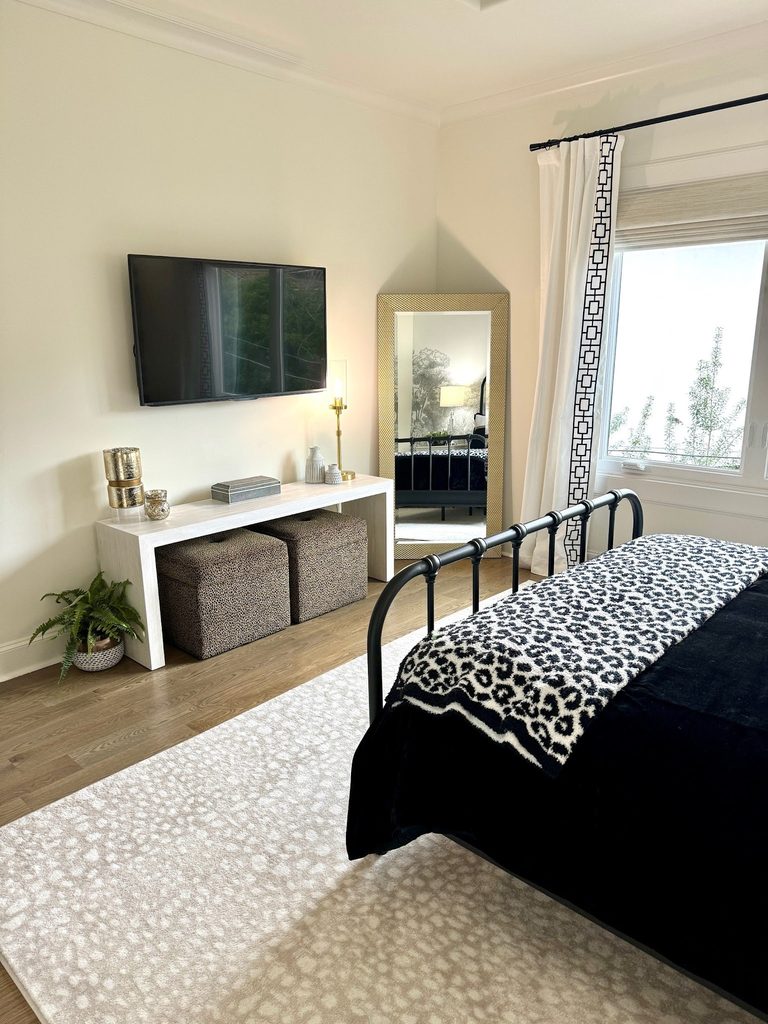
Credits: Rebecca Brittain / Every Piece Fits
A tall mirror catches the woodland mural across this bedroom, allowing the trees to appear from another angle.
The reflection also includes the dark bed frame and a glowing lamp, so it feels like a complete room view rather than an isolated decorative panel.
Beside it, a fern and pale console soften the wall beneath the television. This idea is useful when only one wall can carry a forest scene.
Position a mirror where it reflects that wall without directing bright light toward your pillow. Secure it according to its mounting requirements, even when the style looks casually leaned.
Keep the surrounding furniture low and simple, leaving enough visible mirror area for the branches and light to do their work.
12. Frame a Real Woodland View With Quiet Curtains
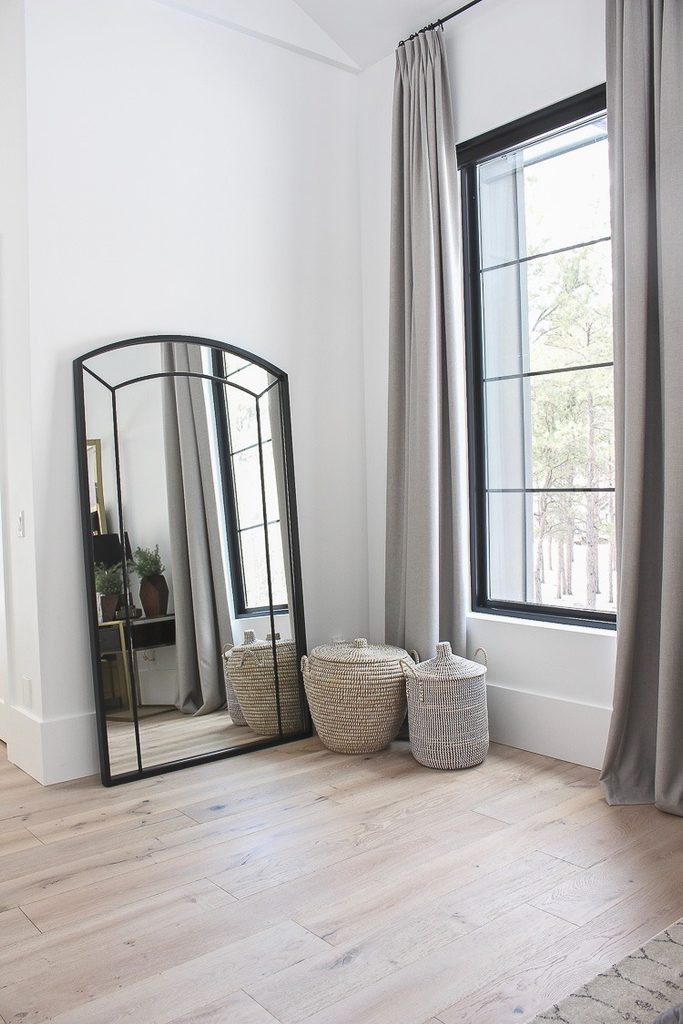
Credits: Shauna Beltramo / The House of Silver Lining
Sometimes the strongest forest element is already outside the window. This bedroom corner keeps gray curtains pulled to either side so the trees remain visible through the black window frame.
A matching dark mirror repeats the vertical shape, and woven baskets bring another natural texture to the pale wood floor. To borrow the idea, let the view determine which surfaces stay simple.
Avoid placing tall storage directly in front of the glass, and choose curtain panels that can stack away from the opening. A mirror can reinforce the daylight when positioned thoughtfully.
Keep practical privacy or light control in mind when selecting window treatments. The room can feel connected to the woods while remaining comfortable for everyday dressing and sleep.
13. Layer Botanical Quilts With Leaf Colored Textiles
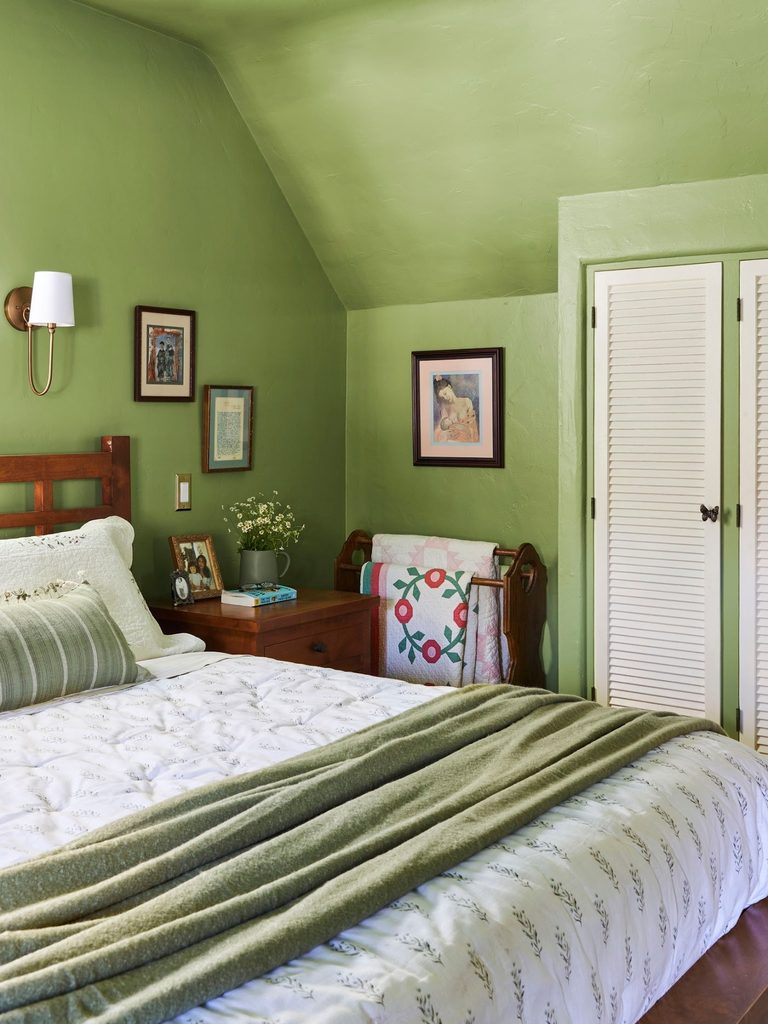
Credits: Sara Ligorria-Tramp / Emily Henderson
A woodland mood can emerge through layered bedding rather than a large scenic wall.
Here, delicate leafy patterns appear on the white bed covering, a soft green throw lies across the foot, and a floral quilt hangs on a wooden stand nearby.
The green walls connect these different textiles without forcing them to match. Start with one quiet botanical print, then add a solid blanket in a related shade.
An older quilt can become part of the room even when it is not used every night. Place a stand where it does not narrow the path around the bed.
Small framed pictures and warm wood furniture help the space feel established, while the pale bedding keeps the overall arrangement fresh.
14. Let a Trailing Plant Soften a Dark Bedside Wall
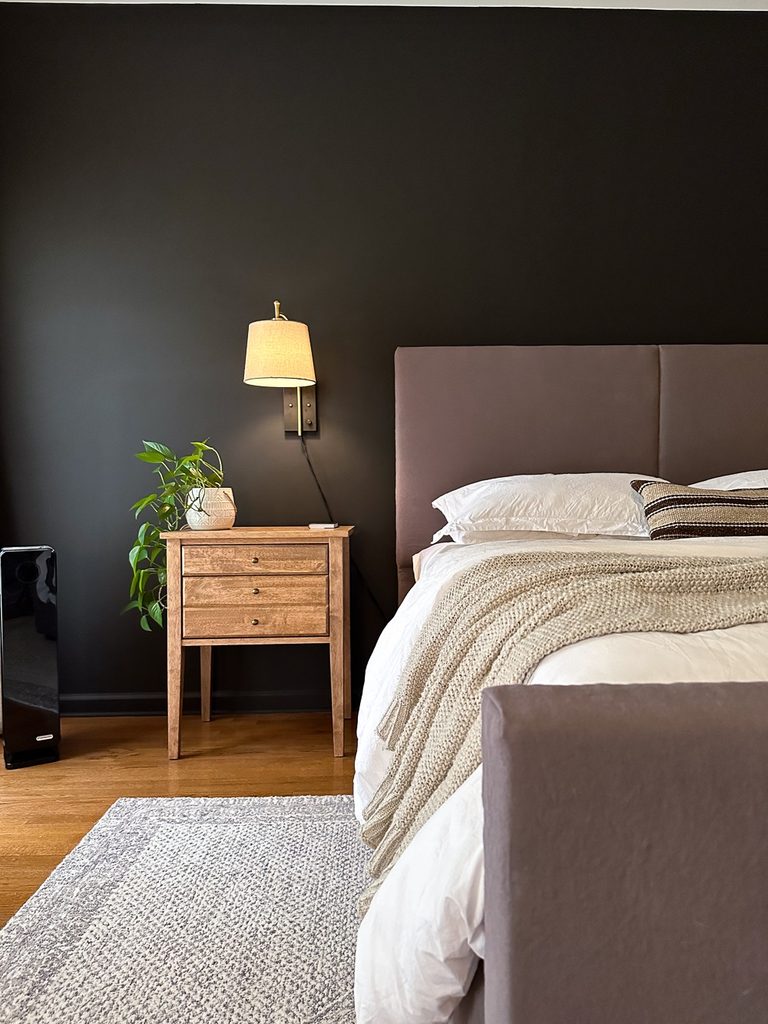
Credits: Dani Koch
The trailing leaves beside this bed make a strong impression against the black wall. Their curved stems soften the straight lines of the wooden nightstand, while pale bedding keeps the sleeping area bright.
A simple wall lamp provides light without filling the tabletop, leaving room for the plant to spread. This is a compact way to introduce a woodland feeling when a mural or major renovation is unrealistic.
Choose a plant suited to the available window light, or use a convincing artificial version if care conditions are poor. Give the pot a protective saucer and keep leaves away from electrical fittings.
The contrast between green foliage, warm wood, and deep paint supplies a clear nature reference with very few objects.
15. Add Loose Leaves Around Hand Painted Tree Trunks
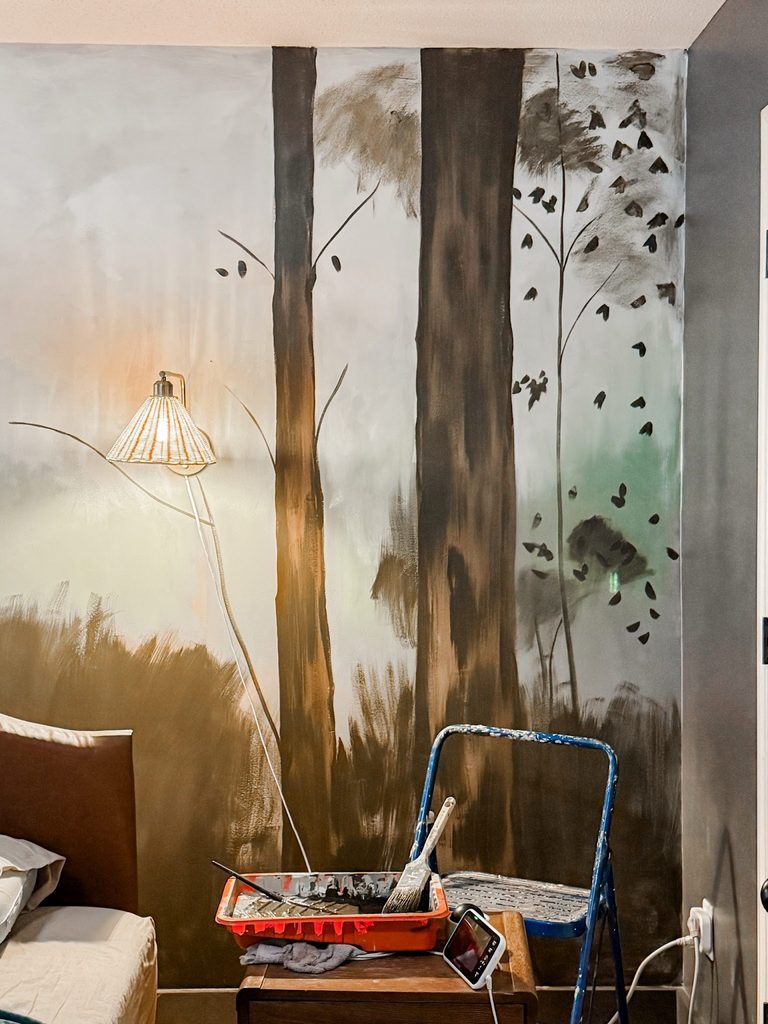
Credits: Samm / The Midnight Mustard Seed
This close view captures a forest mural while its details are being painted. Broad brown trunks anchor the composition, and small leaf shapes on thin stems introduce movement across the lighter background.
The woven bedside shade fits the natural palette without competing with the brushwork. Use the photograph as an example of process rather than a finished styling arrangement.
Begin with a few larger tree shapes, then vary the direction and spacing of the leaves. Repeating one identical stamp everywhere can make a mural feel rigid.
Step back often to see how the pattern relates to the headboard and lighting. When the painting is complete, remove tools and restore clear bedside surfaces so the handmade forest remains the main attraction.
16. Keep Bedside Lighting Delicate Against Detailed Trees
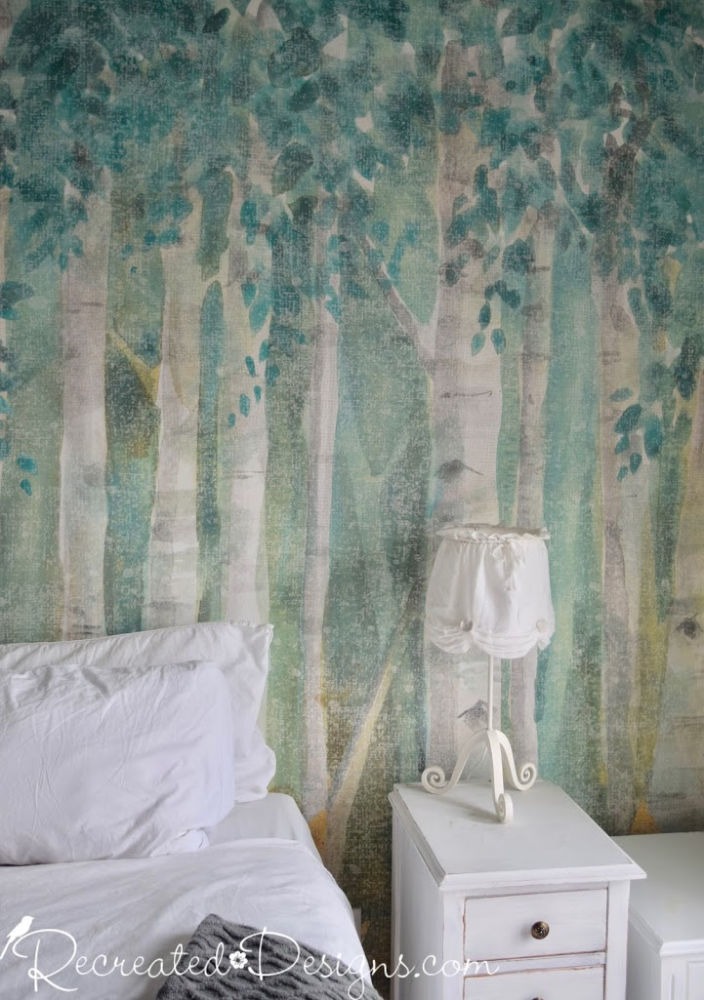
Credits: Lisa Silfwerbrand / Recreated Designs
A narrow white lamp allows the birch trunks behind this nightstand to remain visible. Its curved legs and softly gathered shade introduce gentle shapes without adding another strong color.
The white drawers echo the bedding, giving the teal woodland mural a calm foreground. This is especially helpful when the bedside area is small and the wall pattern already contains plenty of detail.
Look for a lamp that provides useful light while occupying a modest portion of the tabletop. Leave space for a glass of water or a book instead of filling every corner with accessories.
A pale finish can connect mismatched furniture pieces, allowing their different silhouettes to feel intentional. The forest stays prominent, while the bedside arrangement remains practical.
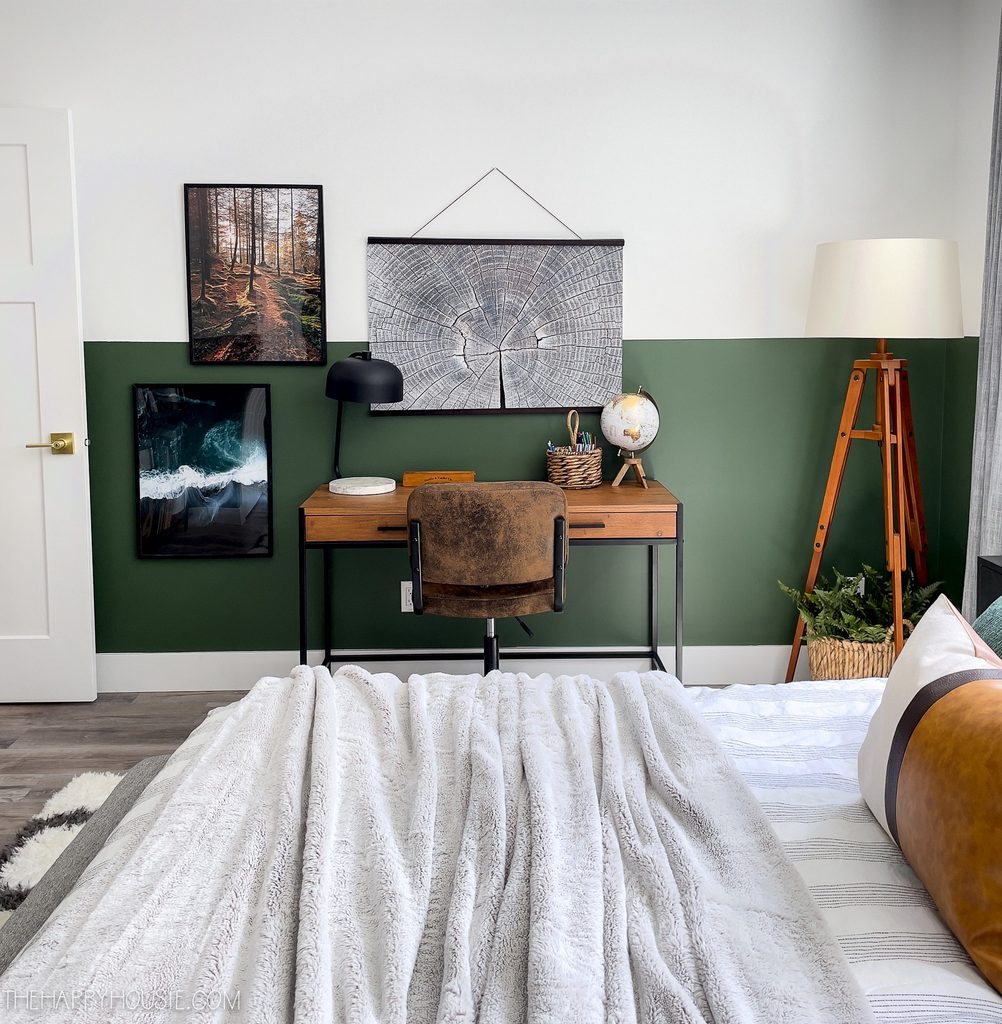
17. Add Tree Ring Artwork Above a Bedroom Desk
Credits: Krista / The Happy Housie
A tree ring print brings the forest into this bedroom workspace without requiring another mural. Its circular growth pattern contrasts with a framed photograph of straight woodland trunks nearby, creating two different views of the same natural subject.
The desk, chair, and tripod lamp add warm brown tones against a green lower wall. Use this approach when your bedroom must also accommodate occasional work.
Keep the desktop clear enough to function, and choose art that connects visually with the sleeping area. Hanging the larger print near eye level makes it part of the workspace rather than an afterthought.
A basket of greenery softens the floor beside the lamp. The corner feels purposeful while continuing the room’s woodland colors and materials.
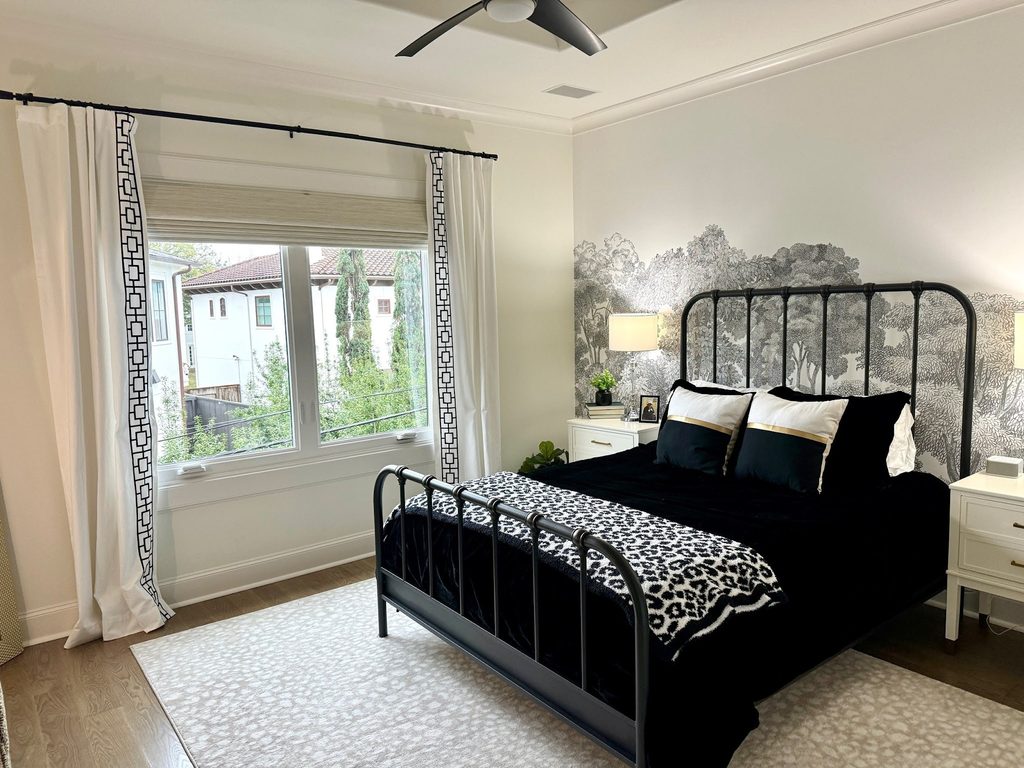
18. Use Pale Curtains to Give a Woodland Mural Breathing Room
Credits: Rebecca Brittain / Every Piece Fits
Long white curtains create a bright pause beside the finely drawn trees in this bedroom. A slim dark border repeats the black bed frame, making the window treatment feel connected without adding another dense botanical pattern.
The mural stays concentrated behind the bed, while the window wall remains mostly light. This balance is useful in a forest themed room with strong dark bedding.
Choose curtains with a simple surface and enough width to look full when closed. Hang them so they frame the window without hiding more daylight than necessary.
Repeat the dark accent in just a few places, such as the rod and bed rails. A pale rug extends the lighter area below, giving the arrangement a comfortable balance.
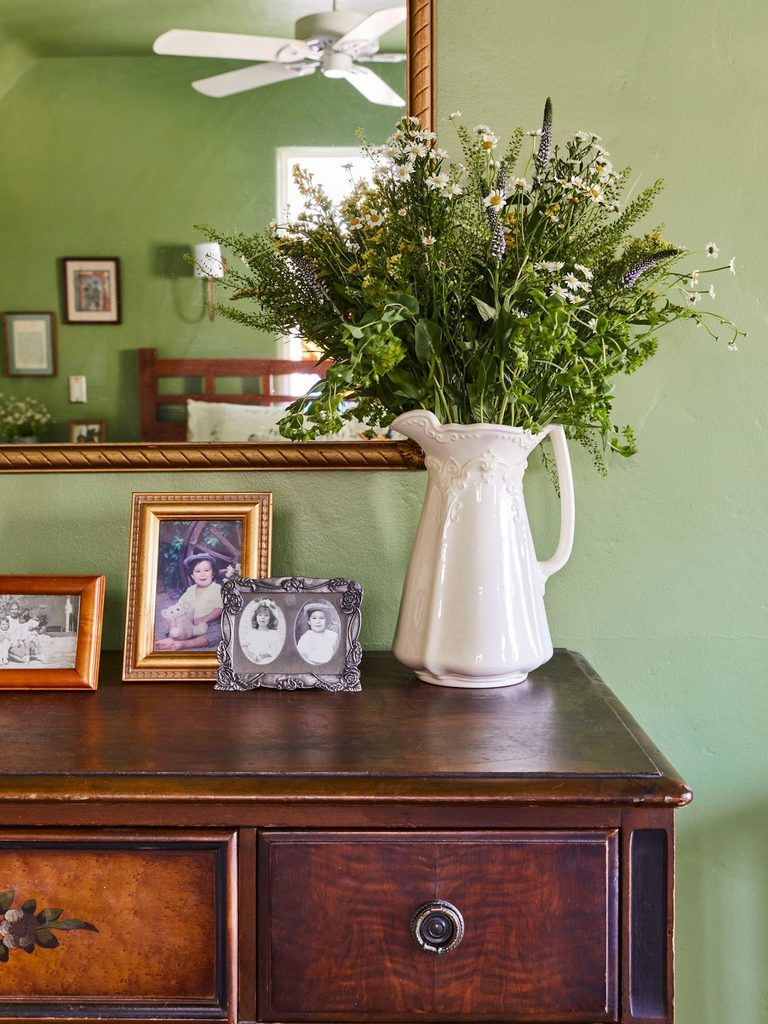
19. Arrange Meadowlike Greenery on a Bedroom Dresser
Credits: Sara Ligorria-Tramp / Emily Henderson
A loose bouquet of small flowers and leafy stems makes this dresser feel connected to the outdoors. The white pitcher keeps the arrangement informal, and the mirror repeats the greenery against the bedroom’s leaf green walls.
Personal photographs remain alongside it, showing that a nature theme can coexist with meaningful objects. For your own dresser, choose a stable container that will not easily tip when drawers open.
Vary the stem heights and leave some air between them instead of forming a tightly packed ball. Protect the wood from moisture and remove fading stems promptly.
If fresh flowers are impractical, a few branches or a well chosen artificial arrangement can offer similar shape. Let the foliage supply the main visual movement.
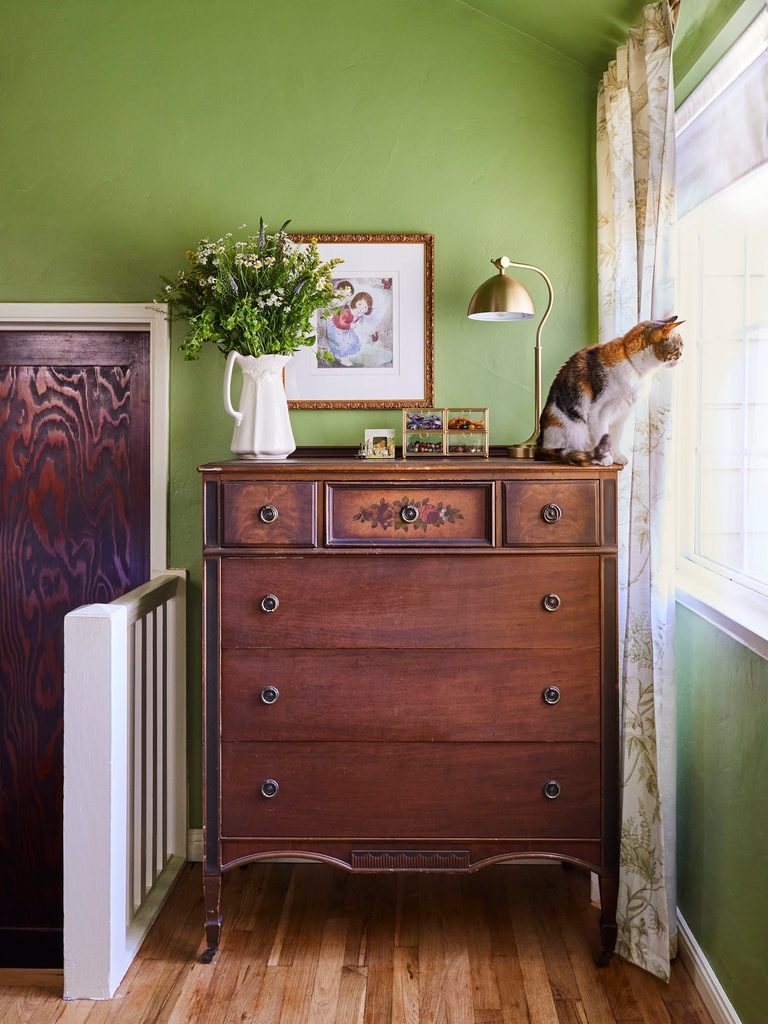
20. Connect Botanical Curtains With Warm Vintage Wood
Credits: Sara Ligorria-Tramp / Emily Henderson
Subtle bird and branch curtains soften the window beside this vintage dresser. Their pale background allows daylight to remain the brightest part of the corner, while green walls and a loose floral arrangement continue the woodland palette.
The dresser’s warm finish and small painted flower detail make the space feel layered rather than matched. To use this idea, pair a quiet nature print with furniture you already enjoy.
Repeat one green tone nearby so the curtains belong to the wider room. A simple brass lamp can add a warm accent without overwhelming the pattern.
Leave surface space for belongings, and check that the curtain panels hang freely beside the dresser. Natural references work best when the room still functions comfortably.