
A living room can feel modern without making every piece compete for attention.
Modern Living Room Ideas in this roundup show how a single accent chair can provide a focal point, while organic textures soften simple furniture and rounded tables bring out the character of veined stone.
Other approaches use wood to connect an open plan or layered blues to create a calm palette.
These ideas focus on balancing color, shape, and texture with practical room arrangements, so the space feels considered and comfortable rather than overly decorated.
1. Give One Accent Chair the Spotlight
Credits: Instagram
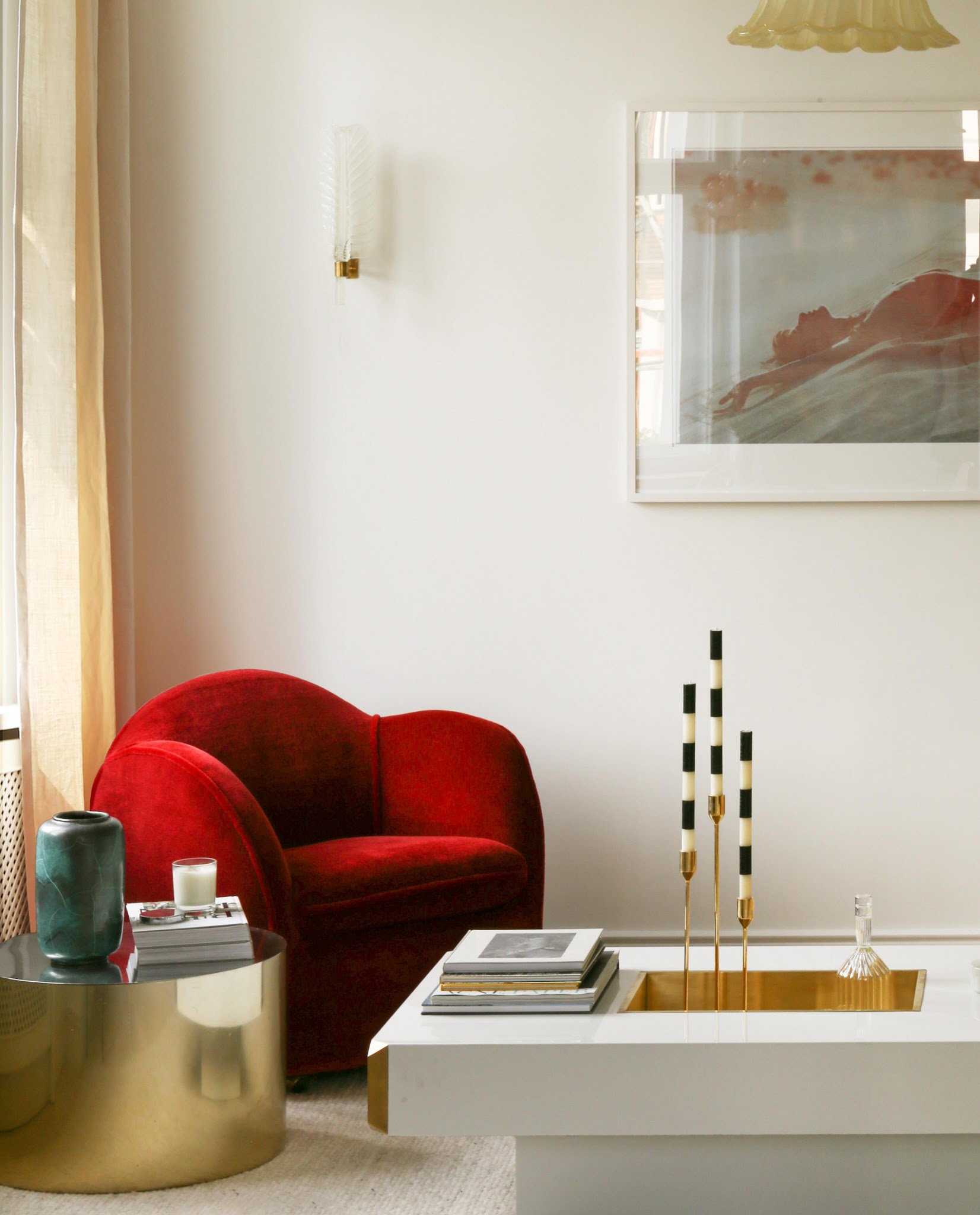
A single vivid chair can give a restrained living room its personality. Here, a rounded red armchair stands against pale walls, a light rug, and simple window curtains, so its color and silhouette remain easy to read.
A reflective cylindrical side table and a low rectangular coffee table introduce different shapes without competing for attention. Try this approach when your larger furniture already feels calm but the room needs a stronger focal point.
Choose an accent chair that looks particularly interesting from several angles, then leave some comfortable breathing room around it. Repeat its warmth subtly through metal finishes or artwork.
Keep nearby accessories limited to a few useful pieces, allowing the upholstery to provide the room's most memorable color.
2. Set Organic Texture Against Simple Furniture
Credits: Instagram
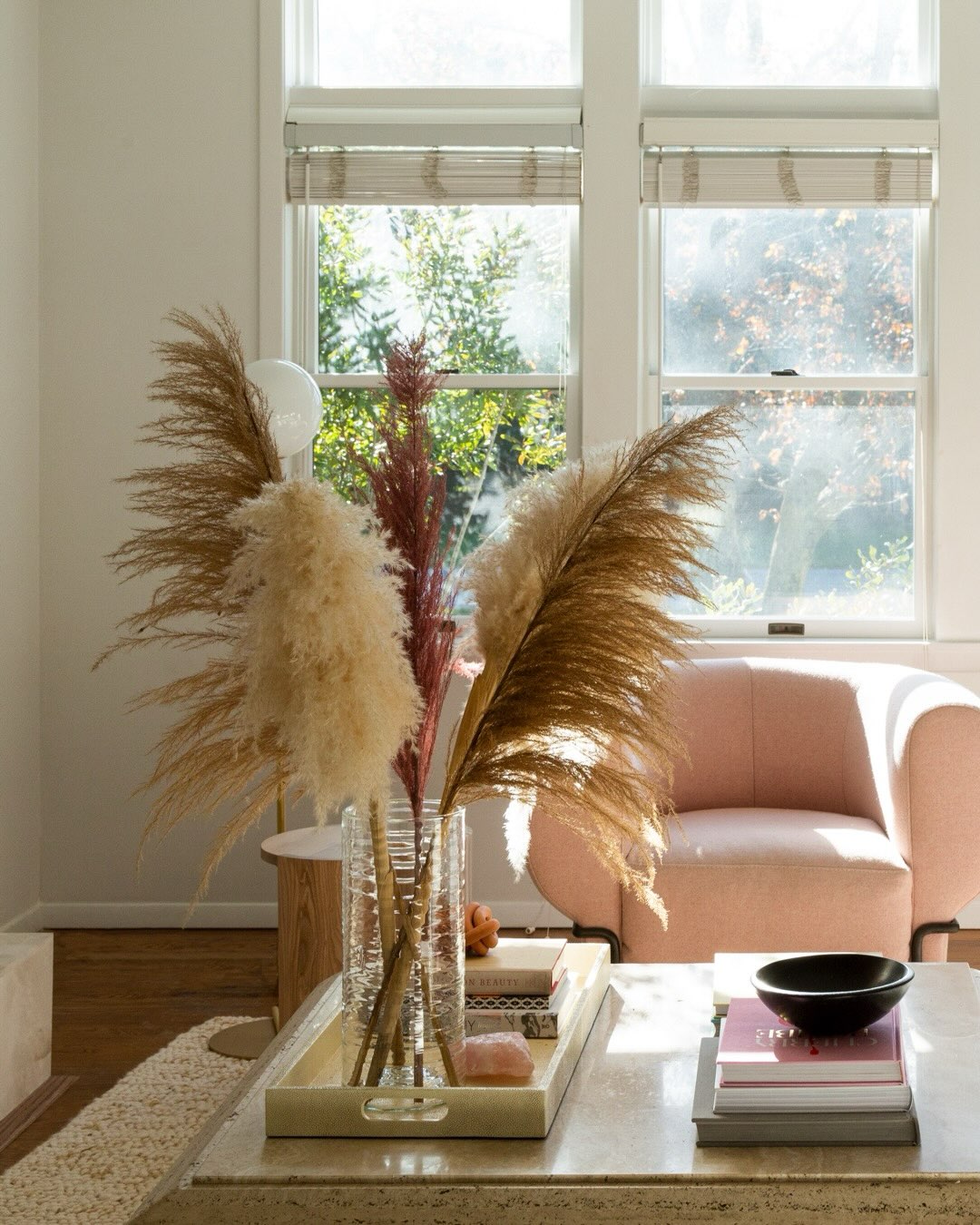
Soft, irregular textures make modern furniture feel more approachable. In this sitting area, feathery dried stems rise above a polished coffee table, while a rounded pink chair and thick cream rug keep the surrounding shapes relaxed.
The transparent vase preserves a sense of lightness even though the arrangement is substantial. Borrow the balance by combining one tactile natural element with furniture that has clean edges and uncomplicated upholstery.
A tray can gather the vase and smaller objects into a single composition, leaving another section of the table available for books or drinks. For everyday conversation, move taller stems toward an outer corner or choose a shorter arrangement.
The goal is variety in texture with enough clear space to remain comfortable.
3. Mix Rounded Tables with Strong Stone Veining
Credits: Instagram
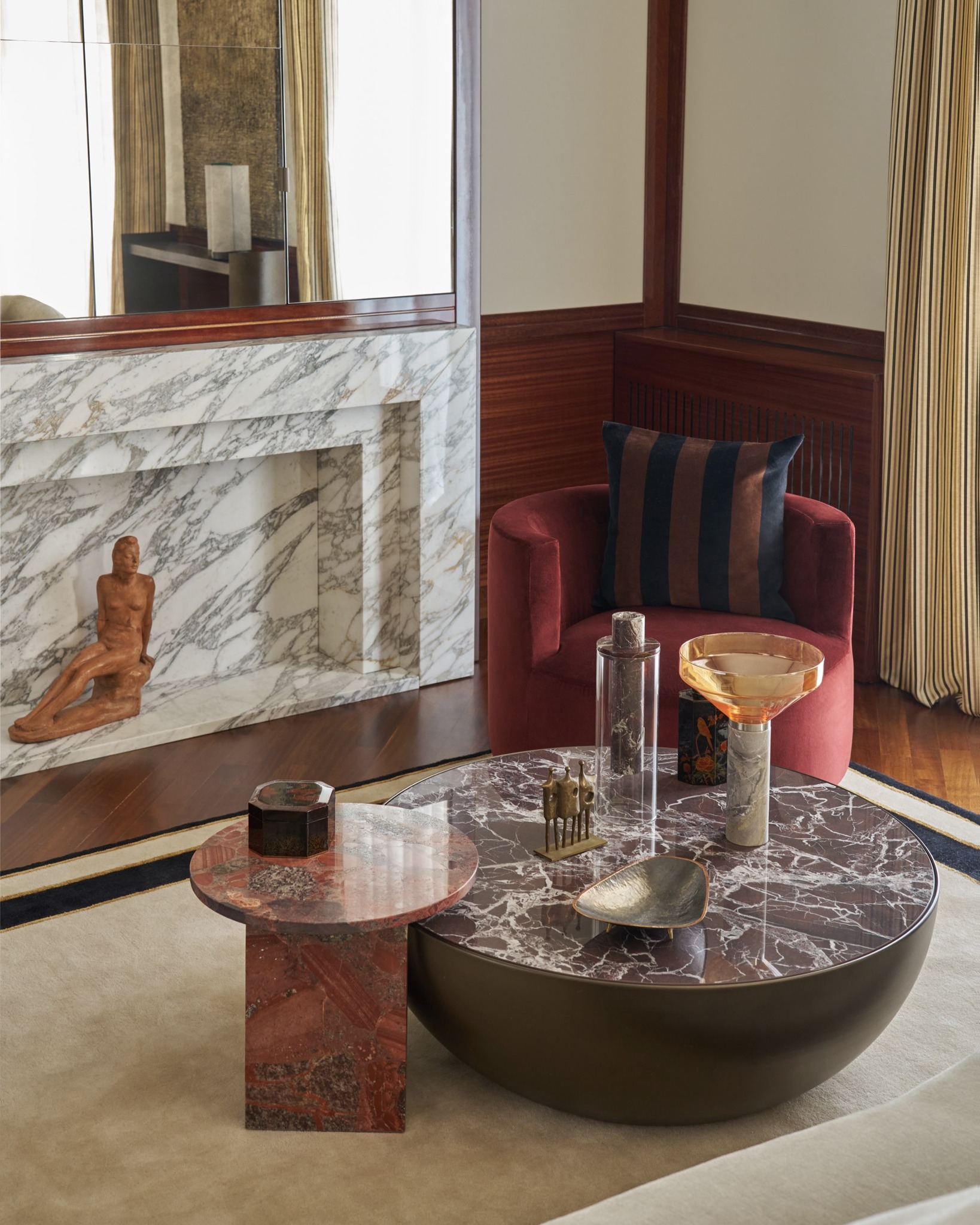
Modern furniture can sharpen the appeal of an older room without erasing its character. This seating corner pairs a traditional marble fireplace and warm wood paneling with two rounded stone tables and a compact red chair.
Their simple outlines let the veining become the decoration. The smaller table overlaps the larger one, creating an arrangement that feels flexible and sculptural.
To adapt the idea, choose tables with related undertones but different heights or proportions. Keep the surrounding rug relatively quiet so the stone patterns remain distinct.
A few objects with solid, readable shapes work better here than a collection of tiny accessories. Before buying, measure the combined footprint and leave an easy route between the seating and the fireplace area.
4. Make a Tall Room Feel Social
Credits: Instagram
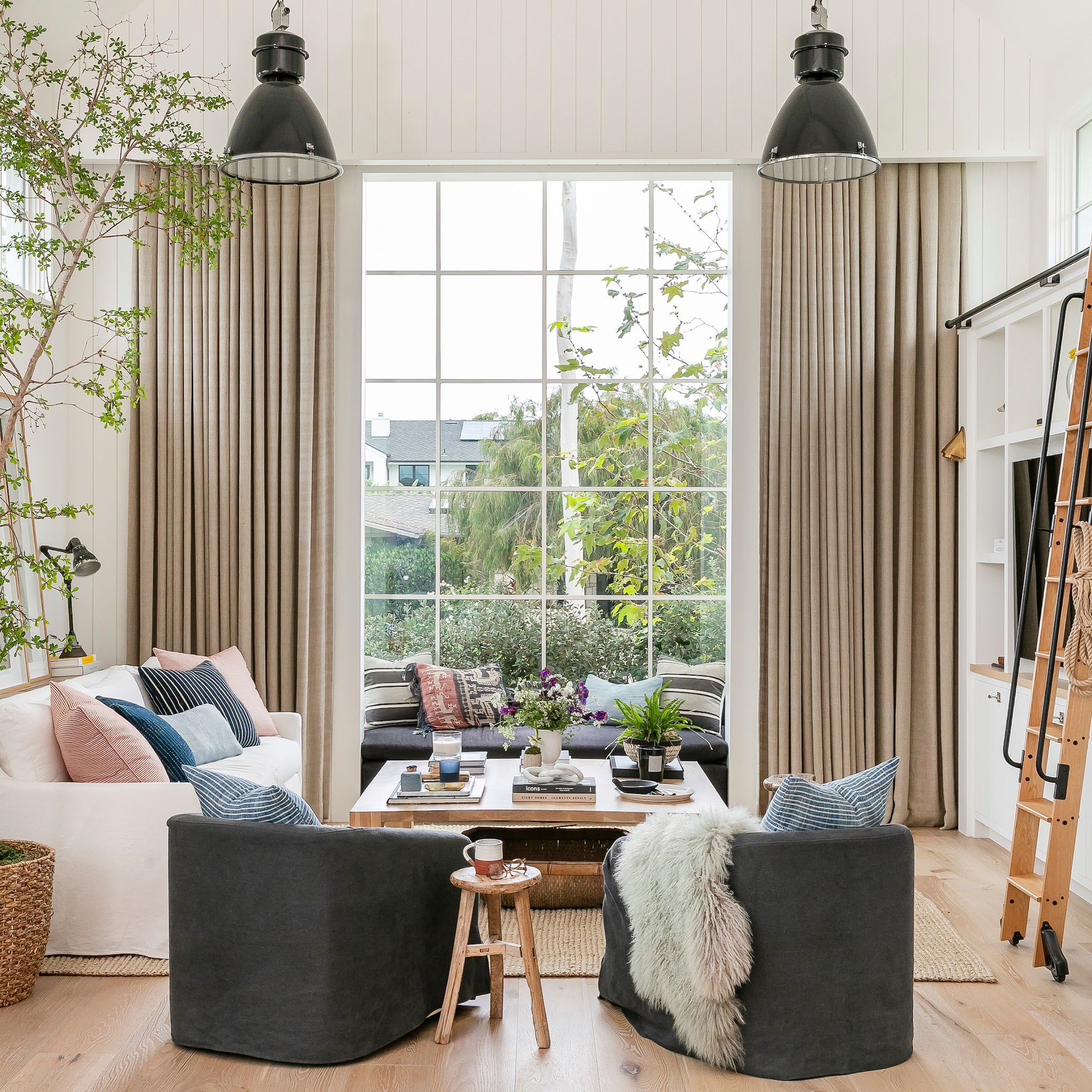
High windows and lofty walls feel more inviting when the furniture creates a smaller gathering place below them. Here, two low curved chairs face a sofa and window seat around a generous coffee table.
Their backs define the conversation area without hiding the tall glazing. Long curtains soften the vertical architecture, while pillows and a textured throw bring the scale down to everyday comfort.
In a similar room, begin with the seating arrangement rather than filling every empty wall. Let a rug connect the main pieces, and place a small surface within reach of each seat.
Repeat a few dark accents, as the chairs and pendant lights do here, to keep pale walls and expansive daylight from making everything disappear.
5. Connect an Open Plan with Wood
Credits: Instagram
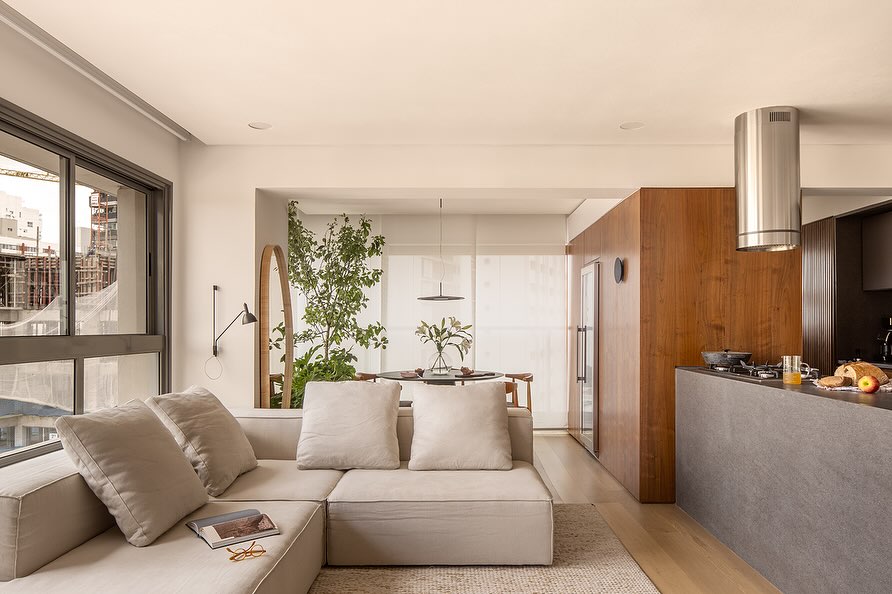
A consistent wood finish can make an open living area feel composed even when several activities share the same view. In this apartment, broad wood panels and cabinetry connect the seating area to the kitchen and dining space.
A pale sectional keeps the foreground quiet, while the dark island provides a boundary between lounging and cooking. Use this idea by repeating one dominant wood tone across the most visible storage surfaces.
Choose a sofa whose scale leaves a comfortable passage through the room, and keep its upholstery close to the wall color if you want the cabinetry to lead.
A large plant adds softness near the dining area. Keep counters and open shelves edited so the connected layout stays readable.
6. Build a Calm Palette with Layered Blues
Credits: Instagram
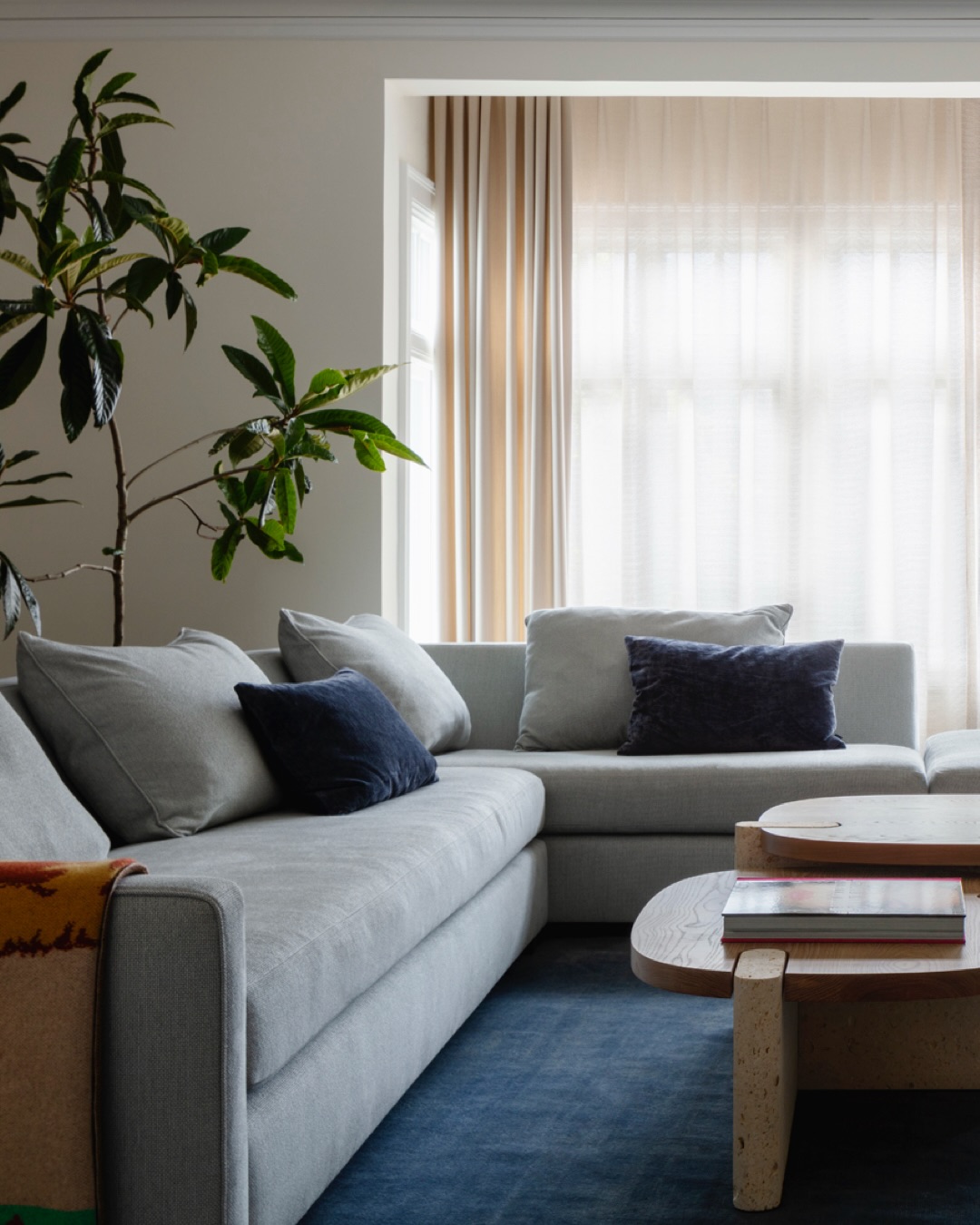
A modern room can feel rich while using a narrow range of colors. This pale blue sectional sits over a deeper blue rug, with dark pillows adding another step in the same family.
The differences in shade give each surface definition without introducing a busy pattern. Sheer curtains filter the window light, and a leafy plant keeps the composition from feeling overly precise.
Try choosing your largest upholstered piece first, then find a rug that feels related but noticeably darker. Add pillows in different textures so the layers remain visible even at night.
The rounded, overlapping coffee tables soften the sectional's straight edges. Leave useful clear space on their surfaces to make the room comfortable for daily lounging and reading.
7. Make a Window Bay a Modern Game Nook
Credits: Instagram
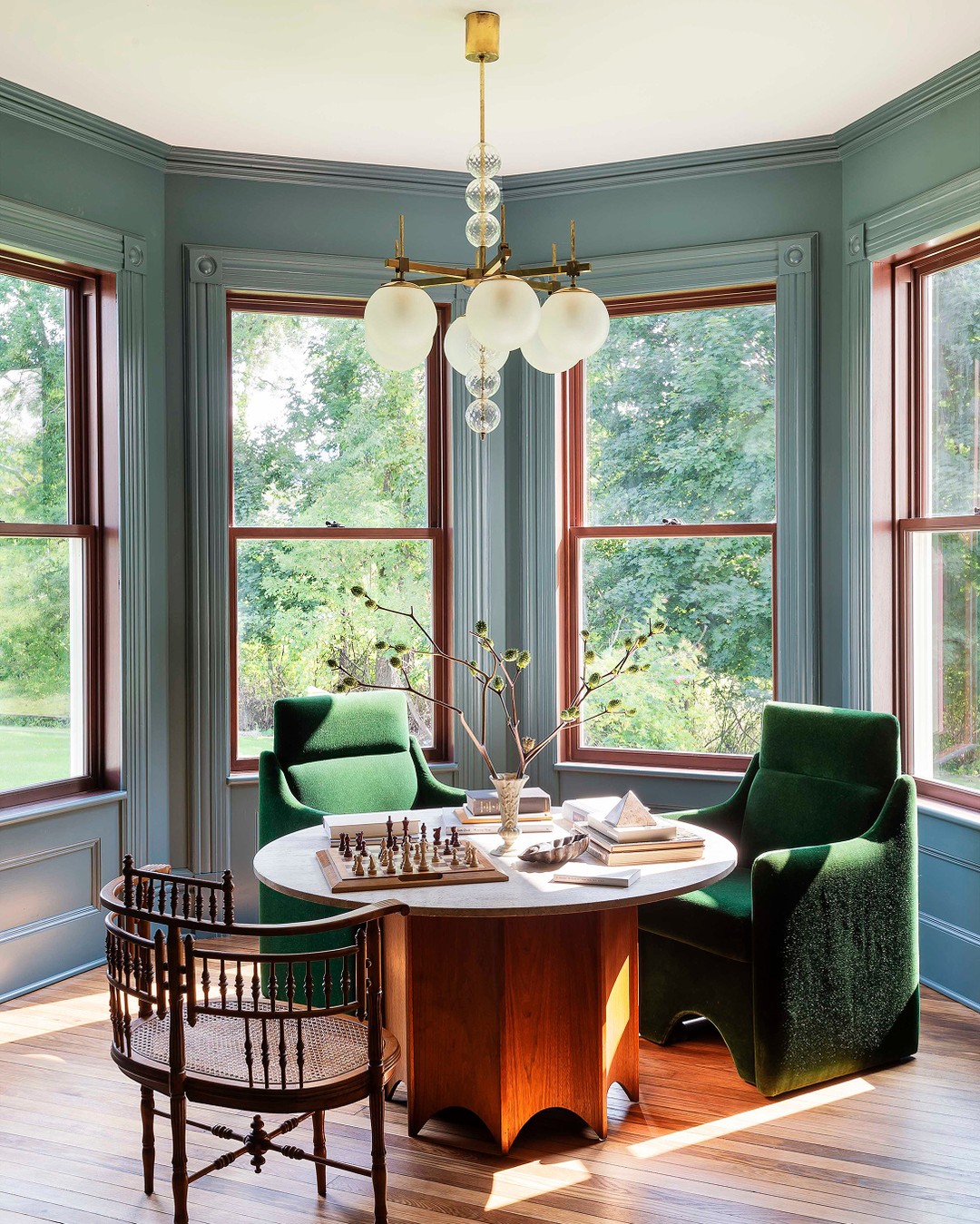
A window bay can support more than an extra sofa. In this inviting corner, two sculptural green armchairs and a delicate wood chair gather around a round table set for chess.
The table's solid base gives the arrangement a contemporary center, while older window trim and warm floorboards add character. Try this layout when your main seating area already handles television and conversation but a bright corner lacks purpose.
Choose comfortable chairs that fit beneath the tabletop, then check that people can pull them out without blocking the room's main route. Keep tabletop styling modest so a game, book, or cup has space.
Repeating the surrounding green tones helps the distinctive furniture feel connected to the architecture throughout the day.
8. Soften Storage with a Rounded Edge
Credits: Instagram
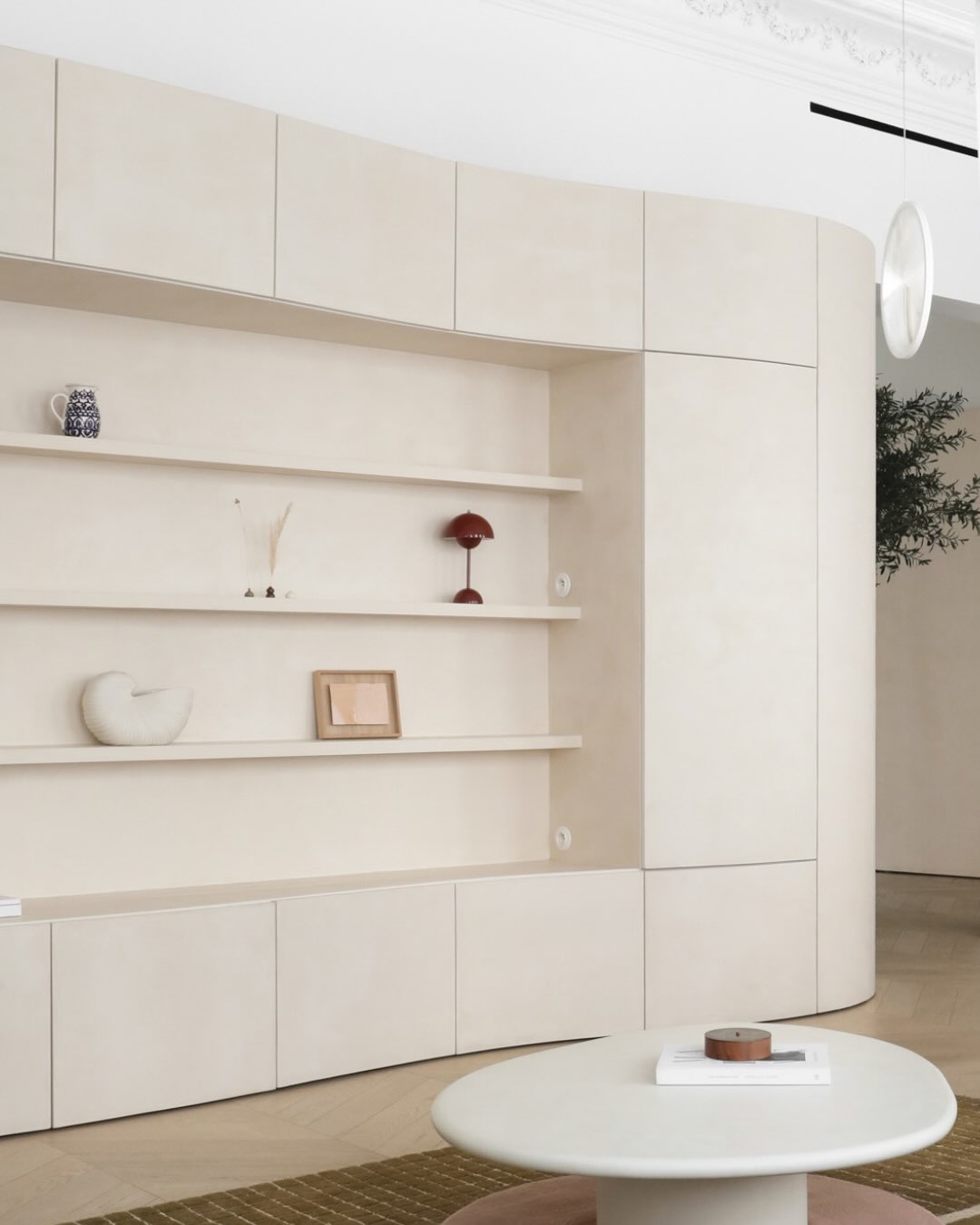
Built-in storage can become a quiet architectural feature when its finish blends with the room. These pale cabinets combine long open shelves with closed compartments, while the rounded outer corner gives the large unit a softer presence beside the passage.
A few small objects stand out because the shelves retain plenty of empty space. For a similar effect, match the cabinetry closely to the wall color and use simple door fronts.
Plan closed storage for items you need but do not want displayed, then reserve the open shelves for a collection. Vary the objects' heights and leave gaps between them.
A rounded coffee table repeats the cabinet's curved detail, making the living area feel cohesive without relying on matching furniture.
9. Let a Table Lamp Act Like Sculpture
Credits: Instagram
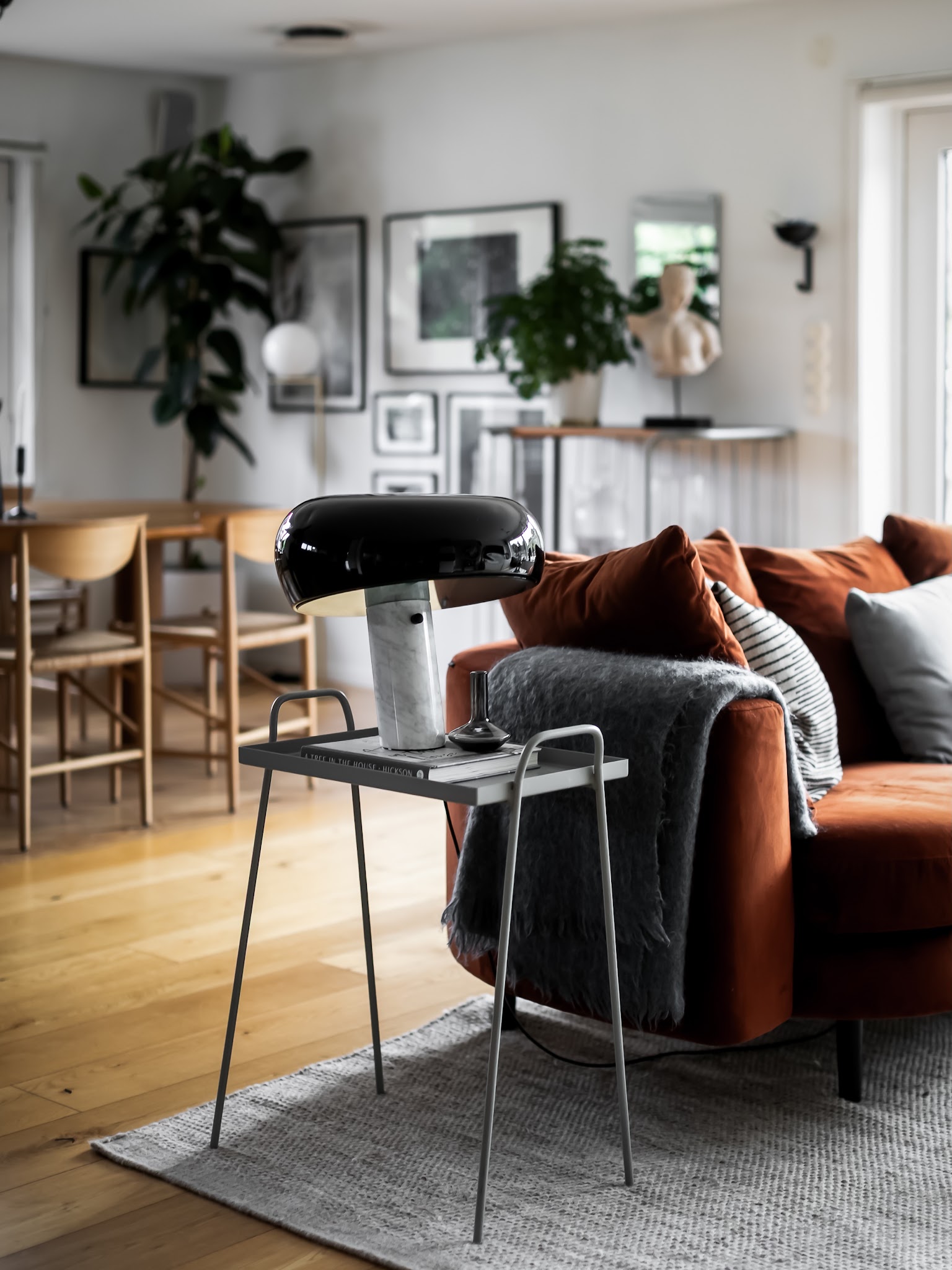
A distinctive lamp can make a useful corner feel considered. Here, a glossy black dome and pale stone stem sit on a slender metal tray table beside a warm rust sofa.
The lamp's solid shape contrasts with the table's thin legs, while its dark finish connects with the nearby picture frames. Choose one lamp with a strong silhouette when a room needs emphasis at seated eye level.
Make sure the supporting table is stable and large enough for both the lamp and a drink. Check the shade height from the sofa so the light feels comfortable while reading.
A simple throw and restrained pillows keep the corner welcoming, allowing the lighting to provide character without adding unnecessary objects or clutter.
10. Use Sculptural Art to Animate a Pale Sofa
Credits: Instagram
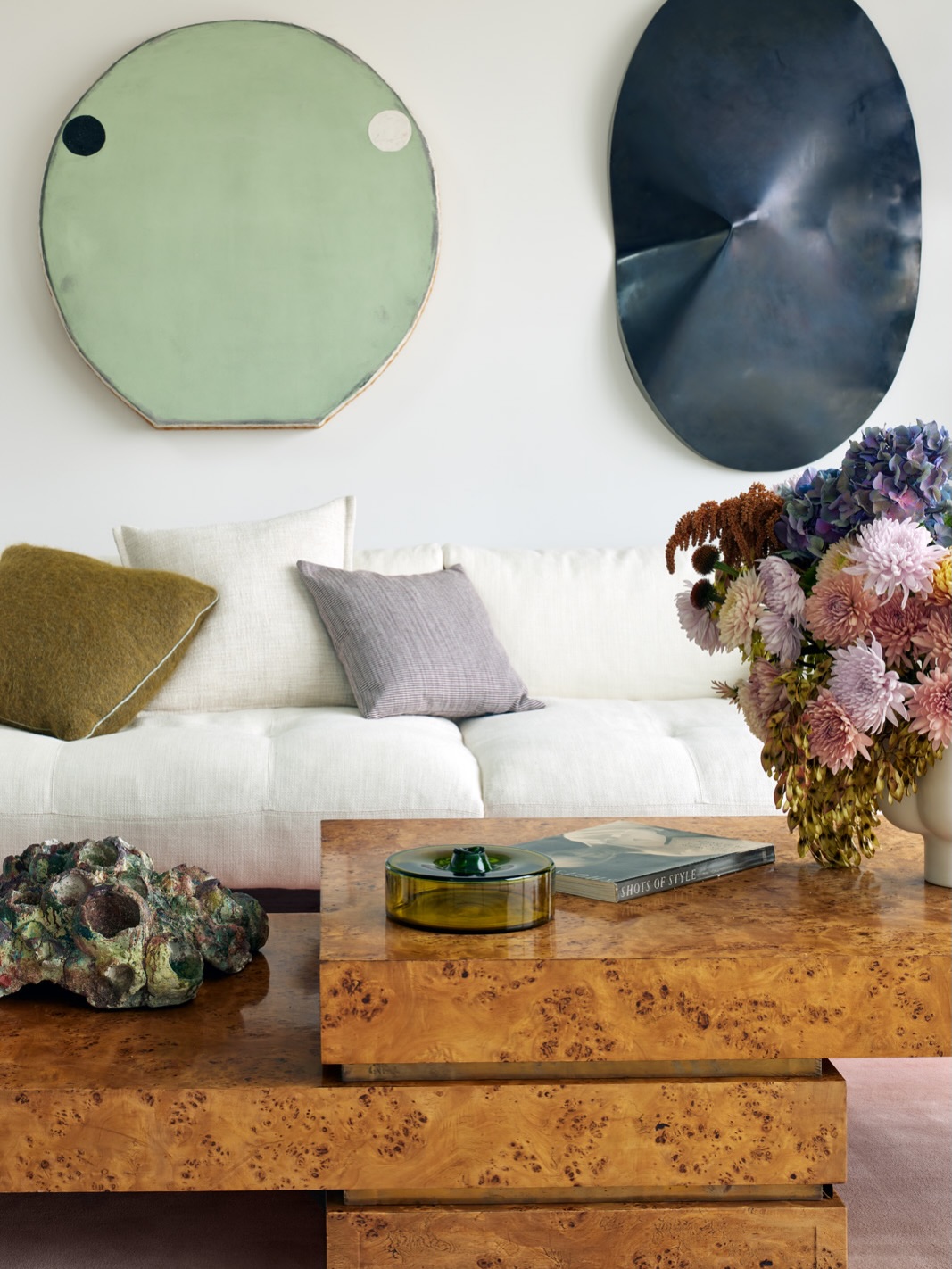
Three-dimensional art can give a simple sofa wall depth and movement. In this living room, two irregular rounded pieces hover above pale upholstery, their green and dark blue surfaces picking up changing light.
A richly patterned wood coffee table adds another natural texture, while the sofa keeps the overall composition calm. To try the idea, choose artwork that has enough presence to hold the wall without needing many smaller companions.
Test the arrangement with paper outlines before installing it, and follow the maker's hanging instructions for heavier pieces. Pull one muted color into a pillow or a small accessory.
Keep the larger upholstery quiet so the artwork, table grain, and flowers each have room to contribute without overwhelming the seating.
11. Echo a Fireplace Color in the Seating
Credits: Instagram
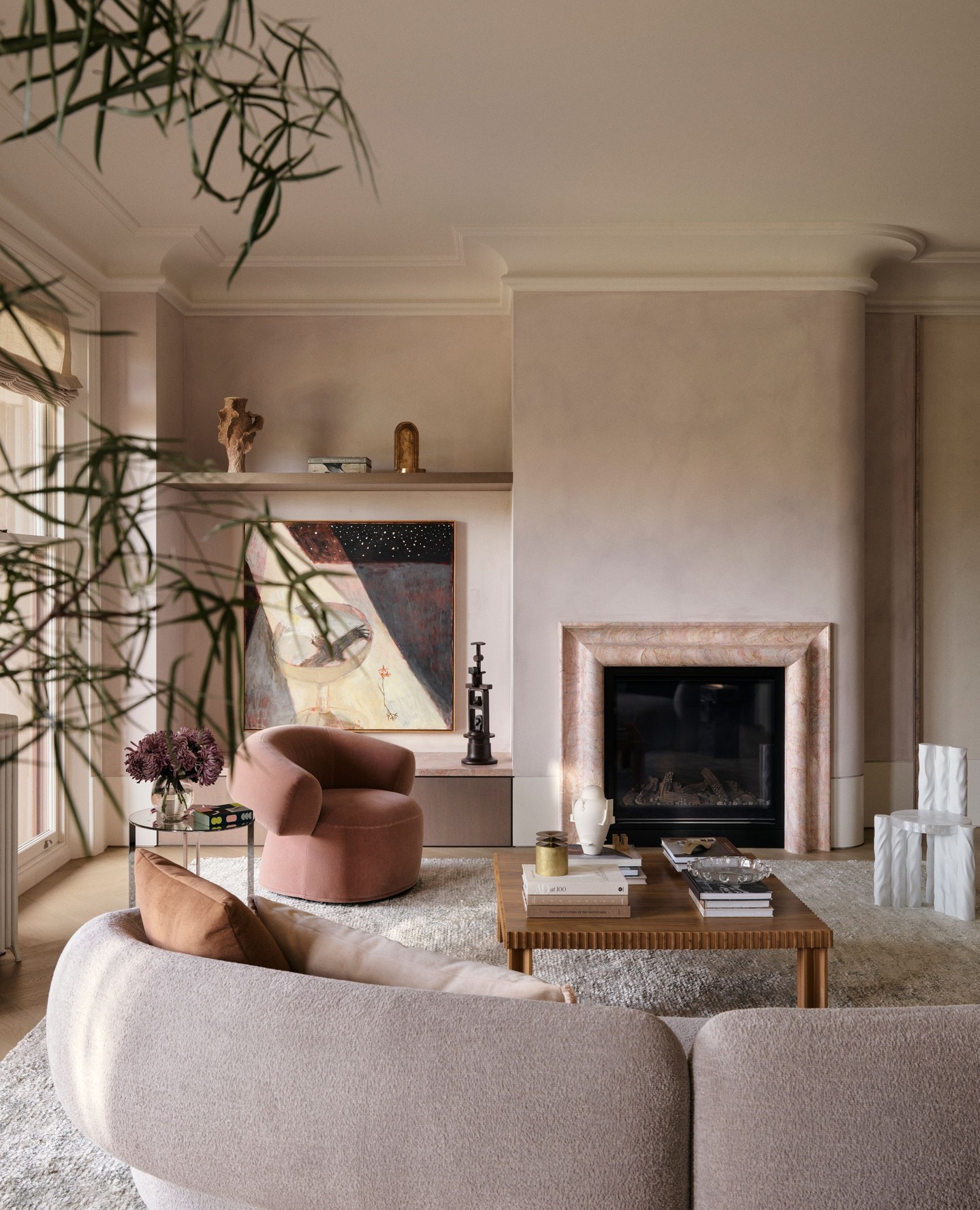
The pink stone fireplace gives this room a quiet starting point for color. A dusty rose armchair picks up its warmth, while the curved pale sofa and textured rug keep the larger surfaces gentle.
The effect feels connected without repeating exactly the same shade everywhere. Try choosing an accent from a permanent feature, then using a slightly deeper version on one upholstered piece.
Here, the wooden coffee table adds another warm material, and its ridged edge gives the simple shape extra interest. The white sculptural chair beside the fireplace brings in a different silhouette without adding another strong color.
Keep the mantel area restrained so the stone, furniture, and artwork each have enough space to register in the overall arrangement.
12. Carry a Soft Green Across the Architecture
Credits: Instagram
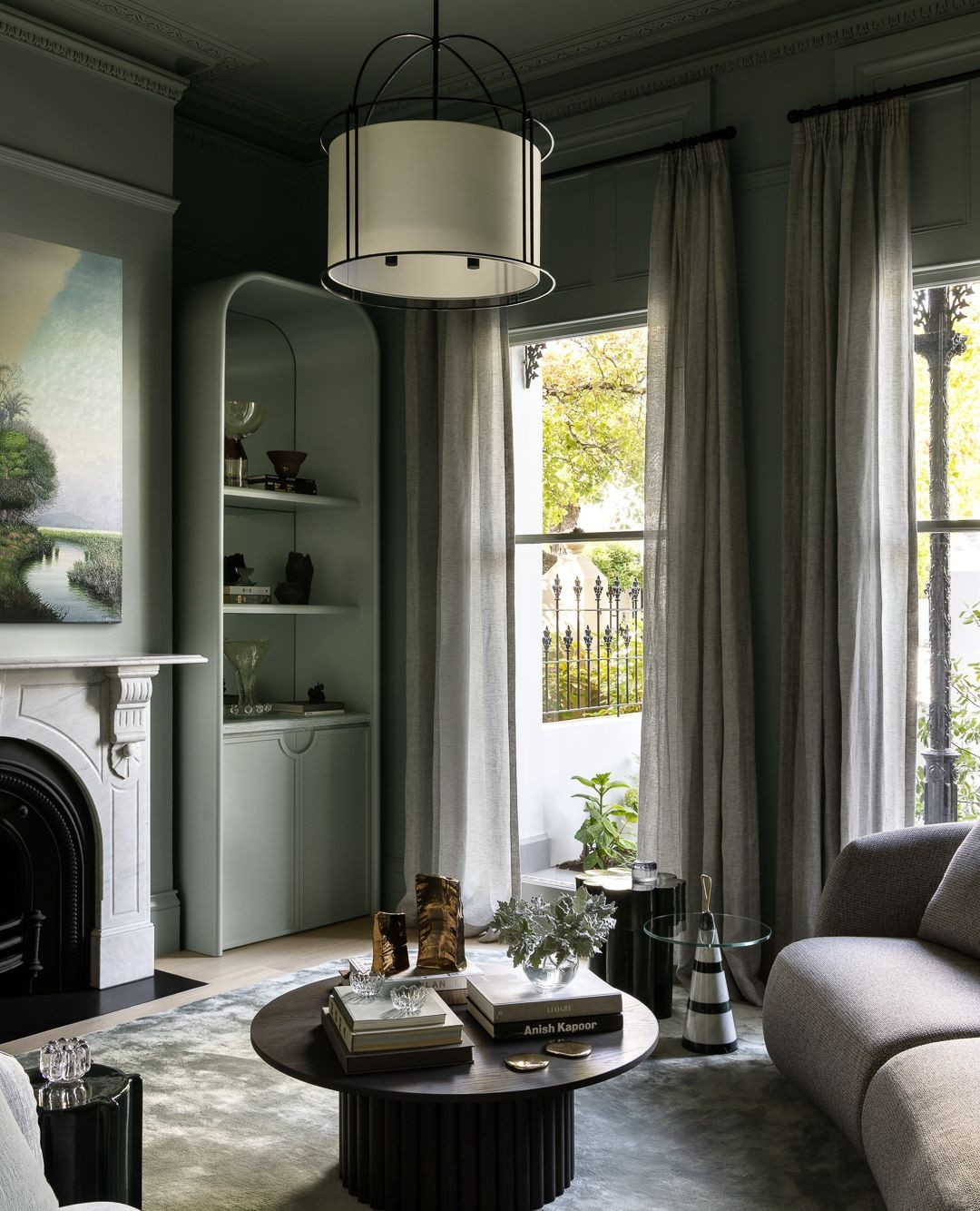
A muted green covers the walls, ceiling, and rounded shelving in this sitting room, making the ornate trim part of one continuous backdrop.
The pale fireplace remains distinct, while a curved gray sofa and dark round coffee table introduce simpler contemporary shapes. This is a useful approach when you want modern furniture to feel comfortable inside an older home.
Start with a subdued wall color that relates to the view outside, then test it on every surface before committing. Long neutral curtains soften the tall windows without interrupting the palette.
The black framework of the pendant provides definition overhead. Leave some space around objects on the shelves; that breathing room helps the traditional architecture and sculptural furniture feel equally intentional.
13. Repeat Thin Black Lines Around a Small Sofa
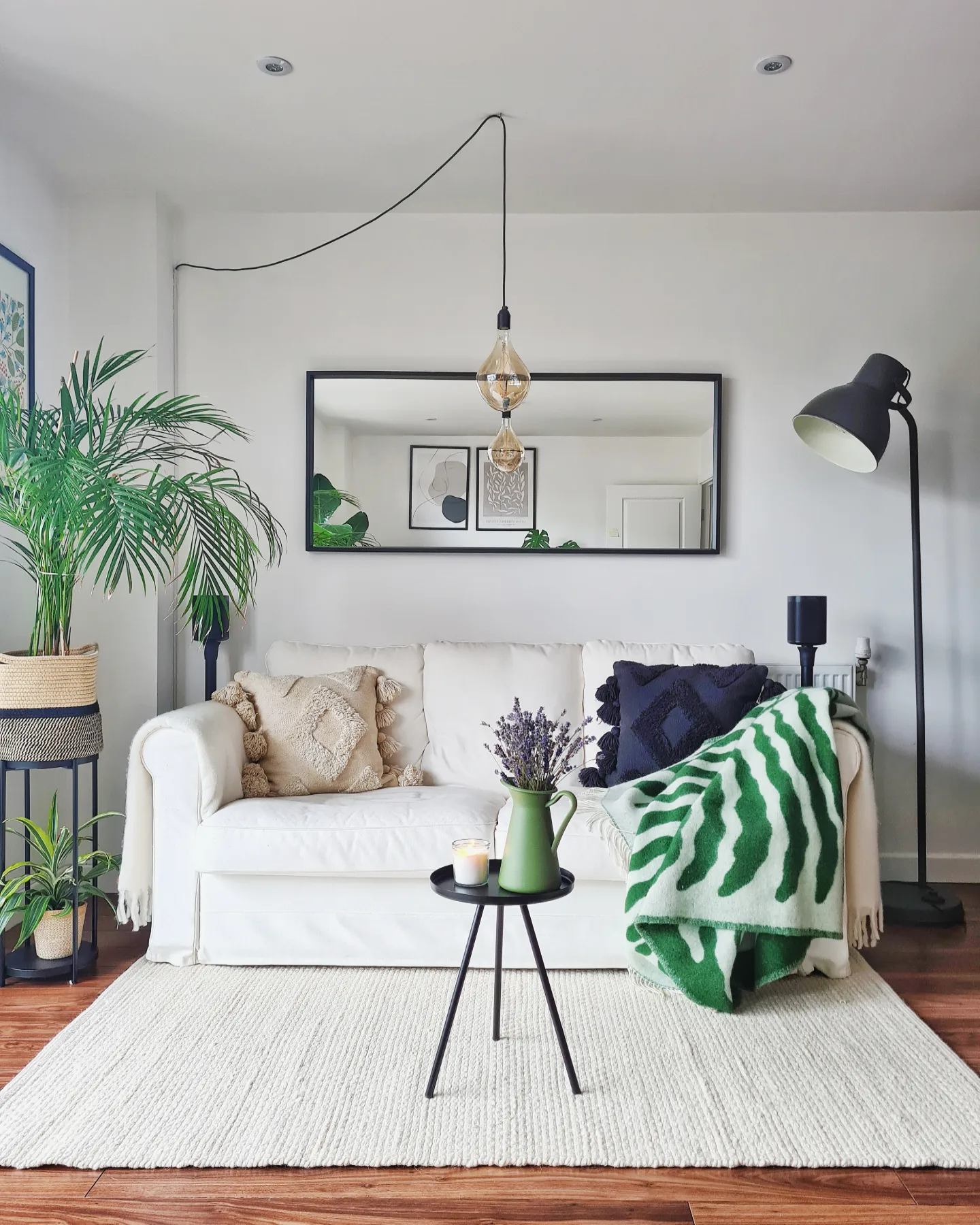
Credits: Instagram
The black mirror frame, floor lamp, pendant cord, and little tripod table give this white sitting area a clear outline. Because these details are narrow, they add definition while leaving most of the room visually light.
A green striped throw and leafy plants provide the main color, with textured pillows making the small sofa inviting.
You can use the same approach when a compact room feels too plain: repeat one dark finish in several slim pieces instead of buying larger furniture.
Check what the mirror reflects before hanging it, especially when it faces another wall of artwork. Keep the table small enough to walk around easily.
A rug extending beyond the sofa gathers the separate pieces into a coherent zone.
14. Warm a White Room with Small Natural Details
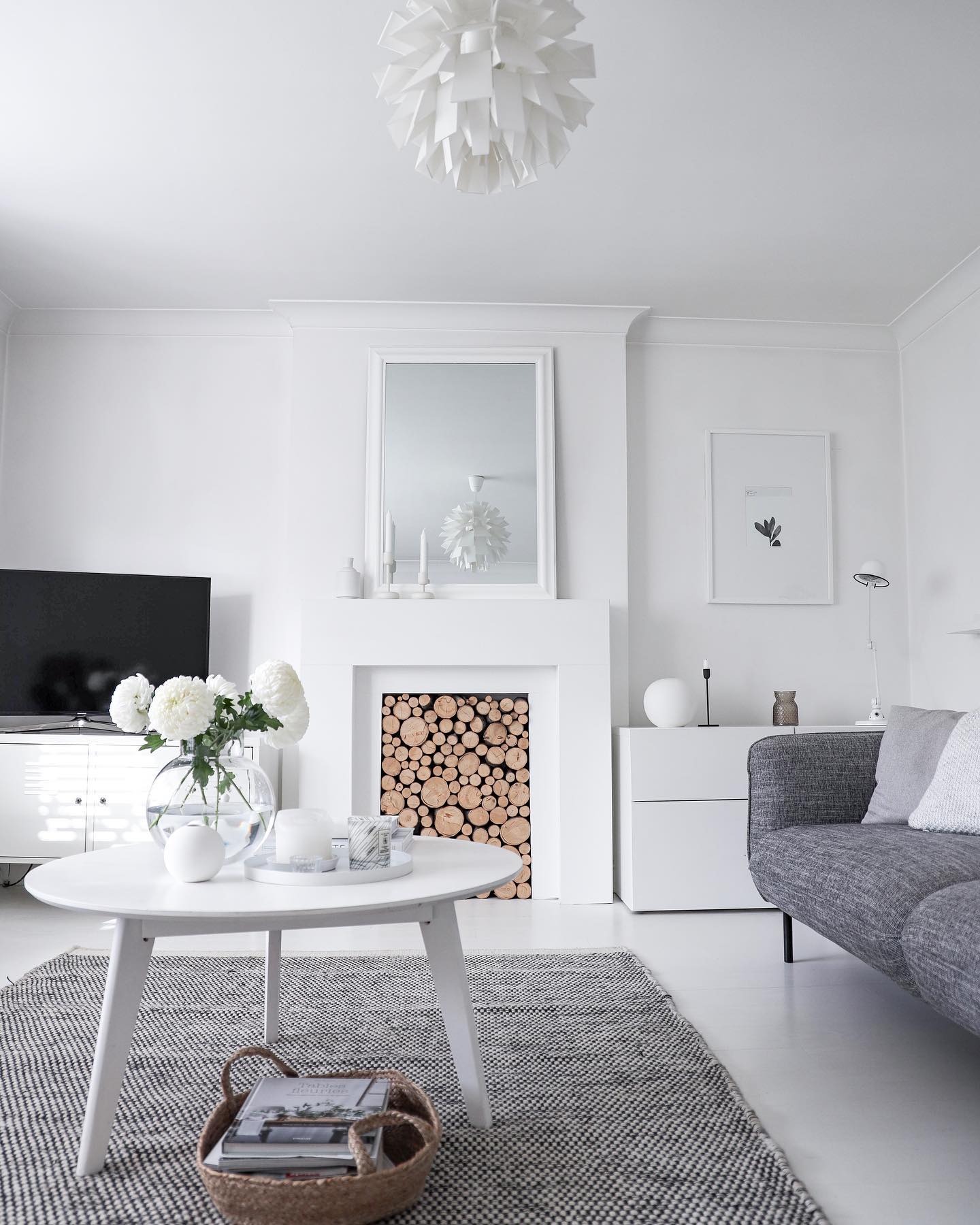
Credits: Instagram
White walls, storage, a mirror frame, and a round table make this living room feel unusually light. The stacked log ends inside the fireplace opening introduce a warm, irregular pattern that contrasts with those smooth surfaces.
A woven basket and finely patterned rug add texture near the floor, while the gray sofa anchors the arrangement. The useful lesson is to concentrate natural materials in a few visible places when your main palette is white.
You do not need to cover every surface with wood. Keep accessories close in tone, then vary their shapes and finishes so they remain interesting.
If copying the decorative log display, use an unused fireplace opening. Keep working fireplaces clear and follow their required storage clearances.
15. Choose an Open Bench Beside the Sofa
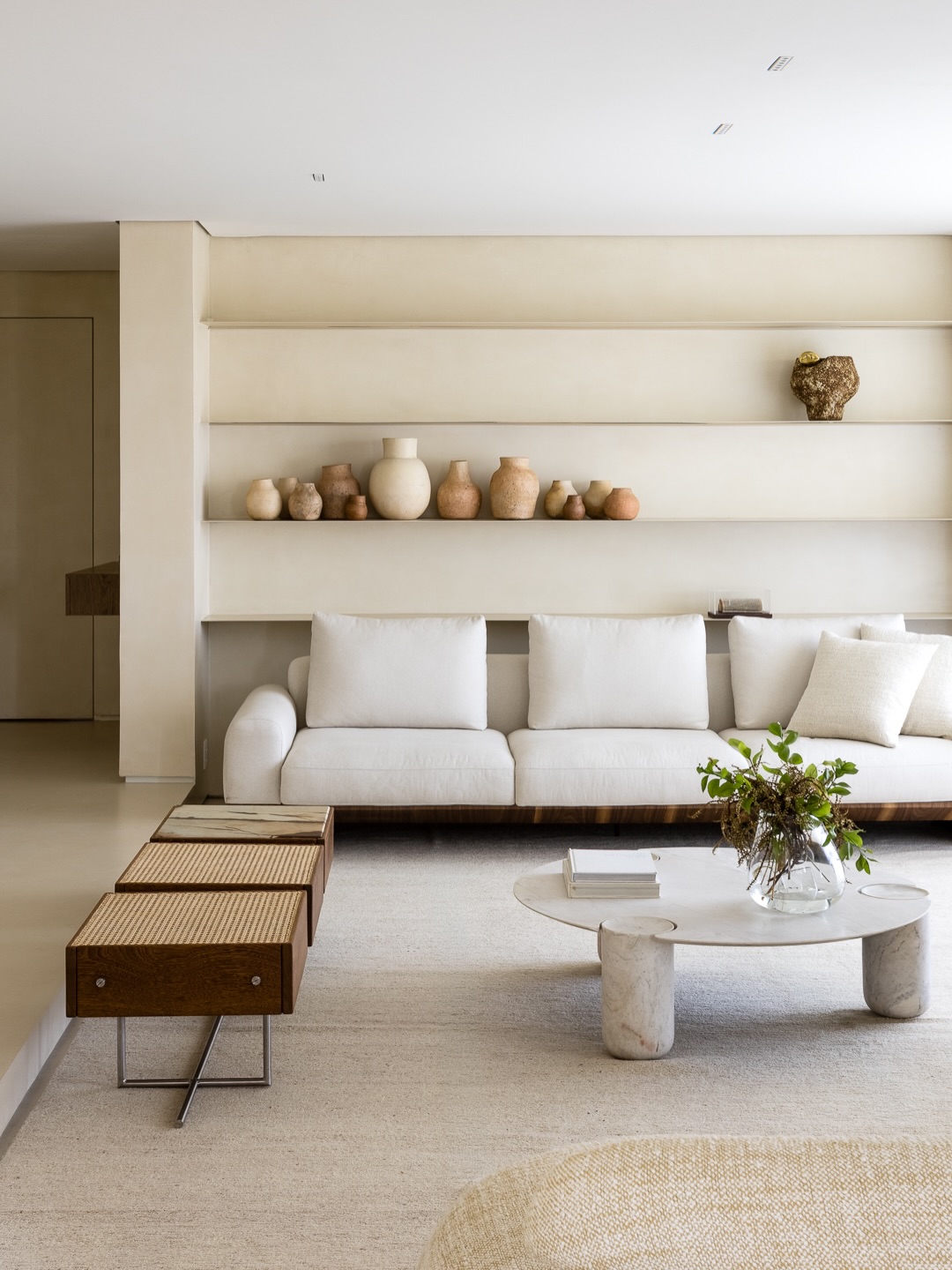
Credits: Instagram
A narrow bench with woven panels sits beside the white sofa, adding seating without the visual bulk of another upholstered chair.
Its dark wooden edges and slender metal base stand out against the pale rug, while the round stone table keeps the center of the room substantial.
This balance works especially well when you want a quiet room to contain several different materials. Choose a bench with proportions that suit sitting, and leave enough room between it and the table for comfortable movement.
The shelves behind the sofa carry a compact group of pottery rather than a scattered collection across every level. That concentrated display lets the long horizontal lines remain visible and gives the neutral arrangement a deliberate rhythm.
16. Add Relief to the Wall Behind the Television
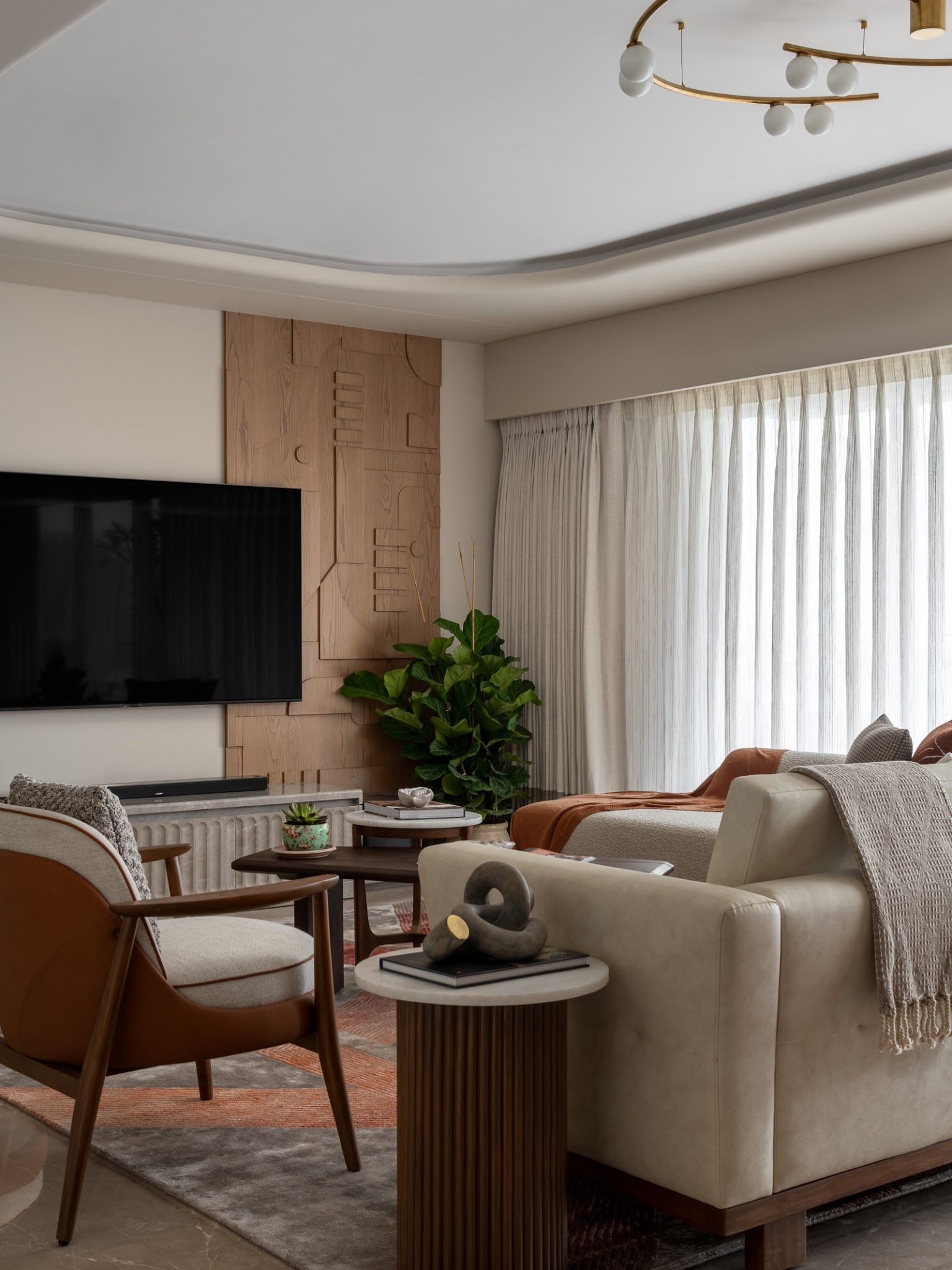
Credits: Instagram
A tall wood panel with shallow geometric shapes gives the television wall another point of interest. Its warm color relates to the chair frames and side tables, so the screen sits within a broader material palette.
Pale seating, long sheer curtains, and a restrained ceiling fixture keep the surrounding room calm. Consider a similar relief panel when you want texture without a busy printed pattern.
Scale the shapes so they read clearly from across the room, and check the television position from your actual seats before planning the wall.
The small tables here distribute useful surfaces around the seating rather than relying on one central piece. Repeat a few rounded edges to connect those tables with the upholstered furniture nearby.
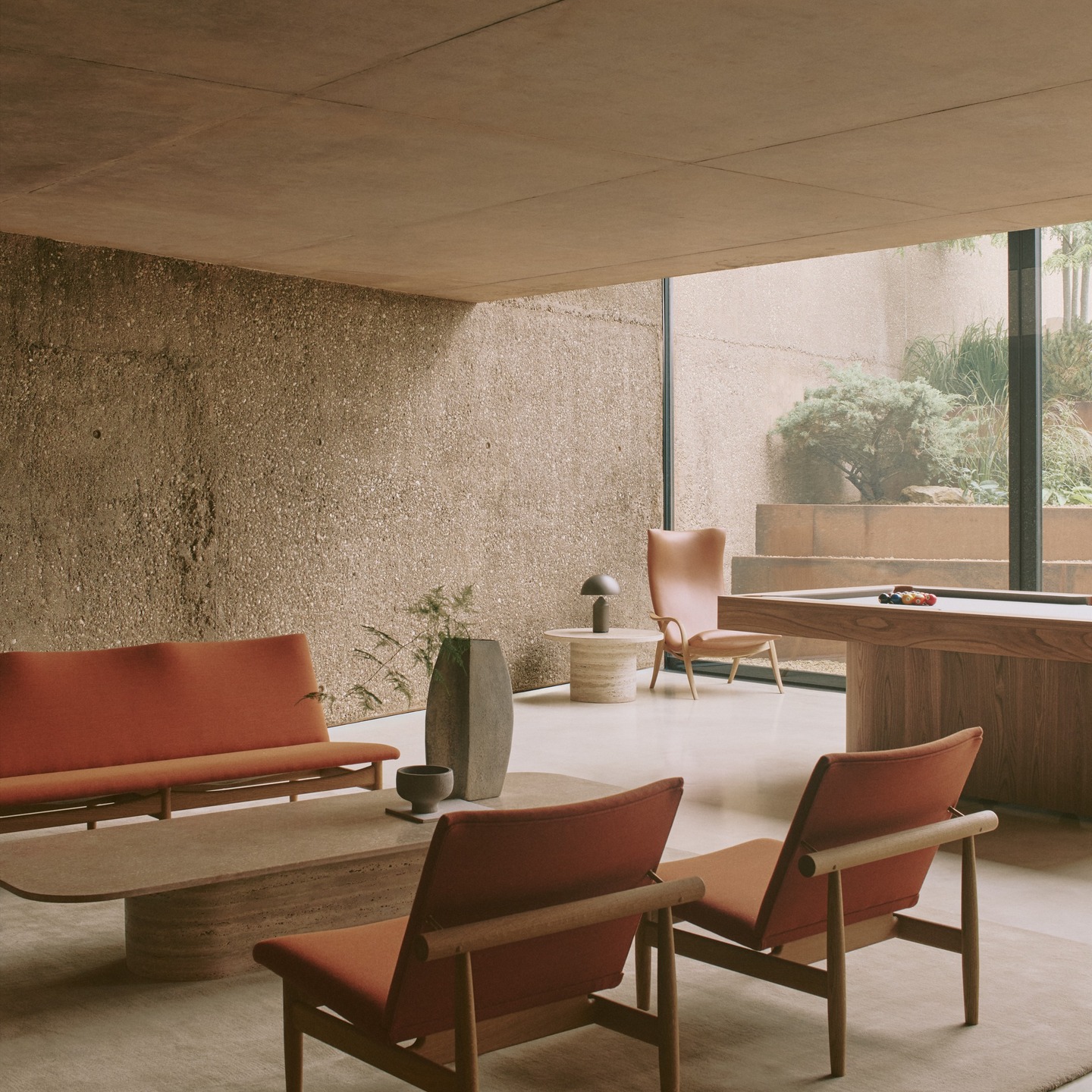
17. Pair Rough Walls with Warm Leather Seating
Credits: Instagram
The coarse concrete wall gives this sitting area its strongest texture, while rust colored leather adds warmth at the scale of the furniture.
An open wooden bench faces two chairs across a low, rounded table, creating a clear conversation group beside the pool table. The pieces share a light frame and similar upholstery, which keeps the arrangement organized within the larger recreation space.
If your room has concrete, brick, or another rugged surface, try smooth upholstery in an earthy color to balance it. Keep the furniture low enough to preserve views through the glazing.
A single tall vase supplies height on the coffee table, while the nearby lamp and side table make the separate window chair useful for quieter moments.
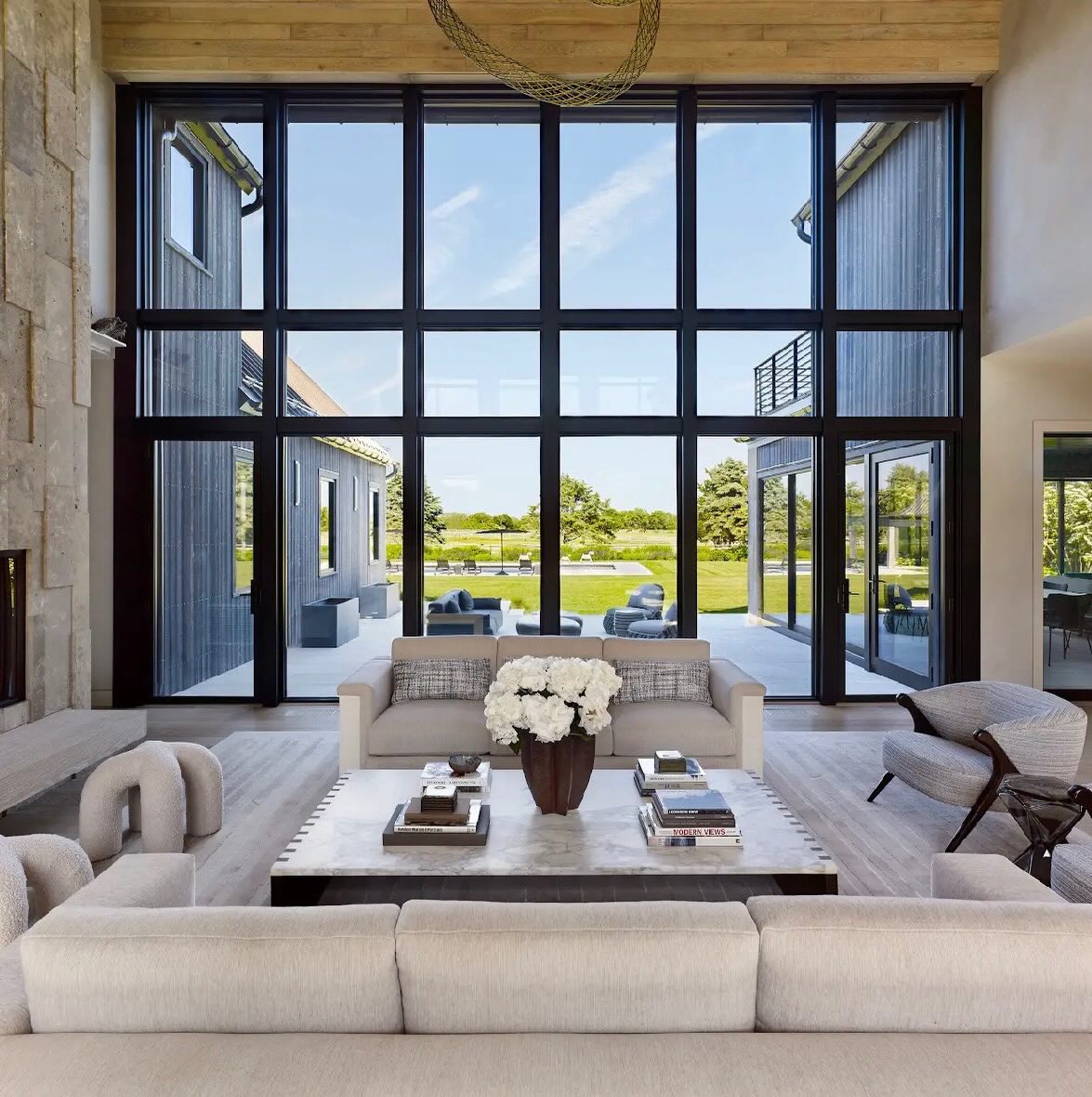
18. Keep the Furniture Below a Strong Window Grid
Credits: Instagram
The tall black window grid commands attention in this living room, so the seating stays low and pale. Two facing sofas establish the main conversation area, with chairs filling the sides around a generous square table.
The arrangement gives the room a clear center while preserving the view toward the courtyard and lawn. When glazing is your strongest architectural feature, compare furniture heights from the entrance as well as from a seated position.
Lower backs can keep the view feeling continuous, even in a substantial seating group. Here, the wood ceiling and stone fireplace bring warmth and texture to the neutral palette.
Keep tabletop decorations compact enough that people can still see one another comfortably across the entire conversation area.
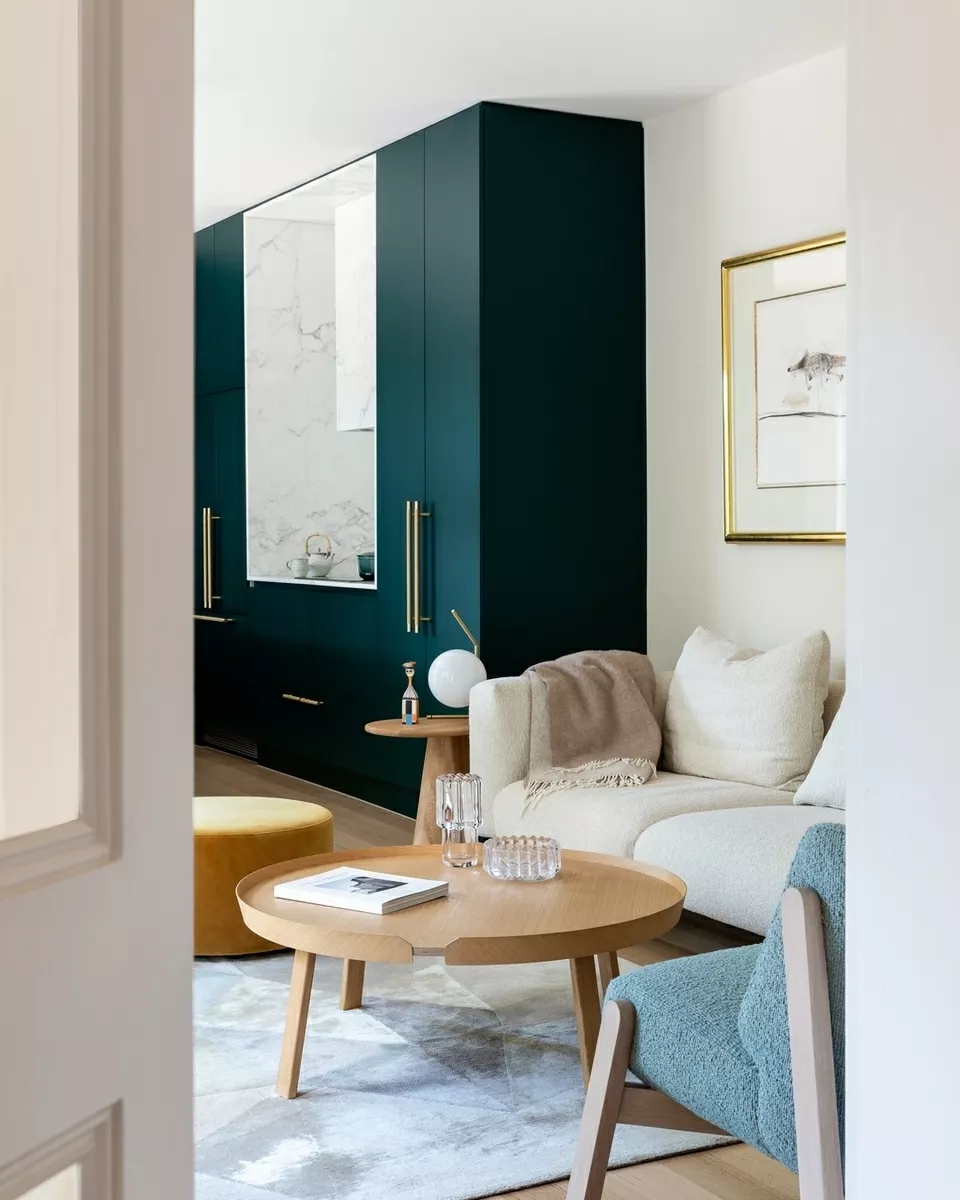
19. Give Compact Seating a Deep Colored Backdrop
Credits: Instagram
Deep teal cabinetry makes the pale sofa and wooden table stand out in this compact sitting area.
Long brass handles and a marble inset break up the tall surface, while a blue chair and yellow ottoman add smaller, softer color notes. The room shows how a concentrated dark element can give modest furniture a stronger presence.
If you are planning storage beside a sitting area, consider its color as part of the whole room instead of treating it as background. Keep the nearby walls light when you want the cabinet to remain the focus.
Rounded table edges and the softly shaped sofa counter the straight cabinet fronts. Choose a few contrasting textures so the limited palette retains plenty of depth.
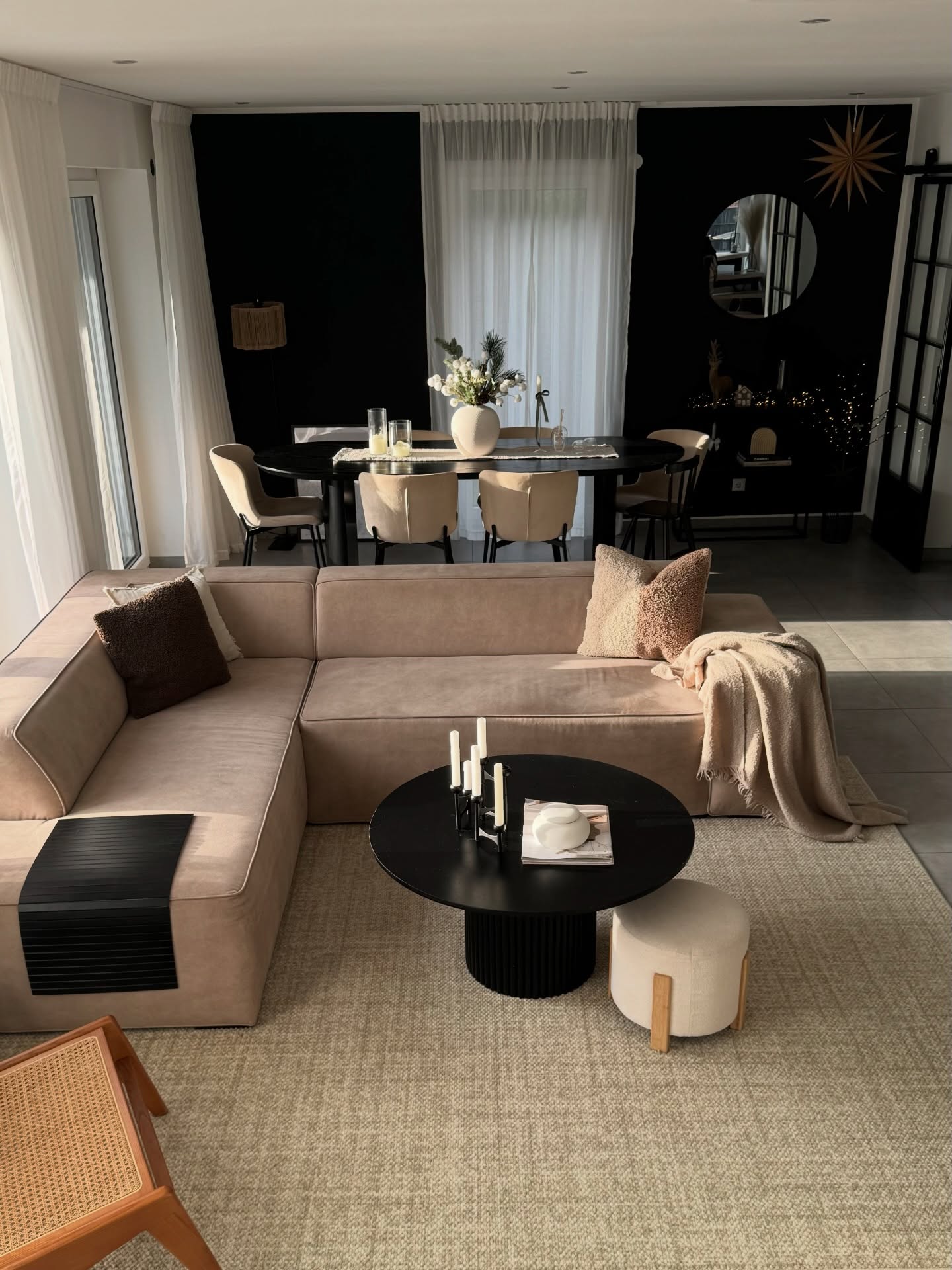
20. Use the Sofa to Define an Open Living Area
Credits: Instagram
The sectional faces into its own seating zone while the dining table sits directly behind it. A pale rug marks the living area, and the sofa back provides a low boundary without closing off the room.
Black appears in the coffee table, dining furniture, console, and accent wall, tying the two functions together. This is a practical way to organize an open room when you cannot add partitions.
Begin with the routes people need between doors, seating, and dining chairs, then place the sofa to protect those paths. Here, sheer curtains and pale upholstery keep the dark wall from dominating.
A small stool offers a flexible extra surface, and the round coffee table softens the sectional's straight lines around it.