
A blue bedroom can feel crisp and calm, but too much of the cool shade may leave the space feeling stark.
Blue And Cream Bedroom Ideas show how warm neutrals can balance blue through details such as a cream upholstered bed, pale curtains, or a soft rug.
The contrast can also come from blue wallpaper panels, patterned curtains, or oversized abstract art rather than a full room of matching color.
These examples offer practical ways to connect walls, bedding, and furniture while keeping the palette varied and comfortable.
Pair Blue Armchairs Beside a Cream Bed
Credits: Instagram
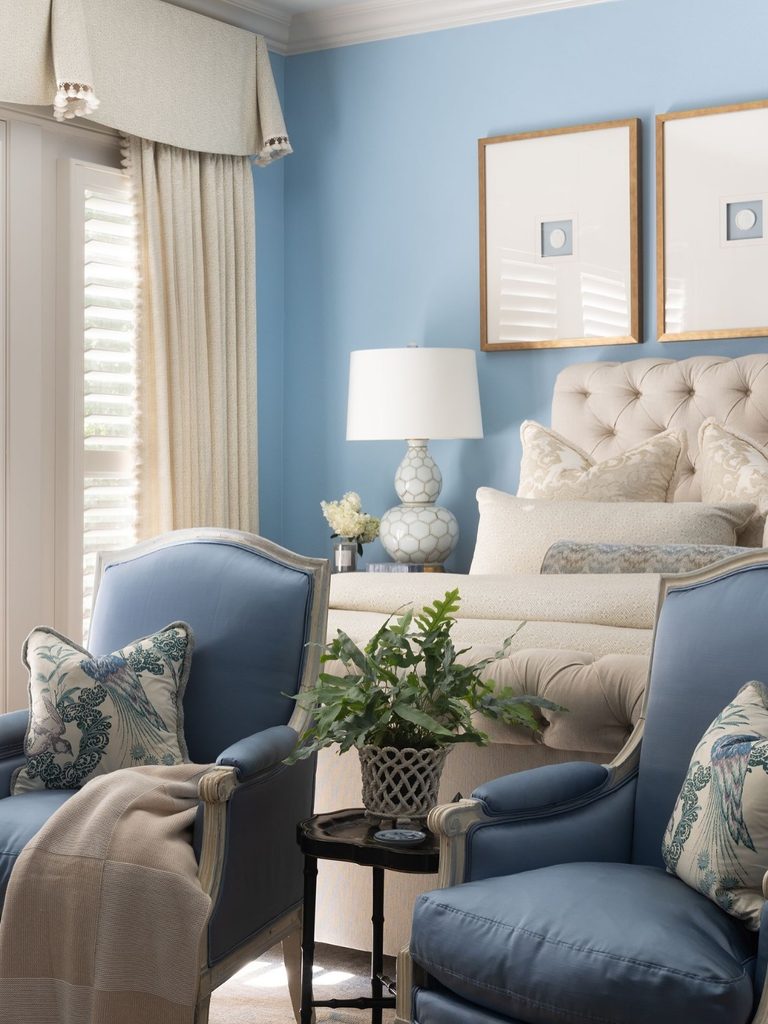
Two comfortable seats can make a bedroom useful long before bedtime. Eric Ross places blue armchairs beside a cream upholstered bed, connecting them with a small dark table.
The arrangement creates a place to read or talk while leaving the mattress free of everyday clutter. Cream curtains soften the blue walls, and the existing bed keeps the scheme from becoming overwhelmingly cool.
Before copying the layout, tape out the chairs and table on your floor, then check the route around the bed. Choose seats that suit the available space rather than matching the generous proportions shown here.
Repeat a little blue in the cushions, and let the warm upholstery and wood provide contrast without introducing several additional colors or patterns.
Frame Blue Wallpaper Panels Above Bedside Tables
Credits: Instagram
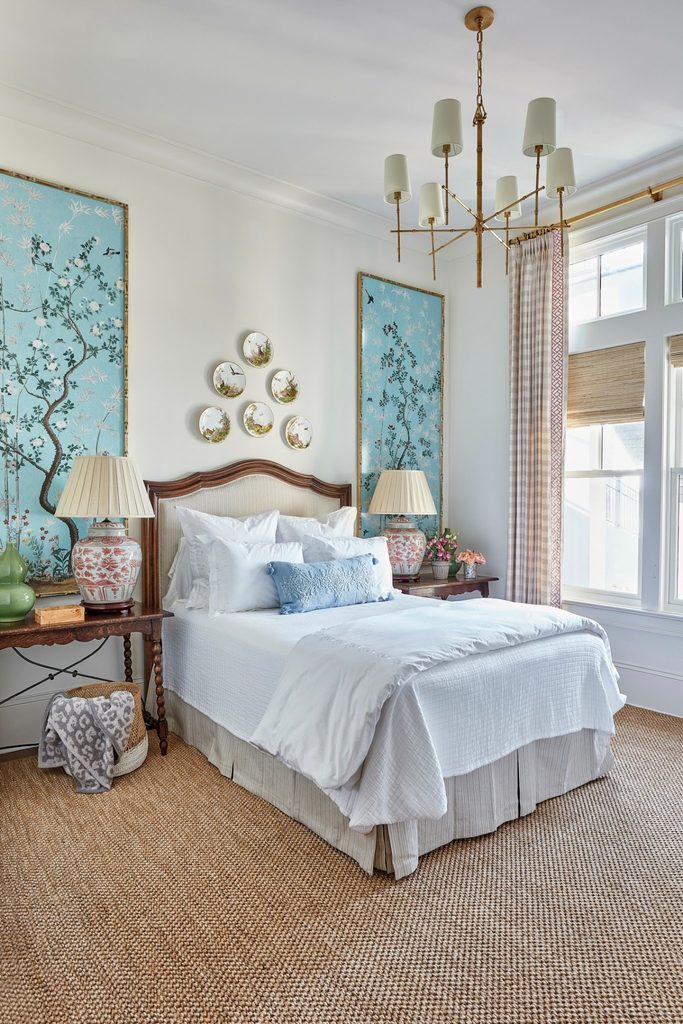
A large pattern does not have to cover every wall to make an impression. Maggie Griffin frames two blue botanical wallpaper panels above the bedside tables, giving a mostly cream room a clearly defined focal point.
The tall rectangles also balance the lower upholstered headboard without requiring a taller bed.
Treat this as a layout exercise first: measure the wall, sketch the panel positions, and leave a consistent gap between each frame and the furniture beneath it.
Simple bedding will give the botanical details room to register. Warm ivory lampshades and cream upholstery help bridge the blue panels with the white pillows.
For a smaller bedroom, one large panel can carry the idea without crowding both sides of the bed.
Paint Wall Moldings the Same Soft Blue
Credits: Instagram
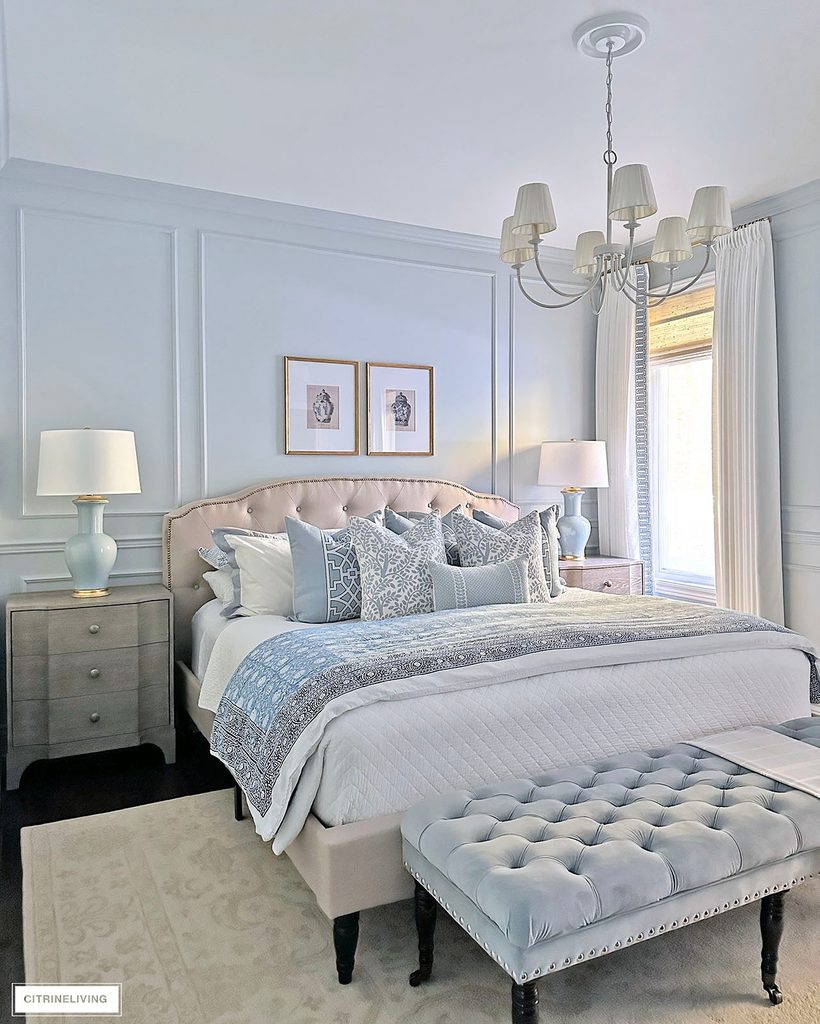
Architectural detail becomes quieter when its edges share the surrounding color. In Tamara Anka’s bedroom, pale blue paint covers the wall moldings as well as the walls, creating depth through shadow instead of strong outlines.
A warm ivory bed and cream rug keep the room from feeling chilly, while patterned blue bedding repeats the wall color at a smaller scale.
Try a large paint sample beside your upholstery before committing, especially if the room receives cool daylight. Lay out any molding around existing outlets, windows, and furniture rather than forcing an evenly spaced grid across obstacles.
The photograph also shows how textiles complement architectural detail: pale curtains and patterned bedding add interest beside the shaped headboard and detailed wall treatment.
Frame Cream Walls With Blue Chevron Curtains
Credits: Instagram
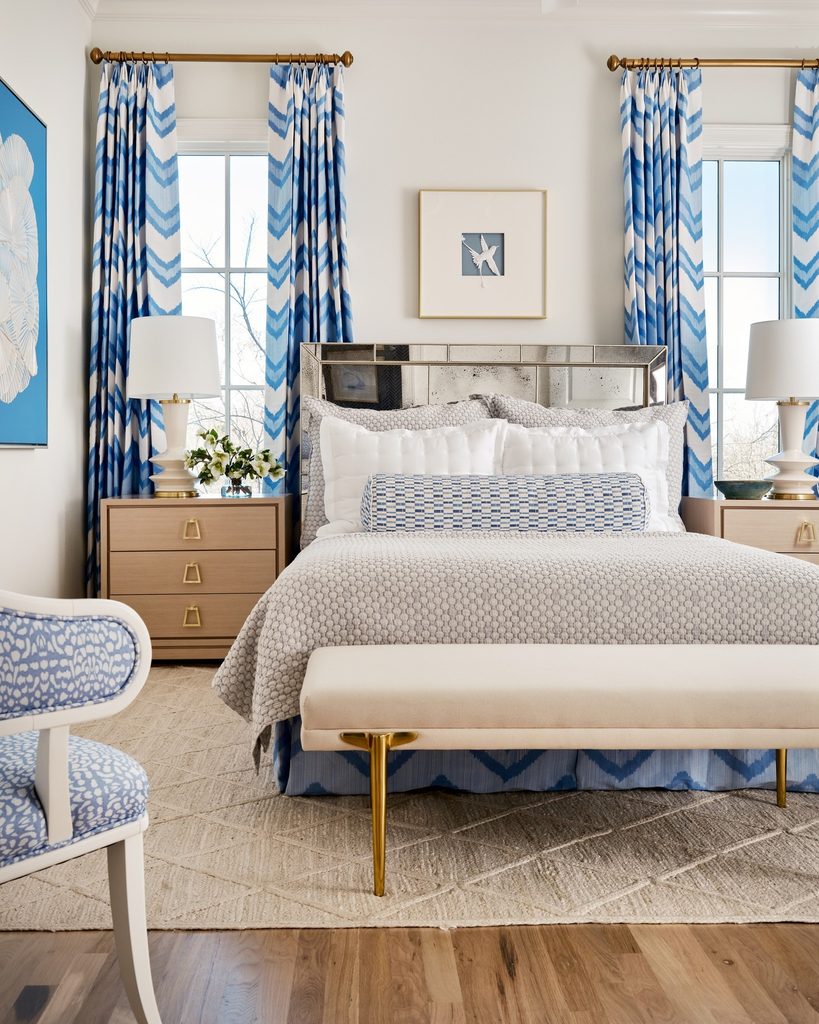
Windows offer plenty of space for color without changing the main walls. Tori Rubinson uses blue chevron curtains to frame a bed in a warm off-white room, with a cream bench and pale rug keeping the center light.
The curtains repeat across two windows, so the pattern feels organized even though it is lively. If your bedroom has a similar arrangement, match the hanging height and panel length before choosing decorative hardware.
Allow enough fabric to close comfortably without pulling the pattern flat. A solid cream bedcover would be an easy adaptation if your existing bedding is already busy.
The smaller blue patterns elsewhere in this room demonstrate how changing the scale can connect textiles without making every piece identical.
Connect Blue Accents With Oversized Abstract Art
Credits: Instagram
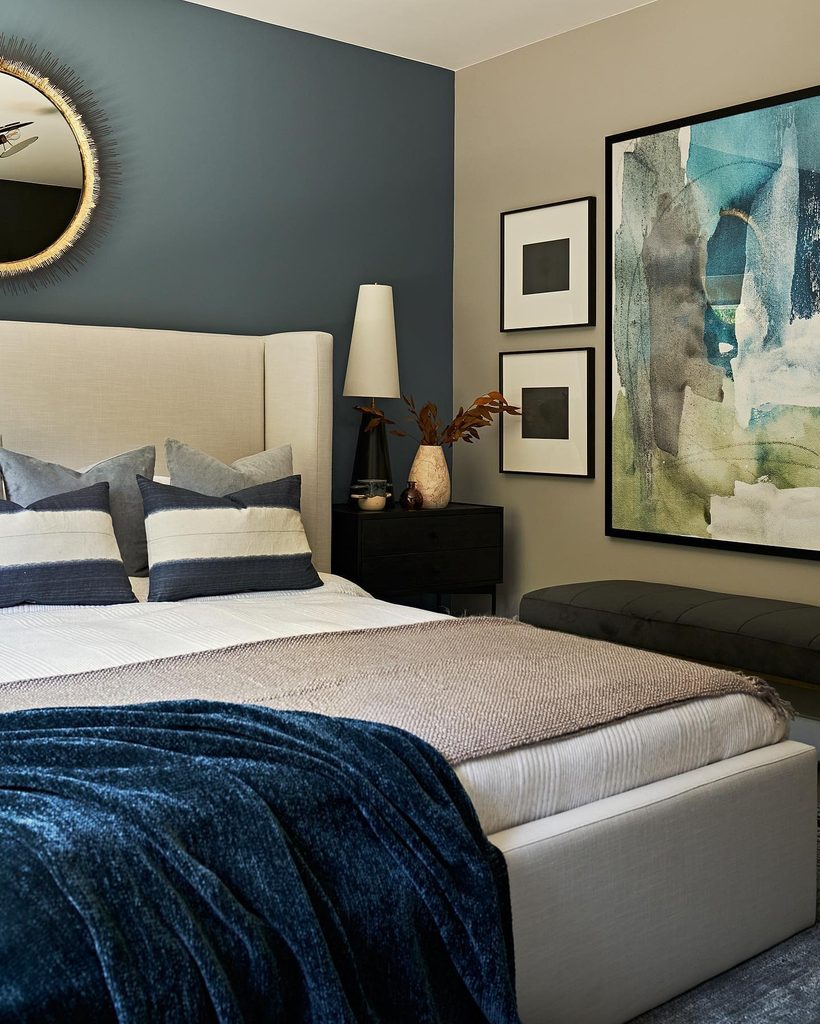
Artwork can explain how several shades belong in the same room. Eddie Mickenberg’s large abstract painting carries blue, gray, and ivory across a wall beside the bed, linking the navy throw with the warm cream headboard and striped pillows.
Its generous scale gives that side of the room a purpose while the surrounding furniture stays relatively simple. Choose art for its colors and composition rather than trying to match every textile exactly.
Before hanging it, check the view from the doorway and from the bed, then position it in relation to the furniture beneath it. A narrow cream lampshade provides another light accent against the blue wall.
Keep smaller pictures spaced apart so the largest piece remains easy to appreciate.
Soften a Four-Poster With Cream Canopy Fabric
Credits: Instagram
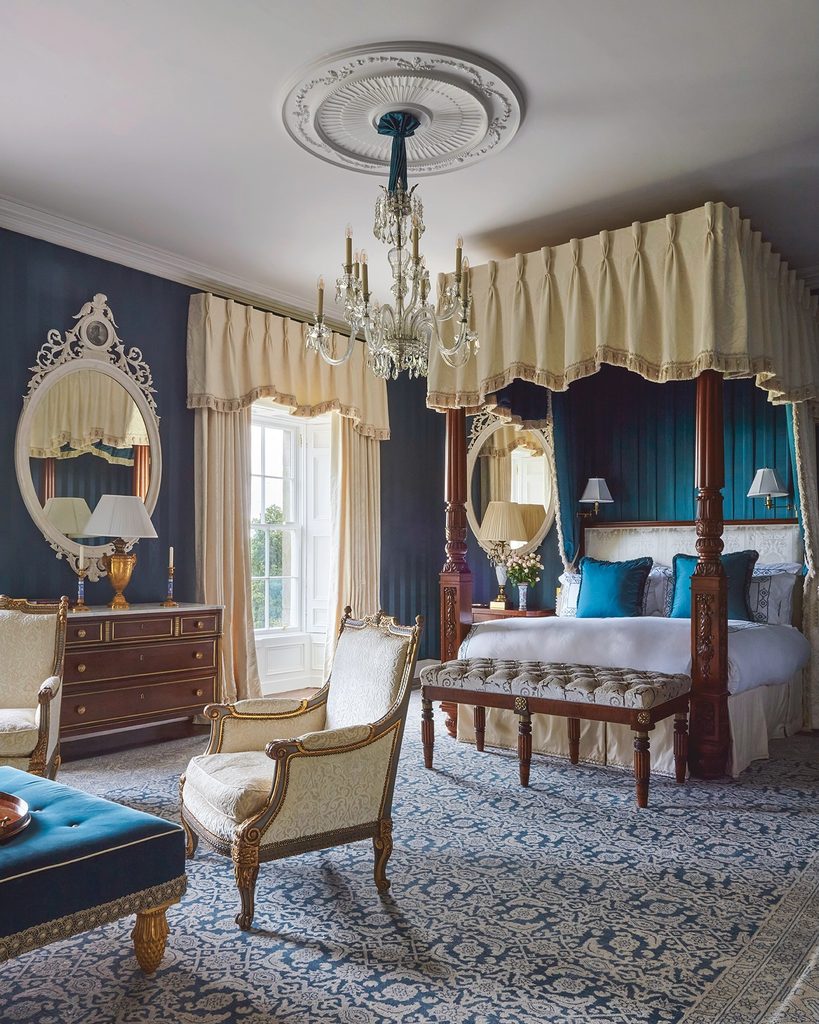
Drapery overhead changes the outline of a bed as much as its mood. Martyn Lawrence Bullard’s Capard House bedroom pairs a dark wood four-poster with a cream canopy, making a soft enclosure against deep blue walls.
Matching window curtains carry the warm neutral around the room, while blue pattern on the floor connects the separate furniture pieces.
Adapt the principle by choosing a canopy bed designed to support drapery and keeping the fabric clear of lighting and heating equipment. A simpler valance or fewer fabric panels may suit a smaller space better than this elaborate treatment.
Check ceiling height and everyday access before buying. The useful lesson is the balance between a strong frame and an uninterrupted pale fabric surface.
Hang a Shaped Mirror Above a Cream Nightstand
Credits: Instagram
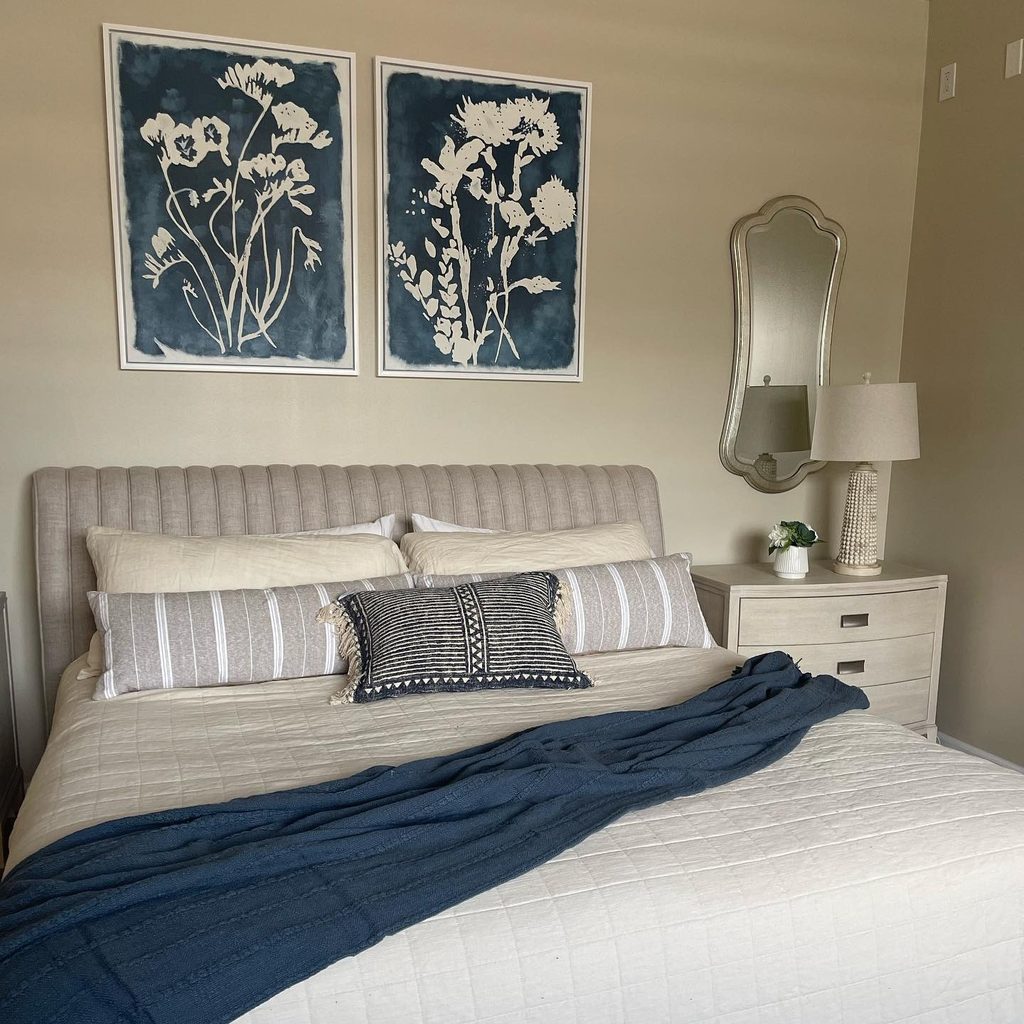
A narrow stretch of wall above a bedside table can still earn its place. Chiara positions a shaped mirror behind a pale lamp, bringing height and reflection to a cream nightstand without enlarging its footprint.
Blue botanical pictures and a deep blue throw provide color nearby, while cream bedding keeps the sleeping area light.
Look for a mirror whose width works with the table beneath it, and check what it will reflect before fastening it securely. You might prefer a view of the window or artwork to a direct reflection of the bed.
Leave enough clear tabletop for a drinking glass, book, and other essentials. A curved outline adds variety when the surrounding furniture and framed pictures are mostly rectangular.
Warm Navy and Cream With Coral Curtains
Credits: Instagram
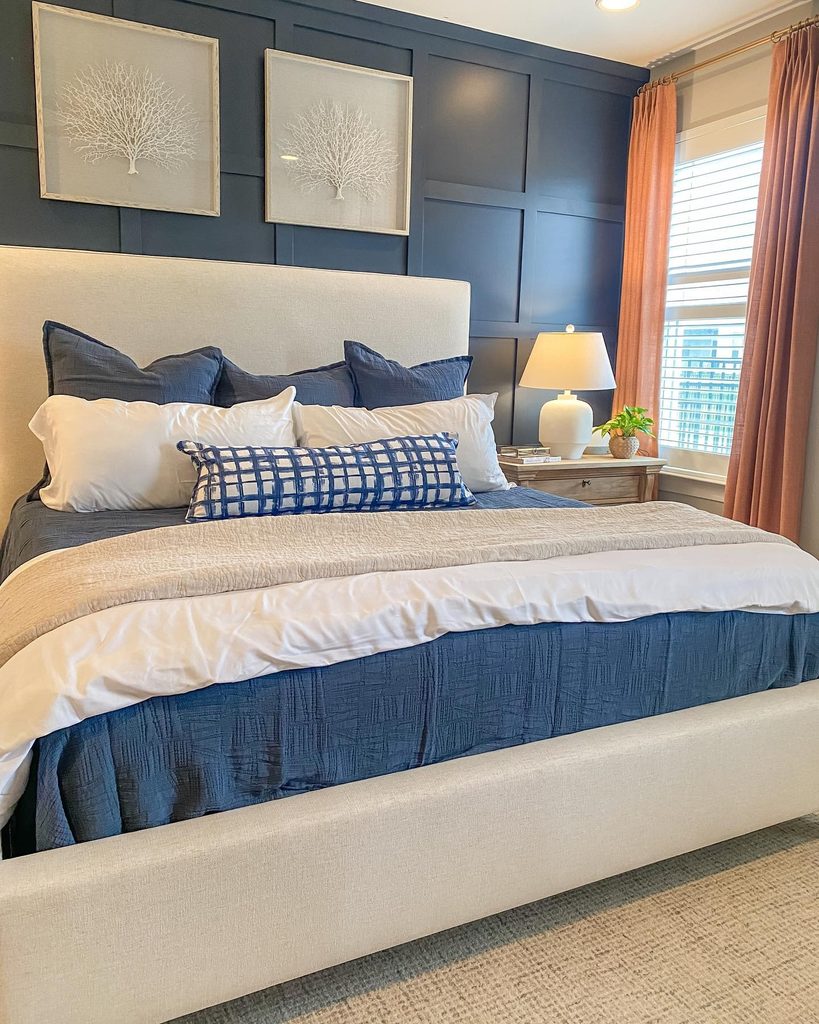
One warm accent can stop a cool palette from feeling overly formal. Kayla Compton’s room uses coral-orange curtains beside navy walls and a cream upholstered bed, concentrating the extra color where daylight enters.
Blue remains the main contrast, repeated through the quilt, pillows, and checked lumbar cushion. Start with a small fabric sample against your existing cream upholstery; some oranges will look much sharper than others.
If new curtains are too much of a commitment, test a similar tone in one cushion before expanding it. Keep the larger neutral surfaces consistent so the room still reads as blue and cream.
The curtain color works especially well here because it is separated from the bedding, giving each area a clear role.
Use Geometric Roman Shades in a Blue Room
Credits: Instagram
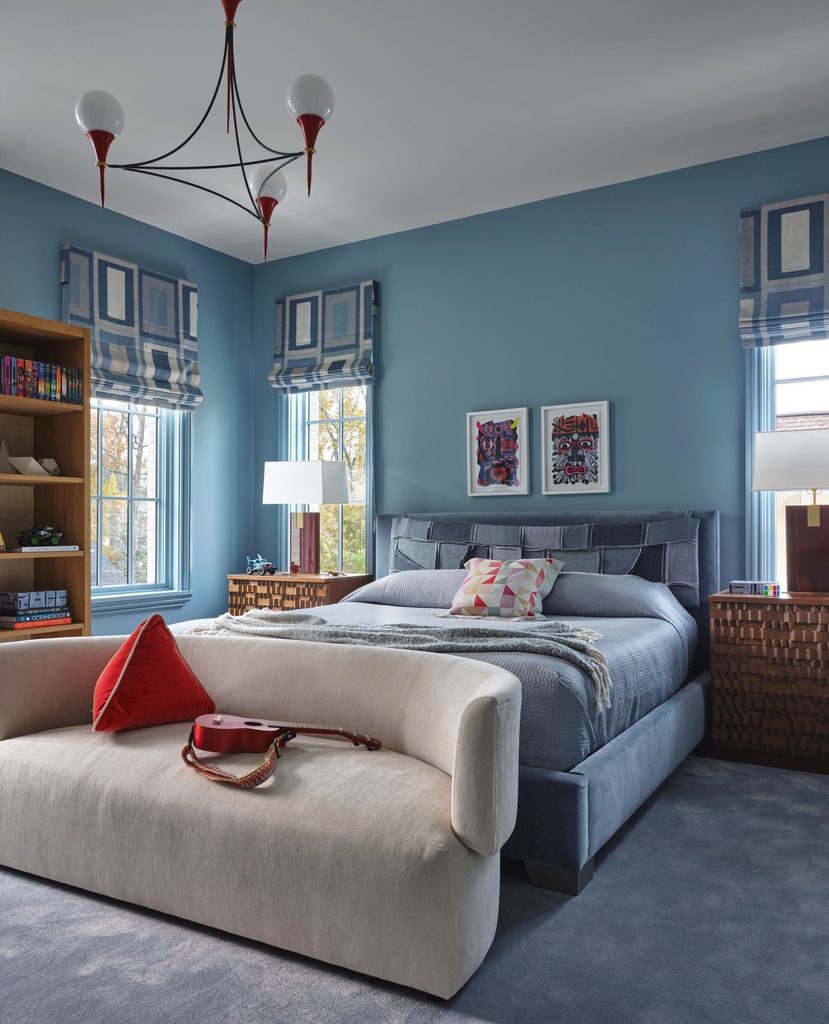
A compact window treatment can carry a strong pattern. Melanie Turner’s bedroom uses blue-and-ivory geometric Roman shades above a blue bed and a rounded cream sofa, repeating the design across several windows.
The shades keep the window surrounds visible and avoid extra fabric beside the bookcase and bedside furniture. For your own room, compare the pattern size with the width of each window before ordering.
A large motif may need careful placement so neighboring shades look related. Decide separately how much privacy and darkness you need, since the photograph cannot establish the lining.
Cream seating gives the eye a quieter place to rest below the patterned windows. Small red accents are optional; the blue and warm neutral combination already works.
Anchor Blue Walls With a Tall Cream Headboard
Credits: Instagram
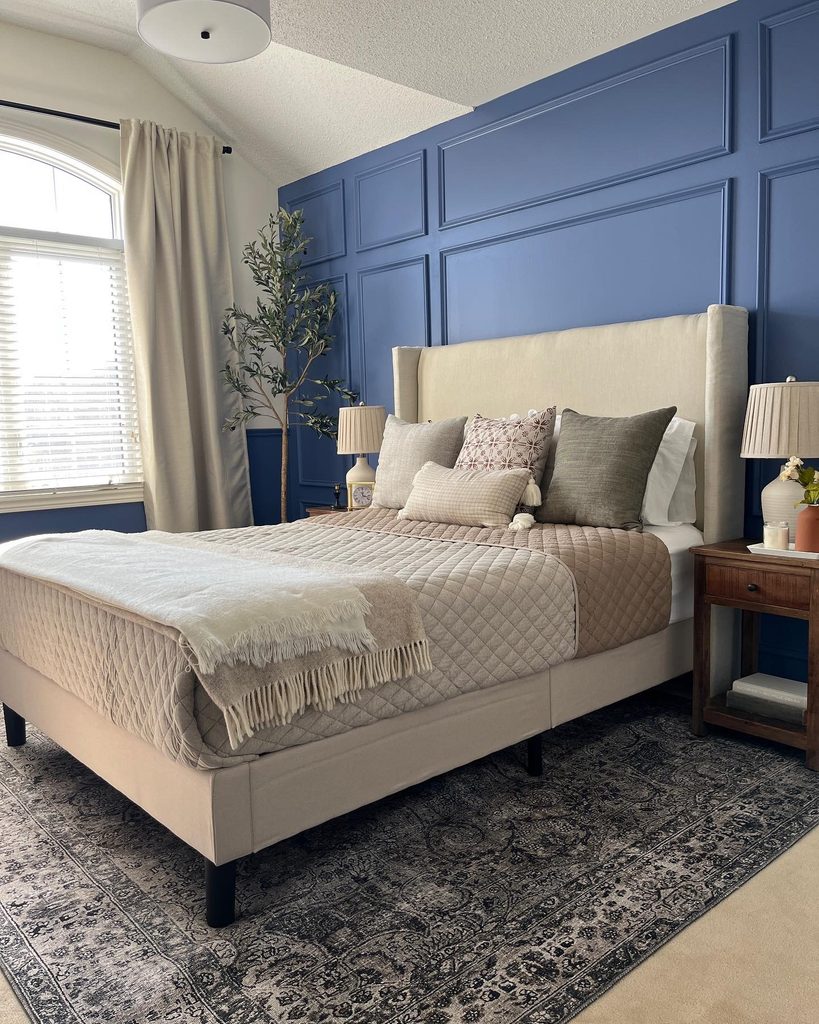
Proportion can make an ordinary bed feel much more established. This guest room uses a tall cream wingback headboard against a blue wall, creating a broad, light surface that holds its own beside the window.
The warm upholstery also separates the blue backdrop from the gray and tan bedding. Measure from the top of your mattress when comparing headboard heights, and consider how much will remain visible behind your usual pillows.
Check that the wings leave enough room to reach the nightstand comfortably. High curtains reinforce the vertical direction without needing more artwork above the bed.
This approach is especially useful when a strong wall color needs balancing, but you prefer to keep most of the furniture pale and simple.
Layer a Handmade Blue Quilt on a Cream Bed
Credits: Instagram
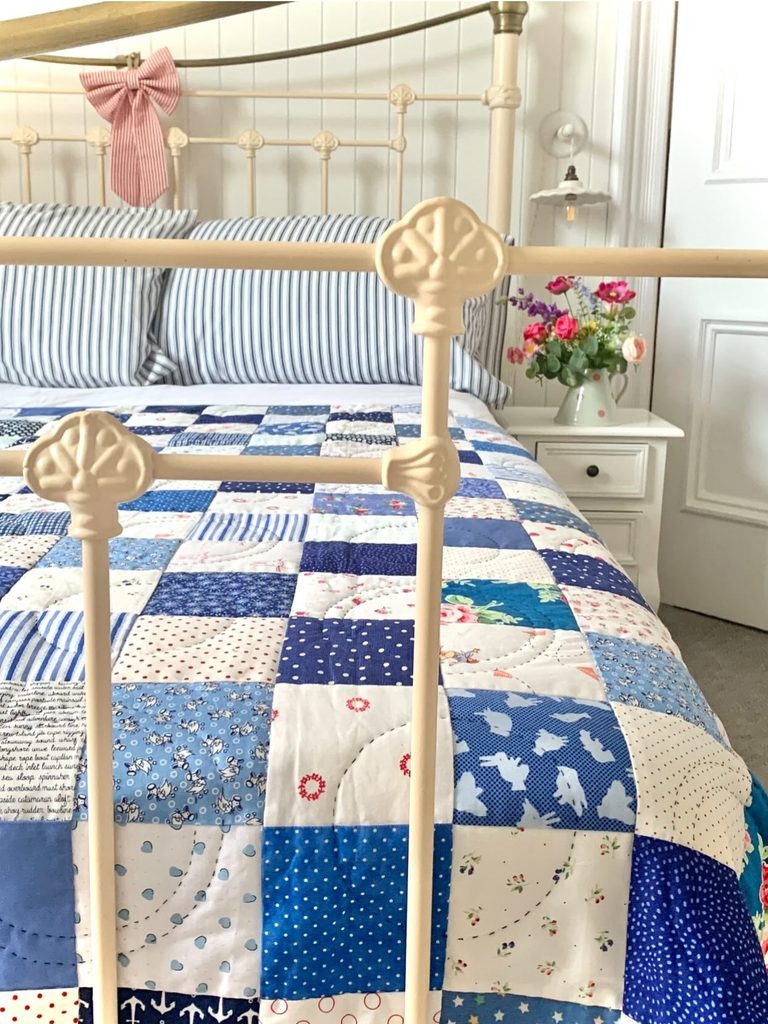
Small fabric squares bring personal character to an otherwise simple bedroom color scheme. Helen Philipps’s blue checkerboard quilt mixes printed squares with pale patches, while the cream bed frame supplies a steady outline around all that detail.
Striped pillows introduce another pattern without needing another dominant color. You can borrow this idea with an existing quilt, a vintage find, or a project suited to your sewing skills.
Look for repeated blues that connect the individual fabrics, then keep nearby furniture quieter. The photograph shows how a warm painted frame can soften the stronger contrast of blue and white textiles.
Let the quilt cover enough of the mattress to display its design, and avoid stacking accessories where they hide the handiwork.
Add Azure Lampshades Beside Cream Drapes
Credits: Instagram
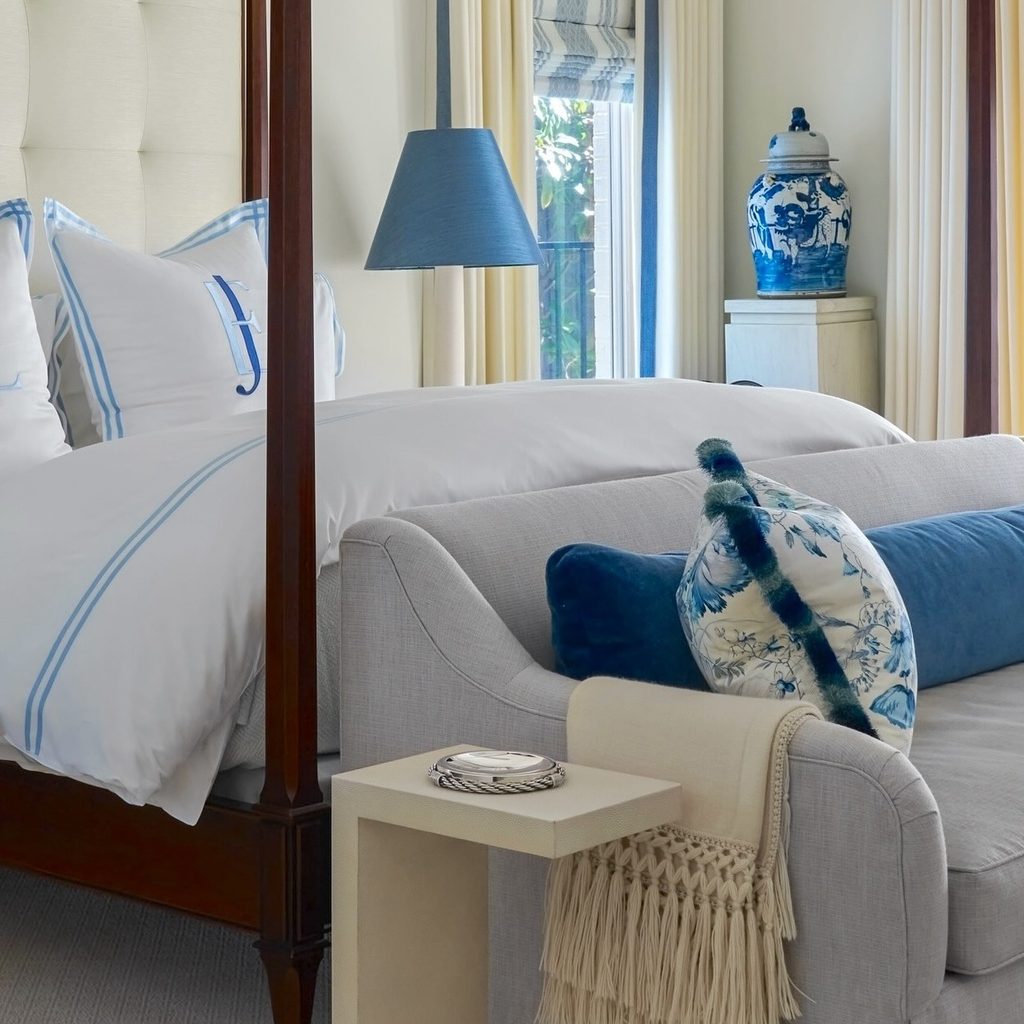
Lighting offers a smaller place to make a confident color choice. In this S.
B. Long bedroom, an azure lampshade stands beside cream drapes, echoing the blue window trim and nearby cushions.
The shade gives the bedside area definition while the pale headboard and curtains keep the larger surfaces soft. If you already own a suitable lamp, check its shade fitting and recommended size before considering a replacement.
Test the result after dark as well as during daylight, since a colored shade can change how the light feels. Repeat that blue once elsewhere, perhaps in a pillow or artwork, instead of matching every accessory.
A cream throw adds another warm note without obscuring the darker wood frame of the bed.
Choose a Blue Nightstand With Basket Storage
Credits: Instagram
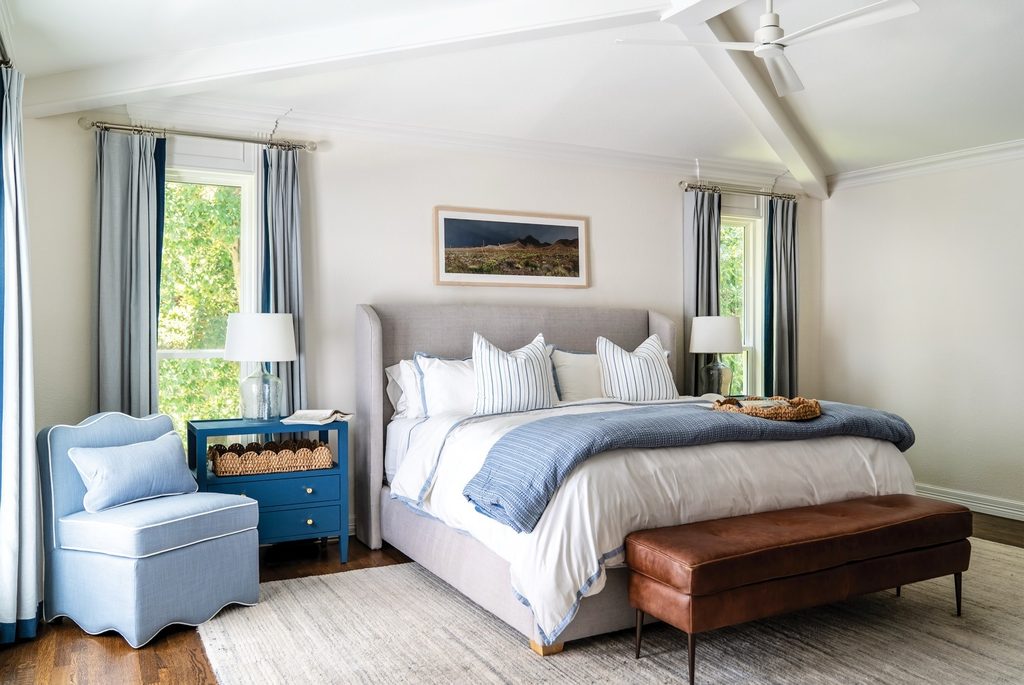
A bedroom’s everyday essentials deserve a conveniently placed home. In Bess McKinney’s photograph of a Lambert Home project, a blue chest combines drawers with an open cubby holding a woven basket.
The painted finish links to the nearby chair and blue textiles, while warm off-white walls and a pale bedcover give the room breathing space. Consider which belongings you actually reach for before choosing a similar piece.
Drawers suit smaller items you want out of sight; a removable basket makes an open shelf easier to organize. Check that the top is comfortable to reach from the mattress and that drawers open without hitting the bed.
Keeping the storage within one compact unit can reduce the need for extra bedside furniture.
Fit a Skirted Dressing Table Beside the Bed
Credits: Instagram
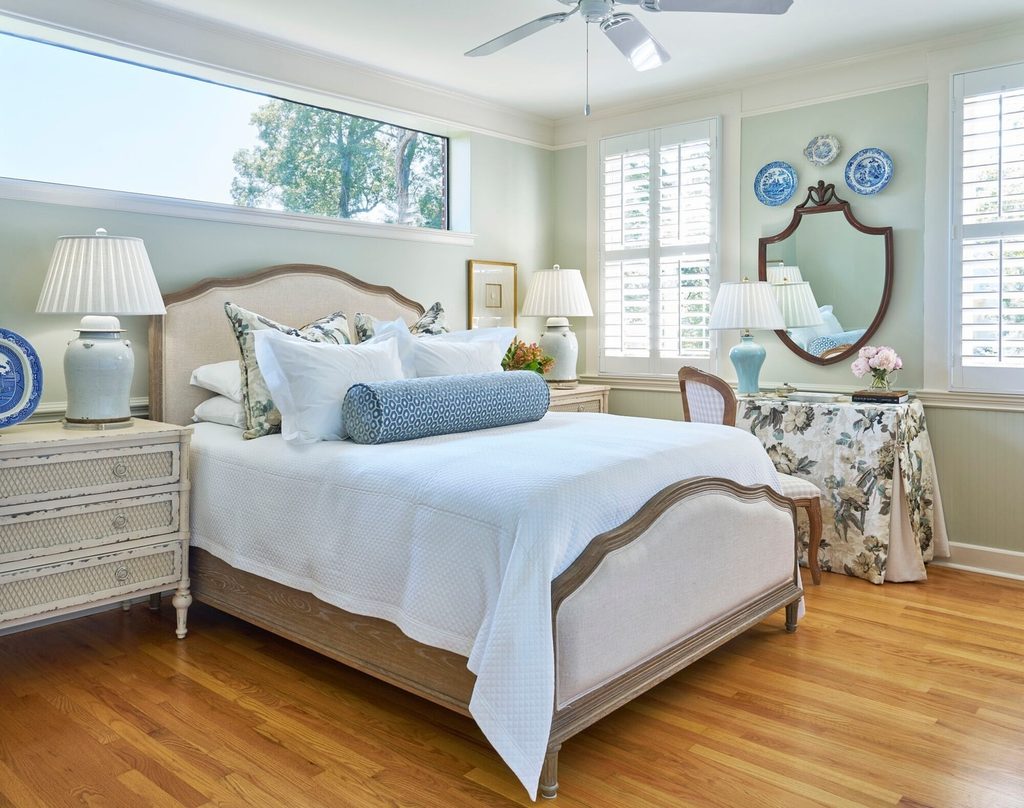
Getting ready does not always require a large dressing table. Maggie Griffin places a small skirted table beneath a mirror beside the bed, adding a chair and lamp to make the corner useful.
The botanical fabric combines blue-green motifs with a warm cream ground, connecting the dressing spot with the pale upholstery and blue accents around the room.
Start by checking seated legroom and the route between the chair and bed. A skirt should hang neatly without catching under the chair feet.
If you adapt the idea for concealed storage, choose items that can be accessed easily rather than filling every inch underneath. The mirror and lamp give this surface a clear role while preserving the bedroom’s soft, coordinated appearance.
Soften Blue Walls With a Cream Shag Rug
Credits: Instagram
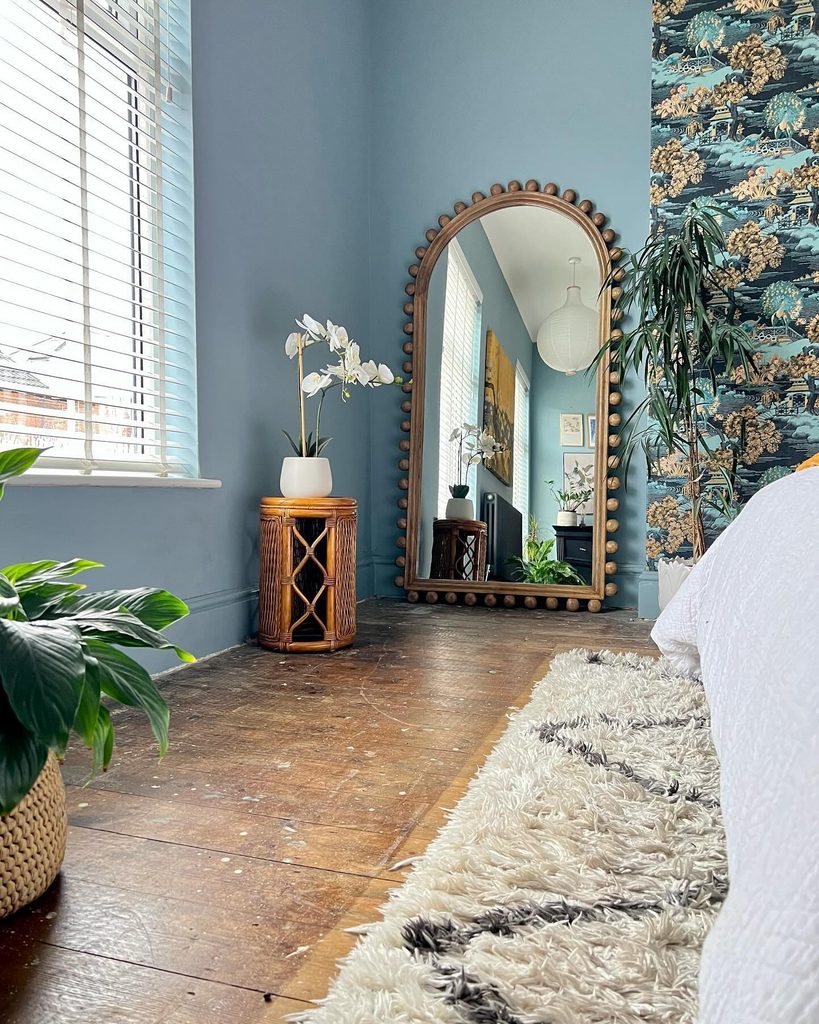
The first step out of bed can help determine where a rug belongs. Katie’s blue bedroom places a thick cream rug alongside exposed wood floorboards, adding softness exactly where the bed meets the walking area.
Dark diamond lines connect it with the busier wallpaper without introducing another large block of color. Choose the rug’s position around your normal route, then check that doors and drawers still open freely.
A suitable nonslip pad can help it stay in place on a smooth floor. Think about cleaning before choosing a deep pile, especially if pets share the room.
Here, the warm ivory surface also makes the blue walls feel less severe, while enough bare flooring remains visible to preserve the room’s character.
Frame a Cream Bed With Blue Bookshelves
Credits: Instagram
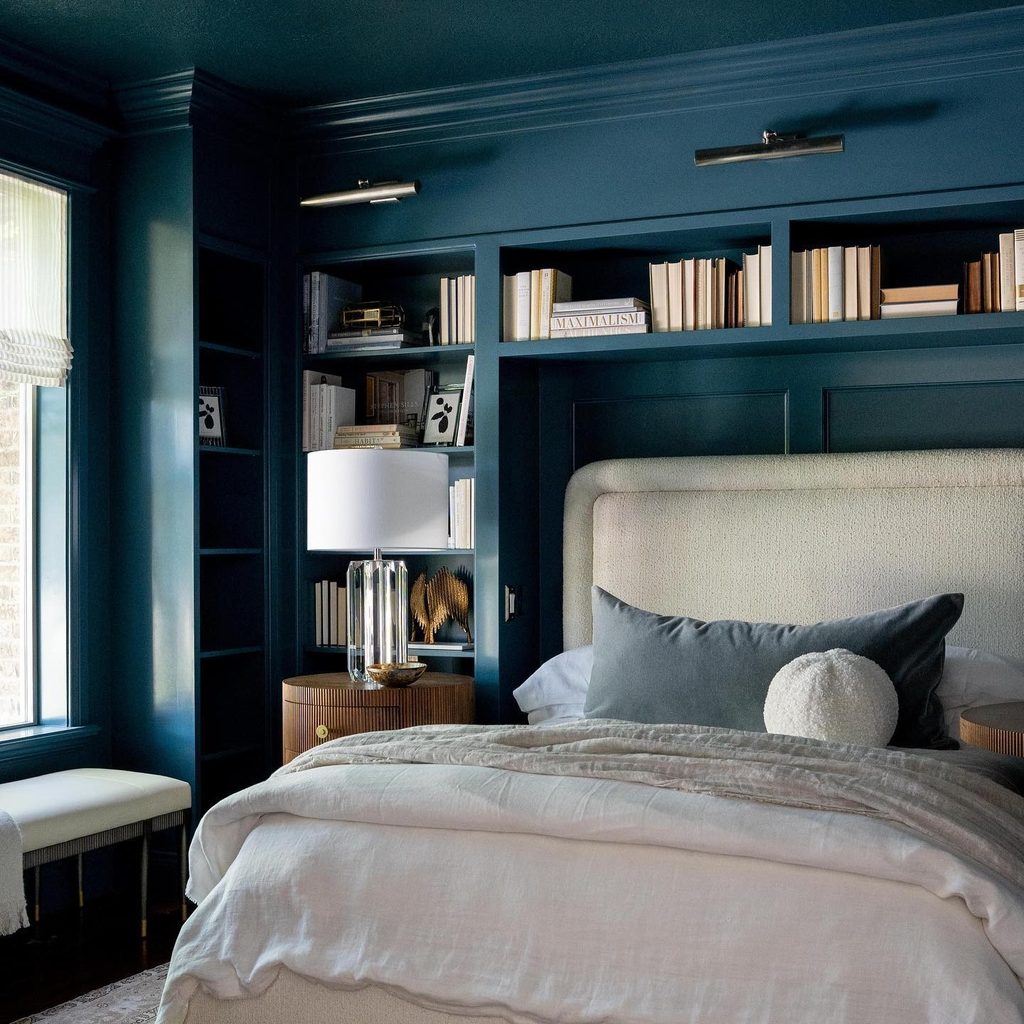
Books and bedding can share one carefully planned wall. Alice Lane’s room surrounds a cream upholstered bed with deep blue shelves, creating a defined sleeping alcove while keeping books close by.
The pale headboard and coverlet stand out inside the darker framework, so the built-ins feel connected to the bed rather than visually separate. For a similar arrangement, plan the mattress position, bedside access, outlets, and lighting before deciding shelf widths.
Ask a qualified installer to assess anchoring and loads, especially for any cabinetry above the bed. Keep frequently handled objects on easily reached shelves.
A few empty spaces will help the display feel less crowded, and cream bedding can remain simple while the surrounding collection supplies detail and personality.
Balance Blue Textiles With Pale Wood Furniture
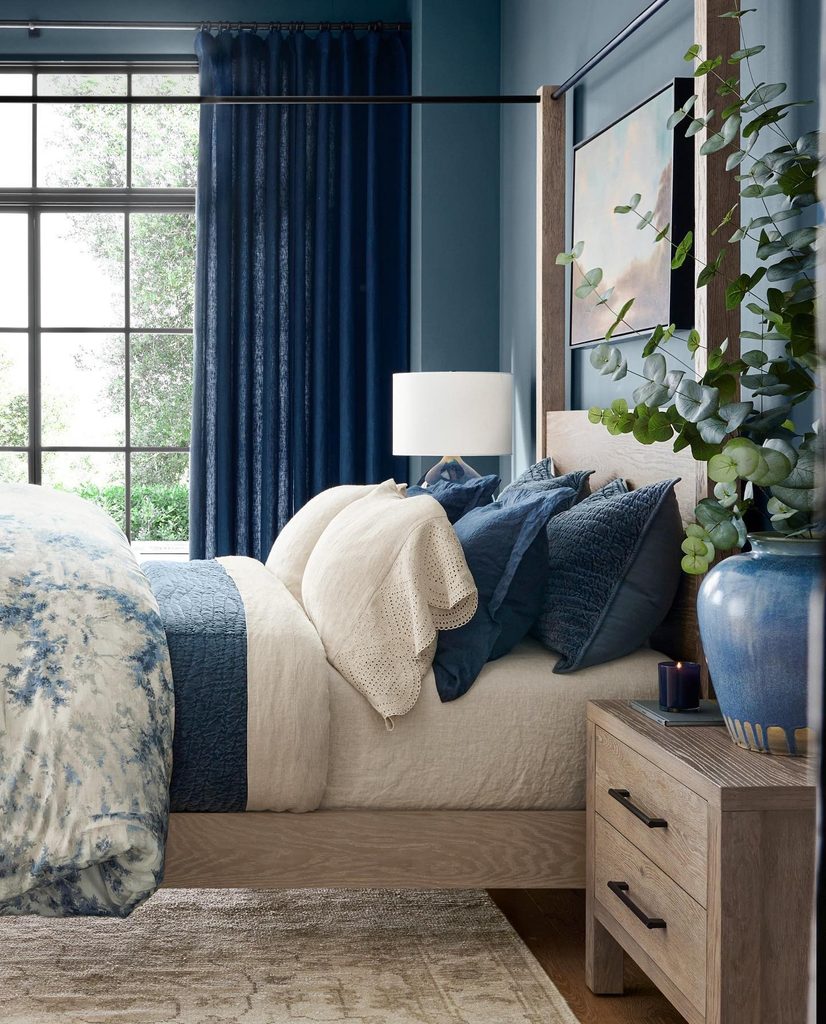
Credits: Instagram
Visible wood gives layered textiles a steady foundation. Pottery Barn’s photographed room pairs a pale wood bed and nightstand with blue walls, dark curtains, and cream bedding.
The exposed bed rail keeps the furniture present even under several covers, while the drawer fronts bring the same warm finish to the bedside.
Borrow the relationship rather than trying to match every item: choose wood tones that sit comfortably together, then compare them with your blue and cream fabric samples.
Let one large textile carry the pattern and keep other layers relatively simple. Avoid covering every wooden surface with accessories.
In this arrangement, a blue vase and greenery provide enough bedside decoration to connect the furniture with the rest of the room.
Leave a Cream Ceiling Above Navy Walls
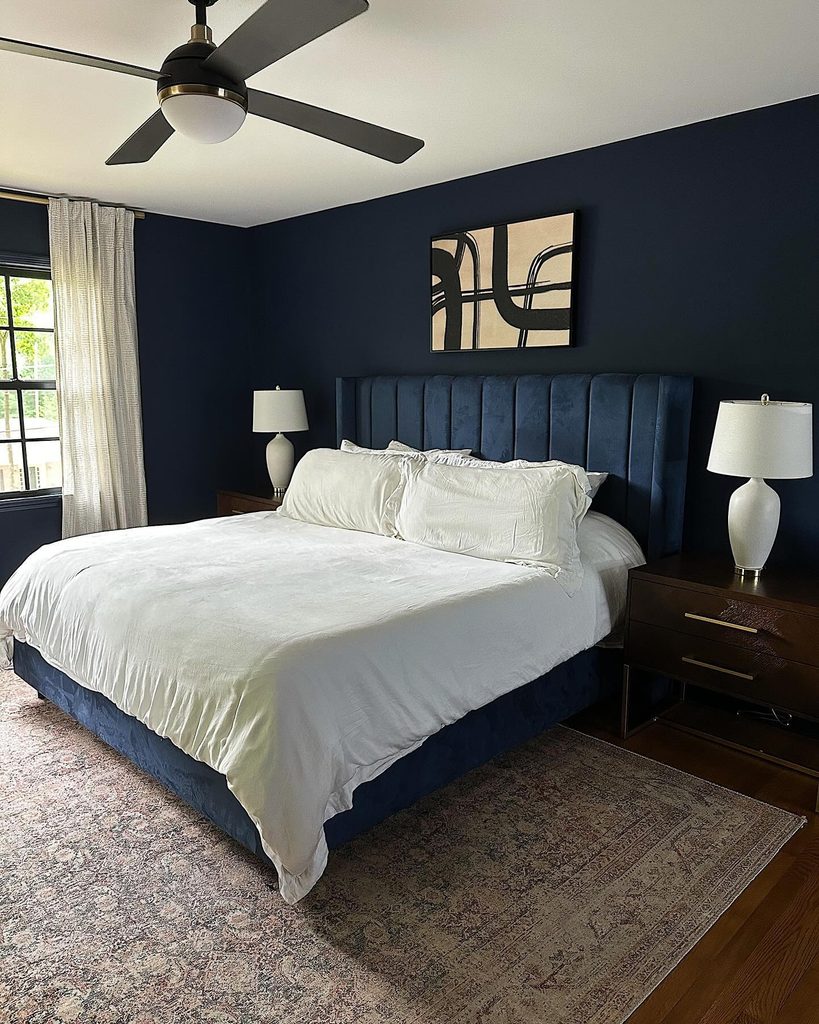
Credits: Instagram
Looking upward reveals another useful way to control a dark room. Studio Louise leaves a warm cream ceiling above navy walls and a matching blue velvet bed, giving the room a lighter upper surface.
Creamy curtains and pale pillows repeat that warmth nearer eye level, while dark furniture keeps the lower half grounded. Consider the ceiling alongside wall samples rather than selecting its color as an afterthought.
Check the combination during daylight and under the bulbs you use at night, since a warm neutral can change with lighting. A simple ceiling fixture will keep the color boundary easy to read.
Here, the pale overhead plane balances the dark walls without requiring extra patterns or a large collection of decorative objects.
Stop Navy Wainscoting Below the Ceiling
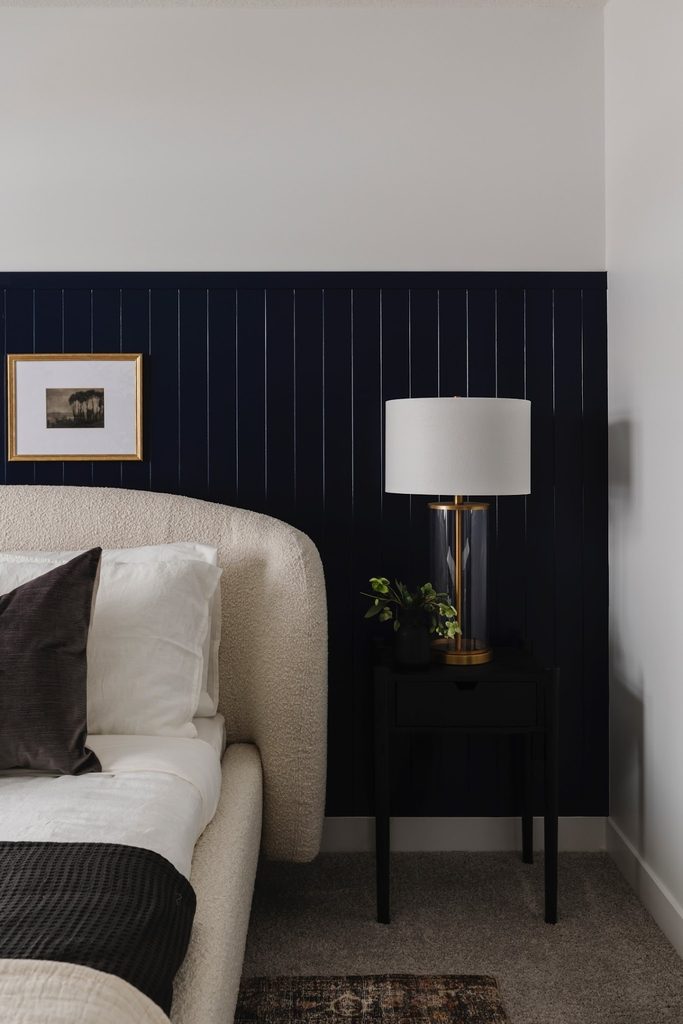
Credits: Instagram
A horizontal color break can make a strong shade easier to live with. Alykhan Velji’s bedroom keeps deep navy wainscoting below a pale upper wall, using the darker section as a backdrop for a cream upholstered bed.
The vertical grooves add texture, while the uninterrupted band above prevents the treatment from enclosing the whole room. Decide the panel height in relation to your headboard and bedside lighting, rather than dividing the wall in half.
Sketch the line across corners before installing anything. Rounded cream upholstery softens the straight panel edges, and a small framed picture adds detail without filling the upper wall.
Keep the textiles restrained so the contrast between the two wall areas stays clearly defined throughout the room.
Place a Blue Bench With an Open Shelf
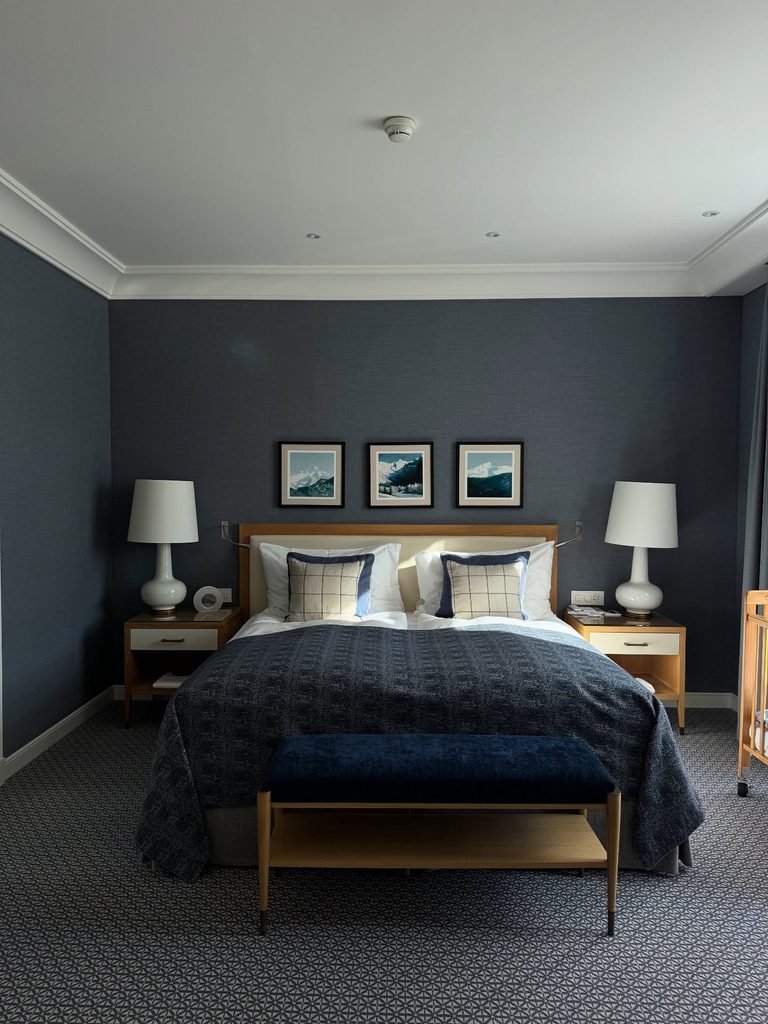
Credits: Instagram
An extra surface at the foot of the bed can serve more than one purpose. In Carlotta Rubaltelli’s hotel photograph, a blue upholstered bench includes an open lower shelf beneath its seat.
The bench repeats the dark blue bedcover, while cream headboard panels and patterned pillows lighten the arrangement above. To adapt this layout at home, check the walking clearance beyond the bench and choose a width that suits your bed.
Use the visible shelf for a neatly folded spare blanket or a suitably sized basket, provided the furniture’s load rating allows it. Leave the seat available for sitting or setting down tomorrow’s clothes.
The open base offers useful space without the visual bulk of a fully enclosed storage chest.