
A headboard can define the bed without requiring a taller frame or a busier room.
These Headboard Ideas show how shape, texture, and thoughtful placement can make the sleeping area feel more intentional, from cane webbing edged in dark wood to a low upholstered backrest set against vertical wall paneling.
You’ll also see how built-in shelves can frame a headboard while adding storage, and how tall padded panels can give a daybed a comfortable backdrop for sitting.
Small details such as pillow height, wall space, and nearby lighting help each design work in the room.
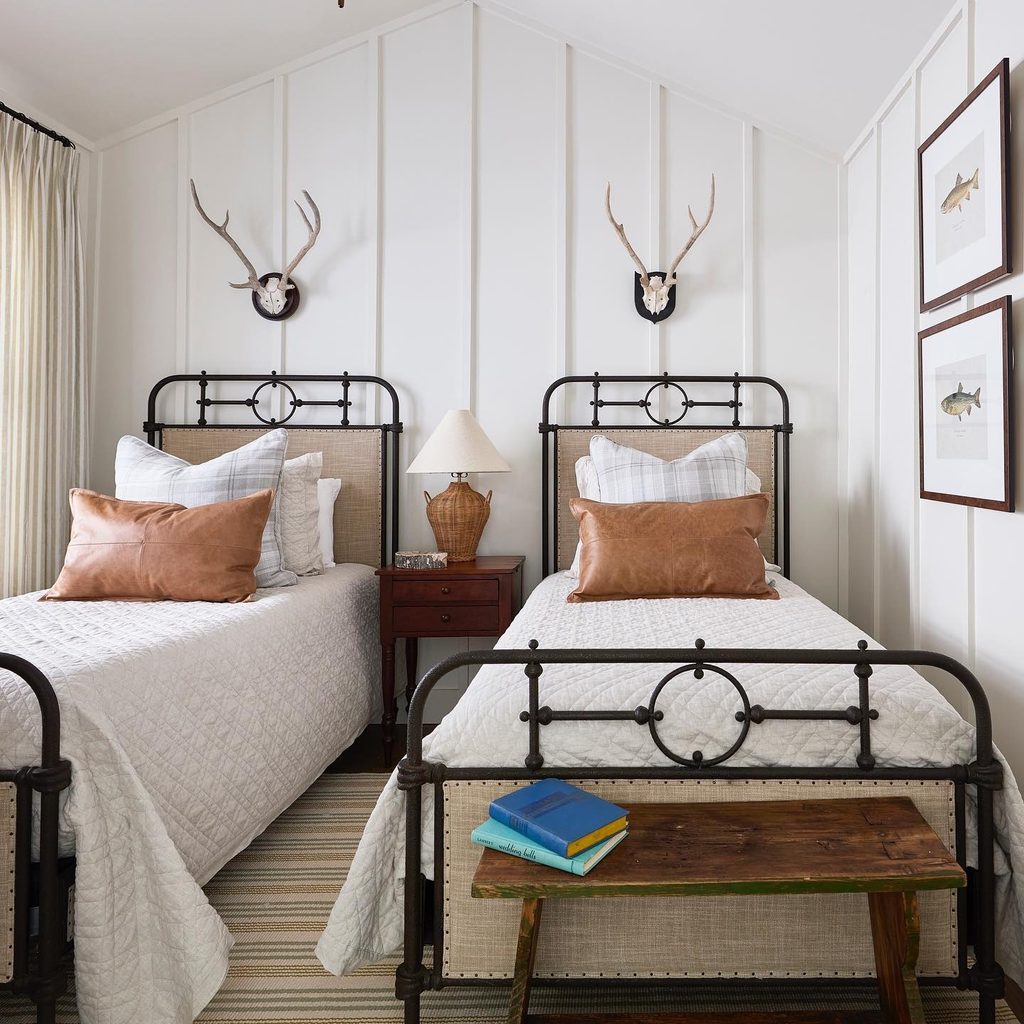
Metal Scrollwork Above an Upholstered Inset
Credits: Instagram
An open decorative metal outline can give a headboard character without making the entire piece feel heavy. These paired beds combine circular scrollwork with pale upholstered insets, leaving the wall visible above the pillows.
The dark frame defines the shape against light paneling, while the fabric provides a quieter lower surface. Consider this combination when you like traditional metal beds but want a softer visual center.
Check how much of the inset remains visible after your pillows are arranged. Repeat the metal finish in only a few nearby details so the frame stays distinctive.
Before choosing a similar bed, confirm its mattress compatibility and attachment hardware. Use supportive pillows when sitting upright rather than relying on decorative metal rails alone.
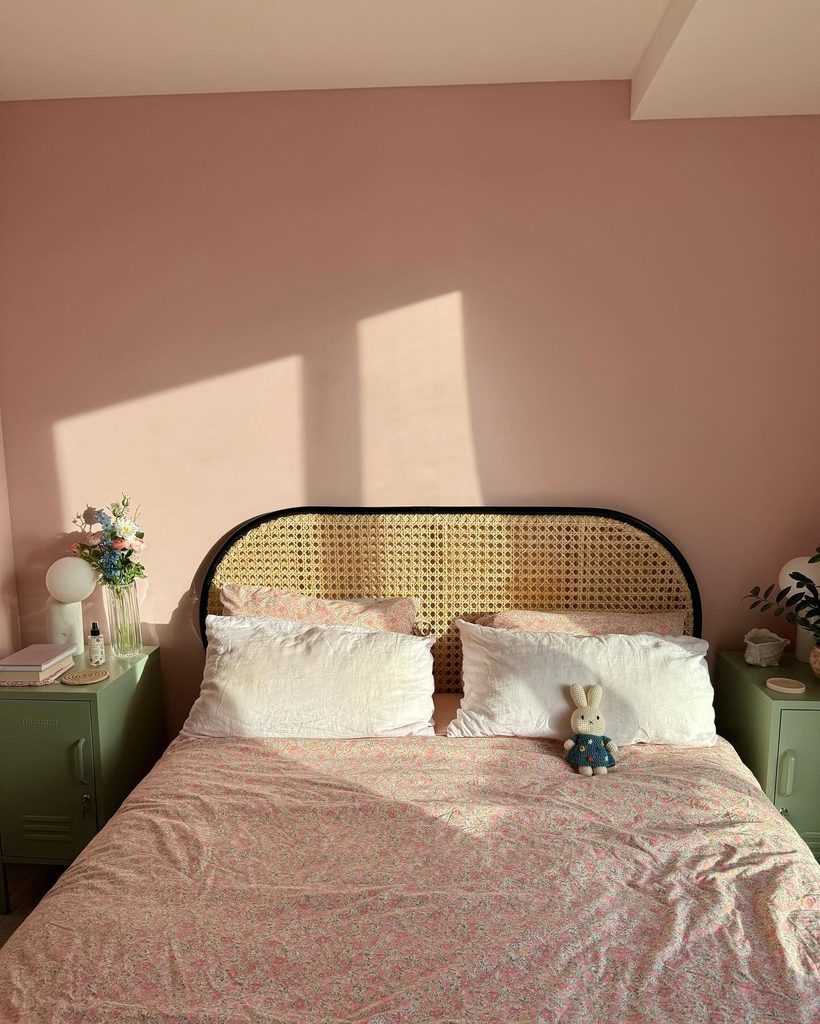
Cane Webbing Inside a Dark Rounded Frame
Credits: Instagram
Cane webbing becomes more noticeable when a dark border traces its outline. This headboard pairs a woven natural center with softly rounded upper corners, giving the bed texture without an upholstered pattern.
Blush walls and pale pillows make the contrasting rim easy to see. Choose this direction when you want a warm material that still feels visually light.
Measure the exposed height above your normal pillow arrangement before ordering, since covering most of the weave would hide the main feature. A simple bedside lamp allows the open pattern to remain important.
Inspect the frame and woven panel together, and follow the manufacturer’s care instructions. Support pillows can make reading more comfortable while protecting the delicate surface from repeated direct pressure.
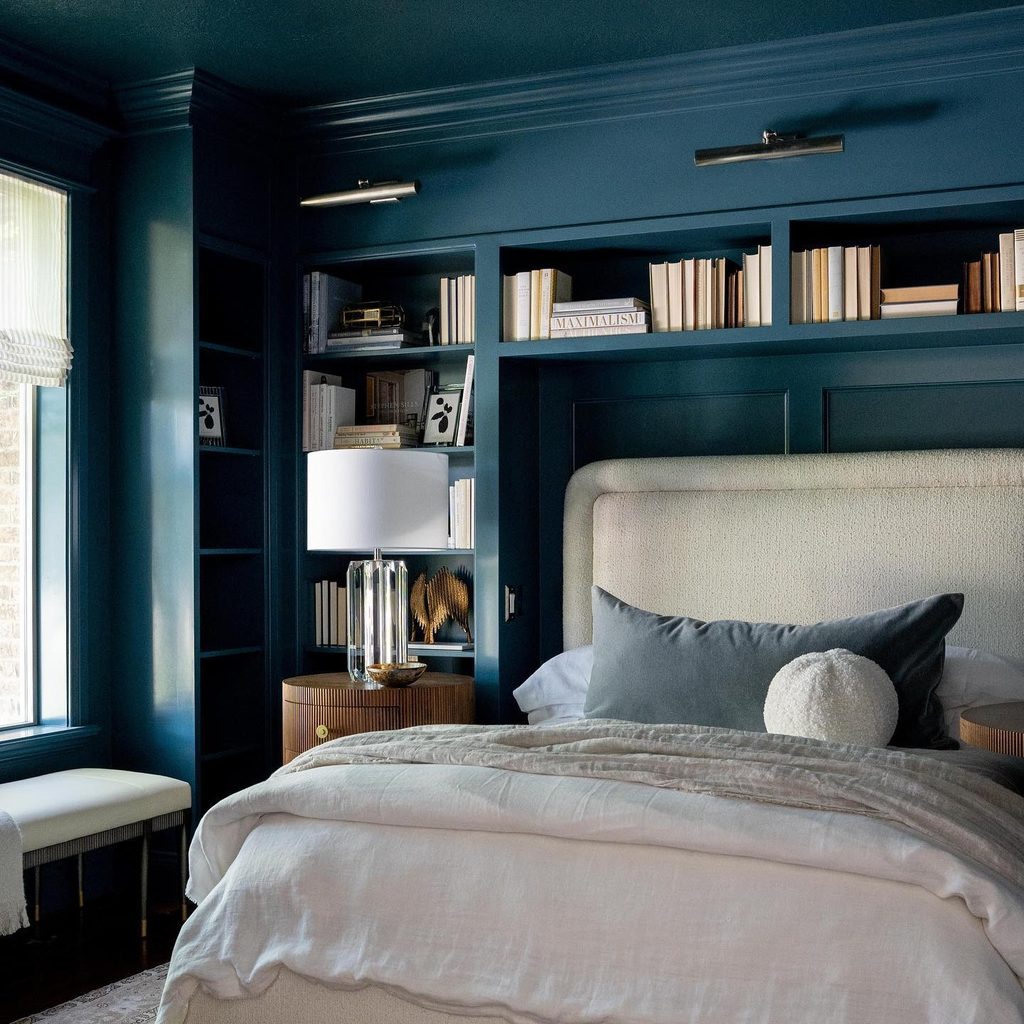
Shelving That Frames the Headboard
Credits: Instagram
Built in shelving can turn the headboard into the center of a complete storage wall. Here, deep teal shelves surround a pale upholstered backrest, with books above and beside the bed.
Matching paint connects the trim, paneling, and storage rather than treating each as a separate feature. Consider this arrangement when you need bedroom storage and already have enough wall depth for cabinetry.
Plan the mattress position, bedside access, and lighting before deciding shelf dimensions. Keep heavy or unstable objects away from the area directly above sleepers.
The upholstered center remains useful because it separates the bed from the harder surrounding surfaces. A restrained display helps the whole wall feel intentional while leaving the headboard clearly visible within the composition.
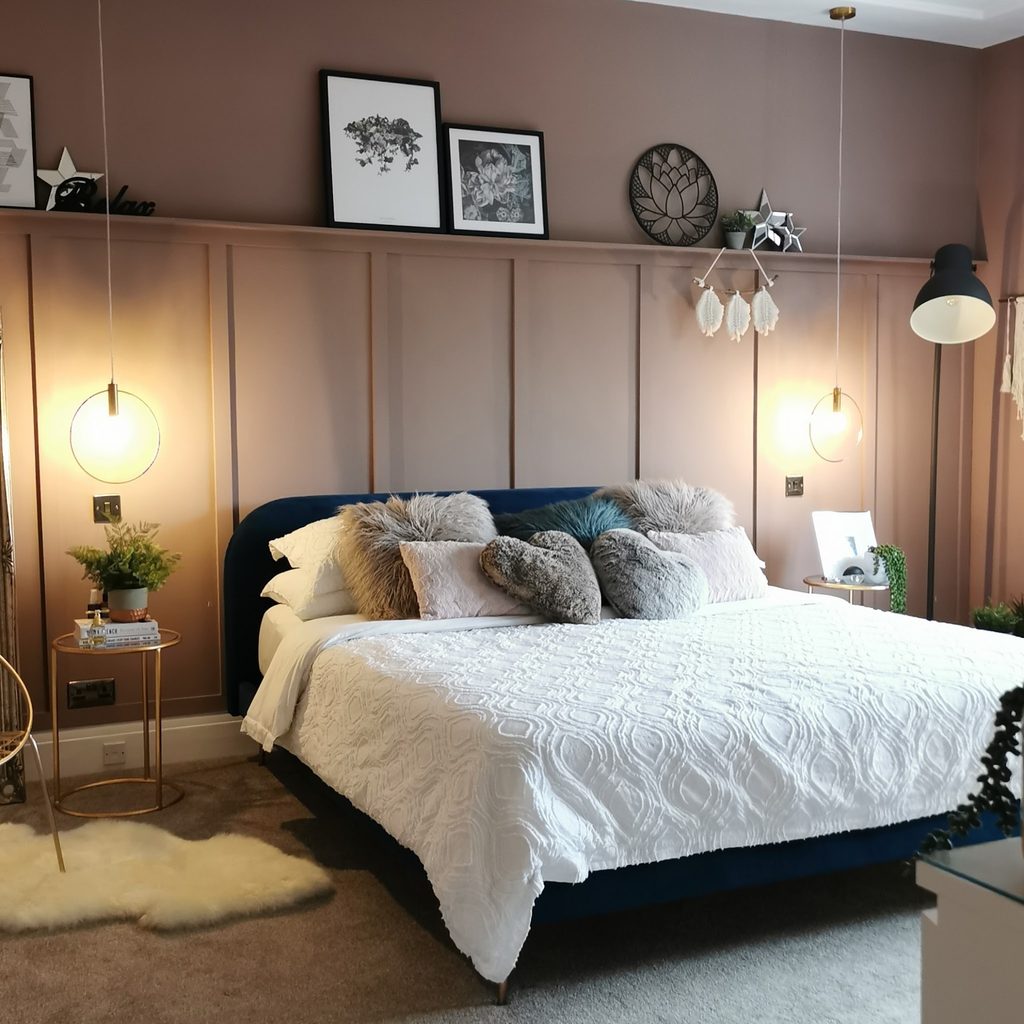
Wall Paneling Behind a Low Headboard
Credits: Instagram
A low headboard can gain presence from the wall treatment behind it. In this room, vertical battens and a slim upper ledge extend beyond the bed, while the dark upholstered backrest remains a separate comfortable element.
The painted paneling creates height without requiring a taller bed frame. This is useful when you want the sleeping area to feel more substantial but prefer to keep existing furniture.
Position the upper edge in relation to lamps, artwork, and the ceiling rather than choosing its height in isolation. Leave enough clear space above the pillows for the paneling to remain visible.
Secure any ledge display appropriately and keep it light. A consistent wall color helps the repeated lines read as one coherent backdrop.
A Shaped Headboard With a Dark Wood Border
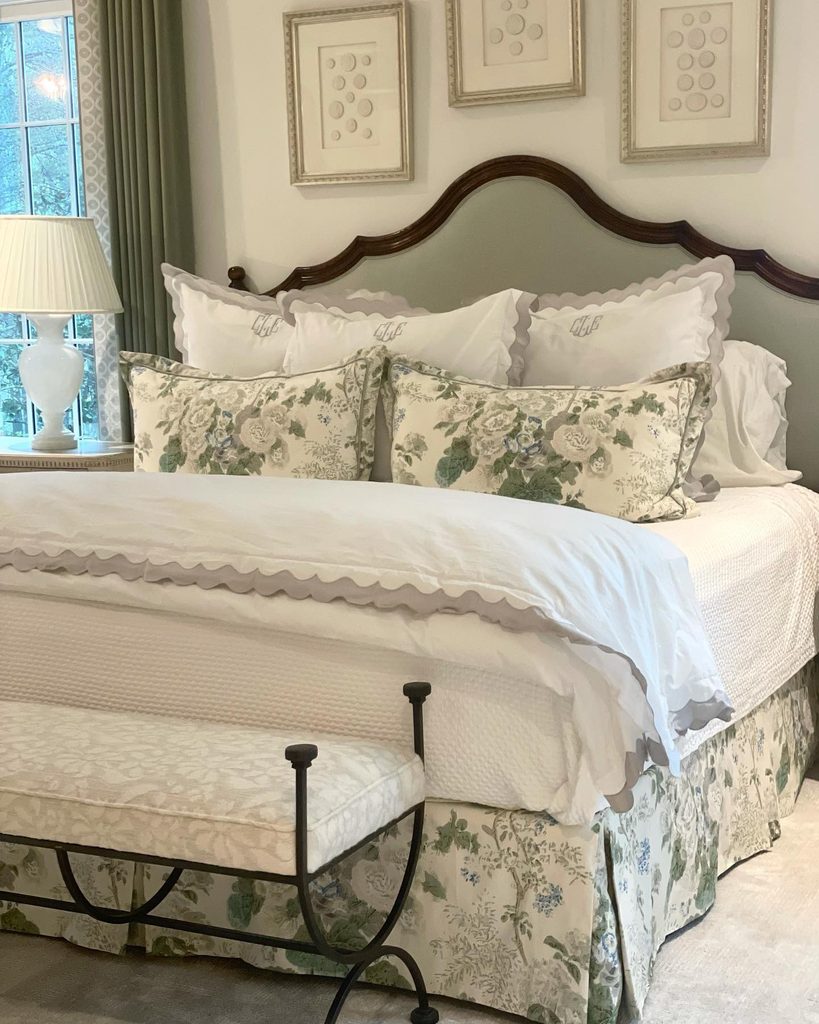
Credits: Instagram
A curved wood border makes this upholstered headboard’s outline easy to appreciate. The pale center stays quiet behind floral cushions, while the raised middle and lower curved shoulders give the bed a traditional profile.
It is a useful choice when you want ornament through shape rather than a heavily patterned fabric. Compare the border finish with existing furniture, especially if several wood tones already share the room.
Measure the overall height with pillows in place and check the space below artwork. Keeping the bedding lighter allows the dark edge to remain distinct.
If choosing a vintage piece, inspect its joints, condition, and attachment method carefully. The silhouette should suit the mattress width without crowding lamps or bedside surfaces around it.
Tall Upholstered Panels Along a Daybed
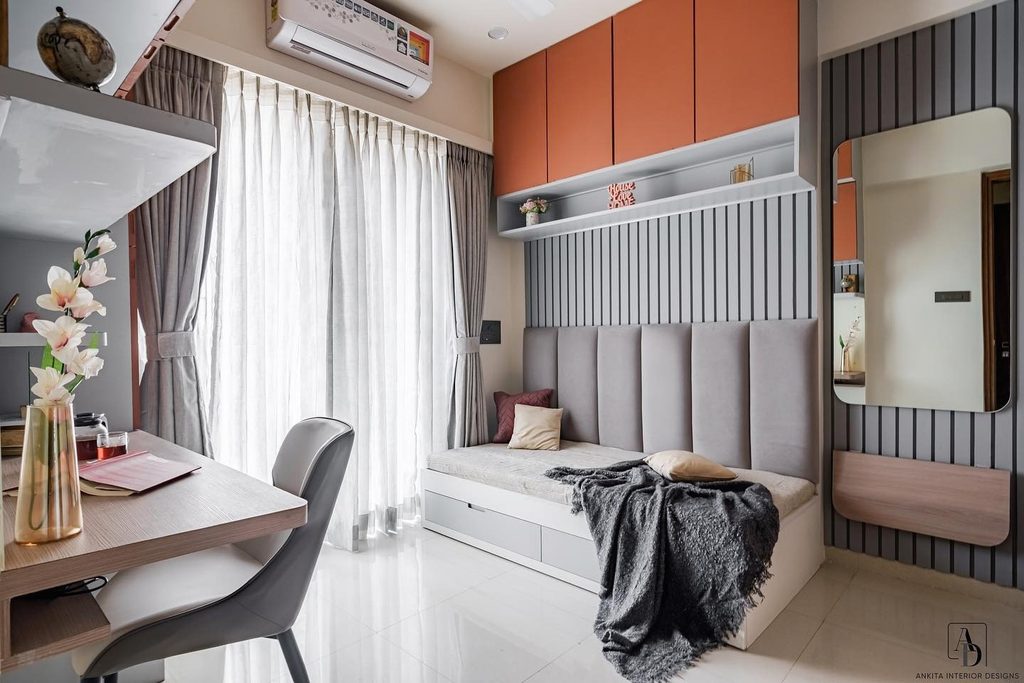
Credits: Instagram
A row of tall padded panels can give a daybed the presence of a built in seating area. These broad gray sections sit along the long side of the mattress, creating a continuous soft backdrop beneath wall detailing and cupboards.
The arrangement suits a room where the bed also serves as a place to sit during the day. Plan the panel height from the finished mattress surface rather than from the floor alone.
Consider how pillows will rest against the upholstery and whether nearby outlets remain accessible. Plain fabric keeps the divisions readable without adding another pattern.
Use a mounting system appropriate to the panels and wall. Keep overhead storage easy to operate without interfering with bedding or the backrest.
A Broad Dark Headboard With a Quiet Outline
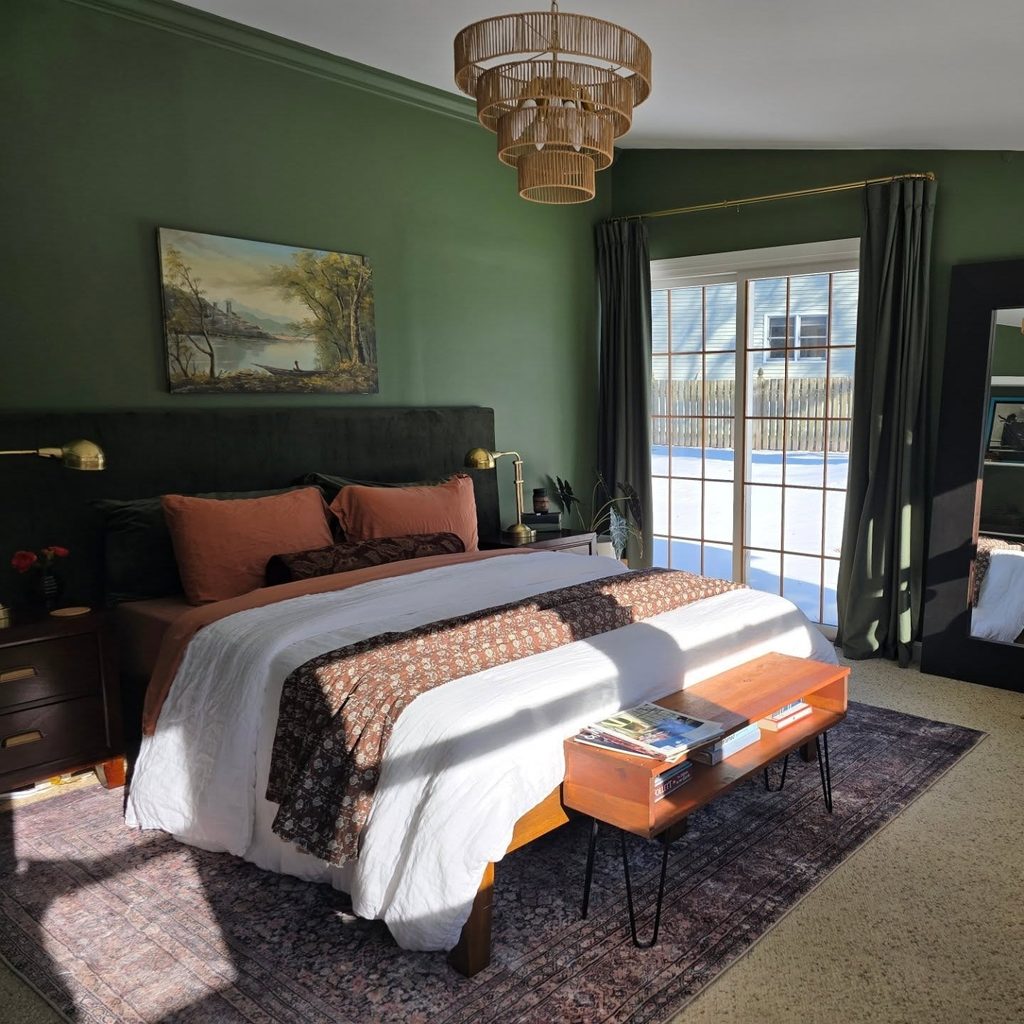
Credits: Instagram
A wide rectangular headboard can anchor the bed without decorative curves or deep tufting. The dark upholstered surface here extends behind the pillows and visually connects with the bedside furniture.
Green walls soften its contrast, while warmer cushions keep the sleeping area from becoming a single dark block. Consider this shape when other room features already provide plenty of detail.
Compare the full width with nightstands and wall lights before choosing a size. A broad panel needs enough visible surface to look intentional rather than simply oversized.
Keep the bedding arrangement relatively low so its top edge remains clear. Upholstery samples should be viewed in your room’s lighting, since a dark fabric may reveal undertones that photographs do not show.
A Scalloped Backrest With Extended Sides
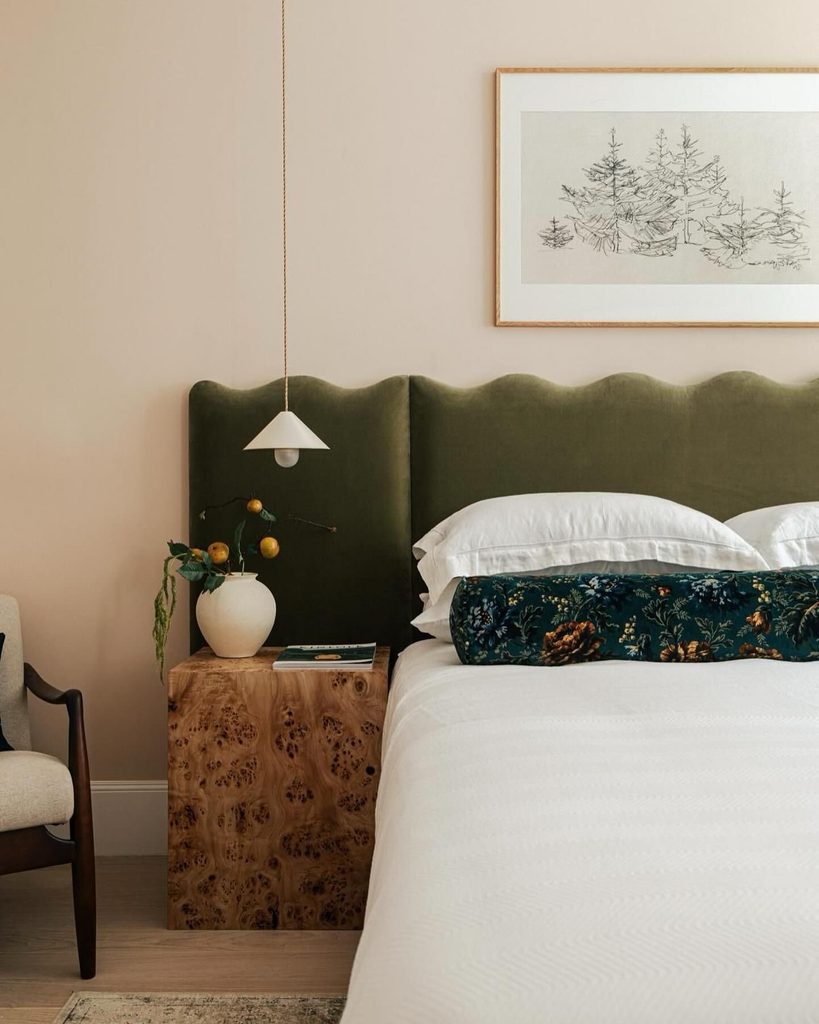
Credits: Instagram
Small repeated curves give this olive headboard a gentle rhythm across its upper edge. The upholstered backdrop continues beside the mattress, connecting the bed with its bedside area.
Plain fabric allows the scallops to supply the detail, while a patterned bolster adds contrast lower down. This approach works when you want a playful outline without a large dramatic arch.
Sketch the width and the number of curves together, since their proportions affect the finished appearance. Check that bedside lights and tables will not obscure the most distinctive sections.
A light wall makes the edge easier to see. Choose a practical upholstery fabric and use the maker’s recommended supports.
Keep other decorative shapes selective so the scalloped boundary remains the focus.
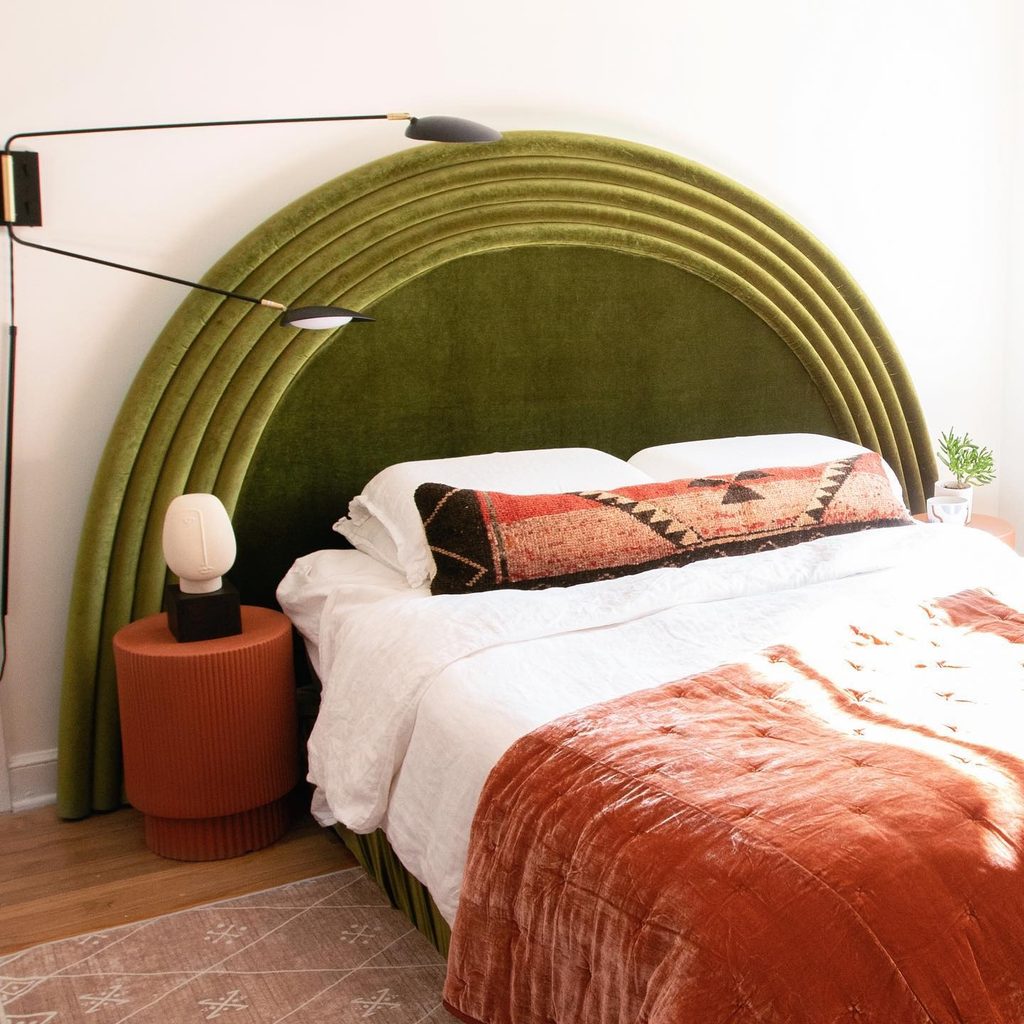
Nested Upholstered Arches in Olive Velvet
Credits: Instagram
Repeated arches make this headboard feel sculptural even though it uses one upholstery color. The rounded bands frame a broad padded center, with olive fabric showing different tones as light catches the curves.
Rust accents and white bedding leave the structure easy to read. This is useful when you want a statement headboard without introducing a large print.
Compare its outer width with the mattress and bedside tables, allowing the whole curve enough breathing room. A full size paper outline can help establish the right height before ordering.
Avoid crowding the edge with artwork or lamps. Check the upholstery’s care requirements and attachment method.
Fewer decorative pillows will reveal more of the nested shape and its soft dimensional detail daily.
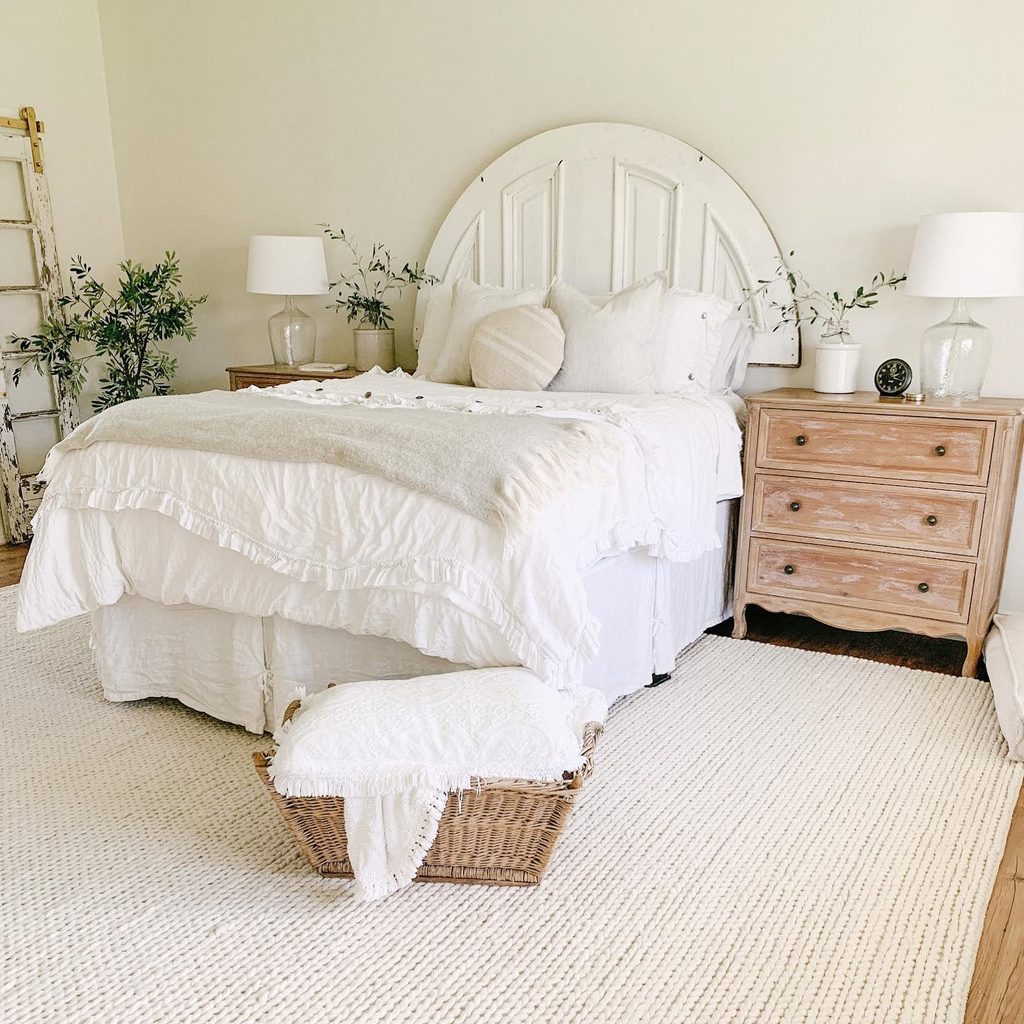
A White Arched Panel With Architectural Detail
Credits: Instagram
An arched panel can create a headboard with the character of architectural salvage. This white example has raised rectangular details beneath a broad curved top, with a lightly worn finish that suits the surrounding pale textiles.
The solid surface feels different from an open spindle frame because it provides a continuous backdrop. Consider this direction when you want vintage character without introducing another strong color.
Check the panel’s condition and surface carefully before placing it near bedding. Any old finish or uncertain material needs appropriate assessment rather than simply being covered.
Secure the piece using a suitable mounting method and keep supportive pillows in front. Nearby furniture can remain simple, allowing the arch and raised sections to provide the decoration.
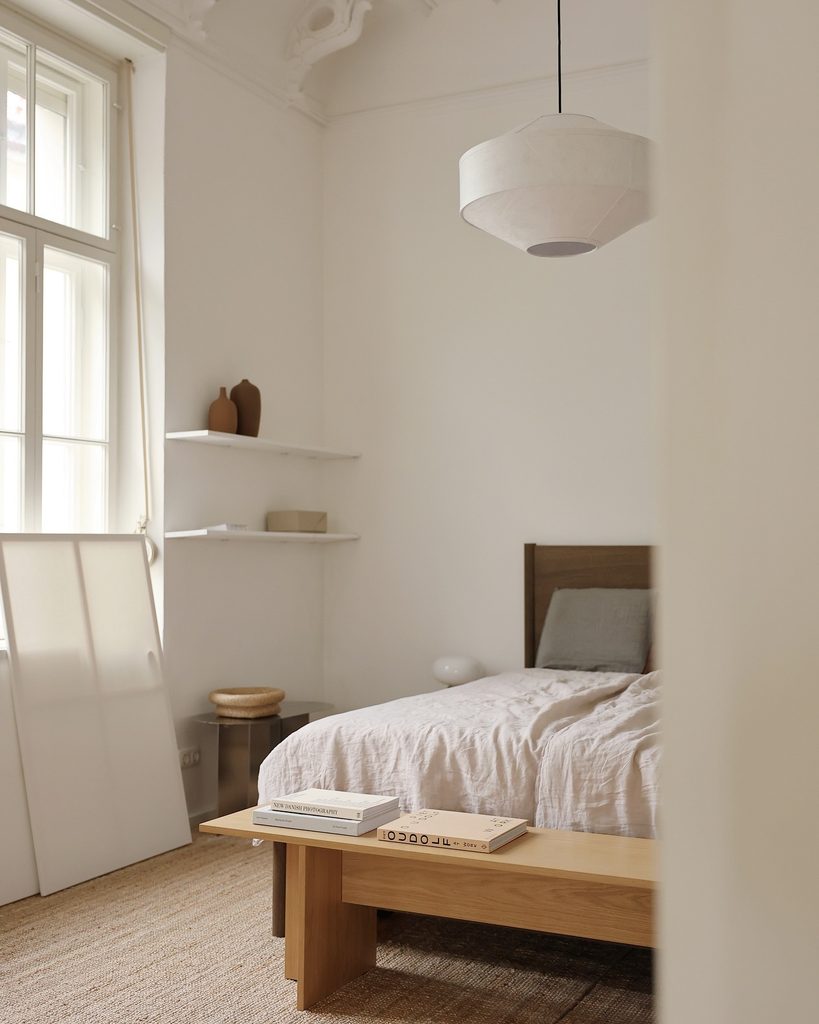
A Simple Timber Panel Behind Pale Bedding
Credits: Instagram
A plain wooden panel can be enough when the room already has pleasing proportions and texture. This headboard rises modestly above pale bedding, giving the bed a warm rectangular outline against ivory walls.
The nearby timber bench and woven floor covering connect the material with the rest of the room. Choose this approach when you prefer visible grain to upholstery, carving, or decorative seams.
Compare the finish with existing furniture rather than assuming all natural woods will look alike. Check the exposed height with your usual pillows in place.
A simple shape places more attention on the quality of its edges and surface. Confirm the mounting details and use comfortable support pillows if you regularly sit up to read there.
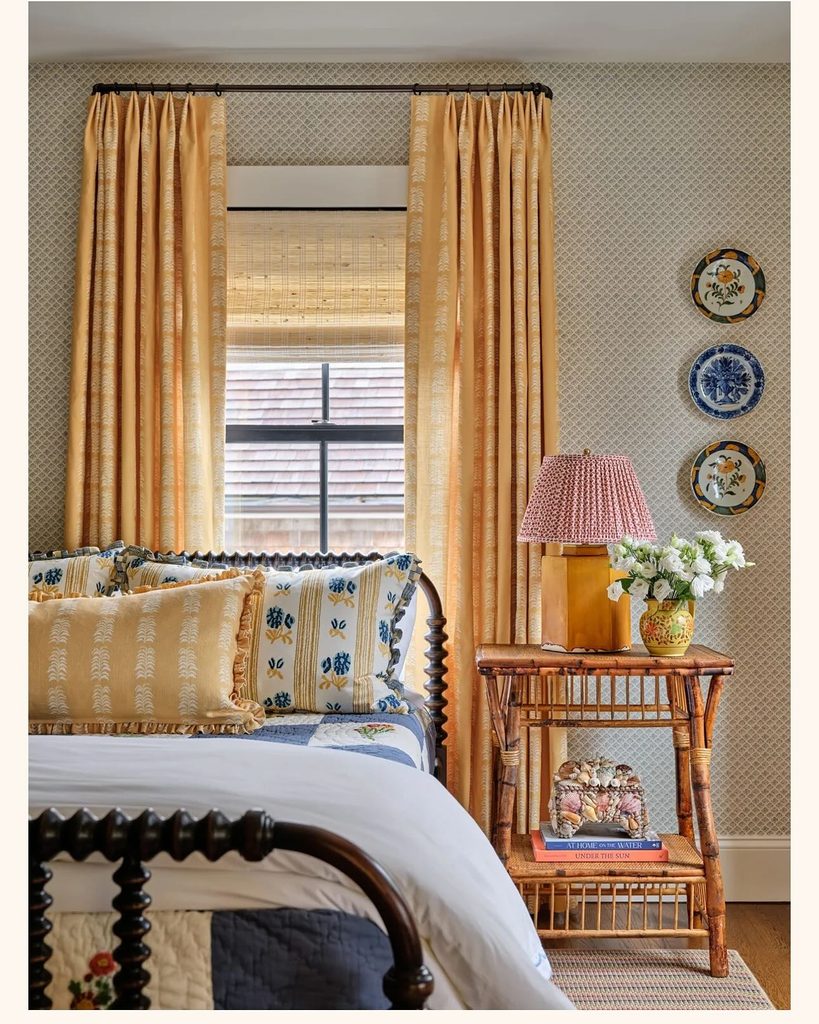
Turned Wooden Spindles in a Traditional Frame
Credits: Instagram
Turned wooden uprights give this headboard detail while keeping parts of the background visible. The dark finish contrasts with pale bedding and golden curtains, making the small repeated shapes easy to notice.
This is a useful alternative to a solid panel when a bedroom already contains several patterned textiles. Check the spacing between the spindles and the height of the upper rail before choosing a frame.
Pillows should provide comfortable support without hiding every decorative detail. If the bed sits near a window, leave enough clearance for curtains and normal window operation.
The wood finish can connect with another piece of furniture without matching the entire room. Inspect joints and fittings, particularly when considering an older frame with existing wear.
Horizontal Wood Planks With Rustic Character
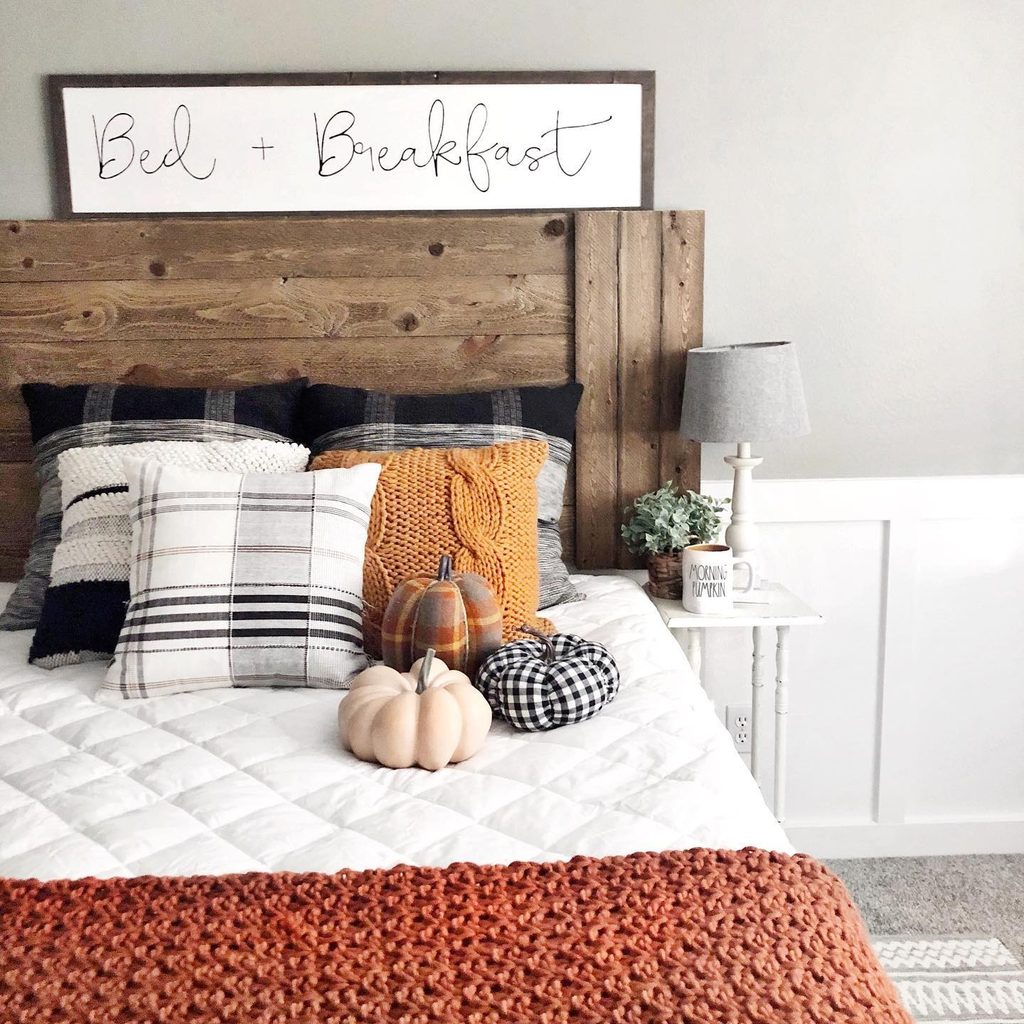
Credits: Instagram
Visible knots and changing grain give this wooden headboard its decoration. Horizontal boards form the center, with wider vertical pieces defining the sides.
The straightforward rectangular shape works with checked pillows and layered bedding without requiring elaborate carving. Consider this approach when you want the bed to feel warm and substantial.
Choose boards or a finished product with surfaces suitable for contact near pillows and linens. Rustic appearance should not mean loose splinters, sharp edges, or unstable construction.
Compare the final height with nearby lamps and wall art before committing. Leave some wood exposed above the pillows so the material remains visible.
A quiet wall color helps the natural variation stand out while keeping the arrangement easy to live with.
A Tufted Grid in Rich Teal Upholstery
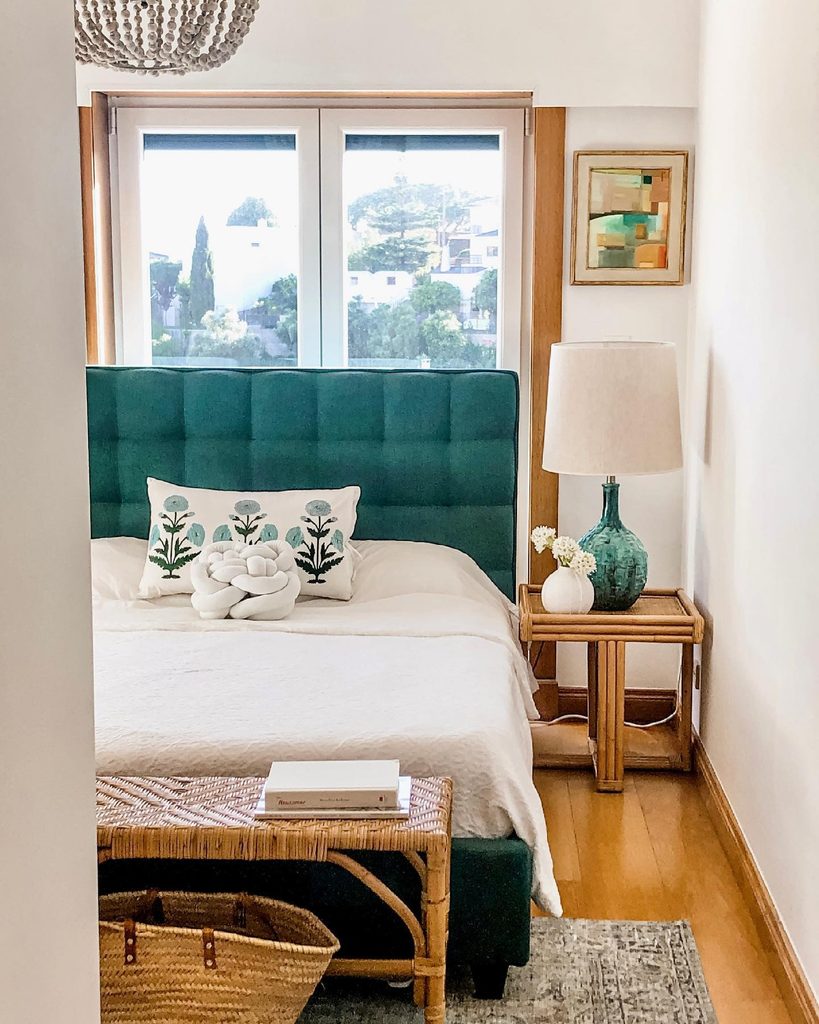
Credits: Instagram
Square divisions give this teal headboard structure without a complicated outer silhouette. The rectangular panel sits behind pale bedding, with recessed points creating a subtle grid across the fabric.
A matching lamp repeats the color without copying the upholstery’s texture. This is a useful choice when you want a strong bedroom accent but prefer simple furniture shapes.
Look at the spacing and depth of the tufting as well as the fabric shade. Broad squares read differently from tightly packed buttons, particularly above stacked pillows.
Check the visible height with the bed made in your usual way. Keep surrounding patterns limited so the grid remains clear.
Follow the manufacturer’s cleaning advice, including the seams and recesses where everyday dust can collect.
A Patterned Alcove as a Headboard Alternative
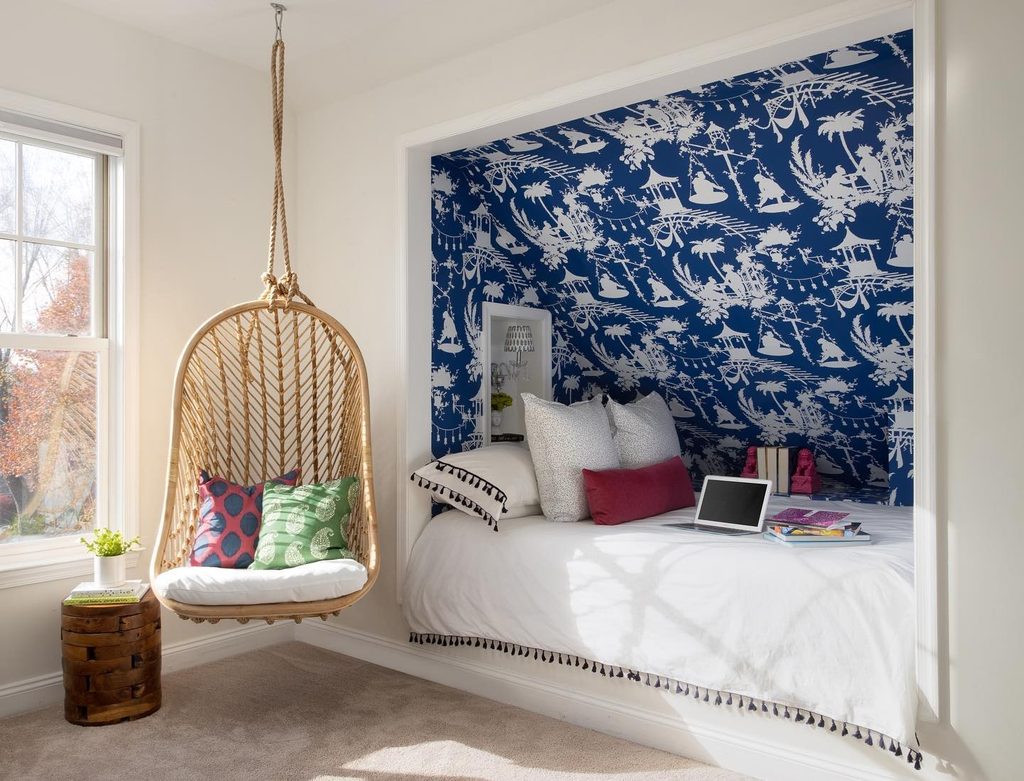
Credits: Instagram
A patterned alcove can define the sleeping area without a separate headboard. Blue and white wallpaper fills this recessed bed space, with a plain white border making the boundary clear.
Pale bedding leaves the print visible and keeps the niche from feeling crowded. Consider this approach when the room already has a suitable recess or built in sleeping area.
The surrounding architecture provides the outline that a conventional headboard would normally supply. Choose a pattern whose scale remains readable from across the room, and compare a sample before covering the wall.
Use pillows as the comfortable backrest rather than leaning directly against the decorative surface. Keep the niche ventilated and accessible, with lighting arranged safely around bedding and everyday movement.
Button Tufting on a Softly Shaped Headboard
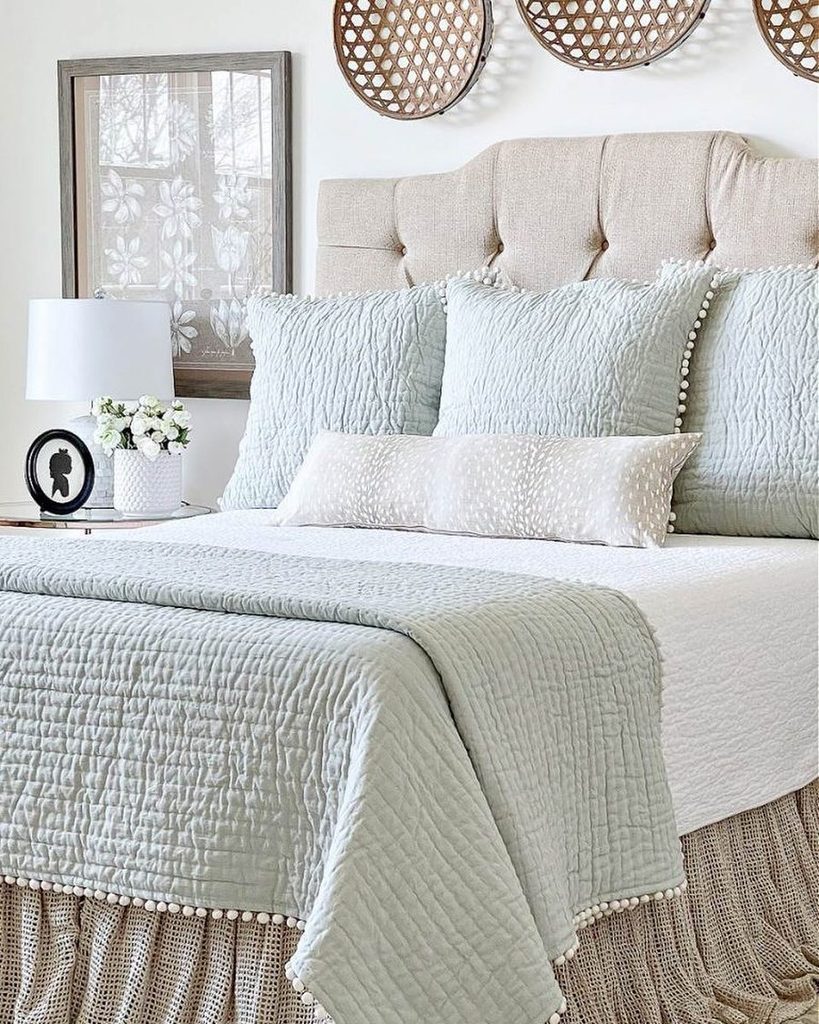
Credits: Instagram
Recessed buttons add gentle texture to this pale upholstered headboard. Its upper edge rises slightly in the center and steps down toward the sides, giving a plain fabric more character without an elaborate frame.
The light color supports layered pillows while keeping the bed visually calm. Choose this direction when you want softness and modest detail in equal measure.
Compare the tufting depth with your preferred sitting position and use support pillows for comfort. Check how much of the shaped top remains visible once the bed is made.
A neutral fabric needs enough contrast with the wall to keep its outline clear. Review cleaning guidance before choosing upholstery, especially for a pale surface that will receive regular contact during use.
Narrow Upholstered Channels With a Straight Top
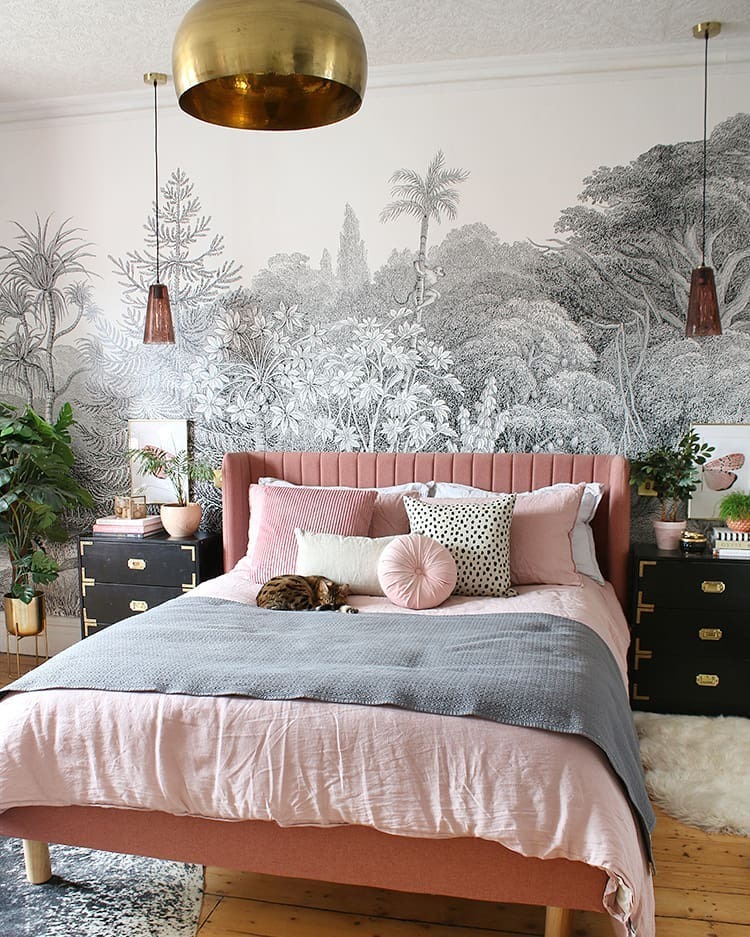
Credits: Instagram
Closely spaced vertical channels bring texture to this pink headboard without changing its simple rectangular shape. The repeated seams remain visible above the pillows, while the plain upholstery contrasts with the detailed wall mural behind it.
This is useful when the wall already carries a busy pattern but the bed still needs a defined edge. Choose a fabric color that relates to the room without disappearing into the background.
Compare the width of the channels with the scale of nearby patterns before ordering. Narrow sections can feel more delicate than broad padded panels.
Keep the top edge exposed and avoid stacking every pillow to the same height. Confirm the bed’s mounting system and follow the upholstery care instructions for cleaning.
An Open Arch Above a Padded Lower Panel
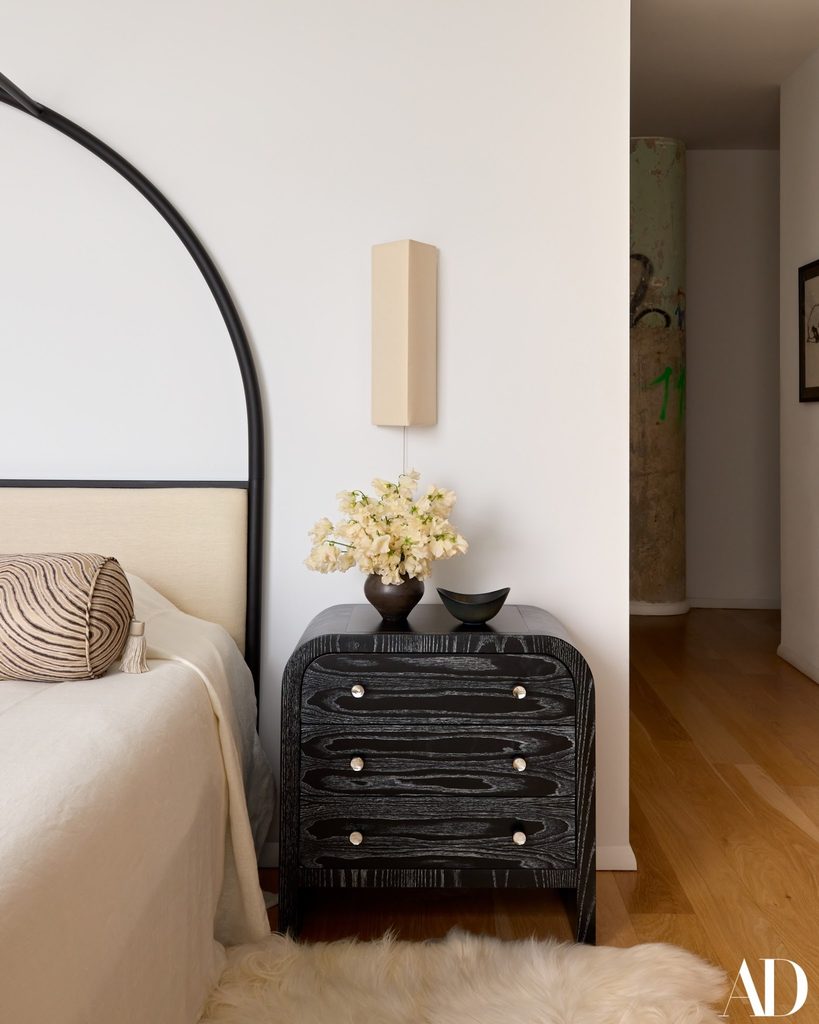
Credits: Instagram
A slender dark arch gives this headboard height while leaving the wall visible inside its upper section. The pale padded panel below supplies a quieter backdrop for pillows, combining an open outline with a softer contact area.
This detail is useful when a solid tall headboard would feel too heavy. Check the complete shape from a front view before choosing a similar piece, including how the arch relates to the mattress width.
The surrounding wall becomes part of the design, so keep artwork and lighting clear of its curve. A contrasting frame makes the outline easier to read.
Confirm that the lower upholstered section sits at a useful height and choose compatible fixings for the specific frame and bed base.
A Painted Circle Behind the Pillows
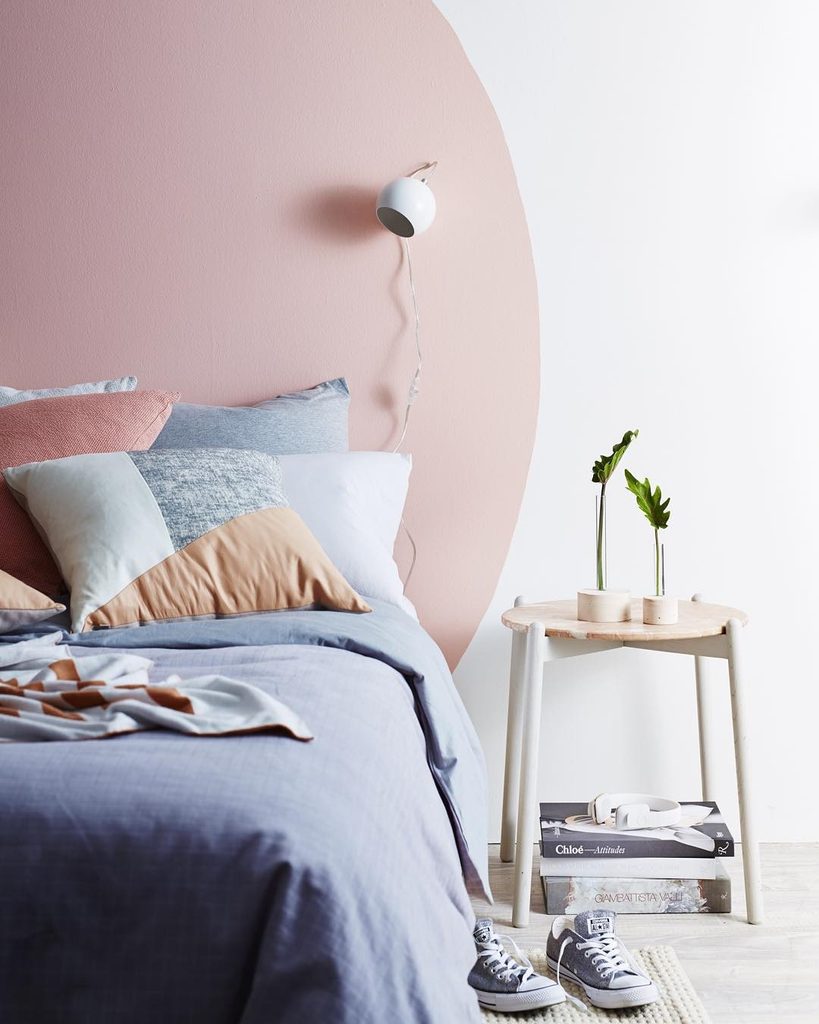
Credits: Instagram
Paint can suggest the presence of a headboard without adding another piece of furniture. A large blush circle defines this bed’s backdrop, with dusty blue bedding creating a soft contrast.
The surrounding white wall keeps the curved boundary clear. This approach is useful when you want a decorative focal point and can change the wall finish.
Mark the proposed shape in relation to the mattress, pillows, and bedside lighting before painting. View it from the doorway as well as beside the bed to check its proportions.
Keep most textiles plain so the curve remains readable. The painted surface does not provide padding, so use supportive pillows for sitting.
Choose a finish appropriate to the wall and everyday contact near bedding.
A Low Upholstered Headboard Beneath a Window
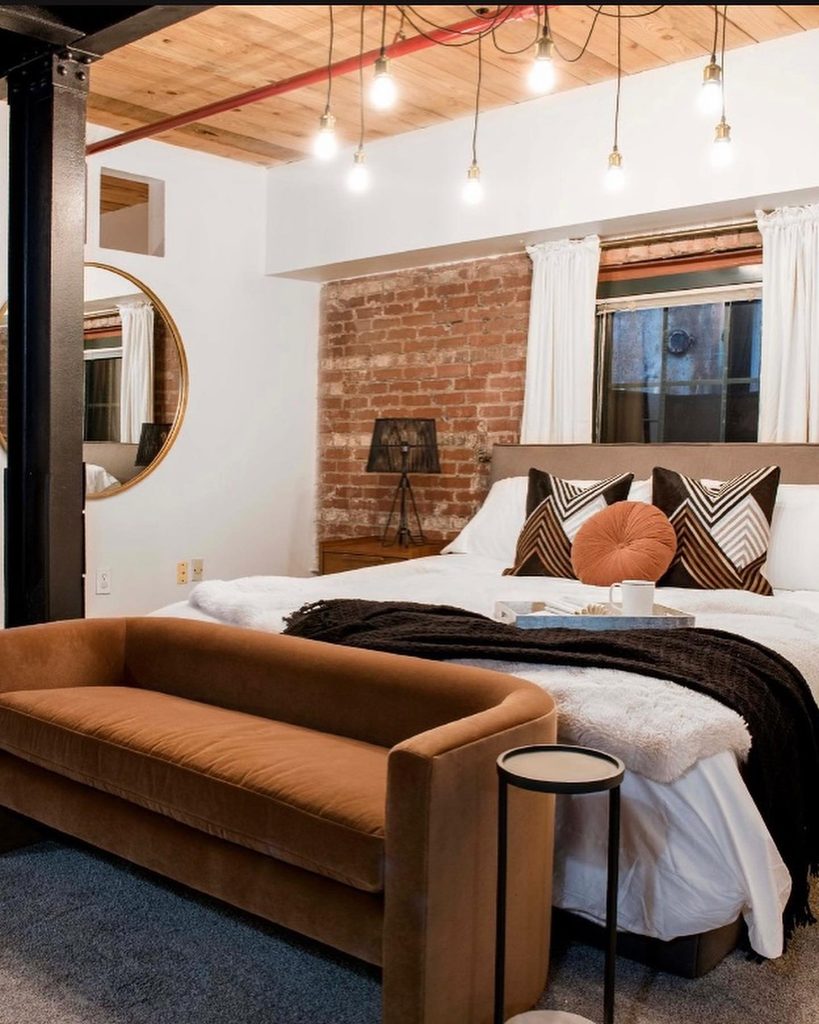
Credits: Instagram
A modest headboard height can help a bed fit beneath an existing window. This pale rectangular backrest stays below much of the glazing, with curtains framing the sleeping area and exposed brick providing texture around it.
The simple outline allows the architecture to remain important. Consider this arrangement when the best bed position happens to be against a window wall.
Measure the mattress, sill, and headboard together rather than selecting each independently. Leave room for the window to operate and for its coverings to move freely.
Keep pillows below any opening mechanism and check that the frame does not press against glass. Plain upholstery gives you flexibility to introduce patterned cushions while keeping the bed’s main silhouette calm and practical.