
A bedroom fireplace can feel like part of the architecture, a decorative focal point, or a divider between sleeping and sitting areas.
Bedroom Fireplace Ideas here show how details such as an arched tile recess, patterned hearth, or a mantel-free brick wall can shape the room’s character.
Other approaches connect the fireplace to its surroundings with repeated colors, open display shelves, or furniture that echoes a dark surround.
Whether the fireplace is used or purely decorative, its relationship to the bed, finishes, and room layout can guide a cohesive design.
Give a Decorative Cone Fireplace a Corner of Its Own
Credits: Instagram
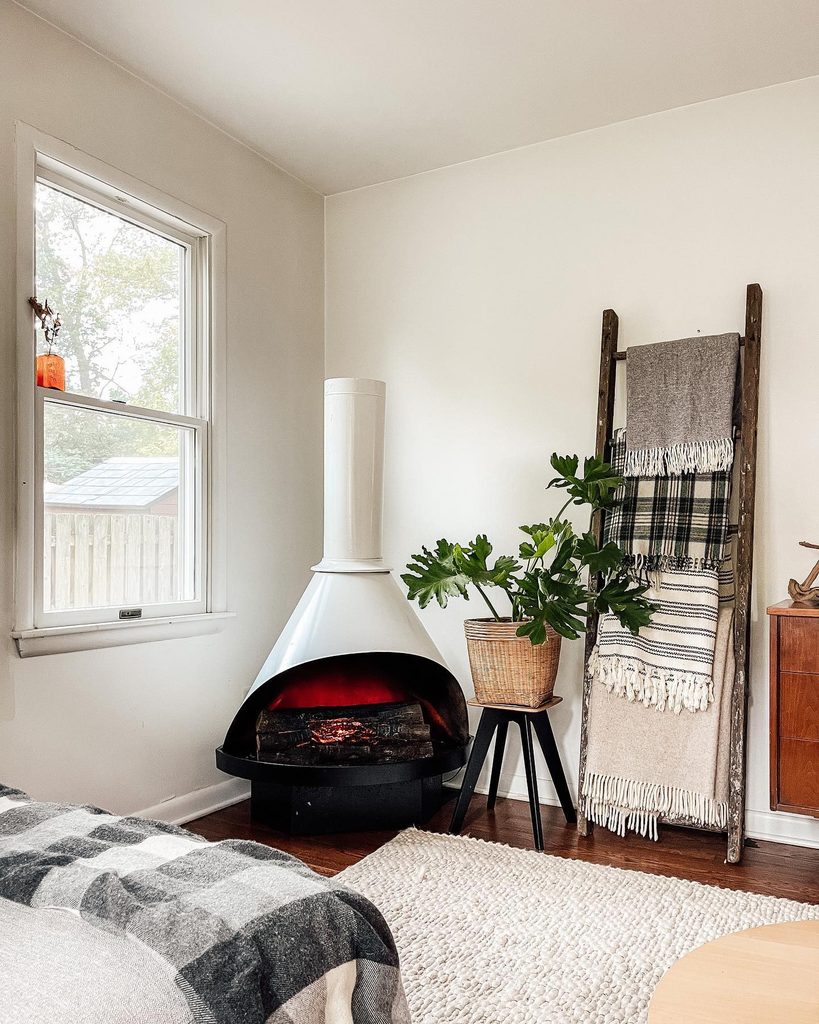
A sculptural silhouette can give a bedroom character even when heating is not the goal. Chelsea Mohrman’s white cone fireplace sits beside a window, with its black base echoing the checked bedding nearby.
The owner explains that the faux logs produce light and crackling sound without heat. That distinction makes this a useful example of a decorative fireplace rather than a heating plan.
Let the shape stand against a simple wall so its curved opening remains visible. Repeat one contrasting color elsewhere to connect it with the bed.
If you like the effect, choose a decorative setup designed for that purpose. Treat the adjacent textiles and plant as styling observations, never as placement guidance for an appliance that produces heat.
Frame a Rectangular Insert With an Arched Tile Recess
Credits: Instagram
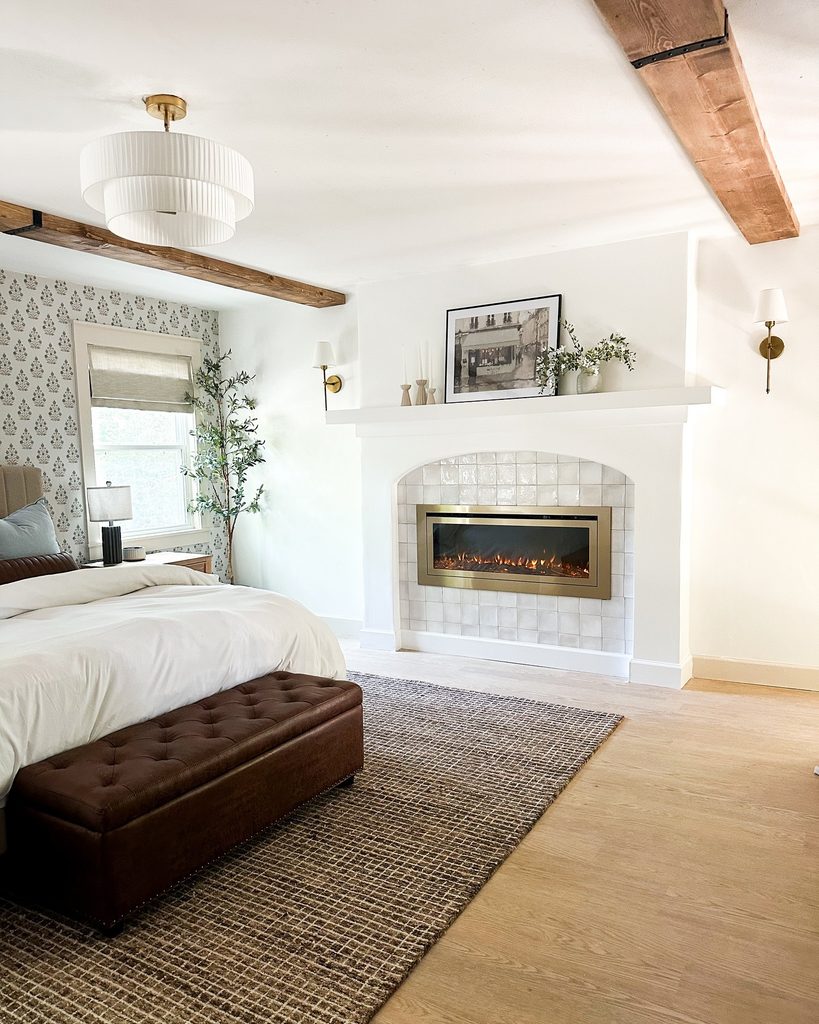
Soft curves can make a boxy appliance feel more connected to traditional architecture. In Kelsey Mackall’s bedroom, a rectangular gold electric insert sits inside an arched recess lined with pale square tiles.
A broad white mantel frames the arrangement, while wood ceiling beams and a brown bench bring warmer colors into the room. The arch provides the detail, so the shelf needs only a small collection of artwork and vessels.
For a similar visual balance, compare the insert, tile border, and mantel as one composition before choosing finishes. Carry a metal accent into nearby lighting if you want a subtle connection.
Any installation should follow the selected appliance’s requirements; the photograph establishes the design relationship, not dimensions or required clearances.
Let Patterned Hearth Tiles Lead the Room
Credits: Instagram
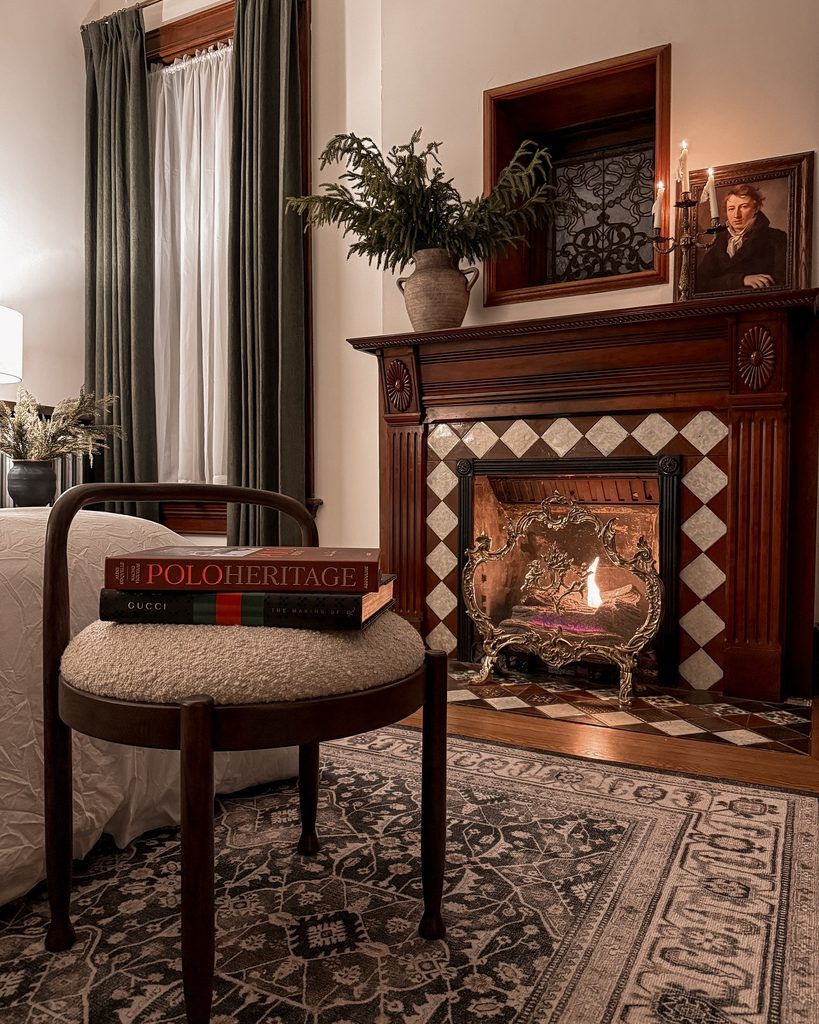
An existing architectural detail can supply the palette for everything around it. Here, cream and reddish brown diamonds outline a dark wood bedroom fireplace and continue across the hearth.
The patterned rug relates to those warm tones without copying the tile exactly. A wooden chair, tall curtains, and a portrait above the mantel keep the setting layered.
Let a distinctive surround remain the strongest pattern close to the fireplace, then choose bedding with quieter texture to give the eye somewhere to rest.
Small color repeats will feel more natural than a completely matched furniture suite. Preserve a clear view of decorative tile when arranging the room.
Its visual rhythm deserves attention whether the fireplace is used or simply retained decoratively.
Keep the Fireplace Wall Free of a Projecting Mantel
Credits: Instagram
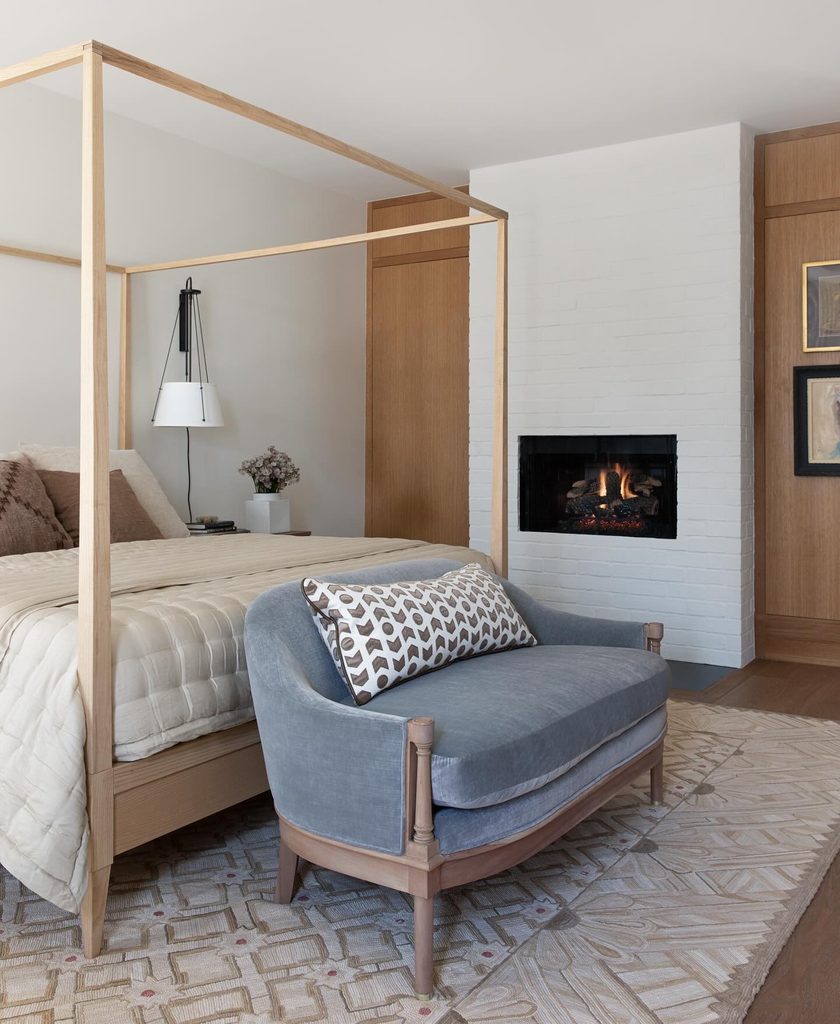
Sometimes the strongest detail is the space left undecorated. Round Table Design keeps this bedroom’s white brick chimney breast free of a projecting mantel, allowing the dark rectangular opening to read clearly.
Warm wood panels flank the brick, and a slim canopy bed repeats the room’s straight lines. A curved blue loveseat adds a softer shape at the foot of the bed.
This approach suits a room where the fireplace should feel integrated with the architecture rather than carry a collection of accessories. Keep neighboring finishes restrained and use furniture or textiles for the main color accent.
When planning a similar wall, consider the whole elevation alongside the bed. Appliance specifications must determine installation details that a photograph cannot establish.
Carry Mantel Color Through the Room’s Moldings
Credits: Instagram
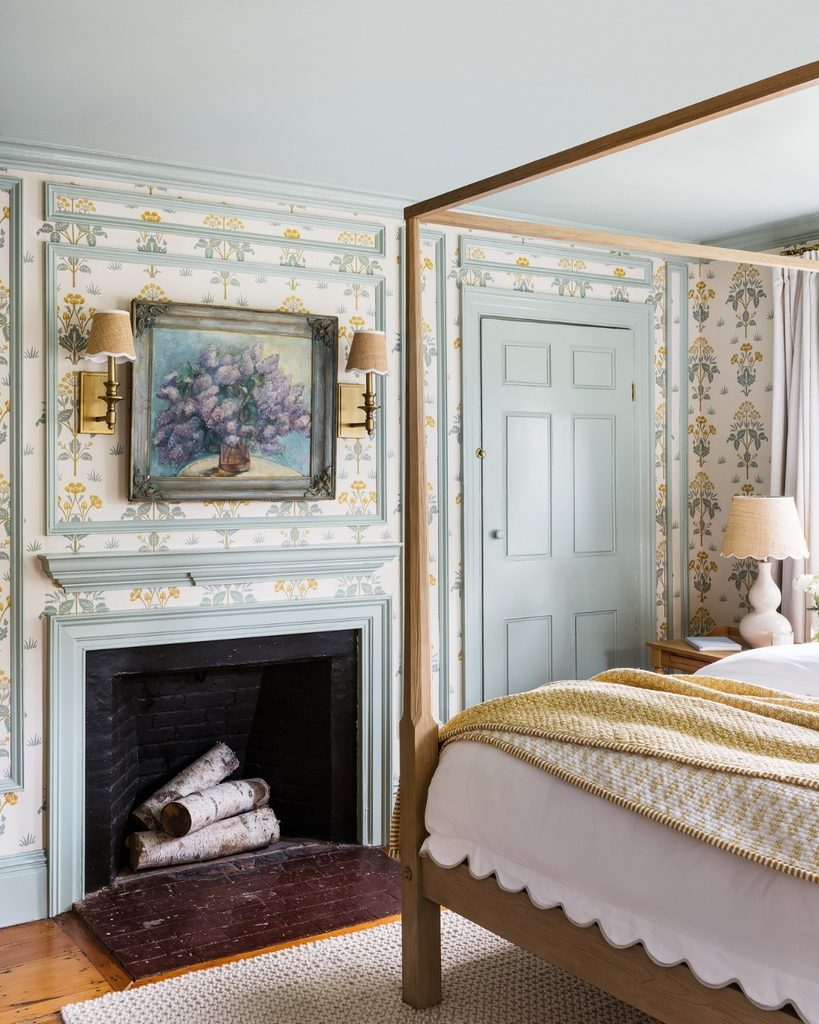
Repetition can connect an old fireplace to a room filled with delicate detail. Oliver James Interiors repeats pale blue across this mantel, surrounding moldings, door, and ceiling.
Floral wallpaper occupies the framed panels, while a flower painting and paired wall sconces give the fireplace its own balanced arrangement. The nearby canopy bed keeps the fireplace visible through its open frame.
When adapting this idea, begin with a color already present in your wallpaper or bedding, then decide which architectural details should share it. A consistent finish helps numerous small moldings feel intentional.
Keep the mantel display restrained when the surrounding walls carry pattern. The dark opening adds contrast, so the fireplace still has definition within the otherwise light bedroom palette.
Divide a Bedroom Suite With a Stone Fireplace Wall
Credits: Instagram
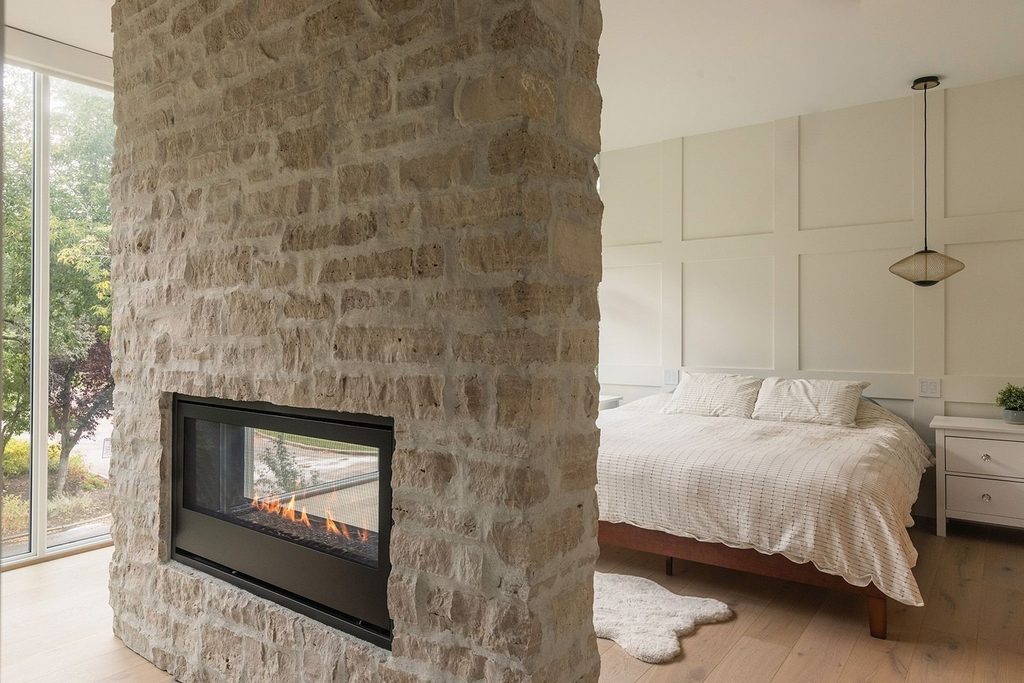
Large bedroom suites can benefit from a boundary that leaves their separate areas connected. Justin Gray Homes uses a substantial stone partition with a double-sided fireplace between the sleeping space and the adjoining retreat.
The bed remains visible around one side, while the textured wall gives each area a defined edge. White bedding and simple paneling let the irregular stone surface stand out.
Consider the routes around a divider as carefully as its appearance: a beautiful feature should not make everyday movement awkward. Sketch where the bed, doors, and windows sit before discussing a similar arrangement with your designer.
Choose a quieter finish for nearby furniture so the partition stays readable. The composition works because one strong texture carries it.
Use a Large Side Mirror to Repeat the Fireplace View
Credits: Instagram
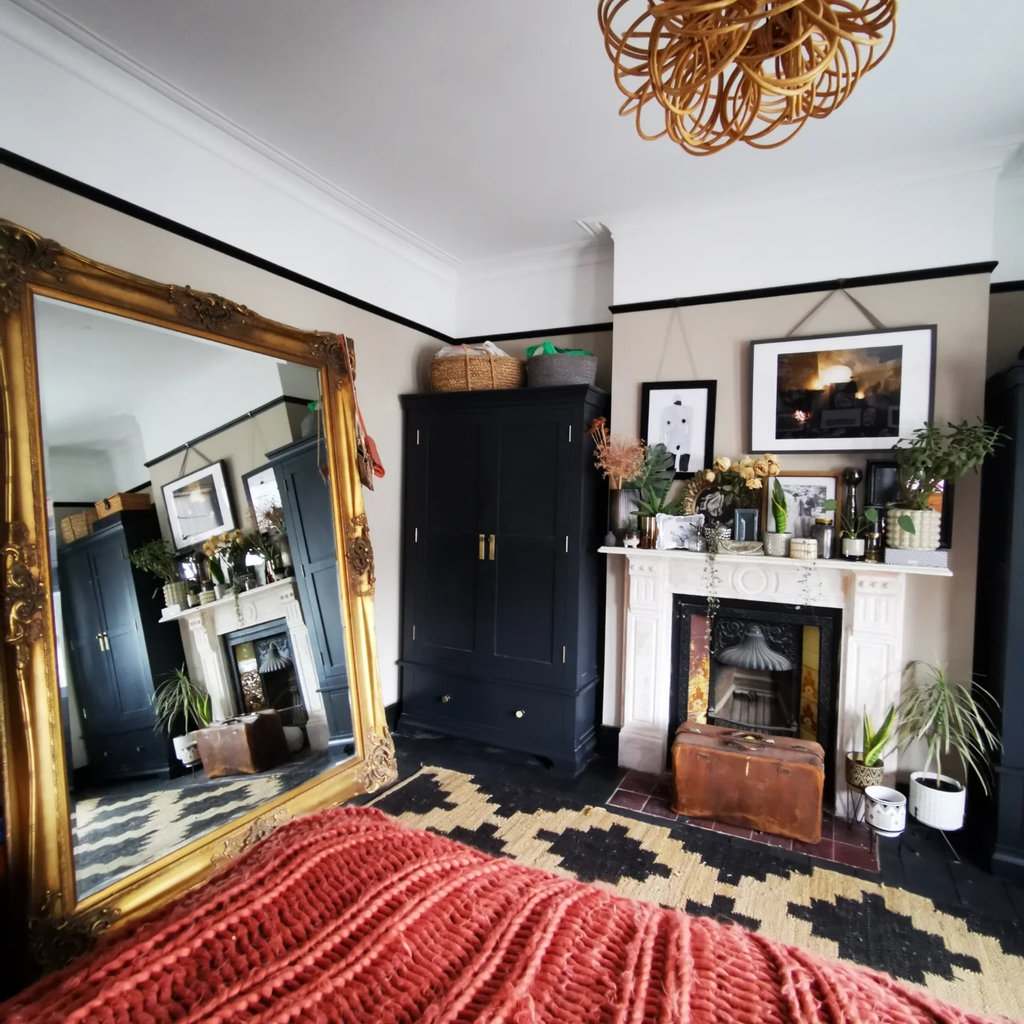
A second view of a favorite architectural feature can be as effective as adding more decoration. Lianne Eva Westwood places a large gold mirror beside her bedroom fireplace, reflecting the pale carved mantel and dark wardrobes.
Its frame brings a warmer note beside dark furnishings and the strong geometric rug. The fireplace already supports a collection of plants and pictures, so the mirror multiplies that detail without requiring another display.
Position a mirror by checking what it reflects from the bed and the doorway, then secure it appropriately. A reflection of the surround can make the room feel connected across different walls.
Keep nearby furnishings visually simple if the mantel is busy, giving its reflected shapes enough space to register.
Show the Fireplace From the Bedroom Doorway
Credits: Instagram
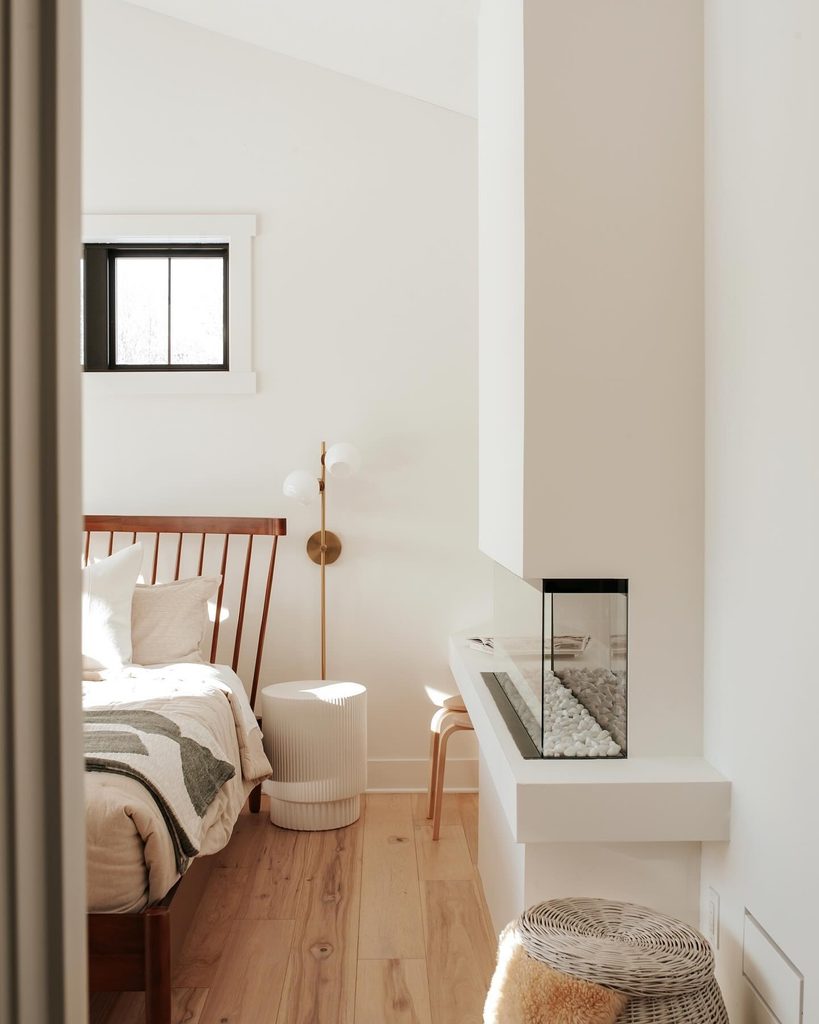
The first glimpse into a bedroom deserves some thought. Anna Christian’s doorway view catches the clear end panel of a slim electric fireplace, revealing a different angle from the usual straight-on hearth photograph.
The white chimney breast and ledge blend with the walls, while the wood bed and floor provide contrast. This makes the fireplace part of the room’s arrival sequence without covering every surface in decoration.
When comparing layouts, look from the entry as well as from the pillows. A side view may reveal an awkward projection or an opportunity for a cleaner composition.
Choose an appliance and surround together, with installation requirements guiding their relationship. Let the nearby bedframe and lighting supply detail around the simple white structure.
Fit a Bedroom Desk Beside the Chimney Breast
Credits: Instagram
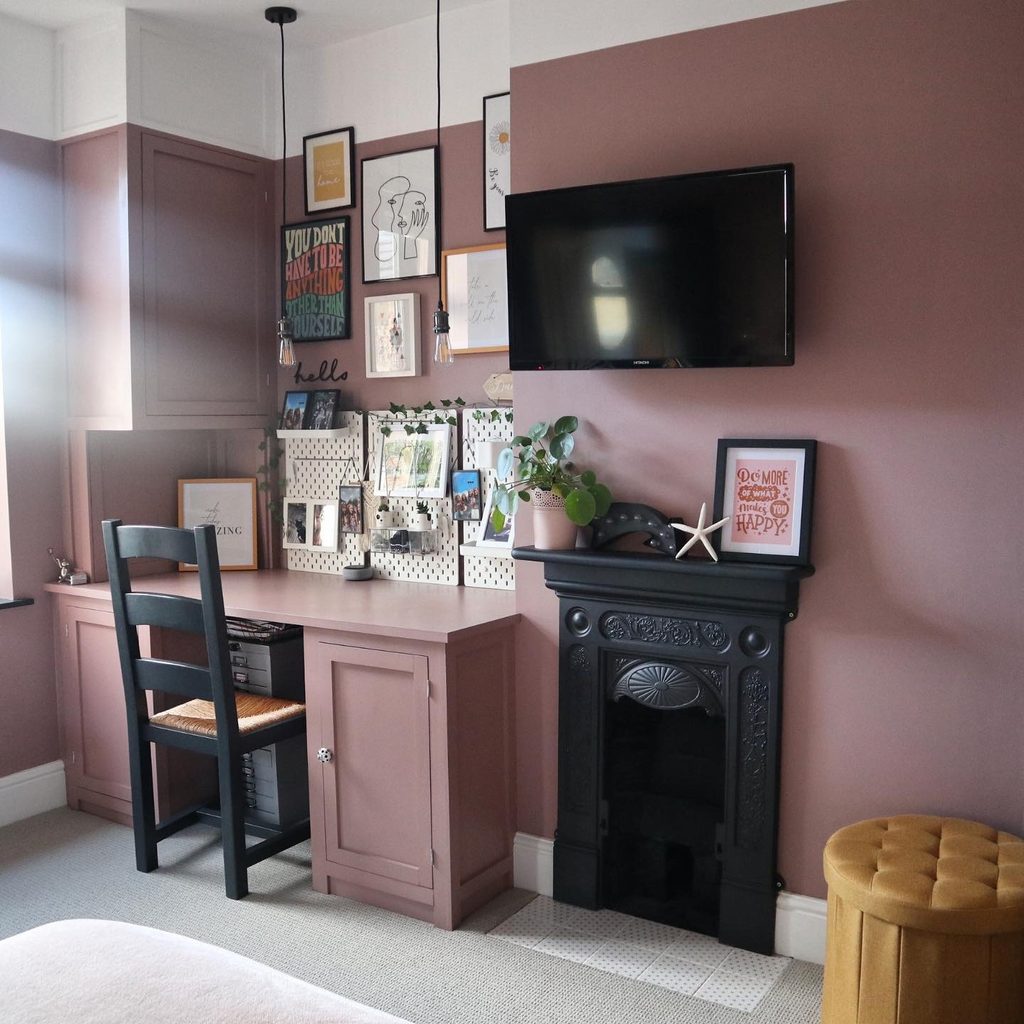
An architectural projection creates useful recesses as well as a focal point. In this bedroom, a desk fills the alcove beside a compact black fireplace, keeping the central architectural feature visible.
Pink cabinetry blends with the walls, while a black chair repeats the surround’s darker outline. Notice how the work surface and mantel remain separate, giving each part of the room its own purpose.
This is a helpful arrangement when a bedroom must also accommodate homework or occasional office tasks. Measure the alcove and check chair movement before choosing a desk.
Keep paperwork within the workspace so the mantel does not become its overflow shelf. Any nearby appliance requirements should guide the final furniture position, even in an older room.
Echo a Dark Surround in the Bedroom Furniture
Credits: Instagram
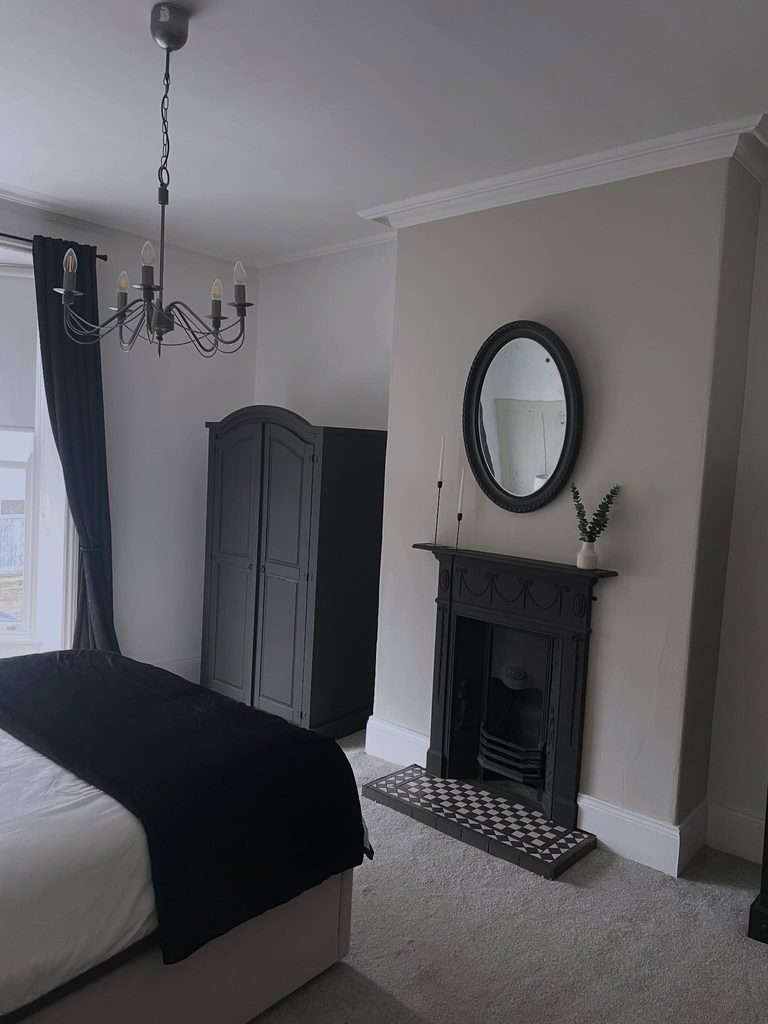
Repeated dark accents help a small fireplace feel connected to the rest of a bedroom. This room carries the surround’s deep tone into an oval mirror, a wardrobe, curtains, and the blanket across the bed.
Pale walls and carpeting provide enough contrast to keep the combination from feeling visually crowded. The fireplace’s patterned hearth adds another layer without demanding a large rug or extra furniture.
Choose two or three nearby elements to echo a surround you already like, rather than matching every piece. A dark curtain can balance a fireplace across the room, while white bedding brings a lighter center.
Keep the mantel arrangement small so the carved details remain visible. Shape and proportion matter as much as shared color.
Build a Personal Display Above the Mantel
Credits: Instagram
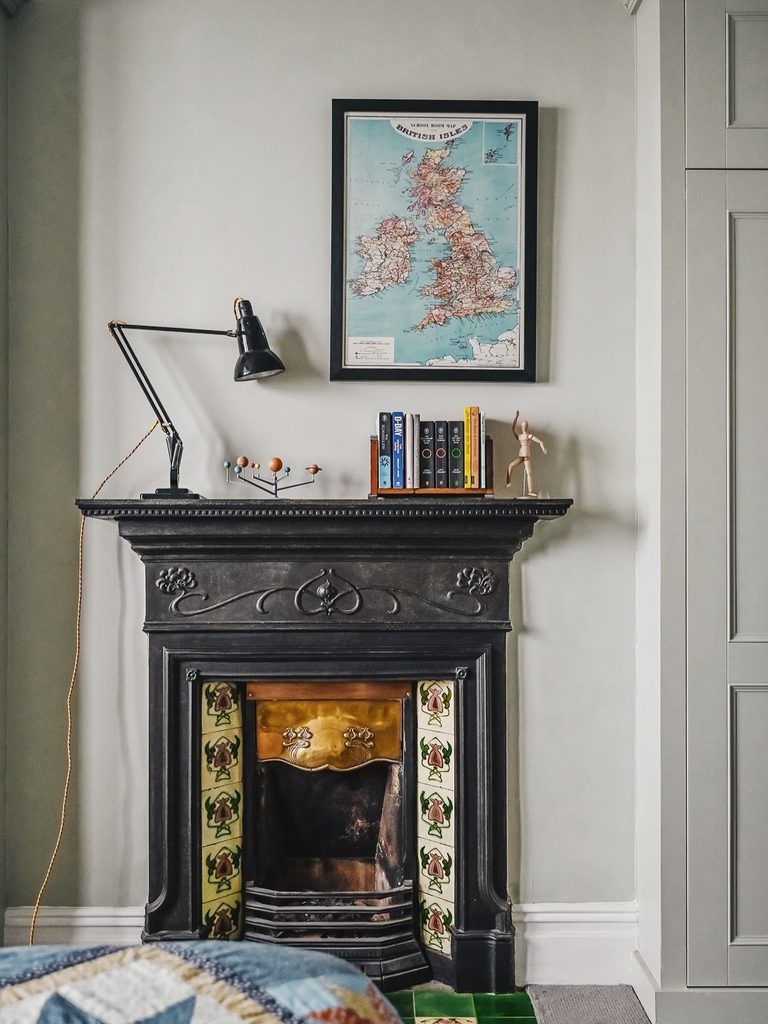
Meaningful objects can make a bedroom mantel feel personal without filling every inch. Caroline Horsley pairs a framed map with a short row of books, a small articulated figure, and a black adjustable lamp above this ornate fireplace.
The varied heights create an informal composition, while the map provides a clear center. Its cool colors sit comfortably with the pale wall and green fireplace tiles.
Try one picture connected to a place, interest, or memory, then select a few objects that support that story. Leave gaps between them so the mantel’s profile stays visible.
Consider the view from the bed before settling the artwork height. A collected display works best when its pieces feel chosen, rather than accumulated by default.
Make a Dark Fireplace the Quiet Shape in a Colorful Room
Credits: Instagram
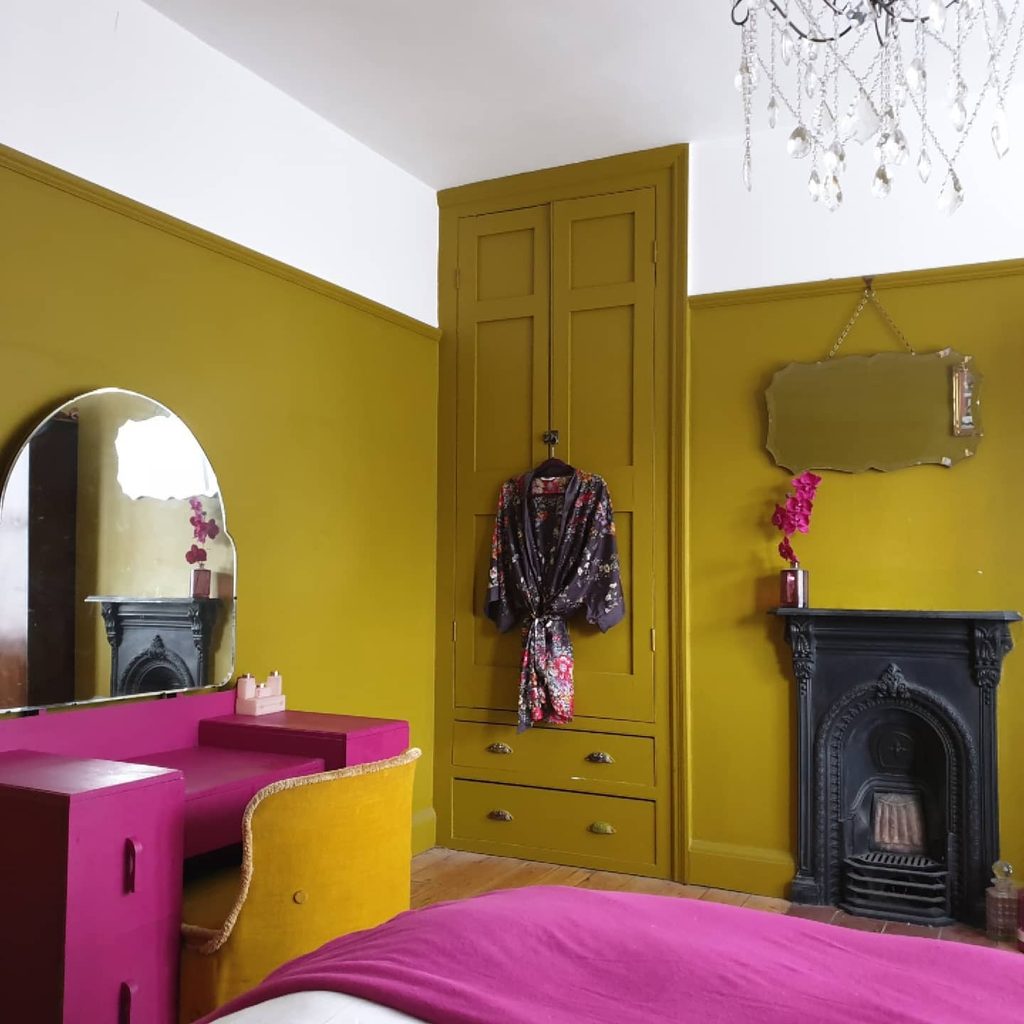
Strong color does not require every architectural feature to compete. With yellow-green walls and vivid pink furniture nearby, this bedroom’s dark fireplace reads as a calm, clearly defined shape.
The white band above the picture rail provides another visual pause, while the matching alcove cupboard keeps the wall arrangement cohesive. A small mirror and one flower arrangement leave the ornate surround easy to see.
If your bedding and furniture already carry saturated hues, let the fireplace offer contrast through a simpler finish. Test the combination with existing daylight before committing to a wall color.
Repeat the brightest accent sparingly across the room, as the vanity and bedcover do here. The result feels lively while the fireplace retains its own identity.
Connect the Fireplace Wall With the Headboard Design
Credits: Instagram
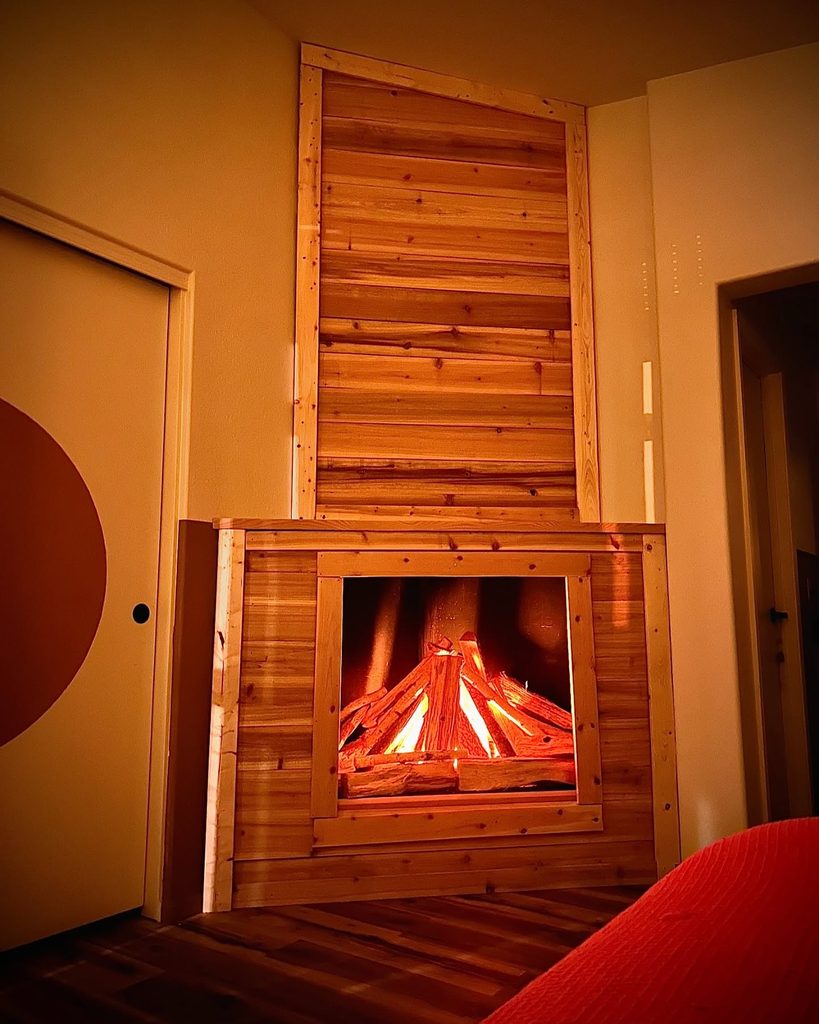
Repeating a finish across different parts of the bedroom can make an unusual fireplace feel intentional. Here, horizontal woodlike boards cover the fireplace structure and echo the headboard shown elsewhere in the creator’s room tour.
Red bedding and an orange circular door detail reinforce the warm, playful direction. The fireplace rises above the low bed, giving the wall a stronger vertical presence without introducing an unrelated design language.
Borrow the repetition through color, line, or texture rather than assuming the photographed cladding suits your own appliance. Its material and operating requirements are not established here.
Choose approved finishes for your installation, then repeat their visual character on furniture or wall treatments elsewhere. Repeating that detail ties the bedroom’s features together.
Frame the Fireplace With Open Display Shelves
Credits: Instagram
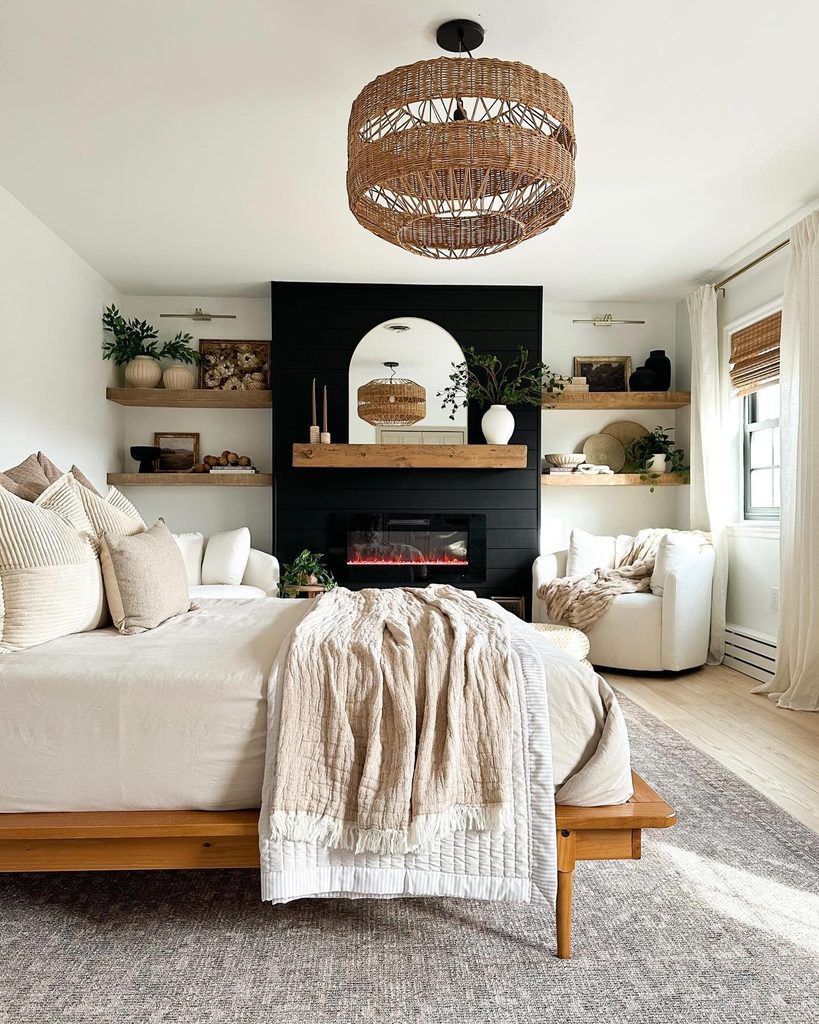
Arranging objects beside a fireplace gives its wall a second purpose without hiding the central shape.
In this guest bedroom, books, framed pieces, and small objects sit on shelves beside the dark electric insert, while an arched mirror marks the middle.
The wood mantel links those separate display areas. Keep the largest objects low enough that they do not compete with the mirror, and leave gaps between smaller arrangements.
Repeating a few wood tones across the shelves and bed helps the composition feel connected. Before choosing shelf positions, work around the appliance’s installation requirements and the room’s walking routes.
This approach is especially useful when you want personal collections visible without filling the bedroom floor with another freestanding display cabinet.
Use a Salvaged Frame for a Decorative Bedroom Mantel
Credits: Instagram
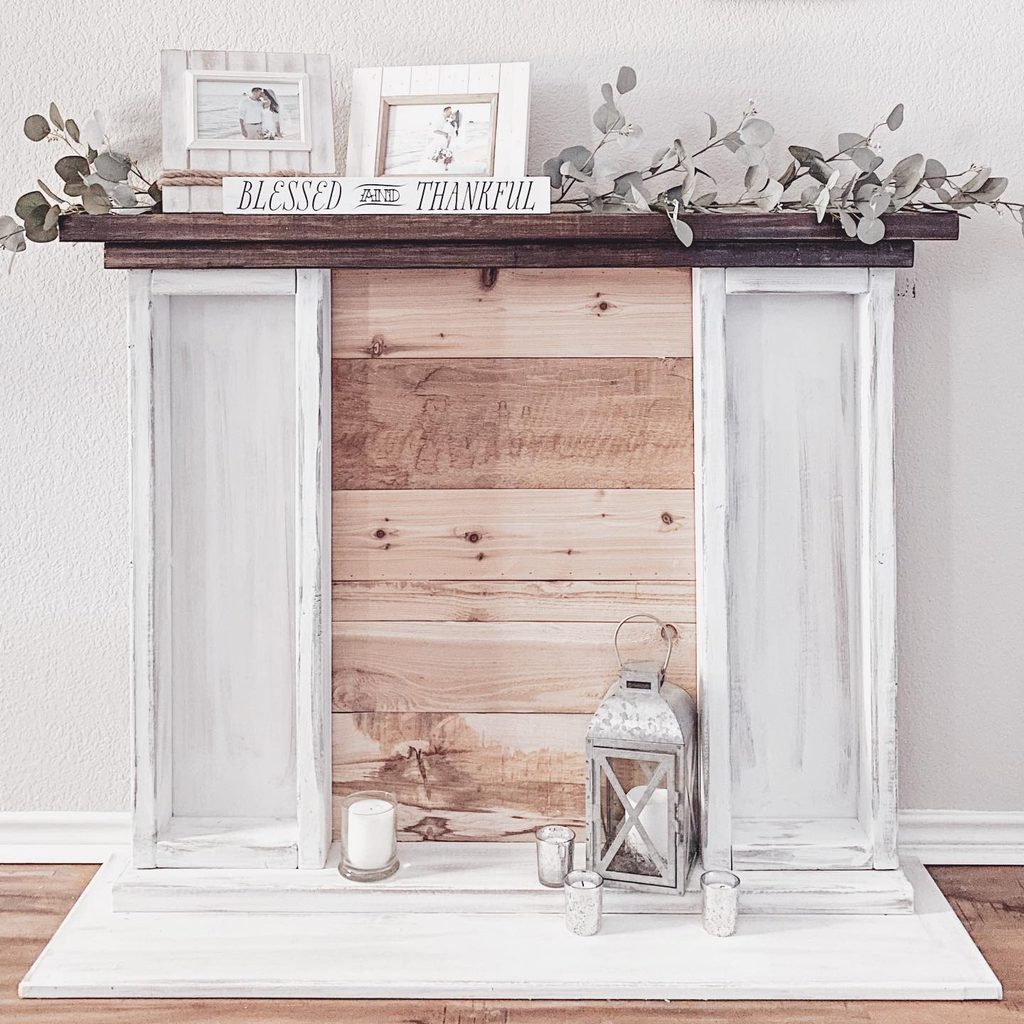
A bedroom can gain the shape of a hearth even when no heating function is needed. This creator made a decorative mantel from a repurposed table and scrap wood, giving a blank wall a focal point with a shallow profile.
The pale frame, darker top, and wood center provide enough contrast to read as separate elements. Photographs and greenery personalize the shelf above, while lanterns occupy the lower area.
Treat this as a display project and keep that distinction clear when planning your own version. Flameless candles can provide a soft evening glow without turning the wooden arrangement into a fire feature.
Secure any frame appropriately, and edit the accessories so the simple outline remains visible from across the bedroom.
Balance a Tapered Chimney Hood With Textured Details
Credits: Instagram
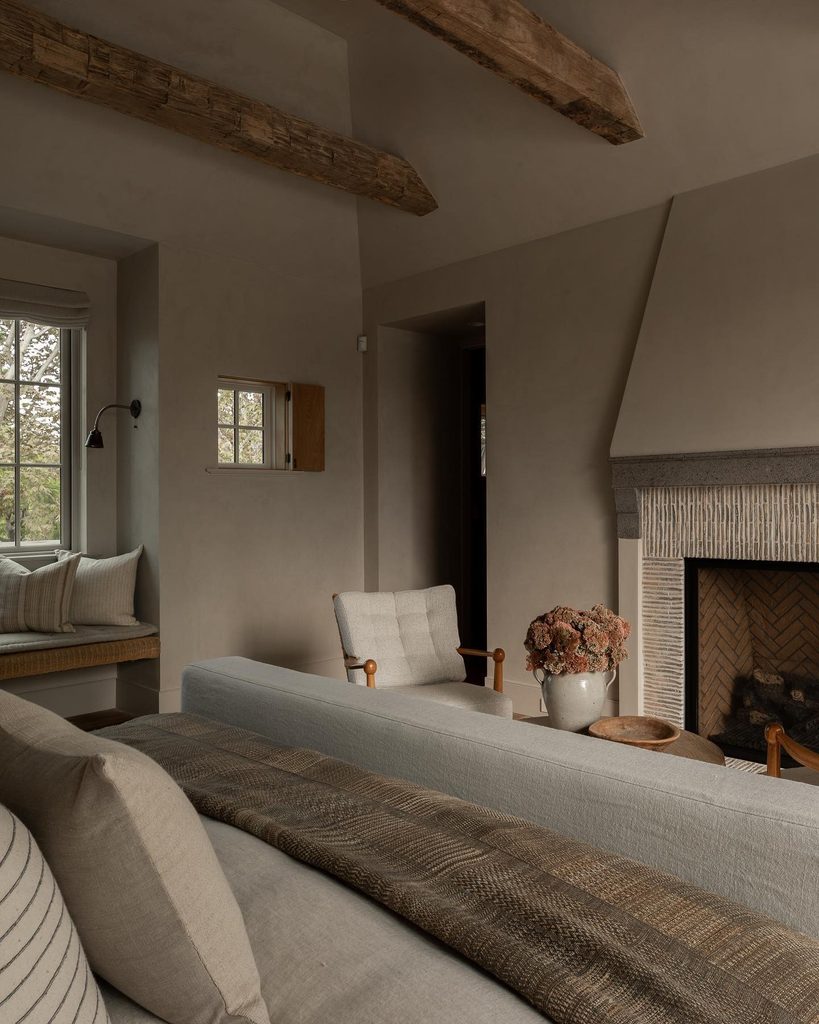
Large shapes and small textures work together in this restful bedroom. A tapered chimney hood creates a clear outline above the fireplace, while the narrow patterned surround adds detail at eye level.
Rustic ceiling beams repeat the sense of structure, and pale upholstery softens the sitting area in front. The bed remains part of the same composition through its restrained colors and low profile.
Consider this balance when a tall fireplace wall feels visually heavy: simplify the upper section, then concentrate texture around the opening. Keep nearby furniture shapes straightforward so every surface does not demand equal attention.
The photograph establishes a design relationship, not the fireplace’s fuel or operating condition; select installation details with qualified guidance for your system.
Treat the Mantel and Tall Mirror as One Architectural Feature
Credits: Instagram
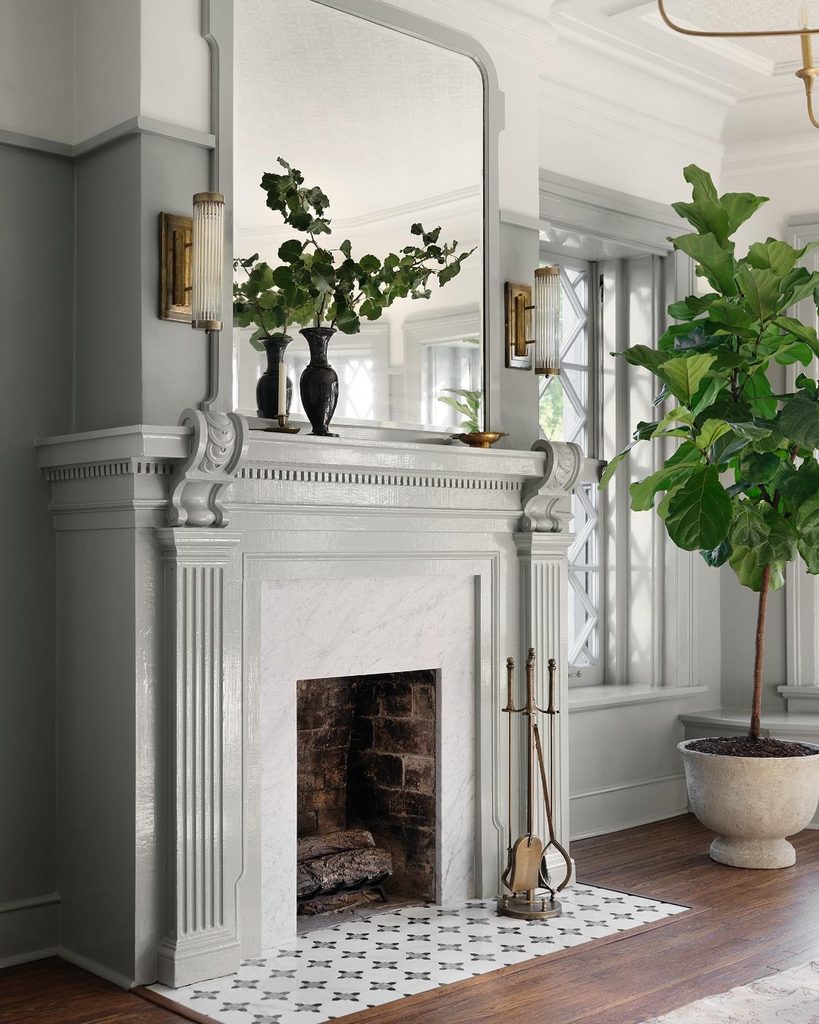
Existing details deserve a close look before you replace them. In this primary bedroom, the original mantel and tall mirror remain a coordinated architectural feature, framed by a pair of sconces.
Their pale gray finishes connect the two shapes, while the dark fire opening gives the composition depth. New patterned hearth tiles add another layer without obscuring the carved surround.
If your room has a distinctive mantel, choose a mirror whose width and frame relate to it rather than selecting each piece independently. A restrained display of dark vases and branches keeps the molding visible.
Coordinate nearby trim where appropriate, then allow the fireplace to hold the room’s intricate detail. The paired lighting creates balance without requiring matching decorative objects.
Let One Portrait Anchor a Simple Bedroom Mantel
Credits: Instagram
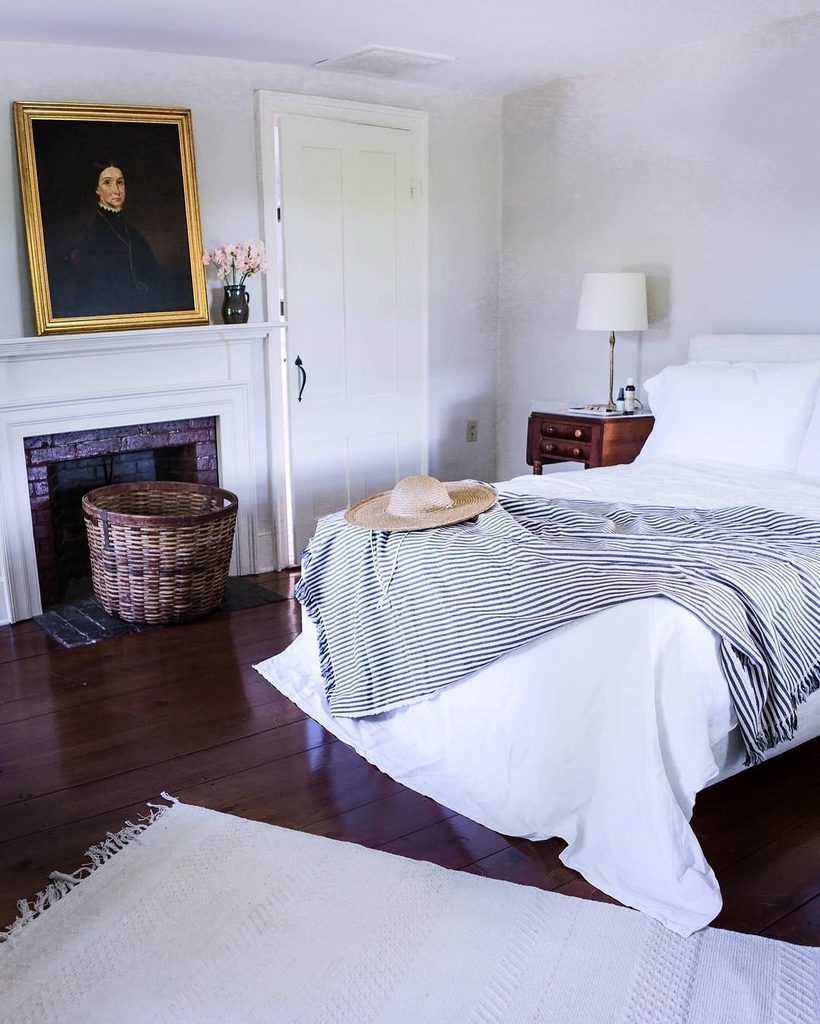
A substantial painting can give a modest mantel more presence than a collection of little decorations. The dark portrait in this cottage bedroom stands out against pale walls, while its gold frame introduces a warm note above the white surround.
A small vase balances the picture without competing for attention. Nearby, striped bedding and a wooden nightstand keep the room relaxed rather than formal.
Choose art that feels proportionate to the mantel and check how it looks from the bed before deciding on placement. A dark image can work well when the rest of the bedroom is light.
Keep the display focused, with enough empty wall around the frame to make the artwork and fireplace read together as one composition.
Turn a Retired Fireplace Opening Into a Book Nook
Credits: Instagram
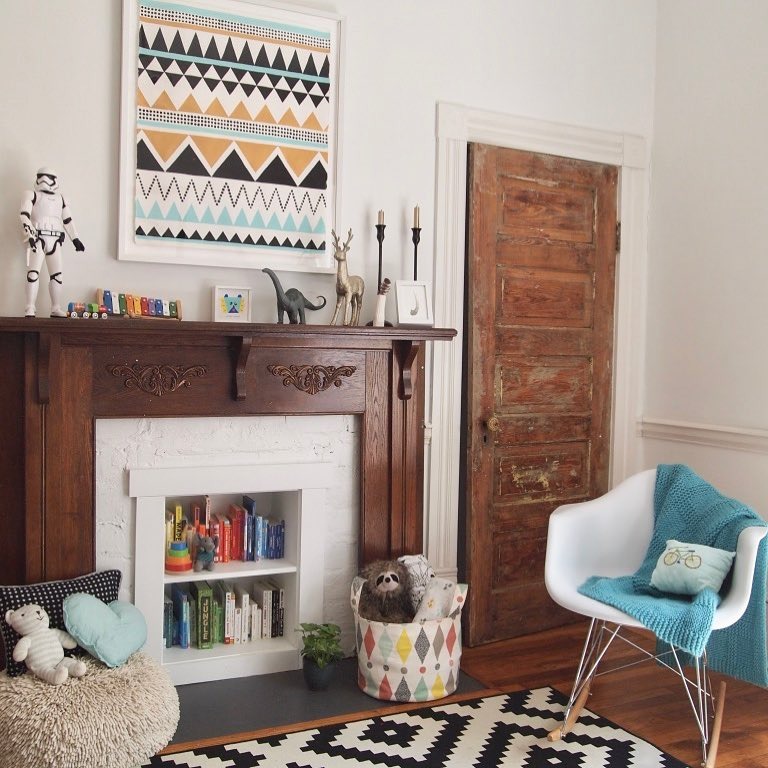
A disused opening can become storage when the fireplace has been permanently taken out of service. This nursery keeps its carved wooden mantel but places a white bookshelf inside the former firebox.
The pale insert relates to the surrounding brick, while colorful books bring the feature into everyday use. A nearby rocking chair completes a practical reading corner without disguising the room’s older architecture.
Start by confirming that the fireplace is properly retired before considering any storage conversion. Measure the opening and choose shelving suited to the books you want to keep accessible.
Leave the decorative surround visible, and coordinate the shelf finish with nearby trim. The idea turns an architectural remnant into a useful part of the bedroom’s routine.
Soften a Dark Fireplace With a Round Woven Mirror
Credits: Instagram
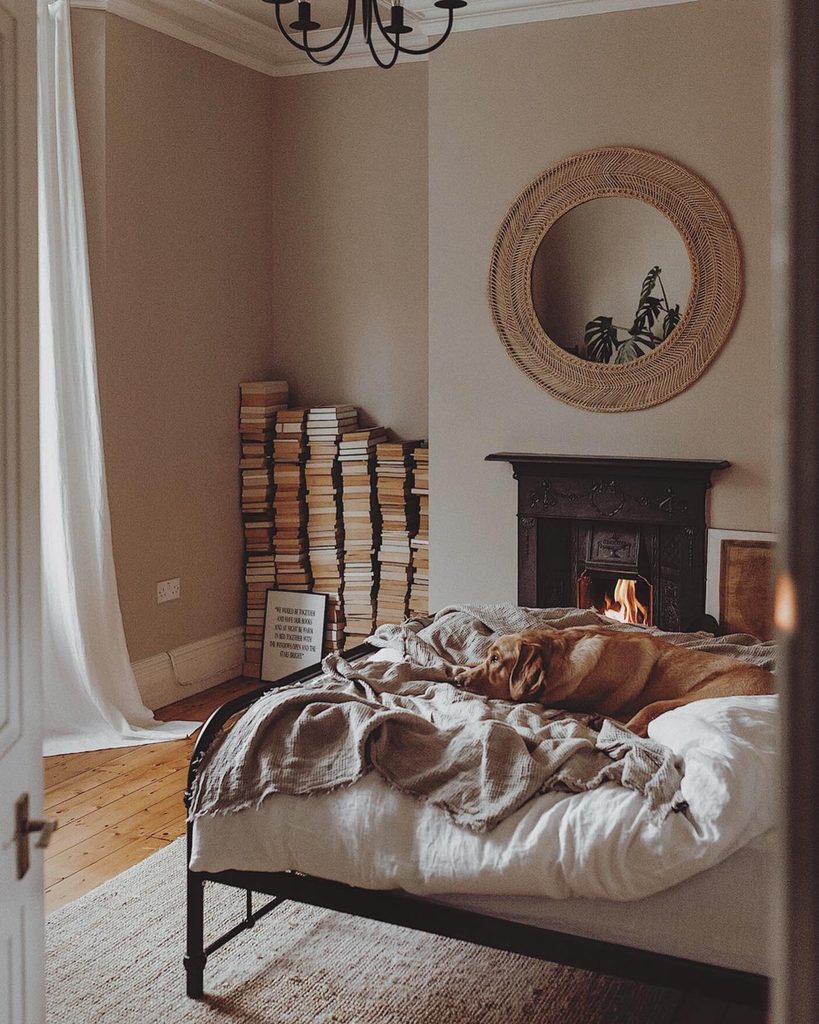
Curves offer a visual counterpoint to an angular fireplace. Here, a broad woven mirror hangs above a dark ornate mantel, bringing a lighter texture to the chimney breast.
Its round outline contrasts with the rectangular surround, while the natural color relates to the wooden floor and neutral bedding. This is a useful combination when a traditional fireplace feels more formal than the bedroom around it.
Try a mirror with enough presence to hold the wall, then keep adjacent decorations simple. Check what it reflects from the doorway and bed before deciding on its placement.
Treat the photographed furniture arrangement separately from the styling idea: the image does not establish appropriate fireplace clearances, fuel specifications, or installation requirements for your room.