
A bedroom plant display can feel crowded fast when pots compete for bedside space or block a narrow walkway. Bedroom Plant Ideas work best when they account for both the greenery and the room’s everyday needs.
A tiered stand can use a slim window corner, while matching white pots bring a mixed collection together without making it feel busy.
For a simpler start, one upright plant on the nightstand can add greenery while leaving room for essentials. These arrangements offer practical ways to fit plants around beds, windows, shelves, and seating areas.
Collect Smaller Plants in a Glass Cabinet
Credits: Instagram
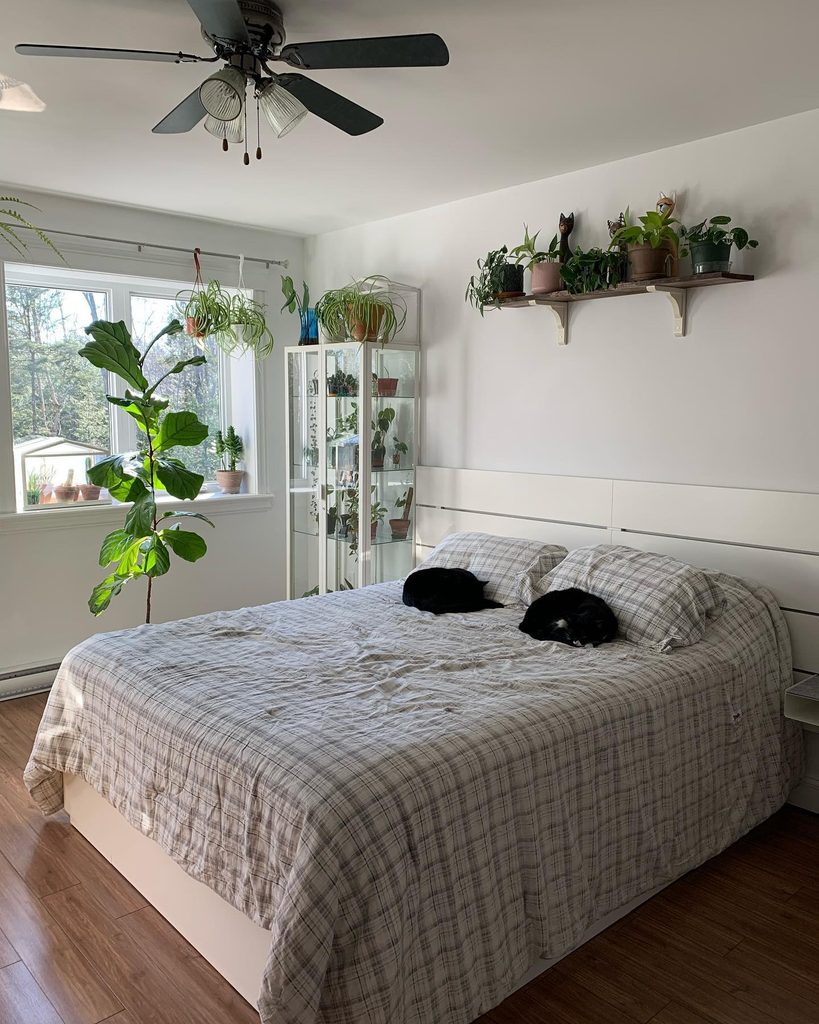
A transparent case gives a growing collection a defined place beside the bed. In Stephanie’s bedroom, the tall white case sits near the window, holding smaller pots on separate shelves while larger greenery fills the surrounding space.
Its transparent sides keep the arrangement visually light, and the repeated white framing works with the headboard. Start by measuring the cabinet footprint with its doors open, then check whether each shelf receives suitable light.
Leave enough room between leaves and glass for the plants you choose. Removable trays can help contain drips, but watering elsewhere makes cleanup easier.
This approach suits someone who enjoys tending a collection and wants an organized display that still feels connected to the rest of the bedroom.
Fill a Narrow Window Corner With a Tiered Plant Stand
Credits: Instagram
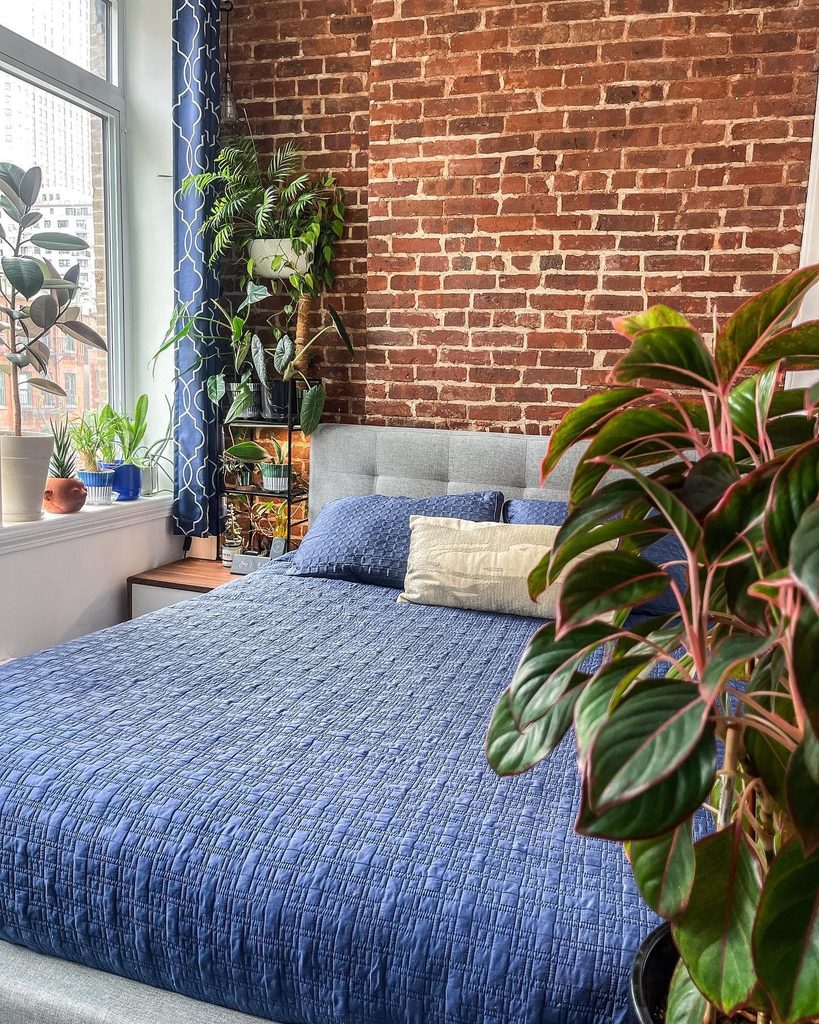
That sliver between a window and headboard can become useful display space. Paul places a narrow, tiered plant stand in this corner, giving several small pots different positions beside the glass.
The stand rises above the bedside surface without spreading across the floor, while the brick wall provides a textured background. Choose a stable unit with shelves deep enough to support each container completely.
Arrange taller growth where it will not shade every plant below, and leave room to lift pots out comfortably. A slim stand works especially well when a broad bookcase would crowd the bed.
Check the light at each level before filling it; the bottom shelf may suit a different plant than the one nearest the window.
Unify a Mixed Plant Collection With Matching White Pots
Credits: Instagram
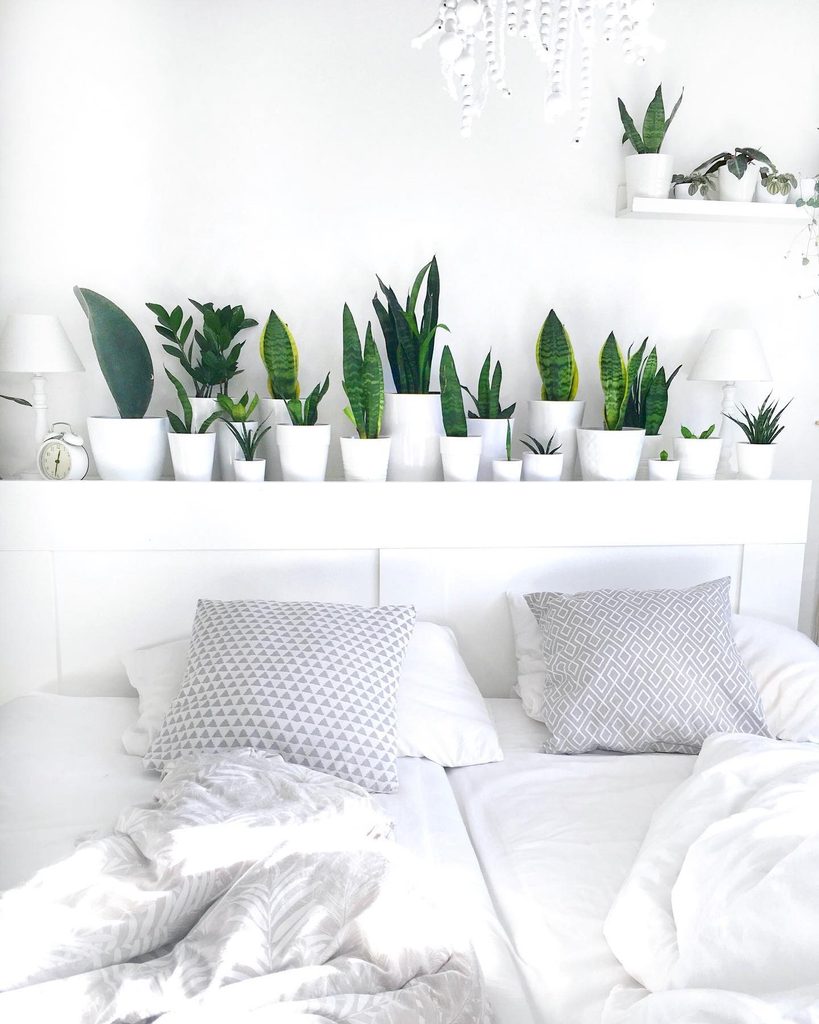
Different leaf shapes look surprisingly orderly when their containers share a color. Nadine’s bedroom brings a varied collection together in plain white pots, letting the greens stand out against an almost entirely white background.
Some plants are tall and upright; others sit low and compact. Repeating the pot color makes those differences feel intentional instead of busy.
You can borrow the same approach on a dresser or a sturdy shelf away from pillows. Keep each plant in a suitable inner pot and use the decorative container as a coordinated outer layer.
Before watering, check how excess moisture will drain and be removed. A consistent palette leaves plenty of freedom to change plants, vary pot sizes, and accommodate new growth gradually.
Group Small Bedside Plants at Staggered Heights
Credits: Instagram
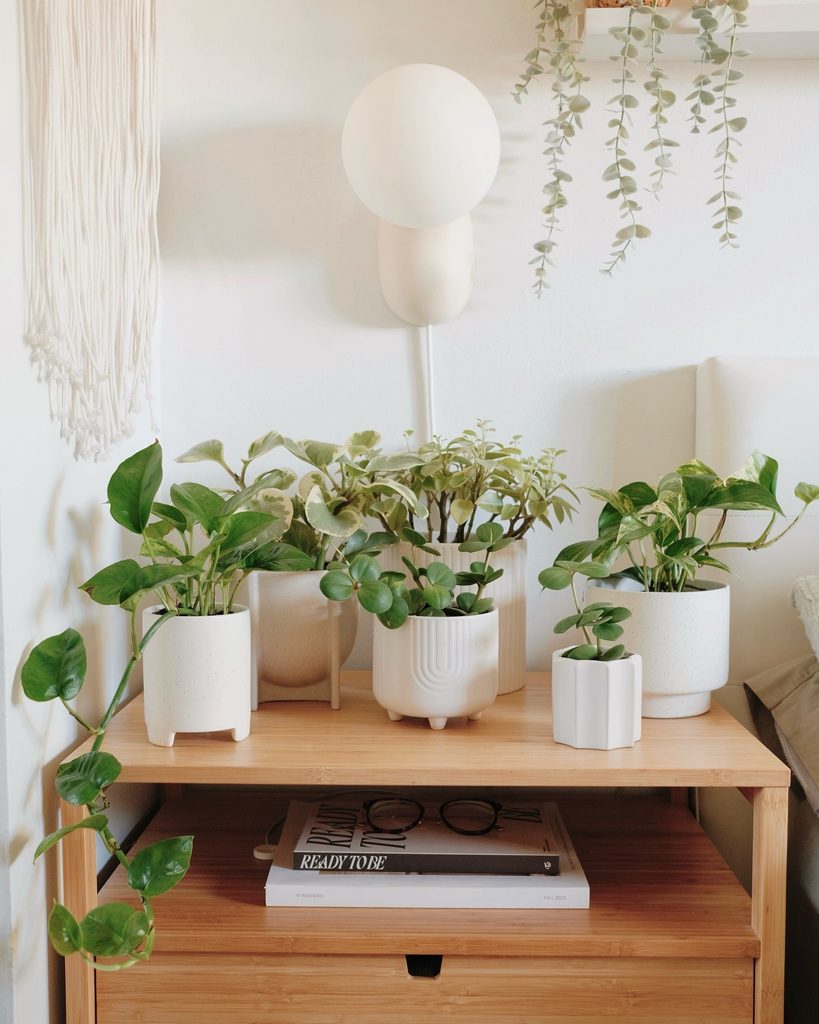
Compact containers become easier to appreciate when they are not lined up like identical jars. Brenda’s bedside arrangement places taller foliage toward the back and a miniature plant near the front, with little stands creating extra height.
The open compartment below holds books and glasses, so the furniture still serves the bedroom. Try arranging your pots before adding accessories, checking that every container sits securely and can be lifted without disturbing its neighbors.
Keep the smallest specimens within easy view rather than hiding them behind larger leaves. If your nightstand also needs a phone, lamp, and water glass, reduce the collection to fit those essentials.
The aim is a layered display with usable space, not a surface packed beyond reach.
Echo Pale Bedding With Variegated Foliage
Credits: Instagram
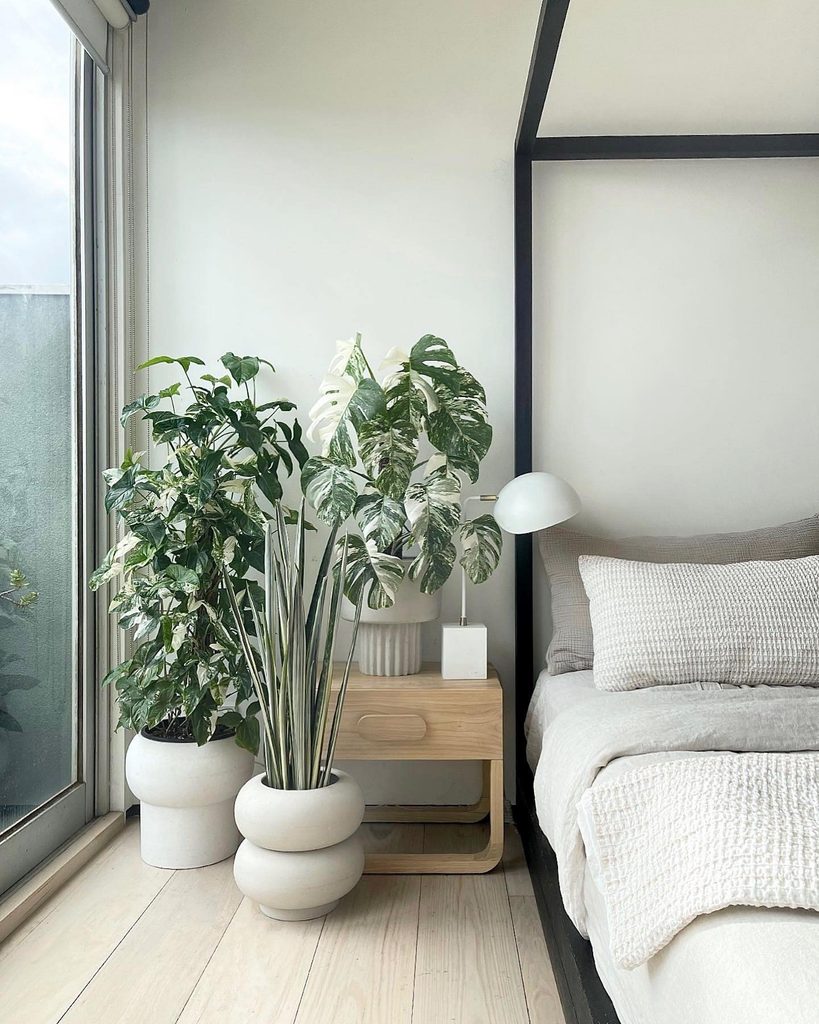
Creamy leaf markings can become part of a bedroom’s color scheme. Craig pairs pale, variegated foliage with light bedding and sculptural pots, creating a gentle transition between plants and furnishings.
Narrow upright leaves and broader shapes keep the grouping interesting even though the palette stays restrained. To adapt this look, choose plants suited to your room first, then coordinate containers and textiles around their existing colors.
You do not need rare varieties to create a thoughtful composition. A pale pot beside muted bedding can establish the same connection with ordinary green foliage.
Leave space around the window and enough clearance to reach the bed. A beautiful arrangement should accommodate mature leaves without turning the bedside route into an obstacle course.
Reflect a Floor Plant Beside a Bedroom Chair
Credits: Instagram
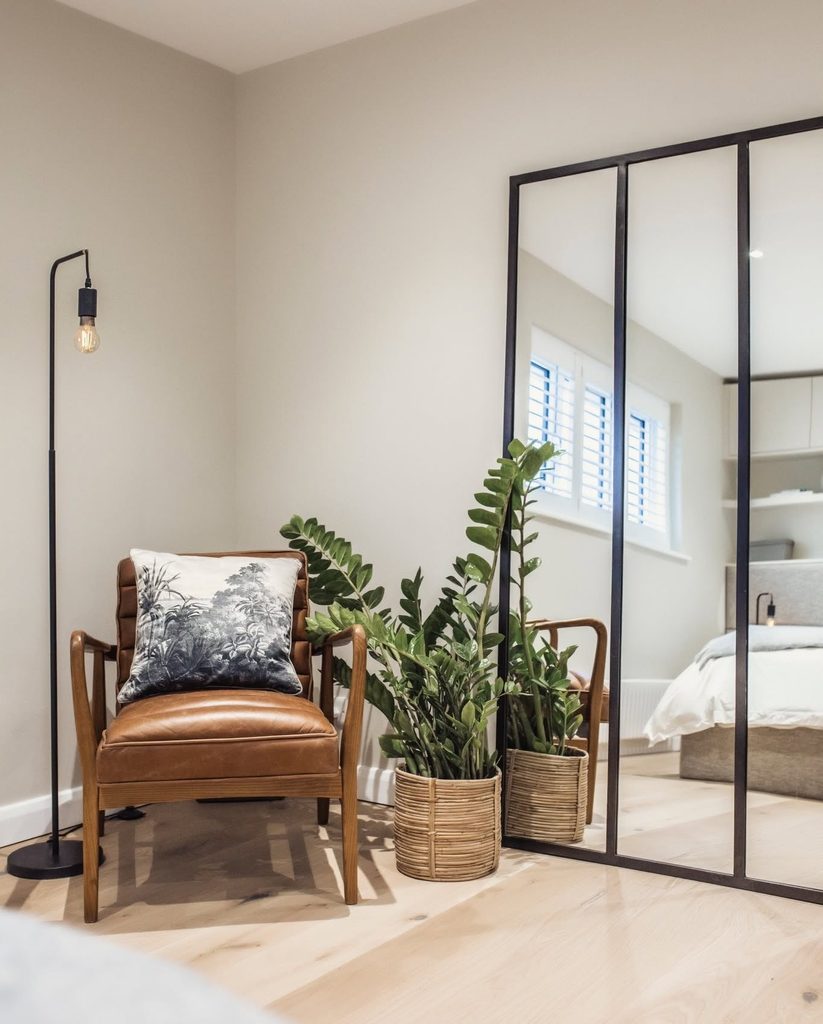
An empty patch beside a bedroom chair can support more than another accessory table. Here, a floor plant sits between a brown chair and a tall mirror, which reflects the foliage and the bed beyond.
The placement gives the sitting corner a leafy focal point while preserving the open floor in front. Position your mirror securely before deciding where the pot belongs, and view the arrangement from the doorway as well as the bed.
A reflection can make one plant appear more substantial, so start with a single specimen. Choose a container that protects the floor beneath it and remains easy to inspect.
Keep leaves clear of the seat and reading light so the corner stays comfortable for everyday use.
Start With One Upright Plant on the Nightstand
Credits: Instagram
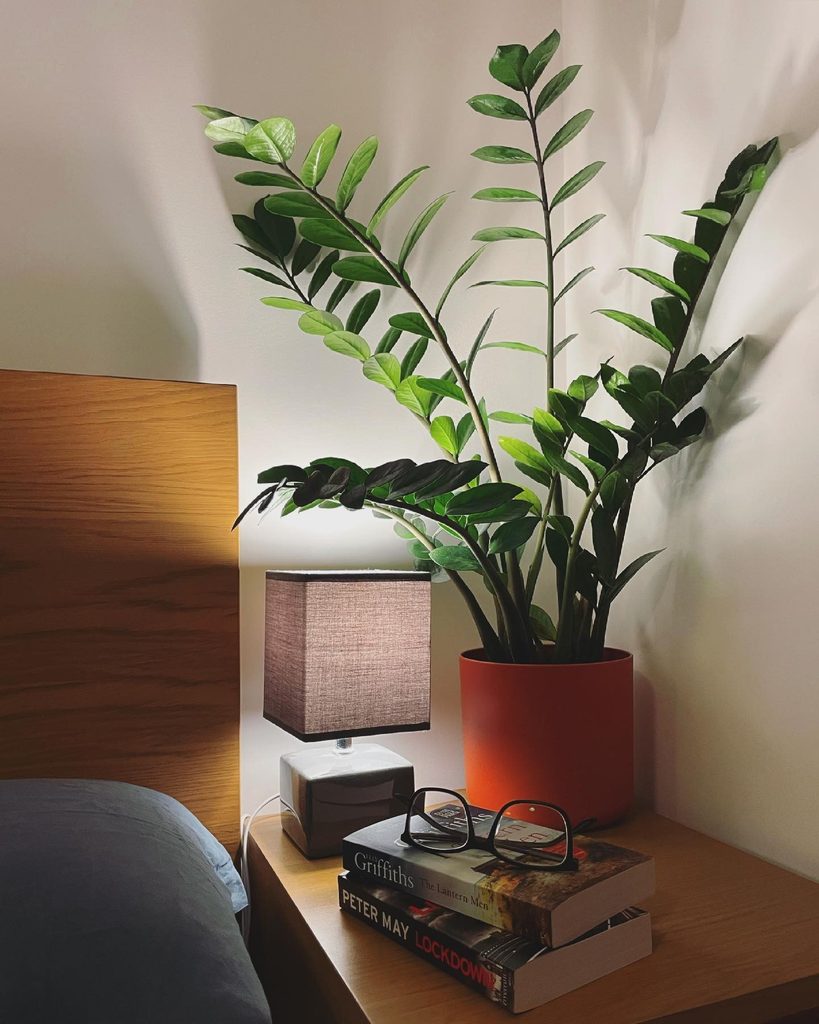
One well-placed plant can be enough for a bedroom that already feels finished. Ben’s upright specimen rises from an orange pot on the nightstand, sharing the surface with a small lamp and a stack of books.
Its height draws attention upward while the container adds a warm accent beside the wooden headboard. Start with the space you can spare, including the room leaves will need as they grow.
Keep frequently used items at the front and make sure the lamp remains easy to operate. This evening photograph shows the arrangement, but your plant choice should depend on daytime light.
A single pot also makes it easier to notice changes, check moisture, and move the plant when the room’s conditions shift.
Give Tall Plants the Bedroom Bay Window
Credits: Instagram
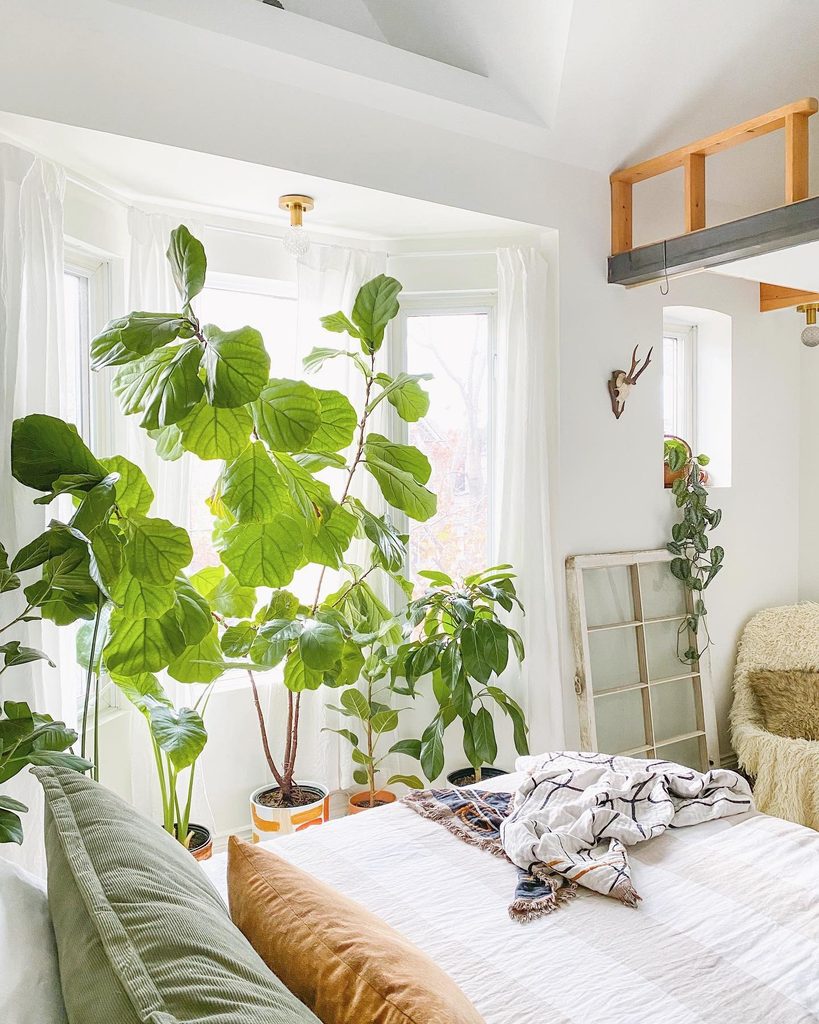
An angled recess offers several directions of light and enough depth for taller greenery. Eryn groups large potted plants within the window area beside her bed, letting their leaves occupy the vertical space while the upper glazing remains visible.
The result feels lush without requiring plants on every piece of furniture. Measure the available floor area and check how curtains, blinds, and window handles operate before choosing containers.
Leave a practical route for opening the window and tending each pot. Different plants may need different positions within the same bay, so assess the light across the day.
Foliage can soften an outside view, but it should complement proper window coverings whenever privacy matters, especially after the bedroom lights come on.
Let Trailing Foliage Soften a High Shelf
Credits: Instagram
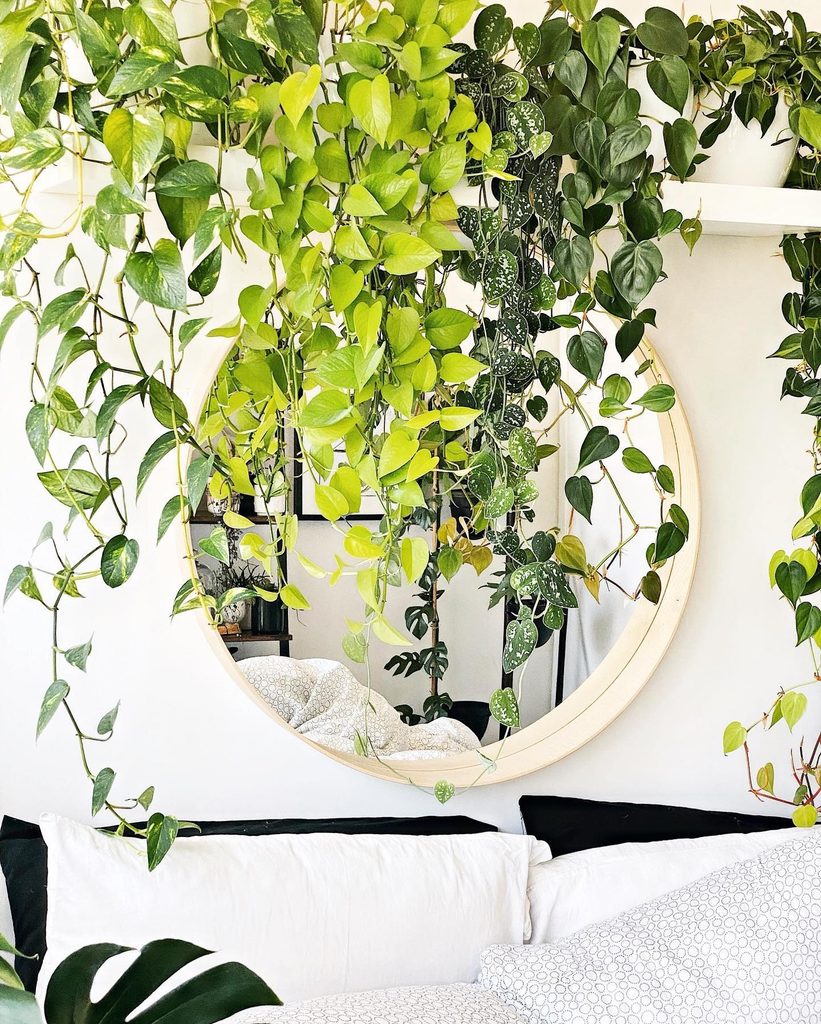
Long stems introduce a softer line than framed artwork or a straight shelf edge. Dorrington’s trailing plants fall at different lengths around a circular mirror, creating a leafy backdrop above his bed.
The variation in color and leaf size keeps the display from looking like a uniform fringe. For a practical adaptation, place a mounted shelf beside the bed or above a dresser where pots are easier to reach.
Check the combined weight of containers, wet soil, and growth before choosing supports. Remove plants for watering and allow them to drain before returning them.
Keep trailing stems clear of pillows, lamps, and walking routes. The pleasing effect comes from controlled draping, with enough space for maintenance and everyday bedroom use.
Share a Low Window Shelf Between Books and Plants
Credits: Instagram
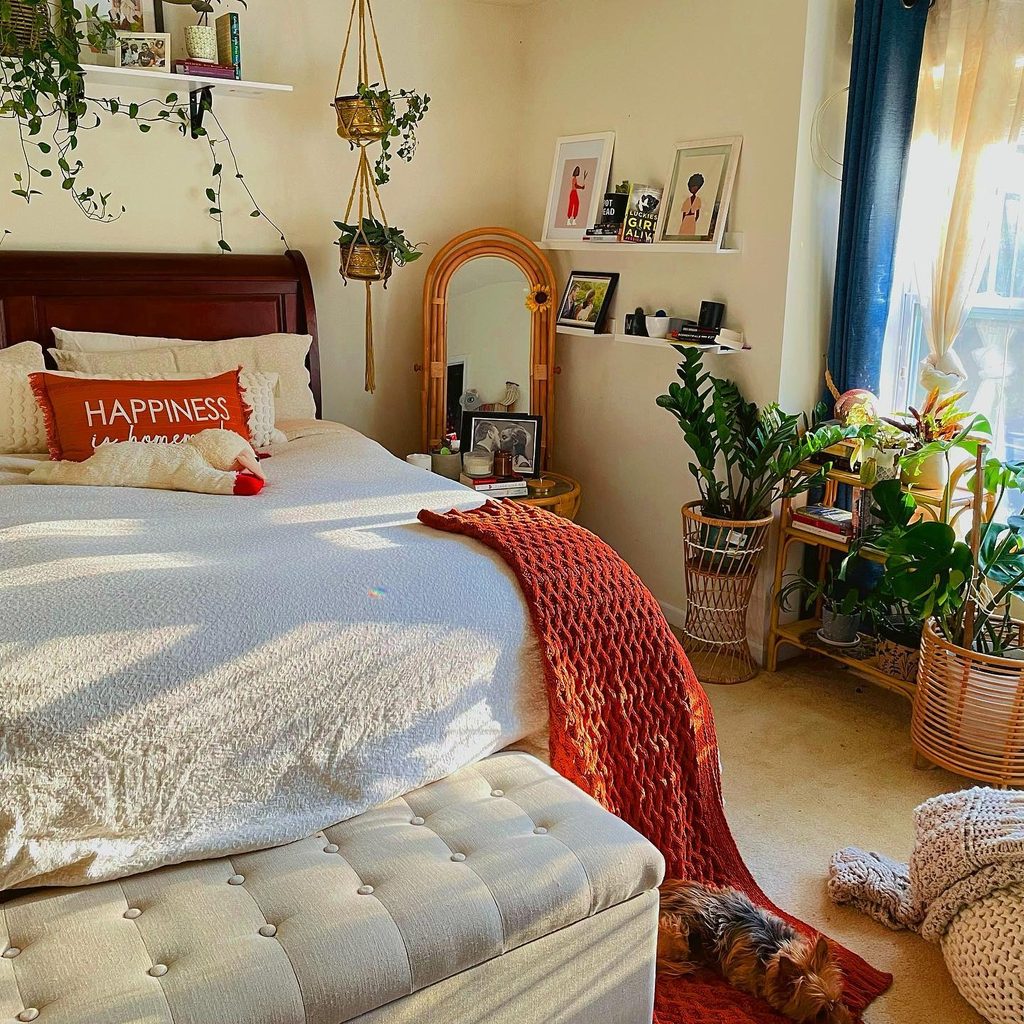
Reading material can sit beside greenery without turning a low display into a crowded storage unit. This bedroom uses a low shelf for both, with leafy pots placed among books and larger plants standing nearby.
The light framework lets the arrangement sit beside the bed without forming a solid barrier. Choose a few containers that fit comfortably on the shelves, then reserve separate dry sections for paper items.
Waterproof trays or outer pots help protect the furniture, but remove plants for watering when possible. Leave space to pull out a book without brushing every leaf.
A low unit is useful beneath a window because it provides display levels while keeping much of the glass and the view above it open.
Repeat Leaf Shapes in the Bedding
Credits: Instagram
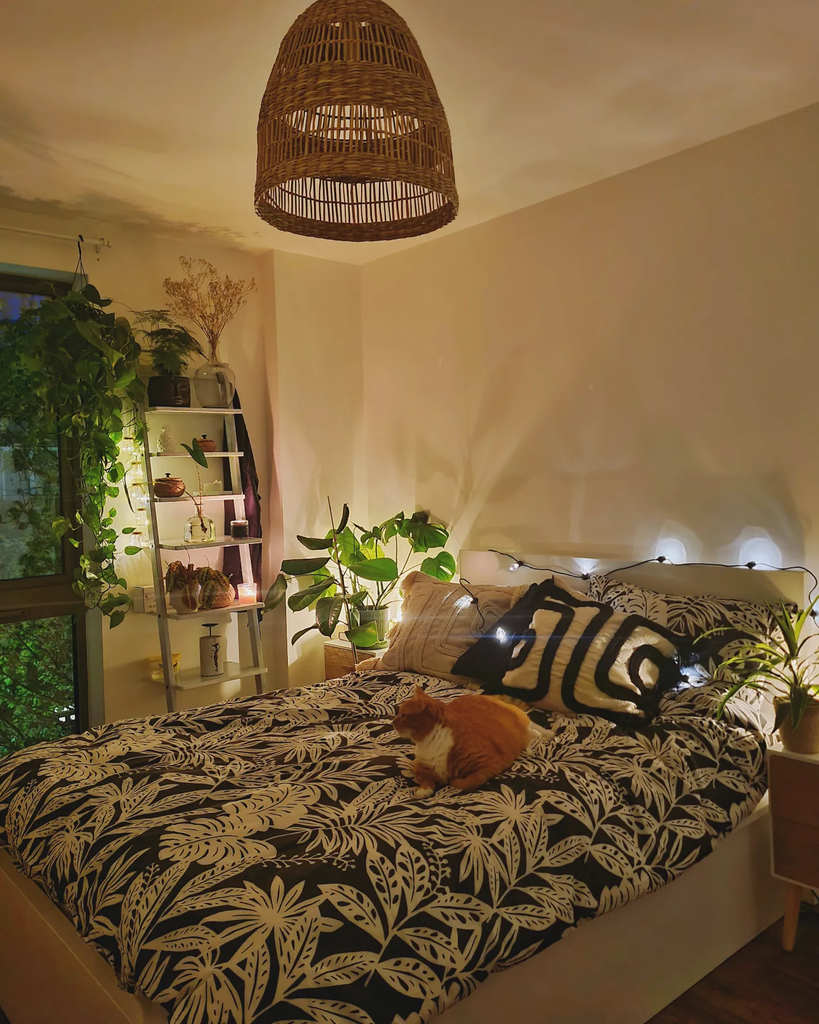
Printed foliage can connect a modest plant collection to the rest of the bedroom. Ornella’s black-and-cream bedding repeats the shapes of the greenery beside her bed, making the plants feel woven into the decorating scheme.
The plain wall gives both elements breathing room, while the evening lighting reveals gentle foliage shadows. Try a patterned duvet or a single cushion before adding more pots.
Matching the general shape or color is enough; the print does not need to depict your plants. Keep the surrounding accessories simple so the bed remains the main focus.
This is especially useful when limited floor space or available daylight restricts the number of living plants you can accommodate comfortably in a small bedroom throughout the year.
Define a Sleeping Zone With Freestanding Plants
Credits: Instagram
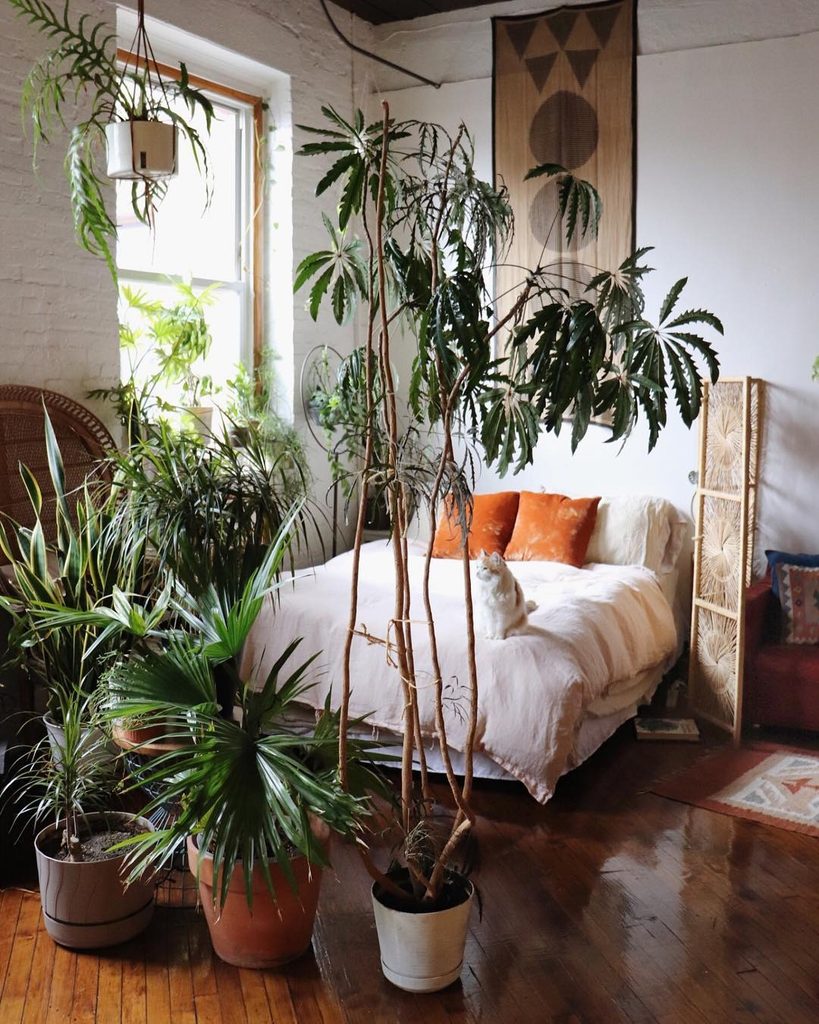
Tall stems can mark the edge of a sleeping area without building a partition. Gabrielle groups freestanding plants in front of her bed, combining a slender branching specimen with fuller foliage at lower levels.
The arrangement partially screens the bed while leaving an open route beside it. In a studio or spacious bedroom, begin with one or two stable pots and check the view from the entrance.
Keep a clear path around the grouping, including room to carry laundry and change bedding. Plants will not provide sound insulation or complete privacy, but they can create a gentler visual boundary.
Choose their position around suitable light rather than treating them as movable furniture that will flourish anywhere you need some separation.
Hang Plants Beside the Window to Keep the Aisle Clear
Credits: Instagram
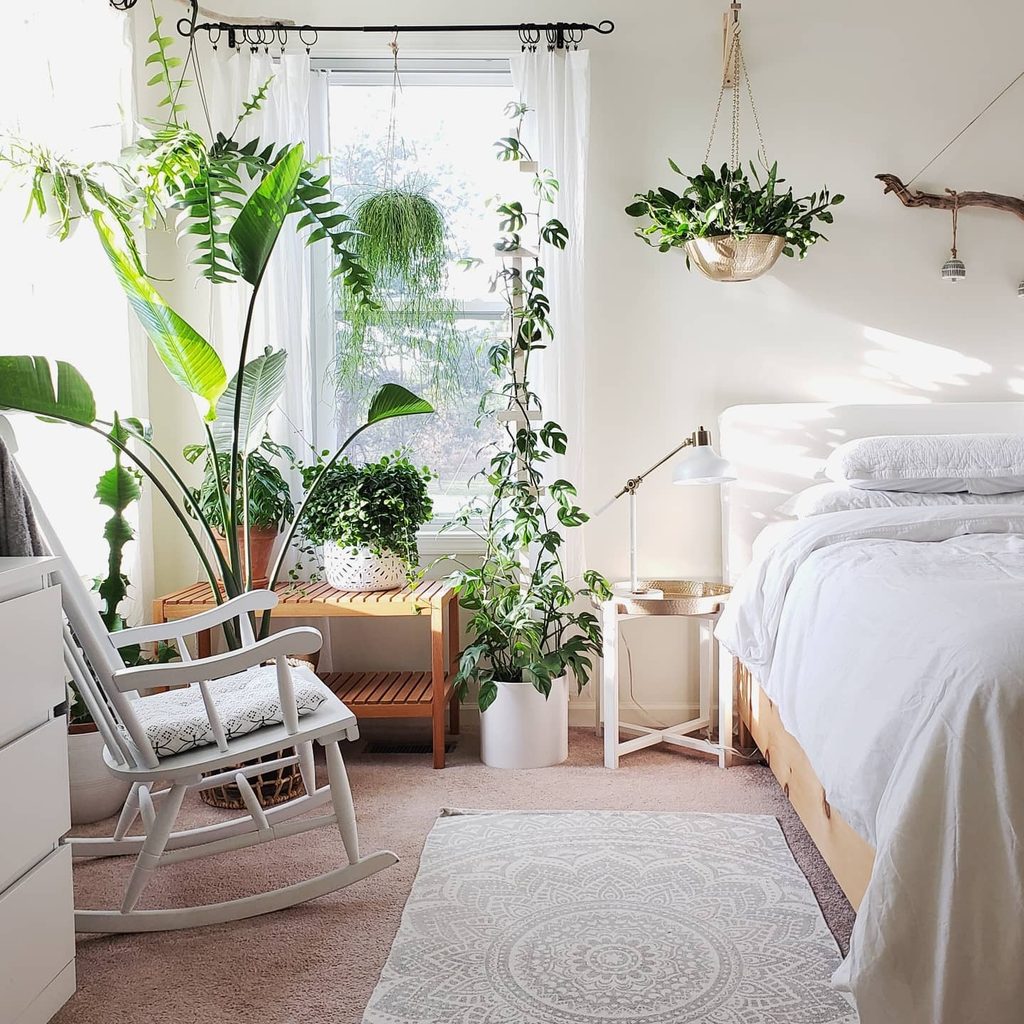
Suspended greenery makes good use of the space beside a tall bedroom window. Kristina combines hanging pots with plants below, allowing the central aisle between the bed and rocking chair to stay open.
Different hanging heights create a layered effect without requiring another large piece of furniture. Before copying the arrangement, identify mounting points that can safely support the containers when watered.
Do not assume a curtain rod or existing hook is suitable. Keep pots clear of curtains and places where someone stands, sits, or sleeps.
Choose a height that allows you to remove each plant for care without awkward stretching. Starting with one hanger lets you judge the scale and daily access before expanding the display around the window.
Plan Dedicated Plant Lighting for a Larger Collection
Credits: Instagram
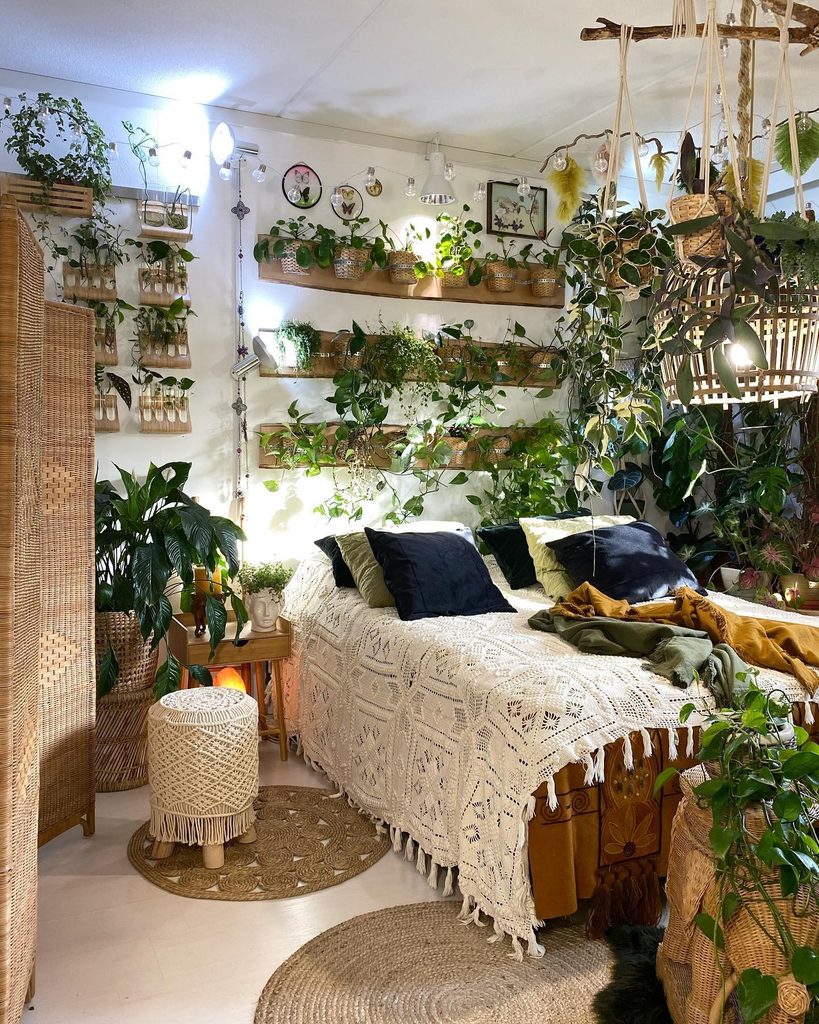
A large indoor collection needs a lighting plan as much as a decorating plan. Seija’s bedroom includes lamps directed toward plants alongside the natural light, with greenery arranged across shelves and hanging containers.
The visible fixtures are part of the room’s everyday setup rather than hidden styling details. If a plant needs supplemental light, choose equipment appropriate for that plant and follow the manufacturer’s placement guidance.
Consider how the light will affect the room when you are reading or preparing for bed. Keep cords orderly and watering tasks away from electrical connections.
You can begin with a small dedicated display instead of lighting the whole bedroom. The practical goal is to support the plants while keeping the sleeping area comfortable.
Give the Bedroom Sitting Area Its Own Green Canopy
Credits: Instagram
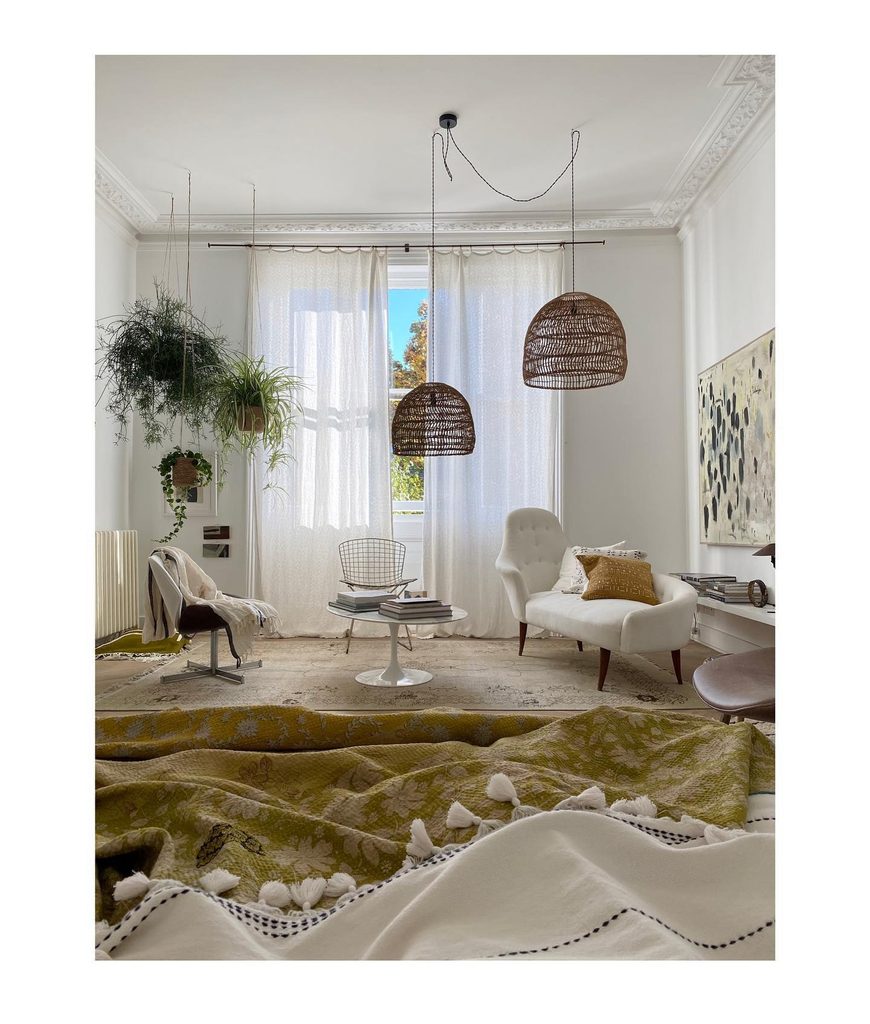
The view from bed can include a planted sitting area rather than more decoration over the headboard. Liza gathers hanging greenery near the window above a bedroom chair, with a chaise and small table completing the space beyond.
The plants help define that corner while leaving the bed itself visually quiet. This works especially well in a larger bedroom where a seating zone needs a little focus.
Plan the hanging positions around the chair’s full movement and the reach needed to sit down comfortably. Keep leaves away from light fixtures, and use supports suited to the watered containers.
A small group can be enough to connect the window, seating, and room’s natural textures without spreading foliage across every available surface.
Balance a Large Piece of Art With One Trailing Plant
Credits: Instagram
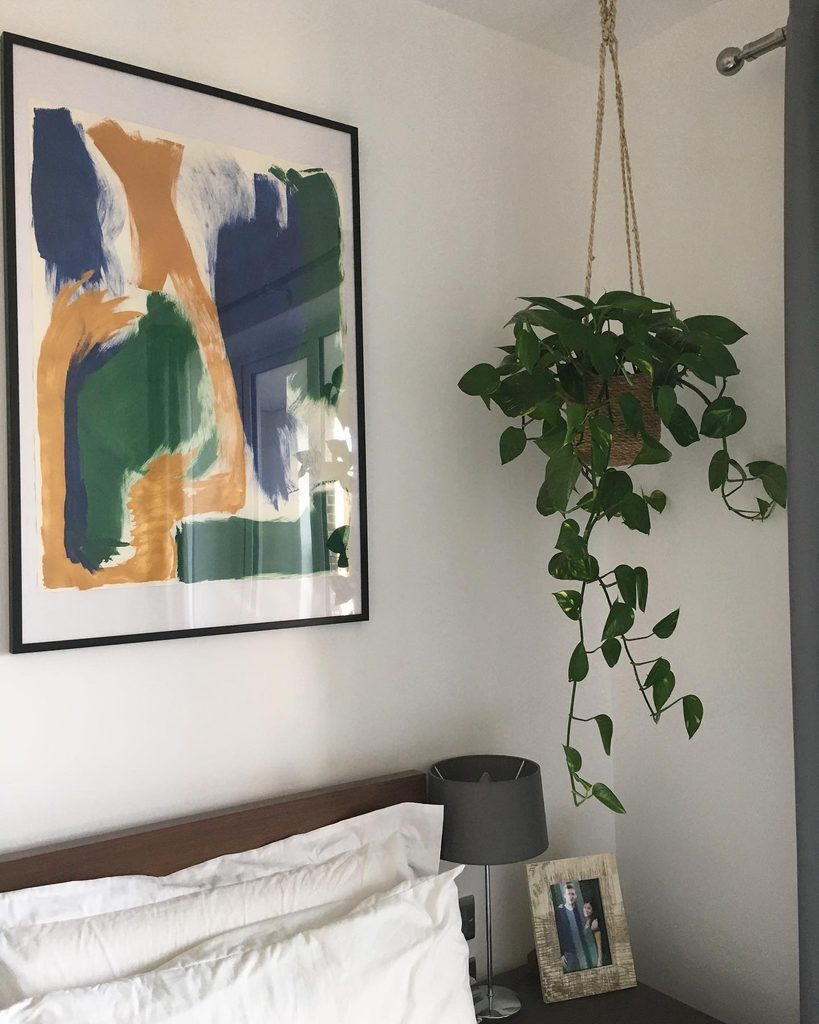
Pictures and greenery can form a balanced composition without matching exactly. Steph hangs one trailing plant beside a large abstract print, where its curved stems soften the frame’s straight edges.
The green in the artwork creates a quiet connection, while the rest of the bedside arrangement stays simple. Try positioning a plant beside an existing picture before committing to more wall decoration.
Leave space around the frame so the foliage does not conceal it as growth develops. If you choose a hanging pot, check the mounting and keep it clear of the bedside lamp.
A tabletop plant can create a similar relationship where hanging is impractical. This approach gives a bedroom corner interest through shape and color rather than quantity.
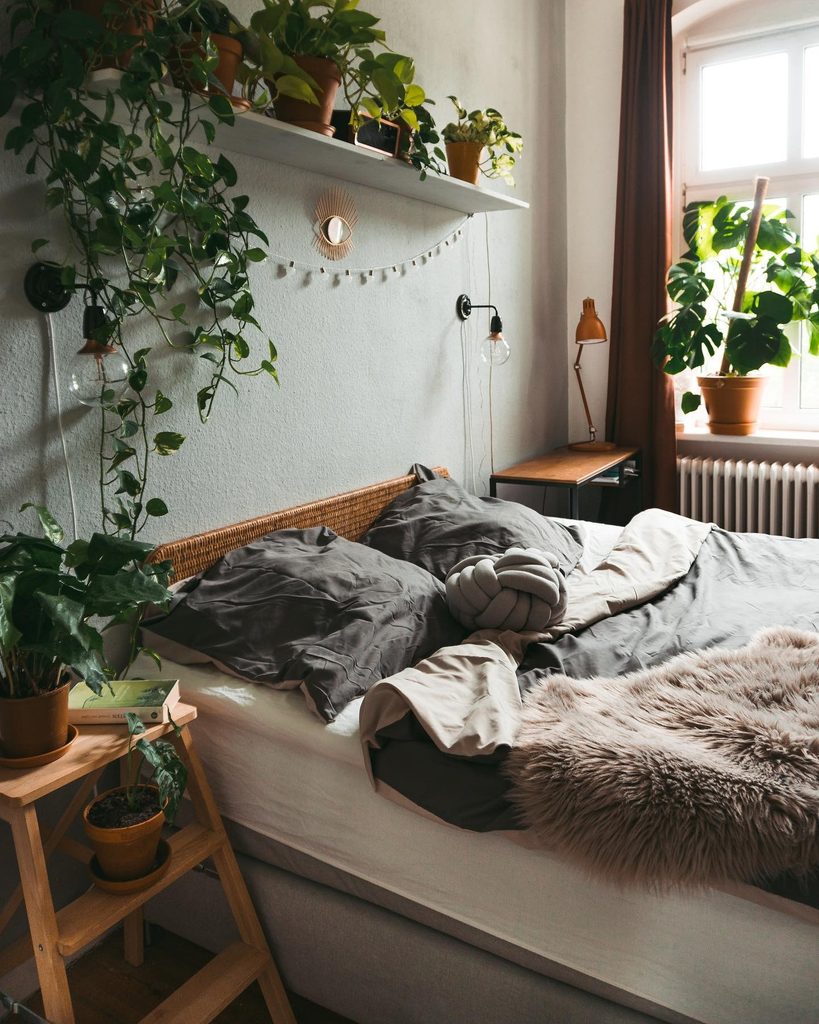
Repurpose a Small Stepladder as a Bedside Plant Stand
Credits: Instagram
A little wooden stepladder can provide several display levels beside the bed. Carla uses the upper steps for pots, with books nearby, turning a compact piece into a relaxed bedside arrangement.
Its open frame feels lighter than a solid cabinet and keeps the plants within a manageable area. Choose a sturdy ladder that stands evenly, and make sure each step supports the whole base of its container.
Treat it as display furniture while it is loaded; remove everything before using it for access. Place waterproof protection beneath pots and keep trailing growth away from the steps and floor.
This setup suits renters, keeps pots together, and lets you rearrange the bedside display without drilling holes or installing shelves on walls.
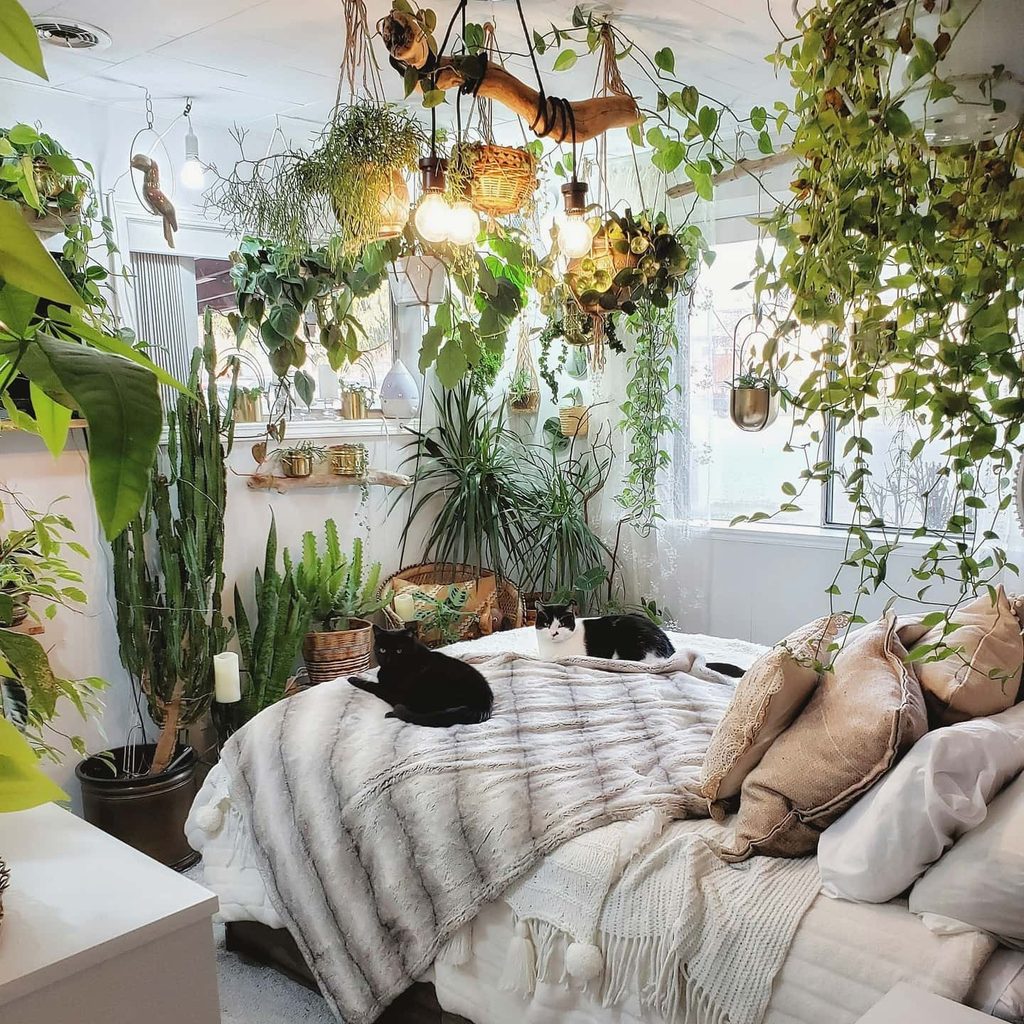
Choose Upright Growth for a Narrow Floor Strip
Credits: Instagram
When floor space is narrow, the direction of growth matters as much as the pot size. Melissa’s bedroom includes tall, upright plants beside the bed, their vertical forms occupying a slim strip against the wall.
Broader and trailing foliage fills other levels, giving the collection a varied outline. For your own room, look at a plant’s expected mature width before deciding that a small nursery pot will fit.
Leave comfortable clearance for bedding, bare feet, and cleaning. Plants with pointed or spiny growth need a position where nobody will brush against them.
If pets or children use the room, verify the exact plant’s suitability before bringing it home. A narrow shape should support circulation, not simply squeeze into leftover space.
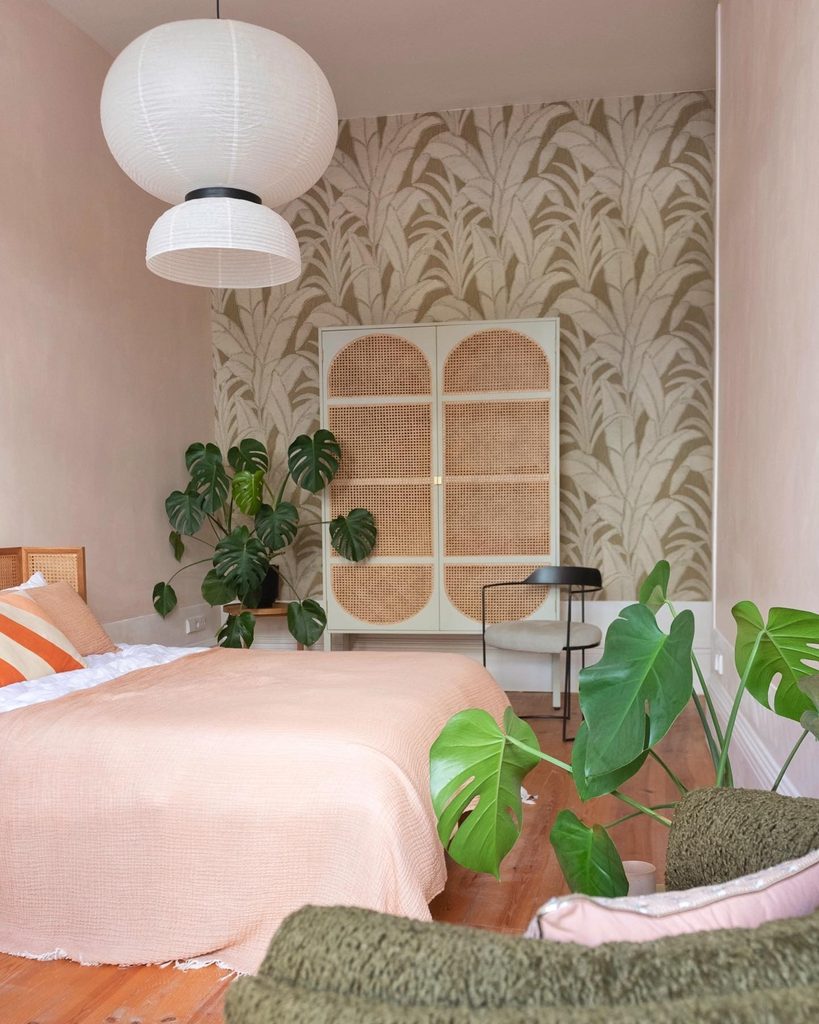
Anchor Opposite Ends of the Bedroom With Large Plants
Credits: Instagram
Two substantial plants can give a bedroom structure without covering every surface in pots. Miriam places broad foliage near the far cabinet and beside the chair in the foreground, linking opposite ends of the room with green.
The bed and central floor remain visible between them, so each plant has a distinct place in the composition. Try this with specimens you already own, checking the view from the doorway before moving anything permanently.
Keep both positions suited to their plants’ light requirements and allow room for expanding leaves. Matching pots are optional; similar scale can provide enough connection.
This arrangement works particularly well when the room needs visual balance across its length but the furniture surfaces are already fully occupied.
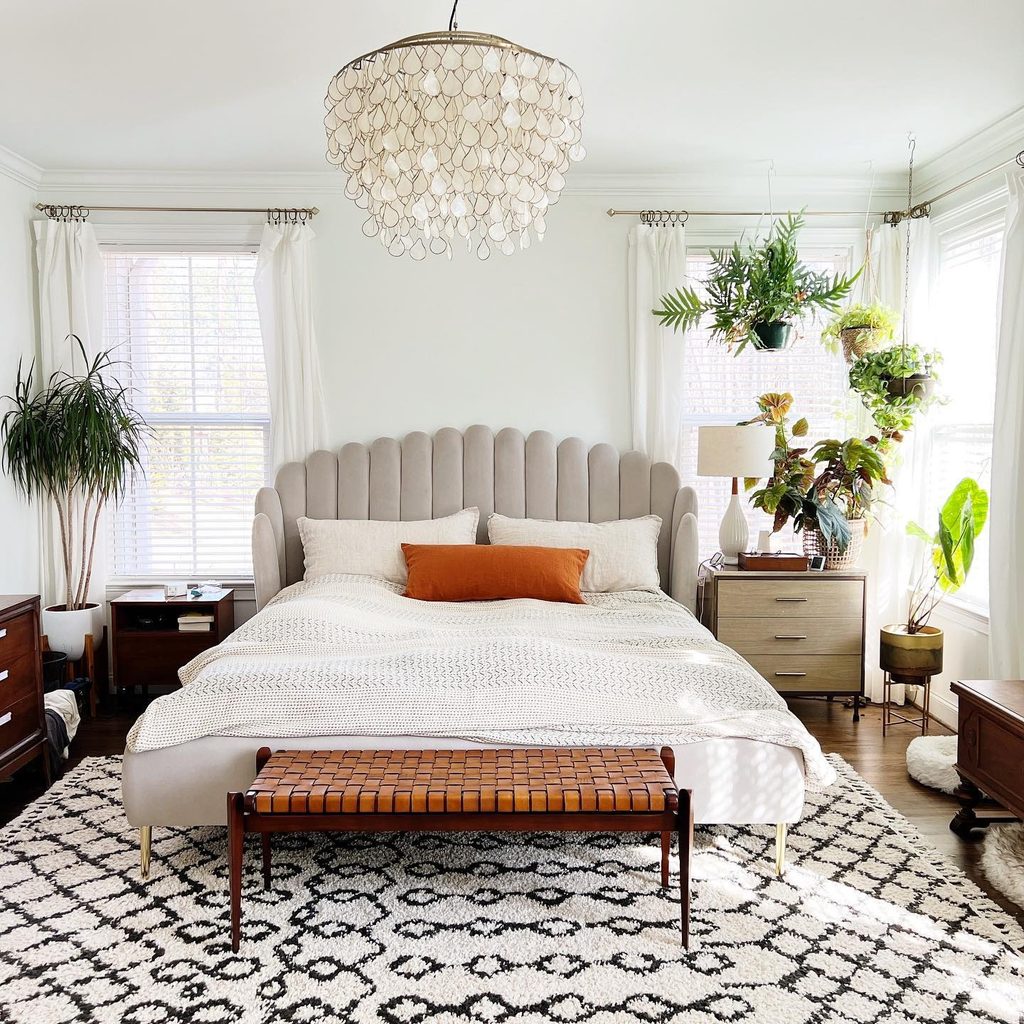
Arrange Bedroom Plants Around Uneven Daylight
Credits: Instagram
The best place for a bedroom plant may be off to one side.
Amanda concentrates much of her collection near the brighter window corner, leaving the wall above the bed empty because it does not receive enough light for her planned shelf.
That decision creates an appealing asymmetry while respecting the room’s actual conditions. Observe your own bedroom at several times of day before choosing permanent plant positions.
Nearby windows can offer different light because of buildings, curtains, and the direction they face. Begin with the locations that suit your plants, then balance the room with artwork, textiles, or clear space elsewhere.
A successful bedroom garden does not need identical arrangements on both sides of the bed to feel finished.