
A room filled with old furniture and collected art can feel crowded if every piece competes for attention. Antique Living Room Ideas show how color, arrangement, and practical furniture choices can bring those details into balance.
Try setting ornate architecture against quieter walls, framing a gallery of paintings with soft green drapes, or using a carved table alongside streamlined seating.
Other approaches make room for everyday life, from working a game table into a colorful space to turning a trunk into a coffee table. The aim is to let treasured pieces stand out while keeping the room comfortable and usable.
1. Warm White Furniture With Golden Walls
Credits: Instagram
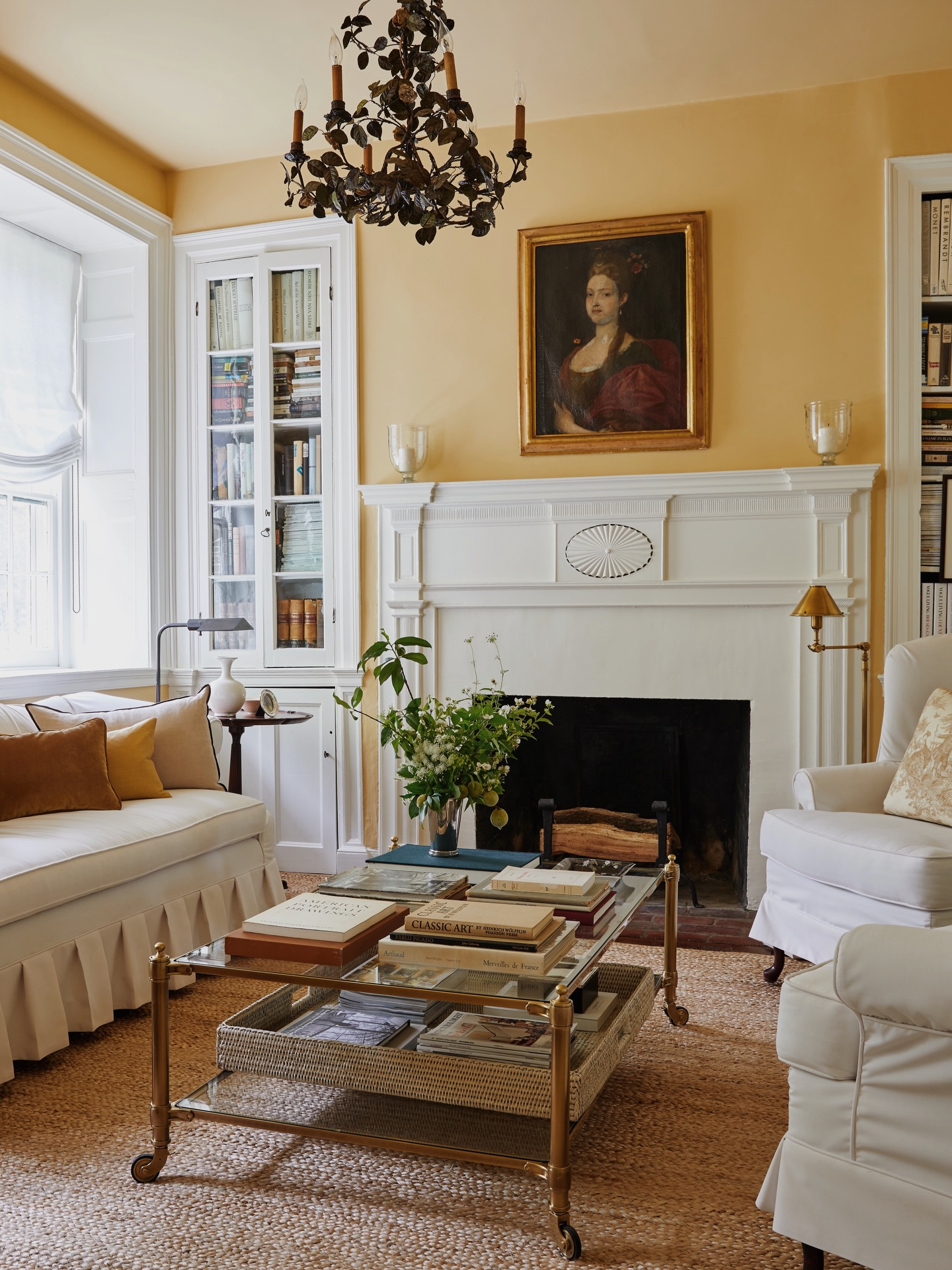
Golden yellow walls give this sitting room warmth before a single accessory enters the picture. White upholstery, pleated skirts, and crisp painted shelves keep the arrangement light, while a framed portrait and leafy chandelier supply decorative detail.
Borrow that balance when furnishing around treasured older pieces: choose a clear wall color, then repeat one quiet fabric across the largest seats. A transparent coffee table keeps the rug visible and gives stacked books a defined home.
Tuck extra reading material into a shallow basket on its lower shelf. Keep the mantel simple so its molding remains legible, and echo the wall color in two or three pillows.
Small reading lamps add light without obscuring the cabinetry or competing with the chandelier.
2. Let Ornate Architecture Set the Palette
Credits: Instagram
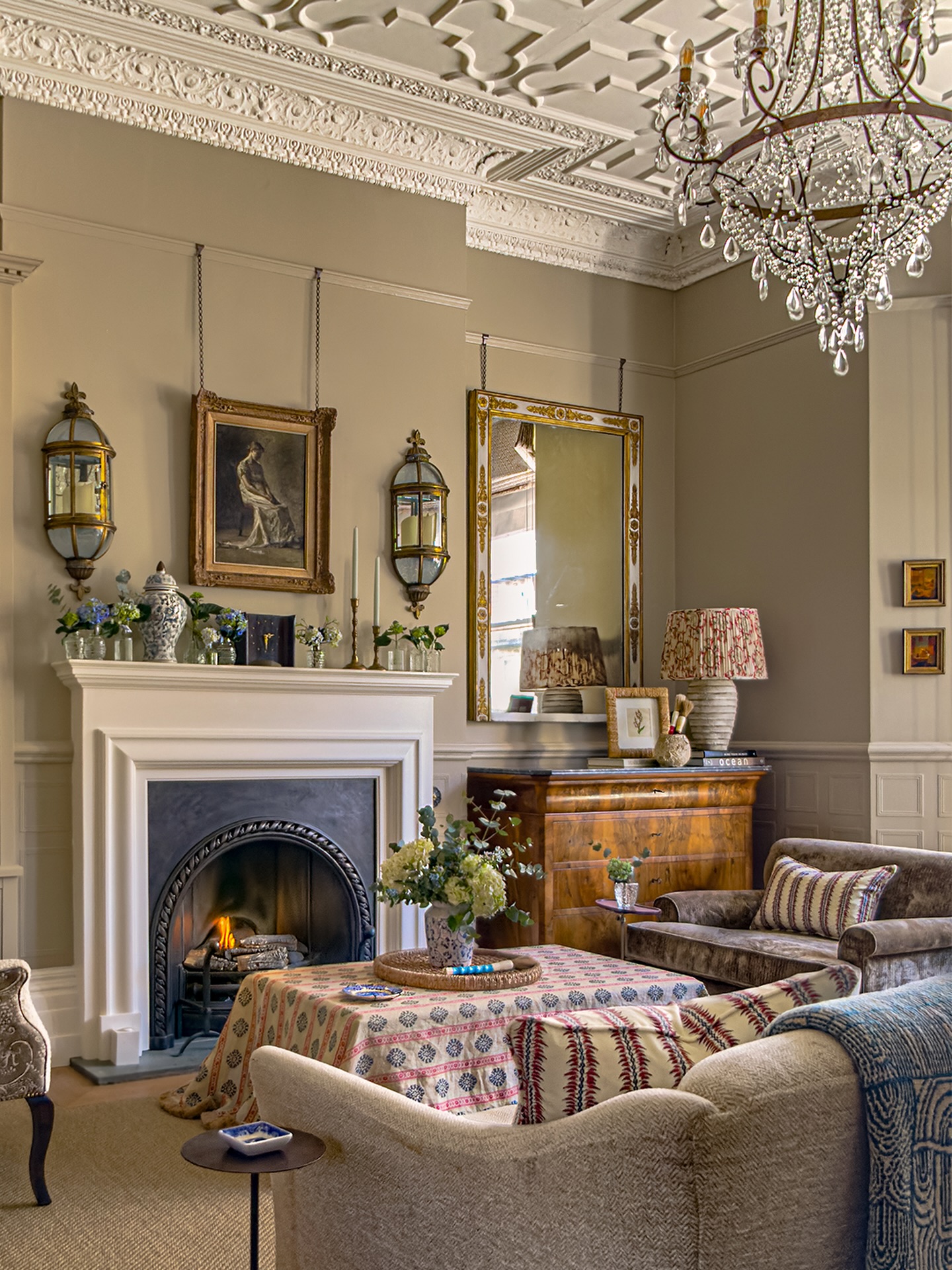
When a ceiling carries this much pattern, the walls can take a quieter role. Warm gray paint connects the raised ceiling details, pale fireplace surround, and neutral seating without flattening their different shapes.
Gold frames and a richly colored chest become focal points against that restrained background. To try the approach, compare large paint samples beside your furniture and trim through changing daylight.
Choose a shade that supports both. Bring smaller patterns into the seating area through pillows, a throw, and a cloth over the central table.
Their scale keeps the eye moving below the elaborate cornice. A tall mirror beside the fireplace adds a vertical element, while a shaded lamp makes the chest useful after the overhead lighting dims.
3. Frame Collected Art With Soft Green Drapes
Credits: Instagram
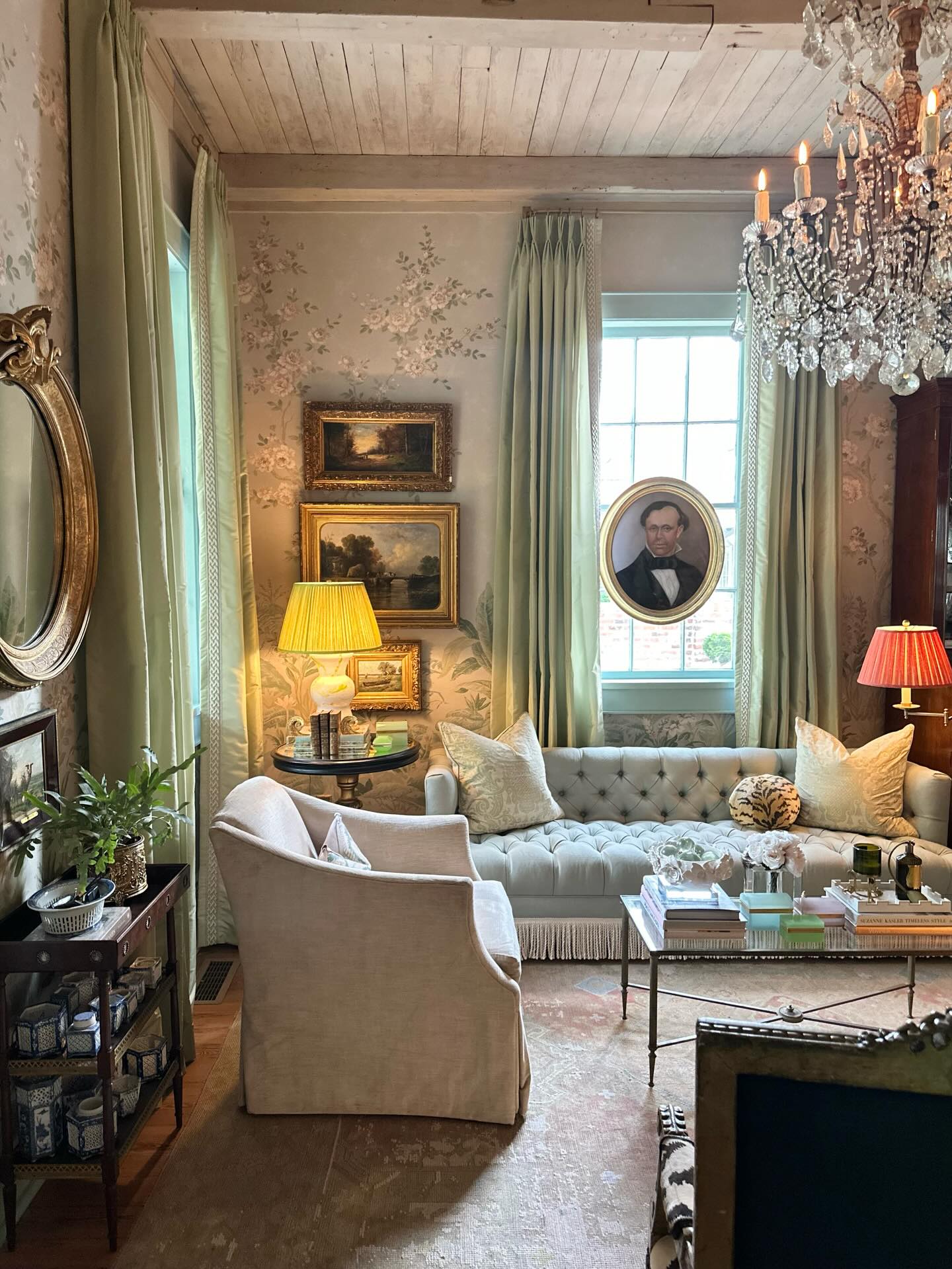
Soft green curtains give this densely decorated living room a steady rhythm. Their folds frame floral walls, stacked landscapes, and an oval portrait, while a pale tufted sofa repeats the color in a quieter register.
Use the same method when several framed pieces already compete for attention. Choose curtains from a muted color in the room, hang them high, and leave enough width for generous folds.
Narrow decorative trim can sharpen the leading edges without adding another large pattern. Keep the main chair upholstery simple so the paintings and wallpaper stay readable.
Here, warm lampshades bring a little contrast to the green surroundings. A slim coffee table and open furniture legs preserve visible floor space beneath all those layered details.
4. Give a Sectional a Traditional Setting
Credits: Instagram
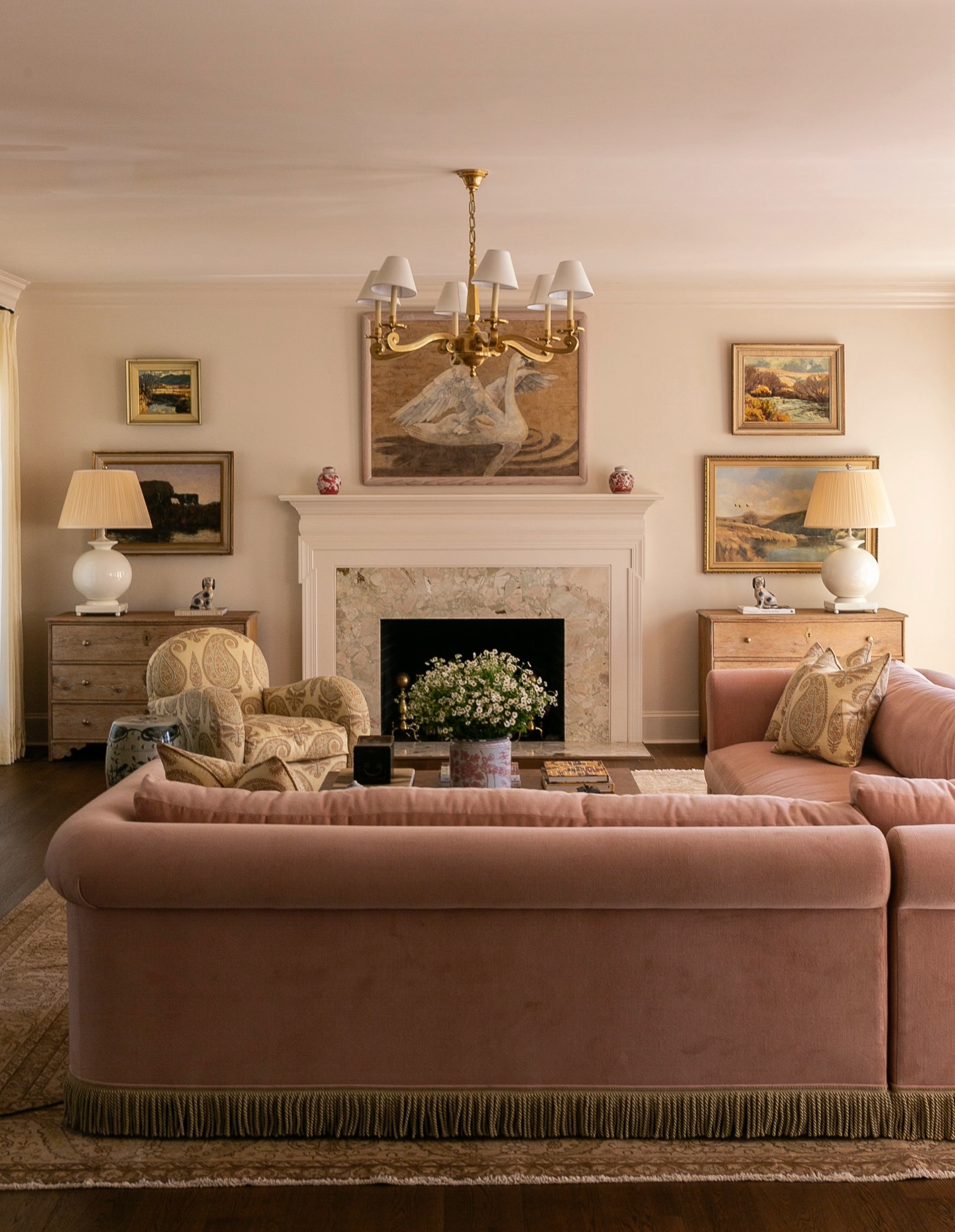
A generous sectional fits comfortably into a traditional room when its surroundings establish a clear structure. Here, a pale pink sofa faces a fireplace flanked by two low chests, matching lamps, and paired arrangements of landscape paintings.
The balanced wall gives the deep seating an orderly backdrop. Fringe along the sofa base and a patterned armchair repeat the room's decorative character at a smaller scale.
Start with the sectional's footprint, leaving walking space around its outer edges before adding occasional furniture. Then choose chests of similar height to support lamps on either side of the focal wall.
Art can vary in size and subject while its arrangement stays balanced. Keep the central flowers low enough for conversation across the seating.
5. Work a Game Table Into a Colorful Room
Credits: Instagram
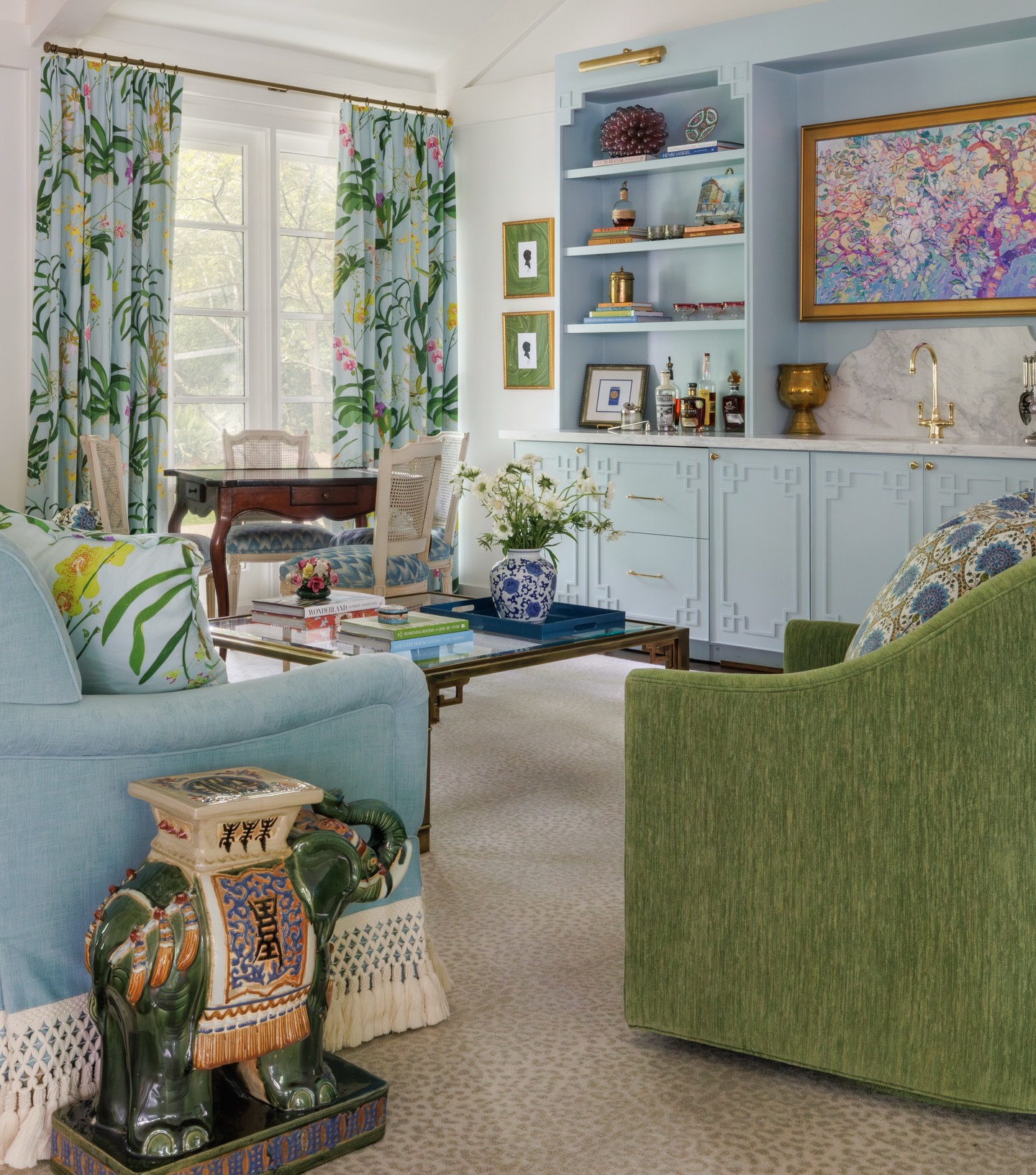
A small table beside the window gives this living room an extra reason to gather. Its curved legs and light chairs sit comfortably alongside a blue sofa, green armchair, and pale blue cabinetry.
Botanical curtains tie the seating colors together, while patterned pillows and a glossy elephant stand add playful detail. When combining collected furniture with fresh upholstery, repeat a few colors across different objects rather than matching every finish.
Give the secondary table enough clearance for someone to pull out a chair without moving the sofa. A glass coffee table helps the two activity areas feel connected.
Keep frequently used items inside the cabinets, and reserve the open shelves for a mix of books, framed pieces, and favorite objects.
6. Build a Reading Room Around Open Shelves
Credits: Instagram
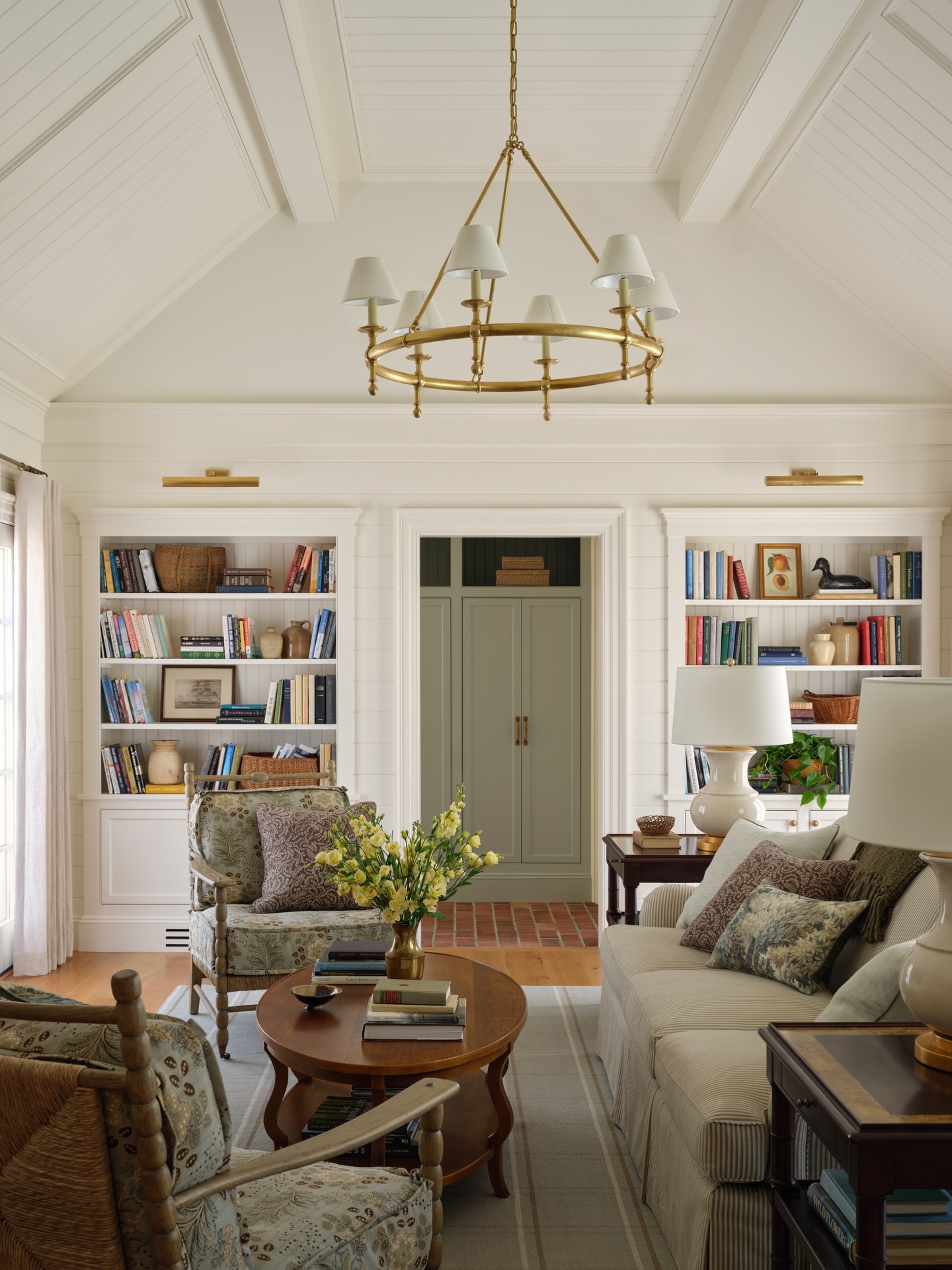
Bookshelves make a natural backdrop for furniture collected over time. In this bright room, white shelving frames a doorway, while patterned chairs, a striped sofa, and dark side tables bring variety below the pale vaulted ceiling.
The matching shelf outlines create order even though their contents differ. Borrow that structure with paired bookcases or evenly spaced shelving bays.
Mix upright books with short horizontal stacks, leaving pockets for a basket or small framed picture. An oval coffee table softens the route between the chairs and sofa, and a lower shelf keeps additional books within reach.
Place reading lamps beside the seats that get used most. Repeating muted green and brown through the fabrics helps the different furniture shapes belong together.
7. Wrap an Art Collection in Rusty Color
Credits: Instagram
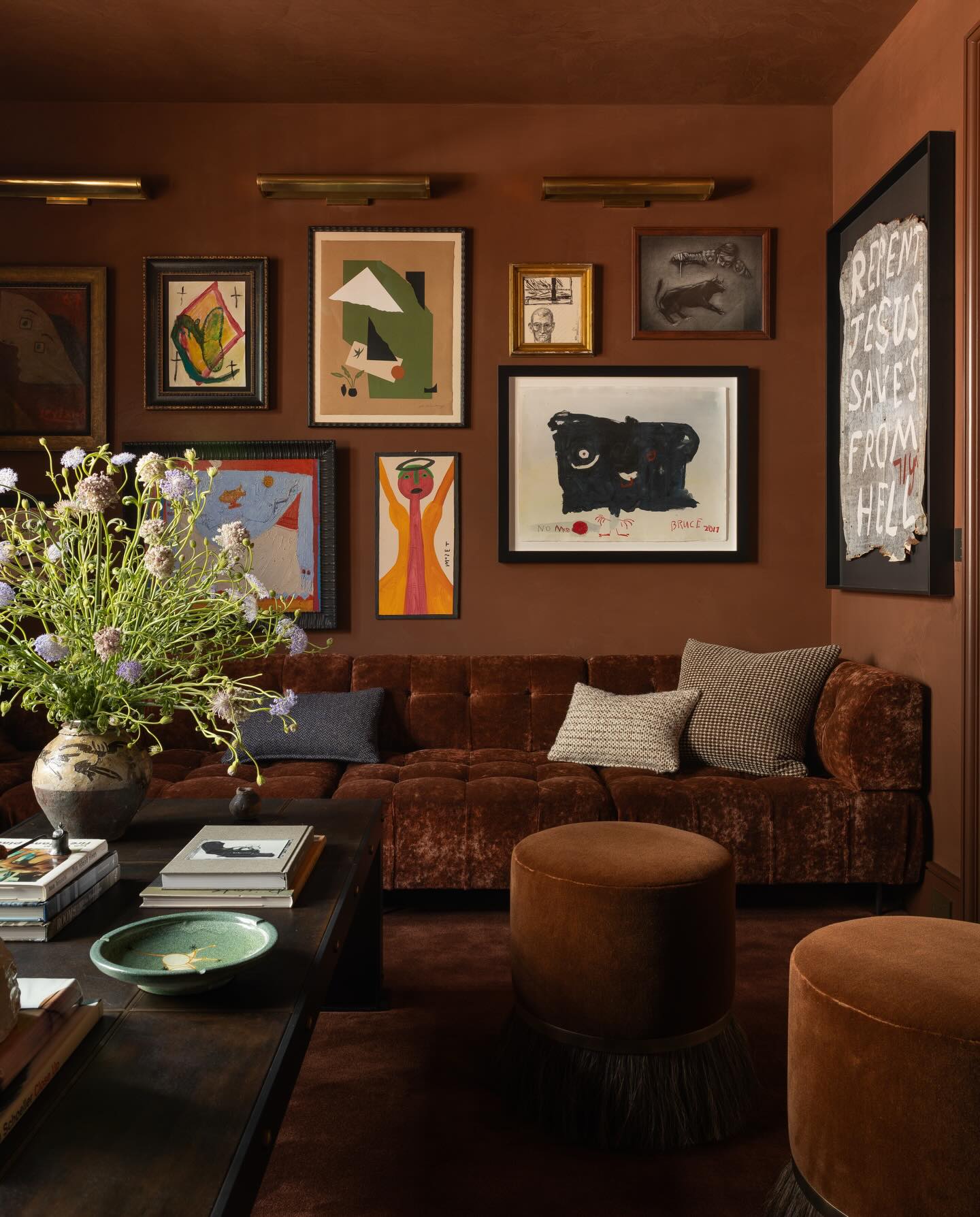
Deep rust walls and a matching ceiling turn this seating corner into an intimate backdrop for collected art. The sofa and round stools stay within the same warm color family, allowing black, gold, and brown frames to stand out.
Varying picture sizes keep the display personal, while aligned picture lights give the arrangement a little structure. To build a similar grouping, lay the frames on the floor first and establish a few consistent gaps.
Carry the wall color into larger upholstery pieces, then add quieter cushions with small patterns. A dark rectangular coffee table provides a firm visual center beneath the busier wall.
Leave clear areas around books and a shallow bowl so the surface still works for everyday use.
8. Pair a Carved Table With Streamlined Seating
Credits: Instagram
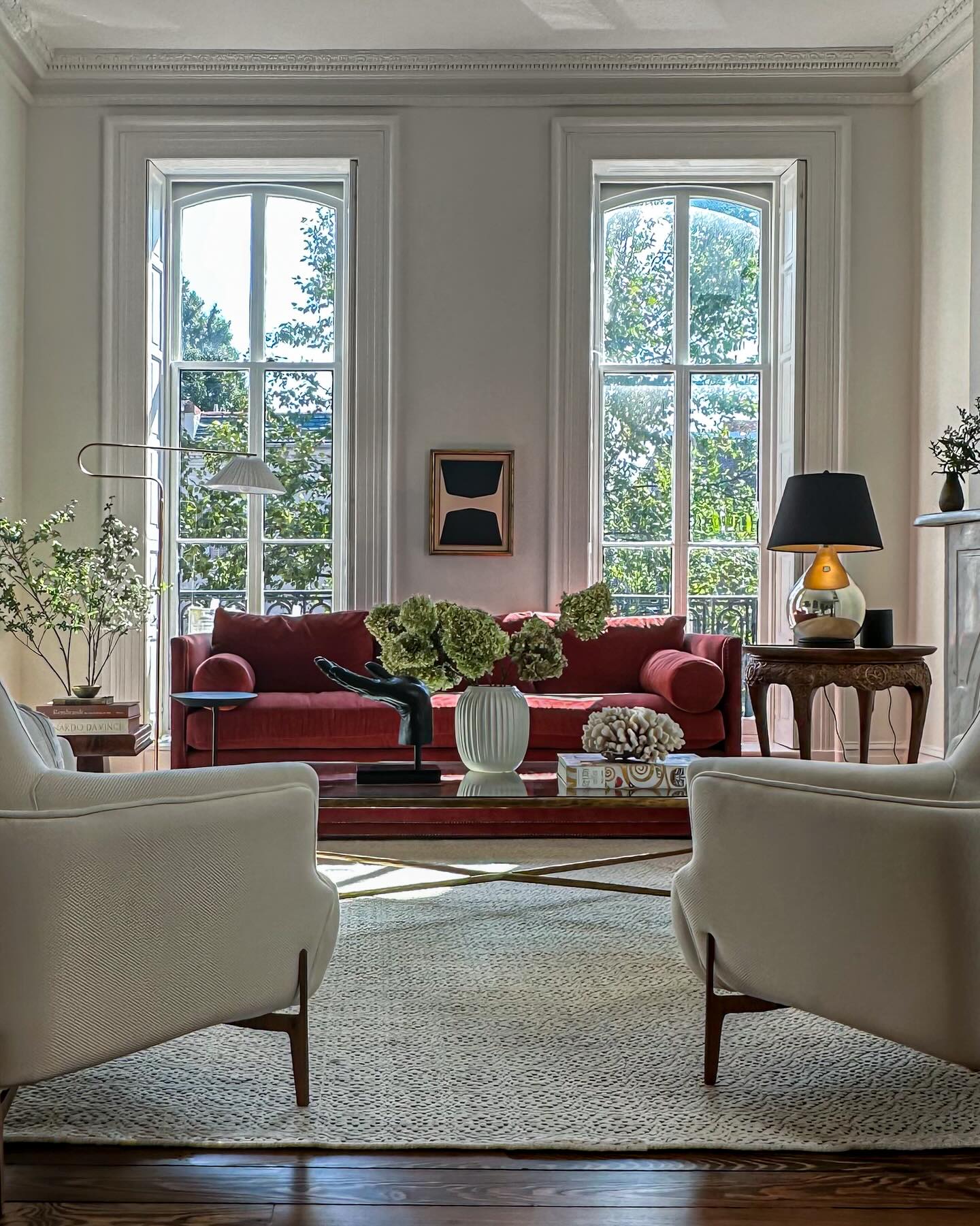
An elaborately carved side table can hold its own beside furniture with much simpler lines. Here, a red sofa anchors the far wall, two pale armchairs face inward, and the decorative table occupies a clear spot beside the window.
That breathing room lets its curved legs and detailed apron remain visible. Try giving one expressive piece this kind of placement before adding more ornament.
Repeat a warm tone from it in a lamp or frame, then keep neighboring furniture shapes straightforward. A low coffee table preserves the view across the seating group, and the light rug unifies the different silhouettes.
Tall, uncovered windows emphasize the room's proportions. Keep artwork between them modest in scale so the architectural trim remains readable.
9. Organize a Full Collection Around the Fireplace
Credits: Instagram
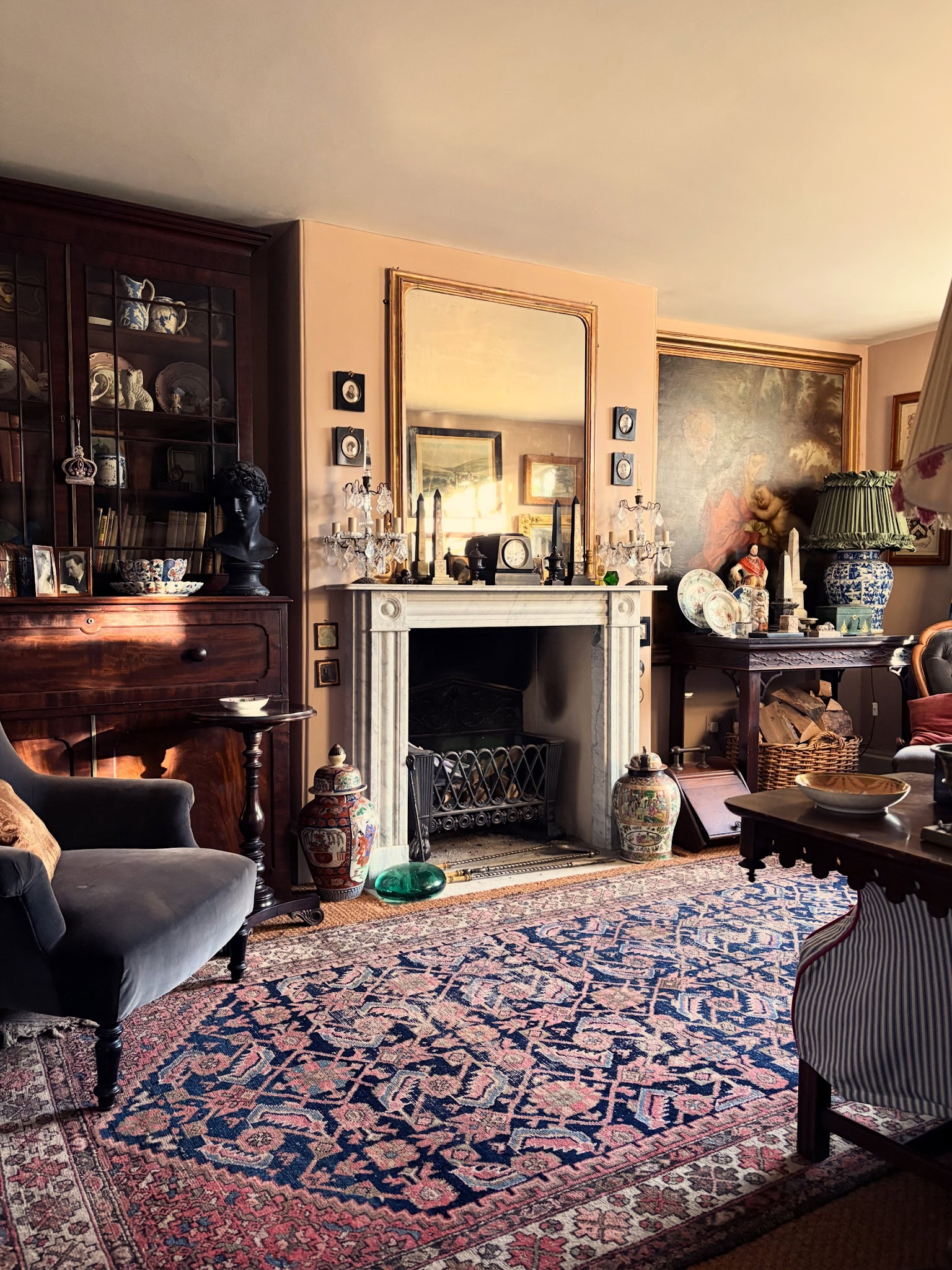
A room filled with favorite objects feels more composed when the fireplace provides a clear center. This arrangement uses a tall mirror, paired mantel decorations, and small portraits to establish that structure.
A dark display cabinet holds books and dishes to one side, while a console carries another group of objects on the other. The large patterned rug connects those separate displays with the seating.
Begin by grouping similar pieces together, giving taller objects the rear positions and smaller ones room in front. Preserve visible edges around the mirror and cabinet so the furniture still reads as shapes.
A few substantial upholstered seats offer visual pauses among the details. Keep walking routes free, especially beside low vessels and projecting furniture.
10. Use Small Tables to Make Every Seat Useful
Credits: Instagram
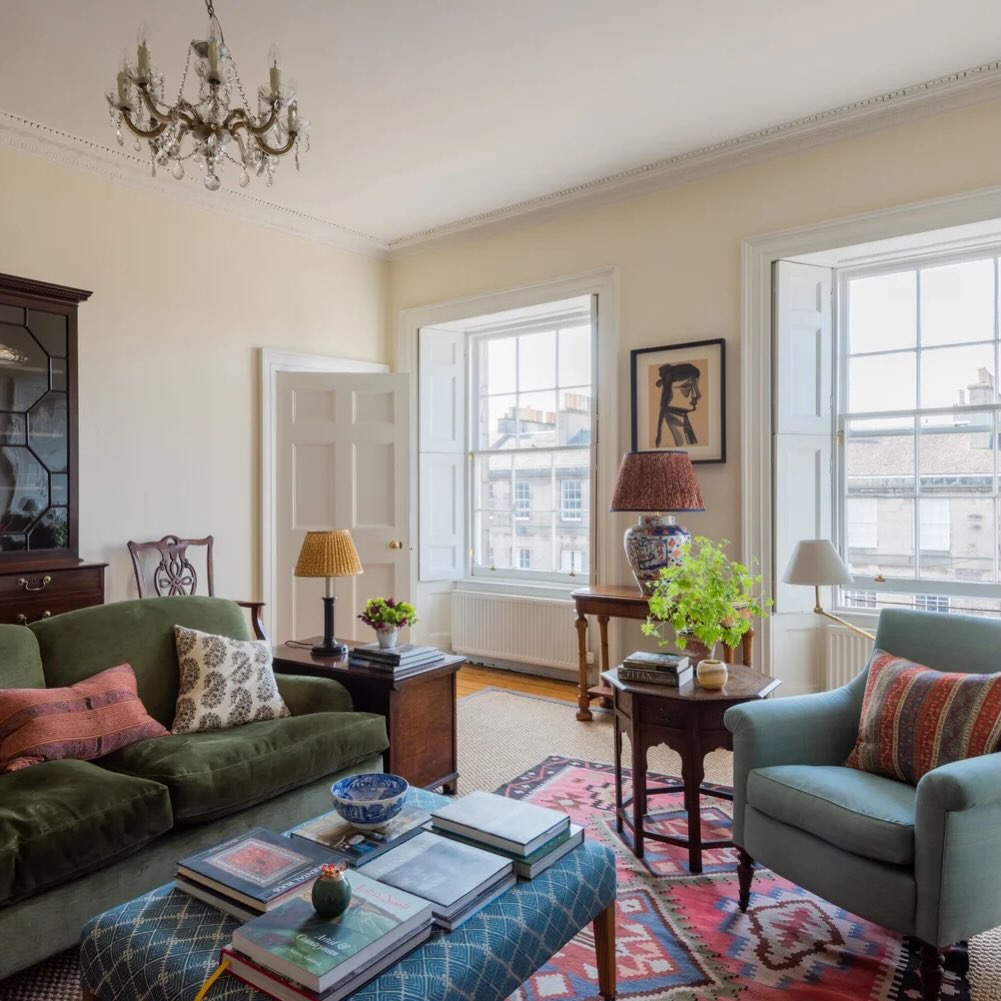
Separate occasional tables give this collected sitting room a flexible, hospitable layout. A dark chest beside the green sofa supports a lamp, while a smaller table near the blue armchair offers space for flowers and a book.
The upholstered ottoman stretches between the seats, its blue pattern joining the pink rug and colorful cushions. Recreate the arrangement by placing a useful surface within reach of each main seat.
Vary table shapes to suit the available gaps, but keep their tops near the height of the adjacent arms. Layer a patterned rug over a quieter floor covering to define the conversation area.
Pale walls and open shutters keep the mix bright, while the tall cabinet adds height without filling another corner.
11. Mix Large Checks With Smaller Prints
Credits: Instagram
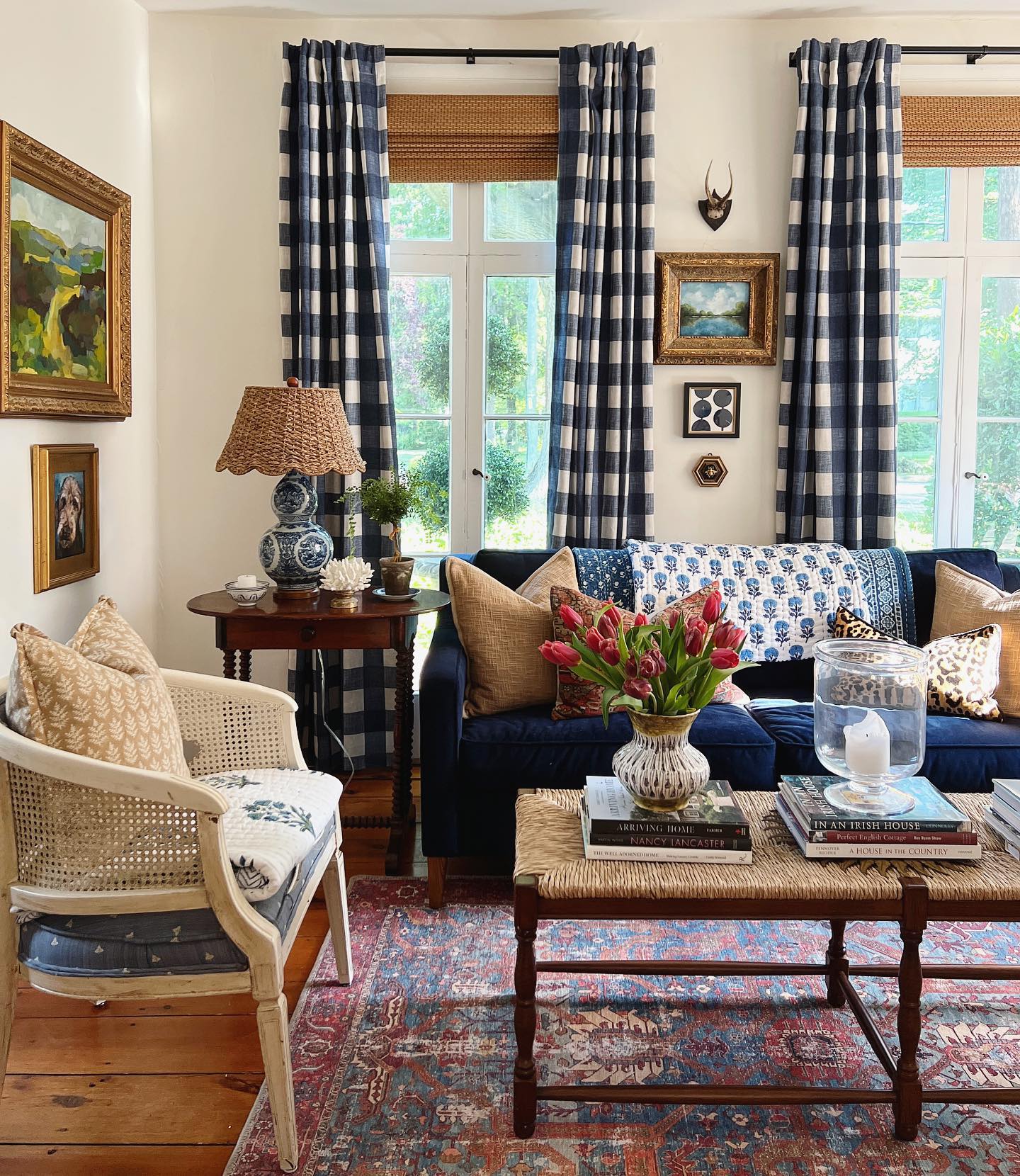
Large blue checks give this living room a graphic framework, while finer patterns on the throw, cushions, and lamp soften the effect.
The navy sofa anchors those fabrics, and the open weave of the pale chair introduces another texture without another dominant print. Start a similar mix with one large pattern at the windows.
Repeat its main color in a solid seat, then add smaller motifs where they can be seen up close. Warm woven shades and a textured lampshade bridge the blue textiles and brown furniture.
Keep some pillows nearly plain to give the eye a rest. A narrow bench used as a central surface leaves its legs and the patterned rug visible, preventing the arrangement from feeling heavy.
12. Give a Hutch a Living Room Role
Credits: Instagram
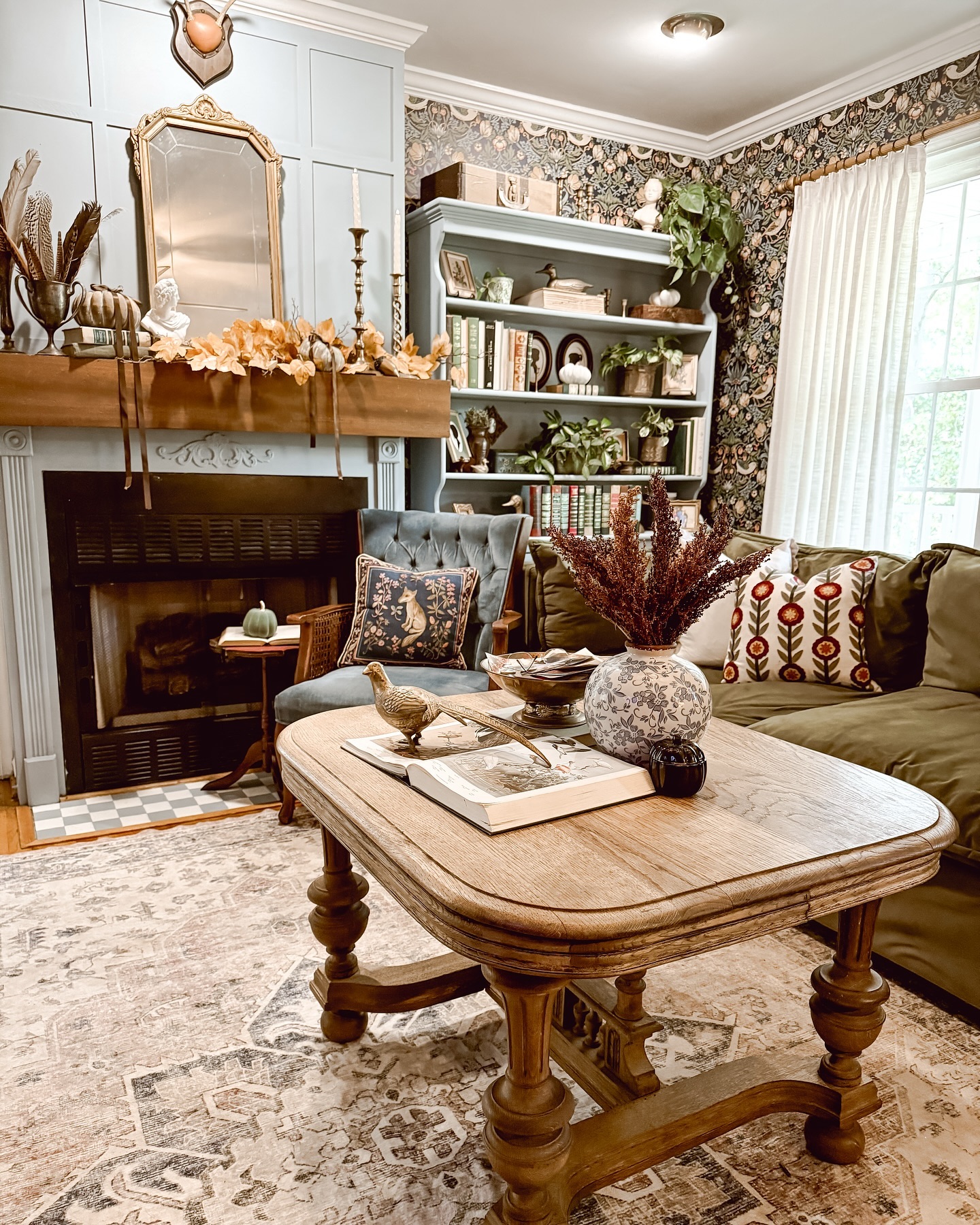
A freestanding hutch can make a living room feel established without a wall of custom cabinetry. Here, its muted blue finish echoes the fireplace wall and a tufted armchair, linking three different shapes.
Dark floral wallpaper fills the space behind it, while pale curtains and a light coffee table keep the corner bright. When relocating a cabinet, check its depth against the sofa and walking route before choosing the spot.
Use the open shelves for books, framed pictures, and plants, varying their heights so each grouping has space. Repeat the cabinet color in one nearby textile or painted detail.
Let the substantial coffee table provide a broad, simple surface beneath the smaller objects and patterns gathered around the room's edges.
13. Make a Trunk the Coffee Table
Credits: Instagram
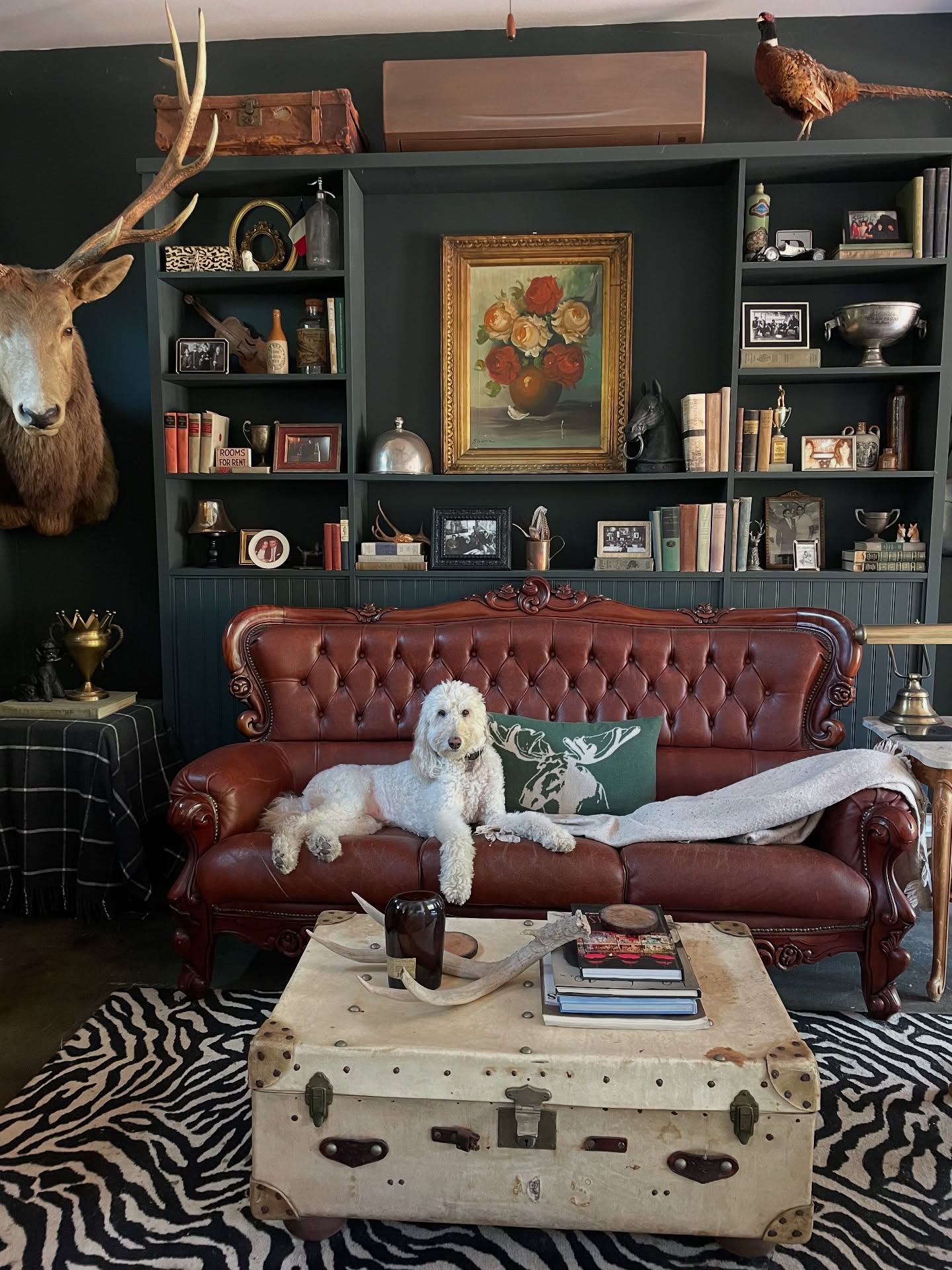
A pale trunk brings contrast to this dark green room, where a carved sofa and shelves of personal objects establish a richly collected atmosphere.
Its rectangular shape gives the seating a central surface, and the visible handles and corner details contribute character. If you want to use a trunk this way, check that it sits firmly and has a flat, sound top.
Choose one with a height that feels comfortable beside the sofa, and protect the surface beneath drinks. Keep decorations on a removable tray if you plan to access the interior regularly.
Here, a boldly striped rug separates the light trunk from the darker floor. A pale throw repeats that contrast across the seat, tying the two pieces together.
14. Compose the View Through a Doorway
Credits: Instagram
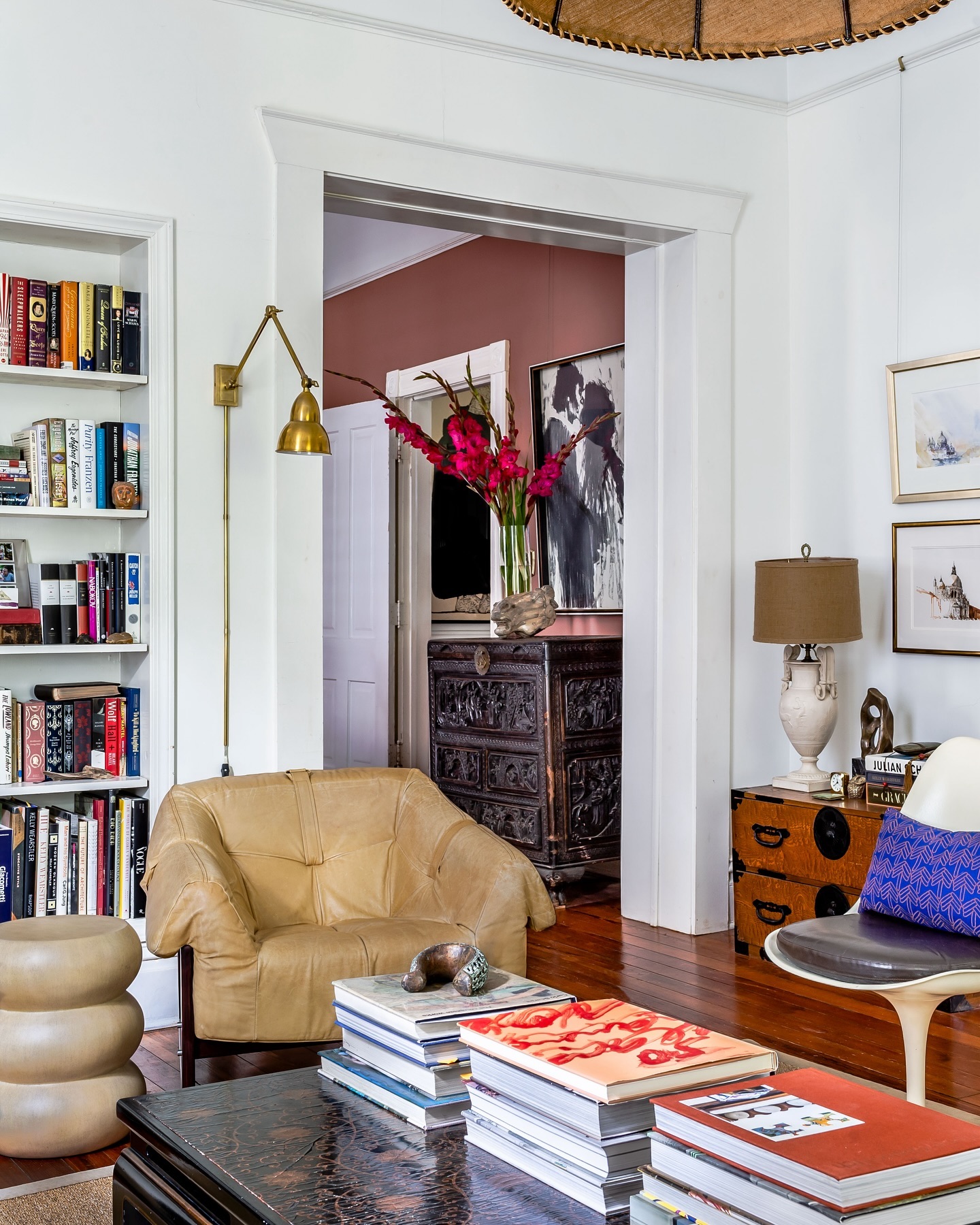
The view beyond a living room doorway can become part of its design. Here, crisp white trim frames a deeper terracotta room, where a carved cabinet and tall flowers create an inviting destination.
Inside the seating area, a tan armchair, a dark coffee table, and a patterned pillow keep the mix relaxed. Consider what you see from your favorite seat before placing furniture in adjoining spaces.
Move an interesting chest or artwork into that sightline, leaving the passage clear. Repeat a small amount of the neighboring wall color in books, flowers, or a cushion to connect the rooms.
A wall lamp beside the opening adds reading light without crowding the floor, preserving the generous doorway and its strong visual outline.
15. Lighten Dark Paneling With Pale Fabrics
Credits: Instagram
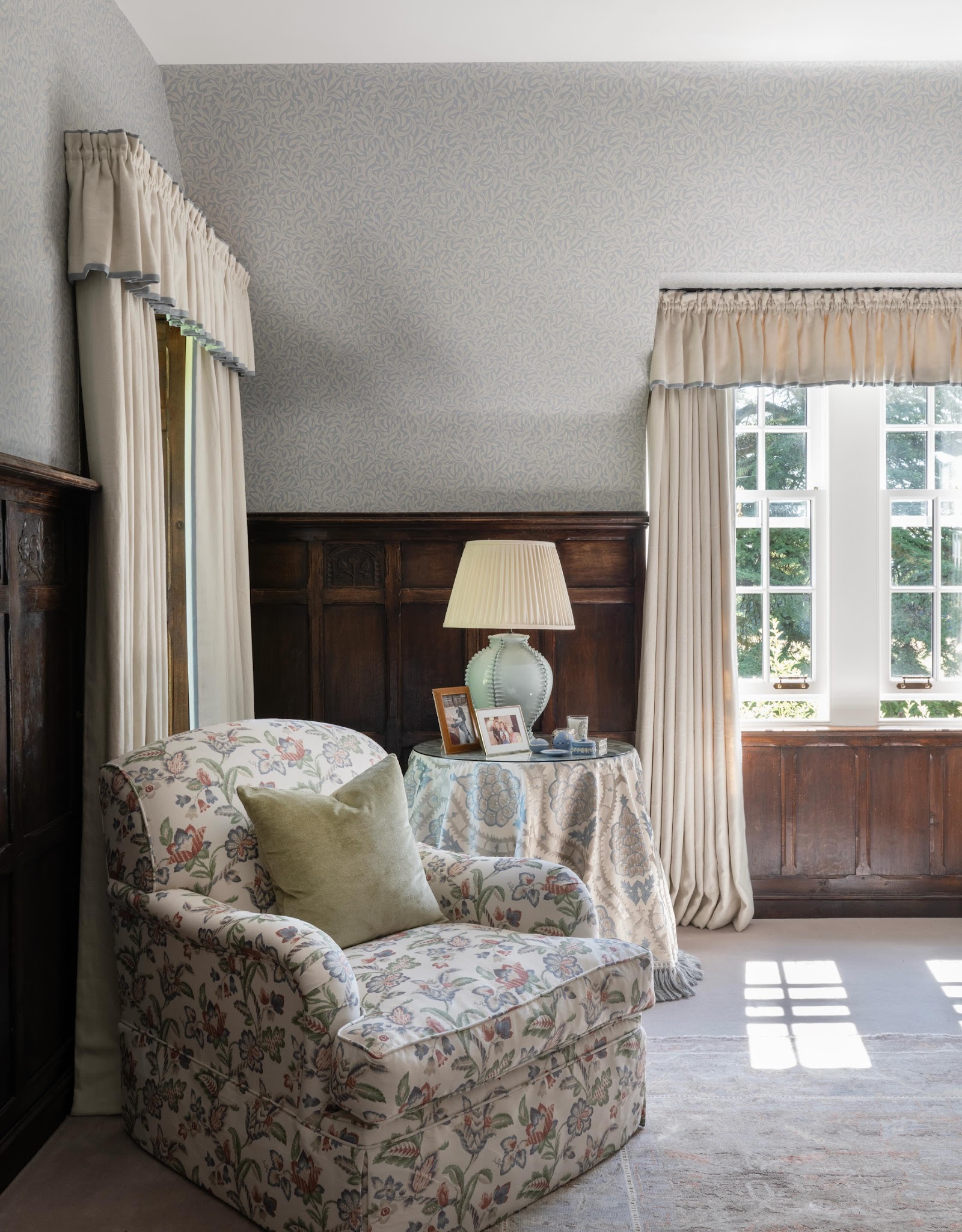
Dark paneling gives this corner depth, while pale patterned fabrics keep the seating area gentle and bright. A floral armchair, softly colored table skirt, and light curtains offer generous areas of cream against the darker walls.
Above the paneling, a small leafy pattern continues the decorative mood without demanding much contrast. To build a similar balance, gather fabric samples with related background colors before comparing their motifs.
Choose one larger floral and let the remaining patterns stay quieter. A plain pillow provides a resting point on the chair, and narrow blue trim connects the curtains to the tablecloth.
Set a substantial lamp beside the seat, keeping its shade above shoulder level and leaving a clear surface for a cup nearby.
16. Let a Red Pendant Punctuate Deep Blue
Credits: Instagram
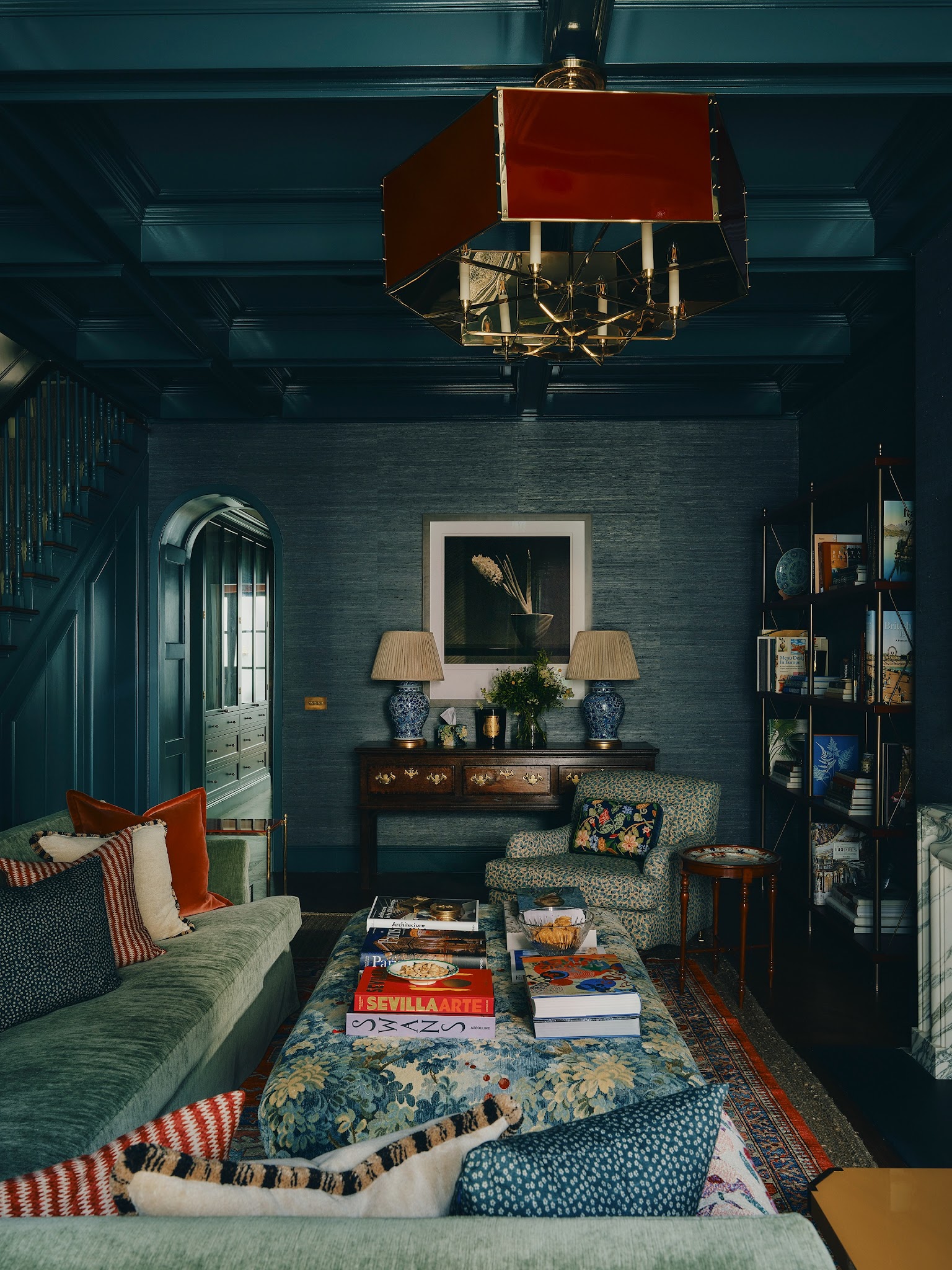
A deep red pendant draws the eye upward in this blue sitting room, bringing a warm accent to the paneled ceiling. Smaller orange and red notes in the cushions and rug carry that accent down through the seating.
The surrounding blue walls, patterned ottoman, and green upholstery remain close enough in tone to feel cohesive.
Try this approach when a room already contains several decorative furniture pieces: choose one strong accent color and repeat it in limited places at different heights.
Give the ceiling fixture sufficient clearance, especially beside a circulation route. Pale lampshades on the rear console create softer points of light, while their matching bases add order. Keep the remaining accessories varied in shape but restrained in color.
17. Create Warm Pools of Light With Varied Lamps
Credits: Instagram
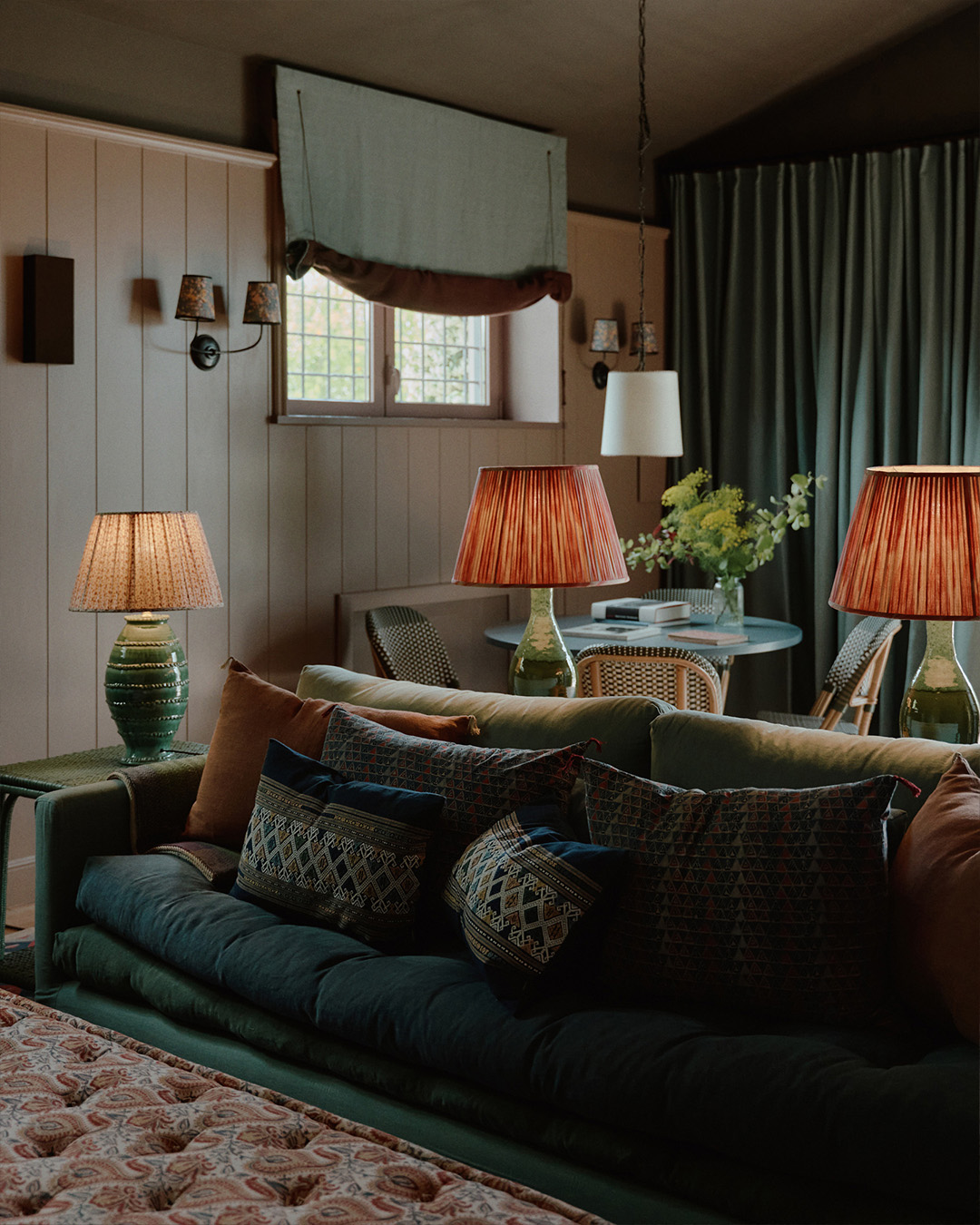
Several shaded lamps make this living room inviting after daylight fades. Green bases recur around the sofa, but their shades vary in shape, pattern, and warm orange tones.
Smaller wall lights and a simple hanging shade extend illumination toward the table behind the seating.
Borrow the layered approach by placing light where different activities happen: reading beside the sofa, conversation across the room, and a brighter task at the rear table.
Choose shades that hide bare bulbs from seated eye level. Related base colors can connect lamps that came from different places.
Keep the largest shades far enough apart that each has room to glow. Patterned cushions and a tufted ottoman add texture without interrupting the lamps' rhythm of color.
18. Borrow Your Palette From a Floral Painting
Credits: Instagram
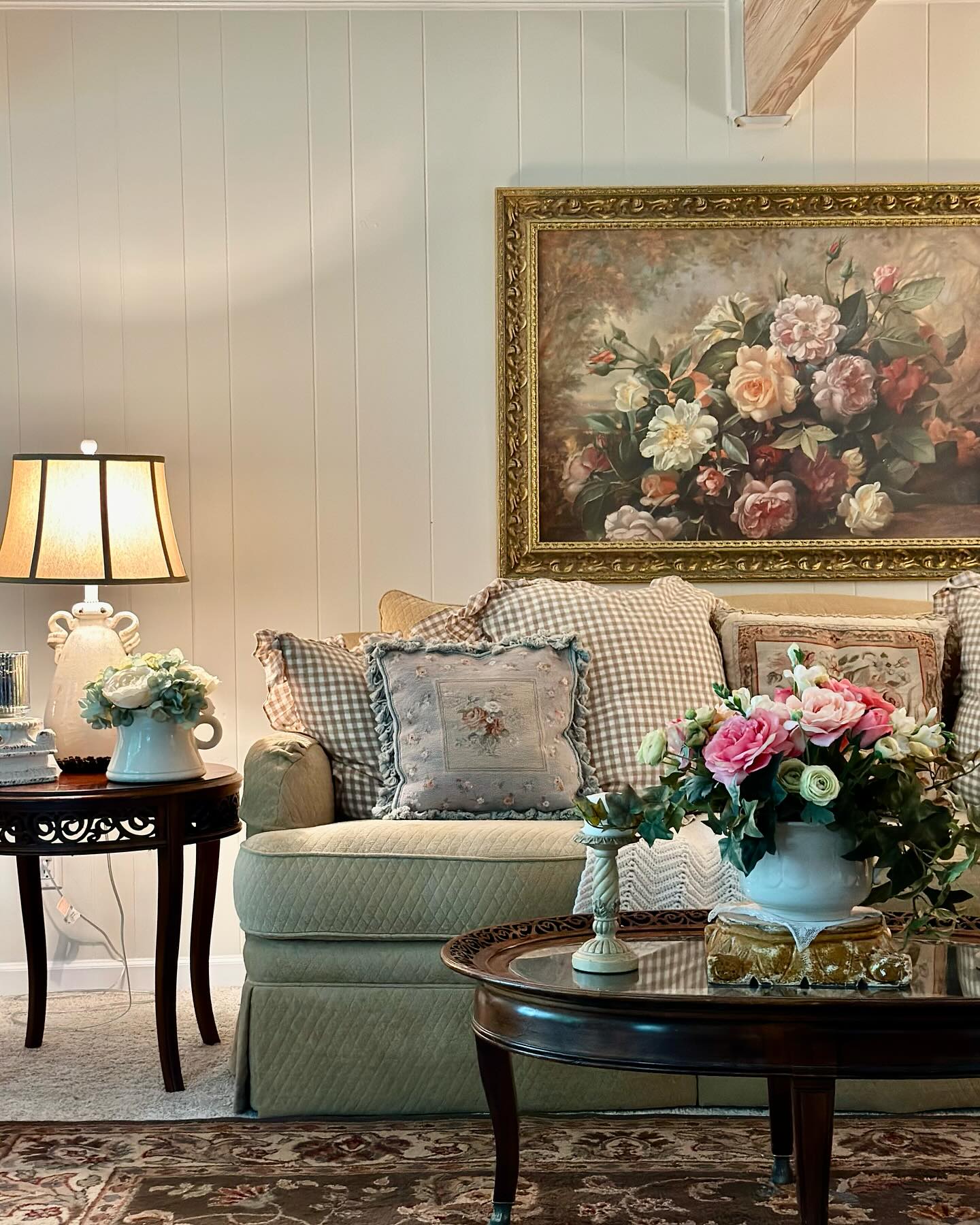
An oversized floral painting supplies a gentle color guide for this sitting area. Its muted pinks, greens, and creams reappear in the sofa, flower arrangements, and smaller cushions, while dark round tables give the pale fabrics definition.
Start with an artwork you enjoy, then pull two or three of its quieter colors into textiles. A checked cushion offers a simple geometric counterpoint to floral motifs, and a plain throw can keep the layers from becoming too busy.
Leave some wall visible around the frame so the artwork remains the focal point. On the coffee table, gather the smaller decorative pieces into one compact arrangement.
That leaves usable space around them and allows the curved outline of the table to show.
19. Arrange Straight Seats Around an Oval Ottoman
Credits: Instagram
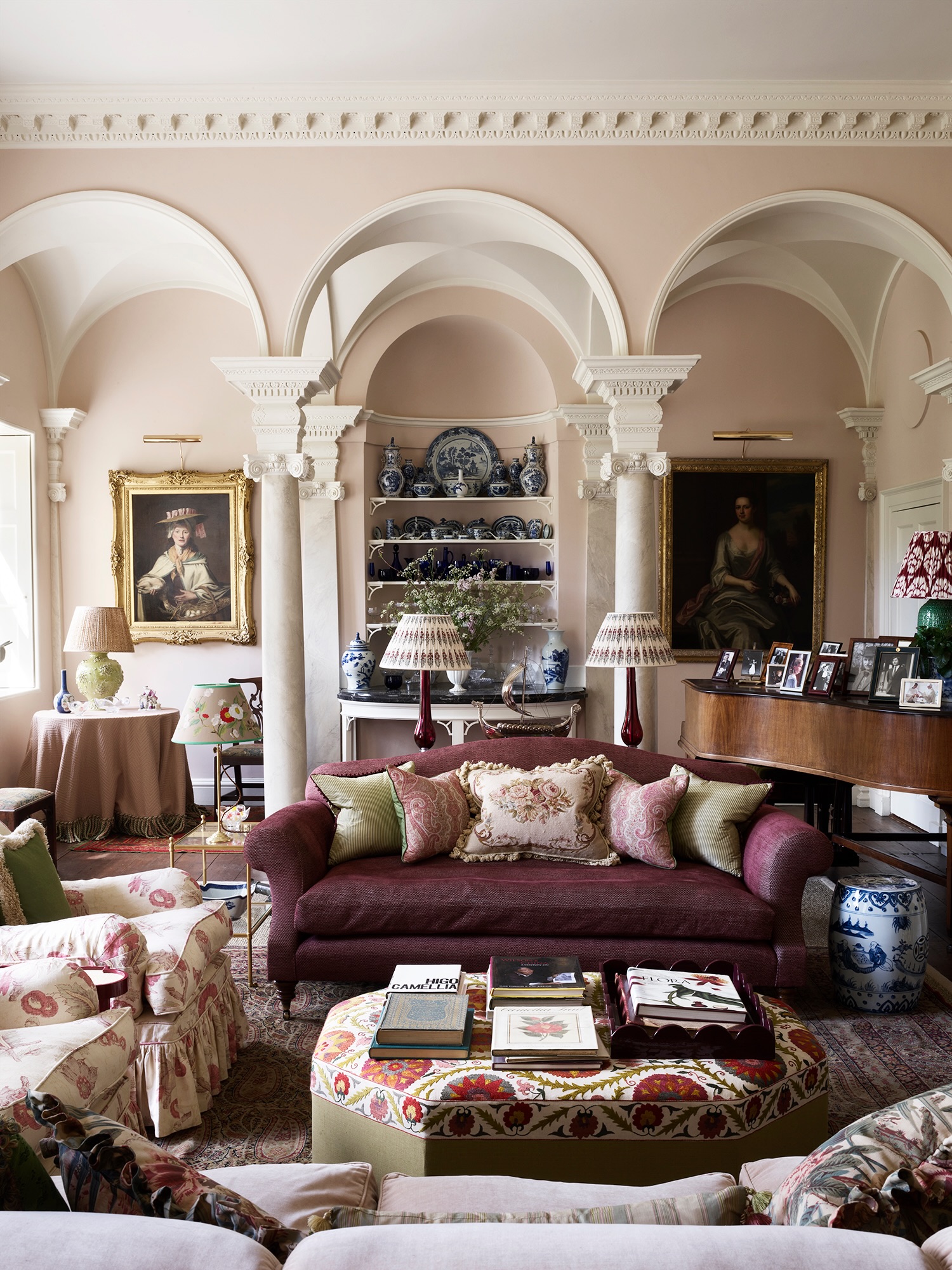
Seats can face one another squarely and still make a room feel welcoming. Here, a burgundy sofa, floral chairs, and another sofa form a conversational group around a broad oval ottoman.
The curved center softens the arrangement, while the straight placement preserves clear views toward portraits, display shelves, and the piano behind.
Try positioning the largest seats first, parallel or perpendicular to one another, before deciding whether any chair needs an angle. Leave enough space to walk between the furniture and reach the ottoman.
A tray gives its upholstered top a practical surface for small items. Repeating burgundy through lamps, cushions, and patterned fabrics ties the seating together, allowing the surrounding blue and white collection to retain its own identity.
20. Divide a Long Room With Low Furniture
Credits: Instagram
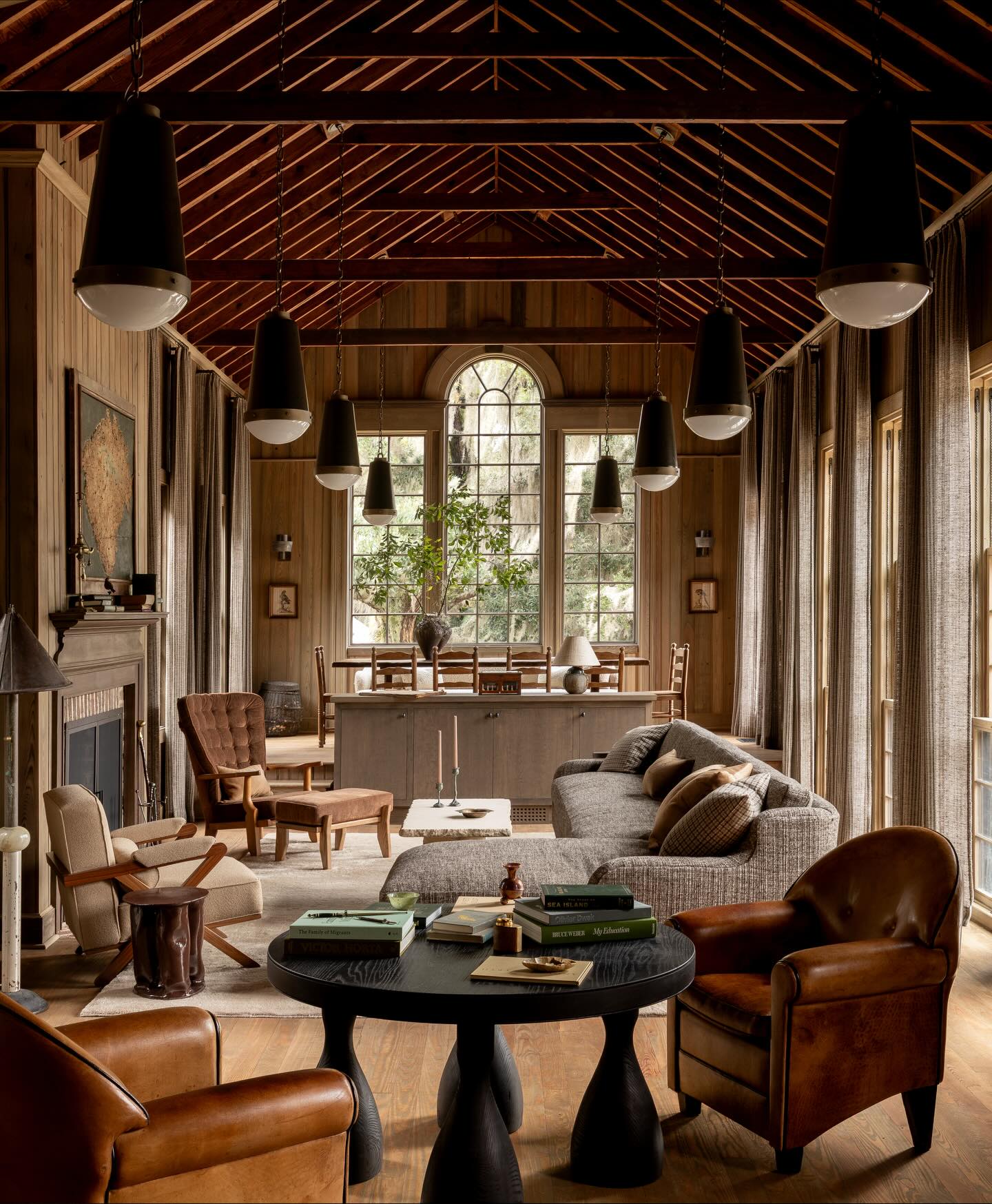
A long room feels more approachable when its furniture creates several places to pause. Here, a round table and two chairs occupy the foreground, a sofa group sits by the fireplace, and dining chairs gather beneath the far window.
A low cabinet marks the transition between living and dining without blocking the view of the tall arched glazing. Use that principle in an elongated space: define smaller groups, then preserve a clear route alongside them.
Keep dividing furniture below the main sightline so the ceiling and windows remain visible. Related brown and neutral upholstery colors connect the different chair shapes.
Repeated pendant lights reinforce the room's length, while rugs and curtains soften the extensive hard surfaces around each seating area.