
A white sofa can keep a room feeling calm even when the rug, walls, or artwork bring plenty of personality.
White Couch Living Room Ideas show how to make that light upholstery work with a range of styles, from exposed brick and rustic wood to coastal galleries and bohemian accents.
The key is to balance its clean appearance with thoughtful texture and contrast: try a woven coffee table, sculptural accessories, or a colorful rug. You’ll also find layout ideas for narrow lounges, open shelving, and seating arranged for conversation.
1. Let a White Couch Support an Expressive Art Wall
Credits: Instagram
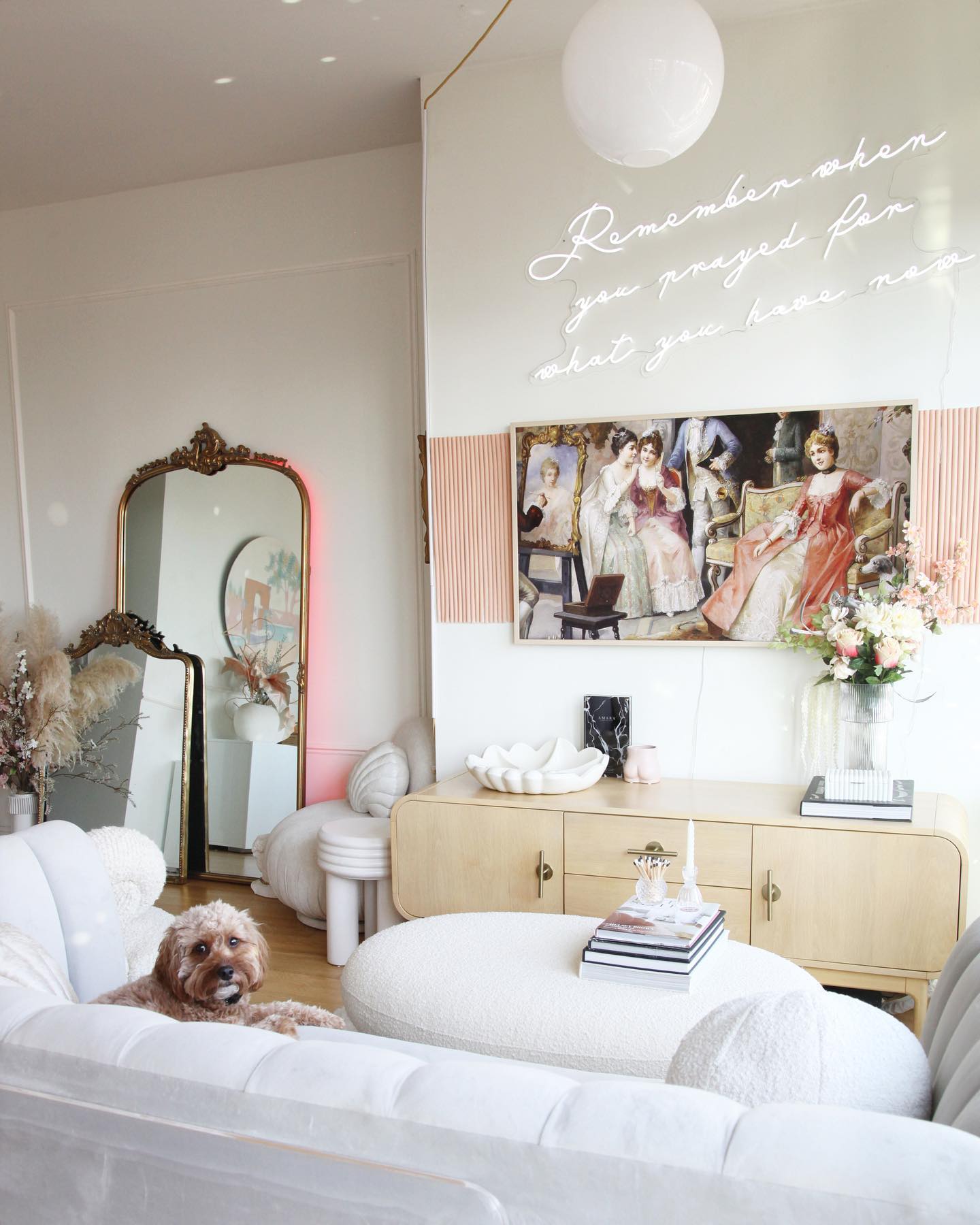
A white couch gives this playful apartment a calm place to land beneath a richly decorated wall. The rounded ottoman repeats its pale upholstery, while ornate mirrors, a colorful picture, and a glowing script sign bring personality above the seating.
A light wood cabinet connects the white furniture to the warmer floor. Try this arrangement when your favorite artwork spans several styles.
Keep the largest upholstered pieces simple, then repeat one accent color in a smaller surface or accessory. Here, blush paneling behind the picture provides that connection without covering the entire wall.
Give decorative objects some breathing room on the cabinet, and secure leaning mirrors appropriately. The room can feel collected while the seating remains comfortable and visually uncomplicated.
2. Use White Seating to Open a Narrow Farmhouse Lounge
Credits: Instagram
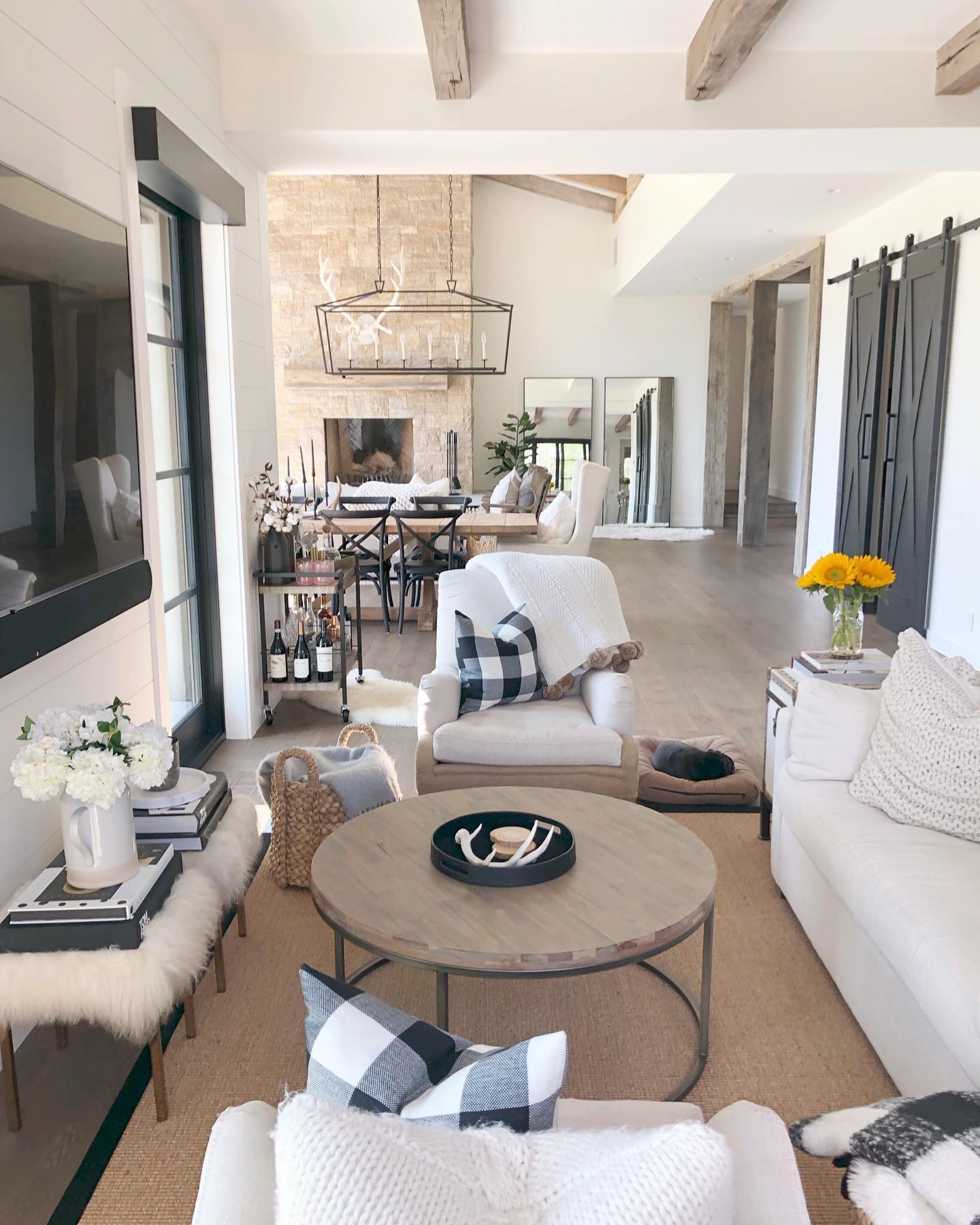
The white couch and matching chairs keep this narrow living area feeling light despite its strong black accents. A round coffee table creates an easy center between the seats, and its open metal base leaves more floor visible.
Buffalo check pillows repeat the dark barn doors and dining chairs farther back, linking the separate areas. For a similar layout, measure the route through the room before choosing furniture depth.
A compact table with rounded edges can help, but clear walking space still matters. Layer a textured rug beneath the seating to distinguish it from the dining area.
Small baskets and a slim bench provide useful landing places without requiring another bulky cabinet beside the couch or along the main walkway.
3. Balance a Patterned Rug with a Tailored White Sofa
Credits: Instagram
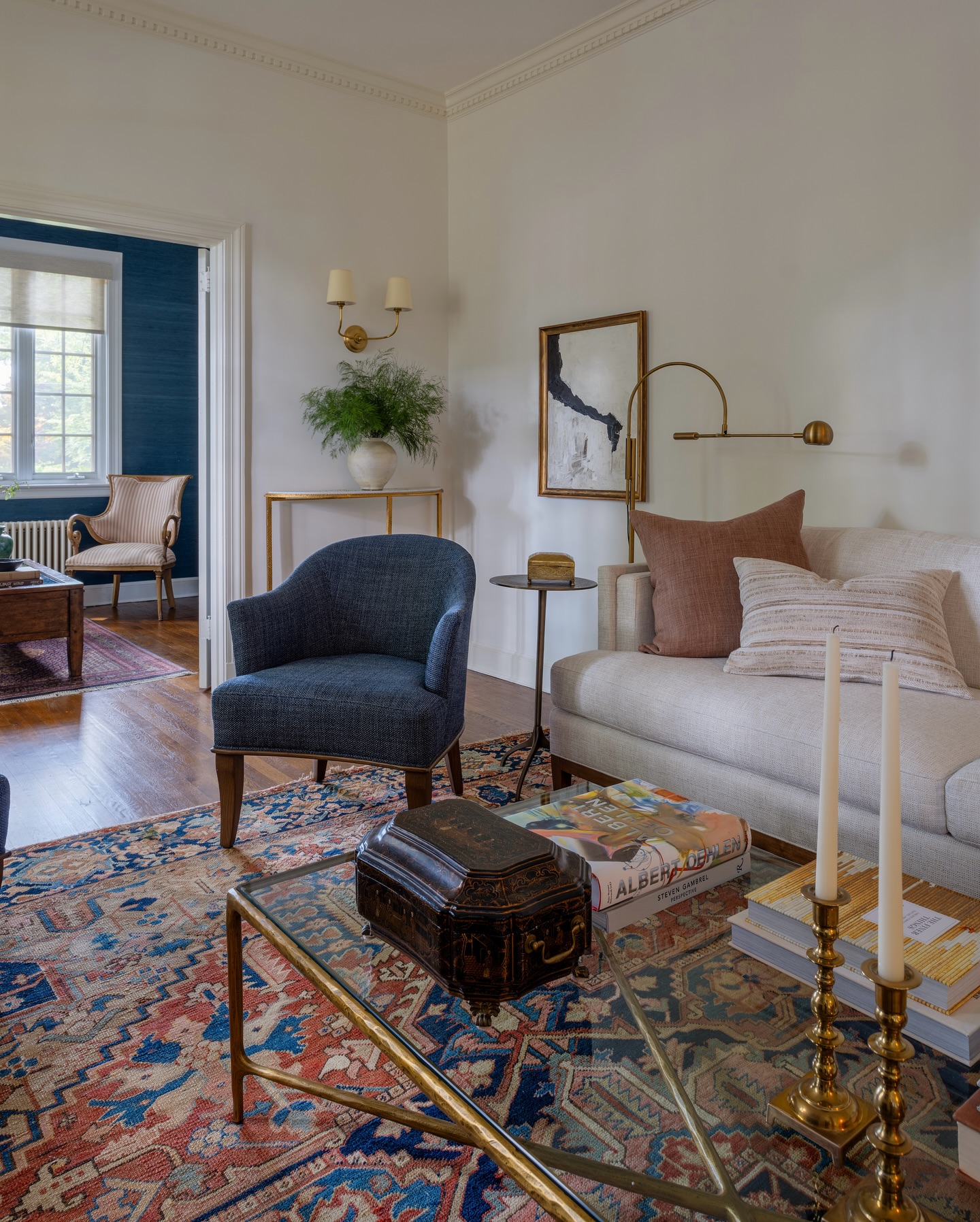
A tailored white sofa gives the richly patterned rug room to shine in this traditional living room. The deep blue chair picks up color from the rug and the adjoining room, creating a connection across the doorway.
Slim brass furniture and lighting add warm highlights without introducing much visual weight. This is a helpful approach when you already own a colorful rug and need a couch that will work with it.
Choose white upholstery with visible texture so it feels substantial beside the pattern. Pull one darker rug color into an accent chair, then keep most pillows quieter.
A glass coffee table preserves the view of the rug, while a small side table keeps a drink within comfortable reaching distance.
4. Soften Exposed Brick with a White Corner Sectional
Credits: Instagram
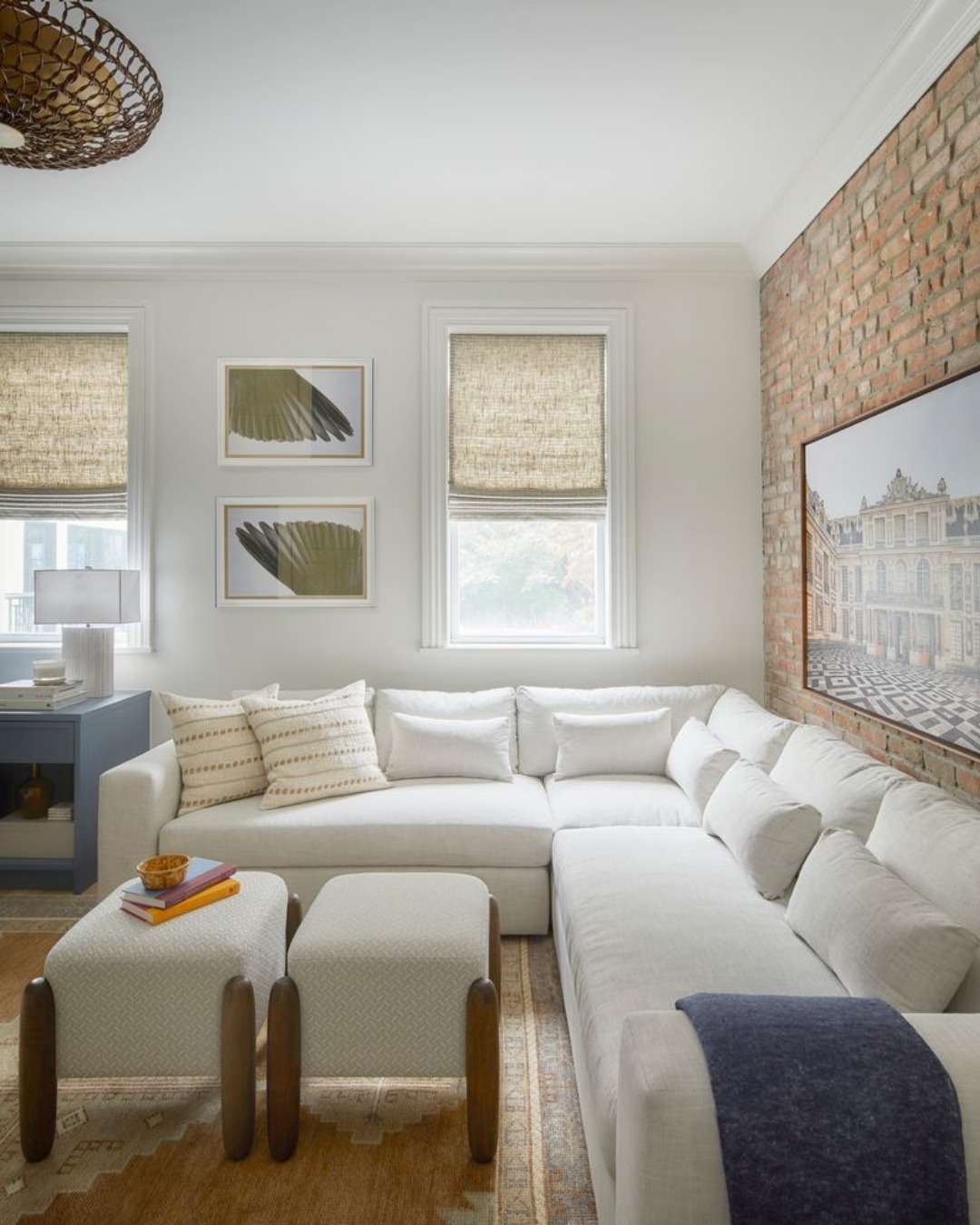
The white sectional wraps around two walls, turning this brick accented living room into a comfortable lounge. Its generous cushions soften the rough masonry, while woven window shades and wood details bridge the warm and cool surfaces.
Two small upholstered stools occupy the center instead of one heavy coffee table. Borrow this idea when you want flexible seating in a compact room.
Check the sectional's complete footprint, including the corner, before ordering. Keep the upholstery pale and relatively plain so the brick retains its character.
A pair of movable stools can serve as footrests or occasional seats, with a tray added when needed. A blue throw introduces color without overwhelming the soft palette or competing with the large framed artwork.
5. Face Two White Sofas Across a Glass Table
Credits: Instagram
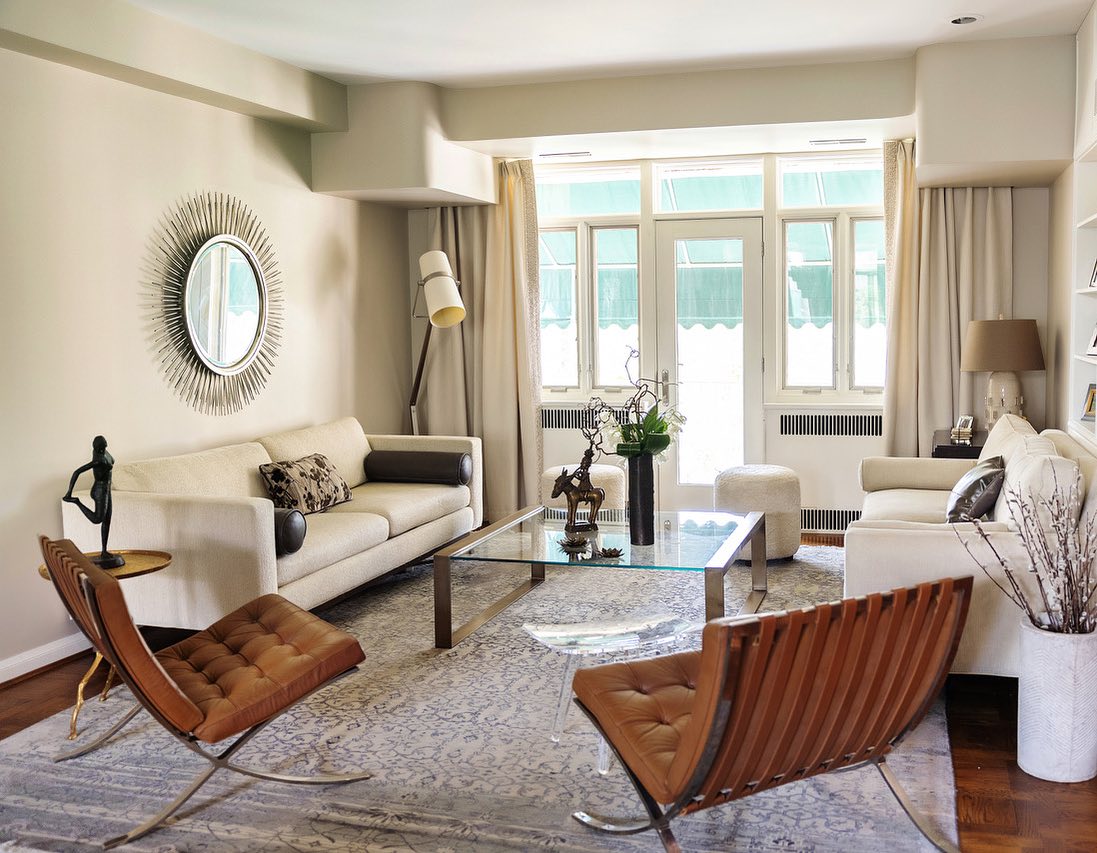
Two white sofas face each other across a glass coffee table, creating a conversation area that feels balanced and open. Caramel leather chairs complete the group without matching the sofas, adding warmth through both color and material.
The long pale rug connects all the seats, while a sunburst mirror gives one wall a clear focal point. Use this layout when conversation matters more than directing every seat toward a television.
Check the distance between the sofas so people can comfortably hear each other and reach the table. Keep a clear path to doors and windows.
A transparent tabletop reduces visual bulk in the middle, and different pillow shapes help distinguish the two sofas while preserving their shared light, understated appearance.
6. Keep a White Sofa Minimal with Sculptural Contrast
Credits: Instagram
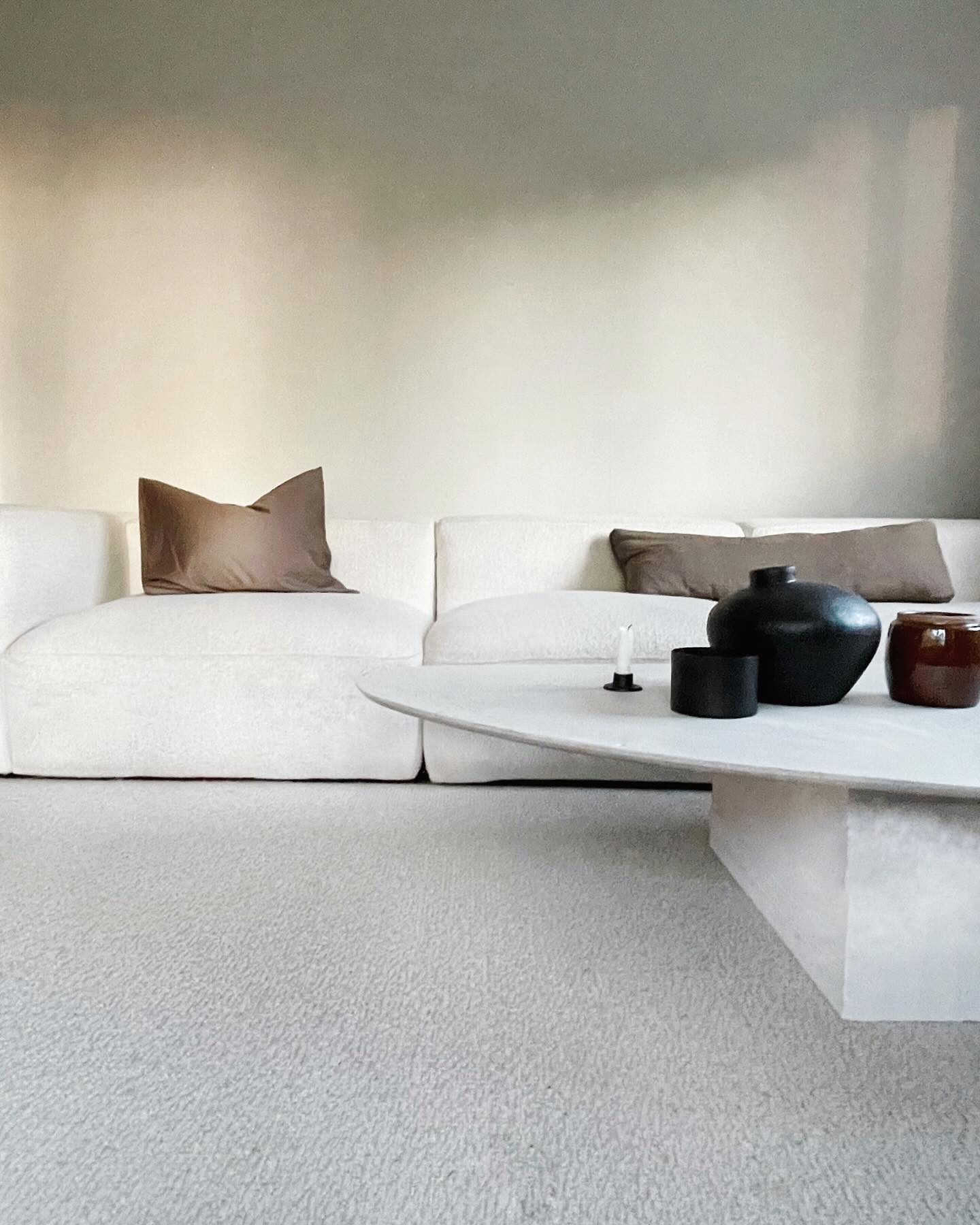
A broad white sofa, pale rug, and low white table create a quiet foundation in this minimalist living room. The interest comes from proportion and a few chosen contrasts: taupe pillows, dark pottery, and the table's curved top.
Leaving the wall mostly bare allows daylight and shadow to become part of the composition. To try this look, start by removing accessories rather than buying a matching set.
Keep the sofa's seat cushions visible and use only the pillows you need for comfort. Choose one substantial table shape that relates to the couch's scale.
Group a few darker objects together so they read clearly against the pale surface. Subtle texture in the upholstery and rug prevents the white from feeling flat.
7. Float a White Sofa in Front of Open Shelving
Credits: Instagram
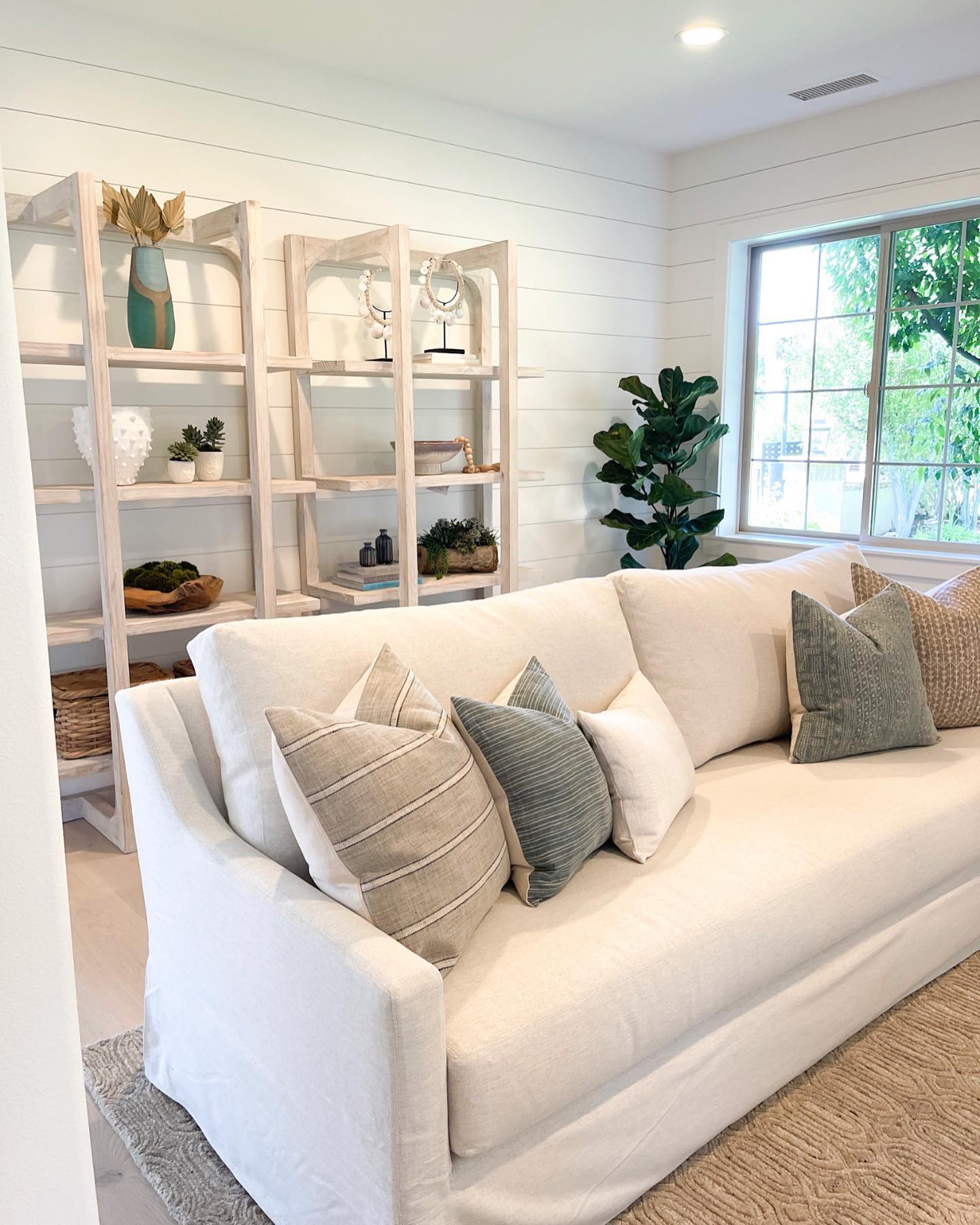
The white sofa sits in front of pale wood shelving, creating depth without adding a dark backdrop. Blue gray and sandy pillows provide gentle definition against the upholstery, while baskets, ceramics, and small plants repeat those natural tones behind it.
The shelving stays lightly arranged, so its open structure remains visible. Use this idea when a couch needs to sit away from the wall.
Leave enough room behind it to reach the shelves and clean comfortably. Choose display pieces of different heights, but avoid filling every compartment.
Repeating a few materials is more effective than collecting many unrelated accents. A larger plant beside the window gives the composition height, balancing the sofa's long horizontal shape without crowding the seating area.
8. Build a Coastal Gallery Above a White Couch
Credits: Instagram
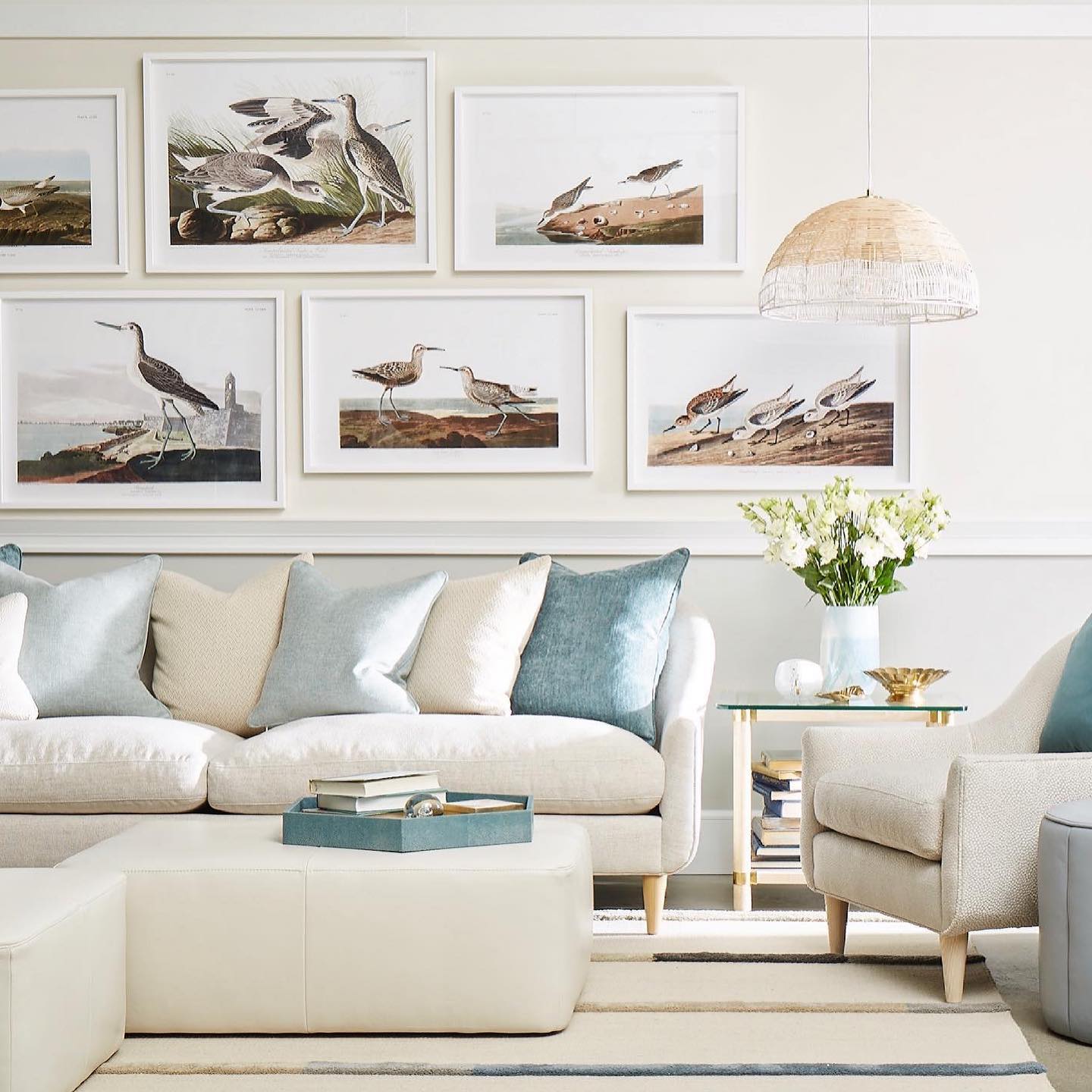
A group of shorebird prints gives this white couch a distinct coastal setting. Matching white frames keep the varied illustrations organized, while blue pillows and a striped rug carry their softer colors into the seating area.
The pale ottomans continue the couch's light profile and provide a generous place to rest your feet. This approach works well when you want a themed room with subtle references to the coast.
Choose artwork you enjoy first, then borrow two or three colors for textiles. Plan the gallery as one composition rather than hanging each print separately.
A tray creates a stable surface on an upholstered ottoman. A woven pendant adds texture overhead, balancing the smoother glass side table and the furniture lines.
9. Add Hidden Extra Seats Around a White Slipcovered Sofa
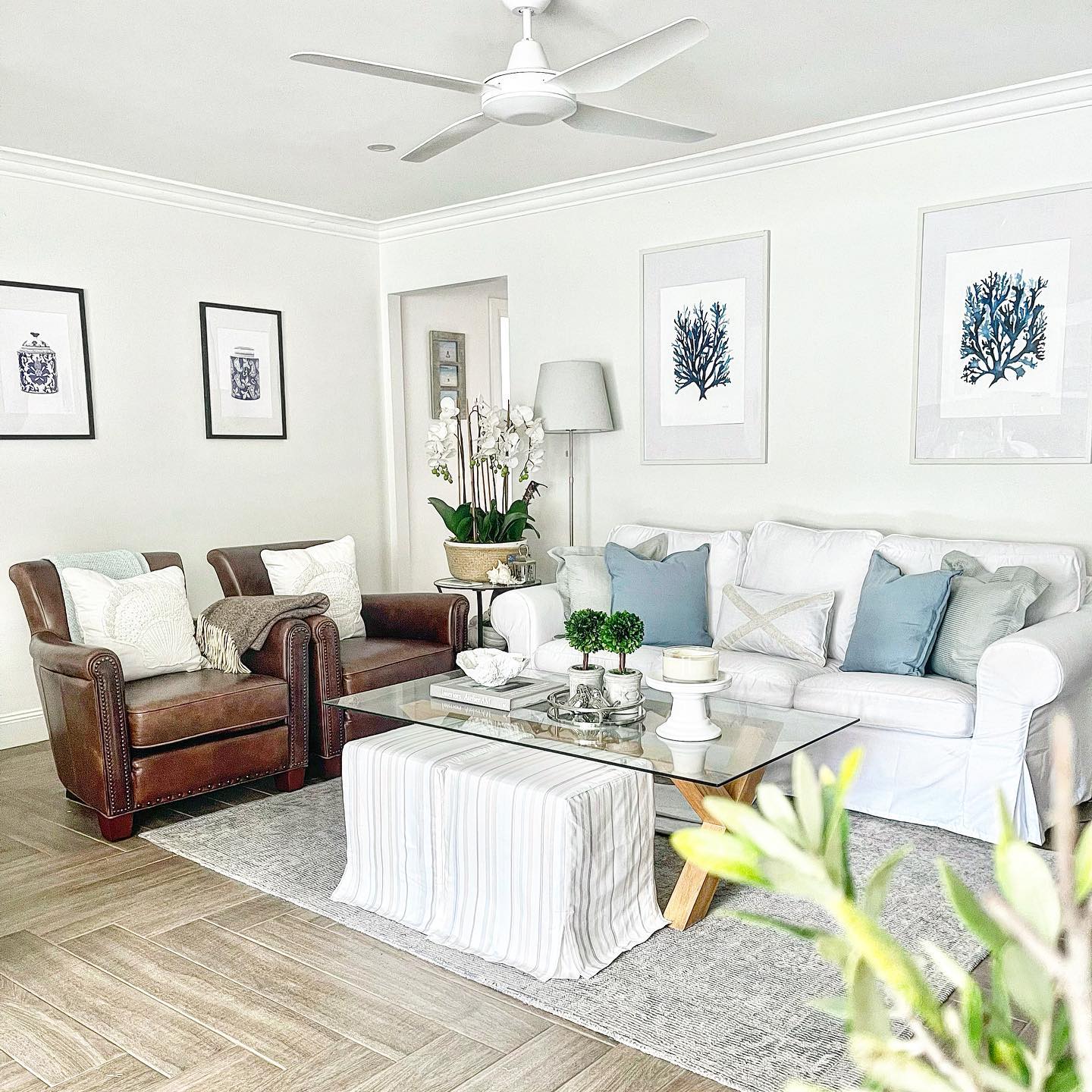
Credits: Instagram
A white slipcovered sofa brightens this family room while brown leather chairs give the seating group some depth. The glass coffee table keeps the center visually open and reveals striped ottomans tucked underneath.
They can come forward for a game or an extra guest, making the arrangement useful beyond everyday lounging. Try the idea with ottomans that fit fully below your table without catching on its supports.
Keep their fabric related to the sofa or rug so the extra pieces feel intentional. Pale blue pillows and framed blue artwork connect the seating to the walls.
A simple, light rug marks the conversation area, while the contrasting chairs prevent the white couch from blending into its surroundings or looking overly delicate.
10. Warm White Upholstery with a Woven Coffee Table
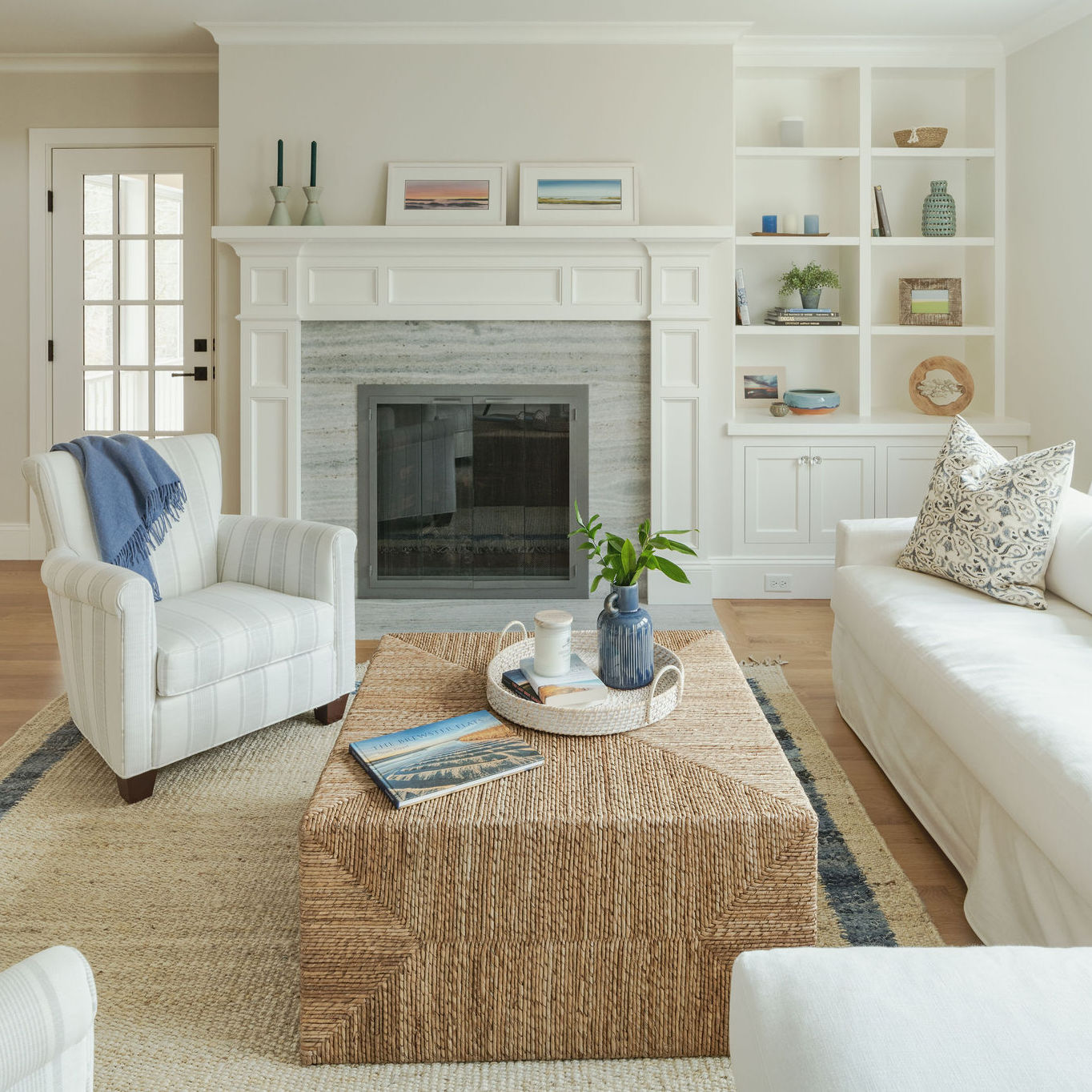
Credits: Instagram
A woven coffee table brings warmth and texture to this white sofa arrangement. Its solid rectangular shape anchors the lighter upholstery, while the striped chair and blue accessories introduce a relaxed coastal rhythm.
The fireplace and built-in shelves share a pale finish, allowing the natural materials to stand out. For a similar balance, choose a table that contrasts with the sofa's fabric instead of matching its color exactly.
Repeat the weave in a small tray or basket, then stop before the room feels overly coordinated. Keep the mantel arrangement low enough to leave the architectural details visible.
A blue throw and one patterned pillow supply color at seating level, connecting the couch to the pottery and artwork on the shelves.
11. Pair a Low White Sofa with Rich Wood Architecture
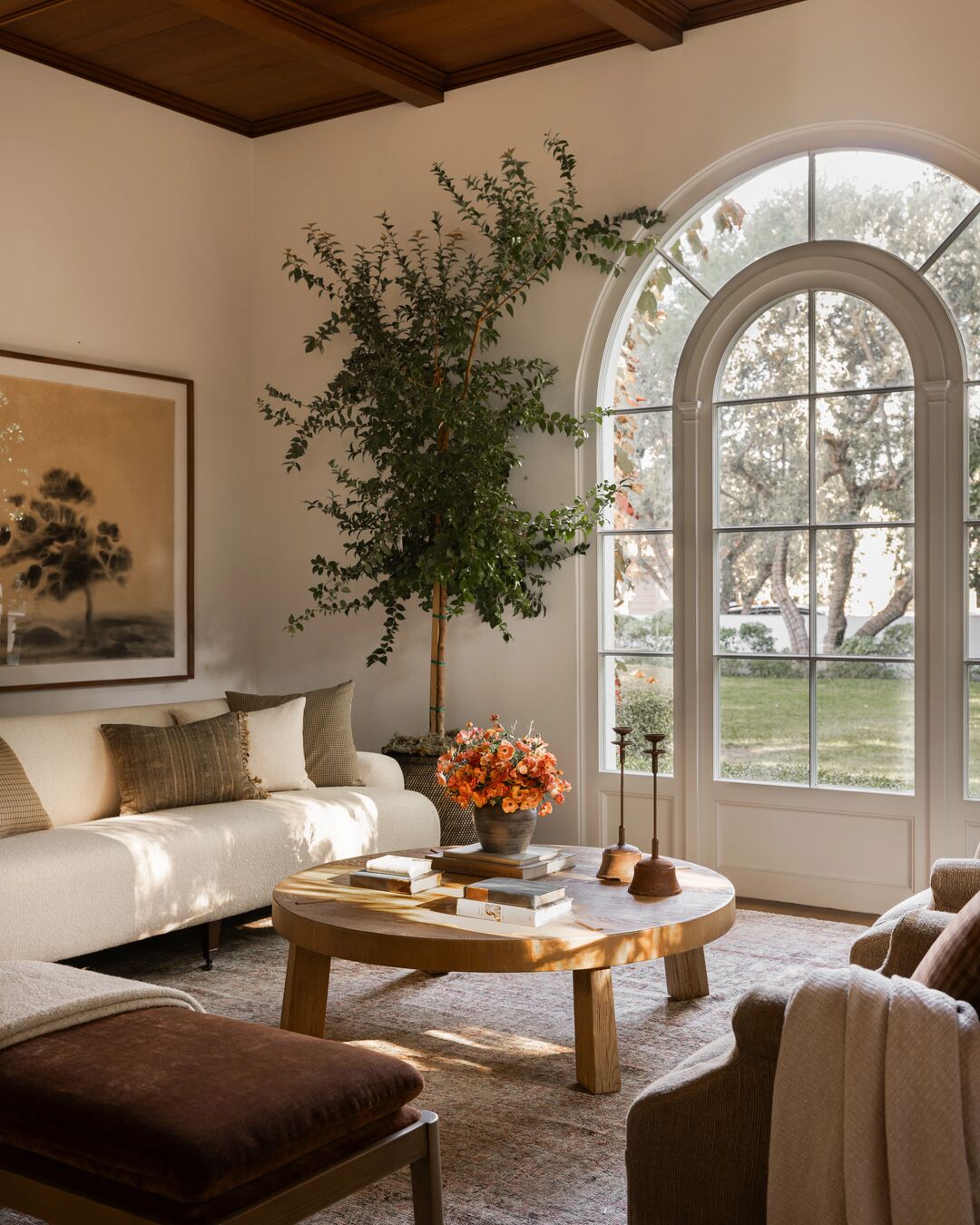
Credits: Instagram
A low white sofa provides a bright counterpoint to the rich wood ceiling in this living room.
Its rounded arms soften the geometry of the ceiling panels and arched doorway, while a substantial wood coffee table connects the seating to the architecture.
Earthy pillows and a brown upholstered bench keep the white from feeling isolated. This combination is useful in rooms with existing woodwork you want to preserve.
Select a couch with a simple silhouette and let the grain provide much of the decoration. Keep artwork relatively quiet and use a taller plant to fill vertical space beside the sofa.
A patterned rug in muted tones can unite the different woods without competing with the room's impressive window and ceiling.
12. Give a Rustic Room a Pair of Light Sofas
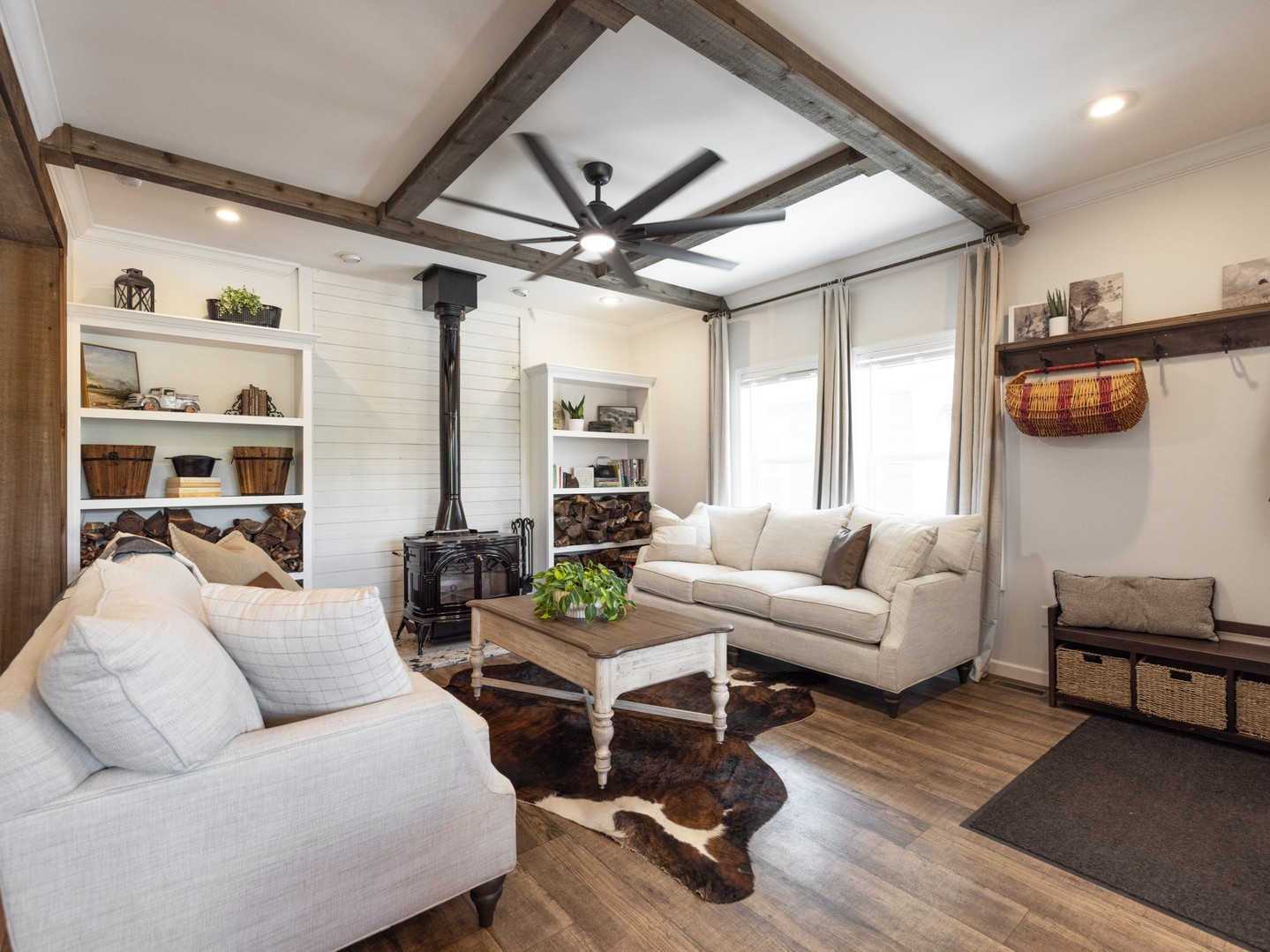
Credits: Instagram
Two white sofas soften the strong rustic elements in this living room, including exposed beams, a dark stove, and a patterned hide rug.
The furniture sits at an angle around a weathered wood coffee table, making the room feel conversational rather than arranged in a rigid row. Pale curtains repeat the upholstery near the windows.
To adapt this look, keep the largest seating pieces light and introduce darker materials in smaller amounts. A combination of plain and subtly checked pillows adds interest without distracting from the beams.
Use baskets and shelves for everyday storage, leaving the tabletop mostly clear. If your room includes a stove, follow its required clearances when placing furniture, curtains, rugs, and any stored combustible materials nearby.
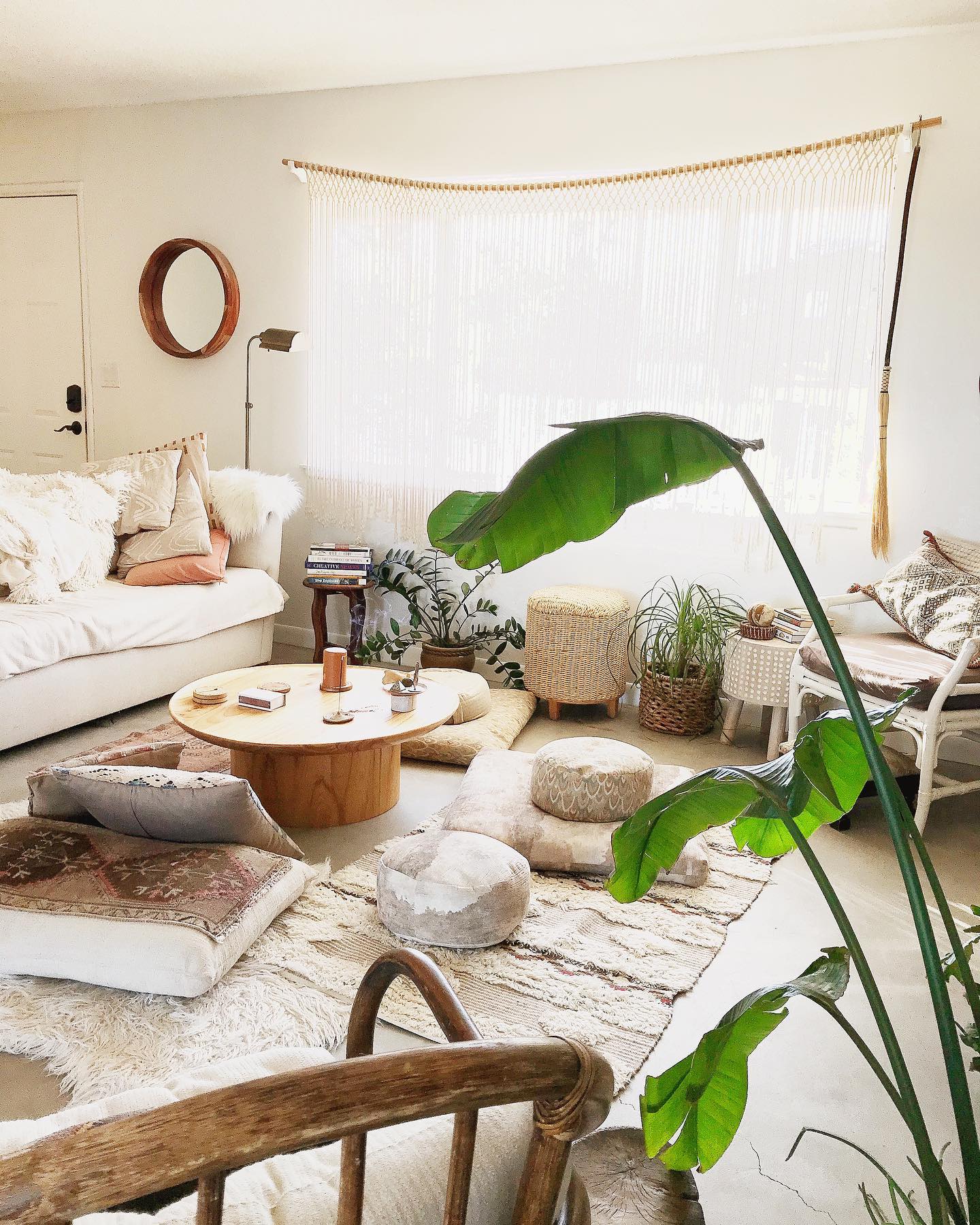
13. Make a White Couch the Center of a Bohemian Lounge
Credits: Instagram
A white couch keeps this layered living room feeling airy amid patterned floor cushions, plants, and woven accessories. The low round table suits the relaxed seating, while a fringed window treatment filters the bright light behind it.
Soft peach pillows add warmth without changing the room's gentle palette. The useful lesson is to vary texture and height around a simple couch.
Mix a regular seat with movable cushions only where they will be comfortable for the people using the room. Keep the main walking route clear, especially around larger plants.
A pale rug gathers the arrangement into one area, and a few wood accents give all those soft surfaces a firmer visual foundation without making the space feel overly formal.
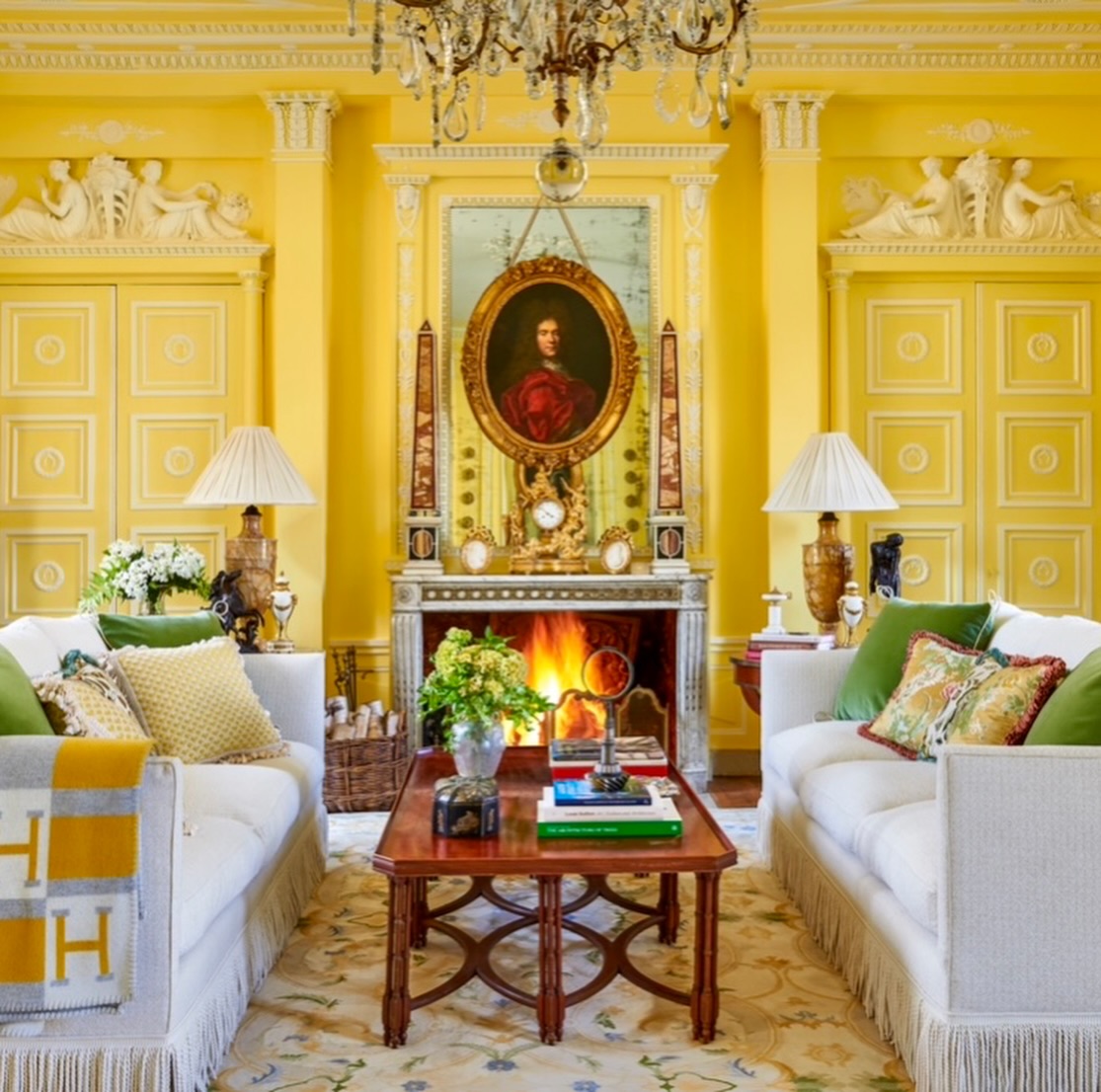
14. Set White Sofas Against Sunny Yellow Walls
Credits: Instagram
White sofas create a bright visual pause in this ornate yellow living room. Their simple upholstery leaves the carved paneling, gilded details, and portrait above the fireplace clearly visible.
Green and yellow pillows connect the seating to the colorful surroundings, while fringed sofa bases introduce another traditional detail. You can borrow the color relationship without reproducing the grand architecture.
Pair a white couch with a warm yellow wall, then repeat a little yellow in a pillow or throw. Test the paint beside your upholstery in daylight and evening light before committing.
A wood coffee table can add depth between the pale seats. Keep larger accessories organized so the strong wall color remains cheerful rather than competing with every individual object.
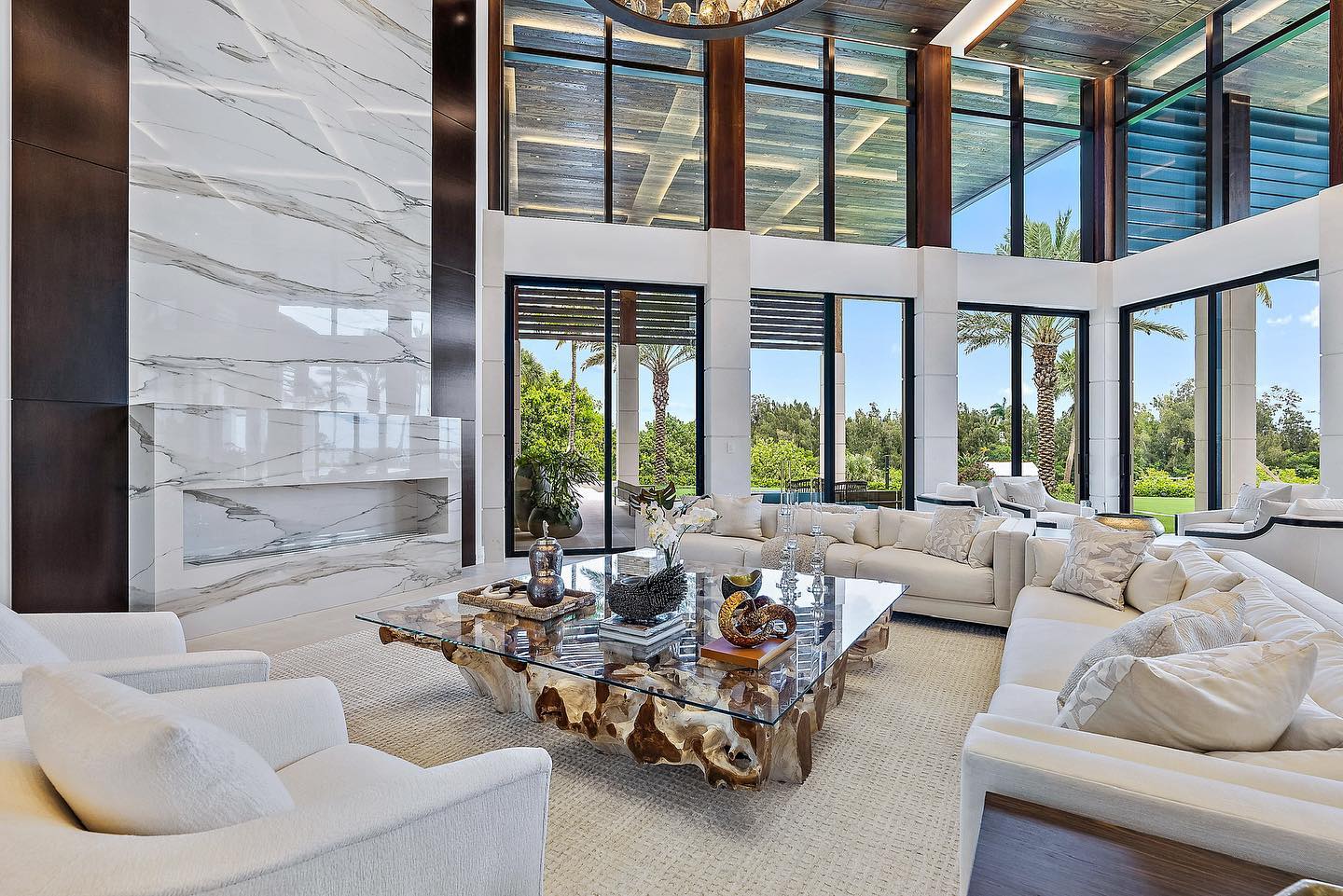
15. Use White Seating to Balance a Dramatic Great Room
Credits: Instagram
White sofas and chairs form a calm seating group beneath the tall windows in this expansive living room. The pale upholstery connects with the large stone wall, while dark window frames and wood trim define the architecture.
A sculptural table base becomes the room's central decorative feature beneath its clear glass top. When working with dramatic finishes, choose seating that supports them instead of adding another competing pattern.
Keep the furniture low enough to preserve the view across the room. Use a generously sized rug to bring the separate seats together and make the group feel intentional.
A few tonal pillows add comfort without distracting from the table, allowing the natural light and contrasting materials to carry the overall composition.
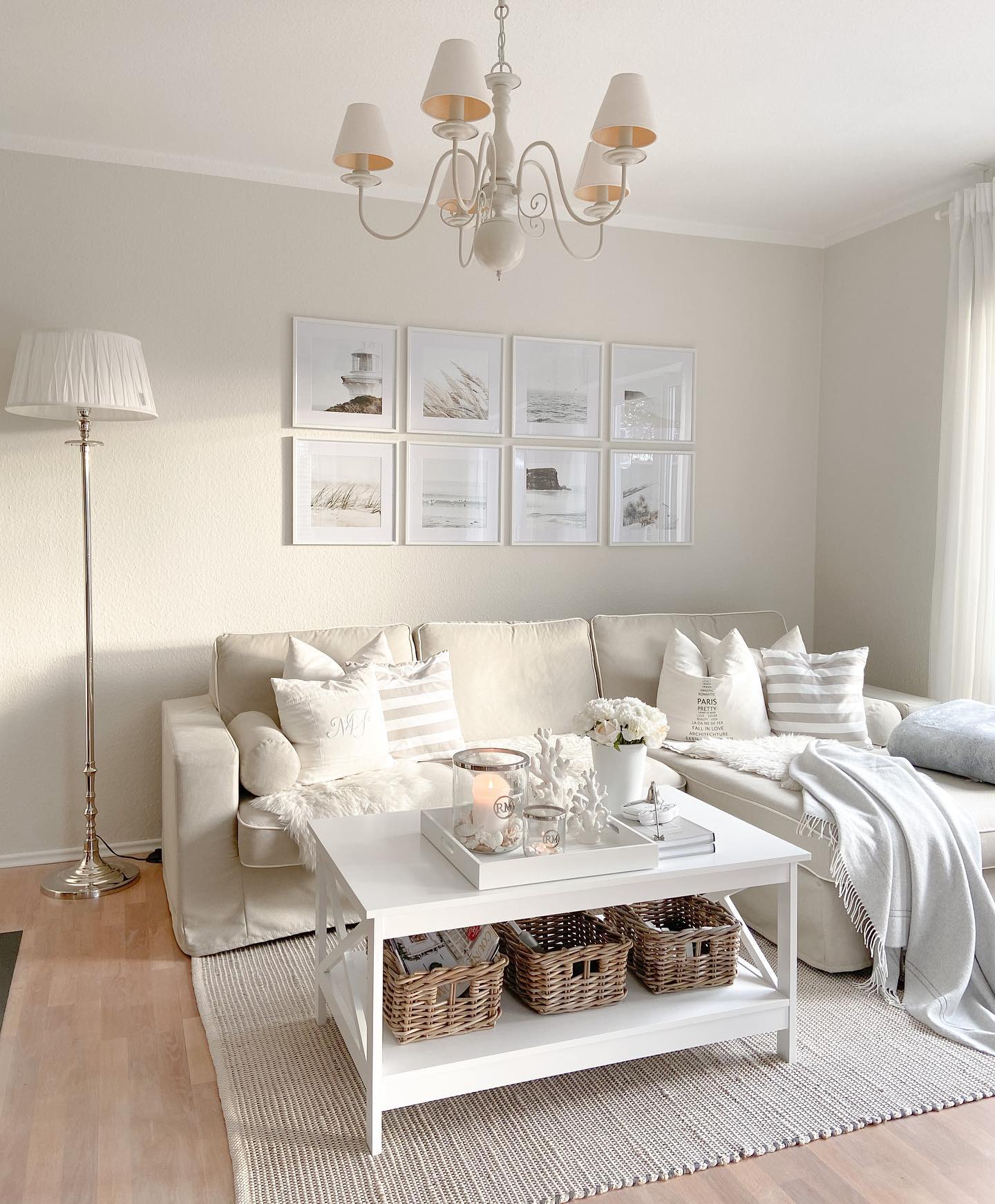
16. Layer Soft Textiles on a White Chaise Sofa
Credits: Instagram
A white chaise sofa becomes especially inviting through layers of pale pillows, a fringed throw, and soft seat coverings. The colors stay close together, allowing their different textures to provide the interest.
A white coffee table continues the light palette, while woven baskets on its lower shelf add warmth and everyday storage. This is an approachable way to refresh an existing couch without changing the room's main furniture.
Choose a few textiles that feel different to the touch, then leave enough clear seating for comfortable use. Keep the throw easy to fold or remove.
Repeating white in the frames and light fixtures creates continuity, while the wood floor and baskets prevent the room from becoming visually flat or overly cool.
17. Give a White Sofa Woodland Texture
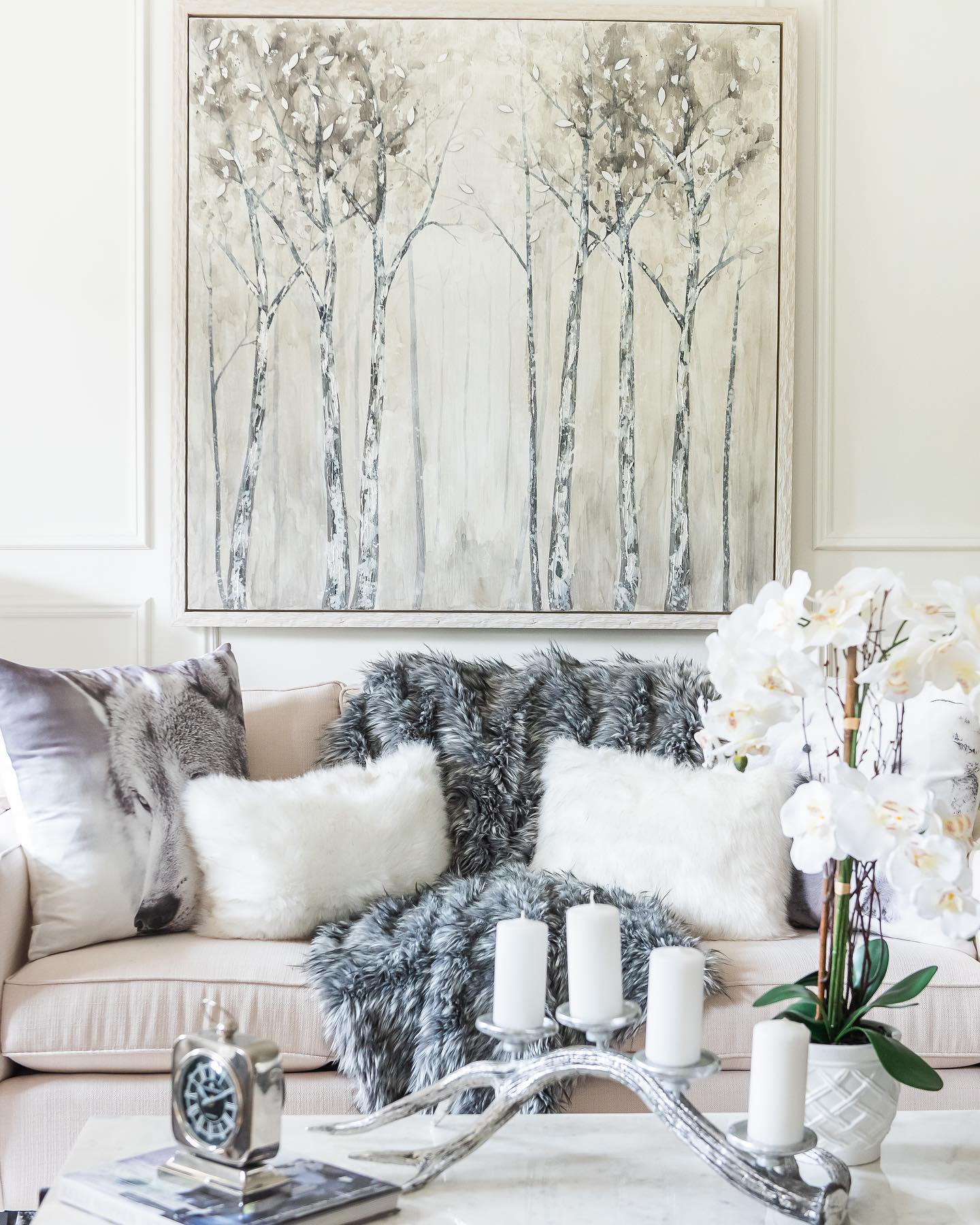
Credits: Instagram
A pale sofa supports a woodland inspired mix of textures in this living room. Fluffy white pillows, a gray throw, and animal imagery bring the seating into the same story as the large tree artwork above it.
Silvery accessories echo the cooler details, while a white orchid adds a more delicate shape in front. To borrow the idea, choose one nature reference and repeat it through materials or artwork rather than adding many literal decorations.
Keep the couch fabric relatively simple so the layered pillows remain distinct. A larger picture can unify several smaller textures beneath it.
Limit bulky throws to one part of the sofa, leaving the other seats accessible and giving the pale upholstery room to show through.
18. Define an Open Living Area with a White Sectional
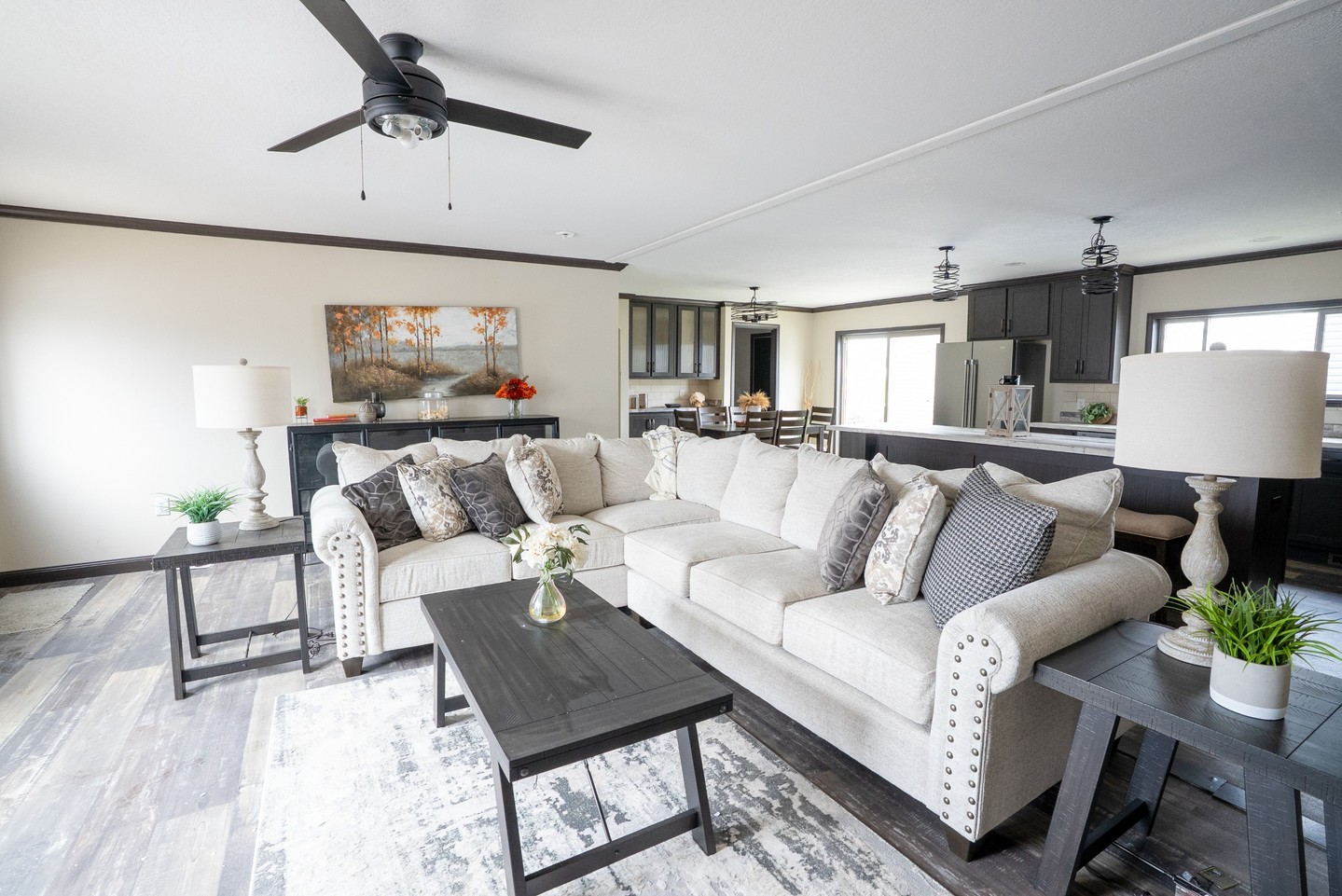
Credits: Instagram
A white sectional gives this open living and kitchen area a clear center. Its broad corner shape gathers the seats together, while dark wood tables connect with the cabinetry behind it.
The pale rug helps distinguish the lounge from the surrounding floor, and matching lamps mark the two ends of the couch. Consider this approach when a living room has few solid walls available for furniture.
Place the sectional so its back helps define the zone without blocking circulation between rooms. Repeat a dark finish in the tables to connect nearby spaces.
Mix several pillow patterns within a restrained gray palette, allowing the white upholstery to remain the largest light surface and the obvious focus of the comfortable seating group.
19. Warm a White Couch with Gold and Coral Pillows
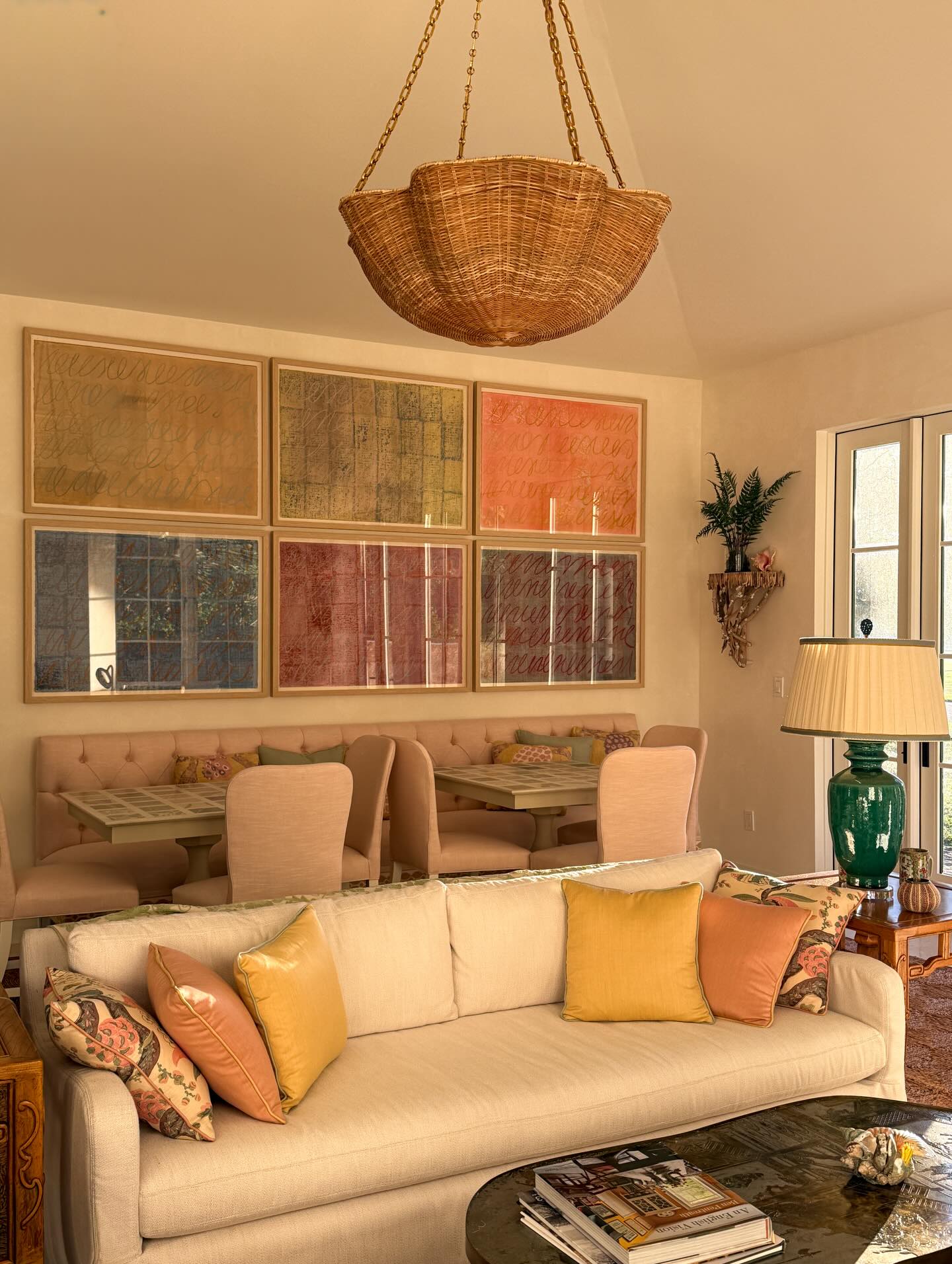
Credits: Instagram
Golden yellow and coral pillows bring warmth to the white couch in this living room. Their colors relate to the grid of artwork behind the seating, while a green lamp supplies a contrasting accent beside the sofa.
The woven pendant adds texture high in the room and reinforces the relaxed mood. This is a useful example of how a neutral couch can support several colors without needing a patterned upholstery fabric.
Start with artwork you love, then select two of its shades for plain pillows. Add a patterned pillow that includes related tones to connect them.
Keep the sofa's main cushions uncovered so the white remains visible. Warm wood furniture helps the colorful accents feel integrated throughout the seating area.
20. Anchor a White Seating Group with a Bold Blue Rug
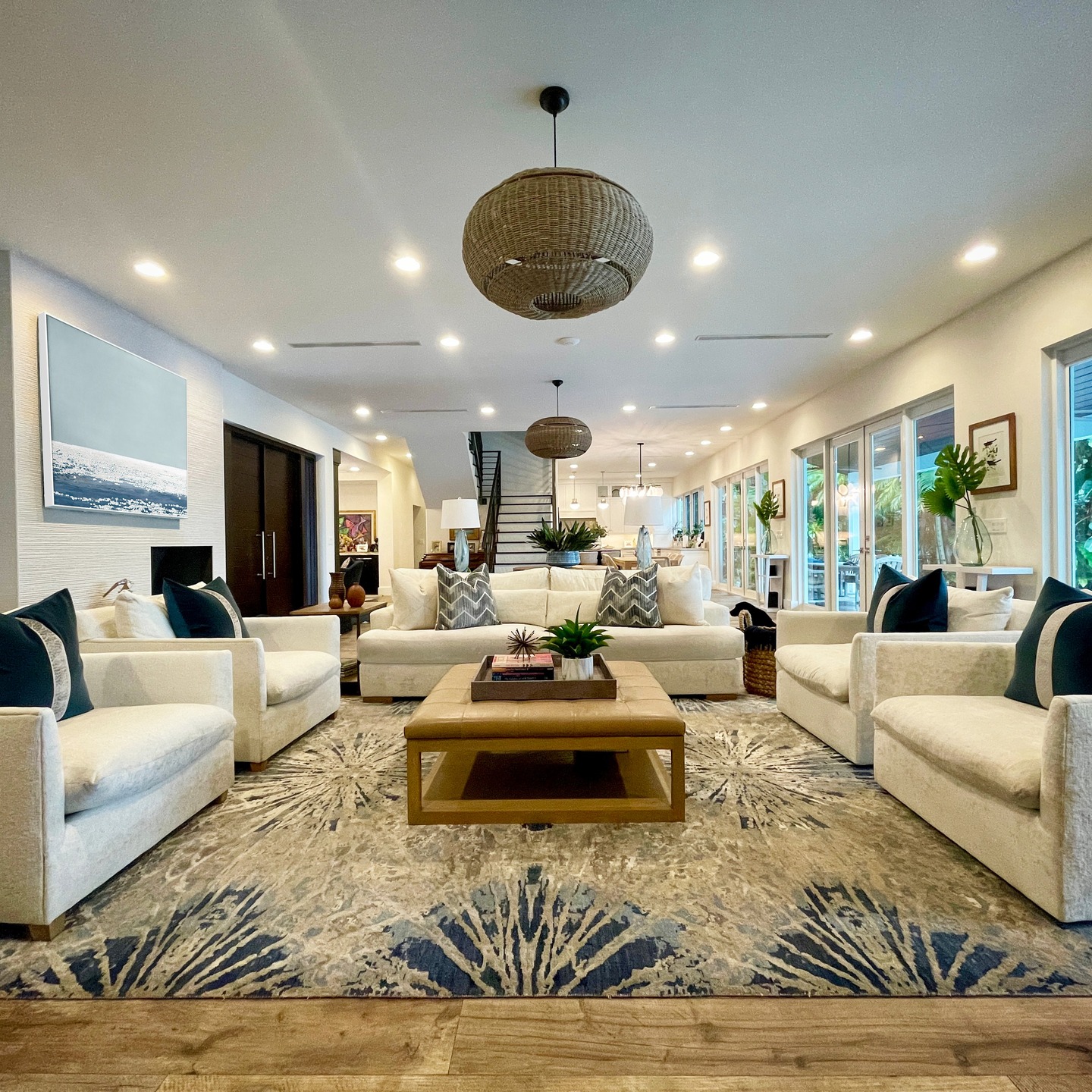
Credits: Instagram
The white couch and surrounding armchairs create a unified group above a boldly patterned blue rug. Dark blue pillows repeat the rug's strongest color at seating height, while a warm upholstered ottoman gives the center a softer landing.
The long room continues behind the couch, but the rug clearly identifies this conversation area. Use this arrangement when an open floor plan needs a more definite gathering place.
Choose a rug large enough to connect the furniture, then position the seats around a shared center. Repeat one accent color across several pillows without matching every pattern.
Woven ceiling lights and wood details add warmth, helping the white upholstery feel comfortable alongside the stronger blue rather than stark or disconnected from everything.