
Red can make a living room feel lively or enveloping, depending on where you use it and what you pair it with.
These Red Living Room Ideas show how to balance bold color with quieter elements, from pale seating against bright walls to a coral sofa grounded by a blue rug.
You’ll also find ways to bring red into a space through built-ins, upholstery, or burgundy paneling, rather than covering every surface. Small choices in texture, contrast, and color repetition help each room feel cohesive without letting the red overwhelm it.
1. Balance Bright Red Walls with Pale Seating
Credits: Instagram
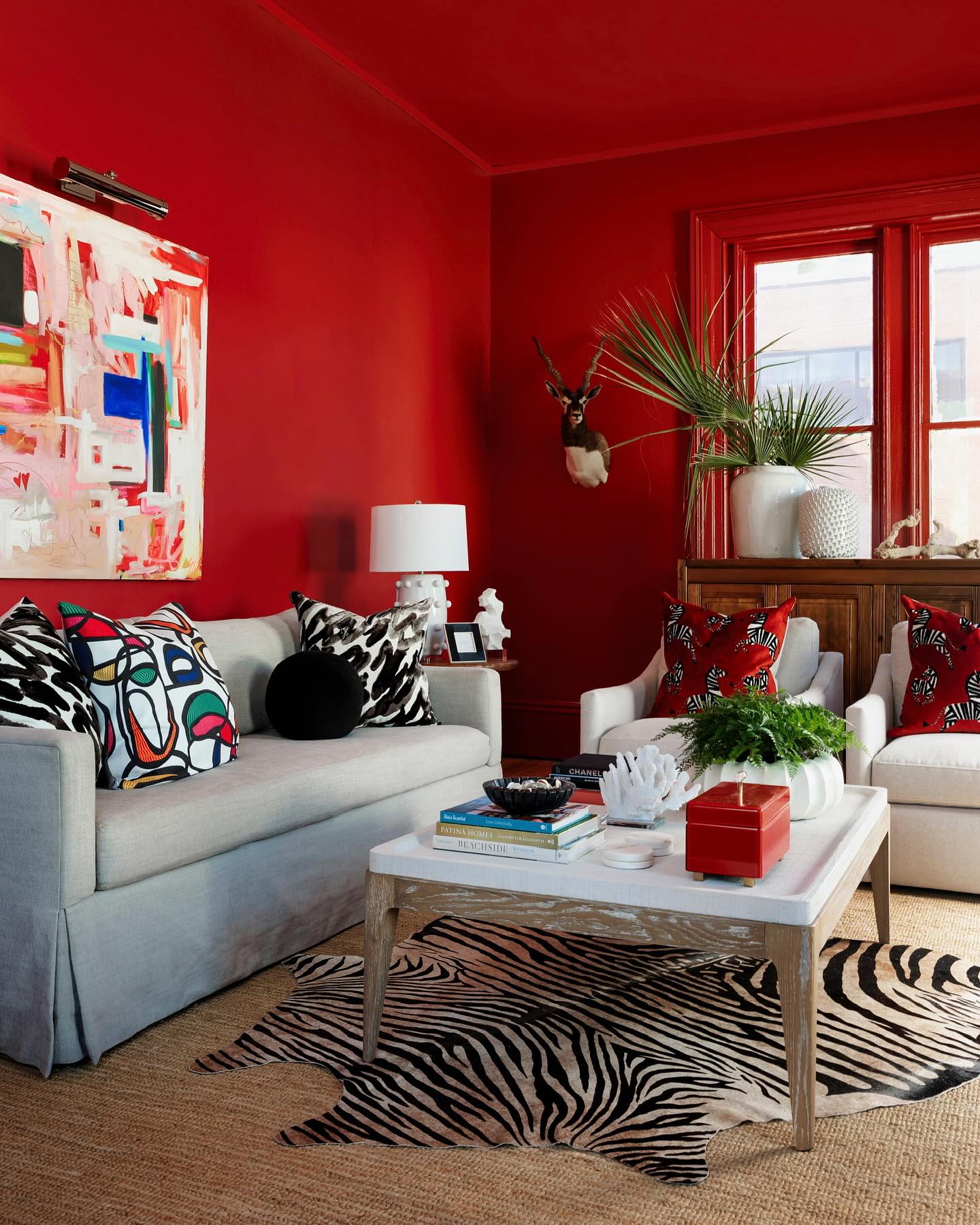
Bright red walls make this living room feel immediately energetic, but the pale sofa and white coffee table give the eye somewhere quieter to land.
Black and white patterns on the pillows and rug introduce contrast without adding another dominant color. Notice how the red continues around the window, making the architectural outline part of the design.
To borrow this approach, choose your largest light furniture pieces before committing to the paint. Test red samples beside them throughout the day.
A woven base rug helps soften the graphic layer above it, while green plants provide a natural counterpoint. Keep the table arrangement contained so the strong walls and patterned textiles can share attention without making the room feel overly crowded.
2. Layer Red Upholstery Against Patterned Walls
Credits: Instagram
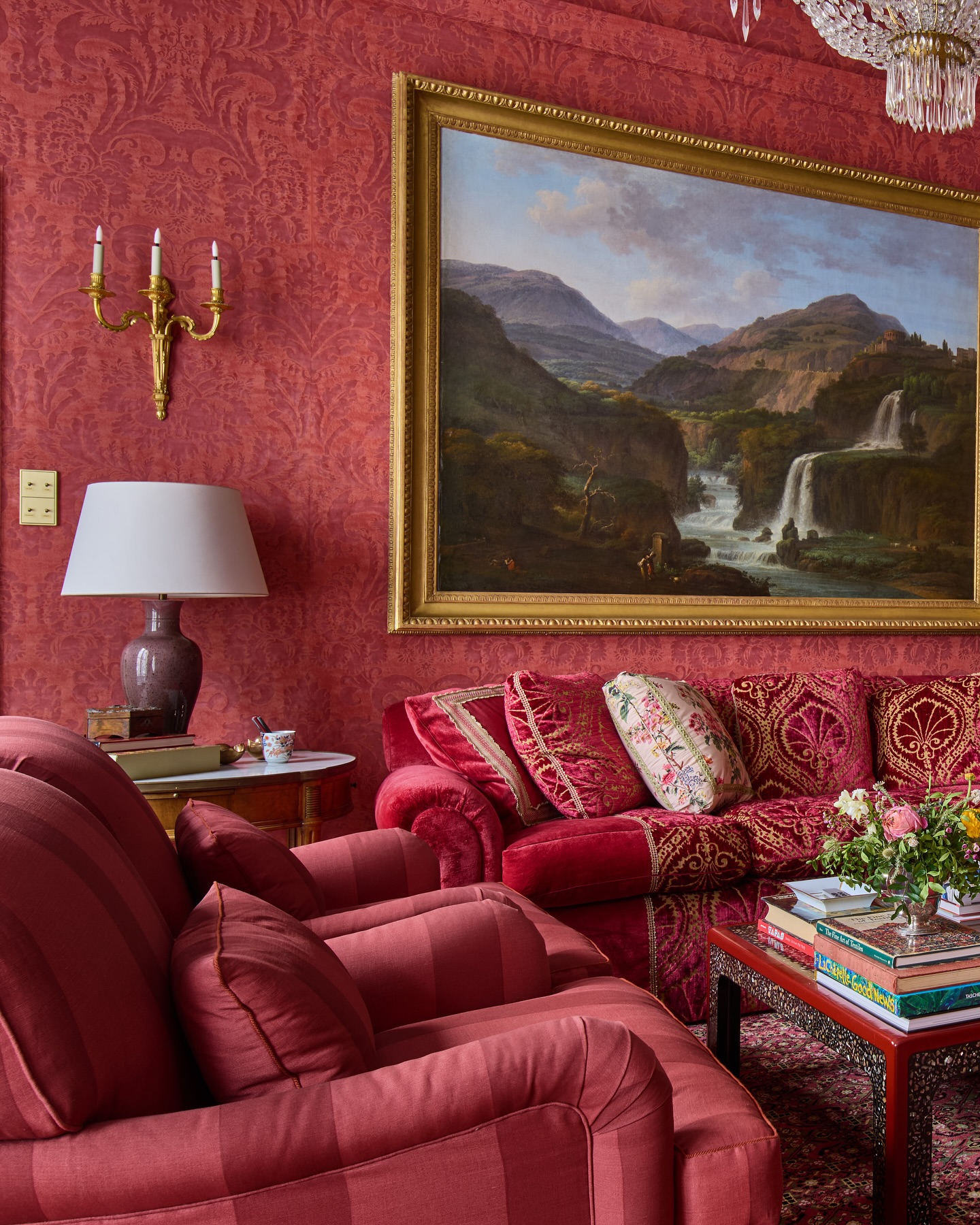
Red appears in several textures in this sitting room, from the patterned wall covering to the smooth armchair and decorated sofa. Those variations give a single color family depth.
A landscape painting introduces cooler greens and blues, while its gold frame connects with the nearby wall sconce. The simple pale lampshade is an important visual pause among the richer surfaces.
For a similar room, select one patterned fabric first and pull related reds from it for the surrounding upholstery. They can differ slightly in shade.
Use a substantial painting or mirror to interrupt a busy wall pattern, and include a practical table beside the seating. A stack of books brings everyday character to an arrangement that otherwise feels quite formal.
3. Repeat Red Seating Through a Long Room
Credits: Instagram
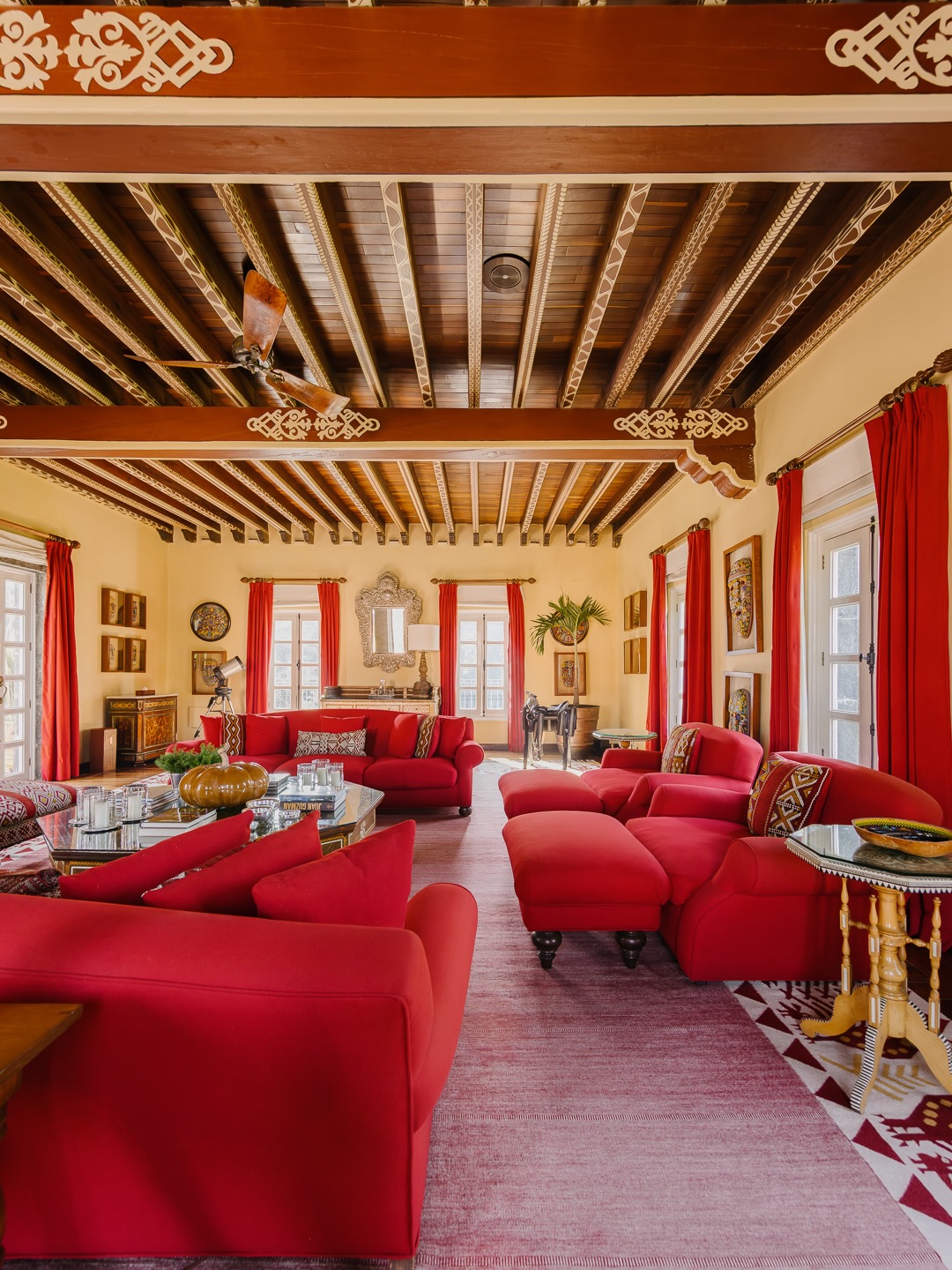
Several red sofas turn this long sitting room into a sequence of inviting conversation areas. Their repeated color creates continuity beneath the exposed wood ceiling, while pale walls prevent the entire space from feeling enclosed.
Red window treatments carry the palette upward and help connect the seating to the architecture. If your living room is long, divide it into useful groups rather than pushing every seat against the perimeter.
Give each group a reachable table and preserve a clear route between them. Repeating one upholstery color can make different furniture shapes feel related.
Patterned pillows, warm wood, and smaller decorative pieces provide variety within that repetition. A quieter rug keeps the floor from competing with the room's many architectural details.
4. Warm a White Room with a Rust Sectional
Credits: Instagram
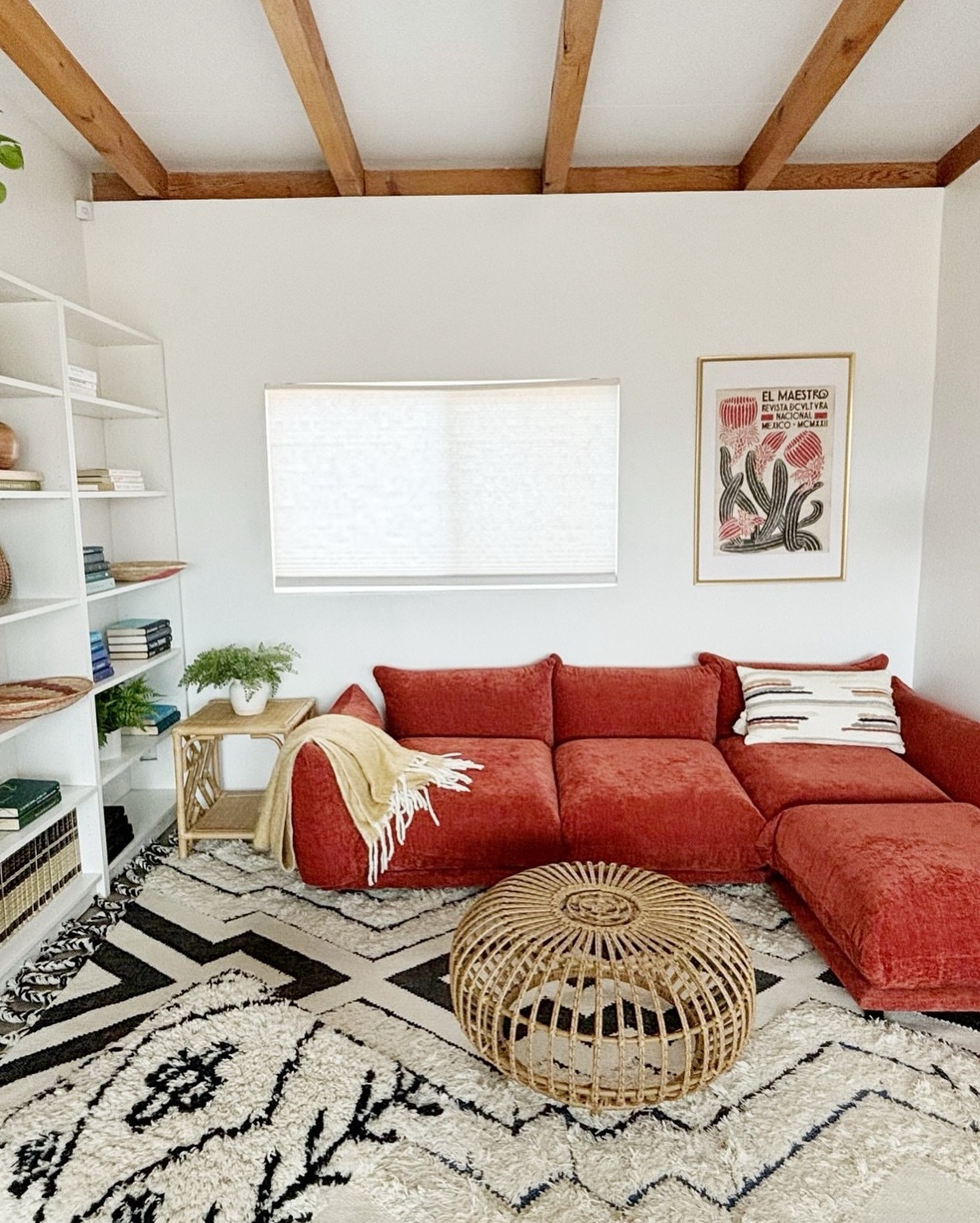
A low rust red sectional gives this bright living room its center of gravity. White walls and shelving keep the background simple, allowing the upholstery to stand out without needing matching red accessories everywhere.
The exposed wood beams and woven coffee table add warmth in a different way, through natural texture. A black and cream patterned rug anchors the seating and brings some graphic movement beneath the plain cushions.
To recreate this balance, choose a red with earthy undertones and pair it with soft white rather than an icy gray. Keep the sofa low if you want overhead details to remain prominent.
One striped pillow and a light throw are enough to soften the corner while preserving its straightforward shape.
5. Give a Red Library a Reflective Ceiling
Credits: Instagram
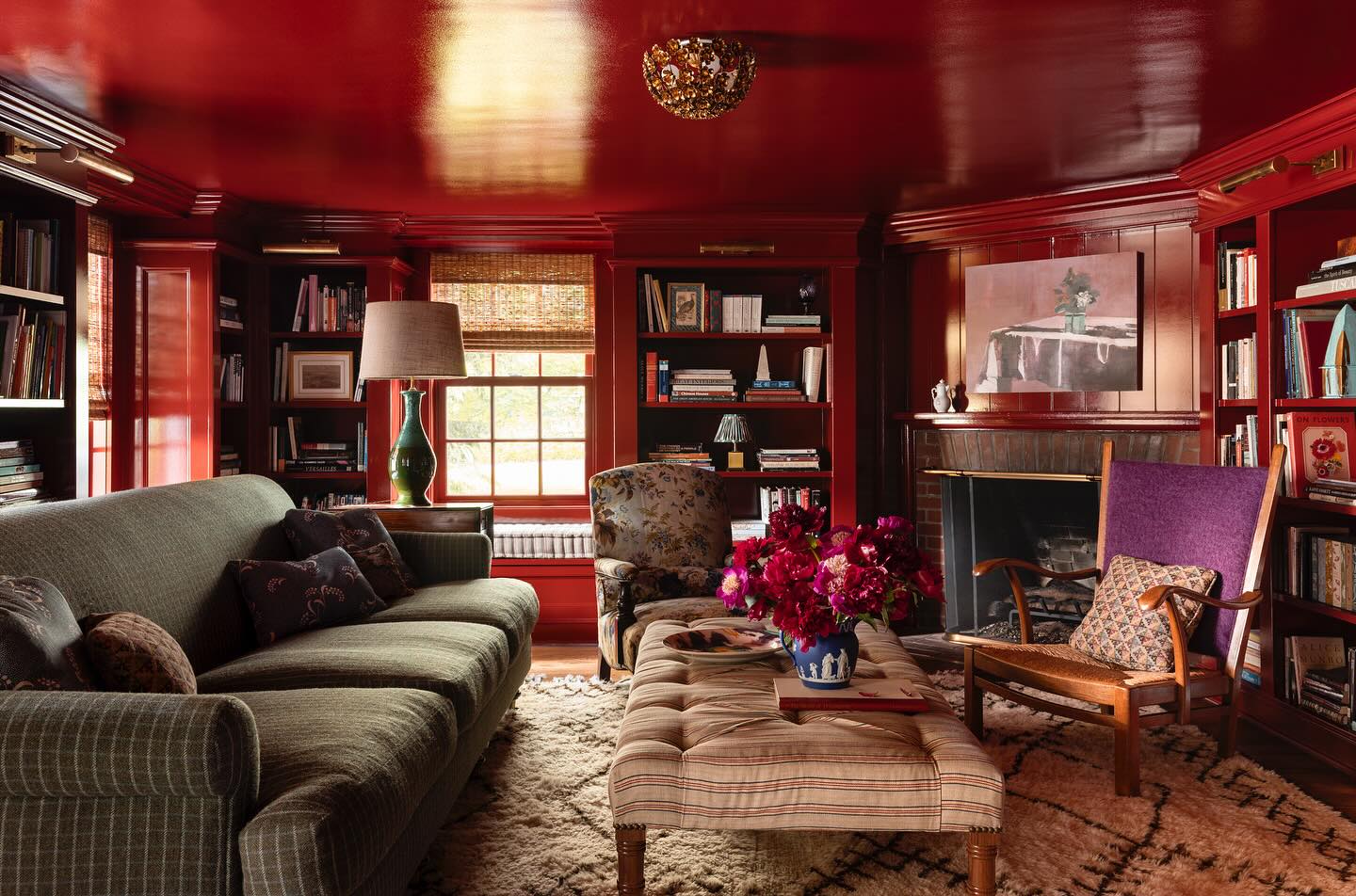
The red ceiling in this library reflects light across the room, adding a different finish above the richly colored shelves and walls. Olive seating, a striped ottoman, and patterned chairs keep the furnishings from disappearing into the background.
Books and framed pictures break up the red with smaller, personal details. This is a useful example of how an enveloping color can still support a varied collection.
If you try a glossy ceiling, check the surface carefully first because reflected light can emphasize uneven areas. Keep the seating comfortable and the floor treatment softer to balance that polished finish.
Lamps near the sofa and shelving create separate pools of light, helping the room remain inviting after daylight leaves the central window.
6. Pair a Coral Sofa with a Blue Rug
Credits: Instagram
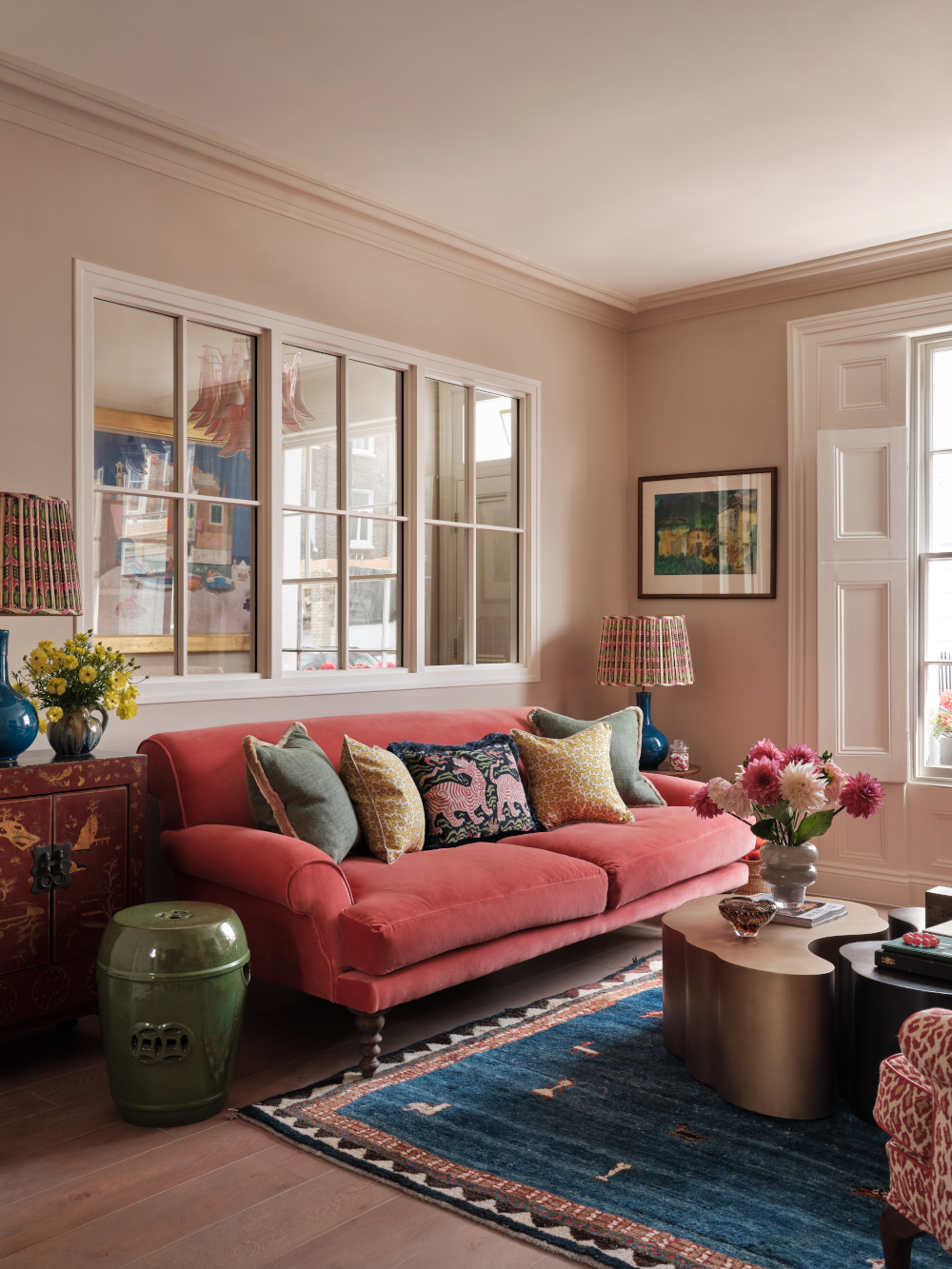
A coral red sofa brings warmth to this pale living room, while the blue rug gives it a cooler foundation. Green pillows and the glossy green side table connect the two without repeating the same shade everywhere.
The large mirror above the sofa reflects the neighboring space and gives the wall a more architectural presence. This palette is approachable when you want red furniture without committing to red paint.
Begin with neutral walls, then choose a rug whose blue has enough depth to hold its own beside the sofa. Mix a few patterned pillows with plain ones, allowing the upholstery to remain visible.
Rounded tables soften the arrangement, and fresh flowers add another small layer of color at the center.
7. Create a Red Reading Nook with Built-Ins
Credits: Instagram
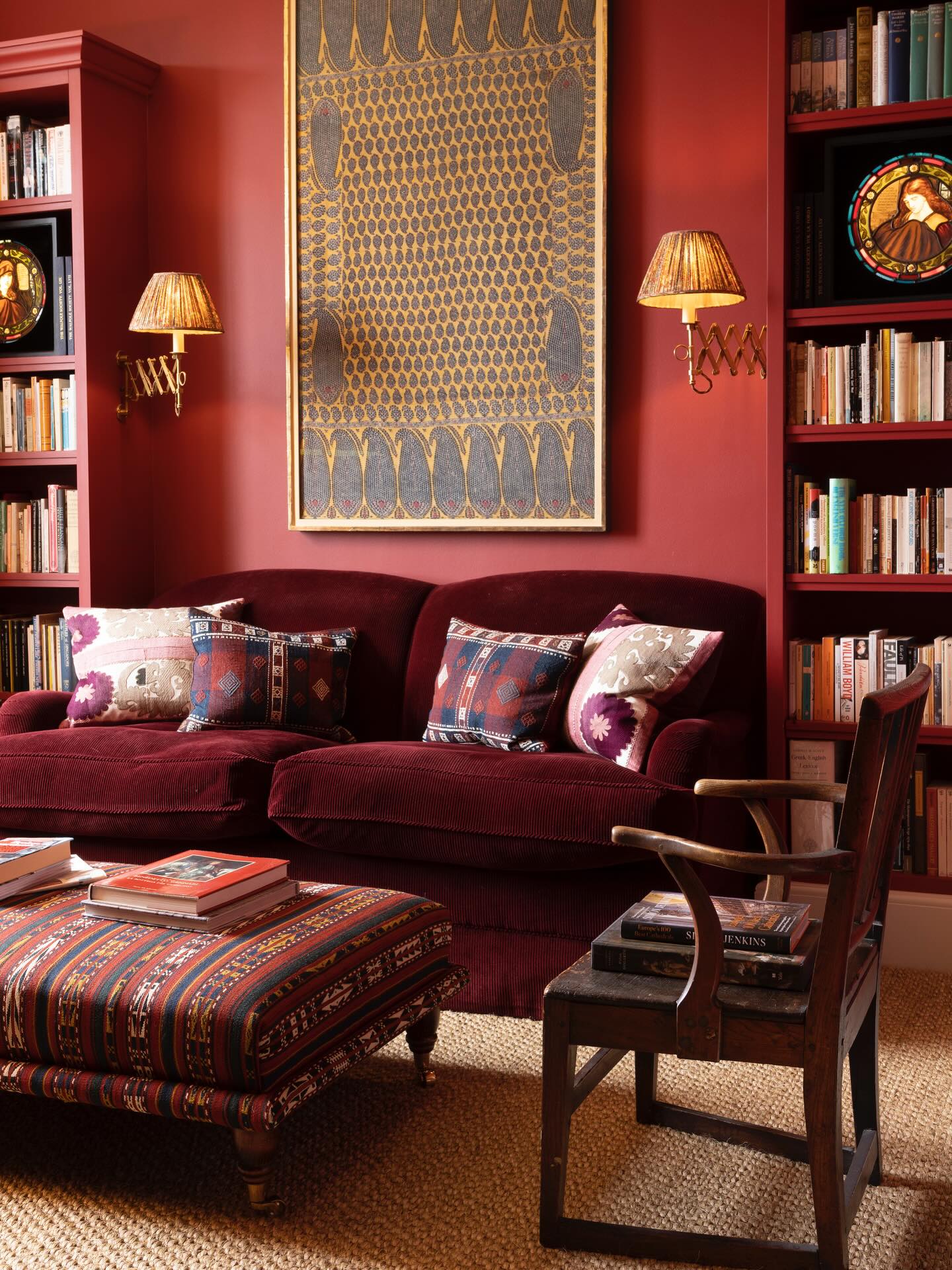
Red shelves and walls surround the curved sofa in this reading nook, making the seating feel tucked into its own comfortable retreat.
The darker upholstery adds depth, while a patterned ottoman brings several colors down to the center of the room. Paired wall lights frame the artwork and give the composition a pleasing sense of balance.
For a similar setup, let built-in shelving share the wall color so it reads as part of the room. Leave enough empty space around display objects for their shapes to remain clear.
A lighter natural floor covering helps prevent the red from becoming visually heavy. Position an extra chair toward the sofa, with sufficient room for someone to reach the books without disturbing conversation.
8. Use Burgundy Paneling for a Quiet Den
Credits: Instagram
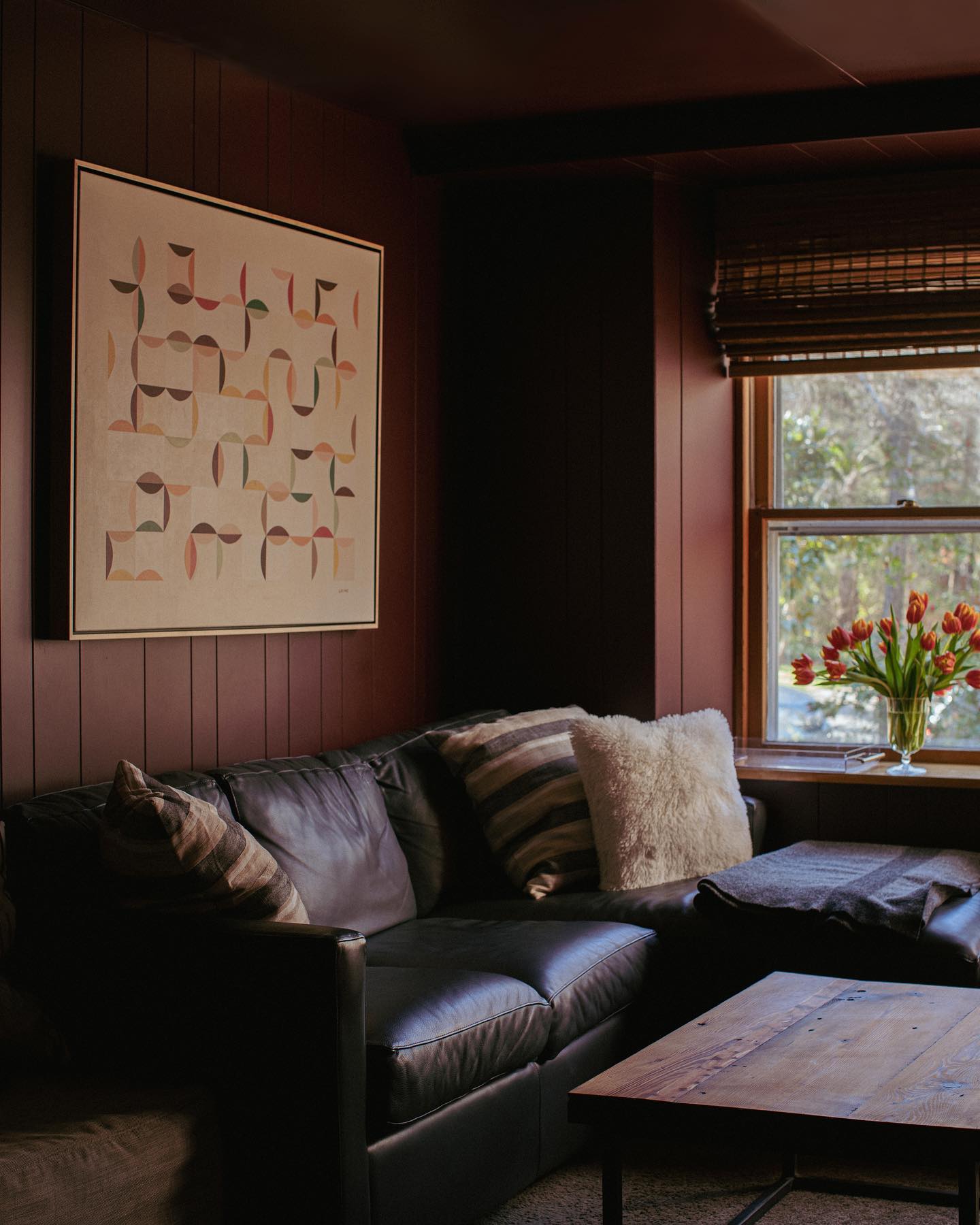
Deep burgundy paneling gives this compact den a sheltered feeling, especially where the color continues across the ceiling. The dark sectional reinforces that mood, while pale pillows and a light throw interrupt its larger silhouette.
Daylight at the window keeps the wall texture visible, and a simple framed print supplies a lighter focal point. To adapt the idea, consider burgundy for a room mainly used for reading or evening television.
Sample it beside the sofa before painting, since dark colors can merge under low light. Keep window treatments easy to open and add a nearby lamp for practical illumination.
A straightforward coffee table leaves the upholstery and paneling as the main features rather than introducing another strong decorative statement here.
9. Outline Art in Red Against Burgundy Walls
Credits: Instagram
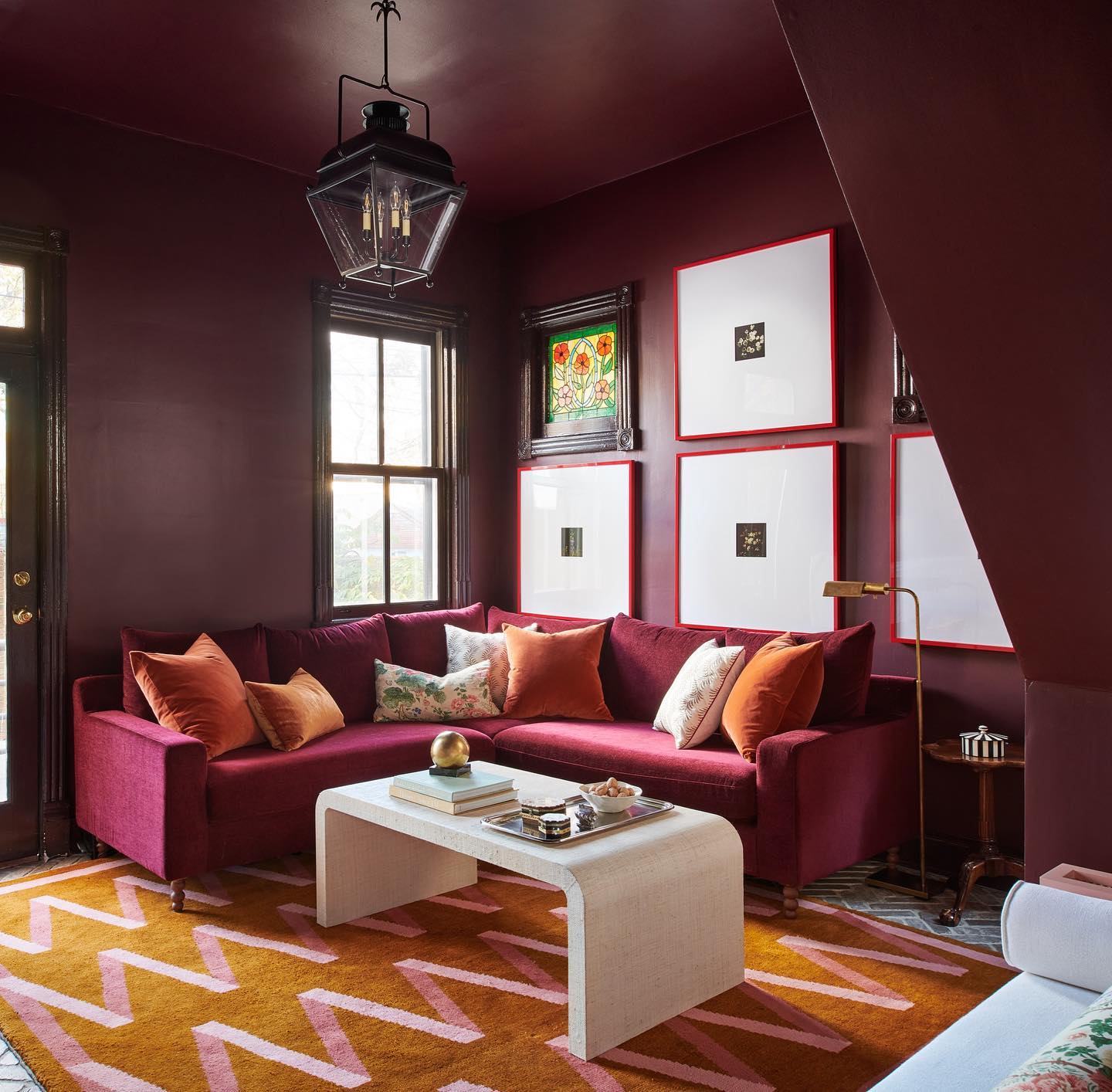
Cherry red frames give this burgundy sitting room an extra layer of definition. Their crisp outlines connect the gallery arrangement to the red sofa, while broad white mats stop the wall from becoming too visually dense.
Orange pillows and a patterned rug bring warmth at seating level. The pale coffee table is another deliberate pause among the saturated colors.
This approach works when you want a gallery wall that feels integrated with the furniture. Repeat one frame color, but let the artwork vary in size and subject.
Plan the arrangement around existing windows and architectural angles rather than ignoring them. Keep a few accessories low on the table so the strong wall composition remains visible from every seat in use.
10. Run a Burgundy Palette Through a Narrow Lounge
Credits: Instagram
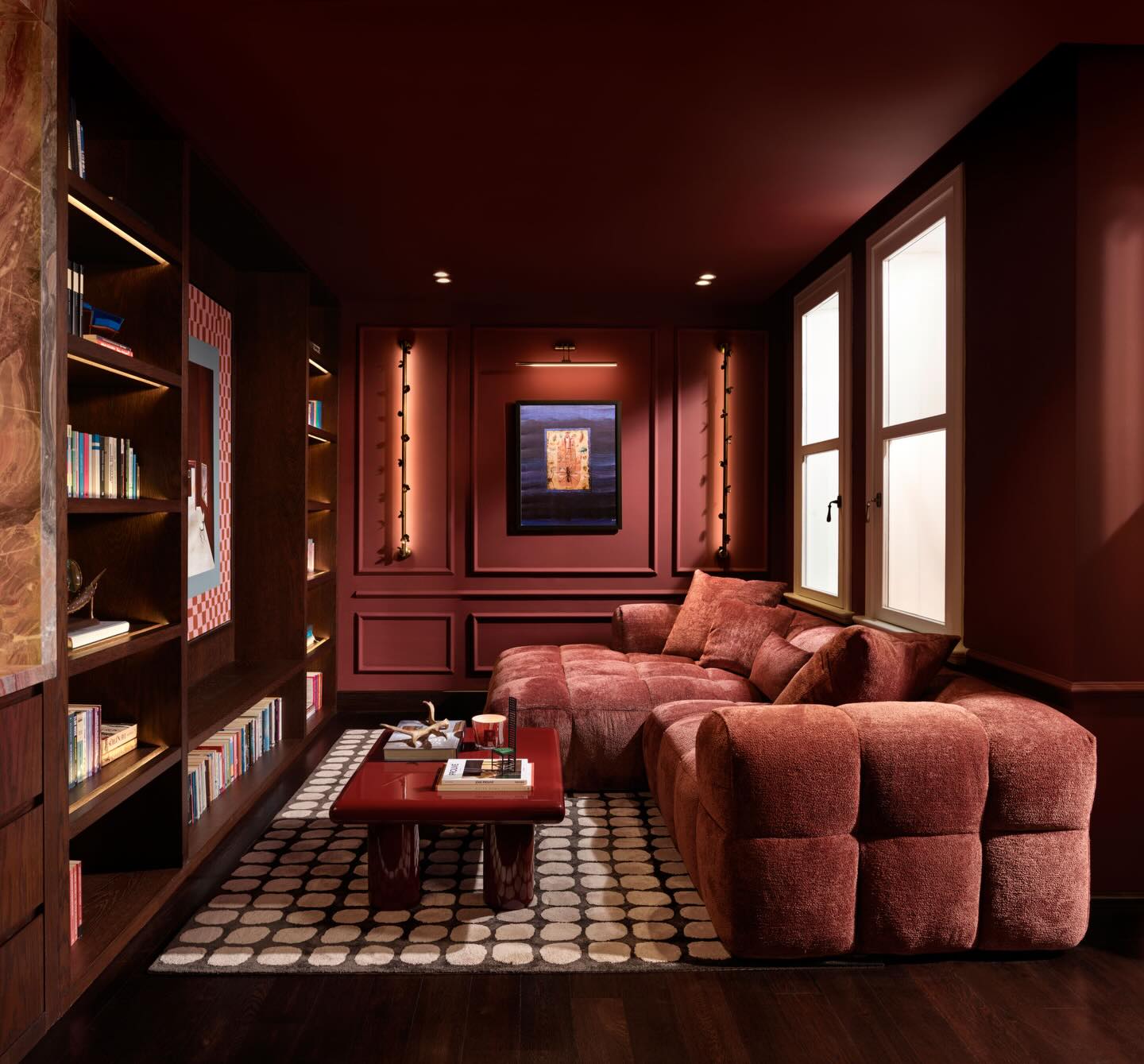
A continuous burgundy palette turns this narrow lounge into a cohesive room, with the ceiling, paneled walls, and rounded sofa all contributing to the same warm atmosphere.
Open shelving occupies one side, while the window illuminates the upholstery from the other. A pale geometric rug provides a clear break beneath the furniture.
In a similarly shaped room, keep the main circulation route obvious and choose a sofa that suits the available depth. Rounded corners can make the arrangement feel less rigid, but measurements still matter.
Carrying one color across the architecture reduces abrupt visual interruptions. Let books, a framed picture, and a few table objects introduce smaller changes of tone instead of adding several competing paint colors to the space.
11. Brighten a Garden Room with Red Sofas
Credits: Instagram
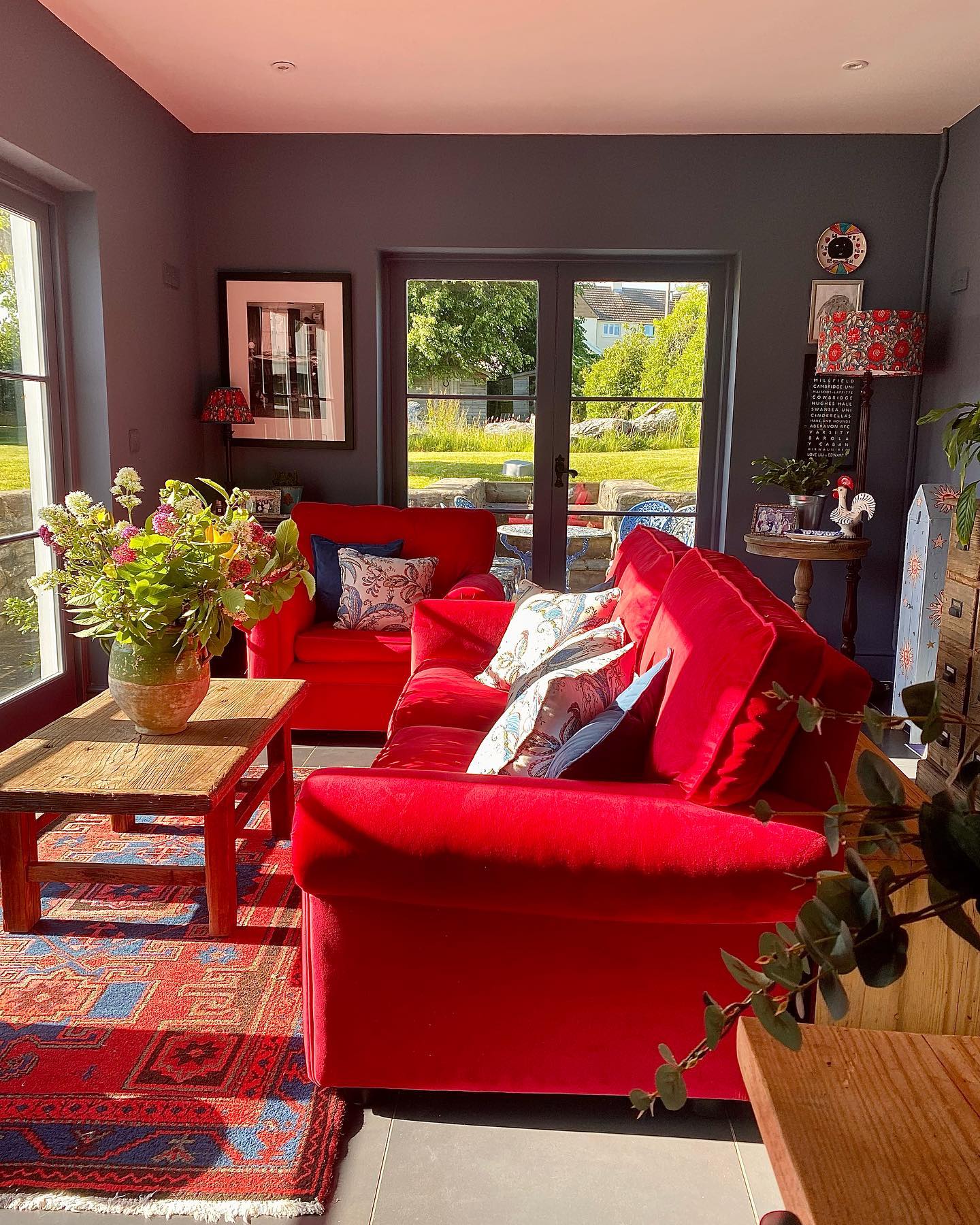
Bright red sofas bring energy to this garden-facing sitting room, standing out against its muted charcoal gray walls. The patterned rug repeats red below, making the furniture feel connected to the floor rather than isolated within the room.
A simple wood coffee table and leafy flowers lend a relaxed, everyday character. To try this combination, choose a rug that contains both your upholstery color and one quieter supporting shade.
Keep the wall finish relatively subdued so daylight and fabric texture can do more of the work. Arrange the sofas around a shared table, leaving the doors and garden view accessible.
Patterned pillows can bridge the brighter furniture and darker background without covering every inch of the red upholstery beneath them.
12. Mix a Red Sectional with Sculptural Chairs
Credits: Instagram
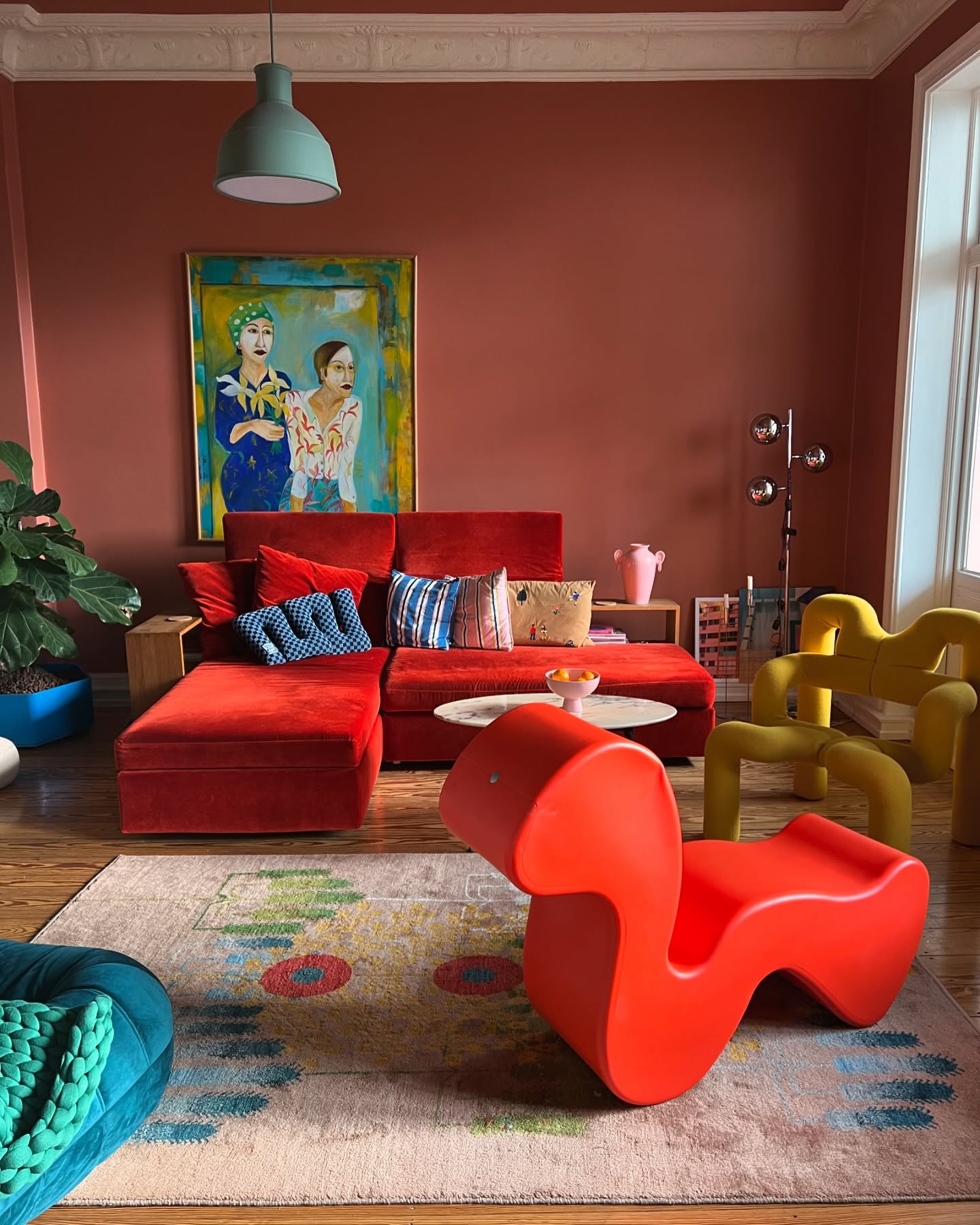
The red sectional in this living room is joined by a sculptural orange red chair, creating a playful conversation between fabric and a smooth molded surface.
A mustard chair, turquoise pendant, and expressive painting add other colors without following a strict matching scheme. The earthy wall color gives those brighter pieces a stable backdrop.
If you want a similar artful mix, choose one dominant upholstery color and vary the shapes around it. A low sectional can balance an unusually curved accent chair, while a broad rug brings the group together.
Keep enough open floor around sculptural furniture for its outline to remain visible. Small tables should still be easy to reach, even when the room favors personality over conventional symmetry.
13. Soften Coral Red with Woven Wall Texture
Credits: Instagram
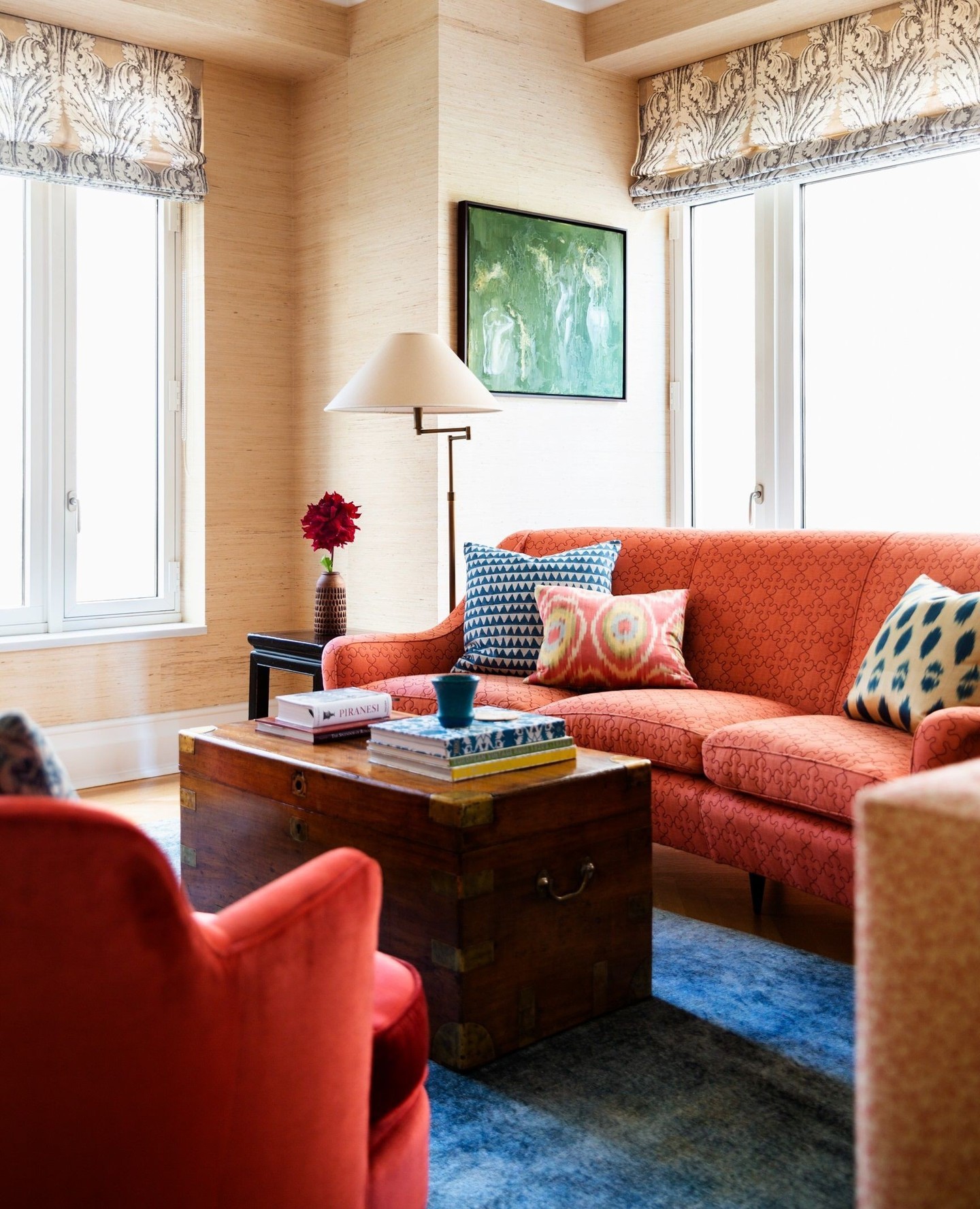
Coral red seating gives this sunny corner a warm, approachable character. The pale textured walls and patterned window shades soften the strong upholstery, while a deep blue rug supplies a cooler contrast below.
A wood trunk serves as the central table, bringing a different texture among the cushions and fabric. This is a useful direction when solid red feels too sharp for your room.
Look for upholstery with a subtle pattern or visible weave, then keep larger background surfaces calm. Mix pillows that share a few colors without copying one another exactly.
If using a trunk as a table, check its height from the sofa and leave room to walk around it. Keep frequently needed storage somewhere easier to access.
14. Let a White Fireplace Stand Out in Red
Credits: Instagram
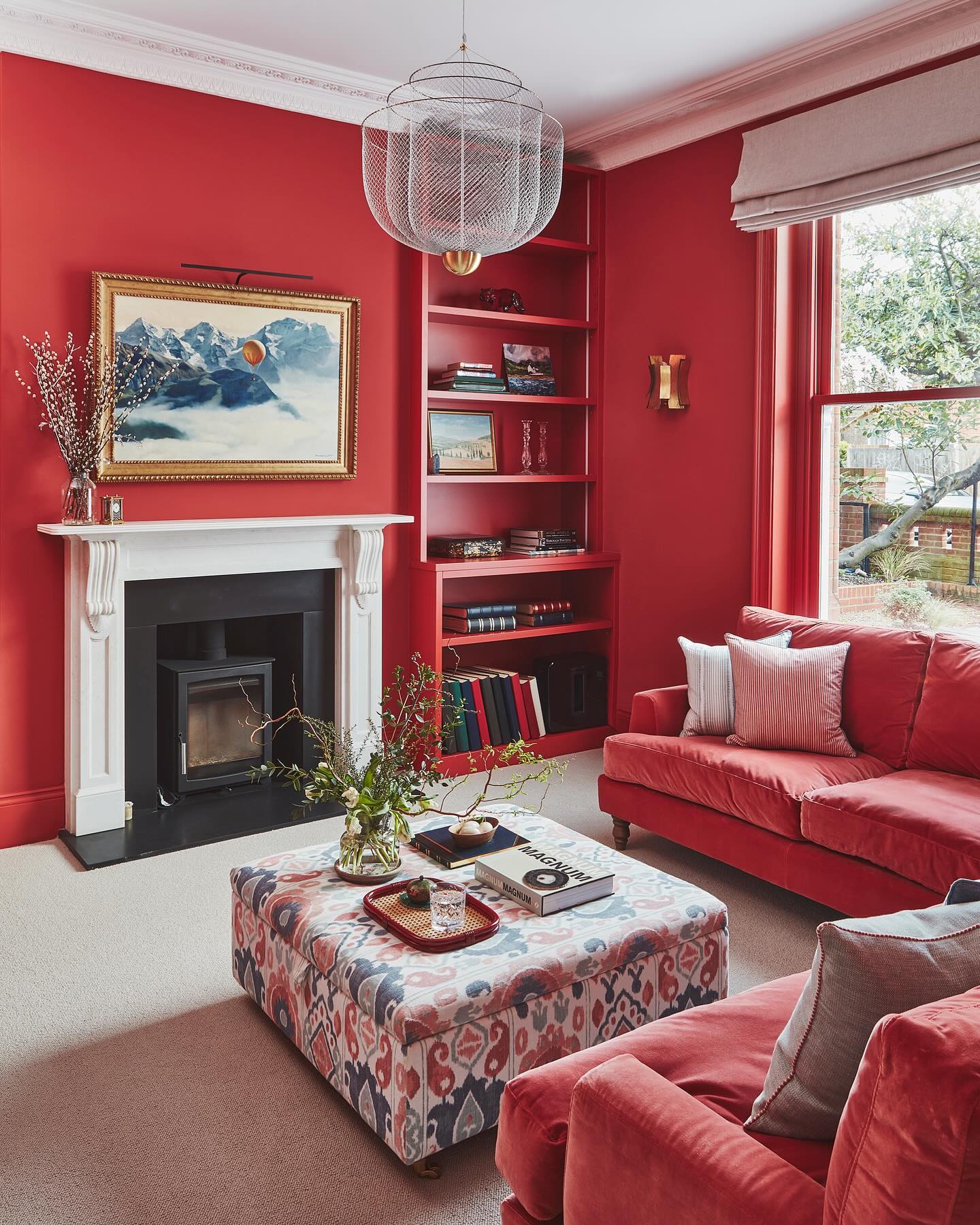
The white fireplace becomes a clear focal point in this red living room, where painted shelves and matching walls create a continuous background. Sofas in related red tones reinforce the palette without appearing identical to the paint.
A patterned ottoman breaks up the solid surfaces and supplies a softer center than a conventional table. To borrow the idea, preserve one pale architectural feature and carry red across neighboring built-ins.
Use artwork to introduce a cooler color above the mantel. Light window shades, carpet, and ceiling trim help distribute brightness through the room.
Keep the shelves selectively filled so the red remains visible around books and objects. A tray can make the upholstered ottoman more practical for drinks and daily essentials.
15. Set a Red Sofa Between Two Cool Wall Colors
Credits: Instagram
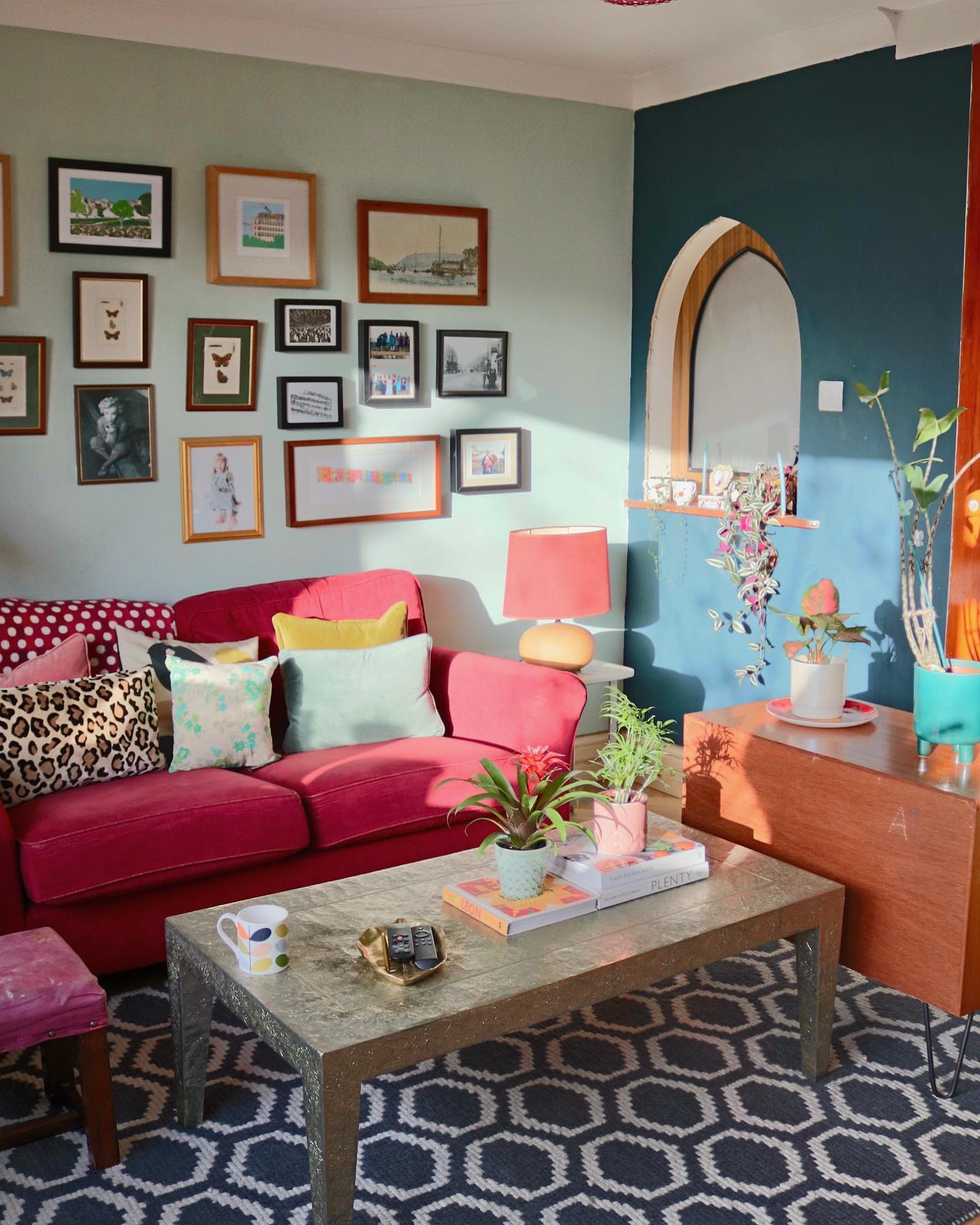
A red sofa sits between pale green and deeper teal walls in this eclectic living room. The shift in wall color gives the corner definition, while the sofa links both sides through a strong, warm focal point.
Mixed artwork, patterned pillows, and a geometric rug make the arrangement feel collected over time. A warm wood cabinet adds another grounded surface beside the bright upholstery.
For a similar scheme, test both wall colors alongside your sofa fabric before painting. Repeat a few small accent colors in the pillows and artwork, rather than trying to match every object.
Keep the coffee table simple to balance the busier rug and gallery wall. A mirror can help connect the adjoining areas through reflected light.
16. Use Fireplace Tiles to Guide a Red Palette
Credits: Instagram
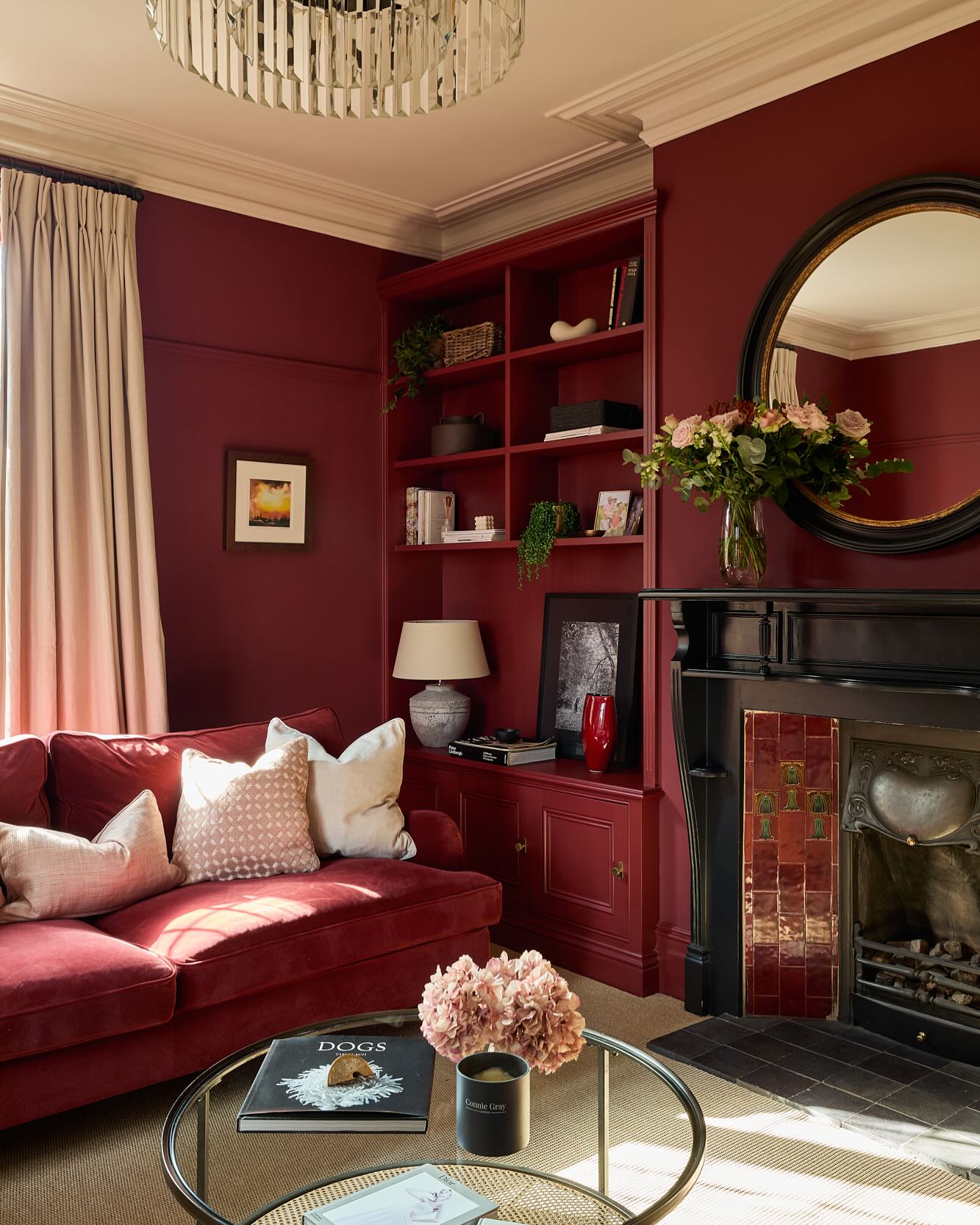
The red tiles around this fireplace offer a starting point for the room's broader palette. Rich red walls, shelving, and sofa upholstery build on that detail, while the black mantel gives the fireplace a strong outline.
Pale curtains, ceiling, and carpet introduce enough contrast to keep the room from feeling visually crowded. This is a practical approach when you want to work with an existing architectural feature.
Pull a color from its tile or stone, then try several related paint samples instead of demanding an exact match. A round mirror softens the fireplace's straight lines and reflects light from the window.
The glass coffee table keeps more of the pale floor visible, allowing the saturated furniture to remain the focus.
17. Repeat Red Through a Graphic Area Rug
Credits: Instagram
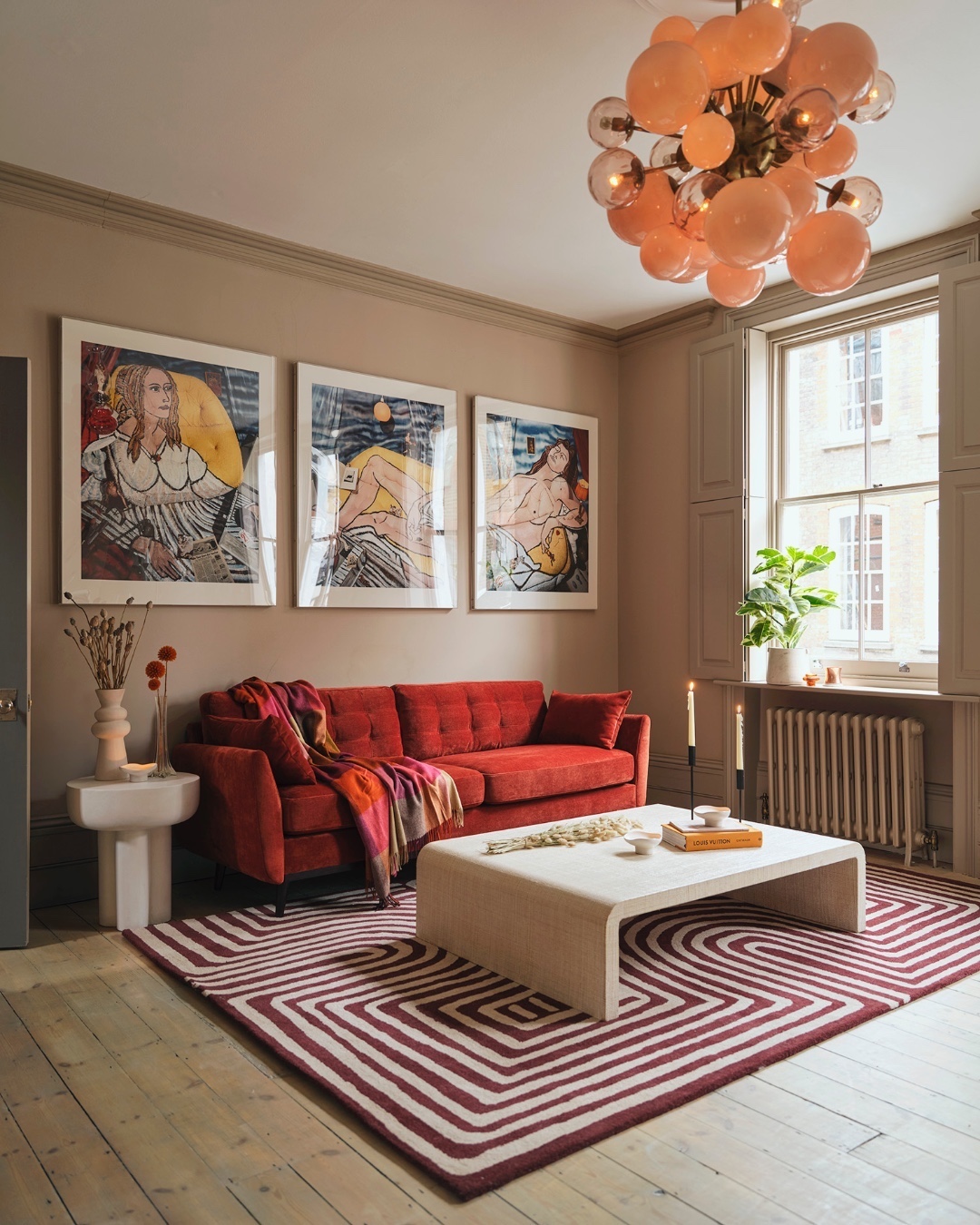
A red sofa and red-lined rug make this living room feel coordinated without requiring red walls.
The rug's large curved stripes add movement beneath a simple pale coffee table, while the muted wall color gives the framed artwork a calm setting.
A pink glass pendant brings the warm palette upward in a softer shade. To recreate the balance, choose a patterned rug that repeats your sofa color with plenty of light space between its lines.
Keep the main table visually straightforward so it does not compete with the floor pattern. Three related prints can provide structure above the sofa.
A textured throw adds another layer of warmth, and the clear window allows daylight to reveal the differences between the fabrics.
18. Place a Red Sofa Against a Full Bookcase
Credits: Instagram
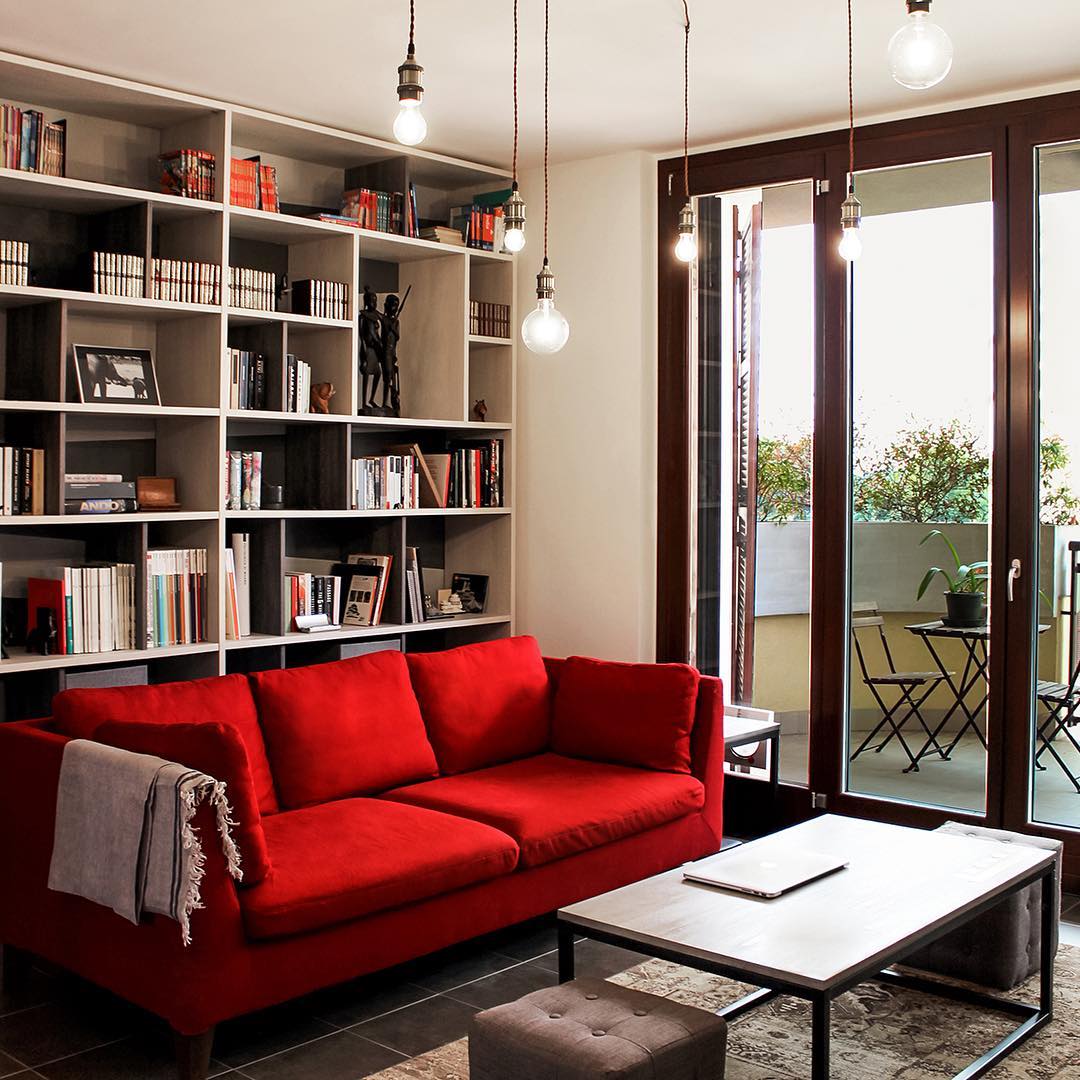
A red sofa brings a clear focal point to this compact book-filled living room. The shelving behind it uses a restrained neutral finish, letting books and personal objects provide smaller changes of color.
Exposed pendant bulbs create a light visual outline above, while the balcony doors give the room a brighter edge. This arrangement can work well when storage occupies an entire wall.
Choose a sofa height that leaves the most useful shelves accessible, and secure tall shelving appropriately. Keep regularly used books within comfortable reach rather than directly behind heavy furniture.
A simple rectangular coffee table echoes the bookcase grid. The red upholstery then supplies the room's strongest color, making the practical storage wall feel like an intentional backdrop.
19. Build a Dark Gallery Wall Above Red Upholstery
Credits: Instagram
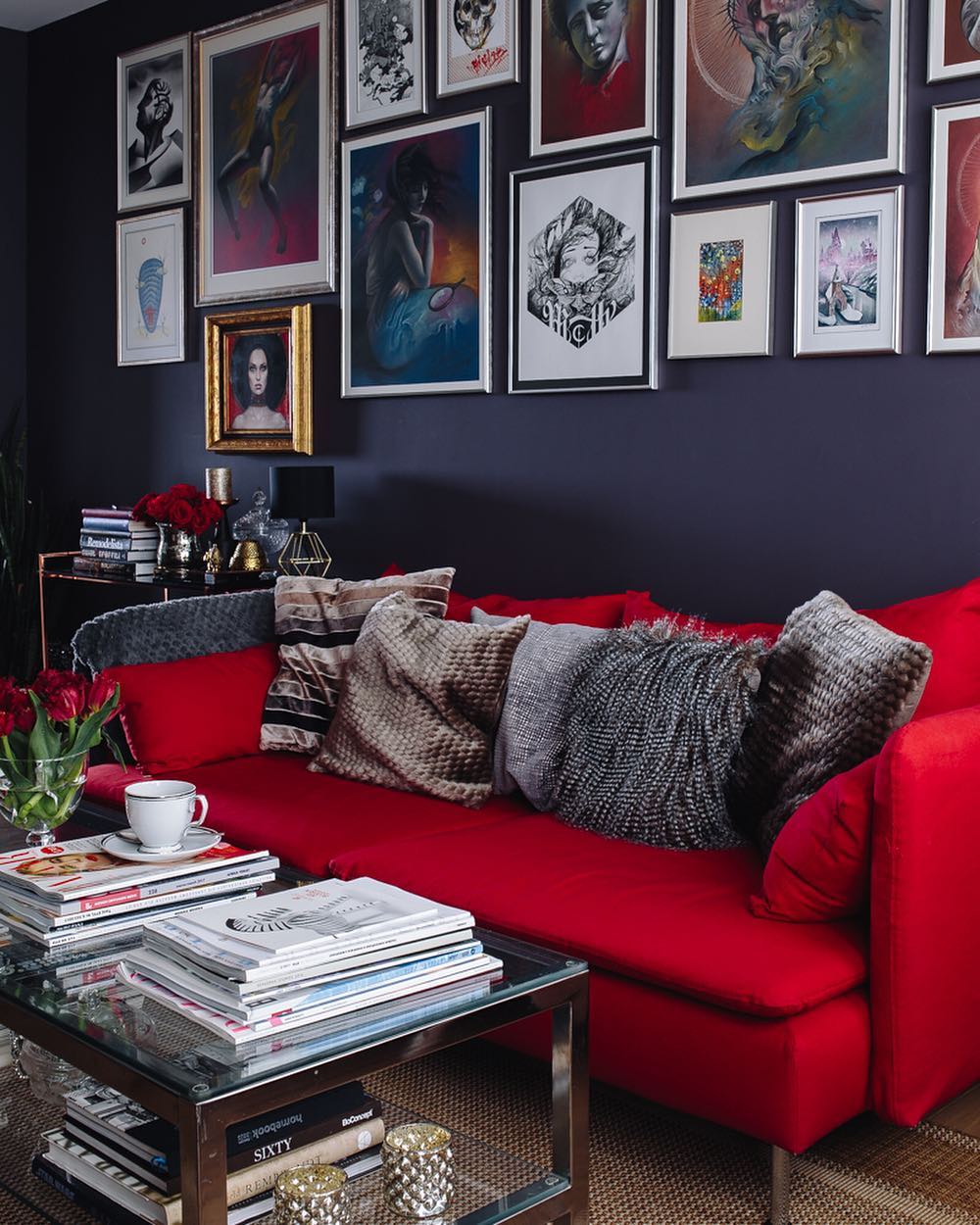
The red sofa holds its own beneath this densely arranged gallery wall. Dark paint lets the white picture mats and varied frames stand out, while gray textured pillows soften the transition between wall and upholstery.
A glass coffee table keeps the foreground lighter despite its generous stacks of reading material. If you like this collected look, begin with the largest pictures and arrange smaller pieces around them.
Keep the overall group connected to the sofa below, rather than scattering frames across unrelated wall areas. Repeat one neutral tone in several pillows to calm the mixture of artwork.
Leave a usable section of the table clear for a cup or book, so the room remains comfortable beyond its appealing photographic arrangement.
20. Contrast a Red Sofa with Deep Blue Walls
Credits: Instagram
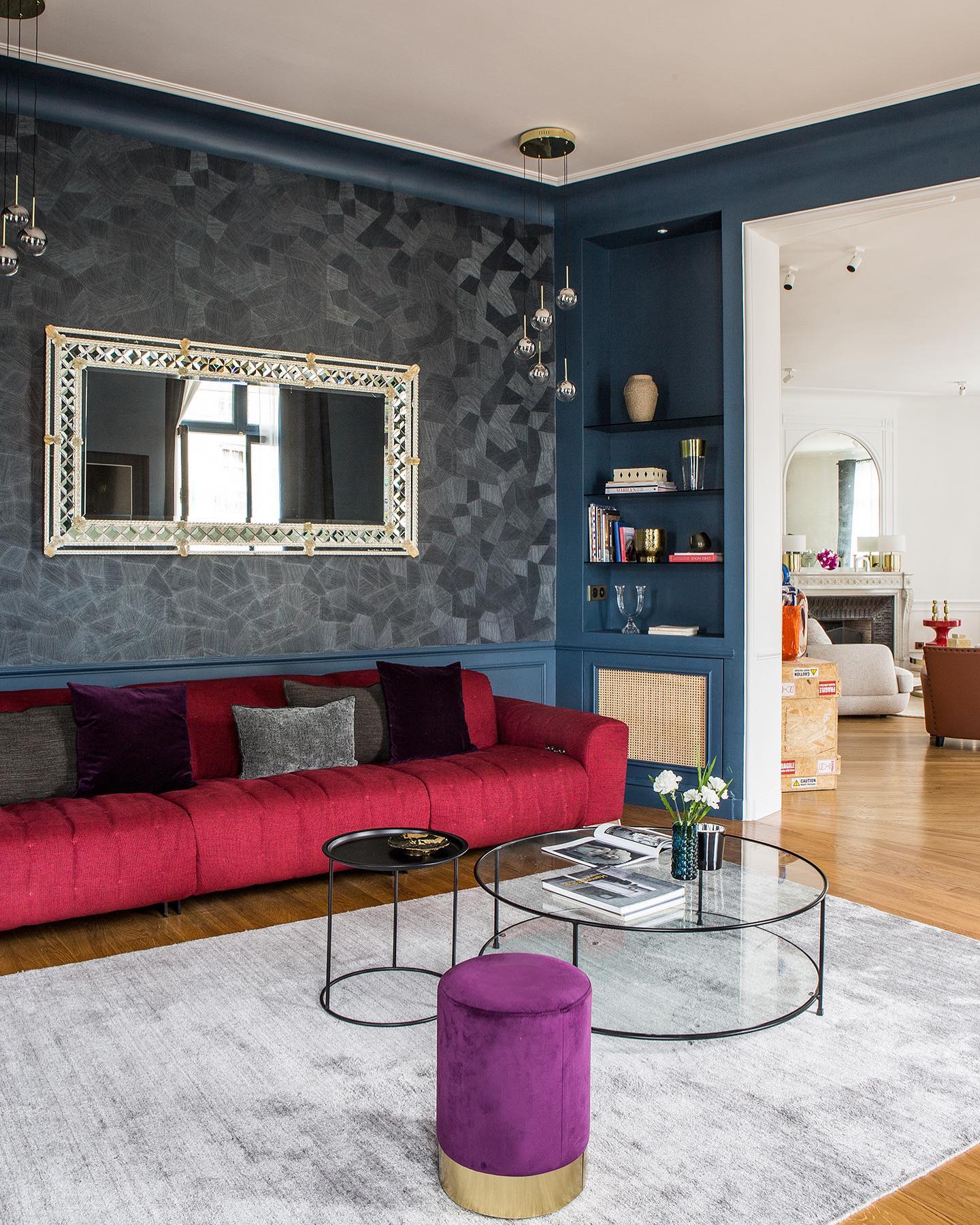
A long red sofa creates a warm counterpoint to the deep blue walls in this living room. Patterned wallpaper adds texture behind the seating, while the framed mirror and built-in niches introduce smaller decorative details.
The pale rug and glass tables keep the center open, and a purple stool adds another jewel tone in a compact shape. This combination works best when the colors have clear roles.
Let blue establish the background, red define the seat, and one smaller accent provide variety. Choose quieter pillows if the wall pattern already attracts attention.
Keep the rug large enough to connect the furniture, and preserve a clear route toward the adjoining room. Metallic details can brighten the scheme without another paint color.