
A restful living room often comes down to what you leave out as much as what you bring in.
These Zen Living Room Ideas show how curved seating, filtered daylight, and a few well-spaced ceramics can make a room feel settled without looking bare.
Other approaches connect the seating area to a garden view, gather chairs around a round table, or use warm wood and rough plaster to add texture.
The common thread is a thoughtful balance of open space, natural materials, and comfortable places to pause, with each detail given room to stand out.
1. Soften a Bright Corner With a Curved Sofa
Credits: Instagram
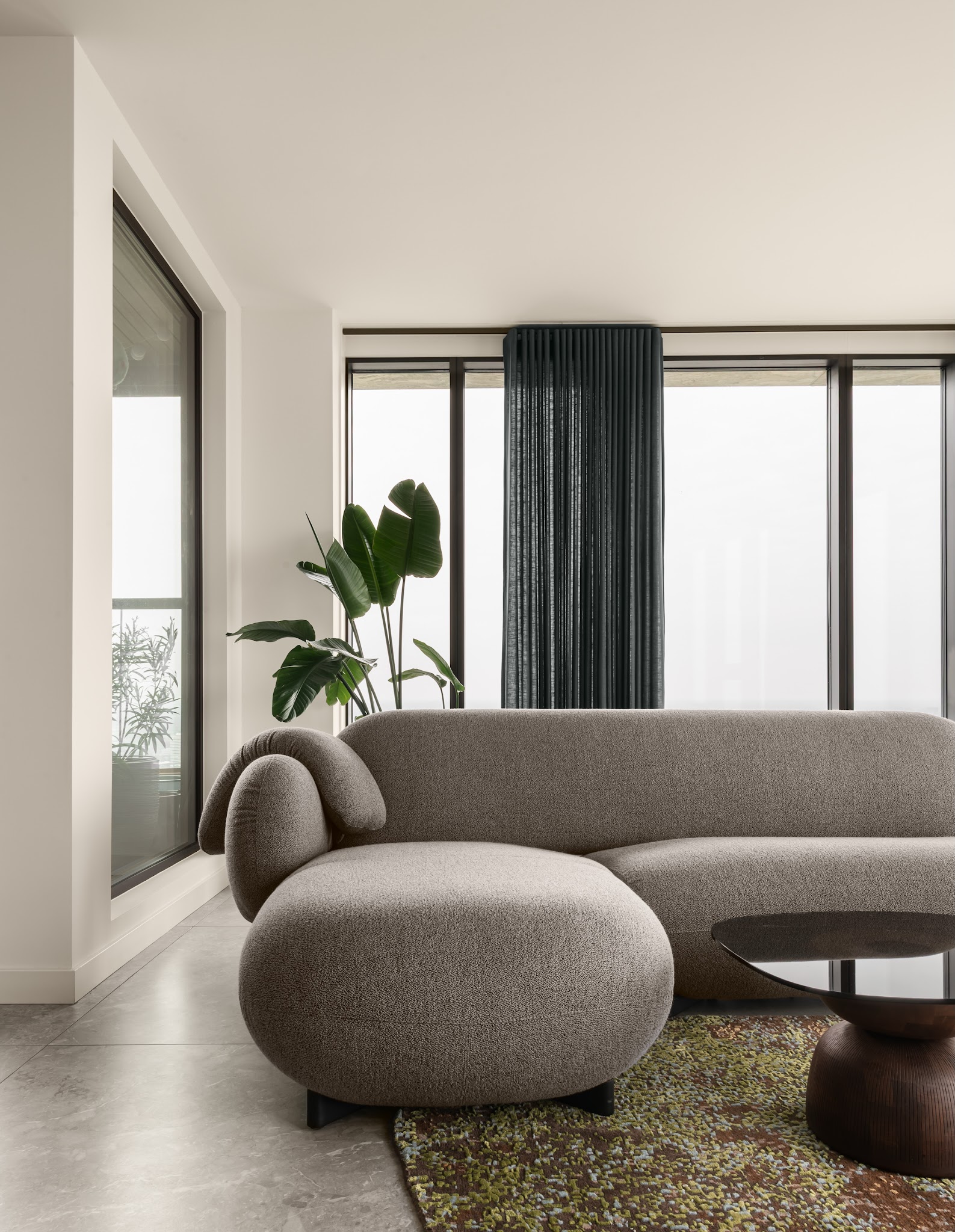
A rounded sofa makes this bright corner feel wonderfully unhurried. Its gray upholstery curves into a generous chaise, while a dark coffee table adds a little weight beside it.
Tall windows stay mostly clear, and one leafy plant supplies the strongest natural color. The patterned rug introduces muted greens without crowding the pale walls.
For a similar Zen living room, choose seating with a continuous outline and keep the surrounding pieces simple. Give the chaise enough floor space to read as an inviting place to pause.
A single curtain panel can soften the window geometry while preserving daylight. Let the contrast between textured fabric, smooth flooring, and living leaves provide most of the decoration in this restful everyday seating area.
2. Filter Daylight Through Woven Shades
Credits: Instagram
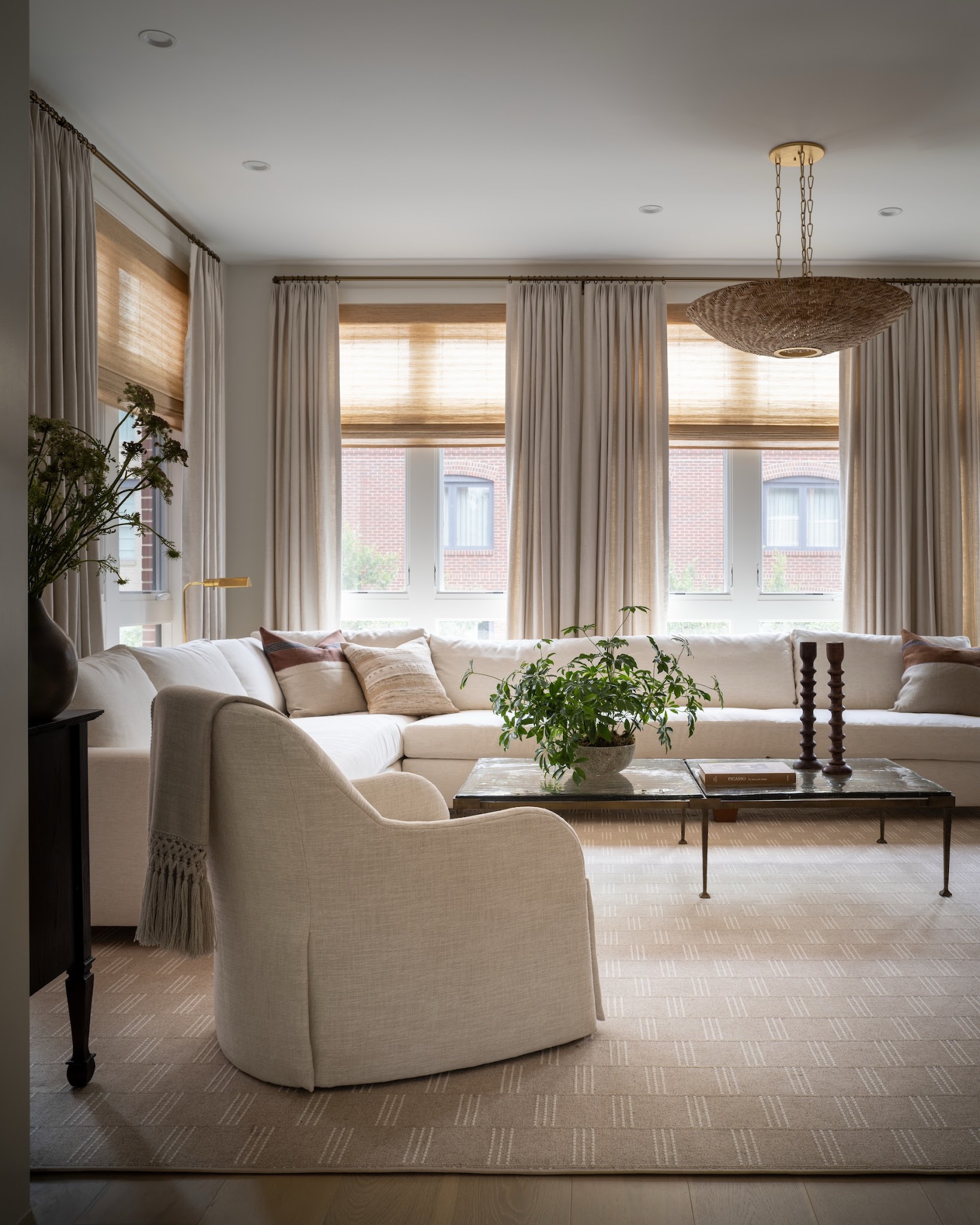
Soft daylight does much of the decorating in this cream living room. Woven shades temper the windows, while long curtains frame the sectional without introducing another strong color.
A broad woven pendant repeats that natural texture overhead. Below it, a slim coffee table holds a leafy arrangement and two dark candlesticks, leaving plenty of open surface.
This approach works when you want a calm room that still feels comfortable for company. Keep the main upholstery close in tone, then vary its weave and shape.
Add a gently curved chair to loosen the sectional's straight lines. The lesson is in the layering: filtered light, quiet textiles, and a few darker accents create depth without asking every object to command attention immediately.
3. Give Sculptural Ceramics Breathing Room
Credits: Instagram
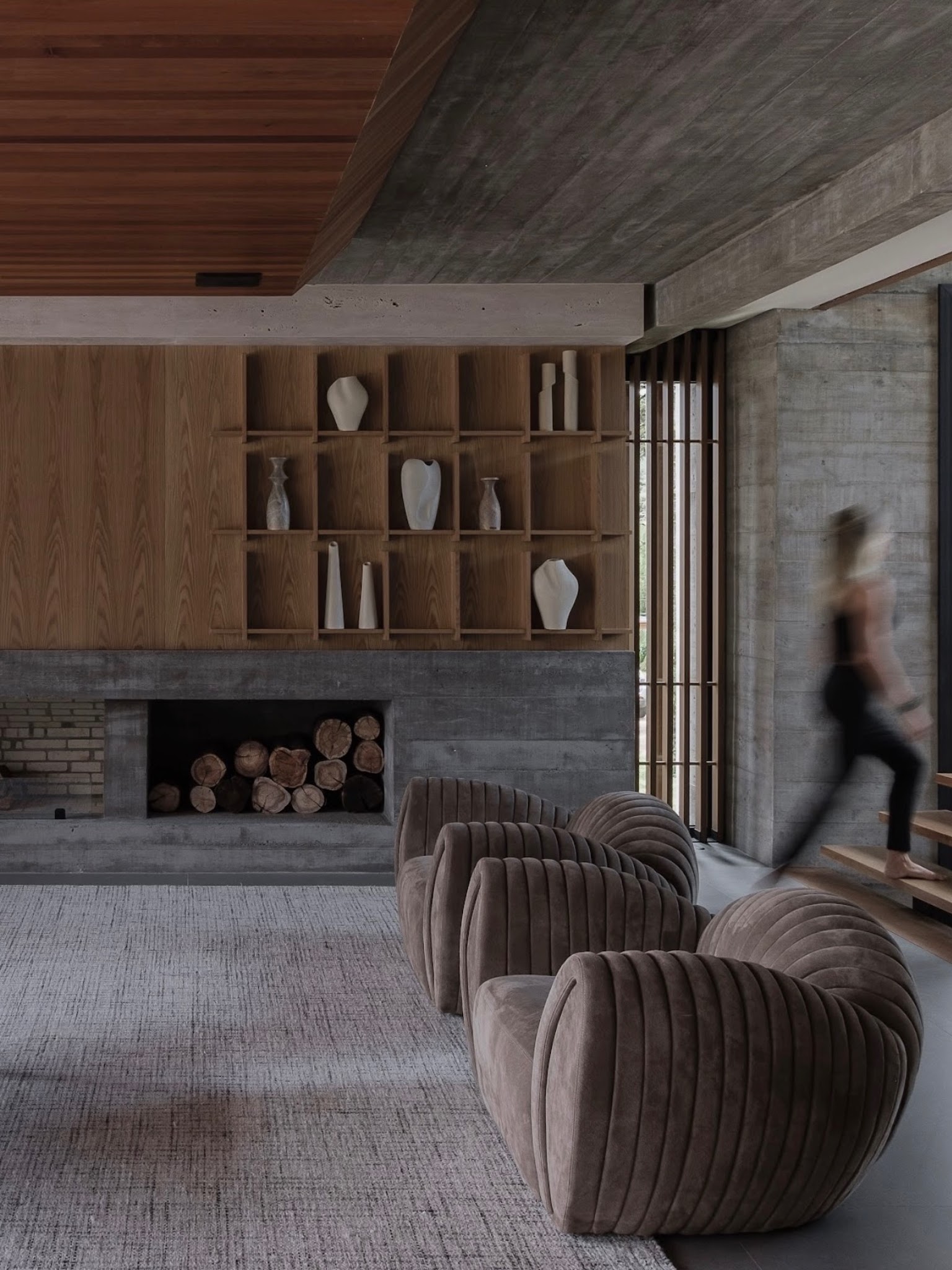
An open wood display wall turns a small collection of pale vessels into a quiet focal point. Some compartments remain empty, making each curved silhouette easier to appreciate.
Below, stacked logs bring an irregular natural pattern to the adjacent hearth niche. Two rounded brown chairs echo the pottery's softness against concrete walls and a wood ceiling.
You can borrow this balance without installing an entire wall of shelving. Edit a bookcase down to a few objects, repeat their colors, and leave generous gaps between them.
Keep nearby seating tactile and comfortable so the arrangement feels part of daily life. A restrained rug helps the wood grain, concrete texture, and ceramic forms become the room's main visual interest throughout the day.
4. Repeat Soft Circles Above the Sofa
Credits: Instagram
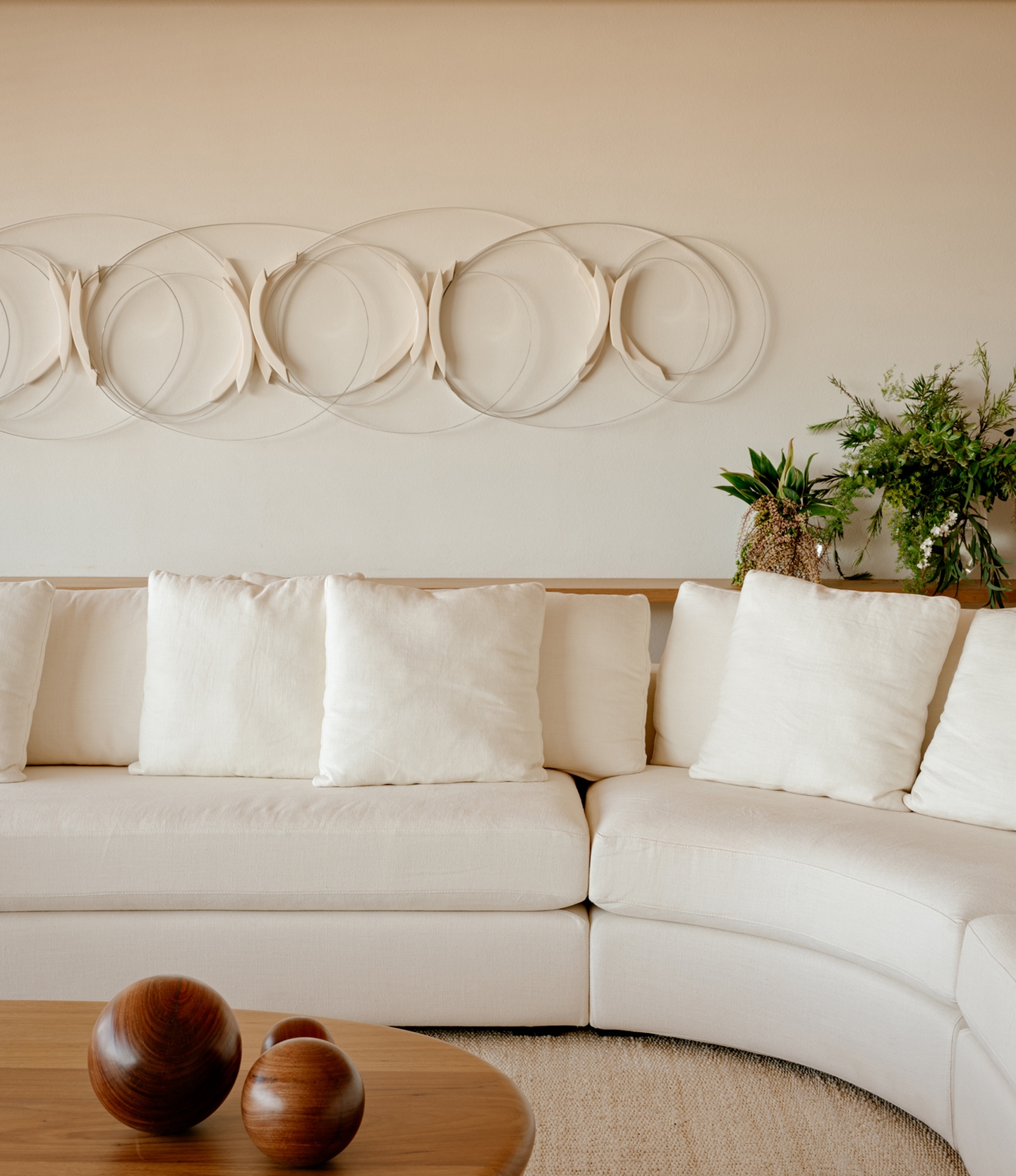
Overlapping circular forms bring gentle movement to the wall above this white sectional. Because the artwork nearly matches the wall, its shadows supply definition instead of strong color.
The sofa's curved corner continues that rhythm, and a round wood table carries three smooth wooden objects. Greenery at one end keeps the pale setting from feeling overly uniform.
Try this idea when a blank wall needs interest but a bold painting feels too busy. Look for low contrast relief art, then repeat one shape in the furniture or accessories.
Keep cushions simple and the tabletop lightly styled. Warm wood and a visibly woven rug give the white palette enough texture to feel welcoming, especially in a living room used every day.
5. Frame Greenery Inside a Wood Wall
Credits: Instagram
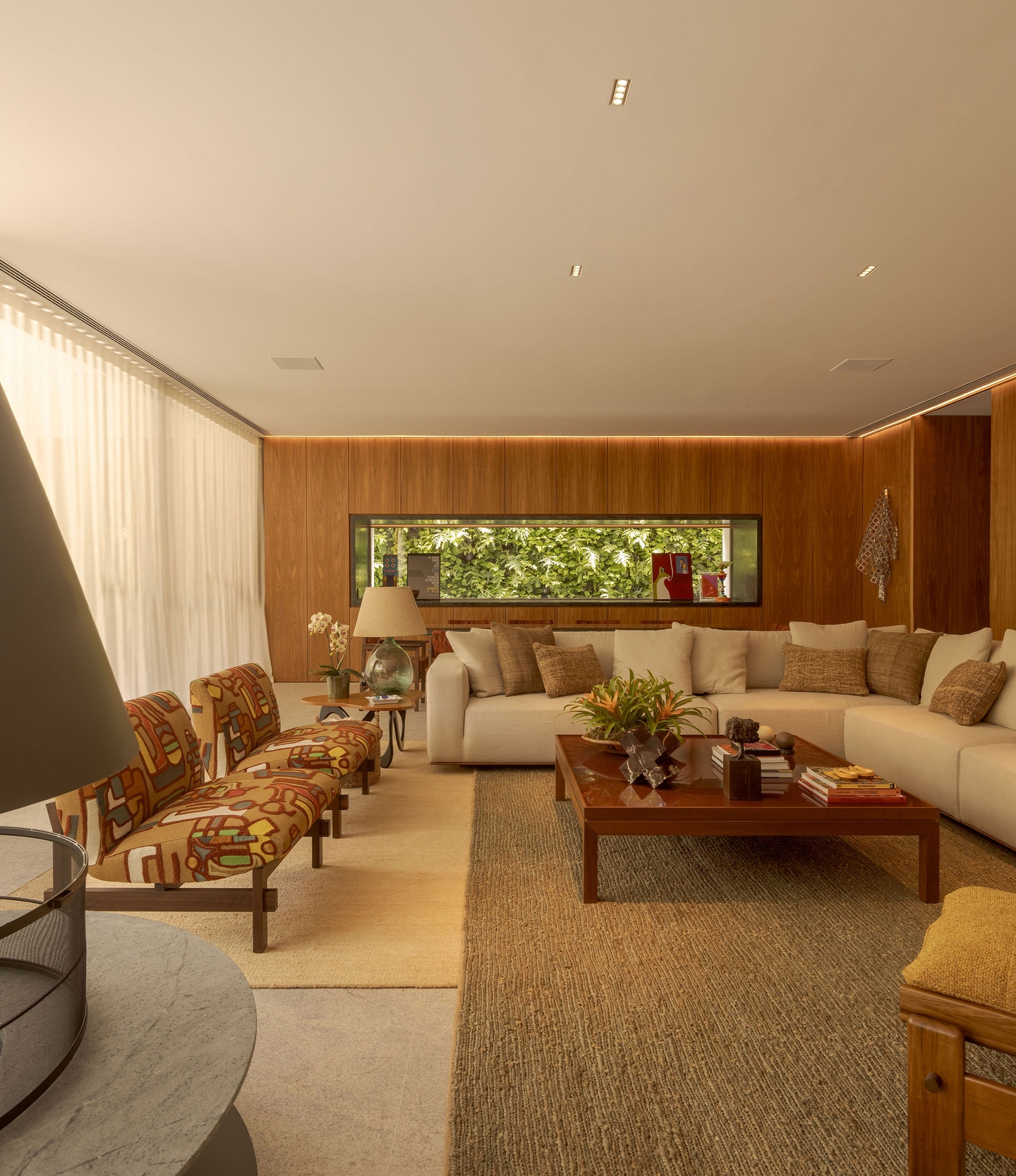
A long horizontal window turns the planting outside into the main artwork in this wood wrapped living room. Its leafy view sits just above the cream sectional, connecting the seating area to the garden.
Soft curtains diffuse light from the side, while a narrow glow along the ceiling adds warmth. Patterned chairs and books make the room personal without overwhelming its calm foundation.
To adapt the idea, arrange your largest seat where it can benefit from an existing garden view. Keep the surrounding wall treatment consistent, and choose cushions in closely related earth tones.
A broad rug can gather several seats into one comfortable zone. Let plants, warm lighting, and familiar objects create a relaxed atmosphere that feels lived in.
6. Gather Pale Seating Around a Round Table
Credits: Instagram
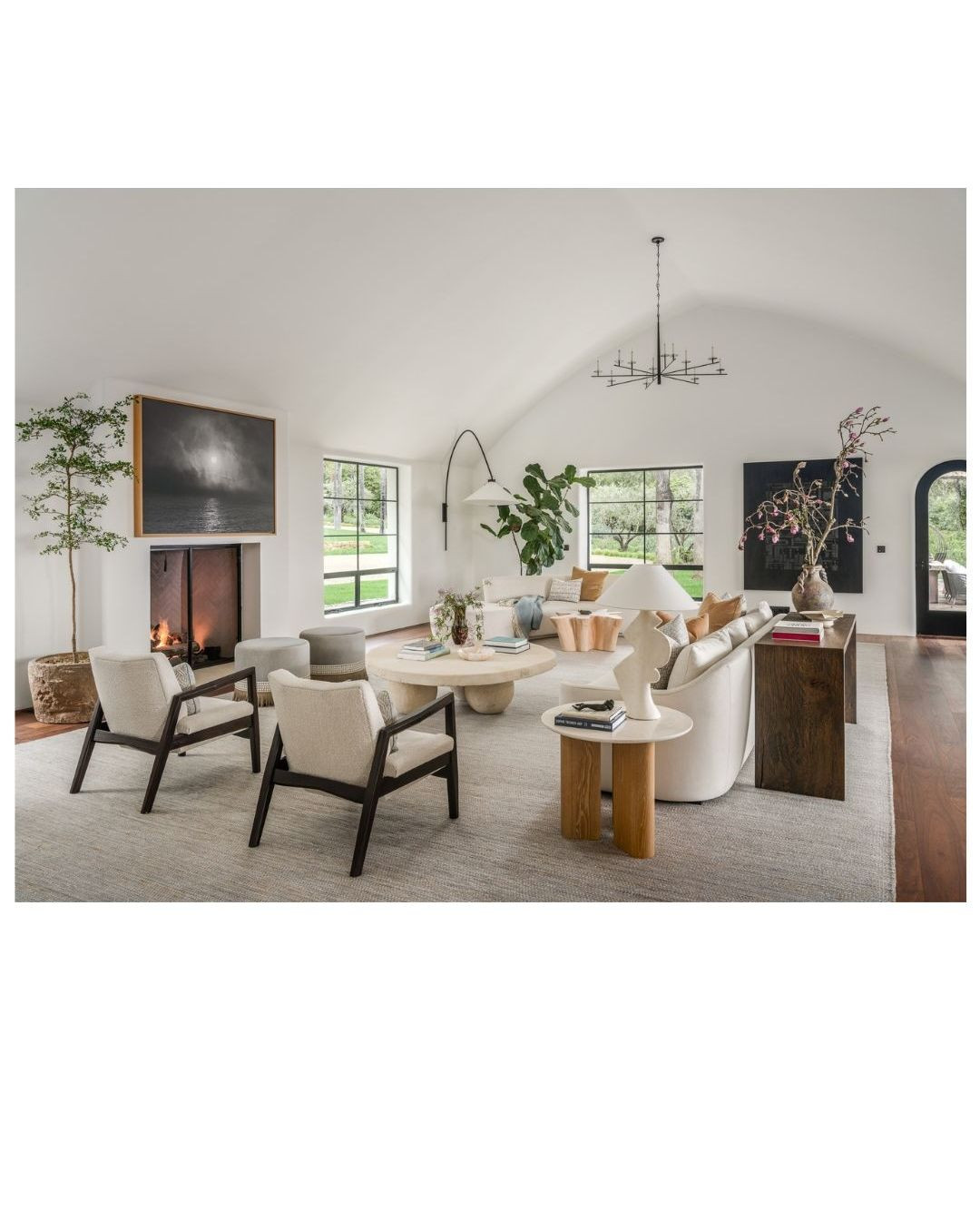
This airy living room gathers a curved white sofa and two dark framed chairs around a substantial round table. The circular center softens the arrangement and leaves several comfortable places for conversation.
A large neutral rug ties the furniture together, while wood flooring and small tables introduce warmth. Tall plants, branches, and garden views give the white walls a natural counterpoint.
For a similarly peaceful layout, start with the seating circle before choosing accessories. Leave clear paths around the group and keep the main furniture low enough to preserve views across the room.
Repeat a dark accent in just a few places, such as chair frames or window trim. That quiet structure helps the pale palette feel composed and grounded.
7. Connect the Living Area to a Courtyard
Credits: Instagram
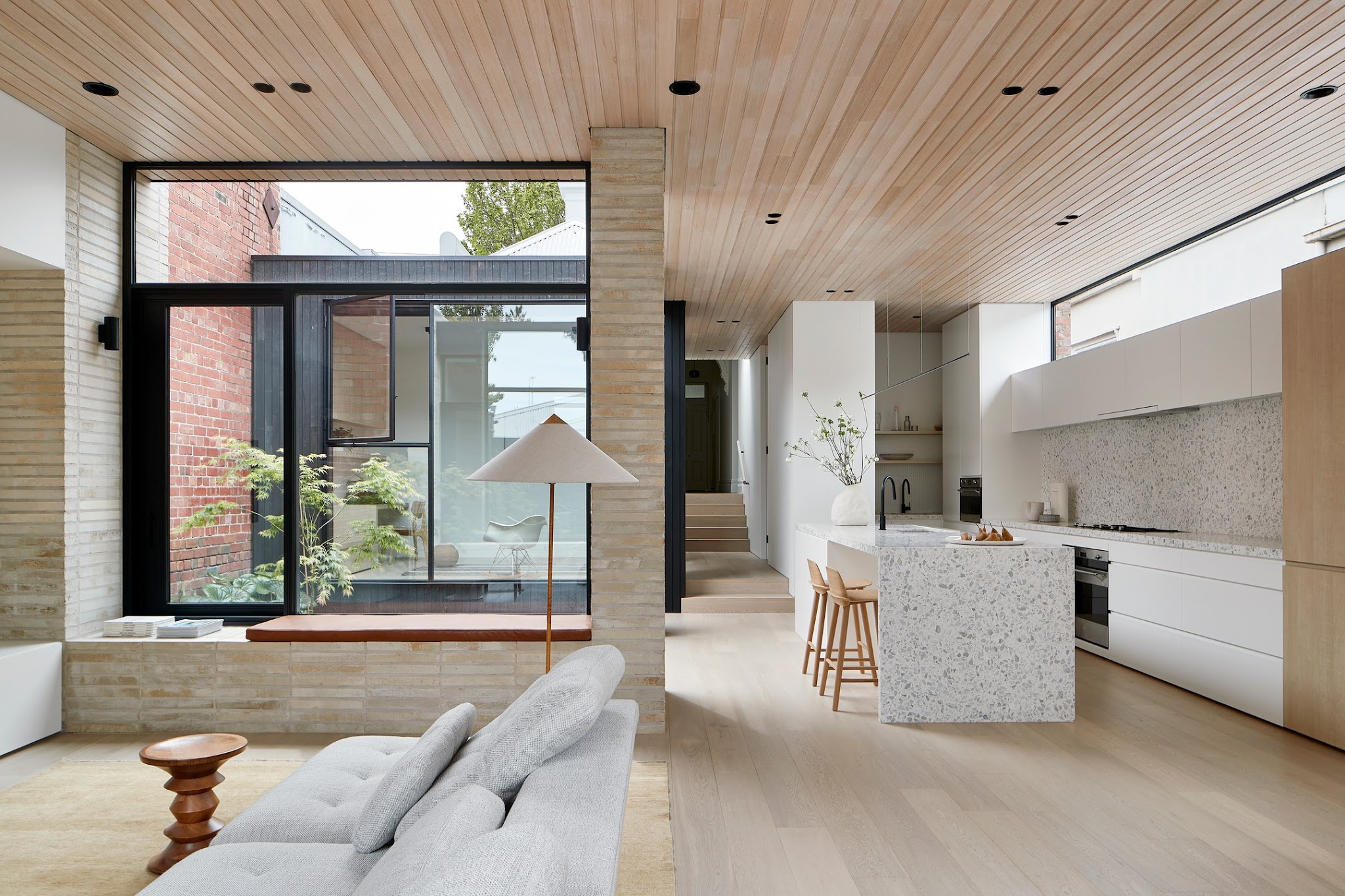
A glazed courtyard brings a pocket of greenery into the center of this open living space. The pale sofa sits beside a deep window ledge, with a slim floor lamp and small wood table close at hand.
Light timber overhead connects the seating area with the kitchen beyond. Rather than dividing every function with furniture, the design allows long views and natural light to establish a sense of space.
You can apply the same principle around a patio door or generous window. Keep that sightline open, choose a sofa with a low back, and limit furniture near the glass.
A cushioned ledge offers another place to pause. Repeating pale wood across the room helps the different areas feel quietly connected.
8. Make the Garden Part of an Evening Retreat
Credits: Instagram
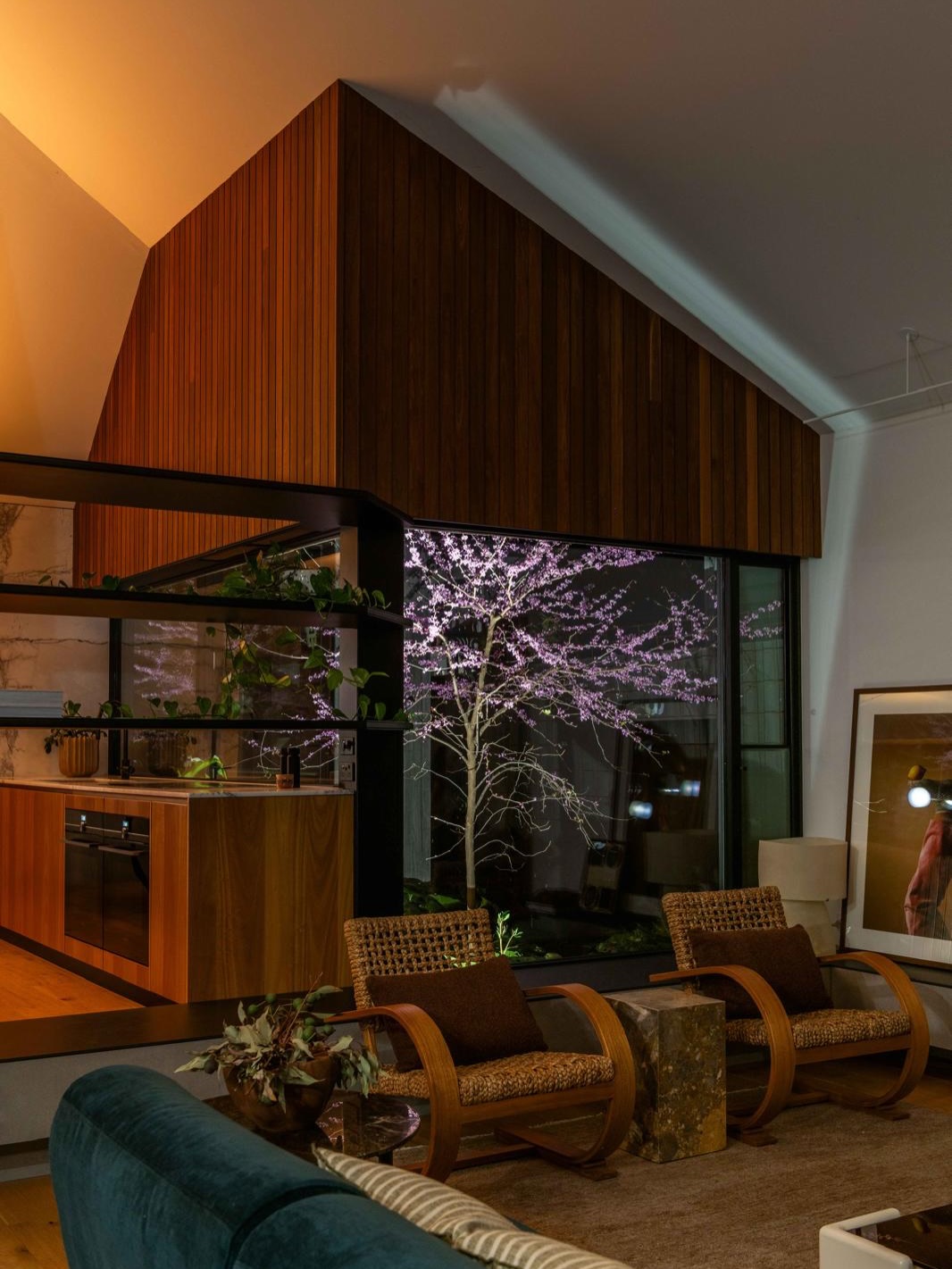
The view of an illuminated tree gives this living room a peaceful focus after sunset. Two woven chairs face into the room beneath a tall wood clad wall, while the curved green sofa adds a deeper, softer color.
Warm interior light makes the timber glow, and the window frames the branches almost like a painting. This is a useful reminder to consider your living room at night as well as during the day.
Place comfortable seats where they can enjoy a garden view, and use modest lighting to reveal a favorite plant outside. Indoors, combine woven textures with smooth wood and restrained stone accents.
Leave the glass clear so the outdoor scene remains an active part of the room's atmosphere.
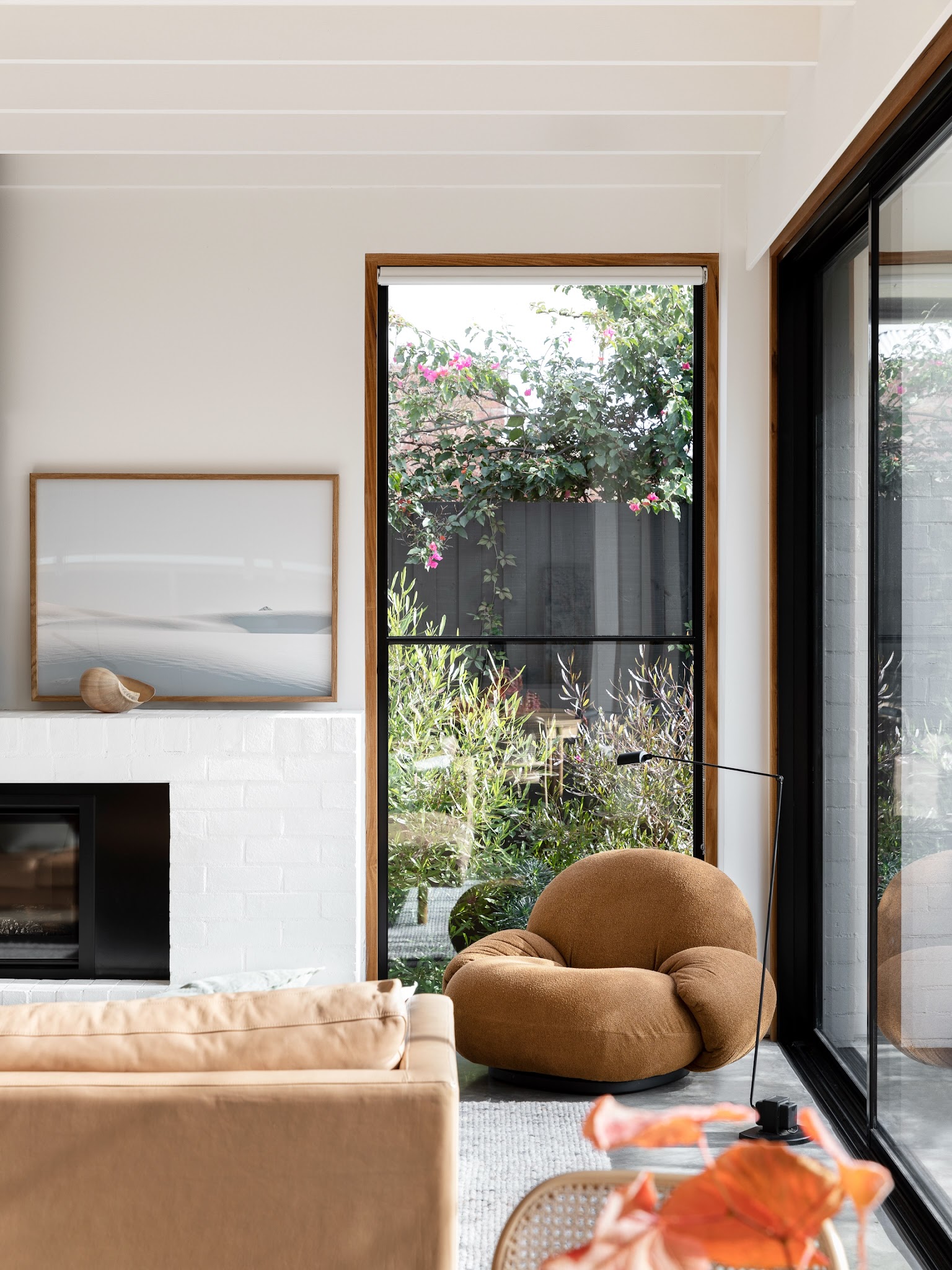
9. Create a Small Seat Beside the Garden
Credits: Instagram
A rounded brown armchair makes the window corner feel like a destination of its own. It sits between tall garden glazing and a white brick fireplace, with a slender reading light nearby.
The sofa's warm upholstery and wood window trim repeat its earthy color, while a quiet landscape print rests above the hearth.
For a Zen inspired sitting spot, look for a corner that already receives good light or offers a pleasant view. Add one comfortable chair and a lamp that does not compete with the scenery.
Keep artwork simple and let visible natural textures provide the detail. The result can support reading, conversation, or a few quiet minutes without requiring a separate room or a large collection of accessories.
10. Keep the Landscape as the Main Event
Credits: Instagram
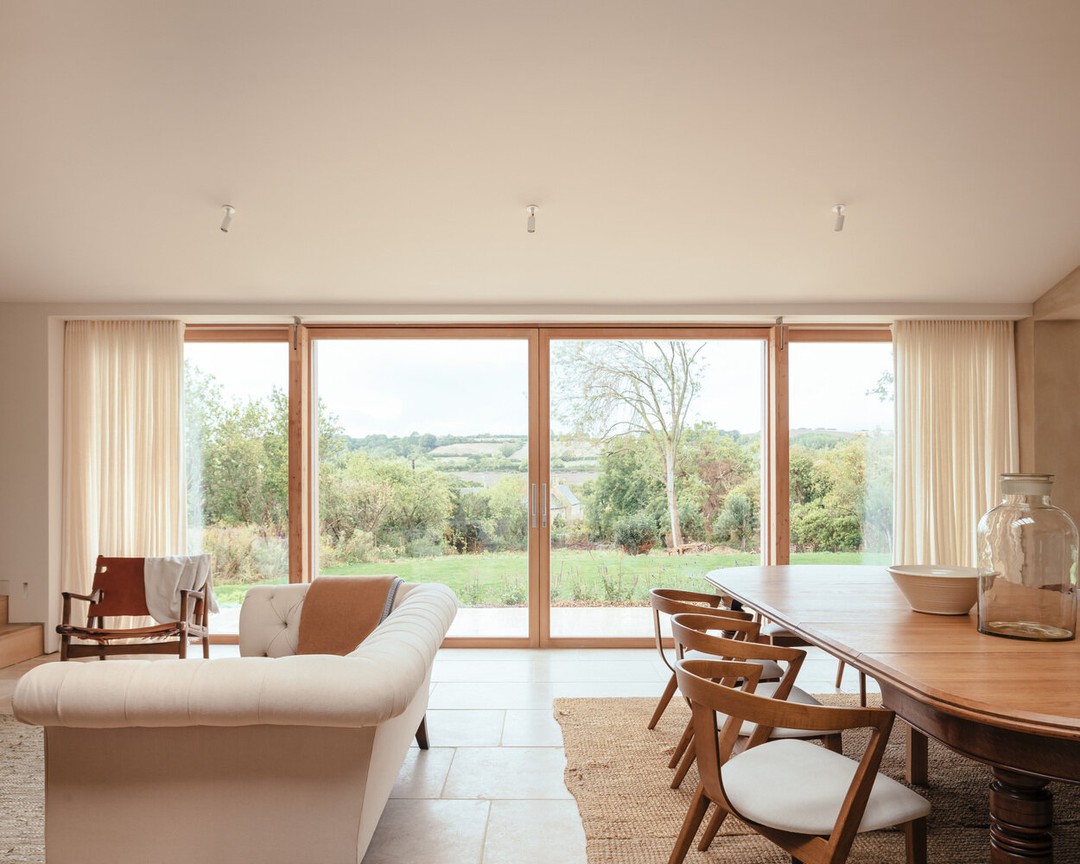
Wide glass doors make the countryside the strongest feature of this living and dining room. A cream sofa, wood chairs, and a simple dining table stay below the view, while light curtains gather at the edges.
Pale stone flooring and woven rugs keep the palette grounded in natural textures. The furniture feels substantial enough for daily use, yet the arrangement leaves an easy connection to the outdoors.
Borrow the approach by keeping tall storage away from your best window and choosing a few pieces with clear, familiar shapes. Use muted upholstery so seasonal greenery can supply changing color.
Even a smaller garden view becomes more restful when nearby surfaces stay lightly styled and the route to the door remains open.
11. Pair Low Seating With Small Wood Tables
Credits: Instagram
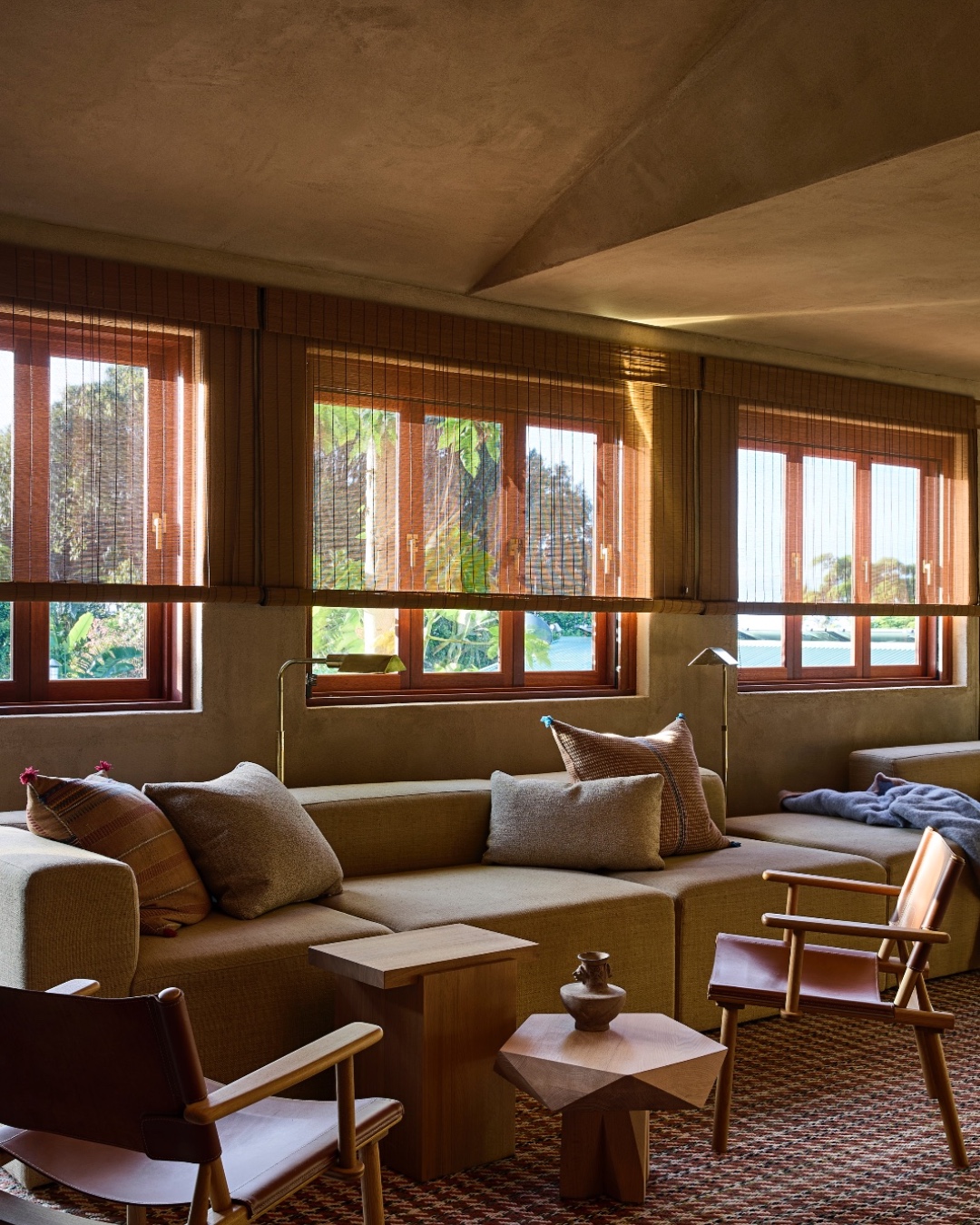
The low sectional in this room stretches beneath a row of timber windows, creating a comfortable place to settle in. Two leather chairs face it, and separate wood tables provide useful surfaces without filling the center with one oversized piece.
Woven blinds warm the light, while earthy cushions and a patterned rug keep the palette connected. The arrangement shows how a Zen inspired room can feel intimate and practical.
Choose seating that sits low, then keep side tables within easy reach of each place. Repeat a few natural materials across the group instead of matching every item exactly.
Leave enough space between the tables for comfortable movement. A ceramic vessel supplies a quiet finishing touch without interrupting the relaxed layout.
12. Let Rough Plaster Set the Mood
Credits: Instagram
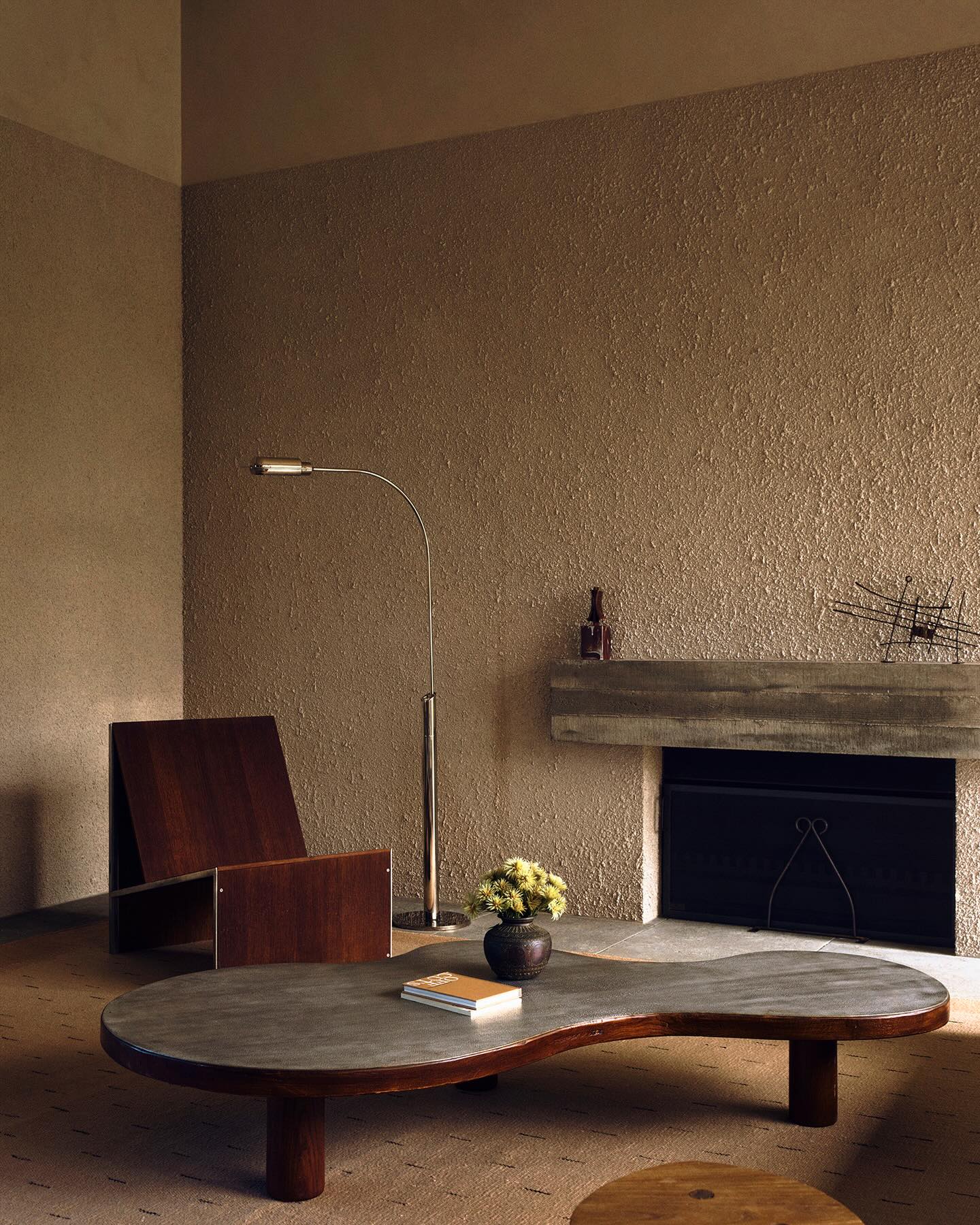
Rough plaster gives this fireplace wall a softly changing surface that rewards a closer look. Its sandy color continues across the room, allowing a low, irregularly shaped table and an angular wood chair to stand out.
The styling is spare: a small flower arrangement, a book, and a few objects on the mantel. This is a strong approach for anyone drawn to earthy Zen interiors.
Choose a wall finish with subtle variation, then let grazing daylight reveal its texture. Balance that roughness with one smooth piece of furniture so the materials have room to contrast.
Keep accessories low and widely spaced. The room gains character from the surfaces themselves, with little need for extra color or layers of decorative objects.
13. Anchor a Pale Room With Sculptural Black Pieces
Credits: Instagram
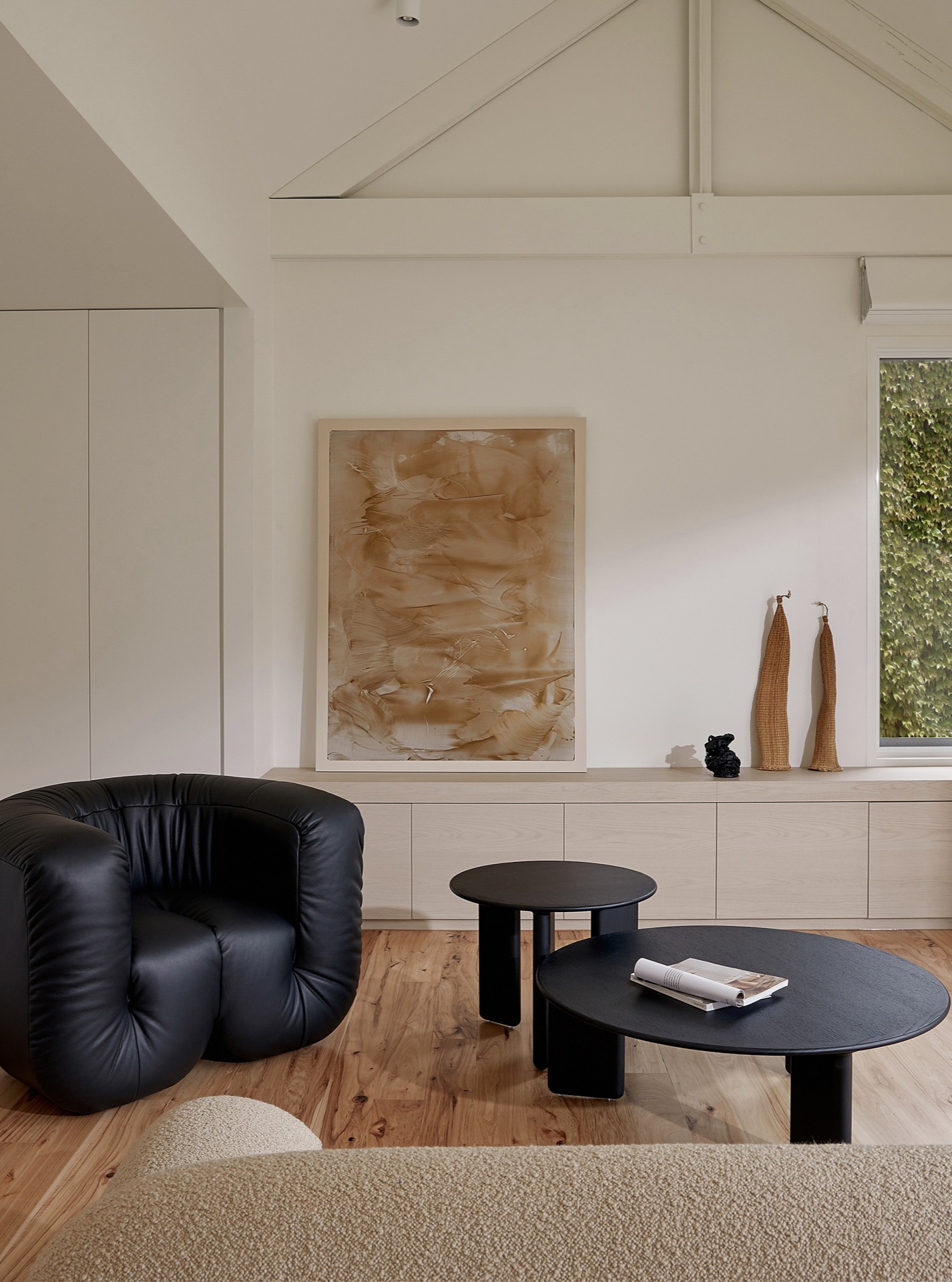
A generous black armchair and two round tables give this pale living area a clear center. Their dark silhouettes stand out against the white walls, light wood cabinet, and natural floorboards.
A textured beige artwork rests on the long ledge, accompanied by just a few sculptural objects. The result feels calm because the contrast is concentrated in a small number of pieces.
To try the idea, keep large background surfaces quiet and choose one dark seat with a welcoming shape. Repeat its color in a table or small accessory, rather than scattering black throughout the room.
Closed storage below a simple display ledge helps everyday necessities stay accessible while preserving the open, orderly feeling of the seating area around it.
14. Blend Olive Upholstery With Timber and Stone
Credits: Instagram
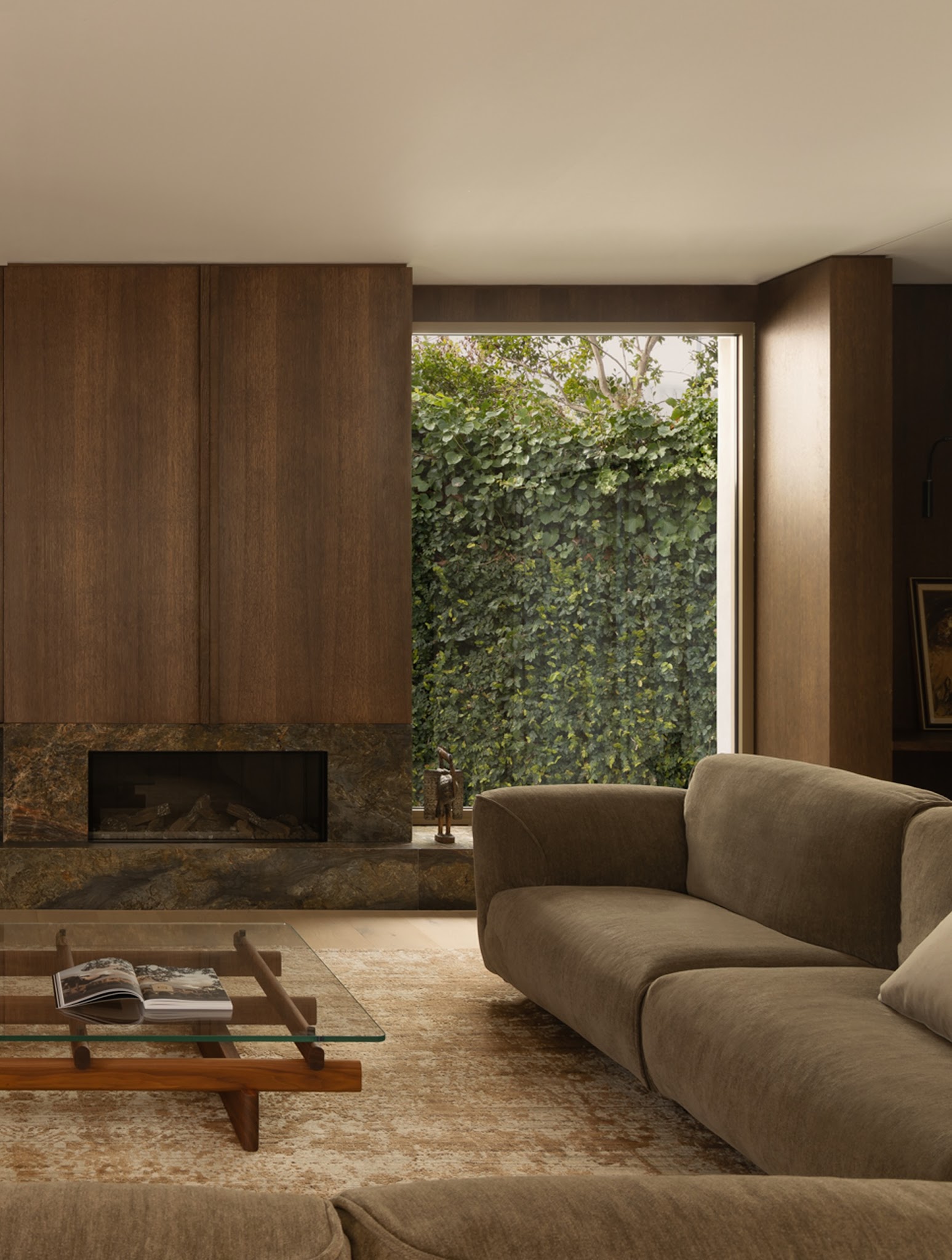
The olive sofa in this living room sits comfortably between warm timber and richly patterned stone. A tall window frames a dense green hedge, linking the upholstery to something living outside.
The glass coffee table keeps the foreground visually open, while its wood frame repeats the room's warmer tones. This palette offers a grounded alternative to an entirely white Zen interior.
Begin with a muted green that looks comfortable beside your existing wood, then introduce stone in a fireplace surround, tabletop, or smaller object. Keep the surrounding textiles close in value so the materials can lead.
A plain cushion and an open book are enough to suggest everyday use. Leave the strongest natural patterns room to be seen and appreciated.
15. Use Warm Built-In Storage in a Compact Room
Credits: Instagram
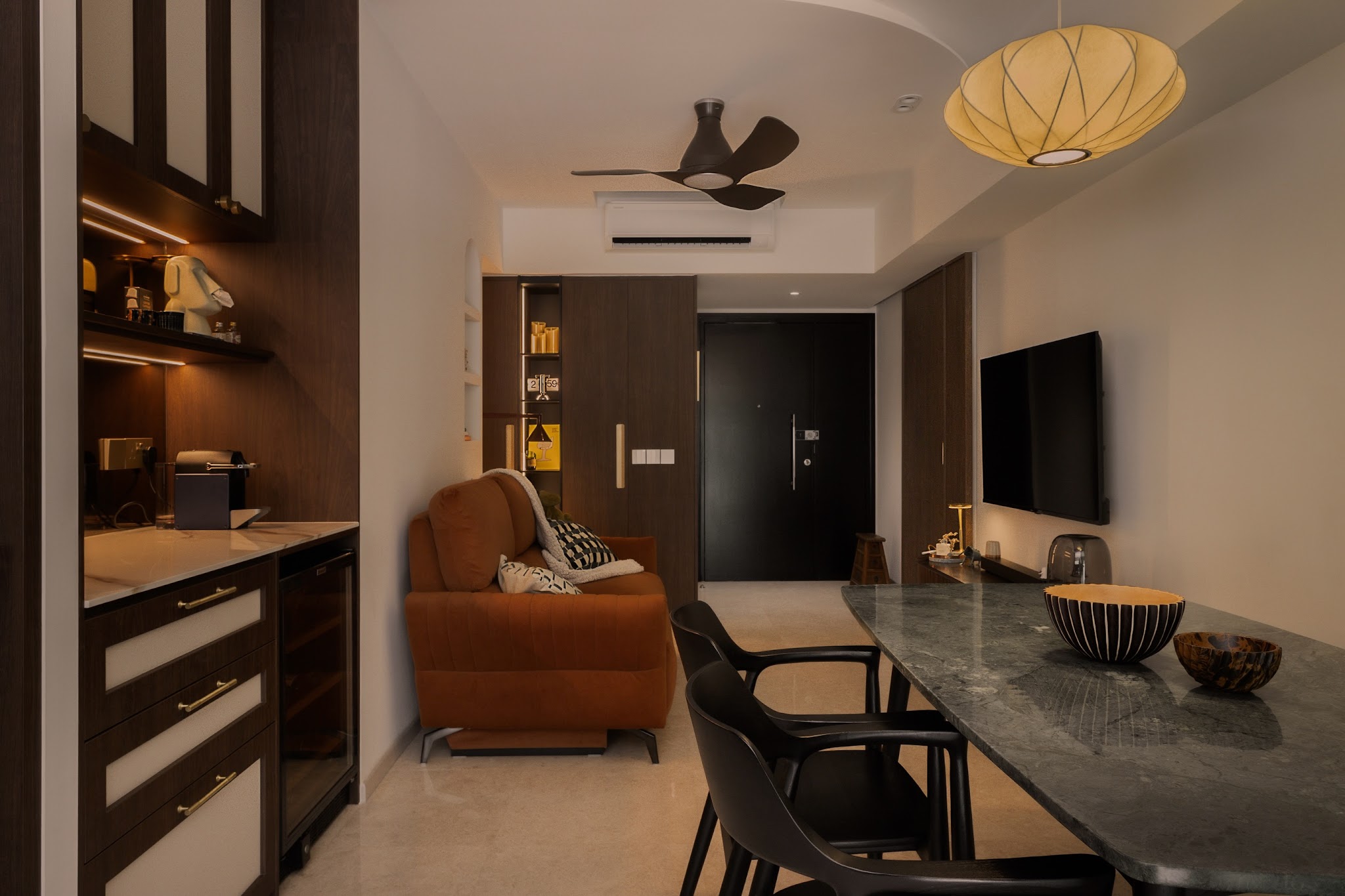
Dark wood cabinetry gives this compact living and dining space a consistent backdrop. The tan sofa fits along one side, while a slim television wall keeps the center available for movement.
Warm lighting inside the shelves picks out a few objects, and a rounded paper shade softens the ceiling. The room shows that a calm atmosphere does not depend on generous square footage.
Choose storage that suits the room's daily jobs, and keep its finish consistent across connected areas. Use small pools of light to make useful corners feel welcoming.
A limited mix of tan, brown, cream, and black helps the furnishings belong together. Keep the dining surface lightly styled so it can shift easily between meals, work, and relaxation.
16. Balance Tall Glazing With a Paper Lantern
Credits: Instagram
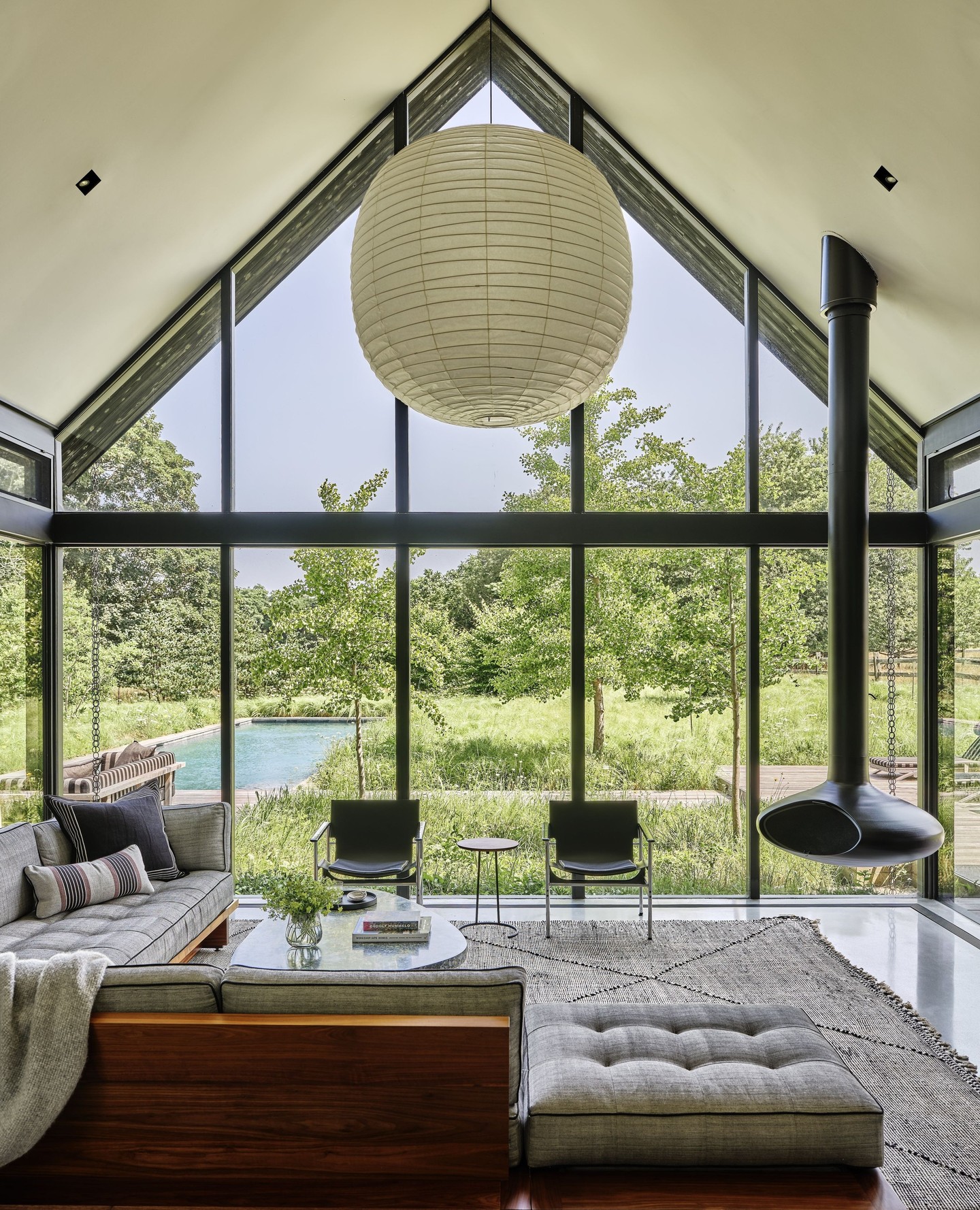
An oversized paper lantern gives this tall glass living room a gentle visual center. Its rounded shape contrasts with the pitched roof and dark window frames, while the garden remains visible behind it.
Low gray seating, a matching ottoman, and a lightly patterned rug make the foreground feel comfortable and settled. The suspended black fireplace adds another sculptural element without closing off the view.
You can borrow the balance by pairing a large, simple shade with furniture that stays close to the floor. Keep the lighting soft and the upholstery restrained when the architecture already provides strong lines.
Natural wood around the seating adds warmth. A leafy arrangement on the table echoes the landscape without competing with the greenery beyond.
17. Let One Tall Plant Fill the Vertical Space
Credits: Instagram
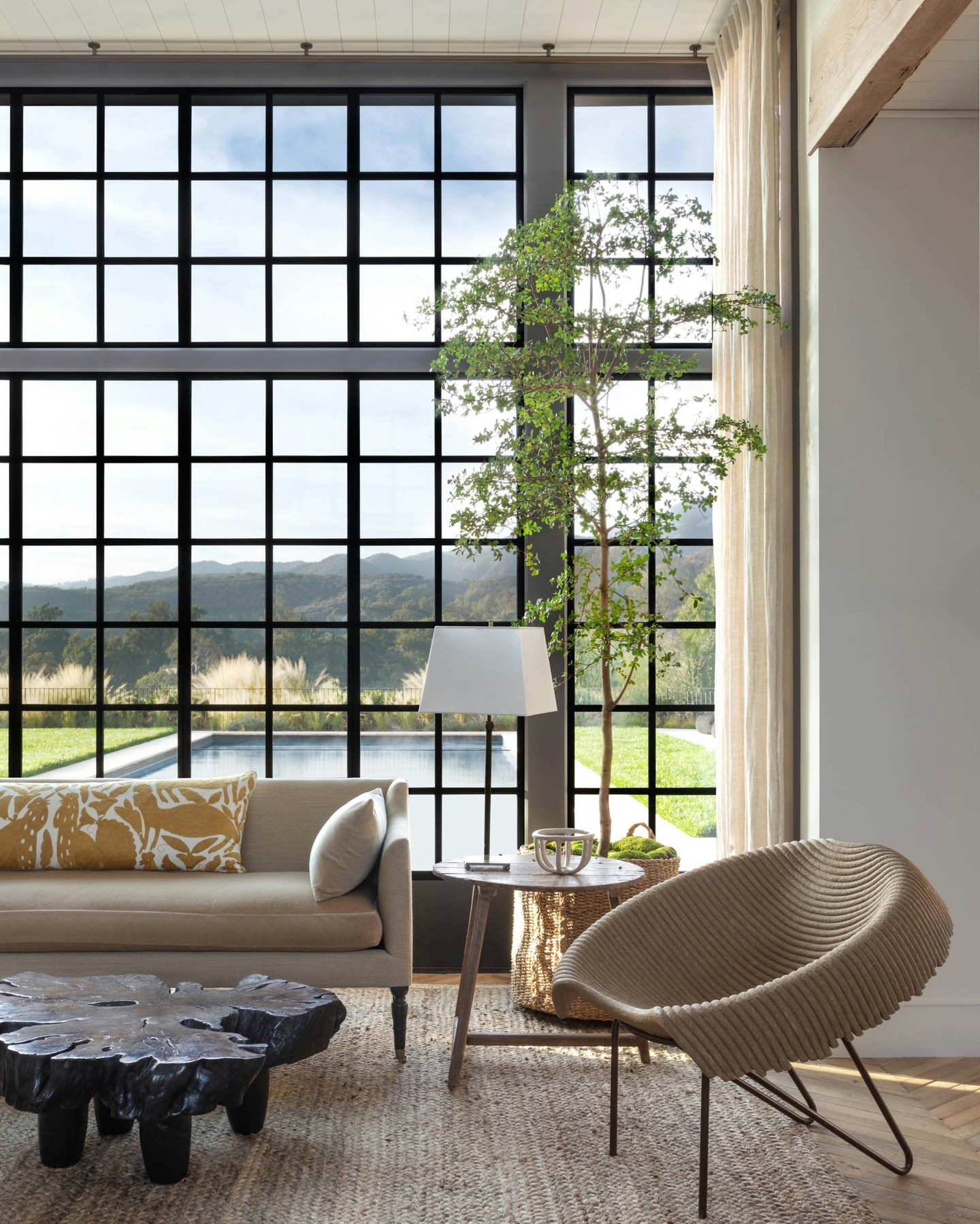
A single tall tree gives this sitting area a natural presence without requiring many smaller pots. Its fine branches soften the grid of the window, and the landscape beyond makes the greenery feel connected to the setting.
A woven chair, neutral sofa, and irregular dark coffee table bring different textures into the same quiet palette. The idea is especially useful in a room with generous height.
Choose a plant suited to the available light, and leave enough space around its canopy for the shape to remain clear. Keep nearby furniture lower and simpler so the tree becomes an easy focal point.
A woven basket can connect the planter to a natural rug, helping the whole arrangement feel relaxed and cohesive.
18. Give the Television Wall a Natural Backdrop
Credits: Instagram
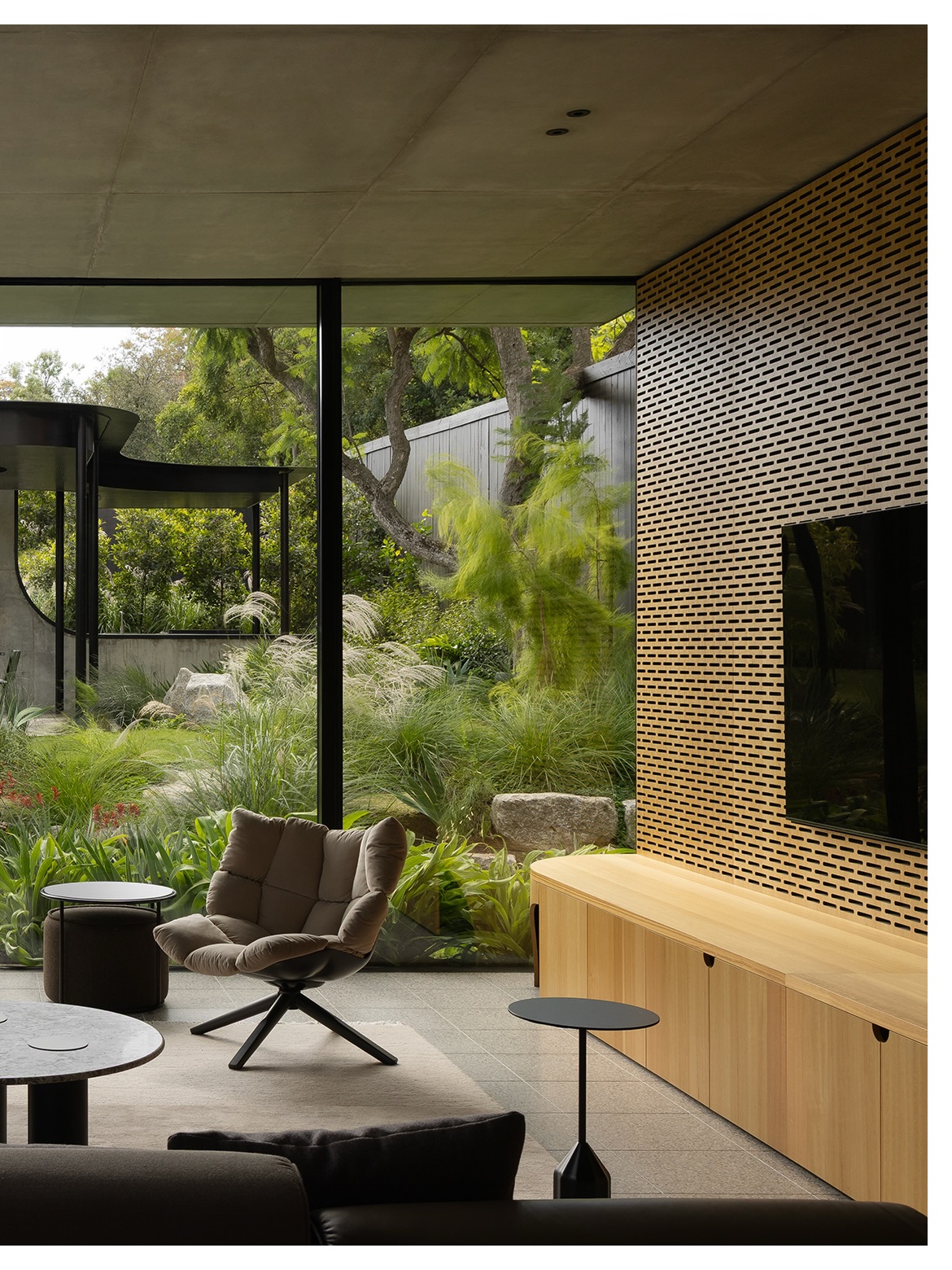
A warm perforated panel helps the television wall feel integrated into this garden facing living room. The long wood cabinet below keeps the composition simple, while a cushioned swivel chair provides a comfortable place beside the glass.
Beyond it, rocks, grasses, and trees create a more varied view than any indoor accessory could. This arrangement makes room for ordinary entertainment within a calm setting.
Use one continuous storage piece to organize the screen and its equipment, and avoid crowding the top with small objects. Let a textured wall treatment carry the detail.
A soft rug and comfortable chair balance the harder surfaces. Keep the route to the windows open so daylight and greenery remain part of the room's everyday experience.
19. Keep a Book-Filled Room Tonally Quiet
Credits: Instagram
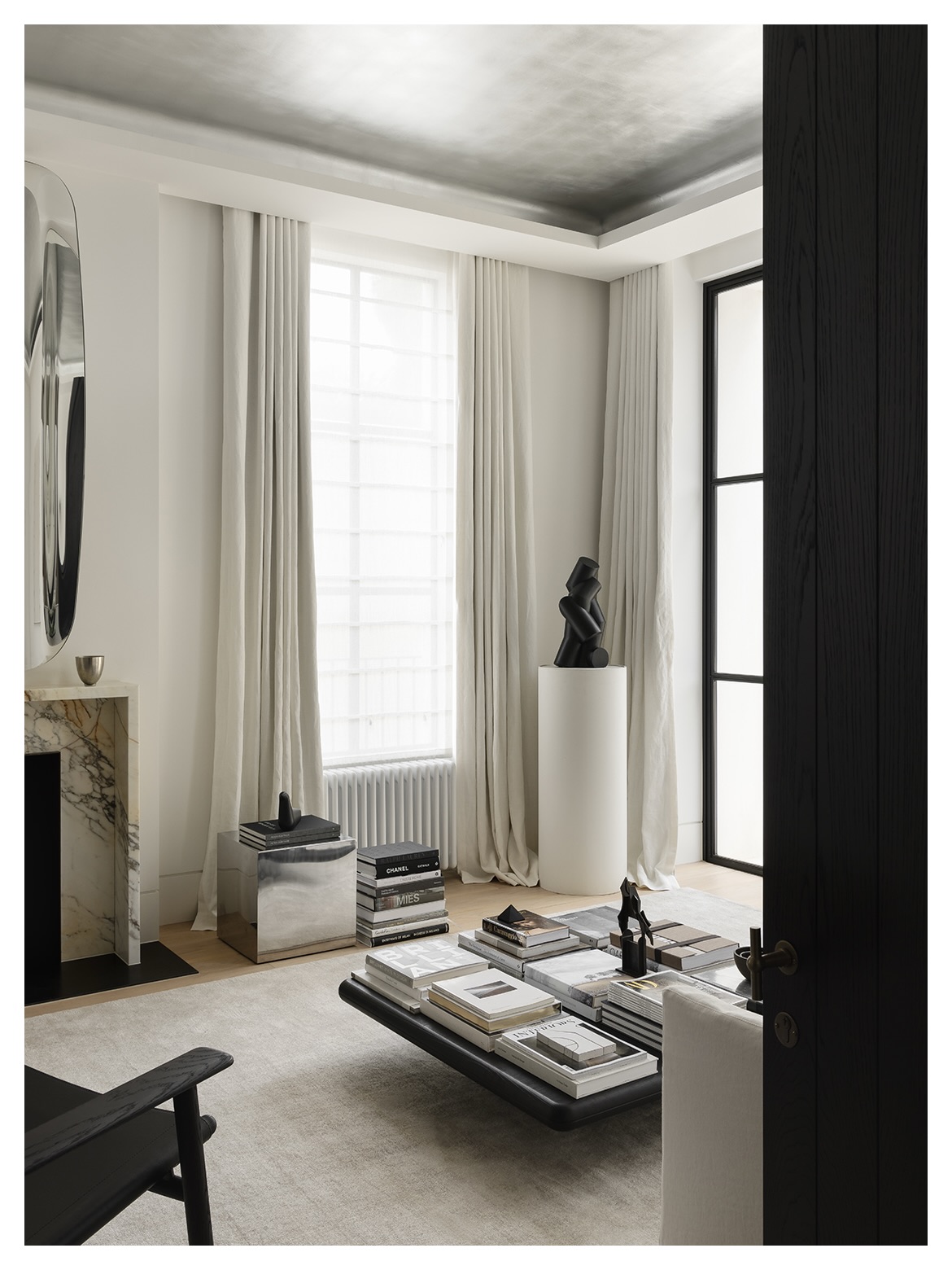
Stacks of books make this pale sitting room personal, while their mostly neutral covers keep the arrangement visually restrained. Dark sculptures repeat the color of the low table and door, creating a measured rhythm through the space.
Long curtains soften the tall window, and a light rug gives the furniture a quiet foundation. This is a useful approach when a peaceful living room also needs to hold a collection.
Group books into deliberate stacks and leave clear areas beside them, rather than covering every available surface. Choose a few objects with strong shapes so each one has a reason to be there.
Restricting the palette allows the books, stone fireplace, soft fabric, and sculptural pieces to coexist without feeling busy.
20. Carry Pale Timber Across an Open Plan
Credits: Instagram
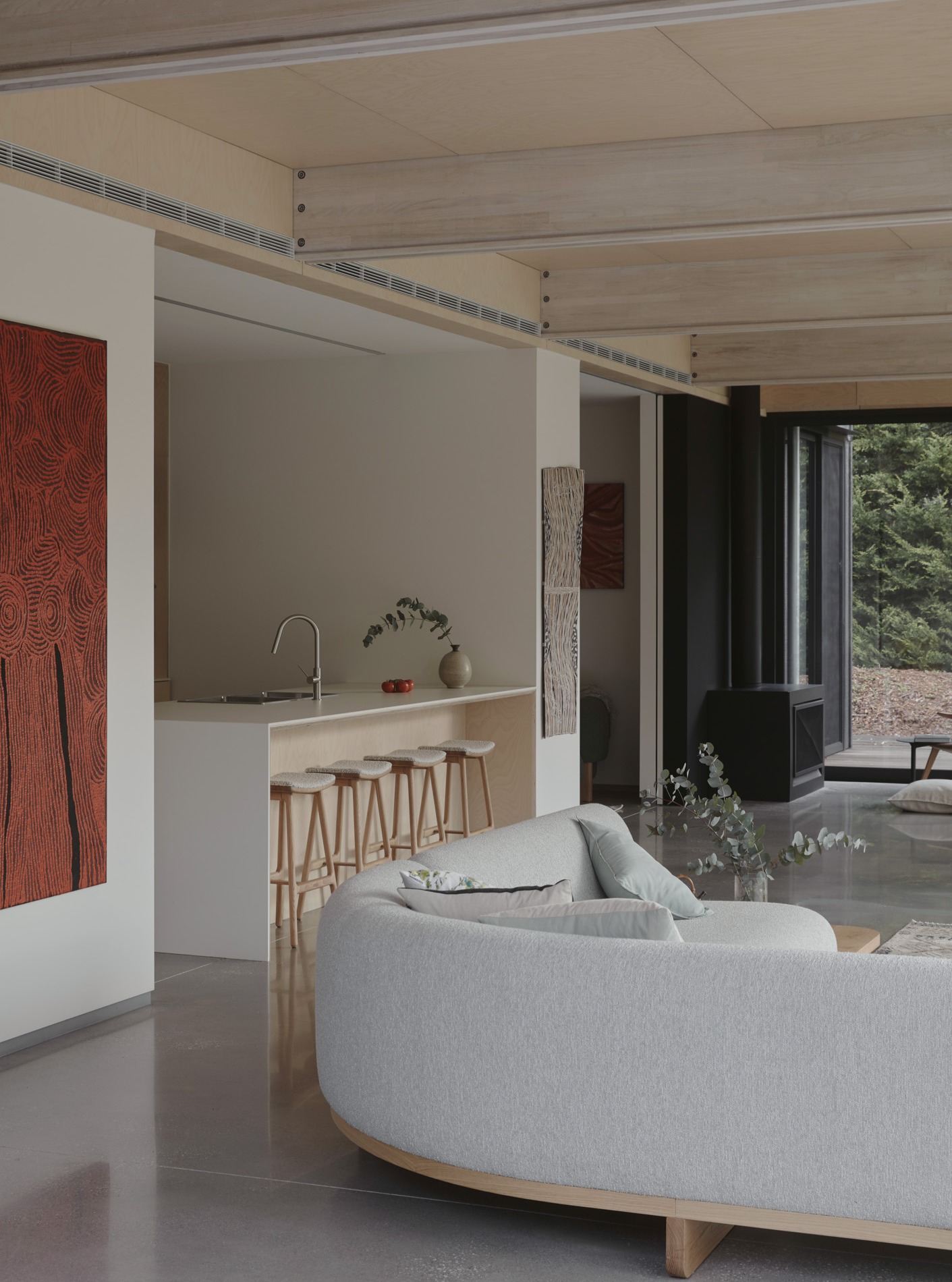
Pale timber beams stretch across this living area and continue toward the kitchen, giving the open plan a shared material language. A rounded gray sofa softens their straight lines, while simple wood stools echo the ceiling's warmth.
The dark stove and garden opening create a quieter destination at the far end. Even with a bold artwork nearby, the room feels coherent because its larger surfaces stay restrained.
To adapt the idea, repeat one wood tone across two or three connected elements, such as shelving, stools, or a table. Choose a sofa with a gentle outline to balance exposed structure.
Keep the kitchen surfaces lightly styled. Consistent materials can make several everyday functions feel like parts of one comfortable, unhurried space.