
A room full of rich color can feel grounded when the strongest shades have clear roles and quieter elements give the eye a place to rest.
These Jewel Tone Living Room Ideas show ways to build that balance, from pairing sapphire walls with magenta chairs to setting emerald upholstery against warm wood.
You’ll also find inspiration for using patterned pillows with deep teal and letting an emerald rug establish the palette. Whether you prefer a saturated backdrop or a single bold sofa, thoughtful repetition helps jewel tones feel connected rather than crowded.
1. Outline Sapphire Blue with Ruby Accents
Credits: Instagram
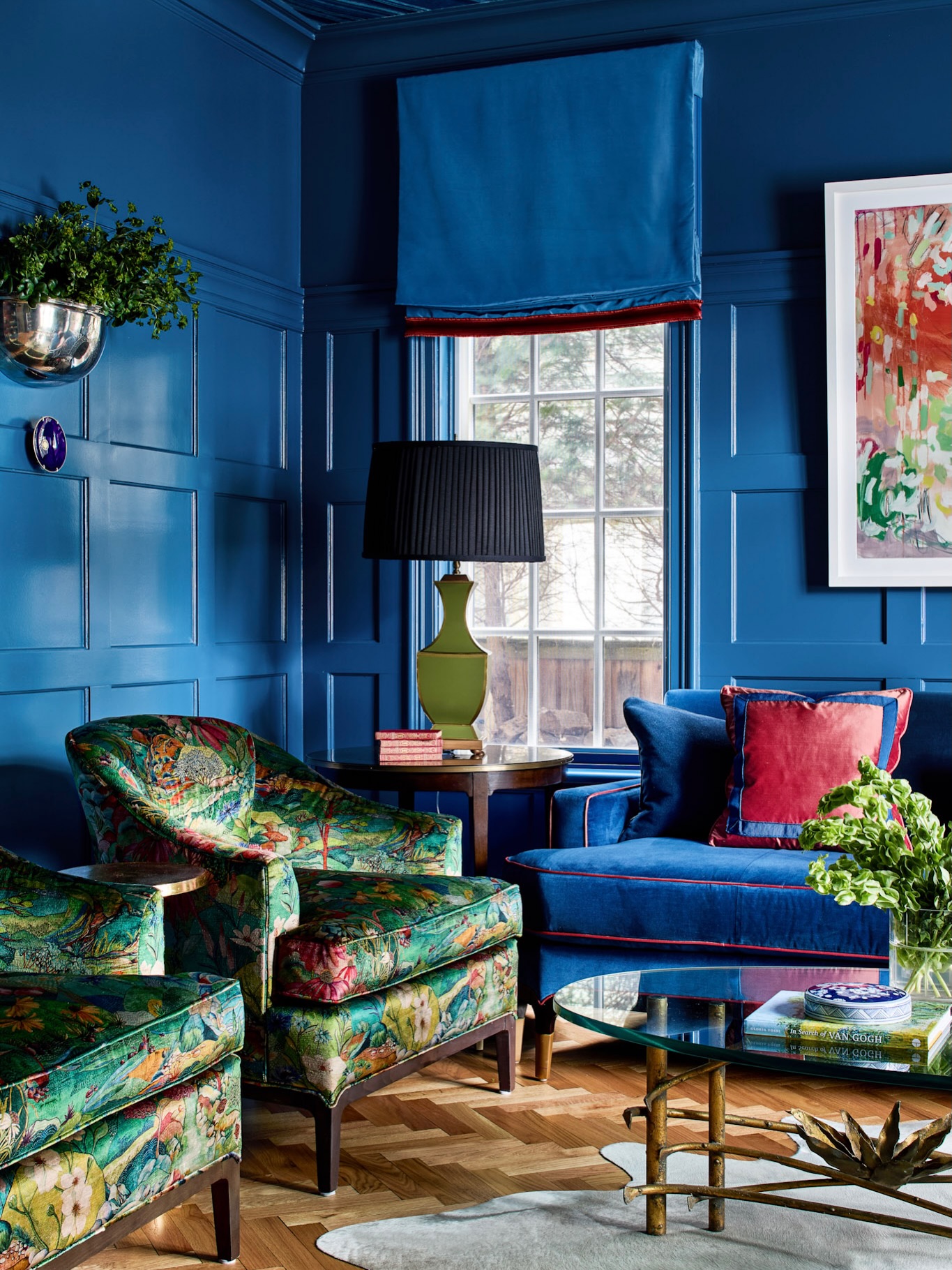
Sapphire blue becomes expressive when it moves across several surfaces. In this room, blue paneling, a matching window shade, and a blue sofa create a continuous background for richly patterned green chairs.
Thin red piping traces the sofa, while a red pillow and the shade's red lower edge repeat that warmer color at different heights.
Borrow the balance by choosing one jewel tone for your largest surfaces and using a second in small, deliberate strokes. A clear coffee table keeps the layered seating visible.
The black lampshade adds a quiet dark shape amid the saturated colors, and the pale rug provides a softer landing beneath them. Leave some window glass exposed so daylight can reveal the room's variations in blue.
2. Give Emerald Walls a Glossy Finish
Credits: Instagram
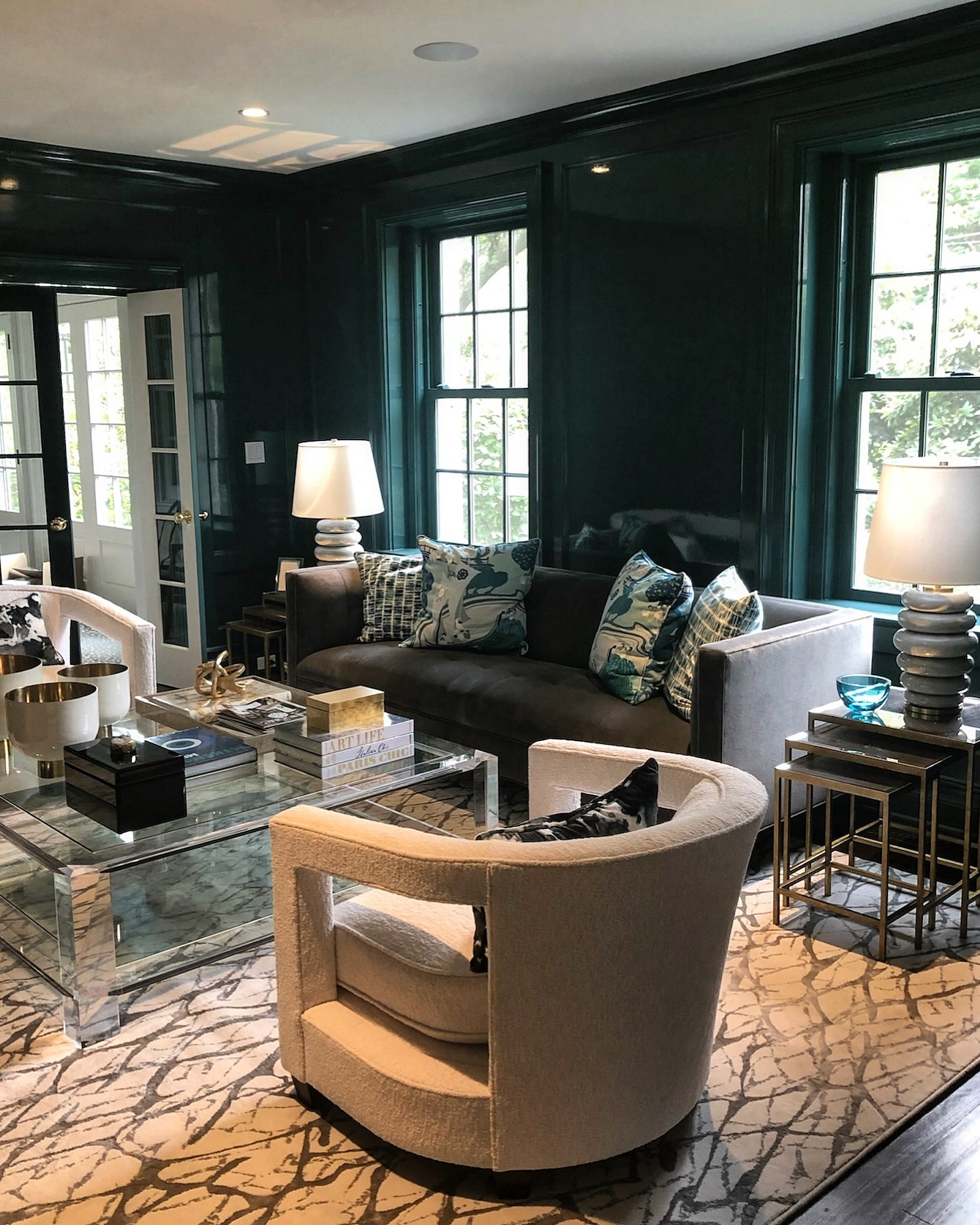
Glossy emerald walls make the architectural outlines of this living room noticeable. Window trim and wall moldings share the same dark green, while reflections produce lighter patches across their surfaces.
Gray upholstery, pale curved chairs, and a light patterned rug keep the furniture group distinct from the walls.
This is a useful formula for a dramatic room with restrained seating: let the enclosing color supply the intensity, then choose quieter upholstery.
Matching lamps create a balanced frame around the sofa, and their white shades provide clear points of brightness. A transparent coffee table leaves the rug visible through the center.
Patterned pillows repeat green and blue in smaller doses, linking the neutral furniture back to the room's rich painted background.
3. Make Aubergine the Background for a Reading Room
Credits: Instagram
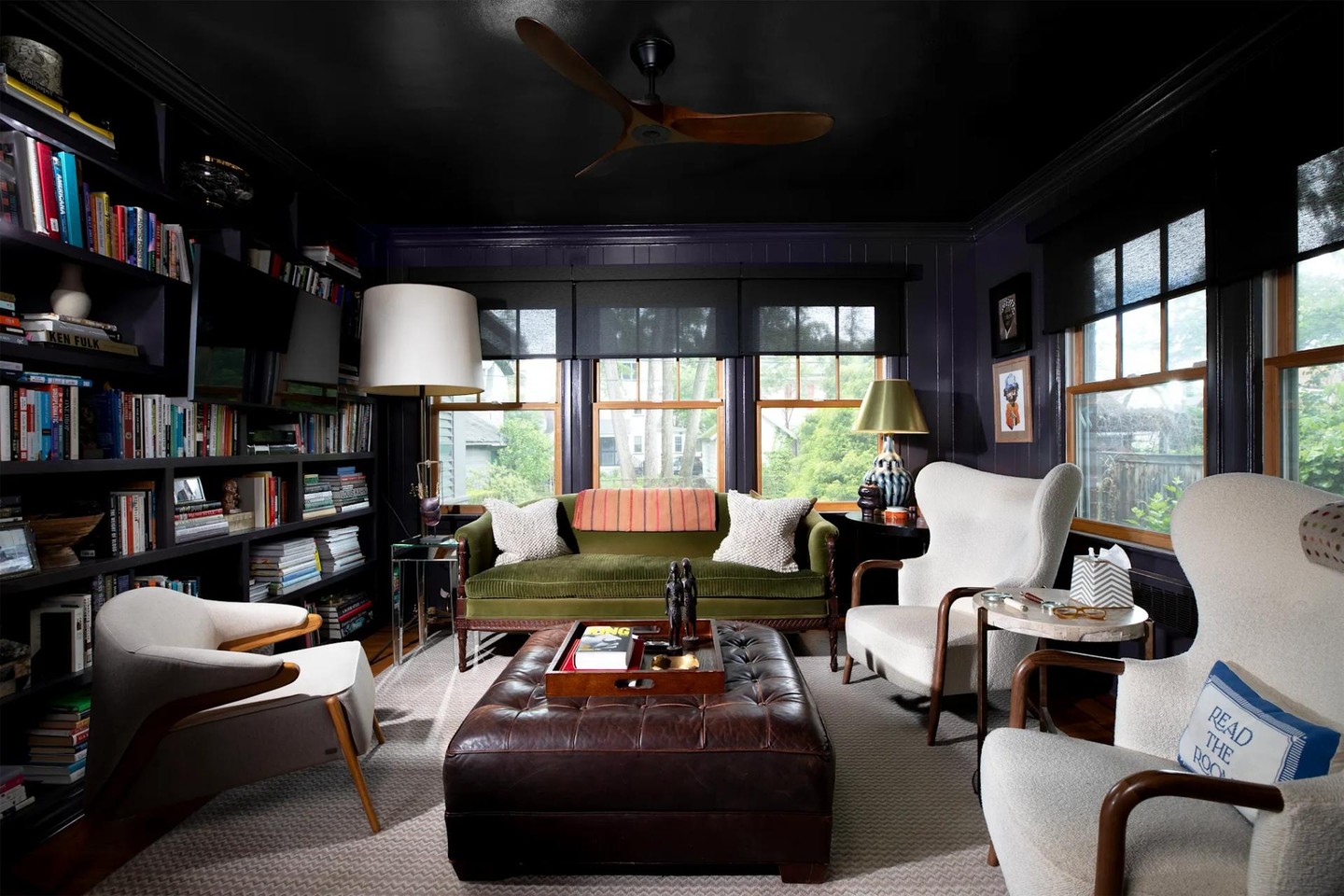
An aubergine envelope gives this book-lined living room a quiet intensity. Dark shelving, walls, and ceiling surround an olive green settee, pale armchairs, and a brown tufted ottoman.
The lighter seats remain easy to distinguish against the deep background, while books bring small, irregular bands of color across one wall.
To borrow the idea, keep the room's enclosing surfaces close in tone and let the seating provide the contrast. A broad ottoman can organize the group without adding another sharp silhouette.
Here, a tray gathers its smaller objects, leaving much of the top visible. The orange striped throw adds warmth in one controlled area, and open portions of the windows balance the saturated color with views of the greenery outside.
4. Let Sapphire Seating Meet an Open View
Credits: Instagram
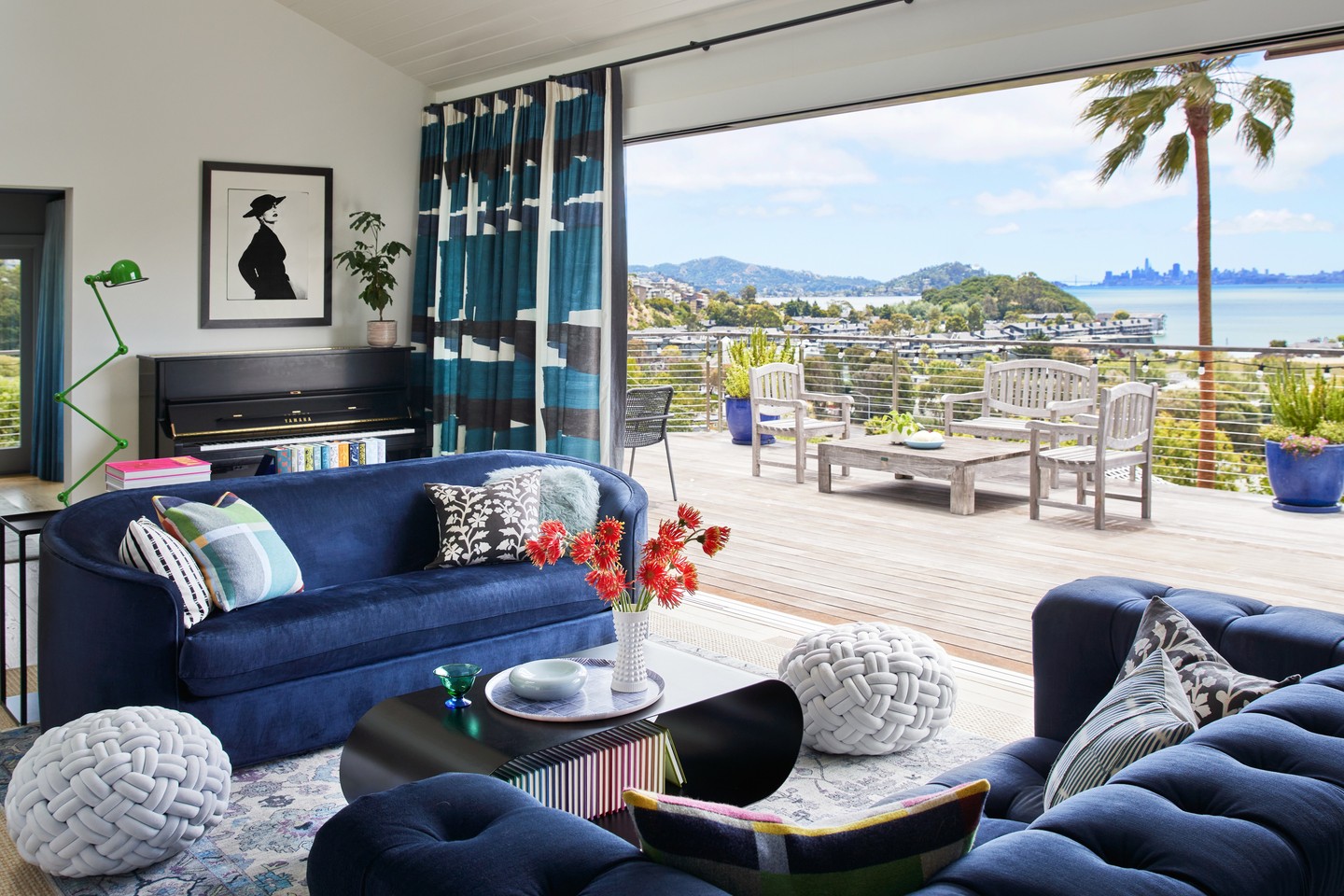
Rich blue seating feels bright and relaxed beside this broad opening to an outdoor deck. Two sofas face a low black coffee table, while pale knotted stools and a light patterned rug interrupt the deep color near the floor.
Blue curtains repeat the upholstery along the edge of the view. The room shows how jewel tones can work with white walls and abundant daylight: concentrate the strongest shade in the seating group, then leave the surrounding surfaces lighter.
Mix sofa shapes to give matching colors more character. A curved back faces a deeply tufted design here, so the pair feels related without looking identical.
Small green and red accents add variety while the blue remains the room's prominent indoor color.
5. Pair Sapphire Walls with Magenta Chairs
Credits: Instagram
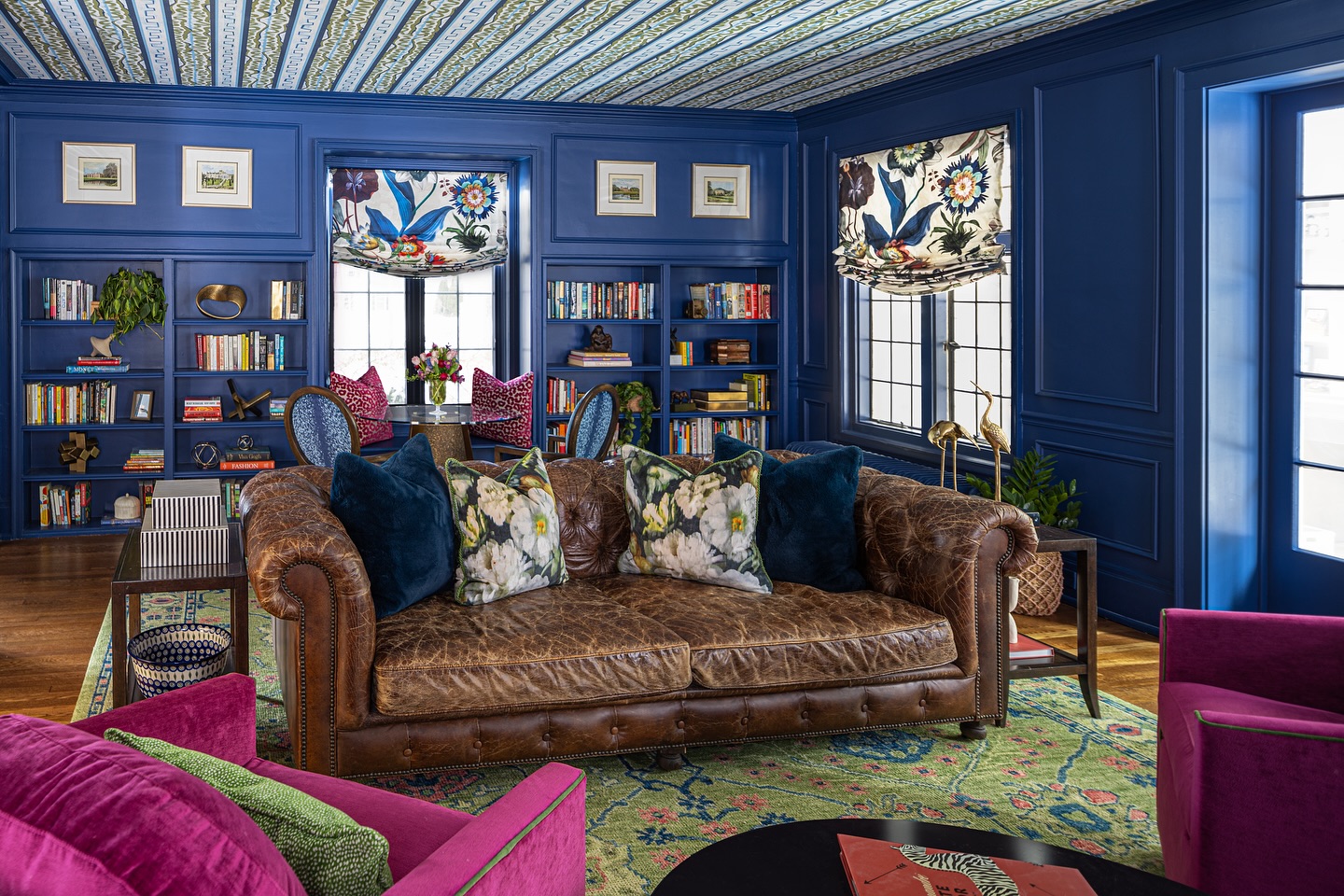
Sapphire walls and magenta chairs give this living room two color anchors. A brown tufted sofa separates the brighter chairs from the painted shelving behind it, providing a warm middle ground.
Green piping and pillows pick up the patterned rug, while floral window shades carry several colors together. Try this arrangement by assigning each jewel tone a clear role: one for the room's background and another for a pair of seats.
Keep the main sofa comparatively quiet so the contrast remains readable. Small framed pictures follow the wall molding without overwhelming it.
The patterned ceiling adds another layer, but its blue repeats the walls. Repetition lets several expressive choices coexist while the furniture arrangement stays easy to understand and use.
6. Layer Teal with Patterned Pillows
Credits: Instagram
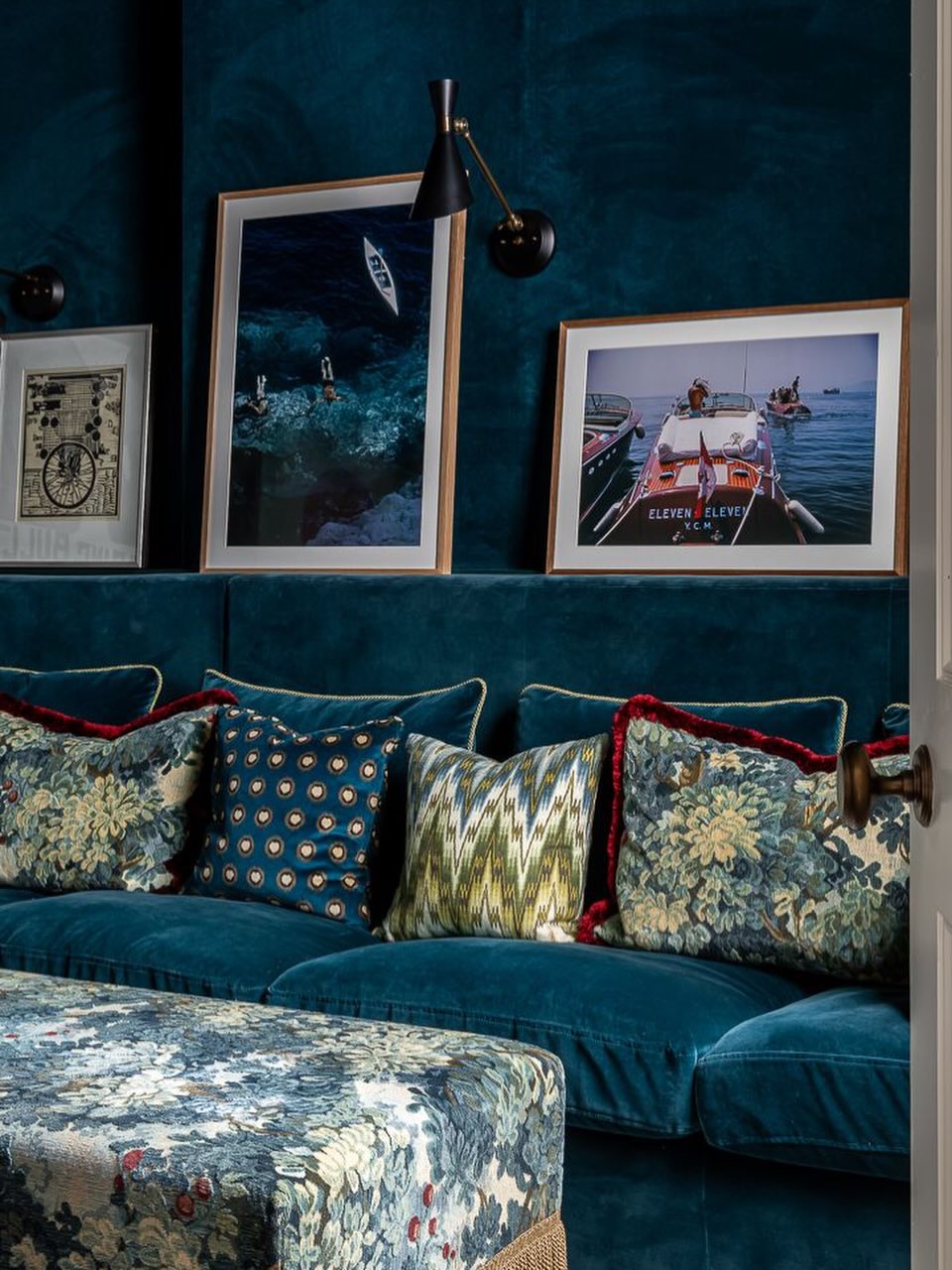
Deep teal gives this seating corner its enveloping character, covering both the sofa and the wall behind it. The shared color creates room for several patterns: floral pillows, a dotted pillow, an angular green motif, and a large floral ottoman.
None needs to match exactly because blue and green keep appearing throughout the arrangement. Try this approach when you want an expressive room with a clear organizing color.
Choose a generous plain sofa, then vary the size and rhythm of the smaller prints. Red edging provides a restrained warm accent.
Above the cushions, leaning pictures bring lighter rectangles into the dark background. Their different sizes feel collected, while the slim wall lights leave the seating area visually uncluttered and welcoming.
7. Balance Emerald Upholstery with Warm Wood
Credits: Instagram
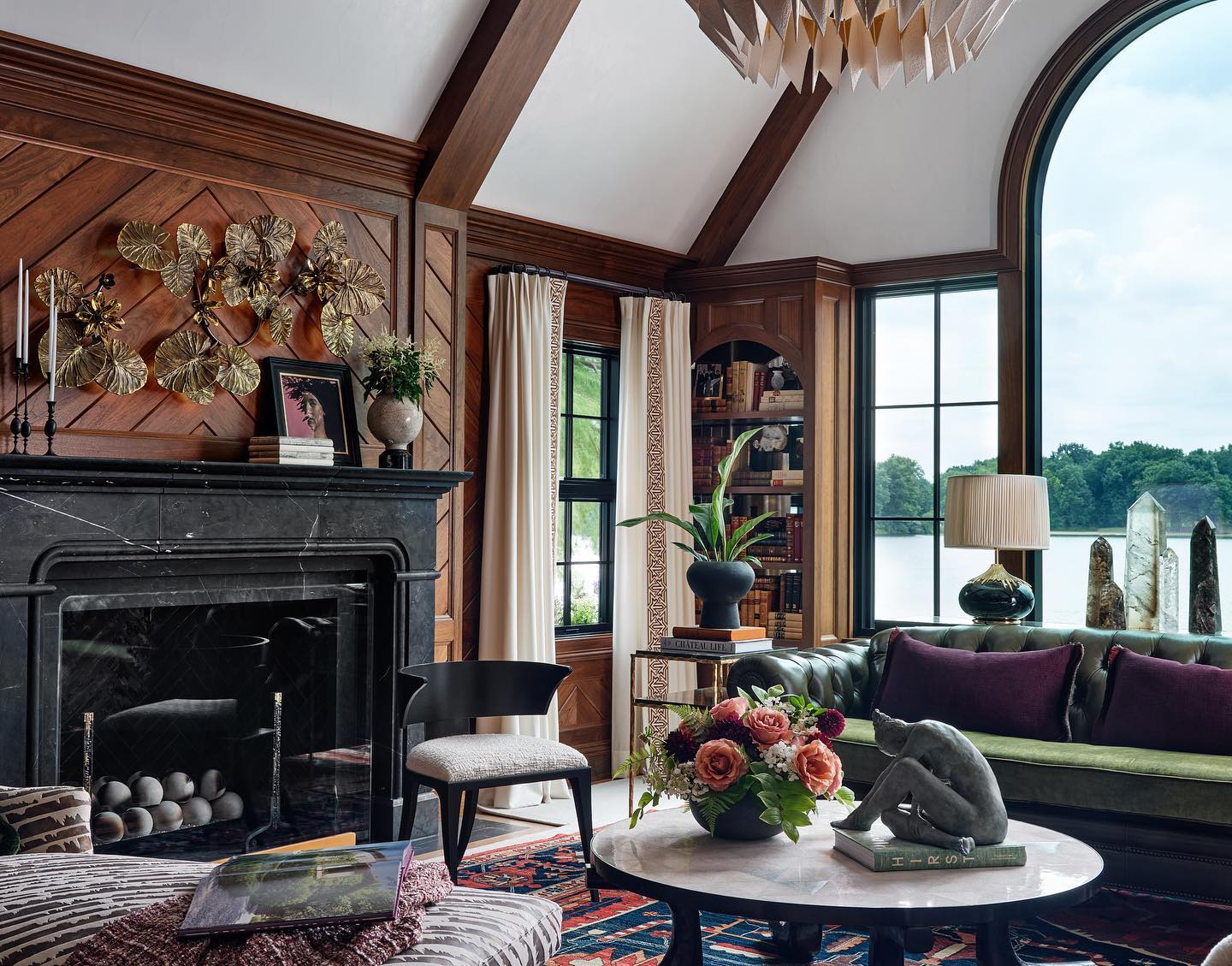
Emerald seating brings depth to this living room without competing with its woodwork. The green sofa rests beneath a tall arched window, alongside a black fireplace and warm brown wall paneling.
Plum pillows introduce another jewel tone, while a patterned rug carries red and blue through the seating group.
Use the same balance when a room already has strong architectural features: keep the boldest upholstery in one main piece, then repeat smaller colors through pillows or a rug.
Pale curtains and a light coffee table create pauses between the darker finishes. The sofa's tufted back adds texture, but its long horizontal shape still feels calm beneath the window.
A simple black accent chair preserves an open view toward the fireplace.
8. Soften Teal with Blush and Botanical Prints
Credits: Instagram
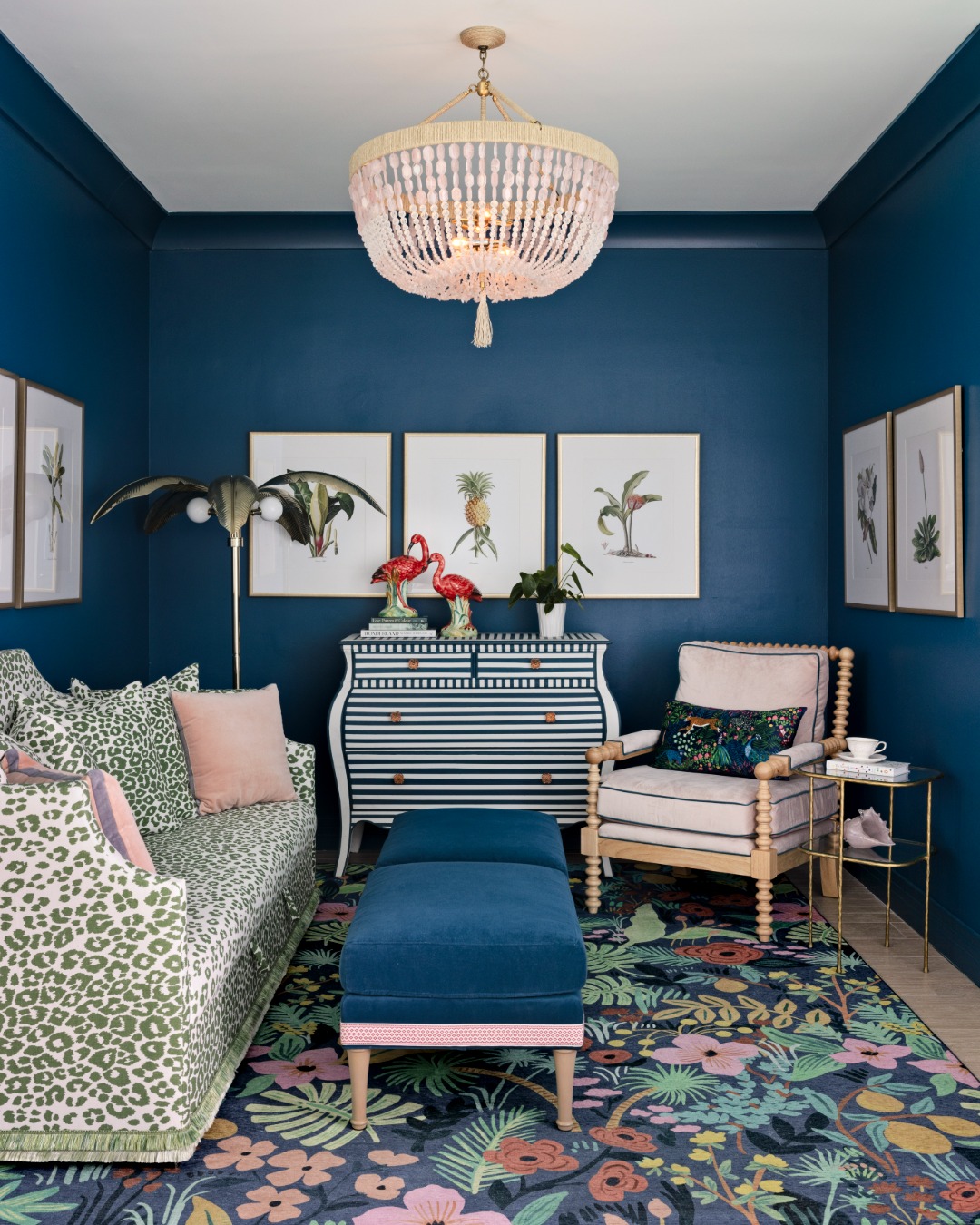
Deep teal walls give the softer colors in this small sitting room a strong backdrop. Blush upholstery, pale botanical prints, and a light chandelier stand out clearly, while a green patterned sofa connects with the foliage in the rug.
A long blue ottoman reinforces the wall color through the center of the seating area. For a similar mix, choose one dark jewel tone as the background and repeat a pale accent in several places.
Here, pink appears in the chair, sofa pillows, ottoman trim, and rug. The striped chest adds structure beside the looser botanical patterns.
Matching picture frames also help organize the busy details, keeping an exuberant palette readable even when furniture sits close together in a compact space.
9. Let an Emerald Rug Establish the Palette
Credits: Instagram
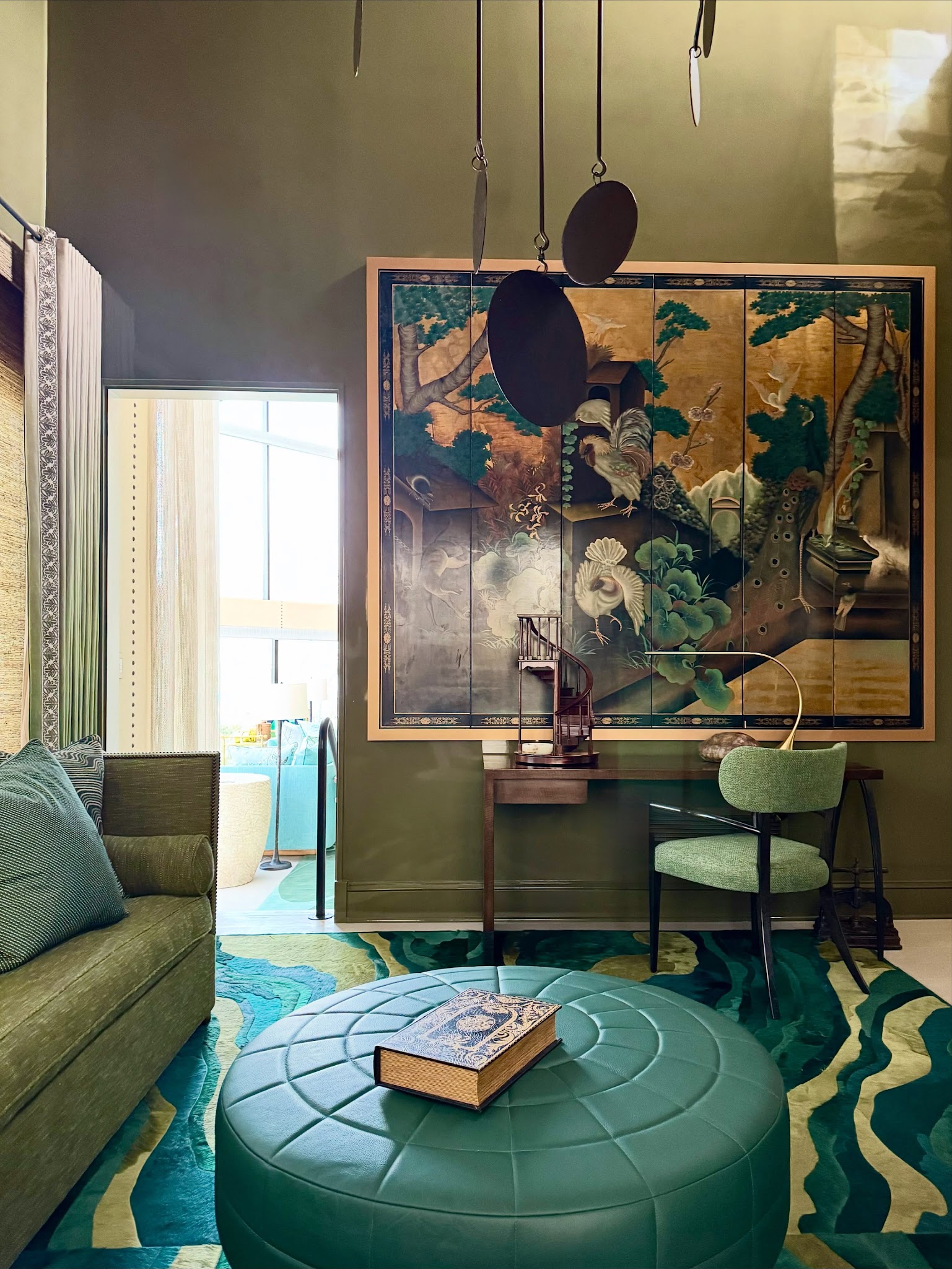
Swirling shades of emerald and teal make the rug the most animated surface in this lounge. A round green ottoman repeats its colors in a simpler form, while olive seating and walls keep the surrounding palette closely related.
The large decorative panel above the desk contributes birds, trees, and warm golden tones. Start with a similarly expressive rug, then pull two or three of its colors into the larger furnishings.
Repeating green does not require an exact match across every piece. Curved stitching gives the ottoman interest without competing with the rug's movement.
A narrow desk fits behind the seating, showing how a useful secondary function can share the room when its furniture follows the same limited color family throughout.
10. Bring Topaz Color to the Ceiling
Credits: Instagram
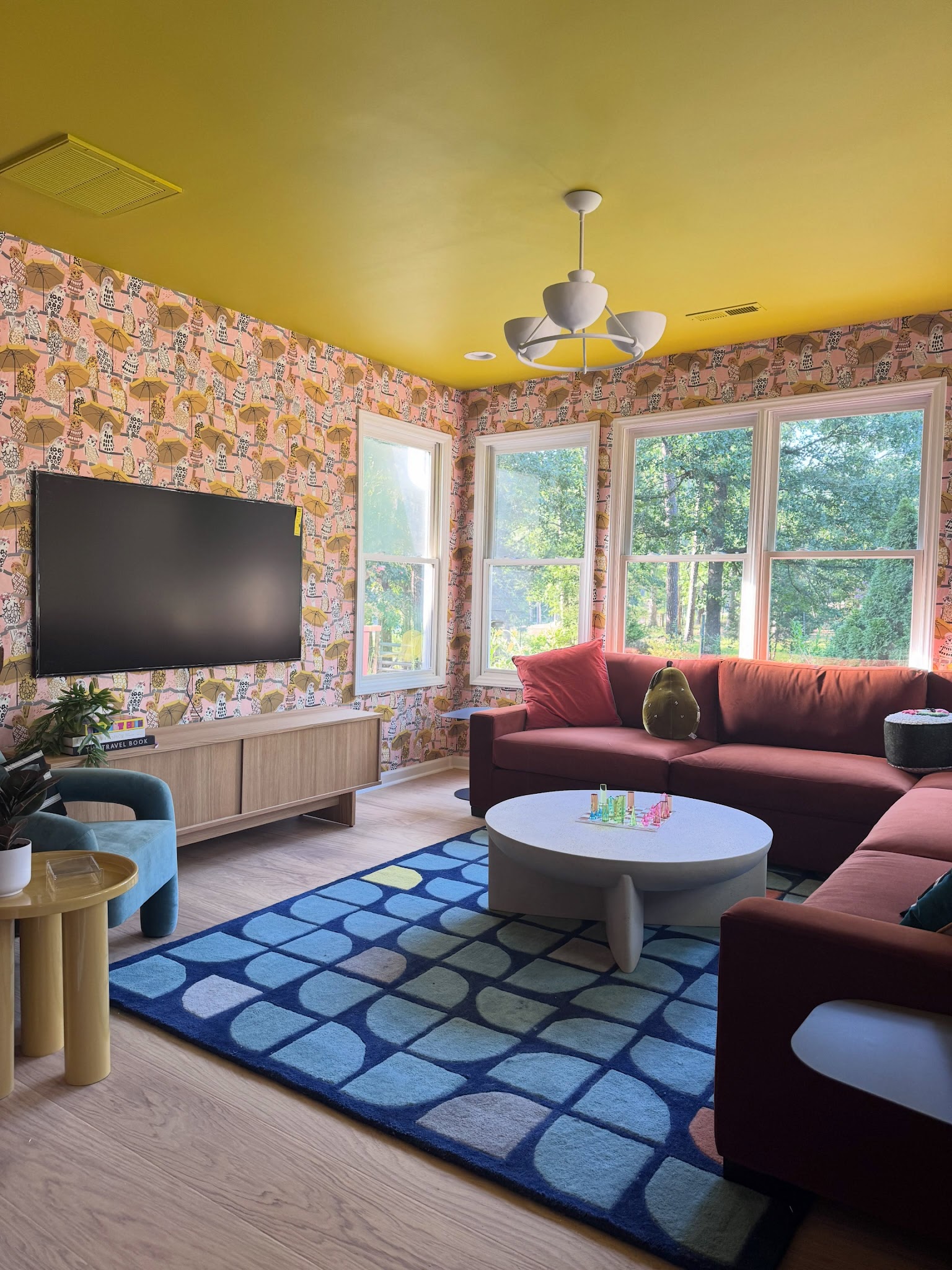
A golden yellow ceiling adds a bright upper plane to this colorful family room. Below it, a reddish sectional wraps around a rounded pale coffee table, and a bold blue rug defines the seating area.
The wallpaper carries yellow into its pattern, making the ceiling feel connected to the walls. Try a similarly saturated ceiling when you want a strong color moment above otherwise familiar furniture shapes.
Choose a rug with a contrasting jewel hue to establish an equally clear base. Here, white window trim and a simple white light fixture offer relief between the patterns.
The low cabinet and broad tabletop remain relatively quiet, giving the surrounding colors enough room while keeping the arrangement practical for everyday lounging together.
11. Use Jewel Blue to Ground a Tall Room
Credits: Instagram
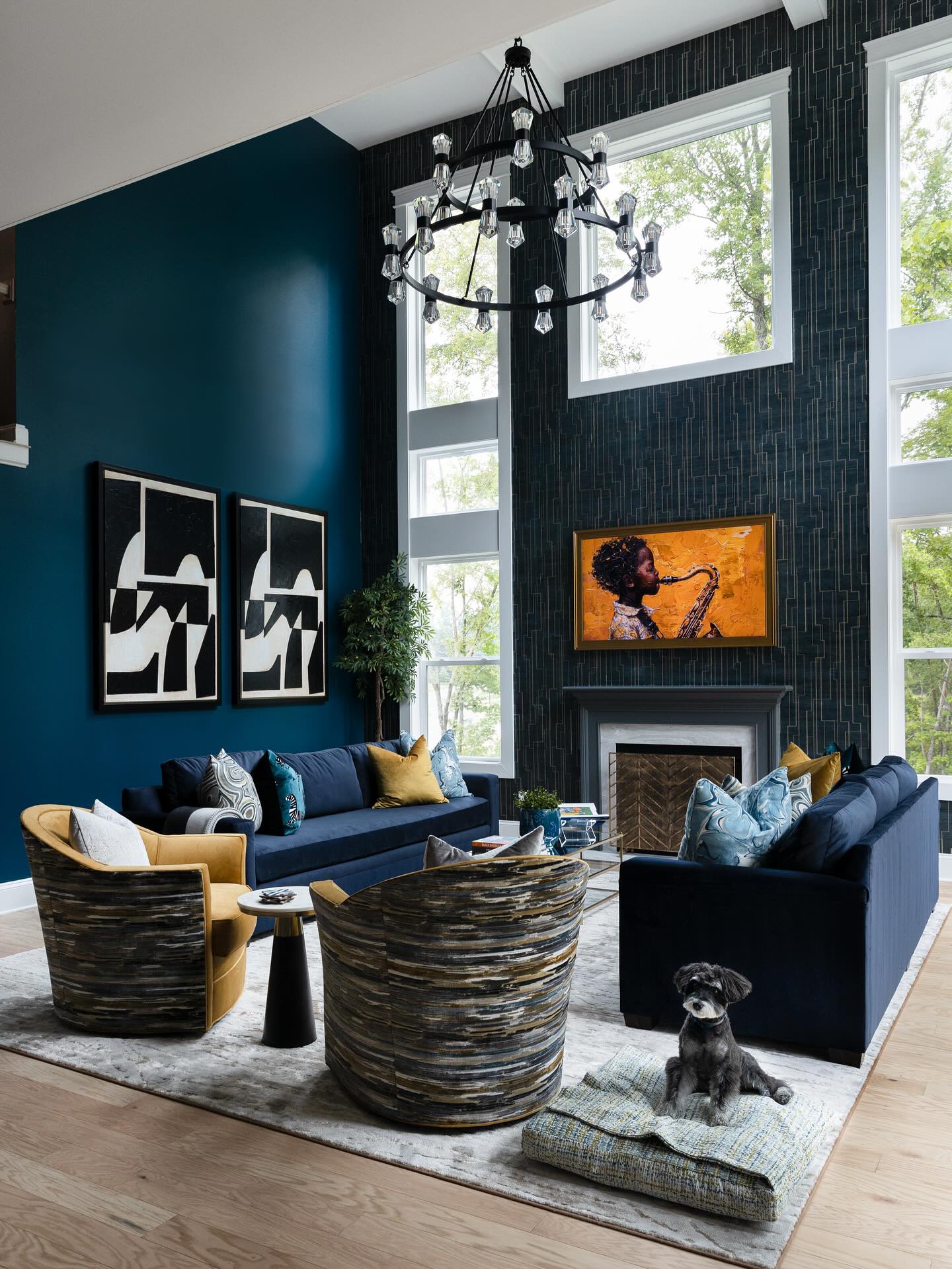
A tall living room can hold color when the furniture repeats it below. Here, deep blue walls surround matching sofas, while a darker patterned fireplace wall rises between stacked windows.
Golden yellow chairs and pillows bring warmth into the seating group. The pale ceiling, window trim, and rug keep the architecture legible against the saturated surfaces.
To apply the idea, repeat your wall color in at least one large upholstered piece, then choose a warm accent for the opposing seats. Keep their heights lower than the main windows so the view remains open.
Large artwork suits the generous wall area, and the chandelier occupies the upper space without obscuring the fireplace. The resulting arrangement feels connected from floor to ceiling.
12. Anchor Collected Objects with an Amethyst Sofa
Credits: Instagram
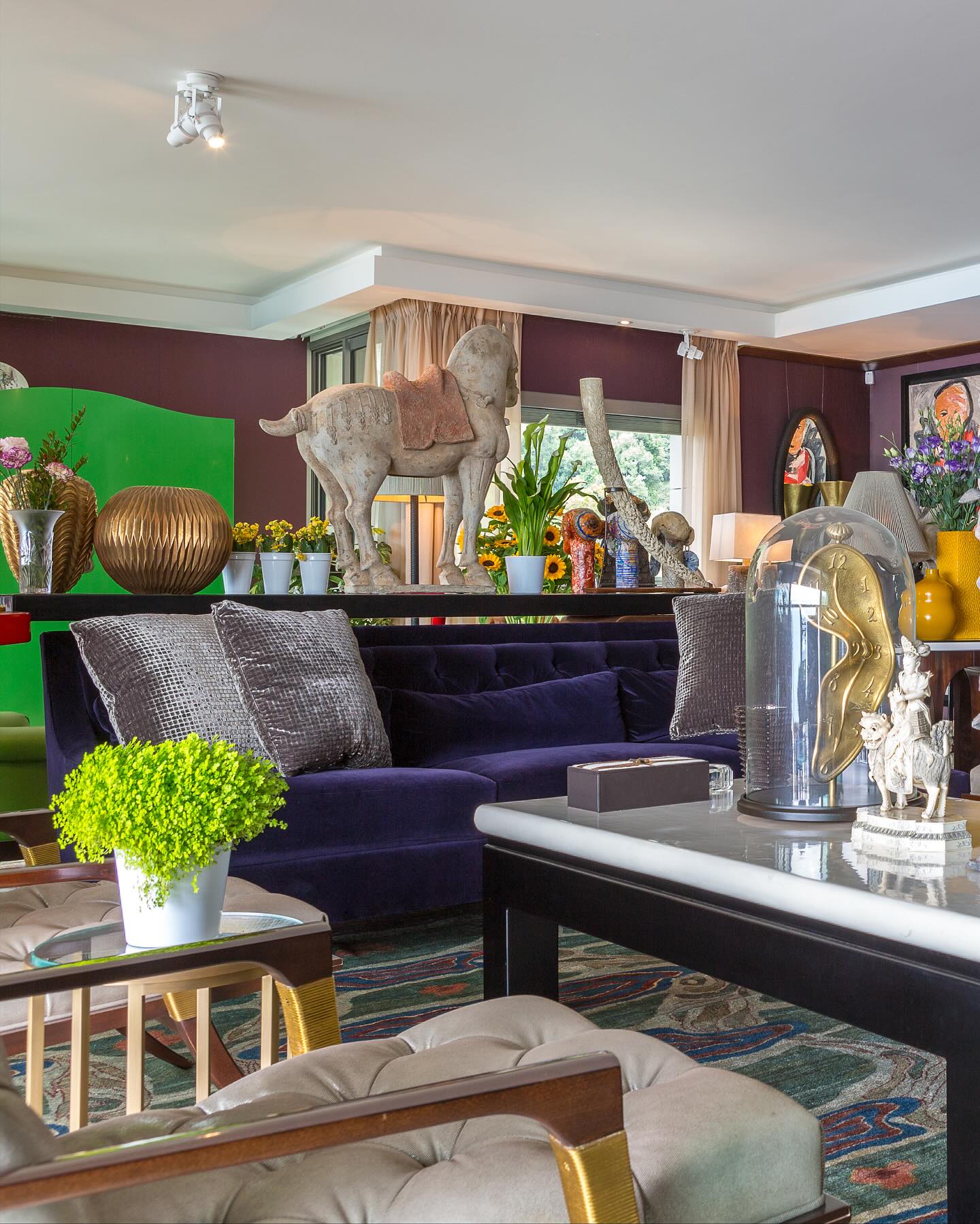
An amethyst sofa gives this richly layered room a color center. Plum walls, pale curtains, a bright green screen, and patterned flooring surround a display of sculptural objects, lamps, plants, and flowers.
The sofa's long, simple outline helps organize all those varied forms. Borrow that principle when you enjoy displaying a collection: choose one large seat in a deep jewel tone, then let smaller objects supply the variety.
Repeating purple in the wall color makes the furniture feel integrated rather than isolated. Pale cushions and a light tabletop interrupt the darker shades.
Keep the largest display pieces behind the sofa, where their silhouettes can rise above its back without taking over the usable seating surface or the central conversation area.
13. Set Collected Art Against Sapphire Walls
Credits: Instagram
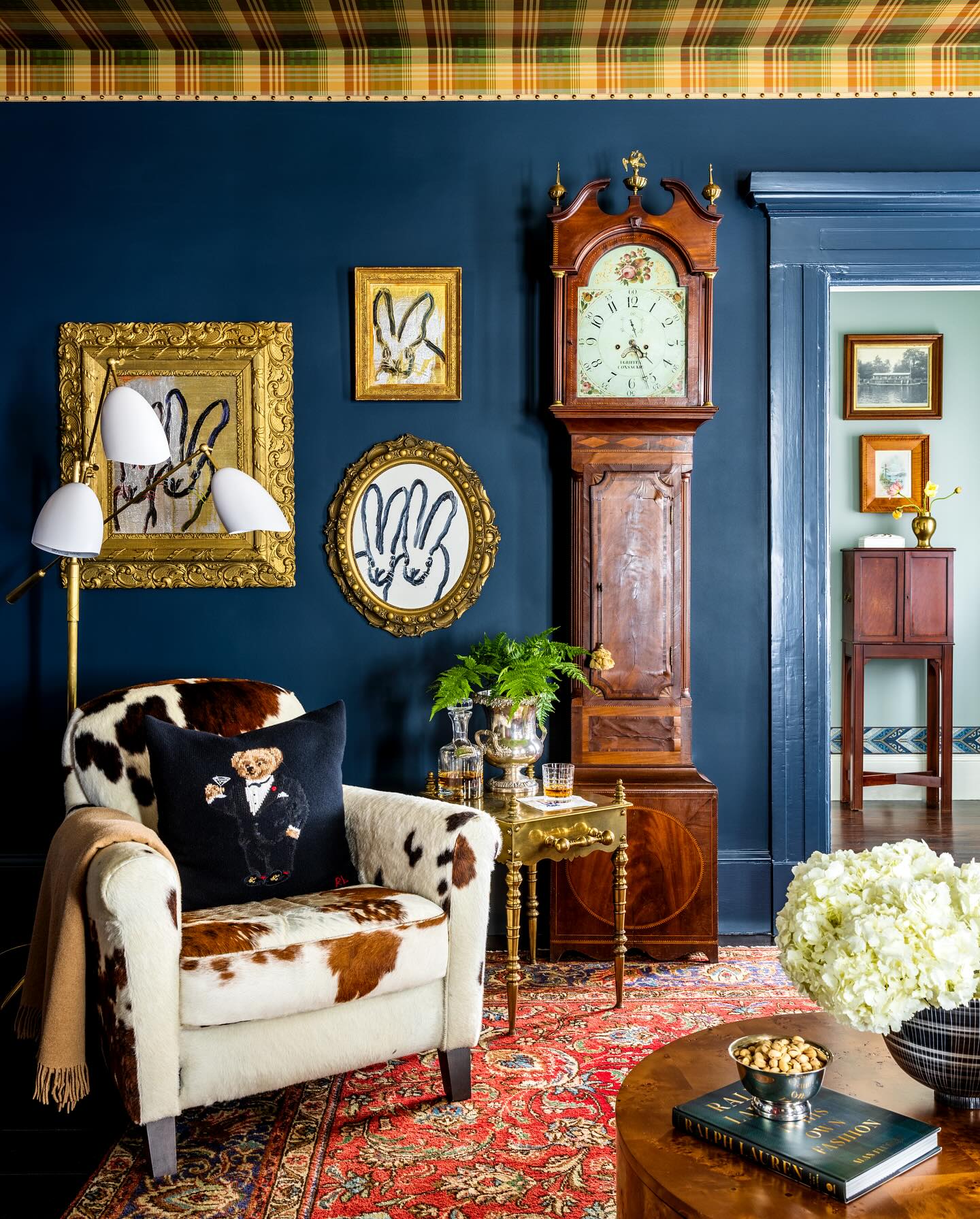
A deep blue wall gives this sitting corner a composed background for playful art and contrasting patterns. Three ornate golden frames hold rabbit drawings beside a tall wooden clock, while a patterned chair sits beneath a light with white shades.
Red in the rug and warm tones in the ceiling plaid prevent the blue from feeling isolated. The idea is to let a single jewel color unify pieces with different shapes and personalities.
Repeat that color on the doorway trim so the architectural edges remain calm. Keep the artwork grouped rather than scattered across every surface.
A small side table places useful items beside the chair, leaving the larger round table to support the room's flowers, books, and open space.
14. Set a Sapphire Sectional Against Light Checks
Credits: Instagram
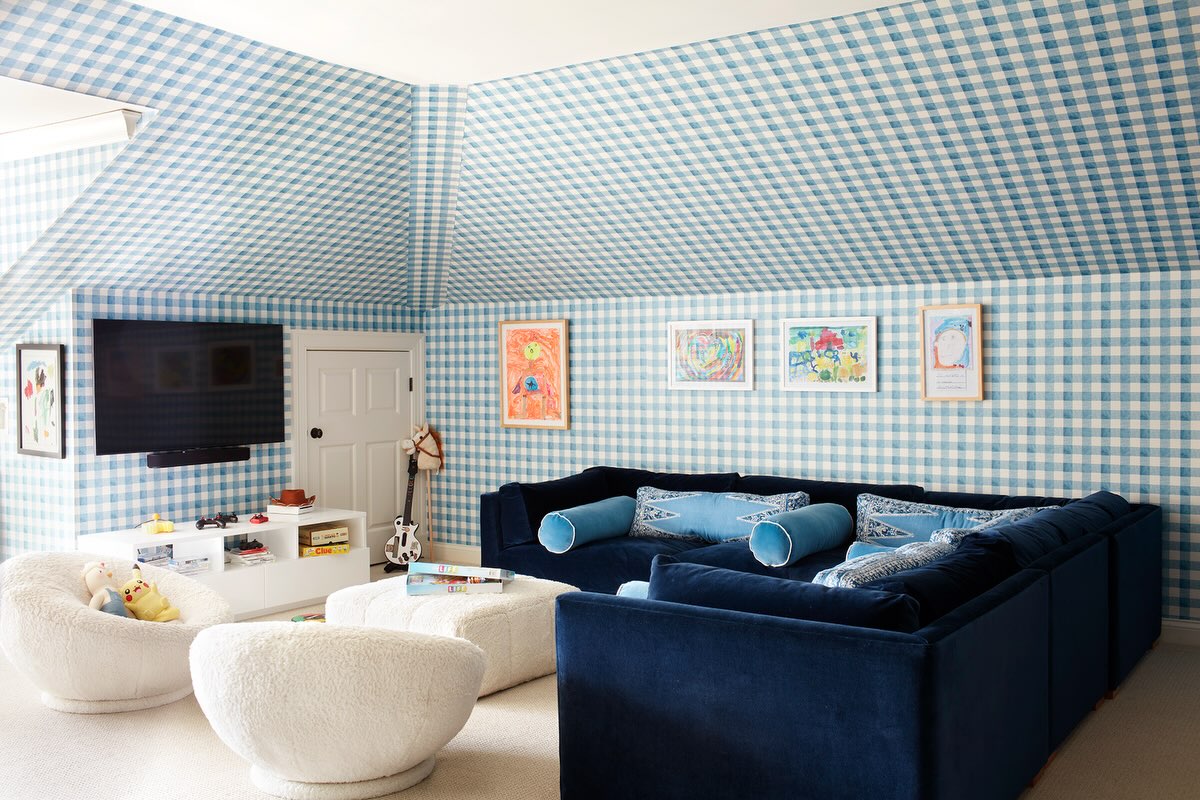
A deep sapphire sectional gives this family lounge a center amid blue and white checks. The wall pattern continues onto the sloping ceiling, while the sofa stays a solid color, creating a welcome pause in the busy surroundings.
Rounded chairs and a pale ottoman complete the seating group without competing with its dark anchor. To adapt the idea, balance a repeated wall pattern with areas of plain upholstery.
Keep the lighter furniture near the darkest sofa sections so each shape remains distinct. Here, soft blue pillows bridge the color difference between the sectional and its background.
A low white cabinet keeps the television wall simple, and the framed drawings introduce small, cheerful accents without taking over the room's blue palette.
15. Make an Emerald Sofa the Single Statement
Credits: Instagram
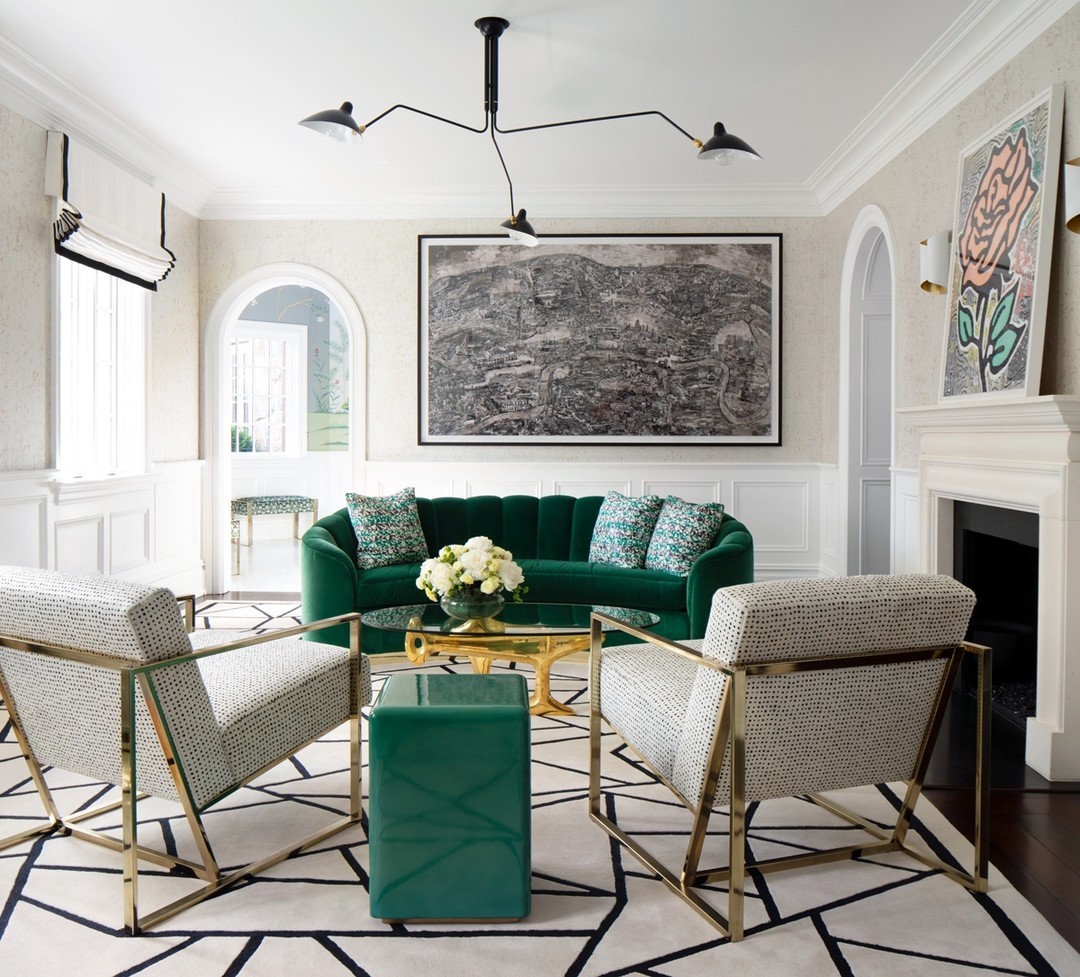
An emerald sofa commands attention in this mostly pale living room. Its curved, channeled back contrasts with the straight metal outlines of two cream chairs and the angular black pattern crossing the rug.
A green cube between the chairs repeats the sofa's color without spreading it across every surface.
This is a useful approach when you want one jewel tone to feel decisive: give it a large anchor piece and one smaller companion, then let lighter finishes surround them.
White wall molding and arched openings provide a calm architectural frame. The large monochrome artwork keeps the wall above the sofa active without introducing another saturated color.
Golden table and chair details supply warmth while preserving the room's crisp, graphic balance.
16. Layer Ruby Seating Over a Red Rug
Credits: Instagram
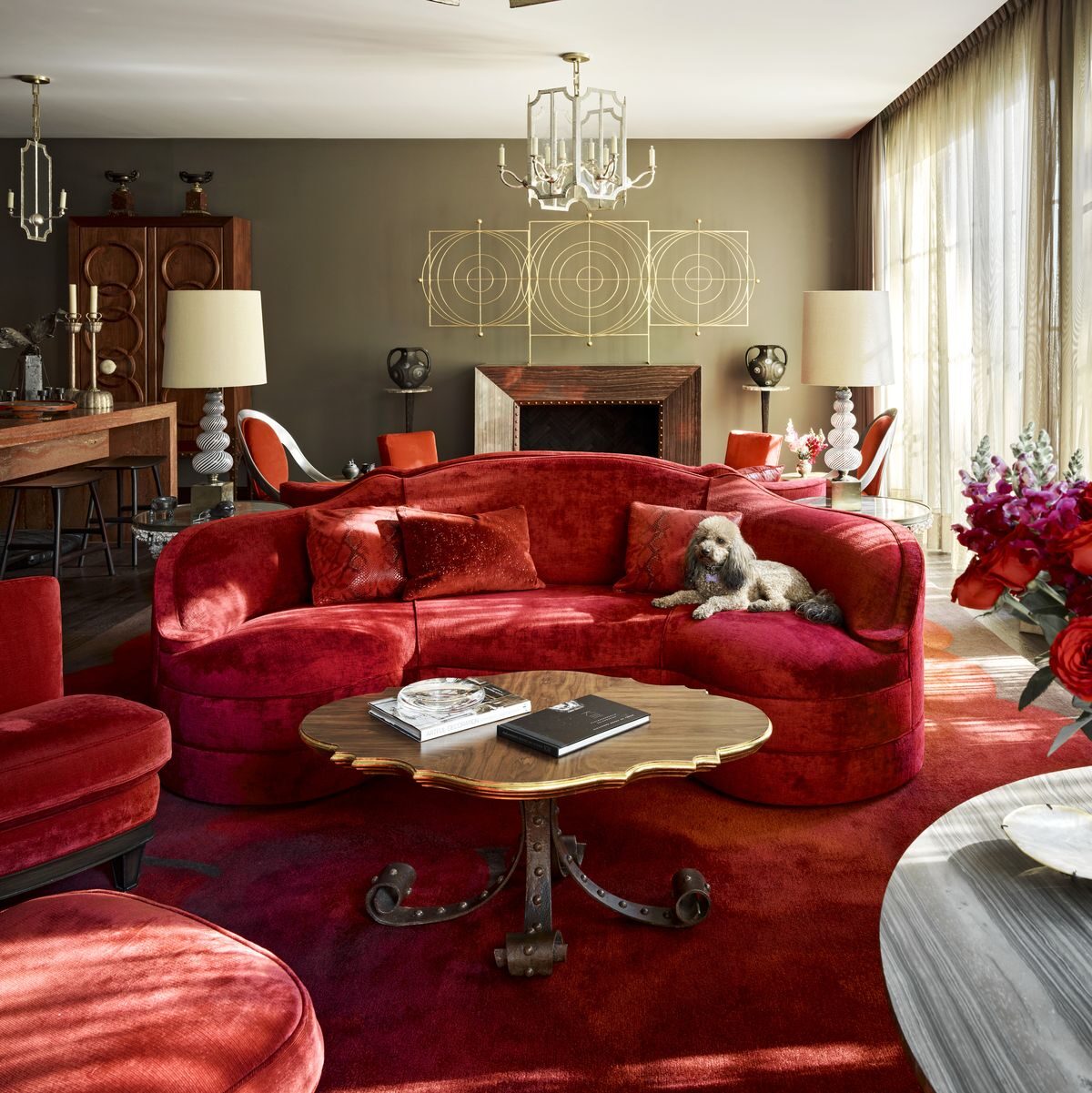
A curved ruby sofa sits within a larger field of red, with the rug extending its color across the floor. Nearby red seats reinforce the palette, while taupe walls and pale curtains soften the room's boundaries.
The sofa's rounded shape also relates to the scalloped coffee table, giving the arrangement a flowing center. Try concentrating a jewel tone at seating level instead of painting every wall.
Repeating the color in the rug can make separate pieces feel connected across a spacious room. Keep the upper surfaces quieter so the upholstery remains the main event.
Here, pale lampshades and an open chandelier add light shapes above the darker furniture, while golden details provide highlights against the red throughout the seating group.
17. Pull Jewel Colors from a Striped Sofa
Credits: Instagram
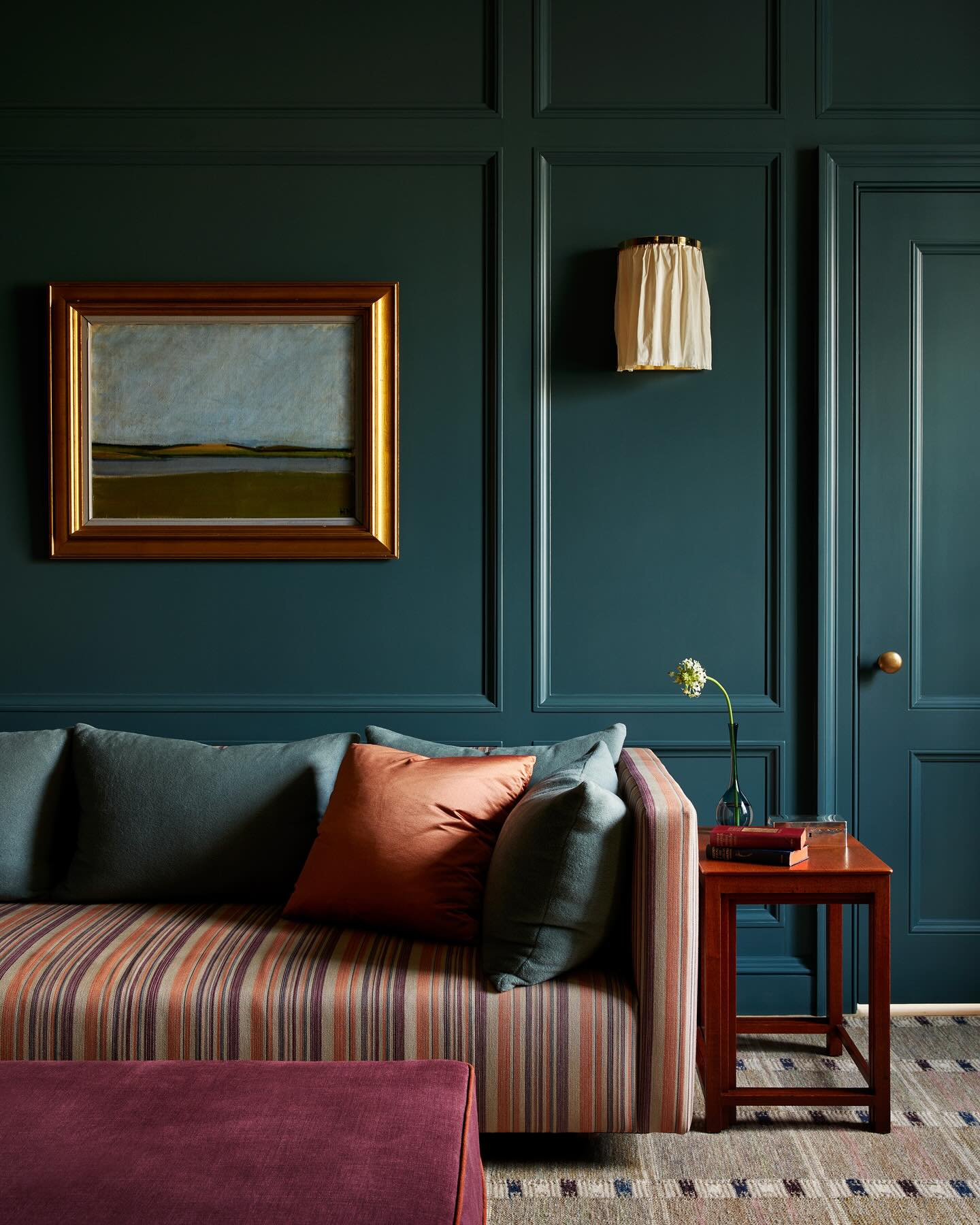
Fine stripes bring several colors into this seating corner, including muted red, green, and warm brown. Deep teal wall panels give those narrow lines a calm backdrop, while a plum ottoman introduces a broader block of color in the foreground.
Plain green pillows and one warm orange pillow keep the sofa from becoming visually crowded. When working with striped upholstery, borrow its quieter hues for the surrounding surfaces and repeat one richer note in a separate piece.
Match the door and trim to the wall if you want the architecture to feel continuous.
A small framed landscape and a single shaded wall light leave generous space above the sofa, allowing both the paneling and the textile pattern to remain visible.
18. Repeat Sapphire Inside Ceiling Coffers
Credits: Instagram
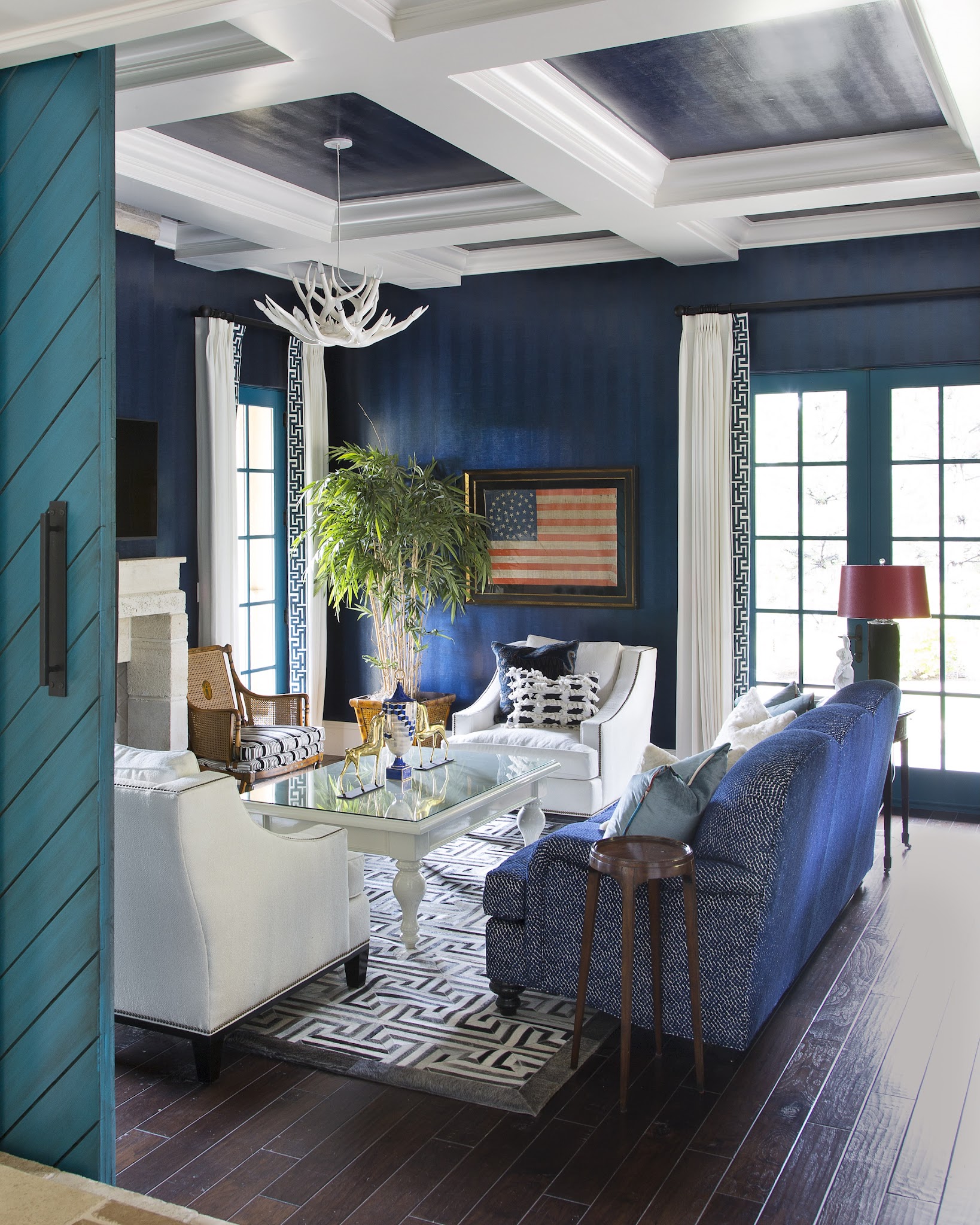
Sapphire walls gain an architectural partner in the dark blue ceiling panels above this sitting room. White beams divide the overhead color, keeping the pattern clear and echoing the pale chairs and curtains below.
Teal doors introduce a related shade without breaking the blue emphasis. Use the idea where a ceiling already has recessed sections: repeating the wall color inside them can connect the room from top to bottom.
Leave the surrounding framework light if you want to emphasize its shape. A blue sofa and graphic rug reinforce the palette at seating level, while a red lampshade supplies one warm accent.
The glass tabletop keeps the group open and allows the rug's angular pattern to remain part of the composition.
19. Warm a Ruby Sofa with Cream Surroundings
Credits: Instagram
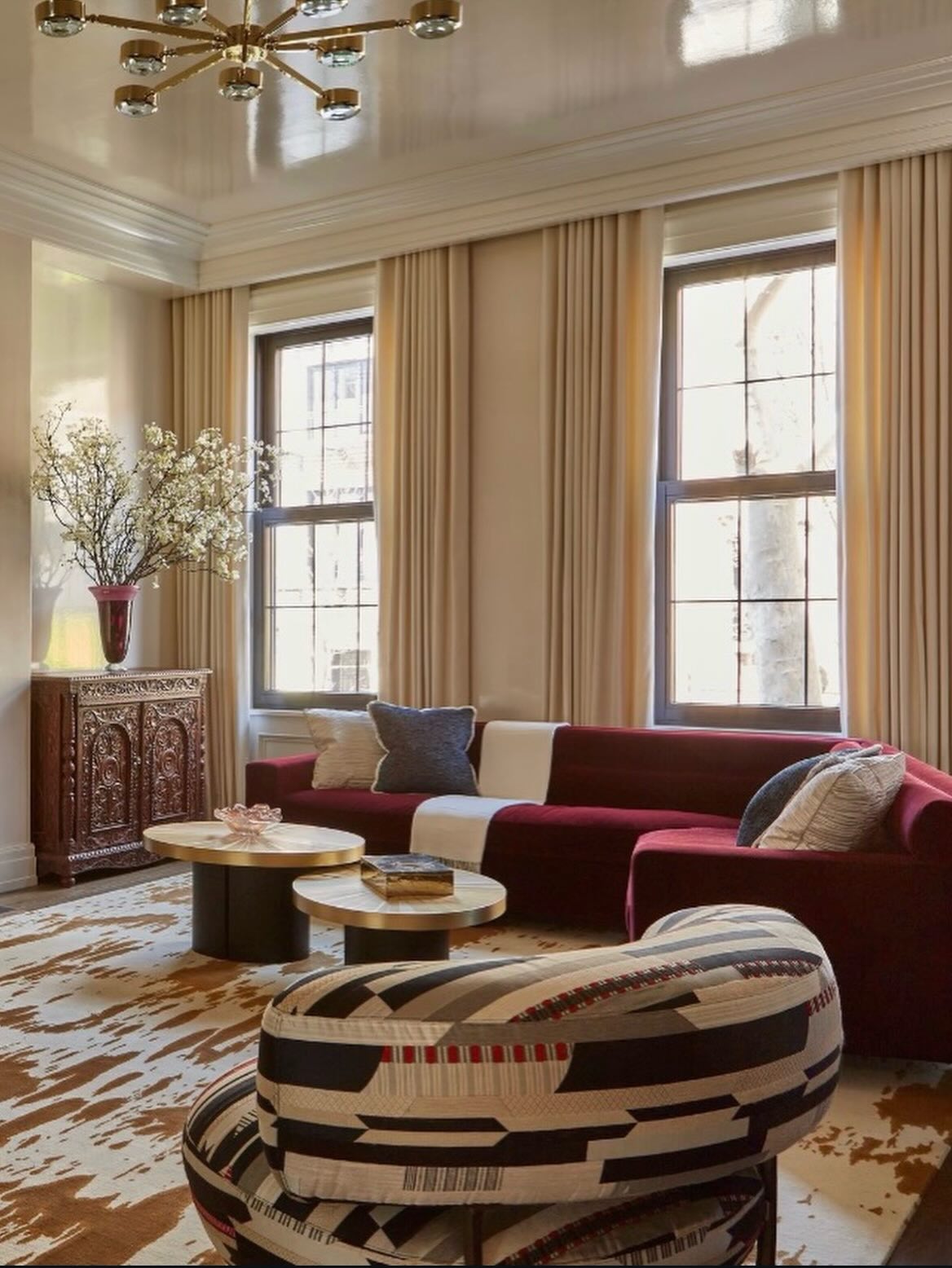
A ruby sofa adds a concentrated band of color beneath the tall windows in this living room. Cream curtains, pale walls, and a reflective light ceiling surround it, allowing the upholstery to remain the strongest hue.
In front, a rounded chair introduces a large black and cream pattern with small red details.
This is a useful way to connect a statement sofa to a mostly neutral scheme: choose one patterned companion that repeats a little of its color.
Keep the remaining accents quieter. Two low round tables vary in height, adding interest without interrupting the view toward the sofa.
The pale rug carries warm brown markings, which relate to the carved cabinet and give the room another layer of warmth.
20. Pair Teal Seating with Exposed Beams
Credits: Instagram
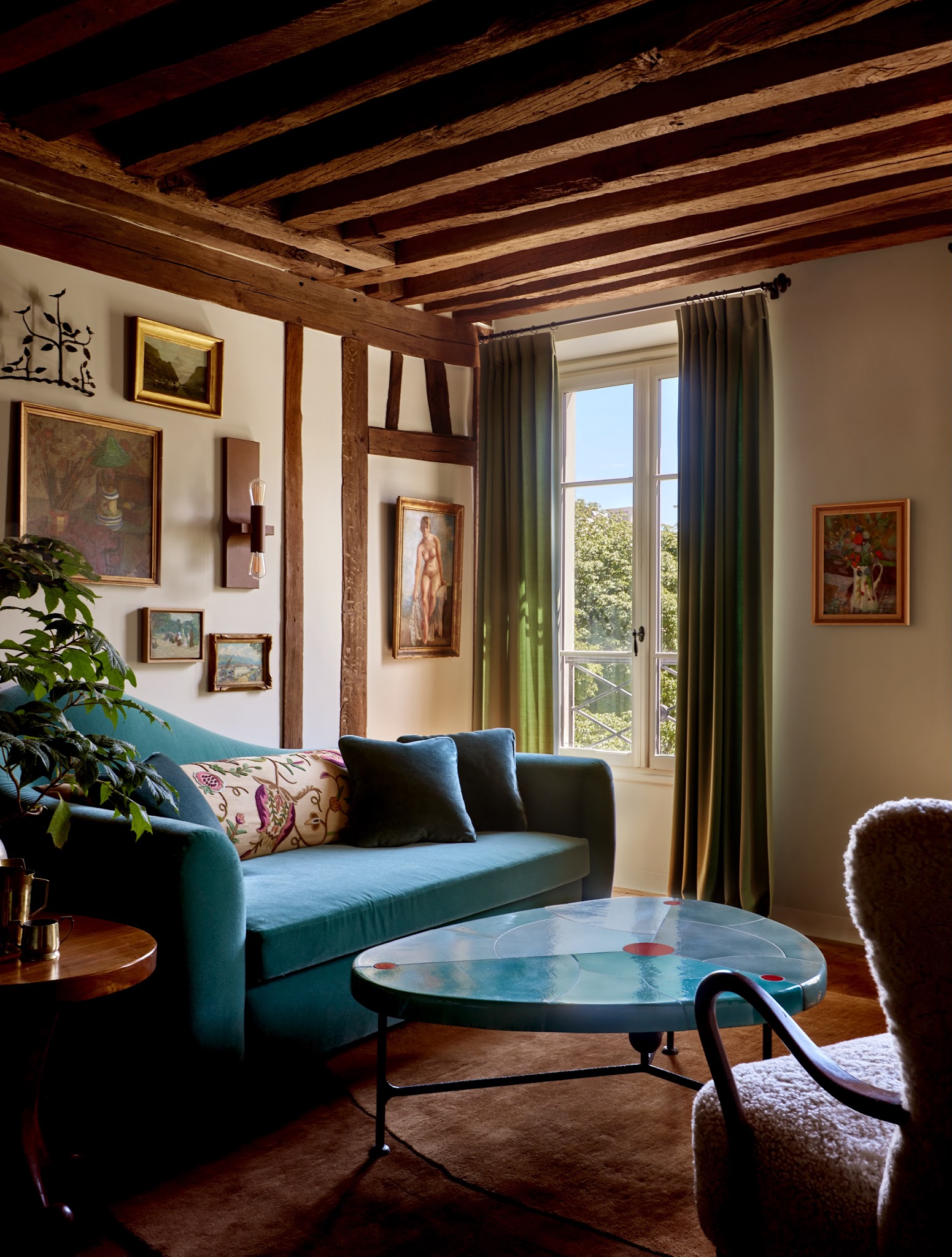
A teal sofa and blue oval coffee table introduce jewel color beneath the exposed beams in this living room. Their simple shapes sit comfortably among framed paintings, a curved wooden chair, and full green curtains.
The warm brown rug keeps the color group grounded, while the pale walls give the art space to stand out. Borrow this approach when architectural texture already supplies plenty of detail.
Choose a color for the main seat, then repeat a related shade in one substantial table or accessory. Avoid matching every surrounding object.
Here, a patterned pillow supplies another layer of color without covering the sofa. The curtains soften the window's outline, and the long sofa creates a calm horizontal line beneath the beams.