
A wood stove can feel either like a practical fixture or the natural center of a room, depending on what surrounds it.
These Wood Stove Fireplace Ideas show how color, texture, and shape can give the stove a clear place in the design without overwhelming it.
See how deep blue walls bring out a carved mantel, pale brick makes a traditional stove stand apart, and rough stone adds character around a simple black firebox.
Other examples use stepped white lines, olive walls, or a soft arch to create definition with different styles. Each approach offers a useful starting point for balancing the stove with its setting.
1. Pair a Carved Mantel with Deep Blue Walls
Credits: Instagram
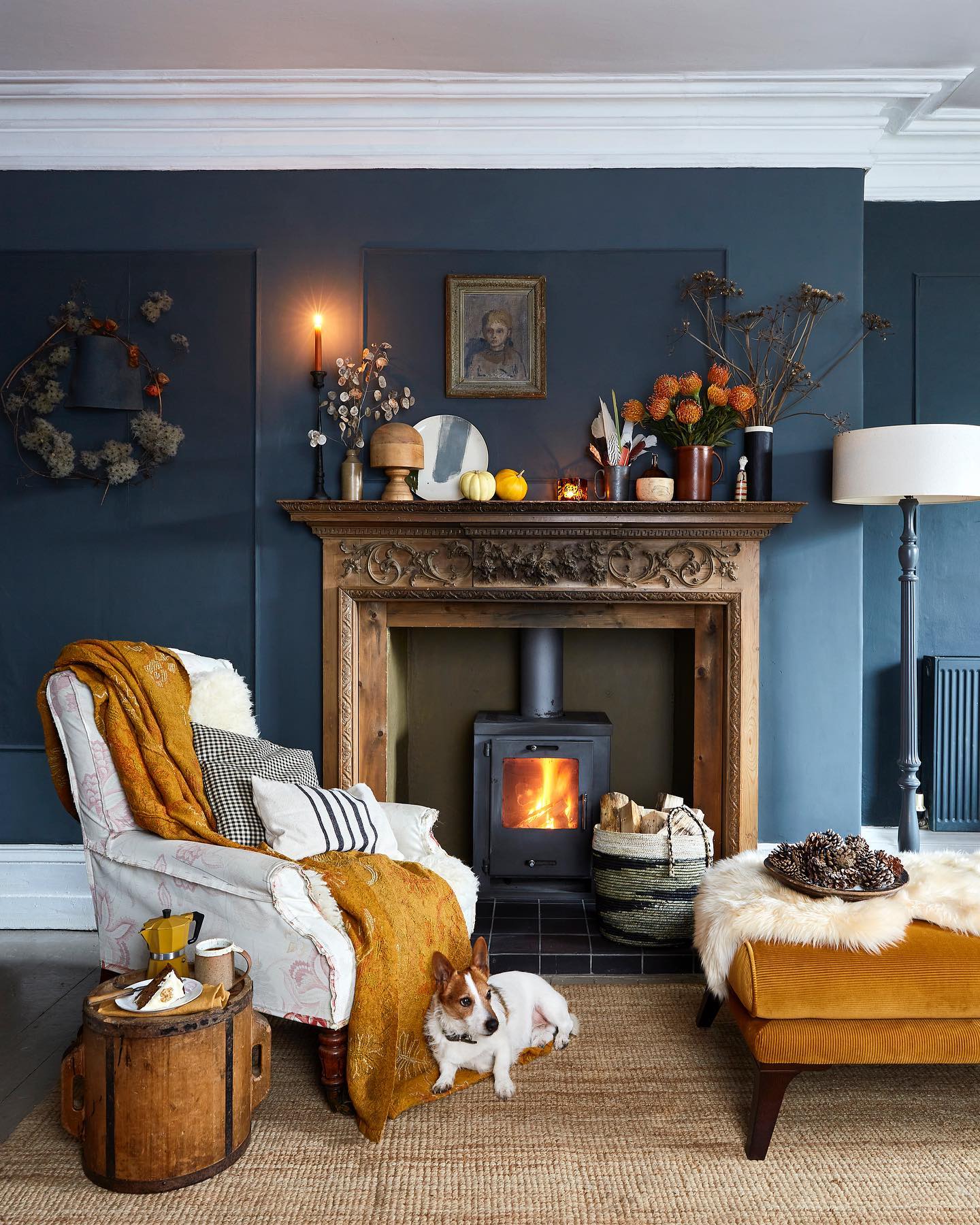
An intricately carved timber mantel gives this simple black stove a wonderfully decorative frame. Deep blue walls make the warm wood and mustard textiles stand out, while white ceiling trim keeps the upper room bright.
The composition feels collected through small portraits, pottery, dried stems, and a round mirror. A woven rug, striped cushions, and a pale armchair soften the strong architecture.
Borrow the palette by balancing one saturated wall color with warm upholstery and natural textures. Keep the stove itself visually straightforward so the mantel remains readable.
The small barrel table and upholstered footstool introduce different silhouettes without distracting from the central feature. This combination suits a room that values old furniture, personal objects, and a relaxed evening atmosphere.
2. Soften a Brick Recess with Layered Neutrals
Credits: Instagram
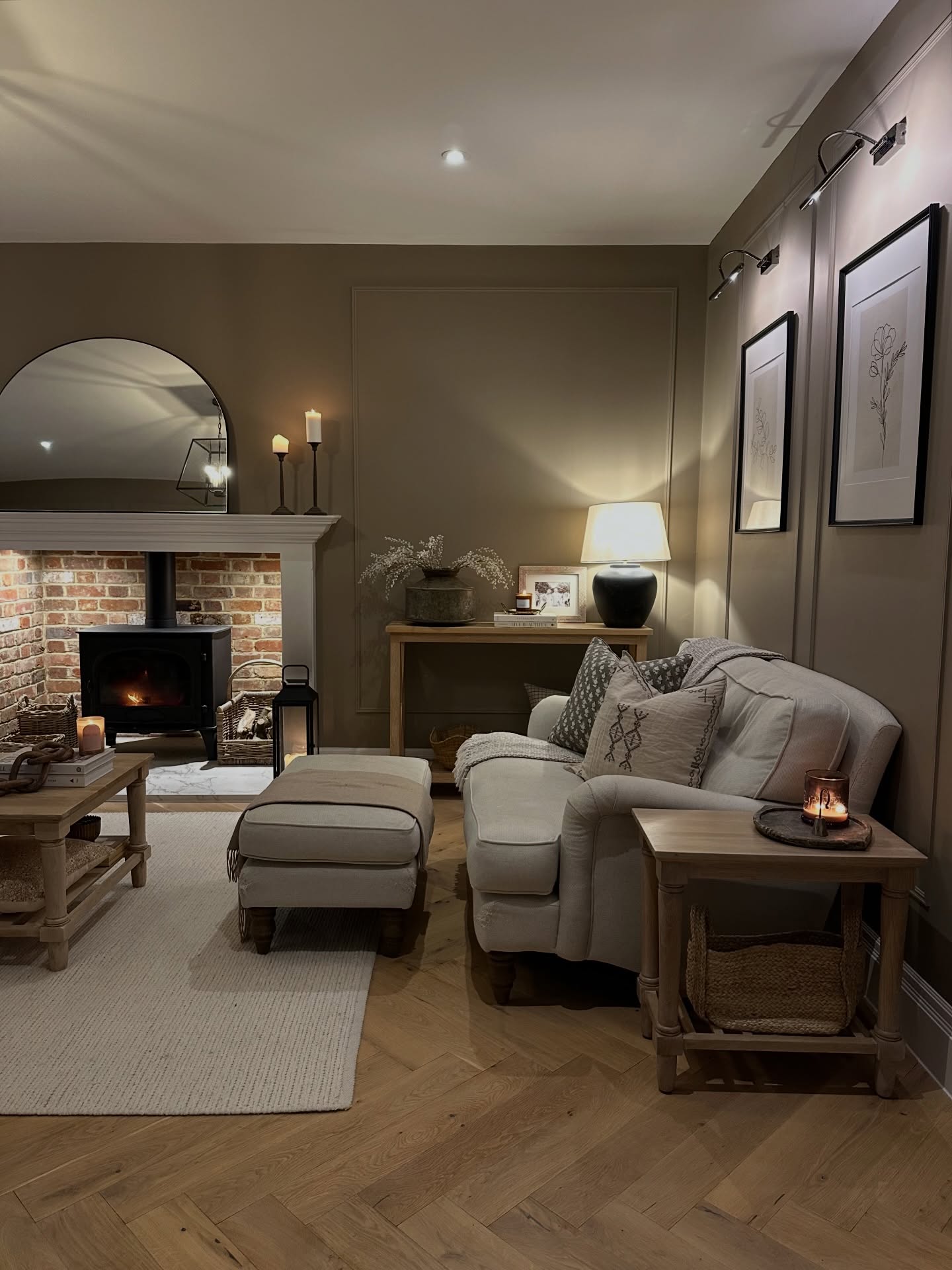
Here, the brick interior of the fireplace brings texture to an otherwise gentle, neutral sitting room. A white surround outlines the opening, and the black stove connects visually with the thin frames, lantern, and lamp base.
Taupe walls and matching decorative molding give the background depth without a strong color change. The pale armchair, padded footstool, and patterned cushions make the arrangement feel comfortable and lived in.
For a similar mood, combine several related neutrals instead of relying on a single beige. Repeat a little black across smaller room accessories to connect with the stove.
Warm wood tables and herringbone flooring provide another layer of variation, while the rounded mirror interrupts the many straight lines with a softer, gentler shape.
3. Let a Traditional Stove Stand Against Pale Brick
Credits: Instagram
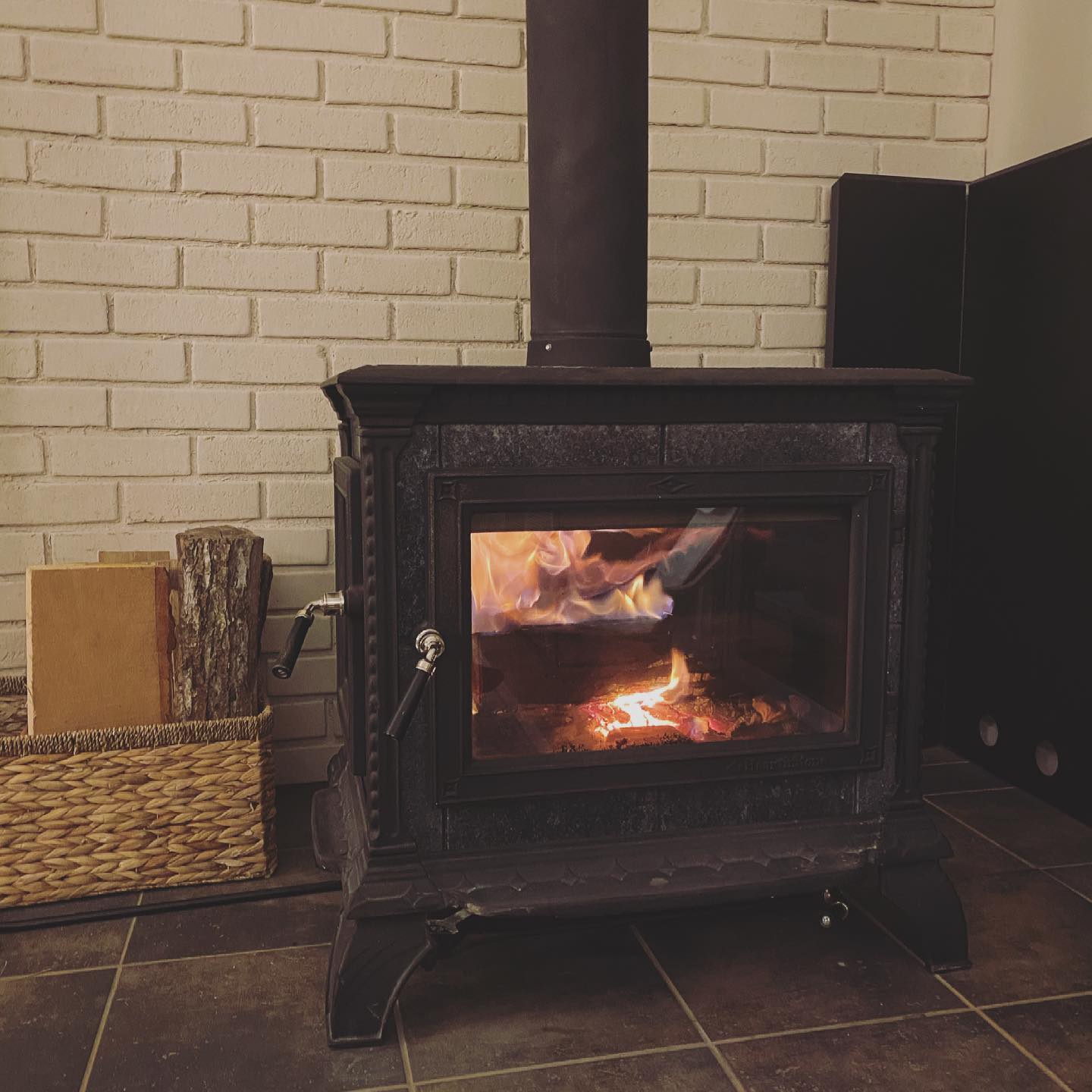
A freestanding stove can hold attention without a large mantel above it. This example pairs a dark, decorative body with pale painted brick, making the stove's outline especially clear.
The wall's horizontal courses contrast with the vertical flue, while square brown floor tiles introduce a warmer base. A woven basket adds another natural texture to the photograph.
The overall palette stays quiet, allowing the visible flame to become the brightest detail. Take inspiration from that restrained approach when choosing nearby furniture and finishes.
Cream, tobacco, and charcoal can create depth without requiring a busy pattern. Keep the wider room's decorative accents selective, and let the stove's traditional molding and substantial feet provide the character that a more elaborate surround might.
4. Make Rough Stone the Main Decorative Feature
Credits: Instagram
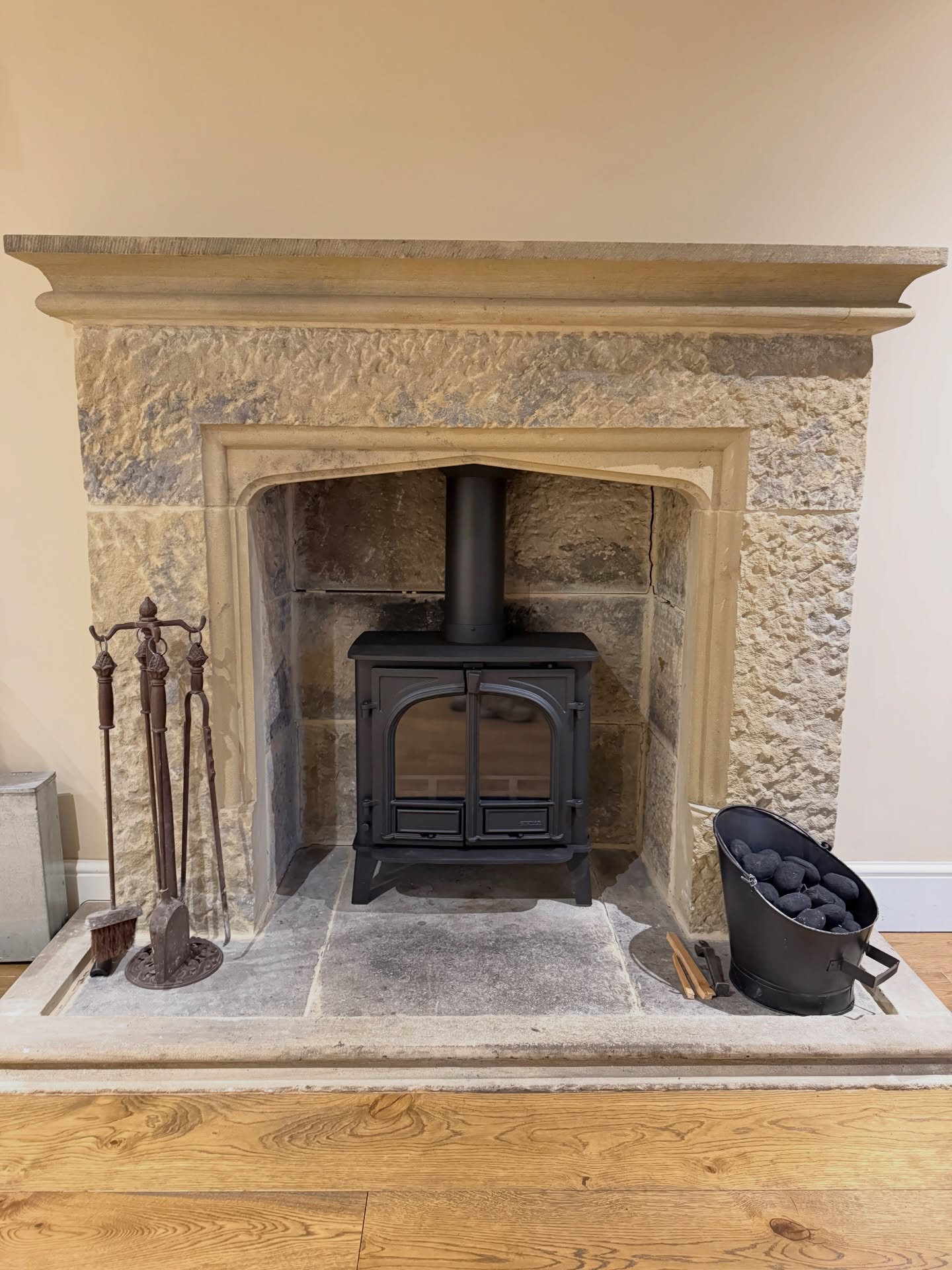
The substantial stone surround is the strongest detail in this fireplace. Rough faces across the mantel and sides contrast with the smoother inner arch and broad hearth, giving the pale material plenty of variation.
A black stove with paired arched doors echoes the opening's traditional shape. The simple cream wall and warm wood floor allow that texture to remain prominent.
For a similar visual balance, choose furnishings that pick up the stone's sandy and gray tones. Linen upholstery, plain wool textiles, and a few dark metal accents would continue the palette without competing with the masonry.
The photograph also shows how an undecorated mantel can feel complete: its wide profile and the changing stone surface already give the composition presence.
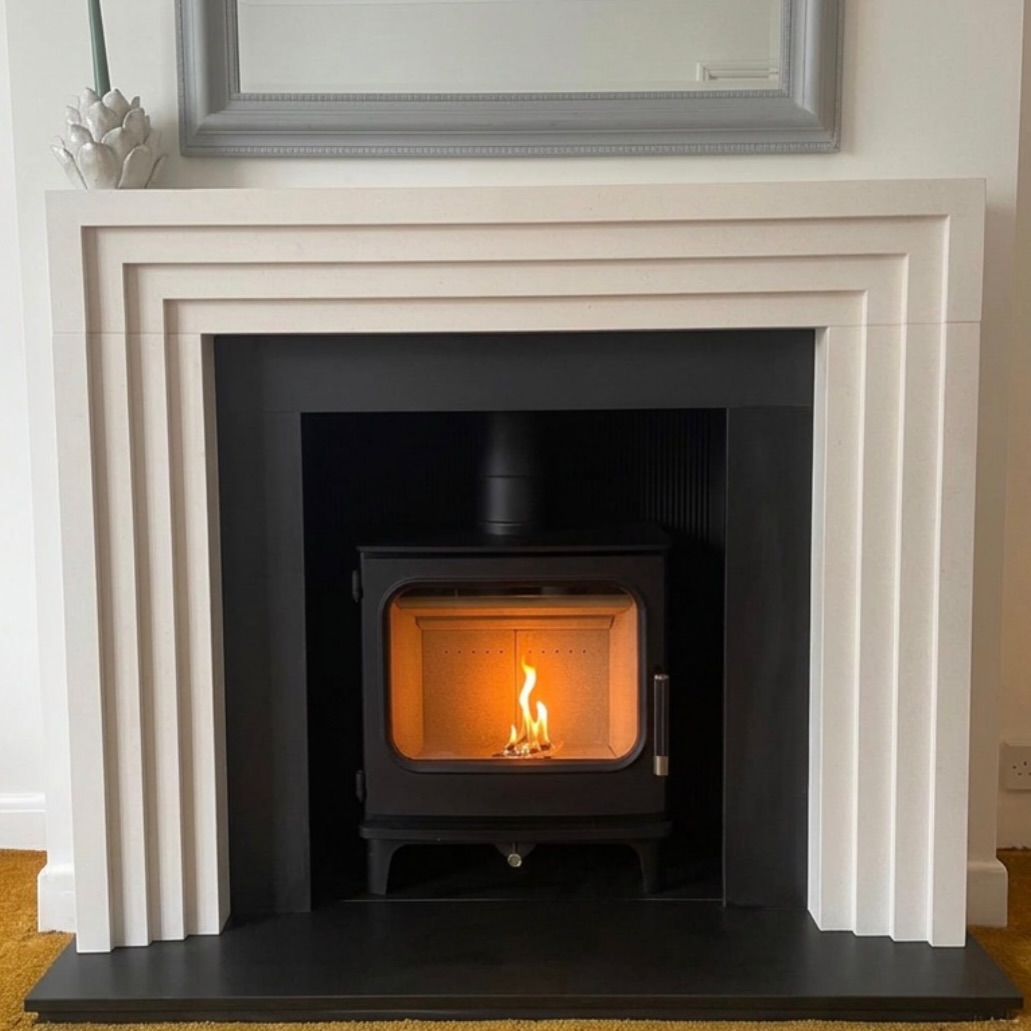
5. Frame the Fire with Stepped White Lines
Credits: Instagram
Repeated white steps turn this fireplace surround into a crisp geometric frame. The black opening, stove, and hearth read as one dark center, making the pale outline particularly striking.
A gray framed mirror continues the rectangular rhythm above, while one small decorative object leaves most of the mantel clear. The result feels polished without needing a crowded display.
To borrow the idea, focus on the relationship between the surround's profile and the shapes elsewhere in the room. Simple furniture can let those stepped edges stand out.
A restrained mix of white, gray, and charcoal would preserve the graphic effect, with warm textiles providing softness. The flame supplies a concentrated orange accent that naturally draws attention to the middle of everything.
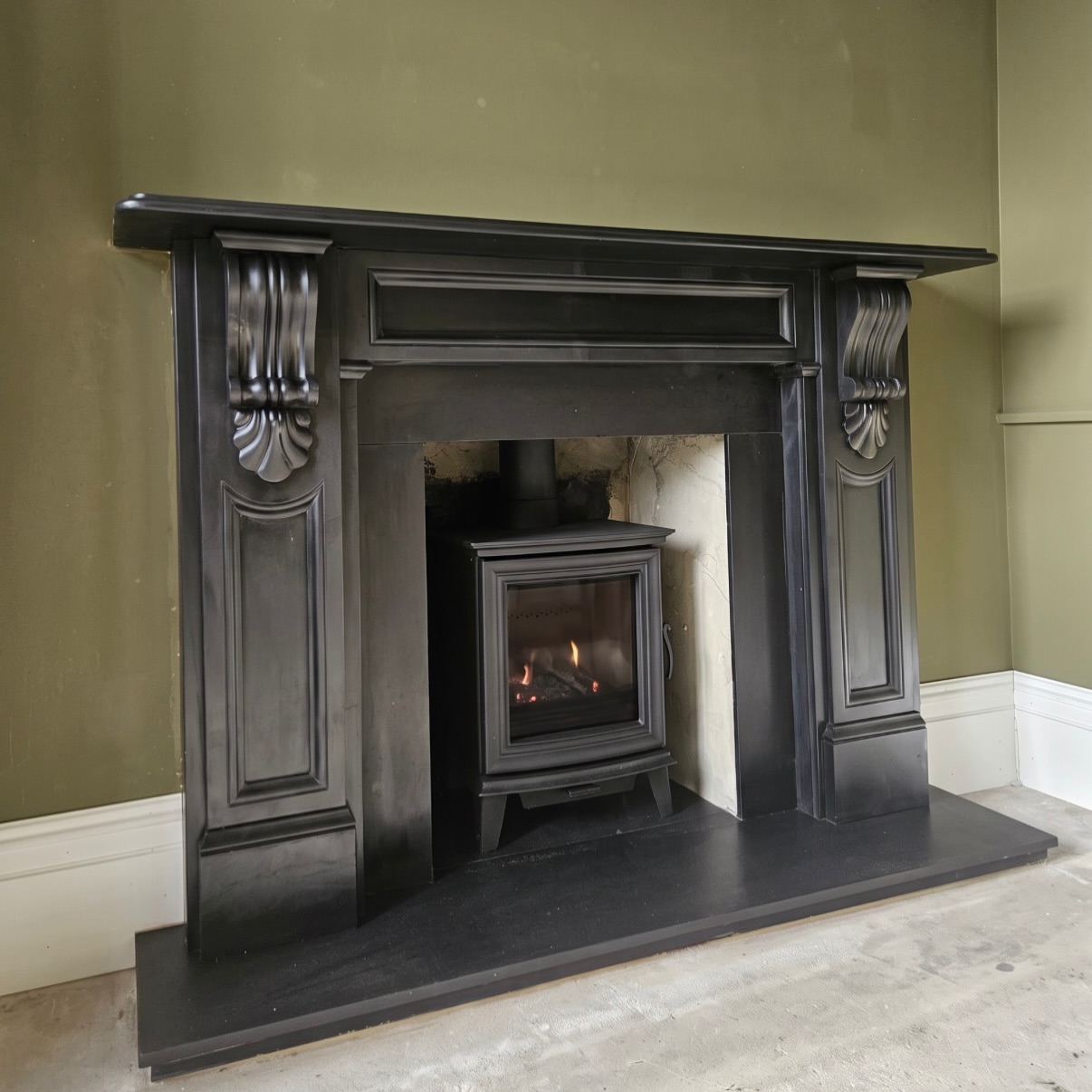
6. Give an Ornate Dark Surround an Olive Backdrop
Credits: Instagram
Dark slate brings a rich, sculptural quality to this period fireplace. Carved corbels and inset panels catch the light, revealing details that might disappear against a similarly dark wall.
The muted olive background provides just enough contrast, while white skirting and a pale floor introduce clearer edges below. A relatively compact black stove sits within the generous opening, allowing the surround to remain the main feature.
Take this as inspiration for a restrained period room: choose one substantial architectural piece and give it visual breathing room. Olive, charcoal, and warm off white work well as a connected palette.
Furniture with simpler outlines would complement the carving, and lightly textured upholstery could echo the slate's subtle surface without copying its sheen.
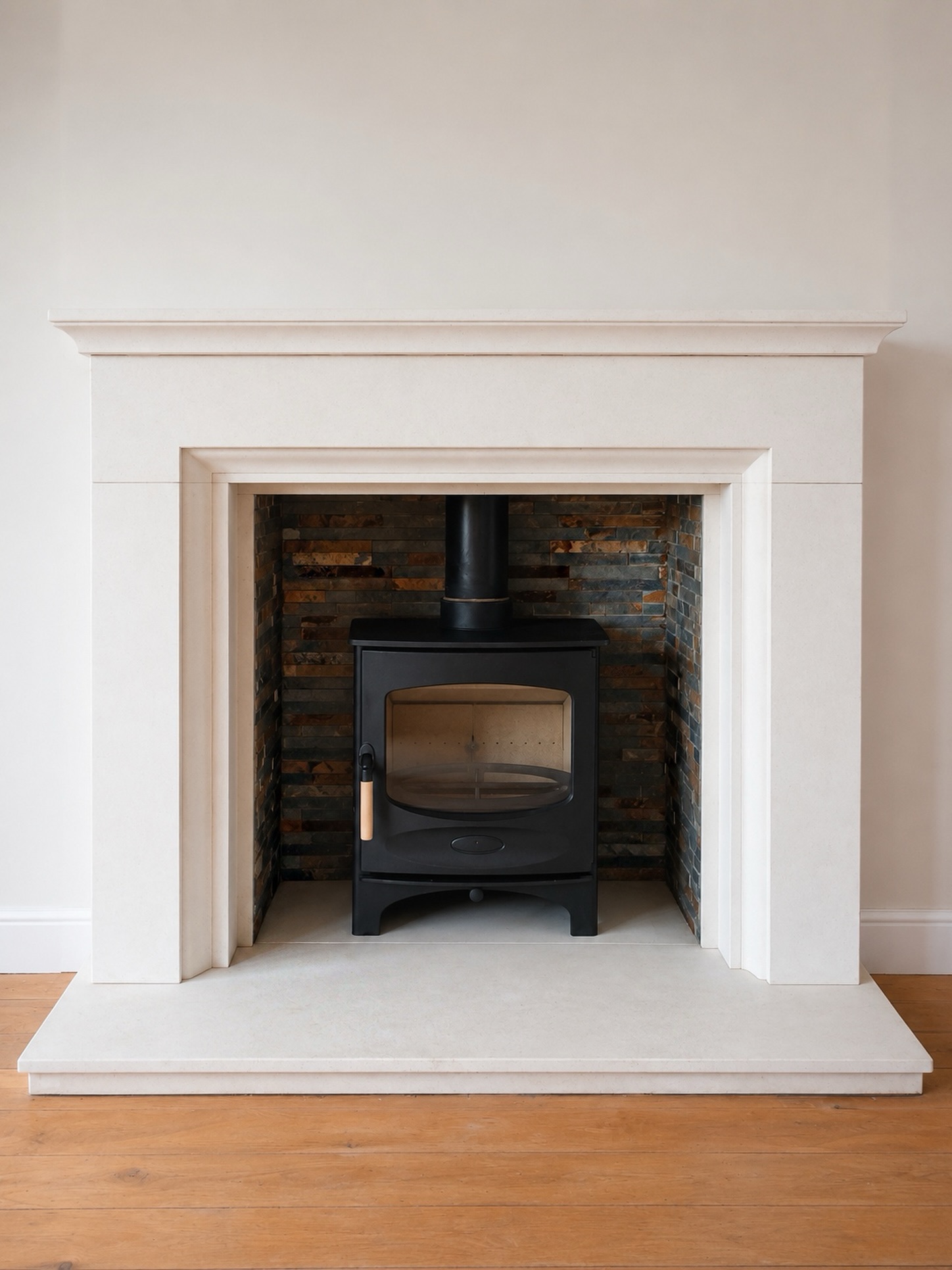
7. Contrast Pale Limestone with a Textured Chamber
Credits: Instagram
A pale limestone surround gives this stove a clean, balanced outline, but the small stacked pieces inside the recess add a varied layer.
Rust, charcoal, and muted gray tones in that textured chamber connect the black stove to the warm wood floor. The light hearth repeats the surround, keeping the overall composition coherent.
A pale handle provides a small contrast on the stove itself. For a room inspired by this example, draw accessory colors from the chamber rather than introducing unrelated shades.
Warm brown upholstery and softly textured cream fabric would feel at home beside it. Leave enough plain wall around the fireplace for its rectangular shape to register, and let material differences create interest within a mostly neutral scheme.
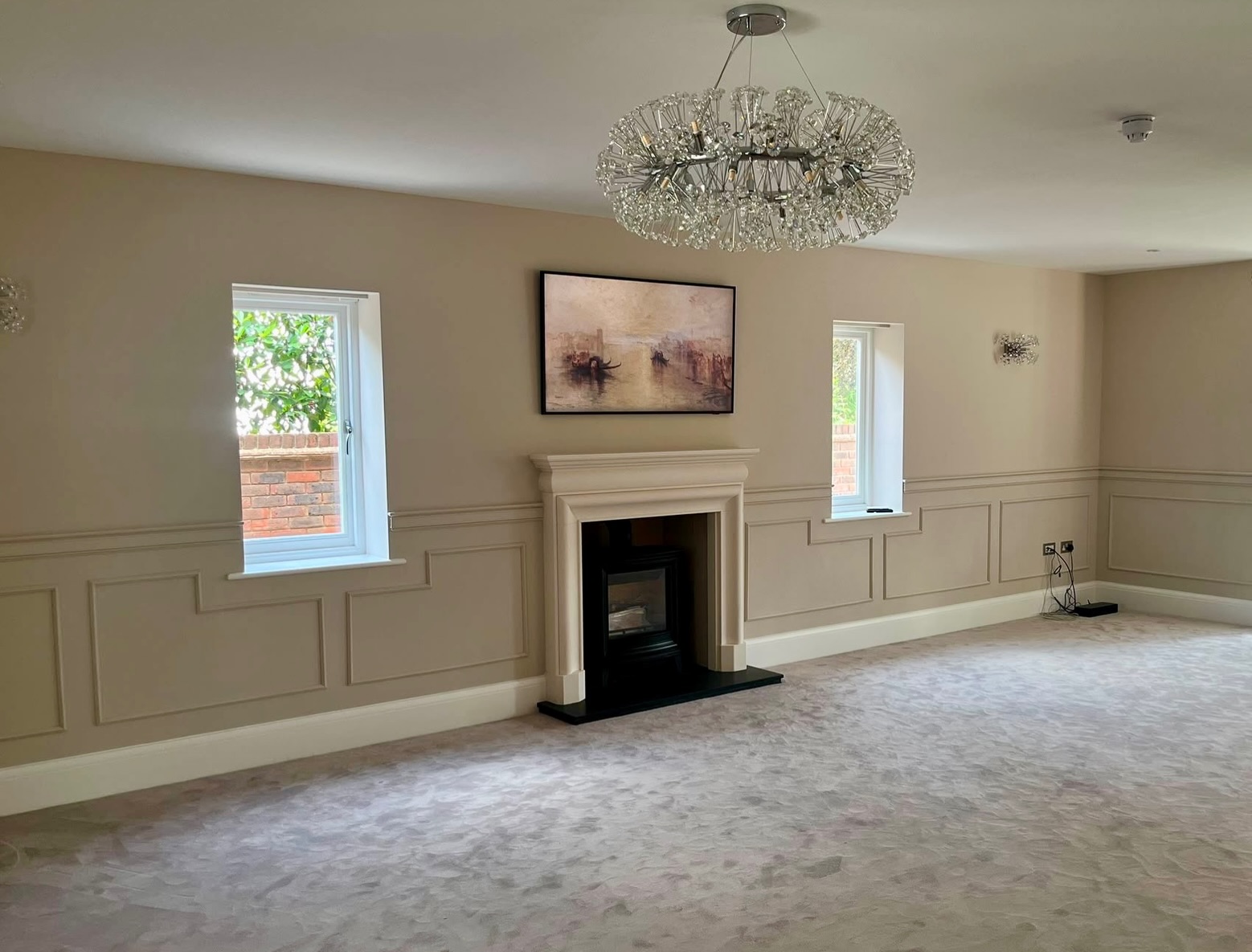
8. Use Symmetry to Give the Stove Architectural Weight
Credits: Instagram
Two narrow windows flank this fireplace, turning a modest stove into the center of a much larger wall composition. Pale decorative molding stretches across the room and connects with the substantial cream mantel.
A dark hearth gives the feature a clear base, while the landscape artwork repeats its horizontal proportions above. The sparkling chandelier adds a lighter, more delicate texture overhead.
This is a useful starting point for a formal sitting room because the architecture establishes balance before furniture arrives. Keep subsequent furnishings responsive to that central axis, with paired pieces where they suit daily use.
A soft rug and comfortable upholstery could temper the crisp wall treatment, while small dark accents would pick up the stove and picture frame.
9. Warm a White Surround with Rich Red Walls
Credits: Instagram
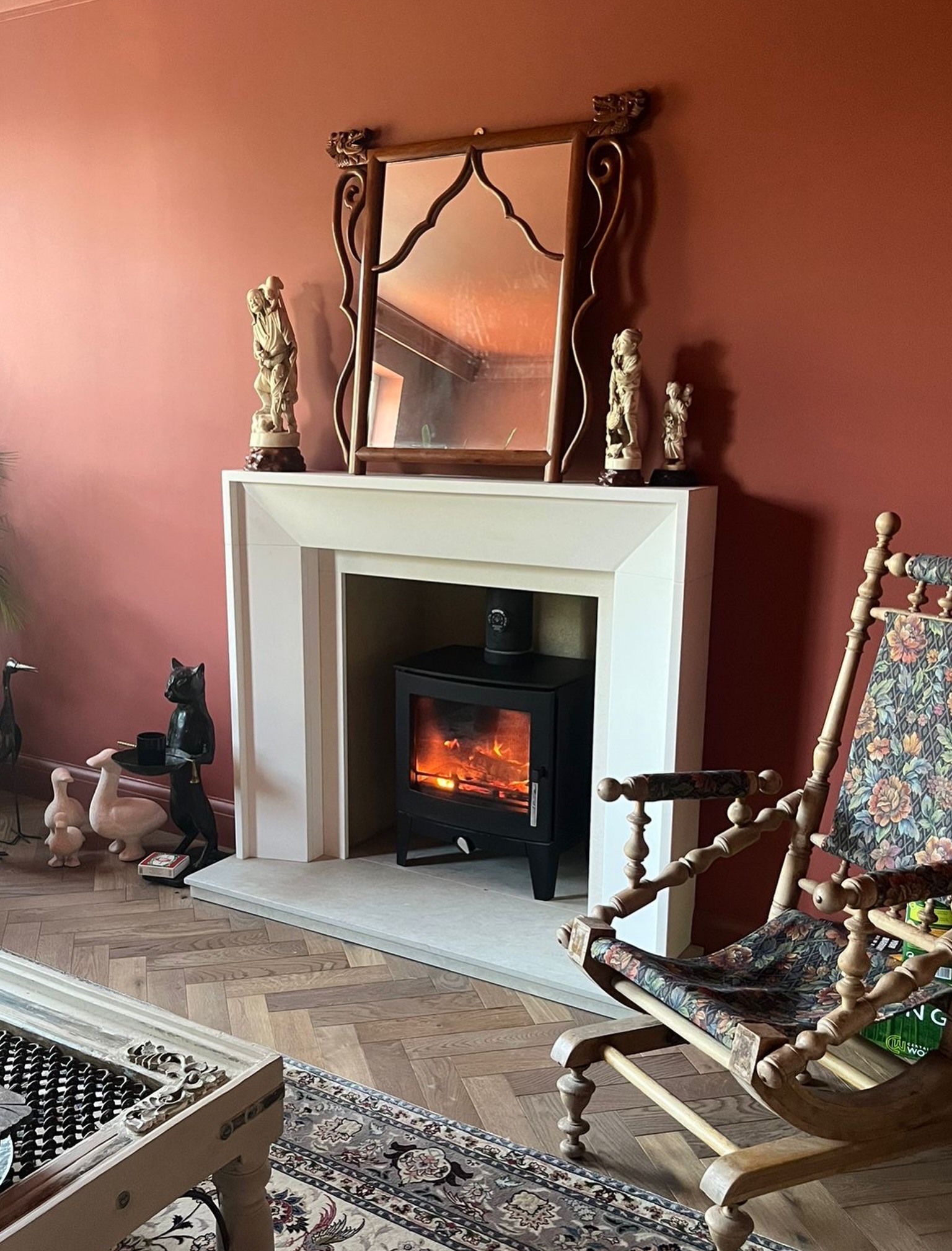
Terracotta red walls make the pale fireplace surround look especially crisp in this layered sitting room. The black stove provides a strong center, while a decorative timber mirror adds curves above the angular mantel.
A floral rocking chair, patterned rug, and carved table bring a collected character to the wider setting. Their varied patterns work because the red wall remains a broad, continuous backdrop.
To borrow this approach, choose a warm wall color that already appears in a favorite textile. Repeat cream and dark wood across a few furnishings to connect them with the fireplace.
The contrast between the simple stove and more elaborate antiques is particularly appealing, giving the room depth without requiring every piece to share one style.
10. Turn a Narrow Recess into a Stone Framed Feature
Credits: Instagram
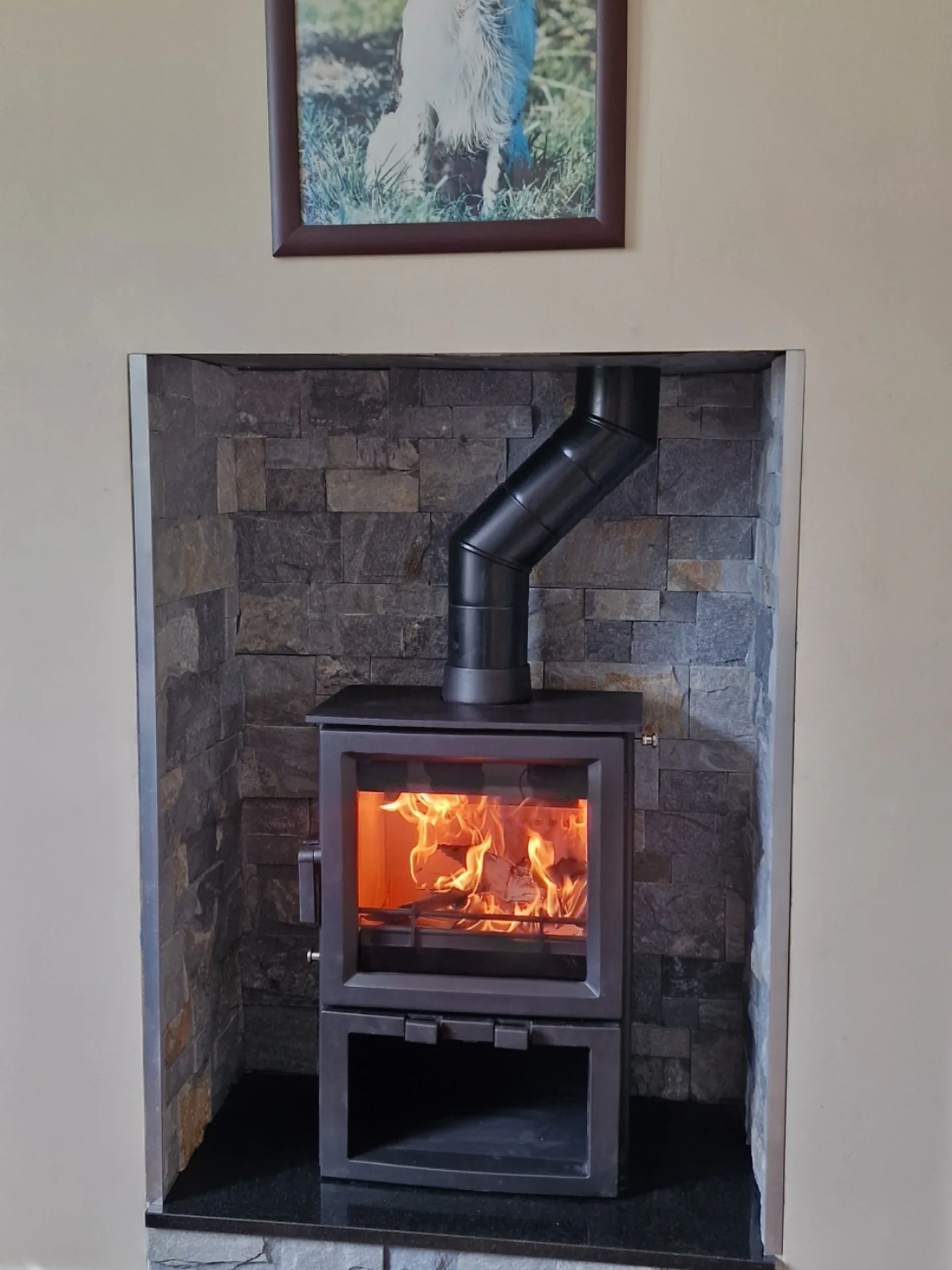
A narrow fireplace opening gains definition from a lining of small, varied stone pieces. Gray, brown, and charcoal tones create a textured backdrop for the straightforward black stove.
The angled flue adds a diagonal line within the otherwise rectangular composition, while a dark hearth supplies a quiet base. Above, a framed animal print introduces color without filling the surrounding pale wall.
This example shows how a compact feature can feel considered through a limited material palette. For a similar room, connect the stone's earthy colors with simple wood furniture and soft neutral upholstery.
Keep neighboring wall decoration restrained so the recess remains easy to read. The stove's broad glass front and bright flames then provide the central point of interest.
11. Connect a Corner Stove with Black Window Frames
Credits: Instagram
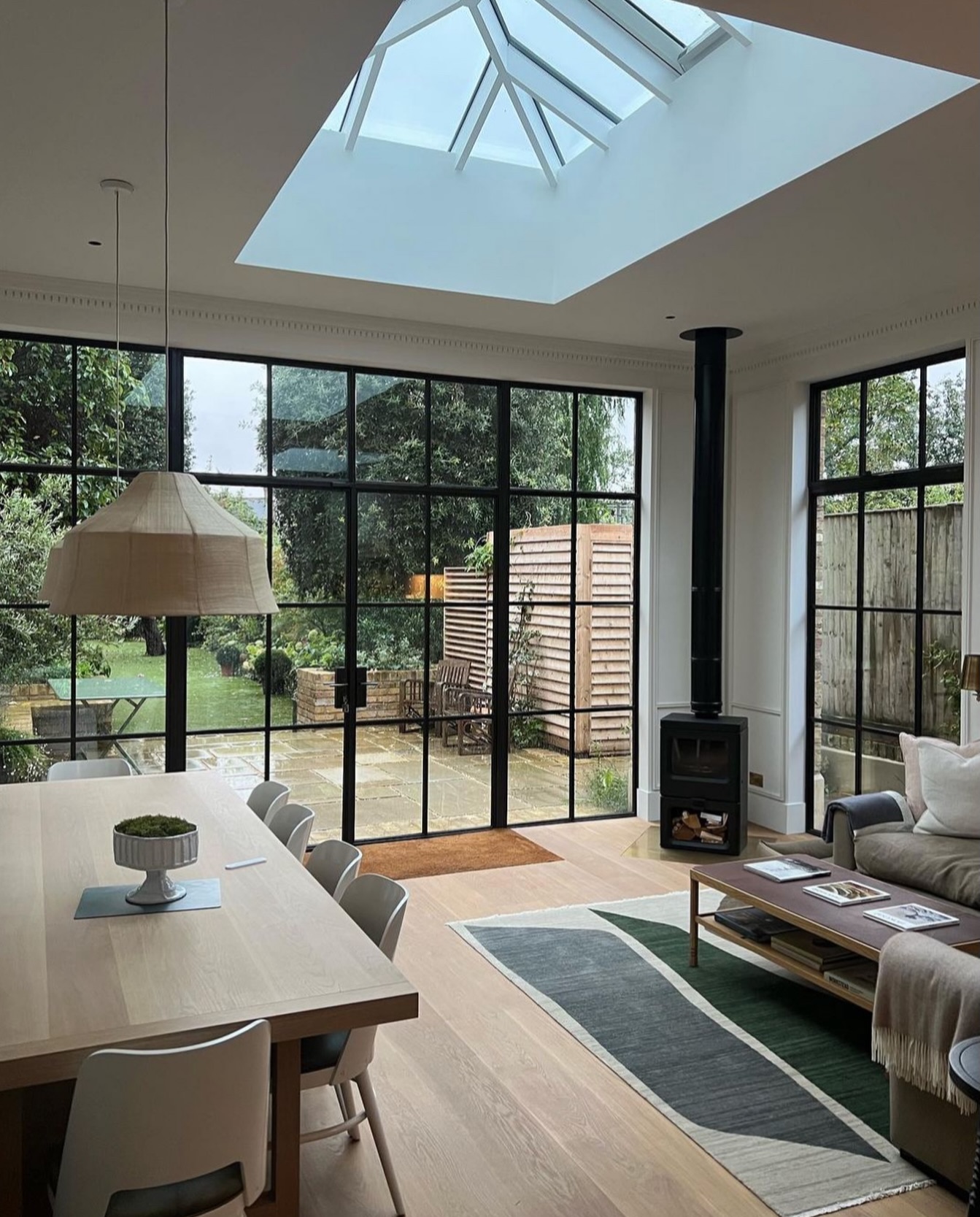
In this bright extension, the black stove relates naturally to the grid of dark window frames. Its tall flue draws a clear vertical line beneath the roof lantern, while the compact body leaves the garden views prominent.
Pale wood flooring and a long dining table balance the dark outlines with warmth. The green and gray rug helps distinguish the sitting area within the shared room.
Borrow the visual connection by repeating an existing architectural color in a few furnishings. A dark coffee table, slim picture frames, or lamp bases can echo the stove without overwhelming a light interior.
Keep the wider palette simple so the outdoor greenery remains part of the scene, and favor textured upholstery for a softer finish.
12. Choose a Rounded Silhouette for a Simple Wall
Credits: Instagram
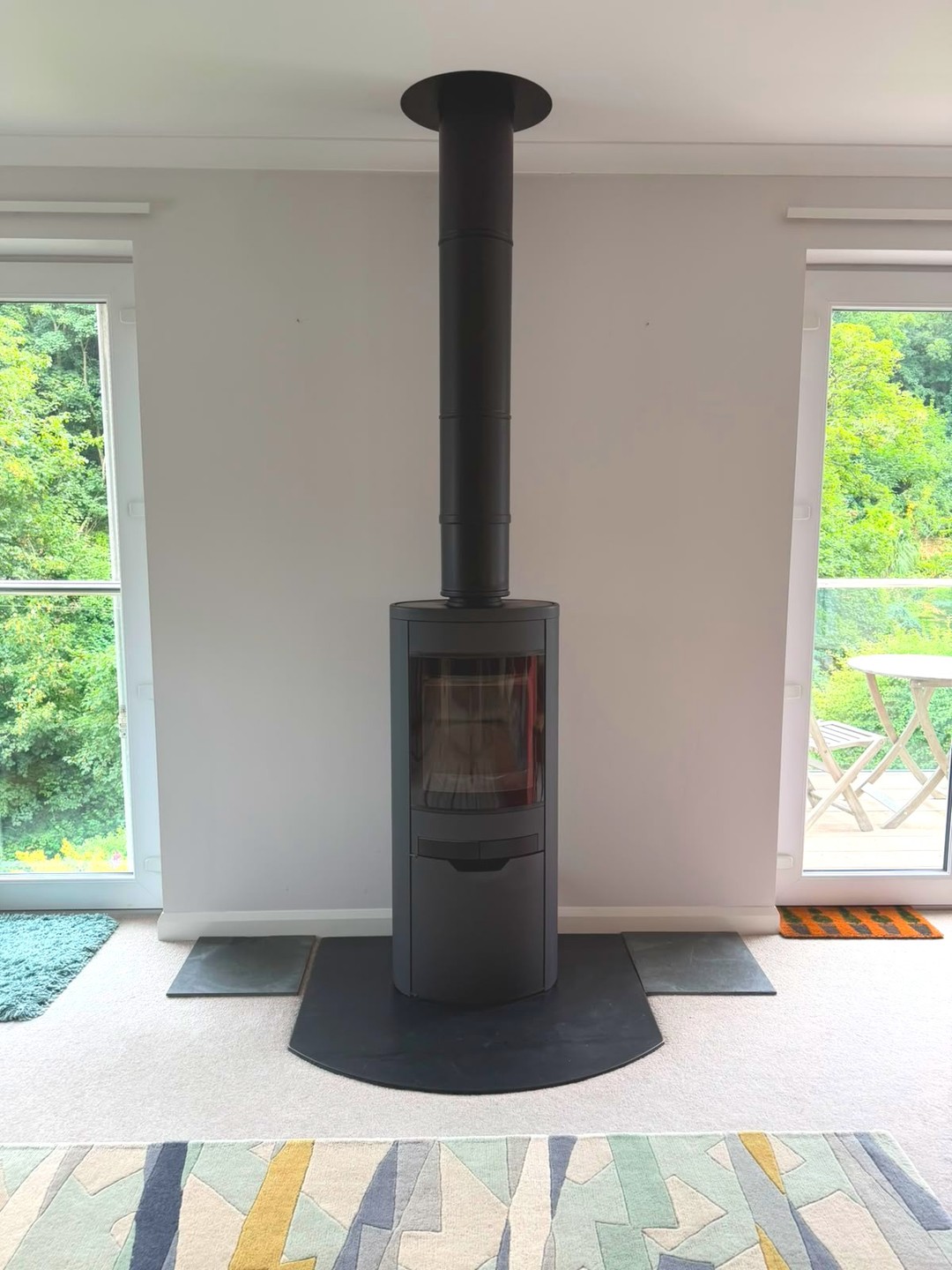
A tall cylindrical stove gives this pale wall a strong sculptural center. The curved body and rounded front edge of the dark hearth soften the otherwise straight lines of the flue, skirting, and glazed doors.
Daylight on either side makes the charcoal finish particularly clear. A geometric rug introduces muted green, yellow, and blue at floor level, offering color without interrupting the plain backdrop.
The useful design lesson is to balance a distinctive appliance shape with quieter surrounding surfaces. In a similarly restrained room, curved furniture or a round side table could repeat that softer outline.
Small amounts of pattern in textiles would provide variation, while light upholstery would continue the open feeling created by the two garden views here.
13. Build a Quiet Composition from Black and White
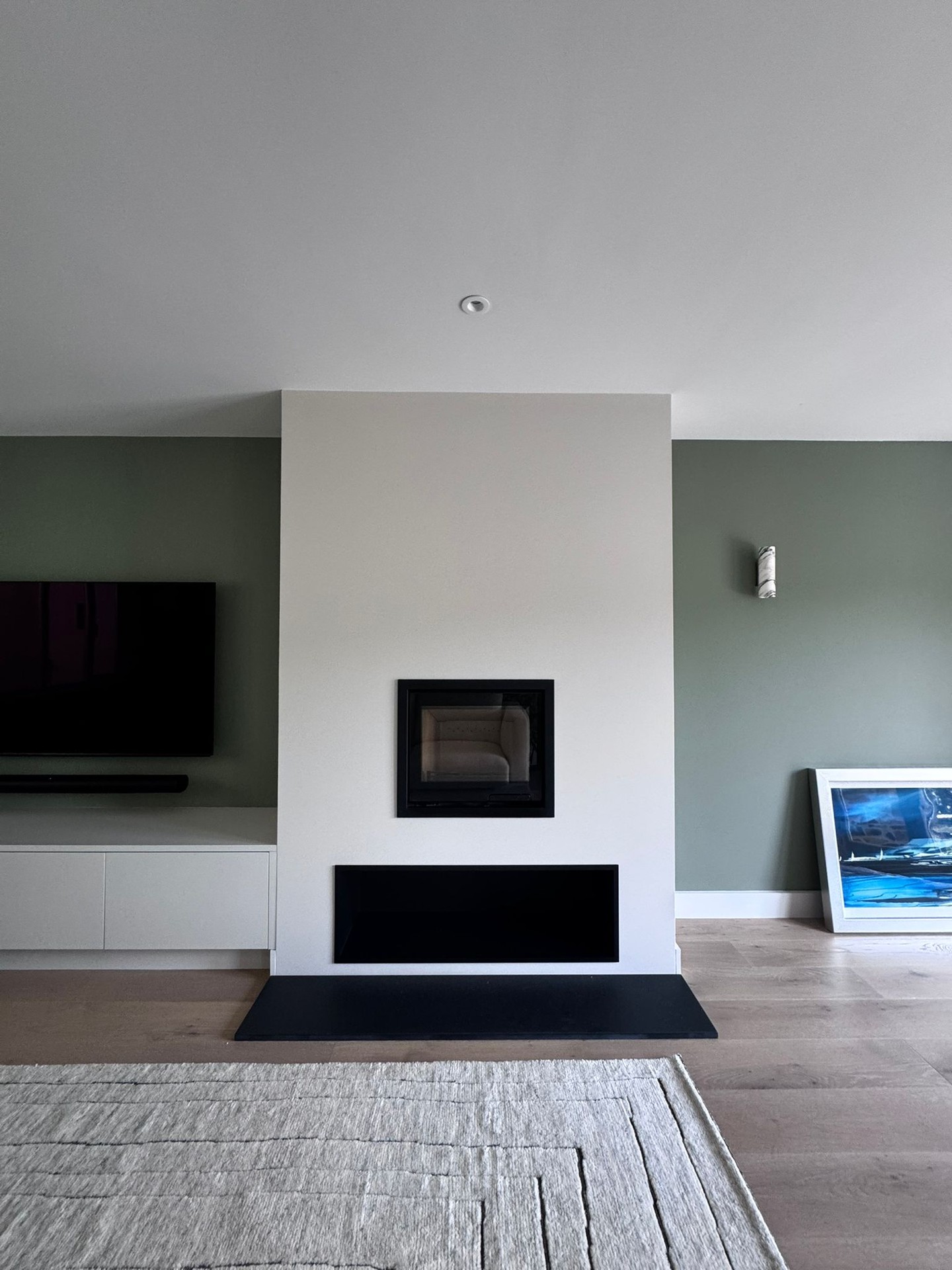
Credits: Instagram
This contemporary fireplace uses a white chimney breast as a clean backdrop for two dark rectangles. The compact glazed stove sits above a longer, empty recess, with a slim black hearth anchoring the composition below.
Sage walls, pale flooring, and a lightly patterned rug soften the graphic contrast. The television and low cabinetry continue the horizontal lines to one side.
For a comparable visual effect, limit the number of competing finishes and let proportion provide the interest. Simple cabinet fronts and restrained lighting support the central feature without making every surface decorative.
Artwork can supply a separate color accent, as the blue picture does here. The overall mood depends on clear shapes and calm surrounding space rather than elaborate ornament.
14. Balance an Inset Stove with Gentle Floral Pattern
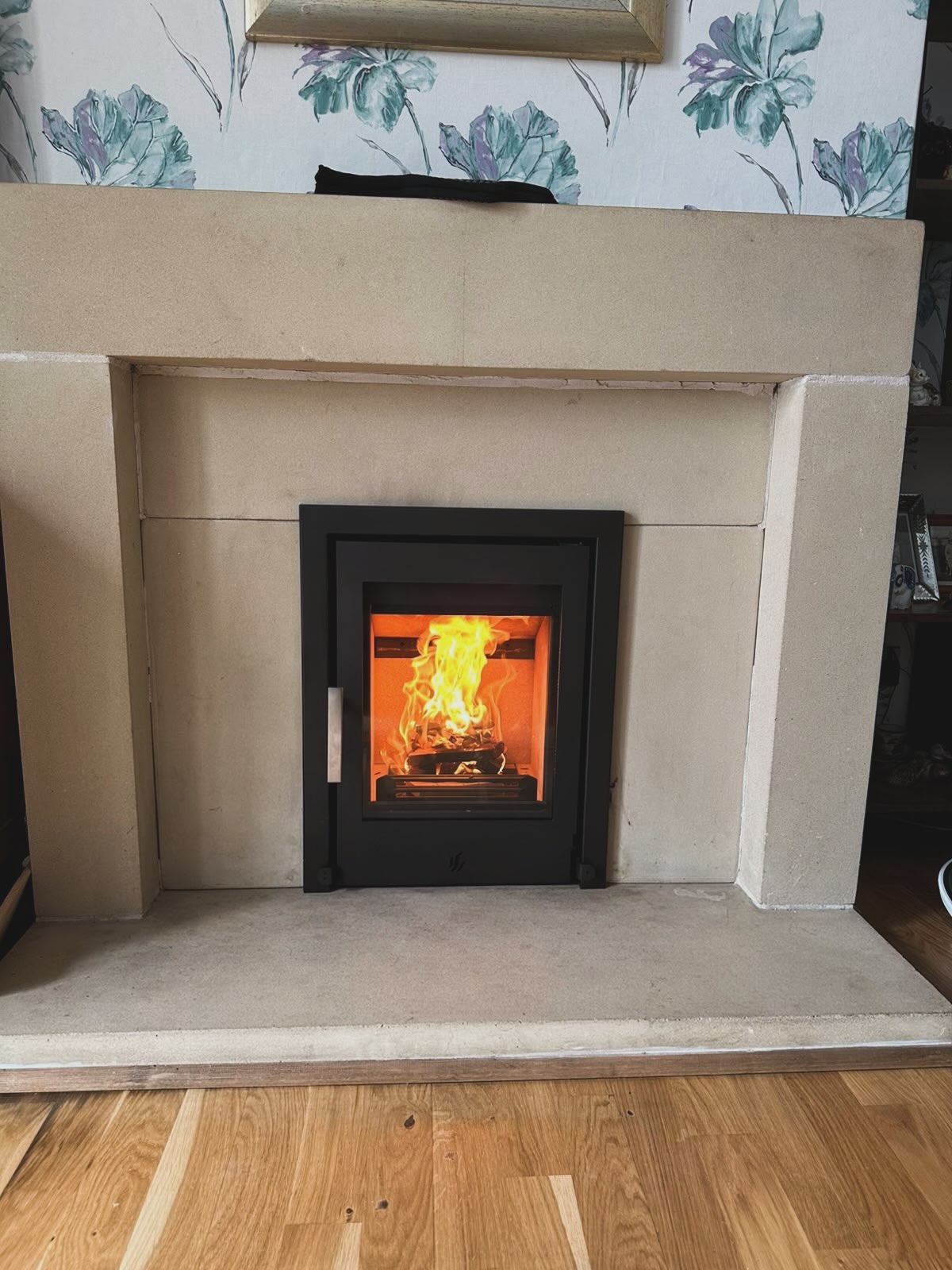
Credits: Instagram
A compact inset stove creates a dark focal point within this broad, pale stone fireplace. The simple rectangular door and narrow metal handle feel crisp against the surround's softened surface.
Above, large blue and green flowers introduce a gentler pattern, while the warm wood floor connects the feature with the rest of the room.
This pairing shows how a traditional fireplace can support a cleaner appliance shape without losing its character. For an inspired decorating scheme, choose textiles that borrow one muted shade from the wallpaper.
Plain upholstery would give those flowers space to stand out. A limited mix of pale stone, warm timber, and soft botanical color keeps the setting approachable, with the fire adding its own lively movement.
15. Let a Shallow Arch Soften the Stove Opening
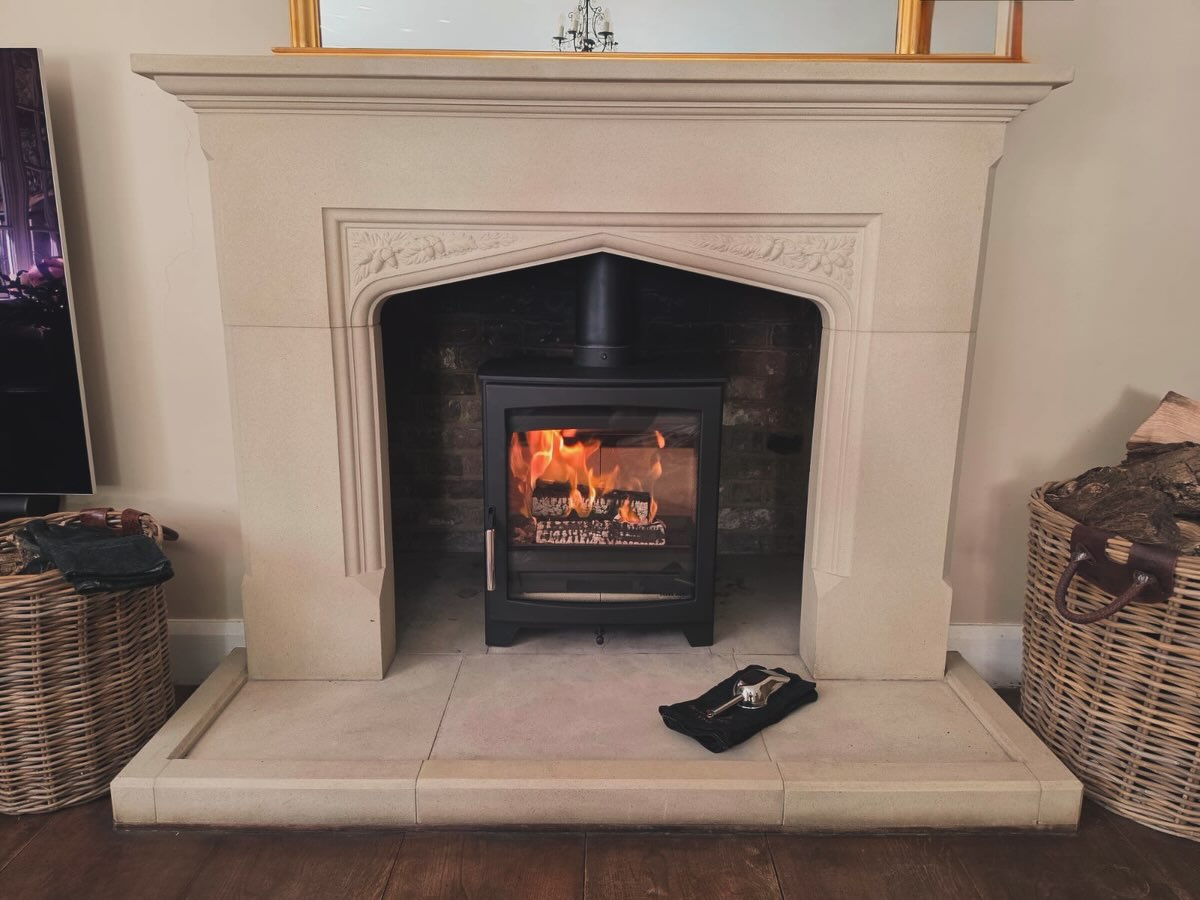
Credits: Instagram
The gently pointed opening gives this pale fireplace a distinctive outline. Fine leaf carving follows the upper edge, adding detail without covering the whole surround.
Inside, dark brick sets off the square stove and bright flame, while the matching stone hearth creates a broad, calm foundation. Woven baskets and dark floorboards add texture around the edges of the photograph.
To borrow this traditional mood, combine one decorative architectural feature with furnishings that have simpler shapes. Warm cream upholstery and natural woven materials could continue the gentle palette.
A mirror above the mantel, as shown here, gives the wall extra height and introduces reflection. The balance works through a contrast of surfaces: smooth stone, rough brick, woven fibers, and dark metal.
16. Set Gray Stone Against a Mustard Wall
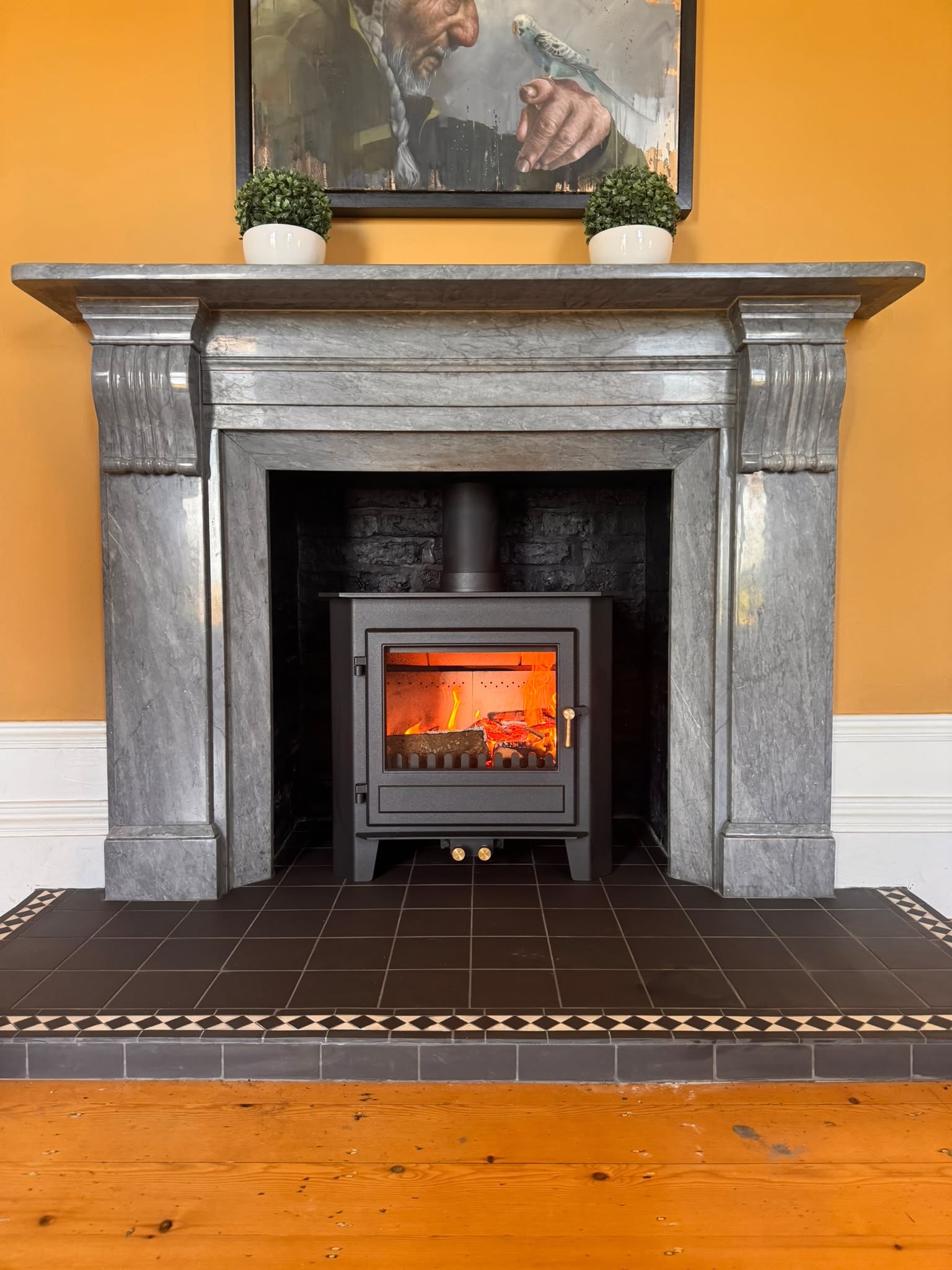
Credits: Instagram
Mustard yellow walls bring warmth to the cool gray veining of this substantial fireplace. The carved corbels and broad mantel feel formal, while the straightforward black stove keeps the central shape simple.
A patterned border around the dark tiled hearth adds a small geometric detail at floor level. The honey colored floorboards connect with the wall, and two matching plant pots reinforce the arrangement's balance.
For a similar palette, choose a yellow that complements the warmer elements already in the room. Repeat charcoal through a few accessories to relate them to the stove, then keep larger fabrics relatively quiet.
The gray stone remains expressive enough on its own, with the painting above adding another layer of character to the composition.
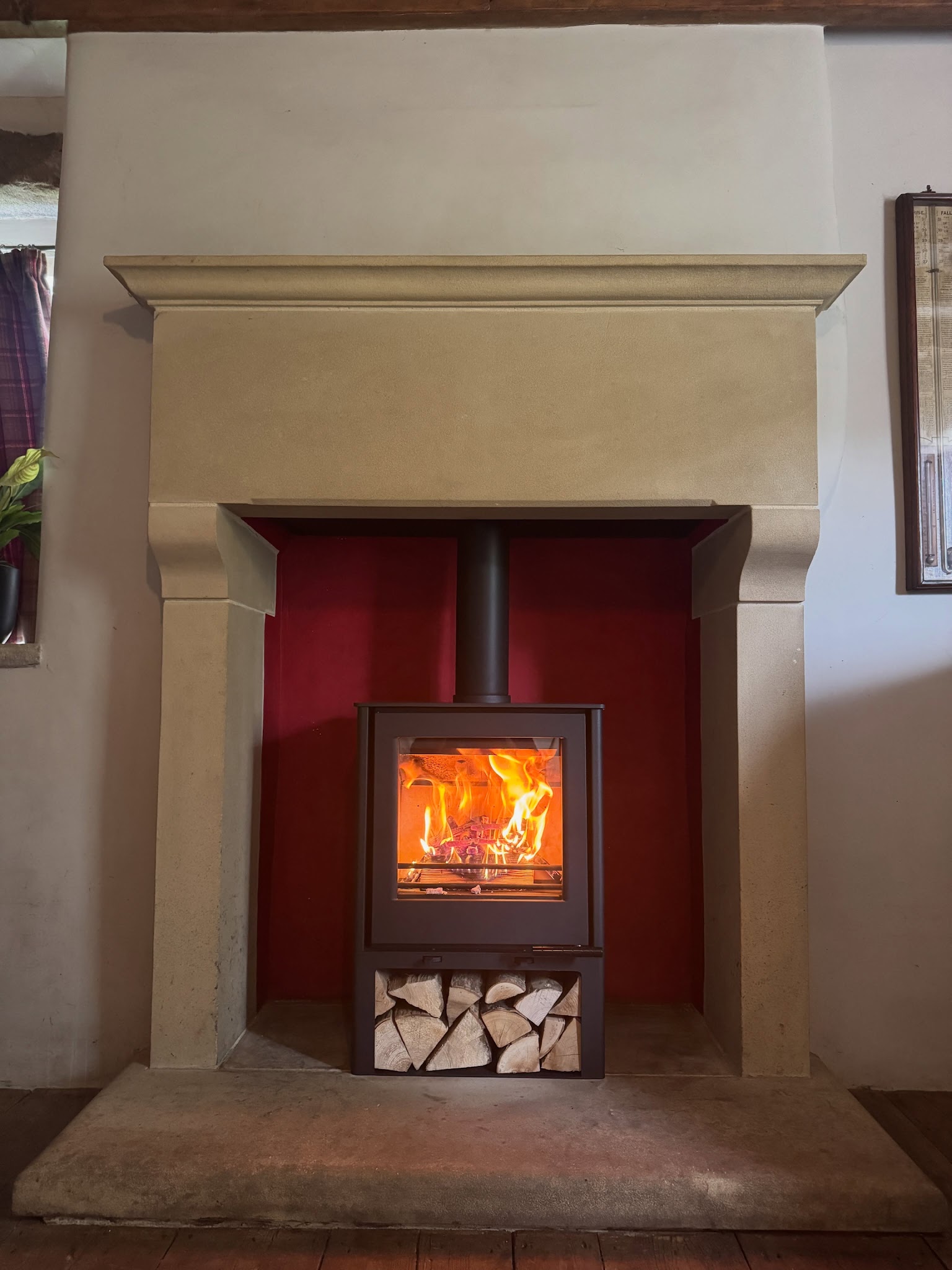
17. Use a Deep Red Recess for Visual Drama
Credits: Instagram
A deep red chamber makes the black stove stand out within this generous stone fireplace. The substantial tan surround, broad frieze, and curved supports give the feature a traditional architectural weight.
Beneath the firebox, a small compartment of pale logs adds another texture, while the weathered hearth and floorboards reinforce the room's rustic character. The decoration stays restrained, allowing the red and stone to carry the scene.
Take inspiration from the palette when selecting fabrics elsewhere in the room: muted red cushions, oatmeal upholstery, and dark wood would feel connected. The important visual relationship is between a rich central color and a quieter outer frame.
That contrast can make a large fireplace feel focused without requiring an elaborate mantel display.
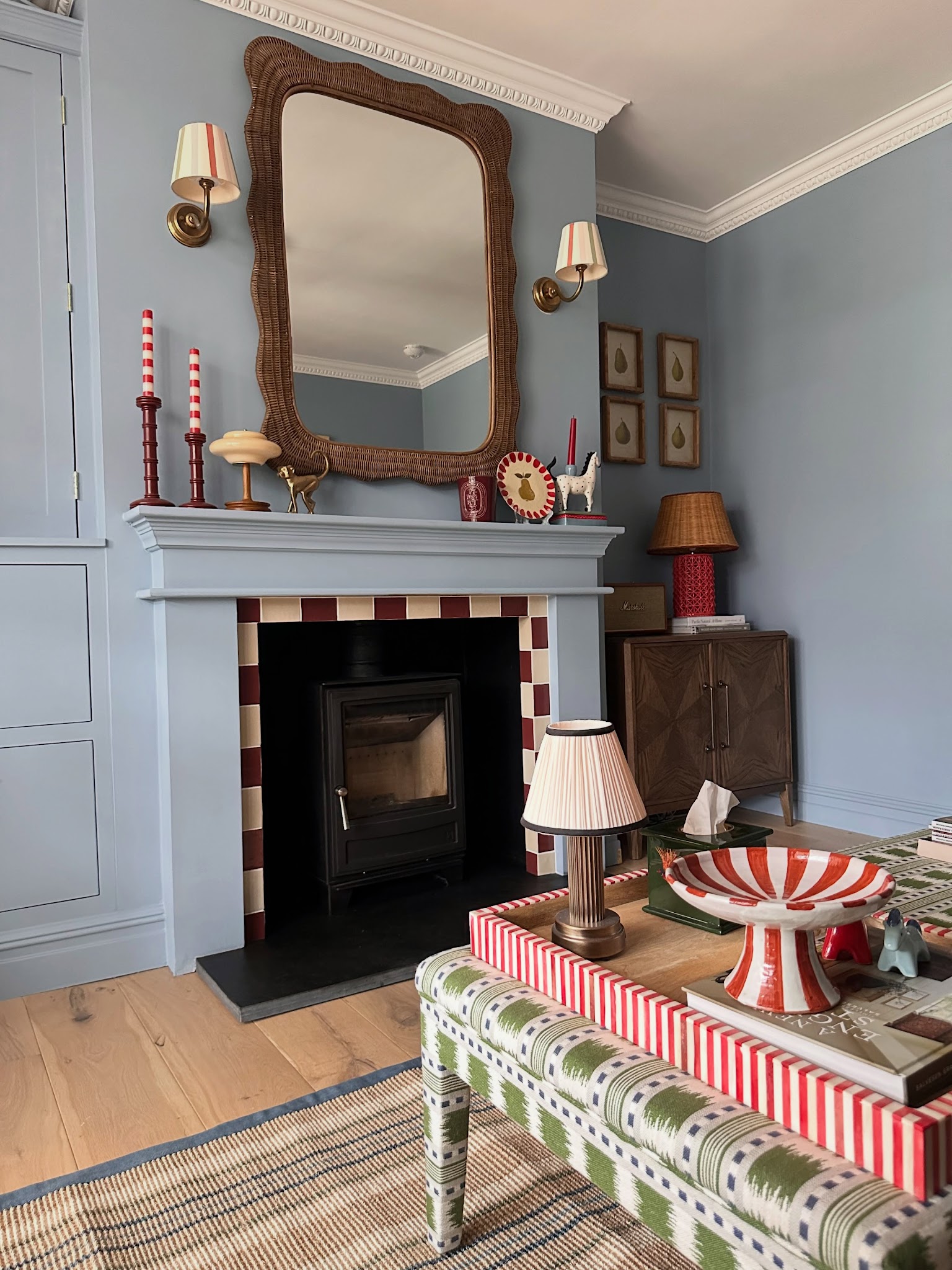
18. Add a Checkered Border to a Blue Fireplace
Credits: Instagram
A narrow border of burgundy and cream tiles gives this blue fireplace a playful frame. The surrounding mantel, cabinetry, and walls share the same color, allowing the patterned opening to stand out.
Striped candles, lampshades, and a red edged tray repeat the warm accent throughout the room. A wavy woven mirror and timber cabinet introduce natural texture among the painted surfaces.
For a similarly layered scheme, pick one small pattern as your starting point, then repeat its colors at different scales. Keep the stove and hearth visually simple so the border remains legible.
The green patterned ottoman adds variety without losing the palette's connection, while white ceiling trim gives the colorful room a clear, airy finish along its upper edges.
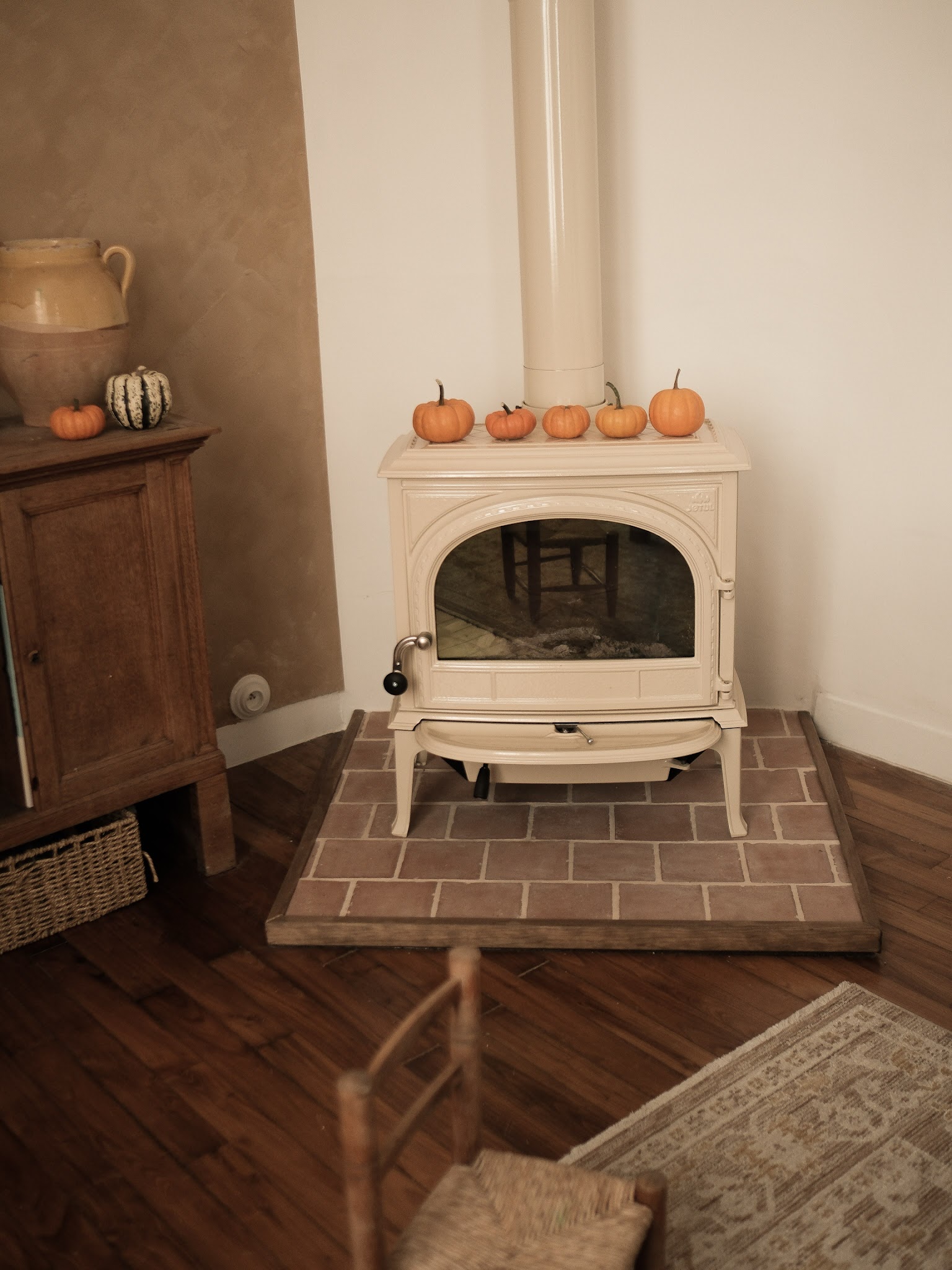
19. Soften a Cottage Corner with a Cream Stove
Credits: Instagram
A cream colored stove gives this cottage corner a gentler focal point than a dark metal finish would. Its arched glass door, curved feet, and matching flue create a continuous pale silhouette against the white wall.
A brick hearth introduces warm pink and brown tones, linking the stove with the wooden cabinet and herringbone floor. The photograph's unlit autumn scene includes orange accents that reinforce this earthy palette.
For a room with a similar feel, combine creamy upholstery with aged timber and softly patterned rugs. Let natural surfaces show their variation rather than trying to match every shade exactly.
The result can feel collected and comfortable, with the stove's traditional shape adding character while the overall color scheme stays quiet.
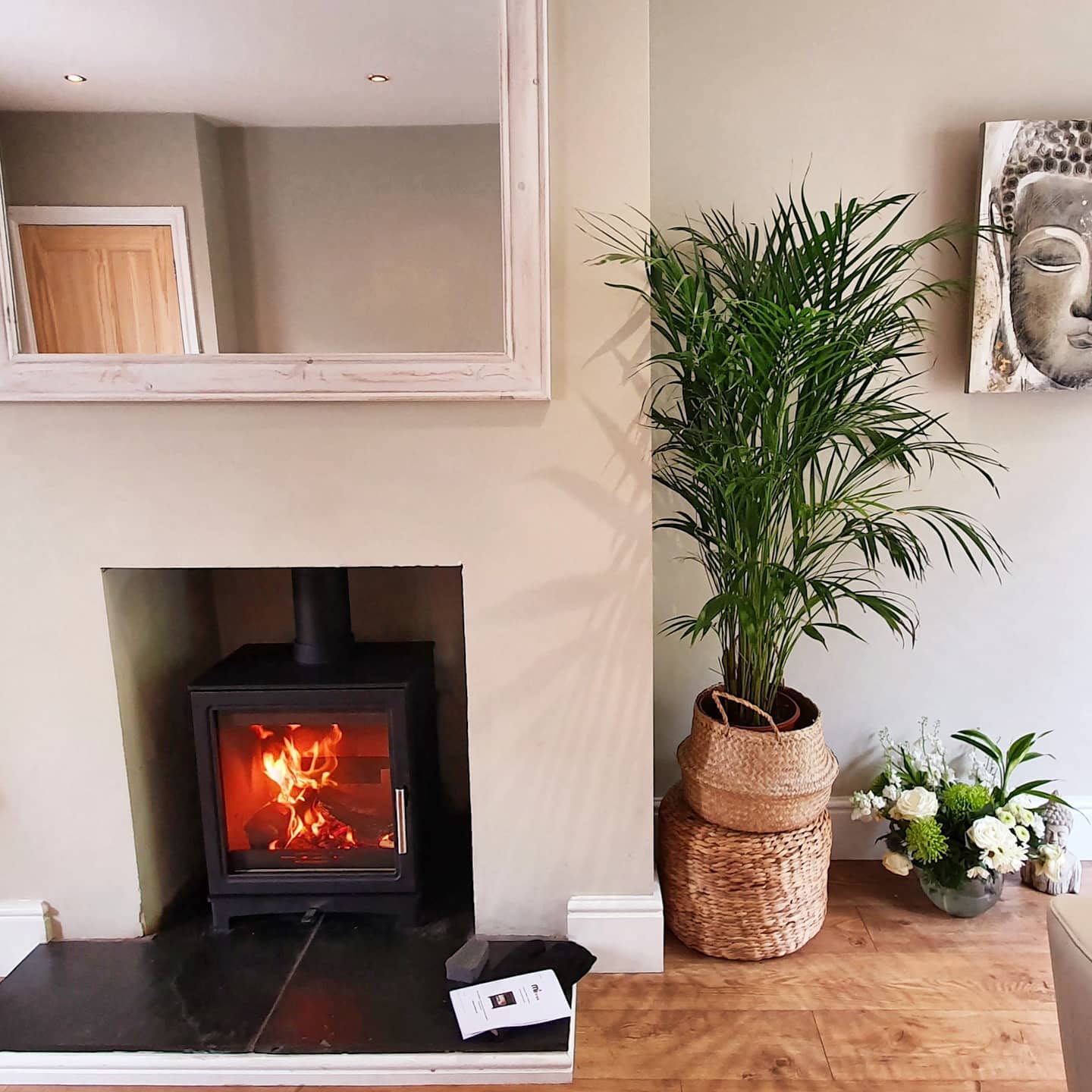
20. Keep the Opening Plain and Let Texture Lead
Credits: Instagram
A simple rectangular opening gives this black stove an understated setting. There is no elaborate mantel to compete with the flame; instead, a broad pale mirror introduces reflection above the fireplace.
The dark hearth makes a clear base against the warm floor, while the tall palm and woven baskets bring a different kind of texture to the right side.
Soft neutral walls keep these elements connected. Borrow the mood through a restrained palette of cream, charcoal, natural wood, and green.
A few substantial accessories can create more presence than many small ornaments. The photograph also shows how different heights enliven a simple wall: the low stove, taller foliage, and wide mirror each contribute a distinct shape to the overall arrangement.