
A stone fireplace can dominate a room before you add a single accessory, so the challenge is balancing its texture without hiding it.
These Stone Fireplace Ideas show how a few thoughtful contrasts can make the masonry feel settled: pair rough stone with a smooth, tailored surround, bring order to an irregular wall with white shelves, or leave a tall pale chimney mostly bare.
Other examples use dark horizontal lines, blue accents, or warm wood to connect the fireplace with nearby seating. The result is a range of practical ways to shape the mantel and room around the stone.
1. Soften Pale Stone with Curved Mantel Decor
Credits: Instagram
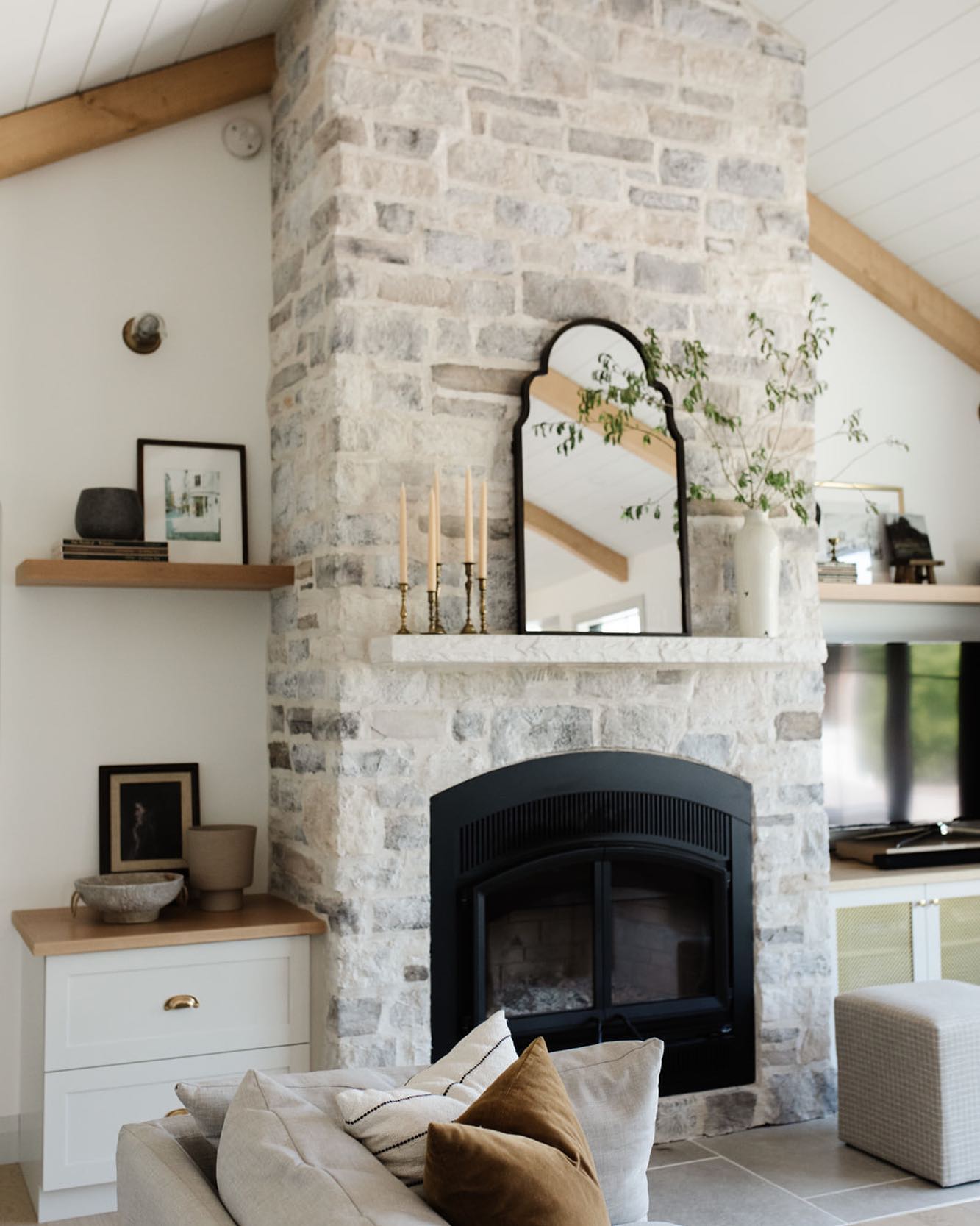
Pale, irregular stone gives this fireplace plenty of texture, while the curved mirror adds a softer outline above the mantel. Its dark frame connects with the arched black firebox below.
Warm wood shelves and ceiling beams prevent the white surroundings from feeling flat. For a similar balance, repeat one wood tone in the nearby furniture, then keep larger upholstered pieces light and uncomplicated.
A few slender candlesticks give the mantel height without covering much of the stone. Place a taller branch arrangement toward one end to introduce movement, and leave visible space around the mirror.
The shelves work best as quieter supporting areas, with small stacks of books and simple vessels echoing the relaxed character of the main fireplace display.
2. Frame Rugged Stone with Dark Horizontal Lines

Credits: Instagram
A broad dark mantel and matching hearth give this rugged stone fireplace a strong horizontal rhythm. Their smooth surfaces make the irregular blocks above feel even more textured.
The neighboring shelf and wall light repeat the dark finish, so the fireplace belongs to the whole room. Borrow that relationship by choosing a few nearby furnishings with similarly clean edges.
Here, a substantial coffee table holds books and a leafy arrangement, while pale stools interrupt the darker palette. Keep accessories on the mantel restrained; the stone already supplies pattern and depth.
Soft upholstery and a woven throw make the seating inviting without disguising the room's sturdy character. Pick cushion colors from the quieter gray and brown notes visible in the masonry.
3. Pair Rough Masonry with a Tailored Surround
Credits: Instagram
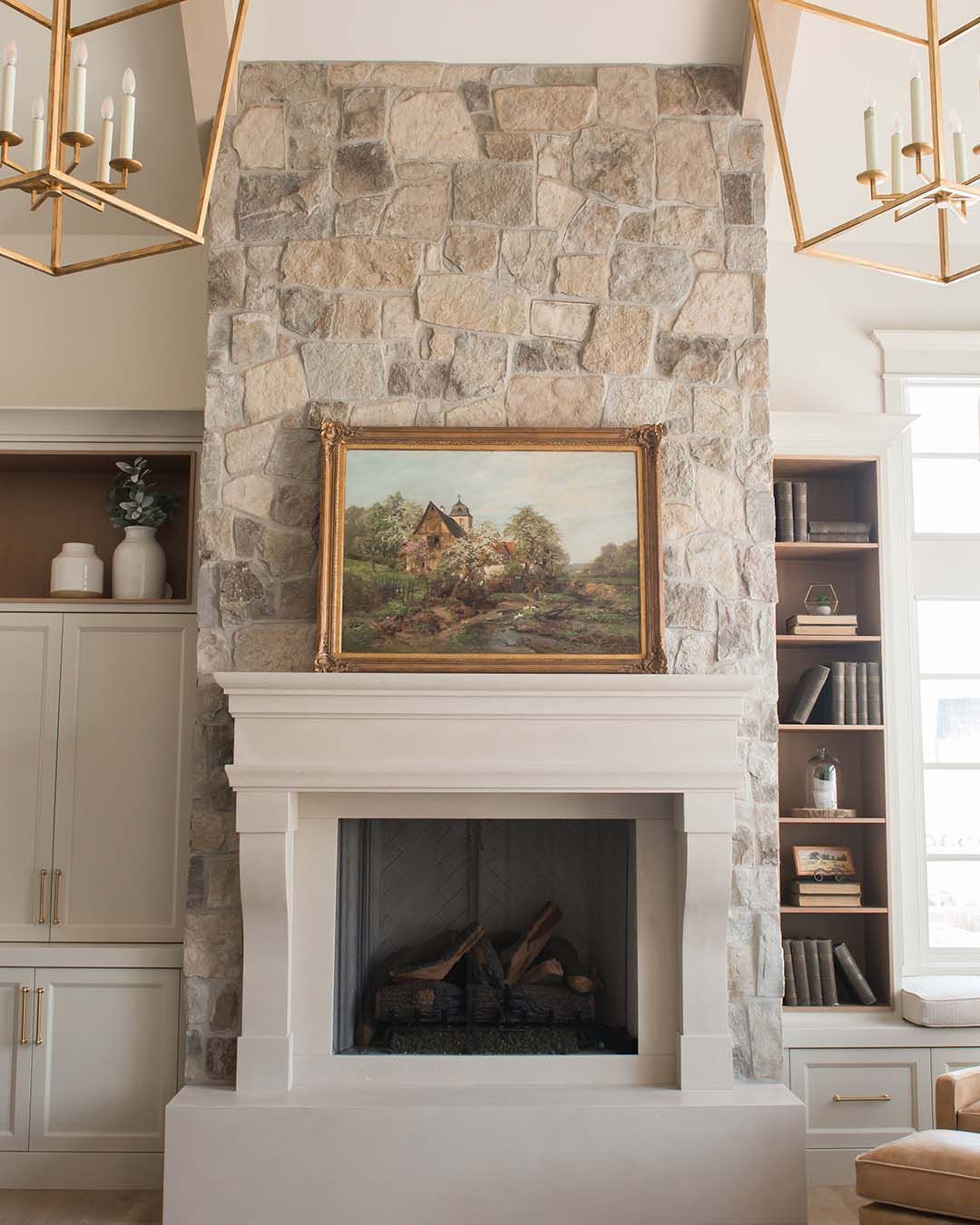
The smooth pale surround creates a crisp frame within this rougher stone chimney. That contrast gives the fireplace a dressed appearance without losing the texture that makes it interesting.
A landscape painting introduces gentle color and an ornate edge, while the surrounding cabinetry stays subdued. To translate the look, let one substantial picture carry the mantel arrangement instead of adding numerous little objects.
Choose a frame that relates to another finish in the room, as the gold here connects with the lanterns and cabinet handles. Books arranged both upright and horizontally make the adjacent shelves feel lived in.
Keep their colors restrained so the artwork remains distinct. A low upholstered piece nearby provides softness beside the fireplace's layered architectural lines.
4. Balance Irregular Stone with Orderly White Shelves
Credits: Instagram
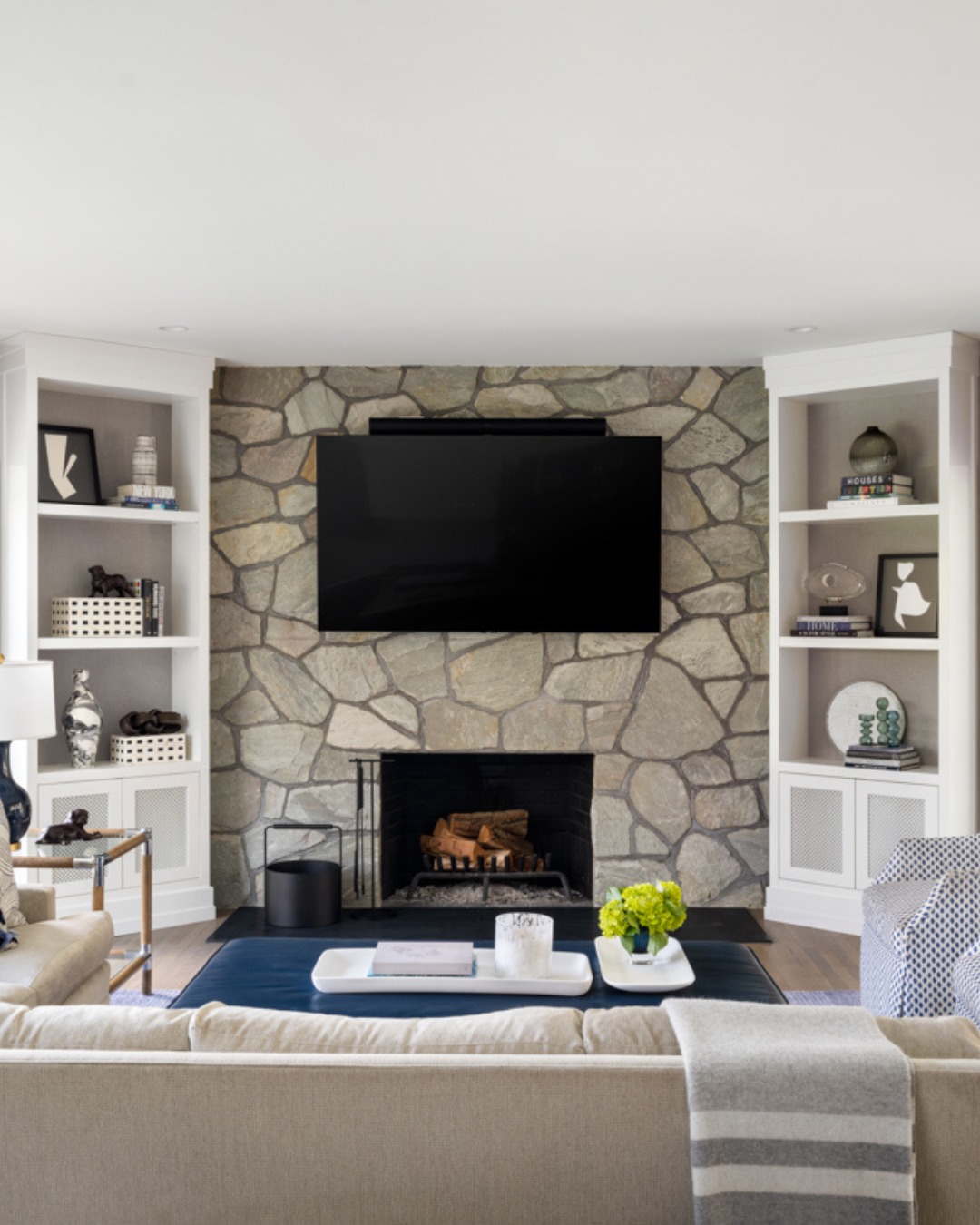
Large, uneven stone shapes become the centerpiece of this compact seating area, with white built-ins giving the wall a clear sense of order. The shelving has enough empty space to let individual objects register.
Below, a blue ottoman adds a strong color between the neutral sofa and the fireplace. Try this arrangement when a textured wall already supplies plenty of visual activity.
Group shelf objects in small clusters, mixing books with one sculptural piece rather than filling every opening. Repeat the darkest fireplace tones in picture frames and a few accessories.
A long tray turns the ottoman into a useful surface for everyday items. The striped throw and patterned chair bring smaller patterns that suit the stone's larger, irregular scale.
5. Give Gray Stone a Collected Coastal Character
Credits: Instagram
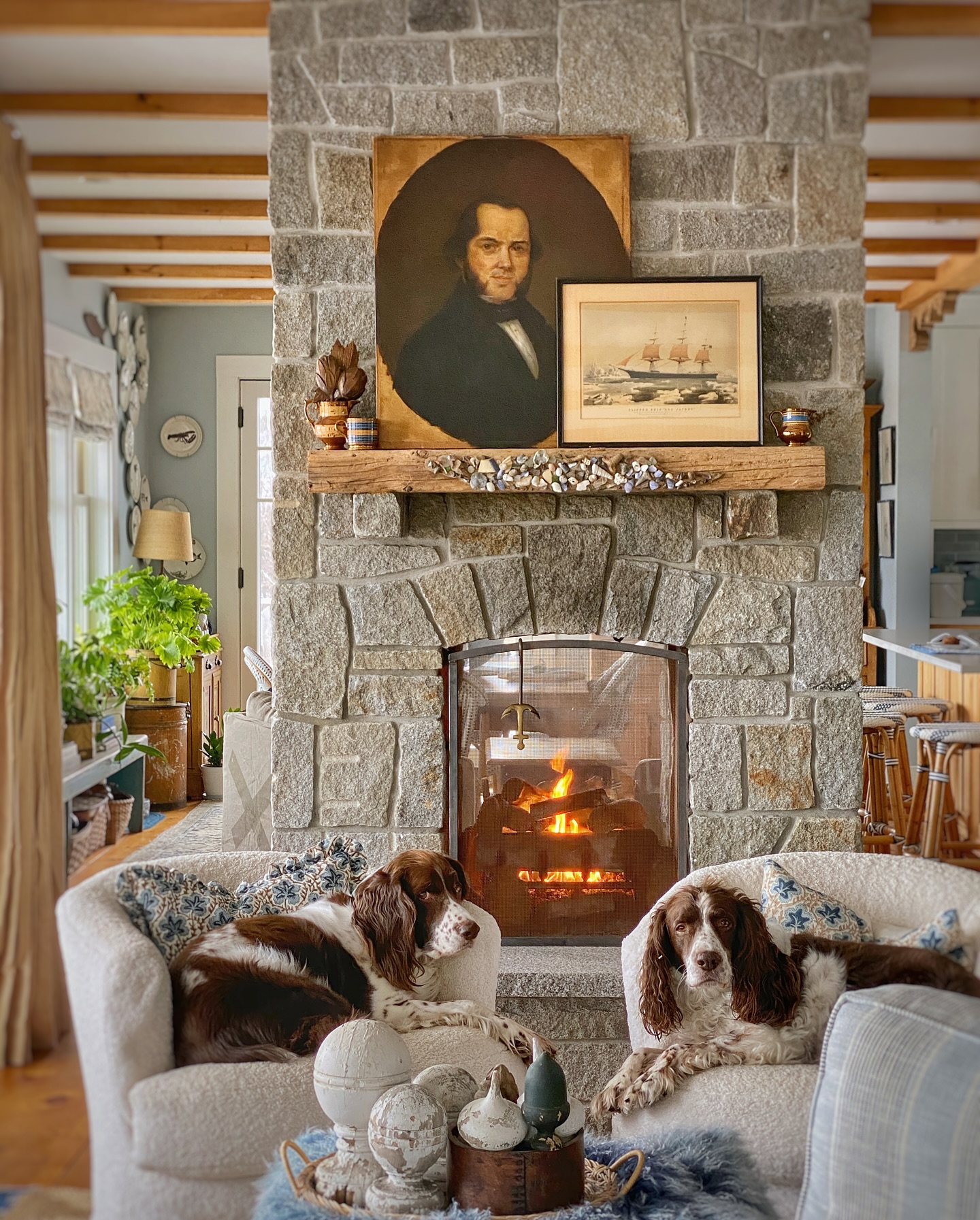
This gray stone fireplace feels personal because its mantel carries a portrait, a smaller maritime picture, and a weathered wood ledge decorated with shells. The objects introduce warm colors against the cooler masonry.
Pale rounded chairs soften the substantial chimney, and blue patterned cushions connect with the nearby room. Use this example to build a mantel around pieces you already enjoy.
Start with the largest artwork, then overlap a smaller frame to create depth without hiding everything behind it. Keep the surrounding furniture quieter so the collection can remain the focus.
Repeating a little blue in cushions or ceramics ties the display to the seating. Visible timber overhead completes the palette, giving the stone a companion with noticeable natural texture.
6. Leave a Tall Pale Chimney Visually Uncluttered
Credits: Instagram
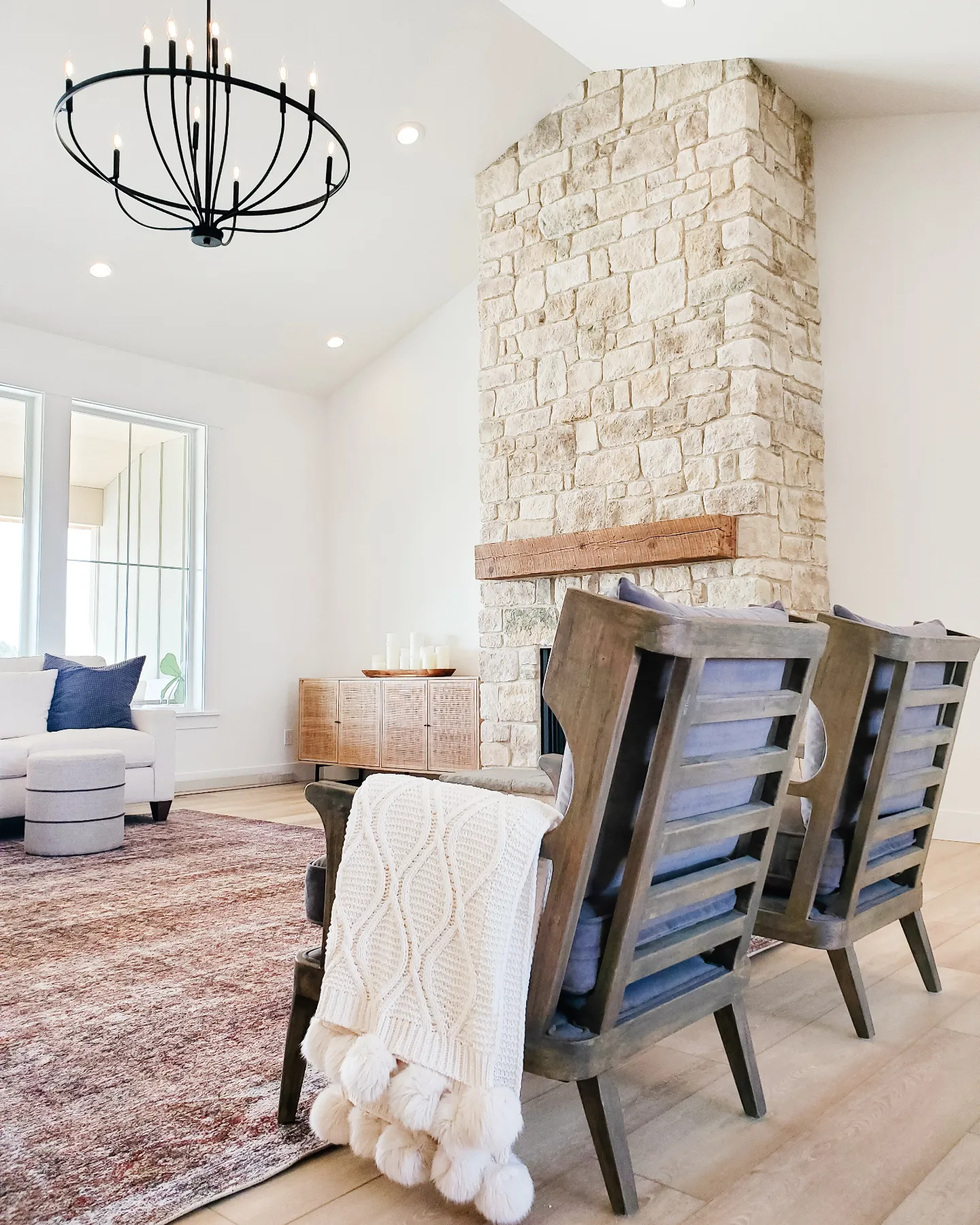
A tall pale stone chimney supplies the main decoration in this airy living room. The simple timber mantel is left bare, allowing the changing block sizes and uneven surfaces to remain visible.
Dark wood chair frames create a useful contrast without covering the whole feature. If your fireplace already reaches a high ceiling, consider whether it needs artwork at all.
Bring interest into the seating instead, using a patterned rug, textured cushions, and a soft throw. A low cabinet beside the chimney keeps the neighboring wall open and provides another warm wood surface.
The spare black chandelier echoes the chair silhouettes, while white walls and upholstery keep the composition light. Limit strong accent colors to a few smaller movable pieces.
7. Define Whitewashed Texture with Simple Black Accents
Credits: Instagram
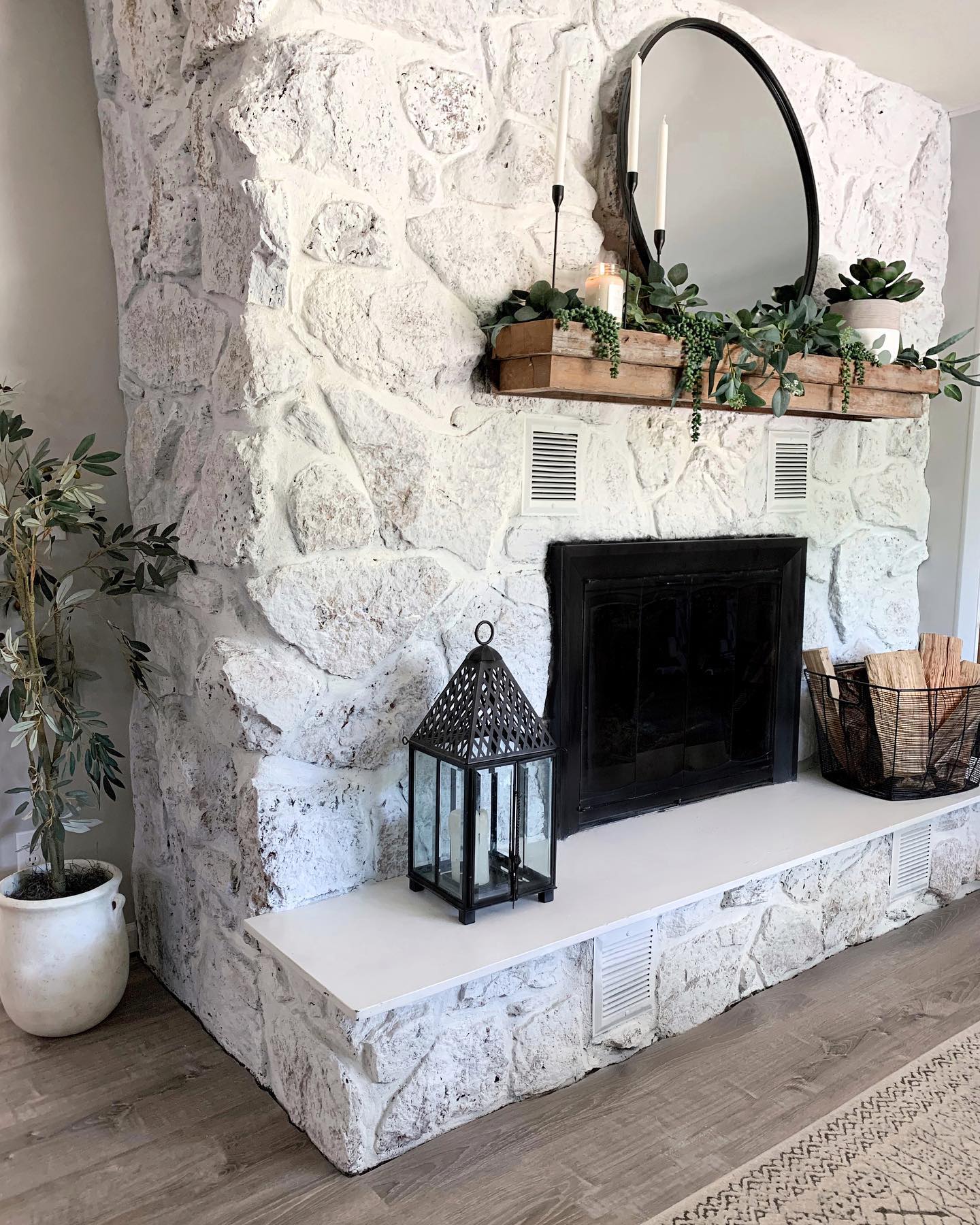
The whitewashed finish brightens this bulky stone fireplace while preserving the raised shapes and rough texture. A round black mirror gives the mantel a clear focal point, and the firebox repeats its dark outline lower down.
Wood and greenery add warmth to the otherwise pale composition. Take the styling lesson by choosing accessories that have recognizable silhouettes against busy masonry.
One rounded mirror can provide more clarity than several frames. A restrained mix of black accents elsewhere in the room will connect the display with the fireplace opening.
Keep surrounding textiles soft and neutral, then use a wood tone to bridge the stone and floor. Notice how the broad, pale hearth makes the entire structure read as one unified feature.
8. Use Paired Furnishings to Settle a Textured Wall
Credits: Instagram
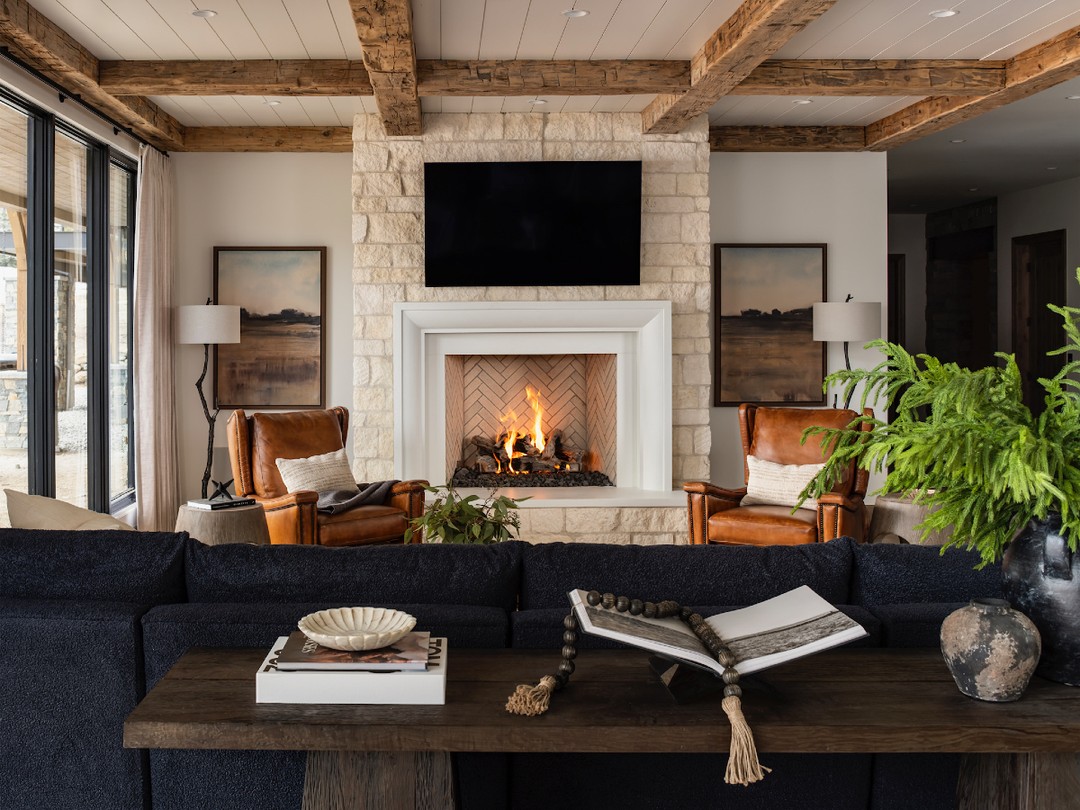
Matching leather chairs, landscape pictures, and slim lamps give this stone fireplace a calm, balanced setting. The pale surround separates the firebox from the rough blocks above, while exposed beams repeat their texture overhead.
A dark sofa creates a clear foreground and makes the lighter fireplace stand out. For a similar room, use pairs for larger furnishings and allow smaller accessories to vary.
This keeps the arrangement orderly without making every detail identical. Choose art with related colors and proportions, especially when it sits on both sides of a strong central feature.
Warm brown upholstery can connect timber beams with pale stone. The table behind the sofa adds another surface while maintaining a view across the seating toward the fireplace.
9. Keep Cabin Seating Light Around a Stone Wall

Credits: Instagram
This tall stone fireplace holds its own against a richly colored wood ceiling and substantial beams. Pale sofas keep the seating area from becoming too dark, while striped and zigzag fabrics add a livelier pattern at a smaller scale.
The stone continues beyond the central projection, giving the end of the room a textured backdrop. In a similarly wood-lined space, choose upholstery that is noticeably lighter than the walls.
Repeat a few gray or cream tones from the fireplace through cushions and rugs, then vary their patterns. A padded ottoman makes the center feel softer than another heavy wood piece would.
Simple lampshades provide quiet shapes beside the masonry, and a small floral arrangement supplies color without changing the palette.
10. Carry Stone Colors into an Adjoining Sitting Area
Credits: Instagram
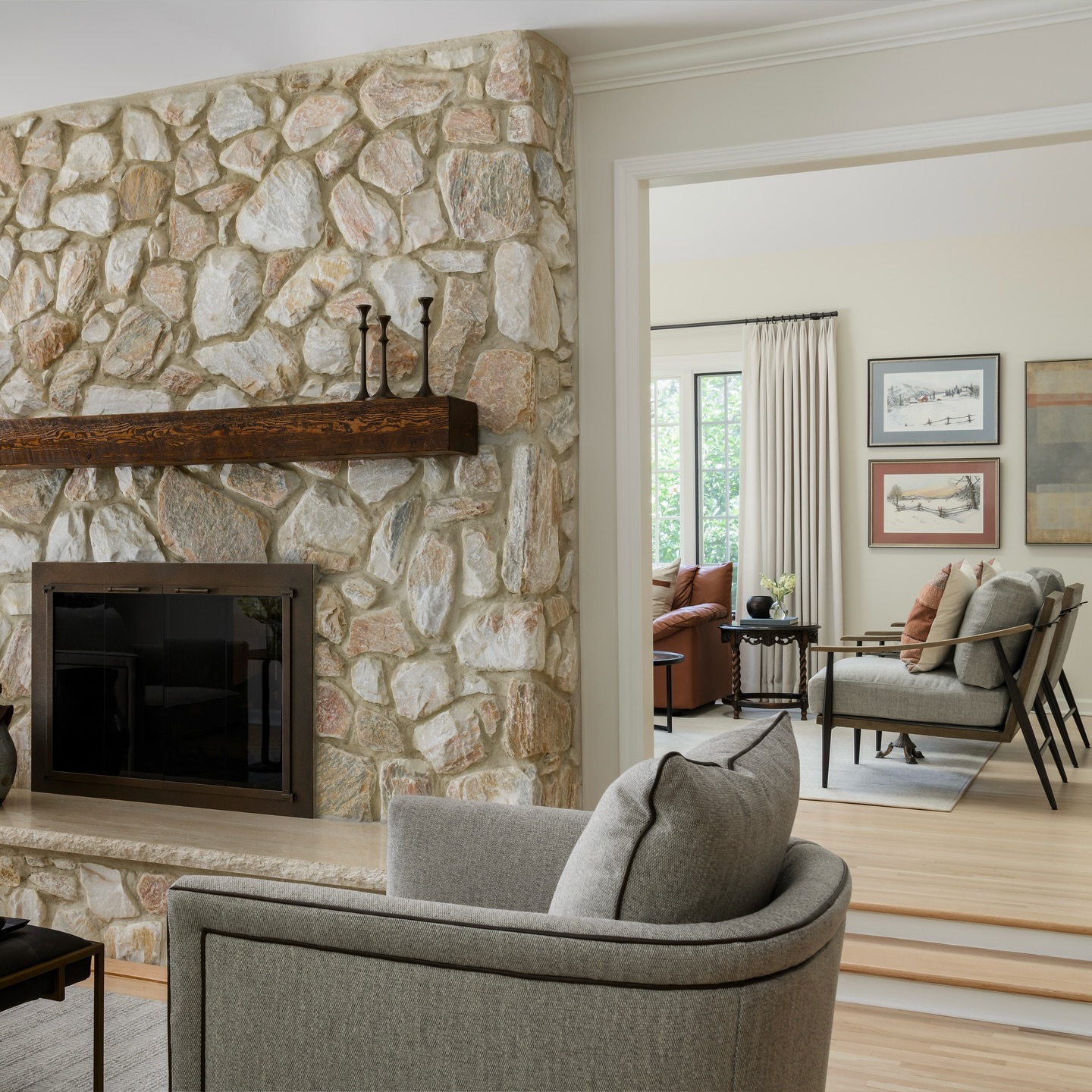
The pale, irregular stone in this fireplace includes warm cream, gray, and muted pink tones. Those colors reappear in the surrounding chairs and the artwork beyond the wide doorway.
A dark timber mantel gives the textured wall one horizontal line. This is a useful reference when two sitting areas are visible at once.
Choose a shared group of colors, then vary furniture shapes so each area retains its own purpose. Here, a rounded upholstered chair contrasts with the open wood frames in the adjoining room.
Keep the mantel display spare when there is already artwork nearby. The trio of candlesticks adds height without competing with that neighboring collection, allowing the stone and the view through the doorway to stay prominent.
11. Keep a Pale Stone Wall Calm with Tonal Furniture

Credits: Instagram
The large pale stones in this fireplace are separated by bright joints, creating a soft pattern that fills the wall. A narrow black firebox provides the main contrast, while the projecting hearth adds a clean horizontal line.
The nearby sofa, rug, tables, and pottery stay within a related range of whites and warm grays. To build a similarly quiet scheme, compare your fabrics beside the existing stone and choose tones that share its warmth.
Vary the shapes and textures so the room still has interest. A slim open table feels lighter than another solid block beside substantial masonry.
Small woven baskets introduce a warmer note, demonstrating how a modest amount of natural texture can give a pale room more depth.
12. Bring Pink Accents to Warm Stone and Timber
Credits: Instagram
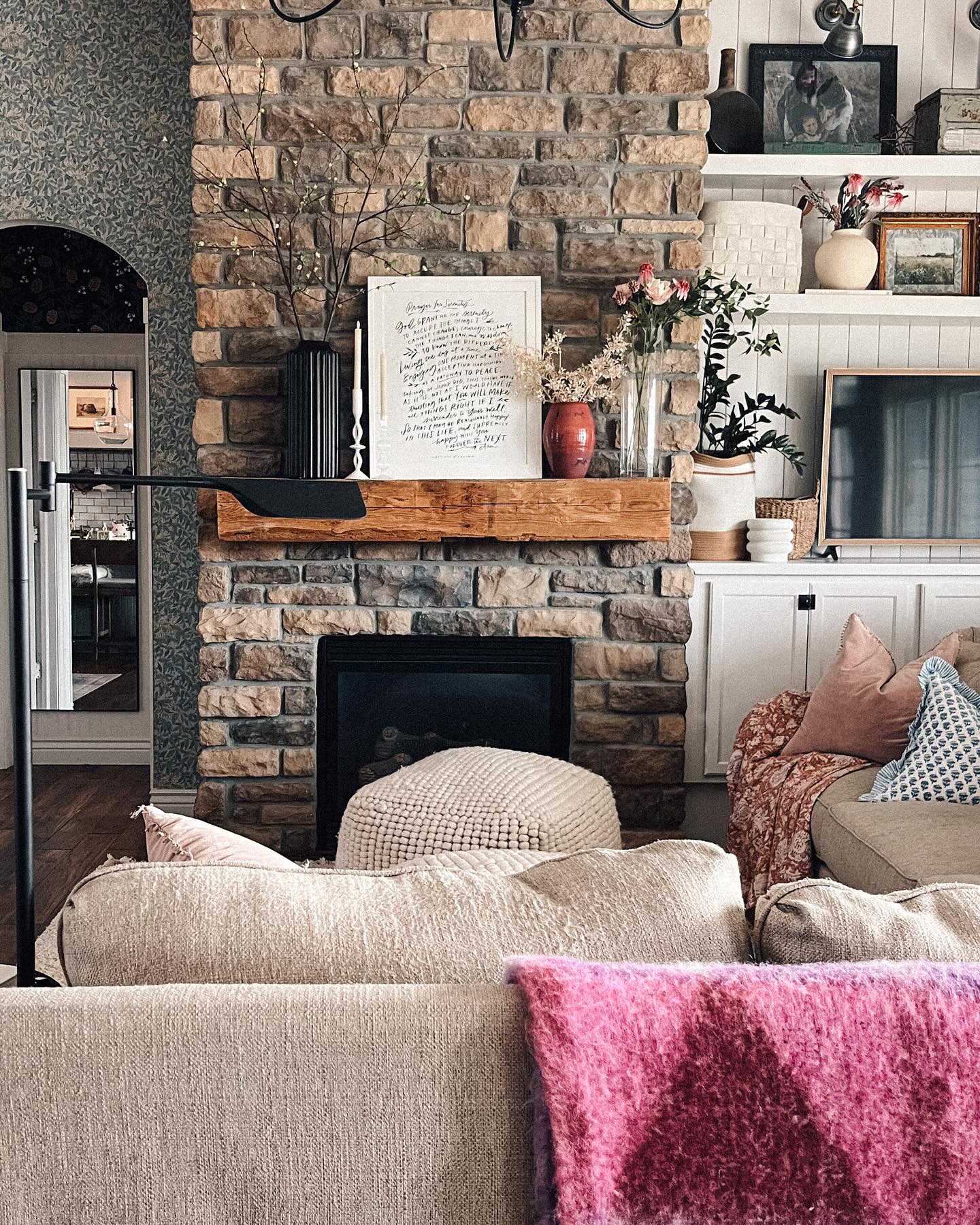
Pink cushions, a throw, and flowers give this rustic stone fireplace a playful setting. The chunky timber mantel relates to the warmer blocks, while white cabinetry creates a cleaner background for the surrounding collection.
Dark vases and frames echo the firebox, helping the many smaller objects feel connected. If your stone includes brown and peach tones, try a muted pink textile beside it before choosing a larger accent piece.
Mix that color with cream and a little dark contrast. The mantel arrangement combines one substantial frame with taller branches and smaller vessels, offering varied heights without covering the entire chimney.
Keep the soft furnishings comfortable and layered so the strong stone texture becomes part of an inviting everyday living space.
13. Give Oversized Stones a Quiet Neutral Setting
Credits: Instagram
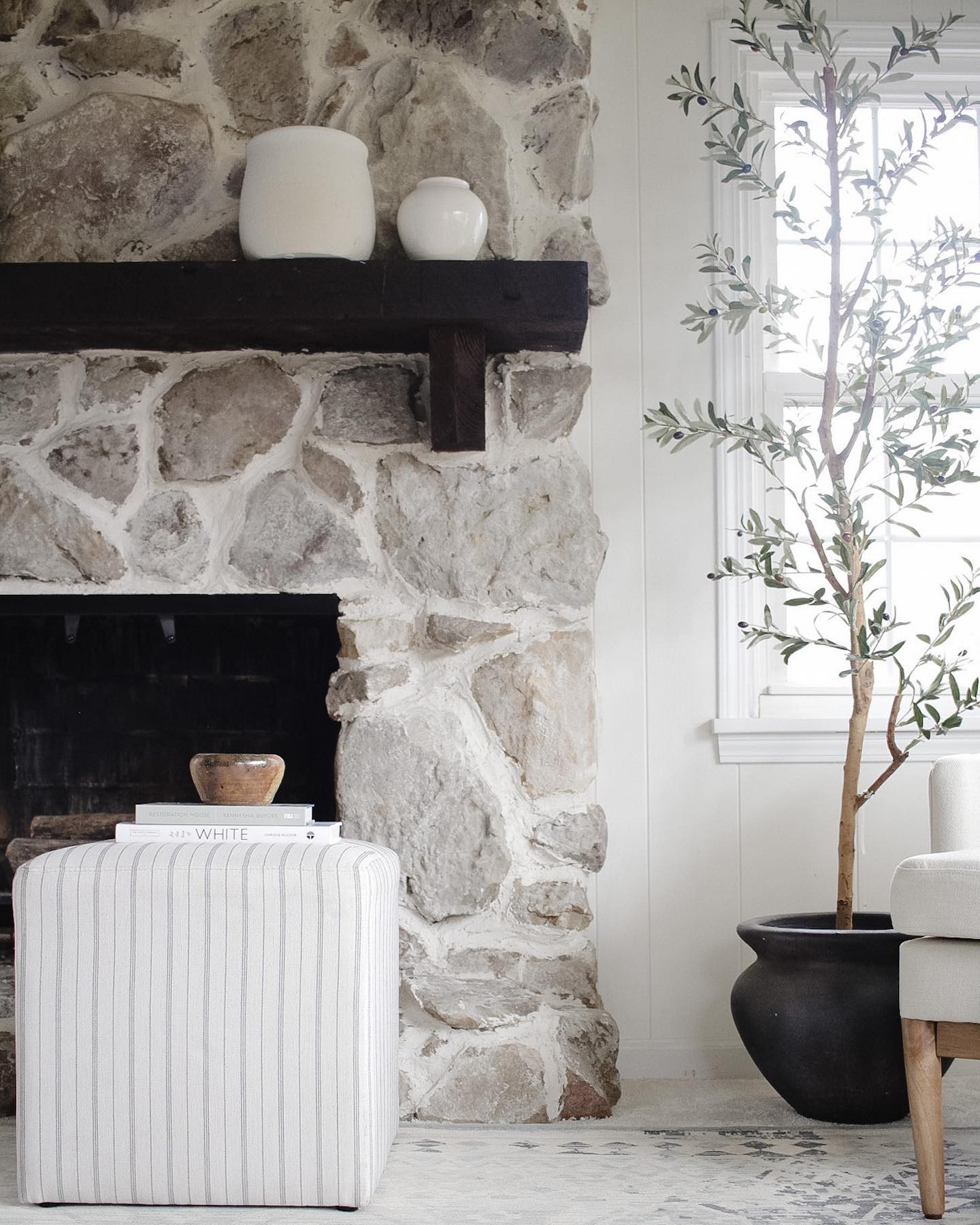
Rounded stones and broad pale joints make this fireplace feel substantial, even in a close view. A dark timber mantel introduces a firm horizontal line, while two white vessels keep the display simple.
The nearby striped ottoman adds a finer pattern that does not compete with the masonry. For a room with similarly prominent stonework, focus on differences in scale.
Choose small patterns for textiles and uncomplicated silhouettes for accessories. A single tall plant can fill an adjacent corner with a lighter, more open shape.
Repeat the mantel's dark color in one other item, such as a planter, to connect the feature to its surroundings. Pale upholstery and a softly patterned rug give the eye a restful place to settle.
14. Combine an Unadorned Stone Wall with Collected Chairs

Credits: Instagram
An uninterrupted wall of irregular stone gives this small sitting area its character. Without a mantel display, the changing shapes and colors become the decoration.
Different chairs bring a collected feeling, from the airy curved frame at the right to the simpler wood chair opposite. A low painted chest serves as the center table and introduces another gently worn surface.
Try mixing seating styles when the fireplace already provides a unified backdrop. Keep their colors related through pale wood, warm gray, and soft cream.
The white ceiling and light floor make the heavier stone feel more spacious. A few small plants add life without demanding another dominant color, while simple cushions and throws soften the varied seating around the room.
15. Echo Cool Gray Stone with Layers of Blue

Credits: Instagram
Cool gray stone rises in a tapered column above this fireplace, giving the room a vertical feature. Blue seating, cushions, artwork, and a striped rug spread that cooler palette throughout the space.
The broad timber mantel introduces a warm interruption, keeping the room from feeling entirely gray and blue. Use several shades of one accent color when you want variety without a busy palette.
Here, deep navy sits comfortably beside lighter blues because the walls and smaller accessories remain pale. Small white vases form a delicate line across the mantel instead of competing with the chimney's height.
A leafy plant brings another natural shape beside the tall windows, and soft throws balance the hard edges of the stone and wood.
16. Surround Dark Stone with Muted Green and Artwork
Credits: Instagram
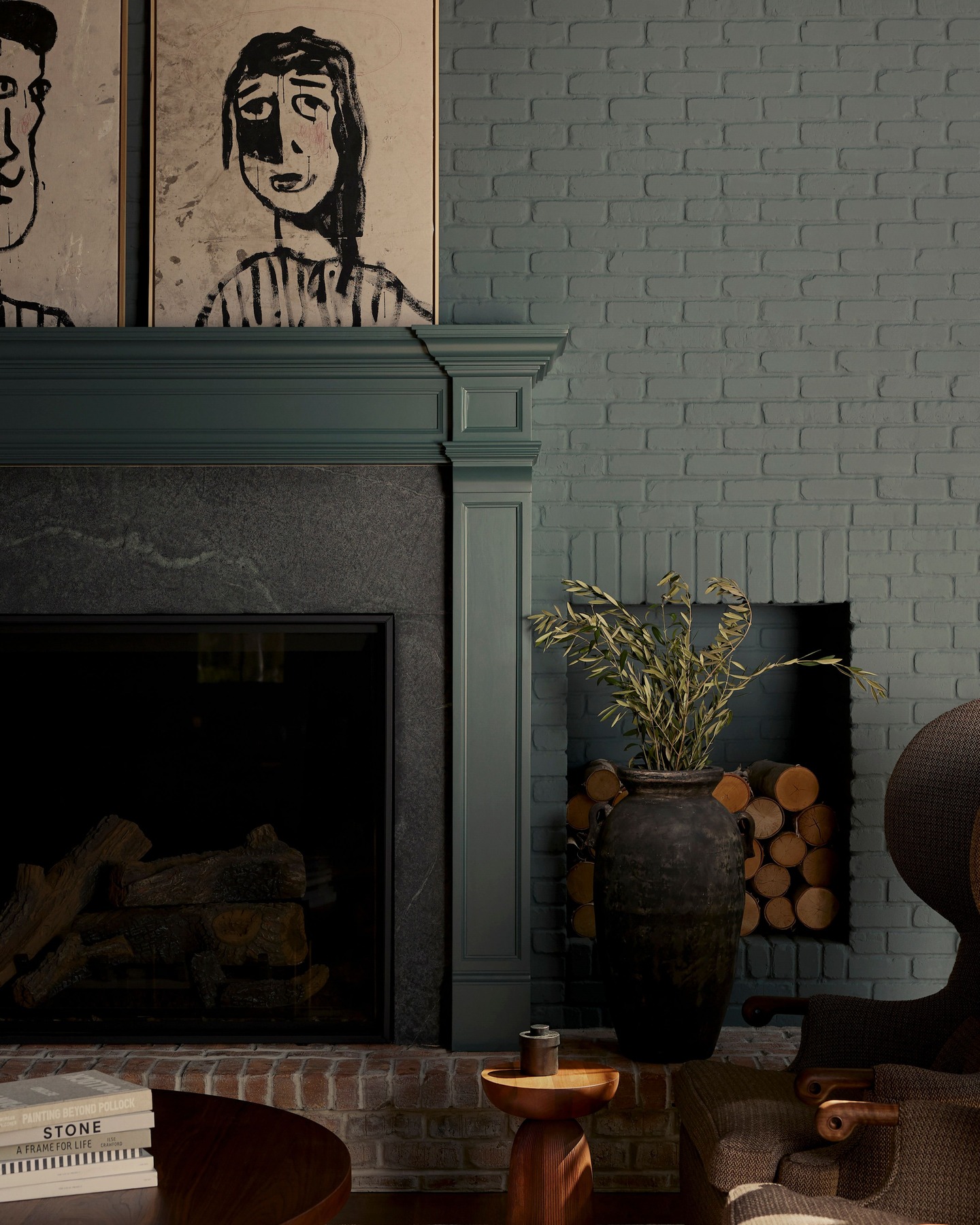
A smooth dark stone frame gives this fireplace a different character from a rugged masonry chimney. Its subtle veining sits inside a detailed green mantel, with painted brick extending the color across the wall.
Large portraits bring expressive lines above the quieter materials. If you prefer a moodier room, use a muted wall color that relates to the stone instead of introducing a sharp contrast.
Then choose artwork with enough light areas to remain visible against that background. Warm wood tables and the brown upholstery keep the palette varied.
A substantial vase provides a simple curved shape beside the rectangular fireplace, while accessories stay low. This restrained mix lets the finish of each material become part of the overall decoration.
17. Contrast Gray Stone with an Industrial Mantel Shape

Credits: Instagram
The dark mantel across this gray stone fireplace has the clear outline of a structural beam, complete with small visible fasteners. That straight line contrasts with the irregular masonry and repeats the dark border around the firebox.
White window trim and pale flooring brighten the setting without reducing the fireplace's presence. To borrow the composition, keep nearby furniture straightforward and avoid competing decorative patterns.
A brown leather seat introduces warmth that suits the earthy stone, while a simple floral arrangement softens the foreground. The bare mantel also shows how much impact a distinctive shape can have on its own.
Repeat dark metal in a few small accessories, then let the changing sizes and shades of the stones provide the detail.
18. Pick Accent Colors from Warm Stone Undertones
Credits: Instagram
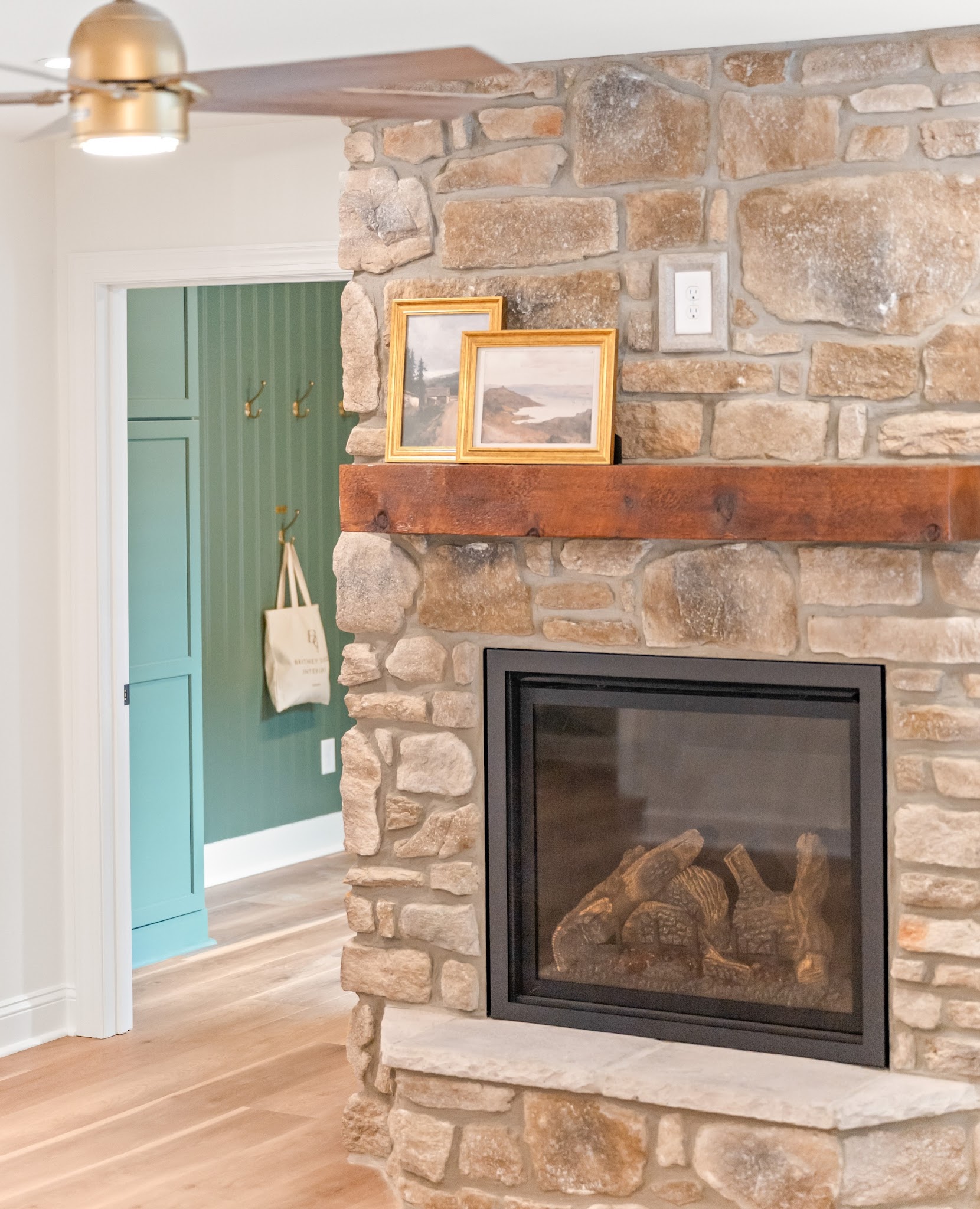
Warm sandy stone and a reddish timber mantel establish an inviting palette in this fireplace detail. Through the doorway, green cabinetry adds a cooler accent that still feels connected to the natural materials.
Two small gold frames sit neatly together on the mantel, leaving the shelf and masonry visible. This is an approachable idea when your fireplace adjoins another functional area.
Choose a paint color that complements the stone, then repeat one small finish across both spaces. Here, the gold picture frames relate to the hooks beyond the doorway.
A simple arrangement of overlapping art gives the mantel character without requiring a large collection. Light floors and white trim finish the composition, helping the warmer textures remain distinct and welcoming.
19. Connect a Cabin Fireplace with Its Timber Surroundings
Credits: Instagram
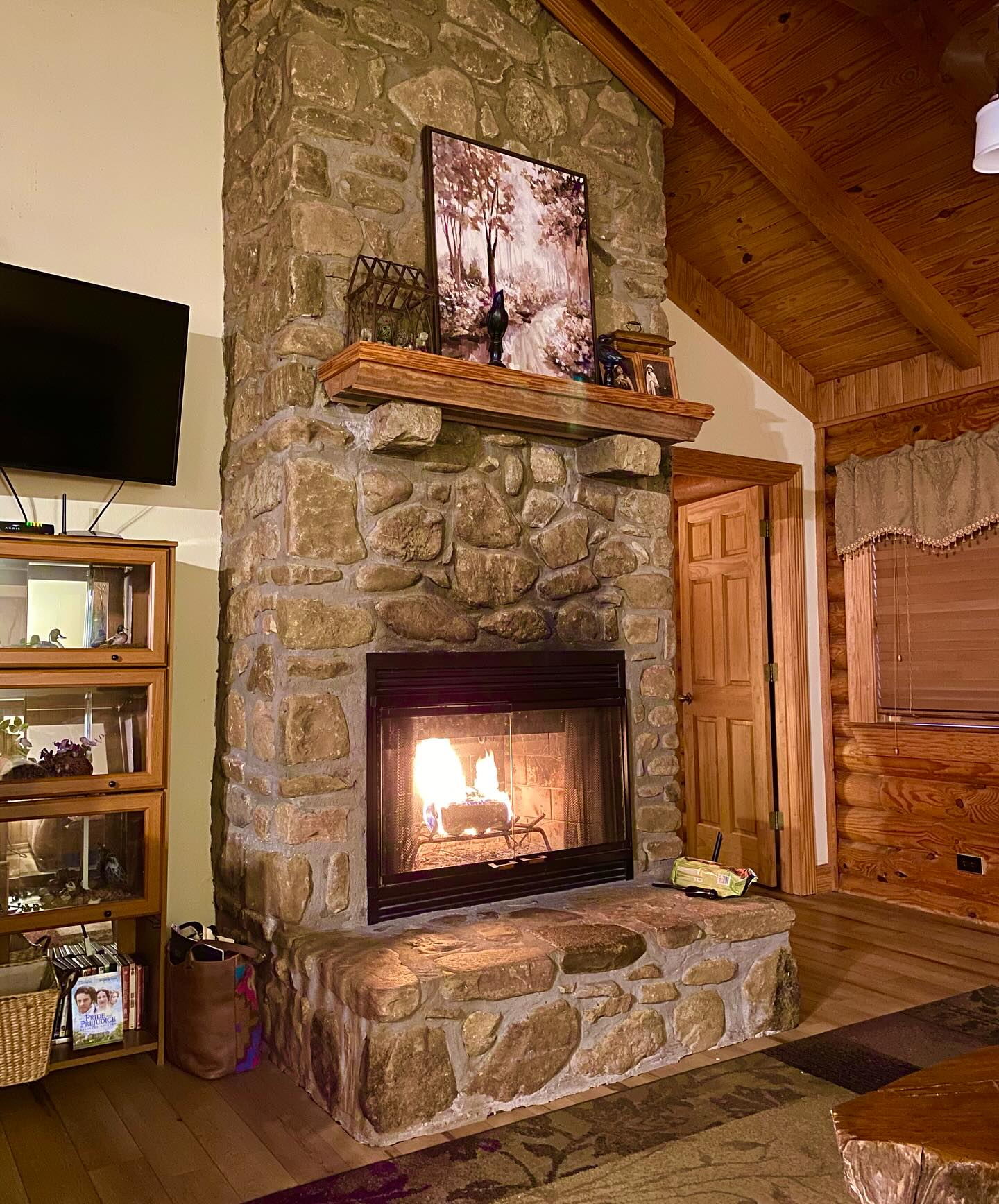
Rounded stones, broad joints, and a raised hearth give this cabin fireplace a substantial presence. The wood mantel picks up the color of the ceiling, door, and nearby cabinetry, linking the chimney to its surroundings.
A large woodland picture adds a focal point above the shelf. In a room with several strong natural materials, repeat a few existing colors instead of introducing an unrelated palette.
Choose art whose browns, greens, or soft pinks relate to the stone and timber. Keep smaller objects grouped so the mantel still reads as a continuous line.
Pale wall areas provide a useful break between the darker surfaces, showing how even a rustic room benefits from simple, quiet spaces around its most detailed architectural features.
20. Let a Carved Stone Fireplace Lead a Formal Room
Credits: Instagram
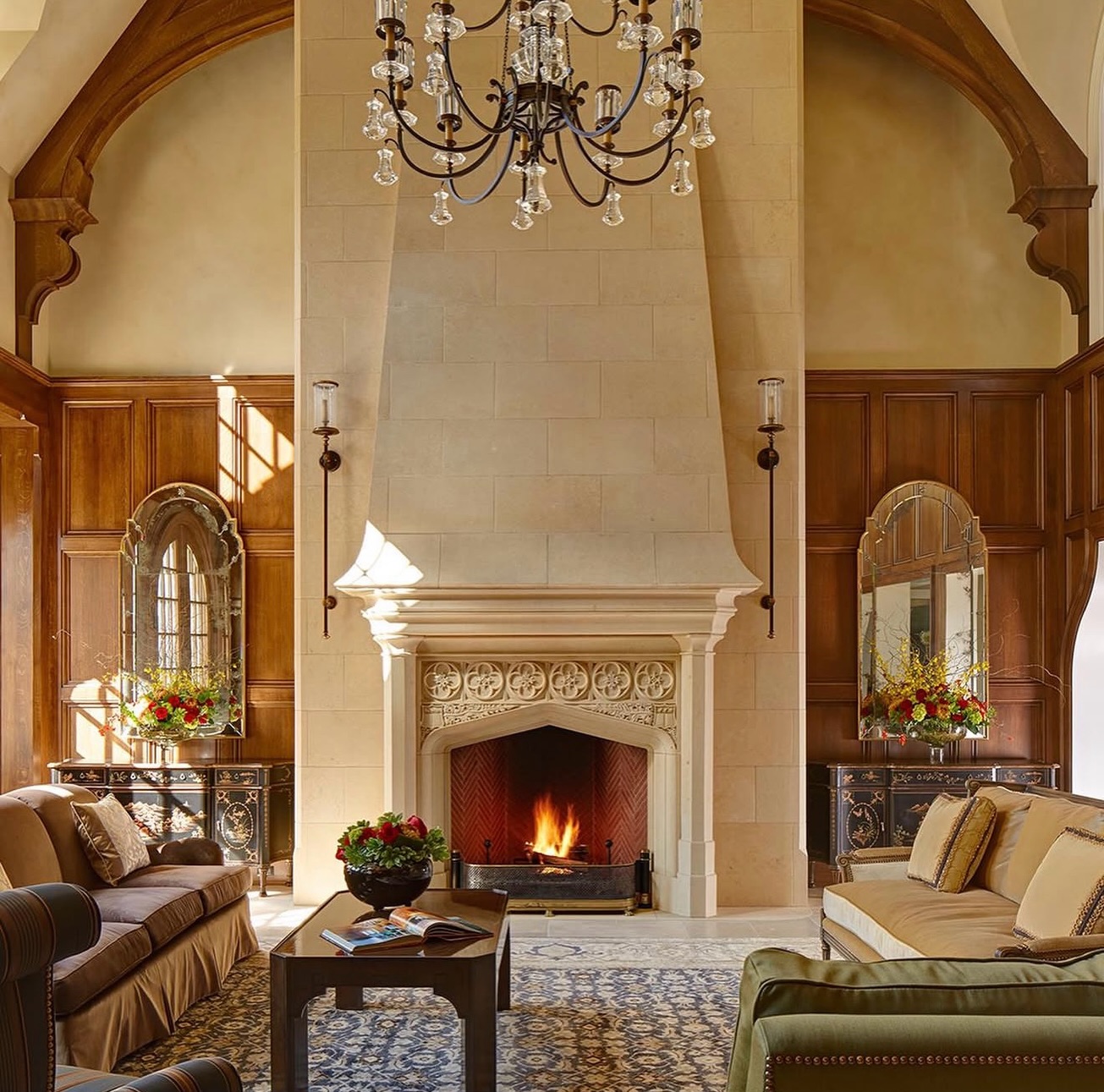
This pale fireplace rises well above its carved opening, creating a tall focal point against warm wood paneling. The smooth upper section gives the detailed carving space to stand out.
Paired mirrors and cabinets reinforce the room's symmetry, while facing sofas make the arrangement feel sociable. If your fireplace has decorative carving, resist the urge to cover its mantel with a large collection.
Give the surrounding furniture a relationship to its centerline and let the architecture provide the ornament. Here, muted upholstery leaves room for patterned rugs, flowers, and reflective glass.
Green seating introduces a color change within the warm palette. A lower coffee table keeps the view toward the hearth open, preserving the fireplace's role in the seating area.