
A bedroom can feel calm without becoming flat when color is balanced by texture and contrast.
Sage Green And Grey Bedroom Ideas show how quilted bedding, curtains, and charcoal accents can give the palette depth while keeping the overall look restful.
The examples also bring in smaller touches, from pink artwork and pillows to patterned drawer fronts, so the room needn’t rely on two colors alone.
Use the combinations as a starting point, and compare paint and fabric samples in different light before settling on shades.
Gray Quilting Against Deep Sage Walls
Credits: Instagram
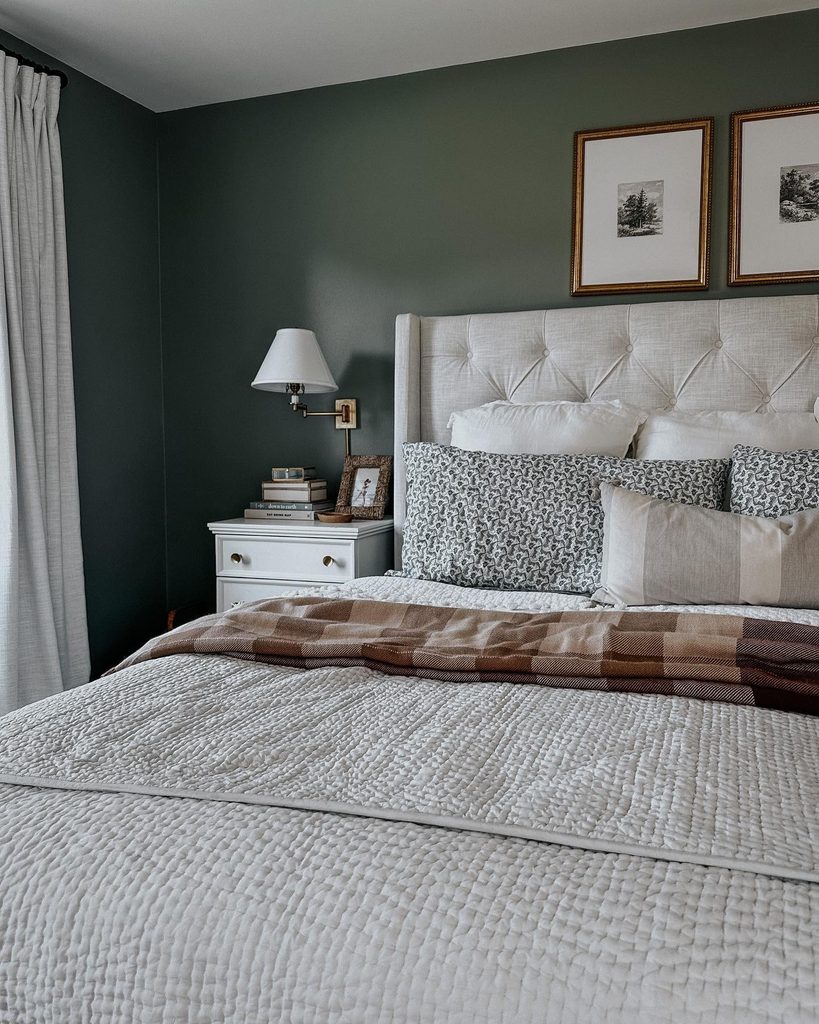
Texture carries much of the interest in Amanda Coakley’s bedroom, where a light gray quilt sits against deep sage walls. Its stitched surface catches light differently from the smoother headboard and curtains, keeping the restrained palette from feeling flat.
A plaid throw introduces a warmer note without replacing either main color. Start with one gray coverlet, then compare green paint samples beside it in daylight and under your lamps.
This matters because a gray fabric can lean blue, brown, or silver depending on its surroundings. Keep the remaining patterns smaller than the quilt’s overall field, as the printed pillows demonstrate here.
Fold seasonal throws across the foot so changing an accent does not require replacing the whole coordinated bedding scheme.
Gray Curtains Beside a Sage Accent Wall
Credits: Instagram
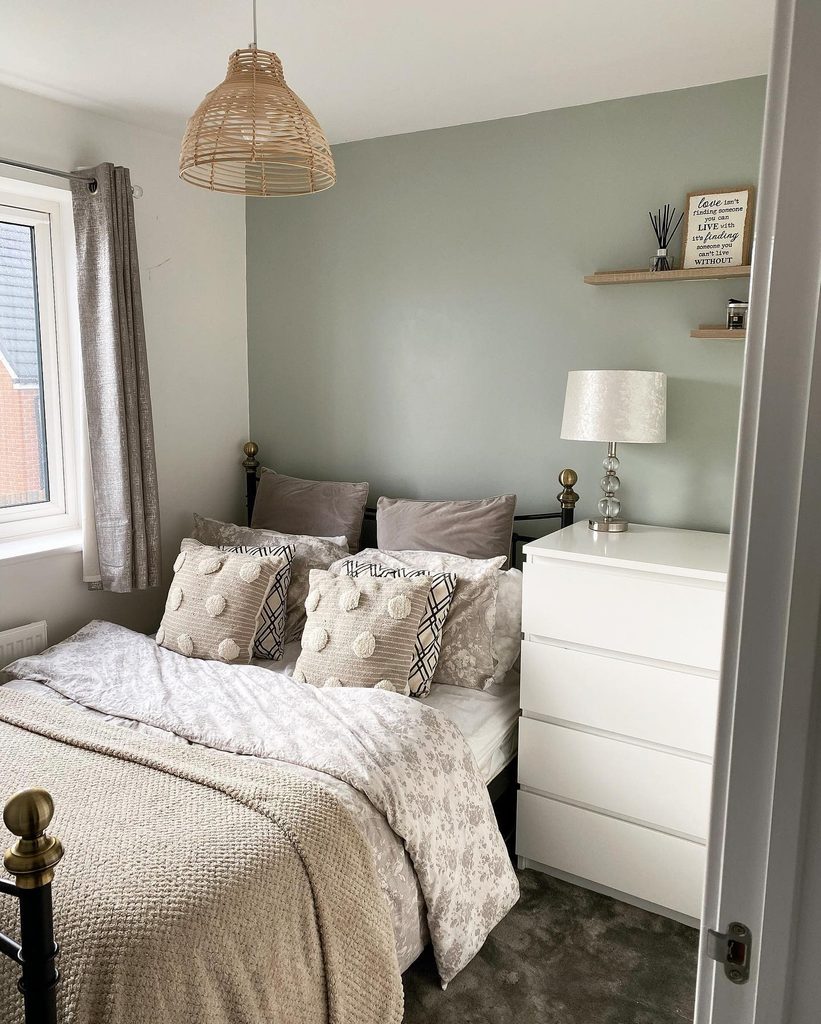
Window-length gray curtains make the window part of this bedroom’s sage and gray palette. Their gathered fabric panels repeat the neutral tones in the patterned duvet and carpet, while the green wall gives the black metal bed a softer background.
Try coordinating window coverings with something you already own rather than buying an entirely matching room. Hold a curtain sample beside the bedding, then check both in daylight and lamplight.
Leave enough space beside the window for the fabric to gather without covering more glass than necessary. A simple rod keeps attention on the color relationship.
If the curtains need to block light, compare lining options before purchase; decorative fabric alone may not provide the darkness you prefer for sleeping.
A Charcoal Pendant Above Sage Paneling
Credits: Instagram
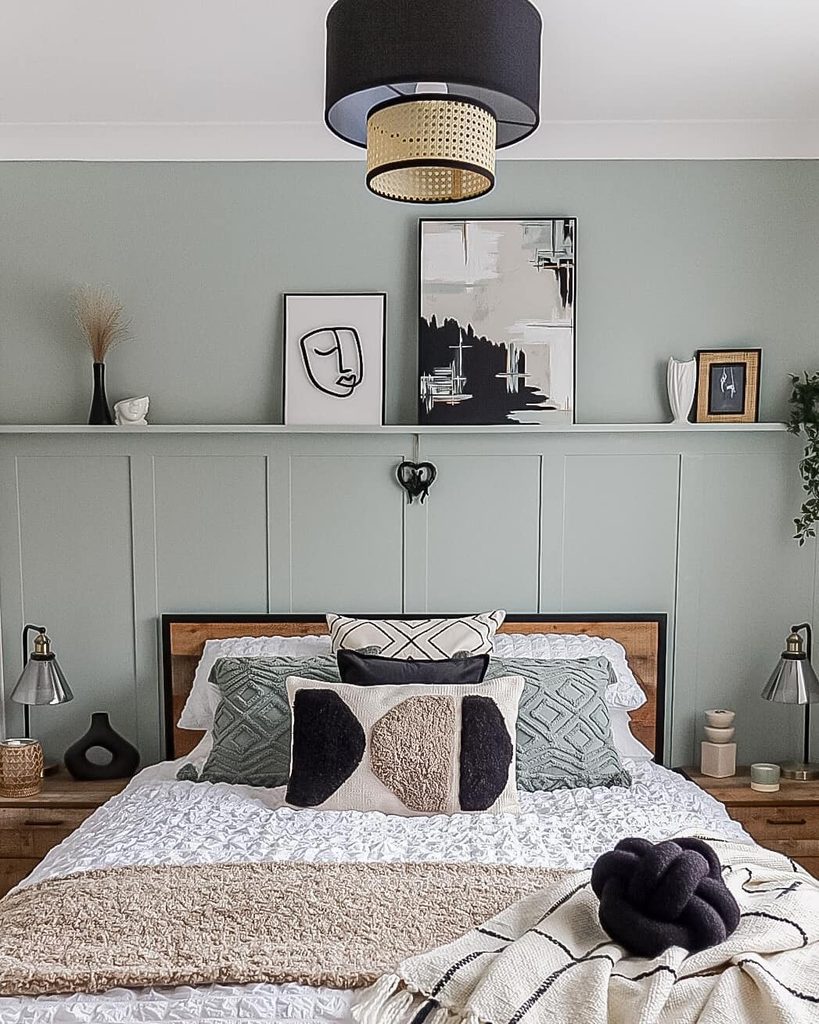
Overhead contrast gives Carly’s bedroom a useful finishing point. The dark drum pendant brings a charcoal accent above the sage paneling, echoing smaller dark lines in the artwork and patterned pillows.
Its woven inner section introduces warmth without requiring another strong paint color. This is a good way to connect gray accessories when most of your furniture and bedding remain pale.
Choose a shade with proportions that suit both the room and the ceiling height, checking clearance rather than judging it from a product photograph.
Consider where its light will fall, too: a decorative shade does not replace a comfortable reading lamp. Keep the surrounding ceiling simple so the fixture’s outline can be appreciated against the quieter green wall below.
A Monochrome Dresser Against Sage Walls
Credits: Instagram
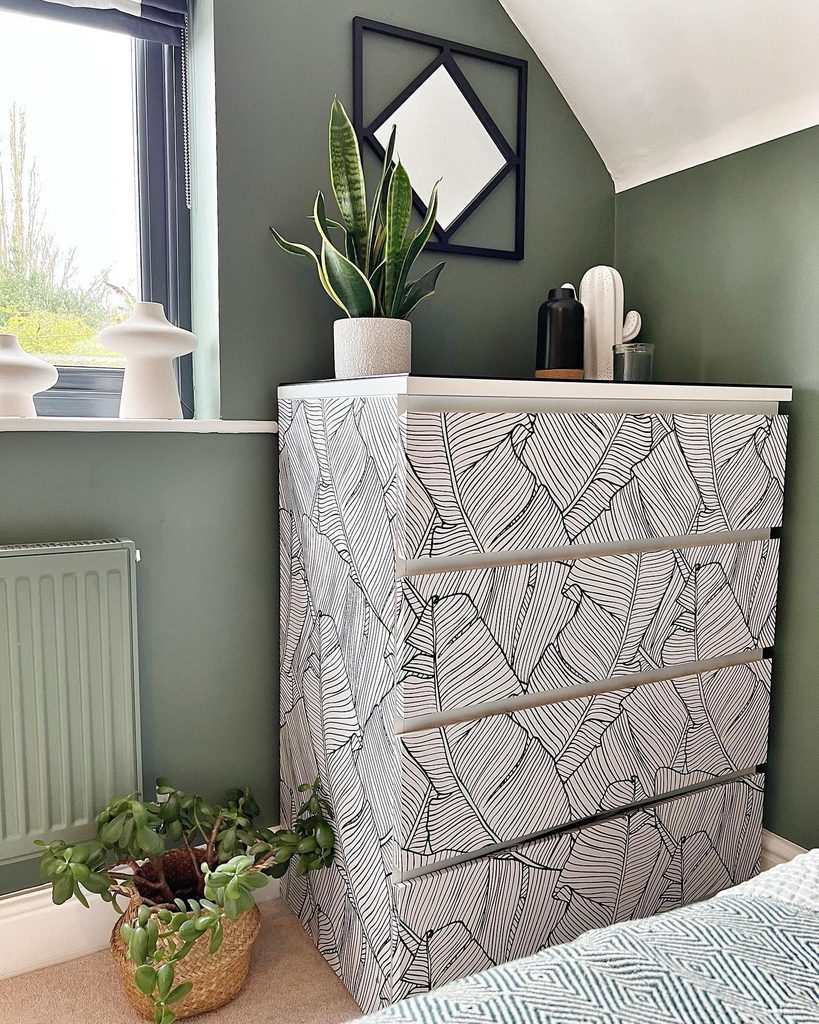
Patterned drawer fronts give Claire Champion’s sage bedroom a practical focal point. Black leaf outlines cross a pale background, creating a gray impression from a distance that relates to the patterned bedding nearby.
The dresser keeps its simple rectangular shape, so the decoration does not compete with the sloping ceiling. Claire used leftover wallpaper to refresh this existing piece.
For your own project, inspect the furniture’s finish and choose preparation and adhesive suitable for that surface. Plan the pattern across all drawers before attaching anything, checking that openings and edges remain clear.
A small sample helps test durability first. Keep the objects on top restrained; the repeated leaves already provide plenty of detail beside the green walls and plain window.
A Picture Ledge With Pink Accents
Credits: Instagram
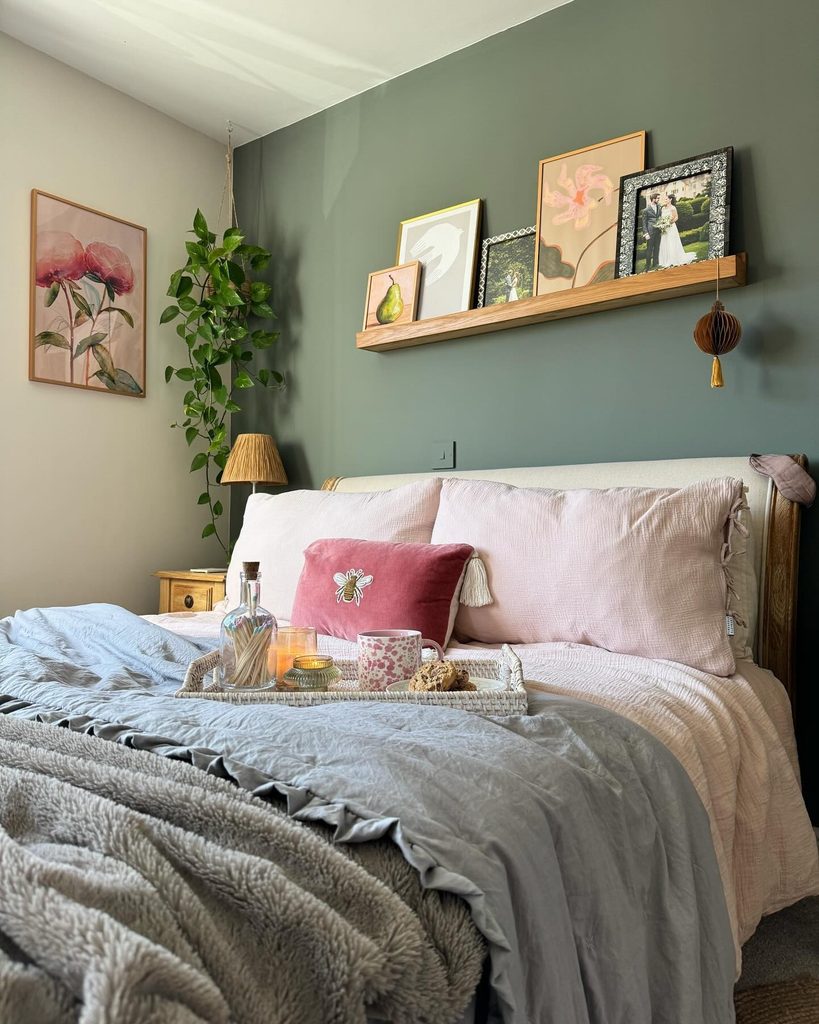
Art introduces a third color gently in Tamzin McGillen’s bedroom. Pink prints rest on a picture ledge against the sage wall, connecting with pink pillows below, while a gray textured throw keeps the bedding grounded.
The narrow ledge makes the display feel like one arrangement even though the pictures differ. To adapt this idea, choose artwork that repeats an existing accent rather than adding several unrelated colors.
Set larger frames behind smaller ones, checking that each remains securely supported. Leave some empty ledge visible so the grouping does not become a crowded shelf.
Gray bedding can then serve as the steady background for changing prints or pillow covers. Keep trailing greenery clear of lamps and any frames it might disturb.
An Open Spindle Bed Against Tall Sage Paneling
Credits: Instagram
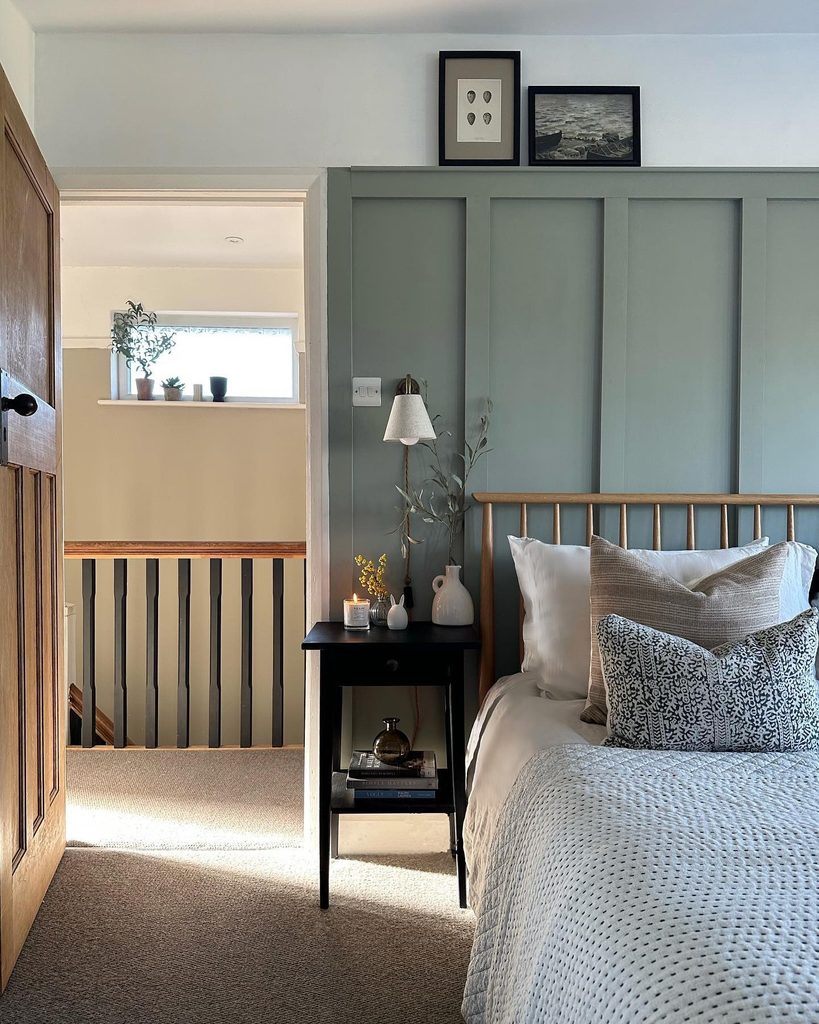
Slender rails allow Charlie Galsworthy’s sage paneling to remain visible behind the bed. That transparency matters: a solid headboard would hide much of the tall painted treatment.
A gray coverlet supplies a quiet counterpoint to the wood frame, with smaller gray patterns near the pillows. When combining a decorative wall with a bed, consider how much of each you want to see before buying either.
Measure the headboard against the proposed panel height, including pillows that will sit in front. A simple wall light and narrow bedside table keep the view uncluttered here.
You could repeat this approach with another open frame, provided its proportions suit your mattress and its open construction works comfortably with your preferred everyday pillow arrangement.
An Exposed Beam Above Sage and Gray
Credits: Instagram
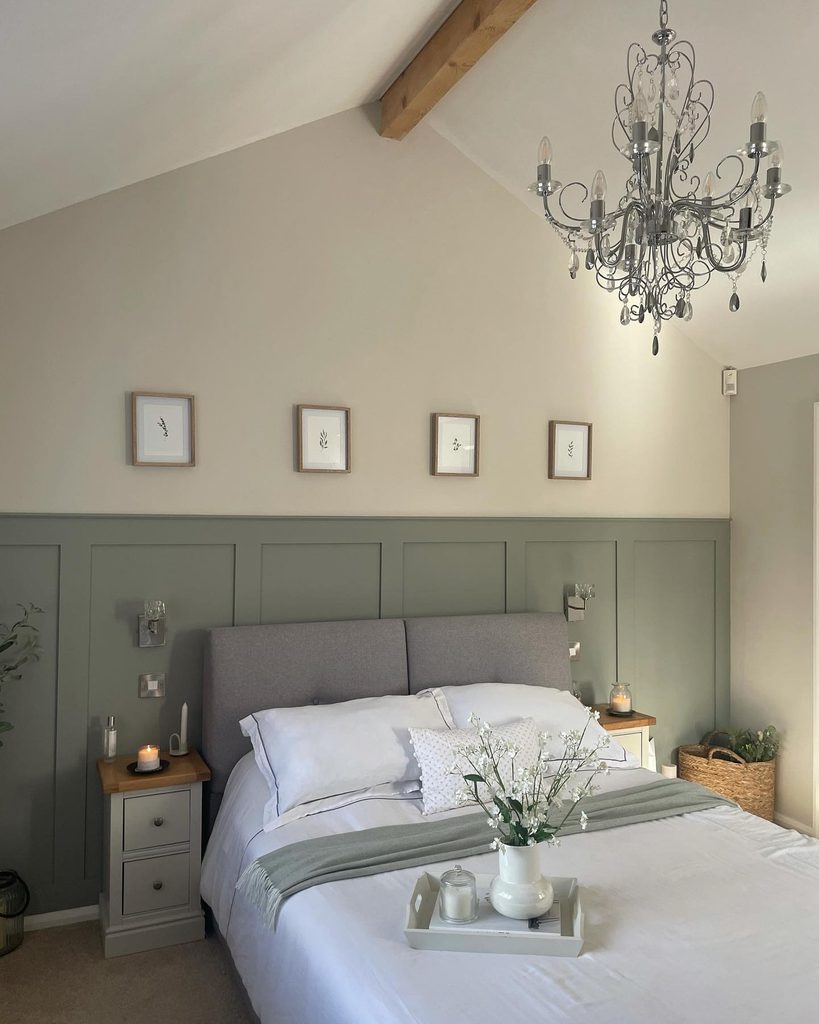
Natural timber brings architectural warmth to Sam’s bedroom above its softly coordinated sage paneling and gray furnishings. The sloping white ceiling stays light, while half-height green paneling brings color down to the gray upholstered headboard and bedside cabinet.
That division lets the beam retain its character without making every surface compete. If your bedroom already has structural timber, build the palette around its existing finish before choosing additional wood furniture.
Gray fabric offers a quieter neighbor, and sage provides color without demanding a busy wall treatment. Keep decorative lighting proportional to the available height and maintain comfortable clearance around the bed.
Any changes to structural elements need appropriate professional advice; preserving a visible feature can be enough for this approach.
A Sage Throw on a Rustic Bedroom Bench
Credits: Instagram
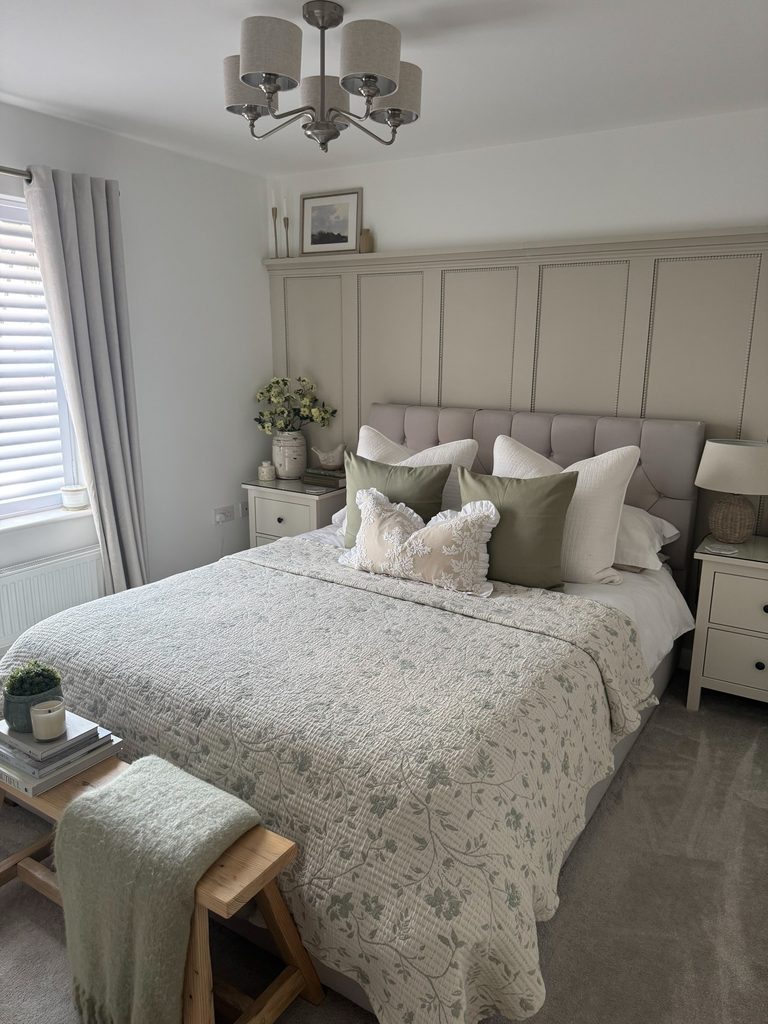
A rustic bench gives sage textiles somewhere to land beyond the mattress. In Kylie Beckingham-Baird’s bedroom, the green throw drapes across its wooden seat, bringing color forward from the botanical bedding toward the surrounding gray carpet.
The tufted gray headboard and curtains keep the larger surfaces coordinated without requiring green walls. Before adding a bench, mark its footprint and walk around the bed to check the remaining passage.
Choose a sturdy piece at a comfortable sitting height, then keep enough of the seat clear for everyday use. One throw can soften rougher-looking wood while remaining easy to move.
This arrangement also gives the room a changeable accent: switch the textile when needed while keeping the substantial gray furnishings in place.
A Sage Daybed Room With Gray Flooring
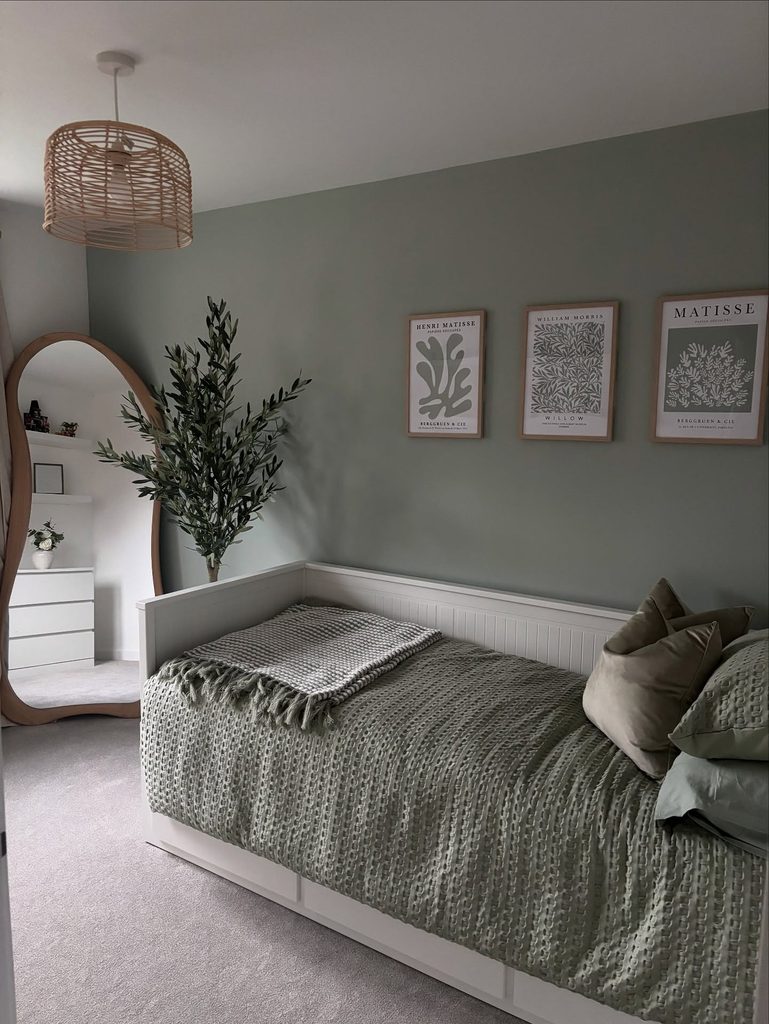
Credits: Instagram
Guest rooms can leave more open floor space when the bed follows a wall instead of projecting into the middle. Lauren’s white daybed sits against sage paint, with textured green bedding above a light gray carpet.
A folded checked throw adds another gray detail without competing with the larger surfaces. This arrangement is useful when the room serves occasional overnight visitors and needs flexibility between stays.
Check the mattress dimensions and access along its open side before choosing a frame. If you prefer a model with drawers or an extending base, measure their operating space separately.
Keep nearby furniture narrow enough for comfortable movement. Secure a tall mirror appropriately, and use pillows that can be removed easily when guests arrive.
A Charcoal Rug Beneath Soft Sage Walls
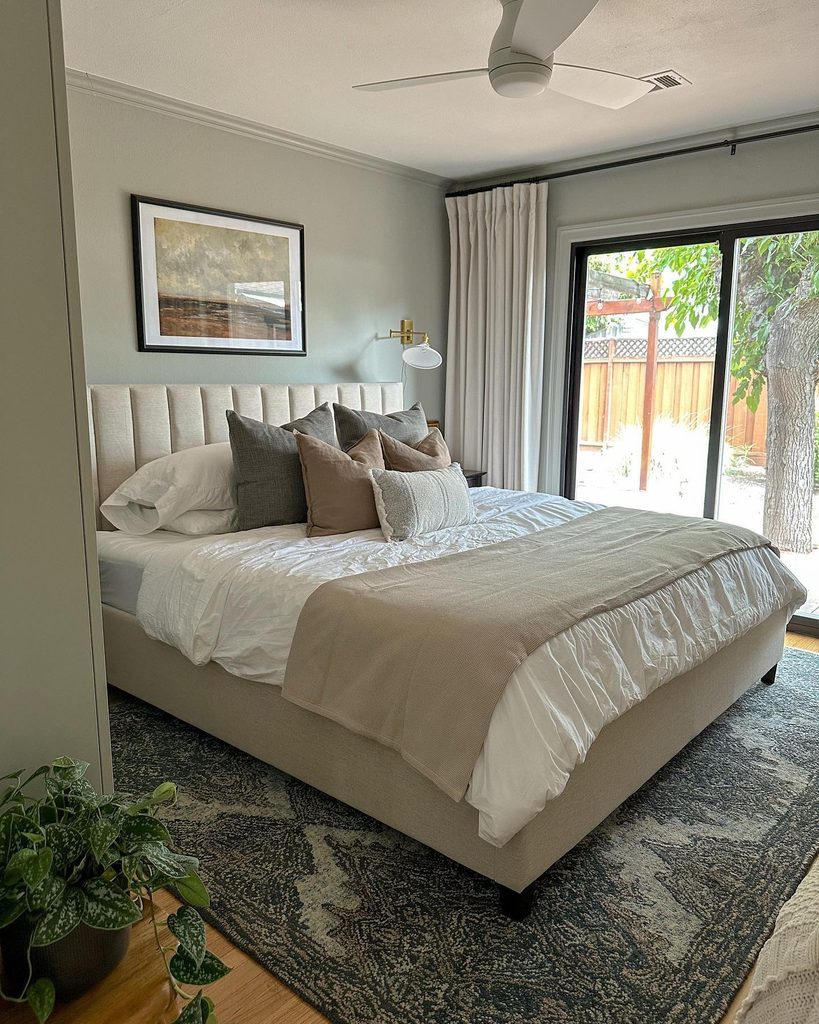
Credits: Instagram
Rebecca Rajs uses a dark rug to anchor a bedroom filled with pale sage walls and white bedding. Charcoal pillows repeat the rug’s depth near the headboard, so the darker color appears deliberately distributed.
Warm wood and neutral textiles soften the contrast, making the gray and green feel welcoming. When choosing a rug, think about the portions that will remain visible around the bed after it is positioned.
A strong border of color can be more useful than an elaborate center that disappears beneath furniture. Take home samples when possible and view them beside both the wall and your existing floor.
Keep the bed’s lighter layers simple enough that the contrast between sage, gray, and white stays easy to appreciate.
A Sage Accent Wall With Gray Textured Pillows
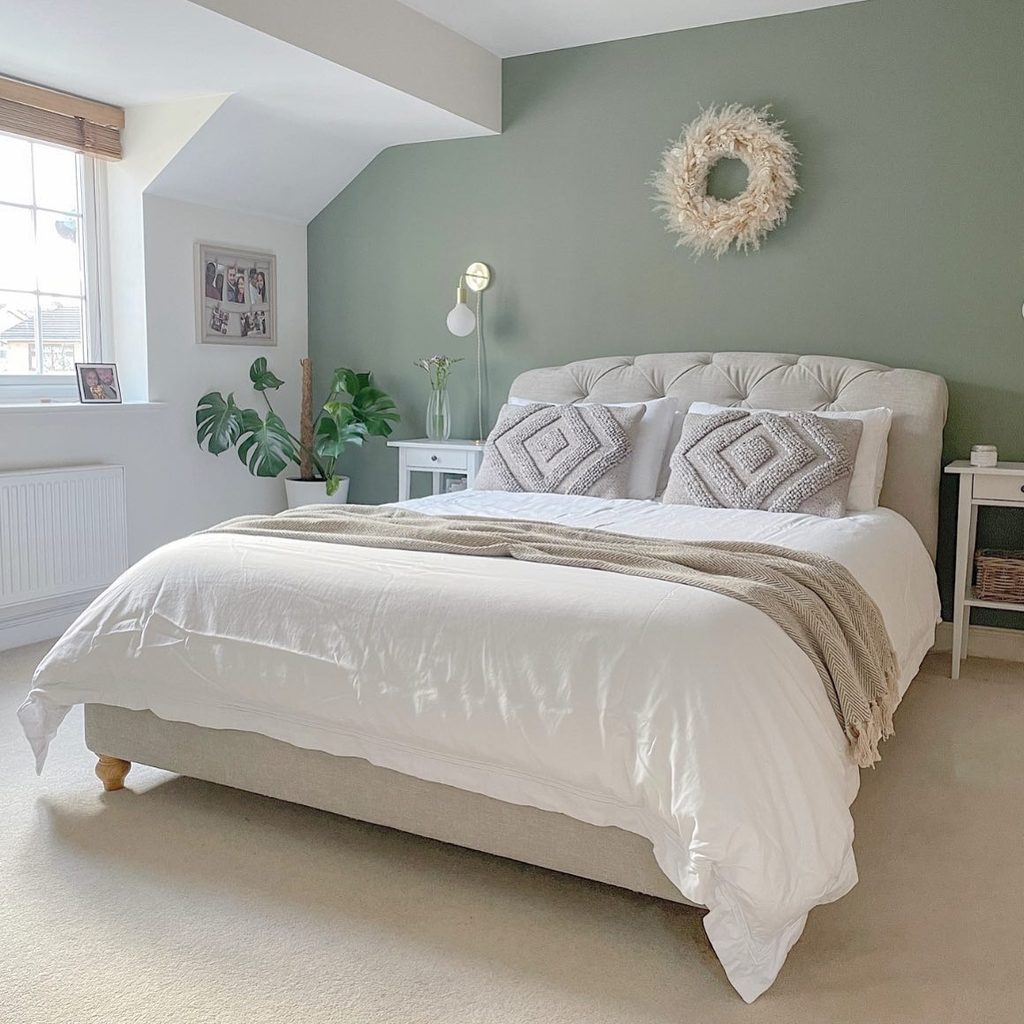
Credits: Instagram
Two textured pillows supply the clearest gray note in Charlotte’s bedroom, proving that the secondary color does not need to cover a wall. Their raised diamond pattern adds detail against the sage background and white bedding.
The room’s sloping edge and restrained wall light keep the composition informal. For an easy update, begin with a matching pair of gray covers large enough to be visible behind smaller accents.
Check their color against your green wall rather than relying on a screen image. Choose a texture that differs from the duvet, then stop before the bed becomes difficult to use.
The practical test is simple: you should be able to arrange everything comfortably without needing another chair solely for displaced pillows.
A Charcoal Fireplace in a Sage Bedroom
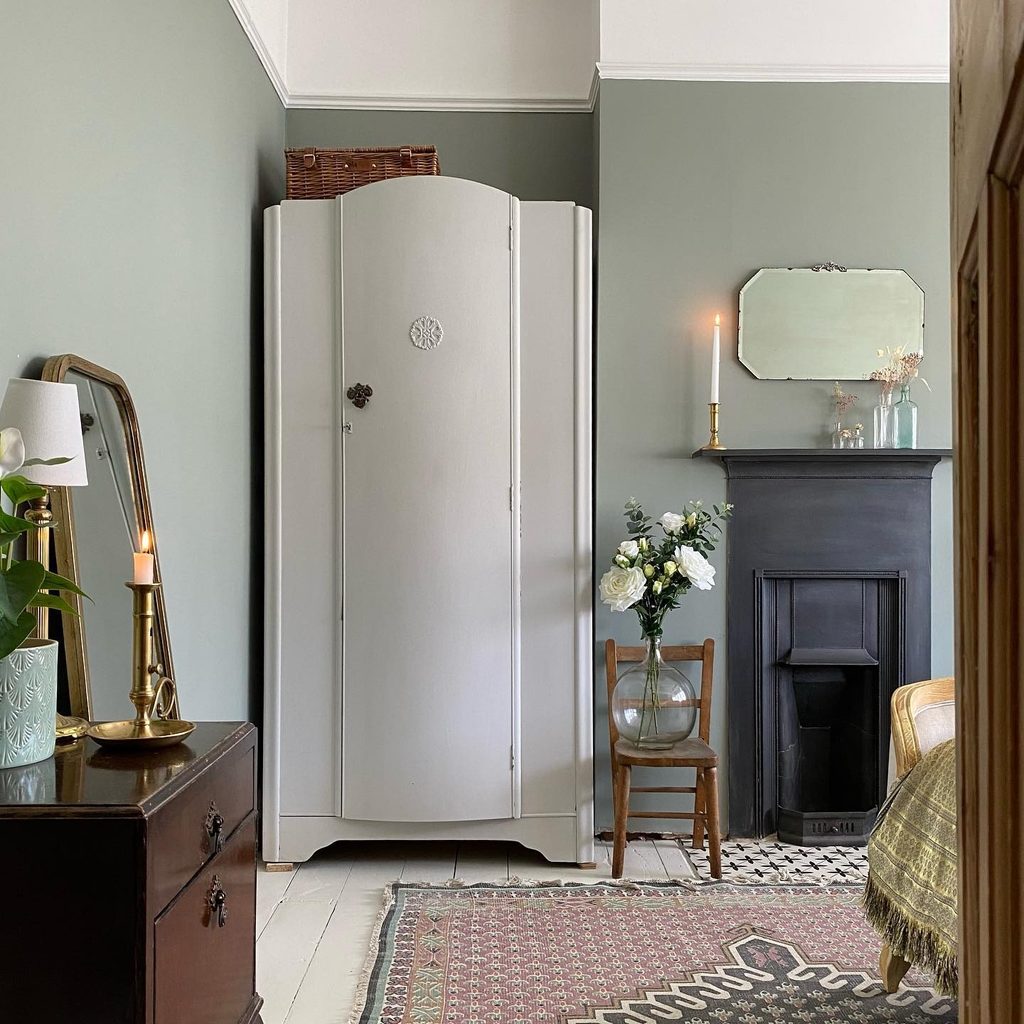
Credits: Instagram
An existing fireplace can become the gray element in a sage bedroom instead of fading into the wall. Katie’s charcoal surround stands out against muted green paint, with a darker inner opening providing another layer of contrast.
Nearby white furniture keeps this corner from becoming visually heavy. Treat the surround as part of your color plan before adding new accessories elsewhere.
Repeat its gray sparingly in a frame or textile if the opposite side of your room feels disconnected. Any painting or alterations should suit the fireplace’s construction and actual use; check its requirements before selecting finishes or decorations.
Preserve access and required clearances, then keep the mantel arrangement restrained so the surround’s shape remains visible from across the bedroom.
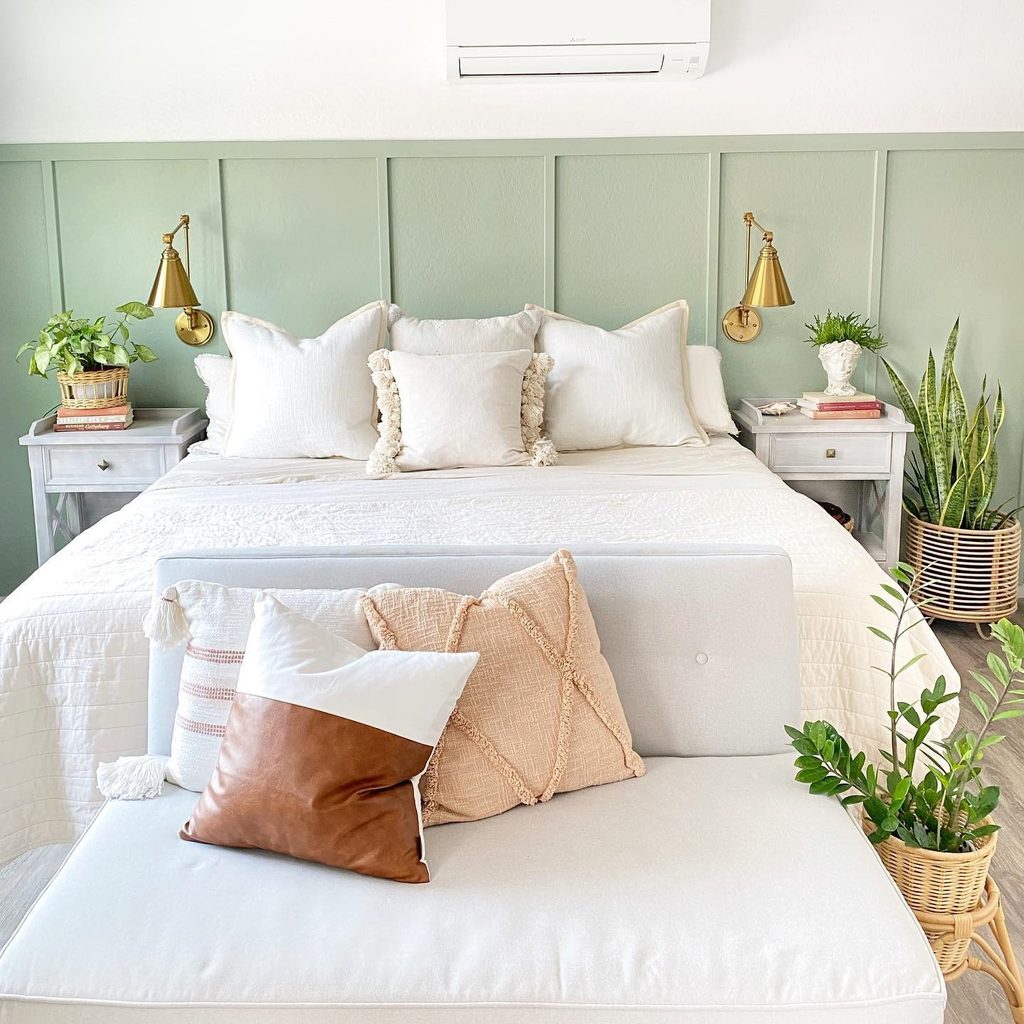
Gold-Toned Sconces Above Gray Nightstands
Credits: Instagram
Paired wall lights bring a warm metallic note to Lori’s sage bedroom without occupying the gray nightstands. Their conical shades stand apart from the straight panel lines, while the furniture’s weathered gray finish softens the arrangement.
This combination works especially well when the bedside surfaces need to remain available for everyday objects. Plan a light’s position from the mattress and your usual sitting height, checking reach and glare before installation.
Existing wiring may influence the options, so involve an appropriate professional when needed. You do not need to match every metal finish elsewhere in the room.
Repeating one warm tone on both sides of the bed is enough to make the choice feel connected against the quieter green and gray.
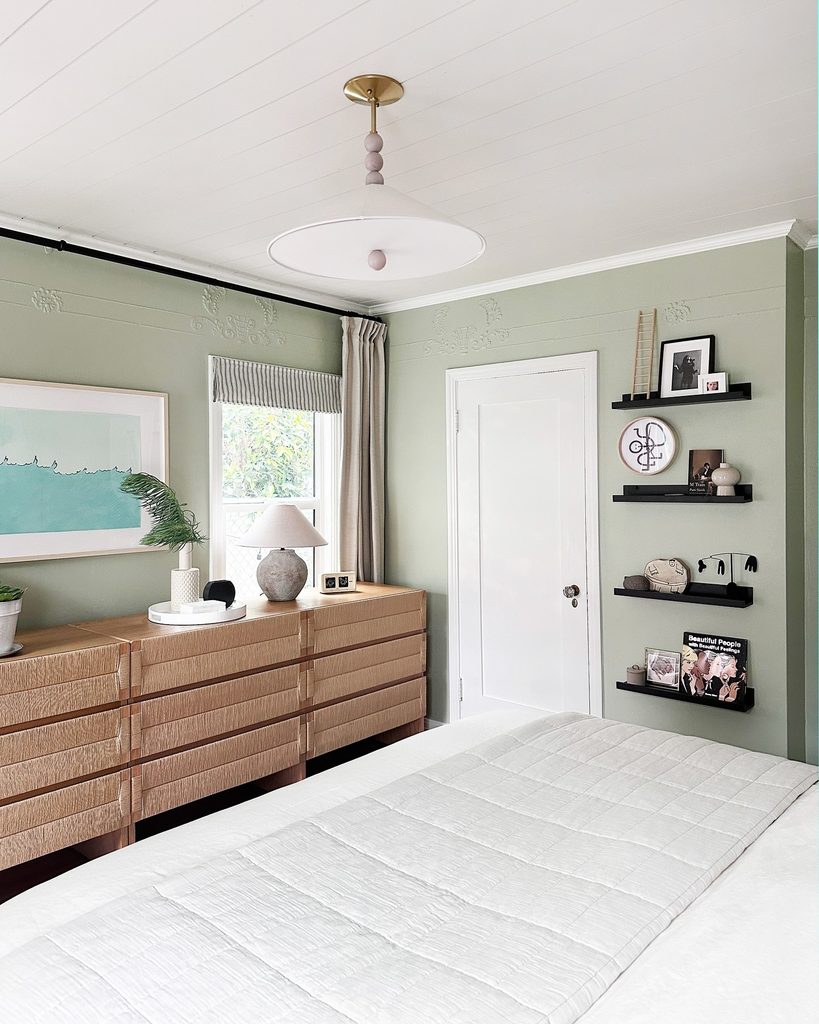
Vertical Display Shelves Beside Sage Bedroom Walls
Credits: Instagram
A narrow stretch beside the doorway becomes display space in Orlando Soria’s bedroom. Four dark floating shelves stack vertically against sage walls, holding small objects without requiring another floor-standing cabinet.
Across the room, a gray patterned window shade and gray lamp introduce the second color in restrained amounts. Borrow this approach when a wider bookcase would crowd your layout.
Measure the door’s swing before choosing shelf depth, and match wall fixings to the surface and intended load. Leave breathing room between objects so individual shapes remain visible.
A repeated dark shelf finish keeps the arrangement connected even when the contents vary. The gray accents can stay quiet; their smaller scale lets the green backdrop and vertical display retain clear roles.
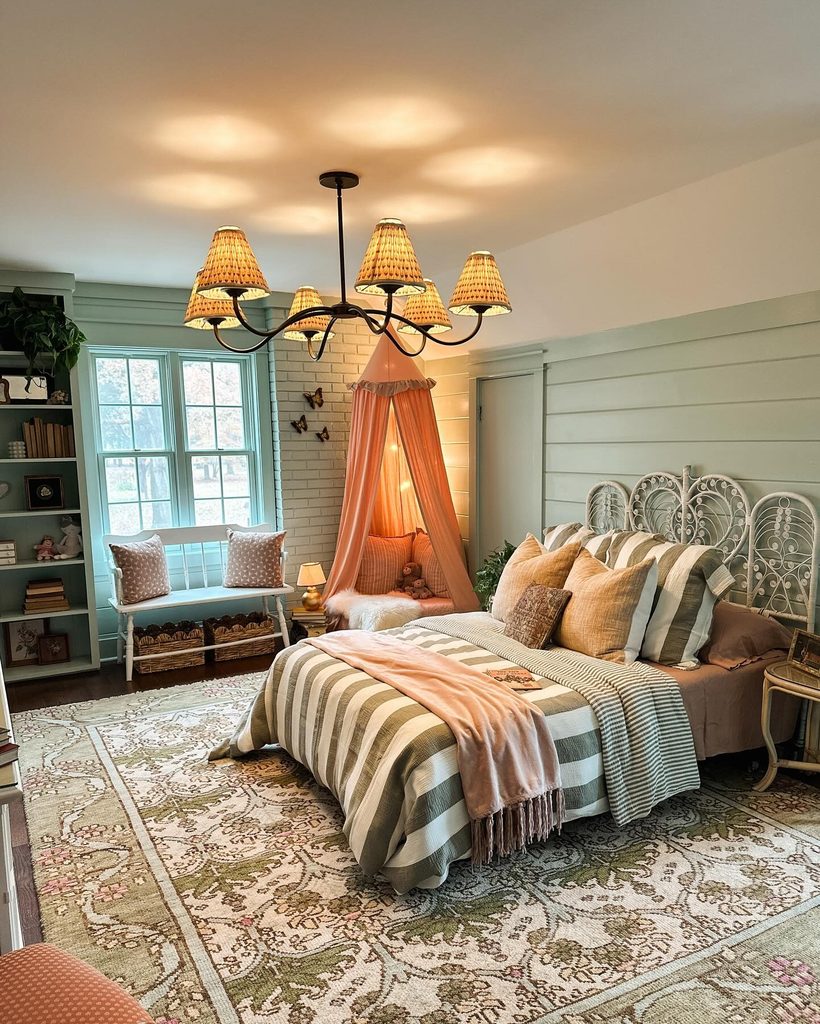
An Ornate Headboard Against Simple Sage Paneling
Credits: Instagram
Curving headboard details soften the horizontal paneling in Paige Espey’s completed bedroom. The pale looping outline stands against sage walls, while gray stripes and a gray ribbed throw bring structure back to the bedding.
Peach accents add another gentle note without concealing the main palette. A decorative headboard benefits from some space around its shape, so consider the positions of windows, shelves, and nearby furniture before choosing one.
Use simpler bedding when you want the outline to remain the feature. Here, the stripes provide enough pattern without competing with every curve.
You could take the same approach with another ornate frame, choosing proportions that leave room for your bedside furniture. Keep pillows low enough to reveal the details you chose.
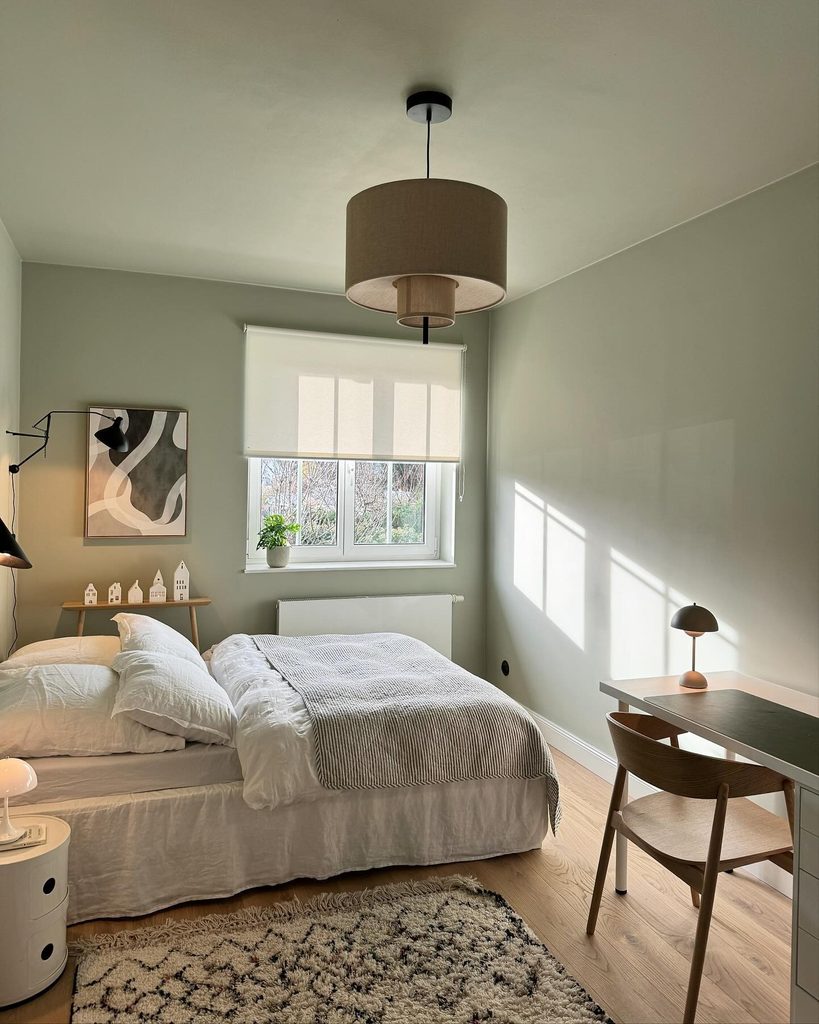
Sage Walls and Ceiling With a Gray Coverlet
Credits: Instagram
Color continues overhead in Anja Schopf’s bedroom, where muted sage walls meet a similarly toned ceiling. A gray coverlet separates the white bed from the surrounding green, and the desk supplies another darker surface.
The result shows how a continuous background can accommodate both sleeping and working furniture. Before extending color to your ceiling, test it on a movable sample held horizontally as well as vertically; the light reaches those planes differently.
Keep a few pale elements, such as bedding or a window shade, if you want clearer edges within the room. A simple pendant shape can then stand out without elaborate decoration.
Choose desk and bedside lighting for their tasks rather than expecting the ceiling fixture to do everything.
Roman Blinds Framed by Sage Window Trim
Credits: Instagram
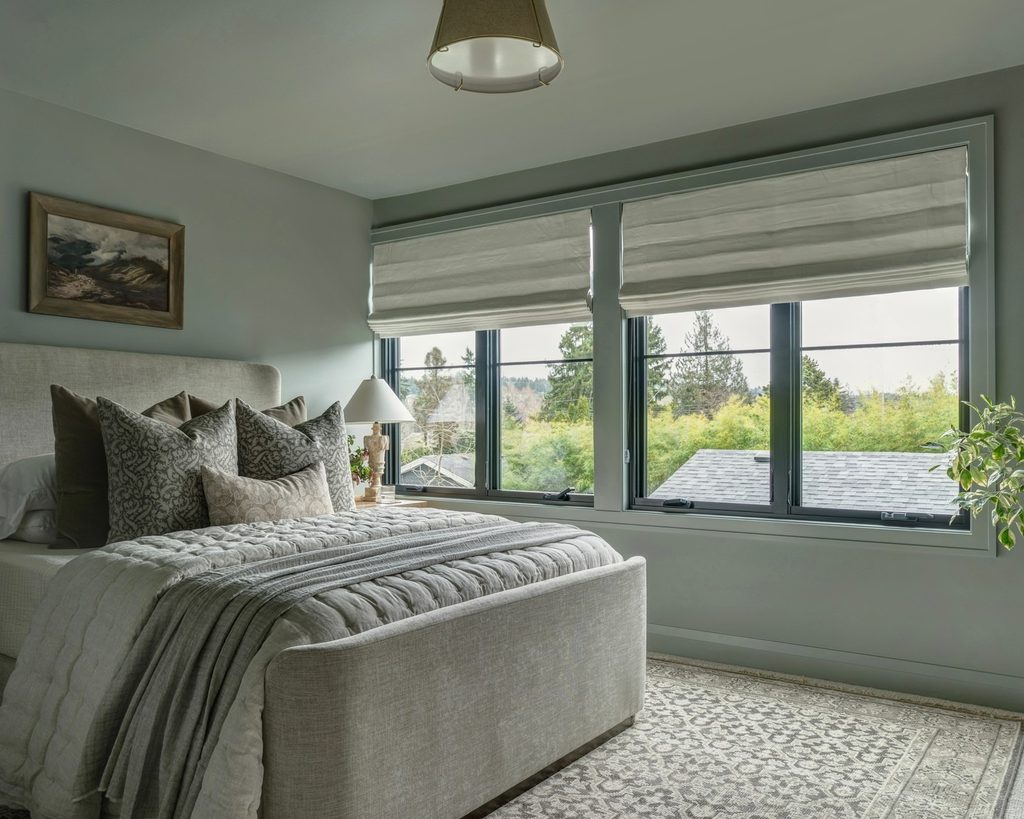
Roman blinds keep the window treatment close to the glass, leaving this bedroom’s muted sage trim visible around the edges. Their pale fabric relates to the gray upholstered bed without covering the whole window wall.
Repeating the wall color on the surround makes the large opening feel integrated rather than outlined in bright white. This is useful beside a bed where long curtains might gather against furniture.
Measure each opening separately and decide how much glass the raised blind will cover before choosing a fitting position. Compare fabric with your gray bedding in daylight, checking daytime privacy and practical lining options as well as color.
Simple folds preserve the broad view outside while patterned pillows add detail nearer the mattress.
A Sage Peg Rail With Gray Bedside Storage
Credits: Instagram
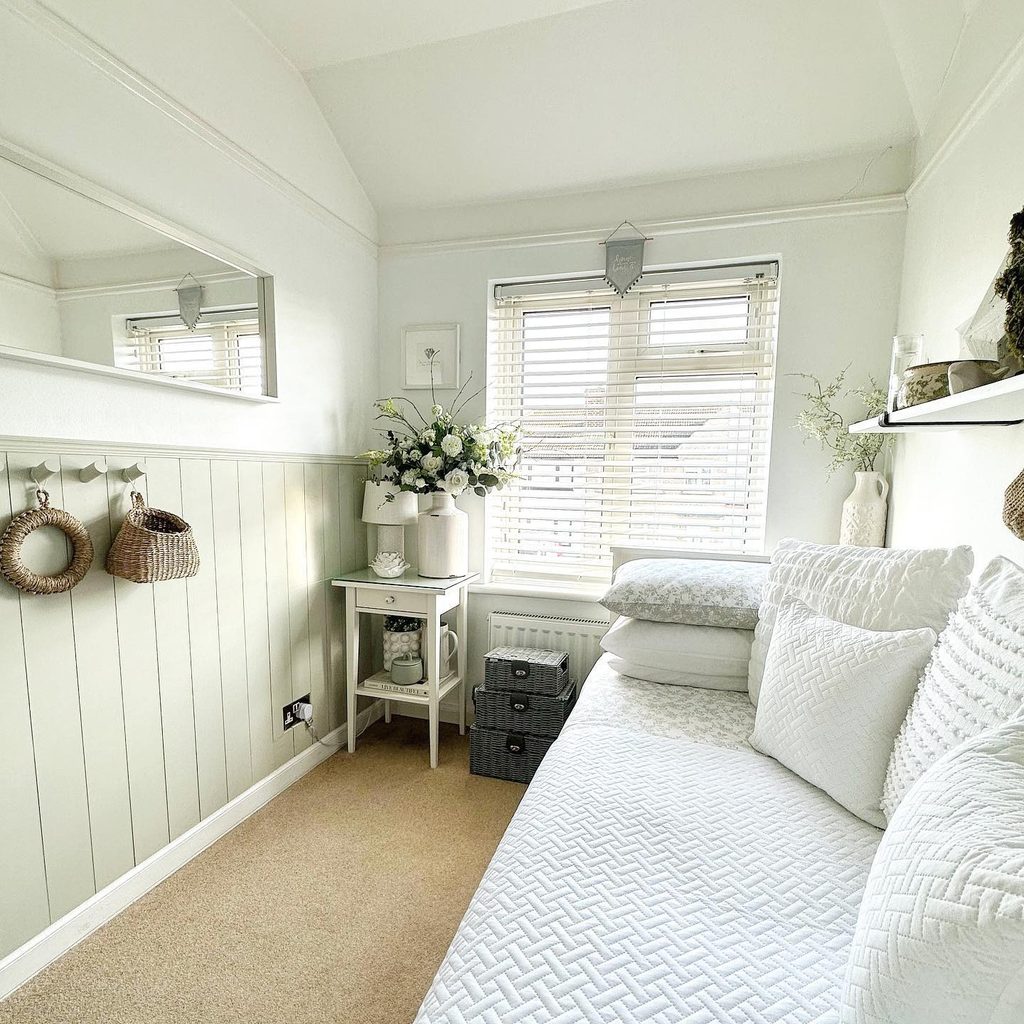
A row of pegs turns pale sage paneling into a useful storage surface without narrowing the passage beside the bed. The hanging basket adds warmth, while stacked gray baskets near the window repeat the neutral details in the bedding.
This gives a small bedroom two kinds of storage at different heights. Keep lightweight scarves and frequently used items in a shallow hanging basket and reserve lower containers for bulkier things.
Check that neither arrangement obstructs access to the bed or nearby heating. Attach the rail securely for the intended load, leaving spare pegs rather than filling every gap.
Painting it with the paneling keeps the practical addition discreet, so texture supplies interest within the soft green and gray color scheme.
A Built In Sleeping Nook With Sage Walls
Credits: Instagram
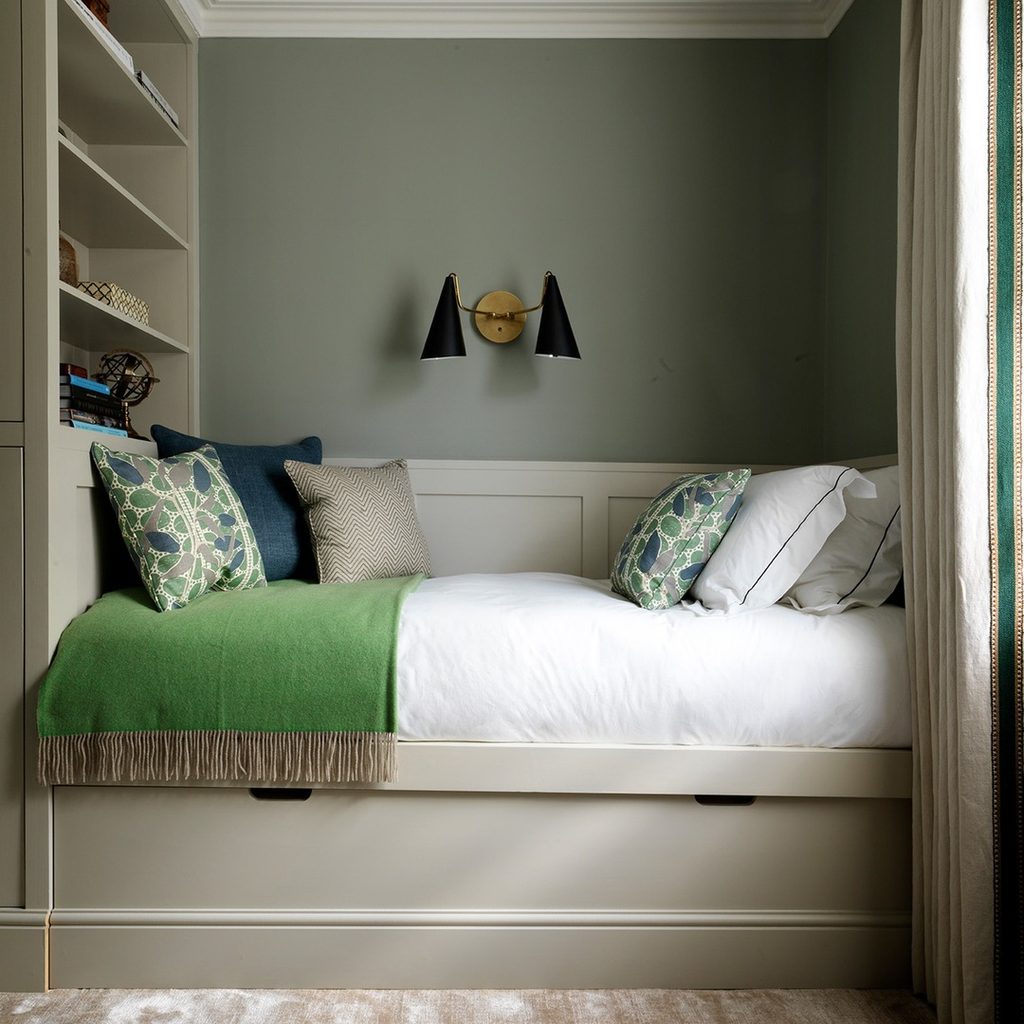
Fitted drawers beneath the mattress make this sleeping nook more than a place to put a bed.
Soft gray joinery wraps around the lower walls and connects with shelving at one end, while muted sage paint gives the upper area depth. A brighter green throw introduces a changeable accent against the white sheets.
Consider this arrangement when a recess could combine sleeping and storage without adding separate cabinets. Measure drawer clearance, full mattress access, and the space needed to change bedding before commissioning the joinery.
Shelves should hold the books you actually use without projecting into the pillow area. Keep the fitted finish quiet, allowing cushions and a blanket to bring color that can change as the room’s needs evolve.
Woven Seating Beside Green Walls and Gray Bedding
Credits: Instagram
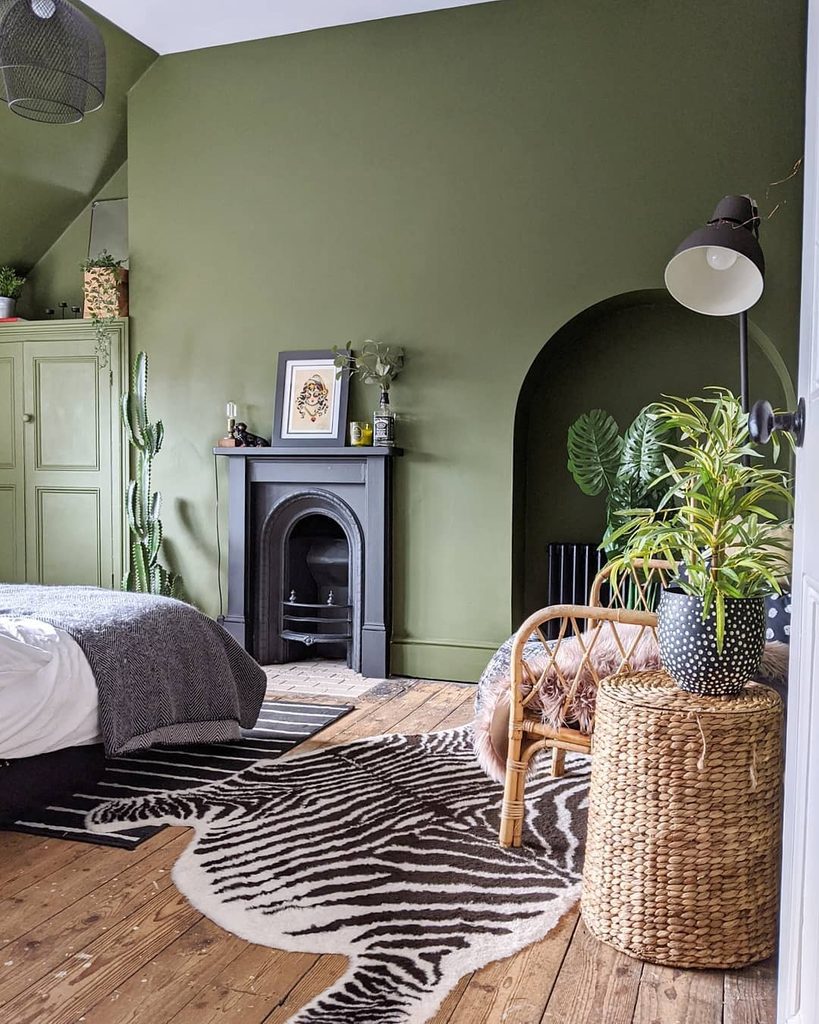
A woven chair gives this green and gray bedroom somewhere to sit without adding another large upholstered shape.
Its open frame and the textured side table introduce warmer tones beside the gray bed cover, while the muted green wall connects the corner to the rest of the room.
The photographed green leans olive, offering a deeper variation on a sage palette. To adapt the seating idea, check the walking route before choosing a chair and leave its seat available for dressing or reading comfortably.
Select a small table that can hold useful objects without blocking movement. A patterned rug can distinguish the area, but keep its edges flat and its colors related to the bedding for a comfortable coordinated finish.