
A room full of dark wood and stone can feel heavy unless something gives the eye a place to rest. Rustic Living Room Ideas show how to balance rugged materials with lighter surfaces, comfortable upholstery, and practical furniture.
White beams can bring out the character of a stone fireplace, while an earthy orange sofa warms dark ceiling beams without competing with them.
Other approaches pair pale stone with a wood display cabinet or soften a glass corner with relaxed covered seating. These contrasts help a rustic living room feel inviting and thoughtfully arranged, rather than crowded with matching rough finishes.
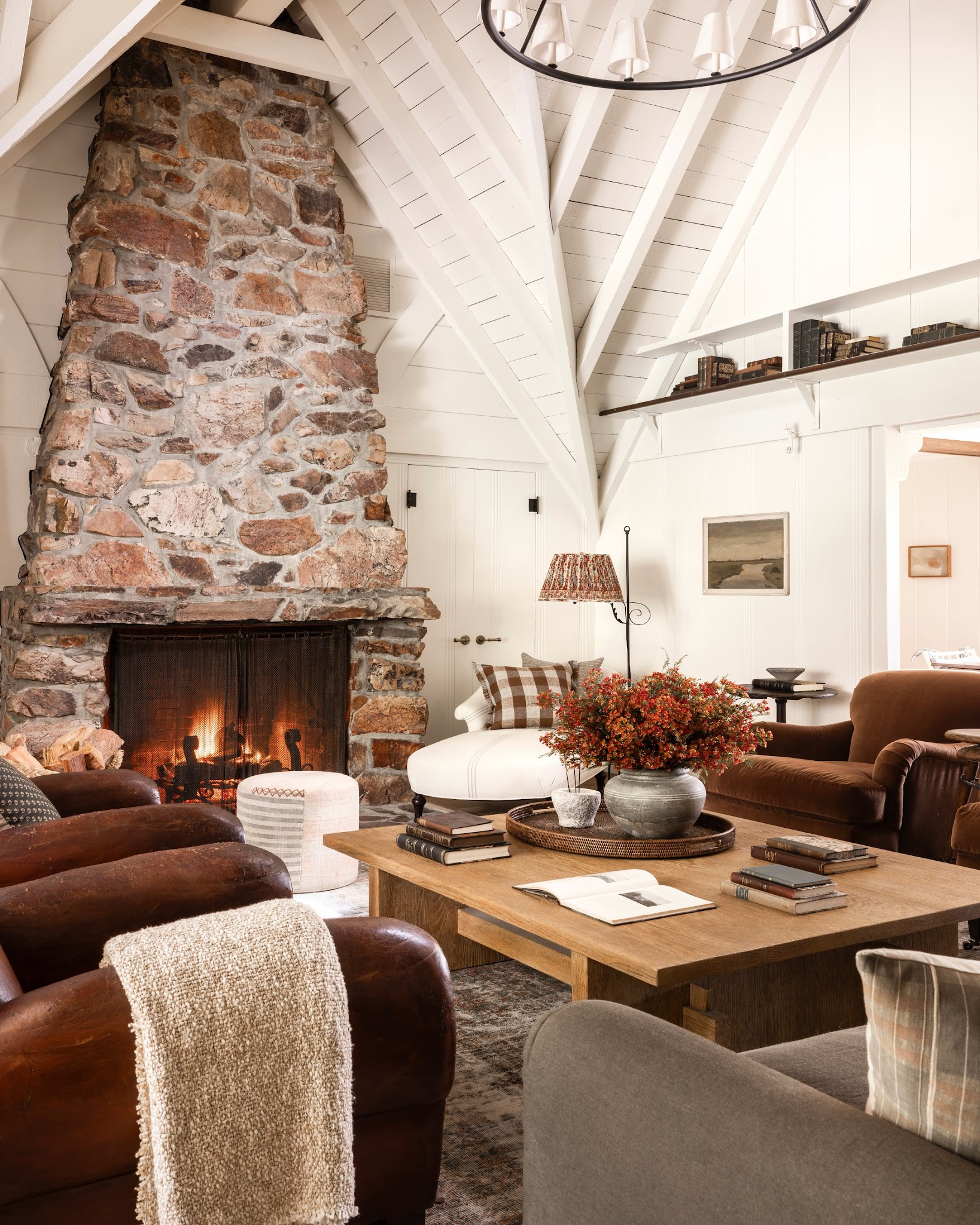
1. Let Natural Stone Stand Out Against White Beams
Credits: Instagram
A tall stone fireplace gives this cabin living room its unmistakable character. White boards and painted roof beams brighten the surrounding architecture, allowing the irregular stone colors to remain the focal point.
Brown leather chairs, a large wood coffee table, and soft throws make the lofty space feel comfortable at sitting height. You can borrow the balance by lightening selected surfaces while preserving one original material with strong texture.
Repeat the stone's earthy shades through upholstery and pottery instead of adding more heavy finishes. A woven tray keeps vessels and flowers gathered neatly on the table.
The result feels welcoming because rugged materials share the room with gentle lighting, useful surfaces, and seats arranged for relaxed conversation around the fire.
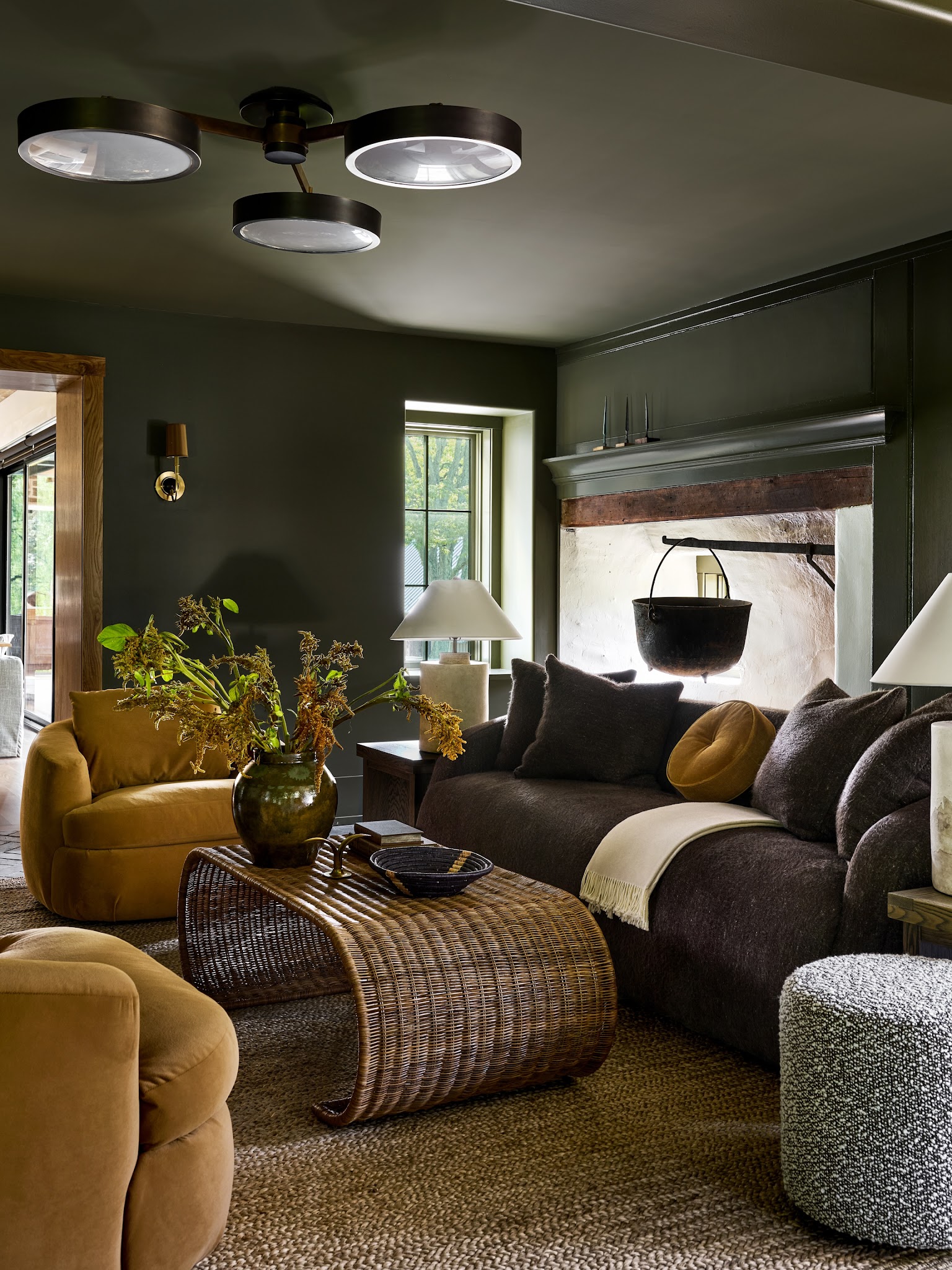
2. Keep an Old Hearth at the Heart of the Room
Credits: Instagram
The old fireplace and hanging cauldron give this farmhouse lounge a story before any accessories enter the picture. Deep green walls and ceiling wrap the room in color, while mustard chairs bring a warm contrast to the dark sofa.
A curved woven coffee table adds a lighter, handmade texture beside the substantial hearth. To adapt the idea, preserve a distinctive architectural feature and let its materials guide your choices.
Pair aged wood or iron with comfortable upholstery that invites everyday use. Repeating one dark wall color can help irregular historic details feel settled rather than busy.
Finish with a coarse woven rug, shaded lamps, and a leafy arrangement that echoes the view outside without competing with the room's original character.
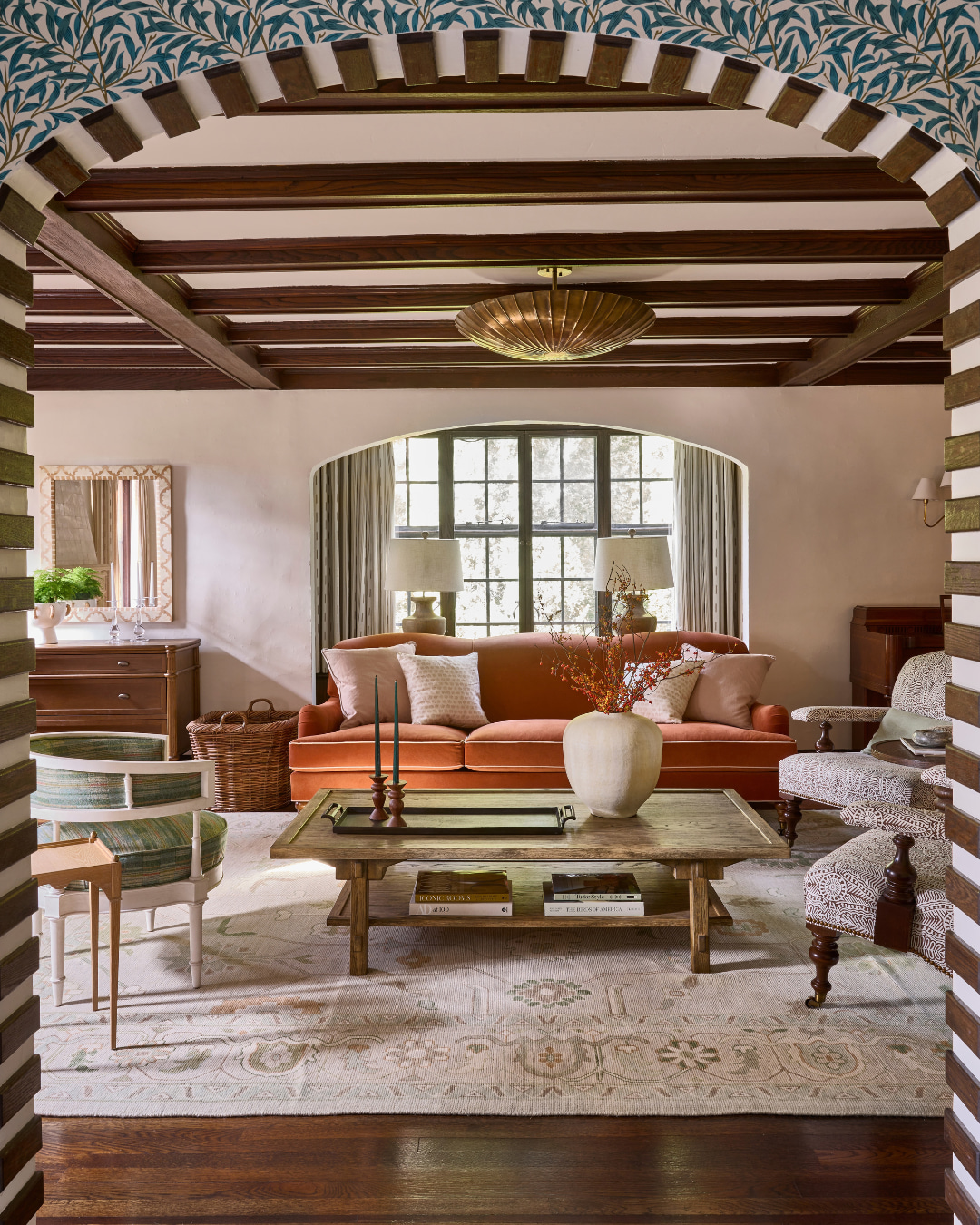
3. Warm Dark Beams With an Earthy Orange Sofa
Credits: Instagram
An orange sofa brings a cheerful warmth beneath this living room's dark wood ceiling beams. The color feels grounded alongside the worn wood coffee table, woven basket, and quiet floral rug.
Pale walls keep the strong architecture visible, while patterned chairs introduce smaller details at seating level. This is a useful direction when wood trim feels too heavy for an otherwise comfortable room.
Choose one earthy upholstery color with enough depth to stand beside the wood, then soften the surrounding palette. A broad rug gives the seating group a clear boundary.
Match neither every wood finish nor every chair; related tones and practical proportions are enough. Simple branches in a large vessel complete the room without hiding its distinctive structure.
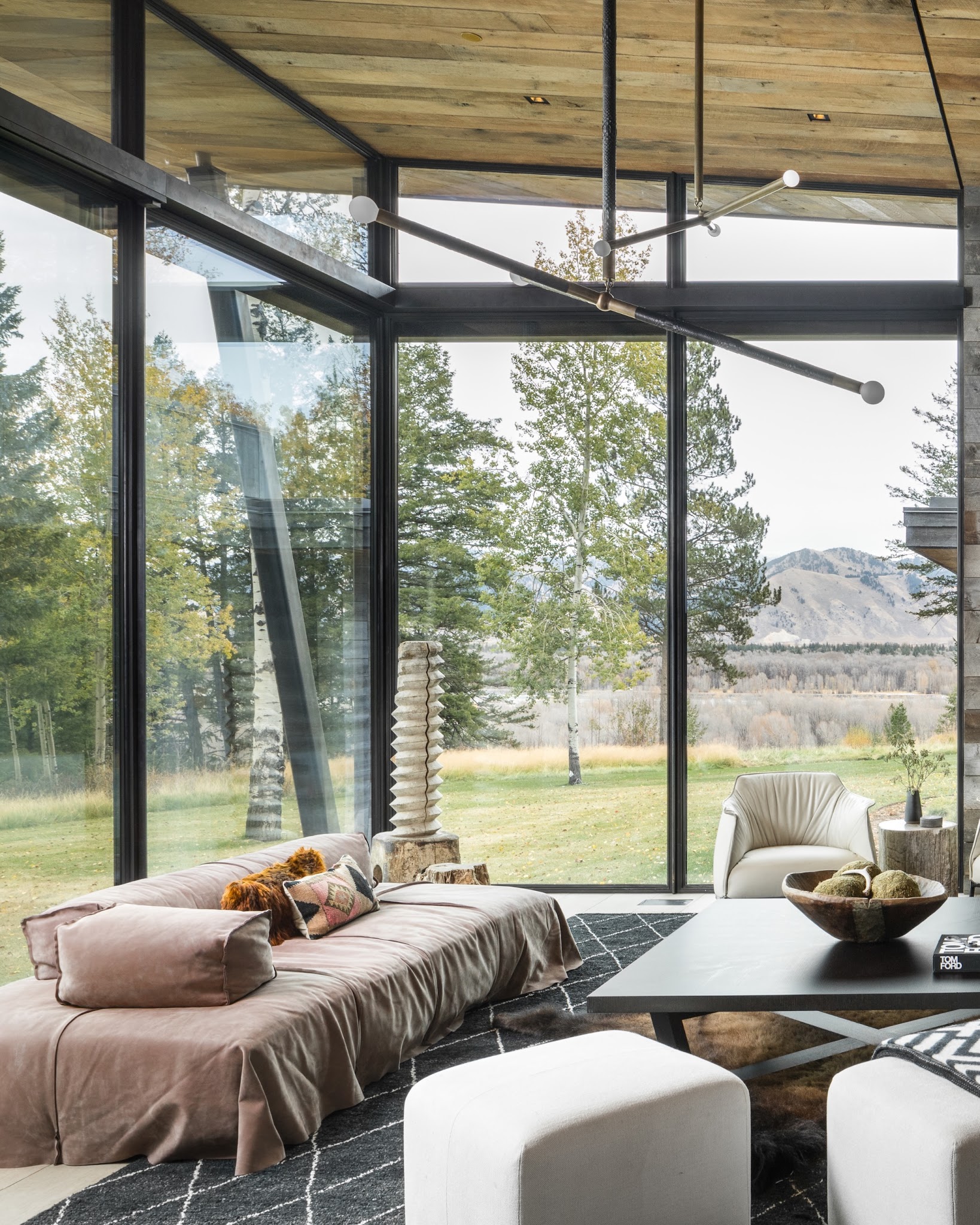
4. Soften a Glass Corner With Relaxed Covered Seating
Credits: Instagram
A glass corner can still feel rustic when the materials close to you carry warmth. Here, a loose covered sofa sits beneath a weathered wood ceiling, with stump tables and a carved wooden bowl adding natural irregularity.
The black window frames preserve a crisp outline around the meadow view. To recreate this balance, choose upholstery that drapes comfortably instead of looking tightly tailored.
Layer a patterned cushion and textured throw over a quiet base color. Keep the coffee table simple enough for the wood grain and outdoor scenery to remain prominent.
A rug with geometry can connect the contemporary glazing to the relaxed furniture. Leave some glass unobstructed so daylight and the changing landscape become part of the room's character.
5. Pair Pale Stone With a Wood Display Cabinet
Credits: Instagram
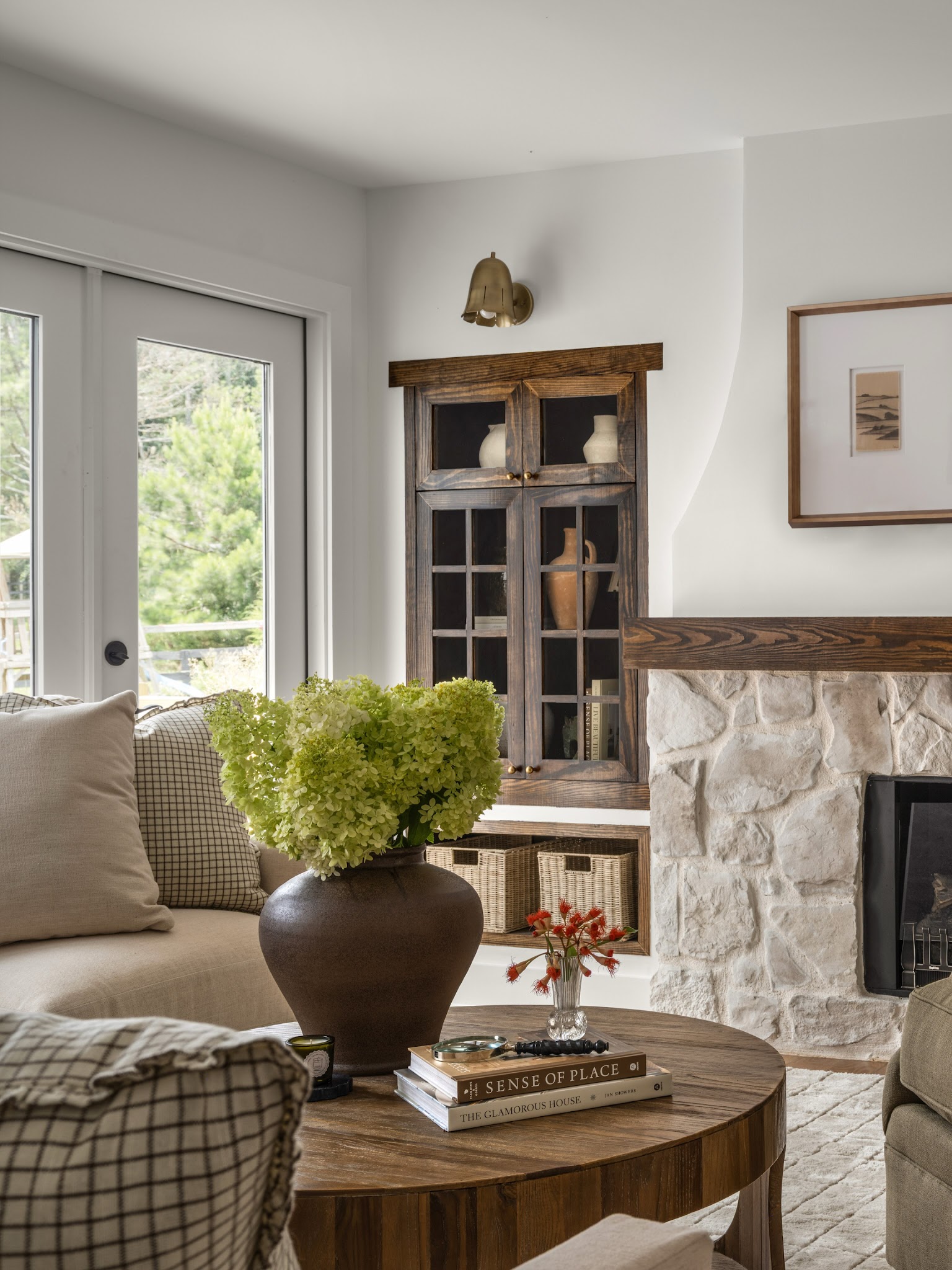
White stone gives this fireplace a softer presence, but its uneven surface still supplies plenty of rustic texture. Beside it, a dark wood cabinet displays a few pale vessels behind glass.
The cabinet trim, mantel, and round coffee table repeat warm grain without making every finish identical. This combination works especially well in a small living room that needs both character and storage.
Keep large upholstery pieces light, then introduce darker wood in a few useful places. Baskets beneath the cabinet can hold everyday clutter while preserving an orderly view.
Checked cushions add a modest pattern that sits comfortably with the stone. A generous vase of green flowers finishes the arrangement and connects the seating area to the trees outside.
6. Mix Rough Beams With a Refined Stone Fireplace
Credits: Instagram
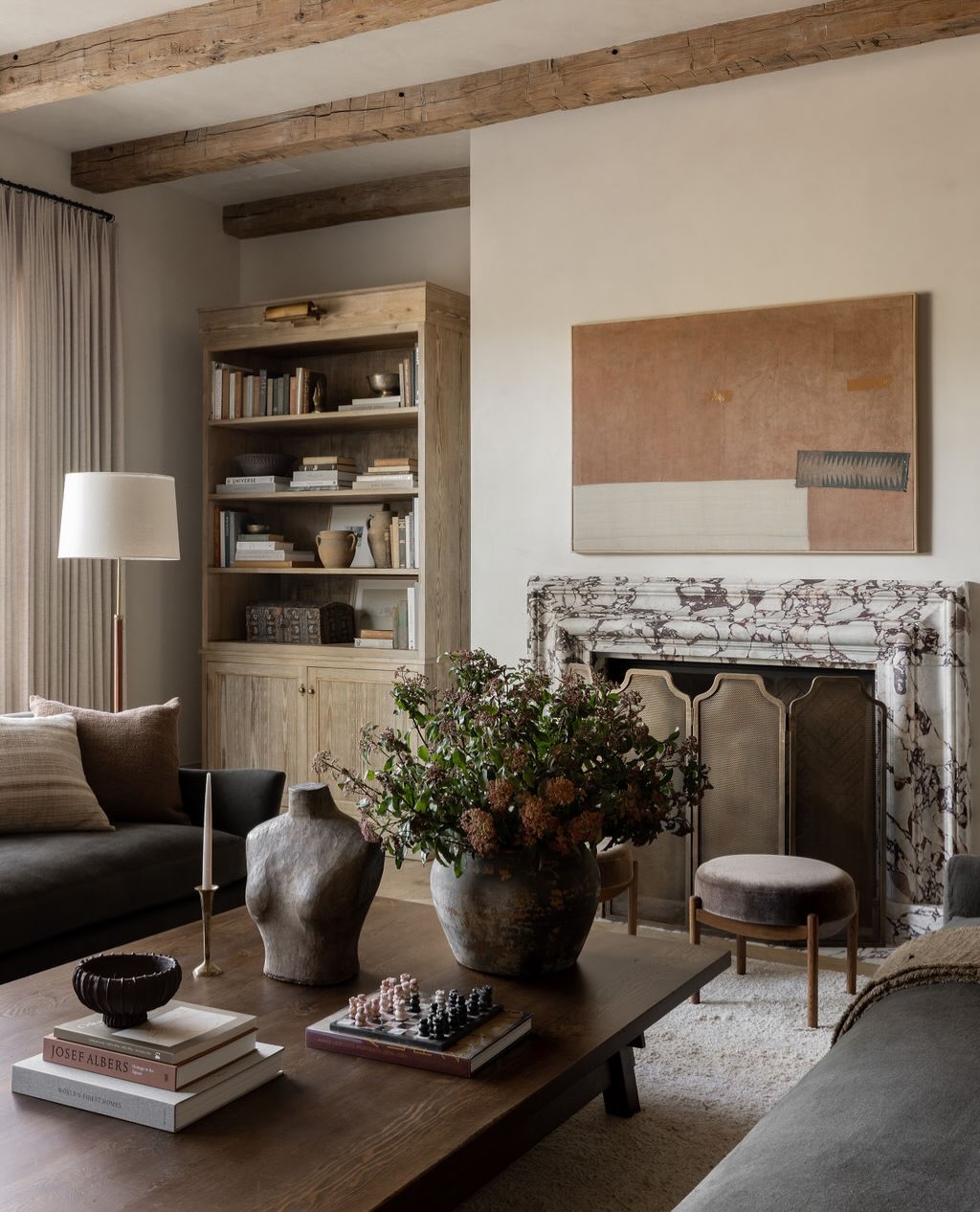
Rough wood beams and a richly veined fireplace bring two very different textures into this quiet living room. Their contrast feels comfortable because the surrounding palette stays close to cream, brown, and charcoal.
A wood bookcase repeats the ceiling's warmth, while a broad coffee table offers space for books, pottery, and a small game. Try this approach when you want rustic character with a more finished edge.
Let one polished or patterned material sit beside weathered wood, then avoid crowding the room with additional statement finishes. Comfortable sofas and a deep rug soften the harder surfaces.
Choose a few objects with varied silhouettes, leaving useful empty space between them so the room remains easy to enjoy throughout an ordinary day.
7. Make a Log Cabin Feel Open to the Landscape
Credits: Instagram
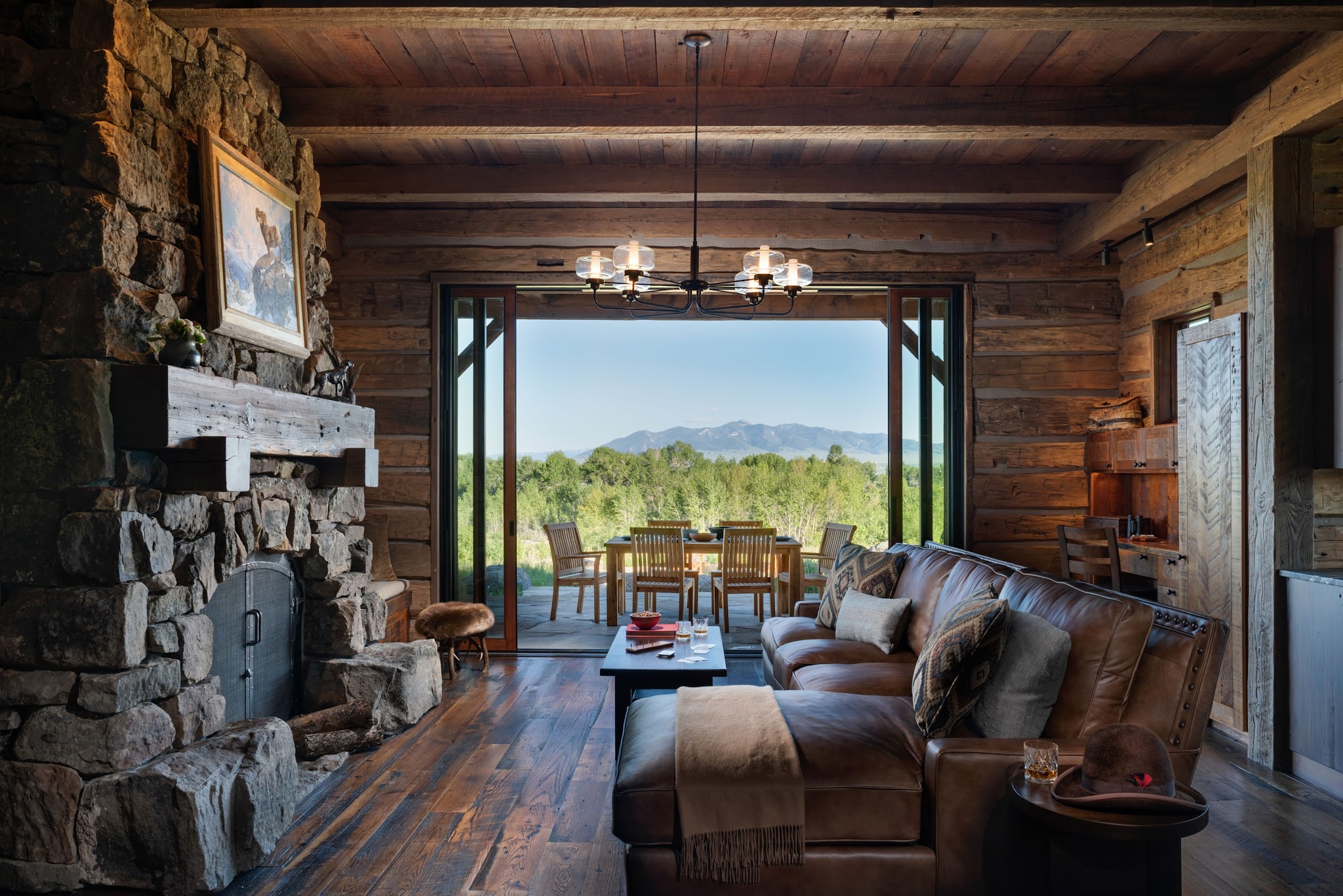
This log cabin keeps its rich wood walls and dark stone fireplace, yet the living room feels connected to open country. A wide doorway frames the mountains beyond an outdoor dining table.
Inside, a brown leather sectional faces the hearth, leaving a direct line of sight toward the view. Borrow the layout by keeping your largest opening visually clear and placing substantial furniture along the room's edges.
A slim coffee table can serve the seating without filling the passage. Let leather, wood, and stone provide most of the color, then add patterned cushions for a softer layer.
The contrast between a sheltered interior and a bright outdoor vista makes the room feel especially inviting for quiet afternoons and relaxed evenings.
8. Use Nesting Tables in a Cozy Beamed Snug
Credits: Instagram
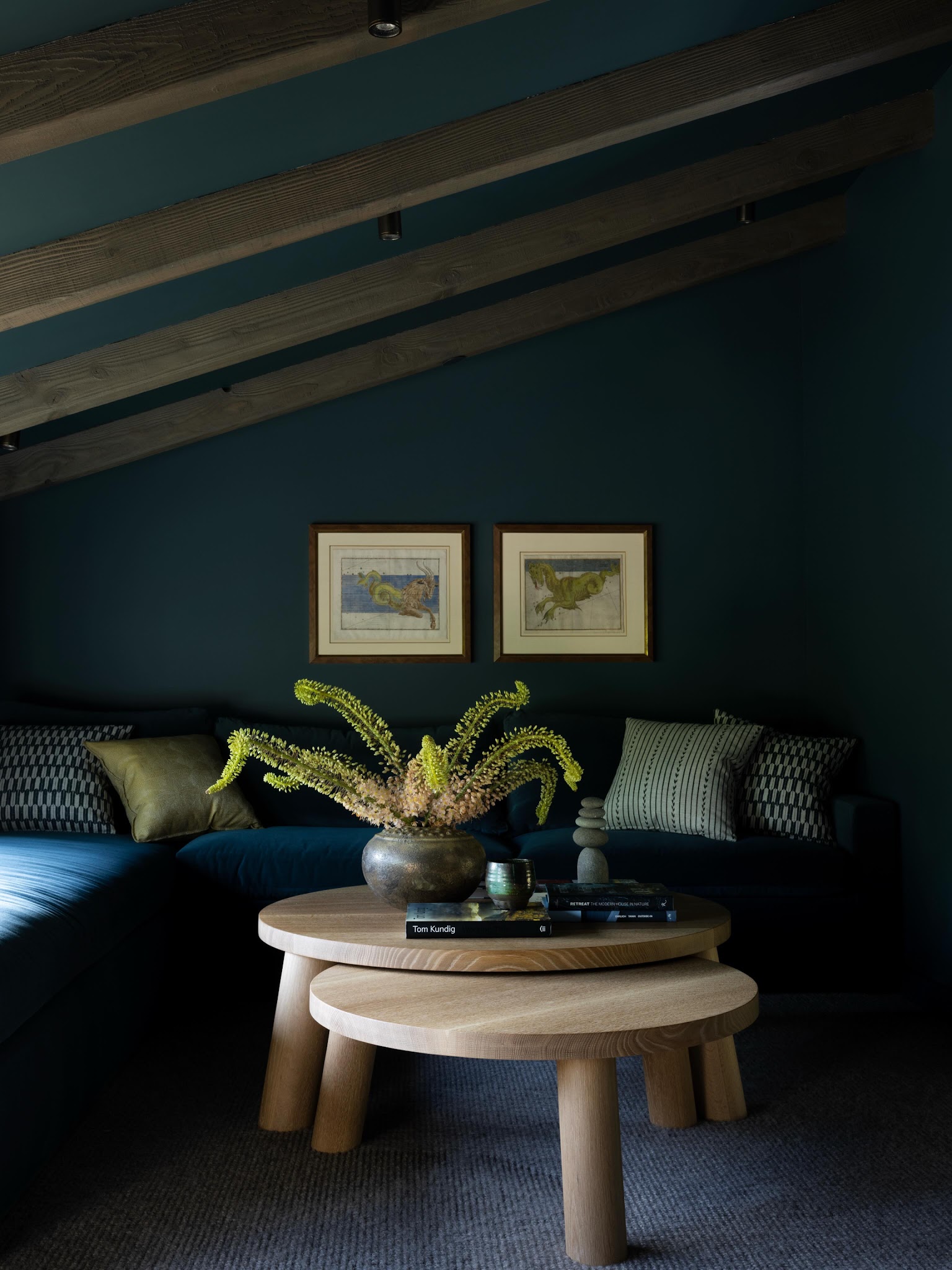
Pale nesting tables create a useful center in this dark blue sitting room. Their rounded tops soften the sectional's corner and echo the easy, informal mood of the cushions.
Above, exposed wood beams cross a sloped ceiling, adding rustic grain without overwhelming the compact arrangement. This idea suits a smaller lounge where one large table might make movement awkward.
Choose two tables that overlap neatly, then pull them apart when people need separate surfaces. Keep their finish lighter than the sofa so the center remains easy to see.
A pair of modest framed pictures brings interest to the wall without crowding it. Textured pillows and a branching arrangement add softness while the limited palette lets the wood remain a feature.
9. Arrange Matching Sofas Beneath a Timber Roof
Credits: Instagram
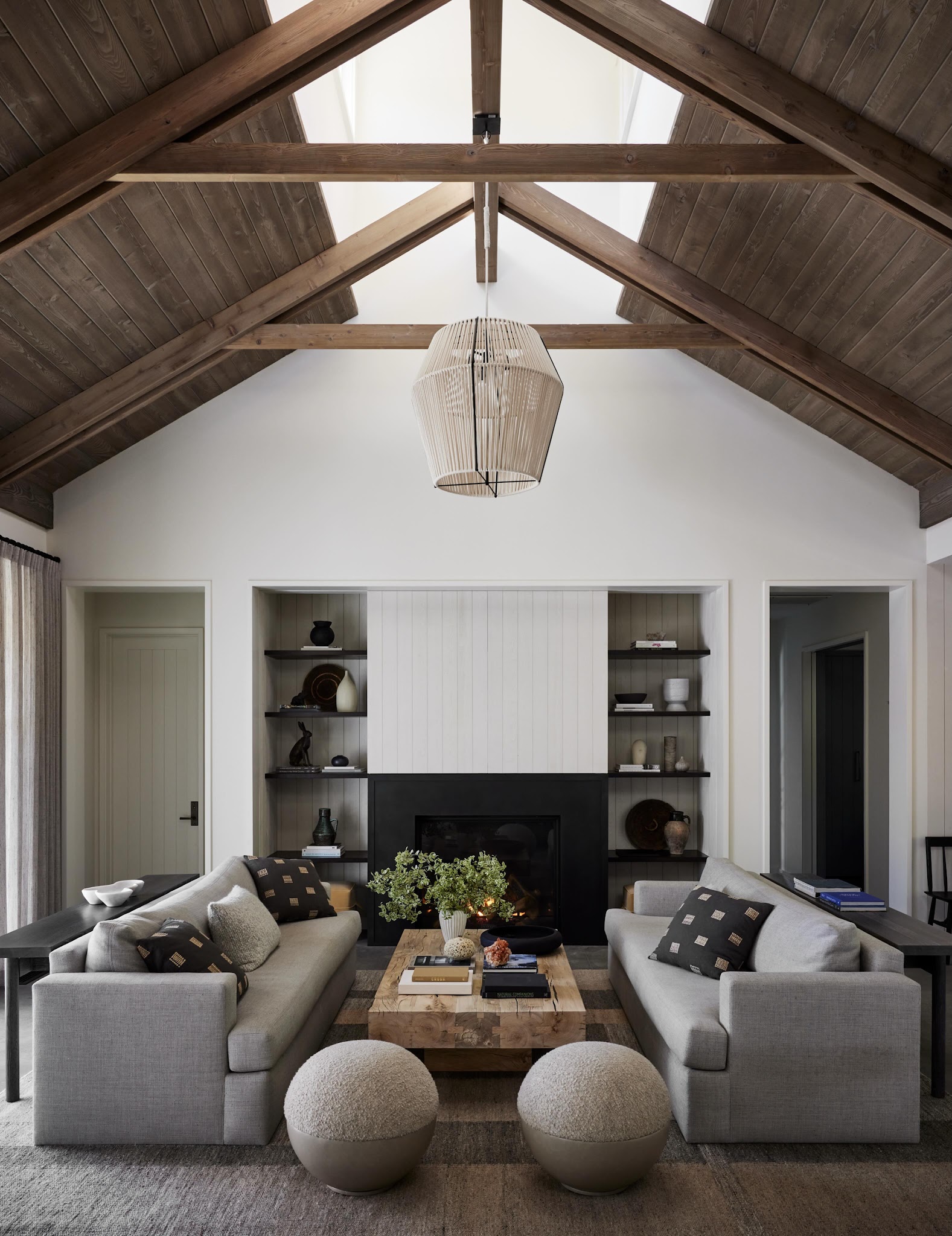
Two gray sofas bring a sense of order beneath this living room's timber roof. They face each other across a substantial wood coffee table, while two round ottomans soften the open end of the arrangement.
A woven pendant repeats the natural material story overhead. The symmetry gives the eye somewhere to rest amid the ceiling boards and exposed trusses.
For a similar room, establish a clear seating group before adding smaller furniture. Matching sofas can be practical when conversation matters more than facing a television.
Keep their backs low enough to preserve the architecture above. Use textured cushions, a generous rug, and a few dark accents to connect the pale upholstery with the fireplace and shelving at the room's end.
10. Bring a Large Lodge Down to Human Scale
Credits: Instagram
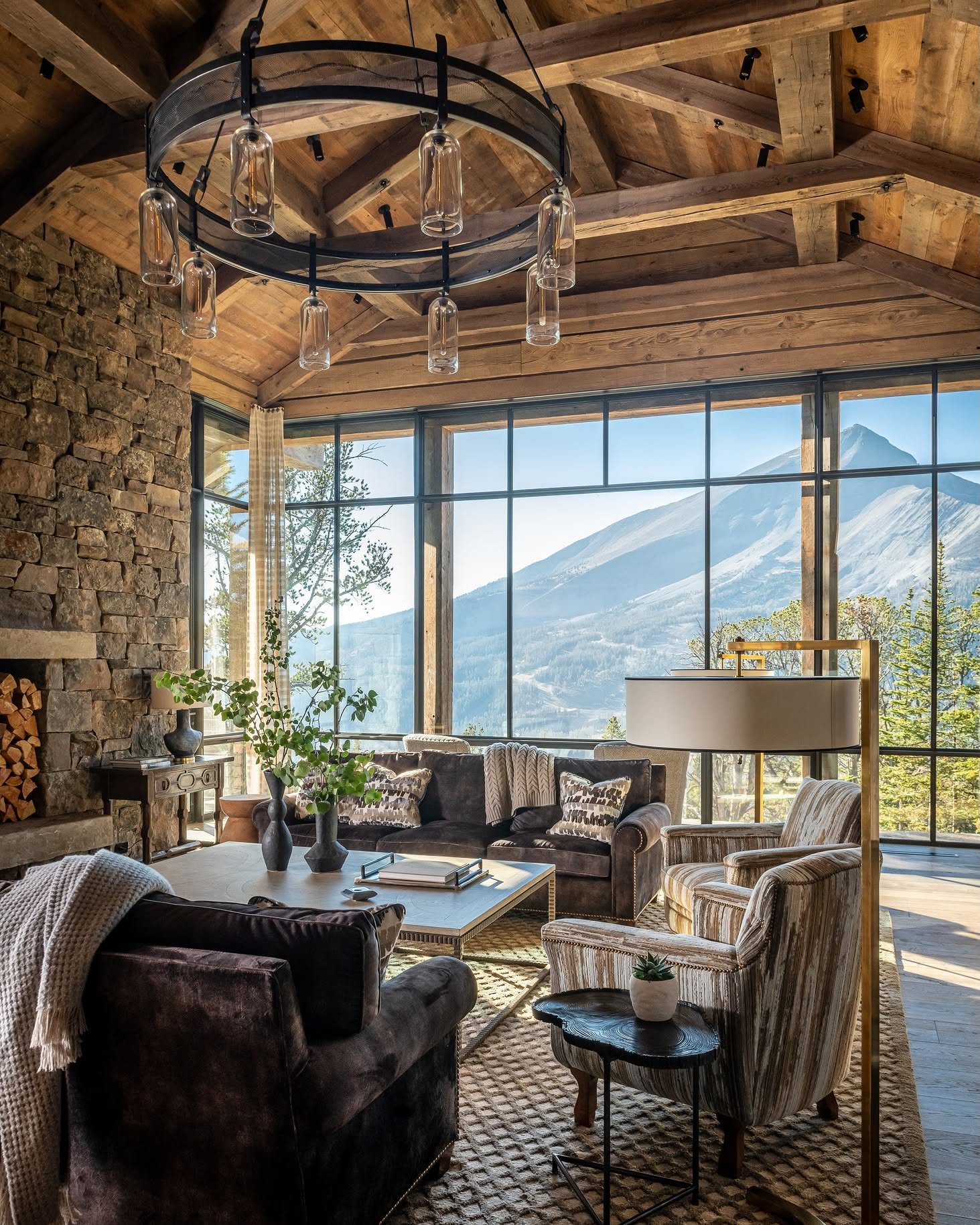
A soaring timber ceiling and a wall of mountain views could easily dwarf the furniture in this lodge. Instead, a grouping of sofas and striped armchairs creates a comfortable center.
The large rug gives every seat a shared foundation, and table lamps bring light down to a useful height. This is a practical lesson for any rustic living room with impressive proportions.
Choose furniture for the conversations you want to have, then gather it within the larger space. A coffee table with enough surface area helps the group feel connected.
Repeat a few soft textures in throws and cushions to balance the stone walls. Leave the surrounding windows open so the view remains generous without making the seating feel exposed.
11. Round Out a Stone Room With Curved Seating
Credits: Instagram
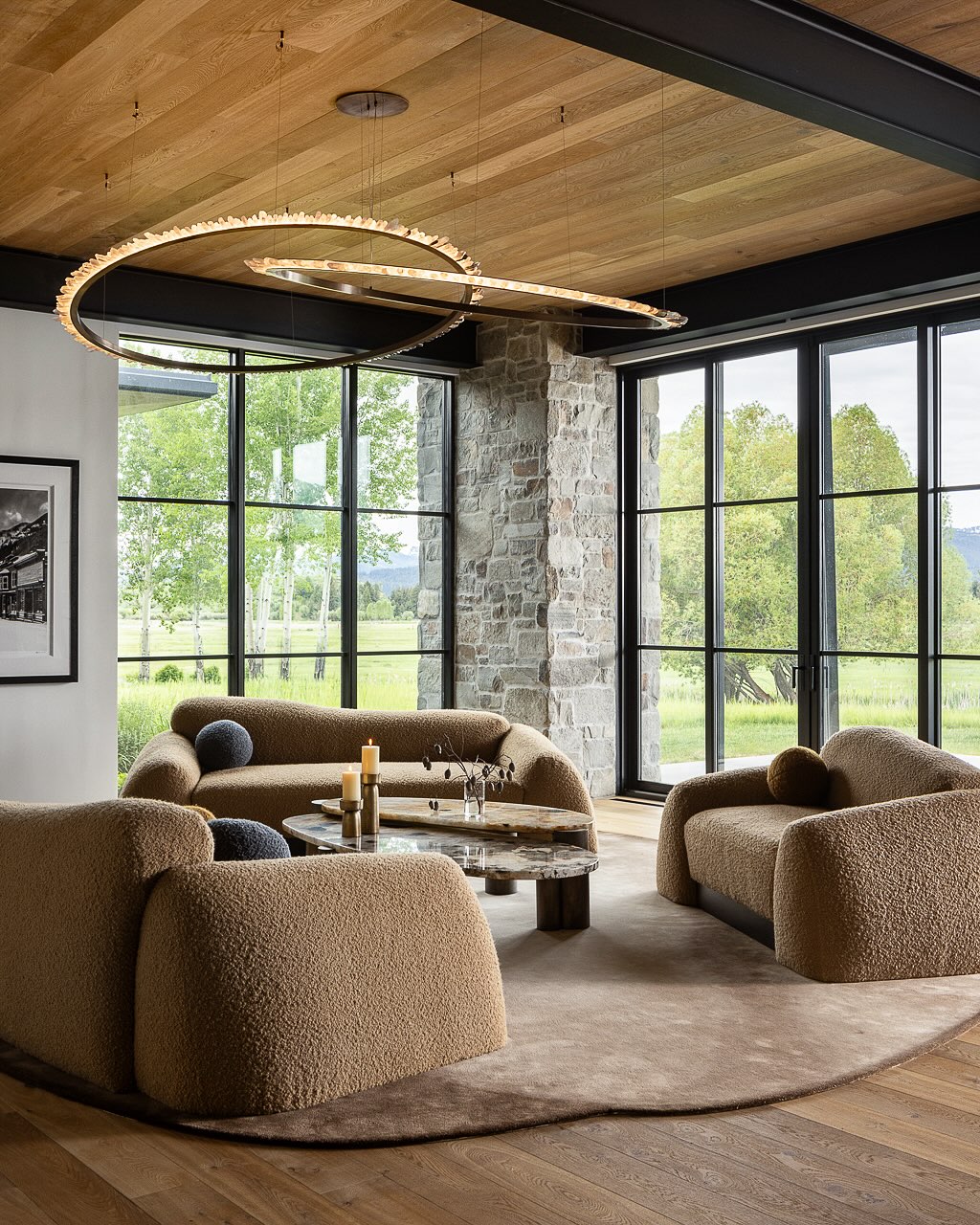
Curved, textured seating gives this stone and timber room a softer center. A pair of rounded sofas and a chair gather around overlapping stone tables, while an oval rug reinforces their gentle shapes.
The ceiling's wood grain and the masonry pier keep the setting connected to natural materials. This is a useful approach when rustic architecture feels overly angular.
Choose upholstery with a visible weave and rounded edges, then repeat those curves in one nearby element. Keep the palette close to the surrounding wood so the furniture feels settled.
A small number of dark cushions can add definition without creating clutter. The sculptural lighting provides a finishing flourish, but the comfortable arrangement remains the feature that makes everyday use appealing.
12. Try Plum Upholstery With Weathered Wood
Credits: Instagram
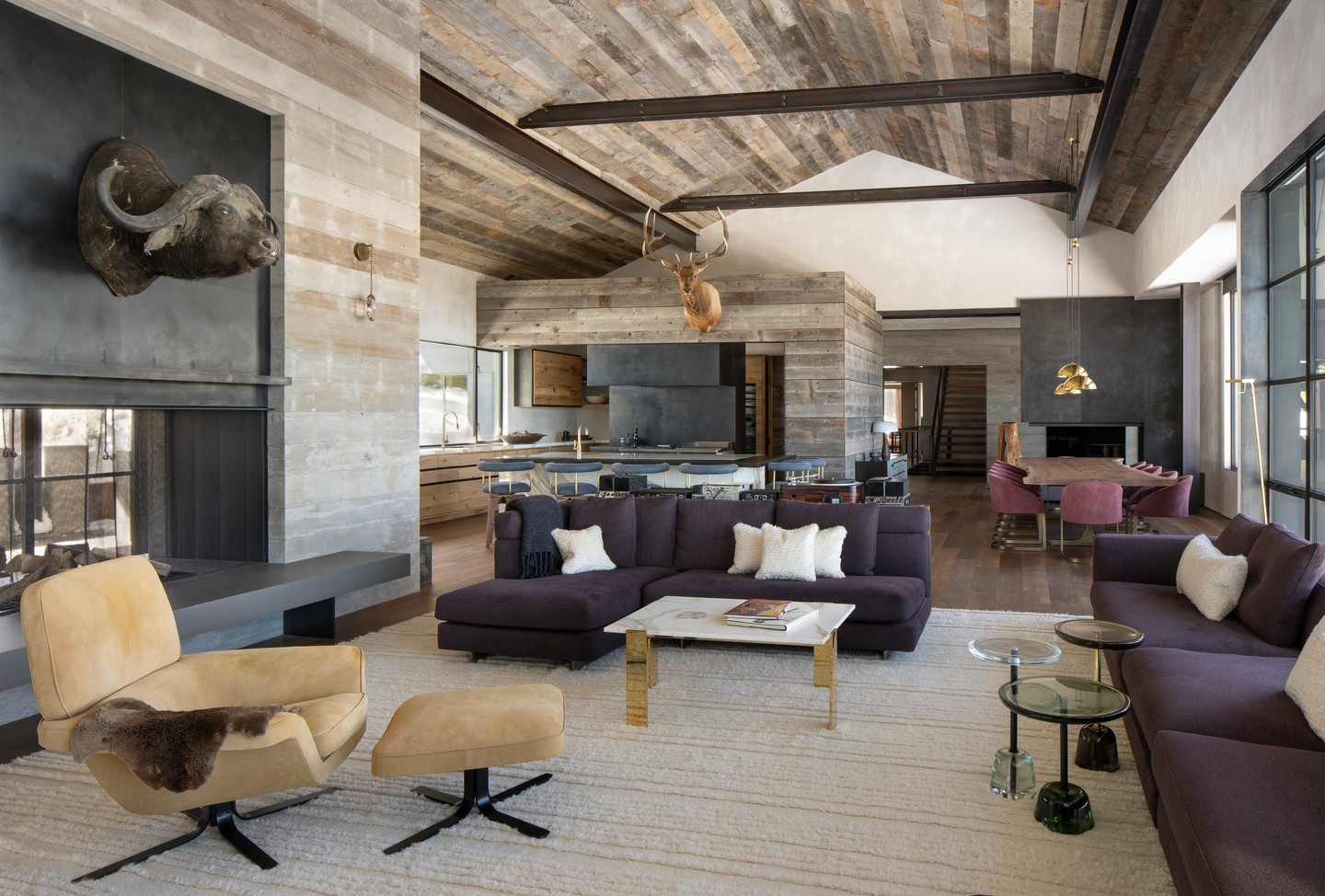
Plum upholstery adds unexpected color to this room's weathered wood and dark metal finishes. The sofas feel rich without overpowering the pale plank ceiling, while a tan lounge chair introduces another warm tone.
A large cream rug gives the furniture a calm base within the open living and dining space. Borrow the idea by choosing a muted color with brown or gray undertones rather than a sharply bright shade.
Repeat it sparingly in an adjoining area, as the dining chairs do here. Keep pillows simple so the wood's varied grain remains visible.
Low tables and an open arrangement help the substantial materials feel lighter. The combination offers rustic warmth while leaving plenty of room for contemporary furniture and personal choices.
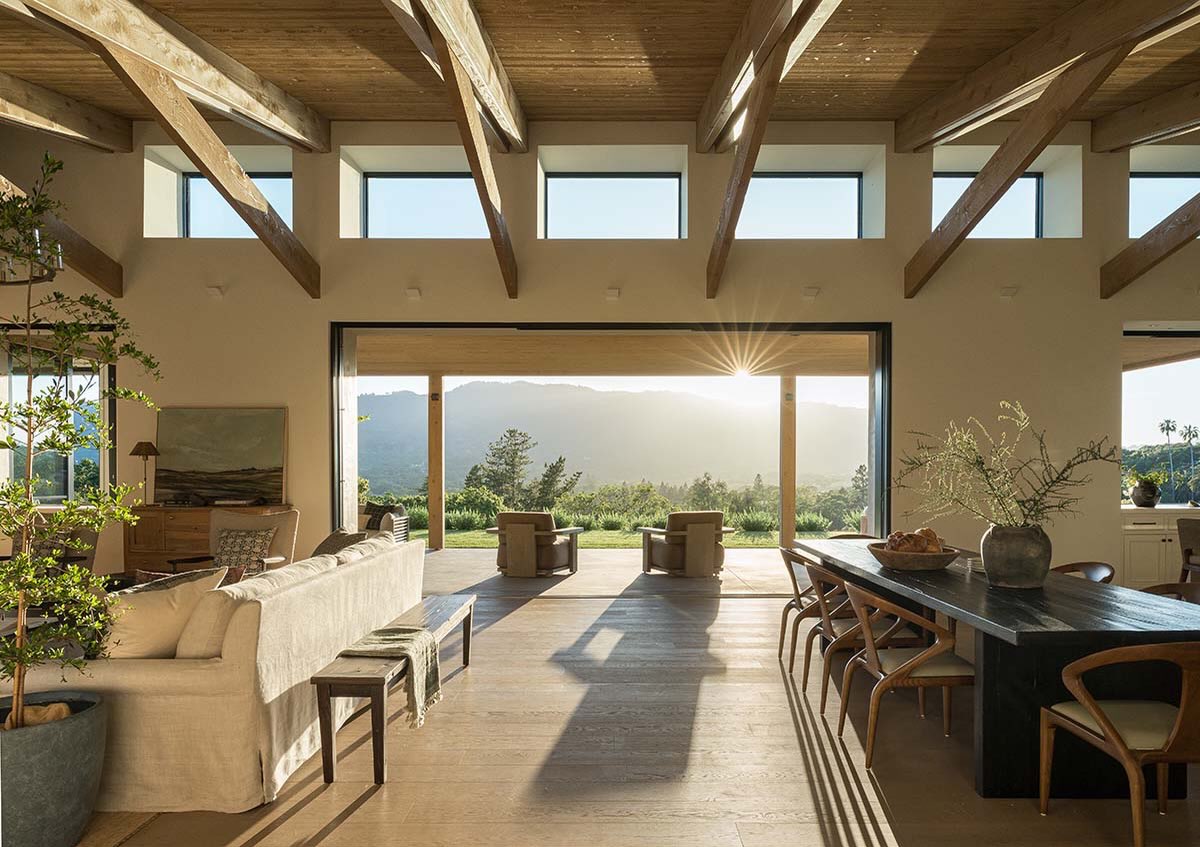
13. Keep an Open Path Through the Great Room
Credits: Instagram
The strongest feature in this great room is the uninterrupted path toward the landscape. Seating sits to one side, dining furniture to the other, and a broad opening draws both areas toward the covered terrace.
Wood boards and exposed trusses give the high ceiling a warm, rustic rhythm. You can apply the same thinking without enlarging a window.
Arrange furniture so an existing view remains visible from the entrance, then keep the central route clear. A narrow bench behind the sofa adds a useful landing spot without becoming a bulky barrier.
Natural upholstery and wood dining chairs connect the two zones. Potted trees and simple branches repeat the surrounding greenery, making the interior feel comfortably connected to its outdoor setting.
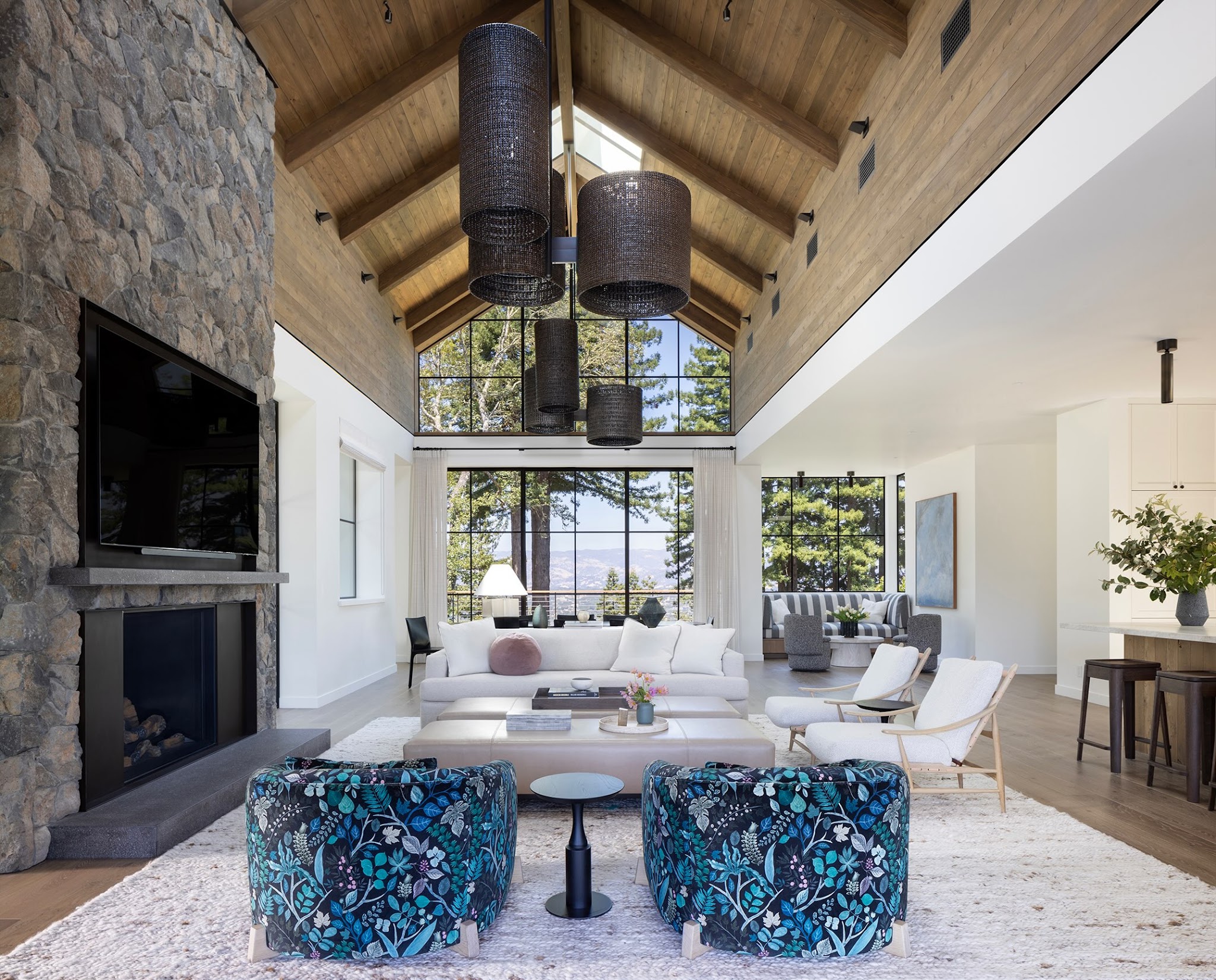
14. Hang Woven Pendants Below a Tall Wood Ceiling
Credits: Instagram
A cluster of dark woven pendants brings the height of this vaulted room into focus. Their varied sizes create a softer outline against the wood ceiling and tall stone fireplace.
Below, white seating keeps the room bright, while two floral chairs add concentrated color. This arrangement shows how rustic materials can support bold details without losing their calm foundation.
In a tall living room, choose lighting with enough visual presence to relate to the ceiling, then keep the seating comfortable and human in scale.
Repeat a darker tone in window frames or small tables to connect the hanging fixtures with the floor. Let patterned upholstery appear in a limited group so the stone, wood, and daylight still lead the design.
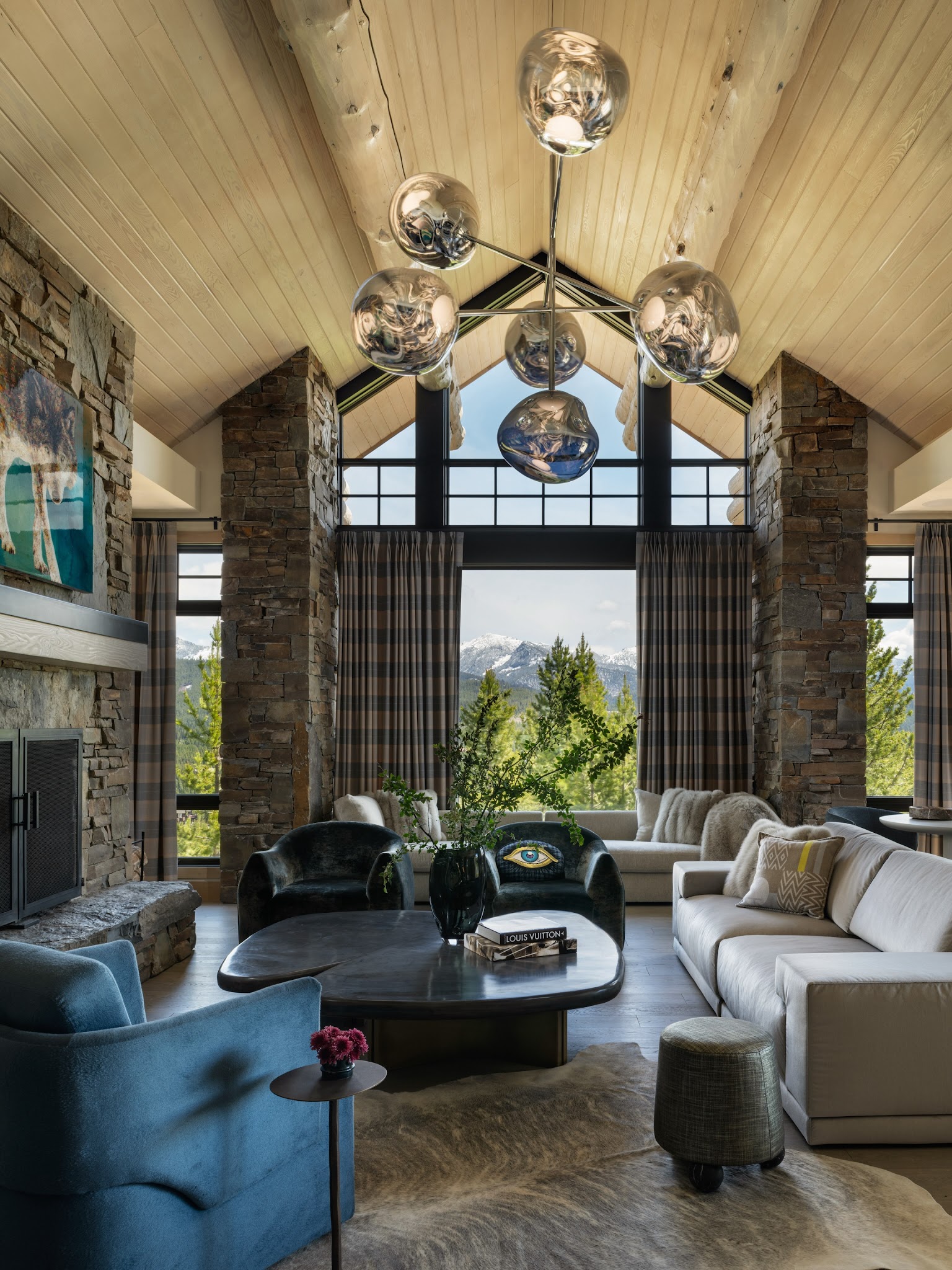
15. Soften Stone Piers With Long Plaid Curtains
Credits: Instagram
Long plaid curtains make this mountain living room feel gentler around its substantial stone piers. Their muted stripes connect the warm masonry to the pale sofas and dark window frames.
Blue chairs introduce a cooler note, echoing the distant mountain view without repeating it literally. Try this approach when large windows and hard surfaces make a rustic room feel exposed.
Choose curtains with enough texture to be interesting at close range, but keep their colors related to the architecture. A soft rug and loose throws add another comfortable layer beneath the wood ceiling.
The rounded coffee table breaks up the straight lines around the windows. Together, these choices create a room that feels sheltered while still celebrating the scenery beyond.
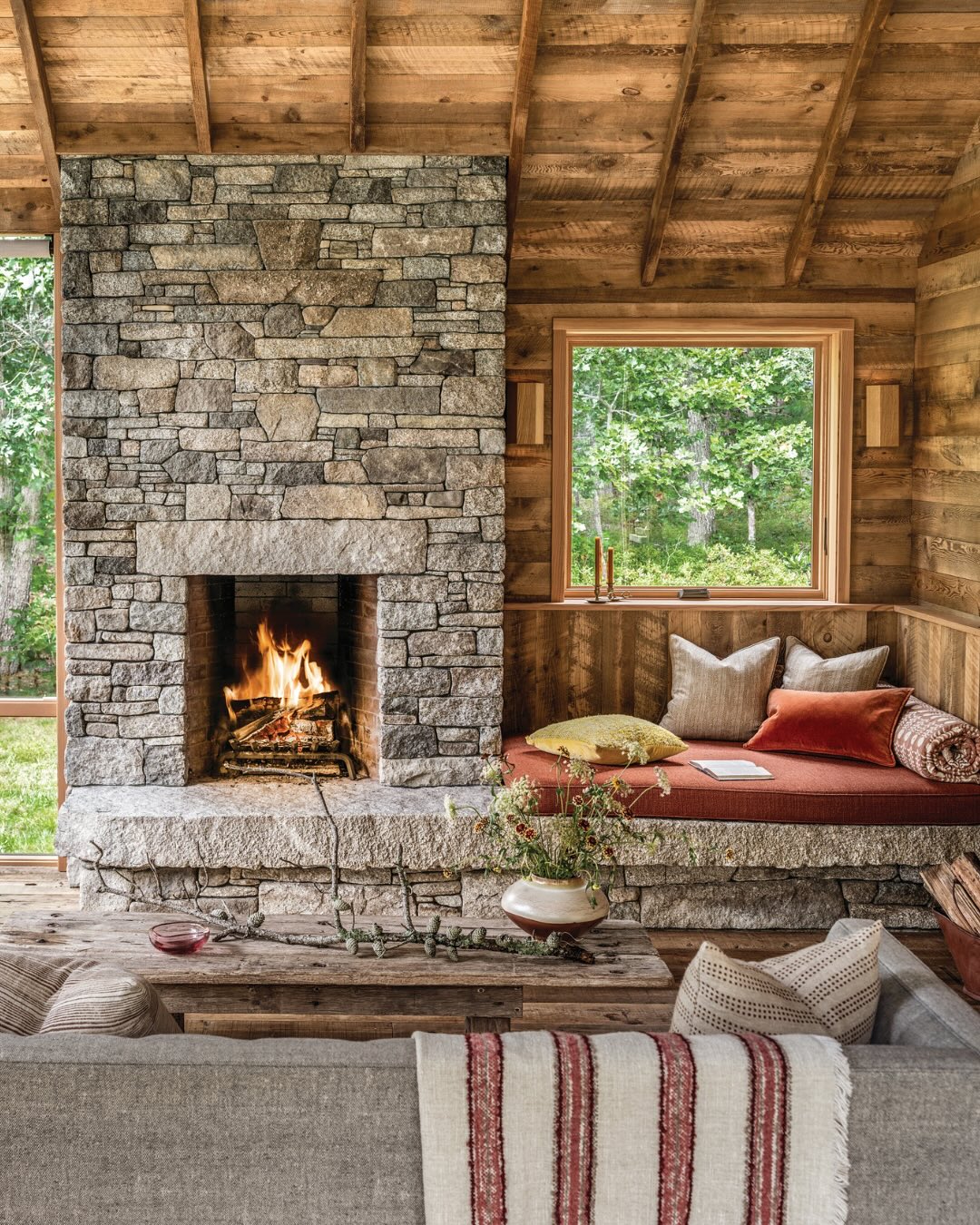
16. Turn a Hearthside Window Into a Cozy Perch
Credits: Instagram
A cushioned window perch makes the stone hearth feel like part of a larger gathering place. Rust colored upholstery picks up the warm timber walls, while loose pillows and a rolled blanket soften the built in seat.
The gray sofa in front adds another comfortable place to settle without obscuring the fireplace. For a similar effect, look for an existing window seat or deep bench that can join your living room arrangement.
Use a well fitting cushion and a few contrasting textiles to make it inviting. Keep the nearby table low so sightlines remain open.
The weathered wood, irregular stone, and simple flowers provide plenty of character; a restrained collection of accessories lets those materials remain the room's visual story.
17. Layer a Patterned Rug Over a Natural Base
Credits: Instagram
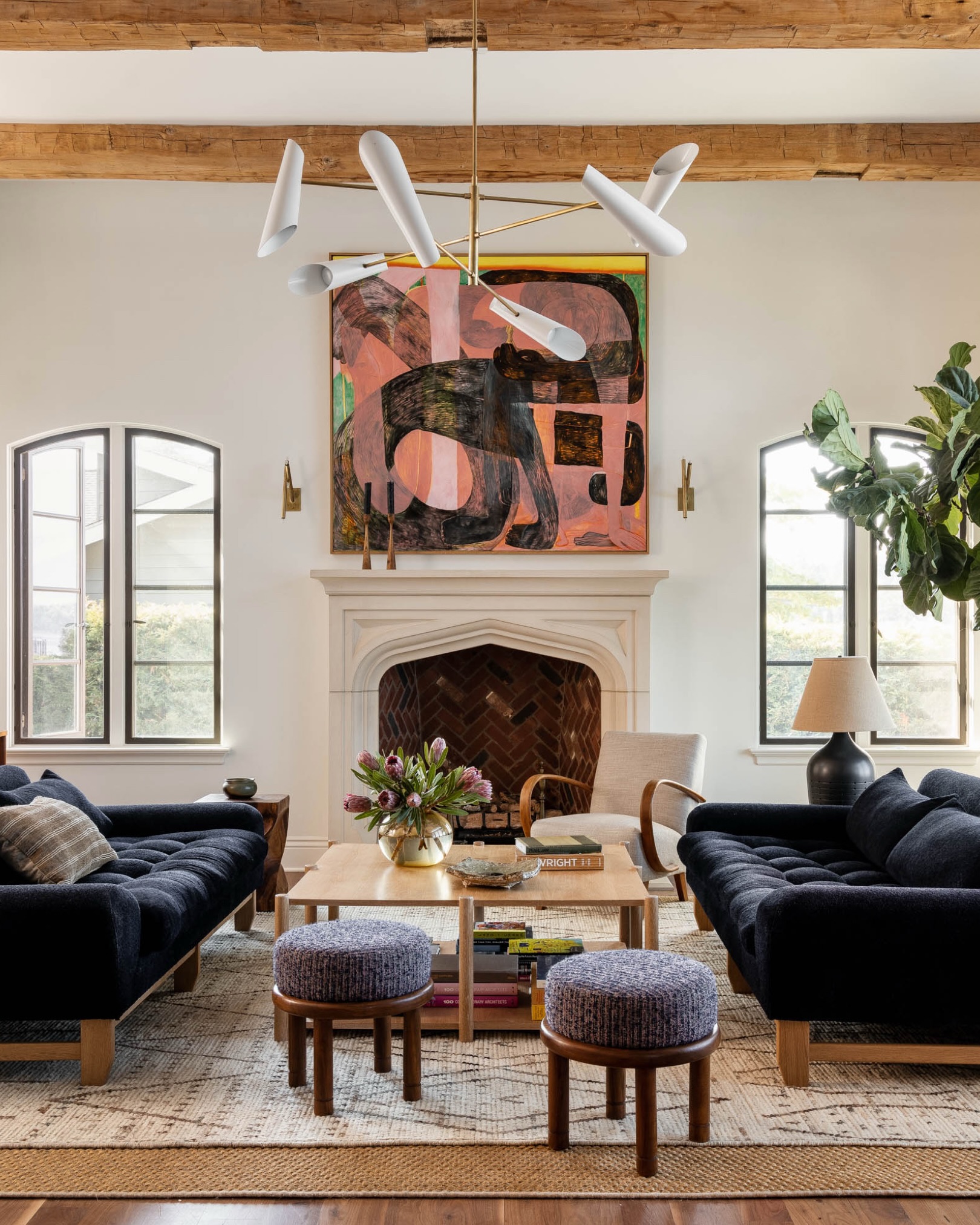
A pale patterned rug sits over a larger natural fiber rug in this bright living room. The layered foundation gives the dark blue sofas a softer setting and repeats the warmth of the exposed ceiling beams.
Above the fireplace, colorful abstract art adds energy without changing the room's simple material palette. To borrow the idea, begin with a durable base rug that comfortably contains the seating.
Add a smaller patterned layer where people gather, keeping its edges flat and clear of busy walkways. Wood stools and a straightforward coffee table reinforce the relaxed feeling.
The mix works because each layer contributes something different: broad texture underneath, gentle pattern above, and a few strong shapes that make the room feel personal.
18. Add Rough Wood Accents to a White Room
Credits: Instagram
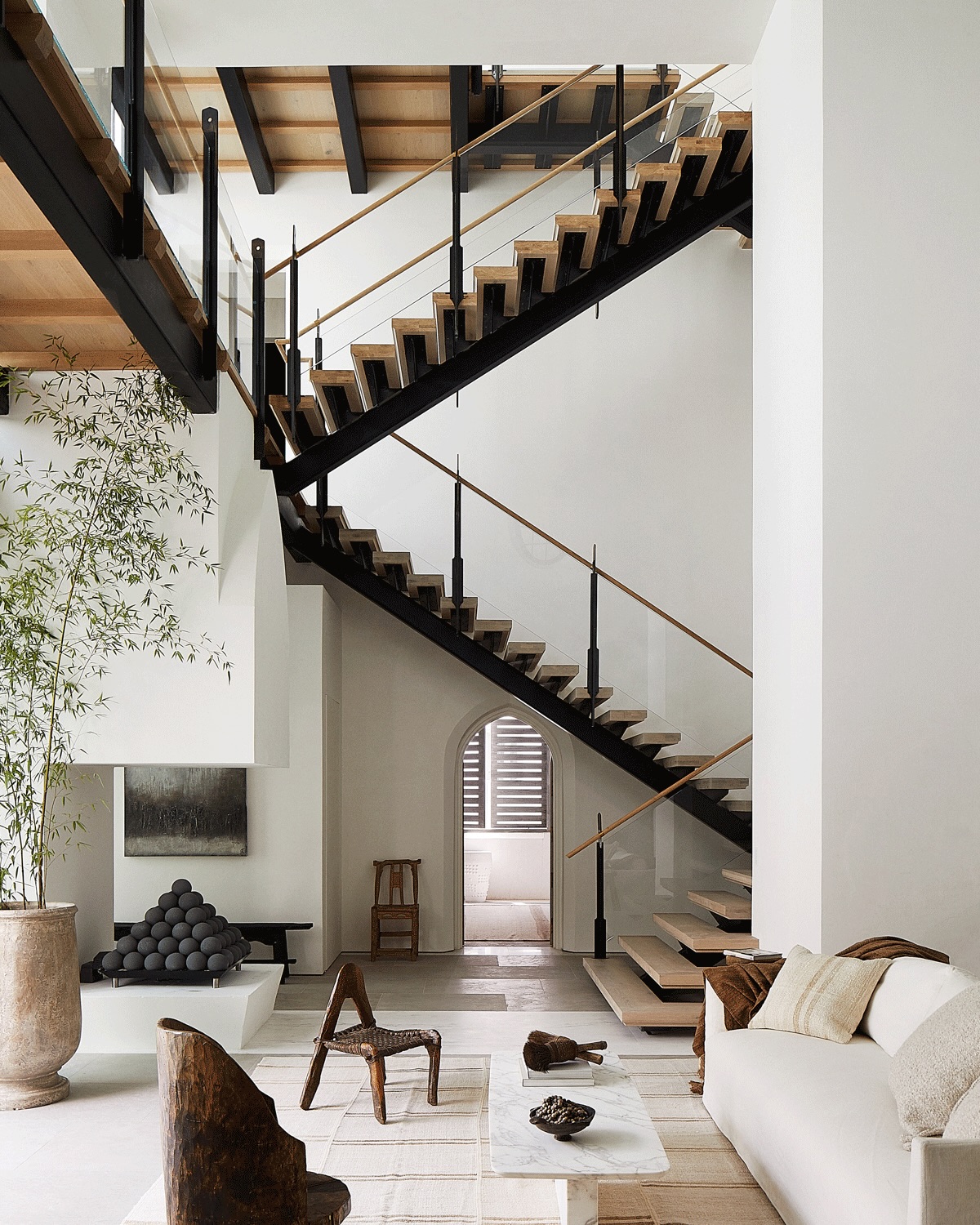
This white living room gains rustic character from a small group of tactile wood pieces. An irregular chair, a woven seat, and a generous planter stand out against the smooth sofa and pale table.
Wood treads and ceiling boards carry that warmth upward through the open stairwell. The lesson is useful when you want natural texture without covering every wall.
Choose one or two pieces whose grain, shape, or weave can be appreciated clearly. Give them breathing room, and keep nearby textiles simple.
A tree softens the tall architecture while repeating the organic outlines at floor level. The limited palette allows each material to register, creating a living area that feels light, comfortable, and quietly connected to the natural world.
19. Warm a Wood Corner With Soft Textured Chairs
Credits: Instagram
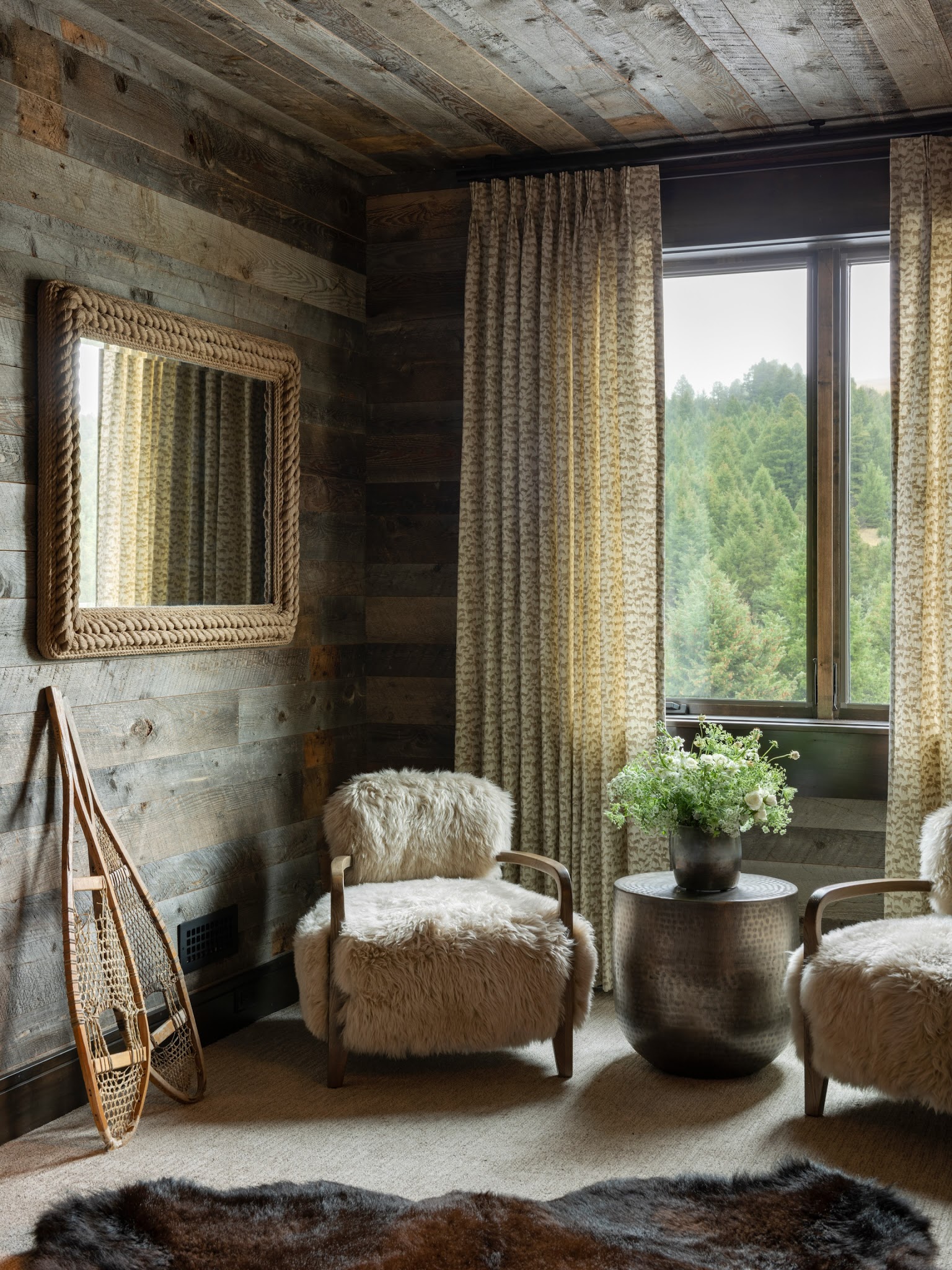
Two softly textured chairs turn this wood lined corner into a place to pause. Their pale coverings contrast with the gray boards, while a small hammered table provides a shared surface between them.
Patterned curtains soften the window, and a rope framed mirror repeats the room's tactile character. You can create a similar nook within a larger living room by pairing comfortable chairs near natural light.
Keep the table compact enough to preserve legroom and choose textiles that feel pleasant at close range. A simple flower arrangement brings freshness to the weathered surfaces.
Rather than filling every wall, let one meaningful object, such as the snowshoes shown here, add personality. The result feels warm, useful, and ready for unhurried conversation.
20. Repeat Simple Stripes Beside Weathered Boards
Credits: Instagram
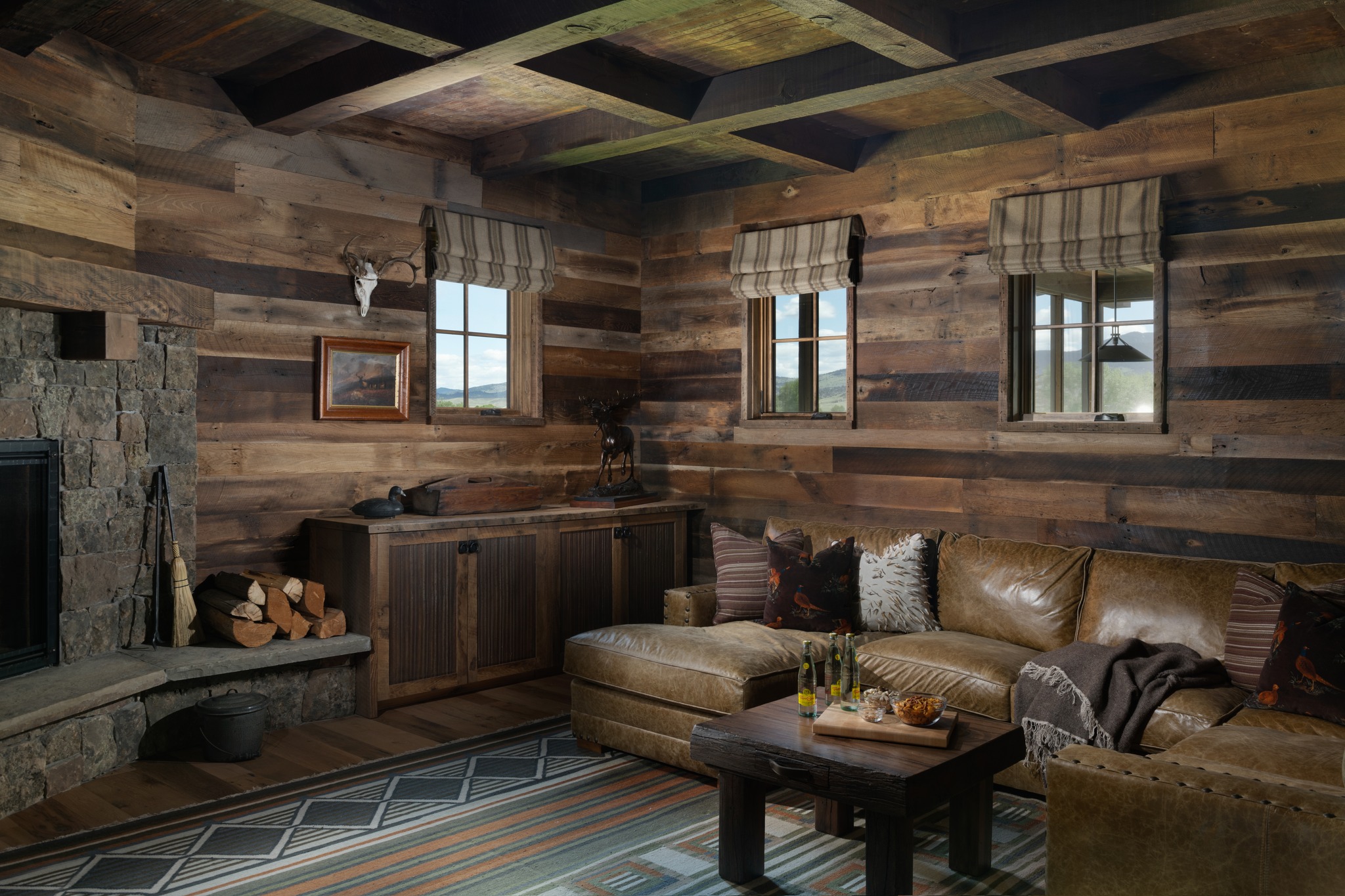
Striped shades and a geometric rug give this wood wrapped sitting room a subtle sense of rhythm. Their repeated lines sit comfortably beside horizontal wall boards and the squared ceiling beams.
A weathered leather sectional keeps the furniture relaxed, with a thick throw and patterned pillows adding softer surfaces. This is a useful way to decorate a cabin without relying on a crowded collection of accessories.
Pick one simple pattern for the windows, then echo its colors in a larger rug. Let the wood vary naturally in tone instead of matching every piece.
A compact dark coffee table leaves the seating accessible, while a low cabinet provides practical storage. The layered result feels sturdy, comfortable, and suited to everyday lounging.