
Purple can feel bold on a wall but surprisingly easy to introduce through curtains, cushions, or a sofa.
Purple Living Room Ideas can help you choose how much color to use and what to pair it with, from plum curtains against gray furniture to violet walls framed by white molding.
The examples also show how cream upholstery, warm gold accents, or ochre walls can balance richer shades. Repeating purple in a few places helps connect the room without requiring every piece to match.
With these approaches, you can find a version that suits your space and comfort level.
1. Frame Violet Walls with White Molding
Credits: Instagram
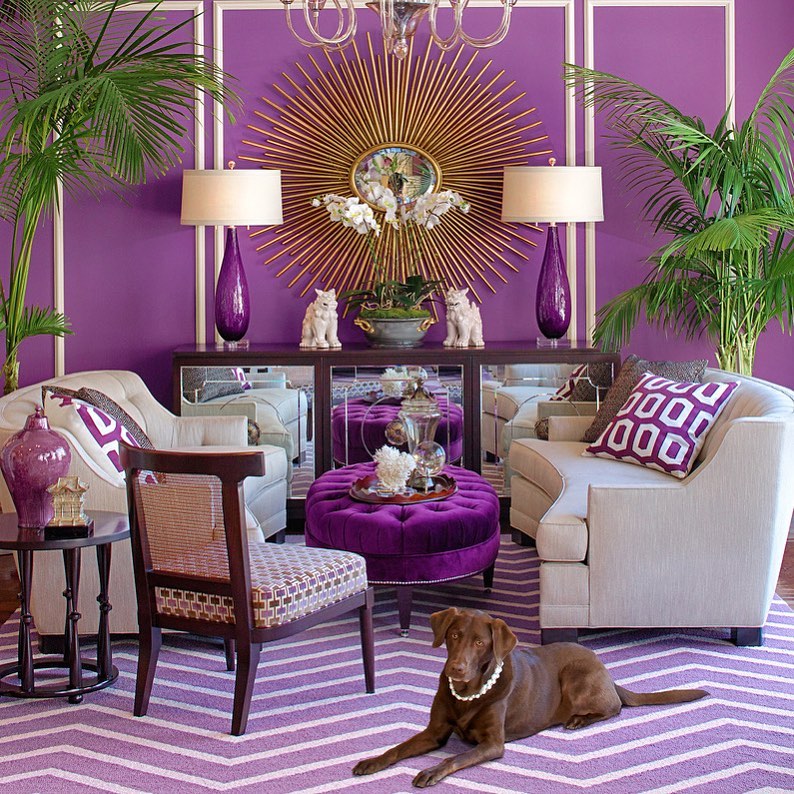
White molding gives these violet walls a crisp outline, while cream sofas keep the seating area bright.
The same purple appears in the striped rug, patterned cushions, glossy lamps, and round tufted ottoman, so the color travels through the room at several heights.
Try this approach by choosing one main purple and repeating it in three different materials. Keep your largest supporting pieces neutral to give the eye somewhere to rest.
A gold sunburst mirror brings warmth above the mirrored cabinet, and two tall palms soften the formal arrangement. Center an ottoman between facing seats, then use a sturdy tray for drinks.
If patterned upholstery feels too busy, introduce the geometry through removable cushion covers and an inexpensive rug instead.
2. Repeat Purple Across a Cream Sofa
Credits: Instagram
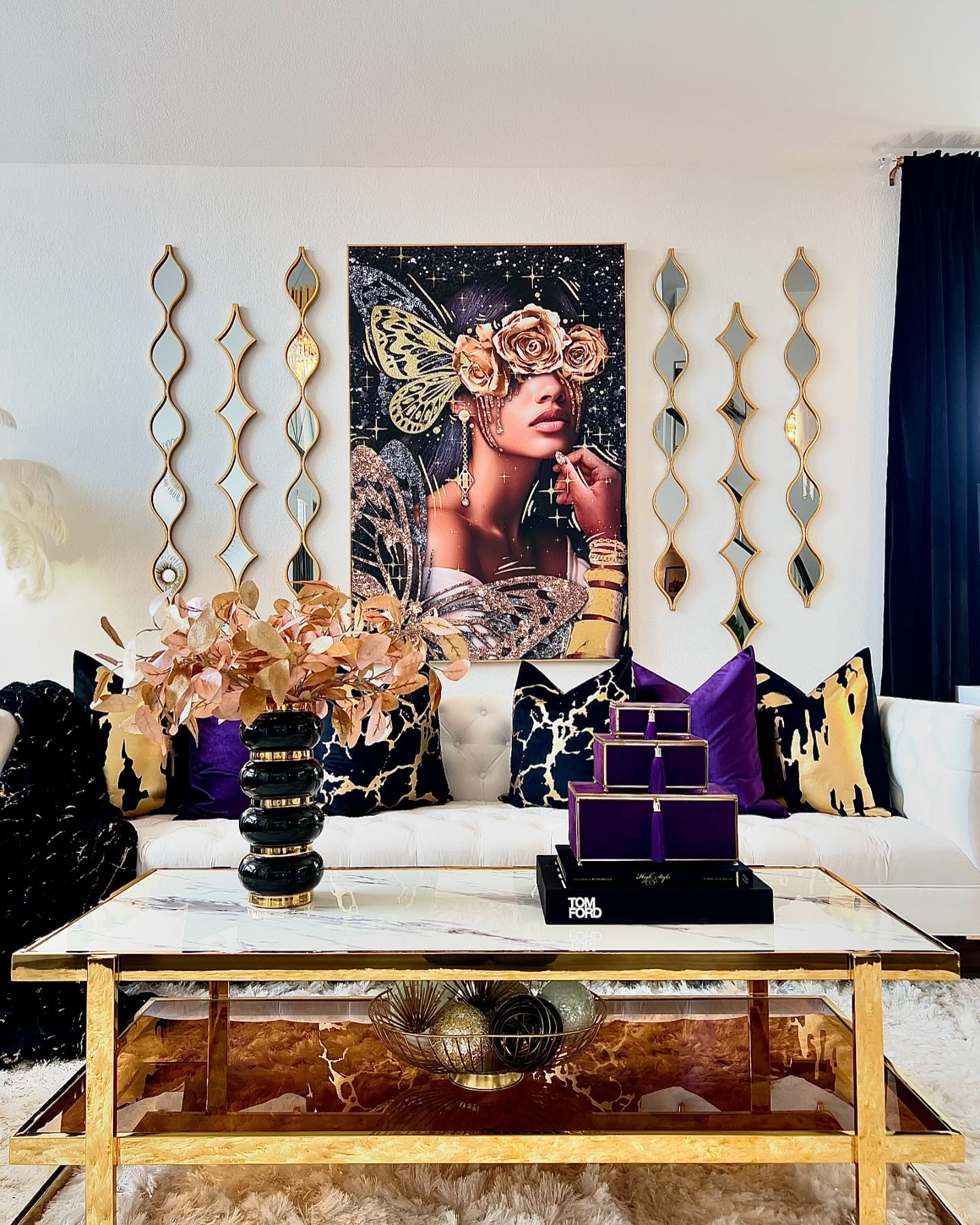
Purple cushions and stacked decorative boxes give this cream sofa a clear color story without changing the walls. Black and gold patterned pillows connect the seating to the framed portrait, while the glass coffee table keeps the arrangement visually open.
Start with two plain purple cushion covers, then add one patterned design that includes your existing neutrals. Place a small purple accessory on the table to carry the color forward.
Matching every shade is unnecessary; a little variation adds depth. Keep tall flowers toward one end so they leave space for conversation and everyday use.
Slim gold mirrors stretch the display around the artwork. In a smaller room, use fewer pieces while keeping the same repeated colors and balanced spacing.
3. Soften Gray Furniture with Plum Curtains
Credits: Instagram
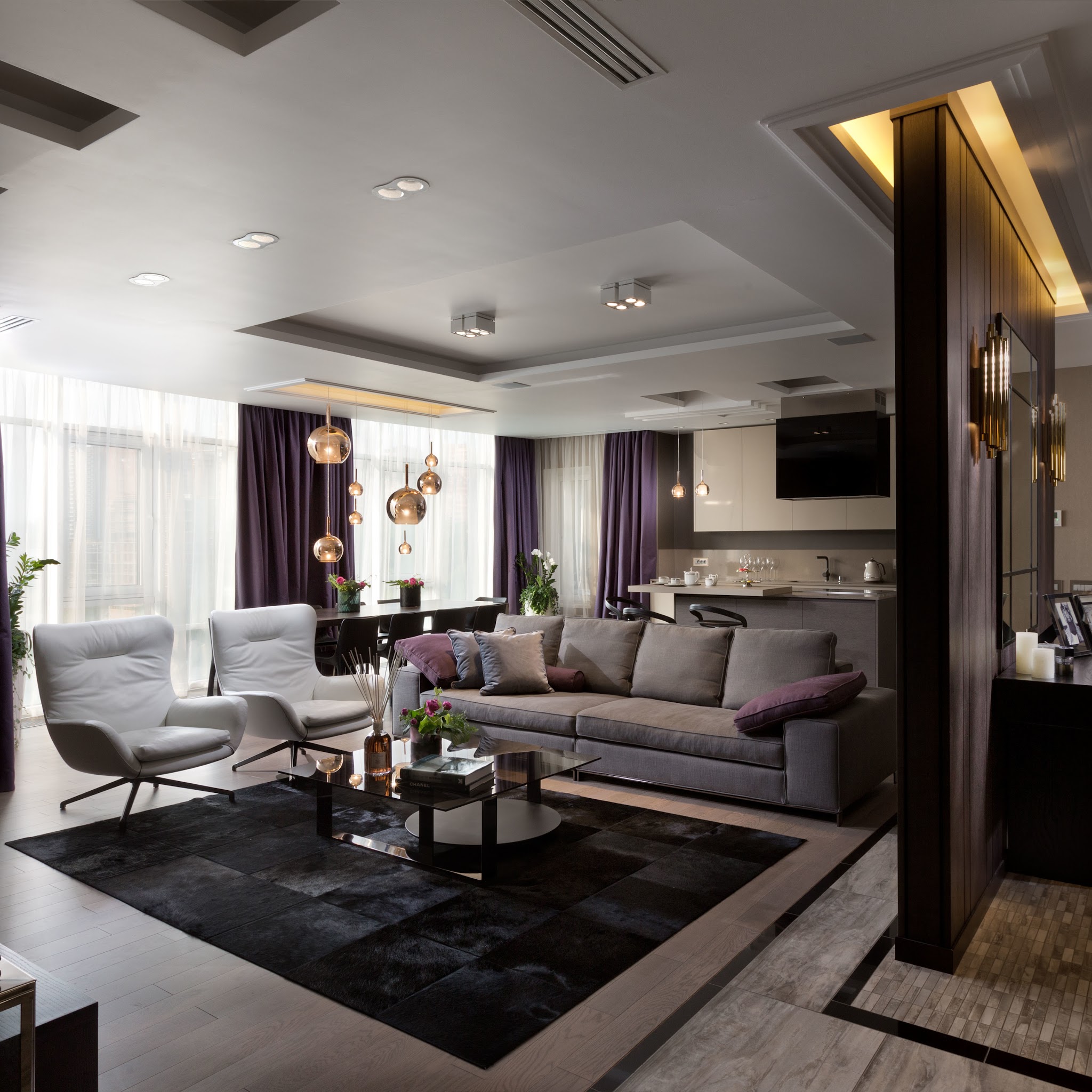
Plum curtains bring a quiet wash of color to this open living area, where gray seating and pale flooring establish a restrained base. Matching purple cushions on the sofa connect the windows to the conversation zone.
Sheer white panels stay behind the heavier curtains, allowing daylight to filter through when privacy is needed. For a similar result, hang curtains close to the ceiling and let them reach the floor.
Choose enough fabric for visible folds rather than stretching narrow panels flat. A dark rug defines the seating within the larger room, while a glass table avoids adding another solid block.
Warm pendant lights balance the cool upholstery. Test a fabric sample beside your sofa in daylight before ordering full panels.
4. Drench the Fireplace Wall in Deep Plum
Credits: Instagram
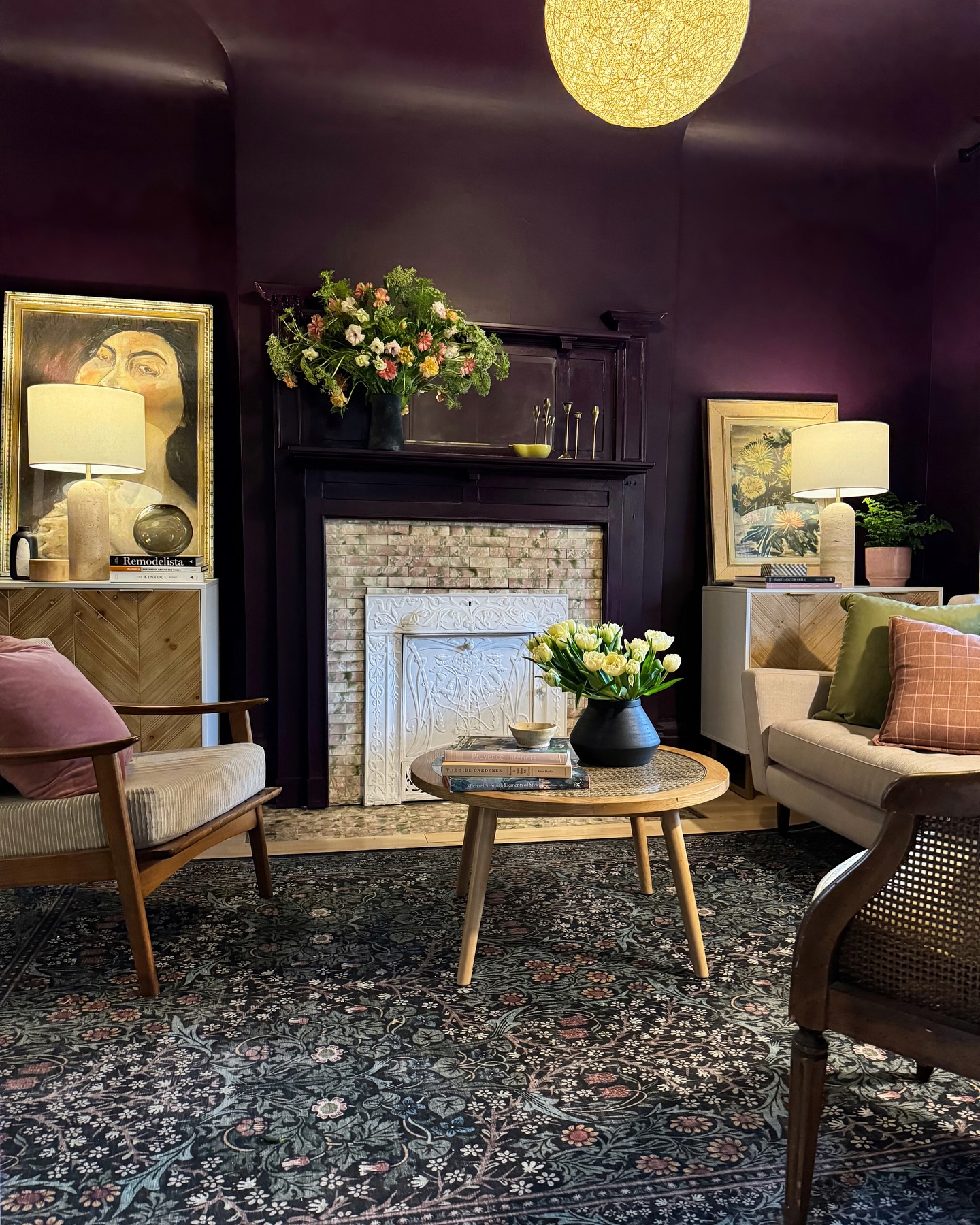
Deep plum wraps this room's walls, ceiling, and mantel, creating a continuous backdrop for pale furniture and warm wood. The fireplace's light tiles remain visible, giving the dark scheme a useful point of contrast.
Two table lamps spread a soft glow across the seating rather than relying entirely on the overhead fixture. When trying this look, sample your purple on several walls and inspect it after sunset.
Keep a few substantial pale surfaces, such as upholstery or lampshades, to prevent the details disappearing. The patterned rug mixes muted colors that connect the cushions and flowers.
A small round table leaves room between the chairs. Choose a paint finish appropriate to each surface, while keeping the color consistent throughout the room.
5. Pair Glossy Aubergine with Antique Gold
Credits: Instagram
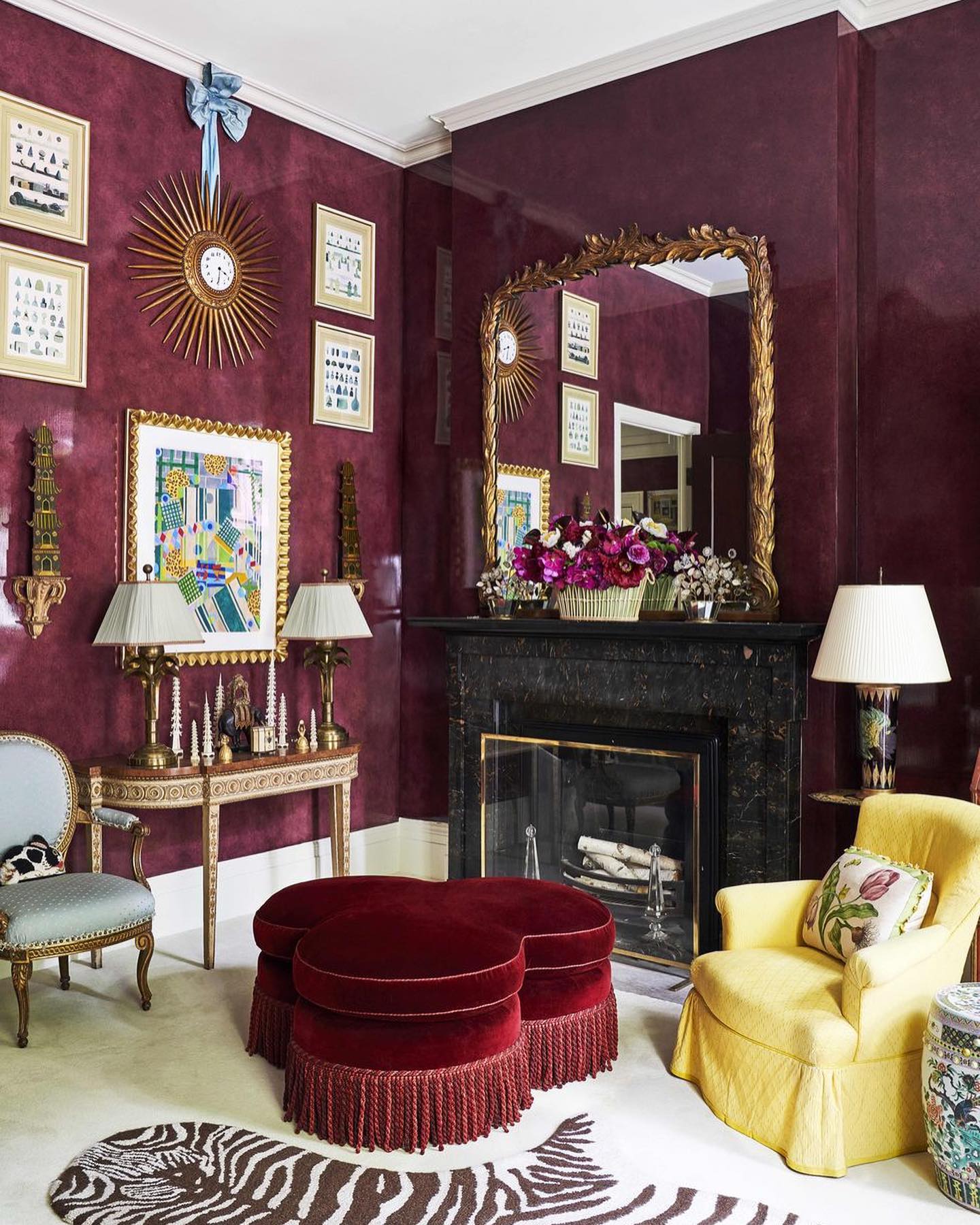
Aubergine walls form a rich setting for the gilt mirror, slim console, and collection of framed pictures. The glossy surface catches light, while the white ceiling and pale carpet give the room breathing space.
A yellow armchair adds a lively contrast beside the dark fireplace. To borrow the idea, choose one strong purple wall color and repeat a warm metal across frames, lamps, and furniture details.
You can achieve a softer version with satin paint rather than a highly reflective finish. Group smaller pictures around a clear central piece so the wall feels considered.
The rounded ottoman introduces softness among the straight architectural lines. Leave a practical route around it, and select upholstery that suits how you use the room.
6. Give Paneled Walls a Purple Finish
Credits: Instagram
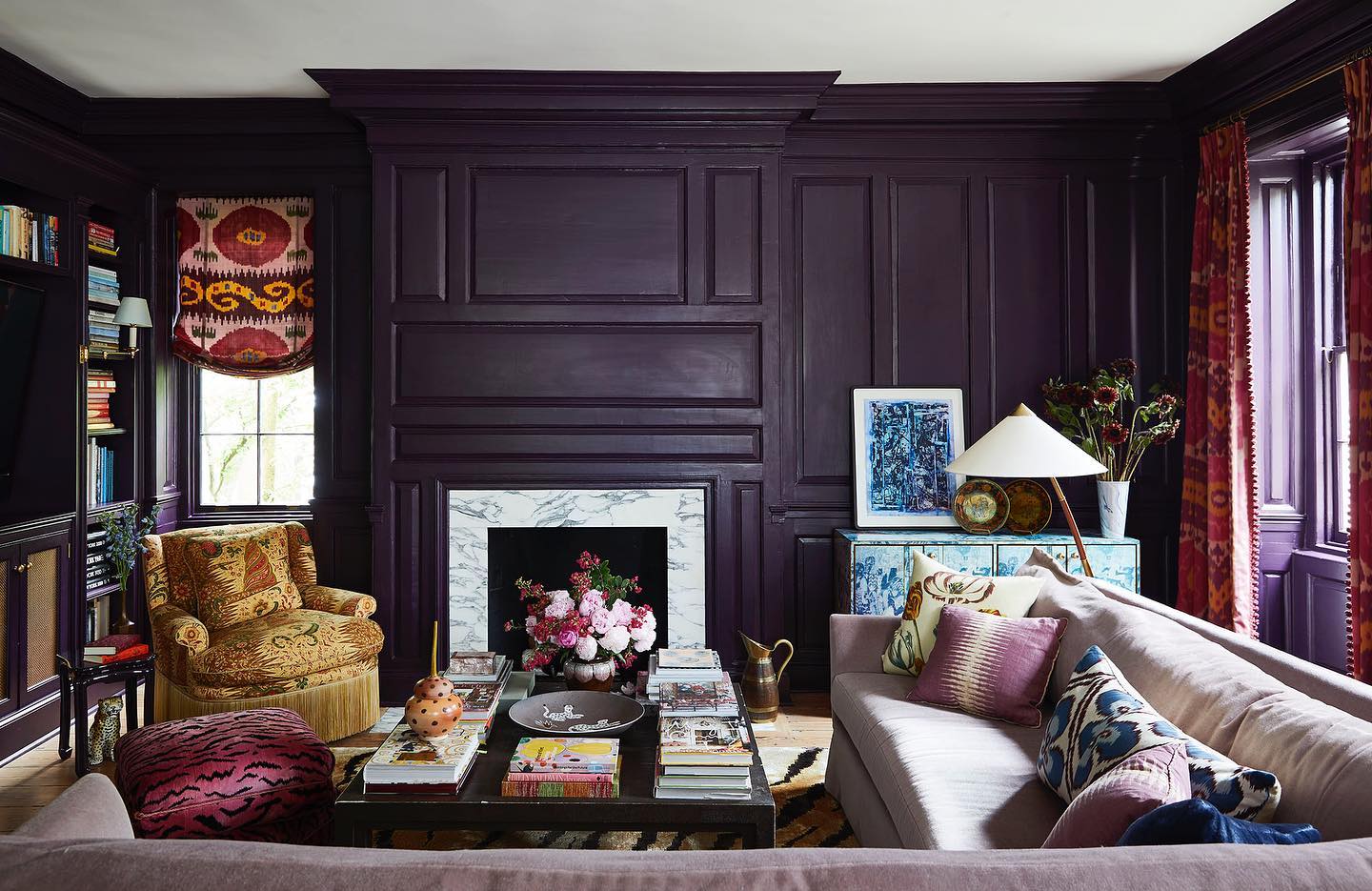
Dark purple paint makes the paneling, shelves, and window trim feel like one continuous architectural feature. A pale sectional brightens the middle of the room, while patterned curtains and a golden chair add warmth around the edges.
Notice how the white fireplace surround becomes a small focal point within the darker wall. If you have existing paneling, painting it a single shade can simplify the room without hiding its texture.
Repeat purple in a cushion or footstool, then introduce other colors through textiles you can change easily. Keep reading light close to the seating, especially beside deep shelving.
A generous coffee table supports books and daily essentials. Leave some clear tabletop space so the collected look remains comfortable to use.
7. Make Purple Sofas the Main Event
Credits: Instagram
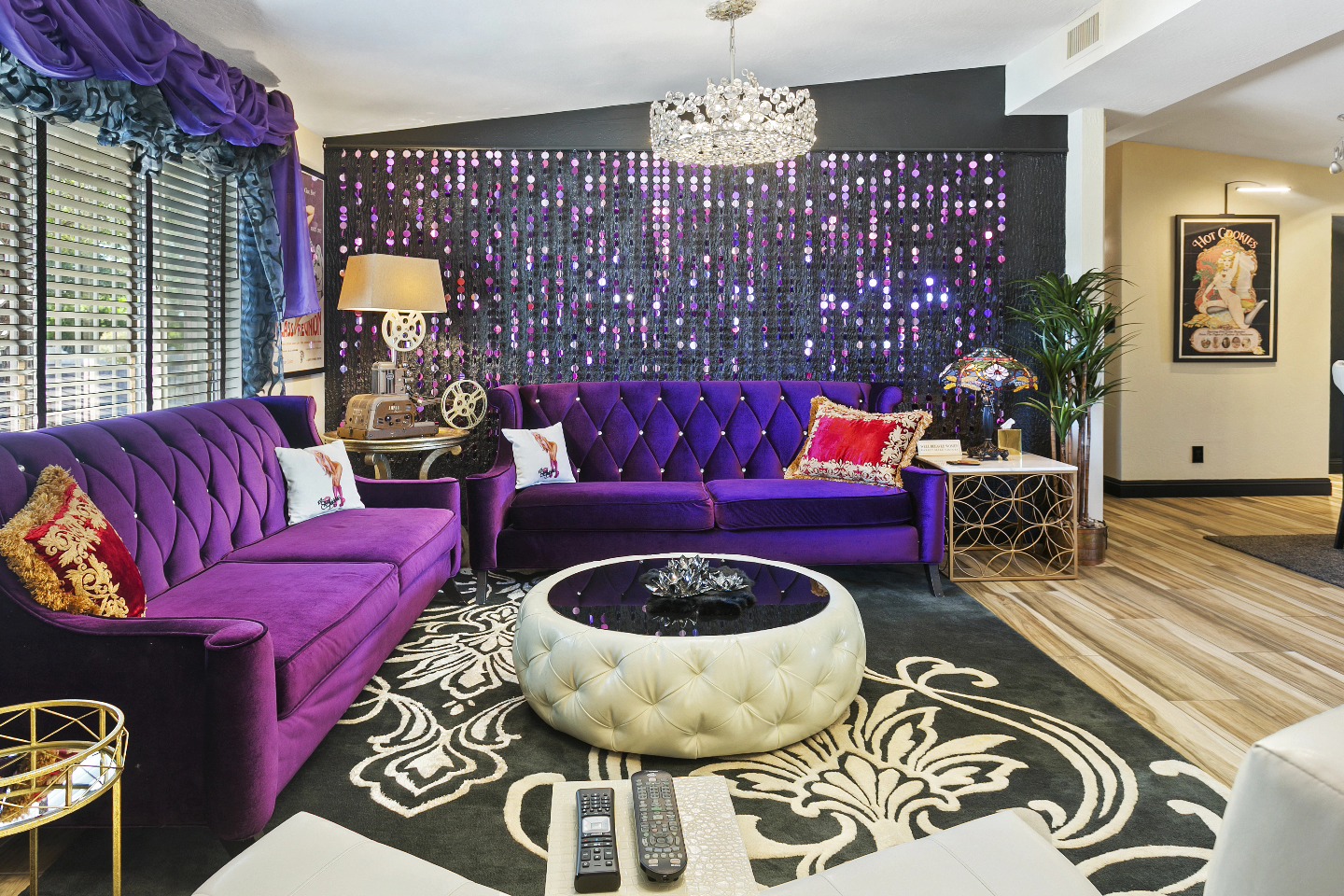
Two tufted purple sofas create a generous conversation corner, with a pale round ottoman keeping the center light. The black and cream rug links the seating without adding another strong color.
Although the sparkling wall and chandelier make this room theatrical, the basic furniture arrangement is easy to adapt. Place sofas at right angles when you want people to face each other comfortably while keeping one side of the room open.
Repeat the upholstery color in a curtain or a small decorative detail. Choose a quieter wall finish if you prefer less shine.
A round table or ottoman helps soften the meeting point between two substantial sofas. Keep side tables within reach, and measure walking space before committing to seating.
8. Combine Violet Chairs with Leafy Wallpaper
Credits: Instagram
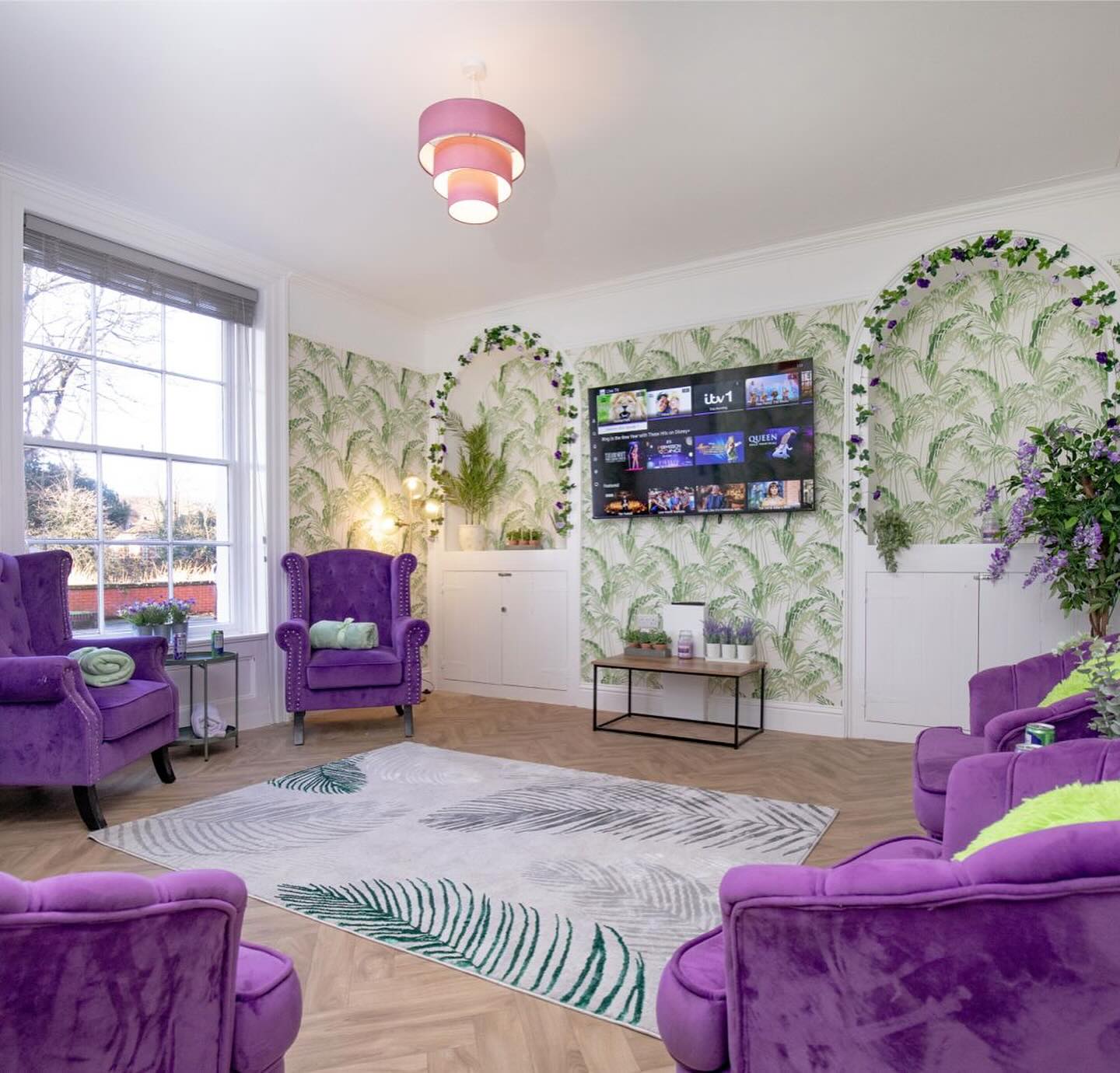
Purple armchairs stand out against leafy wallpaper and white cabinetry in this bright sitting room. The repeated chairs give the room a consistent color, while green cushions and botanical patterns connect the furniture to the walls.
For a smaller version, start with a pair of purple chairs and a pale rug that contains a little green. Leave the ceiling and trim light if you want the furniture to remain the main focus.
The arched recesses soften the television wall and provide space for plants. You can echo that curve with a mirror or artwork rather than building new joinery.
Keep the center open for easy movement, and place a small table beside each seat for drinks, books, or reading glasses.
9. Warm a Plum Sectional with Ochre Walls
Credits: Instagram
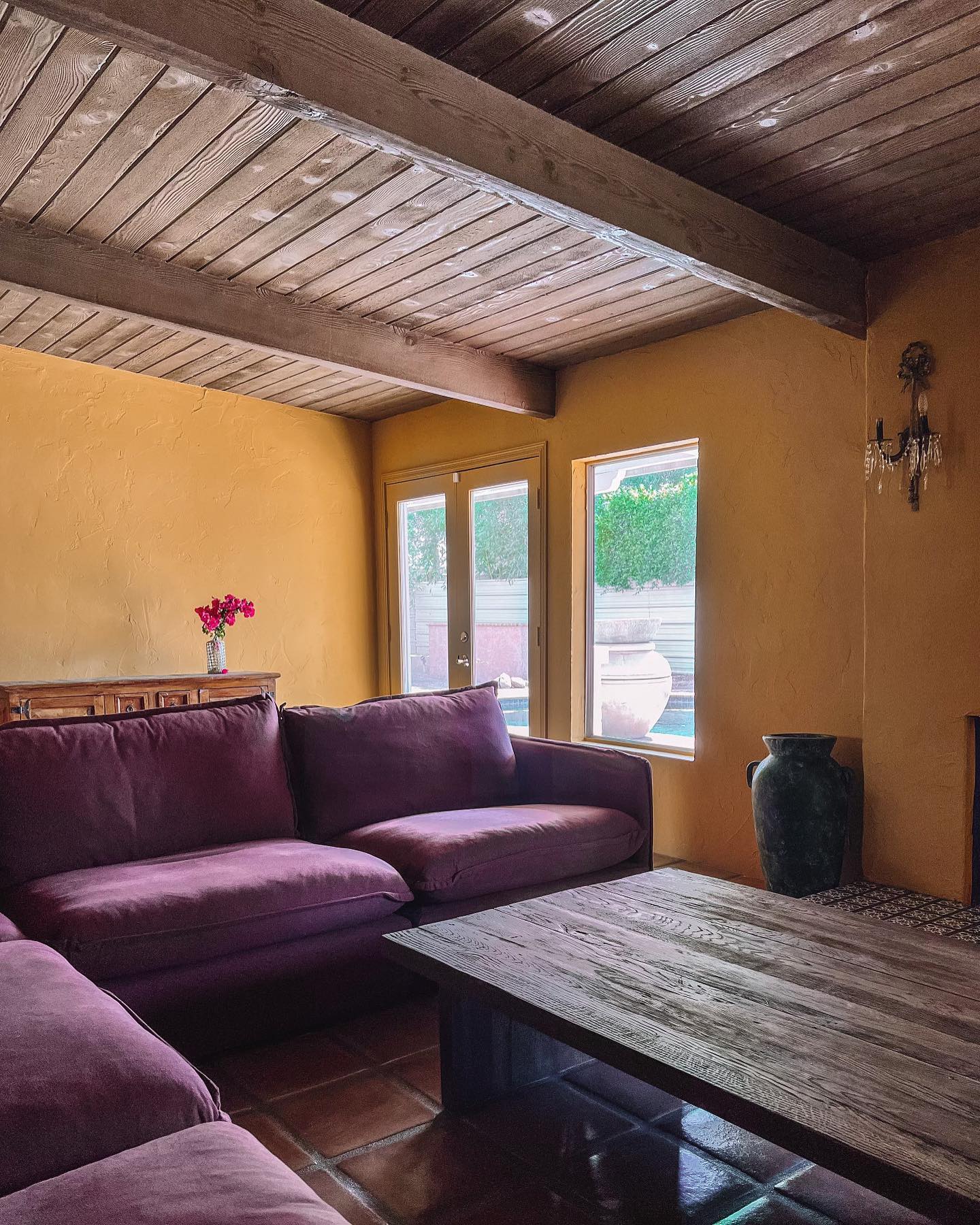
A relaxed plum sectional sits beneath timber beams, surrounded by warm ochre walls and terracotta floor tiles. The combination feels grounded because the purple is balanced by natural textures rather than more glossy finishes.
A broad wooden coffee table echoes the ceiling and gives the soft seating a sturdy companion. To recreate the palette, start with a muted purple fabric sample beside warm wood and an earthy yellow paint card.
Check the combination in your own light before making larger purchases. Keep accessories simple so the upholstery and room materials can do most of the work.
The black floor vase adds a dark accent without introducing another bright color. Choose a table height that feels comfortable from the sofa cushions.
10. Use Mauve to Soften an Airy Room
Credits: Instagram
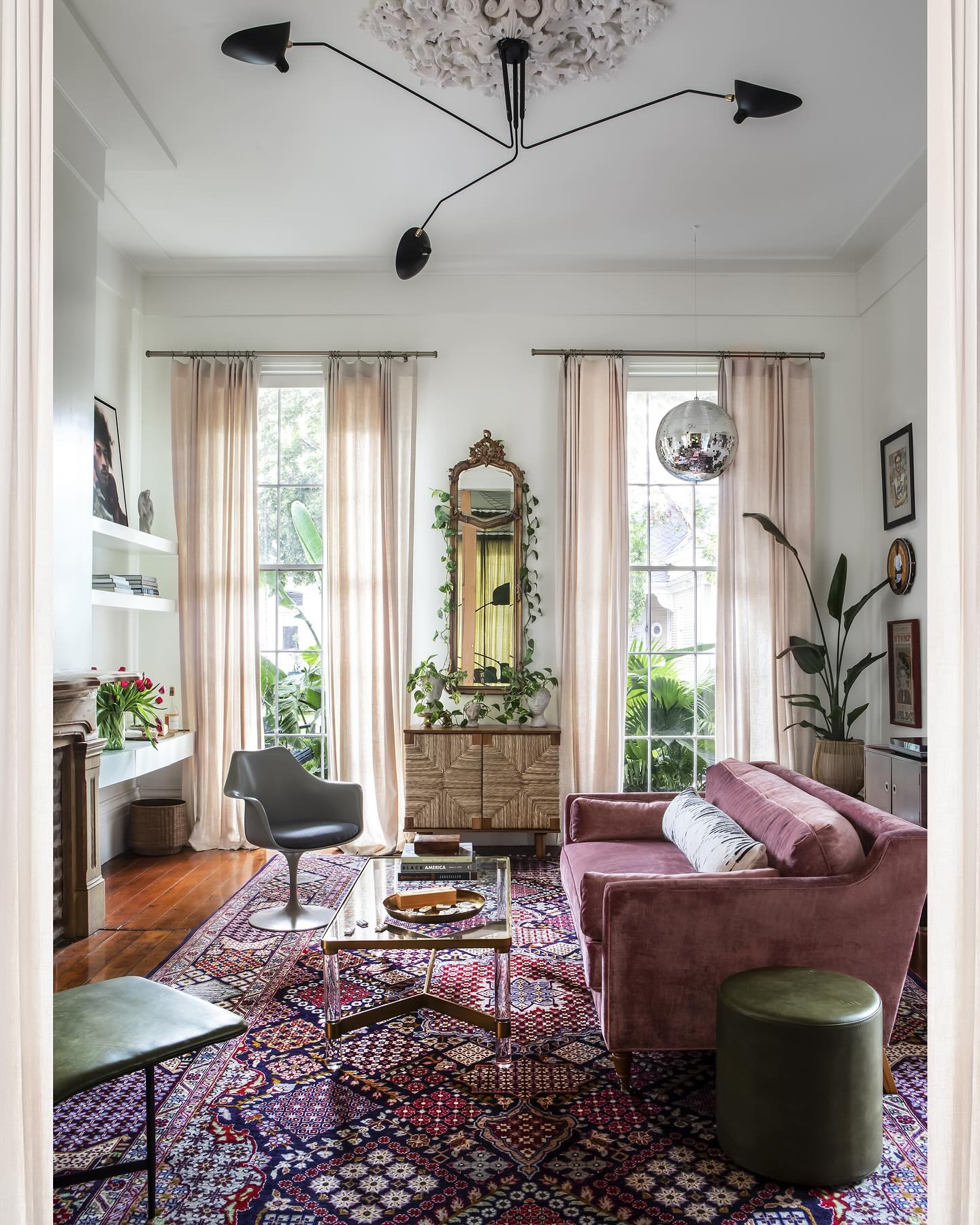
A muted mauve sofa brings gentle color to this tall, light living room. Pale curtains frame the windows, while the patterned rug repeats purple among warmer reds and softer neutrals.
The glass coffee table lets that pattern remain visible and keeps the seating area feeling open. If you want a similar balance, choose upholstery with a softened purple undertone rather than a very saturated violet.
Set it against warm white walls and bring in wood, greenery, and a little metal for contrast. The narrow cabinet and mirror make use of the space between windows without blocking daylight.
Keep curtain panels clear of the glass when open. A compact stool offers another place to perch without making the furniture arrangement crowded.
11. Turn Storage into a Plum Feature
Credits: Instagram
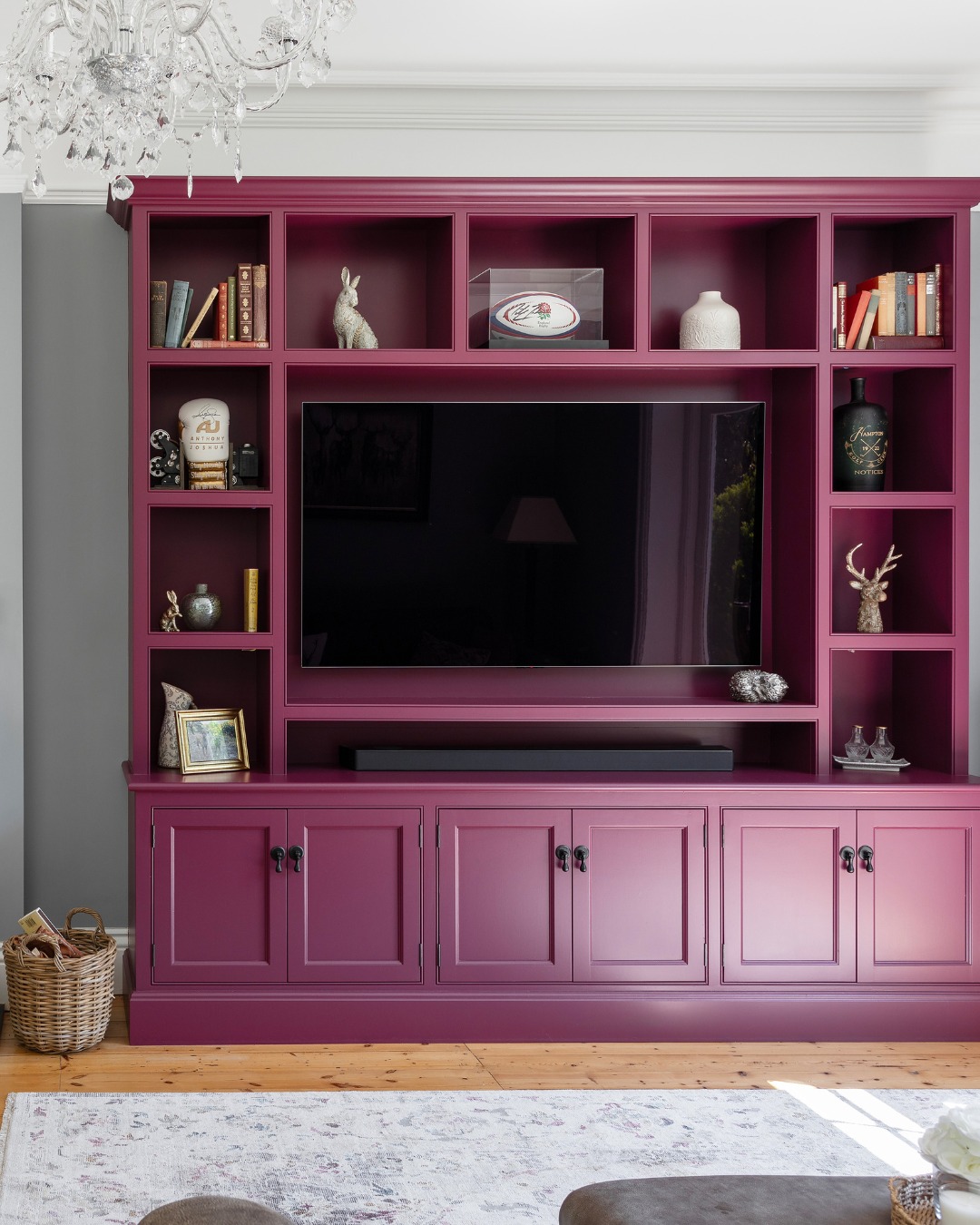
A plum media cabinet turns practical storage into the main color feature of this living room. Open shelves surround the television, while paneled doors conceal the everyday items below.
The gray walls, white ceiling, and pale rug allow the rich finish to stand out without overwhelming the space. If you already have fitted storage, paint can give it a similar presence.
Check that the chosen product suits the cabinet material and prepare the surface carefully. Vary shelf contents between books, ceramics, and a few personal objects rather than filling every opening.
Keep the area directly around the screen relatively quiet. Black handles and a dark soundbar blend with the television, helping the cabinet read as one organized piece of furniture.
12. Set a Dusty Purple Sofa Against Cream
Credits: Instagram
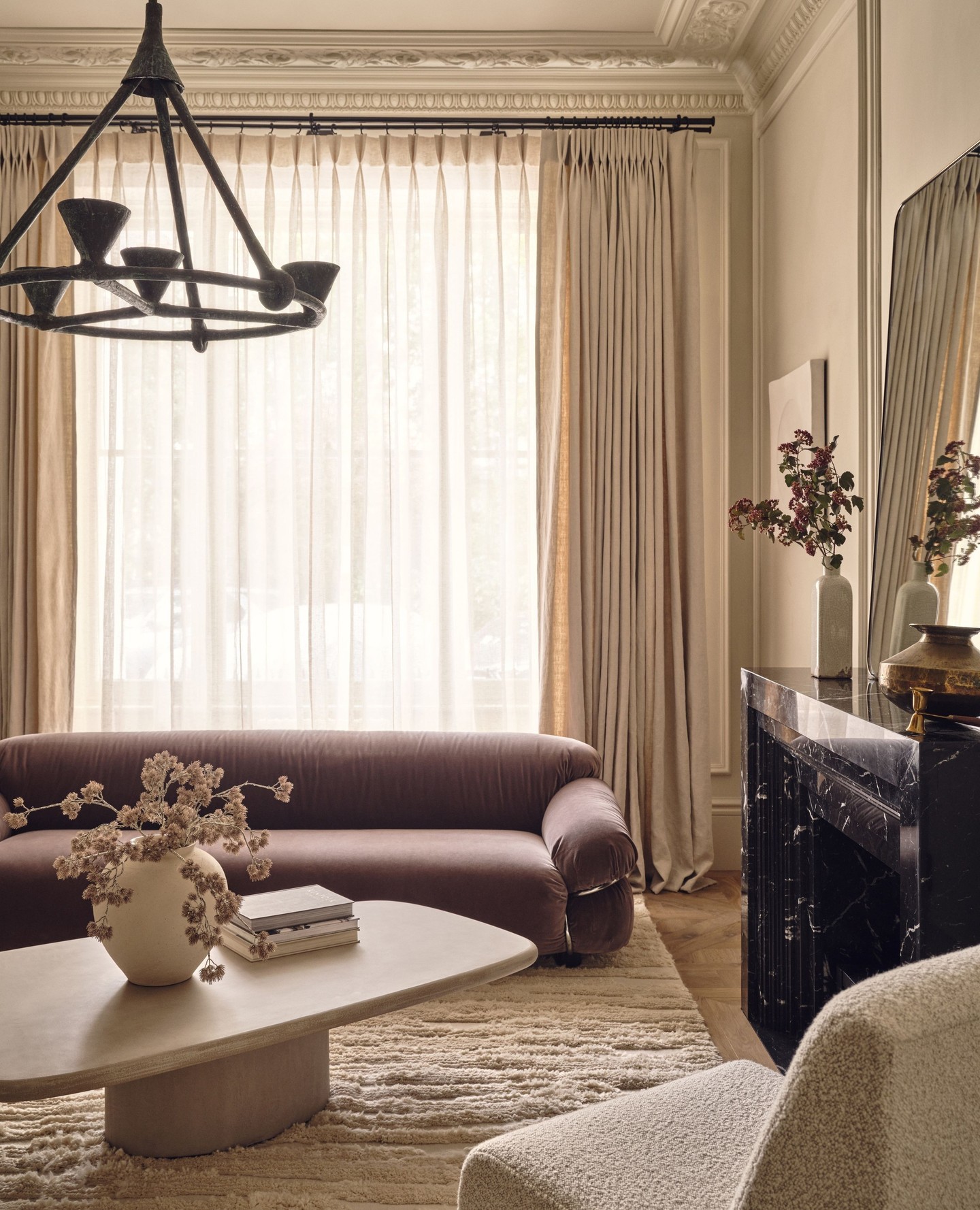
The dusty purple sofa introduces color gently in this cream living room. Its rounded arms soften the paneled walls and dark stone fireplace, while the pale rug adds another layer of texture underfoot.
The result shows how purple can work within a mostly neutral scheme. Choose a softened shade with gray or brown undertones if you want this quieter effect.
Let cream curtains and a light table surround the sofa so its shape remains easy to see. A dark pendant repeats the fireplace's contrast above the seating, connecting the room vertically.
Keep the table arrangement low and simple, as it is here. Bring fabric samples home first; muted purples can shift considerably between direct sun, cloudy daylight, and evening lamplight.
13. Highlight an Alcove with Berry Purple
Credits: Instagram
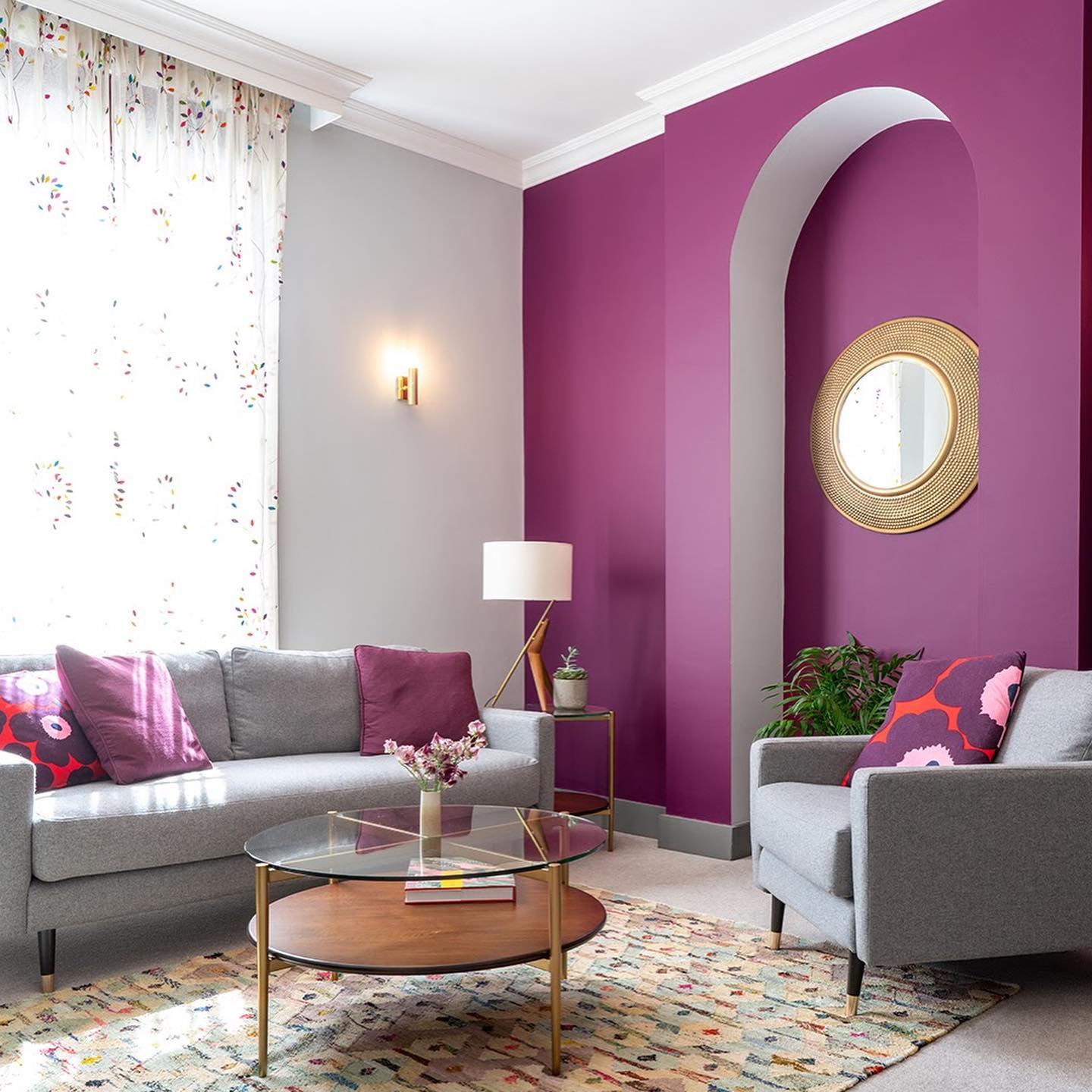
A berry purple wall draws attention to the arched alcove, giving this gray seating arrangement an immediate focal point. The pale inner arch outlines the recess, while a round gold mirror introduces a smaller curve inside it.
Purple cushions connect the wall to the sofa and chair without repeating the color on every surface. To adapt the idea, choose an existing architectural feature and use paint to emphasize its shape.
Keep neighboring walls softer so the feature has room to stand out. The glass coffee table allows the patterned rug to remain visible, making the center feel light.
A simple lamp and small plants finish the arrangement. Repeat your accent shade in just a few textiles for an intentional result.
14. Layer Jewel Colors Around a Purple Sofa
Credits: Instagram
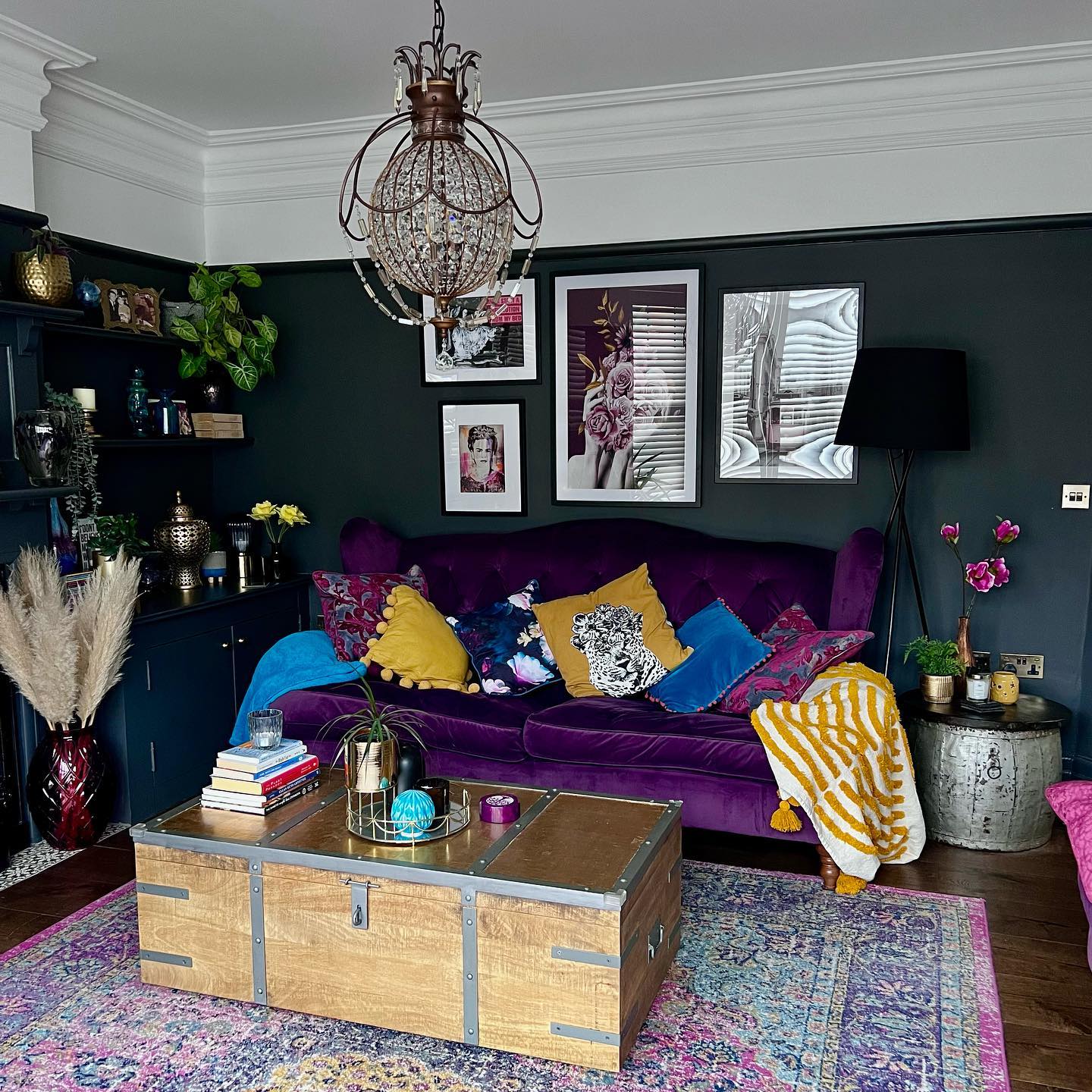
This purple sofa holds its own against dark walls, bright blue cushions, and mustard yellow accents. The varied textiles feel connected because their colors reappear in the rug and artwork.
A wooden trunk adds warmth and useful surface space, balancing the sheen of the velvet and chandelier. Begin with one substantial purple piece, then choose two supporting colors from a patterned cushion or rug.
Repeat those shades in smaller amounts around the room. Keep the wall color quiet enough to support the mix, even if it is dark.
A tray gathers table accessories and leaves a clearer outline. Use cushions in different sizes, but keep enough seating space free so the arrangement remains comfortable when people actually sit down together.
15. Give a Chesterfield a Violet Twist
Credits: Instagram
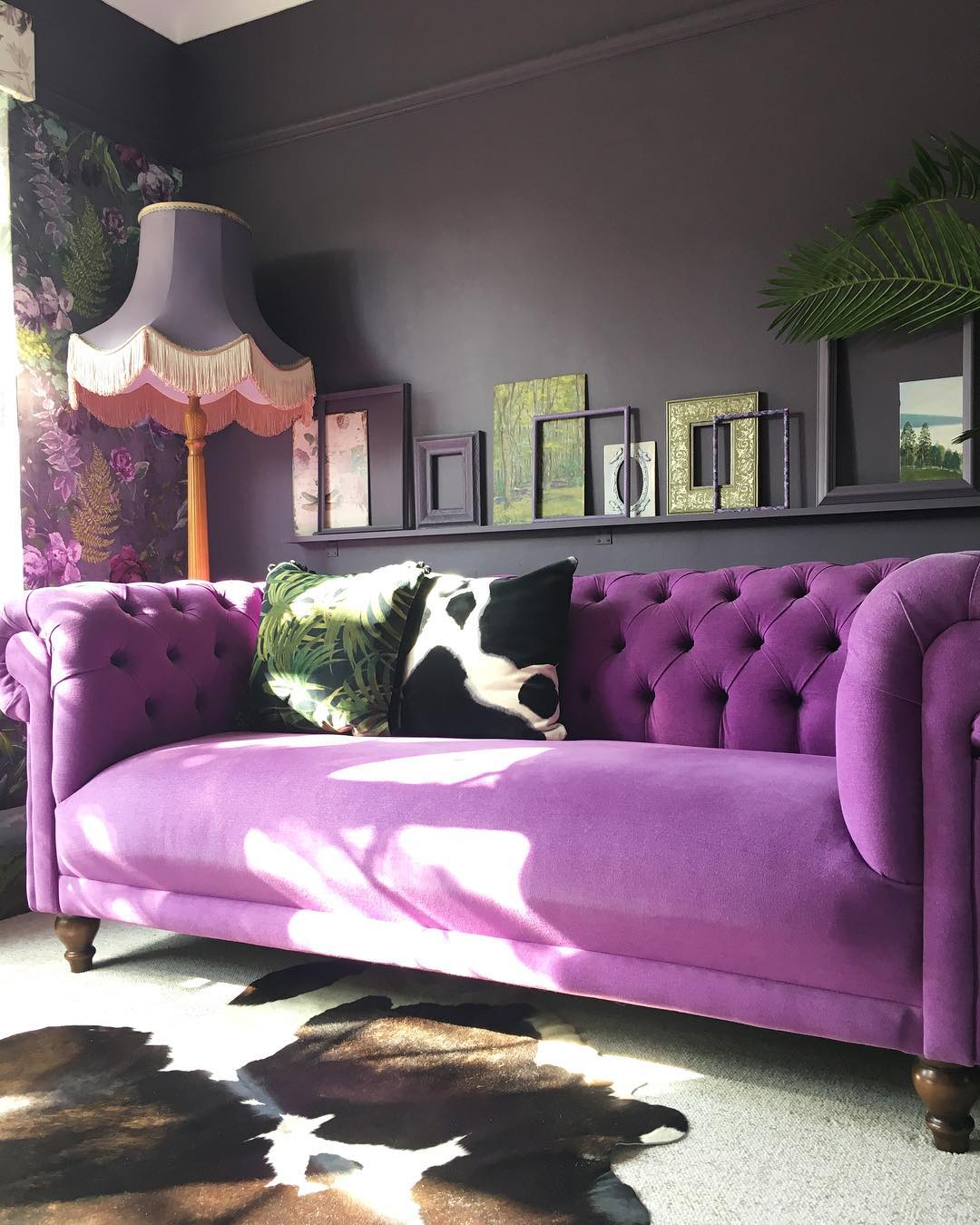
Violet upholstery gives this classic tufted sofa a fresh presence against the dark wall. Its curved arms and turned feet sit comfortably beside the fringed lamp, while the cowhide pattern introduces a crisp graphic contrast.
The narrow picture ledge lets smaller frames overlap without requiring a large gallery arrangement. For a similar mix, choose one traditional furniture shape in a color you love, then keep the surrounding palette limited.
Repeat a pattern only once or twice so it feels deliberate. Here, the cushion and rug share black and white markings, while greenery softens the corner.
Avoid overfilling the sofa with pillows; the tufting deserves to stay visible. A low ledge works well when you enjoy changing art and small objects.
16. Mix Lavender Seating with Plum Accents
Credits: Instagram
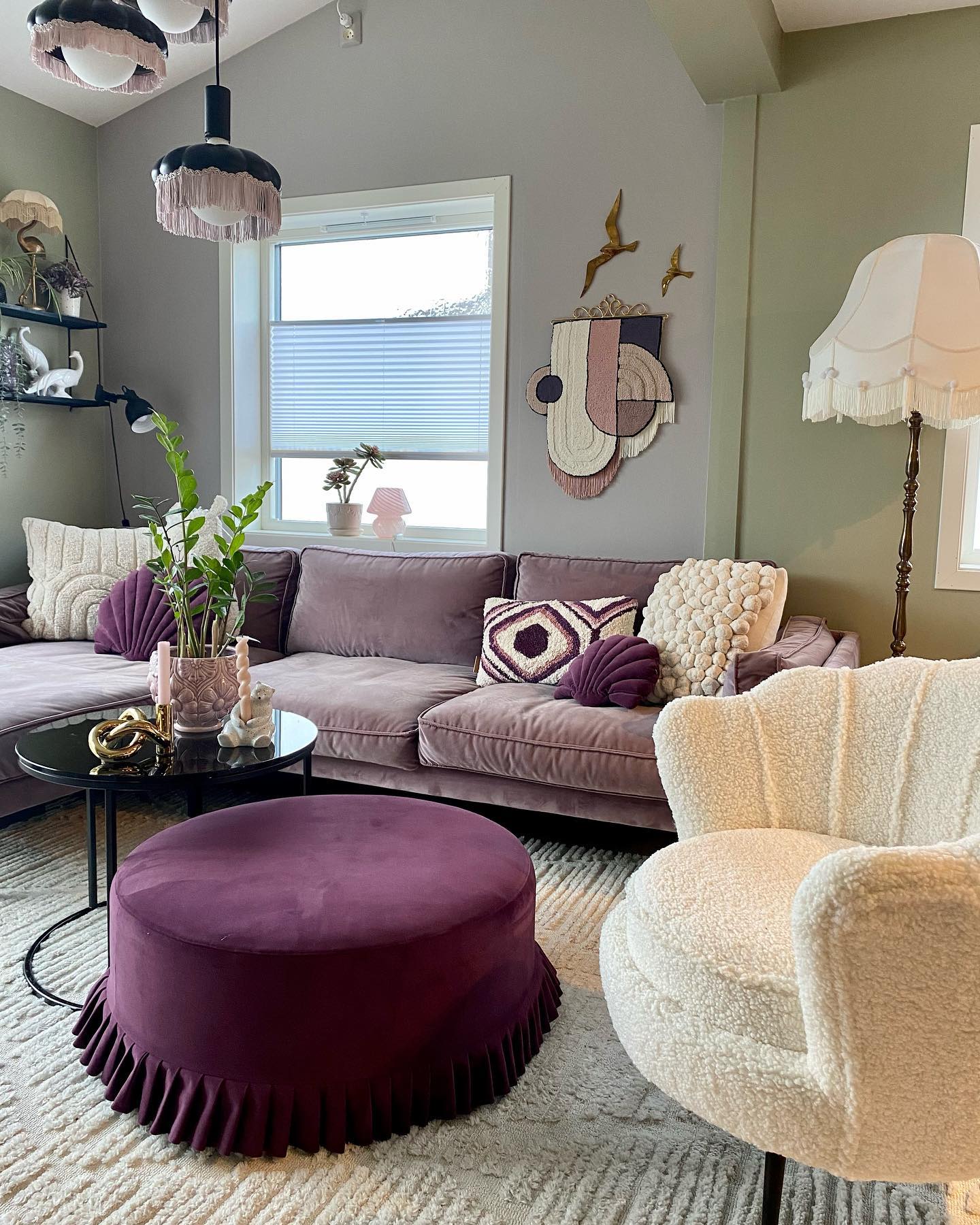
Lavender seating and a deeper plum ottoman give this room a layered purple palette. The pale textured chair and cream cushions prevent the upholstery from merging into one solid block.
Fringe appears on the ottoman, pendant shades, and wall hanging, creating a repeated detail that ties different pieces together. Start with two related purple shades, using the lighter one on the largest item.
Add a deeper accent through an ottoman or cushions rather than trying to match everything exactly. The green wall and plants offer a gentle counterpoint.
Keep your table finish simple if you already have several textures. A round ottoman can serve as a footrest or occasional extra seat, so choose a size that leaves the walkway clear.
17. Echo a Purple Sofa in Floral Wallpaper
Credits: Instagram
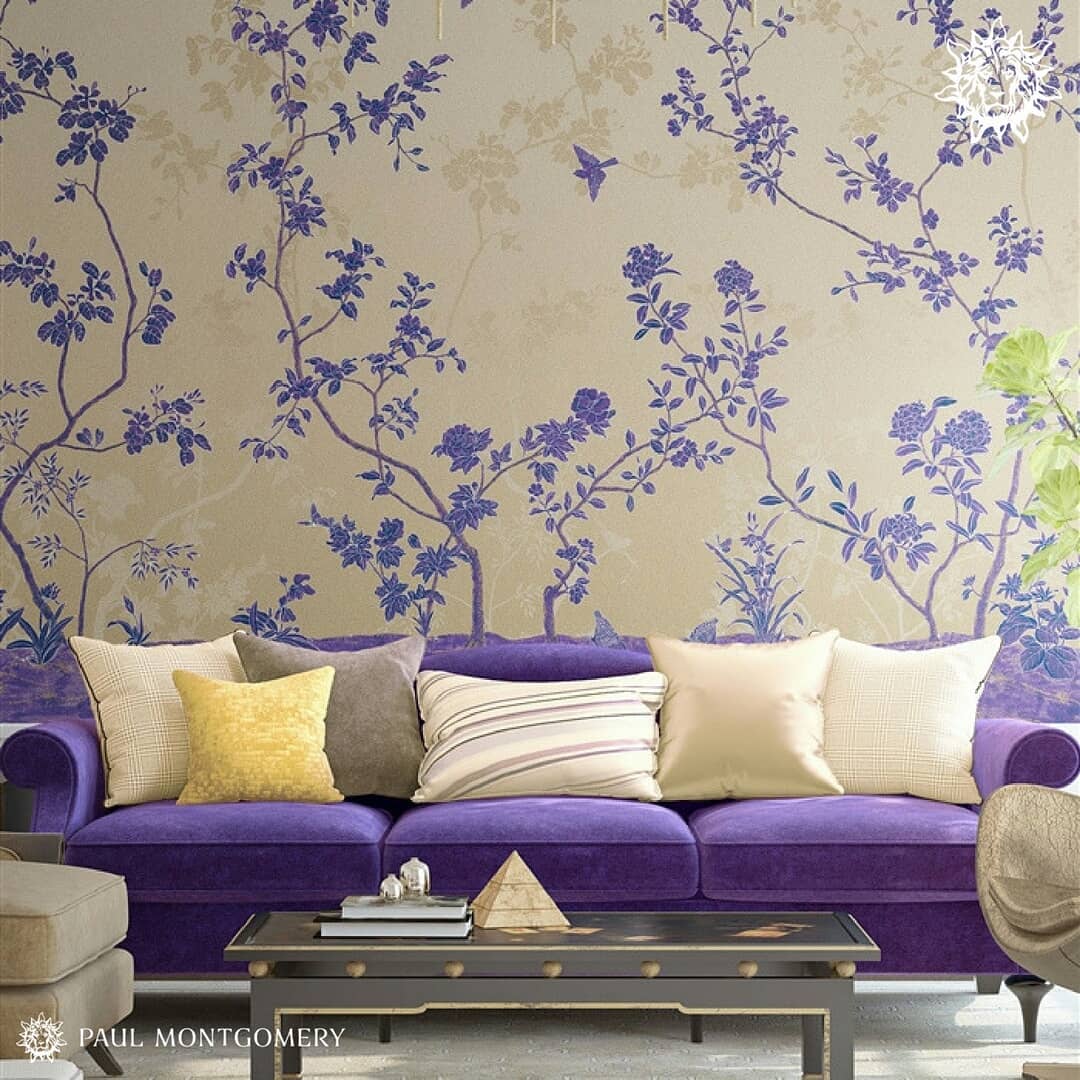
The purple sofa connects directly to the branching floral pattern behind it, making the wall and furniture feel like a single composition.
A warm pale ground keeps the wallpaper from becoming too heavy, while cream and yellow cushions lift the seating. If you love this approach, start with a wallpaper sample and pull your upholstery color from its smaller details.
You do not need an exact match; staying within the same purple family is usually enough. Keep surrounding furniture simpler so the branches remain easy to appreciate.
The low rectangular table gives the patterned wall a quiet companion. Try a small selection of neutral cushions before introducing more colors, and check the scale of the print against your room's proportions.
18. Pair Plum Florals with Soft Mauve
Credits: Instagram
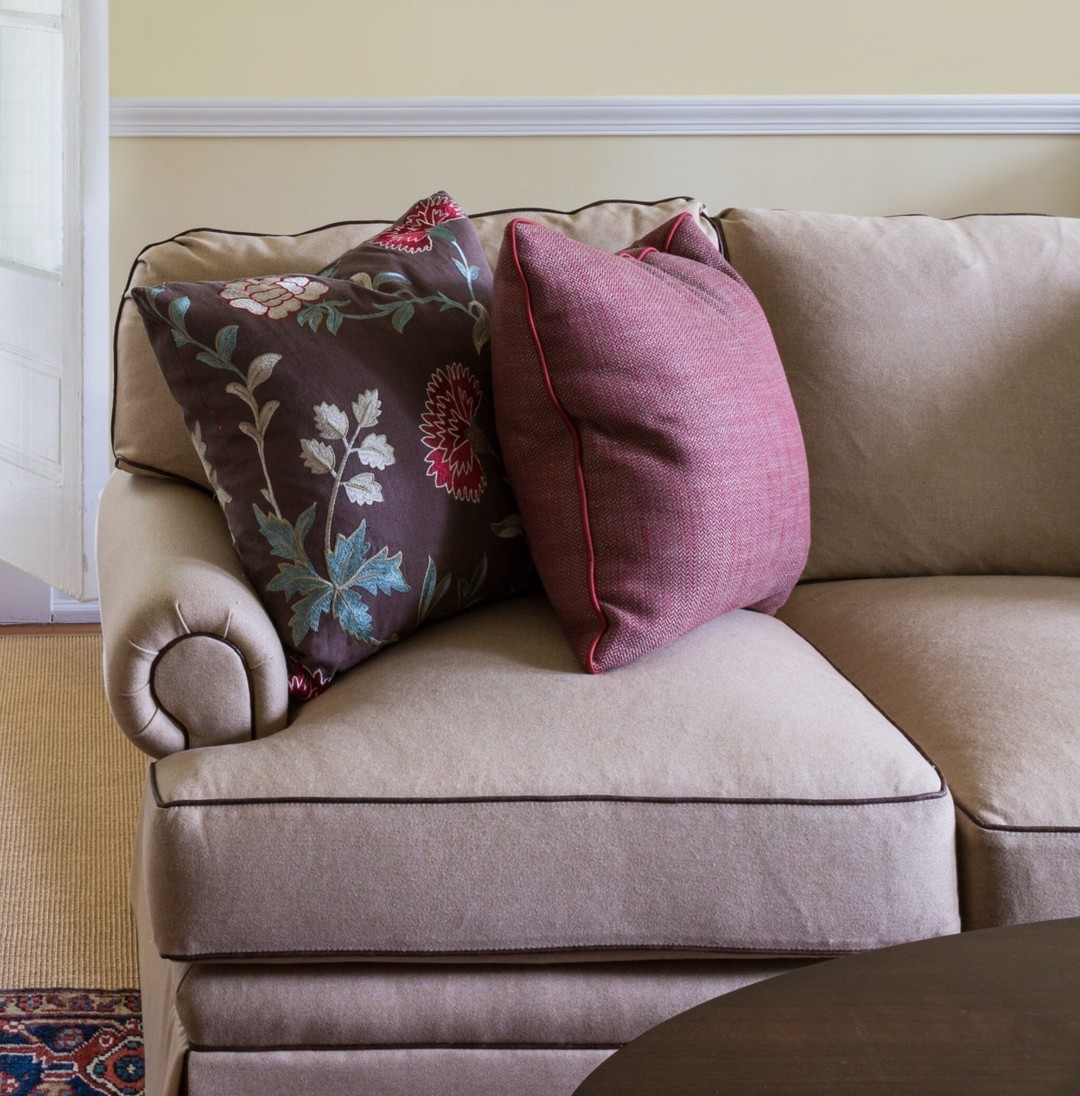
A mauve cushion and a plum floral pillow bring color to this neutral sofa without changing its overall calm character.
The patterned fabric contains deep plum, pale blue, and small warm accents, giving the solid cushion a natural place in the palette. This is an approachable way to test purple before committing to new furniture.
Start with a patterned cover you enjoy, then choose a plain companion in one of its colors. Vary the texture as well as the pattern; a woven surface beside embroidery can feel more interesting than matching fabrics.
The sofa's dark piping adds definition around the softer shades. Leave part of the seat clear, and choose cushion sizes that support comfortable sitting rather than crowding it.
19. Bring Muted Plum into a Rustic Scheme
Credits: Instagram
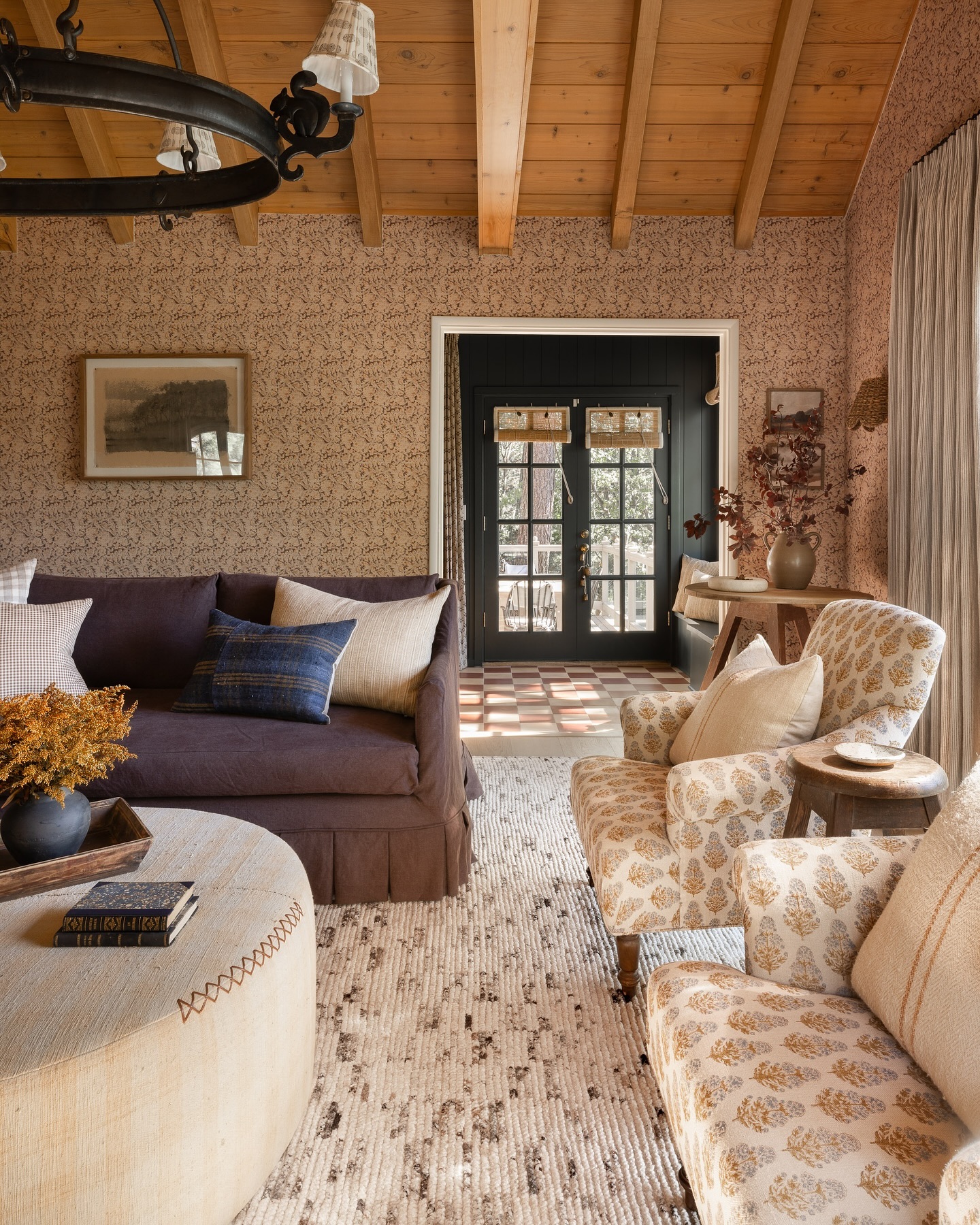
Muted plum upholstery gives this room a color accent among timber beams, patterned wallpaper, and cream furniture. The sofa's relaxed skirt works with the small floral patterns rather than competing for attention.
A blue cushion adds contrast, while the pale rug and round upholstered table keep the seating area soft. To borrow the palette, place a dusty purple fabric beside your existing wood finishes before choosing paint or wallpaper.
Look for a small pattern with warm neutrals that can bridge the two. Keep larger pieces simple when several surfaces already have texture.
Dark doors beyond the room create a stronger outline, giving the lighter furnishings definition. Mix plain cushions with subtle checks or stripes to add interest without visual overload.
20. Anchor an Eclectic Room with Deep Violet
Credits: Instagram
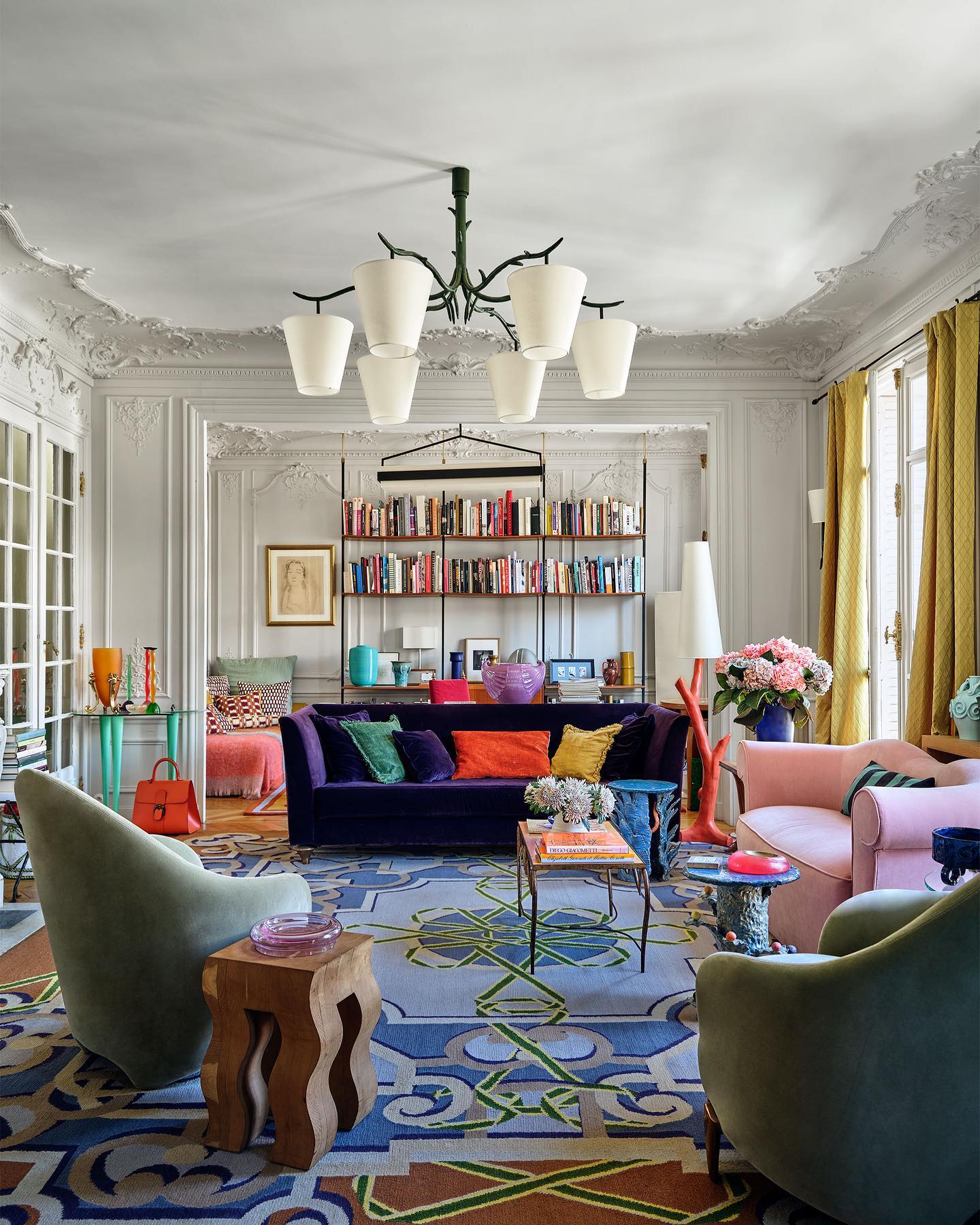
A deep violet sofa anchors this lively room, surrounded by green chairs, yellow curtains, and a patterned blue rug. Pale walls and ornate white molding give the colorful furniture a calm architectural setting.
The sofa stays visually central because its dark upholstery contrasts with the lighter pieces around it. Try one strong purple seat as your starting point, then add supporting colors through smaller furnishings and accessories.
Repeat a few shades in cushions or glassware to connect the arrangement. The slim coffee table leaves the rug visible, while open shelves keep books from becoming a heavy backdrop.
Give each larger piece some space so the shapes remain distinct. A collected room works best when there is still room to move.