
A fireplace wall can feel heavy when brick, stone, or dark wood dominates the room. Midcentury Modern Fireplace Ideas show how shape, material, and a restrained palette can make that feature feel balanced instead.
Copper hoods bring warmth to brick and timber, while pale stone framed by wooden shelves offers contrast and display space.
You’ll also find ways to connect a fireplace to built-in seating or use a white cone design as a sculptural accent. These approaches keep the fireplace distinctive without asking every surrounding surface to compete for attention.
1. Let a Copper Hood Lead the Palette
Credits: Instagram
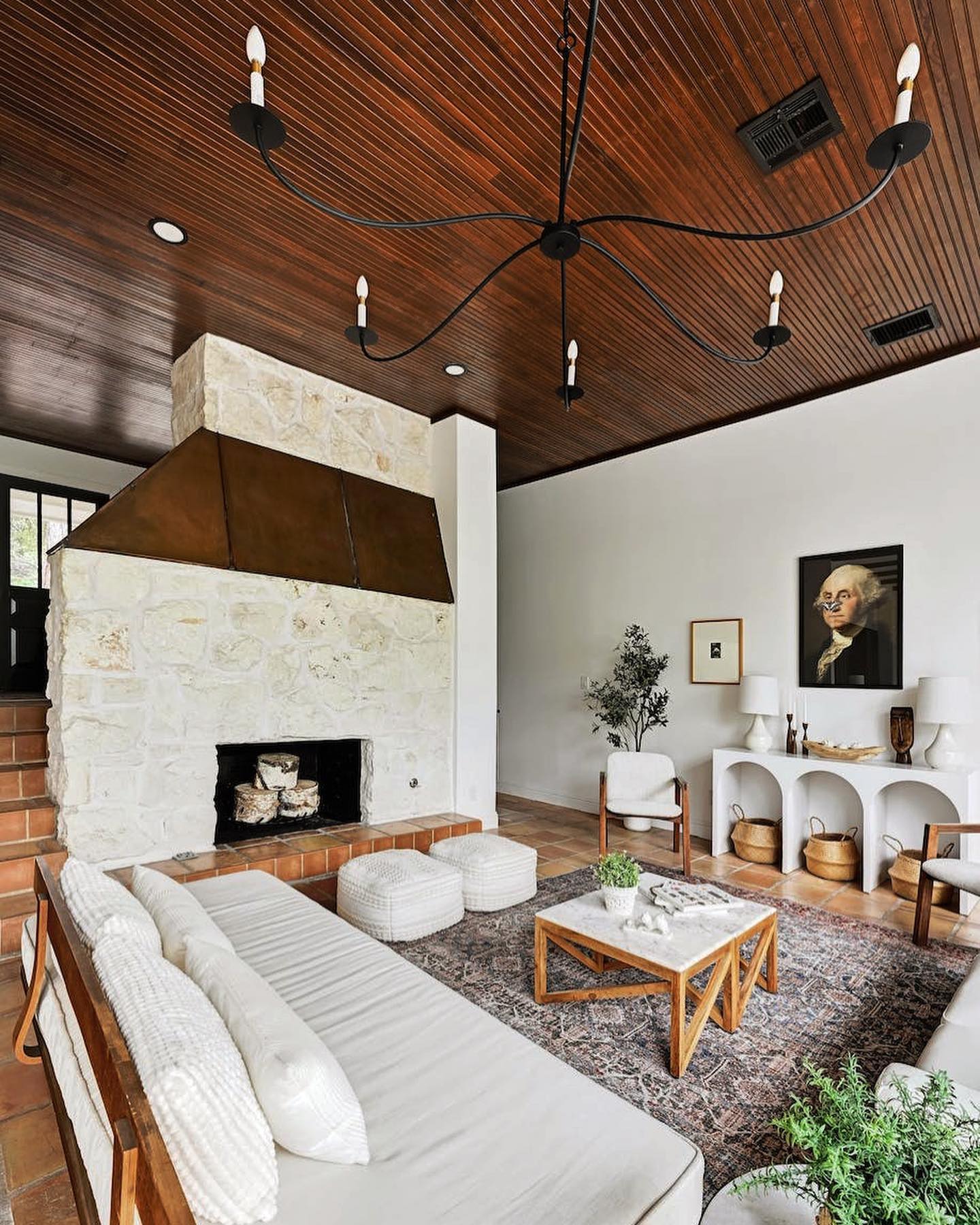
A broad copper hood gives this pale textured stone fireplace its unmistakable character. The metal's deep brown tone connects with the timber ceiling, while terracotta floor tiles carry that warmth through the room.
Instead of matching every surface, build a palette around these related earthy colors. Cream upholstery keeps the seating light, and the dark patterned rug adds definition beneath it.
Notice how the fireplace remains largely undecorated; its shape and material already provide plenty to look at. A low wooden coffee table reinforces the horizontal lines without competing with the hood.
For a similar balance, choose simple furniture silhouettes, repeat warm wood in a few places, and let one distinctive architectural feature command attention across the whole living area.
2. Balance a Wide Hearth with Built-In Seating
Credits: Instagram
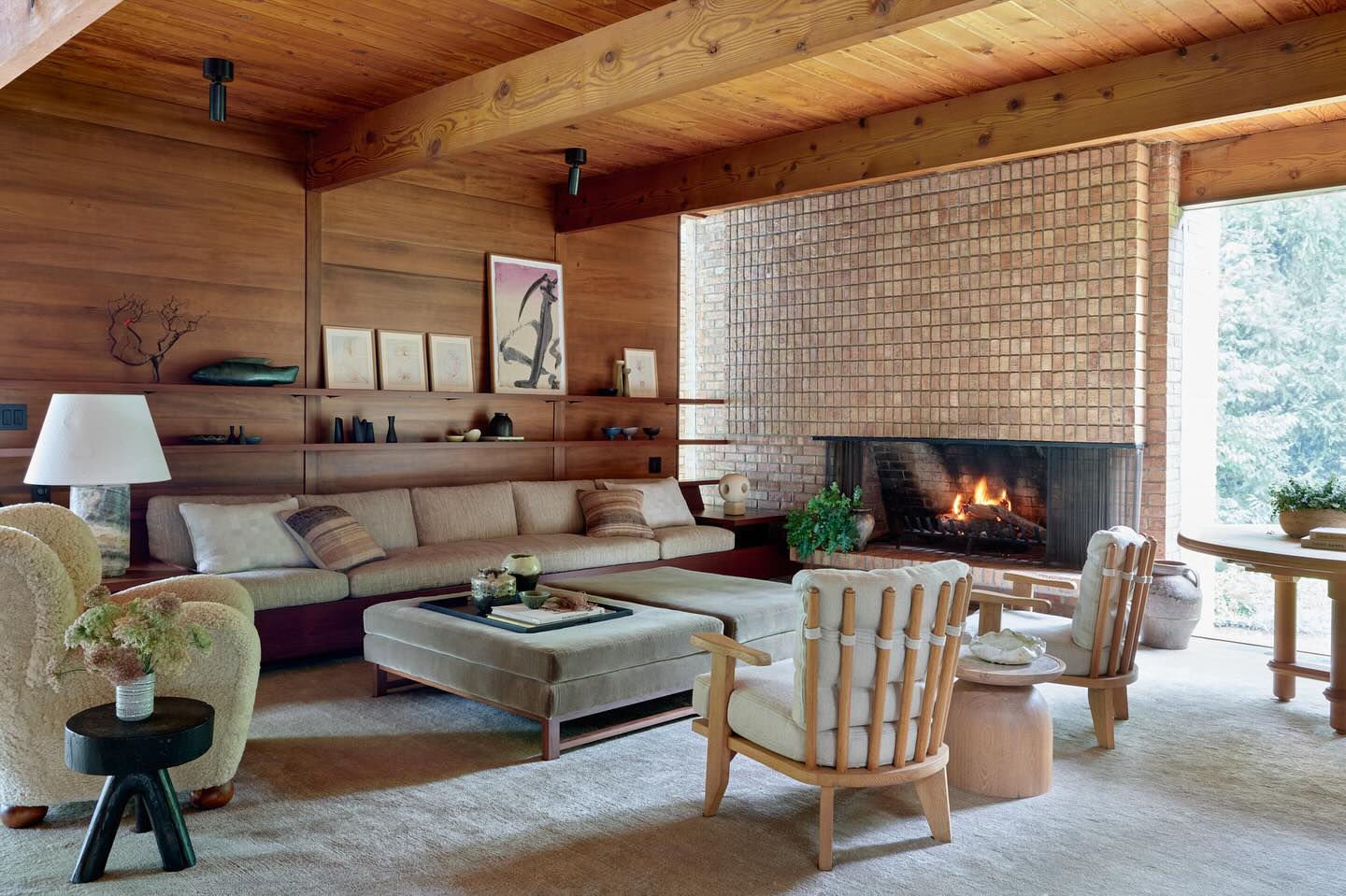
This broad brick fireplace anchors a living room wrapped in warm timber. Its off-center opening sits beside a long built-in upholstered sofa, so the wall reads as one connected composition rather than separate furniture pieces.
Slim display ledges continue that horizontal rhythm, while two upholstered ottomans soften the space in front. Borrow the visual balance by pairing a substantial fireplace with seating that feels low and relaxed.
Rounded chairs prevent the many straight lines from becoming severe, and a restrained collection of pottery adds small changes in shape. Keep the surrounding colors close together: beige, honey, and muted brown work comfortably here.
A pale rug brings the furnishings into one group and lets the brick texture remain clearly visible throughout.
3. Frame Pale Stone with Warm Wood Shelves
Credits: Instagram
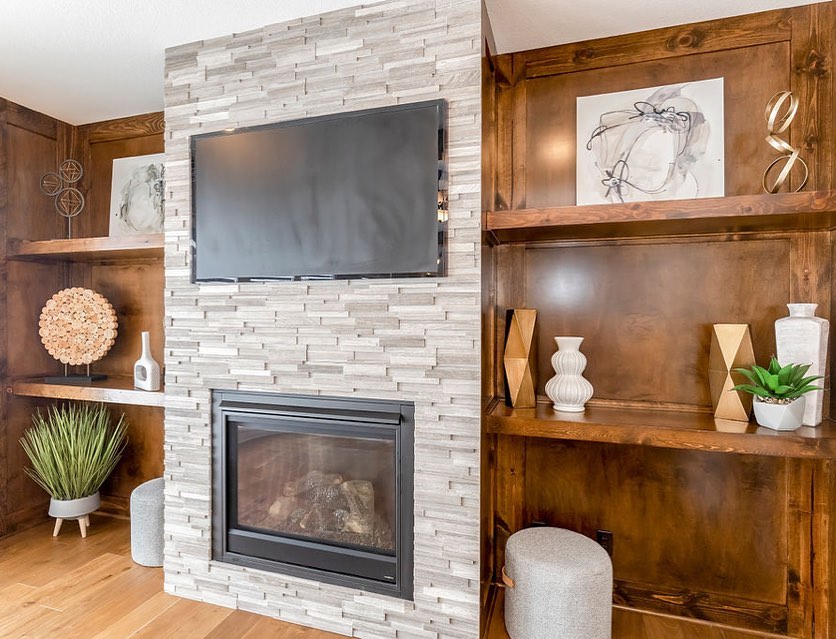
Pale stacked stone stands out between deep wooden shelving in this fireplace wall. The narrow stone pieces create a fine horizontal texture, while the broad shelves provide calmer lines on either side.
This is a useful contrast when a room needs both a focal point and display space. Keep shelf styling selective, as shown by the widely spaced ceramic vessels, geometric objects, and small plants.
White accessories pick up the stone's lighter tones, and touches of gold add warmth against the darker wood. Repeating a few shapes across both sides gives the arrangement cohesion without requiring identical displays.
If your fireplace shares a wall with a television, surrounding it with consistent materials can help the separate dark rectangles feel connected.
4. Echo Copper with Brick and Timber
Credits: Instagram
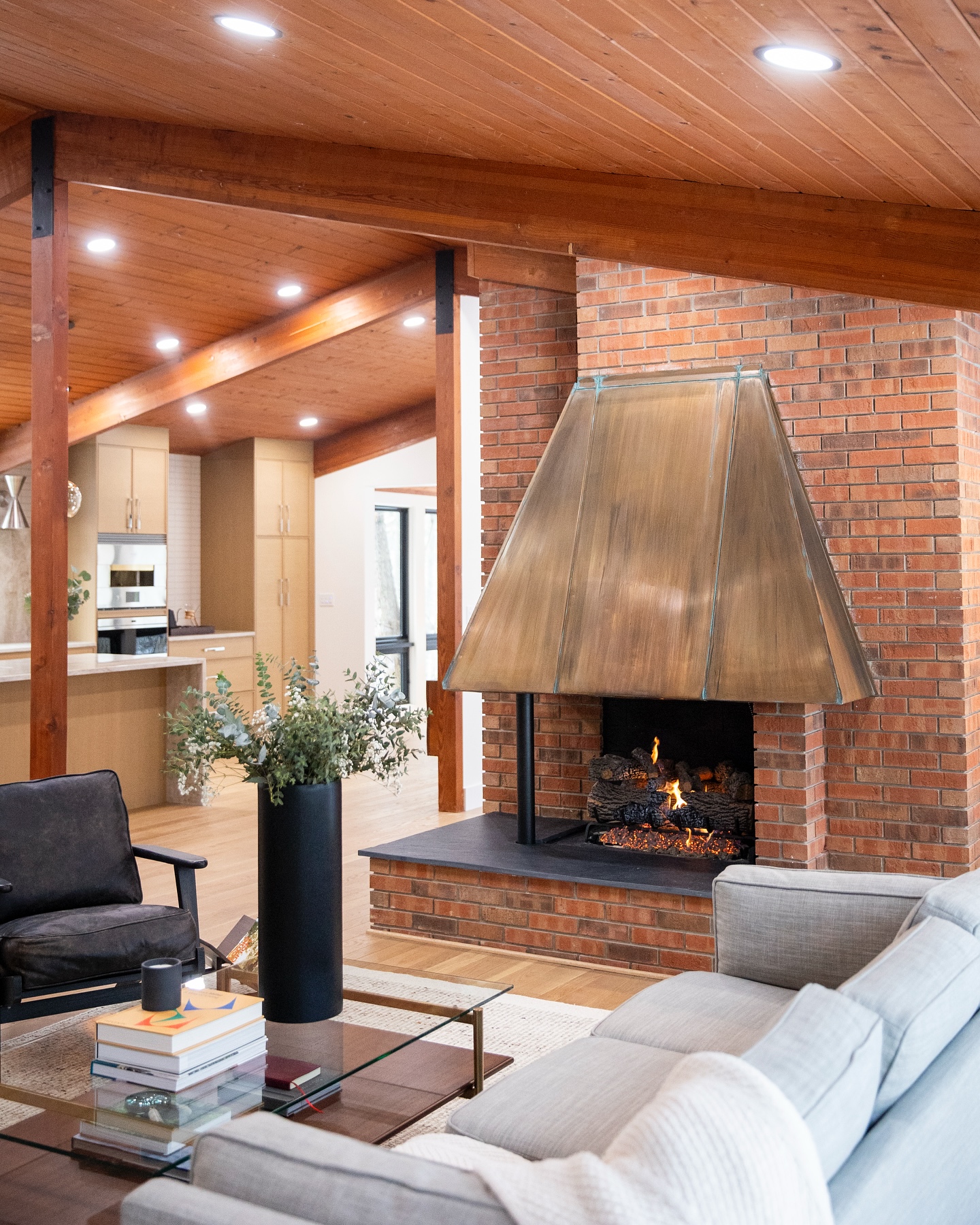
A tall copper hood makes this red brick fireplace feel sculptural. Its gently tapered shape breaks up the straight lines of the brickwork and timber ceiling, while its weathered color sits comfortably within their warm palette.
Pale gray upholstery and a glass coffee table keep the surrounding furniture visually light. Try that balance when an existing fireplace is large or strongly colored: give it quieter companions so its character remains clear.
The black chair, dark vase, and slim structural details repeat the firebox's deeper tone without covering the room in darkness. A woven rug adds another understated texture beneath the seating.
Keep decorative objects concentrated in a few places, allowing the hood and brick surfaces to hold the attention naturally.
5. Make a White Cone Fireplace the Accent
Credits: Instagram
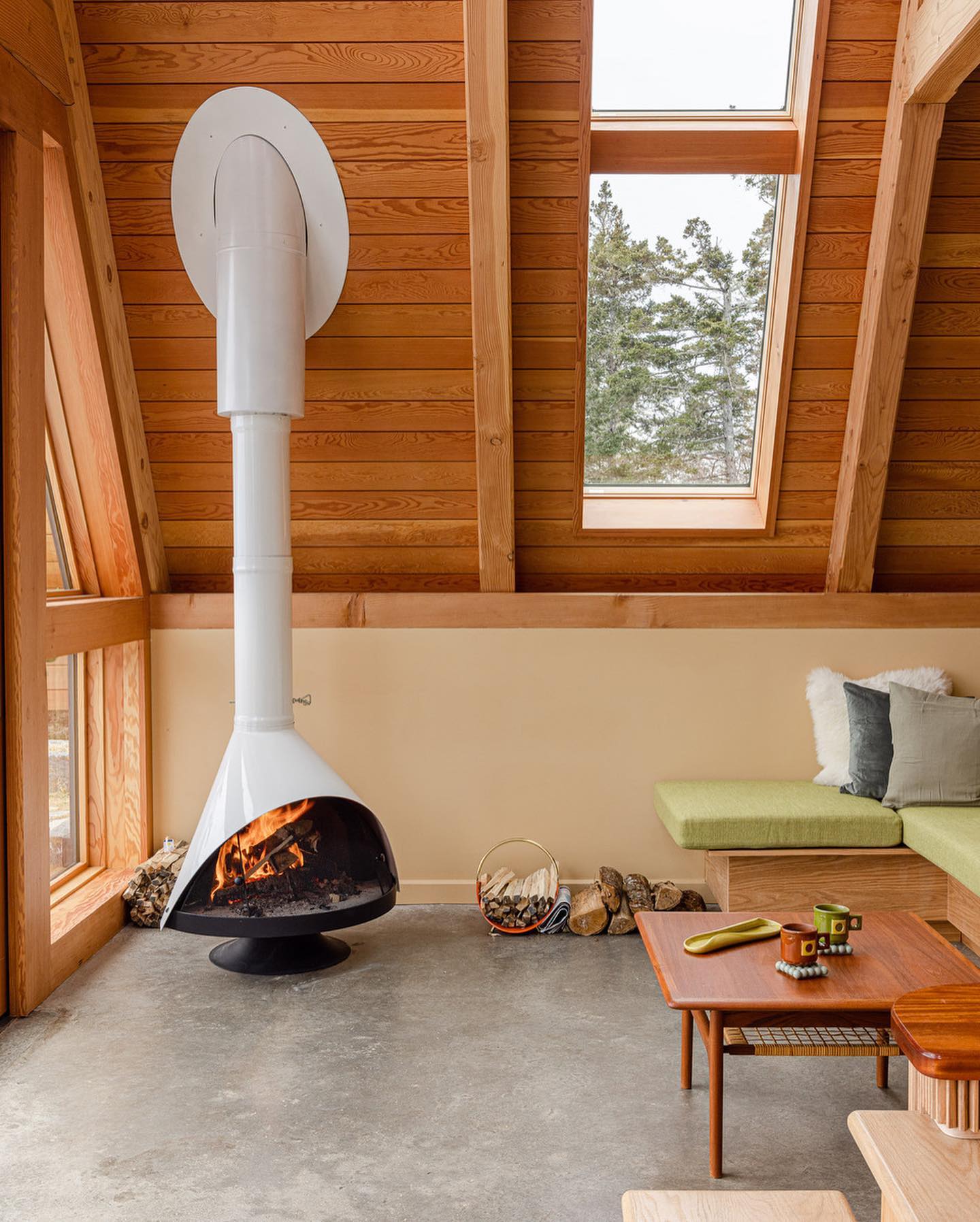
Against honey-colored timber, this white cone fireplace reads like a bright sculptural accent. The curved opening and narrow flue offer a crisp contrast to the sloping ceiling and rectangular window.
A fresh green upholstered bench adds another simple color, while the wooden coffee table keeps the room connected to its architecture. This approach works visually because the palette stays compact: warm wood, white, green, and a little black.
Use that same restraint when furnishing a room with a distinctive freestanding fireplace. Low seating and an uncluttered table let the fireplace silhouette remain easy to appreciate.
Small ceramics can echo the upholstery color without creating a theme. The result feels playful and relaxed, with shape doing as much work as decoration.
6. Use a Long Mantel to Join the Wall
Credits: Instagram
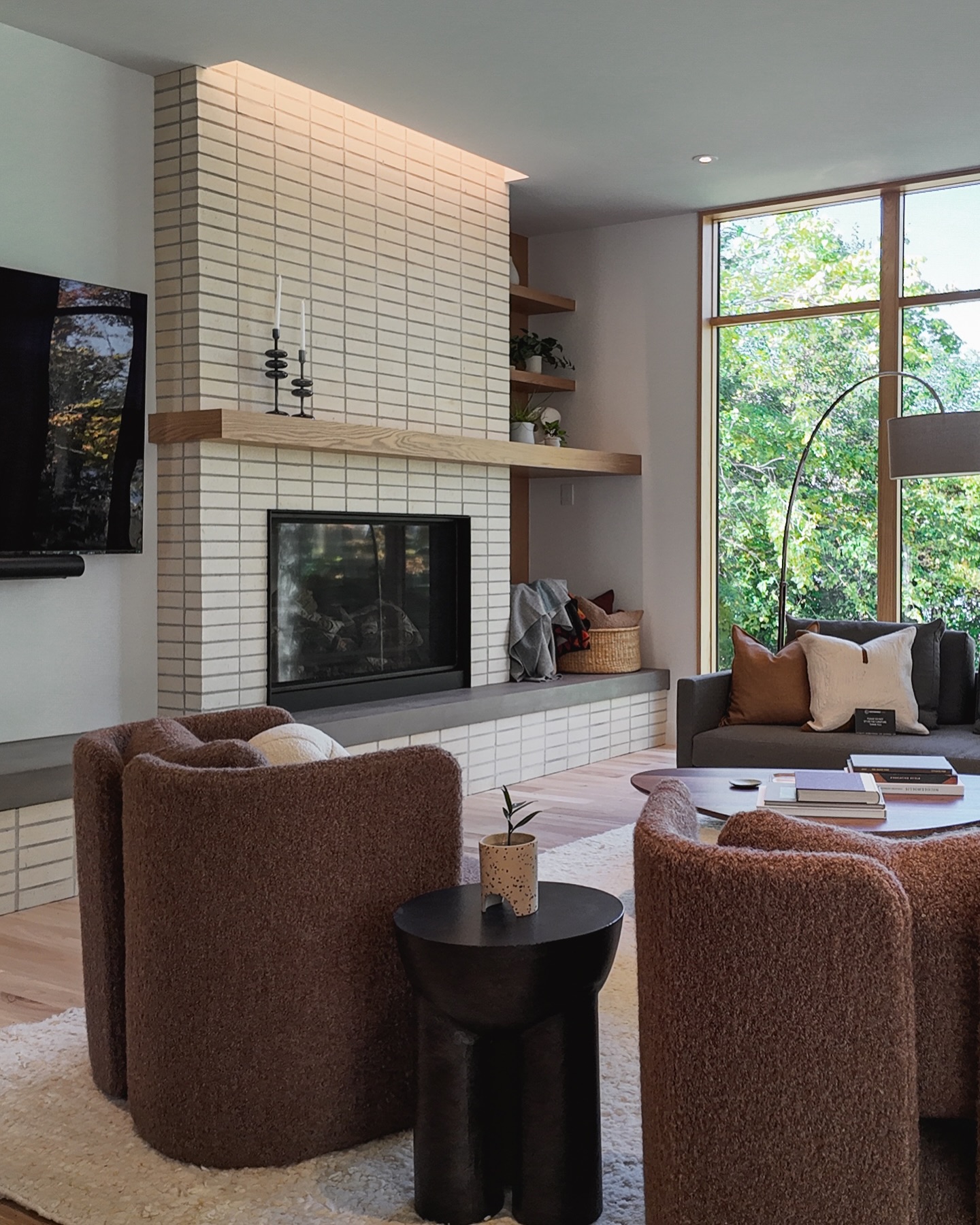
A pale wooden mantel stretches beyond this warm cream brick fireplace, linking it to open shelves at the side. That extended line makes the whole arrangement feel broader and more integrated.
The light brick grid brings gentle texture, while a darker hearth and black firebox create a clear base. In the seating area, rounded brown chairs soften the straight masonry lines.
Consider a similar mix of precise architecture and comfortable curves when choosing furniture around your own focal wall. A pair of slim candleholders provides height without filling the mantel, and the large window supplies a leafy backdrop.
Keep the accessory palette narrow and let the contrast between brick, timber, and upholstery create interest. This keeps the overall composition calm.
7. Pair Red Brick with Airy Wire Chairs
Credits: Instagram
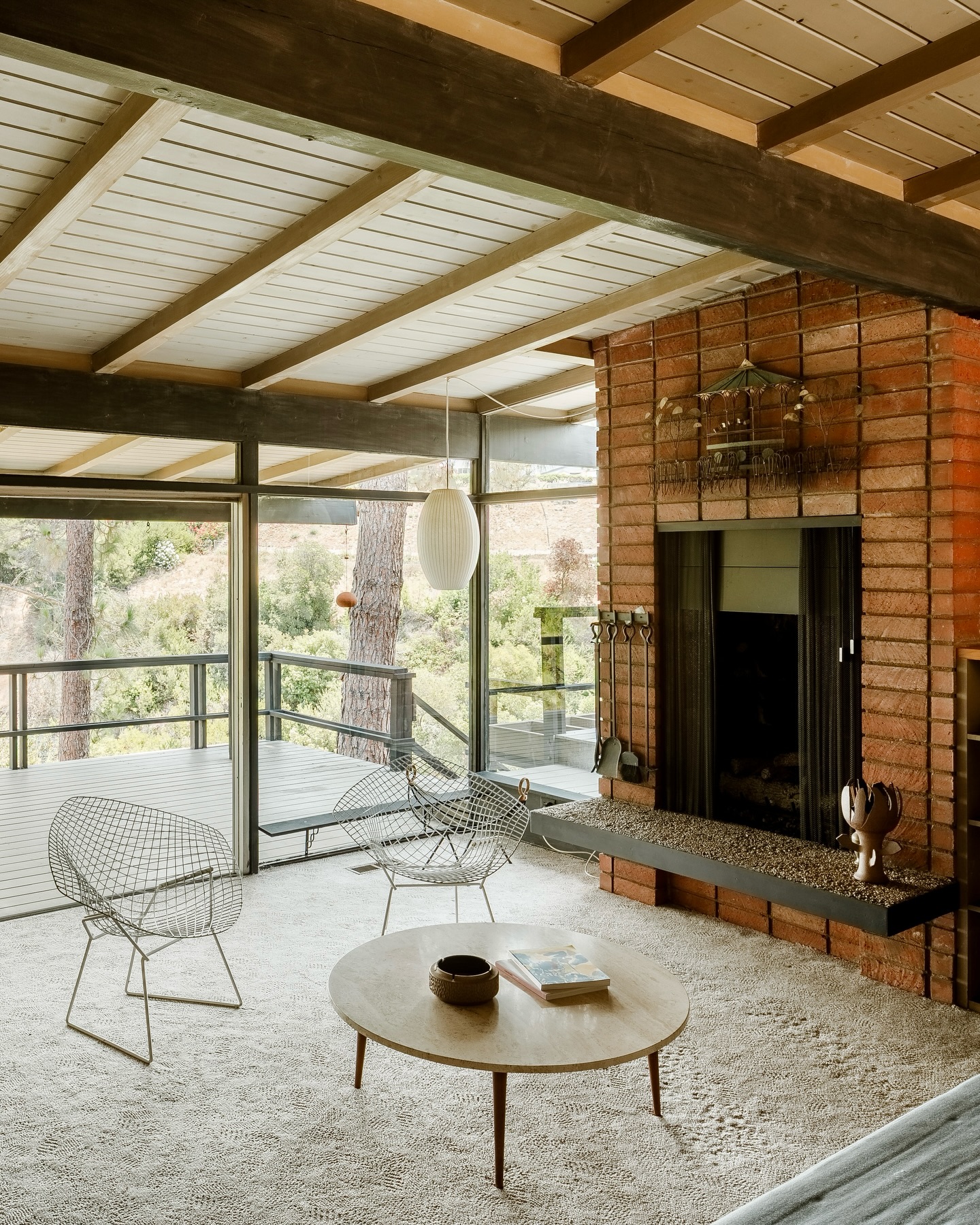
Red brick brings warmth and weight to this fireplace, while the wire chairs keep the seating area unusually light. Their open frames allow the pale rug and garden views to remain visible, balancing the solid masonry.
The dark projecting hearth reinforces the room's horizontal lines, and an oval pendant adds a soft shape beside it. Take inspiration from that contrast rather than filling the space with equally heavy furniture.
A round coffee table can ease movement visually between angular chairs, and a deliberately simple surface arrangement keeps attention on the architecture. Here, the brick also relates to the warm ceiling beams.
Repeating a material's color elsewhere helps a fireplace feel settled into a room, even when its proportions are commanding.
8. Let Stone and a Sunburst Clock Share Focus
Credits: Instagram
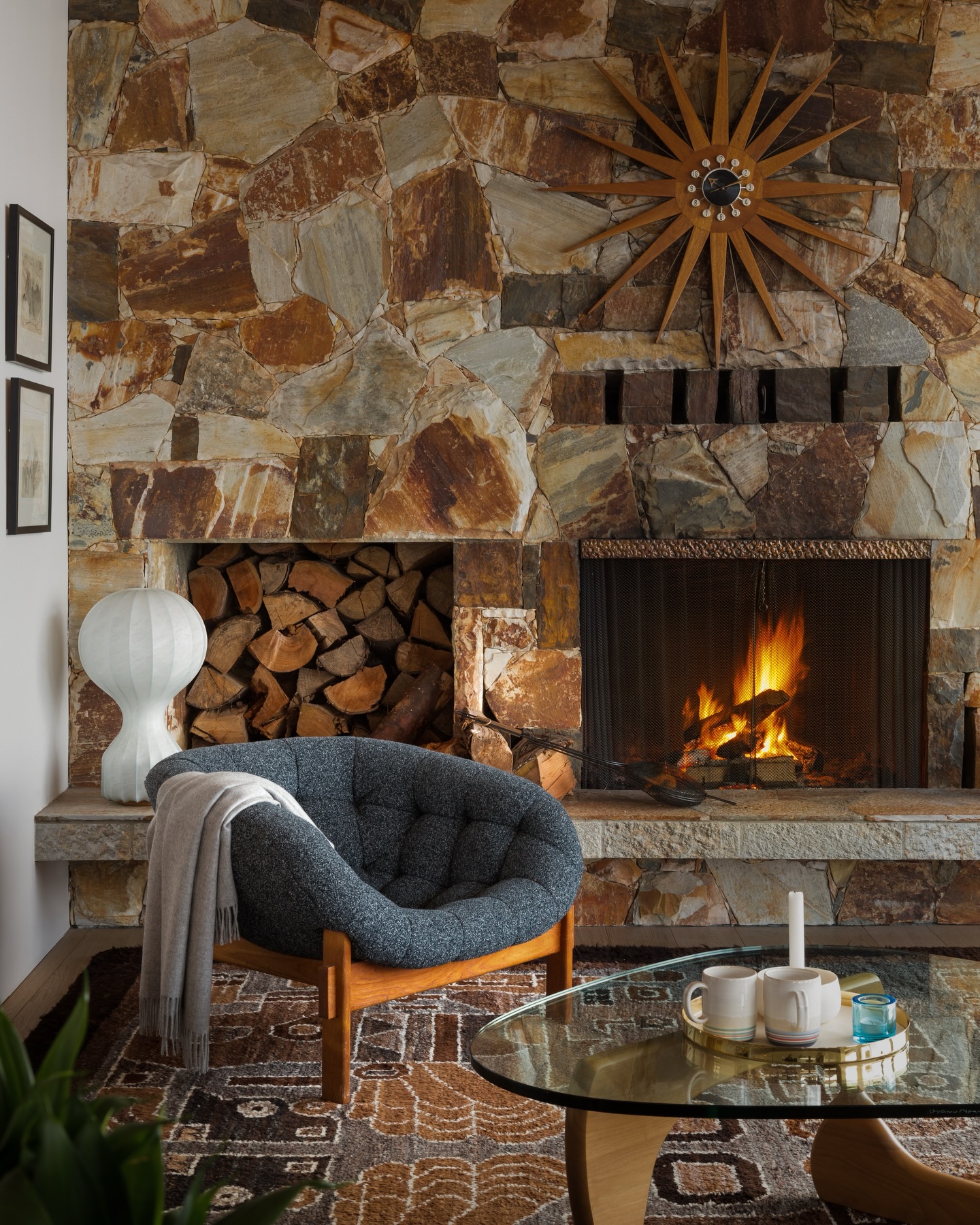
Large irregular stones give this fireplace wall a rich mix of brown, gray, and ocher. A wooden sunburst clock adds a distinctly playful midcentury note without hiding that textured surface.
Below, a deep blue upholstered chair introduces a cooler color, while its wooden frame repeats the clock's warmth.
This is an effective way to work with a busy stone surround: choose a few strong shapes and let their outlines stay readable.
The glass coffee table helps the patterned rug remain visible, keeping another substantial object from crowding the view. A pale lamp provides a softer counterpoint beside the log niche.
Build a similarly collected look through restrained contrasts in texture, using the stone's existing colors as your starting palette throughout.
9. Contrast a Dark Slab with Vertical Wood
Credits: Instagram
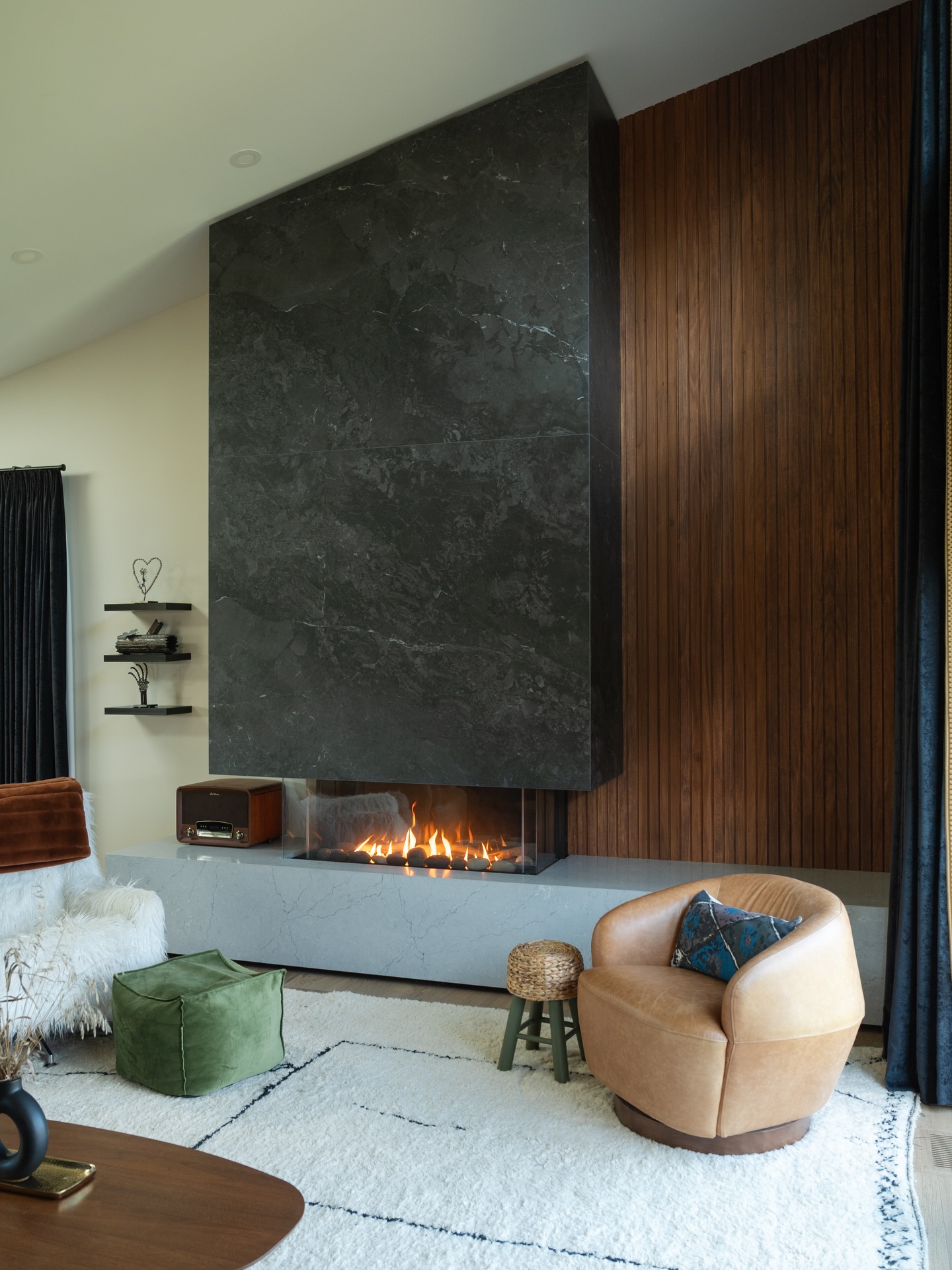
A tall dark stone slab forms the strongest shape in this living room, set against vertical wood paneling and a pale horizontal hearth. The contrast gives the fireplace presence without relying on a mantel display.
Rounded seating, a green pouf, and a small woven stool bring softer forms into the composition. If you like this look, start with a limited group of natural tones and vary their textures.
Smooth stone, visible wood grain, plush upholstery, and a light rug each contribute something different. The dark curtains also echo the fireplace's depth, helping it feel connected to the room.
Keep nearby accessories modest in scale, so the broad surfaces remain legible and the furniture can provide the more relaxed details below.
10. Carry a Wood Ledge Across White Brick
Credits: Instagram
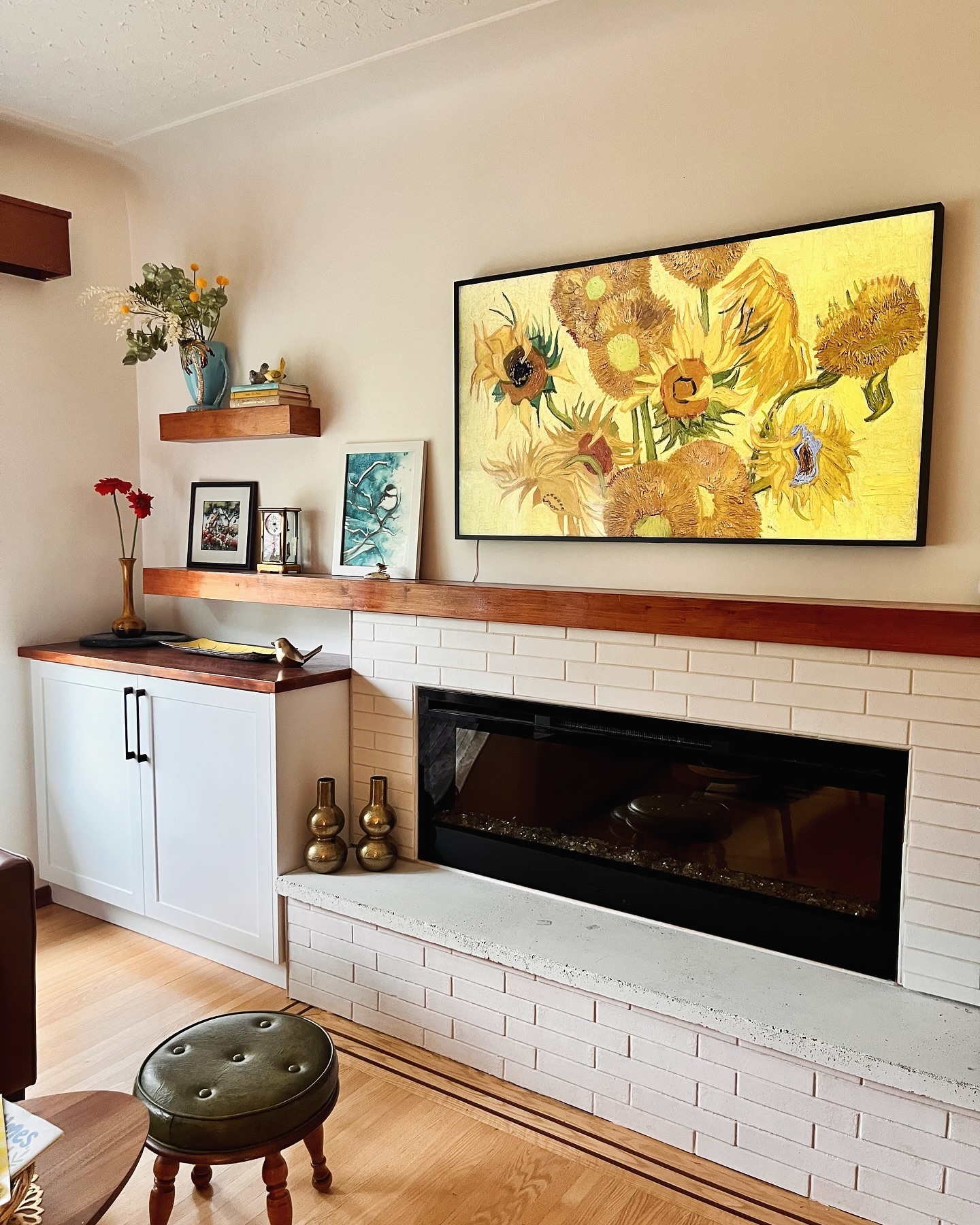
A slim wooden ledge runs across this white brick fireplace and continues into the adjoining open display area. That continuous line unifies the fireplace with the cabinet beside it, giving a modest wall arrangement a purposeful shape.
Warm wood also appears on the cabinet top and floor, preventing the white surfaces from feeling stark. For a similar effect, repeat one timber tone across a few clearly visible elements.
The yellow artwork supplies a confident burst of color, while smaller framed pieces bring variety without competing in size. Brass vessels and a green stool extend the warm, vintage mood.
Keep the surrounding wall light and the main furniture simple, letting the combination of brick texture, wood, and art carry the design.
11. Let a Tall Fireplace Join the Window Geometry
Credits: Instagram
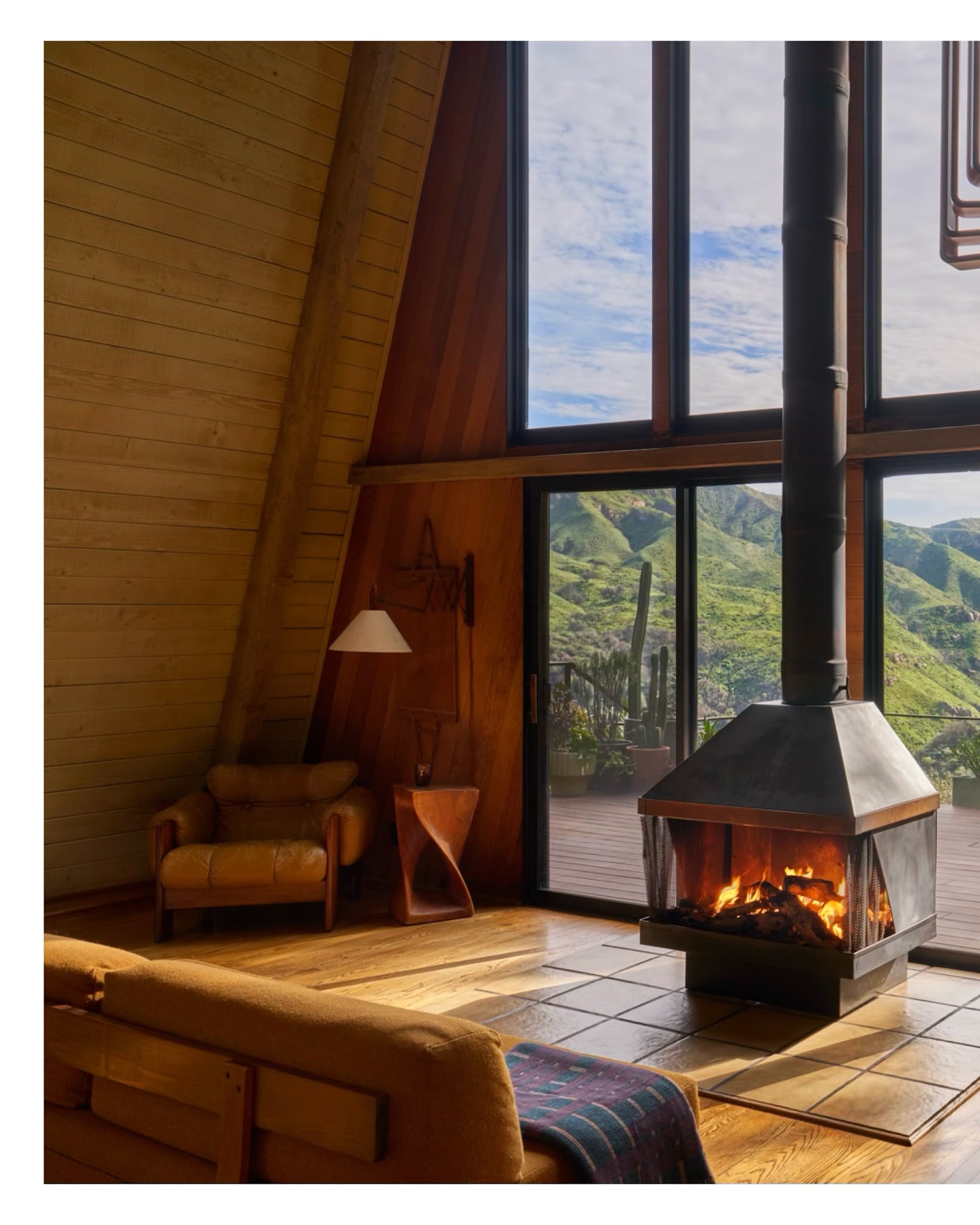
This freestanding fireplace stands against a soaring wall of glass, with its long black flue echoing the dark window frames. The surrounding timber gives the room warmth, and golden upholstery continues that color close to the floor.
The fireplace's angular hood relates naturally to the steep roofline, while a curved side table adds a quieter sculptural note. When decorating around strong architecture, look for these relationships before introducing more patterns or colors.
A simple chair, a modest lamp, and one patterned throw can be enough. Here, the landscape remains visible around the fireplace, adding another layer to the composition.
Keep furniture profiles low and decorative pieces selective so the room's height, materials, and view can retain their full visual impact.
12. Combine a Black Cone with Pale Surfaces
Credits: Instagram
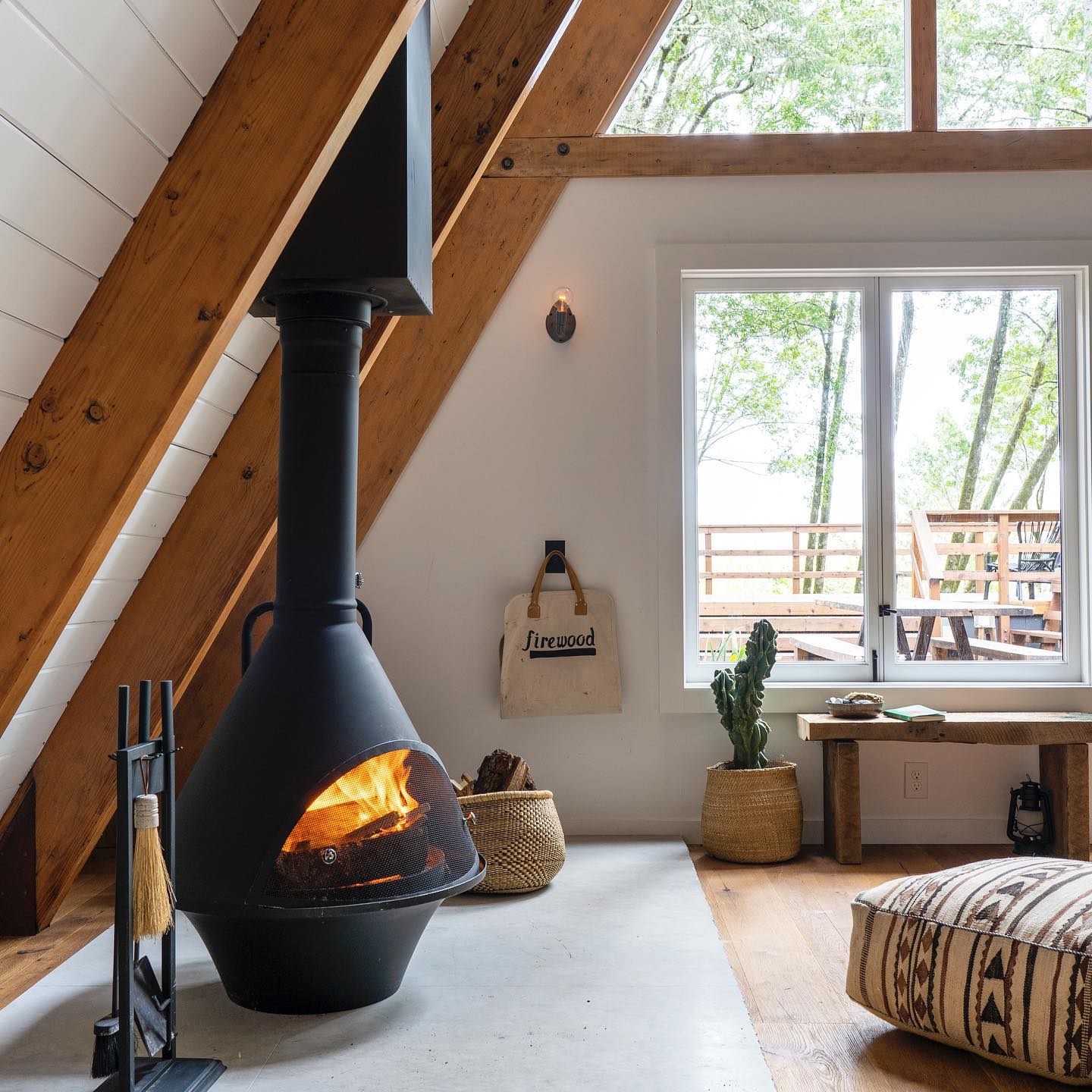
A matte black cone fireplace makes a clear graphic statement in this bright A-frame. White wall panels and a pale hearth give its curved body room to stand out, while exposed timber beams add warmth overhead.
The scene stays welcoming through small textured pieces: a patterned pouf, woven baskets, and a simple wooden bench. Try a similarly restrained mix when you want a sculptural fireplace to feel at home rather than overly formal.
Let one dark feature anchor the palette, then surround it with lighter textured natural materials. The cactus adds an upright organic shape that contrasts with the fireplace's smooth outline.
A few practical objects can become part of the composition when their finishes repeat colors already present nearby.
13. Warm a White Brick Fireplace with Cognac
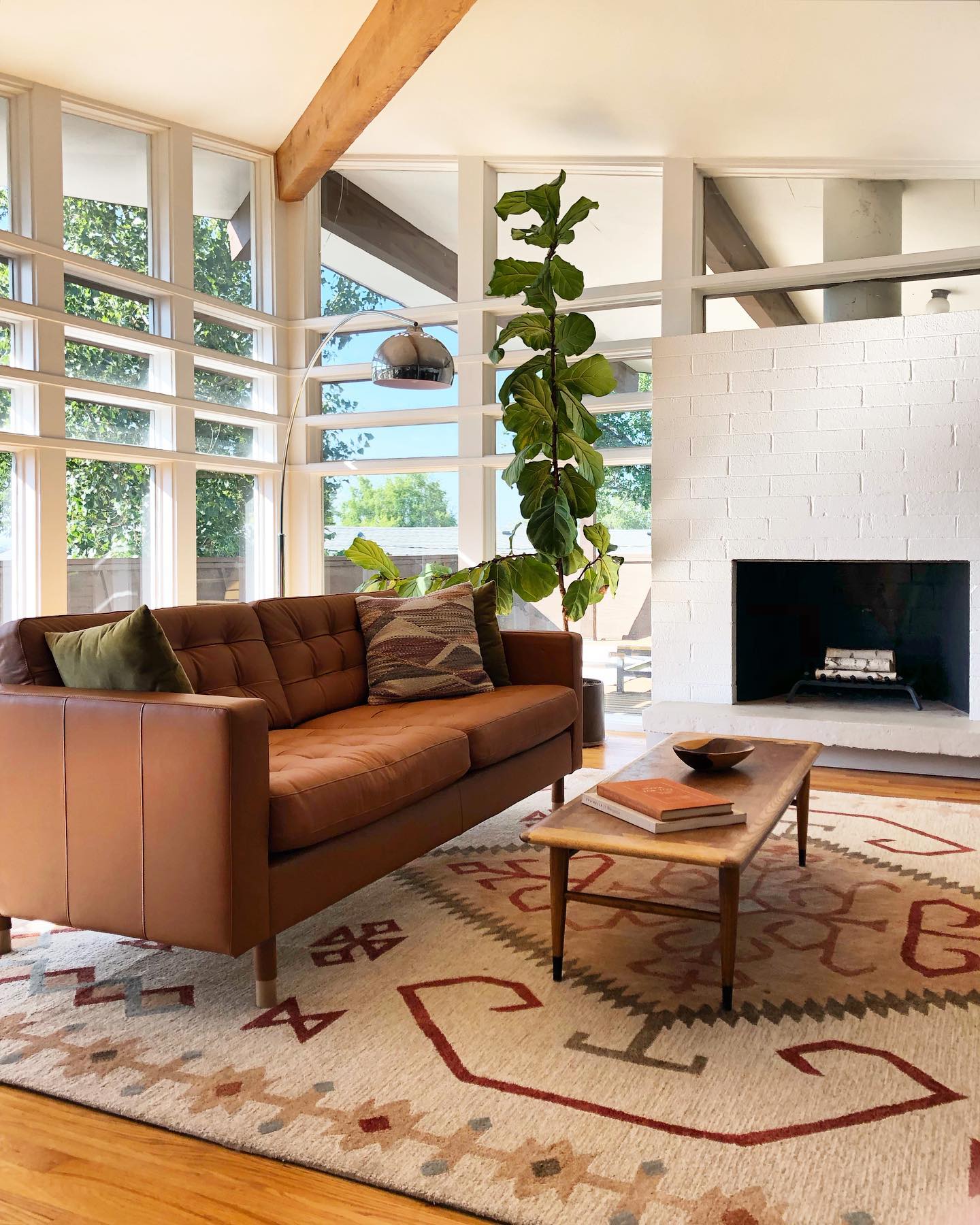
Credits: Instagram
The white brick fireplace in this room sits comfortably beside a cognac leather sofa. Its simple square opening and low hearth reinforce the home's clean geometry, while the leather introduces a richer color and softer texture.
A patterned rug gathers cream, brown, and muted red beneath the furniture, linking the fireplace to the seating. Notice how the fireplace wall remains bare above the opening; the brick texture and surrounding windows provide enough visual interest.
You can borrow that restraint even in a smaller room. Choose a wooden table with a slim profile, add one generous plant, and repeat the rug's colors in a cushion.
A curved floor lamp then provides contrast to the many straight architectural lines throughout the space.
14. Add Atomic Shapes to a Plain Brick Wall
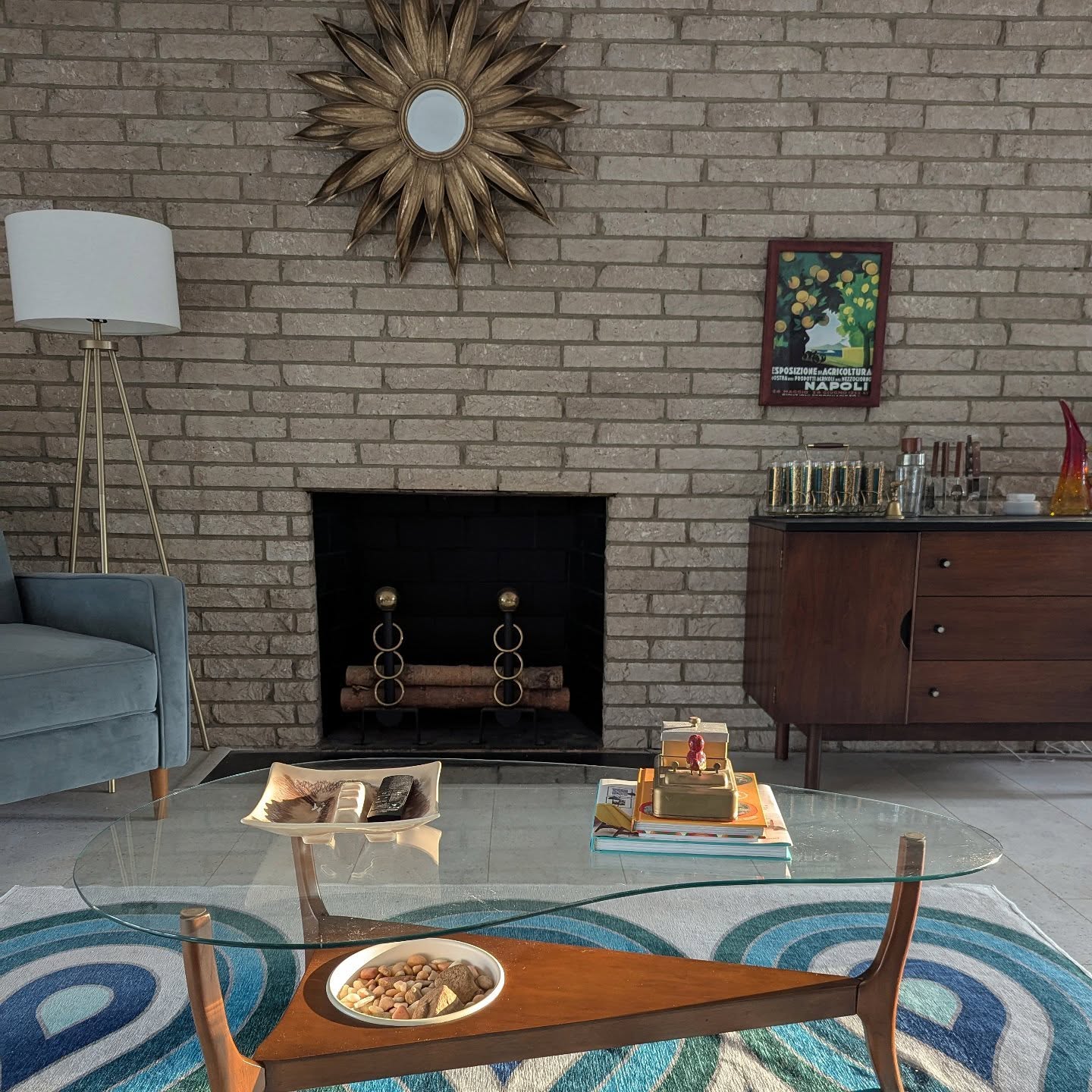
Credits: Instagram
This pale brick fireplace wall gains personality from a sunburst mirror and a pair of sculptural brass andirons. Their circular details contrast with the long horizontal masonry, giving the simple opening a distinctive midcentury character.
The blue chair and looping rug pattern carry that playful feeling into the seating area. A glass coffee table keeps the rug visible while introducing another curved outline.
For a similar collected look, mix a few expressive vintage shapes with straightforward furniture. The wooden sideboard provides a calm rectangular counterpoint and a place for smaller objects.
Keep wall decorations spaced apart so the brick remains part of the design. Repeating brass in lighting and accessories ties the arrangement together without requiring everything to match exactly.
15. Build a Reading Corner Around Red Brick
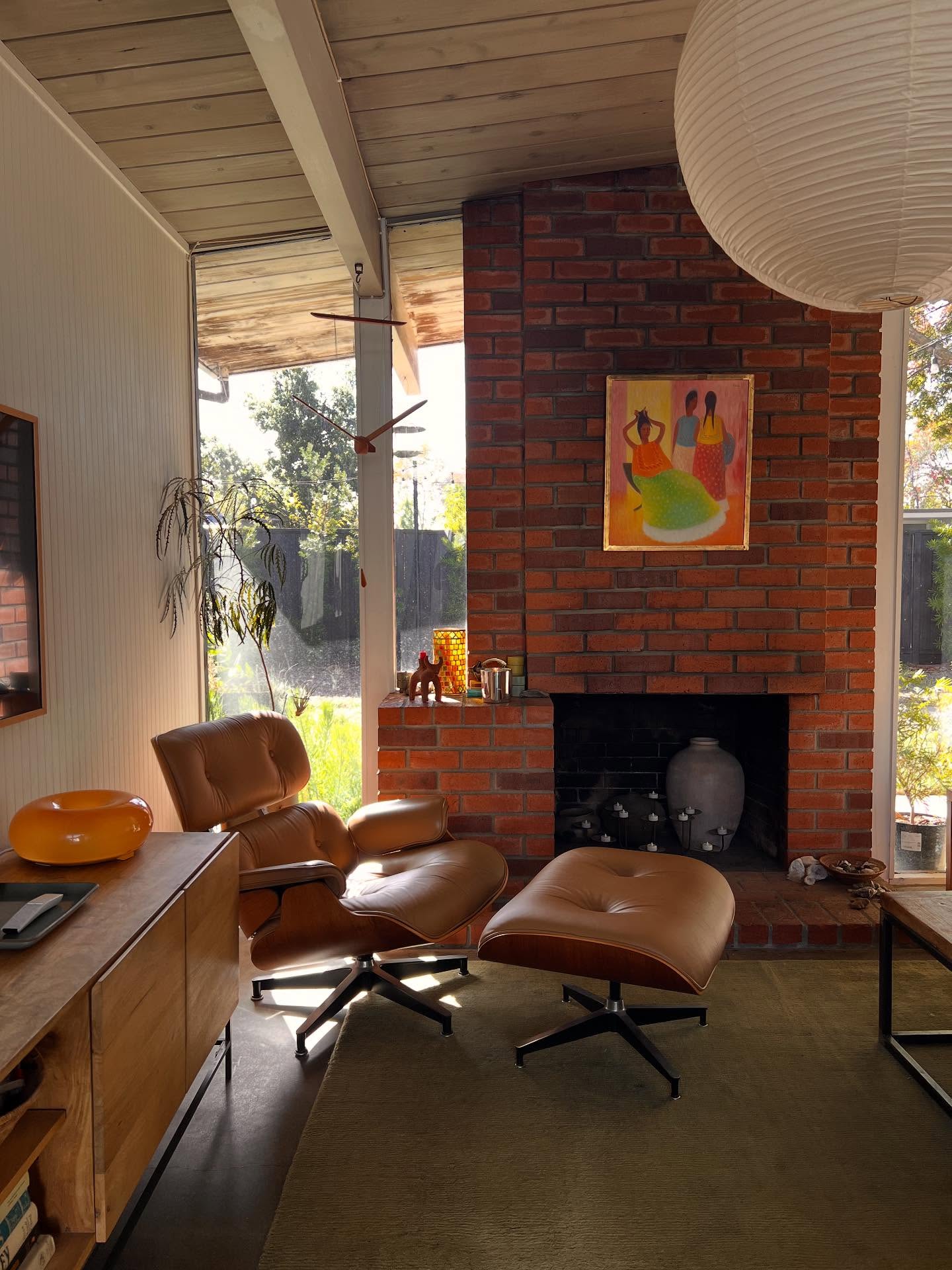
Credits: Instagram
Warm red brick forms a compact focal point in this sunlit sitting area. A caramel lounge chair and matching footstool bring a relaxed midcentury silhouette beside it, while a wooden cabinet continues the earthy palette.
The colorful painting above the opening adds a small, lively interruption to the masonry's regular pattern. This room shows how a fireplace can shape an intimate reading corner without needing a large sofa arrangement.
Choose a chair with a strong outline, give it a simple place to rest a book, and use a rug to define the area. The oversized paper pendant softens the straight ceiling beams.
A restrained mix of cream, amber, and wood lets the brick remain the visual center of the composition.
16. Make a Circular Hearth a Conversation Focus
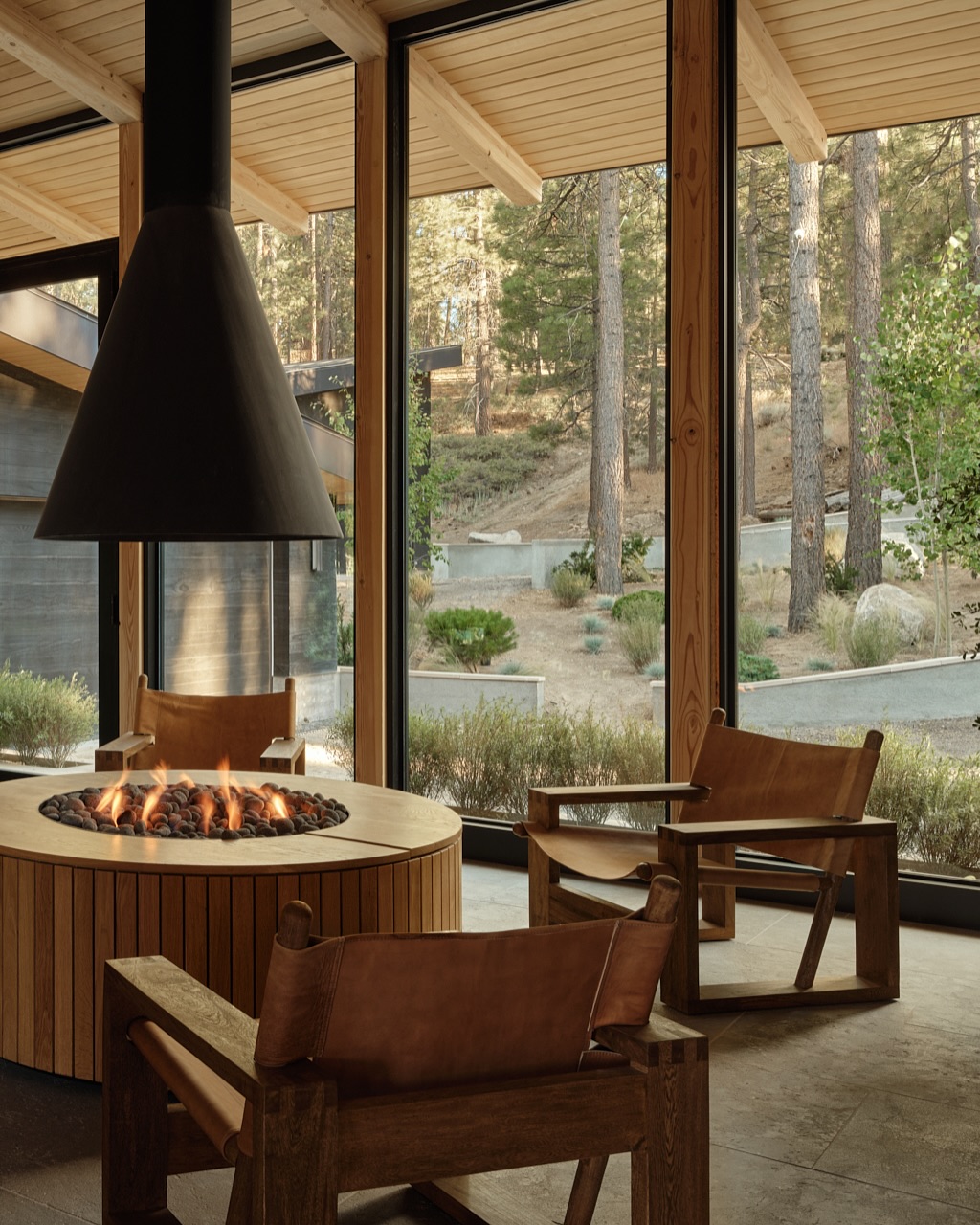
Credits: Instagram
A circular hearth and suspended black hood create a center for this seating group. The round form contrasts with the rectangular windows and straight timber beams, making the fireplace feel sculptural from every visible angle.
Wooden chairs with tan leather seats repeat the surrounding natural tones without overwhelming the view. Borrow the compositional idea by arranging your room around one strong shape and keeping nearby furniture visually simple.
Here, the broad windows connect the warm interior palette with the trees outside. The dark hood provides a clear vertical accent against that lighter background.
Avoid filling every surface with accessories; the interplay of circular hearth, angular chairs, and glass already supplies plenty of interest. Let materials and silhouettes lead the room.
17. Repeat Rounded Forms Around a Black Fireplace
Credits: Instagram
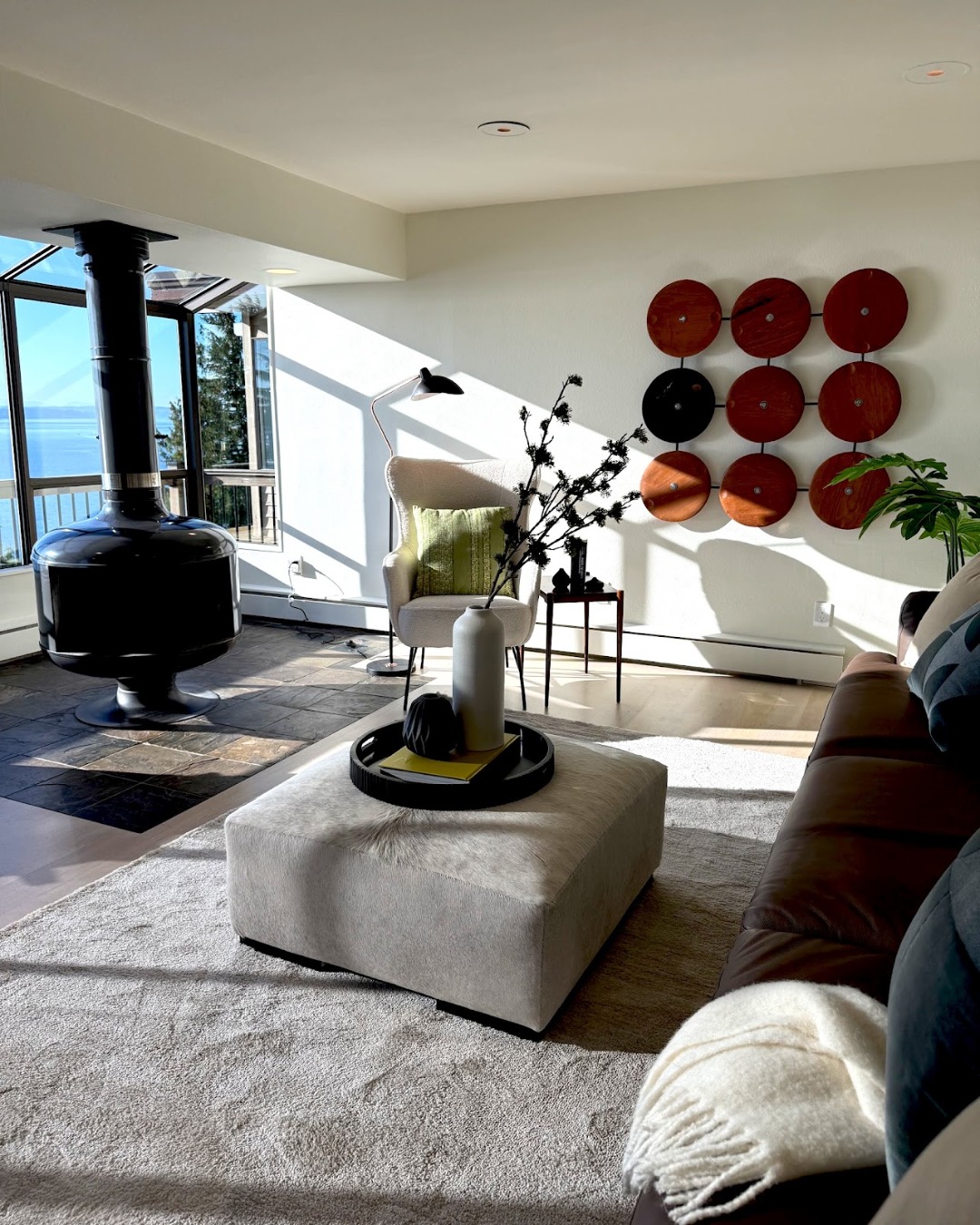
This black freestanding fireplace brings a rounded silhouette to a bright room of pale walls and large windows. Its glossy body is echoed by the circular wall display, creating a connection across the space.
A soft rectangular ottoman keeps the center comfortable, while the brown sofa adds warmth to the otherwise light palette. Try using repeated shapes in this way when your fireplace has a distinctive outline.
The repetition can be loose: circles in artwork, a round tray, or a curved chair are enough. Here, a green cushion introduces color without distracting from the black feature.
Keep larger upholstery pieces quiet and use a few warm wooden accents to make the composition feel balanced, relaxed, and clearly connected to nature.
18. Give Natural Stone a Bright Textile Counterpoint
Credits: Instagram
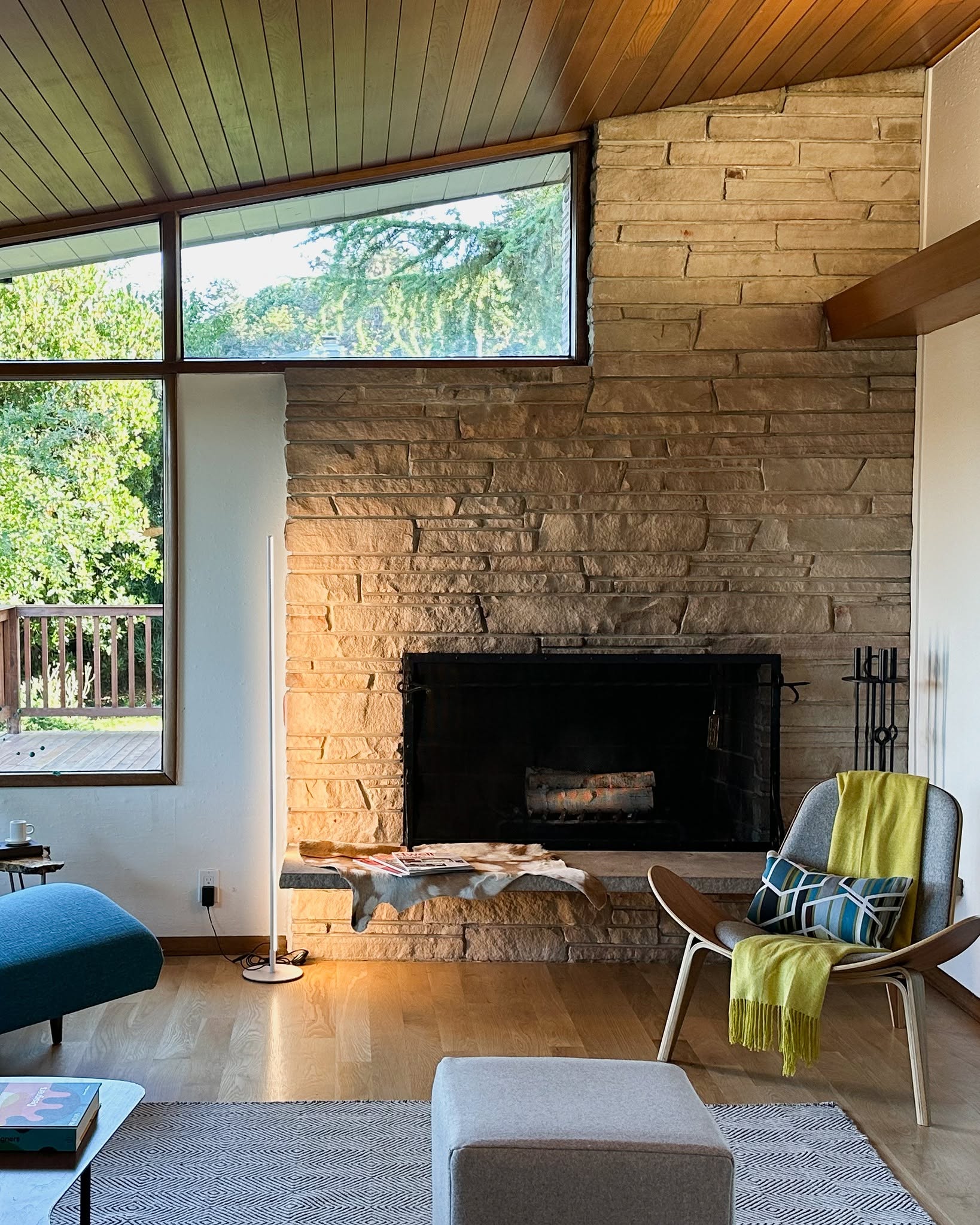
The stone fireplace follows the sloping timber ceiling, making the room's architecture feel continuous from wall to roof. A high window brings daylight across the textured masonry and leaves the fireplace as a strong vertical anchor.
Bright textiles provide the surprise: a yellow throw and blue upholstery lift the earthy palette without hiding the stone. When working with an existing natural surround, try adding color through movable pieces first.
A sculptural wooden chair introduces a curved outline, and a small geometric cushion links the brighter shades. The pale floor and simple rug keep the lower half of the room light.
Leave the stone largely undecorated so its varied shapes remain visible, then let the seating supply comfort and personality nearby.
19. Balance a Dark Fireplace Wall with Low Seating
Credits: Instagram
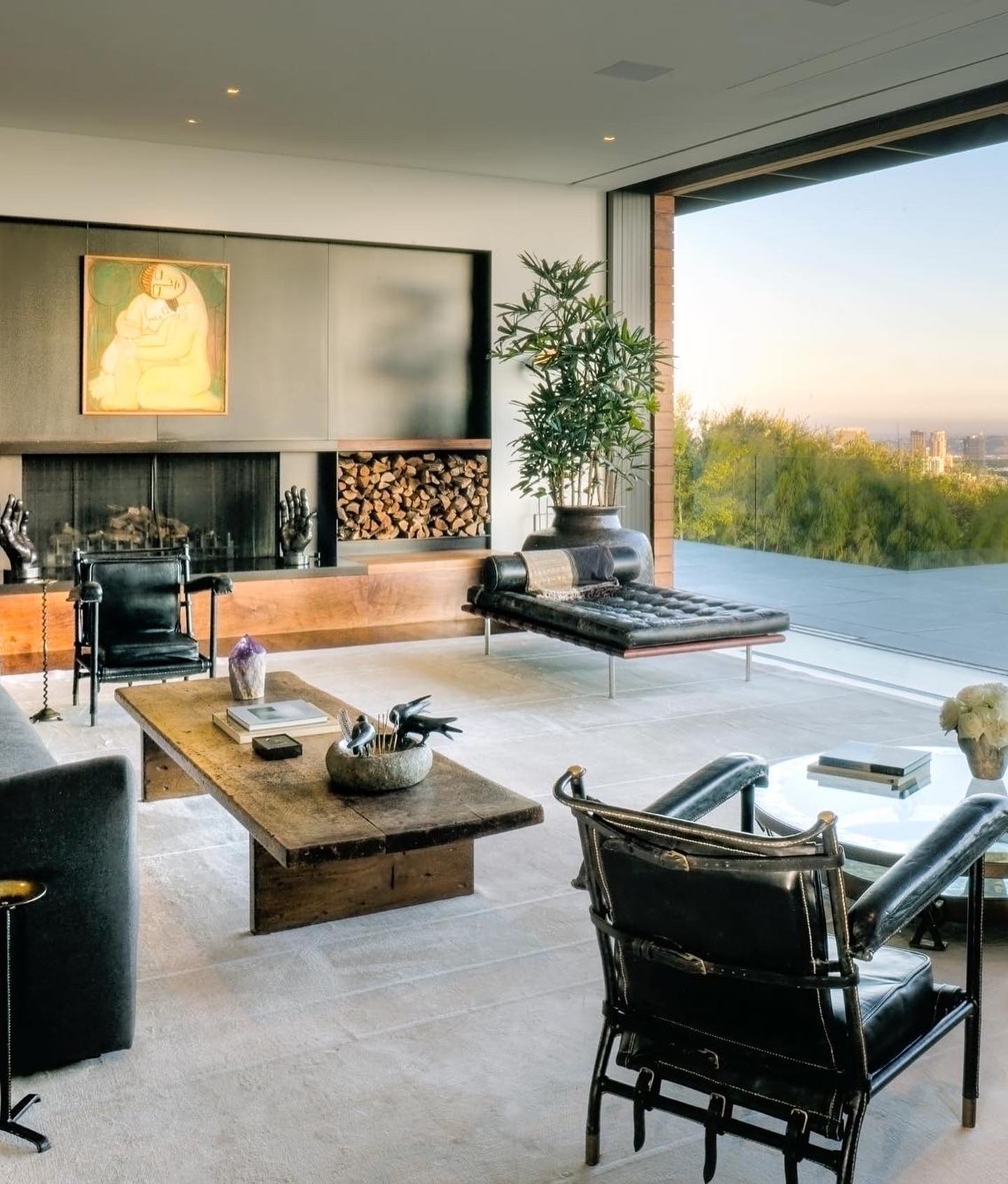
A broad dark fireplace wall gives this room a strong horizontal focal point. The opening, timber base, and adjacent log niche form a clean arrangement, while a single painting adds color above.
Black leather seating repeats the wall's depth, but its low profiles leave the large garden opening visually clear. This is a useful balance for rooms with expansive views: let substantial materials anchor the interior, then keep the furniture silhouettes restrained.
The rough wooden coffee table introduces texture against the smoother wall and pale floor. Notice how accessories appear in small groups rather than filling every available surface.
A generous plant softens the edge of the composition, connecting the darker interior elements with the greenery visible beyond the glass.
20. Use Black as a Backdrop for Colorful Art
Credits: Instagram
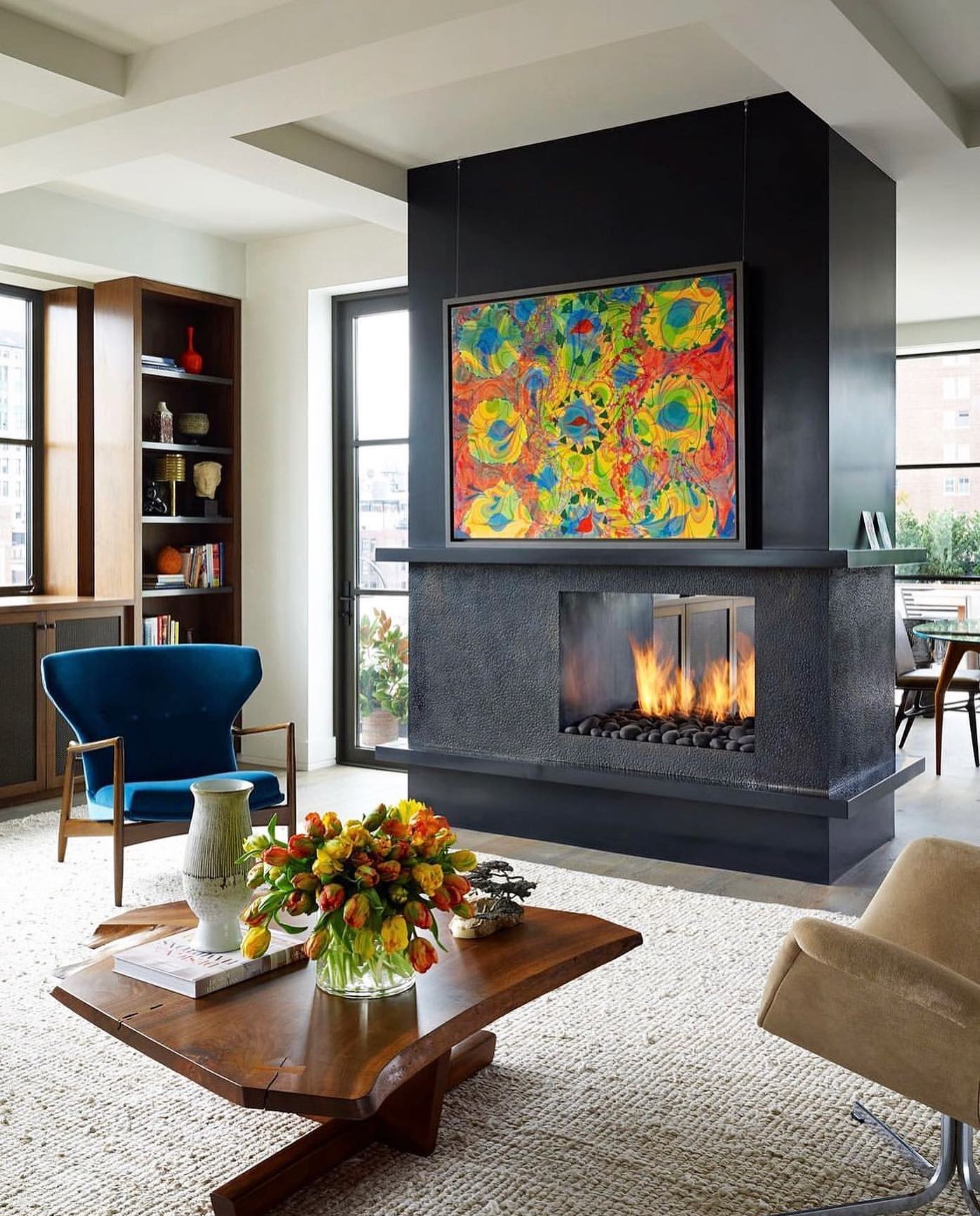
This black fireplace acts as an architectural divider and a backdrop for vivid artwork. Its strong rectangular form feels grounded, while the open view through the firebox gives the composition depth.
A blue chair picks up one of the painting's colors, and the wooden coffee table adds warmth below. If your fireplace is a dominant dark feature, choose a few confident color accents rather than many small competing ones.
Here, pale walls and a light textured rug keep the surrounding room bright. The narrow mantel and crisp base emphasize the fireplace's geometry, while curved furniture softens it.
Let artwork establish the palette, then repeat selected shades in seating or flowers to create a connected, lively arrangement around the central feature.