
A neutral room can still feel layered when wood grain and woven surfaces do some of the work that bright color usually does.
Neutral Coastal Living Room Ideas here show how pale upholstery can balance a timber ceiling, coastal art can guide a small accent palette, and a textured rug can soften a gray sofa.
The same quiet approach also makes room for useful details, such as folded throws stored beneath a coffee table or open shelving that preserves the view.
Together, these choices bring warmth and texture to a calm coastal palette without crowding the space.
1. Balance a Timber Ceiling With Pale Upholstery
Credits: Instagram
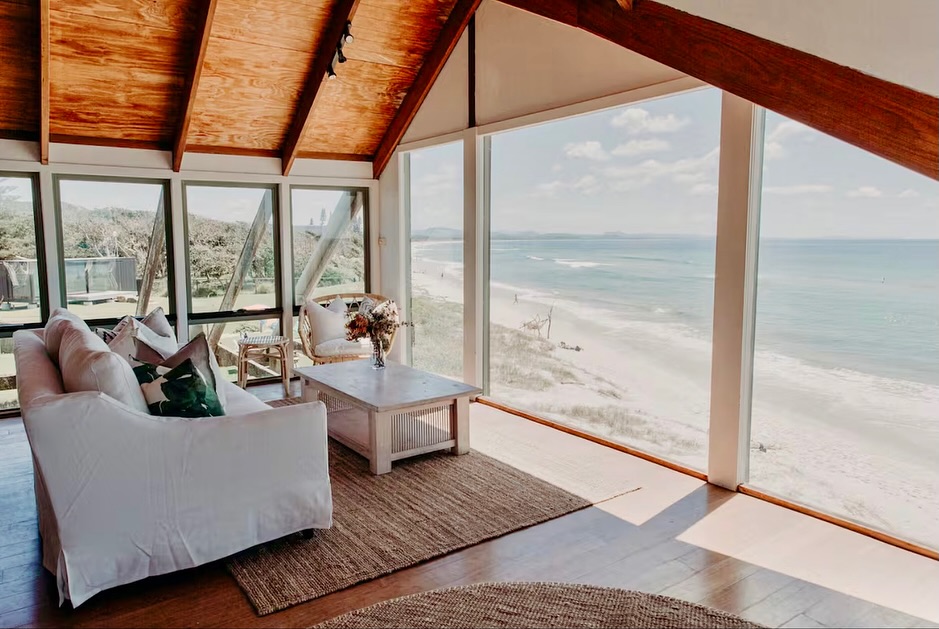
Pale upholstery balances the rich timber ceiling in this beachfront sitting area. The white slipcovered sofa and light coffee table keep the lower half of the room bright, while woven rugs connect them to the warm wood overhead.
Darker cushions add a small amount of contrast without taking attention from the water. Try this balance when an existing ceiling already brings strong color and grain.
Choose the largest upholstered piece in a quiet neutral, then repeat a similar shade in the table or chair cushions. Let texture supply variety through woven surfaces and relaxed fabric.
Keep the furniture grouped together, leaving some floor visible beside the windows. Together, pale fabric, warm wood, and woven textures create a relaxed coastal character.
2. Let Coastal Art Guide a Small Accent Palette
Credits: Instagram
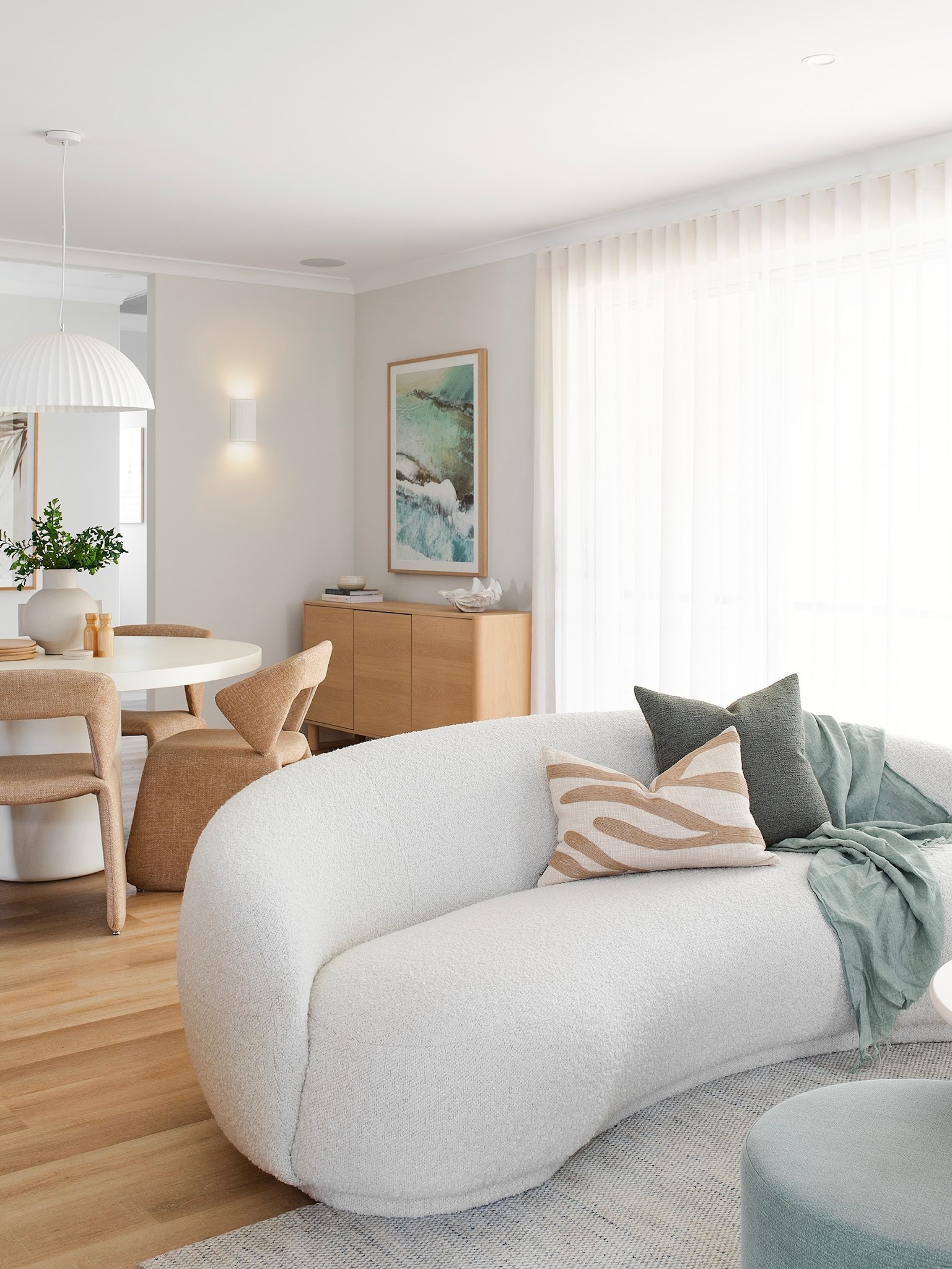
Coastal artwork can guide a small accent palette in an otherwise neutral room. Here, the blue and green shoreline image connects with the muted cushions, throw, and rounded ottoman beside the white sofa.
Pale wood and beige upholstery keep the surrounding space calm. Choose one artwork with colors you enjoy, then repeat just one or two shades in movable accessories.
The repeats do not need to match exactly; slight variations make the arrangement feel relaxed. Keep the largest furniture pieces neutral so the color remains an accent.
A simple wood frame can connect the picture to nearby cabinetry. Leave some clear wall around the artwork, allowing its coastal scene to read easily from the seating area and across adjoining spaces.
3. Soften a Gray Sofa With a Textured Pale Rug
Credits: Instagram
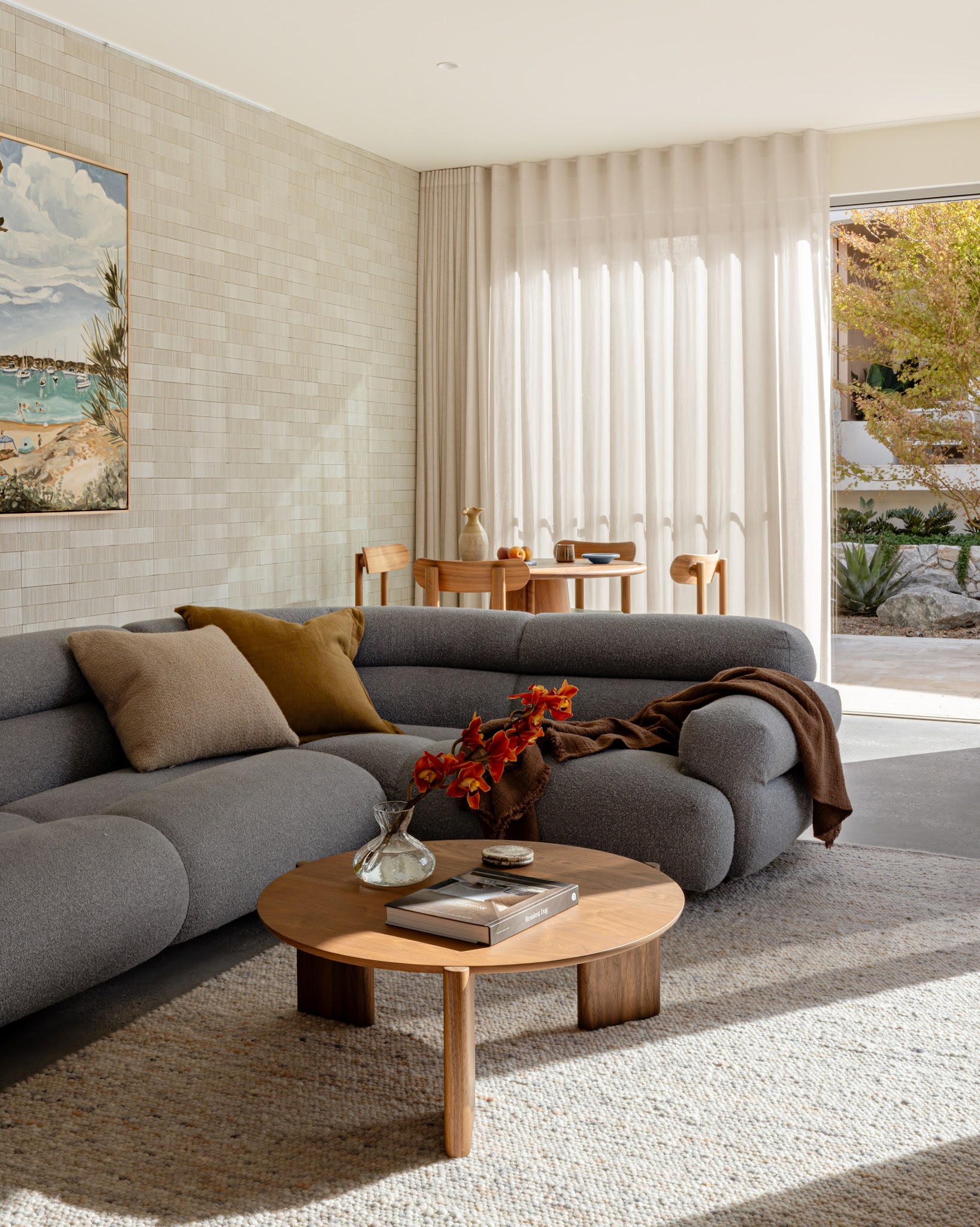
A textured rug can soften the transition between a gray sofa and a plain floor. Here, the pale, chunky weave spreads beneath the rounded seating and wood coffee table, adding visual warmth without another strong color.
Try a rug with a clearly visible texture when your upholstery is fairly uniform. Bring home a sample if possible, and compare it against the sofa in daylight before choosing.
A cream or sandy tone can connect the seating to pale walls and sheer curtains. Keep the coffee table simple enough for the rug’s surface to remain visible around it.
The warm wood and harbor painting reinforce this room’s relaxed coastal character, while the restrained floor covering gives the furniture a quiet, comfortable base.
4. Keep a Shelf Divider Visually Open
Credits: Instagram
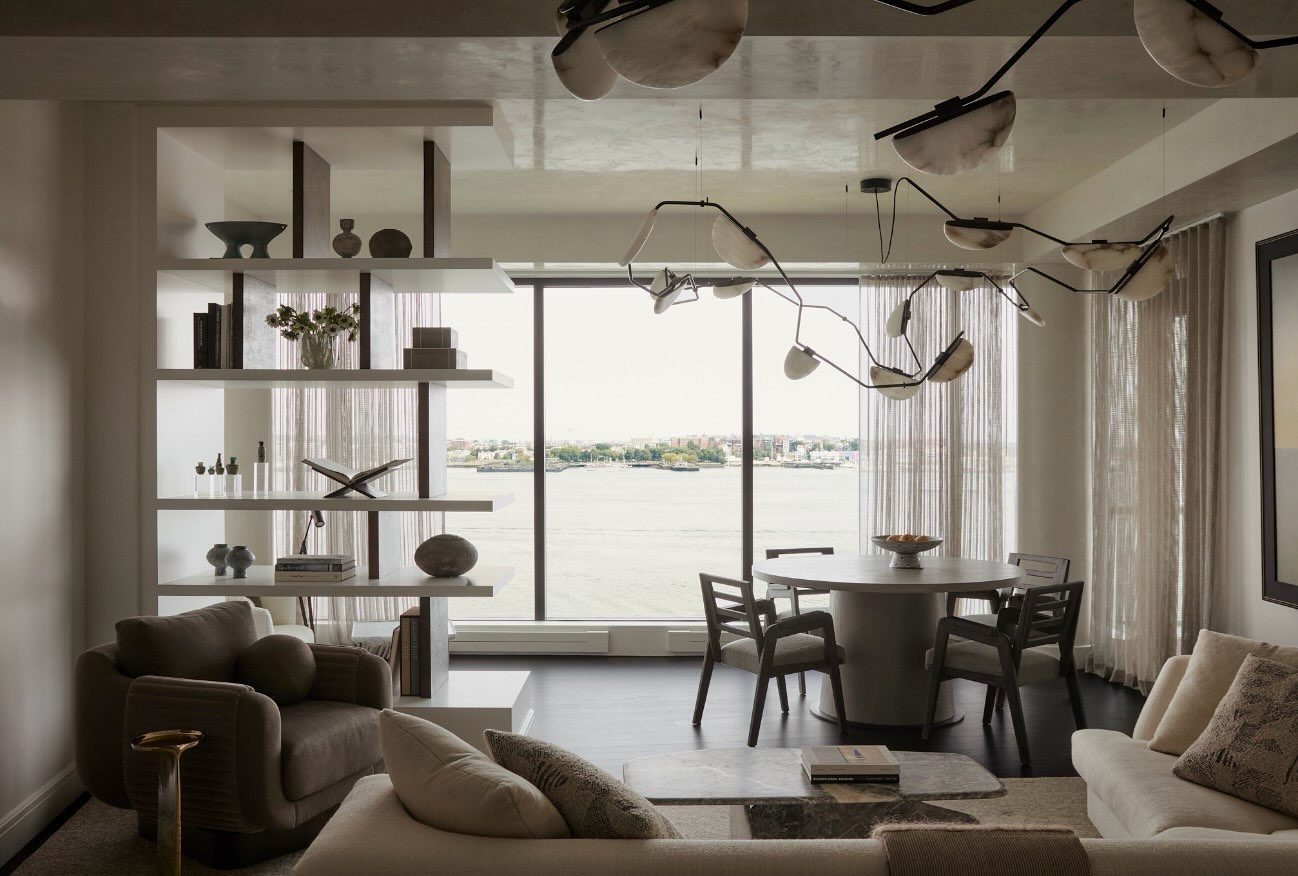
Open shelving can define a seating area while letting the waterfront remain visible. In this living room, pale horizontal shelves and vertical supports stand between the armchair and the windows without forming a solid wall.
Small ceramics, a few books, and one vase leave generous gaps through the display. Try grouping objects at different heights, then step back from the sofa to check that daylight still passes between them.
Keep the shelf color close to the surrounding walls so the structure feels quiet. Darker objects can provide definition without filling every opening.
The nearby cream upholstery and sheer curtains continue the restrained palette, allowing the harbor beyond the glass to contribute movement and color to the room throughout the day.
5. Store Folded Throws Beneath the Coffee Table
Credits: Instagram
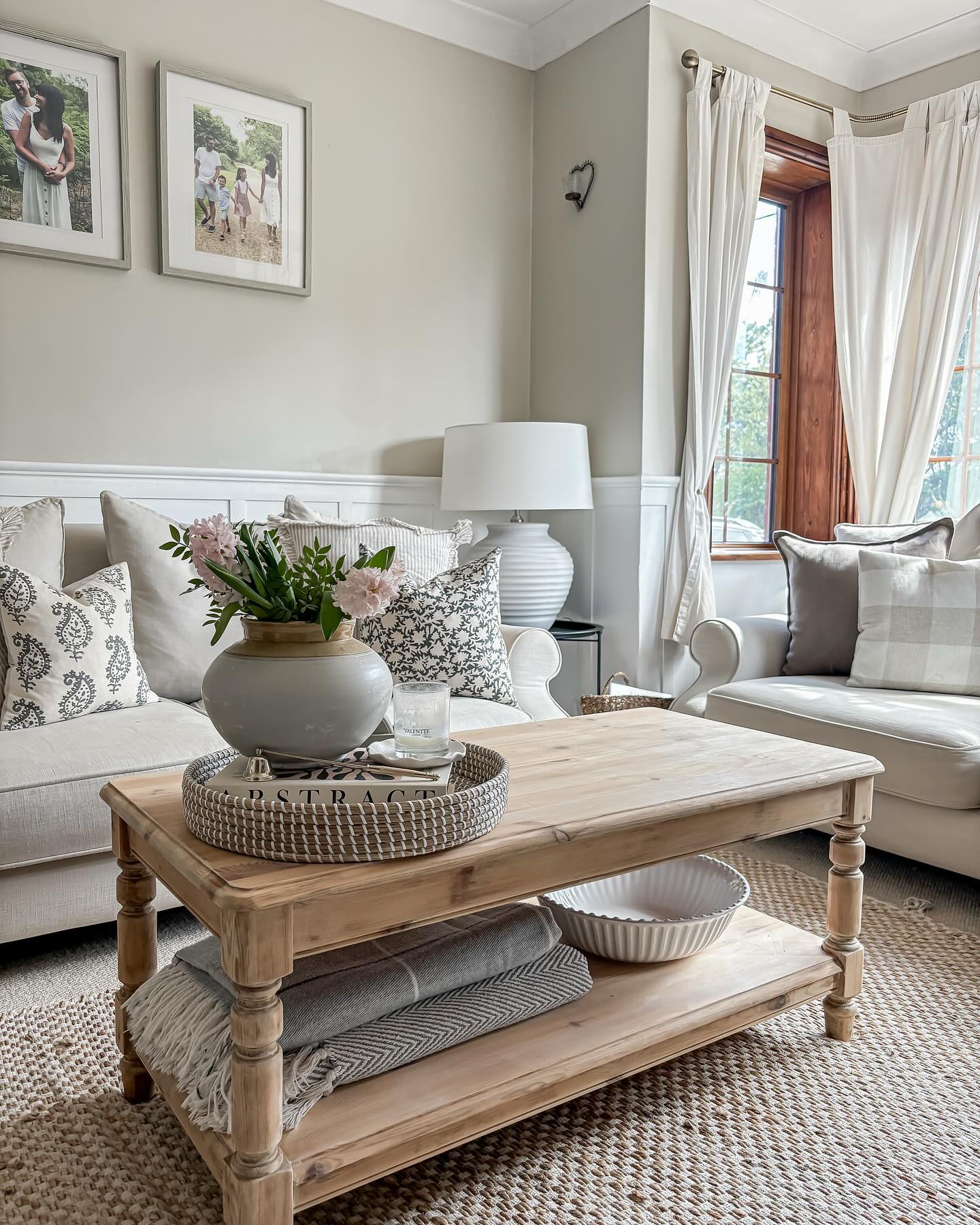
A coffee table with a lower shelf can keep soft layers close without covering every seat. In this neutral cottage room, folded throws sit beneath the pale wood tabletop, beside a simple white bowl.
Their gray patterns echo the cushions while the open shelf leaves the arrangement easy to see and reach.
Try folding two favorite throws into a neat stack, keeping the edges within the shelf so they do not trail onto the rug. Reserve the upper surface for a small tray and everyday use.
Choose textiles in cream, oatmeal, or soft gray to connect with pale upholstery and curtains. The combination of useful storage, warm wood, and woven texture suits a relaxed coastal room without needing themed accessories.
6. Choose Open Wood Chairs Beside the View
Credits: Instagram
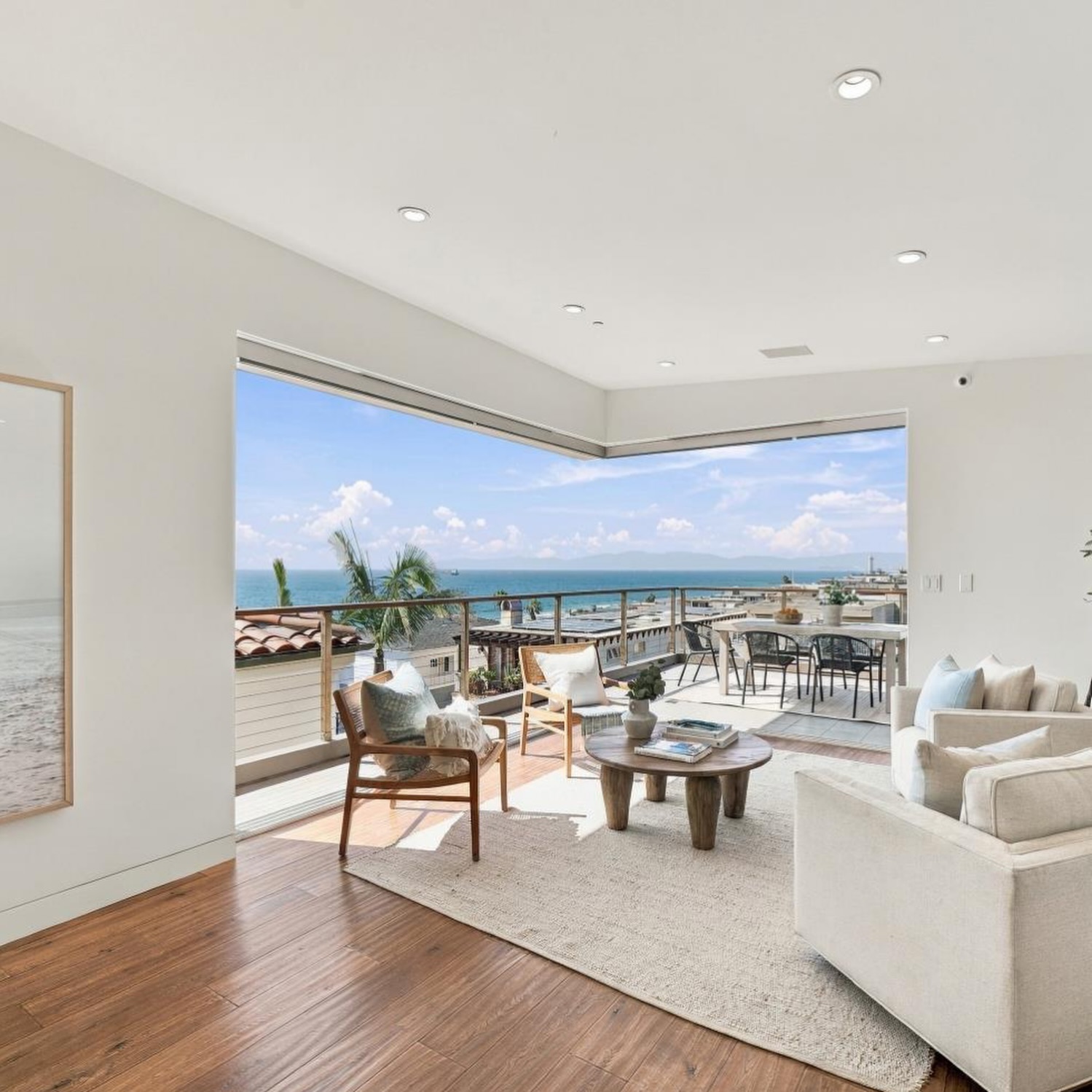
Open wood frames let chairs sit near a view without creating a solid band of upholstery.
In this coastal room, two woven chairs face pale upholstered seating across a round wood table, leaving the bright blue ocean view visible above their backs.
Try placing lighter framed chairs along the window side of your seating group, then check the view from the sofa. Leave the door tracks and the route outside clear.
Cream cushions connect the chairs to the larger upholstered pieces, while the warm frames relate to the floor and table. Keep accessories low enough that the outlook remains visible.
A restrained mix of wood, woven surfaces, and pale fabric gives the room texture without competing with the water beyond.
7. Make Wood Grain the Main Pattern
Credits: Instagram
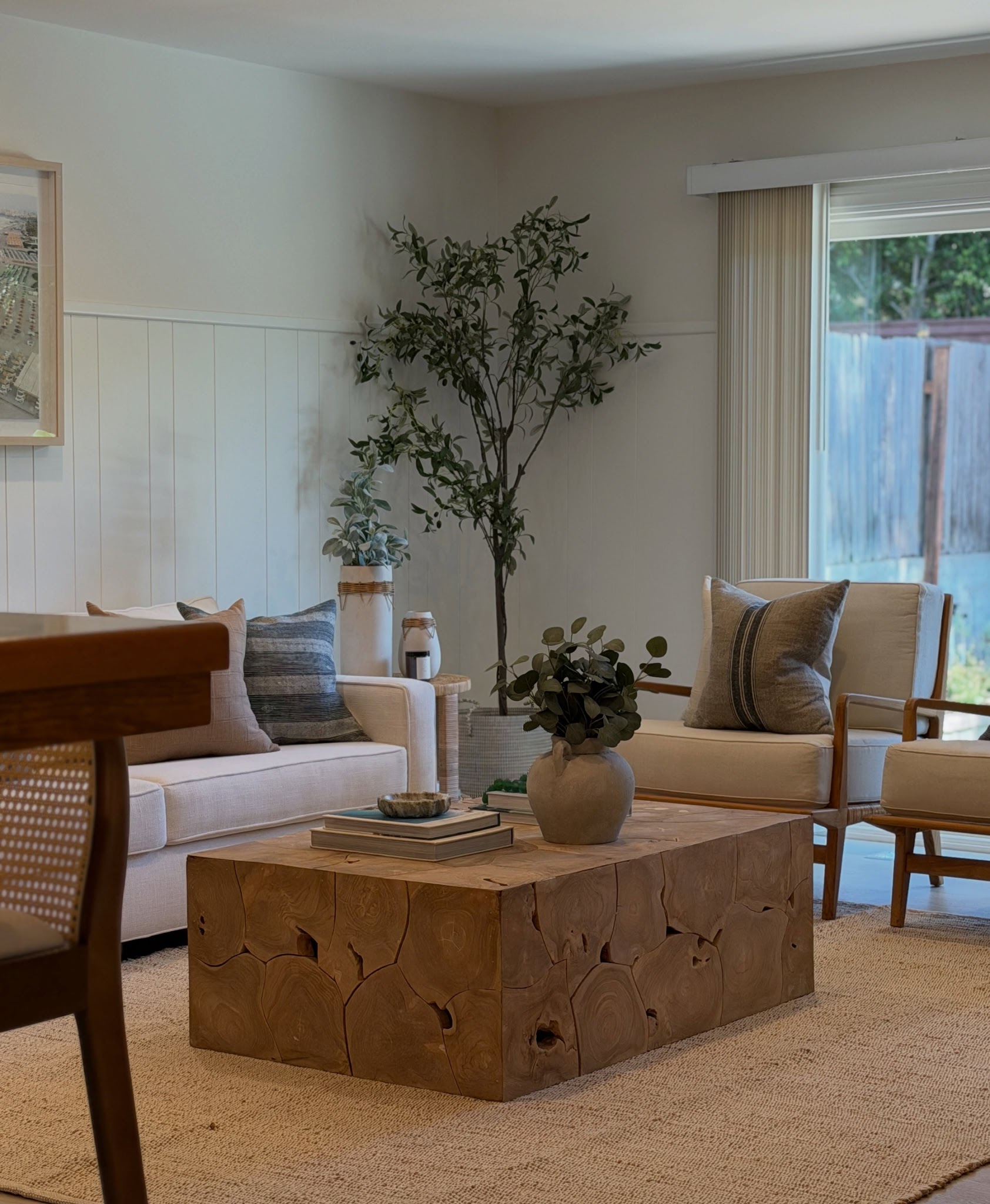
Let one wood piece supply the strongest pattern in a neutral coastal room. Here, a broad block coffee table shows knots, cracks, and swirling grain against cream upholstery and a woven rug.
Its simple outline keeps the natural surface from feeling busy. Choose quieter fabrics around a table like this, allowing their texture to support the wood without competing with it.
Keep most of the tabletop visible, grouping a few books and a vase to one side. Warm chair frames repeat the table’s color in a lighter shape.
A pale paneled wall and muted striped pillows continue the relaxed setting. Before choosing a substantial table, check that its edges leave comfortable space to reach the seats and move around them.
8. Balance the TV With a Warm Display Area
Credits: Instagram
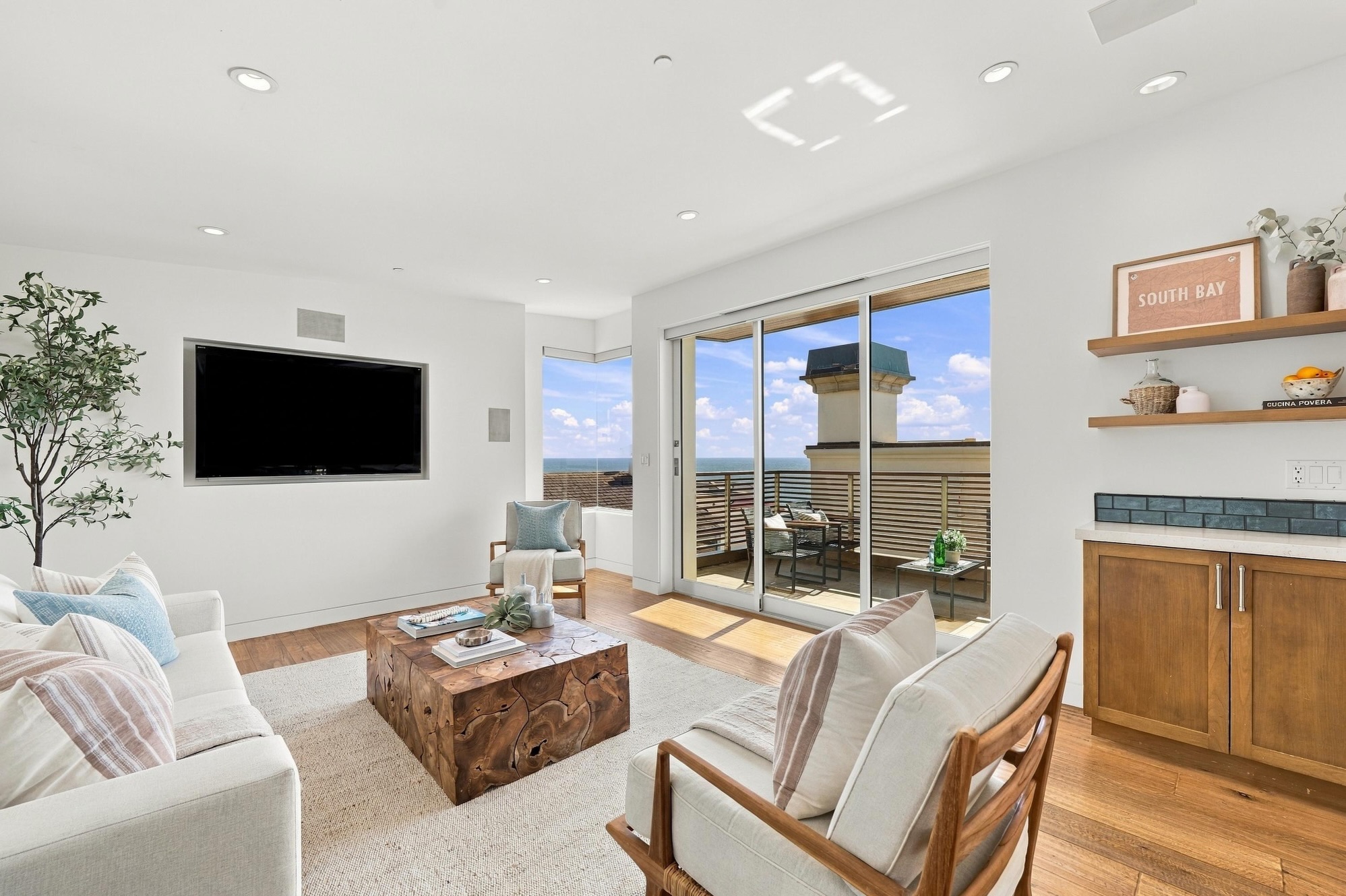
A warm display area can keep a television from becoming the only focal point in a pale room. Here, wood shelves and cabinetry sit across the seating area from the screen, offering another place for the eye to land.
Small ceramics, a framed print, and a woven container add detail without filling every shelf. Try repeating the cabinet's wood tone in a chair or table to connect the display with the furniture.
Keep the counter below useful by limiting decoration to a few pieces. A short blue tile band echoes the pale blue cushions, adding color within the neutral palette.
Leave space around the television so the wall stays quiet, and avoid competing rows of small objects beside the screen.
9. Give Neutral Chairs a Sculptural Shape
Credits: Instagram
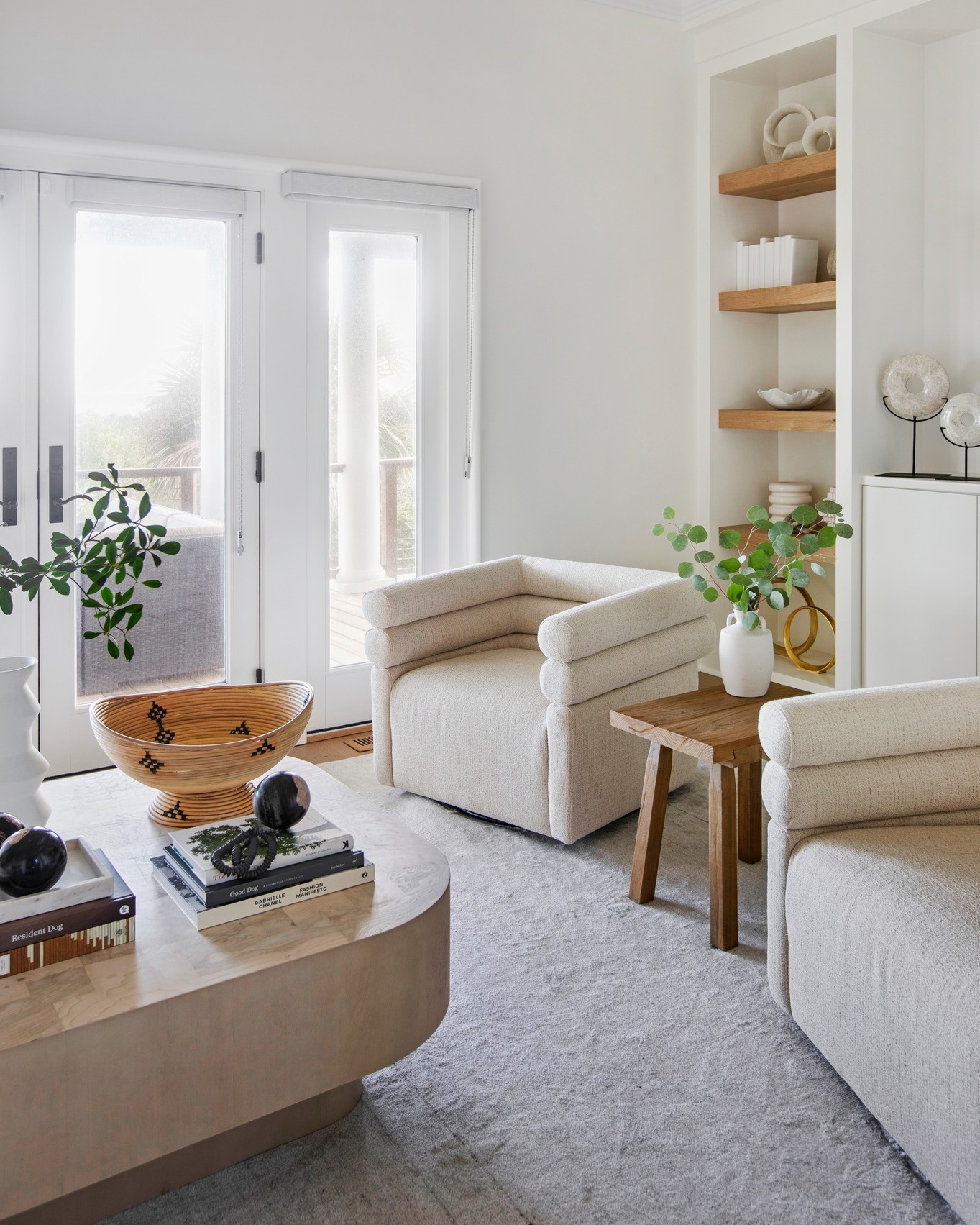
Neutral chairs can make a statement through shape instead of color. Here, rounded upholstered bands wrap around the arms and backs, giving two cream seats a sculptural outline.
Their textured fabric adds detail without a busy print. Try a distinctive chair shape when the surrounding walls and rug are quiet, and leave its arms visible rather than covering them with extra cushions.
The broad curved coffee table repeats the softer lines, while a simple small wood side table adds a straighter counterpoint. Keep neighboring pieces in similar pale tones so the different profiles remain easy to compare.
Warm wood shelves and a woven bowl bring natural texture into the bright coastal setting, balancing the substantial upholstery with smaller, lighter details.
10. Frame Pale Seating With a Timber Sliding Door
Credits: Instagram
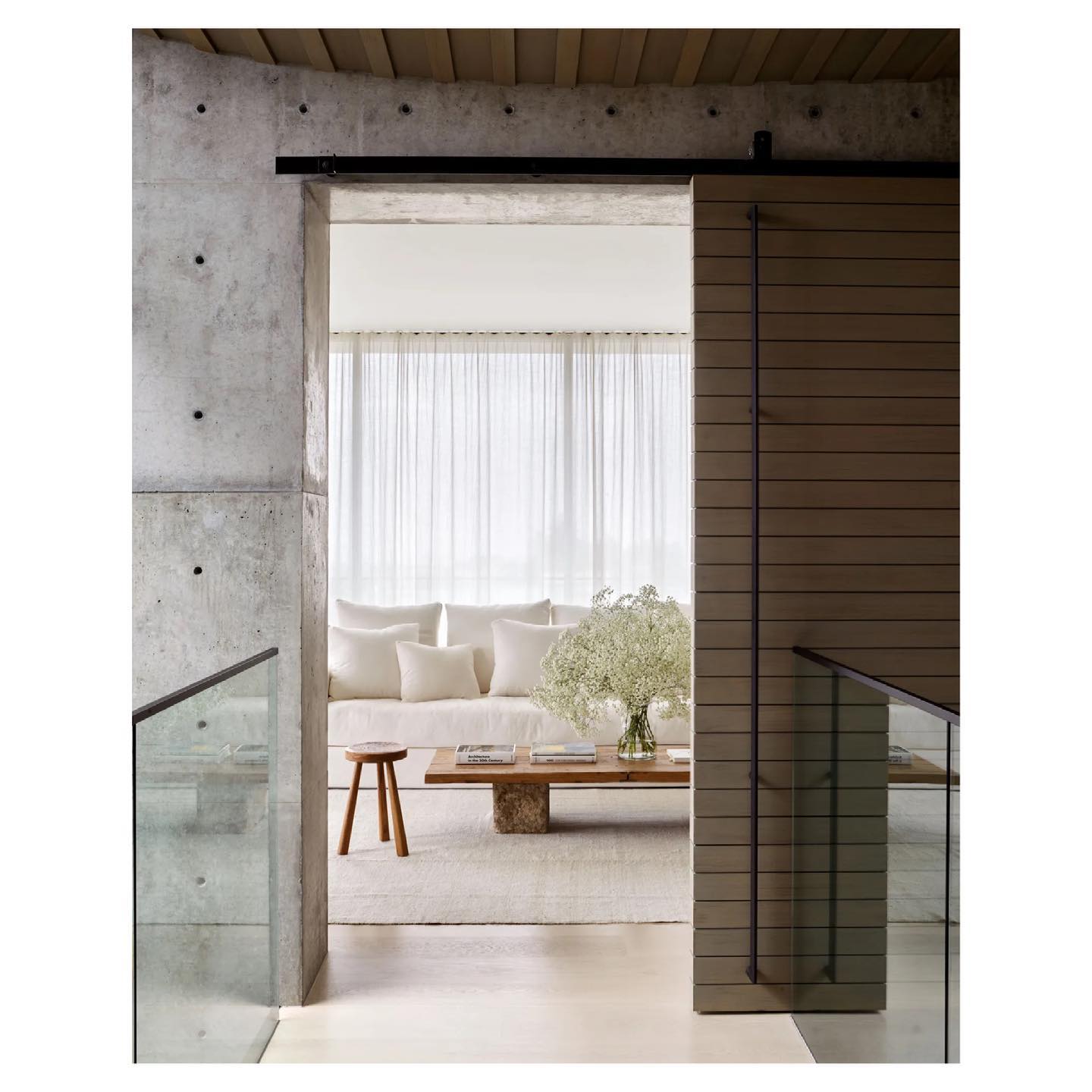
A timber sliding door can frame a pale sitting room like a picture. Here, horizontal wood boards and dark hardware outline a softly lit space with cream seating, sheer curtains, and a low wood table.
The contrast gives the entrance definition while the room beyond stays quiet. If you already have a substantial doorway, consider the view through it when arranging furniture.
Keep the main seat visible and avoid crowding the opening with tall accessories. Repeat some wood inside the room, as the table and small stool do, to connect both sides of the threshold.
Pale upholstery and a simple rug soften the stronger architectural lines. Let daylight through light curtains, keeping the passage clear and the seating comfortably inviting.
11. Carry a Pale Palette Across Open Rooms
Credits: Instagram
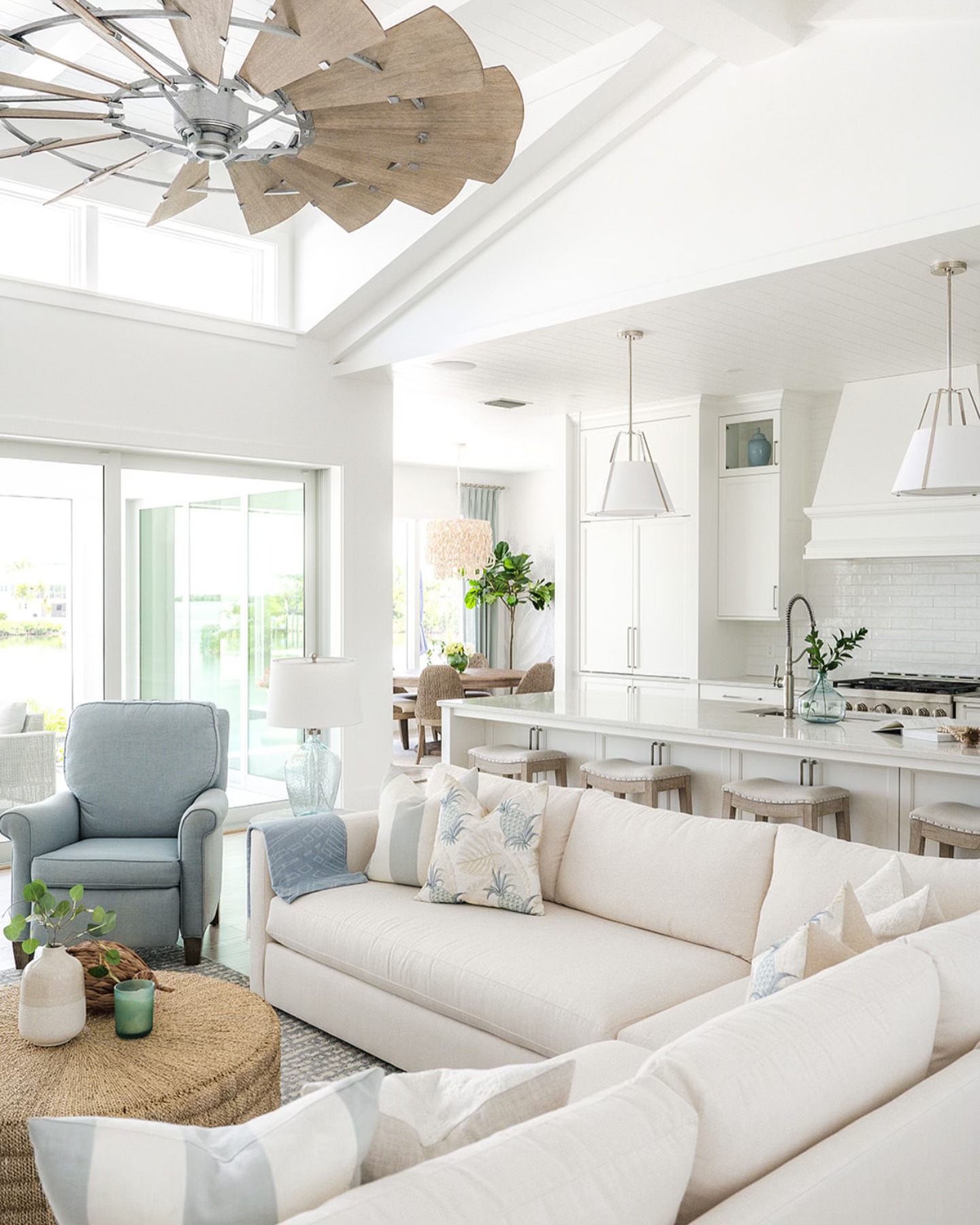
A consistent pale palette helps an open living area feel connected to the kitchen behind it. Here, cream seating sits against white cabinetry, walls, and overhead beams, so the large background stays visually quiet.
Try comparing upholstery samples with nearby cabinet finishes before choosing a sofa. They can differ slightly in warmth while still belonging to the same light family.
Then add interest closer to the seats through a woven round table, patterned cushions, and one soft blue chair. Repeating a little blue in the throw and accessories ties the accent back into the group.
Keep the kitchen counter simply arranged where it forms the living room’s backdrop, allowing the seating and natural textures to hold attention at eye level.
12. Arrange Four Chairs Around a Round Table
Credits: Instagram
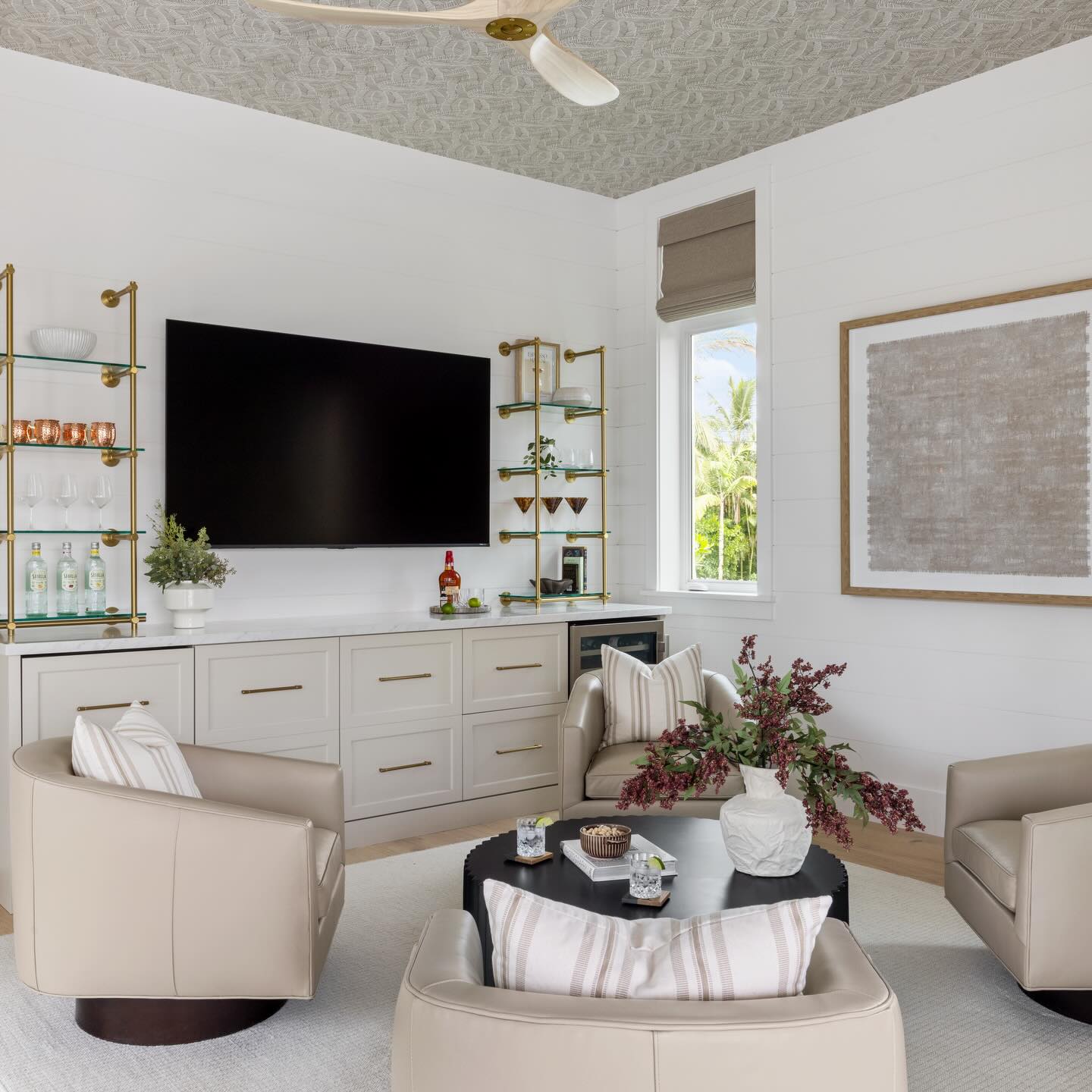
Four individual chairs can turn a coastal lounge into a welcoming conversation circle. In this room, pale seats gather around a dark round table, giving each person a clear place within the arrangement.
The curved chair backs soften the paneled walls and straight cabinetry behind them. Try this layout when conversation matters more than stretching out on one large sofa.
Leave openings between the chairs so everyone can enter and stand up comfortably. Check that the table is reachable from each seat without crowding knees.
Matching upholstery keeps the group calm, while striped cushions add a little variation. White paneled walls and a pale rug support the neutral palette, allowing the darker tabletop to define the center of the gathering.
13. Keep Seasonal Accents Within a Muted Palette
Credits: Instagram
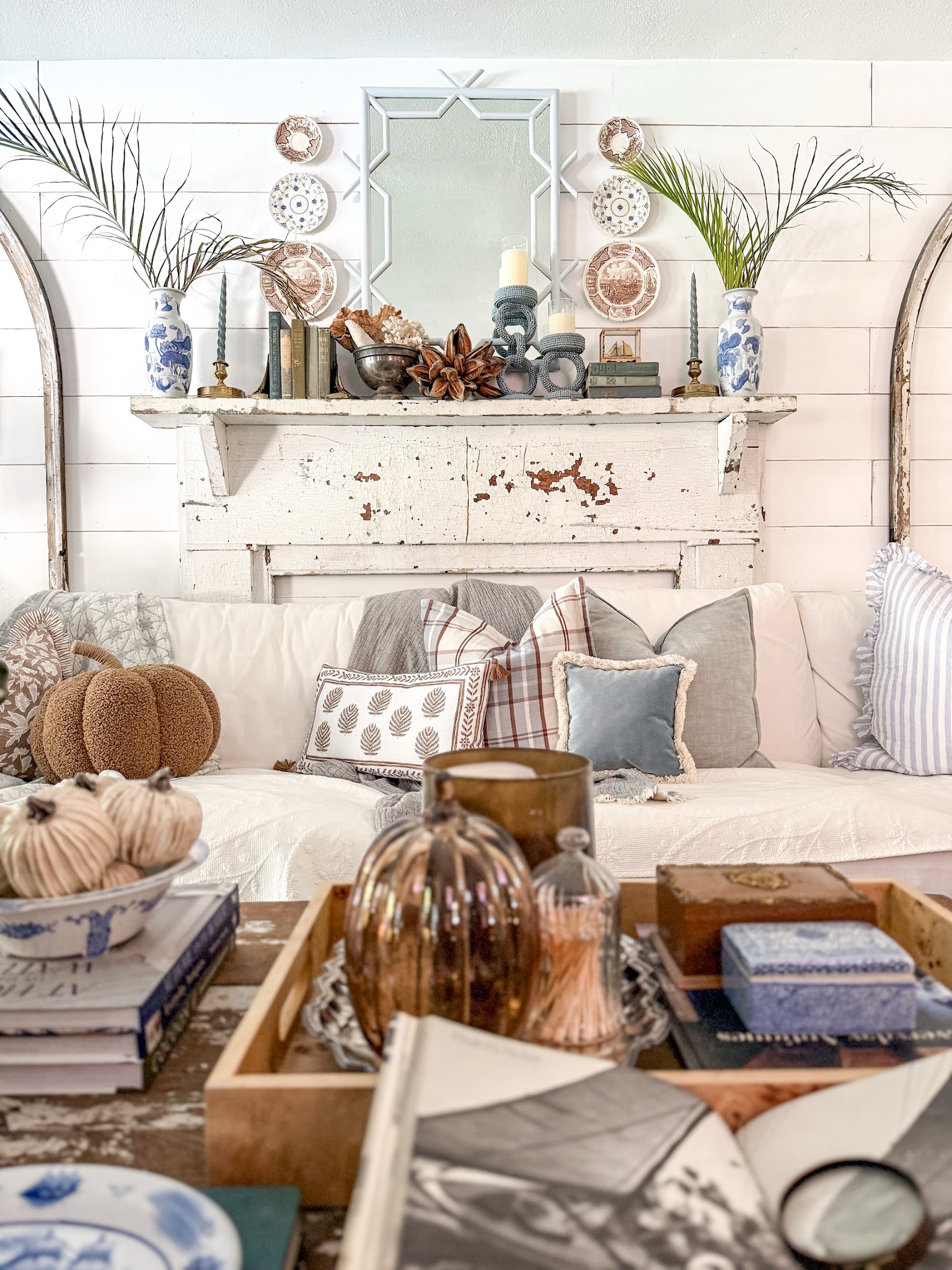
Seasonal accents can sit comfortably within a neutral coastal palette. Here, a white sofa holds muted blue, gray, and brown pillows, with a textured pumpkin adding a clear fall reference.
The weathered painted mantel behind the seating keeps the backdrop pale while bringing in a rougher finish. Choose seasonal pieces that repeat colors already present in your room, such as sandy brown or soft blue.
Mix a little plaid with a simple leaf pattern, then add solid cushions to give the arrangement breathing room. A wood tray can gather smaller decorations on the coffee table while leaving space for everyday use.
Keep your larger furniture and wall colors consistent, and change a few accessories as the seasons turn each year.
14. Mix Upholstery Textures in the Same Pale Palette
Credits: Instagram
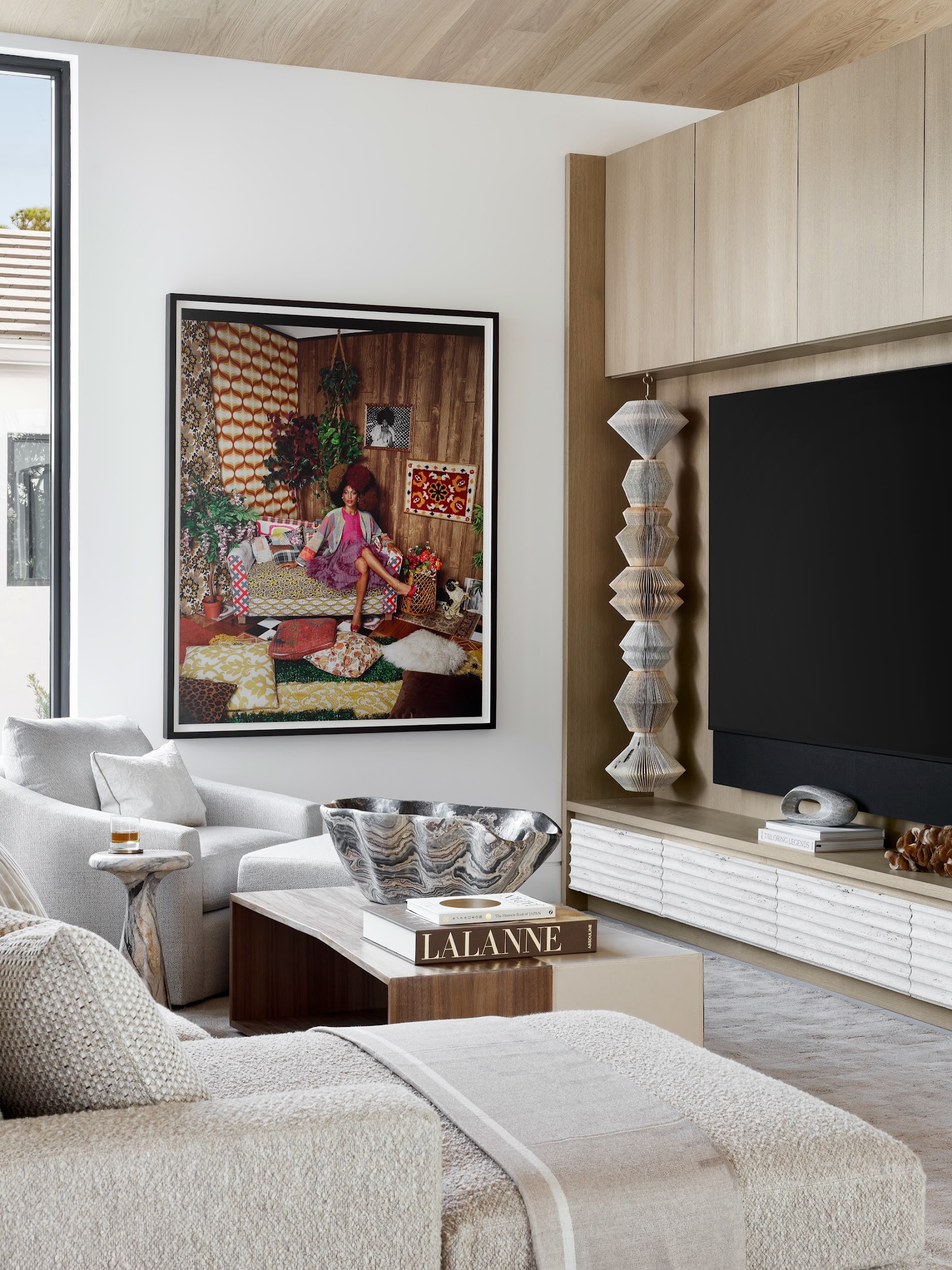
Pale upholstery gains depth when its textures change from piece to piece. This den pairs a nubby cream sofa with a more finely woven armchair, then adds a chunky cushion and a softly striped throw.
The colors remain close, so the seating feels connected without looking identical. Try combining one pronounced texture with quieter fabrics elsewhere in the group.
Order samples and place them together in your room before choosing upholstery; daylight can reveal differences that a screen misses. Keep the surrounding wood and wall finishes simple enough for those small variations to register.
Here, a warm timber ceiling and pale cabinetry provide that setting, while the dark television and framed artwork give the soft seating a crisp visual counterpoint.
15. Edge Plain Curtains With Pattern
Credits: Instagram
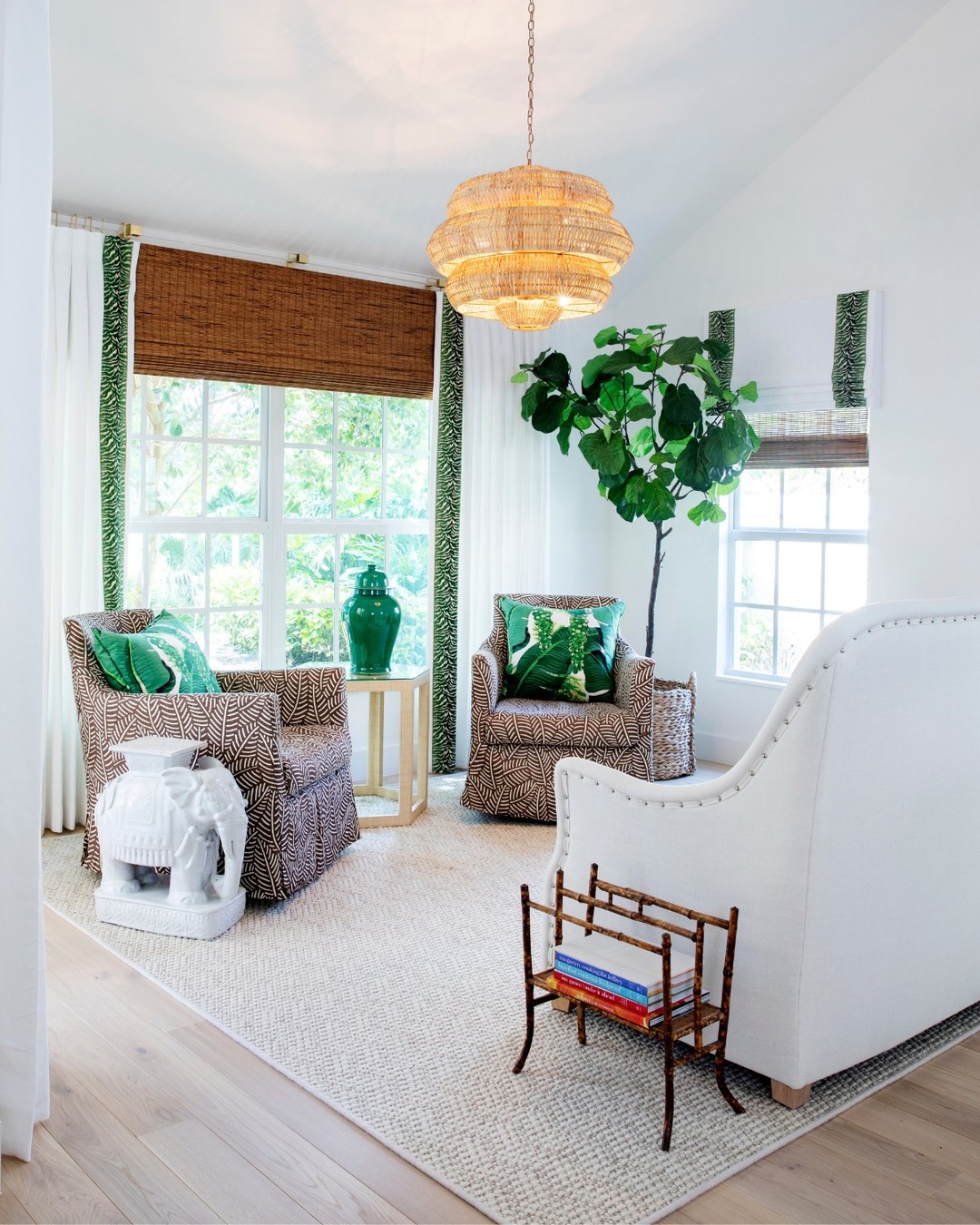
Narrow patterned borders can give plain window treatments a tailored finish without filling the room with color. Here, green trim runs down white curtain panels and repeats on the smaller window shade, linking two windows.
Try using the same border fabric on neighboring treatments while keeping their main fabric light and quiet. Look at a sample from across the room before deciding how wide the border should be.
Green cushions and a matching jar repeat the color near the seats, while the pale rug and white chair leave plenty of neutral space. Woven blinds and a layered pendant add warmth through texture.
This balance lets botanical patterns feel lively within a bright coastal sitting area rather than overwhelming every surface.
16. Finish a Floating Sofa With a Slim Console
Credits: Instagram
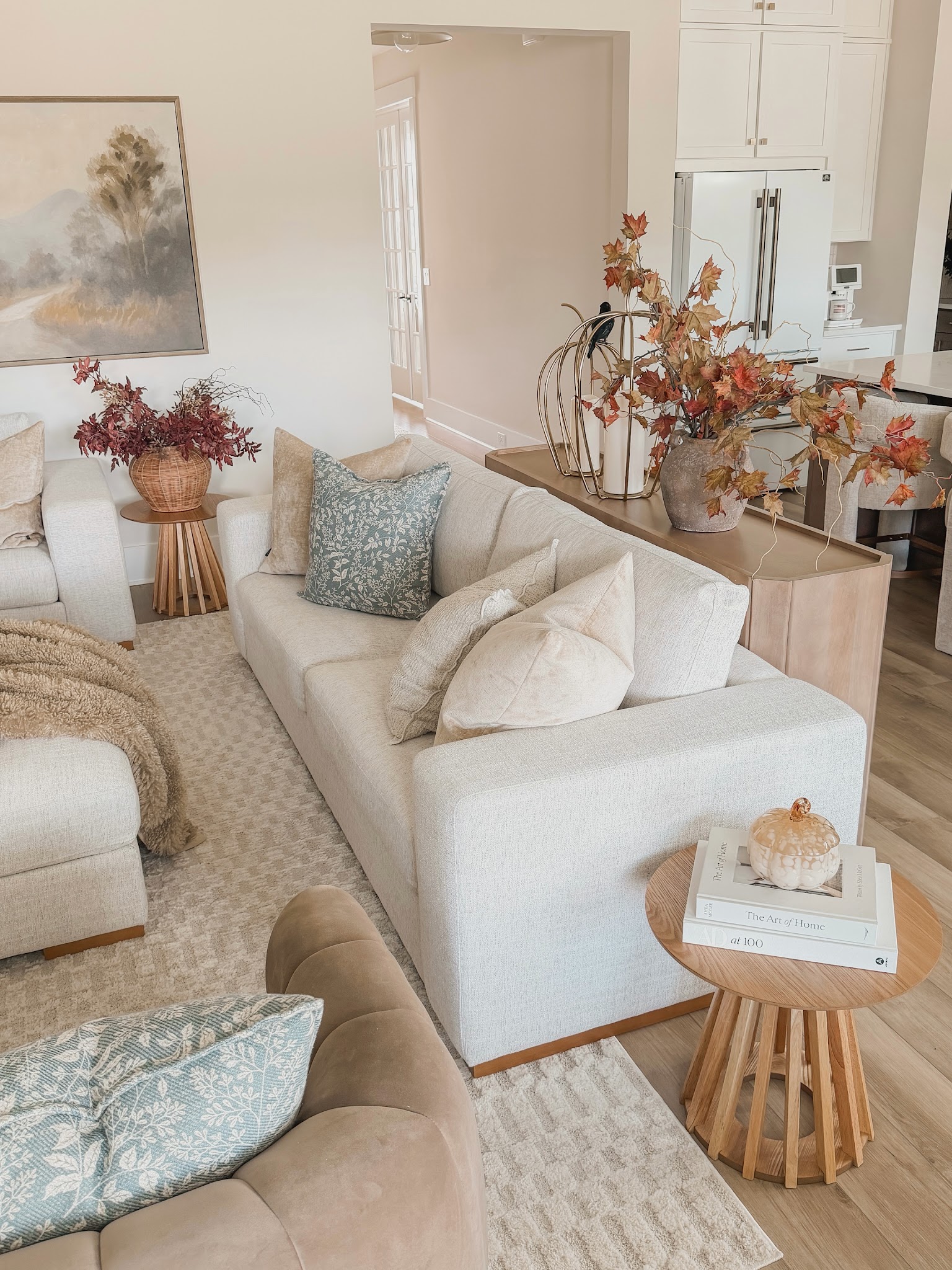
A slim console can make the back of a floating sofa feel deliberately finished. Here, a pale wood table follows the cream sofa, creating a display surface between the living area and kitchen.
Its quiet finish relates to the smaller wood tables beside the seats, keeping the furniture connected. Choose a console that sits close to the height of your sofa back, and check its depth against the passage behind it.
Leave enough room to walk comfortably between zones. A few substantial objects will read more clearly than many tiny accessories.
Keep taller arrangements toward one end if they interrupt conversation or views. Muted blue cushions and textured pale upholstery complete the gentle coastal palette across this comfortable seating area.
17. Pair Fine Stripes With a Plain Sofa
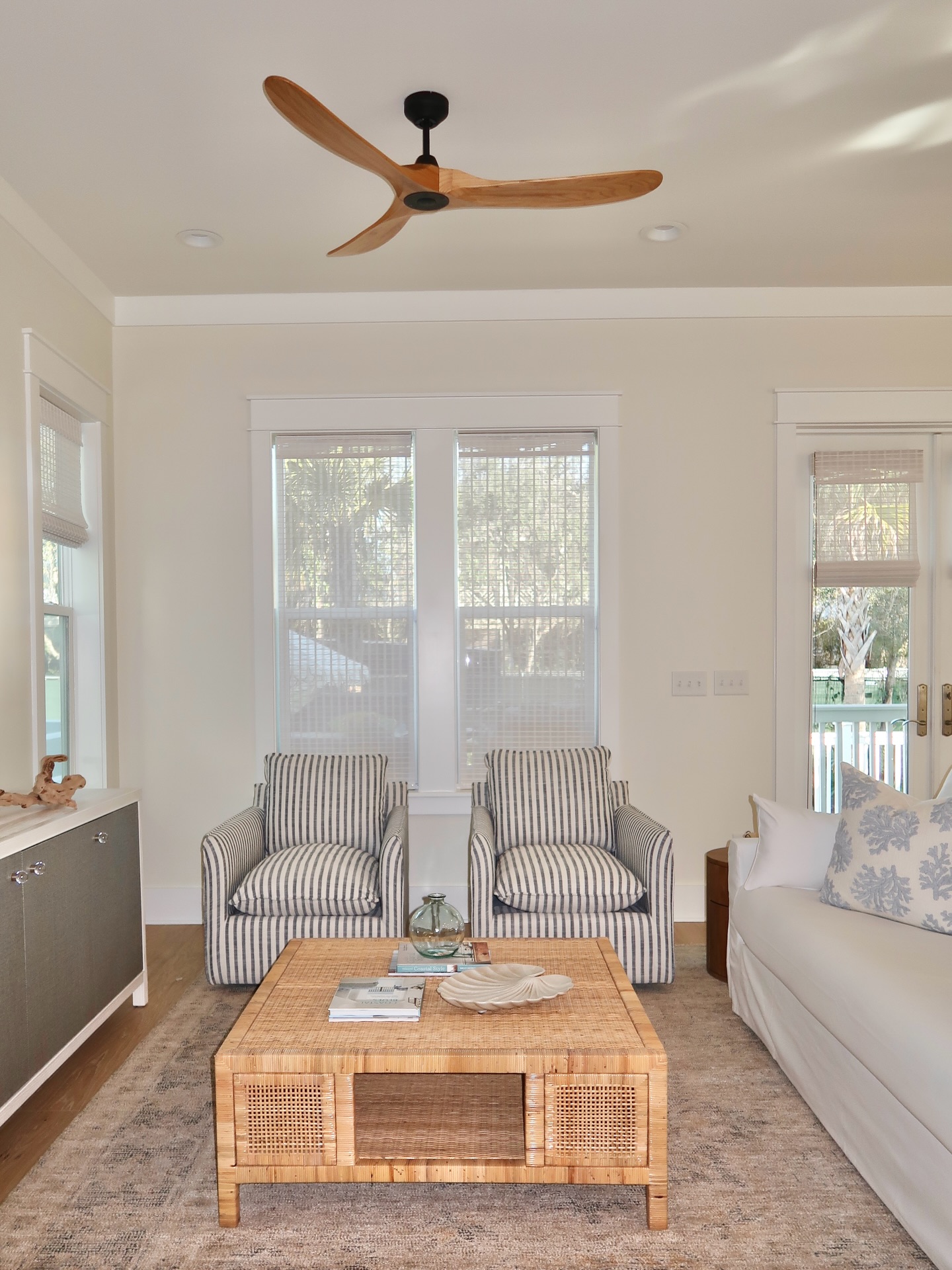
Credits: Instagram
Fine stripes give a pair of chairs definition while leaving the rest of a coastal room quiet. Here, narrow dark lines run across pale upholstery beside a cream sofa, creating a clear pattern without a large block of color.
Try repeating one stripe on matching chairs and keeping the larger sofa mostly plain. Compare a fabric sample from the doorway as well as up close, since narrow lines can look softer at a distance.
A woven coffee table and light window shades add texture without introducing another bold print. Keep cushions on the striped seats simple, or leave them bare so their pattern remains visible.
One pale blue patterned pillow on the sofa adds variety within the gentle neutral setting.
18. Scale a Pendant Cluster to a Tall Ceiling
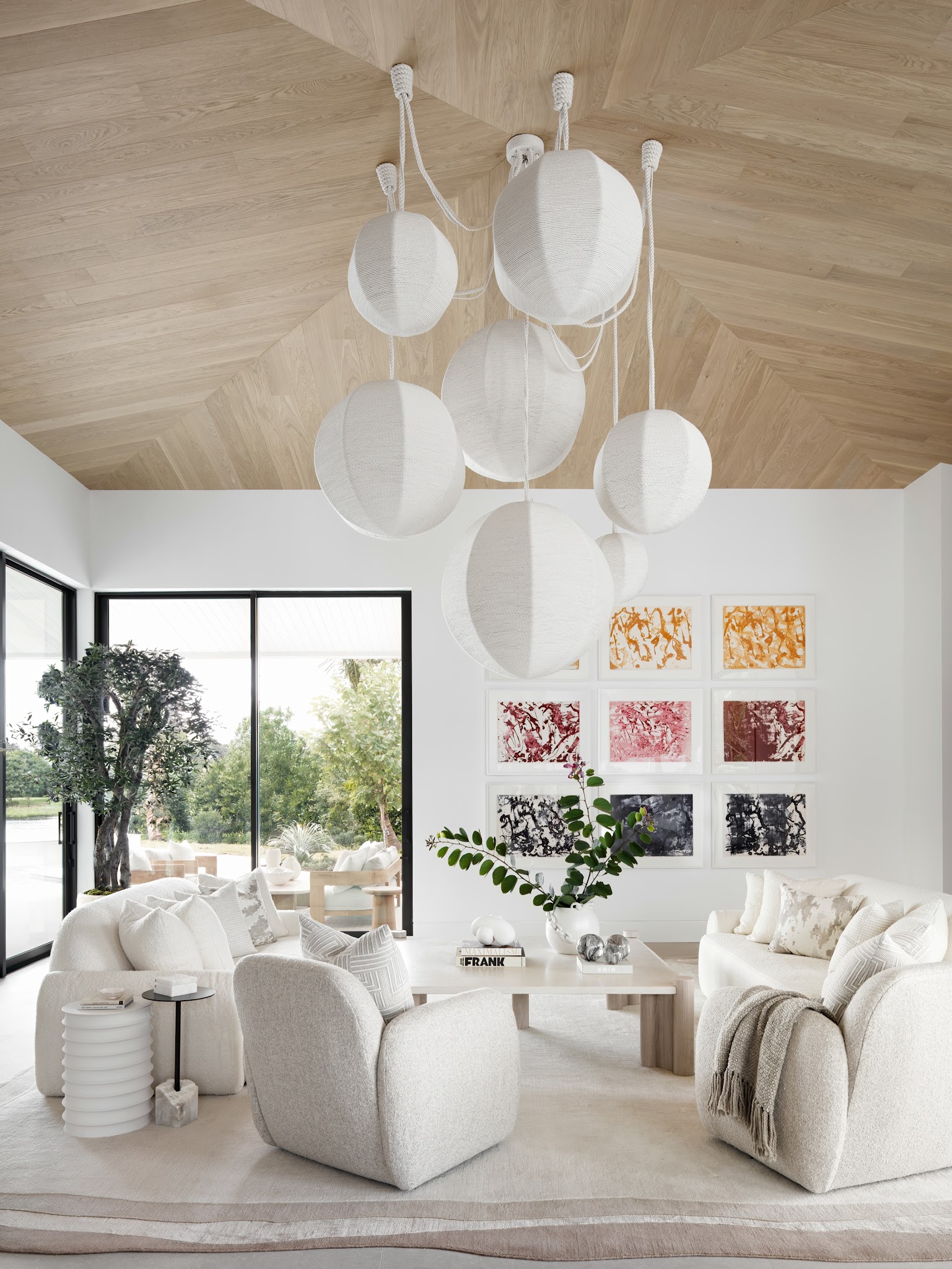
Credits: Instagram
A cluster of pale pendants can bring a high ceiling into the conversation area below. Here, rounded shades hang at different heights against a light wood ceiling, echoing the cream seating without adding another strong color.
Consider the whole group when choosing sizes, rather than selecting each light separately. Paper templates can help you judge the arrangement from the doorway and from a seated position before installation.
Leave visual space between the shades so their individual shapes remain clear. Plan hanging heights with your installer around the furniture and routes through the room.
A restrained palette lets the cluster become the main overhead feature, while a simple coffee table and low seating keep the view toward the garden feeling open.
19. Echo a Flowing Rug Pattern in the Furniture
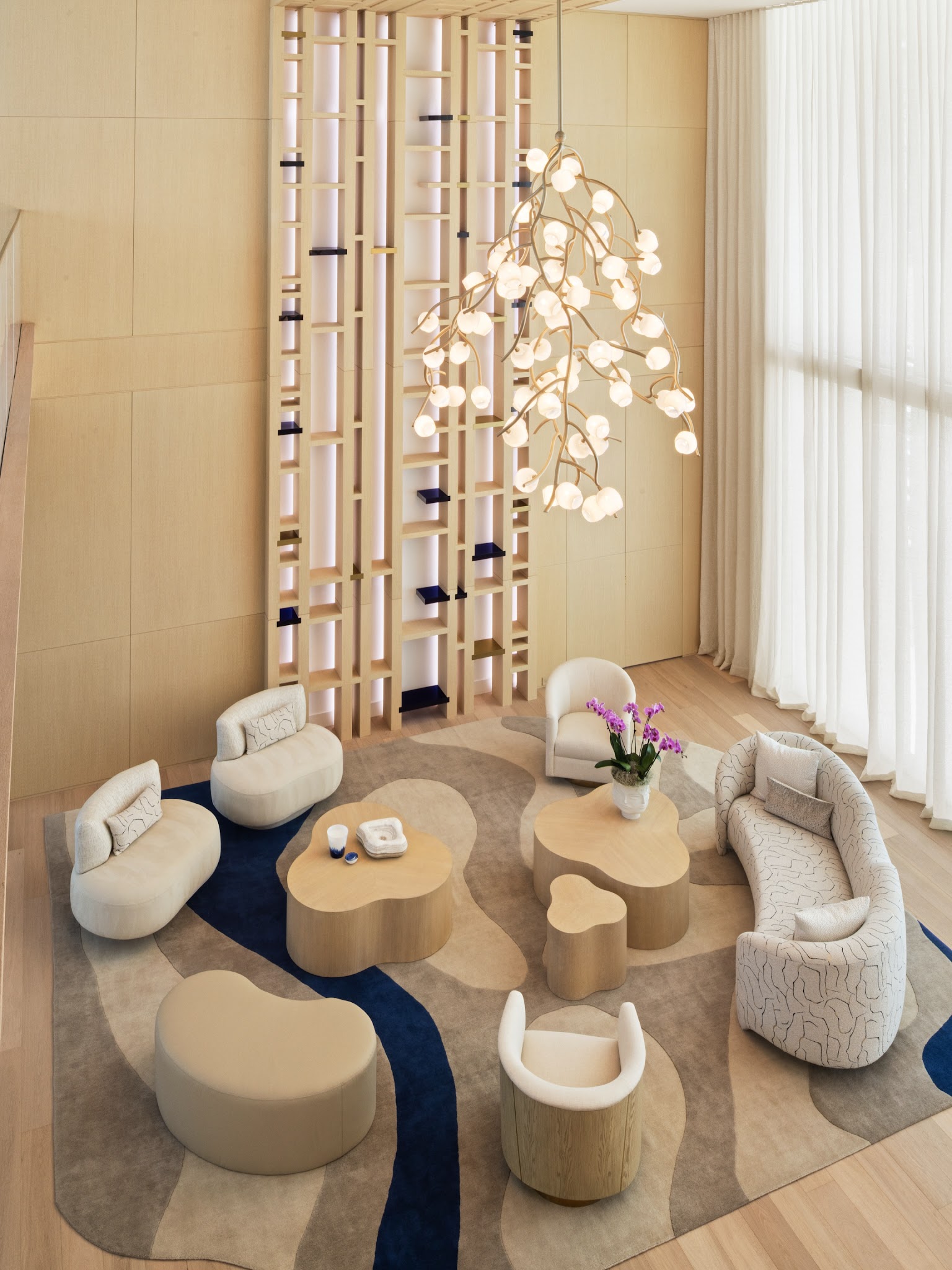
Credits: Instagram
A flowing rug pattern can connect a group of sculptural pieces without adding colors. In this room, deep blue curves cross a field of sand and taupe, while rounded cream seats and irregular wood tables repeat that movement above.
Start with a rug whose background relates to your upholstery, then echo one of its shapes in a coffee table or chair. Keep enough of the pattern visible between pieces to show why they belong together.
You can borrow this approach with fewer furnishings: one curved sofa and a rounded table can establish the relationship. Use small blue accessories to repeat the accent sparingly.
Plain curtains and quiet walls give the patterned floor room to stand out across the seating area.
20. Keep a Picture Ledge Light and Uncluttered
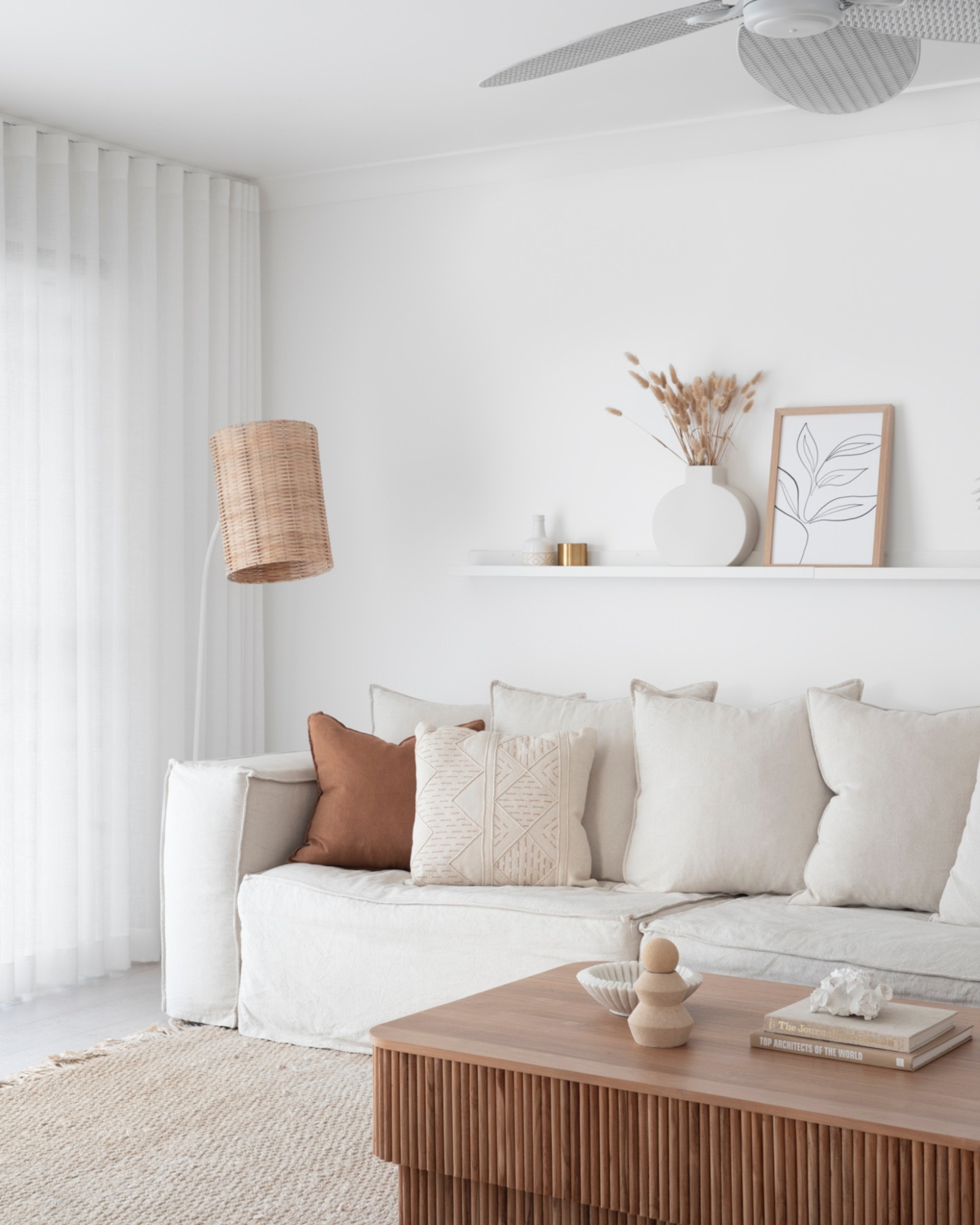
Credits: Instagram
A slim picture ledge can bring personality above a sofa while keeping a neutral coastal room restful. Here, a white shelf blends into the wall, leaving a pale framed drawing and a rounded vase to provide the shapes.
Keep the display loose, with one taller arrangement and a small group of lower objects rather than filling the ledge. Choose frames that repeat the warm wood of a coffee table so the wall display connects with the furniture below.
Cream cushions and sheer curtains keep the surrounding surfaces quiet, while woven textures add interest closer to the floor.
Step back before adding another object, and leave generous blank wall around the display to preserve the relaxed feeling of the seating area.