
A musical bedroom can feel personal without letting instruments and equipment take over every surface. Music-Themed Bedroom Ideas range from setting aside a compact corner for percussion to turning a guitar case or saxophone into part of the decor.
You can also make a defined wall for speakers, display album covers on small ledges, or borrow the look of stage lighting above the headboard.
The key is to balance musical character with practical details, so the room still works for sleeping, moving around, and keeping instruments safely accessible.
Turn a Dormer Window Into a Keyboard Nook
Credits: Nesting With Grace
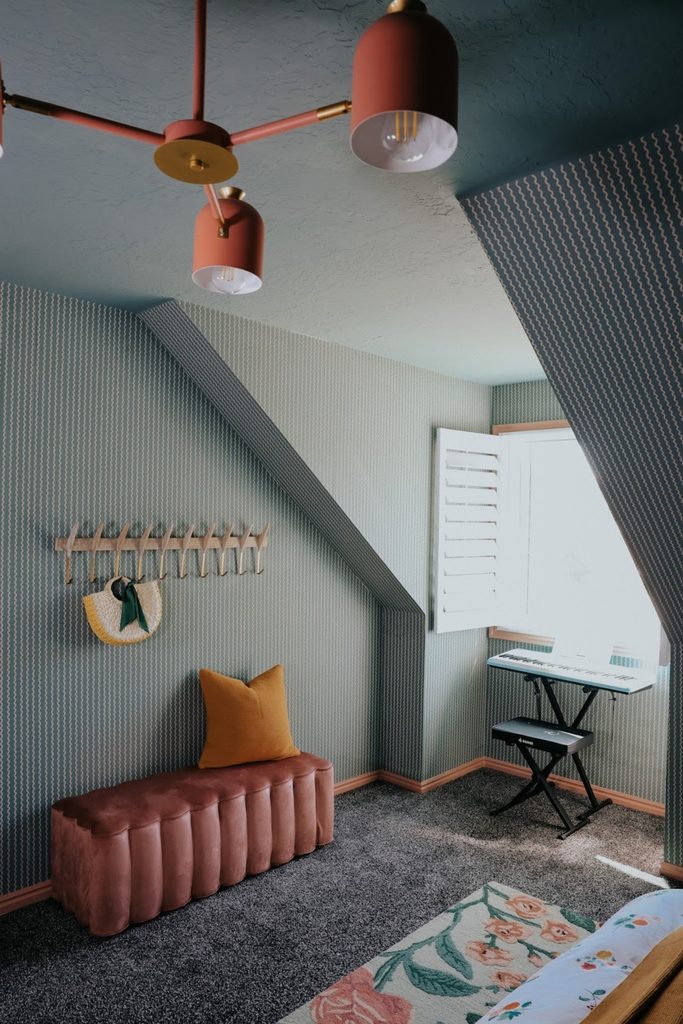
An awkward roofline can make a useful practice corner when the furniture follows its shape. This bedroom places a keyboard beneath the dormer window, with a folding stool tucked in front.
Green patterned walls wrap the sloping sides, while the nearby pink bench and bed keep the setting comfortable and clearly residential. Reserve enough room to sit with relaxed posture and reach the keys without brushing the walls.
Check the stand’s stability and keep cables away from the route through the bedroom. Window light makes the little zone welcoming, but direct sun and temperature changes still deserve attention when positioning equipment.
A dedicated footprint means the instrument can remain ready without occupying the main bedside surface or everyday study desk.
Reserve a Compact Bedroom Corner for Percussion
Credits: Michele Lee Willson / Christy Allen Designs
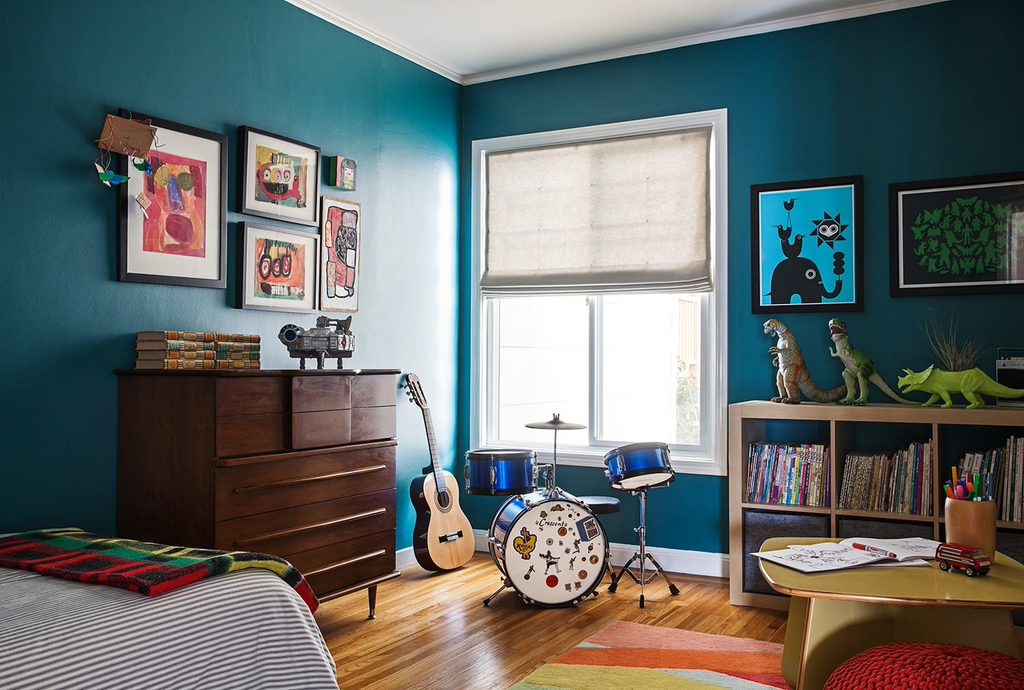
A drum kit needs a deliberate footprint, even when the equipment is compact. This bedroom places a blue kit below the window, between a wood dresser and open book storage.
The bed remains visible nearby, showing how practice and sleeping can share a room without pretending the instruments are merely ornaments.
Start with the space required for the stool, stands, and comfortable movement, then keep storage drawers and walking routes accessible. Rich teal walls and the blue shells make the equipment feel connected to the room’s palette.
Remember that a tidy arrangement does not control sound transmission. Agree on appropriate practice times and consider the needs of neighboring rooms. Leave the window accessible rather than treating its light as decoration.
Let a Personalized Guitar Case Join the Bedside Decor
Credits: Maria Killam
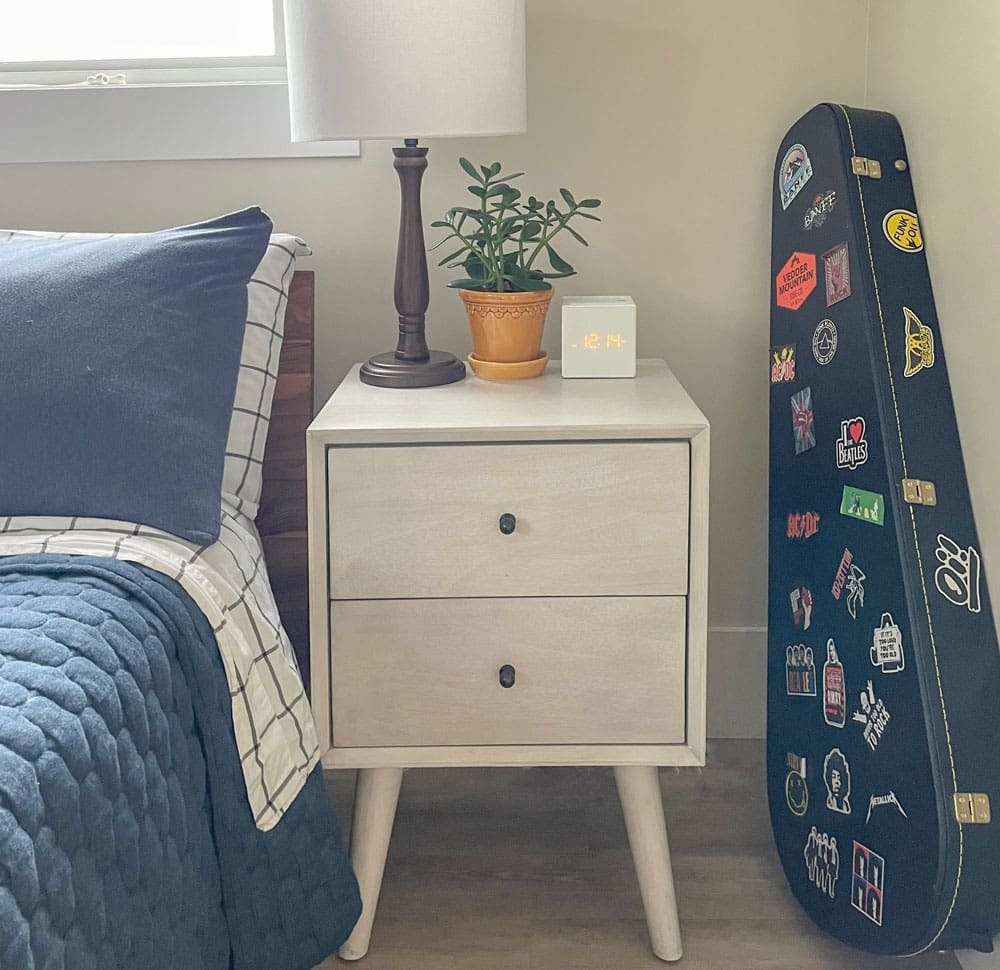
The object that protects an instrument can also express its owner’s taste. This bedroom keeps a dark guitar case beside the nightstand, where band stickers turn its plain exterior into a small personal collection.
Blue bedding connects it to the sleeping area, while pale wood, a simple lamp, and a little plant prevent the corner from feeling overloaded. Consider the case before buying extra music accessories purely for decoration.
Use stickers on a suitable replaceable case rather than applying them indiscriminately to a valuable instrument. Choose a secure storage position that will not tip or obstruct access to the bed.
The idea works because one genuinely useful object carries the musical character while the rest of the bedside stays practical.
Give a Speaker Collection One Defined Wall
Credits: The Ohana Adventure
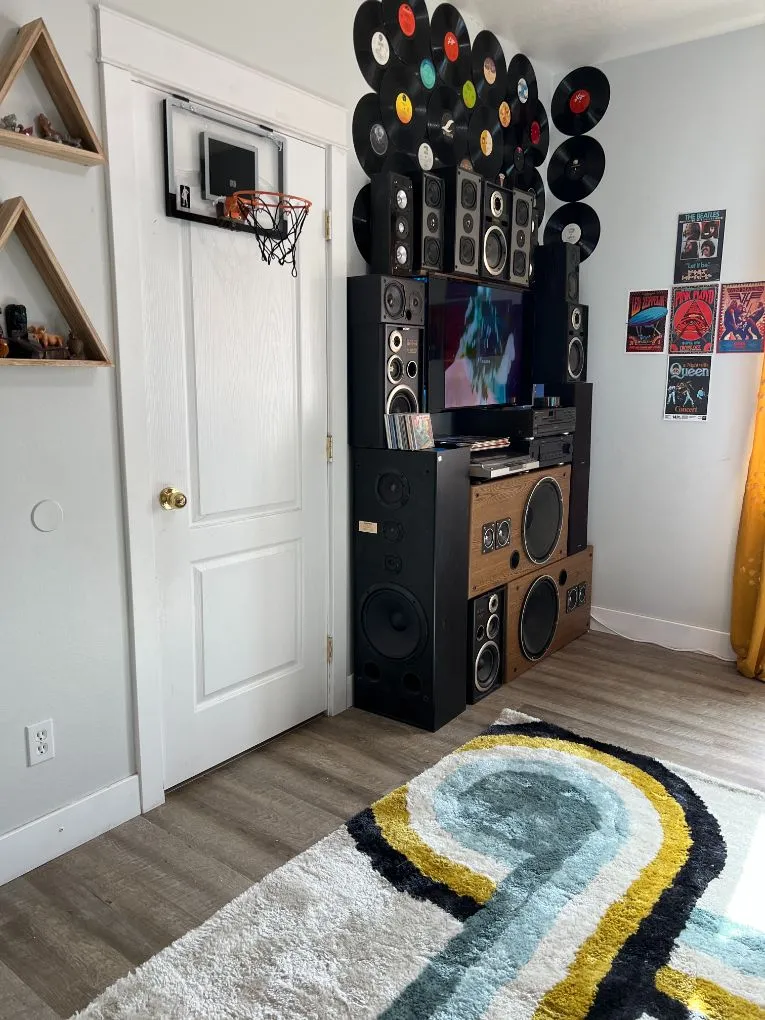
A collection of audio equipment can become a recognizable feature when it stays within one defined area. This bedroom groups dark speakers and a screen against the wall, with black records continuing the composition above.
The repeated circular shapes make the musical theme immediately clear. Borrow the idea of a defined equipment zone rather than copying the photographed stack.
Plan stable supports, ventilation, cable routes, and the manufacturer’s placement requirements for each component. Leave doors and walking paths unobstructed.
A limited palette helps equipment with different finishes look connected, while nearby artwork can add color. The photograph suggests a visual arrangement, not an acoustic specification.
Choose the pieces you actually need and keep controls reachable so the display remains practical.
Borrow Stage Lighting for the Headboard Wall
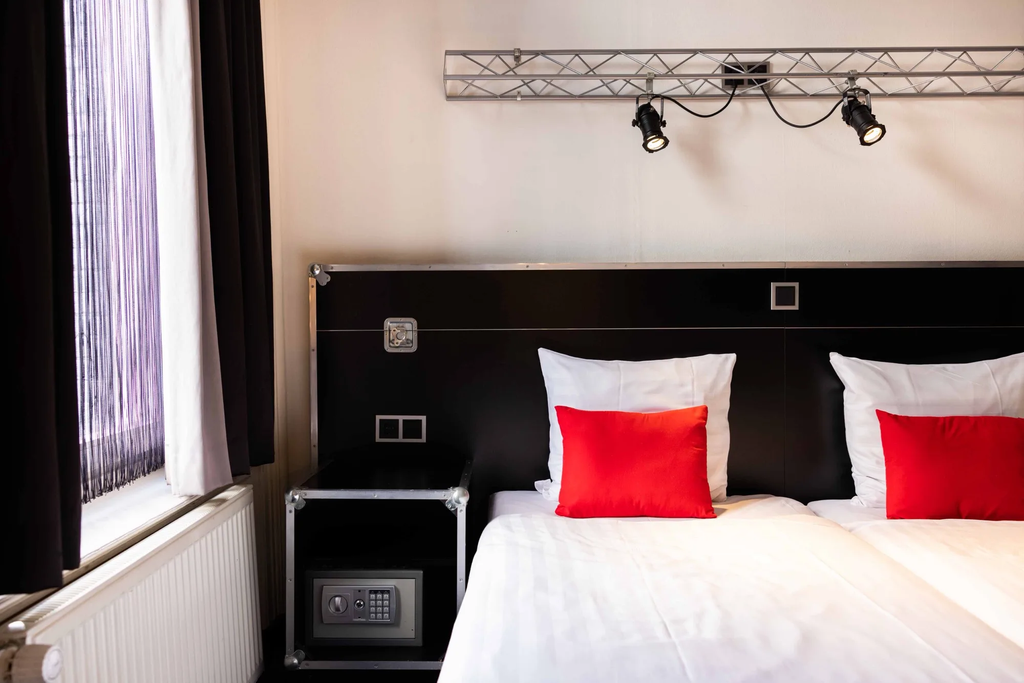
Credits: Backstage Hotel
A bedroom can suggest a small performance venue through lighting rather than a collection of instruments. This hotel room mounts two compact spotlights beneath an exposed metal truss above the beds.
Black headboards, silver trim, and red cushions repeat the straightforward stage-inspired palette. Treat the photograph as visual inspiration, not a guide to installing theatrical hardware at home.
Choose fixtures rated for residential use, with appropriate mounting, electrical installation, and clearances. Check glare from the pillows and keep controls convenient for each sleeper.
You can achieve a similar mood with simpler adjustable wall lights if a truss would overwhelm the room. Keep surrounding decoration restrained so the lighting remains the recognizable musical reference while the bed stays comfortable and practical.
Give a Saxophone a Place Beside the Daybed
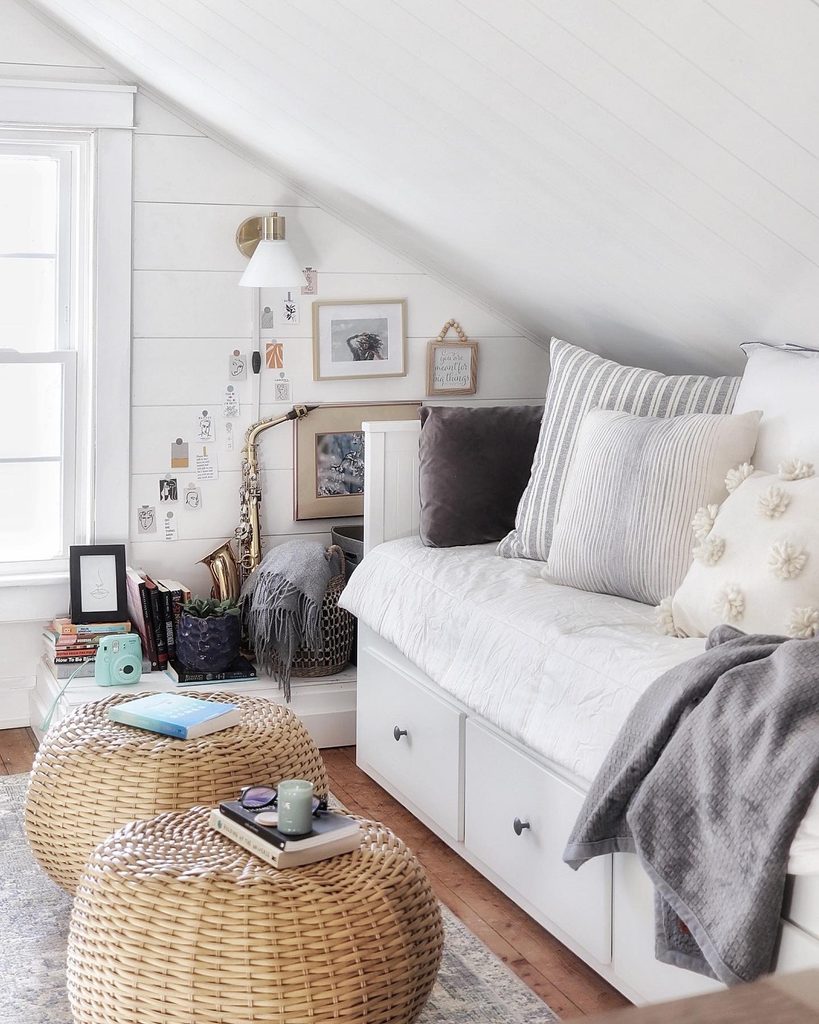
Credits: Instagram
An actual instrument can make a bedroom feel musical without a wall of themed accessories. In this pale room, a saxophone sits beside the daybed among books and small pictures, its brass finish standing out against white paneling.
Gray cushions and woven stools keep the surrounding area relaxed. Take the idea of a dedicated bedside instrument corner, rather than copying its exact support or crowded arrangement.
Choose a stable stand designed for your instrument and leave enough clearance to pick it up comfortably. Keep it away from spills, direct heat, and the route into bed, following its care guidance.
A restrained background lets the instrument’s shape remain recognizable. Give books and other belongings separate places so everyday use stays straightforward.
Create a Compact Listening Setup Beside the Bed
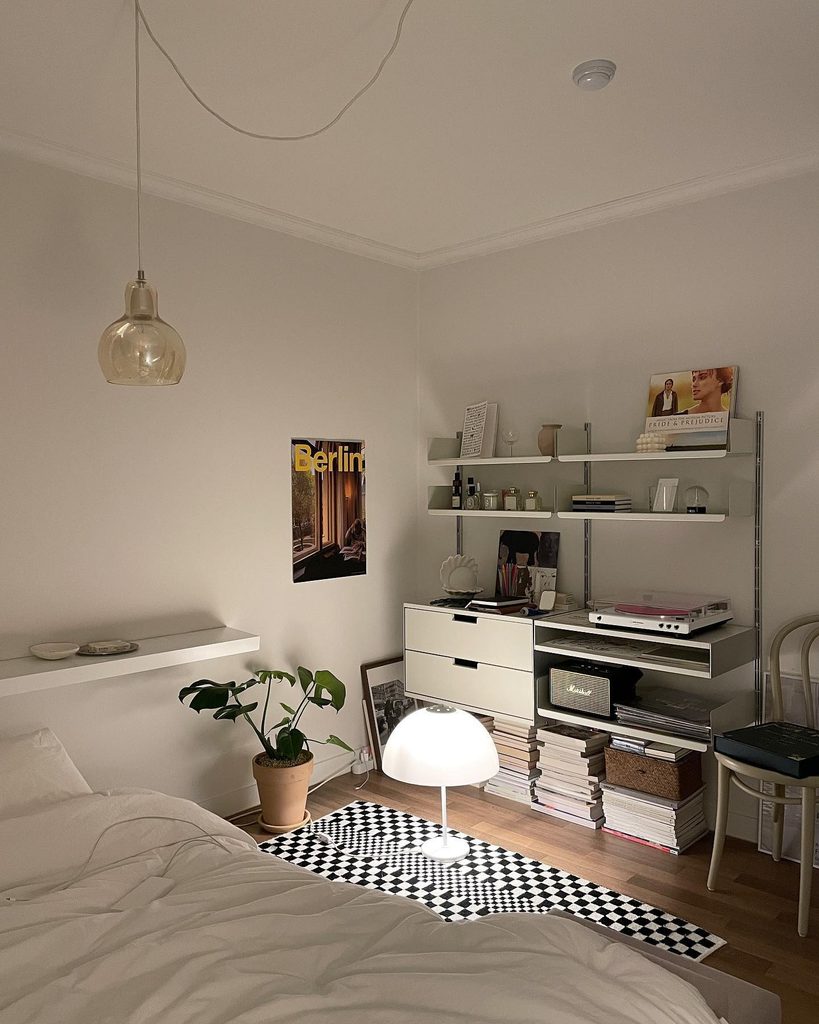
Credits: Instagram
Small sleeping spaces can still include a place to enjoy records. In Suya’s room, a record player sits on a wall shelving system beside a low bed, with drawers and magazines sharing the same arrangement.
The pale finishes keep the setup visually light, while a checkerboard runner gives the corner a little contrast. Think about the player’s usable surface area and access before choosing where it belongs.
You should be able to open its lid and handle records without reaching awkwardly over bedding. Keep everyday listening choices close enough to browse, and leave room around the equipment for its required operation.
The photograph offers a useful layout reference, while your own equipment dimensions and shelving specifications should guide the details.
Create a Backstage Dressing Corner Beside the Bed
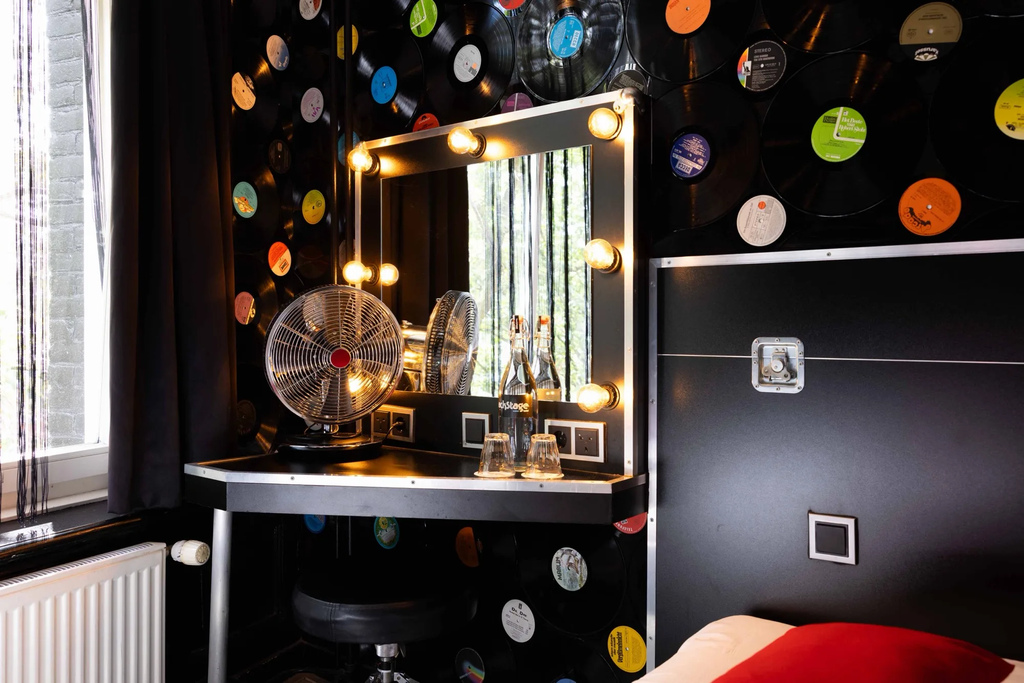
Credits: Backstage Hotel
A dressing mirror can bring the atmosphere of a performer’s preparation space into an ordinary bedroom. This compact corner uses exposed bulbs around a rectangular mirror, with a small tabletop and stool beneath it.
Records cover the wall behind, while metal edging connects the furniture to the adjacent headboard. Start with a mirror and surface that work for getting ready, then choose lighting suitable for close use.
Check brightness, glare, heat clearance, and the manufacturer’s installation guidance rather than copying a hotel fixture directly. Leave enough tabletop free for everyday essentials.
Keep power leads away from moving furniture and the walking route. A useful dressing corner gives the music theme a daily function instead of adding another purely decorative display.
Make Record Discs Into a Full Accent Surface
Credits: Backstage Hotel
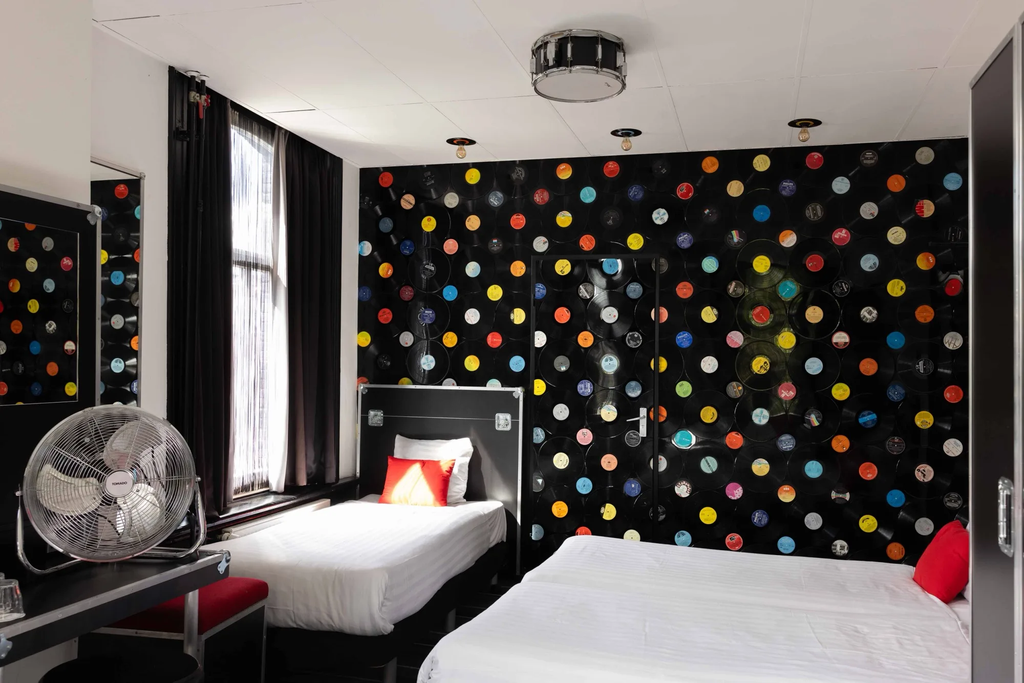
Black record discs create a different effect from a gallery of square album covers. In this bedroom, overlapping circles cover one wall and continue across a door, with colorful labels adding small points of contrast.
Plain white bedding keeps the large patterned surface readable. Try a smaller panel first to judge the scale before committing an entire wall.
Use decorative replicas or unwanted records rather than valuable playable copies, and choose secure mounting appropriate to the surface. Keep edges away from pillows and places people might brush against them.
If a door is involved, preserve its full movement and access to hardware. Let this one feature carry the theme while other walls and larger textiles remain comparatively simple and calm.
Add a Listening Loveseat Beside Shared Beds
Credits: The Ohana Adventure
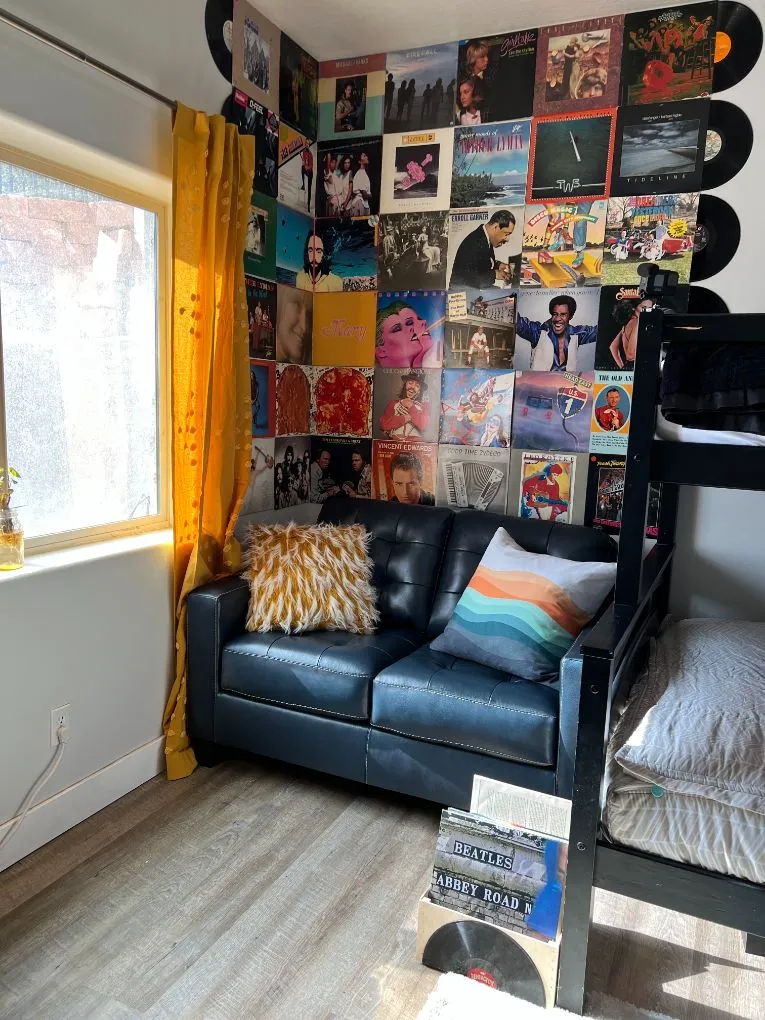
A separate place to sit makes listening feel like an activity rather than something that only happens in bed. This shared bedroom fits a small black loveseat beside the bunk frame, with an album-cover wall defining the corner.
Yellow curtains and colorful pillows soften the dark furniture, while a low record rack keeps a few choices nearby. Measure the seat with people using it, including legroom and access to the lower bed.
Keep the window and ladder approach clear. You can adapt the idea with one compact chair if a loveseat would crowd your room.
Protect valuable sleeves with appropriate display fittings instead of copying damaging fasteners. The useful combination is comfortable seating, accessible music, and a clear sleeping area.
Write a Favorite Song Title Above the Headboard
Credits: Wildflower Home Interiors
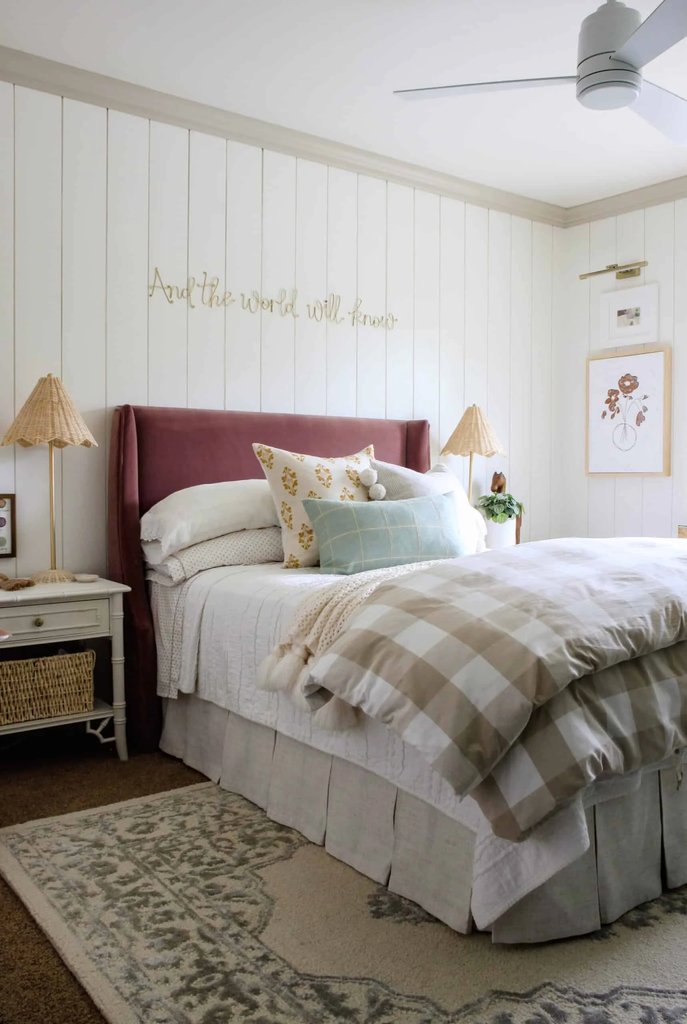
A music reference can be delicate rather than graphic or equipment heavy. This bedroom uses slender gold wire lettering above a berry upholstered headboard, giving the pale paneled wall a personal focal point.
The designer connects the words to a song from Newsies, so the reference comes from a musical favorite rather than a generic decorative slogan. Woven lampshades, light bedding, and soft patterned cushions let the lettering remain airy.
Choose a short title or meaningful phrase that suits the width of your bed, then test its placement with a paper outline. Keep enough empty wall around the letters for easy reading.
Secure lightweight artwork appropriately above a sleeping area, and let this single reference set the room’s musical tone.
Use Small Ledges for a Changeable Album Display
Credits: Kelley Nan
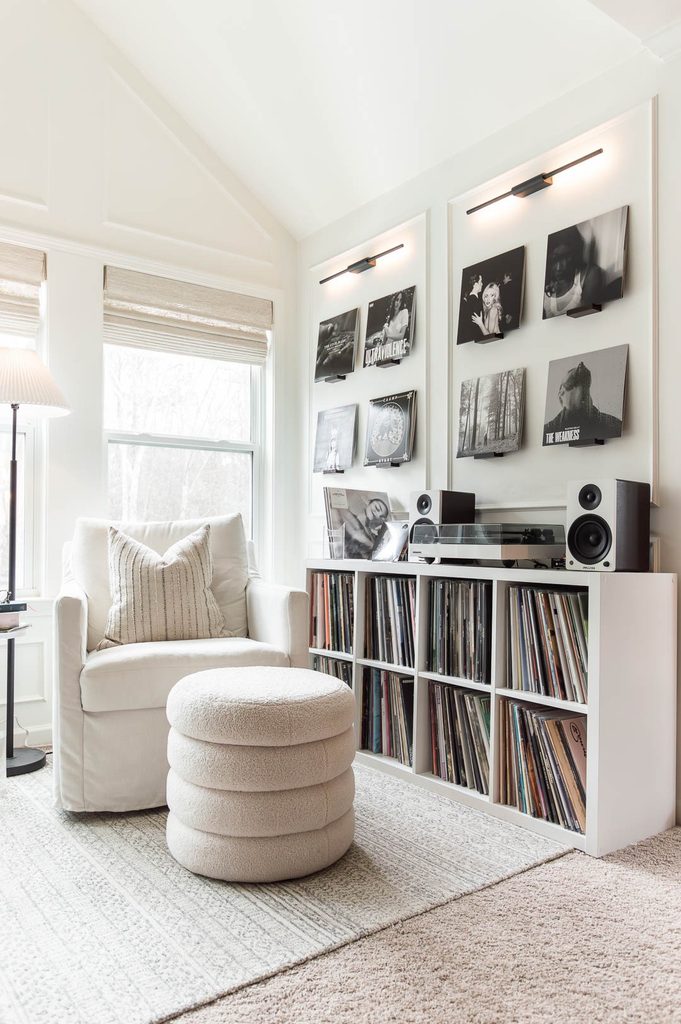
Album artwork can change with your listening habits when each cover rests on its own small ledge. In this bedroom listening nook, eight covers form an orderly display above the record console, with slim lights marking the two groups.
An armchair and ottoman make the corner useful beyond displaying a collection. Choose ledges deep enough to support sleeves securely without bending their edges, and use fixings appropriate for the wall.
Keep valuable records away from direct sunlight and damp conditions. Start with a consistent spacing pattern so different covers can be swapped without moving the hardware.
Leave enough room around the turntable to handle records comfortably. A changeable arrangement lets your current musical favorites become part of the bedroom’s decoration.
Fit Concert Posters to a Sloping Bedside Wall
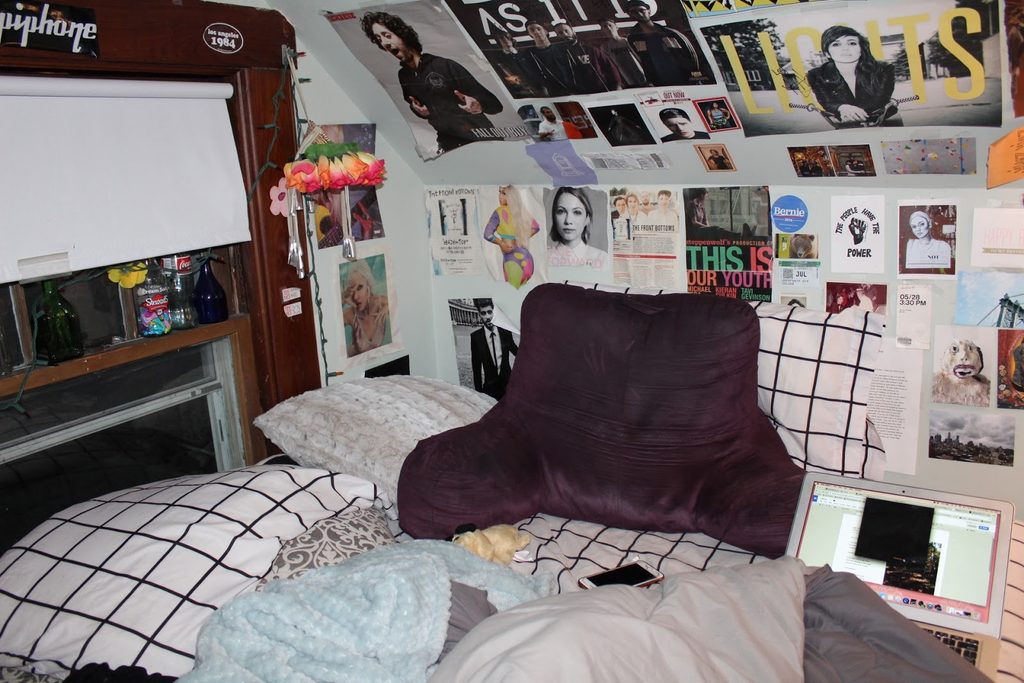
Credits: How Fitting
An angled ceiling can become a place for musical memories instead of an awkward blank surface. Here, concert posters and artist photographs follow the low slope above the bed, with smaller paper pieces filling the vertical wall below.
The dark cushion and simple checked bedding give the busy display a calmer foreground. Lay out your collection before attaching anything, deciding which pieces deserve the most visible positions from bed.
Use suitable lightweight mounting methods and protect anything valuable with an appropriate frame or archival storage instead. Leave clear edges around windows, lights, and moving furniture.
You do not need to fill every gap to establish a personal theme. A smaller edited collection can still make the unusual wall feel intentional.
Pair a Foldaway Guest Bed With a Music Desk
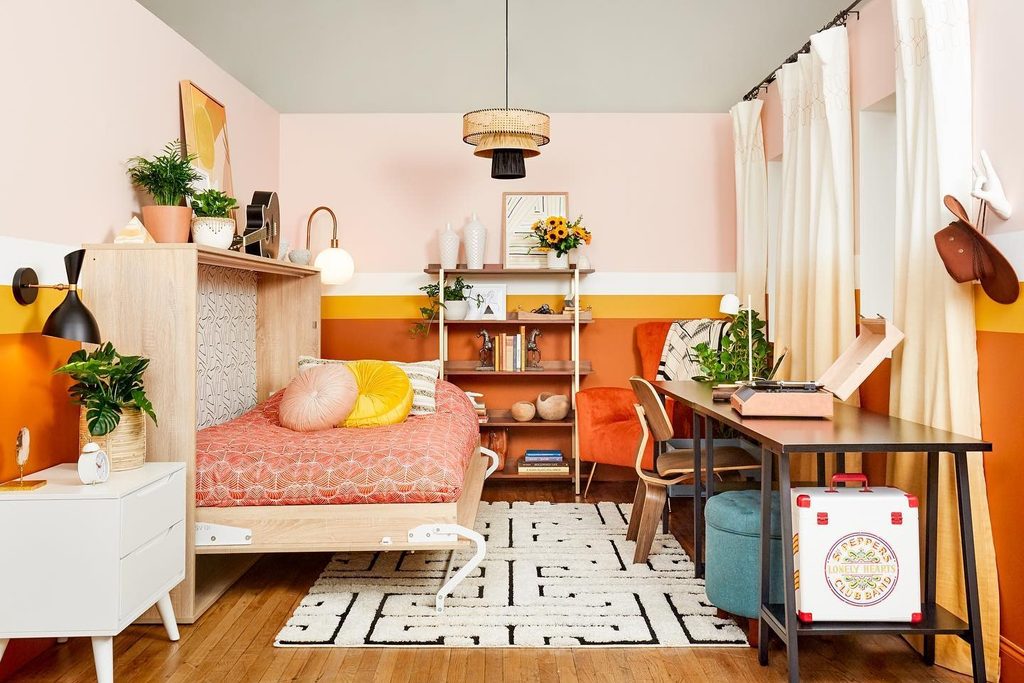
Credits: Instagram
Music can share a guest bedroom with work when each activity has a usable surface. This colorful room places a record player on the desk opposite an open foldaway bed, while a guitar appears above the bed cabinet.
An armchair and shelves give the compact arrangement another place to relax. Plan the room with the bed fully open, checking that the chair and equipment remain accessible.
Keep enough desk space to lift the player’s lid and handle records comfortably. Give the guitar a secure support suited to the instrument rather than copying an elevated placement above sleeping space.
Coordinated warm colors bring the furniture together. The practical idea is a room that accommodates overnight guests without packing away musical interest.
Give Ukulele Practice a Comfortable Seat
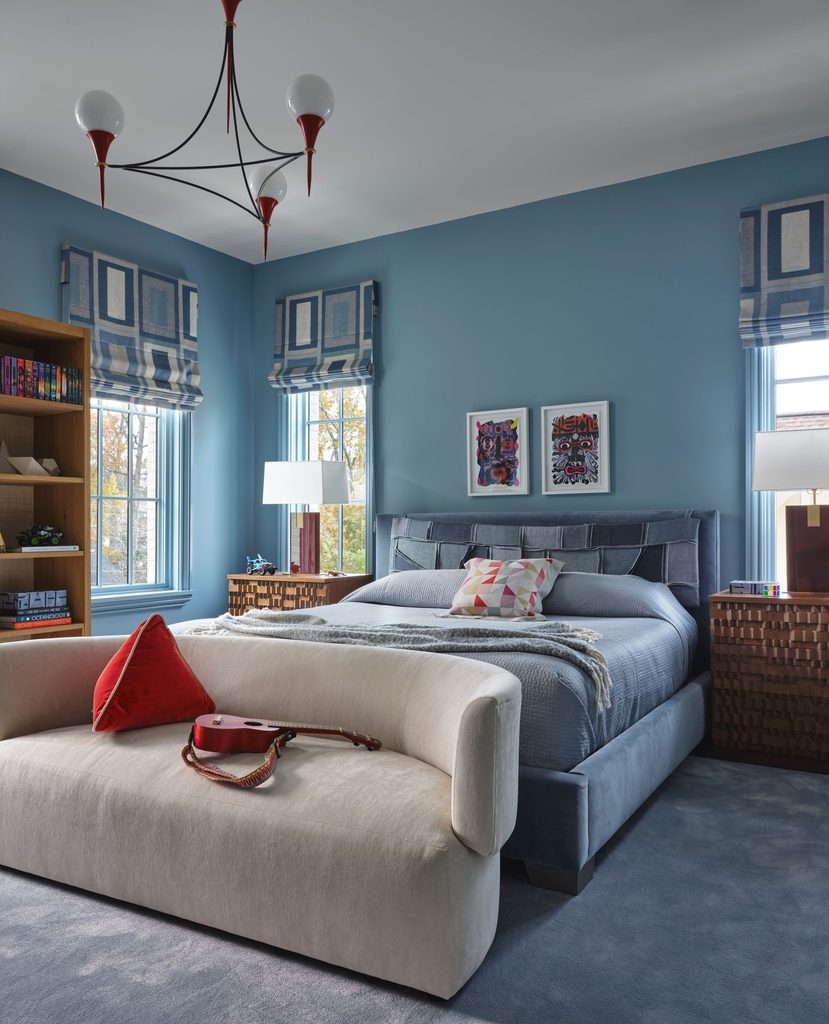
Credits: Instagram
A small instrument is easier to enjoy when there is somewhere comfortable to sit with it.
In this blue bedroom, a red ukulele rests on a cream sofa at the foot of the bed, creating a visible connection between music and everyday relaxation.
The curved seat keeps the arrangement softer than a separate practice bench would look. Test the playing position before choosing seating, allowing space for your arms and the instrument’s body.
Keep a suitable stand or case nearby for storage between sessions rather than leaving the instrument on a seat someone may use. Preserve a clear route around the bed.
A compact practice spot can feel integrated with the room without making every accessory repeat a musical motif.
Combine Guitar Display With Closed Accessory Storage
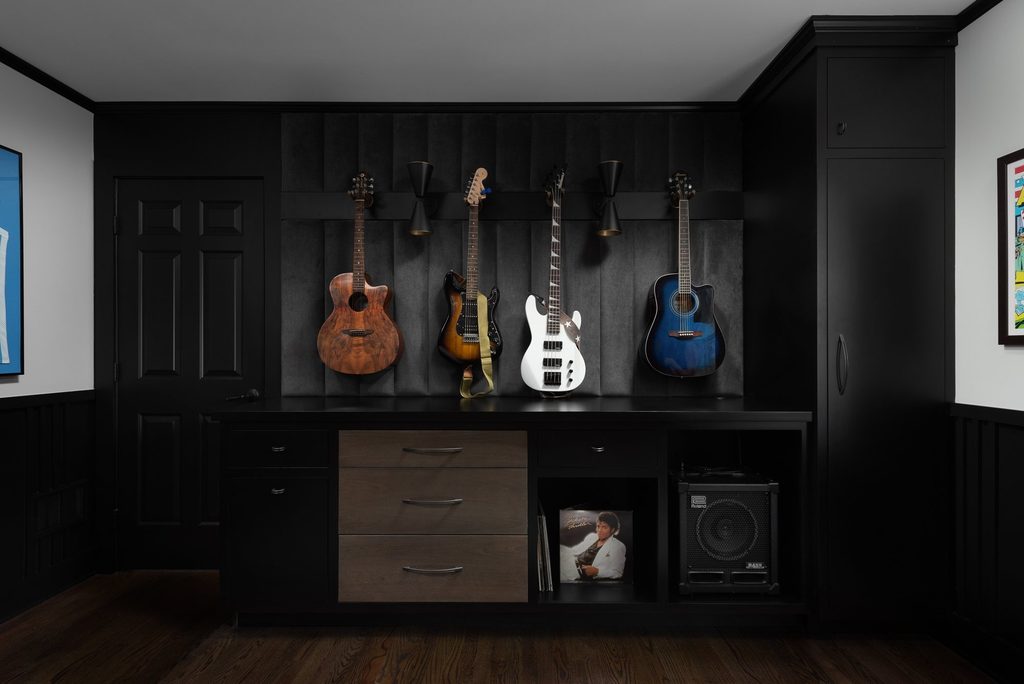
Credits: Sarah Coe Design
A collection is easier to live with when its accessories have somewhere to disappear. This bedroom project combines a row of wall mounted guitars with cabinetry below, using dark finishes to bring the separate instruments together.
Wood drawers provide a warmer central detail, while lower compartments accommodate records and an amplifier. The worktop offers a place to set smaller items without filling the sleeping area with extra furniture.
Plan the cabinet around the actual equipment you own, leaving the access and ventilation each item requires. Select instrument supports suited to the instruments and wall construction.
The padded looking backdrop creates visual contrast, but its appearance alone does not establish acoustic performance. Display and storage work together without becoming competing features.
Use Touring-Case Details on Bedroom Storage
Credits: Backstage Hotel
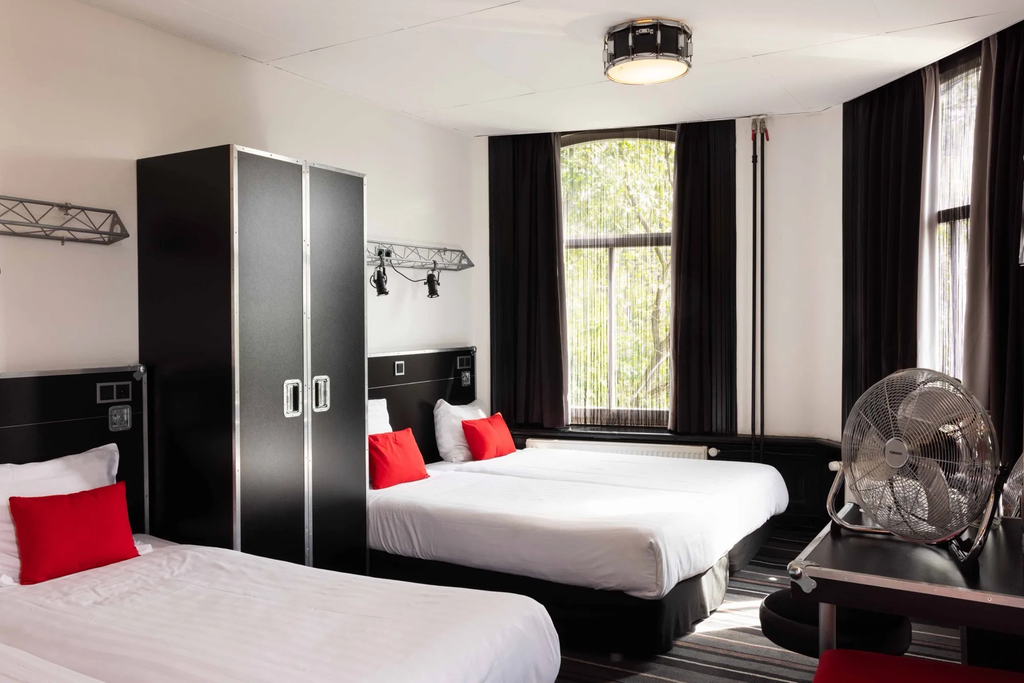
The cases used to transport stage equipment offer a recognizable design language for a music-loving bedroom. Here, black cabinet fronts, metal edging, and recessed handles echo touring cases, with matching headboards connecting storage to the beds.
Plain bedding leaves those details easy to notice. You can borrow the look through one suitable cabinet rather than replacing every piece of furniture.
Check that handles, corners, and projecting hardware will not catch clothing or interfere with a narrow walking route. Prioritize accessible shelves and drawers over decorative fittings.
Choose furniture built for everyday indoor use and follow any stability or wall-attachment requirements. A coordinated finish gives practical storage a musical character while keeping the room useful for dressing, sleeping, and daily routines.
Pair a Comfortable Practice Chair With a Music Stand
Credits: Maria Killam
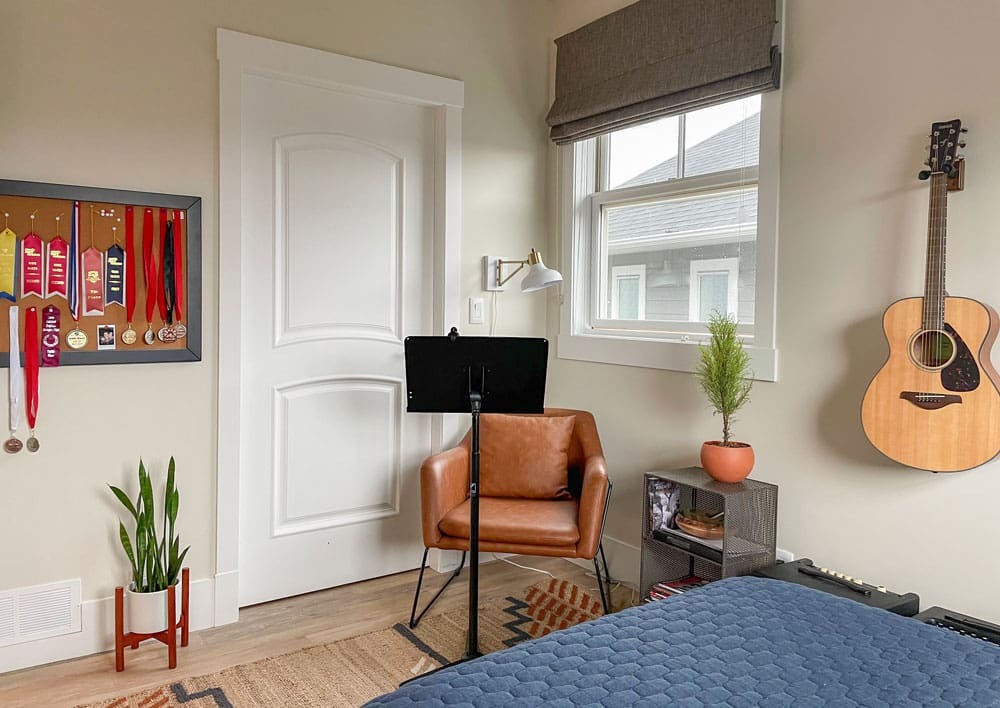
A practice spot needs more than an attractive instrument on the wall. Here, a brown chair and a freestanding music stand create a usable corner beside the bedroom window, with the bed still close at hand.
A wall light adds another useful layer, and the nearby guitar gives the arrangement a clear purpose. Choose seating that suits your instrument and playing posture rather than copying the chair solely for its appearance.
Set the stand where pages can be read without twisting, and leave enough clearance for arms, bows, or instrument cases as needed. Keep the path to the bed open.
This arrangement separates focused practice from lounging without requiring a second room or making every bedroom surface carry musical decoration.
Keep Practice Instruments Near the Keyboard
Credits: How Fitting
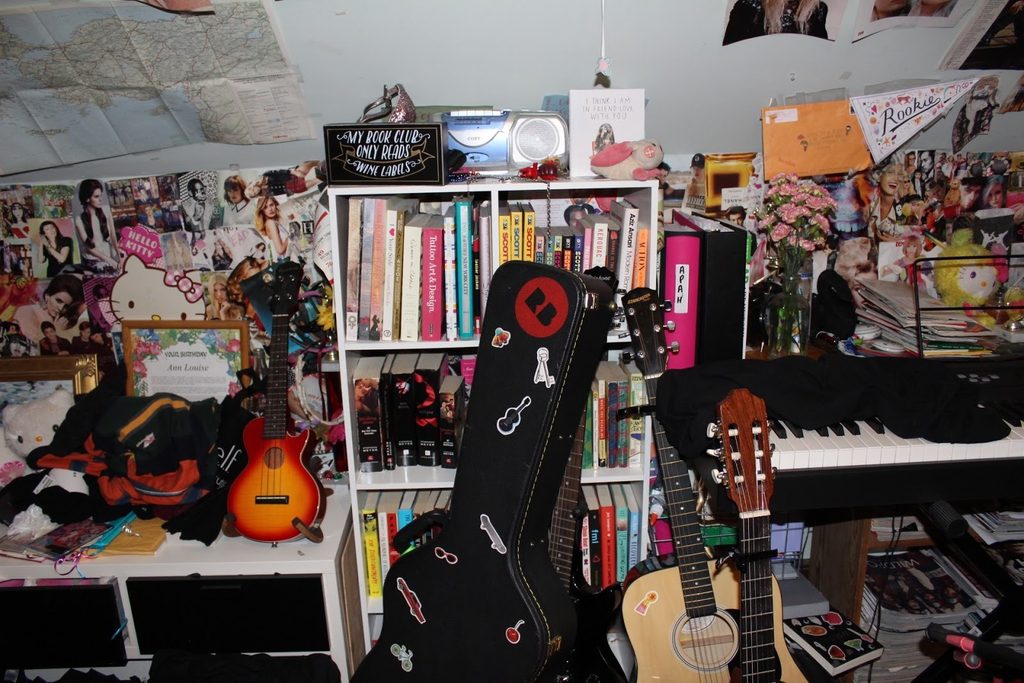
A bedroom musician may need several instruments within reach rather than a single decorative guitar. This practice corner groups string instruments, a hard case, and a keyboard beside a bookcase.
The photograph shows how one area can hold different parts of a musical routine, although its crowded surfaces are not a storage plan to copy exactly.
Start with the space needed to sit at the keyboard and safely lift each instrument. Provide suitable stands or cases instead of leaning instruments where they could fall.
Store loose papers and accessories separately so they do not cover keys or block access. Keep books and equipment within their furniture’s load limits.
A practical corner should make starting practice easier without obstructing the bedroom.
Make Space for a Portable Radio on the Dresser
Credits: Instagram
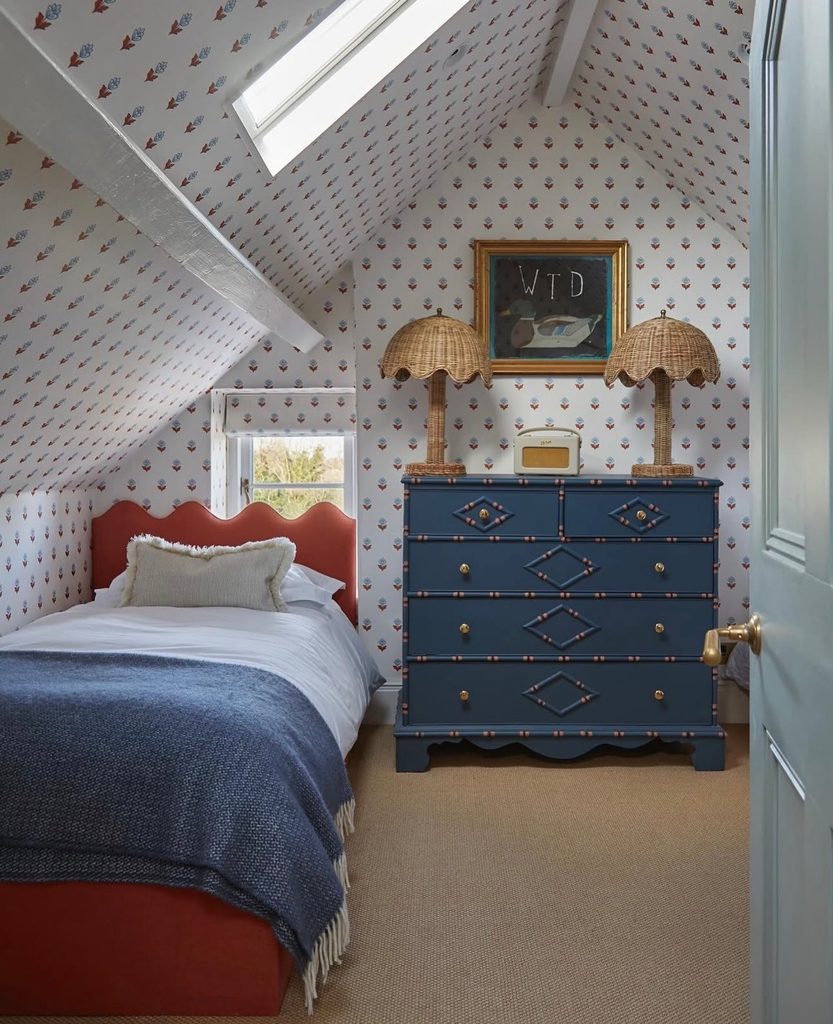
A radio can bring everyday listening into a bedroom without another equipment cabinet. Here, a cream portable radio sits between two woven lamps on a blue dresser, with the bed close beside it.
Its warm front panel relates to the lamps, making the device part of the arrangement rather than an afterthought. Choose a stable surface with space to reach the controls and follow the maker’s ventilation and power requirements.
Keep charging leads or power cords away from moving drawers and walking routes. A radio suits someone who prefers a simple listening routine over displaying a larger collection.
Leave nearby ornaments selective so the controls stay accessible. One familiar device can give the bedroom a musical purpose with little clutter.