
A dark fireplace or a bold stone wall can make a living room feel heavy unless softer materials balance the weight.
Modern Organic Living Room Ideas show how woven lighting, natural wood grain, and earthy upholstery can bring warmth while keeping the room calm and contemporary.
The key is to let one strong feature lead, then repeat its colors or textures in smaller ways.
You’ll also find ideas for giving sculptural chairs breathing room and using pale cabinetry with darker wood seating, so the materials feel connected without making everything match.
1. Weave Natural Texture Around a Dark Hearth
Credits: Instagram
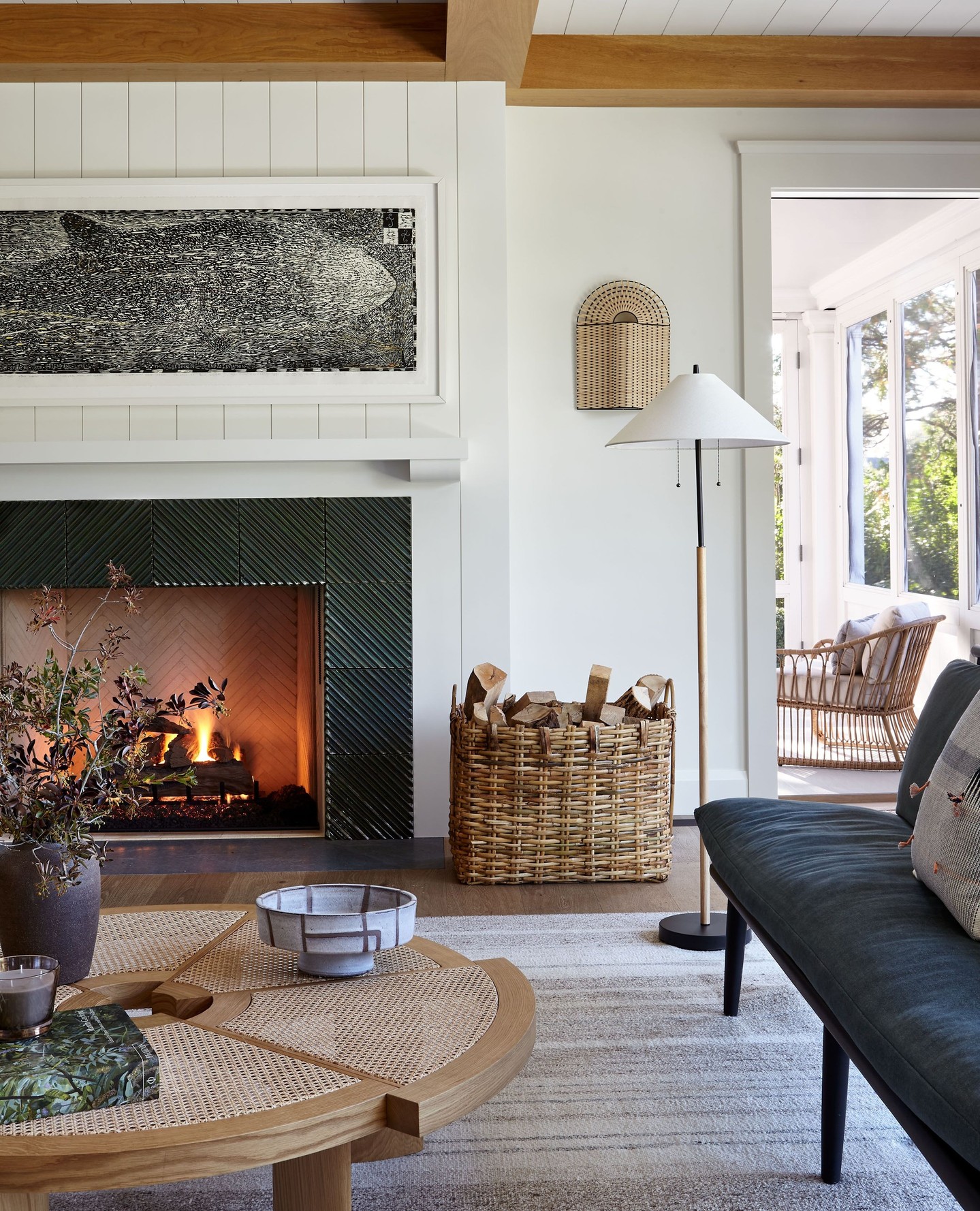
The dark green fireplace tiles give this sitting area a strong focal point, while woven pieces keep the surrounding space relaxed.
A basket of logs, a rattan wall light, and the patterned surface of the wood coffee table repeat a similar natural texture at different heights.
Bright white paneling leaves room for those details to stand out. Borrow the balance by pairing one dark architectural feature with several lighter, tactile materials.
A simple floor lamp supplies useful light without adding much visual weight. Keep baskets and other combustible accessories outside the fireplace manufacturer's required clearance.
Finish with a quiet rug that connects the seating, allowing the tile pattern and visible wood grain to provide most of the room's decorative movement.
2. Give Sculptural Seating Room to Breathe
Credits: Instagram
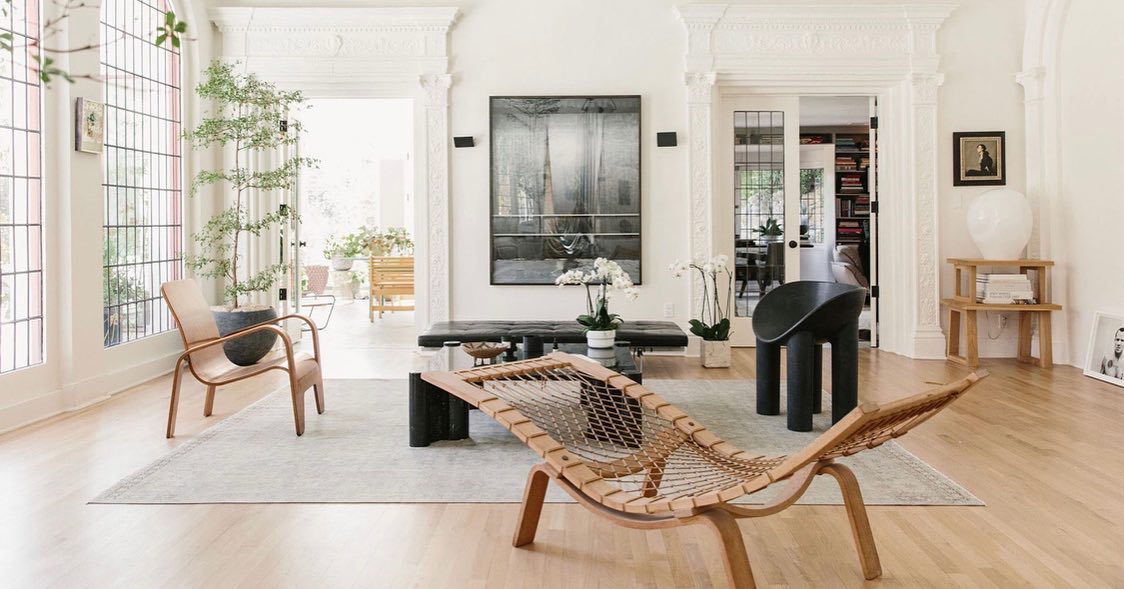
Open wood frames make this living room feel airy even though its chairs have distinctive shapes. The woven lounge chair stretches across the foreground, while a black sculptural chair introduces a heavier counterpoint.
Pale floors, a restrained rug, and generous space between the pieces let each silhouette remain visible. This is a helpful approach when you want modern organic style without a large matching furniture set.
Choose one comfortable statement chair and build a small conversation group around it. Check seat heights before combining different designs, and keep a practical table within reach.
A leafy indoor tree adds height near the windows, balancing the low furniture while drawing attention to the natural light that makes this arrangement feel so open.
3. Mix Pale Cabinetry with Dark Wood Chairs
Credits: Instagram
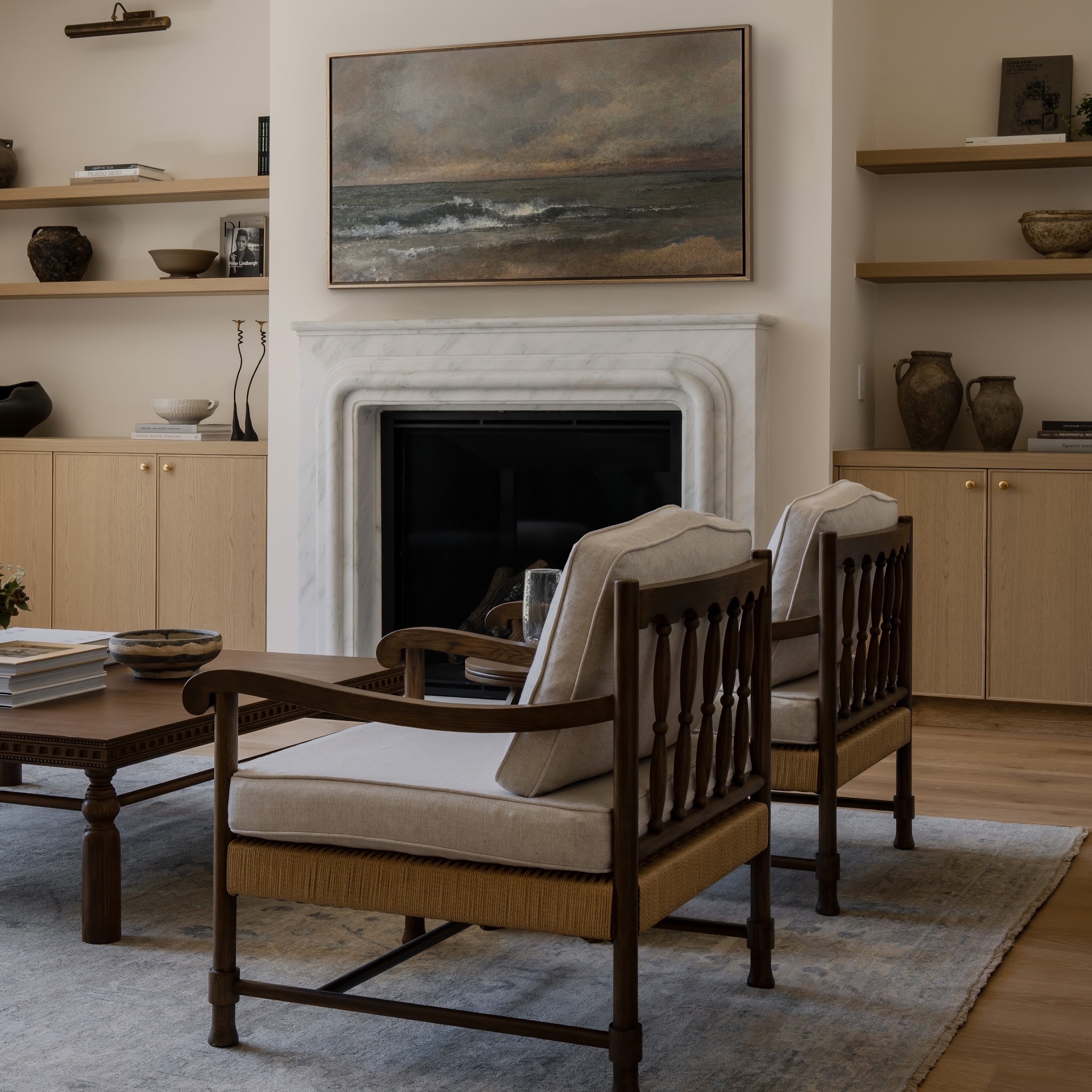
The pale shelving and cabinets create a calm backdrop for two darker wood chairs in this living room. Their open spindle backs and woven lower panels bring detail without hiding the fireplace behind them.
A landscape painting supplies muted color, while substantial pottery adds irregular texture to the shelves. To borrow this combination, let your largest built-in surfaces stay light and introduce deeper wood tones through movable furniture.
The finishes can differ as long as their warmth feels related. Leave breathing room around shelf objects instead of filling every opening.
Repeating a few earthy browns across the artwork, vessels, and coffee table helps connect the arrangement. Soft seat cushions make the structured chairs inviting for everyday reading and conversation alike.
4. Frame a Tonal Lounge with Textured Walls
Credits: Instagram
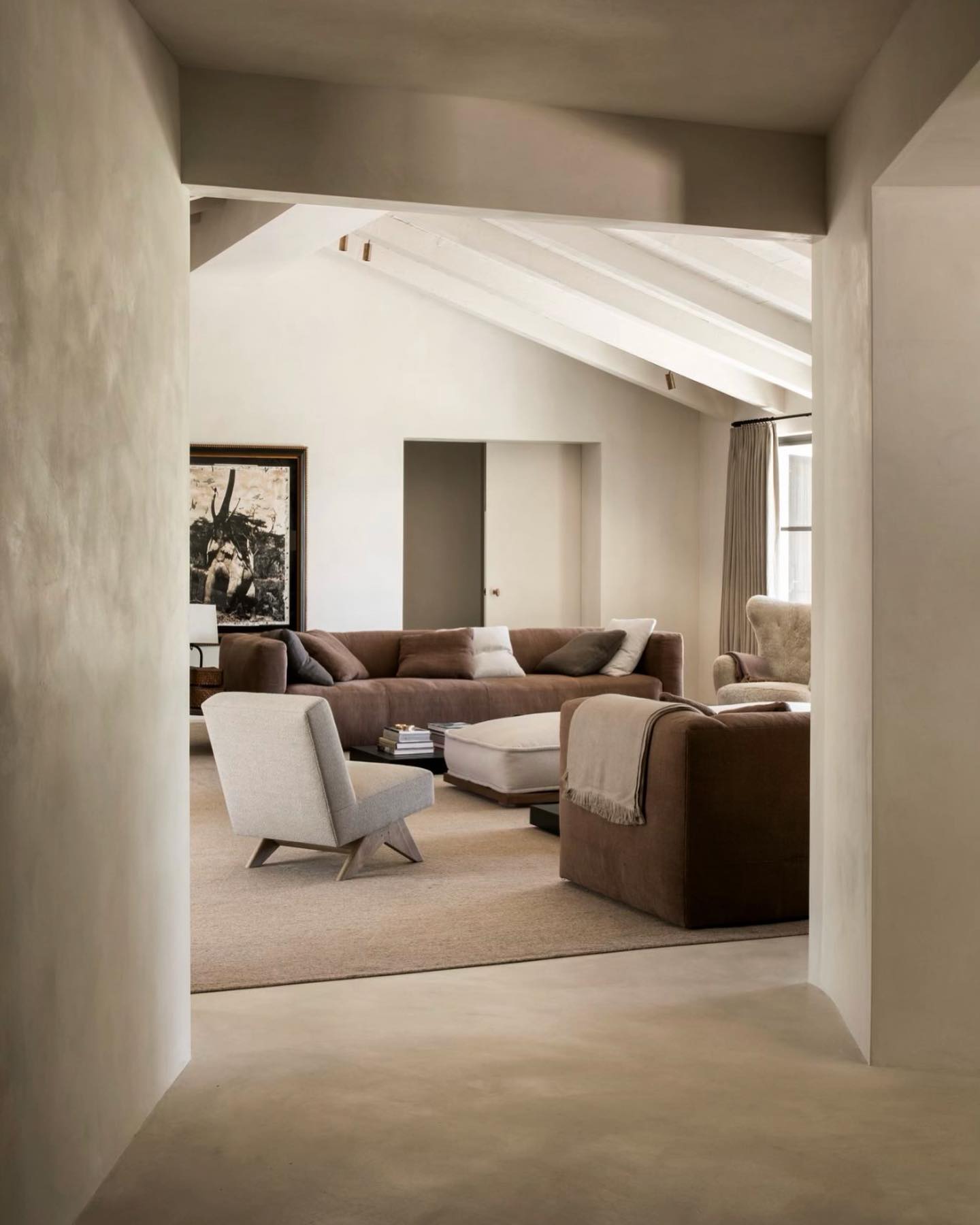
A broad opening frames this living room like a quiet picture. Softly varied walls, a pale rug, and brown upholstery create depth through neighboring tones rather than strong color contrasts.
The low sofa keeps the sloped ceiling visible, while an angular accent chair interrupts the room's rounded cushions. In your own space, start with three related shades and distribute them across large surfaces.
Include both smooth and visibly textured finishes so the palette does not flatten. Keep the main doorway clear enough to reveal the seating arrangement from outside the room.
A low table and a simple throw add practical comfort without blocking that view. Test warm wall colors beside the floor, since their undertones become noticeable in subdued light.
5. Let Rough Stone Lead the Palette
Credits: Instagram
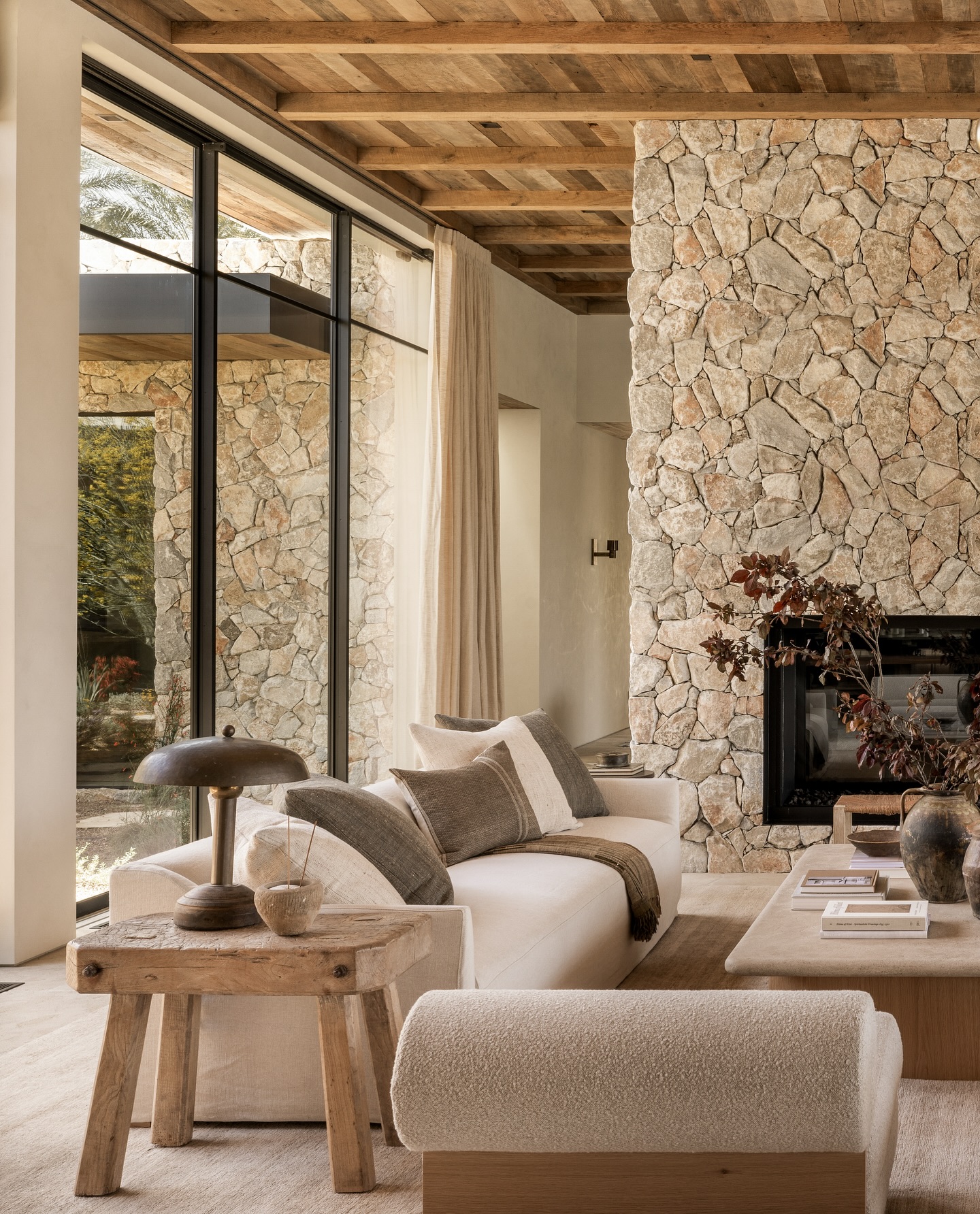
The tall stone fireplace establishes the colors and textures for this living room. Cream upholstery, weathered wood, and brown pillows repeat tones already present in the masonry, creating a connection without copying its irregular pattern.
Large windows and simple curtains keep the substantial wall from enclosing the seating area. When working with a strong existing material, collect your fabric and finish samples beside it before choosing anything else.
Let the fireplace remain the busiest surface, then balance it with quieter furniture shapes. A rustic side table gives the sofa a convenient landing place, while the low coffee table preserves the view across the room.
Keep accessories limited to a few useful pieces so the natural variation remains easy to appreciate.
6. Ground an Olive Chair with a Dark Console
Credits: Instagram
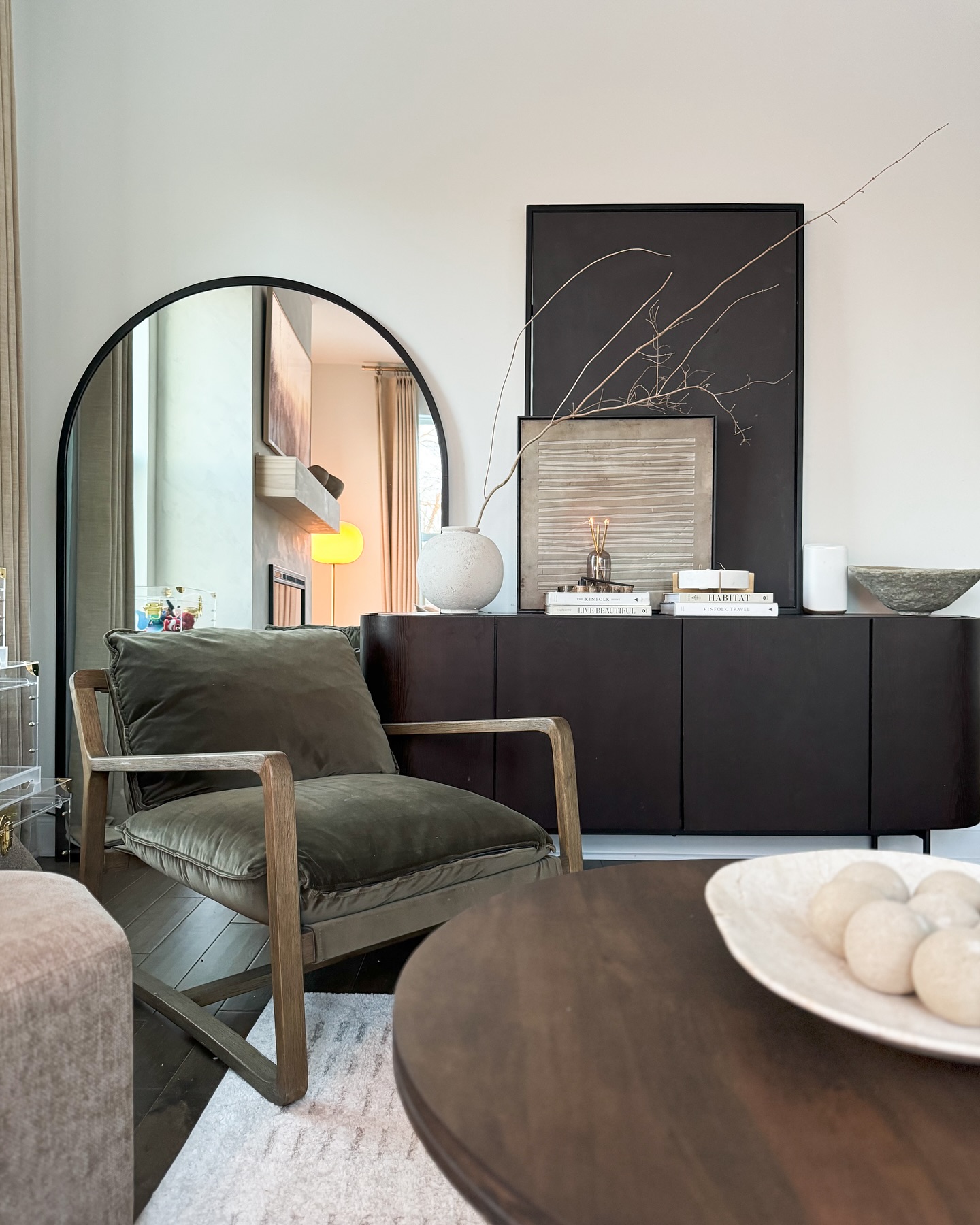
An olive upholstered chair introduces an earthy color into this otherwise neutral living room corner. Its exposed wood arms connect with the coffee table, while the dark console gives the pale wall a clear base.
A tall arched mirror softens the surrounding rectangles and reflects light from elsewhere in the room. Try this arrangement when a large blank wall needs both storage and personality.
Keep the console styling in a limited palette, varying the heights of art, books, and pottery instead. One loose branch arrangement provides movement above the straight cabinet line.
Secure leaning mirrors and artwork appropriately, especially around children or pets. Leave enough space beside the chair for comfortable access rather than crowding every surface with decorative objects.
7. Use a Ribbed Cabinet in an Empty Corner
Credits: Instagram
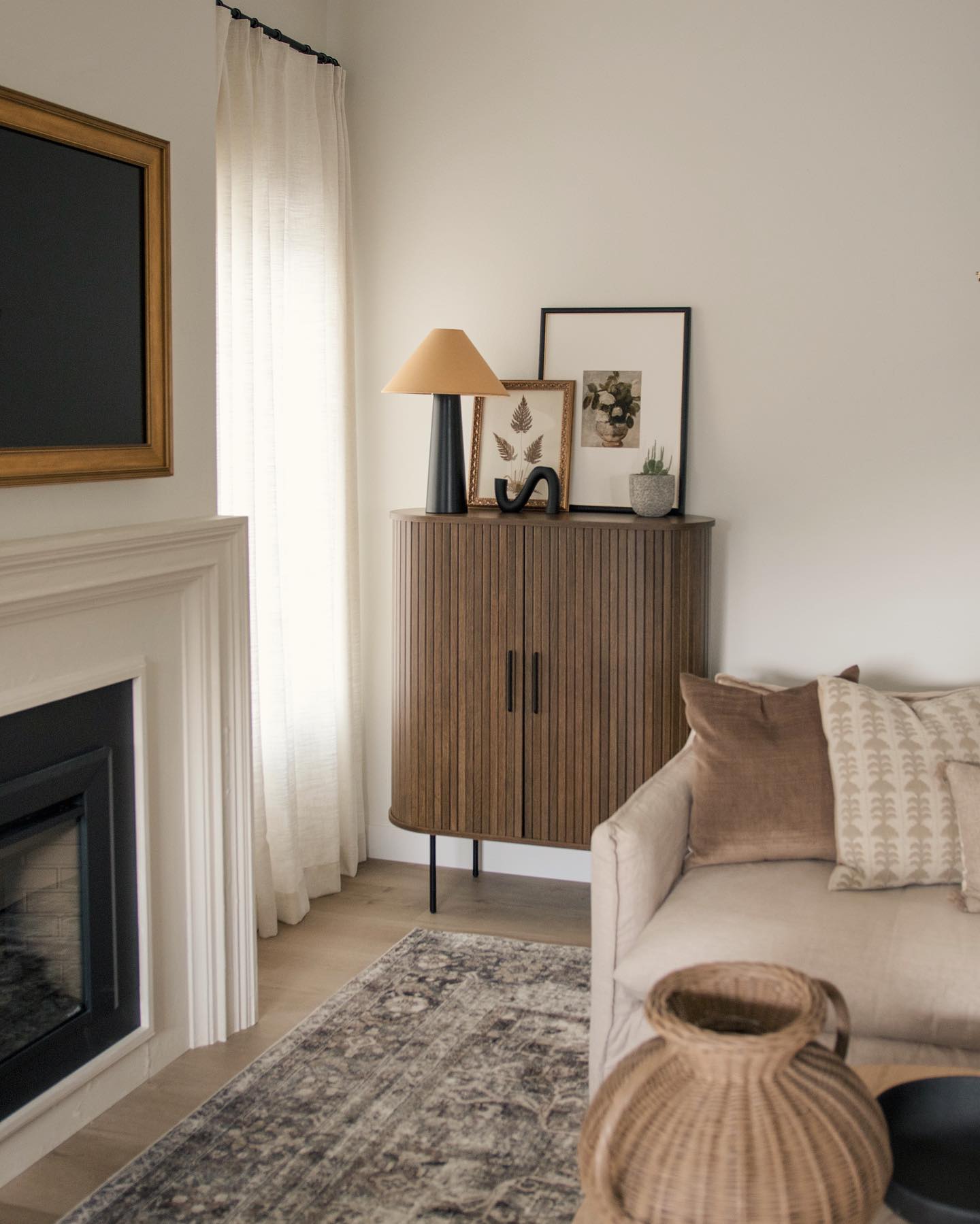
A narrow wood cabinet makes the corner beside this fireplace useful without overwhelming the nearby sofa. Its rounded ends and vertical ribs bring subtle movement to a mostly pale room.
The black legs, lamp base, and small sculpture repeat a darker accent, helping the display feel connected. Look for a cabinet whose doors can open fully without touching your seating or window treatments.
Closed storage is especially useful for items that would otherwise collect on the coffee table. Above it, overlap a few differently sized pictures and include a practical lamp.
Keeping the arrangement lower than the surrounding wall leaves the corner feeling spacious. The woven vessel in the foreground adds another texture while staying within the same warm palette.
8. Balance a Photo Grid with Leafy Branches
Credits: Instagram
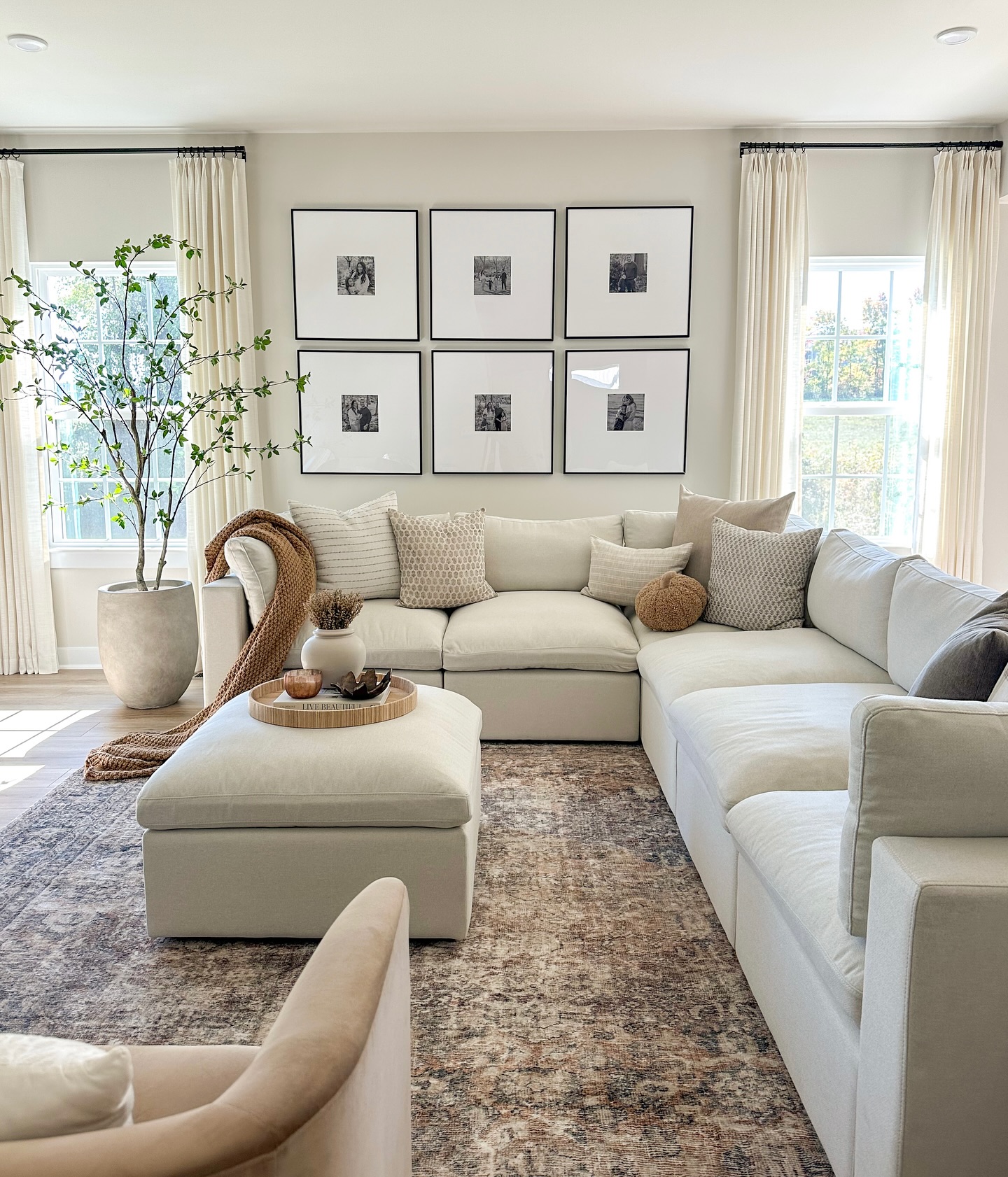
Six evenly spaced frames give this living room a tidy visual center above the sectional. The large mats create a calm backdrop, while a tall branching tree breaks the symmetry with a more natural outline.
Cream curtains, varied neutral pillows, and a brown throw add softness without interrupting the simple arrangement. This pairing works well when you want personal photographs in a room with restrained colors.
Match the frame sizes and plan the entire grid before making holes. Position taller greenery where it will not obstruct a walkway or crowd the curtains.
An upholstered ottoman extends the relaxed seating, and a tray provides a stable place for small objects. Keep the rug large enough to visually unite the sectional's sides.
9. Echo Outdoor Greenery with a Deep Green Sofa
Credits: Instagram
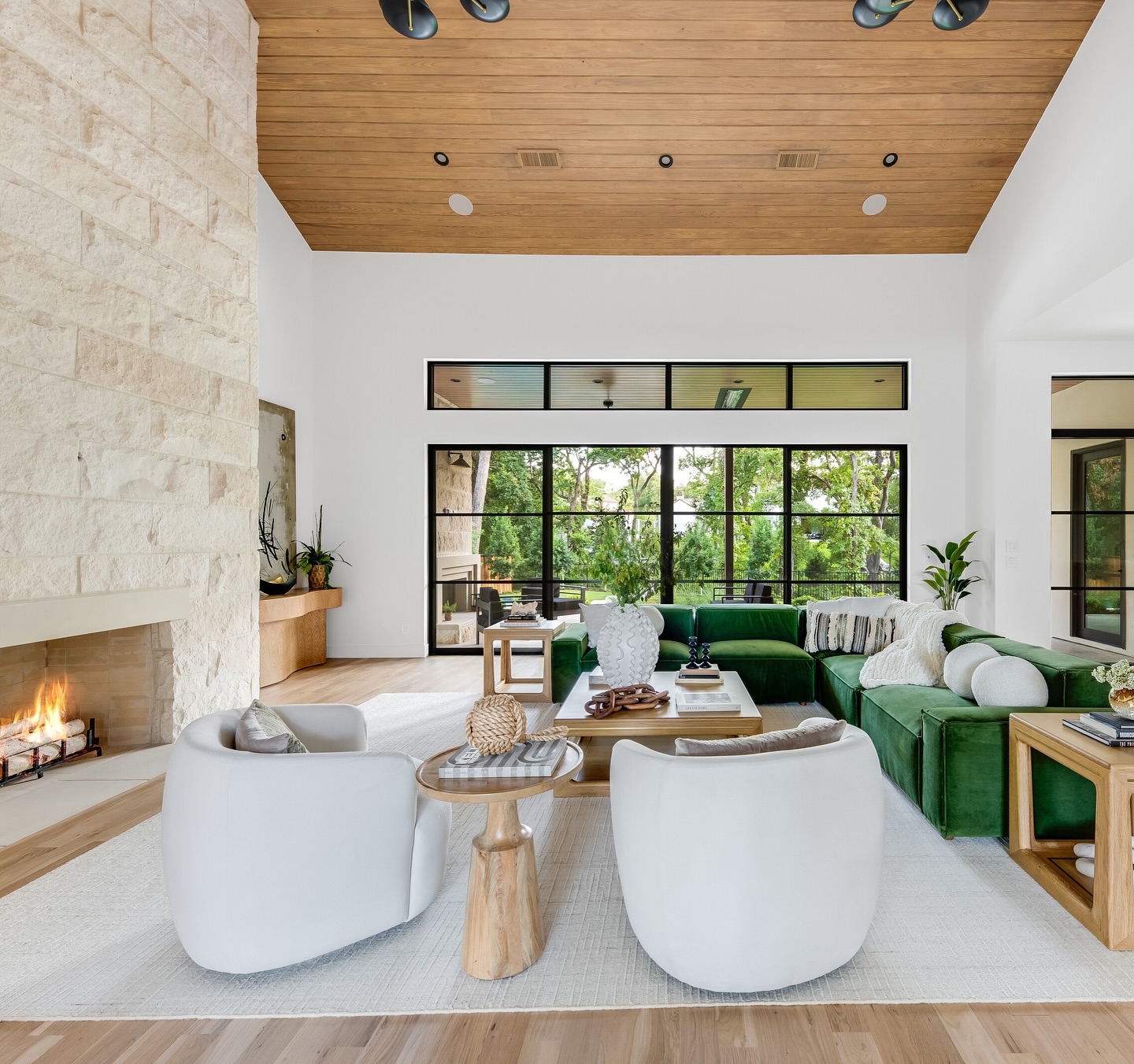
The green sectional connects this living room with the trees beyond its large windows. Pale swivel chairs keep the foreground light, while the wood ceiling and stone fireplace give the bright space substantial natural texture.
A generous rug gathers these different materials into one seating area. To adapt the idea, choose a green that looks comfortable beside your existing wood finishes and test upholstery samples in changing daylight.
Keep the other large seats quieter so the color has room to stand out. Repeating wood in small tables helps link the ceiling to the furniture below.
Leave the window view mostly unobstructed, and use a few textured pillows rather than covering the sofa with several unrelated patterns or additional accent colors.
10. Make Wood Grain the Coffee Table Pattern
Credits: Instagram
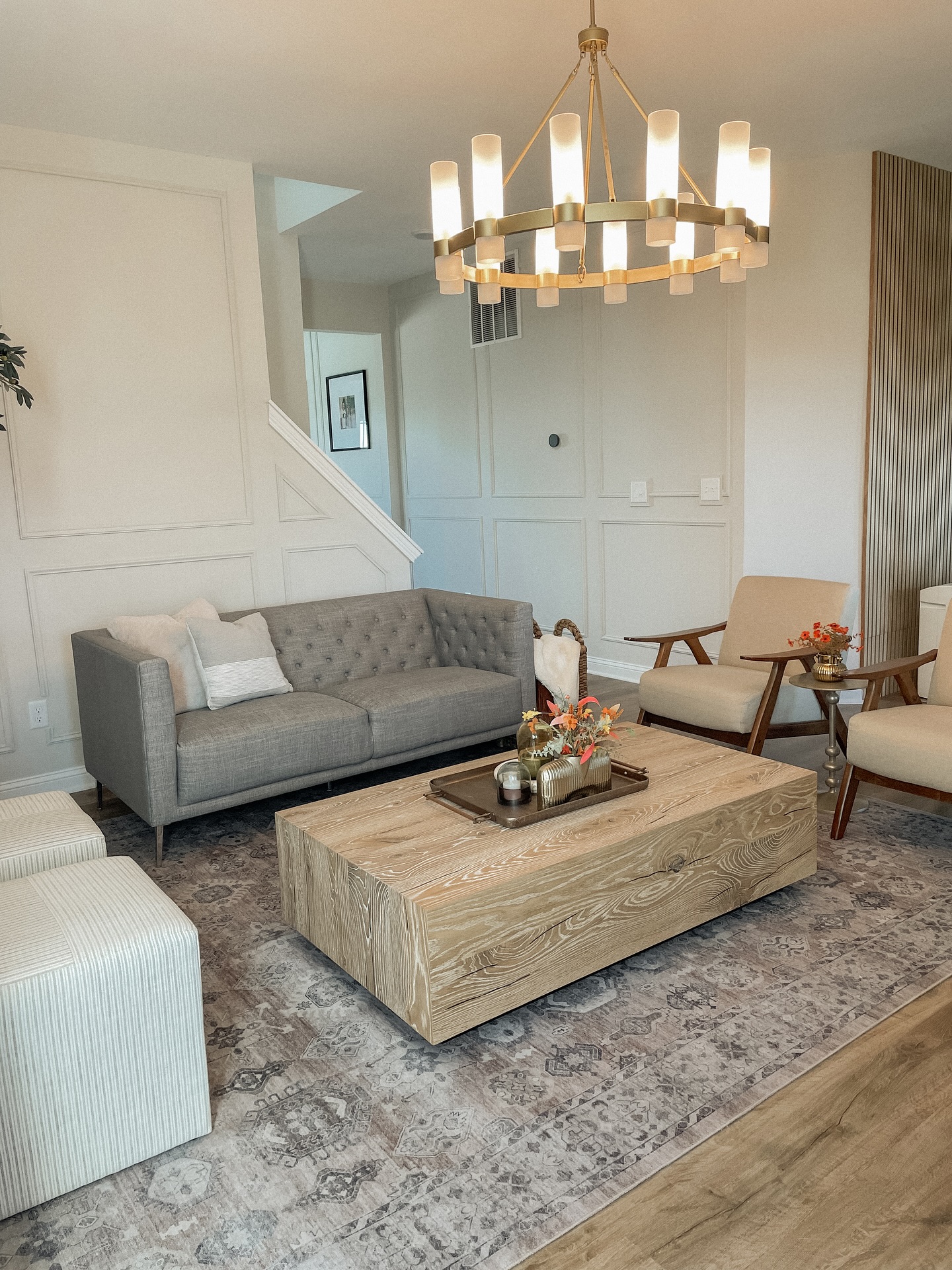
A broad wood coffee table supplies the strongest pattern in this living room, with its visible grain flowing across the top and sides. Gray upholstery and pale wood framed chairs keep the surrounding palette restrained.
The table's solid block shape contrasts with the chairs' open arms and legs, giving the arrangement variety without adding more colors. If you choose a substantial table like this, check the space between it and every seat before buying.
Keep enough room for people to move comfortably around the edges. A small tray contains the centerpiece and leaves most of the grain exposed.
The patterned rug softens the block's visual weight, while simple wall molding provides structure above the furniture without competing for attention here.
11. Organize a Tall Room with Balanced Recesses
Credits: Instagram
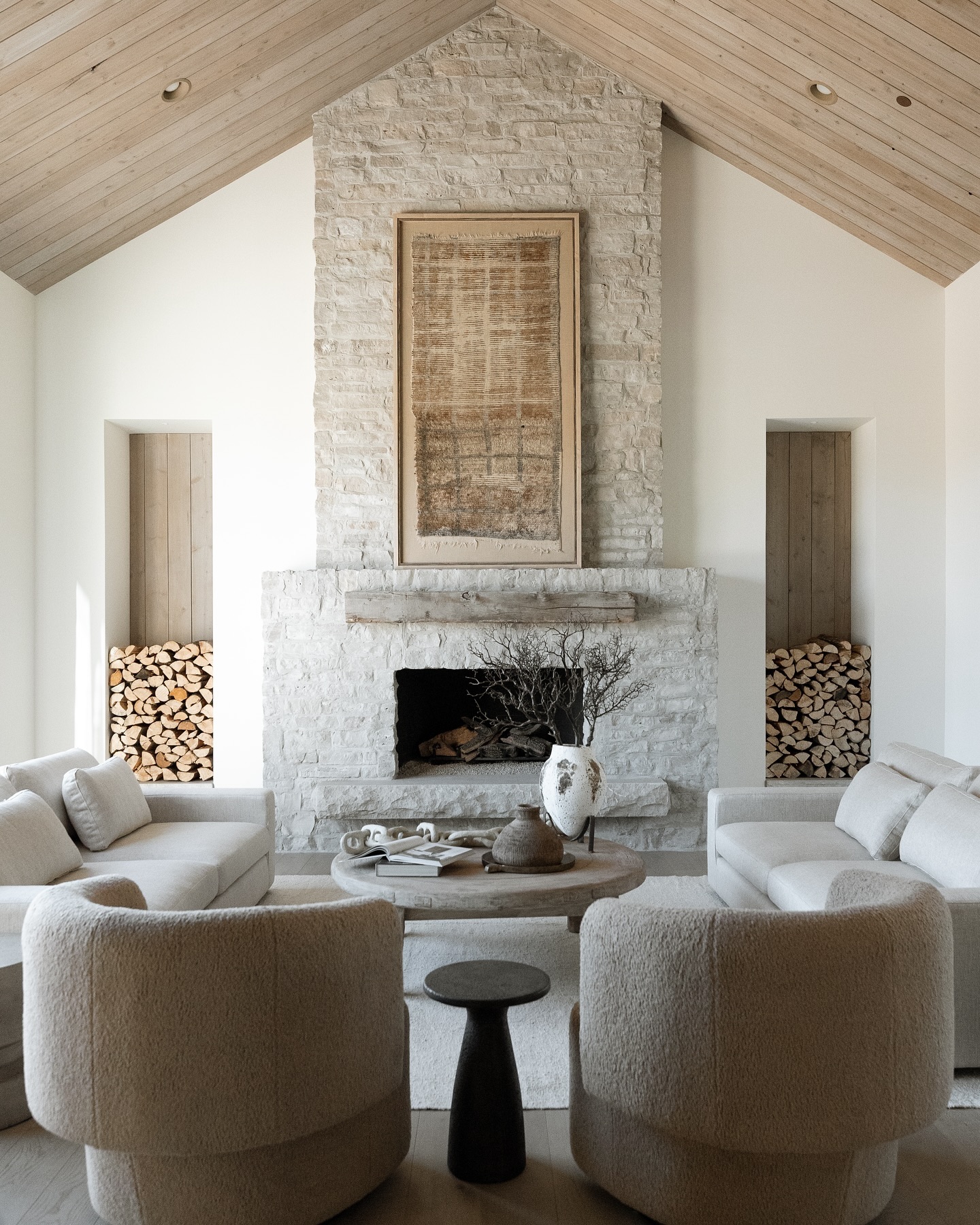
Paired recesses beside the fireplace give this tall living room a sense of order. Their wood backing echoes the sloped ceiling, while stacked logs introduce a rougher texture beneath the smooth vertical boards.
Matching sofas face each other, and rounded chairs complete the conversation group without blocking the central view. The idea is useful when impressive architecture needs a simple furniture plan.
Establish the room's main axis first, then arrange seating around it with reachable tables. Keep the large artwork proportionate to the chimney breast so it connects the upper wall with the furnishings below.
For a working fireplace, confirm required clearances before adding stored wood or decorative objects. A neutral rug quietly gathers the arrangement together at floor level.
12. Bring a High Ceiling Closer with Woven Lighting
Credits: Instagram
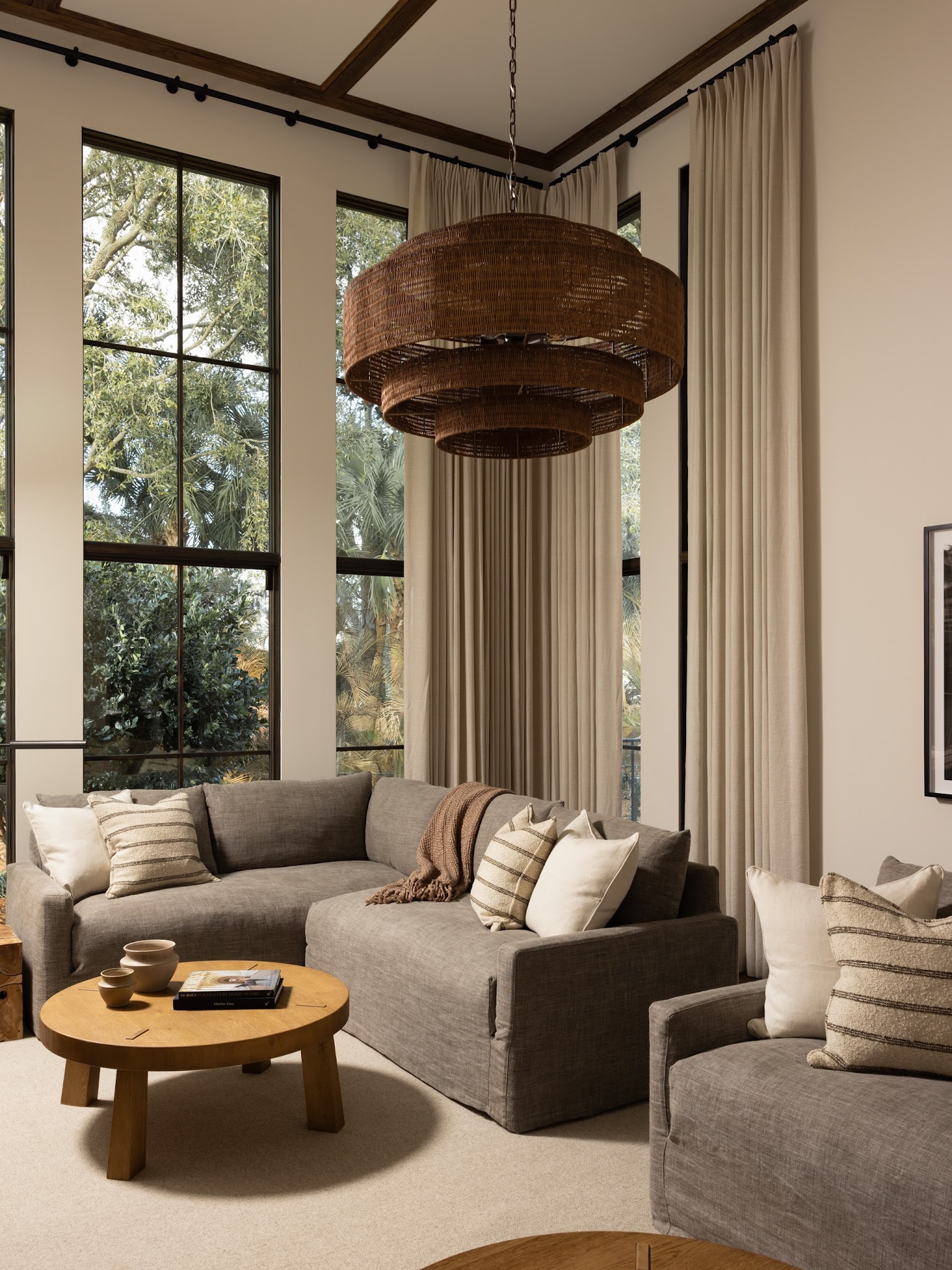
The oversized woven pendant gives this lofty living room a more intimate center above the seating. Its layered circular shape contrasts with the tall rectangular windows and straight ceiling beams.
Neutral upholstery keeps attention on the fixture's texture, while a round wood coffee table repeats its outline at a lower level. This approach can help a room with height feel furnished throughout its volume.
Choose a pendant that relates to the seating group rather than automatically centering it in the entire floor plan. Check the hanging height from both seated and standing positions, and keep circulation paths clear underneath.
Long curtains soften the window wall, while a few striped pillows add a smaller scale of detail to the broad sofa.
13. Soften Built-In Shelves with an Arched Opening
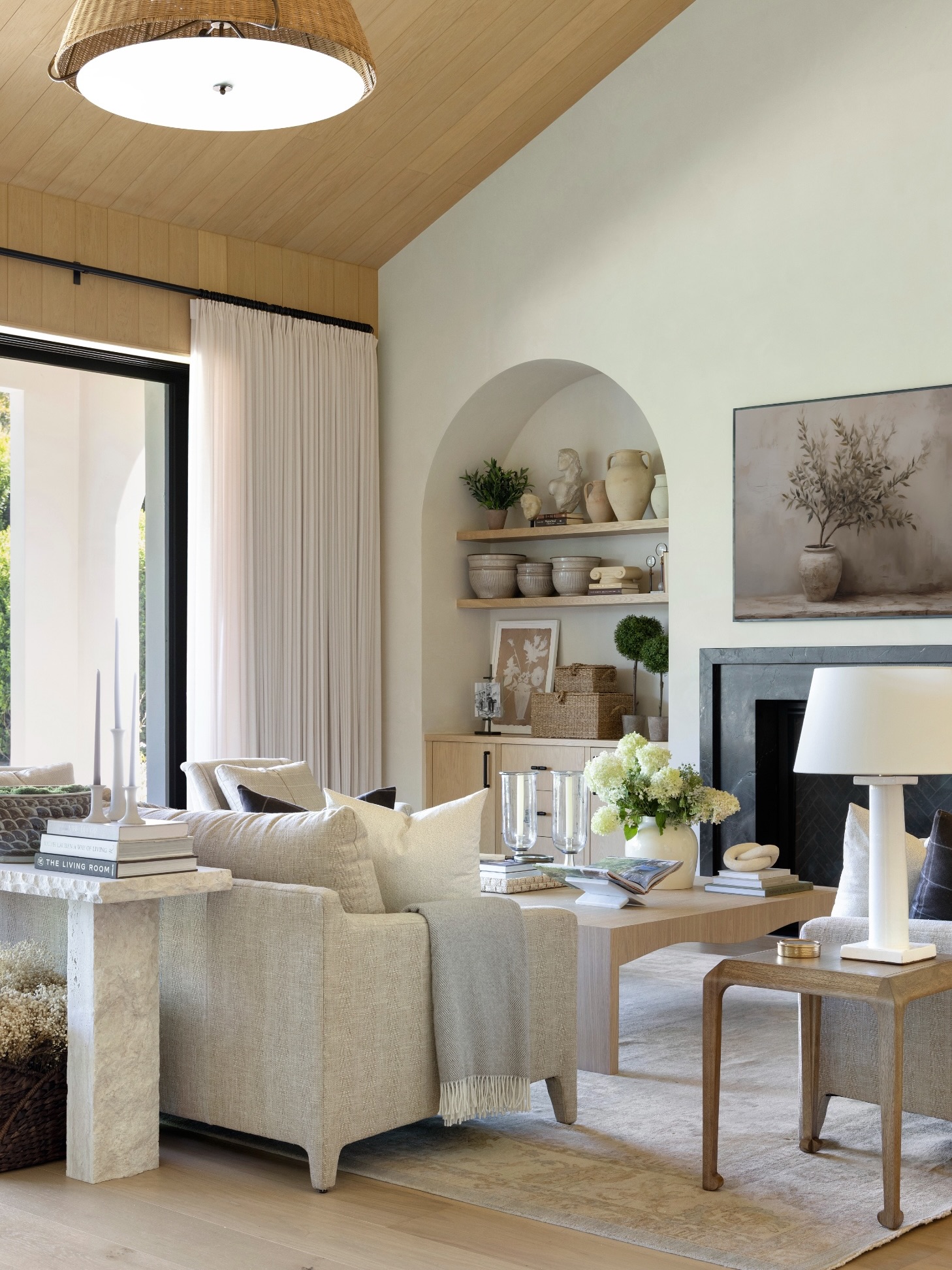
Credits: Instagram
An arched shelving recess gives this living room a gentle architectural curve without changing the straightforward furniture layout. Light wood shelves hold pale pottery, books, and a basket, connecting the storage to the warm ceiling above.
The dark fireplace surround adds definition beside the quieter display. To borrow this idea, group objects by their shapes and leave visible space around them.
A few substantial vessels usually read more clearly than many tiny ornaments. Keep used items within comfortable reach and reserve higher shelves for lighter decorative pieces.
Repeating creamy tones across the upholstery and ceramics helps the arrangement feel related. A textured stone table introduces another natural surface close to the seating, balancing the smoother wood finishes throughout the room.
14. Keep Wood Storage Low Behind the Seating
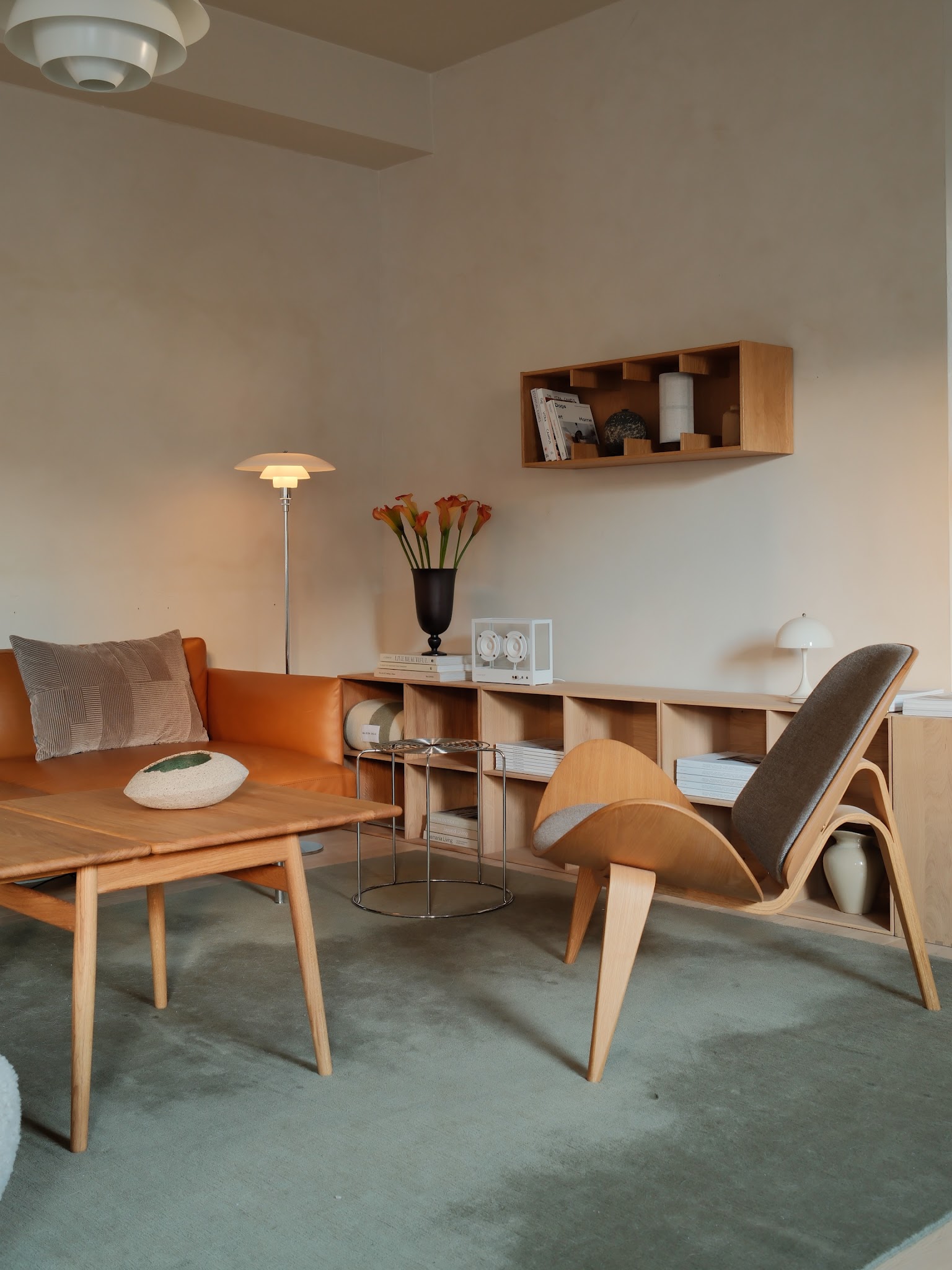
Credits: Instagram
A long, low wood shelving unit brings storage into this living room while preserving plenty of open wall above. Its repeated compartments organize books and objects, and the smaller wall shelf creates a second horizontal line.
Warm leather upholstery and a sculptural wood chair connect with those finishes. The muted green rug adds a gentle color shift beneath the furniture.
Try this arrangement when a tall bookcase would make your room feel crowded. Measure the storage against the sofa's height and leave space for lamps where you actually sit.
Mix a few upright books with horizontal stacks, keeping the display easy to maintain. One larger ceramic piece on the table is enough to give the seating area a focal point.
15. Choose an Airy Pendant for a Pale Room
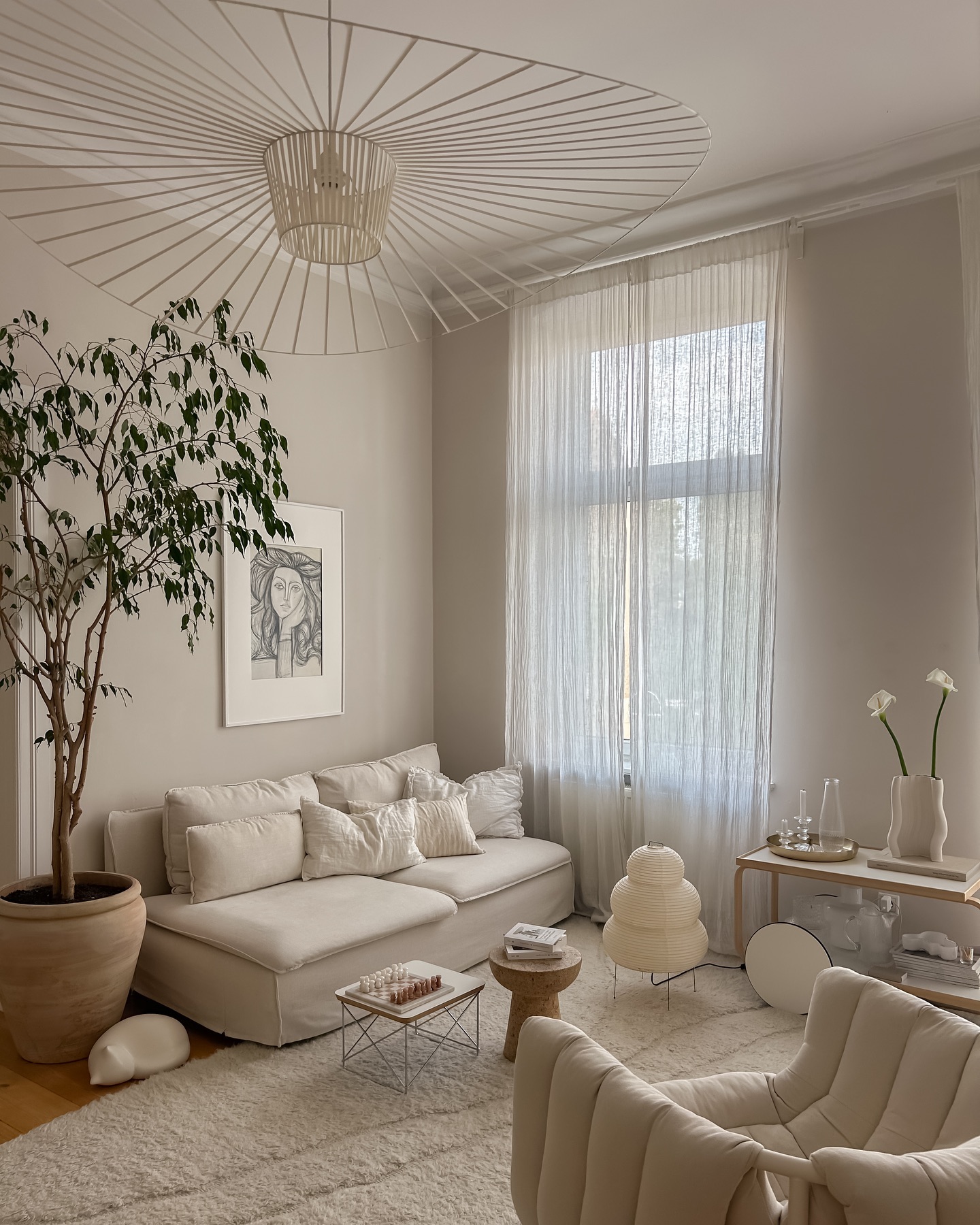
Credits: Instagram
The broad, open pendant makes a sculptural statement in this living room without visually filling the ceiling.
Its delicate outline leaves the window and tall tree visible, while the cream sofa and soft rug keep the lower half of the room relaxed.
Small tables offer useful surfaces without forming a heavy block between the seats. For a similar effect, consider the visual density of a light fixture as well as its diameter.
An open design can feel lighter than a compact solid shade. Use sheer curtains when you want filtered daylight, adding separate privacy coverage if needed.
The tree's irregular branches prevent the pale palette from feeling static, and varied upholstery textures provide interest without requiring extra colors or patterns.
16. Contrast a Straight Sofa with an Irregular Table
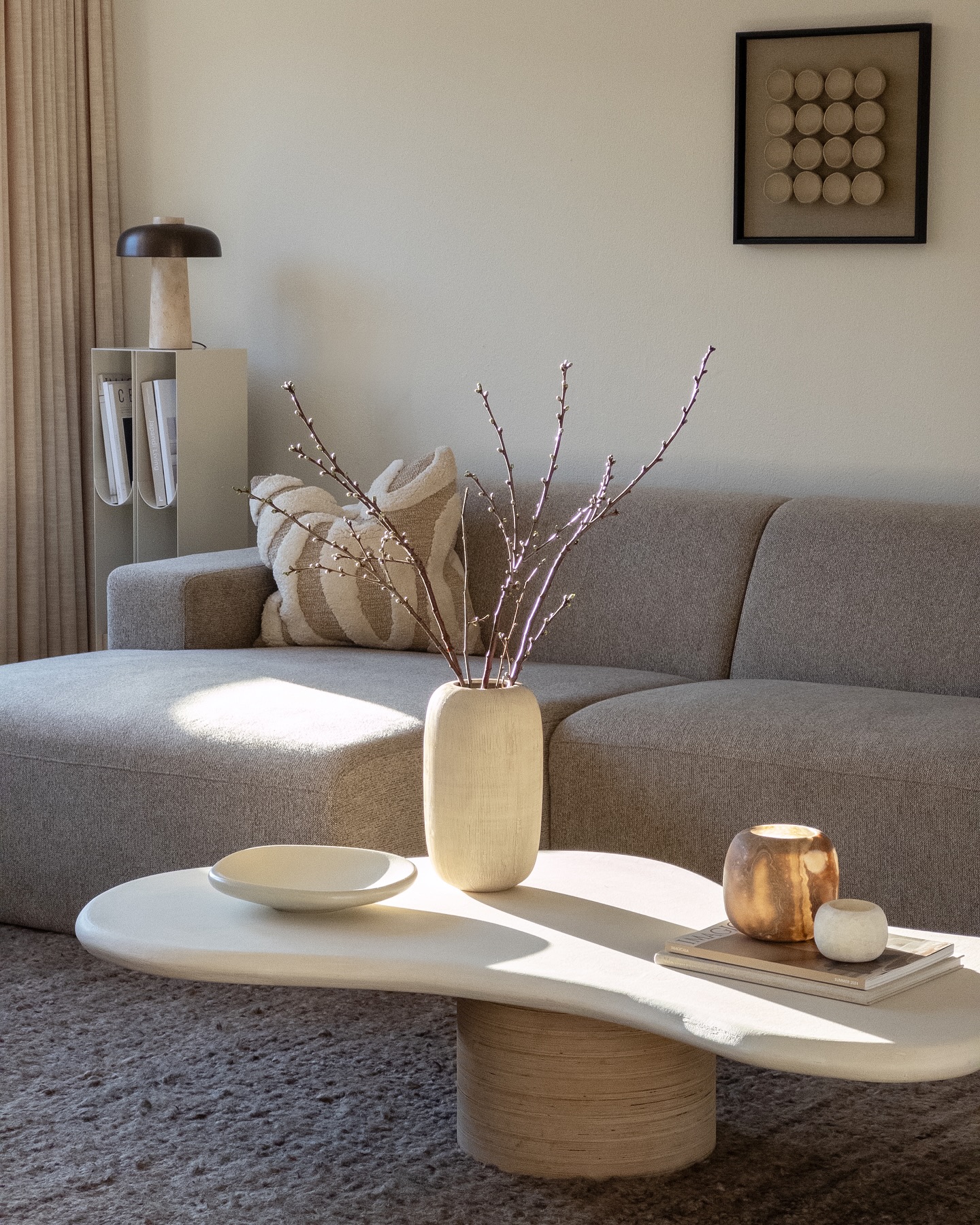
Credits: Instagram
The gently uneven outline of this coffee table brings movement to a gray sofa. Its pale top stands out against the darker rug, while a rounded wood base adds warmth at the center of the room.
A few tall budding branches continue the natural shape theme without covering the table's surface. To use this idea, choose an asymmetrical table that still offers enough usable space beside every seat.
Check its deepest and narrowest points against the sofa before ordering. Keep the tabletop arrangement small so its silhouette remains visible.
A textured pillow and restrained wall art add detail elsewhere. The result feels considered because the furniture shapes vary, even though the colors stay close to one another throughout the room.
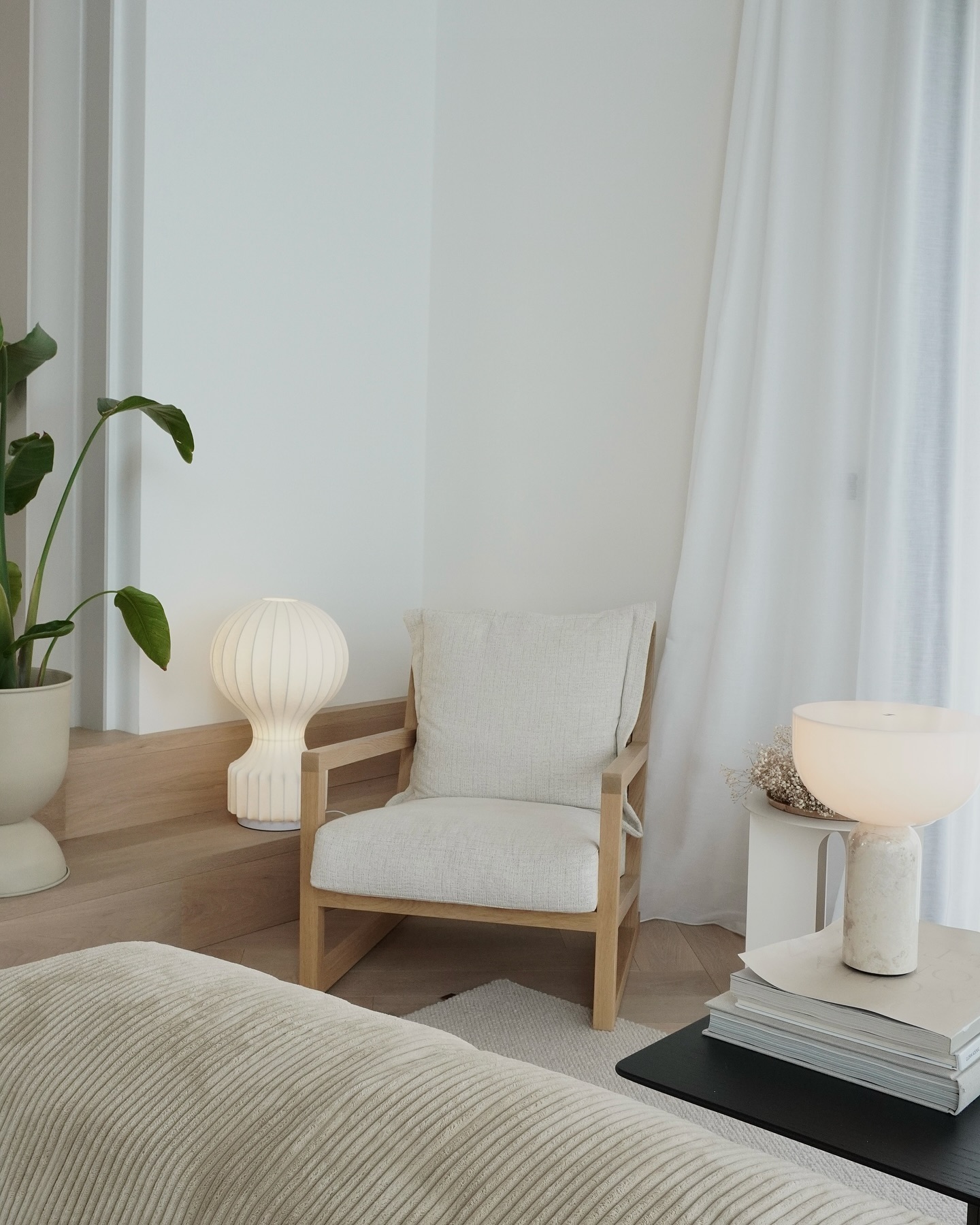
17. Layer Gentle Light Around a Wood Armchair
Credits: Instagram
This living room corner combines a pale wood chair with two softly glowing lamps. Their rounded forms contrast with the chair's straight frame, while the low wood ledge gives the arrangement a warm horizontal base.
White curtains and cream upholstery allow the subtle material differences to remain visible. You can create a similar corner without buying an entirely new seating set.
Start with a comfortable chair, a nearby surface, and one lamp positioned for the way you use the space. Add a second light only if it serves another part of the room.
Keep cords organized and away from walking routes. A leafy plant supplies a small color contrast, while a textured throw connects the corner to the main sofa.
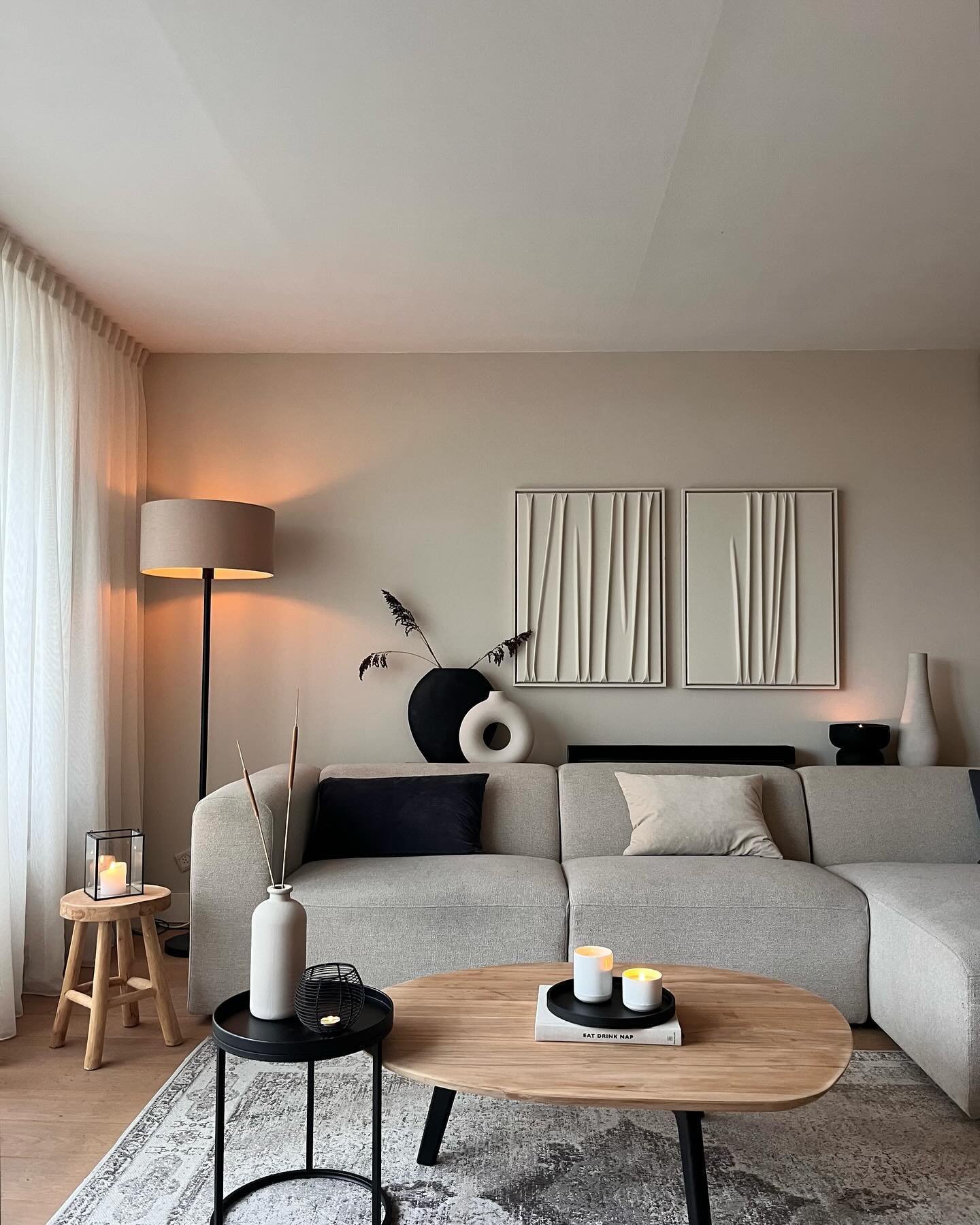
18. Let Relief Art Add Texture Above the Sofa
Credits: Instagram
Two pale relief artworks bring depth to the wall above this sectional without adding a strong new color. Their folded surfaces catch the nearby lamp's light, making shadow part of the decoration.
Black pottery and small side tables provide contrast, while the wood coffee table keeps the seating area warm. This is a useful alternative when colorful artwork would feel too busy with your existing furnishings.
Look for dimensional pieces that are interesting from several angles, and hang them where gentle side lighting can reveal their texture. Keep heavy objects securely mounted and out of reach behind the sofa.
Repeating black in a few small details helps organize the palette. A floor lamp near the window adds useful evening light.
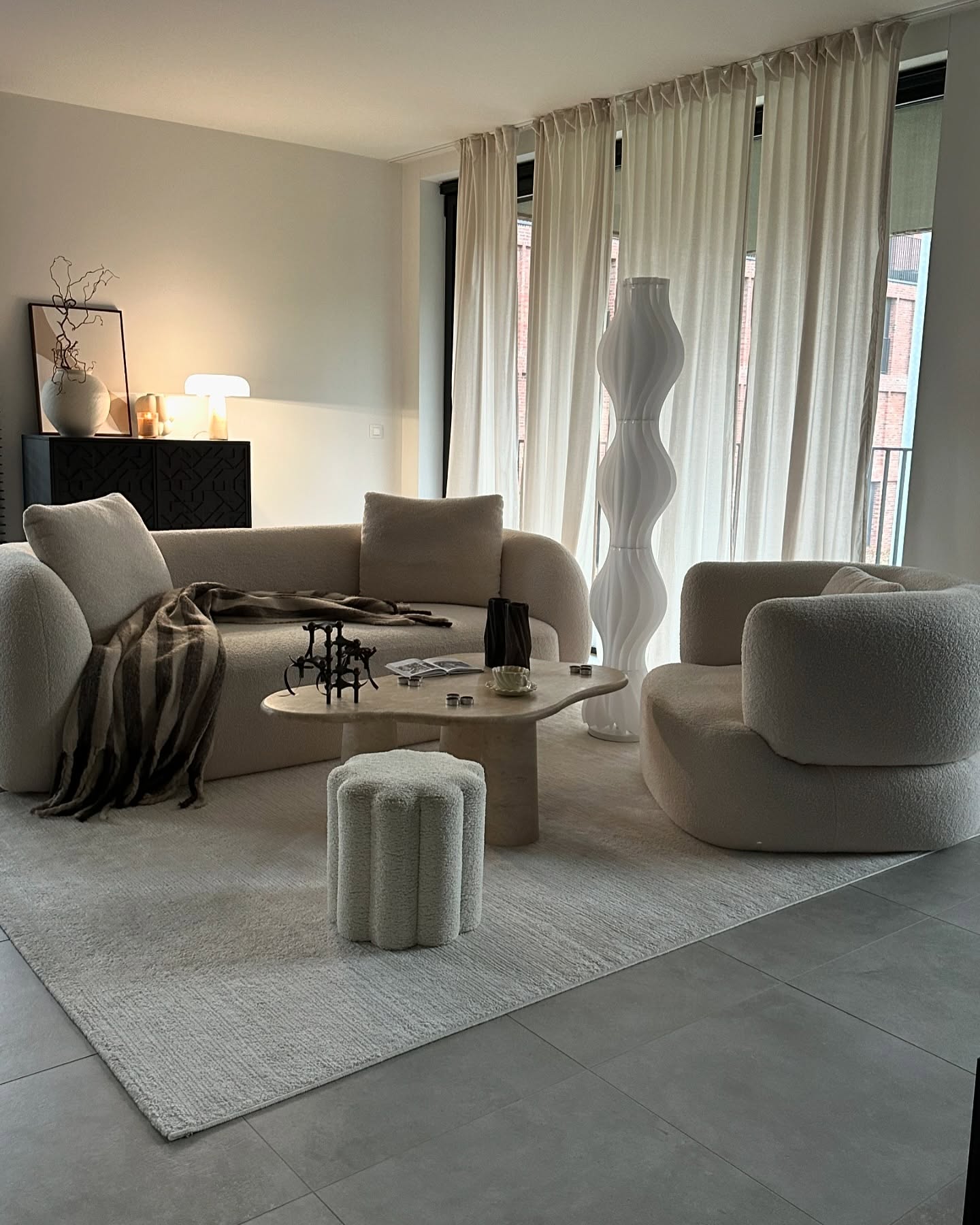
19. Repeat Soft Curves Across the Seating Group
Credits: Instagram
Rounded seating gives this compact living room a welcoming shape, with a curved sofa facing a deep upholstered chair.
The irregular stone table and small fluted stool continue the softer geometry, while the dark cabinet prevents the pale furniture from blending into the background.
A tall sculptural floor lamp draws the eye upward beside the curtains. To adapt this approach, vary the size of your rounded pieces rather than repeating exactly the same silhouette.
Keep the table low enough to use comfortably from the sofa, and leave a clear route around the chair. One striped throw introduces a little linear pattern.
A generously sized rug connects the group and provides a softer surface against the surrounding large square floor tiles.
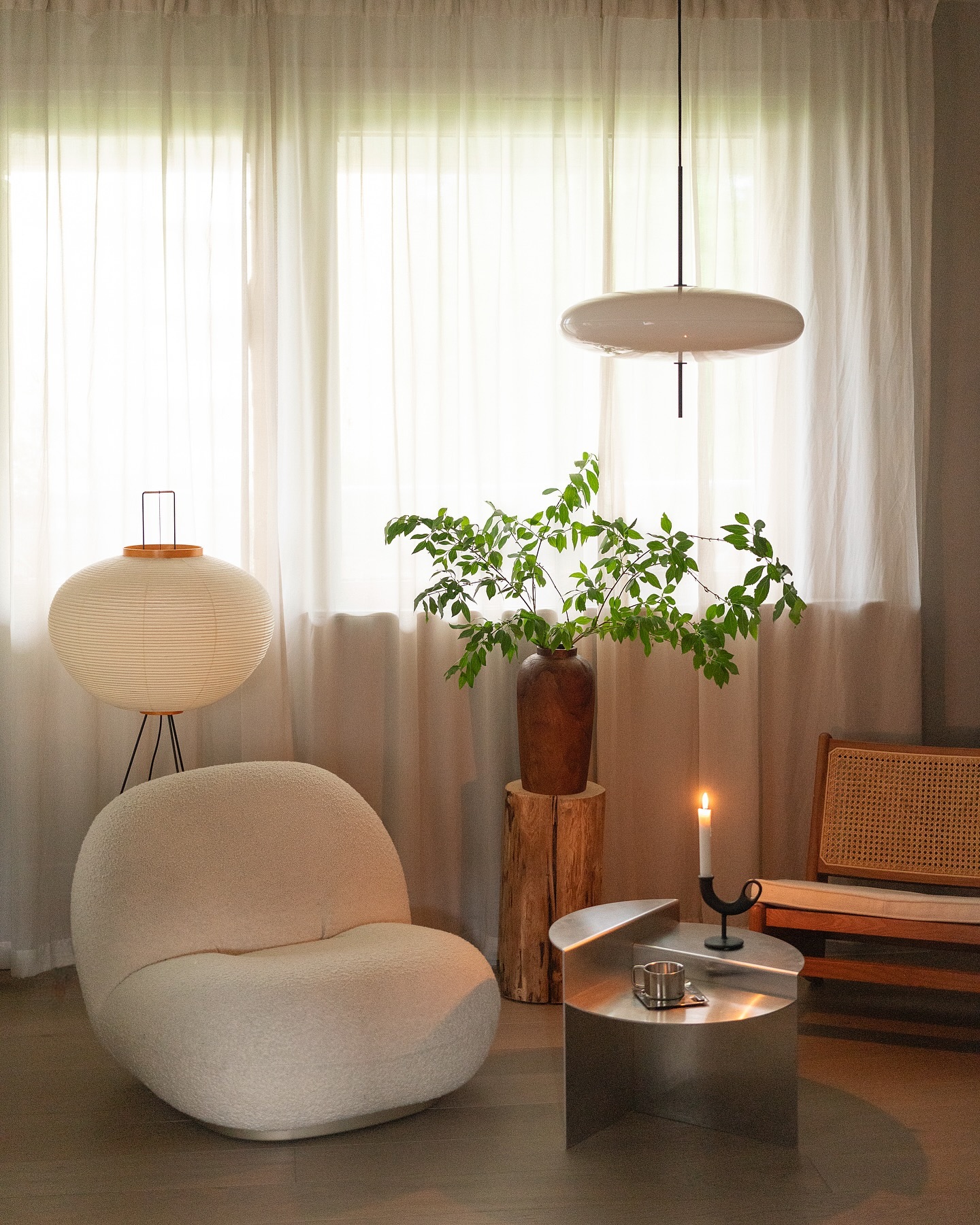
20. Pair a Rustic Wood Pedestal with Polished Metal
Credits: Instagram
A natural wood pedestal and a reflective metal table create an appealing material contrast in this small sitting area.
The branch-filled vase brings height between the chairs, while soft upholstery, cane, and sheer curtains make the polished surface feel at home. Two rounded light fixtures add another shared shape without matching exactly.
This combination works when a neutral room needs interest through materials rather than stronger colors. Choose one rustic piece and give it a clear purpose, such as supporting a plant or favorite vessel.
Keep the base stable and protect the floor underneath. A compact table can serve both seats if it is positioned within reach.
Use flameless candles near curtains and greenery to preserve the atmosphere more safely.