
Burgundy can make a living room feel warm and enveloping, but too much of it can leave the space looking heavy. Burgundy Living Room Ideas show how to balance the deep color with contrasts in shade, texture, and finish.
Try pairing burgundy walls with a teal armchair, setting a wine-colored sectional against cool pale walls, or lightening an aubergine room with ivory upholstery.
Other approaches use natural wood, patterned details, or painted built-ins to make the rich palette feel considered and comfortable.
1. Let Rounded Burgundy Seating Take the Lead
Credits: Instagram
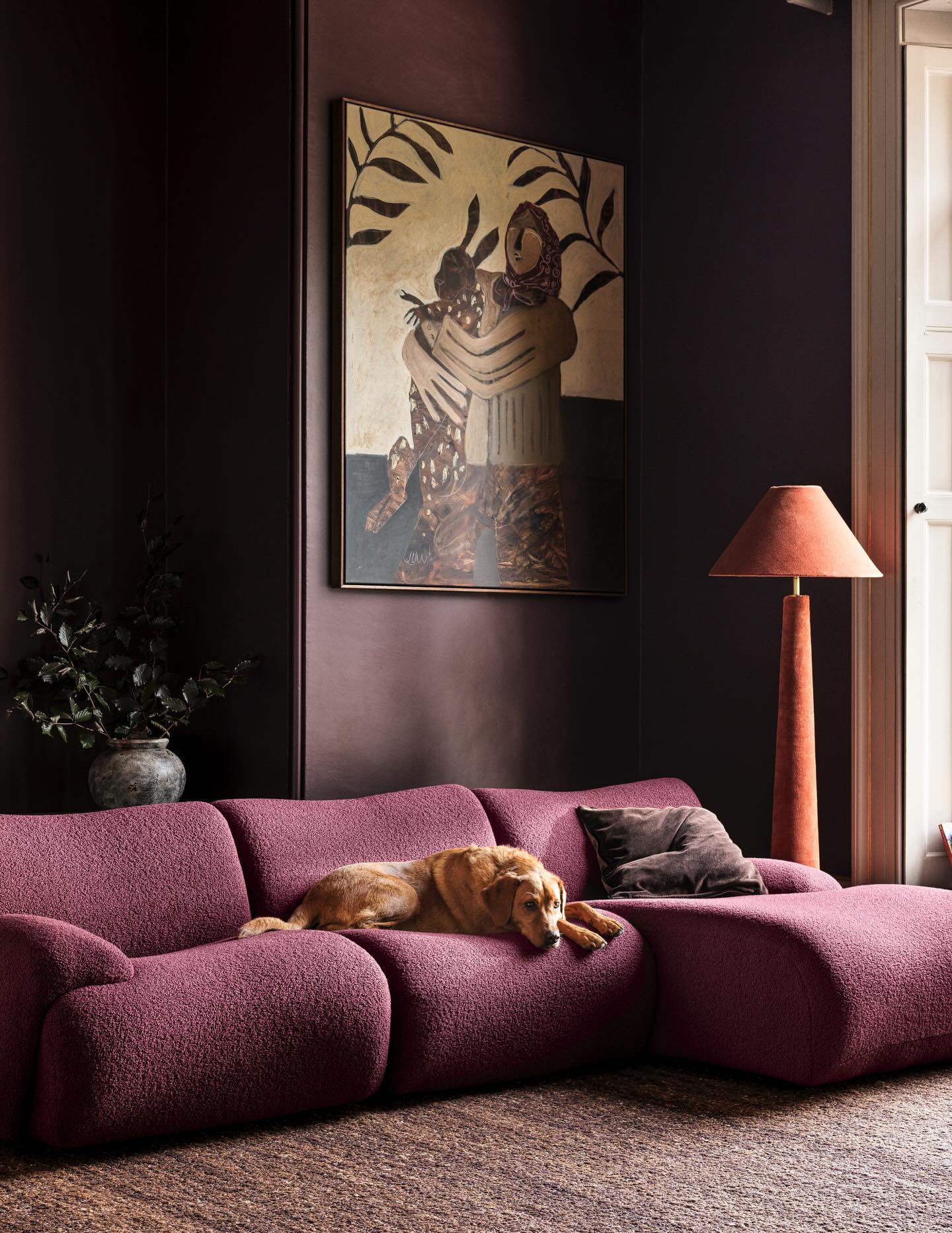
A low, rounded sectional makes burgundy feel relaxed in this room, especially with its softly textured upholstery. The wall behind it is considerably darker, so the sofa remains visible without a sharp white backdrop.
One large painting brings cream and ocher into the composition, while a rust floor lamp adds a warmer note beside the window. Try this approach when you want a rich palette with very little pattern.
Choose furniture with generous curves, then keep the surrounding pieces spare enough for those shapes to register. A rug close to the sofa's color connects the seating to the floor.
Before ordering, check the upholstery against your wall sample in daylight and lamplight; similar colors can separate dramatically under different conditions.
2. Give a Burgundy Den a Playful Ceiling
Credits: Instagram
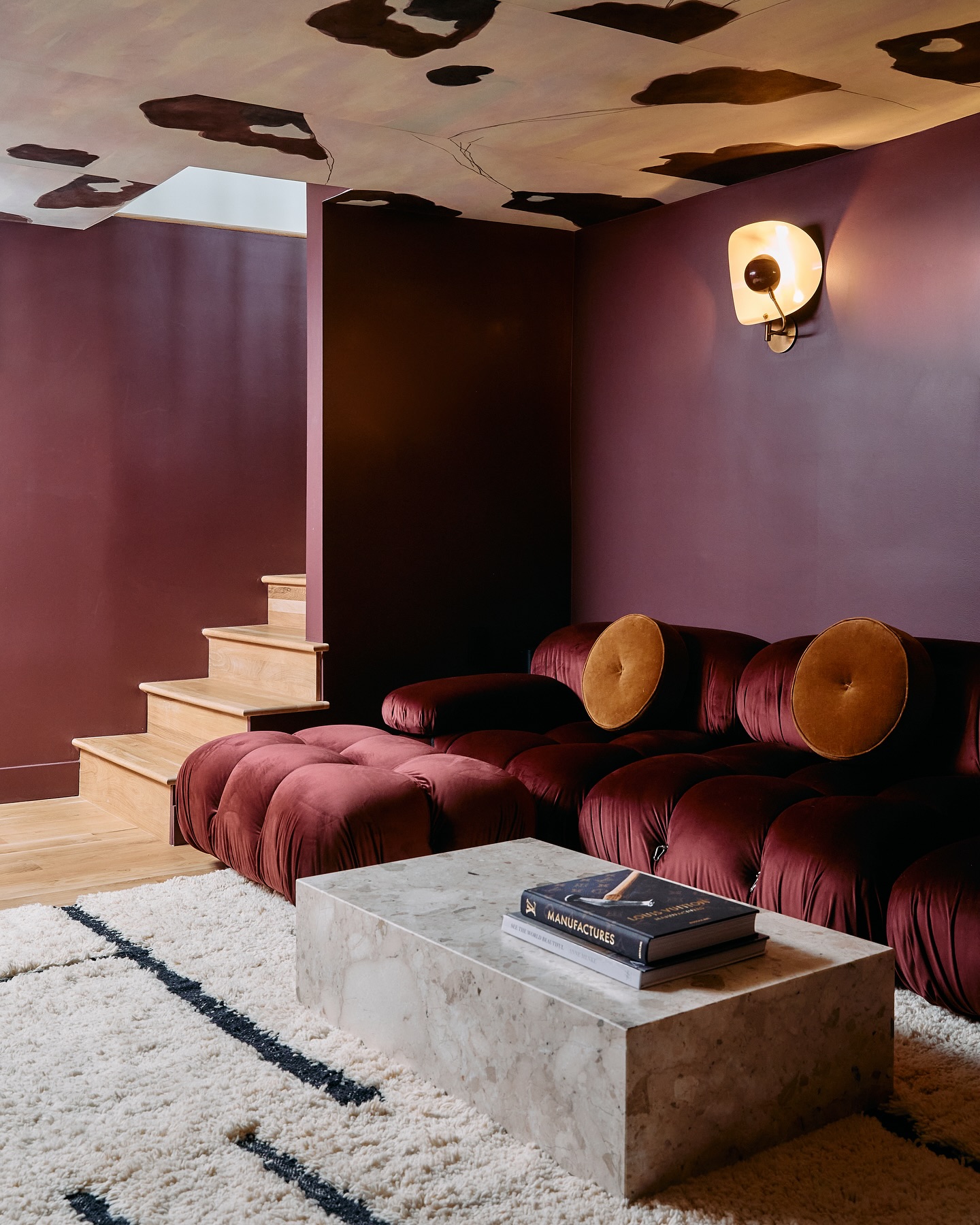
The burgundy walls and deep red sectional create a cozy envelope, but the patterned ceiling keeps this den from becoming predictable. Pale stairs, a cream rug, and a blocky stone coffee table interrupt the darker surfaces with substantial light areas.
Round mustard pillows repeat the warm notes overhead without copying the entire pattern. To adapt the idea, decide which surface will carry the strongest movement before choosing accessories.
A ceiling treatment works best when the walls remain visually simple and the furniture sits low. Keep a clear route between the stairs and seating, and use a smaller table if circulation feels tight.
A wall light can add evening warmth without taking floor space from the compact conversation area below it.
3. Pair Burgundy Walls with a Teal Armchair
Credits: Instagram
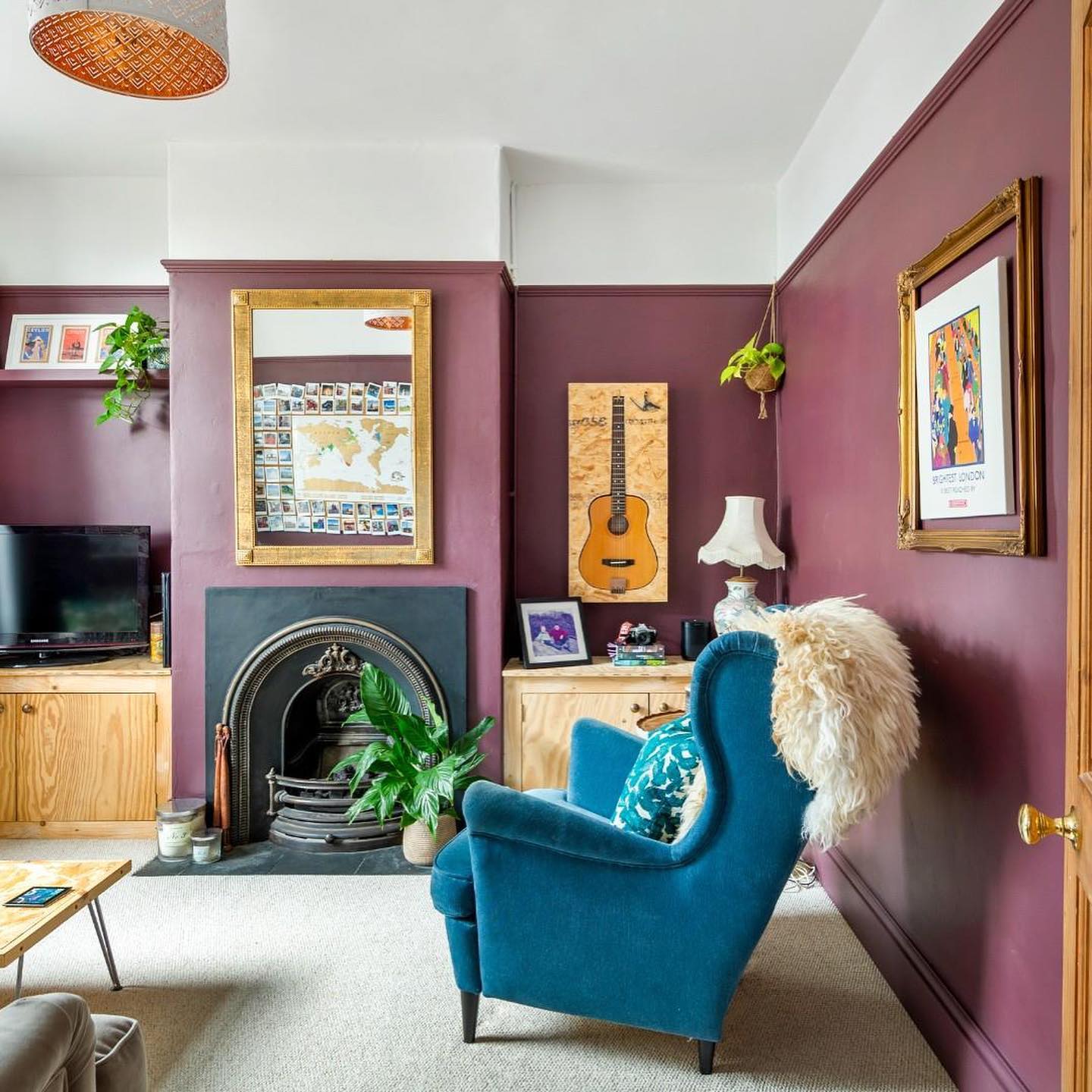
A teal wingback chair gives these burgundy walls an energetic companion. The contrast feels collected rather than rigid because gold frames, pale wood cabinets, houseplants, and a shaggy throw add several softer materials between the two colors.
The white ceiling and upper wall band keep the saturated paint from occupying every surface. Start with one accent chair if you want to try this pairing without replacing your main sofa.
Then choose artwork that contains small touches of both colors to connect the room. Notice how the black fireplace provides a quieter center among the bright objects.
Leave some cabinet space open, and give trailing plants room to grow so the arrangement feels comfortable, useful, and easy to maintain over time.
4. Warm Plum Upholstery with a Textured Backdrop
Credits: Instagram
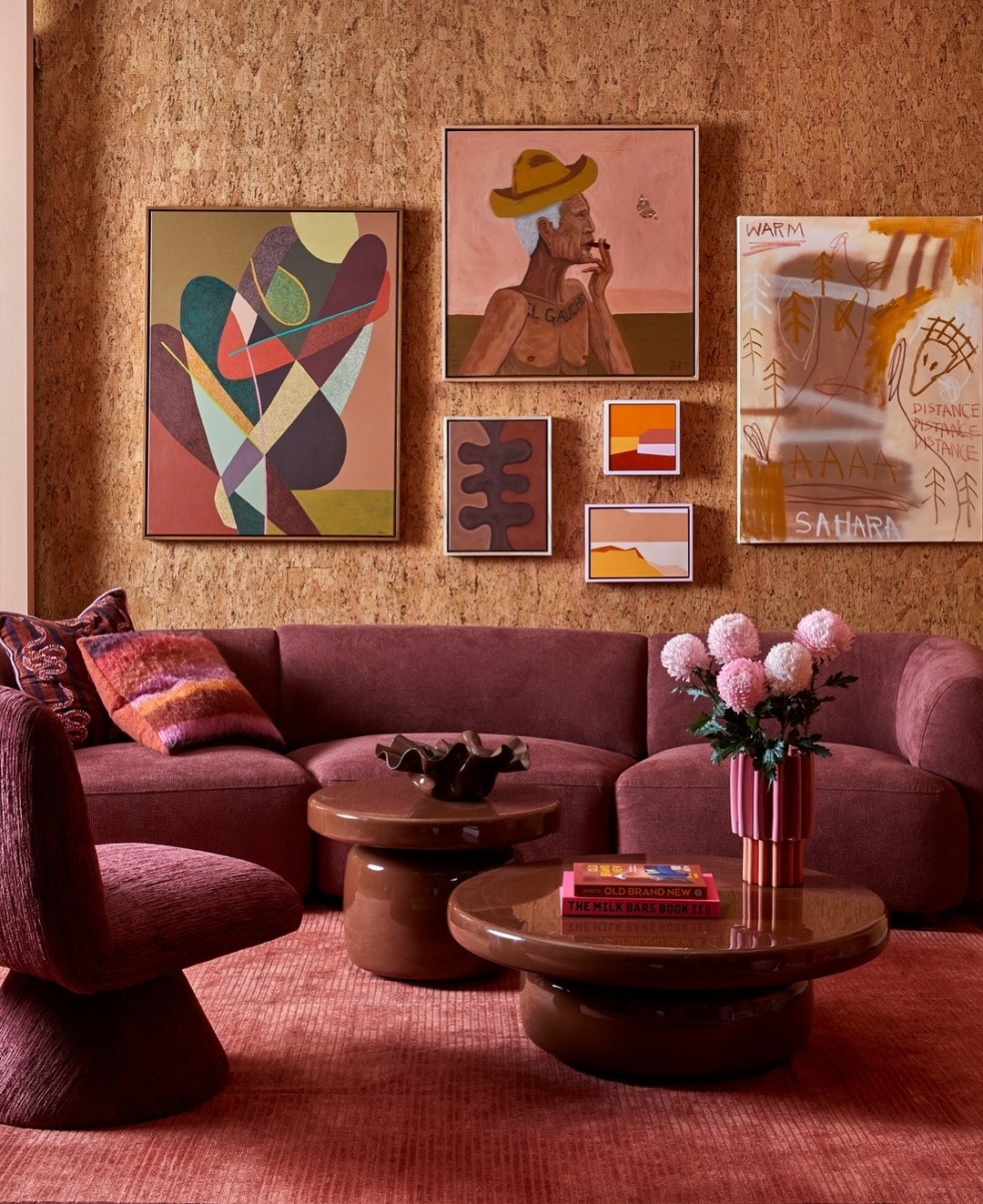
Plum seating gains warmth from the golden, textured wall behind it. Rounded brown coffee tables and a rosy rug complement the wine tones, creating a concentrated palette with subtle variations in warmth.
An informal gallery arrangement of artwork introduces ocher, pink, and green in smaller amounts. This is a useful approach when a burgundy sofa feels isolated against plain white walls.
Bring in one warm background material, then repeat the upholstery color at two different heights or surfaces. The tables here have broad curves that echo the furniture, keeping the arrangement cohesive without making everything match.
Choose a mixture of flat and glossy finishes, and leave enough clear tabletop for everyday use alongside the flowers, books, and other decorative objects.
5. Offset a Wine Sectional with Cool Walls
Credits: Instagram
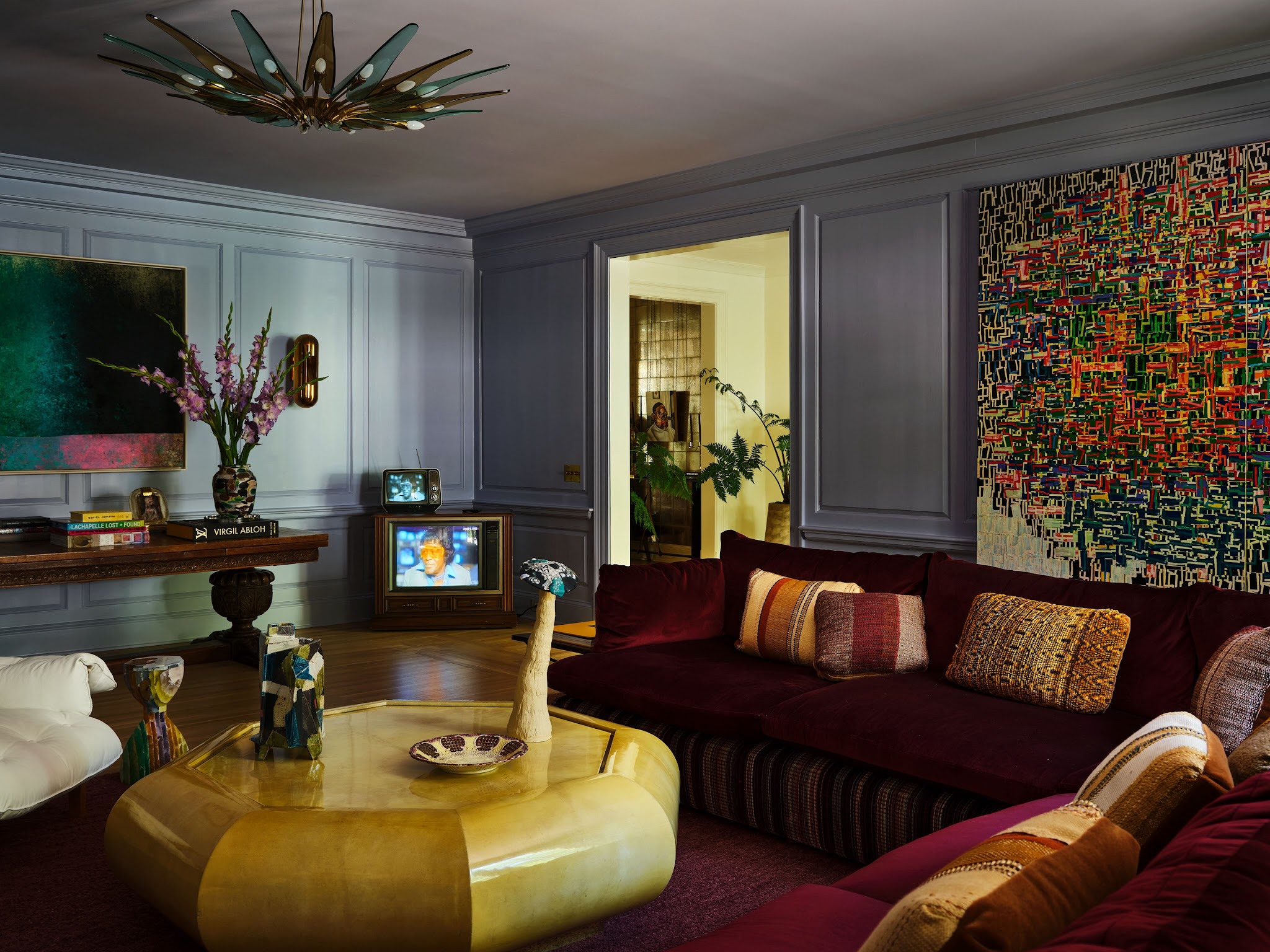
The wine colored sectional anchors this family room while cool, pale paneled walls keep the overall effect from feeling heavy. A large yellow coffee table adds another distinct color, and its rounded shape softens the straight lines of the seating.
Patterned pillows bridge the palette without covering every cushion. Use this room as a reminder that burgundy can be one strong furniture choice within a broader scheme.
Test a muted lavender or gray wall sample next to your upholstery before choosing a brighter accent. Large artwork can provide the smaller connecting colors.
Keep the sofa comfortable and mostly clear, and select a sturdy coffee table with enough clearance around its edges for people to move easily through the seating area.
6. Make a Patterned Fireplace the Burgundy Focal Point
Credits: Instagram
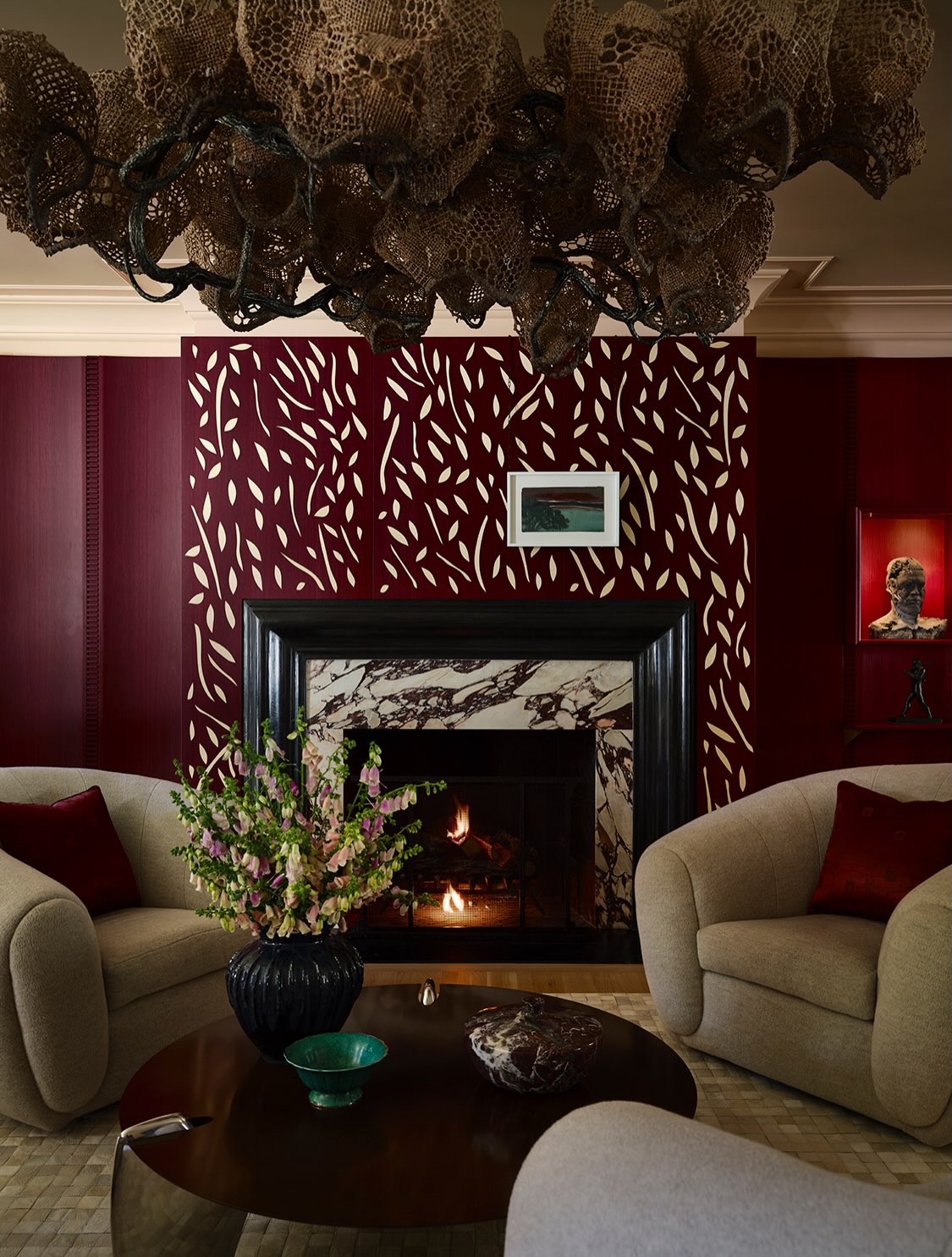
Burgundy walls frame a striking fireplace wall patterned with pale, irregular shapes. Cream chairs brighten the lower half of the room, while the dark coffee table and sculptural overhead fixture maintain its intimate mood.
The result feels elaborate without requiring every surface to carry decoration. To borrow the balance, choose one architectural feature for your boldest pattern and let nearby walls repeat its background color.
Pale upholstery provides a comfortable visual pause, especially around a dark mantel. A small turquoise object introduces contrast without changing the whole palette.
Keep fireplace clearances and the scale of hanging fixtures in mind when planning your own version. Place the seats close enough for conversation while leaving a practical, unobstructed approach to the hearth.
7. Keep an Aubergine Room Bright with Ivory Upholstery
Credits: Instagram
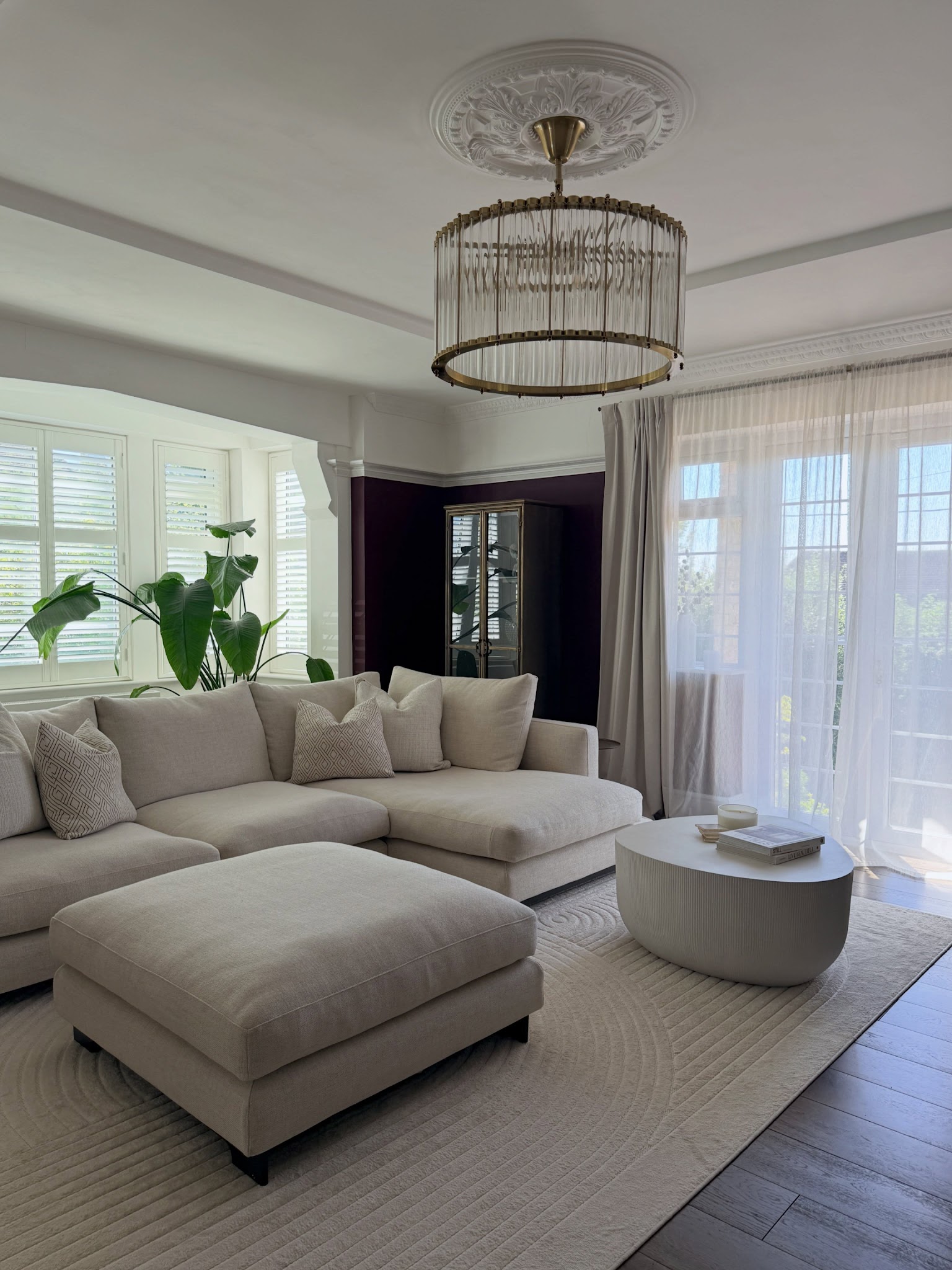
A large ivory sectional occupies most of this living room, allowing the aubergine walls to act as a rich border around the seating. Pale curtains, a light rug, and a white ceiling repeat that brightness at several heights.
The dark glass cabinet gives the wall color another substantial companion, while a leafy plant adds an organic shape beside the window. This balance suits anyone who wants deep color without a uniformly dark room.
Keep the largest textile surfaces light, and reserve the burgundy family for walls or a single cabinet. Hang curtains so they can clear the glazing during the day.
A simple rounded coffee table helps people pass the sectional comfortably and avoids introducing another strong rectangular block nearby.
8. Set Burgundy Velvet Against Natural Wood Walls
Credits: Instagram
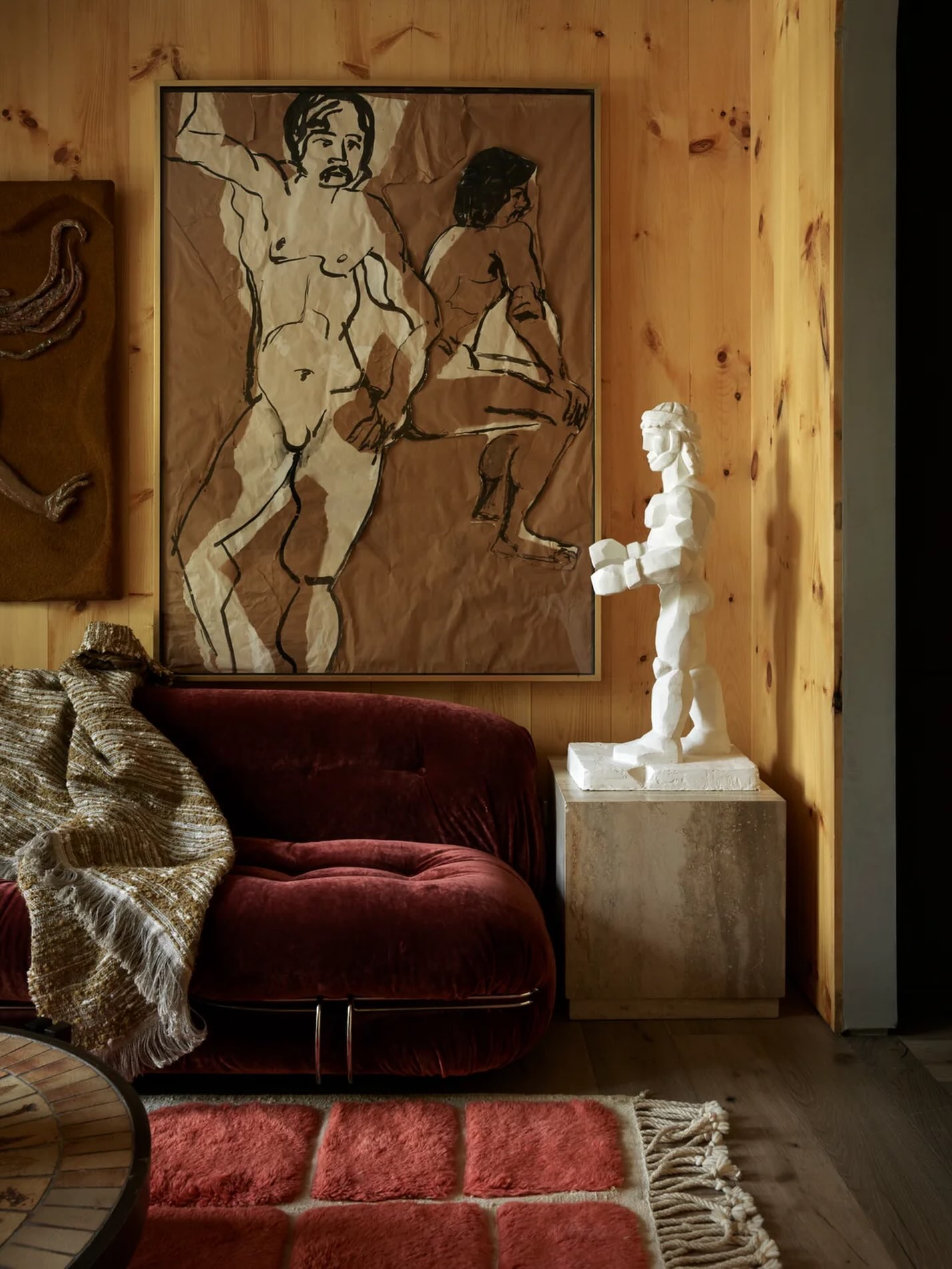
Knotty wood walls give this burgundy lounge seat an earthy setting, showing how comfortably a rich wine color can work with rustic materials.
A fringed throw and a thick patterned rug add texture around the velvet, while a pale sculpture on a stone pedestal provides contrast. The large artwork echoes the wood's warm tones instead of introducing another vivid color.
This combination suits a den or a living room with existing paneling that you want to retain. Choose burgundy upholstery with a deep, slightly brown undertone, then compare it with the wood in your room.
Keep nearby artwork generously scaled and accessories limited. One substantial pale object can interrupt the warm palette more effectively than several tiny decorations scattered around.
9. Combine Wine Red Walls with Simple Wood Furniture
Credits: Instagram
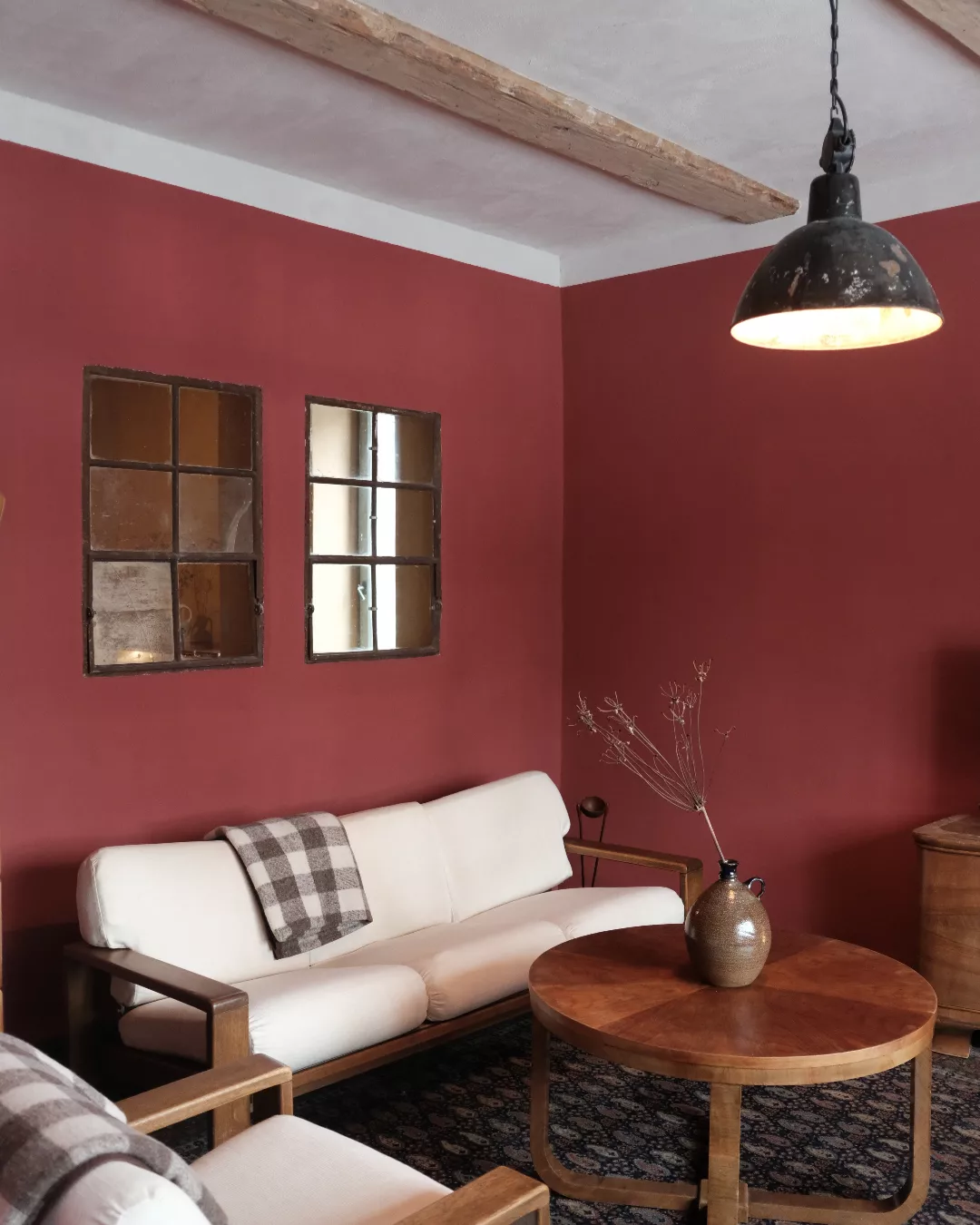
Wine red paint gives this sitting area depth, while white upholstery and exposed wood furniture keep it approachable.
The round coffee table allows the compact seating arrangement to feel open, and two windowlike mirrors break up the wall without adding another bold color.
A pale ceiling band makes a clean transition beneath the timber beam. Borrow this look by choosing uncomplicated furniture before adding decorative pieces.
Wood frames with visible legs preserve a sense of space around the floor. A checked throw can supply enough pattern when the walls already make a strong statement.
Keep the central table proportional to the sofa, and use one substantial ceramic vase instead of several small accessories that could quickly crowd its usable surface.
10. Bring Burgundy and Sage Together with Woven Details
Credits: Instagram
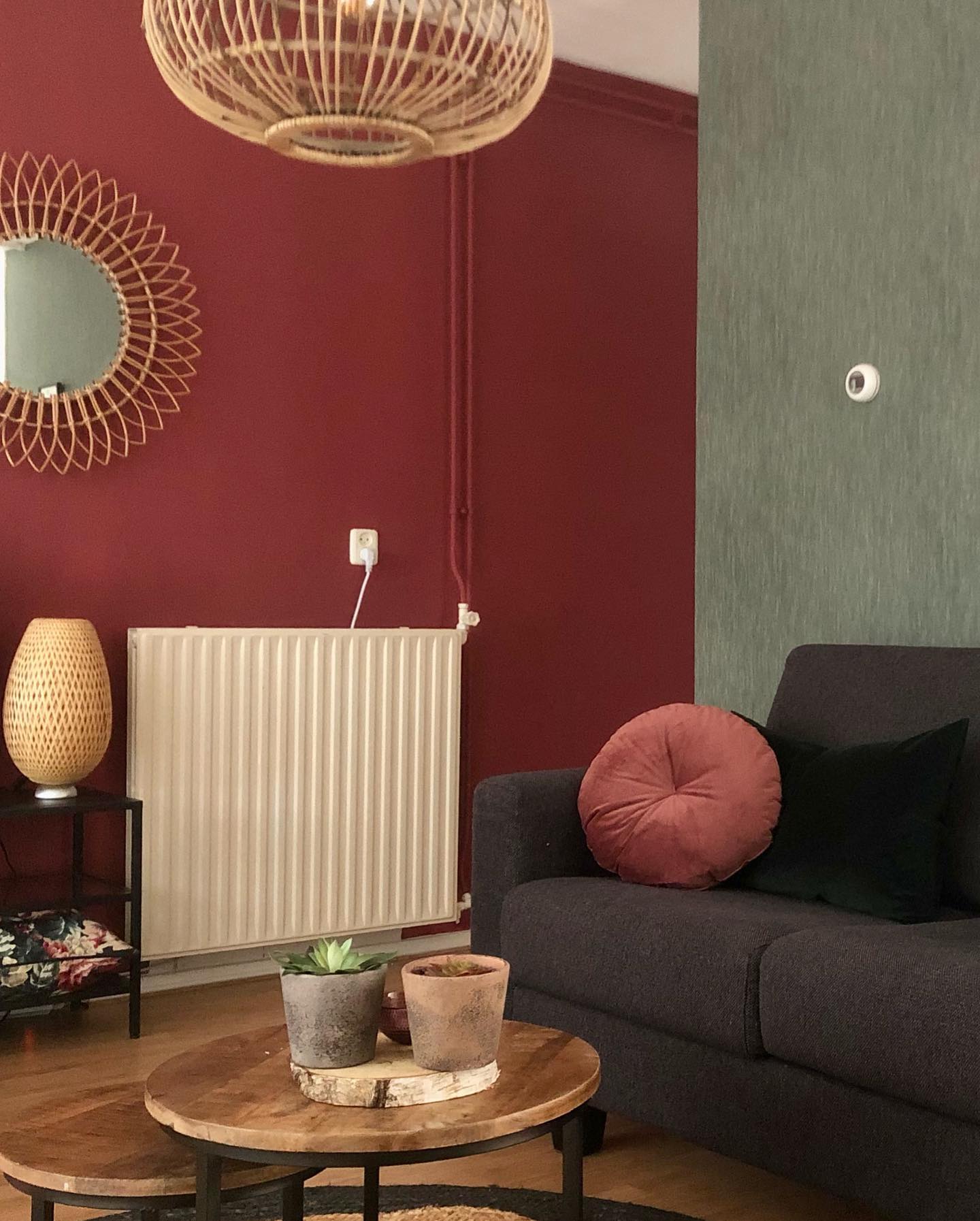
A burgundy wall meets muted sage behind this dark sofa, giving a small living area two distinct zones of color. Woven lighting and a round rattan mirror soften the boundary, while wood tables and flooring carry warm tones throughout.
A dusty pink cushion connects comfortably with the red without matching it exactly. Try this combination on adjoining walls when you want contrast that still feels grounded.
Choose green with a gray undertone, then compare both paint samples beside your existing upholstery. The light radiator remains visible here, making the room feel practical rather than excessively coordinated.
Keep baskets, shades, and table finishes within a similar restrained range of natural tones so the two wall colors remain the main visual decision.
11. Use a Burgundy Sofa in a Pale Period Room
Credits: Instagram
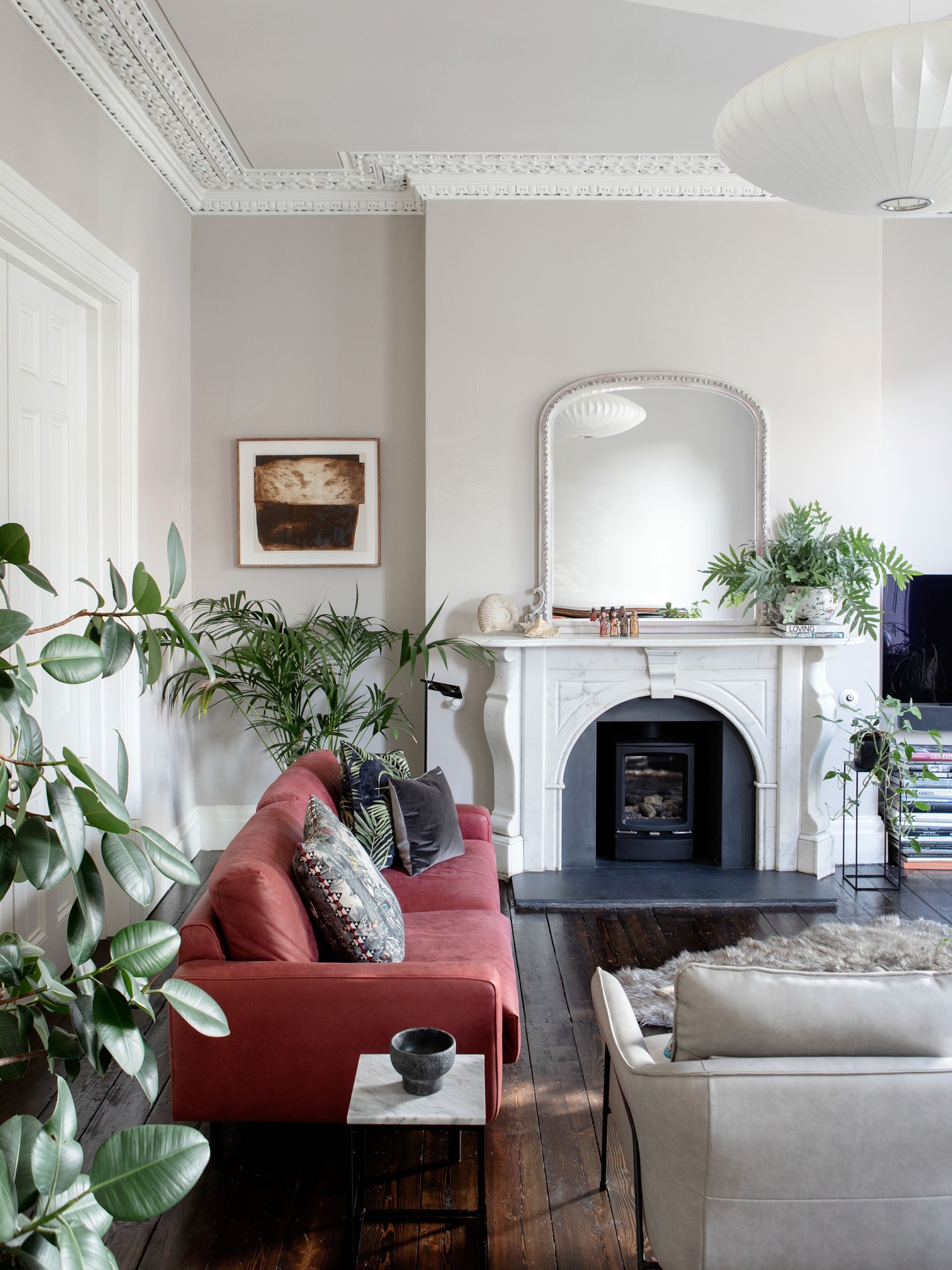
A burgundy sofa adds warmth to this otherwise pale living room without competing with its ornate ceiling and curved fireplace opening. Dark floorboards provide a second grounded surface, while gray seating and a light rug soften the contrast.
Green plants break up the edges of the furniture and echo the view through the windows. If your room already has attractive architectural details, one colored sofa can be enough to change its character.
Keep wall paint restrained so molding and trim remain easy to appreciate. Choose a few patterned pillows that include muted greens or neutrals, then stop before the upholstery disappears beneath them.
A small side table supplies a convenient place for a drink without crowding the narrow seating arrangement.
12. Paint Built-In Shelves to Match Burgundy Walls
Credits: Instagram
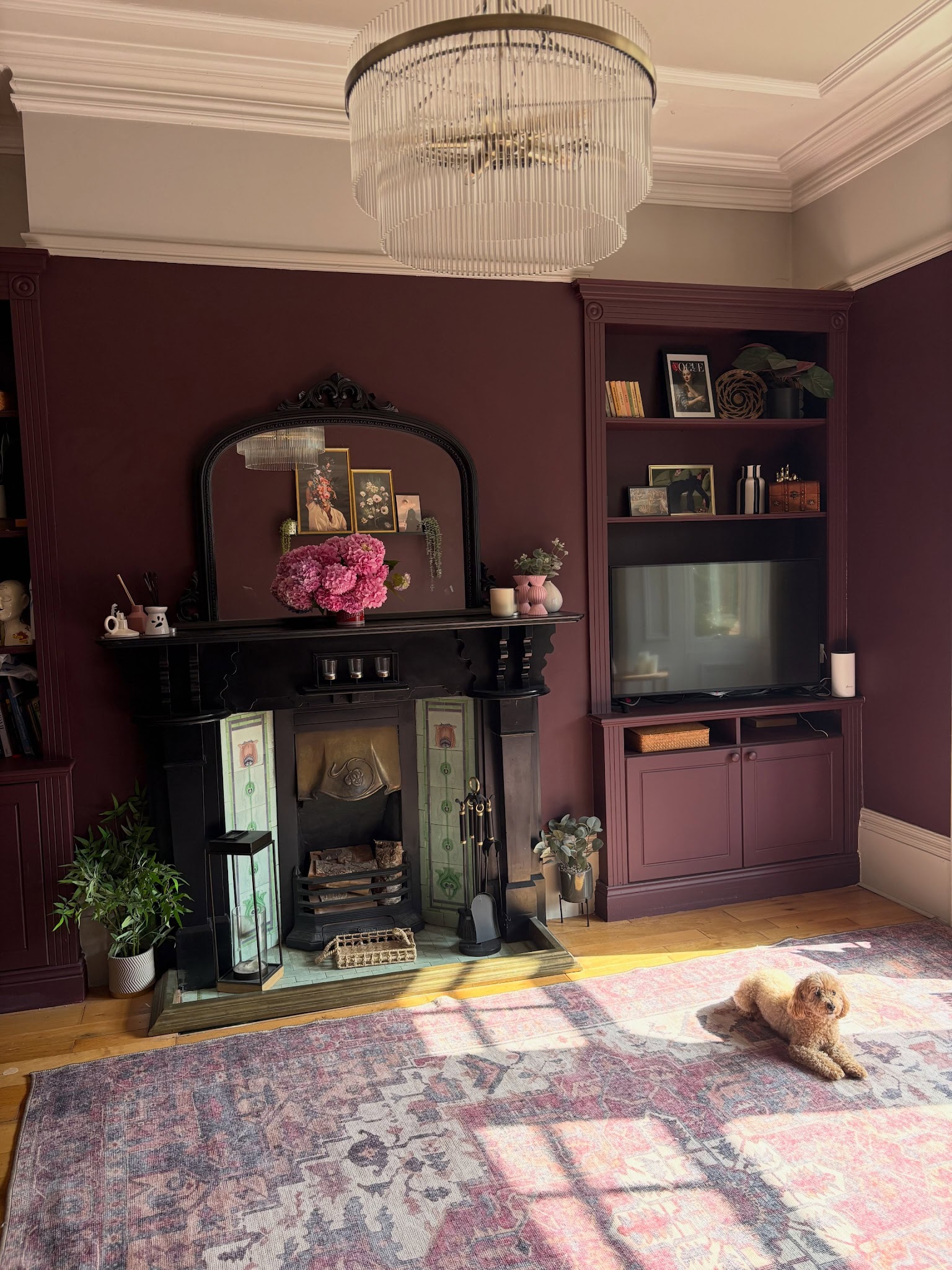
Painting the shelves and lower cabinets the same burgundy as the walls gives this fireplace wall a continuous outline. The television sits within that darker background, while books, framed pictures, and small objects bring variety to the shelving above.
A pale band beneath the ceiling prevents the room from feeling enclosed from floor to cornice. This approach can make existing storage feel more integrated without changing its layout.
Test the paint against your fireplace surround and any original tiles before choosing a shade. Here, green hearth details and pink flowers add gentle contrast.
Leave useful gaps between objects, and reserve lower cupboards for less decorative items so the shelves can hold a manageable mix of everyday belongings and personal pieces.
13. Break Up Plum Paint with Warm Wood Shelves
Credits: Instagram
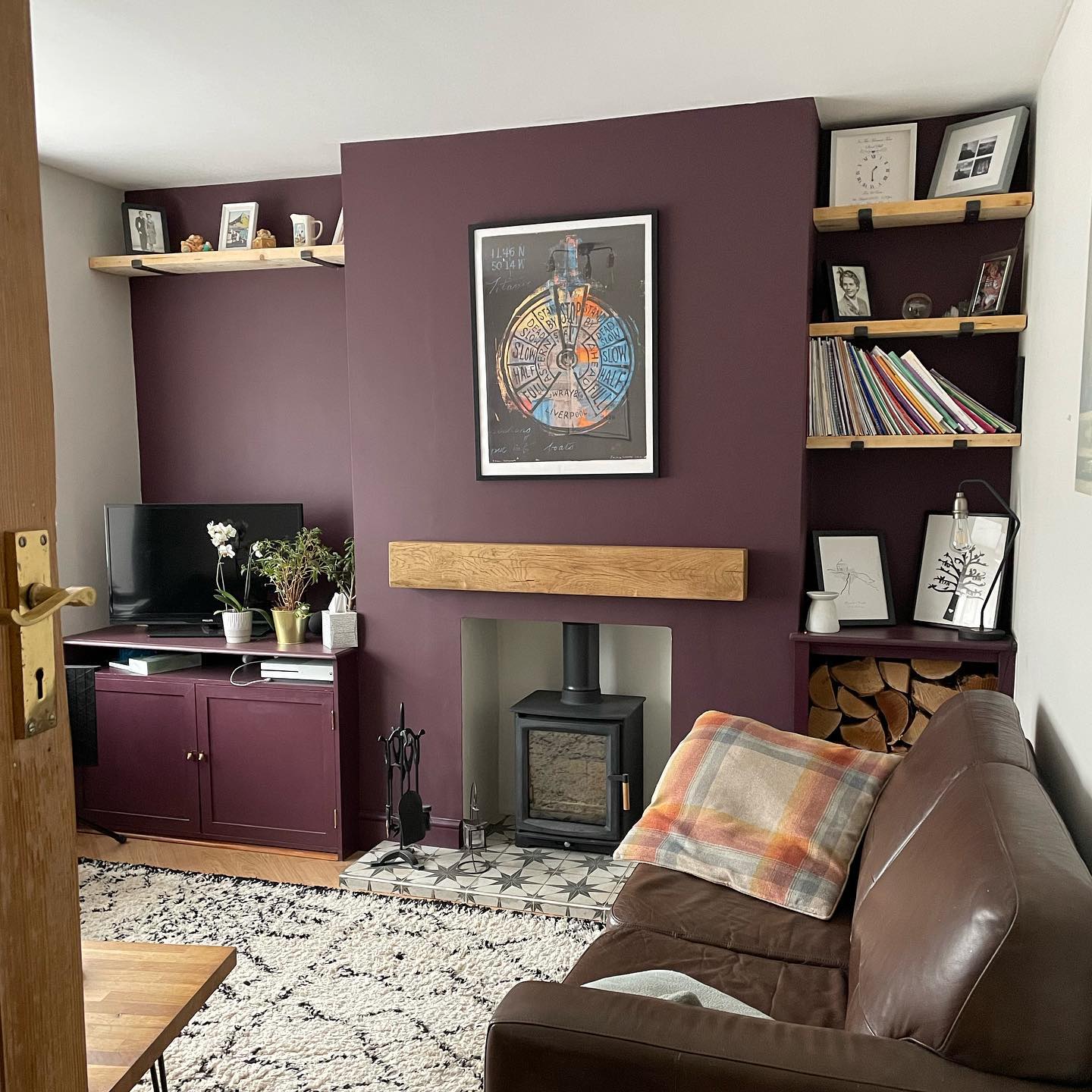
Warm wood shelves and a substantial mantel brighten this plum fireplace wall without relying on white cabinetry. The paint continues across the lower storage, while the brown leather sofa supplies another comfortable, earthy element.
A patterned hearth and pale rug introduce small graphic details around the otherwise simple arrangement. To create a similar balance, repeat one wood tone across shelving, a mantel, and a coffee table.
Keep the shelves practical for books or records rather than filling every spot with ornaments. A few framed pictures in light mats remain easy to see against dark paint.
Before adding anything near a stove, check the manufacturer's clearance requirements so decorative changes preserve a safe distance from heat and leave access for maintenance.
14. Carry Burgundy Around a Window-Filled Lounge
Credits: Instagram
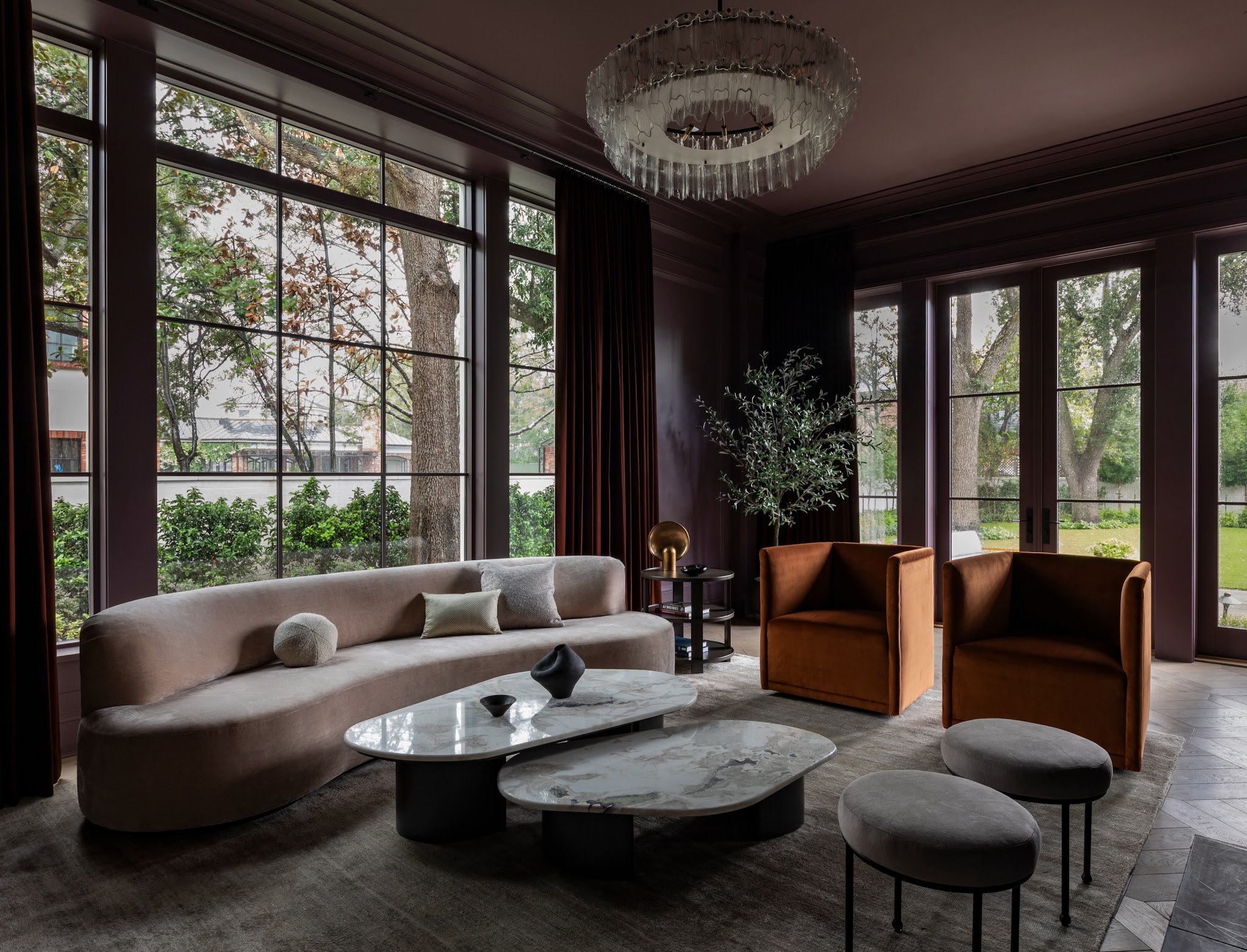
Deep burgundy wraps the walls and window frames of this lounge, making the greenery outside feel especially vivid. A curved pale sofa, soft stools, and light stone tabletops introduce broad areas of contrast beneath the darker ceiling.
The pair of rust chairs adds warmth without abandoning the earthy palette. This room shows how dark paint can frame abundant daylight rather than compete with it.
Keep window treatments close to the wall color so they blend into the perimeter when open. Choose lower seating that preserves the view, and use rounded tables to balance strong architectural lines.
A few black objects repeat the furniture bases, helping the light and dark pieces feel connected across this generous but carefully organized conversation area.
15. Turn Burgundy Shelving into a Compact Media Wall
Credits: Instagram
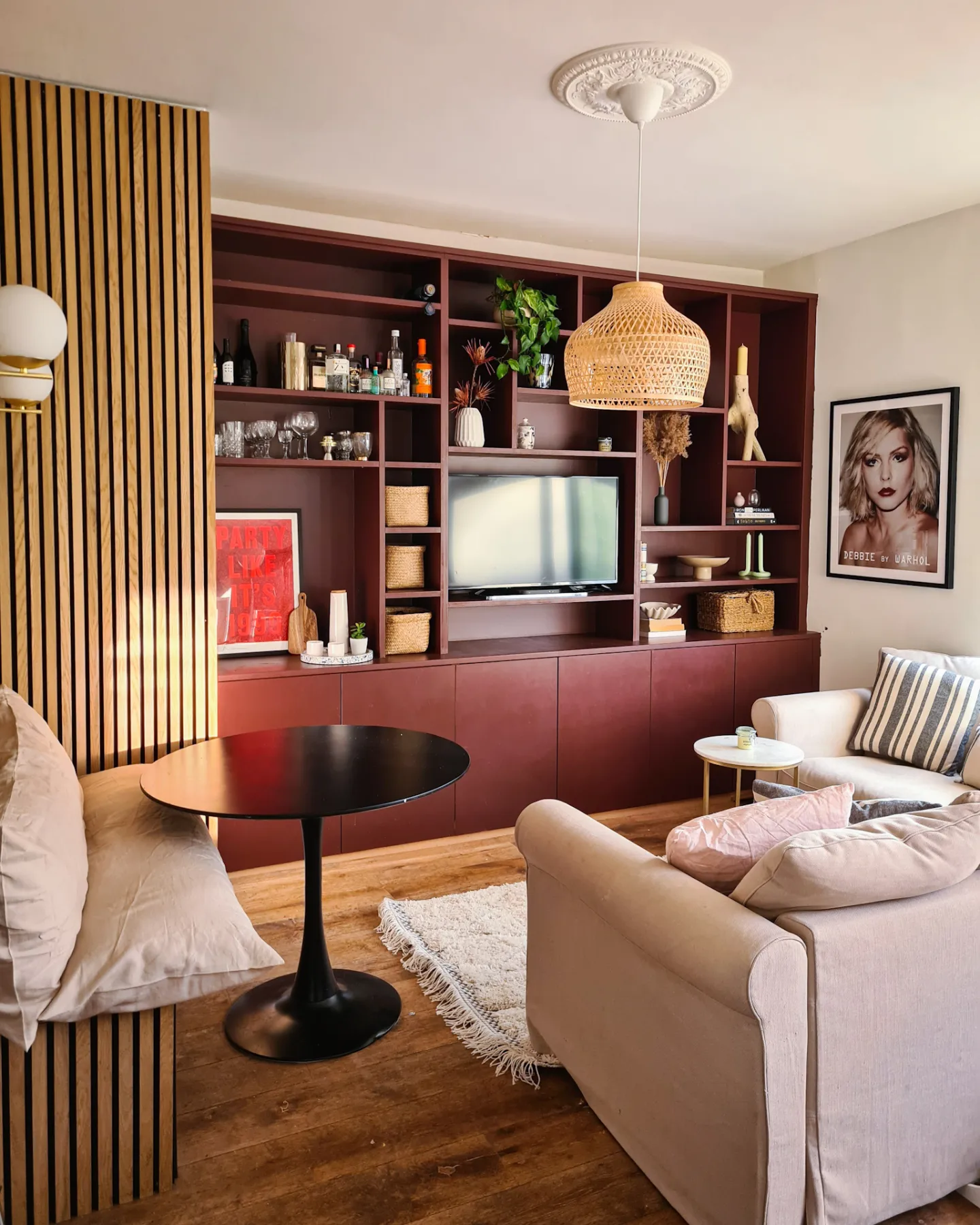
Burgundy shelving turns a small media wall into the strongest feature of this bright sitting room. The color extends across the lower cupboards, giving the varied shelves a unified background for glassware, books, and baskets.
Pale seating and warm wood slats prevent the storage from feeling too heavy. This is a practical way to introduce burgundy when you prefer to leave the surrounding walls light.
Arrange the compartments around what you actually need to store, including a television if it belongs here. Baskets can contain smaller items without adding visual clutter.
Repeat the wood tone in a pendant or floor finish, and choose a compact pedestal table when the room also needs an occasional place to eat or work comfortably.
16. Use a Berry Sofa with Graphic Accents
Credits: Instagram
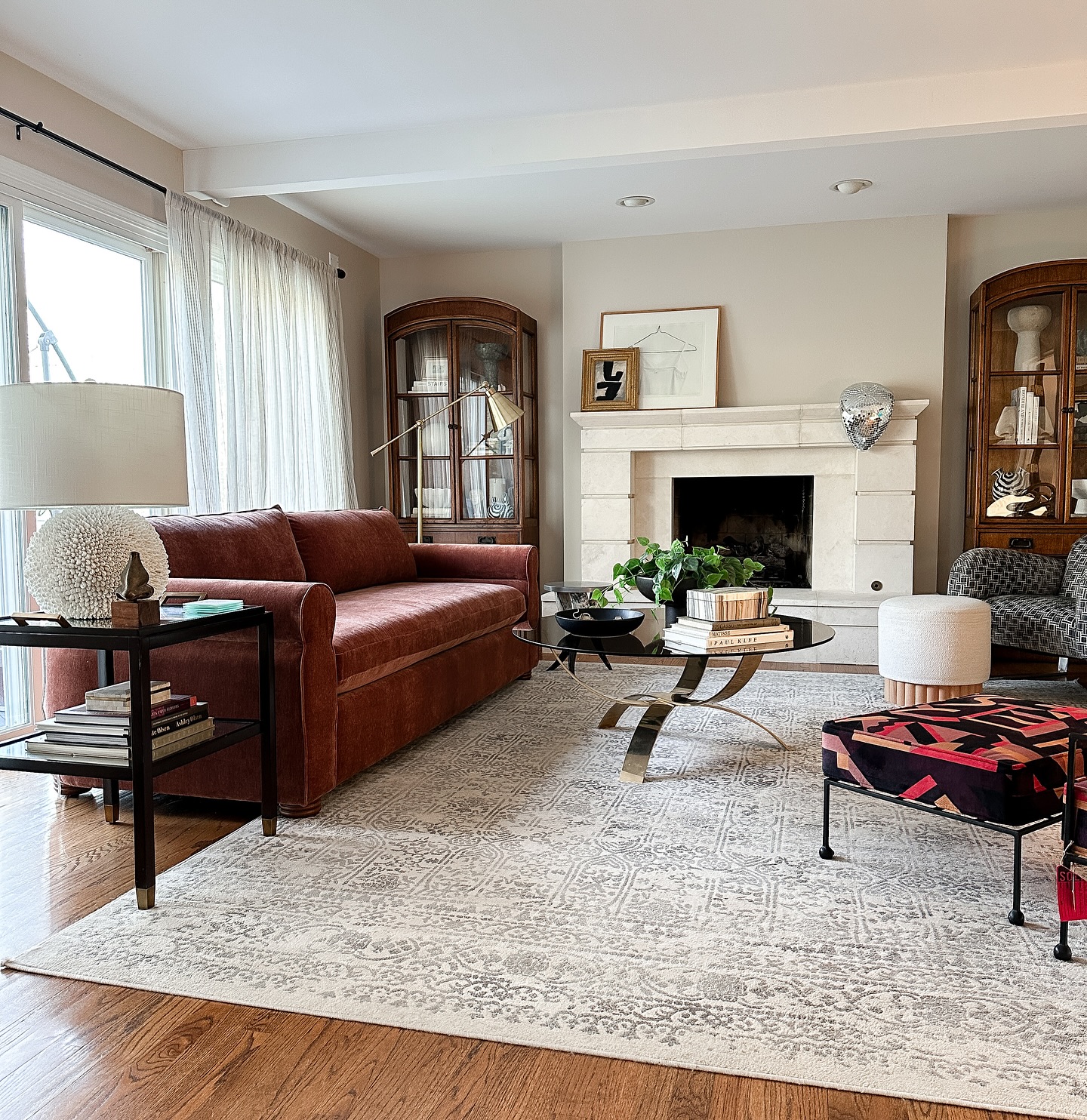
A muted berry sofa brings warmth to this light living room without overwhelming its cream fireplace and pale rug.
The plain upholstery leaves space for a graphic ottoman and patterned chair, while arched wood cabinets give the room a steady architectural rhythm.
This mix works when one large piece carries the main color and the patterns stay on smaller furniture. Choose a sofa fabric that looks attractive beside both your flooring and your brightest window.
Then repeat a related red in one accent textile, keeping the surrounding palette restrained. A glass coffee table helps the patterned rug remain visible and keeps the center feeling open.
Finish with useful lighting beside the sofa and simple objects that leave room for drinks.
17. Pair Deep Berry Seating with Mustard Accents
Credits: Instagram
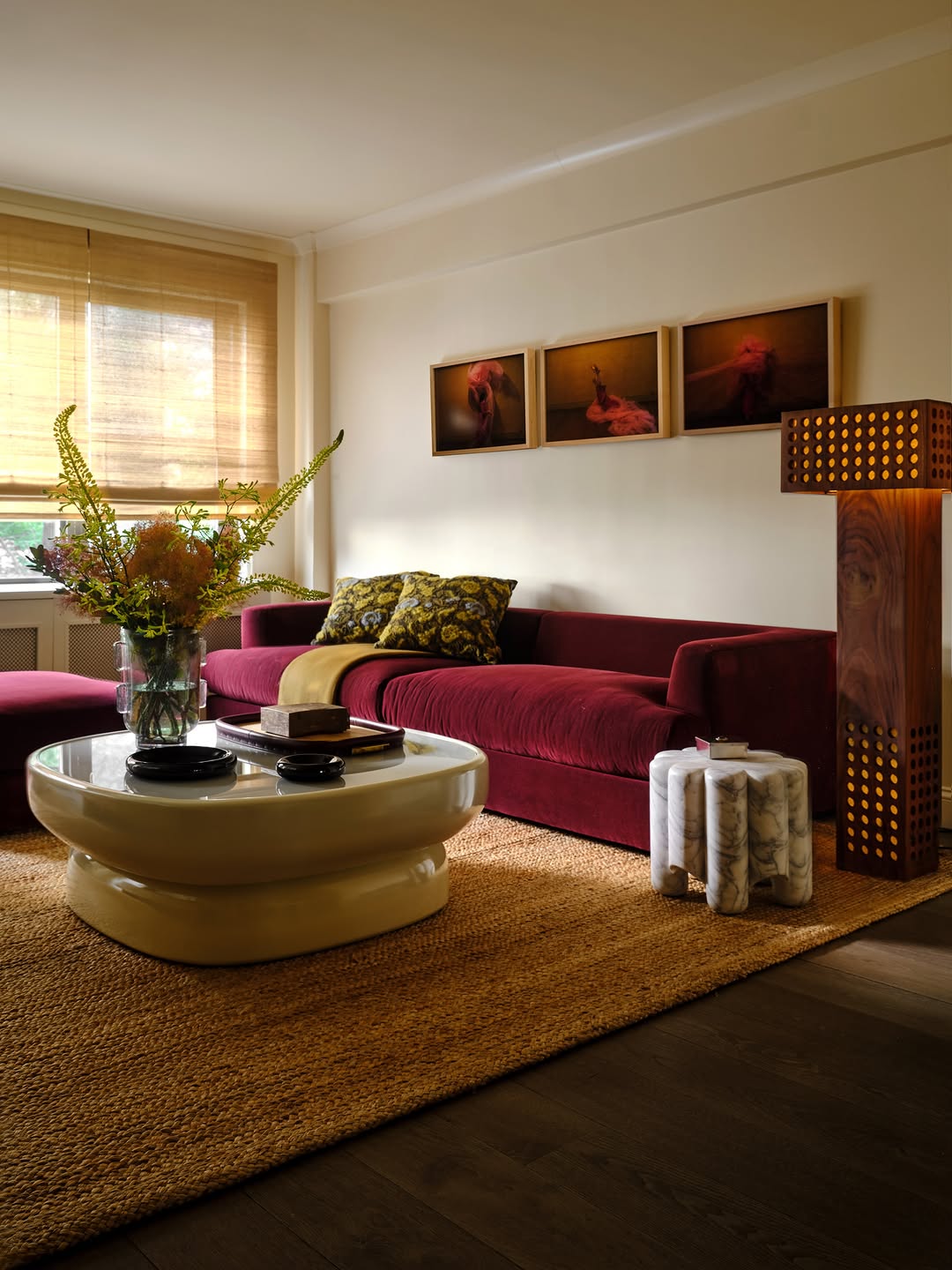
A deep berry sofa gives this compact room a rich focal point, while mustard cushions and a golden throw warm the surrounding palette. The cream walls and pale rounded coffee table keep the furniture from feeling visually heavy.
A natural fiber rug adds another useful texture beneath the softer upholstery. This combination works well when you want burgundy to feel welcoming rather than formal.
Start with one patterned cushion that contains both warm yellow and a darker tone, then repeat those colors sparingly. The tall wood lamp balances the sofa's horizontal shape without adding more fabric.
Keep the tabletop arrangement low enough for conversation, and leave some empty surface so the sculptural table remains visible as part of the room.
18. Introduce Burgundy Through a Pair of Lounge Chairs
Credits: Instagram
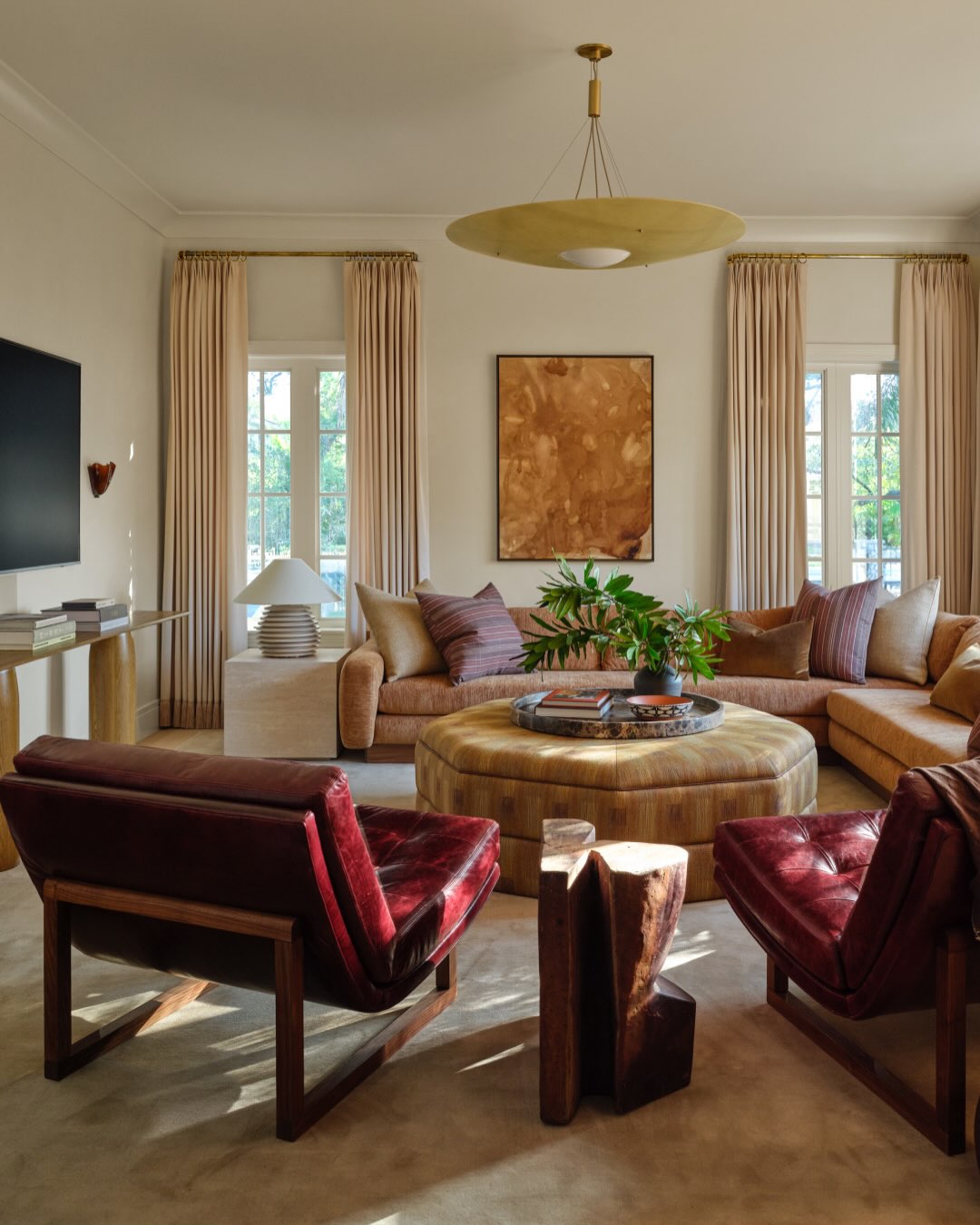
Two burgundy leather lounge chairs make a strong impression in an otherwise warm, neutral sitting room. Their wood frames connect with the surrounding brown seating, while the upholstery brings a distinct wine colored note into the conversation area.
A round central ottoman softens the angular chairs and gives the layout a comfortable focus. Choose a matching pair when you want a deliberate color statement without buying a burgundy sofa.
Keep the larger furniture quieter so the chairs can stand out from several viewpoints. A small sculptural table between them is useful for drinks and reinforces the natural wood palette.
Position the chairs at an inviting angle, checking that their backs leave enough room for an easy walking route behind them.
19. Anchor Pale Furniture with a Muted Burgundy Rug
Credits: Instagram
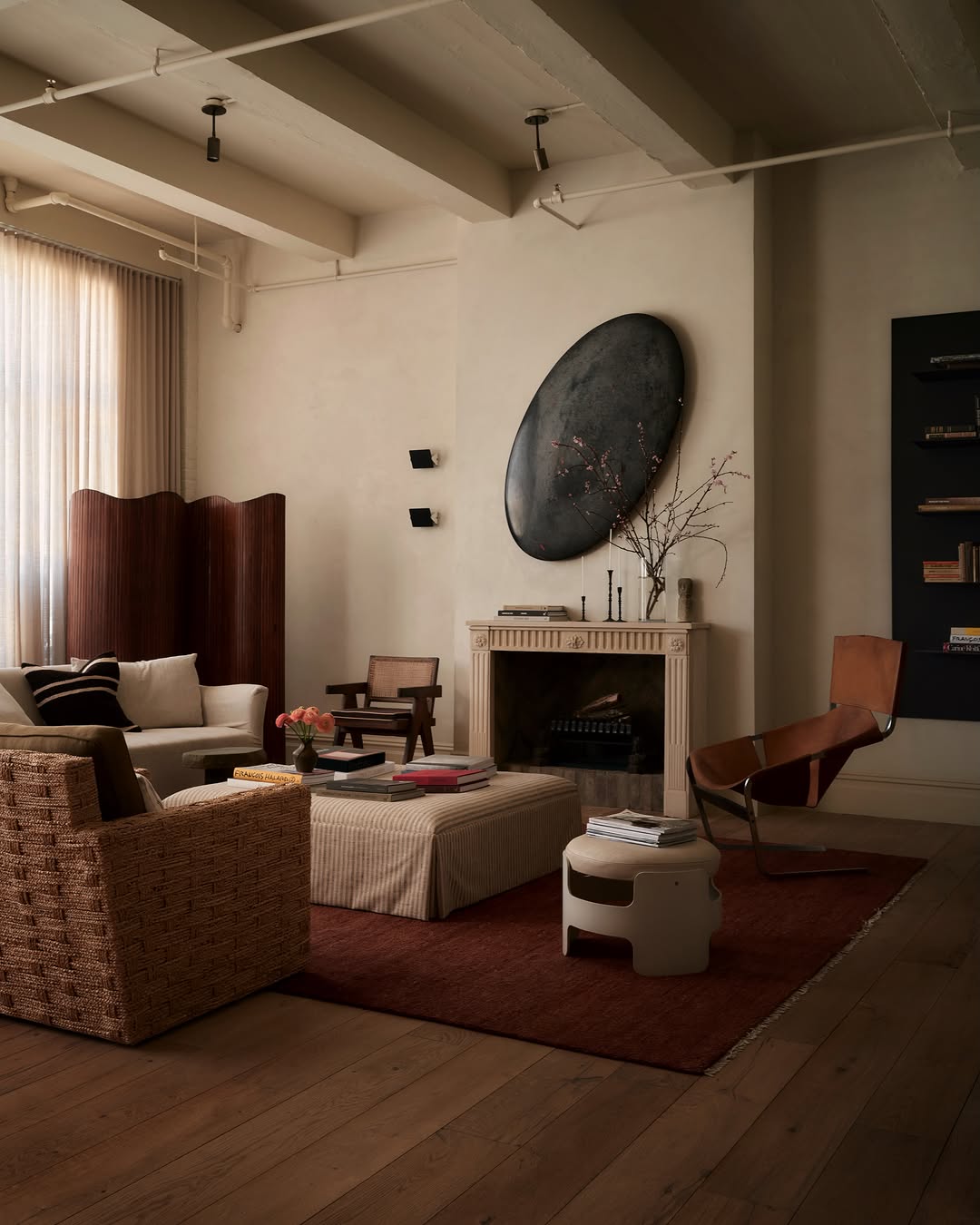
A muted burgundy rug defines the conversation area in this pale living room, placing the deepest color beneath the furniture. The cream sofa, striped ottoman, woven chair, and sculptural leather seat each bring a different texture without competing for attention.
A folding wood screen adds another warm vertical surface beside the curtains. This is a useful starting point if you want burgundy but prefer neutral upholstery.
Choose a rug large enough to connect the main seats, then repeat its warmth through wood or leather. Keep accessories varied in shape but limited in color so the room feels collected.
The dark artwork above the fireplace adds weight at eye level, balancing the concentrated color lower down around the furniture and floor.
20. Layer Gilded Art Against Deep Berry Walls
Credits: Instagram
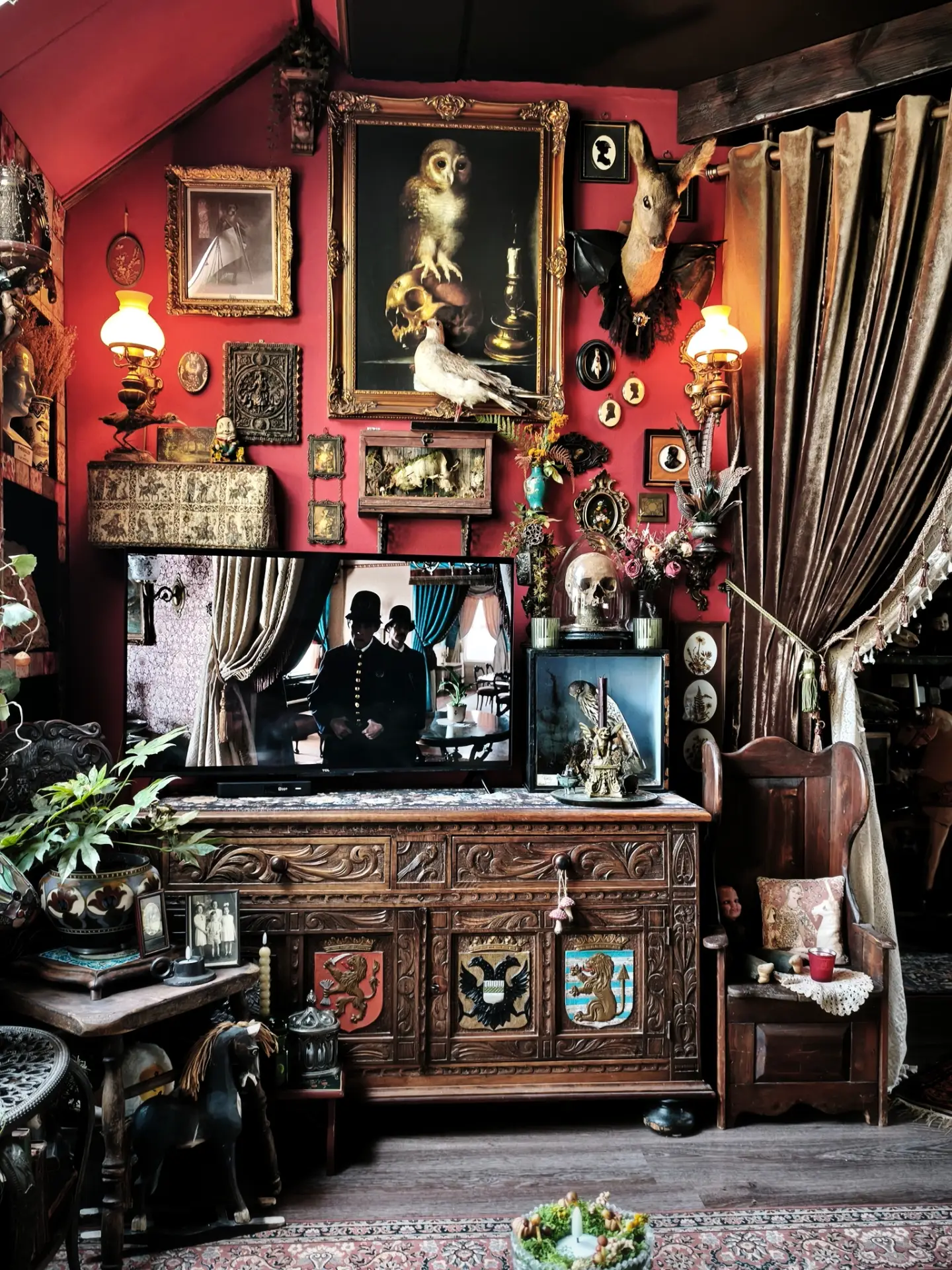
Deep berry walls provide a dramatic background for this collection of gilded frames, dark wood furniture, and heavy drapes.
A large central painting organizes the smaller pictures around it, while paired wall lights add a sense of balance within the dense arrangement. The television sits among the furnishings as part of an everyday living room.
Borrow the approach selectively: begin with one substantial artwork, then group smaller pieces around it using a consistent frame finish. Dark curtains and carved wood can deepen the mood without requiring more paint colors.
Leave enough clear space for useful surfaces and comfortable movement. Warm lighting is especially helpful in a layered room, allowing the artwork and textures to remain visible after the daylight fades.