
A calm living room depends as much on what you leave out as on what you bring in.
These Minimalist Living Room Ideas show how simple choices can keep a space useful without making it feel bare, from hiding everyday storage behind cabinet doors to leaving a clear path beside the coffee table.
You’ll also find ways to add warmth and character with one muted accent chair, a tall tree, or sheer curtains. Together, these approaches offer practical ideas for balancing open space, comfortable seating, and a few well-chosen details.
1. Keep Everyday Storage Behind Simple Cabinet Doors
Credits: Instagram
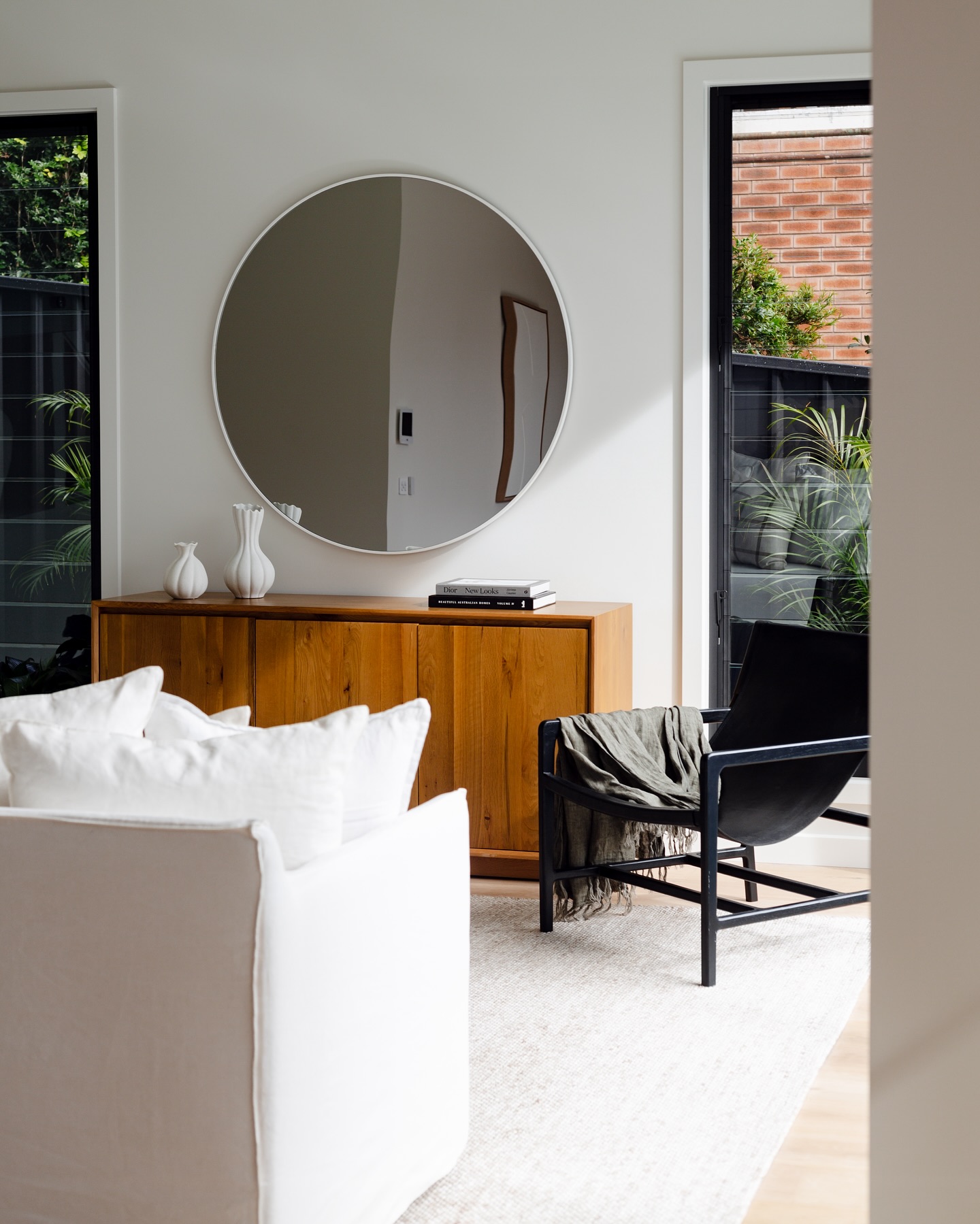
A closed wood cabinet gives this quiet living area storage without adding a wall of visible objects.
Its simple doors sit beneath one large round mirror, while two white vases and a short book stack leave most of the top open. Use this approach when everyday supplies need a place near the sofa.
Choose a cabinet that holds what you actually use, then reserve its surface for a small, intentional arrangement. The warm grain keeps the pale walls and upholstery from feeling flat.
A slim black chair repeats the dark window frames, adding definition without another bulky shape. Leave breathing room around the furniture so the cabinet, mirror, and seating each read clearly within the same warm, restrained neutral palette.
2. Carry One Warm Color Across Walls and Ceiling
Credits: Instagram
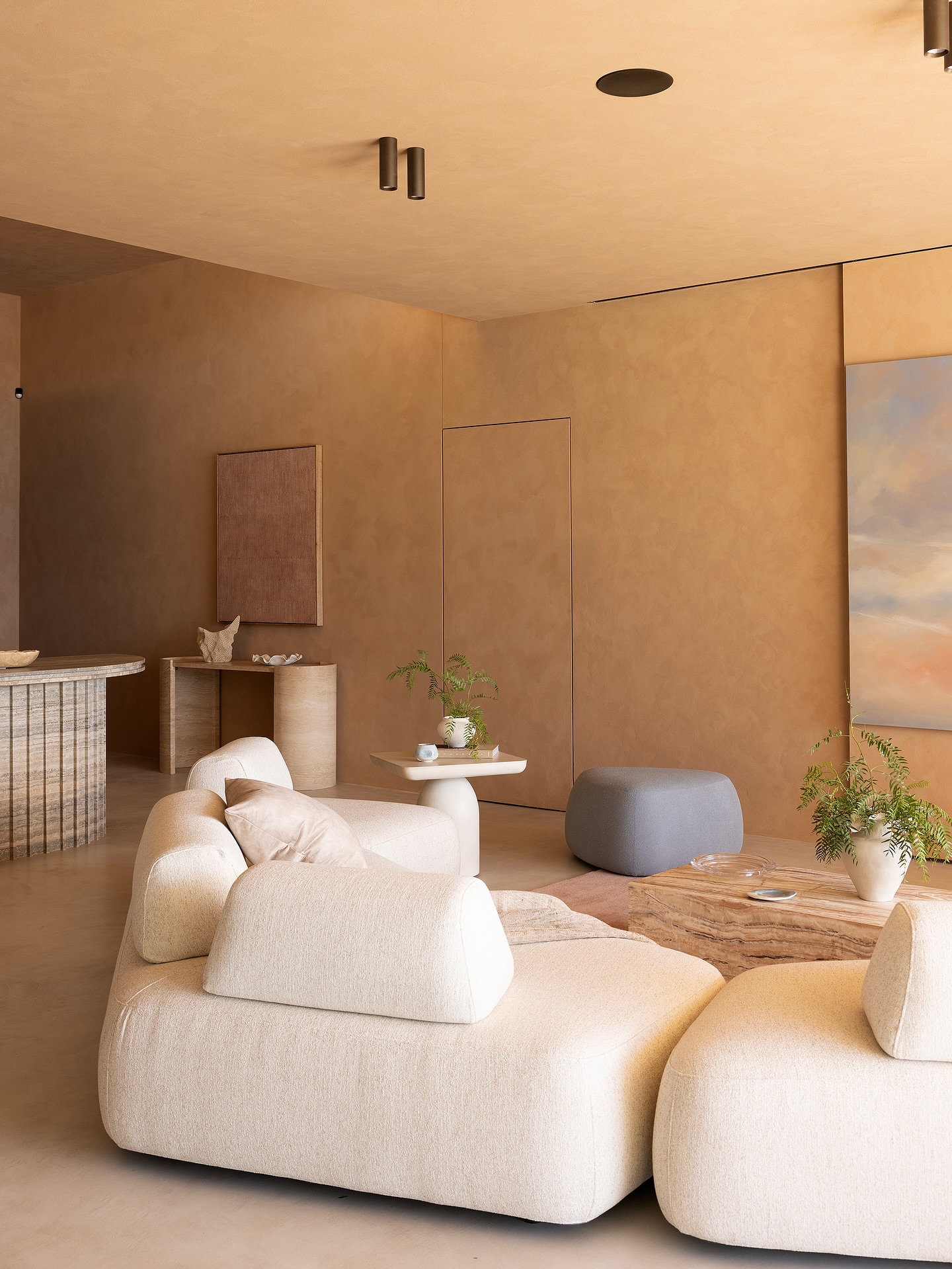
A warm color across the walls and ceiling makes this minimalist seating area feel continuous. Against that quiet backdrop, the pale curved sofa and rounded side table read as distinct shapes without needing many accessories.
Try carrying one muted shade overhead when you want fewer visual breaks between surfaces. Test it on both vertical and horizontal samples first, since daylight can make the same color appear different.
Keep upholstery a little lighter so its outline remains visible. Here, a small blue ottoman provides a restrained change of color, while the veined coffee table contributes pattern in one concentrated place.
Leave generous areas of wall uncovered and limit tabletop arrangements so texture and furniture form supply most of the room’s interest.
3. Let One Muted Chair Supply the Color
Credits: Instagram
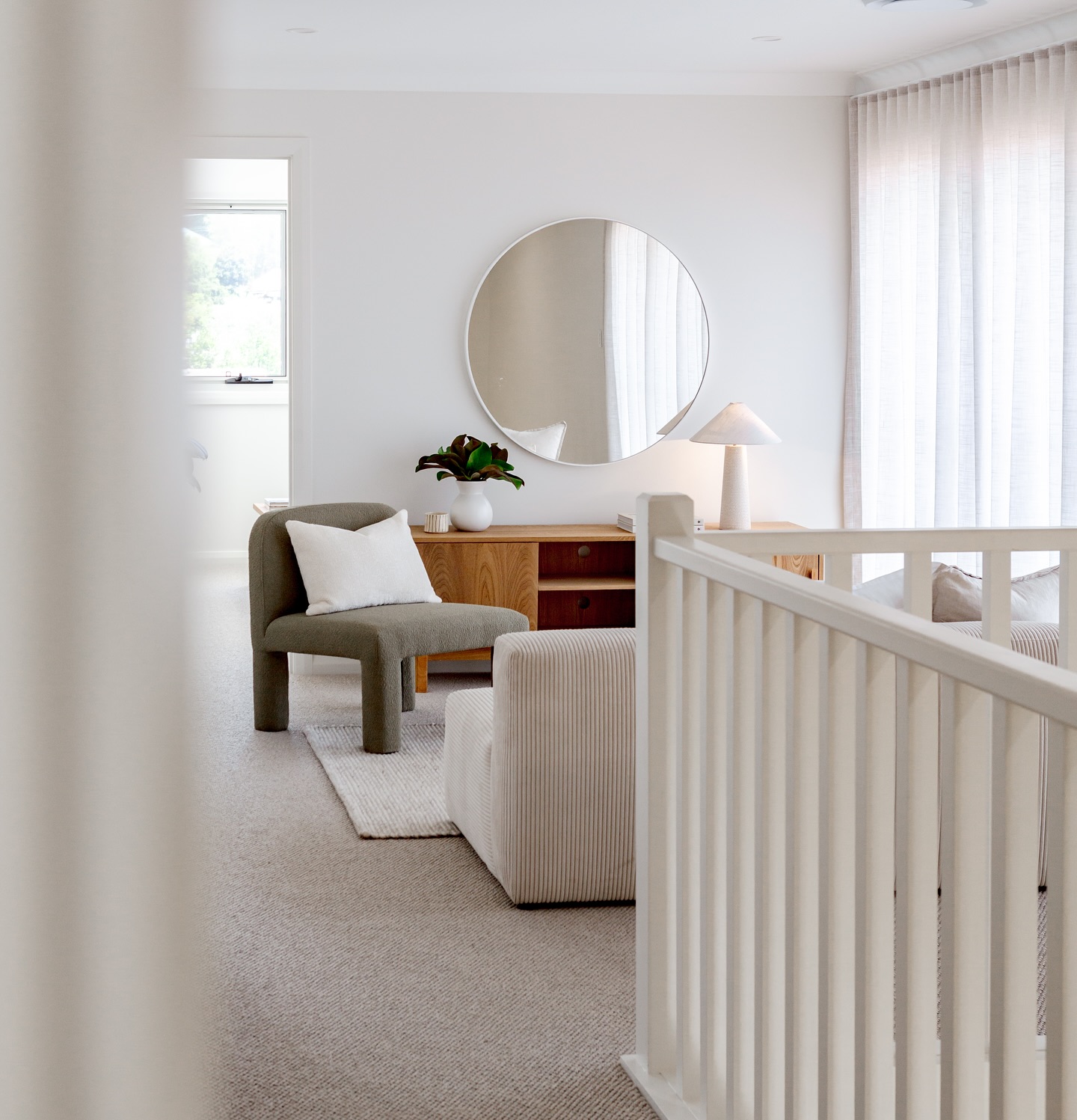
One muted olive chair gives this small sitting area a clear point of color. The surrounding sofa, rug, curtains, and walls stay pale, so the chair’s rounded shape stands out without a busy mix of patterns.
Try a subdued accent on one useful seat instead of distributing bright accessories across every surface. A white pillow can link the chair back to the larger upholstery, as it does here.
Keep the rest of the room’s interest in texture: the ribbed sofa, woven rug, and sheer panels each read differently within the restrained palette. Before choosing a chair, check that its footprint leaves the route through the room comfortable.
A single colored piece can make a compact arrangement feel considered and complete.
4. Keep a Clear Route Beside the Coffee Table
Credits: Instagram
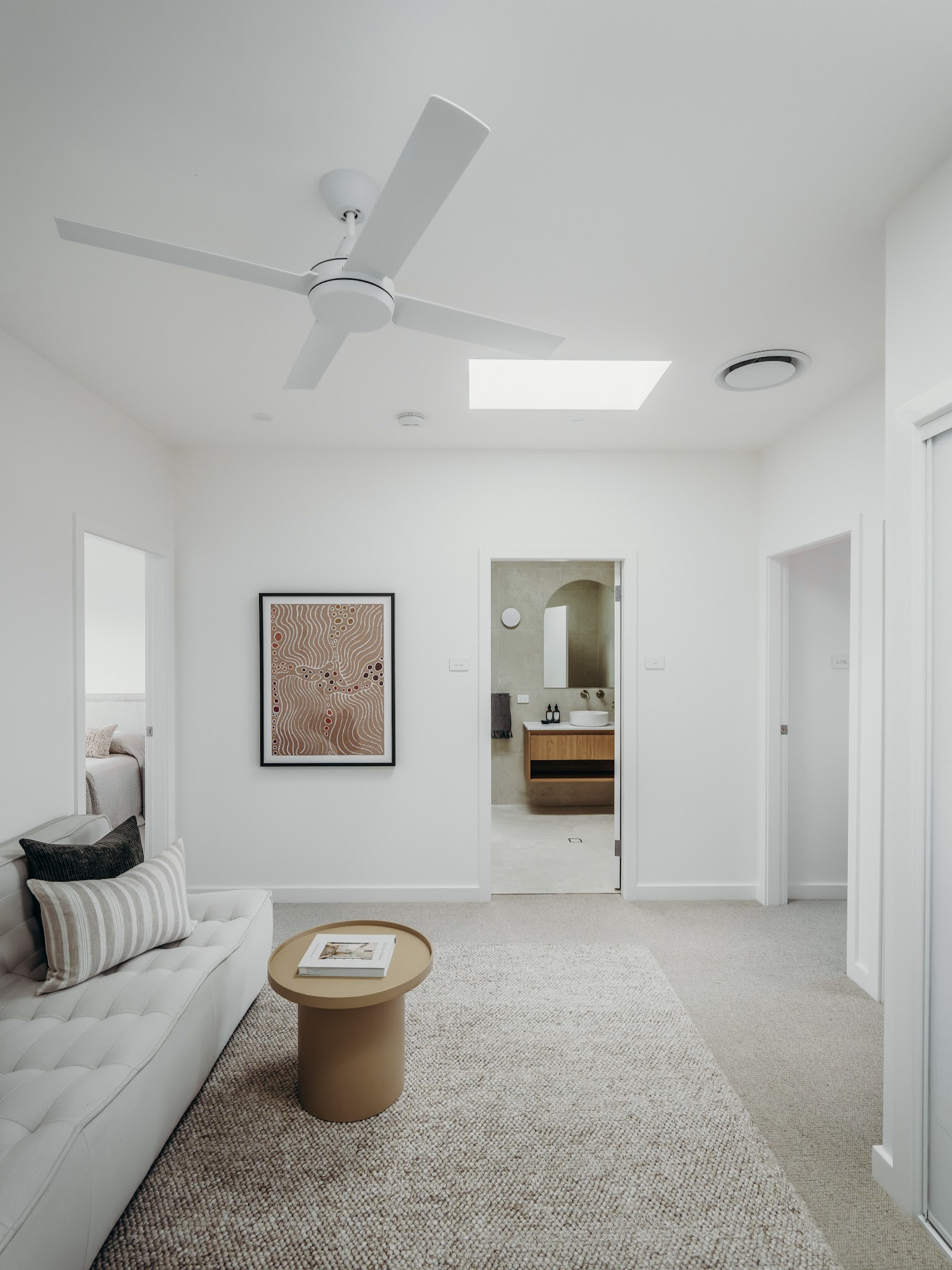
A compact coffee table keeps this small sitting area useful without filling the open floor. The tabletop sits close to the sofa, leaving a clear route toward the adjoining rooms.
When space serves both sitting and circulation, choose the table around the passage you need rather than the largest piece the rug can hold.
Try marking its outline on the floor before buying, then walk through the room and sit down to check the reach. Here, one book gives the surface a purpose while preserving its simple shape.
The warm table color also connects with the artwork, adding interest to the pale setting. Keep extra stools and decorative baskets out of the route so the arrangement stays easy to use.
5. Keep Seating Low Beneath a Vaulted Ceiling
Credits: Instagram
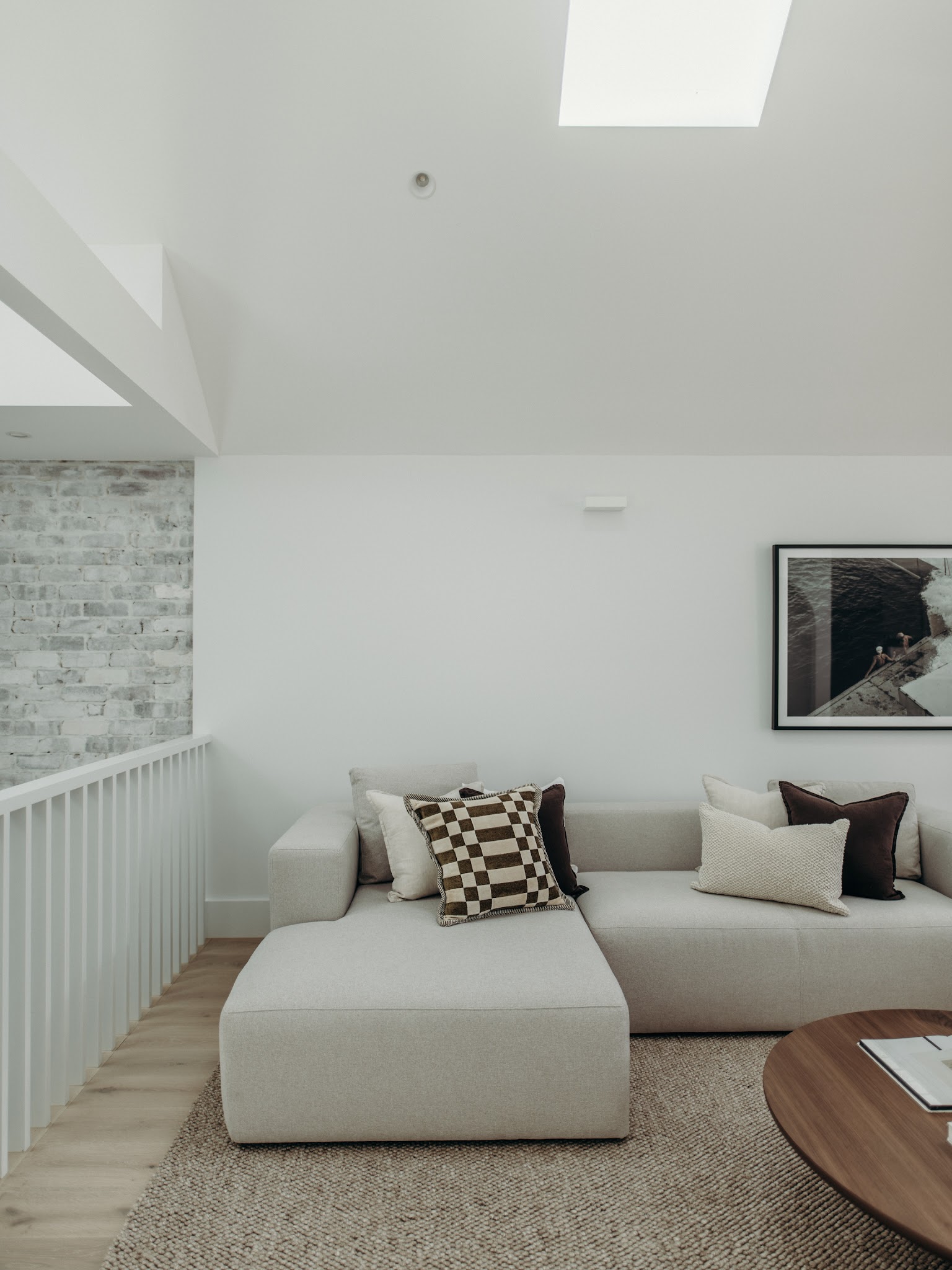
A low sectional lets the vaulted ceiling and skylight remain the strongest features in this pale living room. Its simple arms and broad chaise create a comfortable place to stretch out without introducing several competing seat shapes.
Choose upholstery close to the wall color to keep the larger furniture visually quiet. Then add contrast in small doses: a checked pillow and dark cushions give this arrangement definition.
The woven rug and rounded wood table bring texture beneath the open wall space. When trying this approach, compare sofa heights as carefully as widths, and test whether the back supports you comfortably.
Leave some wall above the seating empty so the room’s architecture can provide interest without a busy collection of decorations.
6. Choose a Slender Floor Lamp for a Quiet Corner
Credits: Instagram
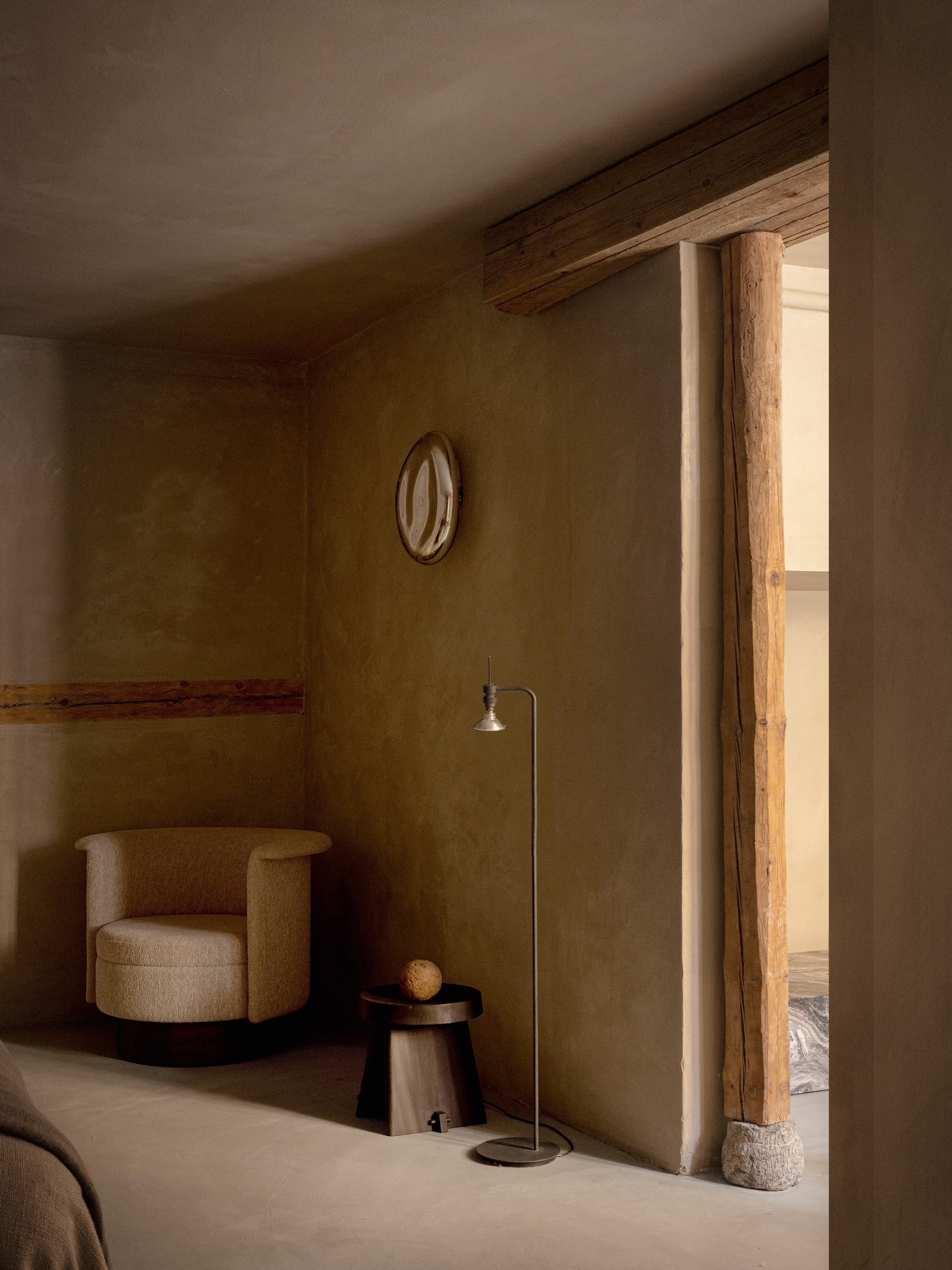
A slender floor lamp gives this quiet seating corner a useful light source without filling the space beside the chair. Its narrow stem and small shade leave the exposed timber and textured walls easy to see.
Choose a lamp with a compact base when a reading chair sits near a doorway, then position it so you can pass comfortably. Check the shade from your seated position to avoid looking directly into the bulb.
Here, a small side table supplies a place for a book or cup without requiring a larger cabinet. Keep the tabletop mostly clear and resist adding several decorative lights.
One carefully placed lamp can make a simple chair arrangement feel considered while preserving the room’s open surfaces.
7. Use a Tall Tree as a Focal Point
Credits: Instagram
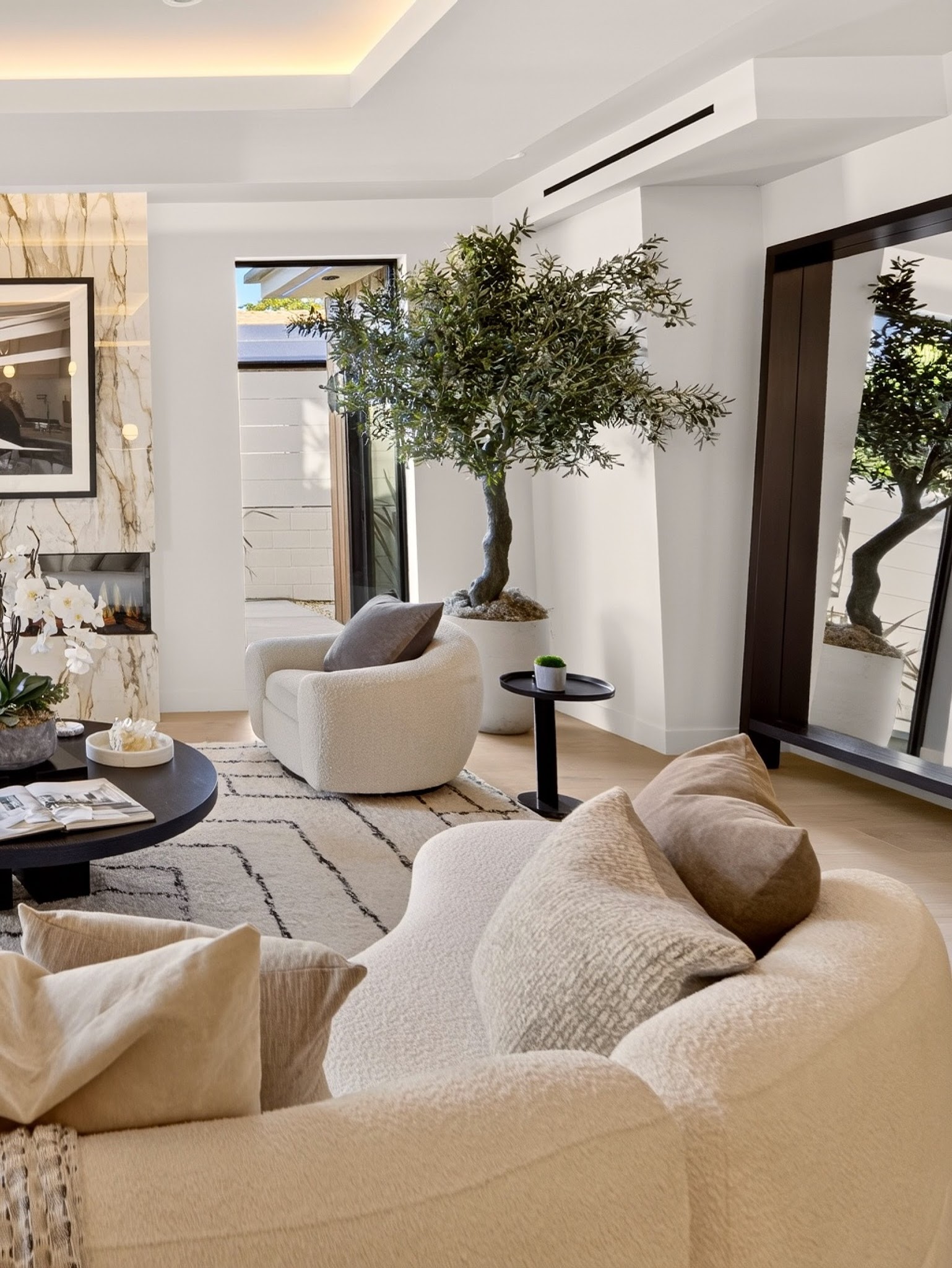
A tall potted tree gives this restrained living room one clear vertical focal point. Its branching outline contrasts with the rounded pale seating and simple white walls, while the plain light planter keeps the base quiet.
Choose a substantial plant with a distinct outline, leaving a little plain wall around its spreading branches. Check the spread of the branches from both the sofa and the walkway before choosing a position.
Here, the dark mirror frame and tables add definition around the soft upholstery, and the tree supplies most of the green. Keep nearby accessories small so the foliage remains easy to read.
Repeating the upholstery color in the planter connects this substantial feature to the seating and keeps everything calm.
8. Divide the Room With Open Shelving
Credits: Instagram
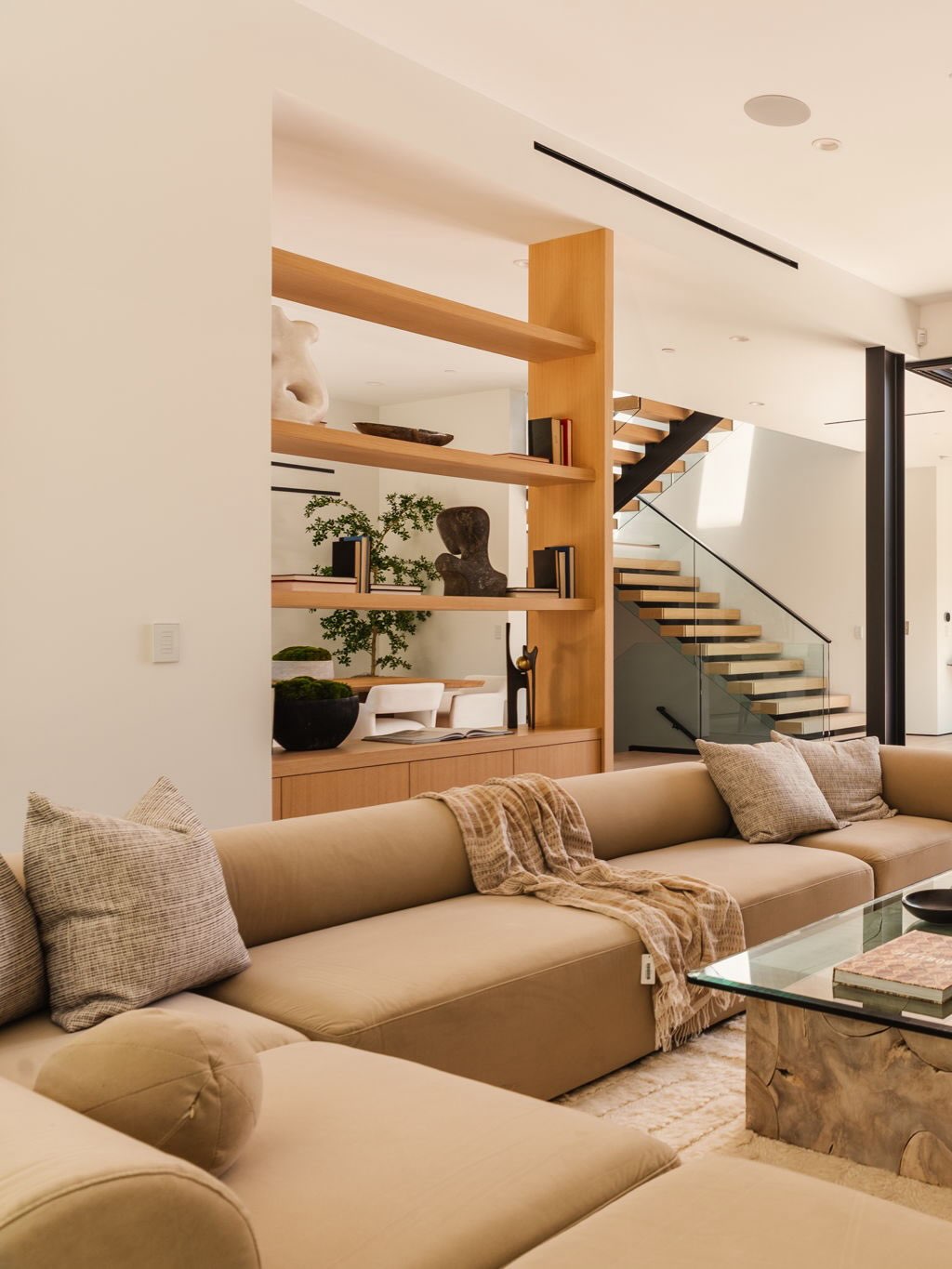
Open shelving behind this low sectional separates the seating area while keeping the adjoining space visible. Broad gaps between the wood shelves make the divider feel lighter than a solid wall, and the simple horizontal lines echo the sofa below.
Try this approach when you want a little definition between living and dining areas without closing them off visually. Leave several stretches of shelf empty, grouping a few books and sculptural objects instead of filling every opening.
Check the arrangement from both sides, since each side remains on view. Here, warm wood and tan upholstery keep the different zones connected.
Reserve the lower closed cabinets for everyday clutter so the open shelves can stay spacious and the room remains calm.
9. Anchor a Chair With One Large Artwork
Credits: Instagram
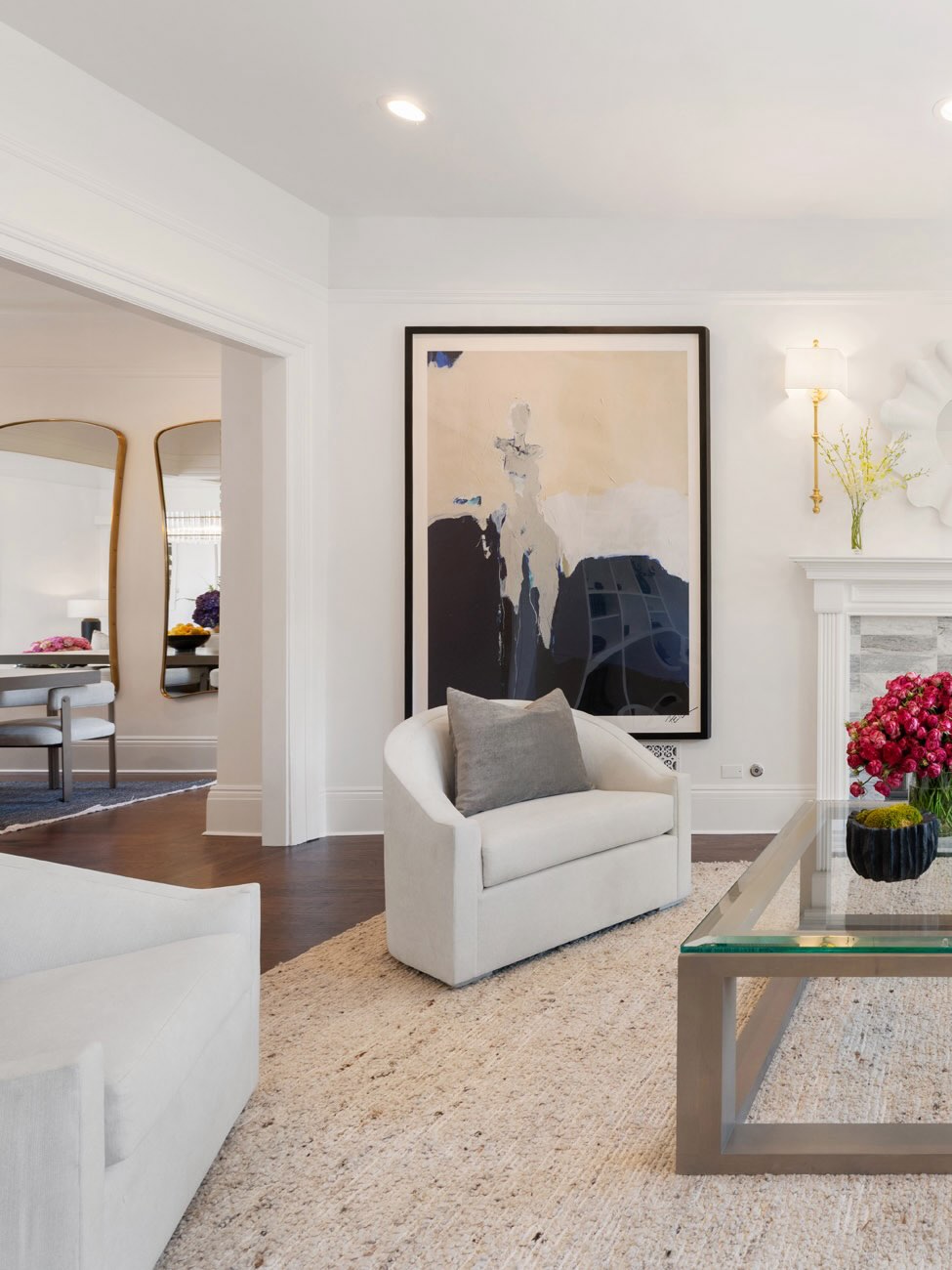
One large artwork gives the wall behind this pale armchair a clear purpose. The dark frame and broad areas of color create a focal point, while the surrounding white wall keeps the composition easy to read.
Try a single piece with enough presence to relate to the chair below. Before hanging it, use a paper template to check the scale from the room’s entrance and your usual seat.
Leave space around the frame so it can stand on its own. Here, a simple gray cushion and light upholstery keep attention on the artwork without adding another strong pattern.
Let the rug provide quiet texture underfoot, and keep nearby furniture shapes straightforward to maintain the same calm balance across the room.
10. Repeat Simple Rectangular Shapes
Credits: Instagram
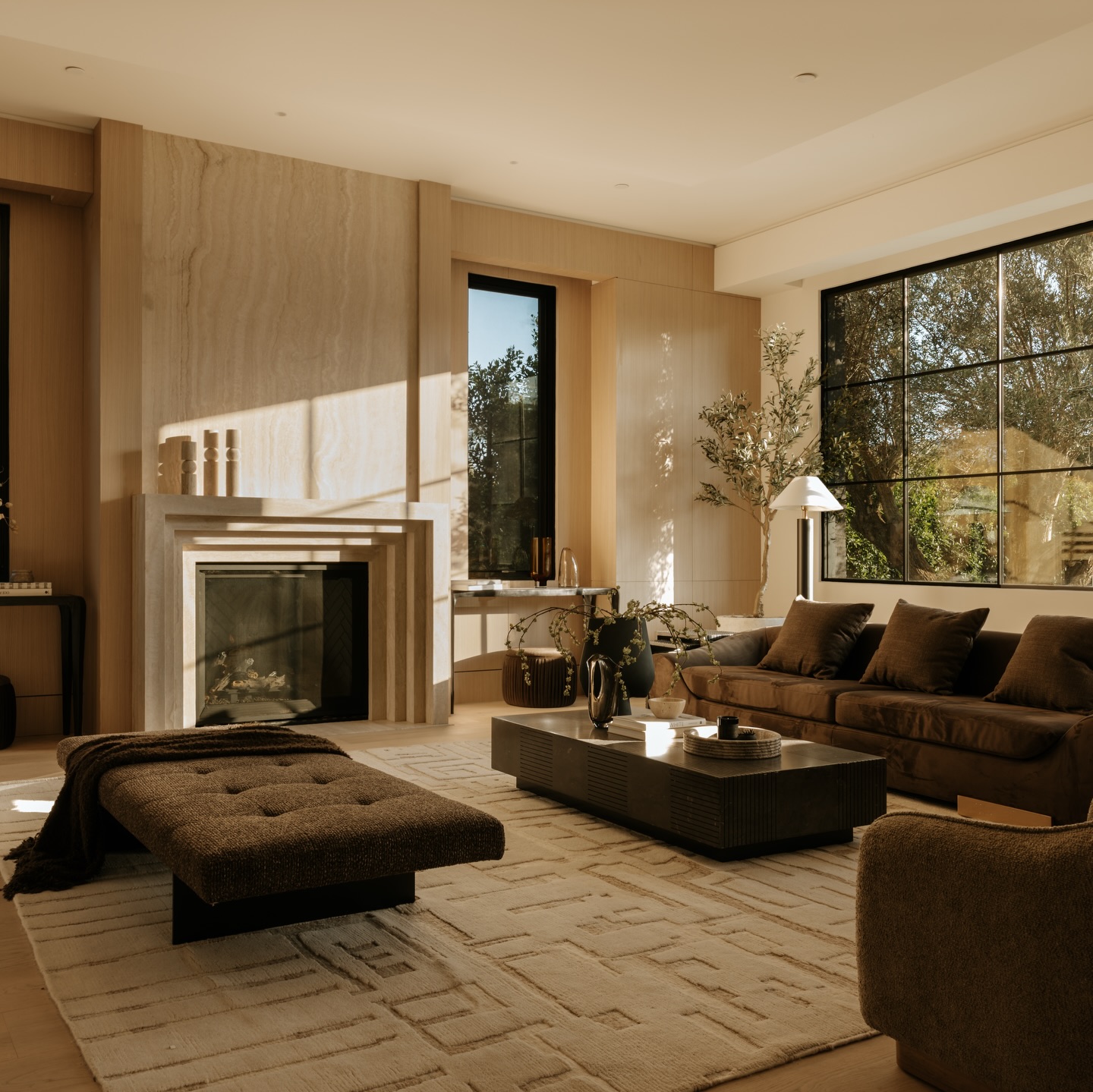
Repeated rectangles give this warm living room a clear visual rhythm. The stepped fireplace, blocklike coffee table, upholstered bench, and subtle rug pattern share straight edges, so the pieces feel related even though their surfaces differ.
Try choosing one simple shape to repeat across a few substantial elements. Keep the palette restrained as you vary the textures: here, dark brown upholstery sits against pale walls, wood tones, and a light rug.
Rounded accessories and the curved chair at the edge soften the arrangement. Leave enough tabletop visible for its shape to register, and give the fireplace space around its outline.
This approach creates interest through proportion and texture while keeping the overall composition calm, balanced, and easy to take in.
11. Shape Modular Seating Around the Room
Credits: Instagram
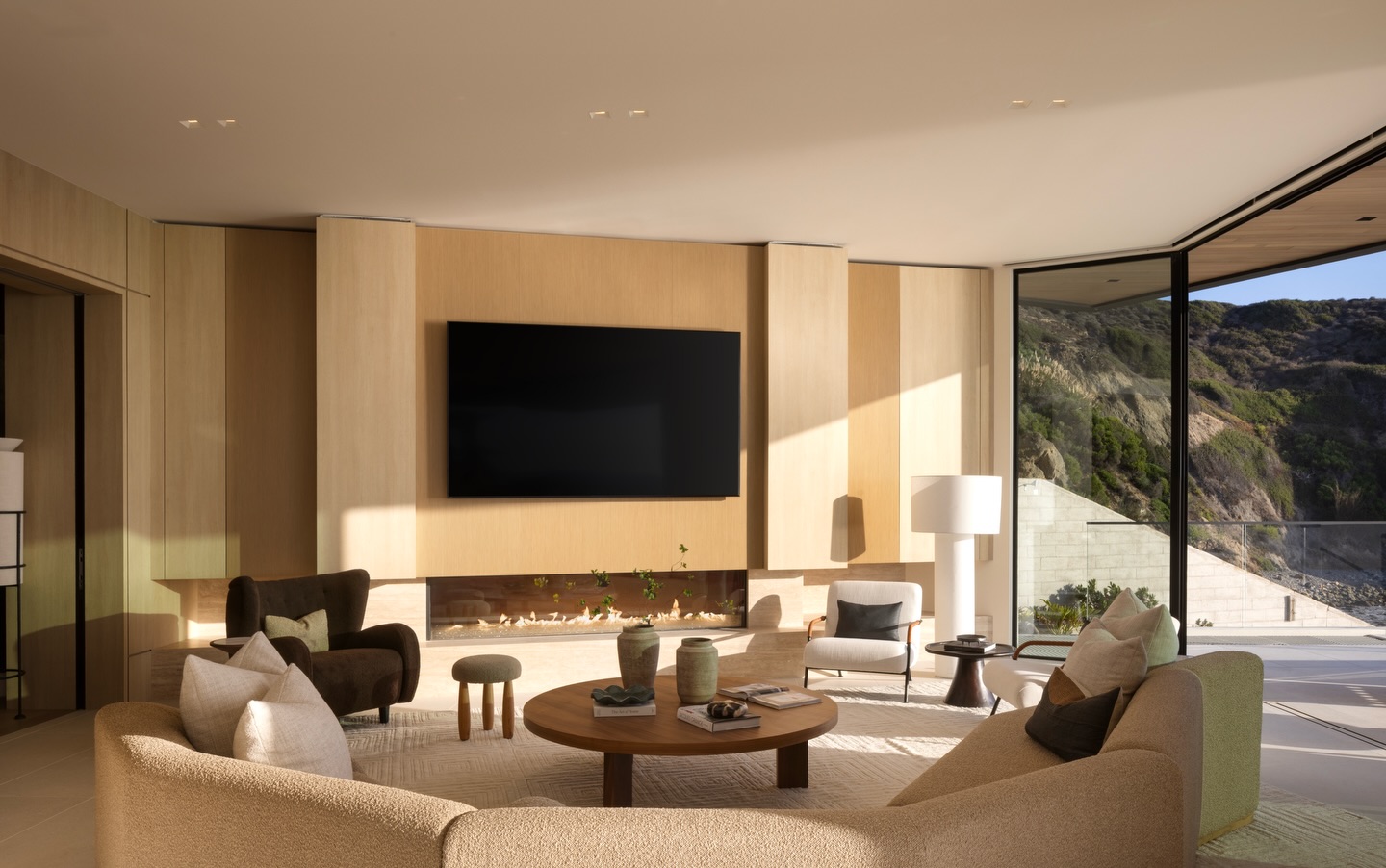
A modular sectional can respond to the room instead of forcing every seating area into a standard rectangle. Here, the pale sofa bends around a round coffee table, gathering the seats into one clear arrangement beside the glass doors.
Start by mapping the openings and the direction you want people to face. Then compare individual seat and corner modules before choosing the final combination.
Keep the upholstery consistent so changes in angle still read as one piece. A simple round table offers a calm center among the different lines.
Leave room to approach each seat and move toward the doors comfortably. With the layout doing most of the work, a few cushions and small tabletop groupings provide enough finishing detail.
12. Keep the Window View Visually Clear
Credits: Instagram
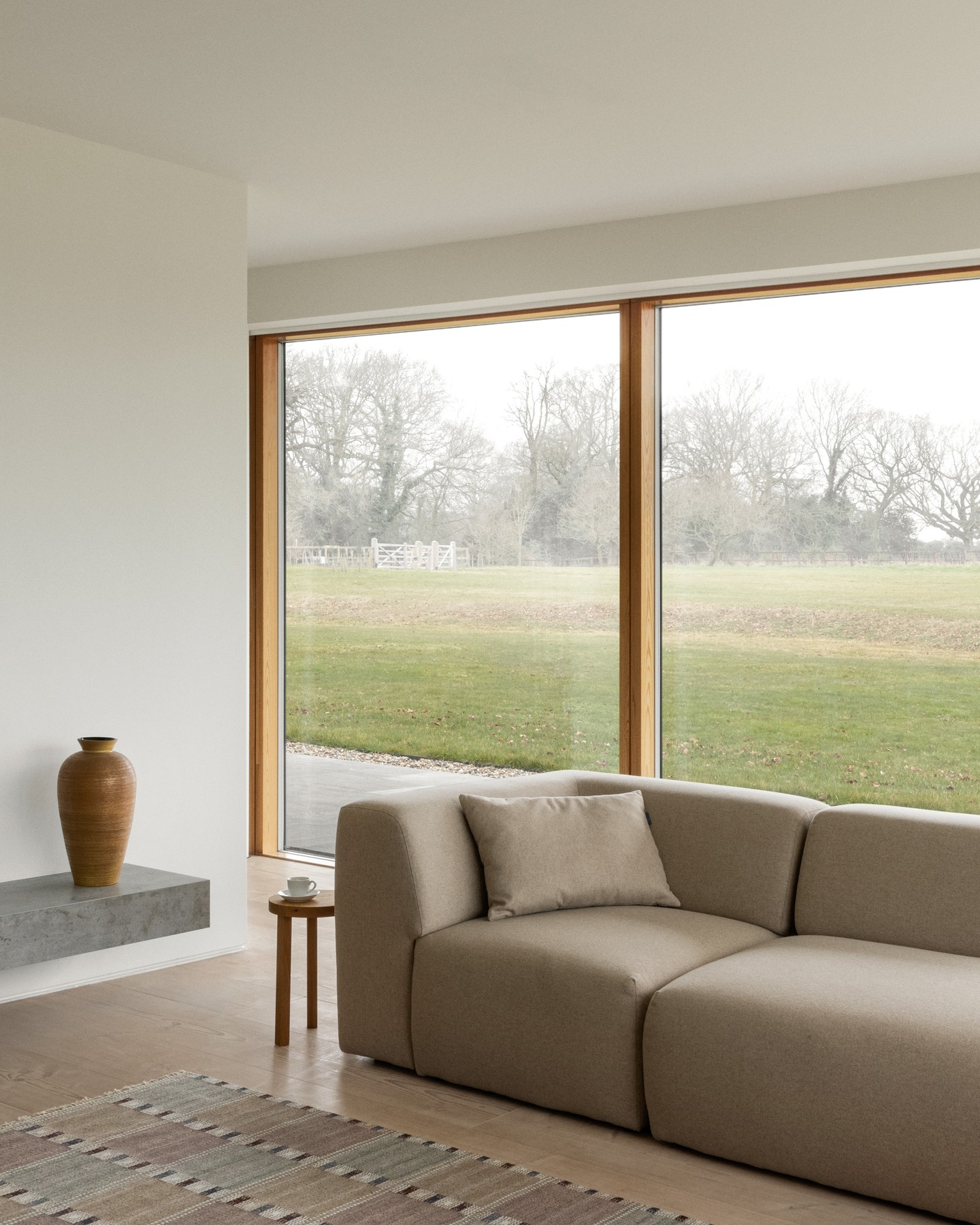
Expansive windows become the main decoration in this quiet seating area. The low sofa leaves a broad band of landscape visible above its back, while a small side table provides a place for a cup without adding visual bulk.
When arranging furniture near a view, check the sightline from the entrance as well as from your usual seat. Keep taller objects beside a solid wall where they will not interrupt the glass.
Here, one vase sits to the side, and the plain upholstery stays close to the wall color. The wood window frames and floor supply enough warmth without extra layers of decoration.
Choose only the pieces you need around the sofa so the outdoor scene can hold your attention.
13. Ground the Seating With One Quiet Rug
Credits: Instagram
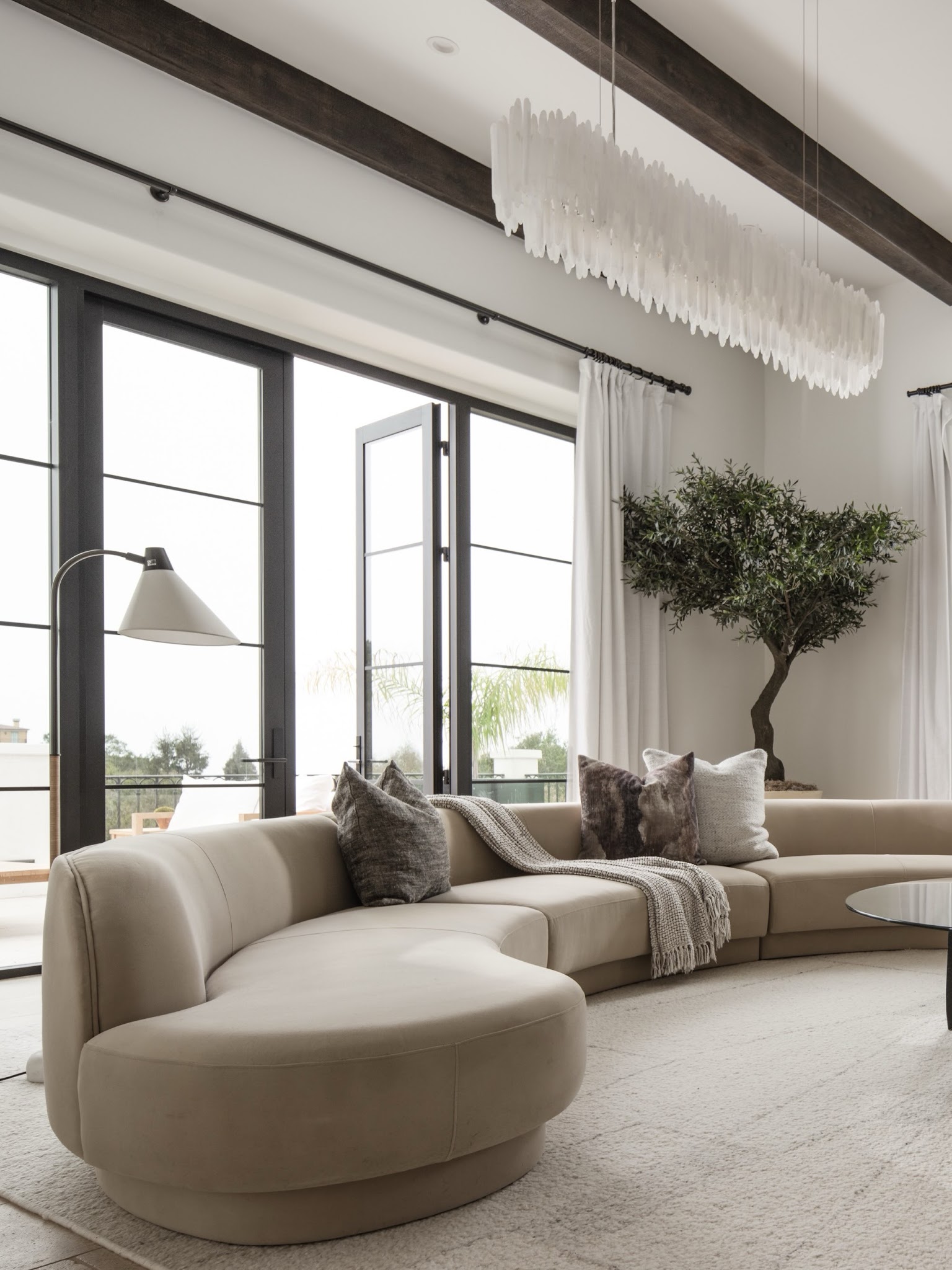
A single generous rug can give a living room a quieter foundation. In this seating area, the pale rug sits close to the sofa color, allowing the curved upholstery to read as one continuous shape.
Choose soft texture without a strong contrasting pattern when beams, window frames, or lighting already provide plenty of detail. Before ordering, mark the proposed rug outline on the floor and check how it relates to the seating.
Aim for a consistent base beneath the main arrangement, rather than several disconnected small rugs. Keep the visible edges simple and let cushions supply the smaller changes in tone.
Here, that restrained floor treatment balances the dark overhead beams and decorative chandelier without adding another competing focal point.
14. Tuck a Small Stool Beneath a Console
Credits: Instagram
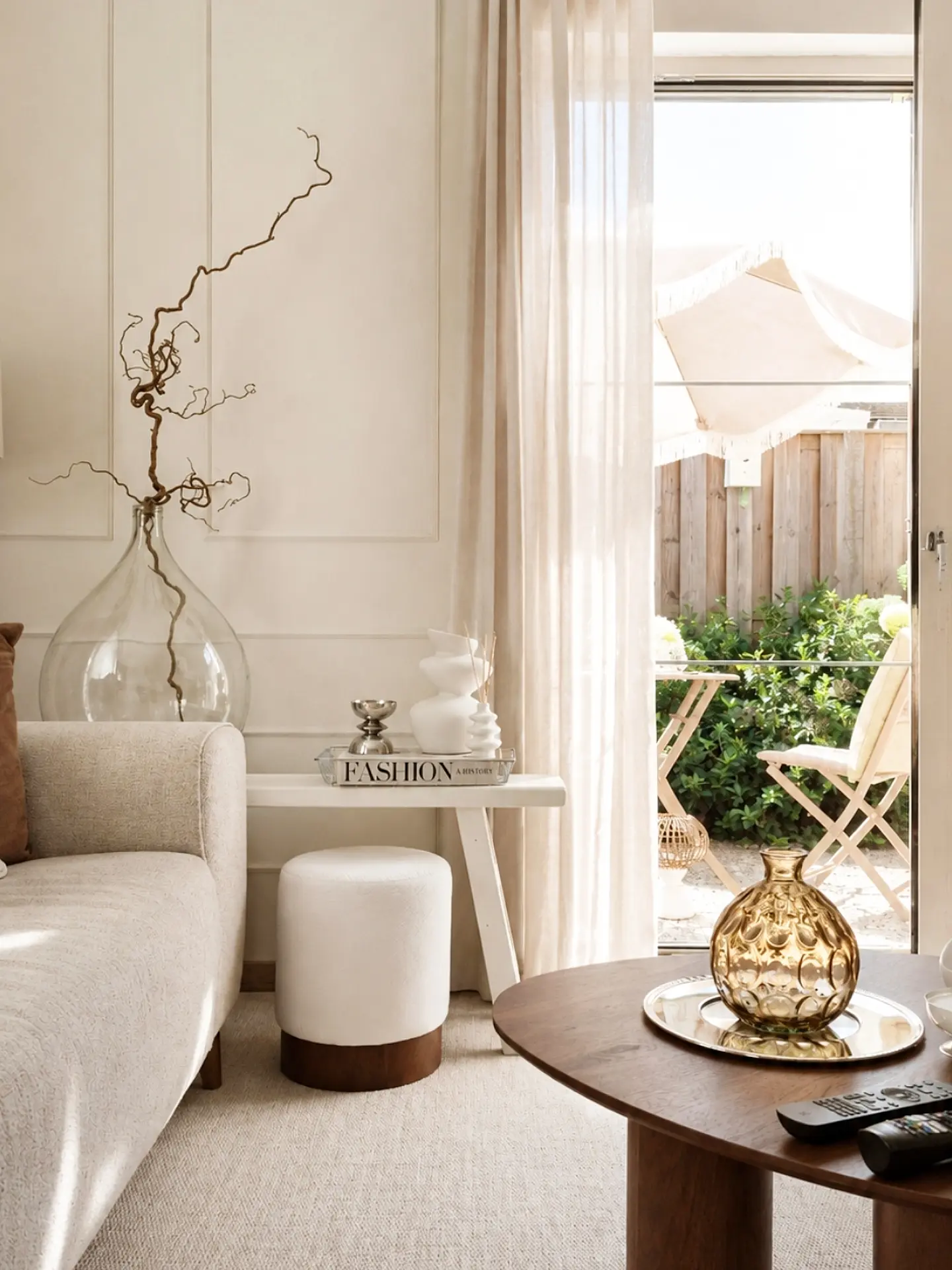
A small stool can stay close to the sofa without occupying the center of the room. Here, a cream upholstered stool fits beneath a narrow console, keeping the seating area visually simple.
Before pairing these pieces, measure the clear space between the table legs and beneath the top. Leave enough room to slide the stool out easily when you need another seat.
A rounded shape avoids adding more straight edges beside the sofa, while the pale upholstery blends with the surrounding furniture. Keep the console shallow enough that it does not compete with the main coffee table.
This arrangement gives an occasional piece a deliberate home, making it easier to keep the floor around the primary seating clear between uses.
15. Let Sheer Curtains Soften the Window
Credits: Instagram
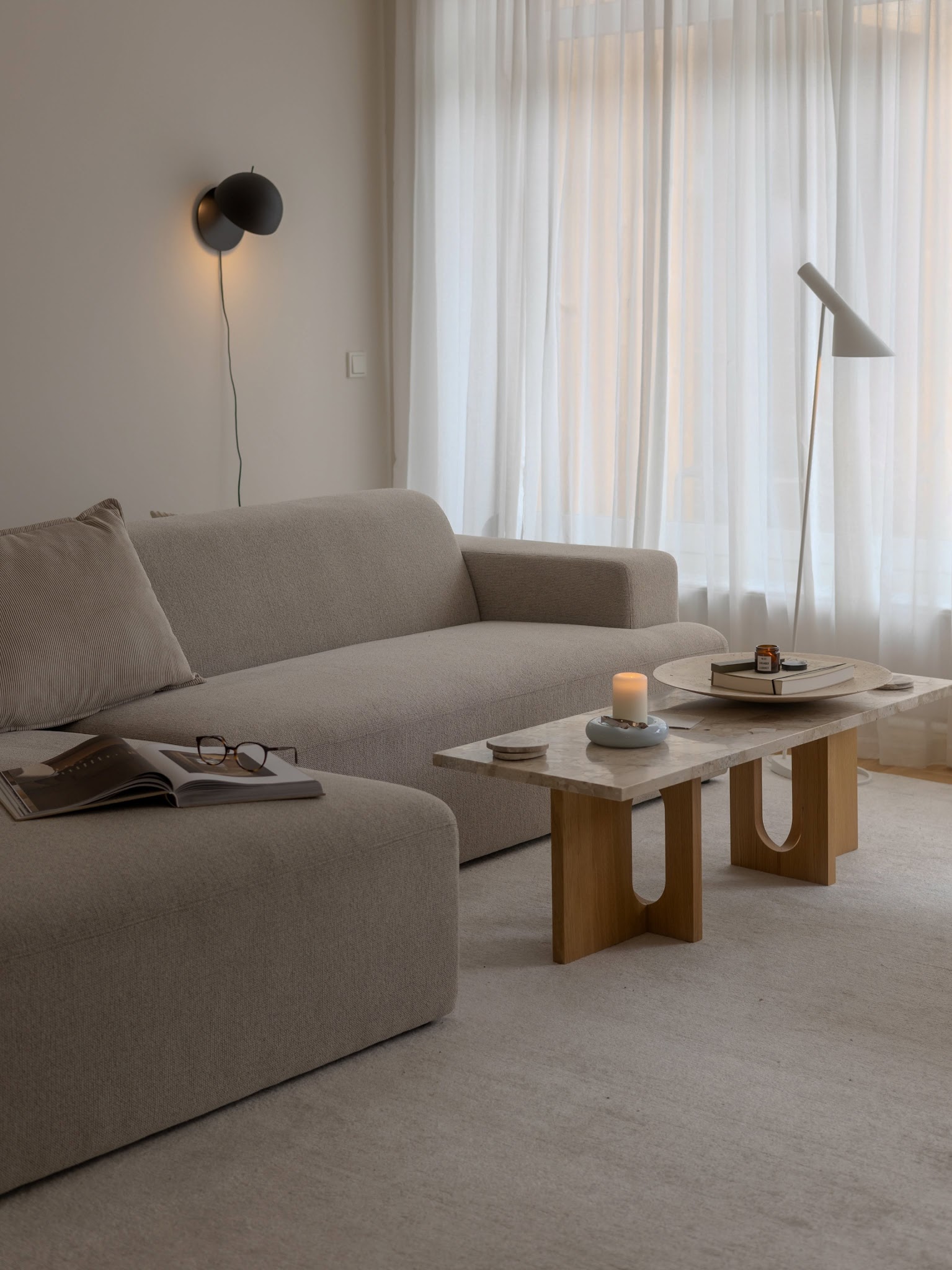
Sheer curtains soften a large window without adding a bold pattern to the room. Here, their pale folds sit close to the wall color, creating a gentle background for the sofa and simple coffee table.
Choose a fabric sample in the room and check how it looks with daylight passing through it. Keep the curtain treatment consistent across the opening so the window reads as one calm surface.
Measure the drop carefully, allowing the panels to hang neatly near the floor. If you also need stronger light control, plan a separate shade behind the sheers.
The restrained fabric lets small details, such as the black wall light and warm table supports, stand out without making the seating area feel crowded.
16. Let a Simple Sofa Stand Without Extra Cushions
Credits: Instagram
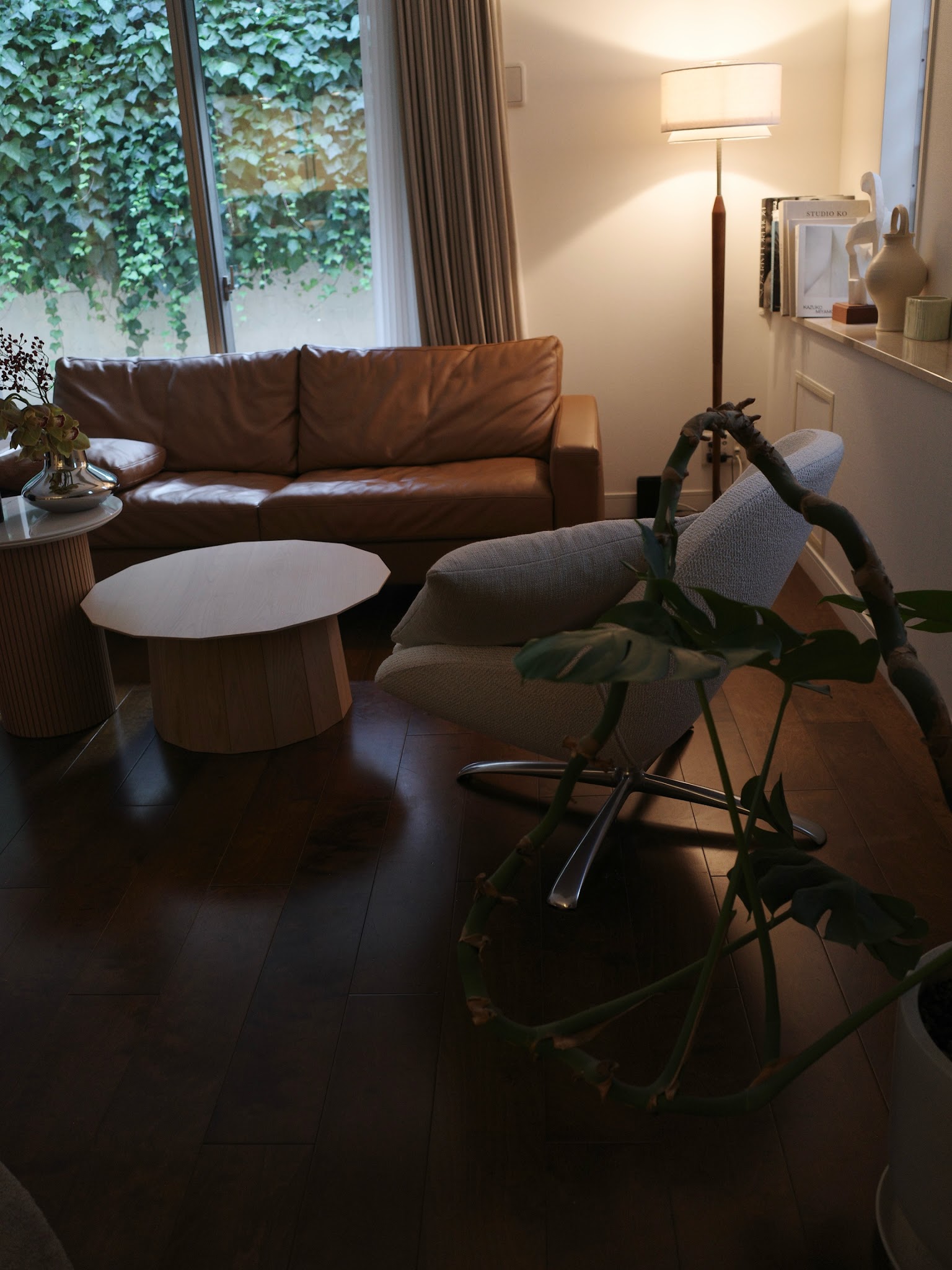
A sofa does not always need another layer of decorative pillows. In this room, the brown sofa keeps its own seat and back cushions visible, letting the simple shape and natural folds provide the detail.
Try removing added pillows and throws first, then sit down and see what you actually miss. Bring back only what improves comfort.
Keeping the upholstery exposed can also make a favorite sofa easier to appreciate beside other furniture. Here, the pale chair and rounded wood tables add enough variation without covering the seating in competing patterns.
A floor lamp, greenery, and a few objects on the nearby ledge finish the setting. The useful lesson is to edit the sofa before adding more accessories around it.
17. Keep Seasonal Tabletop Decorations Simple
Credits: Instagram
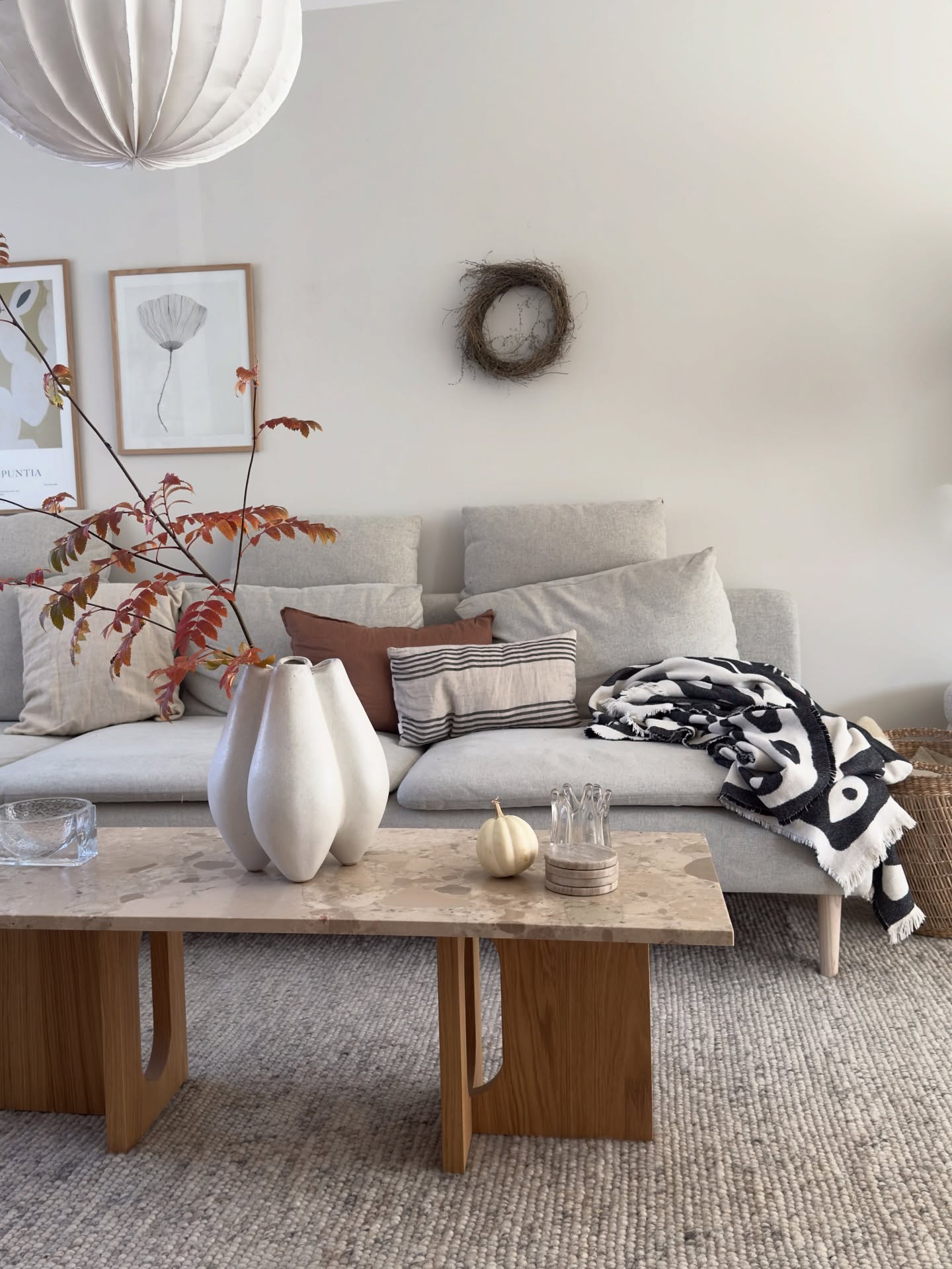
A branch with changing leaves can bring the season into a living room without requiring a complete decorating overhaul. Here, one sculptural vase holds the arrangement, while a small pale pumpkin adds a quieter autumn detail.
Keep the main seasonal color in the foliage and choose simple surrounding objects that do not compete with it. Before adding more decorations, leave enough tabletop space for a drink or a book.
A few pieces at different heights can feel considered without filling every available gap. The sofa and wall stay mostly neutral, allowing the leaves to make the strongest color statement.
When the season changes, replace the branch or the small accent rather than rebuilding the room around a new decorative theme.
18. Add Quiet Structure With Tonal Wall Molding
Credits: Instagram
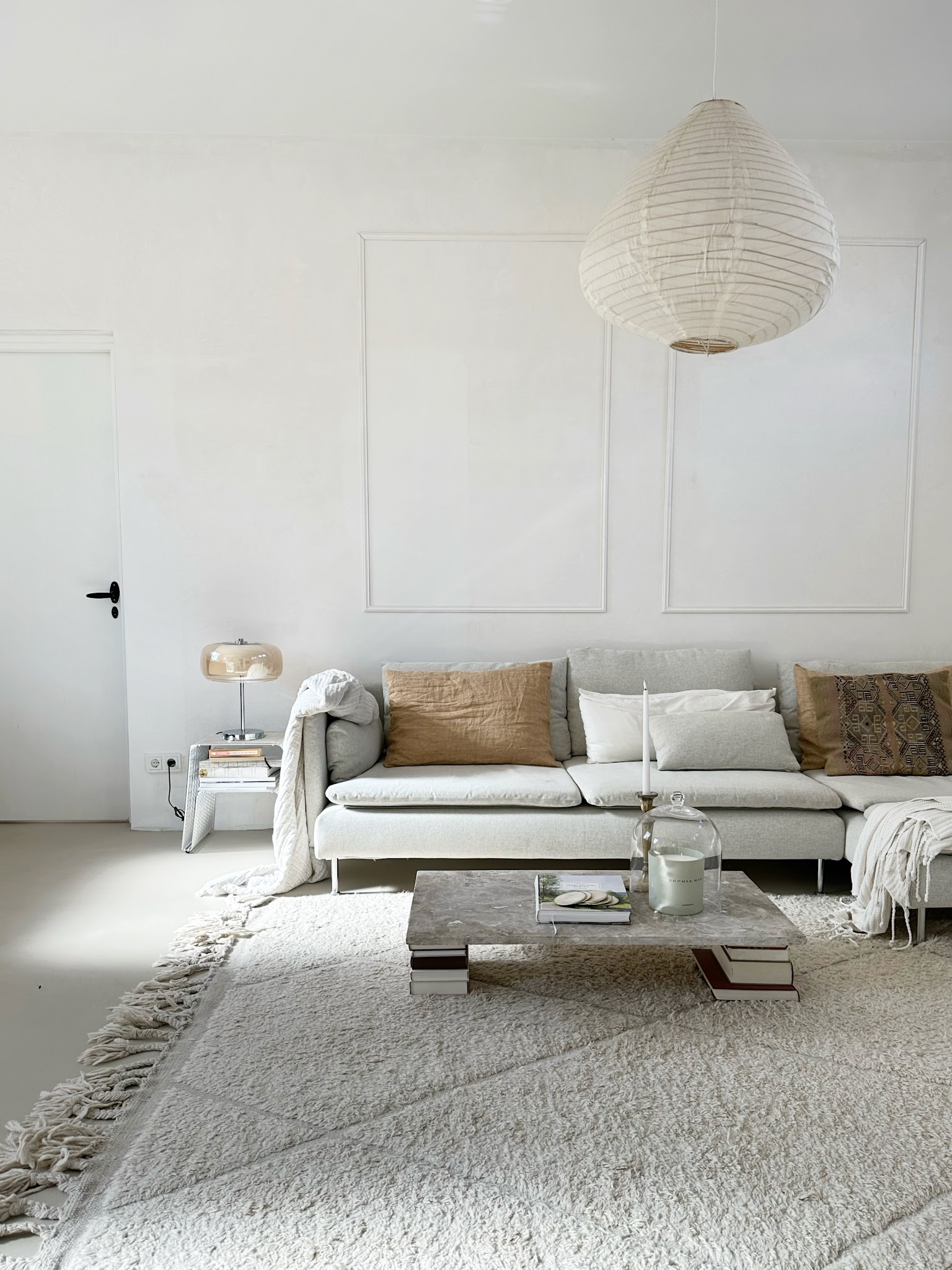
Wall molding can give a plain seating area structure while keeping the palette quiet. Here, two large rectangular outlines sit above the sofa, painted to blend with the surrounding white wall.
Their shallow edges create enough shadow to define the composition without needing additional pictures inside them. Before installing trim, tape the proposed rectangles onto the wall and view them from across the room.
Check their spacing against the sofa and nearby doorway, leaving comfortable margins around both. Choose a simple profile so the detail stays secondary to the furniture.
A pale pendant and rug continue the restrained background, while a few warmer pillows add contrast. This approach gives an empty wall definition without filling it with separate decorative objects.
19. Balance Curved Seating With Straight Cabinet Lines
Credits: Instagram
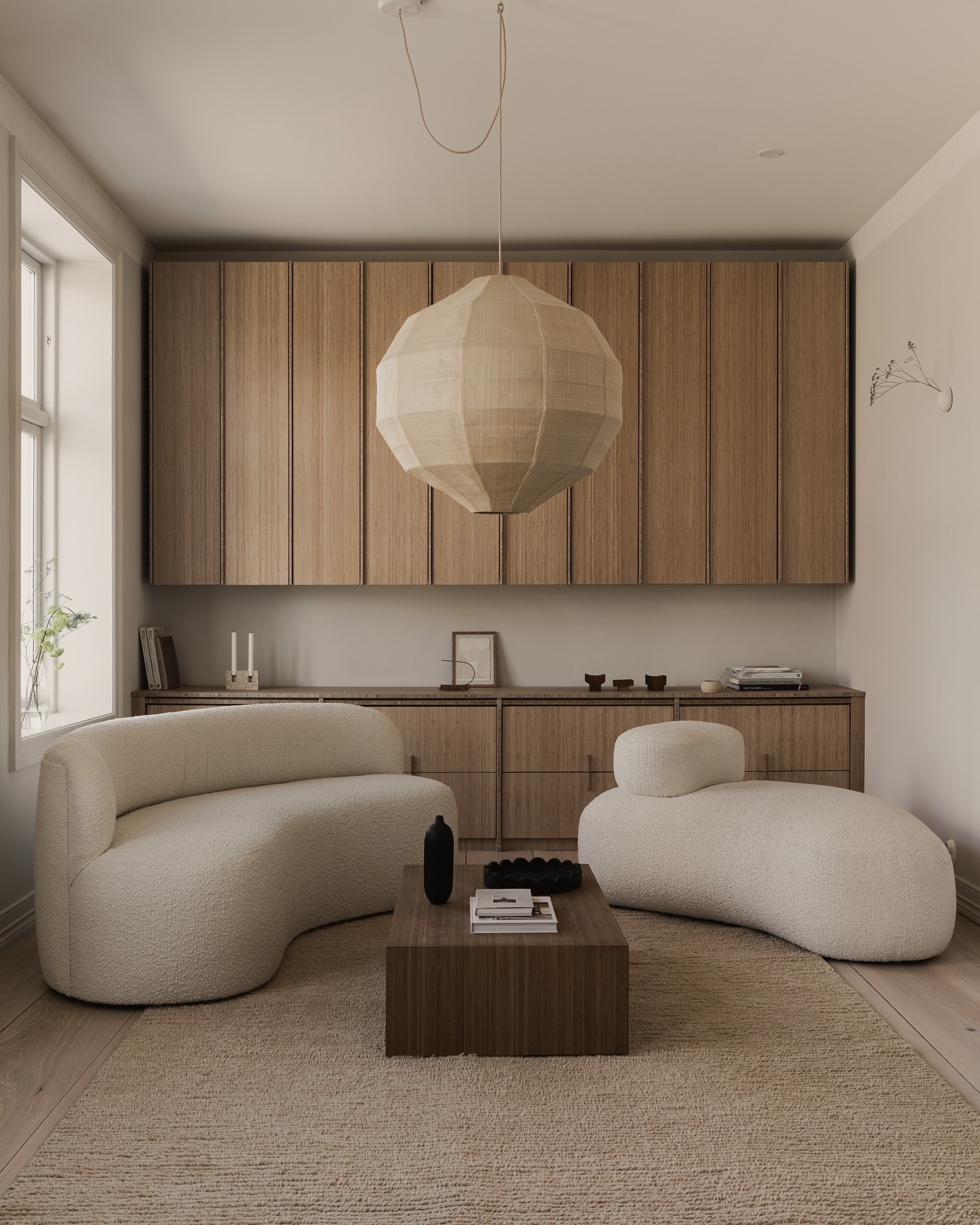
Curved seating can soften a room where cabinetry supplies most of the straight lines. Here, a rounded sofa and sculptural chair sit in front of long cabinet runs, creating contrast through shape rather than a busy mix of colors.
Try this pairing when a wall already has strong vertical divisions or a long horizontal counter. Keep the upholstered pieces close in color so their silhouettes remain the main variation.
A simple rectangular coffee table echoes the cabinetry and prevents every element from competing for attention. Check the arrangement from the doorway before adding smaller accessories.
Leave enough space around each seat to appreciate its outline. A restrained palette lets both the curved furniture and orderly background feel deliberate and balanced.
20. Keep the Center Visually Open With a Glass Table
Credits: Instagram
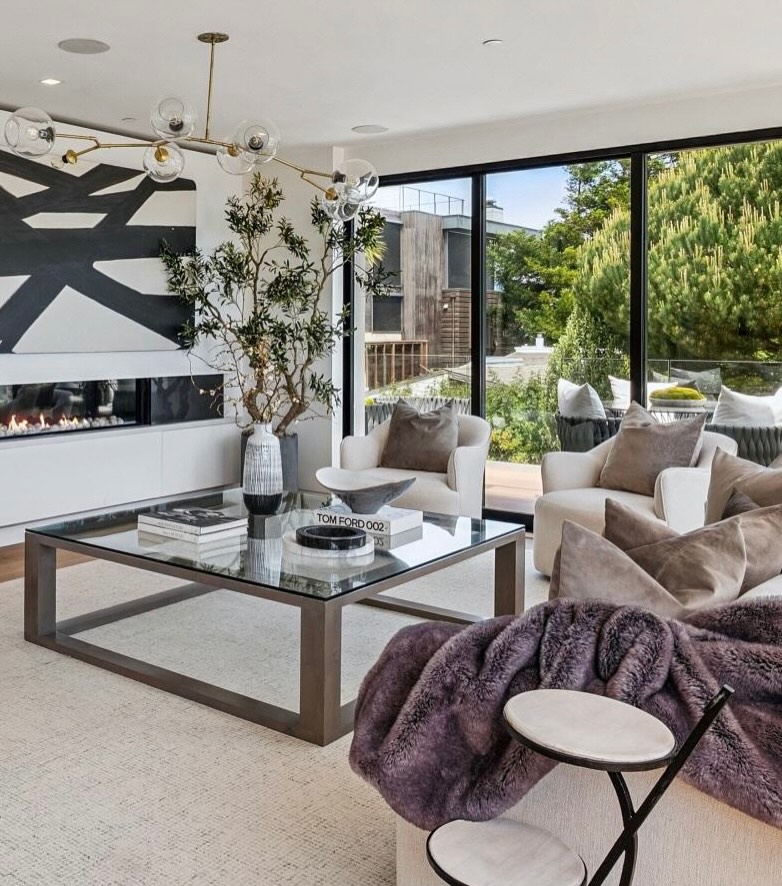
A glass coffee table can keep the center of a seating group from looking too solid. In this room, the clear top reveals the pale rug beneath it, while an open rectangular frame gives the table a definite outline.
Look for a base with enough empty space that the floor remains visible from your usual seats. The effect depends on what sits above and below the glass, so avoid filling every inch with objects or storage.
Here, a few books and vessels leave much of the surface clear. Check the table’s size against the surrounding chairs and sofa before choosing it.
Transparency reduces visual weight, but the furniture still needs enough room for comfortable movement around each of its edges.