
Rustic beams, brick, and weathered wood can give a living room plenty of visual weight, so softer fabrics and lighter finishes help keep the space feeling balanced.
Farmhouse Living Room Ideas work especially well when they mix those sturdy elements with comfortable upholstery, useful storage, and a few considered color accents.
Try grounding white plank walls with a muted blue sofa, framing a wood mantel with white storage, or adding drawers beneath a cushioned bench.
These pairings offer practical ways to bring warmth and character to the room without letting every surface compete for attention.
1. Ground White Plank Walls With a Blue Sofa
Credits: Instagram
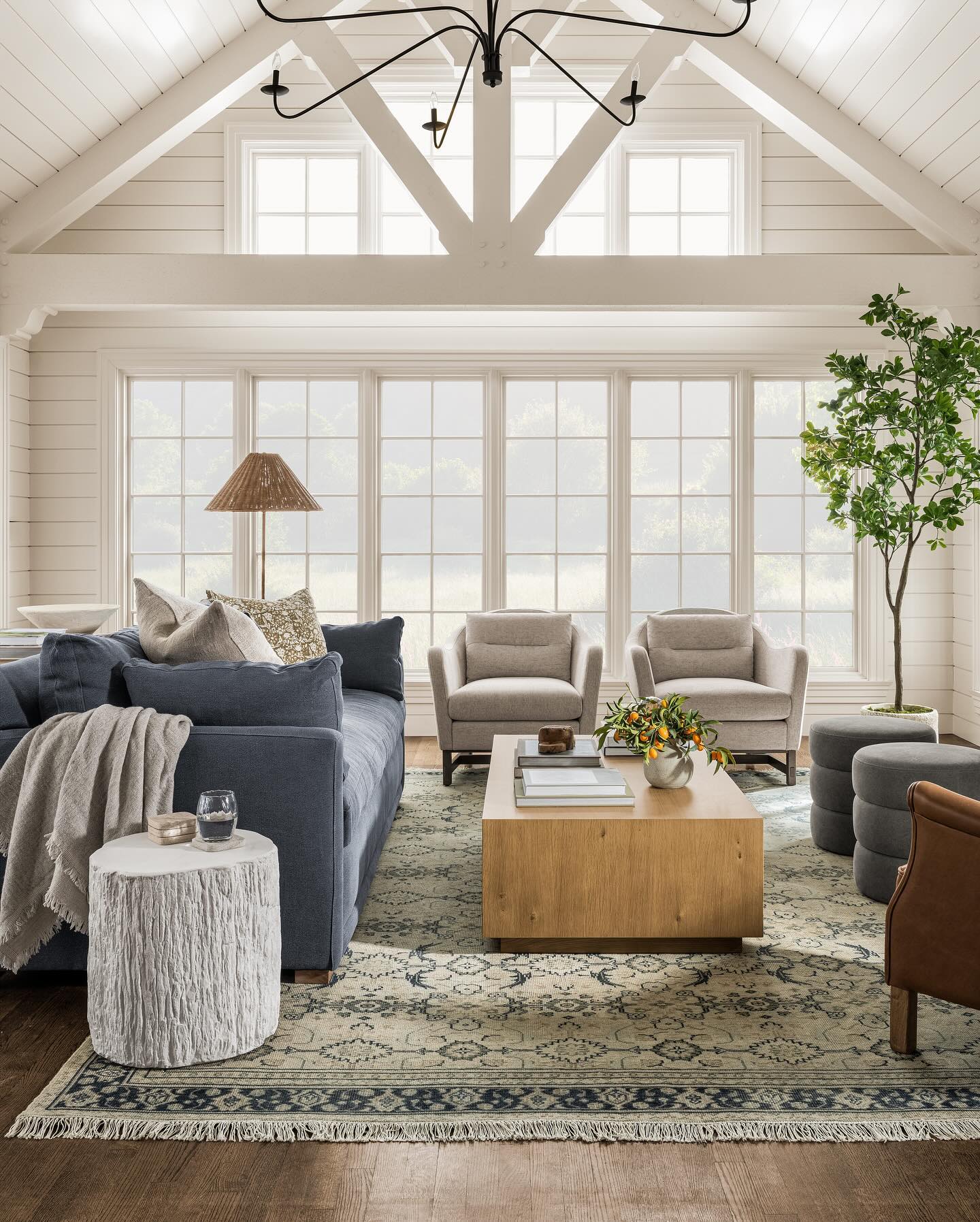
A muted blue sofa gives this white farmhouse room a comfortable center of gravity. The color stands out against the painted plank walls and beams, while a pale patterned rug repeats blue in smaller touches.
A substantial wood coffee table warms the seating group, and light upholstered chairs keep the window wall feeling open.
To borrow the balance, choose one large upholstered piece in a subdued color, then surround it with cream, warm gray, and natural wood. Look for a rug that includes both the sofa color and your lighter neutrals.
Keep the table shape simple when the rug has a detailed pattern. A woven lampshade and a casually draped throw add texture without making every surface compete for attention.
2. Balance Rustic Beams With a Light Coffee Table
Credits: Instagram
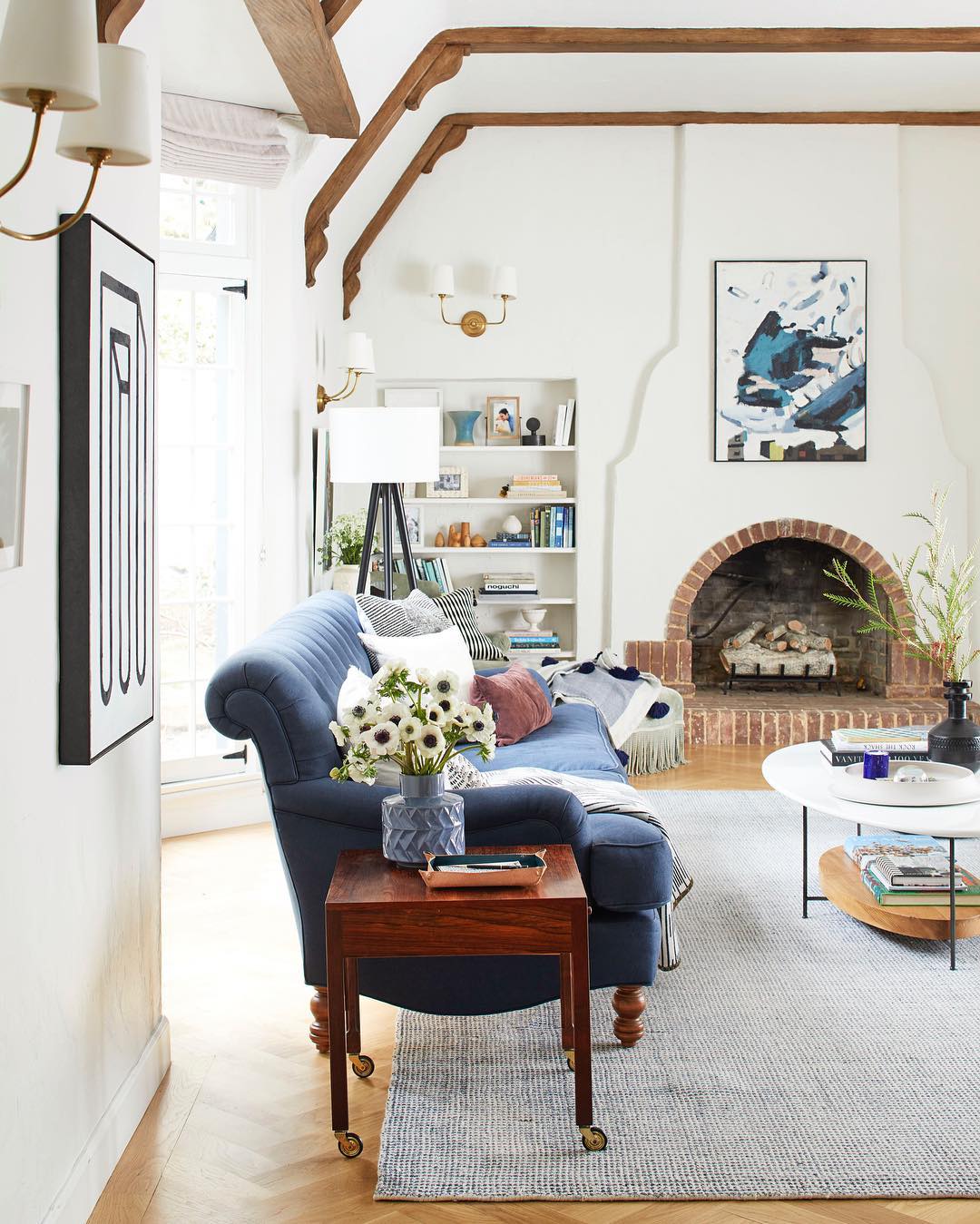
A room with exposed beams and a brick hearth can feel lighter when its coffee table has a slim silhouette. Here, a white round tabletop on narrow dark legs balances the substantial blue sofa and warm timber overhead.
Its lower wood shelf adds a useful place for books while connecting the modern shape to the older materials. Try this mix when rustic architecture already gives your living room plenty of visual weight.
Choose an open table base instead of another solid block, and keep the tabletop pale so it stands apart from darker upholstery. A simple woven rug lets the brickwork and wood grain remain visible stars.
Repeat one dark metal finish in a lamp or picture frame for continuity.
3. Frame a Wood Mantel With White Storage
Credits: Instagram
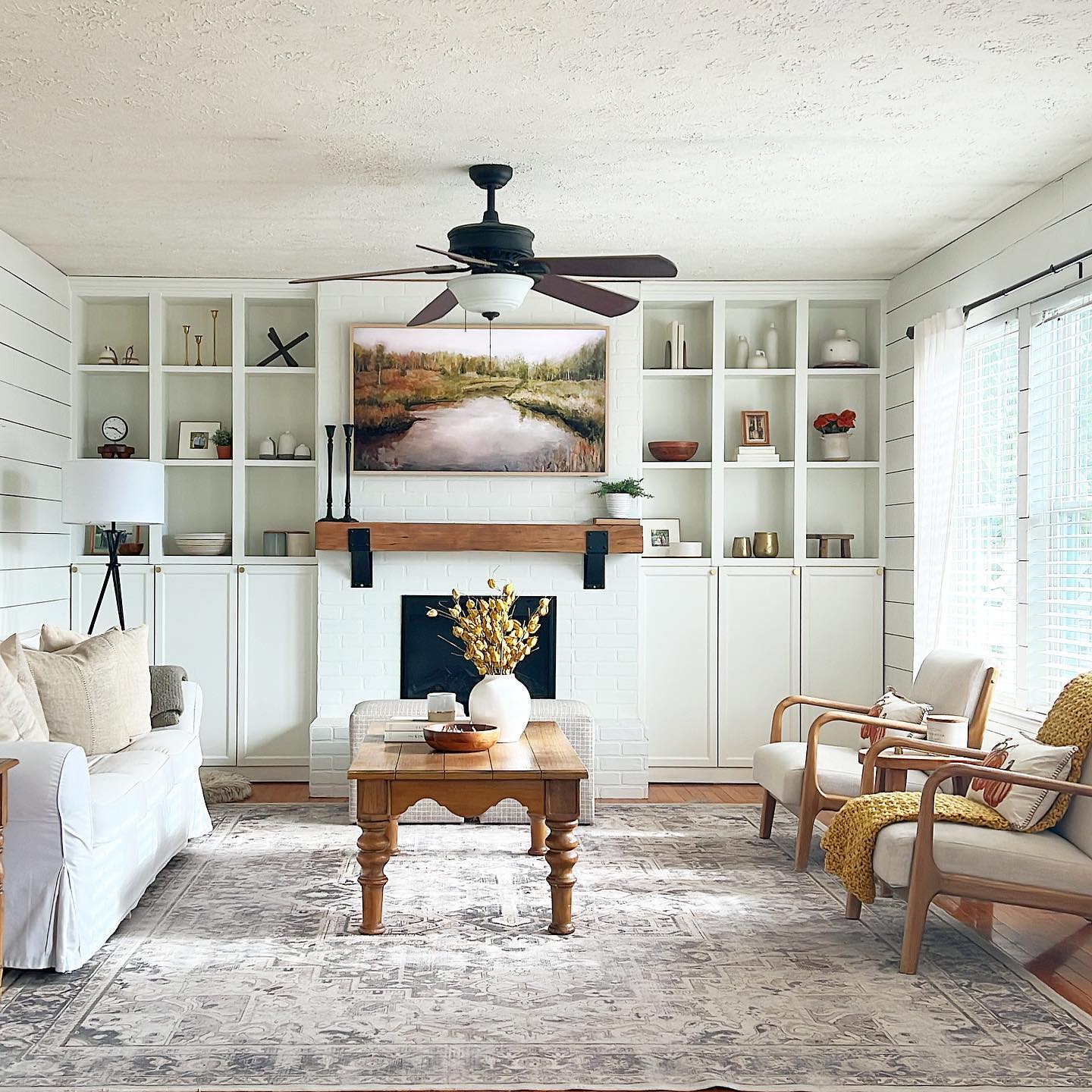
A thick wood mantel gives this white fireplace wall a warm focal point. Matching shelves and closed cabinets frame the brick surround, creating a balanced backdrop without covering every opening with objects.
The wood coffee table and exposed chair frames repeat the mantel color across the seating area. To borrow the approach, pair painted storage with one substantial natural wood accent, then carry that tone into two smaller furnishings.
Leave space around vases and framed pictures so the shelving still feels light. Closed lower doors can hide everyday clutter, while upper shelves hold a few useful or decorative pieces.
A pale patterned rug softens the wood floor, and mustard accents add seasonal warmth to the neutral upholstery without overwhelming it.
4. Pair Weathered Wood With Soft Upholstery
Credits: Instagram
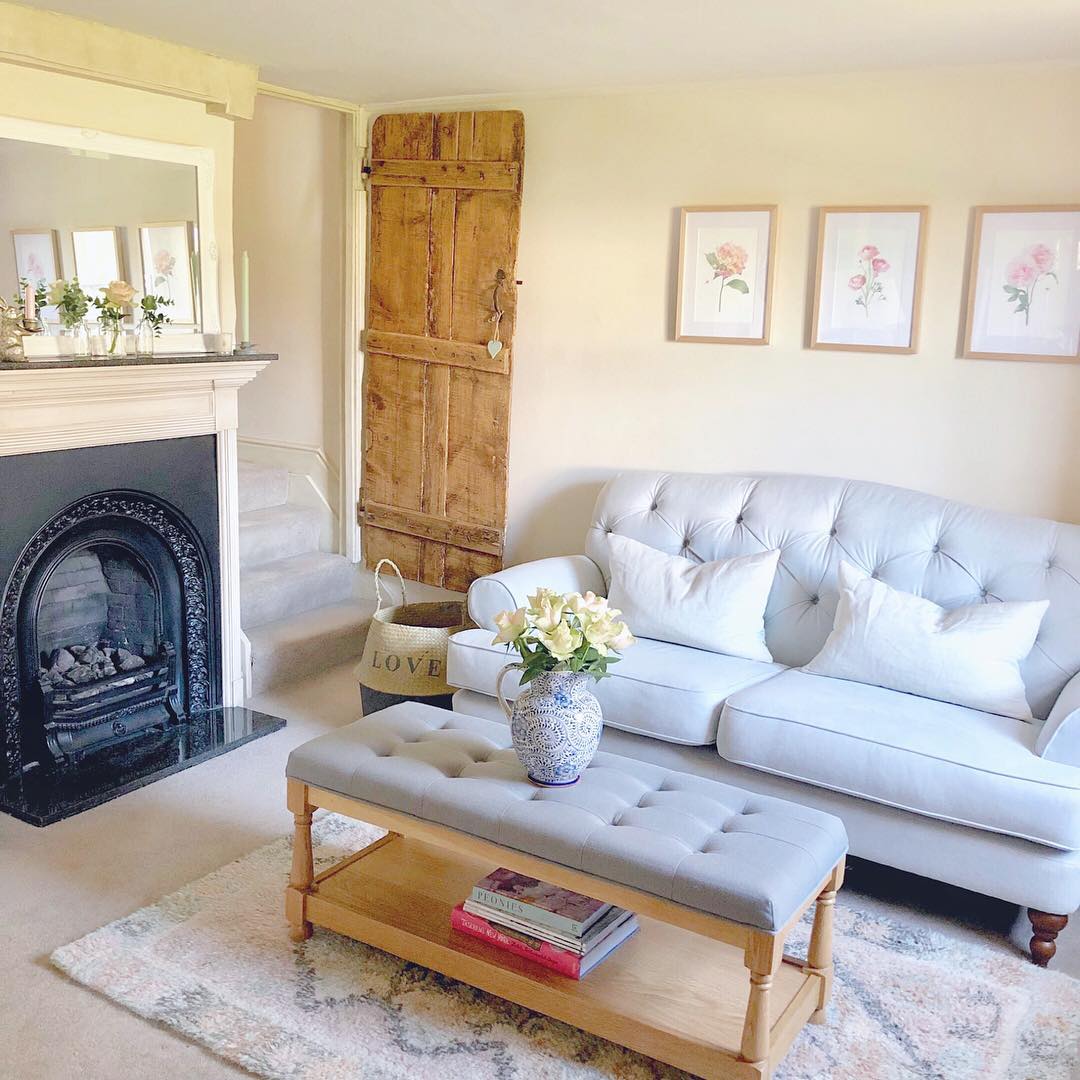
A weathered wood door brings rustic character to this otherwise gentle room. Its rough surface contrasts with the pale tufted sofa, upholstered ottoman, and neatly framed flower prints.
The black iron fireplace adds a darker anchor, while the ottoman’s exposed wood frame connects the seating to the door. You can borrow this balance without filling a room with distressed finishes.
Choose one wood piece with visible grain or wear, then surround it with softer fabrics and simple painted surfaces. Repeat its warm tone in picture frames or a small table.
An ottoman with a lower shelf provides space for books and helps keep the top useful. Add a tray when serving drinks, and keep the route to nearby doorways clear.
5. Balance a Sectional With Matching Armchairs
Credits: Instagram
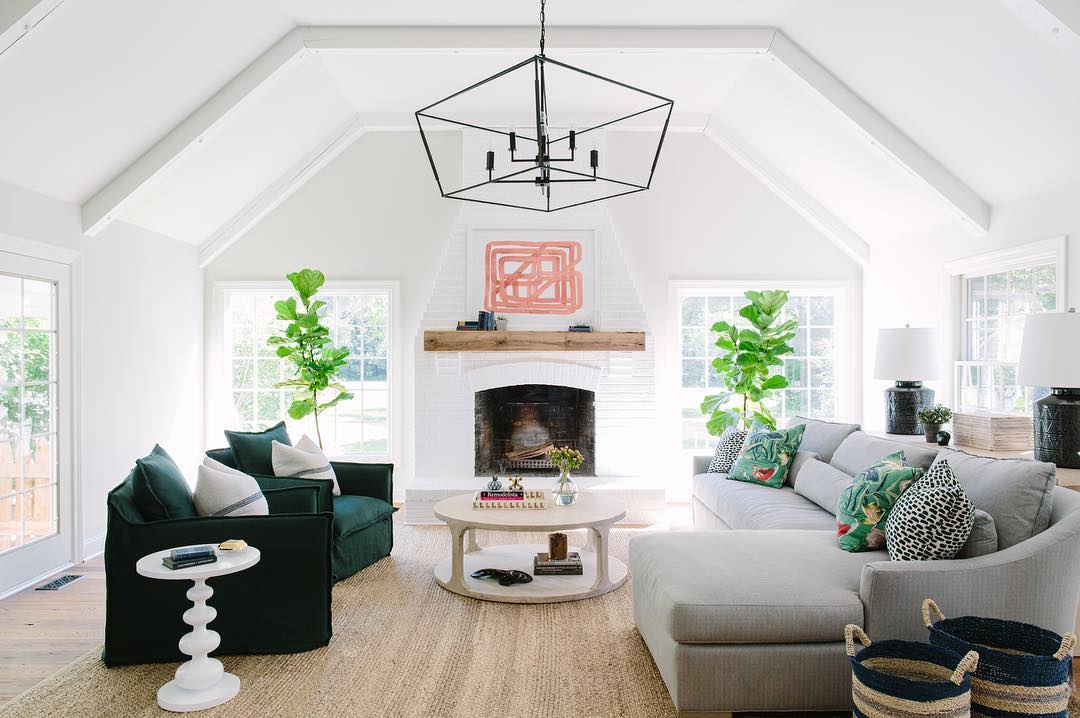
Two dark green armchairs give the gray sectional a partner across this bright farmhouse family room. Their matching shape creates order, while the deeper color keeps the white walls, beams, and brick fireplace from feeling washed out.
To use this arrangement, place a pair of chairs opposite the longest sofa section, leaving a clear route around the coffee table. A large woven rug can connect the pieces without adding another strong pattern.
Keep the table low enough to preserve conversation and the view toward the hearth. Repeat the chair color in a few sofa pillows, then vary their prints for interest.
A simple wood mantel brings warmth, and an open black lantern defines the seating area without hiding the ceiling.
6. Add Drawer Storage Beneath a Cushioned Bench
Credits: Instagram
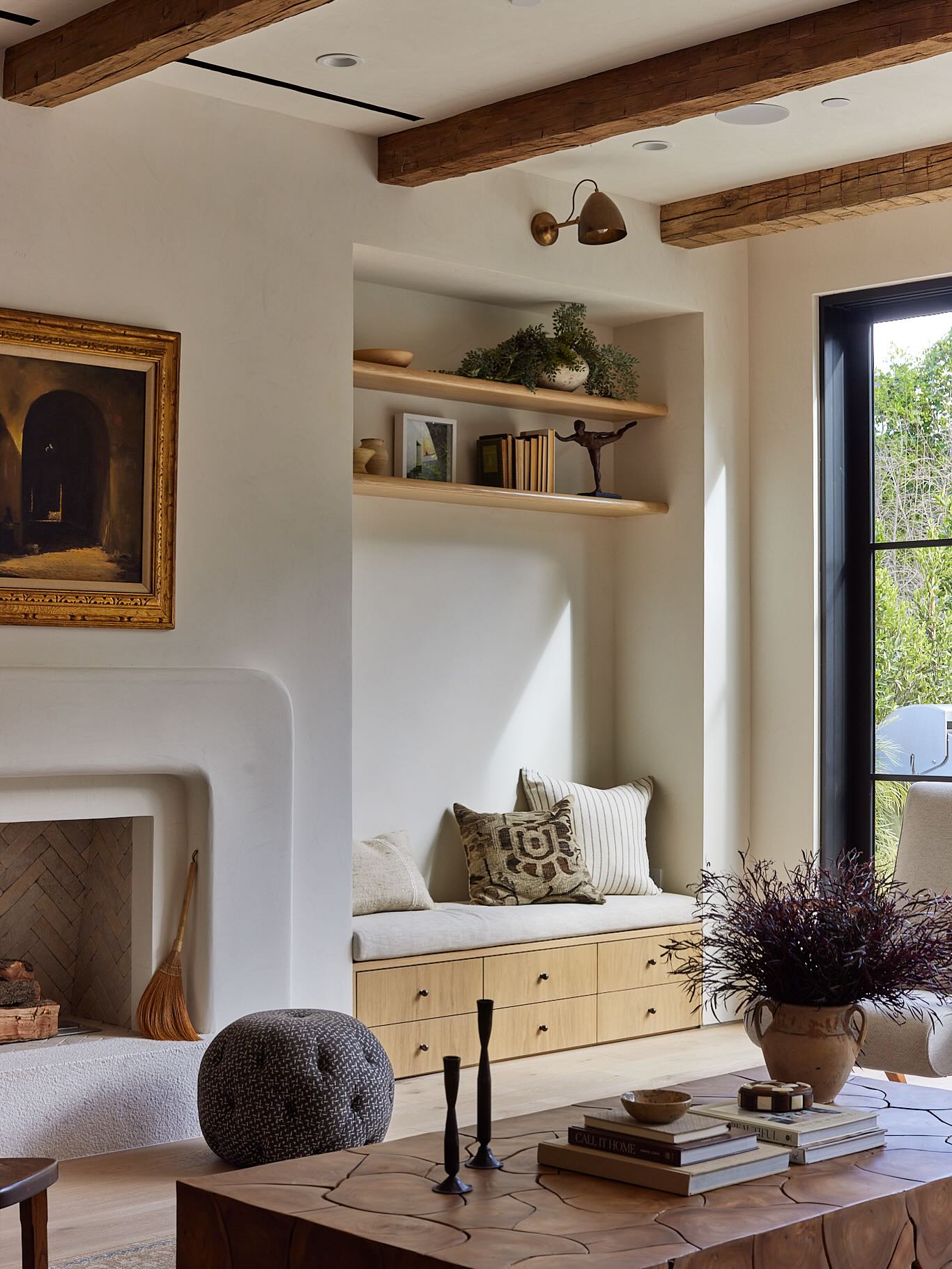
A built-in bench can give a living room both an extra seat and a place to put everyday clutter. Here, pale wood drawers sit below a simple cushion, while two matching shelves make use of the alcove above.
Try this arrangement in a wall recess that is deep enough for comfortable sitting. Plan the drawers so they can open fully without hitting nearby furniture.
A single seat pad keeps the outline tidy, and a few pillows soften the back without filling the bench. Echo the wood tone in shelving to make the pieces feel connected.
Keep the upper display light, with space between books and pottery, so the useful storage area still feels calm beside the room’s heavier rustic beams.
7. Pair a Striped Skirted Chair With a Leather Sofa
Credits: Instagram
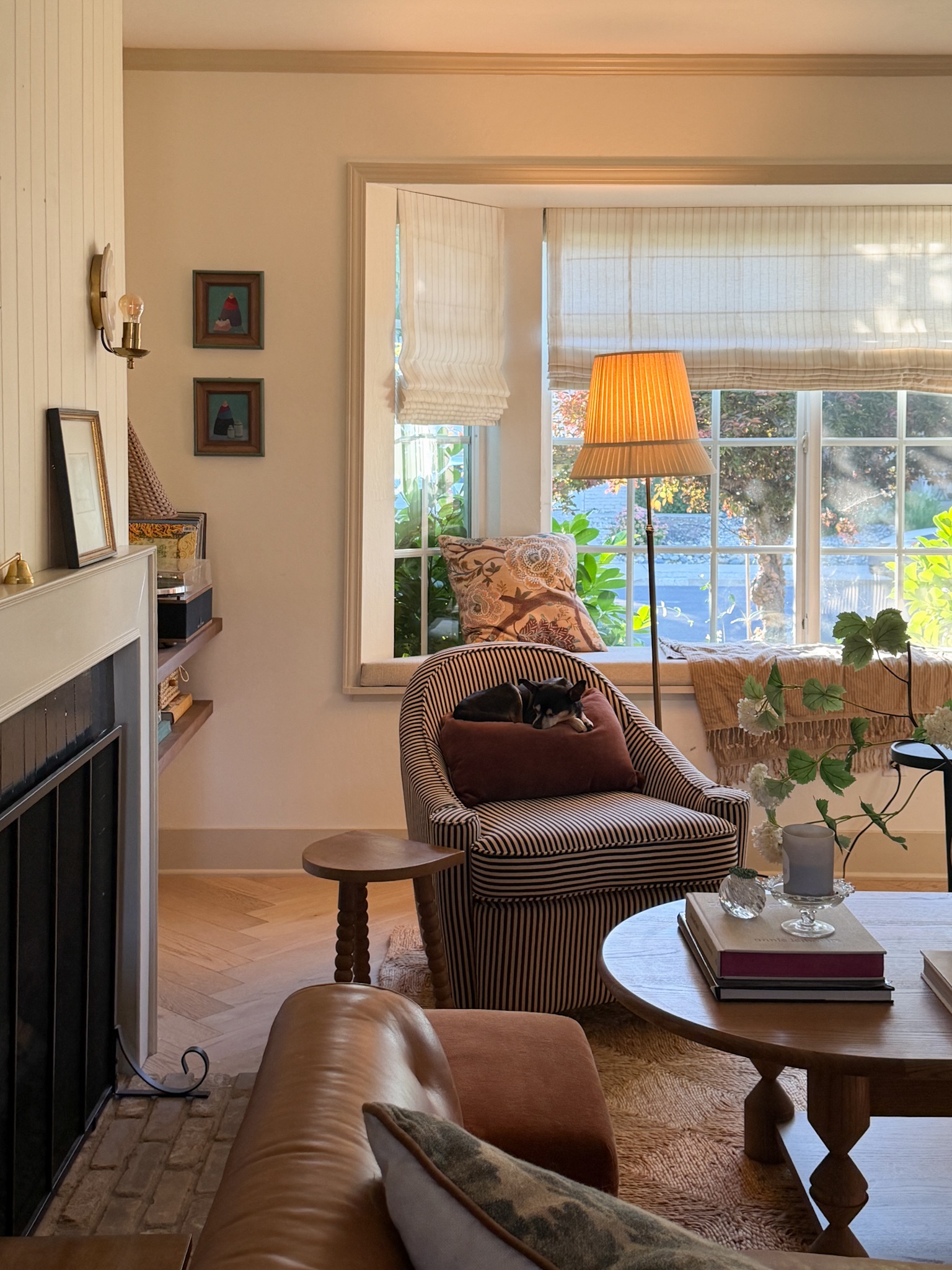
A narrowly striped armchair adds pattern to a farmhouse living room without needing another strong color.
Here, the curved chair sits beside a brown leather sofa, with its fabric skirt bringing a softer edge to the brick hearth and wood tables.
Choose stripes in colors already present in the room, then use a solid pillow to give the eye a resting place. The dark cushion also connects the chair with the fireplace opening.
Keep nearby window treatments light so the seating remains the focus. A small round side table provides a useful surface beside the chair without repeating the larger coffee table’s footprint.
This mix works well when you want a traditional fabric detail alongside the smooth finish of leather.
8. Add a Stump-Style Side Table Beside Soft Seating
Credits: Instagram
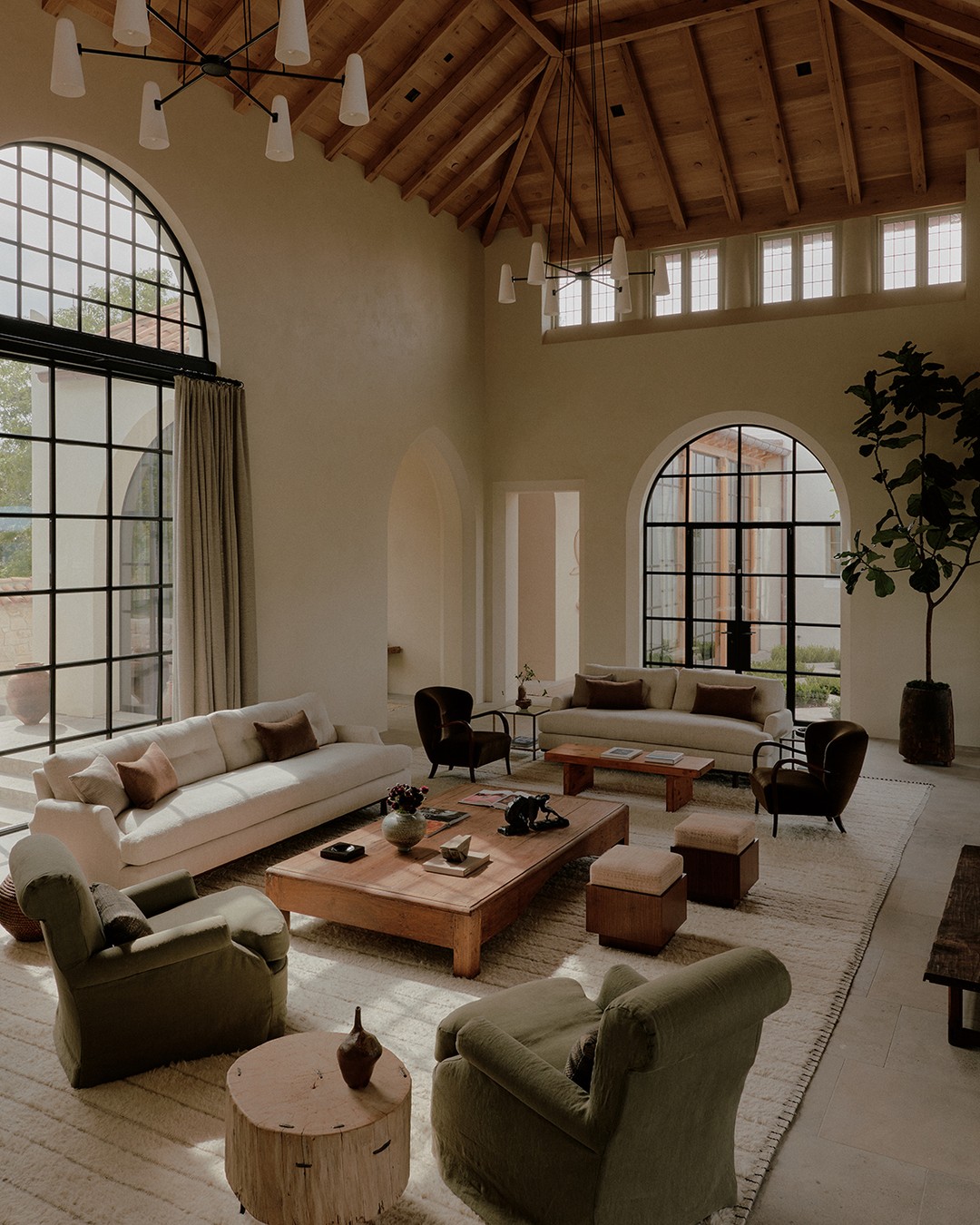
A stump-style side table brings a concentrated piece of rustic texture into a farmhouse seating group. Here, its pale, irregular sides contrast with the olive upholstered chairs, while the flat round top gives them a shared surface.
Try this small accent when the room already has plenty of larger wood furniture. Choose a finished table with a stable base and a top that suits the cups or books you expect to set down.
Check its height beside the actual chairs so reaching it feels comfortable. Keep the decoration simple; one small vase lets the wood remain visible.
A softer rug underneath and plain upholstery nearby help the rougher surface feel intentional without making every piece in the room look distressed.
9. Echo the Room’s Colors in Seasonal Decorations
Credits: Instagram
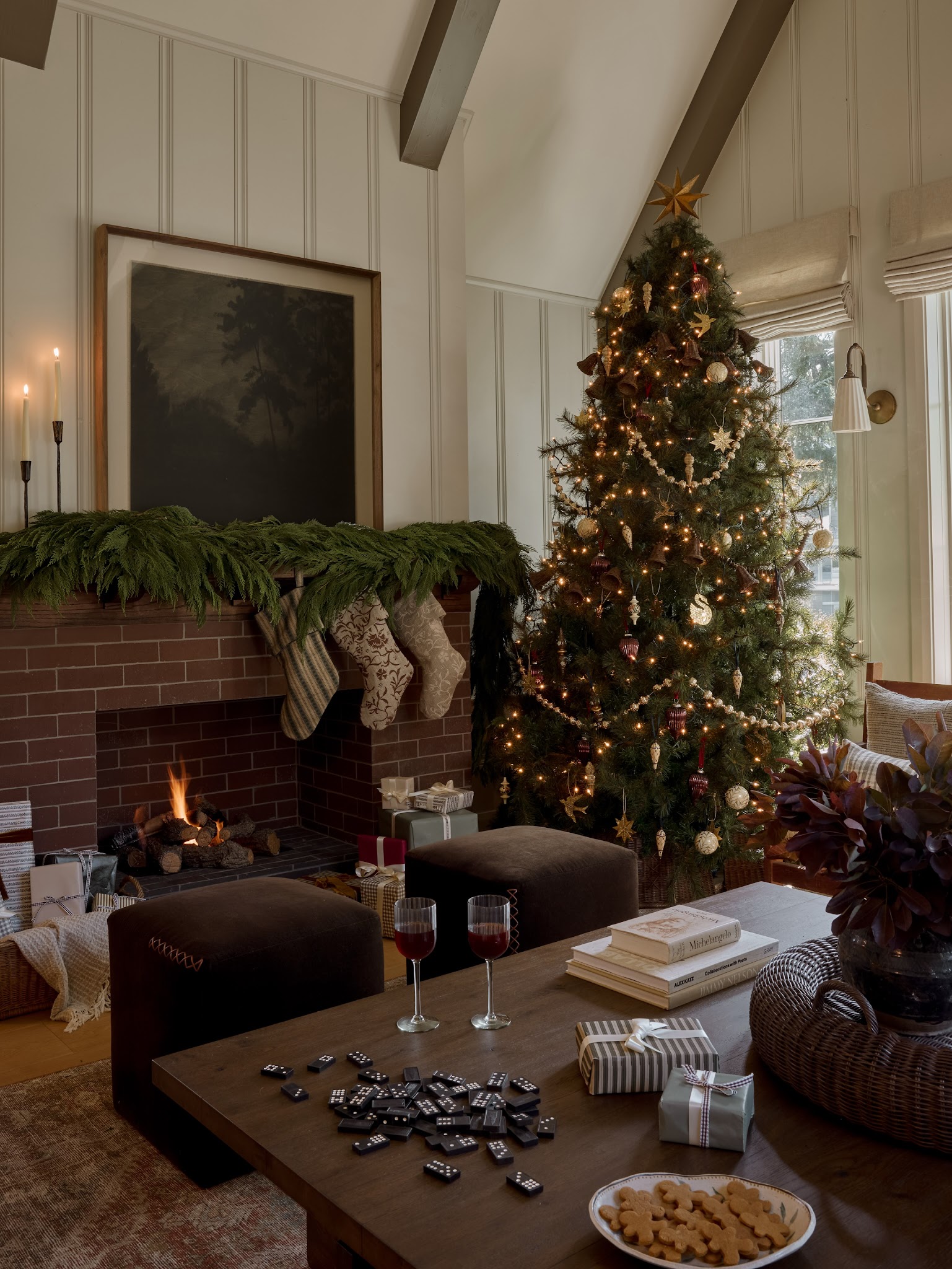
Seasonal decorations can feel at home in a farmhouse living room when their colors echo the furniture. Here, cream and brown patterned stockings, muted ornaments, and striped gift wrap sit comfortably beside the brick fireplace and substantial wood table.
Start with two or three colors already present in your room, then repeat them across wrapping paper, ribbon, and tree decorations. Mix small stripes with a looser botanical pattern to add variety without introducing another color family.
Leave some everyday pieces in place, such as framed artwork and books, so the room keeps its familiar character.
Gather gifts in a few groups instead of spreading them across every surface, and leave useful tabletop space for snacks, drinks, or a board game.
10. Paint a Recessed Cupboard a Warmer Neutral
Credits: Instagram
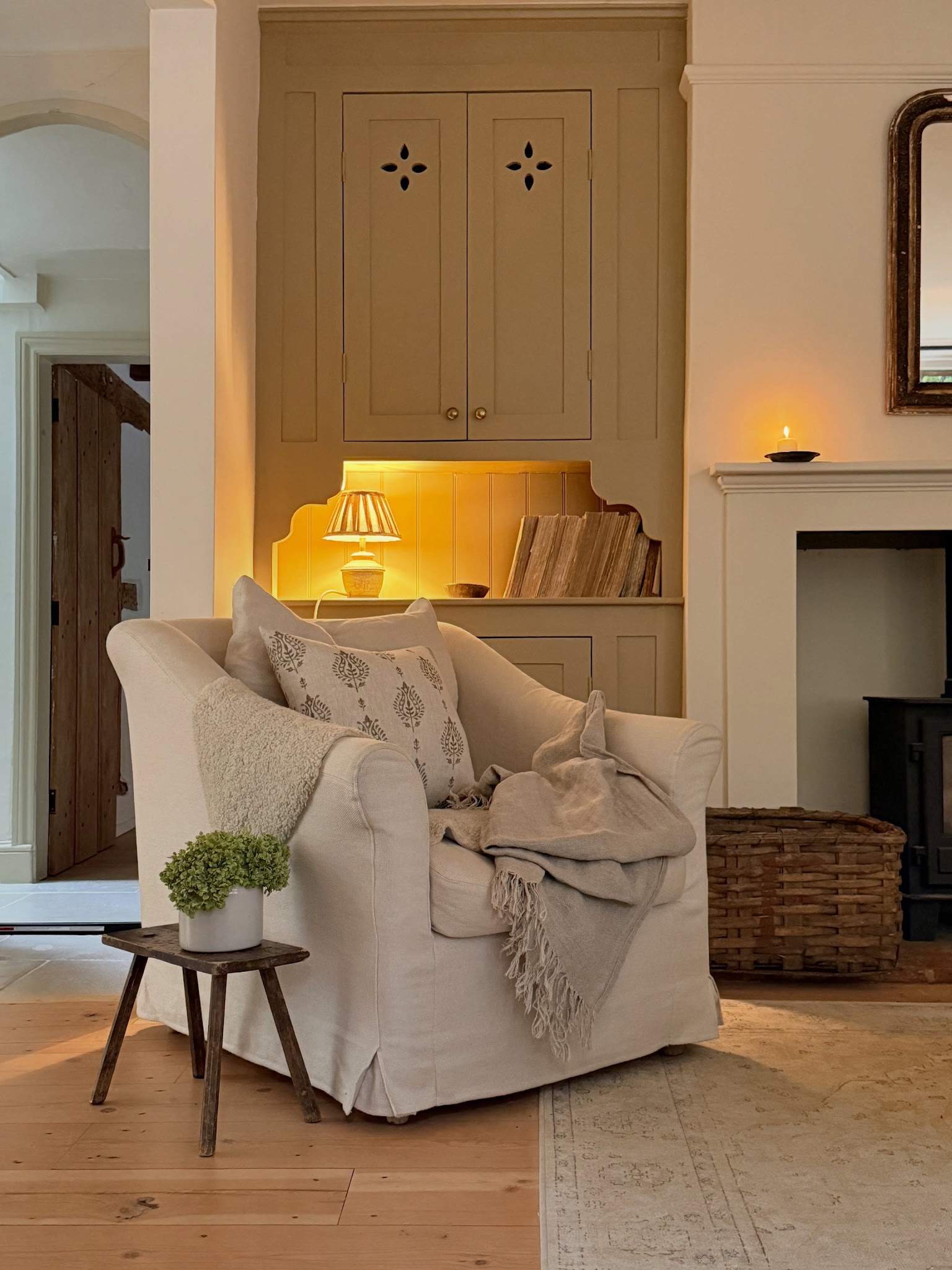
A warmer paint color can make recessed cabinetry stand out gently from pale farmhouse walls. Here, the cupboard’s muted brown tone outlines its paneled doors and shaped display opening behind the cream armchair.
Carry one color across the doors, frame, and backing so the whole unit reads together. Before painting, place a large sample beside your wall color and upholstery, then check it in daylight and with the lamps on.
The small lamp shows how strongly evening light can warm a recess. Keep nearby accessories simple enough for the cupboard’s details to remain visible.
A wood stool and woven basket connect the painted surface to rougher textures, while the pale chair prevents this corner from feeling visually heavy or crowded.
11. Set a Narrow Wood Shelf Behind the Sofa
Credits: Instagram
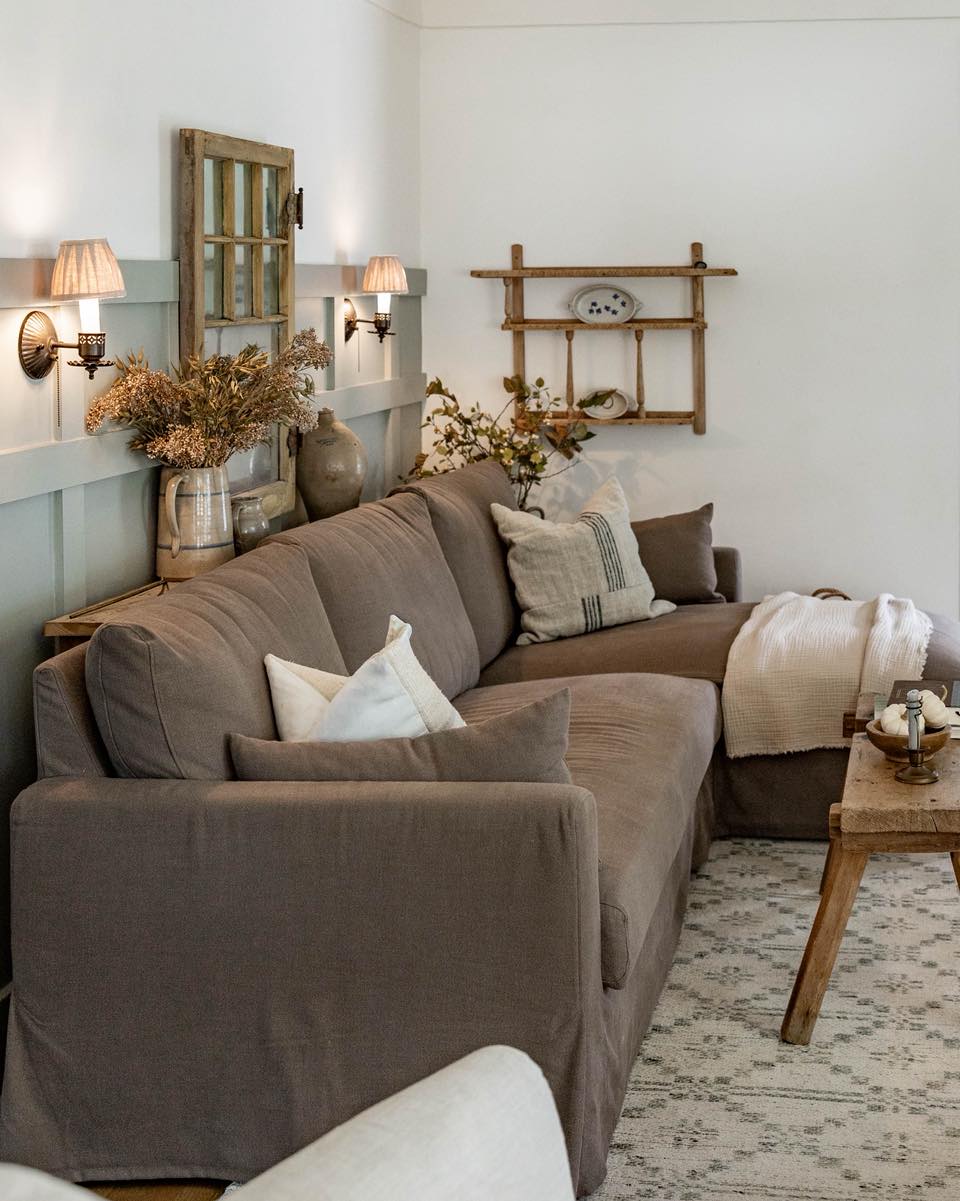
A narrow shelf behind the sofa adds a display surface without introducing another large piece beside the seating. Here, a slim wood top carries pottery and leafy branches against the painted wall paneling.
Measure the sofa’s back height before choosing a shelf or shallow console, and leave enough clearance for the cushions to sit comfortably. Keep the surface close to the sofa’s width so it feels connected to the seating.
A few larger pieces will read more clearly than a crowded row of small ornaments. Repeat warm wood in a coffee table or wall rack for continuity.
Place stable objects away from the edge, and leave some of the shelf empty so the arrangement remains easy to clean and change.
12. Layer Small Floral Curtains Over Woven Shades
Credits: Instagram
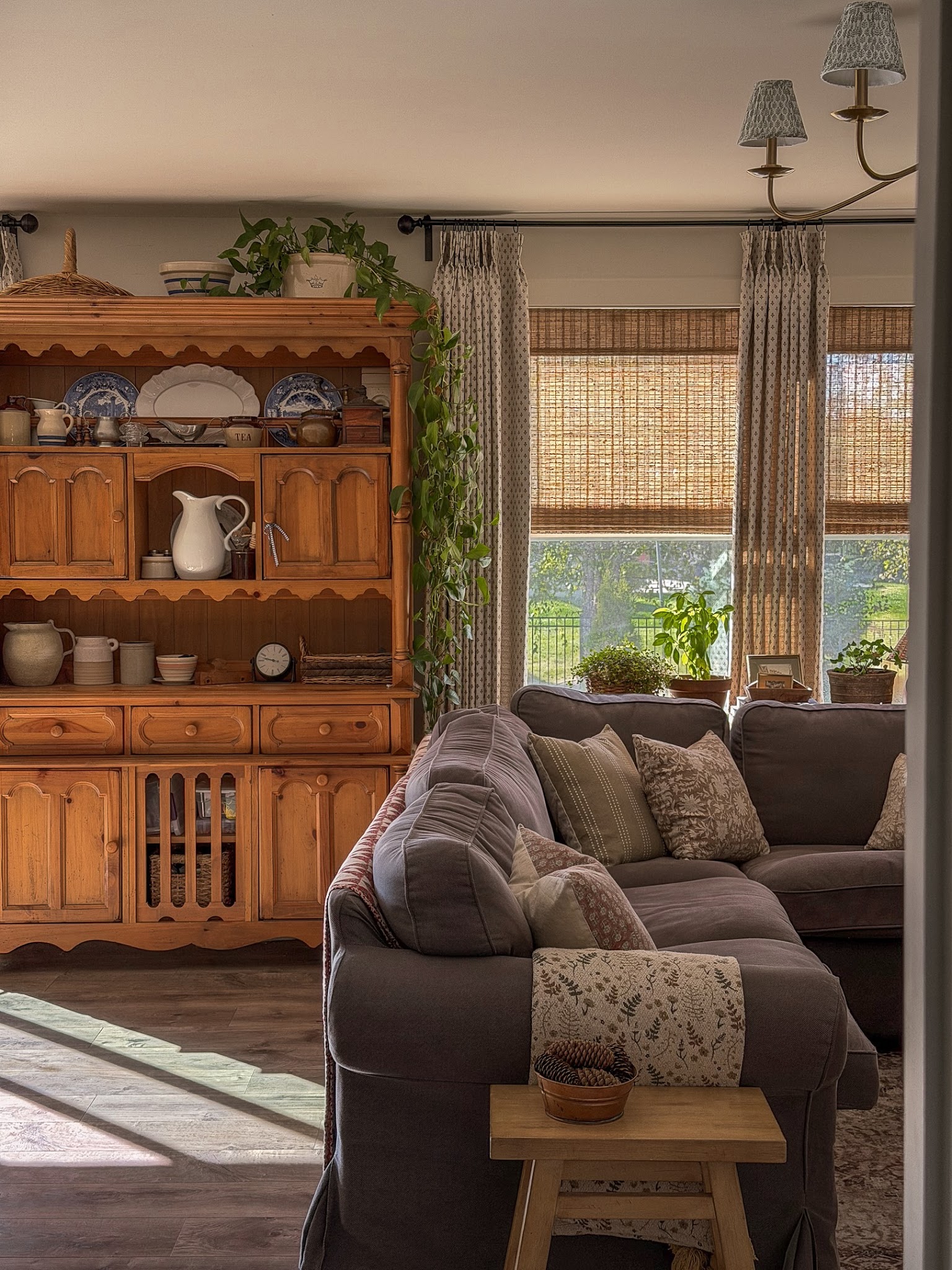
Small floral curtains bring a gentle pattern to this farmhouse family room. They hang in front of woven shades, pairing soft folds with a more structured texture beside the gray sectional.
The shades repeat the warm brown of the wood hutch, while the light curtain background keeps the windows from feeling heavy. Try combining a quiet print with a plain woven shade, then view the fabrics together in daylight before committing.
Mount the curtain rod high enough to leave the top of the window visually clear when the panels are open. Keep their colors close to the upholstery and wood already in the room.
A restrained repeat can add interest without competing with displayed pottery, trailing greenery, or patterned cushions.
13. Give Wood Shelves a Dark Backdrop
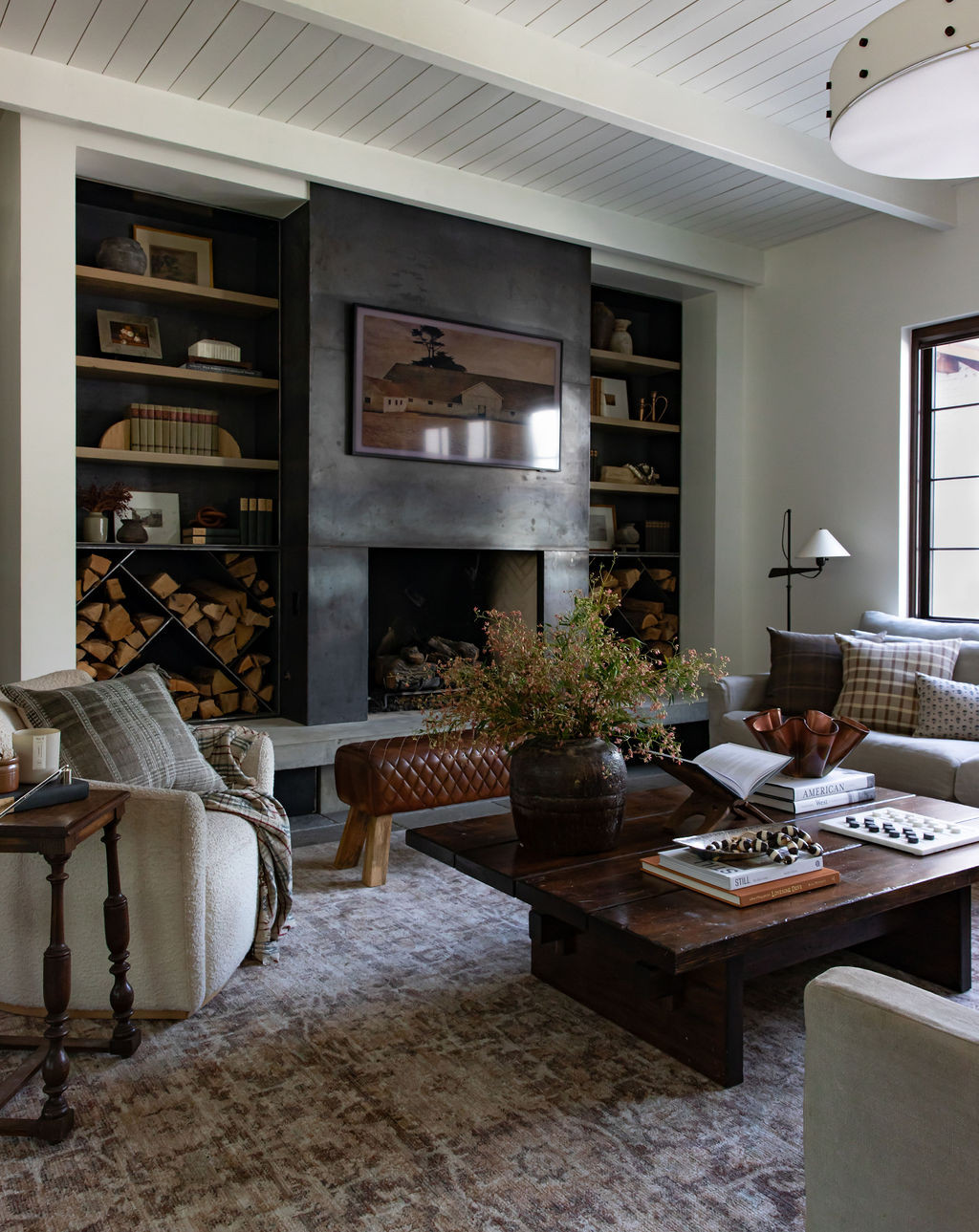
Credits: Instagram
Dark backing can give open wood shelves more definition in a pale farmhouse living room. Here, the deep recesses make the wood shelf edges, pottery, and framed pictures stand out beside the fireplace.
Try the idea inside an existing bookcase before extending a dark color across a whole wall. Hold a large paint sample behind your objects and check how it looks in daylight and evening light.
Keep some shelves loosely arranged so the background remains visible. Mix upright books with a few short horizontal stacks, then vary the heights of nearby pieces.
Warm wood shelves connect the display to a substantial coffee table, while pale upholstery and a light ceiling keep the darker storage from dominating the seating area.
14. Keep Brick Texture Visible Beneath a Pale Finish
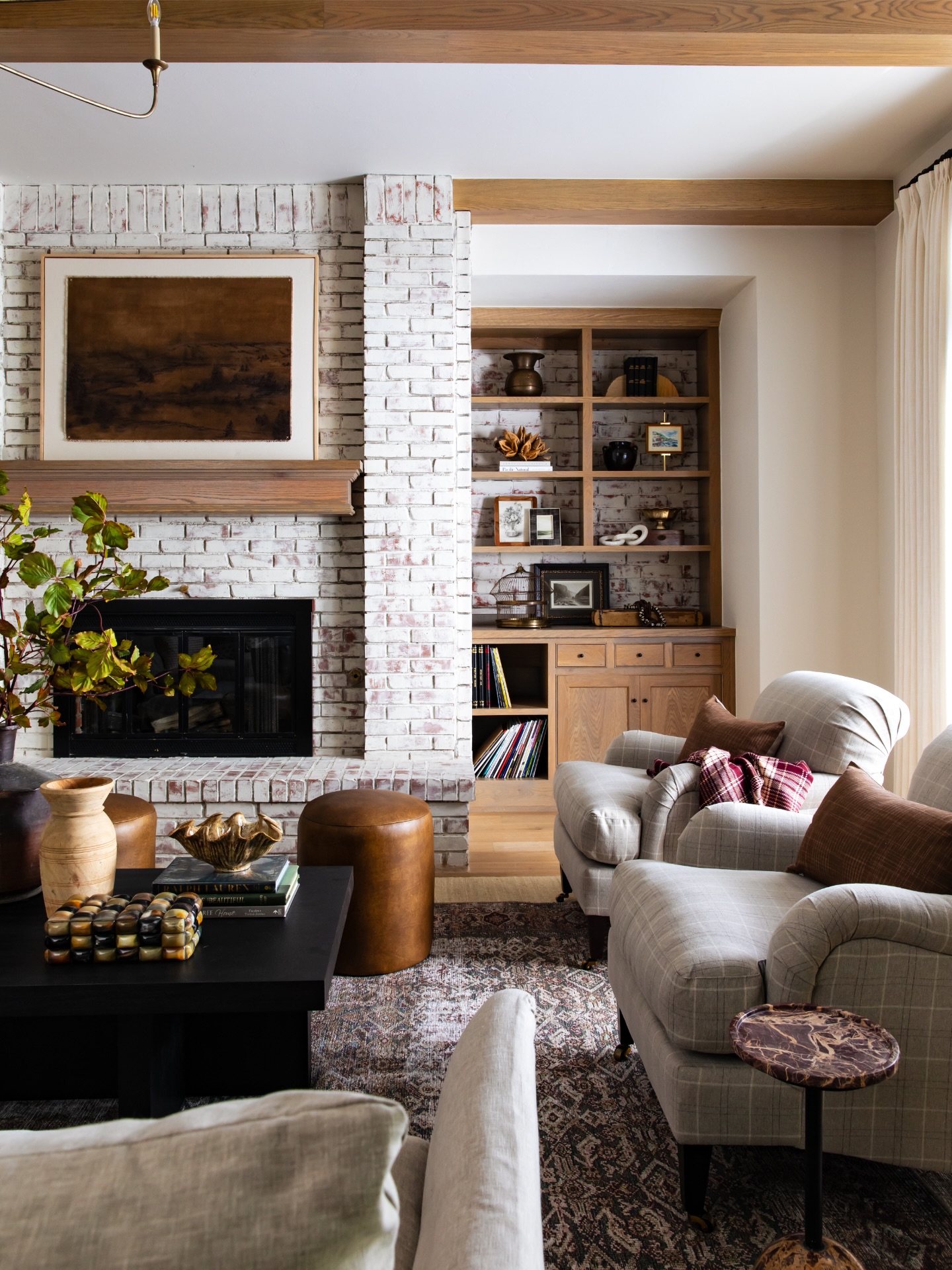
Credits: Instagram
A pale finish can lighten a brick fireplace while keeping its uneven texture visible. Here, reddish patches and recessed mortar lines show through the white surface, giving the hearth more variation than a smooth painted wall.
Warm wood on the mantel, beams, and nearby shelves keeps the room from feeling stark. For a similar direction, look for a sample finish that leaves some of the brick’s character readable rather than covering every variation.
Compare it with your existing wood tones before choosing the final shade. Keep the mantel arrangement simple so the brick remains easy to see.
Pale checked armchairs and a patterned rug soften the surrounding seating, while the dark firebox gives the lightened surface a clear visual center.
15. Connect Window Trim and Paneling With a Dark Color
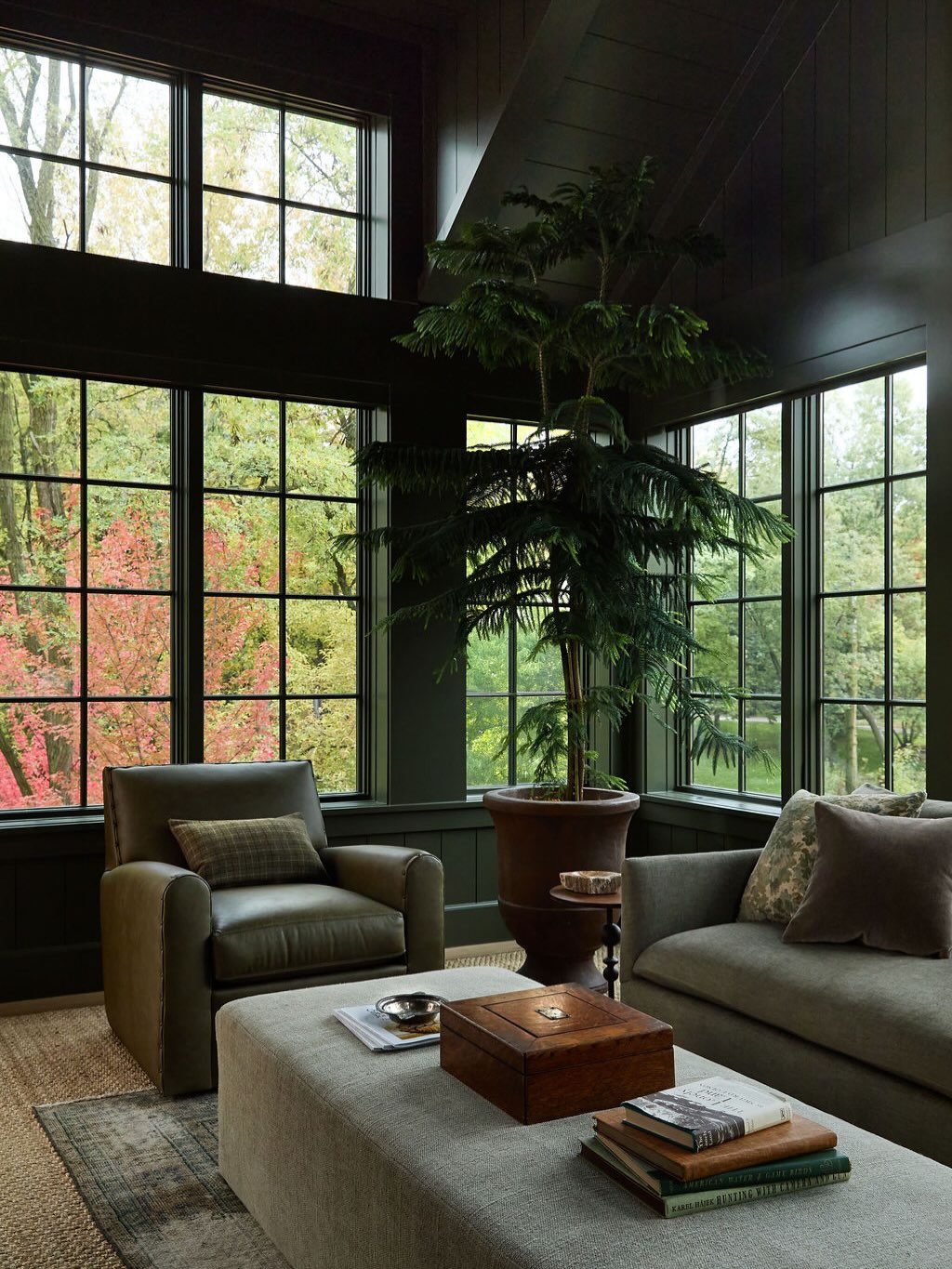
Credits: Instagram
Using a similar dark color on window trim and wall paneling makes a room’s many lines feel connected. In this sitting room, deep green tones continue across the divided windows, lower panels, and pitched ceiling.
The surrounding trees remain prominent through the glass, while a lighter sofa and upholstered ottoman keep the seating easy to see. Try paint samples beside both the window frames and paneling, checking them at different times of day before committing.
A small plaid cushion and wooden box bring familiar country details into the darker setting. Keep additional wall decorations restrained where the windows already provide interest.
If your room has less daylight, test this approach on the trim and lower paneling before extending it overhead.
16. Add Extra Seating With Slender Stools
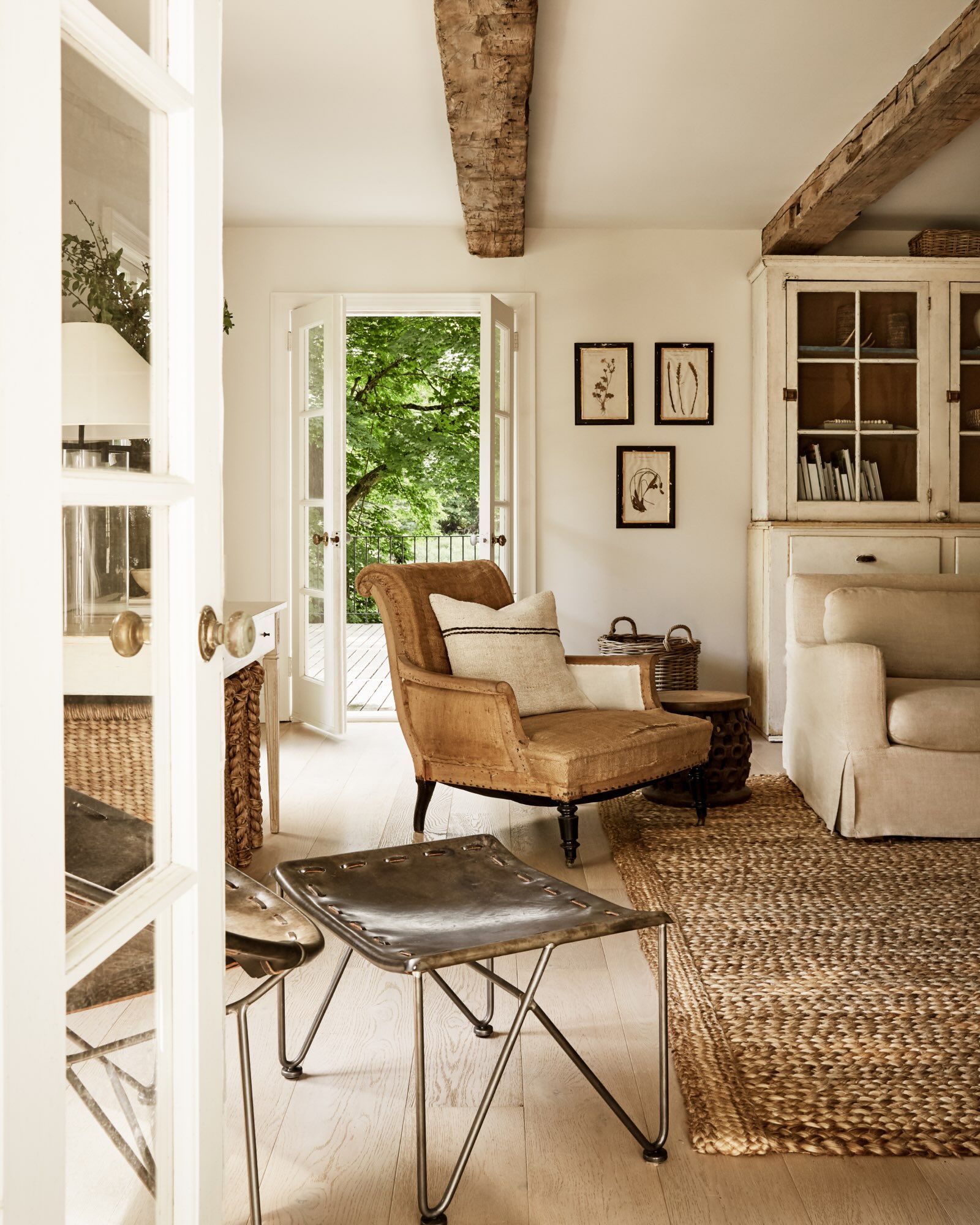
Credits: Instagram
Slender stools can add places to sit without hiding much of the floor in a farmhouse living room. Here, two low seats with crossed dark frames contrast with the fuller upholstered chair and sofa.
Their open bases let the pale boards remain visible and bring a lighter outline beside the woven rug.
Look for sturdy stools with a seat height that works alongside your existing furniture, and try them in position before adding a pair. Keep enough space for nearby doors to open and for people to walk through comfortably.
Repeat the dark frame color in small picture frames or hardware to make the addition feel connected. Simple seat shapes let the rough beams and weathered cupboard keep their character.
17. Soften a Rough Stone Hearth With an Upholstered Chair
Credits: Instagram
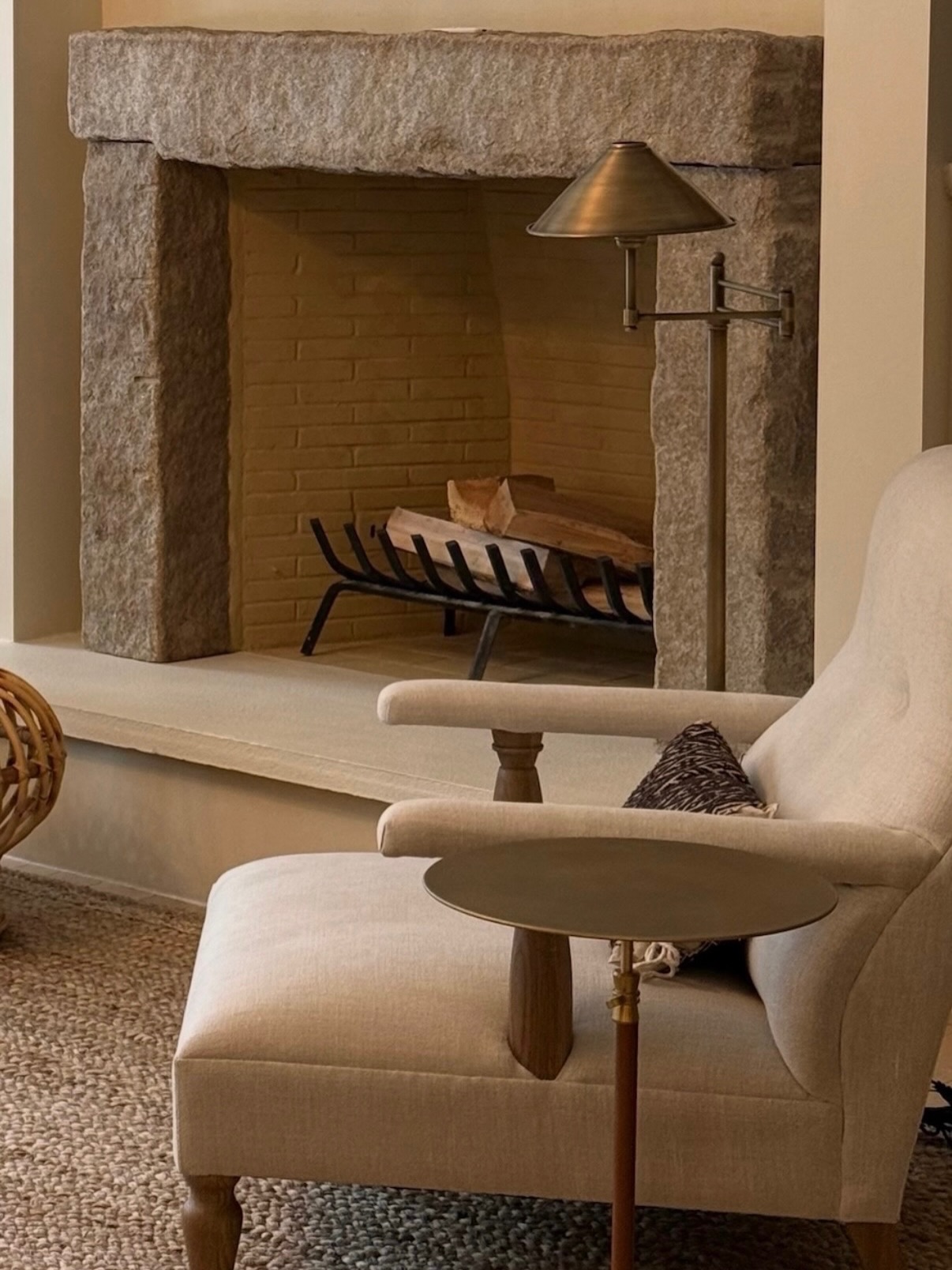
A rough stone fireplace gains a softer companion when the nearby chair has generous upholstery. Here, the mantel’s uneven surface contrasts with a pale fabric seat, rounded padded arms, and turned wood supports.
The two pieces share quiet warm tones, so texture supplies most of the interest. If your living room already has a substantial hearth, try a chair with a simple outline rather than another bulky, heavily carved piece.
A small round side table keeps the corner useful without hiding the chair’s shape. The woven rug adds another tactile surface underfoot, while the metal reading lamp introduces a smoother finish.
Leave the mantel relatively bare so its irregular edges remain visible and the seating corner does not feel crowded.
18. Pair Woodland Wallpaper With Wood Trim
Credits: Instagram
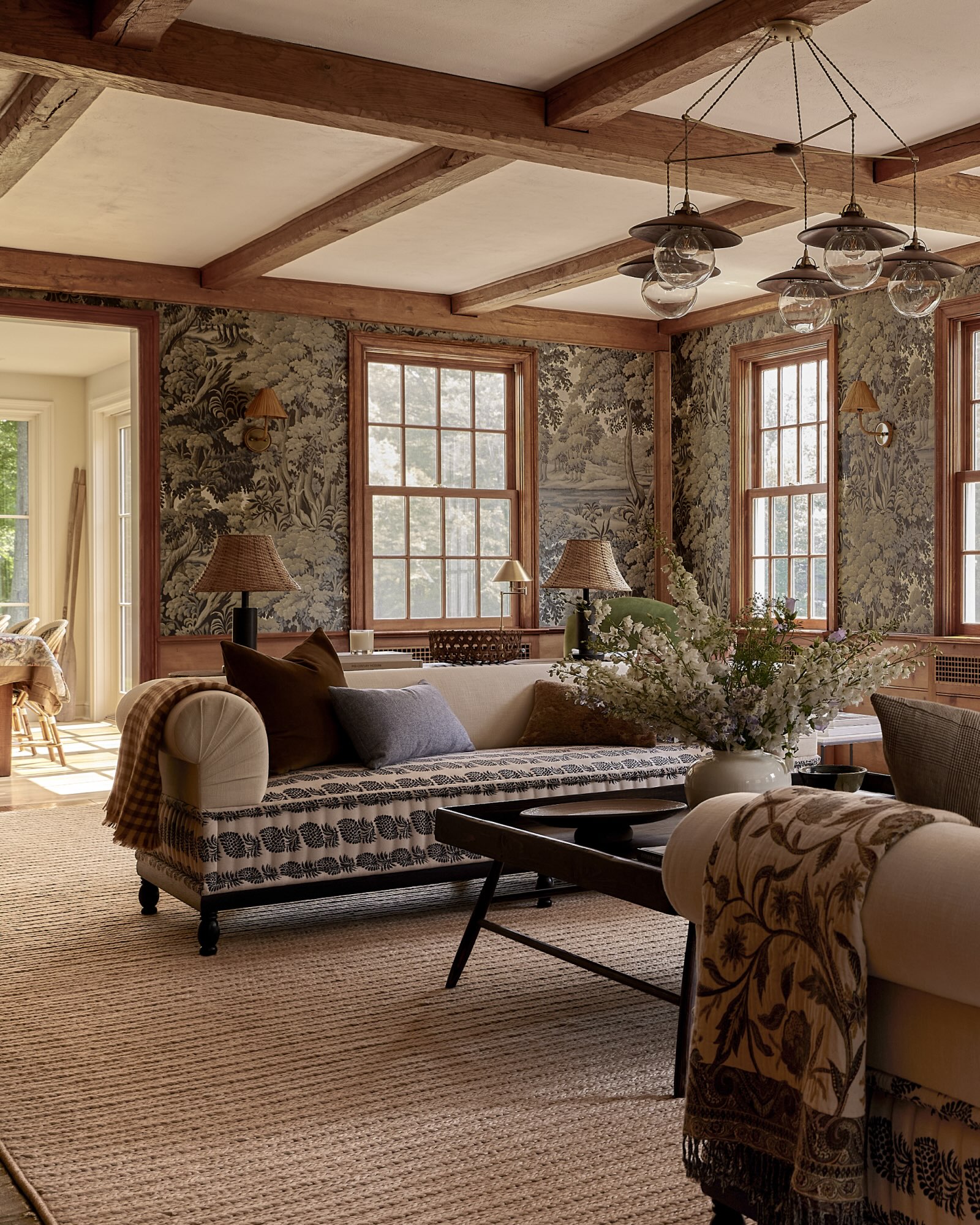
Woodland wallpaper can carry a farmhouse room’s connection to nature beyond the windows. Here, a muted landscape pattern fills the spaces between wood trim and exposed ceiling beams, while the pale ceiling panels keep the overhead grid easy to read.
Choose a scene with a limited color range so the trees and branches add detail without introducing many competing accents. View a large sample beside your existing woodwork before committing.
Let the trim create a clear border around the pattern, and keep nearby lampshades simple. A plain woven rug gives the eye a quieter surface below.
If you also want patterned upholstery, repeat one wallpaper color and use a different pattern scale so each fabric remains distinct within the room.
19. Fit a Long, Narrow Coffee Table Between Facing Seats
Credits: Instagram
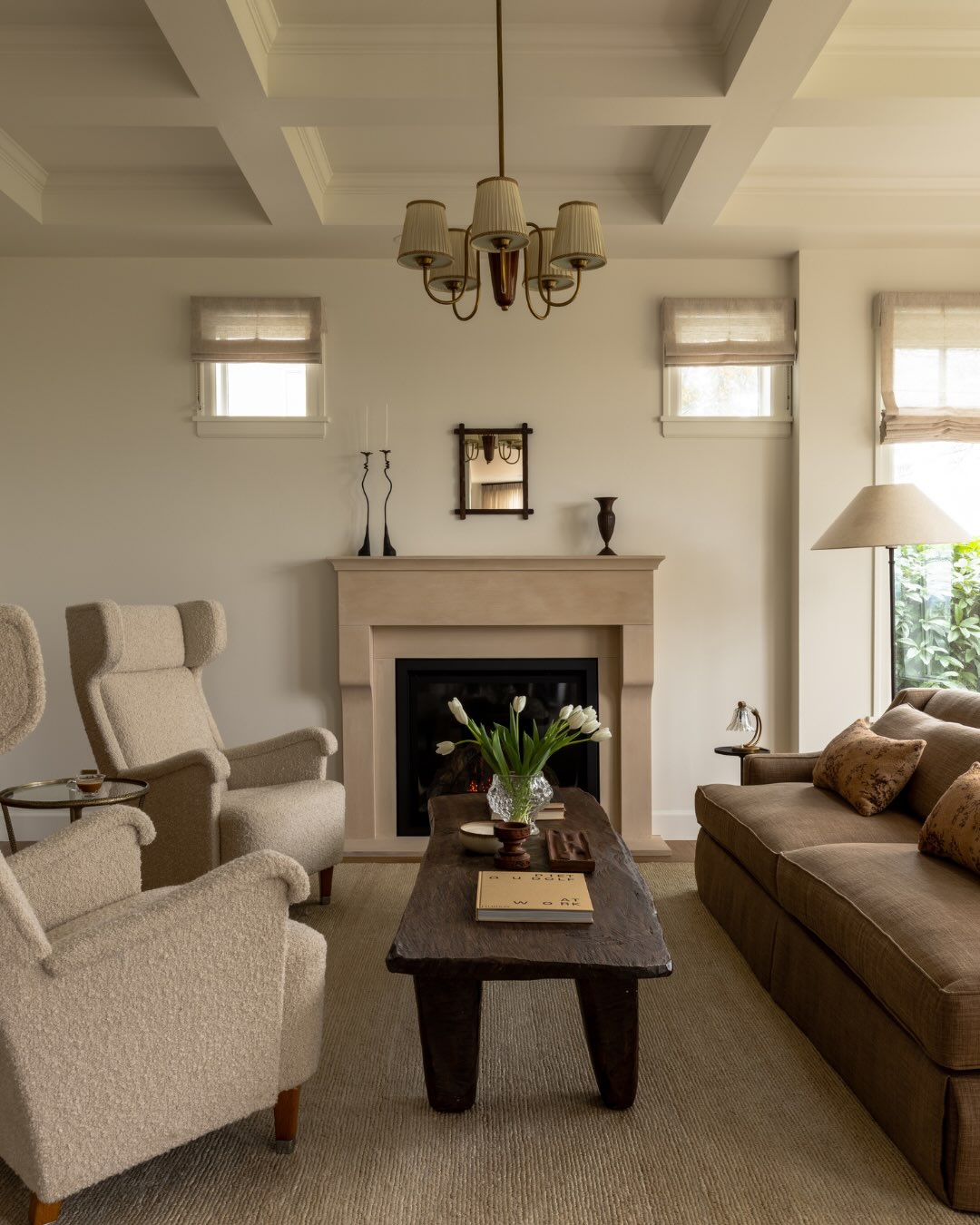
A long, narrow coffee table can serve facing seats while leaving visible floor space along both sides. Here, a dark wood table runs between a brown sofa and two pale wing chairs, drawing the seating group toward the fireplace.
Its irregular edges and substantial legs bring a rustic note to the more formal ceiling and mantel.
Before choosing a similar piece, mark its footprint on your rug and check that everyone can sit down, stand up, and walk around it comfortably.
Keep everyday objects in a few small groups rather than filling the entire length. A vase near one end and a stack of books leave much of the weathered surface visible, letting the wood provide decoration of its own.
20. Carry Fireplace Tile Colors Into Small Accessories
Credits: Instagram
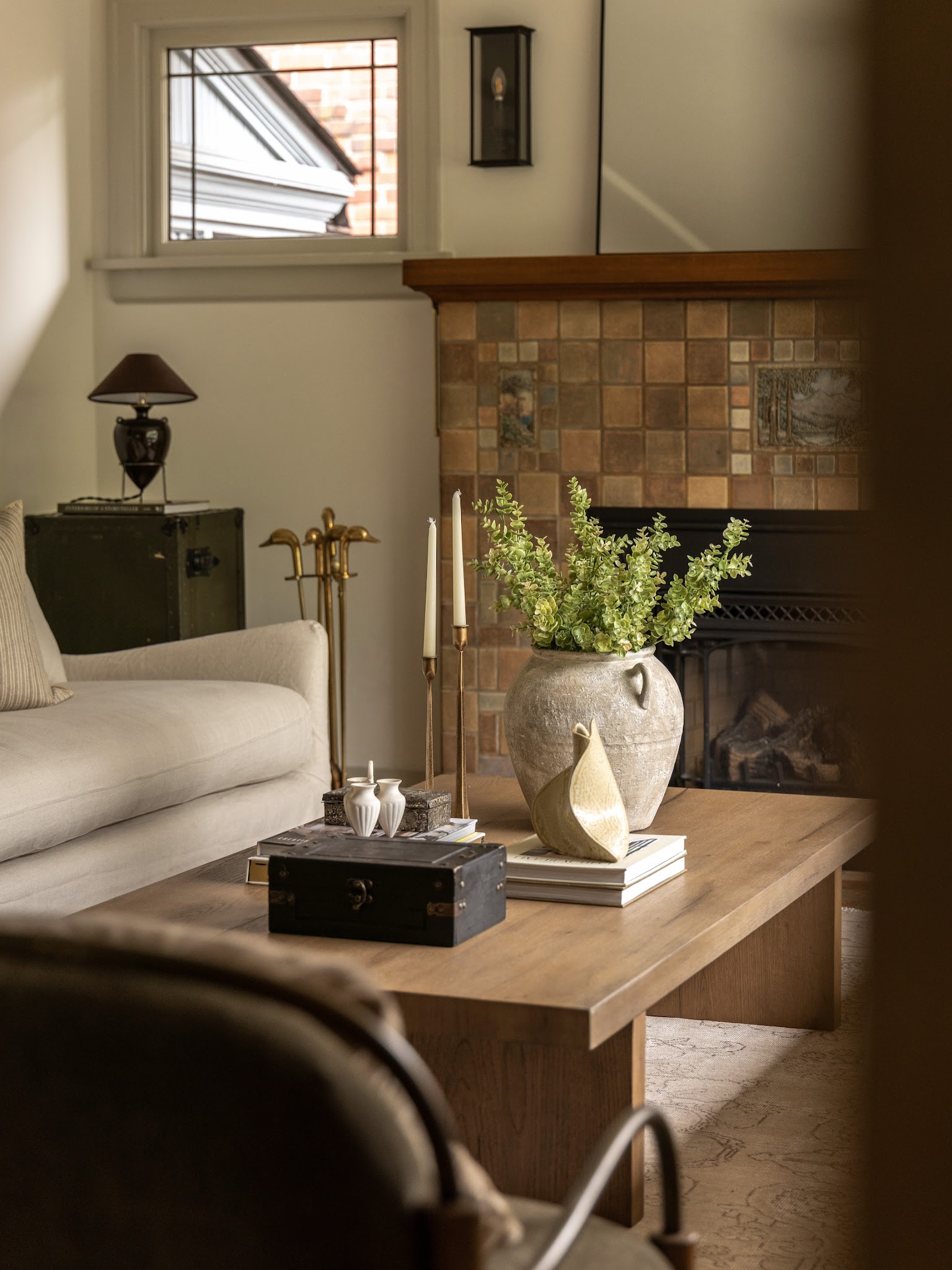
A tiled fireplace can supply the color palette for the rest of a farmhouse sitting area. Here, muted brown and olive tiles sit behind cream upholstery, a broad wood table, and pottery in sandy shades.
Pull two or three tones from the surround before choosing small accessories. A pale textured vase can echo the lighter tiles, while a dark box or lamp repeats the deeper notes without making every piece match.
Keep the largest upholstery surfaces quiet so the tile pattern remains easy to see. Group a few objects on books to vary their height, leaving clear table space beside them.
This approach works with an existing fireplace and lets you refresh the room through movable pieces instead of renovation.