
A room can feel richly layered without relying on dark walls or matching furniture.
Masculine Living Room Ideas in this roundup use contrast, texture, and personal details to give each space its own character, from weathered leather set against painted paneling to deep blue seating framed by black architecture.
You’ll also find ways to make a fluted bar wall a focal point, build a lounge around collected artwork, and balance deep green walls with pale seating.
These examples offer practical cues for combining color, pattern, and materials while keeping the room inviting and usable.
1. Layer Weathered Leather Against Painted Paneling
Credits: Instagram
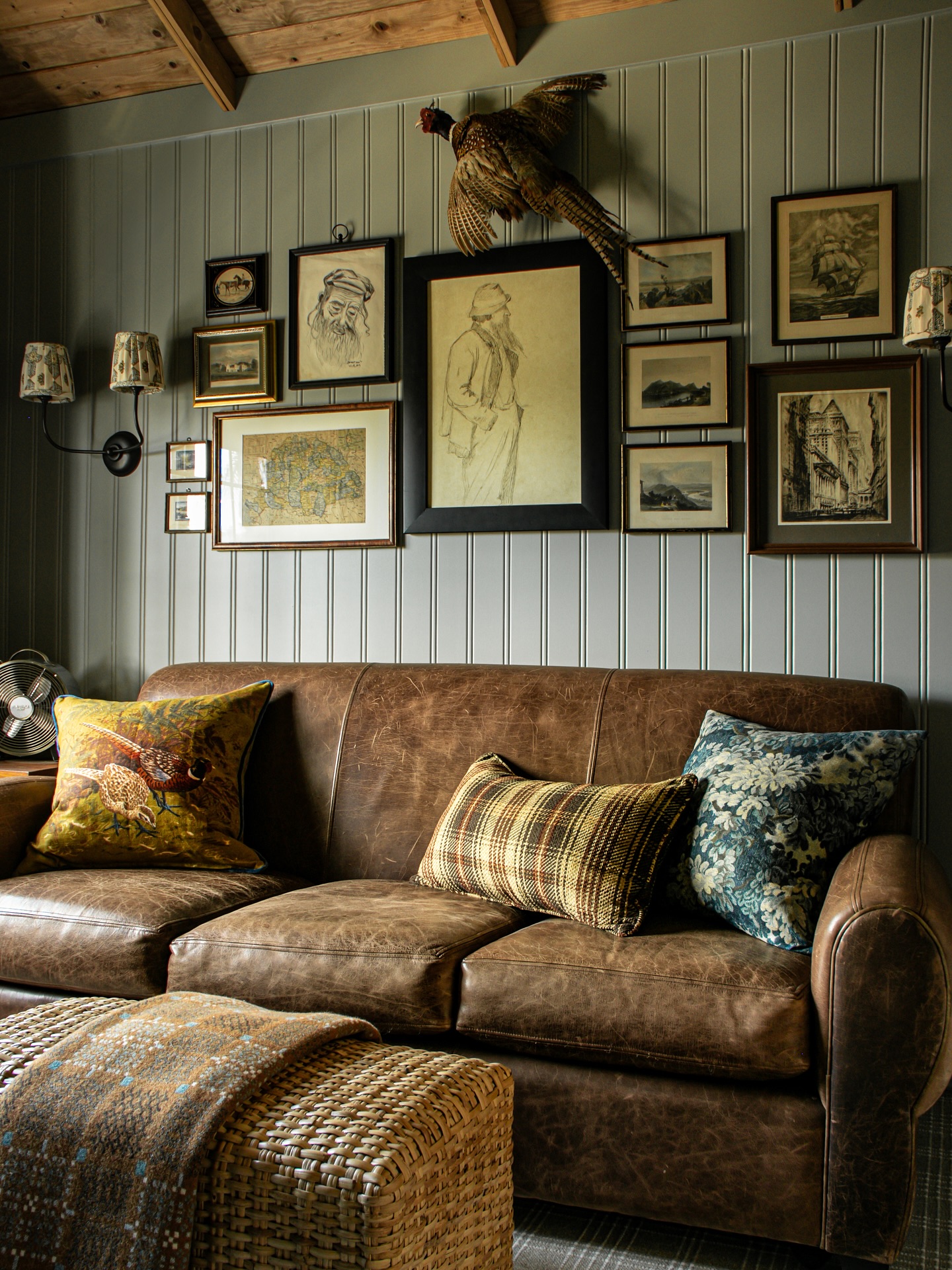
The softly creased brown leather sofa brings a relaxed surface to this loft lounge, where gray green paneling provides a quieter backdrop.
A timber ceiling adds warmth overhead, while portraits, landscapes, and a map create a collected gallery above the seating. Plaid, floral, and bird cushions pick up colors already present in the artwork.
Start with a limited palette when combining this many patterns. A small check can sit comfortably beside a larger botanical design if they share a few tones.
Leave some leather exposed so the sofa remains a strong, simple shape beneath the pictures. Slim wall lights preserve room beside the seating, and a woven ottoman introduces another texture without requiring a new color in the overall arrangement.
2. Frame Deep Blue Seating With Black Architecture
Credits: Instagram
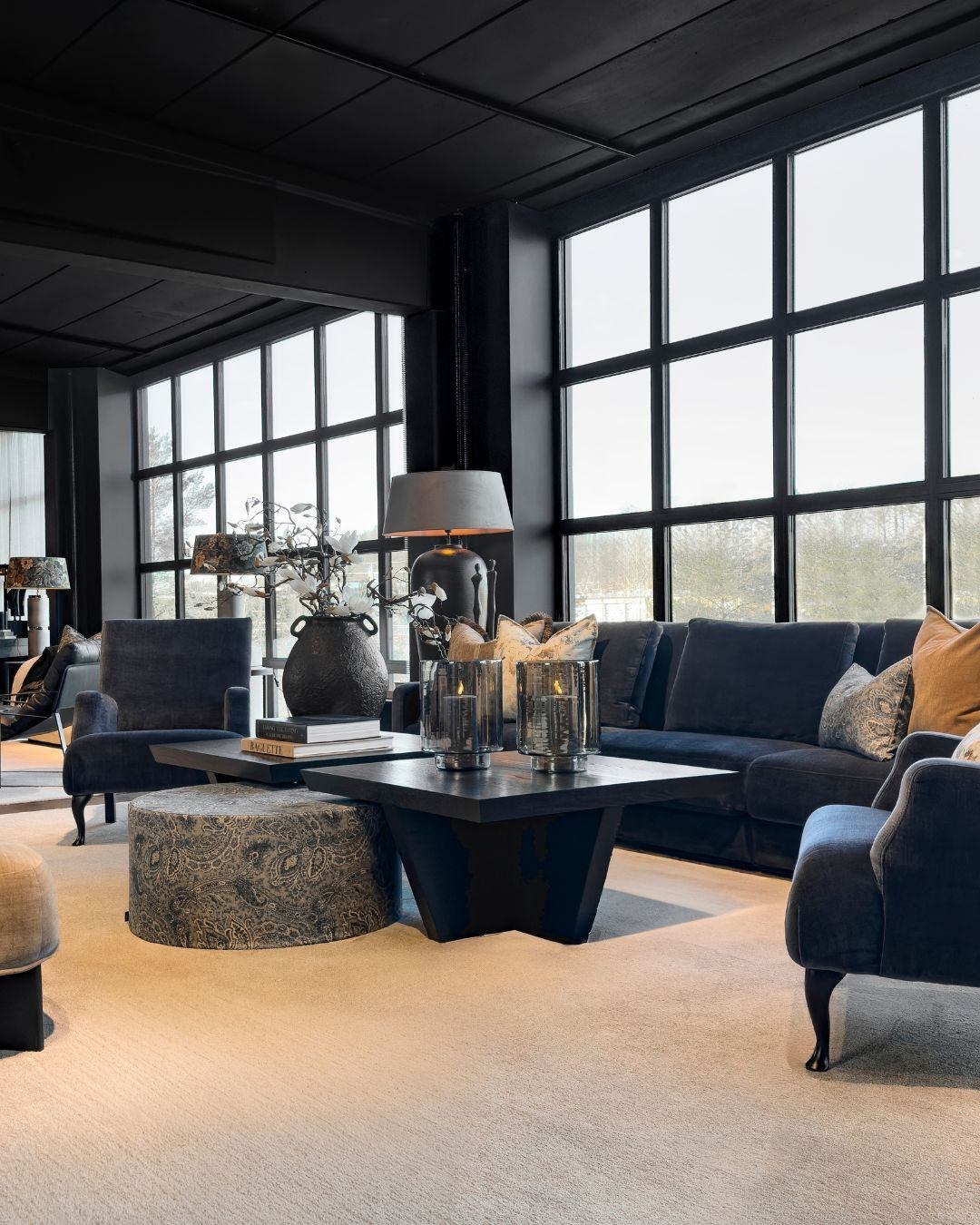
Deep blue seating holds its own against the black ceiling and window grids in this Artwood showroom arrangement. The broad pale rug gives the furniture clear outlines, while substantial angular tables establish a dark center.
Patterned cushions and a round upholstered ottoman soften the repeated rectangles. This balance works particularly well when you want a rich palette but still need the room to feel open.
Keep the floor covering noticeably lighter than the main seating, then repeat one warm neutral in cushions and lampshades. Choose a table with enough visual weight to suit a generous sofa.
If you add several chairs, check the routes between their legs and the table before filling the remaining gaps with decorative objects or footstools.
3. Turn a Fluted Bar Wall Into a Focal Point
Credits: Instagram
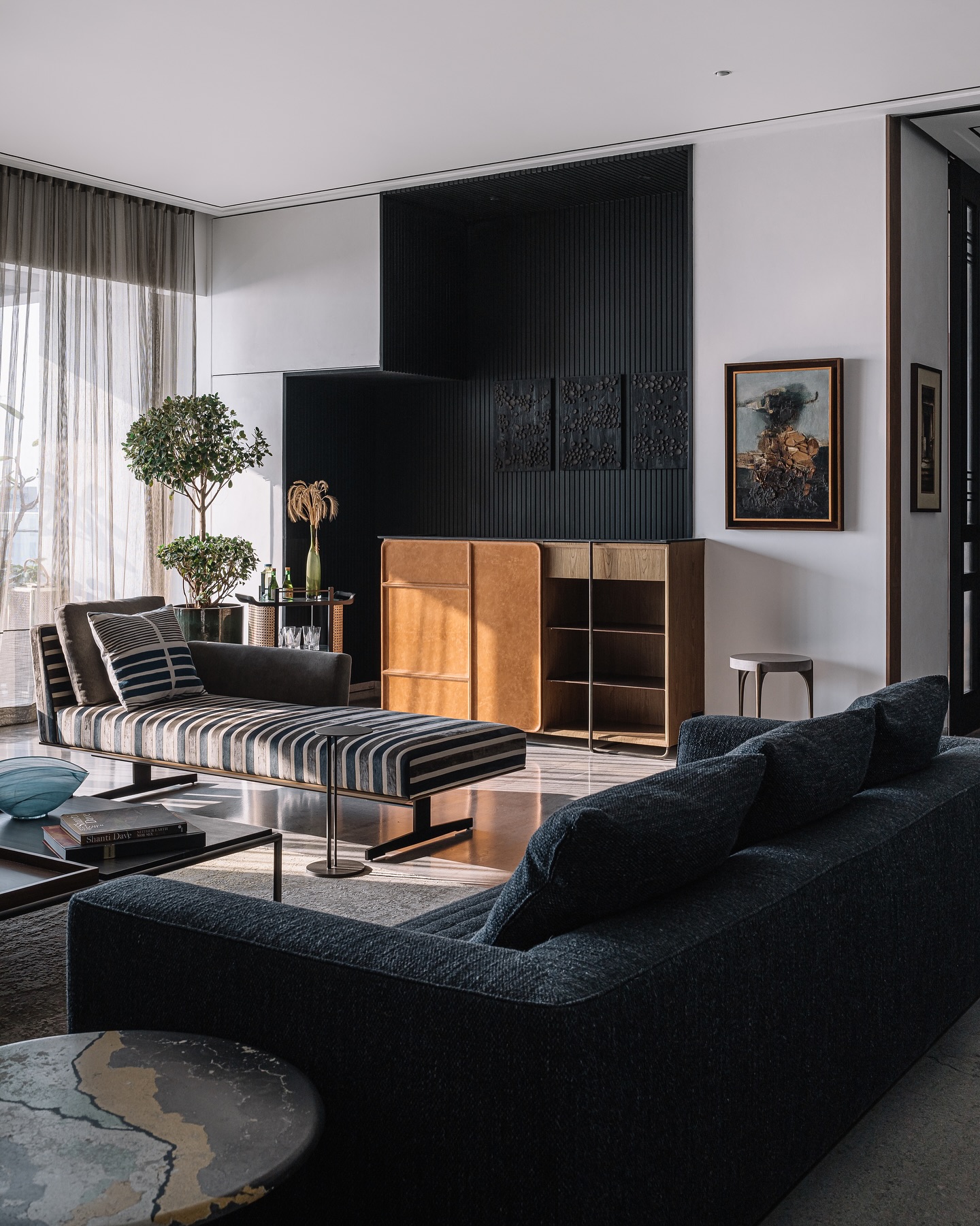
A tall black fluted panel anchors the bar in this Red Architects living space. The designers identify a tan leather front, veneer shelving, and slate countertop, combining warm and cool surfaces within one compact feature.
Nearby, the striped chaise repeats the wall's linear rhythm at a different scale, while the dark blue sofa brings a softer texture. You can borrow the relationship without adding a full bar.
Place a warm storage cabinet against a dark textured wall, then keep surrounding furniture low enough for the vertical feature to remain visible. Choose one clear stripe among otherwise quieter fabrics.
Slim occasional tables provide useful surfaces beside individual seats, leaving the main floor area relatively open between the larger pieces of furniture.
4. Build a Brown Lounge Around Collected Artwork
Credits: Instagram
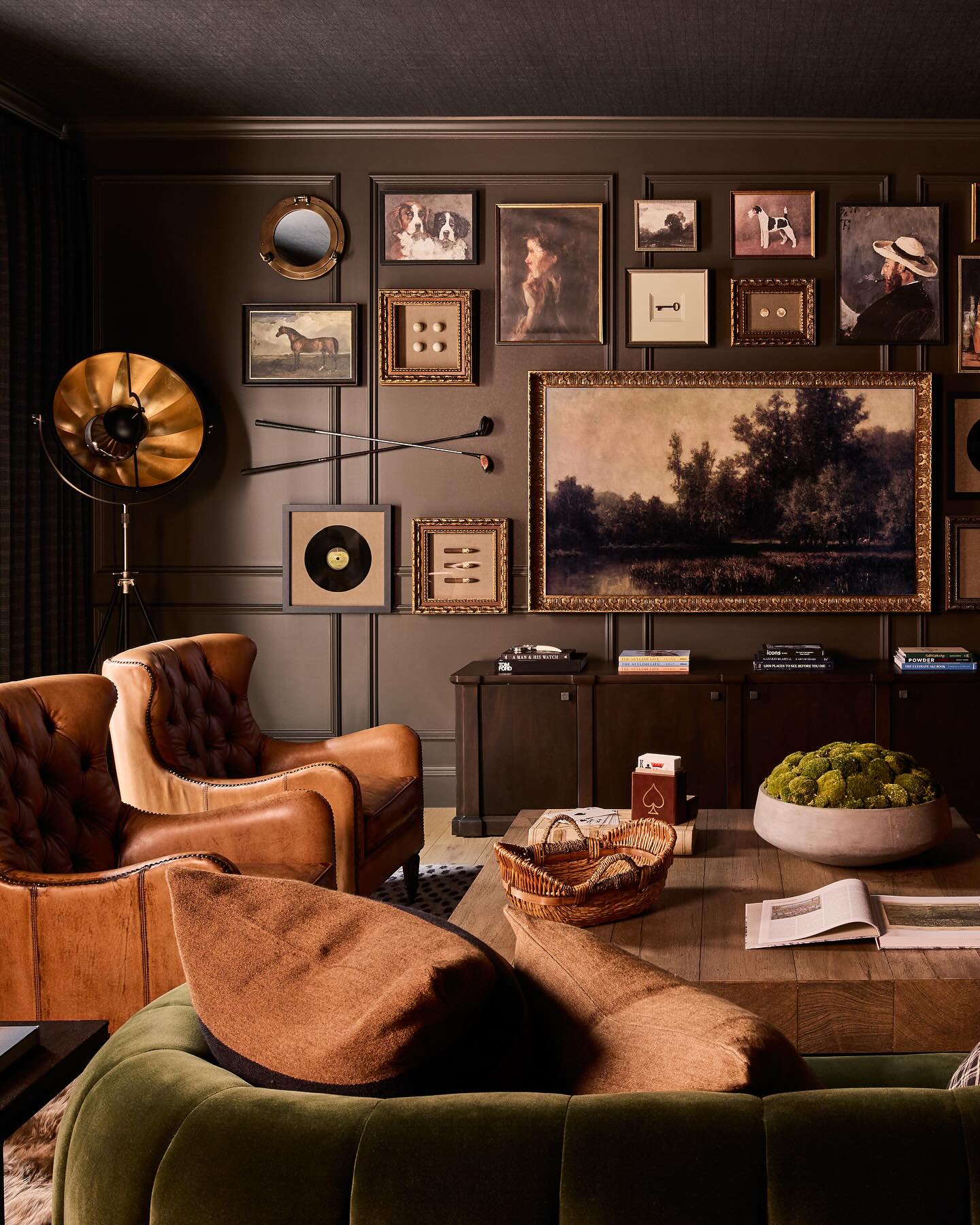
Brown paneled walls wrap around the varied artwork in this basement lounge by Jaimee Rose Interiors. Tufted tan chairs and olive seating gather around a broad wooden table, creating a close, conversational arrangement.
The wall mixes portraits, landscapes, framed objects, and a round mirror, with gold tones linking otherwise different pieces. For a similar collected look, start with one large picture and arrange smaller works around its edges.
Keep your frames within a few related finishes so the display retains some continuity. A warm metallic lamp adds a reflective accent against the muted wall.
Give the central table enough clear surface for actual use, and repeat the seating colors in cushions to connect the room without making every piece match.
5. Give an Ochre Sofa a Graphic Gallery Wall
Credits: Instagram
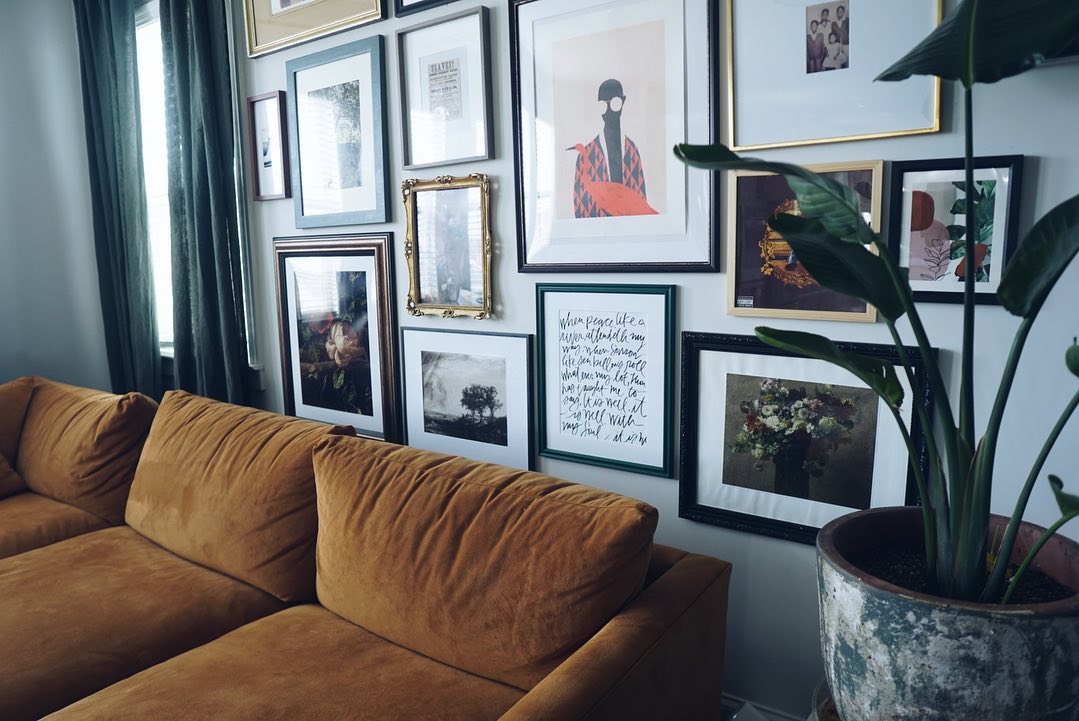
The warm ochre sofa forms a broad band beneath this tightly arranged gallery wall. Black and gold frames surround photography, illustrations, text, and paintings, while generous white borders help separate their different styles.
Dark curtains and a large leafy plant add strong vertical shapes at either side of the cropped view. Begin your own arrangement with pieces you want to keep seeing, then test their spacing before hanging.
Repeating frame colors can bring order to a varied collection without making the artwork uniform. Pull one warm tone from the display into your main upholstery or a throw.
A substantial planter adds texture near the sofa, but leave enough clearance for curtains to move and for anyone using the adjacent seat.
6. Balance Deep Green Walls With Pale Seating
Credits: Instagram
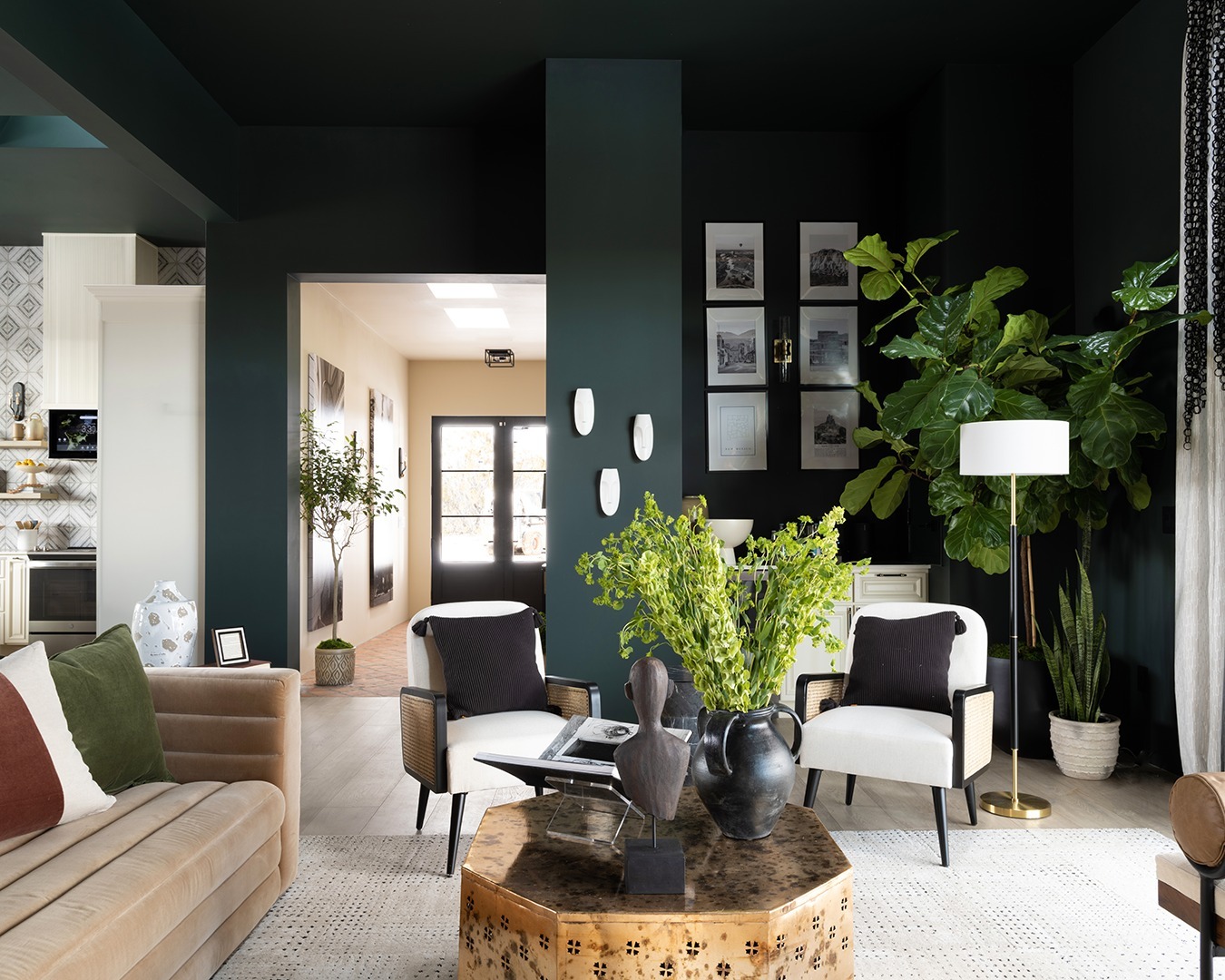
Deep green walls and ceiling surround pale upholstered seating in this HGTV Smart Home living room. The official paint caption identifies the living room color as Jasper HGSW6216.
Black chair frames and cushions connect the lighter seats to the dark background, while a warm metallic coffee table adds a different kind of brightness.
The large plant emphasizes the green palette through shape and texture. Test a deep paint sample in daylight and under your evening lamps before extending it overhead.
A pale rug can keep furniture edges readable, especially when several dark elements sit together. Choose a few accessories that repeat the wall color, then allow light upholstery and simple white lampshades to provide breathing room throughout the seating arrangement.
7. Use a Gridded Mirror Above a Warm Brown Sofa
Credits: Instagram
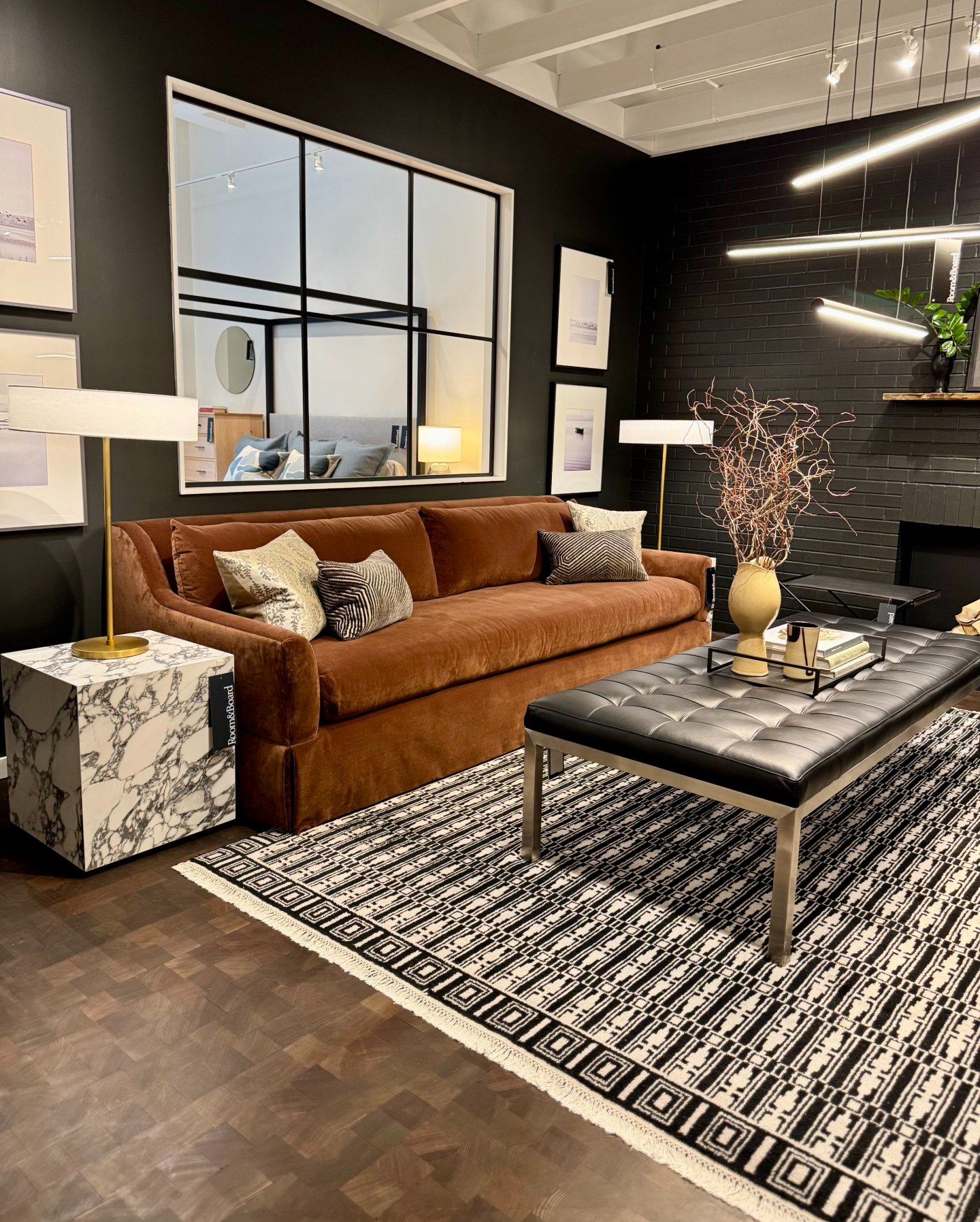
A large gridded mirror gives this Room and Board showroom arrangement a strong graphic center. Its black divisions echo the brick fireplace and geometric rug, while the warm brown sofa interrupts the darker surfaces.
Pale lampshades and framed prints create smaller bright areas around the seating. The tufted black bench doubles visually as a long central surface, with a tray grouping the display objects.
When adapting the idea, check the mirror's reflection from your usual seats before choosing its position. Keep repeated lines at different scales so the room has rhythm without becoming visually crowded.
A slim bench can suit a narrow arrangement, but confirm its height works for your intended use and leave a comfortable passage around both ends.
8. Let Timber Beams Set the Tone in a Pale Room
Credits: Instagram
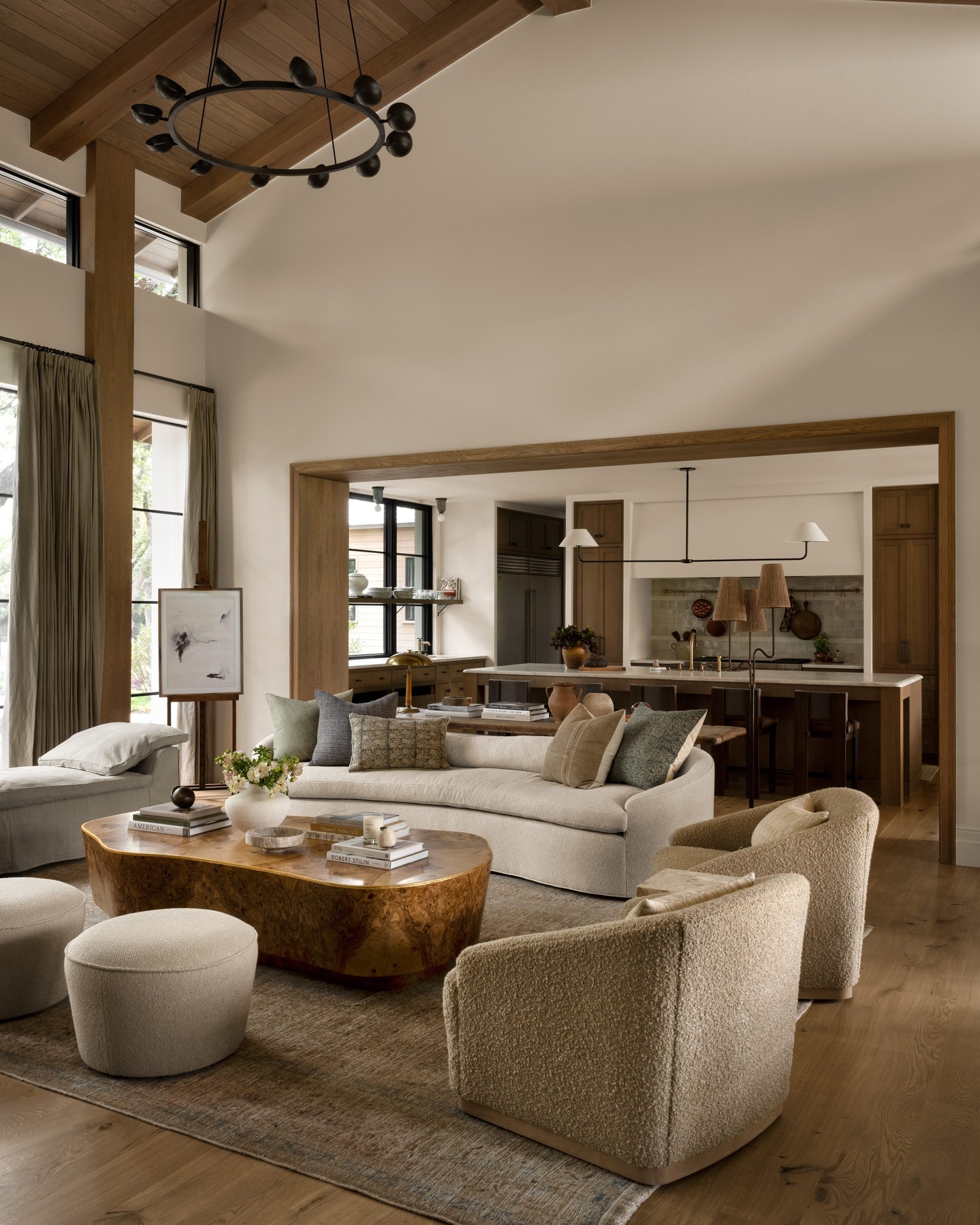
Timber beams, a broad doorway surround, and warm flooring give this Studio McGee living room its structure. Pale upholstery keeps those architectural features prominent, while the substantial coffee table introduces a more expressive wood pattern at seat level.
A black circular chandelier outlines the high ceiling without filling its open volume. The seating combines rounded chairs, a long sofa, and compact stools within one generous rug.
Take the same approach by choosing furniture with related neutral tones but noticeably different textures. Let one wooden piece carry the most pronounced grain, and use quieter surfaces around it.
Where a living room opens into a kitchen, position the sofa to define the lounge while preserving a clear route between the two areas.
9. Brighten Brick and Wood With Turquoise Chairs
Credits: Instagram
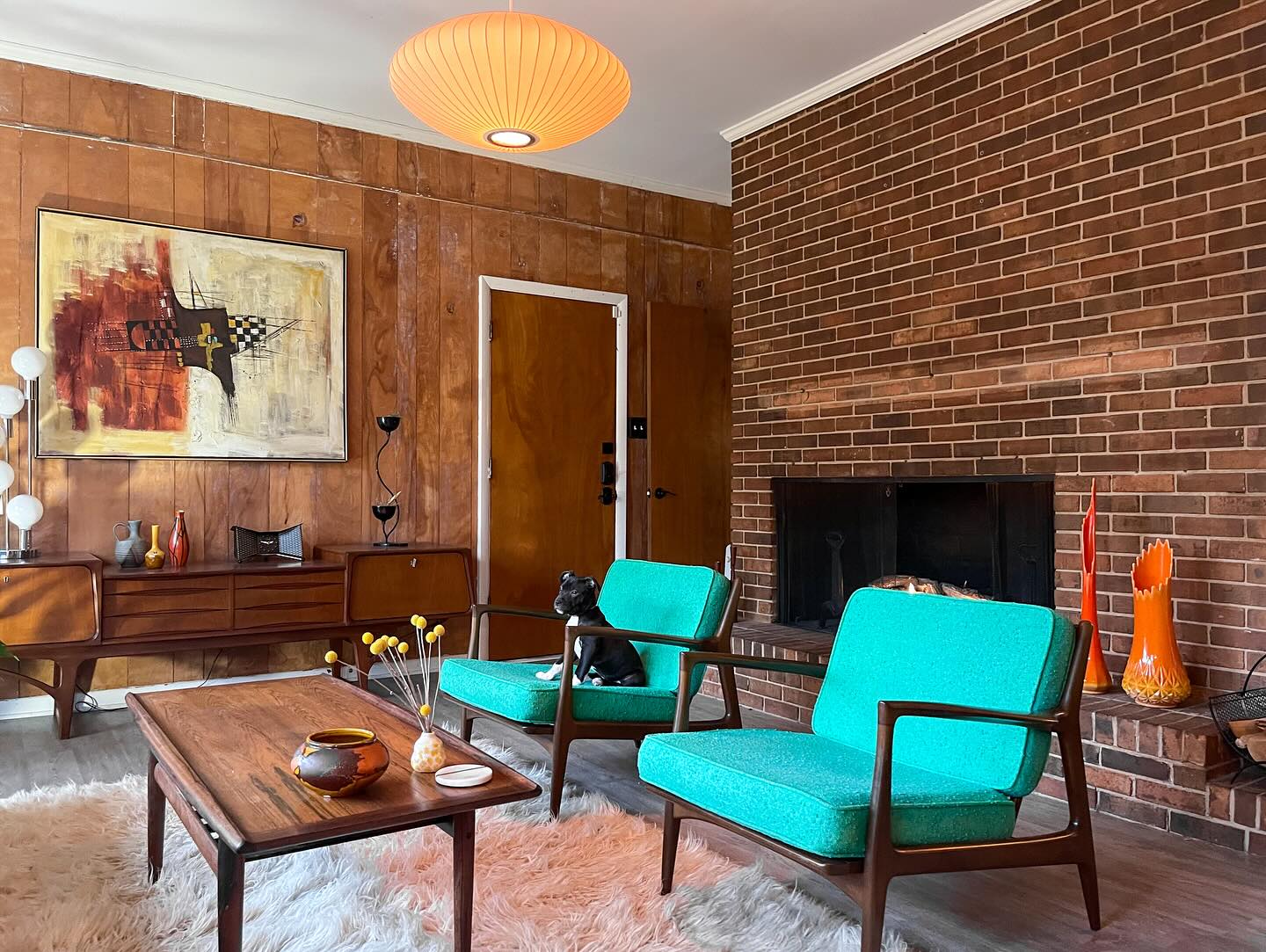
Two turquoise armchairs bring a burst of color to this sunken den, framed by wood paneling and a broad brick fireplace.
Their exposed wooden arms connect to the low coffee table and long storage cabinet, while a pale shaggy rug separates the furniture from the floor.
The glowing rounded pendant softens the room's many straight lines. This is a useful direction when you want to keep existing timber and brick visible.
Choose one confident upholstery color, then repeat warmer accents sparingly in artwork or glassware. Furniture raised on slender legs helps the arrangement feel lighter.
Keep the fireplace approach clear, and select a table that leaves enough room to move easily between the chairs and the rest of the seating.
10. Warm an Industrial Loft With Low Amber Lighting
Credits: Instagram
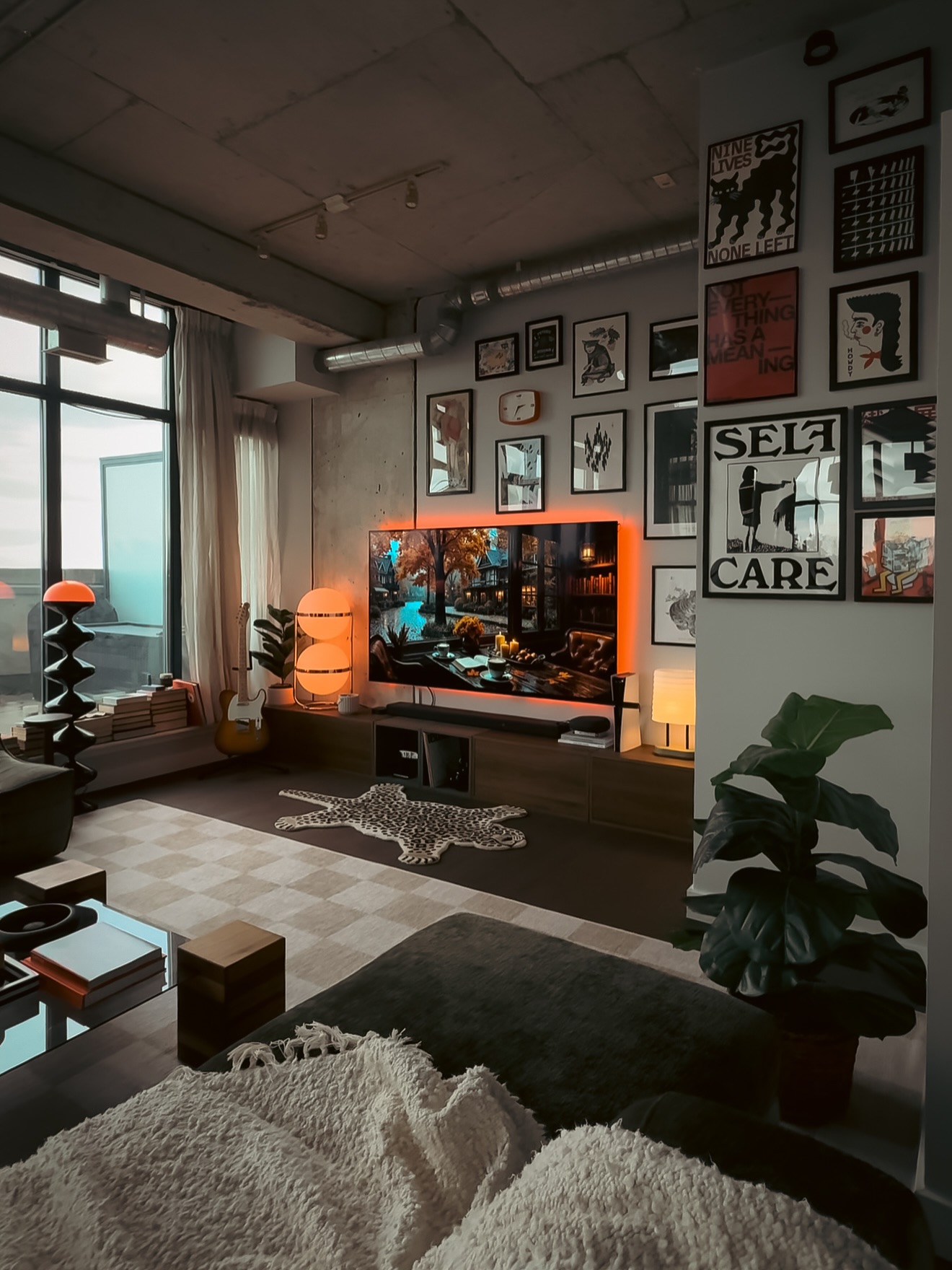
Amber lamps and a glow behind the television warm the exposed concrete and visible ductwork in this loft living room. A gallery of graphic prints extends across the wall, while long wooden media storage keeps the lower half relatively orderly.
Dark seating and a pale textured throw make the foreground feel softer than the architecture above. Try several smaller pools of light when a single overhead fitting leaves an industrial room feeling stark.
Keep screens free from distracting reflections, and choose lamp positions that also illuminate useful surfaces. A large pale rug can connect separate seats without hiding all the flooring.
Group framed artwork around the actual wall shape, leaving the television enough visual space to remain comfortable for viewing.
11. Soften Exposed Brick With a Pale Media Wall
Credits: Instagram
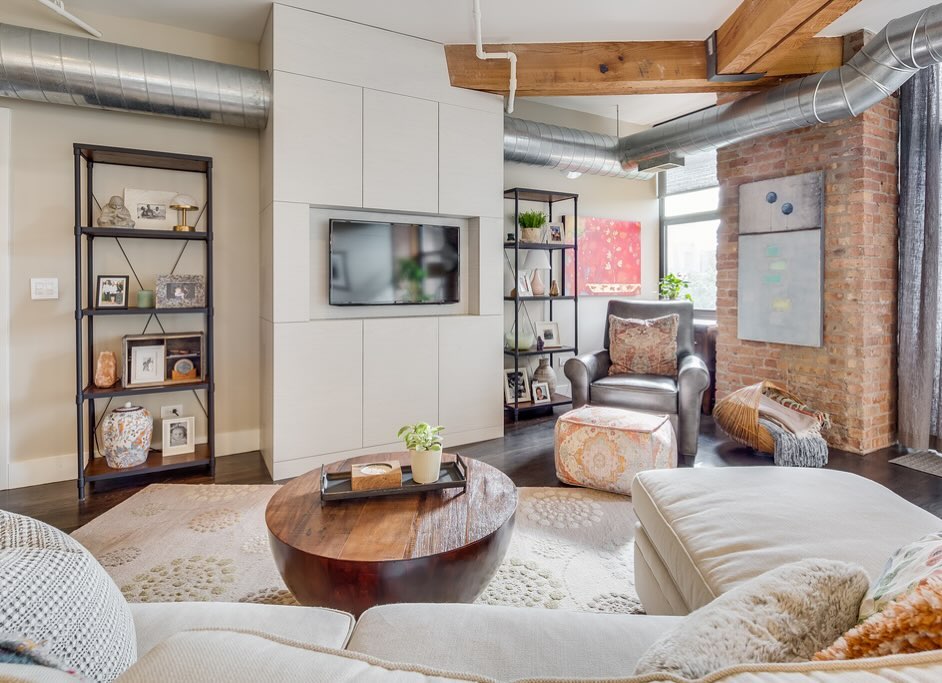
The pale television wall gives this Habitar Design living room a calm center between exposed brick, timber beams, and silver ductwork. A low round wooden table adds warmth without repeating every architectural angle.
Light upholstery and a generous neutral rug soften the foreground, while narrow open shelves provide display space on either side of the screen. When a room already has several strong structural materials, keep the largest new surfaces quiet.
You can repeat the brick's warmth in small patterned textiles instead of introducing another bold wall treatment. Position a comfortable chair near the window if the layout allows, with a compact footstool that can move aside.
Leave open shelf areas between objects so the background stays easy to read.
12. Give a Purple Sectional Room to Show Its Texture
Credits: Instagram
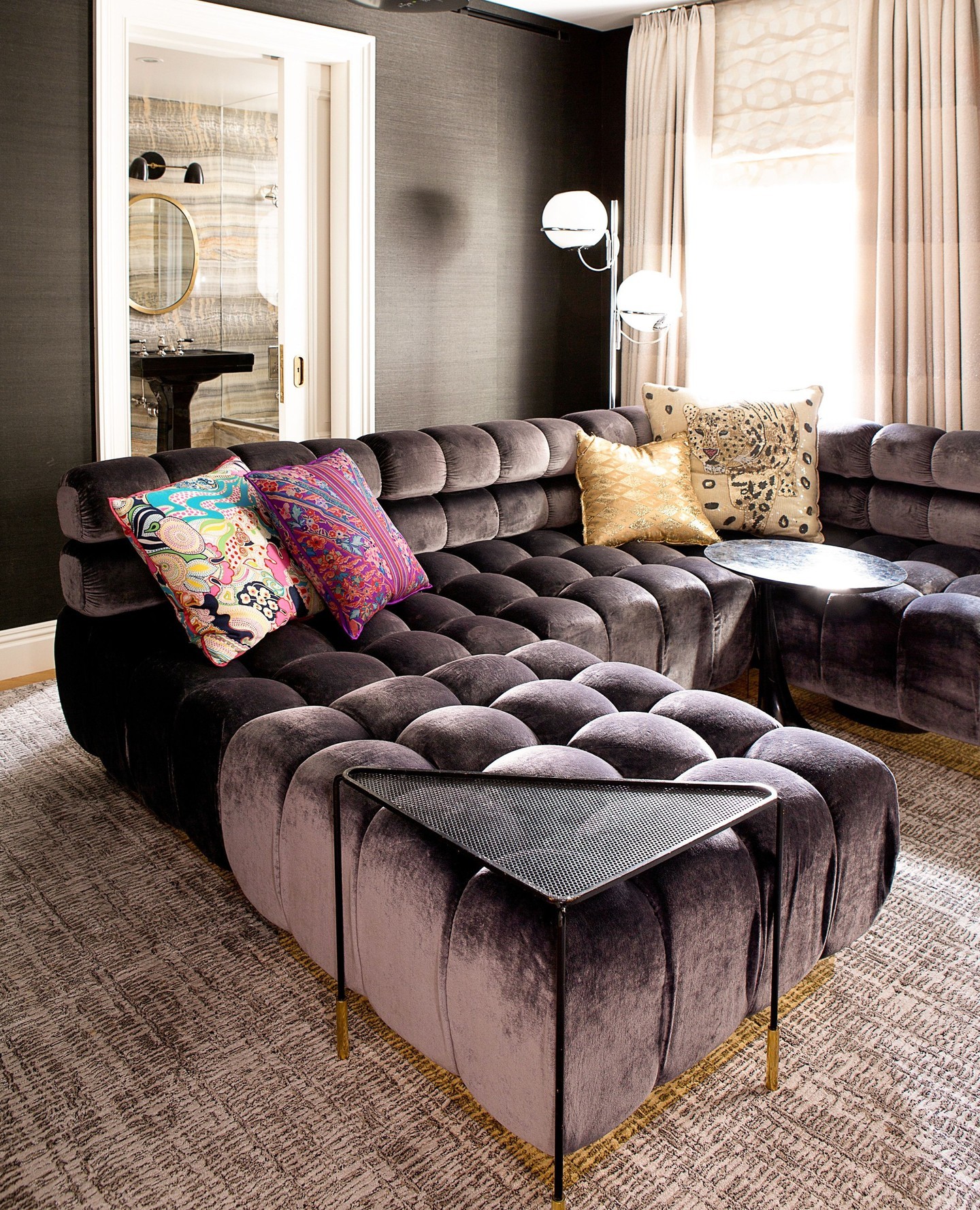
Deep tufting makes the purple velvet sectional the main event in this Fawn Galli media room. Dark textured walls reinforce its rich color, while pale curtains and white trim bring brightness around the edges.
Patterned cushions introduce concentrated bursts of pink, turquoise, and gold without covering the sofa. Slim occasional tables sit beside the generously padded seating, including a triangular metal piece with an airy perforated top.
A similarly sculptural sofa needs relatively little decoration. Keep enough of its upholstery visible to appreciate the shape, then choose small tables that fit the available gaps.
If you enjoy several cushion patterns, vary their scale and limit the total number. A quiet rug helps the bolder fabrics remain distinct within the arrangement.
13. Pair a Striped Rocker With a Graphic Round Table
Credits: Instagram
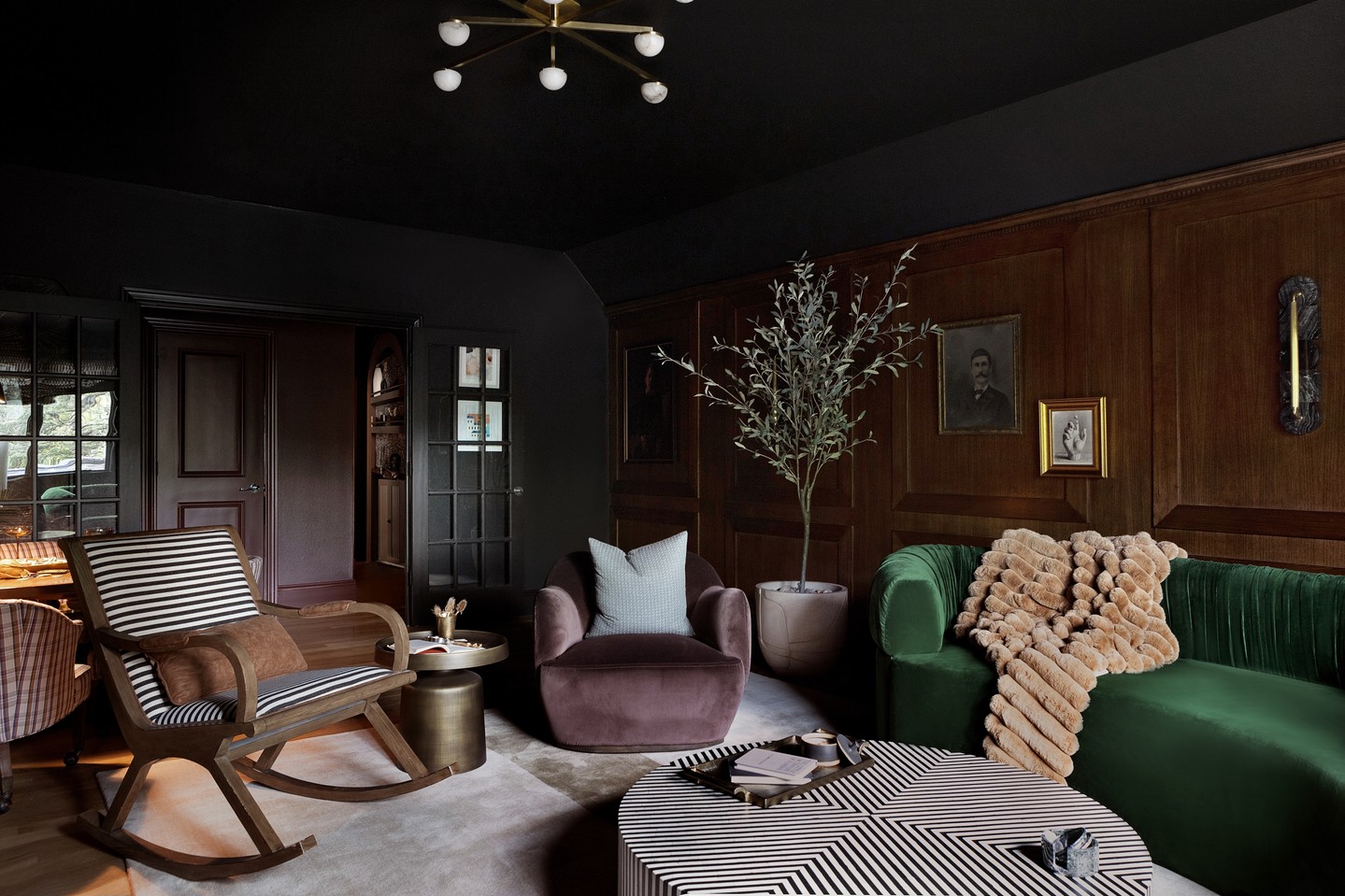
Black and white stripes connect the rocking chair to the round table in this Urbanology Designs media room. Their crisp lines bring energy to warm wood paneling, a green sofa, and a plum chair.
The dark ceiling continues the enveloping palette, while a pale rug outlines the seating group below. Mixing chair shapes works here because the colors and repeated stripes provide continuity.
Try one patterned accent chair beside solid upholstery, then repeat its simplest motif on a smaller surface. Keep generous space behind a rocking chair so it can move comfortably.
A soft throw adds another tactile layer, and restrained wall art lets the timber panels remain visible rather than turning every available rectangle into a competing decorative feature.
14. Keep a Dark Paneled Lounge Light at Its Center
Credits: Instagram
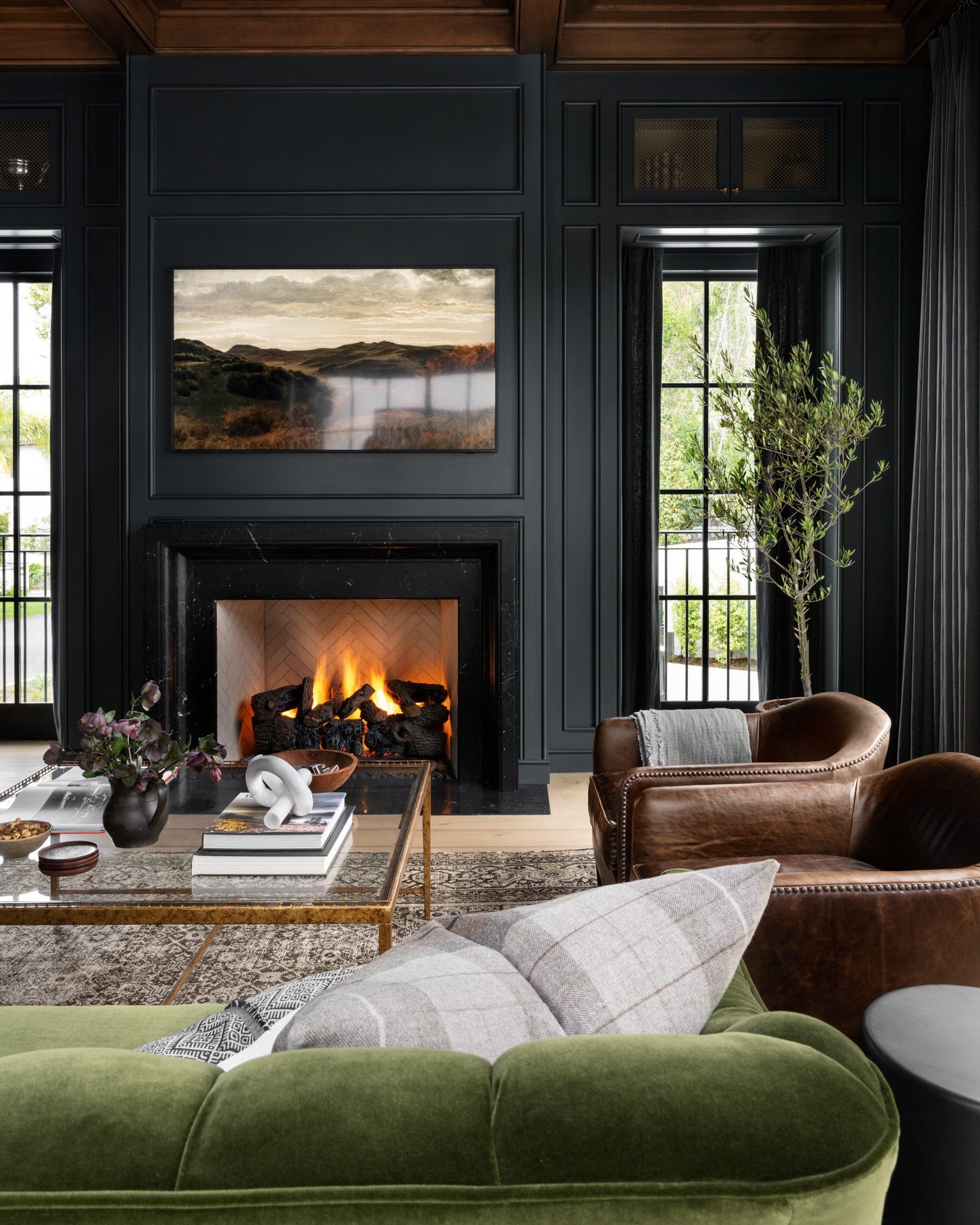
A glass topped table leaves the patterned rug visible in this Studio McGee lounge, easing the weight of dark wall paneling and substantial seating.
Brown leather club chairs face an olive sofa around the fireplace, while narrow glazed doors introduce bright vertical openings. The table's slim warm metallic frame connects with the leather without adding another broad opaque surface.
Consider this approach when your room already has dark walls and several deep seats. A transparent tabletop can make the center feel more open, although its size still needs to leave comfortable space.
Keep most accessories low and grouped together. Light cushions and a casually folded throw add small pale areas, helping each piece of furniture separate from the darker background.
15. Echo a Timber Ceiling With Tan Sofa Cushions
Credits: Instagram
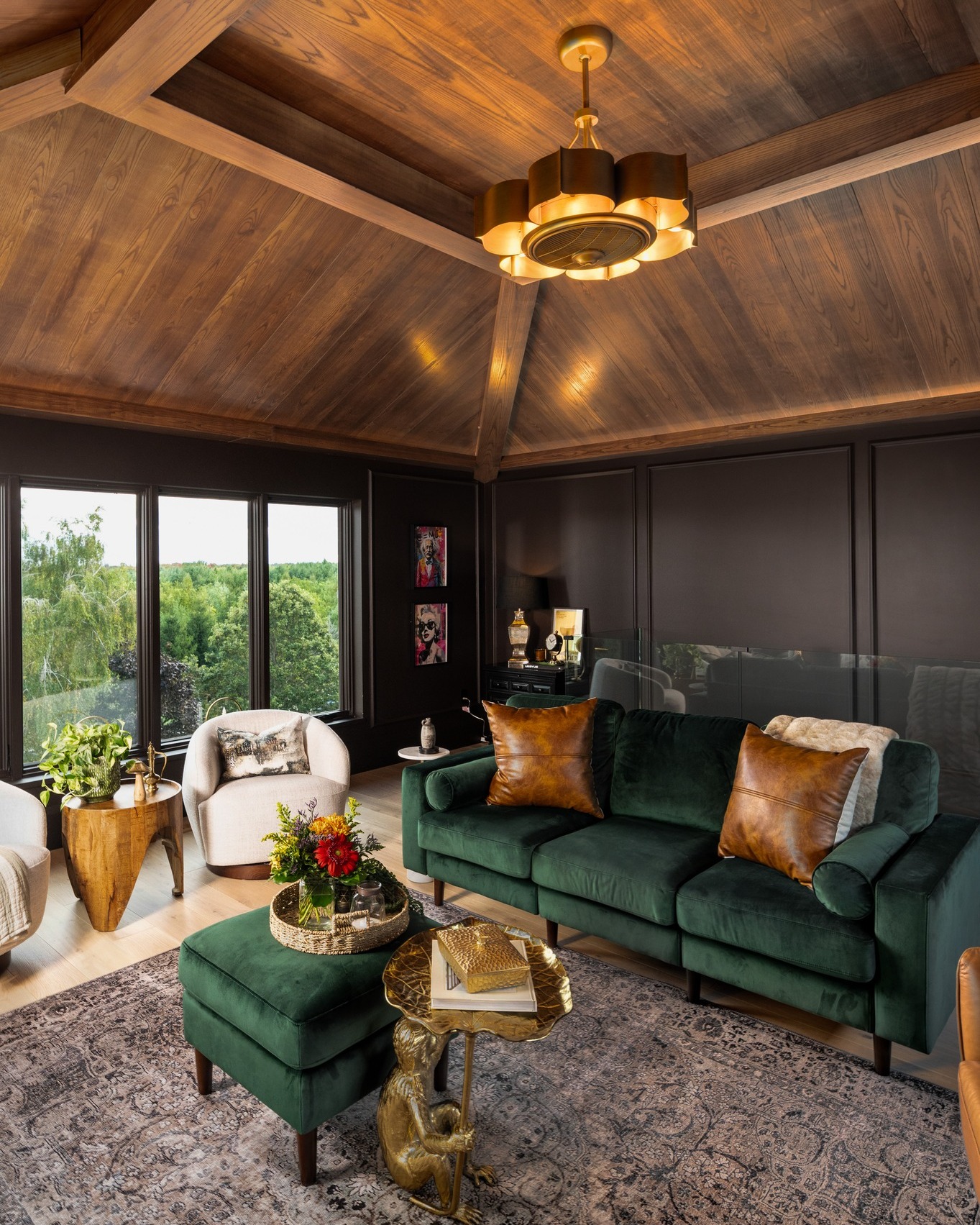
Tan cushions bring the warmth of the faceted timber ceiling down to the deep green sofa in this Erika Friesen Design sitting area.
A matching green ottoman anchors the center, while pale rounded chairs and a muted rug prevent the brown walls from dominating. Gold toned accent tables and the overhead light add reflective surfaces throughout the arrangement.
You can borrow the color connection even without a detailed ceiling. Pair deep green upholstery with warm tan cushions, then add lighter fabric on a companion chair.
Choose one sculptural side table rather than filling every gap with elaborate pieces. A tray makes an upholstered ottoman more useful for drinks, and a separate small table keeps a reachable surface available beside it.
16. Use Record Sleeves to Give Dark Walls Personality
Credits: Instagram
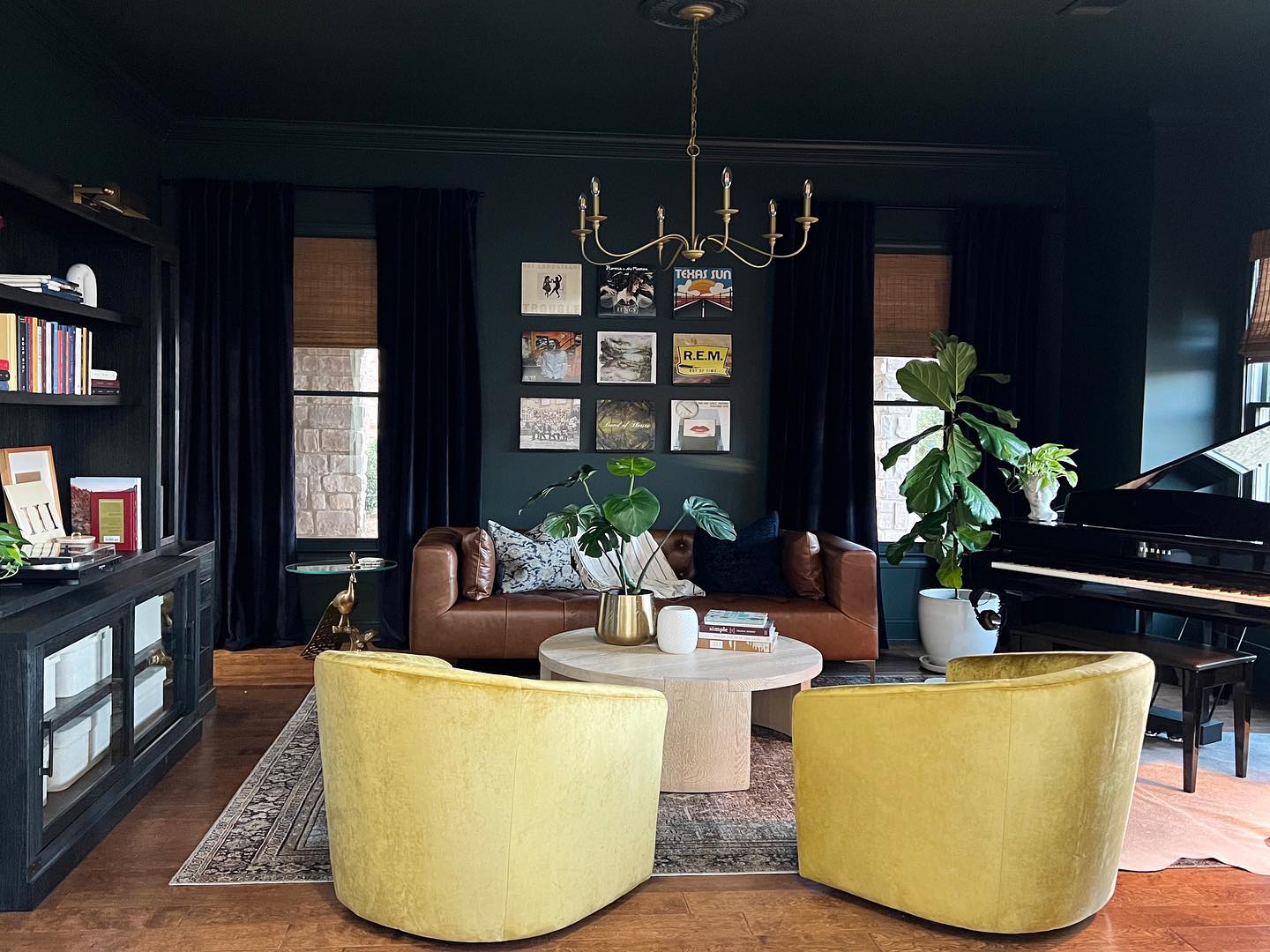
Nine record sleeves form an orderly grid above the brown sofa in this dark living room.
Tall bookcases and a piano make music and reading part of the layout, while two curved chartreuse chairs bring a brighter color into the foreground.
A round pale table creates a clear meeting point between the seats. Use an existing collection to guide your display, keeping spacing consistent even when the cover designs vary.
If you include an instrument, allow enough room for its bench and access before positioning the lounge furniture. Dark curtains can continue a deep wall color, with woven shades adding warmth at the windows.
Keep a few lighter objects among the books so the shelving retains visible depth and detail.
17. Frame a Smoked Mirror With Dark Shelving
Credits: Instagram
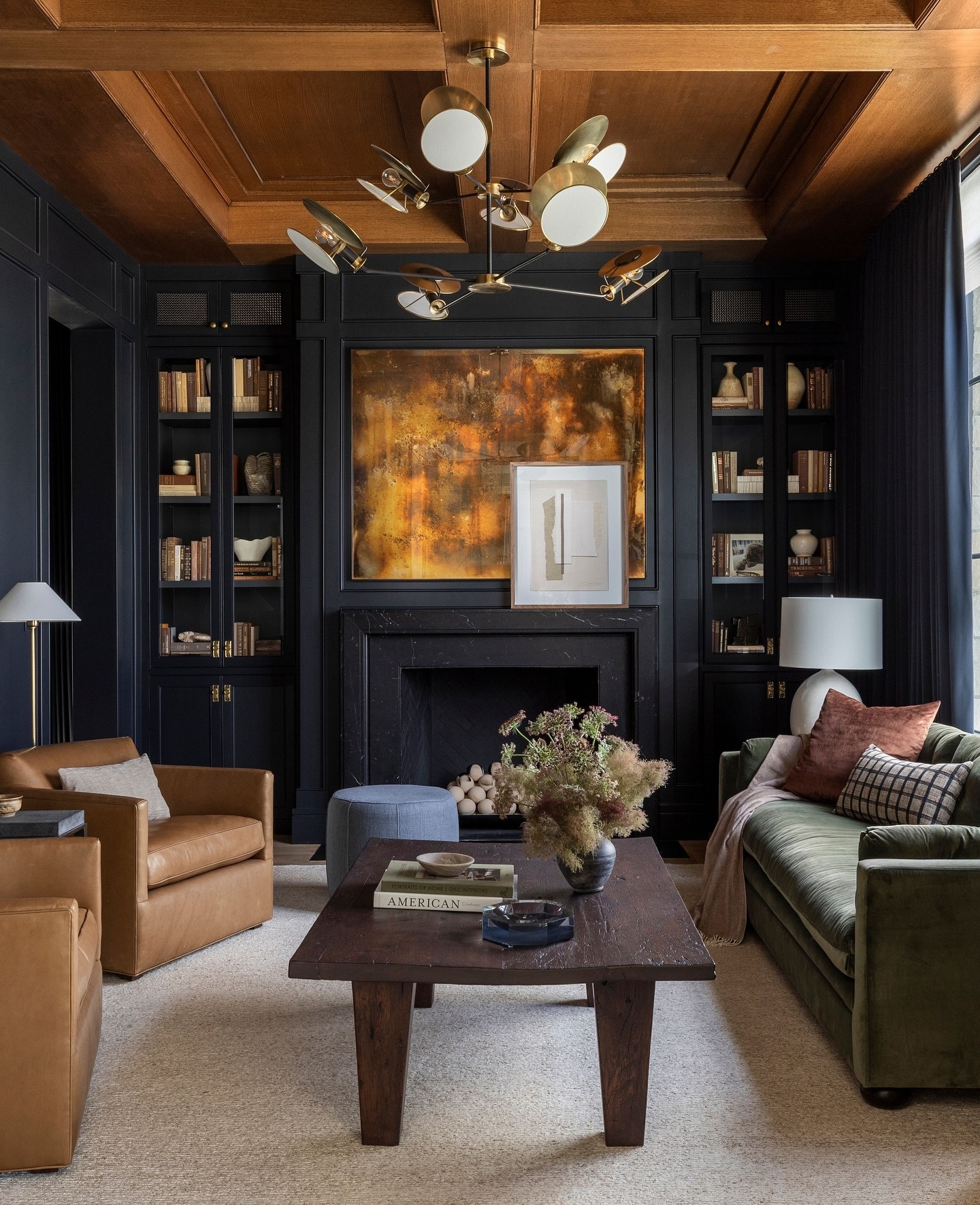
The large smoked mirror above the fireplace brings a mottled golden glow to this Marie Flanigan Interiors parlor. Dark cabinetry frames it symmetrically, and a timber coffered ceiling extends the warm tones overhead.
Brown armchairs and an olive sofa face a simple rectangular wooden table, leaving the reflective wall feature as the room's strongest visual accent.
A smoked mirror can offer a softer reflection than clear glass, but check its effect in your own lighting before committing to a large piece.
Balance it with quieter furniture shapes and restrained shelf styling. Books, pale vessels, and small framed pictures give the cabinets interest without filling every opening.
Light lampshades and a neutral rug provide useful contrast around the lower seating area.
18. Center an Olive Sectional Around an Oversized Ottoman
Credits: Instagram
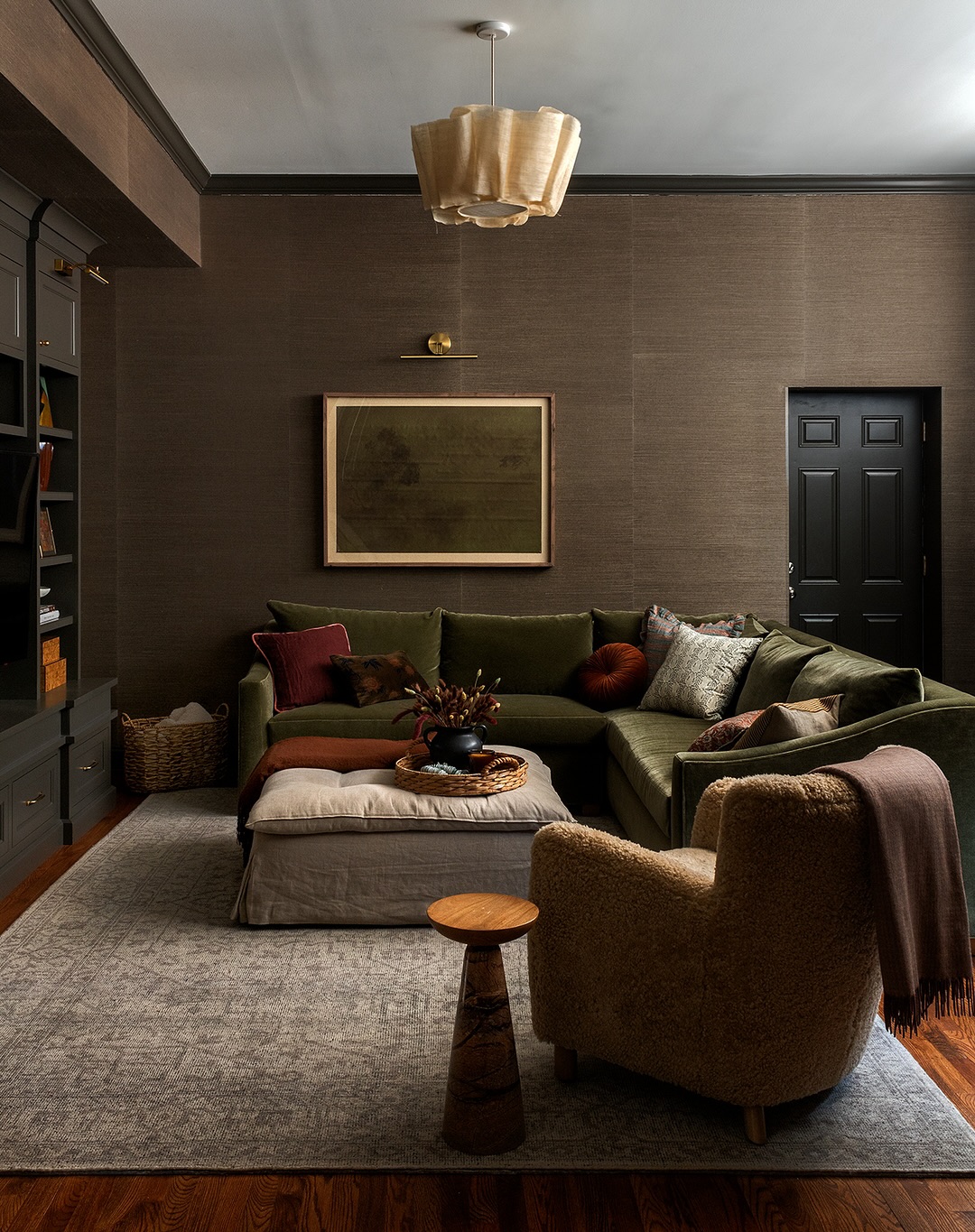
A generous pale ottoman gives the olive sectional a soft center in this Sharp and Grey living space. Textured brown wallcovering surrounds the seating, with dark cabinetry and a matching door adding definition.
The rounded brown chair introduces a different silhouette, while its small wooden side table provides a reachable landing spot. This arrangement is useful when you want plenty of lounging space within one clear furniture group.
Check the ottoman's footprint against the sectional before choosing a size, leaving room for feet and easy movement. A sturdy tray can hold everyday items on the cushioned surface.
Repeat muted rust and plum in pillows or throws, then let a large neutral rug connect the varied upholstery without another strong pattern.
19. Use Checked Ottomans to Connect Contrasting Seats
Credits: Instagram
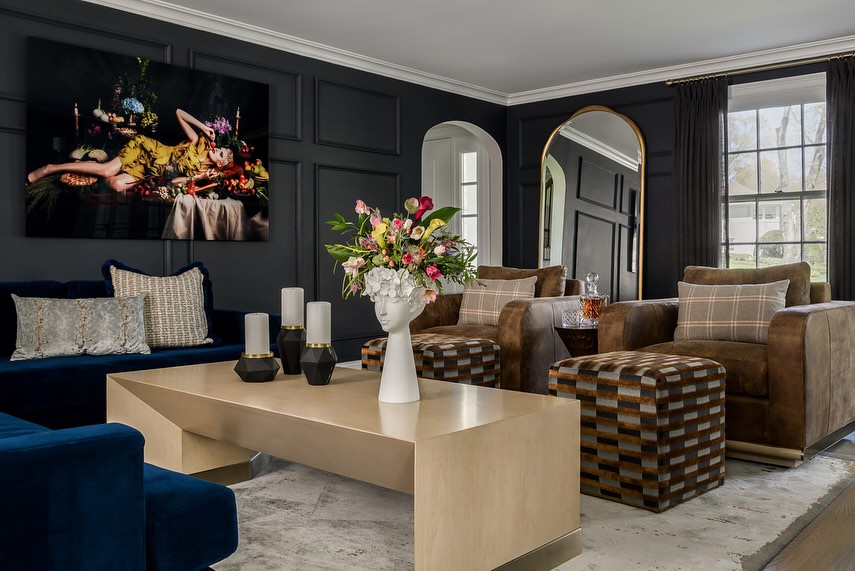
Two checked ottomans link the navy seating and taupe armchairs in this lounge by Elements Studio. Their compact repeating pattern contrasts with the broad pale coffee table, whose angular shape gives the center a strong outline.
Dark wall moldings create a structured backdrop, while a tall arched mirror and white ceiling introduce lighter areas. Borrow the pairing when your main furniture has solid upholstery.
A small patterned footstool can connect several existing colors without requiring matching chairs. Keep the central table's surface mostly usable, especially if its shape already draws attention.
Pale cushions help distinguish dark seats from dark walls, and curtains close to the wall color maintain continuity around the window while letting the decorative pieces supply the variety.
20. Add Geometric Paneling Behind Traditional Leather Seating
Credits: Instagram
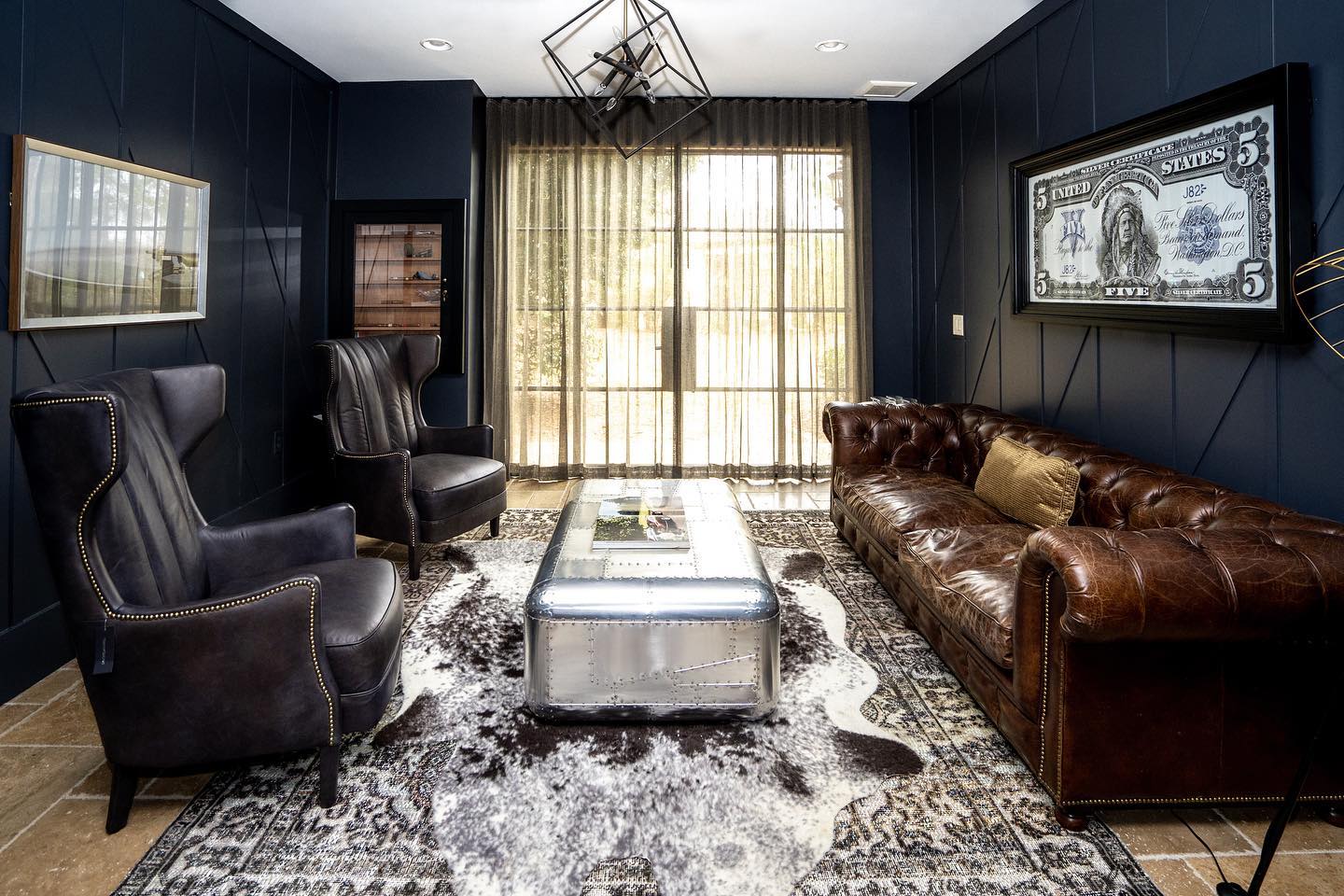
Diagonal wall moldings give this navy lounge a sharper geometry behind the worn tufted sofa and tall wingback chairs. A reflective metal trunk serves as the central table, contrasting with the upholstery and layered rugs.
The open cube ceiling fixture repeats the wall's angular lines, while sheer curtains soften the bright doors at the far end. Take the contrast as a starting point for combining traditional seating with cleaner architectural details.
Sketch a simple molding pattern before installation, checking where pictures, switches, and furniture will sit. If you layer rugs, keep the edges flat and the main walking routes clear.
A metallic table can provide brightness, but balance its shine with quieter textiles and enough space around the furniture pieces.