
A living room can feel crowded when every seat, table, and decorative detail competes for attention.
These Living Room Ideas show how thoughtful balance can make a space feel inviting, from pairing a yellow sofa with a deep blue wall to keeping a compact loveseat light with an open table.
You’ll also find ways to use a shuttered bay as a reading spot, soften a fireplace wall with simple shelves, and leave open floor around the seating.
Small choices in color, shape, and spacing help the room feel connected without sacrificing comfort or character.
1. Frame Modern Seats With Traditional Moldings
Credits: Instagram
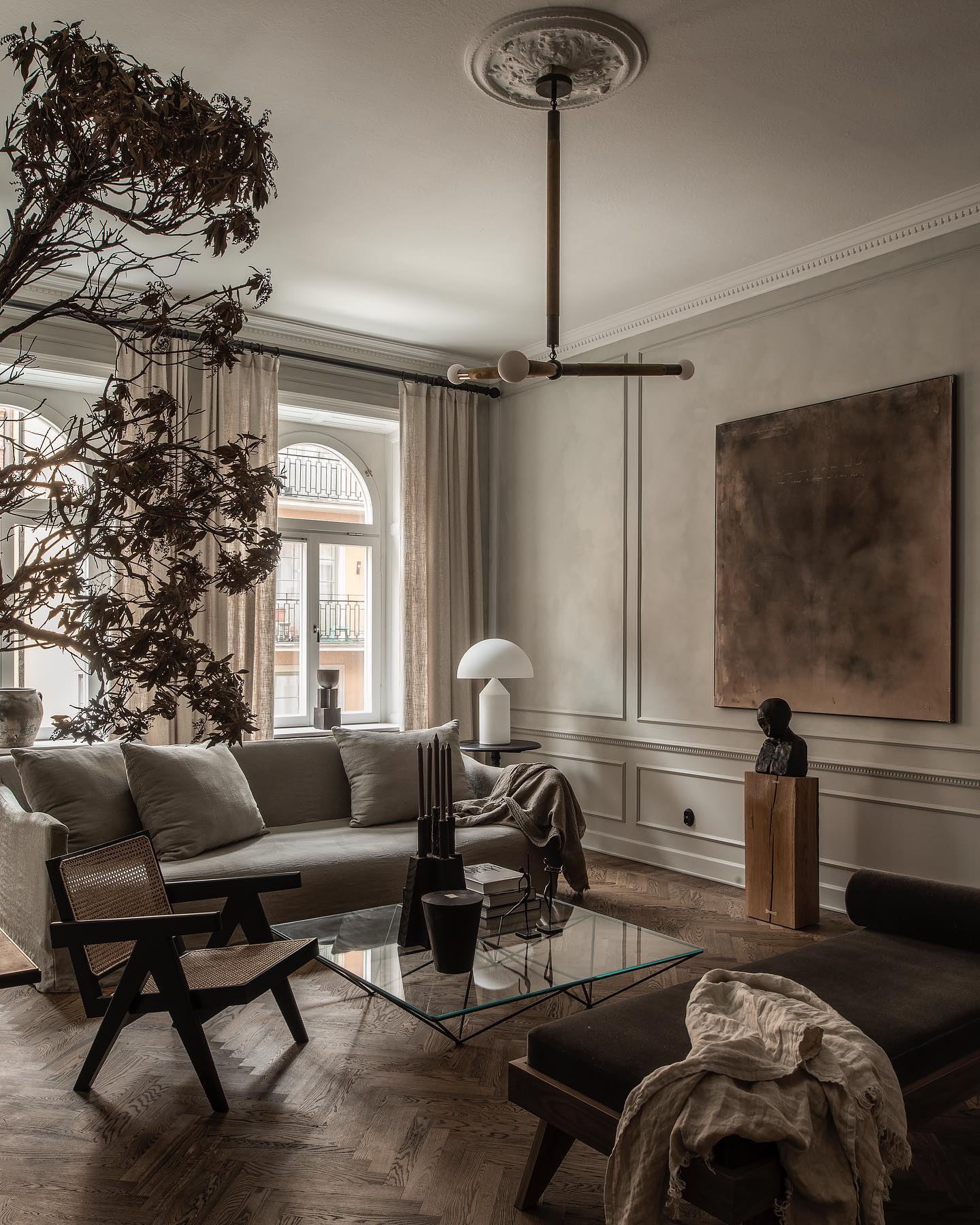
Pale wall moldings give this living room a graceful frame for furniture with clean, sculptural lines. A generous sofa, dark woven chair, and upholstered daybed gather around a transparent coffee table, leaving the patterned wood floor visible.
The quiet palette lets different textures carry the interest: soft cushions, sheer curtains, smooth glass, and darker timber. One large painting balances the seating without filling every panel.
To borrow the idea, begin with a comfortable main sofa and add a contrasting chair that still feels proportionate. Keep the central table visually light when several substantial seats share the room.
Repeat a few dark accents through lighting or small objects, then leave enough open floor for easy movement between the seats and windows.
2. Mix Sculptural Seats Beneath Exposed Beams
Credits: Instagram
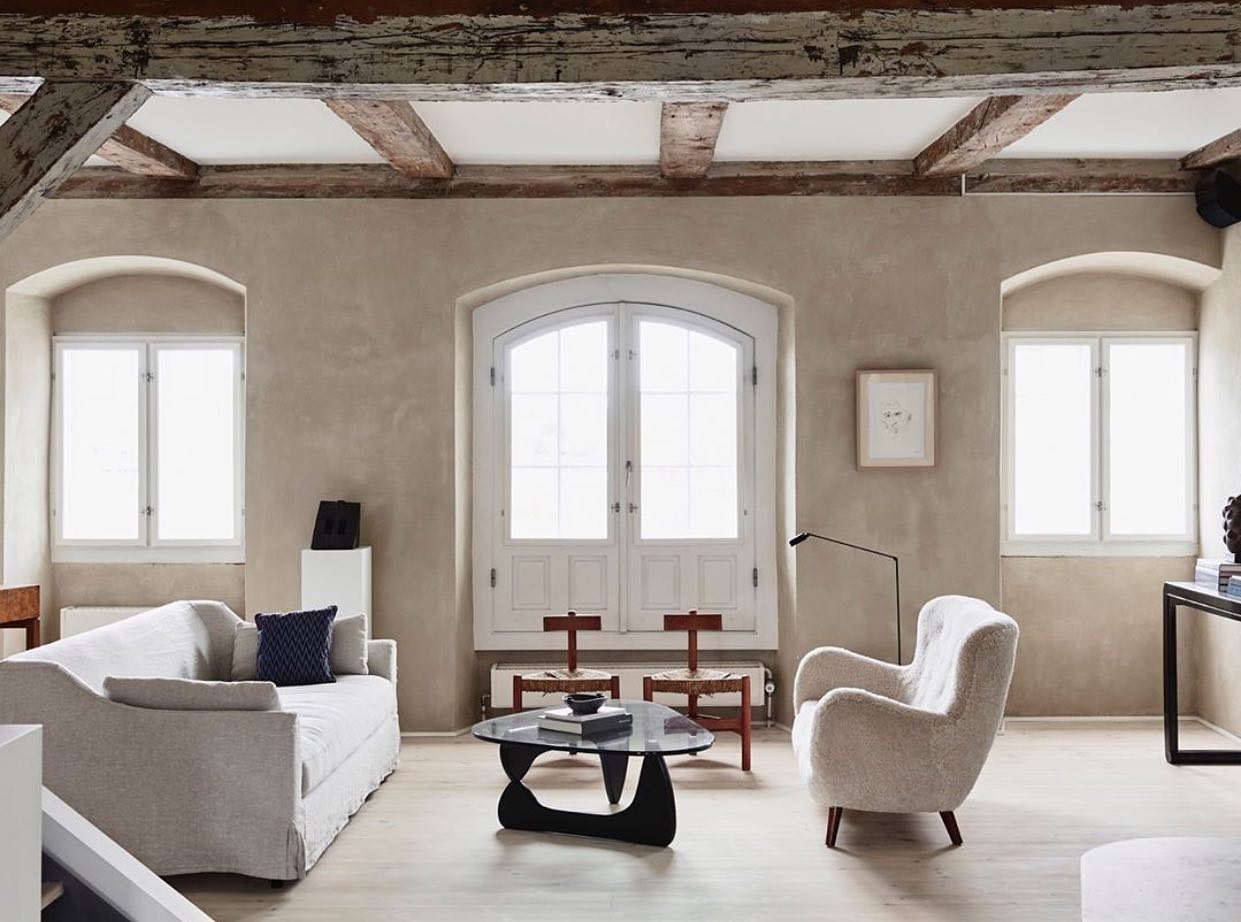
Exposed timber beams bring age and texture to this bright living room, while a small group of sculptural seats keeps the arrangement relaxed.
A pale sofa faces a curved armchair across a glass coffee table, and two wooden chairs provide extra places without blocking the central window.
The cream upholstery connects with the walls and light floor, allowing the weathered ceiling to remain prominent. A single dark cushion and the table's curved base add definition.
For a similar balance, choose furniture with varied shapes but a limited palette. Keep taller pieces toward the edges so architectural openings remain visible.
Give the main seats a shared surface within comfortable reach, and leave the center spacious enough to walk through with ease.
3. Balance a Yellow Sofa With a Deep Blue Wall
Credits: Instagram
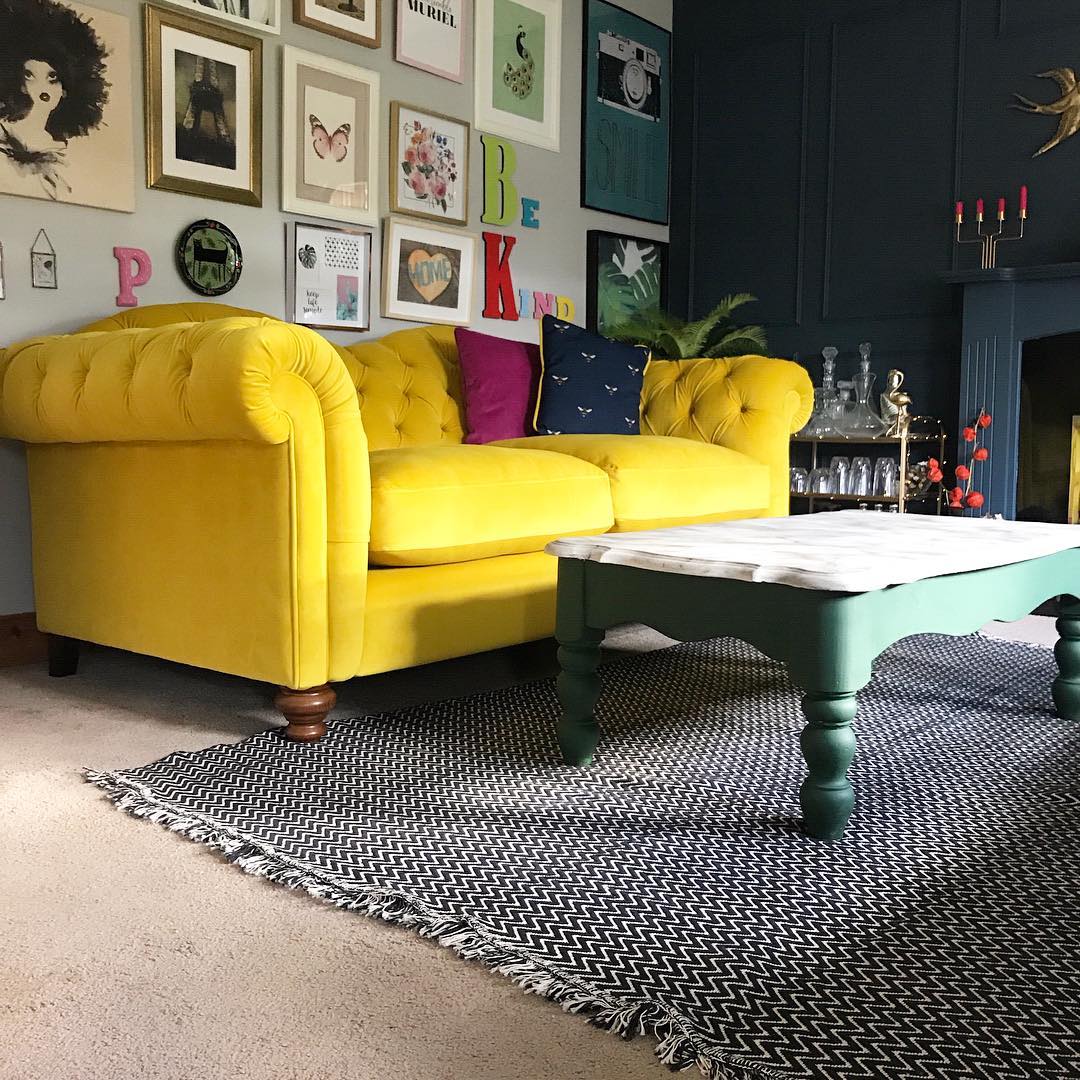
A sunshine yellow sofa sets the mood in this colorful living room, while the deep blue fireplace wall gives it a strong companion. The dark cushion repeats that blue on the seat, linking the two largest colors.
A green coffee table adds another lively note, and its pale top offers a resting place amid the patterned rug and gallery wall. You can borrow this balance without changing every surface.
Start with one sofa color you enjoy, then repeat a nearby wall color in a cushion or small accessory. Keep the floor covering mostly neutral when artwork and furniture already bring plenty of color.
A few clear connections help an energetic room feel considered, while leaving space for favorite personal collections.
4. Warm Blue Velvet With Gold and Pattern
Credits: Instagram
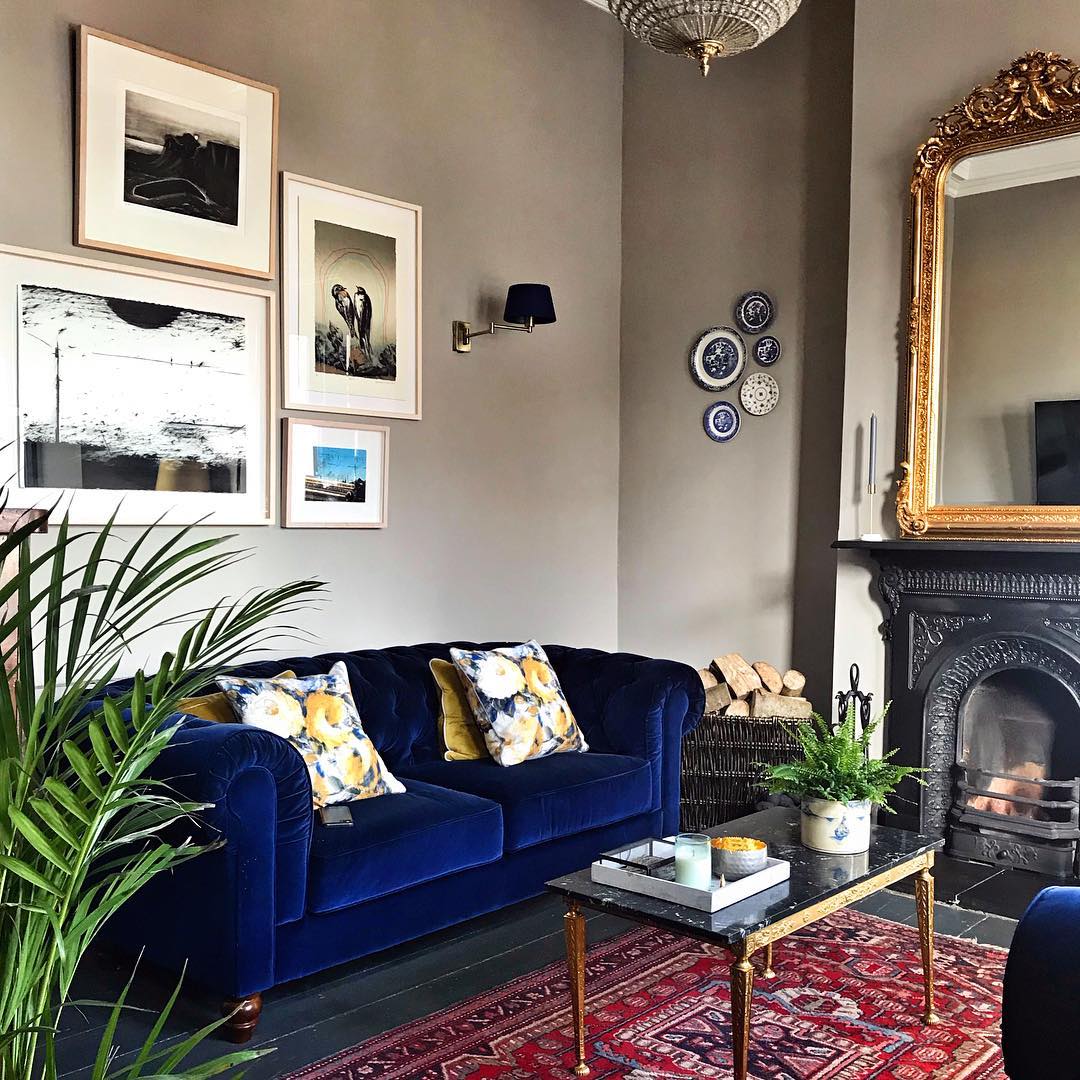
Blue velvet becomes especially rich beside the gold mirror and warm patterned rug in this living room. The sofa's traditional shape relates to the decorative black fireplace, while a slim rectangular coffee table keeps the center open.
Blue and white plates carry the upholstery color upward, and small yellow accents soften the contrast. This is a useful approach when a room already has strong period features.
Choose one saturated upholstery color, repeat it in a modest wall display or lampshade, and let warm metal finishes connect the details. Keep nearby walls quiet enough for the furniture to stand out.
A tray gathers everyday objects on the table, leaving some of its surface free for a book or an evening drink.
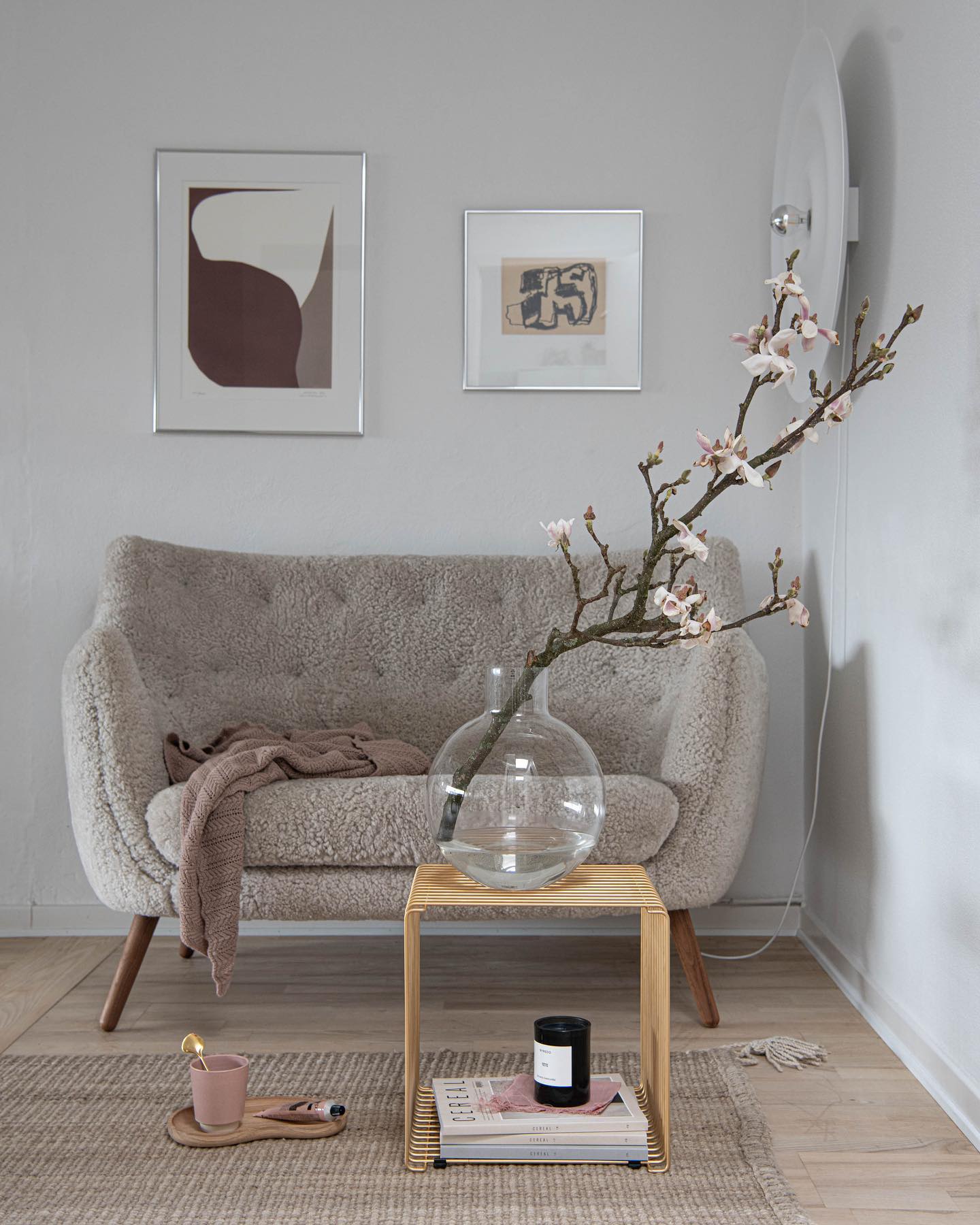
5. Keep a Small Loveseat Light With an Open Table
Credits: Instagram
A compact curved loveseat makes this pale corner feel like a place to pause. Its textured upholstery supplies softness, while tapered wooden legs and an open wire table keep the small arrangement visually light.
Two framed prints add interest above the seat, with enough bare wall around them to preserve the calm feeling. The dusty pink throw provides a gentle color change, and a woven rug defines the sitting area.
To try this idea, measure for a small sofa that leaves comfortable space around its arms. Pair it with a table that suits both the seat height and available floor area.
Keep styling simple, and reserve a usable patch of tabletop for a cup or the book you are reading.
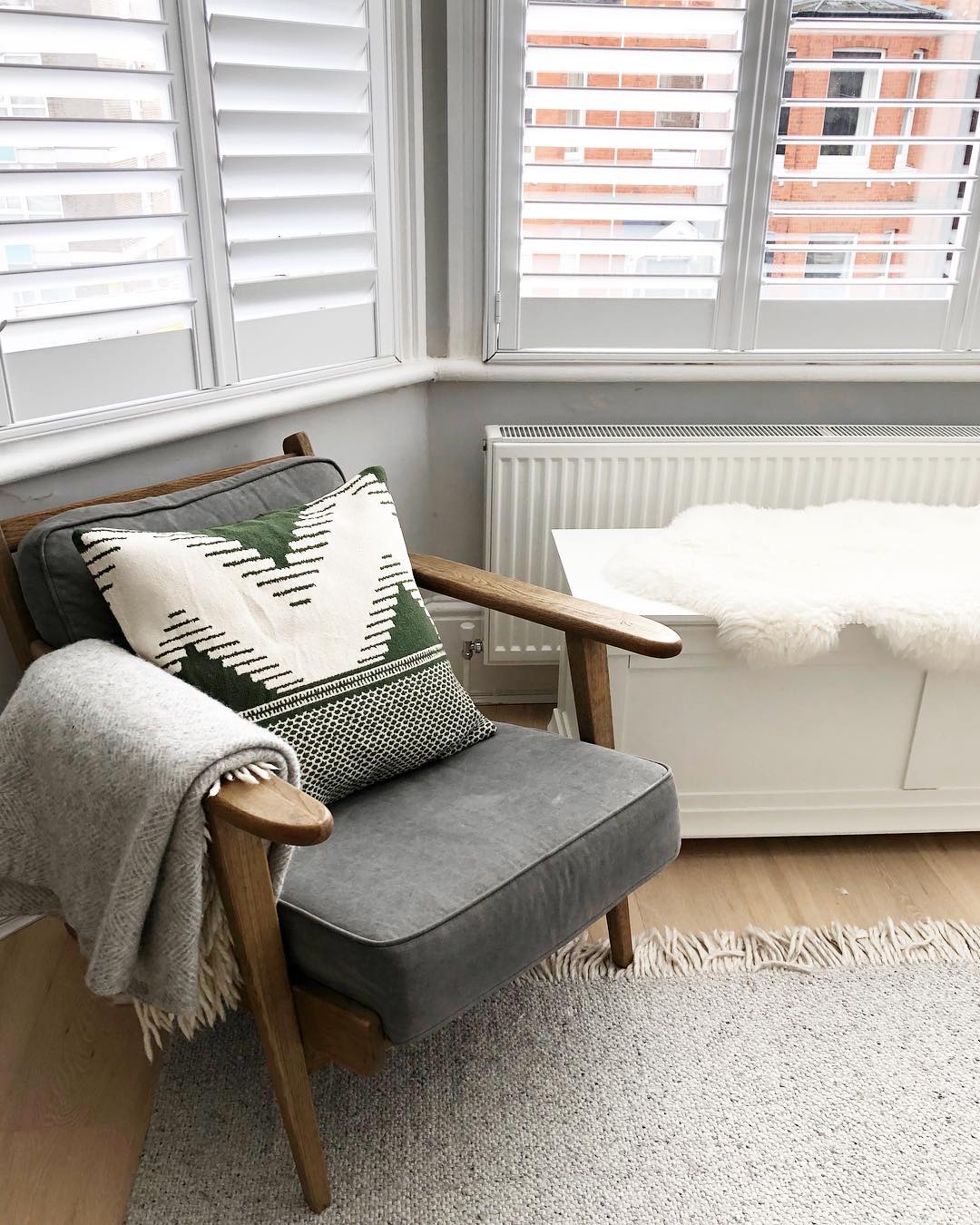
6. Turn a Shuttered Bay Into a Reading Spot
Credits: Instagram
A wooden armchair turns this shuttered bay into a comfortable reading corner. Gray upholstery, a patterned cushion, and a folded throw give the seat softness without hiding its light frame.
The pale rug connects it to the white blanket box, which provides useful storage beside the windows. Adjustable shutters let daylight into the corner while offering control over glare.
To create a similar spot, choose a chair that fits the bay without crowding its edges, then test how easily you can sit down and stand up.
Add a cushion that supports your back and a throw within reach. Keep access to the windows and radiator clear, and place a small surface nearby for whatever you like to read or drink.
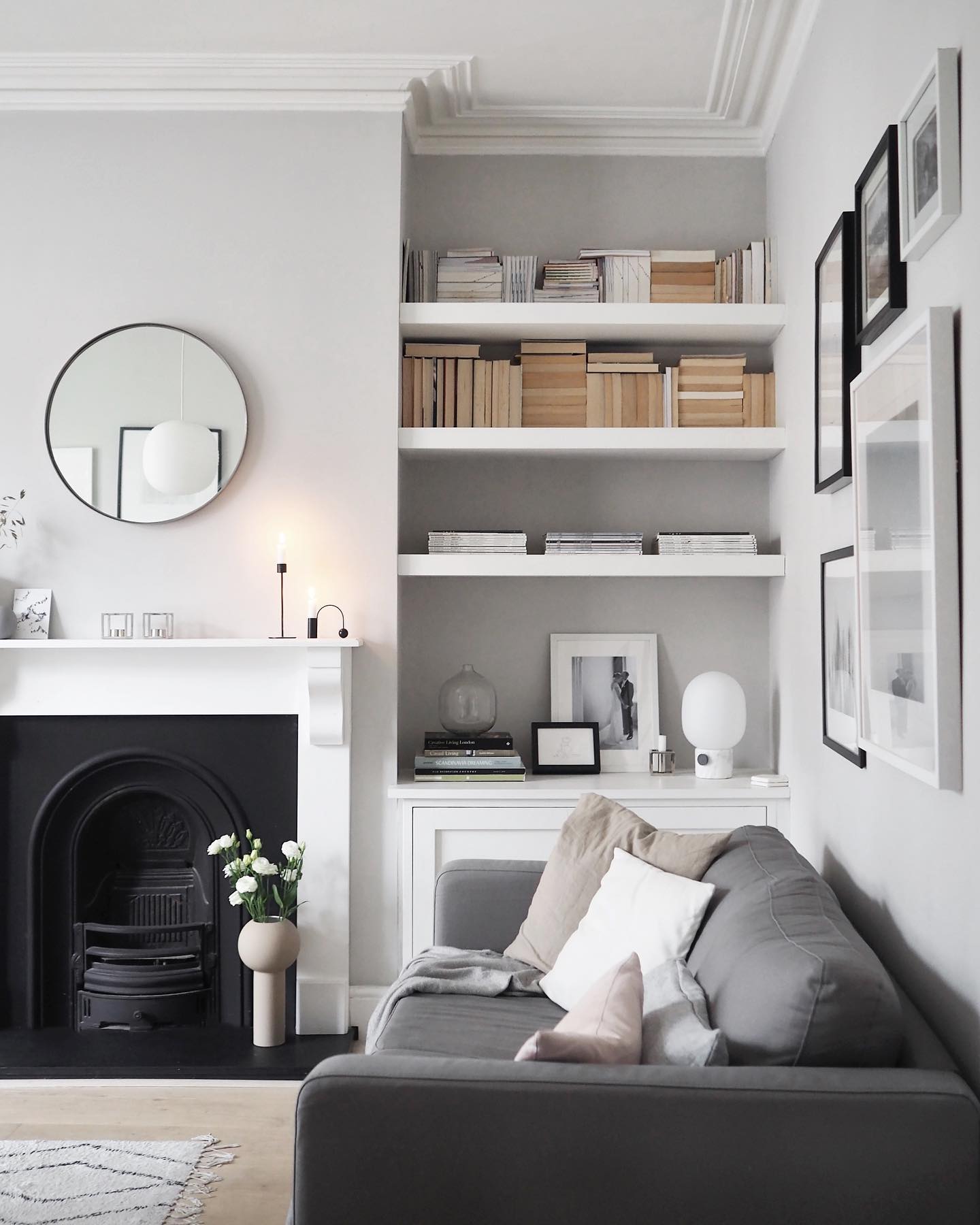
7. Soften a Fireplace Wall With Quiet Display Shelves
Credits: Instagram
An alcove of white shelves gives this fireplace wall storage without adding a separate piece of furniture. Pale books, a few framed pictures, and a small lamp keep the display close to the room's soft gray palette.
The dark fireplace opening and thin mirror frame add definition, while the sofa's loose cushions make the corner feel relaxed. Borrow the arrangement by grouping books into several compact stacks and leaving breathing room around decorative objects.
Mix upright rows with horizontal piles so the shelves have a gentle rhythm throughout the space. Keep the lowest surface useful for a reading light or favorite photograph.
Carry the same pale shades into cushions and throws, then let one darker architectural feature anchor the room.
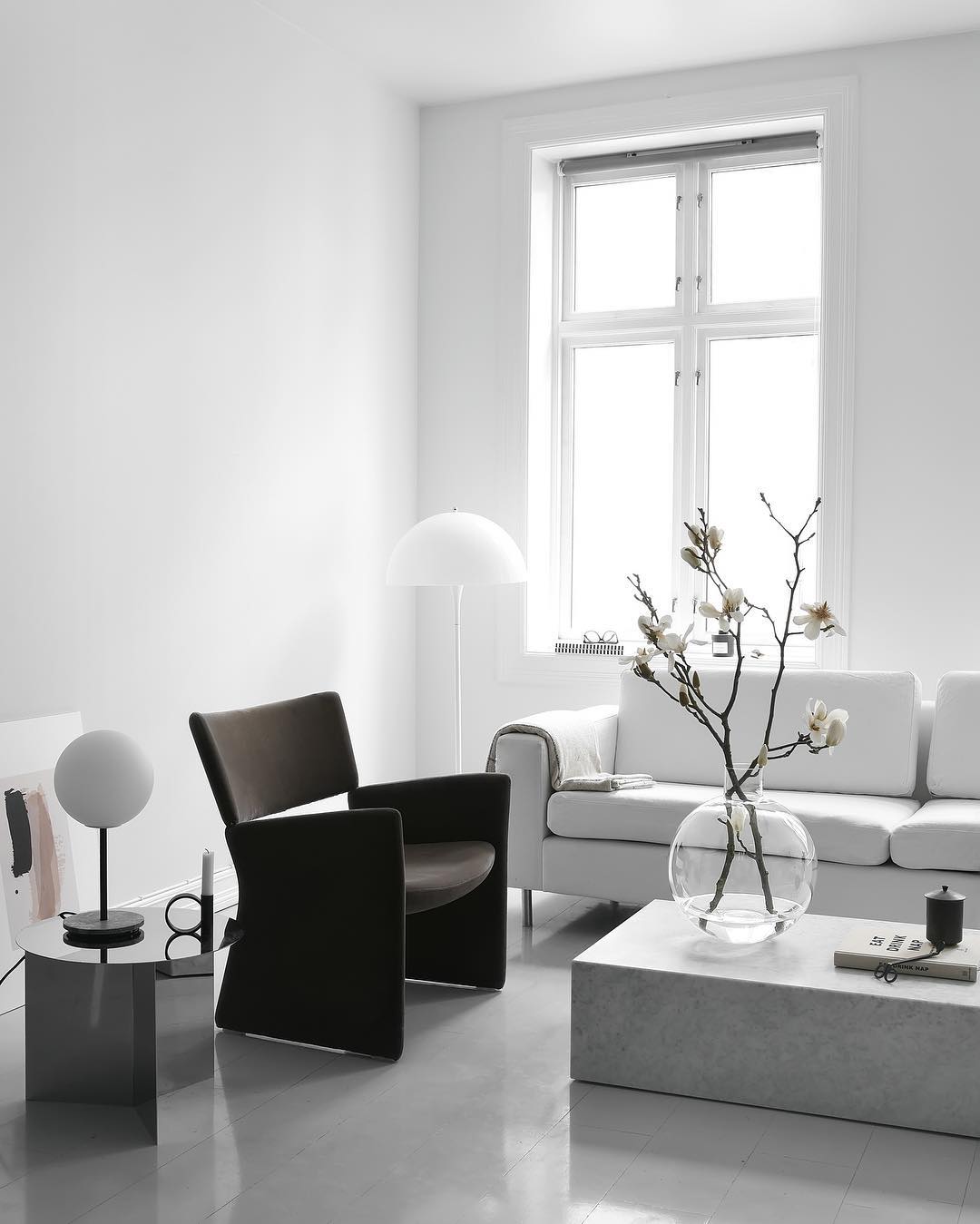
8. Give a White Room Shape With One Dark Chair
Credits: Instagram
A dark sculptural chair gives this pale living room a clear focal point. Its broad arms and curved back stand out against the white sofa, light walls, and glossy gray floorboards.
A solid marble coffee table brings another strong shape into the seating group, while a round glass vase and flowering branch soften its straight edges.
To borrow the balance, keep the largest surfaces quiet and choose one chair with a distinctive silhouette. Place it close enough to the sofa for conversation, with a small side table within reach.
Repeat a little dark color in a lamp or accessory so the chair feels connected. Leave some floor visible around the furniture to preserve the room's light, spacious and welcoming feeling.
9. Balance Warm Wood Paneling With White Seating
Credits: Instagram
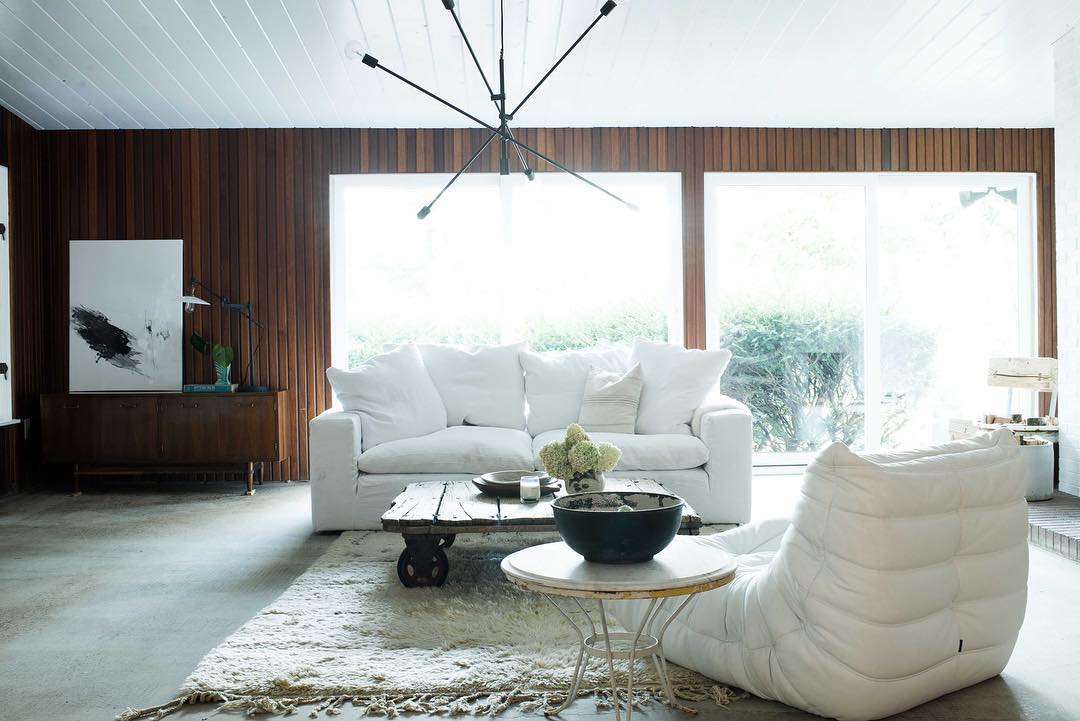
Rich wood paneling gives this living room warmth, while white seating keeps the space feeling light. The pale sofa and low, curved lounge chair stand out clearly against the vertical boards.
A white plank ceiling carries that brightness overhead, and a soft rug connects the seats across the smooth gray floor. The weathered cart table adds a rougher texture without introducing another large block of dark color.
To borrow the balance, keep wood on one prominent wall and repeat a warm white through upholstery, rugs, and ceiling paint. Choose furniture with simple outlines so the grain remains visible.
Leave generous space around a low lounge chair, and mix one rustic surface with smoother pieces for a room that feels collected.
10. Layer Neutral Rugs Around a Conversation Group
Credits: Instagram
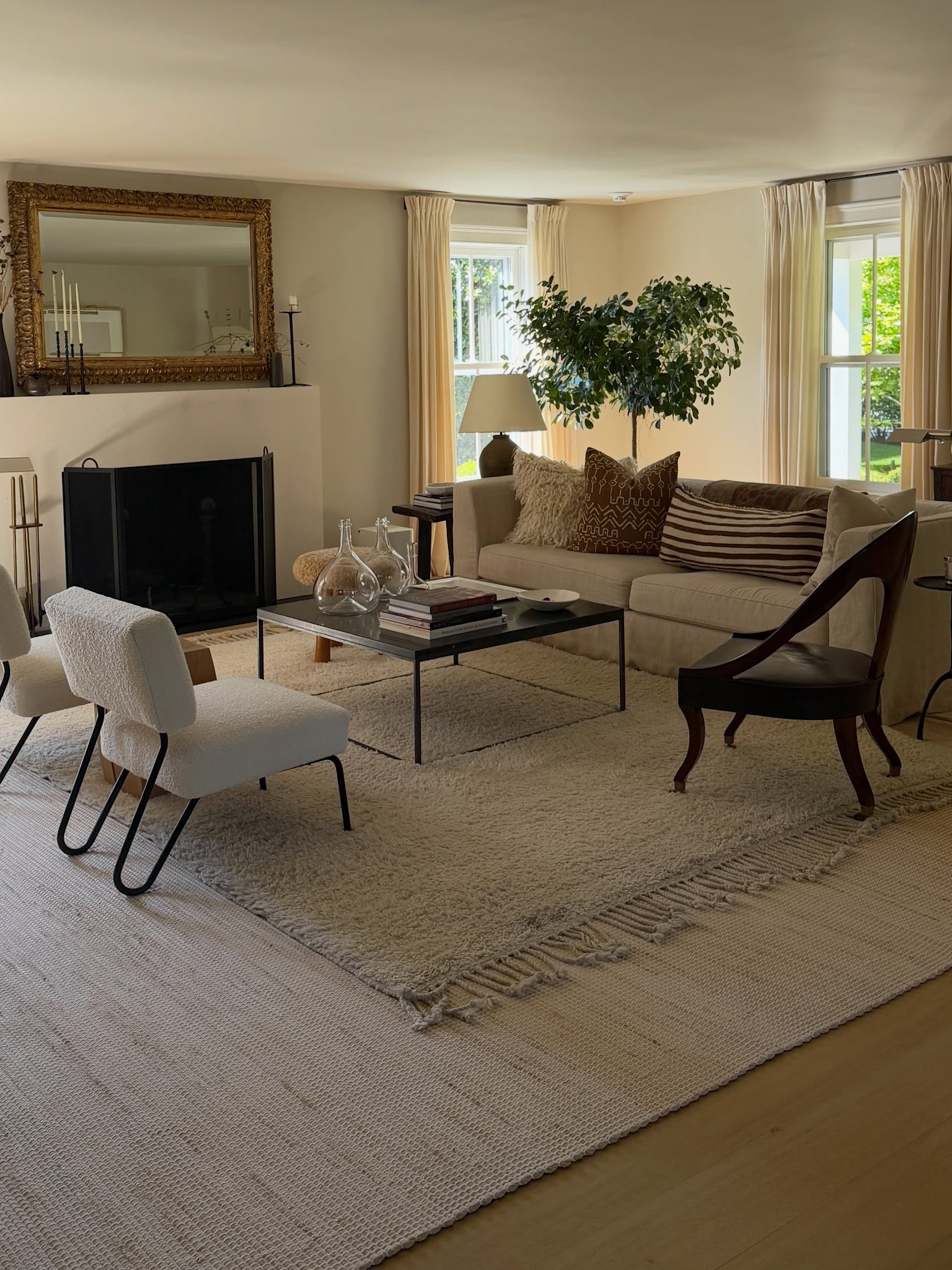
Two cream rugs give this seating group a soft foundation without introducing another strong color. The larger woven rug stretches beyond the furniture, while a smaller shaggy rug adds texture beneath the black coffee table.
Its thin dark lines connect with the table and chair frames. A pale sofa and two armless chairs keep the arrangement light, and the curved wooden chair adds contrast.
Try layering rugs with related colors but noticeably different textures. Leave a visible border of the larger rug so each layer reads clearly.
Keep edges flat and secure, especially beside walking routes. Bring the seats close enough for easy conversation, with the shared table within comfortable reach. A few brown accents can warm the restrained palette.
11. Connect Two Sofa Colors Through Similar Shapes
Credits: Instagram
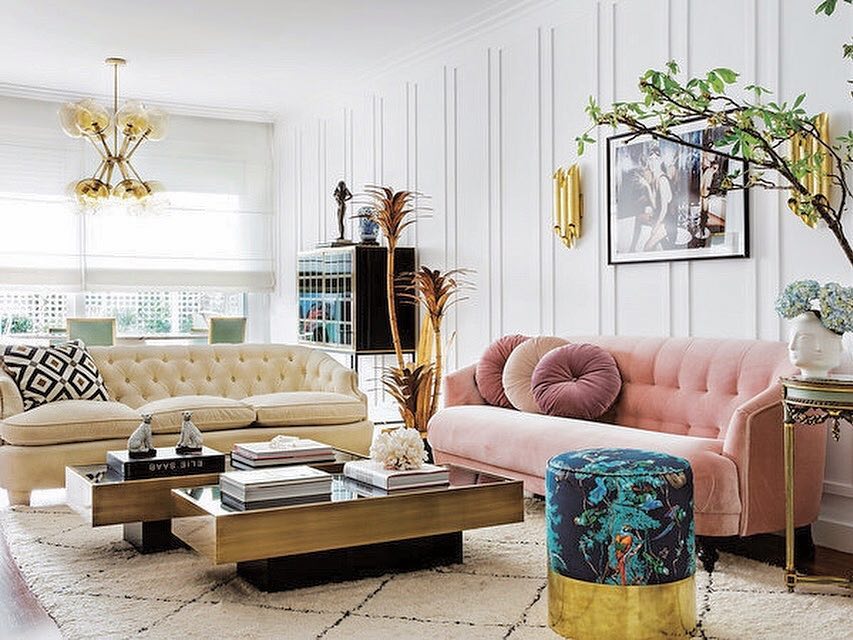
A pink sofa and a pale yellow sofa bring two soft colors into this bright conversation area. Their tufted backs and rounded arms create a family resemblance, even though the upholstery differs.
White wall moldings and a cream rug give both colors a quiet setting. Low brass tables repeat the warm finish of the lighting, while a patterned stool adds a smaller burst of blue and green.
Try this approach when matching sofas would feel predictable. Choose two colors with similar softness, then connect the pieces through shape, scale, or texture.
Arrange them around a shared table and keep the main walking route open. Let one smaller patterned piece add variety without competing with either sofa for too much attention.
12. Add Depth With a Tall Mirror and Simple Art
Credits: Instagram
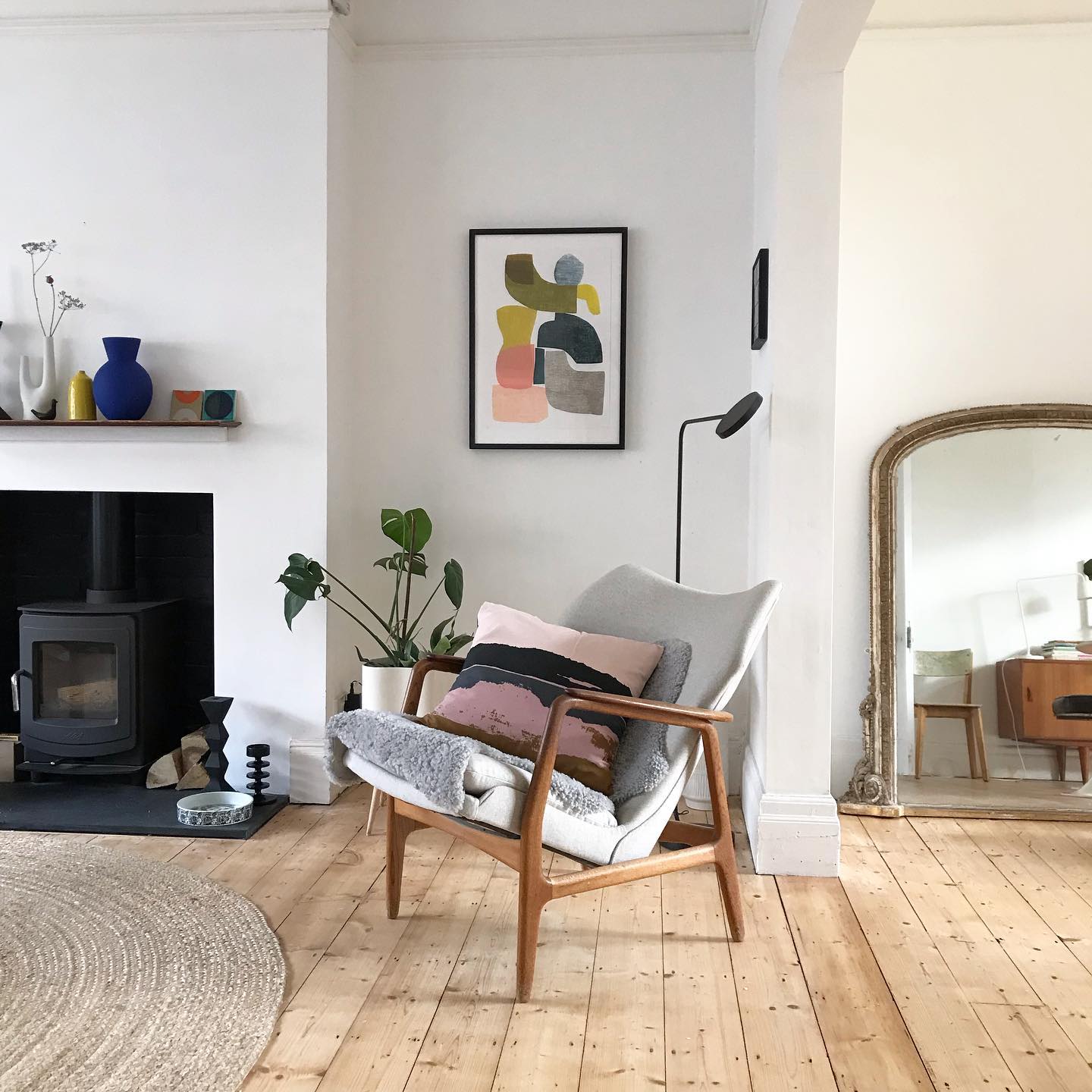
A tall mirror brings a second view into this pale living room, reflecting furniture in the adjoining area without adding another bulky piece.
Its curved, ornate frame softens the straight lines of the chimney breast and gives the simple walls a little history. The nearby abstract print introduces olive, yellow, pink, and charcoal, with smaller echoes in the cushion and mantel accessories.
Pale floorboards and a wooden chair keep the setting warm. To use this idea, choose a mirror whose reflection adds something attractive from your usual seats.
Secure it according to its mounting instructions and keep the floor around it clear. Repeat two or three colors from a favorite artwork in small accents, leaving the larger surfaces pleasantly quiet.
13. Leave Open Floor in Front of the Seating
Credits: Instagram
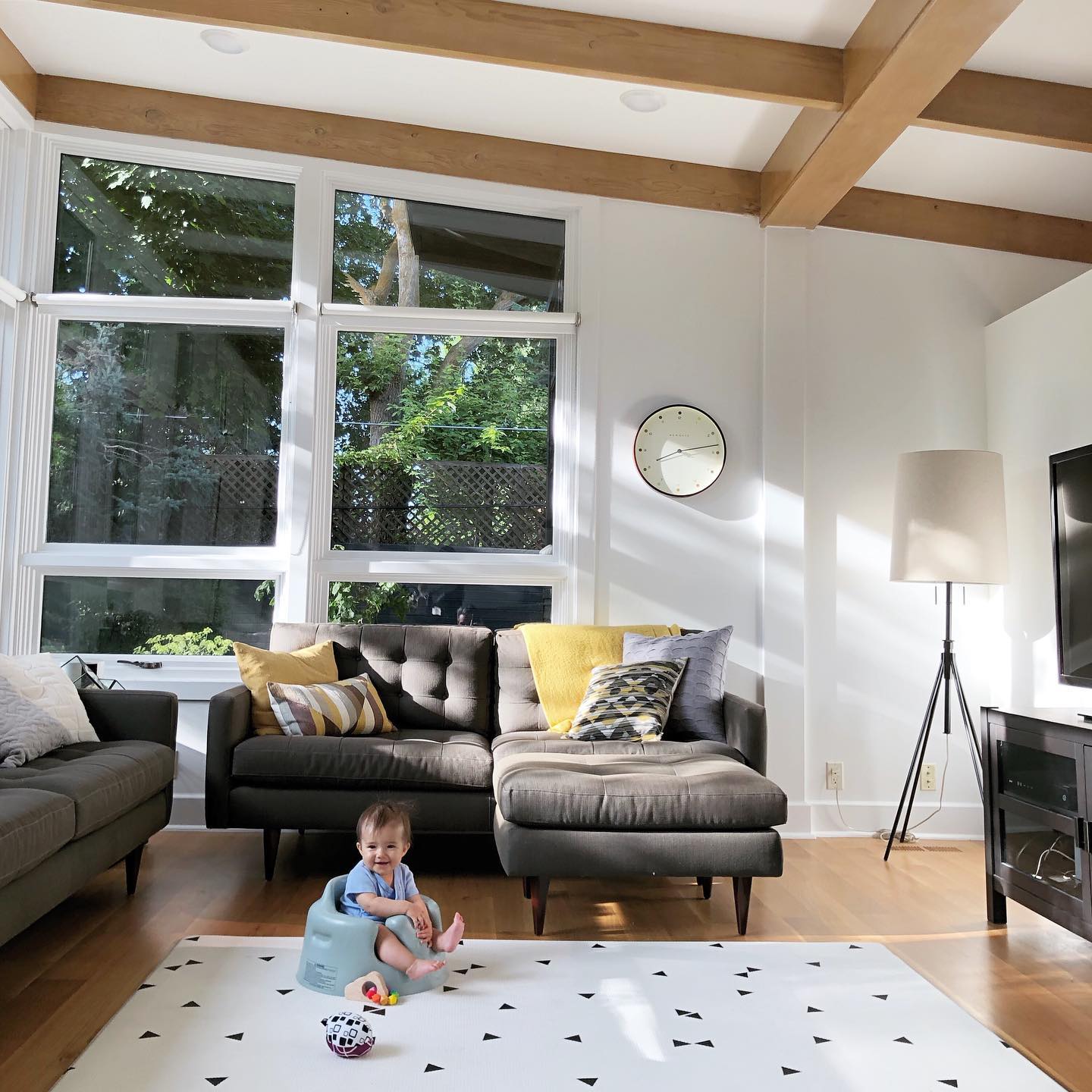
Keeping the center open gives this living room space for more than sitting. A compact charcoal chaise sofa and a second sofa stay around the edges, leaving the patterned floor mat clear in front.
Tall windows bring daylight behind the seats, while exposed wood beams add warmth overhead. Yellow cushions and a throw brighten the gray upholstery without filling the room with extra furniture.
To borrow the layout, decide which everyday activities need open floor space before adding a coffee table. Keep useful surfaces within easy reach beside the seats instead, and choose seating that fits the perimeter comfortably.
Repeat a small accent color across the upholstery, then let the windows and ceiling structure provide most of the room's character.
14. Balance Patterned Wallpaper With a Plain Sofa
Credits: Instagram
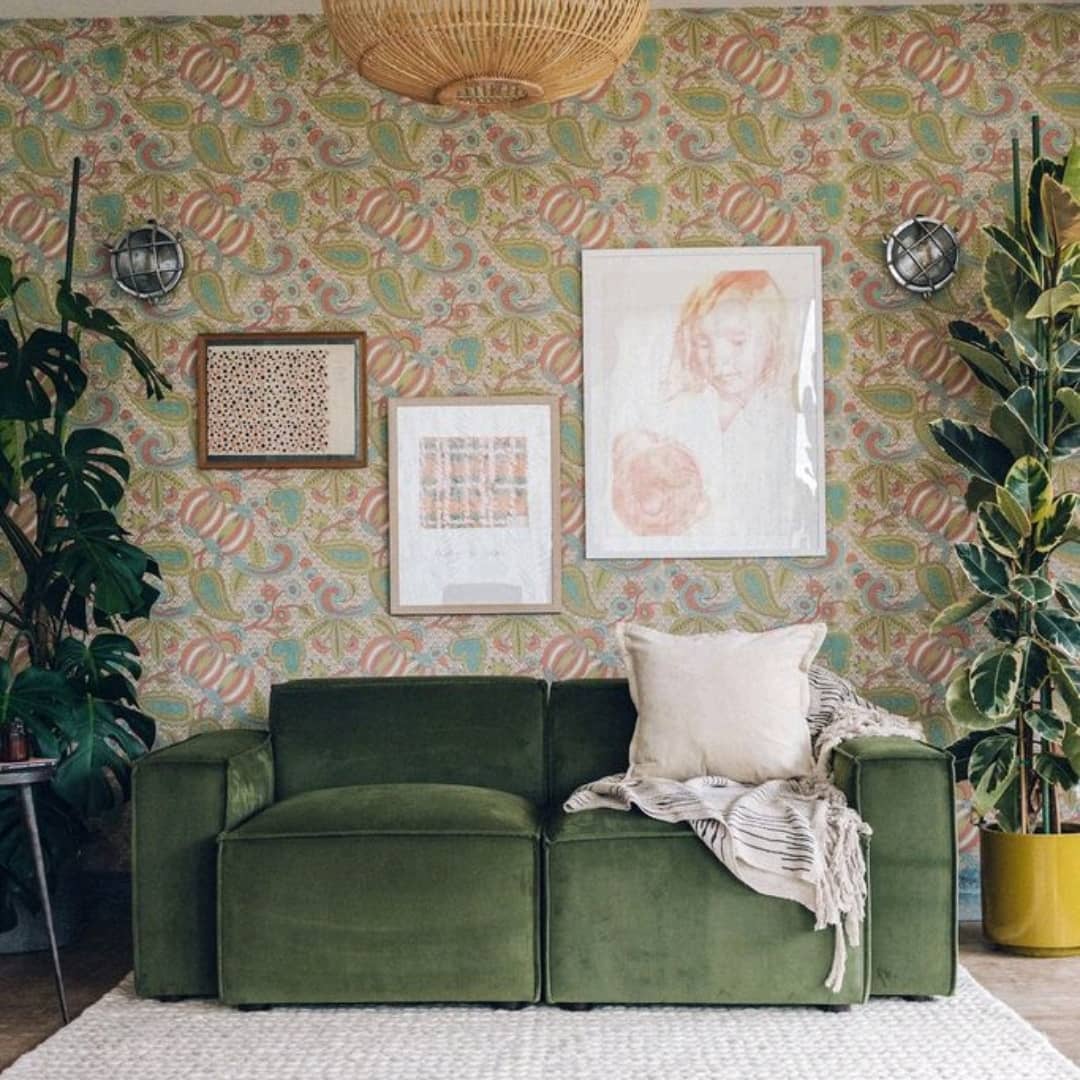
Busy wallpaper can work behind a sofa when the upholstery gives your eyes somewhere to rest. Here, a deep green seat forms one clear shape beneath a wall of curling pink, blue, and olive motifs.
Its low, square outline contrasts with the delicate pattern, while a pale cushion and loosely draped throw soften the arrangement. White borders around the artwork create little pauses across the wall.
Tall plants extend the green palette, and the woven pendant introduces another texture overhead. Try this balance with a plain sofa in one color borrowed from the wallpaper.
Keep the rug comparatively quiet, then vary the scale of artwork and accessories. Leave some patterned wall visible between frames so the display can breathe comfortably.
15. Carry a Statement Wall Finish Through Open Shelves
Credits: Instagram
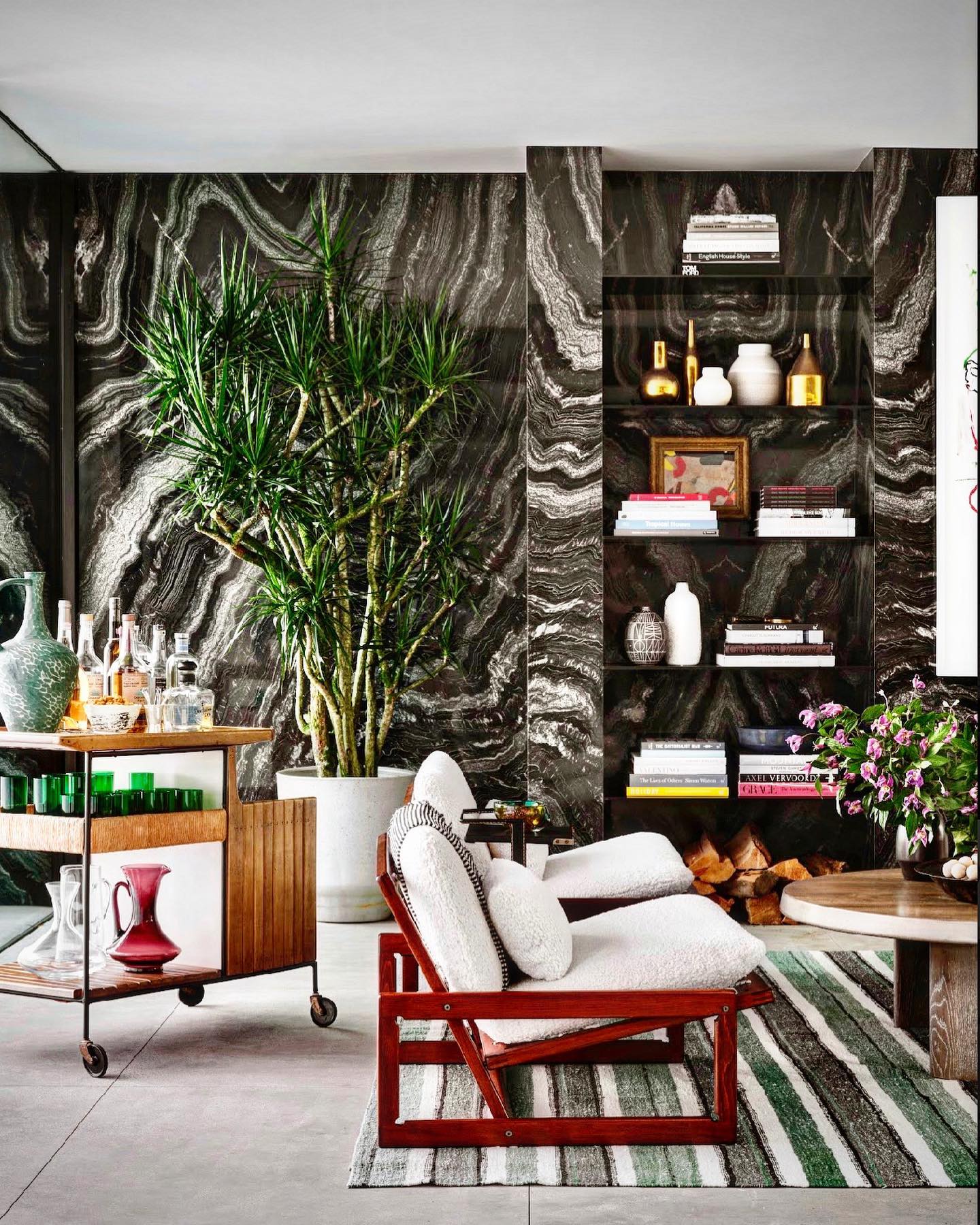
Dark, strongly veined stone continues behind the open shelves in this living room, making storage part of the wall's larger pattern. Pale books and rounded vessels stand out against the deep background without hiding all its movement.
White cushions lighten the wooden chairs, while a green striped rug gives the seating area a softer base. The warm wood cart adds another useful surface beside the shelves.
To borrow the visual idea, carry one wall finish into a recessed display area and keep the objects simple. Group books in short stacks, vary the height of a few vessels, and leave some background exposed.
Balance a busy wall with plain upholstery so the room offers comfortable places for the eye to rest.
16. Let a Wood Ceiling Lead a Quiet Room
Credits: Instagram
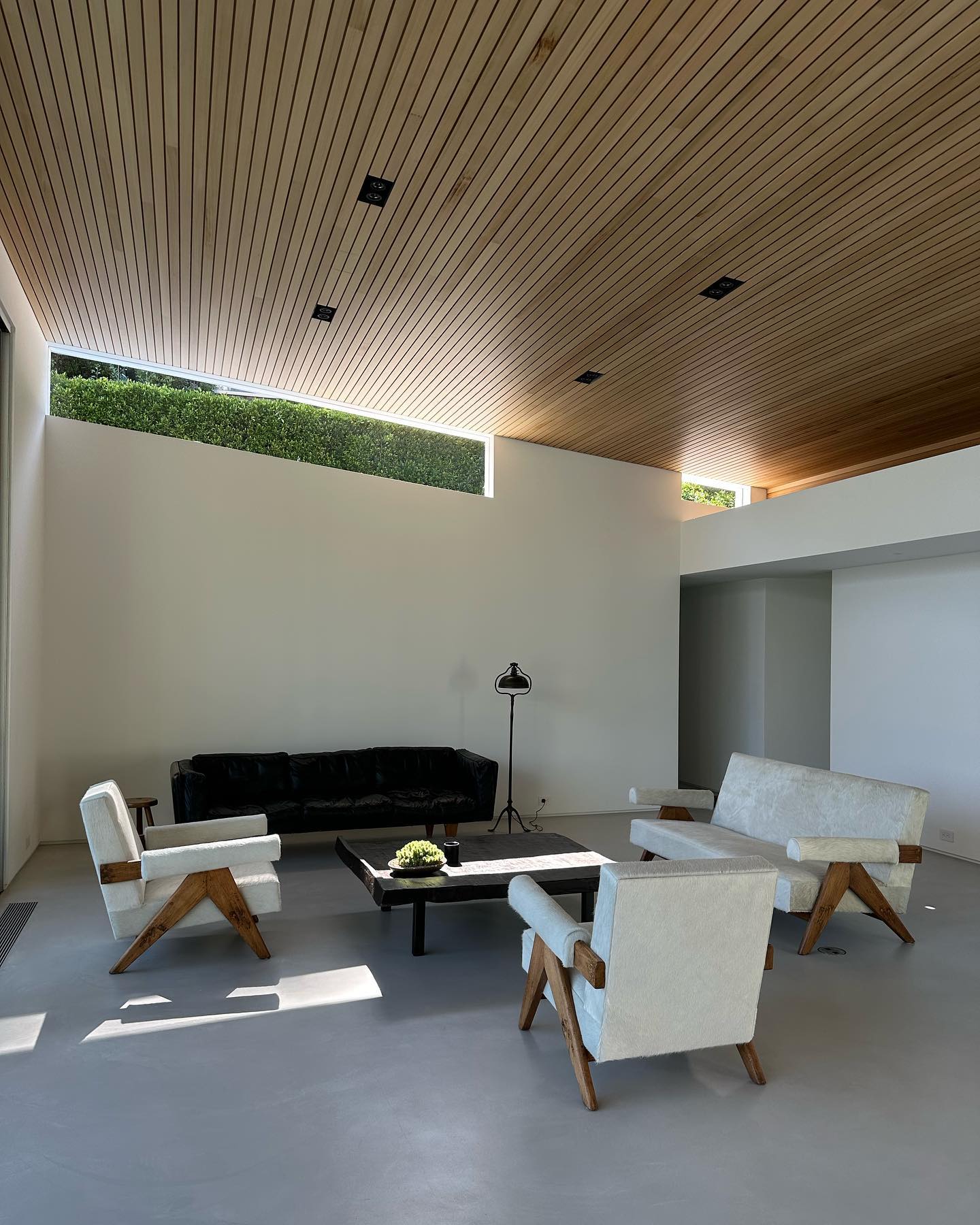
Narrow wood boards turn the ceiling into this living room's main decorative surface. The tall white walls remain almost bare, allowing the warm lines overhead and slim band of high windows to stand out.
Below, pale upholstered seats gather around a dark rectangular table, with a black sofa completing the group. Their exposed wooden frames repeat the ceiling's warmth at a smaller scale.
If your room has a distinctive ceiling, give it breathing room by simplifying nearby wall displays. Choose furniture with clear shapes and repeat one material across different heights.
Keep large upholstery surfaces quiet, then use a dark table or sofa to ground the arrangement. A single slender floor lamp adds function without filling the open space above.
17. Keep Doorway Views Open With Low Seating
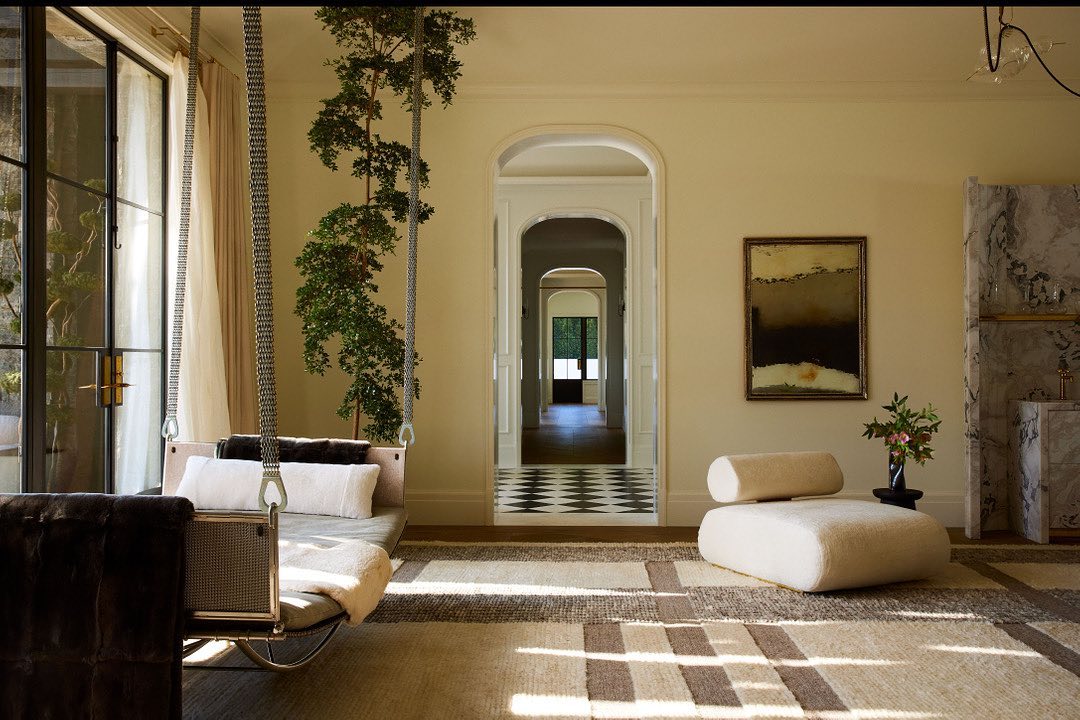
Credits: Instagram
A sequence of arched doorways gives this living room a view worth preserving. The low cream lounge chair sits beside that view, while the suspended seat occupies the window side.
Both leave the center visually open. A broad grid across the rug organizes the floor, contrasting with the chair’s rounded shape and the softer lines of the tree.
The restrained cream, brown, and charcoal palette lets these different forms feel connected. In your own room, check what you see through the doorway before positioning large furniture.
Keep taller pieces away from that sightline and choose lower seating where it helps. Use a rug to define the sitting area, then introduce one sculptural accent without crowding the route between adjoining rooms.
18. Soften White Brick With a Wingchair and Pouf
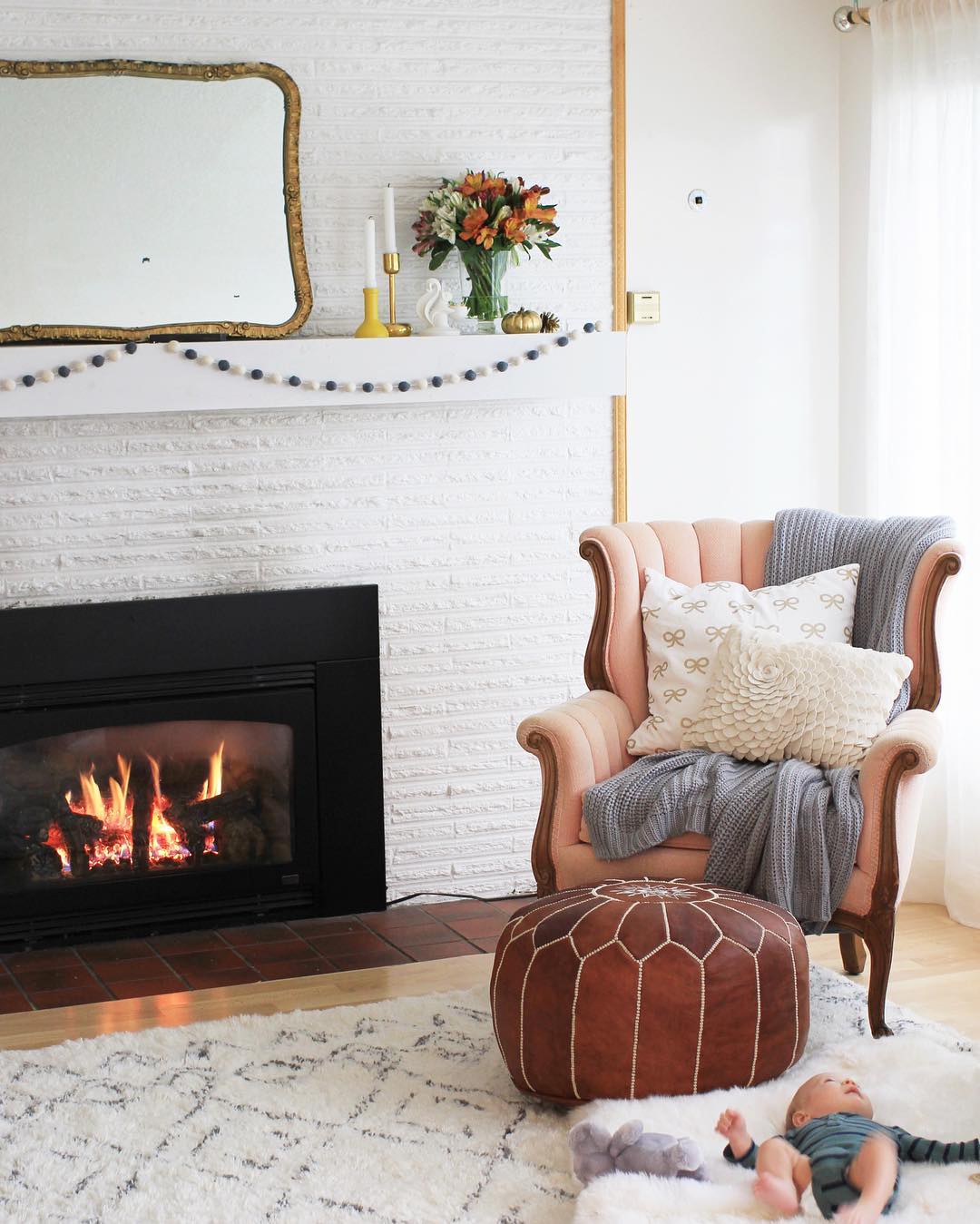
Credits: Instagram
A pale pink wingchair brings a gentle color change beside this white brick fireplace. Its curved wooden frame contrasts with the masonry's straight horizontal lines, while a gray knitted throw adds another soft texture.
The brown stitched pouf repeats the warmth of the chair frame and the reddish hearth tiles. Together, these pieces make the fireplace corner feel furnished without needing a large sofa.
Try pairing a substantial upholstered chair with a compact footrest when the available space is narrow. Keep their colors related to one existing room detail, such as woodwork or flooring.
A pale patterned rug can connect the arrangement to nearby seating. Keep the hearth clear and leave enough room to move the pouf aside when needed.
19. Define a Seating Group With a Curved Rug
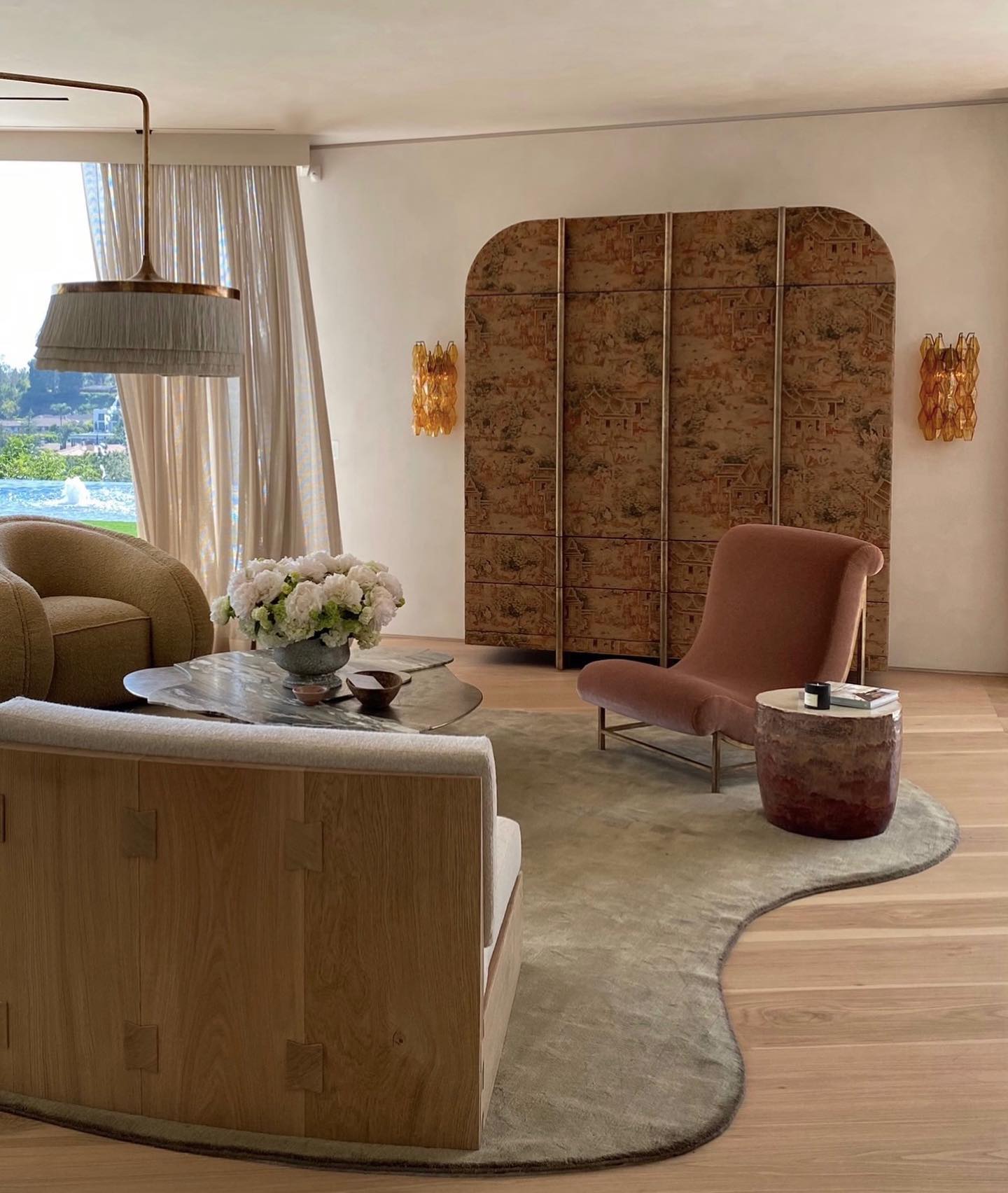
Credits: Instagram
A rug with a curving edge brings three different seats into one conversation area. Its outline echoes the rounded chairs and irregular coffee table, while the sofa’s wooden back adds a firmer shape.
The tall patterned cabinet creates a focal point without filling the room with small decorations. Try this arrangement when you want furniture to feel collected but connected.
Choose a rug large enough to support the seating group, then repeat one curve in a chair or table. Keep the main walking route outside the rug’s edge.
If a sofa faces into the room, consider how its back looks from the entrance. Soft curtains and a restrained palette let the shapes stand out without making the space feel busy.
20. Refresh a Neutral Bay With a Warm Sofa
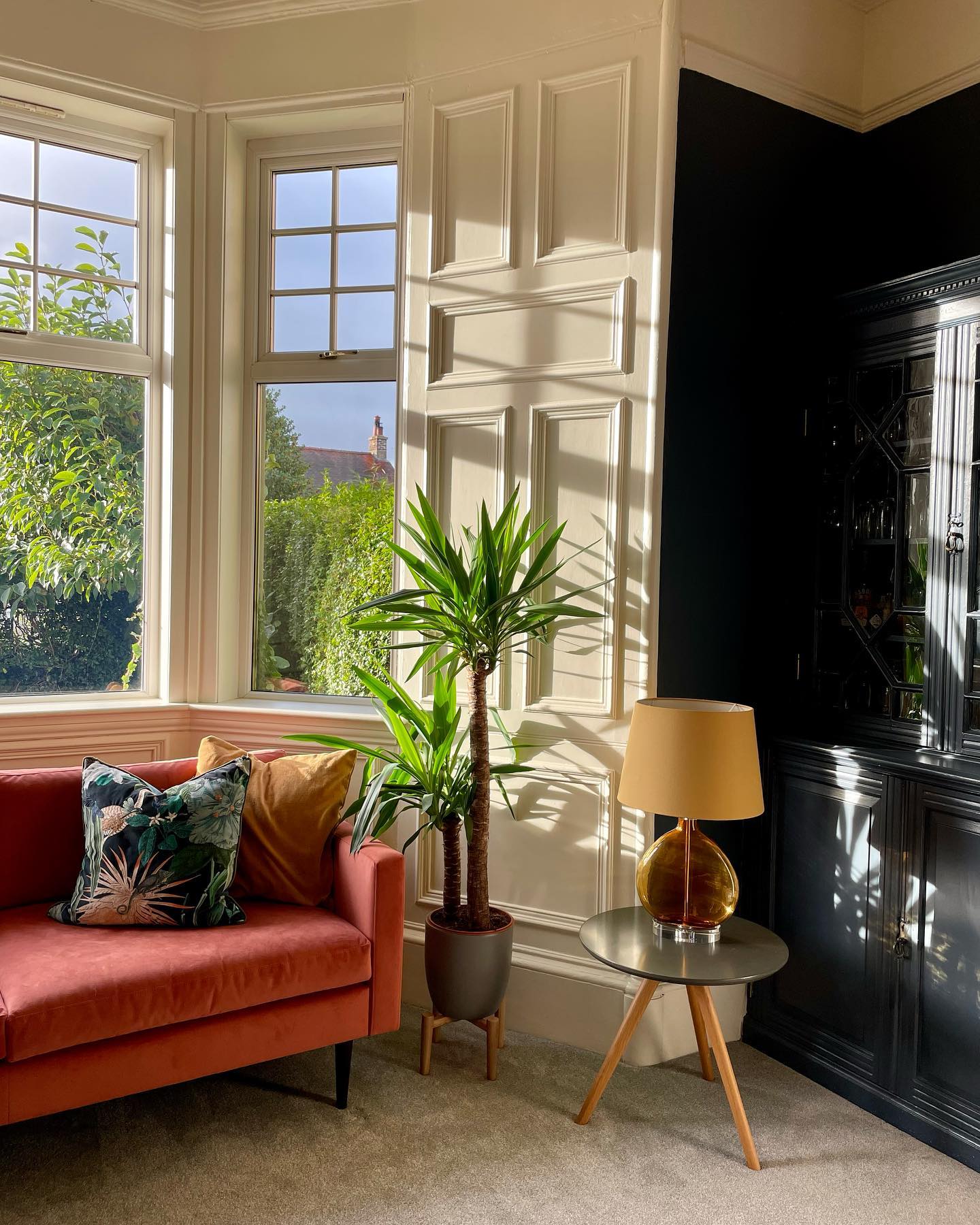
Credits: Instagram
A brick red sofa brings warmth to this seating bay without competing with its cream paneling. The dark wall and glass cabinet make the upholstery stand out, while an amber lamp and golden cushion repeat its sunny undertone.
A tall plant adds height beside the low sofa, connecting the seating to the generous windows. The small round table keeps the corner useful without filling the floor.
This arrangement is a reminder to try familiar furniture in a different position before replacing it. Move a colored sofa into a quiet neutral corner, then assess it in daylight.
Choose one cushion and one lamp that share a warm tone, and leave enough space for opening shutters, using the cabinet, and moving comfortably.