
A living room can feel disconnected when every seat, surface, and accent competes for attention.
The Latest Living Room Design Ideas here show how a few clear choices can bring the space together, from using varied shapes with neutral seating to arranging chairs for face-to-face conversation.
Color offers another useful starting point: olive green can anchor an eclectic mix, while deep green trim creates a rich backdrop.
You’ll also find practical ways to work with a tall fireplace, a narrow seating group, or an unused window recess without losing sight of comfort and flow.
1. Give Neutral Seating Different Shapes
Credits: Instagram
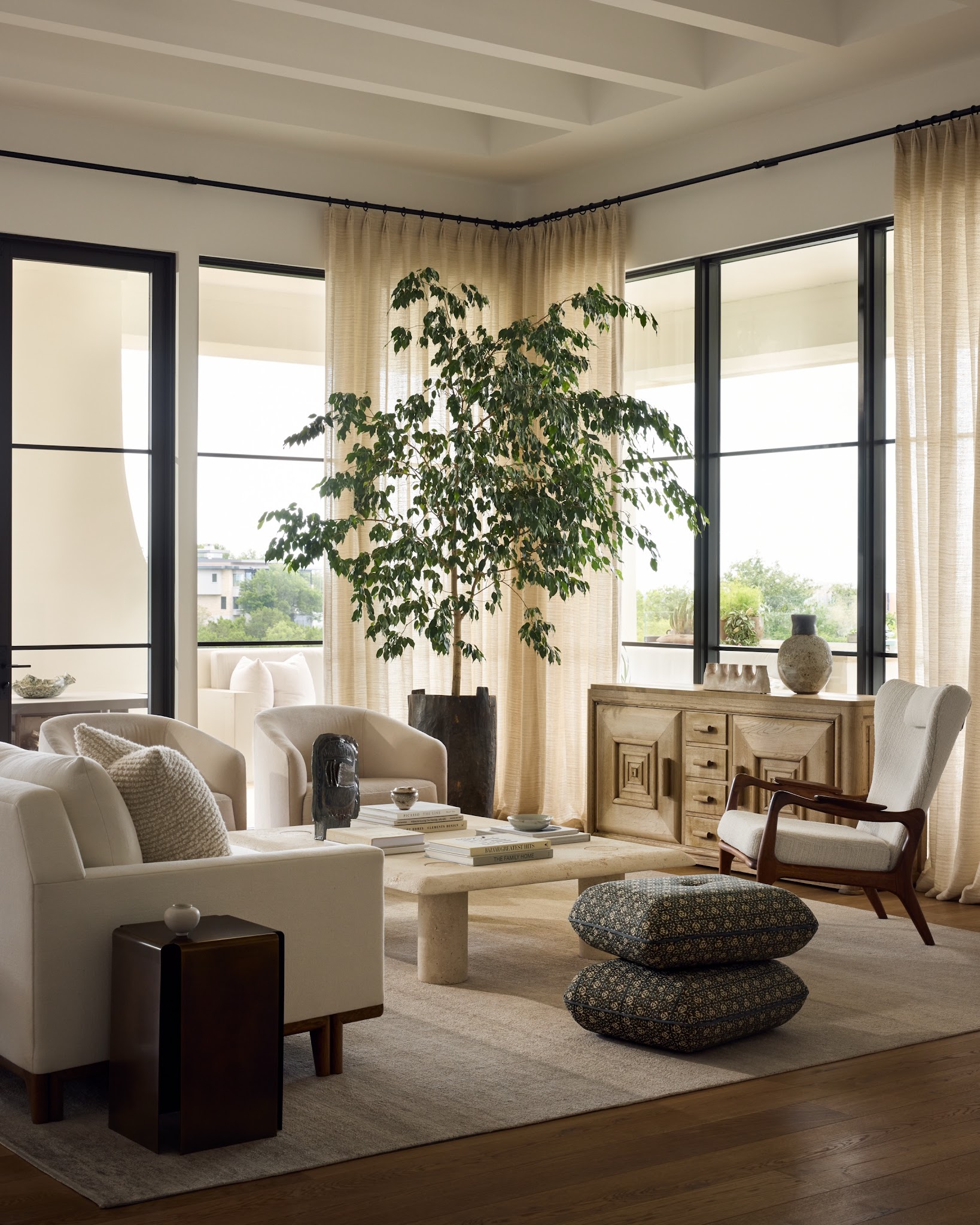
A quiet palette feels richer when the furniture offers several silhouettes. Here, a straight sofa shares the rug with rounded chairs and an open wood armchair, while dark patterned floor cushions introduce a relaxed extra perch.
Borrow that balance by keeping your main upholstery within a narrow range of cream and oatmeal, then varying the outlines. A substantial pale coffee table gives the arrangement a center without adding another strong color.
Notice how the tall leafy plant fills the corner above the seating and soft curtains temper the black window frames. Choose one generous plant for similar height, and leave enough room around its container to draw the curtains. A few darker accents will keep pale furnishings from blending together.
2. Keep Your Best View Above the Furniture
Credits: Instagram
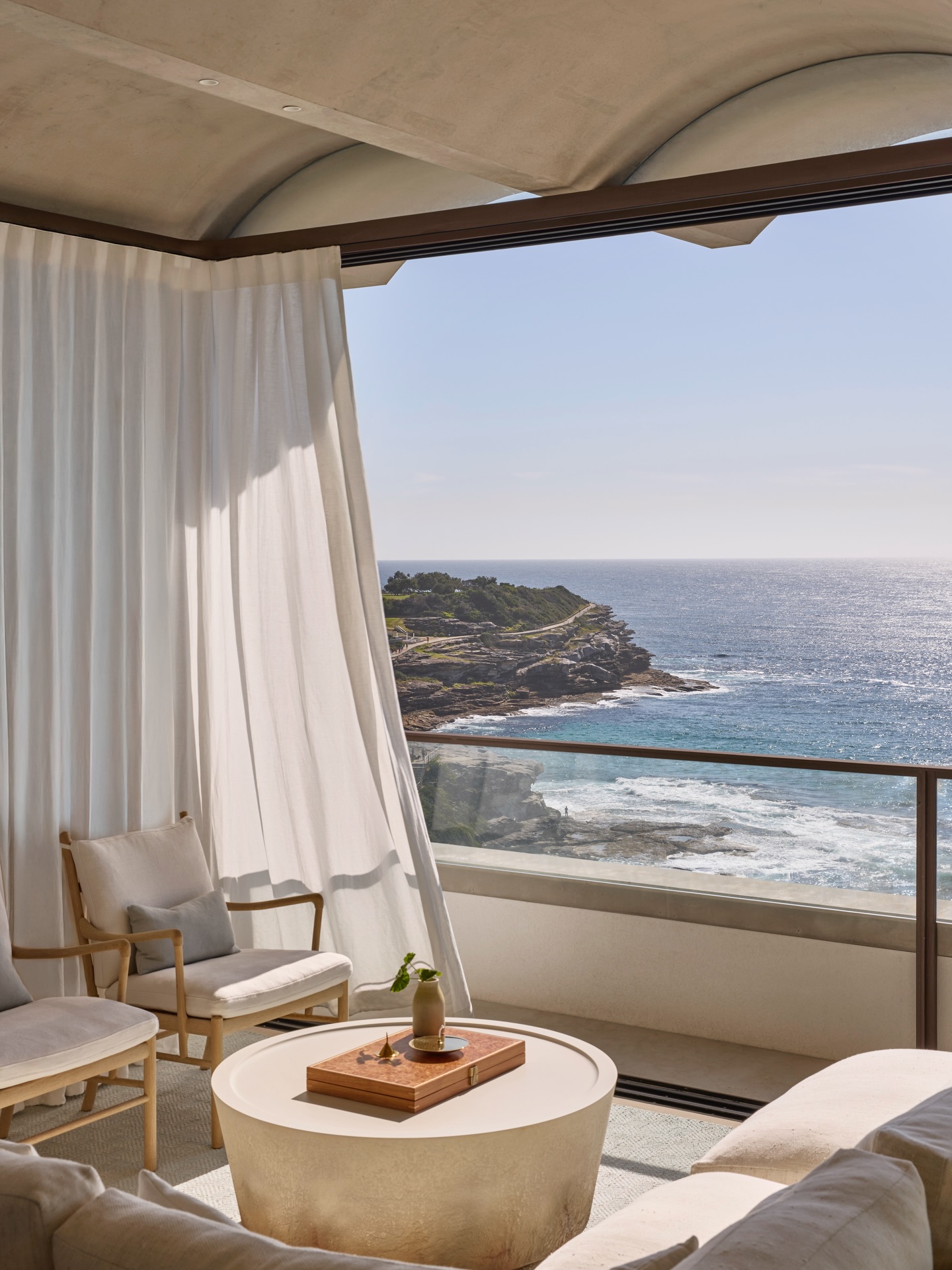
When a window delivers this much scenery, furniture height becomes a design decision. The low sofa, open armchairs, and rounded coffee table let the ocean remain visible across the seating area.
You can use the same approach with a garden, courtyard, or leafy street view. Check sight lines from both the doorway and your favorite seat before choosing tall pieces.
Pale upholstery and light curtains keep the foreground calm, while a wooden tray gathers the small tabletop objects into one tidy group.
Pull your curtains fully clear of the view when privacy allows, and keep decorative arrangements below seated eye level. The curved table also softens the strong horizontal window lines while leaving comfortable space to move between the seats.
3. Build an Eclectic Room Around Olive Green
Credits: Instagram
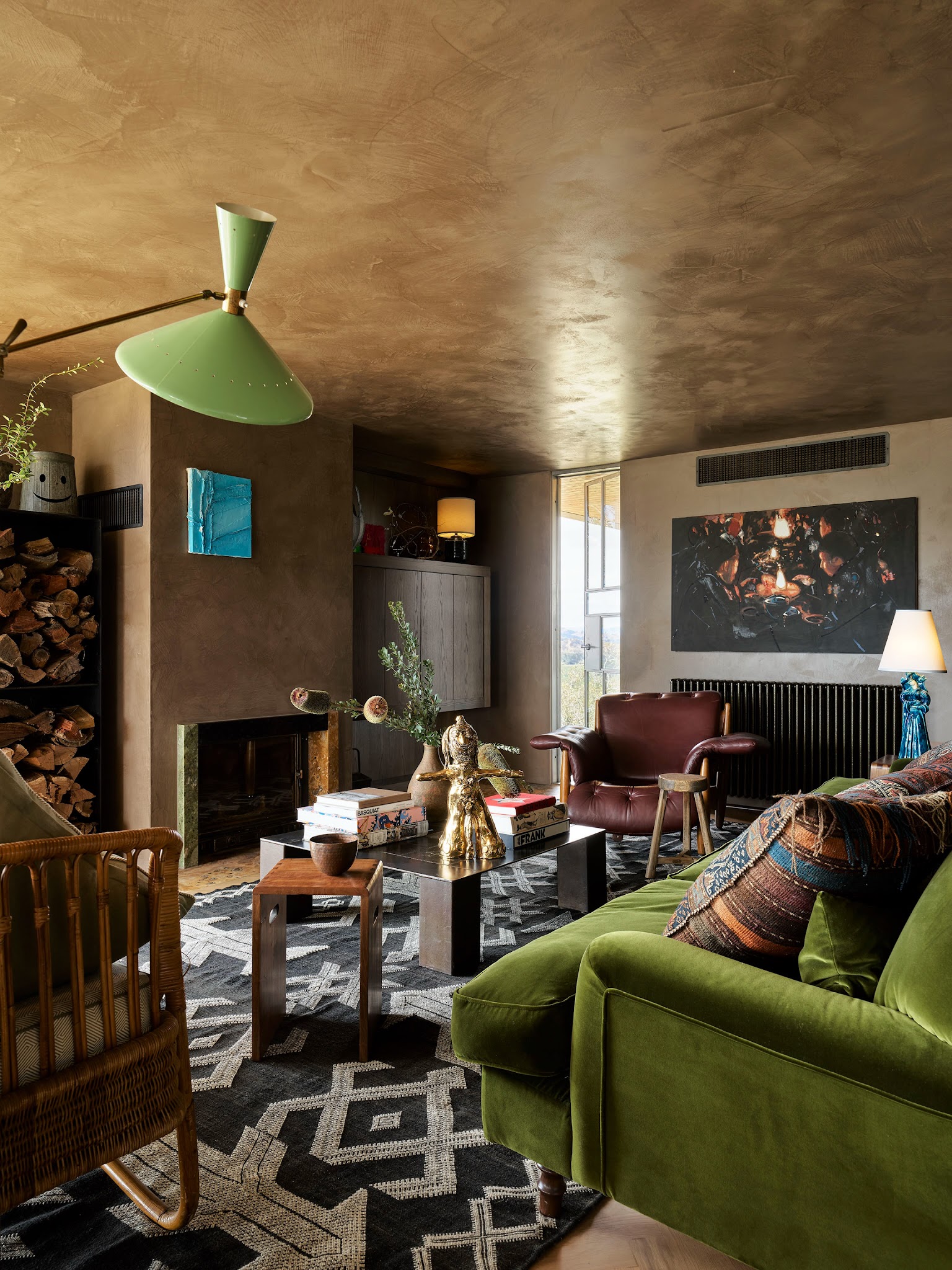
Olive green gives this expressive room a color to return to. The sofa and sculptural overhead light share that family, while a burgundy chair, turquoise artwork, and patterned pillows bring in lively contrasts.
Start your own mix with one substantial colored piece, then repeat its hue in a smaller feature across the room. A bold geometric rug can connect unlike furniture through a consistent black and cream pattern.
Keep the largest tables simple enough to support books, flowers, and a few objects you enjoy seeing every day. Here, varied chair shapes and warm brown surfaces make the arrangement feel collected.
Test your accent colors together in daylight, and keep some wall space around each artwork so individual pieces remain readable.
4. Balance a Tall Fireplace With Warm Texture
Credits: Instagram
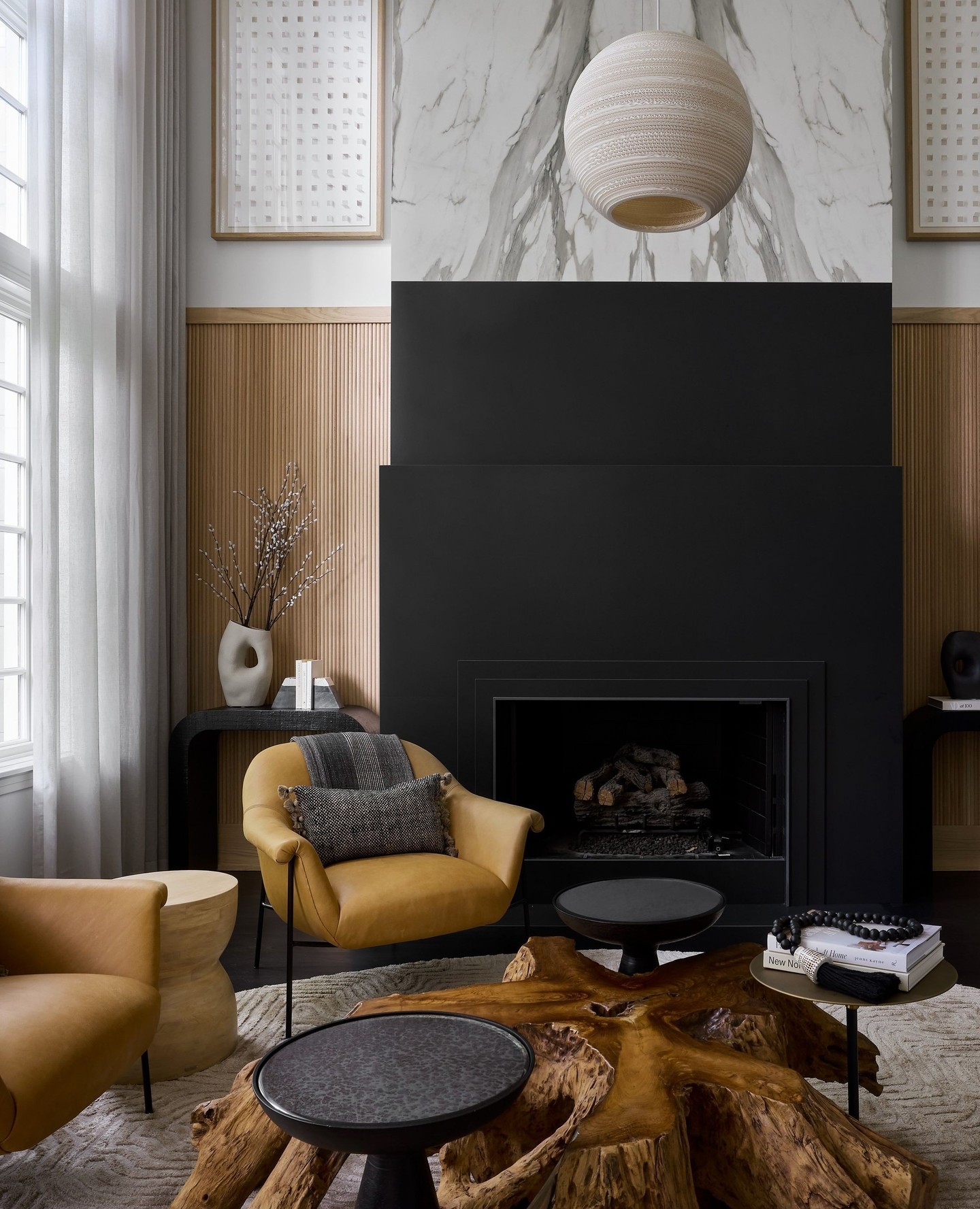
A tall fireplace needs details that work at more than one height. In this room, a dark central surround anchors the seating, pale veined porcelain rises above it, and fluted paneling adds a finer vertical rhythm along the sides.
You can borrow the contrast without copying the scale: pair one smooth, dark focal surface with lighter surroundings and a visibly textured detail.
Long curtains soften the vertical architecture, while mustard chairs bring warmth down to the level where people sit. Keep nearby console displays restrained so the fireplace retains its presence.
An organically shaped coffee table introduces curves against the wall's straight lines. Repeat that balance in your room by combining structured architectural features with comfortable seating and rounded accessories.
5. Fit a Reading Snug Around the Edges
Credits: Instagram
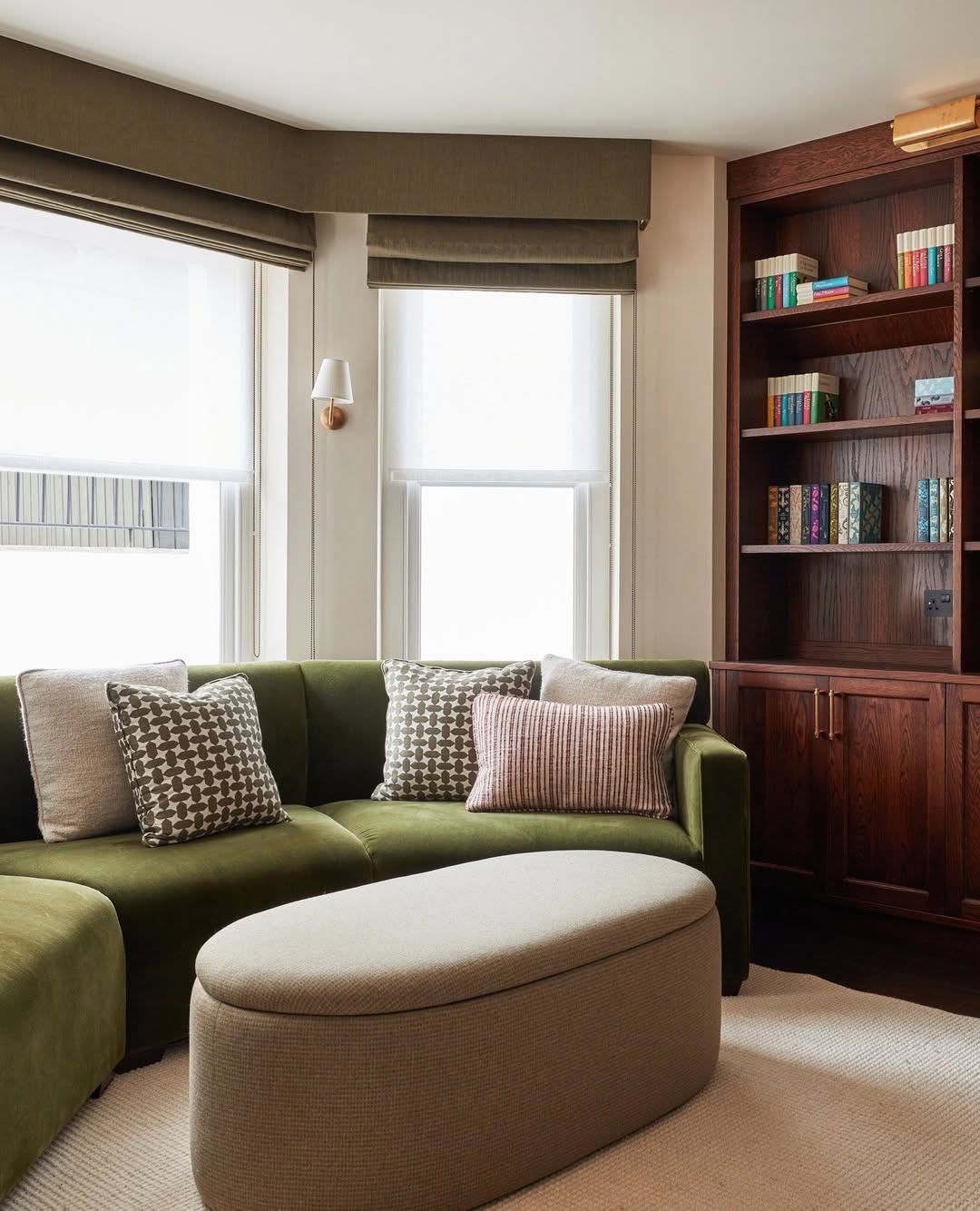
This compact room puts its perimeter to work. A green velvet sofa follows the window corner, and tall wood shelving combines open book storage with closed cabinets below.
Consider a similar arrangement when you want generous lounging space without scattering several pieces across a small floor plan. Measure the usable corner carefully, including window trim and access to blinds, before ordering seating.
An oval upholstered ottoman offers a soft central surface, and its curved ends ease the visual squeeze between furniture. Mix plain pillows with a couple of small patterns to add interest without crowding the room.
For storage, leave a few shelf sections open around favorite books, and reserve lower cabinets for the less attractive things you still need.
6. Let Sculptural Chairs Define a Sunny Seating Area
Credits: Instagram
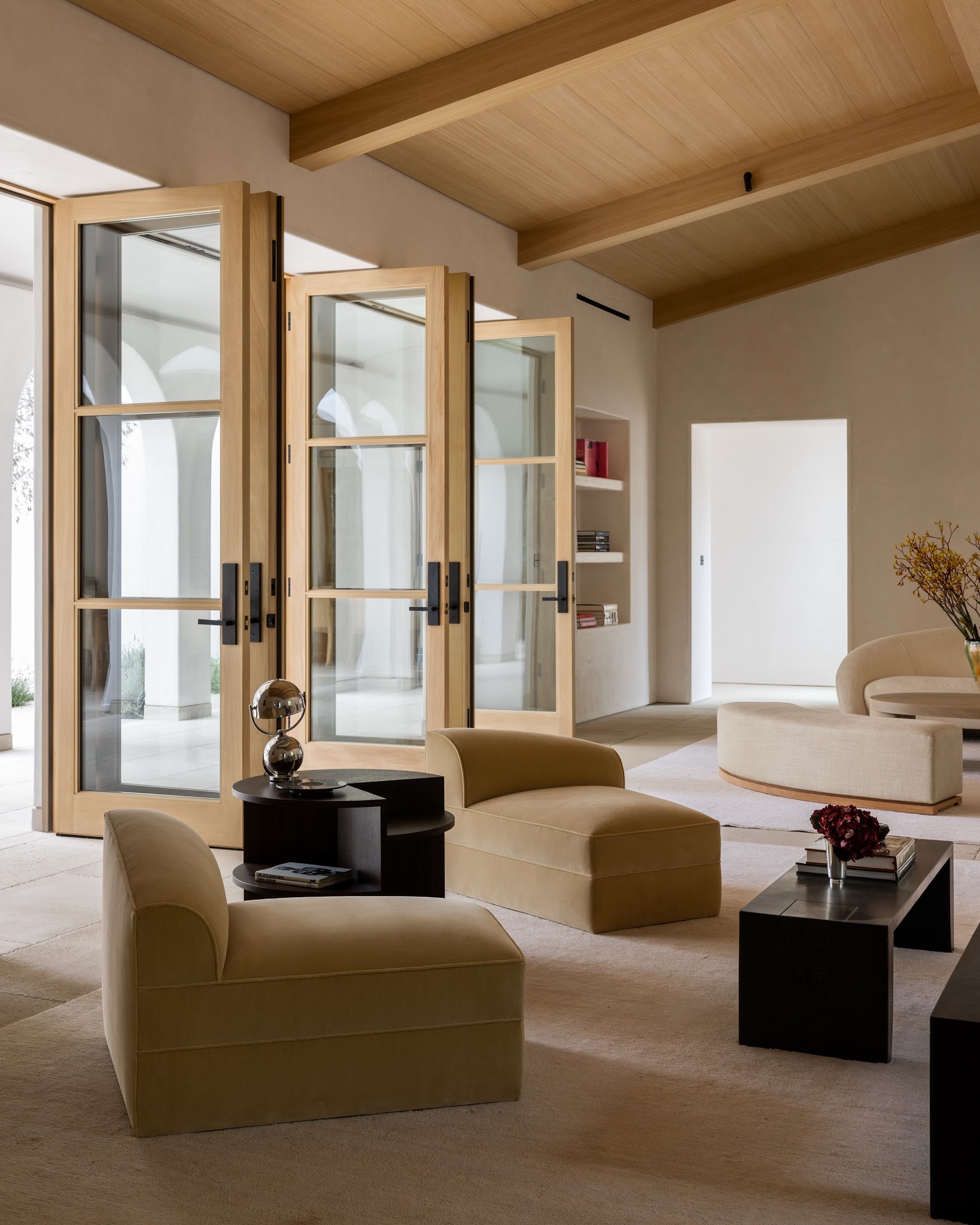
Broad upholstered chairs give this bright room its relaxed shape. Their low curved backs sit comfortably beneath the taller rhythm of open doors and ceiling beams, while dark tables add crisp punctuation to the pale surroundings.
If you are arranging a large living room, try a pair of substantial chairs to establish a smaller gathering spot within it.
Keep the pair on the same rug so they read as one group, and place a shared side table within easy reach.
The room also shows how similar warm tones can connect overhead wood, door frames, and upholstery without matching every surface. Leave the route through exterior doors generous, then use a few tabletop objects to give the seating area personal character.
7. Bring a High Ceiling Down With a Large Lantern
Credits: Instagram
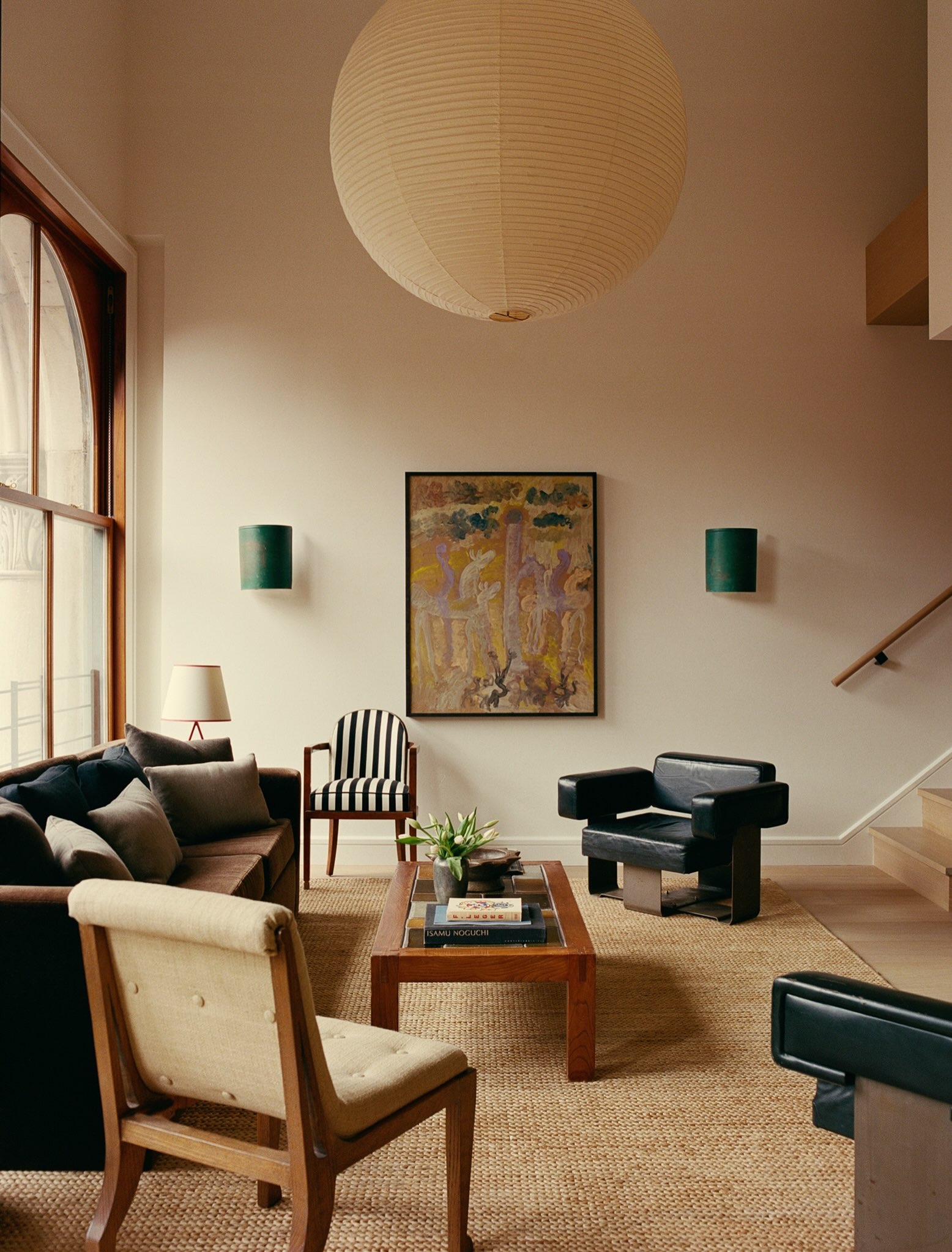
An oversized ribbed lantern gives the upper half of this room a clear focal point. Below it, a sofa and several distinct chairs gather around a rectangular table, making the tall space feel connected to everyday conversation.
For a similar effect, choose a pendant with enough visual presence to relate to the seating group, then check clearance and placement before installation.
Let a large artwork occupy the wall beneath it, with smaller lights providing a second layer at a more intimate height. Here, the striped chair adds pattern while dark seats and warm wood keep the mixture grounded.
A generous rug gathers the different silhouettes together. Keep the route beside the stairs open so your arrangement feels welcoming and practical.
8. Arrange Four Armchairs for Face-to-Face Conversation
Credits: Instagram
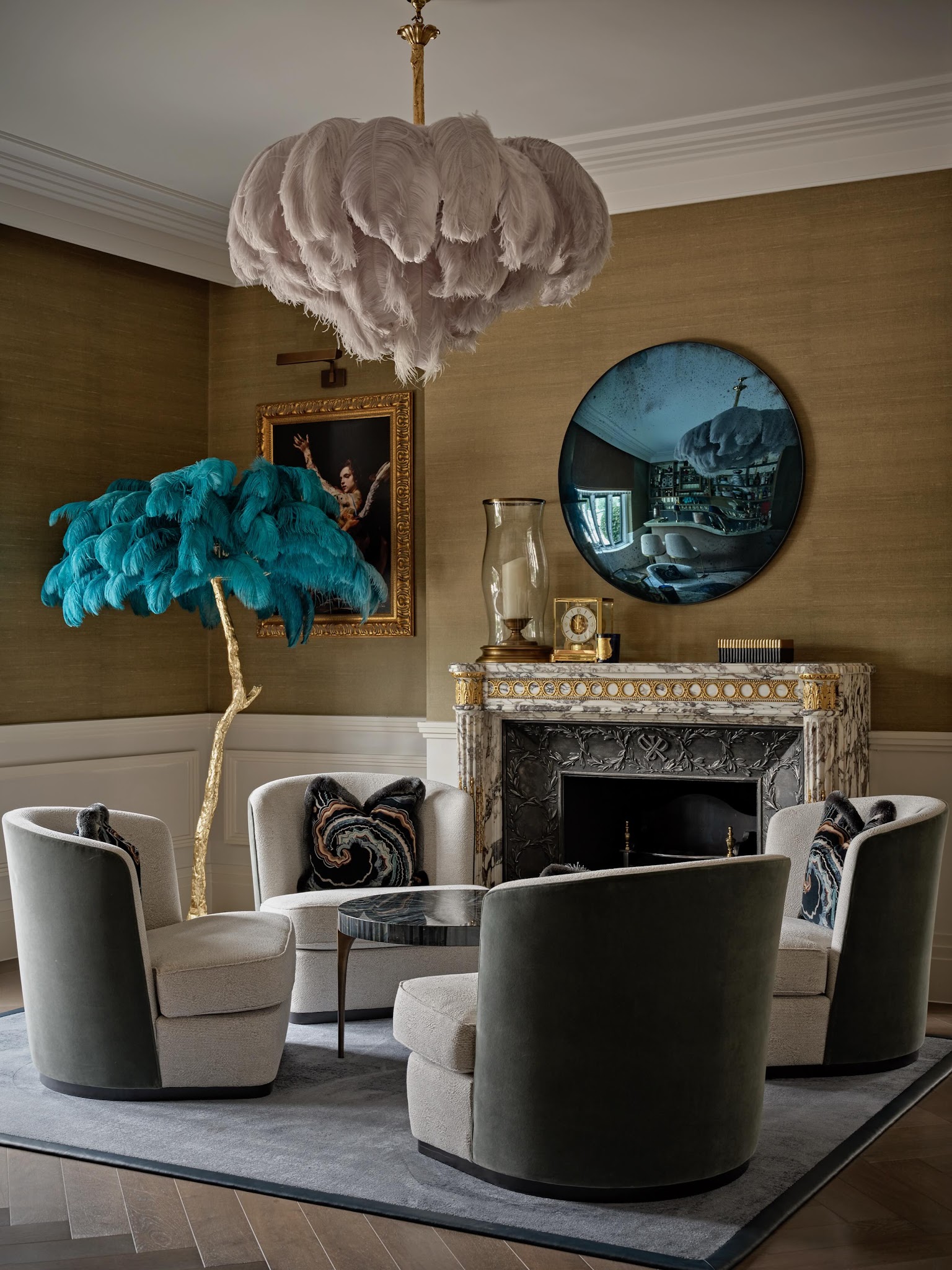
Four rounded armchairs form a compact conversation circle around a small central table. Their matching shapes bring order to a room full of decorative character, from the ornate fireplace to the feathered lighting and blue circular mirror.
If conversation matters most in your living room, try this arrangement in a dedicated seating zone. Position each chair so guests can reach the table comfortably, and keep openings between them for easy entry.
A rug large enough to hold the whole group makes the circle feel intentional. You can introduce color through pillows and one striking accent while keeping the upholstery quiet.
Before buying four chairs, tape out their footprints and sit in the proposed positions to check spacing, views, and legroom.
9. Paint the Trim Into a Deep Green Backdrop
Credits: Instagram
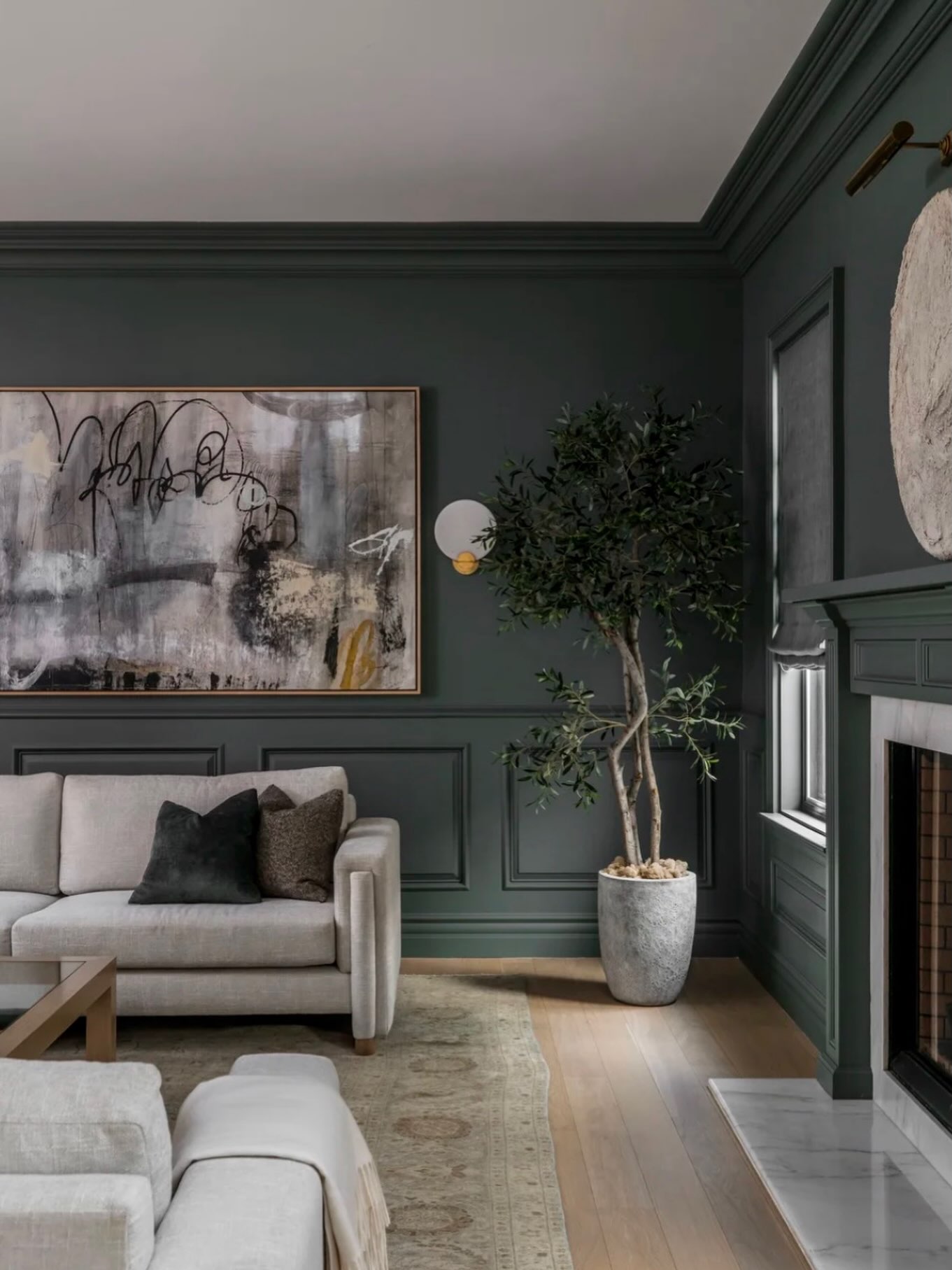
Deep green covers the walls, panel molding, crown, and fireplace mantel here, giving the architectural details a unified presence. Pale seating, a light ceiling, and a softly patterned rug keep the room from feeling visually heavy.
If you want to try a similarly enveloping color, sample it across several walls and inspect it throughout the day before committing. Carrying the paint onto trim lets the molding register through shadows rather than sharp color changes.
Large artwork with a lighter background brings relief above the sofa, while a tall plant adds an irregular shape beside the crisp panel lines.
Keep your main furnishings light enough to separate from the walls, and use lamps or sconces to reveal those subtle architectural layers.
10. Turn a Window Recess Into Extra Seating
Credits: Instagram
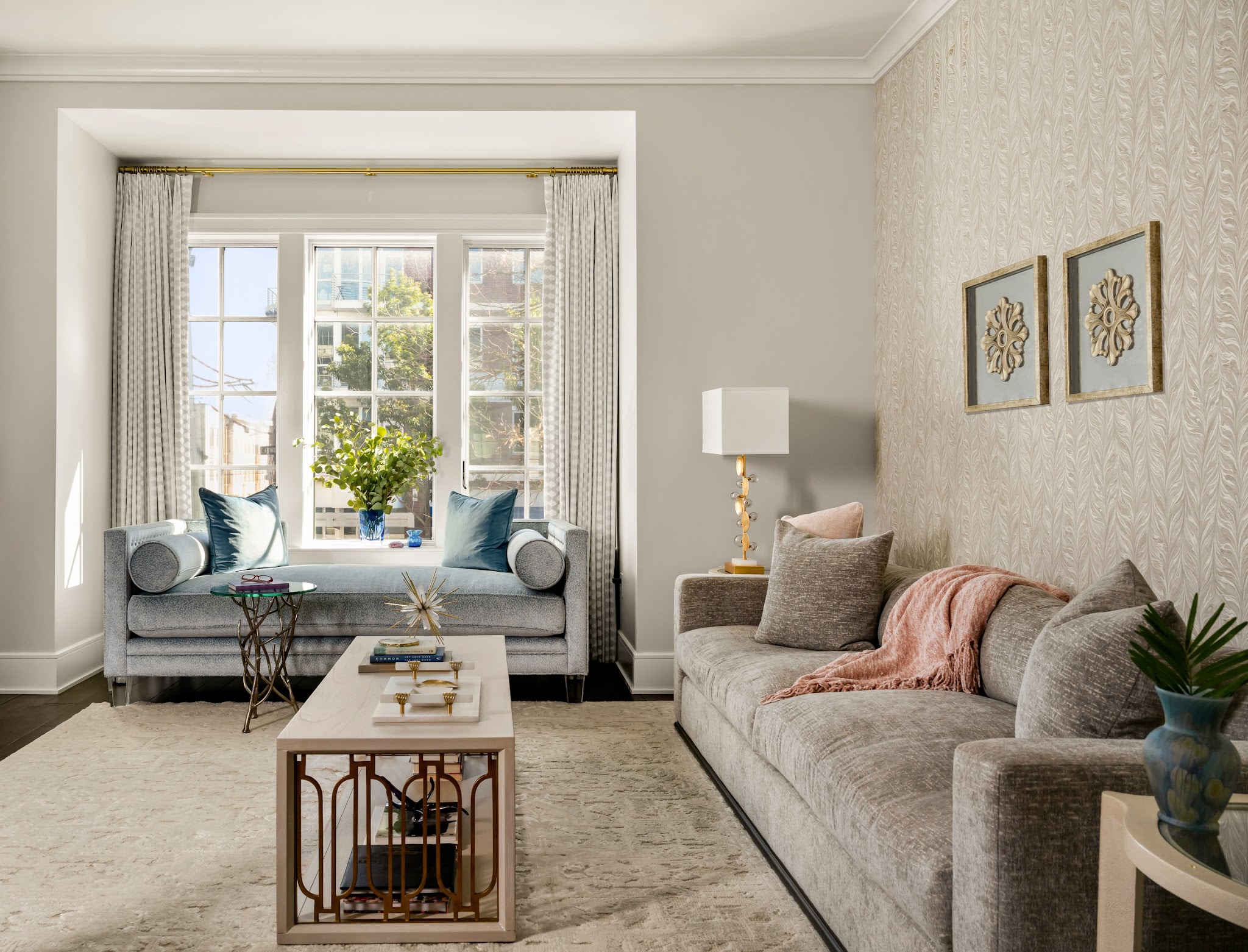
A freestanding upholstered seat makes the window recess part of this living room's conversation area. Its low back preserves the daylight above, and the narrow round table provides a place for a book or drink.
Look for a seat that fits comfortably between your curtains, allowing the fabric to hang freely on either side. Across the room, a longer sofa supplies the main lounging space, while the rectangular coffee table links both seating positions.
The pale patterned wall and curtains add detail without overpowering the small area. Borrow the restrained color accents, too: blue pillows and a pink throw give the neutral furnishings variety.
Repeat a metallic finish in a few small pieces to connect the room without adding clutter.
11. Sharpen a Soft White Sofa With Graphic Black Accents
Credits: Instagram
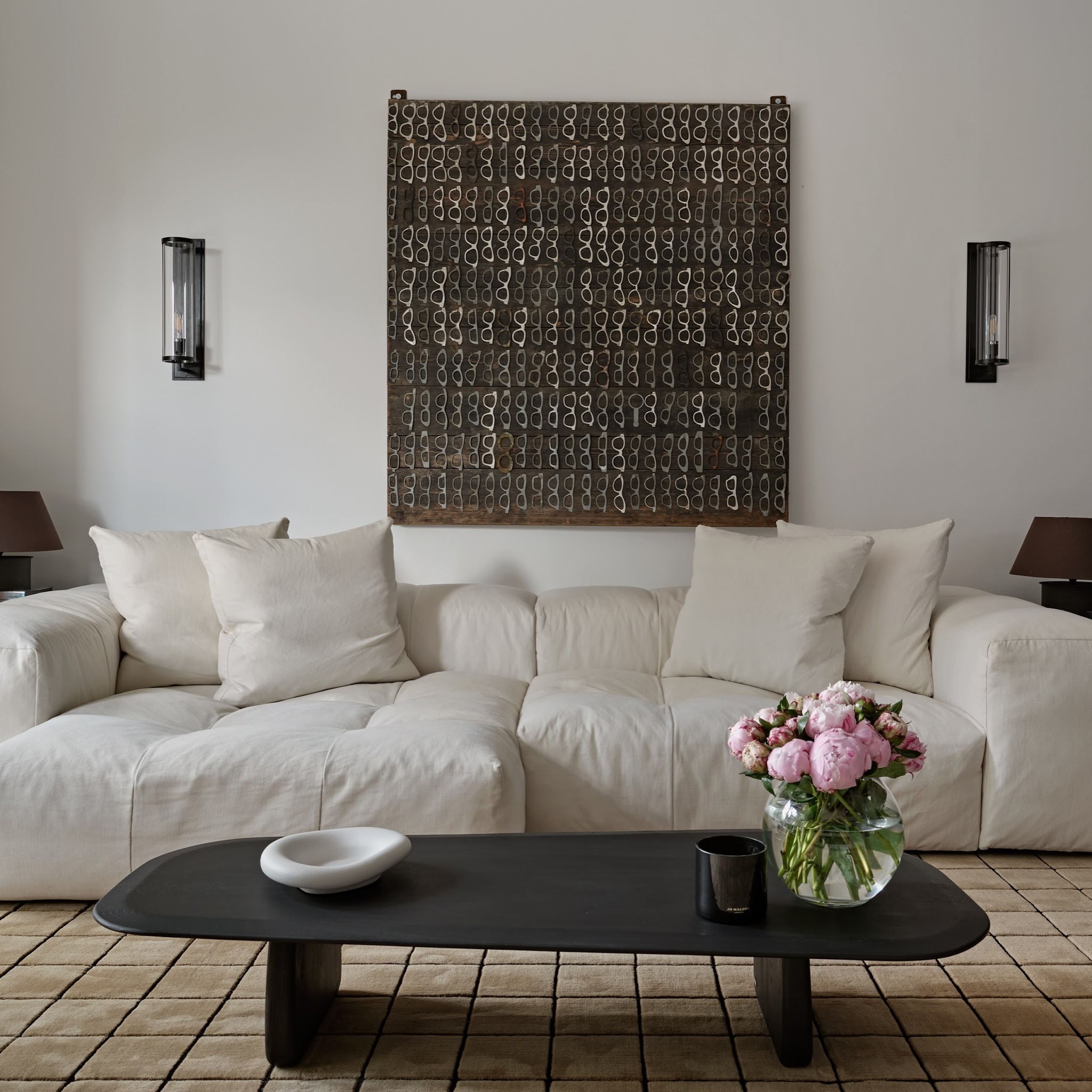
A cushioned white sofa can anchor a room without making the whole scheme feel pale. This arrangement introduces a low black coffee table, slender wall sconces, and an artwork covered in repeated light shapes.
Those dark elements give the generous upholstery a clear outline. Try a similar balance by choosing one substantial black piece near the floor and repeating its color more lightly above the sofa.
The gridded rug continues the graphic rhythm without competing with the artwork. Keep tabletop styling sparse so the curved table edge remains visible.
A small vase of pink flowers supplies the only bright accent here. For daily use, choose upholstery you can maintain comfortably and keep the sofa cushions inviting rather than excessively arranged.
12. Add a Small Table Behind the Lounge Chairs
Credits: Instagram
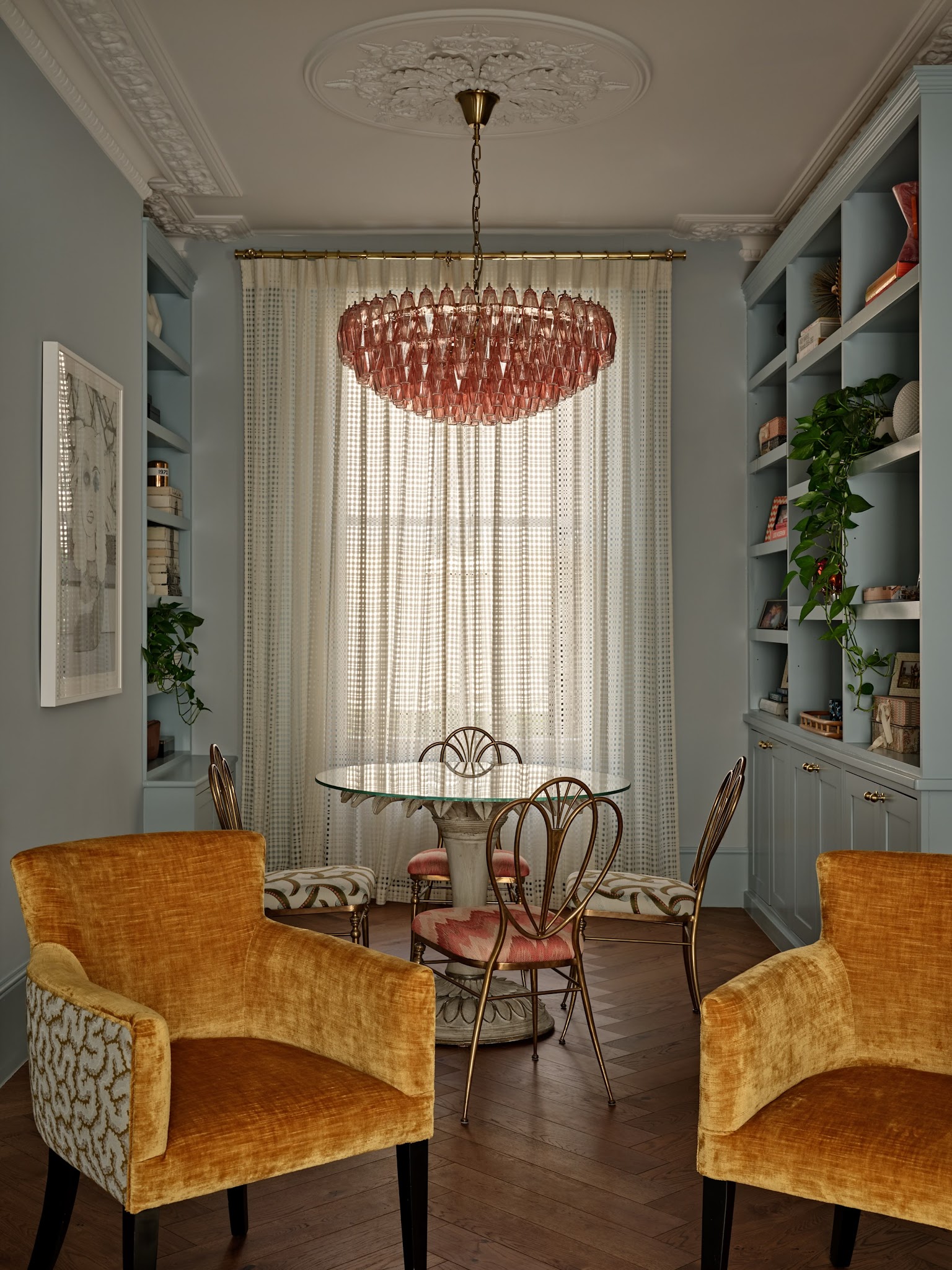
Give a living room more ways to gather by adding a round table beyond the main seating. Here, two golden armchairs introduce the lounge area, while a glass table and chairs occupy the window end between bookshelves.
The open table base keeps that second zone visually light. You could use a similar spot for puzzles, reading, or a quiet breakfast without making the whole room feel like a dining room.
Paint surrounding shelving in the wall color to create a calm backdrop for books and plants. Soft blue walls balance the warmer chairs, and a pink chandelier connects both sides of the palette.
Leave enough clearance behind each table chair so the arrangement remains comfortable when every seat is occupied.
13. Let One Dramatic Stone Wall Set the Palette
Credits: Instagram
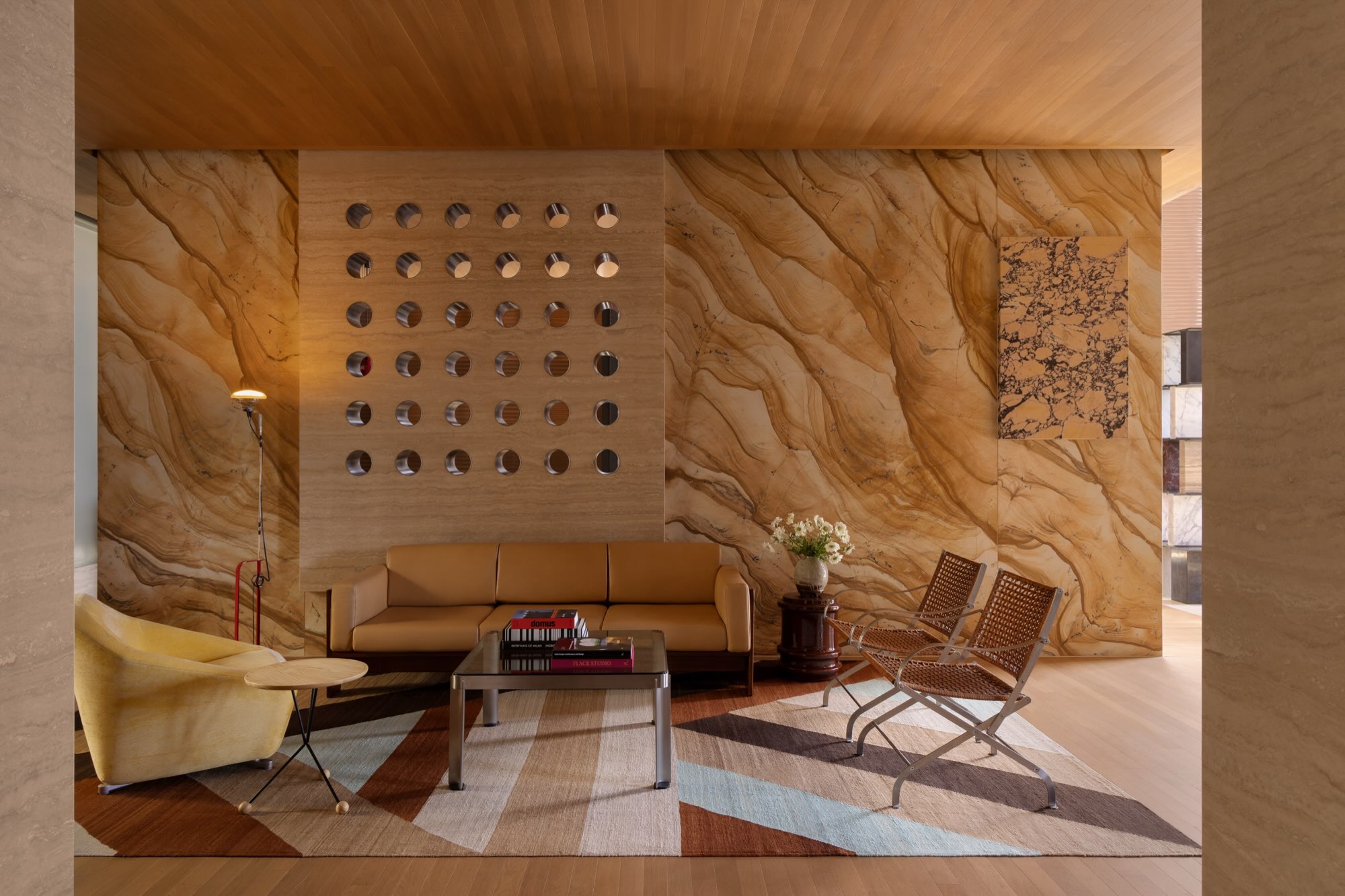
The seating area in this Brisbane stone showroom offers a lesson in controlling a dramatic backdrop. Broad bands of golden veining dominate the wall, while a warm sofa, pale yellow chair, and woven seats echo its colors.
Instead of competing with that movement, the rectangular coffee table and simple furniture outlines provide structure. If you are considering a strongly patterned wall at home, choose your upholstery after viewing the material sample.
Repeat two or three of its quieter tones across the room. A geometric rug can work alongside organic veining when its colors stay connected.
Keep additional wall decorations deliberate and limited. This approach also translates to a patterned wallpaper or one large artwork if stone is beyond your budget.
14. Run a Long Ottoman Through a Narrow Seating Group
Credits: Instagram
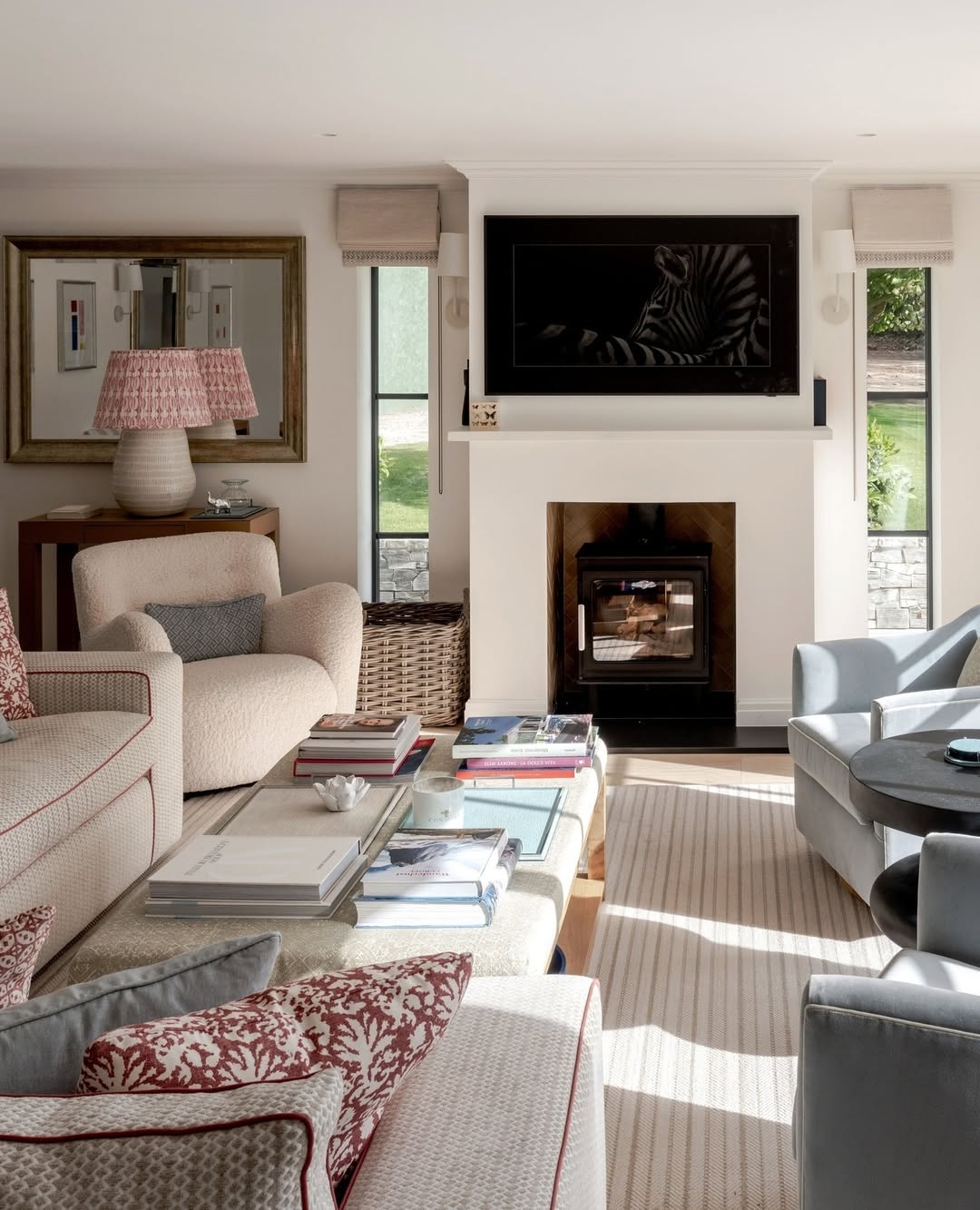
A long upholstered ottoman makes good use of the space between facing seats. In this bright sitting room, it stretches along the sofa and chairs, giving several people a place to rest a book or set down a tray.
Its pale pattern joins the other fabrics without introducing a heavy block of furniture. Borrow the proportions, then measure the passages along both sides before choosing your own piece.
Use a firm tray for drinks and keep some of the surface clear for feet. The room's small red patterns, blue chairs, and neutral upholstery show how a restrained palette can accommodate several textiles.
A striped rug reinforces the length of the arrangement, while low furniture preserves the daylight from narrow windows.
15. Make a Collected Gallery Wall Feel Connected
Credits: Instagram
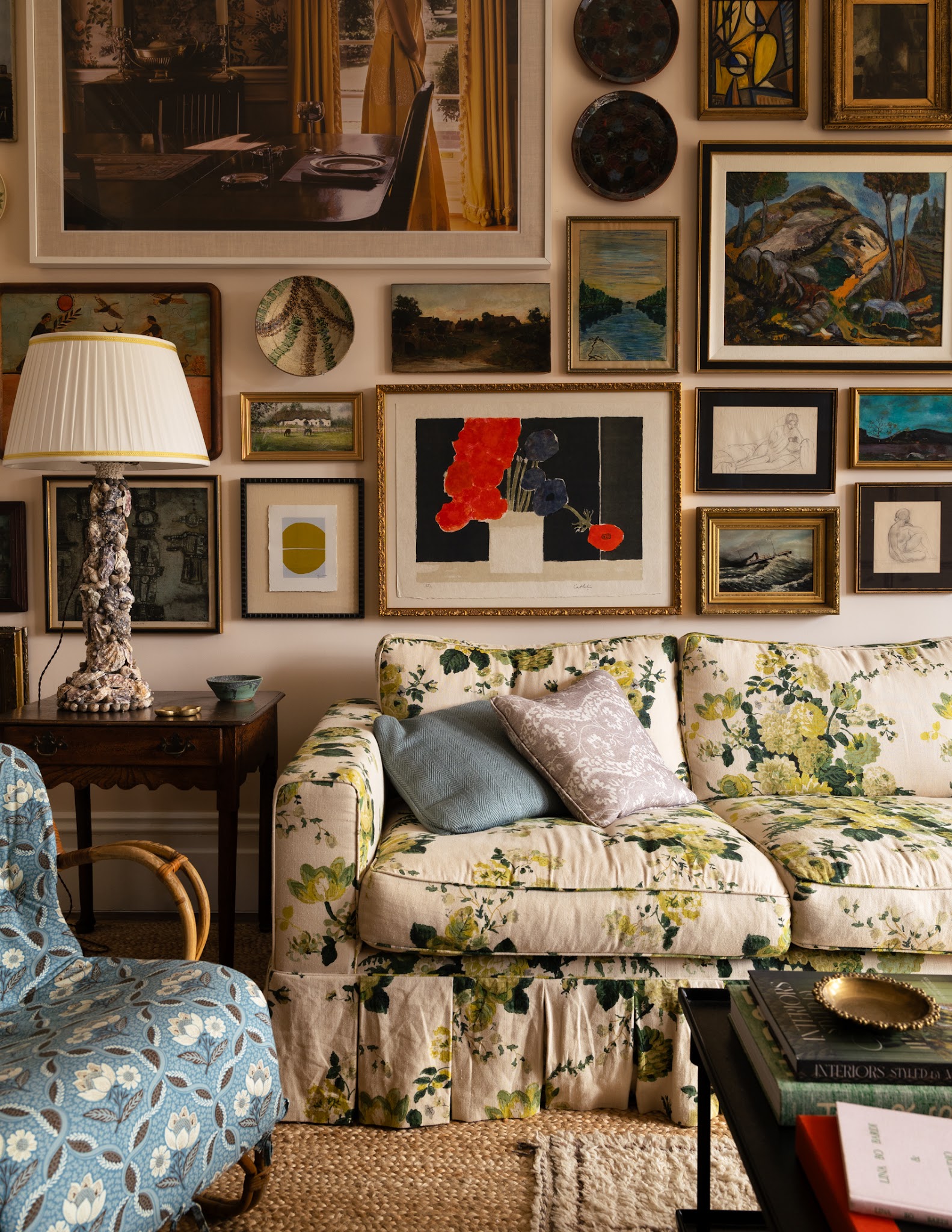
This gallery wall feels personal because its pictures vary in size, subject, and frame. A large photograph establishes the upper arrangement, while smaller paintings, drawings, and decorative plates fill the spaces below.
The floral sofa contributes its own pattern without matching every color overhead. To create a similar composition, begin with your largest pieces on the floor and work outward, keeping the gaps consistent.
Repeat a few frame finishes to connect unrelated artwork. Let one or two colors return in nearby upholstery or pillows, rather than trying to coordinate the whole collection.
A substantial table lamp gives the busy wall a quieter vertical shape. Keep the adjacent tabletop useful, with enough open space for the things you reach for daily.
16. Make a Woven Screen Part of the Seating Area
Credits: Instagram
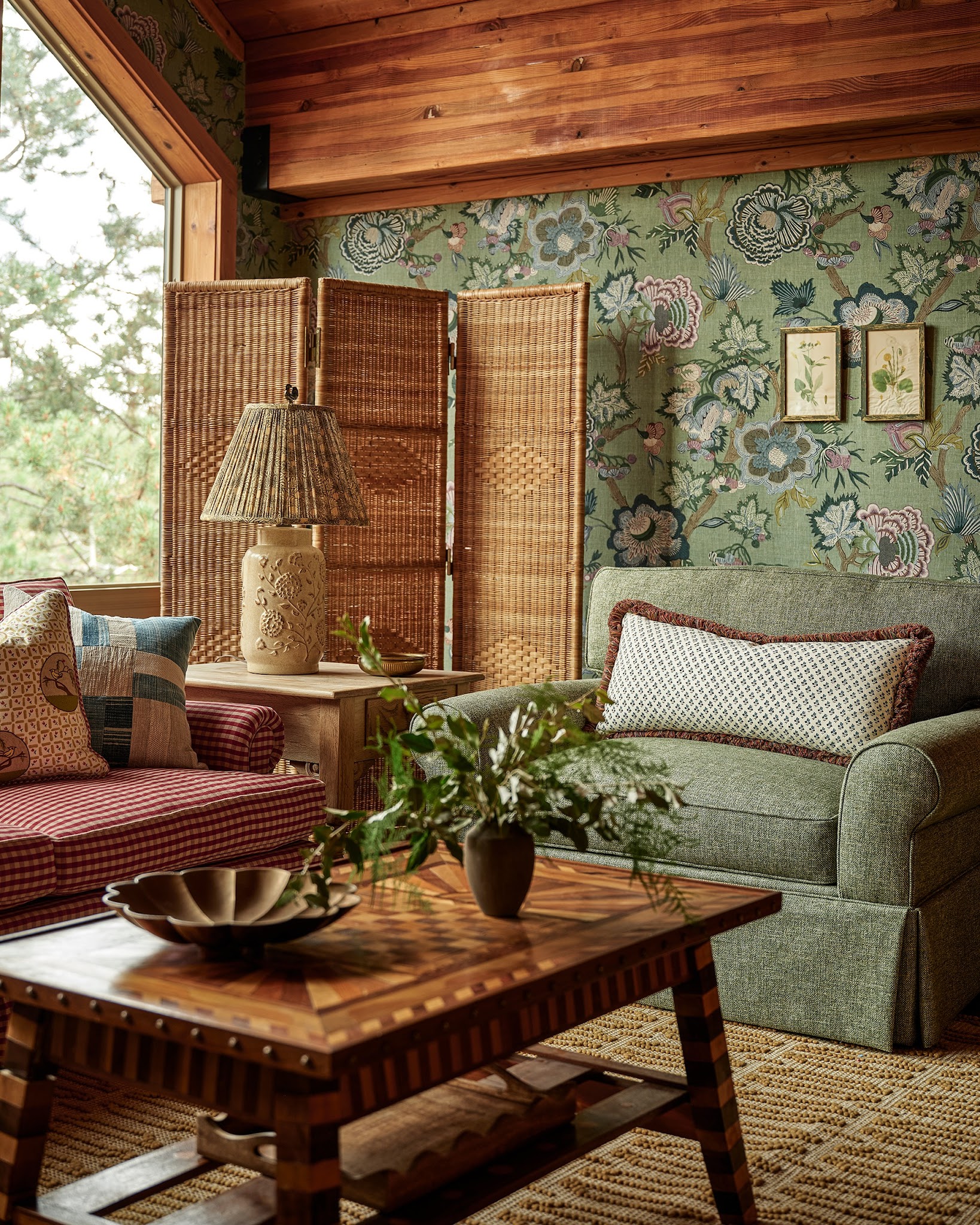
A woven folding screen gives this seating corner a second layer between the chairs and floral wallpaper.
Its brown tone connects with the exposed ceiling beam and window trim, while the repeating panels create a quiet shape against the busy print.
Place a screen behind a side table to define a small conversation area without adding built-in cabinetry. Keep its folded footprint clear of walking routes and window controls.
Here, a ceramic lamp stands against the weave, and the green upholstery gives the eye a place to rest. Repeat the screen's natural texture with a woven rug, then let a patterned chair supply contrast.
Adjust the panels to fit the corner, leaving space around the table for reaching a drink.
17. Mix Light Furniture Frames With Soft Layers
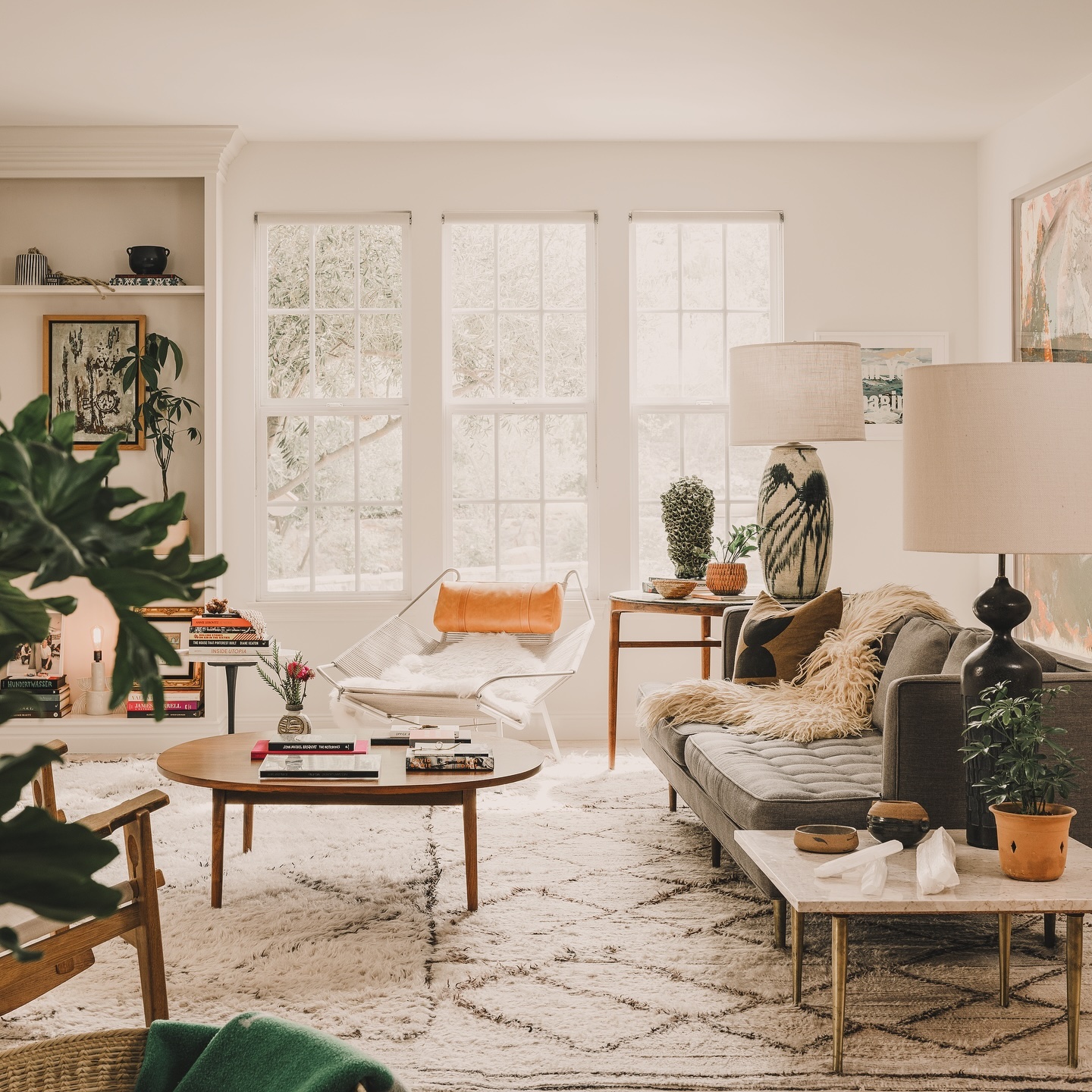
Credits: Instagram
An airy room can still feel inviting when softness is concentrated where people sit. The slim white lounge chair and wood coffee table keep this arrangement open, while a plush rug, textured throw, and cushioned sofa add comfort.
Try balancing one visually light seat with a more substantial sofa instead of choosing a matching suite. Different table heights give books, lamps, and plants their own places without filling the center.
The broad neutral palette makes those varied forms feel connected. Keep plants near the edges of the group so their leaves frame the seating rather than interrupt conversation.
In a sunny room, simple window treatments let the furniture silhouettes remain visible. Finish with a few favorite objects and reading lights.
18. Use a Sofa Console to Connect an Open Floor Plan
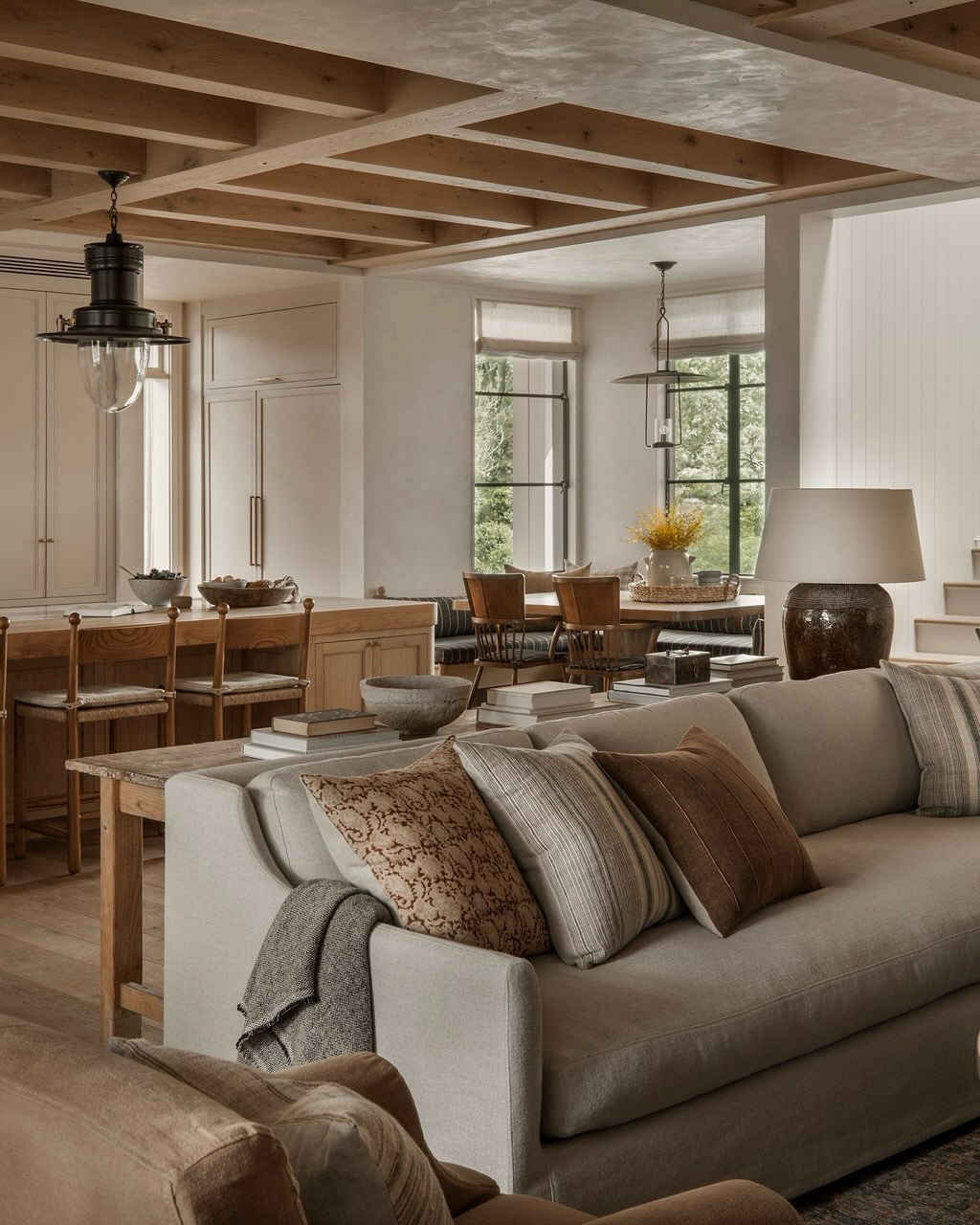
Credits: Instagram
The back of a sofa deserves attention when it faces a kitchen or dining area. Here, a narrow wood console turns that exposed edge into a useful surface for a lamp, books, and a bowl.
Its warm finish relates to the ceiling beams, counter stools, and nearby dining chairs, helping several functions feel connected. Choose a console that stays below the sofa back and leaves a walkway behind it.
Keep tall objects toward one end so they do not block conversation across the room. The sofa's soft gray upholstery and mixed pillows give the living area its own texture without breaking the shared palette.
Repeat a selection of materials throughout your open space, then let furniture placement define each activity.
19. Give One Oversized Painting Room to Lead
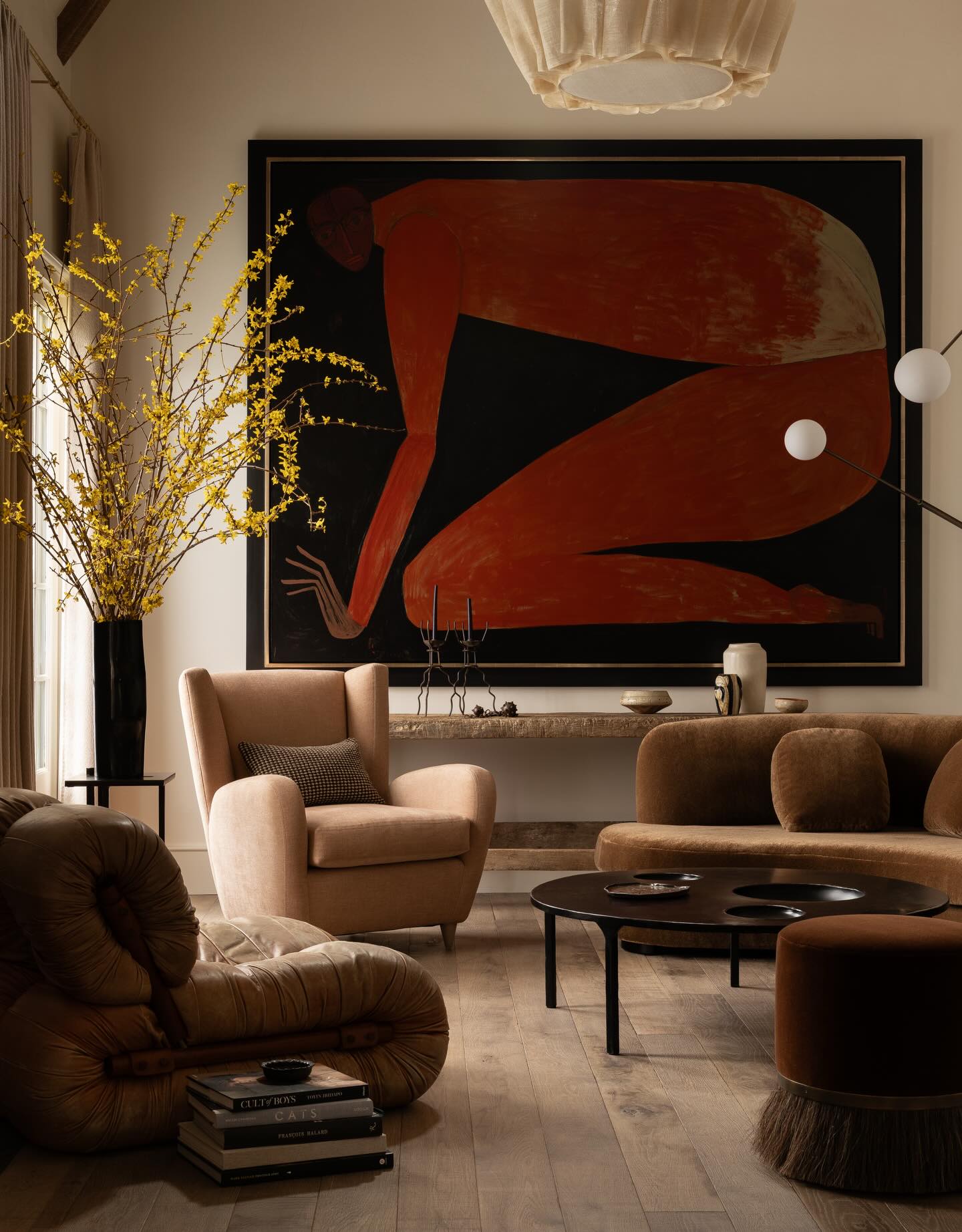
Credits: Instagram
A single large painting can organize a seating area. Here, its rust and black shapes hold the wall above warm brown furniture, while a pale chair and light walls prevent the palette from becoming heavy.
Start with artwork that suits the room's scale, then repeat one of its colors in upholstery or smaller accents. Keep neighboring decorations modest enough that the painting remains the thing you notice.
The long shelf beneath it supplies a horizontal line for a few collected objects. Rounded seats and slim tables soften the strong rectangular frame.
Before hanging a large piece, mark its outline on the wall and check it from the doorway and sofa. Leave enough room around the frame to preserve its impact.
20. Warm a Cool Sofa Palette With Small Rust Accents
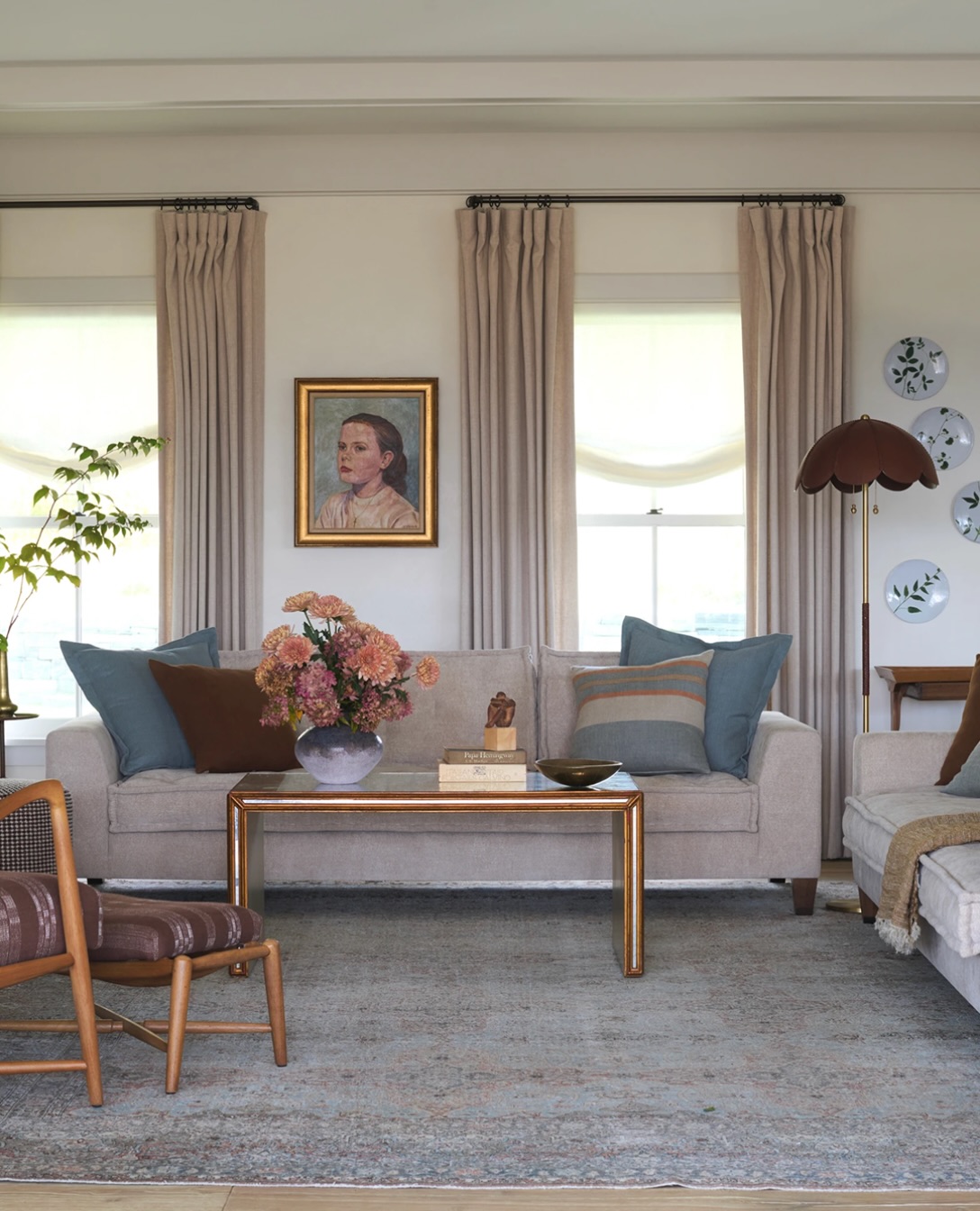
Credits: Instagram
Blue pillows and pale gray seating make this living room feel calm, while rust accents prevent the palette from turning chilly. The warm notes appear in a cushion, striped upholstery, flowers, and the slim coffee table frame.
Use the same principle when you like cool neutrals but want a welcoming result: introduce warmth in several small places rather than one oversized object.
Full curtains and softer shades layer the windows without hiding their height. A portrait centered between them creates a quiet focal point above the sofa.
Keep the coffee table simple and low enough to reveal the upholstery behind it. Mixing one wood chair with upholstered seats also adds variety, giving the room character while preserving its orderly arrangement.