
A black sofa can anchor a room, but without contrast it may make the seating area feel heavier than intended. Black Couch Living Room Ideas show how light, color, and texture can give dark upholstery a more balanced setting.
Try pairing black leather with daylight and pale walls, using a gallery wall to connect the sofa to the room, or warming black velvet with champagne-toned metallic details.
These examples also show how colorful art, soft green, and layered neutrals can add character without crowding the space.
1. Let a Chesterfield Define the Corner
Credits: Instagram
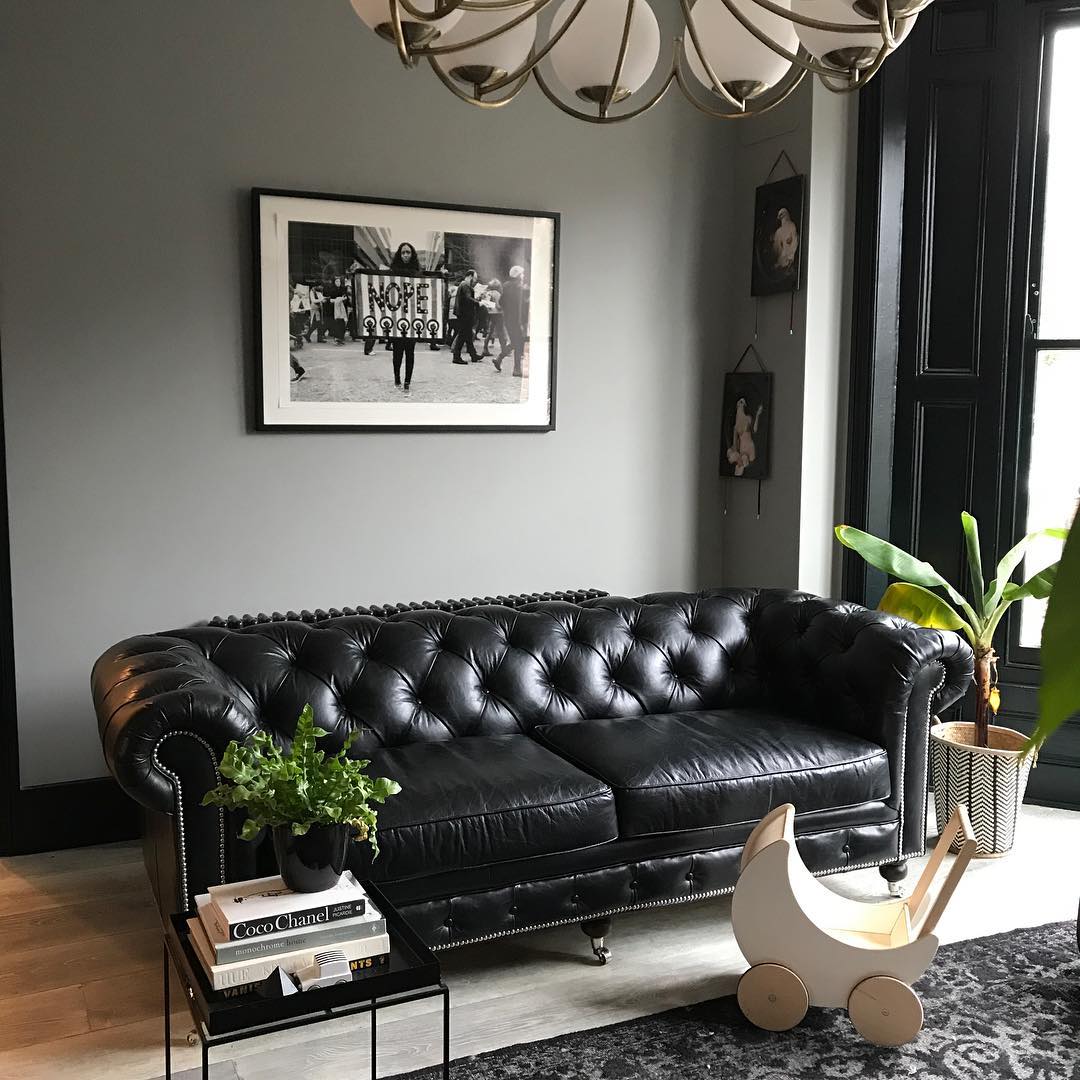
A black leather Chesterfield gives this seating area a strong identity without needing a crowded arrangement. Its rolled arms and deep buttons provide enough detail to carry the room, while the pale wall keeps the silhouette easy to read.
A framed photograph repeats the black and white palette above the sofa. Beside it, a slender black table holds books and a plant without adding another bulky piece.
Dark shutters connect the window to the upholstery, and greenery softens the corner. Try this combination when a traditional sofa needs a lighter setting: one generous piece of art, a simple side table, and a few natural accents.
Keep the surrounding floor clear so the furniture has room to breathe in the daylight.
2. Pair Black Upholstery With a Gallery Wall
Credits: Instagram
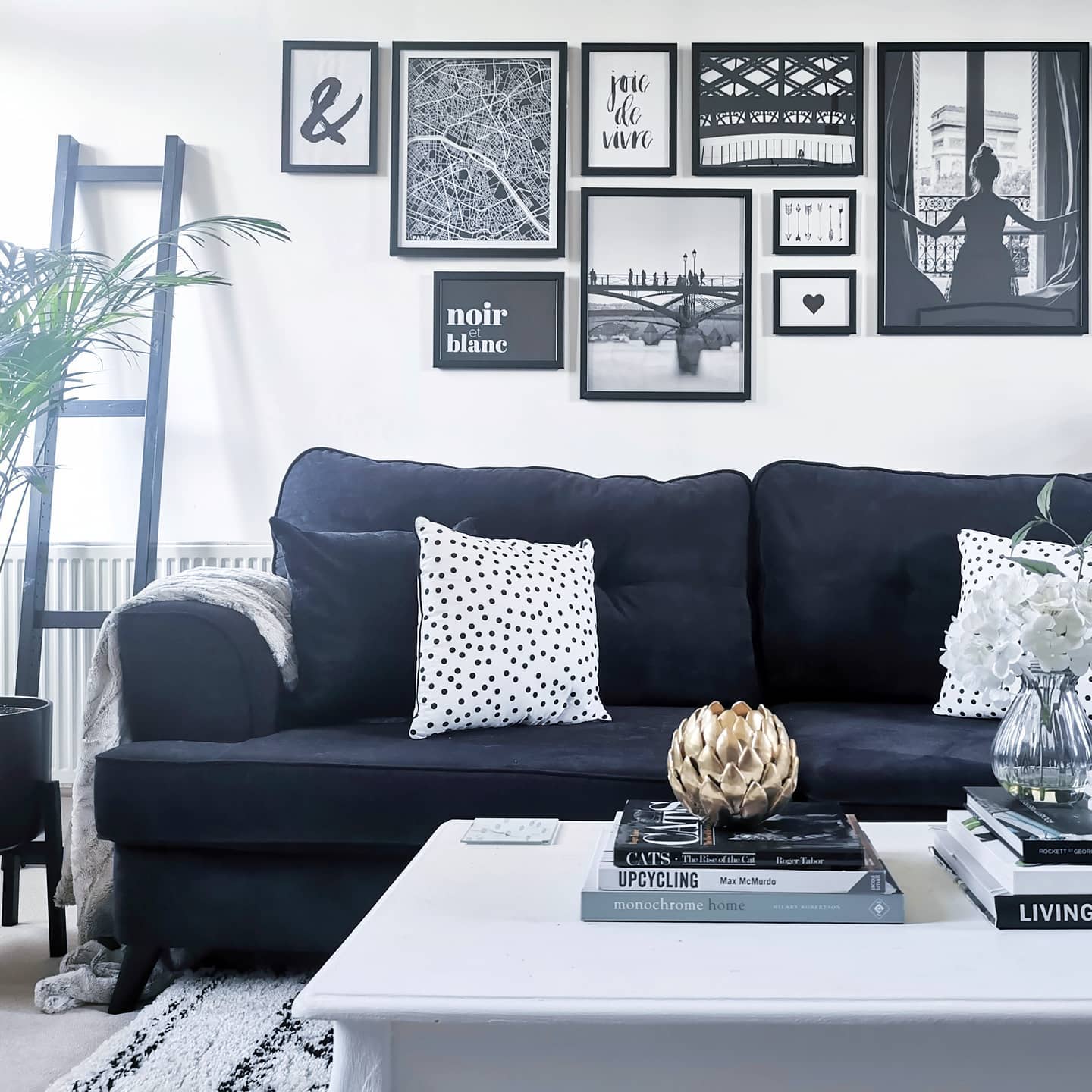
A collection of black frames makes this sofa feel connected to the wall. The artwork mixes maps, photographs, lettering, and small graphic prints, yet the limited palette keeps the display cohesive.
White pillows with black dots bridge the dark upholstery and bright wall, while a pale throw softens one arm. A white coffee table repeats the lighter background and leaves the sofa as the room's largest dark element.
Plants interrupt the straight lines without introducing another busy pattern. For a similar arrangement, choose frames in one finish and vary their sizes.
Start with the largest piece, then build outward with smaller works. Leave enough space above the cushions that the gallery reads as its own composition rather than an extension.
3. Lighten Black Leather With Daylight
Credits: Instagram
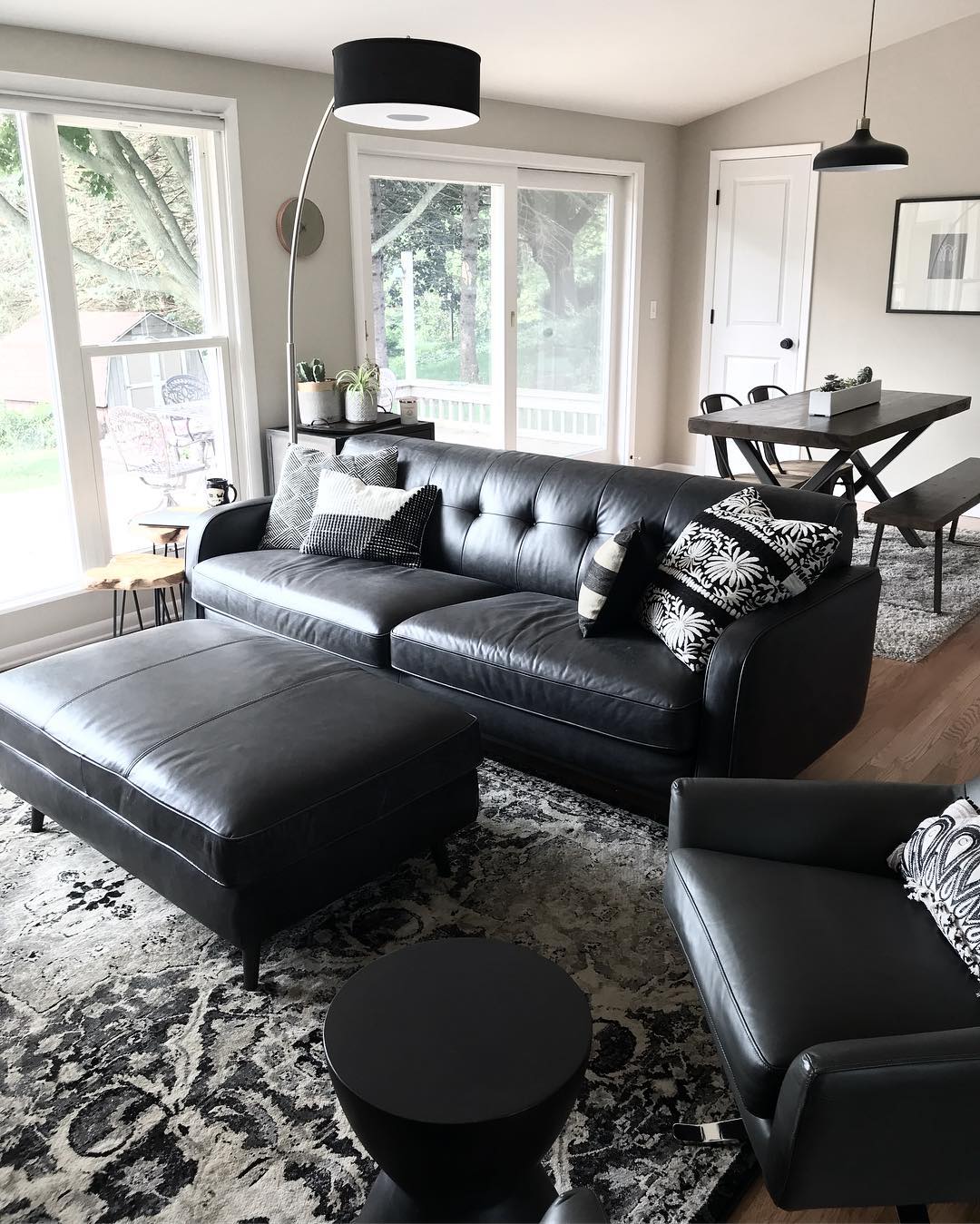
Large windows help this black leather sofa and matching ottoman feel inviting instead of heavy. The ottoman provides a generous spot to stretch out, while the sofa separates the living area from the dining table behind it.
A patterned rug introduces lighter areas beneath the dark furniture, and a round black table keeps the center easy to navigate. White trim and pale walls provide a crisp outline around the leather.
The open view toward the dining area keeps the arrangement from feeling boxed in. Use this approach in a bright shared space where substantial furniture must serve several purposes.
Let the sofa define the living zone, then choose simple window treatments so daylight can travel across the whole seating area.
4. Give Black Velvet a Champagne Glow
Credits: Instagram
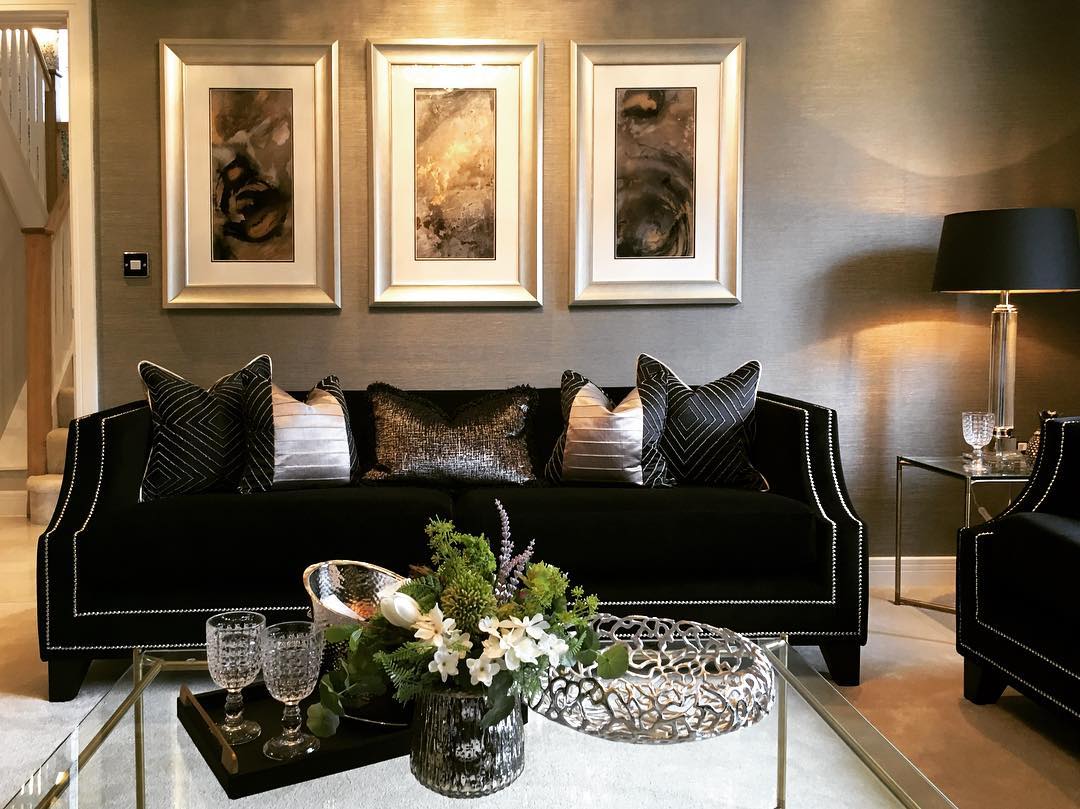
Black velvet becomes the centerpiece of this room because the surrounding finishes catch the light. Metallic nailheads trace the sofa's shape, giving its dark outline a tailored appearance against the warm wall.
Three framed pictures create a measured rhythm overhead, while reflective tables and glass accessories bring sparkle down to seating height. The pillows mix dark surfaces with lighter, textured fabrics, keeping the couch from reading as one flat shape.
A table lamp adds a gentle pool of light at the end. Recreate the balance with a limited selection of warm metallic finishes and soft neutrals.
Choose one main sofa, a consistent frame finish, and a few reflective accessories. The dark upholstery will hold the arrangement together without overwhelming it.
5. Make Bright Art the Focal Point
Credits: Instagram
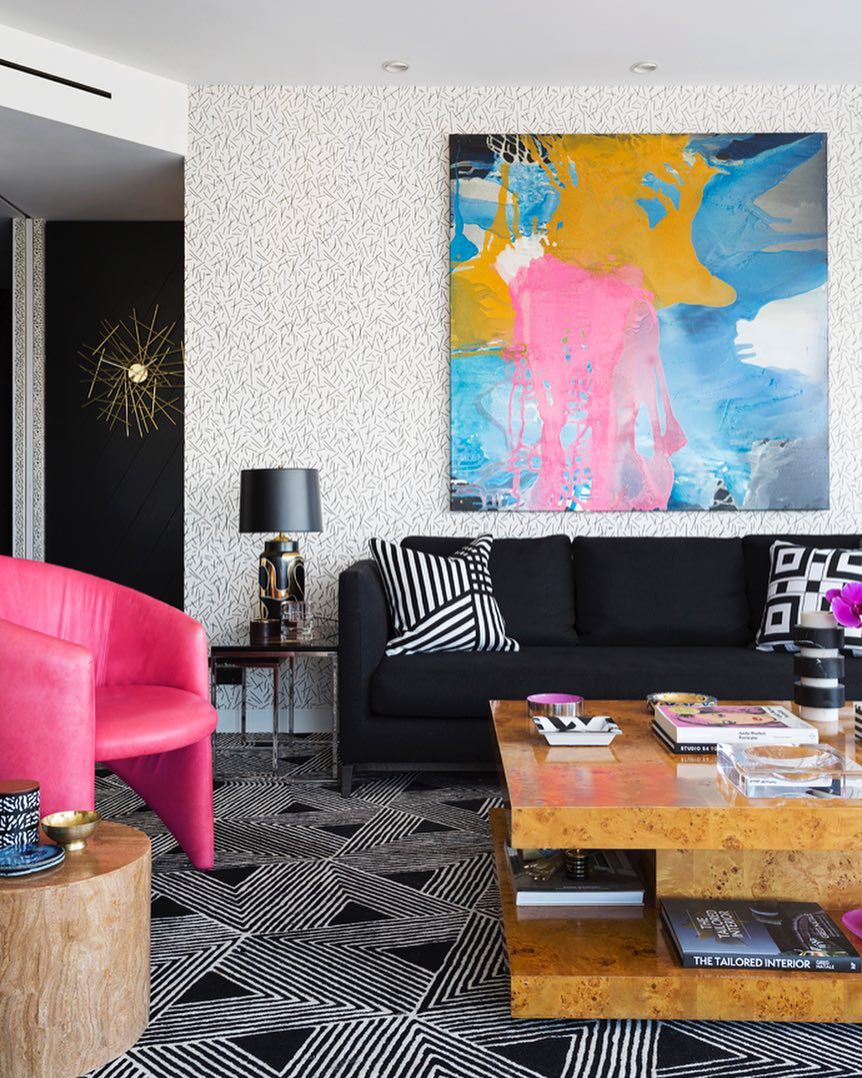
A black sofa provides a steady base for the colorful painting in this expressive room. The artwork carries pink, blue, and yellow tones, while a pink chair brings one of those colors into the seating arrangement.
Patterned pillows connect the sofa to the graphic rug below. A low rectangular coffee table introduces a warm finish and keeps the view toward the painting open.
This is a useful direction when you want color without replacing a dark couch. Begin with one artwork you love, then repeat two or three of its colors in smaller pieces.
Fine wallpaper adds texture while staying neutral. Keep accessories selective, and let the black upholstery support the artwork instead of competing with its colors for attention.
6. Turn Book Pages Into a Patterned Backdrop
Credits: Instagram
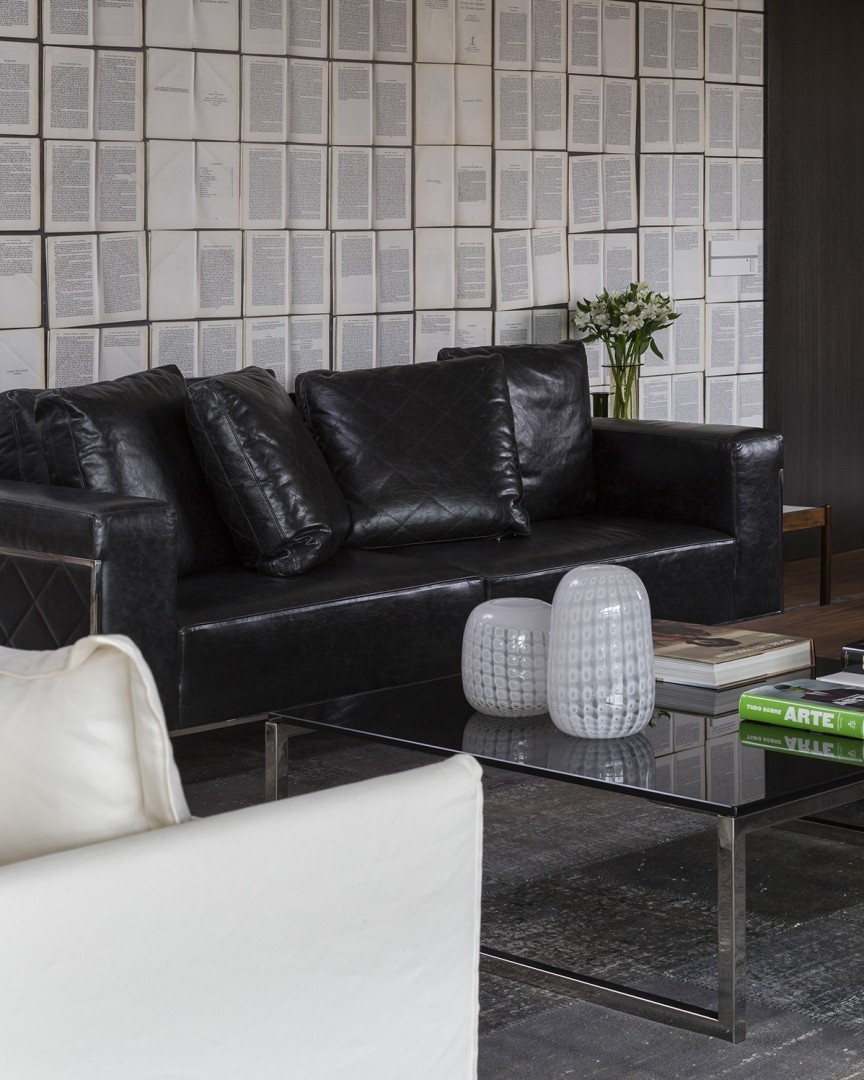
The wall behind this black leather sofa supplies the room's unexpected detail: a repeating arrangement that resembles open book pages. Its pale grid creates texture while staying close to the neutral furniture palette.
Glossy leather contrasts with that intricate background, and the white chair across the room keeps the seating group from becoming uniformly dark. A transparent table allows the layered objects and floor covering to remain visible.
The overall effect depends on differences in texture more than differences in color. Try a patterned wall treatment with fine detail when your couch has a simple shape.
Keep adjacent furniture restrained, repeat a few pale accents, and let the wall and upholstery provide the main contrast within the compact seating area.
7. Balance Black Leather With Soft Green
Credits: Instagram
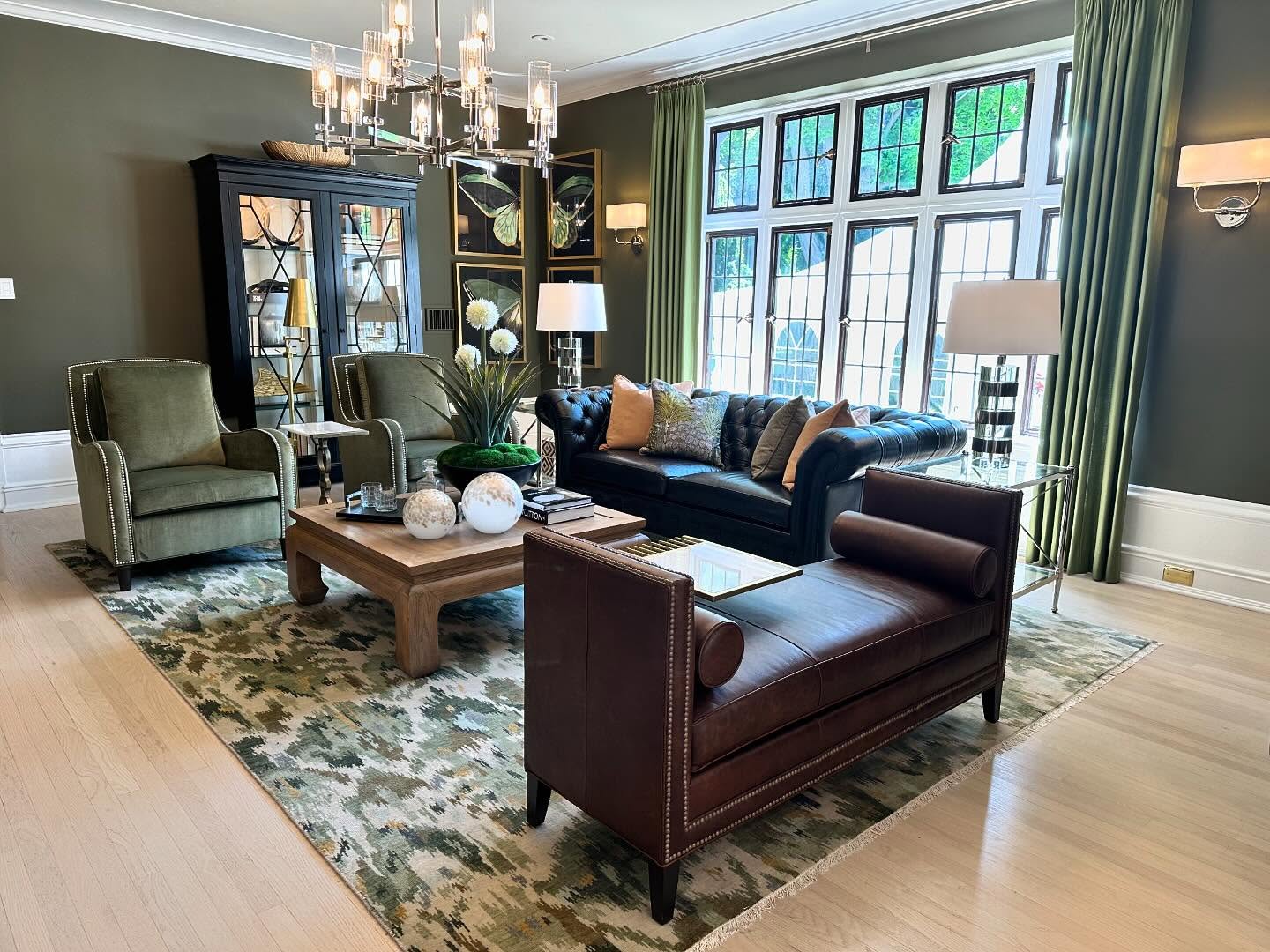
A tufted black sofa gains a gentler setting from the green walls, curtains, and upholstered chairs around it. The wood floor brightens the lower half of the room, while a substantial coffee table introduces another warm natural surface.
A patterned rug gathers the seating into one group and repeats the green palette without matching every piece exactly. Glass front cabinets and a delicate chandelier add traditional detail above the darker furniture.
This combination works well when a black couch needs to share space with collected furnishings.
Repeat the wall color in one or two fabrics, mix smooth leather with softer upholstery, and choose a rug that includes both light and dark notes. The result feels layered, comfortable, and carefully connected.
8. Stretch a Low Sofa Beneath Travel Photos
Credits: Instagram
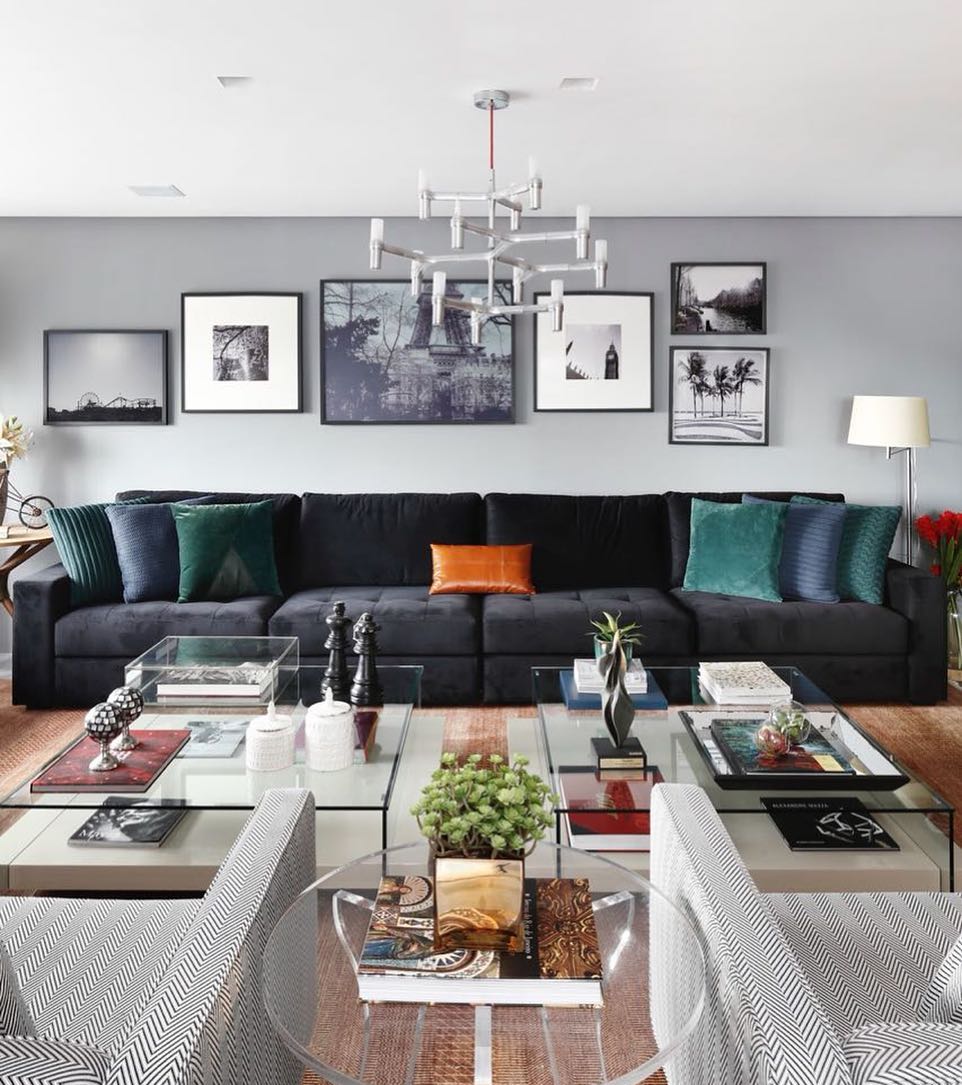
A long black sofa anchors this living room while a varied collection of framed photographs adds personality above it. The low seating profile leaves plenty of wall visible, allowing the pictures to form a broad horizontal composition.
Several pale tables create a flexible center, with books, flowers, and small objects giving each surface a purpose. Colorful pillows interrupt the dark upholstery in measured doses.
The light rug, walls, and ceiling prevent the extended sofa from dominating the whole space. Borrow the idea by keeping large furniture low and repeating lighter surfaces nearby.
Arrange artwork across a similar width to the sofa, and use a few small tables when one oversized piece would make the room harder to move through comfortably.
9. Layer Black and Gold Around Abstract Art
Credits: Instagram
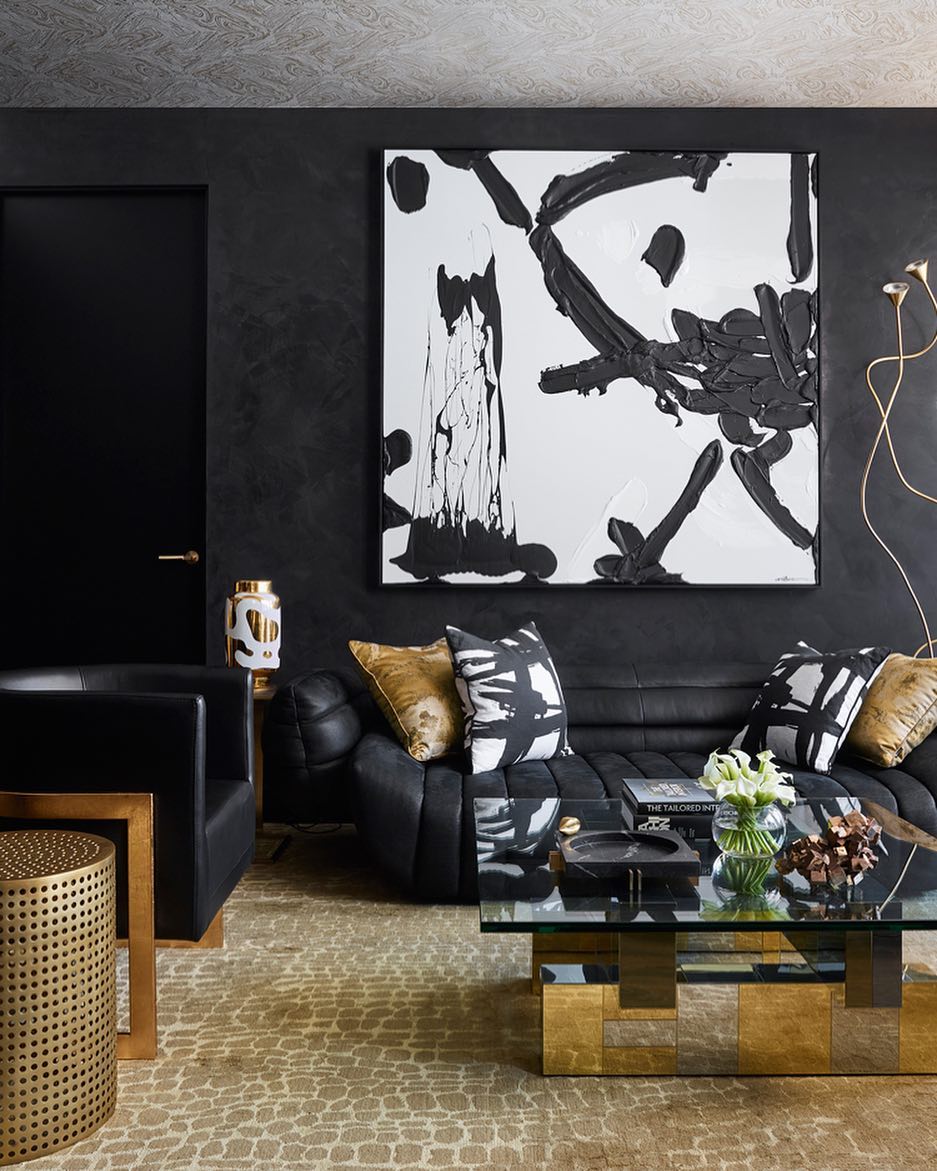
An abstract painting creates a bright focal point in this dark living room. Its loose black marks connect with the sofa, while the pale background separates the artwork from the deep wall color.
Gold toned tables and pillows bring warmth to the monochrome setting. A glass coffee table adds another reflective surface without hiding the rug beneath it.
The furniture remains low enough to leave the painting as the strongest vertical feature. To build a similar room, begin with dark upholstery and one substantial artwork.
Add metallic accents at different heights, but keep their finishes related. Mix solid pillows with a few graphic ones, then leave breathing room around the furniture so the dramatic palette still feels comfortable and welcoming.
10. Use a Black Sofa to Zone a Compact Loft
Credits: Instagram
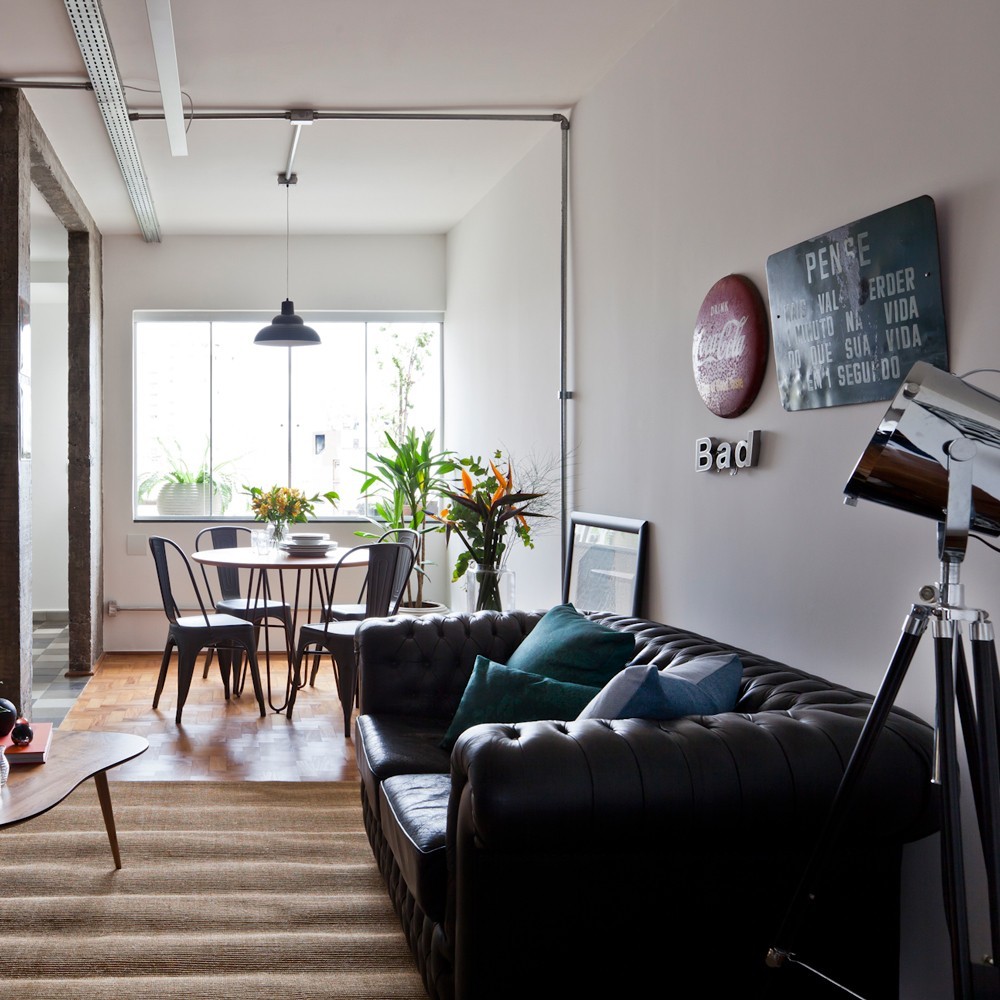
A black leather sofa helps define the living area in this space while keeping a clear connection to the dining table beyond. The couch sits along the side wall, leaving the central route open.
Pale finishes and daylight from the far window counter the darker upholstery, while wood flooring brings warmth through both zones. Plants add height near the window and soften the transition between seating and dining.
The exposed ceiling lines give the room an informal character that suits the straightforward furniture. Try this layout when your living room shares one continuous space with other activities.
Place the largest dark piece at the edge, keep the main walkway visible, and repeat wood or greenery to connect the separate areas.
11. Soften a Black Corner Sofa With Layered Neutrals
Credits: Instagram
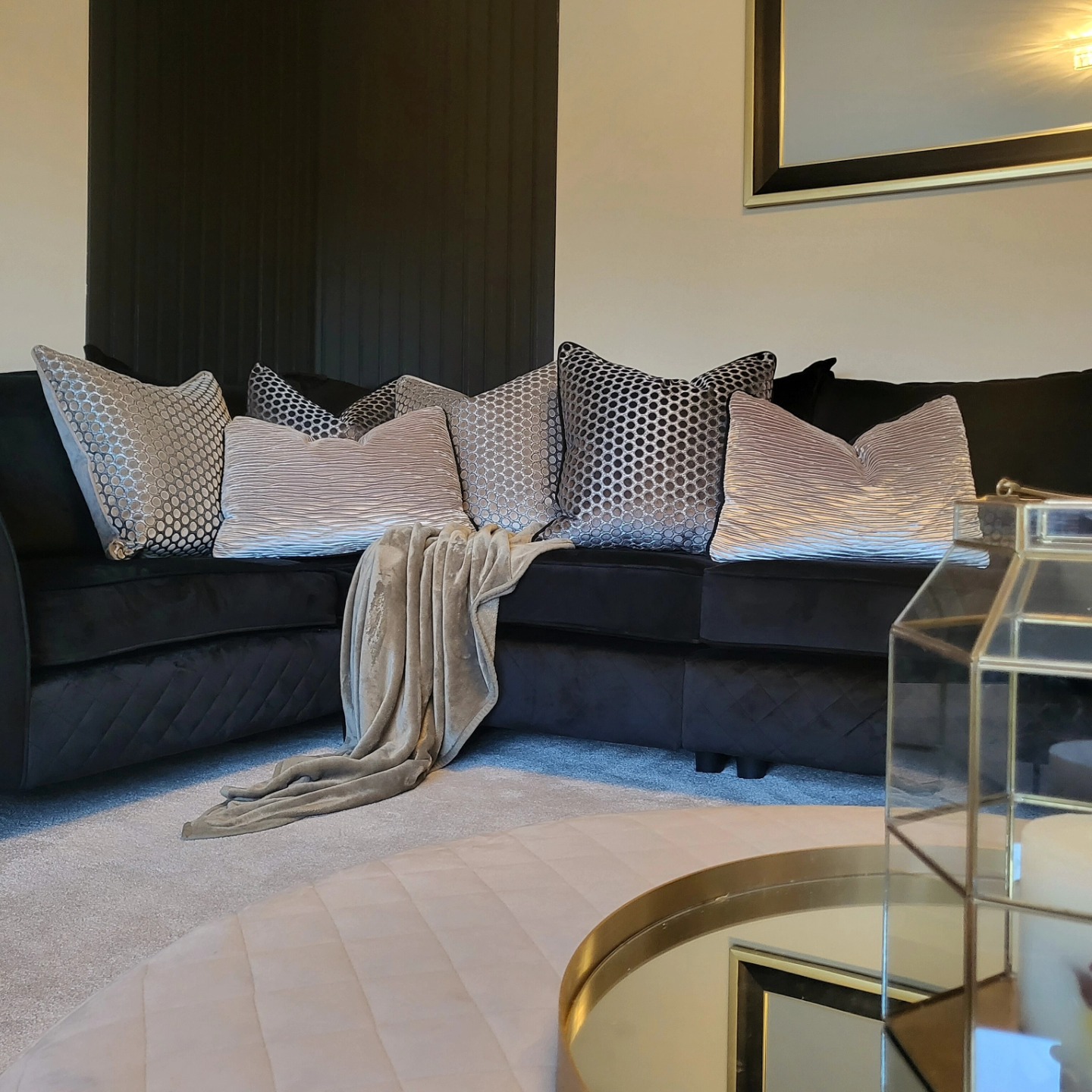
Cream and silver patterned pillows soften the deep black upholstery in this corner. Their different scales keep the arrangement interesting without introducing a new color family.
A pale throw falls between the cushions and adds a relaxed vertical line, while the light carpet separates the couch from the darker paneled wall behind it.
The rounded ottoman and metallic tray introduce gentler shapes in the foreground. This is an easy way to refresh a substantial sectional using accessories alone.
Start with two large patterned pillows, add a few smaller textured ones, and keep the lightest fabrics near the center.
Let part of the black upholstery remain visible so the sofa still provides a clear outline around the softer layers of fabric.
12. Set a Black Sectional Against Bright Windows
Credits: Instagram
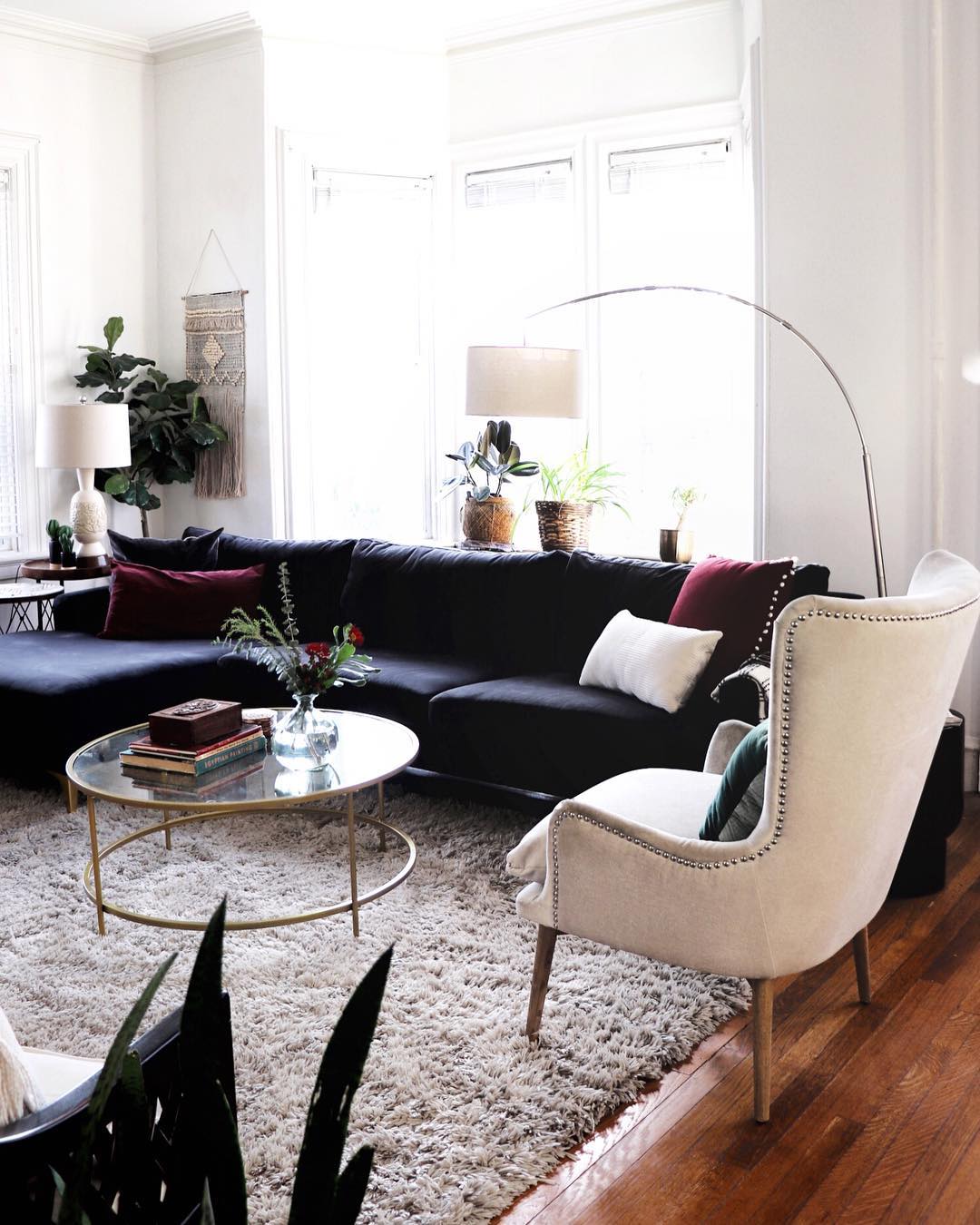
The windows give this black sectional a luminous backdrop, allowing its deep color to feel comfortable rather than severe.
A cream wingback chair adds a lighter silhouette across the seating area, and the thick pale rug ties the contrasting pieces together. Burgundy pillows bring a restrained touch of color to the couch.
An arcing floor lamp reaches over the arrangement without requiring a bulky side table near the window. Plants and woven containers add casual texture around the edges.
To borrow the look, pair your black sofa with one light upholstered chair and a generous neutral rug.
Keep the window area open, then repeat a warm accent color in just a few pillows or small decorative pieces around the room.
13. Warm Up Black With Rust and Floral Pillows
Credits: Instagram
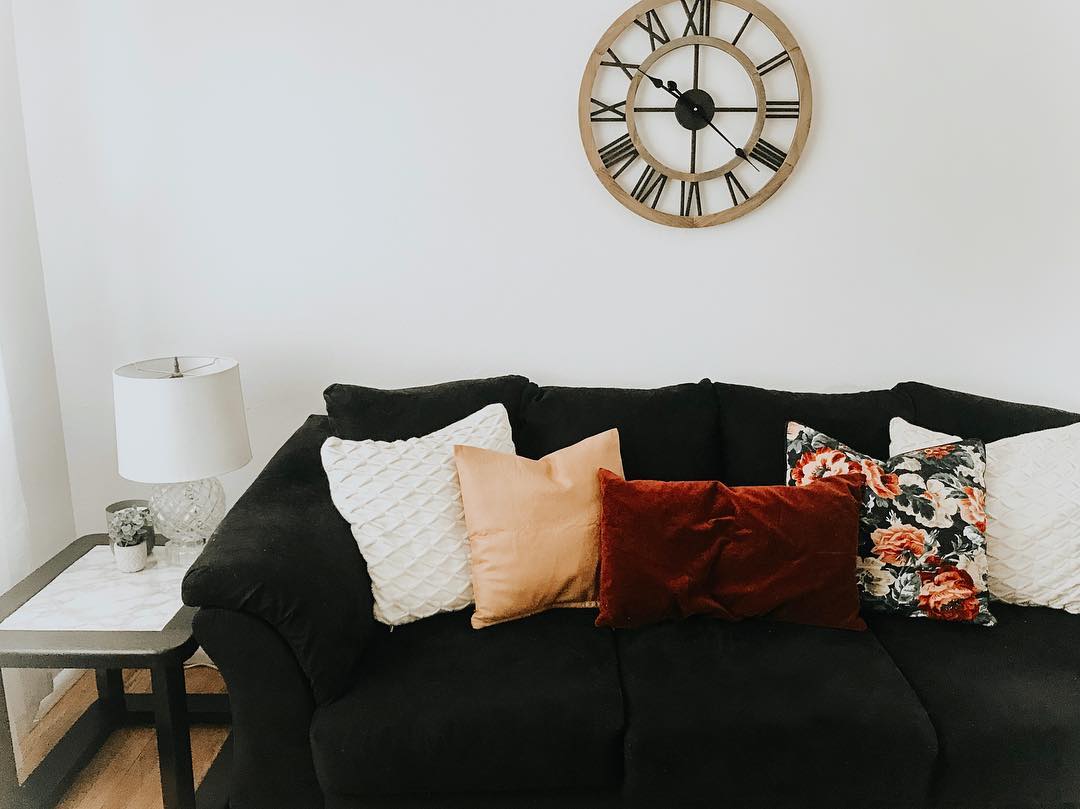
A black couch becomes a useful backdrop for the warm pillow colors in this living room. Peach, rust, and creamy white pick up tones from the floral cover, creating a coordinated arrangement without requiring identical fabrics.
The textured white pillows keep the warmer shades from blending into the dark upholstery. Above the sofa, a large open faced clock introduces a wood tone that relates to the floor.
A pale tabletop and white lampshade add another light area beside the arm. This approach works when you want a seasonal update that stays easy to change.
Choose one patterned pillow first, pull two colors from it, and combine those solids with a neutral texture to give the couch a welcoming, layered finish.
14. Keep a Black Sectional Open to the Next Room
Credits: Instagram
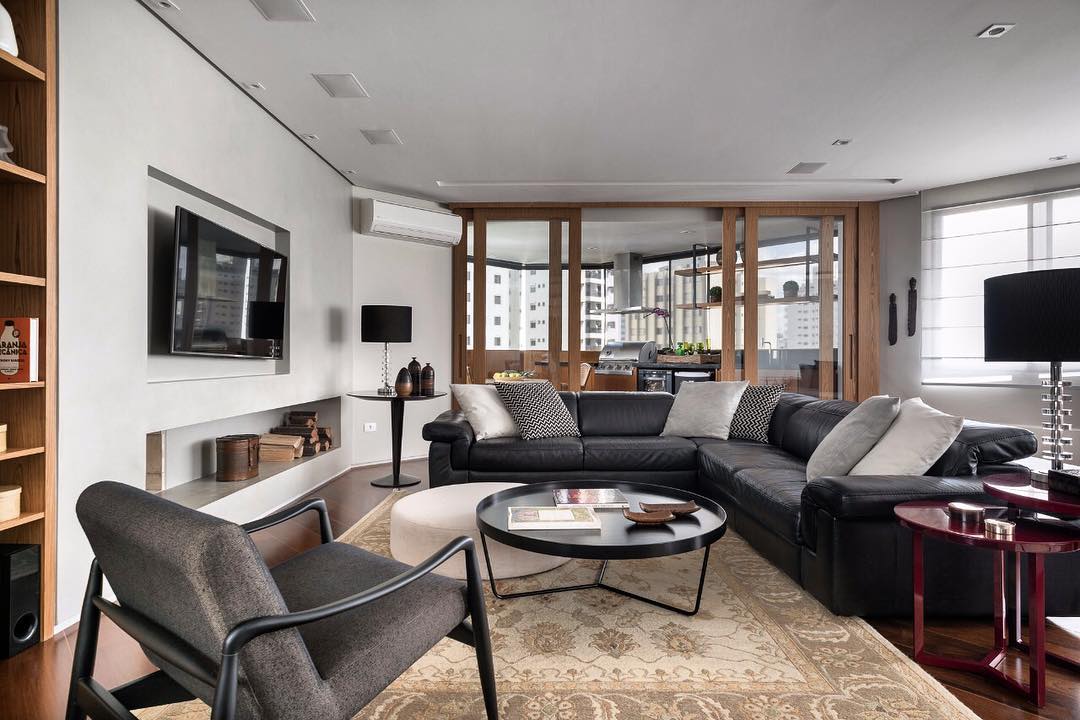
This black leather sectional defines the seating area without closing off the glazed room behind it. The low back preserves the view through the wood framed doors, while pale pillows lighten the long stretch of leather.
A round black coffee table and a light ottoman create a flexible center rather than one large solid block. The patterned rug gathers the seating together, and a gray armchair adds another texture across from the couch.
Use this arrangement when your living room connects to a balcony, sunroom, or dining area.
Keep the largest furniture below the main sightline, repeat the black finish in a smaller table, and use light textiles to make the seating group feel connected to its brighter surrounding space.
15. Add Yellow Accents to a Compact Black Sectional
Credits: Instagram
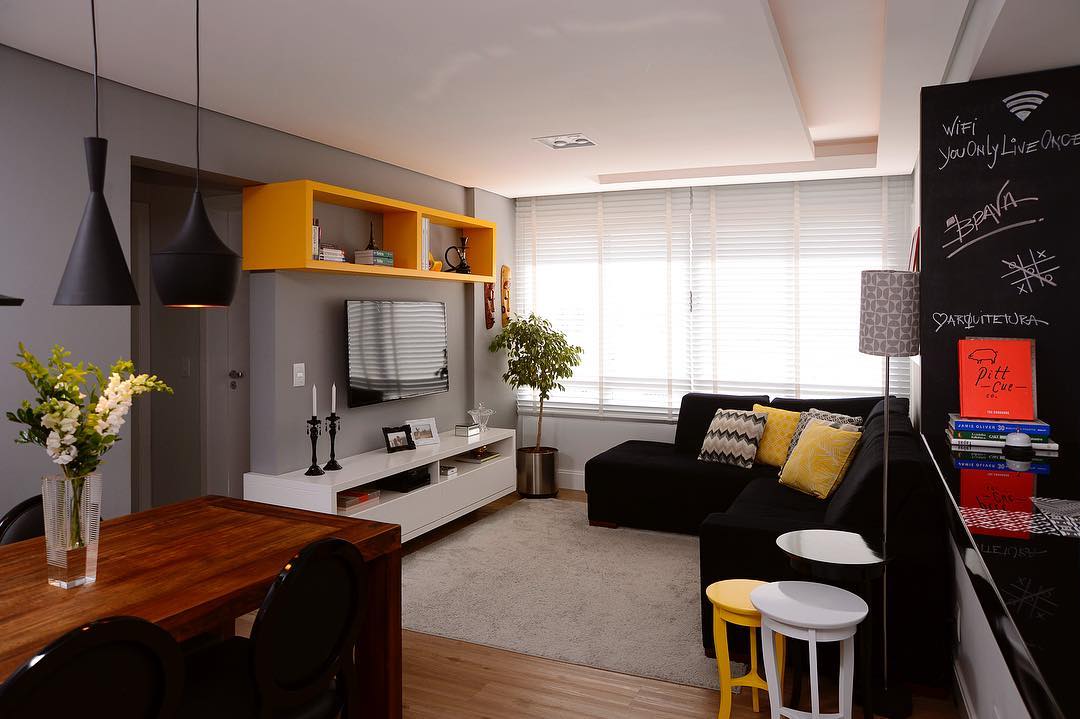
Yellow accents give this compact black sectional an setting. The bright shelf above the television repeats the pillows and small stool beside the couch, spreading the color across the room.
Gray walls and a pale rug keep the contrast controlled, while the wood floor and dining table add warmth. Black pendant lights connect the dining area to the upholstery without adding another large dark surface.
The sofa's corner position leaves a clear route between the two zones. Try this idea in a small shared living and dining room: choose one cheerful accent, repeat it in three places, and let the remaining finishes stay simple.
A low media cabinet and small occasional tables help preserve space around the main seating area.
16. Use Portrait Pillows for a Graphic Focal Point
Credits: Instagram
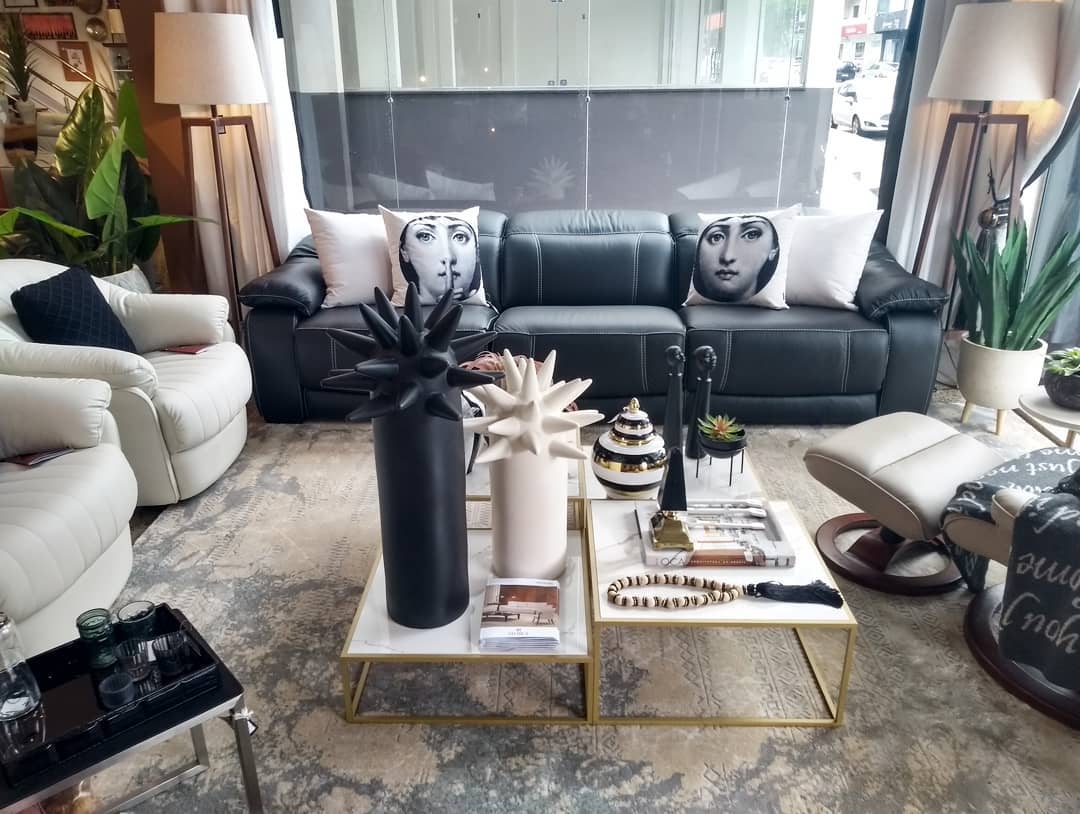
Two portrait pillows turn this black leather sofa into the focal point of a layered seating arrangement. White cushions at the ends sharpen the contrast, while pale chairs balance the couch across the room.
Tall lamps frame the sofa and bring a sense of symmetry to the display. On the tables, black and white sculptural pieces continue the palette at a smaller scale.
Plants soften the surrounding corners and introduce fresh color. You can adapt the idea without using as many accessories: begin with two expressive pillows, add plain light cushions, and repeat black in one nearby object.
Keep the largest decorative pieces clear of the sofa's outline so its shape remains easy to see within the layered furniture group.
17. Choose Raised Wood Legs for a Lighter Look
Credits: Instagram
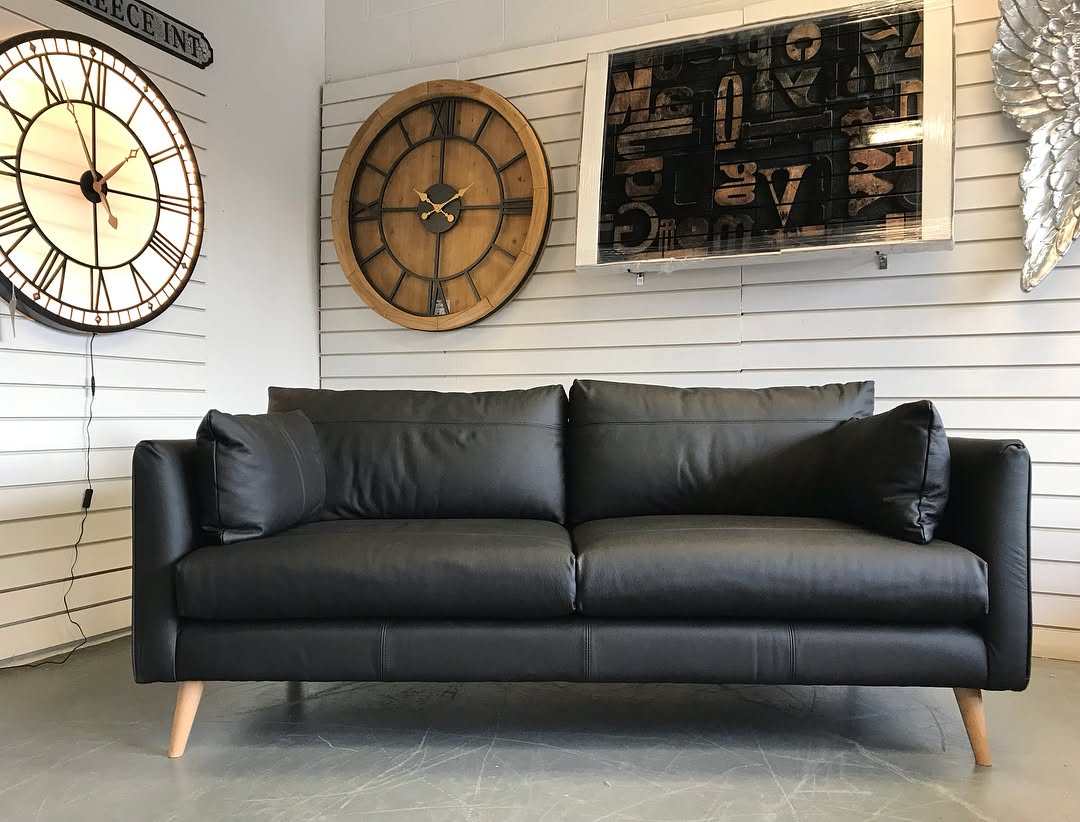
The tapered wood legs give this black leather sofa a lighter appearance by leaving open space beneath the seat. Its straight arms and two broad cushions keep the profile simple, making it easy to pair with a more decorative wall.
Here, oversized clocks and framed typography bring character to a pale horizontal backdrop. The wood clock echoes the legs, providing a warm connection between the furniture and wall display.
This is a useful sofa shape for rooms where bulky bases would feel too heavy. Look for visible legs and a clean outline, then add warmth through wood, a woven rug, or a print.
Keep the surrounding pieces smaller so the black couch can stay substantial without crowding the seating area.
18. Connect a Black Sofa to an Open Kitchen
Credits: Instagram
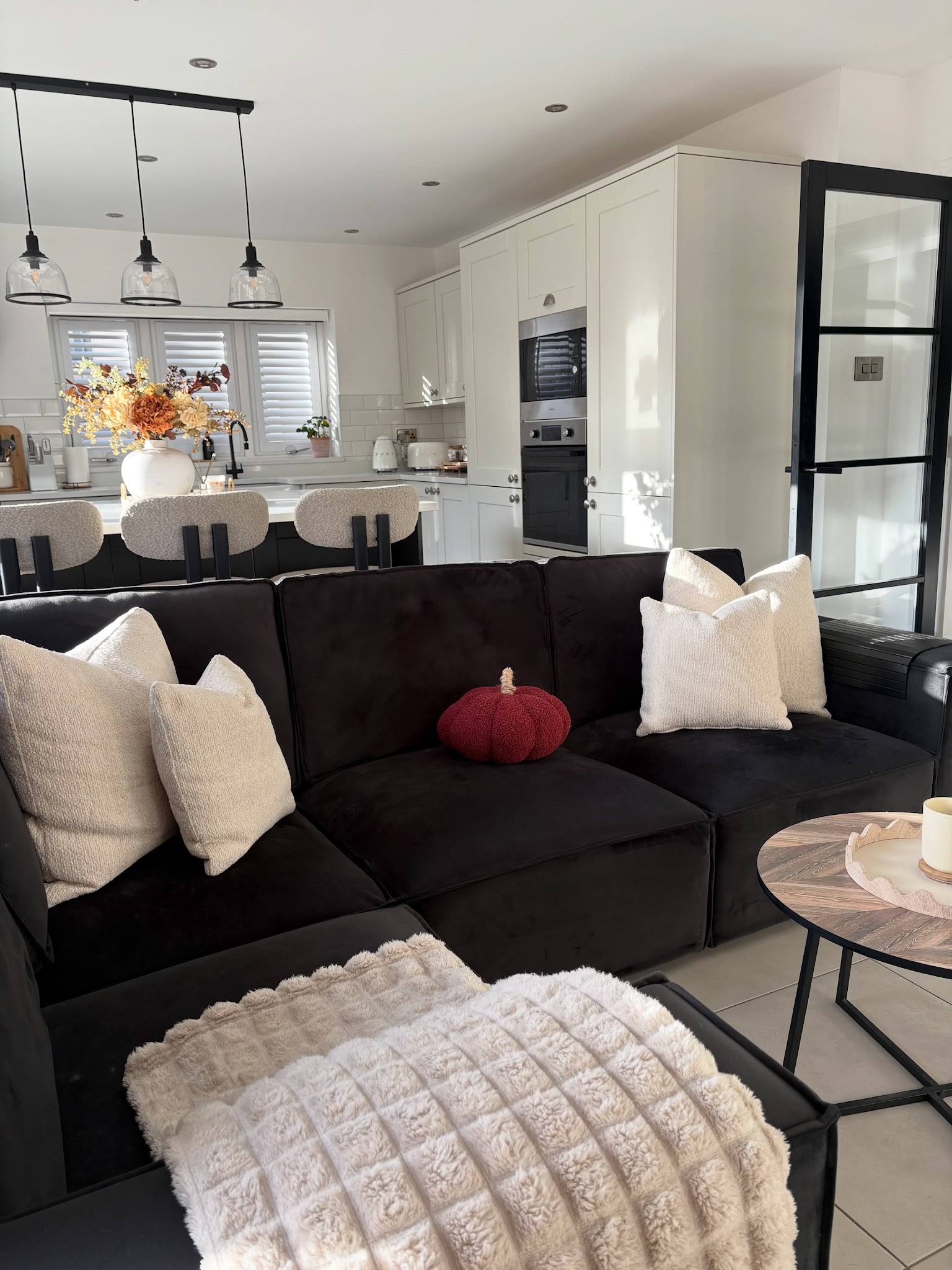
A black sofa gives the seating area a clear identity within this kitchen and living space. The dark upholstery repeats the door frame, pendant fittings, and stool frames behind it, linking the two zones through small shared details.
Cream pillows echo the cabinetry and soften the sofa's broad back. A warm wood tabletop and textured throw keep the monochrome palette from feeling too stark.
The couch also creates a useful boundary without blocking the view through the room. Use this idea when your sofa sits in front of an open kitchen.
Repeat its color in a few fixtures, balance it with light textiles, and choose a small table that leaves an easy path between cooking, dining, and relaxing areas nearby.
19. Ground Vintage Black Leather With a Red Rug
Credits: Instagram
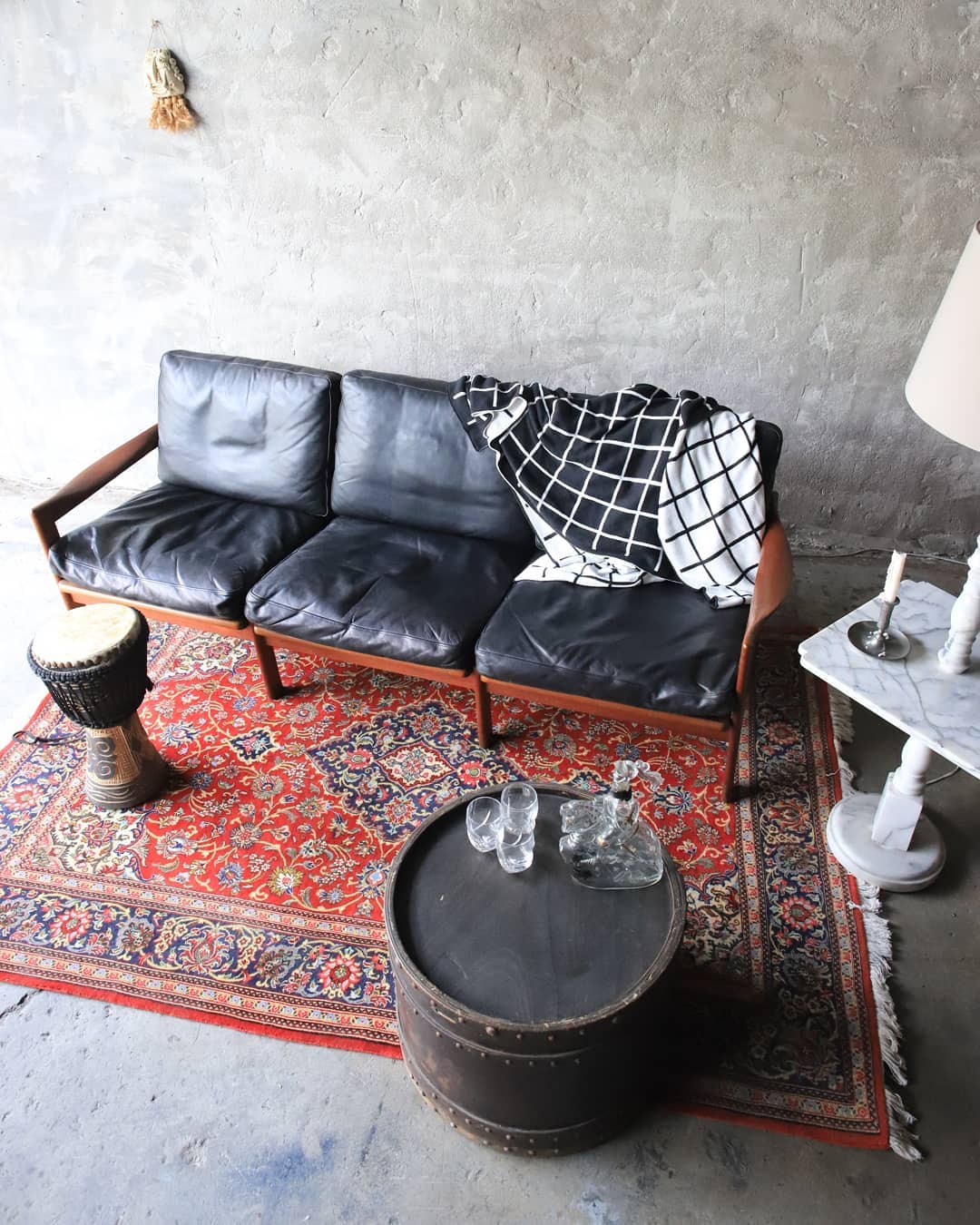
A red patterned rug brings warmth and depth beneath this vintage black leather sofa. Its wood frame gives the dark cushions a defined outline, while the pale textured wall keeps the furniture easy to see.
A black and white throw adds a crisp graphic pattern that contrasts with the finer details in the rug. The round drum table and small side pieces introduce collected character without matching the sofa exactly.
This arrangement shows how a black couch can belong in an eclectic room with worn surfaces and varied materials. Start with a rug that includes one strong color, keep the sofa's shape simple, and mix a few useful tables. Leave the wall relatively quiet to balance the detailed floor below.
20. Contrast Worn Leather With Decorative Lighting
Credits: Instagram
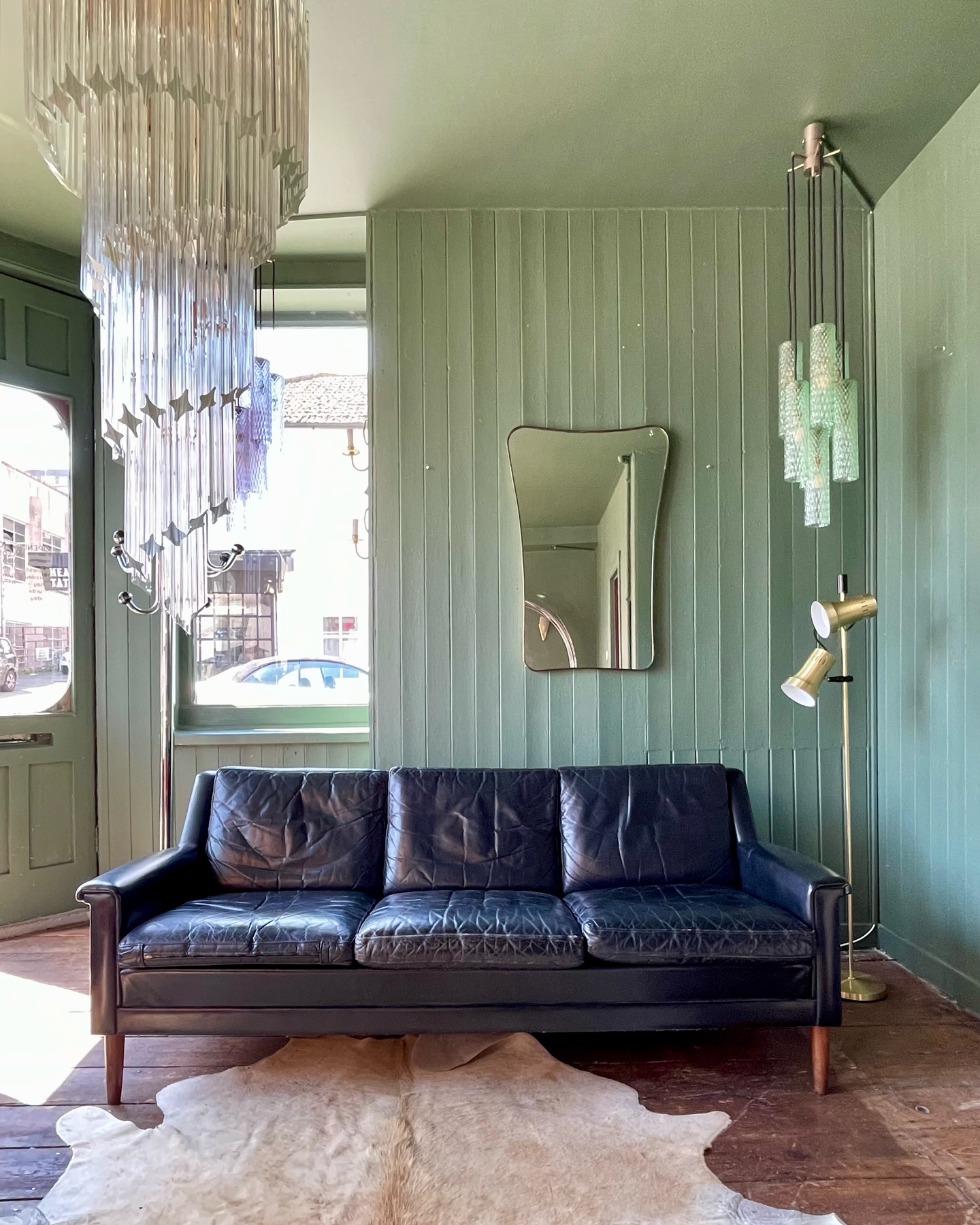
The creased black leather sofa gives this green room a relaxed center beneath its lighting. Hanging glass pieces and a tall adjustable lamp introduce shine, while vertical paneling provides an orderly backdrop for the furniture.
A shaped mirror breaks up the wall without adding another color. The sofa's slim wood legs relate to the aged floor, and the pale hide rug adds a lighter shape below the seating.
This mix works because the couch stays straightforward while the lighting supplies the drama. Pair a vintage sofa with one expressive overhead fixture, then repeat a warm metal finish in a smaller lamp.
Keep pillows minimal so the leather's texture remains visible and the furniture can hold its own within the room.