
A child’s room has to make space for sleep, play, reading, and homework without feeling crowded. Kids Bedroom Ideas can help you balance those everyday needs with colors and details that reflect a child’s interests.
The examples here include sharing a bedside table between two beds, keeping toys in low cubbies near a play kitchen, and setting up a clear homework zone opposite the bed.
You’ll also find ways to bring personality through bright bedding, a forest mural, or artwork on a dedicated display board, while keeping storage and furniture practical.
1. Give Two Beds a Shared Bedside Table
Credits: Patti Wagner / Patticake Wagner
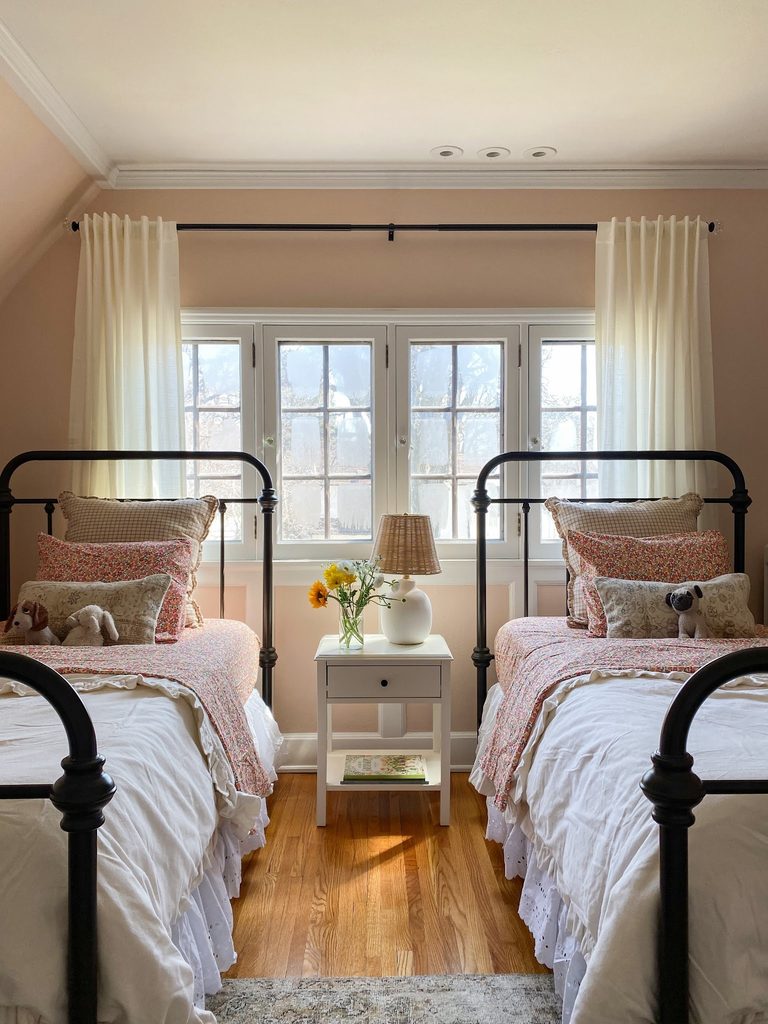
Two matching beds and one small table make this shared room feel balanced without filling the central aisle with furniture. Black metal frames outline each sleeping place, while soft pink walls and white bedding keep the arrangement light.
The table offers a drawer for little essentials and a lower shelf for a bedtime book. Measure the aisle with both beds fully made, including any bedding that hangs beyond the frames.
Each child should have a comfortable route out of bed and a fair share of storage. Choose stable bedside lighting and keep its cord inaccessible to younger children.
Individual stuffed animals or pillow choices can distinguish the beds even when the major furnishings and overall color scheme remain closely coordinated.
2. Join a Play Kitchen to Low Toy Cubbies
Credits: Lianne Hempsall / Makes, Bakes and Decor
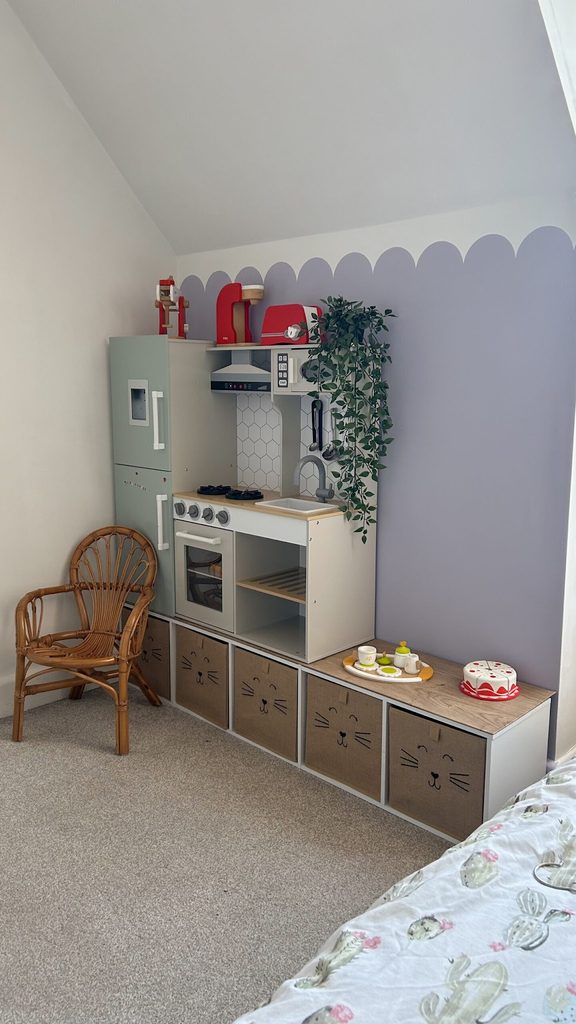
A lavender scalloped wall turns this bedroom play corner into a cheerful destination. Below it, a line of cubbies keeps pretend food and other small toys near the play kitchen, so cleanup can happen where the activity takes place.
The little woven chair gives the arrangement a different texture without introducing another strong color. For your version, choose sturdy furniture intended for the child’s age and secure units against tipping.
Do not copy a stacked arrangement unless every component is designed and secured for that configuration. Put everyday toys in the lowest bins and leave the floor in front open.
The painted scallops can provide all the decoration needed, allowing you to skip trailing greenery or loose accessories within reach.
3. Set a Simple Dresser Against Pink Paneling
Credits: Kaylee / Sprucing Up Mamahood
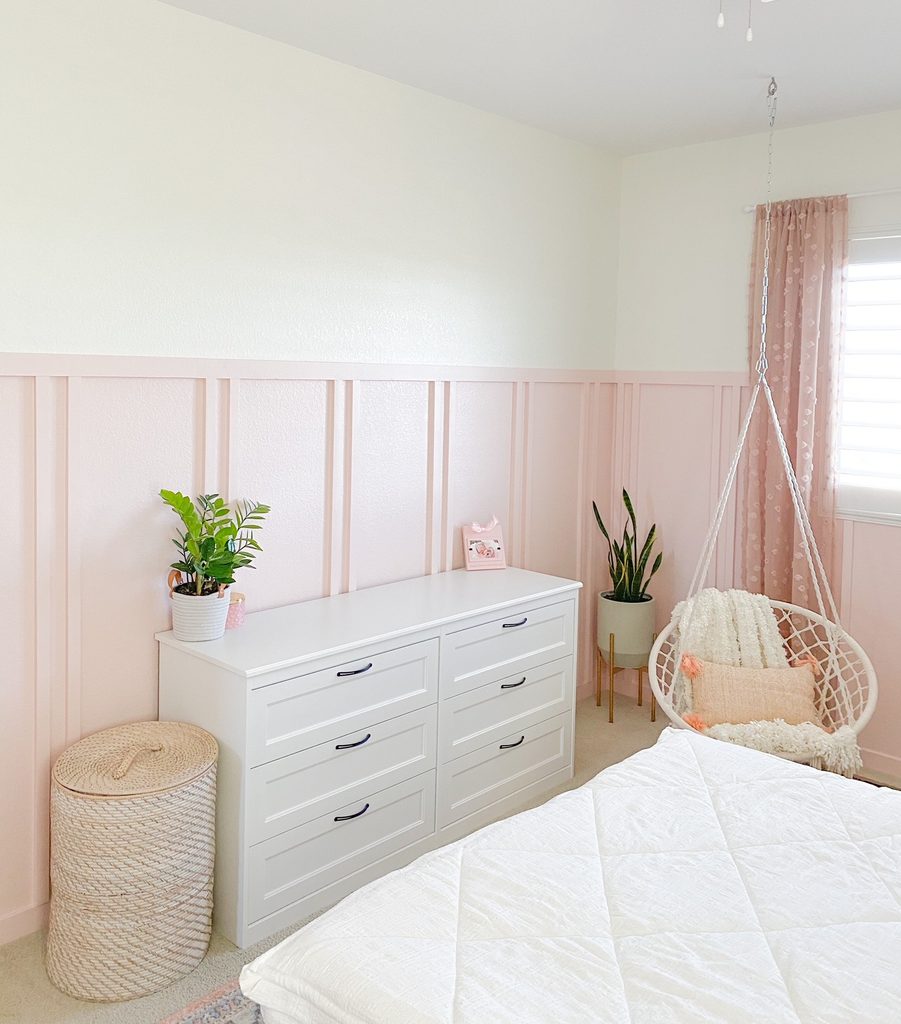
Pink paneling gives an ordinary white dresser a pleasant backdrop and makes the storage wall feel connected to the bed. Slim paired battens add rhythm, while the light upper wall keeps the room from feeling enclosed.
The lidded basket beside the dresser suggests a convenient place for laundry, although a lightweight child-friendly hamper may be easier to handle.
Anchor the dresser according to its instructions and keep tempting objects off the top so storage does not encourage climbing. Plan enough clearance for drawers to open without hitting the mattress.
The hanging chair shown nearby needs appropriate structural installation and age suitability; a stable floor chair is a simpler alternative. You can borrow the storage and color arrangement independently of it.
4. Build an Outdoor Theme Around a Forest Mural
Credits: Krista / The Happy Housie
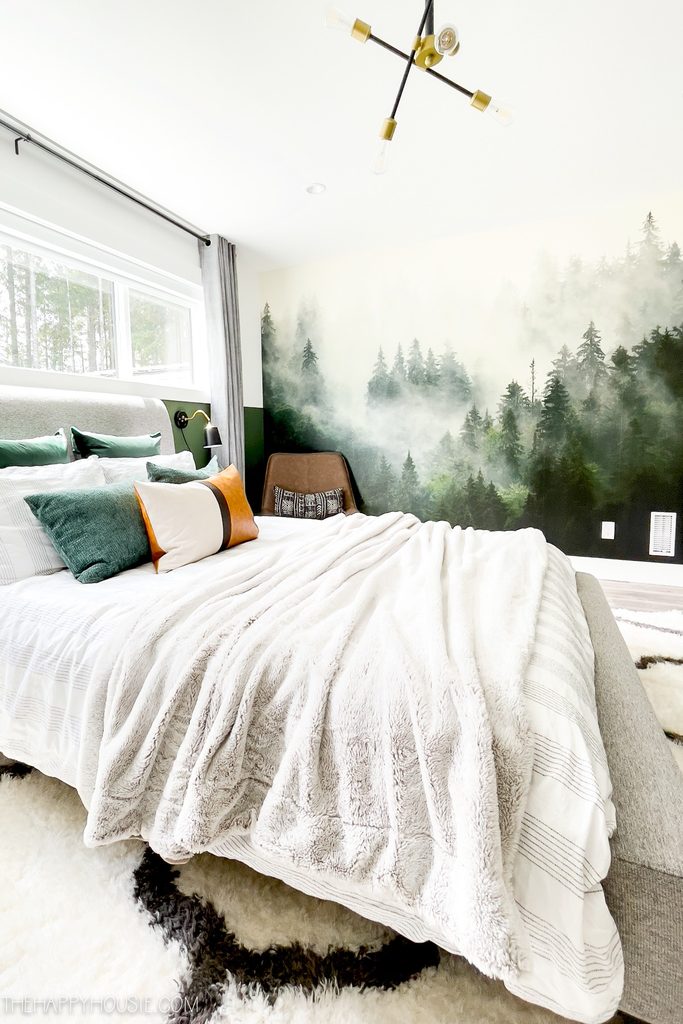
A misty forest gives this bedroom an imaginative backdrop while leaving the furniture straightforward. Dark trees near the floor fade into a pale upper wall, so the mural has depth without surrounding the bed with shelves or bulky decorations.
Green cushions echo the trees, and the gray upholstered headboard stays visually quiet. This approach can suit an older child who enjoys nature and wants a room that still feels appealing as interests change.
Before ordering, check the mural dimensions against doors, outlets, vents, and the height of nearby furniture. Keep the most recognizable part of the scene visible.
Choose simple bedding first, then add one warm accent color if the green and gray combination needs a little more cheerful contrast.
5. Let Bright Bedding Carry a Favorite Color
Credits: Erin Spain
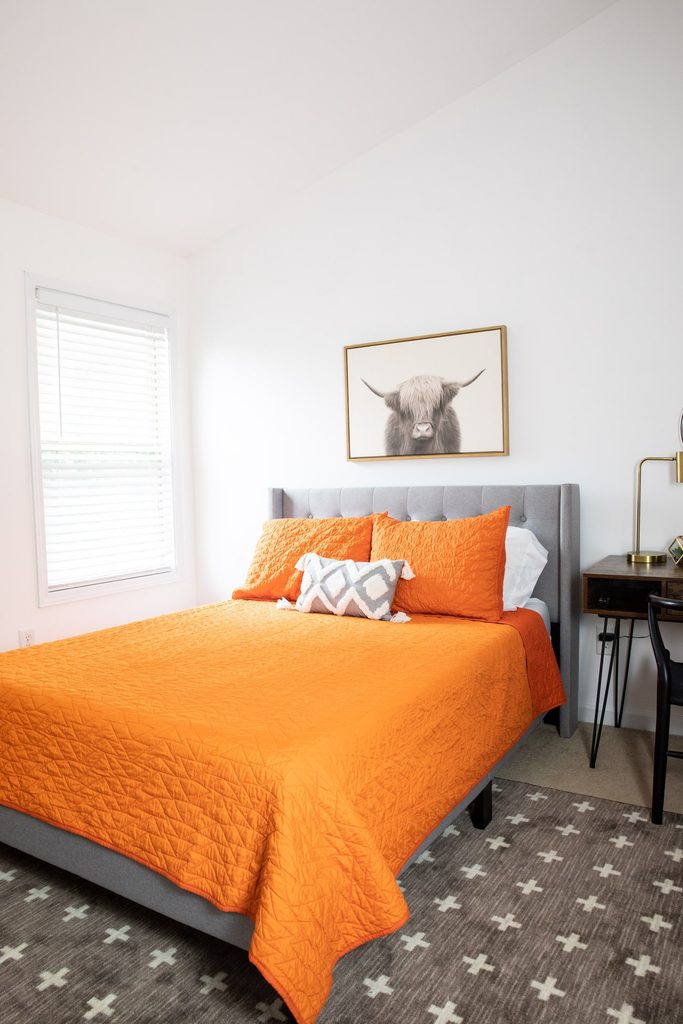
Orange bedding brings immediate personality to this otherwise restrained bedroom. White walls, a gray headboard, and a simple patterned rug let the bright quilt remain the main event.
That makes the idea useful when a child’s favorite color is strong but you want the larger furnishings to stay flexible.
Invite them to choose the bedding, then compare it with the existing floor and furniture before adding more matching accessories. One small patterned cushion provides enough variation without making the bed difficult to use.
For younger children, simplify decorative layers and select bedding appropriate to their age. Secure wall art properly and keep it out of the sleeping area if there is any uncertainty about the frame, glazing, or mounting hardware.
6. Keep a Small Bedside Library Within Reach
Credits: Patti Wagner / Patticake Wagner
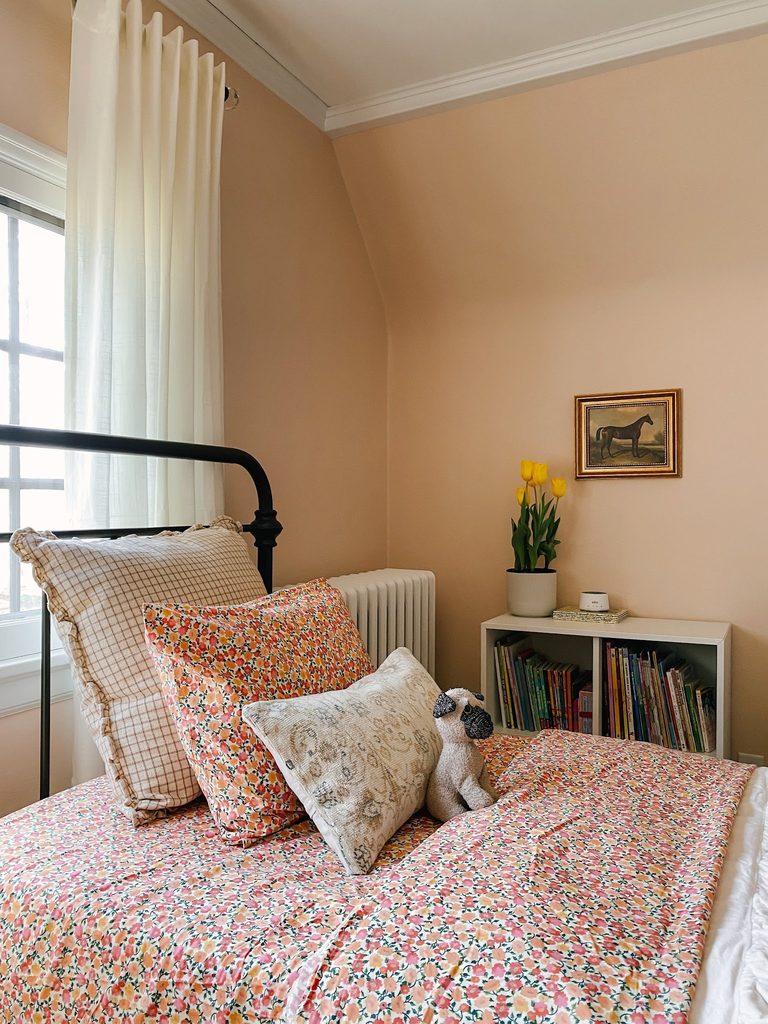
A low bookcase beside the bed makes stories part of the room’s everyday routine. In this corner, its pale finish sits quietly against warm pink walls, while floral bedding and checked pillows bring the pattern.
A small collection of books is easier to browse than shelves packed so tightly that covers disappear. Arrange favorite titles where the child can reach them comfortably and rotate other books elsewhere when space becomes crowded.
Secure the bookcase, even when it is short, and leave nearby heating equipment the clearance its manufacturer requires. Keep breakable pots and decorative objects away from active play.
The appealing detail here is the close relationship between reading material and the bed, which can work with many different styles.
7. Make a Clear Homework Zone Opposite the Bed
Credits: Krista / The Happy Housie
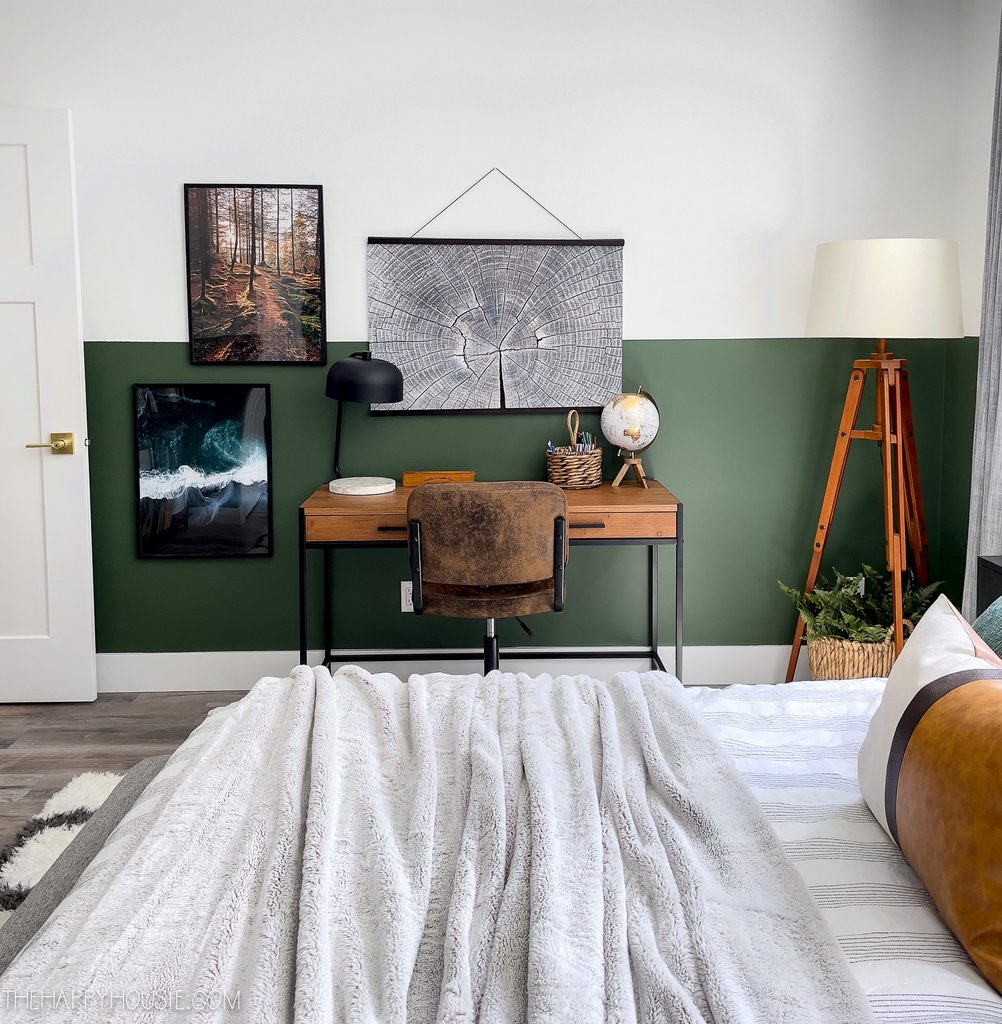
A compact desk gives this bedroom a second purpose without relying on a large built-in unit. The warm wooden top stands against a green painted band, with a task lamp and a pencil basket keeping the work surface useful.
Nature artwork connects the corner to the room’s wider theme. For school-age children, select a desk and chair that fit their size, with room to sit comfortably and move the chair back.
Reserve a clear patch for an open book or drawing project before choosing accessories. Route electrical cords safely and choose stable lighting.
A nearby drawer or basket can hold supplies between sessions, helping the desk remain ready for homework instead of becoming another place to pile up everyday belongings.
8. Use Soft Bins to Organize an Open Shelf
Credits: Krista / The Happy Housie
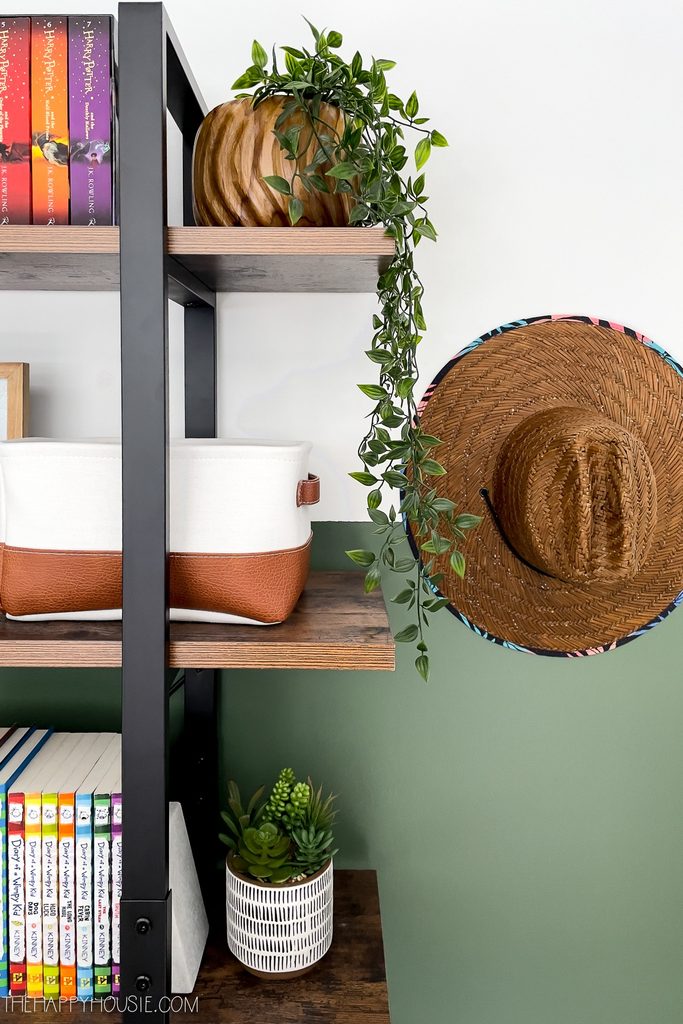
A fabric bin breaks up this open shelving and gives smaller belongings a place to disappear. Its cream and brown colors connect with the wood shelf and nearby straw hat, making storage part of the decorating scheme.
In a child’s room, the practical lesson is to combine visible books with containers for pieces that would otherwise scatter. Pick bins that are light enough to lift and easy to return to their shelf.
Keep the heaviest items low and anchor the unit securely. The decorative plant is optional, and trailing stems should stay away from younger children.
A simple label or picture on each container can explain what belongs inside without requiring every shelf to look perfectly styled throughout the day.
9. Give Favorite Models a Place Beside the Books
Credits: Amy Weir / Delineate Your Dwelling
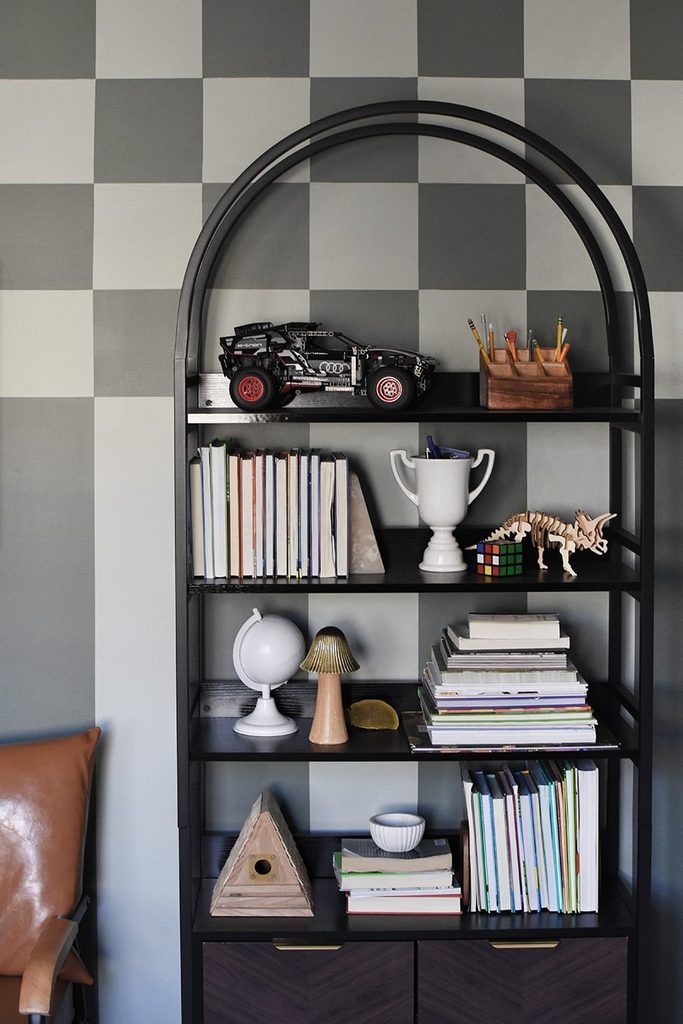
This arched bookcase mixes books with a model vehicle, a small dinosaur, and a globe. The display feels personal because it includes things to read, build, and explore rather than a shelf full of matching decorations.
For an older child’s bedroom, reserve one area for finished projects that deserve to stay assembled. Leave enough space around each model that it can be lifted without knocking everything else over.
Keep frequently used books lower, with their spines facing outward so titles are easy to find. The photographed backward books are a styling choice, not a requirement.
Anchor the bookcase and keep small pieces away from younger siblings. Closed storage below can take the less displayable supplies while the shelves celebrate interests.
10. Give Changing Artwork a Dedicated Display Board
Credits: Amy Weir / Delineate Your Dwelling
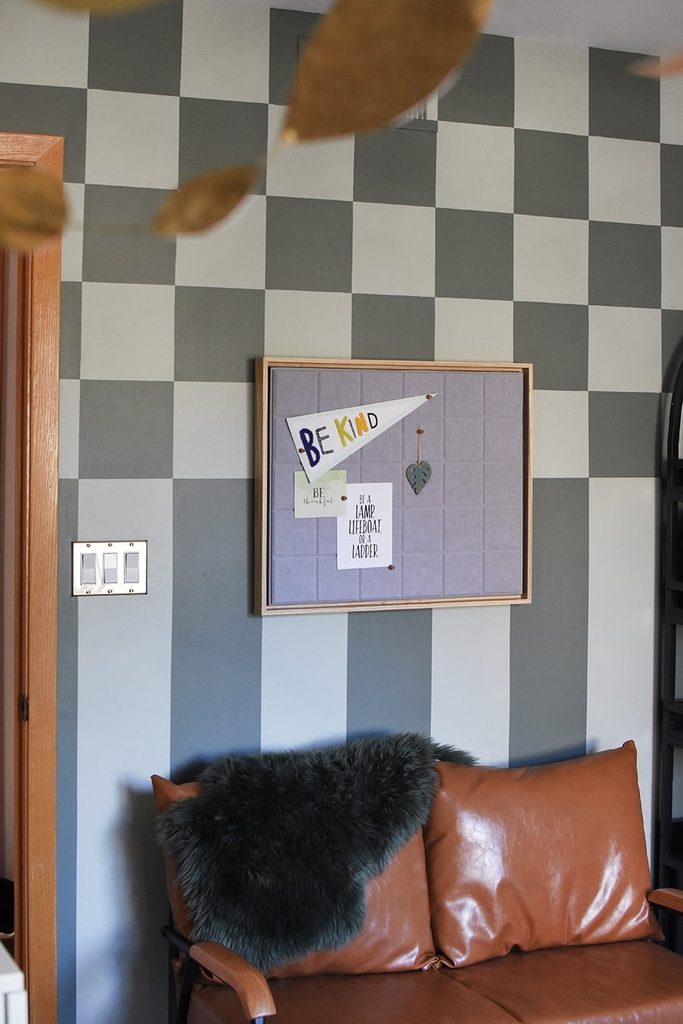
A framed board creates a clear home for drawings and small treasures against this checkerboard wall. Because the display has a defined edge, new artwork can appear without gradually spreading across every surface.
The warm frame also relates to the nearby seat and door trim. Let a child decide which pieces stay up, then keep a folder for older favorites when the board fills.
Choose an attachment method appropriate for their age; sharp pushpins and loose magnets should not be accessible to young children. Secure the board at a useful height, away from climbing temptations.
This is an easy way to let a room evolve through its owner’s current interests while keeping the wall color and larger furniture relatively settled.
11. Make Closet Doors Part of the Color Plan
Credits: Amy Weir / Delineate Your Dwelling
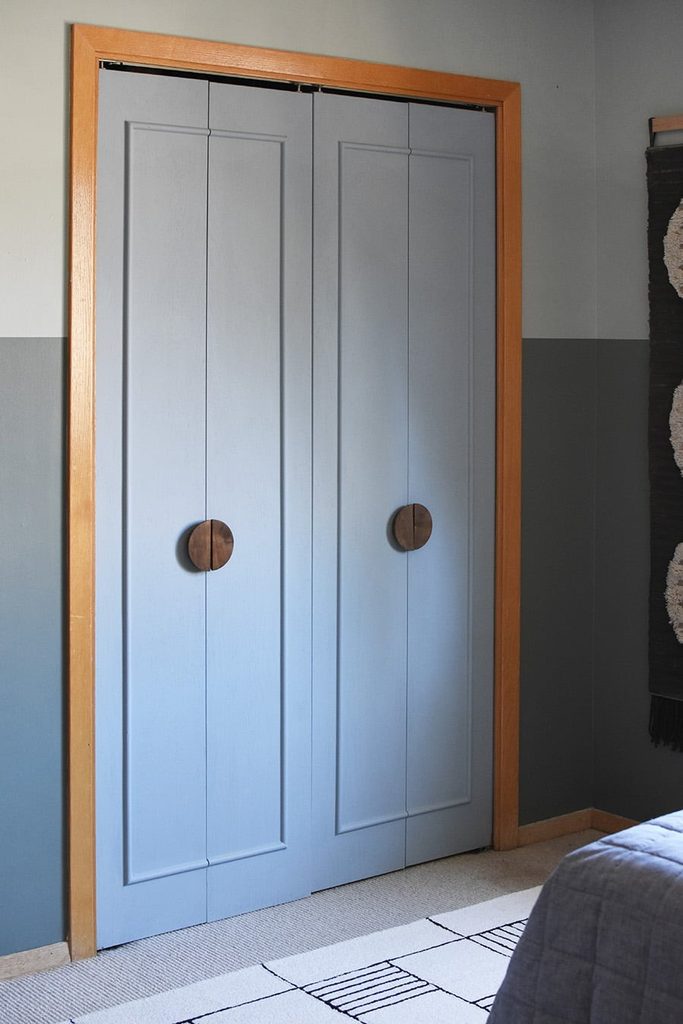
Blue gray closet doors turn a functional surface into a quiet feature. Their simple panels and round wooden pulls work with the natural trim, while the surrounding green walls provide a gentle change in tone.
Painting existing doors can refresh a child’s room without replacing storage that already functions well. Before decorating, check that the tracks, hinges, and handles operate properly and that the doors will still open freely after finishing.
Choose securely attached hardware that is comfortable for the child to use. Keep the floor in front clear so clothing remains accessible.
A matching blue quilt or cushion can repeat the color elsewhere, allowing the closet to belong to the room instead of feeling like an overlooked storage corner.
12. Put a Reading Seat Beside the Bookcase
Credits: Amy Weir / Delineate Your Dwelling
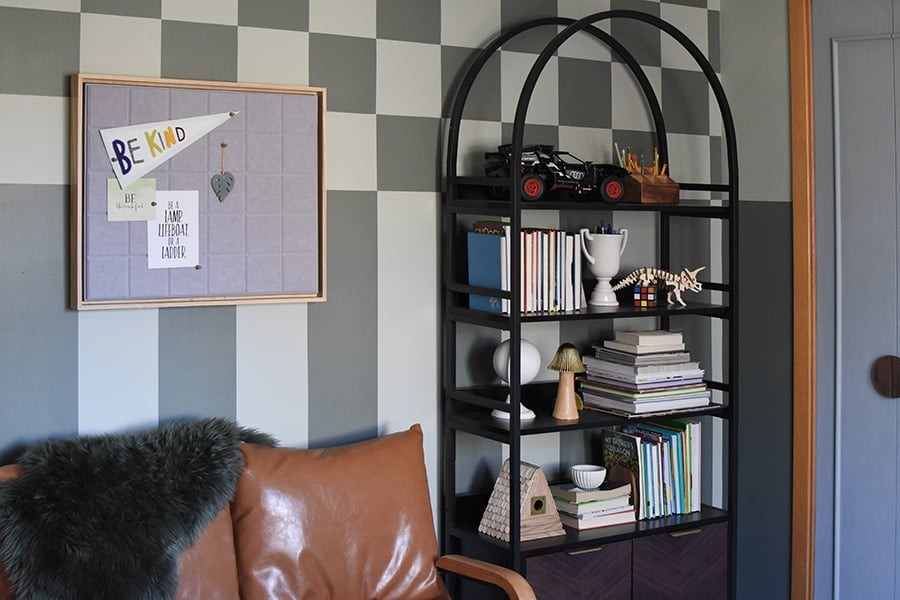
A small brown seat beside the books creates an inviting alternative to sitting on the bed. The checkerboard wall, arched shelving, and display board make this a recognizable corner while leaving the center of the room available.
In an older child’s bedroom, a separate seat can support quiet reading, conversation, or a short break between activities. Choose a stable design that fits the space and leaves a clear path to the closet.
Keep the bookcase anchored and place favorite titles where they can be reached without standing on the seat. One washable cushion or throw is usually enough.
The goal is a corner that gets used comfortably, so measure the available floor area before buying a larger sofa or chair.
13. Repeat a Soft Wall Color in the Curtains
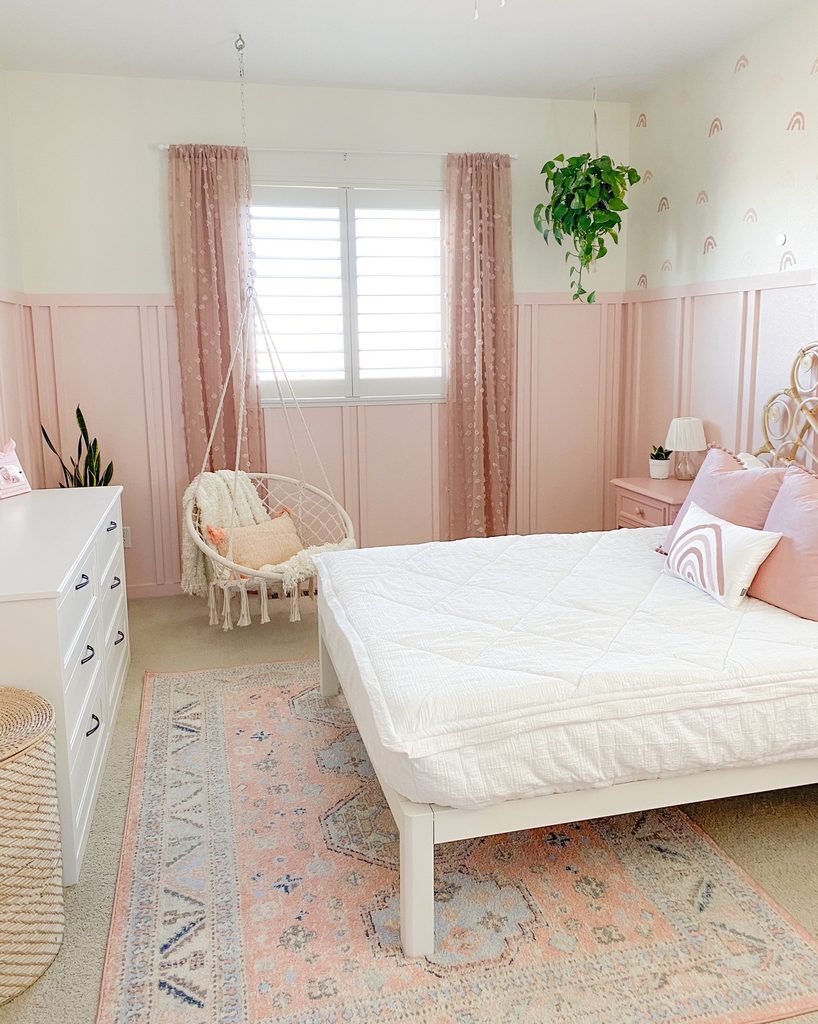
Credits: Kaylee / Sprucing Up Mamahood
Pink curtains continue the paneled wall color around this bedroom’s window, creating a connected backdrop for the white bed. The subtle texture gives the fabric interest without competing with the rainbow wall pattern.
Repeating a color this way can help a room feel finished even when the furniture comes from several sources. Test curtain samples beside the paint in daylight and under the room’s usual lighting, since similar pinks can have different undertones.
For children, choose safe window coverings without accessible cords and keep fabric away from heaters. The suspended chair and hanging planter are not essential to the palette; both require suitable installation and placement.
A simple floor seat can preserve the reading corner while reducing overhead decorative elements.
14. Turn a Dormer Corner Into a Music Spot
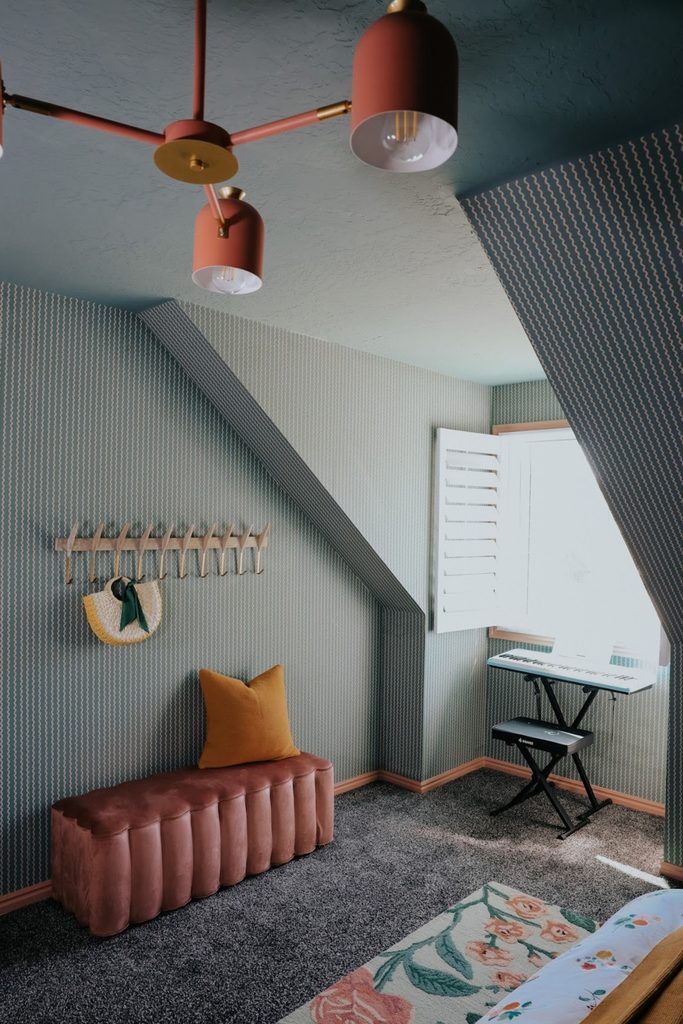
Credits: Brooke Christen / Nesting With Grace
The sloping walls in this room surround a compact keyboard, turning an awkward corner into a useful place for practice. A small bench against the neighboring wall offers another seat without filling the floor.
Fine wallpaper stripes follow the architecture, while a warm rose tone on the furniture and light fixture softens the blue green background.
This idea works best for a child who already enjoys playing an instrument and can use it comfortably in the available space. Check headroom, bench height, and access before placing equipment under a slope.
Secure the keyboard on a stable stand and manage its cords. Keep the window usable and avoid crowding the corner with extra storage that would make regular practice less convenient.
15. Pair a Low Wooden Bed With Blue and Green
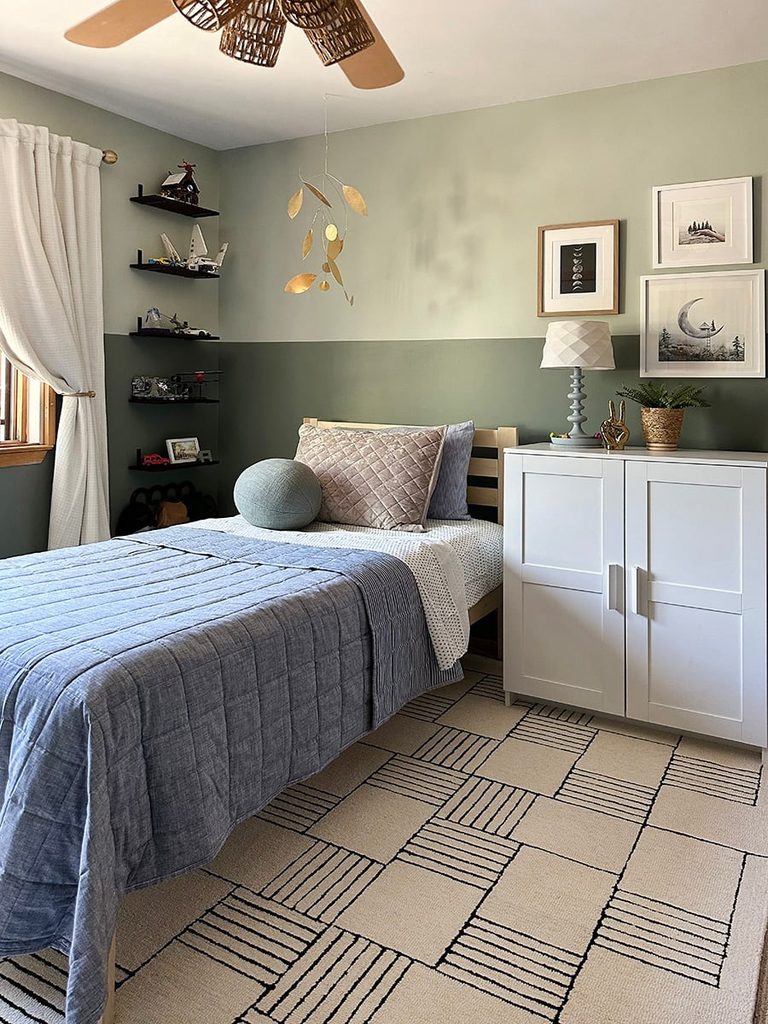
Credits: Amy Weir / Delineate Your Dwelling
Muted green walls and dusty blue bedding give this room a relaxed starting point for an older child’s changing interests. The low wooden bed keeps its outline simple, while a pale rug adds pattern without introducing another bright color.
A room like this can accommodate books, models, or new artwork over time because its largest surfaces already work together. Choose a bed designed for the child’s age and check mattress fit, support, and surrounding gaps.
Keep nearby shelves securely installed and place breakable collections away from the sleeping area. The hanging mobile shown above is unnecessary to the color scheme; leave overhead space clear if it cannot be safely positioned. Start with the wall and bedding combination, then add personality.
16. Save One Corner for a Storytime Chair
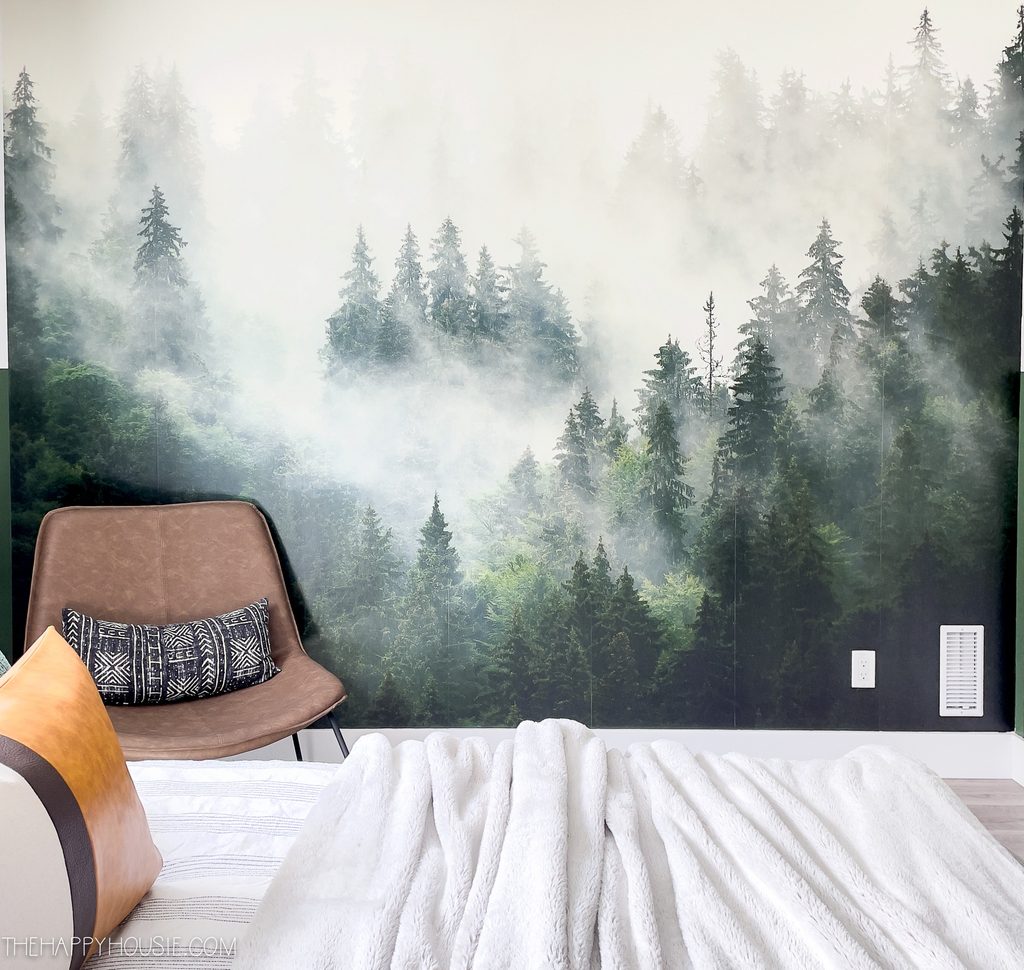
Credits: Krista / The Happy Housie
A small chair stands beside the bed against a misty forest mural, giving the room a place to pause beyond the mattress. The warm brown seat contrasts gently with the green trees and pale bedding.
For families who read together, a dedicated chair can make that daily activity easier without needing an elaborate reading nook.
Check that the seat is comfortable for whoever will use it and that its legs remain stable on the floor or rug. Leave a clear route around the bed and keep outlets and vents accessible.
Add nearby book storage only if there is enough room. The mural provides the atmosphere here, so a modest chair and one washable cushion can make the corner feel complete.
17. Choose Closed Bedside Storage for Small Belongings
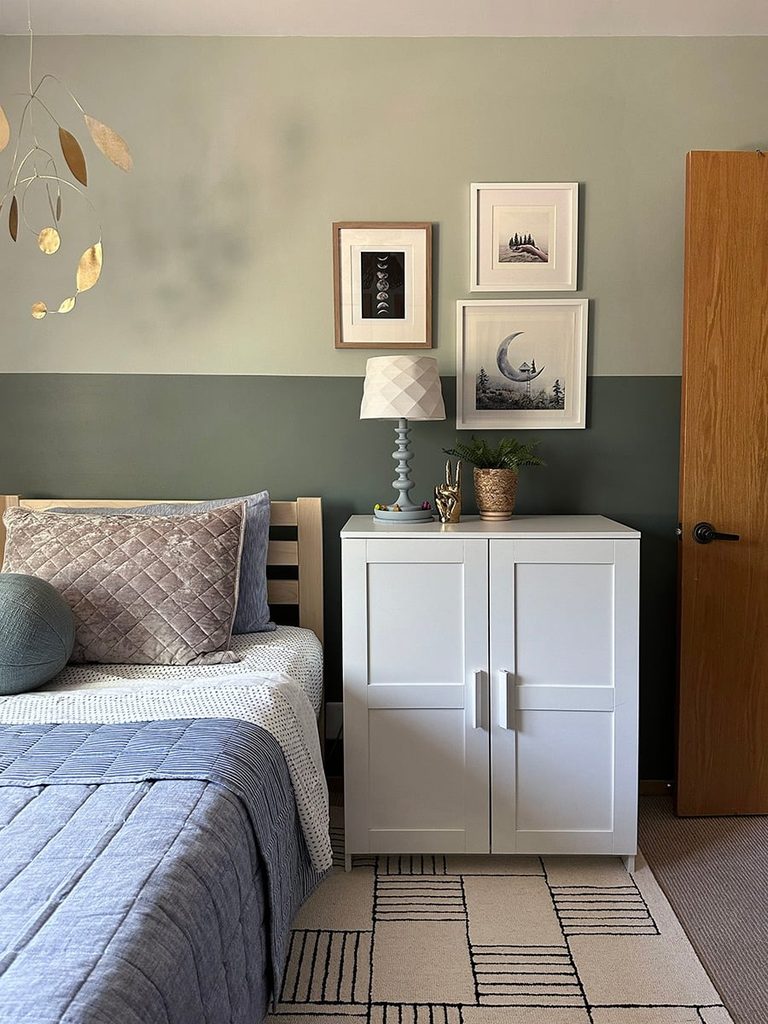
Credits: Amy Weir / Delineate Your Dwelling
A white cabinet beside this wooden bed provides more hidden storage than a narrow bedside table. Its plain doors keep the sleeping corner visually calm, especially against the two shades of green on the wall.
This can help when an older child has books, craft supplies, or small possessions that do not all need to be displayed. Choose a cabinet with smooth hardware and enough clearance for both doors to open easily.
Anchor it securely and organize everyday items on the lowest usable shelves. Keep the top simple so the bedside lamp has a stable position and its cord stays managed.
The surrounding artwork supplies personality without requiring an overflowing surface, making this useful corner easier to reset before bedtime.
18. Repeat a Rainbow Motif in Paint and Textiles
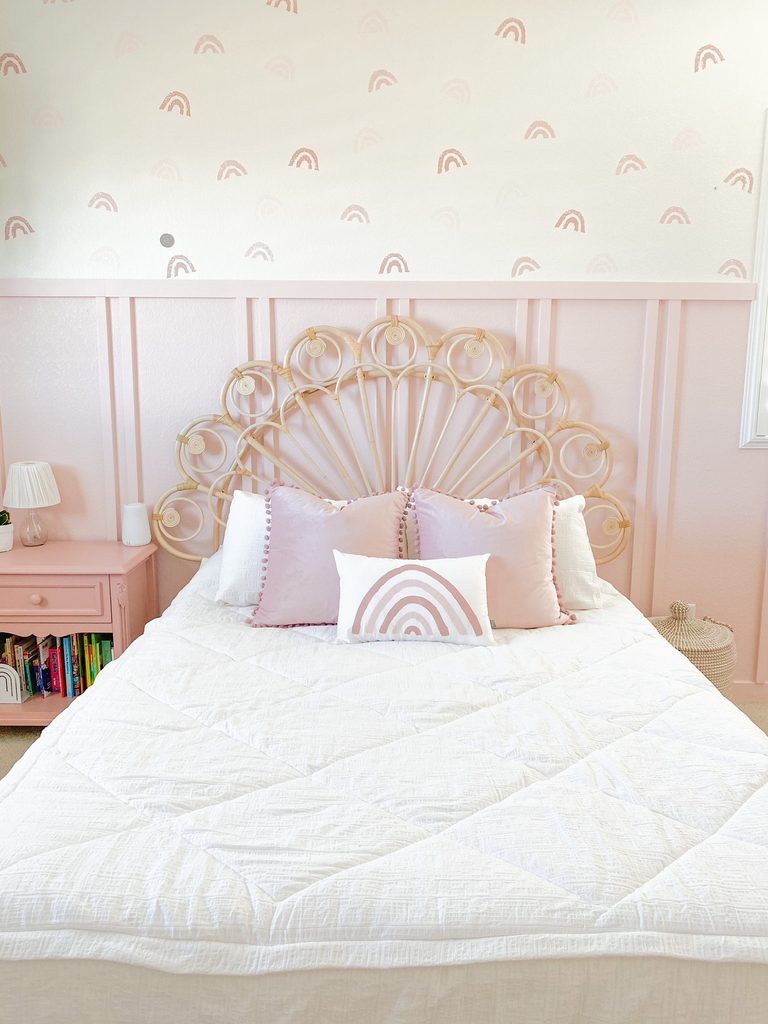
Credits: Kaylee / Sprucing Up Mamahood
Small painted rainbows rise above the pink paneling in this bedroom, while one cushion repeats the same shape on the bed. The loose spacing leaves plenty of white wall visible, keeping the pattern playful without making the whole room busy.
A curved rattan headboard adds another rounded outline, but a simpler age-appropriate bed could work with the same paint treatment. Practice the motif on cardboard before starting and choose a limited group of colors that relates to the bedding.
Children can help choose the shades while adults handle the wall preparation and application. Keep decorative pillows suitable for the child’s age and remove unnecessary layers for sleep.
A repeated shape can establish a theme without filling shelves with themed accessories.
19. Mix Small Florals With Larger Checks
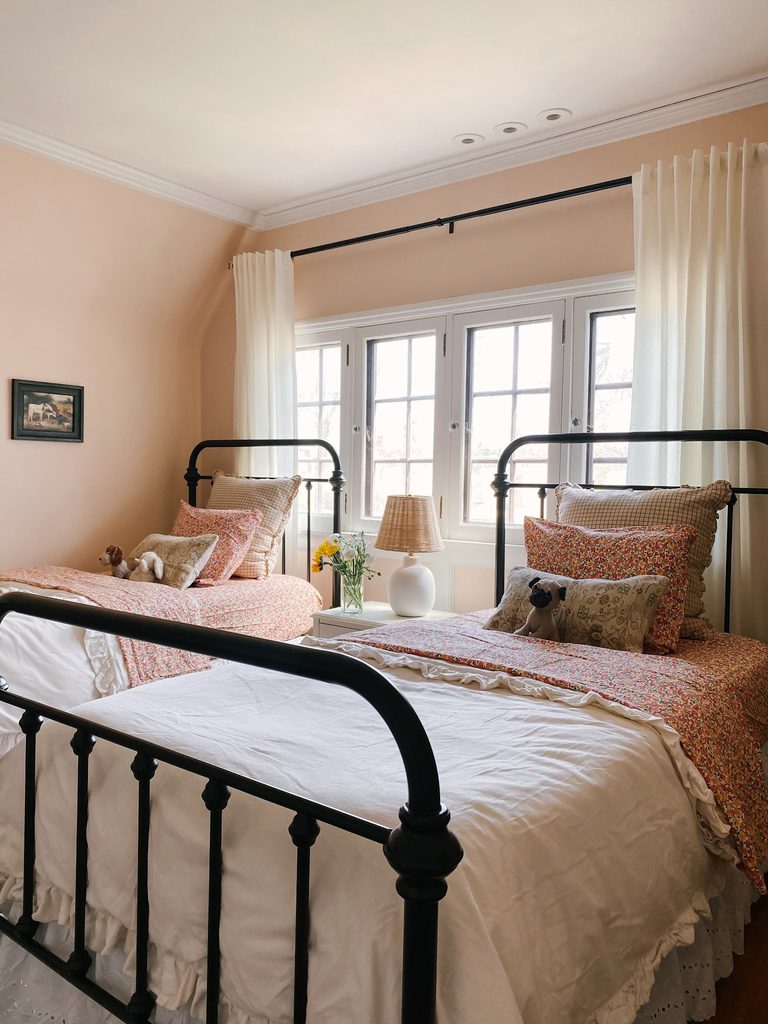
Credits: Patti Wagner / Patticake Wagner
Floral quilts and checked pillows bring different patterns to these matching twin beds without making the shared room feel divided.
The prints work together because the checks are larger and quieter, while both remain close to the warm pink wall color. White bedding offers a resting place between the patterned pieces and black metal frames.
When choosing textiles with children, begin with one favorite print and compare possible companions beside it rather than buying everything separately. Each bed can have a different accent pillow while sharing the main quilt or sheet color.
Keep decorative layers manageable so making the bed stays straightforward. Keep beds away from windows and accessible cords; prioritize washable fabrics and comfortable bedding when making final choices.
20. Separate Everyday Books From a Small Display
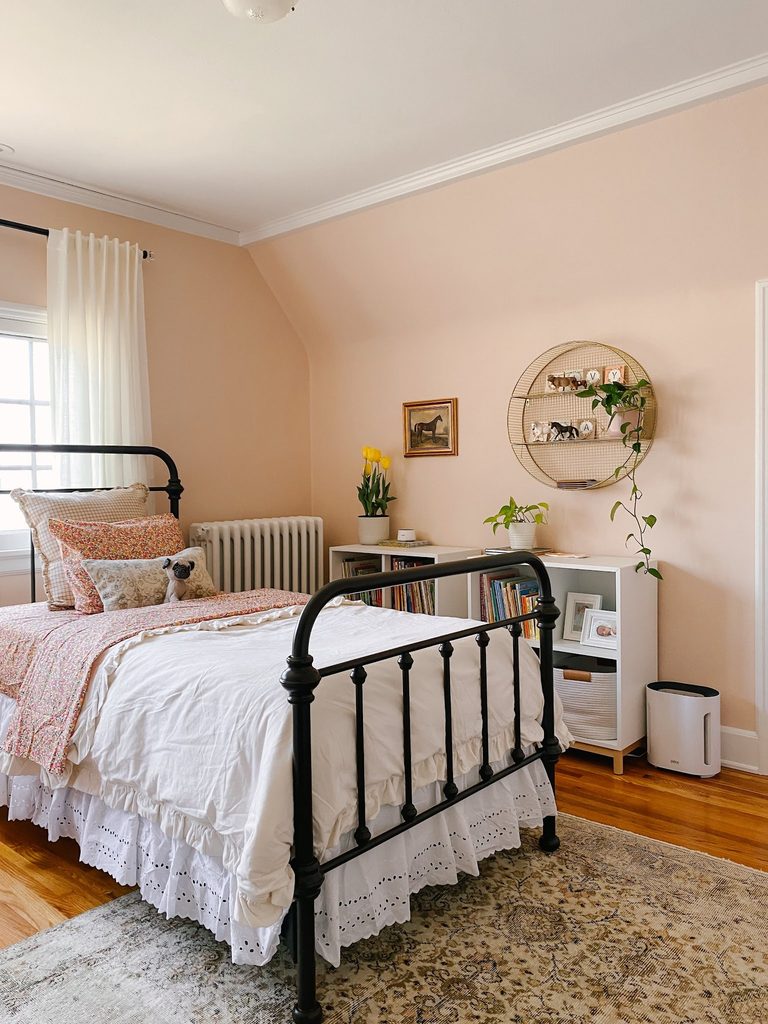
Credits: Patti Wagner / Patticake Wagner
Low white cubbies hold the everyday books in this room, while a round wall shelf gives a few small objects their own display above. The separation keeps the reading collection accessible and makes the decorative pieces easier to edit.
For a child’s bedroom, place the things they use most where they can reach them safely, and avoid arranging prized objects so high that they encourage climbing.
Secure both the bookcase and wall shelf with appropriate fixings. Keep heavy or breakable items away from beds and choose plants only when suitable for the household.
A few selected favorites will usually tell a clearer story than a crowded collection. The pale storage furniture also leaves the floral bedding as the main pattern.