
A dark wall can feel less severe when it’s balanced by soft textiles, pale bedding, or a warm wood accent.
Black And White Bedroom Ideas show how small choices—like a striped coverlet, textured boards, or a fine diamond rug—can give the contrast a clear purpose.
Some approaches keep most walls white and use black in a narrow band or a single focal area; others let a dark backdrop frame raised white bedding or a simple canopy.
The result is a range of ways to make the palette feel graphic without relying on bold patterns everywhere.
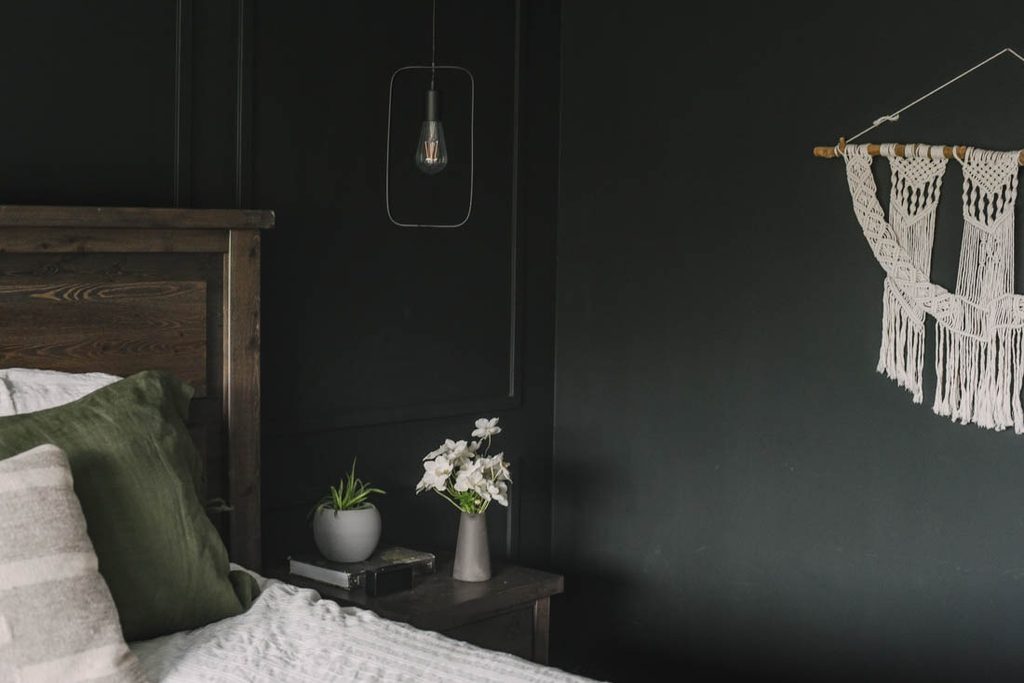
1. Let Pale Macrame Soften a Black Bedroom Corner
Credits: Colleen Pastoor / Lemon Thistle
The hanging cords are easy to appreciate against this nearly black wall. Their loose loops and fringe introduce a softer shape beside the straight wooden headboard and rectangular molding.
White bedding repeats that lighter note across the foreground, while the olive pillow remains a small supporting accent.
Try a textile wall hanging where a dark painted corner feels visually heavy but does not need another piece of furniture. Choose a size that leaves visible wall around its edges, rather than filling the entire space.
A natural wooden branch or dowel can connect the hanging to existing furniture.
Keep its lowest fringe clear of bedside objects and lighting. The useful lesson is the contrast between dark architecture and light, touchable material.
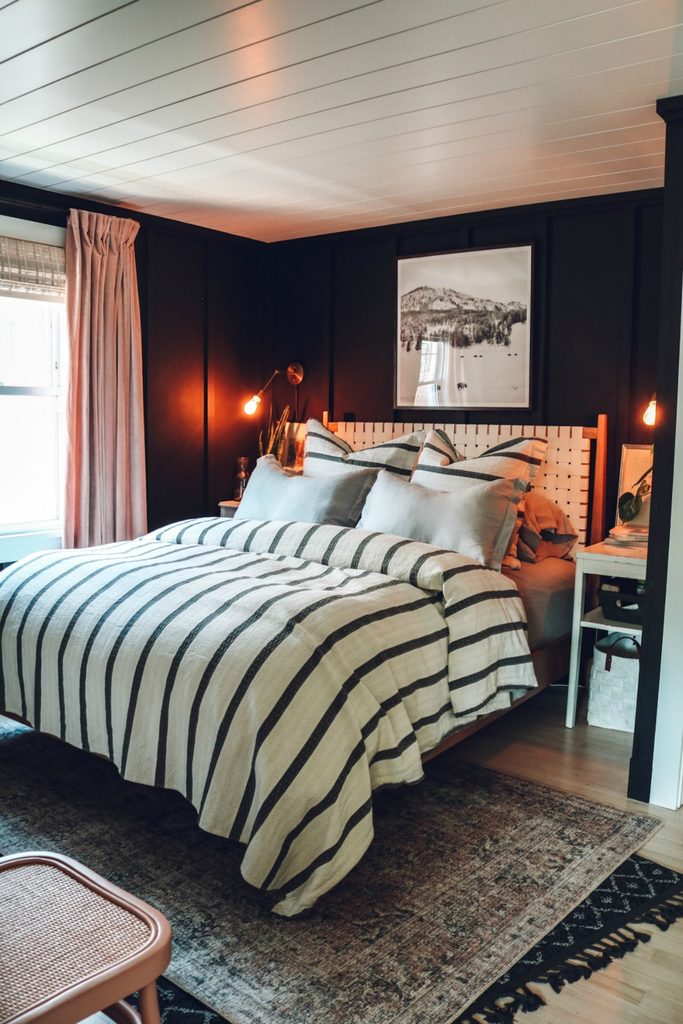
2. Carry Black Stripes Across a White Coverlet
Credits: Brooke Christen / Nesting With Grace
A striped coverlet brings the black walls onto the bed without requiring a solid dark duvet. The generous white spaces between its bands keep the textile bright, and matching striped pillows make the repeated pattern feel deliberate. Plain gray pillows provide a quieter layer in front.
Look at the width of a stripe from the doorway before choosing bedding; a pattern that seems bold up close can disappear across the room.
Here, the stripes remain readable alongside the narrow vertical wall boards and white ceiling planks. Folding the top edge back exposes the layers without adding another print.
Keep the sheet color simple, then use the room’s wood and woven surfaces to supply warmth around the graphic black and white.
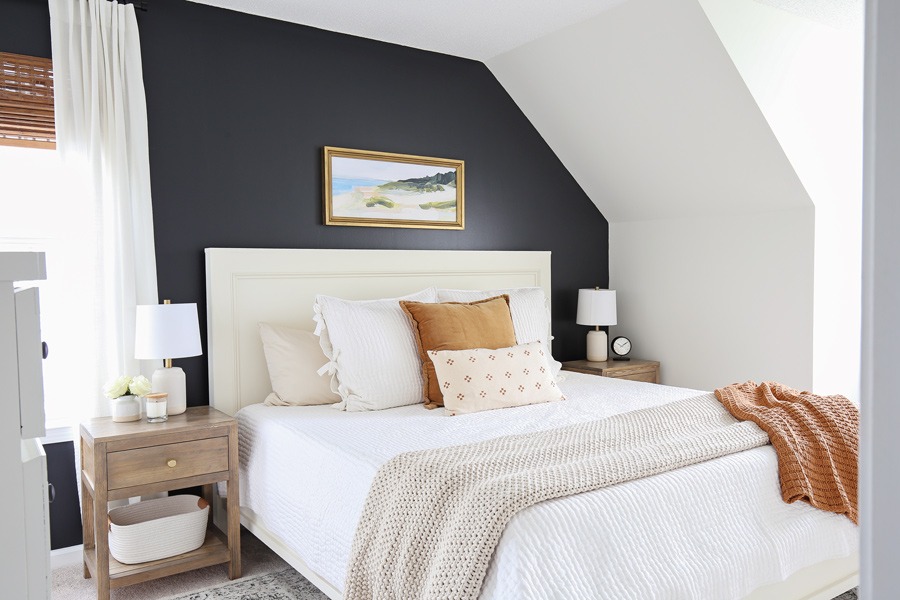
3. Trace an Angled Ceiling With a Black Bed Wall
Credits: Angela Marie Made
The dark wall follows the roofline and turns an awkward angle into part of the bedroom’s design. White paint on the neighboring slope keeps that boundary sharply visible, with the white headboard and bedding providing another light surface below. Natural wood nightstands and one warm pillow soften the strong contrast.
When adapting this idea, decide exactly where the dark paint will stop before beginning. An angled wall benefits from a clean junction more than extra decoration.
Place a paint sample beside the existing ceiling color and check it in daylight.
The artwork sits comfortably within the remaining dark area, above the pillows. Keeping the other walls light lets the unusual outline carry the room without making every surface equally dramatic.
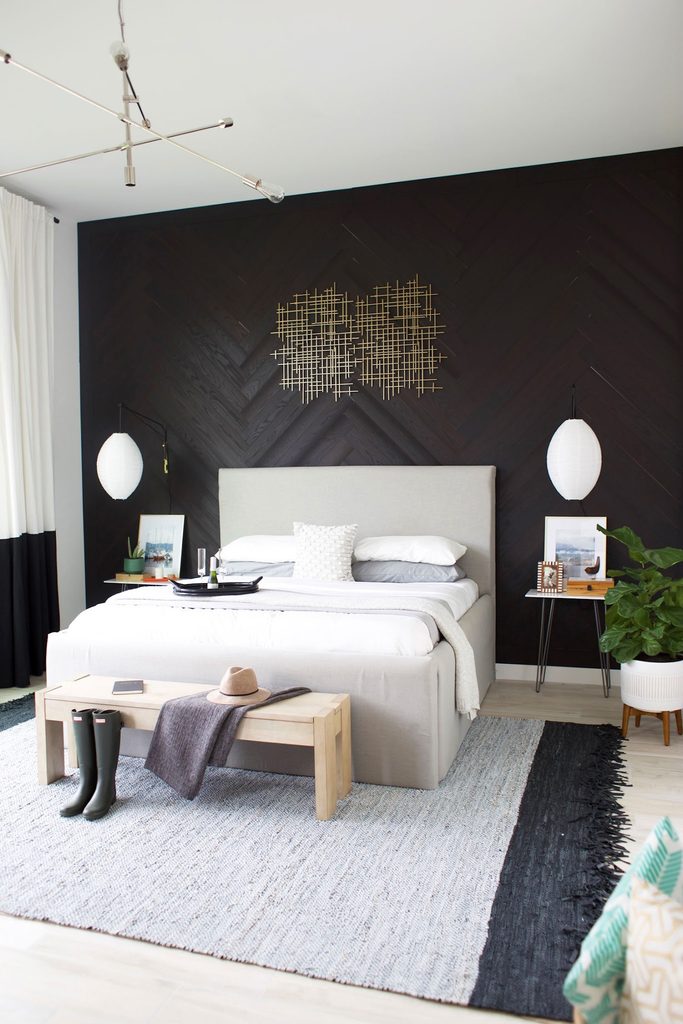
4. Mix Dark Herringbone Boards With White Bedding
Credits: Kristi Murphy
Texture gives the black backdrop more depth than a flat painted rectangle. The diagonal boards meet in a herringbone pattern behind a pale upholstered bed, and white hanging lights remain clear against the dark wood. White bedding keeps the composition relaxed rather than overly graphic.
You can borrow the balance without repeating every accessory: choose one textured dark surface, then keep the largest adjoining fabrics comparatively plain.
Check how the boards look under your room’s actual lighting, since their grain and joints may be subtle at certain times. The rug’s broad dark edge echoes the wall near the floor.
A light wooden bench offers a practical place to sit while preventing the center of the room from becoming entirely monochrome.
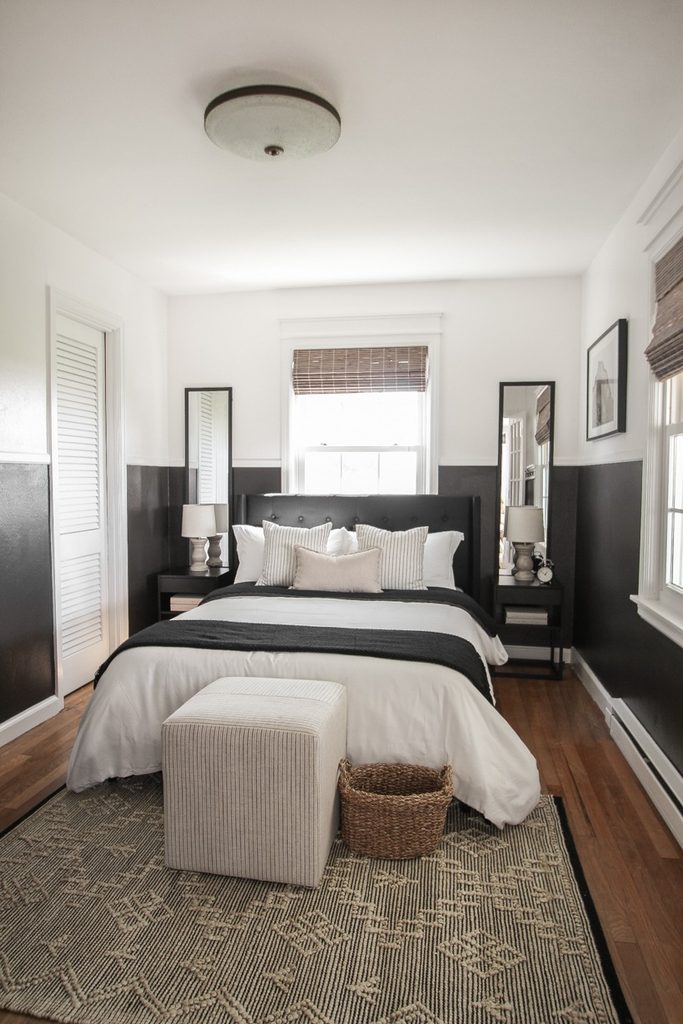
5. Wrap the Lower Walls in a Continuous Black Band
Credits: Liz Fourez / Love Grows Wild
The white upper walls and ceiling keep this compact bedroom bright, while a deep band of black connects the furniture around the lower half. White door and window trim interrupt the band neatly, preserving the room’s architectural edges.
The bed repeats the same arrangement with white linens and a dark folded throw.
Before painting, mark the proposed boundary around the entire room and view it beside the headboard, windows, and door frames. A consistent height makes the treatment feel intentional even where furniture hides part of it.
The boundary does not need to divide the wall into equal halves.
Here, the pale area remains generous, and the wood floor adds a warmer surface below the otherwise strongly black and white.
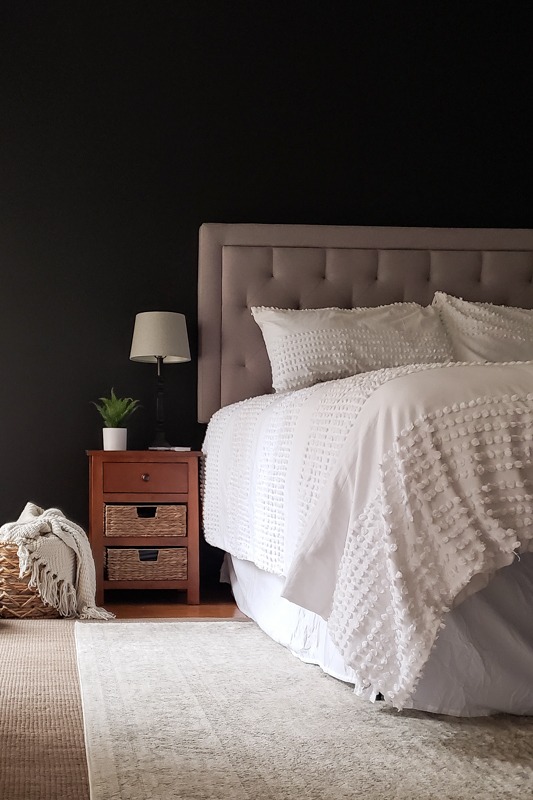
6. Put Raised White Bedding Against a Smooth Black Wall
Credits: Dani Koch
Small tufts across the white duvet create the detail in this bedroom, rather than an additional printed pattern.
The nearly black wall lets those raised marks show clearly, while the upholstered headboard supplies a softer middle tone between the two extremes. A wooden nightstand and woven baskets keep the setting approachable.
If you prefer plain colors but worry that white bedding will feel flat, compare fabrics with different surface textures instead of buying more decorative pillows.
Consider how easily each cover can be washed and dried. Leave enough of the duvet visible to appreciate its texture, especially along the side of the bed.
The simple dark background then makes ordinary folds and shadows part of the bedroom’s visual interest too.
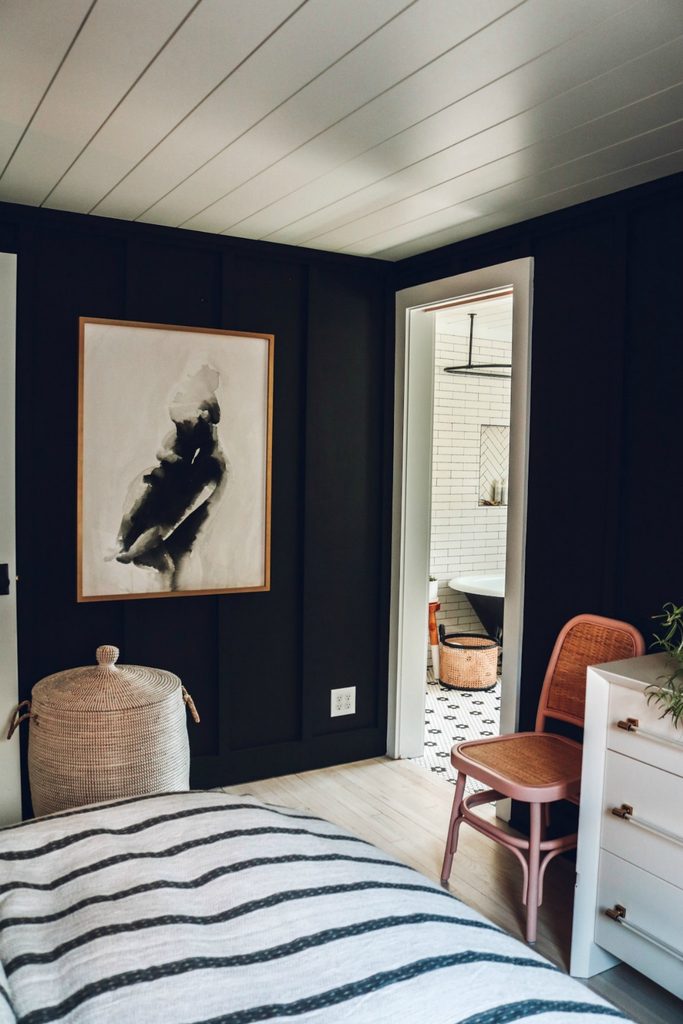
7. Outline a Dark Bedroom Doorway in White
Credits: Brooke Christen / Nesting With Grace
White casing makes the doorway stand out cleanly from the black paneled bedroom wall. The pale ceiling and floor reinforce that opening, and the striped bedcover carries the same two colors through the foreground.
A light background in the framed artwork provides another visual pause beside the door.
This is a useful way to keep dark wall paint from obscuring a room’s shape. Examine the doors, baseboards, and adjoining spaces together before deciding which trim to paint.
Repeating an existing white may create a more coherent result than introducing a new shade.
Keep furniture far enough from the opening for comfortable movement. The warm chair and basket demonstrate how natural materials can soften the contrast without changing its underlying structure.
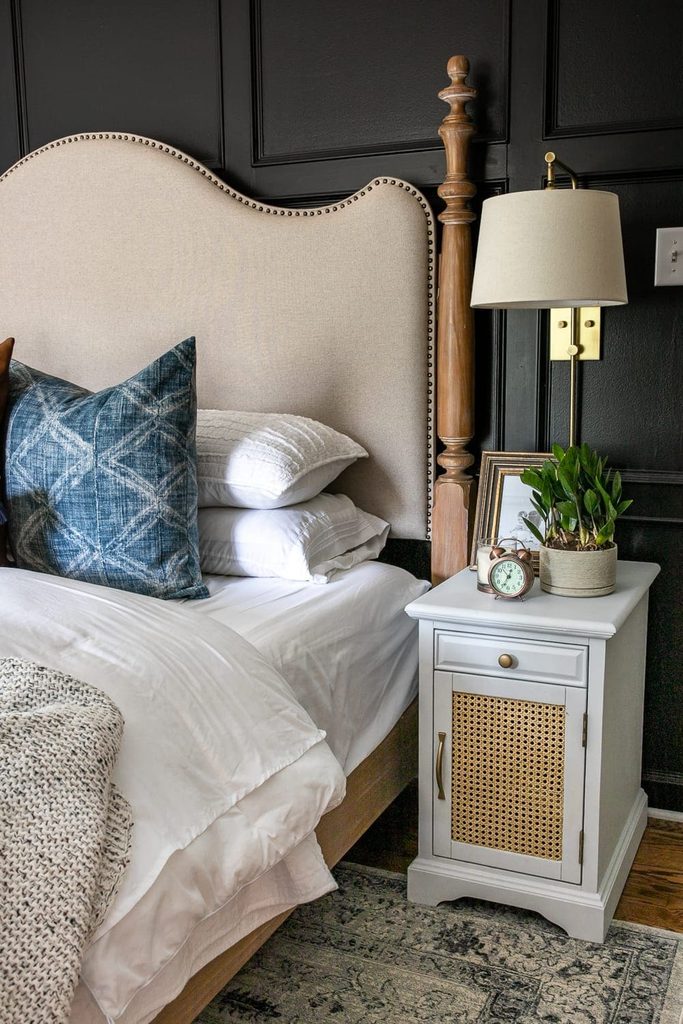
8. Brighten Black Paneling With a White Cane Nightstand
Credits: Lauren / Bless’er House
The small pale cabinet is particularly noticeable against the black molded wall. Its woven door introduces a warmer texture, while the white bedding beside it extends the light area without covering the wall’s details.
Brass hardware and a shaded wall light add a restrained metallic accent.
Consider a lighter nightstand when an existing dark bedroom needs contrast at mattress height. A piece with a drawer and enclosed storage can keep everyday necessities nearby without putting everything on display.
Compare its height with the bed before choosing one, and leave enough space to open the door fully.
The curved headboard and turned post also soften the rectangular wall panels. That mix of pale surfaces and varied shapes gives the corner depth.
9. Use Black Arched Sconces on a White Bed Wall
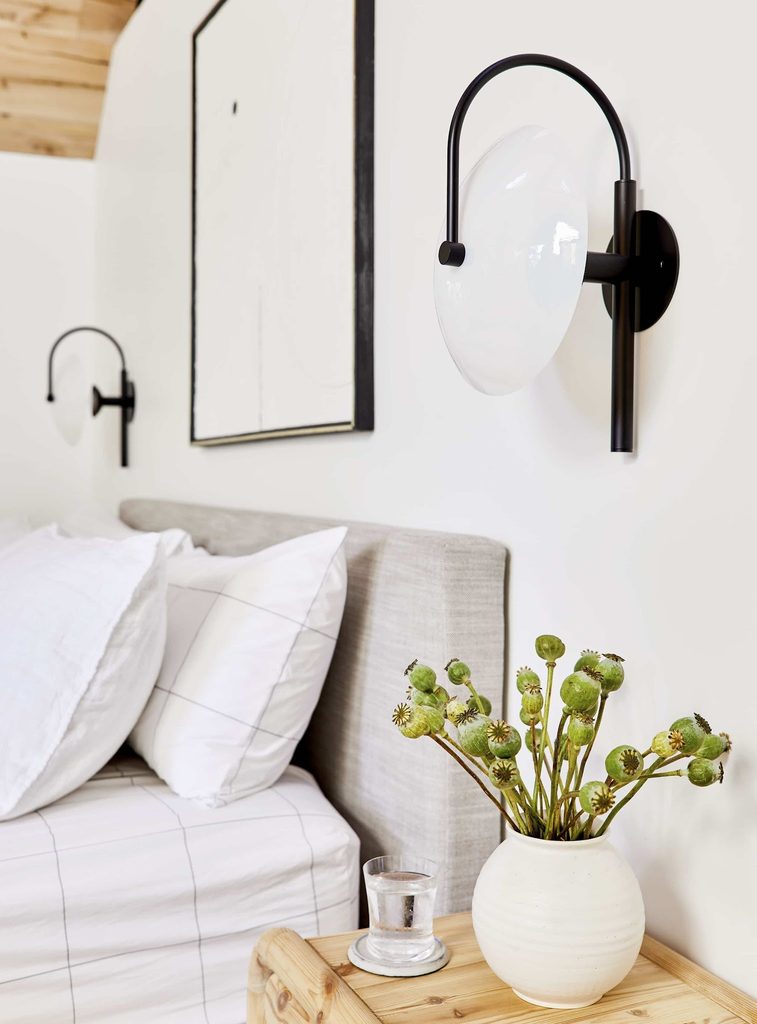
Credits: Sara Ligorria-Tramp / Emily Henderson
These arched black fixtures give a white bedroom wall a clear decorative outline. Their pale round shades keep the lights from becoming solid dark shapes, and a narrow black picture frame repeats the contrast between them.
Fine grid bedding adds smaller lines below without competing with the sconces.
Think about scale when using lighting this way: the fixture should relate to the headboard and artwork as well as illuminate the bedside. Check the installed height from both sitting and lying positions, and use appropriate professional installation where required. A wood tabletop and rounded white vase introduce gentler materials underneath.
Leaving space around the lights makes their shape readable, so there is little need for additional small decorations on this wall.
10. Ground White Furniture With a Fine Black Diamond Rug
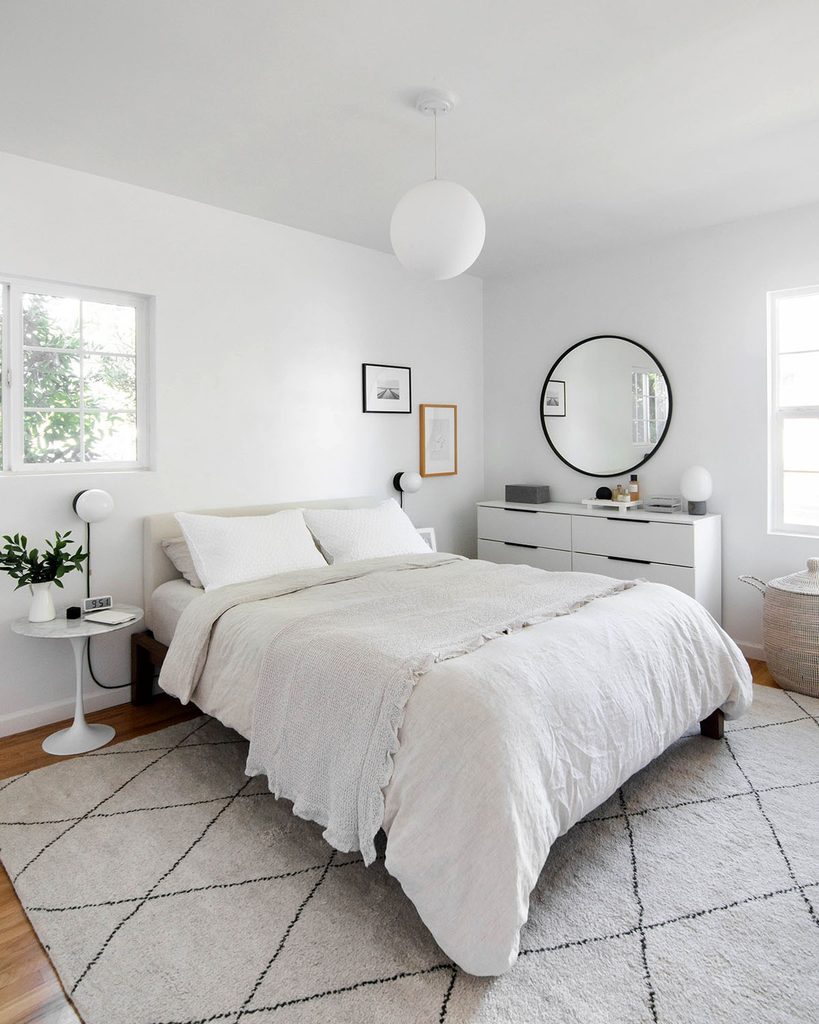
Credits: Amy / Homey Oh My
The thin dark lines in this rug give a mostly white bedroom a defined floor pattern. Because the diamonds are generously spaced, the rug still reads as a light surface around the bed.
Black dresser pulls, picture frames, and the round mirror distribute small matching accents above it.
This approach works when you want a black and white scheme without replacing pale furniture or repainting the walls. Measure the visible floor around your mattress before selecting a rug size, allowing enough pattern to remain exposed.
Keep the bedding quieter than the floor so the room has one clear graphic layer.
Different white textures in the quilt, pillows, and linens can provide variety while those fine black lines connect the arrangement.
11. Add One Thin Black Line Beneath a White Globe
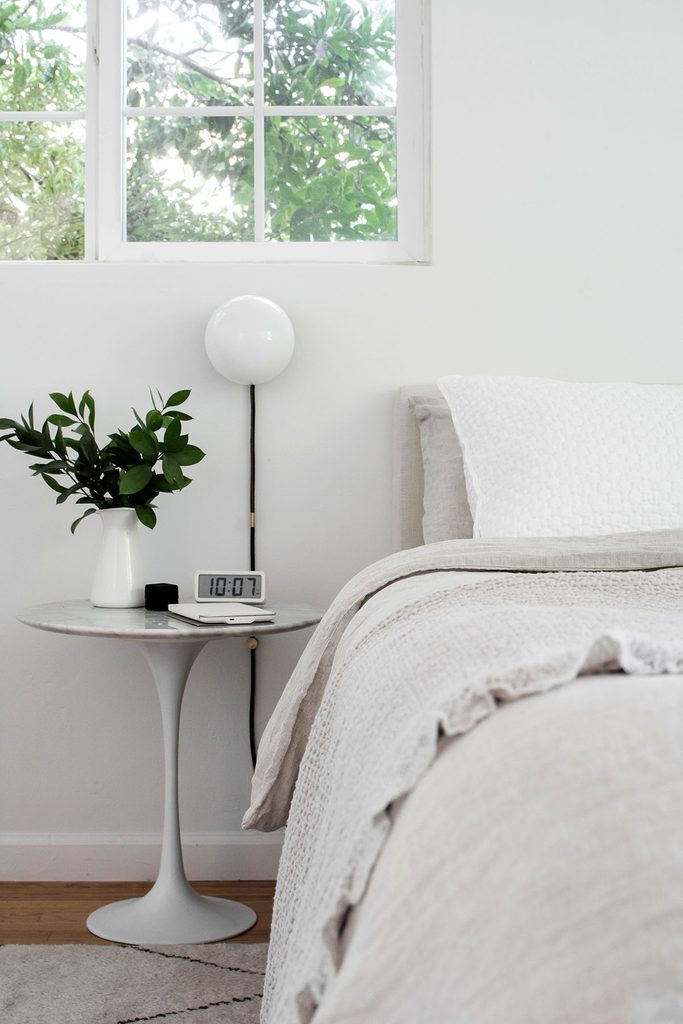
Credits: Amy / Homey Oh My
A narrow dark stem gives this white bedside light just enough contrast to stand apart from the wall. The round shade fits below the window, leaving the tabletop available for a clock, notebook, and vase. Its small black companion object quietly repeats the stem’s color.
This photograph shows how little black a pale bedroom may need. Start with one functional piece whose outline you enjoy, then resist adding dark accessories simply to reach a matching set.
Check the available wall space around window trim and the headboard before installing a light.
Keep cords managed according to the fixture’s instructions and away from walking routes. The soft bedding and round pedestal table help the straight black line feel intentional and calm.
12. Frame Pale Bedding With an Open Black Canopy

Credits: Sara Tramp / Emily Henderson
The canopy’s black rails draw a large rectangle around light bedding while leaving the white room visible through every side. Dark window divisions and curtain rods repeat the outline, giving the furniture a relationship with the architecture.
White lamp shades and curtains prevent the smaller details from feeling heavy.
If a canopy appeals to you, measure its outside dimensions and height, not just the mattress size. Consider the path around each post and the distance from ceiling lights.
Keeping the upper rails uncovered emphasizes their geometry without introducing another fabric layer.
Gray linens can bridge black and white when a softer transition feels more comfortable. The wooden bench and bedside cabinets bring warmth into this otherwise restrained arrangement as well.
13. Make a Black Fireplace Wall the Bedroom Focal Point
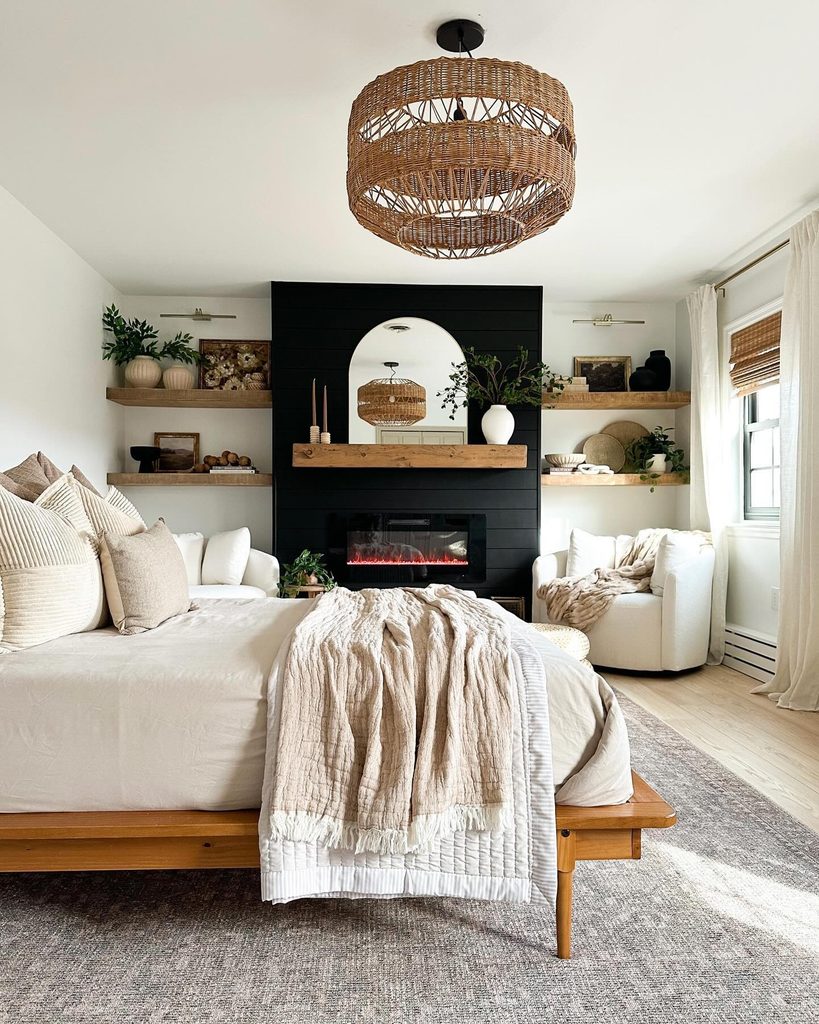
Credits: Instagram
One concentrated dark feature can organize a largely white room. This guest bedroom uses a black fireplace wall with horizontal lines, an arched mirror, and a wooden mantel, while open shelves continue into the pale alcoves.
The creator documents the finished room as part of her own renovation.
Notice how the bed and surrounding textiles remain quieter, allowing the fireplace to carry the strongest contrast. If you already have a fireplace, consider its proportions before deciding how much wall to darken.
Any new installation needs the correct clearances and professional guidance for its type.
Keep bedding and decorations away from heat sources. Shelves can repeat a little black through accessories without needing the same dark finish across the entire wall.
14. Introduce Black and White Through Fine Botanical Wallpaper
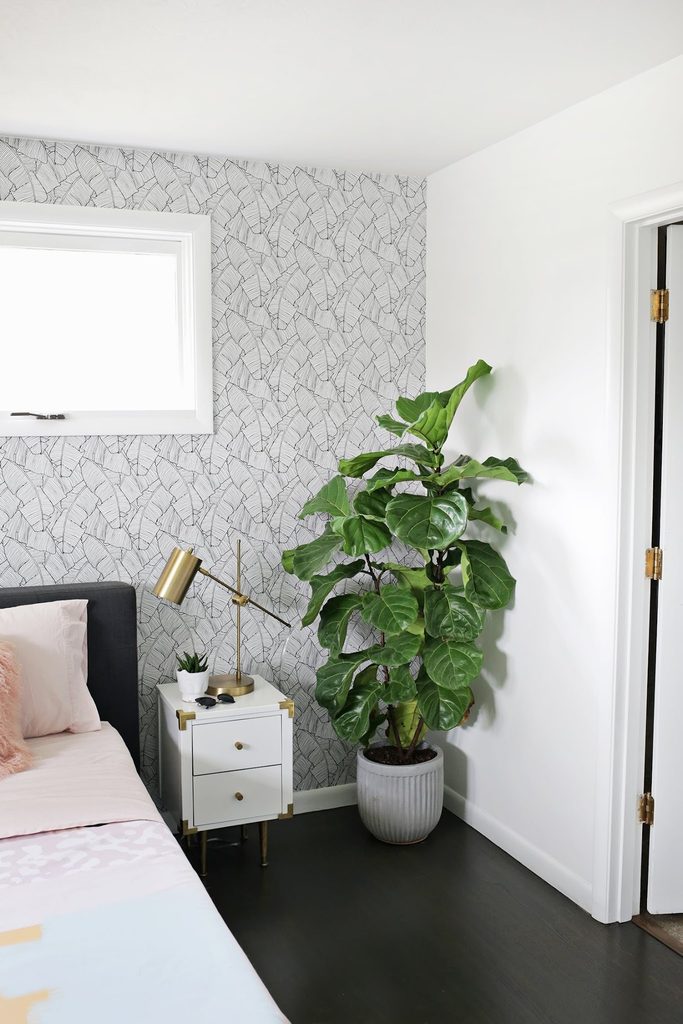
Credits: Laura Gummerman and Elsie Larson / A Beautiful Mess
Fine dark outlines turn the leafy wallpaper into a delicate pattern rather than a large block of black. The adjacent plain white wall and window casing give the repeated leaves room to register.
A charcoal headboard and dark floor supply stronger accents lower down, while the white nightstand keeps the bedside light.
Look for a full wallpaper repeat when considering this approach, since closely spaced lines can appear different from a small sample. Position the pattern around actual windows and furniture before ordering.
The green plant and pale pink bedding show that a black and white backdrop can still accommodate softer color.
Keeping those additions limited lets the wall remain the organizing feature instead of competing with several unrelated patterns.
15. Scatter Black Triangles Across a Pale Bedroom Wall
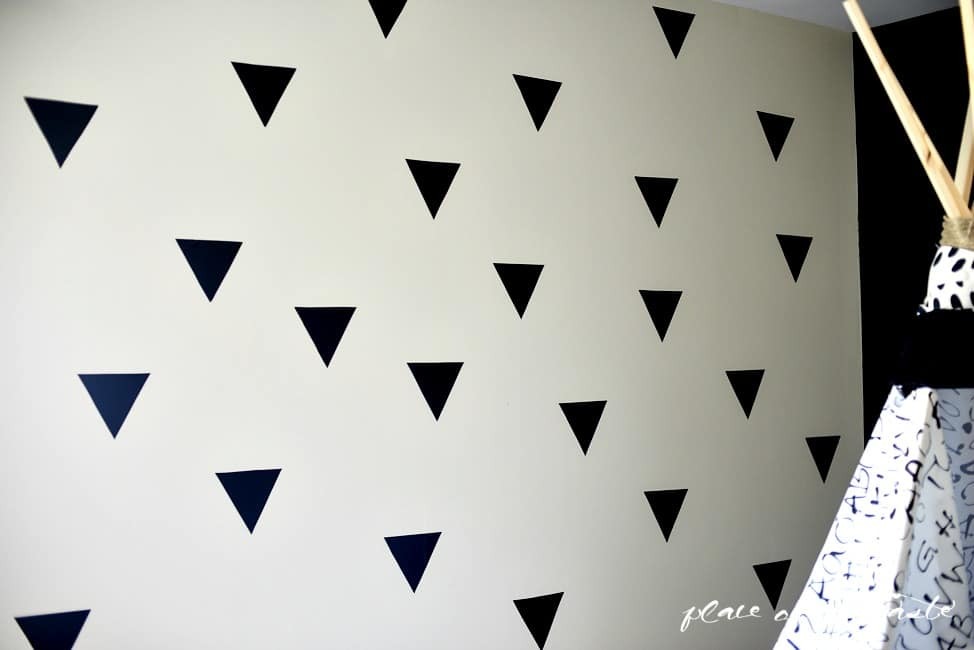
Credits: Aniko / Place of My Taste
Simple black triangles create a playful wall treatment without covering the pale background. Their repeated downward points supply consistency, while the slightly varied placement prevents the pattern from feeling like a rigid grid.
The nearby printed fabric continues the monochrome idea at a smaller scale.
Use this kind of detail on a bedroom wall that needs interest but cannot accommodate another piece of furniture. Lay out a few sample shapes first and step back to judge their size and spacing.
If using adhesive material, check its suitability for your wall finish and test removal somewhere discreet.
Leave a clear boundary around trim and switches. A limited two color pattern can remain lively without requiring equally patterned bedding or additional artwork.
16. Choose a Pale Woven Headboard for a Black Backdrop

Credits: Brooke Christen / Nesting With Grace
Broad pale strips form a woven headboard that stays visible between the pillows and the black wall. The warm wooden outline separates it from both the paint and the bedding, giving the bed a distinct silhouette.
A snowy landscape overhead extends the lighter area without introducing another strong color.
Consider how much headboard will remain visible after your usual pillows are arranged. A detailed surface loses its purpose if bedding hides it completely.
Here, the broad weave differs enough from the coverlet’s stripes to feel like a separate texture.
Plain gray pillows provide a restful layer in front. Keep the surrounding wall relatively uncluttered so the weave, picture, and small bedside light can each be appreciated without crowding the composition.
17. Balance White Pillows With Narrow Black Framed Mirrors
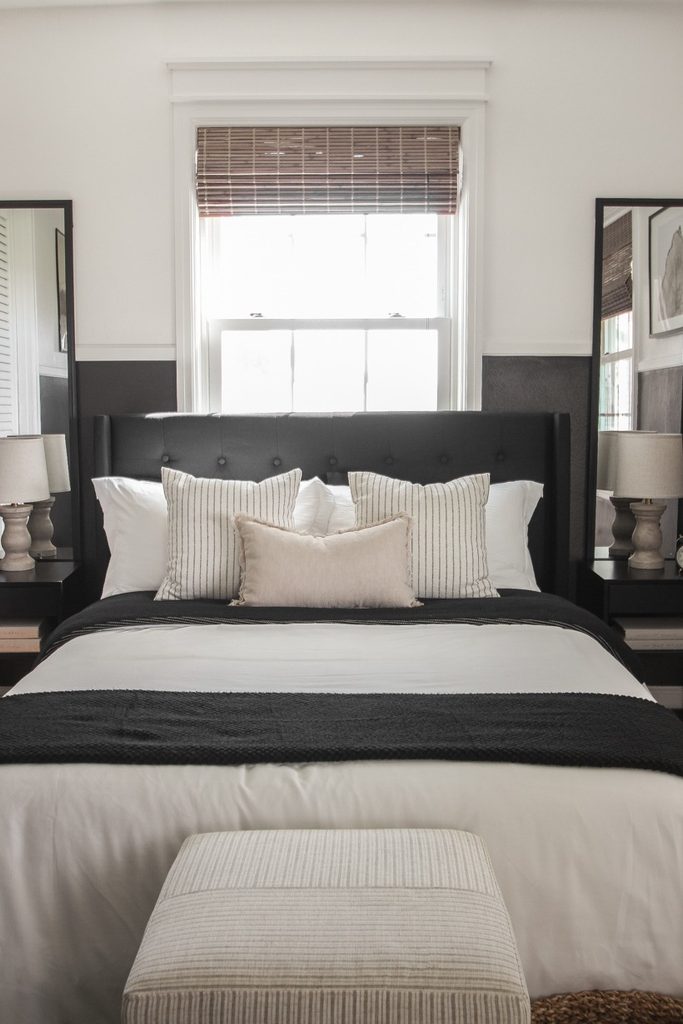
Credits: Liz Fourez / Love Grows Wild
Two tall mirrors emphasize the sides of this black upholstered bed while reflecting brighter parts of the room. Their narrow dark frames connect to the nightstands and headboard, with pale lamp shades preventing the arrangement from becoming too dense. White bedding fills the central space between those upright lines.
When using paired mirrors, judge their width against the available wall rather than choosing the largest possible size. Matching heights can create a sense of order even in a small room.
Use mounting hardware appropriate to the mirror and wall, and check reflections from the bed before final placement.
The striped pillows introduce finer lines across the center. A dark throw then repeats the frame color in a softer, horizontal layer.
18. Give a Black Dresser Wall One Substantial White Lamp
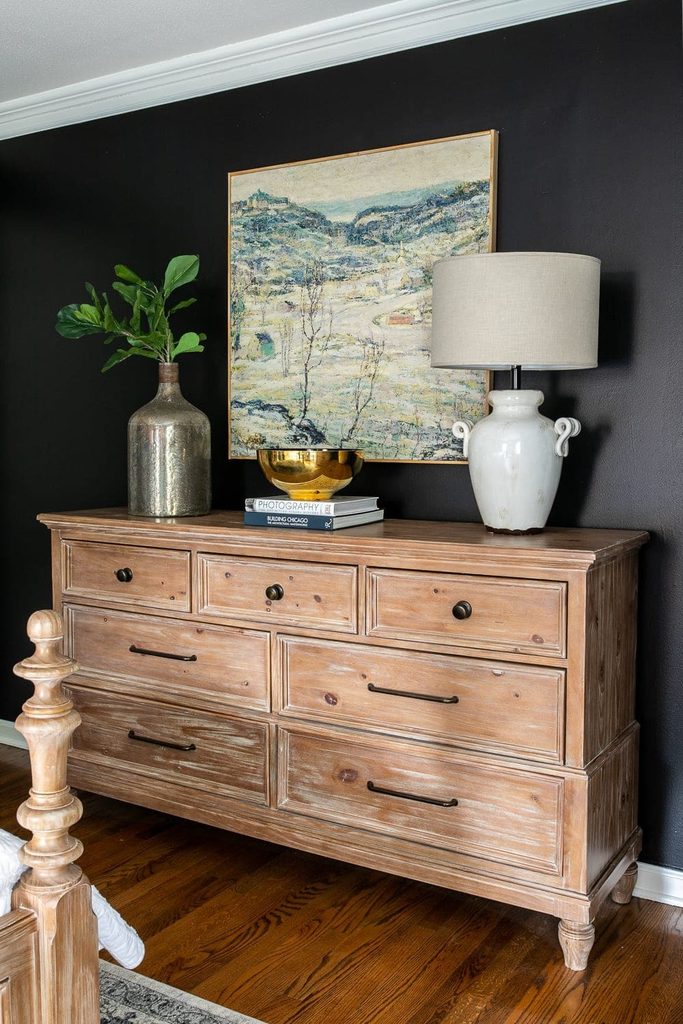
Credits: Lauren / Bless’er House
A white ceramic lamp brings a strong light shape to this dark bedroom wall. Its pale shade and rounded base read clearly beside the landscape painting, while the dresser’s black handles tie the wooden furniture back to the paint.
The result shows how a useful object can supply contrast without requiring a large white cabinet.
Choose a lamp with enough visual weight for the furniture beneath it, leaving usable space on the dresser. Keep the artwork positioned so the lamp overlaps it intentionally rather than hiding an important feature.
A small stack of books and a simple bowl complete the surface.
The white ceiling trim supplies another light edge above, making the darker wall feel connected to the whole room.
19. Repeat Black and White in a Blanket Storage Corner
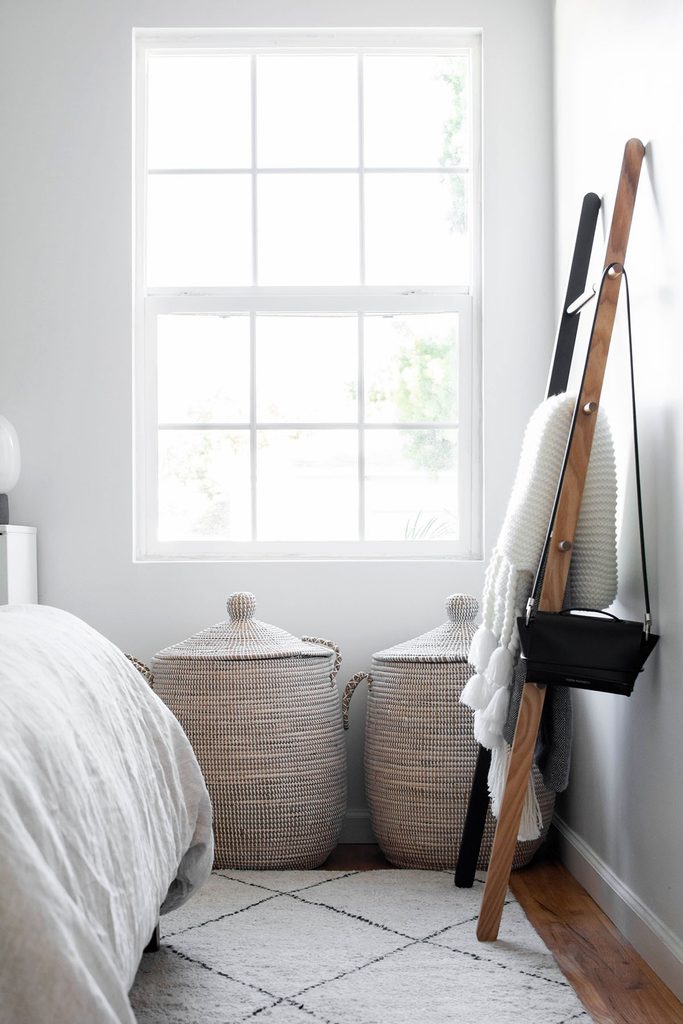
Credits: Amy / Homey Oh My
A dark leaning rail gives this bright bedroom corner a slim vertical accent. White and charcoal throws hang beside its warm wood companion, connecting the storage area to the pale bedding and fine black rug pattern. Two lidded baskets keep the grouping useful rather than purely decorative.
This is an approachable way to carry a monochrome scheme beyond the bed. Choose storage for the items you actually use, then limit the display to a few coordinated textiles.
Leave enough floor space to reach the baskets and open their lids comfortably.
Follow the product’s guidance for securing a leaning rack, especially in a busy household. The white wall provides breathing room, allowing the dark outlines and woven textures to remain distinct.
20. Edge Fluffy White Bedding With Bold Dark Borders
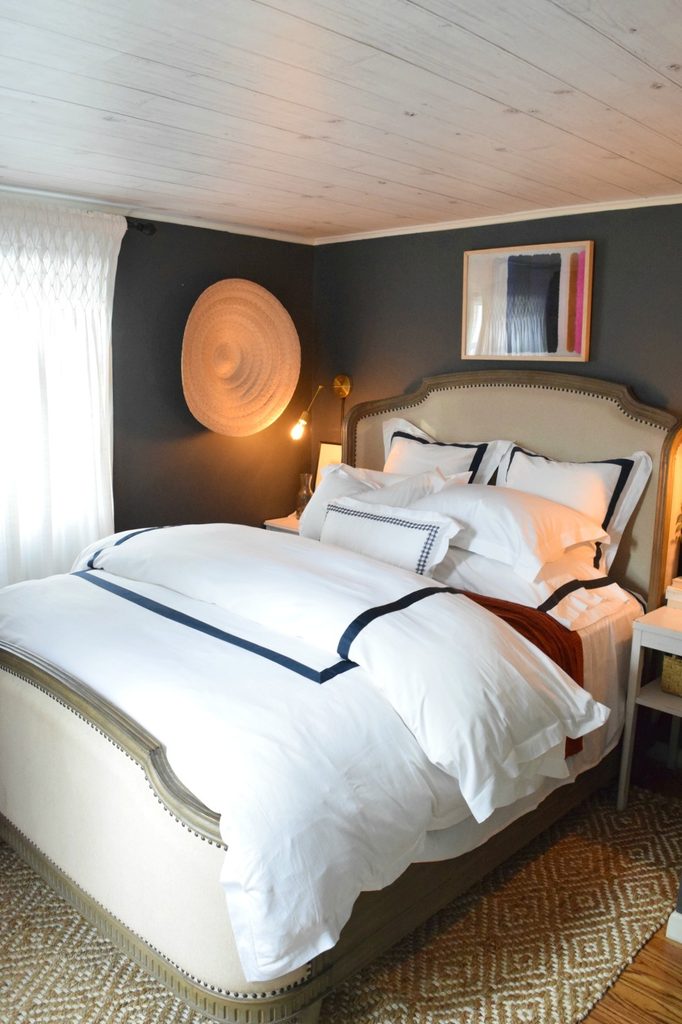
Credits: Brooke Christen / Nesting With Grace
Wide dark borders give the white pillows and duvet a tailored outline. The bedding remains mostly light, but those repeated edges connect it to the charcoal wall behind the upholstered headboard.
A smaller stitched pattern on the lumbar pillow adds detail without challenging the larger bands.
Try bordered bedding when plain white feels unfinished and an allover print seems too busy. Check where the border falls on your mattress, since an oversized cover may hide much of the design along the sides.
Fold the duvet so its lines remain visible rather than burying them beneath another blanket.
Warm lighting, woven texture, and the wood toned bed frame soften the crisp edges, keeping the bedroom inviting alongside its clear graphic contrast.