
A dark wall can make a bedroom feel intimate, but it needs contrast and texture to keep the space from feeling heavy.
Dark Green Bedroom Ideas show how warm brass, woven cane, and pale bedding can balance deep emerald or olive paint.
You’ll also find ways to connect an existing gray bed to an accent wall with green quilting, or add burgundy cushions against a textured olive surface.
These combinations offer practical starting points for choosing lighting, furnishings, and softer layers that work with the color rather than competing with it.
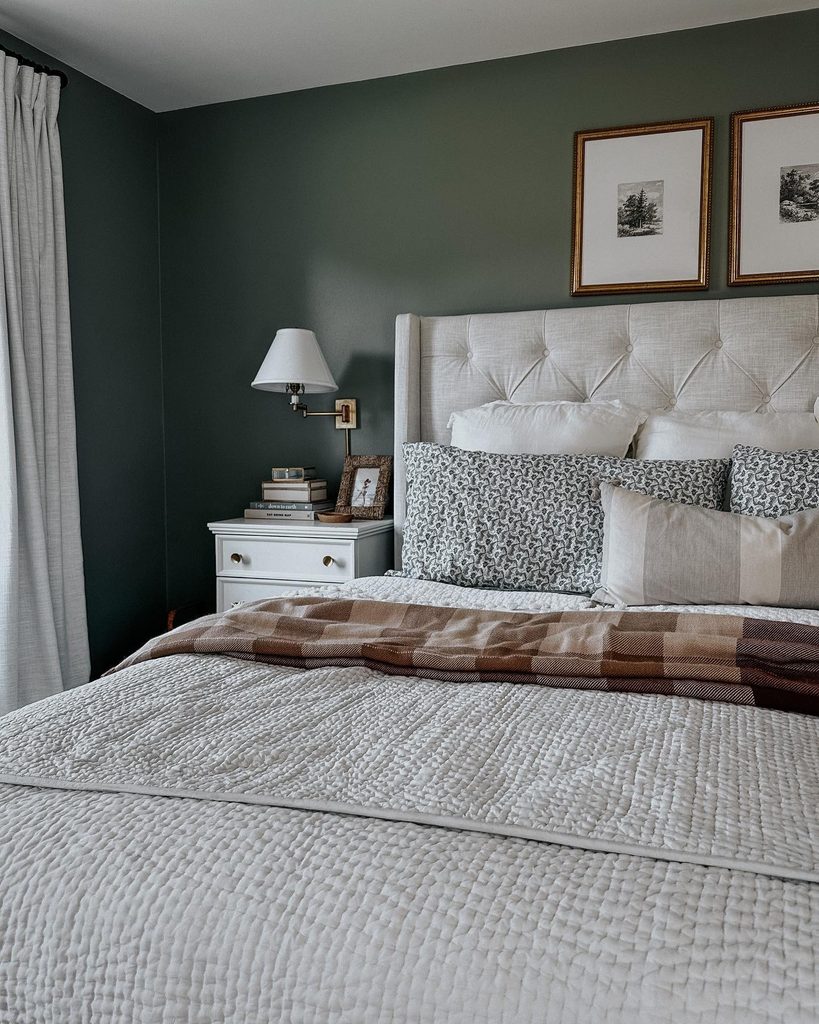
1. Shaded Brass Sconces Against Deep Green Walls
Credits: Instagram
A pale lampshade looks especially crisp against a dark green wall. In this bedroom, a brass swing arm sconce brings the light toward a white tufted headboard while leaving the nightstand available for books and small personal objects.
Its warm metal finish repeats the framed artwork above the bed, creating a quiet connection between practical lighting and decoration. Choose the mounting position from your actual reading posture, checking that the shade stays clear of the headboard and curtains.
The generous white bedding and curtains keep the deep wall color from dominating every surface. Small floral pillows introduce detail without competing with the lamp.
This is a useful way to add traditional character while keeping a compact bedside area visually open.
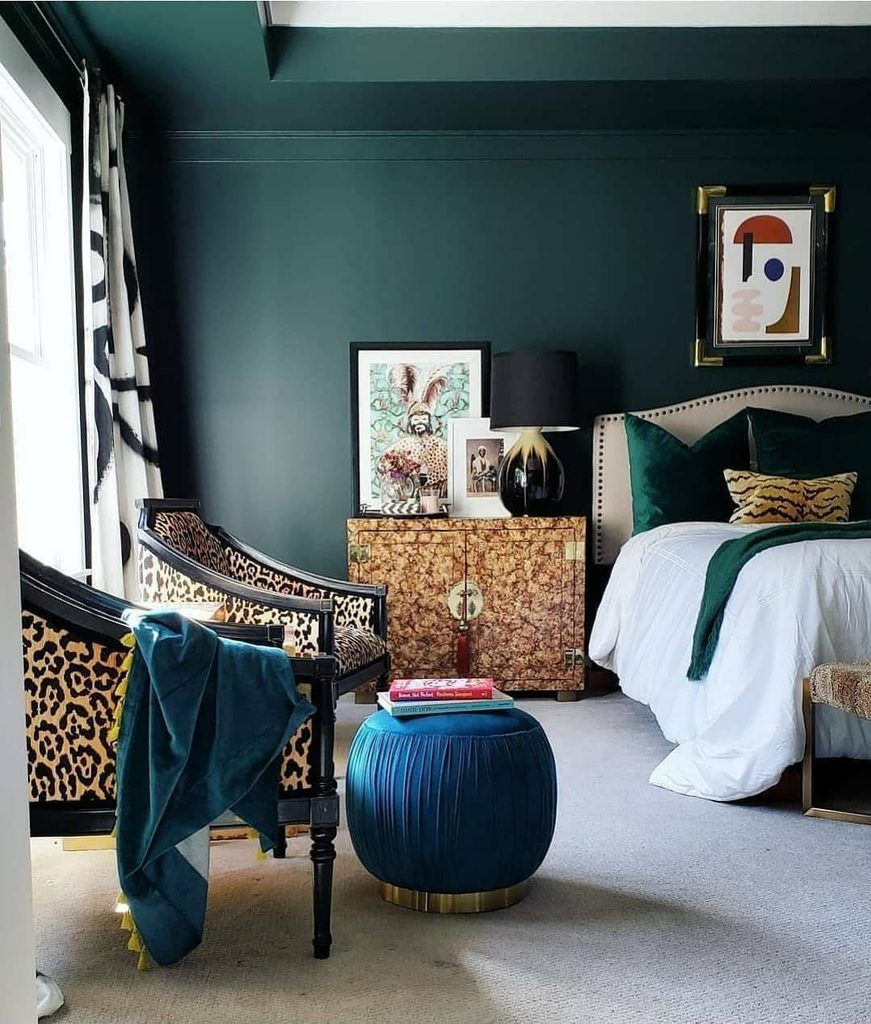
2. A Golden Cabinet Against Deep Emerald Paint
Credits: Instagram
Dark emerald makes a richly finished bedside cabinet stand out without needing an elaborate wall treatment. Here, the golden patterned doors, small brass details, and glossy lamp base introduce warmth against the broad green backdrop.
The pale headboard and white bedding provide a quieter neighboring surface, letting the cabinet remain distinctive rather than blending into a crowded collection. Consider this approach when you already own an unusual cabinet that can work beside the mattress.
Check its height and door clearance before moving it into place. Repeat the warm finish sparingly in a picture frame or another small detail.
Green cushions connect the bed to the walls, while the black lampshade keeps the cabinet arrangement grounded within the deeper bedroom palette.
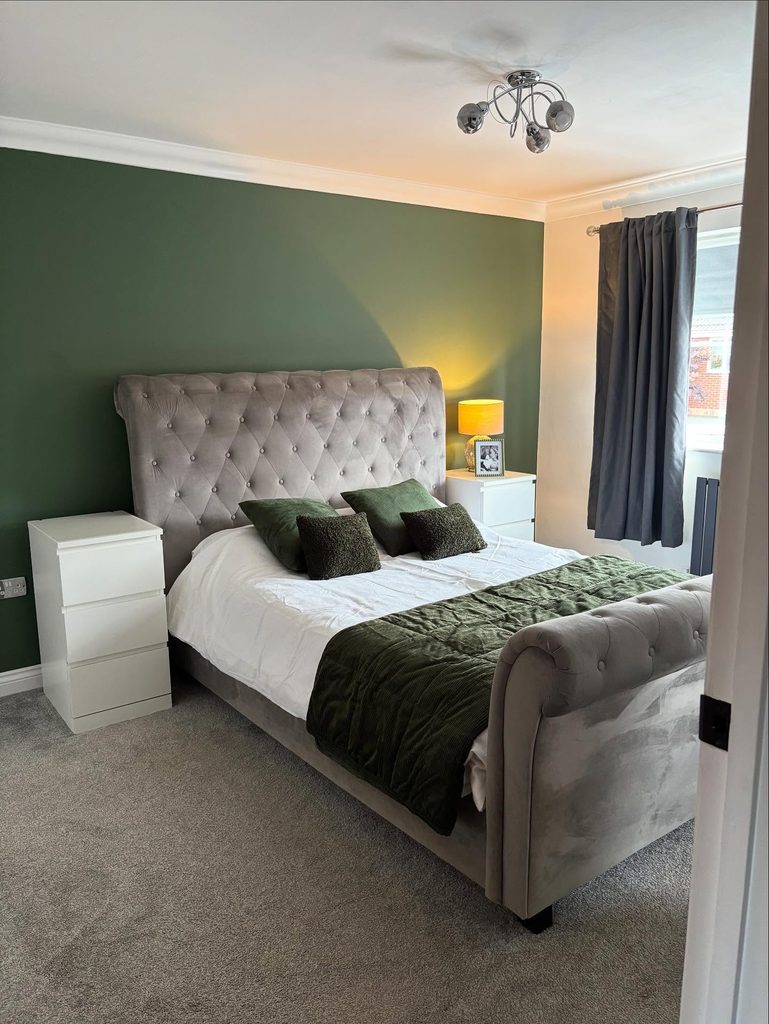
3. Green Quilting That Connects a Gray Bed to an Accent Wall
Credits: Instagram
An existing gray upholstered bed can feel at home in a dark green scheme without being replaced. This room links the wall behind the headboard to green pillows and a quilt folded across the foot of the bed.
The repeated color crosses the pale duvet, while the tufted headboard and matching footboard remain clearly visible. White bedside drawers provide useful contrast against the painted wall.
Try choosing the bedding accents together, comparing their undertones beside the paint in daylight rather than relying on separate product photographs. They do not need to match exactly, but a related green family keeps the arrangement coherent.
Leave a generous area of white linen exposed so the darker textiles read as deliberate layers around it.
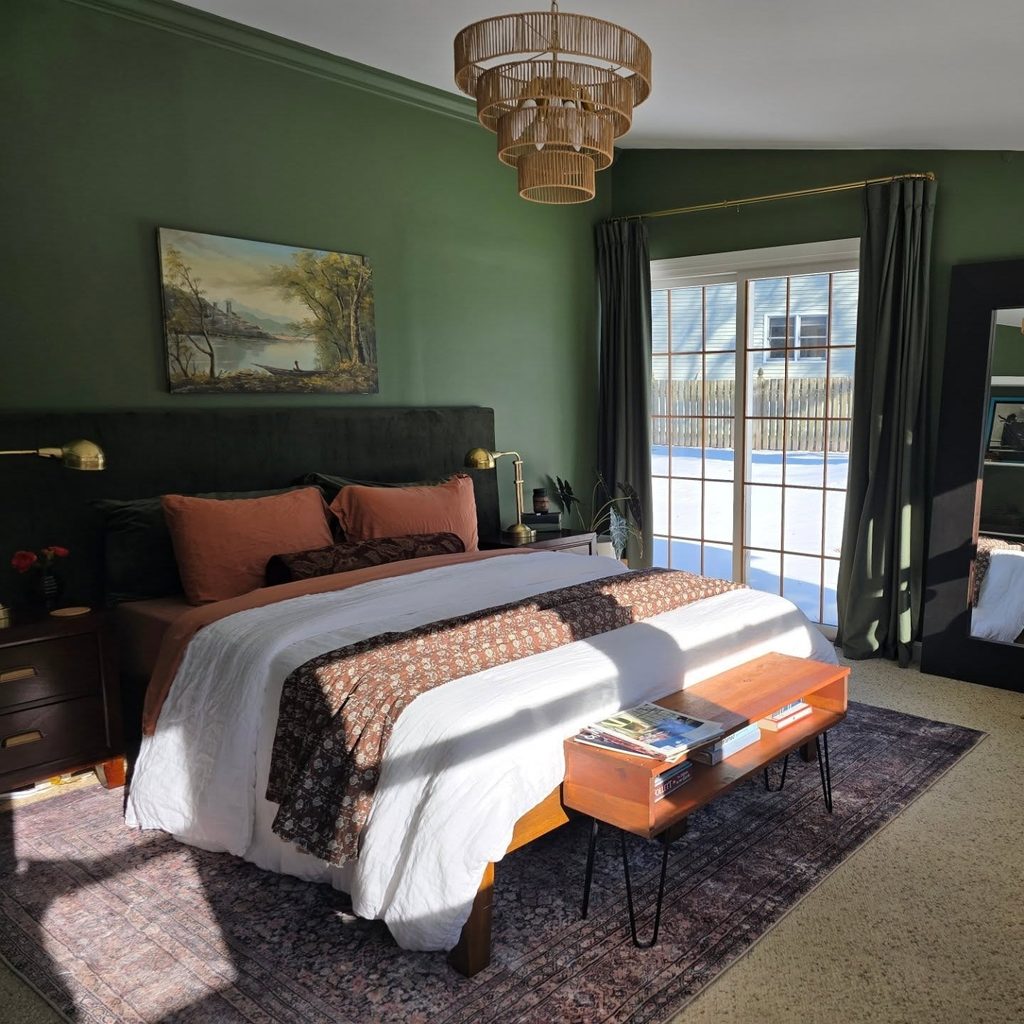
4. A Tiered Woven Pendant Above Dark Green Walls
Credits: Instagram
A tiered woven pendant gives this dark green bedroom a noticeable sculptural focal point above the bed. Its open structure and warm natural tone contrast with the solid painted walls, dark curtains, and upholstered headboard below.
Brass bedside lamps and reddish bedding repeat the warmth in smaller doses, while white linen provides a bright central layer. This combination suits a room that needs an overhead feature without another heavy block of dark material.
Before choosing a pendant, compare its diameter with the bed and check the available ceiling height, including clearance around circulation routes. Keep nearby ceiling details simple enough for the layered silhouette to remain readable.
The effect comes from contrasting textures rather than adding more competing colors overhead.
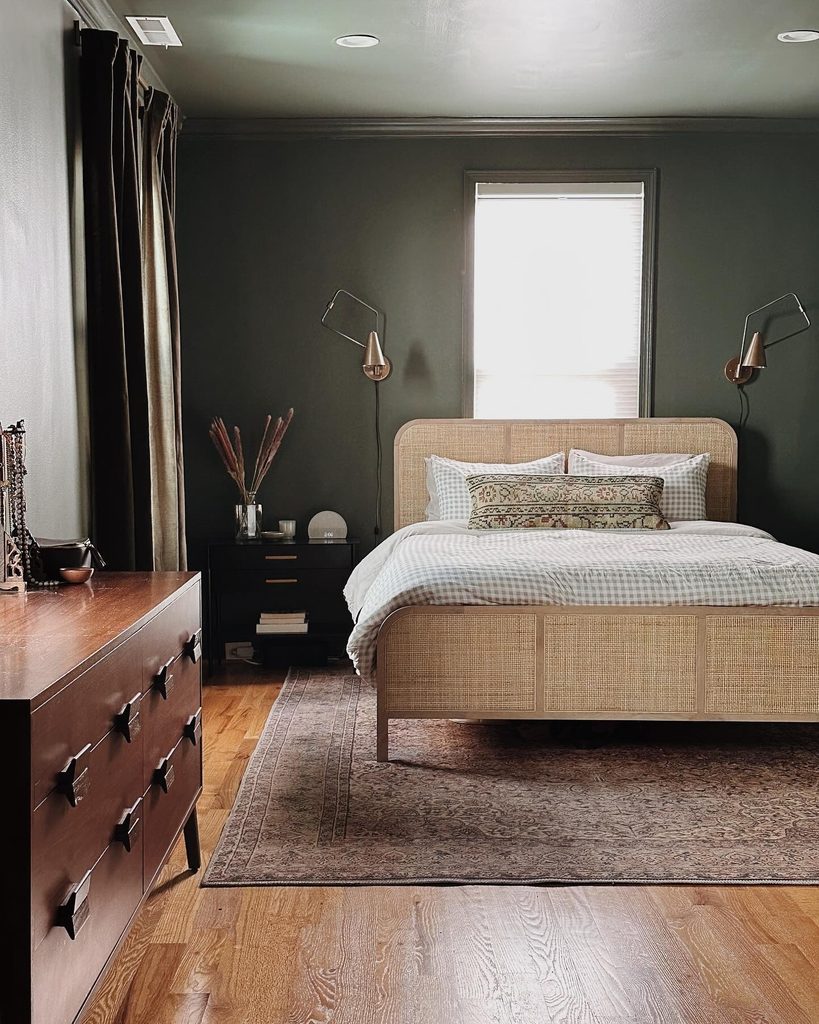
5. A Cane Bed Within a Dark Olive Room
Credits: Instagram
Woven cane introduces a lighter, finely textured surface when green paint extends across the walls and ceiling. In this room, the pale bed frame stands clearly against the dark olive background, with rounded corners softening the otherwise straight lines.
Matching window trim helps keep the painted envelope continuous. A wood dresser and muted rug add warmth without competing with the cane.
If you want a similar balance, compare a sample of the bed material against your paint before committing to either finish. Keep bedding relatively light so the woven headboard and footboard remain easy to see.
Adjustable wall lights add practical detail around the window, while darker bedside storage settles quietly into the surrounding color instead of fragmenting the room.
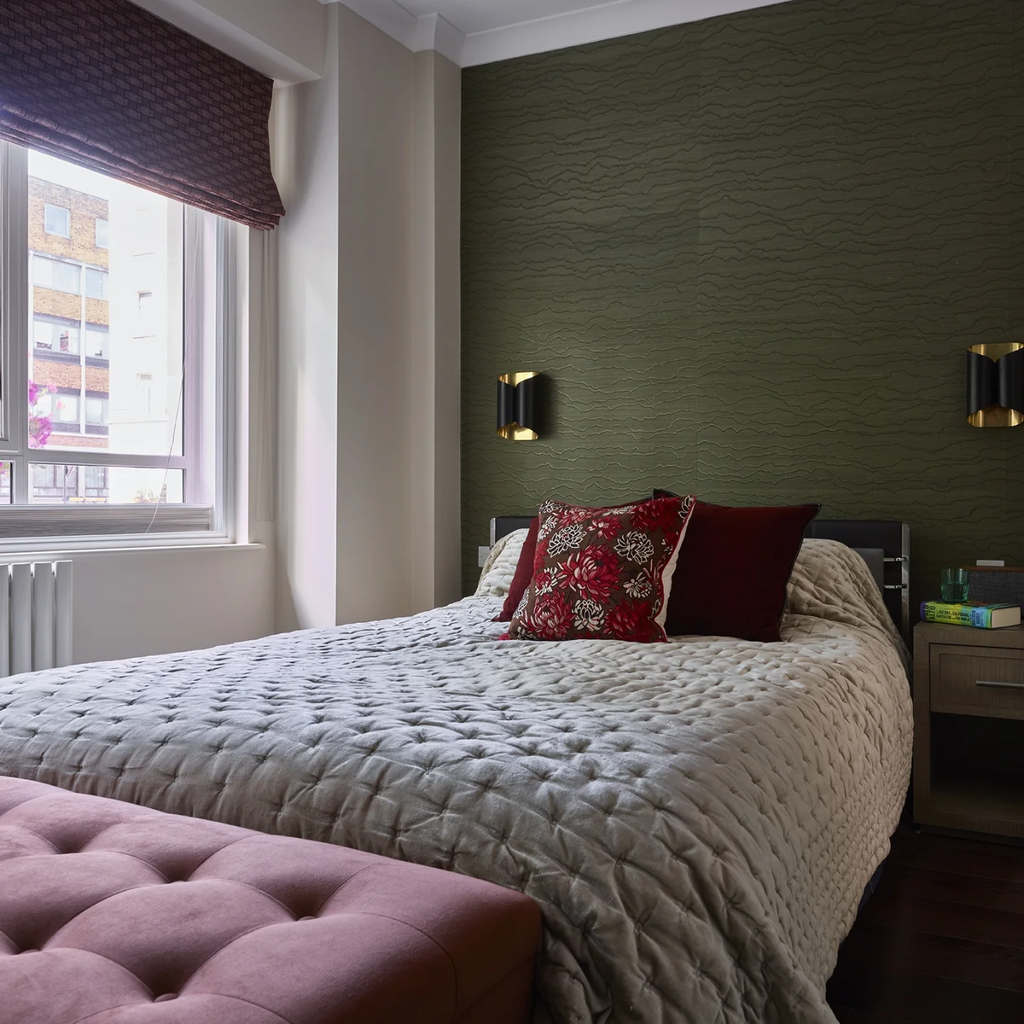
6. A Textured Olive Wall With Burgundy Accents
Credits: Instagram
A dark green wall does not have to rely on molding for interest. This bedroom uses a subtly rippled olive surface behind the bed, creating movement that becomes more apparent where the daylight crosses it.
Burgundy cushions introduce a concentrated warm contrast, while a pale quilt keeps the central sleeping area uncomplicated. Black and brass wall lights provide sharper outlines against the irregular texture.
When exploring a similar finish, inspect a large sample from several angles rather than judging only its color. Strong side lighting can change how much relief you notice.
Limit other large patterns around the bed so the wall remains legible. A softly colored upholstered bench offers another gentle surface beneath the richer green and burgundy pairing.
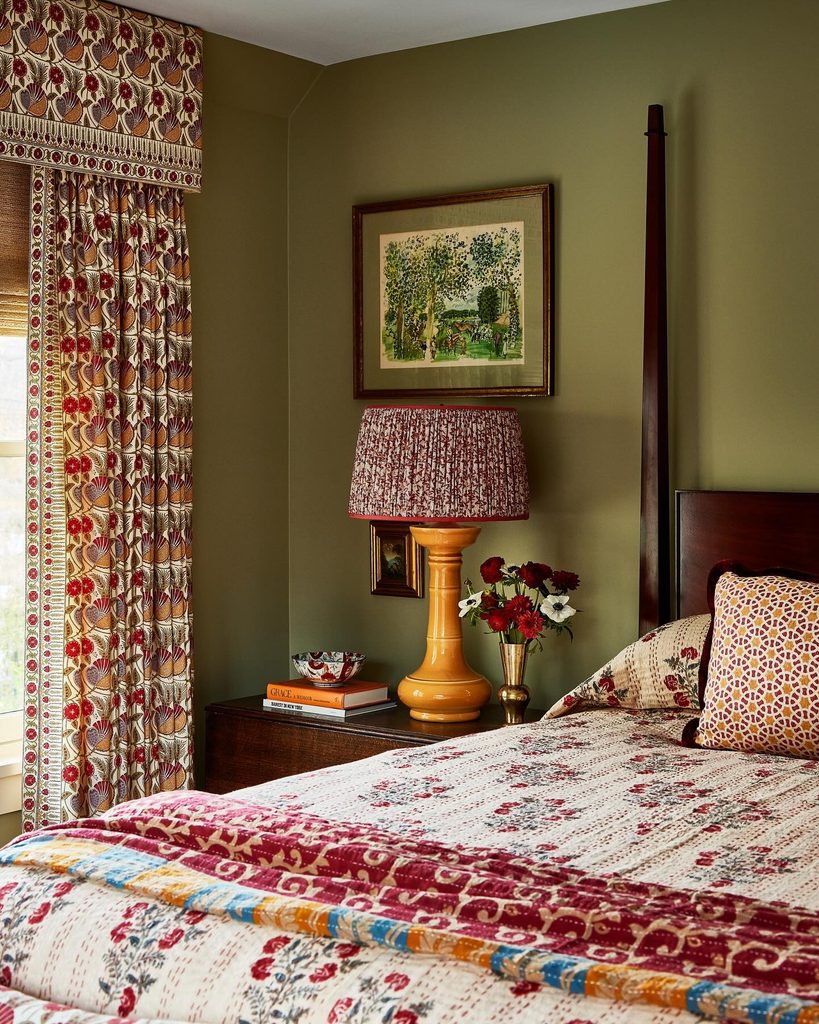
7. Patterned Curtains Beside Muted Dark Olive Walls
Credits: Instagram
Colorful curtains can enliven an olive bedroom while the painted walls provide a quieter background. Here, a repeating botanical fabric frames the window, and a patterned lampshade picks up its warm red tones at bedside height.
The ocher lamp base introduces a solid area of color between these smaller prints. Dark wood furniture gives the arrangement definition without requiring a black outline around everything.
To adapt the mix, choose fabrics with related colors but different pattern scales, checking them together beside the green paint. Leave some wall visible around the bedside arrangement so each element has room to register.
The pale ground in the bedspread keeps the layered textiles from reading as one continuous dark block across the sleeping area.
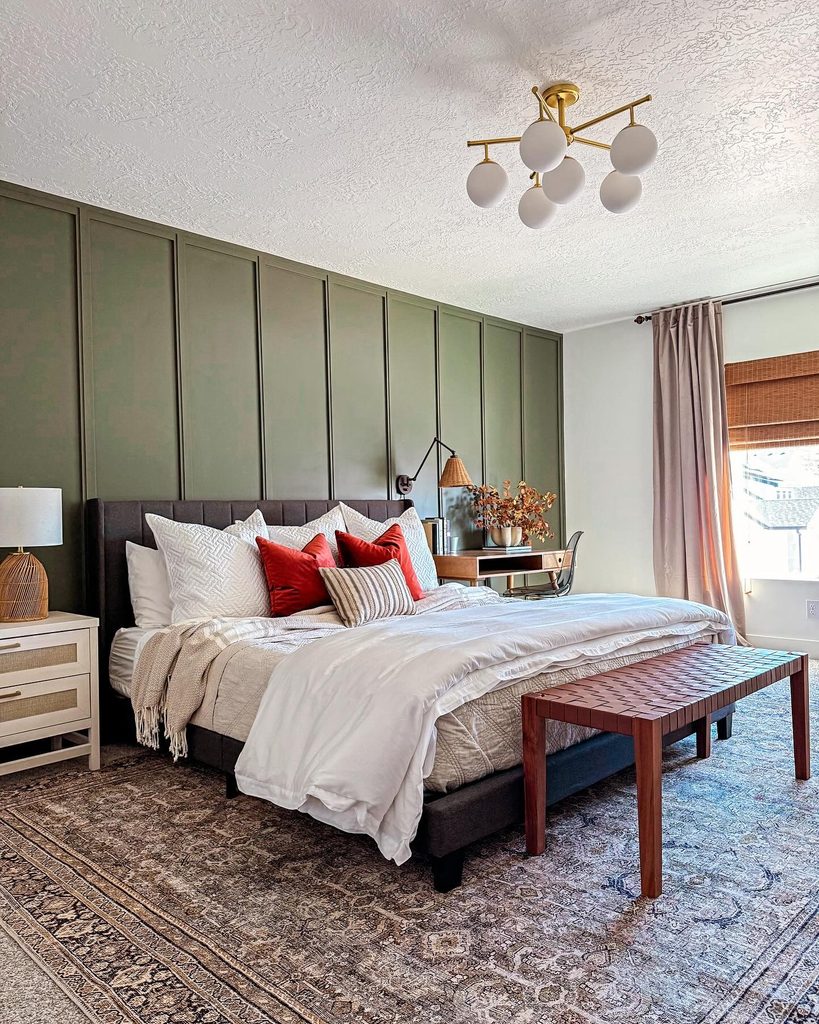
8. Tall Olive Panels Behind a Low Headboard
Credits: Instagram
Long vertical panels draw attention upward when the bed itself has a low, simple profile. In this bedroom, olive molding spans the full headboard wall, extending beyond the mattress toward a compact desk.
The repeated narrow rectangles give both areas a shared backdrop. Bright red cushions create a small focal point against white bedding, leaving most of the green wall unobstructed.
Consider this treatment when you want architectural detail without a separate large artwork over the bed. Plan panel spacing around the visible furniture and wall width before attaching trim, rather than centering every rectangle independently.
A pale ceiling marks a clear stopping point above. Warm wood and woven details keep the orderly wall treatment connected to the furnishings below.
9. Dark Green Window Walls Beside Exposed Brick
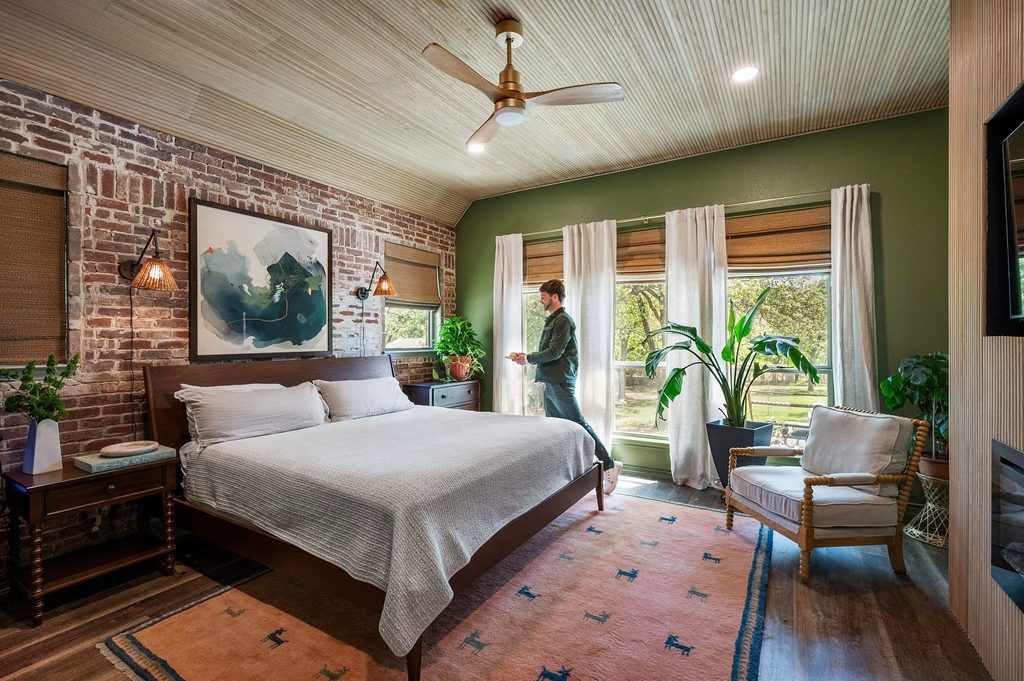
Credits: Instagram
Exposed brick and dark green paint can share a bedroom without competing for the same role. Here, the brick wall anchors the wood bed, while green surrounds the broad windows on the adjoining side.
White curtains soften that painted edge and separate it from the outdoor view. The pale ribbed ceiling adds another texture without introducing a strong new color.
If your room already has masonry, test green samples beside the actual brick because its red, brown, and gray variations will influence the result. Let the existing corner provide the boundary between finishes.
Simple light bedding gives the eye a resting place below the artwork, while wood furniture and woven shades help connect the rough wall to the greener surroundings.
10. An Adjustable Lamp Beside a Dark Green Velvet Bed
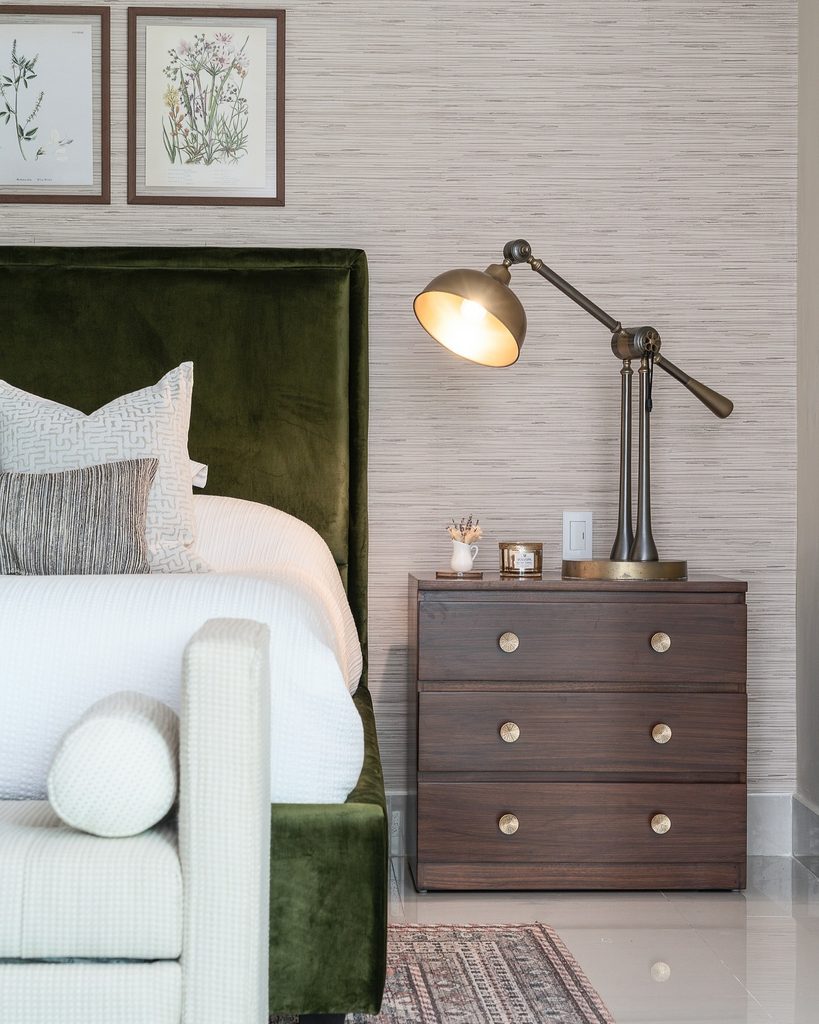
Credits: Instagram
A deep green velvet headboard can supply the room’s richest color while the walls stay light. This close view pairs the upholstery with an adjustable metal bedside lamp, whose angled arm brings light toward the pillows.
The lamp’s warm finish and the small brass drawer knobs connect practical details across the dark wood nightstand. Behind them, fine horizontal wall texture provides contrast without another bold color.
Choose a lamp with a stable base and test its reach beside the mattress before settling on its position. Keep enough free surface for the items you use nightly.
Pale bedding helps the velvet edge remain distinct, showing how one substantial upholstered piece can establish a dark green bedroom without painting every wall green.
11. Dark Green Upholstery Inside a Carved Wood Bed
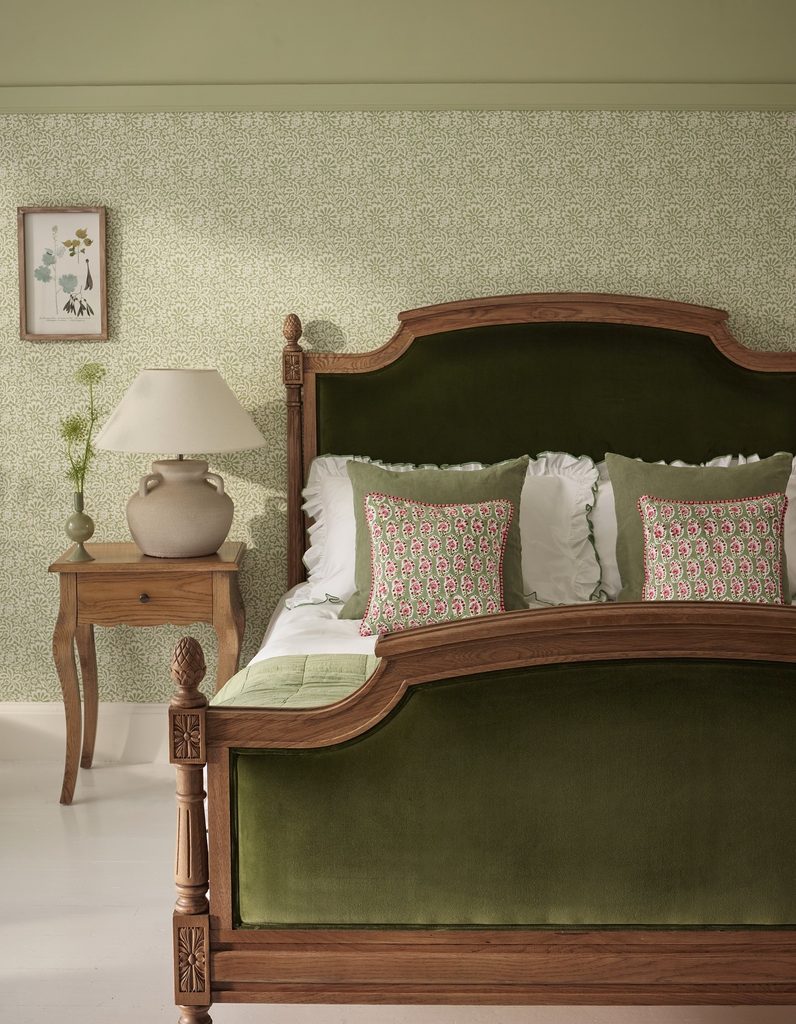
Credits: Instagram
Dark green velvet takes on a traditional character when it is framed by carved wood. This bed carries the same rich upholstery across its curved headboard and footboard, giving the color a substantial presence even against much lighter wallpaper.
The visible wood outline separates the green fabric from the surrounding botanical print. Pale pillows, a light quilt, and a simple ceramic lamp keep the arrangement from becoming uniformly heavy.
If you are considering a similar bed, look at both ends together because the footboard will influence the view from the doorway. Choose smaller textile patterns that leave the carved silhouette readable.
A restrained bedside table lets the bed’s craftsmanship remain the main feature rather than competing with another ornate piece.
12. A Shared Nightstand Between Green Backed Twin Beds
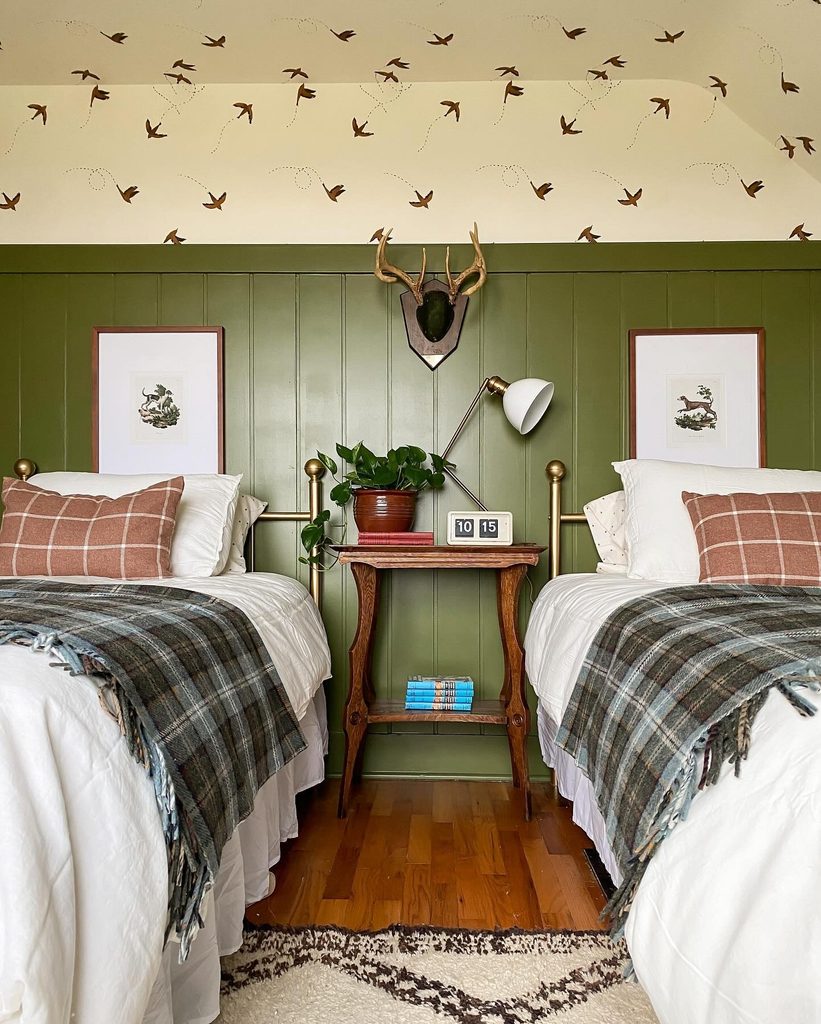
Credits: Instagram
A continuous green paneled wall can unite two separate beds into one coordinated arrangement. Here, a slender wood table sits between brass bed frames, giving both sleeping spaces a shared center.
Matching pillows and plaid throws establish balance, while a single angled lamp and trailing plant keep the middle useful and personal. The pale bird patterned wall above the paneling adds lightness over the darker lower band.
For a similar guest room, measure the gap between beds before choosing the table and make sure each person can reach its surface comfortably. Keep the central accessories limited so essentials still fit.
Repeating the green across the whole bed wall makes the twin layout feel intentional without requiring identical furniture everywhere else.
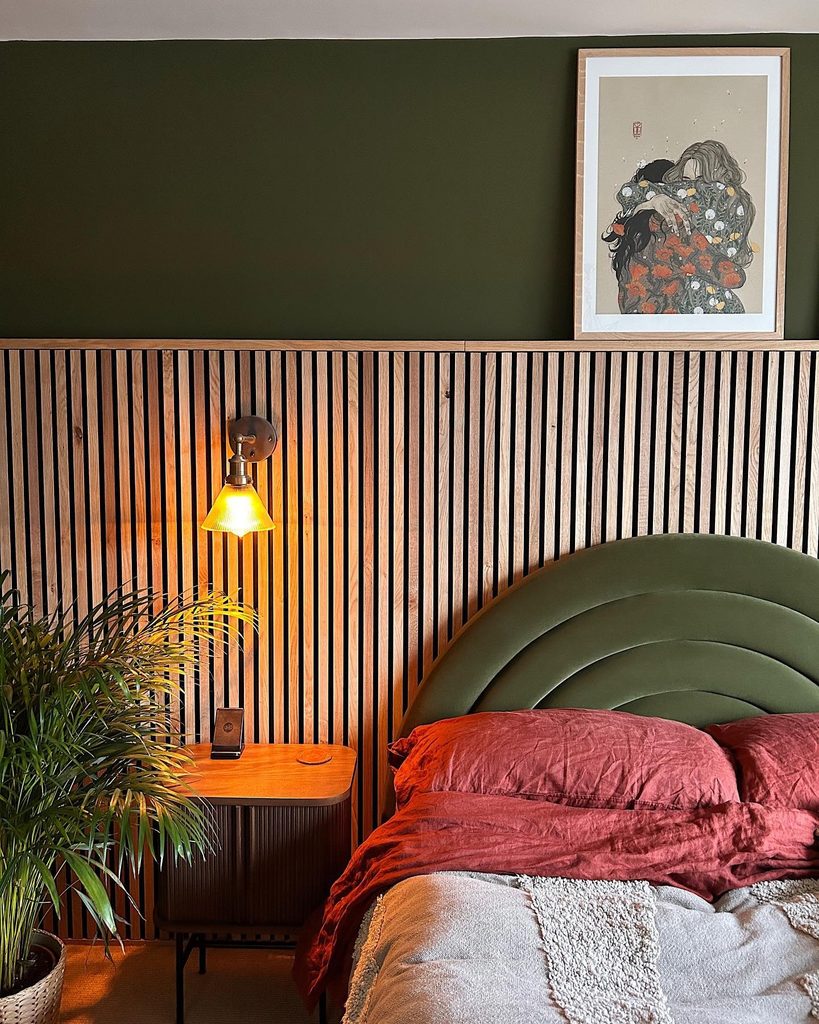
13. Wood Slats Behind an Arched Green Headboard
Credits: Instagram
The curved green headboard stands out because the surface behind it follows a very different rhythm. Narrow wood slats rise vertically beneath a dark olive upper wall, creating a warm, graphic background for the padded arch.
Rust bedding adds another soft surface against those straight lines. A small ledge above the slats provides a place for framed artwork without covering the entire painted area.
To borrow the idea, establish the slat height in relation to the headboard before buying materials. Leave enough green wall showing above for the two surfaces to remain distinct.
Keep the timber finish consistent across the paneling so the repeated lines feel orderly. A warm bedside light emphasizes the texture without needing another large decorative feature.
14. Dark Green Side Walls Framing a Bedroom View
Credits: Instagram
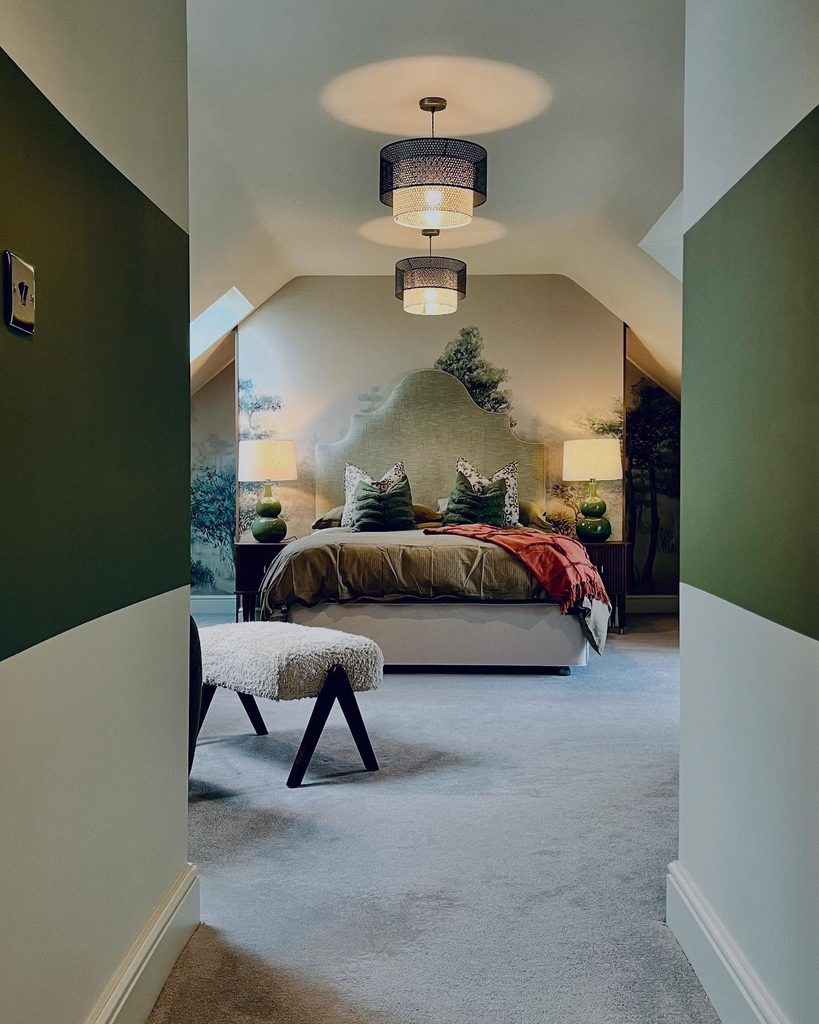
The approach to a bedroom can help establish its color scheme before you reach the bed. In this attic room, broad dark green bands along the side walls frame the view toward a softly painted landscape behind the headboard.
Pale lower walls and the sloping white ceiling keep the passage visually open. The green continues through bedside lamps and pillows, connecting the darker entry area with the sleeping space.
Consider this treatment where a short corridor or recessed entrance already creates a natural frame. Check the paint boundaries from the doorway as well as from inside the room.
Leaving the ceiling light helps its changing angles remain clear, while the distant landscape gives the eye a calm place to settle.
15. Curved Fluted Nightstand Against Dark Olive Paint
Credits: Instagram
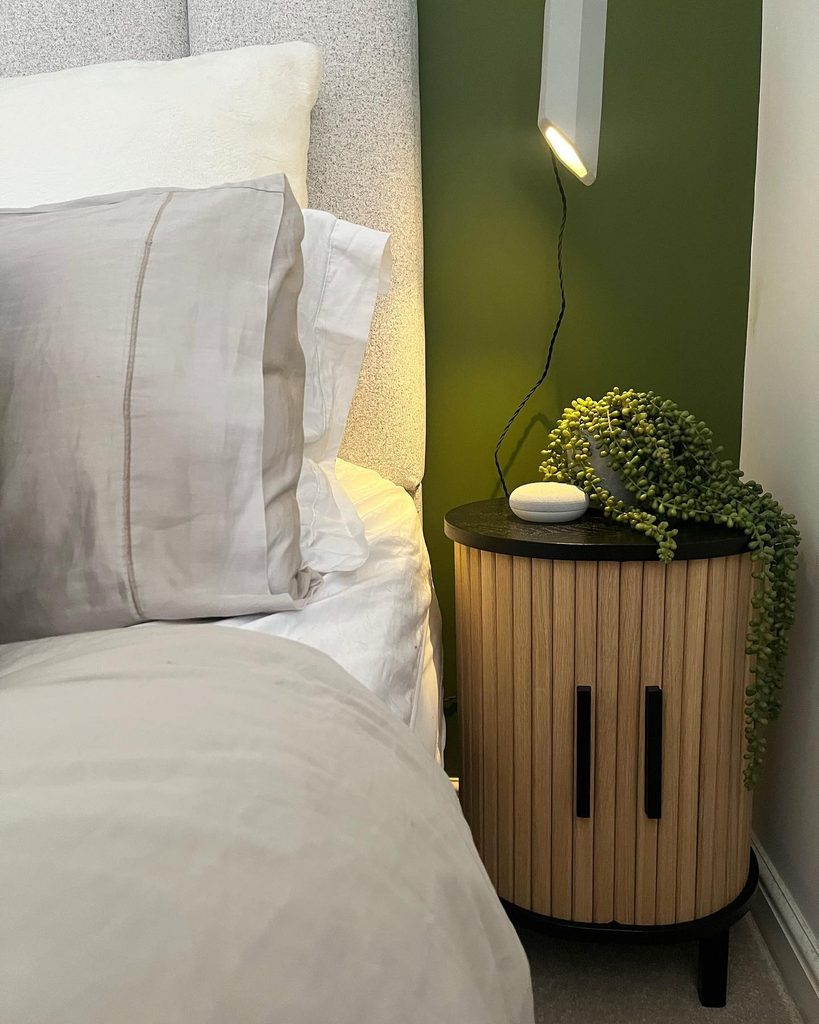
Rounded furniture can soften a bedroom even when the wall color stays strong. This close view pairs dark olive paint with a light oak nightstand whose curved corners and narrow fluting catch the light.
A black top, handles, and raised base give the cabinet a defined outline beside the pale upholstered headboard. The slim wall light leaves more of the top available for everyday items, and a trailing plant interrupts the tidy vertical grooves.
When choosing a similar bedside piece, consider the drawer opening and its relationship to the mattress as carefully as the finish. The useful contrast here comes from pale wood, gentle curves, and a dark background. You need not repeat fluting elsewhere for it to stand out.
16. Dark Olive Wardrobes That Recede Into the Walls
Credits: Instagram
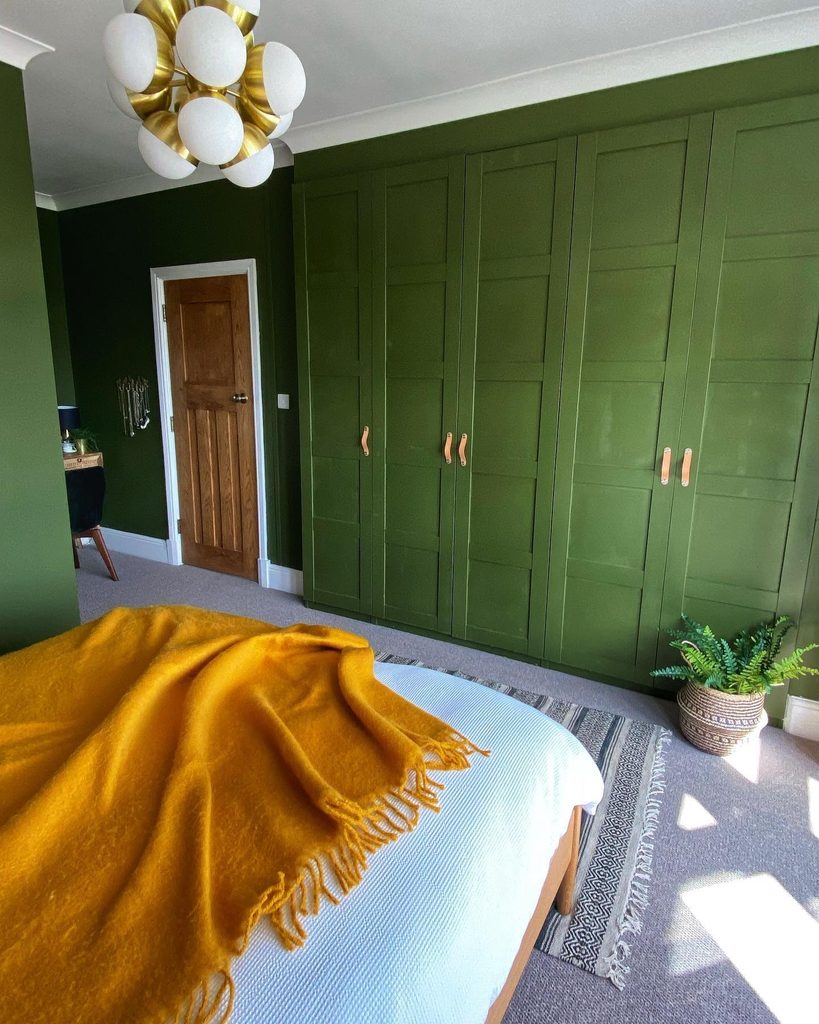
A full wall of storage feels more integrated when its doors share the surrounding paint color. These tall fitted wardrobes use the same olive green as the adjoining walls, with small tan pulls keeping the hardware understated.
Their rectangular fronts still provide rhythm, but no separate furniture color divides the room. The creator identifies Lick Green 05, an olive shade in the manufacturer’s dark tone group.
A white ceiling and cornice mark the upper boundary, while pale blue bedding and a mustard throw keep the bed distinct. If adapting this approach, compare a painted sample against both wall and cabinet surfaces before settling on the color.
Leave visible details, such as the room’s wood door, enough contrast to avoid monotony.
17. Olive Chimney Breast Framed by Leafy Plants
Credits: Instagram
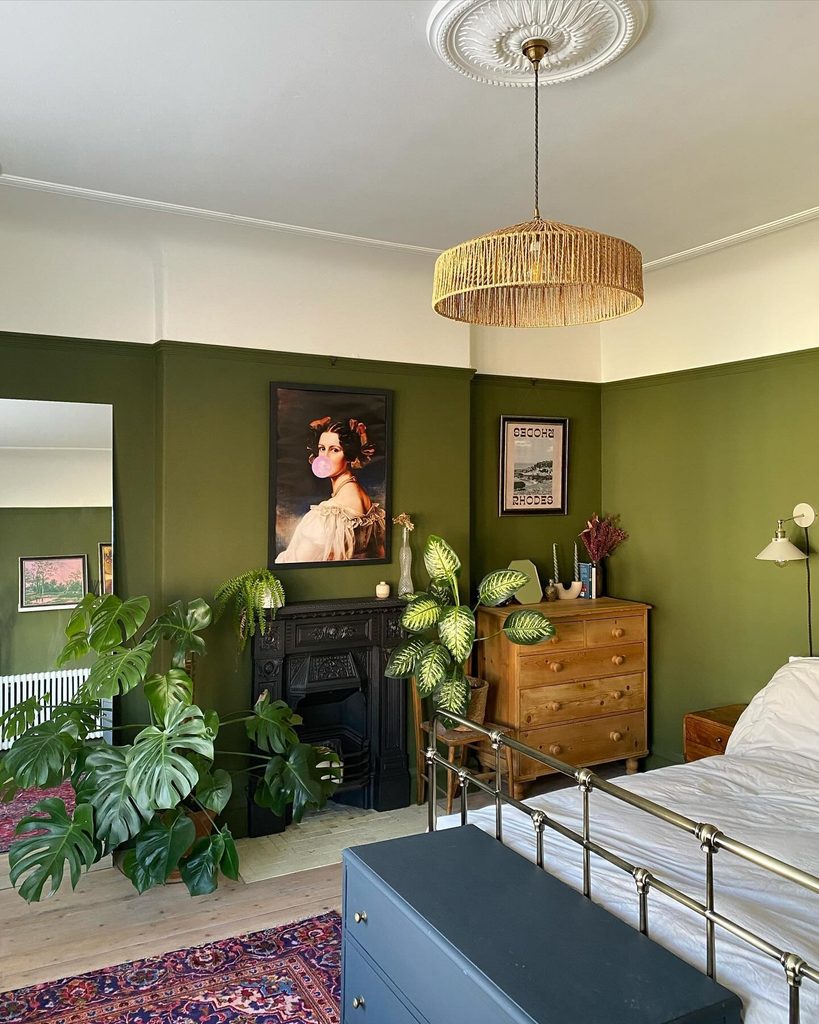
An existing fireplace can organize the bedroom even when the bed is outside the main view. Here, an ornate black surround sits against an olive chimney breast, with a portrait above and large plants gathered to either side.
The greenery introduces overlapping silhouettes that soften the fireplace’s formal symmetry. A pine chest, leaning mirror, and patterned rug make the surrounding area feel furnished rather than staged around a single feature.
To borrow the arrangement, start with the mantel as your visual center and vary plant heights nearby. Choose positions that suit the plants’ light needs and keep access clear.
The broad white area above the green walls provides a quieter boundary, allowing the darker fireplace and foliage to remain prominent.
18. Zebra Print Rug and Woven Seating in an Olive Bedroom
Credits: Instagram
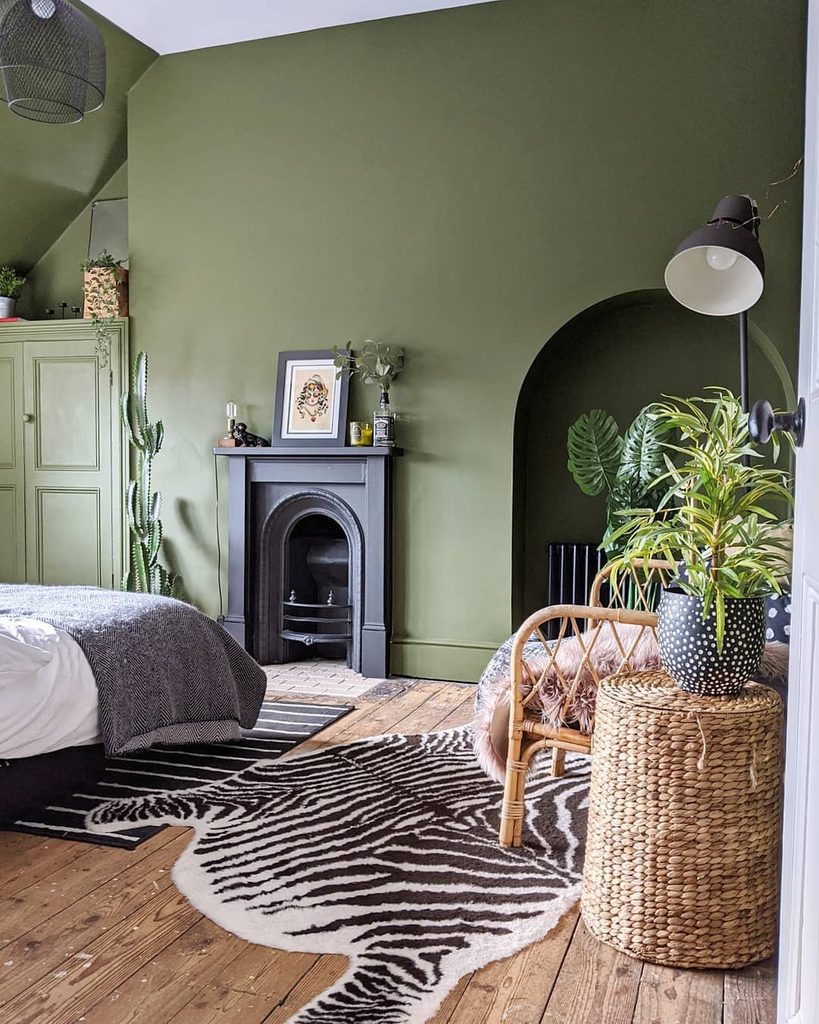
The strongest pattern in this olive bedroom sits underfoot. An irregular black and white zebra print rug spreads across warm wood flooring, giving the room a graphic base without covering the walls in pattern.
Nearby, a woven chair and tall side table make a small sitting area beside the arched alcove. Their open texture keeps that corner from feeling as visually solid as the dark fireplace and painted storage.
Consider this pairing when your bedroom has room for a chair but needs a clearer connection between its separate areas. Position the rug so the pattern remains visible around furniture rather than disappearing completely beneath it.
Quieter gray and white bedding allows the floor layer to carry most of the contrast.
19. Leafy Wallpaper Above Dark Green Paneling
Credits: Instagram
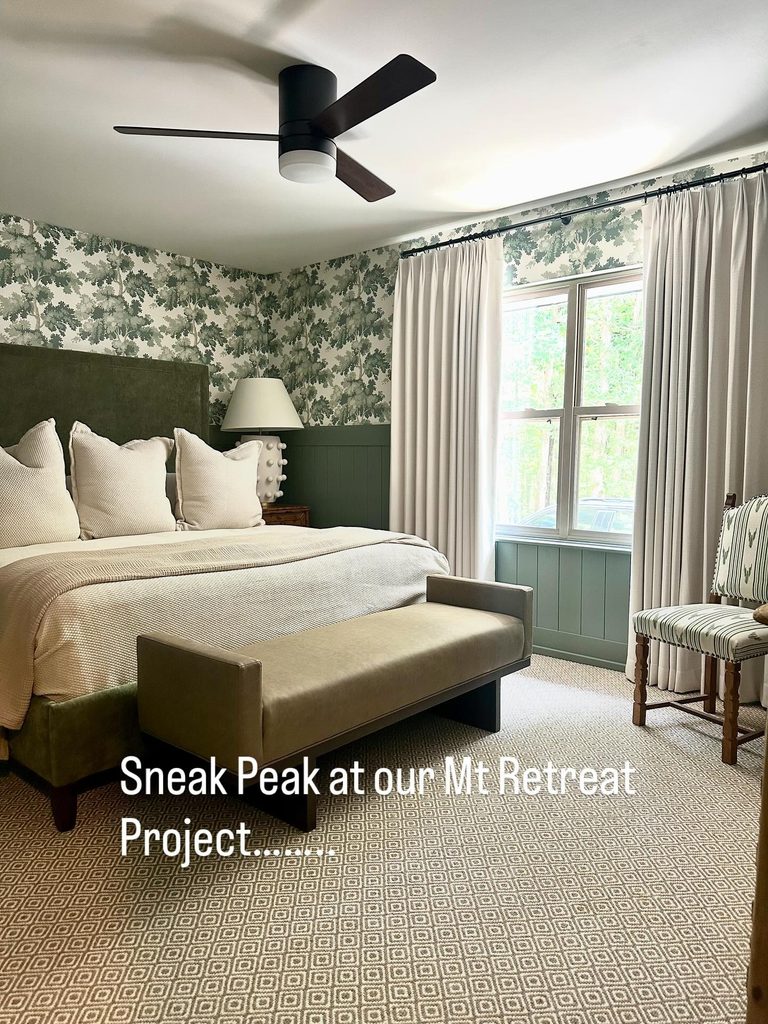
Leafy wallpaper can extend a green bedroom palette upward while a solid lower wall keeps the pattern contained. In this room, dark green vertical paneling sits below a pale botanical print that wraps around the bed and window.
The upholstered headboard repeats the deeper green, and long cream curtains create a quiet break beside the glass. This arrangement works when you want visible pattern without papering every surface from floor to ceiling.
Choose the paneling height in relation to the headboard and window before deciding where the wallpaper begins. Keep the ceiling and major bedding layers light so the foliage remains readable.
A simple upholstered bench adds another plain surface, balancing the more detailed walls around the sleeping area itself.
20. Blush Ceiling and Upper Border Above Deep Green Walls
Credits: Instagram
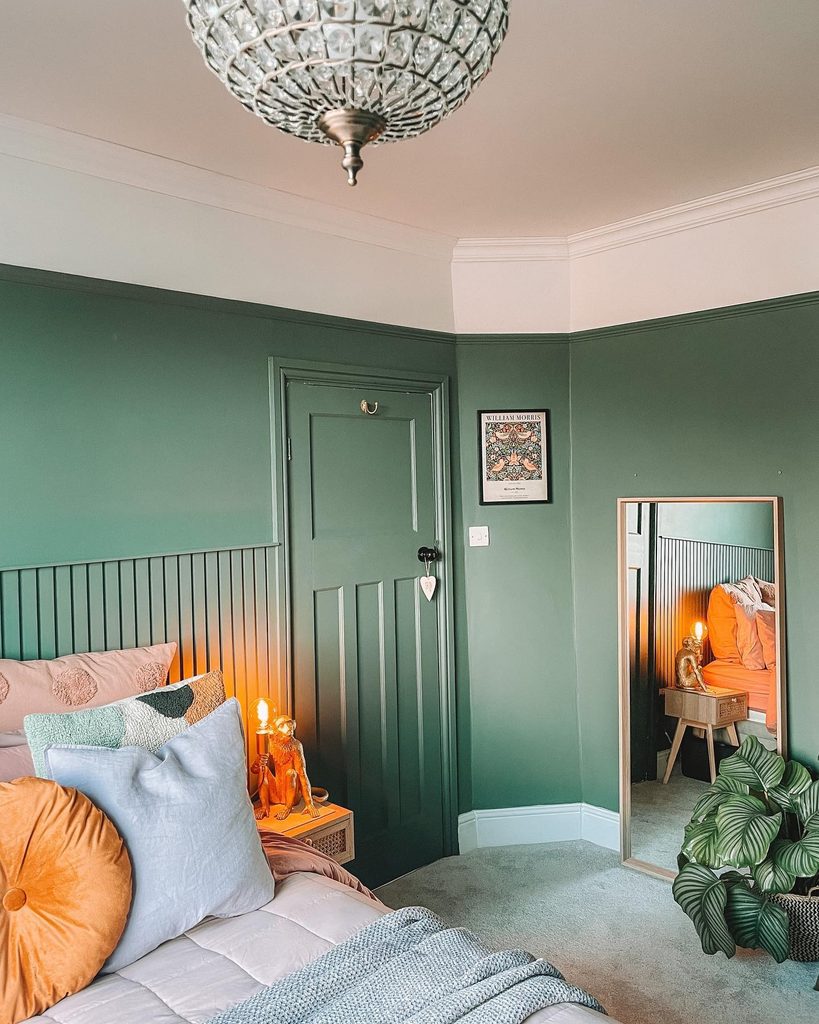
A broad pale band changes how much of a dark wall color you experience from bed. Here, blush extends across the ceiling and down to the picture rail, creating a generous light zone above deep green walls.
The matching green door and narrow paneling keep the lower portion connected, while blush bedding brings the ceiling color closer to eye level. Pale blue textiles and a round mustard cushion add smaller variations within that framework.
For a similar treatment, use an existing rail or another clear architectural boundary to determine where the colors meet. Check the proportions from both standing and reclining positions.
The pink area should feel intentional across the room, with enough depth to read as more than trim.