
A bedroom can feel noticeably different without replacing every piece of furniture; sometimes one thoughtful change to the bed wall or ceiling is enough to reset the room.
These Bedroom Makeover Ideas show how shape, color, and texture can do that work, from a curved upholstered headboard to a clear blue ceiling or a light, open canopy.
Other approaches use dark wall trim, wallpaper that follows sloping walls, or wall-mounted reading lights. Each idea offers a practical starting point for refreshing what is already there while keeping the bedroom’s existing features in view.
1. Make a Curved Upholstered Headboard the Main Change
Credits: Instagram
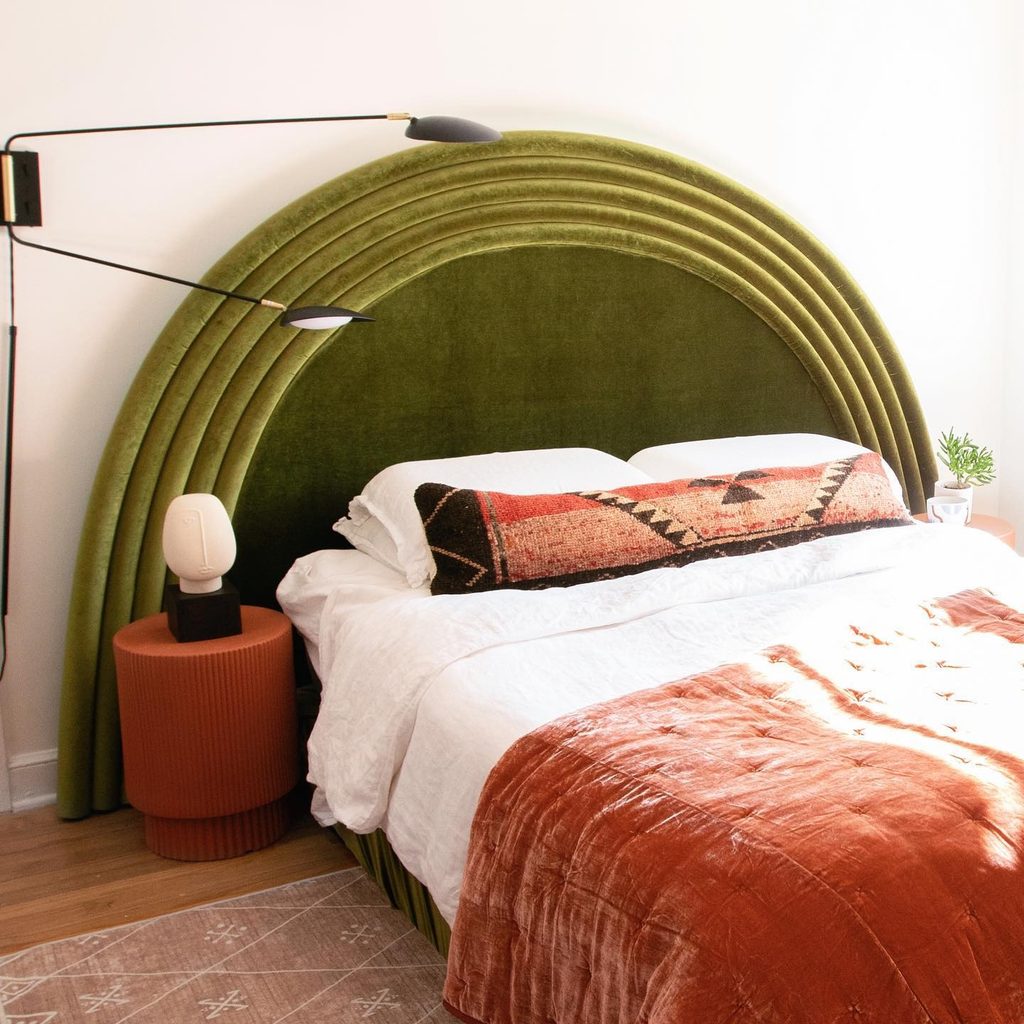
One furniture silhouette can refresh a bedroom without a full set of replacements. This bed uses a broad green velvet arch, with repeated padded curves giving the headboard depth against a plain pale wall.
White bedding leaves that shape visible, while rust colored accents bring warmth to the composition. Before choosing a similar headboard, compare its full width with the bedside tables and the available wall.
An oversized curve needs breathing room to feel deliberate. Select upholstery that suits your cleaning routine, and check how the frame attaches securely.
Keep other large patterns restrained so the rounded outline remains the focus. This approach changes the room through shape and texture rather than asking every surface to carry a new color.
2. Give the Ceiling a Clear Blue Finish
Credits: Instagram
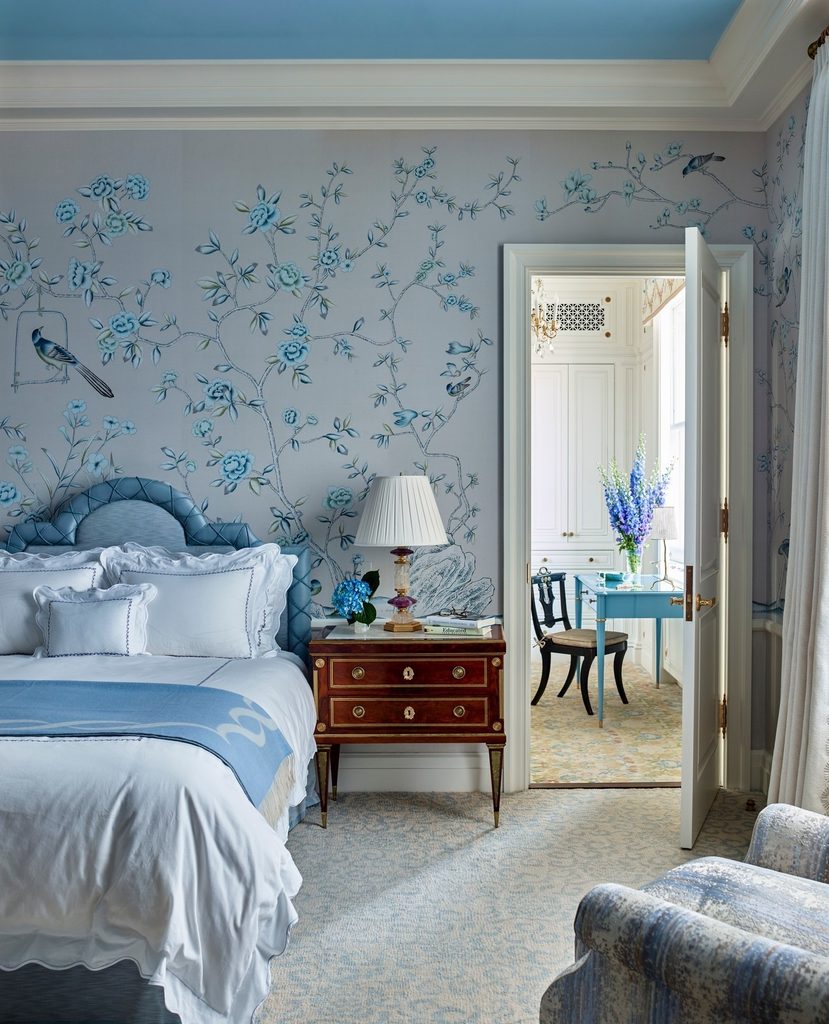
The ceiling offers another place to introduce color when a bedroom already has plenty happening on its walls. Here, a blue ceiling sits above white molding and delicate floral wallpaper, echoing the blue headboard and bedding below.
The white border keeps the transition crisp instead of allowing the different surfaces to merge. You can borrow that relationship without reproducing the entire decorated room.
Test a ceiling color beside the textiles and finishes you plan to keep, viewing the sample overhead in daylight and artificial light. Maintain enough contrast for existing molding to remain visible.
A restrained ceiling fixture will let the painted surface register. Changing this often overlooked plane can make familiar furniture feel part of a newly considered scheme.
3. Add an Airy Canopy Around the Sleeping Area
Credits: Instagram
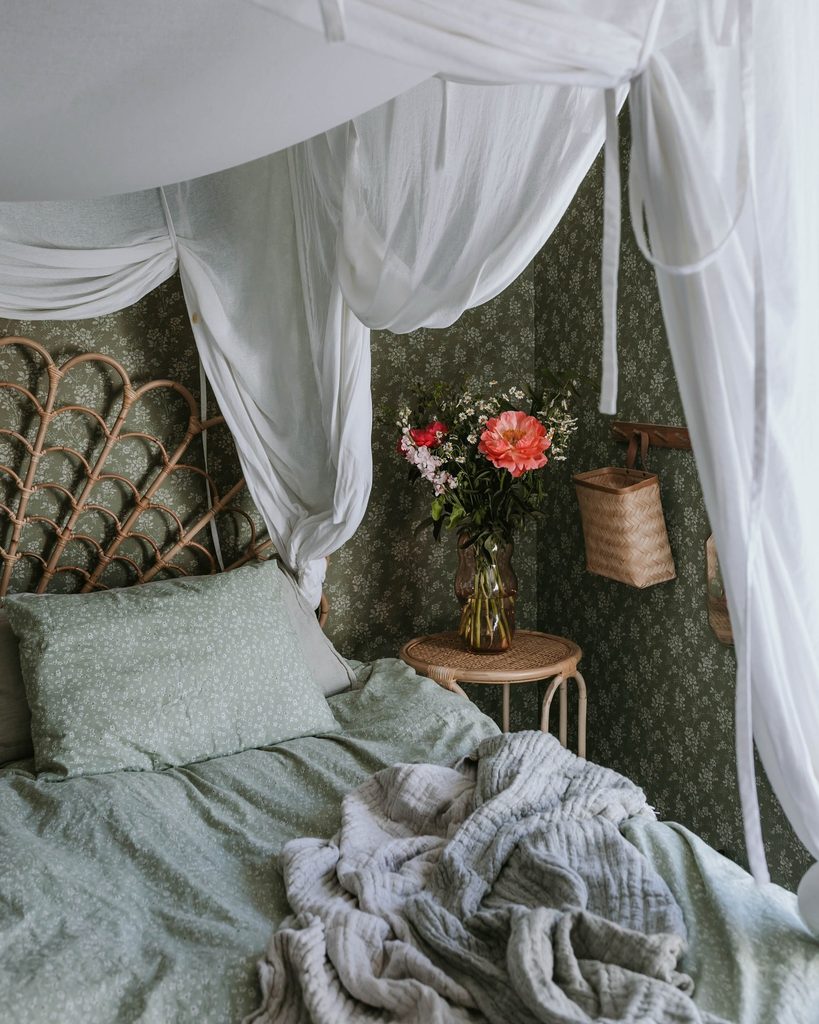
Light draping can change the feeling of a bed while leaving its frame and surrounding furniture in place. This bedroom layers white canopy fabric over a curved cane headboard, with green floral wallpaper and bedding visible through the open sides.
The pale folds soften the patterned setting without concealing its character. Plan a canopy around the actual bed dimensions and the route used to get in and out.
Choose a support system intended for the fabric’s weight, with appropriate secure fixing and clearance from lights or other heat sources. Keep the material away from everyday walking paths.
Washable fabric makes maintenance easier. The useful makeover is a softer boundary around sleep, rather than an enclosure that complicates the room’s routine.
4. Frame the Bed With a Dark Grid of Wall Trim
Credits: Instagram
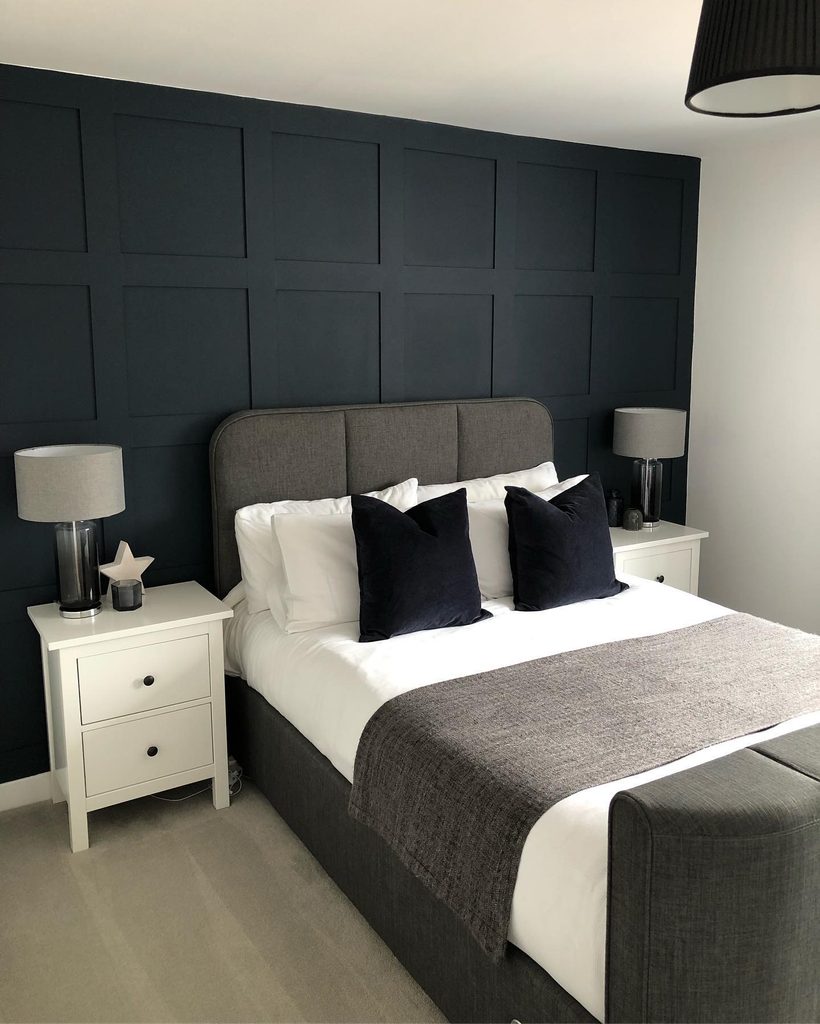
A flat wall can gain structure through a simple grid instead of additional furniture. In this bedroom, broad dark panels form an orderly backdrop behind a gray upholstered headboard, while white bedside chests and bedding provide contrast.
The repeated rectangles make the whole bed wall feel intentional. Lay out a proposed grid with removable tape before deciding on its spacing, including the positions of switches, furniture, and lights.
Larger panels often look calmer than a dense pattern around a modest bed. Painting the trim and background the same shade keeps attention on the relief rather than separate outlines.
Check the wall condition and suitable installation methods before starting. Existing plain furnishings can then benefit from a more considered architectural setting.
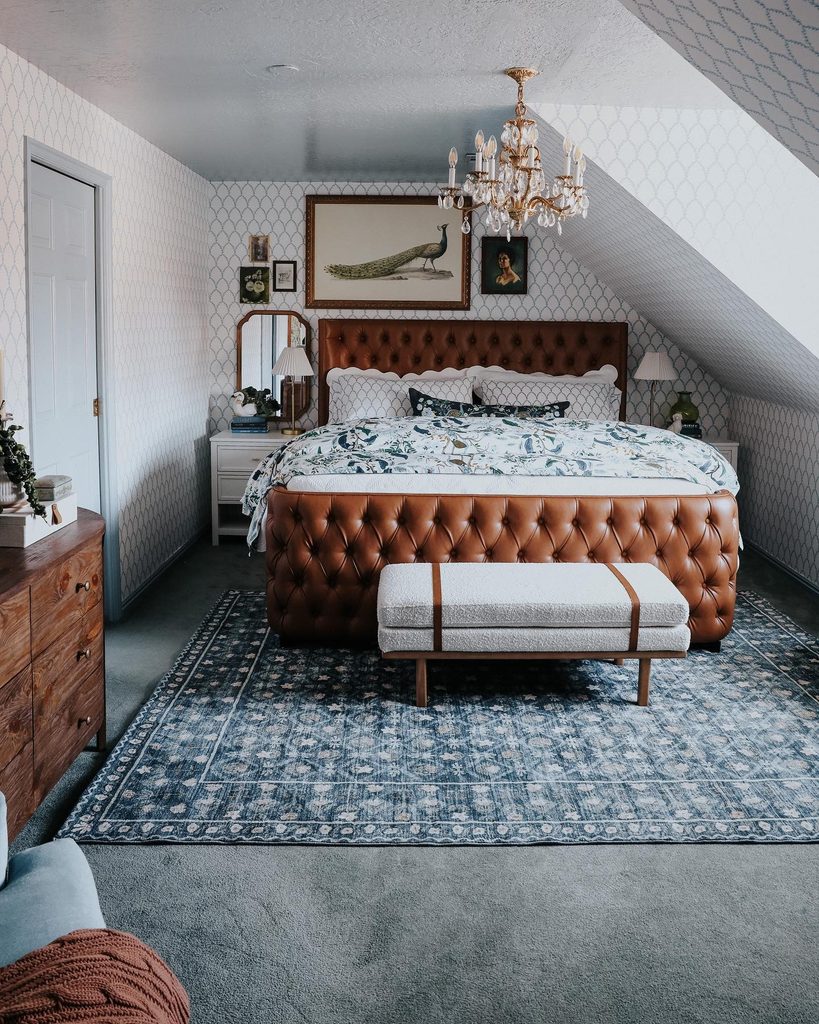
5. Carry Small Pattern Wallpaper Across Sloping Walls
Credits: Instagram
Awkward angles become part of the design when the same small pattern continues over the wall and ceiling slopes. In this attic bedroom, pale wallpaper surrounds a tufted bed while blue carpet remains beneath a patterned rug.
The lesson is to work with a feature you are keeping instead of treating it as an obstacle. A wallpaper sample should be viewed alongside existing flooring before ordering.
Smaller repeats often make joins and changes of plane less visually dominant, although careful installation still matters. Allow the bedding to supply a different scale of pattern rather than matching everything exactly.
Plan where the paper begins and ends around beams, windows, and flat ceilings, so the finished room feels considered from every entrance.
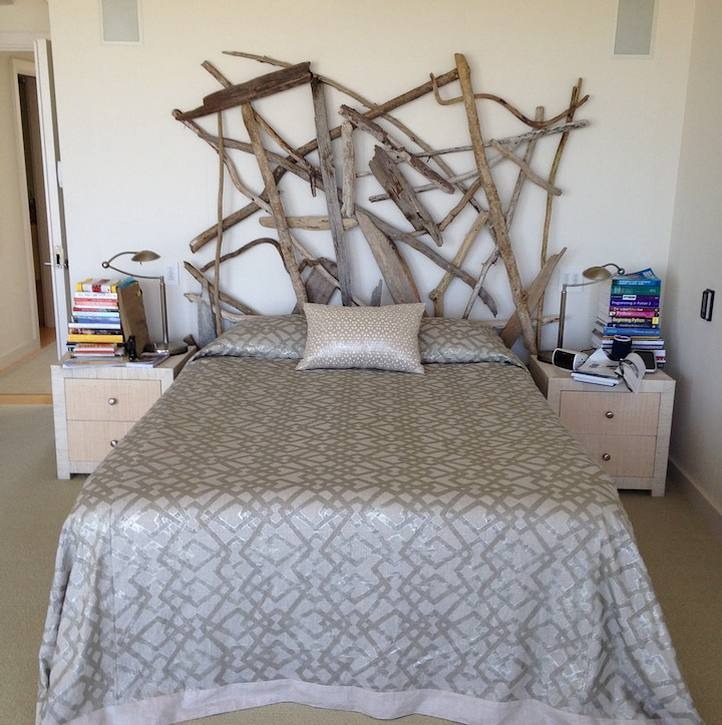
6. Use Natural Branch Shapes as a Wall Sculpture
Credits: Instagram
Unusual wall art can give an otherwise straightforward bedroom a distinctive identity. Here, an arrangement of pale branches spreads above the bed, its irregular lines contrasting with matching bedside chests and neatly patterned bedding.
The repeated wood tones connect the pieces even though their shapes differ. Treat the photograph as inspiration for a considered sculptural composition, rather than instructions to fasten found objects directly over pillows.
Materials need appropriate preparation, and every piece needs a secure mounting method suited to its weight and the wall. Sketch the outline first so it relates to the bed’s width.
Keep the surrounding colors quiet enough to reveal the natural shapes. A single cohesive installation can replace the need for several unrelated decorative accessories.
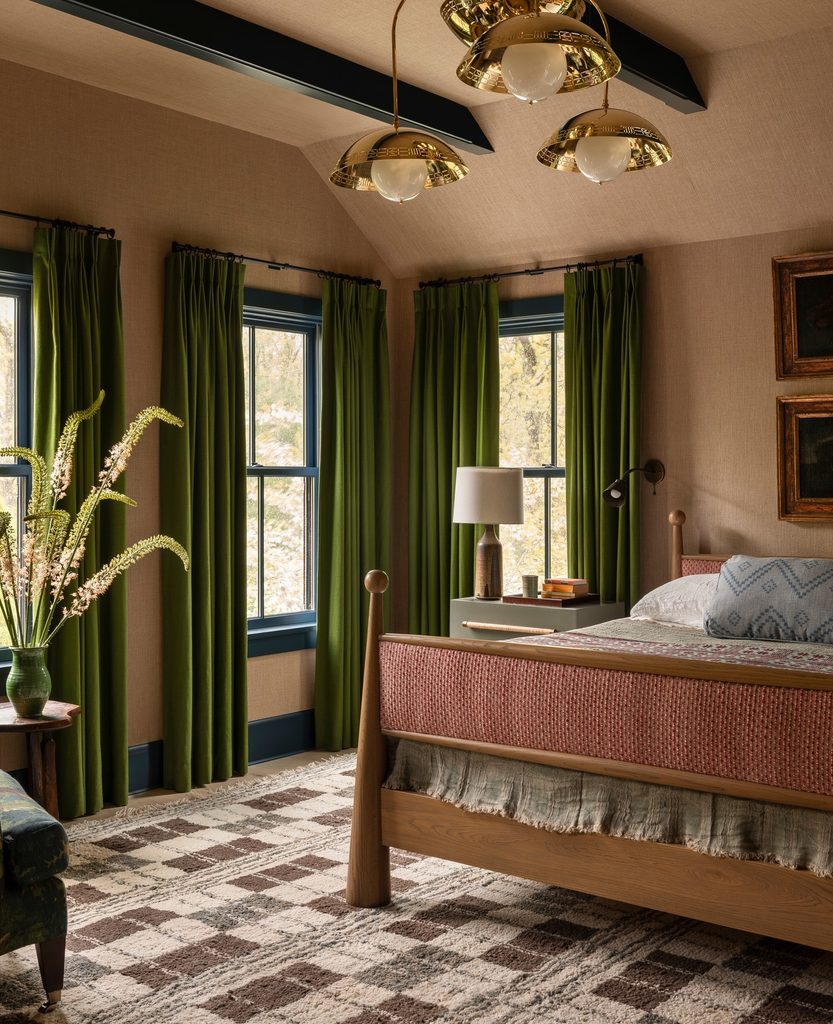
7. Give Tall Windows Full Length Curtains
Credits: Instagram
Curtains can provide a bedroom update without altering the windows themselves. These olive panels fall in long folds beside blue painted frames, giving the room a strong vertical rhythm while warm walls and wood furniture remain visible.
Their generous length makes each opening feel deliberately dressed. Measure both the hanging height and the width needed for the fabric to stack clear of the glass.
Keeping daylight available matters as much as achieving an attractive fold. Choose a lining appropriate to your privacy and sleep preferences, and check clearance around vents or radiators.
Repeat a related tone in a smaller textile if the new color feels isolated. Well proportioned curtains can connect existing finishes without requiring a completely matched furniture suite.
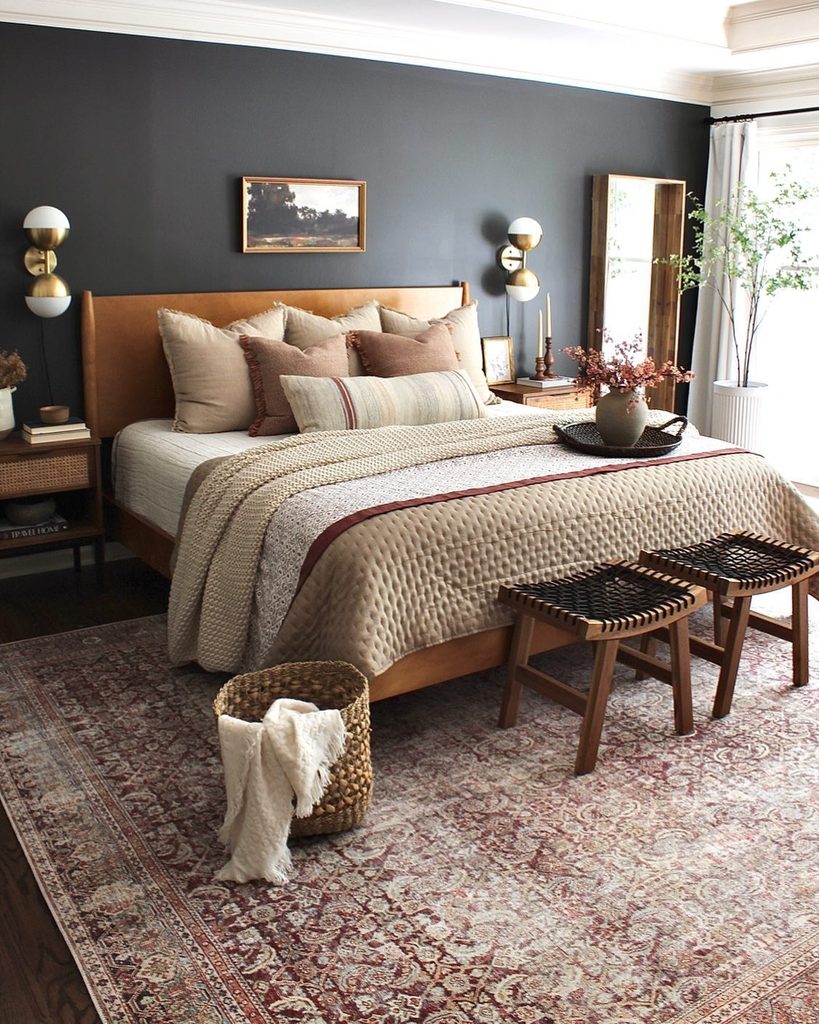
8. Move Reading Lights Onto the Wall
Credits: Instagram
Books, glasses, and a water glass need usable bedside space. Moving the lights onto the wall can free that surface while giving the bed a more organized outline.
This example uses paired globe sconces beside a tan headboard, with their warm metallic finish visible against charcoal paint. Position similar lights around how you actually sit and read, checking glare from both sides of the mattress.
Hardwired fixtures need appropriate electrical installation; plug-in options still require tidy, safely routed cords. Keep controls easy to reach rather than selecting solely by appearance.
Once the lamps leave the tables, resist filling every newly available inch with ornaments. A few necessary objects will let the lighting update improve daily function as well as style.
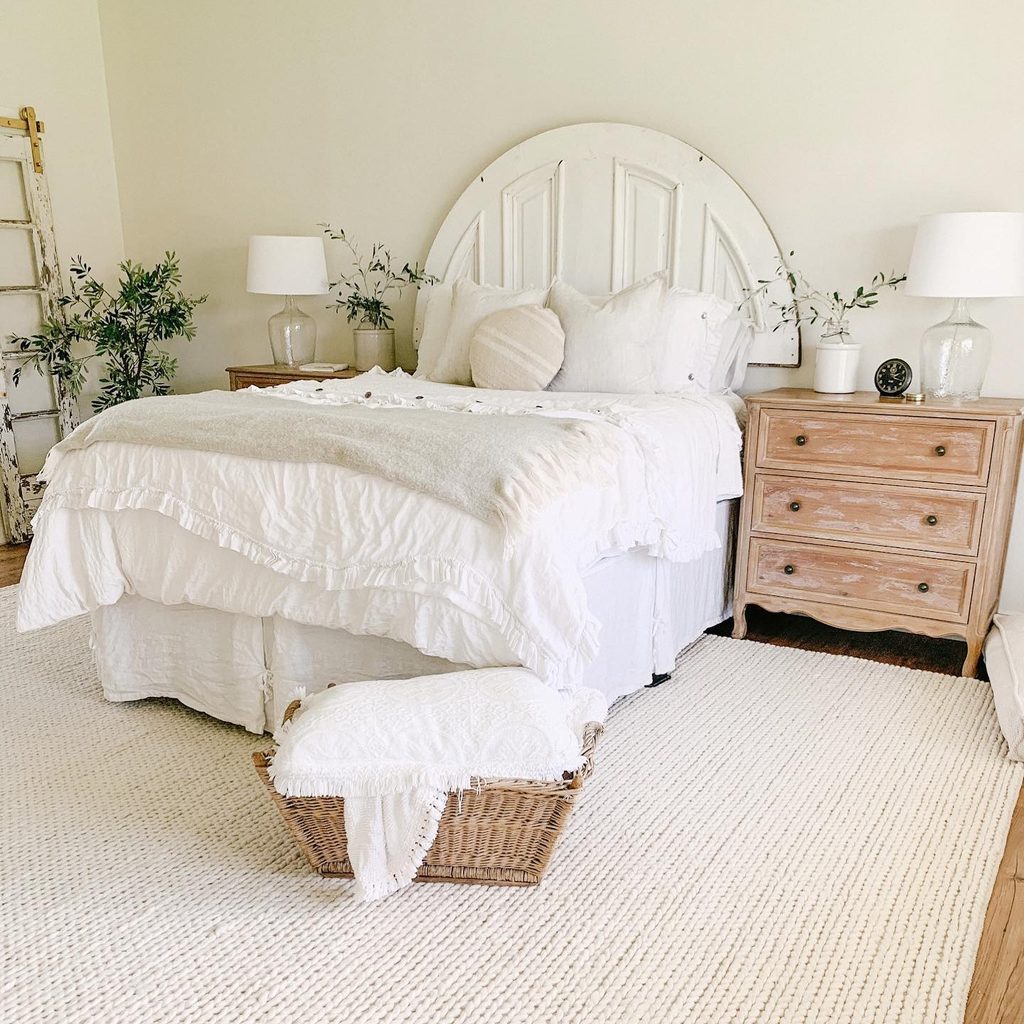
9. Lighten a Traditional Headboard With a Painted Finish
Credits: Instagram
A pale finish can give a traditional bed a lighter presence without erasing its shape. This arched white headboard has visible panel details and gently worn edges, set against cream walls and warm wooden bedside chests.
Layered white bedding keeps the room soft while the wood prevents it from becoming visually flat. If you want to refresh an existing frame, assess its condition and finish before deciding whether painting is appropriate.
Valuable antiques or uncertain old coatings may need specialist advice. Choose a preparation and coating system suited to the material rather than copying the appearance alone.
Leave enough tonal variation around the bed for its outline to remain readable. Updating one piece can make familiar furnishings feel newly connected.
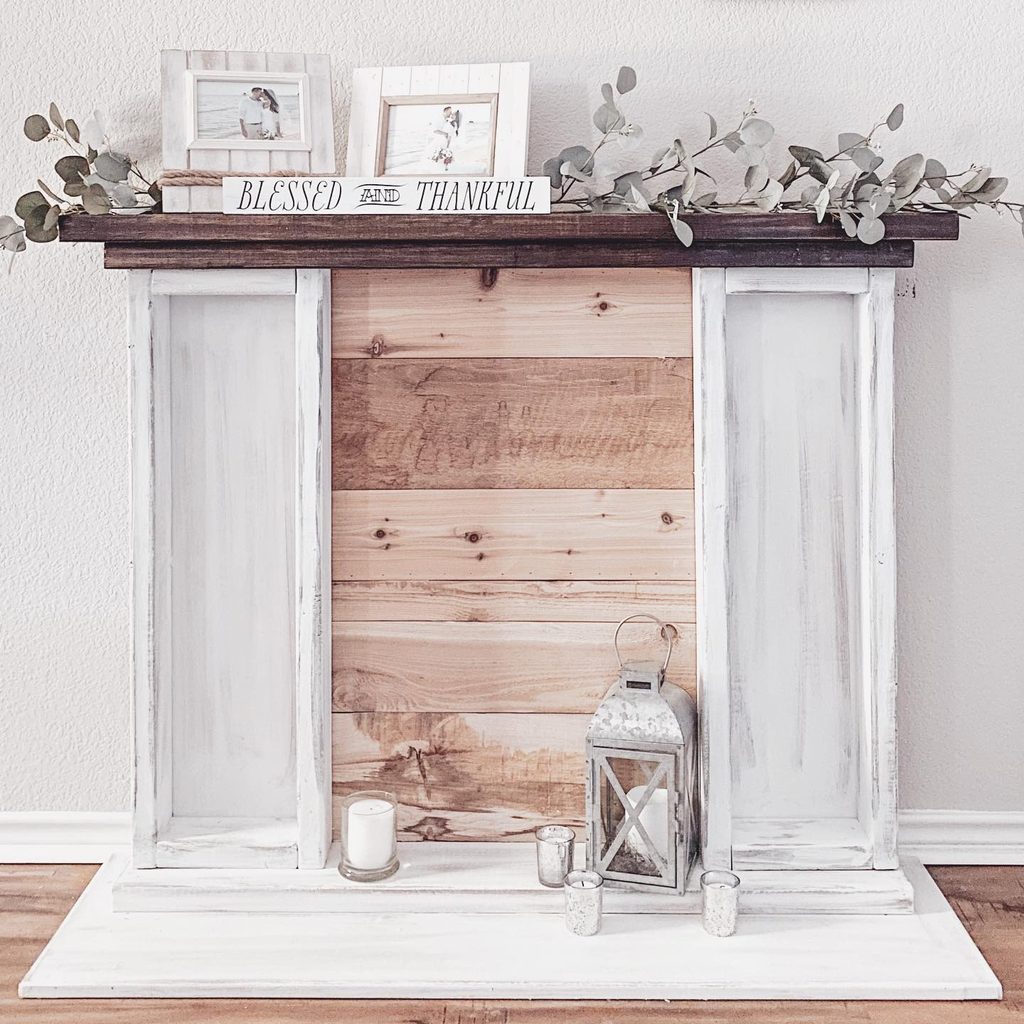
10. Add Character With a Decorative Bedroom Mantel
Credits: Instagram
A decorative mantel can supply an architectural focal point even where there is no working fireplace. This example combines pale painted side panels with a darker timber shelf and a wood filled center.
Framed photographs and greenery make the upper ledge feel personal, while the limited finishes keep the arrangement coherent. Consider the wall’s width and the walking space before adding a similar feature to a bedroom.
The structure needs stable support and secure attachment appropriate to its weight. Treat it as decoration unless it is specifically designed and installed for another purpose.
Battery operated accents can provide atmosphere without introducing an open flame. A restrained mantel display adds character while leaving the bed and everyday storage to function normally.
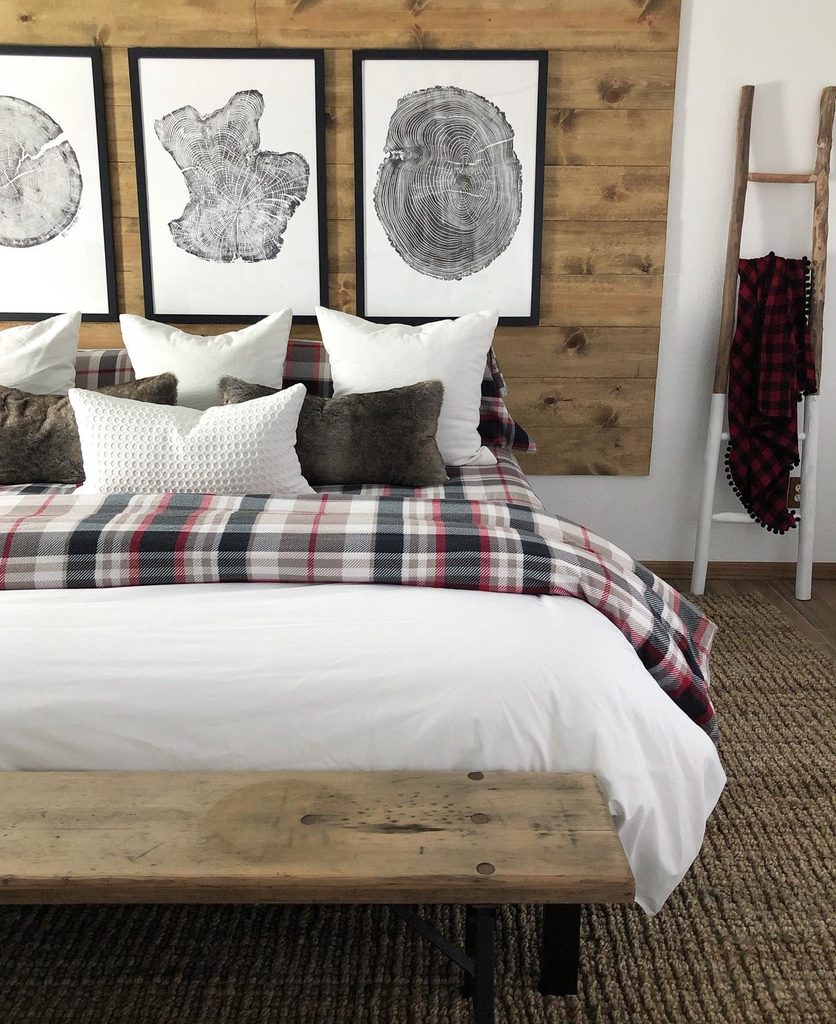
11. Give Spare Blankets a Place on a Display Ladder
Credits: Instagram
A blanket ladder can turn useful textiles into part of a bedroom’s decoration. This wooden example stands beside the bed, holding a checked throw that relates to the bedding and warm plank wall.
Its narrow outline adds storage vertically without the visual weight of another cabinet. Choose a ladder designed for display, and position it where its feet and projecting fabric will not interrupt the route around the room.
Follow any anchoring guidance rather than relying on a casual lean. Limit the number of blankets so individual layers remain easy to remove.
A repeated color can connect the display to existing cushions or a quilt. The makeover works through everyday usefulness, giving spare layers a deliberate home between cooler evenings.
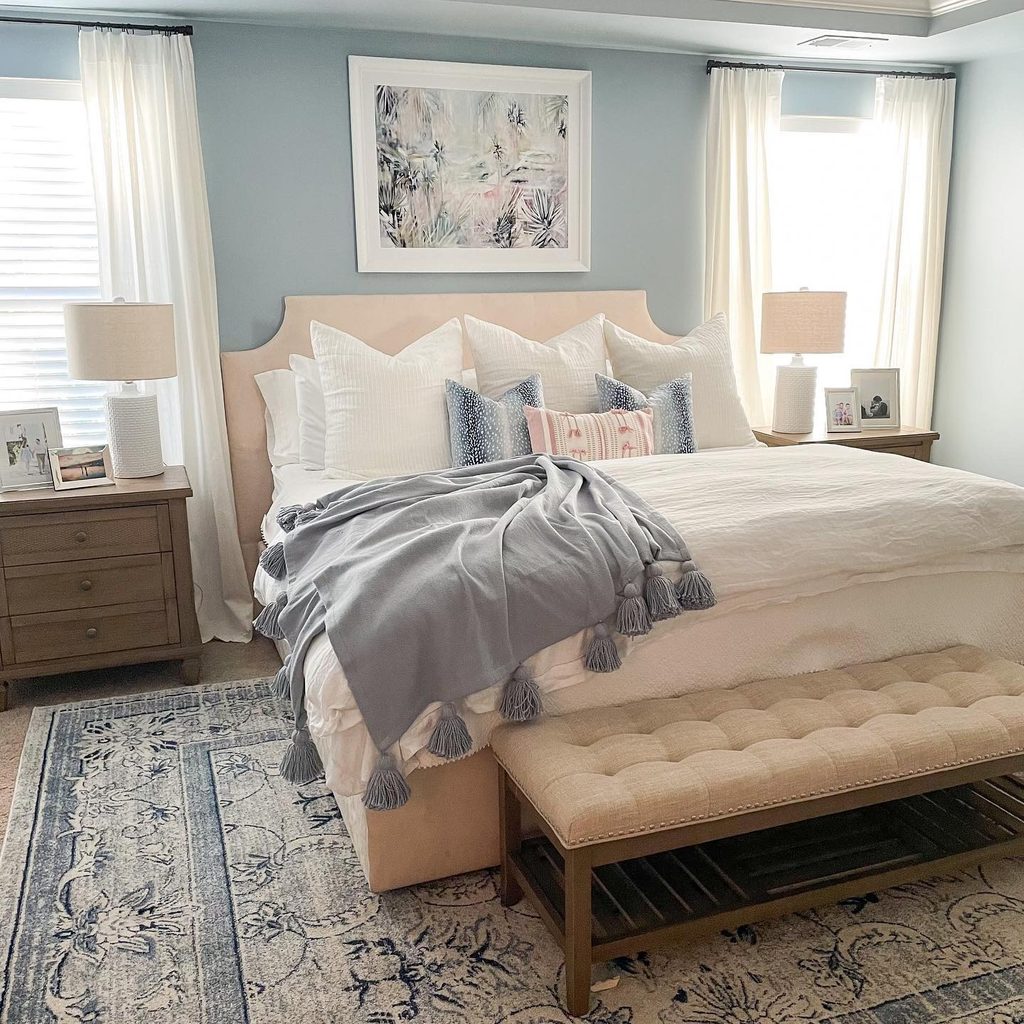
12. Use a Patterned Rug to Connect the Bedside Pieces
Credits: Instagram
A rug can pull together furniture that already works but feels disconnected. In this bedroom, a blue patterned rug extends beneath the pale bed and upholstered bench, repeating tones from the walls and cushions.
Its border gives the sleeping area a clear footprint without requiring a change to the permanent flooring. Measure the room with furniture in place before choosing a size, allowing a useful landing area beside the mattress.
Check that doors and drawers can move freely and that rug edges will not curl into walking routes. An appropriate nonslip layer can help the rug stay settled.
Keep the bedding comparatively simple when the floor pattern is detailed. One textile can then supply both visual connection and everyday comfort.
13. Build a Layered Display Above a Bedroom Dresser
Credits: Instagram
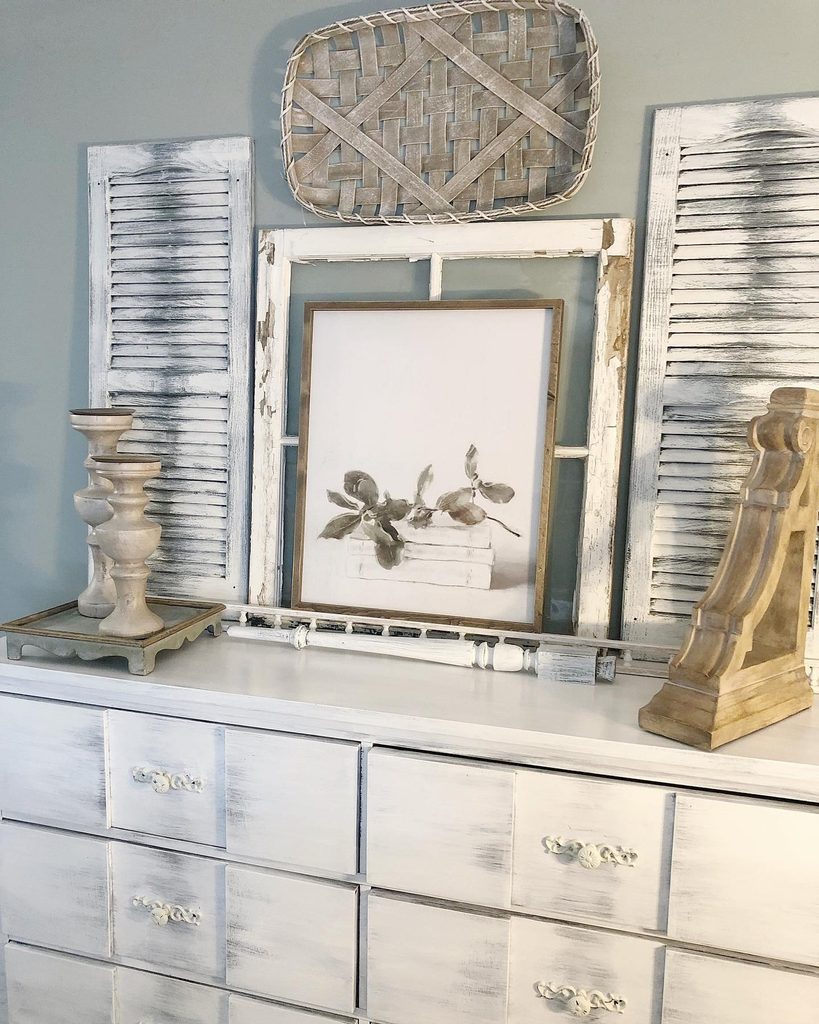
The wall above a dresser can become a focal point without changing the storage underneath. This arrangement combines weathered shutters, an empty window frame, and a botanical print, with pale finishes tying the separate pieces together.
A woven tray above adds another texture while the dresser provides a consistent base. Lay out the composition before mounting anything, checking its width against the furniture below.
Choose a small group of related materials rather than adding every collected object. Secure frames and architectural pieces appropriately, especially if drawers will be opened frequently beneath them.
Keep enough clear surface for the dresser’s everyday role. The makeover comes from giving existing pieces a shared setting, not from turning the entire bedroom into a display.
14. Replace Bedside Tables With Slim Storage Lockers
Credits: Instagram
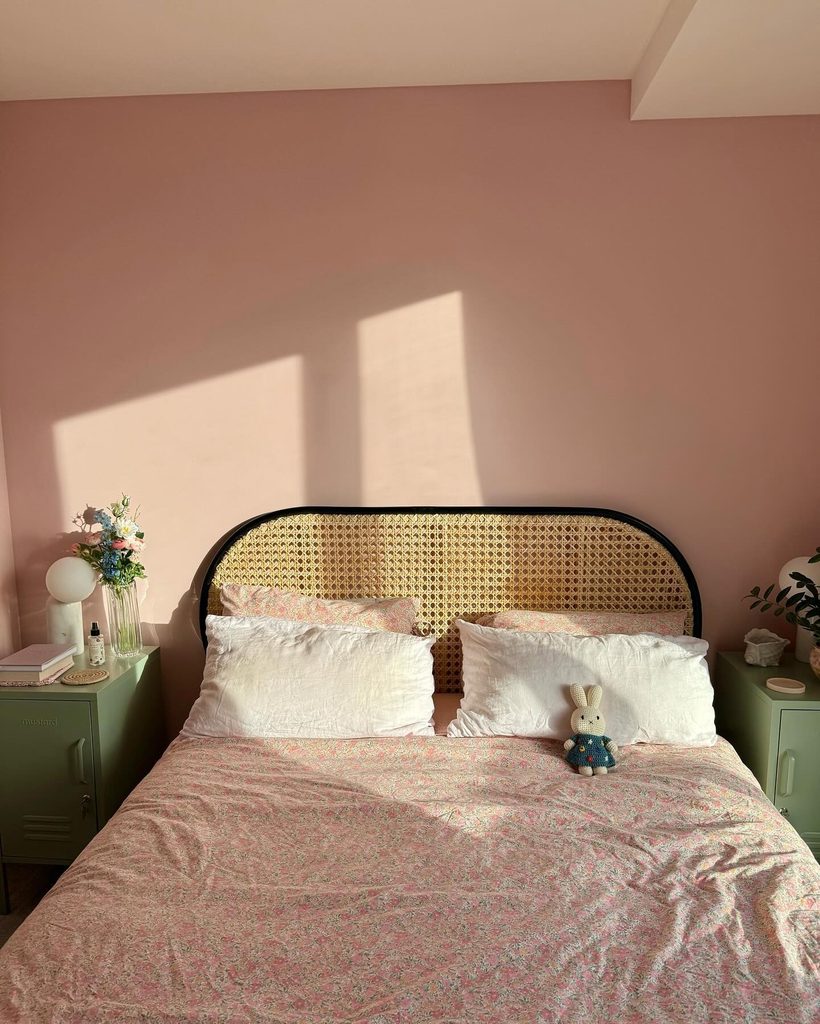
Everyday clutter can undermine a bedroom refresh faster than an imperfect color match. These slim sage lockers provide enclosed bedside storage while adding a clean block of color beside a cane headboard.
Blush walls and small floral bedding soften their practical shape. Consider what actually needs to live beside your bed before selecting a similar cabinet.
Interior shelf spacing, door swing, and access to charging outlets are more important than matching the exact hue. Check the top height against your mattress so reaching for a glass feels comfortable.
Metal furniture can sound different from a wooden drawer, so test the doors if possible. A useful storage upgrade should make the morning routine easier while contributing a distinct decorative element itself.
15. Paint a Rainbow Instead of Buying Wall Art
Credits: Instagram
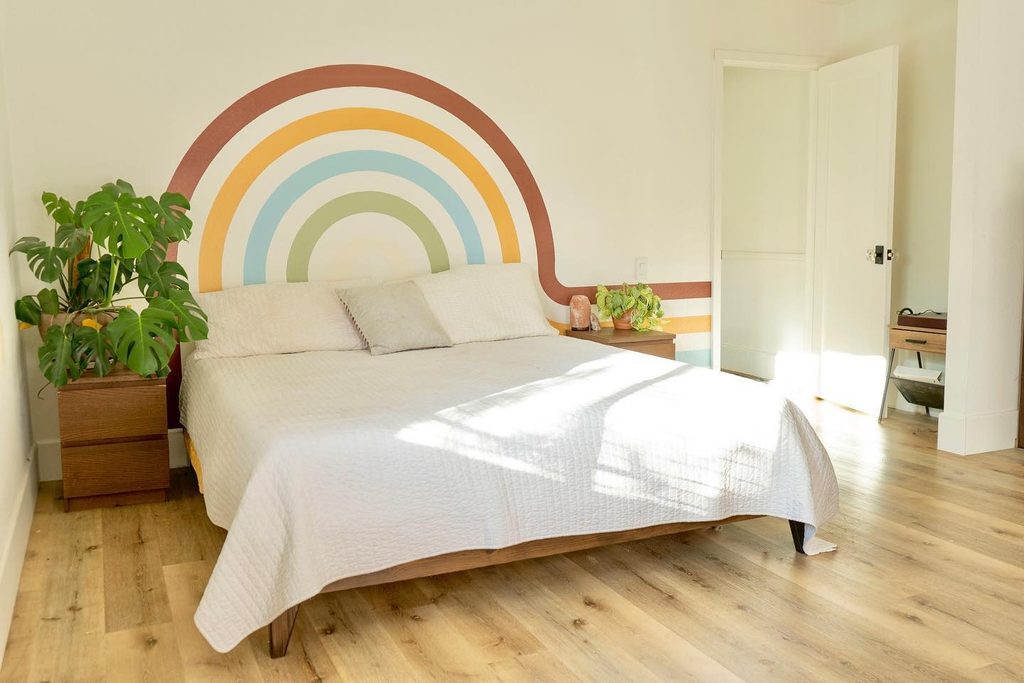
Hand-painted shapes can give an ordinary bedroom an individual focal point without introducing another object to dust. The muted rainbow here arches above white bedding, then continues sideways in long horizontal stripes.
Warm rust and ochre share space with softer blue and green, making the design feel connected rather than randomly colorful. Start with a scaled sketch that includes the actual bed position and nearby corners.
Test the palette together before painting the wall, keeping one or two colors quieter than the others. Crisp boundaries require suitable preparation and patience.
The exact mural is an artist’s work, so develop your own arrangement instead of copying it. Simple bedding allows the wall to remain the most expressive part of the room.
16. Add a Tall Mirror to a Narrow Bedside Wall
Credits: Instagram
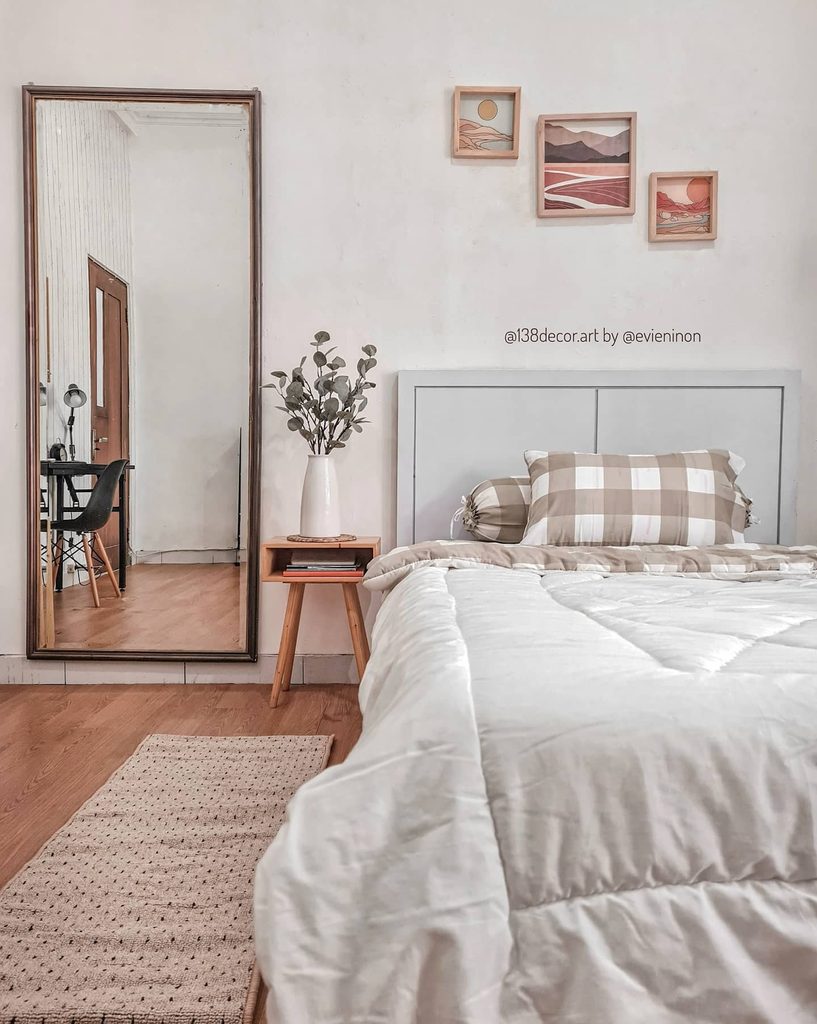
A tall mirror can make a wall more useful without adding another deep piece of furniture. Here, a slim framed mirror sits beside the bed and a small wooden table, reflecting the desk and doorway across the room.
Its vertical shape contrasts with the lower furniture and gives the corner another view. Try potential positions from both the bed and the entrance before committing to an installation.
Reflect a reasonably clear area rather than the busiest storage spot. Select fixings appropriate to the mirror’s weight and wall construction, following its installation guidance.
Leave enough space to stand comfortably when dressing. This small change combines a practical daily function with a lighter visual impression, while keeping the bedroom’s floor plan intact.
17. Lower the Bed to Open Up the Sightline
Credits: Instagram
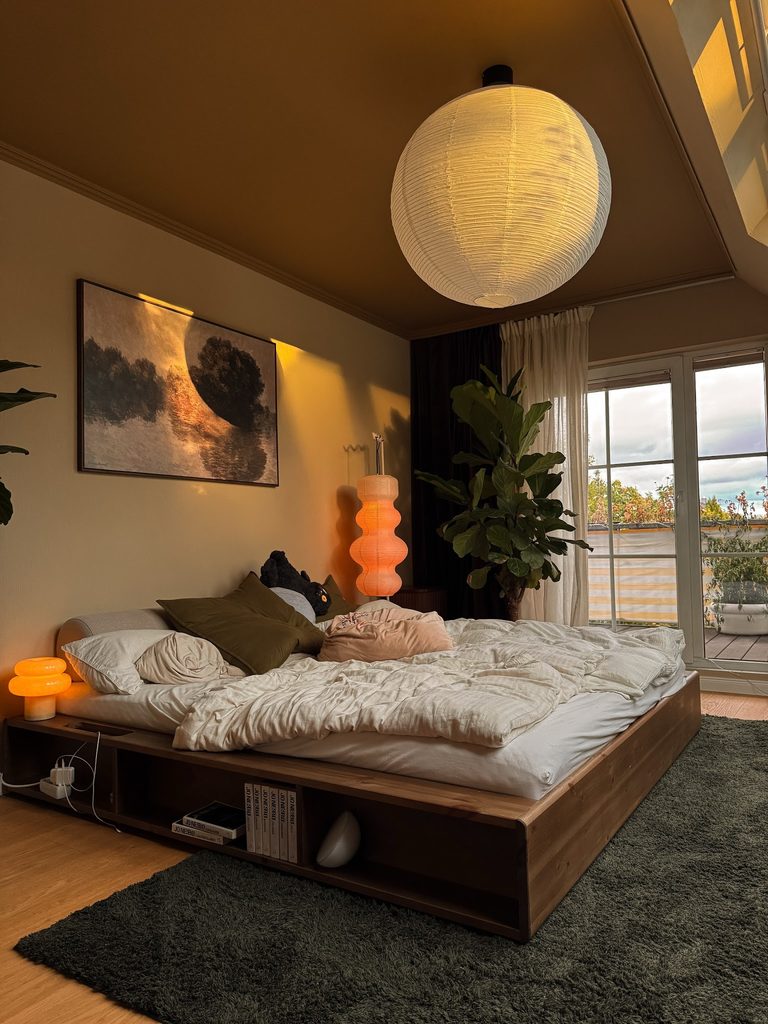
Sightlines matter when a bedroom feels crowded, even if the furniture technically fits. This low wooden platform leaves more open wall visible above the bedding, while built-in cubbies keep a few objects close to hand.
A dark green rug and rounded paper shade add softness around the straight frame. Before switching to a lower bed, test whether getting in and out will be comfortable for everyone using it.
Include the mattress thickness when comparing heights. Check the clearance and support requirements rather than placing a mattress on an improvised base.
Keep nearby lighting within easy reach. The visual openness comes from reducing the frame’s height, so avoid surrounding it with bulky cabinets that would cancel out the room’s newfound openness.
18. Blend Closet Fronts Into the Surrounding Paneling
Credits: Instagram
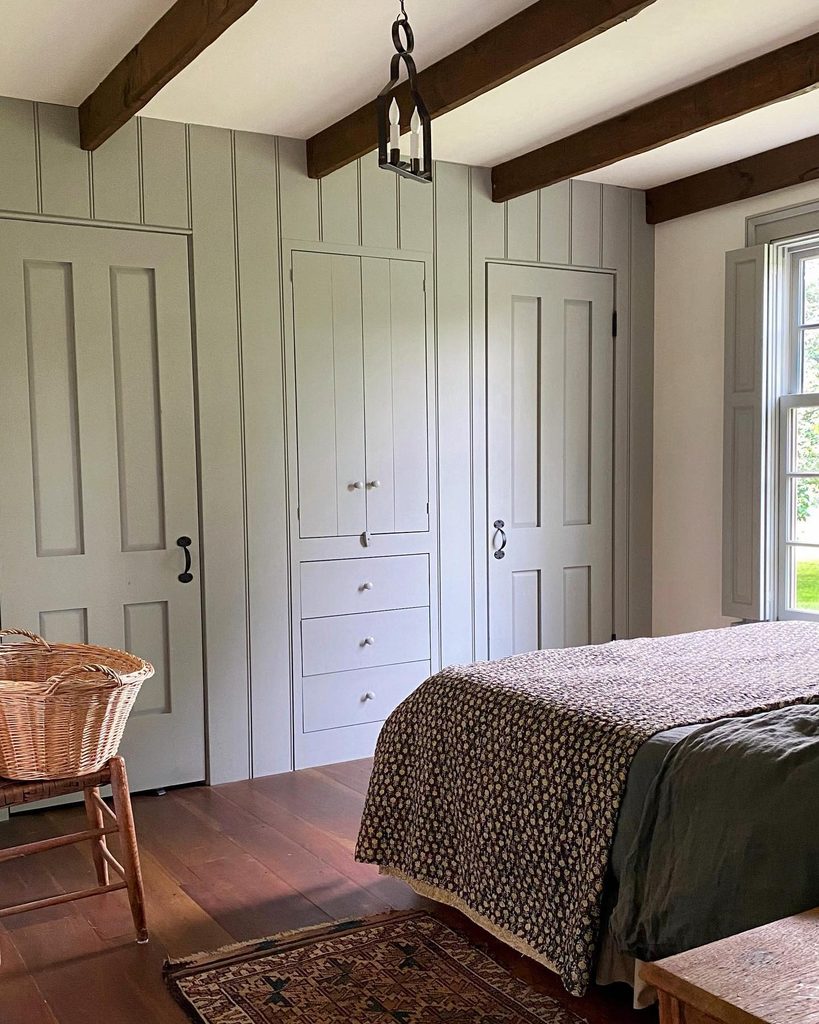
Storage can become quieter visually when its finish relates to the surrounding wall. This bedroom uses the same pale gray paint across closet doors, drawers, and vertical paneling, creating one coherent surface beneath dark ceiling beams.
Small handles allow the joinery to remain the main feature. Consider a coordinated finish when existing storage is useful but its separate fronts make the room feel busy.
Check the materials before choosing compatible preparation and paint, and keep hinges, tracks, and ventilation functioning properly. Matching color does not require concealing access or making drawers difficult to use.
Plan the furniture clearance with every door open. A unified storage wall can give patterned bedding and warm floors more room to contribute to the scheme.
19. Fit a Skirted Dressing Table Beside the Bed
Credits: Instagram
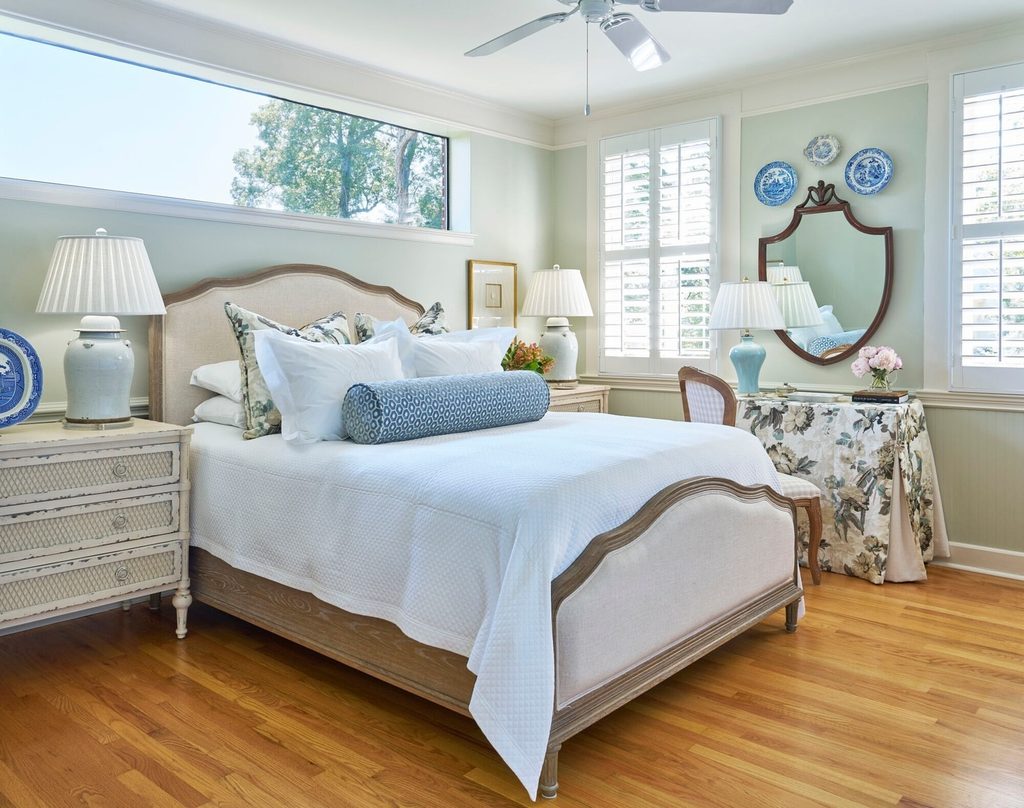
A small dressing table can add a new routine to a bedroom without becoming a large visual block. Here, a floral fabric skirt softens the table beside the bed, with a curved mirror and wooden chair completing the corner.
The pattern relates to the cushions while pale walls keep the area bright. Measure the available space with the chair pulled out, checking both legroom and the route around the bed.
Choose a surface height that works comfortably from the seat, and position the mirror for actual use rather than appearance alone. Keep the fabric clear of nearby heat sources and allow easy cleaning underneath.
A tailored skirt can introduce pattern while making an ordinary table feel integrated with the room.
20. Add a Tufted Dressing Bench at the Bed Foot
Credits: Instagram
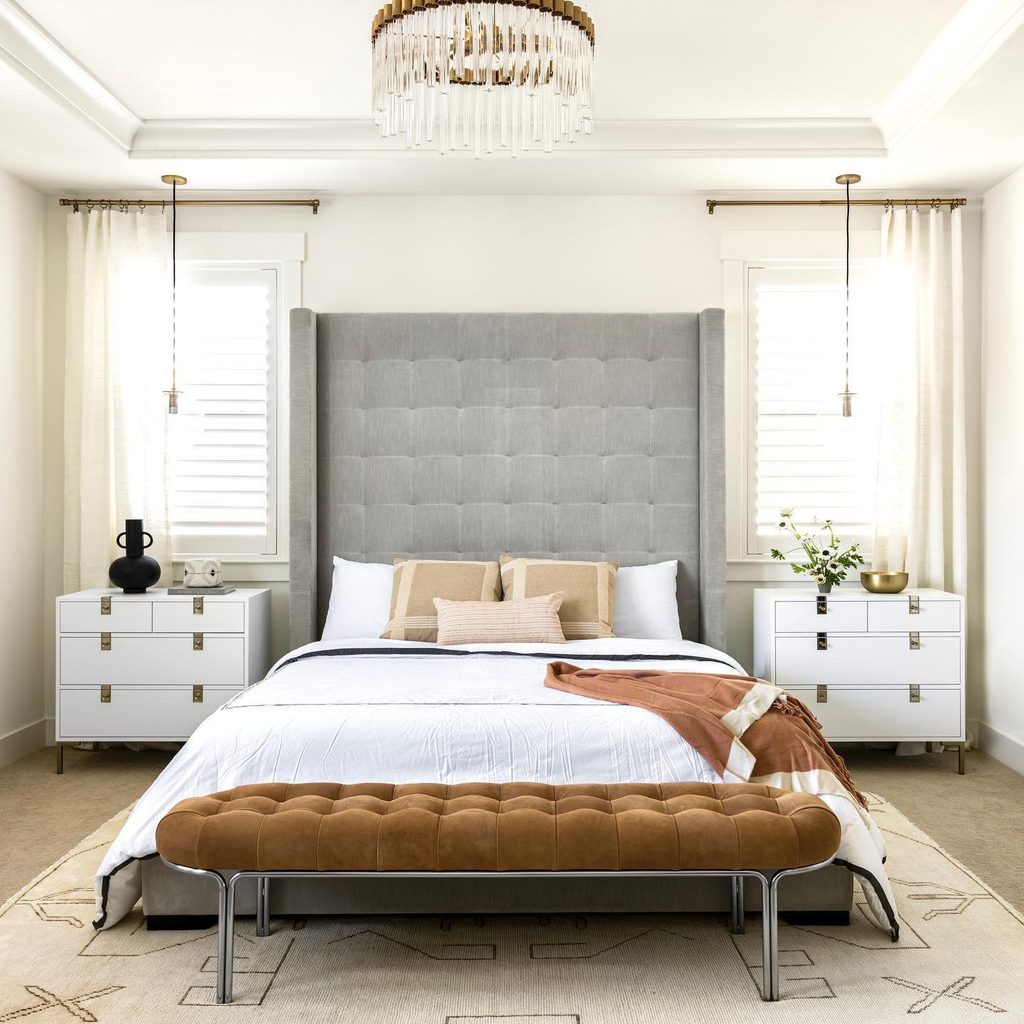
A bench can make a bedroom feel more complete while providing a place to sit. This tufted caramel seat stands at the foot of a gray upholstered bed, with a polished open base that keeps its outline relatively light.
The warm fabric also connects with the throw, softening the otherwise pale room. Measure the remaining walking route before selecting a bench, including space needed for nearby drawers or doors.
Choose a seat height suited to dressing and a fabric you can maintain easily. An open base can feel less bulky than a solid storage chest when the room is already furnished.
Keep the top mostly clear so it remains useful. One comfortable addition can improve daily routines and the composition.